
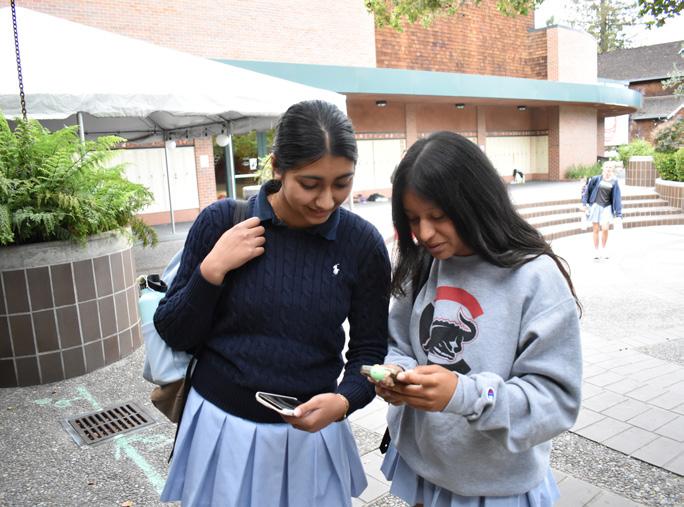
The start of the 2025-26 school year came with a new cell phone policy, leaving the Castilleja community with mixed feelings, questions and opinions.
NEWS [PAGE 2]
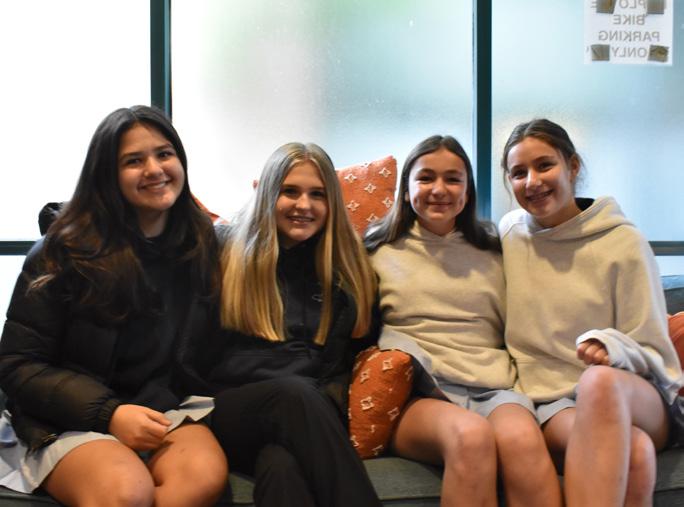
After spending a year at Castilleja’s satellite campus at the JCC, the Class of 2030 returned to the Bryant St. campus last fall.
[PAGE 4]
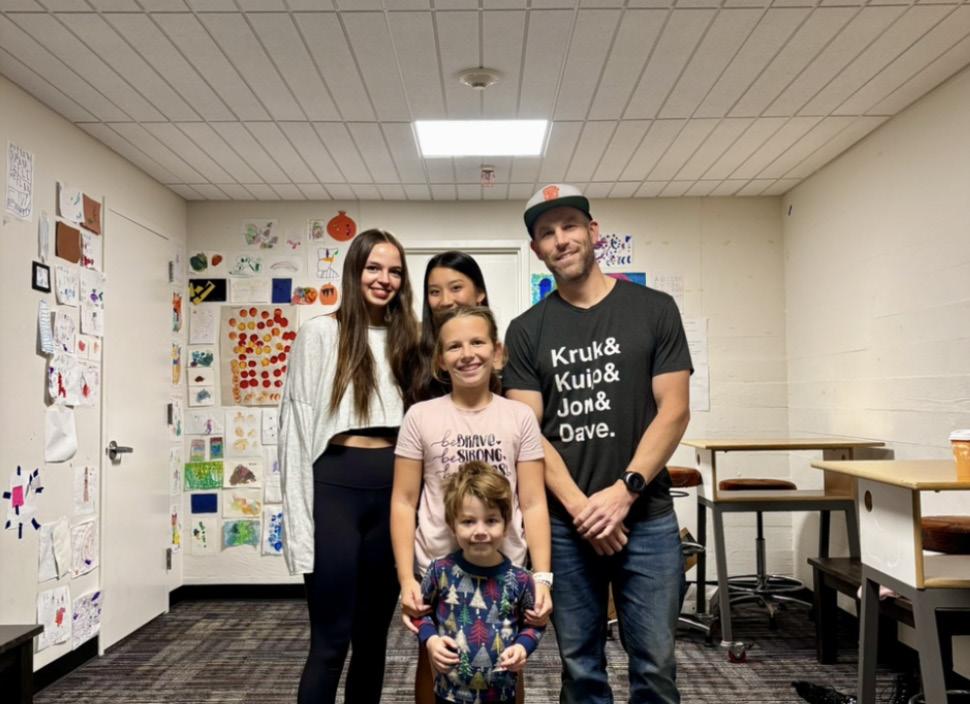
Welcome to our series, Daily Diaries, where we follow Castilleja teachers through a day in their lives.
[PAGE 6]


By Maddie Park ’27
This year, Dr. Betty Noel-Pierre joined the Castilleja community as the new Head of School.
Noel-Pierre had numerous reasons for joining Casti, but at the core was her belief in the power of an all-girls education. This conviction stems from her experiences attending an all-girls school from kindergarten to 12th grade, as well as her previous work at two private girls’ schools in Manhattan–the Marymount School and the Brearley School.
In addition to valuing an all-girls education, Noel-Pierre appreciates Casti’s deep traditions. “There’s so much character and history, which I really enjoy learning more about,” she said in an interview with Counterpoint.
But in the eyes of Noel-Pierre, Casti’s deep-rooted traditions do not prevent the school from embracing future direction. “It seems like Casti is unafraid to be innovative,” Noel-Pierre said. “It interests me in trying to figure out what that balance is: How do we hold onto the pieces that are really valuable and important…and then be unafraid to try whatever that next version needs to be?”
Before joining the Casti community, Noel-Pierre was a science teacher at the Marymount School. Her passion for science followed her to the Browning School, and she eventually became their first Director of Diversity, Equity, Inclusion and Justice. After that, she moved onto her role as Head of Middle School at Saint Ann’s School. Most recently, Noel-Pierre served
as the Head of Upper School Student Life at the Brearley School.
What was clear throughout my interview with Noel-Pierre was her warmth and deep commitment to learning from others. Since starting at Casti, Noel-Pierre has engaged in conversations with students, faculty members, parents and alumni, seeking to understand what makes Casti “Casti.”
“My plan this year is to keep listening, learning and experiencing our traditions,” Noel-Pierre said. “I’ve had a great time so far learning more about our academic program, understanding what we do in the classroom and how all of our programs feed into the academic experience here. And, of course, thinking about how that all feeds into the campus modernization.”
BY
to make myself as available as possible and to prioritize smaller groups so that I can get to know people in more meaningful ways,” she said.
Throughout these conversations, she’s found that teachers are truly what make Casti special. Students consistently cite “that teacher who saw something in them and recognized their talent, building their confidence and helping them rise to their next step,” Noel-Pierre said.
Noel-Pierre also said that she values education and community: “Education isn’t just about knowing more, learning more [or] holding onto the knowledge. It’s about sharing and bringing others in and helping your community.”
“Education is about sharing, bringing others in and helping your community.”
Thus, Noel-Pierre created Betty’s Circle, a series of small and casual meetings with parents of Castilleja students. She joins student and leadership team meetings, leads senior advisory sessions, visits classes and drops by Middle and Upper School Meetings.
“I love hearing speeches and just seeing the energy, the games that are played and the joy that’s experienced in those meetings,” Noel-Pierre said.
This winter, she plans to participate in club and class meetings to meet students in more intimate settings. “I’m trying my best
Noel-Pierre brings this conviction to every space she works in, using this framework to examine the purpose of her work on a larger scale.
“I’ve really tried to think about the importance of what we’re teaching and how we’re teaching it,” Noel-Pierre said.
“It’s about how we feel together as a community–how we’re uplifting each other internally–but it’s also about our greater purpose in the local, national and global community.”
In her free time, Noel-Pierre enjoys riding her basket-adorned electric tricycle. She appreciates the trees and loves exploring local parks.
By Jenny Glodek ’28
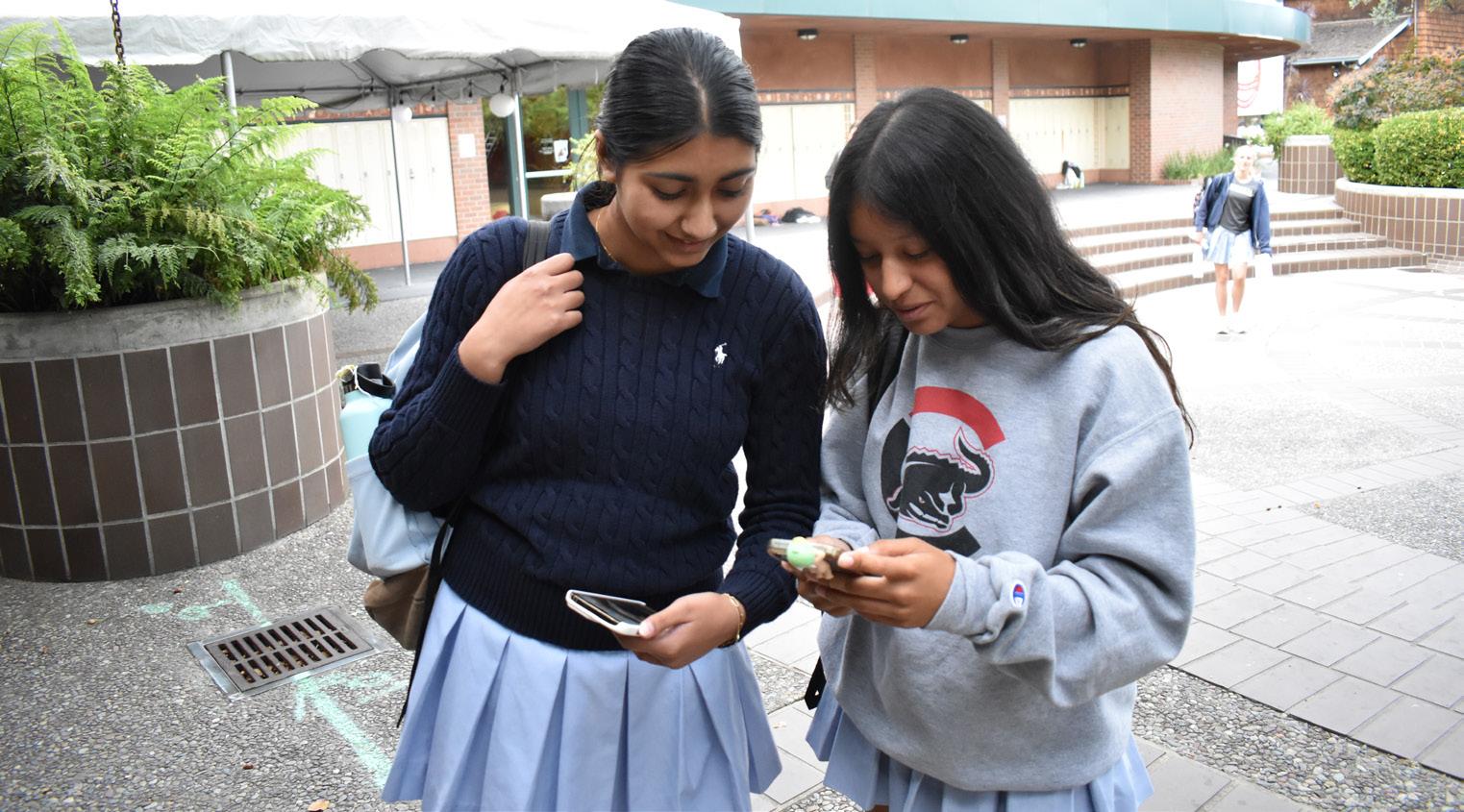
The start of the 2025-26 school year came with a new cell phone policy, leaving the Castilleja community with mixed feelings, questions and opinions.
The Castilleja Student and Parent Guardian Handbook 2025-26 states that “mobile phone and laptop use (voice, text, photo) of a casual social nature is prohibited during the school day” and that only “Upper School students may use cell phones during the passing period from 2 p.m. to 2:10 p.m. to coordinate end-of-day pickup plans.”
Previously, Upper School students were able to use their cell phones during morning break, lunch and their free periods, but now students are restricted from doing so for almost the entirety of the school day.
Head of Upper School Peter Hatala explained the reasoning behind the new cell phone policy in an FAQ document: “Castilleja is a special place where students can fully immerse themselves in learning, build strong relationships and engage authentically with their teachers and classmates. Cell phones can interrupt these experiences and connections.”
Hatala added, “Though designed to connect us, cell phones are correlated with loneliness, often harm attention spans and mental health, and leave girls particularly vulnerable to these negative effects.”
The FAQ document also states that Castilleja established this policy based on “feedback from parents, teachers and students who were consulted [last] spring,” seeking to “create the strongest community we can.”
In an interview with Counterpoint, Halata explained, “Regular access to phones created a broader culture [at Castilleja] that did not serve the learning
experience or the development of strong relationships. If the purpose of being at the school is to learn and think deeply and to form great relationships with each other, then cell phones served as an impediment to doing those things as well as we could be.”
Other schools in the Bay Area have begun enforcing similar phone policies, aligning with Governor Gavin Newsom’s Phone-Free School Act, which seeks to limit smartphone use in public schools by July 2026.
The new cell phone policy has received a mix of responses from the Castilleja community: Of the teachers Counterpoint interviewed, most appeared to lean more towards agreeing or feeling neutral about the policy, while many of the students we interviewed appeared to be more against the policy.
Janelle Reyes ‘27 said that the policy “has both positive and negative impacts on students.” She added, “It’s beneficial to not have them in the classroom and definitely helps students focus more on learning. But during breaks, students deserve to have a little bit of time to destress, which for them might include going on their phones.”
Physics and engineering teacher and 10th-grade advisor Bryan Valek described the policy as “great” because he “doesn’t think that cell phones are a necessary tool for most of the school day.” Valek said that cell phones “[create] a distraction from being part of the school community” and that “having a firm policy makes it easier for teachers to bring up the policy to students, rather than policing them.”
While cell phones and other sources of technology are often seen as a distraction, visual arts teacher Angélica Ortiz Angui-
By Deeksha Venkat ’27
ano ‘11 shared a different perspective: “[I] always thought that tech has a place in the classroom. Sometimes it’s relevant for my students to use phones, whether for photography purposes, listening to music or searching up reference images.”
Some students remain confused about how the new rules apply when using cell phones for minor and essential purposes, such as using Apple Pay to buy a vending machine snack, connecting airpods to a cell phone to use Spotify or simply checking the time. Confusion also stems from the possibility of getting in trouble for simply having your cell phone out next to you but not actively using it.
Melina Gupta ‘29 said she feels “very restricted” with the cell phone policy. She said if she were allowed to have her cell phone, she wouldn’t be using it often since she is normally spending time with her friends.
Sofia Balmaceda ‘28 said she feels the cell phone policy does more harm than good: “Even if I’m just checking the time or my calendar, I can still get a technology violation. No one is scrolling on TikTok mid-class, and if people are using their phones, it’s on their own time.”
English teacher Cam Kaplan said it is still too early in the school year to measure
the effects of the policy: “If it becomes clear within the school that less screen time benefits the focus and self-esteem of students, then that would be great, but it will take time in the school year to ascertain whether that is the result.”
With the first semester of the 20252026 school year coming to an end, Hatala said that “some of the greatest benefits that I’ve seen so far include more students connecting with each other during their free time and especially during lunch. I see more eye contact, laughing, conversation [and] more direct engagement, student-to-student, which I think is really, really great.”
As for feedback, Hatala surveyed the Castilleja faculty about their experiences with the policy and said that the “vast majority of our faculty are also seeing those types of positive changes.”
Hatala added that he hopes to survey student perspectives further into the year: “I want to wait a little while until we’ve experienced the policy just a little bit more before [sending out] the student survey.”
Finally, Hatala said that he is “open to iterations on the current policy based on what our experiences are over the course of the year, but right now, there is no plan to change anything.”
She noted that Castilleja’s creation in 1907 was a response to early inequities in higher education: Young women were not thriving at Stanford, not because of ability, but because of lack of preparation and opportunity. “These ideals, rooted in character and courage, will always be part of Castilleja’s legacy, and that origin story drew me in,” Noel-Pierre added.
Noel-Pierre represents the eighth Head of School since Castilleja’s founding.
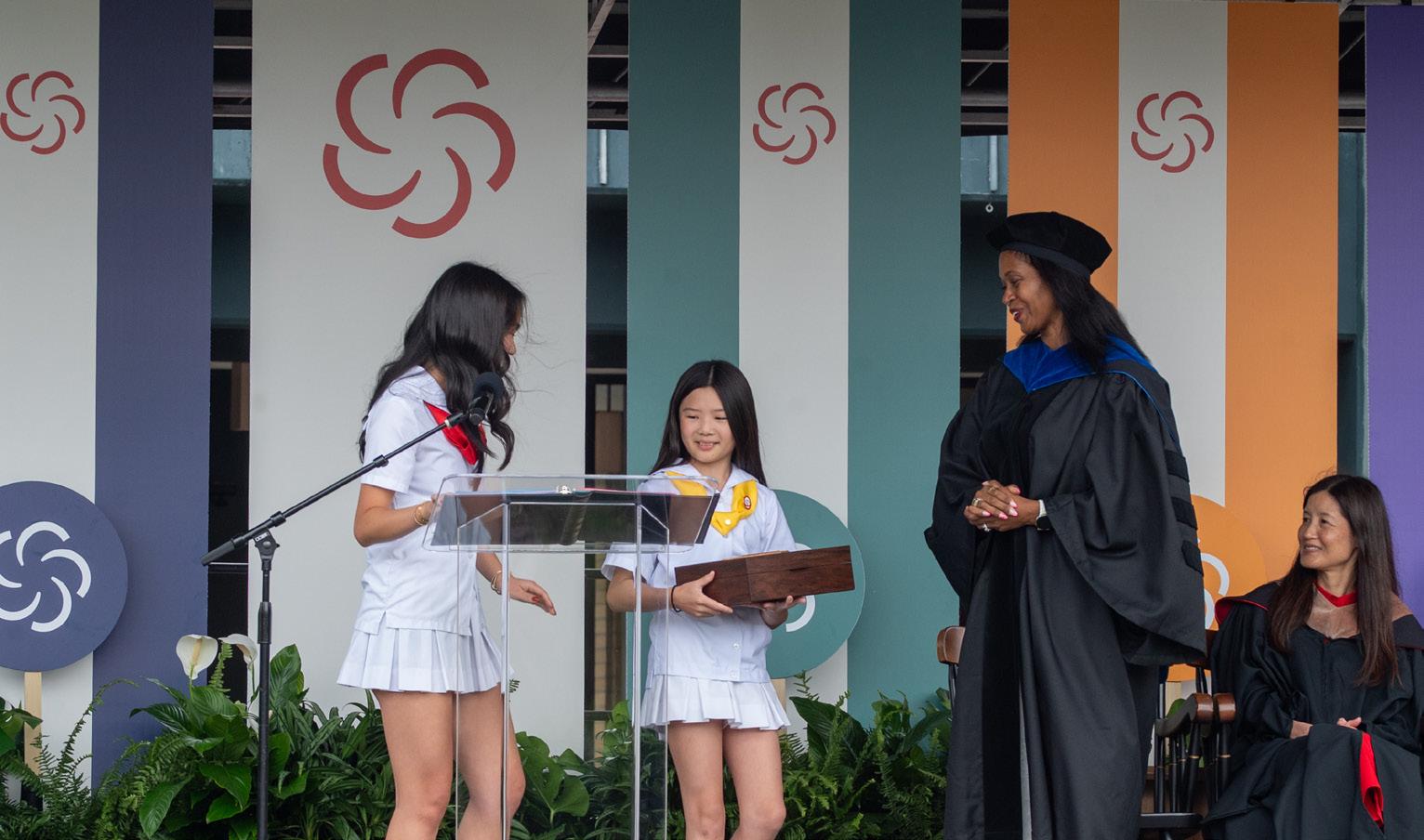
Castilleja celebrated the start of Dr. Betty Noel-Pierre’s tenure as the new Head of School in an installation ceremony on Oct. 3. Noel-Pierre represents the eighth head of school since Castilleja’s founding—a notable milestone in the school’s over 100-year history. Castilleja students, board members, former colleagues and Noel-Pierre herself gave speeches to celebrate the special event.
In her address, Noel-Pierre highlighted Castilleja’s history as a school created to expand access and opportunity for young women. “Many of you know that I’m a product of a school for girls,” Noel-Pierre said. “But you may not know that I take a particular interest in learning about why different girls’ schools were founded. Through this little passion project, I’ve come to realize there was sometimes something countercultural or revolutionary going on.”
She also spoke about her dedication to Castilleja’s five Cs: “Through church, I learned to see charity and courtesy as the love and compassion that you show others, and at school, I learned that if I followed my curiosity, I could make a difference in the world,” Noel-Pierre said.
To commemorate the installation, Noel-Pierre gave each member of the Castilleja community a special pin, a red and white oval with a ‘C’ in the middle and red paintbrush flowers adorning the sides, referencing Castilleja’s namesake.
Noel-Pierre also outlined her vision as Head of School, emphasizing both academic rigor and community support. She spoke about preparing students to meet an uncertain future: “I will work to ensure that our students are incredibly well-
prepared academically, well-supported within our community and well-aware of their limitless power as confident thinkers and compassionate leaders.”
The speeches were followed by a performance by Castilleja vocal teacher Emily
BY SAM
their hopes and wishes for her time at Casti. Local businesses and Castilleja’s very own kitchen provided sweets on the Circle, ranging from boba to skewers of fresh fruit.
“I will work to ensure that our students are well-aware of their limitless power as confident thinkers and compassionate leaders.”
Bender ‘89 and a choir composed of middle school students, upper school students and faculty.
Students then presented Noel-Pierre with a special gift: a box filled with personal letters from each Casti student, with
The installation marked the beginning of a new era for Castilleja, one Noel-Pierre described as both joyful and revolutionary. “This is home now,” she told the community. Castilleja looks forward to seeing her leadership unfold in the years ahead.
By Deeksha Venkat ’27
This year, Castilleja switched from our previous Learning Management System (LMS), Schoology, which we had been using for 10 years, to Toddle. This change marks a new era in both how teachers structure their lessons and how students themselves learn.
“Toddle helps support our teaching and learning in a more dynamic system with engineers who work with us,” Head of Middle School Laura Zappas said.
“We were always looking [for a new LMS] because nobody was completely happy with [Schoology],” Director of Technology Jamie Sullivan said. Schoology was purchased in 2019 by a larger company, PowerSchool, which was marketed to larger school districts rather than independent schools.
“Schoology wasn’t able to support us anymore. It was feeling more and more [like a] dated platform. Their engineers had moved on and weren’t giving us real-time support,” Zappas said. Head of Upper School Peter Hatala echoed this sentiment: “Teachers and department leads felt that the tool was driving their practice and what they were able to do, rather than [the other way around].”
In late 2023, Castilleja discovered Toddle and tested it for a year and a half with teaching team pilots and mock classroom simulations before finally deciding to change systems in early 2025. “We spent a year telling [the Toddle team] about what we do and how we do things differently, and they were learning. They wanted to learn,” Sullivan said.
At the time of initial contact, Toddle was a relatively new LMS that primarily
focused on International Baccalaureate schools. Castilleja was able to work with them to engineer an entirely new model of Toddle called ‘Toddle 2.0,’ allowing the school to shape the tool specifically for its educational system. “We’re pioneers here. [We’re] fortunate because this is an opportunity for us to build the tool we want,” Sullivan said.
Toddle has fully integrated into Castilleja since August, and its new methods have been met with both excitement and criticism. Castilleja’s administration is confident in the strengths of Toddle, as Hatala said that it is “able to replicate the functionality that Schoology had in a better way.”
“By January, we’re gonna see [big updates]. [We’re] pushing through the hardest [parts of the implementation] right now,” Sullivan said.
Not only has the LMS changed, but the learning and teaching at Castilleja has as well. “[Toddle] forces you to think about your essential questions, understand your learning outcomes and [figure out] how your assessments support that,” Zappas said. “What are my objectives, and then how am I going to get [my students] there? How do I chart growth to know that they are learning what I want them to?”
Along with these new educational methods, Toddle is incorporating artificial intelligence into its website. “It provides students with an AI assistant or tool within each class, and they’re able to do AI chats, which is a functionality we [are still exploring],” Hatala said.
Toddle AI also enables teachers to work more efficiently. “Toddle has four or five different kinds of [AI] tutors built in,” Sullivan said. “Teachers can use it to build a rubric. Their motto [for their AI program] is to give teachers back several hours a week.”
Castilleja’s theater department steps into the ghostly world of “The Addams Family”
By Vienna Farano ’26
On Nov. 7, Castilleja’s production of “The Addams Family,” directed by Tannis Hanson, opened to a full house. The musical marked the end of months of rehearsals, tech work and design planning by students and faculty.
The cast leaned into the show’s dry humor and oddball characters, balancing quick comedic timing with outstanding vocal performances. Nightingale Smith ‘26, who played Morticia, shared her process of memorizing lines and holistically embodying her character, noting that she felt lucky to have been cast “as a character [she] felt super comfortable in.”
“I really focused on [Moriticia’s] physicality and her voice. When I was able to embrace the role physically, my voice kind of followed suit. And then the first day of dress rehearsal, when we were in our costumes, I felt like a completely different person,” Smith said.
Rehearsals began in early fall, with the production team coordinating costumes, makeup, props and choreography to match the show’s funny, quirky tone.
Aaminah Memon ‘26 was the student choreographer of the show and part of the

After an administrative-based decision to make the LMS change, educators are prioritizing hearing students in the upcoming months. “We can always think about how we incorporate student voices. That question is really important right now,” Zappas said.
Because the decision was both technical and high-level, academic leadership is looking to take in student feedback now to make Toddle the best it can be. “How do we use the student voice to truly make it a system that works best for all of us?” Zappas asked.
A primary confusion around Toddle was the Castilleja administration’s brief decision to remove the visibility of the cumulative gradebook from the website. It didn’t last for long, with academic leadership quickly deciding to reinstate it onto the platform.
“The goal was to shift how we relate to learning and the grade,” Hatala said. “The intention was not to hide cumulative grades but [rather] to make them not [be] the first thing students see when they log into [LMS]. [Adding back the gradebook’s visibility] wasn’t so much a question of philosophy but a question of the way that
ensemble of ancestors. The production was defined by its many dance routines and complex movements, many of which Memon designed. “I’d always meet with Ms. Hanson when planning dances for each song to get a sense of what she wanted and to understand what her vision was,” she said.
Memon noted how she would “listen to each song a bunch of times and think about the number of people in the cast, and how [she] might be able to stitch something together.”
Ameena Haque ‘26 was the stage manager for the musical and worked in close partnership with Aya Matsutomo, Castilleja’s technical theater director. Haque’s responsibilities included overseeing backstage operations, training crew members, writing rehearsal reports and running lights during the show.
Haque explained how she collaborated with Matsutomo in determining the distinctive ambiance and color scheme created by light in the production: “Aya designs all of our lighting, and she definitely puts a lot of thought into the different numbers and what sort of vibe they have.”
When there were “big, classical musical theater songs,” the lights would be “a little more flashy and fun.” However, during the
BY SAIGE SEFCIK
the decision felt abrupt for certain members of our community.”
Zappas echoed this message, explaining how the decision to have the sixth grade not have grades in the first semester benefited learning immensely – something administration thinks can help the rest of the school. “We’re in [this] great place [where we’re asking] how we’re using the sixth grade year to understand rubrics, feedback and habits of mind, and [show] students their growth. [So we’re considering how] do we build on from that,” Zappas said.
When asked if cumulative grades could get removed again, Zappas responded, “for sure.” But to get to that decision, Hatala said, “We’ll take student parent input [for] community conversation.”
Moving forward, Toddle has many new features in development, from additional AI tools to bug fixes. “We’re [going to] continue to provide guidance to students and to faculty in the coming weeks and months,” Hatala said. Sullivan added, “While there will be frustrations along the way in different places, we [will] work together and fix those. [We] knew it would be a journey, and it has been.”
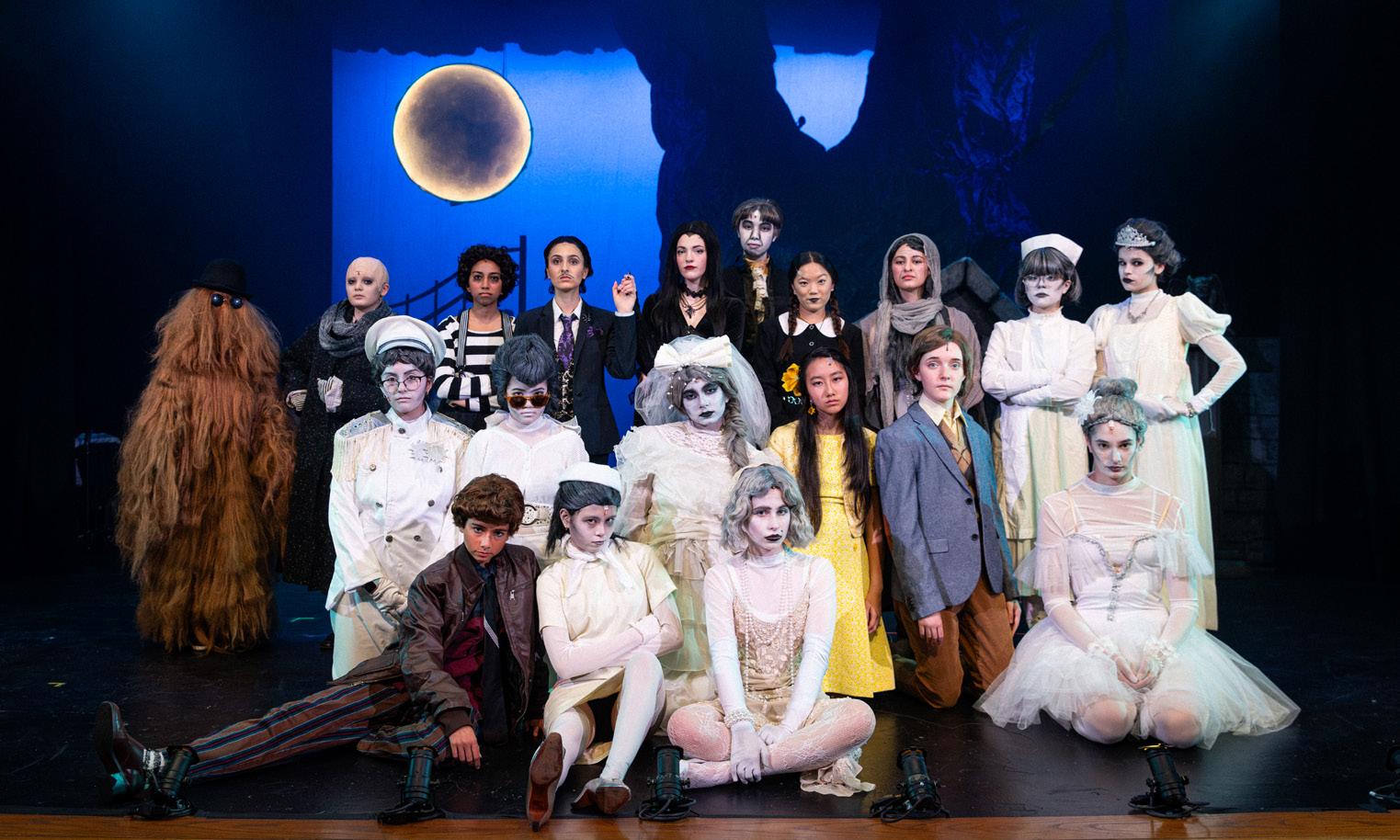
sadder, more vulnerable moments of the show, they prioritized “spotlights and softer lighting.”
Additionally, Haque explained how some characters had “very specific lighting colors.” For example, for Morticia, they “did a lot of reds,” while for Wednesday, they used purples.
Nora Schroepfer ‘29 detailed her experience as a member of the ensemble. She was excited by the opportunity to “ develop” her own character, explaining how the ensemble had a lot of freedom in “picking what [they] wanted to do” and had “input on characterization.”
Schroepfer also expressed gratitude for the opportunity the musical gave her to meet students from other grades: “I feel like everyone really bonded a lot. I didn’t know a lot of people across different
BY
grades, so I was really happy to have met other students.”
The show stood out not just for its polished singing, dancing and technical design, but for the sense of unity behind it. Every part of the production, from the choreography to the lighting to the character work, showed how much care went into building the world of the show.
The cast and crew took creative risks and pushed through months of work to bring something lively and sharp to the stage. Their close-knit dynamic was evident, and it made the comedy brighter, the emotional beats clearer and the overall performance stronger. The production felt both professional and personal and left the audience with a real appreciation for the cast and crew that made it possible.
By Zoe Friedman ’26
After spending a year at Castilleja’s satellite campus at the JCC, the Class of 2030 returned to the Bryant St. campus last fall. Now, the current eighth graders are reflecting on their time away and their transition back to the typical Castilleja routine.
A common theme among students was the strangeness of switching campuses between sixth and seventh grade. “It was odd because it felt like starting middle school all over again,” Mina K. ‘30 said. “My younger sibling asked, ‘Where are the bathrooms?’ And I was like, ‘I don’t know.’
Aya M. ‘30 echoed this sentiment, sharing that she “actually really enjoyed being apart from the other grades” because her class “made a lot stronger connections.”
“Everyone got to know each other a lot better, and now we’re all really comfortable together,” Aya said. However, these bonds haven’t felt quite the same since moving to Bryant St. With more space, more activities and more people around, some have noticed a shift.
“Everybody was excited to come to the Bryant St. campus, but I kind of miss the JCC after staying here for a while. [At the JCC,] everybody talked to everybody. [Now,] I feel like we don’t always see
“It made us a lot closer and [built] a more tight-knit community.”
’ However, students shared that the JCC served as a helpful transition period. “I feel like the JCC was a place between middle school and elementary school. It gave us time to adjust,” Sofia L. ‘30 said. Castilleja’s space at the JCC consisted of a main hallway leading into one large room, separated by dividers into three classrooms. With unavoidable proximity, the small space simultaneously created a sense of community: “It made us a lot closer and [built] a more tight-knit community because we had a small space, and we were always together,” Sofia said.
everybody that often,” Namrata G. ‘30 said.
One thing remains undisputed: the food. It was bad. “We ate spaghetti every day,” Sofia said. “I still can’t eat spaghetti.”
More than just the froyo machine, returning to the Bryant St. campus has its perks. Both Sofia and Mina highlighted the library as one of the biggest upgrades, describing their excitement at being able to check books out and the wide variety available. At the JCC, the library was “super small,” and they “read every book in that thing.”
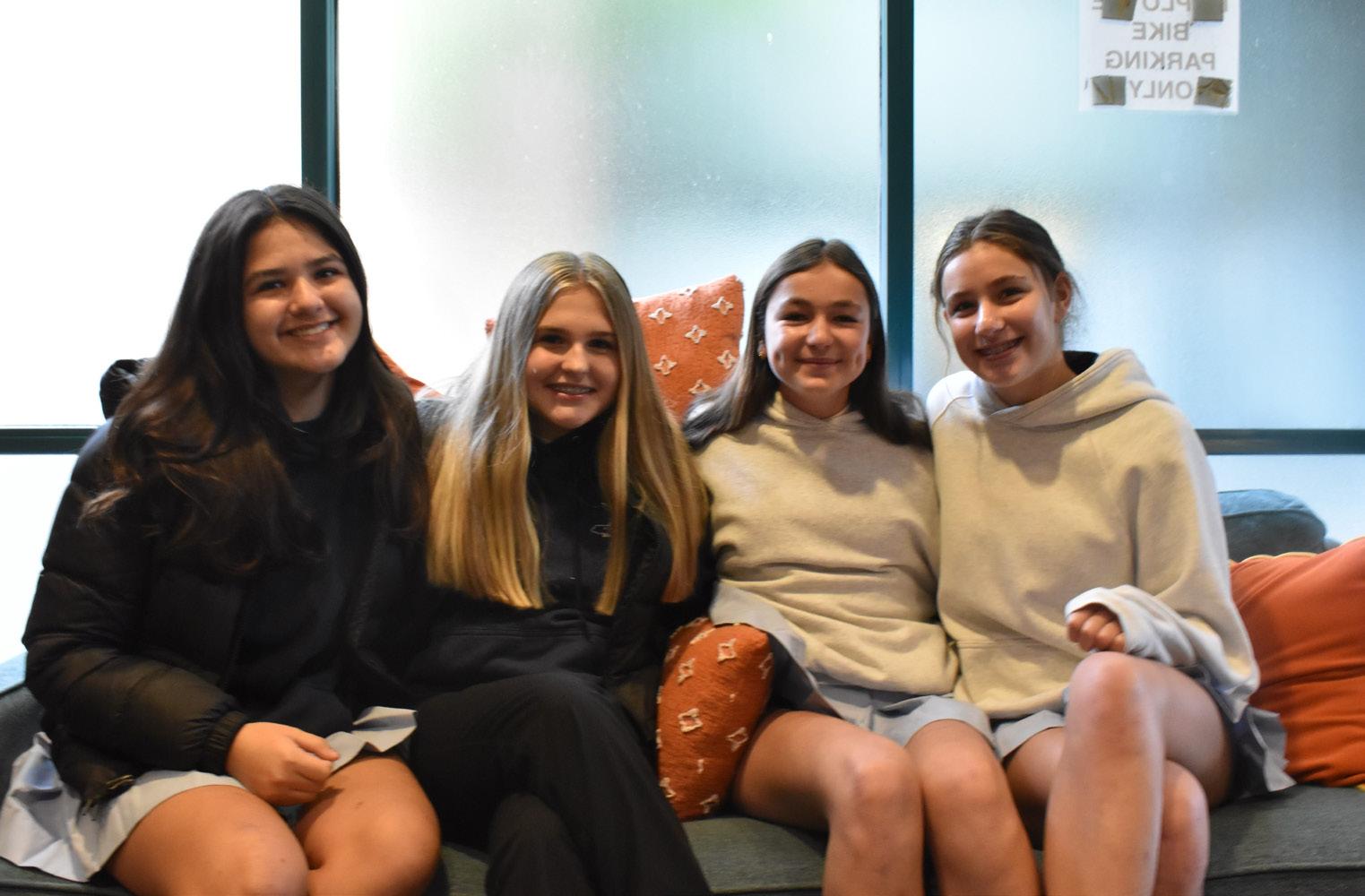
Overall, the current eighth graders expressed gratitude for the effort Castilleja put into making an unprecedented year into one of connection and community.
renovation, some students have expressed discomfort and unease. Yet, the Class of 2030’s resilience serves as a reminder to
“Things that stray from the typical school campus aren’t necessarily a bad thing.”
“We’re grateful that they really did try to make it as good an experience as they could by bringing the teachers and the books over. That mattered. Not everything about the experience was perfect, but we did notice that,” Mina said.
As Castilleja prepares to transition to the academic village next year due to the
The power of Castilleja sports: Sara Shaughnessy’s playbook for lifelong lessons and leadership
By Isabelle Chen ’27
This season, an impressive high of 62 percent of the Castilleja Student Body is participating in fall sports.
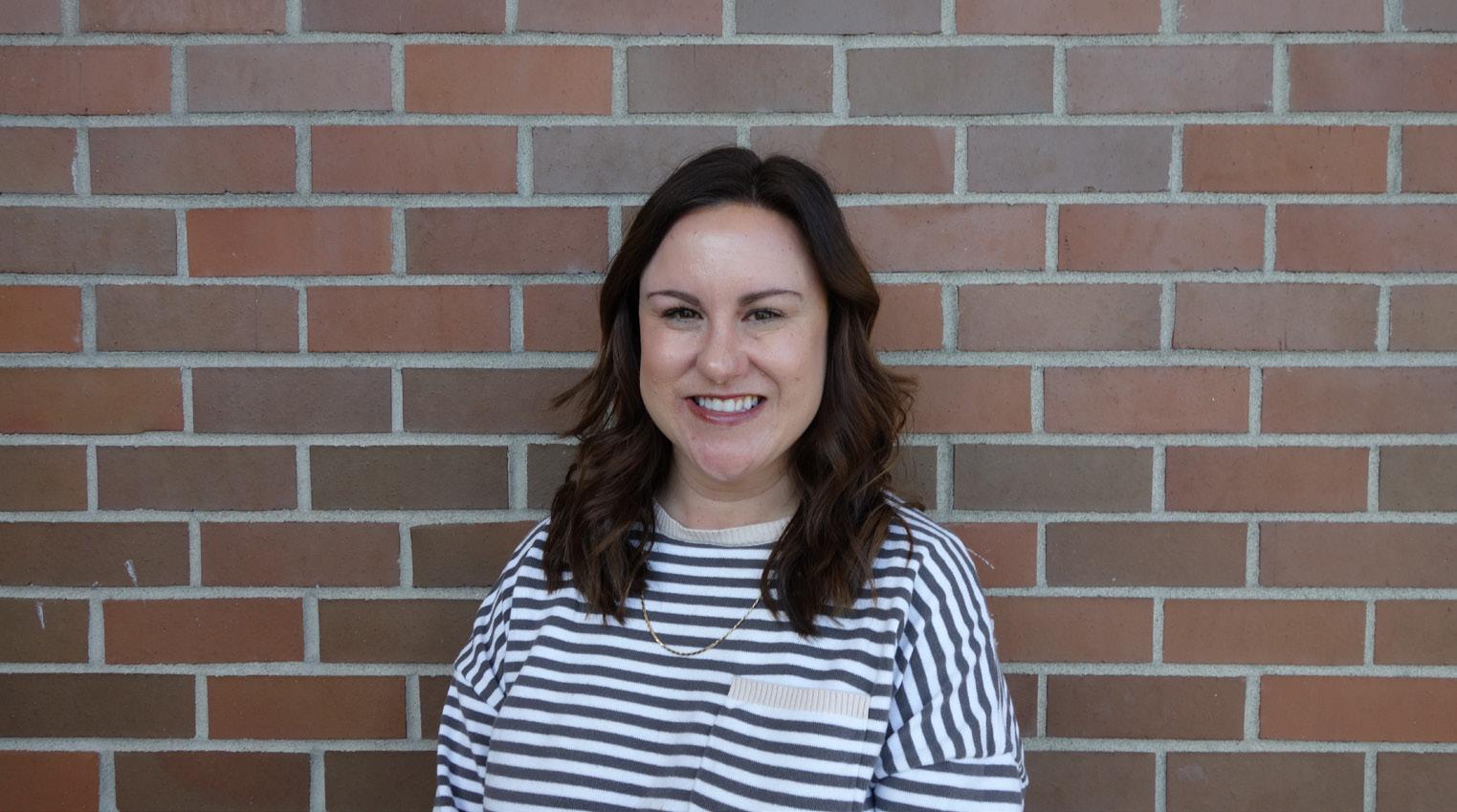
Behind the scenes, ensuring every team runs seamlessly, is Sara Shaughnessy, Castilleja’s new Director of Athletics. Overseeing both Middle and Upper School sports, Shaughnessy views the involvement in sports as an extension beyond the classroom, filled with life lessons of collaboration, goal setting and leadership. Shaughnessy previously worked in the athletics department at the International School of San Francisco for 13 years before joining Castilleja. Shaughnessy was immediately drawn to the sisterhood and supportive nature of Casti teammates, which she hadn’t seen “on my girls’ teams at my other schools.”
Shaughnessy explained that the majority of Casti students feel empowered to join a sports team, even if it’s not their top priority.
With just a season in, Shaughnessy has already made an impact on Castilleja’s athletics program. Shaughnessy has introduced the “Captain’s Council,” a space for all seasonal junior varsity and varsity sport captains to collaborate and develop their leadership skills.
In these bimonthly Captain’s Council meetings, Shaughnessy organizes topics of discussion such as nutrition intake, goal setting and structural feedback. Shaughnessy explained how often student leaders are appointed the title of “captain” with minimal guidance in non-technical leadership. But amidst the busyness of the athletic season, Shaughnessy aims to create space for conversation between students and the athletic department.
Notably, one of the many honors and privileges of being a Senior at Castilleja is being celebrated at Sports Senior Night. However, Shaugnessy raised concerns about past inconsistencies among Senior Nights across the different sports. As a result, school-provided poster, picture frame and bouquet.
The future policy of team retreats also remains unclear as Shaughnessy seeks to eliminate inequity across different sports. Shaughnessy appreciates the team bonding aspect of retreats, especially those at the beginning of a season, as they help integrate new team members and build team traditions. However, she acknowledges that organizing retreats is a significant commitment for coaches and staff, often requiring time away from their families. “Retreats are a big investment,” she said. “It’s not something that we take lightly.”
stay flexible and to keep an open mind.
“We’re going into the renovation, and in some ways it’s similar, in some ways it’s different, but just keep in mind things that stray away from the typical school campus aren’t necessarily a bad thing. We did it once, so I think we can do it again,” Mina said.
“With volleyball, it really is such a collaborative sport that you are put in situations where you have to work with people who get things done differently than you, but you all have the same goal.”
Outside of leading Castilleja’s Athletics Department, Shaughnessy is a devoted mom of two boys, ages 1 and 4. Taking after their mother, her young kids are already exploring the world of sports, enjoying gymnastics and swimming.
When asked about a sport she has never tried but wants to, Shaughnessy picked golf. She recalls loving Topgolf and the possibility of “pick[ing it] up here [at Castilleja] and in the next phase of my life.”
Shaughnessy gives the Castilleja community one piece of advice: Focus on the small, everyday wins, rather than the big outcomes or goals. She encourages all
Shaughnessy was immediately drawn to the sisterhood and supportive nature of Casti teammates.
If done right, Shaughnessy sees sport retreats as “something so beautiful and so wonderful.” As for now, Shaughnessy continues to collect data encompassing a wider spectrum of people’s experiences to redefine the expectations surrounding Senior Nights and Sports Retreats, aligning them more consistently across all sports at Castilleja.
Shaughnessy was born into a sports household: From early morning ESPN on the television to dinner table conversations, sports made up a large part of her childhood. Playing competitive volleyball, cross country and track taught her to be intrinsically motivated and set goals: “It’s just you against the clock a lot of the time,” she said.
student-athletes to acknowledge and “be proud of all of their progress throughout an entire season.”
Ultimately, Shaughnessy believes that the league records or state scoreboard is something students are “probably not going to remember.” Rather, she emphasizes that the most memorable moments of high school sports will be “playing and achieving things with their best friends.”
When Shaughnessy reflects back on her own sports career, her happiest moments come from the pockets of joy in team dinners, the bus rides to tournaments and meaningful team traditions. As the new Director of Athletics, Shaugnessy brings that same positive leadership and sense of community to Castilleja.
“Theater is, at it’s heart, collaborative.” Tannis Hanson’s experience
By Sybella Garcia-Traverso ’28
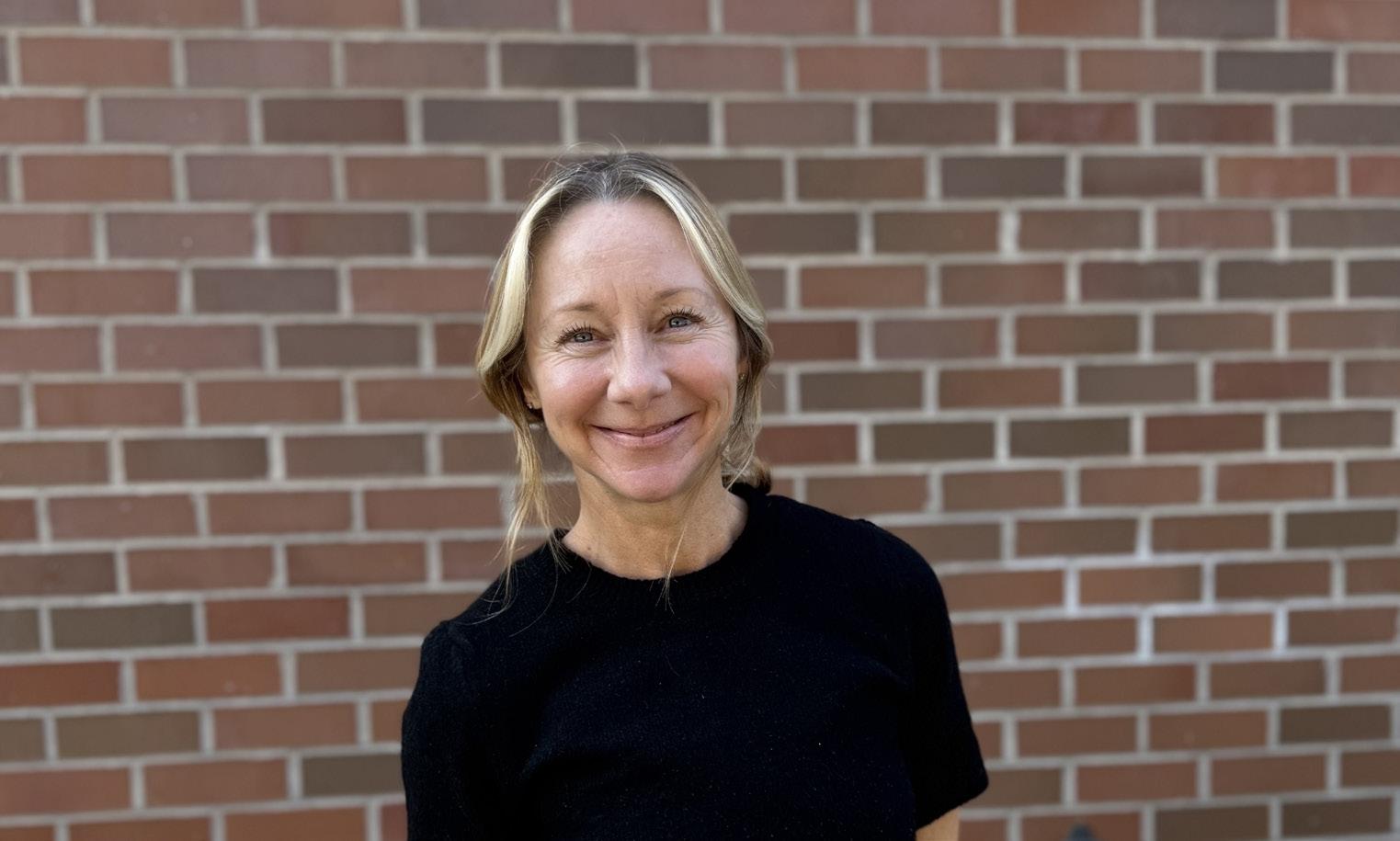
Tannis Hanson represents the heart of Castilleja’s Theater Department, leading and directing successful showstoppers ranging from renowned plays such as “Lovesick” to beloved classics like “The Lightning Thief.”
the audience sees it and says, ‘How do you do this?’ Well, I do it with a huge team of people.”
Although she has gained immense experience as a director since her first show, every new show presents an unpredictable variable with a new component to tackle.
“The audience sees it and says, ‘How do you do this?’ Well, I do it with a huge team.”
Before joining Castilleja, she worked as the co-theater director of a private school in Orange County for five years. She also worked with the Los Angeles Theater Company for around 10 years, allowing her to focus on producing.
After honing her skills for years, Hanson joined Castilleja Theater in 2018. “This job has been so good because I’ve had more of an opportunity to grow as a director,” Hanson said.
Stepping into her role at Castilleja for the very first time, Hanson directed “Almost, Maine” as her first show. “It was simple, beautiful and poignant,” Hanson said. Without a technical director at the time, she brought in a former dance teacher and other technical support figures to help make it all possible.
“This is why theater is, at its heart, collaborative,” Hanson said. “It’s not so much how I’ve grown as a director, even though
This remained especially true for her production of “Lovesick.”
“Lovesick” was a resounding success on stage, but behind the scenes, it was a fruitful struggle—one that Hanson understood was necessary: “[Directing] never gets easier, and you really don’t want it to be easier.”
When the pandemic hit, creative challenges as a director took even more of a turn, according to Hanson. It caused the instant stop of all live theater. Despite this obstacle, however, Hanson creatively produced Castilleja’s first virtual play in spring 2020. “When you give an artist a restriction, we’ll find a way,” Hanson said.
With her latest show, “The Addams Family,” Hanson believes even more now that “Casti Theater is [great] because it is student driven.”
“It’s a really boring show if it’s one person’s vision,” Hanson said. “What I’m interested in is everyone bringing their vision and seeing how we can put them together to tell the story.”
BY
tunities for our students to play these characters in the way that they see—maybe not in the way that they’re traditionally seen, which I think is really special.”
With directing, it’s an everchanging
With directing, it’s an everchanging game to find creativity in things that have already been established.
With each show being its own unique novel, there is no rinse-or-repeat. This especially applies to “The Addams Family,” as they start to deal with beloved characters in a new light.
“With our cast, there are a lot of oppor-
By Anya Dalal ’27
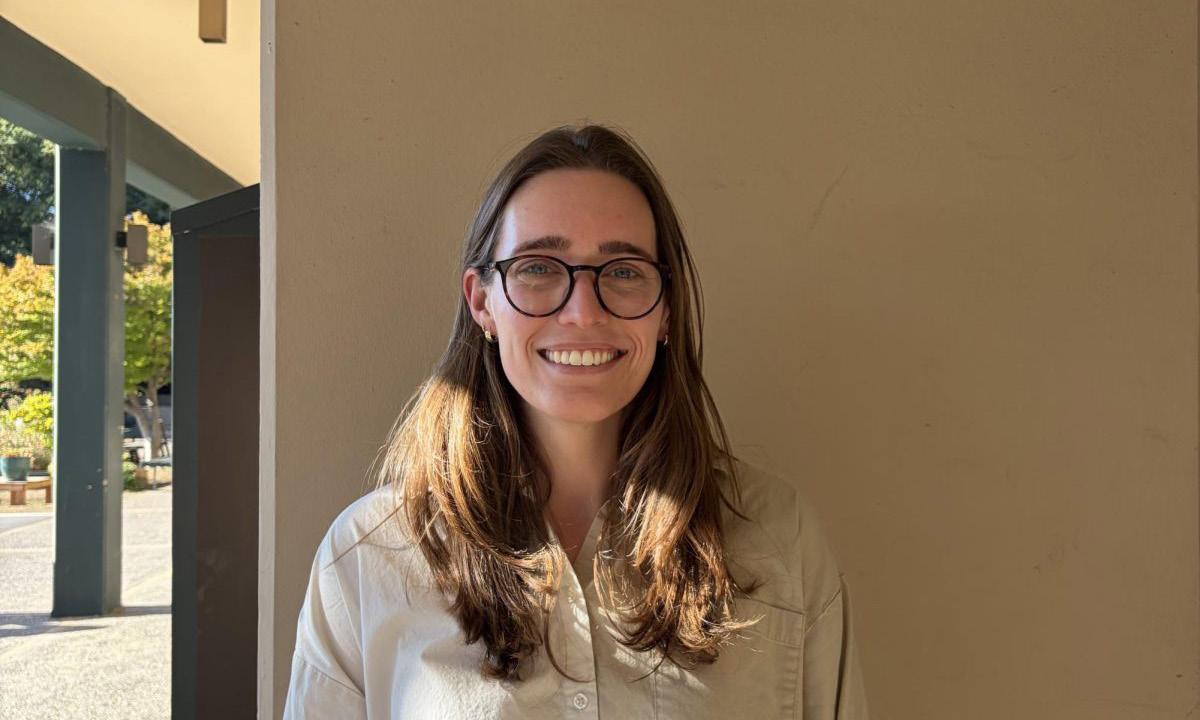
If you’ve ever wondered who on campus has traveled to the most states, it’s probably Jessie Ewald, a new upper school English teacher. She has visited 49 states and driven across the country nine times. “The only state I haven’t been to is Alaska,” Ewald said. “So I need to plan a trip to Alaska, clearly.”
game to find creativity in things that have already been established. No matter her experience, Hanson said, growing is a lifelong process—a process she is adamant in continuing with her cast and crew alongside her.
Ewald returned home after teaching at a boarding school on the East Coast for a couple of years. She subsequently taught in the East Bay for three years before joining Castilleja, where she now teaches English I, AT English: American Voices and serves as a ninth grade advisor.
“I was really excited to come [to Castilleja] because I really liked the way that people here talked about the purpose of teaching English,” Ewald said.
PHOTO BY CHLOE CHIANG
In college, Ewald discovered her passion for the humanities. “I just got so excited about literature. I really got kind of obsessed with it,” she said. She started taking history classes, despite not being a “history person,” which led her to double major in both English and history.
“I love language, and I love reading people who are really skilled with language.”
Ewald grew up in the Bay Area but left home to attend boarding school on the East Coast. “There was something exciting also about leaving home and being a little bit more independent,” she said. “You can really assert your own identity.”
“I love thinking about why the world is the way that it is, and what it means to be a human,” Ewald said. “I love language, and I love reading people who are really skilled with language.”
It took her a while to realize she wanted to be a teacher, but once she did, she said, “It seemed really obvious, and working with teenagers is such a delight because [they] all are so surprising.”
As a teacher, Ewald said she hopes to cultivate curiosity and confidence in her students. She wants them to feel “excited and empowered to really love what they’re studying.” Ewald also emphasized the importance of discussion as an academic and a life skill both inside and outside of the classroom.
Outside of class, Ewald’s love of exploration continues. She has visited numerous national parks and enjoys hiking and backpacking with her dog, Mouse, a “mystery mutt.” She hopes to return to Yosemite and the Desolation Wilderness and one day hike the Lost Coast in Northern California.
“There’s an empowering energy being around women and seeing girls as leaders.”
She specifically appreciated “the perspective of the English teachers here and how serious and skilled they were about teaching writing.” She was drawn to Castilleja’s community as well: “There’s an empowering energy being around women and seeing girls as leaders.”
Ewald’s literary interests center on American and 20th-century literature.
“Toni Morrison is probably my favorite author, so I’m really excited to teach ‘Sula,’” she said. “I’ve taught ‘The Bluest Eye’ and ‘Beloved’ before, and I just think [Morrison] is so brilliant.” She’s also fascinated by experimental literature, particularly modernism and postmodernism. For fun, she enjoys reading pieces from John Steinbeck, whom she called “the iconic California writer.”
When she’s not outdoors, Ewald loves “Severence” and listening to “sad indie pop girls” such as Lizzy McAlpine, Clairo, Chapell Roan, Boygenius and Lucy Dacus. Her favorite snacks? Anything with dark chocolate, berries and savory bagels.

with Candy Fu ’26 & Fiona Wiley ’26
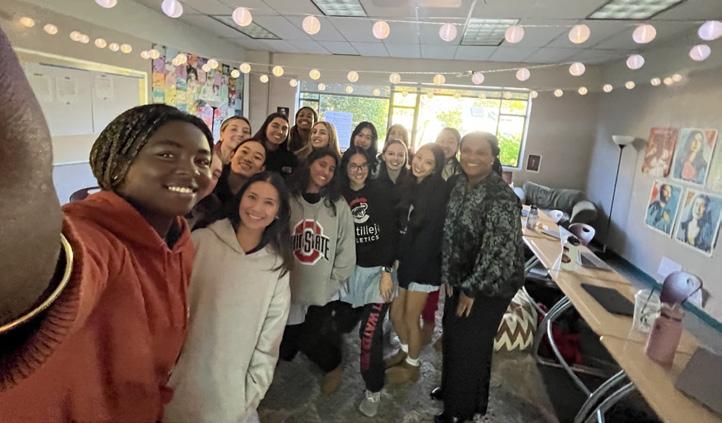
Welcome to our series, Daily Diaries, where we follow Castilleja teachers through a day in their lives. Today’s teacher is Kay Barrett, who teaches two of Castilleja’s AT English Senior Seminars: Black Women Writers & Culture and Afrofuturism.
7:40 - Walk my dog, Bucky, and drop him off at daycare

8:15 - Commute to Palo Alto: Barrett commutes to Palo Alto on BART and Caltrain from Oakland on the days she teaches at Castilleja and Stanford. On days like this one, the majority of her time is spent preparing for the various classes she teaches. When she doesn’t teach, she normally stays in Oakland and focuses on her dissertation.
with Candy Fu ’26 & Fiona Wiley ’26
Welcome to our series, Daily Diaries, where we follow Castilleja teachers through a day in their lives. Today’s teacher is Matt Callahan, a sophomore, junior and senior year English teacher and the faculty advisor for Counterpoint. Below, as outlined to us by Callahan, is his daily routine.
5 a.m. Wake-up: I’m back to trying to get up early and grade in the early mornings. This is week two after football ended. I really like it, but it means I’m really tired at night.
5:10 Bread in the oven: Today is pecan and cherry sourdough. It’s been proofing overnight, so it’s all good to go.

5:15 Coffee: We’ve been buying Verve lately; today is Seabright. Weird but true: we buy two kilograms of coffee about every other week. We go through a lot of coffee around here.
9:55 - Teach Black Women Writers & Culture at Castilleja: Today, our class discussed Toni Morrison’s “Recitatif” as part of the “Afterlives of Slavery” unit.
11:30 - Second Coffee! Prep for teaching my writing-intensive class, Race and Technology in the African American Literary Tradition: On Tuesdays and Thursdays, Barrett teaches her course about Afrofuturism at Stanford. It is a one-time course offered this quarter and counts towards one of the four courses she must teach as a graduate student.
2:00 - Lunch Break at Mamahuhu: Barrett likes eating lunch at Town & Country Village, just a few minutes away from Castilleja. Today she tried Mamahuhu, a new restaurant that opened recently.
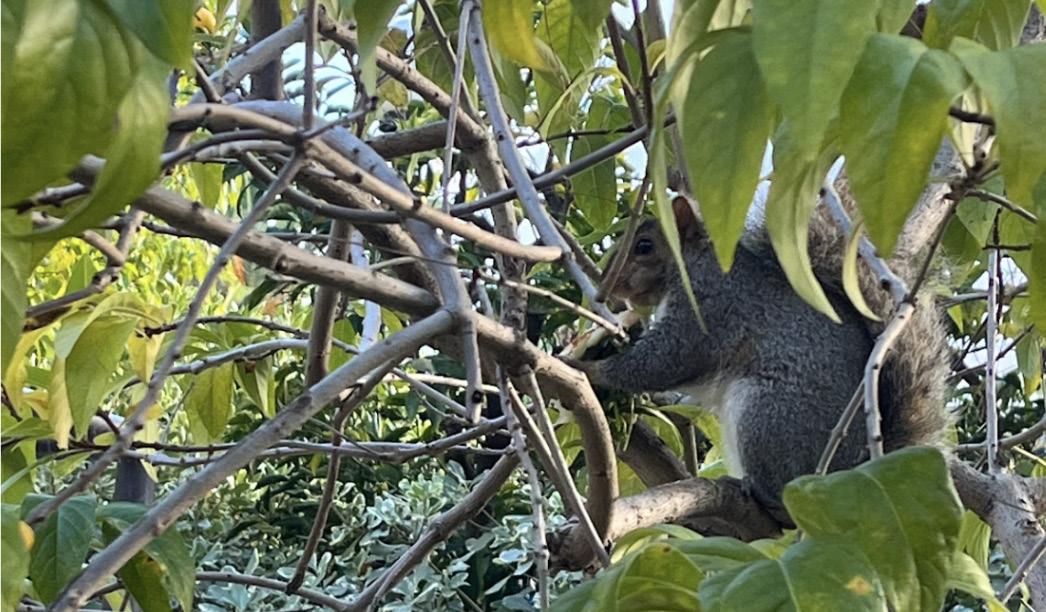
3:00 - Office Hours with one of my Stanford students, featuring a very hungry squirrel!
5:20 Rowan wakes up: His hand and his foot hurt. He has a fever. He says, “I think my head is going to fall off.” Poor guy.
Grading: ATAV this morning. These Centos are really, really good!

7:00 Breakfast: Eggs, toast and yogurt with granola.
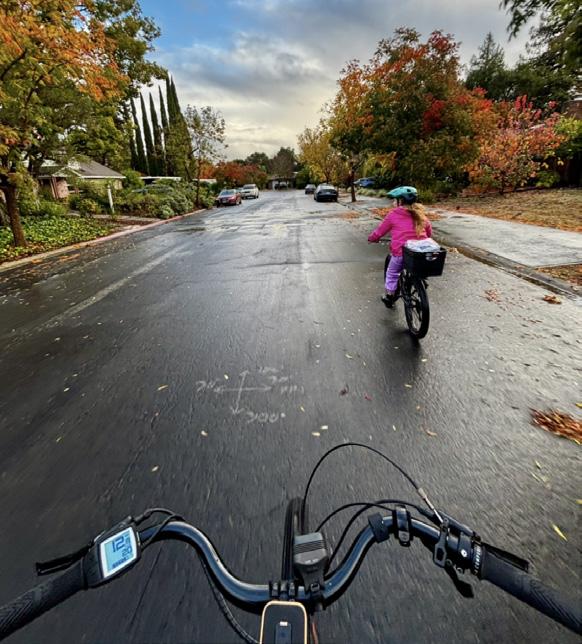
7:40 Bike Hadley to school: We ride to school every morning. Most mornings, we listen to our playlist. This morning it’s Rainbow Kitten Surprise and Olivia Rodrigo. The whole commute takes less than 10 minutes.
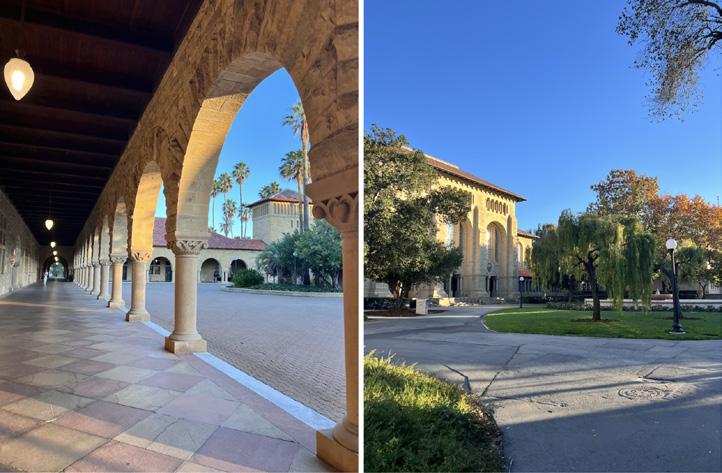
3:45 - Gave Candy and Fiona a walking tour of Stanford: Barrett showed us around the Green Library, the Main Quad, Margaret Jacks Hall (which houses the English Department), the Oval and the Science Cluster. During our walk, she explained that her experience being a student has recently helped her better understand her approach to teaching. She also told us about her PhD program and educational journey and explained her transition from an all-girls high school going into a coed college. Finally, she advised us to cherish these years because they pass by quickly. Fun Fact: As we admired the beauty of Stanford’s campus, Barrett explained that it was the first college she had ever visited. While she didn’t end up applying (it was too far from her home), she ultimately ended up here—a nice full-circle moment.
4:30 - Teach Race & Technology: We sat in on Barrett’s Stanford course, which was fascinating. The class discussed Octavia Butler’s “The Evening and the Morning and the Night.” They examined the definition of sickness, the pathologization of Black bodies and the ways in which the story served as an allegory for slavery. It was an insightful and engaging conversation, and we saw many connections to themes we’ve explored in our Castilleja English classes.
8:00 Bike to school: From Nixon Elementary, I bike to Casti through Stanford’s campus. It usually takes about seven minutes total, but there is a lot of construction today and with the rain, it takes about eight minutes.
8:30 English II: We’re in our poetry unit, discussing narrative poetry and we’re reading “Allowables” by Nikki Giovanni, alongside “Mercy” by Rudy Francisco. Students received their video essays this morning. We then ate some bread with butter and jam, and now they’re explicating the poems in small groups.
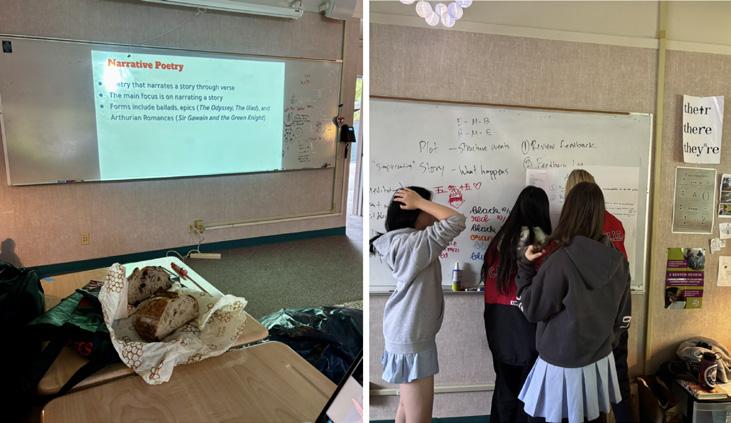
9:55 Observation: I am observing everyone in the English department. So today I sat in a class. I take notes on everything I see: who is participating, who appears engaged, what kinds of questions are being asked and who is answering those questions. Then I meet with every teacher to reflect and celebrate them as part of my role as the department lead.
11:00 Home to be with Rowan: I have to miss advisory today to be with Rowan while my wife has paper meetings (she teaches in a program called SLE). Lunch with Rowan, playing with Magna-Tiles and drawing letters. He is learning his letters and makes these incomprehensible notes covered in letters as “presents” for us. It’s very fun.
6:40 - Commute back to Oakland: Barrett takes Caltrain and BART back home.
8:30 - Zuzubowls for dinner

9:00 - Training
dog.
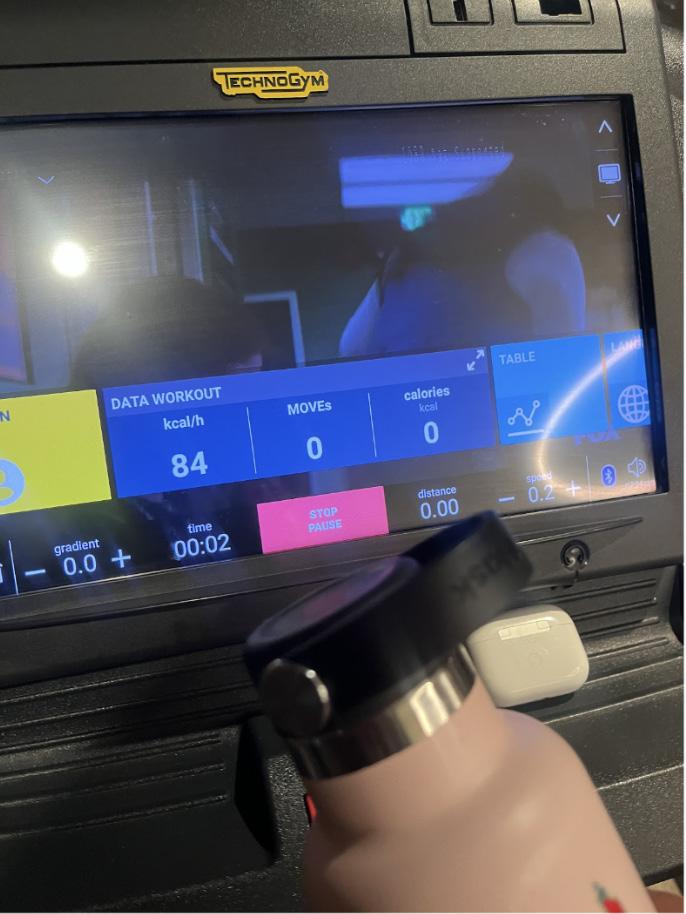
1:00 ATAV team meeting: Grade norming looking across sections. In our team meetings we do a variety of things, but today we were looking at one assignment across our sections. We talk through how we assess writing individually and try to better align across the sections. With three teachers, this is really important! While we sometimes disagree, it’s incredible to realize that we are very close in terms of our grading practices, even if our approaches are sometimes different. We are all within a couple of percentage points of each other. Today, we decide to adjust our rubric on the poetry explication to better capture what we’re looking for, and to try to catch students doing close reading more accurately (and generously!).
2:10 ATAV: Gatsby chapter three. My period four class is on chapter three–when Nick first goes to Gatsby’s house for a party, and meets him for the first time. We spend much of the class discussing how setting reveals themes of the novel: facades, old money versus new money, and perception. We have one excellent question about old money status and why they feel threatened by the emerging new class–isn’t money just about protecting money? We then spend some time looking at Nick and Jordan’s relationship (who, for example, is the girl with the “faint mustache of perspiration”? And why leave this ambiguous?).
CONTINUE READING ON OUR
castillejacounterpoint.org

By Fiona Wiley ’26
Taylor Swift’s 12th studio album, “The Life of a Showgirl,” came out Oct. 3, and I (a self-declared Swiftie) haven’t listened to it since. Why?
Freud (as I learned in ATAV) might say that I am too overwhelmed by the stress of college applications to process it, I’m lacking a romantic interest to relate to it or I simply don’t like it. While some of those assumptions might be reasonable, the truth is that I do generally like the album. My initial reactions actually included comments like “I love this,” “Wow, it’s so good” and “This feels like the perfect pop song.”
Following the album’s release, I began to think I may have overreacted. As I heard more and more negative reactions, I let them slowly shape my opinion of the album, and I stopped listening to it. But now that the conversation has started to die down, I’m revisiting the album.
Accompanied by upbeat pop sounds, “The Life of a Showgirl” maintains some of the lyricism Swift adopted in “folklore,” “evermore” and “The Tortured Poets Department.” In some songs, this intersection of her lyricism and pop sound is clear.
The album’s first single, “The Fate of Ophelia,” demonstrates Swift’s ability to include complex literary references with more contemporary, positive beats. The song’s allusion to Ophelia, a character in Shakespeare’s “Hamlet,” is an interesting continuation of Swift’s exploration of the madwoman archetype in songs like “mad woman” and “I Did Something Bad.”
Lines such as “But love was a cold bed
PHOTO BY FIONA WILEY
sings “my beloved ghost and me.”
Furthermore, Swift uses the color of the sky to represent her mood, something she has done in songs like “Maroon,” “Soon You’ll Get Better” and “The Best Day.” I will admit, it takes a very deep knowledge of Swift’s entire discography to catch some of these references, but seeing them adds depth to songs like “Opalite,” which could seem like a shallow pop song to some at first listen.
Swift has an intriguing but slightly alarming approach to her song “Father Figure.” The song is an extrapolation of George Michael’s song of the same name, and it works on multiple levels to represent Swift’s experience in the music industry. Many see the song as a criticism of Scooter Braun, who sold away Swift’s masters, but I think the song also works as a continuation of the stories that Swift tells in her songs “The Lucky One” and “Clara Bow.”
All of these songs represent Swift’s experience in the music industry—her struggles, triumphs and the expectations put on her. “Father Figure” deals with deception, betrayal and self-interest, all aspects Swift has dealt with as a celebrity. As I listened to the song for the first time, I noticed the potential for a Marxist analysis; the repetition of “this love is pure profit” is a nod to the transactionality of the relationships that Swift experiences in the music industry. However, while there is an intriguing deeper meaning in “Father Figure,” some lyric choices (if you’re curious, look up the lyrics!) in the song ultimately distract from it.
“All of these songs represent Swift’s experience in the music industry—her struggles, triumphs and the expectations put on her.”
full of scorpions / The venom stole her sanity” further reflect Swift’s songwriting ability. Her use of an intricate metaphor to convey the idea of love driving someone mad demonstrates Swift’s poetic mindset, even in her new era of upbeat pop music.
Many other songs on the album reflect Swift’s lyricism. “Opalite,” one of the most upbeat and popular (and potentially controversial) songs, demonstrates Swift’s deliberate approach to her songwriting. Throughout the song, Swift references recurring symbols across her discography. The line “I thought my house was haunted” is a nod back to “Who’s Afraid of Little Old Me?” where she sings of her “house with all the cobwebs.” The line “I used to live with ghosts” similarly echoes her song “How Did it End?” in which she
Another song worth mentioning is “Wood,” which has become divisive among fans. According to Swift, the song is innocently about superstitions. But it doesn’t take Freud to tell that this song is definitely not about superstitions. The sexual innuendos throughout the song pose the question of who Swift actually writes for. A large portion of her fanbase includes young girls, and “Wood” could be painting the wrong picture for them. Swift’s choice to release this song could reflect her shift to writing songs for herself instead of for others.
incorporates similar literary elements. “Ruin The Friendship” and “The Life of a Showgirl” demonstrate Swift’s storytelling, and “CANCELLED!” and “Honey” showcase her thoughtful lyricism. I care a lot about the lyrics in every song I listen to. If I don’t find them to be creative or thoughtful, I probably will not like the song. But that’s not my issue with “The Life of a Showgirl.” I found that the album’s upbeat vibes and some of the lyric choices distracted me from noticing Swift’s usual lyricism. Additionally, had this album
“I care a lot about the lyrics in every song I listen to.”
My feelings on “Wood” are still mixed. I still feel slightly uncomfortable when I listen to it, but I also acknowledge the powerful statement that such a declarative song can have. Also, it’s important to consider that much of the backlash from listeners stems from the highly gendered expectations placed on Swift. Why can male artists sing about the same subjects without retaliation?
Across the rest of the album, Swift
By Naomi Park ’29

been released over the summer, I may have been listening to it more, but I now find myself gravitating instead towards Swift’s “evermore,” “folklore” and “TTPD.”
Despite hints of strong lyricism and storytelling across the album, the combination of the upbeat pop sounds, unnecessary word choices and even my current preferences makes me struggle to fully adopt “The Life of a Showgirl” as the new soundtrack of my year.
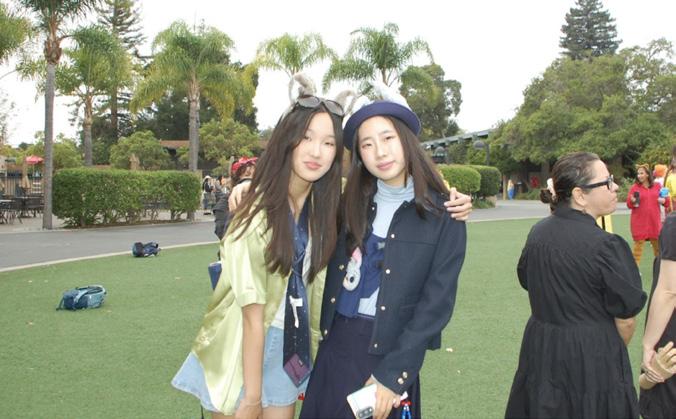
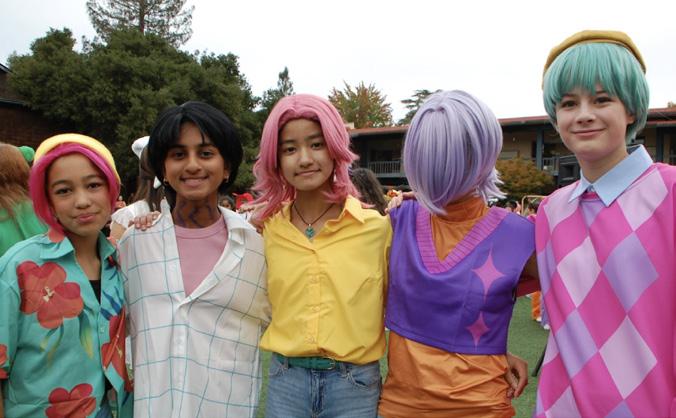
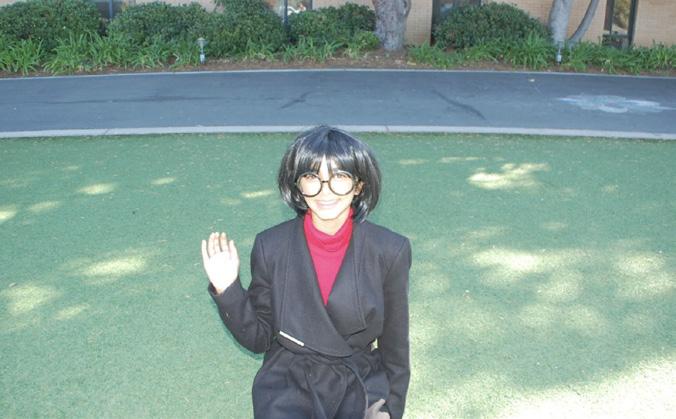
On Halloween, Castilleja students and faculty members dressed up in festive costumes and participated in many activities at the end of the day, including the Sophomore haunted house, s’mores in the Bourn Lab and trick-or-treating all around campus.


I couldn’t possibly talk about a new Taylor Swift album without mentioning the most important song: the fifth track. Swift’s track five is generally reserved for the most emotional song on the album (past track fives include “All Too Well” and “Dear John”). “Eldest Daughter” isn’t exactly sad, but it is very reflective. Swift sings, “’Cause I thought that I’d never find that beautiful, beautiful life that / Shimmers that innocent light back / Like when we were young.” I found these lyrics especially moving, as they continue developing the theme of innocence that Swift deals with in every album. “Eldest Daughter” has become one of my favorite songs on the album because, along with the thoughtful lyrics, it has a lighter melody, sort of reminiscent of Swift’s earlier albums.


EDITORIAL TEAM Dear Reader,
Zoë Friedman
Sara Flexer Editors-in-Chief
Maddie Park
Deeksha Venkat
Managing Editors
Anya Dalal
Editor of Features
Kaycie Nuckles
Editor of News
Amelia Yuan
Editor of Opinions
Nola Doorley
Editor of Photography
Vienna Farano
Editor of Special Projects
Chloe Cheng
Editor of Arts & Entertainment
Emma Siegel
Editor of Sports
Matthew Callahan
Faculty Adviser
Aaliyah Christian
Alice Tolland
Amelie Bellemans
Anjali Ambati
Candy Fu
Ella Cohen
Erin Gunawan
Esme Kreps
Fiona Wiley
Isabelle Chen
Jennifer Glodek
Khloe Hicks
Leela Mudumbai
Lola Lin
May Chen
Nora Schroepfer
Olivia Cantieri
Poppy Scott
Sabella Vaka
Saina Priyadarshi
Sarah Zhou
Sophia Li
Sybella Garcia-Traverso
Taarini Kadambi
PHOTOGRAPHERS
Chloe Chiang
Chloe Culver
Isla Doorley
Jennifer Glodek
Maliha Parmar
Naomi Park
ARTISTS
Allison Prakalapakorn
Katrina Huang
Rachel Jiang
Saige Sefcik
Sofia Balmaceda
STAY CONNECTED
castillejacounterpoint.com
IG: @castillejacounterpoint
Castilleja School
1310 Bryant Street Palo Alto, CA 94301
We are delighted to bring you the first print edition of the 2025-2026 school year.
The Counterpoint team has been working hard these past few months, remaining committed to being the voice of the student body. This semester, we have continued our focus on capturing more news and features around the Circle, and we’ve added a new column, Daily Diaries.
Our student writers are dedicated to exploring topics that are meaningful to our community, seeking to uphold the highest standards of journalistic integrity and transparency. We invite you to engage in these discussions thoughtfully as a reader, and we look forward to continuing to expand our reporting next semester.
In the meantime, we hope you enjoy this new print edition of Counterpoint.
Sincerely,
Zoë Friedman and Sara Flexer, Editors-in-Chief
By Kaycie Nuckles ’27

4. New uniform retailer
5. Junior year retreat destination
6. Place on campus or where a small pet might live
8. New learning module system
9. Place you might find Brittany Spears
10. Name of Gatorbotics’ plush mascot
12. Casti entrance that’s also the name of a cereal company
13. What the ‘C’ in ACE stands for
14. Gift the seniors make every year
15. Acronym for nearby shopping center

17. Place on campus that’s name takes on a literal meaning when it rains
19. Comfy (but against the dress code) pant choice 22. Building with language classrooms 25. “Proud thy ___ hue to wear”
26. Number of Castilleja Head of Schools before BNP
DOWN
1. Store that’s only open every other Wednesday
2. Beloved Casti dessert
3. Theme of this year’s dance production
4. Animal that might be confused for Casti’s mascot
7. Newest Castilleja sport
10. Replacement for the Stent
11. ____ Dinner Dance
16. Flying animal in the physics classroom
18 Castilleja’s founder’s middle name
20. Something you might find in Mr. Kaplan’s classroom
21. National ______ Day (8th-grade tradition)
23. Bourn ____ Lab
24. Color of the freshmen class tie

FOLLOW COUNTERPOINT ON INSTAGRAM