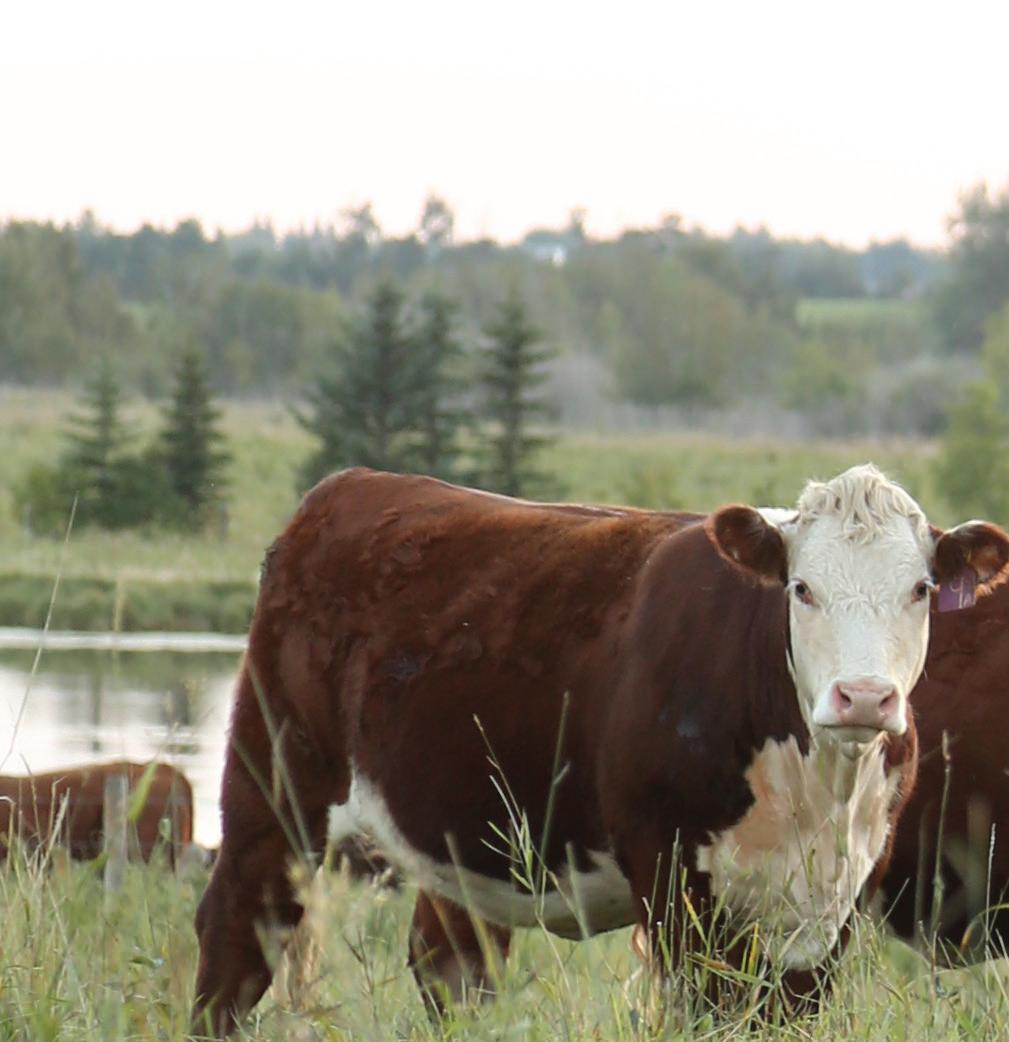
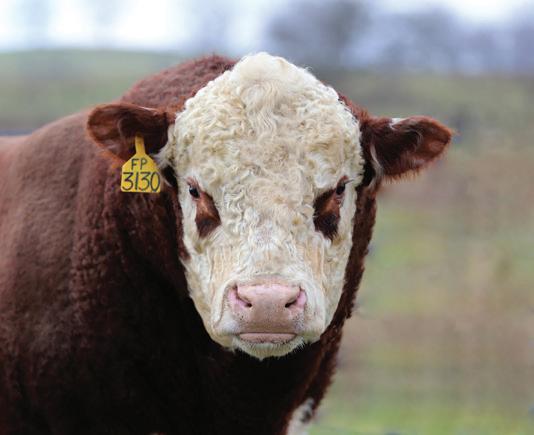
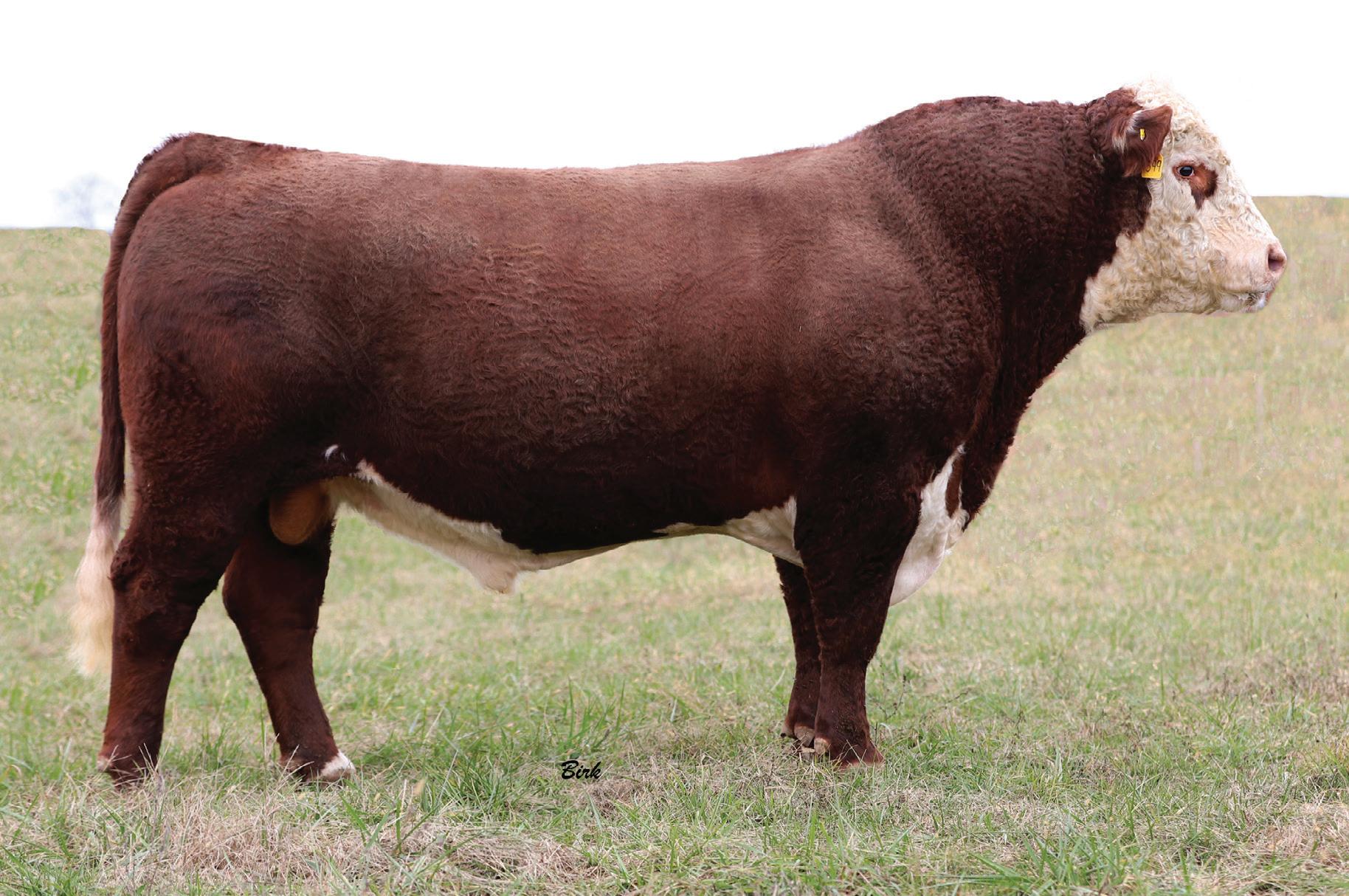
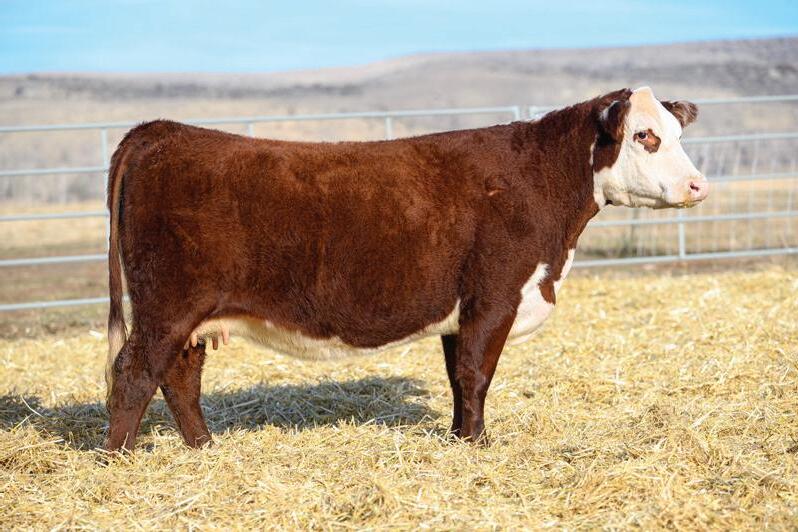
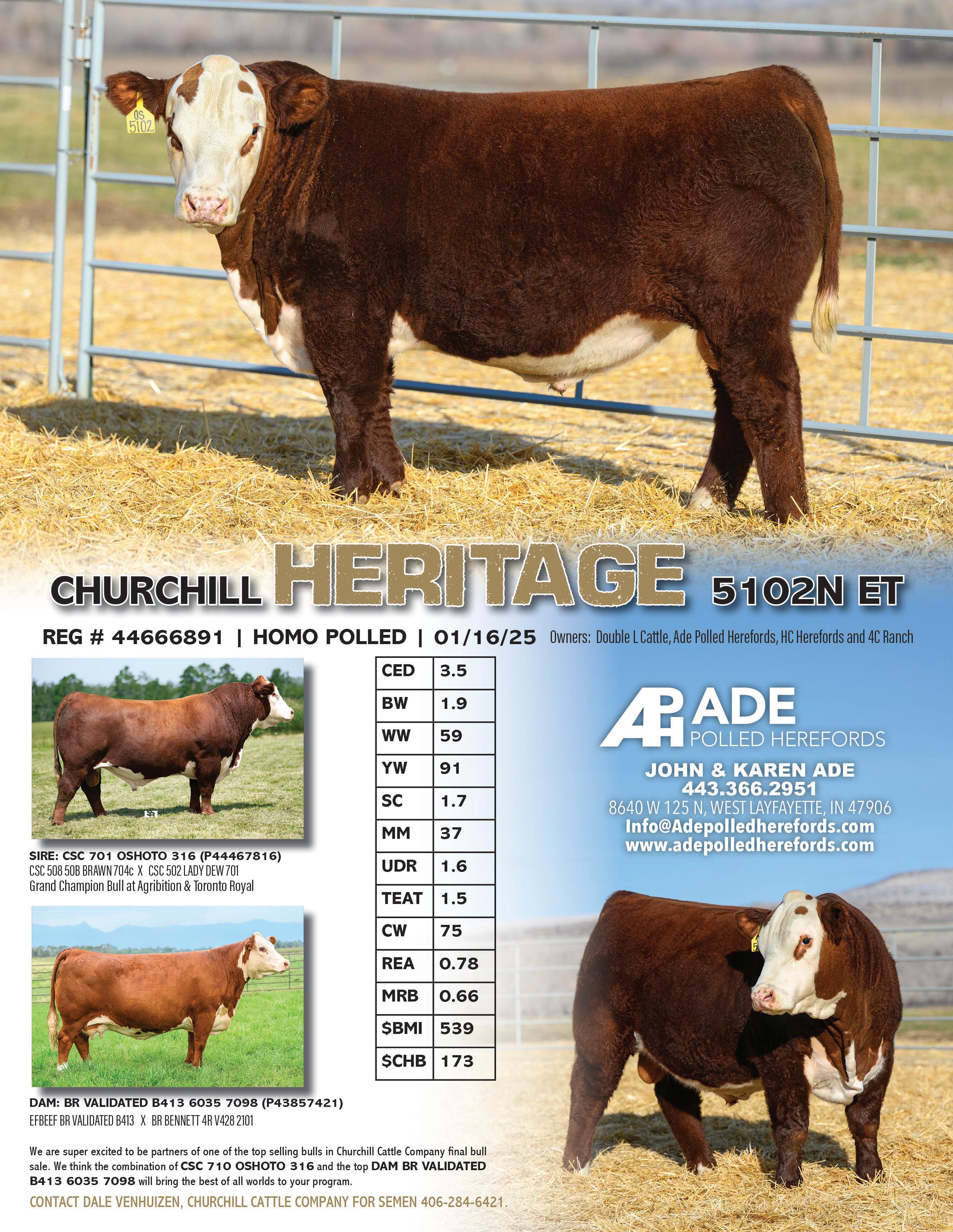
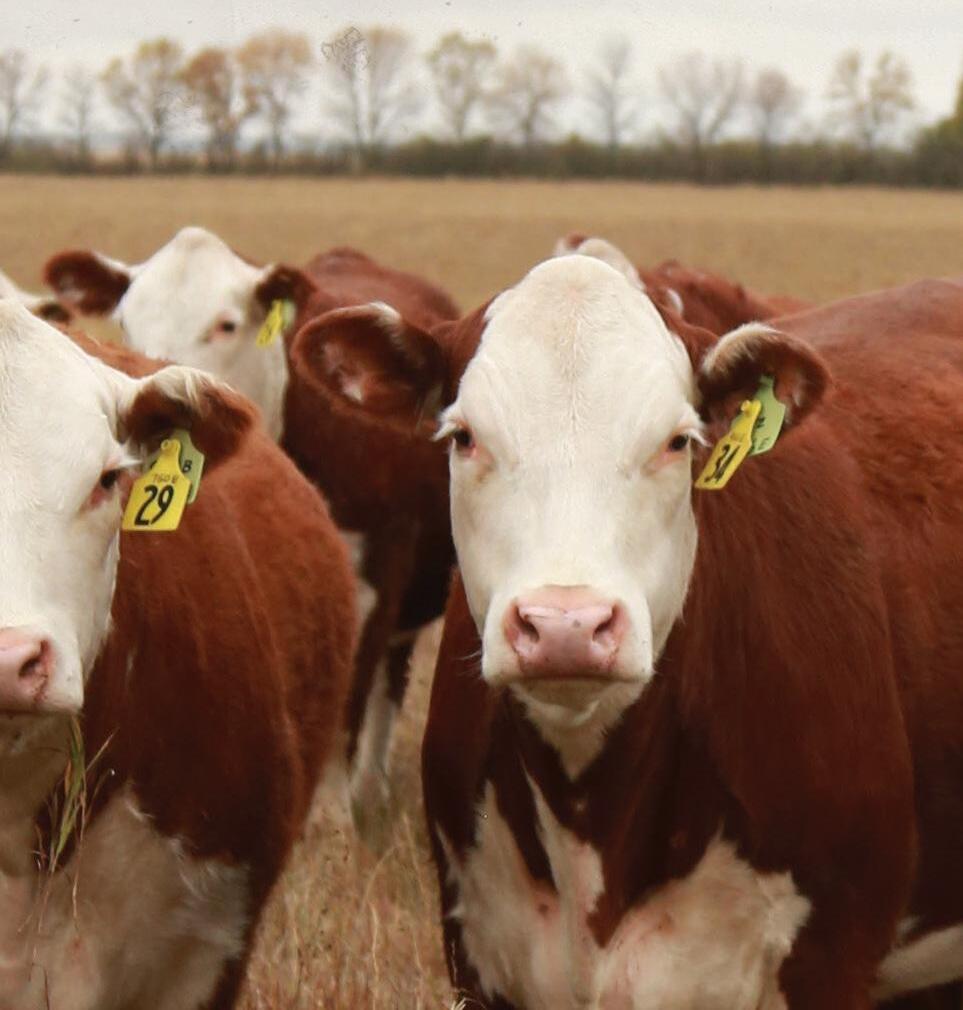
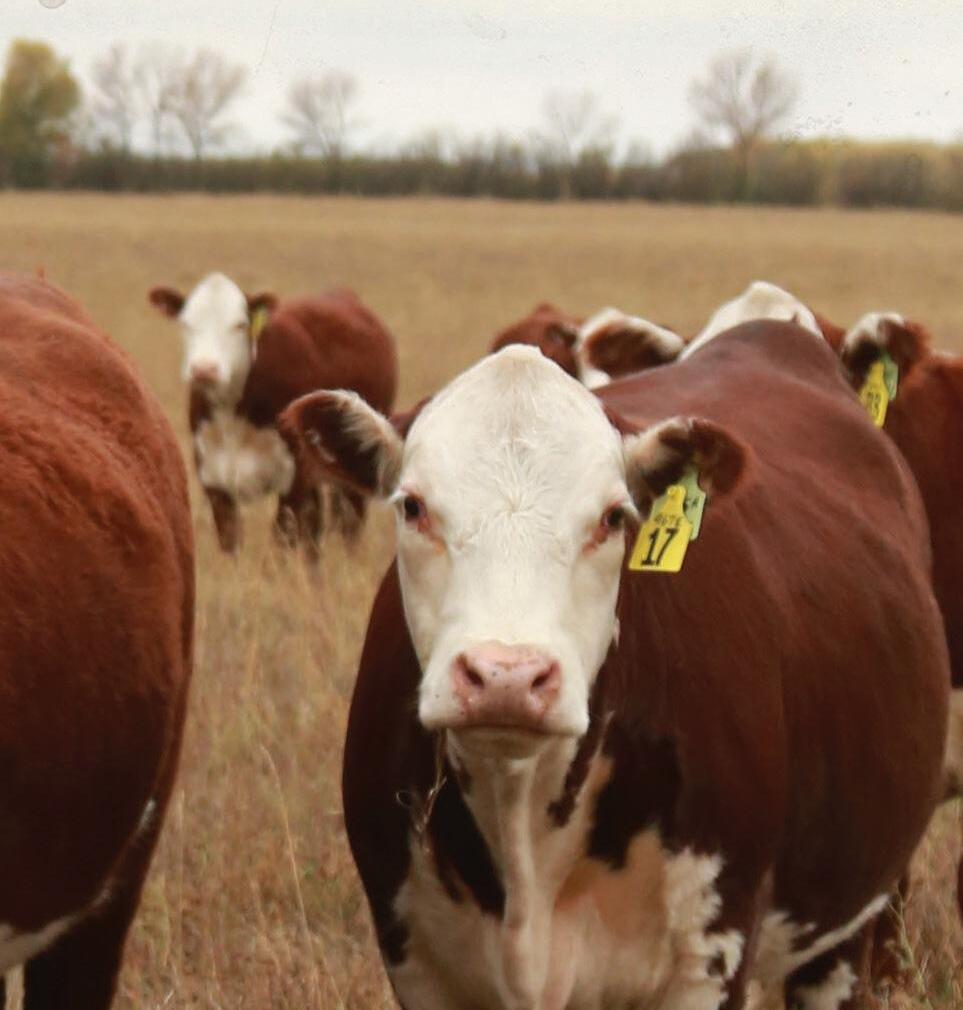
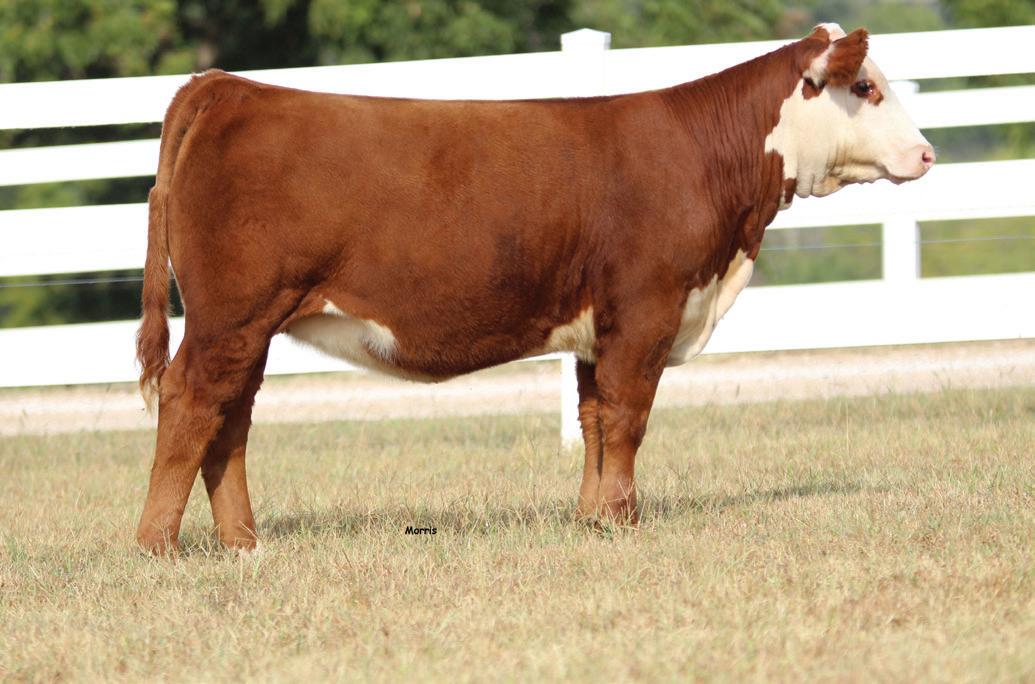
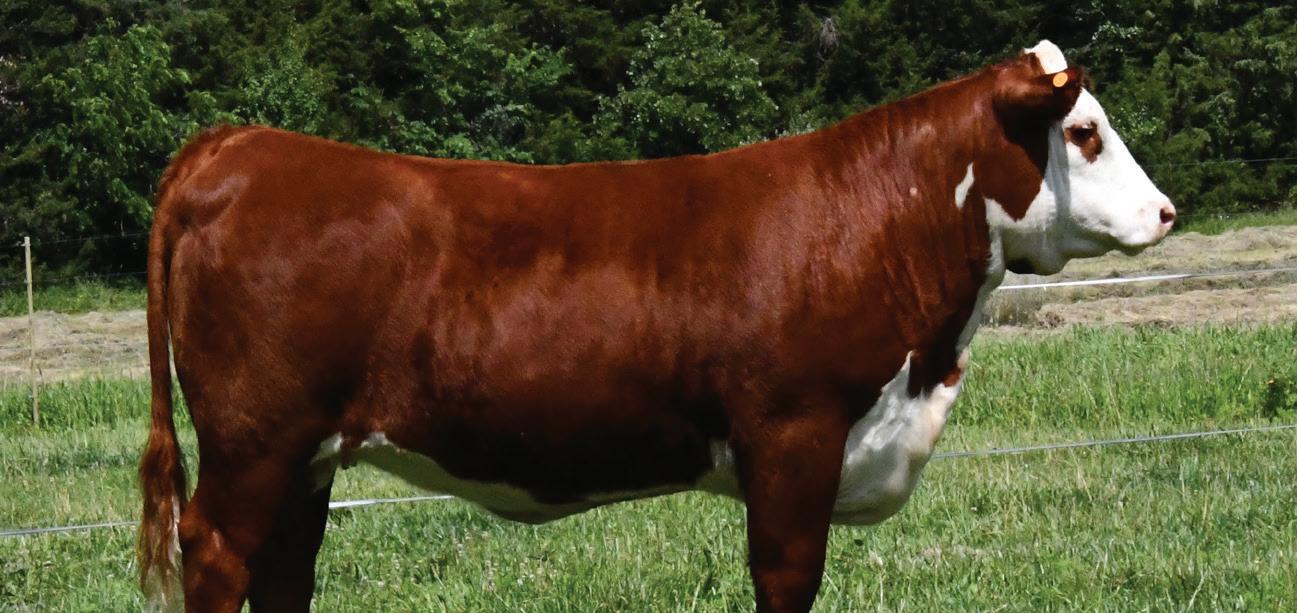
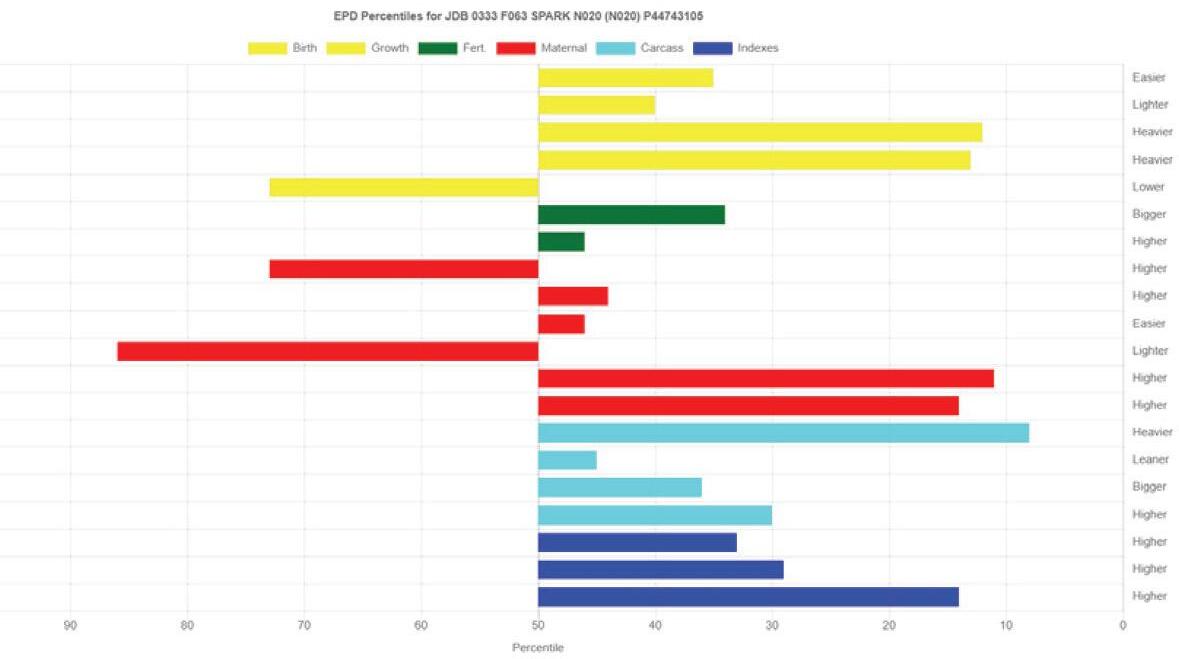
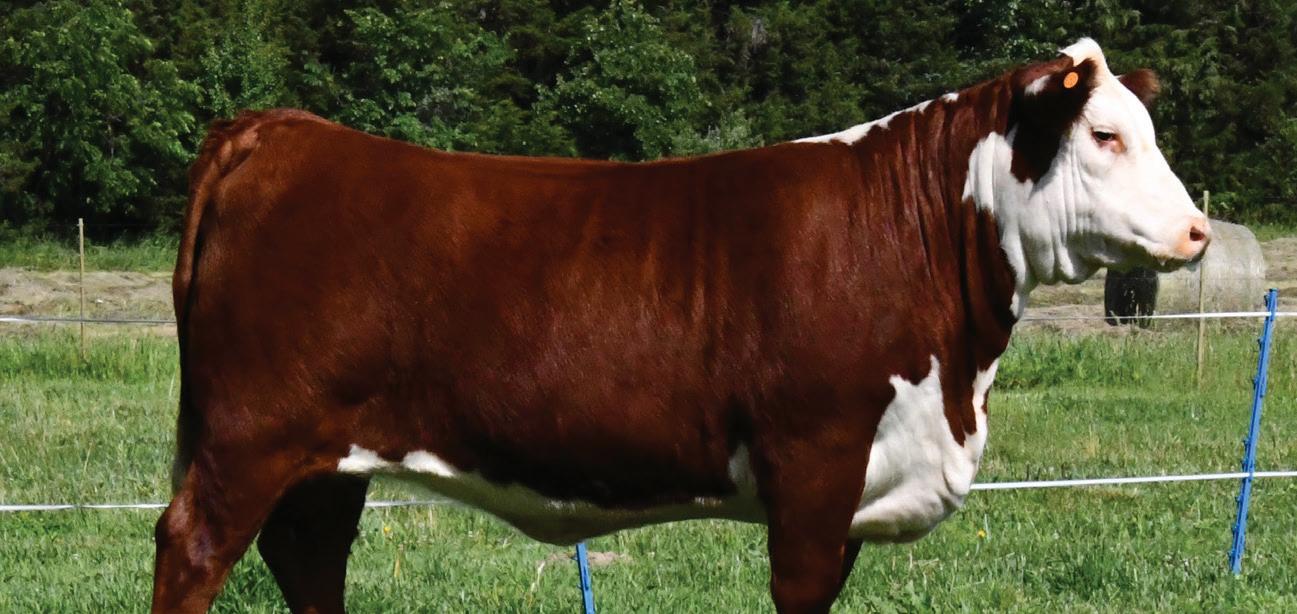
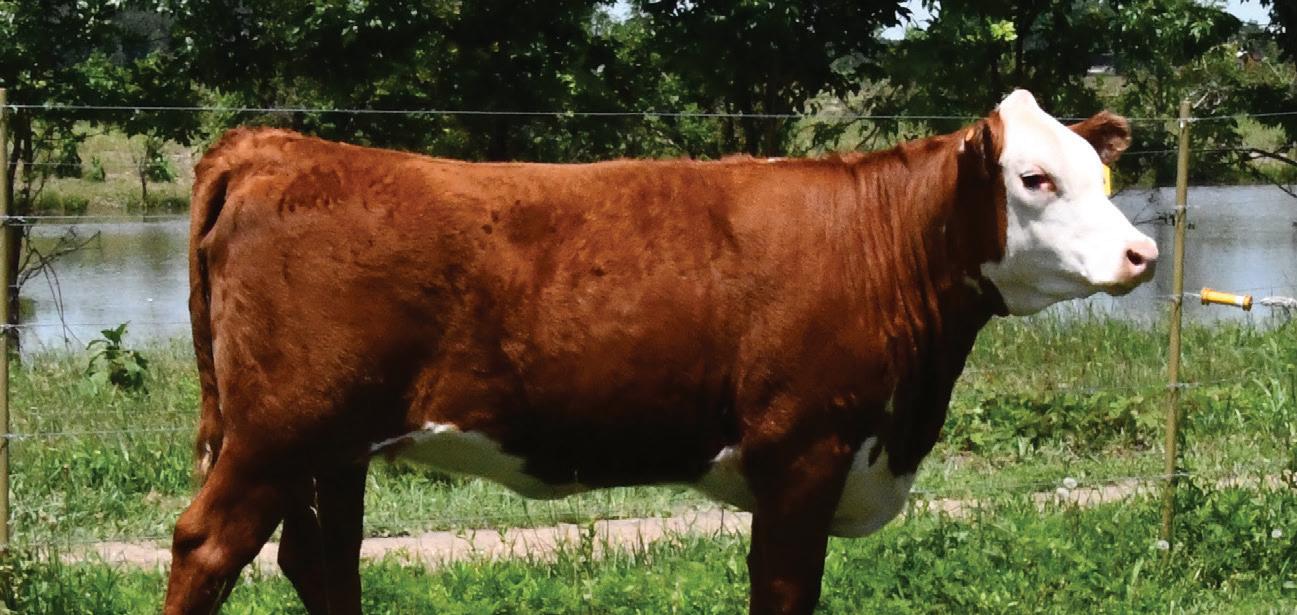
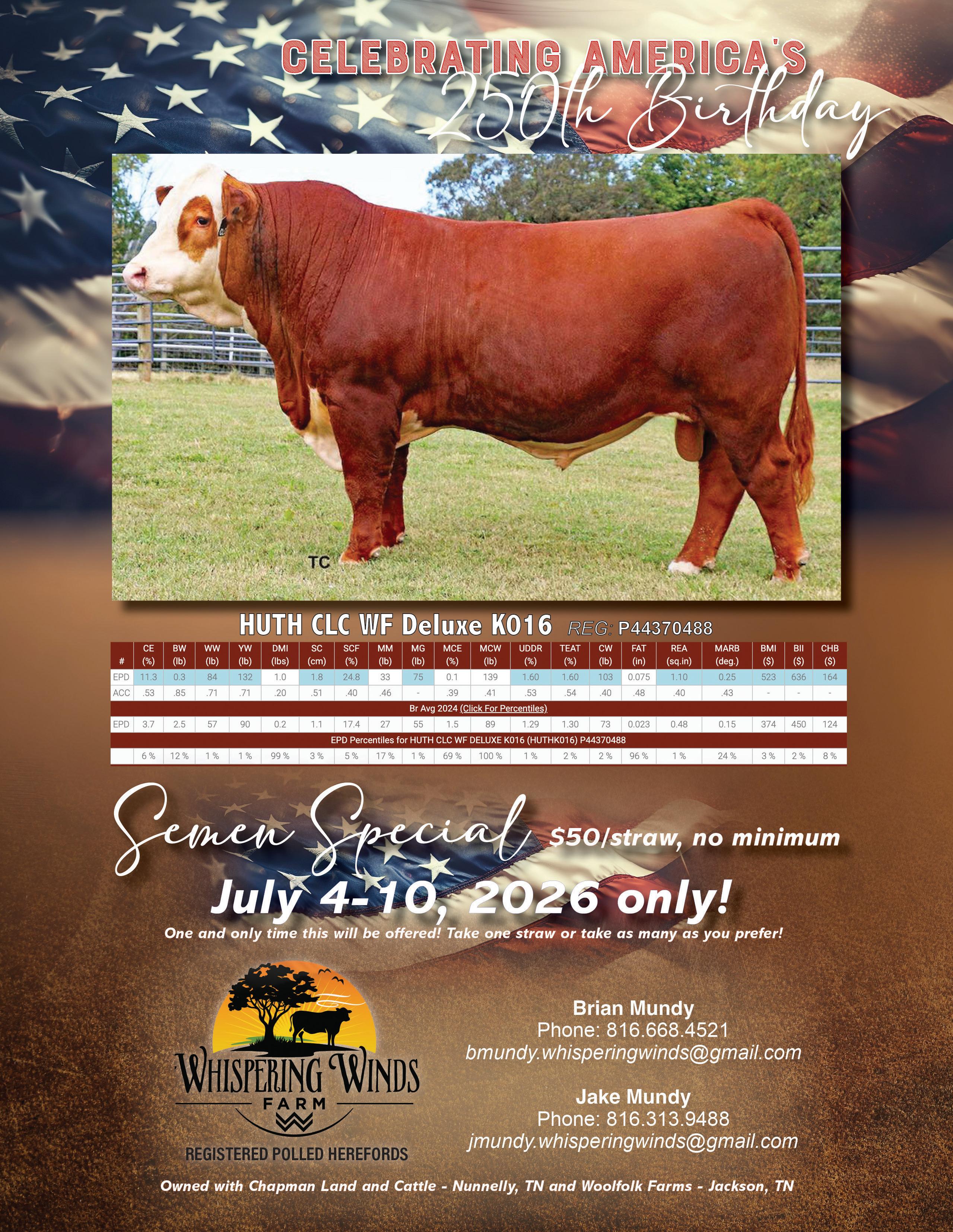
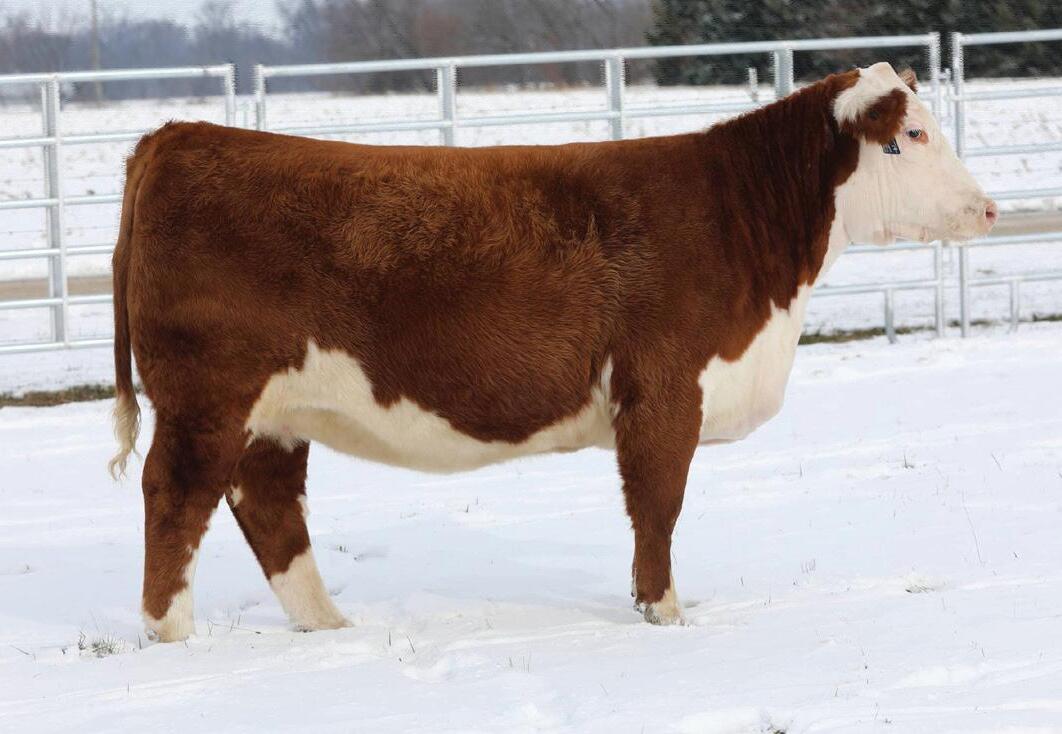
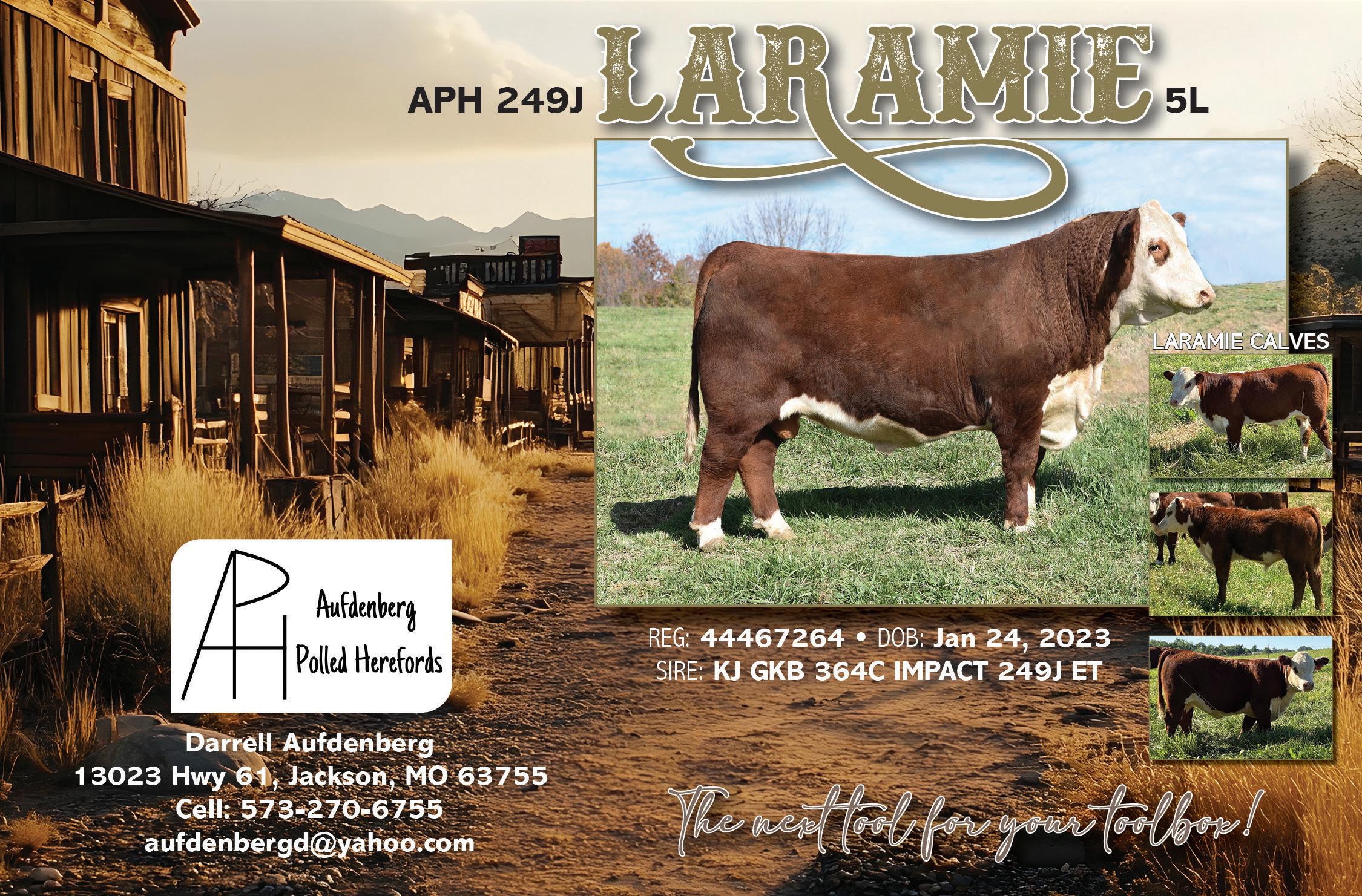
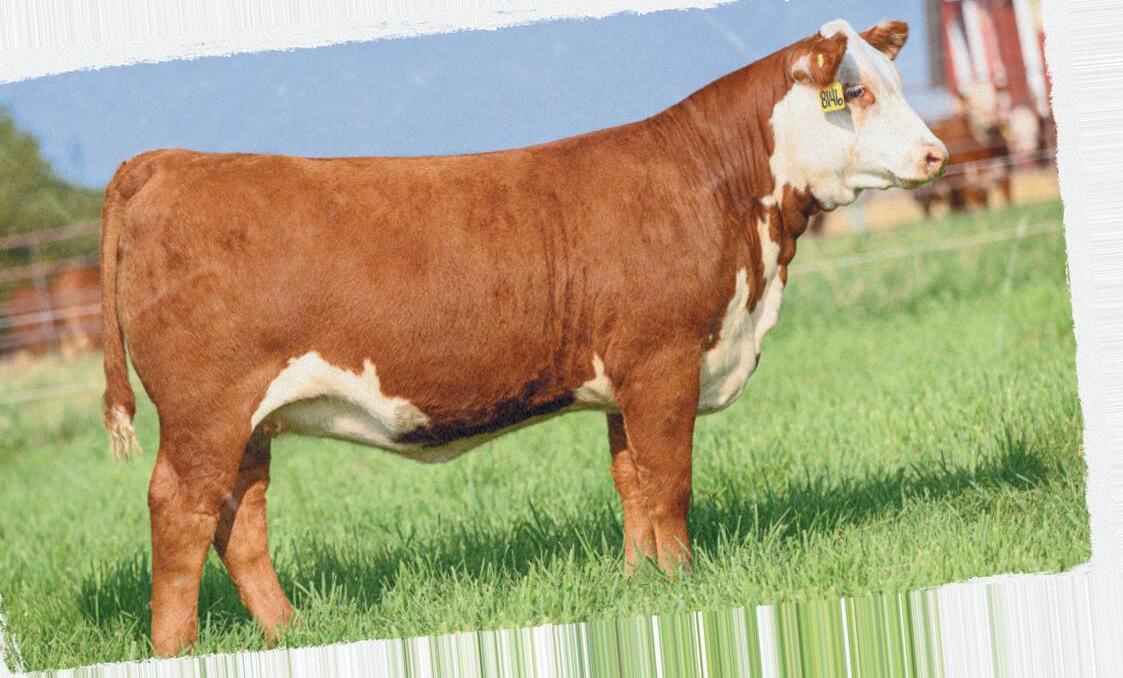
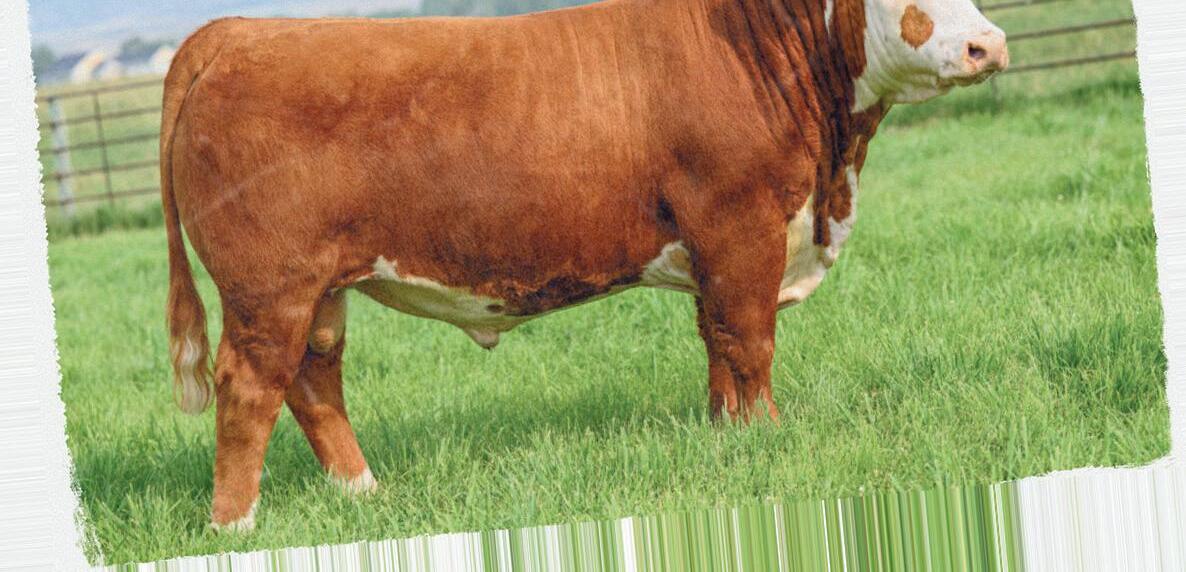
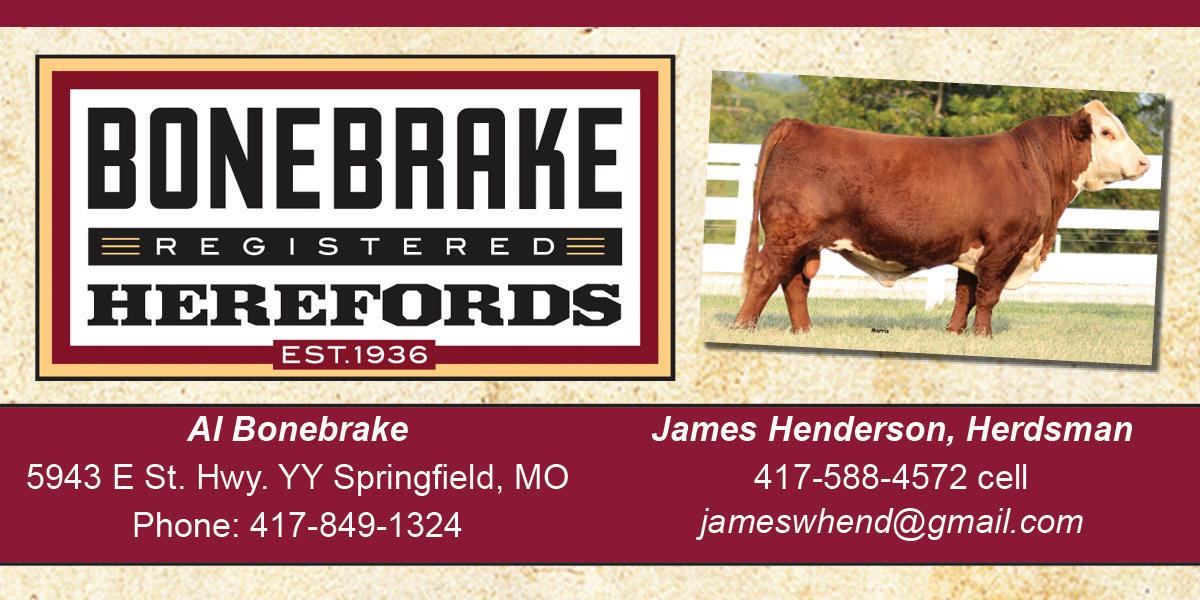
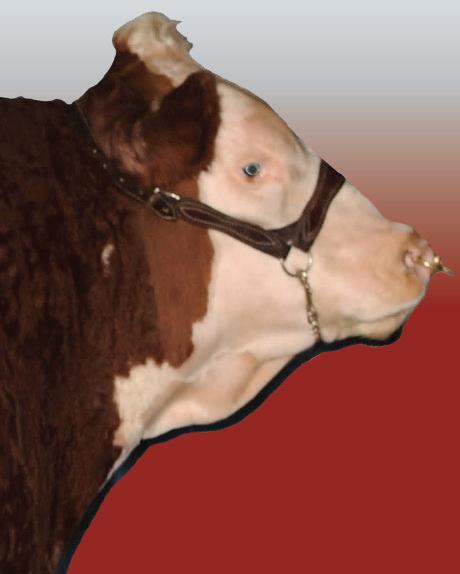
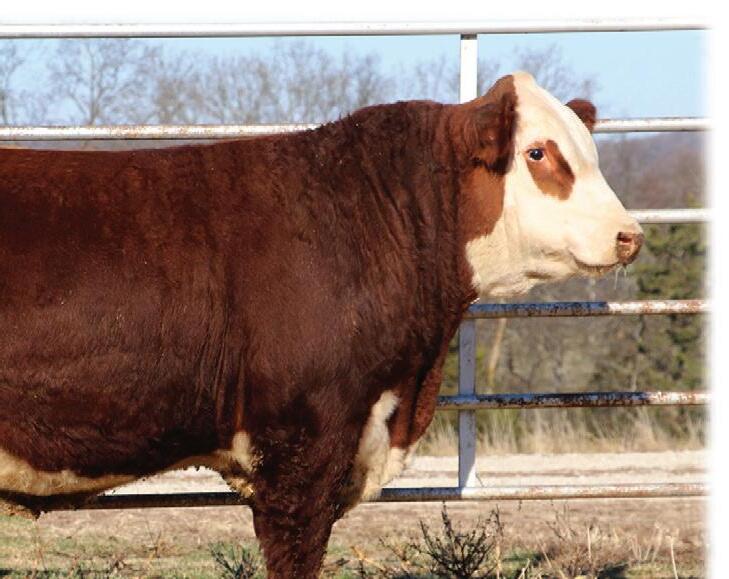
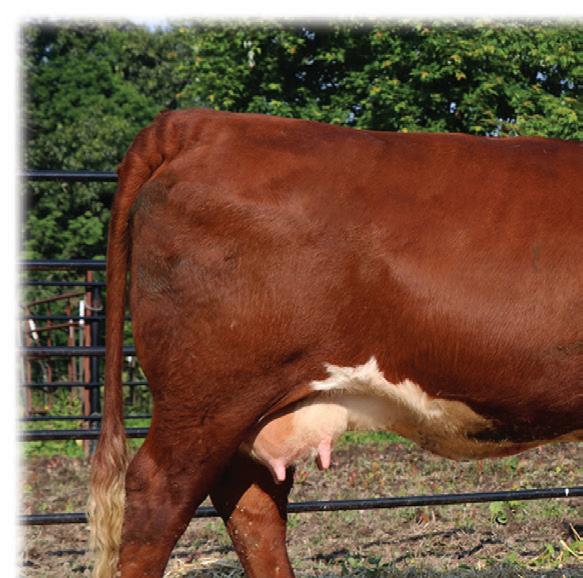
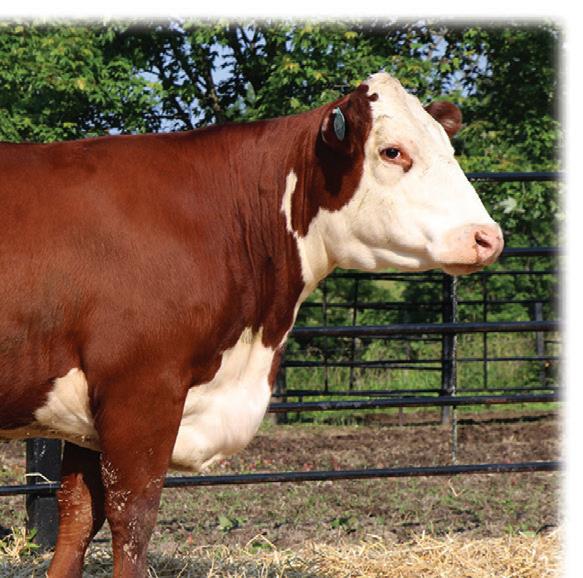
• He has an outstanding dam by Churchill Broadway out of the famous 7098 cow. They are elite donors from the Churchill program.
• A herd sire that will add breed value
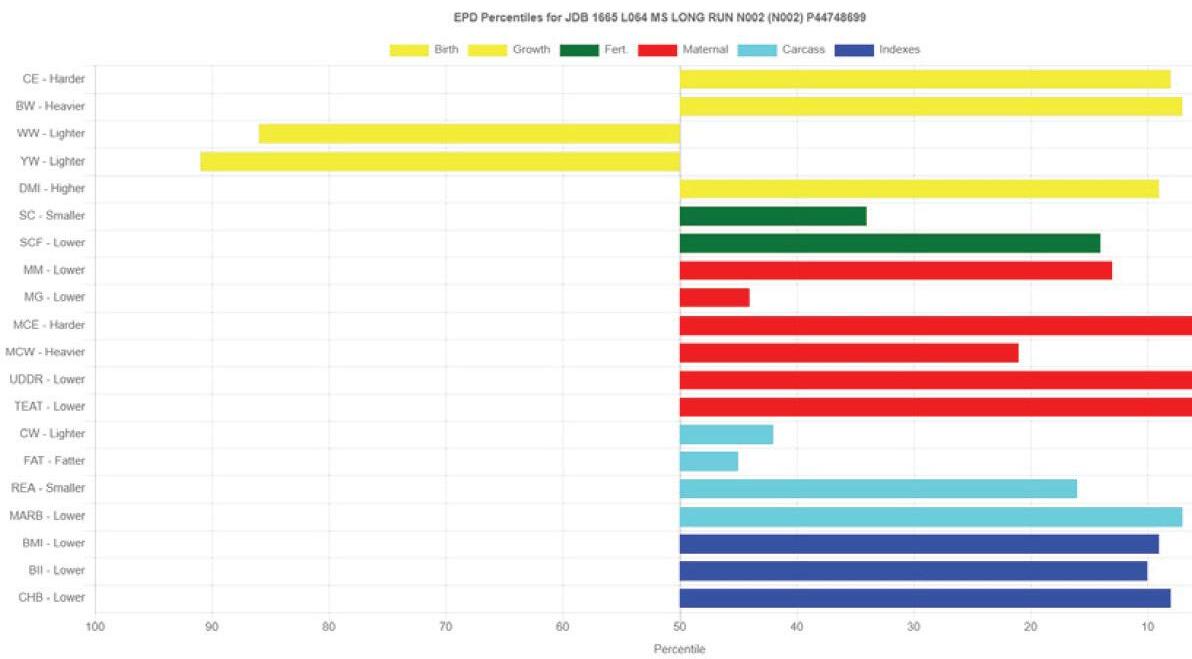
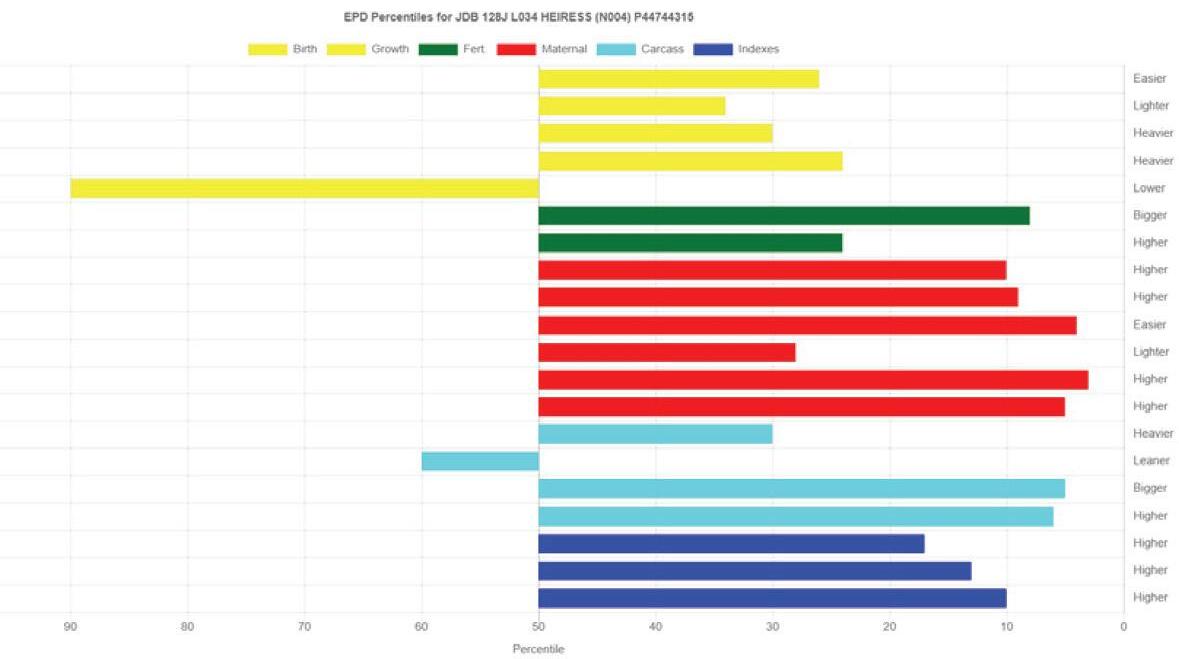
• 13 traits in the top 10%
• 3130L is a true profit maker
• He is distinctly different
Summer is one of the most rewarding seasons in the cattle industry. While the long days often mean extra work around the farm, they also bring opportunities to connect with fellow breeders, attend events, showcase cattle, and invest in the future of our industry.
For many families, summer means show season. It's a time when young people step into the ring, families spend weekends on the road together, and friendships are strengthened across generations. While banners and championships are exciting, the true value of these experiences often lies in the lessons learned along the way. Showing cattle teaches responsibility, dedication, sportsmanship, and pride in a job well done. These lessons extend far beyond the show ring and help shape future leaders within our industry.
For young producers especially, involvement matters. Take advantage of the opportunities placed in front of you. Volunteer to help at events, ask questions, meet fellow breeders, and don't be afraid to introduce yourself to someone new. The relationships you build today can open doors for years to come, and some of the most valuable opportunities in agriculture begin with a simple conversation.
Summer is also an excellent time to promote your operation and share your story. Every farm and ranch has a unique history, set of values, and vision for the future. Whether you're visiting with fellow producers at an event, sharing updates online, or welcoming people to your operation, every opportunity to tell your story helps showcase the values, dedication, and strength behind the Hereford breed.
The Missouri Hereford Association continues to provide opportunities for members of all ages to become more involved in the breed and beef industry. Through events, educational opportunities, and fellowship, our association helps strengthen the connections that make our Hereford community so valuable.
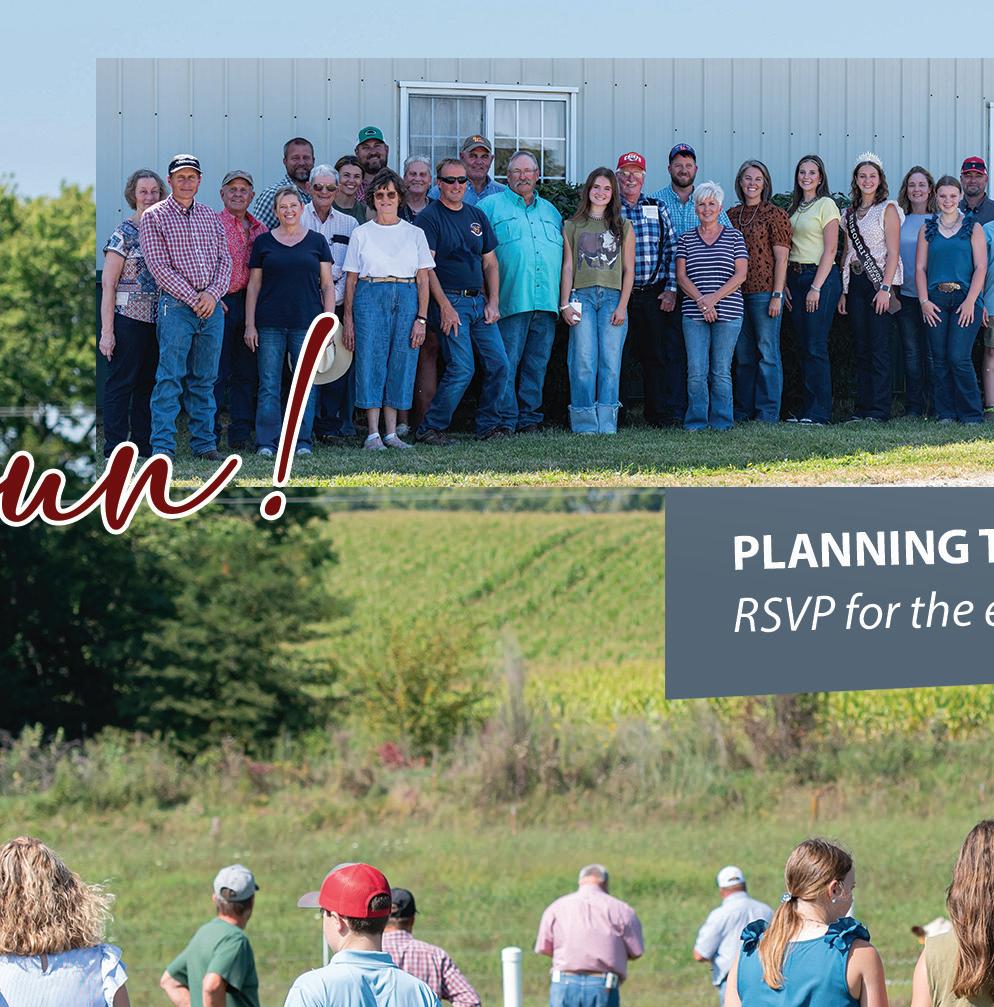
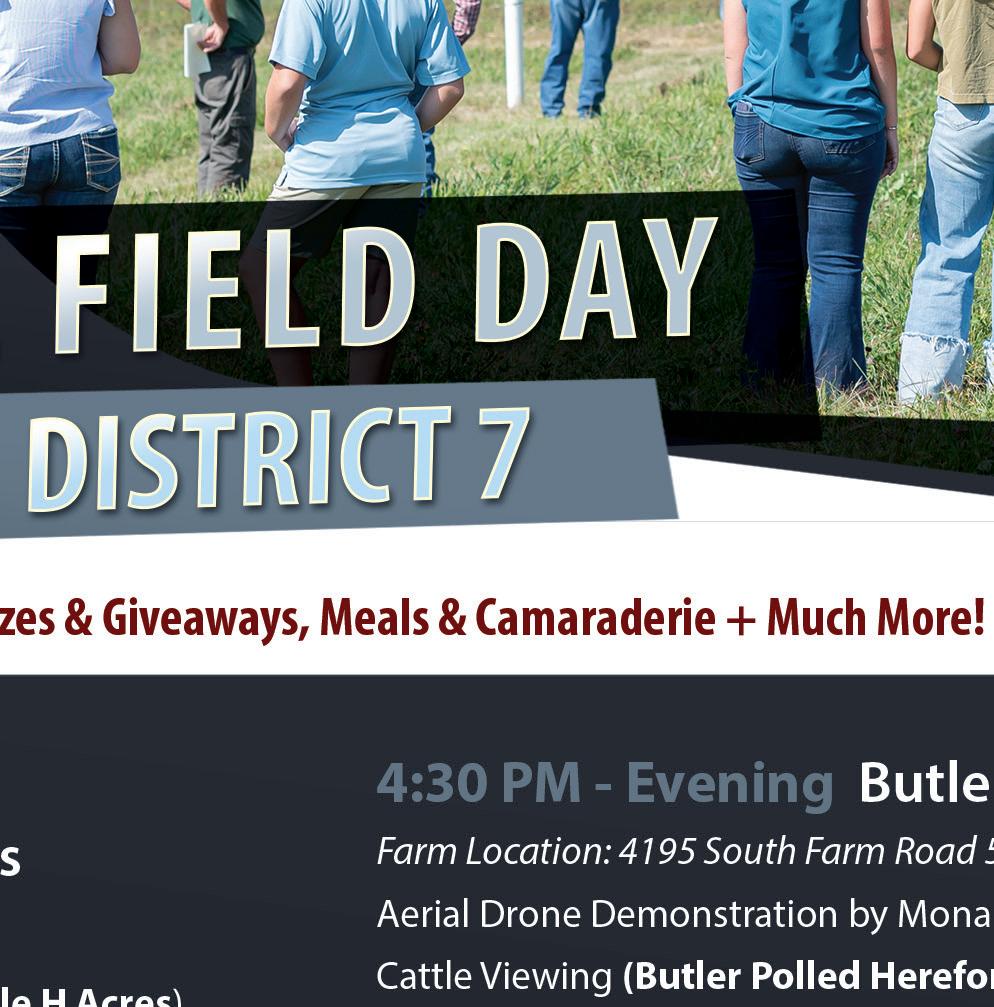
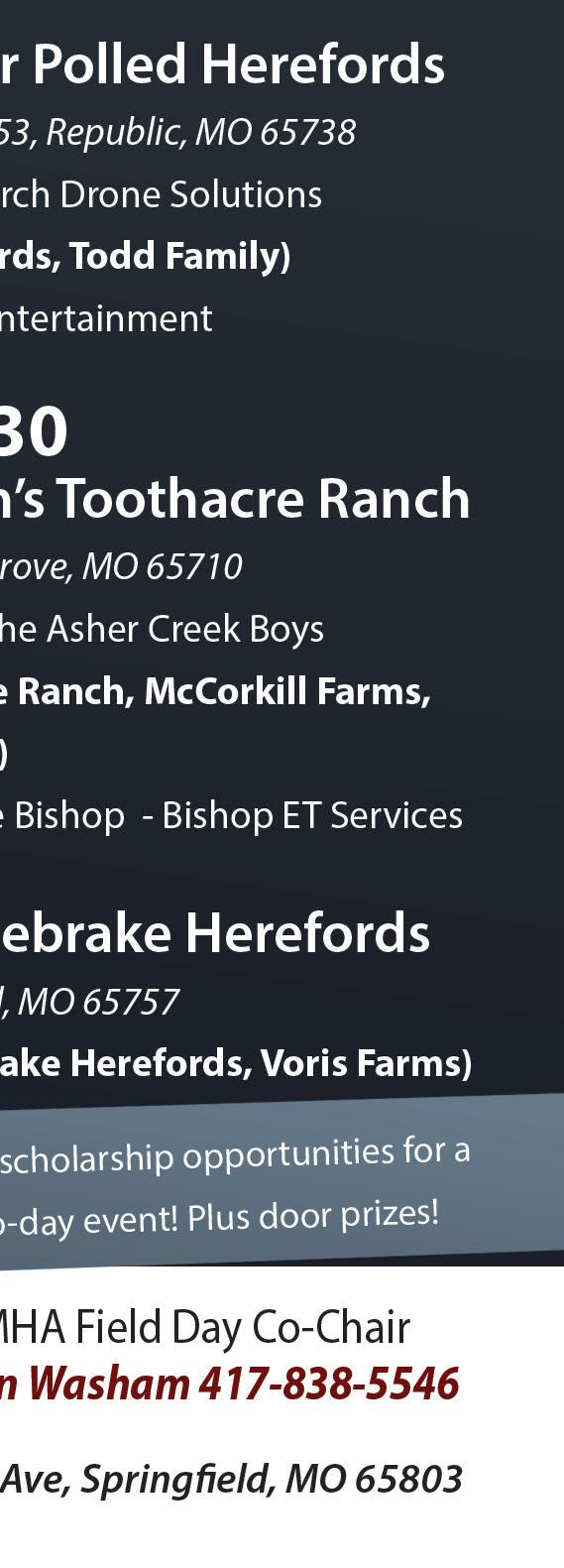
As we look ahead to upcoming events, including the Field Day on August 29-30, we encourage everyone to get involved, participate, and make the most of the opportunities available. The future of the Hereford breed depends on producers and families who are willing to stay engaged, promote agriculture, and support one another along the way. We look forward to seeing many of you this summer and celebrating all that makes the Hereford community so special.
The RRC Team
This newsletter is edited by Rural Route Creations 30487 Hwy J • Wentworth, MO 64873 www.ruralroutecreations.com
By the time you receive this issue of Missouri Hereford News, we will likely be experiencing the July weather commonly associated with fair season. However, given the unusual weather patterns observed across the state while this letter was being prepared, including widespread rainfall and significant weather events, the term “typical” may not be entirely appropriate. During my return from the Missouri Cattlemen's Association Junior Livestock Show, I reflected on the many conversations I had with fellow breeders from throughout Missouri. There was a strong sense of optimism regarding the future of the cattle industry, and particularly the future of our valued Hereford breed. Demand remains strong, as demonstrated by the production sales held this spring. An impressive offering of high-quality breeding animals was presented, with many commanding excellent prices.
Looking ahead, fair season is well underway. The Ozark Empire Fair and the Missouri State Fair provide valuable opportunities to evaluate cattle from
breeders across the state, as well as progeny representing some of the most prominent genetics within the breed. Following the fairs, the annual Field Day, hosted by District 7, has been planned and promises to be an outstanding event. Whether attending for the first time or as a returning participant, members can expect meaningful educational opportunities, gracious hospitality from the hosts, and valuable fellowship with fellow association members. A schedule of events and motel information are included in this issue. In addition, Missouri Hereford Association (MHA) member online sales and full production sales will follow, with sales scheduled nearly every week throughout the state. Many outstanding animals will be available for inspection and consideration as additions to your respective operations. The annual Hereford Weekend will be held November 7 and 8, with the meeting and banquet scheduled for Saturday and the Missouri Opportunity Sale to follow on Sunday at noon. This sale is developing into an exceptional event, as many
consignors have committed some of their strongest genetics, representing leading bloodlines available in the breed. Additional details will be provided as they become available.
You should have received several text messages from MHA. This communication method has proven to be both effective and well received by the membership. If you are not currently receiving these messages, or if you believe a family member would benefit from receiving these notifications, please notify Jocelyn or me so the appropriate additions can be made. As always, if you have suggestions or concerns regarding association activities, I encourage you to contact me.
I look forward to seeing you soon.
Larry Day
Make Plans
for the 2026 Missouri Hereford Weekend in Sedalia, MO
SATURDAY, NOVEMBER 7
5:00 P.M: MHA annual meeting
Banquet & awards ceremony to follow
SUNDAY, NOVEMBER 8
NOON: Missouri Opportunity Sale
Larry Day MHA Secretary/ Treasurer
WOMEN ASSOCIATION UPDATE
Summer time is a busy time!
Written by Tonya Bagnell
The Hereford Women of Missouri would like to wish all the Juniors participating at the Junior National Hereford Expo good luck and safe travels to Madison, WI.
Junior Nationals will be held July 4-10, 2026.
We will have a meeting on Saturday, August 15, 2026 at 10 a.m. under the big tree east of the Hereford Barn during the Missouri State Fair. We will also be discussing plans for activities for the Missouri Hereford state banquet and sale, the current year’s activities.
On Sunday, August 16, 2026 we will be serving donuts in the Hereford barn at the Missouri State Fair prior to the Open Hereford Show.
We would like to offer a big congratulations to all the eighth grade, high school and college graduates who have graduated this year and are moving
on with their next endeavors in life.
We hope that everyone is having a fun, and safe summer.
Please watch our Facebook page for updates.
We hope everyone has a successful show season!
Tonya Bagnell
If you are interested in joining please send your $15 dues to Treasurer Marijane Miller 20500 Sioux Drive • Lebanon, Missouri 65536.
2025-26 HEREFORD WOMEN OF MISSOURI OFFICERS
President – Kyla Waters 660-631-0299 | kg4waterz@gmail.com
Vice President | Natalie Reed 816-820-4282 | natalie@reedent.com
for the Missouri Hereford Association, Missouri Junior Hereford Association, Scott Adam and Hereford Women Scholarships by October
Tonya Bagnell Missouri Hereford Women Secretary
JUNIOR ASSOCIATION UPDATE
Best of luck exhibiting this summer!
Written by Emma Hancock
Hello juniors!
I hope everyone had the best time at this years Missouri Cattlemen’s Youth Expo (MCYE)! Congratulations to everyone!
The Junior National Hereford Expo (JNHE) is coming up soon! It will be held in Madison, Wisconsin, July 4-10. Good luck to all of our exhibitors attending!
The theme for the 2026 JNHE is “The Hereford Masters in Madison.”
We will also have a meeting at the Missouri State Fair, where we will be voting for new advisors and officers.
Wishing everyone safe travels this summer! I would like to thank all of the sponsors that help put on MCYE and JNHE! And of course a huge shout
2025-26 MISSOURI JUNIOR HEREFORD ASSOCIATION OFFICERS
President – Kristin Waters, Norborne Vice President – Jorja Ebert, Holt
Secretary – Maggie Reed, Green Ridge Treasurer – Tory Miller, Lebanon Reporter – Emma Hancock, Bolivar
Scan the QR Code to send dues via Venmo.
Fundraising Chairs
Beau Ann Graves, Chillicothe Karsyn Kleeman, Braymer
Directors
Connelly Ward, Oak Grove Reagan Sneed, Houstonia
out to all of the parents and mentors who help our juniors be the best! Can’t wait to see everyone in Wisconsin! Safe travels!
Please send your $15 annual dues to: MJHA Treasurer, Tory Miller 20500 Sioux Drive, Lebanon, Missouri 6553.
OR send Venmo to @MO-Jr-Hereford
HYFA Fall Scholarship Deadline September 1, 2026
FOLLOW US ON FACEBOOK! Missouri Junior Hereford Association
Emma Hancock MJHA Reporter
A WORD FROM THE ADVISORS
Written by Marijane and Hayley Miller
Summer show season is officially underway! It is the time our junior members are competing, creating new friendships with new and old members, reconnecting with show friends and making memories with their friends and family that will last a life time. Missouri Cattlemen’s Youth Expo (MCYE) was a successful weekend and it was a joy to see the kids reconnecting, competing and celebrating their success together.
Each year we have new members in our organization. I encourage each of our members to get outside your comfort zone and make a new friend with a fellow Hereford member this year! It is through these type of friendships that can easily become your lifelong best friend, fellow business partner, future spouse, or future employer. I truly feel this is one of the key parts of showing cattle is making connections with other members within our state as well as across the United States!
A great place to make new friends is at the Junior Nationals. We are excited to have our members showing at the Junior National Hereford Expo in Madison, Wisconsin.
It is through the continued support of our fellow Hereford Breeders that we are able to help with food expenses during Junior Nationals. This year we are covering four lunch meals for members on Monday through Thursday. Parents or others that are helping our juniors can pay $10 each day to be included with these meals! This helps our members and families out tremendously! We are one of the few states that are able to provide meals for our members in the big group effort that we truly have within our state!
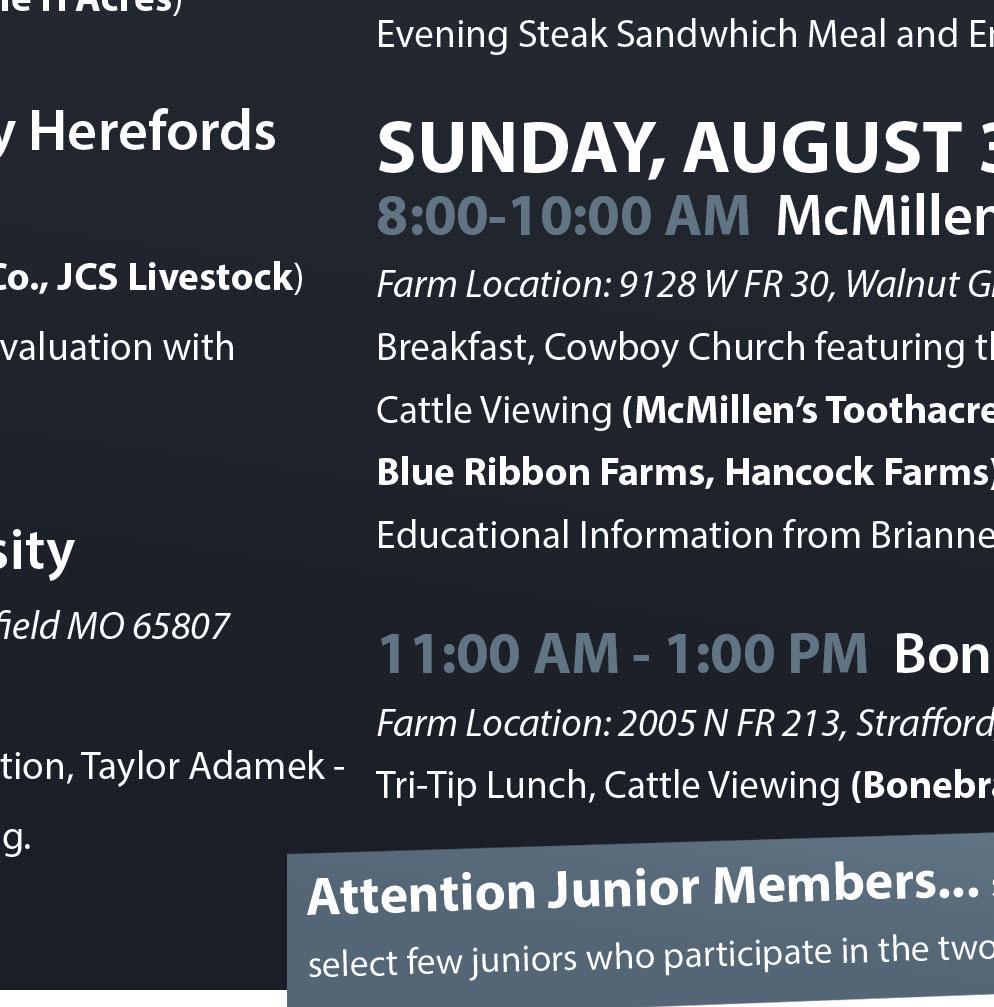
Be sure to save the date for the 2026 Hereford Field Day. They are working on ways to include our junior members, as they are the future of the Hereford industry. We encourage you to invite juniors and bring your kids with you!
We will be welcoming new advisors this fall as well. Advisors were nominated at the Cattleman's Youth Expo and will be voted on during the Missouri State Fair junior meeting.
Good luck to each of our members at the county fairs, local and district shows as well as State Fair and Junior Nationals this summer! Remember to get out of
2025-26 MISSOURI JUNIOR HEREFORD ASSOCIATION ADVISORS
Marijane Miller & Hayley Miller 20500 Sioux Dr, Lebanon, Mo 65536 317-341-3846 millerherefords@yahoo.com
James & Magan Henderson 278 Potters Rd, Buffalo, Mo 65622 417-818-6272 magan.henderson@gmail.com
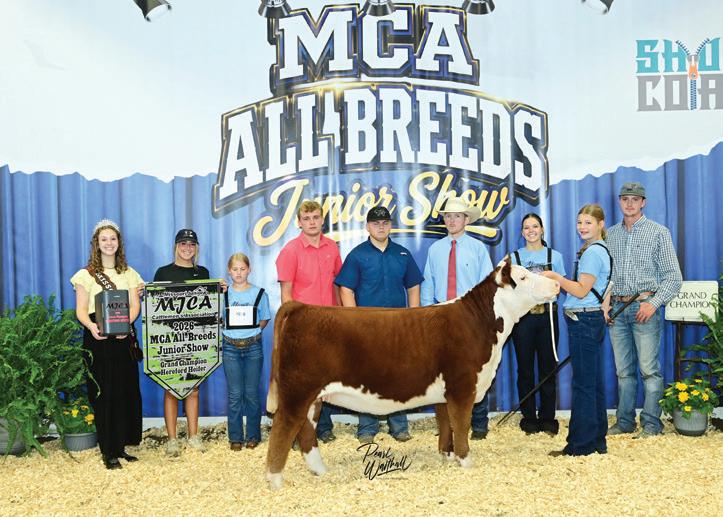
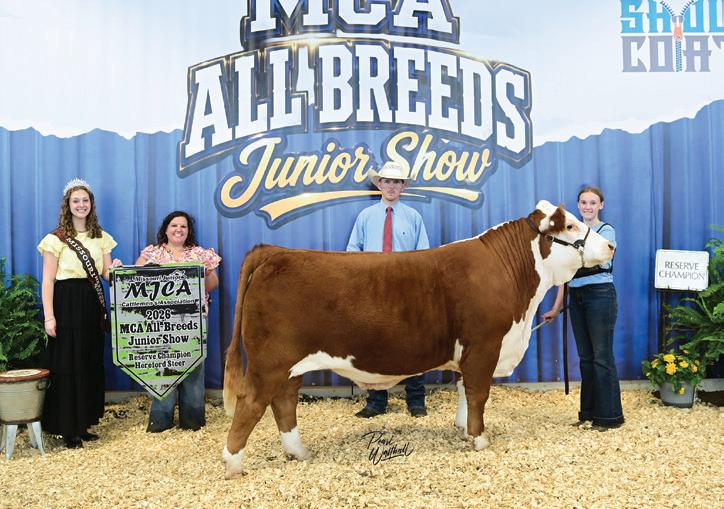
Congratulations to all exhibitors on a great 2026 show!
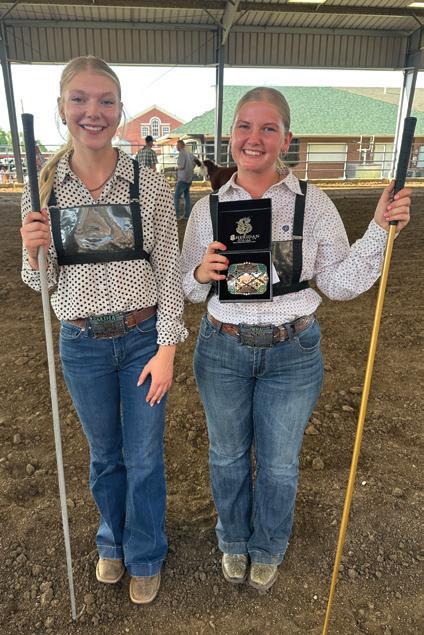
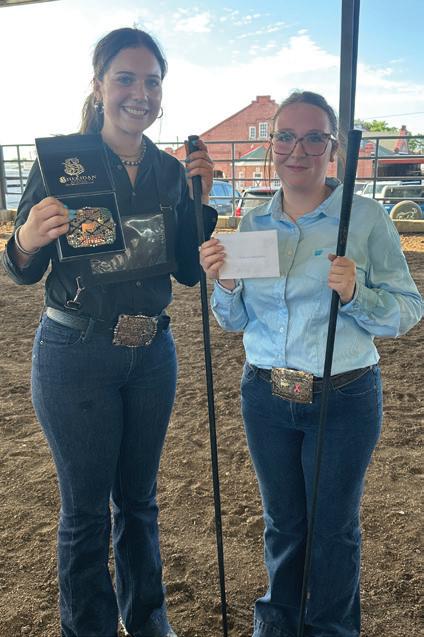
Champion Senior Showman
Tory Miller (right)
Res. Champion Senior Showman
Jorja Ebert (left)
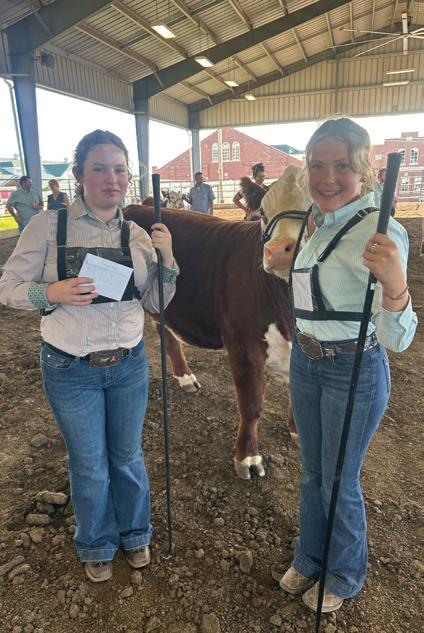
Champion Intermediate Showman
Maggie Reed (left)
Showman
Payton Henderson (right)
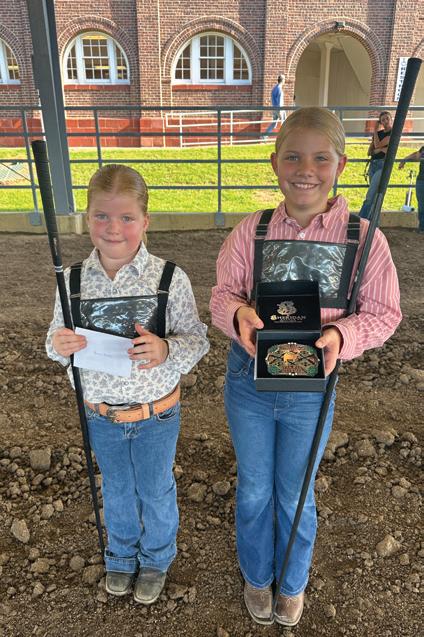
Champion Junior Showman Lyla Sissel (left)
Res. Champion Junior Connelly Ward (right)
Champion Pee-Wee Showman
Brynlee Thompson (left)
Champion Pee-Wee Showman
Caroline Tunks (right)
THE HERDSMAN’S PERSPECTIVE
Featuring James Henderson at Bonebrake Herefords
Written by Cayley Brown
For James Henderson, the cattle business has never been about chasing one thing. It’s about making everything work together.
“It all has to balance,” he says.
That mindset shapes the program at Bonebrake Herefords in southwest Missouri, where Henderson has served as herdsman since January 2018. From breeding decisions to daily management, the focus is steady and practical: raise cattle that function, hold together, and perform in the real world they’re meant for, without sacrificing on eye appeal.
Built from Experience
Henderson’s start in the cattle industry came early, growing up around a small set of commercial cattle on his family’s farm.
“We just had a handful, a small family hobby-type deal,” he says.
His wife, Magan, had a similar path into the industry, growing up on a smallscale hobby farm with various animal species. She and James met through their involvement in their high school agriculture program in Buffalo, Missouri. It was that program, and the opportunity to begin showing cattle there, that gave them both a hands-on start in the purebred cattle world.
Out of high school, Henderson spent 19 years at Pinegar Limousin, managing show and sale cattle in a largescale, high-pressure environment.
“When you’re in that kind of place, you see a lot,” he says.
Between the volume of cattle, the embryo transfer work, and the intensity of preparing cattle for shows and sales, the experience built a deep, practical understanding and trust in his abilities.
“We were basically running a trial every day,” he explains. “You push cattle to their limits in that kind of environment, and you learn firsthand what works and what doesn’t.”
That hands-on repetition shaped how he still approaches cattle management today.
A Different Kind of Operation
Today at Bonebrake Herefords, Henderson manages roughly 120 head of purebred Hereford cattle.
Compared to where he came from, Henderson describes the operation as “pretty straightforward.”
But simplicity doesn’t mean less intention.
From feeding and pasture management to breeding, calving, and marketing, Henderson oversees every part of the operation.
“The cattle have got to survive in our environment,” he says. “On fescue grass, in our conditions, that matters.”
Breeding with Purpose
Henderson’s balanced philosophy also applies to the Bonebrake breeding program, valuing both phenotype and performance without chasing extremes.
“We pay attention to the numbers,” Henderson says. “But not 100%.”
Instead, decisions are made with the whole animal in mind.
“I’ve got to be able to walk out and look at them every day.”
That philosophy shows up in the details.
“Ideally, I like a cow that’ll have a 75- to 80-pound calf,” he explains. “Everything’s got to work together.”
Growth, maternal traits, and carcass merit, including marbling and ribeye, are all considered, but never at the expense of structure or longevity.
The program utilizes both artificial insemination and embryo transfer, balancing proven genetics with occasional experimental use of newer sires.
“You’ve got to stay up with what’s out there,” he says.
In recent years, they’ve also incorporated a small group of Red Angus females, testing how those genetics
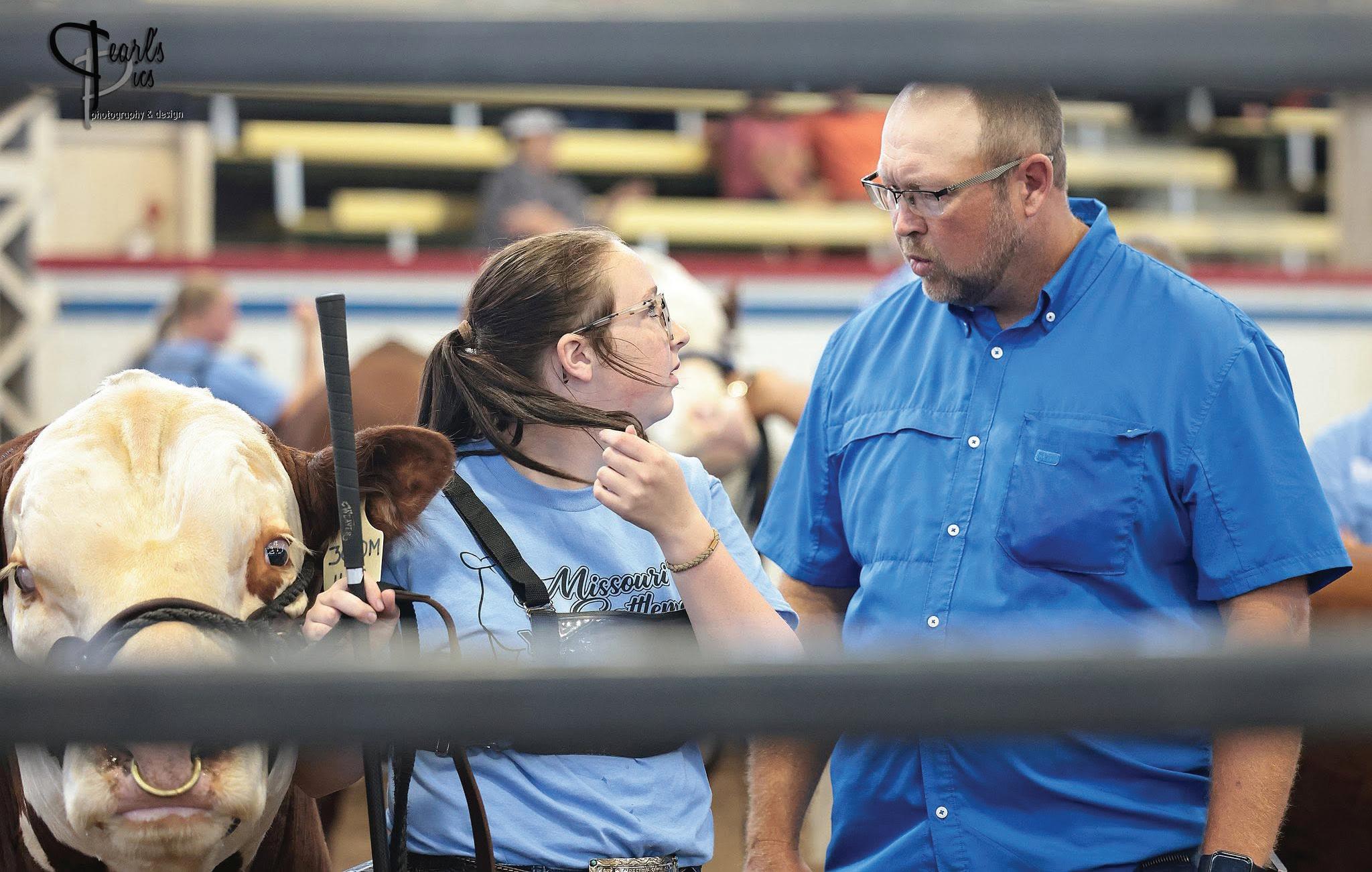
The Henderson Family (L to R): Payton, Paige, Preston, James and Magan.
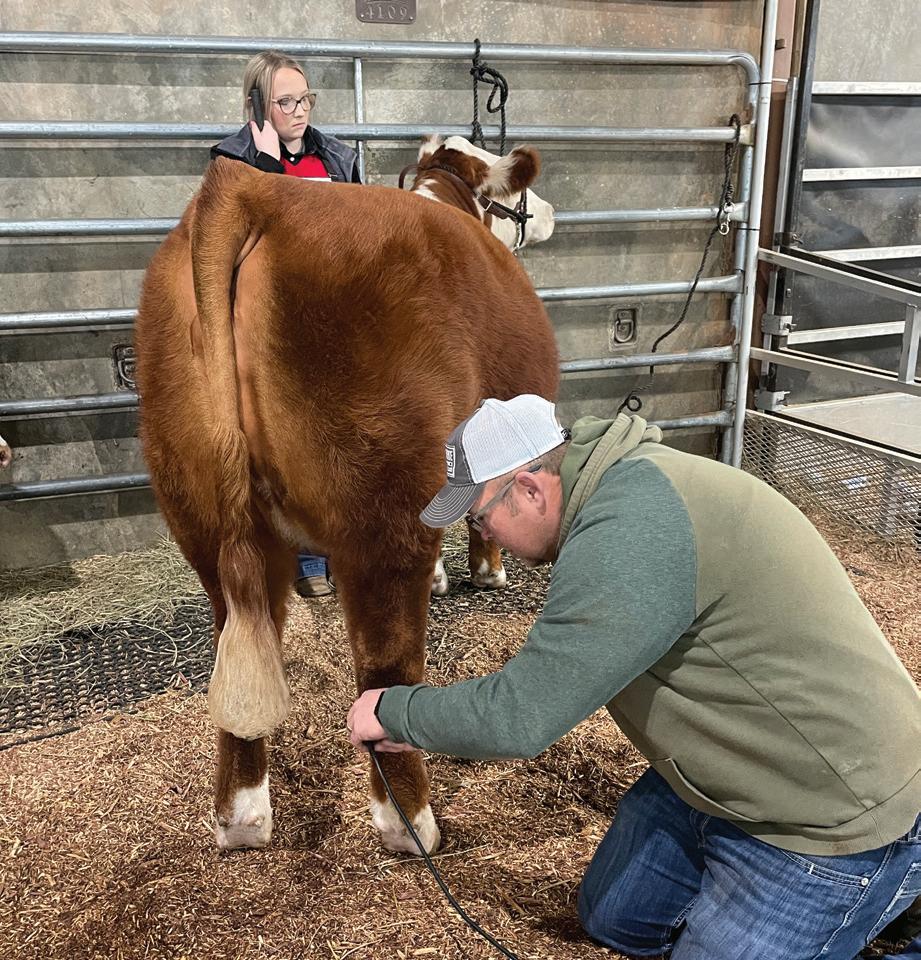
James gives helpful advice during a recent show to his daughter Payton before she heads into the showring.
work alongside their Hereford base and evaluating the impact of hybrid vigor within their own environment.
At the same time, practicality still drives decisions.
“I do like them to be colored right,” he says. “Because color sells when you’re selling bulls.”
Feeding, Function and Understanding Limits
One of the defining aspects of Henderson’s approach comes from his understanding of feeding and cattle functionality.
Years spent managing show cattle taught him not just how to push cattle, but where the line is.
“When you’re feeding them at that level, you learn their limits,” he says.
At the core of that understanding is a simple principle:
“A cow’s made to eat grass.”
While show cattle may be pushed with higher-energy rations, Henderson emphasizes that their basic biology doesn’t change and ignoring that can create problems.
That perspective also shaped how he evaluates different breeds.
“A Hereford and a Limousin are not the same when it comes to feeding,” he says.
Those differences require adjustment, awareness, and a willingness to manage cattle according to what they are, not what you want them to be.
The Risk of Going Too Far
As the industry continues to evolve, Henderson sees one area where breeders need to be cautious.
“If people chase the numbers too far, I think the quality can fall,” he says. “That
piece of paper might say they’ll perform, but that doesn’t mean they’ll hold up.”
Instead, he believes in finding a balance between data and reality.
“There’s a happy medium there.”
At the same time, he’s seen the Hereford breed make significant progress.
“The quality now is unbelievable compared to where it was even 10 years ago,” he says.
A Breed with Opportunity
That progress is showing up not only in the seedstock world but also in the commercial sector.
Demand for Hereford-influenced cattle, particularly baldies, continues to grow, with producers recognizing their value in crossbreeding programs.
“You’re seeing more people come looking for Hereford bulls,” Henderson says.
That demand reinforces the importance of building cattle that not only look good but perform where it counts.
An Eye for Detail That Doesn’t Turn Off
Those around Henderson are quick to point out his strength in animal husbandry.
“Anybody around here calls him for advice,” Magan says. “That’s something he’s known for.”
To Henderson, it’s simply part of the job.
“I probably analyze every part of the cattle every day when I’m feeding,” he says. “Sometimes it’s a curse.”
That instinct comes from years of experience, repetition, and learning from those around him.
“I was fortunate to be around good people,” he says. “You just pick up on it over time.”
A Life Built Around Cattle
For the Henderson family, cattle aren’t just part of life; they are life.
They have three children, Paige (19), Payton (16), and Preston (12), who have all grown up in the industry.
Their daughters have shown cattle from a young age, while their son balances livestock with sports and hunting.
“We don’t really go on vacations,” Henderson says. “This is what we do.”
More Than the Show Ring
That perspective carries into how they view the show ring.
“We show cattle to market the cattle,” Henderson says. “We don’t necessarily show them to win the show.”
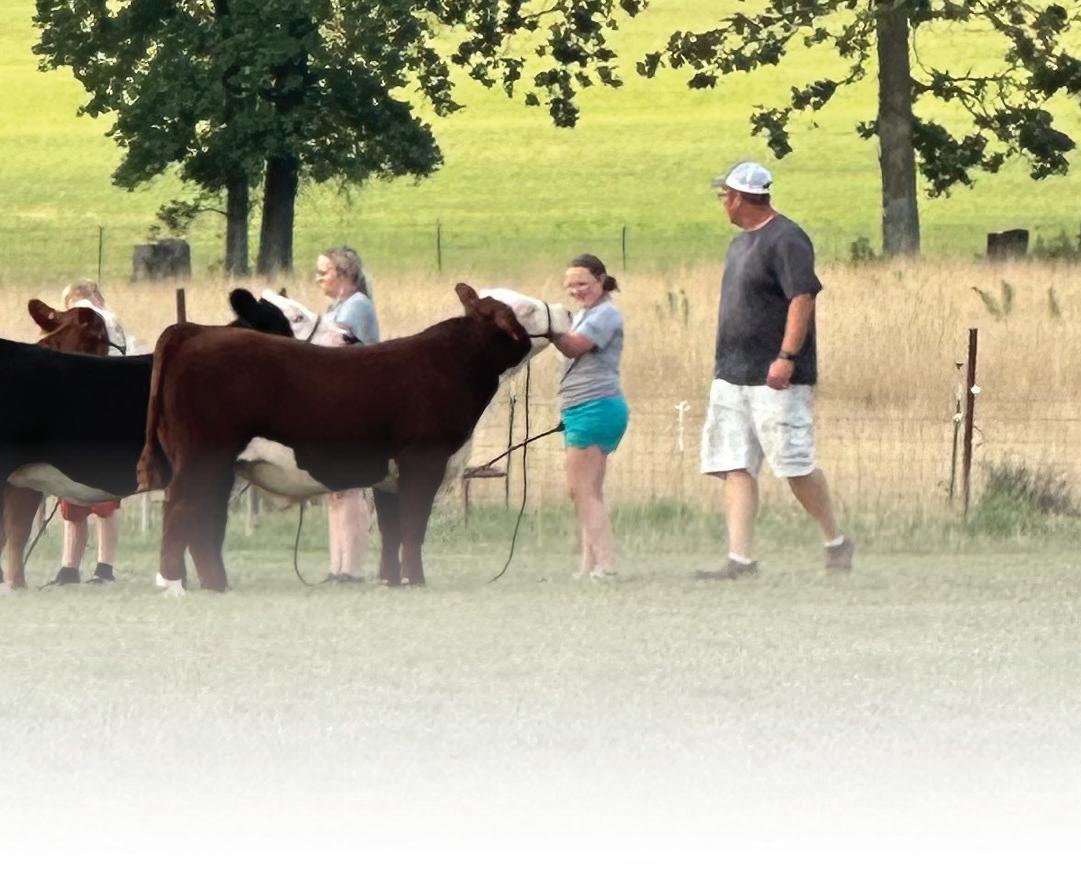
On any given day during the summer, you will find the Henderson kids working with their show animals accompanied by their dad, James, giving helpful advice and tips for the next show.
James and his family exhibit cattle at many local, state and national level shows throughout the year.
Winning is part of it, but not the purpose.
Instead, presentation, consistency, and effort are most valued.
“Very few people remember the animal that wins a year from now,” he says. “But they remember how things looked.”
Lessons That Stick
For Magan, the value of raising kids in the cattle industry shows up in ways that go far beyond the show ring.
She notes that success isn’t just about showing up; it requires responsibility, persistence, effort, initiative, and accountability.
“You’ve got to get your work done first,” she says.
Beef Tips Beef Tips
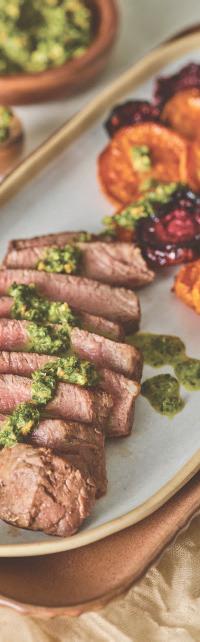
Keep summer grilling season simple with these five easy steps.
1. Prep the Beef
Pat the steaks dry and season to preference.
2. Fire it Up
Make sure your grill is clean. For charcoal grills, the target temperature should be about 375°F (Medium for gas grills)
3. Grill, Baby, Grill
Place your steak on the grill and flip only once while cooking. The target internal temp for medium-rare is about 145°F.
4. Rest & Relax Rest for 5-7 minutes before slicing for ultimate juiciness. Internal temp will continue to rise after pulling from the grill.
5. Finishing Touches
If you’re slicing the steak before serving, be sure to cut across the grain to maximize tenderness.
“For the kids to be successful in sales, they know they have to find their buyers,” Magan explains. “They are taught that they have to market what they have.”
It’s a reality that sets the livestock industry apart. Unlike many activities where participation alone carries value, progress here depends on what you’re willing to put into it.
That expectation has shaped how their kids approach both cattle and life, understanding that results come from preparation, follow-through, and taking ownership of the outcome.
A Program Built on Trust
The Bonebrake Herefords program also carries a long history, dating back to the 1930s, when the original herd was started through a trade: sheep and a shotgun exchanged for Hereford cattle.
Today, the program continues under the ownership of Al Bonebrake.
“He gives me the freedom to go the direction I think we need to go,” Henderson says.
That trust has allowed the program to steadily improve over time, giving Henderson the opportunity to build on its foundation while moving it forward.
In many ways, his role goes beyond dayto-day management. It’s about carrying the program ahead with intention, making decisions that not only improve the cattle but also add to the legacy behind them.
It’s also a reflection of the value a skilled herdsman brings to an operation. With experience, good instinct, and a clear sense of direction, Henderson has been able to fully invest in the work, applying his strengths in ways that continue to elevate the program.
“I feel like the quality of the cattle has continuously come up since I started,” he says. “That’s something I’m very proud of.”
Staying Grounded
As the Hereford breed continues to gain traction, Henderson’s approach remains unchanged.
“You can’t lose the brand,” he says. “When you’re driving down the road and see a red cow with a white face, it’s always a Hereford.”
It’s a simple statement, but one that reflects everything behind the program and also the beauty of the Hereford breed.
Stay practical. Stay balanced. Build cattle that work.
Phenotypically correct animals help elevate Bonebrake Herefords to the next level in the pasture and the show ring.
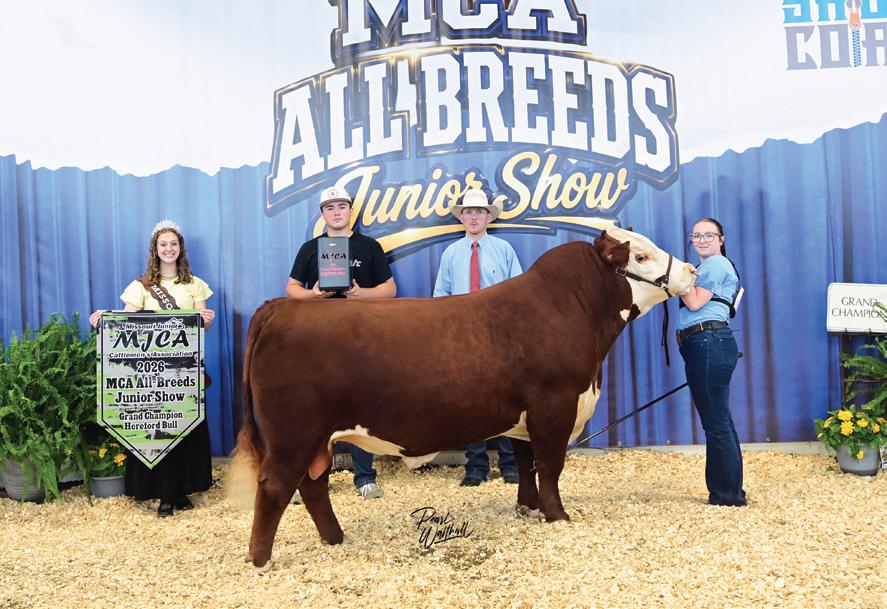
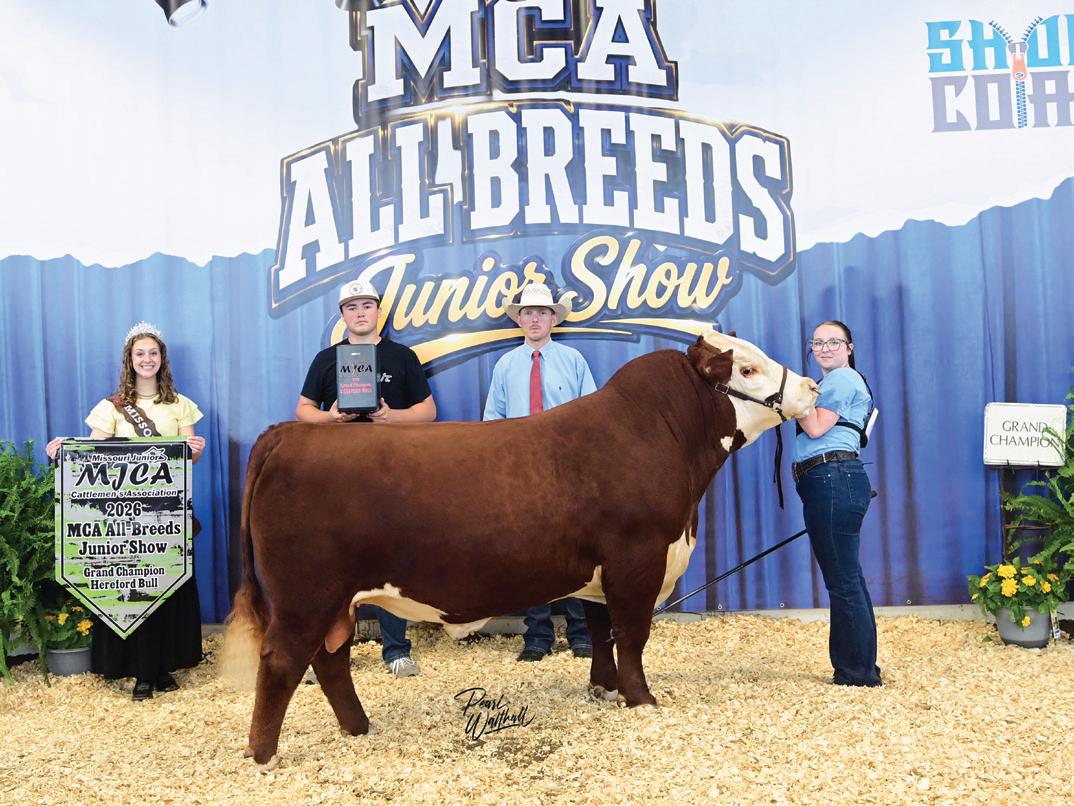
The Henderson family recently exhibited the 3rd overall bull at the 2026 Missouri Cattlemen's All-Breeds Show in Sedalia, MO.
All About FFA
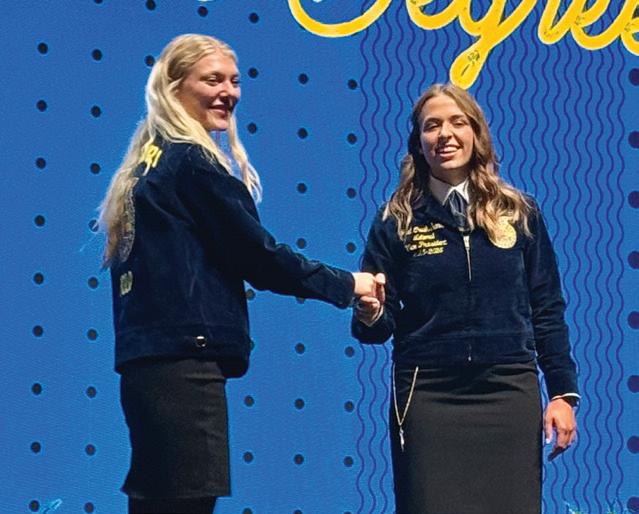
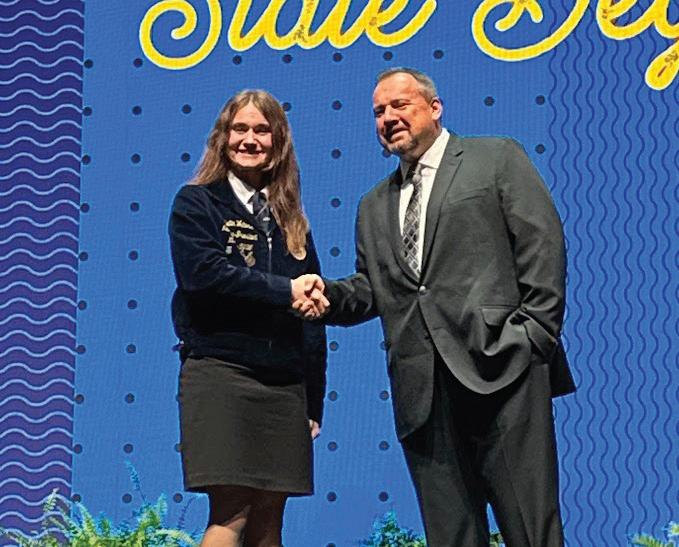
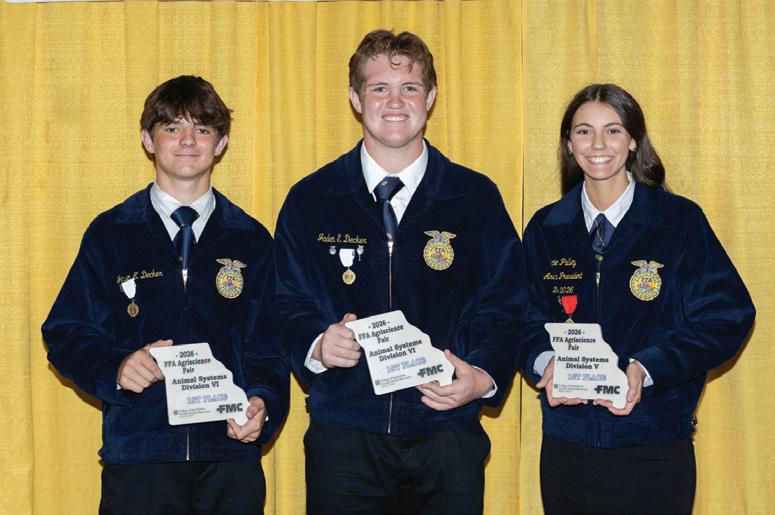
State Degree Recipients
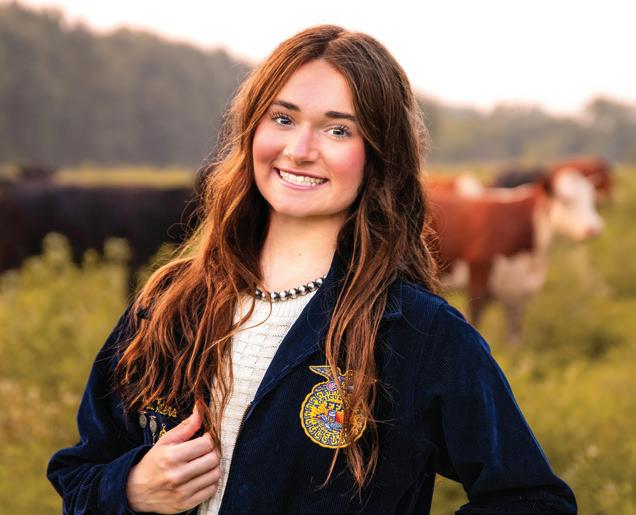
2026-27 Mo FFA Officer
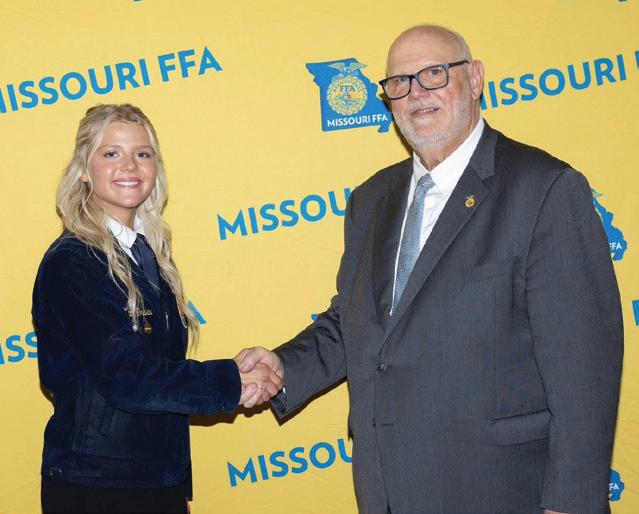
Missouri Junior Hereford Association members represented at the 2026 Missouri FFA State Convention.
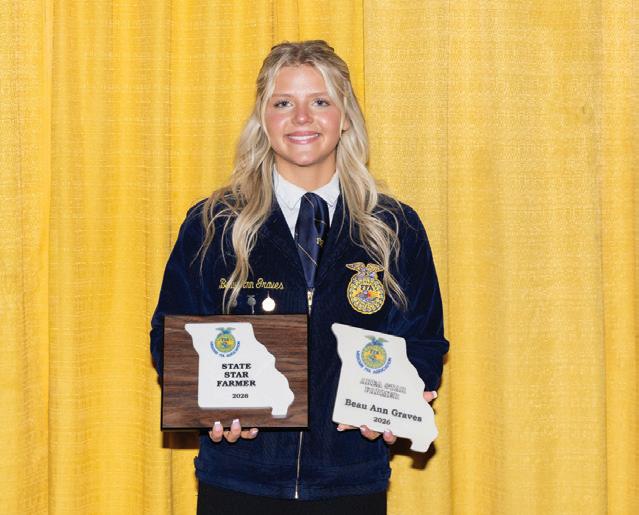
Star Farmer Award
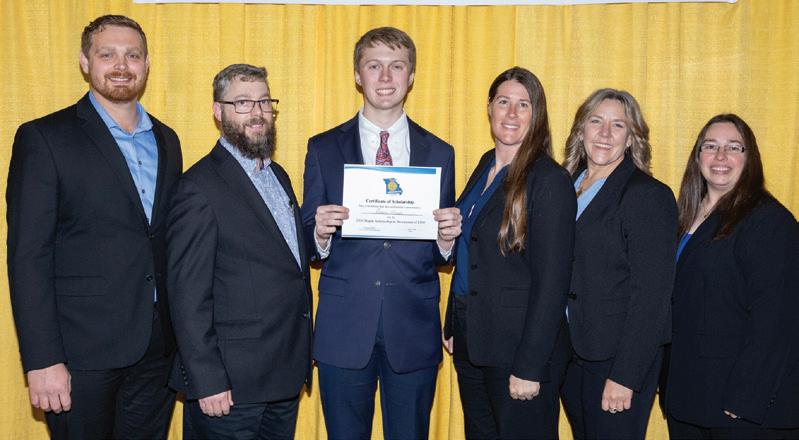
Hagan FFA Alumni Scholarship
Gavin Rhode, East Buchanan FFA
Animal Systems Agriscience Fair Award
Jorja Ebert, Polo FFA
Beau Ann Graves, Chillicothe FFA
Kristin Waters, Norborne FFA
Kristin Waters, Norborne FFA
Beau Ann Graves, Chillicothe FFA
Jaden and Jensen Decker, Centralia FFA
SALE RESULTS
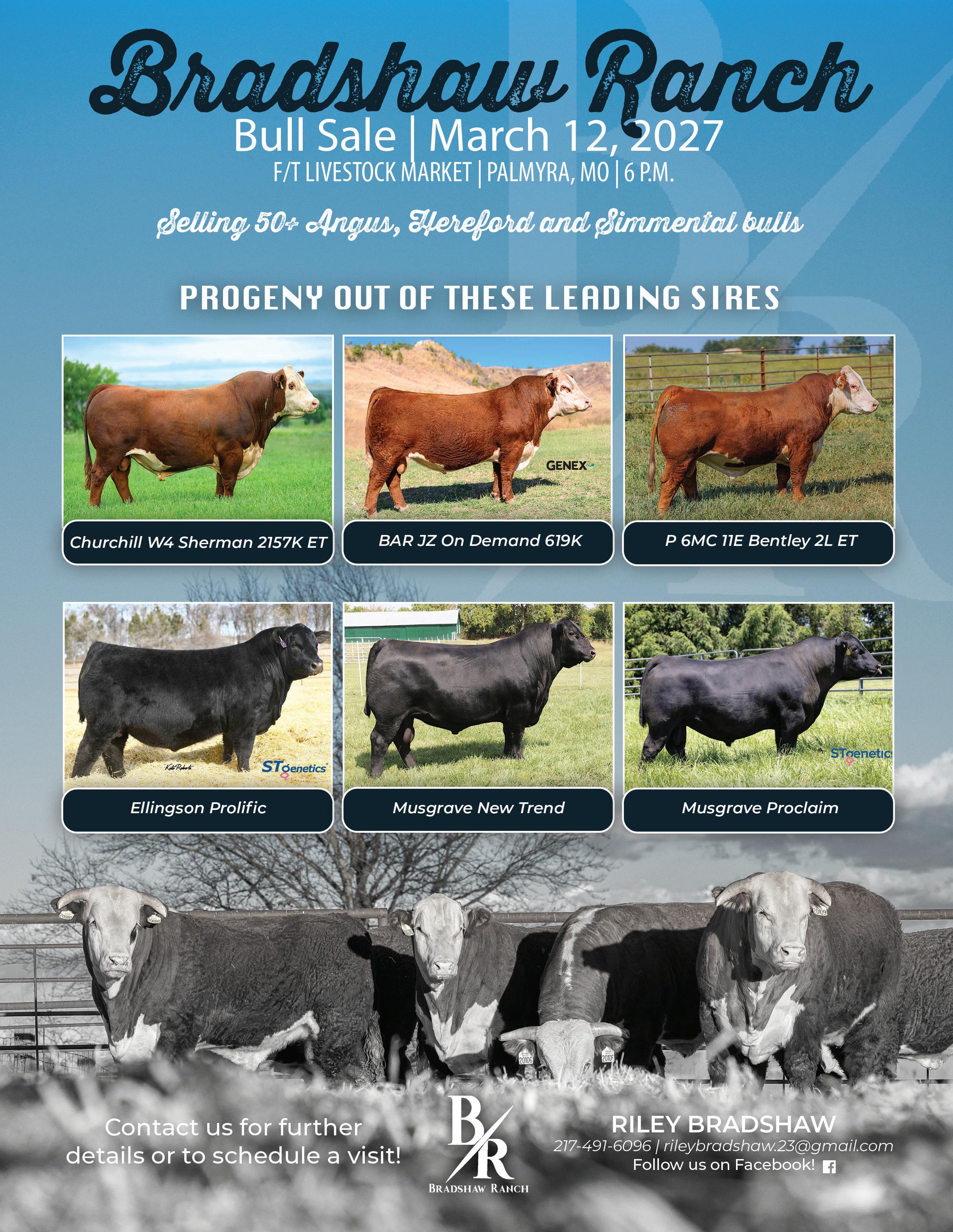
Bradshaw Ranch
Palmyra, Mo. | March 13, 2026
Auctioneer: Cody Lowderman
Reported by: Austin Brandt
Lots Gross Average
18 bulls $125,000 $6,944
TOP BULL LOT
$11,000 — B Valley 4097
DOB 3/20/2024, by ASM 405B Valley 124J ET, sold to Austin Tomhave, Jacksonville, Ill.
Falling Timber Farm
Marthasville, Mo. | March 21, 2026
Auctioneer: Jesse Bolin
Reported by: Austin Brandt
Lots Gross Average
39 bulls $305,850 $7,842
43 females $244,300 $5,681
82 overall $550,150 $6,709
3 comm. heifers $15,750 $5,250
TOP BULL LOTS
$15,000 — FTF Deluxe 505N
DOB 1/11/2025, by Huth CLC WF Deluxe K016, sold to Dean McKibben, Liberal.
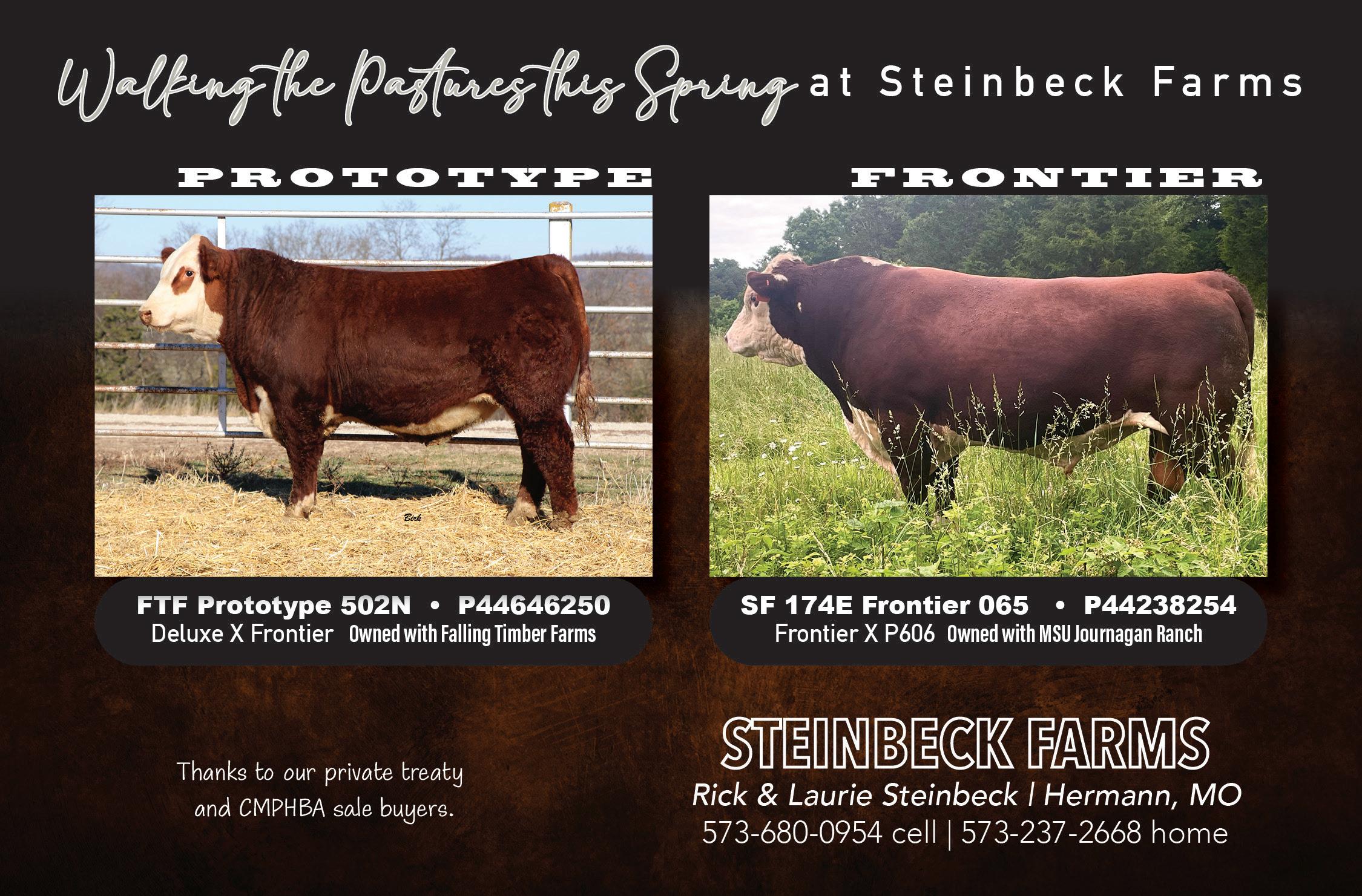
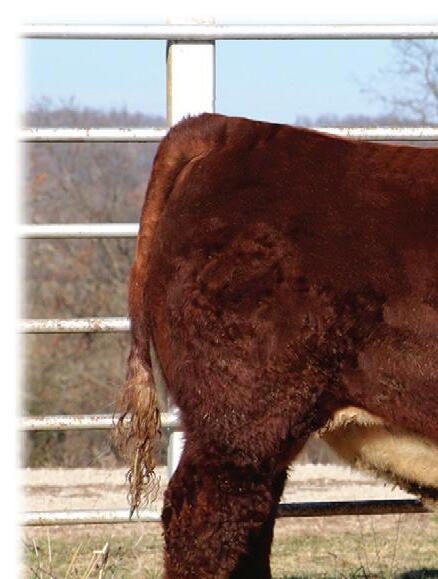
$14,500 — FTF Prototype 502N
DOB 1/9/2025, by Huth CLC WF Deluxe K016, sold to Rick and Laurie Steinbeck, Hermann.
$13,000 — FTF Magnifico 527N
DOB 1/15/2025, by FTF Magnifico 120J, sold to Jackson Farms, Frankford.
TOP FEMALE LOTS
$13,750 — FTF Virginia 144J
DOB 1/18/2021, by FTF Value Added 556C, and a January heifer calf, by /S Profound 44041 ET, sold to Medonte Highlands Polled Herefords, Ontario.
$10,500 — FTF Virginia 146J
DOB 1/18/2021, by FTF Value Added 556C, and a January heifer calf, by Loewen Sandhill L70 ET, sold to Medonte Highlands Polled Herefords.
Candy Meadow Farms
Lexington, Tenn. | March 28, 2026
Auctioneer: Eddie Burks
Reported by: Corbin Cowles
TOP BULL LOTS
$25,000 — CMF 819K Mighty 13M
DOB 8/30/2024, by CMF 1720 Gold Rush 569G ET, sold to Casey Jensen, Courtland, Kan.
$25,000 — CMF 429F Marvin 40M
DOB 9/22/2024, by JW 1857 Merit 21134, sold to Triple S Ranch, Grannis, Ark.
$10,000 — CMF 339E Mastermind 71M
DOB 11/11/2024, by CMF 1720 Gold Rush 569G ET, sold to River Bend-Cattle Farms, Somerset, Ky.
$10,000 — CMF 650H Magic 25M
DOB 9/11/2024, by JW 1857 Merit 21134, sold to Dye Branch Farms, Pell City, Ala.
$9,000 — CMF 601H Monty 37M
DOB 9/20/2024, by JW 1857 Merit 21134, sold to Miles Ranch Superior Herefords, Springtown, Texas.
$9,000 — CMF 637H Macon 59M
DOB 10/9/2024, by Stellpflug Gunsmoke 222 ET, sold to Crooked Creek Farm, Lena, Miss.
TOP FEMALE LOTS
$40,000 — CMF 601H Sara 92N
DOB 9/5/2025, by JW 1857 Merit 21134, sold to Colyer Herefords, Bruneau, Idaho.
$16,000 — CMF 332E Lana 769K
DOB 8/27/2022, by Spearhead 4 Star General, sold to Cox Farms, Lexington; and an August bull calf, by CMF 1720 Gold Rush 569G ET, sold to Prause Polled Hereford Farm, Yoakum, Texas.
$13,000 — CMF 825S Filipa 765K
DOB 2/26/2022, by TH Masterplan 183F, sold to PB&J Farm, Lawrenceburg; and a September bull calf, by RMB 8G 1904 Bullseye 188K ET, sold to Triple S Ranch.
$10,750 — CMF E914 Dominette 754J ET
DOB 11/1/2021, by SHF Daybreak Y02 D287 ET, and an October heifer calf, by CMF 1720 Gold Rush 569G ET, sold to Cecil Lawrence, Temple, Ga.
$10,750 — CMF 601H Sara 852L
DOB 8/28/2023, by CMF 333E Hitching Post 648H, sold to Weil Cattle Co., Irene, Texas; and a September heifer calf, by Bar JZ On Demand, sold to Harless Herefords, Edmonton, Ky.
$10,000 — CMF F166 Martha 644H
DOB 10/8/2020, by KCF Bennett Homeward C776, sold to Winter Enterprises, Thomaston, Ga.; and a September bull calf, by CMF 1720 Gold Rush 569G ET, sold to Logan Sull, Waynesboro.
$9,500 — CMF 669H Rachel 830K
DOB 10/22/2022, by Spearhead 4 Star General, sold to EBS Herefords, Covington; and a September bull calf, by RMB 8G 1904 Bullseye 188K ET, sold to Mark Maners, Jackson.
$9,000 — CMF E914 Dominette 824K
DOB 10/10/2022, by SHF Houston D287 H086, sold to Amanda Robertson, Russell Springs, Ky.; and an August heifer calf, by CMF 1720 Gold Rush 569G ET, sold to Allison Martin, Wildersville.
$9,000 — CMF 8F48 Mercedes 723J
DOB 9/30/2021, by Loewen CMF Mendel 7G, sold to Weil Cattle Co., and an August bull calf, by CMF 1720 Gold Rush 569G ET, sold to Triple S Ranch.
Central Missouri Polled Hereford Breeder's Association
Cuba, MO | April 11, 2026
Auctioneer: Jordan Hunter
Reported by: Larry and Pam Day
59 Lots Gross: $303,850
Sale Average: $5,150
Bulls: 6 lots averaged $5,400. Top Bull, Lot 39, from Hatchee Creek Farms to Troutman Farms (MO) sold for $7,000.
Open Heifers: 10 lots averaged $3,900. Top Open Heifer, Lot 27, from Bourbeuse Bend Herefords to Anderson Cattle Ranch (AR) sold for $5,300.
Fall Pairs/Splits: 6 lots averaged $8,900.
Top Fall Pair, Lot 51 Cow from Steinbeck Farms to Creach Legacy Farms (MO) sold for $8,200; Lot 51A Bull from Steinbeck Farms to Anthony Renneke (MO) brought $4,200.
Spring Pairs: 17 lots averaged $5,653. Top Spring Pair, Lots 8 & 8A, Ace’s Polled Herefords to Richard Davis (MO) sold for $6,900.
Bred Heifers: 4 lots averaged $5,375. Top Bred Heifer, Lot 48, Lizzie’s Polled Herefords to Schrader Polled Herefords (MO) brought $5,700.
Bred Cows: 9 lots averaged $4,694. Top Bred Cow, Lot 21, Besher Farms to Whispering Winds Farm (MO) sold for $6,200.
Hereford Influenced Females: 2 lots averaged $6,650. Top Pair, Lot 61, Bourbeuse Bend Herefords to Westlee Watson (MO) brought $7,000.
Semen: 40 straws averaged $97.50. Top Lot 2: Sexed Walker Full Circle 3511, Whispering Winds to Ben Radcliff (MO) sold for $150 per straw.
Embryos: Averaged $500. Top Lot 4: 4 NJW Rita 129HxHuth Deluxe, Whispering Winds to Days Family Farm (MO) brought $2,000.
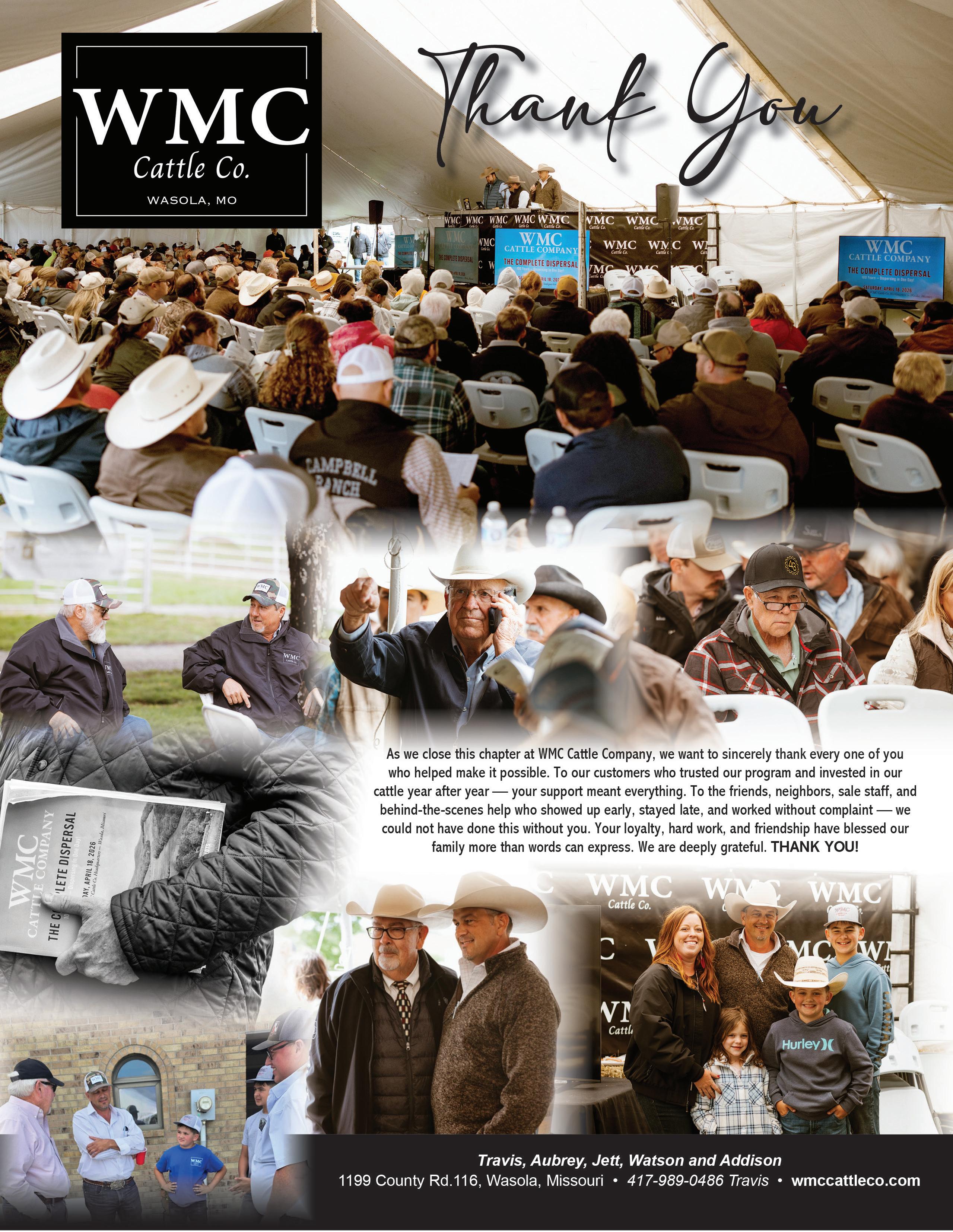
WMC Cattle Co
Wasola, MO. | April 18, 2026
Auctioneer: Dustin Layton, Eddie Burks Reported by: Corbin Cowles
Lots Gross Average
17 bulls $154,500 $9,088
215 females $2,313,050 $10,758
232 overall $2,467,550 $10,636
7 embryos $31,450 $4,493
15 semen units $6,150 $410
TOP BULL LOT
$15,000 — WMC 21134 210J Merit 4N ET DOB 1/18/2025, by JW 1857 Merit 21134, sold to Sweiger Farms, Weatherby.
SALE RESULTS
Continued from page 26
TOP FEMALE LOTS
$42,500 — WMC 21134 86G Merit 73M DOB 8/29/2024, by JW 1857 Merit 21134, sold to GKB Cattle, Desdemona, Texas.
$31,000 — GKB H086 Rita L153 ET DOB 9/12/2023, by SHF Houston D287 H086, sold to Billy Brockman, Amherst, Va.; and an August bull calf, by GG MCF Verified Merit 323L, sold to GKB Cattle.
$30,500 — WMC B413 138G Thyra 210J DOB 9/5/2021, by EFBeef BR Validated B413, and an October heifer calf, by GG MCF Verified Merit 323L, sold to GKB Cattle.
$30,000 — HCC 6023 Dakota ET DOB 2/8/2016, by Churchill Sensation 028X, sold to P&J Farms, Seaboard, N.C.; and Day Ridge Farm, Telford, Tenn.; and a September heifer calf, by GG MCF Verified Merit 323L, sold to Brigadoon Farm, Pikeville, Tenn.
a September heifer calf, by GG MCF Verified Merit 323L, sold to GKB Cattle.
$24,500 — ILR 33Z Lady 34X 810 ET DOB 2/13/2018, by JDH Victor 719T 33Z ET, sold to Muellers Polled Herefords, Perryville.
$21,000 — Grassy Run Rachael 9022 ET DOB 1/22/2019, by TH 71U 17Y Mountaineer 420A, sold to Grayson Cattle Co.; and an October heifer calf, by WMC D87 2C Moonshine 507K ET, sold to Jeff Voris, Halfway, Mo.
$20,250 — WMC 66589 X103 Madaline 86G ET, DOB 8/21/2019, by /S Mandate 66589 ET, sold to Blaine and Chasity Johnson, St. Landry, La.; and a September heifer calf, by GG MCF Verified Merit 323L, sold to N&N Cattle Co., Nauvoo, Ala.
$20,000 — WMC 21134 2041 Lainey 91M
$20,000 — WMC 21134 42F Queen 3N ET DOB 1/14/2025, by JW 1857 Merit 21134, sold to MBB Farms, Bayou La Batre, Ala.
$19,500 — WMC 18051 107F Devout 145L DOB 9/8/2023, by JW B716 Devout 18051, sold to Ozark Mountain Herefords, Richland; and a September heifer calf, by GG MCF Verified Merit 323L, sold to Thousand Hills Herefords, Blairstown.
$19,000 — WMC 173D 20A Reva 128G ET DOB 9/16/2019, by NJW 79Z Z311 Endure 173D ET, sold to Warfel Family Farm, Casey, Ill.; and a September bull calf, by GG MCF Verified Merit 323L, sold to Henderson Ranch LLC, Bossier City, La.
$16,000 — WMC 21134 7532E Lainey 104M ET, DOB 9/7/2024, by JW 1857 Merit 21134, sold to Tudahl Herefords, Bigfork, Mont.
$28,000 — MHF 001A Ms Sunshine 20A 04F DOB 1/4/2018, by Gerber Anodyne 001A, and
DOB 9/1/2024, by JW 1857 Merit 21134, sold to 4C Ranch, Caldwell, Texas.
$15,000 — WMC 384E 2B Rachael 502H ET DOB 10/1/2020, by CMF 3005 Epic 384E ET, sold to Ruckus Hill Farm, Statesville, N.C.
Lessons learned in and out of the show ring BEYOND THE BANNER
Written by Gavin Rhode
As we inch closer to the heart of the summer, junior showmen from across the country are working tirelessly to prepare their projects for this upcoming summer show season. From early mornings in the show barn, countless hours on the wash rack, and making sure your calves are well prepared for show day. All of which becomes a part of the journey that makes this industry and community so special.
While handshakes, banners, and backdrop photos are exciting, summer shows are about so much more than winning. They are truly about the lessons learned through hard work and perseverance. Every early morning and late night teaches responsibility and dedication. Every setback teaches resilience. Every challenge helps prepare us for that next trip to the showring!
or other industry leaders, the people you meet along the way can shape your future in ways you may not even realize today. The show cattle industry is built on relationships, and the connections formed through these some of these experiences can open doors for potential careers, leadership opportunities, and lifelong friendships.
One of the greatest things about being involved within the Hereford breed is the friendships and the connections that you get to make! The friendships made at shows, leadership conferences, and other events will often last a lifetime. Whether it’s fellow exhibitors, breeders, advisors,
As members of the NJHA, we are fortunate to be part of a junior organization that gives us the opportunity to meet so many different people from many different backgrounds! The NJHA provides opportunities to grow not only as exhibitors, but more importantly as leaders, communicators, and young professionals. The experiences gained through this organization help prepare us for success far beyond the show ring.
person you will become tomorrow.
No matter where this summer show season takes you, keep working hard on your show projects, continue to support one another, and always remember to represent the Hereford breed with pride. The future of our industry is bright because of the dedicated young people willing to put in the work and lead the next generation forward!
As juniors preparing for summer shows, it is very important to remember to enjoy the process. Celebrate the small victories, learn from the challenges, and appreciate the people your support system along the way. The hard work you put in today is helping build the
As we look forward to some upcoming dates, it seems we’ve got an exciting few months ahead of us and I hope to see all of you participating! The 2026 Junior National Hereford Expo will be held in Madison, WI, from July 4-10. We are also holding our Faces of Leadership Conference in Boise, ID, from July 29 – August 1. I encourage. I encourage all juniors who are 14 and older to register for this incredible experience!
Gavin Rhode NJHA Director
HAGG AWARDED GOLDEN OWL AWARD
Hereford Ag Educator Honored
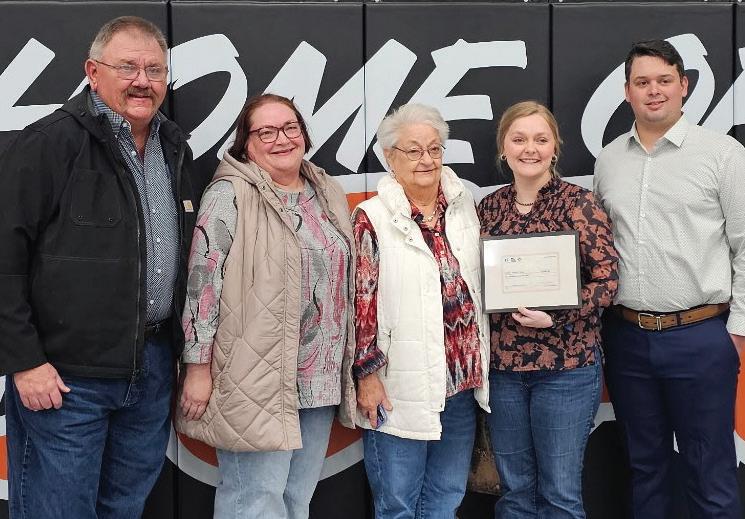
The Golden Owl Award®, sponsored by Nationwide and FCS Financial , recognizes Missouri's agricultural educators for their tremendous contributions to helping the next generation of agricultural leaders who will change the world. One finalist was named the Missouri Ag Educator of the Year at the Missouri FFA Association State Convention in April and won $3,000. We are pleased to announce our winner, Shelby Haag, from the Central District!
Shelby has spent the last seven years serving students through agricultural education after earning her master’s degree in Agricultural Leadership, Communication, and Education from the University of Missouri. At Northwest High School, Shelby has worked to grow and strengthen the agriculture program, increasing enrollment and expanding course offerings while creating opportunities for students to develop real-world skills. Her program
is deeply rooted in community involvement, hosting events such as an antique tractor pull that brings hundreds of people into the small community each year. Shelby is also heavily involved in the profession, serving in numerous leadership roles and committees while mentoring both beginning teachers and student teachers.
“I may be a young teacher, but I love my job and my students. I strive to give it my all every single day and hope it inspires my students to do the same. I believe I have created a classroom where students feel at home, welcome, and supported daily. I often refer to our agriculture program as ‘ours,’ because it truly belongs to the students and the community that support it. I hope that if I have taught
my students nothing else, I have taught them how to be good human beings.”
We cannot thank Shelby enough for her commitment to the success of our youth in agriculture. We are grateful for our educators, like Shelby, who believe in the future of agriculture and work diligently to shape the future of our industry. Congratulations Shelby on a well-deserved honor in your career as an agricultural educator.
L to R: Bob Bagnell, Tonya Bagnell, Shirley Brown, Shelby Haag and Ryan Haag.
SETTING CALVES UP FOR SUCCESS AT WEANING
As we move into weaning season, management decisions made now can have a lasting impact on calf health, performance, and profitability. In this edition of Veterinary Voice, Dr. Brianne Bishop shares practical insight into reducing stress during weaning, preparing calves for a smooth transition, and minimizing common health challenges such as respiratory disease. From vaccination timing and nutrition to fenceline weaning and heat management, this month’s column offers real-world recommendations producers can implement to build a stronger weaning program.
From a veterinary perspective, what are the key goals producers should have in mind when approaching weaning?
When I work with producers to create a weaning plan, the goal is always to reduce stress so that calves experience no more than two stressful events at a specific time. The three types of stress that we commonly see are environmental, social, and health. This time of year, our environmental stress concern is heat. If weaning during extreme summer temperatures, providing adequate shade and fresh water is critical. Socially, the act of removing the calf from the dam is stressful. This is where fence-line weaning, or other strategies, can come into play. The final stressor, health, is impacted by vaccination, comingling, nutrition, and general management.
What are the most common health challenges you see in calves during the weaning period?
Our greatest health challenge at weaning is respiratory disease. For this reason, exposing calves to a respiratory
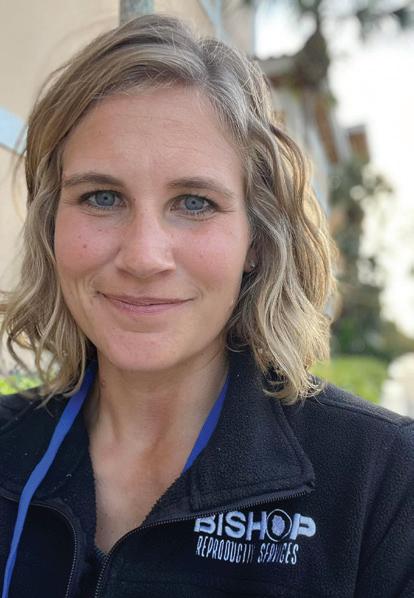
By Dr. Brianne Bishop, DVM
vaccine prior to weaning can help reduce the severity of respiratory disease when it hits. If possible, I try to vaccinate calves around two months of age with an intranasal respiratory vaccine. Intranasal vaccines are modified-live but carry no risk to the dam if pregnant. Additionally, they work through mucosal immunity, meaning the immune system can begin reacting to a disease threat as soon as a virus hits the nasal mucosa, rather than only after it enters the body and begins replicating and being recognized by the lymph nodes. This is also a good time to process bull calves that we know will be steers, as castration at two months of age poses far less risk to the calf and allows it to return to the dam to nurse afterward.
How does stress at weaning impact calf health and performance, both short-term and long-term?
In the short term, we expect calves to stop gaining weight, or even lose weight, at weaning due to the time they spend walking fence lines rather than sleeping and eating. Having calves exposed to creep feed prior to weaning can help with this transition. My greatest concern for long-term impact from weaning is scarring on the lungs due to respiratory disease. Reduced lung capacity could lead to reduced gain in steers, or cows that struggle to breed back while nursing a 200-pound calf on a fescue diet at the beginning of a Missouri summer.
What are your top recommendations for minimizing stress during weaning?
I recommend:
-Cutting bull calves at birth or prebreeding time (under 2 months of age).
-Adapting calves to creep feed prior to weaning.
-Vaccinating with a modified-live respiratory disease prior to weaning (intranasal or injectable, depending on
vaccination status of cow).
-Fence-line weaning.
-Providing shade and fresh water.
-Avoiding comingling at the time of weaning or shortly after.
Are there specific weaning methods (fenceline, two-stage, etc.) that you find most effective from a health standpoint?
Fenceline weaning is one of my favorite methods to reduce the stress of weaning. It doesn’t require putting the calves through the chute or specific timing. I do try to ensure that calves have access to shade along the fence line where they will be standing.
What role does nutrition play leading up to and immediately following weaning?
Proper nutrition is critical for health. When we remove the main source of energy for the calf, milk, it needs to be replaced. When calves are not adapted to a grain diet prior to weaning, they will not consume enough to replace their prior intake. This can lead to increased incidence of respiratory disease and greater weight loss. I also worry about acidosis and bloat in calves that do start eating grain immediately but are not adapted to it.
When it comes to vaccination protocols, what should producers be considering pre-and post-weaning?
When we plan vaccination protocols, I always need to know whether the cows have been vaccinated with a modifiedlive vaccine and whether the producer can keep groups of calves separate after weaning. At a minimum, we want to see calves receive two rounds of a modifiedlive vaccine, spaced about four weeks apart, to properly prepare their immune systems. If vaccinating calves while
nursing, this will require either using an intranasal vaccine or ensuring that cows have been vaccinated with a modified live product annually prior to breeding. Post-weaning, comingling is a major concern, as calves will be exposed to new diseases they haven’t encountered before. I commonly compare this to kids going to day care; they are always sick! Having calves fully vaccinated prior to comingling is essential. This is why calves that have received two rounds of vaccination and have been weaned for 45 days bring more at the sale barn. They are going to be mixed with new cattle, and they are going to get sick. The question is whether the immune system is properly prepared to fight it or not.
How important is timing when it comes to weaning, and what factors should influence that decision?
Factors that influence timing of weaning are weather, cow condition, and vaccination status. If you catch a nice break in the weather, it might be a good idea to wean even if the calves are not vaccinated yet. Some years, during extreme drought, it might make sense to wean calves at a younger age in order to
maintain cow condition and reduce the cow’s energy needs. Being able to adapt to the situation is critical.
What are some early warning signs that a calf is not handling weaning well?
When looking at calves after weaning, I like to hand-feed them to ensure that each calf comes to feed daily. Going off feed is an easy indicator that a calf needs to be treated. I also watch for ear and head positioning. If disease hits a group, I use rectal temperature to determine proper treatment. With 101.5 being a normal body temperature for calves, I generally treat calves with a fever of 103 or higher. Keep in mind that on a hot sunny day, most normal calves could read 103 in the afternoon, so doing this first thing in the morning will be most accurate.
Are there any common mistakes or oversights you frequently see producers make during weaning?
I think that comingling is often overlooked. When weaning multiple groups, it is easy to put all the calves in a single area for feeding and monitoring health, but this allows disease threats
from different groups to spread throughout the whole lot. Calves are sharing feed bunks and water, so they will be easily exposed to any pathogens.
What are a few simple, practical steps producers can implement right away to improve their weaning program?
Follow the rule of no more than two stresses to calves at any time. Weaning itself is stressful, so if you wean and vaccinate at the same time, make sure that weather or comingling are not compounding stresses. If you wean and comingle, make sure that calves are adapted to grain and fully vaccinated prior to weaning. Ensure calves have adequate shade and access to water during weaning. If introducing multiple stressors at one time or you commonly have disease outbreaks at weaning, working with a veterinarian to obtain a Veterinary Feed Directive (VFD) for antibiotics in the feed might be the best option to reduce the severity of disease and long-term impacts while you work to implement other stress-reducing strategies in the future.
VitaFerm ® Junior
National Hereford Expo
SATURDAY, JULY 4
9 a.m.
6 p.m.
Gates open for tack trailers to arrive and set up in barns
Cattle may arrive into tie-outs through the night
SUNDAY, JULY 5
7 a.m.
8 a.m.
8:30 a.m.
9 a.m. - Noon
10 a.m.
10 a.m. Noon Noon
12:30 p.m.
2 p.m.
3:30 p.m.
5:30 p.m.
6 p.m.
NJHA Board and Candidate Orientation Breakfast
Tattoo checks begin in each barn
Hereford Bowl Check-In & Written Test
Cattle Paper Check-In & Exhibitor Packet Pick-Up
All cattle must be in the barns at this time
Advanced & Illustrated Speech Contest
Steer weights declared electronically by this time
Madison, Wis. July 4-10, 2026
New Holland Pavilions Quann Park
National Hereford Women’s Queen’s Orientation and Queen’s Tea
DNA Collection Stations
NJHA Meet-Up #1 - Powered by SureChamp®
Meet the Candidate Social & Delegate Forum
State Group Photos
MONDAY, JULY 6
8 a.m.
8:30 a.m.
9 a.m.
1 p.m.
2:30 p.m.
3 p.m.
5 p.m.
6 p.m.
6-8 p.m.
Judging Contest Check-In & Orientation
Hereford Invitational Golf Tournament
Judging Contest
*Oral Reasons Contest to immediately follow
NJHA Meet-Up #2 - Powered by SureChamp®
8 a.m.
9 a.m.
Exhibition Hall Meeting Rooms
Exhibition Hall Mendota 1-4
New Holland Pavilion 1 Mezzanine
Veterans Memorial Coliseum
Opening Ceremonies New Holland Pavilion 1 Mezzanine New Holland Pavilion 1 Mezzanine
Veterans Memorial Coliseum
VitaFerm
Hereford Bowl Buzzer Round (start with senior division)
Sullivan Supply Stock Show University
Sullivan Supply Fitting Contest
Future Professionals Contest Interviews
Bridging the Gap College & Career Fair
TUESDAY, JULY 7
State Group of 3 & 5 Classes
Sullivan Supply National Showmanship Contest
Senior, Intermediate & Senior Finals
Junior & Peewee
WEDNESDAY, JULY 8
7 a.m.
9 a.m.
NJHA Membership Update, Breakfast & New Board Election Bred-and-Owned Show
Cow-Calf Pairs, Bred-and-Owned Females, Produce of Dam Steer Show followed by Bred-and-Owned Bulls
Veterans Memorial Coliseum
Pleasant View Golf Course
Exhibition Hall Meeting Rooms
Veterans Memorial Coliseum
Exhibition Hall Mendota 1-4
New Holland Pavilion 1 Mezzanine
Veterans Memorial Coliseum
Veterans Memorial Coliseum
Exhibition Hall Meeting Rooms
Exhibition Hall Atrium
Veterans Memorial Coliseum
Veterans Memorial Coliseum Ring 1 Ring 2
New Holland Pavilion 1 Mezzanine
Veterans Memorial Coliseum Ring 1 Ring 2
*Buckle and Awards Ceremony honoring CHB Cooking Challenge, Photo & Poster Contests, prior to selection of the Bred-and-Owned Top Five.
THURSDAY, JULY 9
7:30 a.m.
6 p.m. Owned Female Show
HYFA Scholarship, Awards & Maroon Jacket Ceremony
FRIDAY, JULY 10
7:30 a.m. Conclusion of Owned Female Show
Veterans Memorial Coliseum
Veterans Memorial Coliseum
*Buckle and Awards Ceremony honoring Future Professionals, Speech and Judging Contests, will follow the selection of the Division 3 Polled Females.
Veterans Memorial Coliseum
*Buckle and Awards Ceremony recognizing Herdsman of the Year, Walter and Joe Lewis High Point Senior, GKB Super States, Golden Pitchfork and the Bob Norton Excellence Award will be held prior to the champion drives.
® - Tentative Schedule -
ADVERTISER INDEX
CALENDAR OF EVENTS
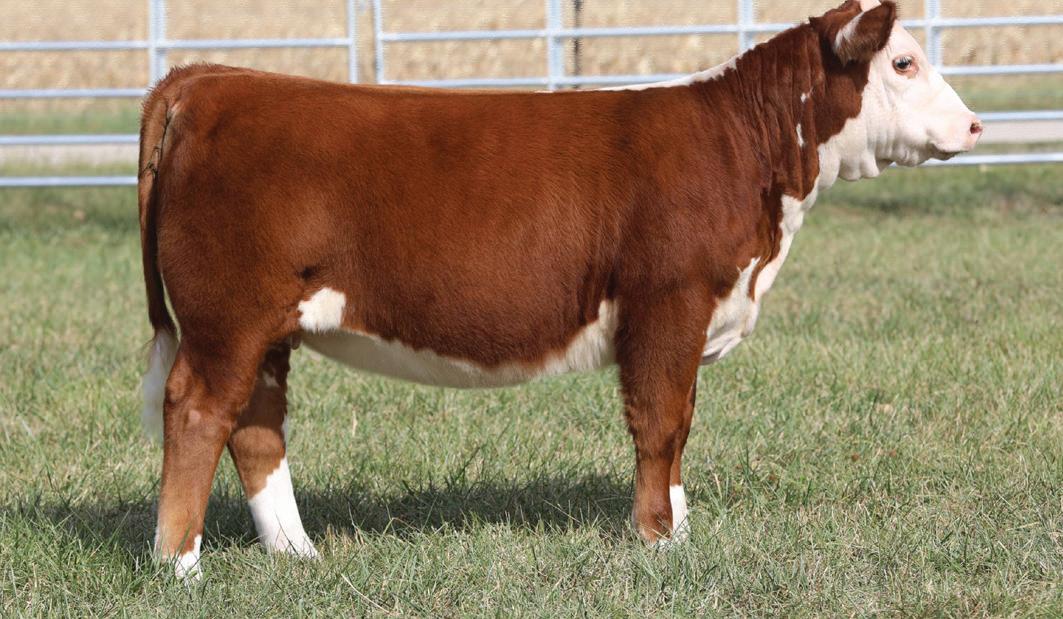
FTF Prototype 502N
44646250 HUTH CLC WF DELUXE K016
01/09/2025 FTF MS FRONTIER 0421H
Owned with Rick and Laurie Steinbeck, Hermann, MO
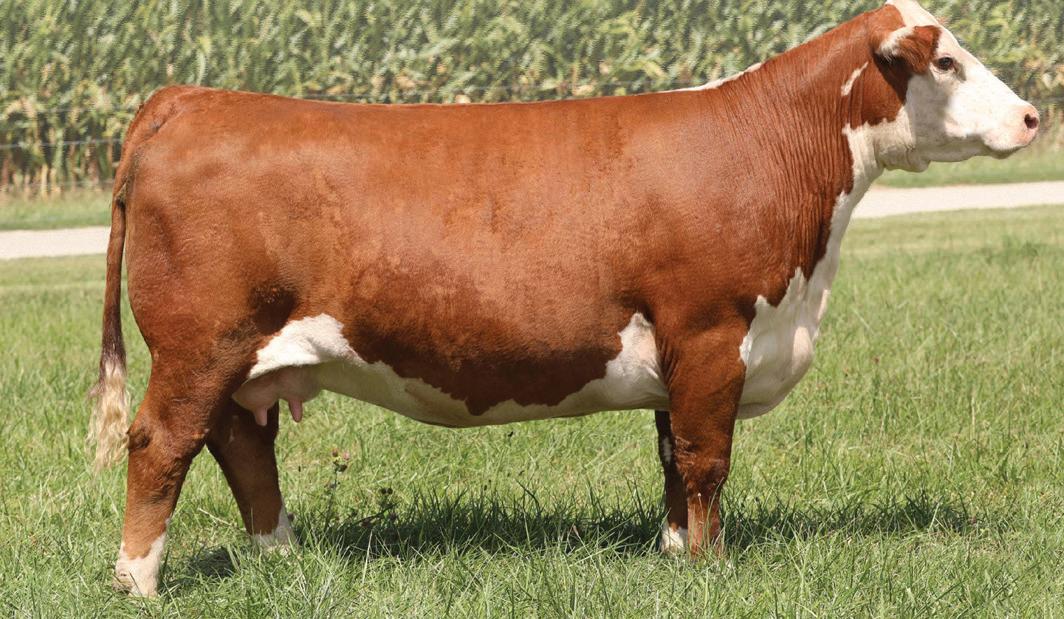
FTF Virginia 146J
44235544 FTF VALUE ADDED 556C
01/18/2021 FTF ROSALINDA 756E
Owned with Medonte Highlands Polled Herefords, Mississauga, Ontario, Canada