Seeking stability in market volatility, pg. 4
HIGHLINE notes
Protecting what matters: CCEC’s Wildfire Mitigation Plan, pg. 8 Meet MISO, pg. 6
June 2026
editorial
Bakken East Pipeline to deliver opportunity to North Dakota
Paul Matthys, president/CEO, Cass County Electric Cooperative
For generations, North Dakotans have understood the importance of building for the future.
Whether it is roads, transmission lines, water systems, or energy infrastructure, long-term investments are what allow our communities, farms and businesses to grow and prosper. That is why the Bakken East Pipeline Project is such an important development for our state.
In April, the North Dakota Industrial Commission approved a plan to allocate $500 million over the next 10 years to support development of the project. That decision sends a strong signal that North Dakota is committed to strengthening its energy infrastructure and preparing for future growth.
The Bakken East Pipeline, being developed by WBI Energy, would transport natural gas from the Bakken region in western North Dakota to central and eastern parts of the state. The project is expected to move approximately 1 billion cubic feet of natural gas per day and would be built in two phases, with a target in-service date around 2030.
Phase one would extend from northwestern North Dakota into the central part of the state. Phase two would continue eastward, helping deliver additional natural gas capacity
to growing communities and industries throughout eastern North Dakota.
At Cass County Electric Cooperative, we strongly support this project because we recognize the critical role reliable energy infrastructure plays in the future of our region.
As electricity demand continues to increase across North Dakota, utilities need dependable, dispatchable generation resources that can operate regardless of weather conditions or time of day. Natural gas generation provides that reliability. Expanding access to natural gas infrastructure creates opportunities for electric cooperatives and utilities across the state (including Cass County Electric and Minnkota, our wholesale power provider) to diversify generation resources while maintaining reliability for homes, farms, and businesses.
This project is a foundational piece of infrastructure that can help support future economic development, attract new industry, and strengthen longterm energy reliability throughout North Dakota.
Reliable and affordable energy remains one of North Dakota’s greatest competitive advantages. Communities considering expansion or industrial development consistently look
for dependable energy availability before making investment decisions. Projects like Bakken East help ensure North Dakota is prepared to meet those future needs.
The project also reflects a practical approach to using resources that are already being produced in our state. By moving more Bakken-region natural gas to consumers and industries across North Dakota, the pipeline can help maximize the value of our existing energy resources while supporting continued economic activity.
As the project moves forward, WBI Energy continues feasibility studies, route refinement and stakeholder outreach while the federal review process proceeds. Community members will have opportunities to stay informed through public open houses, comment periods, and updates provided by WBI Energy and through the Federal Energy Regulatory Commission review process.
Major infrastructure projects require planning, partnership, and long-term vision. The Bakken East Pipeline Project is an investment that can help provide reliable energy, support economic growth, and strengthen communities across our state for decades to come.
7 save
8 safety
10 impact
13 recipes 15 ads
BOARD MEETING HIGHLIGHTS - APRIL 2026
The Cass County Electric board of directors met in person on April 28, 2026. Highlights include:
• Approved the April 2026 consent agenda: minutes, monthly department reports, director expense report, 2025 year-end plant damage report, and annual disaster recovery status report.
• Received the chair’s report (Director Mitzel).
• Received the president and CEO’s report (Paul Matthys).
• Received the first-quarter 2026 financial report.
• Received the North Dakota Association of Rural Electric Cooperatives board meeting report.
• Reviewed highlights of the 88th annual meeting (April 14, 2026).
• Reviewed the 2025 IRS Form 990 and approved Eide Bailly’s report.
• Approved April 2026 capital credit estate payments.
• Reviewed upcoming meetings and events.
The next board meeting is June 28, 2026.

84, Number 6
Communications:
Morgan Bachelor
Sara Hand
Jocelyn Lura Hovland
Printer: Forum Communications Printing
Board of Directors:
Paul White, Secretary
Douglas Anderson
Vanessa Kummer
Stacey Ackerman
Tom Seymour
Glenn Mitzel, Board Chair
Wendy Loucks
Kalvin Hoff, Treasurer
Terry Kraft, Vice Chair
Executive Staff: Paul Matthys, President/CEO
Troy Knutson, VP of Engineering & Operations
Chad Brousseau, VP of Member & Energy Services
Andy Weiss, VP of Corporate Services & CFO
Mitchell Lyter, VP of Information Technology & CIO
5 STEPS FOR SAFE DIGGING
811
NOTIFY Call 811 or make a request online two to three days before your work begins. The operator will notify the utilities affected by your project.

2-3
WAIT
Wait two to three days for affected utilities to respond to your request. They will send a locator to mark any underground utility lines.

CONFIRM
Confirm that all affected utilities have responded to your request by comparing the marks to the list of utilities the 811 center notified.
Careless digging can put people and underground facilities at risk. Always call 811 before you dig.


RESPECT
Respect the markers provided by the affected utilities. The markers are your guide for the duration of your project.
DIG CAREFULLY
If you can’t avoid digging near the markers (within 18–24” on all sides), consider moving your project location.
In case you missed it: Last year, CCEC added a team of in-house locators to better serve our members, keep our crews safe, prevent costly damage to underground infrastructure, and keep projects moving efficiently from start to finish.
Highline Notes (USPS 244-740) is published monthly by Cass County Electric Cooperative Inc., 3312 42nd St. S., Suite 200, Fargo, ND 58104. Periodicals postage paid at Fargo, North Dakota 58104, and at additional mailing offices.
Postmaster: Send address changes to Highline Notes 3312 42nd St. S., Suite 200 Fargo, ND 58104 © Copyright Cass County Electric Cooperative 2026. All rights reserved. Questions: 701-356-4400 800-248-3292 info@kwh.com Call Before You Dig: 800-795-0555 or 811
Cass County Electric Cooperative is an equal opportunity provider and employer. Information about the cooperative, articles of incorporation, bylaws and more can be found at CassCountyElectric.com.
SEEKING STABILITY IN MARKET VOLATILITY
Dan Trebil, senior manager of energy supply for Minnkota, says the wholesale energy market has undergone a world of change since he started marketing 13 years ago.

Minnkota’s energy marketing team serves as first defense against energy price fluctuations
By Kaylee Cusack /// Photography Michael Hoeft
Participation in the regional wholesale energy market can be a white-knuckle thrill ride.
Gone are the days of predictable pricing and casual assessments of wind reports. When Dan Trebil started in energy marketing at Minnkota Power Cooperative (Cass County Electric Cooperative’s wholesale power provider) 13 years ago, his workdays, even weeks, were mostly docile. In 2026, as the co-op’s senior manager of energy supply, his crew of energy marketers is working to tame a wild beast that keeps getting wilder.
“The difference is night and day,” Trebil said of the current volatility of the Midcontinent Independent System Operator (MISO) energy market. “We spend a lot more time now looking at wind forecasts than we used to, and this team collaborates with just about every department in the building.”
Minnkota’s Paige Johnson began her career in energy marketing four years ago. “In the last two years especially, the pace has really amped up,” she said. “There’s so much to pay attention to in every avenue. All the transmission projects coming through and the market going crazy – you have
to be very present in the energy marketer role.”
The energy market – or the system through which utilities buy or sell energy across the regional electric grid to balance generation with demand – has become more volatile for several reasons. The dominating factor is the retirement of reliable power plants and their replacement with weather-dependent generation resources across the MISO footprint, which stretches from Manitoba, Canada, down to Louisiana. This major resource transition is happening at a time when the demand for electricity is forecasted to grow significantly.
“Ten years ago, the majority of resources on the system were reliable, baseload, dispatchable generators. They used fossil fuel, but they could be controlled. You could run them up and down as needed with demand,” Trebil explained. “With wind and solar generators, you’re at the mercy of Mother Nature.”
As wind and solar are added to MISO’s capacity, they increasingly drive market pricing. On days filled with wind and sunshine, energy is typically readily available. On days that are either still or cloudy, pricing can reach extreme highs.
“An example of where we start to see a lot of volatility is with solar penetration,” Trebil said, noting that solar panels stop producing quickly when the sun drops in the evening, which also happens to be the time demand rises as people arrive home. “When solar bleeds off, it’s currently difficult for the market to respond with resources
that can ramp up quick enough to mitigate that swing.”
Transmission congestion is also impacting market volatility. There are currently more bottlenecks in the transmission system because of MISO’s changing resource mix and growing loads across the system. Thus, more pathways from generation to end-user are needed. MISO member utilities and participants are investing historic amounts into building out more transmission, but that buildout will take many years to complete.
Amid all of this, MISO knew stronger price signals were needed to ensure its participants were planning their resources appropriately. In April 2025, MISO increased its maximum energy price threshold from $3,500 per megawatt-hour (MWh) to $10,000/ MWh. For comparison, rates during stability hang around $20$50/MWh.
If Minnkota needs to buy power during periods of extreme market volatility, the financial impact can be significant. For instance, being short 400 MW and purchasing replacement energy at peak prices for just four hours would cost about $16 million. If those conditions persist, the total cost can climb quickly, creating a substantial financial burden.
To prevent that exposure, the energy marketing team has to plan ahead.
“In our daily schedules, we pay particular attention to those two hours other utilities are losing solar to be extra careful,” Johnson said. “We might bump up our load a little bit so that we’re long in the real-time market, or we’ll be cautious with our wind expectations if we’re not 100% sure that it’s going be there.”
“We can mitigate some risks in

the day-of market. But if you have a plant trip offline, or something similar, you’re still exposed during that timeframe,” Trebil added. “That’s where having demand response in your back pocket really becomes valuable.”
Minnkota’s demand response program allows the co-op to shed nearly one-third of its load when necessary. The program is popular with its volunteer member-consumers, who sign up and receive lower electricity rates in return. The program has been essential in protecting Minnkota from high market prices when demand is high across MISO (like during a long cold snap) or when generation is lower than expected (minimal wind or plant outages).
MISO continues to explore ways to alleviate extreme market swings, but there’s no one easy fix. In 2023, the operator switched from an annual to a four-season peak demand resource adequacy construct. This aligned needed generation capacity with shifting seasonal risks (peak demand usually occurred in summer, but is now shifting to the winter season
as well). In 2025, MISO enacted a reliability-based demand curve, which has helped to provide more accurate values for additional capacity. Even more reforms are being assessed for the years ahead.
Minnkota is also exploring additional measures of its own, including the analysis of new generation resources that could raise regional dispatchable generation capacity and strengthen its all-of-the-above energy strategy.
Of course, one of the most powerful arrows in Minnkota’s quiver will always be the exceptional range of its people.
Trebil and his energy marketing team will continue to meet every morning, on chaotic days and quiet ones, to ensure the co-op is protected from volatility at every angle.
“We have a great group of people,” Trebil said. “We’ve gathered a good diversity of skills. I think each one of them has a different element they’re very strong at, and that makes them a good team.”
Minnkota energy marketer Paige Johnson takes a look at the weather forecast to prepare for market changes ahead.
MEET MISO
We occasionally reference the Midcontinent Independent System Operator (MISO) in the pages of this newsletter, because MISO is an important partner in making sure our coop has the reliable, affordable electricity it needs. We thought we’d take a moment to introduce you to MISO and the service it provides to our regional grid.
MISO is a not-for-profit, member-based organization that oversees electric grid operations in the middle of the country, with a territory that extends from Manitoba, Canada, through 15 U.S. states down to Louisiana. Its grid footprint serves more than 45 million people through 79,000 miles of transmission power line.
CCEC’s energy provider, Minnkota Power Cooperative, participates in the MISO wholesale energy market to both sell and buy surplus power to and from other utilities. Simply said, when Minnkota needs more power, it can purchase some from its neighbors. If it has extra power, it can sell it to those who need it. MISO makes sure the grid remains balanced between the sales of more than 550 market participants.
MISO also plays a role in helping to plan future regional generation and transmission additions. Although MISO doesn’t own any generation or transmission infrastructure, their team helps guide utilities to ensure that the right amount of energy is being produced to cover the demand of the entire region, and that transmission capacity is adequate to get power where it needs to be.
MISO’s role in balancing the grid
Like an air traffic controller manages the movement of airplanes from different airports, MISO manages the movement of energy from different utilities and generation sources.
If there is a problem on the grid, such as a failure at a power plant or a damaged transmission line, MISO must assess whether electricity supply can still meet demand. They may ask generators to ramp up production or ask utilities to reduce load by using demand response programs or asking the public to conserve. In rare emergency cases, they may call upon utilities to implement controlled temporary outages on noncritical loads. Even if a utility like Minnkota has enough generation to meet the load of its own members, emergencies in other areas of the country could impact MISO’s requests in our region.


Cooling smarter this summer save
When temperatures climb, your cooling system works overtime to keep your home comfortable. But if it is not running efficiently, it could be using more energy than necessary.
The good news is that many common issues are easy to fix. A few simple steps can help your system run more efficiently, lower energy use and extend the life of your equipment.
Some of the biggest efficiency problems are easy to overlook.
Dirty air filters
Clogged filters restrict airflow, forcing your system to work harder. Check your filter monthly during cooling season and replace it as needed.
Dusty coils
Your system’s coils remove heat from your home. When dirt builds up, cooling becomes less effective. Keeping coils clean helps your system perform at its best.
Blocked outdoor units
Leaves, grass, or landscaping too close to your outdoor unit can trap heat. Make sure there is at least a couple of feet of clear space around it.
Closed vents
Closing vents in unused rooms may seem helpful, but it can disrupt airflow and reduce efficiency across your home.
Let your thermostat do the work
Your thermostat settings play a big role in both comfort and cost. Set a consistent temperature to avoid overworking your system. If you are away during the day, consider adjusting it a few degrees higher.
A programmable or smart thermostat can make this even easier by automatically adjusting temperatures based on your schedule.
Quick wins you can do today
Small changes can make a noticeable difference:
• Use ceiling fans to circulate cool air and help rooms feel more comfortable
• Close blinds or curtains during the hottest part of the day
• Avoid using ovens or dryers in the afternoon heat
• Keep vents and returns clear of furniture or rugs
Small steps, big impact
A professional tune-up helps ensure your system is running safely and efficiently. Regular maintenance can catch small issues before they turn into costly repairs and help extend the life of your equipment.
Cooling your home does not have to mean higher energy bills. By addressing a few oftenoverlooked areas and making simple adjustments, you can stay comfortable while using energy more efficiently.
Cass County Electric Cooperative is here to help you make informed energy choices. Even small changes at home can make a lasting difference.
safety
Protecting what matters: CCEC’s Wildfire Mitigation Plan
Wildfires aren’t just a concern out west. They’re becoming a growing topic across the utility industry. And while Cass County Electric Cooperative’s service area isn’t heavily forested, we still take the risk seriously. That’s why CCEC has developed a formal Wildfire Mitigation Plan, a proactive approach to help protect our members, infrastructure, and communities.
The plan was prompted by evolving insurance industry guidelines, as well as a change to North Dakota state law, but much of it outlines what CCEC has already been doing for years: managing vegetation, inspecting equipment, and monitoring weather conditions. What’s new is how we’re using technology and mapping tools to guide those efforts more precisely.
An internal mapping system helps us overlay drought conditions, vegetation growth,
and wildfire risk across our service area. This tool gives our team a real-time view of potential hotspots and helps prioritize where to trim trees, upgrade equipment, or even consider undergrounding lines.
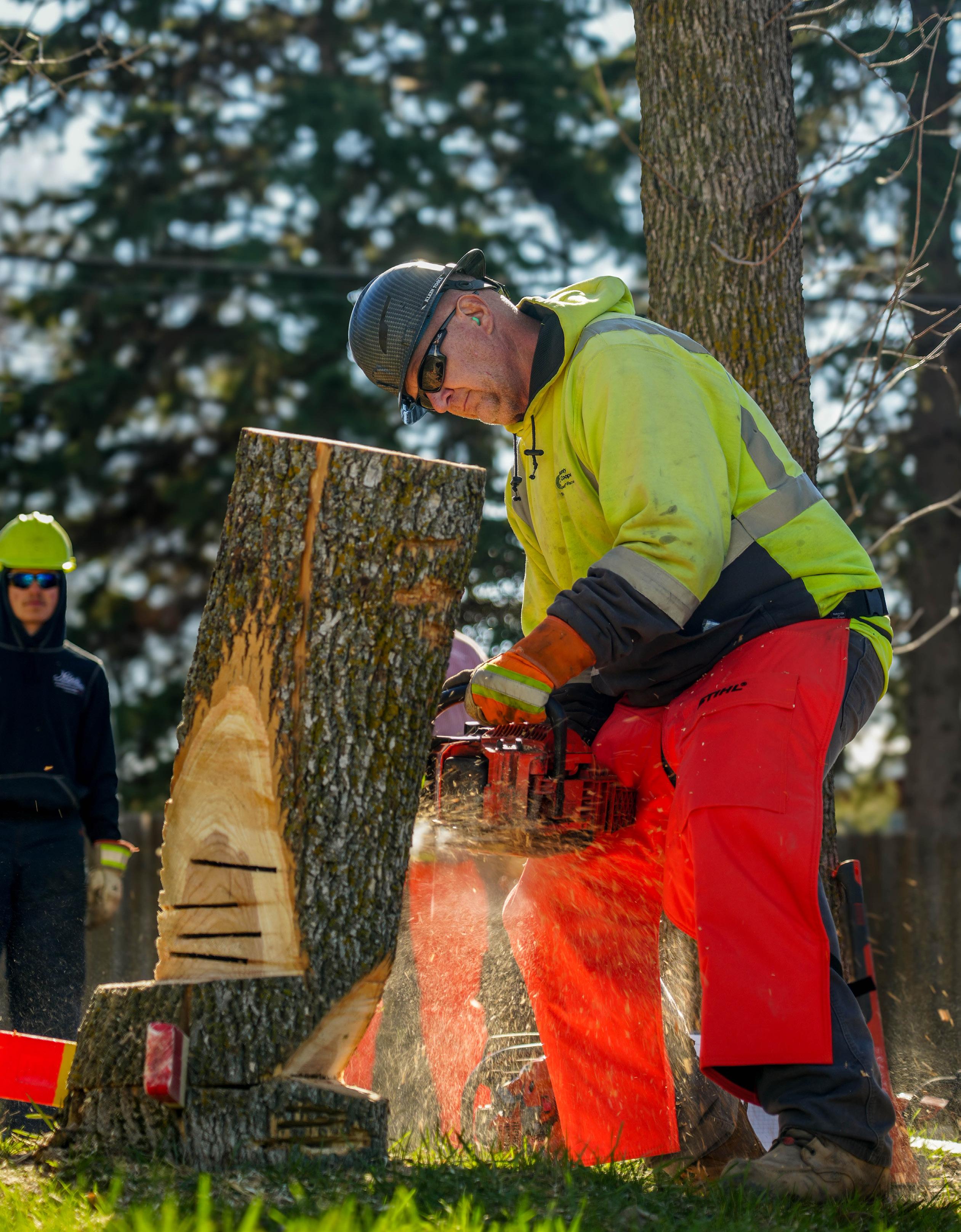
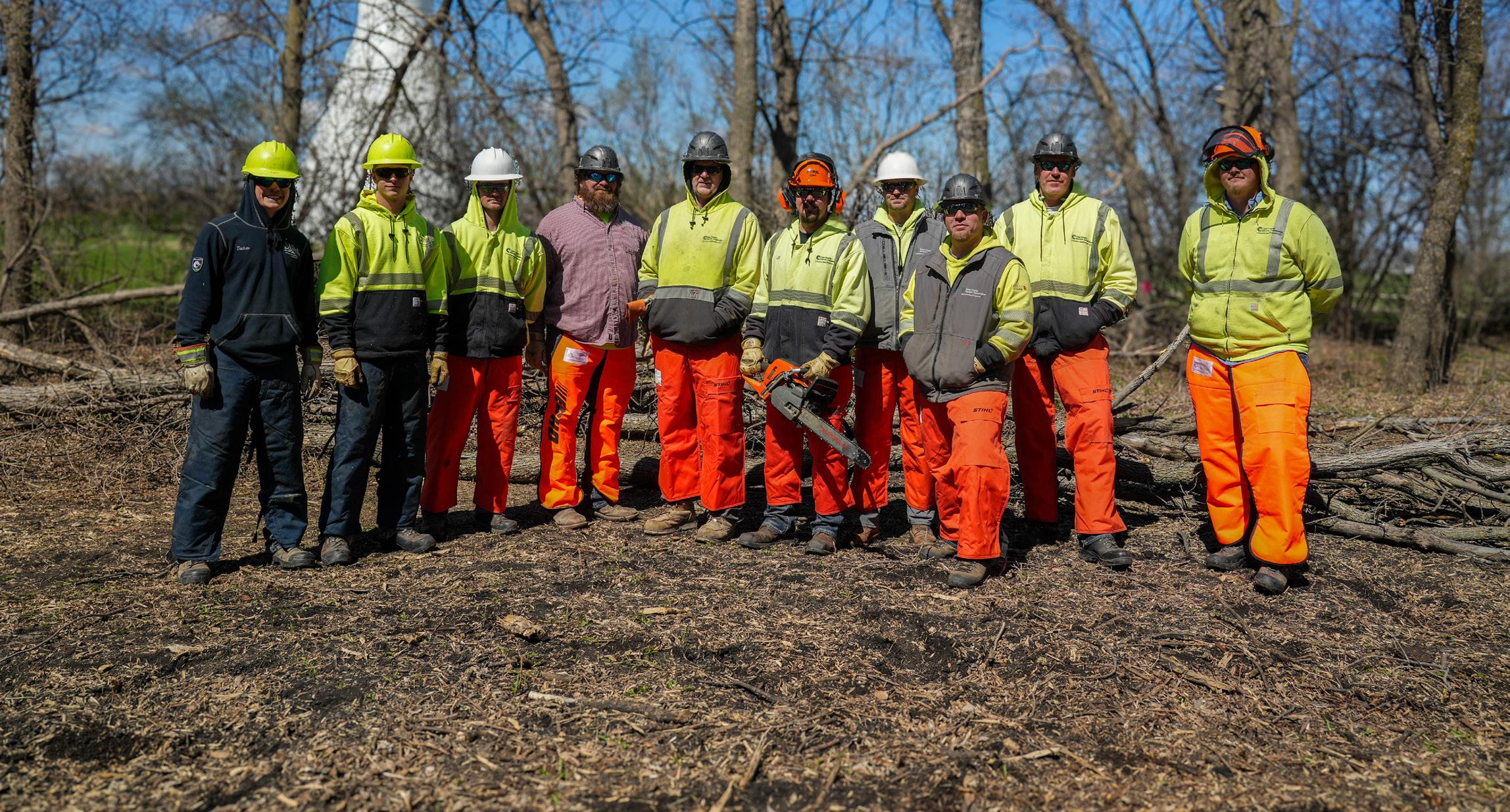
Vegetation management is a key part of that work, and it starts with properly trained crews. CCEC lineworkers recently completed chainsaw safety training, sharpening skills that are essential for trimming trees near power lines. Whether clearing overgrowth in higher-risk areas or responding after a storm, safe chainsaw use helps protect our crews and the communities they serve.
CCEC has also made design changes, like installing birdsafe equipment, moving away from older expulsion fuses, and replacing oil-filled devices with safer alternatives in higher-risk zones. And in the event of a fire,
CCEC is committed to safety through hands-on training and continuous learning.
the plan outlines a clear response strategy that prioritizes critical infrastructure, such as hospitals and water systems.
It’s worth noting that some fire safety measures, like more sensitive breaker settings, can lead to longer outages during high-risk periods. This is a tradeoff between safety and reliability, but one CCEC takes seriously.
“We may not be able to prevent every fire,” said Troy Knutson, vice president of engineering and operations, “but we’re doing everything we can to reduce the risk.”
The Wildfire Mitigation Plan is reviewed annually, refined as technology advances, and shaped by input from fire departments and statewide partners. Safe tree trimming, system monitoring, and proactive planning are all part of the same goal: protecting what matters most.
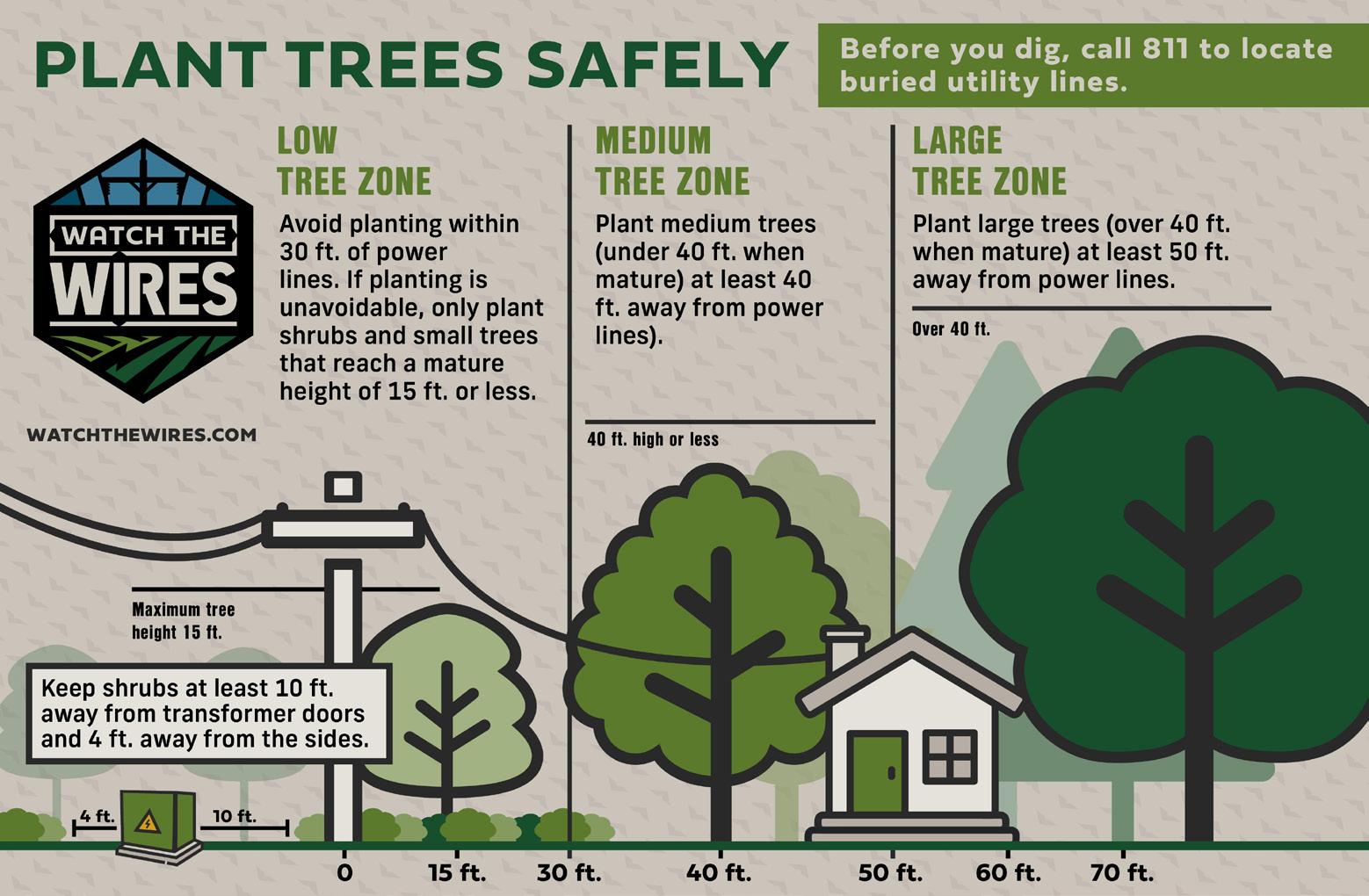
TREES AND POWER LINES DON’T MIX
We’re proud of our trees in the Upper Midwest. They shelter our crops from wind and create shade in the summer heat. Knowing how to properly plant and care for trees and other vegetation is important not only for the plants themselves, but also for the safety and reliability of nearby power lines.
When it comes to trees, it’s always important to WATCH THE WIRES.
VEGETATION MANAGEMENT PROGRAM
In collaboration with our wholesale power provider, Minnkota Power Cooperative, Cass County Electric Cooperative uses an integrated approach to vegetation management that supports sustainable plant growth while discouraging plants that pose safety and security concerns – like tall trees that grow into (or fall into) power lines. We monitor and maintain growth around our lines to meet regulatory and environmental compliance requirements. Some of the procedures we use include:
We must keep our right-of-way corridors (the area beneath and to either side of the power line) clear of hazardous vegetation for two important reasons: SAFETY and RELIABILITY. Improperly maintained trees and plants can spark fires, create power outages, or hinder crews from making emergency repairs. If you’re a landowner, don’t trim or remove tree limbs if they are anywhere near power lines. If you believe a tree is growing too close to a line and could be a hazard, please give us a call right away.
PLANTING
RESPONSIBILITY
Power lines move in certain conditions – they sag on hot days and sway in the wind. Nearby trees must be planned and maintained accordingly. Before planting, consider mature size and crown spread of trees. The clearance distances required for power lines vary depending on line voltage – the higher the voltage, the greater the required clearance distance. If you’re unsure, don’t hesitate to give us a call.
Investing Today,
POWERING TOMORROW.
Our apprentices are learning the skills, building the experience, and committing to the communities we’re proud to power
THE FUTURE OF OUR COOPERATIVE IS IN GOOD HANDS
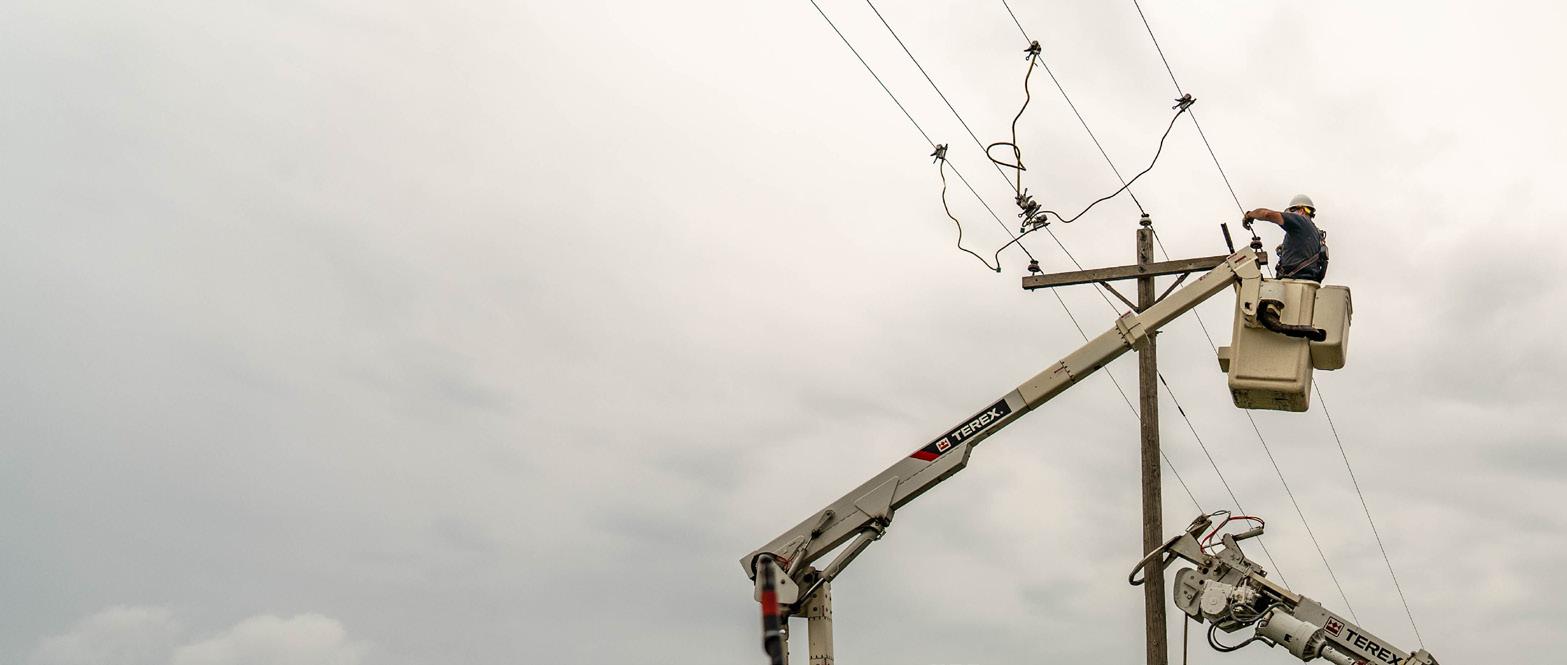
At Cass County Electric Cooperative, some begin 40 feet in the air, climbing a pole, learning hands-on, and building the skills that keep power flowing to our members every day.
Lineworkers are often the first to respond when the lights go out. They are the ones working through wind, snow, heat, and long hours to restore power safely and quickly. That responsibility does not come overnight. It is built through years of training, mentorship, and real-world experience.
That is where CCEC’s lineworker apprenticeship program comes in.
Recognized by the U.S. Department of Labor, the program is designed to develop the next generation of lineworkers through a combination of classroom learning and hands-on training in the field. Apprentices complete 8,000 hours of structured training, including 7,000 hours alongside experienced journeyman lineworkers and 1,000 hours of classroom education.
It is not a desk job. It is a career that challenges individuals to think, adapt, and solve problems in real time.
Apprentices gain experience across every part of the electric system, from setting poles and working with overhead lines to troubleshooting outages and maintaining underground infrastructure. The training is intentionally broad, giving apprentices the opportunity to rotate through different service areas and learn from multiple crews.
But one thing remains constant, no matter the task or location. Safety comes first.
From day one, apprentices are trained to approach every job with a safety-first mindset. That includes learning proper climbing techniques, using protective equipment, understanding electrical hazards, and participating in regular safety meetings. Safety is not just a step in the process. It is the foundation of the entire program.
That focus carries through every stage of the apprenticeship, ensuring that when apprentices

advance to journeyman lineworkers, they are not only skilled, but prepared to protect themselves, their crew, and the members they serve.
The program also provides a clear path forward. Through hands-on experience, mentorship, and continued training, apprentices build the confidence and capability needed to take on one of the most important roles in the cooperative.
For CCEC, investing in apprentices is an investment in reliability.
Every trained lineworker strengthens the cooperative’s ability to respond to outages, maintain infrastructure, and serve a growing membership. It is a commitment to keeping the lights on, today and in the future.
Because behind every powered home, farm, and business is a team of lineworkers who trained for this moment.
And for this year’s apprentices, that journey is already underway.
welcome








Josiah Hofman, Fargo
Joseph Klein,Kindred
Caden Meek, Fargo
Connor Suhr, Fargo
William Schwehr, Valley City
Tyler McAllister, Arthur
Jaydin Howard, Lisbon
Jack Glaser, Valley City
Stay connected during storms and outages.
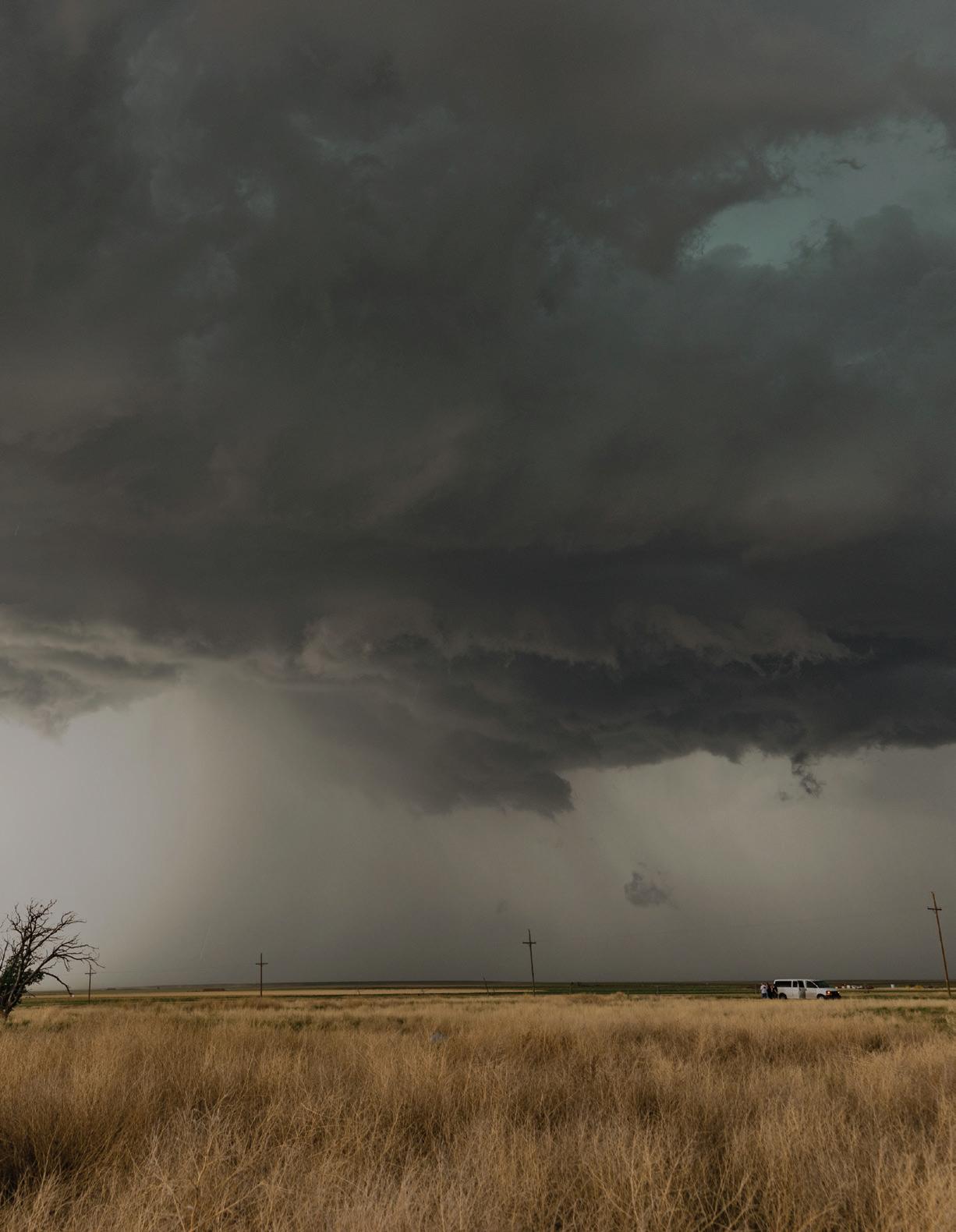
Summer storms can bring lightning, strong winds, and outages. Stay safe by avoiding corded electronics, never operating generators indoors, and staying far away from downed power lines.
Download the Cass County Electric mobile app to:

• Report outages
• View the outage map
• Receive outage alerts


COMMUNITY EVENTS
CCEC is proud to support community events across our service area, helping bring people together and make local experiences possible. From small-town gatherings to larger celebrations, our sponsorships reflect our ongoing commitment to the members and communities we serve.

North Dakota’s Primary Election is Tuesday, June 9
Elections help shape the communities we live and work in, from schools and public safety to roads, parks and local leadership decisions.
Early Voting: June 2-6 Election Day: June 9
Visit VoteFMWF.org to learn more about voting information, candidates and polling locations.

Congratulations to Dee DeGeest, Design Project Manager and longtime CCEC employee, on her retirement! Learn more about Dee’s story by scanning the QR code below:
Check out our Pinterest page for more recipes!

Pasta salad
Ingredients
12 oz. bowtie pasta
3 cups arugula
2 cups baby spinach
1 cup cherry tomatoes, halved
8 oz. mozzarella pearls
1/4 cup fresh basil, chopped
1/3 cup pine nuts, toasted
Shaved Parmesan cheese, for topping
Red pepper flakes
1/3 cup olive oil
2 Tbsp fresh lemon juice
1 tsp lemon zest
1 garlic clove, minced
1 tsp Dijon mustard
Salt and pepper, to taste
Instructions
Cook pasta according to package directions in generously salted water. Drain and rinse under cold water until cooled. While the pasta cooks, toast the pine nuts in a dry skillet over medium heat for 3-4 minutes, stirring frequently, until golden brown. Set aside. In a small bowl or jar, whisk together olive oil, lemon juice, lemon zest, garlic, Dijon mustard, salt, and pepper. In a large bowl, combine cooled pasta, arugula, spinach, cherry tomatoes, mozzarella pearls, and basil. Pour dressing over the salad and toss until evenly coated.
Top with toasted pine nuts, shaved Parmesan cheese, and red pepper flakes. Refrigerate for 30 minutes before serving for the best flavor.
Longer days, backyard cookouts, and gathering with family and friends are some of the best parts of summer. These simple recipes are perfect for June celebrations, Father’s Day weekend, or easy evenings at home. Even better, they help keep cooking simple and efficient by using the grill and minimizing oven time during warmer weather.
Super smash burgers
Ingredients
2 pounds ground beef
Salt and pepper
Garlic powder
6 hamburger buns
6 slices American cheese
Toppings
Lettuce
Tomato
Pickles
Onion
Burger sauce
1/2 cup mayonnaise
2 Tbsp ketchup
1 Tbsp mustard
Splash of pickle juice
Instructions
Divide the beef into 12 small balls. Mix burger sauce ingredients in a small bowl. Heat a cast-iron skillet or griddle over high heat. Place beef balls on the hot skillet and smash them thin with a spatula. Season with salt, pepper, and garlic powder. Cook for 1-2 minutes until crispy, then flip. Add cheese and cook another minute until melted. Toast buns if desired. Spread sauce on buns and top with burgers, lettuce, tomato, pickles, and onion.
Chocolate icebox pie
Ingredients
10 graham crackers
2 (3.9 oz.) boxes Jell-O instant chocolate pudding mix
2 tsp instant espresso powder
3 cups cold milk
1 (16 oz.) container whipped topping
1 cup sweetened shredded coconut
1 cup sliced almonds
Instructions
Arrange a layer of graham crackers in the bottom of a 9-by13-inch baking dish. In a large bowl, whisk together pudding mixes, espresso powder, and milk until slightly thickened. Fold in the whipped topping until smooth. Spread half the mixture over the graham crackers. Add another layer of graham crackers, then spread the remaining pudding mixture on top. Sprinkle with coconut and sliced almonds. Cover and refrigerate for at least 4 hours before serving.

recipes

Co-op contractors
The work doesn’t end for an electric utility once the power lines are in the air or underground. With a 10-county service area, nearly 6,000 miles of line, and almost 61,000 accounts, installing, maintaining, and keeping the power running takes a massive effort. CCEC augments its workforce with contractors to help with some of the heavy lifting to make it happen.
The companies below provide crucial services that aid our maintenance efforts. If you see them out in the field, there’s a chance they’re helping us keep the power on for you. If you have a question about our contractors or the work they perform, call our office at 701-356-4400.
UNDERGROUND WORK: Removes, repairs, and installs underground electric distribution lines
• Dakota Hills Electric • Dan’s Directional Drilling • Jerry’s Excavating
• Moritz Excavating • MPM Construction • ND Underground
LOCATING: Assists with 811 locates
• This role used to be performed by a contractor, and will now be completed by the cooperative's new employee locating team
VEGETATION MANAGEMENT: Keeps tree limbs clear of power lines to prevent fires and power outages
• Carr’s Tree Service
YARD RESTORATION: Restores impacted member property
• Jack Martin Engineering • Opp Construction
YARD LIGHTS: Conducts light maintenance and replacements
• Dakota Hills Electric
POLE TESTING: Marks aged, damaged, or unsuitable poles for replacement
• Utility Inspection Services
GENERAL MAINTENANCE: Painting, leveling transformers, and minor restorations
• Jack Martin Engineering
For Sale:
ads
Member Market
All ads must be 40 words or fewer and will be abbreviated following our guidelines. No real estate or commercial ads will be accepted. Ads are published for members at no charge as space permits on a first-received, first-printed basis. Ads are due by the 10th of the month prior to publication. Members may submit only one ad per issue. Editor reserves the right to edit or reject any ad. Email ads to: ccec@kwh.com
2008 Suzuki Boulevard motorcycle, beautiful candy apple red & pearl white bike, incl. 2 helmets, studded saddle bags & seat, exc. cond., low mileage, 2,700 mi., 1 owner, $5,000. 701-306-0980
2 - NFL stocking caps, Vikings: 1 new in bag, $19. 1 used, $17. 701-866-0218
Sandy Acres 2025 harvested raw honey and jellies. Raw honey 16oz, $12. 32oz, $22. Homemade Nanking cherry, wild plum, crimson red grape jellies, 12oz, $10. Apple butter, 12oz, $10. 16oz, $12. (662) 251-5954
NH 195 manure spreader. Inspected bison meat by the pack, quarter of half. Hay, grass or alfalfa, mid or small squares, all shredded, horse & cow hay. 701-238-1893
Bare copper wire, 8 Size, Soft Drawn Cerrowire, approximately 450’ on a 500’ spool, $225. 701-729-1921
Ritchie Yellow Jacket flaring tool, 3/16” to 5/8”, aluminum, brass, copper, $10. Imperial Annie A-8 temperature analyzer electronic thermometer w/ 2 probes, $25. Both like new. 701-4123562
White Jeld-Wen sliding glass door w/ screen, new, tags still on, 70¼ W x 79½ L x 4½ D. Paid $1,500, BO. 701367-4899
Men Trek 800 Bicycle, 26’, 21 speed, great shape, $125. 701-320-5257
Vintage farm equipment, including plows, dump rakes, & mowers, open to offers, must pick up, near Colfax. 701-866-6825
Amish oak hall tree coat rack, fulllength mirror, covered storage bin.
78” x 25”x 16”, $800. Singer portable elec. sewing machine w/ case & accessories, used once, $125. pics available. Text 701-290-2314
2017 Jayco Seneca Super C Motorhome Freightliner 40’ 6.7 Cummins, 2 slides w/ bunks, sleeps 8, 33k mi., exc. cond., non smokers, ready for summer trips or go south, price reduced, $137,900. 701-238-8172
Narrak electric adult tricycle, hydraulic brakes, <200 mi., $1,000. 701-361-7343
Misc. construction tools, you name it, I’ve got it. 701-541-6325
5 new USA made flags, size 3x5, $15. 4x6, $30. 5x8 $50. Canadian flag 3x5, $20. 701-561-3996
Boat flooring or shower backing material by SpaceAge Synthetics, type 2862, sheet size 1/2x48x96, $110/ ea. 701-282-5726
2011 Dodge Dakota Big Horn pickup, 2D extended cab, 4.7 liter engine, V8 flexfuel E85, 4 WD, no accidents, 150,465 mi., $6,000. Set of 8 National Audubon Society salad plates, all numbered, Alfred Meakin England, $145. 701-866-6671
8’ L x 6’ H double-sided display/ storage rack, 4 shelves each side on rolling casters, $135. INTEX Seahawk 2-man 8’ rubber raft, $50. Text 701540-7929
Complete antique Gone with the Wind electric lamp and kerosene hanging lamp chandelier w/ a part missing, $75. 701-541-3044, ask for Ed.
Wanted: Motorcycles or ATV’s, any make or model, prefer complete but will consider parts bikes. 701-361-7289
Decades of Value
Postage Stamp
1937... 3¢
2026... 78¢
Increase... 26x
Electricity
1937... 5¢/kWh
2026... *11.7¢/kWh
Increase... 2.34x
* 2025 Average selling price
As prices have changed through the decades, your cooperative has remained committed to delivering safe, reliable and affordable electricity you can count on every day.