CopyrightbyG.Ricordi&Co./Forperusalonly
The score is transposed
Duration: ca. 5 minutes
The music was inspired by Miwa, my daughter, who is now 14 months old
Instructions
Clef
The clef is used to indicate the approximate ranges of pitch; high, middle and low
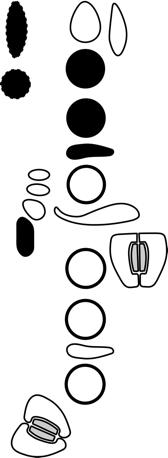
Note-heads
Others
highest sound possible
lowest sound possible
approximate/indeterminate pitch
Note-head for clarinet with “flute embouchure” (mouthpiece off). Approximate pitches.
“ ƒ ” Dynamics indicated in quotation marks: these refer to the intensity of the performance manner rather than the resultant dynamics.
Sound or playing technique gradually changes from one to another.
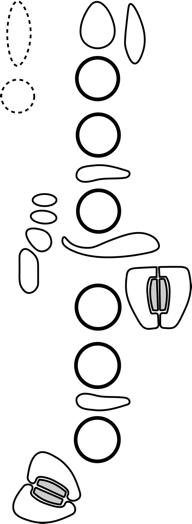
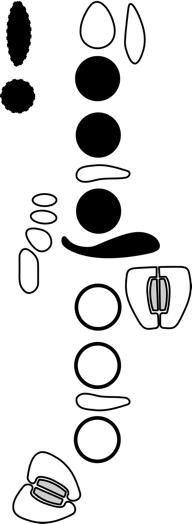
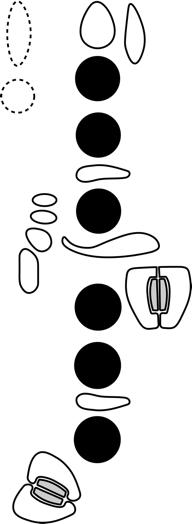
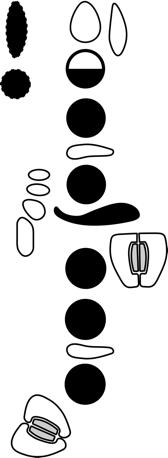
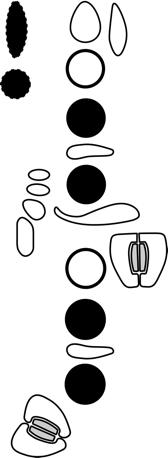
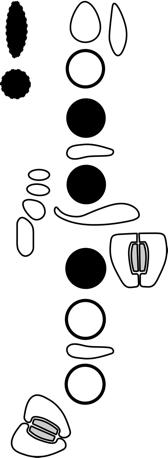
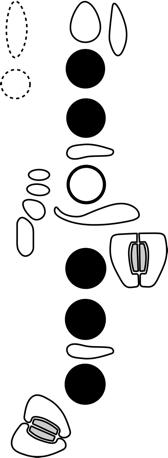
Fingerings for Clarinet
These are the fingerings for playing with “flute embouchure” without mouthpiece. The barrel should be still attached to the instrument when this technique is used.
All fingerings indicated here are for the German system, and must be adapted accordingly for the French system if necessary. All of these effects should be played with a lot of air "noise" mixed together with pitches. The pitches indicated for these techniques are approximate.
Fingering: g” (e.g. bar 66)
Either of the two examples below can be used.
Example 1
“flute embouchure” and overblowing
Fingering: db’’’ (e.g. bar 68)
“flute embouchure” and overblowing
Example 2 “flute embouchure and overblowing”
Fingering: a ”’ (e.g. Bar 72)
Keep your lips close to the barrel but move your teeth/jaw a little away from it. Then whistle into the barrel. The shape of your mouth should be similar to the sound “u” in German, such as the word “Munchen”. The pitch is achieved mainly by whistling into the barrel. By using this particular fingering, the air turbulence occurs and the sound becomes more “noisy”.
Fingerings: glissando effect (e.g. Bar 76)
The glissando consists of two elements. First, whistle and let the note a”’ fall down. Whilst you do this, change the fingering to the normal a” and play down chromatically until you arrive at d”. Those notes are very soft (in German, they can be described as “Untertöne”). The combination of whistling and the falling chromatic scale creates this unique effect.
Fingering: ab’’’ (e.g. Bar 76)
"flute embouchure" and whistling
Fingering: g”’ (e.g. Bar 76) "flute embouchure" and whistling
Fingerings: multiphonics (e.g. Bar 81 onwards)
"flute embouchure" and whistling
Alternative fingering: d♯ ”’ (e.g. Bar 89)
“anticipation” q=ca. 45
For Solo Clarinet and Orchestra Shiori Usui
Flute
Oboes
1. 2.
Bassoons 1. 2.
Hor ns in F 1. 2.
Solo Clar inet in Bb
Violin I
Violin II
Viola
Violoncello Double Bass
Vln I
Vln. II
Vla. Vc.
2
Solo Cl
Vln. I
Vln II
Vla
Vc.
Db
5 4 2 4 3 4 4 4
Sing as you play in order to create some beating/buzzing effect with
and pitch It is then followed by cuivré Sing cuivré
Vln I
Vln. II
Vla
4 4 2 4 4 4
Vln II
Vla.
Vla
Vla
2 4 3 4 4 4 3 4 2 4
Take off mouthpiece from instr ument (The bar rel should still be attached to the instr ument )
Play with a "flute embouchure" without mouthpiece (bar rel still attached to instr ument) in order to create sound with a lot of air "noise" and pitch mixed together
Technique: “flute embouchure” and overblowing Finger ing: g" (See instr uction page )
Vla
Technique: “flute embouchure” and overblowing
Finger ing: db"' (See instr uction page )
Technique for a"': “flute embouchure” and whistling Finger ing: a'" (See instr uction page )
kissing/smaking sound (sucked pitch)
kissing/smaking sound (sucked pitch)
Technique for glissando effect, ab"' & g"': "flute embouchure" and whistling Finger ings: glissando effect finger ing , ab"' & g"' (See instr uction page ) gliss.
Vln. I
Vln II
4 4 3 4 2 4 4 4
pr ima metà Whistle at any pitch but create differences of high, middle and low reg ister s as indicated.
Vln. I
Vln. II Vla.
4 4 3 4 4 4
multiphonics
Technique:"flute embouchure" and overblowing Finger ing: See instr uction page
pr ima metà
Whistle approximate pitch indicated. Listen to sound of clar inet as a reference of pitch
Whistle at octave lower if notes are too high
seconda metà
Whistle approximate pitch indicated
Listen to sound of clar inet as a reference of pitch Whistle at octave lower if notes are too high
sim (seconda metà)
Whistle approximate pitch indicated
Listen to sound of clar inet as a reference of pitch
Whistle at octave lower if notes are
Whistle approximate pitch indicated
Listen to sound of clar inet as a reference of
Whistle at octave lower if notes are too