Sy. 4803 - Bernhard Lang - Game One: Self Organizing Systems [S.O.S.] (2018)
Bernhard Lang Game One:
Self Organizing Systems [S.O.S.]
Series Six: Theory of Games
Partitur
Auftragswerk des œnm . österreichisches ensemble für neue musik
Flöte (auch Piccolo und Bassföte)
Klarinette in B (auch Bassklarinette in B)
Posaune
Perkussion
Glockenspiel, Rassel, 2 Styroporstücke, Gong (D), 3 TamTam Drumset (snare drum, 3 cymbals: ride, splash, crash; foor tom, mid tom, 3 toms, woodblocks)
Sampler
Der Sampler wird mit einem Masterkeyboard angespielt, die individuellen Samples sind Tasten zugeteilt, die Kästen über der Note zeigen den Namen des Samples.
Synthesizer / Klavier
Eines der folgenden Synthesizer Modelle ist zu benutzen: Yamaha SY77, SY99 oder TG77 (mit Masterkeyboard).
Violine 1
Violine 2
Viola
Violoncello Kontrabass
general explanations
fute (also piccolo and bassfute) clarinet in B b (also bassclarinet in B b) trombone
percussion
glockenspiel, rattle, 2 pieces of styropore, gong (D), 3 tam-tam drumset (snare drum, 3 cymbals: ride, splash, crash; foor tom, mid tom, 3 toms, woodblocks)
sampler
The Sampler is controlled by a master keyboard, the individual samples are allotted to the keys: the label above the note shows the sample name.
synthesizer / piano
The Synthesizer to be used is a Yamaha SY77, SY99 or TG77 (with master keyboard).
violin 1
violin 2
viola
violoncello double bass
All scenes and patterns (A B C D) should be sequenced without any intermissions!
designate the 4 patterns of each scene
etc. designate the order of entrance for all instruments involved designate the numbers of loops being played
designate approximately 3 loops
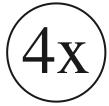
designate exactly 4 loops
asynchrony: player plays his/her own part independently from others “neighbours”: players form synchronized groups
sync with sample: try to pick up the samples beat/tune
sync metre: synchronize the metre
sync rhythm: try to synchronize the rhythm, not necessarily the loop-phrase
sync loop: try to play with the loop as exactly as possible (loop start/end included)
repeat on cue: wait for sign by either neighbour, patternmaster or scenemaster
add rests with each loop, so varying loop-length
play mute loop: rest for the precise duration of the loop-phrase
approximate rhythm values within bar boundaries
Following common practice, accidentals apply for the whole measure in that particular octave. Cautionary accidentals are given frequently and do not cancel this rule.
Generally, non vibrato playing is assumed (except when instructed otherwise).
morph/transform to explicit vibrato, then back to n.v.
improvise , graphics to be understood as a suggestion only
interrupt the repetitions by interpolating “mute loops”
CopyrightbyG.Ricordi&Co./Forperusalonly
pick one of the pitches contained in this chord, change pitch with each loop
quartertone lower / higher (+/- 50Cent) - for longer passages:
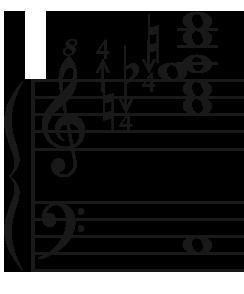
play Ab (quartertone lower) in any octave , change with each loop-phrase noise with a significant formant: “[s]-sound”
chromatic clusters in the approximate range
strings
col legno tratto + crini bowed with the wood and hair
col legno tratto senza crini bowed with the wood only, no hair
c.l.b. col legno battuto (strike with the wood only, no bowing)
add voice: + singing at a definite interval (octave can be adjusted according to vocal range)
unisono voice: sing the same pitch while playing
a multiphonic is produced by singing the upper or lower voice
M multiphonic
morph towards multiphonic (also with voice)
slaps or slap -like sounds
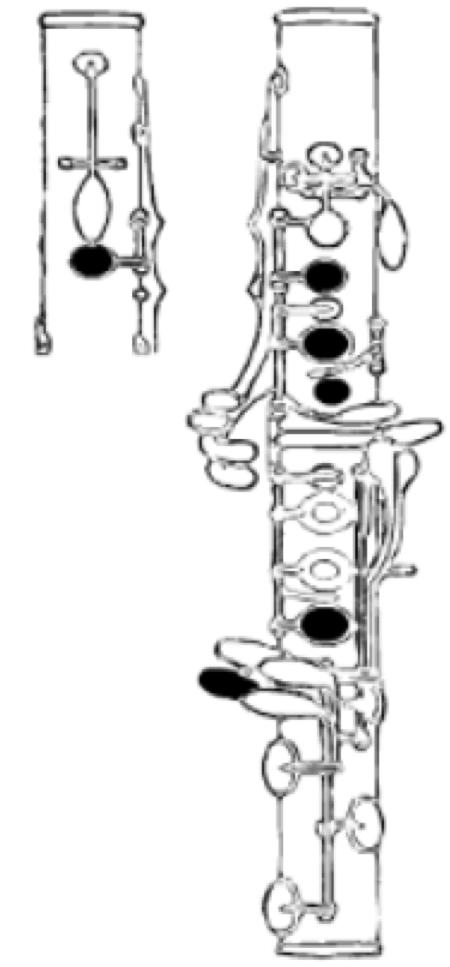
air-sound , with discernible pitch
drumset
Sampler Sounds
CopyrightbyG.Ricordi&Co./Forperusalonly
The Sampler is controlled by a master keyboard, the individual samples are allotted to the keys: the label above the note shows the sample name.
Scene I A game_one_scene1_A_2.wav
B game_one_scene1_B2.wav
C game_one_scene1_C2
D game_one_scene1_D.wav
Scene II A game_one_scene2_a
B game_one_scene2_B1.wav
C game_one_scene2_C.wav
D game_one_scene2_D.wav
Scene V A
B game_one_scene5_A.wav
C game_one_scene5_B.wav
D
Scene VI A game_one_scene6_A.wav
B game_one_scene6_B.wav
C game_one_scene6_C.wav
D game_one_scene6_D.wav
Scene IX A game_one_scene9_A2.wav
B game_one_scene9_B2
C game_one_scene9_C2.wav
D game_one_scene9_D2.wav
Scene X A game_one_scene10_A2
B game_one_scene10_B
C game_one_scene10_C
D game_one_scene10_D
Scene XI A game_one_scene11_A2
B game_one_scene11_B1
C game_one_scene11_C1
D game_one_scene11_D1
Synthesizer Sounds
All the sounds provided are programmed exclusively for Yamaha SY77, SY99 or TG77 (with master keyboard). The sounds are available both as Sounddiver Lib or SysEx Midi Files.
name description
Scene I A GAME1org1 Crystal Organ
B GAME1org2 Marimborgel
C GAME1_Ab4t Orgel "Farfisa" (tuned quartertone lower)
D GAME1_Snoi S-Noise
Scene II
CopyrightbyG.Ricordi&Co./Forperusalonly
Scene IV
A GAME1PcfM Percussive FM
B GAME1PcfM Percussive FM
C GAME1PcfM Percussive FM
D GAME1PcfM Percussive FM
A GAME1org4t Non Vibrato Organ (tuned quartertone lower)
B GAME1org4t Non Vibrato Organ (tuned quartertone lower)
C GAME1org4t Non Vibrato Organ (tuned quartertone lower)
D GAME1org4t Non Vibrato Organ (tuned quartertone lower)
Scene V A GAME1hBras HardSilverBrass
B GAME1hBras HardSilverBrass
C GAME1hBras HardSilverBrass
D GAME1hBras HardSilverBrass
Scene VI A GAME1_Adro A-Drone
B GAME1_Adro A-Drone
C GAME1_Adro A-Drone
D GAME1_Adro A-Drone
Scene VII A GAME1Fendr FunkyRhodes
B GAME1Fendr FunkyRhodes
C GAME1Fendr FunkyRhodes
D GAME1Fendr FunkyRhodes
Scene X A GAME1_Ncrs NoiseCrescendoSynth
B GAME1_Ncrs NoiseCrescendoSynth
C GAME1_Ncrs NoiseCrescendoSynth
D GAME1_Ncrs NoiseCrescendoSynth
Scene XI A GAME1org1 CrystalBell
B GAME1org1 StringOrgan
C GAME1org1 StringOrgan
D GAME1org1 CrystalBell
Game One: Self Organizing Systems [S.O.S.]
Series Six : Theory of Games
Bernhard Lang Partitur in C
Player 1 (numbers in squares) starts with Model A, repeats it for the indicated times, interrupting/interpolating it three times with either Model B, C, D in a free sequence; player 2 starts after player one with Model A, repeats it for the indicated times, interrupting/interpolating it three times with either Model B, C, D in a free sequence; the following players 3-8 start sequentially with Model A, repeat it for the indicated times, interrupting/interpolating it three times with either Model B, C, D in a free sequence.
At the end of each Model there is a number of rests indicated: these should be added to each loop with each repetition.
Double Bass is SCENEMASTER: after having executed the designated repetitions, SCENEMASTER cues other players to Scene II; if other players have not yet finished or have already finished Scene I, they either cut off or wait until SCENEMASTER cues other players.
Flöte
Klarinette in
Posaune
Violine 1
Violine 2
Orgel "Farfisa" tuned quartertone lower
Player 1 (numbers in squares) starts with Model A, B, C or D in free permutations; repeats them for the indicated times; then repeats the entire process twice, so each Model is being played three times: e.g. A C D B D A C B B D C A or similar.
Violin 1 is SCENEMASTER; player 2 joins in the same way, so do the others; Violin 1 and 2 step in as improvisers with entry 4.
Violin 1 cues Scene III at end of Solo by playing synchronous cue phrase 6x (fast cut).
sync rhythm means: keep the beat, but not necessarily the up-beat (shift of accents is possible) neighbours: the relevant partners for interaction.
Percussive FM
improvise, graphics for suggested density
neighbour = Vln. 2
rhythm 4. improvise, graphics for suggested density
neighbour = Vln. 1 ignore loops and barlines ignore loops and barlines
Rules Scene III
Player 1 (numbers in squares) starts with A, B, C or D; player 2, 3, 4 join in sequentially; any of the four players can now be the PATTERNMASTER, cuing the next pattern during a rest; the players can arrange a sign for A, B, C, D between them (e.g. 1 finger, 2 fingers, 3 fingers, 4 fingers).
Each pattern should not be longer than 1-2 minutes.
Piano is SCENEMASTER, cuing scene IV (cutting off all other players still active at cue-point).
Piano, Cello, Flute and Trombone are neighbours
Scene III
sync metre with neighbour 1. q = 59 play optional mute loops in between
Vibrato Organ always quarterone
asynchrony p arco st. flaut. nv.
asynchrony p arco st. flaut. nv.
asynchrony p arco st. flaut. nv.
flaut. nv.
Rules Scene IV
All players start at once; fixed Sequence A B C D; tied loops result in held notes (breath/change bow imperceptibly and not simultaneously) Trombone plays 2 loops then starts with solo-phrase; cues Pattern B, continues with solo-phrase; cues Pattern C; after 11 loops all players go to D; Flute cues Scene V.
PATTERNMASTER A B C is Trombone.
SCENEMASTER is Flute, cuing scene V (cutting off all other players still active at cue-point).
Glissando Duration 33-44 quarters
Glissando Duration 33-44 quarters
Glissando Duration 33-44 quarters
Glissando Duration 33-44 quarters
Glissando Duration 33-44 quarters
Glissando Duration 33-44 quarters
Glissando Duration 33-44 quarters
Glissando Duration 22-33 quarters
glissando
Glissando Duration 22-33 quarters
Glissando Duration 22-33 quarters
Glissando Duration 22-33 quarters
Glissando Duration 22-33 quarters
Glissando Duration 22-33 quarters
glissando glissando glissando glissando glissando
Glissando Duration 22-33 quarters
Glissando Duration 22-33 quarters
glissando glissando
Group 1
Rules Scene V
Group 1 (Percussion, Sampler, Violoncello, Double Bass) starts sequencing A B C D (the sequence could also be permutated if manageable via cues) doing this 3-4 times. (A B C D A B C D A B C D or similar).
Group 2 (Violin 1 & 2, Viola) joins in after some time, doing any sequence of A B C D, continuing till next scene; then Synth. joins in with Group 1; then Trombone begins improvisation till next scene (Trombone is SCENEMASTER) in any sequence of A B C D; Trombone cues Scene VI (cutting off all other players still active at cue-point).
Shortly after Trombone, Group 3 (Flute, Clarinet) joins in looping A B C D in a free sequence/permutation.
neighbour = Kb,Sampler
= Kb,perc
game_one_scene5_B.wav P play
neighbour = Vln. 2
Phrase with neighbour
neighbour = Vln. 1
neighbour = Vln. 1
Phrase with neighbour
Select any pitch from this chord, change with each loop, repetitions are possible
Select any pitch from this chord, change with each loop, repetitions are possible
improvise, graphics for suggested density improvise, graphics for suggested density
Players play A B C D in any individual sequence, just once each. (Each player is PATTERNMASTER for himself).
Sampler is SCENEMASTER, cuing Scene VII (cutting off all other players still active at cue-point).
Rules Scene VII
Here the Pattern-cues are assigned to 4 players, one cueing A, one B, one C, one D. All players start simultaneously, syncing the beat, not necessarily the loop-phrase; whenever a player hears a phrase similar to one of his/her own, he/she can attempt “imitations”. ABCD is repeated three times in any permutation. (CABD DBAC ABDC or similar).
After the first round of ABCD, Percussion becomes both Concertmaster and SCENEMASTER, soloing over the others, cueing Scene VIII.
Scene VII
CopyrightbyG.Ricordi&Co./Forperusalonly
Rules Scene VIII
Piano starts with any of the four patterns (A B C D in any permutation), followed by Violin and Violoncello, then Flute, Clarinet and Trombone, finally Viola and Double Bass.
Play until all four patterns have been played at least once by each player.
All patterns are to be played 1x-2x.
Piano is SCENEMASTER and PATTERNMASTER, cueing Scene IX.
Rules Scene IX
Sampler starts, the other players try to synchronize their loops with the sample, switching independently from A B C D in any order, with possible repetitions; this should result in ~3-4 run-throughs.
Sampler is SCENEMASTER, cueing Scene X.
Scene IX
Sync Loop with Sampler Bassfl.
Sync Loop with Sampler
Sync Loop with Sampler
Sync Loop with Sampler con sord.
game_one_scene9_A2.wav
arco
Sync Loop with Sampler
arco
Sync Loop with Sampler
arco
Sync Loop with Sampler
Sync Loop with Sampler
arco h = 79
col legno tratto senza crini
Sync Loop with Sampler
All three players start at once, syncing the sample, choosing one of A B C D in free permutation. Sampler is SCENEMASTER, cueing final Scene XI. Cue Scene XI as soon as all four (A B C D) have been played once.
A q = 59
Rules Scene XI
All players start at once (almost simultaneously), picking one of A B C D in free permutation, then switching to any next pattern, till each of A B C D has been played at least twice. Try to synchronize with the sample-loop at times, then switch again to asynchronicity.
All players play their individual patterns here to the very end; the last remaining finishes the piece.
Scene XI
q = 59 A
Select any pitch from this chord, change with each loop, repetitions are possible
Select any pitch from this chord, change with each loop, repetitions are possible
Select any pitch from this chord, change with each loop, repetitions are possible
String Organ
Sync Loop with Sampler
Organ
Loop with Sampler
arco st. flaut. nv. asynchrony arco arco
asynchrony arco st. flaut. nv.
game_one_scene11_C1 asynchrony
Select any pitch from this chord, change with each loop, repetitions are possible
col legno tratto + crini
arco st. flaut. nv.
game_one_scene11_D1 asynchrony
Select any pitch from this chord, change with each loop, repetitions are possible col legno tratto + crini
π Select any pitch from this chord, change with each loop, repetitions are possible col legno tratto + crini col legno tratto senza crini