CARUS
PUCCINI’S TOSCA
The operatic thriller in a new Urtext edition
CARUS ON STAGE
An interview with editor Andreas Gies
EXCELLENT AND PRACTICAL
Our quality for your successful production
C Carus
PUCCINI’S TOSCA
The operatic thriller in a new Urtext edition
CARUS ON STAGE
An interview with editor Andreas Gies
EXCELLENT AND PRACTICAL
Our quality for your successful production
Giacomo Puccini (1858 – 1924)
Tosca Carus 56.201
Turandot Carus 56.205
Pietro Mascagni (1863 – 1945)
Cavalleria rusticana Carus 97.401
Ruggiero Leoncavallo (1857 – 1919)
Pagliacci Carus 97.402
Francesco Cilea (1866 – 1950)
Adriana Lecouvreur Carus 97.403
Umberto Giordano (1867 – 1948)
Andrea Chénier Carus 97.404
Josef Gabriel Rheinberger (1839 – 1901)
Die sieben Raben Carus 50.211
Wolfgang Amadeus Mozart (1756 – 1791)
Bastien und Bastienne Carus 51.050
Der Schauspieldirektor Carus 51.486
Der Schauspieldirektor
Chamber Orchestra Edition Carus 57.007
Die Zauberflöte
Chamber Orchestra Edition Carus 57.008
Johann Adolf Hasse (1699 – 1783)
Cleofide Carus 50.704
Marc’Antonio e Cleopatra Carus 50.702
Ignaz Holzbauer (1711 – 1783)
Der Tod der Dido Carus 50.505
Ludger Vollmer (*1961)
Paul und Paula oder Die Legende vom Glück ohne Ende Carus 23.999
Claudio Monteverdi (1567 – 1643) L’Orfeo Carus 57.003 (availabe 10/2026)
Engelbert Humperdinck (1854 – 1921)
Hänsel und Gretel Little Big Opera Carus 57.101 (availabe 3/2027)
Giacomo Puccini (1858 – 1924)
Tosca
Chamber Orchestra Edition Carus 56.202 (availabe 3/2027)
IMPRINT
Carus-Verlag GmbH & Co. KG
Sielminger Str. 51, 70771 Leinfelden-Echterdingen, Germany, Phone: +49 (0)711 797 330-0 opera@carus-verlag.com / www.carus-verlag.com
Carus 99.078/50, 4/2026
Follow us!
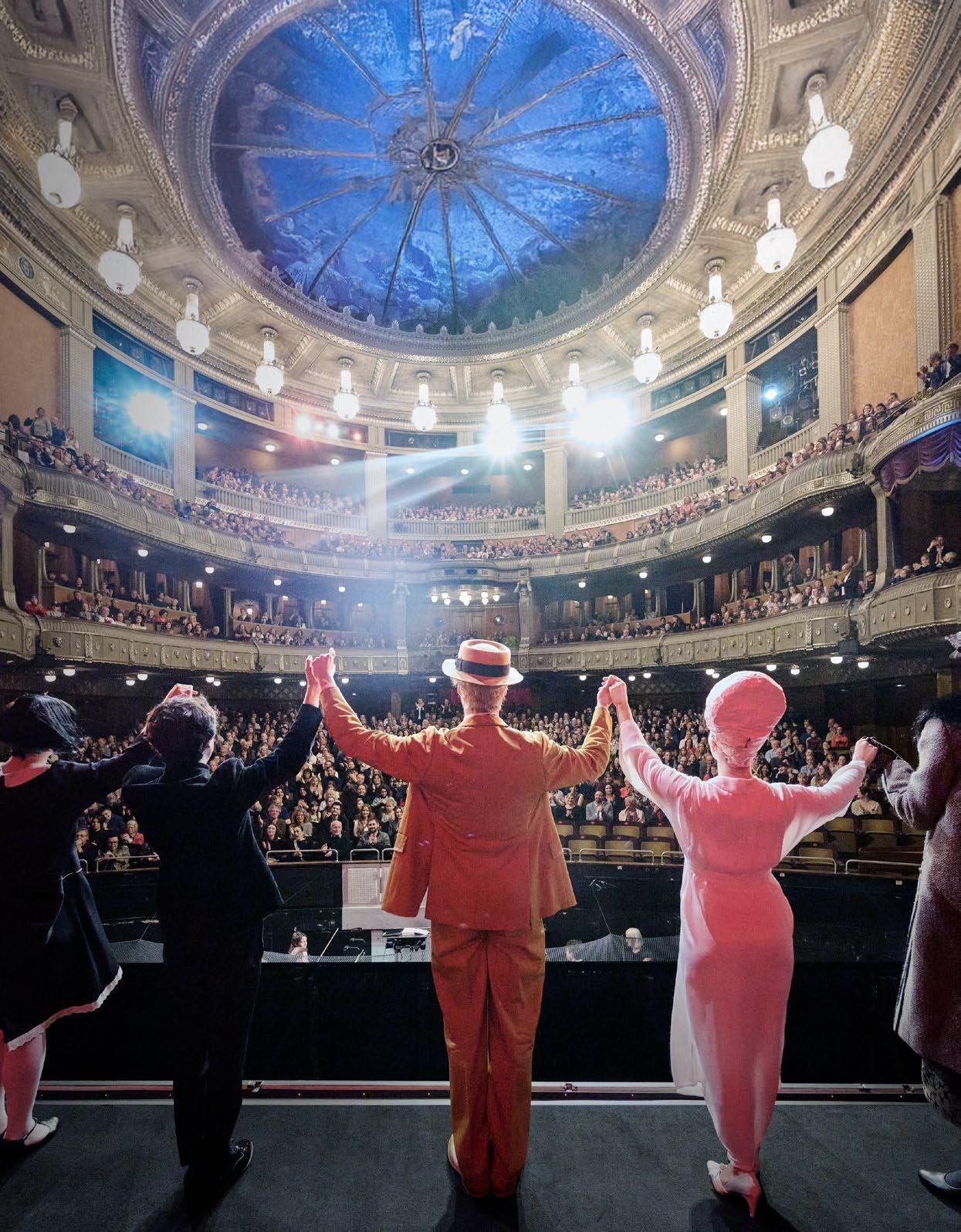
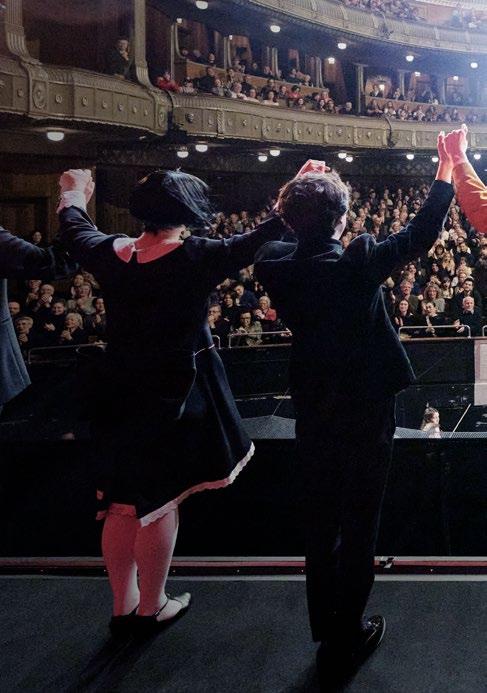
Editorial Staff Miriam Wolf, Dr. Henning Bey Design Nadine Kristen Cover photo Martin Sigmund, Die Zauberflöte, Production by the Stuttgart State Opera in January 2025
Carus Opera: reliable, excellent, and practical!
up!
As a leading publisher of choral scores with vast expertise in vocal music, Carus has recently focused on developing a wide-ranging opera program. The time has come to present our current opera portfolio to you with this new Carus Opera Magazine and to raise the curtain for what is yet to come.
Our latest releases are Giacomo Puccini’s Tosca and Turandot. They have been edited by the ItalianGerman opera conductor Andreas Gies. Tosca is presented as an Urtext edition, while Turandot is a practical edition offering two different options for the finale: the widely used second version of the ending composed by Franco Alfano in 1926, and a 2022 reconstructed finale by the American musicologist and Puccini scholar Deborah Burton. The Stuttgart State Opera will use our brand new performance material for their upcoming production of Turandot (premiere on June 7, 2026).
Furthermore, we are integrating several scholarlycritical editions from the publisher IRIS Editions into our catalog. Significant highlights of 19th- and 20th-century Italian opera are now available, including Ruggiero Leoncavallo’s Pagliacci, Pietro Mascagni’s Cavalleria rusticana, Francesco Cilea’s Adriana Lecouvreur, and Umberto Giordano’s Andrea Chénier
Our Chamber Orchestra Edition offers opera arrangements for chamber orchestra, enabling performances by modest groups in smaller venues. These should also be of interest to opera studios at music colleges and festivals. To date we have published Mozart’s Der Schauspieldirektor and Die Zauberflöte. Puccini’s Tosca will arrive in early 2027.
Carus intends to offer traditional “grand” operas in arrangements for children’s performances in the Little Big Opera series. The first edition in this series will be Engelbert Humperdinck’s Hänsel und Gretel, scheduled for publication in March 2027.
Our opera portfolio also features a large number of oratorios and masses from our back catalog, which are well worth performing, either in an operatic context or even as staged productions.
Check out our opera scores at www.carus-verlag.com/en/opera – we look forward to your visit!
Dr. Johannes Graulich Publisher & Managing Shareholder
Carus Opera provides the ideal foundation for successful music theatre productions. Opera scores are published by Carus in modern, practical, and user-friendly editions that combine scholarly rigor with today’s editorial standards.
The quality we demand of sheet music is defined by a deep understanding of musical practice. Our editions offer a consistent musical text, while the synchronized performance material is clearly focused on resolving practical issues of musicmaking. Furthermore, we are able to accommodate individual customer requirements in bespoke editions.
From full scores, orchestral parts, and vocal scores to rehearsal scenarios, director’s books, and trilingual libretti (available in both print and digital format): Carus Opera editions are reliable, excellent, and practical!
• Sensible page breaks
• Easy orientation by well-placed cues
• Highly playable, intuitive vocal scores
• Precise tempo markings at all relevant places
• Modern notation instead of historic clefs
• Aesthetically balanced layout for optimum readability
• Professional, modern typographic design
• Format and staff size adapted to lighting conditions in the orchestra pit
• Off-white paper to reduce eye strain under stage lighting
• Specially selected paper for quiet page turns
• Durable binding with excellent “stay-flat” characteristics
• Full Scores, vocal scores, complete orchestral parts and all supplementary material are also available for download
Puccini’s operatic thriller in a new Urtext edition
Focus on Puccini’s original concept of dynamics
Rehearsal scenario and libretto in three languages
Love, violence, intrigue, and death. High drama, realistically portrayed and set to deeply emotional music: this is the stuff Puccini’s Tosca is made of.
The critical edition from Carus-Verlag sets new standards by combining the great expertise and practical experience of Italian musicologist and opera conductor Andreas Gies. It is based on a score from 1924, the last to be published during Puccini’s lifetime. Still frequently used today, it contains numerous additions and a smoothing out of articulation and dynamic markings that became established in previous performance traditions. But these are often not attributable to Puccini himself.
This is where Andreas Gies comes in with his edition: Based on an extensive comparison of sources, Andreas Gies has restored the differentiated, original readings that were evidently close to the composer’s heart. In many cases, Gies has made use of the autograph score, which clearly reflects Puccini’s ideas. One vital element is the careful dynamic gradation of the individual instruments, helping to achieve better tonal balance and transparency. This edition restores subtleties that became lost over the years, letting us hear diverse musical effects once again.
The editor explains all his decisions in the critical report to the score. The performance material is impressive in its readability, clarity, and practicality. Also available are a director’s book based on the vocal score, a rehearsal scenario, and a libretto in three languages.
CARUS 56.201
DRAMATIS PERSONAE Floria Tosca (S), Mario Cavaradossi (T), Il Barone Scarpia (Bar), Cesare Angelotti (B), Il Sagrestano (Bar), Spoletta (T), Sciarrone (B), Un Carciere (B), Un Pastore ( Ragazzo)
INSTRUMENTATION 3 Fl (II, III: Fl/Ott), 2 Ob, CIngl, 2 Clt, BClt, 2 Fg, CFg, 4 Cor, 3 Tr, 4 Trb, Timp, Perc, Cel, Arpa, Org, 2 Vl, Va, Vc, Cb
Language Italian | Duration 120 min
Editor Andreas Gies
full score (also ), study score, vocal score (also ), complete orchestral parts for hire (also ), libretto (also ), director’s book (also ), rehearsal scenario ( )
IN PREPARATION:
TOSCA
CARUS 56.202
Chamber Orchestra Edition available 3/2027
(ad Angelotti che, naturalmente, ha dovuto udire il dialogo precedente)
(ad Angelotti che, naturalmente, ha dovuto udire il dialogo precedente)
The Urtext edition of Tosca aims to restore Giacomo Puccini’s original concept of dynamics. Based on the 1924 published score and the autograph manuscript, editor Andreas Gies combines philological rigor with a performance-oriented approach that focuses specifically on dynamics and phrasing.
To date, neither element has been presented in a convincing or consistent manner; later revisions often obscured Puccini’s nuanced instructions for intricate articulation and dynamics. Yet it is precisely these details that constitute a vital part of his personal style. Three instances within just four measures (Act 1, mm. 679 – 682) demonstrate how the Carus edition brings Puccini’s sonic intentions to light:
Measure 682: The autograph lacks any dynamics for the flutes and clarinets; the 1924 edition indicates p, derived from the other parts. However, the original differentiated marking carries a specific expressive intent: the phrase in the flutes and clarinets stops here and should be treated differently than, for example, the oboe and English horn, whose passages continue. Such standardization of the dynamics blurs Puccini’s “art of transition”.
Measure 680: The 1924 edition (and current editions) indicates ff in the woodwinds, which is then copied over into the trumpet part. In the autograph, however, Puccini noted that the trumpet should be performed f and con sord. This instruction reveals a clear intention that the trumpet should not overpower the woodwinds, thereby ensuring a tonally balanced texture. This differentiation has been lost through standardization – just one example among many similar changes made to printed scores in comparison to the autograph.
Measure 680, strings: In the 1924 edition and other printed versions, only the first two notes are slurred, carrying the risk of the third note being unintentionally emphasized. The autograph, however, has a slur over all three notes. The accent on the first note makes clear that the emphasis is intended to lie exactly there.
AVAILABLE 10/2026
CARUS 56.205
DRAMATIS PERSONAE Turandot (S), L’imperatore Altoum (T), Timur (B), Il principe ignoto (Calaf) (T), Liù (S), Ping (Bar), Pang (T), Pong (T), Madarino (Bar), Il principe di Persia (T), Il carnefice (-). Cori: La folla, Guardie imperiali, I servi di boia, I ragazzi, I sacerdoti, I mandarini, I dignitary, Gli otto sapienti, Le ancelle di Turandot, I Soldati, I portabandiere, I musici, Le ombre dei morti
INSTRUMENTATION 2 Fl, Fl/Pic, 2 Ob, CIngl, 2 Clt, BClt, 2 Fg, CFg, 4 Cor, 3 Tr, 3 Trb, Cb-Trb, Timp, Perc, 2 Arpe, Cel, 2 Vl, Ve, Vc, Cb, sul palco: 2 ASax, 6 Tr, 3 Trb, BTrb, Perc
Language Italian | Duration 135 min
Editor Andreas Gies
full score (also ), vocal score (also ), complete orchestral parts for hire (also ), libretto (also ), director’s book (also ), rehearsal scenario ( )
Modern edition with a practical focus
Excellent performance material
With his unfinished fairy-tale opera Turandot Giacomo Puccini has left a couple of riddles to posterity. First of all the work, which had its premiere after Puccini’s death, lacks a complete ending. Furthermore, practical adjustments and corrections usually added by the composer in the course of a scenic production or after the work’s premiere, are missing, too. Thus Turandot has become a work, to which, in the course of time, many errors and inconsistencies have been added.
Carus now offers a modern edition of Turandot with a focus on aspects of practical performance: clearly organized performance material with a musical text free from traditional errors and inconsistencies, with added performance instructions (where necessary), and with consistent articulation and dynamics. This new edition has been created by the Italian conductor and musicologist Andreas Gies.
With regard to the opera’s finale the Carus edition entails two alternative endings: firstly, the traditional second version of Franco Alfano’s completion (after Puccini’s death) from 1924. Secondly, a reconstructed finale by the American musicologist and Puccini scholar Deborah Burton from 2022. For this she has been able to draw on a significantly larger amount of musical material by Puccini than Alfano including some only recently discovered, hitherto unknown sketches. Therefore, her reconstruction comes much closer to Giacomo Puccini’s original dramaturgical intentions. The Carus performance material is available with either the Alfano or the Burton finale.
JOHANN ADOLF
Hasse’s Cleofide of 1731 can be regarded as the zenith of his creative output – not least of all because he integrated several of his greatest arias from earlier works into this opera. The theme from antiquity “Alexander’s conquests in India” was perfectly suited to flatter August the Strong, Hasse’s employer. For performance at the Court of Dresden, Metastasio’s original libretto was reworked by Michelangelo Boccardi. As a result, the title of the opera was changed from “Alessandro nell’ Indie” to “Cleofide” and Faustina Bordoni, the prima donna and wife of Johann Adolf Hasse, became the protagonist of the story. Musically, the opera reflected the style of the time. Hasse’s expressive and natural style was admired and appreciated by the public and professional musicians alike.
The Carus edition of Cleofide which has been published as part of the Hasse-Werkausgabe, is the very first printed edition of this work. It is based primarily on the original parts used for the first performance in 1731 and presents both an accurate musicological rendering of the sources as well as a practical performance edition.
Hasse composed this early work while being a student of Alessandro Scarlatti’s and still heavily under his influence. It was performed at the country estate of the royal advisor Carlo Carmignano in September 1725 an brought Hasse his first public attention as a composer. The libretto stems from Francesco Ricciardi; the famous singers Vittoria Tesi and Carlo Broschi (Farinello) sang the two main roles. Hasse’s intimate musical drama is perfectly suited for an entertaining evening, with two expressive vocal parts, a small, flexible ensemble, and ample room for the performers to add their own creative touches.
DRAMATIS PERSONAE Cleofide (S), Poro (A), Erissena (S), Alessandro (A), Gandarte (S), Timagene (A)
INSTRUMENTATION 2 Fl, 2 Ob, 2 Cor, 2 Trb, 2 Vl, Va, Bc
Language Italian | Duration 240 min
Editor Zenon Mojzysz
full score (also ), vocal score (also ), complete orchestral parts for hire (also ), director’s book (also )
DRAMATIS PERSONAE Cleopatra (S), Marc’Antonio (A)
INSTRUMENTATION 2 Vl, Va, Bc
Language Italian | Duration 90 min
Editor Reinhard Wiesend
full score (also ), vocal score (also ), complete orchestral parts for hire (also ), director’s book (also )
Der Schauspieldirektor KV 486
Stuttgarter Mozart-Ausgaben Urtext
CARUS 51.486 Original Edition
CARUS 57.007 Chamber Orchestra Edition
DRAMATIS PERSONAE Schauspieldirektor Frank, Puf (B), Eiler, Madame Krone, Madame Pfeil, Madame Vogelsang, Herz, Madame Herz (S), Mademoiselle Silberklang (S), Monsieur Vogelsang (T)
INSTRUMENTATION
Original Edition: 2 Fl, 2 Ob, 2 Clt, 2 Fg, 2 Cor, 2 Tr, Timp, 2 Vl, Va, Vc, Cb
Chamber Orchestra Edition: Fl, Ob, Clt, Fg, Cor, Timp, 2 Vl, Va, Vc, Cb
Language German | Duration 60 min
Editor Ulrich Leisinger
Arrangement Urs Stäuble
full score (also ), vocal score (also ), complete orchestral parts for hire (also ), director’s book (also )
Amadeus
Bastien und Bastienne KV 50
Stuttgarter Mozart-Ausgaben Urtext
CARUS 51.050
DRAMATIS PERSONAE Bastienne (S), Bastien (T/S), Colas (B/A)
INSTRUMENTATION 2 Fl, 2 Ob, 2 Cor, 2 Vl, Va, Vc/Cb, [Cemb]
Language German | Duration 37 min
Editor Ulrich Leisinger
full score (also ), vocal score (also ), complete orchestral parts for hire (also ), director’s book (also )
Der Schauspieldirektor (The Impresario) was composed in the spring of 1786 to fulfill a commission from Joseph II. on the occasion of a visit to Vienna by the Governor-General of the Netherlands. The visitors were meant to be entertained with a short German and an Italian musical comedy during a festival arranged spontaneously at Schönbrunn Palace. The choice of composers fell to Mozart and Salieri. Both pieces spoofed the theatrical practices of the day.
Thanks to an arrangement for chamber orchestra by Urs Stäuble, it is also possible to perform the work in smaller settings.
The story of Bastien und Bastienne is based on the musical pastoral “Le Devin du Village” by JeanJacques Rousseau. The play was hugely popular in paraphrase and translation and entered the repertoires of travelling companies and children’s theaters. A shepherd succumbs to the enticements of the lady of the castle and tries to abandon his beloved. The village soothsayer appeals to his conscience and advises the abandoned Bastienne to feign coyness until Bastien shamefacedly returns to her. Mozart’s version, composed in Vienna in the summer of 1768, is based on a text by Friedrich Wilhelm Weiskern. On his return to Salzburg, he undertook an ultimately unfinished revision of the work, improving the textual underlay and replacing the spoken dialogue with recitatives. He also changed the vocal register of Colas and probably that of Bastien as well. The Carus edition is the first to present these two versions separately.
Chamber Orchestra Edition
It is one of the most frequently performed operas in the world. Written in 1791 for Emanuel Schikaneder’s theater in Vienna, Die Zauberflöte (The Magic Flute) by Wolfgang Amadeus Mozart combines elements of fairy-tale magic with ideas drawn from Freemasonry. In his final opera, Mozart unfolds the full range of his compositional mastery: from the folksong-like melodies of Papageno’s numbers, to Pamina’s heartfelt arias, to the depth and serenity of Sarastro’s singing, and the Queen of the Night’s dazzling coloratura. Die Zauberflöte is a serious opera, lively singspiel, and Enlightenment parable rolled into one. In short: there is something for everyone – and perhaps that’s the reason for its enduring success.
Urs Stäuble’s version reduces the orchestra to chamber size without compromising the musical substance. On the contrary: thanks to the transparent instrumentation, the melodic lines and harmonic progressions emerge with greater clarity. The original trombone parts are here performed by the other wind instruments, while trumpet and timpani are included ad libitum.
This version of Die Zauberflöte is particularly suitable for smaller ensembles, university orchestras, and concert performances with limited space. In addition to the full score, a vocal score, orchestral parts, and choral score are available.
Zauberflöte
CARUS 57.008
Chamber Orchestra Edition
DRAMATIS PERSONAE Königin der Nacht (S), Pamina (S), Tamino (T), Sarastro (B), Papageno (B), Erste Dame (S), Zweite Dame (S), Dritte Dame (A), Erster Knabe (S), Zweiter Knabe (S), Dritter Knabe (S), Papagena (S), Monostatos (T) etc.
INSTRUMENTATION Fl/Pic, Ob, Clt, Fg, Cor, [Tr, Timp], Str d’a, 2 Vl, Va, Vc, Cb, Strumento d’acciaio
Language German | Duration 180 min Arrangement Urs Stäuble
full score (also ), vocal score (also ), choral score, complete orchestral parts for hire (also ), director’s book (also ), rehearsal scenario ( )
The publication of Tosca is a mile stone for Carus. Henning Bey, the Carus contact for opera, spoke with editor Andreas Gies about this and future projects.

You have already published several titles as an editor with Carus. How did your connection with the publishing house come about?
The first work I edited for Carus was Mascagni’s Messa di Gloria It’s a perfect fit for the publisher’s catalog and offered an excellent opportunity to fill a market gap with a lesser-known yet frequently performed and beloved work for which no modern edition previously existed. After that, I prepared arrangements of some Puccini arias and duets for reduced orchestra. Now the time is right, and the editions of Tosca and Turandot, as well as other works, are about to be released. I’m delighted that Carus is thereby opening a new chapter in its publishing history.
You are a trained instrumentalist and conductor – how did you come to music philology and score editing?
In addition to instrumental lessons, my music studies included composition and conducting, and from the very beginning I was always interested in musicological matters. Step by step, I became fascinated by music philology through the study of numerous orchestral and opera scores. Finally, I did a degree in musicology, before going on to complete a doctorate at UAB Barcelona on the opera Parisina by Pietro Mascagni and Gabriele D’Annunzio. For me, music philology and the interpretive path of the conductor always go hand in hand. I believe it’s vital for a true performer not to take anything as given or simply “true”.
Let’s turn to your latest publications for Carus: a critical edition of Puccini’s Tosca and a practical edition of his Turandot. Why a critical edition here and a practical one there?
Although Tosca is one of the most performed and popular operas, there has to date been no true critical edition accessible to everyone, which also clarifies the many ambiguities in the text. For me, therefore, this is an extremely important philological project, which I hope will be well received – particularly as I have consistently prioritized the practical aspects of performance. This is not intended to be a volume that simply gathers dust on library shelves; it is designed for musicians who wish to approach the work with a fresh perspective.
The situation is somewhat different with Turandot, just as the history of its creation and the work’s idiosyncrasies are different. The fact that it remained unfinished and Puccini was unable to make the usual revision, corrections, etc., makes the autograph a somewhat controversial source. We have to accept that Turandot is a work that has been shaped (perhaps inevitably) in ways the author never intended. For this reason, this first modern edition doesn’t take a strictly scholarly approach but attempts to cleanse the text of entrenched errors, deviations, and internal contradictions. The goal is to provide performers with a clear and well-organized score focused on practical music-making, accompanied by a preface that details every stage of the work’s genesis.
The question of the finale immediately arises with Puccini’s unfinished Turandot. Which ending has the new Carus edition chosen – and why?
Our edition offers two variants for a finale. A unique selling point is certainly our first option: the 2022 finale by musicologist and Puccini specialist Deborah Burton, who was able to draw on a larger pool of material than Alfano, even some previously unknown sketches by Puccini. Burton’s completion aims to reconstruct the original dramatic structure Puccini intended for the close of his final opera. As a further option, we have picked the second version of the finale by Franco Alfano. This is universally recognized in performance practice and is the one selected and expected by most opera houses today.
What practical goals does conductor Andreas Gies have in mind for this edition?
First and foremost, visual clarity and legibility. The only edition currently in common use is very impractical: the rather large orchestra with many staves is squeezed onto the individual pages of the score. Smaller than A4, its format is extremely difficult to read, even for young conductors with good eyesight. Therefore, the new larger format, the more spacious arrangement of the notes, and the clarity of the layout undoubtedly represent an important aspect of the Carus edition. Furthermore, we have corrected numerous errors that still mar all other previous editions. Finally, the new Carus edition offers
“I have devoted most of my academic life to Giacomo Puccini and his magnificent operas. But it is Puccini’s last unfinished opera, Turandot , and its final riddle – how to complete the finale – that has especially fascinated me. For the reconstruction of an all-new ending to Turandot , just in time for the centennial of the opera’s premiere, I have been able to include additional unpublished autograph sketches, which were unused by Alfano, Berio and all others who have tried to complete this opera. I am thrilled that Carus is presenting my new finale in their new edition of Turandot !”
Deborah Burton, February 2026
a consistent and coordinated set of performance materials, namely the full score, vocal score, and orchestral parts. And a little performance-practice bonus is the extra measure at the end of Calaf’s aria in Act 3 (“Nessun dorma”), designed to keep the orchestral flow intact during the inevitable applause for the singer.
The critical edition of Puccini’s Tosca from Carus: What do you get when you choose this version?
You get a text for which extensive comparative source work has been conducted to reconstruct every written wish of the composer. This endeavor begins with the printed editions approved by Puccini, moves through secondary sources, and returns to the autograph in a backward-looking process of careful scrutiny that strives to explain everything. In this edition of Tosca, the clarity of the text and the layout of the score are specifically tailored to the needs of the performers, with convenient page breaks that don’t disturb the musical flow. This means that there are no “unexpected surprises” on the following page: the musician is always prepared for what comes next and is not stressed by technically demanding passages directly after a page-turn. Here, too, the full score is supplemented with extensive remarks and a detailed preface giving useful justifications and explanations.
Final question: You have launched your own series of editions – IRIS Editions – from which Carus will choose selected operas to publish. How did this come about, and what is the focus of this series?
This is a project that has occupied me for a long time. I’m trying to unearth and edit a repertoire that has been criminally neglected until now: Italian opera from the end of the 19th to the beginning of the 20th century. When I began exploring this repertoire a few years ago, I found to my great surprise that, except for Puccini, it was almost impossible to obtain usable orchestral scores of these operas. Considering all the effort I have put in, I’m delighted that the project has become such a great success. Transcribing hundreds of pages of music, doing all the layouts, corrections, and comparisons, etc., are tasks for which you need real passion. Carus has brought some of my scores from IRIS Editions into its catalog to ensure a wider distribution of these important works.
Thank you very much!

Dr. Andreas Gies studied flute, piano, composition, voice, and conducting in Italy. He has worked as an assistant conductor at the Fenice di Venezia and Regio di Torino. Deeply passionate about Italian opera, he earned his doctorate with research on Pietro Mascagni.
Italian Opera Highlights of the 19th and 20th Centuries at Carus of Important Operas and Composers
Carus has taken on the distribution of critical editions of 19th- and 20th-century operas from the IRIS Editions series by the Italian-German conductor Andreas Gies. Carus offers these operas for rental, including the full score, vocal score, and orchestral parts, all featuring the IRIS Editions’ design. Further titles are planned for release.
Ruggiero Leoncavallo (1857 – 1919)
Pagliacci Carus 97.402
Pietro Mascagni (1863 – 1945)
Cavalleria rusticana Carus 97.401
Francesco Cilea (1866 – 1950)
Adriana Lecouvreur Carus 97.403
Umberto Giordano (1867 – 1948)
Andrea Chénier Carus 97.404

Emanuel Schikaneder (1751 – 1812)
September 1, 2026: 275 th birthday
Ludwig van Beethoven (1770 – 1827)
March 26, 2027: 200 th anniversary of death
Francesco Cilea: Adriana Lecouvreur
World premiere in 1902 at the Teatro Lirico, Milan
November 6, 2027: 125 th anniversary
Engelbert Humperdinck (1854 – 1921)
September 1, 2029: 175 th birthday
Johann Adolph Hasse: Cleofide
World premiere in 1731 in Dresden September 13, 2031: 300 th anniversary
Ruggiero Leoncavallo (1857 – 1919) April 23, 2032: 175 th birthday
Johann Adolph Hasse (1699 – 1783)
December 16, 2033: 250 th anniversary of death
Giacomo Puccini (1858 – 1924)
Dezember 22, 2033: 175 th birthday
Your contact at Carus
Dr. Henning Bey
Promotion Manager Stage and Orchestra
Phone: +49 / 711-797 330-244
hbey@carus-verlag.com
Dr. Henning Bey has been working as Promotion Manager for Stage and Orchestra at Carus-Verlag since October 2025. Previously, he worked as Artistic Planner for the SWR Symphony Orchestra, the Bach Academy Stuttgart, the Freiburg Baroque Orchestra, and as member of the editorial team of the New Mozart Edition Salzburg.
C Carus
Excellence in Vocal Music