




Cover Story Chris Aiello
Cover Story Chris Aiello
Back in March of this year, after attending and exhibiting at this year’s record-breaking ProMat Show in Chicago, one thing is clear: the future of material handling is arriving faster than many in our industry anticipated. The pace of innovation, particularly in automation, robotics, and artificial intelligence, has accelerated, and it's reshaping expectations across the board, especially in the aftermarket segment for lift truck dealerships.
More than 1,160 exhibitors showcased a diverse range of products, including autonomous mobile robots, predictive maintenance platforms, and traditional material handling solutions. There were also over 200 educational sessions that delved deeply into how these technologies are reshaping the supply chain landscape.
The energy at the show was unmistakable, and automation is no longer just a buzzword; it’s a wave that’s already hitting the shores of warehouse and distribution operations. The tools on display weren’t just aspirational concepts; they were real, functional, and increasingly deployed in operations ranging from Fortune 500 distribution centers to midsize regional warehouses.
There certainly is an acceleration in the adoption of these technologies by endusers in manufacturing and supply chain operations. For those of us in the dealership world, particularly in parts and service, this acceleration is something we can’t afford to ignore.
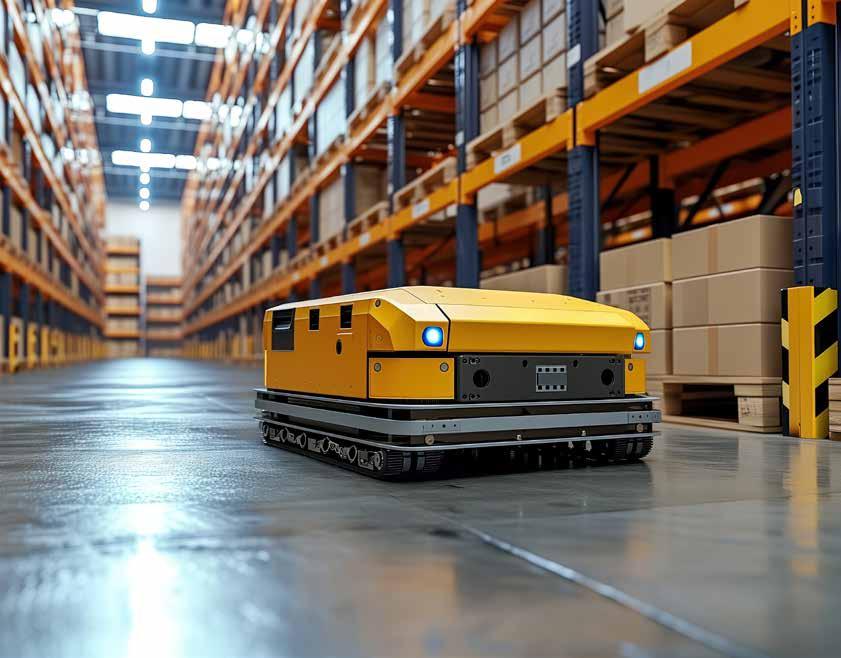
Let’s be clear: forklifts and other industrial trucks aren’t going anywhere. They remain the backbone of warehouse operations. What’s changing is the ecosystem around them. When autonomous mobile robots (AMRs) are moving pallets across zones and AI-driven WMS platforms are
directing workflows in real-time, the role of lift trucks—and the expectations for their uptime—become even more mission-critical.
That means the pressure on dealers to support uptime, supply the right parts, and deliver expert service is only increasing.
Your customers who invest in automation aren’t looking to slow down. They need every component of their operation, including forklifts, to work flawlessly and integrate smoothly with the rest of their techenabled infrastructure. Downtime isn’t just inconvenient; it disrupts a carefully calibrated, digitally orchestrated supply chain.
Here’s the part that matters most for aftermarket leaders: we are entering a new service era where speed, visibility, and specialization are becoming non-negotiable.
1. Faster Fulfillment Is No Longer a Bonus—It’s a Baseline
End-users now expect the same speed they’ve built into their automated warehouse systems to be reflected in the support they get from their dealership. This means the pressure is on your parts department to streamline inventory management and logistics. Stock outs will lose customers. Delays will be magnified. Dealers who invest in e-commerce platforms, real-time inventory visibility, and regional stocking strategies will gain a competitive edge.
2. Technicians Must Be Trained to Support Smart Warehouses
Service departments will need to evolve. Technicians are no longer just wrenchturners; they need to be systems thinkers who can troubleshoot not only forklifts but also understand how those trucks interact with other automation technologies. This includes knowledge of sensor systems, battery management software, telematics, and other






related technologies. Dealerships should invest now in technician training that keeps pace with this expanding skill set.
3. Parts Sales Are Becoming More Specialized
As automation reshapes warehouse operations, the range of specialty attachments, sensors, batteries, and high-wear items associated with high-cycle, tech-integrated environments will expand. Dealers who understand this shift and proactively stock and promote these specialized parts will better serve their customers—and increase their margins.
4. Predictive and Remote Maintenance Models Are Rising
Automation isn’t just about moving goods faster—it’s also about predicting failure before it happens. Dealerships should expect an increase in customers inquiring about remote monitoring, telematics-based service models, and predictive maintenance options. Those that embrace these tools will not only reduce customer downtime but also create stickier, more long-term service relationships.
5. The Dealer’s Role Is Becoming More Strategic
As warehouses adopt complex systems, they’ll rely more heavily on trusted partners to help them optimize those systems. This positions the dealership not just as a vendor but as a strategic advisor. Offering insights, service planning, system integration advice, and even retrofit suggestions will become part of the aftermarket value proposition.
Hiring and Training for the NextGen Aftermarket Team
As automation, robotics, and AI continue to integrate into warehouse operations, one of the most critical shifts lift truck dealerships must make is in how they build and train their aftermarket teams. Traditional roles within the parts and service departments are being stretched—and in some cases redefined—to meet the technical demands of this evolving customer base.
The Rise of the Specialized Parts Professional
Historically, the parts counter has focused on sourcing and supplying components tied to forklifts and other off-highway industrial equipment. That job still exists and remains critical. But today’s warehouse customers are increasingly asking their dealers to support a broader range of systems—including conveyor belts, robotic shuttles, vertical lift modules (VLMs), automated storage and retrieval systems (AS/RS), and a growing number of smart sensor and control technologies.
This shift raises the question: Can a single parts person effectively serve both markets?
In many cases, the answer is no—or at least, not for long. Dealers are starting to recognize the value of segmenting their aftermarket staff by specialization. That might mean hiring a dedicated parts expert trained explicitly in supporting warehouse automation systems and industrial controls, separate from the traditional forklift parts team. These roles require familiarity with different product catalogs, supplier relationships, and servicelevel expectations. Selling a laser sensor for an AS/RS is a very different transaction than selling a mast chain for a 5,000 lb. forklift.
Dealers who want to win business from warehouses adopting automation should consider building a dedicated parts desk— or at the very least, assigning a go-to person trained in automation system components, software integrations, and OEM-specific support structures.
Service Technicians: Generalists vs. Specialists
On the service side, the need for specialization is even more pronounced. Technicians trained in internal combustion forklifts or electric lift trucks are not automatically equipped to troubleshoot a malfunctioning conveyor PLC, reprogram a robotic cart, or calibrate a smart vision system.
Many dealerships are now adopting a hybrid approach to staffing service teams:
• Forklift Technicians remain focused on the fleet, handling breakdowns, preventative maintenance, and mobile repair services for the trucks that continue to power core operations.
• Automation & Systems Technicians are emerging as a separate class of specialists trained to work on software-driven systems, electrical controls, and integration points between material handling equipment and the customer’s warehouse management or execution systems (WMS/WES).
Hiring technicians with a background in automation technology, industrial controls, or even light IT can give your dealership a significantly competitive edge. For newer hires, this may mean recruiting from technical colleges with programs in mechatronics or automation technology. For experienced forklift techs, it may mean creating an internal training pathway to upskill in automation diagnostics, system networking, and software updates.
Customers deploying automation solutions don’t want to manage multiple service relationships; they want comprehensive support. If your dealership can offer both forklift repair and automation system service, you become a far more strategic and valuable partner. However, that support must be grounded in genuine expertise.
It’s not just about having someone who can learn automation; it’s about having someone who already speaks the language of sensors, logic controllers, and integration platforms. These customers don’t just need a wrench; they need a technician who can interpret system logs, understand software interfaces, and communicate with both warehouse operations and IT.
For example, a dealership I recently met with, which traditionally supported a broad customer base of warehousing and manufacturing operations, began noticing a shift in its largest accounts. Their key customers were investing heavily in AS/ RS systems, conveyor networks, and robotic pallet shuttles. While this dealership continued to provide the forklifts and manual equipment these customers needed, it became clear that the requests for aftermarket support were changing.
Parts inquiries started coming in for items the standard forklift parts team wasn’t familiar with—specialty drive belts, optical sensors, PLC components, and software modules. Service calls involved issues outside the scope of their current technician training, such as integration faults between a robotic arm and the warehouse management system.
Rather than trying to train everyone in everything, the dealership’s leadership made a strategic decision: they created a dedicated Automation Support Team within their aftermarket division. This included:
• A specialized parts rep with an electrical background, tasked with managing relationships with automation OEMs and stocking critical components for their customers’ automated systems.
• Two service technicians were pulled from an industrial automation service provider and retrained on the dealership’s customer base and safety standards. These techs now focus exclusively on conveyor controls, vision systems, and mechatronics diagnostics.
• Dedicated sales support to educate customers on what aftermarket services were available, specifically for their automation investments.
By separating automation from their traditional forklift support model—but still housing it under the same roof—they increased customer satisfaction, opened new revenue streams, and positioned themselves as the go-to partner for fully integrated warehouse support.
Walking the halls of ProMat 2025 was a reminder that while the future of material handling is more high-tech than ever, the fundamentals haven’t changed: customers still need responsive service, reliable equipment, and partners who understand their operation. What has changed is the context in which we deliver that value.
Dealerships that embrace this shift— by enhancing digital capabilities, training their people, and leaning into specialized aftermarket support—will find that there’s
Cover Story continued
plenty of growth still to be had in a market that’s rapidly modernizing. The opportunities aren’t disappearing; they’re just evolving.
I spoke to several attendees from warehouse operations who specifically cited their desire for dealer partners that can offer complete lifecycle support, not just replacement parts, but guidance on optimizing fleet mix, integrating with automated storage systems, and managing predictive maintenance across multiple asset types.
Those conversations stuck with me. They made it clear that the value of a dealership will increasingly be measured by its ability to operate at the same speed and intelligence as its customers.
Remember, your aftermarket teams are not just keeping lift trucks running; they're also ensuring they're running optimally. They’re helping keep the entire supply chain in motion.
Chris Aiello is the Business Development Manager at TVH Parts Co. He has over 19 years of experience in the equipment business, serving in various roles, including service manager, quality assurance manager, and business development manager. Chris now manages a national outside sales team that sells replacement parts and accessories to various equipment markets, including material handling, equipment rental, and construction and earthmoving dealerships.

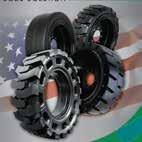
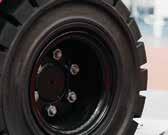
you don’t see the tire you need on our website or need help in making your selection, call us. We’re always ready to help!
“We ship our solid tires nationwide!”


• Original & HD provide 3" clearance between rack and stored material
• Allows your sprinkler system to function as designed
• Satisfies insurance guidelines and local building inspector criteria (may be required by International Fire Code ®)
• Easy to install into new or existing rack
• Original FlueKeeper ® for hand loaded materials, FlueKeeper HD for full pallet loads and FlueKeeper HD-S for structural steel rack
• NEW Rear FlueKeeper maintains horizontal flue spaces between rows of rack
• NEW Center FlueKeeper maintains center flue space, divides pallet loads and guides pallet placement



Warehouses are evolving into hubs of cutting-edge technology, but without the right leadership even the best tools can fall short. The need for tech-savvy managers has never been greater as logistics operations become increasingly dependent on automation, data analytics, and advanced Warehouse Management Systems (WMS).
Technology is no longer a luxury — it’s a necessity. Managers must now think beyond traditional roles, embracing software as a solution to physical problems in workflows. Those who fail to prioritize digital transformation risk falling behind competitors who have mastered the art of integrating tech with operations. Here’s why tech-savvy leadership is critical for the future of warehousing.
The role of technology in modern warehousing
Technology is reshaping warehousing, driving efficiency and accuracy at every level. From inventory management to real-time data analytics, advanced tools are streamlining operations and improving decision-making.
Low-code platforms like Tecsys’ Itopia, IoT-enabled devices, robotics, and AI are no longer “nice-to-haves” — they’re essential for optimizing workflows and tackling unique operational challenges. They allow for a highly customized operation, without the highly customized price tags, and the ability for continuous upgrades. These technologies allow warehouses to make smarter, faster decisions that directly impact the bottom line.
Being tech-savvy isn’t just about understanding software — it’s about knowing what’s possible. A strong manager doesn’t need to master every aspect of a WMS but should have the awareness to collaborate effectively with IT teams. After all, IT can’t solve problems they don’t fully understand.
Key skills include data literacy, metric analysis, and creative thinking. Tech-savvy managers leverage WMS tools as extensions of their physical workflows, utilizing technology to address bottlenecks, enhance efficiency, and drive performance. By understanding what their tools can do, managers can propose actionable solutions that align with their team’s operational realities.
Implementing and managing change effectively
Introducing new technology often sparks resistance, but tech-savvy managers know how to lead change effectively. The best leaders don’t shy away from the action — they test tools themselves, listen to frontline workers, and iterate based on real-world feedback.
For example, a manager testing a new replenishment system might shadow a picker or replenisher to understand pain points firsthand. By getting hands-on, they not only identify potential improvements but also demonstrate to their teams that they’re committed to the process. Piloting new tools, gathering feedback, and leading by example are essential steps for reducing resistance and building trust.
The best implementations I have seen are those where not only the warehouse management team shadows the users, but their IT counterparts also actively spend time on the warehouse floor. When IT spends time with users, it gives a unique perspective that drives creative and efficient solutions.
The impact on warehouse performance and employee satisfaction
Tech-savvy managers don’t just improve warehouse performance — they transform it. By simplifying processes, reducing errors, and enabling more innovative resource management, they unlock new levels of productivity and efficiency.
Equally important is the effect on employees. When managers empower their teams to leverage technology, they foster a culture of innovation

and collaboration. Workers are more engaged, less frustrated by inefficient processes, and more confident in their ability to contribute to the warehouse’s success. Over time, this leads to better retention, stronger team dynamics, and a future-ready operation.
The future of warehousing belongs to those who invest in tech-savvy leadership. Managers who understand how to integrate technology with operations are the ones who will drive their businesses forward, adapting to market demands with ease.
Warehouse operators must take action by assessing their leadership teams’ tech capabilities and providing ongoing training to bridge gaps. The path to operational excellence begins with forward-thinking managers who view technology
not as a challenge but as an opportunity. Now is the time to embrace that future.
Vee Srithayakumar is a product leader in warehouse management at Tecsys, driving innovation through AI-driven and advanced warehouse execution system initiatives. His contributions to the supply chain industry earned him recognition as a 2024 Supply & Demand Chain Executive "Pros to Know."





















Bottom Line Garry Bartecki
I know I am as guilty as anyone of stating that CASH IS KING. Must have included that statement at least once or twice a year.
Then someone added that "cash flow is king," which is hard to argue with.
I am going to take it a step further and state that FREE CASH FLOW means more to your business than either of the other two titles.
Those of you who follow the stock market noticed the FCF line item when disclosing operating results for the year.
So, what is it and why is it so important?
I began conducting my own research after seeing numerous references to FCF and subsequently published a book on Amazon, authored by George Christy, CFA. George explains how to calculate FCF and why the data you receive from FCF is better than the GAAP statements you received from your accounting firm and the internal statements, which mirror the GAAP statements you paid for. You may want to purchase a dozen of these books for your internal financial staff, the sales department, the C suite, and your Board Members.
I would even suggest that you instruct your outside accounting firm to present an FCF instead of the GAAP statement they usually send. Informing your banker about this change should be received positively. If not, provide them with a copy of the book as well.
Just so you know, EBITDA is not part of this FCF process. Neither is the GAAP Statement of Cash Flows. FCF captures all cash flows in and out of the company, is not distorted by accrual items, and includes changes in working capital and cap-X investments.
A formal FCF definition = Revenues MINUS cash expenses PLUS non-revenue cash receipts PLUS or MINUS cash changes in working capital MINUS Cap-X expenditures. If you have prepared cash flow statements for a bank, you are close to preparing an FCF statement.
The conversion from your GAAP statement to a cash flow statement is a three-step process.
• Start with your GAAP Income Statement
• Convert the Income Statement to Operating Cash Flow.
• Reflect the Cash Impact of the Working Capital Change and Cap-X.
You start with the Operating Income in Step One, make changes to convert to Operating Cash Flow, and reflect the cash impact of Working Capital Change and Cap-x. In the end, you wind up with FREE CASH FLOW.
So, what helps management manage the business and, as a result, improve the value of the company? Working with GAAP statements or FREE CASH FLOW. FCF is the correct answer. And when you can convert your internal GAAP statements to an FCF statement, the decision process becomes easier to use and corrective steps easier to make and follow up on.
George Christy notes how Warren Buffett made his money by determining the value of a target company by calculating discounted cash flow. I have seen this discounted cash flow calculation many times.
Current thinking is that older financial types were brought up using GAAP and will continue to do so. On the other hand, recent accounting graduates and Certified Financial Analysts (CFAs) are switching to a FREE CASH FLOW because every executive out there wants to know their FREE CASH FLOW position, which in turn converts into a company valuation.
So, is GAAP out? Perhaps not entirely, but for the ability to stay on top of your company's value and, at the same time, utilize free cash flow data to manage sales, customer activity, corporate reports, peer group analysis, and M&A activities, GAAP cannot compare to the FCF analysis.
I am going to set up a template to use for determining FCF and to guide the use of the report in improving results. Interested in participating, give me a shout …sounds like fun
and will be interesting to see how the reports turn out. You can make your request through Dean. His email address is dmillius@MHWmag. com.
Also, I am going to ask Dean if we can get us a deal on the book purchase.
Garry Bartecki is a CPA MBA with GB Financial Services LLC and a Wholesaler columnist since August 1993. E-mail editorial@ mhwmag.com to contact Garry.





Feature Story: Randy MacLean
AI, in its next generation, could be a stepchange for distribution, not so much on its evolutionary path, but with the coming next-level, domain-specific training models, revolutionary.
A tidal wave is about to hit wholesale distribution. AI-powered software is poised to sweep away outdated systems that churn out reports and little else. These new tools won’t just manage data—they’ll act, advise, and transform how distributors operate. For software vendors, it’s a golden moment. Industry heavyweights with deep expertise can lead the charge, but fastmoving startups could steal the spotlight. The race is on, and the stakes are enormous.
The Opportunity at Hand
Software executives hold the reins. They can solve distributors’ toughest challenges— their customers—and claim market dominance. A game-changer looms: a distributor domainspecific LLM training library packed with decades of expert insight. This tool will let vendors build software that doesn’t just help—it captivates. Picture this: distributors grinning, their teams liberated from tedious tasks, laser-focused on game-changing wins. The goal? Software so essential it’s the top pick for distributors hungry for growth.
Distributors are in a bind, facing challenges that sting:
• Vanishing Expertise: Veteran [Seasoned managers, salespeople, and consultants once held the industry’s playbook in their minds.] They’re retiring now, and their wisdom is slipping away. Boutique consultants, long a source of specialized advice, are also fading, with few stepping up to replace them. The fallout? A gaping hole in strategic decision-making.
• Skyrocketing Labor Costs: Labor costs are soaring. They’re bleeding budgets, forcing distributors to rethink team roles. Routine tasks are a cash drain—essential but too costly to
handle manually. Staff should focus on highstakes decisions rather than repetitive tasks.
• Spotty Best Practices: Distributors know the playbook—follow-ups, lead tracking, customer guidance. But executing consistently? That’s a challenge. Current software highlights gaps but doesn’t step in to fix them. Discipline falters, and results suffer.
• Digital Shift: Customers now prefer digital interactions over face-to-face interactions. Software must deliver, managing workflows seamlessly to keep interactions smooth, while maintaining a personal touch by providing individually tailored communications.
Most software today is stuck in neutral. Legacy systems spit out dashboards and reports, but they don’t think or act. They leave distributors stranded—data-rich, direction-poor. “AI-powered” platforms don’t fare much better. Their AI components handle basic tasks—data entry, report generation—but that’s just a small convenience, not a game-changer. They don’t execute best practices or deliver the sharp insights of a veteran consultant.
The root issue? Developers often lack deep distribution expertise. Without it, they can’t train AI to deliver the precise, industry-specific advice distributors crave. Generic AI models churn out vague platitudes, not the tailored strategies that move the needle.
Until recently, the gap has been filled by consultants, but they’re retiring, with no real replacements.
Here at WayPoint, we’re finalizing the ultimate AI training model—one that empowers the AI components of distribution software to deliver detailed, growth-driving advice on profits and customer strategies, far beyond the generic outputs of web-trained LLMs or add-ons. It’s the world’s largest library of profit-driving distribution industry knowledge, tactics, and best practices. Now vendors can rewrite the rules by

adding AI-driven capabilities that go much, much further. Here’s the blueprint:
• Do the Work: Software shouldn’t just suggest—it should execute. Imagine follow-ups, lead communication, and customer coaching handled flawlessly across the board. AI locks in discipline organization-wide, solving the consistency problem.
• Ditch the Drudgery: Repetitive tasks are a burden, and distributors can’t afford the labor. AI can take them over, freeing staff to tackle bigpicture challenges like complex deals or strategic planning. Jobs become more rewarding, and efficiency surges.
• Bring Expert Smarts: Picture software with the savvy of a top consultant, advising on profits, cutting waste, fine-tuning services, and offering tailored strategies for every key customer. That requires AI trained on industryspecific best practices—sales, rebates, operations, transportation. It’s about leveraging the latest metrics for stellar results.
• Talk the Talk: AI needs to sound like it belongs in distribution. It should produce crisp briefings, action plans, customer emails, and kickoff workflows like price updates. Purpose-built language models, steeped in industry context, make this a reality.
The roadmap is ambitious but achievable:
• Smart Middleware: Build a layer that distills raw data into clear signals—profitability trends, customer patterns, hidden issues. This fuels the internal prompts that let AI deliver pinpoint-accurate results.
• Bake in Know-How: Embed real-world tactics—like combining orders, optimizing warehouse operations, or streamlining freight terms—into AI. A distribution-specific LLM training library, brimming with expert strategies, will supercharge the AI component of software systems. Generic, web-scraped training won’t cut it, and distributors will notice the difference.
• Train AI Right: Create AI that speaks distribution fluently, powered by a structured, industry-specific knowledge base. A library built on decades of insight from hundreds of top-
performing distributors and dozens of experts will ensure AI delivers the most effective advice from recognized consultants and industry leaders. Software vendors have top programmers, but not top distribution best-practice knowledge—this fills that gap.
When it works, it’s electric. Software drives relentless growth, filling the void left by retiring experts. It handles the small stuff, boosting profits and freeing teams for high-level work. Customer relationships thrive, making well-trained software the top choice and securing vendor dominance.
Distributors are eager for this—software that delivers on AI’s promise. Low-level tasks vanish, jobs shift to high-value focus, and expert guidance is always at hand. Operations hit new peaks—follow-ups happen, inventory optimizes, and customers grow more profitable. The software becomes as indispensable as email, woven into every workflow, driving best practices everywhere.
AI is the engine of this shift. It advises, executes, and communicates. But its power depends on training. A decade-long knowledge base, capturing the brilliance of retiring consultants, industry pros, and advanced analyses from leading companies, is the secret sauce. Set for a spring release, this distribution-specific LLM training library will let vendors build AI that’s distribution-smart, not generic. That’s the divide between colorful reports and tools for revolutionary action.
AI is the future of distribution software—no debate. But the winners will be those who master the details. Software that bridges expertise gaps, eliminates the grind, and delivers consultant-level insight will rocket vendors to the top.
It will deliver much more than AI-driven conveniences. Its AI will bring expert advice, and actually perform thousands of small tasks— perfectly! The next wave is coming, and it’ll reshape the industry.
I can’t wait to see it unfold.
Randy MacLean founded WayPoint Analytics, which has been delivering detailed cost and profit analyses to distributors and manufacturers for more than fifteen years. Since 2008, he’s hosted 17 cycles of the Advanced Profit Innovation Conference, produced more than 900 best-practices videos, written six books in his Profit-Driven series, and hosted more than 200 webinars on distribution profitability techniques. The WayPoint Analytics online system and its insights and techniques are widely used by the most successful distributors, adopting data-driven approaches to their profit strategies. Discover more, or contact Randy at www.waypointanalytics.net








Psst — hey — c’mere! I’ve got a secret to tell you…Sometimes prospects will stall you, sometimes they will lie to you, sometimes they won’t tell you the real reason why they won’t purchase. When a prospect gives you some lame excuse (stall) about why they won’t buy now, he’s really saying, “not yet.”
There are two basic types of stalls: People stalls and Thing stalls.
Thing stalls are when prospects say — I’m too busy now, your price is too high, I have too many other obligations.
Frustrating. Want to make the stall go away? Simple. Here’s the strategy: Isolate the stall or objection as the only obstacle, and then eliminate it from the situation by asking, “What if it were gone, or was not the situation…would you buy?”
Isolating and eliminating creates a new situation AND a possible sale.
You repeat the stall back to the prospect and then take it away. For example, you say, “I understand, Mr. Johnson. So, what you’re telling me is if it weren’t the fact that you were too busy, this would be a perfect opportunity for you, is that correct? (get the commitment). (then double qualify) In other words, if you had the time, you would get involved? (then say) Well, let’s look at the situation closer. You say you have no time, but you also said that you’re not earning all the money you need. Maybe there’s a way to use this opportunity to buy back some of your time with increased earnings.”
Another example — The prospect says, “I don’t have the money.” You say, “If you had the money, would you buy it?”
The best way to handle a stall or objection is to take it away and consider new options or solutions.
You say…If it wasn’t for…then insert the stall—price, timing of workload, other obligations — would you buy it?
People stalls are worse. Does this sound familiar? Sounds good, Jeffrey, but I have to talk this over with my wife, husband, boss,
accountant, lawyer, the executive committee, the home office, my cat whiskers, my two-year-old son, or my girlfriend. People not being able to decide on their own — Don’t you hate that?
Well, here’s how to overcome it.
First, isolate the person to a decision that does not include the others. “Bill, if it was only you…what would you decide?” This gives you a chance to find out how they really feel (will they support you).
Second, double qualify the commitment. Ask – “Is there anything you would change or object to if it was only you?”
Third, secure the prospect’s support when he meets with the third party. “Bill, when you go to the others, will you support the purchase?”
And fourth, find other ways to get a decision now. Suggest alternatives that might get Bill to act now without risk. “Bill, since you’re in favor, and we only need your spouse’s approval, how about if we fill out the paperwork — give it to me so you can be in before the end of the month, and when your spouse says OK, we’ll be ready to go (and if your spouse says no, we’ll tear up the papers — no obligation.)” Hard to say no to that.
One of the most interesting things about objections is that even though they continue to recur, they continue to stymie or dumbfound salespeople. I don’t get it. You put your hand on the stove once, you get burned, you don’t do it again. You learn the lesson.
Salespeople continue to get burned. If you think about it for any length of time, it’s kind of silly.
The isolation process is a powerful way of getting to the truth, finding out the real objection, AND in about 30% of cases actually making the sale. But it’s only one of an arsenal of weapons available to salespeople for stalls and objections.
You can prevent them by covering them in your presentation, or you can at least prepare
“best responses” for the ones that happen all the time.
Most of the time, an objection is actually a buying signal. They’re saying, “I’m interested, but you haven’t sold me yet. And the sale is always made. Either you sell them on yes, or they sell you on no.
Jeffrey Gitomer is the author of twelve best-selling books, including The Sales Bible, The Little Red Book of Selling, and The Little Gold Book of Yes! Attitude. His real-world ideas and content are also available as online courses at www.GitomerLearningAcademy.com. For information about training and seminars, visit www.Gitomer.com , email Jeffrey at salesman@gitomer.com, or call him at 704 333-1112.
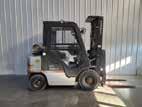
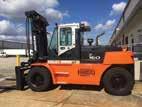
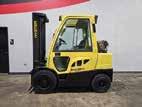
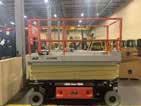
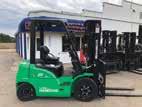

This week saw a landmark celebration at Combilift’s global headquarters in Monaghan, marking the 10th anniversary of the highly successful OEM Engineering Traineeship. The event, which welcomed past graduates, current trainees, and local educators, underscored the programme’s evolution from a local skills initiative to a cornerstone of regional industrial development. Launched in 2015, the OEM Engineering Traineeship was born from a shared vision to tackle the skills gap in engineering and manufacturing with an industry-led approach. . www.combilift.com

The Material Handling Equipment Distributors Association (MHEDA) successfully concluded its 2025 Annual Convention & Exhibitor Showcase, held April 26–30 in Tampa, Florida. The event welcomed over 640 industry professionals representing more than 230 companies for a dynamic week of education, networking, and business development. Photo credit MHEDA www.mheda.org

Fairchild Equipment has announced that we have been recognized by Hyster Company with the prestigious 2024 Dealer of Distinction award, making
this the ninth time we have received this distinguished recognition. The Dealer of Distinction award is presented annually by Hyster Company to top-performing dealers who meet rigorous performance standards and adhere to defined business practices. These standards are updated each year to reflect evolving customer expectations and industry dynamics.
www.fairchildequipment.com
CLARK announced new dealer in Western New York
CLARK Material Handling Company has announced the appointment of Insley-McEntee Equipment Company, Inc. as an authorized CLARK dealer serving Western New York. This strategic expansion reinforces CLARK’s commitment to delivering world-class equipment, responsive service, and trusted support in every market.
www.clarkmhc.com

Following its strongest April on record and 11 consecutive months of cargo increases, the Port of Long Beach is preparing for a double-digit decline for shipments in May due to tariffs and retaliatory tariffs, which were paused earlier this month. Dockworkers and terminal operators moved 867,493 twenty-foot equivalent units in April, up 15.6% from the same month last year and surpassing the previous record set in April 2022 by 5.7%. Imports rose 15.1% to 419,828 TEUs and exports decreased 4.5% to 93,842 TEUs. Empty containers moving through the Port jumped 23% to 353,824 TEUs.
www.polb.com/operations
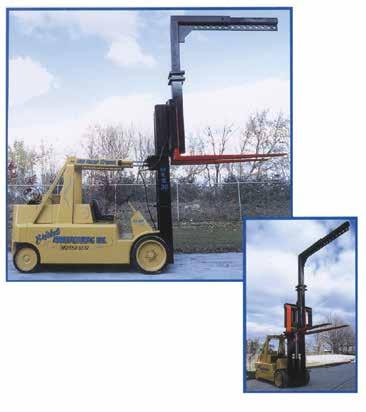
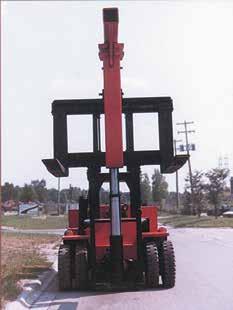
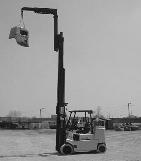
The Turret Attachment is built with standard drive components. Fast parts availability and minimized service costs keep downtime to a minimum.
Very Narrow Aisle (VNA) set-ups can be as narrow as 5 feet. The standard width is 6 feet.
This space allows you to warehouse more products, increase productivity, and save money while doing so
180-degree fork rotation allows operators to grab products from both sides of the aisle without changing orientation or direction down the aisle.
Turrets can also come with fork positioners, carriage tilt, and tilting/fork positioning carriages.
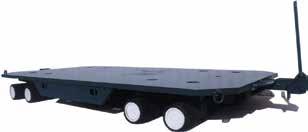
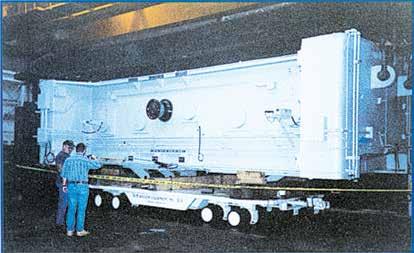
The Turret Attachment can be adapted to work with most automated guided vehicles (AGV).
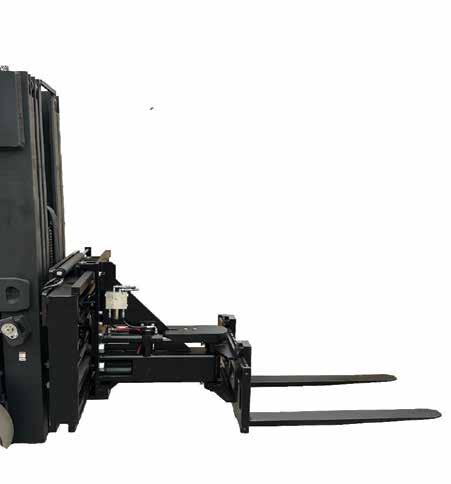
To provide a cost-effective alternative to higherpriced, dedicated narrow aisle turret-style trucks
The most unique feature of the full 180° pivoting carriage design is that the truck can pick/place a 48inch long load in a 72-inch unguided aisle on either side of the lift truck. This gives the operator virtually unlimited load retrieving options and lower cycle times.
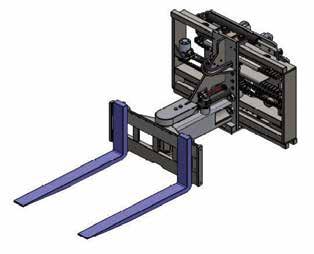
180-degree fork rotation.
Allows for more lateral movement in the aisle, reducing the front-end width of the truck.
All Superior Engineering Turrets are installed and ANSI / ITSDF stability tested. Superior then supplies the test results to the OEM engineering group so you may apply for a new data plate. This process guarantees the end user will be in OSHA compliance.


Herc Holdings completes acquisition of H&E

Under the terms of the merger agreement, Herc Rentals acquired all of the issued and outstanding shares of H&E’s common stock for, on a per share basis, $78.75 in cash and 0.1287 shares of Herc Rentals common stock. With the completion of the transaction, shares of H&E common stock have ceased trading and will no longer be listed on the NASDAQ. www.ir.hercrentals.com
Carolina Handling named a Modula top performer

Carolina Handling has been named a top performer by Modula Inc. During 2024, it finished second in overall sales of Modula units. Additionally, the Charlotte, NC-based material handling systems integrator received a Gold Level certificate for Modula’s marketing efforts in 2024, which included advertising and email campaigns, merchandising, SEO, and social media.
www.carolinahandling.com
Hyundai Material Handling announces 2024 Dealer Award recipients at 25th anniversary Silver Summit
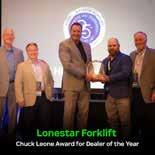
Hyundai Material Handling (HMH) has announced the winners of this year’s dealer awards. In a ceremony held May 15th at the luxurious Chateau Elan Winery & Resort in Braselton, GA., Hyundai presented six dealers with awards in four main categories: Peak Performer, The Summit Award, The Apex Award, and The Chuck Leone Award for Dealer of the Year.
www.trewautomation.com

Mitsubishi Logisnext Americas has announced plans to open a state-ofthe-art Customer Experience Center and advanced training facility at its Houston campus in the first quarter of 2026. The investment represents a significant step forward in Mitsubishi Logisnext Americas’ commitment to innovation, professional development, and customer experience. Designed to deliver immersive, hands-on demonstrations, the new facility will allow customers and dealers to explore the company’s extensive portfolio of material handling equipment, connected and energy solutions, and the latest advancements shaping the material handling industry.
www.logisnextamericas.com
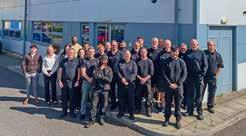
FB Chain has been a driving force in transforming lifting equipment worldwide for four decades. From pioneering leaf chain assembly kits to revolutionising wear measurement, the UK-based company has built a reputation for technical leadership, a customerfirst approach, and an unwavering commitment to sustainability, solidifying its position as a trusted global partner in the materials handling and construction sectors. Celebrating 40 years of leaf chain innovation, FB Chain began in 1985 as a supplier to British forklift truck manufacturers. Today, the company provides critical lifting components for forklifts, telehandlers, aerial work platforms, and reach stackers in over 50 countries, a testament to its global expansion and industry influence.
www.leafchain.com
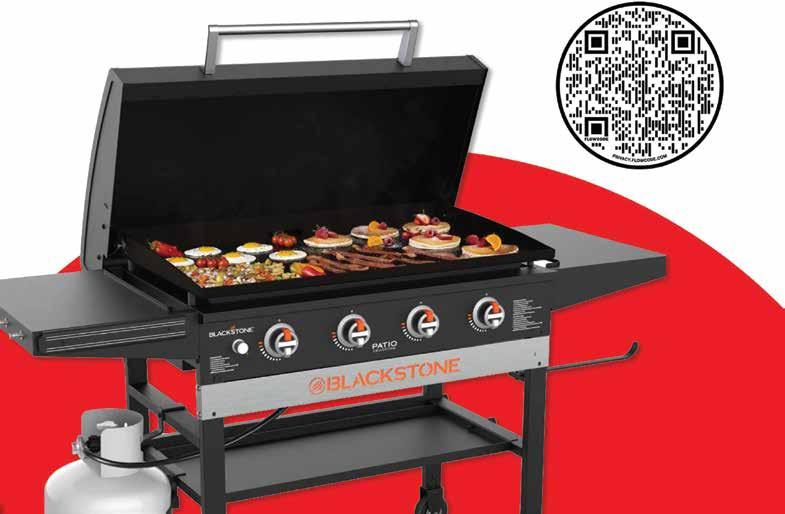
We're serious! All you have to do is visit www.charnor.com/blackstone and sign-up for our contact list.
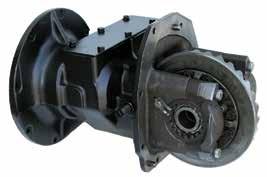
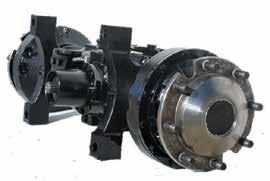
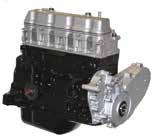
As one of the industry leaders in remanufactured FORKLIFT ENGINES, TRANSMISSIONS AND AXLES, we want you to be the first to know about our newest releases, including the PSI Engine 2.4. You could also win one of our monthly BLACKSTONE giveaways by getting a quote or making a purchase from us!


Industrial SalesLeads has reported the May 2025 results for its new planned capital project spending report for the Industrial Manufacturing industry. The report reveals a continuation of robust activity. The Firm, which tracks North American planned industrial capital project activity, including facility expansions, new plant construction, and significant equipment modernization projects, confirmed 146 new projects in the Industrial Manufacturing sector for May. This figure holds strong, just slightly below March's 147 new industrial manufacturing planned projects, and marks a noticeable rebound from April's 133 new planned projects. This signals sustained investment and expansion within the industry.

The following are selected highlights of the new Industrial Manufacturing industry construction news.
Industrial Manufacturing - By Project Type
• Manufacturing/Production Facilities - 122 New Projects
• Distribution and Industrial Warehouse - 92 New Projects
Industrial Manufacturing - By Project Scope/Activity
• New Construction - 43 New Projects
• Expansion - 49 New Projects
• Renovations/Equipment Upgrades - 55 New Projects
• Plant Closings - 15 New Projects
Industrial Manufacturing - By Project Location (Top 10 States)
• Indiana - 12
• North Carolina - 10
• Texas - 9
• California - 7
• Alabama - 5
• Ohio - 12
• Florida - 9
• Michigan - 8
• South Carolina - 6
• Illinois - 5
During May, the research team identified 21 new Industrial Manufacturing facility construction projects with an estimated value of $100 million or more.
The largest project is owned by Eli Lilly and Company, which plans to invest $6 billion in the construction of a processing campus in Houston, TX. They are currently seeking approval for the project. Construction is expected to start in 2026, with completion slated for 2030.
OKLAHOMA: An aluminum products manufacturer is planning to invest $4 billion in the construction of a manufacturing facility in INOLA, OK. They are currently seeking approval for the project. Construction is expected to start in late 2026.
KANSAS:A pharmaceutical company is planning to invest $895 million for the expansion of their laboratory and processing facility
in DE SOTO, KS, by 200,000 square feet. They are currently seeking approval for the project. Completion is slated for 2030.
NEW YORK: Automotive manufacturer is planning to invest $888 million in renovation and equipment upgrades on their manufacturing facility in BUFFALO, NY. They are currently seeking approval for the project.
NORTH CAROLINA: A biotechnology company is planning to invest $700 million in the construction of a 700,000 SF processing facility in HOLLY SPRINGS, NC. They are currently seeking approval for the project.
MICHIGAN: A pharmaceutical company is considering investing $500 million in the construction of a processing facility and is currently seeking a site in the DETROIT, MI area.
FLORIDA: A startup aerospace company is planning to invest $430 million in the construction of a 600,000-square-foot manufacturing and office facility in Jacksonville, FL. They are currently seeking approval for the project. They will relocate their operations upon completion.
OKLAHOMA: A building materials supplier is planning to invest $330 million in the expansion, renovation, and equipment upgrades on their manufacturing facility in DUKE, OK. They have recently received approval for the project. Completion is slated for Fall 2027.
SOUTH CAROLINA: A wood fiberboard manufacturer is planning to invest $250 million for the construction of a manufacturing facility at 1200 Spigner Rd. in ALCOLU, SC. They are currently seeking approval for the project. Completion is slated for 2028.
INDIANA: A pharmaceutical company is planning to invest $250 million in renovation and equipment upgrades to their laboratory and processing facilities in INDIANAPOLIS, IN, and WEST LAFAYETTE, IN. They are currently seeking approval for the project.
OHIO: A medical supplies manufacturer is planning to invest $240 million in the renovation and equipment upgrades on a recently leased 638,000 SF manufacturing and warehouse facility in CINCINNATI, OH. They are currently seeking approval for the project.
Visit us at salesleadsinc.com.
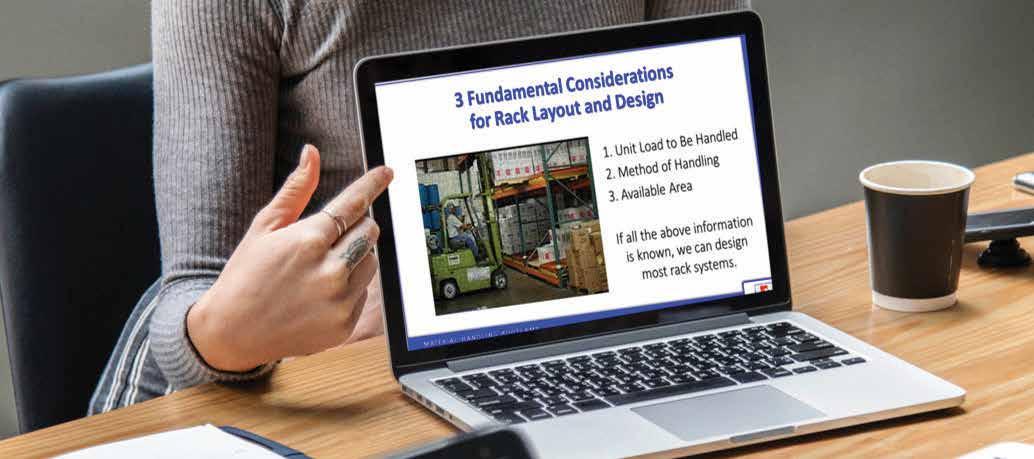
2. Under the Courses tab, click MHB Membership Bundle
3. On the course landing page, click Order for the One-time Payment $450 Year Subscription
4. Set up your account (Username and Password)
5. At checkout, click Have a Coupon and enter Coupon Code: MHW
6. Your 20% discount will be applied, making the net price $360.


See more new products online at www.MHWmag.com
Combilift launches two groundbreaking solutions for timber handling at Ligna
Timber yards, panel product suppliers, and sawmill operations face ever-increasing pressure to handle long and heavy loads more safely, more efficiently, and with less environmental impact. At Ligna 2025, Combilift unveiled two major innovations designed specifically with these industry challenges in mind: the new Combi-FSE 8000 and the Combi-Xtender.
www.combilift.com
EnerSys and Mitsubishi Logisnext
Americas bring the power of choice to material handling operations

EnerySys profide solutions for fleet, operations, and facility managers with new choices to power their forklift equipment. As new members of the Logisnext Promatch® parts program, customers can now choose from both HAWKER® and EnerSys® proven traditional lead-acid batteries, as well as advanced maintenance-free thin plate pure lead (TPPL) batteries. These options, available since March 17, 2025, empower material handling operations to optimize equipment productivity while minimizing or even eliminating downtime for battery maintenance in their operations.
www.enersys.com
AMT launches Flexible CRX-Based Collaborative Palletizing Solution

Applied Manufacturing Technologies (AMT) has introduced a plugand-play collaborative palletizing solution built around the FANUC CRX-30iA robot. The
system is designed to solve common labor, safety, and productivity challenges with fast deployment, intuitive operation, and minimal floor space requirements. Built for flexibility and ease of use, the cobot palletizing solution allows manufacturers to increase throughput, reduce ergonomic risks, and maintain uptime, even with lean staffing.
www.appliedmfg.com
Advance Lifts highlights its comprehensive range of palletizer and self-leveling lifts, engineered to enhance efficiency and safety across various industrial applications. These solutions offer seamless and ergonomic palletizing and depalletizing operations, improving worker safety and productivity. Advance Lifts’ palletizer and selfleveling lifts are designed to minimize operator strain, streamline workflow, and ensure optimal load positioning.
www.advancelifts.com
Nordock introduced the ELEMENT™ Mechanical Dock Leveler

Engineered for durability, ease of use, and longterm reliability, the ELEMENT™ sets a new benchmark for mechanical dock levelers. The ELEMENT™ Mechanical Dock Leveler is built for facilities that demand efficiency, ease of maintenance, and long-term dependability. With over 50,000 cycle tests and rigorous dynamic load testing, it exceeds the highest durability standards — trusted to keep your operation running smoothly for many years to come.
www.nordockinc.com



West Point Rack is one of the fastest growing companies in the industr y. Our customers recognize quality products, dependability of service and competitive pricing.
Our Primar y Goal is to suppor t our dealers, satisf y their customers, earn trust and be the “ Vendor of Choice” for rack products and racking systems.
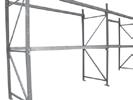
We of fer a full line of light duty, intermediate duty, heav y and extra heav y duty cantilever racks. We provide multiple configurations of a wide variety of stacking racks. Our structural pallet racks can be configured for a wide range of applications West Point Rack h as the products that generates solutions for your storage needs.
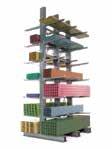

We also of fer specialty products such as bar cradle trucks, drum racks, hand car ts and other specialty transpor t and storage products. Give us a call at 866. 245. 3630. We may have what you need. Look forward to hearing from you.


At Material Handling Wholesaler and Forklift-International.com, we have a smart solution to help you increase used equipment sales domestically without worrying about tariffs.
As businesses adapt to the new normal, shifting focus to used equipment makes strategic and financial sense. With no tariffs involved in U.S. domestic sales, you’re positioned to maximize value and minimize risk.
• Material Handling Wholesaler is a trusted industry publication with over 46 years of experience, helping dealers and distributors stay informed with relevant, timely news.


• Forklift-International.com has been a global leader for over 27 years, streamlining equipment sales and inventory management with cutting-edge tools and automation.
The Forklift platform includes the only industry-specific mobile app, and our dealers benefit from integrated AI technology that other marketplaces can’t match.
Say goodbye to outdated platforms and inefficient processes. On our system, creating detailed proposals takes minutes, not hours.

Don’t let tariffs disrupt your business. Let us help you navigate the market confidently.
Contact one of our Account Managers for a free demonstration and start selling smarter.


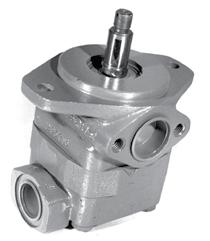
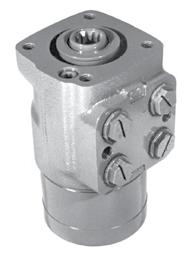
For a direct link to these websites, visit www.MHWmag.com and click on the corresponding display ad under the category you are browsing.
➤ Allied Products
➤ Attachments & Access.
➤ Auctions
➤ Automated Storage Systems
➤ Automatic Identification Equip.
➤ Batteries/Chargers
➤ Container Storage
➤ Controls & Information Handling Systems
➤ Conveyors
➤ Customer Fabricators
➤ Drug Testing Compliance
➤ Dock Equipment
➤ Drum Handlers
➤ Electrical/Electronic Controls
➤ Engines ➤ Finance Companies
➤ Fluid Power Equipment
➤ Insurance Companies
➤ Inventory & Production Control Systems
➤ Inventory And Bar Coding
➤ Lift Tables
➤ LP Gas Distributors






➤ Mechanical Power Transmission Equipment
➤ Non-Powered Floor Equipment & Access.
➤ Other
➤ Overhead Lifting Equipment & Access.
➤ Packing And Equipment
➤ Pallet Jacks
➤ Plant Facilities Equipment
➤ Parts
➤ Plant Yard Equipment
➤ Powered Industrial Trucks
➤ Rack/Shelving
➤ Rentals
➤ Repair Services
➤ Robots, Automated Equipment
➤ Safety Products
➤ Seats
➤ Storage Equipment
➤ Sweepers Scrubbers & Brushes
➤ Tires/Wheels
➤ Training Education/Assoc.
➤ Transportation & Hauling Equipment
➤ Warehouse Management









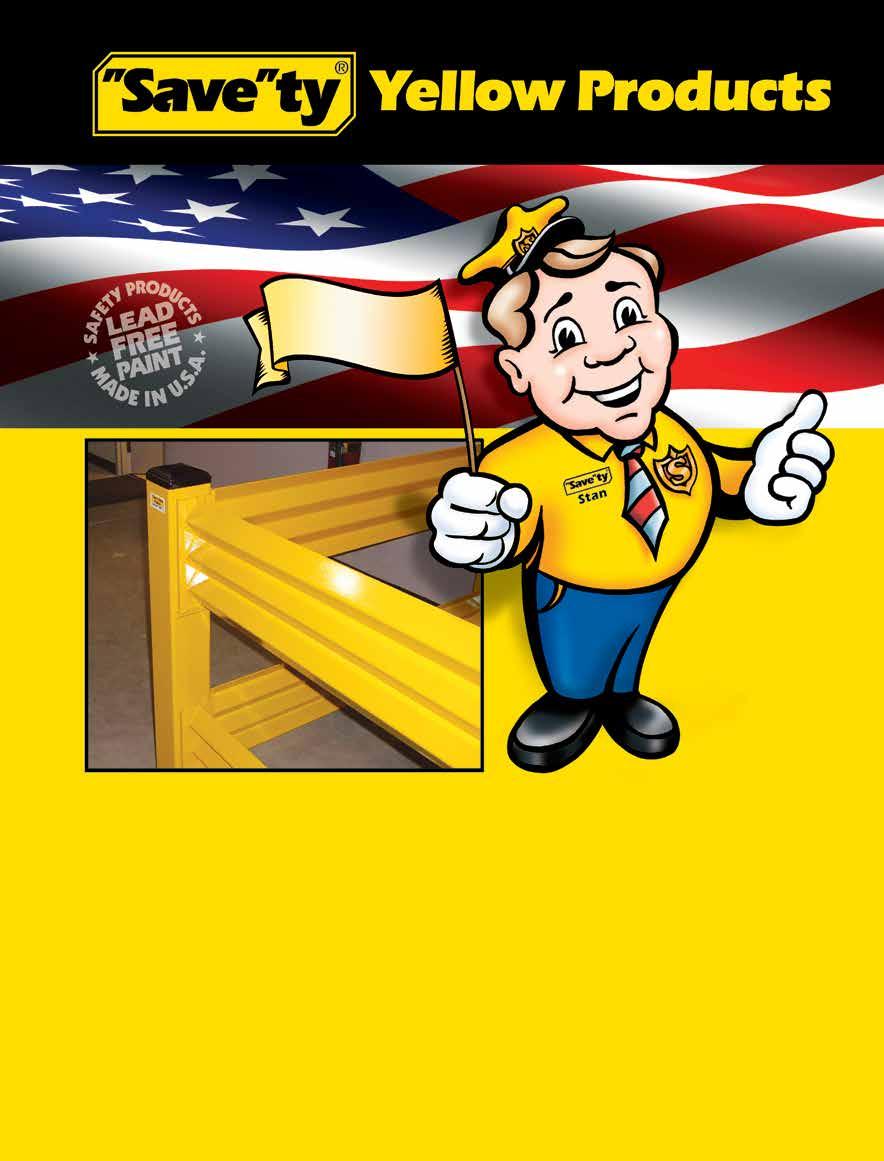
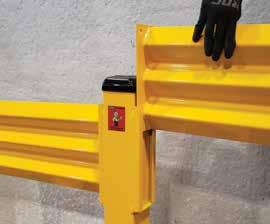
• Original LIFT-OUT design cuts installation costs in half!
• Fully welded sleeves to hold and capture rails.
• Posts available as Inlines, Corners, or Ends in 18”, 26” and 42” heights.
• Rails available in 2’ – 10’ in 1’ increments.
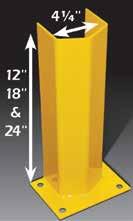
• Available in 12”, 18”, and 24” with 4¼”, 5½”, and 8¼” clear opening.
• ¼” material.
• Four mounting holes.
• Accepts ½” anchors, which are available upon request.
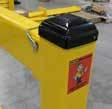
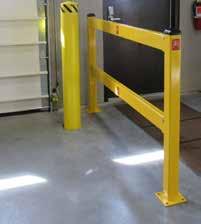
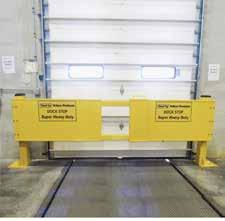
• Durable steel protection.
• Designed for quick and easy release, but can be bolted together if desired.
• Stronger than typical handrail.
• Top Rail is 42” high and MEETS OSHA FALL PROTECTION if used on a mezzanine.
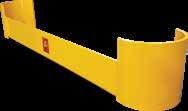
8” & 12” 36”,42”&48”
• Rack protection creates a visible guide through aisles and saves thousands in damage.
• Available in 36”, 42”, and 48” in either single or double ends.
• Curved end has an 8” I.D. and is 8” and 12” tall.
• Choose floor angle thickness of ½”, 3/8”, or ¼”.
• Impact rating—30,000 lbs @ 4 mph.
• 5” steel posts with gussets and base plate.
• Adjustable wrap-around plate bolts to post to support gate arms.
• MEETS OSHA REQUIREMENTS
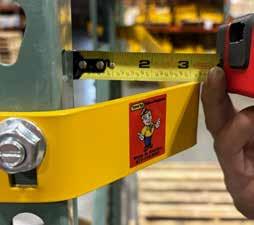
• 3” gap on both sides of the rack frame creates the required flue space.
• Thick steel construction withstands unit loading repeatedly.
• Available in 36”, 42”, and 48” as stock, but custom lengths are available.
• Mounts to front and rear of the frame, open or closed back, 1/2” hardware provided.

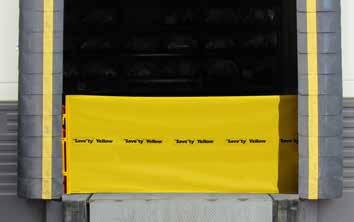
• Protects against unwanted visitors, insects, birds, and debris from entering the work area while allowing air to flow through. 48’ tall.
• Easy operation, requiring just 3 lbs. of pull force to extend the fabric barrier.
• High visibility, breathable fabric.
• Accommodates doors from 8’-16’.
• 300 lb. tear rating.
• MEETS OSHA REQUIREMENTS
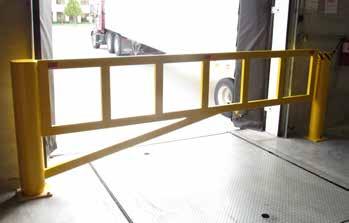
Provides security, creates awareness and fall protection.
• Mounts over a 42” tall bollard which is required.
• Choose widths from 4’ to 14’.
• Install two gates to meet in the center to accommodate space restrictions if needed.
• Add an optional bollard with eyelet at the opposite end for security.
• MEETS OSHA REQUIREMENTS
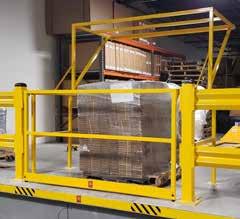
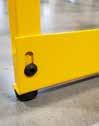
Adjustable kickplate and rubber feet 4’, 6’ or 8’
• Choose from 60”, 65”, 72”, 96”, or 120” clear opening.
• Easily pivots to up or down position – requires only 10 - 20 lbs. of lift force.
• Ships mostly assembled – minor assembly required upon receiving. Simply anchor to the mezzanine floor.
• Adjustable kickplate and rubber feet.
• MEETS OSHA REQUIREMENTS
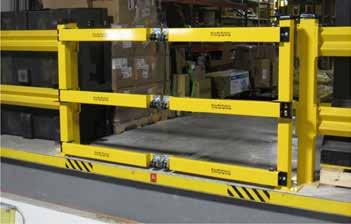
• 6 self-closing arms operate independently.
• 4’,6’, or 8’ width.
• Offset baseplate so skids don’t get caught.
• Can be mounted in front of existing rail.
• MEETS OSHA and IBC REQUIREMENTS
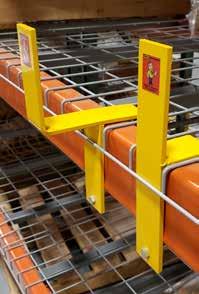

1.75” x 1.75” spacing
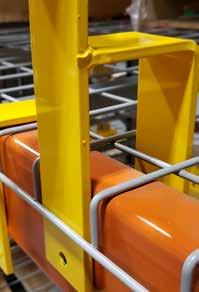
Create a real stopping point for pallets!
Stops pallets from entering the flue spaces!
• Fits 2.75” deep and 4.75” tall beams.
• Secures waterfall type wire deck in place for 1.75” x 1.75” spacing
• Easy installation – slides directly over rack.
• Available in flush mount, 3” or 6” overhang.

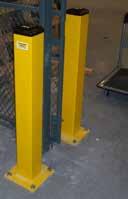
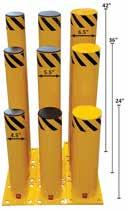
• Steel bollards protect a variety of facility assets.
• Surface mount to concrete or direct bury.
• Economy 4½” O.D., Yellow or Red, 5½” O.D. Yellow only, 24”, 36”, or 42” tall.
• Standard 4½” O.D. 42” tall, Yellow with welded top, available with welded eyelet.
• Direct Bury 5½”, 6½”, and 8½” O.D., 84” tall, yellow.
• Square Bollard 4” square tube. 42” tall with painted steel cap.
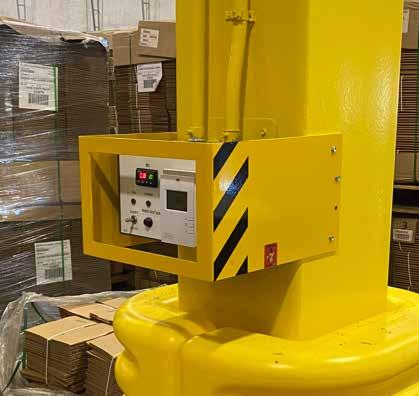
• Reduce damage to your controls.
• Protect any control box mounted to a building column – fan switches, thermostats, and light switches.
• Mounts in minutes with 8 pre-drilled mounting holes. Simply Tek screw to your column and you’re done!
• Available to fit 10” or 12” columns.

• Prevent damage to building support columns or mezzanine columns.
• Impact rating: 8,000 lbs. at 5 M.P.H.
• Available in Short, Slim, and Standard. Standard is 42” tall, 24” wide for 6”, 8”, 9”, 10”, and 12”. Yellow is standard, but red, lime green, and orange are available.
• White reflective band standard on lime green and orange.



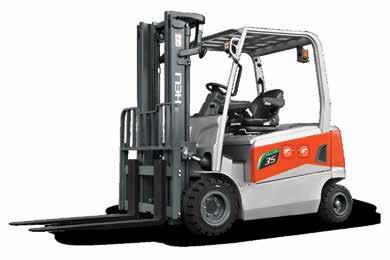


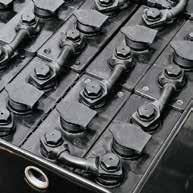

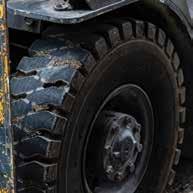
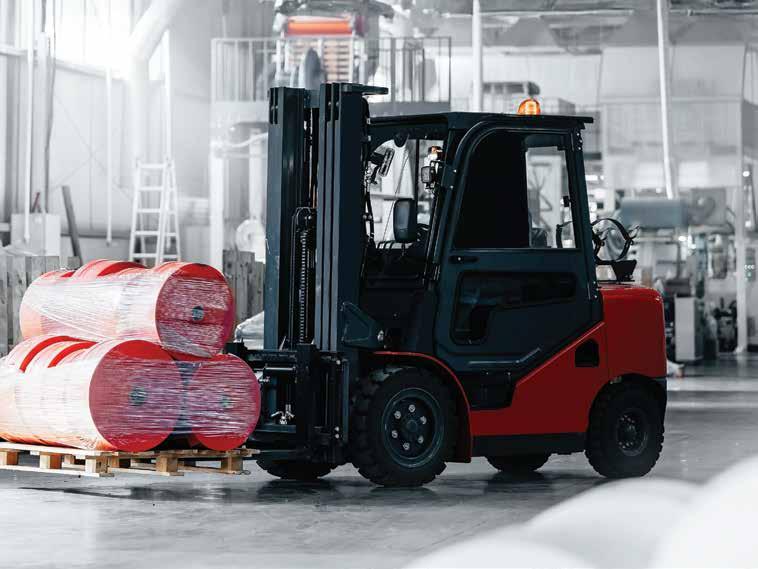
WITH EXPERT QUALITY AND 24/7 SUPPORT, TRUST TVH TO KEEP YOU GOING ALL SEASON LONG.
Summer’s peak season puts your equipment to the test, make sure you’re ready. Stay ahead of breakdowns with high-demand parts like radiators, tires, batteries, pumps and filters—delivered fast to keep your operations running smoothly.
EXPLORE OUR INVENTORY OF OVER 50 MILLION PARTS TODAY!