

Jess McGawley Interview

Page 1


CLUB the

Jessica McGawley

020 3475 4646

info@dallingtonassociates.com

www.dallington.co

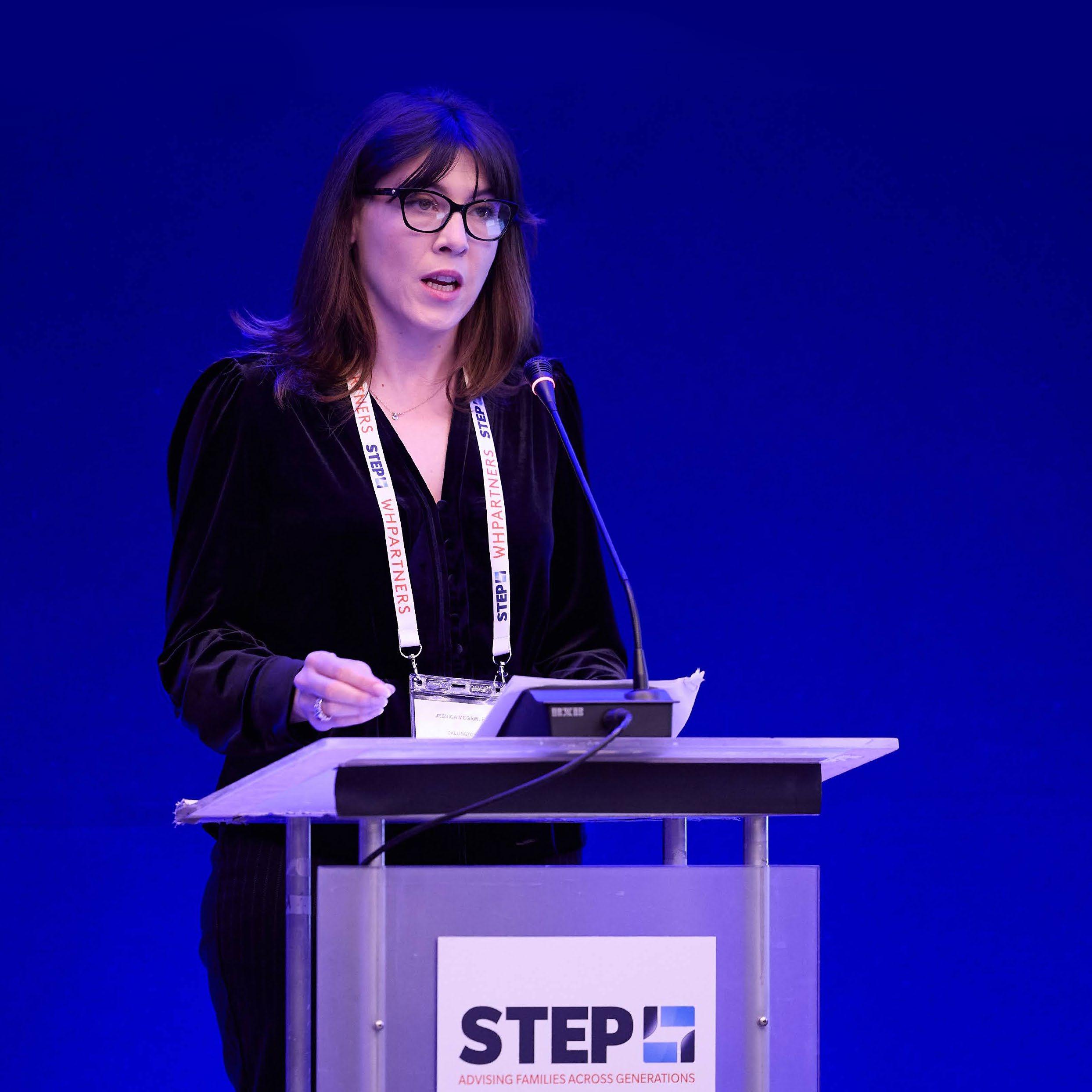
Jess is the founder of Dallington, a consultancy supporting young people from highly successful families as they navigate the complexities from adolescence into adulthood. Speaking to Jess was a genuine pleasure. Thoughtful, generous and deeply insightful, she has a rare ability to articulate the human side of family wealth with clarity and warmth. In this piece, Jess shares her journey to founding Dallington and her perspective on preparing the next generation for responsibility, relationships and long-term resilience. We were very grateful she took the time to speak with us and hope you enjoy the conversation as much as we did.

CAN YOU TELL US A BIT ABOUT YOURSELF AND YOUR CAREER TO DATE?

I founded Dallington almost ten years ago, but the thinking behind it developed much earlier. Before setting up the firm, I spent seven years working within a family office advisory environment in Mayfair. During that time, I became increasingly aware of a recurring gap. While families were investing heavily in legal, financial and governance structures, far less attention was being paid to the human and relational dynamics those structures depend on.

I repeatedly saw younger family members excluded from meaningful conversations about the family and business systems, only to be expected later to step into roles of responsibility with confidence. Many were hearing words like trustee, beneficiary or family constitution for the very first time in a formal meeting. To me, that felt like a glaring mistake. You cannot expect someone to perform well in an environment they have never been exposed to or prepared for. It became clear to me that long-term continuity

is not just about structures, but about people, relationships and readiness.

My background sits at the intersection of psychology and family wealth. I trained at the Tavistock, the NHS mental health hospital in London, completing postgraduate training in counselling and psychotherapy and masters in consulting psychology. What was meant to be a short role in a family office, helping to design and run a next generation programme, turned into seven formative years. When it became clear that the kind of early education and preparation I believed in would not happen in house, I set up Dallington to meet that need directly. I spent the first two years working closely with families to truly understand what young people wanted and needed, before being joined by my right hand, Farah (Dr Farah Khushabi, Head of Psychology). Together we built what Dallington is today - a psychological consultancy specialising in multigenerational family dynamics and rising-generation preparedness, with a clear focus on strengthening relationships, communication and long-term resilience.

WHEN YOU MADE THE JUMP TO SET UP DALLINGTON, WHAT

WAS YOUR BIGGEST FEAR?

I think I benefited from starting

young. When I set up Dallington, I was in my late twenties, and I think that played a huge part in how I experienced that moment. There is something about having energy, confidence and perhaps fewer internal barriers. If I were doing it now, I suspect I would have had many more fears. At the time, I had utter faith in myself and in the fact that this work was genuinely needed. I was already doing it in practice, already working closely with young people, helping them become more independent, supporting them as they figured out their lives and found their own solutions. It felt second nature rather than a leap into the unknown.

I was also, once again, the ‘responsible woman’ in the room, which was a position I knew well. Looking after younger people and holding that responsibility was familiar to me, so the fear never really took hold in the way it might have later in life. I did not feel particularly afraid, as I believe that if you start when you’re ready, you’ve started too late.

CAN YOU TELL US ABOUT THE WORK YOU DO AND THE SERVICE YOU OFFER AT DALLINGTON.

Dallington is a psychological consultancy working with families of wealth, with a particular focus on the rising generation. Our work is rooted in long-term, relationshipfocused engagement and centres on

I did not feel particularly afraid, as I believe that if you start when you’re ready, you’ve started too late.

the human dynamics that underpin continuity across generations.

We support young people who are growing into greater independence and responsibility, academically, professionally and within their families, but who are often navigating complex expectations, visibility and pressure. Our role is not to prepare them technically for wealth but to help them develop the selfawareness, emotional maturity and relational capability needed to navigate social and family systems with confidence and integrity.

We work through two core programmes. The first is our oneto-one mentoring and development programme, typically for younger family members (16-25). This provides a consistent, confidential external relationship over a defined period, supporting individuals through key transitions such as education, early career and identity formation. The focus is on strengthening decisionmaking, agency and resilience, while helping young people navigate independence alongside family expectations.

The second is our Rising Generation programme, which works with siblings and cousins together, often in enterprise-owning families (typically 18-35). This programme focuses on alignment, trust and communication within the family system. We help participants clarify roles, choices and expectations, explore different paths within or outside the family

enterprise, and learn how to work with difference constructively while protecting relationships.

Across all our work, the emphasis is relational rather than technical. We work alongside family offices and trusted advisers, without replacing legal, financial or governance advice. Our role is to focus on the human dynamics those structures rely on: communication, role clarity, trust and shared understanding. We work with families for a defined period, aiming to leave them more connected, capable and confident, long after our work ends.

WHAT ARE SOME OF YOUR CLIENTS’ BIGGEST FEARS/ CONCERNS

BEFORE THEY START WORKING WITH YOU?

Most families come to us at a point where something feels unsettled, even if it is not always easy to name. Parents are often carrying a concern that relationships are beginning to fray, that communication is becoming strained, or that their child is drifting further away from the family than they expected. Sometimes the fear is about entitlement or lack of motivation; in other cases, it is about withdrawal, conflict or the risk of longer-term estrangement. These concerns are rarely about a single incident, but about a sense that the family is no longer aligned.

“MOST SUCCESSFUL FAMILIES PREPARE THEIR WEALTH FOR THEIR CHILDREN, BUT DON’T PREPARE THEIR CHILDREN FOR THE WEALTH.”

This often arises when children are in their late teens or early twenties, as independence increases and familiar dynamics begin to shift. A key part of our work is helping families distinguish between normal developmental change and behaviours shaped by wealth and family context. Wanting more privacy, questioning values or wanting to take a different path is often a normal part of separation and identity formation, even if it feels uncomfortable.

At the same time, the rising generation has their own concerns. Many worry about disappointing their parents, being misunderstood, or not knowing where they fit within the family system. Some feel pressure to live up to expectations they have never explicitly agreed to, while others are uncertain about how much freedom they are allowed to take without damaging relationships.

Our role is not to replace parents, but to support the family system during this period of change. We act as a steady, external presence, helping families slow things down, improve communication and rebuild trust. We also work with the end in sight. We do not believe young people should always have a coach, therapist or external support

attached to them to help them make every decision. A healthy outcome is one where young people better understand and manage themselves, parents feel more confident in the relationship, and the family as a whole is more connected and resilient for the long term.

DO YOU WORK WITH EXISTING FAMILY ADVISORS?

In the Rising Gen programme, we strongly support working with the advisors who are already in place, because they will long outlive us. Ideally, part of our role is to help those advisors better understand how to engage the younger generation and how to adapt the language and terminology they already use. Almost every family we work with has a charter or constitution, usually written for the first generation by the lawyers supporting them at the time. That language is rarely helpful for a 16-year-old. It does not need to be scrapped, but it does need to evolve, and we help facilitate that process alongside the existing advisors.

The mentoring programme, by contrast, tends to be much more independent and private, and that

is very intentional. Young people need their own space. When we begin working with a family, we always try to understand their whole ecosystem. How do we fit in alongside everyone else? What is already in place, what has worked well and what has not?

Over the years we have developed a strong sense of what a bestin-breed advisor looks like. A lot of that is instinctive, but one of the most important qualities is that they do not collude. In some families, unfortunately, advisors can unintentionally slip into a “yes-person” role. In reality, one of the most respectful and caring things you can do for a family is occasionally say no and put boundaries in place.

WHAT DOES SUCCESS LOOK LIKE TO YOU?

For me, success is best understood in relational terms. It shows up in how families communicate, how they manage difference, and how they stay connected through periods of change. From a parent’s perspective, this is often felt most clearly in communication. We have yet to work with a family where communication could not be strengthened. In some cases it has simply become strained; in others it has been significantly disrupted by

mental health difficulties or experiences such as rehabilitation or residential care. Over time, families begin to understand one another’s communication styles more clearly and engage with greater respect, curiosity and restraint.

Something we are consistent about in our messaging is the need to slow down before reacting. Young people are naturally reactive because they are still building the capacity to pause and regulate emotional reactions, but many adults are reactive too. Very successful business owners are often excellent problem solvers who are used to things being fixed quickly. That approach can spill over into family life, where instead of sitting with something, sleeping on it and coming back to it, situations are reacted to or conflicts are engaged in.

When we slow things down, we are allowing the part of the brain responsible for judgement and emotional regulation to come back online. Parents often tell us they start to recognise the benefits of this not just at home but in family meetings, decisionmaking forums and professional contexts too, and that it leads to better outcomes across the board. It is not easy, especially if you come from a family where everyone is reactive or where systems have been built around speed and control, but with time it becomes transformative.
Vital Statistics...

JOB TITLE:

Psychological Consultant, Mediator and Founder of Dallington

BORN & LIVE:

Born and live in London with my Family – husband and two children

FAVOURITE HOLIDAY DESTINATION:

Connemara, Ireland

IRRATIONAL FEAR?

I wouldn’t say it’s irrational. I’d say my fear of spiders is totally rational.

QUOTE YOU LIVE BY:

“The first wealth is health” Ralph Waldo Emerson

A PERSON WHO MOST INSPIRES YOU:

I draw inspiration from a lot of thinkers and writers, but I’m going to say my husband. He really knows how to enjoy life.

FAVOURITE BOOK:

Dracula by Bram Stoker

FAVOURITE APP:

Laundryheap…helps me keep on top of the, well heap!

WHAT THREE WORDS BEST DESCRIBE YOU?

Eldest daughter (and everything that encapsulates), energetic, compassionate.

Ultimately, success for us is not a single outcome but feeling the shift in the system. Young people are functioning at a level that feels developmentally appropriate for their age and circumstances, parents feel more secure and less reactive in the relationship, and advisors are better able to engage the rising generation in a way that is constructive, ageappropriate and relationally informed. The family as a whole is better able to manage change, disagreement and transition over time. That is what allows relationships - and families - to endure.

WHEN IS THE RIGHT TIME TO START TALKING TO YOUR CHILDREN ABOUT WEALTH, SUCCESSION AND THE FAMILY BUSINESS?

I would encourage parents to start talking about money from around the age of seven. That does not mean burdening children with big numbers or adult worries. Young people should still have a childhood. But you cannot expect someone to understand large sums of money later on if they have never been introduced to smaller ones early in life. From that age, you can begin with very simple concepts.

Pocket money, for example, is a useful tool, but it should not be linked to

chores. We give pocket money so children can begin to understand money and make choices with it. Chores exist because they are part of the family system and everyone contributes; they are not transactional. We teach earning separately - through age-appropriate jobs or paid responsibilities - so children learn both contribution and the reality of exchange. In families where children are likely to inherit wealth, keeping those two things separate helps build a healthier understanding of both responsibility and money.

With pocket money, children can learn that there are only three things you can do with money: spend it, save it or give it away. Simple tools like “give, save and spend” jars or boxes work very well because they make money visible and concrete. I also encourage parents to think carefully about how to make money feel tangible, whether that is through physical cash where possible or through digital tools that clearly show money coming in and going out.

Many young people grow up experiencing money as something abstract that lives in the cloud, which can make it harder to develop a real sense of value. What matters is that children can see cause and effectwhat happens when money is spent, what remains, and what trade-offs are involved. That visibility makes it much easier to grasp concepts like budgeting, prioritisation and even inflation.

Something as simple as noticing the price of everyday items in the supermarket and seeing how those prices change over time can be a very effective learning experience.

When it comes to bigger conversations about wealth, succession and the family business, the right timing is far more personal, and each family will approach it differently. What matters most is that the adults involved are aligned and giving a consistent message. That can be more complex in families where there has been separation or divorce, but alignment is crucial.

The reality now is that it is very difficult to keep this information private. If parents do not talk to their children, they will often find out elsewhere - online, through the media, or from a peer who has read a headline. We have seen young people caught off guard, without a narrative of their own and unsure how to respond. Because of that, we tend to encourage families to begin talking more openly about wealth, succession and the wider context, from around the age of fourteen, in a way that is age-appropriate, honest and ongoing rather than a single, high-stakes conversation.

HOW DO PARENTS’ OWN FEARS INFLUENCE THE WAY THEY TRY TO CONTROL OR PROTECT

THEIR CHILDREN?

One of the biggest dynamics I see, particularly in families where significant wealth has been created in the parents’ lifetime, is the relationship between fear and control. Often, without meaning to and with the very best intentions, parents take on a high level of responsibility for holding things together. They know where everything is, where the money is, where family members are, and they are used to being in control of their business and assets. That instinct to stay close and in control usually comes from fear, sometimes rooted in earlier life experiences. Many grew up with uncertainty around money or stability and are deeply motivated to ensure their children never experience that same insecurity.

As a result, parents often work incredibly hard to create certainty and protection, and that is entirely understandable. The difficulty is that while you can control businesses, structures and assets to a certain degree, you cannot and should not try to control another person. There is a very fine line between protection and over-control. If parents are able to reflect on their own fears, particularly those shaped in childhood, it creates more space for trust. Doing that inner work can be transformative. It allows parents to loosen their grip, tolerate uncertainty, and build relationships with their children that are more open, trusting and ultimately more loving.

That instinct to stay close and in control usually comes from fear.

WHEN PARENTS AND CHILDREN HAVE GROWN UP IN VERY DIFFERENT WORLDS, HOW DO YOU HELP THEM UNDERSTAND EACH OTHER AND START SPEAKING THE SAME LANGUAGE?

When parents and children have grown up in very different worlds, bridging that gap requires intention and humility on both sides. Parents are often giving their children the life they hoped for them, and in many cases the life they did not have themselves. There is nothing wrong with that, and children should be able to enjoy the benefits of their parents’ hard work. The challenge is finding a middle ground where opportunity does not remove learning, and where difference does not turn into misunderstanding.

One way we help families do this is by separating access from outcome. There is nothing wrong with opening doors for your children. If a school offers an apprenticeship or work experience week and you ask a friend whether your child can spend time in their office, that is entirely appropriate. What matters is what happens next. If a young person does not show up on time, does not behave appropriately or does not

meet expectations, that responsibility sits with them. Allowing young people to experience real consequences is where learning, maturity and selfrespect are built.

Another important part of the work is helping parents talk openly about their own journeys, not just the end result. When children only see the outcome - the house, the lifestyle, the success - it can all look effortless. They do not hear about the mortgages, the early jobs, the sacrifices or the mistakes along the way. Sharing those stories gives context. It helps young people understand effort, risk and resilience, and it humanises success rather than placing it on a pedestal.

One practical exercise I often encourage, particularly when children are still living at home, is to normalise conversations about failure. Instead of only asking what went well or what was achieved, everyone around the table shares something they got wrong that day - something they misjudged, avoided, or would handle differently next time. The focus then becomes what was learned, rather than what went wrong. This simple shift takes pressure off the younger generation and allows parents and children to meet each other in a more honest, shared space.

HOW DO YOU GUIDE THE RELATIONSHIP WITH SOCIAL MEDIA?

When it comes to social media, the younger generation are often far more informed and digitally literate than we give them credit for. The risk is not always what a young person shares themselves, but who they are connected to and how that information is interpreted by people they do not know well. Third parties can form their own narratives about a young person’s life without context, nuance or the opportunity for correction, which can be unsettling and, at times, damaging. At the same time, it is unrealistic and unfair to expect young people to avoid these platforms altogether. Social media plays a real role in connection, creativity and identity formation. The focus therefore needs to be on access, privacy and guidance, rather than restriction alone. I often use the kitchen analogy: a kitchen is a highly creative space, but it also carries risk. You would not send a seven-year-old into one without explaining the dangers, setting boundaries and putting protections in place. The online world is similar. There is a great deal of opportunity, but young people need support in understanding the risks and learning how to navigate them safely and responsibly.

WHAT WOULD BE A LESSON OR LAST BIT OF ADVICE YOU’D LIKE TO LEAVE OUR READERS WITH.

If I were to leave people with anything, the first would be this: model the behaviour you want to see. Whether you are a parent, an employer or anyone in a position of influence, modelling matters more than instruction. Model the communication, the boundaries and the values you want the younger generation to adopt. You cannot ask for something you are not willing to demonstrate yourself. Leadership, in families as much as in organisations, starts at the top, and credible role modelling has become increasingly important in a world where there are very few truly decent examples to draw from. In many ways, the ultimate form of leadership is parenting.

The second principle I always come back to is reflect before you react. I genuinely believe this does a significant proportion of the work. If we could all slow down, tolerate a little discomfort and take a beat before responding, we would see

far better outcomes in families, businesses and relationships more broadly. That is not easy in a world that rewards speed and immediacy, but the ability to pause, reflect and respond thoughtfully has never been more valuable.

I also think it is important to say something about money. There is often very little empathy in society for young people growing up with significant financial resources. While it is right to acknowledge their privilege, it is also a mistake to overlook the challenges and responsibilities they carry. Many of the young people I work with describe feeling as though they are looking down a tunnel rather than a runway, aware from a young age that they may one day be responsible for organisations, assets and, in many cases, other people’s livelihoods. That is a considerable weight to carry. If we want these individuals to grow into thoughtful, responsible and engaged adults, we need to be more curious, more supportive and more understanding of the pressures they are navigating, because ultimately the decisions they make will affect far more than just themselves.

Turn static files into dynamic content formats.

Create a flipbook
Jess McGawley Interview by Carrington Wealth Management - Issuu