Test your know-how with NC Revolutionary War trivia
HALIFAX EMC
Attend one of our District Discussions this month
8 Where the Bison Once Roamed
An American icon’s
North Carolina and the Founding of Our Nation
Test your history chops with this revolutionary trivia
20 Carolina’s Finest: 2026 Finalists
The nominations are in, and it’s time to vote on the finest NC has to offer
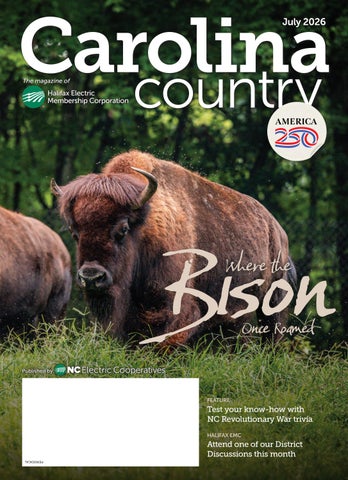
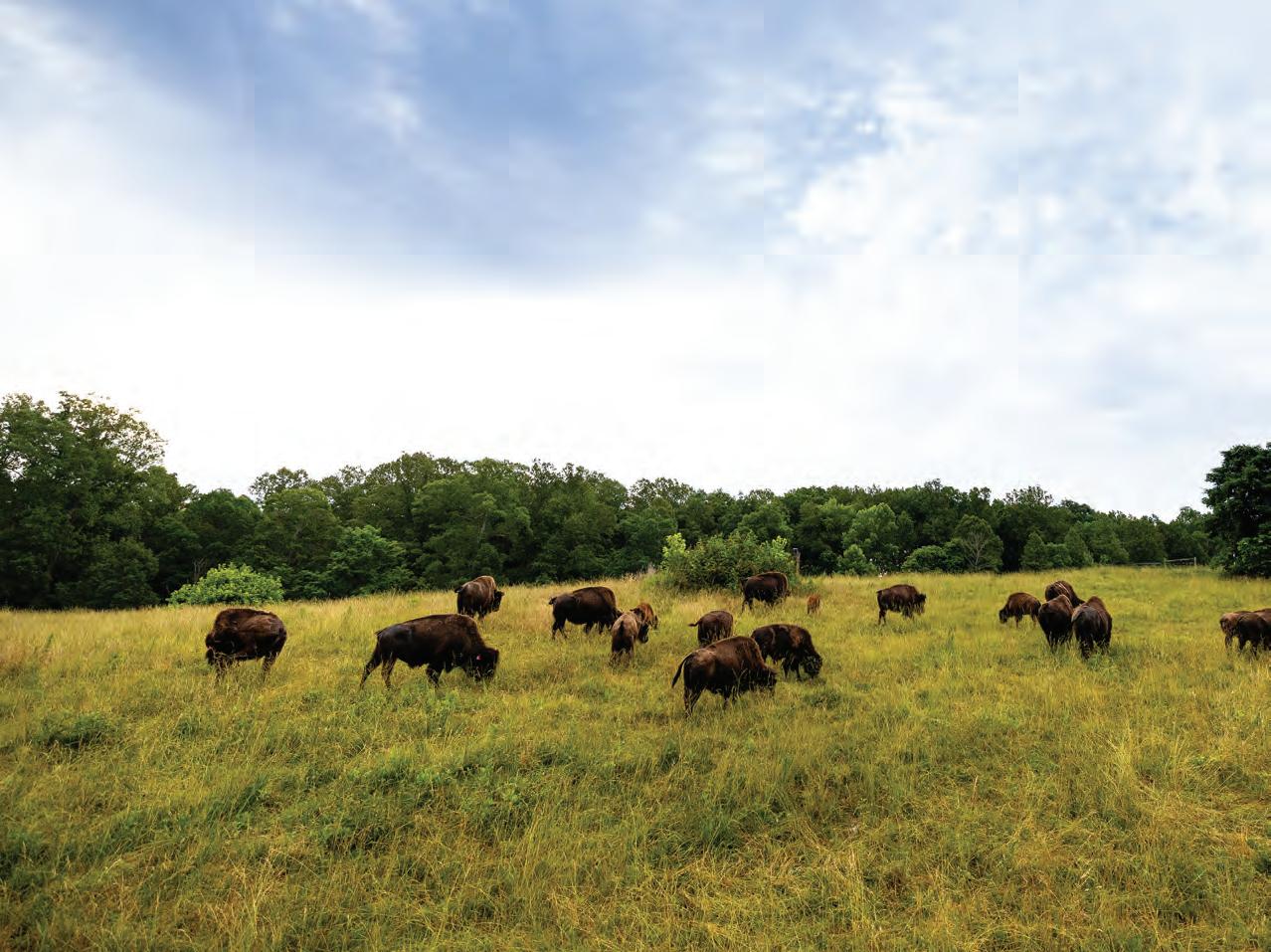
The bison, our national mammal, once grazed over at least 40 present-day states, including North Carolina. Although wild herds haven’t roamed our state since the late 1700s, protected herds have been introduced — including at the North Carolina Zoo in Asheboro, served by Randolph EMC. Learn more on page 8.
THIS MONTH
Celebrating 250 Years
For as long as I knew him, my late father had a beard. Legend has it he first grew it in for our country’s 200th anniversary in 1976, when “bicentennial beards” were a thing — plenty were shaved off come August, but his stuck. Although I haven’t heard much about a similar trend this year (maybe “semiquincentennial beard” is just too much of a mouthful), there are plenty of unique celebrations going on around the country and right here in North Carolina. We’ve dedicated this issue to joining in the celebration. Have a safe and happy Independence Day!
—Scott Gates, editor
FROM OUR READERS
Community Resource
I'm very happy to read your article about Community Emergency Response Teams (CERTs) across North Carolina (“Ready to Serve,” page 8, May 2026). CERTs can be a vital, educated resource for more immediate services in many situations. I served on the Teton County, Wyoming, CERT for 11 years, learned many skills, and assisted with response to a variety of situations. Thank you to all CERT members and everyone who manages and trains them.
Anpeytu Neier, Enfield, a member of Halifax EMC
June Issue Delights
This is the first time I have ever found so many fascinating articles in your magazine and I have enjoyed every one! Thank you for such interesting and informative articles. The governor, oyster farming, snorkeling in our rivers, easy efficiency, making waves, and “I Remember” — they were delightful! Well done!
Patty Kribbs, Raleigh, a member of Wake Electric
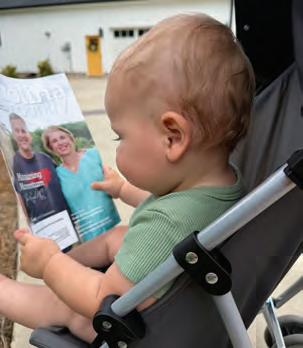
Thanks to Lori Gibby of Lincolnton, a member of Rutherford EMC, for sharing this adorable photo of a young reader!
Joe Hobby’s Kitchen Secrets
For some reason I missed “Cornbread Recipe Revelations” by Joe Hobby back in 2024 (page 22, December 2024). I read it today and here’s where it started: “I felt like a student at Hogwarts who had been told there was no such thing as magic.” And then I couldn't stop laughing for the rest of the article. Brilliant and fun!
Joy Martin, Hope Mills, A member of South River EMC
CALL FOR SUBMISSIONS
Who was one of your most inspiring teachers? Share your stories with us by July 15 and we'll pay $50 for those published in our September issue. Visit carolinacountry.com/carolina-voices to learn more.
(ISSN 0008-6746) (USPS 832800) Volume 58, No. 7
Published monthly by 3400 Sumner Blvd., Raleigh, NC 27616-2950
Scott Gates, CCC Editor
Renee C. Gannon, CCC Senior Associate Editor
Rue Reynold Editorial Assistant
Jessica Armstrong Graphic Designer
Tara Verna Creative Services Associate
Donna Natosi Digital Strategist
Dan Tomkiewicz Advertising Dan@carolinacountry.com
Amadou Fall Executive Vice President & CEO
Kristie Aldridge, CCC Senior Vice President & COO
Warren Kessler Director of Brand Strategy
North Carolina’s electric cooperatives provide reliable, safe and affordable electric service to 1 million homes and businesses. The 26 electric cooperatives are each member-owned, notfor-profit and overseen by a board of directors elected by the membership.
Why Do We Send You Carolina Country Magazine? Your cooperative sends you Carolina Country as a convenient, economical way to share with its members information about services, director elections, meetings and management decisions. The magazine also carries legal notices that otherwise would be published in other media at greater cost.
Your co-op’s board of directors authorizes a subscription to Carolina Country on behalf of the membership at a cost of less than $5 per year.
Subscriptions: Individual subscriptions, $12 per year. Schools, libraries, $6.
Carolina Country is available on digital cartridge as a courtesy of volunteer services at the NC Department of Cultural Resources, Library for the Blind and Physically Handicapped, Raleigh, NC 888-388-2460.
Periodicals postage paid at Raleigh, NC, and additional mailing offices. Editorial offices: 3400 Sumner Blvd., Raleigh, NC 27616-2950. Carolina Country® is a registered trademark of the North Carolina Association of Electric Cooperatives, Inc.
POSTMASTER: Send all UAA to CFS. (See DMM 707.4.12.5); NON-POSTAL AND MILITARY FACILITIES: Send address corrections to Carolina Country, 3400 Sumner Blvd., Raleigh, NC 27616-2950.
Change of address: Please contact your electric co-op or go online to carolinacountry.com/address
Experiencing a power outage? Please contact your electric co-op directly to ensure prompt service. Visit carolinacountry.com/co-ops to find yours online NC Electric Cooperatives ®
CORNBREAD RECIPE
Sacred Stone of the Southwest is on the Brink of Extinction
Centuries ago, Persians, Tibetans and Mayans considered turquoise a gemstone of the heavens, believing the striking blue stones were sacred pieces of sky. Today, the rarest and most valuable turquoise is found in the American Southwest–– but the future of the blue beauty is unclear.
On a recent trip to Tucson, we spoke with fourth generation turquoise traders who explained that less than five percent of turquoise mined worldwide can be set into jewelry and only about twenty mines in the Southwest supply gem-quality turquoise. Once a thriving industry, many Southwest mines have run dry and are now closed.
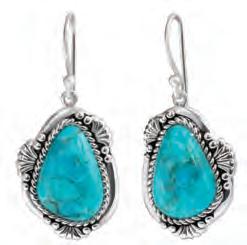
We found a limited supply of turquoise from Arizona and purchased it for our Sedona Turquoise Collection . Inspired by the work of those ancient craftsmen and designed to showcase the exceptional blue stone, each stabilized vibrant cabochon features a unique, one-of-a-kind matrix surrounded in Bali metalwork. You could drop over $1,200 on a turquoise pendant, or you could secure 26 carats of genuine Arizona turquoise for just $99
Your satisfaction is 100% guaranteed. If you aren’t completely happy with your purchase, send it back within 30 days for a complete refund of the item price.
The supply of Arizona turquoise is limited, don’t miss your chance to own the Southwest’s brilliant blue treasure. Call today! 26 carats of
B. 18" Bali Naga woven sterling silver chain $149 +s&p
C. 1 1/2" Earrings (10 ctw) $299 * $99 +s&p Save $200
Complete Set** $747 * $249 +s&p Save $498
**Complete set includes pendant, chain and earrings.
Code SDT197-01
C.
Necklace enlarged to show luxurious color
A Shared History to be Proud of
By Scott Gates
We have a lot to celebrate this year. Most obvious to this month’s issue is the 250th anniversary of our nation’s independence, launching the great “American experiment” that we are all a part of today. What’s interesting to our community of Carolina Country readers is how the governing philosophies that shaped our nation influenced the creation of electric cooperatives more than a century later.
In May, electric co-ops celebrated the 90th anniversary of the Rural Electrification Act (REA), which provided low-cost federal loans for building electric distribution systems in rural areas. It empowered member-owned electric co-ops and helped revive America’s economy in the wake of the Great Depression. It’s inspiring to think about, though not surprising that rural folks without electricity banded together to get things done and strung the lines themselves.
successes, inspiring stories and good recipes from our communities. Perhaps more importantly, though, it’s a way for your electric cooperative to provide regular updates — including notices of board elections and annual meetings — in a timely, cost-effective way.
Thanks to economies of scale and postage rates available to our type of publication , everything it takes to get Carolina Country into your mailbox each month — from the work our staff does, to printing, paper and postage — costs less than the price of a postage stamp. That’s pretty remarkable.
It’s inspiring to think about, though not surprising that rural folks without electricity banded together to get things done and strung the lines themselves.
At a recent ceremony in Washington, D.C., commemorating the birth of electric co-ops, the administrator of the Rural Utilities Service — the predecessor to what was born from the REA — held up a copy of “The Next Greatest Thing.” This 1984 book provides a history of the first 50 years of rural electrification. I have a copy on my desk. And as it happens, the nationally acclaimed book was edited by Richard “Dick” Pence, a former editor of (drumroll please) Carolina Country magazine. That brings me to yet another anniversary to celebrate: 80 years of our magazine serving members of North Carolina’s electric cooperatives. What started as Carolina Farmer magazine in 1946 has grown into the publication you hold in your hands today. Why a magazine? For one, we all like good news, and it provides a great way to share
It’s then our goal to make the most of these combined efforts to ensure each issue meets the trusted expectations of 80 years of service. To that end, we made some changes you may have noticed last month, starting with the magazine design.
We’re using a cleaner look to better showcase photos and stories, echoing the style of the new carolinacountry.com. We’re also focusing on local advertising, so you may notice fewer ads, but likely ads more relevant to your interests.
And of course, we’re making room for more reader-submitted stories and photos, like the ever-popular I Remember, Carolina Voices and Snapshots sections. We love hearing your stories, so please keep them coming (our contact information is listed on page 2).
I hope you enjoy this issue and many more to come. I speak on behalf of all of us at Carolina Country when I say it is our pleasure to serve you on behalf of your electric co-op, reporting on the communities we call home.
Scott Gates is the editor of Carolina Country magazine and has been a member of an electric co-op for almost 20 years.
NC Electric Co-ops Advocate for Rural Communities at Rally in Raleigh
In May, leaders from North Carolina’s electric cooperatives gathered in Raleigh to meet with their local legislators and discuss policy priorities important to the 2.8 million North Carolinians served by the state’s 26 electric cooperatives. Conversations provided lawmakers with insights into the needs and opportunities facing rural communities across the state.
“For cooperatives, sitting down face-to-face with our legislators is vital,” said Jordan Hildreth, CEO of Lilesville-based Pee Dee Electric. “It allows us to share the real-world effects that policy has on the daily lives of our members, advocate for member-focused solutions and ensure that decisions reflect the needs of the members we serve.”
More than 140 representatives from electric cooperatives across the state met with members of the North Carolina General Assembly during the event. As North Carolina’s energy needs continue to grow, electric cooperatives are focused on solutions that ensure long-term reliability and affordability for members.
Advocating for our members is one of the most important responsibilities we have as an electric cooperative.”
“These conversations matter because the topics being discussed — from energy reliability and affordability to infrastructure and future power supply — directly affect our members’ quality of life,” said Winston Howell, CEO of Tarboro-based Edgecombe-Martin County EMC. “It’s important that rural communities have a strong voice at the table, and we are proud to represent and advocate for the best interests of our members.”
For electric cooperatives, these policy discussions are deeply connected to the communities they serve and call home. The issues being discussed at the legislature directly impact rural communities across North Carolina. When co-op leaders advocate for reliable energy policy and infrastructure investment, they advocate not only for their members, but for a brighter future of their own communities.
“Advocating for our members is one of the most important responsibilities we have as an electric cooperative,” Howell said. “Events like Rally in Raleigh give us the opportunity to meet directly with elected officials and share how legislative and energy policy decisions impact the families, businesses and rural communities we serve every day.
—Josh
Conner, North Carolina’s Electric Cooperatives
Supporting Music on the Global Stage
Mojotone, served by Four County EMC, has been named Exporter of the Year by the U.S. Small Business Administration. The company was founded in WinstonSalem in 2000 and makes amplifiers, sound system cabinetry and components for electric guitars.
A $1 million loan through USDA’s Rural Economic Development Loan and Grant program facilitated by Four County EMC helped the company relocate to Pender Progress Industrial Park almost 10 years ago.
“Mojotone’s journey from a small mail-order business in Burgaw to an
internationally recognized manufacturer is one of the greatest economic development success stories in our region,” said Jimmy Smith, director of Economic & Community Development for Four County EMC. “Through strong collaboration between Four County EMC, Pender Progress Corporation, Pender County, the Town of Burgaw, and community partners, Mojotone was able to remain and grow in Pender County, proving that rural North Carolina can compete on a global stage.”
Past customers include Rush; Eric
Clapton; ZZ Top; Garth Brooks; Keith Urban; and Burgaw native Audley Freed, a guitarist for Sheryl Crow, The Black Crowes and other bands.
Josh Conner
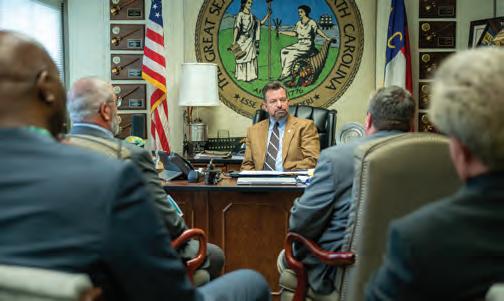
Representatives from Rutherford EMC and North Carolina's Electric Cooperatives met with State Senator Tim Moffitt.
Mojotone
Tech Leader Named COO of Power Supply Co-op
North Carolina’s Electric Cooperatives has named Chris VanLokeren as chief operating officer (COO) of North Carolina Electric Membership Corporation (NCEMC). NCEMC is an electric generation and transmission cooperative with more than 4,500 MW of owned and purchased power serving the full wholesale power needs of 20 of the state’s local distribution cooperatives and partial power needs of five (learn more at carolinacountry.com/about-nc-co-ops).
VanLokeren has served as the chief information officer of North Carolina’s Electric Cooperatives since 2018. He will succeed Amadou Fall, who was recently appointed executive vice president and CEO of North Carolina’s Electric Cooperatives. In his new role, VanLokeren will be responsible for strategic leadership of NCEMC’s core operations, including portfolio management, energy delivery, energy innovation and asset management.
“Chris has been a driving force behind our organization’s technology, operations and resilience, and I’m thrilled to welcome him into this critical leadership role,” said Fall. “He understands how to align people, systems and innovation to deliver value for our
members. I am confident he will help position NCEMC for continued reliability, growth and success in a rapidly evolving energy landscape.”
Since joining North Carolina’s Electric Cooperatives, VanLokeren has implemented a strategy focused on data management, thoughtful software and platform integration, and cybersecurity. Through innovative partnerships, the organization has enabled leading-edge programs, such as distributed energy resource management, recognizing that technology will remain a critical driver of transformation in the energy industry.
“I’m excited about the opportunity to step into this role at such a pivotal time,” VanLokeren said. “Thanks to our member electric co-ops, we have been national leaders on technology and innovation. My focus is on delivering results today, moving with purpose, and building for the future in an everchanging energy landscape.”
QUICK HITS
® STAY SAFE ON THE ROAD! North Carolina law bans motorists from sending or reading text or email messages while driving.
® BIG BIRTHDAY | Find Independence Day celebrations around the state on page 18, and if you celebrate at home, do so without fireworks that explode, spin or leave the ground (illegal in NC).
® ONE IN A BILLION | July 4 is also International Cooperative Day — as a member of an electric co-op, you’re one of more than 1 billion co-op members worldwide.
® COOL WINDOWS | During summer, keep south- and west-facing blinds and curtains closed during the day to block the sun’s heat..
Source: energy.gov
Where the Once Roamed
AN AMERICAN ICON’S
RETURN TO NC
BY LORI GROSSMAN
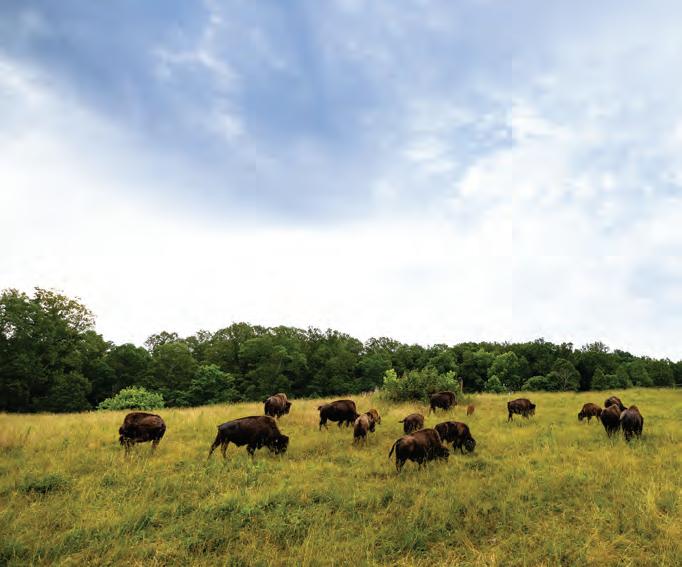
Usually, we think of our national mammal, the bison, wandering the Great Plains. But they were once native to North Carolina — numerous enough to leave a legacy in many places bearing their name. Over 40 North Carolina place names include “buffalo” in some form, with creeks named “Little Buffalo” in Cabarrus, Ashe, Graham, Lee and Johnston counties. There’s a “Big Buffalo Creek” in Lee County, and too many named “Buffalo Creek” to list here.
These awe-inspiring animals once roamed American grasslands — including North Carolina — in the millions. Then they were hunted and slaughtered almost to the brink of extinction. To add insult to injury, they’re not even known by their proper name! (“Buffalo” are a different species native to Asia and Africa.)
According to the Meherrin Tribe (headquartered in Ahoskie), members of the Cherokee Tribe in Western North Carolina gave a “dressed buffalo skin” to Hernando de Soto’s men in 1540. Other sightings were recorded in the 1600s and 1700s, mostly in the Piedmont and Mountain areas.
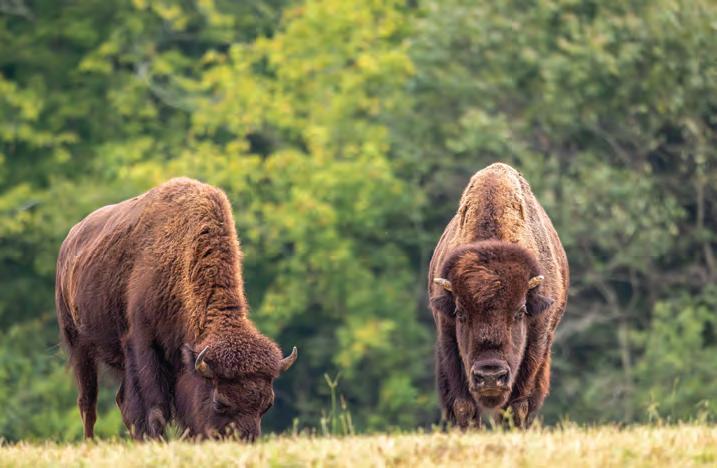
Bison have humps and large heads that help them plow
through snow to find grass. Also, bison have heavy, shaggy coats that are shed in the spring and summer. Native Americans depended on bison as a food source and used the hides for clothing and shelter. When Native Americans were forced to leave their homelands, the bison population dwindled, too. A marker at milepost 373 of the Blue Ridge Parkway commemorates the place where Swannanoa Valley settler Joseph Rice shot the last bison in 1799.
A little over 100 years later, the American Bison Society attempted to reintroduce bison in Buncombe County. The herd consisted of three males and three females. Only two remained by the late 1920s, and the effort was called a failure. But failure would prove to be only temporary as other herds have since been established around the state, including in Person and Randolph counties.
The North Carolina Zoo, Asheboro
Located approximately 85 miles northeast of Charlotte in Randolph County, the NC Zoo officially opened on Aug. 13, 1976. It’s the largest natural habitat zoo in the world and home to a small herd of bison.
The first three bison arrived at the zoo on Oct. 17, 1974, from their previous home at Fort Niobrara National
Wildlife Refuge in Nebraska. There are six females in the current herd that roams the Prairie Habitat. Trained staff called keepers feed, train the animals and monitor their health. Keepers also share insights into bison behavior with zoo guests. Keeper Robin enjoys building relationships with the bison.
“All of them have unique personalities and it is fun to get to learn their quirks,” she says. “They live in a matriarchal herd, and everyone has their place in it.” Keeper Robin also played an important role when one of the bison needed help.
“[Bison] Annie has seasonal allergies and gets very itchy eyes [which developed small cuts and attracted flies]. Keepers trained Annie to voluntarily wear a fly mask to help with this,” Robin explains. “Wearing the mask keeps her from scratching her face, plus keeps flies away. We got the largest sized fly mask made to fit a draft horse and modified it for Annie.”
It took lots of patience (and grain) to train Annie to wear her new mask. And like human allergy sufferers, she takes medication. She just takes lots more than we do.
Sunset Ridge Bison Farm, Roxboro
Jack and Sandy Pleasant’s 260-acres have been in the family for 200 years. Old documents reference bison living in the Hyco Creek bottoms in 1728. Deeds dating to the late 1700s mention “buffalo wallows” as landmarks for surveyors.
Sunset Ridge Bison Farm acquired eight head of bison in 2001. It was the fulfillment of a dream that Jack first visualized in 1964 when he saw a herd of bison while backpacking in New Mexico. Jack and Sandy brought bison back to land where the majestic mammals had lived for hundreds of years.
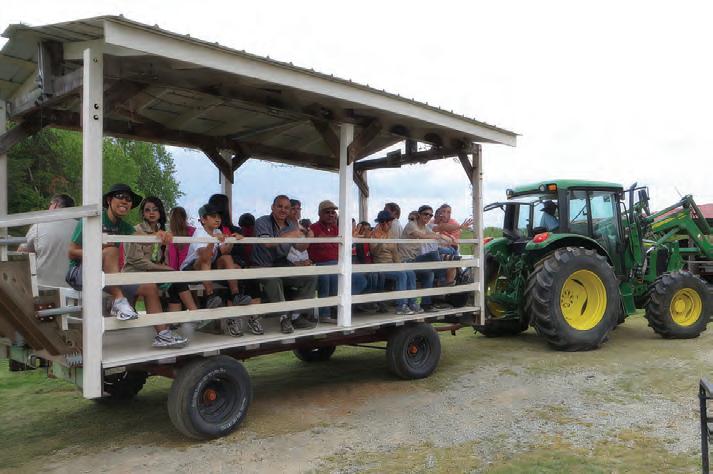
So bison have returned to Person County. Jack leads tours and looks after the herd of about 100 bison. He had done his due diligence and prepared for their arrival, but says that one thing surprised him.
“Though the literature tells you a bison can clear a six-foot fence from a standing position, you understand it differently when your 1,850-pound bison bull jumps the gate in front of you!”
July is National Bison Month, so why not dress cool, pack some water, and go visit some bison?
Freelance writer Lori Grossman currently lives in Texas but carries memories of
North Carolina in her heart.
Watch a video from the NC Zoo to learn more about how Annie the bison learned to wear a fly mask.
North Carolina Zoo
Sunset Ridge Bison Farm
Visitors take a tractor-ride tour at Sunset Ridge Bison Farm.
You’re Invited: Halifax EMC District Discussions!
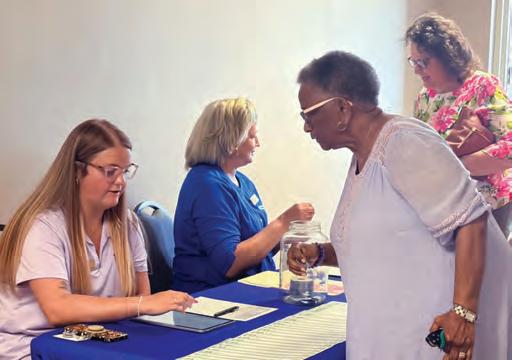
Join us for Halifax EMC’s first-ever District Discussions. This is an opportunity to connect, learn, and stay informed about your cooperative.
We’re hosting two informal sessions, both beginning at 5 p.m.:
Please RSVP using one of the QR codes above that corresponds with the session you plan to attend.
These gatherings will highlight current Halifax EMC projects and provide updates on programs available to you. Learn more about Energy Insights, SurgeSecure – our new meter-based surge protection program, and other services designed to benefit our members.
Please note: Members are encouraged to attend just one session as the same information will be provided at both.
We look forward to seeing you there!
Comments, articles, and photographs are welcomed.
Tucker Lemley Chief Executive Officer
Board of Directors
ROBIN WILLIAMS
President, District 7
BARBARA BRAYBOY
Vice President, District 3
MACON ROBERTSON
Sec.-Treas., District 8 At-Large
FREDERICK DUNN
Asst. Sec.-Treas.,
District 1
BASIL WILLIAMS
District 2
HARRY WILLIAMS
District 4
ROBERT HARRIS
District 5
STANLEY BROTHERS
District 6
SANDERS COX
District 8 At-Large
Business Hours
8:30 a.m.–5 p.m.
Locations
Enfield/Macon: (252) 445-5111
halifaxemc.com
Across the electric utility industry, we continue to see increasing costs associated with providing reliable electric service. Specifically, since 2021, Halifax EMC has experienced an average increase of 4% per year, which is less than overall inflation. Like many cooperatives, Halifax EMC is navigating these challenges while keeping our focus where it belongs; serving our consumer-members with dependable, affordable electricity.
“Your cooperative works diligently to manage costs wherever possible.”
Tell Us...
Halifax EMC is your electric cooperative. Your comments and questions are very important to us. Please tell us how we may improve our service. Return your comments/ questions along with your payment, or e-mail them to tellus@ halifaxemc.com
Remember to include your account number for these types of questions.
One of the key drivers behind these rising costs is the price of essential materials. Items like utility poles, transformers, and other critical equipment have steadily increased in cost over the last six years. For example, a 40-foot class 3 pole, the most used on our system, cost $290 in 2020 and today is $386, a 33% increase. These are not optional investments; they are the backbone of the system that delivers electricity to your home and business. Maintaining and replacing this infrastructure is necessary to ensure reliability, safety, and long-term service.
Despite these pressures, your cooperative works diligently to manage costs wherever possible. Halifax EMC is continuously evaluating operations, making strategic investments, and seeking efficien-
by Tucker Lemley Chief Executive Officer
cies to reduce the impact on our consumer-members. As discussed in last month’s newsletter, we are utilizing advanced tools like satellite imagery to identify right-of-way maintenance needs, allowing us to better target tree trimming and spraying efforts where they are needed most. This results in a more efficient right-of-way program, reduces outages, and ultimately helps control costs. As a not-forprofit utility, every decision we make is with you in mind.
As we move into the summer months, energy usage naturally increases. The Department of Energy estimates that between 45% and 50% of home energy use goes toward heating and cooling, making temperature changes a major driver of electricity consumption. Higher outdoor temperatures mean air conditioners must run longer and work harder to keep homes comfortable, resulting in increased electricity use. With children out of school for the summer, household routines also shift, often leading to greater energy use during the day. While the cost to provide electricity continues to rise, it is important to remember that higher energy bills are often more closely tied to increased energy use.
continued on page 13
That’s why we encourage you to take advantage of Energy Insights, available on our mobile app or through the member portal at halifaxemc.com This resource provides a daily view of your electricity use, helping you better understand when and how energy is being used. It also offers estimated breakdowns of appliance usage, giving you a clearer picture of what contributes most to your overall consumption and where you may be able to make adjustments. Members can also view a projected bill throughout their billing cycle using the Energy Insights tool. Similar to how you might keep an eye on your fuel gauge and trip mileage to see how much gas your car is using, instead of waiting until you fill up at the pump to see how much fuel you’ve used, you monitor it as you go. In the same way, Energy Insights gives you a real-time look at how your energy use is adding up, so there are no surprises when your bill arrives.
At the end of the day, our commitment remains the same: to provide safe, reliable power at the lowest possible cost. We will continue working proactively to manage industry challenges while giving you the tools and information needed to manage your own energy use.
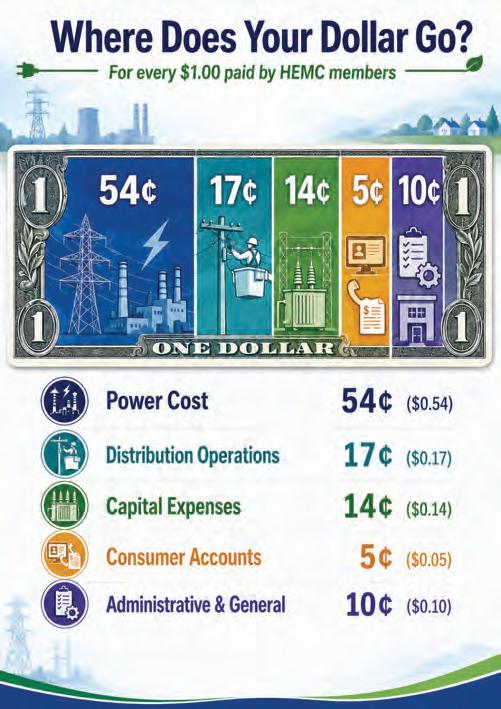
Every dollar you pay for electric service is carefully allocated to keep the lights on and your cooperative running efficiently. More than half—54 cents—goes toward purchasing power, while 17 cents supports maintaining and delivering electricity through our distribution system. The remaining 29 cents covers essential operations like administrative services, billing and account support, member communications, and infrastructure investment expenses. This breakdown shows how your dollar is put to work every day to provide reliable, affordable service to our members.
Celebrating a Legacy of Service
This spring, we had the privilege of honoring several remarkable employees who have dedicated their careers to serving Halifax EMC and our members.
In March, we gathered to celebrate and thank Mike Butts (43 years), Jeffrey Short (42 years) and Jill Causey (16 years) for their many years of commitment and service.
In late May, we were proud to recognize Debra Montgomery’s (41 years) dedication and lasting impact on our cooperative and community.
Please join us in wishing all of these retirees the very best in this next chapter. Thank you for the difference you’ve made at Halifax EMC. You will always be part of our co-op family!
Mike started in 1983 as a laborer and quickly moved to the right-ofway crew. Over the years, he took on many roles, including Meter Reader/ Collector, Lineman, Staking Technician, and Lead Staker.
We were proud to finally celebrate Jill and her incredible career with Halifax EMC! Jill retired in June 2025 but chose to wait so she could celebrate alongside her coworkers,and we’re so glad she did. She began in 2008 as a MSR and grew into leadership roles, serving as Asst. Supervisor and ultimately Supervisor of Member Services until her retirement.
Beginning in 1984 on the right-of-way crew, Jeffrey advanced through multiple technical roles before moving to PrimeWatch (an HEMC subsidiary), where he served in leadership positions including Asst. General Manager and Operations Manager. He later returned to HEMC and served as Right-of-Way Supervisor.
Debra began in 1985 as a Cashier/Receptionist and steadily advanced through administrative roles, including Secretary, Staff Services Assistant, and Executive Assistant. In 2021, she became Director of Administrative Services, where she continued to lead with excellence.
Welcome Carmen Vickory to HEMC!
The Co-op is pleased to welcome Carmen Vickory as our new Manager of Corporate Services.
Carmen brings valuable experience to her role, where she will support the cooperative’s corporate operations and administrative functions. She is a graduate of Meredith College and resides in Nashville with her husband, Joe. Outside of work, Carmen enjoys traveling, spending time at the beach, and staying active through fitness.
Please join us in giving Carmen a warm welcome to the HEMC team!
Co-ops Through the Decades
Some things change, some stay the same
By Jonathan Susser
Q:Reflecting on the United States’ upcoming 250th anniversary made me realize that I don’t know much about the history of our electric co-ops. Any interesting nuggets to share?
A:Quite a few! And I think looking back on the evolution of our cooperative story, and our narratives around electricity use and access, is a great idea.
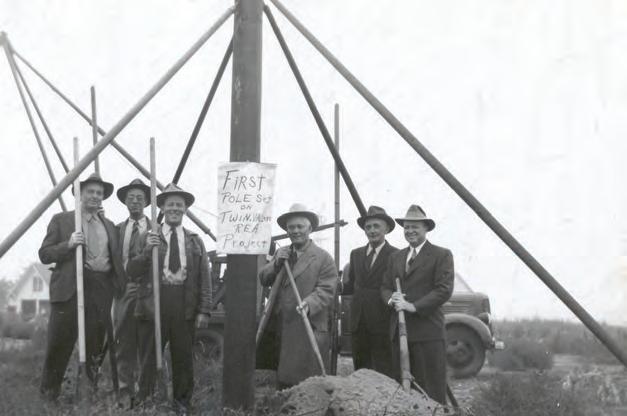
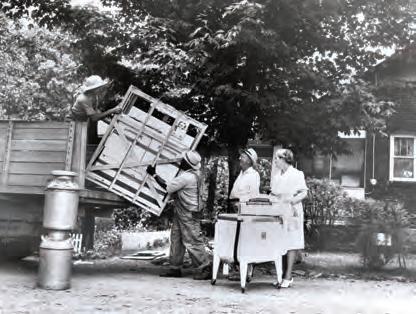
Electricity generation in North Carolina dates all the way back to the 1880s, but it took another half-century to reach our rural areas, spurred by the North Carolina Rural Electrification Authority and federal Rural Electrification Administration. It was then that our farmers and other local community members installed the poles, strung the lines and ultimately formed the co-ops that we know today.
Edgecombe-Martin County EMC came first, energizing the homes of 82 members in 1937 (for reference, it now serves nearly 12,000 members). Around that time, only about 3% of farmers across the state had electricity.
But from there, change happened quickly. By the mid-1950s, more than 95% of North Carolina farms were connected to safe, affordable and reliable power. And that was a huge deal.
The January 1954 issue of The Carolina Farmer, which would become Carolina Country a decade-and-a-half later, contained a letter to the editor from a Lexington member that simply said, “Rural electrification was a blessing to our rural community.”
That same issue featured an article about how to get the most out of infrared heat lamps for brooding chickens, another about the productivity benefits of electric hotbeds and yet another touting the efficiency advantages of electric kitchen appliances.
Fifty years later, the March 2004 edition of Carolina Country had a column about “new” gardening tools, including several electric products, to make the activity more enjoyable. In other words, the framing and messaging around electricity over the decades — as a way to make life easier, safer, more efficient and more
pleasant — has remained relatively consistent. That observation likely isn’t groundbreaking, but it was neat to see.
Another fun discovery I made while researching: In November 1974, Carolina Country had an About the House column (On the House’s ancestor, perhaps?) titled “How to Save on Home Heating Costs.” Many of the recommendations it offered — lowering your thermostat before leaving for a winter vacation, regularly checking your filter and replacing it as needed, not excessively tinkering with your thermostat setpoint — would feel right at home in 2026.
While some things change, some stay the same. Today, the co-ops continue to explore and deploy innovations to maintain and extend the benefits afforded by electricity and provide a brighter future across our state. Although many of the specific technologies and use cases look different, the emphasis on convenience, on efficiency and on lightening the load does not.
So, here’s to another 90 years of the cooperative way, not only supporting our communities with reliable, affordable power that improves quality of life, but also being a trusted resource as new products and technologies arrive.
Jonathan Susser is a lead content developer for Advanced Energy in Raleigh.
1
and the
founding of our nation
as one of the original colonies, the old north state’s early history is intertwined with that of the united states. test your knowledge and score yourself to see how you stack up! answers are at the bottom of this page.
Were North Carolina and South Carolina ever the same colony?
A. Yes
B. No
Bonus Point: What was it called?
Did any revolutionary war battles take place in North Carolina?
A. Yes
B. No
D. A footrace in one’s socks 2 3 4 5
Bonus Point: Name one
During the American Revolution, what were supporters of the British Crown called?
A. Patriots
B. Confederates
C. Tea-Timers
D. Loyalists
The Halifax resolves authorized NC delegates to the continental congress to vote for what?
A. Abolish the Stamp Act
B. Vote for independence from Great Britain
C. Move the capital to Raleigh
D. Free barbecue for all
What is a clocked stocking, popular with men and women in the 1700s and 1800s?
A. A clock that sits on the floor
B. Shoes that have a clock design on the back
C. Stocking with a decorative embroidered design
HOW DID YOU DO?
Less than 5 correct: We guarantee you know more than when you started.
5 to 7 correct: Quite respectable we didn’t know what clocked stockings were, either.
8 to 10 correct: You’ve got serious history chops.
More than 10 (with bonus points): Amazing! You’ve earned full bragging rights at your Fourth of July celebration.
The “Overmountain Men” were important in which revolutionary war battle?
A. Guilford Courthouse
B. Kings Mountain
C. Moore's Creek D. Yorktown
What year was the Declaration of Independence signed?
A. 1776
B. 1783
C. 1876 D. 1982
Which colony made the first formal endorsement for independence from Great Britain?
A. Virginia
B. South Carolina
What are naval stores?
C. North Carolina D. Massachusetts
A. Products made from pine tree sap used to build ships B. Money to buy navy supplies
What were camp followers?
A. People, mostly women, who followed military camps to provide food, laundry and other essentials
B. Patriots who chose to camp out while soldiers used their homes
C. Military rations during the American Revolution D. Stockpiled oranges
C. Soldiers who followed behind camps to ensure enemies were not close behind
D. George Washington enthusiasts who hoped to catch a glimpse of the general
6 7 8 9 10
carolina country thanks the north carolina department of natural and cultural resources for providing these questions. Visit america250.nc.gov to learn more about NC and our nation’s 250th birthday! A PROGRAM OF
Hickory Ridge History Museum
Honoring 250 Years of Independence
Celebrate America’s 250th anniversary with history, heritage and fun
By Rue Reynold
As communities across the nation commemorate America’s 250th anniversary, this year’s Independence Day offers a unique opportunity to reflect on the people, events and ideals that shaped both North Carolina and the United States. Whether you’re interested in the history of the Revolutionary War, family-friendly activities or traditional Fourth of July festivities, there’s a celebration waiting in every region.
Mountains
Independence Day Celebration at Hickory Ridge History Museum | horninthewest.com
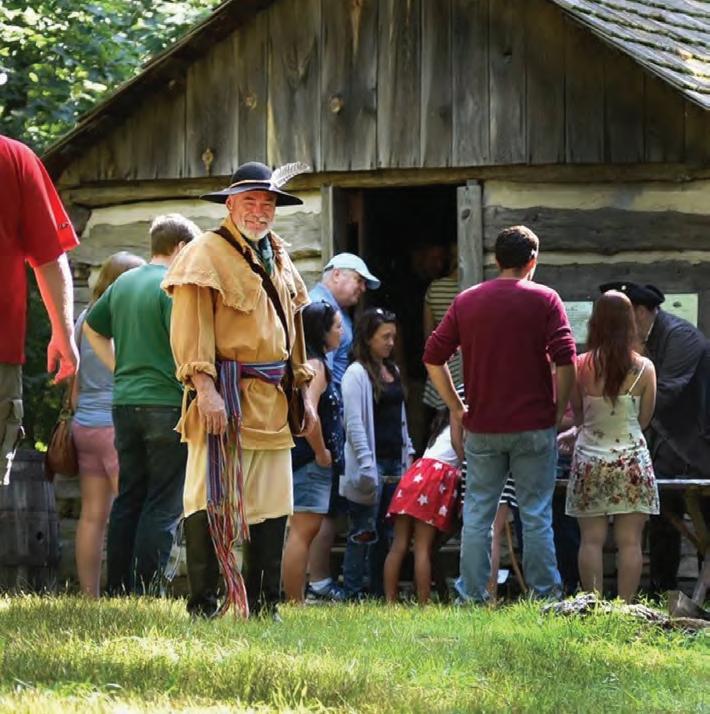
Step back into the 18th century at the annual Independence Day Celebration at Hickory Ridge History Museum in Boone.
Hosted at the historic museum known for preserving Appalachian heritage, the event features patriotic readings, living history demonstrations, traditional music and familyfriendly activities. Visitors can experience how early Americans celebrated independence while exploring the museum’s collection of historic cabins and exhibits.
Macon County’s America 250th Celebration franklin-chamber.com/events
The Macon County’s America 250th Celebration combines Independence Day festivities with recognition of the nation’s
semiquincentennial. The celebration highlights local history, patriotism and community pride through special programs and activities to honor the people, events and ideals that helped shape America over the past 250 years.
Piedmont
Capitol 250: North Carolina Freedom Fest america250.nc.gov
Held on the grounds of North Carolina’s historic State Capitol, Capitol 250: North Carolina Freedom Fest offers a day filled with history, culture and entertainment. Visitors can take in historical demonstrations, exhibits, live performances, food vendors and family activities while learning about North Carolina’s role in the nation’s founding and growth. The event serves as one of the state’s signature America 250 commemorations.
Independence Day Celebration at Museum of the Waxhaws | museumofthewaxhaws.org/events
The Independence Day Celebration at Museum of the Waxhaws highlights the rich Revolutionary-era history of the region. Guests can enjoy patriotic programming, historical presentations and family-friendly activities that connect modern celebrations to the area’s important role in early American history.
Coast
Independence Day Celebration at Historic Halifax bit.ly/dncr-independencedaycelebration
At historic Tryon Palace, the annual Independence Day Celebration brings colonial history to life. Visitors can experience costumed interpreters, living history demonstrations, period games, music and patriotic activities that showcase how North Carolinians observed Independence Day during the nation’s earliest years.
Onslow County Freedom Festival onslowcountync.gov/2268/Freedom-Festival
The Onslow County Freedom Festival offers a full day of family-friendly entertainment, including live music, activities for children, food vendors and one of the region’s most anticipated fireworks displays. The event celebrates both community spirit and national pride, making it a popular Fourth of July destination for residents and visitors alike.
America’s 250th anniversary serves as a reminder that history is not only something to study but something to experience. Through festivals, historical reenactments and community gatherings, North Carolina’s Fourth of July celebrations invite residents and visitors alike to become part of that ongoing story.
Visit America250.NC.gov to find more exciting events to celebrate this summer.
Rue Reynold is the editorial assistant for Carolina Country magazine.
Events: July
01 Denton Antique Festival June 30–July 4 Harrison Park 336-250-5348
03 250 Celebration July 3–4
Macon County Recreation Park 828-349-2090
04 Onslow County Freedom Festival 3-9pm Onslow Pines Park
Independence Day Celebration 1-5pm Hickory Ridge History Museum 828-264-2120
Sock Puppets vs Danville Otterbots Burlington Athletic Stadium 336-222-0223
Independence Day Celebration `10am-4pm Historic Halifax
Independence Day Celebration 12pm-4pm Museum of the Waxhaws 704-843-1832
North Carolina 4th of July Festival Southport 910-457-5578
08 Gladys Knight Schaefer Center for the Performing Arts 828-262-4046
11 Christmas in July Arts & Crafts Sale Brock Gymnasium, Mocksville 336-753-6230
13 National Purple Heart Convention July 13–17 Riverfront Convention Center 252-626-7046
15 Ducks Unlimited Band the Billfish Tournament July 15–18 Big Rock Landing, Morehead City | 910-358-5080
24 Carolina CryptidFest July 24–25
25
Jim Graham Building at NC State Fairgrounds | 980-565-8691
Cruso Quilt Show July 24–25
Bethel Middle School Gym 828-400-7323
Patriots at Sea: A Seaport Prepares for War Reenactments, demonstrations, family activities Bath Historic Site | 252-741-6036
Small Town, Big Celebration Festival for America’s 250 Downtown Aurora 919-449-6785
29 Animal Enrichment Day Demonstrations, family activities, crafts Grandfather Mountain 828-733-2013
SUBMIT YOUR EVENT
Visit carolinacountry.com/calendar for more information about each event, including links to the most current information, or to submit your own event.
Onslow County Freedom Festival
Nothing could be finer ...
Vote Now for the Finest in the State!
BBQ restaurant
We’re pleased to announce the top finalists from each category, nominated by our readers. These are the best of the best, but we want to know your top picks! Winners of the 2026 Carolina’s Finest Awards will be featured in our November 2026 issue. Vote on the
Lexington Barbecue
Parker's Barbecue, Wilson
Skylight Inn BBQ, Ayden
Festival
Lexington Barbecue Festival
Lincoln County Apple Festival
Livermush Festival, Marion
NC Pickle Festival, Mt. Olive
Landmark
The Biltmore Estate
Cape Hatteras Lighthouse
Wright Brothers
National Memorial
Lore/Legend
Blackbeard’s Ghost
Brown Mountain Lights
The Maco Light
NC Product
Blue Mist Barbecue Sauce
Hatteras Saltworks Pure Sea Salt
Mrs. Hanes’ Moravian Cookies
Main Street/Downtown
Boone
Lexington
Mount Airy
Musician/Band
The Avett Brothers
Band of Oz
Le Salty Dead
Salon/Barbershop
City Barber Shop, Marion
Floyd’s City Barber Shop, Mount Airy
Sunshine Hair Designs, Tarboro
Seafood Restaurant
Mayflower Seafood, multiple locations
Ocean View Seafood, Lexington
Pier 41 Seafood, Lumberton
Provision Company, Southport
Winery
Childress Vineyards, Lexington
Duplin Winery, Rose Hill
Shelton Vineyards, Dobson
WoodMill Winery, Vale
Finest by August 15 for a chance to win one of three
$100 gift cards
SCAN TO VOTE in each category at
Bonus Recipe
It was the jewelry piece that made the world stop and take notice. In the middle of a long volley during the big American tennis tournament, the chic blonde athlete had to stop play because her delicate diamond bracelet had broken and she had to nd it. e tennis star recovered her beloved bracelet, but the world would never be the same. We’ve captured this timeless classic with over 10 total carats of Diamond Aura ®, our signature diamond alternative stone. is sparkling marvel rivals even the nest diamonds (D Flawless) with its transparent color and clarity, and both are so hard they can cut glass. e rst time we o ered this bracelet, we sold out literally in minutes. It took six months to get it back in stock — Get yours before we run out! And there’s more... we will also include our Ultimate Diamond Alternative™ DiamondAura® stud earrings for FREE!
Jewelry Speci cations:
• 10 ¾ ctw of the Ultimate Diamond Alternative®, DiamondAura®
• Rhodium- nished .925 sterling silver settings
• Bracelet: Fits wrists to 7 ½". Earrings: 1 ctw with post backs
Love Wins Tennis Bracelet (10 ¾ ctw) $399 $39* + S&P FREE stud earrings (1 ctw) with your purchase of the Love Wins Bracelet — a $99 value! *Special price only for customers using the offer code.
earrings
your purchase of the Love Wins Bracelet.
All recipes are by culinary Adventurist Wendy Perry (WendyPerry.com), a home economist, blogger and NC food artisan, unless otherwise noted.
America’s Birthday Cake
Carolina Country style
What better way to celebrate America’s 250th birthday than with juicy red North Carolina-grown watermelon? Make our Watermelon Cake your centerpiece with extra wedges piled all around for a crowd!
2 large seedless watermelon, peeled and cut into 2–3-inch-thick slices
Assorted chilled seasonal fruits (we used berries, cherries, kiwi, dragon fruit, oranges and pineapple stars)
Mint and rosemary
Candies, pretzels, sprinkles, etc.
Wood skewers
Submit your recipe online
Place watermelon slices on a paper towel-lined tray and refrigerate for 1 hour to chill and absorb excess moisture.
Beat whipping cream to soft peaks. Add mascarpone, sugars and extracts; continue beating until light and fluffy.
Dab excess moisture from melon with paper towels. Spread a layer of filling onto a platter or cake stand to anchor the base. Stack watermelon slices slightly offset, spreading filling between layers and on top. Stabilize with skewers.
Decorate with fruit, herbs, candies, pretzels and sprinkles however you like. Let children join in the fun — every cake can be uniquely patriotic and party-ready for the Fourth of July or any summer celebration!
Yield: 2 cakes
Let Freedom Ring Deviled Egg Dip
Everybody loves deviled eggs, but nobody loves peeling them! Free yourself from the stress of perfectly peeled eggs and just make this dip! Still delicious and very forgiving when it comes to “ugly” eggs.
6 large eggs, hardboiled and peeled ¼ cup mayonnaise
3 tablespoons stone-ground mustard
1–2 teaspoons hot sauce (to taste)
3 tablespoons sweet pickle relish
3 tablespoons minced red onion
3 tablespoons minced celery
3 tablespoons minced green onion tops, divided
2 tablespoons minced green pepper
1 tablespoon sweet pickle juice
1 tablespoon sugar
1 teaspoon salt
½ teaspoon white pepper
½ teaspoon black pepper
In a mixing bowl, finely chop eggs.* Combine mayonnaise, mustard and hot sauce. Stir into eggs.
Fold in remaining ingredients. Taste and adjust seasonings if needed.
Chill at least 30 minutes. Garnish with a bit of the minced green onion tops. Serve with chips, vegetables, crackers, pork rinds or your favorite dippers.
*Prefer a creamy dip? Blend the eggs and ingredients in a food processor.
Yield: 2½ cups
FROM YOUR KITCHEN Pepper Chicken Salad
“We eat salads year ‘round and always keep a bowl full of some sort of salad. By making different ones that are easy to make and eat, I will reach for the bowl of salad every time. After all, the salad is ready to eat.”—Katie Martin
2 boiled eggs, chopped
2 pounds chicken, chopped
1 tablespoon salt
1 onion, chopped
2 stalks celery, chopped
2 teaspoons lemon pepper
½ cup mayonnaise
3 tablespoons chicken broth Pepper and salt to taste
Boil two eggs until done. Peel, chop and set aside. Put chicken and salt in a pan. Cover with water and bring to a boil. Lower heat and simmer 12–15 minutes until chicken is done. Drain off broth, setting 3 tablespoons aside.
While chicken is cooling, chop celery and onion, set aside. Then cut up or shred chicken.
In a bowl, mix onion, celery, chicken, chicken broth, lemon pepper and mayonnaise together until desired consistency is reached.
Add more salt/pepper to taste.
Serve by itself, over lettuce, with crackers or on a sandwich.
Yield: 6 servings
Recipe courtesy of Katie Martin of Danbury.
4
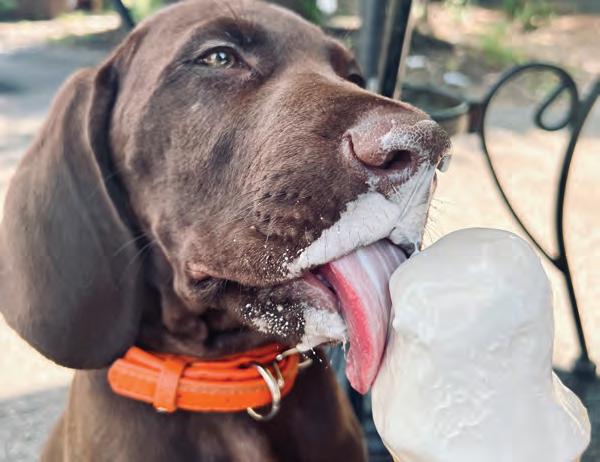
ICE CREAM
A member of EnergyUnited 1 2 3
1 Kelly Luciana, Morganton
A member of Rutherford EMC
2 Linda Mathiasen, New Bern
A member of Jones Onslow EMC
3 Kimberly Farmer, Dobson
A member of Surry Yadkin EMC
4 Casey Hicks, Danbury
Send us your best shots based on an upcoming theme—we’ll pay $25 for those published. Submit high resolution digital photos and find full terms and conditions at carolinacountry.com/snapshots (no emails, please). We retain reprint and online rights for all submissions.
Send your answer by July 15, with your name, address and the name of your electric cooperative.
Online: carolinacountry.com/where
By mail: Where in Carolina Country? 3400 Sumner Blvd., Raleigh, NC 27616
Multiple entries from the same person will be disqualified. The winner, chosen at random and announced in our September issue, will receive $25.
Have a roadside gem you’d like to share? Submit a photo, plus a brief description and general location information, at carolinacountry.com/where
The May “Where Is This” photo by Lumbee River EMC member Kathryn Ransom shows the old Patterson Building, also known as the Flat Iron Building, at the corner of McCaskill Avenue and Patterson Street in downtown Maxton. This Robeson County landmark’s notable shape also features a distinctive clock tower. Built in 1911 for the Bank of Robeson, the structure may have been modeled after the famous Flatiron Building in New York City. It later served as a laundromat, but reader Tony Phillips commented the building is too beautiful for laundry! The town restored it in 1997 to house the Maxton Town Hall. The building is listed on the National Record of Historical Places. The winning entry chosen at random from all correct submissions came from Virginia Lowery of Red Springs, a Lumbee River EMC member.
Celebrate Our Communities
Since 1937, electric cooperatives have been lighting the way forward for rural North Carolina. As our state has grown, co-ops have become part of the fabric of communities big and small. Cooperatives are not-for-profit, and everything we do is rooted in serving our members and strengthening our communities. As our nation celebrates 250 years of progress, the cooperative difference is more important than ever. Because when communities come together, there’s no limit to what we can power next.