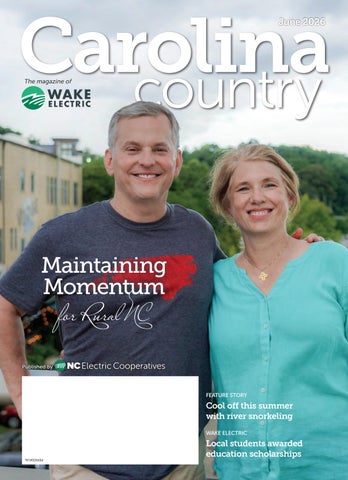
Maintaining Momentum Maintaining Momentum for Rural NC
Cool off this summer with river snorkeling
Local students awarded education scholarships
FEATURE STORY
WAKE ELECTRIC
After 20 years, we’re still making Jitterbug® phones easy to use and providing great service.
Easy to use.
Jitterbug® phones feature large screens with clear text, simple menus with e ortless navigation, loud speakers and dedicated Urgent Response buttons. The Jitterbug® Flip2 has big buttons and one-touch speed dial, while the Jitterbug® Smart4 comes with voice typing, video chat and internet access.
Easy to get help.
Whether you want to learn more about your new Jitterbug, need a ride2 or have a health concern, our 100% U.S.-based team is here to help. Upgrade to Urgent Response service for peace of mind with 24/7 help, even in emergencies.†
8 Maintaining Momentum for Rural NC
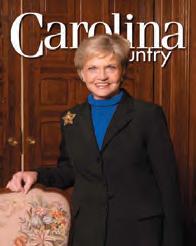
Gov. Josh Stein is building on a career of serving the underserved
12 Windows To Another World
The Blue Ridge Snorkel Trail offers a new Appalachian perspective
22 Making Waves
The ebony Anglers are winning, from fishing tournaments to youth education
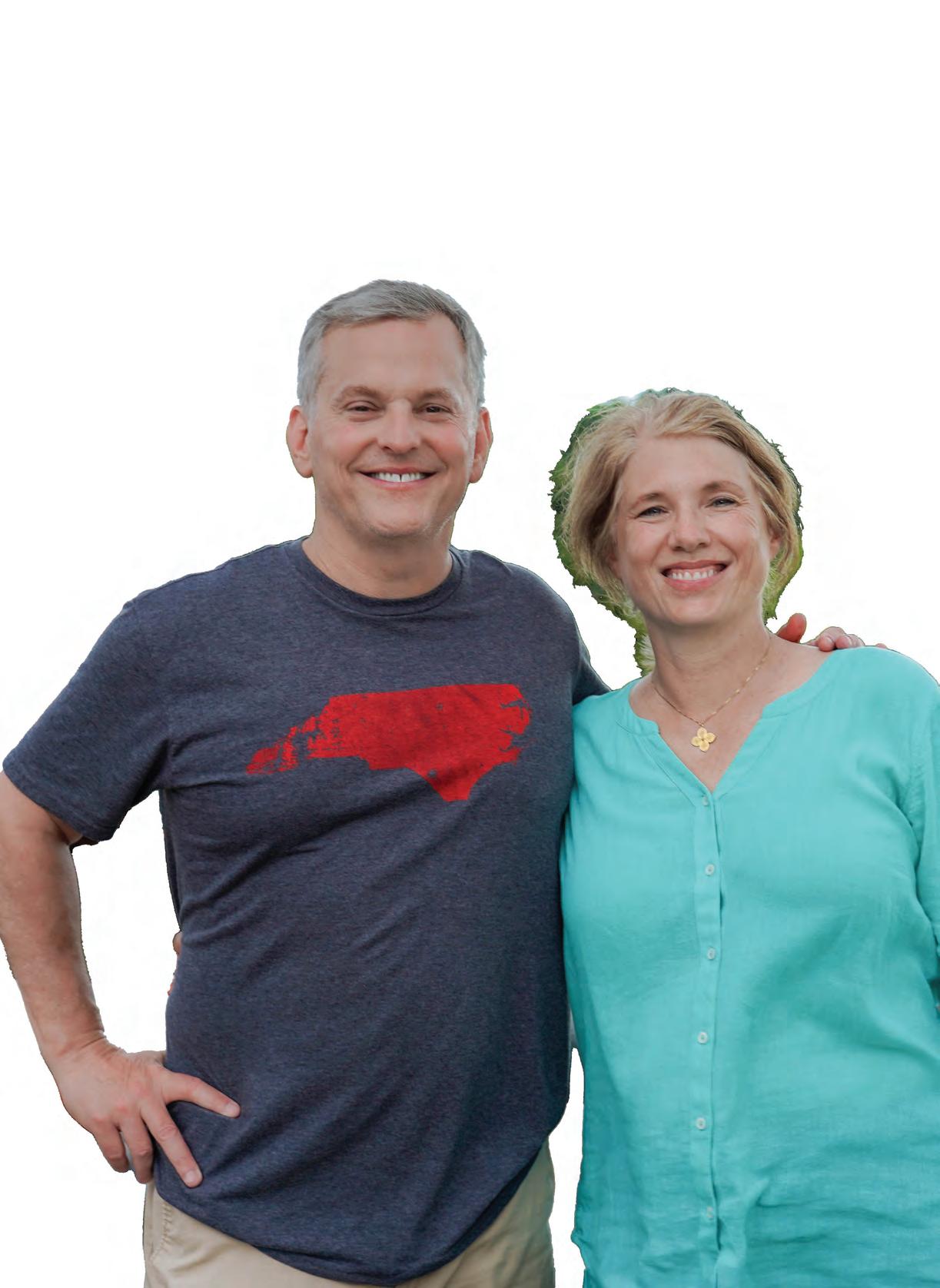
North Carolina Governor Josh Stein and First Lady Anna Stein visited several communities in Western North Carolina in 2025, including this stop at the River Arts District in Asheville, to promote Helene recovery efforts as well as rural tourism. Read more about what the governor wants to achieve for rural North Carolina on page 8.
On the Water
North Carolina’s rivers, lakes, sounds and beaches get a lot of attention this time of year, and for good reason. As the weather warms up, there’s no better spot to relax and cool off. The subjects we talked to for this issue have found even more of a reason to be on (or under) the water, which we’re happy to share. We’re also pleased to feature Gov. Josh Stein on our cover this month, who took time to discuss rural issues with us — you can find that interview on page 8 (as well as a nod to a favorite recipe of the first family's on page 30).
FROM OUR READERS
Cover Model Mystery
Our April issue featured a photo of an unnamed equestrian courtesy of the Great Trails State Coalition. Try as they may to identify her, her name remained a mystery — until we heard from her mom, that is. Thank you to Leisha Smith for putting us in touch with her daughter, McKenna, who provided more insight into that popular photo:
This photo was taken during an especially meaningful time in my life, while I was working part time as a horseback trail guide at Dutch Creek Trails in Vilas [since relocated to Sugar Grove; dutchcreektrails.com], riding a spirited little mare named Firewater. At the time, I was also a full-time student at Appalachian State University while working part time as a veterinary assistant at Animal Emergency Clinic of the High Country. Balancing school, work and time in the saddle was busy, but incredibly rewarding. Being at Dutch Creek Trails gave me the opportunity to spend my “free” time doing what I love, surrounded by the beauty of the Appalachian region. Although I have since graduated from Appalachian State University and moved on to pursue a career as a veterinarian at Lincoln Memorial University College of Veterinary Medicine, I will always have fond memories of my time working at Dutch Creek Trails.
Elated Equestrian
—Scott Gates, editor
You have no idea how happy this makes me (as part of the equestrian community) that you’ve included equestrian trails (“Elevated Paths,” page 8)! In 2023 for the Year of the Trail we were barely even mentioned! North Carolina equestrians spend $2 billion dollars ANNUALLY on horse-related activities. Please continue to promote horse-related activities — because of all the logging, we are losing so many areas to ride each year! Keep up the great work!
Jonnie Blount, Person County A member of Piedmont Electric
Busy, Beneficial Worms
I was happy to read both composting articles in the March issue (“Compost Like a Pro,” page 10; “Give Your Food Scraps a Second Life,” page 20). I believe in the benefits of composting, and I personally do so through vermiculture (that is using composting worms to create the black gold from my kitchen scraps, leaves and shredded waste paper). Just one pound of worms can change 65 pounds of food waste into rich compost in 100 days. This is an excellent way to keep food waste from filling up landfills, to enrich your garden soil, and is a fun way to teach young people to care for our earth.
Beverly Kerkam, Wallace A member of Four County EMC
(ISSN 0008-6746) (USPS 832800) Volume 58, No. 6
Published monthly by 3400 Sumner Blvd., Raleigh, NC 27616-2950
Scott Gates, CCC Editor
Renee C. Gannon, CCC Senior Associate Editor
Rue Reynold Editorial Assistant
Jessica Armstrong Graphic Designer
Tara Verna Creative Services Associate
Donna Natosi Digital Strategist
Dan Tomkiewicz Advertising Dan@carolinacountry.com
Amadou Fall Executive Vice President & CEO
Kristie Aldridge, CCC Senior Vice President & COO
Warren Kessler Director of Brand Strategy
North Carolina’s electric cooperatives provide reliable, safe and affordable electric service to 1 million homes and businesses. The 26 electric cooperatives are each member-owned, notfor-profit and overseen by a board of directors elected by the membership.
Why Do We Send You Carolina Country Magazine? Your cooperative sends you Carolina Country as a convenient, economical way to share with its members information about services, director elections, meetings and management decisions. The magazine also carries legal notices that otherwise would be published in other media at greater cost.
Your co-op’s board of directors authorizes a subscription to Carolina Country on behalf of the membership at a cost of less than $5 per year.
Subscriptions: Individual subscriptions, $12 per year. Schools, libraries, $6.
Carolina Country is available on digital cartridge as a courtesy of volunteer services at the NC Department of Cultural Resources, Library for the Blind and Physically Handicapped, Raleigh, NC 888-388-2460.
Periodicals postage paid at Raleigh, NC, and additional mailing offices. Editorial offices: 3400 Sumner Blvd., Raleigh, NC 27616-2950. Carolina Country® is a registered trademark of the North Carolina Association of Electric Cooperatives, Inc.
POSTMASTER: Send all UAA to CFS. (See DMM 707.4.12.5); NON-POSTAL AND MILITARY FACILITIES: Send address corrections to Carolina Country, 3400 Sumner Blvd., Raleigh, NC 27616-2950.
Change of address: Please contact your electric co-op or go online to carolinacountry.com/address
Experiencing a power outage? Please contact your electric co-op directly to ensure prompt service. Visit carolinacountry.com/co-ops to find yours online. NC Electric Cooperatives ®
The Strength of Our Cooperative Network
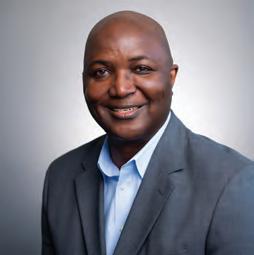
By Amadou Fall
Some of you may recognize my name from past columns in Carolina Country magazine where I spoke about the innovative steps cooperatives are collectively taking to create a more resilient electric grid. I’m now pleased to be able to address you in a new role, as CEO of North Carolina’s Electric Cooperatives, the Raleighbased wholesale power and transmission services provider, materials supplier and trade association for the state’s 26 electric distribution cooperatives.
This is an interesting time to step into this role. Many people across North Carolina — and across the country — are facing challenges related to the increased cost of living, which has impacted everything from gas to groceries to yes, the electricity powering our lives.
This structure lends itself to what we call the “cooperative difference.” The secret to our success on these big picture issues is the principle of Cooperation Among Cooperatives. It fosters open collaboration that gives us strength as a statewide network while also preserving another unique aspect of cooperatives: local decision making.
The fundamental concept of supporting the communities we serve was born out of necessity and has become all the more critical in a time when costs are rising. When it comes down to it, we’re all focused on one thing: providing affordable, reliable power to the communities we call home. This shared focus is what gives our network strength.
The state’s electric co-ops harness a collective strength, coordinating through the family of support organizations that is North Carolina’s Electric Cooperatives.
Running an electric utility takes significant investment, and co-ops are not immune to cost increases across wholesale, transmission and distribution operations. However, there’s a key difference between co-ops and other types of electric providers. Electric co-ops are not-forprofit, which means the electricity delivered to you is provided at the cost of doing business, never to make a profit for shareholders.
To control costs, the state’s electric co-ops harness a collective strength, working together through the family of support organizations that is North Carolina’s Electric Cooperatives. Together, we chart a path for future generation needs, advocate for smart energy policies and leverage collective buying power on the materials needed to build and maintain distribution systems.
I’m grateful for the opportunity to work with your electric cooperative and others across the state to protect electric affordability and reliability through careful planning and thoughtful decision making.
I encourage you to be a part of the cooperative difference. Find ways to engage with your local electric co-op. Attend an annual meeting, whether it’s in-person or virtual. Keep reading about your co-op and our communities in Carolina Country magazine, follow your co-op on social media, and connect with home energy solutions provided by your co-op. And never hesitate to pick up the phone and reach out, knowing that the person on the other end of the line is there to serve you.
Amadou Fall is executive vice president and chief executive officer of North Carolina’s Electric Cooperatives.
POWERING A Brighter Future
Many people in our community are facing challenging times, and no one wants to see rising bills. As a member of a not-for-profit electric cooperative, you are part of a collective effort to keep energy affordable and reliable. North Carolina’s 26 electric cooperatives serve their 2.8 million members, not shareholders. We harness the strength of our network to innovate, control costs, and build a brighter future, together.
NC Electric Cooperative’s CEO Joe Brannan Retires
After a 20-year career serving the state’s electric cooperatives and their members, North Carolina’s Electric Cooperatives' Executive Vice President and CEO Joe Brannan retired in April.
Under his leadership as CEO since 2012, North Carolina’s electric cooperatives entered an era of innovation, rising to meet the demands of a changing industry by deploying advanced concepts including microgrids, solar + storage, and substation-based battery energy storage systems to enhance reliability and resiliency for their members.
Brannan has an engineering background and describes himself as a problem solver, having taken a curiosity in how things work from an early age.
“When I was 8 years old my dad was fixing a TV, and I got to see inside. He let me take out the vacuum tubes and reassemble them until I got it right,” Brannan said, remembering an early and formative accomplishment. “I also took a clock apart, although it had too many little parts. It did not work again.”
Brannan became a proven energy industry leader over the course of his career, offering insights and opinions on the future of the industry through countless speaking engagements, keynote addresses, panel discussions, and interviews with national publications. He also supported the electric co-op network through national leadership roles, including serving on the boards of directors for ACES Power Marketing, the Electric Power Research Institute, and the National Renewables Cooperative Organization.
He has long been an advocate of the cooperative business model and the co-op mission to empower members and communities. What’s Brannan’s secret to success?
“Be innovative and be determined. If we do
A New Look at 80
Key Drivers of Success
In reflecting on his career, Brannan outlines three tenets that have guided him:
1. Embrace being a lifelong learner. The more you learn, the more you realize how much you can learn.
2. Look at the future with optimism and engage the present with determination.
3. People are the foundation of all that can be achieved. Be respectful and create mutual benefits to every encounter you have.
that and stay focused on our co-op mission of service, that’s our guiding light. I think if we can put those together, we truly will build a brighter future.”
Upon Brannan’s retirement, Amadou Fall stepped into the role (see page 4), selected by the board of directors after a comprehensive national search.
Back in June 1946, members of electric cooperatives in North Carolina were treated to their first issue of Carolina Farmer, what would later be renamed Carolina Country magazine. This month we’re refreshing our look while continuing our mission of creating connections between electric co-ops and the communities they call home. Send us thoughts on the stories you’d like to see in the magazine by emailing editor@carolinacountry.com
Electric Co-ops Highlight Energy Innovation at State Energy Conference
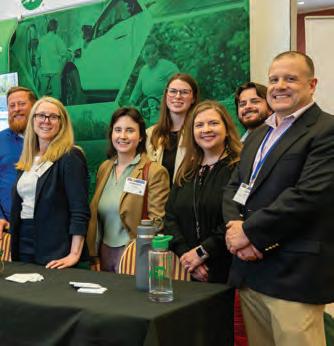
At the 2026 State Energy Conference held in Raleigh last month, North Carolina’s electric cooperatives showcased how they are building a brighter future for their communities by implementing new and emerging technologies, and taking innovative approaches to meet evolving energy needs.
With hundreds of attendees from across North Carolina and the nation, the conference provided an opportunity to share the work electric cooperatives are doing with a broad audience, while also giving insight into real challenges utilities and member-consumers face.
“The questions and discussions that come out of events like this are often more important than the presentations,” said attendee and conference presenter Corey Thurlow, chief operating officer at Supply-based Brunswick Electric. “Those conversations matter. They help us think a little deeper, learn from others, and build relationships with people who may be part of the solution. Collaboration is one of the ways we will find practical, affordable
answers to the challenges facing utilities and our members.”
The two-day conference also gave cooperatives a chance to bring their unique perspective to a larger stage, joining industry leaders and partners from across the state and nation.
Nikki Lynberg, manager of Innovation & Business Development for North Carolina’s Electric Cooperatives, presented on an electric vehicle telematics solution that accesses realtime vehicle data to help integrate EVs into the grid.
“Innovation is always top of mind for electric cooperatives as they explore new technologies and solutions to better serve their members,” she said. “As energy needs continue to evolve, co-ops remain focused on adapting and finding new ways to meet those demands.”
—Josh Conner, North Carolina’s Electric Cooperatives
QUICK HITS
® NATIONAL TRAILS DAY
Remember those NC state trails from the April issue? Find one on June 6 to celebrate National Trails Day!
® ALLIED INVASION | June 6 also marks the 82nd anniversary of the Allied landing in Normandy. Visit carolinacountry.com/D-Day for a list of NC WWII museums.
® HONORING DAD | Is it a coincidence that National Donut Day and National Jerky Day happen in the same month as Father’s Day? We think not. Honor the dads in your life on June 21.
® FOOD SAFETY | Picnic plans? Bring a cooler—food should never sit out for more than one hour if temps are above 90 degrees.
Josh Conner
Maintaining Momentum for Rural NC
Gov. Josh Stein is building on a career of serving the underserved
Josh Stein will mark his second anniversary as North Carolina governor in January. As has become a Carolina Country magazine tradition (see sidebar), he sat down with us in the North Carolina Executive Mansion in Raleigh to reflect on his time in office and address topics important to the state’s electric cooperatives and the rural communities they serve.
Gov. Stein grew up in Charlotte and Chapel Hill, going on to earn public policy and law degrees from Dartmouth College, Harvard Kennedy School of Government and Harvard Law School. He returned to North Carolina to practice law before serving in the state Senate, as well as eight years as NC attorney general. He credits his parents for raising him grounded in shared values of freedom and opportunity for all.
The state's first Jewish governor, Gov. Stein and First Lady Anna Stein are members of Temple Beth Or. They are proud parents of Sam, Adam and Leah, as well as two dogs, Harper and Lila. Lila joined him for his interview with Carolina Country.
—Scott Gates, editor
Q:What do you see as the biggest challenges ahead for your first term as governor?
A: North Carolina is a special place to call home — and more people and businesses are drawn to our state each year. We have earned the rankings of the best state for business, for economic development and for workforce development. We created more jobs than any other state [in the last three months of 2025]. And last year, we achieved our best year ever for announcements of new jobs and capital investment — 35,000 good-paying jobs and $24 billion of investment.
But we risk letting all of our progress slip through our fingertips. Last year, North Carolina was the only state in the country that did not pass a budget. It’s been two-and-a-half years since the state last passed a comprehensive budget. In that time, many things have changed. The state has added more than 325,000 people; the cost of living has increased by more than 6%; we suffered the most damaging storm in state history; and the federal government is abandoning long-held financial commitments. Throughout these changes, North Carolina has not passed a full budget [at time of publication]. North Carolina’s success has been built on our people. Past leaders have
To send an email to Gov. Stein or follow him on social media, visit governor.nc.gov/contact.
invested in strong public schools and universities, safe communities, a strong health care system, reliable infrastructure and a skilled workforce. These investments have been, and remain, worth making. This summer, I am calling on the General Assembly to pass a budget that puts people first, and I invite our legislative leaders back to the table to solve the problems North Carolinians are facing.
Q:What do you think are the top contributors to North Carolina’s economic growth, and how can rural areas play a part in ensuring continued success?
A: North Carolina’s success comes from our people — hardworking, talented, resilient people in every corner of the state. And the people in rural communities working in agriculture, manufacturing, tourism and small businesses are driving our state’s economy. In 2025, we brought $12.5 billion in investment and nearly 5,000 jobs to rural North Carolina. These developments are driving the greatest rural population growth we’ve seen here in more than a decade.
This spring, my team and I traveled the state on a Rural Listening Tour to hear directly from people about what their communities need to succeed. What I heard over and over is that people want to be connected — to opportunity, to healthcare, and to each other. That’s why we’re
pushing hard on rural broadband, with 320 projects underway that will connect more than 250,000 homes and businesses. It’s why we’ve invested more than $1.4 billion in water and wastewater infrastructure since last January. It’s why we’re strengthening access to rural health care.
and retaining teachers. That’s why my proposal raises starting teacher pay to the highest in the Southeast and restores master’s degree pay for veteran teachers.
North Carolina is home to the second-largest rural population in the country — more rural residents than 20 states have people. No matter where you live in North Carolina, you belong in our state’s success story. We have more work to do to expand opportunity, but I’m grateful I got to hear directly from people across the state about how we can work together to create conditions for them to thrive.
Q:North Carolina’s electric cooperatives are strong supporters of youth development. What are your priorities for improving education across the state, and how are you helping rural areas stay competitive?
A: If you work hard, where you come from should never limit how far you can go. That’s the promise of North Carolina, and if we want to deliver on that promise, we have to invest in our schools. But we don’t. North Carolina is ranked 49th in the country on per pupil investment and 43rd in teacher pay. As a state, we pay starting teachers less than any of our neighboring states pay, causing a real challenge for our rural areas when it comes to recruiting
We also need to create job opportunities in every corner of our state so you don’t have to go to college to have a meaningful career and support your family. That’s why we are investing in career and technical education and apprenticeship programs that bring public schools, community colleges and employers together around our shared goal of connecting more students to good jobs with good wages.
When someone can build a career and stay closer to the place where they grew up, that’s a win for everyone. We have to keep building on these programs that give students a purpose and a future without having to leave home to find it.
Q:How do you see the state partnering with electric cooperatives to ensure energy remains both dependable and cost effective as demand and technology continue to evolve?
A: North Carolinians are struggling with higher energy costs that make it harder to pay their light bills and put gas in their cars. With our state growing quickly, my office is taking action to ensure our residents can count on affordable power that’s built to last.
Our Energy Saver NC program [energysavernc.org] is saving people nearly $1,000 a year on their energy bills by making homes more efficient.
Governors
I also launched an Energy Policy Task Force and tasked it with identifying solutions to protect households from costs resulting from data centers’ energy needs. The Task Force has already identified a few important policy changes here in North Carolina that could help protect residents from the costs of data centers.
The key is to keep the costs of data centers from being passed on to residential consumers. At the same time, if North Carolina is going to continue to create good-paying jobs in the clean energy economy, we’ve also got to build a diverse energy portfolio. Electric cooperatives help us do that.
Q:Stepping into the role of governor, what have you found to be most unexpected?
A: I wouldn’t say so much unexpected as it is affirming — it’s given me an opportunity to go everywhere in the state and meet many different types of folks. It’s just really wonderful to be inspired by so many North Carolinians.
[This spring we] rolled out our third Hurricane Helene recovery bill and I did it in Bakersville in Mitchell County, at a man’s home that had not been washed away but was ruined. He needs a completely new home, but his first priority had been working on relief efforts for the entire county. He’s only now getting around to rebuilding his own home. And that kind of selflessness is a story that played out dozens, hundreds, thousands of times, that just makes me feel really good about North Carolinians.
Engaging with North Carolina’s electric cooperatives have long worked with public officials, regardless of party lines, to champion policies important to the communities they serve. Carolina Country magazine has joined this dialogue through the years by interviewing newly elected governors during their second year in office. Visit carolinacountry.com to read some of these past interviews.
A Shared Journey on Land and Water
Oyster farmer Nancy Dupuis is building a family legacy
By Pamela A. Keene
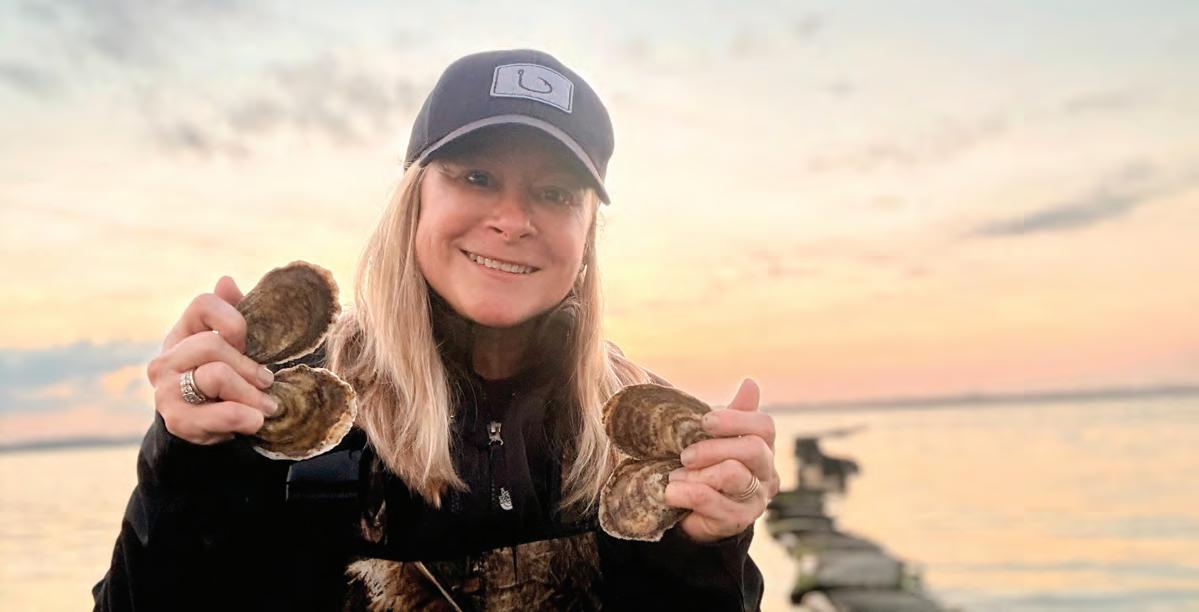
Seeding oyster bags with thousands of tiny 6.4-millimeter oysters can be tedious, but it has become routine and rewarding for oyster farmer Nancy Dupuis of Beaufort. As co-owner of Seashore Oyster Company with her son Maxime, she’s accustomed to working hard and being patient until the tiny seeds grow into market-sized, 3-inch oysters.
“From the time we seed until harvest it can take 8 to 12 months, but there are so many steps in between that we stay very busy,” she says in her gently French-accented English. “But we don’t sit back and wait. Oysters require much care and monitoring to ensure that they are developing correctly.”
Nancy is accustomed to hard work. Growing up on a family farm raising pigs and producing maple syrup alongside her father and mother, she also served as an officer in the Canadian Armed Forces after graduating from the College Militaire Royal. After five years at the military college and six years of active duty, she retired in 2000 and began a new career in the wood veneer industry.
Her experience, skills and industry knowledge led her to Beaufort in 2008. About 10 years later, she began her own firm and continues to work in the wood veneer industry.
“Seven years ago, I started looking around our area and realized that we were perfectly located on the waterfront to start a marine-related business,” she says. Research led her a couple of years later to the NC Shellfish Farming Academy at Carteret Community College.
“My goal was to create a family business with Maxime and be able to leave a legacy for both my children, Maxime and Emy,” Nancy says. “I
had fallen in love with this area and wanted to have a life the way I’d grown up on the farm.”
In 2022, she applied for a shellfish lease on the North River in front of their property. She and Maxime opened Seashore Oyster Company LLC in 2023. They seeded their first oyster bags in August 2023 and harvested their first oysters in June 2024.
Word spread quickly about their oysters and clams, and in the first 19 months they had more than 35 customers — from seafood markets and private chefs to restaurants, distributors and individual buyers.
“I am so proud that we’ve accomplished more than we ever imagined,” she says.
As if her fulltime sales career and managing Seashore Oyster Company weren’t keeping her busy enough, she and Maxime now conduct guided oyster tours during the summer.
“We take guests to our oyster farm, passing wild horses on Carrot island and dolphins in Taylor Creek or North River,” Nancy says. “They learn about our farming practices, what we do daily and about the North Carolina shellfish industry. Our guests learn how to shuck their oysters and then get to eat them. It can’t get any better than that.”
Through it all Nancy prioritizes conservation, preservation and environmental sustainability. She calls it her dream.
“I feel truly fortunate to share this journey with my family — working side by side on the land and water, overcoming challenges, celebrating successes, and building memories and a legacy that will last for generations.”
Pamela A. Keene is a freelance journalist who writes for magazines and newspapers across the Southeast and nationally.
Former military officer and sales professional Nancy Dupuis runs Seashore Oyster Company of Beaufort with her son Maxime, making these briny delicacies available year-round.
Nancy Dupuis, Seashore Oyster Company
Photo courtesy of Victor Poleo
burlington Mebane
Windows World to another
The Blue Ridge Snorkel Trail offers a new Appalachian perspective
By Renee C. Gannon
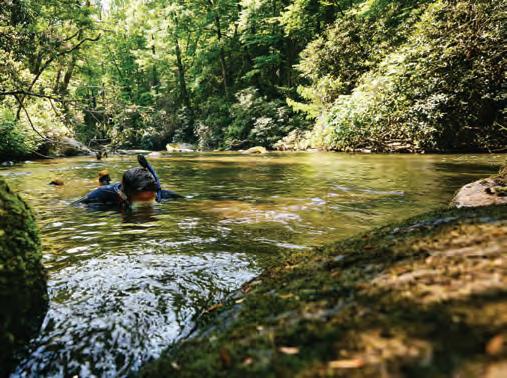
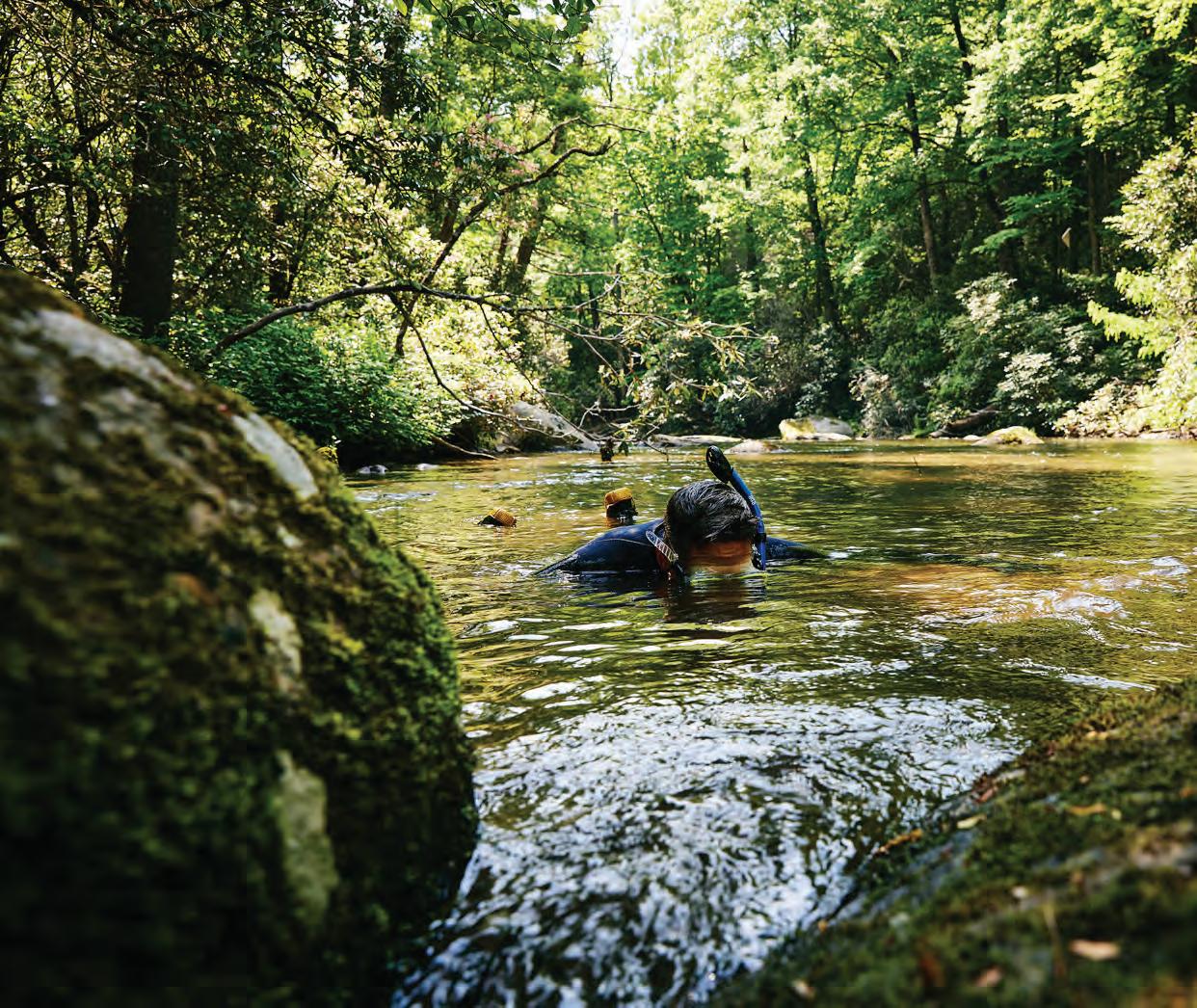
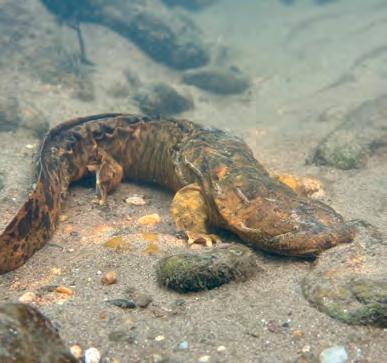
When you think of snorkeling, your mind conjures images of turquoise blue waters, coral reefs and tropical fish. In the mountains of North Carolina, a different underwater adventure awaits where you discover native fish, reptiles (including the famous hellbender), invertebrates, and even an otter or mink.
Snorkeling in Appalachian waters isn’t about thrillseeking or finding Nemo, it’s an immersive experience where you learn about your surroundings in slow-moving water less than two feet deep. With a little patience, the snorkeler becomes the focus of the wildlife’s curiosity, leading to encounters with what lives beneath the rippling water.
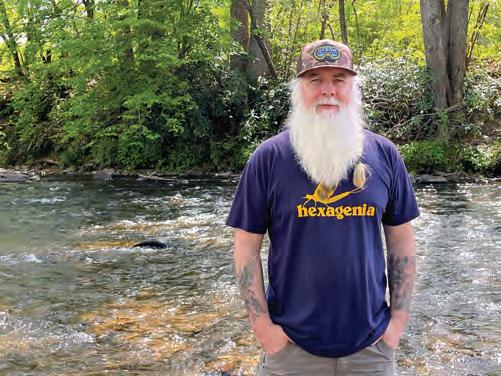
Kevin Merrill, a freshwater biologist and owner of Oxbow Outfitters in Rosman, says many of the species in these waters are small, cryptic or active only inches from the streambed.
“Without a mask, they are easy to miss. With one, the river becomes something closer to an underwater savannah.”
Kevin opened Oxbow in 2016 as a way to share his enjoyment of snorkeling that blends science, recreation and conservation. He challenges long-held assumptions about North Carolina’s mountain rivers.
“When I first started talking about snorkeling here, people would say ‘Snorkeling? In a river?’” he says with a laugh. “They had never made the connection.”
Kevin’s guided excursions focus on education, teaching snorkelers how fish depend on each other, how land use upstream affects life downstream, how a healthy river is less about one “superstar” species and more about balance.
Education is the point. “If you want people to care about our rivers,” he says, “you have to show them what’s actually there. We then protect what we understand.”
A growing trail
Kevin shared his snorkeling enthusiasm with friend Luke Etchison, a conservation biologist with the North Carolina Wildlife Resources Commission. The idea of a
trail was born. With support from a myriad of stakeholders — the commission, NC Wildlife Federation, Mountain True, Mainstream Conservation Trust, Western Carolina University, Tennessee Valley Authority, NC American Fisheries Society, Watauga and Catawba Riverkeepers, and local government and economic development entities — the first Blue Ridge Snorkel Trail access site opened in 2023 at Mills River Park in Mills River. This summer, approximately 21 sites will be open from the state’s southern border up to the Virginia line, including 8 new sites in Watauga County (2 more planned) and one in Virginia. Each access site features an information kiosk with photos of various species a snorkeler may encounter. Kevin helped fund the Transylvania County’s French Broad River at Champion Park site in Rosman, where the headwaters of the French Broad begin.
Andy Hill, a biologist and the Watauga Riverkeeper, traces his passion to protecting and educating about the mountain’s waterways to his years spent flyfishing.
“I thought I knew what was in the water,” Andy says, “but until I got in there with a mask and snorkel, I had no idea how much life I was missing.”
He now rarely travels without a wetsuit, snorkel or viewing bucket in his truck. He’s excited for the Watauga sites to open this summer.
“Our rivers are incredibly diverse. They are also resilient and timeless, teeming with life, rebirth and discovery,” Andy says. “The Southern Blue Ridge portion of the Appalachians are home to an incredible treasure trove of wonder. Vibrant native fish and water clarity that rivals a tropical reef, filled with ancient and magnificent creatures that are not found anywhere else on the planet.”
All involved in the trail echo the same sentiment about sharing the waters’ importance. Andy adds: “It’s educating the public about the beauty and fragility of our shared rivers—the vital natural, cultural and economic resources that make Appalachia special.”
The trail checks a lot of boxes for tourism in the region. It offers a unique experience not available everywhere, spotlighting a natural resource and includes an educational component tied to outdoor recreation. Kevin believes it could become a species checklist for enthusiasts, similar to birdwatching.
“Together, these elements make it an attractive, meaningful offering for visitors,” adds Clark Lovelace, executive director of Transylvania County Tourism Development Authority (TDA) in Brevard. The TDA recognized the value of the French Broad, the third-oldest river in the world, and sought ways to support the river and its environs, helping fund access in the county.
What to expect
Snorkeling is remarkably accessible and a low- to no-cost activity, whether you go on a guided excursion or seek out an access point on your own. And it’s available for most ages and abilities.
A mask and snorkel provide the entry into this world. Both Kevin and Andy believe wetsuits are helpful, especially in colder months and rocky areas, as well as heavily fished areas that may have lost lures hidden underwater. Local outfitters stock gear, and some access points in Watauga County, such as at the Valle Crucis Community Park access on the Watauga River, will offer gear through the educational programs.
Those with a wetsuit could enjoy a longer snorkeling season, from March through November, but the typical
Oxbow River
Snorkeling
Kevin Merrill (inset), a freshwater biologist and owner of Oxbow Outfitters
season runs May to October, depending on the weather. May and into June is the best time to snorkel, despite the cooler water temperatures, because the spring spawning fish are colorful.
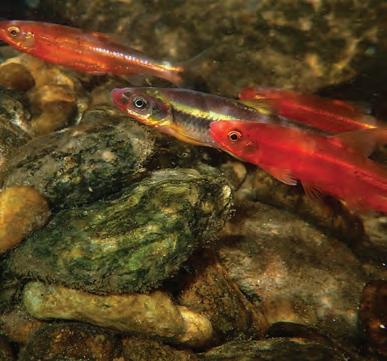
When asked what he marvels at, Kevin mentions the small darter fish that flash in jewel-bright colors, the river chubs that stack stones in elaborate nests that other species rely on for spawning, and the freshwater mussels, the “livers of the river,” that filter the water, cleaning gallons an hour. In the mountains, there are about 90 species of fish alone, hundreds of millions of invertebrates, snakes, turtles, salamanders and crayfish. And the hellbender? Yes, Kevin's excursions experience encounters with these unique creatures.
Future of the trail
More snorkel sites are in the planning stages, with expansion plans into Clay, Cleveland, Avery and Burke
counties. Hurricane Helene slowed the planning progress. Right now, the team is prioritizing adding sites in the Catawba River watershed.
Luke states that the main criteria for a possible site include six points: public access; safe river access; quality parking; an often clear waterway; a unique snorkeling experience; and most important, within 20 miles of the Blue Ridge Mountains, which covers quite a bit of the foothills and parts of the Piedmont.
“The Blue Ridge Snorkel Trail was created to give folks the opportunity to experience the beauty and wonders of our rivers in the Blue Ridge … in order for people to appreciate and take care of our rivers and streams,” Luke adds. “What better way to connect with our rivers than diving in headfirst with a snorkel and mask?”
Renee C. Gannon is senior associate editor for Carolina Country.
Blue Ridge Snorkel Sites for 2026
Visit ncfishes.com/blue-ridge-snorkel-trail for information about the trail and each of these snorkel sites, including access information and what you can expect to spot underwater.
• Mills River Park
Mills River, Henderson County
• Veterans Park
Swannanoa River, Buncombe County (temporarily closed due to Helene damage, reopening soon)
• Pigeon River
Pigeon River, Haywood County
• East LaPorte Park
Tuckasegee River, Jackson County
• Queens Branch
Little Tennessee River, Macon County
• Cheoah River
Access at Joyce Kilmer Rd Bridge, Cheoah River, Graham County
• Marion Greenway
Catawba River, McDowell County
• Stone Mountain State Park
East Prong Roaring River, Wilkes County
• Bryson City Island Park
Tuckasegee River, Swain County
• Valley River Heritage Park
Valley River, Cherokee County
• Champion Park
French Broad River, Transylvania County
• Laurel Community Center
Shelton Laurel Creek, Madison County
• Damascus Town Park
Laurel Creek, Washington County, VA
• Valle Crucis Community Park
Watauga River, Watauga County*
• Clawson Burnley Park
South Fork New, Watauga County*
• Watauga Gorge River
Access Watauga River, Watauga County*
• Guy Ford Road Park
Watauga River, Watauga County*
• 194 Watauga Access
Watauga River, Watauga County*
• Brookshire Park
New River, Watauga County*
• Sterling Park on the Middle Fork Greenway
Middle Fork New River, Watauga County*
• Boone Gorge Park on the Middle Fork Greenway
321 Access Middle Fork New River, Watauga County*
*Watauga openings planned for 2026
Swannanoa darter
Tennessee shiner
Stoneroller
Hellbender
For members of Wake Electric Membership Corporation
Wake Electric’s 2026 Annual Meeting
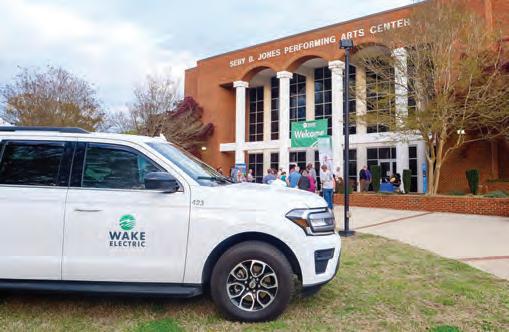
Wake Electric held its 2026 Annual Meeting of Members on Friday, March 27, at the Louisburg College Auditorium. Members enjoyed Wake Electric’s linemen performing demonstrations including bucket rides and self-bucket rescues. Members came together to hear business updates and a presentation from General Manager and CEO Jim Mangum and then had the chance to ask senior management questions about the co-op.
Members also voted to re-elect three board members to serve three-year terms on Wake Electric’s board of directors. The members who serve in these critical roles oversee management and staff and make policy and leadership decisions for the member-owned electric utility. Cooperative directors re-elected at the 2026 Annual Meeting for three-year terms are:
Suzy Morgan, District 3
Bob Hill, District 6
Greg Fuller, District 9
Members in attendance were entered into a drawing for $5,000 in cash prizes. Visit wemc.com/wakeelectrics-2026-annual-meeting for a complete list of winners and annual meeting updates.
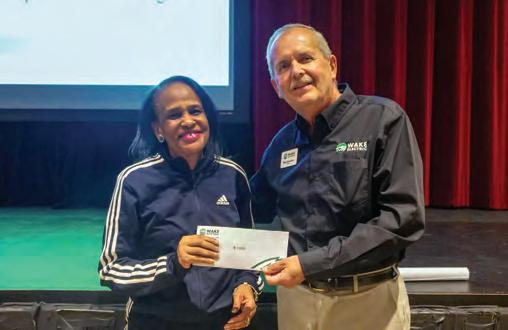
Matilda H Bullock from Henderson was our grand prize winner this year. Pictured here with Wake EMC Board President Mike Dickerson (right).
SUNDAY, JUNE 21 –
FATHER’S DAY
Happy Father’s Day to all the superhero dads out there! We hope you have a great day.
2026 Wake Electric College Scholarship Winners Announced
Wake Electric awards scholarships every year to high school seniors who are planning to continue their education at a college, university, community college or technical school. This year, Wake Electric awarded 16 $1,250 Wake Electric scholarships and one $2,000 Fred M. Alford Memorial scholarship. Altogether, Wake Electric awarded $22,000 in college scholarships to local students. Funding for scholarships is made possible by Wake Electric members and Wake Electric employees who donate to the WECare Foundation. For more information about Wake Electric’s college scholarship program, visit wemc.com/ scholarships.
The Wake Electric Scholarship ($1,250) winners are:
Sophia Abbott, Heritage High
Logan Allen, Granville Early College
Rebecca Burgess-Wise, Wake STEM Early College
Janice Bynum, Franklin County Early College
Alyssa Dadon, UNC Charlotte
Elijah Esslinger, Falls Lake Academy
Emma Haynes, University of Mount Olive
Sydney Hockaday, Meredith College
Zara Kemp, Wake Forest High
Allison Lavrack, South Granville High
Elizabeth League, UNC Chapel Hill
Fred M. Alford Memorial Scholarship
The $2,000 Fred M. Alford Memorial Scholarship was awarded to Renee Stevens of Franklinton High School.
Eric Neugebauer, Wake Early College
Lindsay Phillips, Franklin Academy
Addison Preddy, Granville Early College
Nicola Thompson, Vance Early College
Harold Timberlake IV, Vance County High
Energy Efficiency Tip of the Month
During these warm summer months, a smart thermostat can help keep your home comfortable while reducing cooling costs. Smart thermostats learn your routine and automatically raise the temperature when you’re away and cool things down before you return, avoiding unnecessary energy use. You can also adjust settings remotely from your phone, so you’re never cooling an empty house. Setting your thermostat a few degrees higher while you’re away or asleep can lead to significant savings. Many smart thermostats provide reports and tips, helping you fine-tune your energy use and stay cool while keeping your electric bill in check.
WECare Grants: Powering Good in Our Community
At Wake Electric, we are especially grateful for the communities we serve and the people who make them strong. From dedicated volunteers to local organizations working tirelessly to improve lives, there is so much good happening around us and we are proud to play a part in supporting it.
We are now accepting applications for the third quarter of 2026, due by 5 p.m. on June 12.
One of the ways we give back is through the WECare Foundation, our quarterly grant program. WECare provides funding to non-profit organizations within Wake Electric’s service area, helping to improve the quality of life for our members and their neighbors. Whether it’s funding youth programs, supporting local food pantries or investing in vital community services, these grants reflect our ongoing commitment to community involvement. Through our grant and scholarship programs, Wake Electric invests in the very communities where our members and employees live and work. When we come together, we can create lasting positive change.
We are now accepting applications for the third quarter of 2026. Applications must be submitted by June 12 at 5 p.m. to be considered in this round. Applications received after the deadline will be reviewed in the fourth quarter of 2026. If you know of a non-profit organization that could benefit from WECare support, please encourage them to apply. Together, we can keep the spirit of thankfulness alive all year long. Visit wemc.com/we-care to learn more.
Fund campers to attend Camp Royall within service area
Cares of Louisburg .................
Provide food and needs for families Granville County Extension $1,000 Meal bags for elementary students Housing for New Hope $1,000 Fund health and wellness supplies for families
Ministry Pantry $1,000
assistance for food pantry
and equipment
While Sending Hope $1,000 Care packages for special needs
Education Partnership ..................... $1,000 Funds for Tools4Schools program
Forest Community Partners ............... $500 Purchase tents/chairs for charity event Wakefield United Methodist Church $2,000 Purchase beds for needy children
Daniel
Suzy
Jackie
Easy Efficiency
Low- to no-cost ways to save energy
By Miranda Boutelle
Saving energy doesn’t have to be expensive or time consuming. You don’t need to spend thousands of dollars or get the newest technology to use less energy. There are several steps to lower energy use, even on a tight budget.
Here are some low- and no-cost ways to save energy around your home.
Adjusting the thermostat is an easy way to save. Nudge the thermostat a few degrees closer to the outside temperature, especially on extreme weather days (and if you have a heat pump system, leave it set to a consistent temperature). I often hear people say, “I didn’t change anything, and my bill is higher.” On the hottest and coldest days, your heating and cooling equipment must work much harder, and use more energy, to maintain the same temperature. Add an extra layer of clothes or some cozy slippers in the winter and lighter layers in summer.
Fix any hot water leaks or dripping faucets. Those tiny drips can add up to big energy waste, not to mention water waste, and for well users, even a faucet drip or running toilet tank can make your pump work overtime. If you need to hire a pro to fix it, turn the shutoff valve near the source to stop the leak until you can get it fixed. Wash clothes in cold water to avoid using the energy required to heat it. Washing on hot or warm settings can really add up, especially if you have a top-load or older washing machine that uses more water.
Adjusting the temperature on your water heater can save energy and money, too. Depending on the water heater, this is either an easy adjustment or something a little more complicated that requires removing access panels. If you don’t know how, consult a professional.
Air sealing is a do-it-yourself, beginner-friendly project that improves comfort and reduces energy waste. For around $20 and couple hours of time, you can fill gaps, cracks and holes to prevent air from leaking in and out of the home. From the inside of the home, seal trim on windows and exterior doors with caulk for about $4 a tube. Buy paintable caulk so you can touch it up when it dries, if needed.
A can of spray foam is about $5 and seals gaps around plumbing lines. It’s great for sealing gaps around pipes under sinks and in the crawlspace or basement. Cold air can travel up through those spaces, causing drafts and wasting energy. Air sealing these areas gets bonus points for stopping insects and rodents from using these gaps to enter your home.
Spray foam is messy and nearly impossible to get off whatever it touches, so wear disposable gloves and clothes you don’t mind dirtying, and use drop cloths to protect finished floors. Be careful if you’re working with spray foam overhead. If you get it in your hair, it’s not coming out with anything less than a haircut. Move any items and clean surfaces of dust and debris in areas you intend to seal before cracking open a can. Put the can in a cardboard box to carry throughout the house so you don’t leave a trail of spray foam.
For $10 to $15, you can buy weatherstripping to improve the seal on exterior doors. If you can see light around doors or feel a draft between the door and the door jamb when the door is closed, weatherstripping will help.
Try these easy, low- and no-cost improvements to reduce energy waste and improve comfort in your home.
This column was written by Miranda Boutelle of the Efficiency Services Group. Visit CarolinaCountry.com/your-energy for more ideas on energy efficiency.
waves MAKING
The Ebony Anglers are winning, from fishing tournaments to youth education
By Vanessa Infanzon
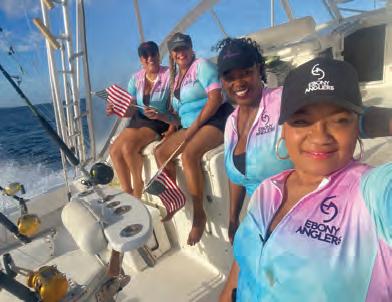
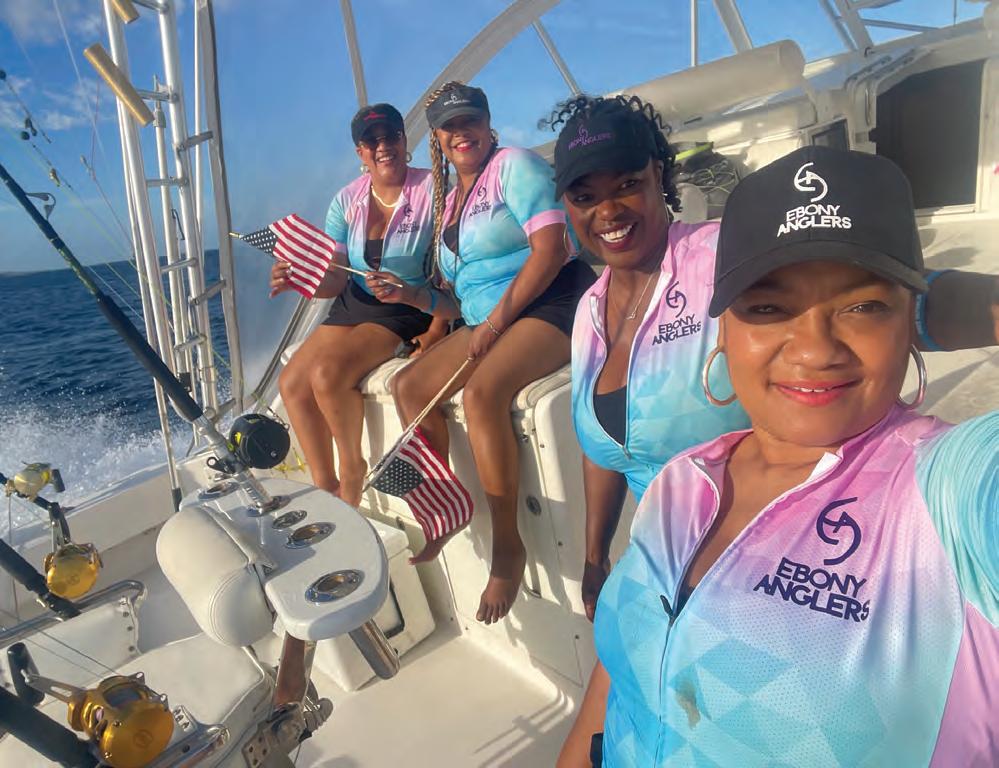
In July 2020, a week before competing in a fishing tournament, members of Ebony Anglers, a deepsea fishing team based in the Triangle region, gathered on a sandbar near Emerald Isle. With feet in the water, Tiana Ives Davis, Lesleigh Mausi, Gia Peebles and Glenda Turner got acquainted.
“It was a moment where we saw what we could be,” Gia says. “As we talked and learned more about each other and bonded, ideas flowed. We all knew we were about to embark on something new and exciting, [and there was] a little bit of uncertainty associated with it.”
That next weekend, the all-women team competed for the first time. Ebony Anglers won first prize in the species category for a 48-pound king mackerel in the Carteret Community College Spanish & King Mackerel Tournament. This accomplishment captured the attention of BBC Sports, The New York Times and the “Today” show.
“Even at that time, we all kind of felt there was something on the horizon, something bigger than we had imagined,” Tiana says. “We didn’t realize the impact we would have on that local area and on the fishing industry.”
On tournament day, members of Ebony Anglers meet at the dock by 5 a.m. and start with a prayer. Each member’s entrepreneurial spirit strengthens their role on the team. Glenda operates a nail salon and Airbnb; she scouts out tournaments and suggests options for boat captains. Tiana runs catering and hospitality companies; she makes sure the team is nourished with food and drink. Gia co-owns a salon and insurance agency; she’s the team’s captain and coordinates logistics and tournament selection. Lesleigh, a former educator, founded several companies including concert promotions and a luxury car service; she leads the team’s prayers and handles public relations.
“Once we get out there, we fall into rhythm,” Tiana says. “Most often, there are at least four lines in the water. Once a line hits (a fish is on the line), whoever is up at bat will go and grab that rod. I think we work really well as a team, supporting each other in the fight for the fish.”
Casting a wide net
With a spotlight on the team’s achievements, Ebony Anglers saw an opportunity to form Ebony Anglers Foundation, a nonprofit organization with a mission to “cultivate confidence, character and competence in youth through the outdoor sporting lifestyle of fishing and boating.”
Since 2021, the foundation has been hosting camps and educational programs for boys and girls ages 8 through 12. Through mentorship and hands on learning, children learn the fundamentals of fishing including the parts of a fishing rod, how to cast, tie a knot and use bait and lures.
When the 25 to 30 campers arrive for Flagship Camp: Fishing Fundamentals at Falls Lake State Recreation Area in Durham, they receive breakfast, a nametag and a T-shirt. The campers learn about conservation and stewardship and move through educational stations staffed by members of Ebony Anglers and volunteers. After lunch, campers fish from the piers and the shore. They end the day discussing what they learned, and each child leaves with a fishing rod and a tackle box.
ebonyanglers.com
Anglers and the nonprofit Ebony Anglers Foundation. This year’s flagship youth camp is on Aug. 1. Registration opens online in late June, and spots are limited. Adults with outdoor and fishing experience are welcome to sign up on the website to volunteer.
Since 2023, Ebony Anglers Foundation has been partnering with the National Park Foundation to replicate the Fishing Fundamentals camp outside North Carolina. In 2025, the Barbados Fisheries Division requested the foundation build an ongoing program for its Barbadian children.
“We hear from so many parents that the kids are still fishing because they have the equipment,” Lesleigh says. “They have the skills. They have the fundamentals. All they have to do is get to a body of water.”
Reeling in future anglers
Isaiah Sanders, a 16-year-old high school student from Wendell, heard about Fishing Fundamentals through his mom. Though skeptical at 12, Isaiah decided to attend the camp in 2022. He’d fished in the past but didn’t understand the basics until spending the day at Falls Lake with Ebony Anglers. Isaiah left with stronger fishing skills and the desire to volunteer in the future.
“I introduced myself to new people,” he says. “The environment was very welcoming.”
In 2024, Isaiah joined Legacy Camp, Ebony Angler’s day program for young anglers who completed Fishing Fundamentals and want to learn salt water fishing. Campers fish from a boat and gain knowledge about the role the Outer Banks plays in wildlife.
Isaiah participated in a second Legacy Camp in 2025. When he’s not fishing or in school, he’s a counselor in training at the Piedmont Wildlife Center in Durham. He’s considering studying biology in college.
“[The camps] can expose you to a different environment,” Isaiah says. “You might like it, or you might not. In the end, you usually appreciate the experience.”
Vanessa Infanzon moved to Charlotte for college and never left. When she’s not writing about business or travel, she’s paddle boarding on the
River.
Catawba
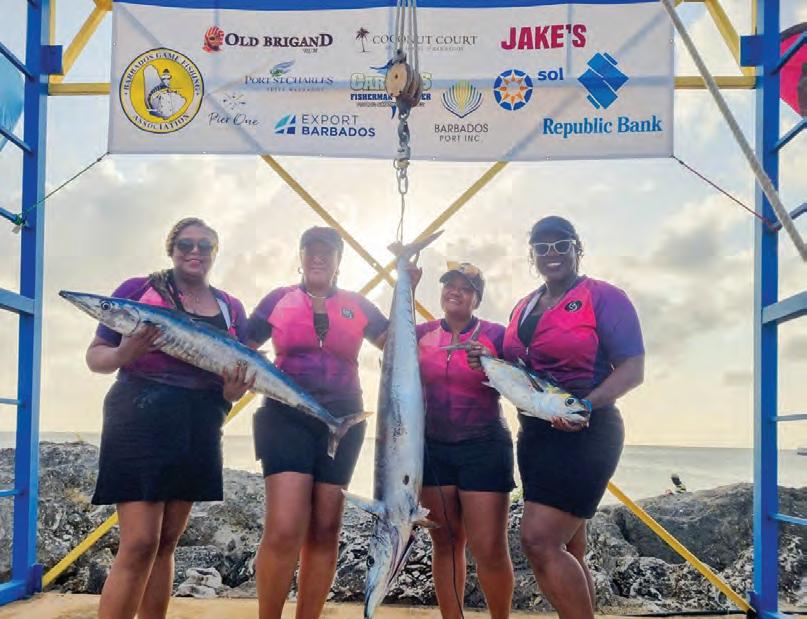
The Ebony Anglers (L-R), Glenda, Lesleigh, Tiana and Gia, took home a prize with a 40-pound Wahoo at a 2025 international fishing tournament in Barbados.
I Remember
Yes to the Red Corvette
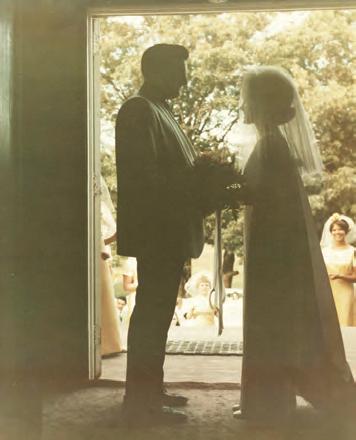
In 1968 I was a sophomore at Wingate University. My friend, Pat, and I were riding around one Saturday night when we met two boys at a local grill in Oakboro. We started talking and arranged for dates on the following weekend.
The next week, Pat called me on one of the only two phones located in my dorm, both down in the building’s basement (no cell phones then, of course). “Your date can’t go,” she said.
I replied, “Good, I didn’t want to go anyway.”
Pat said, “They have a replacement.”
“I am not going!” I insisted.
“Well, he has a red ’65 Corvette Convertible…” said Pat. “I’ll go!”
Thus began my 54-year spin with Johnny Carpenter. Many memories were made during this time that I will always cherish. And Corvettes were always in the picture. Later in life, he would call and ask: “You want to go for a ride?” I would go out and there he would be in another Corvette! He once said, “According to Barbara, Corvettes come only in two colors: Red and Ugly.”
We were married for 51 years before he passed in 2021. It was a good ride, and I am so glad I said, “I’ll go.”
Barbara M. Carpenter, Oakboro, a member of Blue Ridge Energy
My ‘Other Half’
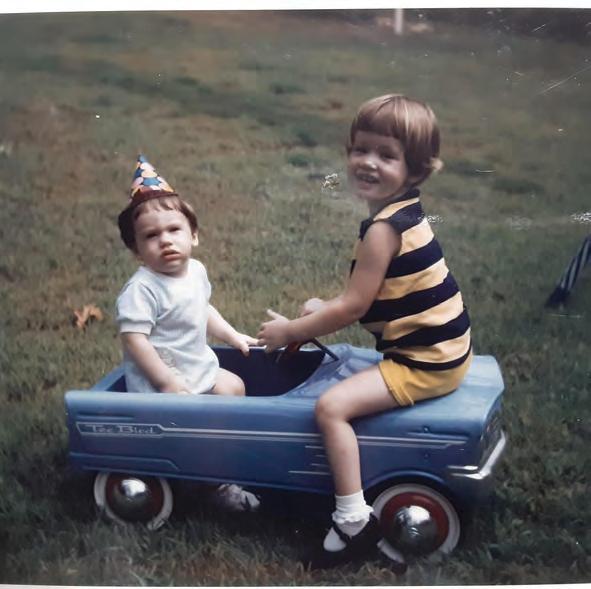
My brother Brett and I were born in the late 1960s and grew up in the Dixie Land Acres neighborhood in east Asheboro. In those days, he was truly my other half.
When I wasn't ruining his birthday fun by sitting on his toy car, we got along very well and made up our own games, such as playing spies in the back seat of the family Oldsmobile and pretending the seatbelt buckles were walkie talkies. We also loved creating our own space capsules from discarded refrigerator boxes given to us by our grandfather, who was a builder.
But our favorite game was me sitting on his shoulders with a blanket wrapped around us. He would walk my much taller self around the house, and I would introduce us to everyone as “Big Person.”
Ashley
Harris, Asheboro, a member of Randolph EMC
Send Us Your Memories
We love sharing photos and memories dear to our readers. Submit your photo, plus roughly 200 words that describe it, online or by mail with a self-addressed, stamped envelope if you want it returned (only one entry per household, per month). Include your name, mailing address, phone number or email address, and the name of your electric co-op. We retain reprint rights, and we’ll pay $50 for those we publish. Online: carolinacountry.com/contact U.S. Mail: I Remember, Carolina Country, 3400 Sumner Blvd., Raleigh, NC 27616
Full Steam Ahead
The Southeast Old Threshers Reunion celebrates 56 years
By Vanessa Infanzon | Photos courtesy of Threshers Reunion
In 1988, Jeff and Kathryn Taylor traveled three hours from Castle Hayne in New Hanover County, with their one-year-old daughter, to the Southeast Old Threshers Reunion at Denton FarmPark in Davidson County. It was their first time attending the annual event.
“We have not missed a year since and neither has our daughter,” Kathryn says. “Our son came along four years later, and I don’t think he’s missed a year either. It is a family affair. We have four campsites.”
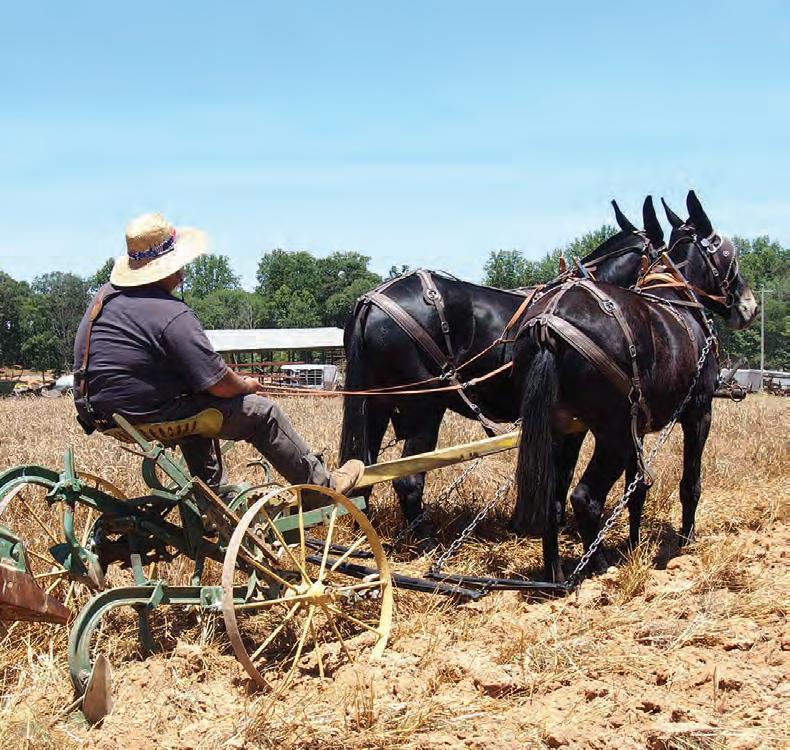
Since 1970, Denton FarmPark has been hosting the Southeast Old Threshers Reunion over the Fourth of July weekend. This year, the show is June 30 to July 4. Over five days, more than 50,000 visitors will listen to live music, browse through various museums, view 1,500 tractors, ride on the train and watch demonstrations and tractor pulls on the property’s 170 acres. Many set up RVs and tents to stay for the entire show.
Most years, the Taylor family, including children, in-laws and grandchildren, bring six pedal tractors and a ride-on toy for children, to show.
“Most of [the pedal tractors] have historical significance to our family,” Kathryn says. “One
of ours belonged to Jeff when he was a child. He found it in the back of his parents’ shed and he restored it. They mean something.”
From Fly-In to Reunion
In the 1960s, Brown Loflin bought land in Denton to build a private airstrip for a Cessna he co-owned with a friend. Brown, a jack-ofall-trades, owned a boxspring manufacturing plant, worked as a mechanic and raced cars at Bowman Gray Stadium in Winston-Salem.
When a local rescue squad needed new equipment, Brown coordinated a Fly-In, a community event with local pilots, on July 4, 1970, to raise funds to buy a generator.
“Local people would pay to ride an airplane,” says Karen Miller, Brown’s daughter. “It became quite popular, and they did that for several years.”
As the event grew, Brown incorporated thresher machinery demonstrations. Threshers, a type of farm equipment that separates seeds from stalks and husks by beating the plant, provided entertainment for those waiting for a ride in a plane.
“My dad would keep adding things,” says Karen, an EnergyUnited member. “He had a
Power Up
The Southeast Old Threshers Reunion celebrates agriculture, history and music in a family-friendly environment. Follow these tips for a successful show:
® Start the weekend on a high note and support the Tractor Ride and Tractor Ride Benefit Auction on June 29 and 30, respectively. This year, the funds benefit Farmers and Hunters Feeding the Hungry in Davidson and Randolph Counties. Visit dentonfarmpark.com/ tractor-ride for more details.
® Book a campsite or RV site early; spaces sell out each year.
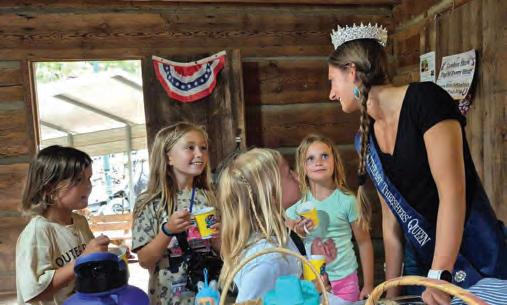
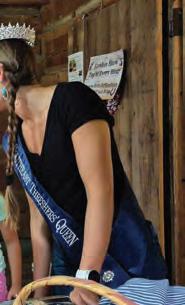
® Watch the Southeast Threshers Queen Pageant on June 30. The winner receives a scholarship for postsecondary education.
® Wear comfortable shoes, bring water and be prepared to travel along gravel and paved paths. Most buildings are equipped with a ramp. The train offers a lift for guests using a wheelchair.
® Visit dentonfarmpark.com/events for information to plan your trip.
passion for saving local buildings. The Jackson Hill community had a store and a church. He brought them in and restored them.”
By the 1980s, airplanes were no longer participating, and the event was renamed Southeast Old Threshers Reunion. Over the years, Brown introduced a blacksmith, cotton gin, service station and shoe shop, as well as Coke, doll and radio museums. He invited exhibitors and food vendors and set up more than 500 RV and camp sites.
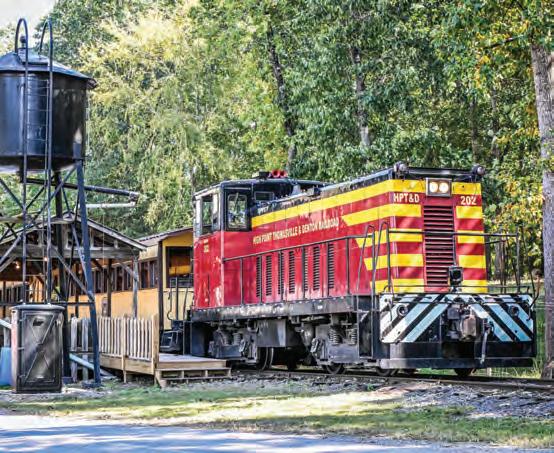
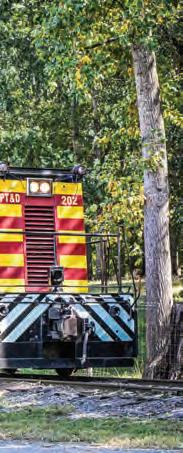
In 1982, with the help of investors, a 1.5 mile train track was installed on the property. Currently, a 1948 70-ton Diesel Electric built by the General Electric Locomotive Division powers the Handy Dandy Railroad. The fully accessible train treats passengers to a general park trip or a bandit and cowboy show.
“We have so many families that come here generationally,” Karen says. “They talk about how much they love the place. They want us to keep it going because they make memories here.”
Vanessa Infanzon moved to Charlotte for college and never left. When she’s not writing about business or travel, she’s paddle boarding on the Catawba River.
Events: June
05 Blue Ridge Fiber Fest
June 5–6
Alleghany County Fairgrounds, Sparta | 336-372-5473
Nature Photography Weekend June 5–7
Grandfather Mountain, Linville 828-733-2013
Ocrafolk Festival June 5–7
Ocracoke Island Village 252-921-0260
Big Rock Blue Marlin Tournament
June 5–14
Downtown Morehead City 252-247-3575
06 The Great Trent River Raft Race Union Point Park, New Bern 252-637-3111
Cars and Carnivores Downtown Wake Forest 919-523-5991
Lavender Days at Running Creek Lavender June 6–13
U-Pick lavender garden Running Creek Lavender, Locust 704-467-4638
10 Animal Birthday Party Grandfather Mountain, Linville 828-733-2013
13 Beaufort Historic Road Race The Vault, Beaufort 252-728-2141
Beach Brew & Que Duplin Events Center, Kenansville 919-275-0009
13 Front Street Arts & Crafts Festival Downtown Dillsboro
100 miles along US Highway 301, Selma | 919-989-8687
Frag Fest LAN Party
June 19–21
Bring Your Own Console or Computer gaming event VFW Post 10630, Hope Mills 910-302-6966
20 Native Plant Sale and Fundraiser
Daniel Boone Native Gardens, Boone | 919-744-1993
Juneteenth Celebration Epps Recreation Center, Greenville | 252-329-4246
27 Bee Jubilee Show and tasting, live auction, vendors, demonstrations Granville County Expo & Convention Center, Oxford 907-738-9047
The Punch Brothers Virtuosic quintet Schaefer Center for the Performing Arts, Boone 704-288-7438
Celebrating America’s 250th Music, bouncy houses, drone show Noel Williams Park, Monroe 704-226-1989
SCAN TO SUBMIT
SUBMIT YOUR EVENT
Visit carolinacountry.com/calendar for more information about each event, including links to the most current information, or to submit your own event.
All recipes are by culinary Adventurist Wendy Perry (WendyPerry.com), is a home economist, blogger and NC food artisan, unless otherwise noted.
Summer Fresh Garden Pitas
With pickled red onions
This no-cook, cool, veggie-packed sammy tastes like a stroll through your garden or the farmers’ market — perfect for hot days when you want something crisp and refreshing.
Pickled Onions
½ cup vinegar
½ cup hot tap water
1 tablespoon sugar
1 tablespoon honey
1 tablespoon mustard seed
1 teaspoon crushed red pepper
1 teaspoon salt
1 teaspoon black pepper
1 large red onion, thinly sliced
Shake in a quart jar to dissolve sugar.
Chill at least one hour.
Spread
1 package (8-ounce) cream cheese with vegetables, softened
4 tablespoons butter, softened
1 can (20-ounce) crushed pineapple, drained
2 ripe avocadoes, mashed
3 green onions, diced
4 large cloves garlic, minced
½ cup loosely packed, chopped fresh dill, parsley, or cilantro (we used all 3)
¼ cup diced sun-dried tomatoes
½ cup grated carrot
½ cup finely diced celery
¼ cup candied jalapeño, chopped (optional)
2 teaspoons garlic powder
2 teaspoons onion powder
1 package (4-ounce) sliced almonds, toasted
Mix together, gently folding in almonds. Refrigerate. Let soften before spreading into pitas.
Vegetables
Sprouts
Arugula
6–8
2 bell peppers, cut into matchsticks large radishes, roughly chopped
2 long pickling cucumbers, thinly sliced in ribbons and drained with paper towels
4 pita breads
Microwave for 15–20 seconds in damp paper towels to soften. Slice in half.
Gently spread the cream cheese mixture on both sides inside pita pockets. Layer in vegetables. Serve with pickled onions.
Yield: 8 pockets
Chilled Blueberry Coconut Soup
Cool, creamy and bursting with fresh blueberry flavor, this no-cook soup blends up in minutes with a bright citrus twist.
2 containers (5-ounce) dairy-free coconut yogurt, divided 2 cups fresh or frozen blueberries (we used Creekside Farm Berries)
1¾ cups unsweetened coconut milk
¼ cup honey or maple syrup
½ teaspoon vanilla extract
½ teaspoon almond extract
1 orange
Toasted coconut
Remove 4 tablespoons of yogurt and set aside. Put remaining yogurt in blender with blueberries, milk, honey and extracts.
Zest orange into blender along with juice of the orange. Blend until smooth, then taste and adjust sweetness and thickness, adding more honey or milk as needed.
Chill if desired or enjoy immediately if using frozen berries. Garnish with a swirl of yogurt and toasted coconut.
Yield: 3–4 servings
Note: Freeze to enjoy as sherbet or popsicles.
FROM YOUR KITCHEN
Sweet Potato Rolls
Submit your recipe online at: carolinacountry.com/myrecipe Contributors whose recipes are published will receive $25.
Gov. and First Lady Stein tried these Sweet Potato Rolls on Thanksgiving and found them “soft and delicious — already a Stein Family favorite!” Enjoy them anytime with NC sweet potatoes.
Send us your best shots based on an upcoming theme—we’ll pay $25 for those published. Submit high resolution digital photos and find full terms and conditions at carolinacountry.com/snapshots (no emails, please). We retain reprint and online rights for all submissions.
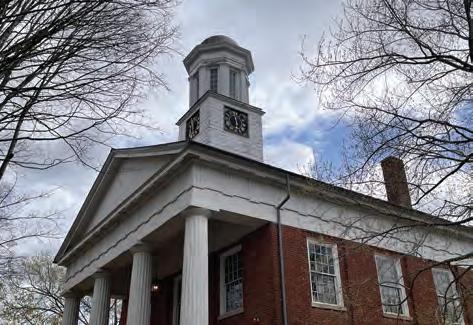
where in Carolina Country is this?
Send your answer by June 15, with your name, address and the name of your electric cooperative.
Online: carolinacountry.com/where
By mail: Where in Carolina Country? 3400 Sumner Blvd., Raleigh, NC 27616
Multiple entries from the same person will be disqualified. The winner, chosen at random and announced in our August issue, will receive $25.
Have a roadside gem you’d like to share? Submit a photo, plus a brief description and general location information, at carolinacountry.com/where
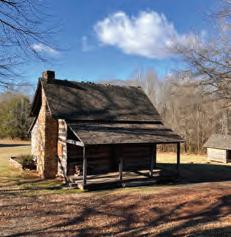
The April “Where Is This” photo by Carolina Country’s Renee Gannon features the Christian Reinhardt farmhouse at Ramsour’s Mill Battleground, located off Jeb Seagle Road outside of Lincolnton. In June 1780, Patriot militia defeated a larger Loyalist force, dampening local support for the King. Many believe this battle led to the Patriots’ win over the British at Kings Mountain in October 1780. The remains of the original mill can be found in the woods nearby, while two schools occupy the former battleground. The 1700s cabin is not original to the site—it was donated by the Reinhardt family. A Living History Weekend will be held June 20–21 at the site to commemorate the battle; visit lincolncountyhistory.com for more information. The winning entry chosen at random from all correct submissions came from Linda Block of Ocean Isle Beach, a Brunswick Electric member.