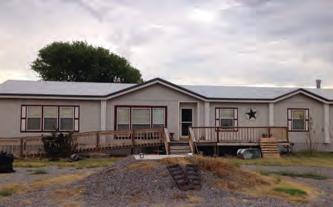
Geothermal. It’s easier than ever to score big with the nation’s best incentives.
WaterFurnace geothermal units use the stored energy in your backyard to provide luxurious comfort and dramatic savings on heating, cooling, and hot water. They’re 2x more efficient and last 40% longer (25yrs with geo vs 18yrs with ordinary) than any other HVAC system. Plus, many state, local, and utility programs offer incentives to lower installation costs. It’s never been easier to switch!
Visit waterfurnace.com to learn how to turn “Too Good To Be True” into “True.”
Ready to get started? Scan the QR to connect with your Geothermal Concierge today!
(ISSN 0008-6746) (USPS 832800) Volume 58, No. 5
3400 Sumner Blvd., Raleigh, NC 27616-2950
Scott Gates, CCC Editor
Renee C. Gannon, CCC Senior Associate Editor
Rue Reynold Editorial Assistant
Jessica Armstrong Graphic Designer
Tara Verna Creative Services Associate
Donna Natosi Digital Strategist
Dan Tomkiewicz Advertising Dan@carolinacountry.com
Amadou Fall Executive Vice President & CEO
Kristie Aldridge, CCC Senior Vice President & COO
Warren Kessler Director of Brand Strategy
North Carolina’s electric cooperatives provide reliable, safe and affordable electric service to 1 million homes and businesses. The 26 electric cooperatives are each member-owned, notfor-profit and overseen by a board of directors elected by the membership.
Why Do We Send You Carolina Country Magazine?
Your cooperative sends you Carolina Country as a convenient, economical way to share with its members information about services, director elections, meetings and management decisions. The magazine also carries legal notices that otherwise would be published in other media at greater cost.
Your co-op’s board of directors authorizes a subscription to Carolina Country on behalf of the membership at a cost of less than $6 per year.
Subscriptions: Individual subscriptions, $12 per year. Schools, libraries, $6.
Carolina Country is available on digital cartridge as a courtesy of volunteer services at the NC Department of Cultural Resources, Library for the Blind and Physically Handicapped, Raleigh, NC 888-388-2460.
Periodicals postage paid at Raleigh, NC, and additional mailing offices. Editorial offices: 3400 Sumner Blvd., Raleigh, NC 27616-2950. Carolina Country® is a registered trademark of the North Carolina Association of Electric Cooperatives, Inc.
POSTMASTER: Send all UAA to CFS. (See DMM 707.4.12.5); NON-POSTAL AND MILITARY FACILITIES: Send address corrections to Carolina Country, 3400 Sumner Blvd., Raleigh, NC 27616-2950.
Change of address: Please contact your electric co-op or go online to carolinacountry.com/address
Experiencing a power outage?
Please contact your electric co-op directly to ensure prompt service. Visit carolinacountry.com/co-ops to find yours online.
Ready to Serve
NC communities organize for emergency response
Carolina Voices
How do you prepare for severe weather?
Storm
museums that bring weather wonders to life
Weathering storms in North Carolina takes planning and preparation. Simple items to set aside ahead of storms can become literal lifesavers in the event of an emergency. Save this issue for future reference, and get additional information from your local electric cooperative.
From Our Readers
Crape Murder *shudder*
I'm a retired North Carolina Landscape Contractor. One thing I would like to add to the Garden Section is a “Garden To-Don’t.” What aggravates me is pruning crape myrtles. I see so many topped and short. In the landscape industry we call it “crape murder.” The reason so many people do that is to promote new growth. Crape myrtles bloom on new growth, therefore promoting a lot of flowers. That topping ruins the true form of the tree.
Al Freeman, Albemarle
Editor’s Note: In a 2020 column on crape myrtles, Carolina Country garden columnist L.A. Jackson recommends visiting crapemyrtle.com (clicking How To/ Pruning) for tips on avoiding the dreaded crape murder.
Carolina Colonials
Regarding Moores Creek Bridge and the Battle of Great Bridge, Jeff is correct that Great Bridge was first in time (“From Our Readers: Revolutionary Revision,” April 2026, page 2). But it should also be pointed out that Carolina militia from Currituck County marched north to support the colonials opposing Lord Dunmore at the Great Bridge. A recent book, “A Perfect Frenzy” by Andrew Lawler, details the events and suggests that the colonials, not Dunmore, burned Norfolk, which was considered by the patriots in Williamsburg to be a Loyalist town. This is good stuff! As Jeff says, both battles were significant!
Jay Lassiter, Cape Hatteras Electric Cooperative
Editor’s Note: Good stuff indeed! Thanks to both Jay and Jeff for adding to our coverage of Revolutionary War happenings in North Carolina and beyond.
THIS MONTH:
The Storm Prep Issue
As beautiful as North Carolina is, we do see our share of severe weather. From hurricanes to winter storms, if you live here, you learn to be prepared for what Mother Nature can send your way in a moment’s notice. In this issue, we collected information to help readers be prepared for what may come, and in some cases, prepare to help others less fortunate during emergencies. We hope this will be a resource you can set aside with a storm prep kit and refer to as needed — as the wise old adage goes, you have to hope for the best, but prepare for the worst.
—Scott Gates, editor
Correction to our April Issue
In our Quick Hits section (page 6), we noted that the “Zebulon Mudcats” had moved to become the Wilson Warbirds. The team was formerly the Carolina Mudcats — thanks to Wake Electric member George Hogge for catching that.
Carolina SNAPSHOTS
THEME Flowers
A Sarah Simmons, Morehead City
A member of Carteret-Craven Electric Cooperative
B Kim Ramsey, Oak Island
A member of Brunswick Electric
C Megan Moser, Vale
A member of Rutherford EMC
D Heather Gregory, Winston-Salem
Submit your photo!
July theme: Ice cream (Deadline May 20)
Aug. theme: Beach Bound (Deadline June 20)
Sept. theme: Harvest (Deadline July 20)
Send us your best shots based on an upcoming theme — we’ll pay $25 for those published. Submit high resolution digital photos and find full terms and conditions at carolinacountry.com/snapshots (no emails, please). We retain reprint and online rights for all submissions.
PREPARED FOR
When severe weather rolls in, you can count on your electric cooperative to be ready. We’re building a stronger, smarter and more resilient power grid for improved service, no matter the weather.
Dedicated crews, proactive planning, advanced technology and an unwavering commitment to our members — rest assured that when storms strike, we’re here for you.
The Importance of Preparation
Those of us who have lived in North Carolina all of our lives — even those who may be transplants to the state — no doubt have a storm story or two to tell. Maybe it’s the time you strolled on the beach in a foot of snow, or watched a summer storm darken the sky and roll over without so much as a drop of rain. For many, it may be a more trying moment, like sifting through the destruction of a tornado’s path or struggling to build back from flood damage. Through it all, one thing holds true: we have to be prepared.
That can be said for both electric cooperatives and the members they serve. My co-op, Pantegobased Tideland EMC, has seen its fair share of severe weather on the coast. One storm in particular taught an important lesson about being prepared, regardless of the perceived threat.
North Carolina’s electric cooperatives carefully monitor weather events with the most extreme outcomes in mind.
Hurricanes are measured on the Saffir-Simpson scale, measuring sustained wind speeds. But the scale doesn’t account for storm surge, rainfall or coinciding tornadoes, which typically produce the deadliest outcomes. Nor does it measure landslide potential. While experts have suggested increasing the scale to 6 to account for wind intensification, experience proves that even a slow-moving Category 1 storm can be highly destructive. I know firsthand. Hurricane Irene impacted my co-op’s territory in 2011. It was a 450-mile-wide, slow-moving Category 1 cyclone that produced an 11-foot storm surge while dumping 14 inches of rain during the 18 hours it stalled over Pamlico Sound. Helene, our state’s deadliest storm, was a tropical storm when it reached North Carolina.
By Paul G. Spruill
North Carolina’s electric cooperatives carefully monitor weather events with the most extreme outcomes in mind. We work with our materials supply co-op, Tarheel Electric Membership Association (TEMA), to ensure basics like line, poles and transformers are on hand well ahead of a major storm — it’s always easier to plan ahead than to try to acquire materials when they’re needed most.
We also coordinate with contract line crews and other electric cooperatives to ensure help is there in times of need. In the aftermath of Helene, contractors and crews from more than 30 electric co-ops in 11 states traveled to North Carolina to help restore power. This mutual aid was essential in restoring power to communities in an otherwise overwhelming situation.
There are tried-and-true steps that can be taken well ahead of a storm to ensure you and your family are as prepared as possible, many of which are addressed in this issue of Carolina Country magazine. Know evacuation routes. Set aside an emergency prep kit, with essentials like flashlights, extra batteries, water and first aid supplies — again, those materials that are easy to come by until you need them most. Listen to the stories from storm survivors and first responders. What worked? What didn’t? What was entirely unanticipated? What would they do differently next time?
Preparedness is a moving target, equally informed by past experiences and our day-today lives. That’s why local, state and federal agencies, along with electric co-ops, routinely conduct emergency preparedness drills — not just to practice their plans but to update them.
I encourage you to do the same at home and in the workplace. By working together, we can be better prepared with each story-worthy storm, building back even stronger in the aftermath.
Paul G. Spruill is general manager & CEO for Tideland EMC in Pantego.
May Quick Hits
Top-Notch Teachers
Help honor your local educators with a special note, treat or other gift during Teacher Appreciation Week, starting May 4.
We Mom
Mother’s Day is May 10! Take time to do something special for the mothers in your life (we have one brunch idea on page 22).
Co-op Milestone
May 20 marks the 90th anniversary of the Rural Electrification Act (REA), which provided funds to help early electric co-ops power farms, homes and businesses in rural areas.
Wildfire Awareness
Spring is a peak time for wildfires, and the NC Forest Service has already reported hundreds across the state. Visit redcross.org/wildfire to learn about wildfire safety.
Resilient Roof Construction Protects
Homes
Program helps NC homeowners be prepared
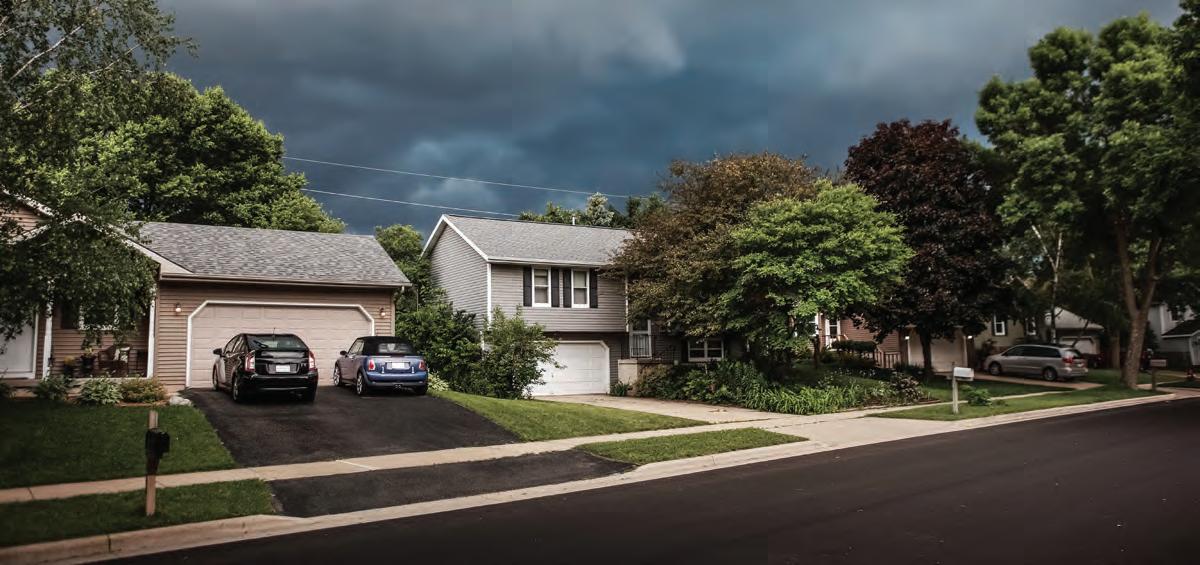
Hurricanes and tornadoes are known to rip off roofs. But even strong thunderstorms can include 60 mph winds that bring roof cover failures, letting water into homes.
Thus, the FORTIFIED Roof program of the Insurance Institute for Business and Home Safety suggests extra steps be taken at the three stages of roof construction and repairs: Nail it. Seal it. Lock it.
“If you lose a roof, you are likely to lose the entire home,” explains Gina Hardy of the North Carolina Insurance Underwriting Association (NCIUA).
NCIUA (often referred to as the “Beach Plan”) and roofing contractors are key state partners with FORTIFIED.
Roof damage and extended impacts are not limited to hurricane season, nor to just the coastal region.
“Code-plus construction is good for our policyholders and good for all residents of North Carolina,” Hardy notes.
NCIUA even offers grants to install stronger roofing systems during construction and repairs. The grants are funded by a bond program considered the first in the world to “invest
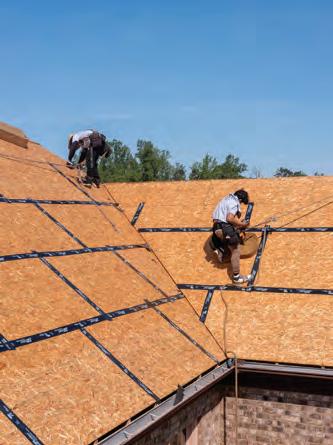
Extra steps during roof construction can dramatically improve storm resilience.
in resilience,” Hardy adds.
Other homeowners across the state should check with their insurance representatives to see if they offer incentives or endorsements on policies when Fortified roofs are in place. Visit fortifiedhome.org for more information on strengthening your roof, or check strengthenyourroof.com if you live in a coastal area.
— Katie Mosher
Brighter Future Summit Addresses
Theme of ‘Powering Tomorrow Together’
In April, more than 400 electric co-op leaders from across the state met in Raleigh for the 2026 Brighter Future Summit, the annual meeting for North Carolina’s Electric Cooperatives.
The summit opened with a leadership transition, as retiring Executive Vice President and CEO Joe Brannan gave a farewell remarks and welcomed incoming EVP and CEO Amadou Fall. Brannan applauded electric co-op leaders for working together to innovate through their shared Brighter Future vision (ncelectriccooperatives.com/ brighter-future).
“Your leadership in uniting as one voice across the state is the proudest moment of my career. Leaving is bittersweet, but I’m proud of what we’ve accomplished together and confident Amadou Fall will take our organization to new heights,” Brannan said. “The future holds both challenges and opportunities, and Amadou brings the intellect, determination and collaboration necessary to continue us on this path of innovation.”
During his remarks, Fall stressed electric cooperatives’ shared mission to provide safe, reliable, affordable and sustainable power to the communities they call home — and the spirit of cooperation that gives the co-op network strength.
“I think what most excites me about the co-op business model is what we call the ‘Cooperative Difference.’ The fundamental concept of supporting the communities we serve was born out of necessity, and has become all the more critical in a time when costs are rising and many companies are focused on profits,” Fall said. “The secret sauce for our success is also a part of that Cooperative Difference — cooperation among cooperatives. That open collaboration is what gives us strength as a statewide network. It’s what enables the spark of innovation to grow to an
executable strategy. And it’s what will keep us powering tomorrow, together.”
Other sessions included an address from Stephen Bell, senior vice president of Communications for the National Rural Electric Cooperative Association (NRECA), the national trade association representing more than 900 electric co-ops from across the county. Bell discussed critical issues facing electric co-ops today, and credited North Carolina electric co-ops for addressing today’s needs while planning proactively for the future.
Business meetings for the three statewide organizations — North Carolina Electric Membership Corporation (NCEMC), the North Carolina Association of Electric Cooperatives (NCAEC) and the Tarheel Electric Membership Association (TEMA) — were also held, where officers were elected and, in the case of TEMA, incoming directors were named (see sidebar).
Cape Hatteras Electric Cooperative Executive Vice President and General Manager Susan Flythe also addressed the group as outgoing NCEMC board president.
“Each of you is in this room because you have a proven track record of serving your members in a way that’s best for them,” Flythe noted. “That
said, the only way we’re going to find success at home is by working together. We’re writing a new chapter together, and it’s only through cooperation and combined strength that we will find success in this new era for our industry.”
Statewide Board Officers
The following were elected to 2026–2027 board leadership positions:
NCEMC (power supply):
Two-year terms seated in 2026
President: Josh Winslow, Brunswick EMC
Vice President: Eddie Oldham, Central EMC
Secretary-Treasurer: Don Gatton, Four County EMC
NCAEC (co-op services):
One-year terms seated in 2026
President: Winston Howell, EdgecombeMartin County EMC
Incoming directors (three-year terms ending April 2029):
District I: Thomas Golden, EnergyUnited
District II: Jason Loehr, Southside EC (Va.)
District III: Jake Joplin, Carteret-Craven EC
Executive Vice President and CEO Joe Brannan (left) gave farewell remarks and welcomed incoming EVP and CEO Amadou Fall.
What to Expect This Hurricane Season
Predictions are full of variables, from warming water to Sarahan dust
The 2026 Atlantic hurricane season may trend close to or even slightly below average overall. But it should be stressed, it only takes one storm to bring major impacts and make for a busy season if that storm hits your neighborhood. From Hazel to Hugo, Floyd to Florence, North Carolina has a very long history of devastating storms. And many in the mountains are still recovering from Helene, the costliest one to ever strike the Tar Heel state.
So, what do the numbers look like this year? Early outlooks from hurricane experts generally call for:
11 to 15 named storms
4 to 7 hurricanes
2 to 3 major hurricanes (Category 3 or higher)
That compares to the long-term seasonal average of 14 named storms, 7 hurricanes and 3 major hurricanes. What we don’t know is how many of these storms will directly impact North Carolina or even the United States.
Why activity could be lower
The primary reason fewer storms are forecast is a developing El Niño. El Niño is a warming trend of ocean water off the coast of Peru, and when it strengthens, it tends to increase upper-level wind shear over the Atlantic basin. That extra wind shear often disrupts the structure of developing tropical systems, making it harder for storms to form and intensify, especially later in the season.
The wildcard: very warm ocean water
It’s important to note, even in a quieter season, storms that do form can still quickly become dangerous. Atlantic sea surface temperatures and deep-ocean heat content are high and will likely remain so through autumn. Warm water (above 82 degrees) is the key fuel source for tropical systems, and when the heat extends deeper below the surface, it can help storms maintain or increase strength, even if winds churn up cooler water at the surface. That can raise the odds of rapid intensification, when a storm strengthens much faster than normal, just like Helene did in September 2024. This sometimes happens very close to land, leaving less time to prepare. Warm water in the Gulf, western Caribbean, and western Atlantic could also allow storms to form before the official June 1 start.
Other factors that can steer the season
Beyond El Niño and ocean temperatures, several patterns can influence where storms form and where they track:
Bermuda High position and strength can guide storms toward the Caribbean, Gulf, or U.S. East Coast — or keep them out to sea.
Saharan dust can suppress storm development by drying the atmosphere and reducing thunderstorm activity.
Tropical wave patterns coming off Africa can either enhance or limit the number of storms that get started.
Be prepared
A lower storm count does not guarantee fewer impacts — a “quiet” season doesn’t necessarily mean “safe.” Some seasons with fewer storms have still produced devastating hurricanes. 1992 is a classic example, when Hurricane Andrew caused catastrophic damage despite a relatively quiet overall season. What to do now:
Review hurricane plans and evacuation routes; Check insurance and important documents; Restock emergency supplies and medications; Monitor forecasts as the season approaches; and After the storm, monitor local news and weather forecasts.
—Al Conklin is chief meteorologist for WBTV in Charlotte.
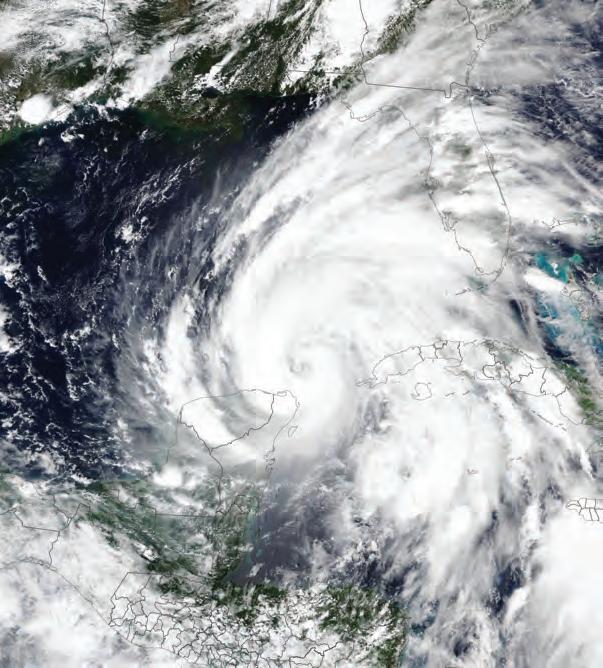
Hurricane Helene strengthened in the Gulf before making landfall on Sept. 26, 2024.
NOAA
READY TO
NC communities organize for emergency response
By Katie Mosher
Hurricane impacts may be most common along the coast. Yet storm names like Hugo, Fran and Florence stir memories far and wide — Western North Carolina is still recovering from Helene’s flooding and landslides in 2024.
In preparing for whatever storms or emergencies may come next, communities across North Carolina are creating or expanding Community Emergency Response Teams (CERTs). About 70 CERTs are now in the state, according to the NC Division of Emergency Management.
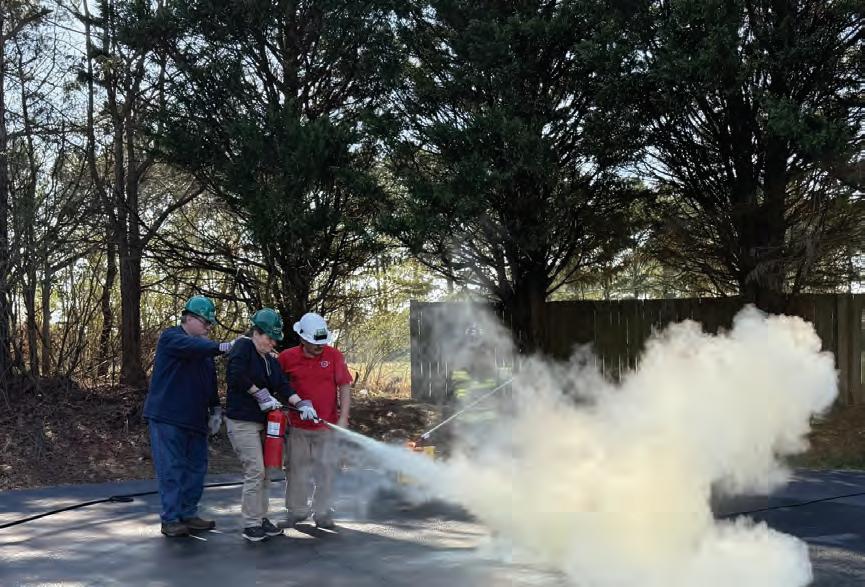
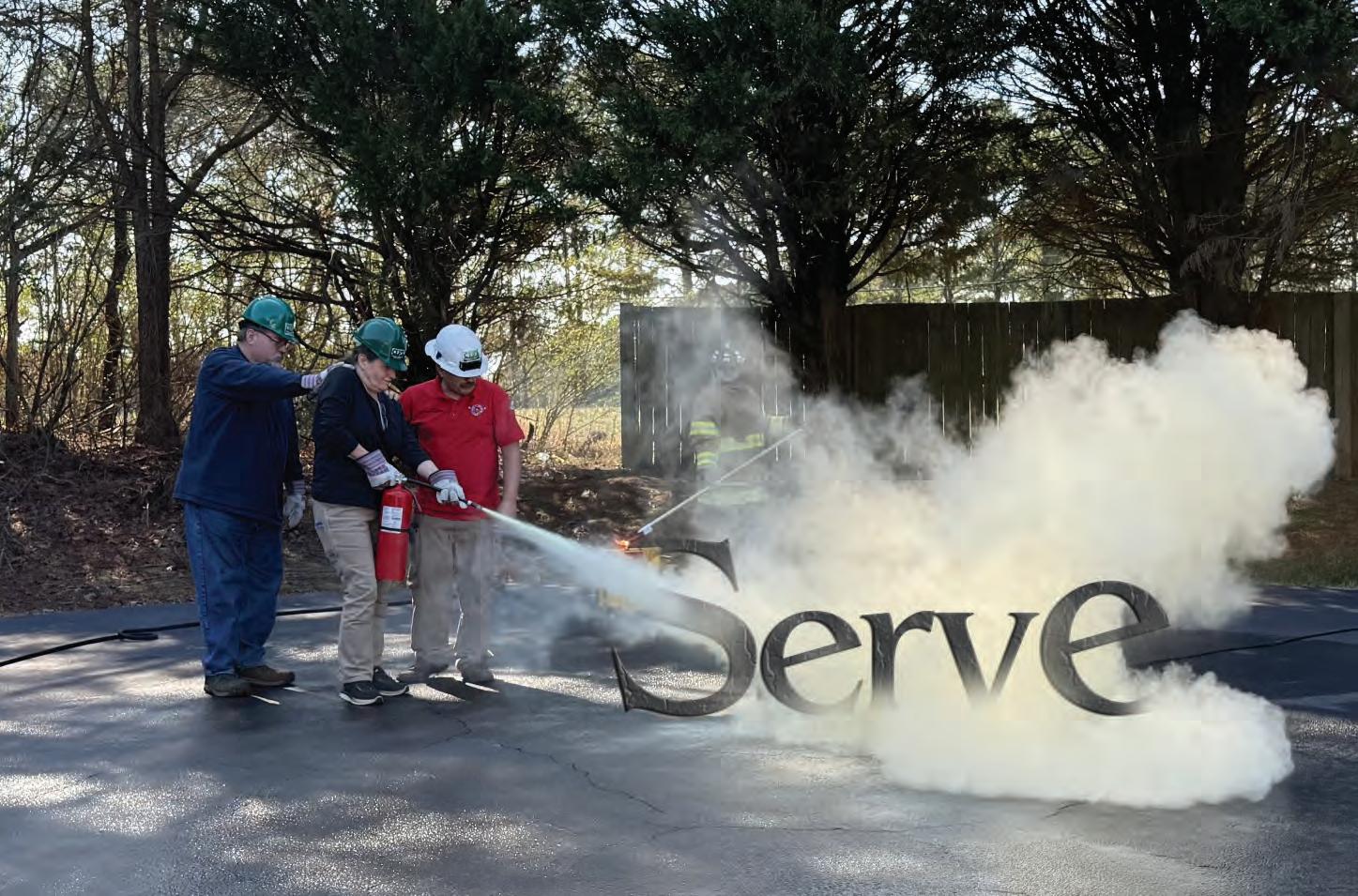
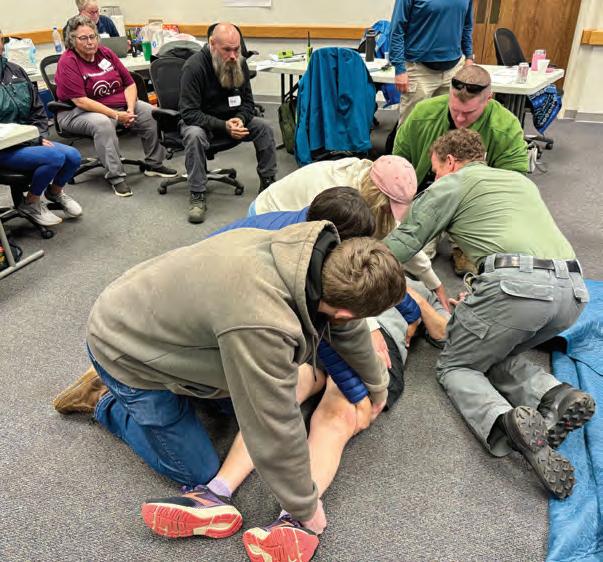
While the name brings images of disasters, CERT training also includes basic skills, such as how to use a fire extinguisher, pack a first aid kit, and perform hands-only CPR.
“The first goal is to take care of ourselves and neighbors,” explains Youngsville Fire Chief Brian Christmas.
MOUNTAIN STRONG
Helene’s legacy will be the neighbors helping each other in the immediate flooding, in the days without power or phone services, and through ongoing emotional grief and physical rebuilding.
“All of our members survived the storm, and most volunteered in unofficial capacities,” notes David Billstrom, town liaison to the Black Mountain CERT. Formally organized in Spring 2025, it is said to be the first CERT west of Hickory. Initial funding from the Community Foundation of Western North Carolina has been augmented by additional partners.
“In Helene, as a firefighter for a public agency, I had to turn away skilled volunteers because they had no way to serve in an official capacity,” David notes. “CERT provides the structure — and liability protection — that these citizen volunteers need to be able to be part of the solution in emergencies large and small.”
He is proud that the Black Mountain CERT is helping other new teams be established.
The team also has brought back — and improved — a radio network that does not need internet or electricity, offering resilience when “modern” communication fails. All the certified team members have radios, and the system is available to police and firefighters. CERT members also help the public choose and use radios on the system, known as GMRS.
By Spring 2026, 45 members had completed CERT certification. A dozen or more will take courses this year.
“One of the incredible developments that every member of our program talks about: Each other,” David says. “They’re not only serving community, they also have created community within the CERT program and support each other.”
Likewise, Helene offered the impetus in 2025 for Henderson County Emergency Management to organize a CERT in conjunction with the Henderson County Rescue Squad.
“One of the key takeaways we discovered was the need to equip residents with the knowledge and skills to be more self-sufficient until emergency personnel could reach
Interested in getting involved with a local Community Emergency Response Team?
To learn more, visit readync.gov and click “Get Involved.”
them,” notes Kimberly Lughart, a rescue squad captain and CERT coordinator.
Training topics, such as basic first aid and triage, light search and rescue, disaster psychology, and emergency preparedness, include sessions led by rescue technicians who were heavily engaged in response operations during Hurricane Helene.
Training paid off for members during winter storms this year.
“We were thrilled to hear that many were already putting their training into action, using what they learned to better prepare themselves, their families, and their communities,” Kimberly says.
MUTUAL AID IN THE PIEDMONT
Although 200 miles away, Youngsville CERT stepped up to help mountain communities and the state in the aftermath of Helene.
Reports of people as “missing” had surged as folks panicked when they could not reach loved ones. The state had tasked the 211 hotline with receiving new reports. But updating the thousands of reports required additional work.
The Youngsville team was relatively new, but Brian Christmas offered CERT services and quickly gathered additional volunteers. Across several shifts each day over nine days, 265 people made more than 10,000 calls to update extensive spreadsheets.
In most cases, the family or friends had been located and were safe. Other calls revealed ongoing needs for medical help, water and critical needs. Later, the state reported very few persons officially listed as missing from Helene.
“Helene sparked an interest in people wanting to help,” Brian notes.
Through 2025, Youngsville CERT leaders developed specific roles and committees, even establishing a nonprofit working closely with the fire department. By early 2026, the team had offered trainings in English and Spanish, volunteered at traditional events, and added safety at intersections as the monks’ Walk for Peace went through Franklin County.
Youngsville CERT president Scott Yeakey, who had previous experience in emergency response, led a February training with scenarios simulating a small fire, as well as a tornado-damaged church.
“We are getting them closer to the real world,” he explains.
Karen Lindquist of Wake Forest, who has a business providing flood-monitoring technology, agrees. She found CERT sessions interesting and useful.
“At times it is scary, but I am more able to handle a real situation,” she says.
CERT member Christopher Williams ran the scenarios’ communications command, with radio calls to assign tasks and confirm completion. Alongside skills from his day-job as assistant manager and dispatcher at a towing company, he has 250 hours of CERT training including cybersecurity topics.
“I am the only one in the state with a visual impairment,” he says.
SERVING NEIGHBORS ALONG THE COAST
CERTs also are found in the coastal region. For example, the Hatteras Island team organizes the placement of satellite phone and internet options when regular service is not available, thus letting residents contact loved ones, insurance companies and more.
In New Hanover County, emergency management officials and first responders provide training for the local CERT members.
All CERTs are available throughout the year as residents may experience varied emergencies: ice and snow, flooding, tornadoes and fires.
“Being able to help them prepare is such a great way to give back to the community,” says Kimberly Lughart, a Henderson County native. “We always say: Stronger Together!”
Katie Mosher, a member of Wake Electric, is the former Communications Director for NC Sea Grant.
Photo courtesy of Victor Poleo
Elon Graham Saxapahaw
burlington Mebane
Try Our Revamped Demand Rate
As your electric cooperative, our mission is to provide reliable, affordable power while keeping you informed about changes that may impact your home. Beginning in May, we are introducing a new residential demand rate for members.
What Is a Residential Demand Rate?
Traditionally, most members have paid for electricity based on the total number of kilowatt-hours (kWh) used each month. The residential demand rate adds another component: demand, measured in kilowatts (kW). While kWh measures how much energy you use over time, demand measures the highest amount of power you use at your peak moment during the billing period.
For example, if several large appliances— like your air conditioner, water heater and clothes dryer—are running simultaneously, your demand increases. The residential demand rate will include this peak usage, while offering a lower rate for your monthly energy consumption.
Why Are We Offering a Demand Rate?
High peak demand periods put pressure on our grid and increase costs. By introducing the demand rate, we encourage members to be mindful of when and how they use electricity. Spreading out usage and avoiding big spikes helps lower overall costs for the cooperative, which in turn supports stable rates for all members.
It also allocates costs equitably—members who create higher demand may pay a bit more, while those who manage their use can benefit from lower bills.
How Will the Demand Rate Affect Your Bill?
If you sign up for the residential demand rate, your bill will now include the demand charge, which is based on your highest kW usage during the month. The demand charge is calculated by measuring your highest 15-minute interval of electricity use, so managing when you run major appliances can help reduce this cost.
During the summer, this on-peak period occurs from 1-6 p.m. on weekdays. During the winter, these on-peak times occur on weekday mornings from 6-10 a.m. Energy used during all other times does not count towards your demand.
Most members won’t see drastic changes, but it’s important to be aware of your usage habits. For instance, running your dishwasher, laundry, air conditioner and other major appliances all at once will increase your demand. Spacing out these activities can lead to savings.
Tips for Managing Your Demand
• Run large appliances during off-peak times.
• If you need to use major appliances, be sure to run them at different times instead of all at once.
• Use programmable thermostats to manage heating and cooling schedules.
• Consider energy-efficient upgrades for large appliances.
• Monitor your energy usage through SmartHub with our online tools or mobile app.
We’re Here to Help
Our cooperative is committed to helping you make this transition as smooth as possible. Visit our website at pemc.coop or call 800.222.3107. Our member services representatives are ready to answer your questions and offer resources. Together, we can help you benefit the most from this new rate, ensuring reliable and affordable power for all members.
Try It Risk-Free
Try the new demand rate risk-free for one year! If you don’t save compared to our residential rate, we will refund you the difference.
Some Members Still Have Unclaimed Capital Credits Turn to page 13 for all the details.
Members Helping Members: A New Way for Our Community to Support One Another
At Piedmont Electric Cooperative, we believe some of the best solutions come directly from the people we serve, our members. Every day, our members help other members by sharing their experiences, offering advice and lending a hand when it’s needed most. That spirit is at the heart of our new Members Helping Members contractor’s recommendation webpage, which can be found at pemc.coop/members-helping-members
Whether you’re building a new home, upgrading your HVAC system, considering solar panels or tackling a long overdue repair, finding a trustworthy contractor can feel overwhelming. Many members tell us they wish they knew what contractors other members have used, did they do a good job with their project and would them recommend them? This webpage was created for our members to post and view recommendations and reviews of local contractors.
What is the Members Helping Members Webpage?
It is a simple, easy-to-use online directory where Piedmont Electric members can recommend contractors, electricians, HVAC technicians, solar installers and other service providers they have personally hired. These recommendations come directly from members who have real experience working with these companies.
These recommendations are not an endorsement by Piedmont Electric; instead it is a platform that allows our community to share honest feedback to help others make informed choices. Think of it as neighborly advice, but in one convenient place.
Why We Created This Resource
As a cooperative, we are always looking for ways to strengthen the connection between members. The Members Helping Members webpage was designed to:
• Promote transparency and trust by giving members access to real experiences from other members in our service area.
• Save time and reduce stress when searching for reputable contractors.
• Support local businesses that have consistently served our members well.
• Encourage community collaboration, a core cooperative principle.
We know that when members share information, everyone benefits.
Looking Ahead
Our goal is to make this a trusted go-to guide for members across our service territory. As more people participate, the stronger and more helpful this tool becomes. If you’ve worked with a contractor recently, we encourage you to share your experience and help your neighbors make confident, informed decisions.
At Piedmont Electric, we are more than a utility; we are a community. And when members help members, everyone wins.
How It Works
1. Share your experience with a recently hired contractor. Submit a quick online survey to tell us who you used, what work they performed and how the experience went.
2. We compile member feedback. Your recommendation, along with others, is added to our Members Helping Members webpage.
3. Browse before you hire. Visit the page to read real recommendations and referrals from other Piedmont Electric members. This helps you make an informed, confident decision, based on trusted neighbor feedback.
4. Visit pemc.coop/members-helping-members
Clean Energy Made Easy for Every Member
Have you ever thought about going solar but weren’t sure where to start? Maybe your roof isn’t ideal for solar panels, or you rent your home. With Piedmont Electric’s community solar program, you can still support solar energy without installing anything at your home.
Community solar is a simple way for co-op members to support clean, renewable energy produced right here in our community. Piedmont Electric operates solar fields at our Roxboro and Caswell County offices with more than 1,800 solar panels generating local solar power for participating members.
Ready to get started?
Learn more or sign up at pemc.coop/community-solar
By subscribing, you’re helping support renewable energy while continuing to receive reliable power from your co-op.
Whether you want to reduce your environmental footprint or simply try solar in an easy, affordable way, community solar makes it possible.
Here’s how it works:
• Subscribe to solar panels in the community solar field for just $2.50 per panel per month.
• Each month, you’ll receive a credit on your electric bill based on the electricity your subscribed panels produce.
• Piedmont Electric handles all maintenance and upkeep, so you can enjoy solar energy without the hassle.
Capital Credits Could Be Waiting
As a not-for-profit electric cooperative, Piedmont Electric returns excess revenue, also known as margins, back to our members in the form of capital credits. Because members are also owners of the cooperative, these margins are allocated based on how much electricity each member uses during the year.
Each year these capital credits are returned to members through bill credits or checks. Unfortunately, sometimes these credits go unclaimed. This can happen when members move and forget to update their contact information or do not deposit their checks. If your friends or family have moved out of our service area in recent years, they could have unclaimed capital credits waiting for them!
To check the capital credit list, visit pemc.coop/capital-credits. And remember, if capital credits remain unclaimed for more than four years, the funds are transferred to the North Carolina State Treasurer’s Office, where they can still be claimed through the state’s unclaimed property program at nccash.com
Keeping your contact information up to date helps ensure you receive future capital credit retirements without delay.
Rate Schedule Changes for 2026
At Piedmont Electric, our mission is to provide reliable, affordable electricity while operating as a not-for-profit, member-owned cooperative. Each year, we review and adjust our rates only enough to ensure we can continue delivering the service you depend on while maintaining financial stability. Here’s why these adjustments are necessary each year:
• Changing Energy Costs
ɐ The cost of generating and purchasing electricity fluctuates because of fuel prices, market conditions and regulatory requirements. When these costs rise or fall, we adjust our rates accordingly to cover expenses.
• Maintaining Reliability
ɐ To ensure you have reliable power, we continuously invest in maintaining and upgrading our system. This includes improving power lines, substations and other equipment to reduce outages and enhance service. These vital investments impact our costs each year.
OFFICIAL NOTICE
ADJUSTMENTS
• Inflationary Pressures
ɐ Like any organization, we face rising costs for equipment, materials and operating expenses. Even with these increases, we continue to evaluate ways to control costs and operate more efficiently, all while providing our members excellent service.
• Cooperative Difference
ɐ As a not-for-profit cooperative, excess revenue is returned to our members as capital credits. This is one of the many benefits of being a cooperative member.
We remain committed to continuing to work to keep costs as low as possible while ensuring safe, reliable service for all members.
These changes will take effect May 1, 2026. For a full list of our rates, please visit pemc.coop/rates
If you have any questions or need assistance, you can reach out to one of our friendly member service representatives at 800.222.3107, info@pemc.coop, through SmartHub or our website chat.
There are no changes to our standard residential service rate. All changes to supplemental rates are listed below, please visit pemc.coop/rates for a full list of our rates. Contact our helpful member services team at 800.222.3107 info@pemc.coop or use our website chat if you have any questions or need assistance. PREVIOUS CHARGES NEW CHARGES DIFFERENCE
Published monthly for the members of Piedmont Electric Cooperative. Piedmont Electric Cooperative is an equal opportunity provider and employer.
Jordan Overbee President & General Manager
DIRECTORS
Randy Kinley, Chair
Steven P. Bailey, Vice Chair
David Poythress, Secretary
Stephen C. Long, Treasurer
Darren Chalk, V. Kay ScurlockFerguson, Jimmy Thomas, Cyrus Vernon & Kim Woods
800.222.3107 pemc.coop PO Drawer 1179
Hillsborough NC 27278
Hillsborough and Roxboro Drive-Thru Hours: Monday-Friday 8 a.m.-5 p.m.
Caswell Drive-Thru Hours: Wednesday 8 a.m.-5 p.m.
Summer Safety Refresh
Good rules of thumb to review
By Jonathan Susser
Q:
We’ve had some intense weather already this year, but with storm season and summer approaching, I’d appreciate a refresh on safety and preparedness — talking points I can share with my family later.
A:Good idea. It’s never too early to begin thinking about and discussing these topics. I’ll start by summarizing a few relevant, existing On the House articles (all of which can be found online at carolinacountry.com/on-the-house). This issue of Carolina Country as a whole has great insights, as well.
One consideration is protecting your home from lightning-driven power surges (“Shielding from Surges,” July 2025), which can disable appliances and devices even if the lights don’t go out. A distinction is between pointof-use surge protection (like a power strip for smaller devices) and whole-home surge protection for larger equipment (like a well pump, HVAC system or water heater), offering more robust defense.
If you’re interested in backup power options, you can learn about some technologies in “Backup Power Options” (July 2023). These include portable and standby generators as well as battery energy storage systems and even certain electric vehicles. Smaller battery units can also double as a quiet, emissions-free power source for picnics, tailgates and the like.
Lastly, it’s important not to overlook moisture management after flooding from extreme weather (“Dealing with Water Damage After the Storm,” November 2024). As water recedes, your house might look fine, but there may be damage or microbial growth hidden in the walls, floors and ceiling that needs to be taken seriously.
OK, with those recaps out of the way, let’s shift gears and talk about other summer safety reminders.
Heat safety | Excessive heat is no joke. If you’re heading outdoors (to knock out home projects, maybe?) and the temperature and humidity are ticking up, be sure to listen
to your body, drink plenty of water (even if you’re not thirsty), and wear lightweight, loose-fitting clothing.
If you start to feel faint or dizzy, or experience muscle cramps or heavy sweating, it’s time to — at a minimum — move to a cooler, air-conditioned location out of the sun.
Lightning safety | We touched on lightning above in relation to power surges, but it’s worth addressing more broadly. If lightning is close, it’s critical to get inside as soon as possible. From there, keep back from windows and doors and try not to touch plumbing or anything that’s plugged in.
If you’re unable to make it indoors, avoid staying in or around open areas, water, and isolated tall trees, towers or utility poles.
Water safety | May is Water Safety Month, which can apply to both swimming and boating. A couple of tips to remember are to make sure your children are supervised when around any body of water (drowning can happen quickly and quietly), and to include proper life jackets and flotation devices when boating. If your family spends a lot of time on or around the water, you might also consider getting CPR training, often offered for free at many businesses and community centers.
One other note is that the National Weather Service runs a StormReady program that helps communities plan and prepare for extreme weather. Visit weather.gov/stormready if your community might be interested.
And for all of these topics, don’t forget to check in on friends, family and neighbors — doing so could save a life, literally.
Jonathan Susser is a lead content developer for Advanced Energy in Raleigh.
CAROLINA VOICES
HOW DO YOU PREPARE FOR
severe weather?
No matter how prepared you are, some lessons can only be learned through experience. We asked readers to share tried-and-true storm prep tips — here are a few to consider.
Stay Calm and Clear-Headed
We like to be in control. We control the thermostat, the playlist, our caloric intake(sporadically), and countless other features in our decline towards technological dystopia. And yet, we will never be able to control the weather. I love our weather in the Carolinas, but periodically we receive imported ice storms from beyond the Arctic Circle or maybe a heatwave shipped overnight first-class from Death Valley. We as a species have survived countless potential catastrophes for millennia, primarily by not losing our heads.
Survival Tip #1: Don’t panic! Mute that bug-eyed weatherman and go check the forecast and weather alerts for your local area. When your panicked mother-in-law calls for the 20th time, gently calm her down and say, “Yes Mom, we have plenty of generator fuel and toilet paper…” There is no better survival gear like common sense. Staying calm in the face of an emergency enables you to prepare effectively.
Survival Tip #2: Think ahead! Imagine yourself without power for a week and ask yourself, “What can I do now to prepare that I won’t be able to do then?” Fill the gas cans. Insulate the pump house. Charge your phone and auxiliary power bank. Find the flashlights and make sure they have good battery life. Stock up on essential groceries, drinking
water and nonperishable foods. Hey y’all, milk and bread are perishable! Instead, purchase canned and shelf stable foods. Wheel your cart with dignity past the frenzy in the bread aisle and begin checking off those severe weatherproof food items from your grocery list.
Survival Tip #3: Look out for each other! One of the ways in which humanity has thwarted extinction has been our practice of working together to overcome obstacles. But sadly, we are rapidly losing our team spirit and replacing it with an individualistic lifestyle. So check on your neighbors, especially elderly folks who may need help getting their groceries or clearing the ice from their porch. Let’s take the opportunity to make something good — like showing compassion — emerge from the escalating weather conditions.
Revival Tip #4: Trust Almighty God. There is Someone who is stronger than the weather, and He is more than capable of proving the forecast dead wrong. I think sometimes, though, God lets us experience some violent weather to help us realize just how insignificant we are, to cause us to ask for His protection, and to remind us that He has infinite resources to sustain us through whatever life may bring.
Cameron Halteman, Robbins, a member of Randolph EMC
Start a Personal Checklist
We have lived in Carteret County for almost 60 years and seen quite few hurricanes. Years ago, we started our Hurricane Checklist. It is specifically designed for our family. Some of the items would not apply to other families. (For example, not everyone would need to be sure to have a good supply of specific medical supplies; not everyone can move cars to an open field away from trees.) Scrabble is a hurricane family tradition, often played by lantern light. Other families might need to add things that aren’t pertinent to us. There is a place for new ideas and lessons learned. We add and delete things from time to time — in February, when we got 19.5 inches of snow, we added a winter storm list. Before a storm we print copies of the list, often printing extra ones for friends and family.
Grady Ormsby, Swansboro, A member of Carteret-Craven Electric Cooperative
Count on Family
My daughter comes and takes me to her house where she has a heating system, a wood-burning stove with a supply of wood, and a generator. I cook and we enjoy each other’s company until it’s time to return home.
Gail Rogers, Wadesboro, a member of Pee Dee Electric
Plan Ahead for Your Animals
I prepare by ensuring my generator will start and having some extra fuel set aside in case I need to keep my refrigerator going in the event of a power outage. Loose items around the yard are tied down. Horses are labeled with marker showing my phone number should fences come down. I make sure my house pets stay close to me so I can grab them if we were to need to shelter in the bathroom for a tornado. I usually have a good supply of non-perishable food in the pantry anyway. I monitor weather reports, and if necessary, would evacuate all my animals further inland.
Focus on Food Safety
If you’re expecting a power outage, fill any empty spots in your freezer with frozen water in clean milk jugs or whatever’s available — a full freezer keeps its temperature better. Place a cup of water 3/4 full in the freezer. Once it freezes, put a quarter on top. If the power goes out and your quarter sinks, you know your food is more than likely spoiled.
Robert Palm, Murphy A member of Blue Ridge Mountain EMC (Ga.)
Tactical Meets Practical
Luxury Swiss brands like Rolex® and Patek Philippe® charge thousands, but the Stauer Swiss Tactical Watch delivers the same precision for less. Inspired by military timepieces like the A-11, it’s built for action with rugged design and expert craftsmanship.
Swiss Precision, Limited Edition
Each watch takes nearly nine months to complete and only 4,900 will be made. Crafted by master watchmakers — some from top luxury brands — this is true Swiss quality without the inflated price.
Built for Performance
With high-contrast markers, a shock-resistant case, and Swiss-made movement, it’s designed for reliability, not status.
Limited Offer – Act Now
Why pay more when you can own precision, heritage, and adventure for less? With only 4,900 available, when they’re gone, they’re gone. Order now — time is running out.
Watch Specifications:
• Made in Switzerland with precision
• Swiss Ronda 515 movement.
• Stainless steel caseback.
• Brown leather band.
• 44 mm diameter case.
• Date window at 3 o’clock.
• Water-resistant to 3 ATM.
• Fits wrists up to 8 ¼"
Stauer Swiss Tactical Watch
$399 $59*
+ S & P Save $340
*Special price only for customers using the offer code.
Katie Sanford, Hobbsville, a member of Roanoke Cooperative
Inside the Storm NC museums that bring weather wonders to life
By Rue Reynold
From summer thunderstorms to hurricane season along the coast, weather is a powerful force that can shape life in North Carolina. Understanding how storms form — and how they’ve impacted communities in the past — can help us feel more prepared and connected to the world around us.
Across the state, several museums offer hands-on exhibits and historical insights that turn weather into something you can see, touch and truly understand.
MOUNTAINS
Hands On! Children's Museum
The Hands On! Children's Museum features the immersive “Eye of the Storm” exhibit, designed to help children experience weather in a safe, engaging way. Through interactive elements, kids can learn what storms feel like and how they form, making big weather concepts less intimidating and more understandable.
318 North Main St., Hendersonville HandsOnWNC.org
PIEDMONT
Schiele Museum of
Natural History & Planetarium
At the Schiele Museum of Natural History & Planetarium, weather comes alive through interactive outreach programs designed to make science approachable. Visitors
can explore how air, water and sunlight work together to create weather systems through engaging experiments. It’s an especially great stop for families looking to turn complex concepts like atmospheric pressure and cloud formation into hands-on learning moments.
1500 East Garrison Blvd., Gastonia SchieleMuseum.org
Greensboro Science Center
At the Greensboro Science Center, weather is part of a broader interactive science experience. These exhibits allow visitors to explore natural science concepts, including weather patterns and environmental systems. It’s a dynamic space where learning happens through doing — perfect for curious minds of all ages.
The North Carolina Museum of Natural Sciences dives into one of the state’s most impactful weather events — hurricanes. Exhibits focus on how scientists predict hurricane paths, offering insight into forecasting tools and the challenges of tracking these powerful storms. It’s a fascinating look at the science behind the forecasts we rely on each year.
11 West Jones St., Raleigh | NaturalSciences.org
COAST
North Carolina Maritime Museum at Southport
Coastal weather history takes center stage at the North Carolina Maritime Museum at Southport. Here, visitors can learn about historic storms that have shaped the North Carolina coastline and impacted maritime life. Through stories and artifacts, the museum highlights the resilience of coastal communities in the face of severe weather.
204 E Moore St., Southport NCMaritimeMuseumSouthport.com
Core Sound Waterfowl Museum and Heritage Center
At the Core Sound Waterfowl Museum and Heritage Center, weather history is preserved through a powerful timeline of storms dating back to 1899. This exhibit connects visitors to generations of coastal experiences, showing how communities have weathered and adapted to more than a century of storms.
1785 Island Rd., Harkers Island | CoreSound.com
Whether you're tracking hurricanes or simply curious about how clouds turn into storms, these museums offer meaningful ways to explore the science and stories behind North Carolina's ever-changing skies.
Rue Reynold is the editorial assistant for Carolina Country magazine.
Greensboro Science Center
Hurricane Simulator at Schiele Museum of Natural History & Planetarium
Schiele Museum of Natural History & Planetarium
Greensboro Science Center
IguessI was a little bored. For the past hour, I’d been on the phone with Daniele, the head of my office in Italy, reviewing our latest purchases of Italian gold, Murano glass and Italian-made shoes and handbags.
“Daniele,” I said, “What is the hottest jewelry in Italy right now?”
His reply? Woven gold bracelets studded with gems. He texted me some photos and I knew immediately that this was jewelry that Raffinato just had to have.
Presenting the Italiano Fantasia Bracelets, two designs that are prime examples of Italy’s finest artisanship. Each of these bracelets includes more than 20 brilliant cut gems of DiamondAura®, our Ultimate Diamond Alternative®, in a setting finished with 18 karat Italian gold.
What is DiamondAura®? Why, it’s a sparkling marvel that rivals even the finest diamonds (D Flawless) with its transparent color and clarity: The book “Jewelry and Gems: The Buying Guide,” praised the technique used in our diamond alternative: “The best diamond simulation to date, and even some jewelers have mistaken these stones for mined diamonds,” it raved.
The best part about these bracelets? The price. Because of our longstanding connections in Arezzo, the mecca of Italian goldsmithing, we can offer both bracelets together for just $99, a fraction of the price you’ll pay anywhere else for similar jewelry.
Order today. These bracelets are one of our hottest sellers this year, and with disruptions in the supply chain, we can only guarantee that we have 1,273 861 of these bracelets on hand for this ad.
Make the next gift you give your loved one a trip to Italy with the Italiano Fantasia Bracelets, stunning accessories that are sure to turn heads.
Jewelry Specifications:
• Made in Arezzo, Italy. 18k gold finish
• DiamondAura®, the Ultimate Diamond Alternative®
• Fit wrists up to 7 ¼"
Italiano Fantasia Bracelet Collection
A. X Bracelet (¼ ctw) $399 $59* + S&P Save $340
B. Woven Bracelet (⅓
Tiny Tomatoes
Consider cherry and grape (there’s a difference)
Story and photos by L.A. Jackson
The warming spring has many a veggie grower dreaming of summertime bounties, especially harvesting “great big ol’ ‘maters.” And while I, too, envision a sliced slab from big beefsteaks such as Brandywine or Cherokee Purple completely smothering a hamburger on a bun, I always save room in the garden for cherry and grape tomatoes. These tiny tomatoes make up in quantity — and taste — what they lack in size.
Don’t think cherry and grape tomatoes are the same because they do have differences. Cherry tomatoes tend to be round with thin skins and juicy insides, meaning these homegrown tidbits can be a delicious, delightfully squirty mess if you don’t chomp down on ‘em just right. Grape cultivars are a bit oblong — like a grape — and typically have thicker skins, which helps them store longer.
How you prefer your harvest is another consideration to keep in mind because these minute ‘maters can be determinate or indeterminate. Many determinate selections are often
tagged “patio” tomatoes because their typical short statures make them container friendly, with crops being yielded in a matter of weeks, not months. Typical cherry cultivars include Baby Boomer, Tumbler, and Gold Nugget, while Candy Bell, Sweet Olive and Mighty Sweet are common grape choices.
Indeterminate tiny tomatoes usually grow tall and lanky, so they need supports such as stakes or cages. These are the long-haul types, producing fruits through the summer, if the plants are kept happy and healthy. Black Cherry, Sungold, and Super Sweet 100 are popular cherry picks, while grape goodies include Juliet, Jelly Bean, and Golden Sweet.
All of the cultivars mentioned above are easy online finds as seeds, but if you prefer to start with plants, there should be cherry and grape tomato selections to pick from at your local,
friendly garden shops now, too.
Like their big brothers, tiny tomatoes are sun worshipers, so find a spot that basks in ol’ Sol’s rays for at least six to eight hours. The planting site should also be well draining and liberally enriched with compost or a quality soil conditioner. Sprinkle standard 10-10-10 or 8-8-8 fertilizer around the tomatoes at planting time and add another round when they start to produce fruits.
Ground moisture is also important to produce big crops of tiny tomatoes, so water frequently during the heat of the summer and add a 3-inch covering of mulch around the plants.
L.A.’s website of the month: With National Arbor Day being April 24, help support the Arbor Day Foundation (shop.arborday.org) by perusing their extensive offerings of bare-root and potted woody ornamentals.
Garden
To-Do’s for May
Want a good bang for the botanical buck? Glorious gladioli are easy to grow — and easy on the pocket. Now is prime time to plant them, so pick an amended, well-draining, sunny spot in the garden, dust it with time-release bulb fertilizer, and drop glad corms in holes that are about 5 inches deep and 6 inches apart. Water these blooming beauties regularly because dry soil will cause gladioli to underperform. Cultivars that stretch over 3 feet high can be tipped over in stiff breezes, so add a support stake to each hole at planting time.
□ Don’t think blossom end rot is just a tomato-centric disorder. Squash, watermelons and peppers can also come down with this ugliness. Since it is caused by stress related to wide fluctuations of soil temperatures and moisture content, maintain mulch around these delectable edibles and keep them on a consistent water schedule.
□ A dollar doesn’t buy much these days, but in the garden, having a buck in your pocket is still worth something. The dollar bill is a shade over 2½ inches wide and about 6 inches long, so if you need to roughly measure row widths, pot diameters, or planting distances and depths — and your tape measure is lost in the shed — a single note can come in pretty handy.
Gladiola
L.A. Jackson is the former editor of Carolina Gardener Magazine.
Grape tomatoes
Nothing could be finer ...
Iconic
Local
Made
Musician
Salon/Barber
Seafood
Winery
All-American Surprise Cheesecake Apple Pie Bites
These no-cook bites of Americana will bring joy to your Memorial Day gatherings. As for the surprise? A bit of caramel crunch hidden inside.
Magic Shell® caramel topping
4 boxes (15-count) Fillo pastry cups
2 teaspoons salt, divided
1 cup room temperature water
2 unpeeled apples (we used Honeycrisp)
1 teaspoon apple pie spice
2 cans (14-ounce) fried apples, drained
1 package (8-ounce) cream cheese, softened
3 tablespoons butter, softened
2 tablespoons brown sugar
1 teaspoon vanilla extract
1 tablespoon apple juice
24 pieces caramel candy, crumbled
Squeeze some Magic Shell into a small bowl, then use a pastry brush to coat the inside of each pastry cup. Refrigerate.
Dissolve 1 teaspoon of salt in water. Slice unpeeled apples into small pieces and add to the water mixture. After 5 minutes, drain and rinse. Pat dry, put into a closed container and refrigerate.
Stir apple pie spice and remaining 1 teaspoon of salt into fried, drained apples. While stirring, gently chop the apples a bit with a spoon into smaller pieces. Set aside.
Using a hand mixer, blend cream cheese, butter, sugar, vanilla and juice.
Using a small spreader, coat the inside of the chilled cups with the cream cheese mixture. Top with caramel candy crumbs, then dollops of the apple mixture. Return to refrigerator.
To serve, garnish with a small slice of apple.
Yield: Makes 60 bites
From Your Kitchen
Baked Egg Soufflé
From the fancy looks and sounds of this egg soufflé, you’d never guess how easy it is. Within 10 minutes, you can throw this together and then bake it the next morning— decidedly on point for a Sunday/Mother’s Day brunch!
4 cups seasoned croutons
2 cups grated cheddar cheese
3.5 cups milk
8 eggs
1 teaspoon dry mustard
½ cup chopped onions
1 teaspoon salt
The day before you’d like to serve the soufflé, place croutons and cheese into a greased 9-by-13-inch pan. Mix together all other ingredients and pour over the croutons and cheese.
Recipe courtesy of Sharyl Pickering of Wake Forest
Refrigerate overnight. Bake at 325 degrees the next day for 1 hour or until golden.
Yield: 12–15 servings
Submit your recipe online at: carolinacountry.com/myrecipe. Contributors whose recipes are published will receive $25.
All-the-Way Carolina Cheeseburger Lettuce Wraps
Raise the flag and pass the napkins! There’s everything to love about our Carolina ATW burger tucked into a crunchy lettuce wrap. We married the burger and chili, topped it with mustard, a dollop of slaw and crunchy onions.
1 bag (10-ounce) angel hair coleslaw
¼ cup mayonnaise
3 tablespoons sweet pickle juice
2 tablespoons sweet pickle relish
1 teaspoon salt
1 teaspoon pepper
Oil
1 pound ground beef
1 medium onion, diced
2 tablespoons chili powder
1 teaspoon garlic powder
1 teaspoon onion powder
½ teaspoon salt
½ teaspoon pepper
¼ cup ketchup
¼ cup water
1 large head iceberg lettuce
American cheese slices
Yellow mustard
Crispy fried onion rings (we used Funyuns)
Toss angel hair slaw with mayonnaise, juice, relish, salt and pepper. Refrigerate. Oil a skillet and brown beef with onion over medium high heat, stirring occasionally. Stir in seasonings, ketchup and water. Reduce heat and simmer for 5 minutes until thickened. Taste and adjust seasonings. Gently break apart lettuce so you have “wraps” several leaves thick. Nest in a dish.
Place slices of American cheese over each. Top with warm chili burger meat. Drizzle with mustard and top with slaw.
Garnish with onion rings and serve!
Yield: Makes about 12 wraps
Unless otherwise noted, all recipes are by Culinary Adventurist Wendy Perry, a home economist, blogger and NC food artisan. (WendyPerry.com)
Digital Extra Visit carolinacountry.com/recipes to search more than 1,000 recipes by name or ingredient.
May Events
MAY 16
Atlantic Beach Music Festival Atlantic Beach Circle | 252-726-2121
APRIL 24–MAY 3
HerbFest
Downtown Wake Forest
919-740-8576
MAY 1–2
Strawberry Festival
Vanceboro Farm Life Elementary School | 252-514-1322
Spring Antique Street Fair
Historic Downtown Cameron 910-245-3212
MAY 1–3
Cider, Wine & Dine Weekend
Various wineries and cideries Hendersonville 828-693-9708
MAY 2
Apple Blossom Festival Downtown Taylorsville 828-632-2999
MAY 2
Wooden Boat Show
NC Maritime Museum, Beaufort 252-504-7741
Spring Heritage Festival Hart Square Village, Vale 704-228-3791
NC Fried Apple Pie Festival Higgins Fairgrounds, Alleghany County | 336-372-5473
Grandfather by Night: Twilight Hike Grandfather Mountain, Linville 828-733-2013
Visit carolinacountry.com/calendar for more information about each event, including links to the most current information or to submit your own event.
where in Carolina Country is this?
Send your answer by May 15, with your name, address and the name of your electric cooperative.
Online: carolinacountry.com/where
By mail: Where in Carolina Country? 3400 Sumner Blvd., Raleigh, NC 27616
Multiple entries from the same person will be disqualified. The winner, chosen at random and announced in our July issue, will receive $25.
Have a roadside gem you’d like to share? Submit a photo, plus a brief description and general location information, at carolinacountry.com/where
The March “Where Is This” photo by Central Electric member Nancy Adams features a peace sign created from hubcaps, located along Union Church Road between Carthage and Vass in Moore County. Readers commented that the artwork, created by Scott Frye at his family’s farm, has been on display for years, and many have wanted to stop and snap a photo. The winning entry chosen at random from all correct submissions came from John Goldsmith of Carthage, a Central Electric member.