a

by Bob Payten

a
by Bob Payten
Our generation owes much of its good fortune to the hard work and success of our forebears, not forgetting the adversity they experienced along the way.
The following traces the stories of their lives, beginning with the optimism and bravery they showed in departing from Scotland and Ireland, and travelling in small sailing ships to an unknown – but hopefully better – future in a far distant country.
We also owe much to my late sister, Marianne, for her careful & loving research into our family genealogy.
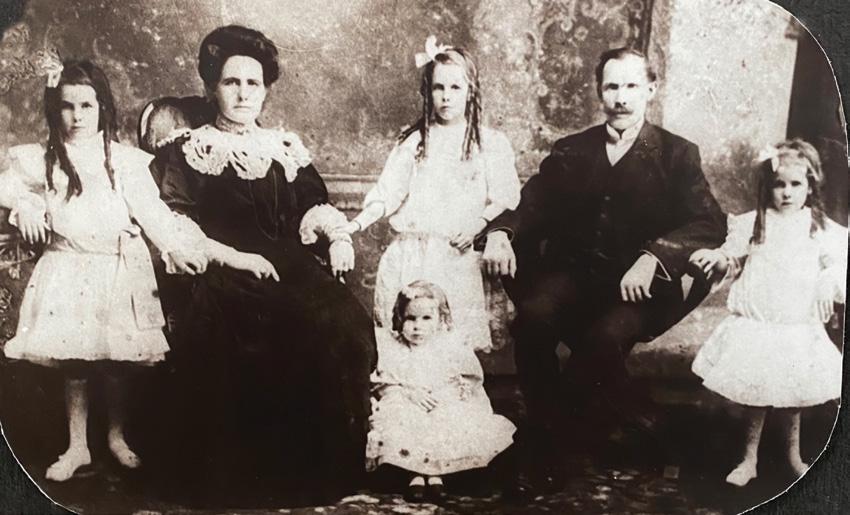
Marianne researched several booklets on our family history. In 2015 she produced one about the “Trip of A Lifetime” made by Emilie, her mother and sister Josie in 1924–1925, based on diary entries made by our mother. The following is a note made by Marianne in that booklet, telling the extraordinary story of how she came upon the photo opposite of the Dwyer family.
“When I first visited Ireland in 1979 I stayed at different farmhouses, on a tour. We passed through Cashel, and I realised sadly that I had no idea where my Dwyer forebears had lived, or where our surviving cousins there were to be

found. That evening, as we drove to the ceilidh, I told this to the farmhouse host ... ‘My wife is a Dwyer from Cashel’, he said. Next morning at breakfast, out came this photo from the family album: it was my mother and her family. A gift I suppose, on the trip my grandparents James and Kate made back to see family in 1907.”
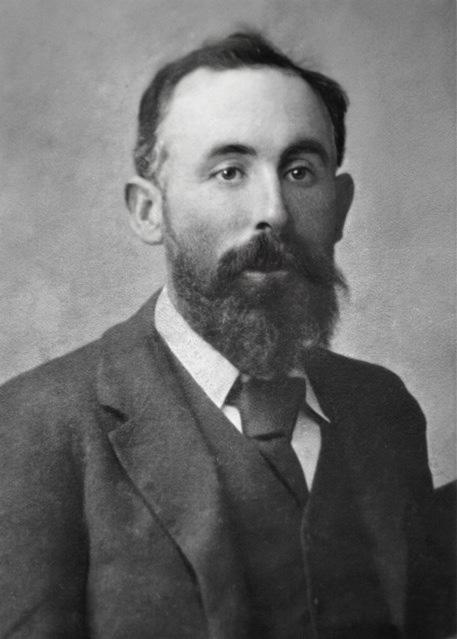
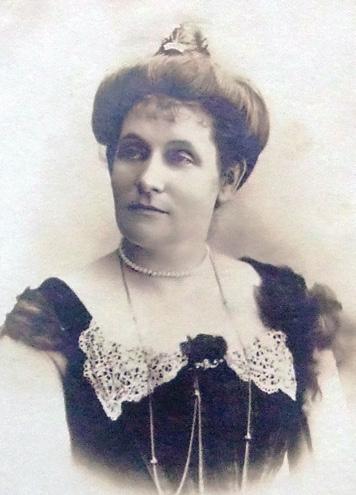
My father’s parents, Tom & Jean Payten, (nee Renwick) My mother’s family, the Dwyers, in 1907: Josie aged 8, my grandmother Katherine aka Kate, (nee Hannan), Nell at the back, 10; Ena at the front, 4, my grandfather James, 53, & my mother Emilie, 6.
The Scots were the first to come to Australia in 1839.
On my father’s side, my great-grandfather, Walter Renwick (1826 –1865) was only thirteen years old when he and his parents James & Janet –and nine of his siblings – set sail for Australia aboard the “Hero”.
Janet was also heavily pregnant with her eleventh child. How brave she must have been, leaving her home, knowing she would have the baby on board the ship.
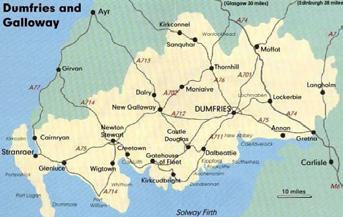
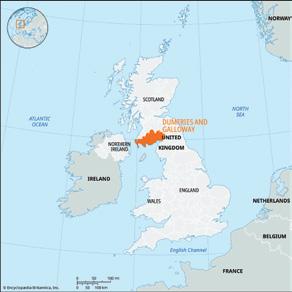
Hailing from just north of Lockerbie in Dumfrieshire, South-West Scotland, James was a tenant farmer who was tied to working for a landowner. Much of the hard-earned profit from the farm went to the owner.
So while hugely daunting for a young family, an assisted passage to Australia, and the hope of becoming landowners (which James later fulfilled), also made emigration a very attractive prospect for the family.
The Renwicks disembarked at Tahlee in Port Stephens, and travelled north for 70 kms along a bush track to the Stroud district.
They found employment with the Australian Agricultural Company, and the Renwick State Forest and Renwick Sugarloaf Mountain are today found in the area where they lived.
In 1850, 24-year-old Walter sailed to San Francisco with three of his brothers, hoping to strike it rich in the Califiornian gold rush. They didn’t have much luck there, but on returning home the brothers are recorded as being successful gold miners, after continuing the search on the Peel River, in the Nundle/ Tamworth area, and also at Burrendong creek near Wellington.
In 1855, aged 29, Walter married 19-yearold Elizabeth Armstrong (1835-1878), who also originally came from Dumfrieshire. She had been three years old when her parents, William and Margaret Armstrong, migrated to Australia in 1839.
Walter and Elizabeth ran a store and a pub at Wingham, the town where shipping on the Manning River ended. It was here that my grandmother Jean was born in 1857, as the second of six children (five girls and one boy).
Walter and his brothers were also accomplished drovers. In the early 1860’s they drove a big mob of cattle along the inland route, (shorter but steeper than the coastal route): through Walcha, Uralla, Warwick, Toowoomba and Dalby, to the newly opened up area of Rockhampton.
The journey covered a distance of 1200 kms and took over six months. Walter is duly remembered for this incredible feat in the Australian Stockmen’s Hall of Fame in Longreach. Elizabeth and the six children came up by boat to join him.
holidays, trips & travels: 1978–2018
Unfortunately in 1865, Walter fell ill of an overpowering “gastric fever” and died at the age of 38. It was probably typhoid fever, which was not uncommon in the port town of Rockhampton in those early days. Tragically, within a day, Elizabeth also lost her younger brother Richard Armstrong, aged 24, from “pulmonary phthisis, consumption of the lungs,” (that is, tuberculosis).
Elizabeth was a widow at the age of thirty, with six children, aged between two and nine years old. My grandmother Jean was the second-oldest, at seven years.
After returning to Sydney, in around March 1868, Elizabeth was pregnant again. (We have no details of the relationship.)
In June 1868, Jean, now eleven, and her three younger sisters were placed in the Protestant Orphan School near Parramatta, where they were given schooling until lunch time and taught domestic duties in the afternoon.
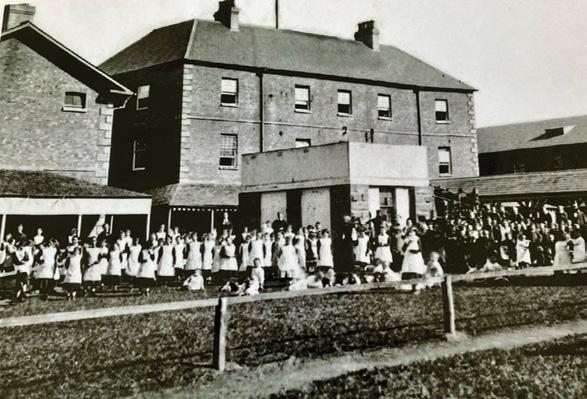
Photo of the Protestant Orphan School taken in 1870, probably including Jean.
The eldest, Margaret, was thirteen and old enough to go out to work. The youngest child, William, stayed with his mother.
Baby Catherine was born in December 1868, but died from “mirasmus” aged only seven weeks. This is a condition most likely resulting from pyloric stenosis, which causes projectile vomiting, leading to malnutrition and eventually starvation. These days it can be cured by a simple operation, which I witnessed on a few occasions working at The Childrens’ Hospital, with very good results.
In 1870, Elizabeth re-married, to widower Thomas Blades of Douglas Park. The younger three girls were able to leave the Orphan School and reunite with their mother.
By that time, my grandmother Jean had turned thirteen, so after being discharged from the
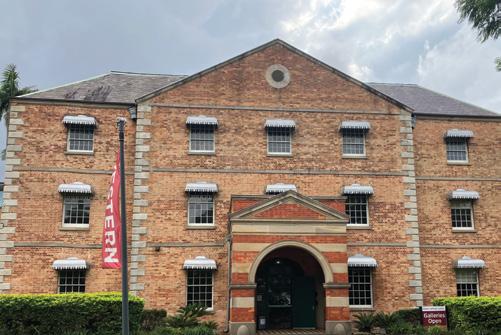
The Orphan School building & The Great Northern Hotel in Maree, as they are today.
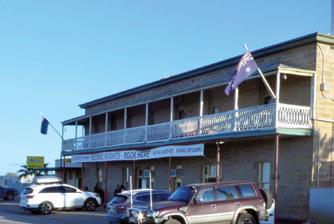
Orphan School, was apprenticed to a well-todo Scottish Presbyterian family in Balmain as a live-in domestic employee. She stayed there for about five years.
Jean’s only brother William, (the baby of that family), ended up running the big stone Great Northern Hotel, found on the bottom end of the Birdsville Track, at Maree in South Australia. That’s where cattle from Queensland would be yarded to meet the railhead from Port Augusta and Adelaide. Maree was also the hub for the camel trains heading North. William died in 1899 aged only thirty-six but his son, (also William), ran the Great Northern in the 1930s.
Elizabeth had three more children with Thomas Blades, making it ten children in over twenty-three years of childbirth. Sadly, at just forty-three, she died in 1878.
Some of the older Blades boys, (Elizabeth’s stepsons and Jean’s step-brothers), worked on the nearby Macarthur’s Camden Park Estate, where the Payten family were living and the Payten boys also worked. And that probably explains how my grandmother Jean came to meet Tom Payten, my grandfather.
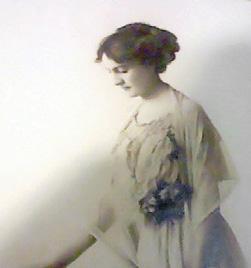
The affectionate letter in our family archives, written by Jean to Tom during their courtship, shows that she had received a good education at the Orphanage.
The love letters did the trick, and Jean Renwick and Tom Payten were married in the Waverley Catholic Church in June 1881.
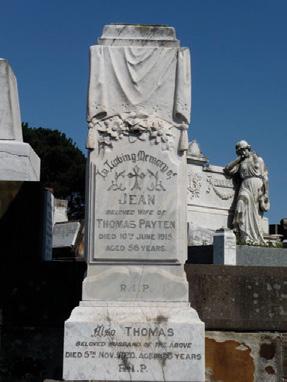
After a long illness, Jean died in 1915 of renal failure, aged fifty-eight years. She is buried with Tom in the Randwick Cemetery, amongst a group of Payten graves.

A typewritten copy of Jean’s affectionate letter to Tom Payten; Jean as a young woman; their graves in the Randwick cemetary.
The first of our Irish ancestors to arrive in Australia in 1842 was my father’s grandfather, Martin Payten. He was of uncertain age, (because church records did not exist in Ireland), either in his late 20s or mid-30s.
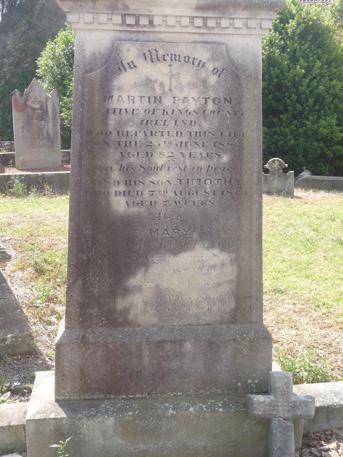
Grave of Martin & Mary Payten in Campbelltown. Opposite: from “Sportifacts”, in the Daily Mirror, 1982.
Martin hailed from Tullamore in County Offaly, (previously Kings County), and became a tenant farmer for John Macarthur at Menangle, south west of Sydney.
Martin married a young Irish girl, Mary Connor (1830–1903). Having survived the Irish famine of the late 1840s, Mary left her family in Shanagolden, (west Limerick, not far south of the Shannon River), for ever in 1850.
Her journey to Australia was on the “Emigrant”, which became infected with Typhus during the voyage. This is an infectious disease, which we now know to be transmitted by lice, (but wasn’t known then).
While on board, and later during quarantine on Stradbroke Island for several months, Mary cared for six orphaned children from two families. The book “Ship of Death,” by Jane Smith, is about the ill-fated ship and its voyage, and is dedicated to the author’s two children and that plucky Irish girl Mary Connor. (See pages 63 & 64 for more).
After their marriage in 1852, Martin and Mary had twelve children, and the secondeldest was Tom, my father’s father. Both could read but they couldn’t write, having been forbidden schooling by the English occupation.
Mary had the reputation of being a great wit. I heard this first-hand from two old ladies who I met as patients in Menangle, and knew Mary when they were children. (See page 64).
Unusually for a woman at that time, Mary had her obituary published in the Freemans Journal, and it noted the very large number of people who attended her funeral. Martin died in 1882, and his obituary in the publication “Early Menangle”, says “he possessed a wide circle of friends, being of that kindly nature which made him popular with all classes”.
Mary and Martin are both buried in the St Johns Catholic Cemetery, George Street Campbelltown, along with their son Timothy who died in childhood, (close to the grave of James Ruse).
Most young men were familar with horses at the time, and Tom rode and worked with horses from a young age. His path to becoming a leading racehorse trainer began when he left school in 1869 at the age of fourteen. With so many younger siblings to feed, he had to go out and find work.
He began at the Kirkham horse stud, on the Camden Park Estate, owned in the 1870s by politician and wealthy upper Hunter landowner James White. He had also purchased the Newmarket house in Randwick Randwick, and had a big stable there.
Tom had been noticed as being talented with horses, and eventually went to work as an
assistant to White’s horse trainer Michael Fennelly at Randwick. After marrying Jean Renwick in 1881, the couple initially lived on Jane Street, Struggletown Randwick, but then moved to a larger house on the corner of Avoca and Helena streets, (the house is still there).
The wealthy James White was able to purchase some good horses, and finished the 1882/1883 season as Australia’s leading owner of winners.
In the last few years of his life Fennelly was increasingly unwell, and relied on young Tom to follow his instructions about training. When Fennelly died in 1887, Tom had clearly impressed White enough that the owner told him that since he had effectively been training his horses for the past few years, he may as well continue by becoming his full-time trainer.
Tom was just thirty-two years of age. He was tall and had a distinctive beard, described in the 1988 book “Australian Horse Racing” (by Jack Pollard) as having “movie idol’s good looks and a soldier’s straight back”.
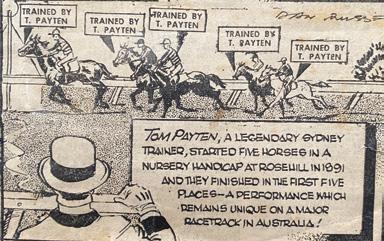
In the autumn of 1888, in his first year as head trainer for James White, Tom took a team of horses down to Melbourne and won nine of the richest races at Flemington.
Tom became very successful. He had a very good eye when it came to buying yearlings, and excelled in the training of two-year-olds.
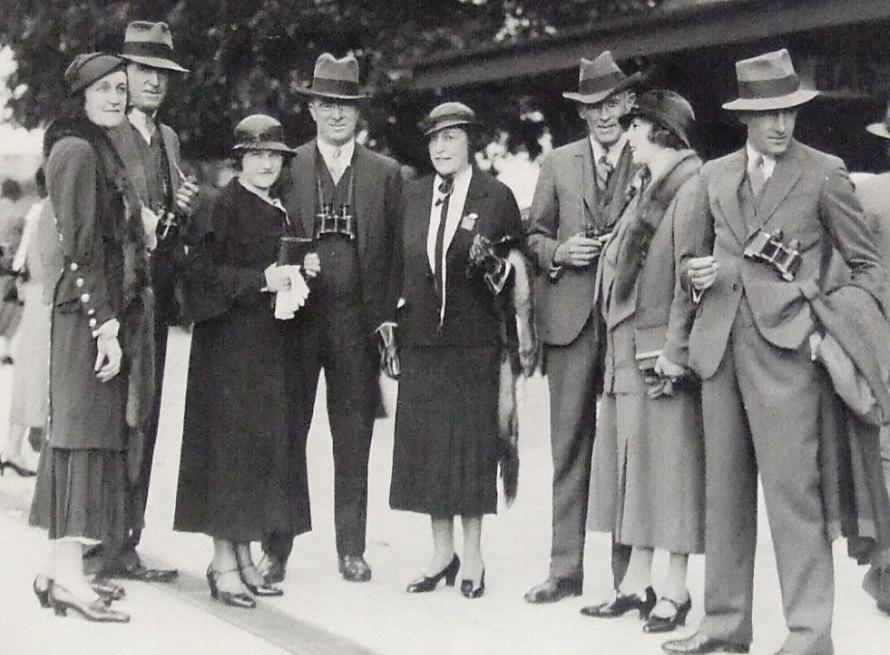
The Payten family at Randwick races, around 1930:
Auntie Lorna, Uncle Tom, Auntie Dot (Bayly’s wife), Uncle Leo Maloney, Auntie Doris, Uncle Leo Payten, his wife Auntie Eva, Uncle Bayly.
He was said to be able to identify all of the horses doing track work in the early dawn light at Randwick racecourse, and was thus in a position to know the fitness of his opposition. This allowed him not only to select into which race his horses should be entered, but when to have a reasonably safe bet.
He must have been smart, because when James White died in 1890, Tom was able to purchase Newmarket – at the age of thirty-five.
By the time he and Jean moved into the famous grand old Newmarket home they had four children. My father Jack was born here in 1901, the youngest of their eight children. He had three sisters: Lorna, Doris and Jean, and four brothers Leo, Tom, Bayly and Joe.
Tom initiated the Newmarket yearling sales in 1897, and eventually leased part of Newmarket for these sales to auctioneer John Inglis in 1905. The whole of the Newmarket complex
was sold to William Inglis & Son in 1918. Tom retired and bought a house, “Cambooya,” in Arthur St. Randwick, but died suddenly of a heart complaint in 1920, aged 69.
Before his death, Tom had purchased properties in the Canowindra district for sons Leo and Tom, in the Gooloogong/Eugowra district for Joe and Jack, and built training stables for Bayly in Randwick.
Both Tom and Bayly are in the Australian Racing Museum and Hall of Fame, Tom being the first to win over two hundred feature races, and Bayly being the leading trainer in Sydney for every year except one from 1940 to 1948, before his untimely death.
I have no doubt that Tom’s legacy can be seen in the current generations of the Payten family. His talent and hard work directly resulted in providing opportunities to this day, for all of his descendants.
Payten,
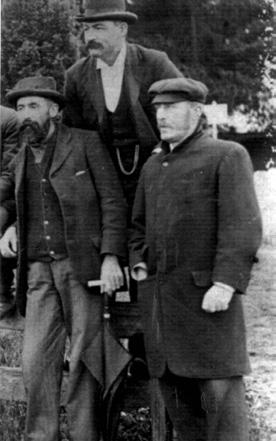
Tom Payten, younger brother Martin & Stan Lamond
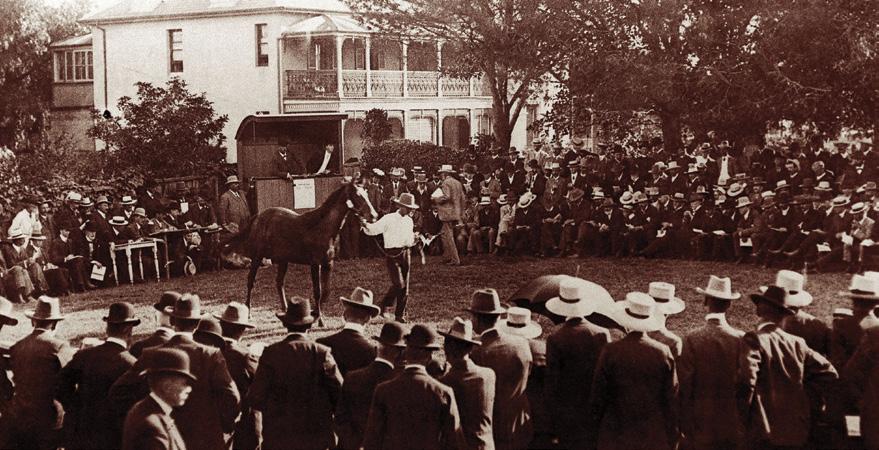
Yearling sales in front of the house in 1918, Tom’s final year at Newmarket

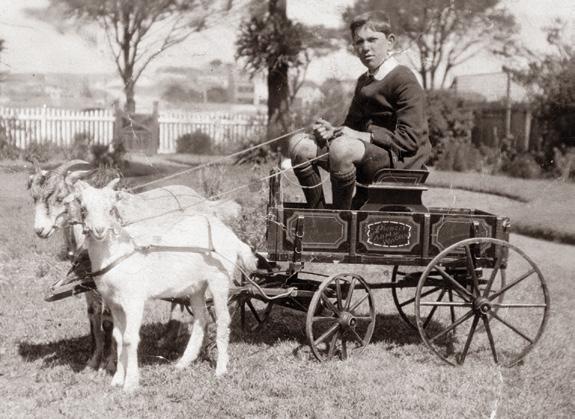
Following is part of the story (as told by Helen) of Billy the Goat from Marianne’s booklet, The Payten Family of Newmarket: “Of all the pets at Newmarket, the one most often heard about in later years was Billy the goat, trained by Jack to pull a little billy-cart.
Jack said it was like ‘breaking in a two-year-old’. He drove Billy with a second goat, not only inside the Newmarket grounds, but outside too, around the streets of Randwick. The goats were very prone to suddenly swerve into someone’s garden or front hedge if they saw something good to nibble.”
My grandparents James & Katherine, known as Kate, emigrated from Ireland in the early 1890s. They both arrived here with nothing.
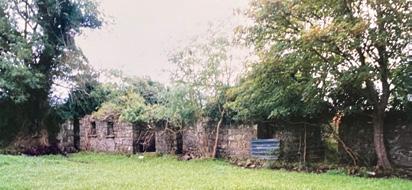
Ruins of the house in Ireland that my grandfather James grew up in.
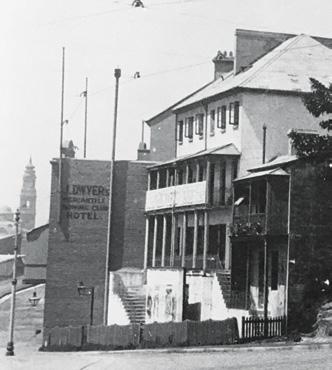
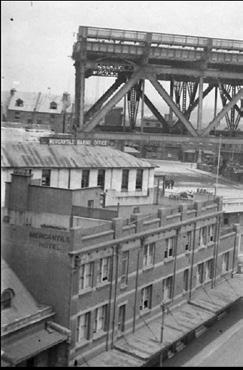
Below left: The original ‘J. Dwyer’s Mercantile Rowing Club Hotel’. Below right: the new Mercantile Hotel on George Street – the Harbour Bridge seen behind under contruction.
James, in his mid-30s, had come from the Cashel area in County Tipperary, and Kate, in her mid20s, had followed a number of her brothers and sisters across from Kildorrie in County Cork. (Ten of the eleven Hannan siblings eventually came to Australia). They both got work in Sydney to begin with as a labourer and a domestic.
In 1998 when Mairi and I visited my second cousin Sean O’Dwyer, a pharmacist in Cashel, we were shown where my grandfather James had grown up nearby. It was in a very basic tworoomed, rectangular stone dwelling, about thirty metres long. The roof was gone, having being pulled off by the English to punish the family: his cousin, Tim, was a Freedom fighter and had evaded capture.
One of the few ways that Catholics could get ahead in those days was to run a hotel. (Job advertisements sometimes included: “Catholics need not apply”. Irish Catholics were often without much formal education, but also were looked down on and mistrusted by those of English origin). Six years after arriving in Australia, James Dwyer had saved up enough to marry Kate and buy a hotel license. James Dwyer was the first licensee of the Mercantile
Rowing Club Hotel at Campbell’s Cove in The Rocks, across from the Mercantile Rowing Club. He and Kate worked hard and did well, with scullers from the club across the road being good customers. Rowing clubs were a big part of Sydney life at the time, but the Mercantile Rowing Club’s lease on their site down by the water’s edge expired in 1911, so the club moved to Mosman, (becoming the Mosman Rowing Club of today).
The Dwyers had four daughters in quick succession, all born and raised upstairs: Nell, Josie, Emilie (my mother, born 1901) and Ena. Mum told us that from the Hotel there was a clear view of the harbour on which they could see ships anchored, some with both sails and funnels. The Mercantile Rowing Club Hotel was knocked down in 1914, because the land was needed to build the south pylon of the Sydney Harbour Bridge.
The renamed Mercantile Hotel was built not far away on George Street to replace the original, and opened in 1915. It has traded continuously since then, gaining a reputation as “Australia’s oldest Irish Pub”.
In December of that year, James and Kate’s youngest daughter, Ena, died suddenly, aged nearly twelve. It was recorded as scarlet fever, but my mother always thought it was from an infection from a cut on her finger, (probably streptococcal septicaemia). My mother was very close to her little sister, and used to say that the family never got over her death, particularly her father James.
Music was everything to the Dwyer girls, who grew up being taught by the Mercy nuns in primary school at Newtown, then in secondary school at OLMC Parramatta, where they
boarded. After proving herself a talented musician at school, my mother went on to study at the Conservatorium of Music in Sydney. She graduated from there in the early 1920s, making her our family’s first university graduate. Her first job was as the piano player on a ship to Tasmania, and she would occasionally fill in for the regular pianist at the local picture theatre, playing musical accompaniment to silent films.
After the loss of Ena, the family were increasingly unhappy living at the Hotel, and eventually moved to Randwick, first in 1918 to a place on Darley Road. In 1920, James and Kate bought “Waroona”, at 65 St Paul’s Street. James is recorded as attending the funeral of Tom Payten that year at Our Lady of the Sacred Heart in Randwick.
In July 1921, just a few days after cutting the big sloping front lawn at Waroona with a scythe in apparent good health, James died suddenly, aged 66. He is buried in the Waverley Cemetery along with his wife, Katherine. (My sister Jean, who died of cot death as an infant in 1934, is also buried there).
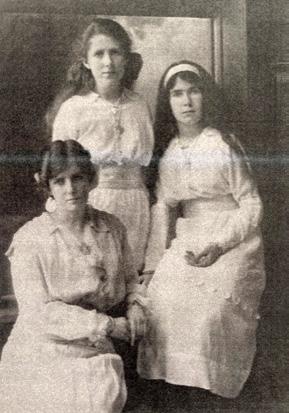
Nell, Emilie & Josie Dwyer at their boarding school, Our Lady of Mercy College Parramatta, 1914.
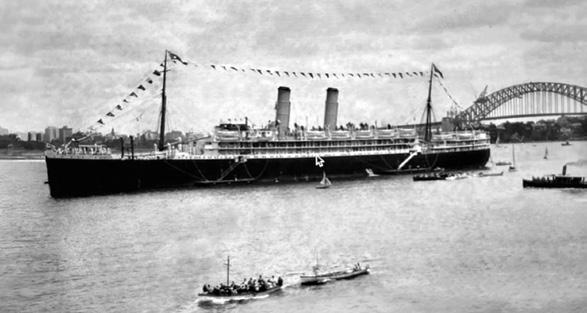
The Ormonde leaving Sydney Harbour, with my parents and the Australian Olympic team on board.
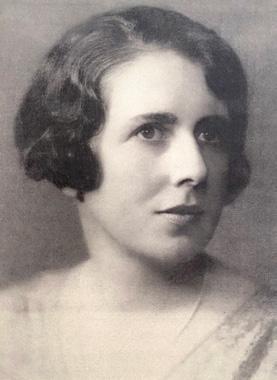
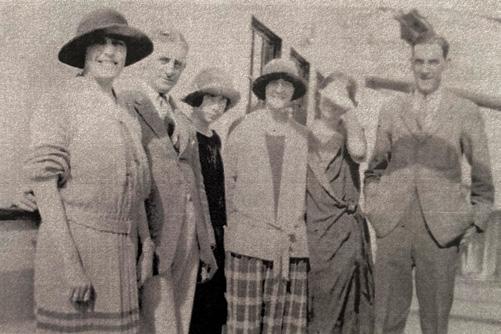
My mother, Emilie: a stylish young woman of the 1920s. On deck: Doris Payten, Os Merret, (manager of the Olympic team),
Josie Dwyer, Jean Payten, Emilie & Jack.
The Troubles in Ireland had settled down by the end of 1923, and at last the widowed Kate and many of her Irish-born friends thought it safe enough to go home to see family and old friends.
Passage was booked on the R.M.S. Ormonde and Waroona sold. (It happened that the Dwyers sold their home to Lorna and Leo Maloney, my father Jack’s sister and brotherin-law, who renamed the house “Kittabah”. Lorna lived in the house for thirty years, so the Payten family came to know what had been the Dwyer home very well).
On 30 April 1924, Nanna, (Kate), Mum (Emilie) and Aunty Josie set off for the “trip of a lifetime”. The Australian Olympic team were also passengers, on their way to the Paris Olympics, including famous swimming gold medal winner Andrew “Boy” Charlton. The ship was farewelled at Circular Quay by a madly cheering crowd throwing thousands of coloured streamers.
Many of the Dwyer’s friends and aquaintances were on board, including Jack Payten and his older sisters Doris and Jean, heading to Ceylon (Sri Lanka) for a holiday. After arriving in Randwick as a teenager four years previously, Emilie would have got to know Jack and the Payten family through the church. Jack had already gone out west to run the farm his father Tom had bought him, but was joining his sisters on this trip as he recovered from a bout of pneumonia.
Emilie’s diary records time on the Ormonde passing in a whirl of balls (masked and fancy dress), parties, cards, concerts and singalongs, with sports and games on deck, as well as many onshore excursions. There are frequent mentions of Jack, and her entry on May 21
records that after the ship arrived in Ceylon and docked in Colombo, when it came time to say goodbye to Jack , Emilie “felt quite sad”.
When the holiday ended, Jack returned to ‘Kaloola’, his farm in the Lachlan valley, twenty-five miles from Forbes. Possibly there had been a blossoming on-board romance between my parents, both aged 23 at the time, which led to their eventual marriage seven years later. Mum’s dear school friend Nora Cassidy had also been on the Ormonde. A story passed on by Nora’s daughter was that Jack had proposed before their goodbye in Colombo – but Emilie turned him down!
The Ormonde arrived on the docks in London on June 17. After renting a flat in Kensington, Emilie and Josie spent two months here with their mother and other Australian-Irish friends from home. Their adventures continued in Ireland and on further travels to the Continent and America. They finally returned to Sydney via Tahiti on 18 March 1925.
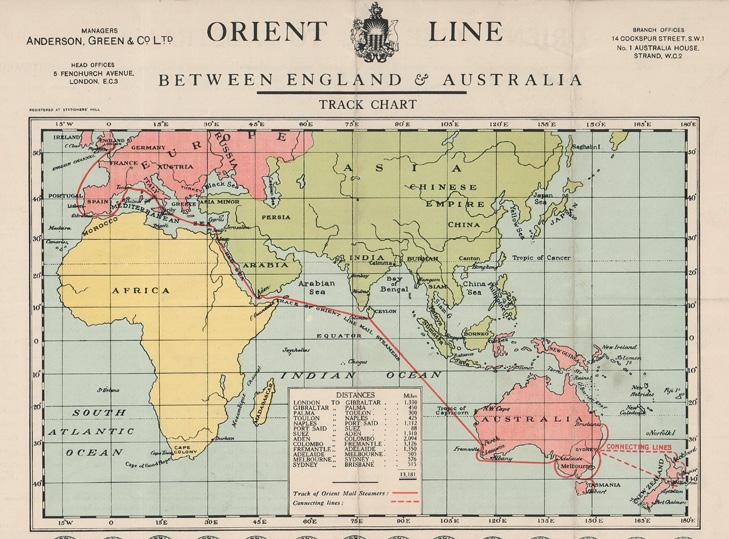
Route of the “Ormonde”in 1924: departed Sydney 30 April; in port of Colombo 21 May; docked in London June 17.
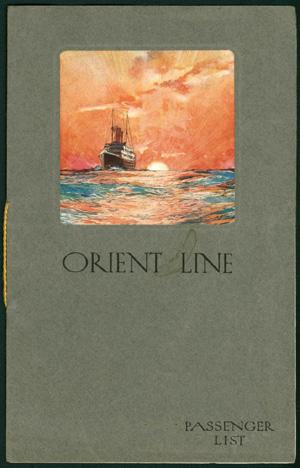
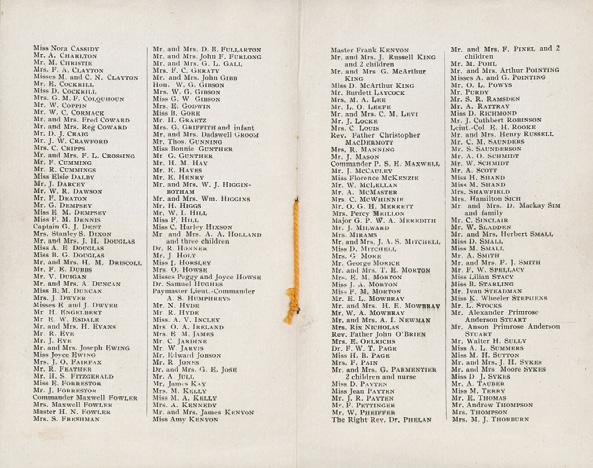
Passenger list from the trip: dots have been added to note members of my family and the famous swimmer, Andrew “Boy” Charlton.
James Renwick
b. Scotland 1783–1854
Arrived Aust 1839
GREAT-GREAT-GRANDFATHER
Janet Kennedy
b. Scotland 1794–1878
Arrived Aust 1839
GREAT-GREAT-GRANDMOTHER
William Armstrong
b. Scotland 1807–?
Arrived Aust 1839
GREAT-GREAT-GRANDFATHER
Margaret Beatty b. Scotland 1813–?
GREAT-GREAT-GRANDMOTHER
Walter Renwick
b. Scotland 1828–1865
Arrived Aust 1839
GREAT-GRANDFATHER
Jean Renwick 1857–1915
GRANDMOTHER
Elizabeth Armstrong
b. Scotland 1835–1878
Arrived Aust 1839
GREAT-GRANDMOTHER
Martin Payten b. Ireland 1806?–1882
Arrived Aust 1841
GREAT-GRANDFATHER
Thomas Payten 1855–1920
GRANDFATHER
Mary Connor b. Ireland 1831–1903
Arrived Aust 1850
GREAT-GRANDMOTHER
So, to end this story of where did we come from: my parents
Emilie Dwyer, of Irish descent, married my father Jack Payten of Irish and Scottish descent. That makes me 75% Irish & 25% Scottish.
James Dwyer b. Ireland 1858–1920 Arrived Aust early 1890s
GRANDFATHER
John (Jack) Payten 1901–1974
Helen Payten (Malloy) 1932
Jan Payten 1935
Kathie Payten (Mason) 1937
Robert (Bob) Payten 1939
David Payten 1942
Marianne Payten 1944–2023
Emilie Dwyer 1901–1985
Katherine Hannan b. Ireland 1869–1955 Arrived Aust early 1890s
GRANDMOTHER
Acknowledgements: Many thanks to Mairi for deciphering my “scribble” & typing out every single word, also for the photographs of our travels & all the family albums over the years; to Caroline for the layout & editing; to Alan & Jan Oxenham for their encouragement. Back cover: sunset from the Club Tunstall verandah, Sunday 13th July 2025.