Suzanne Smithson, Director, Library & Cultural Arts
Mike Strong, Director, Community Development
Amy Ventetuolo, Director, Communication & Engagement
James Wood, Jr., Director, Environmental Sustainability
Department budget preparers & advisors
Rosario Aranda, Environmental Sustainability
Deborah Baird, Fire Department
Pat Downie, Office of the City Clerk
Brent Gerber, Information Technology
Emily Hasegawa, Construction Mgmt. & Inspection
Sarah Lemons, Communication & Engagement
Lovelynne Magalued, Transportation
Jennie Marinov, Fire Department
Debbie Jo McCool, Library & Cultural Arts
Bradley Northup, Fleet & Facilities
Ana Palomo-Zerfas, Utilities
Megan Powers, Public Works Administration
Kim Riboni, Finance
Katie Schroeder, Office of the City Treasurer
Flora Waite, Office of the City Attorney
Tom Zetz, Fleet & Facilities
Conrad Avila, Finance
Jessica Dorsey, Human Resources
Fiona Everett, Library & Cultural Arts
Lindsey Hansen, Communication & Engagement
Chad Kantner, Parks & Recreation
John Maashoff, Fleet & Facilities
Rachel Maltz, Economic Development
Kayla Mauro, Finance
Roxanne Muhlmeister, Finance
Robin Nuschy, Office of the City Attorney
Debbie Porter, Human Resources
Haley Quincey, Housing & Homeless Services
Laureen Ryan, Community Development
Amanda Simpson, Police Department
Marsha Weeks, Parks & Recreation
BUDGET
& LEADERSHIP
STRATEGIC DIGITAL TRANSFORMATION INVESTMENT PROGRAM
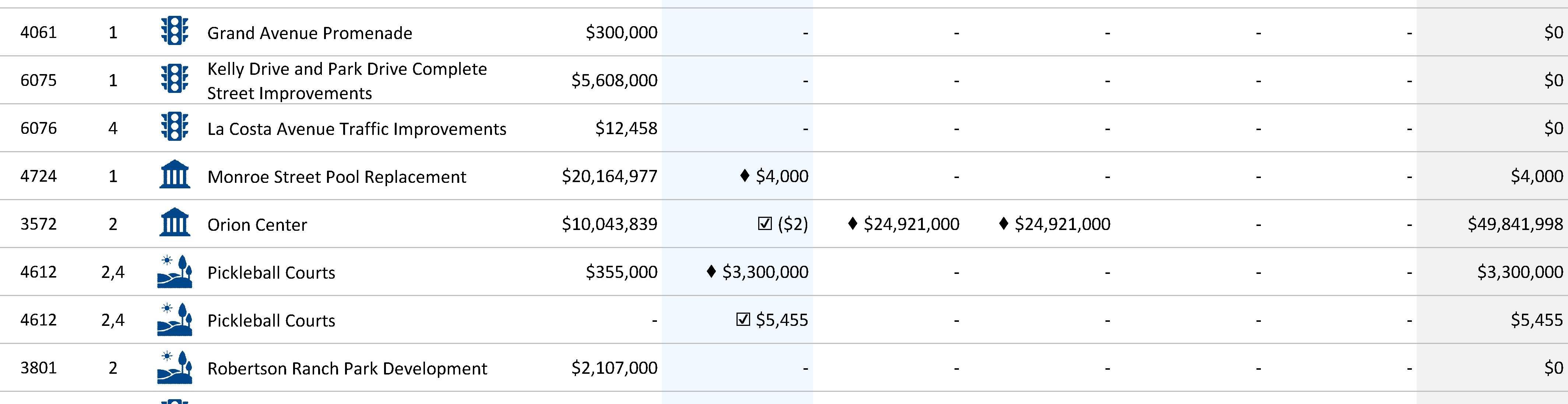
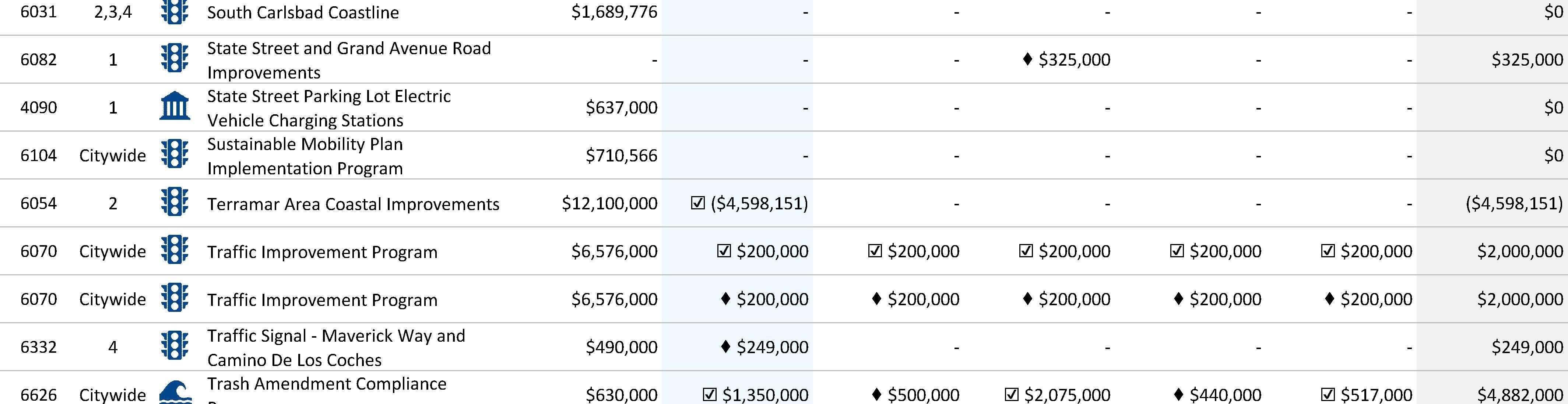
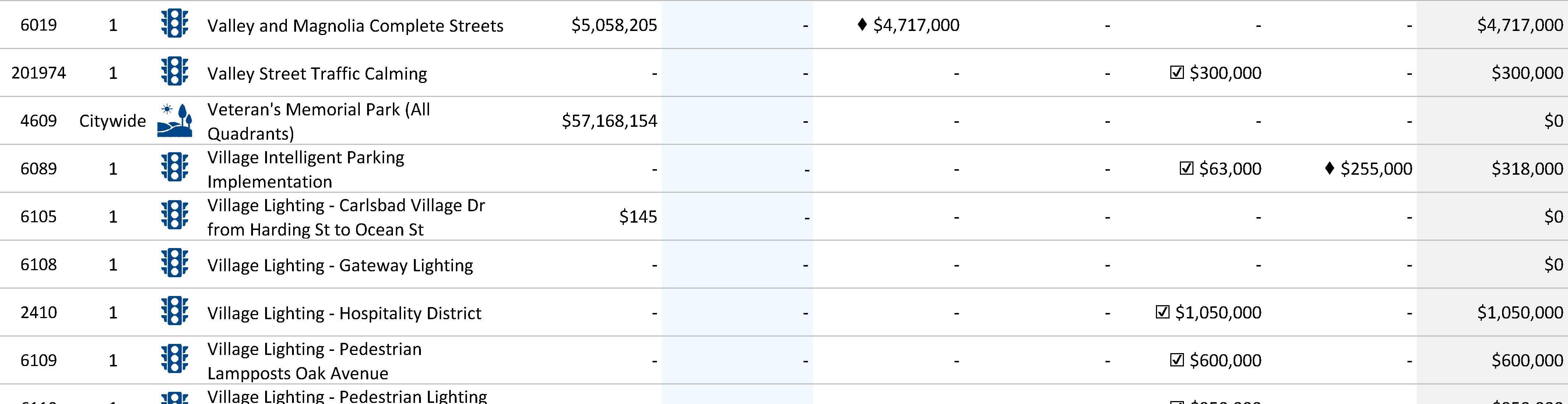
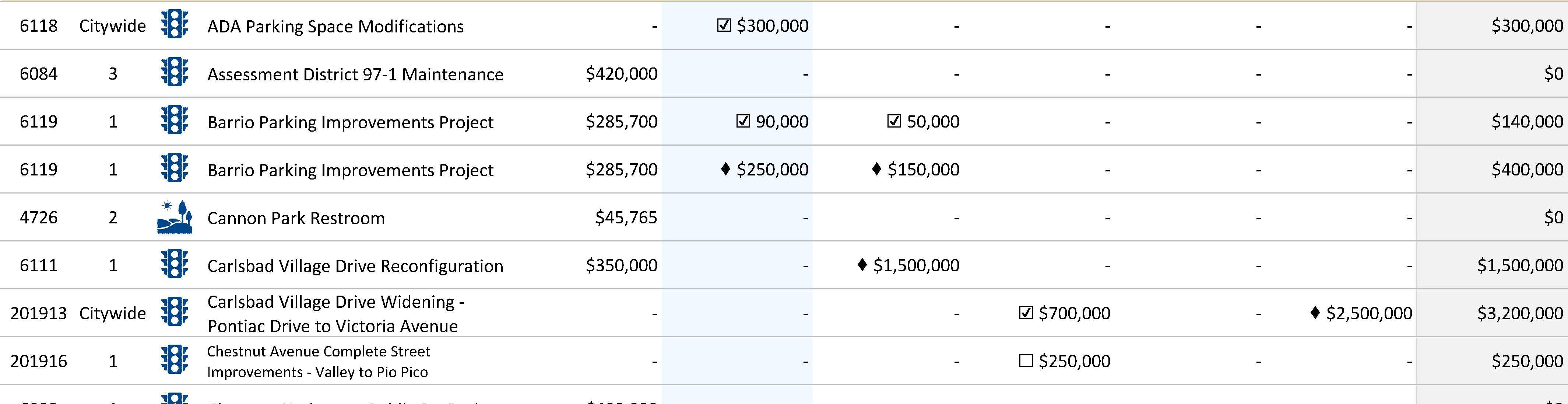
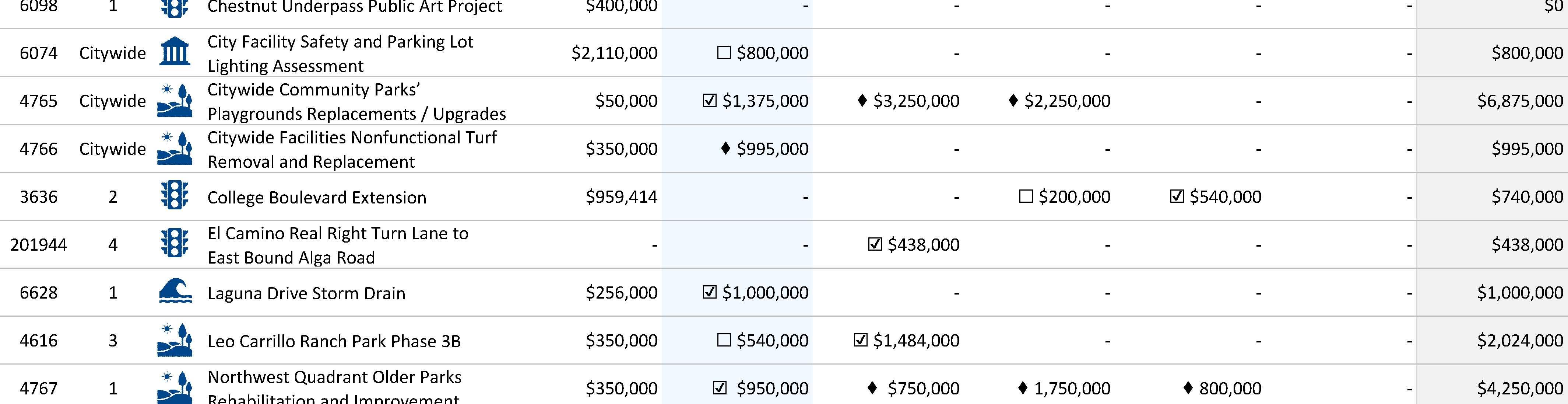
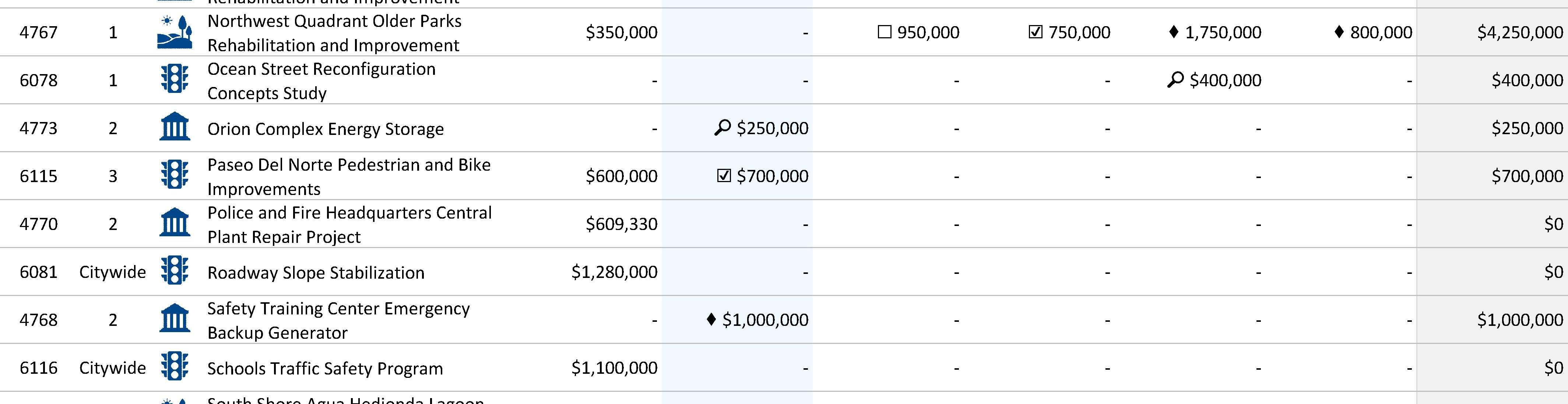
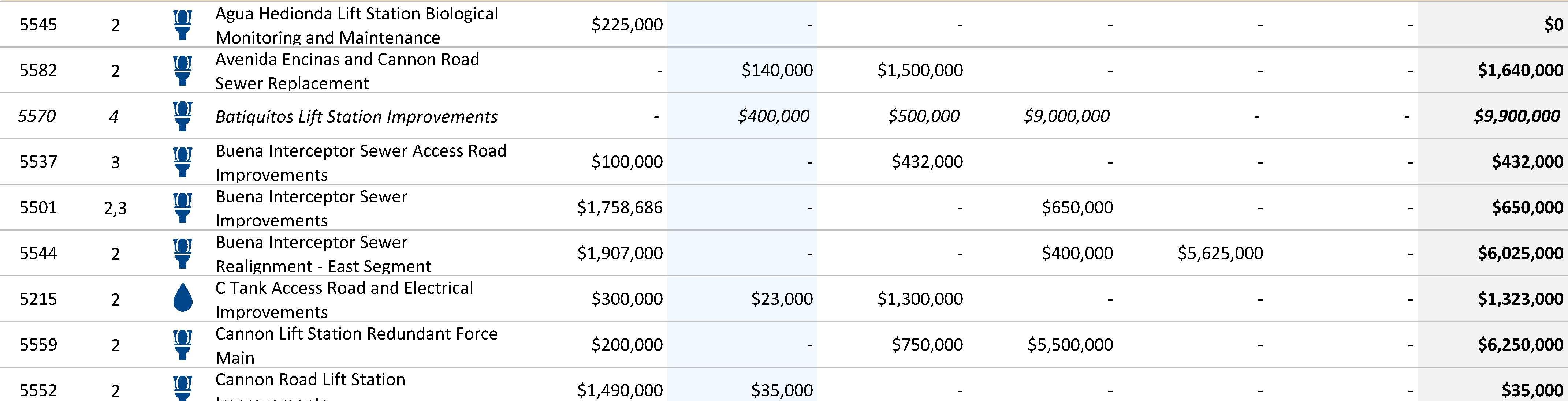
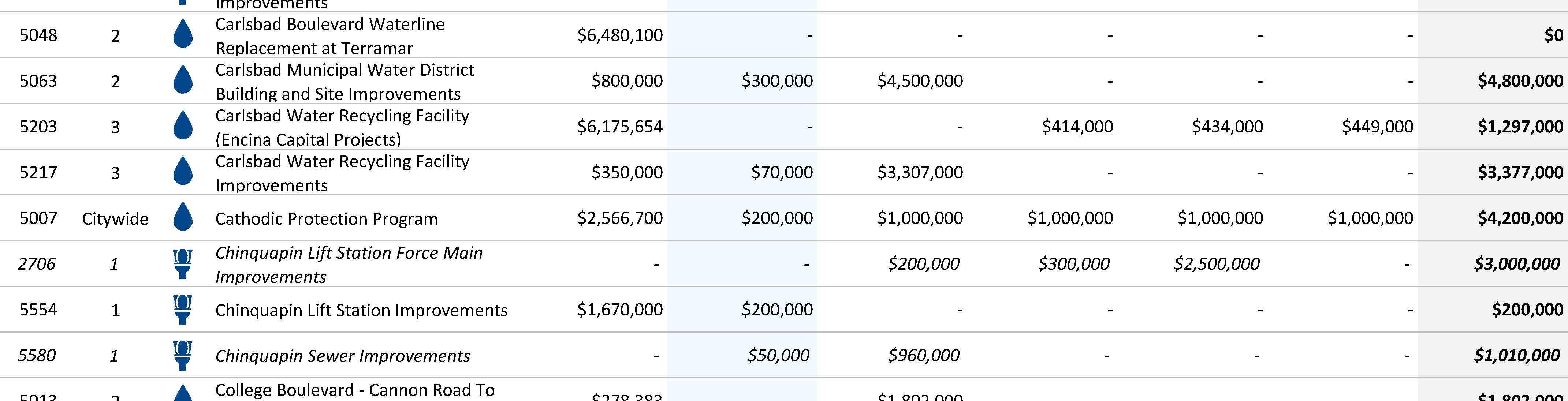
CAPITAL IMPROVEMENT PROGRAM
OVERVIEW
This section includes a summary of the revenues and expenditures included in the fiscal year 2026-27 operating budget. Spending is presented by funding source, department and type, such as personnel or maintenance and operations. For context, previous years’ spending levels are often presented alongside this information. Financial tables are presented to the nearest hundred thousand; rounding differences may exist.
Detailed summaries of department services and expenditures are included within the five main sections of the operating budget following this overview. The five city branches include:
• Public Safety
• Public Works
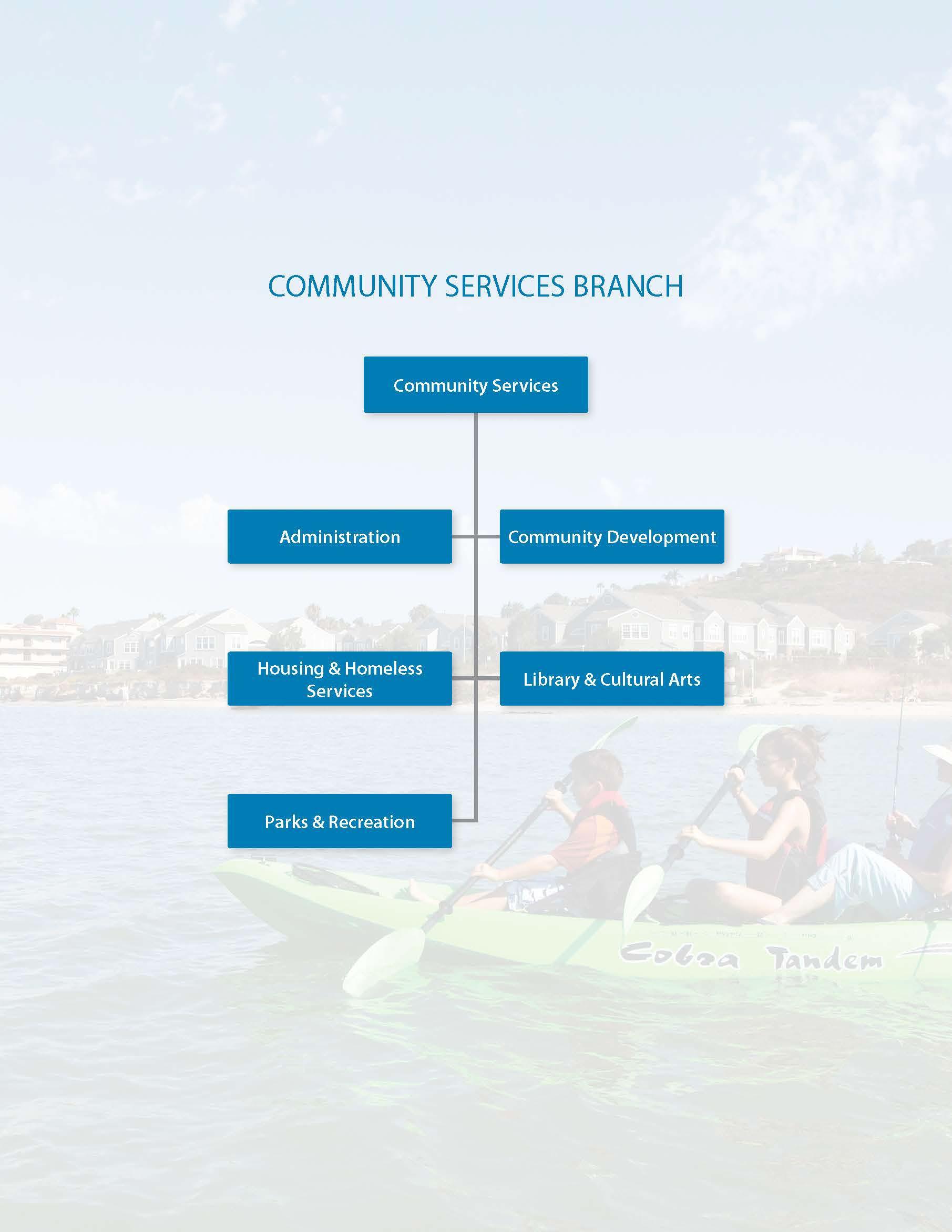
• Community Services
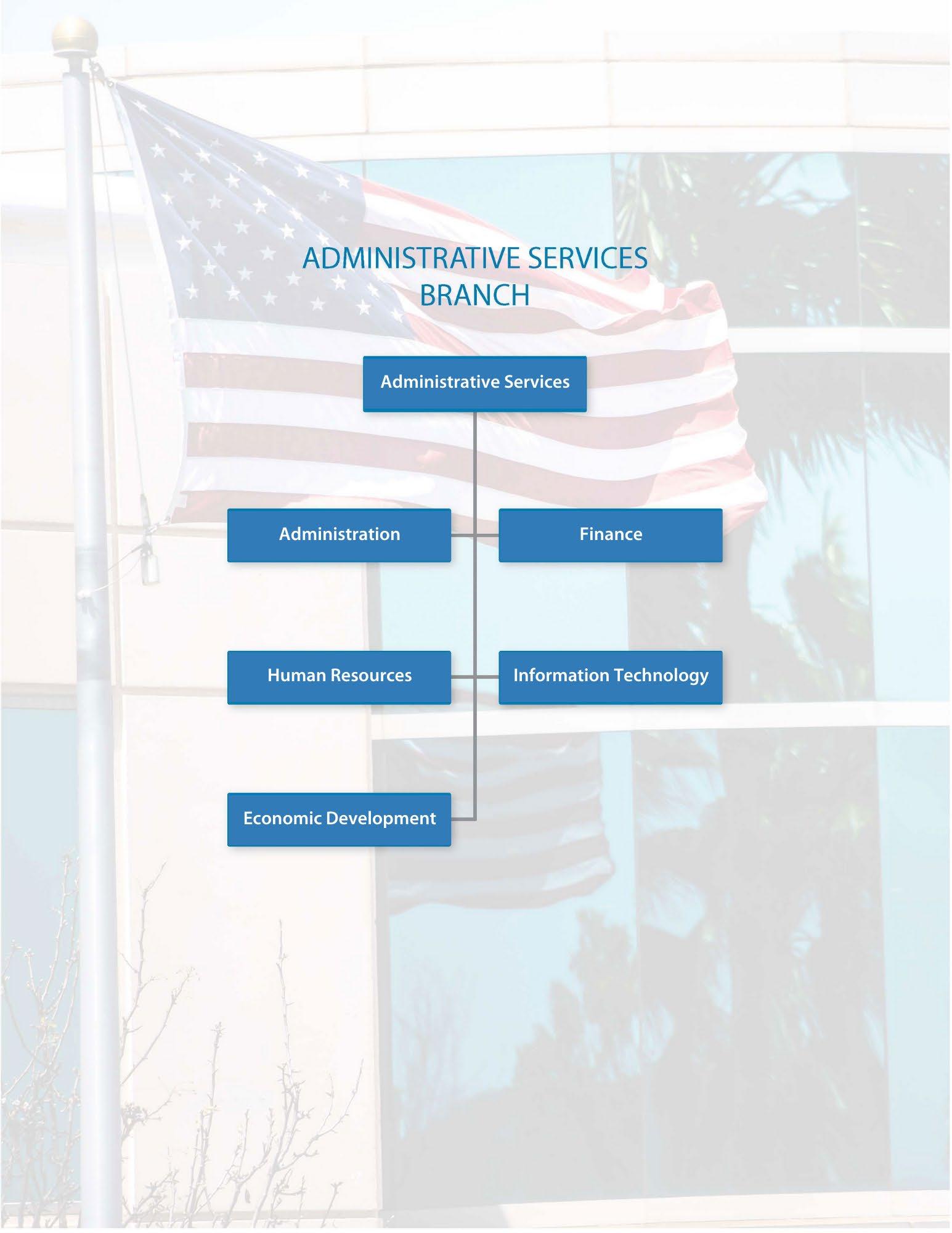
• Administrative Services
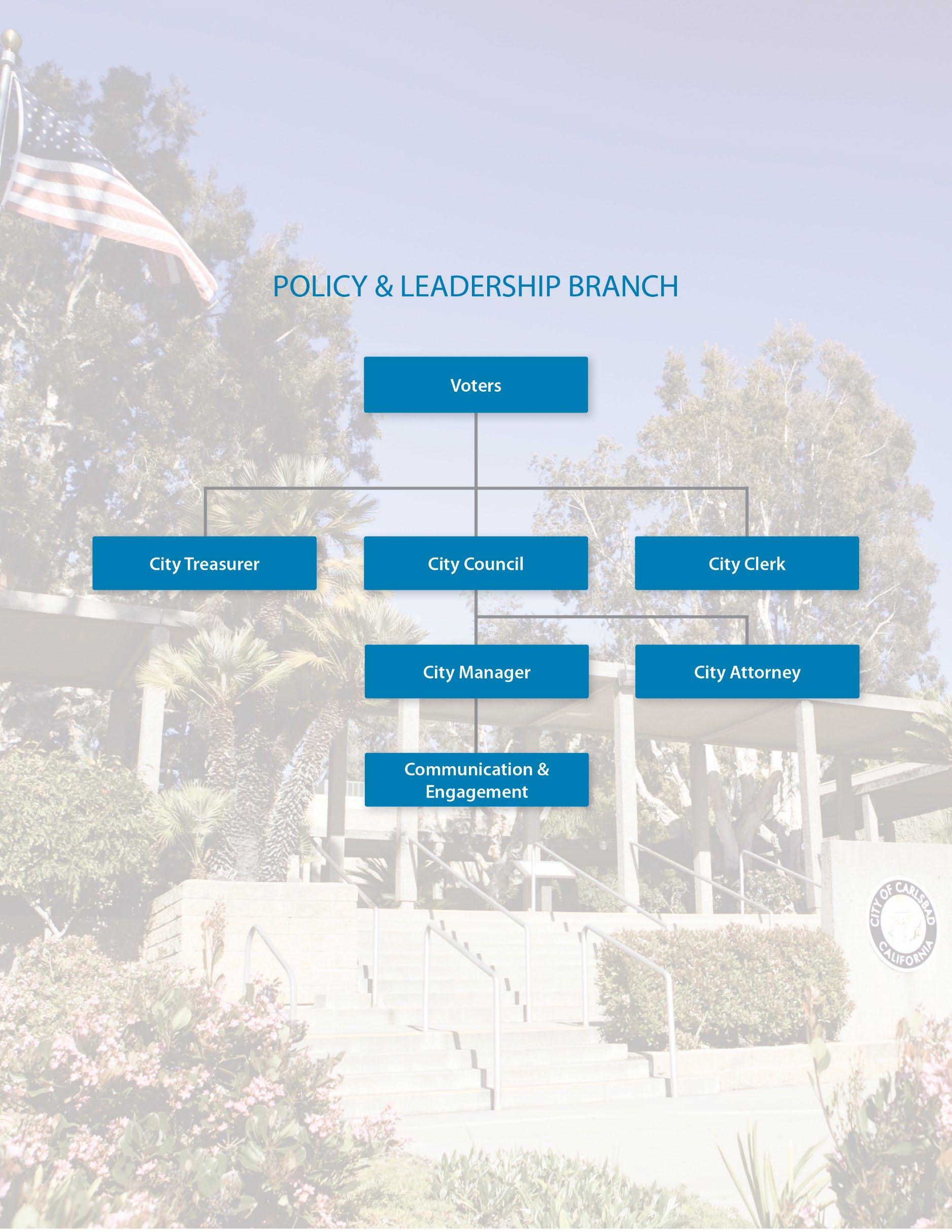
• Policy & Leadership
Information about the city’s approach to planning for and funding digital transformation efforts throughout the city is included in the Strategic Digital Transformation Investment Program section
Information about capital projects, such as construction of roads and pipelines, the development of parks and construction and maintenance of city facilities, is included in the Capital Improvement Program section.
REVENUE
The Operating Budget for fiscal year 2026-27 totals $449.2 million, with revenues for the year estimated at $451.3 million. General Fund revenues are estimated at $249.6 million and General Fund budgeted expenditures are $249.1 million, which includes an additional $5.0 million in one-time transfers to the Solid Waste Management Enterprise Fund for Stormwater Protection programming Excluding the one-time uses of General Fund surplus, the General Fund budgeted operating expenditures are $244.1 million.
Revenue estimates for the Operating Budget indicate the city will receive a total of $451.3 million in fiscal year 2026-27, a change of 0.2% or $1.1 million below the estimated fiscal year 2025-26 revenues. General Fund revenues are expected to increase by $6.3 million or 2.6% compared to the prior year’s adopted revenues, and the same when compared to fiscal year 2025-26 estimates. Special Revenue funds are projected to decrease by 26.8% or $9.7 million over fiscal year 2025-26 estimates driven primarily by one-time Encampment Resolution funding received in fiscal year 202526, in addition to smaller decreases in CDBG, Tyler Court, Affordable Housing Trust Fund, and the COPS Fund. Enterprise Fund revenues are projected to increase by 2.9% or $3.6 million in the upcoming fiscal year. Internal Service Fund revenues are decreasing over the prior year’s adopted budget by $1.3 million, or 2.6%. This is primarily driven by a reduction in chargebacks for Vehicle Replacement and Information Technology in an effort to maintain their respective reserve levels inline with industry standards. The Successor Agency Housing Trust is no longer receiving any material revenue as the loan owed to the General Fund has now been fully repaid. More detailed information on the city’s revenue sources is provided in the following discussion.
The following table shows the total operating revenues anticipated to be received by the city for fiscal year 2025-26, as well as those budgeted for fiscal year 2026-27
REVENUE SUMMARY BY FUND TYPE (in Millions)
Fund
General Fund
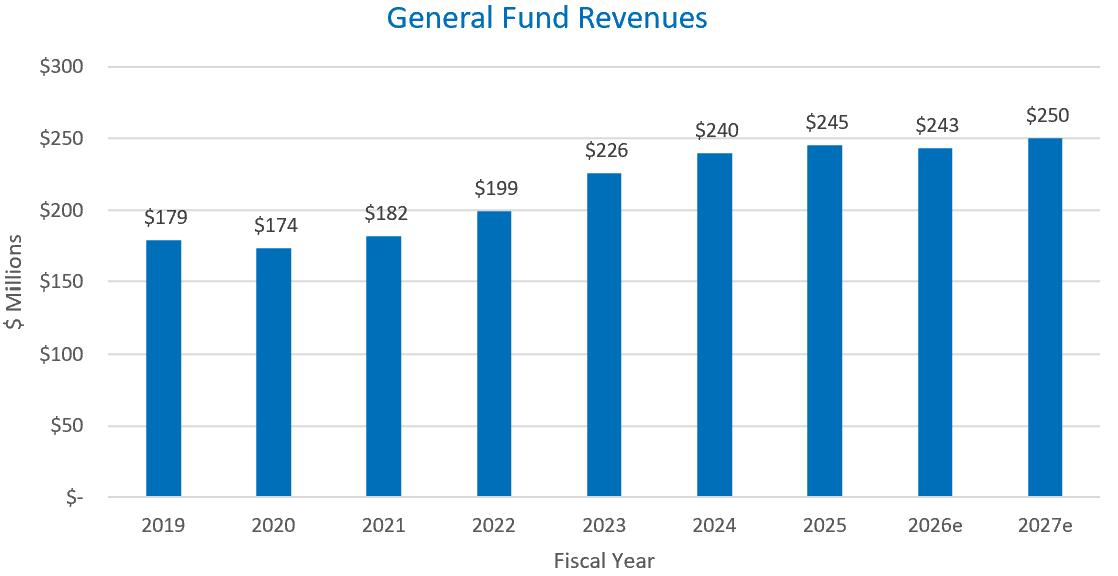
General Fund revenues provide a representative picture of the local economy. These revenues are of particular interest as they fund basic city services such as Police, Fire, Library & Cultural Arts, Street and Park Maintenance and Recreation programs. The table below provides a summarized outlook of the General Fund revenues.
GENERAL FUND REVENUES (In Millions)
Sustained by pent-up demand following the COVID-19 pandemic and accumulated savings, the inflationary spike between March of 2021 and November of 2023 served as a boost for the city’s revenue sources like sales tax and transient occupancy tax. While these revenue sources sustained strong performance in fiscal year 2023-24, the city began seeing consumer demand decline in response to the sustained inflationary levels and diminishing levels of personal savings. This trend continued throughout fiscal year 2024-25 and 2025-26, despite the Federal Reserve’s reduction of interest rate benchmark targets from a high of 5.50% in July 2023 down to 3.50% as of December 2025 Consumer confidence was impacted by federal administration policy changes, notably the implementation of tariffs on foreign goods. While confidence rebounded at the beginning of fiscal year 2025-26, it declined again in response to geopolitical challenges and rising oil prices. Nationally, GDP increased by 2.0% in the first quarter of 2026, largely due to investment, exports, consumer spending, and government spending which were offset by a reduction in imports.
Rising oil prices, geopolitical tensions and inflation continue to pose risks, even as labor market resilience supports some optimism in consumer sentiment on a macro level. Overall, the U.S. consumer confidence in April 2026 reflects a complex mix of cautious optimism and underlying economic concerns, with short-term improvements tempered by persistent inflation and geopolitical uncertainty.
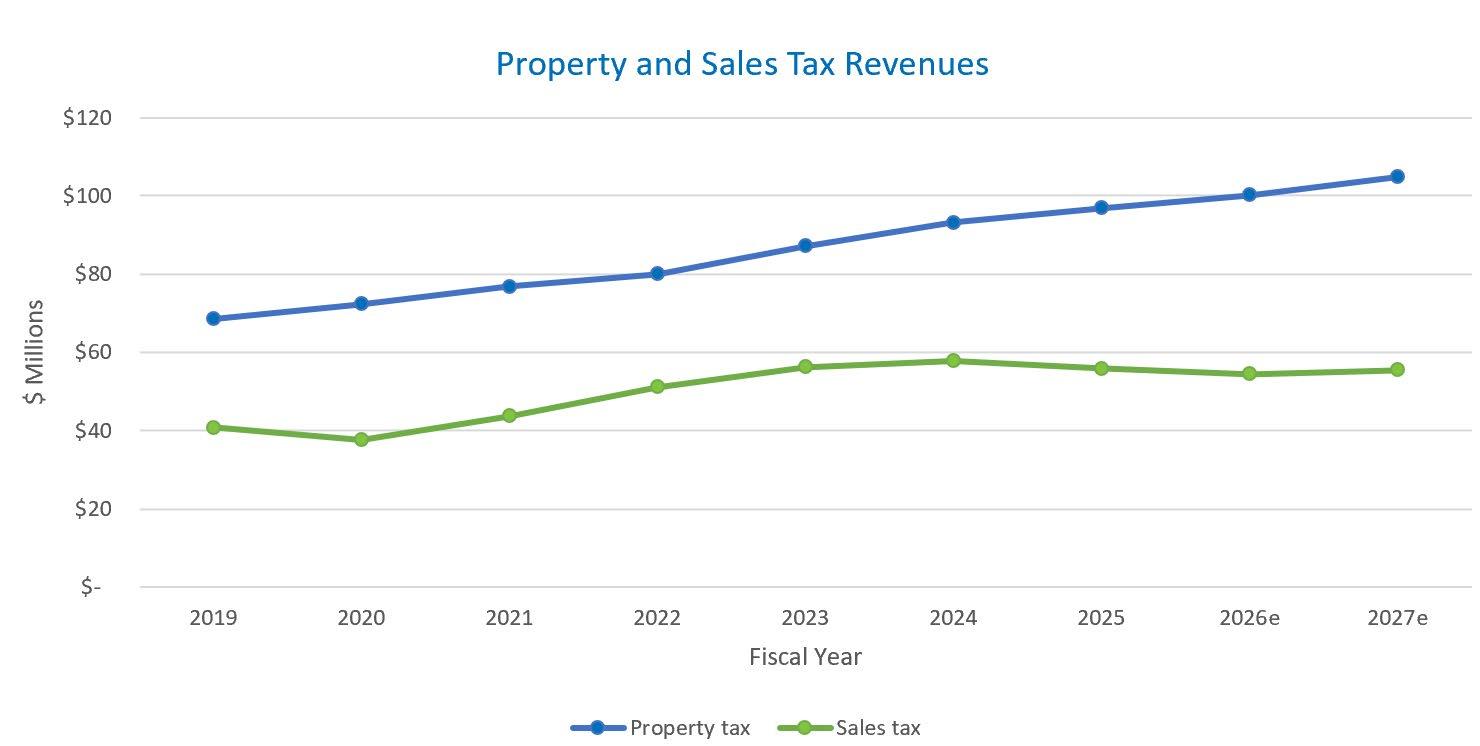
Nearly 80% of General Fund revenues are derived from three sources: property tax, sales tax, and transient occupancy tax, or TOT. Sales tax and TOT revenues tend to be much more sensitive to changes in economic conditions, unlike property tax revenues, which remain relatively stable because of the mitigating effect of Proposition 13, which limits annual growth in assessed values.
Property tax, the largest source of General Fund revenues, is expected to grow by $4.6 million, or 4.6%, over the previous year’s estimates Despite the extended rise and reduction in interest rates from the Federal Reserve, Carlsbad’s residential real estate market has seen modest retraction year-overyear, decreasing by 3.9% to a $1.37 million median price as of March 2026. Future growth for both residential and commercial properties is expected to remain relatively flat given the sustained interest rate levels although strong and continued demand for relatively limited supply may stabilize any adverse factors. Proposition 8 allows owners to have their property temporarily revalued if market value is lower than the factored base year value, posing a risk that commercial property values could temporarily decrease.
Assessed values on the residential real estate side are expected to grow modestly, capped by California’s Proposition 13. Adopted in 1978, Proposition 13 limits the annual increase in assessed values for property. Under this proposition, assessed values (and the related property tax) can grow by no more than 2% per year.
Aircraft taxes, a component of the city’s property tax revenue category, is expected to increase in future periods. Although assessed valuations are highly volatile from year -to-year given the transient nature of where aircrafts are housed, should the Palomar Airport expand operations, the city would expect additional revenue generation. In recent years, aircraft taxes have ranged between $2-3 million annually. The fiscal year 2026-27 budget assumes a $300,000, or 10.1% increase of fiscal year 2025-26 estimates.
Changes in property tax revenues lag behind changes in the housing market, as the tax revenue for the upcoming fiscal year is based on assessed values from the previous January. Thus, the taxes to be received for fiscal year 2026-27 are based on assessed values as of January 1, 2026
Property taxes tend to grow slowly unless there is a significant amount of development-related activity. In past decades the city has seen robust growth in property tax revenue due to new development, high turnover of existing homes and double-digit growth in housing prices. However, as opportunities for new development and growth lessen, development-related revenues have slowed. In addition to current interest rates levels and the implementation of tariffs, slower development combined with minimal commercial property transactions creates more uncertainty regarding future growth.
Sales Tax revenues generally move in step with economic conditions but overall, Carlsbad’s economy has absorbed the inflationary increases experienced since 2021. With the pandemic and its fiscal impacts behind us, new uncertainty stems from federal administration policy and geopolitical conflict, particularly around the cost of oil Over the last year, consumer demand and confidence has been diminishing despite brief period surges, which indicate heightened economic elasticity. The Federal Reserve has reduced interest rate benchmark targets from 5.50% in July 2023 to 3.50% as of December 2025; however, geopolitical tensions and the rise in oil prices have kept consumers cautious.
The onset of the pandemic in March 2020 resulted in swift reductions in sales tax revenues. During fiscal year 2020-21, sales tax levels generally correlated with shelter-in-place mandates. As restrictions were lifted, the city’s sales tax levels recovered. While the city ended fiscal year 2019-20 with $38 million in sales tax revenues, that figure increased in 2020-21 to $44 million in sales tax revenues. Fiscal year 2021-22 experienced the most accelerated recovery, ending the year at a historic high of $51.2 million in sales tax revenues. The fiscal year 2022-23 and 2023-24 sales tax estimates reflected uncertainty surrounding market and economic conditions like inflation and impacts to disposable income. Despite the levels of inflation, growth was positive over this period; however, fiscal year 2024-25 indicated a slowdown in consumer demand as a result of the sustained levels of inflation and the uncertainty regarding tariffs. Fiscal year 2025-26 experienced continued decreases in demand at the local level, likely due to sustained inflationary levels, uncertainty among geopolitical conflict and the rise in oil prices Staff have proposed a conservative estimate of $55.0 million in budgeted revenue for fiscal year 2026-27 which represents an increase of $0.6 million, or 1.2%, over fiscal year 2025-26 estimates.
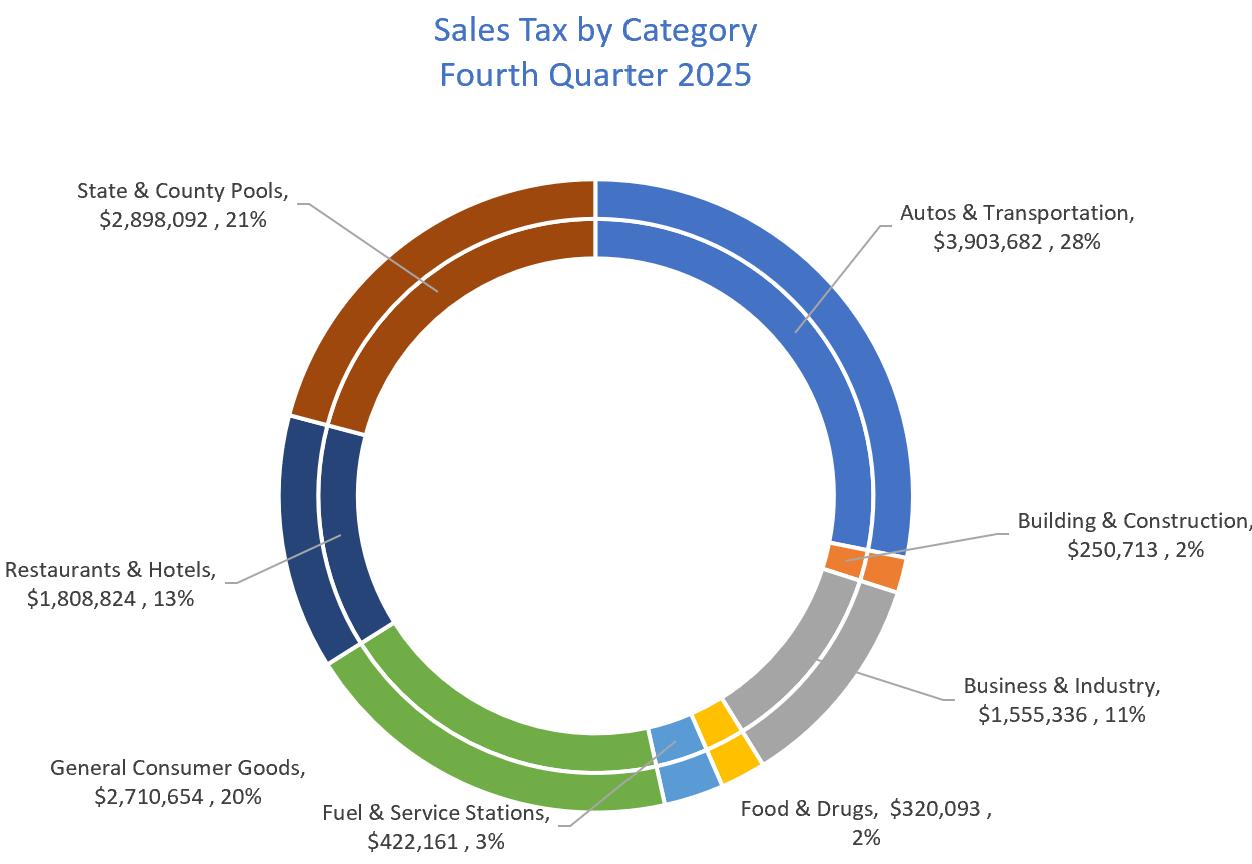
As indicated in the chart on the previous page, the city’s sales tax base is heavily weighted in the transportation (comprised heavily of new auto sales) and general retail sectors, which combined account for over half of the taxable sales in Carlsbad. New auto sales are highly elastic or responsive to changes in price in comparison to economic trends, and tax revenues from new auto sales fell precipitously during the recession, from $6.7 million in 2007 to $4.4 million in 2009. Since that dip, auto sales tax revenues have grown steadily, reaching a high of $19.8 million for the four quarters ended June 30, 2024 Much of the positive performance in fiscal year 2023-24 was due to a correction of an error made by one particular auto dealer in how they were reporting and remitting their taxable receipts. Projections in fiscal year 2026-27 are estimated at $16.2 million, representing a
$0.3 million or 1.9% increase, indicating conservative growth following a period stifled by unprecedented inflationary levels. Minor volatility is expected across multiple industry groups including business and industry, building and construction and general consumer goods; however, fuel and service stations are projected to experience growth in excess of 10% with the recent surge in oil prices.
Sales tax revenues include those received under Proposition 72, a 0.5 cent increase in California sales tax for the funding of local public safety services.
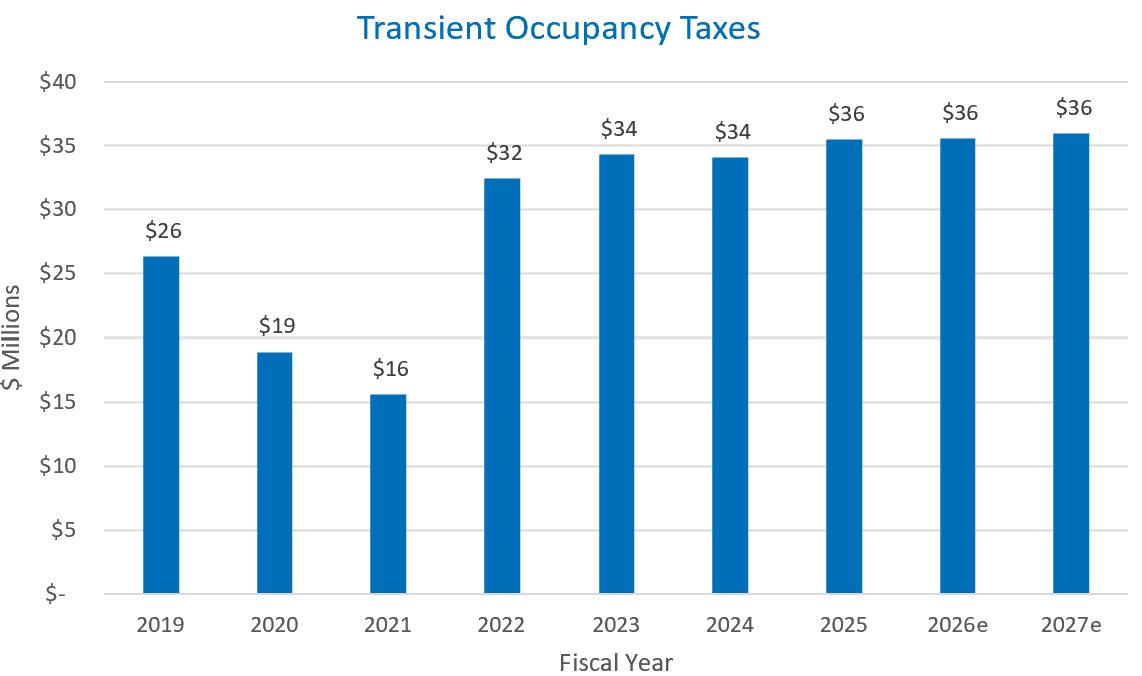
The third highest General Fund revenue source is Transient Occupancy Tax, also known as TOT or hotel tax. TOT was the revenue category most adversely impacted by COVID-19. From historic highs of $26 million in fiscal year 2018-19, the city experienced year-over-year decreases of 27% and 16%. Recovery from the pandemic was estimated conservatively; however, fiscal year 2021-22 TOT revenues proved otherwise, reaching a historic high of $32.4 million driven by the easing of restrictions, pent-up demand and an increase in average daily room rates. This trend continued in fiscal year 2022-23, whereby actual revenues exceeded conservative estimates that were applied to account for sustained levels of unprecedented inflation. Fiscal year 2023-24 and 2024-25 experienced conservative to moderate growth as occupancy rates and average daily room rates held steady throughout the sustained inflationary period. Fiscal year 2025-26 estimates are in-line with continued conservative projections and fiscal year 2026-27 will follow similar trends accounting for a $0.4 million, or 1.0% increase over current year estimates.
Franchise Tax revenue has experienced volatility in recent years and is projected at $7.5 million in fiscal year 2026-27. Franchise taxes are paid by certain industries that use the city’s right-of-way to conduct their business. The city currently has franchise agreements for cable TV service, solid waste services, cell sites, fiber optic antenna systems and gas and electric services. The solid waste franchise fee has experienced minor revenue increases that mirror growth in population and changes in rate
structures. Cable TV franchise revenue is expected to slightly decrease from $1.1 million in fiscal year 2025-26 to $1.05 million in fiscal year 2026-27. This revenue source will most likely remain stable or decline in future years as more subscribers cut cable services and move to online streaming services.
In April 2021, a new franchise agreement for solid waste was approved with Republic Services of San Diego. The city receives 7.5% of revenue collected as well as an annual payment of $0.9 million in support of AB 939 and a $1.4 million storm water fee. Fiscal year 2025-26 solid waste franchise tax revenue is projected to end the year with $2.53 million and fiscal year 2026-27 is projected to slightly increase to $2.61 million.
San Diego Gas & Electric pays franchise taxes for the use of the public land over which they transport gas and electricity. The city also receives an “in-lieu” franchise tax based on the value of gas and electricity transported on SDG&E lines but purchased from another source. The “in-lieu” tax captures the franchise taxes on gas and electricity that is transported using public lands, which would not otherwise be included in the calculations for franchise taxes due to deregulation of the power industry. Fiscal years 2022-23 and 2023-24 experienced strong increases as a result of increased rates on both the gas and electric sides; however, fiscal year 2024-25 experienced over revenue declines of approximately 20%. As a result, SDG&E franchise tax revenues decreased from $4.5 million in fiscal year 2023-24 to $3.3 million in fiscal year 2024-25. Fiscal year 2025-26 estimates indicate an approximate 10% increase over the previous year; however, due to past volatility, fiscal year 2026-27 is projected to remain relatively flat over these current year estimates.
Business license taxes are closely tied to the health of the local economy and are projected to increase to $7.0 million in fiscal year 2026-27. This represents growth of $0.2 million or 3% when compared to last year’s adopted revenues and relatively flat compared to fiscal year 2025-26 estimates Increases in business license taxes tend to correlate with sales tax revenue increases as businesses either pay taxes based on the amount of their gross receipts or based on set fees. There are currently about 10,037 licensed businesses in the City of Carlsbad, with 6,677 of them located in the city
Development-related revenues are derived from fees for planning, engineering and building permits, and fees paid by developers to cover the cost of reviewing and monitoring development activities, such as plan checks and inspections. These revenues are difficult to predict as many of the planning and engineering activities occur months or years before any actual development.
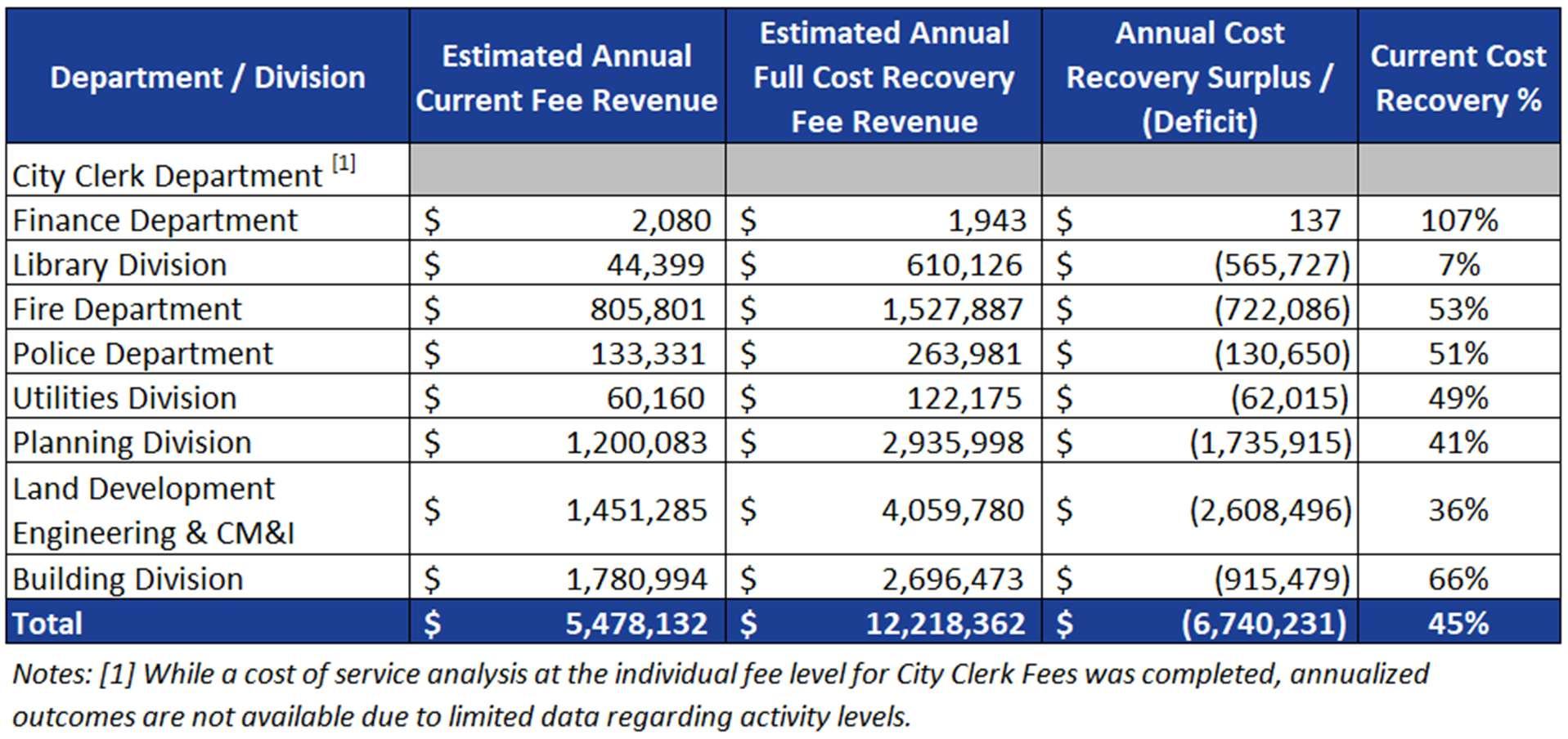
Over the last 10 years development-related revenues have fluctuated in line with increases and decreases in residential, commercial and industrial development. In fiscal year 2025-26 the city expects a 2.0% increase in development related revenues to approximately $4.8 million The projected increase in development-related revenues is tied to the volume and type of development projected to be permitted, multi-family versus single-family, and the revenues derived from building fees which occur in the early stages of development. Increases applied to these charges for services are made in accordance with City Council Policy 95, Cost Recovery.
The All other revenue category comprises all other sources of revenue in the General Fund other than those mentioned above and are projected to increase by $0.5 million in fiscal year 2026-27 representing a 1.4% change from fiscal year 2025-26 estimates. The main revenue sources contributing to this category are described in more detail below.
Interdepartmental charges are generated through engineering services charged to capital projects, reimbursed work from other funds and miscellaneous interdepartmental expenses charged to funds outside the General Fund for services performed by departments within the General Fund. General Fund miscellaneous interdepartmental charges are expected to increase by 3.4% compared to the prior year’s adopted budget, based on the inflationary index applied to the chargeback in offcycle years in which an updated cost allocation plan is not completed.
Income from investments and property include interest earnings as well as rental income from city-owned land and facilities. The city is expected to earn about $8.4 million in interest on its General Fund investments, including the city’s Section 115 Pension Trust for fiscal year 2025-26 and another $3.0 million in rental and lease income. The yield on the city’s portfolio is forecasted to average 3.50% and cash balances are expected to decline citywide as construction for Veteran’s Memorial Park progresses.
Ambulance fee revenues are estimated to decrease $0.2 million over last year’s estimates, from $7.0 million to $6.8 million. Ambulance fees have increased in recent years due to the Fire Department’s fee study implementation, the addition of two medical transports, the Ground Emergency Medical Transportation Certified Public Expenditure Program, which helps cover uncompensated costs for Medi-Cal fee-for-service transports, and the participation in the Public Provider Ground Emergency Medical Transport Intergovernmental Transfer Program which will provide add-on reimbursement payments to help cover uncompensated costs in the future. The decrease in year-over-year estimates is driven by the impact of Assembly Bill 716, which became effective January 2024 and has resulted in significant impacts on the reduction of ambulance fees.
Transfer taxes are those taxes paid to the county upon the transfer of interests in real estate. The tax is $1.10 per $1,000 of property value, split equally between the county and the city. Carlsbad expects to receive approximately $1.7 million in transfer taxes for fiscal year 2026-27 which is relatively flat compared to fiscal year 2025-26 estimates. The residential real estate market has held relatively strong following its decrease in median home value from a high of $1.54 million as of 2024 to $1.37 million as of March 2026. The reduction in interest rates from 2023 to 2025 helped stabilize levels of affordability and relatively low levels of supply may help mitigate any adverse effects of macro-economic factors.
Other intergovernmental revenues include miscellaneous receipts received from the state or federal governments as well as local school districts. With the exception of the city receiving its two annual American Rescue Plan Act payments in fiscal 2020-21 and fiscal year 2021-22 totaling $12.6 million and a one-time FEMA reimbursement funding for COVID-19 related expenditures in fiscal year 2024-25, this revenue source remains relatively stable and is expected to remain flat at $1 million over the previous fiscal year.
The Other revenue sources category includes miscellaneous reimbursed expenses, sponsorships, donations, loss recovery and other charges and fees. The estimate for fiscal year 2025-26 totals $1.6 million and is expected at $0.5 million in fiscal year 2026-27, with year-over-year decreases due to a large one-time insurance reimbursement received in the previous year.
Overall, and as reflected in the bar chart above, General Fund revenues are expected to increase $6.3 million or 2.6% from fiscal year 2025-26 estimates The General Fund’s primary tax revenues are estimated to increase conservatively over last year’s estimates to account for the current economic uncertainty spurred by geopolitical tensions Despite uncertainty around inflation and the price of oil, as well as interest rates, the General Fund’s total revenues are expected to be supported by stable property tax values, a diversified sales tax base, and the implementation of the city’s cost recovery policy which increases fees for services in line with appropriate cost recovery levels.
Other Funds
Revenues from Special Revenue funds are expected to total $26.6 million, a decrease of $9.7 million or 26.8% from fiscal year 2025-26 estimates. Funds collected in this category are restricted to specified purposes. The types of programs supported within Special Revenue funds are those funded by specific revenue streams such as:
• Federal Grants (Rental Assistance and Community Development Block Grants)
• Special fees and assessments (Affordable Housing and maintenance assessment districts)
• Donations (Library, Cultural Arts, Recreation and Senior Donations)
Compared to the fiscal year 2025-26 budget estimates, the most noteworthy changes in the Special Revenue funds occurred in the Encampment Resolution Fund, whereby the city is expected to receive $5.5 million of one-time state grant revenue in fiscal year 2025-26 that it will not receive again in fiscal year 2026-27.
Special Revenue Funds
FY 2026-27 Budgeted Revenues $26.6 Million
Tyler Court Apartments
$0.9M, 3%
Permanent Local Housing
Allocation
$0.2M, 1%
Donations and Grants
$1.0M, 4%
Maintenance Districts
$4.3M, 16%
CDBG
$0.6M, 2%
Affordable Housing
$0.8M, 3%
All others
$0.7M, 3%
Rental Assistance
$16.4.0M, 62%
Continuum of Care
$1.7M, 6%
There is no revenue budgeted in the Successor Agency Housing Trust Fund, other than interest income from remaining funds. Although the Carlsbad Redevelopment Agency has been dissolved, the California Department of Finance has approved the repayment of the approximately $8.1 million (plus accrued interest) loaned to both the city’s former redevelopment areas by the General Fund as well as debt service payments remaining on the former agency’s 1993 Tax Allocation Refunding Bonds. All outstanding loans and interest accrued have been paid to the city by the end of fiscal year 2020-21 and debt service payments were completed in fiscal year 2023-24
Enterprise fund revenues for fiscal year 2026-27 are projected at $127.2 million representing an increase of 2.9% or $3.6 million over fiscal year 2025-26 estimates. The revenue breakdown by activity is shown in the graph on the following page. Enterprise funds are similar to a business in that rates are charged to support the operations that supply the goods or services. Carlsbad enterprise funds include water and recycled water delivery, wastewater services, solid waste management and the operation of a municipal golf course.
The Water Enterprise Fund revenue for fiscal year 2026-27 is estimated at $62.8 million representing an increase of $8.4 million or 15.4% when compared to fiscal year 2025-26 revenue estimates. This is driven by increases in water rates Projected revenues for Recycled Water of $11.3 million are expected to decrease by $3.5 million or 23.4% from fiscal year 2025-26 estimates. This is due to loan proceeds that the fund received in the previous year.
Forecasted revenues for Wastewater are $32.8 million representing a 9.6% or $2.9 million increase over fiscal year 2025-26 estimates. This increased estimate is largely driven by rate increases of 14% in fiscal year 2026-27 to support rising treatment costs and aging infrastructure costs.
Estimated revenues from operations of the Golf Course are $11.9 million, a decrease of $0.9 million or 6.9% when compared to fiscal year 2025-26 estimates The Crossings at Carlsbad has experienced strong revenue performance year-over-year since the onset of the pandemic. Revenues for the upcoming year are estimated conservatively to account for any potential adverse impacts on consumer demand resulting from economic and market uncertainty.
Enterprise Funds
FY 2026-27 Budgeted Revenues $127.2 million
Golf Course Operations
$11.9M, 9%
Solid Waste Management
$8.4M, 7%
Wastewater Operations
$32.8M, 26%
Water Operations
$62.8M, 49%
Recycled Water
$11.3M, 9%
Solid Waste Management revenues are projected at $8.4 million, which is $3.3 million or 27.9% lower than fiscal year 2025-26 estimates. The decrease is driven by a change in the level of one-time transfers in from the General Fund $2.0 million transfer in from the General Fund to support continued operations of the city’s Stormwater Protection program. The fiscal year 2026-27 budget includes a one-time transfer of $5.0 million from the General Fund for this effort.
Internal Service funds account for services provided within the city itself, from one department to another and on a cost reimbursement basis. These include programs such as the self-insurance funds for Workers’ Compensation and General Liability (Risk Management), as well as Vehicle Maintenance and Replacement and Information Technology. Departments pay for these services and therefore the rates charged are based on the cost of providing the services. The goal of an internal service fund is to match budgeted expenses with charges to the departments.
The combined internal services funds project estimated revenues of $47.8 million for fiscal year 202627 representing a decrease of 2.6% or $1.3 million over fiscal year 2025-26 projections. This decrease is driven by a reduction in chargebacks, particularly for Vehicle Replacement and Information Technology. Workers’ Compensation is increasing by $0.4 million or 4.8% based on the level of anticipated claims and settlements across departments for the upcoming year. Risk Management is also increasing by $0.4 million based on annual estimated claims and settlements occurring across the city’s funds and departments.
Vehicle Maintenance and Replacement charges are budgeted at $5.1 million and $6.6 million, respectively. Vehicle Maintenance revenues are up compared to fiscal year 2025-26 estimates primarily due to increasing fuel costs as well as an overall increase in the size of the city’s fleet Vehicle replacement costs rise when the number of vehicles and the price of new vehicles or the cost to maintain those vehicles increases. For example, many older generation sedans at the end of their useful lives are now being replaced with hybrids and plug-in hybrids at a higher per unit cost. There have also been significant cost increases over the last several years in specialized vehicles such as fire trucks and ambulances as well as supply chain disruptions and unprecedented inflation that have significantly driven up prices. However, in fiscal year 2026-27, the amount charged to departments is decreasing by 38.3% in an effort to strategically align the Vehicle Replacement reserve with industry standards. During periods of low reserve levels, additional charges may be warranted to ensure sufficient funding exists in the future and during periods of high reserve levels, fewer charges may be needed to mitigate unnecessary excess.
Information Technology charges to departments have increased by 2.3% or $0.5 million when compared to fiscal year 2025-26 estimates. The main reason for this increase is due to contractual increases to existing service contracts which were offset by a reduction in chargebacks to strategically align its reserve balance.
Internal Service Fund Allocation Methodology
Most of the revenue for the city’s internal service funds is generated from internal service charges. The expenses of each fund are budgeted for and then allocated to other funds on an annual basis. Each fund uses a different allocation basis to charge other funds for its costs, summarized below.
• Vehicle Replacement – Based on equipment assigned to departments.
• Vehicle Maintenance – A combination of fixed and variable maintenance charges. Fixed maintenance charges are based on a three-year average of maintenance costs in combination with budgeted labor costs. Variable maintenance charges are based on actuals.
• Information Technology Operations – A combination of computers per department for citywide maintenance/licensing and direct charges for department-specific items.
• Information Technology Replacement – Based on a combination of equipment and hardware specifically assigned to a department and for infrastructure hardware on an allocation based on computers per department as a percentage of citywide computers.
• Workers’ Compensation – Based on a combination of personnel count and five-year average claims costs by department.
• General Liability – Based on a combination of personnel count, five-year average claims costs by department and vehicles assigned to departments.
EXPENDITURES
The city’s Operating Budget for fiscal year 2026-27 totals $449.2 million, which represents a decrease of approximately $9.3 million or 2% as compared to the adopted fiscal year 2025-26 budget. A summary of the changes in each of the city’s programs will be discussed below. Further information about each program can be found in the individual program summary pages.
BUDGET EXPENDITURE SUMMARY
By Fund Type (In Millions)
The General Fund contains most of the discretionary revenues that support core city services. However, this should not diminish the importance of the other operating funds as they also contribute to the array of services available within Carlsbad. The remainder of this section will provide more information about the budgeted expenditures by fund and program.
Since fiscal year 2022-23, the city’s budget has prioritized the prudent use of taxpayer funds through times of economic uncertainty. Through maintenance and operations reductions to the elimination of 24 full-time equivalent positions, the city saved over $5 million of ongoing expenditures. While formal budget reductions are not a part of the fiscal year 2026-27 budget, responsible and prudent use of taxpayer dollars as well as maintaining a balanced budget now and in the future remain the top priorities. Following years of significant budget reductions, the City Manager continued to stress the importance of “holding the line” to departments when evaluating budgetary needs while also ensuring service levels provided to the community are prioritized. The fiscal year 2026-27 operating budget reflects critical increases including:
- Operating costs for the Monroe Street Pool as it’s set to reopen in September 2026
- Six (6) EMT to Paramedic Firefighter reclassifications as part of a multi-year effort
- General election expenses
- 2028-2032 Strategic Plan facilitation
- Traffic signal and all way stop analysis
- Storm drain maintenance and street sweeping
- Six (6) Police Department positions for COPPS team (approved on Mar. 24, 2026)
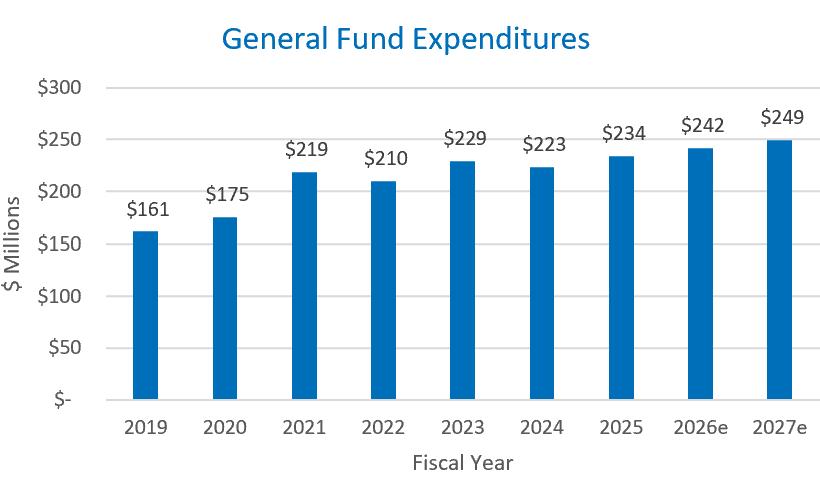
The total Operating Budget for the General Fund for fiscal year 2026-27 is $249.1 million, which is $6.7 million or 2.8% more than the previous year’s adopted budget of $242.4 million. These changes are discussed in more detail on the following pages. BudgetBudget $
GENERAL FUND SUMMARY By Expenditure Type
(In Millions)
Personnel costs make up 64% of the General Fund budget. The total personnel budget for fiscal year 2026-27 is $158.2 million, which is $12.6 million or 8.7% greater than the previous year’s total personnel budget of $145.6 million. This is driven by 11.58 additional full-time equivalent positions since prior year budget adoption, an increase in CalPERS’ unfunded liability payment, and negotiated compensation increases. In fiscal year 2026-27, the preliminary budget continues to propose including a line item for “vacancy savings.” This represents the estimated amount of budgeted personnel savings that will be realized by the end of the fiscal year. This mechanism is proposed for multiple reasons: (1) budgeting for vacancy savings reduces the total amount of the General Fund budget, (2) budgeted personnel costs more closely align with actual personnel costs over the course of the fiscal year, (3) historically, the city would bring recommendations to repurpose budget savings at the mid-year point of the fiscal year; this mechanism pre-emptively achieves that objective, and (4) budgeting vacancy savings will achieve alignment with the city’s 10-year forecast which has historically included a line item for vacancy savings.
GENERAL FUND
Personnel Costs (In Millions)
2025-262026-27
The table above shows the breakdown of personnel costs for the General Fund. General Fund salaries include full-time and part-time staff costs and are expected to increase in fiscal year 2026-27 by $8.3 million or 8.6%. The increase is primarily due to negotiated salary increases as well as the addition of 11.58 full-time equivalent positions since prior year budget adoption six of which were approved by the City Council mid-year, and 5.58 of which are proposed with the fiscal year 2026-27 budget The full-time staffing changes are listed on the following page.
Full-time equivalent staffing adjustments
General Fund (5.58):
• Full time
o (1) Monroe Pool Maintenance Worker – Parks & Recreation
• Part time
o (-.18) Reduction in hours for restructuring of the GUIDE program – Police
o (0.4) Custodian at Safety Training Center – Fleet & Facilities
o (2.65) Part -time lifeguards at Monroe Pool – Parks & Recreation
o (0.74) Part -time aquatics instructors at Monroe Pool – Parks & Recreation
o (0.73) Communications Coordinator – Communication & Engagement
o (0.24) Additional Administrative Analyst hours – Communication & Engagement
Non-General Fund:
No adjustment in fiscal year 2026-27.
Retirement Benefits Cost
CalPERS administers the city’s defined benefit pension plan and costs have been increasing in past years as CalPERS addresses a structural shortfall in plan assets to cover unfunded liabilities. As part of CalPERS’ strategy to ensure the plan’s sustainability, CalPERS deliberately raised participating agencies’ contributions over several years to improve the plan’s long-term funded status. The pension system continues to pursue tactics in support of its strategy to ensure plan sustainability such as investing in assets with the objective of achieving a long-term rate of return that meets or exceeds 6.8%. While pension costs are increasing, there is some downward pressure on costs as new employees receive lower pension benefits. CalPERS has taken significant steps in ensuring plan sustainability, but pension costs still pose a significant risk to the city’s cost profile
In support of CalPERS strategies for plan sustainability and as part of the city’s strategic, longterm approach to financial management, the city actively manages its unfunded pension liability. Since fiscal year 2016-17, the City Council has approved additional discretionary contributions of $56.4 million to decrease future costs of the city’s unfunded actuarial liability and achieve a funded status of 80% in accordance with City Council Policy
In support of CalPERS strategies for plan sustainability, and as part of the city’s strategic, long-term approach to financial management, the city actively manages its unfunded pension liability.
86 In fiscal year 2023-24, the City Council also approved the establishment of a Section 115 Pension Trust and a $10.0 million initial contribution. Since then, the city has contributed an additional $7.5 million in fiscal year 2024-25 and $7.5 million in fiscal year 2025-26, bringing total contributions in the trust to date to $25 million. Assets in the trust will be available to the city to maintain an 80% funded status, mitigate pension rate volatility and potentially earn a higher rate of return than if the funds were left in the General Fund. This active management helps ensure that resources are available to fulfill the city’s contractual promises to its employees and minimizes the chance that funding these pension benefits will interfere with the city’s ability to provide essential public services
Fiscal year 2026-27 reflects $31.4 million in retirement benefits costs, which represents an increase of $2.8 million or 9.9% compared to the previous year. Most of this increase is due to the CalPERS unfunded liability payment increasing by $1.6 million or 11% compared to the prior year Increases in CalPERS’ required contributions are the result of their poor investment performance in fiscal year 2021-22 (-6.1%) and fiscal year 2022-23 (5.8%). Since that time, CalPERS has earned 9.3% and 11.6% in fiscal year 2023-24 and 2024-25, respectively, which will mitigate future increases over the next five years.
General Fund Health Insurance costs in the General Fund are increasing from $12.1 million to $12.9 million. The increase is a result of anticipated rate increases in addition to changes in employee benefit elections. Other Personnel Costs include workers’ compensation expenses and other miscellaneous costs such as Medicare, unemployment and disability, which are increasing collectively by $0.7 million or 8.3%
Maintenance and Operations costs represent 28% of the total General Fund budget and include the budgets for all program expenses other than personnel, capital outlay and transfers. Overall, total maintenance and operations costs are projected at $69.3 million, which represents a decrease of $1.1 million or 1.6% for fiscal year 2026-27 when compared to fiscal year 2025-26 Fiscal year 2021-22 and 2022-23 experienced inflationary increases ranging between 4.1% and 8.3% which drove the city’s need to contain costs and identify areas for reduction with minimal service level impacts. Much of the increase from fiscal year 2022-23 to 2023-24 was related to large increases in transfers out to fund long-term capital needs. While the increase in the fiscal year 2025-26 maintenance and operating budget was largely attributable to inflationary increases, Climate Action Plan initiatives, and fire mitigation efforts In fiscal year 2026-27, the largest contributor to the overall decrease is the decrease in internal service department chargebacks. As mentioned in the Revenue section of the Overview, fleet and information technology chargebacks to external departments were lower than previous years in an effort to maintain the fund balance reserve levels at industry standards.
Capital Outlay includes budgeted equipment purchases over $10,000. Capital outlay purchases of $0.4 million are budgeted in the General Fund for fiscal year 2026-27. This represents a decrease of $2.3 million and is primarily due to the Fire Department’s request to purchase a second front-line aerial ladder truck in the prior year with no similar purchase occurring this year
Operating Costs Associated with Capital Investments
As the city completes major capital projects, the costs of maintaining and operating the facilities and improvements, including additional personnel, if necessary, are added to departmental operating budgets. The city’s Capital Improvement Program and Strategic Digital Transformation Investment Program budgets include future projected operating impacts, which are estimated in the tables found in sections H and I, respectively.
Advances
Advances and repayments of prior advances are amounts anticipated to be transferred from the General Fund to other city funds with expectation of repayment in future years. No General Fund advances are included in this year’s operating budget.
Expenditures in fiscal year 2018-19 reflect an additional one-time $20 million payment to CalPERS to further bring down the city’s unfunded pension liability. Fiscal year 2019-20 included the addition of 34 new full-time employees but was largely offset due to the city’s response to the COVID-19 pandemic and the need to reduce discretionary spending as much as possible during that unprecedented time.
Fiscal year 2020-21 expenditures reflect an additional $10 million one-time payment to CalPERS to further bring down the city’s unfunded pension liability. The increase was largely offset by the continuation of the COVID-19 pandemic and the city’s efforts to curb and defer expenditures. Additionally, a $57 million advance to the golf course was reclassified as a transfer out.
Fiscal year 2021-22 expenditures reflect the plan to reinstate city services back to pre-pandemic levels and operationalize the City Council’s goals. The increase includes $5.9 million in one-time costs associated with the goals and the addition of 18 new full-time and 6.7 part-time employees which are mostly associated with the goals. The city again made an additional one-time $6.4 million payment to CalPERS to bring down the city’s unfunded pension liability.
Fiscal year 2022-23 expenditures include the addition of 24 full-time employees as well as a number of new one-time requests to execute City Council goals, as well as a total of $10.6 million in one-time transfers to fund Workers’ Compensation, Risk Management, and Fleet Maintenance. Lastly, a $2 million allocation was approved to fund the Safer Streets local emergency.
Fiscal year 2023-24 expenditures include budget reductions of approximately 3% of the base maintenance and operations budget, offset by negotiated compensation and contractual benefit increases. Additionally, a $5.2 million allocation was approved for the Carlsbad Village Trenching Project. Fiscal year 2024-25 expenditures include the elimination of 12 full-time equivalent positions offset by a $20 million one-time surplus use to General Capital Construction, Workers’ Compensation and Risk Management Funds.
Fiscal year 2025-26 expenditures include the addition of six (6) positions for the Police Department, four (4) full-time equivalent positions for various administrative functions, a $2.6 million one-time capital outlay as well as additional increases for retirement costs as a result of CalPERS’ negative investment performance in fiscal year 2021-22. The fiscal year 2026-27 expenditure budget includes the addition of six (6) positions in the Police Department which were approved in March 2026, additional operating costs for the reopening of Monroe Street Pool, reclassification of six (6) EMT positions to Paramedic Firefighters, 2026 general election expenditures, as well as various operational increases due to inflation.
Another way of looking at the General Fund budget is by Program Expenditures The chart below compares the total fiscal year 2026-27 budget to those amounts adopted in the previous year. A detailed description of each department, its services, budget summary and department accomplishments and priorities can be found in the department program summary pages.
GENERAL
FUND
EXPENDITURES
By Department (In Millions)
A detailed description of each department’s budget can be found in the department program summaries.
Transfers are amounts anticipated to be transferred from the General Fund to another city fund. The transfers included in the adopted budget are as follows:
• $15.0 million split evenly between the Infrastructure Replacement Fund, General Capital Construction Fund and Technology Investment Capital Fund. This will fund major new construction, maintenance and replacement of city infrastructure and facilities, and the city’s future technology needs. This represents 6% of budgeted General Fund revenues and is in line with the requirements set forth in Council Policy 91, Long Term General Fund Capital Funding Policy.
• $5.0 million to the Storm Water Program for reimbursement of the General Fund portion of Storm Water expenses as well as a one-time operating subsidy to ensure the program maintains a positive fund balance. In recent years, the program has been drawing down on excess reserve funds; however, on an ongoing basis, future expenses are expected to far outpace future revenues. Without additional ongoing revenue, assistance from the General Fund may be needed on an annual basis.
• $1.2 million to the Median Maintenance and Street Tree Maintenance Special Revenue Funds to cover cash shortfalls, as annual assessments collected from property owners do not cover annual operating expenditures. Annual assessments can only be increased with a majority vote of the property owners.
General Fund Summary
The operating budget for fiscal year 2026-27 provides a balanced General Fund budget for the coming fiscal year with General Fund revenue estimates exceeding General Fund budgeted expenditures by $0.6 million
Fiscal Year
2026-27
General Fund Operating Budget
General Fund fiscal year 2026-27 revenue estimates
General Fund fiscal year 2026-27 preliminary expenditures
Initial projected operating surplus for fiscal year 2026-27
Use of Asset Replacement Reserve for one-time costs
Effective operating fund surplus for fiscal year 2026-27
General Fund Reserves
Projected unassigned balance at June 30, 2026
Plus: effective fiscal year 2026-27 surplus
Equals: projected unassigned balance at June 30, 2027
Asset Replacement Reserve
$249.6 million
$249.1 million
$ 0.5 million
$ 0.2 million
$ 0.7 million
$144.4 million
$0.7 million
$145.1 million
The city commits to maintaining its large machinery and equipment inventory. When an asset is procured, it begins depreciating the moment it is put into service and needs to be replaced at the end of its respective useful life. The city’s large equipment inventory represents approximately $60 million of the city’s total fixed assets. On an annual basis, this translates to a significant financial need and commitment to maintain the inventory. In an effort to not only prioritize these purchases, but to strategically plan for the ongoing financial impacts, staff recommend establishing a General Fund Asset Replacement Reserve. Separate and apart from the General Fund Reserve (City Council Policy 74), this Asset Replacement Reserve will serve as a mechanism for funding large machinery and
equipment needs without impacting the General Fund Reserve or annual budget surplus year after year. As of fiscal year 2026-27, and for the next 10 fiscal years, a total of $7.2 million is projected to be needed to fund asset replacement costs in the General Fund. The asset replacement schedule can be found in the appendices.
Changes in Other Funds
Special Revenue funds are budgeted at $26.5 million representing an increase in expenditures of 7.0% or $1.7 million when compared to fiscal year 2025-26 Other than a $1.2 million increase in rental assistance programming, and small increases across several other funds such as the Opioid Settlement Fund, Median Maintenance, and Citizens’ Option for Public Safety grant fund, spending in most Special Revenue Fund programs is expected to remain relatively consistent
Enterprise funds total $129.7 million, which represents a decrease of $17.2 million or 11.7% over the fiscal year 2025-26 adopted budget. The majority of this decrease is due to a one-time budgeted transfer from the Recycled Water Operating Fund to the Recycled Water Connection Fund of $16.4 million that occurred in fiscal year 2025-26 and not required in the fiscal year 2026-27 budget This is related to a State Water Resources Control Board loan reaching the payback period, whereby the Recycled Water Operating Fund will begin repayment while the proceeds of the loan will remain in the associated capital fund. Additionally, transfers from the Potable Water and Wastewater funds are decreasing. These large decreases are offset by increases in core operational costs for the city’s Utilities funds. The Potable Water and Recycled Water funds continue to operate and maintain critical infrastructure systems and provide the safe delivery of drinking water, conservation outreach and treated irrigation water. The cost of purchased water continues to increase, causing an overall increase in the Potable Water budget. The Wastewater fund provides reliable wastewater collection services. The budget for this fund’s increase is primarily due to an increase in the transfers out to fund its related capital improvement fund. The Solid Waste Management budget is also increasing due to inflationary impacts to operating costs, including the city’s street sweeping contract.
The Internal Service funds total $43.9 million, which represents an overall decrease of $0.6 million or 1.3% over fiscal year 2025-26. Much of the increase in Workers’ Compensation costs is attributable to rising insurance liability rates, claims filed and administrative costs. Vehicle Replacement is the largest contributor to the decrease and driven by a lower number of more costly vehicles scheduled for purchase in the upcoming year; this is cyclical and based on fleet replacement schedules. Information Technology is $.08 million or 4.2% higher than the previous year, which is largely due to contractual service increases.
The budget for the Successor Agency Housing Trust Fund for fiscal year 2026-27 is remaining at zero budget for fiscal year 2026-27. The Recognized Obligation Payments Schedule identifies financial commitments of the former Redevelopment Agency, including the remaining scheduled debt service payments on the Redevelopment Agency bond issue, the outstanding loan from the city’s General Fund and minor allowable administrative costs. The last debt service payment on the bond issue was completed in September 2023 and the city loan was paid off in fiscal year 2020-21. In fiscal year 202627, the city will work to complete the dissolution and close the fund.
Changes to Fund Balance
While the projected cumulative change in the city’s non-major operating funds’ ending balances is not significant, three major operating funds are projected to see changes in their fund balances greater than 10%. The Water Operations Fund is expected to decrease by 21.4%, largely due to increasing operations costs, primarily water purchases. The Recycled Water Operations Fund and Wastewater Operations Fund are expected to decrease by 98.5% and 17.7%, respectively, by $1.1 million each. This is due to operating costs outpacing revenues in the upcoming fiscal year. All three funds have positive fund balances as of fiscal year end 2026-27, and it is anticipated the Utilities Department will complete a rate study in the subsequent year to address any ongoing funding challenges.
PERSONNEL ALLOCATIONS
SCHEDULE OF PROJECTED FUND BALANCE
* For the General Fund only, this represents unassigned fund balance. The General Fund projected ending fund balance as of June 30, 2026 includes an increase of $2.9 million because of a reduction in the Asset Replacement Reserve in the General Fund that occurred on March 24, 2026. The Asset Replacement Reserve decreased from $10.5 million to $7.6 million because the Police Department determined it did not need its original full allocation for radio replacements.
SCHEDULE OF PROJECTED FUND BALANC E
* For the General Fund only, this represents unassigned fund balance. The General Fund projected beginning fund balance as of June 30, 2026 includes an adjustment to the asset replacement reserve, reducing the previous year's $7.6 million allocation to $7.2 million. An adjustment was also made for a one-time use of General Fund reserves in the form of an $8 million transfer to the Infrastructure Replacement Fund.
**$360,000 of this fund balance instead appears in the Capital Improvement Program Budget for capital costs applicable to this fund's use.
SCHEDULE OF REVENUE ESTIMATES
SCHEDULE OF REVENUE ESTIMATES
SCHEDULE OF REVENUE ESTIMATES
SCHEDULE OF REVENUE ESTIMATES
SCHEDULE OF REVENUE ESTIMATES
SCHEDULE OF REVENUE ESTIMATES
S CHEDULE OF BUDGET EXPENDITURES
SCHEDULE OF BUDGET EXPENDITURES
SCHEDULE OF BUDGET EXPENDITURES
PUBLIC SAFETY
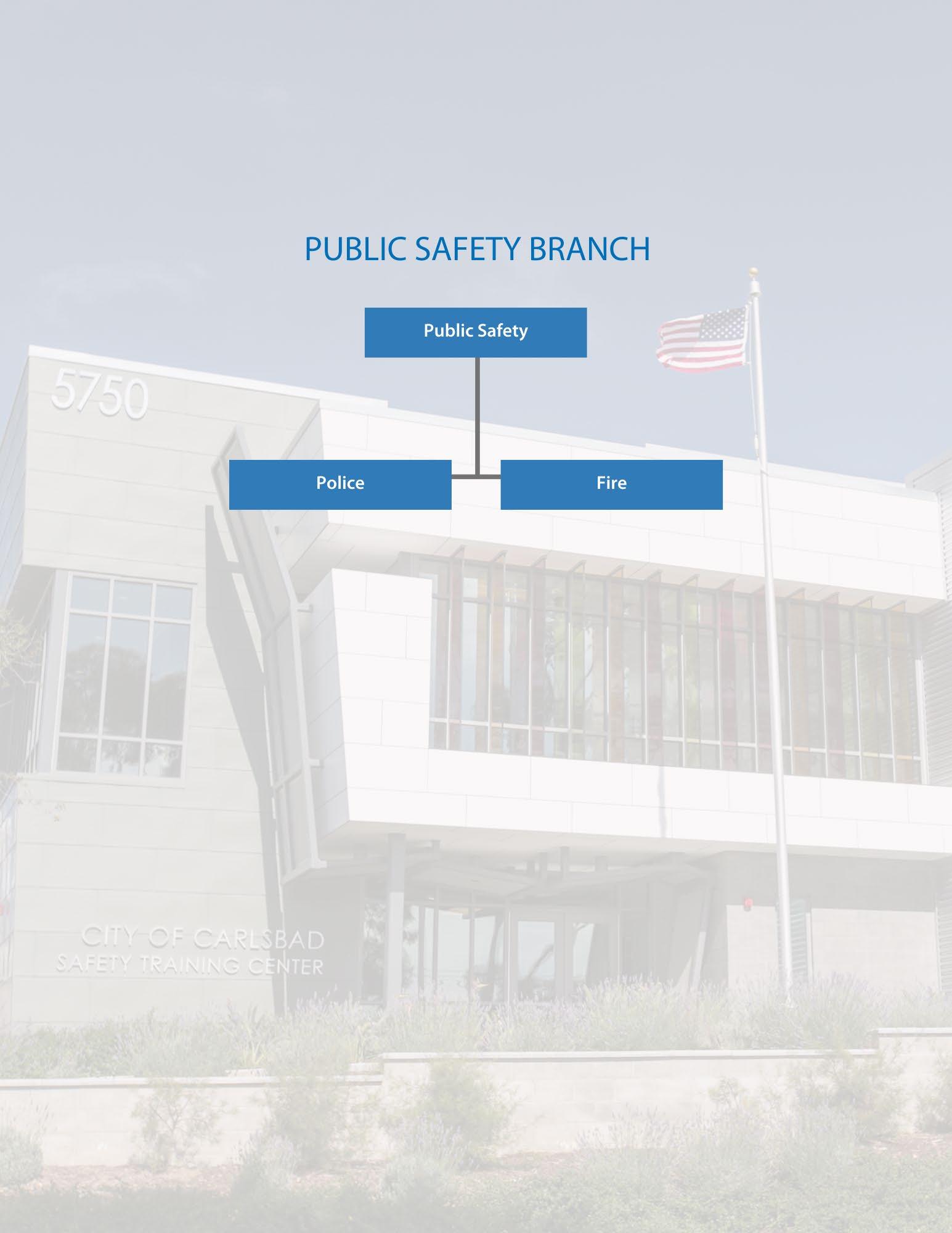
The City of Carlsbad’s public safety services create and maintain a safe community for all who live, work and play in our city. This important work is carried out by the dedicated men and women of the Police and Fire departments. Highly specialized divisions cover all aspects of modern law enforcement and fire services including response and recovery, emergency medical, marine safety, community risk reduction and emergency management.
We are proud to serve the Carlsbad community, working in partnership to deliver on the city mission at the highest possible level every day.
Michael Calderwood Fire Chief
442-339-2141 FireMail@carlsbadca.gov
Christie Calderwood Chief of Police
442-339-2100 police@carlsbadca.gov
Operating Expenses
• Fire Administration
• Emergency Operations
• Community Risk Reduction
PUBLIC SAFETY | FIRE DEPARTMENT : ADMINISTRATION
ABOUT
Fire Administration provides leadership, strategic planning and organizational support to ensure effective operations across the entire department.
SERVICES
• Administer directives, policies and procedures
• Compile data and analyze business intelligence
• Monitor budgets, contracts, procurement, payroll and accounting processes
• Oversee mutual aid reimbursement
• Research and support grant programs and opportunities
• Manage public records requests and document retention
• Support employee performance and compliance processes and records
• Establish and maintain administrative tools, resources and guides
ABOUT
The Emergency Operations Bureau safeguards life, property and the environment by providing 24hour fire suppression, rescue, marine safety, disaster mitigation and emergency medical services.
SERVICES
• Extinguish structure and wildland fires
• Deliver emergency medical and community health services
• Deploy mutual aid assistance across the state
• Organize response and support operations for natural or man-made disasters
• Investigate and mitigate hazardous materials
• Perform high-risk technical search and rescue
• Deploy SWAT medics to support law enforcement agencies
• Provide lifeguard services at North Beach and Agua Hedionda Lagoon
• Develop and supervise employee health and wellness programs
• Coordinate fire service career development and advancement opportunities
RECENT ACCOMPLISHMENTS
• Converted six single-role EMT positions to dual-role firefighters as part of a multi-year strategy to strengthen fire suppression capacity while maintaining EMS response readiness
• Initiated purchase of a second front-line aerial ladder truck to expand citywide coverage and support modern firefighting and rescue operations
• Deployed a temporary front-line ambulance to mitigate regional reductions in EMS transport resources, ensuring uninterrupted emergency response for Carlsbad residents
• Placed a new Urban Search and Rescue apparatus into service, enhancing specialized technical rescue capabilities locally and throughout the region
• Designed and implemented reimbursement processes as the lead agency for the California Office of Emergency Services Regional Task Force 13 program
• Expanded annual firefighter wellness testing to include advanced cancer screenings for suppression personnel over age 40, reinforcing long-term health and safety initiatives
• Commissioned the department’s first dedicated Self-Contained Breathing Apparatus extractor, improving advanced cleaning and decontamination of personal protective equipment to reduce exposure to harmful contaminants
GOALS
• Identify potential sites and research funding options for a permanent Fire Station 7
• Monitor and evaluate response times and incident outcomes by incident or hazard type to maintain situational awareness, identify performance trends, improve operational efficiency, optimize resource allocation and strengthen overall community safety
• Continue implementation of the multi-year staffing plan to convert single-role EMT positions into dual-role firefighters trained in both emergency medical services and fire suppression
• Construct a new fire ventilation training prop at the Safety Training Center before demolishing existing prop at planned Orion Center site for continuity of training capabilities
• Enhance specialized technical rescue capabilities to support statewide deployments through California Office of Emergency Services Regional Task Force 13
• Replace outdated 800 MHz portable radios with interoperable communication equipment to ensure seamless coordination among partner agencies during emergency operations
• Purchase video laryngoscopes for all frontline apparatus and implement procedural training to strengthen life-saving critical airway management effectiveness
• Maintain benchmark performance standards, achieving the 90th percentile fire turnout time and sustaining high EMS patient satisfaction ratings
SIGNIFICANT CHANGES IN THIS YEAR’S BUDGET
To address the demands of larger buildings, increased building heights, rising population densities, and evolving emergency response needs, the Fire Department implemented a multi-year staffing plan to transition existing single-role EMT positions into dual-role providers trained in both emergency medical services and fire suppression. Through a phased approach, all operational personnel will be firefightercertified by 2028. Phase 2 includes the reclassification of six additional EMT positions in FY 2026-27
Account: 0012235 0012240 0012243 0012260 Fund: General
ABOUT
The Community Risk Reduction Bureau mitigates hazardous conditions and ensures readiness for effective incident response through prevention, enforcement and public education.
SERVICES
• Oversee Hazard Reduction Program to identify and abate brush fire hazards
• Respond to inquiries and complaints concerning hazardous conditions
• Investigate cause and origin of suspicious or large-loss fires
• Review code compliance on construction plan submittals
• Complete construction inspections for new buildings and remodeling projects
• Conduct annual inspections of schools, care facilities, hotels, motels and apartment complexes
• Install and test smoke alarms in Carlsbad homes
• Coordinate outreach and education programs promoting fire safety tips and prevention
• Disseminate timely and accurate department information through various media platforms
• Provide leadership to community organizations to help ensure readiness to prevent, protect against, mitigate, respond to and recover from all threats and hazards
• Support large-scale emergency response operations through the Emergency Operations Center
RECENT ACCOMPLISHMENTS
• Developed a comprehensive long-term fire mitigation plan integrating risk assessment, fuel management, emergency response, community education, infrastructure improvements, implementation, monitoring and public engagement
• Installed an ALERT California camera in Carlsbad to support early wildfire detection and provide real-time situational awareness
• Adopted Fire and Wildland-Urban Interface Codes to strengthen regulations that safeguard life and property from hazardous conditions and enhance community wildfire resilience
• Adopted updated Fire Hazard Severity Zone maps to improve wildfire preparedness and guide targeted mitigation efforts
• Conducted training sessions to familiarize city employees with new technology, equipment and procedures following the Emergency Operations Center remodel
• Facilitated a comprehensive emergency operations shelter exercise with partner agencies to reinforce large-scale emergency response coordination
• Developed an interactive digital story map serving as the Fire Department’s Annual Report, highlighting key achievements, operational data and community impact
• Completed the transition to FirstDue, a cloud-based platform enhancing fire inspection, prevention, records management efficiency and data accuracy
• Purchased and outfitted a dedicated Fire Marshal vehicle
GOALS
• Create defensible space and fuel modification guidelines for new construction in designated fire hazard severity zones to reduce wildfire risk and protect life and property
• Update the city’s Landscape Manual to ensure consistency with fire codes and state defensible space requirements
• Implement fire mitigation plan recommendations to proactively reduce wildfire risk citywide
• Adopt mid-rise building safety guidelines to ensure adequate fire department access and robust fire protection and detection systems
• Develop a Zone Zero implementation plan based on anticipated statewide regulations to guide vegetation management and building setbacks
• Maintain benchmark performance standards, achieving compliance with Senate Bill 1205mandated inspections and completing fire plan reviews within 10 days of submittal
This division develops and administers programs that support the city’s and the Police Department’s statement of values in a manner responsive to the city and its residents. This division establishes policies and long-range plans to meet department goals and city needs. Administration is also responsible for police grants, which includes federal and state asset forfeiture, the Citizens’ Option for Public Safety, the Justice Assistance Grant, the Urban Areas Security Initiatives Program and the Office of Traffic Safety. SERVICES
• Develop and manage programs that reduce crime, encourage resident engagement and improve community safety
• Assist staff with individual and team development
• Provide support to divisions to assist with meeting goals
• Respond to residents’ concerns, City Council inquiries and public records requests
• Use grants to purchase police equipment, supplement staffing costs and assist with training
RECENT ACCOMPLISHMENTS
• Used multiple grants to supplement staffing costs, acquire police equipment and coordinate DUI/DL checkpoint and other traffic enforcement operations
• Awarded the Paul Coverdell Forensic Science Improvement Grant to support accreditation of the Police Department’s crime laboratory
• Formalized new supervisor mentoring and training program
• Utilized the existing Drone program to augment patrol and provide a feasibility study for a potential Drone as a First Responder Program in the future
GOALS
• Monitor crime rates and crime trends within the city to deploy resources to strategically address issues
• Utilize grant funding to explore the use of more innovative technology to provide the most efficient and effective services
• Collaborate cross-departmentally with city staff who specialize in data and innovation to increase accuracy, efficiency and transparency in the department’s data
• Continue to research innovative technology that will assist in building a real-time crime center
• Continue to seek grant funding for necessary equipment and collaborate with the Fire Department on grant management
• Address quality of life issues in the city with a Community Oriented Policing and ProblemSolving model and staffing plan
PUBLIC SAFETY | POLICE DEPARTMENT: FIELD OPERATIONS
Account: 0012120
0012123-2125
0012127-2129 Fund: General
ABOUT
The Field Operations Division includes patrol, canines, SWAT, lagoon patrol and police rangers.
SERVICES
• Respond to calls for emergency and non-emergency services
• Employ new and existing resources to address complaints and quality of life issues
• Provide emergency services, preventative patrol, traffic enforcement and special enforcement in the community
• Utilize de-escalation tactics during criminal and mental health scenarios to safely resolve critical incidents
• Staff major public events in the city with Patrol and SWAT team members to respond to immediate, life-threatening emergencies
• Conduct field interviews and take reports at incidents like crimes, arrests and traffic collisions
• Enforce laws and ordinances, preserve the peace and provide for the protection of life and property through proactive programs of enforcement and prevention
RECENT ACCOMPLISHMENTS
• Received an approval rating of 4.47 out of 5, based on 8,338 people surveyed when asked how they would rate the officer with whom they interacted
• Onboarded and trained 22 sworn police officers, which equates to 38% of officers in the Patrol Division
• Worked collaboratively with local organizations and businesses; the Parks and Recreation, Fire, and Transportation departments; and the City Attorney’s Office to create a safe environment with zero incidents of significant crime or property damage for thousands of citizens executing their first amendment rights
• Re-entered Operation Stonegarden, a federal grant program through the San Diego County Sheriff’s Department, to reduce the influx of illegal drugs, human trafficking and other associated crimes
• Trained all staff with new requirements stemming from legislative changes such as Proposition 36 and Senate Bill 43
GOALS
• Collaborate with the Information Technology Department to implement the new Motorola Computer Aided Dispatch system and a new Report Management System, both of which will replace current systems which are now at end of life
• Continue the collaboration with the Crime Analysis Division to refine the Crime Analysis Reponses model with the Crime Analysis Proactivity initiative
• Continue to progress toward the national average response time of 6:00 minutes for Priority 1 calls for service with added personnel and the integration of new technology
Priority 4 calls for service response time
SIGNIFI C ANT CHANGES IN THIS YEAR’S BUDGET
One lieutenant, one sergeant and four police officers were added mid-year 2025-26, as approved by City Council, to address quality of life issues, address community needs and concerns and focus on community events.
PUBLIC SAFETY | POLICE DEPARTMENT: SUPPORT OPERATIONS
Account: 0012115
0012121
0012126
0012130-2138
0012142-2143
ABOUT
The Support Operations Division includes the Crime Suppression Team, Homeless Outreach Team, Investigations Division, Traffic Division, Family Services, Property & Evidence and Fleet Operations.
SERVICES
• Conduct follow-up investigations leading to the identification and apprehension of persons responsible for the commission of crimes
• Collect and process evidence collected in the field by police employees
• Provide support to divisions to assist with meeting goals
• Assist in the preservation of all life and ensure a safe resolution to critical incidents
• Investigate and follow up on crime and incident reports as they relate to the family
• Assist in the coordination of diversion, prevention and education activities
• Provide and manage the department’s fleet
RECENT ACCOMPLISHMENTS
• Conducted four in-person e-bike safety education classes at the start of the school year
• Executed a coordinated summer enforcement strategy between the Traffic Division and Patrol to address residential neighborhood concerns, school-adjacent safety issues, and ebike and e-motorcycle related traffic and quality-of-life complaints during peak activity months
• Presented at the Office of Traffic Safety Law Enforcement Forum on e-bike safety, highlighting the City of Carlsbad’s data-driven and regulatory innovations implemented under the Safer Streets Together initiative
• Amended Title 10, Chapter 10.56 of the Carlsbad Municipal Code, including updating e-bike age restrictions, to improve regulatory clarity and public safety outcomes
• Launched and implemented a pilot Drones as a First Responder Program
• Collaborated with Code Enforcement to enhance enforcement efforts targeting illegal massage businesses, resulting in the closure of three locations Executed multiple contracts with cellular data extraction vendors and developed a strategic roadmap outlining the needs of the digital forensics laboratory
GOALS
• Develop a sustainable staffing and succession planning strategy to ensure continuity, readiness and adequate qualification levels within the Traffic Division amid evolving enforcement demands
• Evaluate and procure counter-drone capabilities to enhance security for special events, with secondary applicability to critical incidents and other public safety emergencies
• Begin the process of Crime Lab Accreditation to ensure the laboratory’s work meets the highest standards to be scientifically sound, legally defensible and professionally managed
• Analyze investigations case load to support a possible reconfiguration of the division
• Implement a Use of Force review board and make recommendations for training needs or deficiencies
ABOUT
PUBLIC SAFETY | POLICE DEPARTMENT: ADMIN I STRATIVE SUPPORT OPERATIONS
Account: 0012144-2145 Fund: General
The Administrative Support Operations Division includes Crime Analysis, Communications and Records.
SERVICES
• Provide police officers with actionable information by analyzing crime patterns, statistics and trends
• Deliver public safety communication, including answering 911 and other calls and dispatching appropriate emergency personnel
• Maintain and provide information and support for all records management, data entry and processing, Public Records Act requests and retrieval of police records in accordance with state-mandated procedures
RECENT ACCOMPLISHMENTS
• Earned an approval rating of 4.65 out of 5 based on people surveyed when asked how they would rate dispatch services
• Created and implemented a comprehensive training program for incoming Records Specialists
• Relaunched the Crime Prevention Program, focused on proactive education, community engagement, and partnership building, which empowers residents with tools and information to help prevent crime and strengthen neighborhood safety
• Introduced the Crime Analysis Proactivity report, providing Watch Commanders with quarterly crime trend projections to help anticipate emerging threats, allocated resources effectively, and proactively address crime
• Established dedicated crime analysis support within the Investigations Division to assist detectives with intelligence development and complex case analysis
GOALS
• Advance the implementation of the new Computer Aided Dispatch system by completing development, conducting comprehensive training and successfully transitioning operations
• Acquire and implement the new Records Management System to improve data accuracy, accessibility and efficiency
• Prepare for the statewide migration to Next Generation 911, an emergency communications infrastructure enabling voice and multimedia communications between the 911 caller, the dispatcher and officers in the field
• Maintain 911 call answer times above the national standards with a focus on consistent delivery
PUBLIC SAFETY | POLICE DEPARTMENT: PROFESSIONAL STANDARDS & SERVICES
Account: 0012119
0012122
0012140 Fund: General
ABOUT
The Professional Standards & Services Division supports the Police Department in the form of training, internal affairs, recruitment and hiring.
SERVICES
• Recruit new employees, organize testing programs and conduct mandated pre-employment investigations and Peace Officer Standards and Training
• Establish, maintain and enforce department professional standards and coordinate all department training
• Investigate complaints against Police employees
• Provide information to the media to inform the public regarding crime activity in the city
• Develop and administer promotional testing within the Police Department
• Help improve the quality of life for city residents through crime prevention awareness and education and help reduce the community’s fear of crime through the dissemination of information
RECENT ACCOMPLISHMENTS
• Hired 27 personnel in the Police Department including sworn, non-sworn and professional staff to fill vacancies, including the Internet Crimes Against Children Detective and Digital Forensics Specialist
• Created a uniform proposal sheet for personnel to suggest new equipment and uniform items that improve functionality, safety or professional appearance
• Revised the Uniform Manual to clarify expectations for department uniforms and ensure consistent standards among uniformed personnel
• Updated the internal affairs manual and developed a supervisor guidebook as a quick reference to help new supervisors properly complete required actions
• Updated the audit collection process ensuring audits were not missed or incomplete
GOALS
• Maintain adequate levels of staffing in all areas of the department to continue to maintain an exceptional standard of service
• Contract with an external recruiting firm to obtain high-quality candidates Create a guidebook for the Professional Standards & Services Division
• Purchase and implement virtual reality training technology and equipment that places officers in realistic, high-pressure scenarios, helping them build confidence and improve decision-making through repeated, hands-on practice in a safe, simulated environment
PUBLIC WORKS
Public Works is responsible for planning, providing and maintaining the infrastructure that supports a high quality of life in the City of Carlsbad. From city buildings and vehicles to roads, habitat, safe, reliable water supplies and more, Public Works oversees responsible and sustainable management practices for a wide variety of city assets.
This includes administration of the Capital Improvement Program, a five-year budget with a 15-year forecast that encompasses planning, design and construction of road and traffic improvements; major facilities maintenance, repairs and renovation; storm drain systems; water and wastewater infrastructure; civic buildings and other infrastructure projects. Public Works plays a key role in promoting environmental sustainability, enhancing options and protecting public health and safety.
Paz Gomez Deputy City Manager, Public Works
442-339-2751 paz.gomez@carlsbadca.gov
Account: 0018310 Fund: General
ABOUT
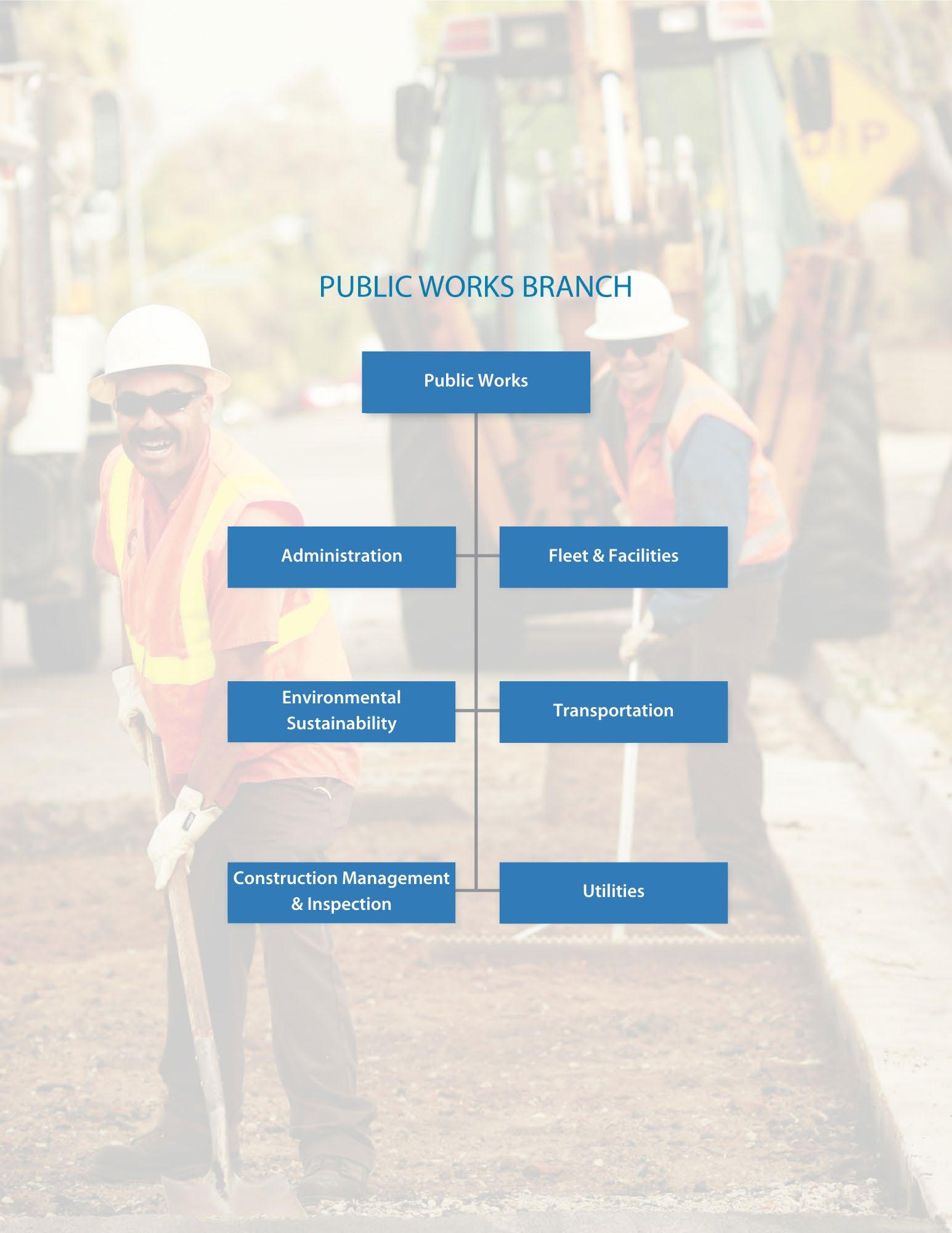
Public Works Administration provides leadership, administrative oversight and strategic vision for the entire Public Works Branch, which is comprised of the Construction Management & Inspection, Fleet & Facilities, Environmental Sustainability, Transportation and Utilities departments. It provides administrative support services with a focus on alignment to the Strategic Plan, Community Vision and other City Council initiatives
SERVICES
• Provide leadership support, operating and Capital Improvement Program budget oversight, contract administration, and records management
RECENT ACCOMPLISHMENTS
• Successfully completed the implementation of Phases III and IV of the enterprise asset management system, including the Transportation Department’s pavement management program and the Environmental Sustainability Department’s habitat management division
• Executed 76 master agreements across 20 disciplines to provide professional services supporting the delivery of departmental and CIP projects
• Established a formal framework for contractor performance evaluations, standardizing the collection of performance metrics to ensure high-quality service and contract compliance
• Developed a Title VI Implementation Plan to ensure compliance with Caltrans and Federal Highway Administration regulations, securing the city’s eligibility for federal grant funding
• Earned five project awards from the San Diego and Imperial Counties Chapter of the American Public Works Association for the following departments and projects: the Utilities Department for the South Agua Hedionda Interceptor Reach T1D Capacity Improvements Project; CMWD for the Palomar Airport Water Line Realignment Project; and the Transportation Department for the Buena Vista Creek Channel Emergency Repairs Project, the East-West Corridors Multimodal Resurfacing and Restriping Enhancements Project, and the Carlsbad Boulevard Pedestrian Improvement Project
• Received a team award from the San Diego and Imperial Counties Chapter of the American Public Works Association for Outstanding Operations & Maintenance Personnel for implementation of the city’s new enterprise asset management system, specifically recognizing the CMWD Administration, Asset Management and Water and Wastewater Division staff
• Attained one Award of Merit from the San Diego and Imperial Counties Chapter of the American Public Works Association for a Contract Administrator for 20 years of service in bidding transportation and utilities projects
• Secured four project awards from the San Diego Section of the American Society of Civil Engineers for: 1) Outstanding Bikeways & Trails Project for the Avenida Encinas Coastal Rail Trail Segment 2 Project, 2) Outstanding Geotechnical Project for the Trieste Drive Emergency Slope Repairs Project, 3) Outstanding Water/Wastewater Treatment Project for the Palomar Airport Water Line Realignment Project, and 4) Outstanding Transportation Project for the Carlsbad Boulevard Pedestrian Improvement Project
• Ranked by the NAFA Fleet Management Association as #10 of the 2025 100 Best Public Fleets and by Government Fleet in association with the American Public Works Association as the #1 Top Small Fleet (for fleets with 499 vehicles or less)
• Won second place overall and received other individual awards for Streets Maintenance Division staff in the San Diego Chapter of the Maintenance Superintendents Association Roadeo competition in which construction equipment skills are demonstrated
• Earned an Individual Owner Honoree Award from the San Diego Chapter of the Construction Management Association of America for the Construction Management & Inspection Department Engineering Manager
GOALS
• Initiate formal American Public Works Association accreditation, conducting an analysis of current operations to align branch practices with national Best Management Practices
• Scale the pilot contractor performance evaluation program to additional departments
• Develop a standard operating procedure for construction staging areas to streamline the process to designate an area for temporary contractor use while constructing city projects
• Implement new CIP budget development software
• Support an update of the city’s procurement policy and related administrative orders
• Develop a standard operating procedure for emergency infrastructure repair projects
• Maintain focus on employee coaching and training for staff throughout the branch
PUBLIC WORKS | CONSTRUCTION MANAGEMENT & INSPECTION
Account: 0018510 & 0018560 Fund: General
ABOUT
Construction Management & Inspection ensures compliance with legal, regulatory and contractual requirements during construction of CIP and private development projects.
SERVICES
• Manage construction of CIP projects and public works contracts for all departments managing city assets such as parks, utilities (water, wastewater, and recycled water), transportation and drainage
• Inspect and oversee private development grading, which includes monitoring contractor compliance with city standards and approved site design
• Inspect and oversee stormwater compliance, including monitoring contractor implementation of site-specific plans and methods to prevent storm water pollution during construction for National Pollutant Discharge Elimination System (NPDES) requirements
• Manage the Green Infrastructure Program, formerly the Treatment Control Best Management Practices Program, including annual notifications to property owners about required maintenance for water quality devices installed in development projects to prevent pollutants such as trash, pesticides and sediment from making their way into waterways
• Oversee all construction activity in the public right-of-way
RECENT ACCOMPLISHMENTS
• Received 2025 Project of the Year from the San Diego and Imperial Counties Chapter of the American Public Works Association for South Hedionda Interceptor Reach T1D Capacity Improvements and three 2025 Honor Awards for the Buena Vista Creek Emergency Repairs, East-West Corridors Multimodal Resurfacing and Restriping Enhancements, and Palomar Airport Waterline Realignment
• Earned an Individual Owner Honoree Award from the San Diego Chapter of the Construction Management Association of America for the Construction Management & Inspection Department Engineering Manager
• Conducted construction management and inspection services on significant CIP projects and citywide emergency responses, including the Recycled Water Phase 3 D-4 Reservoir, Kelly Drive Channel Emergency Repair, Valve Replacement Phase III, Carlsbad Boulevard Beach Access Repairs, Park Drive Street and Drainage Improvements, Stagecoach Park Community Garden, Ponto Water Main Replacement, Miscellaneous Lift Station Improvements, Carlsbad Boulevard Water and Sewer Improvements at Terramar, and El Camino Real Widening from Sunny Creek Road to Jackspar Drive
• Provided construction inspection services for private development projects such as Marja Acres, Ionis Lots 21 & 22, FPC Residential, Hope Apartments at 955 Grand, Ocean View Point, La Costa Town Square Parcel 3, Romeria Point Apartments, Toyota Carlsbad Showroom and Aviara Apartments West
• Continued to inspect work in the right-of-way for 5G communications infrastructure
• Maintained stormwater compliance through training, education, outreach and enforcement actions, resulting in zero construction-related notices of violation from the San Diego Regional Water Quality Control Board to date
GOALS
• Implement a pilot contractor performance evaluation process to improve accountability
• Work with property owners to reduce pollution and improve water quality through the city’s Green Infrastructure Program with the goal of receiving at least an 80% response rate on the annual Green Infrastructure maintenance verification
• Continue to maintain stormwater compliance on CIP projects with a goal of no violations from the Regional Water Quality Control Board
Performance Measure FY 2025
Strategic Plan Goal Percentage of property owners that respond to the annual Green Infrastructure maintenance verification
Construction stormwater violations on CIP projects 0 0 0 0
Sustainability & the Natural Environment
Sustainability & the Natural Environment
PUBLIC WORKS | ENVIRONMENTAL SUSTAINABILITY: SUMMARY
ENVIRONMENTAL SUSTAINABILITY
• Climate Action Plan and Habitat Management
• Sustainable Materials Management
• Watershed Protection
ABOUT
The General Fund portion of the Environmental Sustainability Department budget includes the Climate Action Plan, Habitat Management and Watershed Protection Divisions, the latter of which is also responsible for the coordination of the municipal component of the National Pollutant Discharge Elimination System Municipal Stormwater Permit. The department also coordinates and provides administrative and technical support to the newly established Environmental Sustainability Commission. These divisions integrate components of the department’s environmental and sustainability guiding principles and support the 5-year Carlsbad Strategic Plan Goal of Sustainability & the Natural Environment.
PUBLIC WORKS | ENVIRONMENTAL SUSTAINABILITY: CLIMATE ACTION PLAN AND HABITAT MANAGEMENT
Account: 0015110 0015130
SERVICES
Fund: General
• Coordinate with multiple city departments to oversee Climate Action Plan implementation, collect monitoring data and prepare an annual report for the public and the City Council
• Update the public-facing CAP dashboard that provides information and data regarding energy, transportation carbon sequestration and waste diversion to coincide with the CAP annual report
• Prepare an update of the CAP every five years as directed by the City Council
• Coordinate the preparation of a community-wide greenhouse gas emissions inventory with future projections as appropriate
• Fulfill city regulatory requirements related to the CAP
• Perform outreach and education related to CAP activities and respond to public inquiries
• Manage the Carlsbad Green Business Program, which supports and recognizes local businesses for adopting environmentally sustainable practices
• Engage in groups like the San Diego Regional Climate Collaborative to collaborate, share expertise and advance sustainability efforts
• Research and monitor upcoming regulations, funding opportunities and activities related to climate mitigation, adaptation, resilience and equity
• Provide leadership and citywide coordination to ensure compliance with Habitat Management Plan regulations for private development and city CIP projects
• Oversee preserve management to ensure Habitat Management Plan compliant land management, biological monitoring and reporting across the citywide preserve system
• Collaborate with the U.S. Fish and Wildlife Service, California Department of Fish and Wildlife, California Coastal Commission and other resource agencies to ensure solutionsoriented Habitat Management Plan implementation
• Represent the city in regional conservation organizations, including San Diego Management and Monitoring Program and SANDAG Regional Habitat Conservation Taskforce
• Facilitate regional and local conservation-related scientific research, biological monitoring and rare species habitat enhancement
• Coordinate preserve inspection program, Ward’s weed control program, and adaptive management program
• Provide technical support to the Environmental Sustainability Commission
RECENT ACCOMPLISHMENTS
• Established the city’s first ever Environmental Sustainability Commission by transitioning the former Beach Preservation Commission to an expanded role beyond beach nourishment and shoreline preservation, including natural resources and open space, climate adaptation and other environmental sustainability topics
• Implemented brush management in nine unmanaged preserves to reduce the risk of fire hazards in habitat adjacent to residences
• Converted all municipal accounts to the 100% renewable energy rate with Clean Energy Alliance, completing implementation of a CAP action
• Served as Treasurer for the California Green Business Network Board of Directors
• Partnered on a successful grant application with several other local agencies for a greenhouse gas inventory update, prepared at no cost via SANDAG’s Smart Growth Incentive Program funding
• Continued the pilot adaptive management program to enhance and protect two endangered plant species and rare native grassland habitat
• Completed all municipal inspections as required by the Municipal Stormwater Permit
GOALS
• Continue implementation of the CAP with a focus on the 2030 monitoring benchmarks
• Protect the city’s native habitat and species diversity through implementation of the Habitat Management Program
• Ensure compliance with state and federal endangered species acts by meeting all regulatory requirements of the Habitat Management Program including target preserve acres and report out to the resource agencies and the public annually
• Continue the inspection program to assess the habitat preserves’ conditions and advance the adaptive management program to address environmental changes
PUBLIC WORKS | ENVIRONMENTAL SUSTAINABILITY: SUSTAINABLE MATERIALS MANAGEMENT
ABOUT
In alignment with the Carlsbad Municipal Code and General Plan, the Sustainable Materials Management Division coordinates implementation of a comprehensive citywide waste reduction and recycling program, ensuring full compliance with state regulations governing waste reduction, diversion and the proper disposal of solid waste. Division staff manage the franchise agreement for waste hauling, recycling services and organics services, oversee the Palomar Transfer Station agreement for disposal services, lead waste reduction and diversion outreach and education initiatives and ensure the safe disposal of household hazardous waste. Through these efforts, the division actively contributes to a more sustainable and environmentally responsible community.
SERVICES
• Represent the city at meetings related to sustainable materials management with CalRecycle, businesses, residents and other stakeholders
• Oversee the municipal waste reduction, diversion and other sustainability programs
• Manage grant applications and activities, including local, state and national grant programs, with the City Council’s approval
• Coordinate outreach and education targeted at increasing recycling and other diversion programs for residents, businesses, municipal employees and the public
• Plan and organize annual Earth Month and Earth Day events promoting recycling, proper disposal of household hazardous waste, composting and beach cleanup
• Conduct annual rate analysis to evaluate cost-effective practices for the franchise agreement for trash and recycling services
• Submit annual source reduction, recycling, composting and disposal reports to CalRecycle
• Engage the community to decrease waste and increase recycling and composting practices
RECENT ACCOMPLISHMENTS
• Provided outreach and education to all multifamily properties and businesses in the city on new single-use plastics ordinances and organics requirements
• Hosted Fix-It clinic events, compost and mulch giveaways, shredding and recycling events, an e-waste collection event, and Earth Month celebrations to promote sustainable practices
• Continued to work in all school districts assisting with education programs, staff training and support for meal sorting and recycling initiatives
• Expanded edible food recovery efforts by supporting food recovery organizations and local businesses, advancing food waste reduction and community food access
• Implemented outreach, training, and contamination reduction strategies for large-scale community events, including TGIF Concerts in the Park and the Carlsbad Village Street Faire
• Demonstrated contamination monitoring and reduction strategies to CalRecycle during route reviews, which resulted in the city being highlighted as a model program
• Received the Pavitra Crimmel Reuse Award from the California Resource Recovery Association for the city’s innovative Fix-It Clinics Program
• Revised city departments’ Municipal Sustainability Action Plans to improve recycling practices, increase awareness and enhance tracking of waste diversion efforts
GOALS
• Monitor waste diversion and recycling programs at the Palomar Transfer Station to ensure performance, compliance and alignment with the city’s diversion goals
• Increase waste diversion in the commercial sector by focusing on technical assistance
• Continue tracking per capita disposal rate to verify accuracy and monitor improvement
• Advance sustainable materials management practices across city departments by supporting implementation of departmental Action Plans, standardizing waste systems and expanding technical assistance to municipal staff and sustainability ambassadors
PUBLIC WORKS | ENVIRONMENTAL SUSTAINABILITY: WATERSHED PROTECTION
Operating Expenses
Account: 5215110
ABOUT
Fund: Enterprise
This budget supports leadership and stewardship of the city’s resources, including our creeks, lagoons and ocean, through the Watershed Protection Division’s coordination of the citywide protection program. The division also helps the city maintain compliance with the National Pollutant Discharge Elimination System Municipal Stormwater Permit issued by the San Diego Regional Water Quality Control Board a regional permit that covers 39 copermittees from municipal, county government and special district entities who own and operate large storm drain systems that discharge water runoff to surface waters throughout the region. The Municipal Stormwater Permit covers 11 watershed management areas in the region, including the Carlsbad Watershed area
SERVICES
• Act as the Principal Copermittee in the Carlsbad Watershed management area, serving as a liaison with the Regional Board, ensuring submittal of annual reports and participating in the planning committee
• Represent the city at meetings with the California Environmental Protection Agency, Regional Board, copermittees, environmental nonprofit groups and other stakeholders
• Assess businesses to ensure proper pollution prevention, prevent discharges into the storm drain system, and protect receiving waters, which may require follow-up visits, targeted education or enforcement
• Identify and eliminate illicit water discharges into the storm drain system as required by the Municipal Stormwater Permit, including responding to and investigating complaints, performing field screening at major outfalls and managing a public hotline
• Oversee the city’s implementation of statewide Trash Amendments, to comply with the State Water Resources Control Board’s Trash Provisions and reduce pollution in state waters
• Act as a staff liaison and provide administrative and technical support to the Buena Vista Lagoon Joint Powers Committee, in partnership with the City of Oceanside
RECENT ACCOMPLISHMENTS
• Updated and implemented the Water Quality Improvement Plan for the Carlsbad Watershed management area, which will optimize its compliance with the Municipal Stormwater Permit
• Submitted the Carlsbad Watershed Water Quality Improvement Plan and the Jurisdictional Runoff Management Program Annual Reports to the Regional Board
• Worked interdepartmentally to implement state mandated trash control measures to keep trash out of the storm drain system and downstream waterbodies
• Hosted volunteer cleanup sites and provided other outreach and education activities within the city and regionally
• Completed all state-mandated water quality monitoring and annual stormwater inspections
GOALS
• Implement a monitoring program to evaluate storm drain system discharges, including water quality monitoring, sediment quality monitoring and other studies
• Create a public outreach program to promote behavior changes that reduce the discharge of pollutants into the storm drain system and protect water quality in the receiving waters
• Implement all required strategies and numeric goals of the Water Quality Improvement Plan
• Utilize innovative approaches to execute the city’s Jurisdictional Runoff Management Program alongside the Carlsbad Watershed Water Quality Improvement Plan and submit reports to the Regional Board
• Prepare for implementation of the revised Municipal Stormwater Permit which will include new requirements to control trash
• Conduct all annual inspections of existing development and water quality monitoring required by the Municipal Stormwater Permit
• Implement new statewide cost reporting standards for municipal storm water programs
• Respond to at least 90% of illicit discharge emergencies within 45 minutes and detect and eliminate 100% of illicit discharges
Performance Measure FY 2025 Actual FY 2026 Estimated FY 2027 Projected Benchmark Related Strategic Plan Goal Percentage of emergency response times under 45 minutes for illicit discharges
Illicit discharges detected and eliminated
Sustainability & the Natural Environment
Sustainability & the Natural Environment
F LEET & F ACILITIES
PUBLIC WORKS | FLEET & FACILITIES: SUMMARY
PUBLIC WORKS | FLEET & FACILITIES: FACILITIES
Revenue-Parking in Lieu
ABOUT
The Facilities Division provides safe and comfortable working spaces at city facilities and maintains quality indoor public spaces. Additionally, this division oversees the design and construction work for new city facilities and building renovation projects and operates the Safety Training Center.
SERVICES
• Maintain city-owned facilities including building exteriors, interiors, cleaning and custodial services, as well as set-up of offices and meeting rooms
• Provide construction, improvements, renovations, repairs and relocation services for cityowned buildings
• Operate the Safety Training Center for public safety personnel training as well as provide leasing and rental opportunities to federal, state and local agencies and programs
RECENT ACCOMPLISHMENTS
• Received certification as a Green Business through the California Green Business Network for Stagecoach Community Center and the Carlsbad Library Learning Center
• Completed a facility monitoring pilot program that provides real time building asset conditions including temperature, humidity, water intrusion, emergency generator status and other critical elements of city facilities
• Continued to develop the facility asset management program and completed populating approximately 40% of the documented assets into OpenGov
• Completed 1,556 facilities service requests submitted via the city’s work order management system and an additional 261 preventative maintenance tasks
• Completed replacing the roof system of the Alga Norte Community Park ballfield snack bar using a roofing tile that is manufactured with post-industrial recycled products
• Completed the Fleet Fuel Island Upgrade project and the Police & Fire Headquarters Central Plant Repair Project
• Completed construction of the Harding Community Center Refurbishment Project heating, ventilation and air conditioning system refurbishment at the auditorium
• Completed installation of an uninterrupted power supply system at the Emergency Operations Center
• Completed the Safety Training Center Irrigation System Project and added water meters to three fire hydrants, expanding training opportunities for the Fire Department
• Supported 37 training days for 17 outside agency leases at the Safety Training Center generating $31,000 in revenue through February 2026
• Recycled 1,731 pounds of brass shell casings, 4,586 pounds of lead and copper from indoor shooting range activities and 4,940 pounds of scrap metal, generating over $4,100 in revenue as well as promoting environmental sustainability
GOALS
• Complete implementation of the facility asset monitoring program to allow for real-time monitoring of building systems at select city facilities
• Explore opportunities for projects to promote sustainable energy use and production
• Continue to develop the facility asset management program by populating 100% of our documented assets into OpenGov
• Complete construction of the State Street Parking Lot Electric Vehicle Charging project
• Commence construction of the Fleet Maintenance Refurbishment project
• Complete the design work for the Orion Center project and obtain building permit ready plans, specifications and contract documents
• Complete construction of the Monroe Street Pool Replacement Project
• Conduct a study to determine opportunities for future solar projects at six city facilities
& FACILITIES:
& REPLACEMENT
ABOUT
The city’s fleet consists of 507 vehicles and equipment necessary to achieve the city’s mission of delivering quality and efficient services safely, affordably and in compliance with all regulations
The fleet maintenance program funds labor, parts, services, fuel and oil necessary to maintain the city’s fleet of vehicles and equipment. The fleet maintenance program is funded through charges to departments based on vehicle type and utilization.
The fleet vehicle replacement program is funded through a replacement charge to departments for each vehicle or equipment in service. This program funds asset replacement and vehicle outfitting. Cost-effective vehicle procurement is achieved through cooperative purchasing agreements and bidding processes. Revenue is collected from the sale of retired city fleet assets at auction and used to offset future costs within respective departments.
SERVICES
• Provide safe, appropriately managed and maintained vehicles for use by city staff, inspect vehicles per requirements of the biennial inspection of terminals and smog programs and maintain 24/7 road call services for emergency vehicles
• Provide reliable, cost-effective fuel management by maintaining sufficient fuel supplies for emergencies and monitoring fuel tanks in accordance with state and county regulations
• Evaluate the city fleet annually to identify units eligible for replacement or reduction in accordance with Administrative Order 3
• Advise on development of specifications for the purchase of replacement units that satisfy client department requirements while optimizing life cycle return on investment in alignment with the Climate Action Plan
• Purchase replacement units and identify opportunities to increase fleet electrification and electric vehicle charging infrastructure
RECENT ACCOMPLISHMENTS
• Achieved recognition as the #10 NAFA 100 Best Fleets, and #1 Leading Fleet in Government Fleet Magazine and the American Public Works Association in 2025
• Increased inventory of low-emission vehicles from 106 vehicles last year to 126 vehicles
• Activated 46 new vehicles and equipment and received $303,348 in revenue from auction sales
• Installed 10 additional Level 3 EV Charging stations at Fleet Operations Center, completing the 2nd phase of a three-phase project with SDGE Power Your Drive Program
GOALS
• Transition all passenger fleet vehicle purchases to electric vehicles, except for public safety vehicle purchases which will be electric where feasible—in compliance with the updated Climate Action Plan and the Strategic Plan
• Assess and improve fleet data management techniques and analytical processes for enhanced city reporting capabilities
• Increase low- and zero-emission vehicle miles traveled, or VMT, to 40% of total annual fleet VMT or 1,000,000 miles
• Buena Vista Channel, Lighting & Landscaping Districts
PUBLIC WORKS |
STORM DRAIN MAINTENANCE & ENGINEERING
Account: 0016310 5216310 Fund: General Enterprise-Storm Drain Maintenance
ABOUT
The Transportation Storm Drain Maintenance & Engineering divisions are responsible for maintaining and improving the city’s storm drain infrastructure.
SERVICES
• Address various drainage infrastructure and stormwater maintenance issues citywide
• Develop plans, specifications and estimates and provide project or design management of projects involving storm drain assets
• Optimize maintenance efforts by monitoring and addressing new and ongoing drainage issues
• Perform inspections and maintenance of the storm drain system
RECENT ACCOMPLISHMENTS
• Obtained emergency permits from regulatory agencies and initiated construction phase for emergency repair of the channel adjacent to Kelly Drive
• Cleaned out portions of the Kelly Channel and the Gabbiano outfall and cleared a large box culvert under La Costa Avenue
• Completed construction of the Kelly Channel embankment emergency repair project
• Responded to and quickly repaired a storm-related local emergency of an 18” storm drainpipe that resulted in sinkholes along the coastal bluffs on Carlsbad Boulevard near Solamar Drive on state-owned property in early 2026
• Carried out annual testing of street-sweeping debris to ensure compliance with regulatory requirements
• Continued design on the Magnolia Avenue Drainage Improvements Project, 2025 Surface Drainage Improvements Project, Merwin Drive Storm Drain Improvements Project and Drainage Master Plan BFB-Upper Project
GOALS
• Complete the Drainage Master Plan Update
• Complete design of the Magnolia Avenue Drainage Improvement Project, 2025 Surface Drainage Improvements Project, Merwin Drive Storm Drain Improvements Project and Drainage Master Plan BFB-Upper Project
• Complete all annual inspections and clearing of programmed storm drains and channels
• Collaborate with state agencies to address state-owned property within the lagoons to improve drainage
• Complete the engineering and environmental phase and initiate the construction phase for multiple storm drain repair projects, including Highland-Hoover, corrugated metal pipe replacements and Carlsbad Boulevard and Juniper Avenue storm drain repair
• Obtain a new streambed alteration agreement from the California Department of Fish and Wildlife and complete triannual vegetation cutting and trash/debris removal at the Agua Hedionda Creek between the bridges of Cannon Road and El Camino Real
• Complete channel maintenance and prepare the annual report detailing vegetation cutting and debris removal for the Buena Vista Creek Channel Maintenance District project
• Finalize the Drainage Master Plan update
• Complete all annual inspections and manage high-priority cleanings
Tons of debris removed from city streets from street sweeping 1,154 tons 900 tons 1,000 tons N/A
Percentage of Agua Hedionda Lagoon channels cleaned
SIGNIFI C ANT CHANGES IN THIS YEAR’S BUDGET
Quality of Life & Safety
Quality of Life & Safety
Sustainability & the Natural Environment
A significant change includes an increase of $225,000 for quarterly channel maintenance. This will help cover expenses associated with maintaining channels on a quarterly basis, including vegetation removal and clearance efforts to reduce flooding risks.
The Traffic, Mobility, Transportation Engineering & Streets Maintenance divisions maintain and improve road infrastructure. They are responsible for enhancing mobility and safety citywide through ongoing transportation planning, streets and traffic engineering, streets maintenance and signal operations activities.
SERVICES
• Plan traffic needs, review development projects and manage traffic signals and engineering
• Address public concerns, study traffic issues and make safety improvements
• Maintain streets, including signs, markings, graffiti removal, trash pickup and repairs to potholes and sidewalks
RECENT ACCOMPLISHMENTS
• Completed a parking analysis and initiated design to increase on-street parking along Chestnut Avenue at Madison Street
• Developed a preliminary layout for converting parallel parking to diagonal parking with lane reduction on westbound Grand Avenue between the Tyler Street alley and Jefferson Street that would result in up to 14 additional parking spaces with establishment of an all-way stop at Grand Avenue and Madison Street
• Added a total of 44 parking spaces in the Village and Barrio as part of an effort to convert red curb that is no longer needed
• Completed all-way stop analyses for 28 locations to address residents’ requests
• Implemented all-way stops at two intersections: Laguna Drive and State Street, and Grand Avenue and Madison Street
• Finalized the Carlsbad Traffic Management Program 2026 update and initiated the second phase of the program on key streets
• Replaced 423 streetlights and fixed 450 street sign knockdowns
• Replaced 36,060 square feet of asphalt in the city right-of-way and approximately 5,600 square feet of concrete sidewalks Responded to 211 potholes year-to-date, as of February 2026
• Completed over 3,414 utility mark-outs, 1,317 striping work orders and addressed 6,408 graffiti locations
• Initiated revised design work on numerous high-priority projects including the Carlsbad Boulevard and Tamarack Avenue Intersection Improvements Project, Terramar Area Coastal Improvements Project and Kelly and Park Drives Complete Streets Project
GOALS
• Develop the scope for School Traffic Safety Improvements and identify additional schools for a Safe Routes to School Plan for fiscal year 2026-27
• Continue progress on the Clean Mobility Charging Master Plan to identify new potential electric vehicle charging sites citywide
• Complete design of the Carlsbad Boulevard and Tamarack Avenue Intersection Improvements Project, Terramar Area Coastal Improvements Project, Kelly and Park Drives Complete Streets Project, Village Lighting Project Phase I, 2025 Resurfacing Project, ADA Beach Access Pine Avenue to Tamarack Avenue Proj ect, El Camino Real Widening from Arenal Road to La Costa Avenue Project, Valley Street and Magnolia Avenue Complete Streets Project, Bridge Preventative Maintenance Projects, Parking Lot Maintenance Projects and State Street Trash Capture Best Management Practices (TCBMP) Project
Performance Measure FY 2025 Actual
2026
2027
Benchmark Related Strategic Plan Goal
N/A; consistent with staff capacity Quality of Life & Safety
BUENA VISTA CHANNEL, LIGHTING & LANDSCAPING DISTRICTS
The Transportation Engineering Division provides oversight of the Buena Vista Creek Channel Maintenance Assessment District, which funds costs for the maintenance of the Buena Vista Creek Channel drainage system from Jefferson Street east to the South Vista Way bridge The Transportation Department also provides oversight of the Lighting & Landscaping District 2 and Street Light Maintenance funds, which provide maintenance of streetlights, decorative lighting, street trees and medians within the district boundaries covering newer developments in the city.
SERVICES
• Maintain the Buena Vista Creek Channel from Jefferson Street east to the South Vista Way bridge
• Maintain and repair streetlamps and decorative lighting
RECENT ACCOMPLISHMENTS
• Developed a phased, in-house streetlight pole replacement program
• Obtained a new Coastal Development Permit from the California Coastal Commission to support ongoing storm drain channel maintenance in coastal areas within the district
• Obtained a new Lake and Streambed Alteration Agreement from the California Department of Fish & Wildlife to support ongoing, compliant storm drain channel maintenance
• Completed annual channel maintenance, vegetation clearing and trash removal to reduce localized flooding risk during storm events
GOALS
• Complete all annual inspections and manage high-priority channel cleanings
• Complete channel maintenance and prepare the annual report detailing vegetation cutting and debris removal for the Buena Vista Creek Channel Maintenance District
Performance Measure FY 2025 Actual FY 2026 Estimated FY 2027 Projected Benchmark Related Strategic Plan Goal
Citywide Streetlight Replacement Program Audit and bid of Phase 2 complete Phase 2 program completed Initiate Phase 3 and Phase 4 planning 100% Quality of Life & Safety
Percentage of Buena Vista Creek Channel cleaned and reported for permitting (equivalent to 20% of district annually)
Sustainability & the Natural Environment
UTILITIES
• Potable Water Operations
• Recycled Water Operations
• Wastewater Operations
Account: 5016310
ABOUT
Fund: Enterprise
To ensure safe, high-quality drinking water to Carlsbad Municipal Water District customers, the district provides ongoing operation and maintenance to the following: nine storage reservoirs, 457 miles of pipeline, 17 pressure zones, 74 pressure regulating stations, three pumping stations, approximately 14,300 valves, 4,500 fire hydrants and 30,265 potable meters. The district purchases potable water from its wholesale water provider, the San Diego County Water Authority, including desalinated water from the Carlsbad Desalination Plant. The district implements a water asset management plan to minimize the total cost of owning and operating utility assets while continuing to deliver high levels of service at acceptable levels of risk. SERVICES
• Deliver reliable, safe drinking water and fire flow demand
• Operate and maintain reservoirs, pressure regulating stations, pump stations, transmission and distribution pipelines, valves, meters and other appurtenances
• Comply with all water-related health, safety and environmental regulations including state and federal drinking water standards for water quality sampling and reporting
RECENT ACCOMPLISHMENTS
• Protected the potable water supply by testing approximately 285 city backflow devices and conducting 160 cross-connection tests
• Completed a construction project to replace broken or malfunctioning valves at 26 operationally critical locations to control flow and minimize disruption of service during shutdowns
• Completed construction of motorized valve installations at the Maerkle Reservoir site and power and telemetry connection to the SCADA system at El Fuerte Street at Rancho Pancho
• Completed construction of a replacement of a potable water distribution main beneath the North County Transit District rail corridor, north of Avenida Encinas in the Ponto area
• Completed construction of the Carlsbad Boulevard Water and Sewer Improvements at Terramar Project
• Conducted condition assessments on equipment in three potable water pump stations
• Completed an update of the 2020 Risk and Resilience Assessment as required by the Environmental Protection Agency
• Submitted CMWD Cross-Connection Control Plan, a comprehensive contamination prevention plan of drinking water from non-potable sources
• Updated the 2020 Urban Water Management Plan per state regulations
GOALS
• Implement new regulations for water use efficiency standards issued by the Department of Water Resources and the State Water Resources Control Board
• Design and bid for Ellery tank rehabilitation
• Complete design for PRS station upgrade and begin construction improvements at one site
• Update the Urban Water Management Plan
• Update the 2019 Utilities Asset Management Master Plan with potable water infrastructure rehabilitation and replacement needs and budget
• Update Water Master Plan and Asset Management Master Plan and begin environmental impact reports for each of these, master plans
• Stay within the industry benchmark for water main breaks of 3.4 to 19.4 breaks per 100 miles of pipeline, or less, per the American Water Works Association
SIGNIFICANT CHANGES TO THIS YEAR’S BUDGET
The budget to purchase potable water for delivery in the district’s service area increased by $4.2 million to account for San Diego County Water Authority anticipated rate increases.
PUBLIC WORKS | UTILITIES: RECYCLED WATER OPERATIONS
Operating Expenses
Account: 5026310 Fund: Enterprise
ABOUT
The Carlsbad Municipal Water District owns the Carlsbad Water Recycling Facility located next to the Encina Wastewater Authority treatment plant. The district delivers recycled water in compliance with State of California Title 22 quality standards for irrigation and industrial uses. The district’s crossconnection control and backflow program ensures a safe supply of drinking water, preventing crosscontamination of recycled and potable systems, in accordance with federal and state regulations.
Recycled water is not subject to state water conservation requirements. The district established a recycled water asset management plan to reduce operating costs associated with utility assets while continuing to deliver high levels of service at acceptable levels of risk. Operation and maintenance of the district’s recycle water system includes four storage tanks with pump stations, and pressure regulating stations, six pressure zones, and approximately 97 miles of pipelines, over 1,050 valves and 1,017 meters. The district also purchases and delivers recycled water from the Vallecitos Water District’s Meadowlark Water Reclamation Facility. SERVICES
• Operate and maintain infrastructure, including the Carlsbad Water Recycling Facility, reservoirs, pressure regulating stations, pump stations, pipelines, valves and meters
• Wastewater must be treated to Title 22 disinfected tertiary effluent standards to deliver 1.3 billion gallons of recycled water for irrigation and industrial purposes
• Perform inspections on systems and backflows to prevent cross-connections and protect the potable water system
• Convert irrigation sites from potable water to recycled water as needed
RECENT ACCOMPLISHMENTS
• Produced and delivered 100% of recycled water for CMWD customers as the Vallecitos Water District’s Meadowlark Water Reclamation Facility was under construction for fiscal year 2026
• Performed inspections at all recycled water use sites to inform site operators of any modifications needed to comply with guidelines for the safe use of recycled water
• Completed the electrical panel design for the recycled water portion of the Supervisory Control and Data Acquisition system replacement project
• Submitted CMWD Cross-Connection Control Plan, a comprehensive contamination prevention plan of drinking water from non-potable sources, in accordance with the state’s Cross-Connection Control Policy Handbook
GOALS
• Stay within the industry benchmark for water main breaks of 3.4 to 19.4 breaks per 100 miles of pipeline, per the American Water Works Association, or less
• Maintain recycled water costs at or below 75% of potable water irrigation cost to encourage the use of recycled water
• Begin a business case analysis to expand the existing CWRF or keep purchasing recycled water from the Vallecitos Water District
• Negotiate a new agreement for purchase of recycled water from the Vallecitos Water District
SIGNIFICANT CHANGES TO THIS YEAR’S BUDGET
The budget includes an increase of approximately $434,000 to support the cost increase in production of recycled water at CWRF and anticipated increase under the new draft agreement between the district and the Vallecitos Water District to purchase recycled water.
Expenses
PUBLIC WORKS | UTILITIES: WASTEWATER OPERATIONS
Account: 5116310
ABOUT
Fund: Enterprise
The Utilities Department is responsible for providing wastewater services to approximately 85,000 customers within the city’s service area. The Utilities Department’s wastewater mission is to prevent sewer spills and convey waste efficiently to the Encina Wastewater Authority’s treatment plant by properly managing, operating and maintaining all parts of the city’s sewer system. A portion of Carlsbad’s treated wastewater is diverted from the ocean outfall and sent to the Carlsbad Water Recycling Facility for further treatment.
The Wastewater Division maintains a sanitary sewage collection system that includes 11 wastewater lift stations and wet wells and about 275 miles of gravity main lines, six miles of pressurized main lines and approximately 6,200 sewer manholes. The Utilities Department implements a robust wastewater asset management program to minimize the total cost of owning and operating utility assets while continuing to deliver high levels of service at acceptable levels of risk.
SERVICES
• Operate and maintain lift stations, wet wells, gravity sewer mains, force mains, maintenance access holes and other infrastructure elements
• Collect wastewater and convey it to the Encina Wastewater Authority treatment plant
• Comply with all state and federal wastewater discharge regulations
• Participate in the activities and budgets of the Encina Wastewater Authority as part of the Encina Joint Powers Authority
• Administer the city’s Fats, Oils and Grease program to reduce pipeline clogs and subsequent wastewater spills
RECENT ACCOMPLISHMENTS
• Zero spills from or caused by the public collections system in fiscal year 2025-26
• Updated the Sewer System Management Plan in compliance with the State Water Resources Control Board
• Completed the Supervisory Control and Data Acquisition, or SCADA, system replacement software design for wastewater
• Completed construction of the Carlsbad Water and Sewer Improvements at Terramar Project
• Performed condition assessments on over 50,000 linear feet of large diameter sewer interceptor mains
• Started construction for replacement of electrical control panels at wastewater lift stations
• Replaced the emergency generator at the Poinsettia Lift Station
• Completed the design and awarded a contract to upsize 2,600 linear feet of sewer main along Poinsettia Lane and rehabilitate 21 manholes in the Bressi Ranch area
GOALS
• Update the 2019 Utilities Asset Management Master Plan with wastewater infrastructure rehabilitation and replacement needs and budget
• Complete the design of the Chinquapin Lift Station improvements
• Initiate design of electrical improvements at the Batiquitos Lift Station
• Complete the upsizing of 2,600 linear feet of sewer main along Poinsettia Lane and rehabilitate 21 manholes in the Bressi Ranch area and around the Poinsettia Lift Station
• Complete design and award contract for installation of cured-in-place pipe to line sewer mains
Rate of spills per 100 miles of pipe
Department goal for amount of sewer pipe cleaned per year
SIGNIFICANT CHANGES TO THIS YEAR’S BUDGET
Quality of Life & Safety
Quality of Life & Safety
The budget includes an increase of approximately $500,000 to support the anticipated increase from Encina Water Authority for the treatment of the city’s wastewater. Performance
COMMUNITY SERVICES
The Community Services Branch includes programs, services and events that support Carlsbad's excellent quality of life. The branch includes the following key areas of focus:
• Community Service Administration
• Community Development
• Housing & Homeless Services
• Library & Cultural Arts
• Parks & Recreation
These city service areas ensure the city’s planning and building policies are carried out, foster lifelong learning, support strong neighborhoods, administer affordable housing and homeless response programs, attend to the community’s health and wellness, and promote transparency in government.
Jeff Murphy
Deputy City Manager, Community Services
442-339-2783 jeff.murphy@carlsbadca.gov
COMMUNITY SERVICES | ADMINISTRATION
Account: 0012410 Fund: General
ABOUT
The Community Services Branch provides programs and services that promote and support Carlsbad’s excellent quality of life. Community Services Administration provides leadership to the Community Services Branch and provides oversight and management of the city’s real estate assets.
SERVICES
Functional areas include department management, budget oversight and real estate services. The Community Services Branch ensures that the city’s planning, land development engineering, building and code enforcement policies are carried out; that affordable housing and homelessness programs are administered; that lifelong learning is fostered; that library and cultural arts services are delivered; that the city’s health and wellness are advanced through parks, recreation, and senior services; and that the city’s real estate assets are well managed.
RECENT ACCOMPLISHMENTS
• Obtained City Council approval for a loan agreement and lease amendment with New Village Arts, the city’s tenant in the Bauer Lumber building on State Street
• Obtained City Council approval for a long-term lease with MiraCosta College, the city’s tenant in the Las Palmas building
• Finalized the Housing Element Rezone Program and adopted the California Coastal Commission’s revisions
• Received City Council approval of the 2026 Building Code, with local amendments
• Introduced new software, Green Halo, to track construction waste management for building permits
• Completed the CAPRA self-assessment to confirm the Parks & Recreation Department meets national standards for excellence in parks and recreation
• Obtained City Council approval of the plans and specifications to bid and award the construction contract for the Veterans Memorial Park project
• Assisted in the construction monitoring and administration for the Monroe Street Pool Renovation/Expansion Project
• Served 25,316 meals through the Carlsbad Senior Center nutrition program
GOALS
• Revise City Council Policy 64, regulated wireless communication facilities
• Expand Citizens Access Portal to allow for online submittal and review of more complex permit types
• Complete the comprehensive update to the city’s Engineering Standards
• Secure CAPRA accreditation, which confirms the Parks & Recreation Department meets nationally recognized standards for excellence, through a thorough review and hearing
• Obtain City Council approval on the Robertson Ranch Park final master plan and seek direction to commence the construction documentation phase of the project
• Assist in the construction monitoring and administration for the Monroe Street Pool project
• Reopen the renovated and expanded Monroe Street Pool to resume daily operations and added recreation programs and instructional classes
COMMUNITY SERVICES | COMMUNITY DEVELOPMENT: SUMMARY
COMMUNITY DEVELOPMENT
• Administration
• Land Development Engineering
• Planning
• Building
• Code Enforcement
COMMUNITY SERVICES | COMMUNITY DEVELOPMENT: ADMINISTRATION
Account: 0013010 Fund: General
ABOUT
Community Development Administration provides leadership, financial assistance and administrative support for the delivery of land development programs and services; plans for the efficient use of resources and facilities; and provides liaison services, resource assistance and technical guidance to the Historic Preservation Commission, Planning Commission and City Council. Community Development Administration adds value to organizational processes and procedures to ensure best practices are implemented and that they support the broader goals of the organization.
SERVICES
• Provide organizational leadership and administrative support
• Manage and oversee operating budget
• Coordinate contract administration and records
• Support the department’s business systems and technology
RECENT ACCOMPLISHMENTS
• Introduced new software, Green Halo, to track construction waste management for building permits
• Expanded the Customer Self Service Portal for online permits to include additional permit types
• Developed enhancements to city’s Enterprise Permitting Software EnerGov to help simplify and streamline permit intake: update to ‘permit issued email’ on building permits to include information on requesting inspections and processing revisions, developed one click to email applicants when fees are due, transitioned Entertainment Licenses and Zone Code Compliance Letters to be processed and paid electronically, updated ICC Factors for building valuations, implemented auto email notifications alerting applicants when permits are expiring and how to renew online (ROW Use), and enhanced self-service appointment system messaging to include instructions on how to apply for permits online
• Updated existing electronic bulletins on the city’s website reflecting new state laws impacting land use topics
• Updated the Community Development Department webpages for building and code enforcement with updated content, organization, forms and resources
• Improved GIS map content regarding Coastal Zone jurisdiction information
GOALS
• Monitor Green Halo implementation
• Expand Citizens Access Portal to allow for online submittal and review of more complex permit types
• Continue updating webpage content
• Collaborate with the IT Department as the city prepares for transition to electronic plan review
• Continue to identify and implement process improvements that help simplify and streamline permit intake, routing and customer service delivery and interactions
COMMUNITY SERVICES | COMMUNITY DEVELOPMENT: LAND DEVELOPMENT ENGINEERING
Account: 0013110 0013120 Fund: General
ABOUT
The Land Development Engineering Division ensures that all grading and public improvements required for new development projects and work in the public right-of-way comply with adopted codes and engineering standards.
SERVICES
• Review and process requests to subdivide land
• Perform plan checking and permitting for grading and public improvements projects
• Conduct flood plain administration and residential assistance
• Maintain the engineering section of the public counter
• Provide customer service and effective public information
RECENT ACCOMPLISHMENTS
• Implemented temporary and permanent water meter permits in the Customer Self Service Portal
• Successfully transitioned all Land Development Engineering permit intake, review and approval processes to a fully digital platform, eliminating paper submittals and improving efficiency, accessibility and record management
• Updated and simplified all submittal checklists for digital intake of submittals
• Issued 1,142 engineering permits and performed 2,645 reviews for ministerial and discretionary permits, consistent with level of activity in recent years
GOALS
• Complete the comprehensive update to the city’s Engineering Standards
• Implement processing changes to streamline permit reviews to consistently meet key performance targets
• Expand implementation of the Customer Self Service Portal to allow processing of additional permit types, such as right-of-way permits
• Continue to refine procedures and adopt new technology to enhance the customer experience
• Complete discretionary permit plan check reviews within 21 days of submittal and building permit plan check reviews within 14 days of submittal, at least 80% of the time
Performance Measure
Percentage of discretionary permit plan check reviews completed within 21 days of submittal
Percentage of building permit plan check reviews completed within 14 days of submittal
Related Strategic Plan Goal
Organizational Excellence & Fiscal Health
COMMUNITY SERVICES | COMMUNITY DEVELOPMENT: PLANNING
ABOUT
The Planning Division is responsible for developing, updating and maintaining the city’s land use regulations (i.e., General Plan, Local Coastal Program and Zoning Ordinance) pursuant to City Council direction and state mandates, as well as ensuring new growth and development complies with those established regulations.
SERVICES
• Maintain and modify plans, ordinances and policies for housing and local coastal resource plans
• Ensure new development adheres to all applicable land use codes, policies and regulations
• Assure private and public projects comply with the California Environmental Quality Act and the city’s environmental protection procedures
• Respond to questions and inquiries related to permit processing and development standards
• Provide technical support to the Planning Commission and the City Council
RECENT ACCOMPLISHMENTS
• Issued building permits for housing projects and ADUs resulting in a total of approximately 540 new housing units that contribute to the implementation of the city’s Housing Element
• Received California Coastal Commission certification of Coastal Commission-requested modifications to the city’s 2021 Housing Element rezone program and objective design standards
• Updated existing zoning regulations related to Accessory Dwelling Units to maintain consistency between the Carlsbad Municipal Code and state housing law
• Received City Council approval of the Annual Housing Element & General Plan Progress Report
• Implement the plan for Carlsbad Tomorrow: Growth Management Citizens Committee recommendations on the city’s Growth Management Plan
• Worked with the California Coastal Commission on the resubmittal of the City Councilapproved Local Coastal Program Update
• Presented the City Council with varying options to regulate drive-thru restaurants
GOALS
• Continue implementation of the 2021-2029 Housing Element program objectives and tasks
• Develop regulations and permit processes to allow temporary uses on private property
• Present options to update City Council Policy 64 related to the location and screening of telecommunication facilities
• Continue implementing the recommendations from Carlsbad Tomorrow
• Conduct the next bi-annual Zone Code Cleanup to ensure accuracy, clarity and consistency of language and standards in the Carlsbad Municipal Code
• Continue working with the California Coastal Commission on approval of the city’s comprehensive update to its Local Coastal Program
• Continue working with the California Coastal Commission on approval of regulations and permit review procedures for new or expanded airport land uses
• Implement processing changes to streamline permit reviews to consistently meet key performance targets
• Ensure discretionary plan check reviews are completed within 30 days of submittal, at least 90% of the time
• Ensure building permit plan check reviews are completed within 14 days of submittal, at least 80% of the time
building permit plan check reviews
within 14 days of submittal
COMMUNITY SERVICES | COMMUNITY DEVELOPMENT: BUILDING
Account: 0013610 Fund: General
ABOUT
The Building Division staff are the main point of contact for individuals wanting to build or modify a structure on their property. Building staff provide guidance and review projects for conformance with state and local building standards. Once a permit has been issued to authorize construction, a building inspector is assigned to help the property owner ensure that the contractor’s work is consistent with approved plans.
SERVICES
• Conduct fee assessment, plan review, permit issuance and inspection for compliance with state and local codes including recycling, stormwater, energy generation and conservation
• Respond to questions and inquiries related to permit processing and construction standards
• Provide information related to ongoing construction projects and historical building records
• Maintain records during construction and prepare files for electronic conversion following final approval
RECENT ACCOMPLISHMENTS
• Issued 3,732 building permits valued at over $226 million in fiscal year 2025
• Conducted 16,768 building inspections in fiscal year 2025
• Expanded the Customer Self Service Portal to include more permit submission types
• Earned one certification from the International Code Council an organization that develops construction and public safety codes for the city’s building inspection team, which demonstrates clear understanding and qualification to inspect certain types of construction or buildings
• Updated the city’s building code to comply with the 2026 California Building Code revisions
GOALS
• Continue to identify and implement process improvements that help simplify and streamline development permit intake, routing and customer service interactions
• Develop a procedural manual to serve as both a training guide and operations resource guide for building and counter technicians
• Ensure building plan check review is completed within 14 days of submittal, at least 80% of the time
• Ensure building permit inspections occur within 24 hours of request, at least 80% of the time
Performance Measure
Percentage of building permit plan check reviews completed within 14 days of submittal
Percentage of building inspections completed within 24 hours of request
Organizational Excellence & Fiscal Health
COMMUNITY SERVICES | COMMUNITY DEVELOPMENT: CODE ENFORCEMENT
Account: 0013620 Fund: General
ABOUT
The Code Enforcement Division, working with residents and its partner enforcement agencies, is tasked with enforcing the city’s laws that govern land use and quality of life issues, including public nuisances, safety and welfare. The purpose of these laws and their enforcement is to help maintain safe and healthy living and working conditions for the members of the community. The division’s approach is not to be punitive but to first attempt to achieve compliance through education before more formal enforcement methods like citations are applied.
SERVICES
• Enforce zoning, building, general property maintenance and other municipal codes
• Conduct inspections of alleged violations received from resident and business complaints
• Proactively enforce violations for issues including graffiti, illegal signs and active unpermitted construction
• Assist individuals on how to secure required permits and comply with applicable codes
• Collaborate with partner enforcement agencies on overlapping enforcement cases
• Ensure that residents are aware of and follow rules on short-term vacation rentals
• Conduct annual inspections for the California Department of Housing and Community Development Mobile Home Park Maintenance Program
• Assist the Police Department in enforcement warrants
RECENT ACCOMPLISHMENTS
• Completed first full year of issuing short-term vacation rental permits (385 total permits issued)
• Brought approximately 405 expired business licenses successfully into compliance
• Removed roughly 3,964 illegal signs from the public right-of-way
• Completed PC832 Post Certification for two code enforcement officers
• Obtained code enforcement officer certification through the California Association of Code Enforcement Officers across all of the division’s full-time code enforcement officers and its manager, a first for the department
GOALS
• Have all code enforcement officer maintain CACEO Code Enforcement Officer Certifications during fiscal year reporting period
• Continue to develop and expand the department’s enforcement tracking system to improve operations management
• Create new reports with IT to report new data for short-term vacation rental activities
• Prioritize the safety and well-being of the community: close all Category 1 cases within three business days of complaint, close all Category 2 cases within 30 business days of complaint, and close all Category 3 cases within 50 business days of complaint, 80% of the time
Performance Measure FY 2025 Actual FY 2026 Estimated FY 2027 Projected Benchmark Related Strategic Plan Goal Percent of Category 1 cases
Percent of Category 2 cases closed within 30 business days of complaint
Percent of Category 3 cases closed within 50 business days of complaint
≥
COMMUNITY SERVICES | HOUSING & HOMELESS SERVICES: SUMMARY
HOUSING & HOMELESS SERVICES
• Housing Services
• Homeless Services
• Affordable Housing Programs
• Federally Funded Community Assistance Programs
• Successor Agency
COMMUNITY SERVICES | HOUSING & HOMELESS SERVICES: HOUSING SERVICES
Personnel Services
Operating Expenses
0012510
ABOUT
The Housing Services Division provides various programs, activities and services that assist in the effort to sustain an extraordinary Carlsbad community, including disbursing community grants, delivering community education programs, funding the Carlsbad Hiring Center and supporting the Carlsbad Housing Commission and Agricultural Conversion Mitigation Fee Citizens Advisory Committee SERVICES
• Provide grants in accordance with City Council policies to community organizations, teams and special events that benefit and enrich residents in the community
• Fund projects that improve agricultural lands and protect Carlsbad’s natural resources through the Agricultural Conversion Mitigation Fee program
• Offer community education programs for high school students and the CityStuff program for third graders—a collaboration between the City of Carlsbad, Junior Achievement and local elementary schools to introduce young students to the role and functions of local government
• Provide low income and homeless services support through the Carlsbad Service Center
• Administer the Minor Home Repair Program, which provides forgivable home repair loans to low-income households who own and occupy their home as their primary residence
• Support the Housing Commission and Agricultural Conversion Mitigation Fee Citizens Advisory Committee
• Collaborate with Community Development Department on housing development review, affordability compliance, Housing Element programs and regulatory compliance with state housing laws
• Oversee the Affordable Housing Resale Program and compliance of existing affordable housing portfolio
RECENT ACCOMPLISHMENTS
• Conducted the Carlsbad Student Leader Academy with 32 high school student participants
• Partnered with 15 local elementary schools to host 46 CityStuff field trips, engaging 1,080 third grade students
• Facilitated affordable housing projects including 129 new affordable dwelling units in fiscal year 2025
GOALS
• Distribute Agricultural Conversion Mitigation Fee funding grants to projects that improve agricultural land and protect Carlsbad’s natural resources
• Continue to coordinate with Community Develop ment Department on housing development review, affordability compliance, Housing Element programs and regulatory compliance with state housing laws
• Initiate the data collection process to support the development of a local preference policy aimed at reducing the displacement of low-income households; this policy would prioritize Carlsbad residents for first access to affordable housing opportunities
COMMUNITY SERVICES | HOUSING & HOMELESS SERVICES: HOMELESS SERVICES
Operating Expenses
Account: 0012540 1362610 Fund: General Special Revenue - PLHA
ABOUT
The Homeless Services Division is responsible for leading all strategies, initiatives and actions related to the city’s goal of addressing the complex needs of individuals experiencing or at risk of experiencing homelessness in a compassionate and effective manner and reducing the impacts of homelessness on the community. The division prioritizes measurable outcomes, fiscal accountability and regional collaboration to maximize the impact of limited public resources. This division uses evidence-based practices, data, community input and feedback from people with lived experience to implement outcome-focused solutions to prevent and reduce homelessness. The strategies and initiatives surround three main areas of focus: shelter and housing, outreach and access to services and public safety.
SERVICES
• Manage and implement the city’s Homelessness Action Plan
• Provide resources and referrals for individuals and families at risk of or experiencing homelessness
• Maintain a By-Name List and facilitate care conferencing for households experiencing homelessness in Carlsbad to support coordinated, housing-focused
• Coordinate the collaboration of all community partners and contractors working on homelessness within the city
• Oversee contracts for homelessness prevention outreach, substance abuse education and referral, street medicine, employment and benefits services, emergency shelter, rapid rehousing, permanent supportive housing, social workers and encampment abatement services
• Collaborate with the Police Department’s Homeless Outreach Team, neighboring jurisdictions and county resources on homelessness issues to ensure a coordinated response
• Administer and monitor federal and state grant funds, including HUD Continuum of Care, California Encampment Resolution Funding, National Opioid Settlement and Permanent Local Housing Allocation, ensuring compliance and performance reporting
• Oversee the limited-term motel voucher program providing short-term emergency lodging for individuals and families facing temporary homelessness
RECENT ACCOMPLISHMENTS
• Transitioned 148 individuals experiencing homelessness into permanent housing, a 66% increase from the prior fiscal year
• Prevented 122 at-risk individuals from entering homelessness, more than double the amount compared to the same period a year earlier
• Exceeded interim and permanent housing placement outcome requirements halfway through the contract period for a $2.4 million state grant focused on reducing unsheltered homelessness in Carlsbad Village
• Completed the first two implementation zones of an $11.4 million state grant in partnership with the City of Oceanside, reducing encampments along the SR-78 corridor and connecting individuals to permanent housing
• Implemented a $3 million state grant to help support people living in vehicles with pathways to shelter and housing
• Launched a collaborative effort to improve coordination and resource alignment across community partners per the City Council approved Homelessness Action Plan
GOALS
• Assist in expanding shelter capacity of the La Posada de Guadalupe shelter
• Increase permanent housing placements through data-driven, housing-focused interventions
• Strengthen prevention strategies to reduce the number of people experiencing homelessness
• Improve system effectiveness by reducing the amount of time and frequency people experience homelessness
• Strengthen regional coordination to maximize community impact
2027
Performance Measure
COMMUNITY SERVICES | HOUSING & HOMELESS SERVICES: AFFORDABLE HOUSING PROGRAMS
Expenses
ABOUT
The Affordable Housing Trust Fund program is the city’s primary source of affordable housing funding for low-income households. The Affordable Housing Trust Fund collects fees generated from the Inclusionary Housing In-Lieu Fee and the sale of affordable housing credits that satisfy a developer’s inclusionary housing obligation as well as loan repayments from existing developments. With these funds, the city provides affordable housing programs, low income and homeless services support and offers financial assistance for residential developments that provide housing opportunities to lowincome households. The city also owns the Tyler Court Senior Apartments, a 75-unit senior apartment complex. This complex provides 100% affordable housing to senior households with incomes at 30% and 50% of the San Diego County area median incomes. The city has an agreement with a third party to manage the day-to-day operations of the apartment complex.
SERVICES
• Administer the Housing Trust Fund in accordance with City Council Policy 90
• Provide affordable housing funding for low-income households
• Inform developers, staff and the public on the Inclusionary Housing Ordinance by providing information on the requirements of the ordinance
• Negotiate and prepare affordable housing agreements and density bonus agreements
• Assist with the development of low-income affordable housing developments from concept to construction
• Oversee operations of city-owned Tyler Court Senior Apartments
RECENT ACCOMPLISHMENTS
• Administered the Affordable Housing Resale Program, including the acquisition of four units and the resale of nine units, sold to qualified low-income buyers between July 2024 and June 2025
• Re-sold six units to qualified low-income buyers in fiscal year 2025, with an additional three sales pending closing
• 117 affordable rental units funded with Housing Trust Fund funds came online in fiscal year 2025
• Conducted a Request for Proposals for property management services for Tyler Court Senior Apartments complex
• Provided CDBG funding for needed capital repairs at Tyler Court
GOALS
• Identify new owner to acquire and improve Chestnut Apartments affordable housing complex
• Create fee schedules for monitoring units and processing fees for inclusionary and density bonus agreements, Housing Trust Fund applications and loans
• Create a policy handbook for residential developers with inclusionary housing or density bonus requirements to produce affordable housing to lower-income households
COMMUNITY SERVICES | HOUSING & HOMELESS SERVICES: FEDERALLY FUNDED COMMUNITY ASSISTANCE PROGRAMS
Account: 190 391 Fund: Special Revenue – Housing Choice Voucher Program Special Revenue – Community Development Block Grant
ABOUT
The city receives federal grants that benefit the community and low-income households. Housing Services administers the federally funded Housing Choice Voucher rental assistance program, which provides monthly rental subsidies to very low-income households and the Community Development Block Grant program, which helps to develop viable urban communities through the provision of decent housing, a suitable living environment and expanded economic opportunities for lower -income persons.
SERVICES
• Provide monthly rental subsidies to very low-income households and process new participants for the federally funded Housing Choice Voucher rental assistance program
• Ensure the Housing Choice Voucher program complies with federal regulations and guidelines, the Carlsbad Administrative Plan and the Public Housing Agency Plan
• Achieve and maintain a lease rate that fully utilizes Housing Choice Voucher program funding allocation
• Administer funds from the Community
recipient
for
• Provide staff support to the Housing Commission and the City Council in the selection process for activities to be included in the Community Development Block Grant program
• Prepare the Consolidated Annual Performance and Evaluation Report for public review and comment and final submission to the U.S. Department of Housing and Urban Development
• Partner with a non-profit legal advisor to provide fair housing and tenant-landlord dispute counseling and education
RECENT ACCOMPLISHMENTS
• Administered monthly rental assistance to an average of 632 very low and extremely lowincome households
• Received high performance agency rating through the Section 8 Management Assessment Program, which assesses if the Section 8 rental assistance program offers affordable rental units at the correct subsidy costs and establishes a system for HUD to measure a Housing Agency’s performance
• Funded two public service organizations and one fair housing provider, resulting in supportive services being provided to approximately 661 Carlsbad residents
• Created the fiscal year 2025-26 Annual Action Plan for the Community Development Block Grant program to allocate $562,903
GOALS
• Implement cost saving measures to manage program within funds authorized
• Seek additional funding to serve more clients as opportunities arise
• Update the calendar year 2027 Public Housing Agency Annual Plan
• Reach high performance status for the Section 8 Management Assessment Program in calendar year 2026
Related Strategic Plan Goal
Quality of Life & Safety
N/A Quality of Life & Safety
SIGNIFICANT CHANGES IN THIS YEAR’S BUDGET
The fiscal year 2026-27 budget includes a $1.3 million increase in the federally funded rental assistance program, consistent with need and anticipated revenue.
C OMMUNITY SERVICES | HOUSING & HOMELESS SERVICES: SUCCESSOR AGENCY
ABOUT
The successor agency is responsible for preparing a recognized obligation payments schedule as detailed by the State of California’s Department of Finance, listing the enforceable obligations of the former redevelopment agency and their source of payment. This payment schedule is subject to approval by the countywide oversight board.
SERVICES
• Maintain records of the redevelopment agency per retention policy
• Ensure payment of all debt obligations as approved by the oversight board
RECENT ACCOMPLISHMENTS
• Processed Recognized Obligations Payment Schedule for fiscal year 2025-26 for approval by the countywide oversight board
GOALS
• Maintain obligations of the former redevelopment agency
Operating Expenses
COMMUNITY SERVICES | LIBRARY & CULTURAL ARTS: SUMMARY
Beginning in 2024-25, the department reorganized its library services to a location-based model. Summary level figures in the following budget tables reflect this new structure.
LIBRARY & CULTURAL ARTS
• Administration, Digital Initiatives & Special Projects
• Public Services (includes three locations at Dove Library, Cole Library and Library Learning Center)
o Circulation Services
o Adult & Teen Services
o Children’s Services
o Exploration HUB
o Genealogy & Carlsbad History Services
o Literacy & Bilingual Services
• Specialty Services
o Collections & Technical Services
o Strategic Partnerships & Outreach
• Cultural Arts
COMMUNITY SERVICES |
LIBRARY & CULTURAL ARTS: ADMINISTRATION, DIGITAL INITIATIVES & SPECIAL PROJECTS
Account: 0014010 Fund: General 1454010 Special Revenue – Gifts & Bequests 1454011 Special Revenue – Friends of the Library
ABOUT
Library & Cultural Arts Administration provides management and leadership for the delivery of library and cultural arts programs and services; plans for the efficient use of resources and facilities; coordinates relations with local, regional, state and federal government agencies; and provides liaison services, resource assistance and technical guidance to Library Board of Trustees, Arts Commission, the Friends of the Carlsbad Library, the Carlsbad Library & Arts Foundation, the Carlsbad Friends of the Arts and the Serra Cooperative Library System. SERVICES
• Conduct strategic planning, set programs and services and monitor and respond to industry trends and best practices
• Utilize data to develop meaningful performance metrics that show impact in the community and adjust services based on community needs
• Manage personnel and volunteer recruitment activities, develop and maintain policies and procedures and provide centralized training services for all staff and volunteers
• Develop, administer and monitor budgets, contracts, grants, purchasing and accounting processes
• Plan and develop special projects and technology solutions to effectively deliver services
• Work with the Library Board of Trustees and the Arts Commission to ensure the department is responsive to community needs as represented by trustees and commissioners
• Partner with support organizations including the Carlsbad Library & Arts Foundation, the Friends of the Carlsbad Library and Carlsbad Friends of the Arts to ensure endowments, donations and fundraising on behalf of the organization are used appropriately
RECENT ACCOMPLISHMENTS
• Completed replacement of printers and copiers for patron use with user-focused features to enhance the patron experience
• Identified and contracted with a vendor to replace RFID hardware and software technology, which includes automated book handling and self-check machines
• Expanded centralized data collection on how patrons utilize programs and services, in order to make informed planning decisions regarding community needs
• Integrated department’s new guiding principles into daily workflows and services and incorporated them into employee feedback
GOALS
• Complete installation of a $600,000 RFID hardware and software upgrade, which includes automated book handling and self-check machines, in partnership with the Information Technology Department
• Create data dashboards for timely information sharing about Library & Cultural Arts programs, services and impacts
• Formalize relationships with Friends of the Library and Carlsbad Library & Arts Foundation via Memorandums of Understanding
COMMUNITY SERVICES |
& CULTURAL ARTS: PUBLIC SERVICES
Account: 001402X Fund: General – Dove
001403X General – Cole
001405X General – Learning Center & Grants
1454016 Special Revenue – Sutton Donation
ABOUT
Public Services include all the library disciplines that program for and serve library patrons, including circulation, adult and teen, children’s and bilingual services. At Dove Library, this also includes the Exploration HUB. At Cole Library, this includes Genealogy and Carlsbad History. At the Library Learning Center, it includes adult and family literacy.
SERVICES
• Assist community members of all ages with information and literacy needs, provide instruction on resource use, perform research for the public, local business and government, provide educational, literacy, informational, cultural and recreational programs and advise readers to find books of interest
• Manage patron accounts and issuance of library cards, circulate and inventory print, electronic and audiovisual materials, answer collection -related questions, track reserved and overdue items and sort, organize and shelve all library materials
• Provide reference and instructional assistance to community members researching their ancestry, preserve and make available Carlsbad history materials for public research and work closely with the North San Diego County Genealogical Society to provide educational genealogy resources and programs
• Deliver adult and family literacy services through one-on-one tutoring, reading instruction, English as a second language classes, Career Online High School and programs for adult learners supported by community volunteers and partners and a California State Library grant
RECENT ACCOMPLISHMENTS
• Initiated a reimagined reading intervention program which pairs students who are reading below grade level with trained volunteers for one-on-one support
• Installed Percussion Play instruments in the Sculpture Garden, across the street from the Cole Library, designed to increase play among patrons, increase use of the garden, promote early literacy skills and create additional program space
• Hosted a seven-week series of financial literacy classes for adult literacy learners and their families to improve general understanding of money management, investing, retirement and estate planning
• Provided a weekly all-ages Chess Meet-Up at the Library Learning Center, averaging 15 participants per session, fostering intergenerational learning and play and leading to the development of a circulating chess set collection
GOALS
• Continue to expand oral history holdings to include video interviews of community members reflecting on their memories of Carlsbad
• Expand homebound services book delivery program, utilizing community donations Identify a design firm, execute an agreement and complete a design to reimagine the first floor of the Library Learning Center to better serve patrons and the surrounding community
COMMUNITY SERVICES | LIBRARY & CULTURAL ARTS: SPECIALTY SERVICES
Specialty Services include all systemwide work that supports the programs and services of public facing divisions
SERVICES
• Coordinate the selection of physical and electronic materials and manage collection development and maintenance for all library facilities
• Catalog and prepare library materials for public use, evaluate new content formats, devise new cataloging and processing procedures and evaluate usage patterns for materials
• Develop partnerships and outreach opportunities to promote community connections and improve services systemwide
RECENT ACCOMPLISHMENTS
• Satisfied the requirements of California Assembly Bill 1825, the California Freedom to Read Act, updating and making publicly accessible a collection development policy
• Increased the number of “Library of Things” items offered to patrons by adding ukuleles, chess sets and Launchpad literacy tablets
• Established a partnership with Housing & Homeless Services and Carlsbad Unified School District to provide library card registration for third grade students through the Explore More and CityStuff programs in compliance with California Senate Bill 321
• Established a partnership with Economic Development to provide office hours with the Small Business Liaison at the Dove Library on a regular basis, providing increased access to business development resources for local entrepreneurs
GOALS
• Conduct preliminary research and preparation to replace the current Integrated Library System, which manages a library's core operations, including cataloging, circulation, acquisitions and patron records
• Work with the Information Technology Department to identify possible products to meet staff and community needs, ensuring they are both technologically innovative and cost effective
• Redirect collection budget allocations away from formats that are losing relevancy and toward the most popular collection formats
• Identify new partnerships with city departments, local agencies and organizations that support and supplement library and cultural arts programs and services
Performance Measure
of items added to the collection (physical and digital)
School visits (number of library tours and visits to schools)
Related Strategic Plan Goal
COMMUNITY SERVICES |
LIBRARY & CULTURAL ARTS: CULTURAL ARTS
ABOUT
Cultural Arts plans, promotes and carries out visual and performing arts programs, arts education activities, temporary and permanent public art and other offerings to make connections among artists, cultural organizations, community groups, businesses and the community. Guided by the Arts & Culture Master Plan, Cultural Arts sustains and promotes a thriving, diverse and creative city.
SERVICES
• Present visual arts exhibitions and performing arts at the Ruby G. Schulman Auditorium, the William D. Cannon Art Gallery and throughout the city
• Create, document and maintain the city’s permanent and temporary public art collection
• Administer the Community Arts Grant program with support from the Arts Commission and participation of community arts stakeholders
• Offer educational programs for over 10,000 participants of all ages and abilities, including standards-based curriculum for first through fourth grades and open studios public events
• Present year-round performing arts series, including TGIF Concerts in the Parks and the Cinema Club film series
• Maintain partnerships with the Carlsbad Library & Arts Foundation and the Carlsbad Friends of the Arts
RECENT ACCOMPLISHMENTS
• Secured three sponsorships and restored pop-up art and preconcert activities for the 2025 TGIF concert series
• Awarded $117,128 in community arts grants to 26 arts organizations and schools
• Finalized the design and fabrication plan for public art at Veterans Memorial Park in partnership with the selected artist team
• Offered three weeks of Club Pelican summer arts camp in partnership with the Batiquitos Lagoon Foundation
GOALS
• Complete community engagement and bring forward design plans to City Council for public art at Chestnut I-5 Underpass and Barrio Traffic Circle projects
• Develop updated Guest Artist Residency and mobile art programs, creating quality interactions between artists and the community, as identified in the Arts & Culture Master Plan Priority Actions
• Explore new opportunities for temporary public art, including trail art to enhance the outdoor experience, and continued partnership with the Carlsbad Village Association to pair local artists with businesses, as directed by the Arts & Culture Master Plan
• Host a juried exhibition in the Cannon Art Gallery to feature regional artists
SIGNIFICANT CHANGES IN THIS YEAR’S BUDGET
Included in the fiscal year 2026-27 budget is a 10% increase in Community Arts Grants funding Pursuant to the City Council approved Arts & Culture Master Plan, this fund amount should be increased by 10% every three years The last update occurred in fiscal year 2022-23, and this increase aligns with the recommended schedule
COMMUNITY SERVICES | PARKS & RECREATION: SUMMARY
PARKS & RECREATION
• Administration
• Recreation
• Parks & Trail Maintenance
• Street Tree Maintenance & Median Maintenance
• The Crossings Golf Course
COMMUNITY SERVICES | PARKS & RECREATION: ADMINISTRATION
Account: 0014510, 0014511
ABOUT
Revenue-Scholarships
Revenue-Donations
Parks & Recreation Administration provides department leadership, planning and administrative services to help develop and sustain high-quality parks and recreation programs.
SERVICES
• Evaluate and monitor business processes to improve operations, efficiency and performance
• Develop and monitor department’s operating budget and annual CIP budget
• Process and issue citywide special event permits
• Manage city-owned or controlled natural open space and trails system and review opportunities for land acquisition, easement planning and trails design/construction
• Oversee operating agreement for The Crossings at Carlsbad Municipal Golf Course
• Perform parks planning, design, administration and construction monitoring services
• Plan and monitor recreation programs in accordance with the Parks & Recreation Department Master Plan and in consideration of participant surveys and community input
• Administer opportunity grants for low-income residents
• Provide support to and liaise with Parks & Recreation and Senior Commissions
• Implement strategic action items in the Parks & Recreation Department Master Plan
RECENT ACCOMPLISHMENTS
• Completed the CAPRA self-assessment to confirm the Parks & Recreation Department meets national standards for excellence in parks and recreation
• Checked plans and specifications of new private development projects that include trail construction, street trees and rights of way improvements
• Assisted in construction monitoring and administration for the Monroe Street Pool Renovation/Replacement project and the Beach Access Repairs project
• Obtained City Council approval of the plans and specifications to bid and award the construction contract for the Veterans Memorial Park project
• Oversaw completion of preliminary design of Robertson Ranch Park and advanced through the permitting and entitlement phases of the project
• Completed construction document preparation and permitting and obtained City Council approval of plans and specifications to bid the Pickleball Courts Construction project (four outdoor courts each at Calavera Hills Community Park and Stagecoach Community Park)
• Resumed the design of the Hosp Grove Improvements project
• Completed the design, bidding, contracting and construction of the Poinsettia Community Park Athletic Field Synthetic Turf Replacement project, which included the development of a new standard for the type of non-infilled synthetic turf to be used within the city’s inventory
• Assisted with development, testing and implementation of Cartegraph EAM program
GOALS
• Implement applicable parks, maintenance, programs, events and facilities strategies identified in the Parks & Recreation Department Master Plan
• Secure CAPRA accreditation, which confirms the Parks & Recreation Department meets nationally recognized standards for excellence, through a thorough review and hearing
• Present the Robertson Ranch Park final master plan before City Council for consideration
• Assist in the construction monitoring and administration for the Monroe Street Pool project, the Beach Access Repairs project, the Pickleball Courts project and the Veterans Memorial Park project
• Prepare the next Preserve Management Plan following the 2022–2026 cycle and establish the framework for the upcoming planning period.
• Complete the design, bidding, contracting and construction of the Aviara Community Park and the Alga Norte Community Park Athletic Fields Synthetic Turf Replacement project
• Initiate the design of the Leo Carrillo Ranch Historic Park Phase III-B project
• Complete the design of the Hosp Grove Park Improvements project
• Complete design and commence implementing Non-Functional Turf Replacement project
• Begin scoping of the Community Park Playgrounds Replacement project
• Commence the scoping of the Business Park Recreational Facility (Zone 5 Park) project
• Support two commissions in accomplishing the goals and tasks within each work plan
Expenses
COMMUNITY SERVICES | PARKS & RECREATION: RECREATION
Account: 0014520-44, 0014546-73 143 Fund: General Special Revenue-Senior Program Donations
ABOUT
The Parks & Recreation Department offers a wide variety of programming, including youth and adult sports, instructional classes, camps, aquatics, preschool and teen services and special events. The department operates and maintains community centers, parks and special use areas, featuring multiuse fields, tennis courts, dog parks, skate parks, playgrounds, two historic parks, a senior center, four multigenerational community centers and two aquatic centers.
SERVICES
• Provide information, enrollment and registration services for parks, programs and facilities
• Collect and account for revenue to ensure efficient and cost-effective programming
• Plan, conduct and supervise recreation operations and programs at community centers, parks and other city facilities
• Process applications and issue park, facility and special event permits
• Coordinate and oversee effective use of athletic facilities for resident nonprofit sports organizations
• Conduct cultural and historic park educational and interpretive programming
• Serve as a certification site for aquatics training programs through the American Red Cross
• Provide programs that promote health and wellness and essential childhood development
• Administer classes, seminars, transportation and professional services for seniors
• Manage intergenerational programs that foster cooperation and interaction
• Provide congregate meals and home delivered meals to seniors at little or no cost
• Recruit and manage volunteers supporting the Senior Center, Leo Carrillo Ranch and special events
RECENT ACCOMPLISHMENTS
• Assisted in the construction monitoring and administration for the Monroe Street Pool Renovation/Expansion Project
• Provided 884 historic and botanical public walking tours at Leo Carrillo Ranch Historic Park
• Served 25,316 meals through the Carlsbad Senior Center nutrition program
• Recertified 50 lifeguards and certified 30 lifeguard candidates to maintain surveillance and first responder services at pools
• Partnered with the Carlsbad Chamber of Commerce to host the annual Older & Bolder Expo, featuring over 45 vendors serving over 350 seniors and caregivers
• Welcomed approximately 35 local fourth-grade classes for the California History & Art Program at Leo Carrillo Ranch Historic Park
• Awarded $35,989 in opportunity grants to support community participation in recreation programs and memberships
• Updated study of benchmarked cities’ fees and implemented resulting fee adjustments for indoor and outdoor rental spaces and gymnasiums
• Processed 28,402 total registrations in recreation program offerings
GOALS
• Continue to support initiatives of the City of Carlsbad Age-Friendly Action Plan
• Continue to foster programs that promote health and wellness and essential childhood development, including intergenerational social events for seniors and teens
• Continue to augment staff with volunteers to build community and enhance fiscal stewardship
• Continue to implement the Parks & Recreation Department Master Plan actions related to services, programs, events and fees
• Reopen the renovated and expanded Monroe Street Pool to resume daily operations and add recreation programs and instructional classes
• Review updated study benchmarked cities’ fees and consider resulting fee adjustments for select community special events
COMMUNITY SERVICES | PARKS & RECREATION: PARKS & TRAIL MAINTENANCE
Account: 00146XX Fund: General
ABOUT
The Parks & Recreation Department maintains approximately 432 acres of developed or scheduled to be constructed community parks and special use areas, 51 miles of trails, 612 acres of habitat preserves, urban forests and undeveloped lands and landscaping for 58 acres of facilities.
SERVICES
• Manage turf, irrigation, drainage and landscaping at parks, civic facilities, beach accesses and school athletic fields
• Inspect and maintain restroom facilities and picnic areas, tennis, pickleball and basketball courts, and soccer, softball, baseball and multi-purpose fields
• Repair parks structures, athletic field lighting, play equipment, playground safety surfacing, other park infrastructure and amenities
• Respond to tree service requests and provide storm and emergency assistance as necessary
• Refine, support and administer tree maintenance block pruning program
• Inspect and prune all city trees on a 4 to 4.5-year cycle and a 2 to 2.25-year supplemental cycle for high-maintenance trees in accordance with Community Forest Management Plan
• Maintain existing citywide trails system and coordinate development of new trails
• Manage the trails volunteer program
• Oversee maintenance and monitoring of preserves, urban forests and undeveloped lands
• Coordinate coastal activities with the California Department of Parks & Recreation, California Coastal Commission and lagoon foundations
RECENT ACCOMPLISHMENTS
• Refined, supported and administered tree pruning block and supplemental pruning program
• Performed sports lighting maintenance at several community parks
• Repaired trail segments and installed erosion control measures at Lake Calavera
• Participated in administration of the janitorial services agreement for parks restrooms
• Executed a North Beach clean -up event with the Beach Preservation Commission
• Improved operational effectiveness of irrigation systems through various upgrades
• Resurfaced tennis courts at Carlsbad High School as part of the joint use agreement
• Completed turf renovations at Poinsettia Dog Park
• Transitioned to Cartegraph EAM inspection, reporting, work order and tracking software for contracted parks maintenance services
• Assumed ongoing maintenance of Stagecoach Community Garden
• Resurfaced tennis courts and basketball courts at La Costa Canyon Park
• Completed restroom floor renovation at Holiday Park and at Poinsettia Community Park
• Completed restroom painting at Chase Field, Hidden Canyon Park, Holiday Park, La Costa Canyon Park, Laguna Riviera Park, Skate Park, Pine Avenue and Poinsettia Community Parks
• Added over 500 total trees to the city’s inventory, including trees within parks and facilities landscapes, in accordance with the Community Forest Management Plan
• Completed enhanced fire mitigation project in the city’s urban forest areas
• Completed infield renovation on ballfields at Alga Norte, Aviara and Stagecoach Community Parks, Chase Fields and Aviara Oaks, La Costa Meadows and La Costa Heights Schools
• Facilitated seven trails volunteer events at Lake Calavera Preserve, Carlsbad Oaks North Business Park, Hosp Grove West, La Costa Glen, Hidden Canyon Park and The Crossings
• Commenced renovation of the John L. Simons Gazebo at Magee Park
GOALS
• Refine, support and administer tree maintenance block and supplemental pruning program
• Repair priority trail segments and install erosion control measures at Lake Calavera Preserve and across the citywide trail system Participate in administration of the janitorial services agreement for parks restrooms
• Replace existing playground equipment and playground safety surfaces at Laguna Riviera Park, La Costa Canyon Park, Cadencia Park and at Stagecoach Community Park
• Replace tennis court, pickleball and basketball court lighting at Poinsettia Community Park
• Resurface pickleball courts at Poinsettia Community Park
• Complete the design, bidding, contracting and construction of the Aviara Community Park and the Alga Norte Community Park Athletic Fields Synthetic Turf Replacement project
• Apply clear coats on playground surfacing at select parks to enhance UV protection
COMMUNITY SERVICES | PARKS & RECREATION: STREET TREE & MEDIAN MAINTENANCE
ABOUT
The Street Tree Maintenance Assessment District provides maintenance to all city-accepted street trees within the public right-of-way, including specialized maintenance for street trees in the Downtown Carlsbad Village area.
The Median Maintenance Assessment District provides landscape and irrigation maintenance for approximately 68 acres of median planters and nine acres of developed parkways and streetscapes, including the Downtown Carlsbad Village area.
SERVICES
• Inspect and prune all city trees on a 4 to 4.5-year cycle and a 2 to 2.25-year supplemental cycle for high maintenance trees
• Respond to tree service requests and provide storm and emergency assistance as necessary
• Refine, support, administer and inspect the tree maintenance block pruning program
• Plant street trees and median trees within vacancies created by prior removals in accordance with the Community Forest Management Plan
• Perform plan checks, conduct inspections and assume maintenance responsibility for street trees of development projects or ensure a street tree maintenance agreement is executed and recorded by the developer
• Administer and oversee landscape and irrigation maintenance for all city median planters and developed parkways and streetscapes, including litter control, weed abatement, pruning, shrub and tree refurbishment and irrigation repairs
• Perform plan checks, conduct inspections and assume maintenance responsibility for medians and parkways constructed from city capital improvement projects and private development, or ensure a median and parkway maintenance agreement is executed and recorded by the developer
RECENT ACCOMPLISHMENTS
• Refined, supported and administered tree maintenance block pruning and supplemental pruning program
• Transitioned to Cartegraph EAM inspection, reporting, work order and tracking software for contracted street trees and median maintenance services
• Completed first phase of replacement of trees, shrubs and ground covers in vacancies within rights of way and medians planters
• Completed irrigation controller upgrades in high priority areas
• Added over 500 total trees to the city’s inventory, including those within street rights-of-way and medians, in accordance with the Community Forest Management Plan
• Completed a tree canopy cover assessment and included the results in the reporting for the Climate Action Plan
GOALS
• Refine, support and administer tree maintenance block pruning and supplemental pruning program
• Complete next phase of replacement of trees, shrubs and ground covers in vacancies within rights of way and medians planters
• Complete irrigation controller upgrades in next highest priority areas
Percentage of increase in recycling receptacles within Downtown Village and Northern Beach Streetscapes
ABOUT
COMMUNITY SERVICES | PARKS & RECREATION: THE CROSSINGS AT CARLSBAD MUNICIPAL GOLF COURSE
Operating Expenses
Account: 572
Fund: Enterprise
The Crossings at Carlsbad Municipal Golf Course is an 18-hole municipal golf course and event facility. Amenities for public use include a 6,835-yard championship golf course, a clubhouse complete with a golf shop, players’ lounge, sunset patio, banquet facilities, fireplace in dining room, full-service kitchen, outdoor deck with ocean views and three miles of hiking trails that connect to Veterans Memorial Park. JC Management, Inc. manages this facility via an agreement with the Carlsbad Public Financing Authority.
SERVICES
• Administer management, maintenance and operations agreement with JC Management, Inc.
• Maintain and renovate golf and non-golf turf, landscaping, drainage, irrigation, cart paths, parking lots and site utilities systems
• Maintain and repair clubhouse, snack bar, restrooms and public areas available for patrons
• Oversee food and beverage services at the Players’ Lounge, Sunset Patio, Canyons Restaurant, beverage carts and snack bar
• Manage sales and marketing for golf and non-golf activities, special events, banquets, dining, weddings and other gatherings
• Train and oversee player assistants, greeters and starters servicing the course and clubhouse
RECENT ACCOMPLISHMENTS
• Executed a Capital Improvement Plan with projects that have an anticipated return on investment or were needed for maintenance effectiveness or safety concerns
• Upgraded multiple pieces of kitchen equipment to improve efficiency and overall quality
• Ensured the pace of play was under five hours per round of golf, via staff educating patrons and expediting play, and met pace of play goal on at least 90% of rounds played
• Replaced damaged golf cart paths and fencing in specific, high-risk areas around property
• Replaced HVAC units for operations in the maintenance building and kitchen areas
• Selected and replaced tabletops in Canyons Restaurant
• Completed parking lot underplanting project along with other landscape features
• Completed bathroom renovations for snack bar and on-course restrooms
• Executed bunker renovations for Holes 2 & 3 on the golf course
• Maintained number of rounds played while also applying a nominal average rate increase
• Completed tee box leveling and re-sodding for hole numbers 1, 9 and 10
• Upgraded Sunset Patio umbrellas for quality improvement and added guest enjoyment
• Completed hole number 18 tree planting
• Upgraded parking lot paving with crack fill, asphalt slurry-seal and up to date striping
• Finalized design for snack bar trellis addition
• Enhanced three driving range target greens for a higher quality experience
• Added autonomous ball-picker for driving range operation
GOALS
• Continue renovation for tee box leveling and upgrade of greens collars where needed for better course playability
• Install additional trees on the golf course
• Construct wind wall to extend from west patio to south side of Fireside Patio
• Continue bunker renovation for needed areas on the golf course
• Secure permit approvals for facility’s monument signage
• Expand clubhouse landscape enhancements and continue new plantings for removed trees
• Add additional seating to the Sunset Patio that includes high top tables and chairs
• Proceed with second phase of driving range target greens enhancement project
• Purchase new trash, recycling and organics receptacles for golf course to ensure continued SB1383 compliance
• Secure permits and complete construction of snack bar trellis cover addition
• Add satellite bar stations with updated back bars and portable bars for F&B operation
Performance Measure
ADMINISTRATIVE SERVICES
Administrative Services is a transparent, innovative and efficient support services branch that is accountable for the assets entrusted to it. The branch, comprised of finance, human resources, risk management and workers’ compensation, economic development, information technology and internal audit provides related services to city staff and the public as well as promotes a strong local economy.
Our employees work together to add value to organizational processes, provide timely and reliable service to our community and business partners and find creative solutions to problems while protecting our assets. Key roles also include attracting and retaining a talented and engaged city workforce and ensuring the economic vitality of the city.
Laura Rocha Deputy City Manager, Administrative Services
442-339-2430 laura.rocha@carlsbadca.gov
ADMINISTRATIVE SERVICES | ADMINISTRATION
ABOUT
Administrative Services Administration provides financial, analytical, budget, strategic and administrative support to the branch and organization, aiming to enhance operational efficiency and promote evidence-based, well-managed government.
SERVICES
• Provide branch leadership and strategic support, long-range financial management and budget oversight, internal audit, contract administration, records management, economic development and support to the city’s business community
• Enhance transparency, accountability and integrity in operational areas using innovation and technology to streamline procedures and processes
• Support departments on process improvement and operational efficiency to further the city’s pursuit of being an evidence-based well managed government
• Identify key performance indicators with departments to gauge progress on the City Council's strategic plan and make better data-driven decisions
RECENT ACCOMPLISHMENTS
• Recommended a strategic, balanced budget, that meets City Council-approved reserve level
• Prepared a risk assessment and an Internal Audit Plan for fiscal year 2025-26
• Conducted audits of liability claims handling, procurement, police property and evidence storage, and transient occupancy taxes
• Launched a new open data portal, enhancing information sharing efficiency within the organization and with the public, thereby increasing transparency
GOALS
• Enhance strategic direction and leadership across the branch to ensure all departments operate in alignment with the City Council’s strategic plan
• Ensure responsible, transparent, and forward-looking financial management that supports a well-managed, evidence-based government
• Ensure compliance, accessibility, and efficiency in records and contract administration
• Work with staff and city attorney’s office on revisions to the city’s TOT ordinance to clarify compliance requirements
• Continue to provide oversight and support of the Core Systems Modernization project
• Enhance transparency, accountability and integrity in operational areas using innovation and technology to streamline procedures and processes
ADMINISTRATIVE SERVICES | ECONOMIC DEVELOPMENT
Account: 0011035 Fund: General
ABOUT
The Economic Development Department supports business growth, job creation and new investments to improve residents' economic well-being and quality of life, aligning with the City Council's goal of economic vitality.
SERVICES
• Implement the Economic Development Strategic Plan to achieve Economic Vitality goal
• Conduct business expansion, attraction and retention activities
• Support Carlsbad’s key industries, small businesses, entrepreneurs and startups
• Position Carlsbad as a desirable place to conduct business and grow business operations
• Foster a healthy talent pipeline for Carlsbad’s workforce and key industries
• Provide economic data and analysis to help inform decision-making
RECENT ACCOMPLISHMENTS
• Implemented a total of 55 Economic Development Strategic Plan actions
• Developed Small Business Liaison Office Hours to provide direct connection to businesses through our Library & Carlsbad Village Association
• Launched a monthly small business workshop series in partnership with the Carlsbad Chamber of Commerce to provide topical information on city processes or industry engagement
• Connected with over 200 small businesses through the Small Business Liaison program
• Organized and hosted San Diego Startup Week for fourth consecutive year, establishing Carlsbad as a great place for entrepreneurs
• Expanded the Carlsbad Talent Hub, a talent recruiting tool for Carlsbad businesses and residents
• Grew monthly industry engagement events to include 60-80 participants at each event
• Implemented a quarterly refresh schedule to ensure the City’s Economic Dashboard remains current for key indicators
GOALS
• Continue the implementation of the Economic Development Strategic Plan, progressing on at least 61 cumulative actions in pursuit of Economic Vitality, an increase from 55 actions in fiscal year 2025-26
• Enhance support services for city businesses, supporting at least 150 business expansion attraction and retention, or BEAR, projects, consistent with last year’s output
• Establish and expand industry advisory groups to engage a broad cross-section of Carlsbad’s business sectors, gaining insight into current conditions and emerging challenges across the local economy
• Advance workforce development initiatives for employers to connect residents, local school districts, and higher education institutions with career opportunities through coordinated talent pipeline development
• Develop a site selector tool for small businesses to easily identify potential properties for expansion or establishing a new business
ADMINISTRATIVE SERVICES | FINANCE
Account: 0011310 Fund: General
ABOUT
As a steward of the city’s assets and liabilities, the Finance Department sets and implements a strategic financial management plan and provides information in an effective and timely manner, ensuring the city makes sound financial decisions.
SERVICES
• Oversee the city budget and long-range financial planning
• Monitor the economy closely and continuously update the city’s Ten-Year Financial Forecast to ensure the General Fund remains in balance throughout the year
• Present quarterly financial updates to the City Council
• Provide general accounting and reporting
• Support treasury administration
• Manage debt, cashiering, purchasing, utility billing and business licensing
• Process payroll and payments
• Manage receiving, messenger and mail services
RECENT ACCOMPLISHMENTS
• Completed fiscal year 2024-256 Annual Comprehensive Financial Report
• Completed the mid-year budget review process, which is a collaborative effort with all city departments to forecast changes to revenues and expenditures compared to their current budgets based on observed trends
• Maintained a balanced operating budget in fiscal year 2025-26 and submitted a balanced budget to the City Council for fiscal year 2026-27
• Completed comprehensive master fee schedule updates to ensure fees charged to the public are in line with city policy and inflation levels
• Finalized comprehensive cost of service study to evaluate city fee levels and structures and comparisons with other cities that will be completed in the upcoming fiscal year
• Assisted with program-specific external audits including Public Works and the Utilities and Police departments
GOALS
• Continue to monitor the economy and its impact to the Ten-Year Forecast to ensure the General Fund remains in balance
• Continue implementation of Core System Modernization project
• Continue to improve procedures to mitigate risk through additional controls in payables process
• Continue supporting program-specific audit requests for funding the city receives
• Maintain a General Fund Reserve Ratio of 40% of General Fund annual operating expenditures, in compliance with City Council Policy 74 and demonstrating the department’s efforts to achieve the city’s 2023-2027 strategic plan goal of organizational excellence & fiscal health
• Maintain a credit rating of AAA, demonstrating the department’s efforts to achieve the city’s 2023-2027 strategic plan goal of organizational excellence & fiscal health
HUMAN RESOURCES
• Human Resources
• Risk Management • Workers’ Compensation
ADMINISTRATIVE SERVICES | HUMAN RESOURCES: SUMMARY
ADMINISTRATIVE SERVICES |
HUMAN RESOURCES: HUMAN RESOURCES
Account: 00115XX Fund: General
ABOUT
The Human Resources Department supports all city employees so they can deliver the highest level of service to the community. The department fosters a high performance work culture aligned with the vision established by the City Council. Our primary objectives are to ensure compliance with federal and state requirements to minimize risk and liability and to implement process improvements that help the city remain resilient while providing exceptional public service.
SERVICES
• Lead recruitment, onboarding and retention, including the internship and Department of Defense SkillBridge programs
• Conduct background checks and workforce forecasting
• Maintain job classifications, perform job analyses, conduct market studies and review internal equity, to maintain a competitive compensation strategy and position control
• Conduct workplace investigations and conflict resolution
• Provide employees with wellness initiatives and return-to-work support
• Administer the city’s memorandums of understanding and support labor negotiations
• Oversee employee engagement programs and efforts to maintain an
• Oversee leadership development and mandatory
• Develop inclusion, equity and diversity
• Administer employee benefits, leave
and workplace accommodations
• Ensure compliance with federal, state and local mandates, and violence prevention
• Manage 600 - 1,000 city volunteers contributing approximately 55,000 hours annually
RECENT ACCOMPLISHMENTS
• Provided over 350 in-person and virtual self-paced development courses
• Filled over 60% of vacant full-time positions by internal promotions in calendar year 2025
• Created or updated approximately 20 employment-related policies to maintain compliance
• Advertised job openings on over 600 nationwide websites to achieve a high level of inclusivity
• Added Firefighter classification back into Fire Department roles while phasing out EMT position, allowing for a career path directly to Paramedic Firefighter and to fill vacancies faster
• Processed over 9,000 job applications to fill over 300 vacant positions in calendar year 2025
• 12 employees graduated from the Master of Public Administration program through our partnership with National University
• Converted paper/pencil recruitment testing to online processes and added in practical testing processes with input from hiring departments
• Consistently maintained vacancy rates under 10% to ensure effective public service delivery
• Ensured compliance with new legislative requirements, including AB 339 & 2561 and SB 294
• Strengthened employee relations by proactively addressing workplace concerns, conducting fair and thorough investigations and partnering with leadership to implement effective resolutions that reduced recurring issues and enhanced team morale
• Advised and coached managers on performance management, conflict resolution and progressive discipline, fostering a culture of accountability, consistency and positive employee experience across departments
• Coordinated participation in the Supervisor and Management Academy through The Centre for Organization Effectiveness, supporting leadership development and equipping managers with practical skills to promote engagement and high-performing teams
• Negotiated a three-year agreement with CFA and implemented contract enhancements, including cost-of-living adjustments
• Negotiated a three-year agreement with CCEA and implemented contract changes, including COLAs, equity adjustments and stand-by pay modifications
GOALS
• Maximize recruitment outreach and continue to offer a comprehensive and competitive employee benefit program to attract and retain top talent in a competitive environment
• Collaborate with North Zone fire agencies for effective use of shared resources during fire department promotional testing processes
• Maintain vacancy rate of less than 7% for police/fire positions to keep the community safe
• Continue to conduct compensation studies to ensure equity, competitiveness and retention
ADMINISTRATIVE SERVICES | HUMAN RESOURCES: RISK MANAGEMENT
Account: 6121930 Fund: Internal Service
ABOUT
Risk Management administers funding for the city’s self insured and insured liability programs, helping protect the city’s financial interests. The division works closely with the City Attorney’s Office and outside legal counsel to monitor, manage and resolve litigated claims. Risk Management also pursues recovery of monetary losses resulting from third party negligence that damages city property.
The risk manager serves as the city’s Americans with Disabilities Act Coordinator and supports ongoing efforts to maintain compliance with Title II of the ADA. In addition, Risk Management oversees the city’s safety compliance program.
SERVICES
• Manage all liability claims filed against the city
• Coordinate with the City Attorney’s Office on risk related litigation
• Oversee loss recovery and employee loss prevention efforts
• Manage the citywide Safety Program, including injury prevention and Cal/OSHA compliance
• Oversee subrogation for third party damage to city property
•
•
RECENT ACCOMPLISHMENTS
• Conducted safety audits at city facilities and work sites to maintain safe conditions for the public and employees
• Managed over 120 active liability and property claims without a Third-Party Administrator, resulting in an estimated $80,000 annual cost avoidance
• Implemented alternative methods for delivering safety related trainings to minimize operational disruptions, increase trainer and trainee interaction and improve training quality
• Improved assessments, such as audiogram and respirator fit testing, to keep those employees who work in hazardous conditions safe
• Implemented claims tracking application (GovQA) to increase efficiency
• Worked with departments to conduct Safety Surveys to enhance safety compliance
• Obtained city property loss recoveries resulting in an average annual cost recovery of $100,000
GOALS
• Enhance the safety program to include up-to-date trainings to ensure a safe work environment
• Facilitate additional safety committee meetings in which all departments participate and collaborate towards the goal of maintaining a safe working environment
• Continue developing the division’s Standard Operating Procedures to maintain compliance with updates to CalOSHA regulations
• Reduce dependence on external trainers and vendors by conducting more employee safety training internally, resulting in cost avoidance and a customized training experience
ADMINISTRATIVE SERVICES | HUMAN RESOURCES: WORKERS’ COMPENSATION
Account: 6111520 Fund: Internal Service
ABOUT
This internal service fund is used to support the work-related injury and illness program.
SERVICES
• Cooperate with injured employees and physicians to ensure timely medical treatment
• Coordinate employees’ return to work, including light duty assignments
• Work directly with injured employees to settle outstanding claims without litigation
• Provide training, analytics and recommendations to department supervisors to prevent work-related injuries
RECENT ACCOMPLISHMENTS
• Resolved and closed 97% of claims without litigation
• Enhanced the workers’ compensation claims auditing process and trend analysis to identify patterns and implement additional safety measures to prevent claims
• Conducted weekly incident reviews to identify trends in work related accidents and injuries and implement measures to reduce employee injury and workers’ compensation claims costs
GOALS
• Ensure injured employees receive appropriate medical treatment in a timely manner to reach maximum improvement and return to work as soon as reasonably possible
• Continue working collaboratively with injured employees to settle claims without litigation
• Minimize the number of lost days of work due to work-related injuries and illnesses by continuing to provide outstanding service and minimize overtime costs due to employee absences
• Enhance the workers’ compensation advocacy plan and use of data analytics to achieve the desired outcomes of this program, including injury and illness prevention
• Share workers’ compensation data with respective departmental management regularly to guide the decision-making process and provide feedback that supports program goals Performance
Excellence & Fiscal Health Litigated claims as percentage of open claims
Organizational Excellence & Fiscal Health
SIGNIFICANT CHANGES IN THIS YEAR’S BUDGET
Increased budget to cover anticipated higher costs for Third Party Administrator and medical-related expenses for the coming year.
ADMINISTRATIVE SERVICES | INFORMATION TECHNOLOGY
Account: 640, 641
ABOUT
Fund: Internal Service
The Information Technology Department supports and continuously improves essential technology solutions and infrastructure for enabling day-to-day city operations. IT provides leadership to deliver secure, reliable and cost-effective solutions aligned with City Council priorities and city initiatives.
SERVICES
• Administer and oversee the department’s use of resources and formation of priorities
• Support operations through implementation and support of technology infrastructure
• Implement and support enterprise software applications and systems
• Oversee Data Services including GIS for internal and external data needs
• Manage technology and system implementations and upgrades
• Facilitate business system specialist support to ensure technology meets business needs
• Deliver client services through a service desk, PC support and strategic initiatives
• Support public safety’s unique technology requirements for the Police and Fire departments
• Oversee information technology security policies and practices and threat investigations
RECENT ACCOMPLISHMENTS
• Completed the outdoor wireless expansion at Alga Norte Community Park
• Deployed a fully redundant network infrastructure across core and mission critical city facilities to strengthen resilience and uptime
• Upgraded entire city to latest geospatial map development software
• Launched multiple public digital products including climate action plan dashboard and fire standards of cover digital publication.
• Installed new fiber connectivity and network equipment upgrades at Alga Norte Community Park, Dove Library, the Schulman Auditorium, and Rancho Santa Fe Road to improve performance and operational reliability
• Migrated to Microsoft G5 licensing, enabling advanced security features
• Installed satellite internet at the Emergency Operations Center to ensure reliable connectivity during outages and emergency events
• Upgraded the city's firewall infrastructure and the Police Department’s VPN solution
• Completed projects identified in the Strategic Digital Transformation Investment Program including Citywide Fleet GPS deployment, Construction Waste Management, Enterprise Asset Management, Risk Management, Fire Station Alerting Equipment replacement and Record Management Enhancements
• Completed multiple audio-visual projects include the Schulman Auditorium, Council Chamber and the Emergency Operations Center
• Provided responsive IT support as evidenced by completing over 8,840 ServiceNow tickets, keeping city systems running smoothly and addressing technology needs quickly
• Modernized technology through deployment of more than 209 mobile devices and 383 computers, ensuring staff have the tools needed to provide excellent service to the public
GOALS
• Move the city’s virtual server infrastructure to a modern platform that prepares the environment for future cloud adoption and hybrid IT capabilities
• Implement a 10-gigabit wireless bridge to provide high-speed redundancy for the city’s fiber network
• Upgrade the SCADA network and deploy a secure cellular Private APN to strengthen reliability and security for critical control systems
• Upgrade approximately 80 wireless access points to newer standards
• Complete implementation of Core System Modernization project to enhance and modernize internal systems
• Complete Strategic Digital Transformation Investment Program projects such as Facility Monitoring, PCI Compliance and Library RFID equipment replacement
• Complete implementation of upgraded Computer Aided dispatch system to enhance the delivery of public safety services
• Begin implementation of a modernized Police Case Records Management system
• Further modernization of IT infrastructure for projects supporting improved cybersecurity and data analytics, such as extending the Carlsbad Digital Information Network and the development of the cybersecurity program
Performance Measure CY 2024 Actual CY 2025 Actual Benchmark
Related Strategic Plan Goal
Percentage of ticket incidents considered critical 0005% 0.10% < 2.5% of industry standard Organizational Excellence & Fiscal Health
ADMINISTRATIVE SERVICES | MISCELLANEOUS NON - DEPARTMENTAL
Miscellaneous Non-Departmental Expenditures Community Contributions & Railroad Trenching
Account: 00190XX 128XXXX Fund: General Special Revenue - Opioid Settlement Fund
ABOUT
The miscellaneous non-departmental budget accounts for all General Fund transfers to other funds, City Council contingencies and other miscellaneous General Fund expenses, such as outside legal counsel, personnel vacancy savings, citywide final vacation pay and citywide dues and subscriptions.
The Carlsbad Strategic Plan includes a strategic objective to work with the San Diego Association of Governments and the North County Transit District to prioritize, determine costs and work with state and federal representatives to seek funding for preliminary design and technical studies for lowering the railroad tracks in the Village. The fiscal year 2023-24 budget appropriated $5.22 million from the General Fund Reserve and directed staff to request that the San Diego Association of Governments, or SANDAG, submit a fiscal year 2023 Railroad Crossing Elimination Grant Program application for the project as the lead agency. On June 25, 2024, the City Council adopted a resolution authorizing the City Manager to execute a memorandum of understanding between the City of Carlsbad, SANDAG and the North County Transit District regarding the pursuit of grant funding for the project.
COVID-19 related expenditures associated with the previous COVID-19 Economic Recovery and Revitalization Initiative were last incurred in fiscal year 2023-24
The city first received funds from the Opioid Settlement and Distributor Settlement funds in fiscal year 2022-23 and has since built these distributions in its annual budget. These funds come from the California Opioid Settlements to be utilized for opioid remediation activities.
The personnel related expenditures pertain to certain centrally budgeted items in the General Fund, such as those related to CalPERS, and final vacation and sick pay to employees when they terminate employment with the city. The city began budgeting for vacancy savings, or anticipated personnel savings over the course of the fiscal year, in fiscal year 2022-23. Continuing to account for $2 million in vacancy savings allows for budgeted personnel costs to align with actual personnel costs more closely in the General Fund. Prior year actuals for personnel vacancy savings will consistently remain at zero, assuming actual savings reach the budgeted total.
In accordance with City Council Policy 91, the city targets adopting an annual budget that includes a transfer from the General Fund to one or more of the city's long-term capital funds. The long-term capital funds include the General Capital Construction Fund, the Infrastructure Replacement Fund and the Technology Investment Capital Fund. In fiscal years 2023-24, 2024-25, the city budgeted for and made additional contributions to the General Capital Construction Fund to ensure that future projects have adequate funding. The additional respective transfers of $7.4 million and $13.8 million were funded from estimated General Fund surplus. In fiscal year 2025-26, the city budgeted for and made increased transfers of $8.9 million to both the General Capital Construction Fund and the Infrastructure Replacement Fund while budgeting $2.4 million in transfers to the Technology Investment Capital Fund to help ensure that funding levels align with projected future project expenses. In fiscal year 2026-27, the city budgeted for equal contributions across all three capital funds.
The City Council authorized a $560,000 one-time transfer to the city’s Fleet Replacement Fund in fiscal year 2024-25 to support historical chargebacks related to a Police Department vehicle purchase. The City Council also authorized several one-time transfers to the city’s Risk Management and Workers’ Compensation funds. In fiscal year 2023-24 the City Council approved total transfers of $10.2 million to the Risk Management Fund and $1.3 million to the Workers’ Compensation Fund, and in fiscal year 2024-25, another $7 million to the Workers’ Compensation Fund. These transfers were required for several reasons, as spending in both funds exceeded estimates due to several factors, including the volume of claims opened and settled, an increase in personnel, growing costs for legal defense and experts, and to increase to the program’s reserve to achieve a funded status of approximately 85%. This level of funding is consistent with actuarial standards and in accordance with recommendations from the city’s external auditors.
The city has also prioritized additional transfers to the Storm Water Program, beyond reimbursement of the General Fund portion of Storm Water expenses, budgeting transfers of $2 million in fiscal year 2025-26 and $5 million in fiscal year 2026-27. On an ongoing basis, future Storm Water expenses are expected to far outpace future revenues. These one-time transfers support the fund’s ongoing operations.
City Council contingency budget has been set at $500,000 annually in recent years. Prior year actuals remain at zero, as the City Council distributes budget throughout the year to departments citywide as approved by Council action. The City Council approved contingency spending in fiscal years 2023-24 through 2025-26 of $8,000, $7,666, and $27,446, respectively. The City Council distributed budget for items like community spirit grants, winning teams grants, and other directives.
POLICY & LEADERSHIP
The City of Carlsbad follows a council-manager form of government, where elected City Council members provide direction on the policies and regulations that govern the operations of the city. The Policy & Leadership branch includes the following areas:
• Office of the City Council (elected)
• Office of the City Treasurer (elected)
• Office of the City Manager
• Office of the City Attorney
• Office of the City Clerk (elected)
• Communication & Engagement
The City Council appoints the City Manager, City Attorney and members of the city’s boards, commissions and committees. The Office of the City Manager handles administration and oversight of the city organization, including hiring the city workforce, supervising city departments and ensuring the City Council’s policy priorities are met.
Geoff Patnoe City Manager
442-339-2820 manager@carlsbadca.gov
POLICY & LEADERSHIP | OFFICE OF THE CITY COUNCIL
Account: 0010110 Fund: General
ABOUT
As the legislative body of the city, the Office of the City Council establishes the policies and regulations under which the city operates.
SERVICES
The City Council, as a legislative body, approves direction, policies and regulations that govern the operations of the city. The City Council appoints residents to serve on various boards and commissions and may serve as city representatives on regional boards such as SANDAG, North County Transit District and the San Diego County Water Authority.
RECENT ACCOMPLISHMENTS
• Approved the final engineering and design of the traffic calming measures that include sewer and water improvements of the Village and Barrio Traffic Circles project
• Adopted an ordinance that adopts the county e-bike safety pilot program, including an under-12 age restriction with education-based enforcement, gives police a limited, safety
focused seizure option for e-bikes operated by minors engaging in high-risk conduct that creates an immediate or substantial threat to public safety and codifies that parents are responsible for knowingly allowing their children to commit violations
• Approved and completed additional street improvements to enhance safety and reduce traffic congestion near Kelly Elementary School that included creating a new pick-up/dropoff queue lane to improve access to the school and reduce traffic back-ups and restriping the existing median on Kelly Drive in front of Kelly Elementary School to discourage left turns from the parking lot
• Conversion of red curb to grey curb resulting in 44 additional parking spaces in the Village and Barrio with 22 located within the Barrio
• Awarded construction contract for more than 100 new lights to be installed in the Barrio
• Awarded a construction contract for the construction of the 93.7-acre Veterans Memorial Park project
• Approved the formation of the Ad-Hoc City Council Veterans Memorial Park Veterans Recognition Subcommittee to solicit input from veterans, non-profit veteran organizations and residents on concepts to honor and recognize veterans at the future Veterans Memorial Park
• Approved installation of wildfire monitoring cameras on city-owned properties, with the first installation site selected being at the Carlsbad Municipal Water District’s La Costa High Reservoir property in the La Costa Ridge neighborhood
• Awarded a construction contract for the Poinsettia Community Park Synthetic Turf Replacement project
• Adopted three ordinances that amended the Carlsbad Municipal Code to authorize the establishment of seven all-way stop controls
GOALS
The City Council is focused on advancing the goals identified in the city’s 5-Year Strategic Plan. Work is centered around the following five goal themes:
• Economic vitality
• Sustainability and the natural environment
• Community character
• Quality of life and safety
• Organizational excellence and fiscal health
POLICY & LEADERSHIP | OFFICE OF THE CITY TREASURER
Account: 0010310 Fund: General
ABOUT
The Office of the City Treasurer provides cash and investment management services which adhere to the city’s Investment Policy and meet the changing investment needs of the city to optimize investment returns, consistent with maintaining safety of principal, ensuring sufficient liquidity and return on investment.
SERVICES
• Manage reporting and oversight of the city’s cash and investments
RECENT ACCOMPLISHMENTS
• Maintained a competitive yet prudent investment yield
• Grew book value of investment portfolio in fiscal year 2025 by 2.57% over prior year
• Increased cash income earned by the investment portfolio in fiscal year 2025 by 31.13% over prior year
GOALS
• Maintain a stable investment portfolio to ensure the preservation of capital in the overall portfolio
• Anticipate and meet the changing investment needs of the city to remain sufficiently liquid to enable the city to meet all operating requirements
• Manage the investment portfolio to realize a yield on investments as a source of additional revenue
• Use innovative solutions to fund modern and secure cash handling solutions even in uncertain times
• Maintain a maximum modified duration of less than 2.2%, which is a measure of investment risk
• Maintain short-term investment maturity value (investments maturing within one year) at no less than the equivalent of two-thirds of the current operating budget; this ensures sufficient liquidity to meet the city’s operating needs
Organizational Excellence & Fiscal Health
POLICY & LEADERSHIP | OFFICE OF THE CITY MANAGER
Account: 0011010 Fund: General
ABOUT
The Office of the City Manager is dedicated to continuous improvement and organizational excellence that fosters the well-being of a high-performing organization that delivers impactful results to further the public good.
SERVICES
The City Manager’s Office provides City Council support, administrative leadership of city operations, policy development management, monitors and manages legislative affairs, and provides general management of public communication and engagement.
RECENT ACCOMPLISHMENTS
• Provided an update to City Council on the status of the goals and objectives in the City Council 5-Year Strategic Plan
• Ensured timely follow up of all City Council and constituent services requests
• Managed a robust local, state and federal intergovernmental affairs program
• Collaborated extensively with neighboring cities and regional organizations to better share best practices for improved cooperation and efficiencies in government
• Tracked approximately 900 separate pieces of legislation and issued statements of support or opposition on 25 pieces of legislation to help ensure Carlsbad’s interests are
in state and federal actions
• Submitted fiscal year 2026 community project requests to the city’s congressional delegation that resulted in Rep. Mike Levin including $1,000,000 for the City’s Carlsbad Village Railroad Double Track Trench project
GOALS
• Ensure the most efficient and effective provision of city services while adapting to changing financial conditions
• Enhance community engagement and transparency efforts to foster authentic civic engagement with residents, organizations and businesses
• Increase intergovernmental collaboration and legislative advocacy with local, state and federal governments to further the City Council adopted legislative platform and advance priority projects
POLICY & LEADERSHIP | OFFICE OF THE CITY ATTORNEY
Account: 0011210 Fund: General
ABOUT
The City Attorney is appointed by the Mayor and City Council. The City Attorney’s Office consists of six attorneys and two legal support staff members The office primarily practices preventive law, which seeks to minimize the risk of litigation or regulatory violations by anticipating and preventing legal problems. Preventive law focuses on the attorney’s role as adviser and negotiator and emphasizes planning, counseling, collaboration and problem-solving The office also prosecutes criminal violations of the Carlsbad Municipal Code.
SERVICES
• Provide objective legal counsel to the City Council, city staff, and city boards, commissions and subcommittees
• Attend City Council meetings, Planning Commission meetings, City Council subcommittee meetings and, as needed, meetings of city boards and commissions
• Prepare and review ordinances and resolutions
• Negotiate, prepare and approve the form of contracts and legal instruments
• Represent the city in court proceedings and before regulatory and legislative agencies
• Manage the city’s litigation and provide periodic reports to the City Council
• Enforce city laws and regulations
• Obtain gun violence restraining orders for the Police Department and workplace violence restraining orders for the Human Resources Department, as needed
RECENT ACCOMPLISHMENTS
• Assisted the City Treasurer with a comprehensive review of the city’s Investment Policy
• Assisted with multiple Carlsbad Municipal Code amendments, including ordinances relating to procurement efficiency, e-bicycle safety, accessory dwelling unit and junior accessory dwelling unit development, Housing Element sites rezoning, updates to the California Building and Fire Codes and the addition of the California Wildland-Urban Interface Code
• Performed a comprehensive review of and assisted with an ordinance updating Title 2 of the Carlsbad Municipal Water District Code to ensure compliance with applicable laws and regulations and current practices
• Assisted with negotiating and updating the Memoranda of Understanding with the Carlsbad Firefighters’ Association and the Carlsbad City Employees’ Association
• Assisted with updating the Unrepresented Employees’ Compensation and Benefits Plan
• Assisted with local emergency declarations and emergency procurements related to a sinkhole at Carlsbad Village Drive and El Camino Real, storm drain infrastructure in the coastal bluffs near Carlsbad Boulevard and Solamar Drive, and the Kelly Drive Channel
• Assisted with multiple community development projects, including The Roosevelt Site Development Plan, Inns of America Conversion and Baron’s Market Sign Standards Modification projects
• Assisted with multiple public works improvement projects, including the Veterans Memorial Park and Faraday Avenue Improvements, Village & Barrio Traffic Circles and Barrio Traffic Calming, Barrio Street Lighting, Harding Community Center Refurbishment, El Camino Real Widening and Poinsettia Park Synthetic Turf Replacement projects
• Assisted with multiple Information Technology projects, including the Police Case Records Management System, Microsoft Enterprise and ESRI Enterprise projects
• Presented information to the City Council regarding state laws prohibiting local involvement in federal immigration enforcement activities
• Prepared or assisted with additions and revisions to the Carlsbad Municipal Code, including prohibiting smoking in multi-unit residences and strengthening regulations related to massage businesses and TGIF Concert in the Park security
• Worked with the Legislative Subcommittee, the Intergovernmental Affairs Director and the city’s legislative consultant to pass state legislation to permit closed session briefings on cybersecurity matters
GOALS
• Uphold and model the highest standards of integrity and public service values
• Provide objective and timely legal counsel to all elected and appointed city officials and all branches to assist in minimizing litigation and regulatory risk and in making sound decisions to carry out the city’s mission, vision, values and strategic plan
• Support the City Manager in strategic operations related to ongoing and significant programs and projects
• Continue efforts to update the Carlsbad Municipal Code, the Carlsbad Municipal Water District Code, City Council policies, City Manager Administrative Orders and department policies to ensure compliance with applicable laws and regulations
POLICY AND LEADERSHIP| OFFICE OF THE CITY CLERK
Account: 0010210, 0011610 Fund: General
ABOUT
The Office of the City Clerk serves as a vital link between city government and those it serves, providing access to public records, publishing City Council agendas, preparing minutes and serving as the city’s election official.
SERVICES
• Prepare City Council agendas
• Prepare minutes
• Complete legal noticing and publishing
• Maintain Fair Political Practices Commission filings
• Maintain Carlsbad Municipal Code
• Maintain, preserve and provide access to all legislative documents
• Administer elections
• Notarize documents
• Provide proof of life certifications
• Ensure public records are archived, preserved and accessible to the public
• Respond to Public Records Act Requests
• Process subpoenas, summons and claims
• Develop and implement records management and document management programs
• Process recorded documents and bond releases
• Provide document research assistance to staff and the public
• Conduct training and provide support to various department personnel designated to scan documents into the city’s records repository
• Manage and coordinate destruction of records past retention
RECENT ACCOMPLISHMENTS
• Responded to 959 Public Records Requests in 2025
• Processed 223 City Council inquiries
• Processed 614 financial disclosure documents
• Added 10,007 records to the city’s public facing document repository
• Began implementation of SB 707 Brown Act requirements
• Implemented the digital records destruction approval process
• Completed upload of legacy paper building permits to Laserfiche
GOALS
• Obtain a digital posting board to push out all agendas electronically throughout the city for greater accessibility in conformance with the Brown Act
• Implement the agenda management workflow in Laserfiche
• Automate the conforming process as a workflow in Laserfiche
• Continue implementing SB707 requirements for open meetings and public participation
• Conduct the 2026 General Municipal Election
• Evaluate feasibility of offering passport application acceptance services
• Conduct citywide training on the Brown Act, Public Records Requests and staff report preparation
• Implement SB827 Fiscal and Financial Management training
• Continue to systematically update the Carlsbad Municipal Code and City Council Policies
• Provide greater access to public records on the city website
• Update the Records Retention Schedule and Records Management Program
• Train city staff on use of the Records Retention Schedule
• Update the Conflict of Interest Code
• Collaborate with various departments on further digitizing their documents
• Continue to conduct departmental records audits
POLICY & LEADERSHIP | COMMUNICATION & ENGAGEMENT
0011012, 0011016 1381010
ABOUT
The city’s communication and engagement program fosters open, two-way communication with the community about city issues, programs and services, leading to a more responsive and transparent government.
SERVICES
• Develop community engagement programs that facilitate early and meaningful public input in city government decision making
• Promote awareness of city issues, programs, services and initiatives
• Write and edit staff reports and responses to constituent inquiries to ensure information presented is clear, complete and accurate
• Produce video recordings and livestream all City Council meetings and meetings of boards, commissions and committees
• Manage a dedicated 24/7 government cable TV channel
RECENT ACCOMPLISHMENTS
• Effectively reached and engaged community members on key city issues including the annual budget, new e-bike safety laws, Veterans Memorial Park and Chestnut I-5 Underpass public art projects, traffic calming options for Celinda Drive and Barrio traffic calming, infrastructure construction and lighting improvements
• Communicated real-time updates on a variety of platforms and outlets to the community during two local emergencies in January 2026 and a tsunami advisory in July 2025
• Communicated to residents about 20 construction projects, including the Monroe Street Pool renovation project, new beach stairs and sidewalk widening project, El Camino Real widening project and the Terramar sidewalk and street improvements project
• Created and distributed over 35 editions of the city’s e-newsletter, garnering over 321,000 views
• Produced and distributed over 300 news releases, articles and stories about city services and programs
• Strengthened the city’s digital reach across six social media platforms, with more than 5.1M+ views of city content across all channels
• Recognized with 4 regional awards for excellence in community engagement programs, community relations, video production and publications
GOALS
The Communication & Engagement Department’s performance measures support all five goals in the City Council’s 5-Year Strategic Plan by promoting awareness of each and opportunities for the community to become engaged in individual initiatives
STRATEGIC DIGITAL TRANSFORMATION INVESTMENT PROGRAM
The Strategic Digital Transformation Investment Program, or SDTIP, is a comprehensive approach to planning for and funding digital transformation efforts throughout the city. Several documents inform this program, including the City Council-approved Connected Carlsbad: An Inclusive City Innovation Roadmap, the Internal Digital Information Network Action Plan and the Information Technology Strategy, which are complemented by a five-year projected roadmap of digital transformation investments The SDTIP is the strategic plan for technology and digital transformation combined with project descriptions, costs, funding sources and timelines. The purpose of this program is to provide for an annual investment strategy, not a commitment to spending, that outlines a five-year expenditure plan for future digital transformation and technology projects and the corresponding revenues necessary to pay for them.
Connected Carlsbad: An Inclusive City Innovation Roadmap
In January 2019, city staff presented Connected Carlsbad: An Inclusive City Innovation Roadmap, designed to provide a high-level, organized guide outlining the principles that matter to the city in creating a more connected community. This roadmap and its associated action plan were based on a combination of items, including:
• City Council approved projects,
• existing city documents,
• previous Information Technology assessments and interviews with departments, and
• a global scan of other cities and best practices that have emerged from leading smart city thinkers and Carlsbad-specific community engagement.
The SDTIP expands on the Connected Carlsbad Roadmap to include a strategy for evaluating and prioritizing projects and a five-year investment roadmap that includes estimated costs and timelines. This new investment program continues to be organized into the five primary goal areas approved by City Council in Connected Carlsbad, listed below.
• Pursue Communitywide Digital Transformation focuses on the foundational elements, including connectivity, up-to-date hardware and software, and a robust security strategy while providing an aspirational vision for the future.
• Build Capacity for Data-Driven Government focuses on the policies, procedures and staffing necessary for the city to fully capture the value of emerging models of data analytics.
• Foster a Vibrant Civic Engagement Culture leverages the first two goals by adopting a human-centered approach. It ensures that as the city uses data and technology, it respects people's privacy and fosters a culture where residents, organizations, and businesses are actively engaged and invested in the community and its future.
• Enhance Accessibility and Transparency recognizes that open government and approaching problem-solving from an accessibility perspective leads to better outcomes for all.
• Promote Safety and Sustainability through Connectivity leads to understanding the interconnected nature of our communities that can achieve environmental, mobility and sustainability goals when approached in a cross-departmental and community informed manner.
Once the City Council adopts the proposed SDTIP, projects receive an appropriation that authorizes spending in the amount specified for the adopted fiscal year only. Estimated budget information is shown for a five-year period to provide the most comprehensive information about known future projects. Spending authority in future years is not granted until adoption of the annual proposed SDTIP budget associated with each year.
INVESTING IN DIGITAL TRANSFORMATION
As the city continues to grow and develop, the use of technology has also grown exponentially over the last two decades. The SDTIP outlines the financial resources needed to ensure that the technology infrastructure is in place to enable the city to provide services to the community Prudent financial planning will ensure that ongoing funding for investment in technology is available
PROJECT EVALUATION
Making decisions on technology implementations is a challenging and complex task. The challenging nature of these decisions is exacerbated by the expanding reach of technology and the increasingly interdisciplinary nature of emerging technologies. A major component of the SDTIP is the establishment of a cross-departmental approach to technology leadership to evaluate, prioritize, budget for and adopt digital transformation efforts A new administrative order has been developed that provides a collaborative forum for key staff to validate and prioritize technology implementations. This approach also provides a structured venue to explore how particular configurations of technology implementation may positively or negatively affect others within the organization. The process to evaluate digital transformation initiatives is ongoing and meetings may be held on a monthly, bimonthly or quarterly basis depending on the need
Several factors are considered when putting together projects for the five-year program. All digital transformation and technology projects shall be consistent with:
Criteria
Proposed projects are evaluated and prioritized by a set of criteria that include:
Alignment with City Council goals and IT strategic plans, architecture, security and technology standards, including legislative and regulatory mandates, and administrative goals
Coordination of IT investments across the enterprise to avoid duplication, maximizing the return on investment and increasing efficiency
Effective articulation of the business case including valid operational benefits of the project
Accuracy and reasonableness of cost and benefit estimates
Consideration of potential project risks and identification of appropriate means to manage those risks
Adherence to standard project management practices
Capacity of staffing resources to implement the project
As the SDTIP is implemented throughout the year, staff continually re-evaluate projects’ scopes, costs and schedules to responsibly and cost-effectively manage city resources.
STRATEGIC DIGITAL TRANSFORMATION
INVESTMENT PROGRAM PROJECTS
The following contains information about the projects in the SDTIP. Full project pages are provided for the major new projects being requested for fiscal year 2026-27 and prior approved major projects that have changes in funding needs or project requirements. The estimated annual operational and replacement cost increases shown on each project page represent a departmental budgetary increase generally to the Information Technology Department and its internal service citywide chargeback separate from Capital Technology Fund activity Projects for fiscal year 2026-27 and beyond are included in the graphs and tables provided but will not have full project pages until the first year of funding. Projects with no changes and projects that have been completed or removed going into fiscal year 2026-27 are listed below. Full details of these projects can be found in the appropriate prior fiscal year budget documents based on when they were new or had changes
Fiscal Year 2021-22 Continuing Projects – No Changes
The following project was approved during the fiscal year 2021-22 SDTIP and has no changes to its funding needs or project requirements and is still in process This project is included in the totals of the various graphs and charts shown in the SDTIP
• Online Permitting/Electronic Reviews, also known as E-Reviews
Fiscal Year 2022-23 Continuing Projects – No Changes
The following projects were approved during the fiscal year 2022-23 SDTIP and have no changes to their funding needs or project requirements and are still in process. These projects are included in the totals of the various graphs and charts shown in the SDTIP.
• Civic Engagement with Open Data
• Computer Aided Dispatch
• Live 911
Fiscal Year 2023-24 Continuing Projects – No Changes
The following projects were approved during the fiscal year 2023-24 SDTIP and have no changes to their funding needs or project requirements and are still in process. These projects are included in the totals of the various graphs and charts shown in the SDTIP.
• Business Process Automation
• Expansion of Yardi
• Records Digitization
Fiscal Year 2024-25 Continuing Projects – No Changes
The following projects were approved during the fiscal year 2023-24 SDTIP and have no changes to their funding needs or project requirements and are still in process. These projects are included in the totals of the various graphs and charts shown in the SDTIP.
• Data Governance and Operations Analytics
• Payment Card Industry (PCI) Compliance
• RFID Replacement
• Virtual Reality (VR) Training
Fiscal Year 2025-26 Continuing Projects – No Changes
• Early Literacy Interactive Technology
• Facility Monitoring and Analytics
• Police Records Management System
• Website Redesign
Completed, Removed or Delayed Projects
The following projects were completed, removed or delayed during fiscal year 2025-26. The completed projects are not part of the totals of the various graphs and charts. Removed projects are only included if the project was previously funded; the removed funding is shown as a reduction in the current year’s appropriations. If a project was previously funded and new funding was delayed, the appropriate graphs and charts reflect the updated funding year.
Completed
• Construction Waste Management Tracking
• Enterprise Asset Management System
• Professional Technical Services for Data Project Delivery
• Risk Management Solution Assessment
• Senior Center Resource Access Enhancement
• Station Alerting Equipment Replacement
• Utility Billing Portal
• 3D Concepts & Walkthrough
• Facility Monitoring and Analytics Pilot
• Records Management Module
• Records Management Archive Solution
Removed
• Police Records Management Migration
• Discovery Management Assessment
• Guest Facility Usage Analytics
Delayed
There are no projects previously approved being delayed.
ESTIMATED TOTAL APPROPRIATIONS BY GOAL
Going into fiscal year 2026-27, there are 35 continuing and new projects planned over the next five years at an estimated total cost of $42.1 million Included in the $42.1 million is approximately $17.9 million in estimated new costs over the course of the same time frame to provide additional funding for the continuation of existing projects as well as funding for new projects. Within the $17.9 million is approximately $6.6 million of estimated new appropriations for fiscal year 2026-27 for these same projects.
Estimated Total Projects Costs by Goal
FY 2026 - 27 to FY 2030 - 31
$42.1 million
Build Capacity for Data - driven Decision Making , $1,073,000 - 3%
Pursue Communitywide Digital Transformation, $23,262,584 - 55%
Enhance Accessibility and Transparency, $1,261,000 - 3%
Foster a Vibrant Civic Engagement Culture , $1,425,000 - 3%
Promote Security and Sustainability through Connectivity, $15,089,293 - 36%
Fiscal year 2026-27 estimated total appropriations by project goal
Pursue Communitywide Digital Transformation
$23.3 million
This goal includes updating connectivity, up-to-date hardware and software, and a robust security strategy
Build Capacity for Data-Driven Decision Making
$1.1 million
This goal’s projects include the policies, procedures and staffing necessary for the city to fully capture the value of emerging models of data analytics It builds a comprehensive approach to citywide data management to enable data-rich key performance metrics and effective operation of city departments. A data policy and resources will be created to align departments with standards of data cataloging for compliance ease of data sharing
Foster a Vibrant Civic Engagement Culture
$1.4 million
The city’s civic engagement culture builds upon the first two goals with a human-centered perspective to use data and technology in a way that respects people and their privacy Projects in this category will support a vibrant culture where residents, organizations and businesses are invested in their community and its future.
Enhance Accessibility and Transparency
$1.2 million
This goal recognizes that open government and approaching problem-solving from an accessibility perspective leads to better outcomes for all. Projects in this category include Civic Engagement with Open Data, Online Permitting/Electronic Reviews
Promote Security and Sustainability through Connectivity
$15.1 million
Projects in this goal include the annual replacement of hardware and technology infrastructure, a Facility Security Master Plan, the replacement of the Police Computer Aided Dispatch System, and an enhancement to the 911 emergency system.
Without systems that can talk to each other, the city wastes time and resources manually compiling and integrating data. This greatly affects the city’s ability to make data-driven decisions, which are needed to ensure the highest and best use of taxpayer resources. Having fewer systems that consolidate the city’s core business functions will enable streamlined business processes and provide more timely access to data and information. It will also enhance operations and reduce the inefficiencies of employees having to learn and operate multiple systems.
About This Project
This project provides for the consolidation and replacement of the city’s core systems. There are approximately 20 core systems including the city’s financial, human resources, payroll, budget, asset and work order management, licensing and permitting, utilities operations, computer-aided dispatch, land management, and program-event management. Rather than operate many systems with narrow applicability, the city is evaluating ways to consolidate its core systems as legacy applications are replaced. This may mean accelerated replacement for certain systems. The goal is to reduce redundancy and inefficiency associated with operating many different systems with different vendors. Project
Consolidating down to a few systems that seamlessly integrate data and provide a more uniform interface will improve the experience of city employees and the public. The scope of this multi-year initiative includes the analysis, selection, purchase and implementation of the software and hardware necessary to consolidate, replace and integrate these systems with as few systems as possible while maintaining or enhancing existing capabilities.
In April 2025, the City Council approved the agreements associated with Core Systems Modernization and the implementation project officially kicked off in May. Work to implement the new solutions is ongoing and the new systems are expected to go live midyear during fiscal year 2026-27. City staff are currently requesting funding of $3.6 million in fiscal year 2026-27 for acquisition, initial implementation and extended implementation. Phase II for the project will request an estimated $0.5 million in funding for the continued enhancement of the new system as part of the fiscal year 202728 SDTIP.
Staff estimate that operational costs will increase by $525,000 in the first year of implementation and $100,000 annually for four years after implementation, but there will be no equipment replacement costs associated with the project.
Connected Carlsbad Goal
Pursue Communitywide Digital Transformation
Digital Information Network
Project Benefits
Managing Department: Information Technology
The city’s upgraded digital information network provides faster, more secure connections that support a wide range of essential services. It powers critical operations such as public safety systems, email, internet access, traffic management systems, and internal city communications. It also enables reliable Wi-Fi and internet service at public facilities, helping to improve access for both staff and the community. Overall, this investment supports more efficient city operations and better service delivery to residents.
About This Project
The city operates on a leased fiber network that provides modern, high speed connectivity for staff, facilities and essential services. As we continue building toward a more resilient, reliable and cost effective city managed network, our efforts are focused on strengthening service continuity, improving long term performance and enhancing the city’s overall cybersecurity posture.
Current efforts are centered on improving the communications that support the city’s traffic signal network, enhancing safety, coordination and responsiveness along city streets. Additional efforts are also underway to boost the reliability of the city’s utility SCADA systems, helping ensure continuous monitoring and consistent delivery of essential services. Additional work includes extending and upgrading connectivity between city facilities and expanding outdoor wireless access at parks across the community.
Connected Carlsbad Goal
Pursue Communitywide Digital Transformation
Intersection Traffic Detection Upgrades
Project
Managing Department: Transportation
Estimated Annual Costs Increase/(Decrease):
Operational Not known
Replacement Not known
Project Benefits
Ensure the ongoing reliability and sustainability of the city’s traffic management network.
About This Project
The current traffic detection equipment at intersections along Rancho Santa Fe is outdated, resulting in inefficiencies in traffic flow and increased maintenance costs. The existing detection system was discontinued in 2022, and spare components are no longer available. This project will replace and upgrade the traffic detection equipment at 11 intersections along Rancho Santa Fe Road in fiscal year 2026-27 and then the following years at Palomar Airport Road and El Camino Real
Connected Carlsbad Goal
Pursue Communitywide Digital Transformation
BUILD CAPACITY FOR DATA - DRIVEN DECISION MAKING
There are no projects being funded for this category in fiscal year 2026-27
FOSTER A VIBRANT CIVIC ENGAGEMENT CULTURE
Audiovisual Upgrades
Project Benefits
Estimated
This project allows for the standardization of audiovisual equipment within the city’s work facilities so personnel can conduct business with internal and external resources virtually without the need to move between facilities for meetings.
About This Project
This project provides for upgrades and growth of the city’s audiovisual equipment. The work landscape has changed—audiovisual equipment that previously supported in-person meetings in a room are now supporting meetings held virtually. The IT Department will update and maintain audiovisual equipment to meet this new work environment and other necessary enhancements to legacy technology.
There are no changes to annual operational costs associated with this project. City staff cannot feasibly estimate replacement costs, if any, until after the new equipment is purchased.
Connected Carlsbad Goal
Foster a Vibrant Civic Engagement Culture
ENHANCE ACCESSIBILITY AND TRANSPARENCY
Online Services ADA Compliance
Project Benefits
Managing
Ensuring that members of the Carlsbad community who rely on screen readers, captions, or keyboard navigation have access to content on the city’s digital platforms
About This Project
In April 2024, the Department of Justice finalized a rule clarifying how Title II of the Americans with Disabilities Act applies to services provided by state and local governments. Effective April 2027, these new regulations impose mandatory accessibility requirements for websites, mobile applications, and other digital content provided by the city to ensure that they are accessible to individuals with disabilities. City staff are currently working with a third-party accessibility consultant to conduct accessibility audits of the city’s websites and to develop and facilitate accessibility training for city staff. The next phase of the project will include working with the accessibility consultant to conduct validation testing of the accessibility of third-party services and content.
Connected Carlsbad Goal
Enhance Accessibility and Transparency
P ROMOTE SECURITY AND SUSTAINABILITY THROUGH CONNECTIVITY
Annual Hardware and Infrastructure Replacement
Project Benefits
Managing Department: Information Technology
Estimated Annual Costs
Increase/(Decrease):
Operational None Replacement None
Citywide hardware and infrastructure changes are necessary and ongoing. Replacement equipment is needed to support the city's technology infrastructure and department-specific needs.
About This Project
This project provides replacement equipment funding for scheduled replacement of laptops, desktops, internal servers, routers, switches and other network and data center requirements.
There is no increase or decrease in operational costs associated with the annual replacement program. Due to the circular nature of the replacement program, replacement costs fluctuate annually depending on the hardware life cycles which can range from three years to 10 years.
Connected Carlsbad Goal
Promote Security and Sustainability through Connectivity
Automated License Plate Reader Replacement
Project Benefits
License plate readers capture images of license plates then use software to compare them against a law enforcement database that is used to identify stolen vehicles, stolen license plates, missing persons and vehicles associated with people who have been involved in criminal or terrorist activities. They may also be used to gather information related to homeland security, human trafficking and stolen property.
About This Project
There are currently license plate readers installed at 128 fixed locations and 24 mobile cameras installed on police vehicles that were installed in 2022 and are nearing end of life and end of warranty. This project will involve issuance of a Request for Proposal (RFP) to select, acquire and implement a new solution along with new cameras to replace the existing end-of-life equipment.
Connected Carlsbad Goal
Promote Security and Sustainability through Connectivity
As a result of internal assessments and evaluations by external parties, city staff have identified certain initiatives within the six functions of the cybersecurity framework to translate into projects. Implementation of these projects will require funding for assessments and evaluations, implementation, and staff training. Once the enhanced security infrastructure is in place, operational costs will move to the operations budget. City staff identified and planned the following projects for implementation:
• Disaster Recovery program assessment and development
• Migration to a cloud-native security information and event management solution
• Cybersecurity governance program
• External attack surface visibility and risk reduction capabilities
• Expanded managed security service provide support for cloud monitoring of the security information and event management solution
• Incident response procedure development and training
About This Project
The cybersecurity program provides support and protection to the City of Carlsbad so it can successfully accomplish its mission. As the threat landscape is changing and getting more sophisticated in lockstep with advances in technology, we need to ensure the city’s cybersecurity program is robust enough to keep threat actors from causing harm to the city.
To ensure we address the different areas and aspects of cybersecurity, city staff have developed and adopted an approach based on the National Institute of Standards and Technology Cybersecurity Framework to cybersecurity defense program which covers six functions:
• Identify – Develop the organizational understanding to manage cybersecurity risk to systems, assets, data and capabilities. The activities in this function are foundational for
effective use of the Framework. Understanding the business context, the resources that support critical functions and the related cybersecurity risks enables an organization to focus and prioritize its efforts, consistent with its risk management strategy and business needs. Examples of outcome categories within this function include Asset Management, Business Environment, Governance, Risk Assessment and Risk Management Strategy.
• Protect – Develop and implement the appropriate safeguards to ensure delivery of critical infrastructure services. The Protect function supports the ability to limit or contain the impact of a potential cybersecurity event. Examples of outcome categories within this function include Access Control, Awareness and Training, Data Security, Information Protection Processes and Procedures, Maintenance, and Protective Technology.
• Detect – Develop and implement the appropriate activities to identify the occurrence of a cybersecurity event. The Detect function enables timely discovery of cybersecurity events. Examples of outcome categories within this function include Anomalies and Events, Security Continuous Monitoring, and Detection Processes.
• Respond – Develop and implement the appropriate activities to act regarding a detected cybersecurity event. The Respond function supports the ability to contain the impact of a potential cybersecurity event. Examples of outcome categories within this function include Response Planning, Communications, Analysis, Mitigation and Improvements.
• Recover – Develop and implement the appropriate activities to maintain plans for resilience and to restore any capabilities or services that were impaired due to a cybersecurity event. The Recover function supports timely recovery to normal operations to reduce the impact from a cybersecurity event. Examples of outcome categories within this function include Recovery Planning, Improvements and Communications.
• Govern – Establish and maintain the organizational oversight to manage and align cybersecurity activities with mission and stakeholder expectations. The Govern function supports effective decision-making through defined roles and responsibilities, strategy and policy development, and oversight of cybersecurity and supply chain risk. Examples of outcome categories within this function include Organizational Context, Risk Management Strategy, Supply Chain Risk Management, Roles and Responsibilities, Policy, and Oversight.
At this time, and depending on the types of programs implemented over the course of the project, city staff cannot feasibly determine any operational or replacement costs for fiscal year 2026-27 and beyond. No new operational or replacement costs were requested for the fiscal year 2025-26 budget cycle.
Connected Carlsbad Goal
Promote Security and Sustainability through Connectivity
Facility Security Master Plan
Managing Department: Information Technology
Estimated Annual Costs
Increase/(Decrease): Operational 100,000 Replacement NA
Project Benefits
The modernization of the public safety video monitoring environment provides substantial organizational, operational, and public safety benefits. By standardizing camera hardware, placement practices, and lifecycle management, the project replaces the inconsistent and fragmented approaches previously used across departments. This unified framework ensures higher and more reliable video quality, supported by a system that offers improved performance, scalable storage, and long term maintainability. This was a key improvement initiative that was an output from the Facility Security Master Plan.
About This Project
The Facility Security Master Plan was originally meant to provide a citywide, strategic, approach to the deployment of various physical security improvements around the city. During final drafting of the plan, it was decided to separate non-technical elements of the plan to be addressed by other projects and programs. Thus, leaving the deployment of cameras citywide as part of this project. Going forward, this project modernizes and standardizes public safety video monitoring infrastructure. It will involve a multi phase installation of new and replacement cameras across prioritized locations. When complete, this system will provide a unified, modern platform that supports both operational security and future initiatives in Public Safety
Connected Carlsbad Goal
Promote Security and Sustainability through Connectivity
MINOR PROJECTS
There are no minor projects being funded in fiscal year 2026-27.
FUTURE PROJECTS
Estimated fiscal year 2026-27 through 2030-31 appropriations by goal
The City of Carlsbad’s SDTIP for fiscal year 2026-27 to fiscal year 2030-31 outlines 35 projects at an estimated total cost of $42.1 million. Of the $42.1 million, $17.9 million is for new or increased funding for projects over the next five years. The information provided for future years reflects the most comprehensive snapshot of known or anticipated future projects as well as associated estimated costs.
Estimated Future Projects Costs by Goal FY 2026 -27 to FY 2030 -31 $17.9 million
Build Capacity for Datadriven Decision Making , $50,000 - 0%
Pursue Communitywide Digital Transformation, $7,925,000 - 44%
Enhance Accessibility and Transparency, $160,000 - 1%
Foster a Vibrant Civic Engagement Culture , $500,000 - 3%
Promote Security and Sustainability through Connectivity, $9,277,311 - 52%
Estimated Fiscal Year 2026-27 Appropriations by Goal
The fiscal year 2026-27 SDTIP outlines $6.6 million in new appropriations for fiscal year 2026-27 to provide additional funding for the continuation of existing projects as well as funding for new projects.
Requested FY 2026 -27 Appropriations by Goal $6.6 million
Enhance Accessibility and Transparency, $100,000 - 2% Promote Security and Sustainability through Connectivity, $2,009,311 - 31% Pursue Communitywide Digital Transformation, $4,350,000 - 66%
Foster a Vibrant Civic Engagement Culture, $100,000 - 1%
Estimated fiscal year 2027-28 through 2030-31 pending current or new projects with future funding requests
The projects listed in the table below represent projects that have been presented to the SDTIP Committee but do not require funding or have been delayed for the fiscal year 2026-27 budget year. These projects will be reevaluated for the fiscal year 2027-28 budget year and, if approved for funding in fiscal year 2027-28, will then have a project page included as part of the SDTIP in the appropriate subsequent fiscal year. These projects have been included in the estimated five-year tables and funding projections.
Project Name
Connected Carlsbad Goal Abbreviations
Build Capacity for Data-driven Decision Making = BCDDM
Enhance Accessibility and Transparency = EAT
Foster a Vibrant Civic Engagement Culture = FVCEC
Promote Security and Sustainability through Connectivity = PSSC
Pursue Communitywide Digital Transformation = PCDT
Funding Source Abbreviations
Inf ormation Technology Replacement Fund = ITRF
Technology Investment Capital Fund = TICF
Utilities Enterprise Funds (Operating or Capital) = UEF
Funding Source Not Identified = Pending
FIVE - YEAR SCHEDULE OF PROJECTS BY CONNECTED CARLSBAD GOAL
Connected Carlsbad Goal
Pursue Communitywide Digital Transformation
Pursue Communitywide Digital Transformation Total
Build Capacity for Data-driven Decision Making
Build Capacity for Data-driven Decision Making Total
Foster a Vibrant Civic Engagement Culture
Foster a Vibrant Civic Engagement Culture Total
Enhance Accessibility and Transparency
Enhance Accessibility and Transparency Total
Promote Security and Sustainability through Connectivity
Promote Security and Sustainability through Connectivity Tota
Projects Total
Funding Source Abbreviations
Information Technology Replacement Fund = ITRF
Technology Investment Capital Fund = TICF
Utilities Enterprise Funds (Operating or Capital) = UEF
Funding Source Not Identified = Pending
FIVE - YEAR SCHEDULE OF PROJECTS BY FUND
ProjectsTotal
Connected Carlsbad Goal Abbreviations
Build Capacity for Data-driven Decision Making = BCDDM
Enhance Accessibility and Transparency = EAT
Foster a Vibrant Civic Engagement Culture = FVCEC
Promote Security and Sustainability through Connectivity = PSSC
Pursue Communitywide Digital Transformation = PCDT
PROJECT FUNDING SOURCES
Technology Investment Capital Fund – Funds set aside on a yearly basis to fund ongoing SDTIP digital transformation and technology projects. Revenue is mostly comprised of an annual General Fund transfer, estimated based on a portion of the transfer of 6% of General Fund revenues, in accordance with City Council Policy 91, Long Term General Fund Capital Funding Policy.
Information Technology Replacement Fund – Funds are collected annually from the city’s operating departments as part of the IT Department internal service fund chargeback; charges are based on an asset’s lifecycle and original cost. These funds are used to replace assets at the end of their useful lives
Utilities Enterprise Funds (Operating or Capital) – For information regarding the Utilities Enterprise Funds, please see the Public Works Section of the Fiscal Year 2026-27 Operating Budget and for the Capital Funds please see the CIP Section of the Fiscal Year 2026-27 Operating Budget There are currently no projects for this funding source.
Funding Source Not Identified – The funding for a project has not been identified or established at this time. Once the funding source is identified or established the project will reflect that source. There are no projects in this category in fiscal year 2026-27.
PROJECTED FUND BALANCES
TECHNOLOGY INVESTMENT CAPITAL FUND FUNDS AVAILABILITY PROJECTION
Beginning Available Balance
Ending Available Balance
Balance Available for Future Projects
INFORMATION TECHNOLOGY DEPARTMENT REPLACEMENT FUND FUNDS AVAILABILITY PROJECTION
Beginning Available Balance
Ending Available Balance
Estimated Available Funds
REVENUE PROJECTIONS SCHEDULE
BUDGET EXPENDITURE SCHEDULE
PROJECT ESTIMATED OPERATIONAL REQUIREMENTS
The projects listed on the table below represent projects that have been determined will have or may have operating budget impacts in the fiscal year identified. Projects that have zero shown for each fiscal year are pending an estimate due to the possible solution having too many unknown variables. Once a more exact solution is identified, the operational estimate will be updated. As the fiscal years identified on the table become the next budgeting year, the Information Technology Department will request additional operating budget
FISCAL YEAR 202 6-27 ROADMAP
FIVE - YEAR ROADMAP
FIVE - YEAR ROADMAP (continued)
CAPITAL IMPROVEMENT PROGRAM
The City of Carlsbad Capital Improvement Program reflects the city’s ongoing commitment to maintaining the highest standards of quality facilities for our community today and in the future. It is a planning document, not a commitment for spending. The program outlines the expenditure plan for future capital projects and the corresponding revenues to pay for those expenditures.
Projects that are shown in the CIP are generally defined as any construction, rehabilitation or replacement of major infrastructure such as streets, libraries, parks, fire stations and administrative facilities, water, sewer and drainage facilities, and other facilities that are located on or in the ground. In most cases, the total construction cost of each of these assets is recorded and tracked as part of the city’s inventory of capital infrastructure assets and other city-owned property.
The CIP budget covers a five-year period Once the City Council adopts the proposed annual CIP budget, projects receive an appropriation that authorizes spending in the amount specified for the adopted fiscal year only. For projects related to the strategic plan or considered a critical need, construction funding is shown as an estimate the City Council does not authorize an appropriation when the annual CIP budget is adopted. Instead, staff request an appropriation for the construction phase at award of the construction contract Estimated budget information is shown for a 15-year period to provide the most comprehensive information about known future projects. Spending authority in future years is not granted until adoption of the annual proposed CIP budget associated with each year.
INVESTING IN OUR QUALITY OF LIFE
The City of Carlsbad’s philosophy is to take a proactive, long-range planning approach to building high quality facilities and infrastructure that support the needs and priorities of the community. Prudent financial planning has ensured ongoing funding to modernize, repair, and replace existing infrastructure projects through numerous asset management programs. Since the city applies a comprehensive asset management approach to infrastructure planning and budgeting, it can avoid more costly unexpected repairs or operational needs and minimize the burden on emergency expenditures.
As the city grew and developed, there was a corresponding increase in the demand for developmentrelated services and new facilities. To ensure that the necessary infrastructure and facilities are built on a schedule that meets or exceeds this demand, the citizens of Carlsbad adopted a Growth Management Plan in 1986. The plan was established to manage development within the city by linking residential, commercial, and industrial development directly to standards for availability of public services and facilities.
The Growth Management Plan states that unless a standard level of facilities is available to meet new demands resulting from the city’s growth, development cannot proceed. Recently, the city considered certain options pertaining to growth management, such as imposing a moratorium on building if infrastructure falls short of established standards due to development. However, this was determined to be impermissible by the California Housing and Community Development Department, per Senate Bill 330, Housing Crisis Act of 2019, which became effective on Jan. 1, 2020.
The detailed level of planning required by Growth Management has allowed the city’s CIP to anticipate the funding needed for capital improvements in the next 15 years. Facilities such as community centers, parks and fire stations have been constructed and opened to the public under this program.
The CIP has been designed to specifically address areas where new or expanded facilities will be needed to maintain compliance with the adopted performance standards. With the adoption of the fiscal year 2026-27 CIP, compliance with the Growth Management Plan is continued.
In October 2022, the City Council approved a five-year strategic plan with policy goals to reflect the most important priorities of the community. The CIP budget includes the priority construction projects identified in the strategic plan.
PROJECT EVALUATION
Development of the CIP is a team effort involving all operational departments, the City Manager’s Office, the City Council, and the community. Community feedback on infrastructure needs is considered and incorporated as appropriate. The CIP is fully vetted at multiple levels of the city organization by appropriate staff using an inclusive and transparent process and reviewed on a quarterly basis.
Projects were evaluated for the ability to deliver realistic outcomes considering anticipated revenue decreases in some capital funding sources. The city remains focused on matching existing resources with reasonable and achievable project schedules while continuing to work on projects that are already underway. Existing project balances were evaluated to determine whether additional funding was needed or if the existing balances were adequate. Funding recommendations were matched against project timing and balanced against available funding sources.
As the CIP is implemented throughout the year, staff continually re-evaluate projects’ scopes, costs and schedules to responsibly and cost-effectively manage infrastructure assets at the required levels of service throughout their lifecycle. Recommendations for project funding consider current project status, project scheduling and sequencing requirements, project constraints, and current staff capacity. Project charters are updated to include project description, location, summary of need, justification including any legislative or policy citations, cost estimates, and project scores.
FISCAL YEAR 202 6-27 APPROPRIATIONS
The CIP is organized by the following project categories:
The five-year CIP budget is based on project phase for Strategic Plan and Critical Need projects. This means rather than budgeting for the entire cost of a project well in advance of when the project is scheduled to begin, the City Council will be asked to consider appropriating money phase by phase. Phases include scoping (which includes feasibility studies and needs assessment), conceptual design (which includes environmental permitting and up to 30% preliminary engineering/design completion), final design (which includes 100% engineering/design completion and final engineer’s estimate) and construction.
For example, as part of the annual budget process, city staff will request appropriations for a new project, starting with initial scoping. This typically involves early planning work and a feasibility analysis.
Once plans and specifications for a project have been prepared, a more accurate engineer’s estimate for construction costs can be produced that considers the most up-to-date market conditions. For strategic plan and critical need projects, requesting appropriation of construction funding at the time staff request award of the construction contract allows the city to ensure that the approved project budget will align with the most accurate and timely cost estimates available. The 15-year forecast will assist the City Council with making informed decisions regarding the city’s ability to fund current and future projects.
In the fiscal year 2026-27 CIP, there are approximately 195 continuing and new projects planned over the next 5 years. The fiscal year 2026-27 CIP outlines $56.9 million in new appropriations to provide additional funding for the continuation of existing projects as well as funding for 6 new projects. Projected revenues during the same fiscal year are estimated at $95.7 million.
FY
2026-27
Appropriations by Budget Category
Fiscal year 2026-27 appropriations by project type
Civic Buildings and Facility Maintenance
$9.8 million
This category includes a variety of facilities such as fire stations, libraries and community centers. Costs include repair, maintenance and replacement of civic buildings and other operational facilities.
Parks
$11.1 million
Projects include improvements and enhancements to existing parks, such as playground resurfacing, picnic areas, pickleball courts and other needs identified by the community and in recently updated parks master plans.
Drainage
$5.5 million
The city’s drainage infrastructure plays an important role in handling storm water runoff flows, as well as maintaining the water quality of the city’s creeks, lagoons and ocean. As the city continues to age, it is increasingly necessary to balance repairing and replacing the existing lines with enhancing the current infrastructure to accommodate future needs.
Sewer
$8.0 million
The city’s sewer, or wastewater, projects include numerous pipeline construction and rehabilitation projects, as well as improvements to the Encina Wastewater Treatment facility. Most new lines are built and paid for with impact fees collected with new development.
Water and Recycled Water
$7.6 million
Future water and recycled water projects include construction of new pipelines, replacement of existing waterlines and reservoir improvements. The Carlsbad Municipal Water District has been producing and delivering recycled water for over 30 years
Transportation
$15.0 million
People of all ages and abilities want to go places safely and conveniently in Carlsbad, whether they drive, walk, bike, or ride a bus or train. The city continues to invest in modernizing roads, leveraging technology to improve traffic systems, and making timely repairs and rehabilitation of the roadways, bridges, sidewalks and other assets in public rights of way throughout the city.
NEW CAPITAL IMPROVEMENT PROJECTS
The project includes upgrades to the lift station to replace aging electrical, mechanical and structural facilities and to accommodate future pump flow capacity.
The lift station currently has one force main and requires an additional outfall to fulfill the operational redundancy requirements of the engineering standards.
Chinquapin Sewer Improvements
The project will redirect sewer flow from Chinquapin Sewer Lift Station to the VistaCarlsbad Sewer Interceptor to mitigate downstream impacts.
The project will refurbish the Central Plant at the Dove Library.
Carrillo Ranch Stair Replacement The project will replace the existing three staircases at Leo Carillo Ranch Historic Park.
System Improvements
The project will upsize various water pipeline segments to provide capacity in accordance with CMWD's design standards and Water Master Plan.
1
CAPITAL IMPROVEMENT PROGRAM REVENUES
Capital Improvement Program
Projected Revenues FY 2026-27 to FY 2040-41
$998.5 million
Utility Replacement transfers, 25.1%
Developer fees, 25.7%
Financing Districts, 8.8%
General Capital Construction transfers, 8.9%
Infrastructure Replacement transfers, 8.5%
Other agencies, 23.1%
Over the next 15 years, revenues for capital projects are estimated at $998.5 million and are segregated into six major funding sources: (1) fees generated by development in the City of Carlsbad, (2) special district fees and taxes from the community facilities districts and bridge and thoroughfare benefit districts, (3) water and wastewater replacement funds, (4) infrastructure replacement funds other than wastewater and water, (5) general capital construction funds, and (6) other sources, including grants, sales taxes and contributions from other agencies.
Approximately 26% of all capital revenue is received as a result of development, including developer fees and financing districts in the chart above, and is dependent upon assumptions made about the city's annual growth in dwelling units and commercial and industrial square feet. These revenues include Public Facilities Fees, Traffic Impact Fees, Park-In-Lieu Fees, Planned Local Drainage Fees, water connection fees, sewer connection charges, and community facilities districts and bridge and thoroughfare benefit districts fees.
Water and wastewater replacement revenues generated by user fees equal approximately 25% of total revenues and are used to pay for replacement of existing water and sewer facilities.
Infrastructure Replacement and General Capital Construction revenues, equal to 17%, are transfers from the city’s General Fund, which are being set aside to pay for replacement of major capital facilities other than wastewater and water facilities and the construction of various municipal projects. The remaining 23% consists of revenues from other agencies and include federal and state grants, the county sales tax program Transnet, gas taxes, and contributions or reimbursements from cities, developers, and other agencies.
FUTURE GROWTH AND DEVELOPMENT
As shown on the graph on the previous page, there are a variety of revenues that are used to fund the capital projects. In order to estimate revenues to be received from development, several assumptions about the rate and type of future development are made. These assumptions can change from year to year and tend to correlate with the current economic climate.
Every year, city staff evaluates all existing and future private development projects and compares this information to the capacity of the city using the most current adopted general plans. Information about existing development activity combined with estimates of how remaining net developable land might develop is then summarized to prepare future projections about when and where residential and non-residential development may occur. The following table shows the number of residential units and non-residential square feet of development that was used in calculating estimated revenues for fiscal year 2026-27 and subsequent years to build out.
Projected Future Development
Financial forecasting schedules are prepared to ensure that funding will be sufficient and available for construction of capital projects as planned in the CIP. In addition to evaluating whether or not capital funds are sufficient, significant operating cost impacts and availability of staff resources are also considered in evaluating the timing of projects. Where funding discrepancies occur, alternative financing methods and project timing are evaluated, and recommendations are made to resolve the discrepancies.
Conservatively, about 7,974 residential units are anticipated for future development, and it is currently estimated that the city is more than 90% built out. Residential development for fiscal year 2026-27 is projected at 1,093 units, and, over the next five years, should average 478 units per year. The amount of non-residential development is projected at about 896,000 square feet over the next five years.
Projects include several multi-family residential developments, commercial industrial, office and other mixed -use projects. Development estimates provide data for estimating future fee revenues, which are calculated by multiplying each applicable development fee by the estimated number of dwelling units and/or square feet of construction expected during each year.
FUTURE PROJECTS
Long-range planning and responsible asset management play key roles in the development of future capital projects. Using data from various infrastructure master plans, ongoing asset condition assessments, technical modelling, field inspections as well as community feedback, the information provided for future years reflects the most comprehensive snapshot of known or anticipated future projects as well as associated estimated costs. Future costs for projects forecast for the fiscal year 2031-32 to fiscal year 2040-41 period are estimated at approximately $858 million.
Future Project Costs by Type FY 2031-32 to FY 2040-41 $858 million
CALCULATION OF FUTURE FEES
The revenue projections in the CIP reflect the growth assumptions identified in the previous section. The following information delineates how those assumptions were applied to estimate future development revenues. The mix of future multi-family and single-family residential units is assumed to be 90% and 10%, respectively, and reflects the anticipated mix of residential development for each Local Facilities Management Zone.
To calculate estimated revenues for Traffic Impact Fees, the number of average daily trips was computed for each type of development use. An attached multi-family residential dwelling unit is assigned eight trips and a detached single-family unit is assigned 10 trips per day. The trips-per-day value for commercial and industrial buildings are 40 and eight trips per 1,000 square feet of development, respectively, although the actual volume of trips generated by commercial and industrial buildings can vary widely depending on the ultimate land use.
CFD No. 1 is a citywide district established to finance various civic facilities required under the city’s Growth Management Plan. Park-in-Lieu Fees are collected for the purchase and development of parkland within each quadrant of the city, and the fees are based on the acquisition cost of parkland. Projects in the CIP funded with Park-in-Lieu Fees include future park site acquisition, development and restoration.
UNFUNDED PROJECTS
The CIP includes several projects for which there is no identifiable funding source for future construction and, in some cases, where only partial funding has been identified. The city will investigate obtaining possible external funding, such as federal and state grants, loans, or other financing sources. Once funding is identified for these projects, the project costs will be reviewed and updated to reflect actual cost estimates. Projects on this list are part of the City Council’s Five-Year Strategic Plan or were identified by Council direction. One project is partially funded by the Traffic Impact Fee program. The program was planned to generate enough revenue to pay 20% of the total costs of these projects, leaving the remaining 80% unfunded.
PROJECTED FUND BALANCES FOR FISCAL YEAR 202 5- 26
PROJECTED F UND BALANCES FOR FISCAL YEAR 202 6- 27
REVENUE PROJECTIONS SCHEDULE
Note: Revenues include transfers and fair market value adjustments.
BUDGET EXPENDITURE SCHEDULE
PROJECT ESTIMATED OPERATIONAL REQUIREMENTS
The projects listed in the table below represent projects that have been determined will have or may have operating budget impacts within the next five fiscal years. Estimated impacts to operating budget are based on industry standards. Projects that have an estimated zero-dollar impact on the city’s operating budget are not listed below. As the fiscal years identified in the table become the next budgeting year the associated appropriate department may make a request for additional operating budget.
Avenida Encinas Coastal Rail Trail –Segment 3
FIVE-YEAR CAPITAL IMPROVEMENT PROGRAM
FIVE-YEAR CAPITAL IMPROVEMENT PROGRAM
PLAN PROJECTS
FIVE-YEAR CAPITAL IMPROVEMENT PROGRAM
CRITICAL NEED PROJECTS
�� Scoping ☐ Preliminary Design ☑ Final Design ♦ Construction (forecasted amounts; not appropriated in the budget process) New projects in italics
Chestnut Underpass Public Art Project
Rehabilitation and Improvement
South Shore Agua Hedionda Lagoon
FIVE-YEAR CAPITAL IMPROVEMENT PROGRAM
ENTERPRISE PROJECTS
FIVE-YEAR CAPITAL IMPROVEMENT PROGRAM
ENTERPRISE PROJECTS
New projects in italics
FIVE-YEAR CAPITAL IMPROVEMENT PROGRAM
ENTERPRISE PROJECTS
New
FIVE-YEAR CAPITAL IMPROVEMENT PROGRAM
MAINTENANCE PROJECTS
New projects in italics
FIVE-YEAR CAPITAL IMPROVEMENT PROGRAM
MAINTENANCE PROJECTS
New projects in italics
FIVE-YEAR CAPITAL IMPROVEMENT PROGRAM
FIVE-YEAR CAPITAL IMPROVEMENT PROGRAM
FIVE-YEAR CAPITAL IMPROVEMENT PROGRAM
REQUESTED APPROPRIATION SUMMARY
Requested Appropriation $
Requested Appropriation +Future Costs
Requested Appropriation does not include construction amounts for Strategic Plan and Critical Need projects. It does include full amounts for Maintenance and Enterprise projects and any program adjustments as shown.
CAPITAL IMPROVEMENT PROGRAM 15 - YEAR FORECAST
COMMUNITY FACILITIES DISTRICT NO. 1 (CFD 1) GAS
PARK-IN-LIEU
PARK-IN-LIEU
GLOSSARY OF CAPITAL PROJECT FUNDING SOURCES
BTD 2 – Bridge and Thoroughfare District No. 2 developer fees are paid to partially fund the Poinsettia Lane and Aviara Parkway street construction project.
BTD 3 – Bridge and Thoroughfare District No. 3 developer fees are paid to partially fund Cannon Road improvements.
CDBG – Community Development Block Grants are allocated by the federal government to help develop viable urban communities for low and moderate income households.
CFD 1 – The City of Carlsbad Community Facilities District No. 1 (Mello -Roos) funds civic projects, I-5 interchange projects, and road segments.
Federal Grants – Federal Grants such as the Schools Traffic Safety Program.
Gas Tax – Gas Tax revenues for street projects are received under the Streets & Highways Code of the State of California.
Gas Tax 1B – Gas Tax revenues for street projects specifically for road maintenance and rehabilitation are received under the Streets & Highways Code of the State of California.
General Capital Construction – General Capital Construction funds, created through fund transfers from the city's General Fund, are used to fund various municipal and other capital projects.
Infrastructure Replacement Fund (IRF) – Annual transfers from the General fund pay for major maintenance and replacement of the city’s infrastructure.
Other – Sources include revenues related to pending financing districts, property owner contributions, and contributions from other agencies.
Park-in-Lieu (PIL) – Park-in -Lieu Fees are charged to developers for park acquisition and development. PIL fees are segregated by quadrant to fund park projects in those quadrants.
Parking In-Lieu – Park in-Lieu fees are collected from new developments in Carlsbad Village that do not provide adequate parking facilities for use in construction of future parking facilities and improvements.
Planned Local Drainage (PLD) – Drainage facilities necessitated by growth are paid from developer Planned Local Drainage Fees. PLD fees are segregated by drainage area.
Public Facilities Fees (PFF) – Public Facilities Fees are charged to developers to fund civic facilities, park development, streets, traffic signals, and other facilities.
Sewer Connection – Development fees include Sewer Connection charges for expansion of sewer lines and facilities.
Sewer Replacement – Sewer Replacement is part of sewer user fees and pays for repair and replacement of the city's existing sewer system.
State Grants – State Grants such as Veteran’s Memorial Park funding
Transportation Development Act (TDA) – City street and bicycle projects can receive funding from Transportation Development Act sales tax receipts.
Traffic Impact Fees (TIF) – Developer Traffic Impact Fees are used for various street construction and improvement projects.
TransNet (BIKE, -HWY, -LOCAL, -STP) – Receipts of County Sales Taxes allocated by the San Diego Regional Transportation Commission finance various bicycle, freeway interchange and local road improvement projects.
Water Connection – Development fees include Major Facility Fees used to fund expansion of water lines and ancillary water facilities.
Water Replacement – Water Replacement funds are included in water utility rates and pay for the repair and replacement of existing potable water lines and facilities.
Water Recycled – Revenues used to fund new Recycled Water projects; revenues for Phase III expansion includes grant and loan funds.
Water Recycled Replacement – Recycled Water Replacement funds are included in utility rates and pay for the repair and replacement of existing recycled water lines and facilities.
Zone 5, 13, 16, 17, 18 Park Fee (ZONE 5) – Fees paid by development in Local Facilities Management Zones 5, 13, 16, 17 and 18 to fund a Business Park Recreational Facility in the city's industrial corridor.
Proposed Master Fee Schedule
FY 2026-27
All Fees Within, except Trash Collection Rates and Park Land InLieu Fees, Effective Sept. 1, 2026
Trash Collection Rates and Park Land In-Lieu Fees
Effective July 1, 2026
Proposed Master Fee Schedule FY 2026-27
General City Service Fees, Deposits, Rates, Penalties and Fines
[Notes]
[1]Set per City policy
[2]Set per 2026 - Cost of Service Study and Fee Schedule Update. Indexed to West Region Urban CPI.
[3]Set per CA Government Code 4467
[4]Set per CA Civil Code 1719
[5]Business license tax, set per Carlsbad Municipal Code 5.08.010, is separate from these fees.
[6]Set by Resolution No. 2021-168, adopted by City Council on July 13, 2021.
The city may require a security be provided to ensure work related to a project is completed in accordance with the Carlsbad Municipal Code and development agreements executed with the city. This information is to help understand the standard structure of how these deposits and securities are calculated. The security amounts are calculated using final city-approved cost estimates, not initial or draft estimates during plan check.
15 Grading Security (with approved plans) deposit[1],[2] Based on Grading Cost Estimate 16 Grading Cash Deposit deposit[1],[2] Up to 10% of total grading security Development/Subdivision Improvements 17 Faithful Performance Security deposit[1],[2] Based on Improvement Cost Estimate 18 Labor and Materials Security deposit[1],[2] 50% of Faithful Performance Security
19 Monumentation Security deposit[1],[2] Based on Total Cost of Monumentation
Right of Way Security deposit[1],[2] Based on Cost Estimate
Right of Way Cash Deposit deposit[1],[2] Established by City Engineer
[Notes]
[1]Set per City policy
[2] Per CA Government Code 53079, 1% shall be deducted from any interest due.
Full details on how to apply for a Special Event Application can be referenced in the Special Event Reference Handbook available on the City of Carlsbad website. The below fees are listed for reference only and may not be representative of the entirety of a Special Event Application cost. A valid, unexpired City of Carlsbad Business License is required for all special event applicants. Carlsbad Municipal Code Section 8.17.070 CMC requires an applicant to pay a non-refundable fee to allow third party vendors to participate under the applicant’s business License.
[1]
[2]Carlsbad Municipal Code 8.17 defines and outlines Special Events which may require permitting.
[3]Fee charged as determined by staff
[Notes]
[1]Set per City policy
[2] Set per 2026 - Cost of Service Study and Fee Schedule Update. Indexed to West Region Urban CPI.
[3]Set per City of Carlsbad Municipal Code 1.12.010
[4]Set per CA Elections Code 9202
[5]Set per CA Government Code 68096.1(b)
[6]Set per CA Evidence Code 1563(b)(1)
[7]Set per CA Government Code 81008
[8]Additional department processing fees may apply.
Library Fees
73 Account Collection Fee per item[1] 10.00 $ 76 Card Replacement per card[2] 2.00 $
77 Carlsbad History Collection Photo Fee per request[1]Actual Cost
78 Interlibrary Loan per request[2] 6.00 $
79 Lost/Damaged Item - Processing fee per item[2] 6.00 $
80 Lost/Damaged Item - beyond repair per item[1] List Price
81 Fees for services not listed will be determined on a case-by-case basis. It will be based on the fully burdened hourly rate and the time of service provided. per hour[2] 12.00 $
[Notes]
[1]Set per City policy
[2] Set per 2026 - Cost of Service Study and Fee Schedule Update. Indexed to West Region Urban CPI.
Fees for services not listed will be determined on a case-by-case basis. It will be based on the fully burdened hourly rate and the time of service provided. per hour[2] 205 $
[Notes]
[1]Set per City policy
[2] Set per 2026 - Cost of Service Study and Fee Schedule Update. Indexed to West Region Urban CPI.
[3]Additional Reinspection fees shall apply for phased inspection projects at the discretion of the Fire Marshall [4]
All annual inspection fees shall include time for the initial inspection and 1 reinspection. All subsequent reinspection shall be charged an additional rate per inspection.
Tier 1 – Candles – Open Flame; Cryogens; Dry Cleaning; Liquefied Petroleum Gas (LPG); Motor Vehicle Fuel Dispensing; Industrial Ovens; Hot Works; Welding
Package Permits – All permits associated in the following activities are included in the Tier priced above: Dry Cleaning; Motor Vehicle Fuel Dispensing; Repair Garage; Welding
[6] Additional fees for Standby of fire personnel and equipment during event will apply.
Fees for services not listed will be determined on a case-by-case basis. It will be based on the fully burdened hourly rate and the time of service provided. per hour[2]
[Notes]
[1]Set per City policy
[2] Set per 2026 - Cost of Service Study and Fee Schedule Update. Indexed to West Region Urban CPI.
[3]Set per City of Carlsbad Municipal Code 8.50.080 [E]
[4]Set per City of Carlsbad Municipal Code 5.16.070
[5]Plus actual cost from processing agency
[6]Requires proof of correction
[7]Waived with proof of correction
[8]Set per City of Carlsbad Municipal Code 3.36.040
[9]Set per CA Government Code 41612
Carlsbad Municipal Code Parking Violations, if violation not established by the CA Vehicle Code Parking Violation or CA Vehicle Code Equipment Violation.
[Notes]
[1]Set per City policy
[2]Set per City of Carlsbad Resolution 2001-167 and limit set per CA Government Code Section 36900 [B]
[3]Set per City Policy to the San Diego County Sheriff's Department Parking Fee Violation Table.
[1]Set
Third Party Hydraulic Modelling Fees
558 Third Party Hydraulic Modeling - Consultant Cost (All Water Systems)per project[1],[4]Actual Cost
Processing Fees - Wastewater
Processing Fees - Potable Water
561
Fees - Recycled Water
Utilities Department Fees
567 Fees for services not listed will be determined on a case-by-case basis. It will be based on the fully burdened hourly rate and the time of service provided.
[Notes]
[1]Set per City policy
[2] Set per 2026 - Cost of Service Study and Fee Schedule Update. Indexed to West Region Urban CPI.
[3]Set per CA Health and Safety Code 116914(a)(1)
[4]Total fee will reflect actual consultant billings
[5]Staff cost is in addition to actual consultant billings
[6] Actual cost is calculated based on cost per gallon to treat the added discharge, plus the city processing fee.
[7]Additional Penalties may apply
Utility Meter Installation Fees
The following language is based on Carlsbad Municipal Water District Ordinance 45: Where a single family residential water meter is required to be 1” due to a fire sprinkler requirement, the Connection Fee, SDCWA System Capacity Charge and the Water Treatment Capacity Charge will be based on the size of the meter necessary to meet the water use requirements, not the actual meter size of 1”. These fees are in addition to the Potable & Recycled Water Connection Fees and SDCWA Fee.
Utility Potable and Recycled Water Connection Fees (meter size, inches)
(All Irrigation Meters)
San Diego County Water Authority (SDCWA) Fees SDCWA System Capacity Charge (meter size, inches)
The following language is based on Carlsbad Municipal Water District Ordinance 45: Where a single family residential water meter is required to be 1” due to a fire sprinkler requirement, the Connection Fee, SDCWA System Capacity Charge and the Water Treatment Capacity Charge will be based on the size of the meter necessary to meet the water use requirements, not the actual meter size of 1”.
Section 2 Development Related Service Fees
to Acreage (Consistent with city payroll records
Fees for services not listed will be determined on a case-by-case basis. It will be based on the fully burdened hourly rate and the time of service provided.
[1]Set per City policy
[2] Set per 2026 - Cost of Service Study and Fee Schedule Update. Indexed to West Region Urban CPI.
[5] Set by Department of Fish and Wildlife. Fish & Game fees are additional to the EIA/EIR fees. Includes $50.00 County Clerk processing fee. Updated with new fees effective Jan. 1, 2026.
[6] When multiple entitlement and/or permits occur within the same project that require combined legislative actions, a combination project discount applies. The highest fee will be charged at 100%, followed by a 50% discount on each concurrent entitlement and/or permit application
[7] Historic Preservation Permit fees are temporarily waived, pursuant to Resolution No. 2025-122, adopted by City Council on June 10, 2025.
[2], [5], [6], [8]
at
CY [2], [5], [6], [8]
each add'l 1,000 CY [2], [5], [6], [8]
base fee at 10,001 CY [2], [5], [6], [8]
each add'l 10,000 CY [2], [5], [6], [8]
base fee at 100,001 CY [2], [5], [6], [8]
each add'l 10,000 CY [2], [5], [6], [8]
fee at
CY [2], [5], [6], [8]
each add'l 100,000 CY [2], [5], [6], [8]
$
$
$
$
base fee at 400,001 CY [2], [5], [6], [8] 17,308 $
Grading Permit Inspection Fees (cubic yard)
$
add'l
CY [2], [5], [6], [8]
at 1,000,001 CY [2], [5], [6], [8]
add'l 100,000 CY [2], [5], [6], [8] 2,237 $
[2], [5], [6], [8]
[2], [5], [6], [8]
CY [2], [5], [6], [8]
fee at 1,001 CY [2], [5], [6], [8]
each add'l 1,000 CY [2], [5], [6], [8]
CY [2], [5], [6], [8]
CY [2], [5], [6], [8]
at
CY [2], [5], [6], [8]
each add'l 10,000 CY [2], [5], [6], [8]
base fee at 200,001 CY [2], [5], [6], [8]
add'l
CY [2], [5], [6], [8]
at 400,001 CY [2], [5], [6], [8]
each add'l 100,000 CY [2], [5], [6], [8]
$
$
$
$
$
$
$
$
base fee at 1,000,001 CY [2], [5], [6], [8] 34,348 $
CY [2], [5], [6], [8] 3,435 $
[2], [8]
at
[2], [8]
each add'l $10,000 [2], [8]
$
$
fee at $50,001 [2], [8] 7,167 $
each add'l $10,000 [2], [8] 586 $
$ 50,001 base fee at $50,001 [2], [8]
$ each add'l $10,000 [2], [8]
$ $ 100,001 base fee at $100,001 [2], [8] 7,736 $ each add'l $10,000 [2], [8] 253 $
$ 250,001 base fee at $250,001 [2], [8] 11,529 $ each add'l $10,000 [2], [8]
$ $ 500,001 base fee at $500,001 [2], [8]
add'l $10,000 [2], [8]
1,000,001 base fee at $1,000,001 [2], [8]
Private Improvement Inspection Fee, 12-inch or greater storm drain system
$
$
$ each add'l $10,000 [2], [8]
$ 20,000 base fee up to $20,000 [2], [8]
[2], [8]
[2], [8]
50,001 base fee at $50,001 [2], [8]
$
$
$
$
$ each add'l $10,000 [2], [8]
$ $ 100,001 base fee at $100,001 [2], [8] 5,745 $ each add'l $10,000 [2], [8] 190 $
$ 250,001
at $250,001 [2], [8]
$ each add'l
[2], [8]
$
$ 500,001 base fee at $500,001 [2], [8] 12,501 $ each add'l $10,000 [2], [8]
$
$ 1,000,001 base fee at $1,000,001 [2], [8] 15,040 $ each add'l $10,000 [2], [8] 150 $
Secured Agreement Processing - Replacement, plus improvement plan revision fees if required
Segregation of Assessments - 1- 4 lots (Consistent with city payroll records + overhead, consultant cost and recording fee. Also see Streets and Highways Code Section 8760-8769 )
Segregation of Assessments - 5 lots or more - fee + $20 per lot (Consistent with city payroll records + overhead, consultant cost and recording fee. Also see Streets and Highways Code Section 87608769)
865
[Notes]
Fees for services not listed will be determined on a case-by-case basis. It will be based on the fully burdened hourly rate and the time of service provided. per hour[2] 229.00 $
[1]Set per City policy
[2]Set per 2026 - Cost of Service Study and Fee Schedule Update
[5] Quantities are calculated by using the greater of cut/fill, plus remedial work. Plan checks extending more than 24 months may be assessed an additional fee of 25% of the current plan check fee.
[6] Minor grading plan check fees are 50% of standard plan check fees. Qualifying for minor grading plan check is subject to City Engineer approval per CMC 15.16.062
[7]Maximum limit set by CA Vehicle Code 35795(b)(1)
[8] Plancheck fees are based on the latest City of Carlsbad Engineering Cost Estimates Unit prices. Water and sewer facilities owned by separate utility districts are not reviewed by the city and do not need to be included in project cost estimate.
[9]Processing and traffic control review of City and CMWD projects.
[10] Processing and traffic control review of previously approved private improvement plans (IMPs).
[11] Includes all underground utilities, wet and dry utilities regardless of construction method, excluding stand alone sewer and water laterals, and may require securities.
[12] Minor improvements, including but not limited to curb core, sidewalk, curb & gutter, driveway, minor street paving, and tree removal.
[13] Stand alone developer improvement agreements that are not part of a larger grading or improvement plan.
[14]Utility Inspection Fee refers to stand alone fees that are applied independently.
Building Department Fees
New Construction, Additions, and Major Remodels [1], [3]
Single Family Dwellings and Duplexes - (All newly constructed or added space for residential occupancies classified as CBC Group R-3, including custom builds and model homes for tract master plans, or other similar residential occupancies not specifically addressed elsewhere in this Fee Schedule)
Commercial Residential and Multifamily Residential Uses - (All newly constructed or added space for residential occupancies classified as CBC Group R (except R-3), or other residential occupancies not specifically addressed elsewhere in this Fee Schedule)
Commercial Residential and Multifamily Residential RemodelsStructural - (Structurally remodeled space for residential occupancies classified as CBC Group R (except R-3), or other residential occupancies not specifically addressed elsewhere in this Fee Schedule)
Commercial Residential and Multifamily Residential RemodelsNon Structural - (Non-Structurally remodeled space for residential occupancies classified as CBC Group R (except R-3), or other residential occupancies not specifically addressed elsewhere in this Fee Schedule)
Shell Buildings for all Commercial/Industrial Uses - (The enclosure for all newly constructed or added space for non-residential occupancies classified as CBC Group A, B, E, F, H, I, M, or other commercial occupancies not specifically addressed elsewhere in this Fee Schedule where the interior is not completed or occupiable)
Commercial/Industrial Uses - Structural (All newly constructed or added space for non-residential occupancies classified as CBC Group A, B, E, F, H, I, M, or other commercial occupancies not specifically addressed elsewhere in this Fee Schedule)
Commercial/Industrial Tenant Improvement - Structural(Structurally remodeled space for non-residential occupancies classified as CBC Group A, B, E, F, H, I, M, or other commercial occupancies not specifically addressed elsewhere in this Fee Schedule where the structure is not altered)
Commercial/Industrial Tenant Improvement - Non-structural - (Nonstructurally remodeled space for non-residential occupancies classified as CBC Group A, B, E, F, H, I, M, or other commercial occupancies not specifically addressed elsewhere in this Fee Schedule where the structure is not altered)
Low and Moderate Hazard Storage - (All newly constructed or added space for storage occupancies classified as CBC Group S, private garages for commercial / industrial/multifamily uses, or other storage occupancies not specifically addressed elsewhere in this Fee
Attached Accessory and Utility Uses - (All newly constructed, added or structurally remodeled space for utility and accessory occupancies classified as CBC Group U, or other utility and accessory occupancies not specifically addressed elsewhere in this Fee Schedule
Detached Accessory and Utility Uses - (All newly constructed, added, or structurally remodeled space for utility and accessory occupancies/uses not specifically addressed elsewhere in this Fee Schedule)
Duplicate Floor Plan Review - Single Family Dwellings and Duplexes
Site Improvements - This includes substantial development of private parking lots which are processed separate of the structure and include any combination of the following: Underground utilities, parking lot lighting, accessible path of travel analysis, grading, drainage and compliance with the City's parking and driveway standards.
[1] Valuation based on current valuation multiplier published by the San Diego Chapter of the International Code Council. CBC 109.3 Building permit valuations.
[2] Set per 2026 - Cost of Service Study and Fee Schedule Update. Indexed to West Region Urban CPI.
[3] Plan check fee based on 65% of the current building permit fee and is due upon initial submittal
Other Building Fees 1078 Appeal of Building Official Decision per permit[1] $ 1,466
Building Permit Revision, Fee + Third Party Hourly Charge per hour[2] Actual Cost
Building Plan Check Fee (8% discount on repetitive plan checks)each[2],[5] Actual Cost
Green Building Standards Plan Check and Inspection
Actual Cost 1082 Green Building State Standards Fee (SB1473)
$1.00 per every $25,000 in building valuation or fraction thereof (minimum fee $1.00) 1083 Strong Motion Instrumentation Fee (SMIP) and Seismic Hazard Mapping Fee - Residential
through from State: $13.00 per $100,000 valuation (minimum $0.50 fee) 1084 Strong Motion Instrumentation Fee (SMIP) and Seismic Hazard Mapping Fee - Commercial
Pass through from State: $28.00 per $100,000 valuation (minimum $0.50 fee)
Penalty for Commencing Work Before Permit Issuance
Fees for services not listed will be determined on a case-by-case basis. It will be based on the fully burdened hourly rate and the time of service provided. per hour[2] $ 196 [Notes]
[1]Set per City policy
[2] Set per FY 2026 - Cost of Service Study and Fee Schedule Update. Indexed to West Region Urban CPI.
[3] Valuation based on current valuation multiplier published by the San Diego Chapter of the International Code Council. CBC 109.3 Building permit valuations.
[4]Limited to maximum amounts set by AB1414
[5] Plan check fee based on 65% of the current building permit fee and is due upon initial submittal
[6]CMC 18.20.010 and CMC 18.04.010
[7] Limited to maximum amounts consistent with Sections 1017, 1020.1 and 1020.7 of Title 25 of the California Code of Regulations
Plumbing, Mechanical, and Electrical Permits - Not Associated with a Building Permit
Fee Name
Single or Combination Permits List
Simple Mechanical Items:
Addition to each heating appliance, refrigeration unit, cooling unit, absorption unit, or each heating, cooling, absorption, or evaporative cooling system.
HVAC change out - existing dwelling
Air-handling unit under 10,000 CFM
Evaporative cooler
Ventilation fan connected to a single duct
Hood and duct system
Duct systems
Miscellaneous mechanical (wall furnace, condensing units, gas outlet/gas test, etc.)
Other simple mechanical
Simple Electrical Items:
Receptacle, switch, and lighting outlets
Lighting fixtures
Pole or platform-mounted lighting fixtures
Theatrical-type lighting fixtures or assemblies
Appliances not exceeding one horsepower (HP), kilowatt (KW), or kilovolt-ampere (KVA), in rating
Busways
Trolley and plug-in-type busways - each 100 feet or fraction thereof
Signs, outline lighting, or marquees supplied from one branch circuit
Services of 600 volts or less and not over 200 amperes in rating
Miscellaneous apparatus, conduits, and conductors
Portable generators less than 10,000 W
Temporary power panel/service
Temporary power pole
Other simple electrical
Simple Plumbing Items:
Plumbing fixtures
Building sewer
Rainwater systems
Water heater
Industrial waste pretreatment interceptor
Water piping and/or water treating equipment
Repair or alteration of drainage or vent piping
Backflow devices
Atmospheric-type vacuum breakers
Gas test
Gas outlets
Residential remodel/repairs
Other simple plumbing
Simple
Section 3 Development Impact Fees
User Fee Study Update for FY 2025
May 13, 2026
CostofServiceAnalysis(FeeTables)
CityClerkDepartment AppendixA.1
FinanceDepartment AppendixA.2
LibraryDivision AppendixA.3
FireDepartment AppendixA.4
PoliceDepartment AppendixA.5
UtilitiesDivision AppendixA.6
PlanningDivision AppendixA.7
EngineeringDivision AppendixA.8
BuildingDivision AppendixA.9
ComparativeFeeSurvey
CityClerkDepartment AppendixB.1
FinanceDepartment AppendixB.1
LibraryDivision AppendixB.1
FireDepartment AppendixB.1
PoliceDepartment AppendixB.1
UtilitiesDivision AppendixB.1
PlanningDivision AppendixB.2
EngineeringDivision AppendixB.3
BuildingDivision AppendixB.4
Executive Summary
NBS performed a User Fee Study Update for FY 2025 (Study) for the CityofCarlsbad. The purpose of this report is to present the findings and recommendations of the various fee analyses performed as part of the Study and provide the City with the information needed to update and establish user and regulatory fees for service. Throughout the process, the Study afforded much effort to ensure that not only are the fees and charges reasonable and equitable, but that they also meet industry standards and uphold the statutory requirements of the State of California.
California cities, counties, and special districts may impose user and regulatory fees for services and activities they provide through provisions set forth in the State Constitution, Article XIII C § 1. Under this legal framework, a fee may not exceed the reasonable cost of providing the service or performing the activity. For a fee to qualify as such, it must relate to a service or activity performed at the request of an individual or entity upon which the fee is imposed, or their actions specifically cause the local government agency to perform additional activities. In this instance, the service or underlying action causing the local agency to perform the service is either discretionary and/or is subject to regulation. As a discretionary service or regulatory activity, the user fees and regulatory fees considered in this Study fall outside of the definition and statutory requirement to impose general taxes, special taxes, and fees as a result of property ownership.
The City’s main reason for conducting this Study was twofold: (1) first, to ensure that existing fees do not exceed the costs of service, and (2) second, to provide an opportunity for the City Council to re-align fee amounts with localized cost recovery policies.
1.1 Findings
This Study examined user and regulatory fees managed by the following City Departments and Divisions: City Clerk, Finance, Library, Fire, Police, Utilities, Planning, Engineering, and Building. The following table provides a summary of the Study’s results:
Table 1. Report Summary
As shown in Table 1 above, the Study identified an estimated $12.2 million in eligible costs for recovery from fees for service compared to approximately $5.5 million the City is currently collecting each year from fees. The City is recovering approximately 45% of the costs associated with providing user and regulatory fee-related services. Should City Council adopt fees at 100% of the full cost recovery amounts determined by this Study, an additional $6.7 million in costs could be recovered. However, Section 2.2.3 later explains, there may be other local policy considerations that support adopting fees at less than the calculated full cost recovery amount. In cases where business processes have changed such that the reasonable costs of providing a service have decreased since previous cost of service studies, fees will be lowered to levels at or below current full cost recovery.
1.2 Report Format
This report documents the analytical methods and data sources used in the Study, presents findings regarding current levels of cost recovery achieved from user and regulatory fees, discusses recommended fee amounts, and provides a comparative survey of fees to neighboring agencies for similar services. The report is organized into the following sections:
Section 2 - Outlines the general framework, approach, and methodology of the Fee Study.
Sections 3 through 11 - Discuss the results of the cost-of-service analysis performed by department and/or fee program. The analysis includes: (1) fully burdened hourly rate(s); (2) calculation of the costs of providing service; and (3) the cost recovery performance of each fee category.
Section 12 - Presents the conclusions of the analysis provided in the preceding sections.
Appendices to this report - Include additional details of the analysis performed and a comparison of the fees imposed by neighboring agencies for similar services.
Introduction and Fundamentals
2.1 Scope of Study
The following is a summary of the fees evaluated during the Study:
City Clerk Division:
o Appeals
Finance / General City Fees:
o Community Facilities District Annexation
o Short-Term Vacation Rental
o Sign Collection and Pickup
Library Division:
o Card Replacement
o Interlibrary Loan
o Lost/Damaged Items
Fire Department:
o Sprinkler System – New, Tenant Improvement, Other
o Alarm System – New, Sprinkler Monitoring, Tenant Improvement Fire
o Development Applications, Plan Review, and Inspection
o Annual Inspections and Fire Code Permits
Police Department:
o Audio/Photos on Disk
o Burglary Alarm Registration and Response
o False Alarm Response
o Entertainment License
o Fingerprinting
o Fix-It Ticket
o Handicap Placard Violation Waiver Processing
o Subpoena, Record Requests, and Reports
o Storage/Impounded Vehicle Administrative Charge
Utilities Department:
o Water Account Fees
o Water Service Fees
o Recycled Water Fees
o Wastewater Fees
o Third Party Hydraulic Modeling Fees
Planning Division:
o Appeals
o Building Plan Reviews
o City Planner Determination and Planning Commission Determinations
o Permits – Coastal Development, Conditional Use, Daycare, Hillside Development, Historic Preservation, Non-Conforming Construction, Satellite Antenna, and Special Use
o Environmental Impact Assessment (EIA) and Environmental Impact Report (EIR)
o Habitat Management Plan (HMP)
o Landscape Plan check & Inspection
o Plan Amendments – General Plan Amendment, Local Coastal Plan, and Local Facilities Management Plan/Amendment
o Master Plan Fees
o Plan Consistency Determination
o Planned Development
o Precise Development Plans
o Preliminary Plan Reviews
o Re-Recording or Cancellation of an Instrument on Real Property
o Reversion to Acreage
o Sign Program
o Site Development Plan
o Specific Plan Fees
o Street Name Change
o Tentative Maps
o Third Party Review-Processing
o Variance
o Zoning fees
o Research Fee
EngineeringDivision:
o Appeal Fee
o Adjustment Plat
o Building Plan Review
o Certificate- Certificate of Compliance and Certificate of Correction
o Construction Change Review
o Developer Agreements
o Easement Document Processing and Recording
o Encroachment Agreement Processing
o Grading Plan Check and Permit Fees
o Public and Private Improvement Plan Review and Agreements
o Mapping
o Retaining Wall Plan Check Fees
o Reversion to Acreage
o Right-of-Way Permits
o Utility Permits
o Secured Agreements
o Storm Water Pollution Prevention Plan (SWPPP)
o Storm Water Quality Management Plan (SWQMP)
o Street Vacation/Public Service Easement Vacation
o Third Party Review Processing Fee
Building Division:
o New Construction, Additions and Major Remodel inspections.
o Mechanical, Plumbing and Electrical Permits
o Awnings or Canopy Permits
o Minor Miscellaneous Residential and Commercial Improvements to include but not limited to: Cell Sites, Certificate of Occupancies, Deck / Balcony Permits, EV Charging Stations, Patio Permits, Kitchen / Bath Remodels, Re-roofing, Signs, Solar Permits, Storage Racks, Swimming Pools, Storm Water Pollution Prevention Plan Inspections, and Other Inspections (per hour)
The fees examined in this report specifically exclude development impact fees, utility rates, and any special tax assessments which fall under a different set of statutory and procedural requirements from the body of user and regulatory fees analyzed in this Study. The Study also excludes facility and equipment rental rates, as well as most fines and penalties imposed by the City for violations of its requirements or codes.
2.2 Methods of Analysis
Three phases of analysis were completed for each City department, division or section studied:
2.2.1 COST- OF-SERVICE ANALYSIS
This cost-of-service analysis is a quantitative effort that compiles the full cost of providing governmental services and activities. There are two primary types of costs considered: direct and indirect costs. Direct costs are those that specifically relate to an activity or service, including the real-time provision of the service. Indirect costs are those that support the provision of services in general but cannot be directly or easily assigned to a singular activity or service.
Direct Costs:
Direct personnel costs – Salary, wages and benefits expenses for personnel specifically involved in the provision of services and activities to the public.
Direct non-personnel costs – Discrete expenses attributable to a specific service or activity performed, such as contractor costs, third-party charges, and materials used in the service or activity.
Indirect Costs:
Indirect personnel costs – Personnel expenses supporting the provision of services and activities. This can include line supervision and departmental management, department
administrative support, and staff involved in technical support activities related to the direct services provided to the public. These indirect costs are included in the Department Admin area of the fully burdened hourly rate tables.
Indirect non-personnel costs – Expenses other than labor involved in the provision of services and activities. This can include operational expenses that support the department’s overall functions, such as printing, postage, and similar administrative support costs. In most cases, these costs are allocated across all services provided by a department, rather than directly assigned to individual fee/rate categories. These indirect costs are included in the Department Admin area of the fully burdened hourly rate tables.
Overhead costs – These are expenses, both labor and non-labor, related to agency-wide support services. Support services include general administrative services such as City Manager, Finance, Human Resources, etc. The amount of costs attributable to the departments or divisions included in this Study were sourced from the City’s Cost Allocation Plan, created by NBS.
All cost components in this Study use annual (or annualized) figures, representing a twelve-month cycle of expenses incurred by the Department/Division in the provision of all services and activities City-wide.
Nearly all the fees reviewed in this Study require specific actions on the part of City staff to provide the service or conduct the activity. Since labor is the primary underlying factor in these activities, the Study expresses the full cost of service as a fully burdened cost per labor hour. NBS calculated a composite, fully burdened, hourly rate for each department, division, program, or activity applicable to the specific organization and needs of each area studied. This rate serves as the basis for further quantifying the average full cost of providing individual services and activities. Determining the fully burdened labor rate for each department, and the various functional divisions within a department, requires two data sets: (1) the full costs of service, and (2) the number of staff hours available to perform those services. NBS derived the hours available based on the complete list of all City employees and/or available service hours of its contracted professionals (where applicable).
The City supplied NBS with the total number of paid labor hours for each employee involved in the delivery of services included in this Study. These available hours represent the amount of productive time available to provide both fee-recoverable and non-fee-recoverable services and activities. Available labor hours divided into the annual full costs of service equal the composite, fully burdened, labor rate. Some agencies may also use the resulting rates for purposes other than setting fees, such as calculating the full cost of general services or structuring a cost recovery agreement with another agency or third party. NBS also assisted the City in estimating the staff time for the services and activities listed in the City’s fee schedule. Time tracking records for the fee programs studied as part of this analysis, when available, proved useful in identifying time spent providing general categories of service (e.g., division administration, plan review, inspection, public information assistance, etc.). However, the City does not systematically track the service time of activities for all departments or all individual fee-level services provided. Therefore, NBS also relied on interviews and questionnaires to develop the necessary data sets of estimated labor time. In many cases, the City provided estimates of the average amount of time (in minutes and hours) it took to complete a typical service or activity considered on a per-occurrence basis.
It should be noted that the development of these time estimates was not a one-step process but required careful review by both NBS and Department managers to assess the reasonableness of such estimates. Based on the results of this review, the City reconsidered its time estimates until all parties were comfortable that the fee models reasonably reflected the average service level provided by the City. Finally, the fully burdened labor rate(s) calculated in earlier steps were applied at the individual fee level time estimates, yielding an average total cost of providing each fee for service or activity. The graphic below provides a visual representation of the steps discussed in this section.
2.2.2 FEE ESTABLISHMENT
The fee establishment process includes a range of considerations, including the following:
Addition to and deletion of fees – The Study provided each department with the opportunity to propose additions and deletions to their current fee schedules, as well as re-name, reorganize, and clarify which fees were to be imposed. Many of these fee revisions allowed for better adherence to current practices, as well as the improvement in the calculation, application, and collection of the fees owed by an individual. Some additions to the fee schedule were simply the identification of existing services or activities performed by City staff for which no fee is currently charged.
Revision to the structure of fees – In most cases, the focus was to re-align the fee amount to match the costs of service and leave the current structure of fees unchanged. However, in several cases, fee categories and fee names had to be simplified or re-structured to increase the likelihood of full cost recovery or to enhance the fairness of how the fee is applied to the various types of fee payers.
Documentation of the tools used to calculate special cost recovery – The City’s fee schedule should include the list of fully burdened rates developed by the Study. Documenting these rates in the fee schedule provides an opportunity for the City Council to approve rates for cost recovery under a “time and materials” approach. It also provides clear publication of those rates so that all fee payers can readily reference the basis of any fee amounts. The fee
schedule should provide language that supports special forms of cost recovery for activities and services not included in the adopted master fee schedule. In these rare instances, published rates are used to estimate a flat fee or bill on an hourly basis, which is at the department director’s discretion.
2.2.3 COST RECOVERY EVALUATION
The NBS fee model compares the existing fee for each service or activity to the average total cost of service quantified through this analysis. Here are the possible outcomes of the fee analysis:
Cost recovery rate of 0% - This signifies that there is currently no current recovery of costs from fee revenues (or insufficient information available for evaluation).
Cost recovery rate of 100% - This means that the fee currently recovers the full cost of service.
Cost recovery rate between 0% and 100% - This indicates partial recovery of the full cost of service through fees.
Cost recovery rate greater than 100% - This means that the fee exceeds the full cost of service. User fees and regulatory fees should not exceed the full cost of service.
In all cases, the cost recovery rate achieved by a fee should not be greater than 100%. In most cases, imposing a fee above this threshold could change the definition of the charge from a cost-of-service based fee to a tax which has other procedural requirements, such as ballot protest or voter approval.
NBS assisted with modeling the “recommended” or “target” level of cost recovery for each fee, established at either 100% or any amount less than the calculated full cost of service. Targets and recommendations reflect discretion on the part of the agency based on a variety of factors, such as existing City policies and agency-wide or departmental revenue objectives, economic goals, community values, market conditions, level of demand, and others.
A general method of selecting an appropriate cost recovery target is to consider the public and private benefits of the service or activity in question, such as:
To what degree does the public benefit from the service at large?
To what degree does the individual or entity requesting, requiring, or causing the service benefit?
When a service or activity benefits the public at large, there is generally little to no recommended fee amount (i.e., 0% cost recovery), reinforcing the fact that a service which truly benefits the public is best funded by general resources of the City, such as revenues from the General Fund (e.g., taxes). Conversely, when a service or activity wholly benefits an individual or entity, the cost recovery is generally closer to or equal to 100% of cost recovery from fees collected from the individual or entity.
In some cases, a strict public-versus-private benefit judgment may not be sufficient to finalize a cost recovery target. Any of the following factors and considerations may influence or supplement the publicversus-private benefit perception of a service or activity:
If optimizing revenue potential is an overriding goal, is it feasible to recover the full cost of service?
Will increasing fees result in non-compliance or public safety problems?
Are there desired behaviors or modifications to behaviors of the service population helped or hindered through the degree of pricing for the activities?
Does current demand for services support a fee increase without adverse impact to the community served or current revenue levels? In other words, would fee increases have the unintended consequence of driving away the population served?
Is there a good policy basis for differentiating between the type of user (e.g., residents vs. non-residents, residential vs. commercial, non-profit entities, and business entities)?
Are there broader City objectives that merit a less than full cost recovery target from fees, such as economic development goals and local social values?
NBS provided the cost-of-service calculation based on 100% full cost recovery and the framework for the City’s use to adjust the amount of cost recovery in accordance with its broader goals as they pertain to code compliance, cost recovery, economic development, and social values.
2.2.4 COMPARATIVE FEE SURVEY
Appendix B presents the results of the Comparative Fee Survey for the City. Policy makers often request a comparison of their jurisdictional fees to those of surrounding or similar communities. The purpose of a comparison is to provide a sense of the local market pricing for services, and to use that information to gauge the impact of recommendations for fee adjustments.
In this effort, NBS worked with the City to choose five comparative agencies to compare all City department fees – the cities of Chula Vista, Escondido, Oceanside, San Diego, and Vista. An additional seven comparative agencies were used for the Planning and Engineering department fees – the cities of Del Mar, Encinitas, Huntington Beach, Newport Beach, San Clemente, San Marcos, and Solana Beach. It is important to keep the following in mind when interpreting the general approach to, and use of, comparative survey data:
Comparative surveys do not provide information about cost recovery policies or procedures inherent in each comparison agency.
A “market-based” decision to price services below the full cost of service calculation is the same as deciding to subsidize that service.
Comparative agencies may or may not base their fee amounts on the estimated and reasonable cost of providing services. NBS did not perform the same level of analysis of the comparative agencies’ fees.
The results of comparative fee surveys are often non-conclusive for many fee categories. Comparison agencies typically use varied terminology for the provision of similar services.
NBS made every reasonable attempt to source each comparison agency’s fee schedule from their respective websites and compile a comparison of fee categories and amounts for the most readily comparable fee items that match the City’s existing fee structure.
2.2.5 DATA SOURCES
The following data sources were used to support the cost-of-service analysis and fee establishment phases of this Study:
The City’s Adopted Budget for Fiscal Year 2024-2025
A complete list of all City personnel, salary/wage rates, regular hours, paid benefits, and paid leave amounts provided by the Finance Department
Prevailing fee schedules
Annual workload data provided by each department and/or fee program evaluated in the Study
The City’s adopted budget serves as an important source of information that affects the cost-of-service results. NBS did not audit or validate the City’s financial documents and budget practices, nor was the cost information adjusted to reflect different levels of service or any specific, targeted performance benchmarks. This Study accepts the City’s budget as a legislatively adopted directive describing the most appropriate and reasonable level of City spending. NBS consultants accept the City Council’s deliberative process and the City’s budget plan and further assert that through this legislative process, the City has yielded a reasonable and valid expenditure plan to use in setting cost-based fees.
City Clerk Department
The Office of the City Clerk acts as the compliance officer for federal, state, and local statutes, including the Political Reform Act, the Brown Act, and the Public Records Act. The Department serves as a vital link between city government and those it serves, providing access to public records, publishing City Council agendas, preparing minutes and serving as the city’s election official.
3.1 Cost-of-Service Analysis
NBS developed a composite, fully burdened, hourly rate for the City Clerk Department as shown in Table 2 below:
Section 2.2, Methods of Analysis, further describes the types of expenditures and allocated costs considered in the development of the rate. All subsequent cost of service calculations at the individual fee level assumes a fully burdened hourly rate of $190.
3.2 Fee Establishment
No changes were made to the City Clerk Division’s Fee schedule. Section 2.2, Methods of Analysis, provides additional discussion on the Study’s approach to adding, deleting, and revising fee categories.
3.3 Cost Recovery Evaluation
Appendix A.1 presents the results of the detailed cost recovery analysis of fees for the City’s City Clerk Department. In the Appendix, the “Cost of Service per Activity” column establishes the maximum adoptable fee amount for the corresponding service identified in the “Fee Name” list. There were no instances of activity during the time period reflected in this analysis, therefore no projected revenue impact is provided.
NBS provided a full cost of service evaluation and the framework for considering fees, while the City Departments/Divisions determined the appropriate cost recovery levels at or below full cost amounts based on the City’s Cost Recovery Policy. In cases where business processes have changed such that the reasonable costs of providing a service have decreased since previous cost of service studies, fees will be lowered to levels at or below current full cost recovery. Consult the City staff report for the adopted schedule of fees.
Table 2. Fully Burdened Hourly Rate
Finance Department
The City's Finance Department works to ensure the City's excellent financial health through long range financial planning and budget management, general accounting and reporting, assessment district administration and purchasing. As a steward of the City’s assets and liabilities, the Finance Department sets and implements a strategic financial management plan and provides information in an effective and timely manner, ensuring the city makes sound financial decisions.
4.1 Cost-of-Service Analysis
NBS developed a composite, fully burdened, hourly rate for the Finance Department as shown in Table 3 below:
Section 2.2, Methods of Analysis, further describes the types of expenditures and allocated costs considered in the development of the rate. All subsequent cost of service calculations at the individual fee level assumes a fully burdened hourly rate of $152
4.2 Fee Establishment
The following is a summary of the overall updates to the Finance Departments fee schedule1:
Reorganization of fee categories or clarification of fee names to create a more user-friendly fee structure:
o Moved the Short-Term Vacation Rental Permit Application Fee from the City’s Planning fee schedule to the Finance/Administration Fee Schedule.
4.3 Cost Recovery Evaluation
Appendix A.2 presents the results of the detailed cost recovery analysis of fees for the City’s Finance Department. In the Appendix, the “Cost of Service per Activity” column establishes the maximum adoptable fee amount for the corresponding service identified in the “Fee Name” list.
1 Refer to Section 2.2, Methods of Analysis, for additional discussion on the Study’s approach to adding, deleting, and revising fee categories.
Table 3. Fully Burdened Hourly Rate
Currently, the Department is recovering approximately 107% of the total cost of providing services from fees. As Table 4 shows, the City collects approximately $2,080 per year in revenue at the current fee amounts. At full cost recovery and the same demand level for these services, the City would recover approximately $1,943.
Table 4. Cost Recovery Outcomes
NBS provided a full cost of service evaluation and the framework for considering fees, while the City Departments/Divisions determined the appropriate cost recovery levels at or below full cost amounts based on the City’s Cost Recovery Policy. In cases where business processes have changed such that the reasonable costs of providing a service have decreased since previous cost of service studies, fees will be lowered to levels at or below current full cost recovery. Consult the City staff report for the adopted schedule of fees.
Library Division
The Carlsbad City Library serves the community with three inviting and unique facilities and provides highquality services and programs year-round for all ages. The City Library includes circulation services which maintain library patrons’ accounts and manage the shelving and circulation of all print and audiovisual materials.
5.1 Cost-of-Service Analysis
NBS developed composite fully burdened hourly rates for full time versus part time personnel. This was performed uniquely for the Library Division, in order to conform to the manner in which it typically staffs services and activities as shown in Table 5 below:
Table 5. Fully Burdened Hourly Rate
Section 2.2, Methods of Analysis, further describes the types of expenditures and allocated costs considered in the development of the rate. All subsequent cost of service calculations at the individual fee level assumes a fully burdened hourly rate of $197 for Full-Time employees and $80 for Part-Time employees which support Library Direct Services.
5.2 Fee Establishment
The following is a summary of the overall updates to the Library Division fee schedule2:
Deletion of fees that are no longer used or needed:
o Hold Request Non-Pickup Fee
o Library borrowing – Audio Visual Equipment
Reorganization of fee categories or clarification of fee names to create a more user-friendly fee structure:
o Lost/Damaged Item – beyond repair was made to detail the purpose of the fee.
2 Refer to Section 2.2, Methods of Analysis, for additional discussion on the Study’s approach to adding, deleting, and revising fee categories.
5.3 Cost Recovery Evaluation
Appendix A.3 presents the results of the detailed cost recovery analysis of fees for the City’s Library Division. In the Appendix, the “Cost of Service per Activity” column establishes the maximum adoptable fee amount for the corresponding service identified in the “Fee Name” list.
Currently, the Division is recovering approximately 7% of the total cost of providing services from fees. As Table 6 shows, the City collects approximately $44,000 per year in revenue at the current fee amounts. At full cost recovery and the same demand level for these services, the City would recover approximately $610,000.
NBS provided a full cost of service evaluation and the framework for considering fees, while the City Departments/Divisions determined the appropriate cost recovery levels at or below full cost amounts based on the City’s Cost Recovery Policy. In cases where business processes have changed such that the reasonable costs of providing a service have decreased since previous cost of service studies, fees will be lowered to levels at or below current full cost recovery. Consult the City staff report for the adopted schedule of fees.
Table 6. Cost Recovery Outcomes
Fire Department
The Fire Department provides leadership, strategic planning and organizational support for the entire department and focuses on educating the community about the benefits of proper safety practices and identifying and eliminating all types of hazardous conditions, which pose a threat to life, the environment and property.
6.1 Cost-of-Service Analysis
NBS developed a composite, fully burdened, hourly rate for the Fire Department as shown in Table 7 below:
As Table 7 above shows, the total cost of providing services is approximately $2.9 million per year. However, the results of the cost-of-service analysis identified $1.8 million in cost for recovery from the City’s fees for service with the remaining $1.1 million recommended for recovery through funding sources other than fees. All subsequent cost of service calculations at the individual fee level assumes a fully burdened hourly rate of $334.
Based on interviews with Department staff, the analysis segregated the total cost of services into five primary services categories: (1) General Public Info; (2) Weed Abatement; (3) Public Education; (4) Arson Invest / Incident Response; and (5) Direct Plan Check / Field Services. In order to clarify the underlying costs and assumptions used to calculate the fully burdened hourly rate, here is a summary of the descriptions for each cost category:
General Public Information – Staff time devoted to responding to phone calls and public inquiries not specifically associated with an active permit. Typically, some portion of costs for provision of general public information and assistance are not linked for recovery from fees for fire prevention services. Fire Prevention staff estimates approximately 75% of their time spent on this activity is associated with plan check and inspection activities, while the remaining costs should not be considered in the calculation of fees for services.
Weed Abatement – Groups of tasks and activities devoted to the responsibilities of enforcing weed abatement activities. These costs do not apply toward recovery from Fire fees.
Public Education – The Fire Prevention group provides various public outreach and public safety education services. These costs do not apply toward recovery from Fire fees.
Table 7. Fully Burdened Hourly Rate
Arson Investigation/Incident Response – Fire Prevention staff are occasionally called upon to provide investigation and response activities for the City. These costs do not apply toward recovery from Fire fees.
Direct Plan Check/Field Services – Activities associated with an active fire prevention plan check, inspection, or permit application. 100% of these costs are recoverable in the Fire Prevention Division’s user and regulatory fee for service.
The fully burdened hourly rate involves significant analytical and policy-related decisions regarding the inclusion of categorized activity costs. The decision to either include or exclude certain costs toward recovery in fees for service stems from the basic fee-setting parameters set forth by industry standard fee calculation methods and the California State Constitution. State statutes require that any new fee that is levied or any existing fee that is increased should not exceed the estimated amount required to provide the service for which the charge is levied. Section 2.2, Methods of Analysis, further describes the types of expenditures and allocated costs considered in the development of the rate.
6.2 Fee Establishment
The following is a summary of the overall updates to the Fire Department fee schedule3:
Reorganization of fee categories or clarification of fee names to create a more user-friendly fee structure:
o Renaming “Reinspection” under Other Fire Fees to “Failed Inspection” was made to clarify the purpose of the fee.
Addition of new fee categories notated as “New” in the Current Fee / Deposit column of Appendix A.4.:
o Resubmittal Review Fee
o After Hours Overtime Inspection
o Defensible Space Inspection
o State Mandated Non-Compliance Fees.
6.3 Cost Recovery Evaluation
Appendix A.4 presents the results of the detailed cost recovery analysis of fees for the City’s Fire Department. In the Appendix, the “Cost of Service per Activity” column establishes the maximum adoptable fee amount for the corresponding service identified in the “Fee Name” list.
Currently, the Department is recovering approximately 53% of the total cost of providing services from fees. As Table 8 shows on the next page, the City collects approximately $806,000 per year in revenue at the current fee amounts. At full cost recovery and the same demand level for these services, the City would recover approximately $1.5 million.
3 Refer to Section 2.2, Methods of Analysis, for additional discussion on the Study’s approach to adding, deleting, and revising fee categories.
Table 8. Cost Recovery Outcomes
NBS provided a full cost of service evaluation and the framework for considering fees, while the City Departments/Divisions determined the appropriate cost recovery levels at or below full cost amounts based on the City’s Cost Recovery Policy. In cases where business processes have changed such that the reasonable costs of providing a service have decreased since previous cost of service studies, fees will be lowered to levels at or below current full cost recovery. Consult the City staff report for the adopted schedule of fees.
Police Department
The Police Department is a full-service police department that prides itself on its strong partnership with the community and high service levels. Tech Services & Records Division of the Police Department is responsible for maintaining department records securely, professionally, and efficiently by managing public requests for information, processing and maintaining control over all police reports and documentation and supporting other Divisions within the Police Department.
7.1 Cost-of-Service Analysis
NBS developed a composite fully burdened hourly rate for the Tech Services & Records Division of the Police Department, summarized in the table below:
Section 2.2, Methods of Analysis, further describes the types of expenditures and allocated costs considered in the development of the rate. All subsequent cost of service calculations at the individual fee level assumes a fully burdened hourly rate of $148.
7.2 Fee Establishment
The following is a summary of the overall updates to the Police Department fee schedule4:
Deletion of fees that are no longer used or needed:
o Copy Investigation Report
o Dispatch Records Searches
o Rental of Conference Rooms to Safety Personnel fees.
7.3 Cost Recovery Evaluation
Appendix A.5 presents the results of the detailed cost recovery analysis of fees for the City’s Police fee schedule. In the Appendix, the “Cost of Service per Activity” column establishes the maximum adoptable fee amount for the corresponding service identified in the “Fee Name” list.
4 Refer to Section 2.2, Methods of Analysis, for additional discussion on the Study’s approach to adding, deleting, and revising fee categories.
Table 9. Fully Burdened Hourly Rate
Currently, the Department is recovering approximately 51% of the total cost of providing services from fees. As Table 10 shows below, the City collects approximately $133,000 per year in revenue at the current fee amounts. At full cost recovery and the same demand level for these services, the City would recover approximately $264,000.
Table 10. Cost Recovery Outcomes
NBS provided a full cost of service evaluation and the framework for considering fees, while the City Departments/Divisions determined the appropriate cost recovery levels at or below full cost amounts based on the City’s Cost Recovery Policy. In cases where business processes have changed such that the reasonable costs of providing a service have decreased since previous cost of service studies, fees will be lowered to levels at or below current full cost recovery. Consult the City staff report for the adopted schedule of fees.
Utilities Department
The Potable Water Operations and Recycled Water Operations divisions of the Utilities Department provide safe and reliable drinking water on demand, which meets all regulatory standards and requirements. The Utilities Department is responsible for providing wastewater services to approximately 85,000 customers within the City’s service area.
The Wastewater Division maintains a sanitary sewage collection system that includes 11 wastewater lift stations and wet wells and about 270 miles of gravity main lines, six miles of pressurized main lines, and approximately 6,200 access holes. The Utilities Department implements a robust wastewater asset management program to minimize the total cost of owning and operating utility assets while continuing to deliver high levels of service at acceptable levels of risk.
8.1 Cost-of-Service Analysis
To establish the estimated total cost of providing these services, NBS first calculated fully burdened hourly rates for the Water, Recycled Water, and Wastewater divisions of the Utilities Department. A single composite rate (cost per hour) was calculated for each Division, as follows:
Section 2.2, Methods of Analysis, further describes the types of expenditures and allocated costs considered in the development of the rate. All subsequent cost of service calculations at the individual fee level assumes a fully burdened hourly rate of $265 for Water Operations fees, an hourly rate of $270 for Recycled Water Operations fees, and an hourly rate $284 for Wastewater Operations fees.
8.2 Fee Establishment
The following is a summary of the overall changes to the Utilities Department’s fee schedule5:
5 Refer to Section 2.2, Methods of Analysis, for additional discussion on the Study’s approach to adding, deleting, and revising fee categories.
Table 11. Fully Burdened Hourly Rates
Reorganization of fee categories or clarification of fee names to create a more user-friendly fee structure:
o Water Account fees
o Door Hanger Notice (Non-Payment)
o Annual Potable Backflow Preventer Annual Testing Notices
o Potable Water Shutdown (8 hours)
o Recycled Water Shutdown (8 hours)
o Annual Inspection for FOG fees
Addition of new fee categories notated as “New” in the Current Fee / Deposit column of Appendix A.6.:
o Potable Water Shutdown (in excess of 8 hours)
o Recycled Water Shutdown (in excess of 8 hours)
8.3 Cost Recovery Evaluation
Appendix A.6 presents the results of the detailed cost recovery analysis of fees for the City’s Utilities Department. In the Appendix, the “Cost of Service per Activity” column establishes the maximum adoptable fee amount for the corresponding service identified in the “Fee Name” list.
Currently, the Department is recovering approximately 49% of the total cost of providing services from fees. As Table 12 shows, the City collects approximately $60,000 per year in revenue at the current fee amounts. At full cost recovery and the same demand level for these services, the City would recover approximately $122,000 per year.
Table 12. Cost Recovery Outcomes
NBS provided a full cost of service evaluation and the framework for considering fees, while the City Departments/Divisions determined the appropriate cost recovery levels at or below full cost amounts based on the City’s Cost Recovery Policy. In cases where business processes have changed such that the reasonable costs of providing a service have decreased since previous cost of service studies, fees will be lowered to levels at or below current full cost recovery. Consult the City staff report for the adopted schedule of fees.
Planning Division
The Planning Division is responsible for developing, updating, and maintaining the City’s land use regulations (i.e., General Plan, Local Coastal Program and Zoning Ordinance) pursuant to City Council direction and state mandates, as well as ensuring new growth and development comply with those established regulations. The Planning Division also provides advice and technical support to the City Council and Planning Commission regarding the compliance of all development proposals with the City's zoning, subdivision, and environmental ordinances.
9.1 Cost-of-Service Analysis
The following table shows the Planning Division’s estimated full cost of providing services on an annual basis and the fully burdened cost per hour developed for cost recovery purposes through fees for services.
As Table 13 above shows, the total cost of providing services is approximately $5 million per year. However, the results of the cost-of-service analysis identified $2.2 million in cost for recovery from the City’s fees for service with the remaining $2.8 million recommended for recovery through funding sources other than fees. All subsequent cost of service calculations at the individual fee level assumes a fully burdened hourly rate of $197
Based on interviews with Division staff, the analysis segregated the total cost of services into four primary services categories: (1) Public Counter Duty/General Info; (2) Advance / Long-Range Planning; (3) Non-Fee Support to Other City Departments; and (4) Current Planning - Direct Services. In order to clarify the underlying costs and assumptions used to calculate the fully burdened hourly rate, here is a summary of the descriptions for each cost category:
Public Counter Duty / General Info – Planning Staff responds to phone calls and general information requests that support the development review process. Costs associated with the provision of general public information and public counter services are not only a basic and expected function of governmental services to the public, but also an overall supportive and beneficial service to active and incoming applications and requests for development approval. As such, NBS recommends only partial recovery of these costs in fees for service, to the extent that the City estimates what degree of these services are in support of active or
Table 13. Fully Burdened Hourly Rate
incoming project approval requests. Planning staff estimated that approximately 50% of these costs support land use application review activities and are therefore targeted for recovery in fees for services, while the remaining require another funding source other than fees.
Advance / Long Range Planning – Planning staff support the ongoing maintenance and cyclical update of the City’s General Plan and local zoning ordinances. These costs are not targeted for recovery in the user and regulatory fees subject to this Study. The City may want to consider the addition of a General Plan Surcharge fee for recovery of these costs.
Non-Fee Support for Other Departments – Planning staff provides support to other City Departments. These are not recommended for recovery from Planning fees.
Current Planning – Direct Services – Development review and approval comprise the majority of the Planning Division’s work efforts. 100% of these costs are eligible for recovery from the Division’s fees for service.
The fully burdened hourly rate involves significant analytical and policy-related decisions regarding the inclusion of categorized activity costs. The decision to either include or exclude certain costs toward recovery in fees for service stems from the basic fee-setting parameters set forth by industry standard fee calculation methods and the California State Constitution. State statutes require that any new fee that is levied or any existing fee that is increased should not exceed the estimated amount required to provide the service for which the charge is levied.
9.2 Fee Establishment
The following is a summary of the overall changes to the Planning Department’s fee schedule6:
Deletion of fees that are no longer used or not needed, such as:
o Agricultural Mitigation Fee
o Inspection – Additional Planning
o Inspection – Overtime per hour
o Local Facilities Management Fees – as established by Council
o Master Plan – Pre-filing Submittal
o Short – Term Vacation Rental Permit Application Fee
o Site Development Plan – Minor Village Area Request for a Parking Option
o Village Area and Village Area- Parking in lieu Fee
Reorganization of fee categories or clarification of fee names to create a more user-friendly fee structure:
o Environmental Impact Assessment – Initial Study addendum for MNDs or NDs
o General Plan Amendment
o Local Coastal Plan – Amendment
o Local Facilities Management Plan/ Amendment
o Zone Change
6 Refer to Section 2.2, Methods of Analysis, for additional discussion on the Study’s approach to adding, deleting, and revising fee categories.
Addition of new fee categories notated as “New” in the Current Fee / Deposit column:
o Local Facilities Management >60 Hours of Project Planner
o Preliminary Plan Review – SB330
o Special Use Permit – Open Space Encroachment.
9.3 Cost Recovery Evaluation
Appendix A.7 presents the results of the detailed cost recovery analysis of fees for the City’s Planning Division. In the Appendix, the “Cost of Service per Activity” column establishes the maximum adoptable fee amount for the corresponding service identified in the “Fee Name” list.
Currently, the Division is recovering approximately 41% of the total cost of providing services from fees. As Table 14 shows, the City collects approximately $1.2 million per year in revenue at the current fee amounts. At full cost recovery and the same demand level for these services, the City would recover approximately $3 million.
NBS provided a full cost of service evaluation and the framework for considering fees, while the City Departments/Divisions determined the appropriate cost recovery levels at or below full cost amounts based on the City’s Cost Recovery Policy. In cases where business processes have changed such that the reasonable costs of providing a service have decreased since previous cost of service studies, fees will be lowered to levels at or below current full cost recovery. Consult the City staff report for the adopted schedule of fees.
Table 14. Cost Recovery Outcomes
Engineering Division
The Land Development Engineering (LDE) Division ensures that all grading and public improvements required for new development projects and work in the public right-of-way comply with adopted codes and engineering standards.
In addition to its responsibilities to implement the City’s Capital Improvement Program, the Land Development Engineering and Construction Management & Inspections (CM&I) Division performs field inspections of engineering permits including grading, improvements, haul route, work in the right-of-way and traffic control.
10.1 Cost-of-Service Analysis
NBS calculated the total estimated annual cost of the Land Development Engineering and CM&I divisions’ services, segregated between those costs that are eligible and/or targeted for recovery in fees for service, versus those that require another funding source other than fees. Fee-recoverable costs are also expressed as a “fully burdened” hourly rate.
For purposes of analysis, NBS developed separate fully burdened hourly rates for the Land Development Engineering and CM&I divisions separately. Table 15 provides the summary of outcomes for Land Development Engineering:
Table 15. Fully Burdened Hourly Rate
As Table 15 above shows, the total cost of providing services is approximately $3 million per year. However, the results of the cost of service analysis identified $2.6 million in cost for recovery from the City’s fees for service with the remaining $388,500 recommended for recovery through funding sources other than fees. All subsequent cost of service calculations at the individual fee level assumes a fully burdened hourly rate of $225
Based on interviews with Division staff, the analysis segregated the total cost of services into three primary services categories: (1) Public Counter Duty/General Info; (2) Code Enforcement / Violations; and (3) Direct Permit Processing/ Review/ Inspections. In order to clarify the underlying costs and assumptions used to calculate the fully burdened hourly rate, here is a summary of the descriptions for each cost category.
Public Counter Duty / General Info – Division staff respond to phone calls and general information requests at the public counter. Costs associated with the provision of public information and public counter services are not only a basic and expected function of governmental services to the public, but also a supportive service to active and incoming requests for plan review and permitting. As such, NBS recommends only partial recovery of these costs in fees for service. Engineering Department staff estimated that approximately 60% of these costs support the plan check and permitting process and are therefore targeted for recovery in fees for services, while the remaining require another funding source other than fees.
Code Enforcement / Violations – Work activities associated with code enforcement and violations follow up pertaining to the City’s adopted codes and policies that govern the use and maintenance of private property. These costs do not apply toward recovery from Engineering fees.
Direct Permit Processing / Review/Inspections – Work activities associated with active plan check, permit applications, and inspections. 100% of these costs are recoverable in terms of fees for service.
Table 16 provides the summary of outcomes for CM&I:
Table 16. Fully Burdened Hourly Rate
As Table 16 above shows, the total cost of providing services is approximately $4 million per year. However, the results of the cost-of-service analysis identified $2.3 million in cost for recovery from the City’s fees for service with the remaining $1.7 million recommended for recovery through funding sources other than fees. All subsequent cost of service calculations at the individual fee level assumes a fully burdened hourly rate of $177
Based on interviews with Division staff, the analysis segregated the total cost of services into two primary services categories: (1) CIP; and (2) Direct Fee for Services. In order to clarify the underlying costs and assumptions used to calculate the fully burdened hourly rate, here is a summary of the descriptions for each cost category:
Capital Improvement Projects (CIP) – Engineering staff support the review and implementation of various City capital improvement projects (CIP). These costs do not apply toward recovery from Engineering fees.
Direct Fee for Services – Work activities associated with various land development engineering direct services, such as reviewing and approving grading plans, improvement plans, subdivision maps, and administration of flood plain. 100% of these costs are recoverable in terms of fees for service.
10.2 Fee Establishment
The following is a summary of the overall changes to the Engineering Department’s fee schedule:
Deletion of fees that are no longer used or not needed, such as:
o Telecommunications (WCF/Broadband)
Reorganization of fee categories or clarification of fee names to create a more user-friendly fee structure:
o Developer Agreements: Changed from “deposit” to a fixed fee
o Grading Permit Inspection Fees (cubic yard)
o Final Tract Map – Major Subdivision: Per Acre Fee (calculated with actual acreage)
o Private Improvement Plan Review Fee, 12-inch, or greater storm drain system
o Private Improvement Inspection Fee. 12-inch or greater storm drain system
o Right-of-Way Permit
Minor – Non-Construction Processing and Review
o Utility: Changed from Utility (by contract) to “Inspection Fee” by various subcategories
o Updated fee types for the following fees to clarify when a fee should be charged.
Adjustment Plat
Construction Change Reviews
Easement Document Processing and Recording
Encroachment Agreement Processing
Parcel Map
Oversized Load Permits
Addition of new fee categories, notated as “New” in the Current Fee / Deposit column:
o Appeal Fee
o Right-of-Way Permit:
Annual Permit Holder – Review and Processing
Annual Permit Holder – Field Inspection
Capital Improvement Project (to include traffic control review time)
Private Improvement Project (to include traffic control review time)
Minor – Construction
Minor – Non-Construction Inspection Fee
10.3 Cost Recovery Evaluation
Appendix A.8 presents the results of the detailed cost recovery analysis of fees for the City’s Land Development Engineering and CM&I Divisions. In the Appendix, the “Cost of Service per Activity” column establishes the maximum adoptable fee amount for the corresponding service identified in the “Fee Name” list.
Currently, the Divisions are recovering approximately 36% of the total cost of providing services from fees. As Table 17 shows, the City collects approximately $1.5 million per year in revenue at the current fee amounts. At full cost recovery and the same demand level for these services, the City would recover approximately $4.1 million.
Table 17. Cost Recovery Outcomes
NBS provided a full cost of service evaluation and the framework for considering fees, while the City Departments/Divisions determined the appropriate cost recovery levels at or below full cost amounts based on the City’s Cost Recovery Policy. In cases where business processes have changed such that the reasonable costs of providing a service have decreased since previous cost of service studies, fees will be lowered to levels at or below current full cost recovery. Consult the City staff report for the adopted schedule of fees.
Building Division
The Building Division staff are the main point of contact for individuals wanting to build or modify a structure on their property. Building staff provide guidance and review projects for conformance with state and local building standards. Once a permit has been issued to authorize construction, a building inspector is assigned to help the property owner ensure that the contractor’s work is consistent with approved plans.
11.1 Cost of Service Analysis
The following table shows the Building Division’s estimated full cost of providing services on an annual basis and the fully burdened cost per hour developed for cost recovery purposes through fees for services.
As Table 18 above shows, the total cost of providing services is approximately $2.4 million per year. However, the results of the cost-of-service analysis identified $2.4 million in cost for recovery from the City’s fees for service with the remaining $53,000 recommended for recovery through funding sources other than fees. All subsequent cost of service calculations at the individual fee level assumes a fully burdened hourly rate of $191
Based on interviews with Division staff, the analysis segregated the total cost of services into four primary services categories: (1) Public Counter Duty/General Info; (2) Building Direct Services – Processing; (3) Building Direct Services – Plan Check and (4) Building Direct Services – Inspection. In order to clarify the underlying costs and assumptions used to calculate the fully burdened hourly rate, here is a summary of the descriptions for each cost category:
Public Counter Duty / General Info – Processing, Plan Check and Inspection Services staff respond to phone calls and general information requests at the public counter. Costs associated with the provision of public information and public counter services are not only a basic and expected function of governmental services to the public, but also a supportive service to active and incoming requests for plan check and permitting. As such, NBS recommends only partial recovery of these costs in fees for service. Building Division staff estimated that approximately 80% of these costs support the plan check and permitting
Table 18. Fully Burdened Hourly Rate
process and are therefore targeted for recovery in fees for services, while the remaining require another funding source other than fees.
Building Direct Services – Processing – Work activities associated with the administration and processing of active building applications processing. 100% of these costs are recoverable in terms of fees for service.
Building Direct Services – Plan Check – Work activities associated with the management of third-party contractors for outsourced Plan Review. 100% of these costs are recoverable in terms of fees for service.
Building Direct Services – Inspection – Work activities associated with active building inspections. 100% of these costs are recoverable in terms of fees for service.
The fully burdened hourly rate involves significant analytical and policy-related decisions regarding the inclusion of categorized activity costs. The decision to either include or exclude certain costs toward recovery in fees for service stems from the basic fee setting parameters set forth by industry standard fee calculation methods and the California State Constitution. State statutes require that any new fee that is levied or any existing fee that is increased should not exceed the estimated amount required to provide the service for which the charge is levied.
11.2 Fee Establishment
The following is a summary of the overall changes to the Building Division’s fee schedule:
Deletion of fees that are no longer used or not needed, such as:
o Additional plan review required by changes, additions, or revisions to approved plans (minimum charge: one half-hour)
Reorganization of fee categories or clarification of fee names to create a more user-friendly fee structure:
o Reordered New Construction, Additions, and Major Remodels
o Duplicate Floor Plan Review – Attached or Detached Accessory and Utility Uses
o Solar Residential and Commercial Systems
Addition of new fee categories, notated as “New” in the Current Fee / Deposit column such as:
o Temporary Certificate of Occupancy
o EV Charging Stations
o Retaining Wall – Engineered
o Storm Water Pollution Prevention Plan (SWPPP) Inspection Fee
o Waste Management Plan (C&D) fee
o Admin Processing Fee (revisions and resubmittals)
11.3 Cost Recovery Evaluation
Appendix A.9 presents the results of the detailed cost recovery analysis of fees for the City’s Building Division. In the Appendix, the “Cost of Service per Activity” column establishes the maximum adoptable fee amount for the corresponding service identified in the “Fee Name” list.
Currently, the Division is recovering approximately 66% of the total cost of providing services from fees. As Table 19 shows, the City collects approximately $1.8 million per year in revenue at the current fee amounts. At full cost recovery and the same demand level for these services, the City would recover approximately $2.7 million.
Table 19. Cost Recovery Outcomes
NBS provided a full cost of service evaluation and the framework for considering fees, while the City Departments/Divisions determined the appropriate cost recovery levels at or below full cost amounts based on the City’s Cost Recovery Policy. In cases where business processes have changed such that the reasonable costs of providing a service have decreased since previous cost of service studies, fees will be lowered to levels at or below current full cost recovery. Consult the City staff report for the adopted schedule of fees.
Conclusion
Based on the outcomes of the Cost-of-Service Analysis, Fee Establishment, and Cost Recovery Evaluation presented in this Study, the proposed Master Fee Schedule has been prepared for implementation and included in the City’s Staff Report.
As discussed throughout this report, the intent of the proposed fee schedule is to improve the City’s recovery of costs incurred to provide individual services, as well as adjust fees where the fees charged exceed the average costs incurred. Predicting the amount to which any adopted fee increases will affect City revenues is difficult to quantify. For the near-term, the City should not count on increased revenues to meet any specific expenditure plan. Experience with the revised fee amounts should be gained first before revenue projections are revised. However, unless there is some significant, long-term change in activity levels at the City, proposed fee amendments should enhance the City’s cost recovery performance over time, providing it the ability to stretch other resources further for the benefit of the public at-large.
The City’s Master Fee Schedule should become a living document, but handled with care:
A fundamental purpose of the fee schedule is to provide clarity and transparency to the public and to staff regarding fees imposed by the City. Once adopted by the City Council, the fee schedule is the final word on the amount and method in which fees should be charged and supersedes all previous fee schedules. If it is discovered that the master document is missing certain fees, those fees will eventually need to be added to the master fee schedule and should not exist outside the consolidated, master framework.
The City should consider adjusting these user fees and regulatory fees on an annual basis to keep pace with cost inflation. For all fees and charges, for example, the City could use a Consumer Price Index adjustment that is applied to the new fee schedule. Conducting a comprehensive user fee study is not an annual requirement and only becomes worthwhile over time as shifts in organization, local practices, legislative values, or legal requirements result in significant change.
As a final note, it is worth mentioning the path that fees, in general, have taken in the State of California. In recent years, there has been more public demand for the precise and equitable accounting of the basis for governmental fees and a greater say in when and how they are charged. It is likely that into the future, user and regulatory fees will require an even greater level of analysis and supporting data to meet the public’s growing expectations. An agency’s ability to meet these new pressures will depend on the level of technology they invest in their current systems. Continuous improvement and refinement of time tracking abilities will greatly enhance the City’s ability to set fees for service and identify unfunded activities in years to come.
Disclaimer: In preparing this report and the opinions and recommendations included herein, NBS has relied on a number of principal assumptions and considerations with regard to financial matters, conditions and events that may occur in the future. This information and assumptions, including the City’s budgets, time estimate data, and workload information from City staff, were provided by sources we believe to be reliable; however, NBS has not independently verified such information and assumptions. While we believe NBS’ use of such information and assumptions is reasonable for the purpose of this report, some assumptions will invariably not materialize as stated herein and may vary significantly due to unanticipated events and circumstances. Therefore, the actual results can be expected to vary from those projected to the extent that actual future conditions differ from those assumed by us or provided to us by others.
[Notes] [1] Set per City Policy [2] Set per FY2025Cost of Service Study and Fee Schedule Update. Indexed to West Region Urban CPI. [3] Additional Reinspection fees shall apply for phased inspection projects at the discretion of the Fire Marshall [4] All annual inspection fees shall include time for the initial inspection and 1 reinspection. All subsequent reinspections shall be charged an non-compliance fee per property. [5] Tier 1 –Candles –Open Flame; Cryogens; Dry Cleaning; Liquefied Petroleum Gas (LPG); Motor Vehicle Fuel Dispensing; Industrial Ovens; Hot Works; Welding Tier 3 –Aircraft Refueling; Explosives –Blasting & Fireworks; High Piled Combustible Storage (HPS); Lumber Yards & Woodworking Plants; Refrigeration Equipment; Spraying or Dipping Operations; Package Permits –All permits associated in the following activities are included in the Tier priced above: Dry Cleaning; Motor Vehicle Fuel Dispensing; Repair Garage; Welding [6] Additional fees for Standby of fire personnel and equipment during event will apply. Tier 2 –Aerosol; Aviation Facility; Waste Handling; Carnival/Fair; Combustible Materials Storage; Compressed Gas; Dust Producing Operations; Flammable Liquids –Storage; Combustible Liquids –Storage; Flammable/Combustible Liquids –Tanks; Flammable/Combustible Liquids
Major: Commercial/ industrial
Set by Department of Fish and Wildlife. Fish & Game fees are additional to the EIA/EIR fees. Includes $50.00 County Clerk processing fee. Updated with new fees effective Jan. 1,2025
When multiple entitlement and/or permits occur within the same project that require combined legislative actions, a combination project discount applies. The highest fee will be charged at 100%, followed by a 50% discount on each concurrent entitlement and/or permit
plan check
work. Plan checks extending more than 24 months may be assessed an additional fee of 25% of the
[6] Minor grading plan check fees are 50% of standard plan check fees. Qualifying for minor grading plan check is subject to City Engineer approval per CMC 15.16.062 [7] Maximum limit set by CA Vehicle Code 35795(b)(1) [8] [9] Processing and traffic control review of City and CMWD projects. [10] Processing and traffic control review of previously approved private improvement plans (IMPs). [11] Includes all underground utilities, wet and dry utilities regardless of construction method, excluding stand alone sewer and water laterals, and may require securities. [12] Minor improvements, including but not limited to curb core, sidewalk, curb & gutter, driveway, minor street paving, and tree removal. [13] [14] Utility Inspection Fee refers to stand alone fees that are applied independently. Stand alone developer improvement agreements that are not part of a larger grading or improvement plan. Plancheck fees are based on the latest City of Carlsbad Engineering Cost Estimates Unit prices. Water and sewer facilities owned by separate utility districts are not reviewed by the city and do not need to be included in project cost estimate.
Estimate
Fee Name
Simple Mechanical Items:
Addition to each heating appliance, refrigeration unit, cooling unit, absorption unit, or each heating, cooling, absorption, or evaporative
cooling system.
HVAC change outexisting dwelling
Air-handling unit under 10,000 CFM
Evaporative cooler
Ventilation fan connected to a single duct
Hood and duct system
Duct systems
Miscellaneous mechanical (wall furnace, condensing units, gas outlet/gas test, etc.)
Other simple mechanical
Simple Electrical Items:
Receptacle, switch, and lighting outlets
Lighting fixtures
Pole or platform-mounted lighting fixtures
Theatrical-type lighting fixtures or assemblies
Appliances not exceeding one horsepower (HP), kilowatt (KW), or kilovolt-ampere (KVA), in rating
Busways
Trolley and plug-in-type buswayseach 100 feet or fraction thereof
Signs, outline lighting, or marquees supplied from one branch circuit
Services of 600 volts or less and not over 200 amperes in rating
Miscellaneous apparatus, conduits, and conductors
Portable generators less than 10,000 W
Temporary power panel/service
Temporary power pole
Other simple electrical Simple Single or Combination Permits List