JOY THAT MOVES
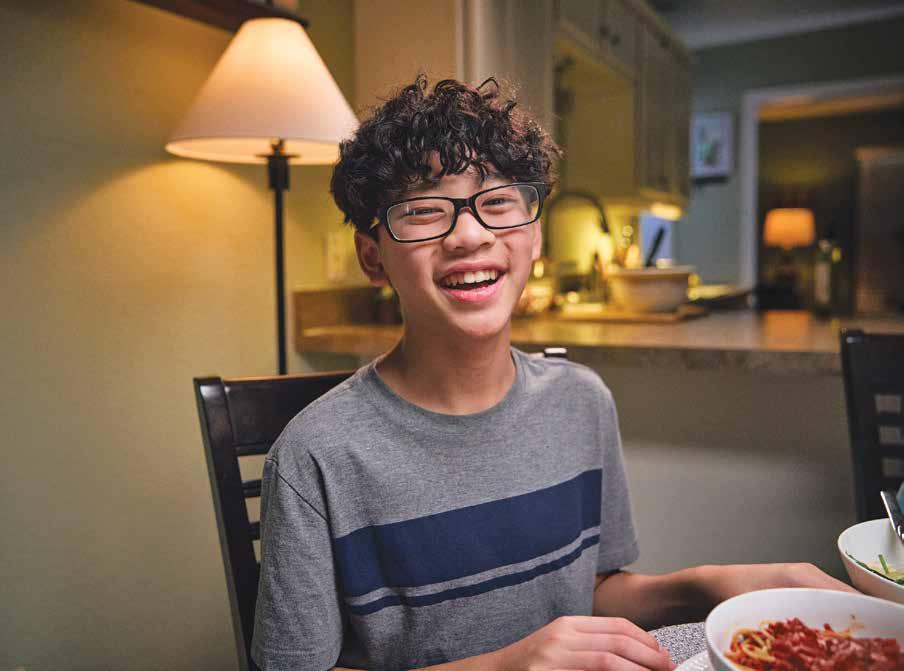
W here joy shows up
BY CHRISTIN THIEME
WE OFTEN HEAR “it is more blessed to give than to receive” (Acts 20:35). In this issue of Caring, you can see what that looks like up close.
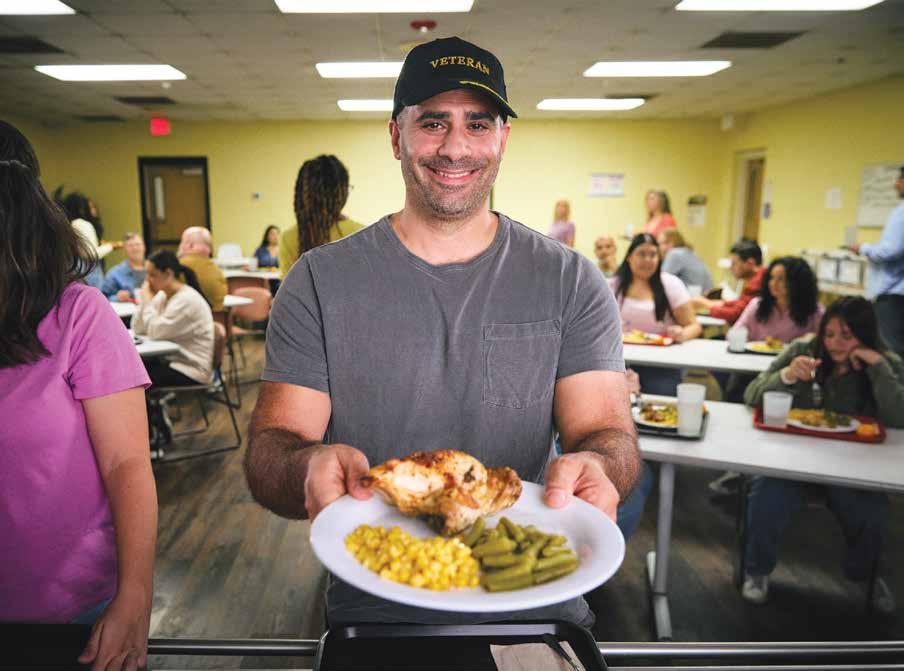
Sometimes it’s unexpected. An old canteen turned ice cream truck, drawing a crowd on a warm afternoon. A week at camp where a teenager finally feels like they belong. A room full of seniors lingering over lunch because they’ve found more than just a meal.
When we choose to give—our time, attention or resources—we start to notice people differently. We see them not as problems to fix, but as neighbors. As real people with names and stories.
That’s the work of The Salvation Army—meeting needs in Christ’s name without discrimination. We show up—again and again—in ways that are practical, personal and often joyful.
In these pages, you’ll meet people whose lives changed because someone chose to give. And you’ll meet others who are now doing the same for someone else. That’s how joy moves— one person at a time.
For more than 160 years, that’s how the mission has moved forward. It’s not only through large efforts, but mostly through everyday faithfulness.
So if there’s one thing that connects these stories, it’s this: giving doesn’t just meet a need—it moves people. And often, it brings joy to both sides of the exchange.
As you read, you may recognize moments like these in your own life. Or you may sense an invitation to step in and take part in what God is doing through The Salvation Army.
Because those opportunities are closer than we think.
And by God’s grace, we get to respond. | C |
By James Betts, Commissioner
By Hillary Jackson
Haley Osness
By Christin Thieme
COMMISSIONER JAMES BETTS
Territorial Commander
COLONEL IVAN WILD
Chief
By Karen Gleason
By Emily Truax
By Nicole Karlis
By Karen Gleason
STAFF
CHRISTIN THIEME
Editor-in-Chief and Literary Secretary
HILLARY JACKSON
Managing Editor
KAREN GLEASON
Senior Editor
HALEY OSNESS
Editor
CORY GAUDAUR
Digital Operations Director
EMILY TRUAX
Digital Content Producer
KEVIN DOBRUCK
Art Director
Cascade Divisional Youth Program
Specialist Melanie McQuade serves up
(Oregon)
Divisional Youth and Candidates’ Secretary Captain Edgar Azueta.
Experiencing Joy
We recently asked how you experience joy in real life and how The Salvation Army has played a role in that journey.
WHERE ARE PEOPLE THE MOST JOYFUL?
Over half of respondents said it’s with their loved ones—family, spouses, children and close friends. Other moments of joy:
• Pain-free sleeping
• Doing a jigsaw puzzle
• Performing music
* Spending time in nature
• Walking the dog
• Working on crafts
• Serving in the food pantry
• Worshipping with others
JOY IN THE SALVATION ARMY
More than 60 percent of participants said their understanding of joy has changed through involvement with The Salvation Army.





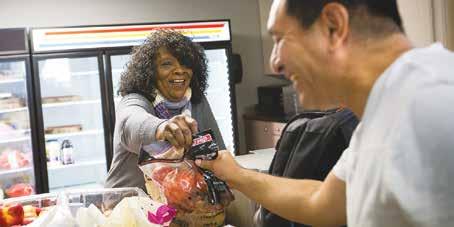
SHARING JOY
Five, 30-second uplifts
DURING CHRISTMAS, we had a mom who had a 1-year-old who was still in an infant car seat. When she came to pick up her Angel Tree gifts and saw that there was a toddler car seat bought for her child, she began to cry. To see how blessed she was brought me joy, knowing that our community stepped up in a big way for this mom.
Captain Jamie Stokes (Pueblo, Colorado)




THE SALVATION ARMY Culinary Arts Training Academy hosts graduation ceremonies, and I attend the ceremony any chance I get. It is beautiful to see people at such a pivotal moment of their life—celebrating an accomplishment, finding purpose and freedom in their life, and dreaming for the future. I love hearing people’s stories and there is always so much joy in the room!
Emma Ladine (San Francisco, California)
WHEN I WAS struggling as a single mom, I signed my son up for Angel Tree. Wow, did The Salvation Army deliver. My baby got a giant bag of toys and puzzles, and a second bag with shoes, clothes and a coat. Somehow, I was also on the list, and I received a brand new sweater and pants set, and a new pair of shoes so I could keep pounding the pavement to find a job.
Karen Keehn (Brighton, Colorado)
A MOM TOLD ME, “Ever since my son came to your bellringing orientation, he has been different.” She let me know he struggled with drugs and alcohol and had made some poor choices in the past. One night after bellringing, he came home and said, “I know what I have to do. I need to go to rehab and I want to help people, like The Salvation Army, like Major Shane, does.”
His mom said he was in rehab. With tears streaming down her face, she said, “I don’t know what your husband has done to my son, but I cannot thank him enough.” I cried with her and let her know it is Jesus.
Major Gina Halverson (Denver, Colorado)
EVERY WEDNESDAY evening at Adult Rehabilitation Center graduations, I see tears of gratitude mess up the smiling faces of the mothers, brothers, fathers and kids of our graduates, and it hits me deep every time.
Major Paul Swain (San Diego, California)

Overlooking Rancho Palos Verdes, California, from The Salvation Army College for Officer Training at Crestmont. | PHOTO BY JIM SPARKS
Unshakeable joy
BY JAMES BETTS, COMMISSIONER
WHEN WE MOVED to Southern California, one of the quieter adjustments we had to make was learning to live with the reality of earthquakes. We haven’t experienced one yet—but we’ve been prepared for them. A pamphlet left behind in our new home outlined what to do when they come. Friends and neighbors offered their advice almost casually. “Don’t panic.” “Find cover.” “It’s usually over quickly.”
What lingered with me wasn’t just the information, but the posture behind it. For those who have grown up here, earthquakes are not unexpected events. They are anticipated realities. There is an unspoken confidence that even if the ground shakes, what truly matters will hold.
That confidence comes to mind when I read Paul’s words to the church in Thessalonica: Rejoice always, pray continually, give thanks in all circumstances (1 Thess. 5:16-18). These are among the shortest commands in Scripture—and among the most challenging. They were not written for ideal conditions, but for an unsettled world where faith was costly and the future uncertain.
Paul does not pretend that circumstances are easy. Instead, he points to a way of living that is tethered to something deeper than chaos or comfort. Rejoicing “always” is not a denial of hardship. It is a confession about where our lives are anchored.
Paul makes that anchoring explicit in Philippians 4. Writing from prison, he urges believers to rejoice and then explains why: The Lord is near (Phil. 4:5). Joy is not grounded in emotional control or spiritual toughness. It is grounded in his presence. God is not distant or disengaged. He is near—near enough that anxiety loses its grip, prayer becomes possible and gratitude can emerge even when cir-
“
JOY, THEN, IS MORE THAN AN EMOTION. IT IS A THEOLOGICAL STATEMENT. IT SAYS SOMETHING TRUE ABOUT GOD BEFORE IT SETTLES INTO HOW WE FEEL.
JOY
DOES NOT IGNORE THE SHAKING. IT TRUSTS WHAT WILL HOLD.
cumstances remain unresolved.
This nearness does not remove struggle, but it does change how we live within it. When Paul calls believers to pray continually and give thanks in all circumstances, he is not offering techniques for positive thinking. He is describing a life lived in awareness of God’s presence—a life that knows where to turn when the ground begins to move.
From that nearness comes peace. Not the absence of conflict or struggle, but a peace that “transcends understanding.” A peace that guards the heart. And when the heart is guarded, joy becomes possible.
Joy, then, is more than an emotion. It is a theological statement. It says something true about God before it settles into how we feel. Joy does not ignore the shaking. It trusts what will hold.
The world continues to feel unsettled. Circumstances remain unpredictable. But Scripture reminds us that movement does not automatically mean collapse. Because the Lord is near, joy does not rest on what shifts beneath us. It rests on what is sure.
His presence is the bedrock of our joy. | C |
Commissioner James Betts is Territorial Commander of The Salvation Army USA Western Territory.
More than a toy
How play communicates dignity
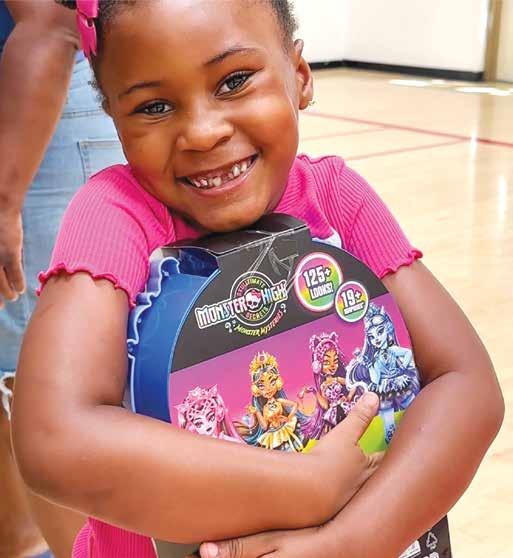
OR CHILDREN NAVIGATING uncertainty, play isn’t a luxury—it’s a way to process the world, build resilience and simply be a kid.
Through its longstanding partnership with Mattel, The Salvation Army is helping make those moments possible—reminding children they are seen and valued.
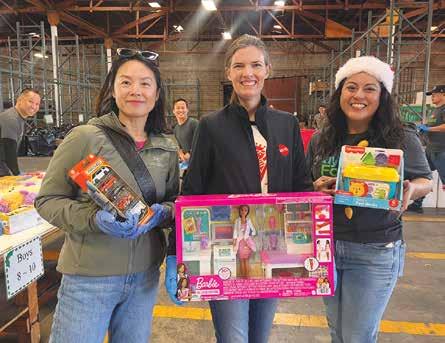
Each year, the Mattel Children’s Foundation supports Salvation Army programs through thousands of toy donations, helping families experience the joy of the Christmas season—particularly in communities where access to play may be limited. In moments of greater need, that support has expanded even further, including a $2 million toy donation during the pandemic that reached families nationwide, and financial and volunteer support following the Los Angeles wildfires. The partnership continues year-round through birthday programs, community events and disaster response efforts.
Together, the focus is simple but profound: creating moments where children feel cared for.
We spoke with Brittany Cruickshank, Associate Manager for Mattel Children’s Foundation and Corporate Philanthropy, about why joy matters, how play shapes development and what it means to turn purpose into action.
What initially drew Mattel to partner with The Salvation Army, and what makes this collaboration meaningful within your broader mission?
At Mattel, we talk a lot about the power of play, but what really matters is how that shows up in real life for kids and families. Partnering with The Salvation Army felt like a natural extension of that—they’re deeply rooted in communities and have the trust and reach to connect with families who need support most. What makes it especially meaningful is that it’s not just about getting toys into kids’ hands—it’s about creating moments where children feel seen and cared for. Through efforts like Play it Forward and our 80 Moments for 80 Years campaign, we’re able to turn our purpose into something tangible, meeting kids where they are and showing up in ways that matter.
We’re exploring the idea of joy as a serious force for good. From your perspective, how can a toy communicate dignity and worth to a child?
There’s something really powerful about a child receiving a toy that’s theirs— something new, something chosen with them in mind or something they get to select themselves. It sends a simple but important message: you matter.
Joy isn’t just a fleeting feeling in that moment—it reinforces a sense of belonging and self-worth. A toy can open the door to imagination and self-expression, but it also tells a child they haven’t been overlooked. That’s where dignity comes in.
Why is access to play not a luxury, but a necessity—especially for children navigating hardship or uncertainty?
Play is how kids process the world—
IMAGINATIVE PLAY GIVES KIDS A WAY TO WORK THROUGH BIG FEELINGS IN A WAY THAT FEELS SAFE AND MANAGEABLE.
—Brittany Cruickshank “
it’s not extra, it’s essential. Especially for children facing uncertainty, play creates space for creativity, comfort and even a sense of control.
When so much can feel unpredictable, having the opportunity to play gives kids a way to just be kids. That’s why we think about access to play as something every child deserves, not something reserved for certain circumstances. Play it Forward is really grounded in that idea— removing barriers so more kids can experience those moments.
From a developmental perspective, how does imaginative play help children process stress or build resilience?
Imaginative play gives kids a way to work through big feelings in a way that feels safe and manageable. They can create their own stories, explore different outcomes and build confidence along the way.
It’s not always obvious from the outside, but those moments of play are helping them develop problem-solving skills, emotional awareness and resilience. It’s one of the most natural ways kids learn how to navigate challenges.
To a child, their favorite toy is their entire world. We know that a toy and the happiness experienced during play time can transcend the initial receiving of a toy. That toy becomes a companion, a way of self-expression,
The Salvation Army and Mattel partner year-round to create moments where children feel cared for.
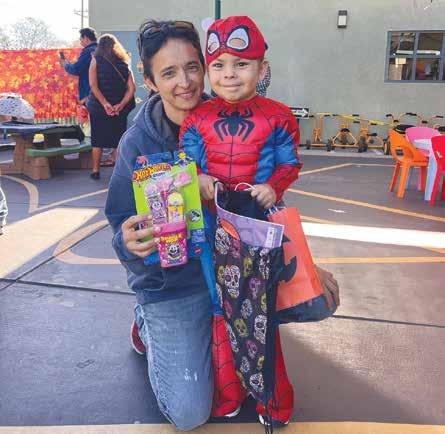
a way to see the world beyond what is currently happening around them.
Have you heard a story from a distribution event or Salvation Army representative that illustrates the deeper impact of this work?
One of the things that always sticks with me is how often we hear about the quiet moments—a child holding onto a toy like it’s something truly special, or a parent expressing relief knowing their child will have something of their own.
During 80 Moments for 80 Years, we saw firsthand how even a small moment of play can carry so much meaning. It’s not just about the toy—it’s about what that moment represents for a child and their family.
How do you ensure this partnership goes beyond donation and reflects shared purpose rather than simple transaction?
We approach this as a partnership first, not a transaction. That means listening, staying connected and really understanding what communities need.
Programs like Play it Forward are designed to be ongoing, not one-off moments, and we work closely with The Salvation Army to make sure what we’re doing is thoughtful and relevant. It’s about showing up consistently and making sure the impact is real, not just symbolic.
We’ve been a partner with The Salvation Army for a long time, and what consistently shines through
is how we are able to show up together. We know that there are so many resources needed in the community, and our partners at The Salvation Army consistently keep us informed and ready for action where the true need is. The Salvation Army understands that play is essential and that bringing play to their families is part of the holistic approach to creating and fostering a strong community.
What have you learned from working alongside The Salvation Army in communities across the West?
The biggest takeaway has been how important local connection is. The Salvation Army teams really understand their communities, and that insight makes everything more meaningful and effective.
We’ve also seen how far small moments can go. Something that might seem simple—like a toy—can have a much deeper impact when it’s delivered with care and intention.
When you think about the long-term impact of this partnership, what gives you the most hope?
What gives us hope is how those moments of joy can stay with a child long after the moment itself. Feeling seen, valued and able to play—it all contributes to how kids see themselves and what they believe is possible.
If we can keep creating more of those moments—through Play it Forward, through 80 Moments for 80 Years, and through partnerships like this—that’s where real, lasting impact comes from. | C |
Unsold fashion gets a second life
As new regulations take hold, retailers are partnering with The Salvation Army to keep unsold clothing out of landfills.
BY HALEY OSNESS
FOR DECADES, unsold clothing from major retailers often had nowhere to go, moving from rack to out of sight with little accountability for its final destination.
Globally, the fashion industry generates an estimated 92 million metric tons of textile waste each year, with the majority ending up in landfills or being incinerated.
“The amount of waste is staggering,” said Atticus Firey, Director of Strategic Projects for The Salvation Army Adult Rehabilitation Centers (ARC) in the Western Territory. “Especially when you see how the different materials and pieces can still be used.”
Growing regulatory pressure, including California’s SB 707, enacted in September 2024, is pushing retailers to take greater responsibility for excess inventory.
Known as the Responsible Textile Recovery Act, the law— the first of its kind in the U.S.—holds clothing producers accountable for the full lifecycle of their products, creating opportunities to reduce waste, increase transparency and set new expectations for responsible consumption.
“This law sets a new standard for sustainable textile man-

agement,” Firey said. “It’s a major development because now merchants have to be aware of where their items end up.”
As retailers work to meet new requirements, many are partnering with The Salvation Army to pass along unsold goods—extending their life, keeping items out of landfills and ensuring a reliable stream of donations for Salvation Army thrift stores.
Partnerships in action
A Donations Development Team within The Salvation Army Adult Rehabilitation Centers Command works directly with corporate retail partners to coordinate the flow of increased inventory to thrift stores and distribution centers nationwide.
Launched in fall 2024, the team tracks which stores are in need of product and manages where donations are delivered to be sorted and stocked in stores.
Proceeds from items sold in Salvation Army thrift stores directly support the ARCs, residential programs that assist individuals experiencing a variety of social, emotional and spiritual challenges, including substance abuse.
COLLABORATING FOR GOOD
Otis College of Art and Design and Santa Monica College students crafted murals from recycled materials donated by The Salvation Army thrift stores that depicted underwater scenes while highlighting the textiles and clothing articles used. The 2025 project, displayed at Sea World in San Diego, California, aimed to raise awareness of pollution caused by synthetic and plastic fibers.
JOURNEY OF DONATIONS
“Keeping our thrift stores full supports the life-changing work of our Adult Rehabilitation Centers,” Firey said.
Ongoing donation partnerships include HomeGoods, T.J. Maxx, Marshalls, Walmart, Nordstrom and more, which contact The Salvation Army when they have excess new, unsold inventory.
“Since starting, we’ve brought on board over 142 corporate partners who have donated a combined 282 times,” Firey said, adding most donations amount to truckloads full of pallets.
The partnerships help thrift stores maintain an inventory full of high-quality items, said Bianca Nemtoc, Manager of Donations Development and Sustainability.
“It’s expanding the variety of what our thrift stores offer,” Nemtoc said. “Customers are discovering items that feel new, on-trend and accessible.”
The arrival of items from global fashion retailers has sparked social media buzz, with online influencers creating trends and challenges around hunting for these sought-after, name-brand pieces at a bargain.
“Retailers are left with more product than they can sell because of the
sheer volume,” Firey said. “We help make sure the products get a second chance to be used.”
When Nemtoc is notified of a large donation from a retailer, she determines which sorting center each shipment should be sent to. There, employees sort the items before they are distributed to thrift stores for sale.
To further reduce waste, unsellable pieces are repurposed as textiles and donated to local fashion and design colleges, such as OTIS College of Art and Design, where they are used for student projects, art installations and creative reuse initiatives.
“The goal is for minimal materials to actually go to waste,” Nemtoc said. “And we’re seeing that most things can be used in some way.”
Nemtoc added that with continued regulations and partnerships, she envisions a future where mindful consumption and reuse are standard practice.
“It’s helping set new standards and expectations,” Nemtoc said. “Not just for how retailers manage excess inventory, but for how we as consumers think about reusing and repurposing items responsibly.” | C |

Meet Atticus Firey, Director of Strategic Projects
At one point, Atticus Firey appeared to have it all: financial stability from business ventures in music, entertainment, technology and consumer goods, along with the opportunity to retire at age 34 after managing and selling successful businesses.
But he felt unfulfilled and turned to various substances in an attempt to fill the void.
In August 2022, at 51, Firey checked himself into The Salvation Army Anaheim (California) Adult Rehabilitation Center (ARC), where he completed a six-month residential recovery program in search of a different path.
Through spiritual guidance, counseling, life skills training and support groups, Firey credits the ARC as a tool God used to show him that recovery and healing are possible.
Firey is now the Director of Strategic Projects for the Adult Rehabilitation Centers Command.
“It’s a purpose I never would have imagined,” he said. “It’s about serving and caring for others and that’s my life now.”
Meet the JOY SPREADERS
The joy doesn’t stop with them
When you notice joy emanating from others, research shows there’s a good chance you’ll feel more joyful, too.
So who are the initiators? The patient zeroes of joy?
In our search for tangible ways joy is experienced in real life, we found joyful people who engage with The Salvation Army to make life brighter for others.
And there were more than could fit these pages—people who share joy, serve with joy, grow with joy and give with joy. Their stories inspire us to join in. After all, joy is meant to be shared.
Tonette Sweet: Spreading joy at the kettle one costume at a time
“Where’s Tonette?” is the question in Washougal, Washington. The prompt has the community looking for Tonette Sweet, known for her costumed bellringing. “I have tons of tutus and wigs and hats, and I now have two totes of just bellringing costumes,” she said. She’s serious about the tutus. No costume of hers—whether it be a Barbie, snowman, elf, sunflower or more—is complete without one. The result is engaging—Sweet brings in $264.96 an hour compared to the average volunteer’s $57.79. Plus, she’s gotten more people to join in the fun. “Now we have several people (and groups) who go out in costumes when they ring bells, all because Tonette was brave enough to wear a silly costume one day,” said Washougal Corps Envoy Samantha Wheeler.

Grace and John Yeom: Reaching others with the power of music
High school siblings John and Grace Yeom launched the Eastside Salvation Army Corps Cadet Chamber Orchestra in June 2025, performing in assisted living homes, senior centers and recovery homes throughout Bellevue, Washington. “We’re trying to reach more people and glorify God through our music,” said Grace Yeom, a violinist. “Music brings so many opportunities for joy and fellowship.” The orchestra was inspired by the Help on the Go program in Southern California, which provides youth music and educational support. “There are a lot of young and talented musicians that don’t really have an outlet,” said flutist John
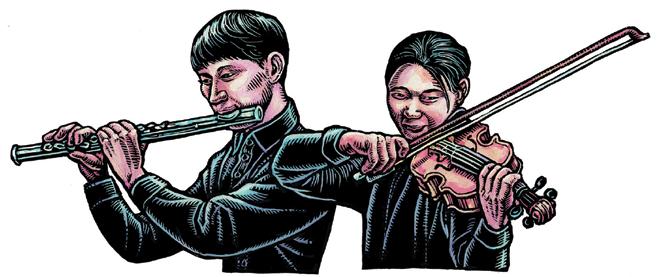
Yeom. “We saw this as a way to spotlight them and a chance for them to share their gifts with the community.” Once, at an assisted living home, the audience began singing along to “Amazing Grace.” “We could just feel the connection,” Grace Yeom said. “It’s those moments that really show you how powerful music can be.”
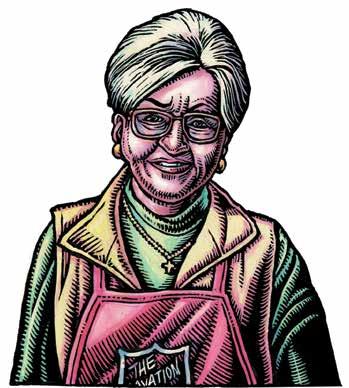
Bec Pelz: Cultivating joyful shopping experiences
At The Salvation Army thrift store in Gillette, Wyoming, the aim is to treat everyone like they’ve come over for dinner. It’s an atmosphere volunteer Bec Pelz has nurtured. Whether a shopper is a regular or a case management participant using a voucher to furnish their new, permanent living situation, she’s ready to help. “When people come in and they get a voucher toward some housewares or clothing, everybody gets excited,” Pelz said. The work is relational. “It brings a lot of joy to just see people get treasures,” she said. “You’re excited when you’re checking them out and ringing them up—telling them ‘Oh, this is really cute!’ ‘I love that!’ and just being happy with them and for them when they buy their purchases.”
Little acts, big impact
Researchers have found participating in small, “micro-acts” of joy helps you feel greater joy. Through the BIG JOY Project, scientists from Greater Good in Action and the group Mission:Joy studied joy in everyday people—some 115,000 participants from more than 220 countries. And you can join in, too! Here are four simple acts they say are proven to spur on joy:
KINDNESS
Do something small to help someone or the planet.
GRATITUDE
Make a list of 5 things you’re grateful for or write a thank you note.
REFRAMING
List silver linings to a problem you’re facing.
CONNECTION
Reach out to someone—a quick text, call, message—with something smile-worthy.

Naomi Dean: A welcoming presence for fellow veterans
When veterans find their way to The Salvation Army Veterans and Family Center (VFC) in Beaverton, Oregon, Naomi Dean is the welcoming committee. “I greet them and let them tell me what they want to tell me,” she said. “I basically am that friend that they didn’t know they had.” Dean found the VFC through the VA and began the program in August 2025. In addition to being a friend to her peers, she has initiated holiday activities for their children and even helped one man survive a heart attack, keeping him calm while calling for help. She’s motivated to not let her peers become one of the statistics—the 17.5 veterans who die each day by suicide, according to the 2026 VA report. “I want them to feel and know someone was on their side—other than God, obviously. Someone here on earth,” she said.
Bob Bradley: Growing The Salvation Army’s response to disaster
When the phone rings to respond to a disaster, Bob Bradley is prepared. As the Emergency/Disaster Services (EDS) chair in The Salvation Army Golden State Division, serving Central and Northern California, he has shaped Salvation Army responses in a region known for flooding, wildfires and earthquakes. Following a levee collapse in Planada, California, in January 2023, Bradley was part of a team that served some 8,000 meals in 10 days out of the nearby Salvation Army building, which got Bradley and EDS Officer Captain Jeff Breazeale thinking: What if The Salvation Army had coverage zones so it could respond more efficiently during emergencies? Six months later, they compiled a book of established zones in California’s Central Valley. Bradley has trained new volunteers in different areas, covering topics
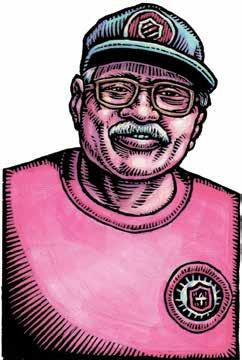
like how to use a canteen. “We’re trying to get—and keep getting—people excited about EDS,” he said.

Major Nesan Kistan: Planting seeds of joy
Major Nesan Kistan found joy during one of the darkest times in his life, after his father was murdered in the Port Arthur massacre in Tasmania, Australia. When he was aboard a bus chartered by the government taking victims’ family members to the site, he was surrounded by grief. “Without realizing it, I was smiling, carrying a quiet joy that had nothing to do with the moment and everything to do with the God who held me,” he said. When a woman rebuked him, he was reminded: joy does not deny pain; it coexists with it. Today, Kistan leads The Salvation Army Intermountain Division with joy, planting seeds for future growth. “We are ambassadors of joy, carriers of a hope that does not fade, witnesses to a God who restores, rebuilds and renews,” he said.
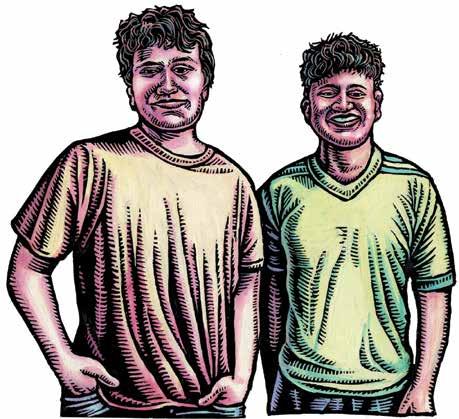
Max and Pedro Contreras: Giving in action
At a party, the Contreras brothers—Max, 15, and Pedro, 18—got to talking with friends about “living a life of selflessness.” That’s when Pedro challenged his brother to “live a life of action.” The result?
An $800 donation to The Salvation Army Tucson Hospitality House from Max’s savings. When the pair pulled up with a wad of $20s in hand to donate to feed people in the shelter experiencing homelessness, the worker at the intake desk was pleasantly surprised—it’s not every day a pair of teenagers show up with cash to donate. “I just wanted to be a better person and help,” Max said.
Jennie Ing: A lifetime of serving with joy
When Jennie Ing retired from The Salvation Army Hawaiian and Pacific Islands Division after 59 years of employment, her involvement didn’t stop there. Aunty Jennie, as she’s known, and her husband, Clarence Ing, stepped up their service at The Salvation Army Kauluwela Mission (Hawaii) Corps.
“We serve there because we care,” she said, noting much of their service is in supporting the Wednesday food pantry. “When we see people that need assistance with the food pantry, they come in, they receive their goods and they leave with smiles of thankfulness.” Additionally, she regularly packs bags of food for 367 children from three neighboring Title 1 elementary schools and throughout the busy Christmas season. Her level of commitment has earned her the nickname “Ms. Salvation Army” from family members. “I get teased a lot but I don’t mind it because I’m so proud of the services The Salvation Army does,” she said. | C |

WHEN WE SEE PEOPLE THAT NEED ASSISTANCE WITH THE FOOD PANTRY, THEY COME IN, THEY RECEIVE THEIR GOODS AND THEY LEAVE WITH SMILES OF THANKFULNESS.
—Jennie Ing “
WE DIDN’T LOSE LIFE
Soldier recounts surviving the Eaton Fire
BY GEORGIA LAW
MY FATHER HAD A RULE: If you see something that needs to be done, don’t ask—just do it.
I’ve lived by that my whole life.
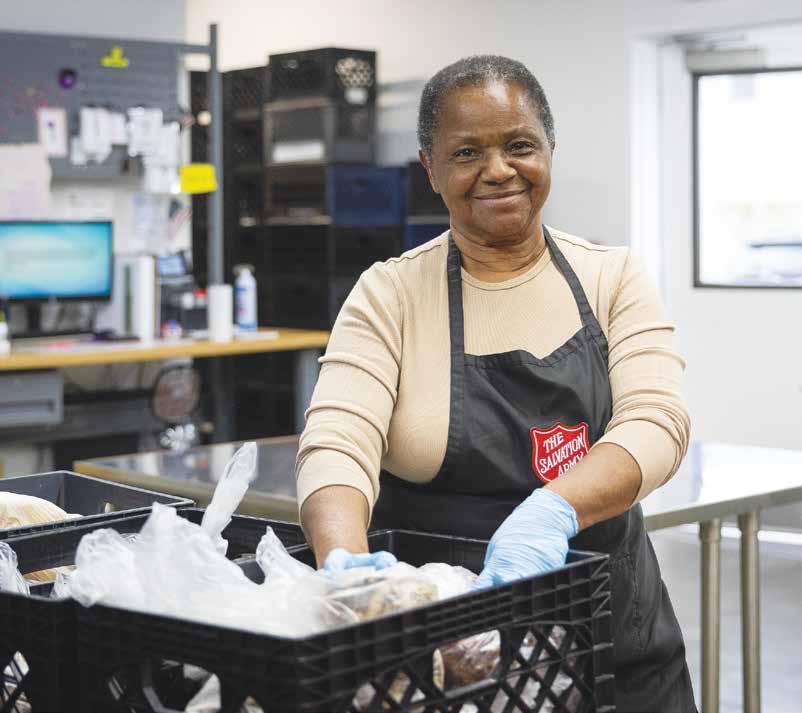
At the food bank, I separate the food, stock the shelves, mop, sweep—whatever needs doing. If it needs to be done, I’ll do it. It keeps me young. I’m 79—and I thank God I can still move and serve.
Over in one part of the store, we set things aside for our neighbors experiencing homelessness so they can fill their bags and go—take what they need and head back out with dignity. In another area, we prepare baskets for rest homes—
socks, combs, brushes, small things that remind someone they’re remembered. It may seem simple, but it matters. It’s still nice for someone to receive something during the year, just because.
It’s a joy to be here and help others. That’s truly my joy—working alongside people and serving wherever I’m needed.
The Army has been my love since I was 23 years old. There was a woman here then, Captain Potts. She was a widow and a single mother, and I came to help her. I didn’t know at the time that when you volunteer with The Salvation Army, you might just end up with a permanent job. But
Over a year after the Southern California wildfires, The Salvation Army in Pasadena continues to provide case management to families seeking to return to a living situation similar to what they had before the fires.
Georgia Law volunteers in the food pantry at The Salvation Army Pasadena (California) Tabernacle Corps. | PHOTO BY JOHN DOCTER
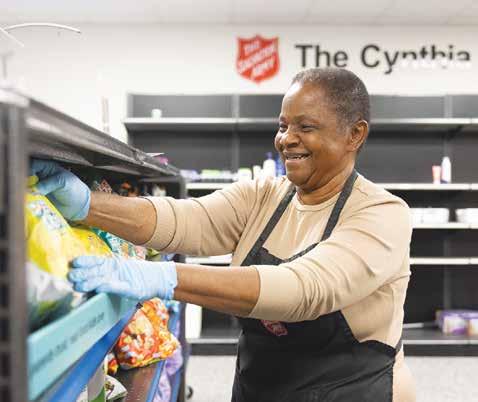
that’s what happened. Once you start, you just start. It’s a soldier thing.
Today I volunteer at the Hope Center and the food bank. At the rehab center, I tell the women I’m their prayer partner. Every Sunday when they come to church, I hug and kiss them and let them know I care. After church, I help in the kitchen. Around noon, I head home—an hour-and-a-half drive now, since the fire. Before that, I lived in Altadena.
We had been in that house 56 years.
The morning of the fire, I woke up around 4:30 a.m. I heard noise next door and went to the front of the house. I couldn’t see anything. It was just black—smoke and debris everywhere.
My daughter came in and asked, “Mother, what’s going on?”
I said, “Get your father up. We don’t have time to get anything. We have to go.”
When we pulled out, the cinders were blowing down the street. I thought, No, we can’t go that way. It could catch the car on fire. So we waited, and eventually we made our way to Brookside Park. The freeway was closed. Nobody could go anywhere. We sat there waiting for daylight, waiting for calm, because you couldn’t see anything in Altadena.
The next afternoon, my grandson called. “Granny,” he said, “your house is on fire.”
By 1:30, he called back. “It’s burned all the way down.”
That house was where all the birthday parties were—
“
WITHOUT MY CHURCH COMMUNITY, I DON’T THINK I WOULD BE AS STEADY—OR AS HAPPY—AS I AM NOW. PEOPLE WENT OVER AND ABOVE. MEMBERS OF THE CORPS CAME WITH DONATIONS TO HELP US REBUILD.
—Georgia Law
grandchildren, great-grandchildren. All the family barbecues in the backyard. If you needed a place to stay, you could come there. It was the grandparents’ house. And just like that, it was gone. All of it.
People ask how we’re doing.
I tell them this: We didn’t lose everything. We didn’t lose life.
Without my church community, I don’t think I would be as steady—or as happy—as I am now. People went over and above. Members of the corps came with donations to help us rebuild. They brought clothes. They called every day. The officers prayed with us. My church family overwhelmed me with love.
One of my aunties said, “I worry about y’all. You lost everything.”
I told her, “No, not everything. Not life. When you have life, you can rebuild.”
I don’t spend my time worrying about the past. I hold on to my faith in God and do what needs to be done—just like my father taught me. I could sit and feel sorry for myself, but I’m not a pity-pot person. If you only look backward, you miss what’s ahead.
And I believe there are greater things coming.
So I’ll keep serving. I’ll keep hugging. I’ll keep stocking shelves and filling baskets and praying with whoever needs prayer.
If something needs to be done, I’ll just do it. | C |
Georgia Law in the food pantry. | PHOTO BY JOHN DOCTER
SPARK JOYFUL ENGAGEMENTS
BY HILLARY JACKSON
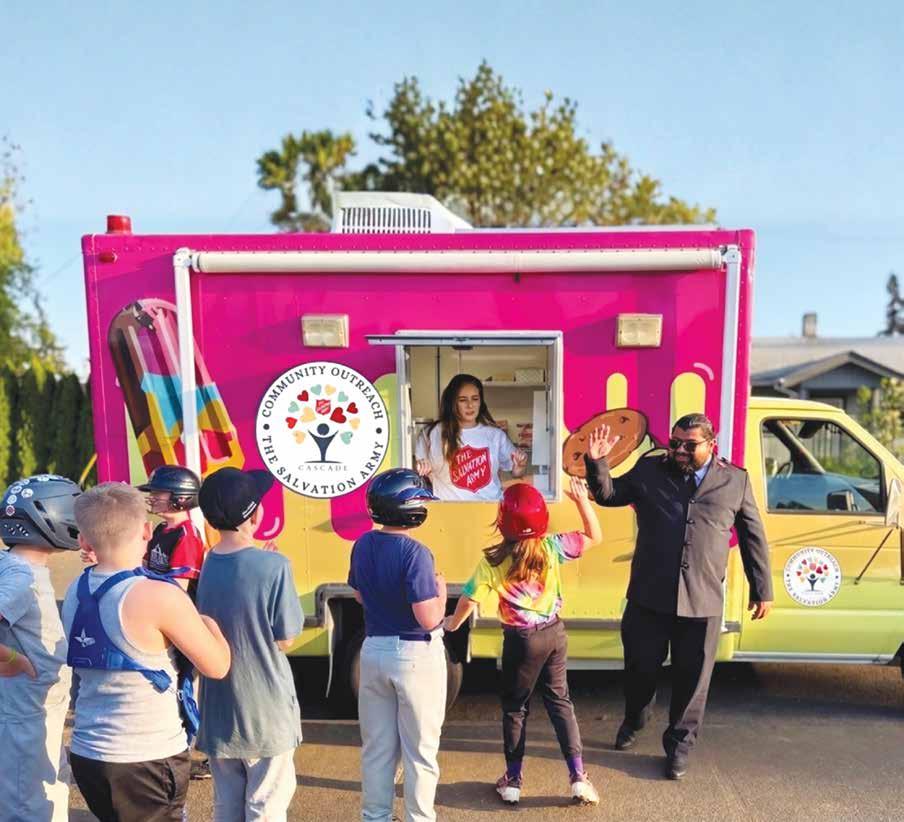
THE MOOD SHIFTS the moment Gresham (Oregon) Corps Officers Captains Caleb and Iliana Montes announce the ice cream truck is open at events.
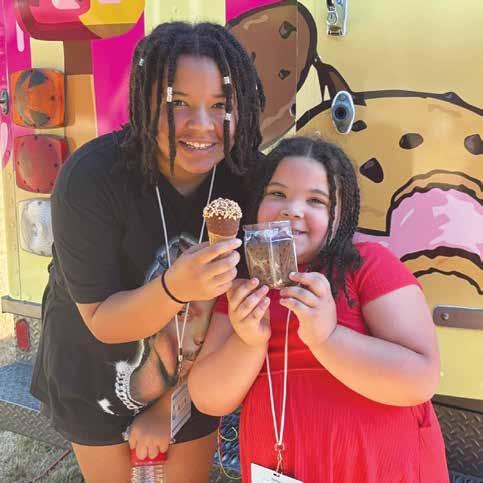
“It is like a magnet,” Caleb Montes said. “We get this huge rush and people are just lining up and everybody wants to get an ice cream.”
After all, who doesn’t love free ice cream? That’s the thought behind the upcycled Salvation Army canteen scooping up joy in communities around Portland.
It all started when Cascade Divisional Commander Major Jonathan Harvey saw a video featuring a similar outreach in Arizona. When he saw a decommissioned canteen at a Salvation Army service center parking lot, the idea crystalized.
THE SCOOP
“We made plans to get the vehicle to Divisional Headquarters, prepared the vehicle for deployment in a new way and made it available to the field,” he said.
Throughout The Salvation Army’s history, canteens have been dispatched as mobile feeding units during humanitarian events and disasters, including the Great
IT IS LIKE A MAGNET. WE GET THIS HUGE RUSH AND PEOPLE ARE JUST LINING UP AND EVERYBODY WANTS TO GET AN ICE CREAM.
—Captain Caleb Montes “
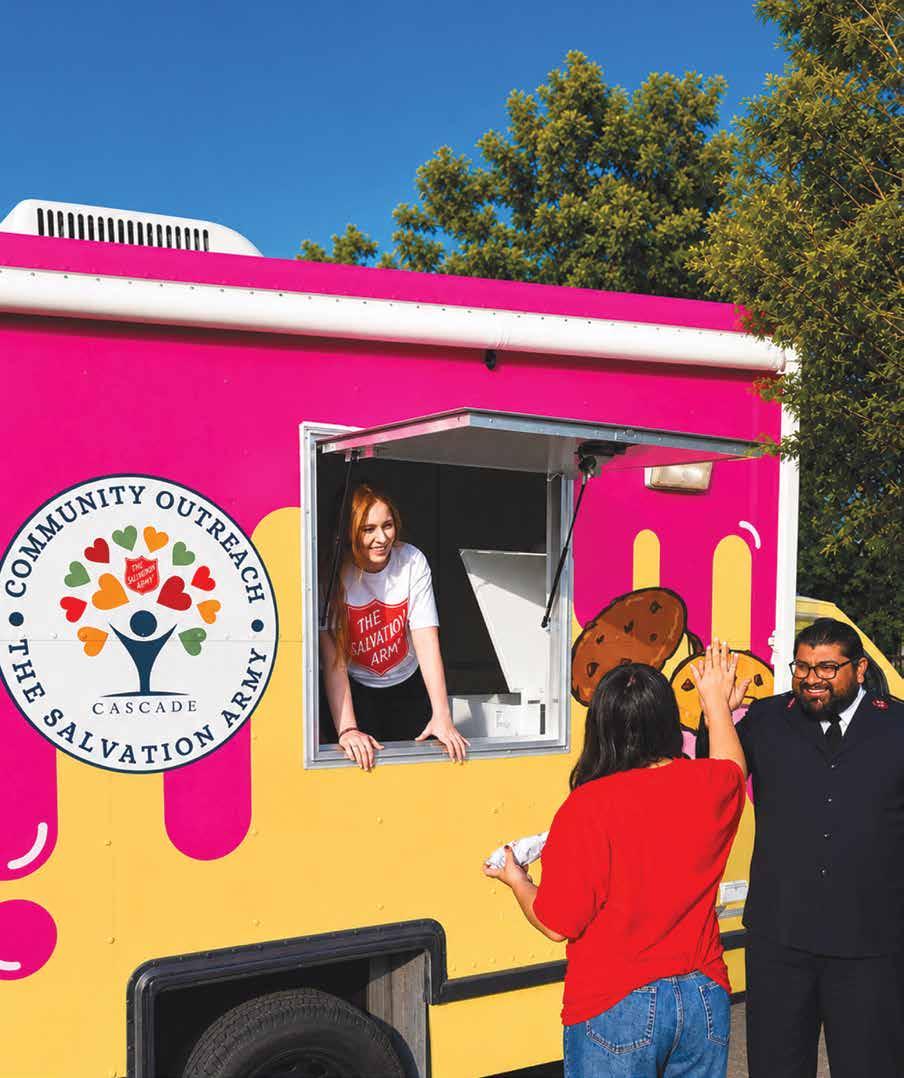
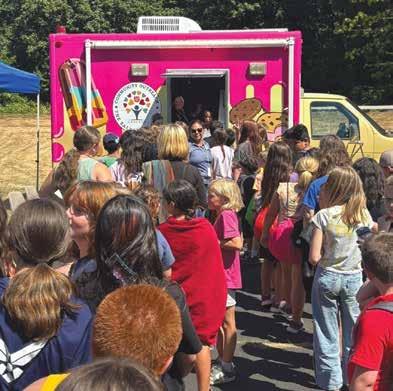
An upcycled Salvation Army canteen is scooping up joy in communities around Portland.
| PHOTOS BY ROBYNN PAGAN
OUTREACH THEREFORE COMES IN MANY DIFFERENT FORMS, FROM ONE-ON-ONE INTERACTIONS OVER AN ICE CREAM TO A FINANCIAL GIFT THAT LEADS TO A CHILD’S ABILITY TO ATTEND CAMP IN THE SUMMER.
—Major Jonathan Harvey
Depression, World War II, 9/11, Hurricane Katrina, the COVID-19 pandemic and more.
“Our canteens are as iconic as the red kettles out there in the community,” said Western Territorial Emergency/Disaster Services (EDS) Deputy Director Nicole Kanne. “If you see one of our Salvation Army disaster canteens, know that it’s filled with food and love.”
While the ice cream truck is no longer on the front lines of The Salvation Army’s EDS responses, its second act positions it as a valuable tool for building connections throughout the community.
Montes has borrowed the ice cream truck to serve up frosty goodness at outreach events, back-to-school giveaways and even an Easter egg hunt. He said advertising the truck on event fliers is sometimes enough to pique curiosity for new faces to attend.
They’ve served up everything from individual ice cream novelties, like drumsticks, to scoops of ice cream from large containers, which Montes said, seem to be the favorite—especially when there are toppings to choose from.
“We’ve noticed that it’s way more effective than us just handing out ice cream from an ice chest on a table,” he said. “Having the actual ice cream truck and people seeing it, it just brings so much attention to the truck and to the event.”
Last summer, Walmart Managers from the Portland region spent an afternoon at The Salvation Army’s Camp Kuratli at Trestle Glen in Boring, Oregon. There, the ice cream truck served refreshments during free time.
A SYMBOL OF HOPE AND HELP
Warm aloha for Hilo neighbors
The 32-foot-long Mālama ‘Ohana mobile kitchen brings warm meals when they’re needed most, like at the Hilo Overnight Safe Space tent shelter, where it has served 16,833 meals since February 2024.
Following a tour, Harvey said representatives presented The Salvation Army with checks from each store, solidifying their support for the summer camp program.
The ice cream truck also traveled to the headquarters of superstore giant Fred Meyer, a strategic partner, and served ice cream to the employees on a warm Friday afternoon.
“It was an absolute hit with the employees who all expressed their appreciation for the work of The Salvation Army,” Harvey said. “We, in turn, were able to express our appreciation for their support and partnership in serving others.”
The support of Fred Meyer throughout the year—food drives and kettles during the holidays, back-to-school drives and more—is essential to The Salvation Army’s ability to fulfill the mission, Harvey said.
“Outreach, therefore, comes in many different forms, from one-on-one interactions over an ice cream to a financial gift that leads to a child’s ability to attend camp in the summer,” he said.
And the imaginative canteens don’t stop there.
The latest? A decommissioned canteen repurposed as the Camp Kuratli Snack Shack, complete with a sticker motif decorative wrap—a design Harvey said will be replicated with actual stickers available at camp for kids to place on their belongings.
The plan: In spring, the canteen will raise summer camp awareness and assist in registration. During the summer, the Snack Shack will serve snacks to campers at Camp Kuratli.
“We are hoping it will serve as another effective tool corps and program leaders can use to reach people and introduce them to The Salvation Army,” he said. | C |
Chef-prepared in San Francisco
Each week, the Culinary Arts Training Academy serves some 500 meals— like gumbo, arugula salad and oatmeal raisin cookies—out of a canteen in the Tenderloin, a neighborhood known for its challenges.
Supplies to cool down in Tucson
When the forecasted high is 102 degrees or higher, Operation Chill Out teams deploy with a canteen to distribute heat relief essentials: bottled water, hygiene kits, nutritious snacks and light summer clothing.
From thrift rack to livestream
A new livestream shopping experiment is helping Salvation Army thrift stores reach new buyers—and generate additional funding for Adult Rehabilitation Centers.
BY HALEY OSNESS
UNDER BRIGHT RING LIGHTS, a Michael Kors shoulder bag is held up to the camera. Viewers race to place bids in a livestream auction. The countdown starts at 15 seconds, with bidding opening at $10.
Within moments, bids flood in from dozens of shoppers, driving up the price until the timer runs out.
Sold! For $29.
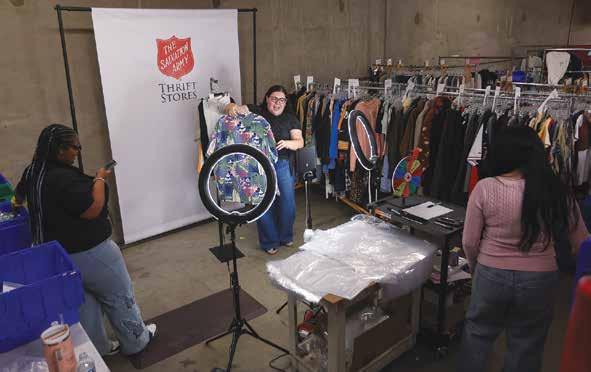
Each week, shoppers join in The Salvation Army’s livestream auctions like this one, webcasted from the back corners of select Salvation Army thrift store sorting warehouses across the western U.S.
Armed with a smartphone and racks of donated fashion, staff go live five days a week on Whatnot—a livestream shopping platform—auctioning off unique clothes, bags and accessories to online thrifters.
To date, The Salvation Army has hosted more than 250 livestream auctions. Each session generates about $2,800 on average, with a record high of $5,190 during a Long Beach (California) stream.
“We’re selling brand-name items like Michael Kors, Marc Jacobs, Loungefly, Lululemon and Coach,” said Jacob Presnell, Salvation Army E-Commerce Live Sales Supervisor. “Many shoppers are surprised by what they can find for a good deal.”
Presnell was one of the first hosts when the livestream shows debuted at the Long Beach thrift store in May 2025. The auctions have since expanded to other Salvation Army thrift stores in the region: Anaheim, Santa Monica, San Bernardino and Riverside.
Livestream shows run every weekday from 10 a.m. to 4 p.m., with each location assigned its own time slot on a shared account. During each show, more than 200 items are presented online.
“Shoppers tell us they love the format and they catch on pretty quickly,” Presnell said. “For some, it becomes a fun game where they want to win the prize.”
Once a bid is secured, the item is passed to a sorting team while hosts move on to the next piece. A

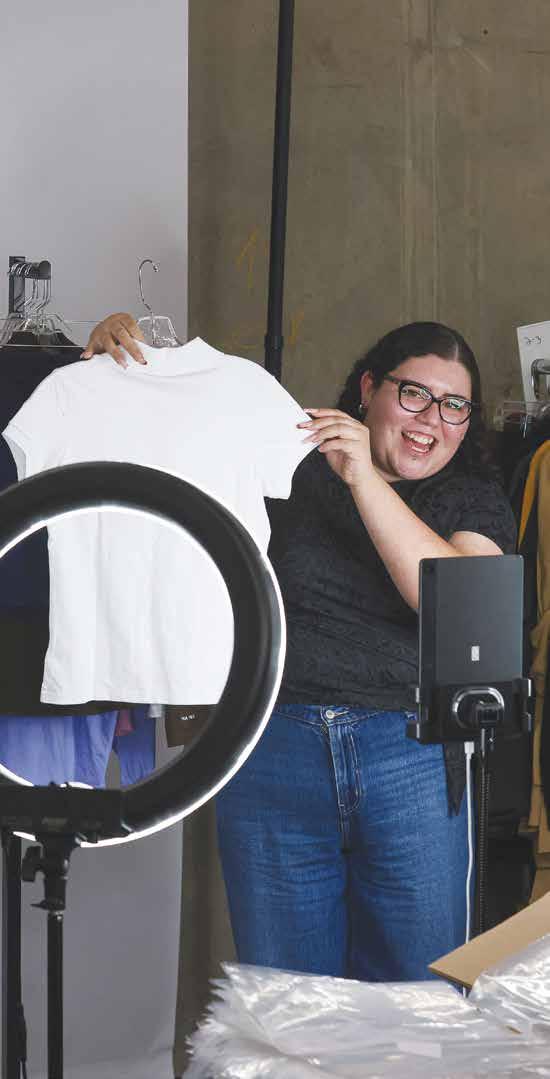
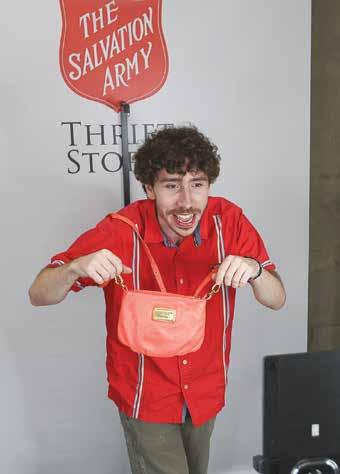
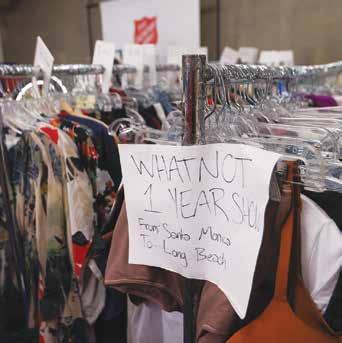
Left: Kathleen Ojeda holds up a shirt for auction during a Whatnot livestream at the Long Beach Thrift Store.
Top: Jacob Presnell showcases a designer handbag.
| PHOTOS BY JOHN DOCTER
Q&A with Jacob Presnell, Salvation Army E-Commerce Live Sales Supervisor
What’s the most popular brand you see viewers bidding on?
While selling hundreds of different brands per week, the most requested and highest anticipated brand is Coach.
How do you keep viewers engaged during a show?
My best tip for hosts when it comes to engagement is to let their personality shine while maintaining professionalism and to generate conversation with viewers through questions, personal stories, and product background.
What’s your favorite part of hosting the livestreams?
My favorite part of hosting is connecting with the viewers and supporters of our organization across the country (occasionally, the world). There’s nothing better than when a returning viewer joins our show and informs us that they loved the items they received or even got compliments on wearing one of our sold products.
separate team packs orders after the show, with items typically shipped within 24 hours.
“Everything happens fast,” Presnell said. “At the same time, we’re answering questions—checking the material, measuring the length or even modeling the item.”
Presnell said he takes current trends into account when suggesting how someone might use an item, drawing on his sales experience to highlight its value and help close the deal. Prior to his role with The Salvation Army, he ran a thrifted clothing business, sourcing and reselling items nearly every day.
“I have an idea what people are often looking to find secondhand,” he said. “They like brand names and vintage pieces, so I try to pull items that fit those categories or what’s popular at the moment.”
One of his go-to strategies for closing a sale is suggesting how an item can be used or worn.
“This blazer can be great for the office or dressed up for a night out,” Presnell told a viewer, helping convince her to make the $20 purchase.
While live, Presnell reminds viewers that every purchase—whether in-store at Salvation Army thrift stores or through livestreams—helps fund the West’s 18 Adult Rehabilitation Centers (ARCs), residential programs that provide assistance to individuals ex-
periencing a variety of social, emotional and spiritual challenges, including issues relating to substance abuse.
“We’ve had several viewers comment that they didn’t realize The Salvation Army runs Adult Rehabilitation Centers, and learning this inspired them to make a purchase to show their support,” Presnell said.
According to Piers Fairclough, ARC Director of Business, since launching, the livestream sales channel has generated more than $608,000 in revenue.
“The livestream auctions build on what our thrift stores are already doing—bringing in funding that helps sustain our Adult Rehabilitation Centers,” Fairclough said, adding the Whatnot platform allows stores to make use of high donation volumes while connecting with a broader audience of shoppers online.
E-Commerce Supervisor Fatima Jimenez said that while The Salvation Army has had a website where it has sold clothing and accessories for years, “livestreams add energy and create connections with shoppers.”
“The goal is to make sure every donated item has the best chance to sell and support the program,” Jimenez said.
The livestream set at the Long Beach Thrift Store, where hosts show off items on camera before viewers at home place bids.
| PHOTO BY JOHN DOCTER
In 2026, the goal is to expand the livestreams to 10 active locations and generate $200,000 per month in total through Whatnot sales, totaling $2.4 million for the year.
A growing audience
Each livestream nets a range of 50 to 100 viewers at a time, leading to an active chat where people ask questions, share feedback and react in real time.
That continuous interaction, combined with added verification measures, has helped build buyer confidence and attract repeat shoppers.
Since the ARC introduced Certificates of Authenticity (COAs) in November 2025, Scott Cha, Director of E-commerce for the ARC Command, said buyers have grown more confident purchasing higher-priced designer items.
“We included verification for select items to strengthen buyer confidence and support stronger realized pricing,” Cha said. “This helps us sell items closer to their value.”
High-value items, such as designer bags, are verified through a third-party online service, where images are submitted and details like stitching, patterns and tags are evaluated before the item is shown. Once verified, certificates are shipped alongside items.
The highest-selling item to date? A verified Burberry handbag for $400.
Fairclough said the online sales channel is ideal for reaching new shoppers by catering to those who prefer to shop virtually.
“We’re reaching those who seem to prefer the online experience,” Fairclough said, noting the channel has 20,000 followers, and many tune in every week.
“Some get to know the host’s name and stop by just to say hello,” he said.
One shopper, Amber Andrade-Foltz, joined a livestream and mentioned she was looking for a Lululemon workout set. Presnell acknowledged her request, and off-camera staff quickly searched the nearby Whatnot inventory.
Within 10 minutes, staff returned with a Lululemon dress to showcase. After Presnell noted that the built-in shorts made it ideal for exercise, Andrade-Foltz placed her first bid on Whatnot and won the dress for $26.
“I wasn’t expecting you to actually find something,” she said. | C |
From the reviews... “ “ “
I WAS SO SHOCKED AT HOW WELL THESE ITEMS ARRIVED! ALL THE ITEMS WERE NEW WITH TAGS, AND THOSE WITHOUT WERE IN PRISTINE CONDITION. THE PRICES WERE AWESOME! EXCELLENT SHIPPING—EVERY SELLER COULD LEARN A LOT FROM HOW THE SALVATION ARMY PACKAGES AND SHIPS SO QUICKLY.
ALWAYS 5 STARS. GREAT TEAM WITH A GREAT PURPOSE! THEY PUT A LOT OF CARE INTO MAKING SURE THE ITEMS THEY SHOW ARE GREAT PIECES EVERY TIME.
LOVE THE SALVATION THRIFT STREAM!! ALWAYS A GREAT SELECTION WITH GREAT HOSTS WHO DO AN AMAZING JOB!! COME SUPPORT A GREAT COMMUNITY.
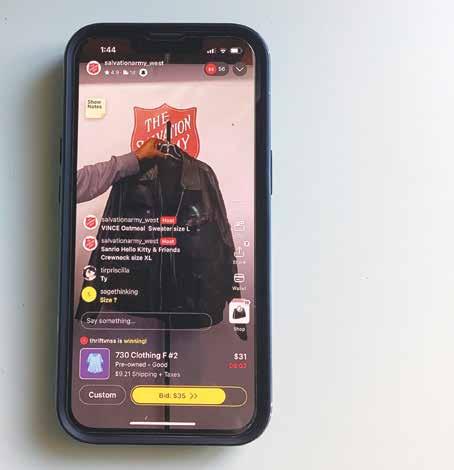
Shop your first Salvation Army livestream auction and get $15 free credit at whatnot. com/invite/salvationarmy_west.
THE RIPPLE EFFECT OF JOY
How one act of care becomes many
BY CHRISTIN THIEME
THE DOOR CLOSES quietly behind them.
For weeks—maybe months—Nick Carrillo carried the same questions everywhere he went: What are we going to do? Where would his family sleep? What would happen next?
But when they stepped inside a Salvation Army family crisis center—a place committed to meeting human need in the name of Christ, without discrimination—something shifted.
“It was as soon as we stepped foot into the shelter,” he said. “That’s when we felt safe.”
They arrived with almost nothing—just some clothes and a couple of plastic tubs holding what was left of their lives.
And yet, Carrillo said, “for the first time in a long time, I felt peace.”
Carrillo’s story begins years earlier in Ensenada, Mexico. His parents split when he was young, and not long after, his mother became ill.
“I remember finding her on the floor more than once,” he said. “I was scared all the time.”
When he was 9, she died.
“That broke me,” Carrillo said. “I didn’t know what to do with the pain.”
He moved in with his grandparents, who provided for him but didn’t know how to help him process such a loss.
“They gave me things but not what I needed most,” he said. “I had a big hole in my heart.”
Carrillo tried to fill the hole—first with achievement, then with substances.
“I was chasing things the world said would make me happy, but none of it fixed what was broken inside of me,” he said.
Over the years, he cycled through recovery programs—more than 10. “I always wanted to change,” he said. “But something always brought me back.”
“
FOR THE FIRST TIME, I DIDN’T FEEL LIKE AN ADDICT TRYING TO GET CLEAN. I FELT LIKE A SON WHO WAS FINALLY COMING HOME.
—Lt. Nick Carrillo
That ended in 2007, when he entered a Salvation Army Adult Rehabilitation Center (ARC), a residential program that provides spiritual, emotional and social assistance to individuals experiencing a wide range of challenges, including issues relating to substance abuse. Last year, nearly 100,000 men and women received support through one of the Army’s 85 ARCs nationwide.
“For the first time, I didn’t feel like an addict trying to get clean,” he said. “I felt like a son who was finally coming home.”
He finished the program, found work, built relationships and met his wife. For a time, life stabilized. Then, in 2015, he stepped away from his job, convinced he could build something on his own.
“I told myself I could handle it,” he said.
But work fell apart. His wife became seriously ill. Financial problems grew. The family moved from place to place, trying to hold things together.
“We started to lose everything—piece by piece,” Carrillo said. “We were about to be homeless.”
Similarly, for many families, housing instability often begins with a single disruption—illness, lost income or eviction—that sets off a chain of consequences.
Homelessness in the U.S. reached a record high in 2024, according to the most recent data from the National Alliance to End Homelessness, with approximately 771,480 people experiencing homelessness on a given night, an 18 percent increase from 2023—the largest single-year increase ever recorded.
It was Carrillo’s wife who finally said what they both knew.
“She said, ‘Nick ask for help. We need help,’”
Carrillo said. So he did. He reached out to a Salvation Army officer who had shown him kindness.
“I told him everything,” Carrillo said. “I didn’t hide my mistakes. I told him we had nothing. That we were lost. That we were scared.”
Three days later, a door opened.
1,087 Salvation Army worship centers span nearly every zip code across the United States.
Salvation Army officers (pastors) proclaim the gospel and serve as administrators, teachers, social workers, counselors, youth leaders, and musicians. These men and women have dedicated their lives, skills and service completely to God.
Walking into the shelter was humbling, but it was also, in Carrillo’s words, something more.
“It felt like something holy was happening,” he said. “I didn’t have to worry about what are we going to do tomorrow.”
And that opened space for hope, for renewed faith. Carrillo and his family began attending church regularly at The Salvation Army.
Then one day, sitting quietly in the back of the chapel, something unexpected happened.
Carrillo turned to his wife.
She looked back at him.
“We said, ‘This is what we want to do,’” he said. “We had been loved when we had nothing. We had been helped when we couldn’t help ourselves.”
They recognized the care they had received was not just help, but a calling to offer that same care to someone else.
That decision became a new direction.
First, Carrillo became a Salvation Army shelter manager, walking alongside families facing the same kind of uncertainty he once had. The work felt personal.
“I went through what they were going through,” he said. He recognized the hesitation. The fear. The quiet relief that comes with safety. And he met them there— not just with services, but with understanding.
Over time, he and his wife followed through on their calling, becoming Salvation Army officers. Today, Lts. Nick Carrillo and Maria Duenas serve in Hobbs, New Mexico, where their ministry includes a large food bank, mobile shower units that travel across several towns and outreach that connects families with housing, clothing and other resources.
The work is practical, immediate and rooted in the same Christ-centered mission that once changed their own lives.

I
TOLD HIM EVERYTHING. I DIDN’T HIDE MY MISTAKES. I TOLD HIM WE HAD NOTHING. THAT WE WERE LOST. THAT WE WERE SCARED.
—Lt. Nick Carrillo
And it’s the same work that’s happening in nearly every zip code across the country.
The Salvation Army annually helps some 28 million people in the U.S. overcome poverty, addiction and economic hardships through a range of social services. By providing food, emergency disaster relief, rehabilitation services, clothing and shelter, The Salvation Army is meeting human needs without discrimination in more than 7,400 centers of operation.
Sometimes, the ripple effect of that care becomes visible. For Carrillo, one moment stands out.
It was Christmas. His family had recently left the shelter and money was tight. That year, The Salvation Army provided gifts for their children.
“It was the best Christmas the kids had,” he said. “The Salvation Army helped us so much. It was amazing.”
Now he stands on the other side, helping families receive those same gifts.
“You see how emotional they get,” he said. “It always brings me back to when we got the help.”
Back to what it felt like to be helped.
Back to the moment everything began to change.
Ask Carrillo what brings him joy today, and his answer is simple.
Being present. Sitting with someone in a hard moment. Listening. Reminding them they are not alone.
“I get to love people who feel like nobody sees them,” he said.
Years ago, someone opened a door for his family.
Today, he stands in that same place, holding it open for others. One life changed, then another. Care received, care shared.
And the ripple continues. | C |
HOPE FOR NEIGHBORS IN NEED
IN THE UNITED STATES, nearly 1 in 3 adults reported they are finding it difficult to get by financially. This struggle to afford basic necessities such as food, housing and healthcare impacts millions of families every day. Thanks to you, The Salvation Army stands as a source of hope for neighbors in need. With the support of our generous donors, volunteers and partners, we’ve been able to help meet those in need across the country.
Through our social service programs that focus on food, shelter, rent, mortgage, utility assistance and more, we’ve made a lasting impact by touching the lives of nearly 28 million people in need. Together, we’ve shown that when we love beyond expectations, lives are uplifted.
HOMELESSNESS
10,075,059
Nights of Shelter
We offered safe shelter to individuals and families experiencing homelessness or escaping unsafe situations — meeting them with compassion, a warm bed and resources for stability.
DISASTER
1,234 Emergency Disaster Assistance
When disasters struck, The Salvation Army was on the ground — providing immediate aid, emotional and spiritual care, and long-term recovery services to survivors and first responders alike.
EVICTION
1,575,098
Financial Assistance
From rent and utility support to transportation, clothing and medical needs, The Salvation Army provided critical financial assistance to help individuals and families stay housed, stay hopeful and move forward with dignity.
HUNGER
183,111,494 Total Meals Served
Through food pantries, community meals, mobile canteens and feeding programs, The Salvation Army met the urgent needs of millions facing hunger — providing nourishment and dignity during times of crisis and everyday hardship.
THE SALVATION ARMY HAS A UNIQUE OPPORTUNITY TO SERVE PEOPLE FROM ALL WALKS OF LIFE. EVERY HELPING HAND, DISASTER RELIEF EFFORT, AND MEAL WE SERVE IS EVIDENCE OF OUR CARRYING OUT GOD’S MINISTRY. —Commissioner Merle Heatwole, National Commander
THE COMPACT OF FREE ASSOCIATION allows admissible citizens of the Federated States of Micronesia (FSM) or Republic of the Marshall Islands (RMI) to live, study and work in the U.S.
From Ebeye to Sacramento
Marshallese ministry helps migrants find a spiritual home.
BY KAREN GLEASON
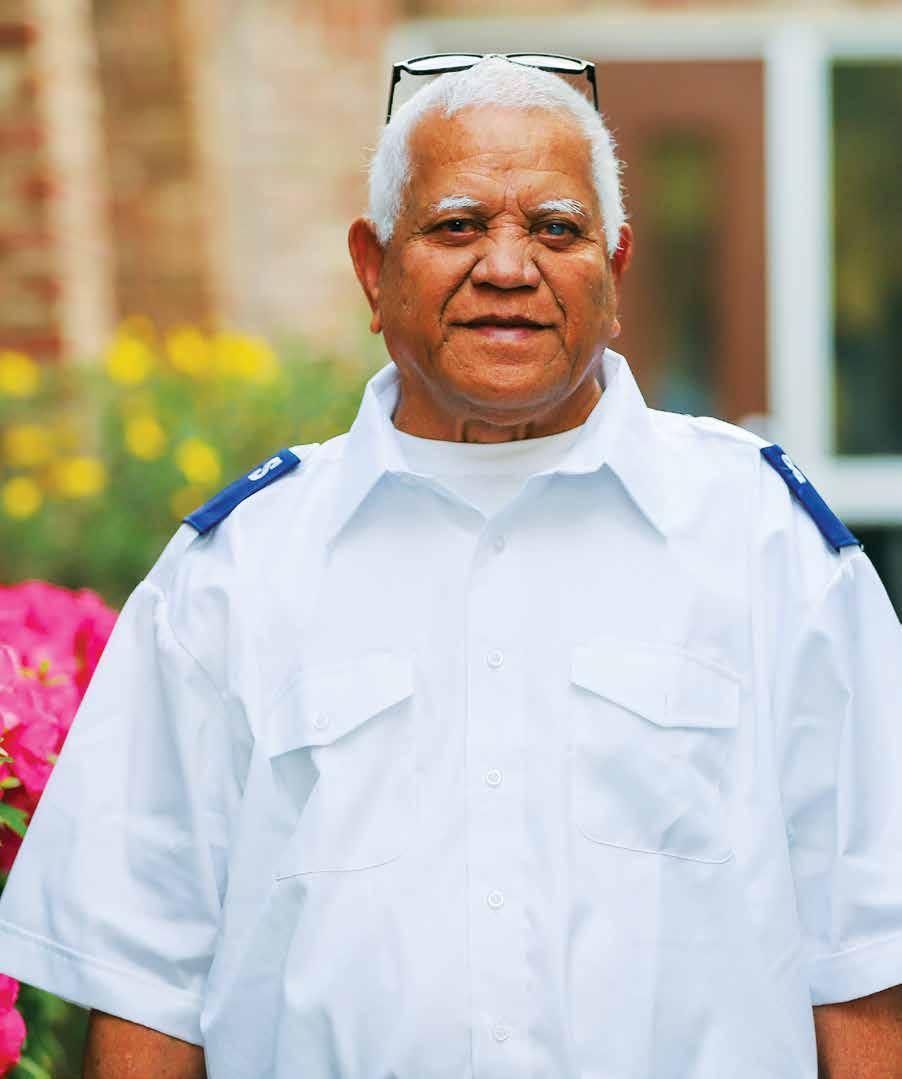
YEARS AGO IN EBEYE, in the Republic of the Marshall Islands, John Loeak was the man outside The Salvation Army corps building—drunk,
That sense of belonging followed him across the Pacific Ocean.
Today, years later, in Sacramento, California, that same man and his family are at the heart of The Salvation Army’s Marshallese ministry at the Sacramento Citadel Corps—a fellowship blending worship, culture and practical support for island families far from home.
Over the years, the Sacramento area has welcomed a sizable number of immigrants from the Marshall Islands, many of whom have come to the United States under the Compact of Free Association, which allows citizens of the Republic of the Marshall Islands to live and work in the U.S.
Sacramento County is home to nearly 2,000 Marshallese residents, according to U.S. Census Bureau estimates—one of the largest concentrations in California.
yelling, sometimes throwing things during Sunday services. The Salvation Army officer never told him to leave. Instead, he offered a seat inside, even if it was at the back and even when he was drunk.
One day, Loeak accepted the invitation and walked in. He remembers what changed that day not as a sudden shift, but as a moment of being seen differently.
“He never judged me for my past; instead, he saw me as a child of God,” Loeak said.
The migration reflects both opportunity and necessity: limited jobs, high costs of living and overcrowding in places like Ebeye have pushed many to leave, while access to health care, education and employment has drawn many to the U.S.
Marshallese communities in places like Sacramento have grown through family ties and church networks, as early arrivals helped others settle and build a sense of home far from the islands.
“A lot of them come out this way to support their families,” said Lt. Sharon Reimers Trimmer, a Western Territory Salvation Army officer whose family helped
New Guinea
Australia
Republic of the Marshall Islands
Right: John Loeak outside The Salvation Army Sacramento Citadel Corps | PHOTO BY GRANT HANSEN
“
WHEN I
CAME INTO THE CORPS, I EXPERIENCED A DEEP SENSE OF BELONGING… IT FELT LIKE A NEW BEGINNING IN
MY LIFE.
—John Loeak
start The Salvation Army’s work in the Marshall Islands. “There aren’t many opportunities back home, so relatives here work and send money back. That’s one of the main reasons people come.”
At the Sacramento Citadel Corps, that ministry takes shape through a weekly rhythm of gatherings that bring families together beyond Sunday worship. Alongside the Sunday evening Marshallese service, the corps offers Bible study, women’s sewing nights, youth and music programs, and informal spaces where relationships form across generations. Leaders say the goal is not only spiritual support, but continuity for families navigating life far from the islands.
“It’s a place where people can come together in every part of life,” said Sacramento Citadel Corps Officer Major Jan Pemberton.
40 years serving the Marshall Islands

—Major Jan Pemberton “
IT’S A PLACE WHERE PEOPLE CAN COME TOGETHER IN EVERY PART OF LIFE.
Music and worship are central to the ministry, shaping both Sunday gatherings and midweek programs. Leaders describe it as an expression of faith rooted in Marshallese culture, where singing and movement carry joy and gratitude.
“When it comes to worship, there’s a lot of joy,” Trimmer said. “It’s about giving thanks to God for everything— even if you don’t have a lot. People celebrate life, and they do it together.”
Envoy Cathy Simon said that expression begins early and is part of daily life for many children growing up in the ministry. “You will see little kids grabbing a ukulele and starting to play, or dancing when they hear music,” she said. “It’s just part of how they grow up.”
Pemberton said that foundation continues through structured worship and youth involvement across services and programs. “They’re learning how to lead praise and worship,” she said, describing youth moving between Marshallese and English expressions of faith. “What they’re learning is the foundation—how to worship together.”
For Loeak, the ministry is no longer only about his journey from Ebeye to Sacramento, but what it has become for his family and others who gather there each week. In a city far from the islands, the corps has become a place where language, culture and faith overlap—and where new arrivals may find familiar faces waiting. It is, he said, something he does not take for granted.
“That sense of acceptance, love and unity,” Loeak said, “is what makes The Salvation Army in Sacramento so special to us.” | C |
Forty years ago, The Salvation Army’s work officially began in the Republic of the Marshall Islands (RMI) following the efforts of Overton Clarence, who learned of the organization after receiving a War Cry from a U.S. Navy chaplain. When he assessed the needs around him, especially for youth—with reports
claiming many experienced a lack of direction, unemployment, teen pregnancy and alcoholism—he believed The Salvation Army could do something. Today, The Salvation Army’s presence in the Marshall Islands spans nine corps: Rita, Laura, Arno, Ine, Ebeye, Jabor, Jaluit, Narmiej and Imiej.
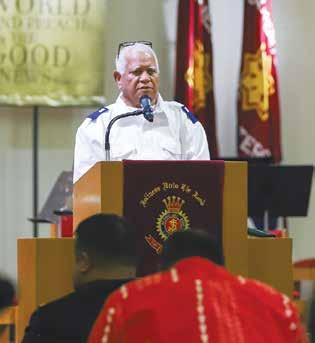
John Loeak speaks at a Marshallese ministry service at The Salvation Army Sacramento Citadel Corps. | PHOTO BY GRANT HANSEN
In a disconnected world, Salvation Army summer camps give kids a safe place to build meaningful relationships.
BY EMILY TRUAX
WHEN EMMANUEL MONGE first arrived at The Salvation Army’s High Peak Camp in Estes Park, Colorado, at 13 years old, he was surprised to discover the quintessential summer camp experience existed outside of TV.
FINDING CONNECTION AT CAMP
“They had everything,” Monge said. “They even had a campfire and we roasted marshmallows.”
Nestled in the Rocky Mountains, some 9,000 feet above sea level, High Peak Camp welcomes hundreds of kids ages 7-16 every summer. They arrive, duffel bags in tow, from Colorado, Montana, Utah and Wyoming. For many of the campers, the experience is completely new.
“For us to be fully immersed—to have a cabin and a dining hall, and to do a zip line and go mini golfing in the middle of the forest— it was a totally different perspective than what I was used to going out with my family,” Monge said.
At the time, Monge said he struggled with bullying at school and was nervous opening up to other campers. But by the end of the week, he had made friends— people he would look forward to seeing summer after summer.
Researchers note young people across the globe, like Monge, struggle to create meaningful friendships and support systems. Some 20 percent of teens worldwide experience loneliness, according to a recent report from the World Health Organization (WHO).
The report flagged several factors that may play a role: time spent online, social media use and changing social norms—and harms associated with loneliness, including poorer mental health and increased risk of cardiovascular disease.
Pressure to perform for their peers, extra responsibilities as family caregivers or academic struggles all create barriers for young people trying to build and maintain genuine friendships. But at The Salvation Army Western Territory’s 12 camps, those barriers begin to break down.
“It’s highly encouraged that kids don’t bring technology to camp,” said Alyssa Covert, territorial Youth Program Specialist. “There are so many things with social media—added stress levels and anxieties from ‘likes’ or how other people perceive you. But coming to camp, they can just exist in one-on-one physical interactions.”
While chaperoning trips to camp, Cole Thiec, Youth Program Specialist for The Salvation Army San Diego Command, has noticed campers don’t immediately relish the idea of giving up their phones. But as the week goes on, they ask for technology less and less.
“By Thursday, they’re really present in the moment and they forget phones exist and there’s a world outside of camp,” Thiec said. “They’re just present in God’s nature.”
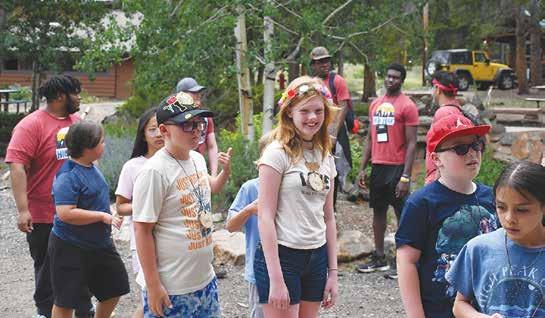
And, because campers aren’t worried their embarrassing moments will be posted online, they feel free to act silly and have fun.
“It helps break down some of those walls,” Covert said.
Other walls—like differences between campers’ backgrounds or home responsibilities—break down in the daily rhythm of camp life. Campers receive three meals a day, can turn to staff for mentorship and spend hours under trees or in lakes. In this safe environment, immersed in nature, connections come easier, according to neuroscience educator Dr. Bonnie Robb.
“Physical activity and shared, positive, outdoor experiences increase neurotransmitters like dopamine, endorphins, and oxytocin, all of which enhance mood, motivation and social bonding,” Robb explained. “Being outside and off screens reduces the pressure and overstimulation of digital environments, allowing for more genuine, relaxed interactions. Altogether, these brain-based changes help young people feel more
Salvation Army camps design programs to meet the unique needs of the communities they serve
The Salvation Army Alaska Division (Kenai, Alaska): At Teen vs. Wild: Boys Fishing Camp, boys ages 13-16 practiced dipnetting, a traditional Alaskan fishing technique.
Camp Arnold, Eatonville, Washington: The annual adaptive camp ensures campers of all abilities can enjoy the outdoors.
Camp Gifford, Loon Lake, Washington: At sailing camp, certified instructors teach teens sailing basics on Deer Lake.
Camp Ponderosa, Heber, Arizona: Science camp gives kids an opportunity to learn and stargaze in nature.
A cross the West : The Salvation Army partners with Prison Fellowship to send children with incarcerated parents to camp at no cost.
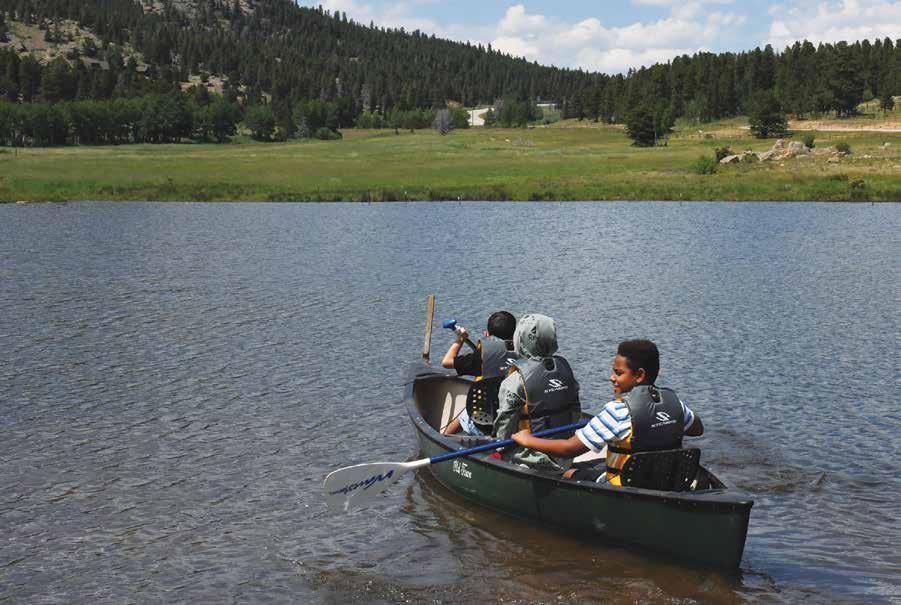
At The Salvation Army’s High Peak Camp in Estes Park, Colorado, campers enjoy canoeing (previous), mingling (l) and zip lining (r). | PHOTOS COURTESY DAVID SCHWARM


balanced, confident and connected, making it easier for them to build strong, healthy relationships.”
NOT ONLY IS IT A PRIORITY OF OURS TO MAKE CAMP A SAFE SPACE WHERE KIDS FEEL LIKE THEY BELONG, BUT IT’S ALSO A PLACE WHERE WE TRY AND MAKE SURE THEY CAN FEEL GOD’S LOVE.
—Alyssa Covert
But Salvation Army campers don’t just bond over the outdoors. They also have the unique opportunity to bond over worship. Every day at camp, kids attend chapel, pray, learn from Scripture and talk about Christian life with their leaders. For Monge, the opportunity to
worship with his camp community was particularly impactful.
“The people I would hang out with really let loose [during worship] and it made me feel comfortable and made me open up my heart and praise God for who he is,” he said.
These connections—with God and others—are the ultimate goal of Salvation Army camps.
“Not only is it a priority of ours to make camp a safe space where kids feel like they belong, but it’s also a place where we try and make sure they can feel God’s love,” Covert said.
Monge said encountering God’s love at camp was life changing. He reaffirmed his faith at High Peak Camp. And, after he aged out of the camp program, he became more committed to The Salvation Army Aurora (Colorado) Corps, leading worship and volunteering for youth ministry.
“Now, I’m the one teaching them, the same way I was taught,” Monge said. “I try to help as much as I can and be more involved because I realized this is another family that I found in camp.” | C |
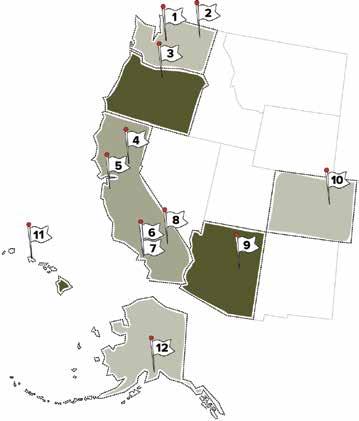
Salvation Army Camps out West
CAMP GIFFORD Loon Lake, Washington
CAMP ARNOLD Eatonville, Washington
CAMP KURATLI Boring, Oregon
CAMP DEL ORO Nevada City, California
CAMP REDWOOD GLEN Scott’s Valley, California
CAMP DALEY
CAMP GILMORE Calabasas, California
CAMP PINE SUMMIT Big Bear, California
CAMP PONDEROSA Heber, Arizona
HIGH PEAK Estes Park, Colorado
CAMP HOMELANI Waialua, Hawaii
CAMP KING’S LAKE Wasilla, Alasaka
LIVING IN A CULTURE THAT CARES
And the health benefits that come with it
BY NICOLE KARLIS
AFTER A CRISIS like a natural disaster strikes, communities come together in remarkably hopeful ways.
When the COVID-19 pandemic hit in 2020, some people spent their free time making homemade masks for health care workers facing shortages. When a wildfire devastated Maui in 2023, world-renowned chefs came together to cook thousands of meals for those who lost their homes. In Los Angeles in 2025, the community created an impressive network of volunteers that made headlines. More recently, Minnesotans came together to help their neighbors with everything from diaper runs to transportation for medical visits for people who were afraid to leave their homes.
Sociologists refer to this phenomenon as “bounded solidarity,” when a crisis causes people to see each other as a collective, not as individuals. As a result, this creates an environment that leads to extreme acts of altruism. But as many people who have experienced this firsthand know, “bounded solidarity” often fades—in part because we live in a culture that prioritizes, and necessitates, making an income and taking care of your own basic needs first.
In my book “Your Brain on Altruism: The Power of Connection and Community during Times of Crisis,” I asked the question: what if bounded solidarity didn’t fade? Is it possible to create a culture that values kindness and caring for each other, and that prioritizes giving people opportunities to do so?
We know there are numerous health benefits to caring for others. For example, volunteering, especially as we age,
can reduce stress, blood pressure, and help ease loneliness. It is even associated with living a longer life. But what are the health benefits of living in a culture where caring for others is truly prioritized by policymakers, our education system, in the workplace, and at home?
A culture where everybody, regardless of age, ethnicity, income status, and everything else that divides us, feels supported and like they belong. Researchers are increasingly arguing that a culture where institutions prioritize caring for others is not just a nice-tohave in society, but it may be the key to stronger public and societal health.
“Your Brain on Altruism: The Power of Connection and Community during Times of Crisis” (University of California Press, 2025) by Nicole Karlis explores the science behind how helping others improves physical and mental well-being, builds resilience and fosters community.
“Having a community and a network in itself is very crucial for well-being and health,” Arjen de Wit, a researcher at the department of Sociology at Vrije Universiteit Amsterdam, who studies volunteering, told me. “It’s partly because of the information effect, and partly because of just the sense of belonging and the idea that you’re part of a community, and that you have others to talk to.”
The information effect, De Wit elaborated, is one reason why being part of a culture of caring could improve public health. If people are open enough to exchange information with each other, that means people are able to trust each other. The information effect can range from suggesting a doctor to helping another person with an insurance claim or giving someone a ride to a doctor’s appointment.
De Wit said it’s not just about small talk, though. It’s also important to have people to share your problems with in a community. In other words, being part
Research has shown that 90 percent of Americans want to volunteer their time, but only one out of four actually do. When asked why they don’t, people often say they don’t have enough time, volunteer schedules are inflexible, people don’t have enough information, or they were never asked to volunteer. It’s the latter that could be the game-changer.
of a community of people who care about you and vice versa.
In 2014, researchers published a study in the Journal of Epidemiology and Community Health that found “higher perceived neighborhood social cohesion” could have a protective effect against heart attacks. How people view their connectedness to their communities, the research suggested, can influence whether a person survives one of the most serious medical events a person can face.
In 2023, a different group of researchers asked the question of whether prosocial behaviors, such as actions that are intended to benefit another person or society, led to better health outcomes in a population. Their meta-analysis found that the answer was yes, prosocial interventions, including acts and expressions of kindness, changed measurable health outcomes in vulnerable groups.
However, institutions shape what society values, De Wit said, which means infrastructures decide what’s important. Hypothetically, in a culture that cares, volunteering would be supported and promoted by all institutions, which could lead to more people engaging in volunteering and benefiting from it in their communities.
“Volunteering can contribute to quality of life,” De Wit said, adding there’s also a psychological health advantage to volunteering. “This sense of belonging and this purpose in life.”
Research has shown that 90 percent of Americans want to volunteer
their time, but only one out of four actually do. When asked why they don’t, people often say they don’t have enough time, volunteer schedules are inflexible, people don’t have enough information, or they were never asked to volunteer. It’s the latter that could be the game-changer.
“The most important predictor of volunteering is that you’re asked,” De Wit said. “That you have something or somewhere in the network, that you see the opportunity, or be asked to volunteer.”
If institutions valued volunteering, say workplaces had volunteer days where employees could take the day off to volunteer, more people would experience the benefits, and that could lead to improved societal health and well-being.
Clinical psychologist David Cregg said in psychology, there is a theory known as the “self-determination theory,” developed by psychologists Edward Deci and Richard Ryan, which suggests that humans have three basic psychological needs.
The first need is autonomy, meaning a person feels they are freely choosing their actions. The second is competence; a person wants to feel good at what they do or the sense that their actions are making a difference. The third is relatedness, which is essentially social connectedness. If these needs are met, Cregg said, humans can thrive in a community. If one or more of these needs are blocked in some way, people tend to struggle.
“When it comes to having healthy communities, when basic needs like
food and shelter are met, and there are mutual caring relationships within the community, the community as a whole is more likely to flourish,” Cregg told me.
“It’s difficult to fulfill the basic psychological needs of autonomy, competence, or relatedness if someone does not have the means to pursue their interests, like transportation, the programs to develop skills for developing competence, or they feel isolated within the community.”
Cregg said if communities are proactively built to help people meet these three needs, people will feel more satisfied with their lives. He added that when people feel a “sense of belonging,” it can “promote healing like few other things can.” Indeed, much of Cregg’s work focuses on the health effects of providing support to others.
Cregg said his work shows that the support people show to others “may be even more important than the support we receive for determining our health.”
“I think this fact is especially important to emphasize to people living with serious health conditions, who may have had the message communicated to them that they can only receive help, but not offer it themselves,” Cregg said.
“As a psychologist, I’m often stressing to my clients with serious mental health conditions that they have unique talents that their community needs, just as much as they need their communities.”
Once this fact is realized, he added, “that sense of purpose and contribution can be life-changing” for a person’s well-being.
As De Wit said, what institutions
value matters. Individuals can only do so much without institutional support. However, if governmental bodies prioritize caring by enacting stronger social safety nets, this would also improve public health in a culture that cares. According to the World Health Organization, health inequities are shortening people’s lives by decades. As a result, the organization has called for collective action from governments, national and local, to invest in social infrastructure and universal public services and address economic inequality.
Cregg said if people felt a greater sense of “connection and caring” from policymakers, it would combat some of the widespread isolation people are feeling, which has adverse health effects.
“As well as the feeling that we must do everything on our own without help,” Cregg said. “That said, I want to emphasize that in research studies with head-to-head comparisons between giving support and receiving support, it’s giving support to others that has a bigger effect on well-being.”
The takeaway from that research, he believes, is not to wait for your policymakers to do something, but to be the example in your own community if your circumstances allow.
“If we all adopted that ‘active helping’ mindset, it would create a contagious spread of kindness through our communities, and we would all thrive a bit more,” Cregg said. | C |
Nicole Karlis is a health and science journalist based in Florence, Italy.
Hear Nicole Karlis share more about the power of altruism on The Do Gooders Podcast at caringmagazine. org/karlis.
Club 60 nourishes body and spirit
The Salvation Army in
San Diego County
offers seniors meals in a welcoming community.
BY KAREN GLEASON
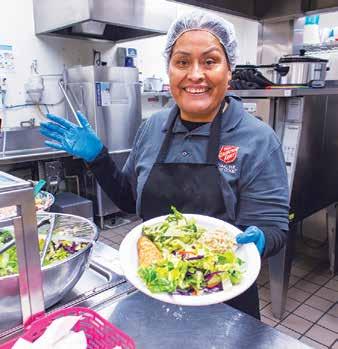
AT FIRST GLANCE, it’s a senior nutrition program—a hot meal at lunch, and now breakfast at some sites. Step inside Club 60 on a weekday, though, and you’ll find something more: tables filled with conversation, staff and volunteers greeting seniors by name, and participants lingering long after the meal ends.
“We don’t just want to feed people; we want to really see them. We want to know their name and their story,” said Theron Ross, Salvation Army Director of Senior Nutrition for San Diego County.
Across the county, The Salvation Army’s Club 60 program has supported older adults for decades. Today, it operates across multiple sites, reaching some 1,600 older adults each week. Over the past year, the program provided more than 59,000 meals at no cost to participants, supported by the Older Americans Act and local donors.
Club activities vary—games, arts and crafts, movement classes and occasional dances—but the focus remains the same: nourishing body, mind and spirit while creating a place where older adults are known and supported.
And no matter the location, one activity reigns supreme: bingo, with seniors vying for donated prizes.
Here’s a look inside the happenings of four Club 60 locations.
Home-cooked meals made just right in Oceanside
When Patricia Weathersby moved to The Salvation Army Silvercrest Senior Residence in Oceanside in September 2025, she didn’t know a soul. That was before Club 60, across the street at the Oceanside Corps.
The site functions as a hub for connection, with participants getting to know one another and engaging in activities through the Oceanside Corps, including Sunday worship.
Site Director Michelle Tran plans menus in advance, featuring dishes crafted with the dietary needs of regular participants in mind. The food is prepared in-house at the on-site kitchen. The result? Warm meals that are appealing and tailored to the seniors who gather there.
For many seniors, Club 60 pro -
(L) Judith Camiro helps prepare and serve lunch at the Oceanside Corps. (R) Sandra Shalita eats lunch in El Cajon.
| PHOTOS BY MIMI WILLIAMS
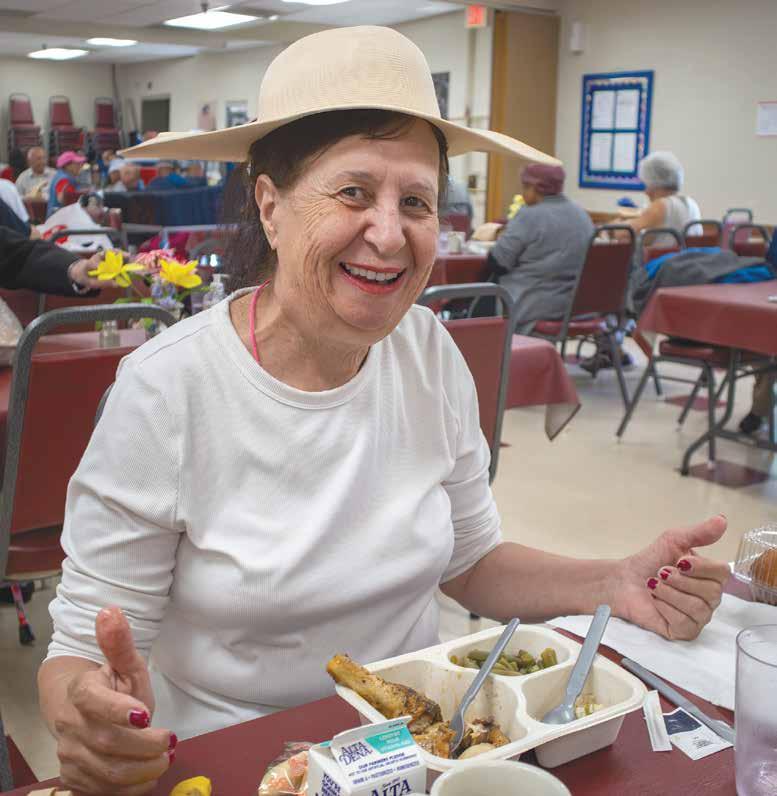
—Theron Ross “
WE DON’T JUST WANT TO FEED PEOPLE; WE WANT TO REALLY SEE THEM. WE WANT TO KNOW THEIR NAME AND THEIR STORY.
Club 60 meets in these San Diego County corps: Chula Vista, El Cajon, San Diego Citadel, San Diego Centre City and Oceanside.
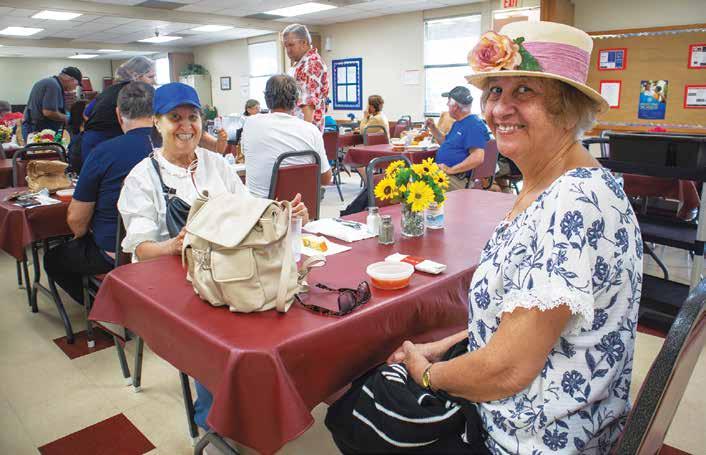
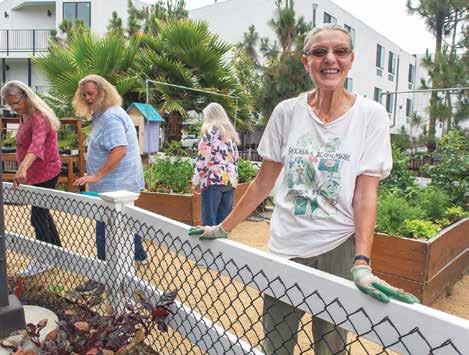
Club 60 served 59,000 meals in 2025, and hosted games, arts and crafts, movement classes and occasional dances.
vides their main meal of the day.
“I don’t really like to cook that much, so I have a nice healthy meal every lunchtime,” Weathersby said.
Attendance has grown steadily, with Tran noting the room now averages 30 to 35 participants—about triple previous numbers.
“There’s barely enough space; the cafeteria is full,” she said.
Chula Vista seniors bring down the house
Mondays in Chula Vista are regularly built around karaoke. A couple brings the karaoke machine and helps lead the monthly activity, where participants belt out renditions of “My Girl” and “I Will Survive.” Volunteers and older adults in job-training roles lend support.
The dining room is filled with music, laughter and movement. About 80 to 90 seniors typically attend that day, many singing, dancing and staying long after lunch is served.
“It’s their place,” Ross said. “We don’t impose a lot of rules and regulations. We want people to feel comfortable coming here.”
Across San Diego County, Club 60 members get to know each other over meals, in the garden and through activities like tai chi. | PHOTOS BY MIMI WILLIAMS
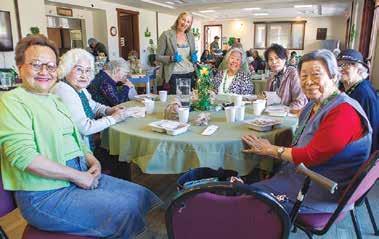
Greg Power is a regular—he first heard about Club 60 from a friend.
“I wasn’t even 60 years old, so I lied about my age,” he said. “Now I just have a good time.”
Support from breakfast to bingo in El Cajon
El Cajon’s Club 60 operates on a daily rhythm of breakfast, lunch and activities, supported by its location on the East County Red Shield Community Center campus, which includes a gym, fitness center and food bank. Seniors often arrive for breakfast, join a Feeling Fit class on Mondays and Wednesdays, and stay through lunch.
The addition of breakfast reflects both growth and practical need. Attendance averages about 65 to 75 participants at lunch and roughly 110 to 120 across breakfast and lunch combined, with regulars coming several times a week.
“We let them know they don’t have to eat their lunch,” said Site Manager Tyla Banks. “They’re welcome to take the lunch for their dinner… it helps a lot of them with their food budgets.”
During meals, attendees take part in question-and-answer games designed to help people get to know one another, along with the bingo, of course.
Along with staff, volunteers support the site, including 22-year-old Isaac Cesena, who serves breakfast Monday through Friday while taking
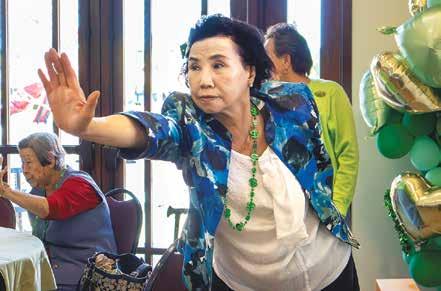
a gap year before medical school.
“I fell in love with it… It’s just the people,” he said. “Senior humor is just the best.”
Connection across cultures in San Diego
At the The Salvation Army’s Door of Hope campus, San Diego Citadel Club 60 seniors share a hot meal and and often stay for chair-friendly Tai Chi, karaoke and bingo. Just outside, an edible garden tended by staff, volunteers and seniors provides vegetables and herbs, reinforcing the site’s emphasis on health and shared life.
Site leader Dalelana “Lana” Dautremont, who has guided the program for nearly two decades, said Club 60 is
known for its diversity and close-knit feel, with Chinese, Korean, Filipino, Swedish, English and Spanish speakers sharing tables and conversation.
Many are longtime regulars, including one woman who has attended for 11 years and says her “mind is very peaceful” when she is there.
Dautremont describes Club 60 as far more than a meal site. She says it’s a daily community where relationships deepen over time. With help from dedicated volunteers and a longtime staff member, the team works to ensure that no one goes unseen.
“People should never have to be alone,” she said. “That’s what we serve here—making sure that nobody is left behind.” | C |
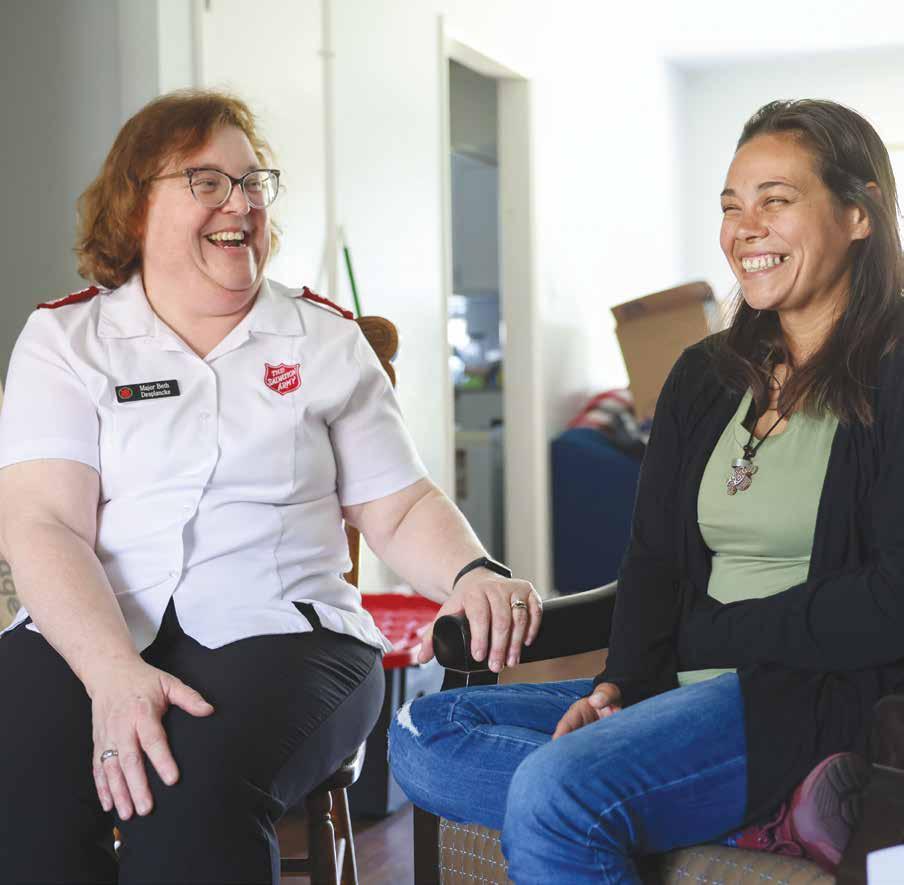
Fresno (California) Corps Officer Major Beth Desplancke (l) and Cristal Hill (r) celebrate Hill’s last day at The Salvation Army Gabelcrest program, which for three decades has provided housing, case management and a supportive community to women in recovery.
For two years, Hill shared an apartment there with her now 5-year-old daughter, Sofia.
Taking a break from packing, Hill said, “It’s scary and good, because I know it’s a new chapter in my life.”
| PHOTO BY JOHN DOCTER