We wish to remind you that Within REACH submissions are accepted on a rolling basis and that we accept stories and articles related to article critiques, human interest stories, literature reviews, evidence analysis, research, quality improvement, and proposed state or national legislation. Essentially, any story that aligns with our REACH professional model of practice is appropriate for peer review and publication. We would especially like to hear from those of you who have a potential Magnet story for our next certification! We want to share all of the good work you do for your patients and colleagues. By publishing in Within REACH, we have a recorded source of studies with outcomes and contact information, and there is the potential to collect other stories for our next Magnet survey! Publishing in the Within REACH may also be an option for the CAP program.
Carilion Nursing Research Editorial Board: Chris Fish-Huson, PhD, RN, CNE - Editor-in-Chief
Nancy Altice, DNP, RN, CCNS, Desiree Beasley, MSN, RN, CCNS, CCRN
Sarah Browning, DNP, RN-BC
Charles Bullins, DNP, RN, AGACNPBC
Sarah Dooley, MPH, BSN, RN
Troy Evans, MSN, RN, CCRN, NHDP-BC, NEA-BC
Cindy W. Hodges, MSN, RN-BC, FCN
James Ingrassia, MSN, RN
Lauren Miley, BSN, RN, PCCN
Laura Reiter, DNP, RN, CCRN, CNRN
Cindy Ward, DNP, APRN-CNS, RN-BC, CMSRN, ACNS-BC Reviewers
Jennifer Evans and Otillia Lewis were awarded the Leadership Excellence Award by the Virginia Nurses Association in November 2025.
Carl Cline was recognized as a Rocky Mount Community Hero by the mayor of Rocky Mount, Holland Perdue, in November 2025.
Proposed Bill H.R,1520 - The Charlotte Woodward Organ Transplant Discrimination Prevention Act
BY: Chaney Gordon, BSN, RN, TCRN, CCRN
The Charlotte Woodward Organ Transplant Discrimination Prevention Act is a resolution introduced in the House of Representatives by Representative Kat Cammack that seeks to prohibit discrimination by organ transplant organizations against individuals with disabilities (H. R. Res 1520, 2025). The bill passed the house on June 23rd, 2025, and it now awaits passage in the Senate before it can be signed into law.
Congresswoman Commack has stated one motivator for her in introducing the bill was hearing of a baby born in her district with Down syndrome and a complete AV Canal heart defect (Zion's Story!). According to his family, he was denied the opportunity for a heart transplant due to his disability. The bill itself is named after Charlotte Woodward, a woman with Down syndrome who received a heart transplant for a congenital heart defect after multiple prior heart surgeries (National Down Syndrome Society). She reported that her cardiologist was concerned when they had determined she needed a heart transplant that he'd have to fight harder than he'd normally have to for her to receive acceptance on the donor recipient list due to her Down syndrome diagnosis. She has since become an advocate for those with Downs and other disabilities.
Currently, the Department of Health and Human Services oversees a national Organ Procurement and transplant Network, which runs the waiting list for organs and matches donors with recipients based on location and need. The hospitals that perform organ transplantation all have individual policies and procedures regarding who they accept as candidates for organ transplantation and submission to the national organ recipient waiting list (National Council on Disability, 2019). There is a misconception that those
with some degree of intellectual disability or physical disability, or both would be less likely to comply with post-transplant care. There are immunosuppressive medications posttransplant patients must take to prevent rejection of the donor organ follow up appointments modifications, and other aspects of care that have led some physicians to view people with disabilities as relative contraindications to transplantation. However, with adequate support from family, social work, advocates, home health, and community, those with disabilities can manage these aspects of post-transplant care.
There is already legislation in place that ought to address this kind of discrimination. Section 1557 of the Affordable Care Act makes it illegal for providers who receive funds from the federal government to discriminate or refuse to treat an individual on the basis of disability (AMA, 2017). There is also the Americans with Disabilities Act which should also prevent discrimination against those with disabilities who would be otherwise qualified to receive an organ. Despite the laws already in place, the National Council on Disability still reports discrimination against those with disabilities in being referred to organ transplant centers, being placed on the recipient list, and receiving organs (National Council on Disability, 2019).
I am glad that this legislation has been introduced and hope it soon passes the Senate and gets signed into law. With there already being laws in place that should have addressed this issue, perhaps the answer lies in providers and organ transplant centers being held accountable for such cases of discrimination and more oversight into the process of deciding who may be placed onto the organ transplant list. Even so, the passage of this bill raises awareness for this issue and cements the right for those with disabilities to be treated with dignity.
References
Charlotte Woodward Organ Transplant Discrimination Prevention Act, H>R> 1520, 119th Congress. (2025). https://www.govtrack.us/congress/bills/119/hr1520/text
House Passes Bipartisan Bill to End Organ Transplant Discrimination Against Individuals with Disabilities. (2025, June 30). Congresswoman Kat Cammack. https://cammack.house.gov/media/press-releases/house-passes-bipartisan-bill-end-organtransplant-discrimination-against
Affordable Care Act, Section 1557 Fact Sheet. (2017). AMA. https://www.ama-assn.org/media/14241/download
Organ Transplant Discrimination Against People with Disabilities. (2019, September25). National Council on Disability.
https://www.ncd.gov/report/organ-transplant-discrimination-against-people-with-disabiliti es/
My Journey in Advocacy with my Heart Leading the Way. National Downy Syndrome Society. https://ndss.org/sites/default/files/2025-08/Charlotte%27s%20Testimony.pdf
Zion's Story! (n.d.). Zion's Army. https://zionsarmy.net/zions-story-1
Courage!
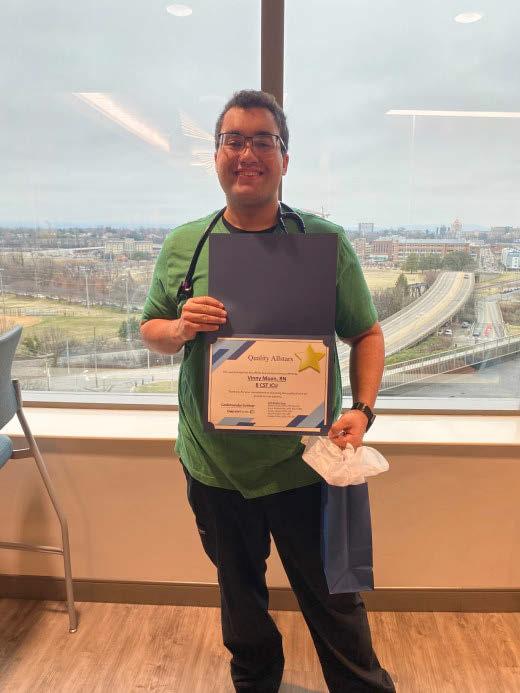
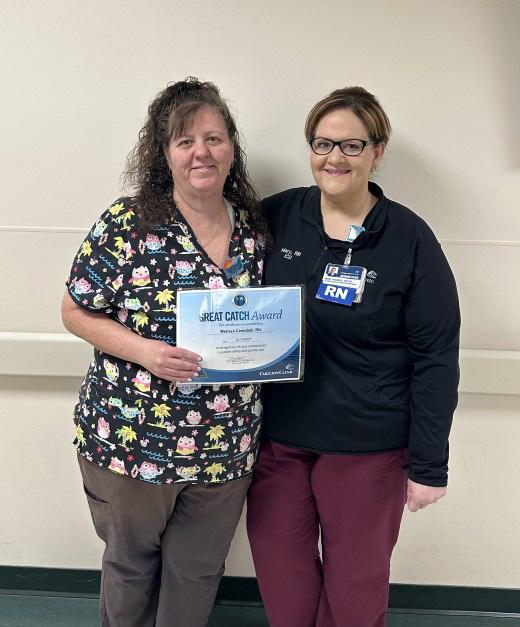
JanWinand-TheSnuberDriver!AHUGE shoutouttoJanWinand,4SouthPACUCA, forvolunteeringtopickupseveralstaff membersandbringthemtowork.Shenamed hertrucktheSnuberandbravedthewinter weathertoensureourteammembersfeltsafe gettingtowork.Janevenpickedupanextra shiftonMonday,gaveridestopeopleshesaw walkingtothehospitalandcameinonherday off todropfolksoff.Janisalwayslookingout forothers,andPACU(andthewhole hospital!)issogratefulforher!
Compassion!
Magnet Moment: Countdown to 6! Less than 24 Months Away! Unit Highlighted: 8M ICU, 3 Wishes Program
Magnet Moments highlight programs, people, and impacts that align with Magnet designation, a nationally recognized credential awarded by the American Nurses Credentialing Center (ANCC) that reflects excellence in nursing practice, quality patient outcomes, and a culture of professional empowerment.
What is the 3 Wishes Program- The 3 Wishes Program is an end-of-life initiative that offers patients and /or their loved ones the opportunity to choose three meaningful wishes from a list of options. These wishes are thoughtfully fulfilled to help ease the transition into the dying process while honoring patient dignity, choice, and individualized care. This program provides a structured yet deeply personal way to support patients and families during one of life's most significant moments.
Magnet Connection - The 3 Wishes Program exemplifies the Magnet Model component of Exemplary Professional Practice. Through collaboration with patients and families, nurses establish goals and develop individualized plans of care that reflect each patient's values and preferences. his initiative demonstrates a strong commitment of professional nursing practice, interdisciplinary collaboration, and the delivery of high-quality, patient-centered care. Thank you to the 8M ICU team for advancing compassionate care through this meaningful work!
Collaboration!
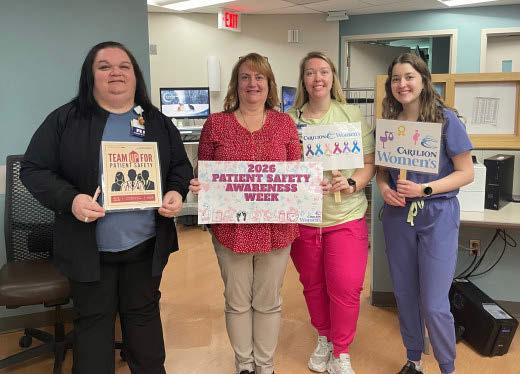
eek,wehadtheprivilegeofroundingonLabor& DeliveryandMotherBabyatCRMHBirthplace-andthepridepassion,andpurpose
Whenaskedwhatthey'remostproudofandhowtheykeeppatientssafe,staff shared powerfulexamplesofsafetyinactioneverysingle-day:Outstandingteamwork-
Beingstrongpatientadvocates,speakingupandstandingwithfamilies.Preventing fallsespeciallywhenhelpingpatientsgetupsafely.Thoroughdischargeteachingso familiesleaveconfidentandprepared.Improvingreliability,likemovingPKUresults toadigitalformatinsteadofmanualprocesses. Safermedicationpractices,includingupdatedpostpartumPitocinordersets. HonoringexperiencewithincredibleteammemberslikeTheowhohasbeencaringfor
Thatiswhatpatientsafetylookslike:teamwork,innovation,vigilance,commitment, andheart.ThankyoutoeverymemberoftheCRMHBirthplaceteamforshowing eamUpforPatientSafety-thisweekandeveryweek.
2025 BEACON AWARD WINNERS
GOLD
Cardiovascular Institute Vascular Surgery Intensive Care Unit
CRMH 7 Mountain Medical Cardiac PCU
SILVER
CRMH Pediatric ICU
CRMH Coronary Care Unit
CRMH 10 Mountain Surgical ICU
CRMH 8 Mountain Medical ICU
CRMH Neonatal ICU
CRMH Neuro Trauma ICU
BRONZE
CRMH 8 South Radius
ICU / PCU
CRMH 9 South ICU
PRESENTATIONS
October - December 2025
Manchinm K., Gearhardt, M., Ferguson, V., Harvey, E.M. (2025, October). Use of an innovative interdisciplinary rounding model to engage & educateOptimizing external ventricular drain (EVD) care. 2025 Teaching Excellence Academy for Collaborative Healthcare (TEACH) Education Day; Virginia Tech Carilion College of Medicine, Riverside 2, Roanoke, VA.
Beels, S., Martin, M. (2025, October 19). Igniting Carilion Clinic's vascular surgery 'stop smoking' initiative. Virginia Vascular Surgery Group Fall Meeting (Virtual).
Nursing Research Conference, November 20, 2025
Rachel Altizer, BSN, RN, CCRN, TCRN Oral Care Compliance Through Targeted Education: A Collaborative Approach
SWAT Team: A Quality Improvement Initiative
Suzanne Beels, MSN, RN, AGCNS-BC, CCRN & Katelin Walls, MSN, RN-III, CNL, CCRN-CSC Combining Stress First Aid and the 4As Models to Improve Resiliency
Sarah Brown, BSN, CCRN Integration of Palliative Care Triggers During IDRs in an ICU
Sarah Via Browning, DNP, RN-BC Social Determinants of Health (SDoH)
Wendy Davis, MHA, LPN, BSW Navigating the World of Advance Care Planning
Amy Lucas, MSN, RN, CCNS, CCRN Choosing an Intermittent Urinary Catheter for Use in Carilion Facilities
Sterile Water Use in ICU: Is it Necessary?
Bayli Price, RN Recycling in WALANT Surgery: A Treatment Room Waste Reduction Initiative
Robin S. Woody, BSN, RN, CRN, TCRN Higher Stakes, Higher Standards: From Quality Nurse Specialist to Critical Care Clinical Nurse Specialist (CNS)
Jen Bath, DNP, RN, AGCNS-BC, CBIS TCRN, CEN IGF in Adult & Adolescents after TBI
Ellen Harvey, DNP, APRN, ACNS-BC, CCRN, TCRN, SCRN, FCNS, FCCM Standardized Critical Care Training Improves Nursing Confidence and Interprofessional Attitudes
Rachel Altizer, BSN, RN, CCRN, TCRN & Robin Woody, BSN, RN, CCRN, TCRN Unlock Zero: Breakout to Zero Harm
Brandon Jones, MSN, RN, CPXP, NEA-BC Healing the Healers
Suzanne Beels, MSN, RN, AGCNS-BC, CCRN & Katelin Walls, MSN, RN-III, CNL, CCRN-CSC Combining Stress First Aid and the 4-As Models to Improve Resiliency
Ruth Ndolo, MSN, EdD, RN Investigating the Impact of Alcohol-Based Hand Rub (ABHR) on the Bacterial Bioburden on Gloves Used in Direct Patient Care
Alma Trigg, DNP, RN, NE-BC, CPHQ Addressing Medical Errors in Nursing Practice Through an Evaluation of the Barcode Medication Administration (BCMA) Program
Kim Robertson, MSN, RN, CPHQ Excellence in Infection Prevention: A Rural Hospital's Journey to Top 100 Recognition
PUBLICATIONS
Price, L., Harvey, E., Carter, K.F. (2025). An innovative online approach to certification success. Journal of Emergency Nursing Accepted for future issue.
Jones, A., Mongan, S., Ullman, A., August, D., Sharpe, E., Alderman, A. A., Doellman, D., Anders, C., Wiseman, K., Gillette, C., Kim, H., & Byrnes, J. (2025). Umbilical venous catheter and peripherally inserted central catheter malposition and tip migration in neonates: A mixed methods cost analysis. International Journal of Nursing Studies Advances, 9,100450. https://doi.org/10.1016/j.ijnsa.2025.100450
Association for Vascular Access, PediNeoSIG. (2025). Best practice guidelines in the insertion, care and maintenance of neonatal and pediatric central venous access devices (3rd ed.). Association for Vascular Access. ISBN 978-0-9966456-3-8
Burton, C. Renewing the call: Preventing burnout and compassion fatigue. Journal of Christian Nursing. Accepted for future issue.
Article Critique
"Reducing Hospital-Acquired Pressure Injuries in a Cardiothoracic
Intensive Care Unit"
by: Chaney Gordon, BSN, RN, TCRN, CCRN
In a study by Caldwell (2025), the author sought to determine whether the implementation of a pressure injury risk assessment tailored for intensive care unit (ICU) patients coupled with a bundle of interventions targeting components of the assessment could decrease prevalence of hospitalacquired pressure injuries (HAPIs) in a cardiac surgery ICU. In the 2 years prior to the study, the author's unit had a HAPI prevalence rate of 11.01%, which is 4.79% above the National Database of Nursing Quality Indicators benchmark. This prompted intervention through a quality improvement project.
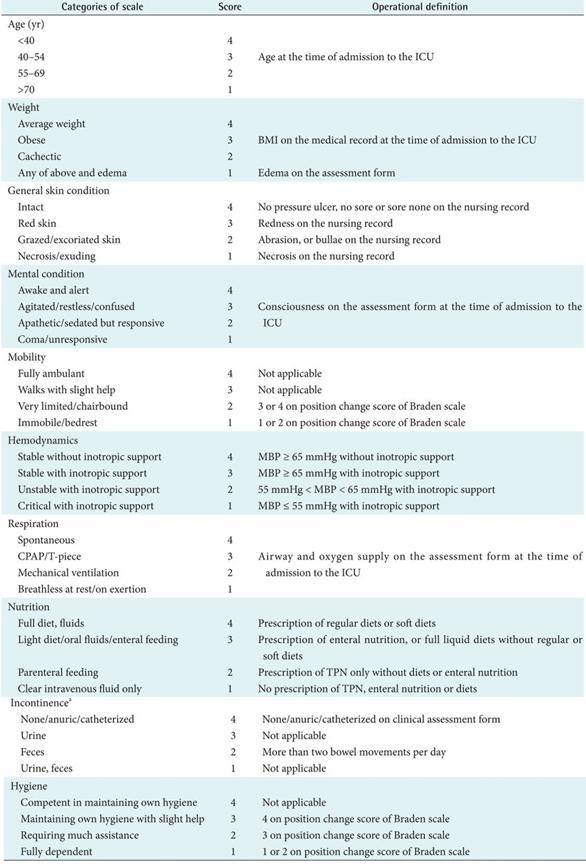
The unit had been using the well-validated and widely adopted Braden Scale to assess patients for risk for developing HAPIs. In the review of literature conducted by the author, it was found that the Braden Scale has been shown to be inadequate for critically ill patients. The Cubbin-Jackson Scale is a tool designed for the ICU patient population that considers more factors than the Braden, including age, BMI, skin condition, mentation, nutrition, incontinence, hemodynamics, respiration, hygiene, and mobility (Fig. 1). This makes for a more individualized assessment that has the potential to address patient-specific risk factor(s) for developing a HAPI. Whereas the Braden Scale has 6 categories - sensory perception, moisture, activity, mobility, nutrition, and friction and shear -the Cubbin-Jackson Scale has 10.
Continued on next page
Figure 1: The Cubbin-Jackson Scale (Choi et al., 2013, p.263-264).
Caldwell created a form for RNs to complete each shift for their patients. They obtained their Cubbin-Jackson score in each subsection. For example, in the respiratory section, if a patient only required a nasal cannula, the associated intervention was applying ear cushioning to prevent breakdown there. If a patient was intubated, the assessment called for rotating the ETT every 4 hours and applying moisturizing cream to patient's lips. The experiment used a prepost comparison design, where the control group consisted of the patients on the unit in the month leading up to the intervention who received routine care and were assessed only by the Braden Scale. The experimental group included the patients on the unit the following month, who had the Cubbin-Jackson completed in addition to the Braden and who had interventions recommended based on the scores in the new scale. She compared the HAPI prevalence and incidence rates. She excluded patients with pre-existing pressure injuries (community acquired and from other hospital units). The control group and the intervention group each comprised 102 patients. In the control group, 4 patients experienced HAPIs compared to 3 patients in the intervention group. Of the 4 in the control, 1 patient had 9 HAPIs related to cooling pads, and the total number of all pressure injuries totaled 13. The intervention group totaled 3 HAPIs. This resulted in a clinically significant decrease in prevalence rate in the NFNQI survey from 22.2% to 7.14% and a decrease in incidence rate from 13.56% to 8.62%.
The nurses had a compliance rate of 81% in completing the Cubbin-Jackson assessment. The author attributed the compliance to the fact that the assessment was on paper and viewed as additional task which may have been overlooked in busier shifts. This and the fact that one patient alone in the pre-intervention group having 9 HAPIs related to a device may have confounded the data. Future studies evaluating the effetiveness of this assessment and interventions tied to it should seek to include more patients and aim for a higher compliance
rate in the experimental group. Creating an online assessment - such as through a QR codemay increase compliance, as well as incentivizing completion. Overall, this article was clinically relevant and supports adoption of individualized patient assessment tools. Given the Braden assessment's limitations in critically ill patients, the data supports that the Cubbin-Jackson assessment has the potential to be a better tool for this patient population. Very few things are one-size-fits-all, and the Cubbin-Jackson Scale allows for addressing an individual's specific risk factors. Bedside nurses should continually re-evaluate the tools and assessments they use in routine patient care.
References
Caldwell, S. (2025). Reducing Hospial-Acquired Pressure Injuries in a Cardiothoracic Intensive Care Unit. Critical Care Nurse, 45(1), 12-20. https://doi.org/10.4037/ccn2025980
Kim, E., Choi, M., Lee, J., & Kim, Y.A. (2013). Reusability of EMR Data for Applying Cubbin and Jackson Pressure Ulcer Risk Assessment Scale in Critical Care Patients. Healthcare Informatics Research, 19(4), 261-270. http://dx.doi.org/10.4258/hir.2013. 19.4.261
“
The World is a book, and those who do not travel read only a page.” – Saint Augustine
Palm
Lake Buena Vista
Williamsburg
Natl. Harbor, MD
Greenville
Anaheim
Aurora
United Kingdom
Nottingham