Alexin® is die geregistreerde handelsmerk van AECI Beperk ®
AECI Chem Park, 200 Bergrivier Drive, Chloorkop, Kempton Park, 1619
Alexin® Reg. Nr. M510,
Wheat remains a staple food for South African consumers. According to statistics for wheaten products by the SA Grain Information Service, a total of 197 581 758 breads were baked per month in the period 1 October 2025 until 31 March 2026.
Wheat Focus / Koringfokus
Six issues per year published. Contents determined in cooperation with industry role players such as the ARC-Small Grain, SA Grain Information Service and SA Grain Laborotary.
Wheat Focus is available to bona fide small grain producers free of charge.
THE INDEPENDENT SPECIALIST MAGAZINE FOR THE SMALL GRAIN INDUSTRY FOR THE PAST 44 YEARS
4 Koringtarief: Waaroor gaan dit?
06 Koringbedryf se versoeke verwerp: “tarief is doeltreffend en bedryf winsgewend”
07 Ivan die LUIS se kommentaar
12 Graan SA steun op Steenhuisen in sy nuwe portefeulje
17 Maak grondvariasie winsgewend vir die Wes- en Suid-Kaap
19 Nicholas Goble appointed as chairman of Sansor
26 Nampo 2026
27 Onsekerhede laat masjinerie se verkope daal
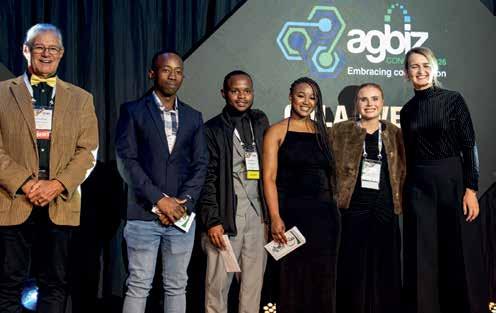
28 New leadership for Agbiz
28 Students challenged for solutions in wheat value chain
30 Komende landbouskoue
30 Rekordgetal studente voltooi landboukursusse
SMALL GRAIN
Publisher and owner
Contact details for editorial contributions, advertisements and subscriptions: Mediakom PO Box 20250 Noordbrug 2552
14 Falling numbers, rising challenges: Exploring the causes of variability in falling number testing
20 Promosie: BASF-swamdoders: Die steunpilaar in kleingraanproduksie
22 Plant-parasitic nematodes: The invisible enemy with a significant impact on wheat yield reduction
24 Wheat’s genetic revolution: Is South Africa being left behind?
5 Final area and production figures 2025 season
8 Invoertarief aangepas maar weerstand teen vertragings neem toe
13 Daling in koring-hektare verwag
29 Wheat market information: 2025/26 marketing year
Due to delivery problems with traditional mailing services subscribers and readers are requested to send their e-mail address to info@mediakom.co.za for electronic delivery of WHEAT FOCUSKORINGFOKUS
Ivan die Luis sê
Koringtarief - waaroor gaan dit?
Graan SA en die graanhandelaarsvereniging Sacota het reeds sowat twee jaar gelede ’n aansoek gerig aan die kommissie vir internasionale handelsadministrasie (Itac) dat koring se invoer-verwysingsprys hoër hersien moet word en dat tariefwysigings, volgens die formule, dadelik toegepas moet word. markonsekerheid en ondeursigtigheid.
Johan Willemse LANDBOU-EKONOOM
Itac, wat besluit oor invoertariewe en -beskerming, het einde Junie 2026 besluit dat Graan SA en Sacota se versoek oor die invoertarief en toepassing nie meriete het nie, dat die invoertarief se verwysingsprys onveranderd bly en dat die administratiewe toepassing na onder meer die tesourie verwys word. Koring se invoertariefformule is in 2016 ingestel met die doel om ’n soort vloerprys vir plaaslike koringpryse daar te stel vir wanneer internasionale pryse daal. Daar is destyds ooreengekom dat Amerikaanse harde rooikoring (HRW) se vry-aan-boord-prys van VSA $279/t met die VSA Golf-hawe as basis as verwysingsprys sou geld. Die plaaslike bedryf het die VSA se HRW-kwaliteit beskou as vergelykbaar met Suid-Afrika se goeie koringkwaliteit.
Wat het verander?
Die formule het twee groot probleme. Eerstens die verwysingsprys waarop die tarief gebaseer is, en tweedens die feit dat daar tot sewe maande verloop nadat ’n nuwe tarief volgens die formule gesneller het totdat dit ingestel word. Dit skep
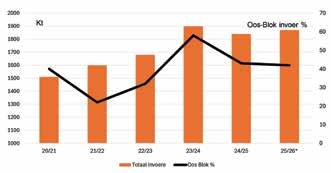
Grafiek 1. SA koringinvoer (koringbemarkingsjaar) en Oos-Blokinvoer.
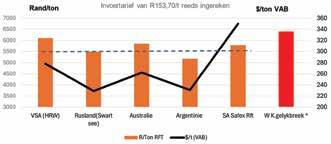
Grafiek 2. Koringpryse Randfontein-basis.
Amerika was ’n dekade gelede die wêreld se oorheersende koringuitvoerder. Intussen het hul uitvoeraandeel gedaal van sowat een kwart van wêrelduitvoer tot minder as 10%. Hiervan is HRW ‘n klein persentasie. Dit beteken doodgewoon dat Amerikaanse HRW nie gebruik kan word as die internasionale maatstaf van koringpryse nie - daardie markaandeel is te klein.
Internasionale koringmark
Die groot struktuurverskuiwing in die internasionale koringmark is dat Rusland en die Swartseelande (voormalige Russiese republieke) nou die oorheersende koringuitvoerders is. Rusland alleen se markaandeel in koringhandel is nou sowat 25%. Die VSA se jongste produksiesyfers dui daarop dat hulle hierdie seisoen die kleinste koringproduksie sedert 1957 gaan realiseer en toenemend internasionale markaandeel verloor.
Suid-Afrika se koringinvoer uit die Swartsee-gebied word in Grafiek 1 getoon. Dit is koring afkomstig van Rusland, Latvia, Litaue en Roemenië. Voor die Russiese inval was Oekraïne besig om 'n groot koringuitvoerder te word en Suid-Afrika het heelwat van hul koring ingevoer. Intussen sukkel die Oekraïne met koringuitvoer.
Grafiek 1 toon Suid-Afrika se totale koringinvoer in die afgeloper ses jaar en toon ’n stygende tendens. Dit is sowat 4050% van Suid-Afrika se invoer en oorheers die mark.
Koringinvoer oor dié tydperk van Amerika af is te min om op die grafiek aan te toon - dit is sowat een boot van bykans 33 000 ton per bemarkingsjaar en is gemiddeld ongeveer 2% van Suid-Afrika se jaarlikse koringinvoer. Om dus die HRWkoringprys as markaanwyser en vir die invoertariefformule te gebruik is heeltemal onprakties.
Rusland alleen se koring- en koringmeeluitvoer vir 2026/27 word op 47 miljoen ton geraam teenoor die VSA se 21,5 miljoen ton, waarvan net ’n fraksie HRW is. Oekraïne se koringuitvoer is tans ongeveer 14 miljoen ton. Internasionale koringuitvoer vir 2026/27 word op 213 miljoen ton geraam.
VSA HRW koringprys
Grafiek 2 toon die nuwe realiteit. VSA se HRW-prys het die laaste tyd relatief gestyg tot ander lande se pryse en dit is tans ongeveer $278/ton - wat beteken dat die Suid-Afrikaanse invoertarief van R153,70/ton wat tans heers, nul moet wees. Die formule het reeds ‘n nul-tarief gesneller. Indien dit binnekort ingestel word gaan dit verdere afwaartse druk op Suid-Afrikaanse pryse veroorsaak.
Die realiteit is dat ingevoerde VSA HRW met die huidige prys teen R6 104/ton in Randfontein land. Dit is die duurste
Final area and production figures 2025 season
Comparing the final calculated crop figures with the numbers set by the Crop Estimates Committee during February 2026, the size of the commercial wheat crop was finalised at 1 905 500 tons, which is 8 280 tons or 0,44% more than the final crop estimate figure of 1 897 220 tons.
The Crop Estimates Liaison Committee (CELC) oversaw the process for the finalisation of the crop production figures of commercial wheat, barley, canola and oats for 2025 in May 2026 (Table 1 and 2).
The estimated total production figures as released by the national Crop Estimates Committee (CEC) were revised, using the published figures of the South Africa Grain Information Services (SAGIS) of actual deliveries as the basis for the calculations. The figures from the wheat utilisation survey to determine on-farm usage and retentions, which was conducted by the department of agriculture (DoA), were added to the SAGIS delivery figures to calculate the final crop production figures.
Comparing the final calculated crop figures with the numbers set by the CEC during February 2026, the size of the commercial wheat crop is 1 905 500 tons, which is 8 280 tons or 0,44% more than the final crop estimate figure of 1 897 220
Koringtarief - waaroor gaan dit?
van al die bestemmings, daarom word die minimum hoeveelheid koring van die VSA af ingevoer.
Safex se Randfontein-prys was op 1 Julie 2026 R5 783/ton. Dit is vóór die kunsmatige vervoerdifferensiaal afgetrek word. In die geval van die Wes-Kaap is die boer se ekwivalente prys ’n raps meer as R4 800/ton!
Grafiek 2 toon die ander invoerbestemmings se vergelykbare VSA dollarpryse soos SAGIS dit publiseer. Onthou ook dat daar by die duurste wêreldprys reeds ’n tarief bygevoeg is om Suid-Afrikaanse boere teen invoer te “beskerm”. Nogtans is al die ander invoerbestemmings se gelande prys met die invoertarief bygevoeg baie goedkoper.
Om die VSA se HRW as verwysingsprys en “vloerprys” te gebruik bied geen beskerming nie en is heeltemal verouderd. Met die invoertarief ingereken, land ander lande se ingevoerde koring deurlopend teen ’n laer prys as VSA-koring.
Russiese/Oos-Europese koring land in Randfontein teen R5 500/ton teenoor HRW se R6 200/ton. Dit is die rede waarom Suid-Afrika koring uit die Swartsee- en ander Europese lande invoer. Die struktuurverandering in die internasionale koringmark druk Safex-pryse baie laer af as wat die oorspronklike bedoeling met die invoertariefformule was.
Voeg hierby dat die meulenaars se argument nie steek hou nie - hulle is tevrede om baie goedkoper koring van sogenaamde swak kwaliteit in te voer en Suid-Afrikaanse koring daarteen te prys.
Die feit is - die tarief bied geen beskerming aan Suid-Afrikaanse produsente nie en die argument van kwaliteit is nie waar nie. Soos in ander markte is dit juis die goedkoper produk
tons.
For barley the recalculated crop size is 345 000 tons, which is 1 430 tons or 0,41% lower than the final crop estimate figure of 346 430 tons.
The final recalculated canola crop estimate figure is 306 000 tons, which is lower (3 035 tons or 0,98%) than the final crop estimate figure of 309 035 tons.
The final recalculated oats crop estimate figure is 43 500 tons, which is 1 643 tons or 3,64% lower than the final crop estimate figure of 45 143 tons.
The CEC thanked all producers and industry role-players who provided information on a regular basis to improve the accuracy of the crop estimates. Producers, who do not participate in the Department’s monthly survey, are requested as a matter of urgency to make an effort to contribute to the crop estimates process.
wat pryse afdruk en dit is dan die motivering vir 'n invoertarief.
Nog ‘n feit is dat die goedkoper koring met die invoertarief ingereken tot gevolg het dat ons koringboere sukkel om koste te dek. Teen heersende pryse maak die Swartland se boere geen wins om vir risiko en opbrengs op kapitaal te vergoed nie, soos Grafiek 2 aantoon.
Besproeiingsboere in die Noordelike provinsies bevestig dat hulle teen dié lae pryse bogemiddelde opbrengste sal moet kry om hul koste te kan dek. Die skerp styging in staatsbeheerde Eskom-tariewe maak dit nog minder winsgewend. Besproeiingsboere moet winterkoring vir 'n tweede gewas plant. Oral vind proefaanplantings van kanola plaas om dit as ’n wintergewas in die plek van koring te produseer.
Itac beweer dat koringboere se winsmarges met 27% toegeneem het, dat boere ’n marge van 18% bo produksiekoste het, dat koring ’n basiese stapelvoedsel is wat vir verbruikers bekostigbaar moet wees en dat die huidige tarief genoeg beskerming aan produsente gee.
Die enkele feite in hierdie artikel beklemtoon dat Itac se ondersoek en gevolgtrekkings ernstige gebreke het.
Struktuurveranderinge in die bedryf gaan noodwendig plaasvind. Die tyd het ook aangebreek dat Suid-Afrikaanse boere ander beskikbare koringkultivars begin plant met ’n hoër opbrengs en kwaliteit vergelykbaar met Swartsee-koring en die juk van meulenaars afgooi.
Die som van hoër opbrengs en Swartsee- ekwivalente pryse is dalk 'n oorlewingsmeganisme vir Suid-Afrikaanse boere, saam met toenemende kanolaproduksie in Noordelike provinsies en ‘n verdere swaai na kanola in die Wes- en Suid-Kaap.
VAN BLADSY 4
Koringbedryf se versoeke verwerp:
“tarief is doeltreffend en bedryf winsgewend”
Die kommissie vir internasionale handelsadministrasie (Itac) het vyf feite gemis in hulle besluit om nie die dollargebaseerde verwysingsprys vir koringinvoer en die snellermetodiek aan te pas nie, sê Graan SA (GSA) in reaksie op die ondersoek na die koringinvoertarief. Die besluit weerspieël volgens ‘n inligtingstuk deur GSA nie die werklikheid op plaasvlak nie.
“Graan SA verwerp ten sterkste die finale uitkoms van die koringtariefwysigingsondersoek, ná bevestiging in die Staatskoerant dat die dollar-gebaseerde verwysingsprys (DBRP) vir koring onveranderd op US$279 per ton sal bly en dat geen outomatiese snellermeganisme geïmplementeer sal word nie.”
Richard Krige, voorsitter van GSA, sê die organisasie is diep gefrustreerd deur die uitkoms van die ondersoek wat negentien maande lank geduur het.
Die minister van handel, nywerheid en mededinging, Parks Tau, het na die ondersoek bepaal dat die huidige DBRP van $279 gepas bly en voldoende beskerming aan binnelandse koringpro-
dusente bied. Dit balanseer ook belange van verbruikers en nywerhede laer in die ketting.
Graan SA het die volledige verslag en motivering waarop die Staatskoerant-aankondiging gebaseer is, aangevra. Die aansoekers van die ondersoek, Graan SA en die graanhandelaarsvereniging Sacota, het nie direkte, amptelike kommunikasie van Itac ontvang wat die gedetailleerde grondslag vir die verwerping van die aansoek uiteensit nie.
“Geen van die kernversoeke wat deur die bedryf ingedien is, is goedgekeur nie. Graan SA beskou hierdie besluit as ’n ernstige slag vir koringprodusente en vir die langtermynvolhoubaarheid van Suid-Afrika se plaaslike koringbedryf.”
Dr Tobias Doyer, uitvoerende hoof van Graan SA, sê hulle nie tevrede met die uitkoms nie en aanvaar nie die redenasie waarop dit gebaseer is nie. Die besluit weerspieël volgens hom nie die werklikheid op koringplase regoor Suid-Afrika nie.
Volgens die verslag in die Staatskoerant bied die huidige DBRP steeds doeltreffende ondersteuning, maak winsgewendheid moontlik en die plaaslike koringbedryf bly winsgewend. Graan SA betwis hierdie gevolgtrekking ten sterkste.
Omtrent vertragings met die toepassing van die tarief nadat dit gesneller het, word in die ondersoek erken dat dit die doeltreffendheid van die tarief kan ondermyn en markversteurings kan skep.
In plaas daarvan om egter ’n outomatiese snellermeganisme
Richard Krige
Dr Tobias Doyer
Ivan die LUIS se kommentaar
Gaan Suid-Afrika se koringbedryf dieselfde pad loop as die tekstielbedryf, die eens florerende staalbedryf, olieraffinering en ander voorheen suksesvolle plaaslike bedrywe wat bygedra het tot selfvoorsiening, onafhanklikheid en werkskepping? Landbou het boonop dié belangrike voordeel dat dit landelike ekonomieë laat floreer en as bonus maatskaplike euwels beperk.
Dit lyk eerder asof politieke affiliasies vir die regering van veel groter belang beskou word as die welsyn van die land en sy mense, insluitend voedselsekerheid. Sommige regeringsbesluite laat dit voorkom asof afhanklikheid van invoer ‘n kommervrye langtermynwaarborg dra, dat die bronne nooit gaan opdroog nie en dat dit ten koste van Suid-Afrika en sy inwoners makliker en goedkoper is.
Die welstand van die koringbedryf is nie ‘n provinsiale saak nie want koringboere word in baie provinsies se gepaste verbouingstreke aangetref. Dit is egter veral die Wes-Kaapse koringboere wat toenemend ly. Wanneer besluite op nasionale vlak geneem word, is daar nie dalk vooroordeel en moedswilligheid vanweë die Wes-Kaap se politieke voorkeur nie? Dit
lyk so half asof neutraliteit en landsbelang nie meer geld as ‘n steekhou na daardie boere ingekry kan word nie. Daar bestaan natuurlik geen feite om so ‘n afleiding te kan maak nie, dit is seker blote toeval.
Koringbedryf se versoeke verwerp: “tarief is doeltreffend en bedryf winsgewend”
VAN BLADSY 6
goed te keur of ’n duidelike alternatief te bied, word die saak bloot verwys vir meer gesprekke tussen staatsdepartemente.
“Dit is een van die mees frustrerende aspekte van die besluit,” sê dr Doyer. “Die regering erken dat die stelsel ondoeltreffend is, maar produsente word weer eens sonder sekerheid, sonder tydlyne en sonder ’n werkbare oplossing gelaat. Koringprodusente kan nie plant- en beleggingsbesluite neem op grond van eindelose toekomstige konsultasies nie.”
Nog ‘n teleurstelling vir Graan SA is dat die aansoek deur die Nasionale Meulenaarskamer teengestaan is, terwyl dié bedryf direk afhanklik is van die gehaltekoring wat deur Suid-Afrikaanse boere geproduseer word.
“Dit is uiters teleurstellend dat die einste waardeketting wat by plaaslike koringgehalte baat, ’n maatreël sou teenstaan wat daarop gemik is om daardie produksie lewensvatbaar te hou,” sê Krige. “Meulenaars waardeer Suid-Afrikaanse koringgehalte, maar produsente kan nie aanhou om die koste en risiko van daardie gehalte te dra as die mark- en beleidsomgewing weier om hulle daarvoor te vergoed nie.
“As gehalte nie waardeer en betaal word nie, sal produsente toenemend gedwing word om hul produksiestrategieë te heroorweeg.” sê Krige. “Suid-Afrikaanse koringprodusente is aangemoedig om gehaltekoring te produseer, maar die marken beleidsomgewing beloon hulle nie daarvoor nie.”
Graan SA sê die ondersoek se bevinding is moeilik versoenbaar met die regering se verklaarde doelwitte van lokalisering, industrialisering, inklusiewe ekonomiese groei, werkskepping en die vermindering van invoerafhanklikheid.
“Local is Lekker moet ook op koring van toepassing wees,” sê Krige. “Die regering kan nie praat oor die ondersteuning van
plaaslike produksie terwyl ’n handelsmeganisme toegepas word wat die kommersiële saak vir plaaslike koringproduksie verswak nie.”
Graan SA se onmiddellike versoeke is:
• ’n Volledige verduideliking van die bewyse en berekeninge wat die besluit ondersteun.
• ’n Dringende, tydgebonde oplossing vir vertragings in tariefimplementering.
• ’n Heroorweging van die verwysingsprys van US$279.
• ’n Gehalte-aangepaste vergelyking tussen ingevoerde en plaaslik geproduseerde koring.
• Deursigtige markpremies vir gehalte-eienskappe wat deur meulenaars en bakkers vereis word.
• Beter belyning tussen handelsbeleid, landboubeleid en lokaliseringsdoelwitte.
“Die vraag is nie of Suid-Afrika kan bekostig om koringprodusente te ondersteun nie,” sê Krige. “Die vraag is of Suid-Afrika kan bekostig om hulle te verloor.”
Die organisasie sal voortgaan om te pleit vir ’n koringtariefraamwerk wat billik, responsief en op ekonomiese werklikhede gegrond is. Graan SA sal ook die nodige weë volg om teen die uitkoms te appelleer of dit teen te staan, en sal sy skakeling met die regering, bedryfsrolspelers en produsente verskerp om die pad vorentoe te bepaal.
“Koringprodusente vra nie vir spesiale behandeling nie,” sê dr Doyer. “Hulle vra vir ’n billike kans om te oorleef, mee te ding en voort te gaan om voedsel vir Suid-Afrika te produseer. Koringboere sal gesamentlik, as Graan SA, hierdie stryd om oorlewing voortsit.”
Invoertarief aangepas maar weerstand teen vertraging neem toe
Kort nadat koring se invoertarief volgens die formule in Mei 2026 verminder is, het Graan SA en die handelaarsvereniging Sacota begin met regstappe oor voortgesette vertragings met die implementering van ‘n hersiene koringtarief.
In nóg ‘n verwikkeling rondom die invoertarief het die departement van handel, nywerheid en mededinging en ná ‘n ondersoek van 19 maande besluit om nie die tarief aan te pas nie en ook nie die instelling daarvan na ‘n outomatiese proses oor te skakel nie. (Artikel op bladsy 6.)
Die tweede aanpassing van koring se invoerheffing in 2026 is op 15 Mei 2026 afgekondig toe die vorige tarief van R619,00/ ton verminder is tot R153,70. Die jongste tariefaanpassing volg 58 kalenderdae nadat dit volgens die tariefformule gesneller het. Die vorige aanpassing was op 13 Februarie 2026.
Nog voordat die gewysigde tarief op 15 Mei afgekondig is, het ‘n nul-tarief volgens die formule op 12 Mei 2026 gesneller. Die nul-tarief het op 23 Junie 2026 wéér gesneller, bykans 40 dae na die afkondiging in die Staatskoerant.
Die jongste vertragings met die instelling van die tarief beklemtoon volgens die graanhandelaarsvereniging Sacota die voortdurende probleme wat met die huidige tariefadministrasieproses ervaar word. As die outomatiese instellingsmetodiek goedgekeur was sou die bedryf sekerheid gehad het oor wanneer die tarief van krag sou wees. Die huidige vertraging was volgens Sacota ook tot nadeel van die verbruiker wat meer vir koring betaal as wat hulle behoort te betaal.
Die tydperk wat dit neem om die tarief aan te pas nadat dit volgens ‘n bewegende formule gesneller het, is volgens belanghebbendes kommerwekkend. Dit skep nie net onsekerheid in die mark nie maar benadeel ook produsente tydens belangrike produksiefases, soos tydens oestyd en wanneer produksiefinansiering onderhandel moet word.
Volgens die formule word ‘n verwysingsprys met inagneming van verskeie faktore bepaal wat die basis van die invoertarief is. Die dollargebaseerde verwysingsprys in die huidige tariefformule is $279,00/ton. Die invoertarief is veranderlik en pas
voortdurend aan volgens internasionale koringprysbewegings.
Tydens ‘n afsonderlike vergadering wat Sacota in Februarie vanjaar met die minister van landbou gehad het, het die graanen oliesadehandelaars die negatiewe gevolge van onder meer die vertraagde aankondiging van koring se invoertarief herhaal.
Die invoertarief of heffing word deur Itac in die departement van handel, nywerheid en mededinging in oorleg met ander departemente geadministreer en in die Staatskoerant afgekondig. Die formule word as verouderd beskou, onder meer weens die bron van waar die meeste koring ingevoer word en die kwaliteit en prys daarvan. Dit het ook nie plaaslike produksie volgens verwagtinge gestimuleer nie.
Die tarief word gebruik wanneer die internasionale koringprys tot vlakke daal waar dit nie meer vir Suid-Afrikaanse boere lonend of gunstig raak om te produseer nie. Dit bring ‘n ewewig in die verskil tussen die plaaslike en internasionale koringprys. Die doel daarvan is om plaaslike produksie te stimuleer en voedselsekerheid te verbeter. Verder was die bedoeling om plaaslike produsente tot 'n mate te probeer afskerm teen gesubsidieerde ingevoerde koring.
Uitdagende produksietoestande en finansiële druk op produsente veroorsaak volgens Agbiz se landbou-ekonoom, Wandile Sihlobo, dat maniere ondersoek moet word om die plaaslike koringbedryf te ondersteun en dit terselfdertyd met verbruikers se welstand te balanseer. Volgens Sihlobo behoort die tarief betyds toegepas te word sodat produsente en verbruikers se behoeftes gebalanseer sal wees.
Hoewel verbruikers gerus kan wees oor voldoende voorraad koring teen redelike pryse, plaas dit terselfdertyd meer druk op produsente. Dié situasie is ‘n beduidende uitdaging vir die bedryf en as gevolg daarvan neem versoeke vir ‘n hoër invoertarief toe, sê Sihlobo.
Stop insek-voeding vinnig vir doeltreffende beskerming
STOP SAP-SUIGENDE INSEKTE
Blaartoediening
Presisiekrag teen suigende insekte
SIVANTO® Prime is ’n uitstekende translaminêre sistemiese insekdoder wat vinnige, geteikende beheer van sap-suigende insekte bied en dit het ’n gunstige omgewingsprofiel.
Aangedryf deur die innoverende aktiewe bestanddeel flupyradifurone, bied dit konsekwente en langdurige beskerming deur die voedingsaksie van suigende insekte vinnig te stop. Sodoende word gewasskade verminder en opbrengste beskerm.
SIVANTO® Prime Reg. Nr. L10776 (Wet 36 van 1947). Bevat 200g/ℓ Flupyradifurone (Butenolide) Waarskuwing. SIVANTO® Prime is ’n handelsmerk van Bayer AG Bayer (Edms.) Bpk. Reg. Nr. 1968/011192/07. Collaboration Hub, Eerste Vloer, Waterfall-sirkel, 9 Country Estate Rylaan, Waterfall City, Midrand, 2090.
Gevaarstellings: - Skadelik indien ingeasem. - Kan ’n allergiese velreaksie veroorsaak. - Veroorsaak ernstige oogirritasie. - Kan orgaanskade (spiere) veroorsaak deur langdurige of herhaalde blootstelling. - Baie giftig vir waterlewe met langdurige gevolge. WAARSKUWING
The era of “digital wheat”
The future of wheat research lies with gene editing and genomic selection. Wheat improvement will not rely on a single breakthrough technology but rather on a combination of technologies.
Mariana Purnell CONTRIBUTOR
The International Wheat Congress brought to the fore a move towards the implementation of digital tools to maximise scientific efforts. Although some of the research is beyond our immediate reach, it is gratifying to know that wheat research is not standing still worldwide. One thing is certain - the future lies with gene editing and genomic selection.
The sessions on climate resilience breeding, rust resistance, and nitrogen use efficiency were very relevant for South Africa. The biggest advantage, according to Wessels, was the workshops of expert working groups, where delegates were able to work in teams on practical solutions to research gaps.
One of the strongest messages emerging from the 2026 International Wheat Congress was that wheat science is moving beyond simply editing genes. Researchers are now combining gene editing, artificial intelligence, advanced plant imaging, microbiology and predictive modelling to redesign the entire wheat production system.
Engineering wheat's immune system
For decades, wheat breeders have searched for genes that confer resistance to rusts and other diseases. Today, scientists are beginning to understand exactly how pathogens attack wheat at the molecular level.
Researchers are now identifying the specific molecules used by fungal pathogens to evade plant defences and are designing wheat varieties with immune receptors capable of recognising a broader range of attackers. Rather than reacting to disease outbreaks after they occur, breeders hope to build what amounts to a more intelligent immune system directly into future wheat varieties.
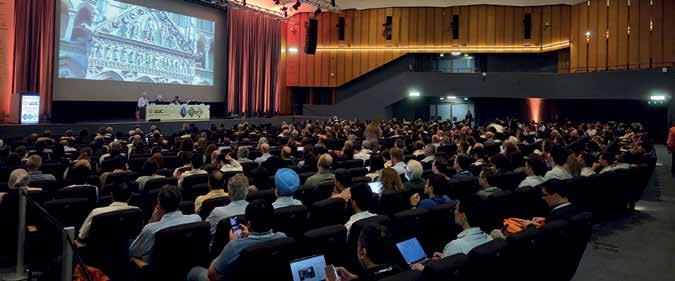
The Fourth 2026 International Wheat Congress in Bologna took place from 25-29 May 2026. This meeting is the foremost event on the calendar where the global wheat science community explores wheat agronomy, breeding, genetics, genomics, and sustainability.
There were approximately 800 congress attendees. South Africa was represented by Roean Wessels (Syngenta), Dr Astrid Jankielsohn, Dr Eben von Well, Dr Ian Heyns and Dr Terefe Tarekegn (Agricultural Research Council) as well as Prof Maryke Labuschagne and Dr Angeline Jacobey (University of the Free State).
This could be one of the most important advances for Africa, where rust diseases remain among the greatest threats to wheat production.
Crispr may produce wheat safe for some coeliac patients
Perhaps the most headline-grabbing presentation at the congress focused on the use of Crispr (Clustered Regularly Interspaced Short Palindromic Repeats) technology to modify the proteins responsible for coeliac disease. Scientists in Spain described strategies aimed at producing wheat that retains its baking qualities while removing or greatly reducing the protein sequences that trigger autoimmune reactions in susceptible individuals.
Although not yet commercially available, the prospect of bread made from wheat that is safer for people with glutenrelated disorders would represent one of the most significant
consumer benefits ever achieved through gene editing.
The nitrogen revolution
One breakthrough with enormous relevance for South Africa concerns nitrogen fertiliser. Nitrogen is typically the most expensive input in wheat production. Unfortunately, much of the fertiliser applied to fields is never used by the crop. Instead, it leaches into groundwater or escapes into the atmosphere as greenhouse gases.
Japanese researchers unveiled what they call "BNI wheat" - wheat capable of naturally suppressing soil microbes that convert fertiliser into forms easily lost from the soil. These new wheats can reduce nitrate formation by as much as 30-50%, cut nitrous oxide emissions by about 30%, and potentially require 30-50% less nitrogen fertiliser while maintaining or improving yields.
Although this work on BNI wheat has spanned 31 years, the latest progress regarding the second generation of BNI wheat was discussed, which will be even more nitrogen-efficient. Syngenta is already involved in this and is currently evaluating BNI × SA combinations in the field.
For South African wheat farmers facing rising fertiliser costs, this development could be transformative.
Wheat that talks to its microbiome
An entirely new concept gaining momentum is the idea that wheat should no longer be viewed as a plant growing alone. Scientists increasingly describe wheat as a "holobiont" - a partnership between the plant and the vast community of bacteria, fungi and other microorganisms living around its roots. Future wheat breeding programmes may therefore focus not only on the wheat genome itself but also on selecting plants that recruit beneficial soil microbes, improving nutrient uptake, drought tolerance and disease resistance. Some researchers believe this could become as important as genetic engineering itself.
Digital twins: a virtual wheat farm
One of the most futuristic developments discussed at the congress was the use of "digital twins." A digital twin is a computer-generated replica of a real wheat field that continu-
The next generation of wheat is likely to combine:
• Crispr gene editing
• advanced genomic selection
• artificial intelligence
• microbiome engineering
• climate modelling
• digital agriculture
• improved disease surveillance
• nitrogen-efficient production systems
ously receives data from satellites, weather forecasts, soil sensors and crop monitoring systems. Researchers can then test management decisions inside the virtual field before applying them in reality. Early studies suggest digital twins can reduce fertiliser use substantially while maintaining yields.
For large grain-producing regions such as the Western Cape and Free State, digital twins could eventually become a routine farm management tool.
Artificial intelligence becomes a wheat breeder
Artificial intelligence is rapidly becoming one of the most powerful tools in wheat research. Rather than evaluating thousands of breeding lines over many years, AI systems can now analyse enormous genomic datasets and predict which plants are most likely to succeed under future climate conditions.
The result is faster breeding, lower research costs and more rapid development of climate-resilient varieties. Many experts believe that the future of wheat breeding will be driven as much by data science as by genetics.
Breeding for a hotter world
One particularly interesting finding came from global modelling studies investigating how wheat might adapt to climate warming. Researchers identified a combination of traits that appears especially promising: wheat that flowers slightly later but fills grain more rapidly. Computer simulations suggest such varieties could increase global wheat yields by around 7% under future warming scenarios.
Pan genome studies
What also stood out - and here South Africa must quickly start participating - is exploring wheat diversity and genetic reservoirs by making use of Pan genome studies to unlock hidden diversity. Landraces, wild relatives (Aegilops, Triticum spp.), and diverse cultivars carry alleles that are not represented in elite breeding lines. Pan genome maps make this variation accessible for introgression.
This work is also highly relevant to Sub-Saharan Africa as local wheat germplasm and adapted landraces carry unique alTO PAGE 12
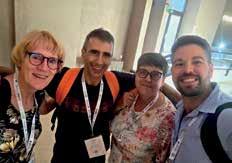
Prof Maryke Labuschagne (University of the Free State), Dr Carloz Guzmán (UCO Spain), Dr Angeline Jacobey (University of the Free State) and Roean Wessels (Syngenta).
Photo: Roean Wessels.
Graan SA steun op Steenhuisen in sy nuwe portefeulje
In Graan SA (GSA) se gelukwense aan die nuwe minister landbou, Willie Aucamp, en dankbetuiging aan John Steenhuisen, sê die organisasie die graansektor maak steeds op Steenhuisen staat om te help met die hantering van verskeie dringende kwessies wat graanprodusente raak. Dit sluit veral die koringtariefbedeling en die beskerming van plaaslike koringprodusente in wat toenemend onbillike internasionale mededinging in die gesig staar.
GSA-voorsitter Richard Krige sê die organisasie sien daarna uit om ’n konstruktiewe en produktiewe vennootskap met minister Aucamp te bou ter ondersteuning van Suid-Afrika se graanprodusente, landbouwaardekettings en landelike ekonomieë.
“Graan SA het waardering teenoor minister John Steenhuisen vir sy diens aan landbou en vir die produktiewe werksverhouding wat hy tydens sy termyn as minister van landbou met georganiseerde landbou en die departement van landbou
The era of “digital wheat”
FROM PAGE 11
leles for drought tolerance (important for rainfed wheat) and heat stress adaptation as well as stem and yellow rust resistance which remains a persistent challenge in East/Southern Africa.
A pan genome approach allows breeders to identify and deploy these alleles without losing locally adapted backgrounds. Pan genomes speed up the identification of causal variants behind quantitative trait locus (QTLs), thus shortening the path from mapping to deployment in breeding pipelines.
The most important message for South Africa
This is precisely the kind of research that could benefit South Africa, where various climatic factors and on-farm economic impacts pose a growing challenge to grain production. Per-
gevestig het. Graan SA waardeer die samewerkende benadering wat onder sy leierskap ontwikkel het.
“Die graansektor sal steeds op minister Steenhuisen in sy nuwe hoedanigheid as adjunkminister van handel, nywerheid en mededinging staatmaak om te help met die hantering van verskeie dringende kwessies,” sê Krige.
Versuim om binnelandse koringproduksie voldoende te ondersteun, hou volgens GSA die risiko in van die verdere erosie van ekonomiese aktiwiteit, werksgeleenthede en toekomstige beleggings in landelike gemeenskappe, veral in die Wes-Kaapse koringproduserende streke.
“Graan SA doen ook ’n beroep dat dringende aandag geskenk word aan die administrasie van die tarief- en kortingstelsel binne die Suider-Afrikaanse Doeane-unie, waar die bestaande BLEN-korting op ingevoerde koring die doelwitte van tariefbeskerming ondermyn deur toe te laat dat ingevoerde koring streekmarkte betree sonder gelykwaardige tariefbehandeling.”
haps the biggest takeaway from congress was that the future of wheat improvement will not rely on a single breakthrough technology.
A combination of technologies could help create wheat that uses less fertiliser, requires fewer pesticides, survives drought more effectively, produces healthier food and delivers more reliable yields under increasingly unpredictable climatic conditions.
For South Africa, a country facing rising food demand, water constraints, climate uncertainty and dependence on wheat imports, these developments are not merely scientific curiosities. They may ultimately determine how secure and affordable the nation's bread supply will be over the coming decades.
The Fourth 2026 International Wheat Congress in Bologna.
Photo: Roean Wessels.
Daling in koring-hektare verwag
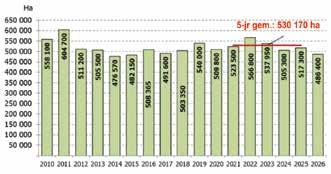
Nog voordat die regering die koringbedryf se aansoek om die invoertarief te wysig verwerp het, het produsente reeds aangedui dat bykans 6% minder koring vir die 2026-seisoen geplant gaan word.
Volgens die Nasionale Oesskattingskomitee (NOK) se opname oor plantvoornemens wat in die middel van April 2026 gedoen is, was produsente van plan om 486 400 ha koring te plant. Dit is 30 900 ha minder as in die vorige seisoen. Die opname dui op meer aanplantings van moutgars, kanola en hawermout.
Volgens die NOK is die plantvoornemens gebaseeer op die resultate van ’n nie-ewekansige opname wat deur die departement van landbou se direktoraat vir statistiek en ekonomiese ontledings onderneem is. Inligting van provinsiale departemente van landbou is ook in berekening gebring.
Die grootste koringproduserende gebiede is in die WesKaap, met 335 000 ha (69%), gevolg deur die Vrystaat met 55 000 ha (11%) en die Noord-Kaap met 41 000 ha (8%).
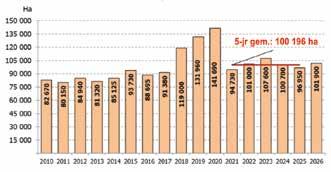
Die verwagte aanplantings van moutgars is 101 900 ha –5,11% of 4 950 ha meer as die 96 950 ha van die vorige jaar.
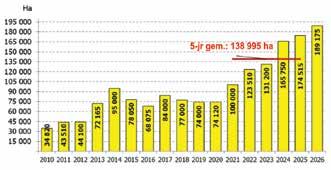
Vir kanola word 189 175 ha se aanplantings verwag, wat 8,40% of 14 660 ha meer is as die 174 515 ha wat in 2025 geplant is.
Ook met hawermout dui die opname op groter aanplantings. Produsente is van voorneme om 39 000 ha te plant, wat
9,80% of 3 480 ha meer is as die 35 520 ha van die vorige seisoen.
Die verwagte aanplantings van soetlupine is 21 000 ha –dieselfde opppervlakte as in die vorige seisoen.
Die voorlopige oppervlakteskatting vir wintergewasse vir 2026 word 28 Julie 2026 vrygestel. Meer inligting oor die NOK se verslae is op SAGIS se webtuiste beskikbaar by www.sagis. co.za onder die opskrif ‘non-SAGIS info - Crop Estimates Committee’.
Figuur 2. Aanplantings moutgars 2010 - 2026.
Figuur 1. Koringhektare 2010 - 2026.
Figuur 3. Kanola-aanplantings 2020 - 2016. Bron: NOK.
Bron: NOK. Bron: NOK.
Falling numbers, rising challenges: Exploring the causes of variability in falling number testing
Falling Number results often vary widely across the industry because they are influenced by many factors beyond enzyme activity, e.g., genetics, climate, disease, and testing conditions and, even when strict procedures are followed, differences in altitude, water quality, and instrument calibration can cause inconsistent outcomes. Variability in results between different laboratories and regions remains a challenge, especially for whole wheat flour.
Theresa de Beer and Jolanda Nortjé SOUTHERN AFRICAN GRAIN LABORATORY
Every loaf of bread begins with an important process in the grain: the work of alpha-amylase. This enzyme breaks down starch into sugars, providing energy for seed germination and early plant growth. In breadmaking, this same process supplies yeast with fermentable sugar as a food source, in order to produce carbon dioxide that makes the dough rise.
Insufficient alpha-amylase in flour leads to longer proving times and results in bread with pale crust, low volume, and dense crumb. However, excessive enzyme activity, caused by grain sprouting produces too much sugar, causing sticky dough, burnt crust, and poor bread texture.
To maintain this balance, the wheat industry relies on the Falling Number (FN) test, a measure of alpha-amylase activity that directly influences how wheat is graded and priced. For South Africa, where more than 2 billion pan loaves are baked every year, wheat quality affects farmers, millers, bakers and consumers.
The Hagberg FN test is used to determine how much alphaamylase enzyme activity is in wheat flour. During the test, a glass tube with a mixture of flour and water is heated up. The mixture becomes thick as the starch granules gelatinise (absorb water, swell and break open) and at the end of mixing, a steel plunger is released to drop through the water/starch mixture. The time that the plunger takes to drop through the tube is recorded in seconds and the thicker the mixture, the longer it
will take for the plunger to drop.
During this starch thickening process, the alpha-amylase enzymes break down the starch, therefore if a lot of enzyme is present, the starch will break down quickly and the mixture will be less thick and more liquid. The plunger will drop through the mixture fast and give a low FN result, which if below 250 sec indicates high enzyme activity and most probably sprout damaged wheat. A high FN (e.g. above 350 sec) indicates very little enzyme activity and no sprouting.
In addition to sprouting, other intrinsic and environmental factors can influence FN values:
• Genetics play a role, as certain wheat varieties may exhibit Late Maturity alpha-amylase activity triggered by extreme temperatures, which lowers FN.
• The composition of wheat starch also matters, since waxy starch with high amylopectin content produces lower FN results regardless of enzyme activity.
• Climate conditions are another important factor: warm summer temperatures can increase FN, because heat stress suppresses the enzymatic activity, while late rainfall during harvest often causes pre-harvest sprouting that reduces FN. Frost damage disrupts starch structure, making it more vulnerable to alpha-amylase breakdown and thereby lowering FN.
• Fusarium infection contributes to reduced FN as mold growth both degrades starch enzymatically and consumes it as a food source, diminishing starch content further.
• Immature or green kernels contain underdeveloped starch
granules that are less resistant to enzymatic activity, which also results in low FN values.
Falling Number testing
The accuracy and reliability of FN testing rely on a number of considerations that start with correct sampling and equipment, and continues through to the testing procedure and reporting of results:
Representative sampling is essential, since sprouted kernels are unevenly distributed within a consignment. To ensure accuracy, national grading regulations and the official FN method (ICC method 107/1) specify ICC method 101/2 for sampling cereal grains and ICC method 130 for sampling milled products.
For representative sampling, the whole wheat sample should first be cleaned using the standard 1,8 mm grading sieve, with other grain, unthreshed ears, and foreign matter removed by hand. Research and statistical analysis confirm that a sample size of 300 g is critical, because the alpha-amylase activity of a single sprouted kernel is considerably higher than a sound kernel, and activity levels can vary significantly between sprouted kernels.
The sample should be ground in a hammer mill fitted with a 0,8 mm sieve, ensuring both hammer and sieve are in good condition. To avoid overheating, which can cause moisture loss and starch damage that affect the FN result, the mill should be allowed to cool between samples and run uninterrupted for 20 seconds after milling to prevent carry-over.
A slow, constant feed rate in the mill is essential to avoid clogging and ensure proper particle size distribution, since larger particles will not fully gelatinize during the FN test, leading to inaccurate results. After milling, the flour should be mixed
thoroughly, and ideally the mill and FN instrument should be placed on separate benches to prevent vibration interference during simultaneous use.
The moisture content of the milled whole wheat flour sample directly affects FN values, as it depends on the percentage of dry matter present. Since moisture loss can occur during milling, the milled flour sample’s moisture is used to determine the sample weight, which is corrected to 14% to ensure a consistent ratio of dry matter to water during the test.
The equipment used during testing plays a vital role and correctly weighing the sample is the start to accurate FN measurement. An analytical balance with an accuracy of ± 0,05 g should be used to weigh the sample, and the balance should be verified daily, in addition to at least annual calibration.
The water bath must be filled with distilled water to prevent scaling, maintained at a vigorous boil before analysis, and the water level checked frequently to remain within 1 cm of the required mark, with fresh water added and reheated to boiling whenever necessary. For FN 1000 instruments, which have automatic water level control, the refill bottle should be inspected at least once daily to ensure proper operation. Additionally, the cooling system must be supplied with a steady water flow of about 400 ml per minute to function correctly.
Authentic FN viscometer tubes are manufactured with precise dimensions, while cheaper alternatives often have thinner walls that alter heat transfer rates, thereby affecting gelatinisation and ultimately the FN result. It is essential that the stirrer is not bent and that its ring is firm and perpendicular to the rod. The stirrer, excluding the black ebonite neck, should weigh 25 ± 0,1 g, as any deviation in weight influences the dropping rate through the flour-water suspension.
TO PAGE 16
Falling numbers, rising challenges: Exploring the causes of variability in falling number testing
FROM PAGE 15
To maintain accuracy, tubes, stirrers, and stoppers must be completely clean and dry, and cleaning should be carried out immediately after analysis to prevent the gelled sample from hardening and complicating the cleaning process. Soap or detergent should be avoided during cleaning, since residues may react with the sample matrix and compromise the results.
Procedure
The testing procedure starts with thoroughly mixing the sample and weighing on a 14% moisture basis. The test should preferable be done in duplicate.
According to ICC method 107/1, distilled water or water meeting ISO standard 3696, grade 3 should be used, with a pH between 5.0 and 7.5, as pH values above 8.0 generally increase FN results, and fresh water is recommended since pH may change during storage. At a temperature between 20 °C and 24 °C, 25 ± 0,2 ml of distilled water is added, as large deviations can affect measurements, and the dispenser volume should be checked regularly by weighing the water.
The flour-water suspension must be mixed properly by shaking the tubes vigorously in an upright position, ensuring consistency in both the number and style of shakes, or alternatively using a Shakematic, an automatic shaker, supplied with the FN instrument. The suspension should be fully homogeneous with no dry pockets, and any adhering sample material should be scraped from the rubber stoppers and tube walls to ensure inclusion in the analysis. The tubes must be placed in the boiling water bath within 30-50 seconds after mixing, as this timing is critical, and the test should be started immediately.
In South Africa, FN results are reported on a 14% moisture basis, and altitude correction is required according to national grading regulations. The FN value is influenced by the boiling temperature of the water in the bath, which depends on atmospheric pressure, so elevated locations often yield higher FN values than those at sea level. Corrections must be applied when the altitude exceeds 610 meters (2 000 feet) for flour and 760 meters (2 500 feet) for whole wheat flour or meal. ICC method 107/2 provides tables and formulas for altitudecorrected values, or alternatively, instrument settings can be used to calculate and report adjusted FN results. According to FN instrument suppliers, the repeatability of FN results for samples with values up to 350 seconds should be ± 5%, while for values above 400 seconds, repeatability decreases significantly,
and can exceed ± 10%.
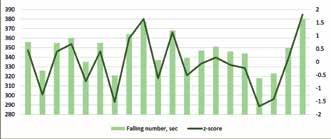
The Southern African Grain Laboratory (SAGL) runs a quarterly Wheat & Flour proficiency programme, which includes FN testing. This initiative helps the grain industry ensure that FN measurements remain consistent across laboratories, while also providing a benchmark to compare performance and accuracy between different testing facilities. By monitoring these results over time, the industry gains valuable insight into the reliability of FN testing and the overall quality assurance process. Figure 1 illustrates the Flour FN results for the January 2026 round of the proficiency programme. The results show that all participants obtained z-scores (a statistical performance measurement where a nominal value below 2 indicates acceptable results) of below 2.
National grading regulations stipulate that the minimum FN value allowed for Super Grade, Grade 1, Grade 2, and Grade 3 is 220 seconds (250 sec with 30 sec tolerance). FN values below 220 sec automatically result in the downgrade of wheat to Class Other Wheat, irrespective of the other quality parameters, which has significant financial implications. Variability in results between different laboratories and regions remains a challenge, especially for whole wheat flour, but in Figure 1 it can be seen that, in the SAGL Wheat & Flour proficiency test of January 2026, the participants’ (across Africa) results for white bread flour were all within the tolerance of the average (348 sec).
FN results often vary widely across the industry because they are influenced by many factors beyond enzyme activity, e.g., genetics, climate, disease, and testing conditions and, even when strict procedures are followed, differences in altitude, water quality, and instrument calibration can cause inconsistent outcomes. This variability makes FN testing challenging, and highlights the need for standardised methods and consistent procedures to ensure results are reliable and comparable across different laboratories and regions. In a market where science, quality and production efficiency are connected, trust in the FN is important to all role players; farmers, millers, bakers, and consumers, because it preserves a staple food that sustains millions of households in South Africa.
Figure 1. SAGL Wheat & flour Proficiency Test January 2026Falling Number results
Maak grondvariasie winsgewend vir die Wes- en Suid-Kaap
Vir wintergraanprodusente in die Wes- en Suid-Kaap word winsgewendheid toenemend bepaal deur hoe akkuraat insetmiddele by die werklike produksiepotensiaal van elke hektaar aangepas word. In streke soos die Swartland, Overberg en Suid-Kaap, waar wisselvallige reën, uiteenlopende gronde en stygende insetkoste byeenkom, is eenvormige bestuurspraktyke eenvoudig nie meer voldoende om volhoubare produksiemarges te handhaaf nie.
Jan Greyling MEDEWERKER
In ’n tyd waarin insetkoste vinnig styg en klimaatsrisiko toenemend druk op produsente plaas, is die vermoë om insetmiddele presies te plaas waar dit die beste opbrengs op belegging lewer, nie meer ’n luukse nie - dit is ’n noodsaaklikheid.
Presisie-gebaseerde grondsonering, spesifiek deur stelsels soos Swatmaps (Soil, Water and Topography Mapping), bied ’n praktiese en internasionaal beproefde manier om risiko te verlaag terwyl winsgewendheid én volhoubaarheid verhoog word. Oor die afgelope 15 jaar word hierdie bestuurstelsel met groot sukses op miljoene hektaar graanlande in Kanada, die VSA, Australië en Suid-Afrika toegepas.
Opbrengspotensiaal in droëland-wintergraanstelsels word deur veel meer as net bemesting bepaal. Gronddiepte, tekstuur, verdigting, waterhouvermoë en landskapposisie speel almal ’n belangrike rol. In die Wes-Kaap se Mediterreense klimaat, waar plantbeskikbare water dikwels die beperkende faktor is, raak hierdie verskille selfs nog belangriker.
Internasionale navorsing bevestig dat variasie binne ’n land dikwels groter is as variasie tussen verskillende lande. In prak-
tyk beteken dit dat dieselfde saad- of kunsmistoediening op verskillende dele van ’n land uiteenlopende ekonomiese uitkomste lewer. Sekere sones reageer positief op insetmiddele, terwyl ander nie die koste daarvan regverdig nie.
Van waarneming na praktiese bestuursone
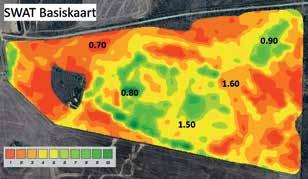
Tradisionele grondkartering en rooster-gebaseerde grondmonsterneming sukkel om die volle omvang van grondvariasie akkuraat vas te vang en ruimtelik weer te gee. Swatmaps daarenteen maak gebruik van ’n hoë-resolusiebenadering (2 500 datapunte per ha) wat grondeienskappe, topografie, elevasie, waterbeweging en elektromagnetiese geleidingsvermoë (EC) kombineer om funksionele bestuursones binne lande te identifiseer.
Sones vorm die basis vir veranderlike toediening van kalk, gips, saad, kunsmis en ander grondregstellings waar toepaslike tegnologie beskikbaar is. Tipiese sones wat geïdentifiseer word, sluit in:
• Dieper, hoëpotensiaalgronde met goeie waterretensie;
• Middelhelling-sones met matige tot goeie opbrengspotensiaal;
• Vlak rantjies met laer waterbeskikbaarheid en hoër risiko vir uitloging; en
• Nat laagliggende versuip- / verbrakgebiede wat aangepaste voedingsbestuur en saaidigtheid vereis.
Anders as Ndvi satellietbeelde of stropermonitorkaarte, wat seisoenaal hoogs veranderlik is, stel Swatmaps ‘n produsent in staat om stabiele grondpotensiaalsones te karteer teen ‘n eenmalige koste, wat langtermyn geldig is.
Praktiese ervaring uit die Swartland en Suid-Kaap
Volgens die Swartland-produsent Melvan van der Westhuizen, wat met ’n medics rotasie-stelsel boer, stem Swatmaps-sones sterk ooreen met wat plante in die veld ervaar.
“Dit is vir my belangrik dat die grondkaart weerspieël wat die medics ervaar. Met Swatmaps sien ons dit duidelik. Die
NA BLADSY 18
Melvan van der Westhuizen vind baat by die nuutste grondvariasie-soneringstegnologie. Foto: Verskaf.
Nic Badenhorst, grondsoneringstegnikus in die WesKaap. Foto: Verskaf.
Maak grondvariasie winsgewend vir die Wes- en Suid-Kaap
VAN BLADSY 17
opbrengskaarte, of ‘eksamenvraestelle’ soos ek hulle noem, bevestig ook dat die sonerings baie akkuraat is.”
Hy wys daarop dat koste van nuwe tegnologie dikwels as struikelblok gesien word, maar dat die Swatmaps-stelsel homself vinnig kan terugbetaal. “Met slegs ’n paar strategiese
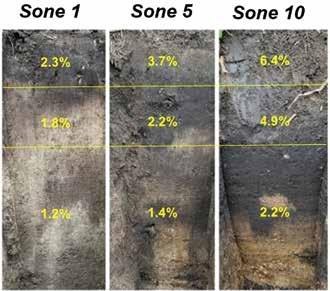
Figuur 1. Grondprofiele van drie SWAT-sones (0-15 cm; 15-30 cm; 30-60 cm) wat die veranderlike diepte en hoeveelheid organiese materiaal in die grond aandui.
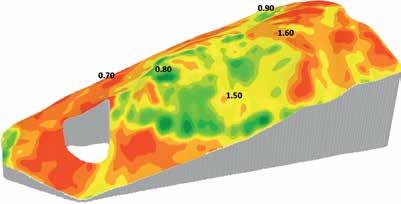
3D Swatmaps met opbrengs.
grondmonsters in elke sone per land kan noodsaaklike aanpassings geïdentifiseer word wat direkte ekonomiese waarde toevoeg.”
In die Albertinia/Riversdal-streek, waar grondtipes binne dieselfde land sterk kan wissel, het Christian van Zyl van FB Boerdery soortgelyke uitdagings ervaar. Die gemengde boerdery bestaan uit sowat 60% veeproduksie en 40% kontantgewasse, met ’n wisselboustelsel van koring, kanola, moutgars en lusern.
Volgens Van Zyl het die uiteenlopende gronde dit moeilik gemaak om met tradisionele grondontledings voldoende akkurate bestuursbesluite te neem.
“Ons kon nie altyd met gemak daardie data gebruik om veranderlike toedienings te doen nie, aangesien monsters dikwels geneem word sonder om grondtipe, diepte of samestelling voldoende in ag te neem,” verduidelik hy.
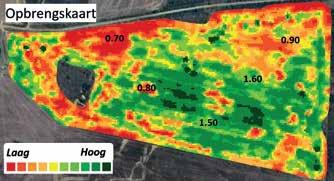
Met Swatmaps-grondskandering en sonering word elke land op die plaas volgens fisiese grondeienskappe in vyf bestuursones verdeel. Afsonderlike ontledings word dan per sone gedoen, waarna regstellings soos kalk en fosfaat meer doelgerig toegedien word.
“Dit gee vir my baie meer gemoedsrus wanneer toedienings gedoen word, omdat die sones meer akkuraat bepaal word. Die langtermynbesparings kan groot wees, aangesien bemesting meer volgens die behoefte en potensiaal van elke sone aangepas word,” sê Van Zyl.
Die kernboodskap is eenvoudig, sê ‘n Wes-Kaapse grond-
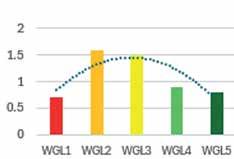
Figuur 2. Grondvariasie-opbrengs per SWAT-sone plaaslik.
Opbrengs per SWAT-sone.
soneringstegnikus, Nic Badenhorst: “Die waarde lê nie net in akkurate identifisering van sub-landeryvariasie nie, maar in verteenwoordigende monsterneming en toepaslike bestuur daarvan.”
Winsgewendheid: Klein verskille, groot uitwerking
Op ’n tipiese koringplaas van 500 ha kan selfs klein verbeterings in insettoediening ’n beduidende finansiële verskil maak. Indien sonering slegs ’n verbetering van 5% in insetbenutting bewerkstellig, kan dit reeds ’n merkbare verbetering in bruto marge beteken. In droër seisoene word voordele dikwels nog duideliker, aangesien oorbesteding op swakker gronde beperk word.
Volgens Wes Anderson van Croptimistic Technology, ’n landboukundige wat met Swatmaps werk, is daar twee belangrike maniere waaroor hy oor kunsmisinvestering in verskillende dele van ’n land dink: reaksiewaarskynlikheid en stabiliteit. Saam help dit om opbrengs op belegging én risiko beter te bestuur.
“In watter kategorie elke Swat-bestuursone val, is baie landspesifiek, en wanneer dit by kunsmisreaksie kom, selfs voedingstofspesifiek. Produsente kan nie kunsmispryse beheer nie. Wat hulle wel kan beheer, is hoe ingelig hulle is en hoe die kunsmisbelegging aangewend word. Kennis is mag.”
Meer presiese plasing van insetmiddele verbeter voedingstofbenutting en verminder die risiko van uitloging en omgewingsbesoedeling. Wanneer produksie-intensiteit beter by grondpotensiaal aangepas word, help dit om grondstruktuur en organiese materiaal oor tyd te beskerm en op te bou.
Gevolgtrekking
Vir wintergraanprodusente in die Wes- en Suid-Kaap is grondsonering nie meer bloot ’n basiskaart van lande nie, maar ’n bestuursinstrument wat verborge grondvariasie omskep in meer praktiese, meetbare en winsgewende besluite.
Uiteindelik kan die presiese kennis van waar elke rand die hardste werk, die verskil wees tussen ’n gemiddelde seisoen en ’n winsgewende een.
Nicholas Goble appointed as chairman of Sansor
The South African National Seed Organisation (Sansor) appointed Nicholas Goble of Corteva Agriscience as the new chairman of the Sansor Board of Directors. His election was confirmed at the virtual Sansor meeting of the members in May 2026. Mr Goble joins a broader Board of Directors in providing strategic leadership and guidance to the organisation as it continues to strengthen its role within the South African and African seed sector.
According to Sansor, Mr Goble brings extensive experience in agriculture and the seed industry, with a strong background in field crops and international industry engagement. He currently serves in leadership roles within global seed platforms, including his involvement in the International Seed Federation, reflecting his commitment to advancing innovation, trade, and collaboration within the sector.
Commenting on the appointment, Dr Lukeshni Chetty, general manager of Sansor, said they are pleased to welcome Mr Goble as chairman.
“His depth of industry knowledge, international engagement, and commitment to advancing the seed sector position him well to lead the organisation at a time when innovation, biosecurity, and collaboration are critical. We look forward to working closely with him in driving Sansor’s strategic priorities forward.”
Mr Goble succeeds Matome Ramokgopa, who concludes his tenure as chairman after serving on the Sansor Board for five years, including four years as chairman.
Sansor extended its appreciation to Mr Ramokgopa and said he provided steady leadership through a period of transition and strategic repositioning for the organisation. Under his guidance, Sansor strengthened its governance frameworks, enhanced its role within the broader agricultural ecosystem, and reinforced its credibility and relevance within the industry.
“As Sansor enters this new chapter, the organisation remains committed to supporting a resilient, innovative, and globally competitive seed sector that contributes meaningfully to food security and agricultural sustainability.”
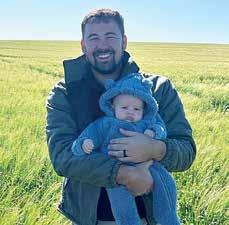
Christian van Zyl van FB Boerdery en sy seuntjie Johannes (2). Foto: Verskaf.
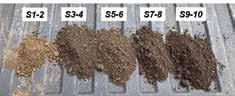
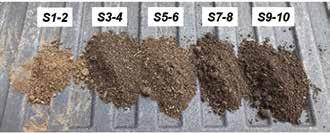
Figuur 3. Bogrondse monsters (0-15 cm) van 5 SWAT-bestuursones wat die wisselende tekstuur en organiese materiaal binne een landery aandui.
Nicholas Goble.
BASF-swamdoders: Die steunpilaar in kleingraanproduksie
Die toenemende ekonomiese druk op kleingraanproduksie dwing produsente om hul produksiepraktyke deeglik te herevalueer, met die doel om kostedoeltreffendheid te verbeter en finansiële volhoubaarheid te verseker. Winsmarges krimp, en produsente moet toesien dat die genetiese potensiaal van elke kultivar ten volle ontsluit word. Siektedruk knaag egter aan opbrengs, en dit is juis híér waar bewese swamdoders hul staal wys – nie bloot as ‘n ondersteuningsmaatreël nie, maar as ’n kernkomponent van ’n suksesvolle en volhoubare boerderystelsel.
Simon Lowe GEWASBESTUURDER: RYGEWASSE - BASF
BASF is deeglik bewus van hierdie druk en bly daartoe verbind om produsente te ondersteun binne ’n toenemend streng regulatoriese omgewing. Só is produkte soos Ceriax®, Abacus® Advance en Duett® Star steeds beskikbaar nadat die Suid-Afrikaanse regulatoriese owerheid verlede jaar BASF se siening dat hul epoxiconazole en dimethomorph as GHS Kategorie 2 -produkte geklassifiseer word, bevestig het. Dit beteken dat hierdie aktiewe bestanddele nie as kommerwekkende bestanddele onder die Globale Geharmoniseerde Stelsel, of soos algemeen bekend GHS, beskou word nie.
Dit is deurslaggewend vir die voortgesette gebruik van verskeie van BASF se sleutelprodukte wat kleingraanprodusente ondersteun – veral teen hardnekkige swamsiektes soos blaarvlek, bruinroes, netvlek, poeieragtige skimmel (meeldou), vaalblaar, bruinaarsiekte, stamroes en geel- of streeproes.
Ceriax®: Gemoedsgerus met intelligente beskerming
BASF was eerste om die SDHI-groep swamdoders vir kleingrane onder die handelsnaam Ceriax® na die mark te bring. Hierdie Xemium®-gedrewe oplossing bied langdurige siektebeheer met ’n unieke kombinasie van sistemiese en translaminêre werking en spog met drie verskillende metodes van werking wat weerstand doeltreffend teenwerk.
Dit werk vinnig en versprei eweredig deur die plant. Verder sorg die innoverende “stick-and-stay”-formulasie dat die produk op die blare kleef, selfs in nat weerstoestande. Die uitstekende verspreiding, benatting en aanhegting van spuitdruppels op die plantoppervlak lewer hoë biobeskikbaarheid van die produk op die plant, wat lei tot verhoogde doeltreffendheid.
Abacus® Advance: Beskerming waar dit saak maak
Vir boere wat breëspektrum-beskerming benodig, bied Abacus®
Advance ’n hoogs effektiewe sistemiese swamdoder met BASF se bewese AgCelence®-effek. Hierdie unieke effek ondersteun algehele plantvitaliteit deur fotosintese te stimuleer en só die plant se natuurlike groeikrag te benut, wat lei tot sterker gewasse en gesonde opbrengste.
Abacus® Advance kombineer twee aktiewe bestanddele in ’n suspo-emulsie- (SE) formulasie met translaminêre en kontakaktiwiteit. Dit sorg vir vinnige opname, langdurige beskerming en voortdurende werking op die blaaroppervlak om nuwe besmettings doeltreffend te keer en die boer se belegging ten volle te ontsluit.
Duett® Star: Stuit swamsiektes in hul spoor
Soms benodig die boer ’n oplossing wat vinnig en doeltreffend optree om die tempo van swamsiektes te stuit. Duett® Star is ’n suspo-emulsie- (SE) swamdoder met twee sistemiese aktiewe bestanddele – fenpropimorph en epoxiconazole – wat op verskeie vlakke werk vir die bestuur van gewasweerstand en langdurige beskerming.
Die innoverende formulasie werk konsekwent, ongeag weerstoestande en dit ondersteun die plant se natuurlike
Meer as net swamdoders
BASF se portefeulje vir kleingraanproduksie sluit ook in:
• Flite®: ’n sistemiese saadbehandeling wat vroeë blaarsiektes en saadgedraagde siektes doeltreffend beheer en kleingrane ’n gesonde begin gee.
• Eragon®: ’n Kixor®-oplossing wat moeilike breëblaaronkruide voor plant in koring en gars suksesvol aanvat. Dit is ook toepaslik as na-oesonkruiddoder om lande skoon te maak.
• Fastac®: Aanpasbare kontak- en maaginsekdoder wat snywurm en Afrika-bolwurm suksesvol beheer. Fastac® is slegs op koring geregistreer.
NA BLADSY 22
Stuit die opvlam van
swamsiektes. Duett Star
Wanneer swamsiektes jou mielies of kleingrane bedreig, kan jy staatmaak op Duett® Star. Met twee sistemiese aktiewe bestanddele, fenpropimorf en epoksikonasool, werk Duett® Star op drie verskillende vlakke om effektiewe weerstandbestuur te verseker.
Optimale opname vir meer doeltreffende beskerming
Gepas vir warm en koel weerstoestande
Uitmuntende werkverrigting
Wanneer topprestasie saak maak… gesels met ons!
BASF Suid-Afrika (Edms) Bpk. • The Ingress, Tweede Vloer, Gebou 3, Hoek van Magwa- en Lone Creek-singel • Waterfall City 2090 • Posbus 2801, Halfweghuis, 1685 • Tel: +27 11 203 2400 • Faks: +27 11 203 2461
Duett® Star Reg. Nr. L10958 Wet Nr. 36 van 1947. Aktiewe bestanddele: Epoksikonasool 84 g/ℓ. Fenpropimorf 250 g/ℓ. Waarskuwing. Duett® Star is ’n geregistreerde handelsmerk van BASF.
Gevaarstellings: Skadelik indien dit ingesluk of ingeasem word. Moontlikheid dat dit kanker kan veroorsaak. Moontlikheid dat dit vrugbaarheid negatief kan beïnvloed. Moontlikheid dat dit skadelik kan wees vir ’n ongebore fetus. Baie giftig vir waterlewe, met langdurige gevolge. Dra beskermde handskoene/klere/oog-/gesigbeskerming. Moenie die dampe en missproei inasem nie. LEES DIE ETIKET VOOR GEBRUIK.
Plant-parasitic nematodes:
The invisible enemy with a significant impact on wheat yield reduction
Wheat producers are accustomed to problems they can see, such as pests, diseases, and nutrient deficiencies that show clear symptoms above ground. However, some of the most serious yield losses originate below the soil surface and remain largely invisible.
Bomikazi Gqola AGRICULTURAL RESEARCH COUNCIL – SMALL GRAIN, BETHLEHEM
Plant-parasitic nematodes (PPN) are often called “hidden enemies” because they are microscopic worms that go unnoticed while causing significant damage. These nematodes feed on wheat roots using a specialised needle-like structure known as a stylet. As they penetrate and feed on root tissues, they disrupt water and nutrient uptake, ultimately weakening plant growth and reducing yield potential.
In addition, the wounds created during feeding provide entry points for disease-causing fungi and bacteria, compounding the damage. In South Africa, PPNs can cause a yield reduction of up to 50% in a wheat field.
The diversity of these hidden pests in South Africa is substantial. Over 450 species of plant-parasitic nematodes exist in South Africa, but only a few dozen specific genera are associated with wheat. This highlights the scale and complexity of the challenge facing wheat producers.
PPNs differ in how they interact with plant roots. Some live and feed inside root tissues, while others remain outside and feed externally (Pulavarty et al., 2021). In cereal crops such as wheat, the most economically important groups include cereal cyst nematodes (Heterodera avenae and H. filipjevi), which cause characteristic root abnormalities, with heavy infestations causing stunting, leaf yellowing, and patchy wilting.
Cyst nematodes mainly attach to the roots and extract nutrients, often causing severe stunting and localized crop failure. They are mainly found in Western Cape where wheat are under rainfed production. Root-lesion nematodes (Pratylenchus thornei and P. neglectus), known for causing root decay, penetrate the root cortex, creating lesions that facilitate secondary fungal infections. They are highly prevalent across the Western Cape and other wheat-producing regions.
Other species such as ear-cockle nematodes (Anguina tritici) and root-knot nematodes (Meloidogyne spp.) also contribute to yield losses in wheat and related cereals. Root-knot nematodes cause characteristic galls on the roots, significantly disrupting water and nutrient uptake. In South Africa, root-knot
BASF-produkte: Die steunpilaar in kleingraanproduksie
VAN BLADSY 21
groeikrag; terwyl dit voortdurende beskerming teen nuwe infeksies bied. Met optimale opname en stelselmatige werking help Duett® Star om gewasse gesond te hou, wat gesonde opbrengste moontlik maak.
Kundiges om te ondersteun
Uiteraard bring elke seisoen nuwe uitdagings, aangesien klimaatstoestande, siekterisiko’s en spesifieke veldomstandighede van jaar tot jaar verskil. Om die regte produk vir ’n spesifieke probleem aan te wend is van kardinale belang – dit kan die verskil wees tussen ‘n middelmatige en uitmuntende opbrengs. BASF se kundige verkoopspan is altyd net ’n oproep weg om raad, ondersteuning en opleiding te bied, sodat die maksimum potensiaal uit kleingrane gehaal kan word.
Lees die produketikette vir volledige gebruiksaanwysings en belangrike inligting vir veilige gebruik.
BASF Suid-Afrika (Edms) Bpk. • The Ingress, Tweede Vloer, Gebou 3, Hoek van Magwa- en Lone Creek-singel • Waterfall City 2090 • Posbus 2801, Halfweghuis 1685
Ceriax®: Reg. nr. L9801 Wet 36 van 1947 Aktiewe bestanddele Fluxapyroxad 41.6 g/ℓ; Pyraclostrobin 66.6 g/ℓ; Epoxiconazole 41.6 g/ℓ Gevaarlik
Abacus® Advance: Reg. nr. L9132 Wet 36 van 1947 Aktiewe bestanddele Pyraclostrobin 62.5 g/ℓ; Epoxiconazole 62.5 g/ℓ Gevaarlik
Duett® Star: Reg. nr. L10958 Wet 36 van 1947 Aktiewe bestanddele Epoxiconazole 84 g/ℓ; Fenpropimorph 250 g/ℓ Waarskuwing
Gevaarstellings
Ceriax®: Skadelik indien dit ingesluk of ingeasem word. Veroorsaak ligte velirritasie. Veroorsaak ernstige oogskade. Moontlikheid dat dit kanker kan veroorsaak. Moontlikheid dat dit vrugbaarheid negatief kan beïnvloed. Moontlikheid dat dit ‘n ongebore fetus kan beskadig. Kan borsvoedende kinders nadelig beïnvloed. Baie giftig vir waterlewe, met langdurige gevolge. Dra beskermende handskoene en/of klere asook oogbeskerming. Vermy kontak tydens swangerskap/terwyl u borsvoed.
Abacus® Advance: Veroorsaak ligte velirritasie. Skadelik indien dit ingeasem word. Giftig indien ingesluk word. Kan ‘n allergiese velreaksie veroorsaak. Moontlikheid dat dit kanker kan veroorsaak. Moontlikheid dat dit vrugbaarheid negatief kan beïnvloed. Moontlikheid dat dit ‘n ongebore fetus kan beskadig. Baie giftig vir waterlewe, met langdurige gevolge. Dra beskermende klere, beskermende handskoene en oogbeskerming of gesigbeskerming. Vermy inaseming van missproei of dampe.
Duett® Star: Veroorsaak ligte velirritasie. Skadelik indien dit ingeasem word. Moontlikheid dat dit kanker kan veroorsaak. Moontlikheid dat dit vrugbaarheid negatief kan beïnvloed. Moontlikheid dat dit ‘n ongebore fetus kan beskadig. Baie giftig vir waterlewe, met langdurige gevolge. Dra beskermende klere, beskermende handskoene en oogbeskerming of gesigbeskerming. Vermy inaseming van missproei of dampe.
nematodes are particularly prominent in irrigated areas such as KwaZulu-Natal.
Plant-parasitic nematodes (PPNs) naturally live in soil and attack small roots. Therefore, they are easily spread through contaminated soil, machinery, irrigation water, and infected plant material, making eradication difficult once introduced into a field.
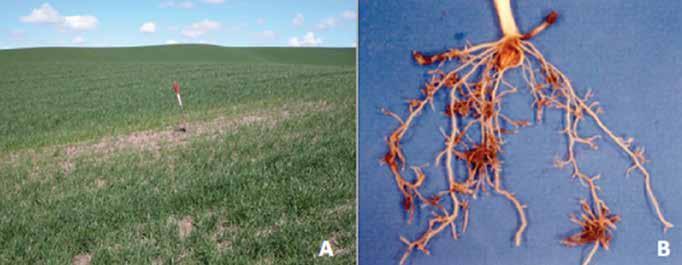
In the wheat field, above-ground symptoms include weak, patchy growth, shorter plants, and discoloured, wilting leaves. Below-ground symptoms vary by nematode type: cyst nematodes (Heterodera avenae) create thick, tangled roots with visible females; root-lesion nematodes (Pratylenchus spp.) damage roots with dark lesions; root-knot nematodes (Meloidogyne spp.) cause swellings disrupting root function; and seed gall nematodes (Anguina tritici) lead to reduced grain quality and yield by forming galls filled with nematode larvae.
Control and management
Control and management of PPNs in wheat are the same for most of the crops affected by PPNs. Nematicides are strictly regulated and expensive, increasing production cost without certainty of effective control. Therefore, effective management of PPNs in wheat in South African relies on an Integrated Pest Management (IPM) strategy.
The IPM combines different focuses such as planting resistant cultivars, biological controls, and combinations of applying chemicals or biological agents to seed or soil, planting non-
host crops, or prolonging fallow periods in the problem areas, and cultural practices (crop rotation, weed control). It is imperative that resistant or tolerant wheat varieties is planted for the most cost-effective and sustainable management strategy.
In terms of crop rotation, rotating wheat with non-host or poor-host crops reduces PPN populations in the soil. The preferred rotation method is wheat rotated with legumes or cover crops such as Sunn hemp, pigeon pea and other cereals such as maize or sunflowers, crops that act as poor hosts for specific cereal nematodes and help break their life cycles.
Another important means of PPNs control and management is adequate weed and volunteer crop control. Weeds and leftover volunteer wheat from previous seasons serve as alternative hosts for nematodes to survive and multiply. Rigorous weed control will deprive nematodes of their food sources and destroy their root fragments post-harvest, as nematodes can continue to feed and reproduce on lingering roots.
For effective control and management of PPNs, soil health is very important. Good soil health will create an environment that is hostile to PPNs. Incorporation of organic amendments has potential of introducing antagonistic, beneficial microorganisms (hematophagous fungi and bacteria) that naturally feed on PPNs.
Currently, the Agricultural Research Council is busy with various research projects on PPNs affecting grains; farmers are urged to submit their soil samples for testing.
Let us reduce the fear and let the enemy reveal itself.
Figure 1. Above-ground symptoms of wheat plants grown in a Heterodera avenae-infested field showing uneven growth (A). Bushy-knotted symptoms on wheat roots due to infection of Heterodera avenae (B).
Source: A and B: Richard Smiley.
Wheat’s genetic revolution: Is South Africa being left behind?
For more than 10 000 years humans domesticated wheat through slow selection and careful breeding. The first “farmers” selected the strongest plants, saved the best seed and hoped the next generation would perform better than the last. Now, for the first time in history, we are beginning to redesign one of our oldest crops with molecular precision.
Mariana Purnell CONTRIBUTOR
Wheat science has entered a completely different era. Researchers are no longer limited to selecting plants from nature’s genetic lottery. They are beginning to edit wheat genes with astonishing precision.
This new age of wheat biotechnology is not simply about producing larger harvests. There is now greater focus on creating wheat capable of surviving harsher climates, tolerating drought and heat, and producers coping with financial stresses by having access to wheat varieties that resist devastating diseases, use less fertiliser, and perhaps even producing healthier bread.
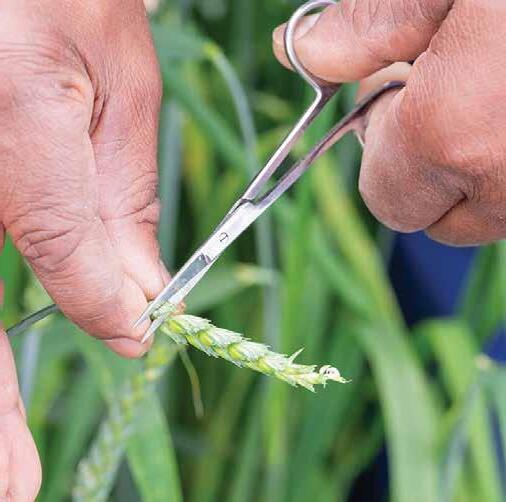
At the center of this revolution is Crispr (Clustered Regularly Interspaced Short Palindromic Repeats) technology, a geneediting system often described as a form of “molecular scissors.” Unlike the genetically modified (GM) crops that caused controversy during the 1990s and early 2000s, modern gene editing is becoming far more subtle, precise and sophisticated. Wheat matters enormously to humanity. It feeds nearly 40 percent of the world’s population in one form or another, yet wheat farming is increasingly under pressure from climate change, rising temperatures, water scarcity, expensive fertilizers and evolving fungal diseases. For South Africa, these challenges are especially important because the country already imports around half of its total wheat requirement every year. In an uncertain world, wheat security has become a strategic issue.
Traditional genetic modification usually involved inserting
genes from another organism into a crop plant. Crispr works differently. Instead of adding foreign DNA, scientists can switch genes off, adjust their activity or make tiny alterations to the plant’s own genetic code. The difference is profound.
No foreign DNA in newest gene-edited wheat
This distinction matters greatly because many of the newest gene-edited wheat varieties contain no foreign DNA at all. Scientists refer to these as “non-transgenic” plants. In practical terms, the final wheat plant may look identical to a naturally bred variety, except for one carefully adjusted trait hidden deep within its genome. Because of this, several countries are beginning to treat gene-edited crops differently from older-style GM crops, opening the door to faster approval and wider acceptance.
One of the biggest areas of wheat biotechnology research involves disease resistance. Wheat faces constant attack from fungal diseases. Rust diseases are especially feared because their spores can travel vast distances on wind currents, crossing national borders and even continents.
Scientists are now using Crispr to disable what are known as “susceptibility genes” - genes that fungi exploit to infect the plant. Rather than fighting disease only with fungicides sprayed after infection, researchers are attempting to redesign the plant itself so that infection becomes far more difficult from the start.
Another major frontier is climate resilience. Around the world, researchers are searching for genes linked to drought tolerance, heat resistance, water-use efficiency and stronger root systems. Wheat capable of coping with environmental
stress could therefore become essential for global food security.
This issue is particularly relevant to Southern Africa, where prolonged droughts and heat waves increasingly threaten grain production. Scientists are now exploring wheat varieties with deeper roots capable of accessing underground moisture, stabilising soils and even storing more carbon. Such traits could eventually support both food production and environmental sustainability.
One of the most fascinating recent developments has come from researchers at Rothamsted Research in Britain. Using Crispr, scientists succeeded in dramatically reducing levels of a substance called free asparagine in wheat grain. When bread or cereals are baked at high temperatures, asparagine can produce acrylamide, a compound regarded as a probable carcinogen. The edited wheat reportedly reduced acrylamide formation by up to 93 percent while maintaining normal crop yields. It may become one of the first examples of gene-edited wheat offering a direct health benefit to consumers.
Meanwhile, the technology itself is evolving at remarkable speed. Early Crispr systems functioned much like scissors that cut DNA. Newer methods, known as base editing and prime editing, can alter single genetic “letters” or rewrite tiny DNA sequences with extraordinary accuracy. This precision is especially important in wheat because wheat possesses one of the most complex crop genomes on Earth.
Bread wheat (Triticum aestivum) has one of the largest genomes; it is roughly five times larger than the human genome, containing about 14 billion base pairs. Many of its genes exist in multiple copies, making careful editing essential.
Modern wheat breeding is also becoming deeply connected to artificial intelligence and advanced computing. Researchers now combine satellite imagery, drones, climate modelling and genome sequencing to predict which wheat lines are most likely to thrive under future environmental conditions.
Gene-edited crops and GMO legislation
South Africa is already one of Africa’s leading adopters of agricultural biotechnology, particularly through genetically modified maize, soybean and cotton. Wheat, however, has remained more cautious territory, partly because of exportmarket sensitivities and public concerns surrounding bread and staple foods.
Despite this caution, South African wheat scientists are actively involved in international collaborations focused on rust resistance, drought tolerance and climate adaptation. The local wheat industry has, through its producer organisations and a statutory levy system, long focused on funding wheat improvement research tailored to local conditions.
A major question facing South Africa for several years now, is how gene-edited crops should be regulated. The country’s GMO legislation was written before Crispr technology existed, creating uncertainty about whether gene-edited crops should be treated the same way as older transgenic GMOs. While South African regulatory system is in limbo, around the world, regulations are beginning to diverge. Countries such as the United Kingdom, Argentina, Brazil, Japan and parts of the
United States are adopting more flexible approaches toward certain gene-edited crops, especially those containing no foreign DNA.
Crispr-edited wheat is commercially available and advancing in cultivation elsewhere. Several countries have cleared gene-edited wheat varieties. While browning-resistant and gluten-free wheat are currently in late-stage field trials, highfibre varieties have already been approved in the Americas.
South Africa is under growing pressure to clarify its position because regulation will strongly influence research investment, seed development and future agricultural competitiveness. Many scientists argue that gene-edited crops that merely alter existing plant genes should not automatically fall under the same regulatory framework as older GM crops. Others remain cautious, pointing to concerns about corporate control of seed systems, biodiversity and long-term ecological impacts.
Supporters believe advanced biotechnology could help Africa produce wheat that survives drought, requires less fertiliser and resists destructive diseases, potentially improving food security in a warming climate. Critics worry about patent control, dependence on multinational seed companies and the broader consequences of altering natural systems.
Yet even critics acknowledge that humanity faces immense agricultural challenges in coming decades. Global population growth, climate instability and shrinking water resources will place unprecedented pressure on food systems.
The future loaf of bread may therefore contain not only flour, water and yeast, but also the accumulated power of genetics, artificial intelligence and biotechnology - technologies that could fundamentally reshape the future of agriculture itself.
Flexible regulations
• The Americas: In mid-2025, Chile became the first country in the Americas to approve a Crispr-edited high-fibre wheat. This wheat was cleared by agricultural authorities as non-GMO because it contains no foreign DNA. It is currently in the commercial validation stage. In the United States, USDA-cleared gene-edited high-fibre wheat has been developed but remains in the pipeline rather than broad commercial distribution.
• Asia: China approved the commercial cultivation of gene-edited, fungus-resistant wheat varieties. Because China maintains relatively open and fast-tracked guidelines for gene-edited plants that undergo successful pilot trials, these elite, diseaseresistant varieties are quickly moving toward field roll-out.
• Europe: Strict legislation governs gene-edited crops in the European Union. However, field trials of lowacrylamide and low-gluten wheat are underway.
• Africa: Localised climate-resilient and disease-resistant wheat trials are being conducted with the aim to ensure food security, though these varieties are not yet in local markets. In South Africa, Crispr wheat development remains primarily in the research and developmental phase.
Danksy die Oesdagkomitee se terreinversorging en aandag aan besoekers se behoeftes was daar oral rusplek en verversings.
Nat paaie beperk Nampo 2026 se verkeersvloei maar veerkragtigheid seëvier
Met Veerkragtigheid deur Innovasie as tema het Graan SA se Nampo-oesdag van 2026 oor vier dae 81 822 besoekers gelok. Meer as 910 uitstallers het die jongste landboumasjinerie, tegnologie, insetmiddele, dienste en vindingrykheid aan produsente en belanghebbendes vanuit die hele landbouwaardeketting ten toon gestel.
Die lugruim bo Nampo was net so bedrywig soos die terrein self, met 311 vliegtuie, 100 helikopters en ’n totaal van 657 lugbewegings wat gedurende die week aangeteken is.
Ten spyte van swaar reënval in die aanloop tot die skou, wat groot druk op die terrein en omliggende padinfrastruktuur geplaas het, is die geleentheid suksesvol aangebied danksy uitgebreide voorbereiding en gekoördineerde operasionele beplanning, sê Graan SA.
“Die aanloop tot Nampo vanjaar was uitsonderlik. ’n Week voor die skou was dele van die terrein steeds erg oorstroom ná beduidende reënval, tog het die span dag en nag gewerk om seker te maak die park is gereed vir uitstallers en besoekers,” sê dr Dirk Strydom, besturende direkteur van Nampo (Edms) Bpk.
Die nat toestande het volgens dr Strydom verdere druk op verkeersvloei geplaas, aangesien meer as 30 km grond-
toegangspaaie nie benut kon word nie, insluitend ‘n bykomende toegangspunt na die noordelike parkeerterrein. Die Nampo-span ondersoek reeds nuwe moontlikhede om toekomstige toegang tot die terrein te verbeter en om potensiële oplossings saam met SANRAL, die eienaar van die R30-pad, te bespreek.
Volgens Danie Minnaar van die Oesdagkomitee het vanjaar se Nampo weer eens die veerkragtigheid en aanpasbaarheid van Suid-Afrikaanse landbou onder moeilike ekonomiese en klimaatsomstandighede bewys.
“Oor die hele terrein kon mens sien hoe uitstallers fokus op tegnologie, toerusting, presisiestelsels en produksiemetodes wat daarop gemik is om produsente te help om doeltreffendheid te verbeter en om onder moeilike toestande volhoubaar te bly. Daardie gees van veerkragtigheid was oral by Nampo sigbaar.”
Meer as 910 uitstallers se positiewe terugvoering het die Oesdag se sterk sakebetrokkenheid regoor die waardeketting bevestig.
Foto: Graan SA.
Richard Krige, voorsitter van Graan SA, lê ‘n krans by die Muur van Herinnering tydens die openingsgeleentheid.
Foto: Magda du Toit.
Foto: Magda du Toit.
Jacques de Klerk, streekverkoopsbestuurder Syngenta Saad, Carina Olivier van Syngenta, Hendrik van Staden, eenheidshoof van Syngenta se saadafdeling in Suid-Afrika en hoof van rygewasse Afrika en die Midde-Ooste en Pieter Basson, streekverkoopsbestuurder Syngenta Saad. Foto: Magda du Toit.
Richard Krige, voorsitter van Graan SA, het gesê Nampo dien steeds as ’n kritieke platform vir die hele landbouwaardeketting om oor die toekomstige volhoubaarheid en mededingendheid van Suid-Afrikaanse landbou gesprek te voer.
“Vanjaar se gesprekke het gefokus op oplossings vir huidige winsgewendheid en toekomstige volhoubaarheid - die uitvoer van graanoorskotte, asook die uitbreiding van markgeleenthede deur dierlike proteïen en biobrandstof. Dit het weer eens beklemtoon dat produsentewinsgewendheid sentraal staan tot voedselsekerheid, beleggings en die langtermynvolhoubaarheid van die landbousektor. Produsente kan nie aanhou om stygende insetkoste, logistieke mislukkings en beleids-onsekerheid onbepaald te dra nie.”
’n Belangrike toekomsgerigte gesprekspunt tydens Nampo 2026 was die groeiende belangrikheid van tegniese vaardigheidsontwikkeling en landboutegnologie deur Graan SA se Nampo-Tech-inisiatief.
Die inisiatief het regering, opleidingsinstellings, landbouondernemings en bedryfsleiers byeengebring om aandag te
Woensdag se verkeersdruk by Nampo 2026 is vererger deur die wêreldrekordpoging van Toyota Suid-Afrika se Hilux-projek. Dit het 1 545 Hilux-bakkies na die gebied gelok. Foto:
Verskaffers van landboutoerusting het hulle jongste tegnologie en ‘n groot verskeidenheid daarvan vir Suid-Afrika se toestande ten toon gestel, soos Landini se Landpower 165-trekker.
Foto: Graan SA.
gee aan die groeiende tekort aan geskoolde landboutegnici, ambagslui en tegnologiespesialiste wat moderne boerderystelsels vereis.
Graan SA sien uit na Nampo Kaap, wat van 9-12 September 2026 in Bredasdorp plaasvind, asook Nampo Alfa van 2-3 Oktober 2026 by Nampo Park.
Die datums vir die 2027 Nampo Oesdag is bevestig as 11-14 Mei 2027 by Nampo Park.
Onsekerhede laat masjinerie se verkope daal
Toenemende onsekerhede soos die somergraanoes en klimaatsvooruitsigte dra daartoe by dat minder trekkers en stropers in Mei vanjaar verkoop is as in die vorige jaar.
Volgens die landboumasjinerievereniging SALMA se Meiverslag van kleinhandelverkope is 1% minder trekkers en 3% minder stropers tot dusver vanjaar verkoop in vergelyking met verlede jaar se ooreenstemmende tydperk.
In Mei 2026 is 542 trekkers verkoop, byna 15% minder as die 635 eenhede wat in Mei verlede jaar verkoop is. Sewe-entwintig stropers is in Mei 2026 verkoop, 14 minder as die 41 eenhede wat verlede Mei verkoop is.
Willie Human, voorsiter van SALMA, sê sentiment in die
mark is steeds positief, maar daar hang toenemende onsekerhede oor die mark.
“Onder die onsekerhede is die huidige somergewasopbrengste, insetkoste, kommoditeitspryse, rentekoerse en weervooruitsigte vir die komende somergewasseisoen. Die onsekerhede beteken dat boere gedwing word om eers besluite oor die aankoop van toerusting uit te stel. Veral met die mielie-oes, wat vertraag is weens laat reën, sal die rigting van die bedryf waarskynlik eers duideliker wees oor ’n paar maande.”
SALMA verwag egter dat trekkerverkope in die 2026-kalenderjaar volgens huidige beramings soortgelyk of marginaal minder gaan wees as verkope in 2025.
Graan SA.
Agbiz’s winning team with their facilitators: Prof Johan van Rooyen (facilitator), Katlego Ledwaba, Ayanda Mbotho, Ona Ndelu, Mia Louw, Dr Melissa van der Merwe (facilitator).
Students challenged for solutions in wheat value chain
The results and winners of a competition to develop practical solutions to a complex case study were announced at the Agbiz congress in Gqeberha. The student case competition, sponsored by Netafim, challenged students to develop practical solutions in South Africa's wheat value chain.
Sean Facilitated by Prof Johan van Rooyen and Dr Melissa van der Merwe, the competition challenged students to develop practical solutions to a complex case study examining strategic decision-making in South Africa's wheat value chain. It provided students with an opportunity to apply academic knowledge to real-world agricultural challenges while presenting their recommendations to a panel of industry judges.
After a competitive round of presentations and deliberations, the best team presentation was awarded to Group 2 for effectively addressing the critical quality-price challenge facing the wheat industry. The winning team members were Katlego Ledwaba, Ayanda Mbotho, Ona Ndelu and Mia Louw.
Runner-Up was Group 4 with team members Mazwi Makhaye, Nwabisa Mrwebi, Nicola Koegelenberg and Maritz Grobler.
The best team player award was presented to Ruben Fourie. The judges also recognised the exceptional speaking abilities of Mia Louw, Ona Ndelu and Guillaume Oberholster. Following deliberation, Guillaume Oberholster was awarded the best speaker award.
“The student case competition is a highlight of the Agbiz congress as it introduces emerging talent in the industry to some of the pertinent challenges in our industry,” said Theo Boshoff, CEO of Agbiz. “This year’s case study, which focussed on the wheat industry, was particularly challenging but the students rose to the occasion with aplomb.”
New leadership for Agbiz
The agricultural business chamber Agbiz elected new leadership at their congress in June, 2026 in Gqeberha. Members elected PG Strauss as chairperson, with Lukeshni Chetty and Francois Swanepoel as deputy chairpersons. The newly steering committee members are Boitshoko Ntshabeleng and Tobias Doyer.
Leaders from across South Africa's agricultural value chains attended the congress under the theme, embracing collaboration, marking an important milestone for the organisation as it continues to advance the interests of agribusinesses operating across South and southern Africa.
Agbiz announced its newly elected member representatives at the congress: Dewald Olivier, Thomas Funke, Liesl Breytenbach, Marlene Louw, and Piet Smit.
The strategic intent of Agbiz is to enable businesses across South Africa's agricultural value chains to operate competitively and sustainably, both domestically and globally.
As a voluntary, dynamic and influential association of agribusinesses, Agbiz plays a critical role in ensuring that agribusiness contributes constructively to South Africa's economic growth, development and transformation, while creating an environment in which businesses of all sizes can thrive, expand and remain competitive.
Photo: Agbiz (Facebook)
Dr PG Strauss
Wheat market information: 2025/26 marketing year
Sanet Naudé
SA GRAIN INFORMATION SERVICE
Whole wheat supply and demand (OCTOBER 2025
- APRIL 2026)
• On 1 October 2025 the current marketing year opened the season with a total of 650 894 tons of wheat, of which 643 515 tons were fit for human consumption, and 7 379 tons for animal feed.
• A total of 1 824 318 tons wheat was delivered directly from farms at commercial premises. The provinces and comparative figures from which these deliveries took place can be seen in Table 1
• Wheat withdrawn by producers for the seven-month period was 26,9% less, year on year, at 1 058 tons, and seed for planting purposes were 8,2% less, year on year, at 14 645 tons.
• Wheat processed for animal feed (1 430 tons), was 83,9% less than the same period the previous year.
• Weekly imports for the local markets on 29 May 2026 were 1 229 679 tons. Most imports were received from Poland (212 121 tons), Lithuania (206 210 tons) and Australia (191 709 tons).
• Exports of locally produced wheat, all to neighbouring countries, were 53 669 tons progressively. Most exports was to Zambia (22 558 tons), Botswana (11 139 tons) and Lesotho (10 114 tons).
Wheaten products
From 1 October 2025 until 31 March 2026:
• A total of 2 031 698 tons of whole wheat were processed for human consumption.
• 2 117 938 tons of wheaten products were manufactured while 18 681 tons were imported, and 17 381 tons were exported.
• For the seven-month period 1,383 billion pan baked breads were baked. This is a total of 197 581 758 breads per month.
• Comparison figures for products manufactured can be seen in Table 2
According to data published by Statistics SA for April 2026, prices for some wheaten products were as follows:
• 700 g white bread was R19,38 (2,76% higher year on year).
• 700 g brown bread increased with 0,51% year on year, to R17,57.
• 250 g cake flour was R42,62 (1,02% more year on year).
• 250 g bread flour was R46,91. This was 0,67% higher year on year but 1,23% less month on month.
• Bread rolls showed the highest increase of 10,28% to R21,46 for six rolls.
1. Wheat produced per province.
Table 2. Products manufactured.
1 shows the prices for some wheaten products since 2017.
Source: SAGIS, NAMC, Stats SA
Table
Figure
Figure 1. Wheaten products index. SAGIS.
John Purchase (voormalige uitvoerende hoof, Agbiz); Belinda Louw (direkteur, Peritum Agri Institute); Johann Kotze (uitvoerende hoof, Agri SA); Emmie Pietersen (direkteur, Peritum Agri Instiute); Andrei van Heerden (streekbestuurder, John Deere Afrika en Midde-Ooste) en Frikkie Maré (besturende direkteur, RPO).
Rekordgetal studente voltooi landboukursusse
Meer as ‘n honderd studente van die Peritum Agri Institute in Bloemfontein het nasionale diplomas ontvang na die voltooiing van kursusse in diere- of plantproduksie. Die 104 graduandi is volgens die Instituut nou toegerus met praktiese vaardighede en kennis om ’n betekenisvolle bydrae tot voedselproduksie en volhoubare boerderypraktyke te lewer.
“Hierdie graduering verteenwoordig meer as net kwalifikasies; dit verteenwoordig geleenthede, groei en die toekoms van landbou,” het Emmie Pietersen, een van Peritum Agri se direkteure, by die toekenningsplegtigheid gesê. Sy het studente herinner dat Peritum Agri Institute nou as ‘n hoëronderriginstelling geregistreer is en nuwe geleenthede vir verdere tersiêre studies baanied.
Die plegtigheid is deur die studente se ouers, familielede, dosente, institusionele vennote en eregaste bygewoon. Onder die gaste was Johann Kotzé, uitvoerende hoof van Agri SA; Frikkie Maré, besturende direkteur van die Rooivleisprodusenteorganisasie (RPO); en Andrei van Heerden, verteenwoordiger van John Deere. Hulle teenwoordigheid beklemtoon volgens Peritum die samewerking met sleutelrolspelers regoor die landbouwaardeketting.
Kotzé het in sy hoofrede gewys op hoe belangrik voortdurende aanpassing binne ’n veranderende landbou-omgewing is. Hy het die unieke krag en potensiaal van landboukundiges in Afrika beklemtoon en hul vermoë uitgelig om te innoveer, te volhard en voedselsekerheid plaaslik en globaal te bevorder.
Die geleentheid het ook toppresterende studente deur middel van verskeie toekennings vereer, wat akademiese uitnemendheid, leierskap en algehele prestasie oor programme heen erken.
Die studente is volgens Peritum nou toegerus met die praktiese vaardighede en kennis om ’n betekenisvolle bydrae tot voedselproduksie en volhoubare boerderypraktyke te lewer.
Komende landbouskoue
Verskeie landbouskoue in die platteland waarby AgriExpo betrokke is vind in die tweede helfte van 2026 plaas. Agri-Expo is sedert 1996 die handelsmerk van Die Kaap van Goeie Hoop se landbouvereniging wat in 1831 gestig is.
Koringfokus / Wheat Focus: Die spesialistydskrif vir kleingraan in Suid-Afrika
Vegetables & Fruit / Groente & Vrugte: Ontgin alternatiewe moontlikhede in nismarkte
Subtrop Journal: Joernaal vir avokado-, mango- en lietsjiekwekers.
Navorsingsjoernaal:
SA Avokadokwekersvereniging (SAAGA)
SA Lietsjiekwekersvereniging (SALGA)
Belê in Pure Koringpotensiaal
Sensako se koringkultivars is spesifiek geteel vir besproeiingsgebiede, daarom kan ons jou help om jou goeie planne in goeie opbrengs om te sit. Stel jou plantpakket saam uit die volgende SENSAKO-koringkultivars: