BROCCOLI & CAULIFLOWER RANGE
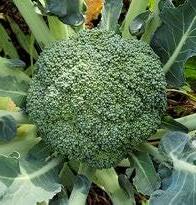
GONGGA
Domed shaped heads
Very good heat tolerance
Small-medium size beads
Maturity is 70 - 80 days in summer
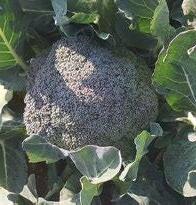
VELOZ
Domed shaped heads
Very good cold tolerance
Small-medium sized beads
Maturity is 65 - 75 days in early winter and up to 90 days in late winter
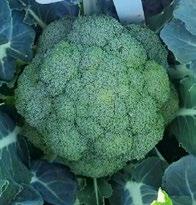
MACDUI
Domed shaped heads
Very good heat tolerance
Small-medium size beads
Maturity is 70 - 80 days in summer
Resistance to clubroot


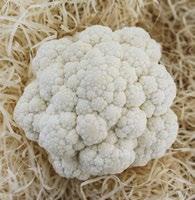
SPACEDREAM
Excellent quality, smooth texture, very well tucked curds
Large frame size and great curd cover
High yielding variety for winter conditions
Maturing 90 - 110 days from transplant, depending on temperature and area
Suitable for loose and prepack market
KAMINO
Excellent quality, white colour, very well tucked curds
Large frame size and great curd cover.
High yielding variety for summer conditions
Maturing 64 - 74 days from transplant, depending on the area
Suitable for loose and prepack market
CLEOZIL
Excellent quality, smooth texture, very well tucked curds
Medium frame size and great curd cover
High yielding variety for summer conditions
Maturing 70 - 75 days from transplant, depending on area
Suitable for loose and prepack market
Resistance to clubroot
Edition 230 ISSN 1015-85 37 www.vegetablesandfruitmagazine.co.za
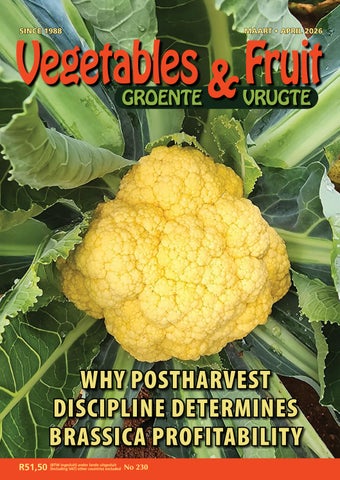
COVER
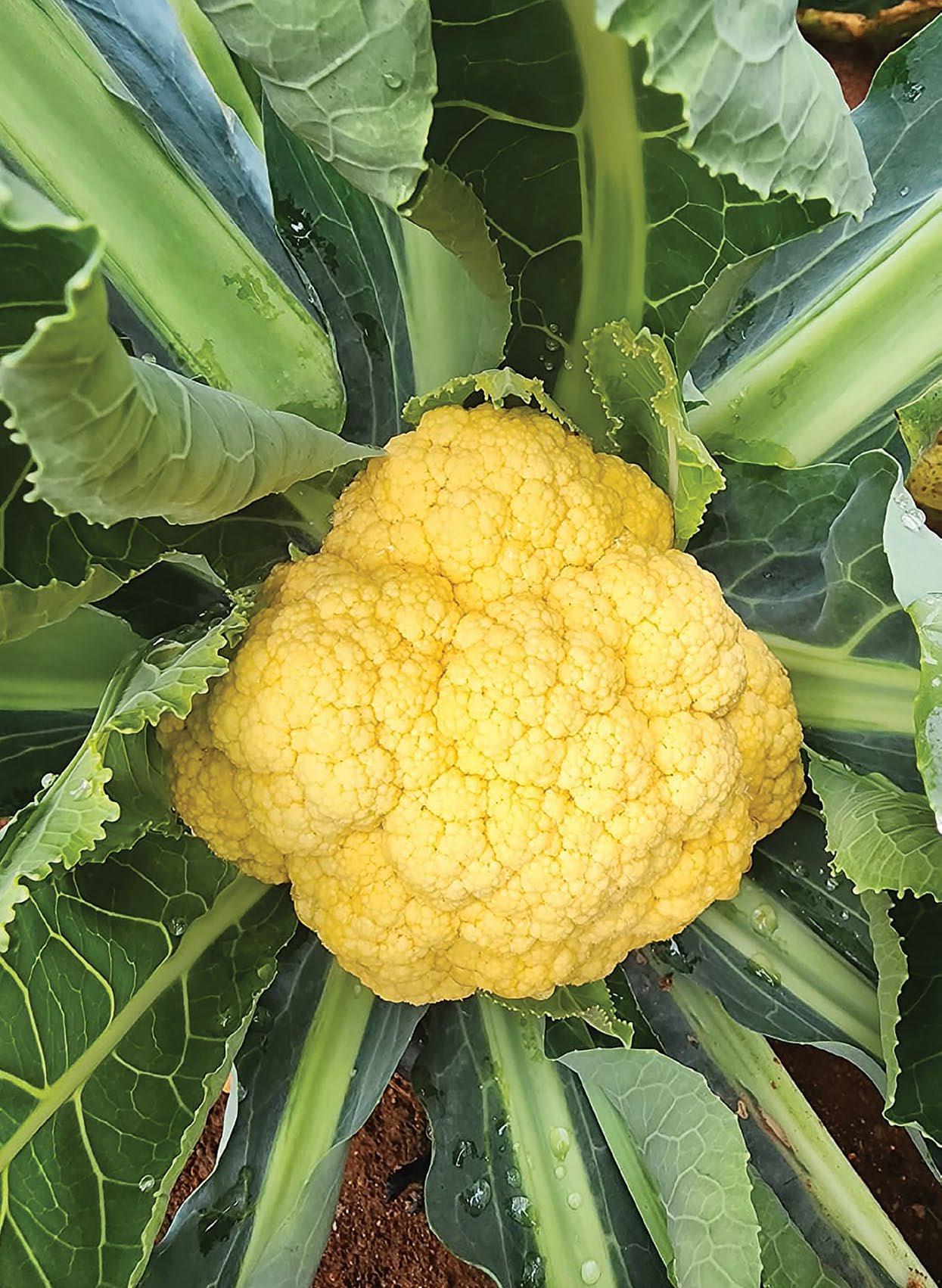
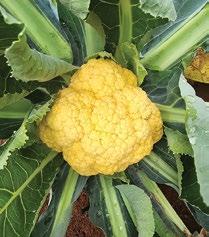
Cauliflower, Lisboa* (experimental variety) – orange cauliflower from Sakata Seed Southern Africa.
EDITORIAL
Willie Louw (Group editor)
Carien Daffue (Editor) 082 927 8294 018 293 0622 info@mediakom.co.za PO BOX 20250, Noordbrug, 2522
ADVERTISING
Jana Greenall 082 780 9914 mediacom@lantic.net
DESIGN
Mercia Venter studio.chatnoir@gmail.com

Bly ingelig en volg ons op Facebook. Keep up to date and follow us on Facebook. Besoek ons webtuiste | Visit our website: Groente & Vrugte | Vegetables & Fruit www.facebook.com/SAGroenteenVrugte www.vegetablesandfruitmagazine.co.za
SUBSCRIPTIONS
Available on subscription only - visit website: Slegs met intekening beskikbaar - besoek webblad: www.vegetablesandfruitmagazine.co.za
1 Year @ R268.00 (6 issues)
2 Years @ R510.00 (12 issues)
In case of address change, please quote or attach previous address label
NEEM KENNIS TAKE NOTE

Weens afleweringsprobleme met die gewone posdiens word intekenare en lesers versoek om hul e-posadresse aan info@mediakom.co.za te stuur vir die elektroniese versending van GROENTE & VRUGTE - VEGETABLES & FRUIT.
Due to delivery problems with traditional mailing services subscribers and readers are requested to send their e-mail address to info@mediakom.co.za for electronic delivery of VEGETABLES & FRUITGROENTE & VRUGTE.
NEWS
4 BASF announces renewed focus on the agriculture sector
5 Ceres Fruit Growers named BRCGS certificated site of the year
6 Citrus industry welcomes AGOA but notes lack of impact
6 South African produce exporters showcase at Fruit Logistica Berlin
7 Maftech launch strengthens local packing equipment capacity
7 Leaders in the SA wine industry honoured
BRASSICA
8 Managing climate, costs and compliance in brassica production
10 Ruitrugmot en insekdoder-weerstand
12 Potassium nitrate: A smart nutritional tool for brassica production
14 Why postharvest discipline determines brassica profitability
16 Effect of temperature on brassica crops

18
21 How Kelpak enhances physiological performance in macadamia orchards MACADAMIA
Building resilience for macadamias from orchard to market
20 Macadamias in a maturing market
23 When legislation changes, stewardship remains the foundation
24 Twee-ledige beskerming teen lepidoptera-larwes
26 Sakata Farmers’ Days 2026 draws strong grower engagement
28 Botswana lifts the ban on vegetable imports from South Africa
29 SA se avokadoproduksie kan floreer danksy omvattende navorsing GENERAL
BASF announces renewed focus on the agriculture sector
BASF recently created a new legal entity dedicated to agriculture.
“We expect that by the end of 2026, the legal structures will be in place and in 2027, we will enter the Initial Public Offering (IPO) stage. By doing this, we believe that we will be able to focus even more on our customers and achieve better integration between seed and traits, crop protection, BioSolutions and digital farming. We want to allocate our research and development investment to the most appropriate places,” Gustavo Palerosi Carneiro, senior vice president, agricultural solutions, Europe Middle East, Africa (EMEA), says. He added that the local go-live date for the new dispensation is expected to be 1 January 2027.
According to Dr Murat Ayaz, vice president, agricultural solutions EMEA, BASF has a long-standing presence in South Africa, and agriculture remains a strategic priority to the company.
“Our commitment is demonstrated through continued portfolio expansion, local teams, farmer support, and longterm partnerships – not short-term market cycles. We are here for the long run and see Africa – and specifically South Africa – as the catalyst for growth,” Dr Ayaz said.
“This differentiated steering project is about strengthening the market and not withdrawing from it,” said Palerosi Carneiro. “We do everything in our power to build a sustainable future for agriculture by connecting innovation, customers and society. Global and local challenges in the agricultural environment require us to constantly adapt and improve.”
He stressed that BASF supports science-based regulations, predictable trade frameworks, and policies that enable farmers to remain competitive while advancing sustainability.
“We understand that farmers will invest in solutions that protect yields and reduce risk. Our innovations must deliver clear value in the form of better performance, longer-lasting efficacy, and improved sustainability outcomes. Value is measured on-farm, not on price alone.”
Palerosi Carneiro said that through tailored training, stewardship, accessible agronomic support, and partnerships, BASF wishes to extend technology benefits across farming segments to help farmers to address the challenges they face on-farm.
David Leiño Calleja, country manager for South Africa, reiterated that BASF’s investments will come through innovative product launches such as Revysol, stewardship programmes and by strengthening local expertise.
“We invest where we can create value for farmers and food systems. We cannot control weather events, but we can support resilience by providing tools that protect yields under stress, climate-smart practices, agronomic advice, and innovations that help farmers recover faster,” Calleja said.
With regard to trust, public opinion and scrutiny, Dr Ayaz noted that the future of agriculture is based on integration.
“We operate in a highly regulated industry, and it is important to understand that chemistry in crop protection remains important. We, however, also acknowledge that it is complemented by biologicals, digital precision, and stewardship – all aimed at reducing overall impact while maintaining food security.”
Dr Ayaz added that through lifecycle approaches, improved efficiency, digital tools, and solutions that help farmers produce more with fewer resources and lower emissions intensity, BASF aims to reduce CO2 per ton of crop.
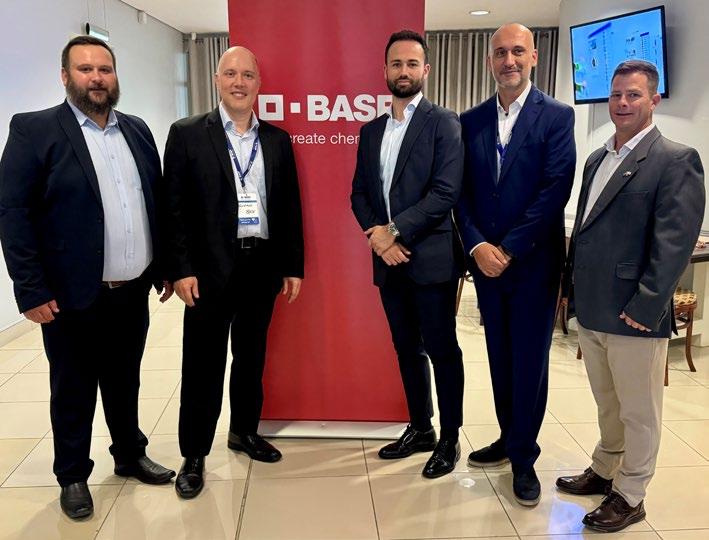
BASF met with members of Agricultural Writers SA and industry representatives for interactive discussions: Duan Viljoen, head of sales, BASF South Africa; Gustavo Palerosi Carneiro, senior vice president agricultural solutions, EMEA; David Leiño Calleja, country manager for South Africa; Dr Murat Ayaz, vice president agricultural solutions EMEA South; and Sean Brereton-Stiles, head of marketing South & Southern Africa at BASF.
Ceres Fruit Growers named BRCGS certificated site of the year and partnership
Tru-Cape Fruit marketing recently celebrated an achievement by its shareholder, Ceres Fruit Growers (CFG), which was named BRCGS Certificated Site of the Year by Brand Reputation through Compliance Global Standards (BRCGS).
The award was presented in London and recognises exceptional commitment to food safety, quality management and supply chain integrity. It represents more than an industry accolade, providing independent assurance that the apples and pears stocked by retailers and purchased by consumers meet stringent global food safety standards.
BRCGS certification is regarded worldwide as a benchmark for product safety, legality, authenticity and quality. The award signifies consistent excellence in maintaining these standards, demonstrating a deeply embedded food safety culture and using certification to strengthen operations.
“Ceres Fruit Growers is honoured to be recognised,” Francois Malan, managing director of Ceres Fruit Growers, said. “Winning this award confirms the mutual trust we share with our clients and shareholders. Challenging ourselves through continuous improvement and teamwork is a proven recipe for success, embodying our slogan, ‘Leading the way’. A commitment to a strong food safety and quality culture is an integral part of our DNA.”
Joe Hanekom, senior manager of production at Ceres Fruit Growers, emphasised the direct benefit to customers.
“This award is particularly meaningful because it followed nomination by the industry. Over the past five years, we have achieved consecutive AA gradings in unannounced annual audits, with fewer than five deviations each time. That consis-
tency demonstrates that our systems are not only in place but are working effectively at all times.
“Our food safety and quality culture is something our staff actively live by, from management to the different departmental teams, everyone understands their role in protecting the integrity of our product.”
For retailers and consumers, this recognition assures that the apples and pears reaching their shelves have been handled according to rigorous international standards.
“We challenge ourselves every year to improve further. Ultimately, this recognition belongs to the entire team and reinforces the trust placed in us by our customers and shareholders,” Hanekom said.
As the global marketer of Ceres Fruit Growers’ apples and pears, Tru-Cape highlighted the importance of the award in strengthening retailer partnerships and consumer confidence.
“Retailers operate in an environment where traceability, food safety and consistency are non-negotiable,” Roelf Pienaar, managing director of Tru-Cape, said. “This award provides independent verification that the fruit marketed worldwide is supported by robust systems and a deeply embedded quality culture. For consumers, it means peace of mind. For retailers, it means reduced risk and a reliable supply partner. For Tru-Cape, it reinforces the trust that underpins relationships across global markets.”
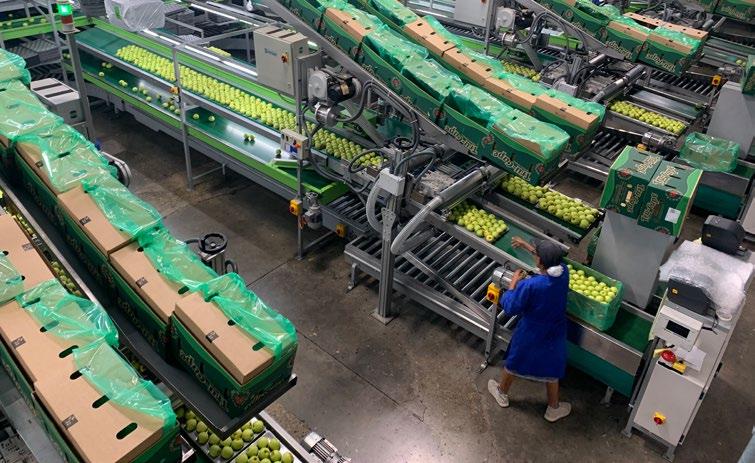
Golden Delicious apples are packed under the Tru-Cape brand at one of Ceres Fruit Growers’ packing facilities.
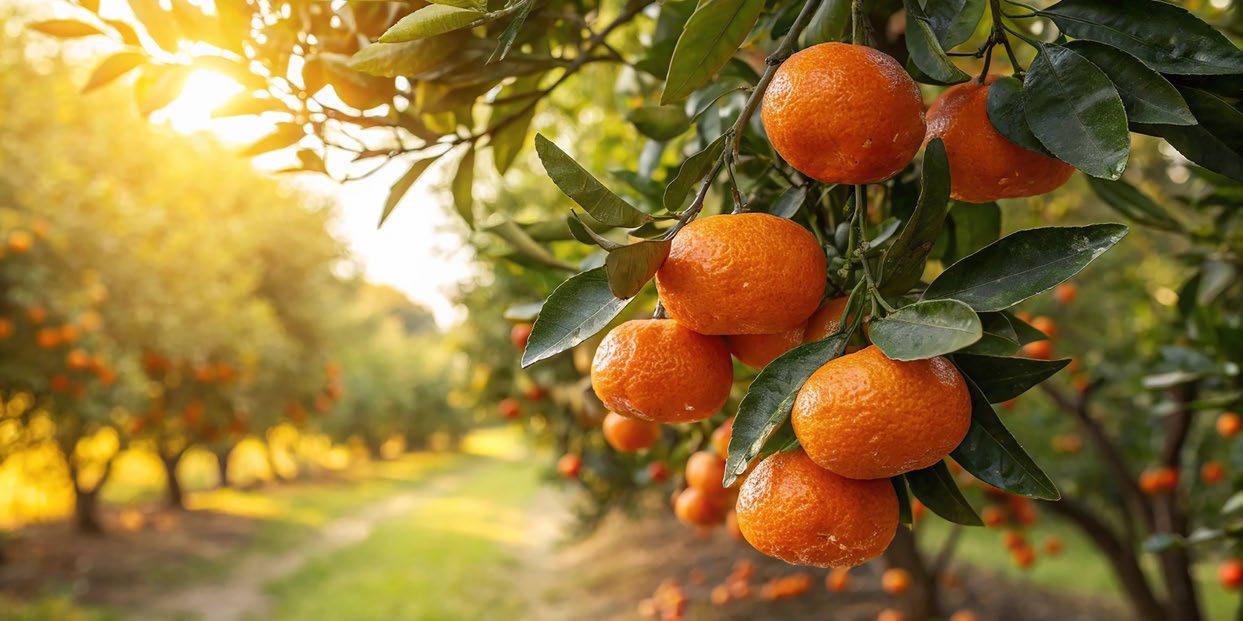
Citrus industry welcomes AGOA but notes lack of impact
The Citrus Growers’ Association of Southern Africa (CGA) welcomed the recent reauthorisation of the African Growth and Opportunity Act (AGOA) for one year. However, this extension does not materially impact the tariff regime for South African citrus exports to the United States.
Based on the prevailing legal interpretation, the tariffs imposed by the White House take precedence over AGOA benefits. As a result, AGOA’s renewal does not, at present, alter market access conditions for local citrus exporters.
According to CGA, It should be noted that recently, in a positive development, oranges were granted an exemption from the 30% US tariffs, allowing them to enter the market duty-free. This development provided welcome relief to South African orange growers, particularly in regions heavily reliant on the American market, such as the Western and Northern Cape.
However, mandarins were not included in this exemption. South African mandarins have proved popular in the US. A 30% tariff on mandarins is therefore expected to negatively affect mandarin growers in the Western Cape and Northern Cape during the upcoming season.
“Applying tariffs to mandarins risks creating price spikes, supply shortages and inflationary pressure in the US. South Africa supplies mandarins counter-seasonally to America, so local growers do not threaten US production or jobs. In fact, South
African citrus helps maintain consumer demand throughout the year, handing consumers over to growers in states such as California and Florida at the end of the local season,” said Dr Boitshoko Ntshabele, chief executive officer of the CGA.
Entire communities depend on South Africa-US trade, with Citrusdal standing as a clear example of how significantly local livelihoods are tied to continued access to the US market.
“Given the complexities, the AGOA extension currently has no meaningful effect on growers’ planning for the coming season. The situation remains somewhat uncertain. This underscores the need for a stable and mutually beneficial trade agreement between South Africa and the US,” said Gerrit van der Merwe, chairperson of the CGA.
Van der Merwe noted that, unlike AGOA, whose future is periodically uncertain, a dedicated trade agreement could provide both South Africa and the US with the predictability they urgently require.
Unimpeded access to the US citrus market remains a priority for South Africa’s citrus sector.
South African produce exporters showcase at Fruit Logistica Berlin
S
outh African fresh produce exporters recently participated in Fruit Logistica Berlin, one of the world’s largest industry trade events, with support from the Department of Trade, Industry and Competition (the Dtic). Exhibitors from Limpopo, Mpumalanga and the Western Cape showcased pears, apples, nectarines, and berries at the South African National Pavilion, aiming to secure new trade partnerships in Europe.
The South African delegation attracted strong interest from international buyers and potential agents, reflecting the quality and diversity of produce offered. The event also
emphasised the importance of relationship-building in global trade, as exporters seek reliable market access and expanded distribution channels.
Participation in global trade platforms like Fruit Logistica is part of South Africa’s strategy to sustain export volumes and compete with other major fresh produce exporting nations. In previous editions, export sales linked to the South African pavilion have exceeded R400 million within six months of the event, demonstrating the commercial value of international exposure.
Maftech launch strengthens local packing equipment capacity
The South African fruit and vegetable industry has taken a significant step towards improved packing and postharvest processing with the launch of Maftech, a new joint venture uniting Maf Roda Agrobotic and local engineering partner Maintech.
The collaboration will see a cutting-edge manufacturing facility established in Paarl, Western Cape, dedicated to producing advanced sorting, handling and grading equipment for packhouses serving fresh produce operations across Southern Africa.
Maf Roda is a global leader in automated fruit and vegetable processing technology, and the formation of Maftech positions South Africa as a base for fully integrated equipment manufacturing, from infeed systems right through to palletising. The venture combines Maf Roda’s technological expertise with Maintech’s established engineering experience in the region, and the company reports that Maftech will address a critical need for locally manufactured packhouse machinery.
South Africa’s fruit and vegetable sector is a cornerstone of the national agricultural economy. The fresh produce market is estimated at more than R145 billion in 2025, with projected growth to R190 billion by 2030 as demand for
fresh, high-quality produce continues to expand domestically and internationally. Local manufacturing of packing equipment can reduce reliance on imports, shorten lead times for machinery upgrades, and support competitiveness for packhouses, which in turn benefits both producer margins and the broader value chain.
The Maftech facility is expected to produce a range of solutions tailored to both large-scale exporters and smaller fresh market packhouses, helping growers improve efficiency and reduce postharvest losses. By producing these systems locally, the industry may also see broader innovation collaborations and skills development within South Africa’s agri-machinery sector.
Overall, the Maftech launch represents a meaningful development for the vegetables and fruit value chain, signalling increased confidence in investing in local supply, bolstering technical capabilities and supporting long-term sector growth.
Leaders in the SA wine industry honoured
The annual Wine Harvest Commemorative Event recently honoured five role players who have made significant contributions to the South African wine industry. The event also marked the blessing of the season’s new grape harvest and commemorated the origins of the country’s wine industry.
South Africa’s wine heritage dates back to a diary entry recorded in 1659, noting that wine had been made for the first time from Cape grapes. The commemorative event recognises individuals whose work continues to shape and strengthen the industry.
“This year’s Wine Harvest Commemorative Event, hosted by Groot Constantia, celebrated the vibrant community that defines our wine heritage,” said Clifford van der Venter, chairperson of the Groot Constantia Trust.
“It was a privilege to honour individuals and organisations that have made outstanding contributions to the industry.”
The recipients recognised during the event were the Retief family of Van Loveren Wine Estate for visionary leadership, Denzel Swarts for growing inclusivity, Pieter Ferreira for wine advancement, Charl Theron for contributions to
viticulture and viniculture, and Wilfred
agri-worker category.
The Retief family was acknowledged for their leadership in areas including wine tourism, acquisitions, transformation and sustainability. Their diversification into other agricultural sectors, including almonds, cherries, citrus and avocados, reflects a broader contribution to South African agriculture.
Swarts was recognised for leadership in promoting inclusivity within the industry, while Ferreira was honoured for advancing the Cap Classique category and promoting South African sparkling wine internationally.
Theron was recognised for more than five decades of work in wine production, education and advisory roles, while Fortuin received recognition for his dedication to skills development and his role as a representative of wine agri-workers.
The event was supported by partners including Groot Constantia, Standard Bank, the Western Cape Department of Agriculture and South African Wine, highlighting the continued collaboration that supports the growth and global competitiveness of the South African wine industry.
Fortuin in the wine
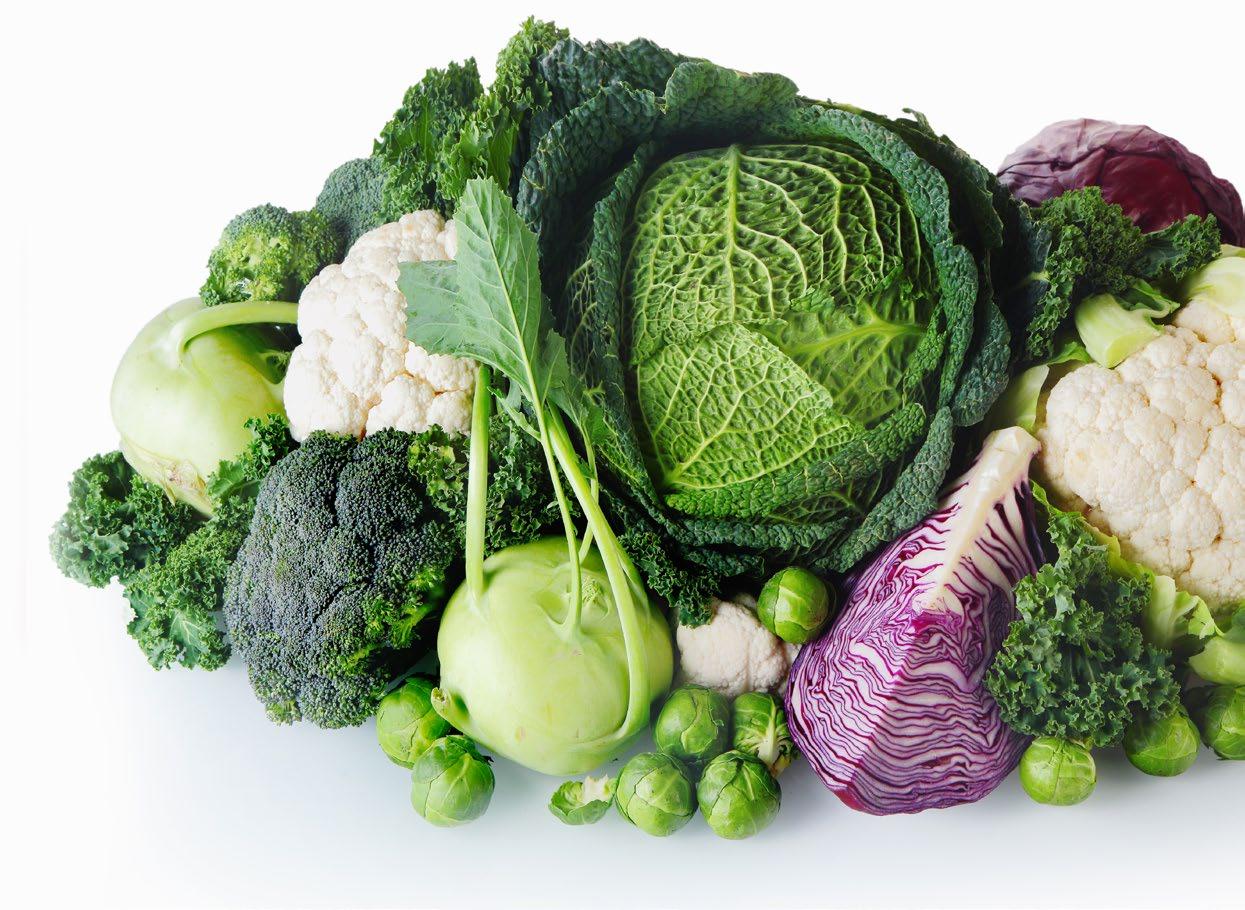
Managing climate, costs and compliance in brassica production
Brassicas, including cabbage, broccoli and cauliflower, remain among the most economically significant vegetable crops in South Africa. They form a cornerstone of both formal retail supply chains and informal fresh markets, offering steady consumer demand and recognised nutritional value. Yet while these crops have long been regarded as dependable performers, production realities are shifting.
Climate variability, rising input costs, pest resistance and tightening market specifications are forcing producers to make increasingly precise decisions. What was once considered a relatively predictable crop now demands strategic planning at every stage, from variety selection to postharvest handling.
To explore these changes in greater depth, Vegetables & Fruit recently spoke to Heinrich Kleyn, senior product manager at Starke Ayres; Jacques Bouwer, junior product specialist: professional vegetables at Sakata; and Darius Steyn, product specialist: leafy, okra, brassicas, root and bulb crops at Syngenta Seed. Their perspectives reveal a production environment where consistency is earned, not assumed.
Climate volatility reshapes yield expectations
Climate instability dominated the discussion when it came to which production factors currently have the biggest impact on brassica yields.
Steyn explained that unpredictability is now the defining challenge. “Weather and market prices are still the biggest challenges for growers,” he said. “Both are completely out of the farmer’s control, and with the weather becoming more irregular and harder to predict, yields can change quickly.”
He noted that temperature swings are particularly disruptive. “Sudden heat, cold snaps, or heavy rain make it difficult to keep the crop on track and hit target weights. You can plan perfectly, but if the weather shifts at the wrong stage, the crop reacts immediately.”
Kleyn expanded on the scale of climate pressure. “Extreme temperature fluctuations, unpredictable rainfall patterns and heat stress during critical growth stages are having a direct impact on yield potential. Extended drought periods and unseasonable frost events further complicate planning.”
He also emphasised that brassicas are especially sensitive during head formation. Heat stress at that stage can reduce size, compromise density and shorten shelf life. Excess mois-
ture, meanwhile, increases disease incidence and can lead to uneven maturity.
Bouwer returned to a fundamental point about crop physiology. “Brassicas have always been a cool-season vegetable crop. They perform best in temperatures between 10 °C and 18 °C, where pest and disease pressure is lower and heat-related stress has less impact on production and quality.”
He cautioned that planting outside optimal windows significantly increases risk. “The biggest reduction in yield occurs when planting outside the cooler season, which increases exposure to heat stress and disease. The crop is simply not operating in its comfort zone.”
The combined insight is clear. While growers cannot control weather patterns, understanding climatic limits and adjusting planting windows, irrigation and variety choice accordingly is becoming central to maintaining predictable yields.
Rising input costs tighten margins
Beyond climate, economic pressures are reshaping brassica production decisions. When asked about financial constraints, Kleyn pointed to a cluster of rising costs.
“Fertilizer price increases, fuel cost volatility, labour expenses, irrigation costs and chemical inputs all directly affect profitability,” he said.
In high-input crops such as cabbage and cauliflower, fertiliser and crop protection programmes represent significant expenditure. Under volatile market pricing, margins can narrow quickly.
Steyn added that unpredictable market prices compound the problem. “Even when yields are good, price fluctuations can erode returns. Producers are trying to balance input costs with the need to protect quality, because retailers will not compromise on specifications.”
Bouwer highlighted the importance of efficiency under these constraints. “Along with the right variety, growers must focus on sound management practices. Factors such as poor planting

technique and inconsistent scouting can significantly influence yield and cost.”
The message across the board is that inefficiency is increasingly expensive. Precision in fertiliser timing, irrigation scheduling and pest monitoring is not only agronomically sound, but it is economically necessary.
Varietal selection becomes a strategic decision
Vegetables & Fruit asked how varietal selection has evolved in response to climate variability. The specialists agreed that genetics now plays a larger role in risk mitigation than ever before.
“There is a strong drive to breed better, faster and more tolerant varieties that can withstand heat, drought and pest pressure during increasingly unpredictable weather windows,” Bouwer said.
He explained that regional testing has intensified. “Companies are now testing varieties specifically for Southern African microclimates rather than relying on global one-size-fits-all hybrids.”
Steyn reinforced the shift in mindset. “Variety choice has become more important than ever. Breeders are bringing out varieties that handle heat, cold, and temperature swings much better. These newer varieties help farmers stay consistent and still deliver good quality even when the weather does not cooperate.”
Kleyn highlighted the growing importance of resistance traits. “Heat tolerance, early maturity and disease resistance are central to current breeding programmes. Producers are looking for resistance to clubroot, Alternaria, white blister and black rot in particular.”
He also emphasised bolting resistance and uniform head formation as critical features for formal retail markets, where specification compliance is non-negotiable. Bouwer cautioned that progress requires patience.
“The greatest challenge is that developing improved varieties takes time. Breeding cycles are long, and climate patterns are changing quickly.” Despite this, genetic resilience is becoming one of the most powerful tools available to producers facing environmental uncertainty.
Soil health and nutrition precision
When it comes to common nutrition mistakes in brassica crops, nitrogen mismanagement was identified repeatedly.
“The most common mistake is applying too much nitrogen,” Steyn said. “Excess nitrogen makes brassicas softer, more attractive to pests and far more prone to diseases.” He added that timing is equally important. “Putting nitrogen on at the wrong time can hurt final head quality and increase the cost of protecting the crop later.”
Bouwer agreed, noting that both excess and deficiency create problems. “Excessive late-season nitrogen leads to overly vegetative growth and poor head quality. Early deficiencies reduce vigour and uniformity.”
Kleyn pointed to overlooked micronutrients. “Inadequate calcium and boron are frequently underestimated. They are crucial for preventing disorders such as tip burn and hollow stem.”
He emphasised soil pH management as foundational. “Brassicas prefer slightly acidic to neutral soils, ideally between 6,0
and 7,0. If pH is outside that range, nutrient uptake is compromised regardless of fertiliser application.”
Bouwer stressed the importance of soil preparation. “Failing to address pH issues or underlying nutrient deficiencies before planting restricts root development and limits nutrient uptake,” he said.
The specialists agreed that soil analysis must guide fertiliser programmes. Split applications, particularly under irrigation, help maintain steady nutrient availability while reducing losses. In a climate of rising fertilizer prices, precision nutrition is both a cost-saving measure and a quality safeguard.
Water management under variable conditions
Brassicas are sensitive to both water stress and waterlogging. Although irrigation systems have improved, weather volatility complicates scheduling.
Kleyn noted that insufficient moisture during head development reduces size and compromises market value, while excessive moisture increases disease risk. “Efficient irrigation scheduling, informed by soil type and weather conditions, helps maintain consistent growth and limits unnecessary water use,” he said.
Bouwer added that inconsistent irrigation compounds nutritional challenges. “Water stress and waterlogging both interfere with nutrient availability and uptake. Even the best fertiliser programme cannot compensate for poor water management.”
Under rising water and electricity costs, careful irrigation planning is becoming as strategic as variety choice.
Pest pressure and resistance management
When asked how producers are managing pest resistance, particularly diamondback moth, the discussion shifted to integrated strategies.
“Alternating between insecticide groups and avoiding sequential sprays of the same mode of action are critical,” Kleyn said. “Using selective products rather than broad-spectrum options helps preserve beneficial insects.”
He highlighted biological control tools. “Parasitic wasps such as Diadegma semiclausum, Bacillus thuringiensis products and entomopathogenic fungi form part of integrated pest management programmes.”
Bouwer stressed monitoring. “Regular scouting and threshold-based spraying are essential. Pheromone traps help guide decisions instead of spraying on a fixed schedule.”
Steyn described the intensity of diamondback moth (DBM) pressure under warm conditions. “DBM breeds very fast, especially in warm weather, and can become resistant quickly if the same product is used too often. Producers are rotating chemical actives more regularly, and in some cases spraying more frequently when pressure is high.”
Beyond DBM, Kleyn drew attention to Brassica Stunting Disease caused by Turnip Yellows Virus. “A key indicator is a black ring in the vascular tissue when the stem is cut crosswise,” he said. “Shelf life is greatly reduced in affected heads.”
The specialists agreed that resistance management is no longer optional. It is a core production principle.
In a production landscape defined by variability, brassicas remain viable. However, stability is no longer automatic. It is the result of deliberate, informed decisions at every stage of the crop cycle.

Ruitrugmot en insekdoder-weerstand
Ruitrugmot (Plutella xylostella) is ‘n algemene wêreldwye plaag van koolgewasse, ook in Suid-Afrika. Dié mot veroorsaak aansienlike skade, veral as beheermaatreëls nie noukeurig toegepas word nie.
Jacques Fouché
HOOF: NEXUSAG TEGNIESE AFDELING
’nGeïntegreerde beheerprogram wat uit verskillende vlakke van ingryping bestaan, moet gevolg word. Die program word saamgestel deur ‘n mengsel van praktyke, monitering, fisiese beheermaatreëls, biologiese beheermaatreëls en konvensionele insekdoders.
Konvensionele insekdoders kan in verdere vlakke onderverdeel word volgens die nie-teikenimpak, met ander woorde die selektiwiteit of spektrum van die middel se insekdodende vermoë. Insekdoders met ‘n noue spektrum van selektiwiteit moet eerstens oorweeg word om ‘n minimale nie-teikenimpak te hê, of om ‘n minimale nadelige uitwerking op voordelige organismes te hê.
Hoewel konvensionele insekdoders die laaste oorweging in ‘n geïntegreerde program is, speel dit ‘n belangrike rol en dit kan gereeld ingespan word. Insekdoders moet oordeelkundig gebruik word om die maksimum waarde daaruit te put, terwyl die misbruik daarvan groot risiko’s kan inhou.
Misbruik, meer spesifiek die herhaalde gebruik van dieselfde insekdoders, kan lei tot insekdoder-weerstand. Dit sal meebring dat die insekdoder nie meer doeltreffend is nie. ‘n Plaag soos ruitrugmot, wat ‘n vinnige aanteelvermoë het, kan vinnig weerstand ontwikkel. Indien ‘n insek weerstand vir ‘n spesifiek aktiewe bestanddeel ontwikkel het, is dit gewoonlik permanent en sal die insekdoder nie weer doeltreffend vir die spesifieke plaag gebruik kan word nie. Selfs ander insekdoders met dieselfde metode van aksie sal potensieel nie meer doeltreffend wees nie.
Om uitgediende insekdoders te vervang sal beteken dat nuwe insekdoders met ‘n ander metode van aksie ontwikkel moet word. Dit kan jare en selfs dekades lank neem. Uitgediende insekdoders sal veroorsaak dat die oorblywende insekdoders meer dikwels gebruik word en die risiko vir weerstandontwikkeling by die ander middels sal nog verder verhoog. Weerstand-ontwikkeling moet gevolglik altyd vermy word. Weerstand-ontwikkeling is ‘n seldsame en onsigbare proses en word soms nie ernstig opgeneem nie.
Die werklikheid is dat met elke toediening van ‘n insekdoder
word seleksie-druk op die bevolking van die teiken-organisme geplaas. Dit kan uiteindelik tot weerstand lei. Wêreldwyd het die ruitrugmot reeds weerstand teen verskeie insekdoders ontwikkel. Dit sluit in weerstand teen ouer generasie piretroïede (IRAC MOA groep 3) tot die nuwer generasie insekdoders, soos die diamiedes (IRAC MOA groep 28). Insekdoder-weerstand is ‘n werklikheid en ‘n groot risiko wat met die toediening van elke insekdoder in ag geneem moet word.
Die beste manier om insekdoder-weerstand te vermy, is om insekdoders met verskillende metodes van aksie gereeld af te wissel. Die metode van aksie word deur ‘n nommer op die produk se etiket aangedui of dit kan deur ‘n gewasbeskermings-adviseur aangedui word. Die afwisseling van die metode van aksie moet gepaard gaan met die fenologiese ontwikkeling van die plaag. Twee opeenvolgende generasies van ‘n plaag moenie aan insekdoders blootgestel word wat dieselfde metode van aksie gebruik nie. ‘n Generasie van ‘n plaag kan in warm somermaande korter wees as in koeler wintermaande. IRAC se aanbeveling is om die ruitrugmot met ‘n vensterperiode of generasietyd van 30 dae te hanteer.
Die insekdoder wat in die eerste 30 dae gebruik word, kan nie in die volgende 30 dae opgevolg word met ‘n insekdoder wat dieselfde metode van aksie het nie. Om nog veiliger te wees kan insekdoders uit groepe met verskillende metodes van aksie binne een generasie (30 dae) toegedien word, solank geen van daardie groepe in die volgende generasie gebruik word nie. Behalwe vir afwisseling van insekdodergroepe moet die etiketaanwysings noukeurig gevolg word.
Sekere insekdoder-etikette beperk die aantal toedienings wat per produksiesiklus toegedien kan word. Enige plaag moet beheer word deur geïntegreerde beheermaatreëls toe te pas en daar moenie slegs op konvensionele insekdoders staatgemaak word nie.
NexusAG Croplife-geakkrediteerde gewasadviseurs kan die produsente help met kundige advies en maatpas-gewasbestuursprogramme wat ‘n produsent se eiesoortige omgewing en spesifieke omstandighede in ag neem.
Kontak NexusAG gerus vir meer inligting. Besoek www.nexusag.net of skakel: 021 860 8040.
SLIM MONITERING.
GEÏNTEGREERDE BENADERINGS. VOLHOUBARE BEHEER.
Wanneer dit by ruitrugmot kom, maak dit ’n verskil hoe en waarmee jy beheer toepas.
Ruitrugmot is een van die mees uitdagende peste in koolgewasse, plaaslik én wêreldwyd. Sonder ’n doelgerigte strategie kan beheer vinnig duur, ondoeltreffend en onvolhoubaar raak. Daarom begin volhoubare plaagbeheer nie by die spui enk nie – dit begin by monitering en geïntegreerde besluitneming.
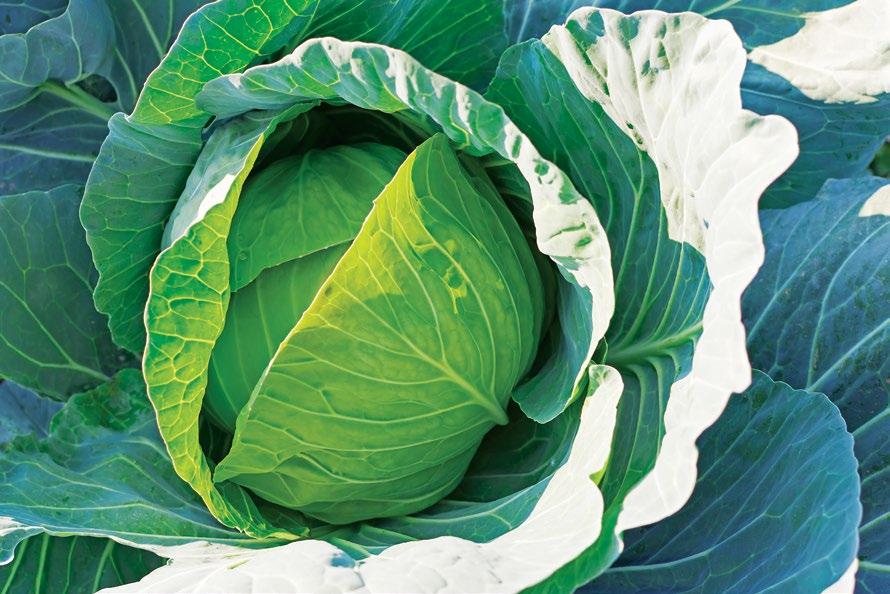
Pesmonitering vorm die grondslag van ’n suksesvolle geïntegreerde plaagbeheerprogram.
Deur gereelde en akkurate inspeksies word noodsaaklike data ingesamel wat produsente in staat stel om tydig, ingelig en verantwoordelik op te tree.
Hoekom is geïntegreerde bestuur van ruitrugmot so belangrik?
Dit help jou om:
• Weerstand te voorkom – deur insekdoders met verskillende metodes van aksie af te wissel.
• Beheeropsies te beskerm – sodat effektiewe middels langer bruikbaar bly.
• Koste te bestuur – deur onnodige of herhaalde toedienings te vermy.
• Voordelige organismes te beskerm – met selektiewe, doelgerigte beheer.
• Volhoubaar te produseer – binne ’n gebalanseerde ekosisteem.
Wat stel ons voor?
• Moniteer konsekwent: Ken jou plaagdruk en generasiesiklusse.
• Gebruik geïntegreerde beheer: Kombineer praktyke, biologiese opsies en chemiese-beheer.
• Wissel insekdoders met verskillende metodes van aksie af: Bestuur volgens IRAC-riglyne en generasievensters.
• Volg etiketvoorskri e: Korrekte dosis, spuitinterval, en aantal toedienings per seisoen.
• Neem besluite saam: Interpreteer data met ervare gewasadviseurs.
Weerstandontwikkeling is onsigbaar – tot dit te laat is. Elke toediening tel. Daarom maak kennis, beplanning en die regte vennoot die verskil.
NexusAG CropLife-geakkrediteerde gewasadviseurs help produsente met kundige advies en maatpas gewasbestuursprogramme wat jou unieke omgewing, gewas en plaagdruk in ag neem – vir volhoubare beheer vandag én môre.
Potassium nitrate: A smart nutritional tool for brassica production
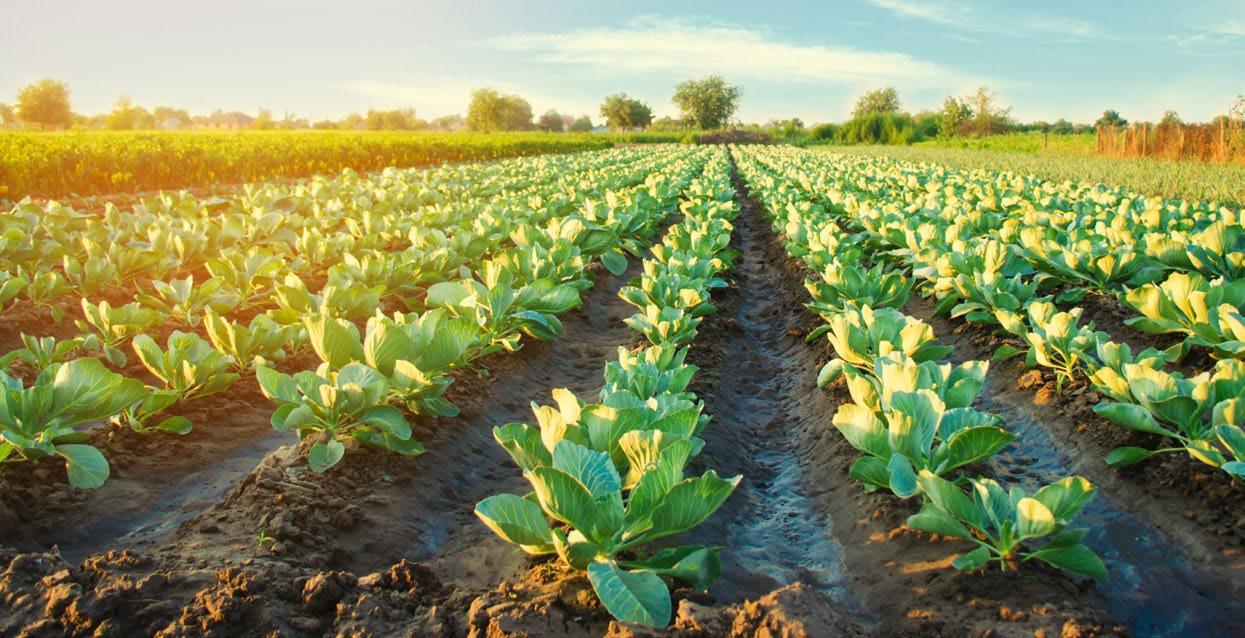
Brassica crops such as cabbage, broccoli, cauliflower, kale, canola, and brussels sprouts are known for their high nutrient demand and sensitivity to imbalances in plant nutrition. Achieving strong growth, good head formation, and high market quality requires a well-managed fertilization programme.
Suzette Smalberger SQM
One of the most effective tools available to growers’ fertilization programme is potassium nitrate (KNO3), a fully water-soluble fertilizer that supplies both potassium and nitrate nitrogen in a form that is immediately available to plants.
Potassium nitrate plays a valuable role because it delivers two essential nutrients simultaneously. The nitrate nitrogen component supports steady vegetative growth without encouraging excessive softness or weak tissue development. This is particularly important in brassicas, where overly lush growth can lead to poor head formation and increased susceptibility to disease.
Unlike ammonium-based nitrogen sources, nitrate nitrogen promotes balanced growth and contributes to healthier root development, which is critical during early establishment and transplant recovery.
The potassium component is equally important for brassica performance. Potassium regulates water movement within the plant, activates enzymes, and supports the transport of sugars from leaves to developing heads and curds. This directly affects quality characteristics such as head firmness in cabbage, curd density in cauliflower, and uniform floret formation in broccoli. In leafy brassicas like kale, potassium improves leaf thickness and resilience, enhancing both visual appeal and shelf life.
Another key benefit of potassium nitrate is its contribution to stress tolerance. Brassica crops are frequently exposed to environmental challenges such as heat, drought, or transplant shock. Adequate potassium helps regulate stomatal function, improving water-use efficiency and maintaining plant turgor during stressful conditions. At the same time, nitrate nitrogen supports consistent growth without creating the physiological stress sometimes associated with ammonium nutrition.
Potassium nitrate also improves the plant’s ability to absorb other essential nutrients, particularly calcium and magnesium. This is highly relevant in brassicas, where calcium-related disorders such as tip burn or internal browning can significantly reduce marketable yield. By supporting balanced nutrient uptake, potassium nitrate helps minimise these physiological problems and contributes to more uniform crop development.
From a practical perspective, potassium nitrate is well suited to modern production systems. Its full solubility and chloride-free composition make it ideal for fertigation and foliar feeding. Growers can apply it precisely during critical growth stages such as early vegetative development, head initiation, and bulking. This flexibility allows for targeted nutrition when the crop needs it most, improving both efficiency and performance.
Ultimately, the use of potassium nitrate in brassica production supports stronger plants, better quality produce, and improved yield consistency. By providing a balanced supply of nitrate nitrogen and potassium, it promotes compact heads, uniform development, and greater resilience under field conditions. For growers aiming to produce high-quality brassica crops in a competitive market, potassium nitrate offers a reliable and effective nutritional solution.
For more information, contact Suzette Smalberger, Agronomist, SQM Africa. Tel. 073 819 6076.
*Reg No K5020 Act 36/1947. Registrasiehouer: Sociedad Quimica y Minera (Africa) (Pty) Ltd SQM
DISCLAIMER: The information herein contained is given to the best of SQM’s knowledge and is believed to be accurate. The conditions of use and application of the suggested recommendations are beyond SQM’s control. No warranty is made on the accuracy of any data or statements contained herein. SQM specifically disclaims any responsibility or liability relating to the use of the recommendations and shall under no circumstances whatsoever, be liable for any special, incidental or consequential damages arising from such use.

Why postharvest discipline determines brassica profitability

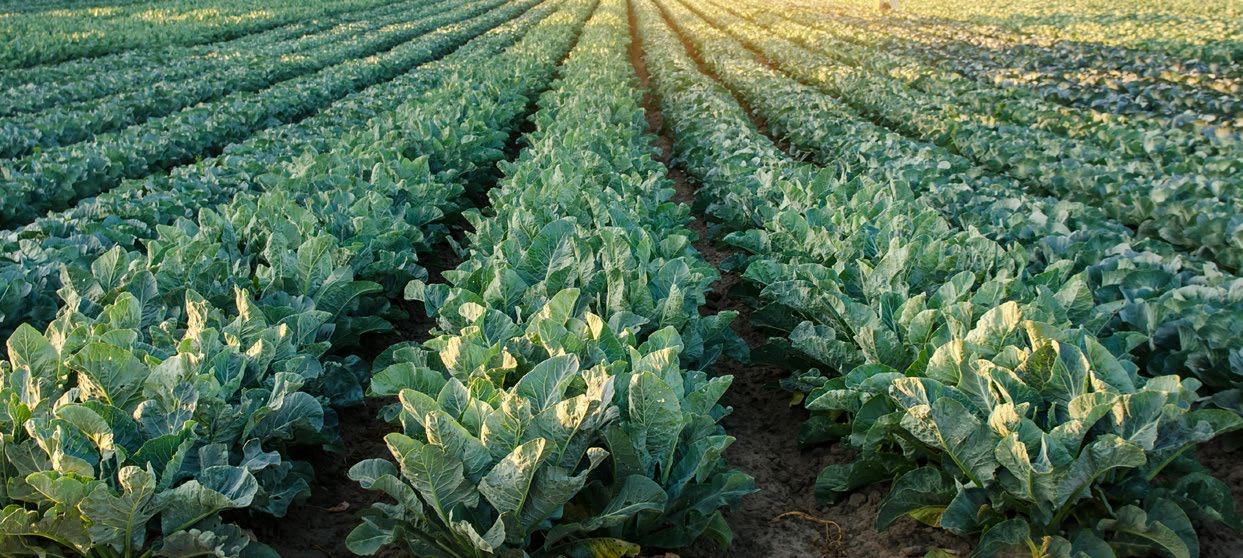
For brassica producers, a strong crop in the field no longer guarantees profitability. Cabbage, broccoli and cauliflower may reach the correct size, weight and visual appearance at harvest, yet still lose significant value before they reach the retailer. As retail standards tighten and transport distances increase regularly, the period between harvest and sale has become one of the most vulnerable stages in the production cycle.
Postharvest losses are rarely caused by a single dramatic failure. Instead, they result from a series of small compromises, harvesting slightly too early or too late, allowing produce to stand in the sun, packing too tightly, delaying cooling, or misreading retail specifications. Individually, these missteps may seem minor. Combined, they determine whether the produce earns full price or is downgraded.
Understanding where brassica quality is most often compromised, and how growers can safeguard their margins, requires insight from across the value chain. Heinrich Kleyn, senior product manager at Starke Ayres; Jacques Bouwer, junior product specialist for professional vegetables at Sakata; and Darius Steyn, product specialist responsible for leafy crops, okra, brassicas, root and bulb crops at Syngenta Seed, shared their perspectives with Vegetables & Fruit
Their inputs point to the fact that consistent discipline in production practices, careful timing, and clear communication are essential to maintaining brassica quality.
The hidden vulnerabilities after harvest
When asked what the most common quality issues are in brassicas after harvest, they explained that it is a combination of physical damage, physiological stress symptoms and disease development. Many of these problems originate before harvest, but only become fully visible once the crop has entered the supply chain.
Bouwer began with cabbage, emphasising how maturity directly influences internal structure. “Both early and late harvesting come with their own challenges. When harvested too early, the heads are not compact, and the internal quality is poor. When harvested too late, the heads begin to burst and develop a longer internal core. In both cases, what appears acceptable externally may not meet retail expectations once inspected more closely.”
Seasonal pressure adds another layer of complexity. Bouwer noted that during rainy conditions, cabbage often struggles with stem rot, soft rot and leaf diseases. He also drew attention to brassica stunting disorder, a disease caused by turnip yellows virus and spread mainly by aphids.
“A key indicator is a black ring in the vascular tissue when
the stem is cut crosswise,” he said, adding that affected plants show severe stunting, leaf discolouration and poor head formation. Shelf life is significantly reduced in infected cabbage.
Steyn broadened the discussion to include common postharvest defects across brassica crops. “Mechanical damage such as cuts and bruises is very common. Discolouration, yellowing or browning on heads, insect damage, riceyness, hollow stem and under- or over-sizing all lead to downgrades.” He emphasised that many physiological disorders are linked to stress during the growing cycle. “Stresses during production cause hollow stem, riceyness and bolting, and those problems may only become obvious after harvest.”
Kleyn agreed that disease pressure does not stop at harvest. “Alternaria, white blister, black rot and systemic downy mildew can all cause problems after harvest. Soft rot in particular can spread rapidly if handling and temperature management are poor.” For broccoli and cauliflower, he added, the margin for error is even smaller because curd integrity and colour can deteriorate quickly under heat stress.
The recurring theme across all three interviews is that quality loss rarely begins at the market. It begins earlier, often in the field, and is accelerated by poor handling or delayed cooling.
Harvest timing as a decisive factor
When it came to how critical harvest timing is in meeting retail specifications, the response from each specialist was emphatic.
“Harvest timing is extremely critical,” Kleyn said. “Sometimes even hours in hot weather can cause quality issues.” He explained that broccoli and cauliflower heads can move from optimal tightness to looseness within a short window under warm conditions. Once the curd opens, shelf life declines and rejection risk increases.
Steyn reinforced this view, linking timing directly to yield and shelf life. “Quality, yield and shelf life are all linked to timing. Harvest too early or too late, and you lose marketable product.” He offered a practical example, noting that broccoli should be harvested when buds are tight and compact, while cauliflower must be cut at the correct curd size and colour. Missing these windows often results in downgrades.
Bouwer pointed out that unpredictable weather compli-
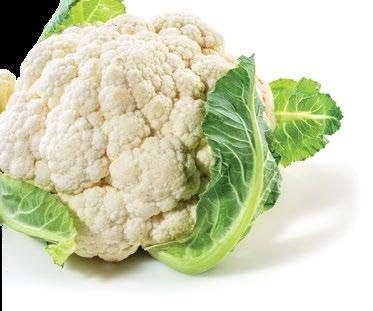
cates harvest planning. “Rain, heat waves, drought and overcast days all influence how quickly or slowly crops mature. Brassicas can mature later than expected or much faster, especially during the summer season.”
This variability means that fixed harvest schedules are increasingly unreliable. Instead, producers must inspect fields frequently and adjust decisions according to real-time crop development.
The specialists agreed that understanding plant growth dynamics is essential. Brassicas are living systems responding continuously to temperature, moisture and stress. Successful harvest timing, therefore, requires observation and flexibility rather than rigid adherence to pre-set dates.
Where quality is most often lost
When the discussion moved to handling and temperature management. They identified the period immediately after cutting as particularly vulnerable.
Bouwer noted that cabbage is relatively resilient when harvested at the correct stage, but warned that losses increase sharply when cooling is delayed. “It is important to avoid harvesting during the hottest parts of the day and then packing the product without cooling it first. Allowing produce to stand in the sun raises respiration rates and accelerates moisture loss.”
Steyn highlighted physical handling as a common weakness. “Bruising, cutting or crushing during harvesting and field packing creates entry points for decay. Transport vibration and poor ventilation compound the problem, particularly when produce travels long distances.”
Kleyn drew attention to cold chain management. “Temperature fluctuations and incorrect humidity levels affect product quality before it reaches the market. Inconsistent cooling allows brassicas to respire rapidly, reducing freshness and shortening shelf life. Once deterioration begins, it cannot be reversed.”
Packhouse practices were also identified as critical. Rough tipping, overfilling crates and stacking under warm conditions all increase mechanical injury. Moisture accumulation within packaging can further encourage disease development. The specialists agreed that quality loss is seldom dramatic but accumulates through repeated small stresses.
Practical measures to reduce losses
So what practical steps can reduce postharvest losses on the farm? The responses reflected a combination of technical and behavioural adjustments.
“Harvest during the cooler parts of the day,” Bouwer advised. Early morning cutting reduces field heat and slows respiration before cooling systems take over. He stressed the importance of minimising the time between cutting and cooling to prevent unnecessary temperature spikes.
Kleyn emphasised immediate cooling as a priority. “Prompt removal of field heat is essential. Cooling slows transpiration and preserves firmness. Where possible, storage temperatures between 0 °C and 5 °C, combined with high relative humidity, help maintain freshness and reduce dehydration.”
Steyn underlined the role of staff training. “Gentle handling is critical. Using sharp knives, trimming carefully and avoiding compression during crate filling reduces bruising.”
He also cautioned against overfilling containers, which increases pressure damage during transport.
Packaging must match both the product and the transport conditions. Ventilated crates allow airflow, while clean containers reduce contamination risk. Pre-cooling trucks and packhouse areas further stabilises the temperature before loading.
Although these measures are not new, their consistent application makes a measurable difference. The specialists agreed that many postharvest losses stem not from lack of knowledge but from lapses in routine.
Communication as a quality tool
Beyond technical controls, the interviews highlighted the importance of communication in protecting value. Vegetables & Fruit asked how improved communication can reduce rejection and increase consistency across the supply chain.
Bouwer emphasised understanding that producers are working with living products. “Proper planning and a clear understanding of plant growth, combined with delivery schedules and market trends, help maintain consistency,” he said. Reliable order agreements reduce last-minute harvesting decisions that compromise maturity standards.
Steyn focused on specification clarity. “Ensuring growers understand retail requirements and quality standards reduces misunderstandings. Regular feedback from buyers or packhouses allows adjustments before issues escalate into rejections.”
Kleyn added that alignment improves operational efficiency. “Clarifying packaging requirements and aligning delivery timelines helps prevent cooling delays. Good communication also ensures uniformity across blocks, reducing confusion about size or maturity.”
Real-time updates about weather impacts, pest pressure or crop progress allow buyers to anticipate supply fluctuations rather than react to surprises. In this way, communication becomes part of quality management rather than a separate administrative task.
Protecting value through integration
These insights from Kleyn, Bouwer and Steyn reinforce that postharvest quality is not protected by a single intervention. It is the result of an integrated system that begins with correct maturity, continues through careful handling and temperature management, and is supported by clear communication throughout the supply chain.
A cabbage harvested at optimal density but left in the sun loses value. A perfectly formed broccoli head, cut too late, loses shelf life. A well-cooled cauliflower bruised during packing becomes vulnerable to decay. Each stage influences the next.
As production margins tighten, these details carry greater weight. Downgrades represent not only lost income but also wasted inputs, labour and water invested throughout the season. In a competitive retail environment, consistency builds trust, and trust secures shelf space.
Brassicas may be grown in the field, but their value is secured in the hours and days that follow harvest. Producers who integrate harvest planning, disciplined handling, reliable cooling and open communication into their systems are better positioned to deliver consistent, market-ready produce.
In modern brassica production, profitability does not end at harvest. It depends on what happens next.
Effect of temperature on brassica crops
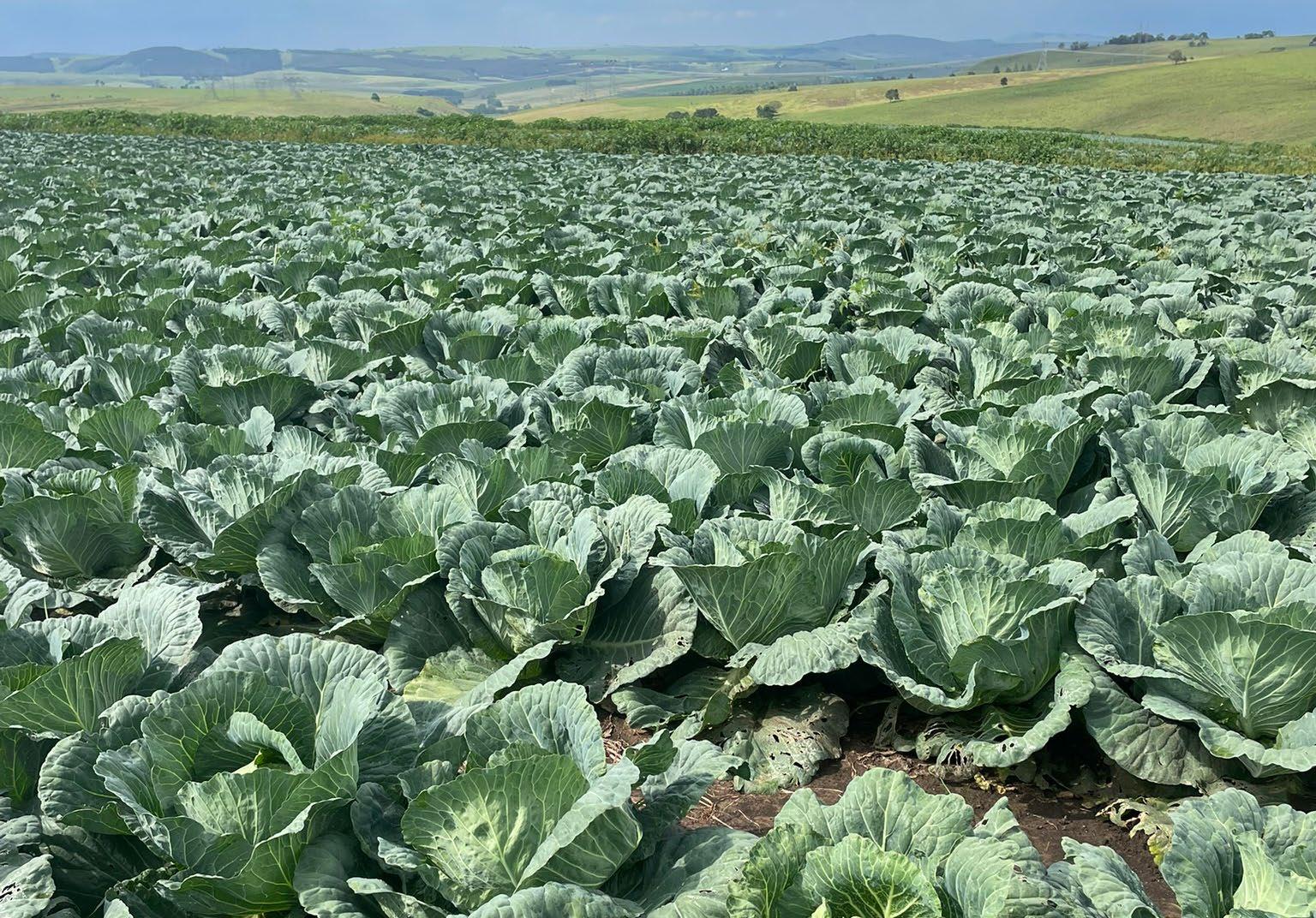
Temperature can play a critical role in the vegetative growth, head formation and quality of brassica crops. Stress from extreme temperatures triggers hormonal and metabolic changes across various growth stages, and plants can respond differently depending on their developmental stage.
Jacques Bouwer SAKATA
Cold temperatures
Cold stress is most damaging to young plants and seedlings, reducing photosynthesis and slowing metabolic activity. The stomata close, causing lower evaporation and decreased water loss, but it also negatively affects photosynthesis as CO2 intake gets limited.
Symptoms of cold stress often include:
• dull, bluish leaves with slight wilting,
• reduced leaf expansion, and
• thicker, tougher leaf tissue.
The practical impact for farmers can include:
• slower growth and delayed maturity,
• lower early biomass affects scheduling for varieties grown for the fresh market, and
• young seedlings may stall during cold snaps, requiring several days to recover, depending on the severity.
Hot temperatures
Heat stress in seedlings can trigger a drastic increase in proline. Proline is a natural stress relief compound that strengthens cell walls and helps the plant to tolerate stress. However, prolonged heat still suppresses photosynthesis and reduces carbohydrate production. Heat stress reduces the photosynthesis activity, which can cause smaller head formation, premature buttoning, loose heads and bracts (small leaves pushing through the head).
The practical impact for farmers can include:
• early heat disrupts plant frame size, reducing head quality later, and
• shortened maturity periods, causing overlapping harvests and bottlenecks in supply planning.
Pest pressure
High temperatures speed up pest life cycles. Diamondback moths, for example, can complete their cycle in less than 7 days during ideal warm conditions. This rapid turnover increases population size and causes resistance to specific active chemicals to build up faster than anticipated.
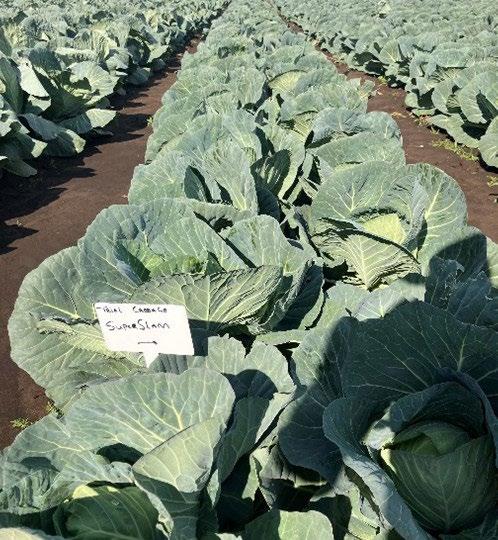
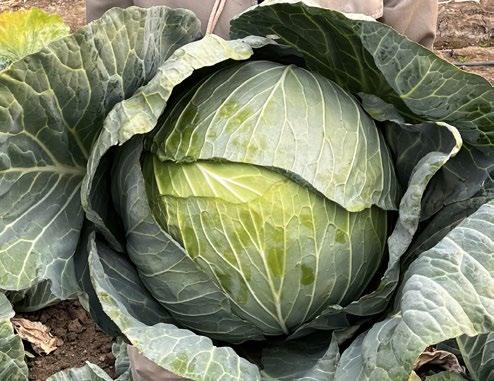
Uniform field of powerslam F1 hybrid cabbage produced in summer.
Superslam F1 hybrid cabbage planting.


Management strategies:
• Constant rotation of the active chemical sprayed.
• Shorten spray intervals as temperatures rise.
• Adopt integrated pest management (IPM) practices to reduce reliance on chemicals.
Disease pressure
Warm, moist conditions allow fungal spores and bacterial pathogens to multiply quickly. This causes high disease pressure, making management extremely difficult and can increase the risk of disease breakdown.
Best practices for farmers:
• Monitor fields closely and identify symptoms early.
• Spray preventatively when temperatures start to get more ideal for disease development.

• Maintain good air movement through correct spacing and field hygiene.
Temperature extremes, cold and hot, pose significant challenges to brassica production. This can have direct effects on plant physiology as well as intensifying pest and disease pressure. Successful management requires proactive monitoring, adaptive scheduling and integrated pest and disease control strategies to maintain yield and quality.
DISCLAIMER: This information is based on Sakata's observations and/or information from other sources. As crop performance depends on the interaction between the genetic potential of the seed, its physiological characteristics, and the environment, including management, Sakata gives no warranty, express or implied, for the performance of crops relative to the information given, nor do Sakata accept any liability for any loss, direct or consequential, that may arise from whatsoever cause. Please read the Sakata Seed Southern Africa (Pty) Ltd Conditions of Sale before ordering seed.


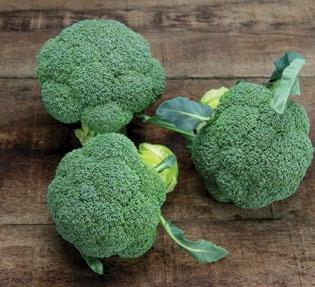





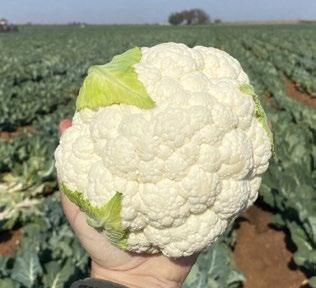



Black rot on a cabbage leaf.
Obelix F1 hybrid cabbage head produced through winter.
Building resilience for macadamias from orchard to market

South Africa’s macadamia industry is entering a decisive phase of development.
With 85 781 hectares macadamia orchards planted and a significant proportion of orchards still approaching full bearing age, national production volumes are expected to increase in the coming seasons. This expansion, however, does not automatically translate into profitability.
As orchards transition into full production, growers face the dual responsibility of stabilising yields while protecting longterm orchard health in an increasingly complex production and market environment.
Macadamia production is characterised by long investment horizons and delayed financial returns. Trees take several years to reach commercial bearing, and corrective management decisions may take multiple seasons to show measurable impact. In this context, risk management is not an optional strategy but a structural requirement.
According to Dr Elrea Strydom, SAMAC research and development manager, orchard maturity significantly shifts management priorities. “As orchards move into full production, the focus shifts from establishment to stabilising yields, improving quality and controlling costs. Growers must now manage mature systems where efficiency, precision and long-term orchard balance become central.”
The industry’s growth phase required expansion and infrastructure development. Its maturation now demands refinement.
Climate variability and orchard performance
Climate-related risk remains one of the most significant challenges in macadamia production. Irregular rainfall patterns, heat stress and unseasonal weather events disrupt flowering, nut set and kernel development. In irrigation-dependent regions, water availability and infrastructure resilience directly influence both short-term production decisions and long-term orchard viability.
Strydom emphasises that climate variability is not a new phenomenon but has intensified in its unpredictability. “Climate variability has increased the adoption of more precise
management practices and agricultural technology. Producers are investing in improved irrigation infrastructure, canopy management and the planting of newer, resilient varieties.”
Rather than responding seasonally to weather extremes, growers are increasingly adopting longer-term orchard design strategies. Soil health management, improved drainage systems and canopy architecture adjustments are being implemented to buffer orchards against temperature and moisture fluctuations.
Climate shifts have also altered pest dynamics. Pressure from key economic pests such as macadamia felted coccid, stink bugs, and nut borer has intensified in some regions.
“These pests place further pressure on production costs and orchard management,” Strydom explains. “The industry has responded by strengthening research and development initiatives and embedding data-driven decision-making into orchard systems.”
Weather patterns influence not only yield potential but also pest life cycles and disease development. In response, monitoring tools and predictive models are becoming more integrated into daily management decisions.
Cost inflation and financial pressure
While climate variability presents biological risk, cost inflation introduces financial vulnerability. Inputs such as fertilisers, labour, fuel, agrochemicals and energy continue to rise, often unpredictably. These costs are largely outside of producers’ direct control and limit the ability to pass expenses through the value chain.
When asked which cost pressures are most difficult to manage at the farm level, Strydom identifies volatility as the primary challenge. “Costs that are outside of a producer’s direct control, such as fertilisers, fuel and energy, are the most difficult to manage. These inputs are essential, yet price fluctuations complicate budgeting and cash flow planning.”
Macadamia orchards cannot simply reduce input use with-
out consequence. Trees respond slowly to nutritional imbalances, and underinvestment may compromise yield for multiple seasons. This delayed response reinforces the importance of strategic budgeting and prioritisation.
Careful agrochemical stewardship, targeted fertilisation and operational efficiency are increasingly necessary to maintain orchard performance without unnecessary expenditure. In a crop with long production cycles, cost mismanagement can echo across several harvests.
Nutrition planning as risk mitigation
Long-term nutrition planning plays a central role in reducing both biological and financial risk. Macadamia trees respond to nutrient inputs over extended periods, meaning deficiencies or excesses may influence productivity for years.
“Macadamia trees respond to nutrition over multiple seasons, so planning is inherently required,” Strydom says. “Annual soil and leaf analysis enables targeted fertilisation, preventing over-application and avoiding long-term yield or ecological impacts.”
Precision nutrition stabilises crop yield, improves kernel quality and protects capital investment. Rather than applying fertiliser reactively, producers increasingly rely on soil, leaf and, where applicable, sap analysis to guide decisions.
Excess fertilisation increases costs without guaranteeing improved performance, while deficiencies reduce nut set and kernel development. Balanced nutrient management, therefore, underpins resilience.
Strydom emphasises that nutrition should be viewed as part of a broader orchard system. “Corrective interventions take time to show results. That is why planning is essential.”
Orchard structure and canopy management
Orchard architecture plays a critical role in resilience. As orchards mature, canopy density increases, affecting light penetration, airflow and microclimate conditions within the orchard.
Pruning strategies that improve airflow reduce disease pressure and support more consistent flowering. “Canopy management is increasingly viewed not only as a yield tool but as a risk mitigation strategy,” Strydom says. Improved light distribution enhances nut set and reduces the likelihood of fungal disease development in humid conditions.
Well-structured orchards also facilitate more efficient pest scouting and targeted interventions. By managing tree height and density, growers improve operational access and spraying efficiency.
These structural decisions influence orchard performance over decades. In perennial systems such as macadamias, architecture determines long-term productivity potential.
Market uncertainty and competitive positioning
Beyond the orchard, market dynamics introduce another layer of risk. While macadamia prices have shown signs of recovery, global supply patterns, exchange rate fluctuations and shifting demand trends continue to influence price realisation.
Kerisha Raghunandan, market access and development manager, explains that global demand for premium nuts remains robust, particularly in value-added segments.
“Market dynamics are evolving, but demand for premium macadamias continues to expand. The focus is not only on
managing risk, but on building resilience and maintaining competitive positioning in premium markets.”
South Africa’s advantage lies in its scale and established best practices. However, scale alone does not guarantee premium pricing. “International buyers prioritise reliability, food safety compliance and consistent quality,” Raghunandan says. “Competitive positioning depends on sustained performance, not single-season success.”
Market diversification efforts, tariff negotiations and valueadd development form part of the industry’s long-term strategy. Producers, however, remain responsible for protecting onfarm quality to support this positioning.
In a volatile global environment, growers must balance short-term production targets with long-term orchard health. Sacrificing tree vitality for immediate yield gains undermines future earning potential.
Data-driven resilience
When asked which strategies most effectively improve resilience in established orchards, Strydom highlights precision agriculture and disciplined recordkeeping.
“Precision agriculture, forward planning and disciplined recordkeeping underpin resilience. By using data from soil and leaf analyses, weather stations, irrigation monitoring and pest scouting records, growers can make informed, timely decisions.”
Accurate recordkeeping enables performance benchmarking and early identification of trends. Financial planning also improves when input use and yield responses are clearly documented.
Data-driven management strengthens operational efficiency, improves responsiveness to climate and pest pressures and supports long-term sustainability. In a crop with long production cycles, historical data becomes a strategic asset.
Viewing orchards as long-term assets
Effective risk management in macadamia production is rarely about a single intervention. Instead, it relies on informed decision-making, long-term planning and the ability to adapt management strategies as conditions evolve.
Strydom emphasises that mature orchards must be viewed as long-term assets rather than short-term yield drivers. “The success of perennial crops depends on stability and strategic planning. Growers who prioritise orchard balance are better positioned to navigate unpredictable conditions.”
Raghunandan adds that sustained premium positioning depends on consistency. “Reliable supply, strong food safety compliance and maintained quality standards are what global buyers trust.”
As South Africa’s macadamia industry moves further into maturity, the emphasis is shifting from expansion to resilience. Growth remains important, but efficiency, stability and alignment between orchard practices and market requirements now define long-term success.
In an environment shaped by climate variability, cost inflation and global competition, the industry’s strength lies in its ability to integrate research, precision management and market strategy. Macadamia production may involve long horizons, but disciplined planning ensures that those horizons remain profitable.
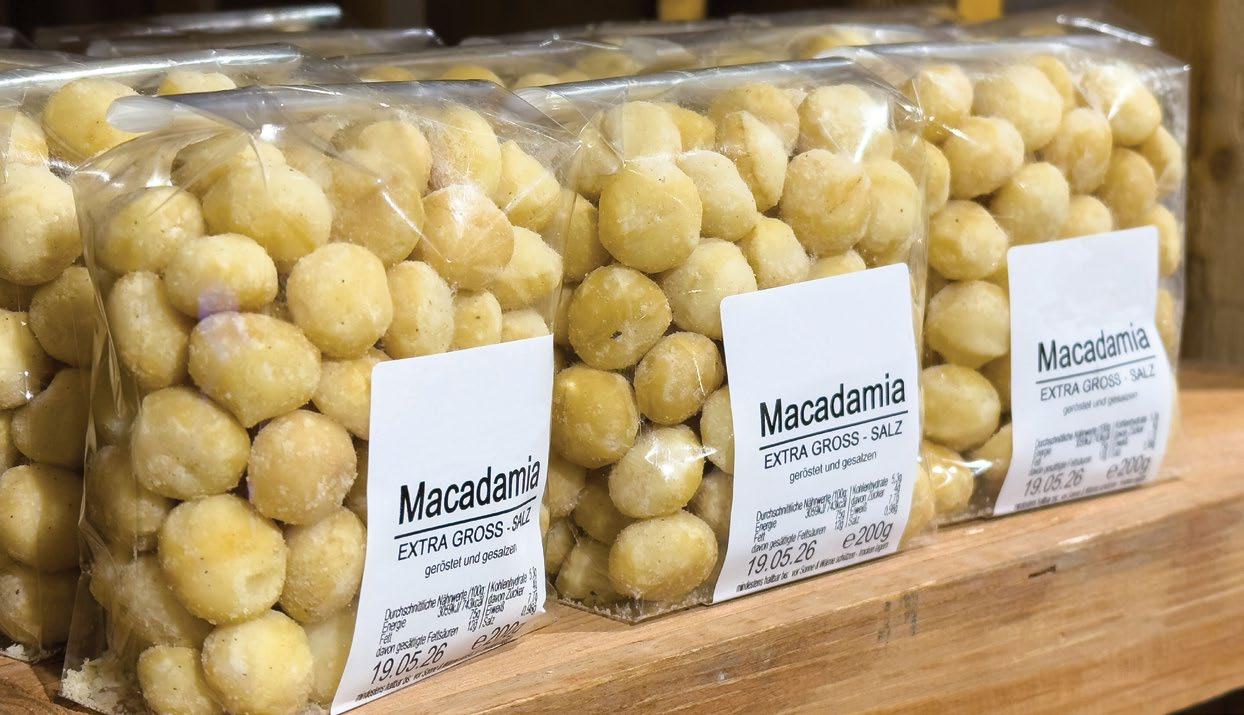
Macadamias in a maturing market
South Africa’s macadamia industry has entered a more measured phase of development.
After years of rapid orchard expansion and record plantings, the focus has shifted from establishment to optimisation.
As macadamia orchards move into full commercial production, producers are placing increasing emphasis on stabilising yields, improving kernel quality and managing costs in a competitive global marketplace. This shift marks an important turning point. Expansion brought scale. Maturity now demands precision.
According to Dr Elrea Strydom, SAMAC research and development manager, orchard maturity fundamentally changes management priorities. “As orchards reach full production, management priorities shift from expansion and establishment to stabilising yields, improving quality and controlling costs. Mature orchards require precise management of nutrition, irrigation, pruning and pest management to maintain efficiency.”
With higher volumes entering the market each season, quality consistency and cost control have become central to sustaining profitability. Producers are no longer measured only by tonnes per hectare, but by their ability to deliver reliable, exportready kernel year after year.
Orchard maturity reshapes management strategy
Young orchards demand investment in infrastructure, canopy establishment and root system development. Once trees enter full bearing, however, the emphasis changes. The goal becomes long-term orchard balance.
“There is greater focus on long-term orchard health, soil management and operational efficiency,” Strydom notes. “At maturity, the orchard must function as a stable, productive system.”
In practical terms, this means tighter nutrient monitoring, more disciplined pruning programmes and careful water management during critical phenological stages such as flowering and nut fill. Mature orchards also present new pest and disease management dynamics, as denser canopies can increase humidity and alter airflow.
Efficiency gains are increasingly data-driven. Soil analysis, leaf analysis and, where applicable, sap analysis guide fertiliser programmes. Irrigation scheduling is refined to respond to soil moisture conditions and climatic variability. These decisions re-
duce waste, improve uptake efficiency and protect root health.
Strydom emphasises that stability in yield is as important as peak performance. “Consistency is key. Sudden fluctuations in yield often point to imbalances in nutrition, water or orchard management,” she says. “The objective is steady, predictable production.”
Nutrition as the foundation of quality
Nutrition plays a central role in both yield stability and kernel quality. As trees mature, nutrient demands evolve, and imbalances can have direct consequences on flowering, nut set and kernel development.
“Macadamia trees have changing nutrient requirements as they move from vegetative growth into full production,” Strydom explains. “Imbalances can affect flower development, nut retention and kernel fill.”
Precision fertilisation programmes are therefore essential. Well-managed nutrient applications support steady vegetative growth while ensuring adequate energy allocation to nut development. Soil health underpins this process. Poor soil structure or nutrient deficiencies restrict uptake, regardless of fertiliser volume.
Strydom stresses that fertilisation decisions should be guided by analysis rather than assumption. “Well-managed fertilisation programmes, informed by soil and leaf data, support optimal nut development and kernel quality,” she says.
Excessive nitrogen, for example, may encourage vegetative growth at the expense of nut fill, while insufficient potassium can influence kernel size and quality. Micronutrient imbalances may also reduce overall tree performance.
In a market that rewards premium quality, precision nutrition is not optional. It forms the base of a stable production system.
Water management under climatic pressure
Water management is equally critical, particularly in a context of increasing climatic variability. Macadamia trees are sensitive TO PAGE 22
How Kelpak enhances physiological performance in macadamia orchards
Kelpak®, a seaweed biostimulant derived from Ecklonia maxima harvested on the West Coast of South Africa, is manufactured using a cold Cellburst extraction method that preserves naturally occurring growth-promoting compounds. These compounds stimulate root initiation, enhance shoot development, and improve overall tree vigour.
Macadamia yield is determined during key physiological stages. This includes root establishment, flowering, pollen tube growth, nut set, and early nut development. Environmental stress during these stages, particularly heat and moisture fluctuations common in South Africa’s production regions, can significantly increase nut drop and reduce final yield. and Mpumalanga showed yield increases ranging from 13% to 23% above untreated controls.
In macadamias, improved root architecture enhances nutrient and water uptake efficiency, supporting trees during critical reproductive stages.
“Supporting the tree during early reproductive development is critical,” says Linda Greyling, head of technical support at Kelpak. “By improving root growth and nut retention, Kelpak enhances the tree’s ability to translate flowering into harvestable yield.”
Recommended applications include treatments at tree establishment, 20% bloom, nut set, early nut development, and
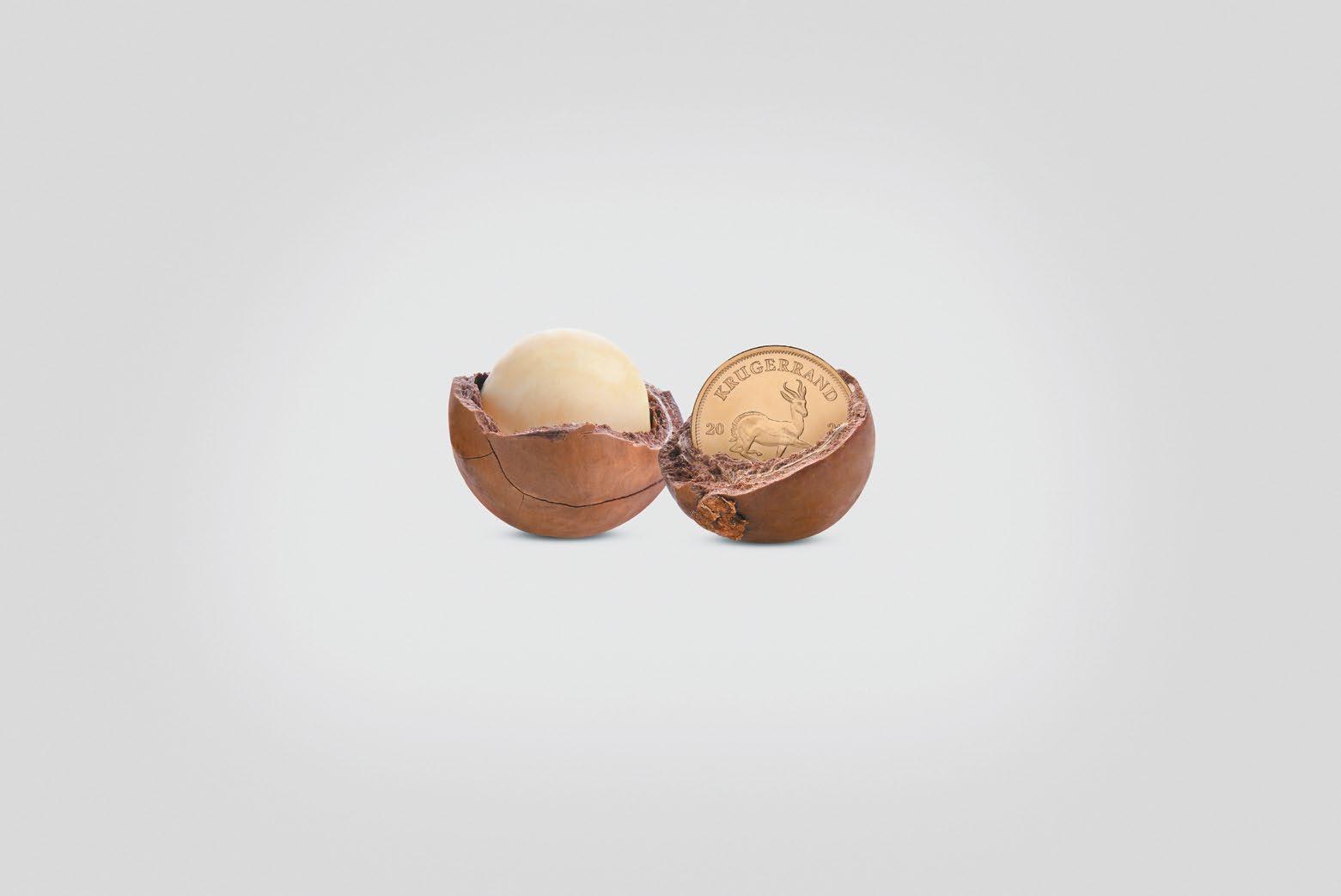
Less drop. More profit.
Kelpak, a natural seaweed biostimulant, is scientifically proven to benefit pollen tube development and germination leading to improved nut-set and nut-retention. This results in more nuts and a higher kernel weight per tree. In a nutshell, that means significantly increased profits for you the grower.

Macadamias in a maturing market
to prolonged water stress, especially during flowering and nut development. At the same time, excessive moisture can lead to root health issues and reduced productivity.
“Efficient irrigation systems and monitoring tools are essential in mature orchards,” Strydom says. “Producers must respond to variable climatic conditions while also meeting environmental sustainability requirements.”
Water stress during flowering can reduce nut set, while inadequate irrigation during nut fill affects kernel development. Conversely, waterlogging compromises root oxygen availability and can predispose orchards to disease.
The industry’s growing emphasis on sustainability adds another layer of complexity. Water use efficiency is increasingly scrutinised by both regulators and buyers. Precision irrigation, therefore, supports both orchard performance and compliance with sustainability expectations.
Pest and disease management in dense canopies
As orchards mature and canopy density increases, pest and disease dynamics can shift. Insect pests affecting nuts and foliage require careful monitoring, particularly where regional expansion has altered pest pressure patterns.
Strydom explains that targeted interventions are preferable to blanket applications. “Integrated pest management remains essential. Monitoring allows for strategic interventions rather than unnecessary applications.”
Orchard hygiene and airflow also influence disease incidence. Pruning programmes that improve light penetration and air movement reduce humidity within the canopy, lowering disease pressure.
Maintaining orchard balance, through nutrition, irrigation and canopy management, ultimately supports resilience. A stressed tree is more vulnerable to pest and disease attack, making preventative management central to long-term stability.
Market demands redefine quality benchmarks
While orchard management underpins production, market forces define commercial success. As global supply expands, buyers have become increasingly selective.
Kerisha Raghunandan, market access and development manager, explains that export performance is shaped by multiple quality parameters. “Export performance in the macadamia industry is driven by physical quality, food safety compliance and supply reliability.”
Kernel consistency remains one of the most visible quality markers. “Larger whole kernels typically command premium prices in retail and ingredient markets,” Raghunandan explains. “Uniformity allows processors and retailers to meet consumer expectations consistently.”
Defect levels are equally influential. “Low percentages of unsound, rancid or insect-damaged kernel are critical for price realisation. Even small increases in defect rates can reduce overall consignment value.”
Moisture management during processing is another decisive factor. “Proper drying, typically between 1,5 and 1,9 percent moisture, ensures shelf-life stability and protects against mould
development during long-distance shipping,” she says.
Food safety compliance is non-negotiable. Premium markets such as the European Union and the United States require strict adherence to maximum residue limits, microbiological standards and export hygiene regulations. Traceability systems and certifications such as GLOBAL GAP and HACCP reinforce buyer confidence.
“Consistency of supply is just as important as product specification,” Raghunandan says. “International buyers value reliability at scale.”
In competitive export markets, quality is measured not only by individual shipment performance but by sustained reliability over multiple seasons.
Linking orchard practices to market outcomes
The connection between orchard management and export performance is direct. Nutrient imbalances affect kernel fill. Poor irrigation timing influences nut development. Inadequate pest control increases defect levels. Each management decision ultimately influences market outcomes.
“In premium markets, export success is not determined by one parameter alone,” Raghunandan explains. “It is the ability to deliver consistent, safe, well-sized, defect-free kernel and value-add products season after season that protects South Africa’s premium position.”
Strydom echoes this integrated perspective from the orchard side. “Data-driven decision-making and consistent execution are essential. Mature orchards must be managed proactively, not reactively.”
This alignment between farm practice and market expectation defines the industry’s current phase. Rapid expansion has given South Africa a global scale. Precision management will determine long-term competitiveness.
A more disciplined era
South Africa’s macadamia industry benefits from established production knowledge, large-scale processing capacity and proven industry best practices. However, global competition and fluctuating prices demand greater efficiency than ever before. The era of expansion required vision and investment. The era of maturity requires discipline.
Producers who integrate precise nutrition, efficient irrigation, structured canopy management and targeted pest control into a cohesive orchard system are better positioned to stabilise yields. Those who align production practices with export specifications, food safety standards and traceability requirements strengthen market access and price resilience.
As Strydom concludes, “Successful macadamia production increasingly depends on integrated orchard management and long-term planning.”
Raghunandan adds that protecting South Africa’s competitive premium position depends on consistency. “Reliable supply, strong food safety compliance and sustained quality are what global buyers trust.”
In a maturing industry, growth alone is no longer enough. Stability, efficiency and alignment between orchard and market now define success.
When legislation changes, stewardship remains the foundation
Stewardship in agriculture extends beyond legal compliance, it remains a professional and moral responsibility.
Arecent ruling by the Western Cape High Court means that growers may currently purchase and apply certain restricted agricultural remedies without being registered as pest control operators (PCOs). The development places renewed focus on responsibility across the agricultural value chain, says Stefan van Dyk, national relationship manager at InteliGro, a South African provider of integrated crop solutions.
“Stewardship in agriculture requires a professional commitment to safeguarding people’s dignity and lives, where safety and responsibility must always take precedence over financial considerations,” Van Dyk says.
Van Dyk regards responsible pest control as a cornerstone of stewardship. “Legislation may change, but responsibility remains constant. This serves as an important reminder in a context where inadequate application of legislation, as well as the unsafe handling of hazardous substances, can have serious consequences.”
The court ruling in context
Recently, the High Court ruled that restricted agricultural remedies listed in the 2023 regulations are not automatically included in the restricted-use agricultural remedies referred to in the 2011 PCO regulations, and are therefore not subject to regulatory control under the PCO regulations.
Growers may therefore, at present, purchase and apply certain of these restricted agricultural remedies without PCO certification, and distributors are not required to request a PCO certificate from growers. The State may amend the legislation to address the ambiguity between the terms, a process that requires public participation and will take time.
Restricted agricultural remedies remain classified as Group 1, Category B hazardous substances in terms of Act 15 of 1973 (Hazardous Substances Act) and must continue to be sold, stored and used in accordance with that legislation.
Although the PCO requirement has been temporarily relaxed, CropLife South Africa has requested its members to continue selling restricted agricultural remedies exclusively to bona fide growers who declare that they understand the associated risks and will act in accordance with the intent of the PCO regulations.
InteliGro, as a member of CropLife South Africa and an advocate of sound stewardship, supports this approach. “We continue to encourage growers to complete the PCO course and to register as PCOs,” says Van Dyk. “In the interim, every grower purchasing these products is requested to complete a declaration, which is retained on file for control and audit purposes.”
Compliance
According to Van Dyk, safe handling remains the priority, irre-
spective of the current uncertainty. “Many countries to which South Africa exports already impose stringent import requirements that in some cases exceed local legislative requirements. This underscores the need to handle products of this nature with the utmost care in order to support sustainable food production.”
He points to the complexity of the regulatory environment, including products that may fall under different or overlapping regulatory frameworks, differing international classification systems, the transition from the World Health Organisation (WHO) colour band classification to the Globally Harmonized System (GHS) labelling system, and product labels that contain statutory information which cannot simply be amended.
“It is significantly more complex than it was 10 years ago. Even the classification of a single product requires careful legal and technical interpretation. Such interpretation must therefore be as clear and workable as possible,” Van Dyk says.
InteliGro’s approach is to equip Crop Advisors thoroughly and to provide comprehensive support to growers. “Our recent initiative to train growers and advisors in alignment with the legislation confirms that our commitment to compliance extends to the farm level,” says Van Dyk. “As in the past, additional training will continue to be facilitated where required.”
Other legislation, including labour and occupational health legislation, remains applicable. This carries implications for employer responsibilities and potential civil or criminal liability.
Van Dyk notes that personal protective equipment is not a mere formality. “Gloves are not provided to keep you warm, but to protect you from exposure. In today’s environment, instructions must be clear, unambiguous and complete to protect both the employee and the employer.
“Products have previously been withdrawn from the market by the Registrar. Responsible use is therefore non-negotiable. A long-term approach that focuses on producing food sustainably while remaining internationally competitive is essential,” Van Dyk says.
Training as a preventative measure
A new compliance manual for InteliGro’s 103 crop advisors and depots nationwide places strong emphasis on pest control by competent operators.
“Our objective is to implement training supported by practical manuals, manuals that highlight best practice and explain complex legislation in plain language,” says Van Dyk. “Advisors should be empowered to make a tangible difference within their own communities. In a sector where informed decisions have direct consequences, knowledge remains a powerful instrument, and responsibility a non-negotiable principle.”
Tweeledige beskerming teen lepidoptera-larwes
Plaagweerstand werk amper soos om met beeste te teel, behalwe, in hierdie geval kies die produsent “goeie plaaggenetika” deur herhaaldelik dieselfde plaagdodergroep toe te dien.
Elke keer as die plaagdoder gespuit word, vrek al die vatbare individue in die populasie en net die “sterkes” oorleef. Mettertyd bly slegs die sterkste individue in die populasie oor en alle plaagdoders wat aan die plaagdodergroep behoort sal nie meer doeltreffend genoeg wees nie.
Johan Marais
PRODUKBESTUURDER BIORASIONALE
PRODUKTE BY PHILAGRO
Die landboubedryf moet die lewensduur van staatmaker plaagdoders prioritiseer. Philagro SA is trots om twee moontlikhede aan te bied wat hiermee kan help, naamlik Dipel® DF en SumiPleo®
DiPel® DF is ’n organies gesertifiseerde bio-insekdoder vir die beheer van verskeie lepidoptera-larwes (wurms). Dit is uiters selektief vir lepidoptera-wurms. DiPel® DF is die oorspronklike Bacillus thuringiensis, var. kurstaki, wat sedert 1970 op die hoogste standaarde deur Valent BioSciences in die VSA geproduseer word.
Die middel bestaan uit ’n eiesoortige kombinasie cryotoksiene wat binne kristalle bevat word. Die kristalle los op wanneer dit in kontak kom met die wurm se alkaliese (pH 9) maagsappe. Klein gaatjies ontstaan in die maagwand en die maagsappe met Bt-spore en ander onsuiwerhede word in die
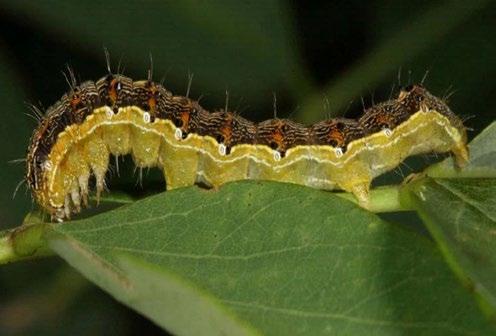
1. Aktiewe bestanddeel.
Tabel 2. Voordelige geleedpotiges wat nie deur Pyridalyl geaffekteer word teen 100 mg a.i./L nie.
Wetenskaplike naam: Tipe voordelige insek Instar* getoets Toetsmetode
Trichogramma japonicum Eier parasitiese wespe van lepidoptera Volwassene Blaarbespuiting Chrysoperla carnea
Predatoriese Chrysopidae
Harmonia axyridis
L2-3 Insek doop
Predatoriese Coleoptera L2-3 Blaarbespuiting Orius sauteri
Predatoriese Hymenoptera Volwassene / Nymph Blaarbespuiting
Phytoseiulus persimilis Predatoriese myt Volwassene Blaarbespuiting
Apis mellifera
Bombus terrestris
* L2-3 beteken 1ste tot 2de instar larwe
Bestuiwer
Bestuiwer
Werker Direkte bespuiting
Werker Direkte bespuiting
NA BLADSY 26
Philagro 1. Afrika bolwurm (Helicoverpa armigera).
Tabel
Unieke chemie. Unieke voordele. SumiPleo®
SumiPleo® word reeds wyd vertrou as effektiewe alternatiewe chemie vir weerstandsbestuur van Lepidoptera plae in Suid-Afrika. Beheer van Aartappelmot en Tuta absoluta in aartappels, Afrika bolwurm en Tuta absoluta in tamaties, Ruitrugmot in koolgewasse asook Afrika bolwurm in blaarslaaisoorte is geregistreer. Registrasie vir die beheer van Herfskommandowurm (Spodoptera frugiperda), ’n indringerplaag op mielies en suikermielies is ook nou beskikbaar. ‘n Afname in skade as gevolg van Liriomyza huidobrensis en Liriomyza trifolii op aartappels, asook Liriomyza trifolii en Chrysodeixis acuta op tamaties kan verwag word met die gebruik van SumiPleo®.
VERSTANDIGE KEUSE
• Unieke chemiese molekuul (Pyridaliel dichloropropeen derivaat), met ’n nuut geïdentifiseerde metode van werking wat nie met enige ander bestaande aktiewe bestanddeel gedeel word nie. Geen kruisweerstand met ander chemiese groepe is tans bekend nie.
• ’n Kontak- en maaginsekdoder in ’n emulgeerbare konsentraat-formulasie.
• SumiPleo® is aktief teen alle larvale instars. Kort ná inname (3 tot 4 uur) staak teiken-larwes met vreet.
• Dit het byna geen nadelige impak op voordelige organismes soos roofmyte, wespes, voordelige kewers, erdwurms of bestuiwers soos bye nie.
• SumiPleo ® benodig nie bykomende bevorderings- of kleefmiddels nie. Dit het uitstekende reënvastheidvermoë sodra die spuitmengsel op die teikenplant droog geword het.
• SumiPleo® is ideaal vir gebruik in ‘n Geïntegreerde Plaagbestuur Strategie. DiPel® DF en Florbac® WG, Philagro SA se uitstaande Bacillus thuringiensis aanbiedings, maak uitstekende biologiese vennote met die gebruik van SumiPleo®
Vir meer inligting oor SumiPleo®, gesêls vandag nog met jou naaste Philagro-deskundige.
LEES DIE ETIKET VOOR GEBRUIK. DIPEL® DF (Reg. Nr. L6441, Wet Nr. 36 van 1947) bevat Bacillus thuringiensis, var kurstaki (Bakterië) (32 000 IE/mg). Hierdie produk is nie geklassifiseer as gevaarlik volgens GHS nie. FLORBAC® WG (Reg. Nr. L5531, Wet Nr. 36 van 1947) bevat Bacillus thuringiensis, var aizawai (Bakterië) (15 000 IE per mg). WAARSKUWING: Veroorsaak ernstige oogirritasie. Skadelik vir waterlewende organismes. SUMIPLEO® (Reg. Nr. L8377, Wet Nr. 36 van 1947) bevat Pyridaliel dichloropropeen derivaat (500 g/L). GEVAAR: Mag dodelik wees indien ingesluk en in lugweg beland (aspirasiegevaar). Mag allergiese velreaksie veroorsaak. Veroorsaak oogirritasie. Mag slaperigheid of duiseligheid veroorsaak. Baie giftig vir waterlewende organismes met langdurige gevolge. DiPel® en FlorBac® is geregistreerde handelsmerke van Valent BioSciences LLC, Libertyville, VSA. SumiPleo® is ‘n geregistreerde handelsmerk van Sumitomo Chemical Company, Tokyo, Japan.
Philagro Suid-Afrika (Edms) Bpk l Reg. Nr.: 98/10658/07
PostNet Suite #378, Privaatsak X025, Lynnwoodrif 0040
Pretoria: 012 348 8808 l Somerset Wes: 021 851 4163 www.philagro.co.za
Tindrum
Sakata Farmers’ Days 2026 draws strong grower engagement
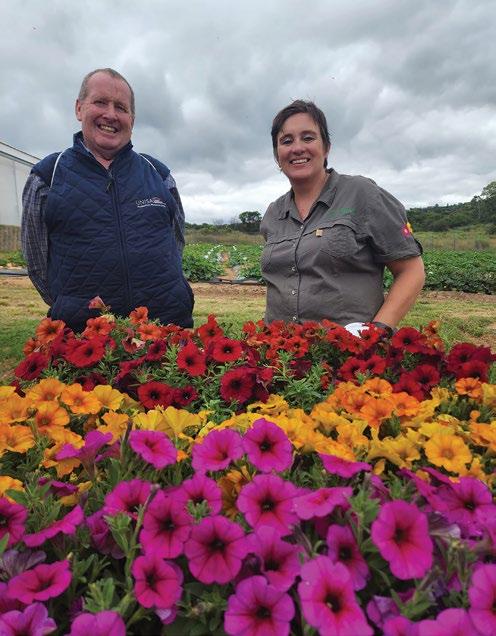
Sakata Seed Southern Africa recently hosted its bi-annual Farmers’ Days event, bringing together vegetable producers, technical specialists and industry partners for several days of field tours, variety demonstrations and grower engagement. The event was held at the Sakata facilities in Lanseria, Gauteng.
Arecent Across the four days, growers from across Southern Africa and the world converged on the Lanseria site to explore Sakata’s broad range of vegetable seed varieties, observe performance trials and engage directly with seed specialists. The event had strong participation with well over 900 visitors, of which 60 were international guests. There was lively discussion around varietal performance, agronomic best practices and emerging market demands.
The focus of the event was on creating meaningful inter-
Pierre Adriaanse (UNISA) and Rina Aucamp, Sakata professional flowers sales representative.
Tweeledige beskerming teen lepidoptera-larwes
wurm se “buikholte” vrygelaat. Dit veroorsaak sepsis en die wurm verkleur bruin en vrek. Die wurm hou binne ongeveer drie ure op met voeding.
DiPel® DF se etiket dui aan dat dit 32 000 IU/mg aktiewe bestanddeel bevat, terwyl die biologiese kwaliteitstoets aandui dat daar in werklikheid 37 320 IU/mg is (Tabel 1). Dit is ongeveer 23% meer aktiewe bestanddeel as wat nodig is. Gevolglik verskaf Philagro ‘n produk wat van hoër gehalte is as wat die produsent verwag.
Voordat die produk in ’n tenkmengsel gegooi mag word, moet die spuitmengsel eers tot by ’n pH-waarde minder as 7 gebuffer word. Dit verhoed dat die cryo-kristalle nie reeds binne die spuittenk oplos en die Bt-spore vroegtydig vrystel nie, wat verlaagde doeltreffendheid tot gevolg sal hê.
’n Goeie spanmaat om DiPel® DF in ’n spuitprogram mee af te wissel is SumiPleo®. Dit is ’n eiesooritge chemiese middel omdat dit heeltemal anders werk as enige ander beskikbare chemiese plaagdoder.
SumiPleo® is ’n insekdoder met die aktiewe bestanddeel Pyridaliel (dichloropropeen derivaat) 500 g ai/L. Navorsing het vasgestel dat dit ’n beperkende uitwerking het op die produksie van proteïene in selle. Geen ander produk werk op hierdie manier nie, en maak SumiPleo® gevolglik die perfekte
produk om plaagweerstand mee te bestuur.
SumiPleo® het ‘n translaminêre aksie, wat beteken dat dit deur die dikte van die blaar translokeer om ook aan die onderkant beskerming te bied, waar die spuitnewel nie noodwendig kan uitkom nie. Goeie bedekking van die teiken-oppervlakte is uiters belangrik vir die maksimum uitwerking van die translaminêre aksie. Die feit dat SumiPleo® byna geen uitwerking het op voordelige insekte soos parasitiese wespes, netvlerkies, predatoriese myte, heuning- en hommelbye asook spinnekoppe nie (Tabel 2), maak dit die perfekte spanmaat om met DiPel® DF te kombineer in ’n geïntegreerde plaagbeheerprogram op plase waar verlaagde sensitiwiteit teen ouer chemiese plaagdoders waargeneem word.
LEES DIE ETIKET VOOR GEBRUIK. | DIPEL® DF | Reg. Nr. L6441, Wet Nr. 36 van 1947 | Bacillus thuringiensis, var kurstaki (Bakterieë) (32 000 IE/mg) | Hierdie produk is nie geklassifiseer as gevaarlik volgens GHS nie. | Philagro SA (Edms) Bpk. | Reg. Nr. 1998/010658/07 | Postnet Suite #378, Privaatsak X025, Lynnwoodrif 0040 | Tel: 012 348 8808.
LEES DIE ETIKET VOOR GEBRUIK. | SUMIPLEO® | Reg. Nr. L8377, Wet Nr. 36 van 1947 | Pyridaliel dichloropropeen derivaat (500 g/L) | GEVAAR | Mag dodelik wees indien ingesluk en in lugweg beland (aspirasiegevaar). | Mag allergiese velreaksie veroorsaak. | Veroorsaak oogirritasie. | Mag slaperigheid of duiseligheid veroorsaak. | Baie giftig vir waterlewende organismes met langdurige gevolge. | Philagro SA (Edms) Bpk. | Reg. Nr. 1998/010658/07 | Postnet Suite #378, Privaatsak X025, Lynnwoodrif 0040 | Tel: 012 348 8808.
VANAF BLADSY 24
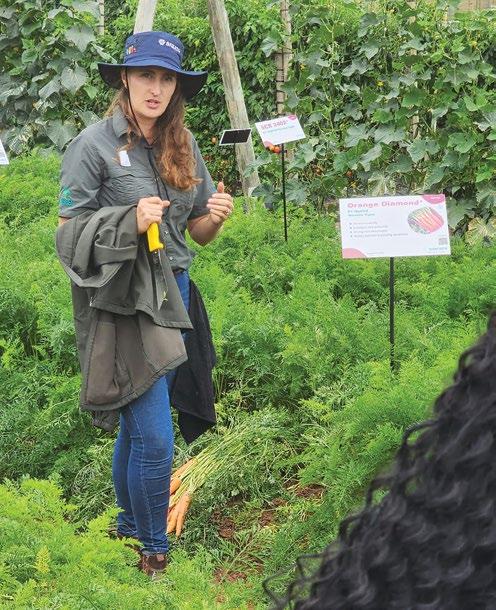
actions between Sakata’s research and product development teams and the farmers who grow and market vegetable crops commercially. Attendees were introduced to proven commercial varieties, as well as new and upcoming lines that are being trialled for performance under local conditions. These included hybrids suited for fresh markets, processing, long-distance transport and climatic variability, all areas of keen interest in South Africa’s diverse production landscapes.
Grower engagement formed a key part of the event’s success. In informal exchanges shared by participants on social media, visitors emphasised the value of being able to discuss plant performance directly with Sakata agronomists and product specialists. Many growers also highlighted the opportunity to compare varieties side by side, ask questions about seed traits and suitability and forge technical relationships that support decision-making during upcoming planting seasons.
The 2026 Farmers’ Days event builds on Sakata’s long history of grower engagement. Social media response and consistent participation from commercial producers suggest that the event was both well supported and impactful. Growers used the platforms to share insights on how specific Sakata varieties perform in their regions, reflect on pest and disease pressures, and compare notes on irrigation, crop scheduling and market preferences, all integral factors in South Af rican vegetable production decision-making.
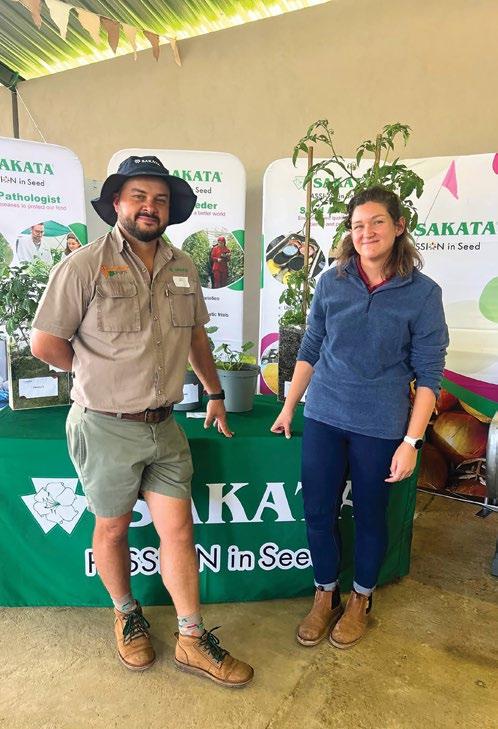
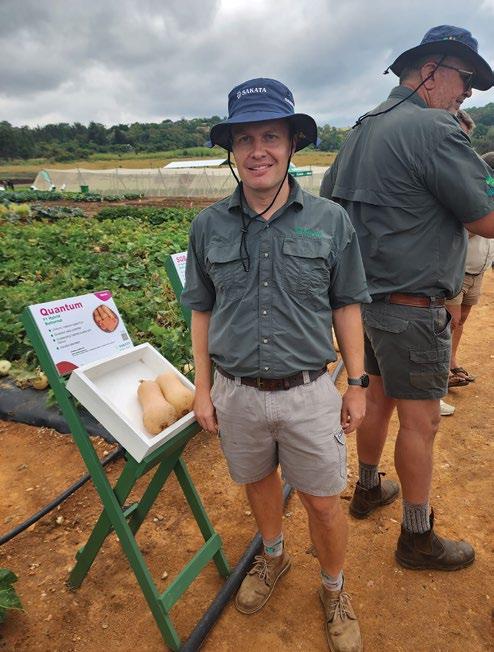
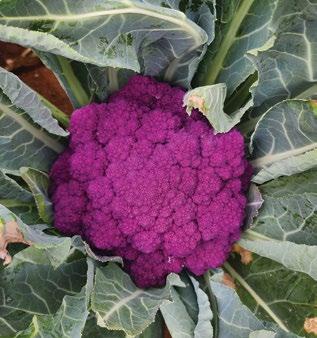
Almari Haupt, Sakata root crop specialist.
Jafre Marais, Sakata professional vegetables sales representative and Esna van Zyl, Sakata plant pathology manager.
André de Villiers, Sakata cucurbit specialist.
Cauliflower, Purpurina* (experimental variety) –purple cauliflower.
Botswana lifts the ban on vegetable imports from South Africa
The decision by the leadership in Botswana to lift the ban on vegetable imports from South Africa is encouraging. The new administration under President Duma Boko aims to ensure that the people of Botswana have access to high-quality agricultural and food products.
Wandile Sihlobo AGBIZ
Consumers in Botswana will now have access to betterpriced and high-quality vegetables from South Africa. Recently, South Africa’s vegetables were deflated by -2,6%.
Meanwhile, in Botswana, vegetable price inflation remained in double digits. This reflects the challenges households faced in accessing affordable vegetables and the potential benefits of improved price stability in the coming months.
The process of lifting the ban on vegetable imports from South Africa will take place in two phases. In phase one, import restrictions were lifted immediately on vegetables such as turmeric, patty pan, pumpkin, sweet potatoes, green peas, mushrooms and eggplant, among other products.
In phase two, the ban will be lifted on beetroot, butternut, onions, tomatoes, sweet pepper, potatoes and watermelons, among other products.
Botswana’s ambition to boost agricultural production where land capability permits is recognised and should be supported. There are, however, more effective ways to strengthen domestic production without banning imports from South Africa. Botswana could benefit from some of South Africa’s technologies to improve its agricultural sector.
There are already examples where countries in the region benefit from South Africa’s agricultural technologies. A case in point is the citrus industry, where research is largely conducted in South Africa and shared with members of the Citrus Growers’ Association of Southern Africa. Similarly, South Africa has imported vaccines for the livestock industry from Botswana in recent months.
These examples illustrate how cooperation can contribute to effective regional agricultural development. Going forward, each country’s approach
should prioritise communication about national ambitions rather than trade-distorting mechanisms that undermine consumer welfare. At the same time, South Africa, as a significant agricultural producer in the region, should continue to broaden export markets in regions such as Asia and the Middle East.
Export growth in the coming years should focus on markets in the Middle East while maintaining access to existing markets. As Southern African countries expand their agricultural production, South Africa should continue to broaden access to new regions with potentially stronger demand. Achieving this will require time, particularly in the current climate of global trade fragmentation.
A similar approach from Namibia is also important. Namibia still maintains various restrictions on vegetable imports from South Africa. Following Botswana’s policy approach and lifting these restrictions would also benefit consumers in Namibia.
Ministers of agriculture in the region should also encourage knowledge sharing among agricultural stakeholders. This would enable countries planning to expand production in the coming years to access technologies and expertise more easily.
If any of the Southern African Customs Union (SACU) countries believe their agricultural industries are under pressure from exports from South Africa, clear communication should take place so exporters can allow space for domestic supply. Regional agricultural collaboration can be strengthened without trade confrontation.

Wandile Sihlobo
Overall, the decision by Botswana’s leadership to lift the ban on vegetable imports from South Africa, and the speed with which this action will be implemented, is commendable. Continued efforts to strengthen regional agricultural cooperation will remain important, while avoiding unnecessary barriers to trade in the future. Namibia, adopting a similar approach, could further support regional food security.
SA se avokadoproduksie kan floreer danksy omvattende navorsing
Die toenemende mededinging in die avokadobedryf noodsaak volgehoue navorsing om die Suid-Afrikaanse produksie relevant en volhoubaar te maak, sê die voorsitter van die Suid-Afrikaanse Avokadokwekersvereniging (SAAKV), Hans Boyum. Die navorsing fokus onder meer op doeltreffende produksie, vrugkwaliteit na oes en beperkings met marktoegang.
Boyum het by die SAAKV se navorsingsimposium op Tzaneen die vereniging se waardering betuig vir die bedryf se ondersteuning van navorsing en gesê daar rus ‘n groot gewig op die kwekersvereniging se skouers, ook om hul navorsingsvermoë te kan uitbrei.
Die kwekersvereniging beywer hulle vir die winsgewendheid en volhoubaarheid van avokadoverbouing en voorsien daarom tegniese inligting aan produsente en befonds toepaslike tegniese en marknavorsing. Hulle voorsien markinligting en ontwikkel die plaaslike verbruik met promosieveldtogte. Die behoud van bestaande markte en toegang tot nuwe markte is ‘n fokuspunt en die vereniging skakel met die regering en ander plaaslike en internasionale rolspelers.
Tydens die simposium het navorsers verslag gedoen van hul bevindings van gekeurde projekte om die SAAKV se doelwitte te kan nakom. Projekte word onder meer bepaal volgens probleme wat produsente ondervind en in studiegroepe bespreek. Dit sluit navorsing oor entomologie in die bedryf, hortologie, patologie en na-oeskwaliteite van avokado’s in.
Navorsingsverslae
Met navorsing om ‘n maatstaf van verliese vir produsente te kan bepaal het Donovan van Tonder van Source Bl onder meer bevind dat afgradering in die kwaliteit van die meeste avokado’s oor die algemeen veroorsaak word deur kleiner vrugte, sonbrand en wind- en netskade. Sy navorsing is in die produksiestreke van Letaba, Mpumalanga, KwaZulu-Natal en die Wes-Kaap gedoen. In die Letaba-streek was toenemende insekskade by Levubu en
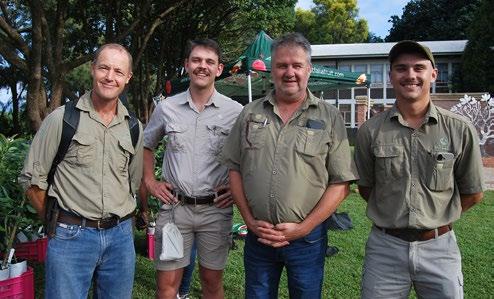
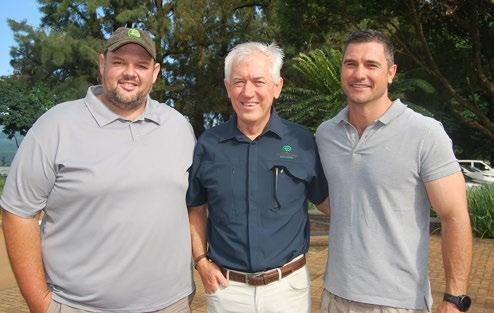
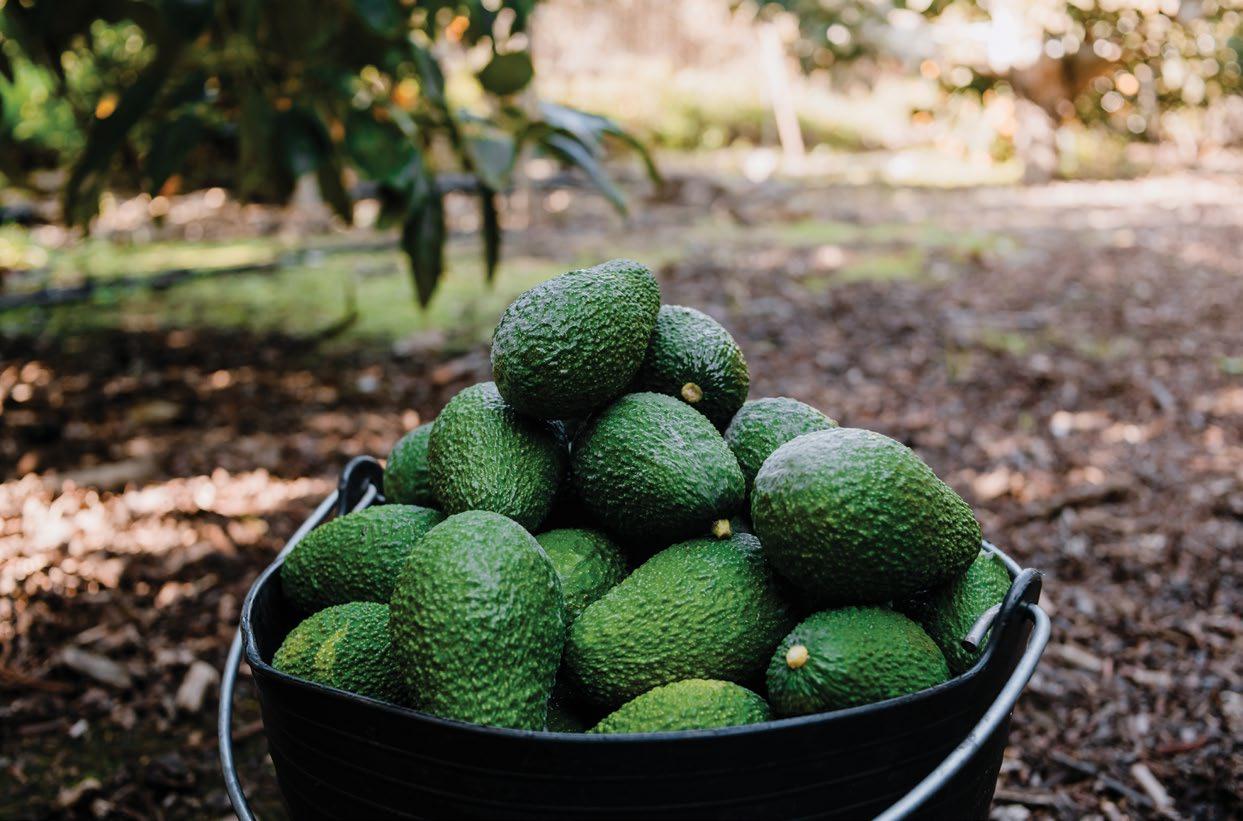
Henk Kuperus, Livan van Zyl, Skip Scheepers en Sas van der Merwe van Atlas organies.
Piere Naudé, Kyle Burelli en Trevor Dukes.
NA BLADSY 30
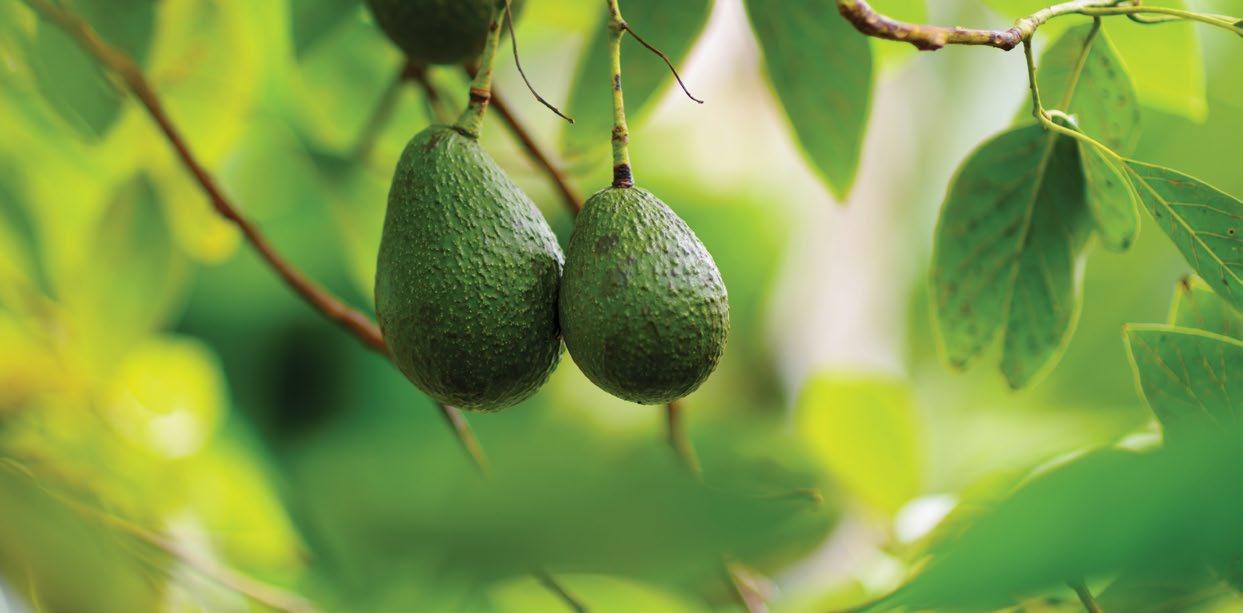
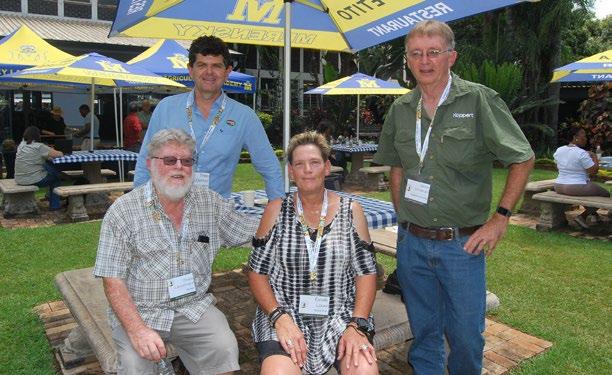

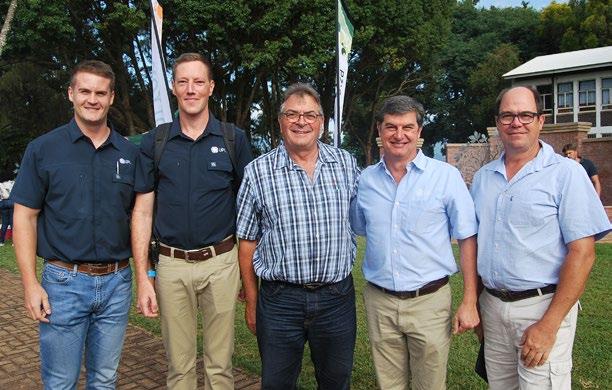
VANAF BLADSY 29 SA se avokadoproduksie kan floreer danksy omvattende navorsing
klein vrugte kommerwekkend. Ook in KwaZuluNatal was insekskade ‘n bekommernis.
Kortstondige omgewingsveranderings wat deur weerstoestande veroorsaak word beïnvloed die kwaliteit van stuifmeel en die tye wat avokado’s blom, het Michiel Bruggeman van die Bee-Tech Group bevind. Volgens hulle navorsing het temperatuur die grootste uitwerking op stuifmeelkwaliteit en blomtye. Die wisseling van omgewingsfaktore vir kort tye speel volgens Bruggeman ‘n belangrike rol in die regulering van verskeie reproduktiewe fases van tipe A-avokodokultivars.
Die avokadobedryf word beperk deur ‘n tekort aan jong bome weens die ondoeltreffendheid waarmee plantvermeerdering volgens tradisionele metodes gedoen word en die vatbaarheid vir siektes by sulke plante. Navorsers van die Universiteit van Pretoria onder leiding van prof Elsa du Toit ondersoek die gebruik van weefselkulture vir die massaproduksie van siektevrye avokadoboompies wat geneties eenvormig is. Die resultate het reeds getoon dat bottelnekke in plantgesondheid, doeltreffende vermeerdering en besmettingsbeheer as beginsel in alle fases van weefselkultuur aandag gekry het.
Met die uitbreiding van Suid-Afrika se avokadoproduksie na die Suid-Kaap is eiesoortige inligting nodig weens klimaatsverskille met die van noordelike produksiestreke. Navorsing hieroor word in boorde by Groot Brakrivier naby George en by Somerset-Wes gedoen. Navorsers van die subtropiese afdeling aan die Universiteit van Stellenbosch (US) onder leiding van Yolinda Bestbier monitor ‘n volledige produksiesiklus van die Hass-kultivar om ‘n fenologiese kaart vir hierdie streek te kan saamstel. In die belangrikste fenologiese fases van blomvorming, vrugset en vegetatiewe opbloei speel klimaat ‘n sensitiewe rol in avokadoproduksie. Met die verskille in temperatuur, reën en seisoenale patrone kan plaaslike inligting akkurate opbrengsbepalings en bestuursriglyne ondersteun.
Die volledige navorsingsverslae word later in 2026 in die SAAKV se Jaarboek gepubliseer.
Verteenwoordigers van UPL by die simposium was Pieter Coetser, Diederick Klopper, Danie Marais (Nova), Gerrie Rossouw en Paul Els.
Anele Dlamini, Mpho Bopape, Mzwandile Manyisa en Sithembile Malinga van Westfalia-navorsing.
Christie Labuschagne van RD Agric, Theo Bekker van Westfalia Fruit, Estelle Louw van Komati Fruit en Schalk Schoeman van Sonbesie Consulting.
Maak gebruik van die spesialiste
UITGEWERS VAN:
Koringfokus / Wheat Focus: Die spesialistydskrif vir kleingraan in Suid-Afrika
Vegetables & Fruit / Groente & Vrugte: Ontgin alternatiewe moontlikhede in nismarkte
Subtrop Journal:
Joernaal vir avokado-, mango- en lietsjiekwekers.
Jaarboeke:
SA Avokadokwekersvereniging (SAAGA)
SA Lietsjiekwekersvereniging (SALGA)
SA Mangokwekersvereniging (SAMGA)


Using modern technology to simplify and enhance the fruit exportation process
First Technology is bridging the gap between one of the oldest industries in the world and the endless wonders of modern and emerging technology. Through infrastructure transformation and a seamless digital ecosystem of traditional and cloud-based offerings, our holistic range of industry-leading solutions offers tremendous flexibility and can be scaled to address the needs of both SMMEs and Large Enterprises.
Evolve your business and become a global competitor.
From warehouse modernisation and streamlining the exportation process, to automating governance and compliance procedures, our solutions will liberate your workforce from menial responsibilities, significantly cut down operational costs and provide your business with the ability to quickly adapt to market demands and needs.
Get in touch with Mandy McEvoy at mandym@firsttechnology.co.za or call us directly on 021 525 7000.