TOMATO RANGE
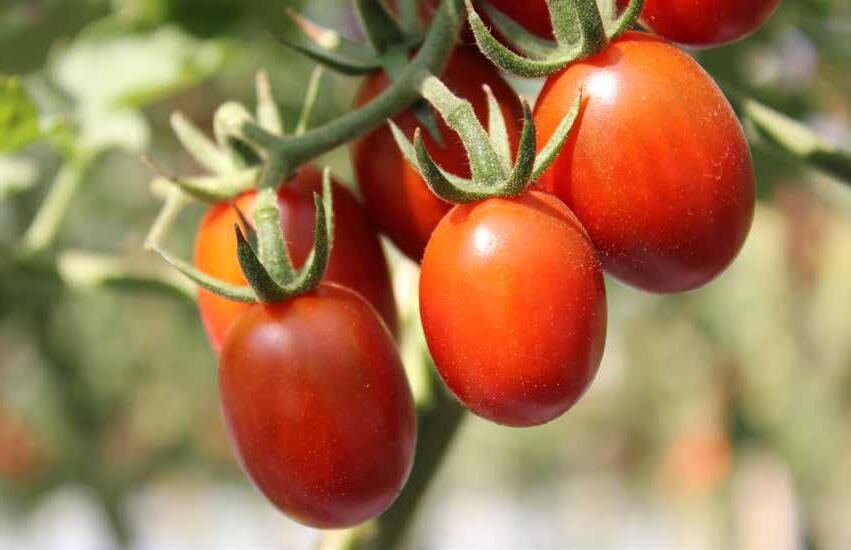
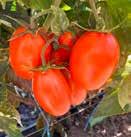
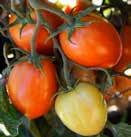
RILEY*
Strong plants
Attractive fruit
Star 9081 type fruit
Good fruit set
Fruit weight: 160 - 180g
HR: Va:1/Vd:1/Fol:1-3/TMV/TYLCV
IR: Ma/Mi/Mj/Lt/TSWV
CIARA*
Compact determinate growth
Early maturing, condensed harvesting period
Good size maintenance
Fruit weight: 140 - 170g
HR: Va:1/Vd:1/Fol:1-3/TMV
IR: Ma/Mi/Mj/Lt/TSWV/TYLCV
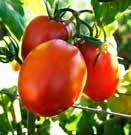
BR 7894*
Well suited to informal market
Attractive fruit shape
Fol: 3 & Rs combination
Early maturing
Fruit weight: 110 - 130g
HR: Va:1/Vd:1/Fol:1-3/TMV/TYLCV
IR: Rs/Lt/For/ TSWV
*Not yet included on the South African registered variety list.
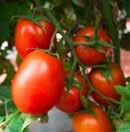
SOLSTICE*
Refined
Good fruit set
Good disease package
Works under protection and open field
Fruit weight: 140 - 170g
HR: Va:1/Vd:1/Fol:1-3/TYLCV
IR: Ma/Mi/Mj/Lt/TSWV
HUNTRESS*
Attractive fruit
Extended bearing period
Good disease package
Good size and yield
Fruit weight: 130 - 150g
HR: Va:1/Vd:1/Fol:1-3/TMV
IR: Ma/Mi/Mj/TSWV/TYLCV
RT 6350*
Interspecific rootstock
High level of resistance to soil-borne diseases
Provides greater vigour, productivity, and disease resistance
Uniform seedling emergence and ease of grafting
HR: Fol:1-3/For/ToMV/Ma/Mi/Mj
IR: Ma/Mi/Mj/Pst
Edition 229 ISSN 1015-85 37 www.vegetablesandfruitmagazine.co.za
COVER
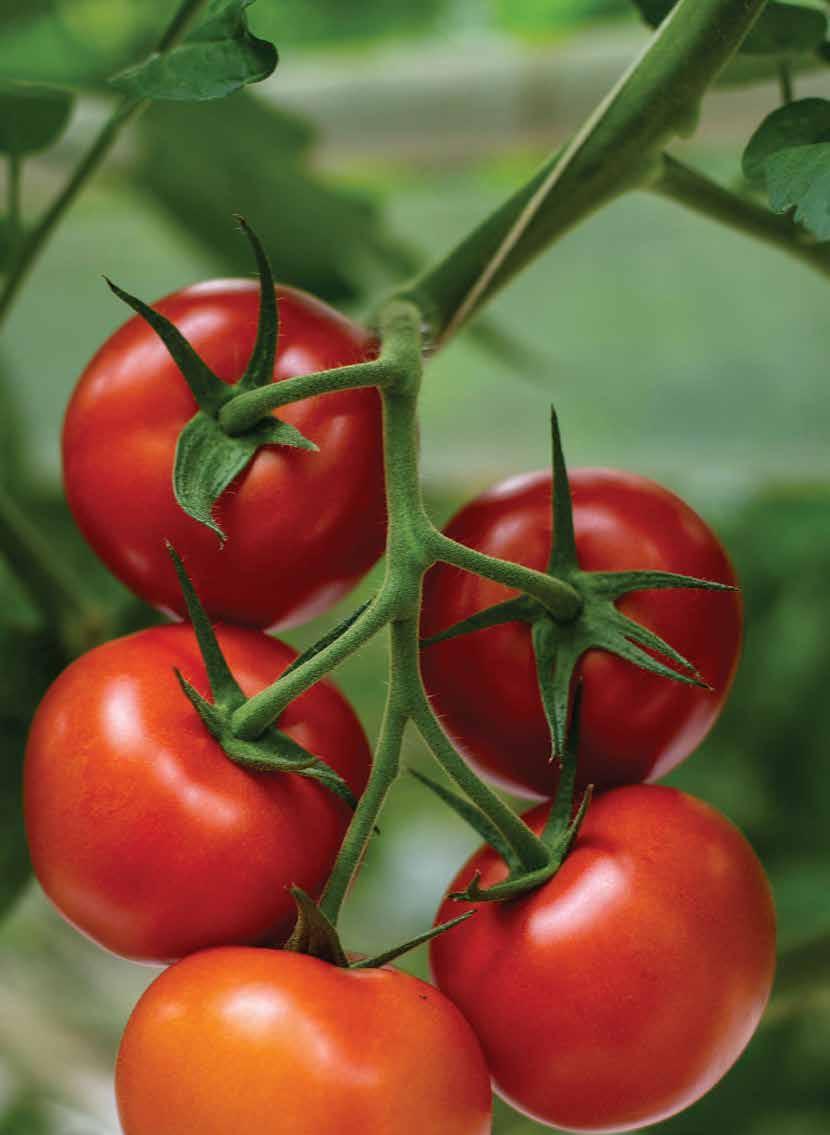
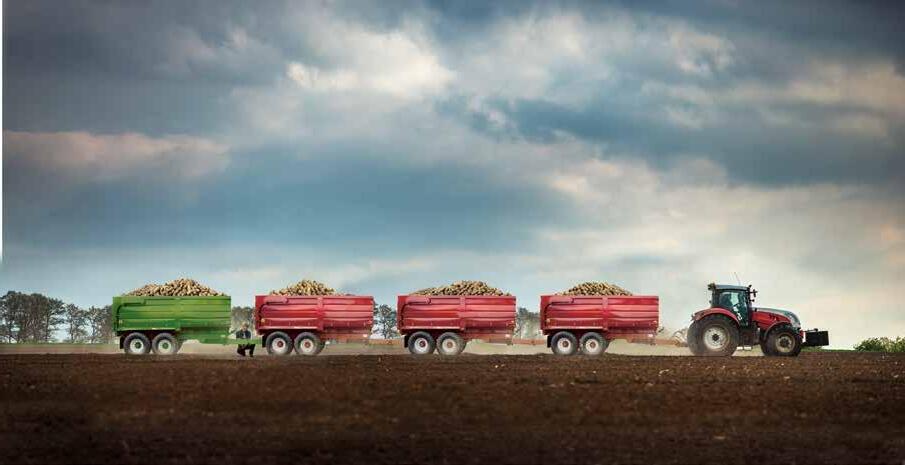
This national supply of tomatoes depends on several key production areas, including Limpopo, Mpumalanga, the Eastern and Western Cape and parts of the North West.
NEEM KENNIS TAKE NOTE

Weens afleweringsprobleme met die gewone posdiens word intekenare en lesers versoek om hul e-posadresse aan info@mediakom.co.za te stuur vir die elektroniese versending van GROENTE & VRUGTE - VEGETABLES & FRUIT.
Due to delivery problems with traditional mailing services subscribers and readers are requested to send their e-mail address to info@mediakom.co.za for electronic delivery of VEGETABLES & FRUITGROENTE & VRUGTE.
EDITORIAL
Willie Louw (Group editor)
Carien Daffue (Editor)
082 927 8294 018 293 0622 info@mediakom.co.za PO BOX 20250, Noordbrug, 2522
ADVERTISING
Jana Greenall 082 780 9914 mediacom@lantic.net
DESIGN
Mercia Venter studio.chatnoir@gmail.com

Bly ingelig en volg ons op Facebook. Keep up to date and follow us on Facebook. Besoek ons webtuiste | Visit our website: Groente & Vrugte | Vegetables & Fruit www.facebook.com/SAGroenteenVrugte www.vegetablesandfruitmagazine.co.za
SUBSCRIPTIONS
Available on subscription only - visit website: Slegs met intekening beskikbaar - besoek webblad: www.vegetablesandfruitmagazine.co.za
In case of address change, please quote or attach previous address label
rates for group subscriptions VAT included 1 Year @ R268.00 (6 issues) 2 Years @ R510.00 (12 issues)
NEWS
4 Agbiz hosts media engagement in the Western Cape
4 Belcon Cold Store inauguration strengthens cold chain capacity
5 Corteva champions innovation and partnership
5 Agbiz appoints new head of strategic projects
6 Citrus industry reports steady growth in export performance
7 Vergelegen earns top recognition in the latest Platter’s guide
POTATOES
8 Dual shield protection against early- and late blight on potatoes
10 Carefully manage potatoes in a complex environment
13 Stronger roots, bigger bags: How to boost potato yield and quality

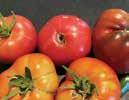
Tomatoes on the market
GENERAL
21 Biological crop protection: from complementary to critical for SA growers
24 Monitering is ‘n hoeksteen van plaagbeheer
26 Unlocking export opportunities in South African mangoes
27 French importers raise concerns over pesticide residue ban
28 Marktoegang onder druk en geleenthede vir Suid-Afrikaanse lietsjies
30 South Africa’s food inflation outlook and the role of BRICS agricultural trade
Agbiz hosts media engagement in the Western Cape
Agbiz held a media engagement focused on trends shaping South Africa’s agricultural economy. The session brought together industry commentators, journalists, and analysts to discuss developments influencing market stability, investment and long-term growth.
The event formed part of ongoing efforts to strengthen communication between the agricultural sector and the broader public. Representatives outlined key issues affecting producers and agribusinesses, including global trade dynamics, input-cost pressures, and the performance of supply chains. Speakers also noted the importance of policy certainty for investment in farming, processing, and export infrastructure.
Discussions highlighted the role of the Western Cape in national agricultural output, with emphasis on fruit, wine, and grain value chains. Analysts explained how shifting weather patterns, logistical bottlenecks, and rising production costs continue to influence regional performance. The organisation noted that collaborative planning between industry bodies, government, and
logistics partners remains essential for supporting long-term competitiveness.
Participants received updates on market outlooks and emerging opportunities across various commodities. The session encouraged open dialogue and provided journalists with a platform to engage directly with industry specialists, strengthening understanding of the structural issues shaping the sector.
By creating opportunities for informed discussion, Agbiz aims to support accurate reporting and improve the visibility of agriculture’s economic contribution. The engagement forms part of broader efforts to advance industry communication and promote a stable and resilient agricultural environment.
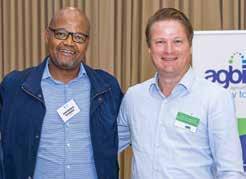
Boitshoko Ntsabele (Citrus Growers' Association) and Everet Jan Krajenbrink (Embassy of the Netherlands) at the Agbiz media event in the Western Cape.
Belcon Cold Store inauguration strengthens cold chain capacity
The inauguration of the Belcon Cold Store by Maersk marks an important expansion of South Africa’s cold chain infrastructure, supporting the country’s perishable export sector. The facility in Cape Town forms part of a broader investment aimed at improving the reliability of temperature-controlled logistics used for citrus, table grapes and other sensitive fresh produce.
The cold chain remains a persistent challenge for exporters, with delays and interruptions contributing to significant annual losses. Industry concerns around inconsistent logistics performance have highlighted the need for additional capacity and improved handling systems. According to senior leadership involved with the project, Belcon was developed to address these gaps and strengthen the competitiveness of the fruit industry.
The new facility adds pallet capacity, multimodal transport links and on-site container handling. Its proximity to major ports supports rapid product movement, while renewableenergy systems assist in reducing the environmental footprint of cold-store operations. Together with two other cold storage sites already in operation, the expanded network aims to create a more stable and efficient supply chain for exporters.
The facilities have already supported improved performance during peak periods in the fruit calendar, helping reduce waste and maintain product quality. With uninterrupted cold-chain management being essential for international market access,

Isaac Sileku, Western Cape Minister of Mobility, and Lubabalo Mtya, Managing Director of Maersk Southern Africa & Islands, cut the ceremonial ribbon marking the inauguration of Maersk’s Belcon Cold Store facility in Cape Town.
the establishment of additional storage capacity is regarded as a positive development for producers and exporters alike.
As part of a broader logistics strategy, the investment reflects confidence in the country’s perishable export sector and its long-term growth potential. The focus on integrated services, including consolidation, customs brokerage and temperature-controlled transport, is expected to offer exporters more streamlined solutions from origin to destination.
Industry representatives emphasise that strengthening local cold-chain infrastructure is essential for ensuring consistent supply, safeguarding product value and maintaining South Africa’s competitive position in global markets.
Corteva champions innovation and partnership
Corteva Agriscience has highlighted the growing importance of technology in sustainable agriculture, particularly as production conditions continue to shift across the region.
Agriculture across Sub-Saharan Africa faces mounting pressure as shifting weather patterns, soil degradation and resource constraints continue to affect food production. These conditions highlight the importance of long-term resilience, improved crop performance and supportive partnerships across the value chain.
According to industry analysts, rising temperatures and extreme weather events are reducing crop yields in several regions, while food insecurity continues to affect vulnerable communities. In South Africa, where a significant portion of agriculture remains rain-fed, producers are particularly exposed to these climatic shifts. Despite these challenges, the sector continues to contribute to economic stability, employment and export growth.
In response, a focused commitment to research, technology and partnership has been central to driving innovation. Corteva Agriscience has invested in research networks that include field trials across local production areas, generating millions of data points each year. These support the development of locally adapted genetics and crop protection solutions designed to withstand drought, disease pressure and other production stresses. Technologies such as predictive analytics and dronebased assessment are increasingly used to refine product selection and guide practical on-farm decisions.
A partnership-based approach underpins much of this work. The organisation supports capacity building through bursaries, internships, graduate programmes and farmer-
focused initiatives aimed at improving practical skills. Programmes such as SoilSista have assisted rural women with training opportunities, while annual graduate placements provide technical exposure in agronomy, analytics, engineering and related fields.
A sound regulatory environment remains essential for unlocking further innovation. Industry experts emphasise that responsive regulation enables access to modern technologies while balancing safety, environmental stewardship and intellectual property. According to sector analysis, South Africa’s early adoption of biotechnology helped producers gain access to advanced traits, contributing to yield improvements over the past decade.
Innovation also forms part of broader efforts to strengthen food security. Improved agronomic practices and modern crop genetics have helped increase maize production while using fewer hectares, demonstrating the impact of targeted research. Continued investment in core crops, including maize, soybeans, sunflower and canola, as well as biological products and sustainable farming practices, aims to support both commercial and emerging producers.
Collaboration across the value chain is viewed as essential for building a more resilient and inclusive agricultural sector. By integrating technology development with skills programmes, regulatory engagement and industry partnerships, stakeholders aim to create long-term solutions that support productivity, environmental sustainability and market competitiveness.
Agbiz appoints new head of strategic projects
Agbiz appointed Sinovuyo Moabalobelo as head of strategic projects. The role strengthens the organisation’s capacity to support key initiatives that contribute to agricultural development, competitiveness, and industry coordination.
According to Agbiz, Moabalobelo brings experience in project management, stakeholder engagement and strategic planning, with a background that includes work across several sectors within the broader agricultural value chain. The organisation noted that her appointment forms part of a wider effort to enhance long-term industry collaboration and improve delivery across priority programmes.
Her responsibilities include overseeing multi-stakeholder projects, supporting research initiatives and guiding the implementation of strategic interventions across the
organisation’s focus areas. This involves close cooperation with producers, agribusinesses and partner institutions working to advance sustainability, market access and industry resilience.
In welcoming her to the position, the organisation emphasised the importance of continuity and coordination in projects that support agricultural growth. Leadership highlighted Moabalobelo’s ability to navigate complex industry environments and to align project objectives with broader sector needs.

The appointment reflects the organisation’s ongoing commitment to strengthening its strategic capacity and supporting programmes that enhance competitiveness across the agricultural value chain.
Sinovuyo Moabalobelo
Citrus industry reports steady growth in export performance
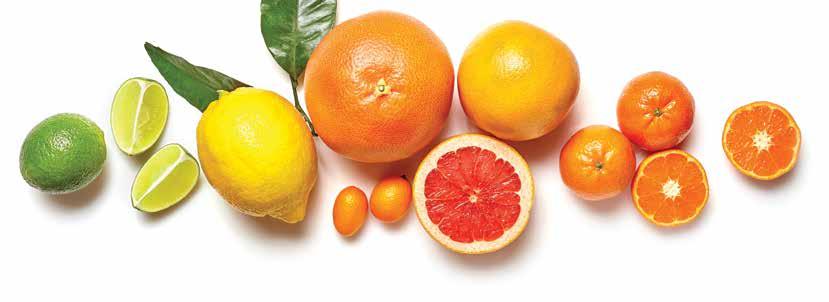
The Citrus Growers’ Association of Southern Africa (CGA) has reported continued progress in export volumes, reflecting stable demand across key international markets. The organisation noted that this performance was supported by improved market access, coordinated logistics planning and industry investment in orchard expansion over recent years.
The sector has worked to navigate challenges such as shipping delays, input-cost pressures and shifting phytosanitary requirements in several export destinations. According to industry leaders, collaborative efforts among growers, exporters, and logistics partners helped maintain supply continuity and protect product quality throughout the export season.
Growth has been recorded across several citrus categories, with soft citrus, lemons and late mandarins showing particularly strong performance. Expansion in these categories forms part of the industry’s long-term diversification strategy, aimed at balancing market risk and responding to evolving consumer demand.
Logistics remained a central focus, with industry teams working closely with port authorities and service providers to address bottlenecks and reduce congestion. The organisation emphasised that the efficiency of the cold chain remains essential for safeguarding fruit quality and maintaining South Africa’s reputation in competitive global markets.
Industry representatives also highlighted ongoing efforts to strengthen relationships with trading partners and ensure compliance with destination-market standards. These initiatives support the sector’s ability to retain and grow its presence in strategic markets, particularly in Europe, the United Kingdom and Asia.
The Citrus Growers’ Association regards the latest export performance as a positive indication of the industry’s resilience and its capacity to adapt to increasingly complex global conditions. Continued collaboration across the value chain is expected to support further growth and long-term sustainability.
South Africa’s citrus industry is entering a period of renewed opportunity, supported by positive developments on both the logistics and market-access fronts. Recent investments in cold storage and inland logistics infrastructure in KwaZulu-Natal, combined with improved access to the United States market for South African oranges, are strengthening the sector’s ability to grow exports and improve long-term competitiveness.
According to CGA, these developments come at a critical time for the industry. Export volumes continue to grow, while producers face increasing pressure from rising input costs, climate variability and global market uncertainty. Improved logistics efficiency and stable access to key export destinations are therefore central to sustaining growth and protecting value
throughout the supply chain.
Infrastructure in Cato Ridge
One of the most significant logistics developments is taking shape in Cato Ridge, near Durban. The area is emerging as an important inland logistics hub, offering modern cold storage facilities and improved coordination between transport modes. New infrastructure in the region is expanding cold storage capacity for the Durban corridor, while also opening the door to greater use of rail for citrus exports.
Cato Ridge’s location along the N3 corridor positions it as a strategic connector between inland production regions and the Port of Durban. While most exported citrus is still transported by road, the area offers scope for increased rail connectivity. This is particularly important given that a large share of South Africa’s citrus is produced far from the coast and must travel long distances to reach export terminals. Improved rail access not only offers cost efficiencies but also supports more climateconscious transport solutions.
The Port of Durban remains a cornerstone of South Africa’s citrus export system, handling close to half of the national citrus exports. As production volumes increase, the efficiency and capacity of the broader Durban logistics ecosystem become increasingly important. The CGA has welcomed recent progress around private sector participation at the port, noting that greater investment and improved coordination are essential to ensure fruit moves quickly and in optimal condition.
US tariff on oranges
Alongside these logistics developments, access to international markets remains a decisive factor in industry confidence. The CGA has welcomed the recent US tariff exemption on South African oranges, which restores competitiveness in one of the country’s most important export destinations. The United States market has shown steady growth in demand for South African citrus over several years, particularly during the northern hemisphere summer when local production is out of season.
The exemption provides renewed momentum for the upcoming export seasons and supports the industry’s role in supplying consistent, high-quality fruit to American consumers. CGA leadership has highlighted that stable supply benefits both exporting and importing countries by reducing volatility,
Vergelegen earns top recognition in the latest Platter’s guide
Vergelegen wine estate in Somerset West is once again drawing attention for its commitment to quality, following outstanding recognition in the latest edition of Platter’s by Diners’ Club International. The estate received three coveted five-star awards, along with a highly recommended rating, reinforcing its position among South Africa’s leading wine producers.
The five-star accolades were awarded to the Vergelegen Estate Red 2022, Vergelegen V 2021 and the Vergelegen Estate White 2024. In addition, the Vergelegen V 2022 earned a highly recommended rating, placing it among the guide’s top-performing wines. Wines awarded five stars achieve scores of 95 points or higher and are described by Platter’s as “Superlative. A South African classic”.

This level of recognition reflects both consistency and precision in the cellar. Platter’s five-star status is widely regarded as a benchmark for excellence, not only within South Africa but also in international markets where the guide carries significant influence. For producers, inclusion at this level signals confidence to both trade buyers and consumers.
The latest guide highlights the depth and diversity of South African wine. A panel of experienced tasters evaluated close to 8 000 wines, ultimately identifying a select group of five-star and highly recommended bottlings. Against this competitive backdrop, Vergelegen’s results stand out, underscoring the estate’s focus on vineyard expression, careful blending and longterm quality.
From a consumer perspective, the awards offer a clear point of reference when navigating an increasingly broad wine landscape. The highly recommended Vergelegen V 2022 is currently available, while the award-winning Estate Red 2022 and Estate White 2024 are set for future release. Existing vintages of the Estate Red and Estate White remain available, providing access to the estate’s signature style.
Beyond individual scores, the recognition speaks to the broader strength of South African winemaking. Estates such as Vergelegen Wine Estate continue to demonstrate that local producers can compete confidently at the highest level, delivering wines that resonate both locally and abroad.
For wine lovers and industry professionals alike, Vergelegen’s performance in the latest Platter’s guide offers another reason to explore the estate’s portfolio and to celebrate the ongoing progress of South African wine on the global stage.
While oranges have received tariff relief, the CGA has noted that soft citrus varieties, including mandarins, remain subject to tariffs. Mandarins have become increasingly popular in the US market, and industry leaders have cautioned that continued tariffs on these varieties could lead to price pressure and supply disruptions. The CGA has therefore called for further consideration of tariff exemptions across a broader range of citrus types.
Together, improved logistics capacity and strengthened market access are reinforcing the industry’s growth trajectory. However, the CGA has emphasised that sustaining this
momentum will require ongoing collaboration between producers, logistics partners, government and international trade counterparts. Investment in cold storage, rail and port efficiency plays a critical role in protecting fruit quality and maintaining South Africa’s reputation in export markets.
The citrus industry continues to demonstrate resilience in a complex operating environment. By strengthening supply chains and securing access to key markets, the sector is better positioned to support rural employment, expand export earnings and deliver consistent value to international consumers. As these developments take effect, they offer a clear signal of confidence in South Africa’s citrus industry and its ability to compete on the global stage.
Vergelegen wine estate in Somerset West celebrates three Five-Star accolades and one highly recommended rating in the latest Platter’s guide. supporting category growth and maintaining consumer access to fresh citrus.
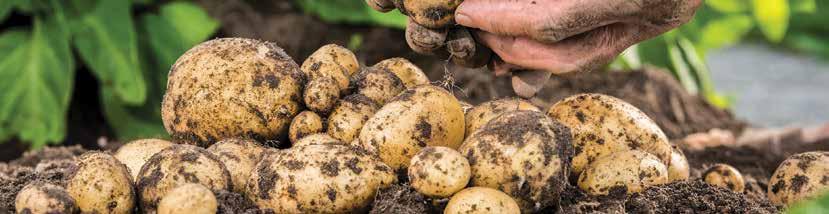
Dual shield protection against early- and late blight on potatoes
Picture a flawless potato season in South Africa, where neither early- nor late blight dares to truncate a crop's vibrant cycle. Plants push boundaries, stacking 5 to 7 tons per hectare weekly in those crucial late stages, as revealed by Dr Christine Jones of UK’s Dyson Farming Research. Optimise the protection spraying programme against early- and late blight, and the producer could be one step closer to reaching that perfect-season dream.
Yet, blights strike fear with good reason. Late blight (Phytophthora infestans), an oomycete scourge, erupted in Europe in 1845, likely hitchhiking from Central America on infected tubers. It ravaged fields continent-wide, sparking the “last European subsistence crisis” of 1845-1850. Ireland suffered most: potatoes sustained 60% of diets for 8,5 million people. In 1845, 40% of harvests rotted; by 1846, total crop wipeout ignited the Great Famine (An Gorta Mór), claiming one million lives to starvation and typhus, while 1 to 1,5 million emigrated, slashing the population by half by 1855.
Early blight (Alternaria solani), meanwhile, creeps in as crops age, eroding defences and shredding foliage in warm, humid climates. Unchecked, it curtails photosynthesis and tuber quality, stalling growth prematurely.
In South Africa’s 50 000 hectares of potato lands, threats vary. Late blight simmers in misty highlands like KwaZuluNatal, where sub-optimal climates limit outbreaks - but left unmanaged on susceptible cultivars, it can gut 50% to 70% of yields locally. Early blight, however, reigns more insidiously across warmer regions, from Limpopo to the Western Cape. A landmark survey in 2001/02 by Prof Jacquie van der Waals, Prof Lise Korsten, and Dr Freddie Denner - spanning the 10 top production areas (Limpopo, Free State, North West, Northern Cape, Mpumalanga, Gauteng, Western Cape, Eastern Cape, KwaZulu-Natal, and the Sandveld) pegged average losses at
Although sub-optimal climate limits the outbreak of late blight, it can gut yields by 50-70% if left unmanaged on susceptible cultivars.
Photo: Ian Zunckel (PHD)
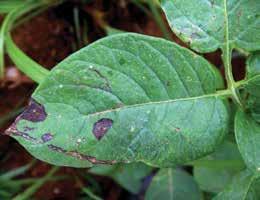

Early blight shreds foliage and stalls growth prematurely.
Photo: AJ Bam (FAC)
20%, ranging 1% to 60%.
How do we fight these diseases? Philagro SA imports and offers precision tools to the producer’s arsenal. While weather remains a gamble, the producer orchestrate seed quality, fertilizer timing, biostimulants, and - through Philagro - elite fungicides. Enter the dynamic pair: Sumisclex® SC for early blight and Leimay® 200 SC for late blight, both Japanese-engineered, upholding global gold standards.
Sumisclex® SC, produced by Sumitomo Chemicals, packs procymidone (250 g/L) in a soluble concentrate for effortless mixing. This Group 2 dicarboximide, in conjunction with its mixing partner, thwarts pathogen development at vital junctures, delivering foliar armour. Buffer water to pH 4.5-5.5 for optimal efficacy; apply two sequential sprays at 500-1 000 ml/ha ground (600-1 200 ml/ha aerial) with a pre-harvest interval of 35 days in potatoes. Tailor water volumes per label for coverage and alternate to dodge resistance.
Complement it with Leimay® 200 SC, produced by Nissan Chemical Corporation, wielding amisulbrom (200 g/L) - a Group 21 sulfoamide that ceases pathogen respiration. Registered as a ground-only application at 375 ml/ha in 375-750 L water/ha (two applications with a pre-harvest interval of 14 days in potatoes). Together with its tank mixing partner, Leimay® 200 SC ensures a rapid, enduring shield against late blight.
The magic unfolds in tandem: weave them into an 8-12week spray programme, alternating with different chemical group fungicides for effective resistance management. This constructive collaboration can optimise the producer’s crop protection, bringing him or her one step closer to reaching that perfect-crop dream. It is integrated pest management at its finest – seed selection, biological inputs, disease scouting, spray timing, and these two powerhouses aligned.
In South Arica’s sun-baked soils, Sumisclex® SC and Leimay® 200 SC are not add-ons; they are an unbreakable alliance, transforming crop-vulnerability into crop-victory by helping the producer beat the constant attack of blights.
READ THE LABEL BEFORE USE. | SUMISCLEX® SC | Reg. No. L6377, Act No. 36 of 1947 | Procymidone (Dicarboximide) (250 g/L) | WARNING | Suspected of damaging to fertility or the unborn child. | Philagro SA (Pty) Ltd. | Reg. No. 1998/010658/07 | Postnet Suite #378, Private Bag X025, Lynnwood Ridge 0040 | Tel: 012 348 8808.
READ THE LABEL BEFORE USE. | LEIMAY® 200 SC | Reg. No. L10884, Act No. 36 of 1947 | Amisulbrom (Sulfoamide) (200 g/L) | WARNING | Very toxic to aquatic life with long lasting effects. | Philagro SA (Pty) Ltd. | Reg. No. 1998/010658/07 | Postnet Suite #378, Private Bag X025, Lynnwood Ridge 0040 | Tel: 012 348 8808


RELIABLE PROTECTION
LEIMAY® 200 SC contains the active ingredient Amisulbrom, belonging to the FRAC Group: 21. This group of fungicides is unique and new to South Africa for the preventative control of late blight in potatoes as well as contributing towards disease resistance management as part of a spray program.
KEY HIGHLIGHTS
• LEIMAY® 200 SC is active against multiple critical stages of the life cycle of Phytophthora infestans
• It is readily absorbed by the leaf cuticle, contributing to prolonged protection of leaves.
• With no cross-resistance towards other fungicides currently on the South African market, LEIMAY® 200 SC makes a significant contribution towards resistance management.
• LEIMAY® 200 SC is registered to be applied with key tank mixing partners to optimise efficacy and reduce risks associated with resistance development.
For more information on how to protect your potatoes with LEIMAY® 200 SC, contact your nearest Philagro-representative. Philagro South Africa (Pty) Ltd, Reg no: 98/10658/07 PostNet Suite #378, Private Bag X025, Lynnwood Ridge 0040 Pretoria: 012 348 8808 l Somerset West: 021 851 4163 www.philagro.co.za
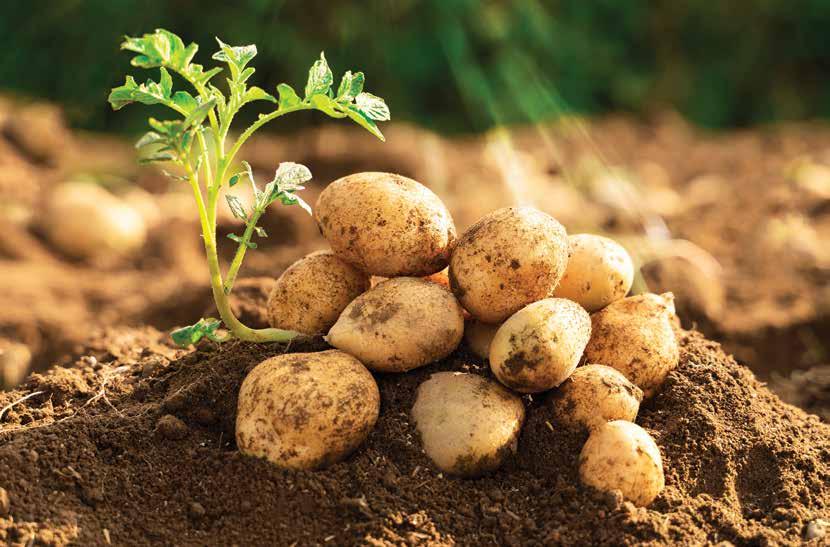
Carefully manage potatoes in a complex environment
Potatoes hold a familiar and dependable place in South Africa’s agricultural landscape. They move steadily through households, retail shelves and processing plants, making them one of the country’s most important vegetable crops.
This apparent reliability hides a production environment that has become increasingly complex. Shifting weather patterns, rising input costs and growing pressure on natural resources all shape how potatoes are produced. For producers, potato farming remains a valuable opportunity, but one that demands careful management, adaptability and long-term thinking.
Production is spread across several key regions, including the Sandveld, Limpopo, Mpumalanga, the Free State, and both the Eastern and Western Cape. Each of these areas contributes at different times of the year, creating a staggered supply system that supports year-round availability. Climate conditions, soil types and access to irrigation all influence when and where potatoes are planted. Together, these regional production windows form a national system that balances supply and helps stabilise the market.
Manage water
Because potatoes are grown year-round, water management plays a central role in production planning. More than 80% of South Africa’s potato crop depends on irrigation, underlining both the productivity and vulnerability of the industry. Irrigation supports higher yields, better uniformity and consistent quality, but it also exposes producers to water shortages, rising electricity and pumping costs, and infrastructure challenges.
Water efficiency has therefore become a priority rather than a choice. Moisture probes, improved scheduling and
well-designed irrigation systems are now widely used to make the most of limited water resources.
While water is critical, the condition of the soil beneath the crop is just as important. Potato plants are demanding and require loose, well-structured soils to allow tubers to expand properly. At the same time, they remove large amounts of nutrients from the soil. To manage this, many producers rely on crop rotations that include grains, legumes or cover crops to support soil structure and reduce disease pressure.
Where rotations are shortened, or land availability is limited, the risk of problems such as nematodes, bacterial wilt and early blight increases. Research shared by Potatoes South Africa consistently highlights rotation length and clean seed as essential building blocks for sustainable potato production.
These differences in management and resource access are reflected in yield outcomes. Under irrigation, commercial producers commonly achieve yields of 40 to 50 tonnes per hectare, with well-managed systems exceeding this range. In contrast, smallholder yields often remain below 10 tonnes per hectare.
Certified seed
Limited access to certified seed, fertilisers, irrigation infrastructure and technical support continues to constrain performance. Agricultural economics research has shown that profitability in potato production is closely linked to input access and production efficiency. The yield gap clearly illustrates how
TO PAGE 12
XANBAC-D 200 EC
XANBAC-D 200 EC
’N
XANBAC-D 200 EC
VOORKOMENDE BREË-SPEKTRUM BIOSIED VIR DAAGLIKSE GEBRUIK
VIR DAAGLIKSE GEBRUIK
’N VOORKOMENDE BREË-SPEKTRUM BIOSIED VIR DAAGLIKSE GEBRUIK
PRODUKBESKRYWING
’n Emulgeerbare konsentraat (EC) kontak bakterie- en swamdoder vir die beheer van verskeie siektes op gewasse soos gelys.
PRODUKBESKRYWING
’n Emulgeerbare konsentraat (EC) kontak bakterie- en swamdoder vir die beheer van verskeie siektes op gewasse soos gelys.
WAT MAAK XANBAC-D ® 200 EC SO ’N EFFEKTIEWE BEHEER-OPSIE?
’n Emulgeerbare konsentraat (EC) kontak bakterie- en swamdoder vir die beheer van verskeie siektes op gewasse soos gelys.
WAT MAAK XANBAC-D ® 200 EC SO ’N EFFEKTIEWE BEHEER-OPSIE?
• Enigste van sy soort in die wêreld
WAT MAAK
• Enigste van sy soort in die wêreld
XANBAC-D ® 200 EC SO ’N EFFEKTIEWE BEHEER-OPSIE?
• Enigste aktiewe bestanddeel beskikbaar in Suid-Afrika (naas koper) wat beide swamme en bakterië beheer
• Enigste aktiewe bestanddeel beskikbaar in Suid-Afrika (naas koper) wat beide swamme en bakterië beheer
• Enigste van sy soort in die wêreld
• Vinnige grondafbreking wat voordelige grondbiologie in ’n kort periode in staat stel om ’n noemenswaardige populasie op te bou na Xanbac-D® 200 EC se skoonmaak-aksie
• Vinnige grondafbreking wat voordelige grondbiologie in ’n kort periode in staat stel om ’n noemenswaardige populasie op te bou na Xanbac-D® 200 EC se skoonmaak-aksie
• Enigste aktiewe bestanddeel beskikbaar in Suid-Afrika (naas koper) wat beide swamme en bakterië beheer
• Vinnige afbreking op die plantoppervlak deur ultravioletbestraling wat residue -probleme minimaliseer
• Vinnige grondafbreking wat voordelige grondbiologie in ’n kort periode in staat stel om ’n noemenswaardige populasie op te bou na Xanbac-D® 200 EC se skoonmaak-aksie
• Sterk adsorpsie deur organiese materiaal wat die aktief in die wortelsone hou en min loging tot gevolg het. Die produk is gelokaliseer waar dit beskerming kan bied aan die plant
• Vinnige afbreking op die plantoppervlak deur ultravioletbestraling wat residue -probleme minimaliseer
• Sterk adsorpsie deur organiese materiaal wat die aktief in die wortelsone hou en min loging tot gevolg het. Die produk is gelokaliseer waar dit beskerming kan bied aan die plant
• Is ’n lae toksisiteit produk wat ‘n minimale impak op die omgewing, mens- en dier gesondheid verseker ’N VOORKOMENDE BREË-SPEKTRUM BIOSIED
• Vinnige afbreking op die plantoppervlak deur ultravioletbestraling wat residue -probleme minimaliseer
• Is ’n lae toksisiteit produk wat ‘n minimale impak op die omgewing, mens- en dier gesondheid verseker
Aktiewe bestanddeel: (GEVAAR)
XANBAC-D® 200 EC Reg. Nr. L2097, Wet Nr. 36 van 1947
• Sterk adsorpsie deur organiese materiaal wat die aktief in die wortelsone hou en min loging tot gevolg het. Die produk is gelokaliseer waar dit beskerming kan bied aan die plant
Aktiewe bestanddeel: (GEVAAR)
Dichlorofen 200 g/ℓ
200 EC Reg. Nr. L2097, Wet Nr. 36 van 1947
Xanbac-D® 200 EC is ʼn geregistreerde handelsmerk van AECI® Beperk. GHS Gevaarverklarings:
Dichlorofen 200 g/ℓ
• Is ’n lae toksisiteit produk wat ‘n minimale impak op die omgewing, mens- en dier gesondheid verseker
• Vlambare vloeistof en damp.
Xanbac-D® 200 EC is ʼn geregistreerde handelsmerk van AECI® Beperk. GHS Gevaarverklarings:
XANBAC-D® 200 EC Reg. Nr. L2097, Wet Nr. 36 van 1947
• Vlambare vloeistof en damp.
• Veroorsaak ernstige oogirritasie.
Xanbac-D® 200 EC is ʼn geregistreerde handelsmerk van AECI® Beperk.
Aktiewe bestanddeel: (GEVAAR) Dichlorofen 200 g/ℓ
• Veroorsaak ernstige oogirritasie.
• Mag slaperigheid of duiseligheid veroorsaak.
• Mag slaperigheid of duiseligheid veroorsaak.
GHS Gevaarverklarings:
• Giftig vir waterlewende organismes met langdurige gevolge.
• Vlambare vloeistof en damp.
• Giftig vir waterlewende organismes met langdurige gevolge.
• Veroorsaak ernstige oogirritasie.
AECI Chem Park, 200 Bergrivier Drive, Chloorkop, Kempton Park, 1619
• Mag slaperigheid of duiseligheid veroorsaak.
AECI Chem Park, 200 Bergrivier Drive, Chloorkop, Kempton Park, 1619
T: +27 11 823 8000 E: planthealth@aeciworld.com W: aeciph.com
• Giftig vir waterlewende organismes met langdurige gevolge.
T: +27 11 823 8000 E: planthealth@aeciworld.com W: aeciph.com

LEES DIE ETIKET VOOR GEBRUIK.
XANBAC-D®
LEES DIE ETIKET VOOR GEBRUIK.
LEES DIE ETIKET VOOR GEBRUIK.
Carefully manage potatoes in a complex environment
uneven access to resources can influence outcomes in a crop as sensitive as potatoes.
Seed quality sits at the centre of successful potato production. Certified seed remains non-negotiable, as it reduces the risk of disease carryover and ensures varietal purity. Good seed supports uniform tuber size, shape and dry-matter content, which are essential for both fresh and processing markets.
In processing systems, where fry colour, texture and consistency are tightly specified, cultivar choice becomes even more strategic. Beyond quality, cultivar selection also affects water demand, nutrient timing and tolerance to heat stress, all of which are important considerations in South Africa’s varied production environments.
Even with good seed, producers face constant pressure from pests and diseases. Nematodes, late blight, early blight, tuber moth and bacterial wilt can all significantly reduce yield and quality if not managed carefully. These risks are often amplified during warm, humid periods or under irrigation systems that promote prolonged leaf wetness. As a result, integrated pest management has become standard practice.
By combining monitoring, resistant cultivars, clean planting material and carefully timed interventions, producers reduce reliance on single control measures. Research partners working with Potatoes South Africa continue to emphasise that disease management is most effective when local climate conditions, rotation history and cultivar susceptibility are considered together.
Yield alone is not enough, as quality plays a decisive role in determining income. Fresh-market buyers demand uniform tubers with clean skins and stable dry-matter levels, while processing markets apply even stricter specifications related to sugar levels, shape and fry colour. Small deviations can push produce into lower-value markets, directly affecting profitability. Consistent irrigation, balanced nutrition and precise harvest timing all contribute to meeting these standards and maintaining market access.
Post-harvest
Once potatoes leave the field, post-harvest handling becomes the final test. Bruising, skin damage and exposure to high temperatures can shorten shelf life and reduce value.
Larger producers often have access to purpose-built packhouses with grading lines, cooling facilities and gentle handling systems that limit damage. Smaller producers, however, frequently lack this infrastructure and face higher post-harvest losses. This gap has been highlighted in several studies as a key barrier to smallholder participation in formal supply chains.
At the same time, broader cost pressures continue to shape production decisions. Transport costs, electricity tariffs and rising labour expenses have increased the financial risk associated with potato farming. Producers now weigh the cost of diesel, fertiliser, seed and packaging against expected market prices with greater care. This has driven investment in efficiency, from mechanisation to data-driven irrigation scheduling and more precise nutrient management. These tools help reduce waste, improve planning and support better decisionmaking, particularly in water-scarce regions.
Despite these challenges, potatoes remain a resilient and economically important crop. Their versatility, strong local demand and established value chains make them a reliable contributor to food security. At the same time, the industry continues to adapt. Producers are increasingly focusing on soil health, exploring biological products and adjusting planting dates to avoid periods of extreme heat that disrupt tuber initiation and development.
Collaboration across the value chain supports this ongoing adaptation. Seed suppliers, researchers, processors and logistics partners all play a role in sharing knowledge and reducing risk. Industry programmes provide access to trial results, pest alerts, cultivar performance data and training opportunities. These networks help ensure that production decisions are informed by current research rather than trial and error.
Climate variability is expected to place even greater emphasis on efficient resource use, improved cultivars and coordinated industry support. Potato producers already operate in a complex environment where weather, soil conditions, costs and markets intersect daily. Their ability to adapt will shape not only the success of individual farms but also the long-term stability of a crop that plays a central role in South Africa’s food basket.
Long-term stability in the potato industry depends on resilience. This includes resilience in soil management, in the adoption of technology and, most importantly, in the producers who navigate uncertainty season after season. Continued investment in research, infrastructure and knowledge sharing provides reason for optimism. Through these collective efforts, South Africa’s potato sector remains well positioned to stay productive, competitive and essential to national food security.
References
Potatoes South Africa. Industry Overview and Production Guidelines.
National Department of Agriculture. Potato Market Structure and Production Zones.
Stronger roots, bigger bags: How to boost potato yield and quality
Potatoes are one of South Africa’s most valuable cash crops, but they are also unforgiving. Shallow rooting, waterlogging, heat or nematodes can all cut into tuber set and marketable yield. Many growers are therefore looking at biostimulants to help the crop cope better with stress and make more of every hectare.
Kelpak® is a natural biostimulant made from the brown seaweed Ecklonia maxima, harvested on the West Coast and processed with a gentle cold “cell-burst” extraction. This method preserves delicate bioactive compounds that stimulate root and shoot growth, improve nutrient uptake and help plants tolerate drought and waterlogged conditions. The result is a more vigorous canopy on top and a more powerful root system below.
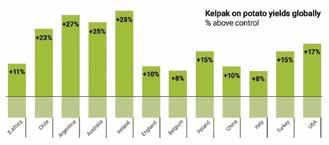
Trials in South Africa and internationally show that potatoes treated with Kelpak consistently produce more and better tubers. Across countries such as South Africa, Chile, Argentina, Ireland and the USA, yield increases of around 8% to 28% above untreated controls have been recorded, with gains mainly coming from higher tuber numbers, better sizing and a greater proportion of the crop falling into marketable classes.
Kelpak also contributes to healthier plants in nematode-
infested soils, where strong roots and more resilient growth can make the difference between a profitable crop and a marginal one.
For best results, Kelpak can be applied as an in-furrow treatment or seed spray at planting, followed by one or two foliar sprays from early canopy development through tuber set, always according to local label directions and advice from your agronomist.
To learn more about how Kelpak can fit into a potato programme and to see data from trials around the world, visit www.kelpak.com
Die verski l van gewoon na uitsonderlik is daai ekstra bietjie.
Kelpak is wetenskaplik bewys om aartappels te stimuleer tot sterker groeikragtigheid, verbeterde wortelontwikkeling en beter opname van voedingstowwe. Dit help plante om weerstand te bied teen nematode-infeksies, droogtestres én versuiptoestande. Die resultaat is meer knolle met verbeterde knolgrootte verspreiding en dus ’n uitstekende, bemarkbare opbrengs van hoë gehaltee.

The impact of overcast and cloudy weather on tomato production
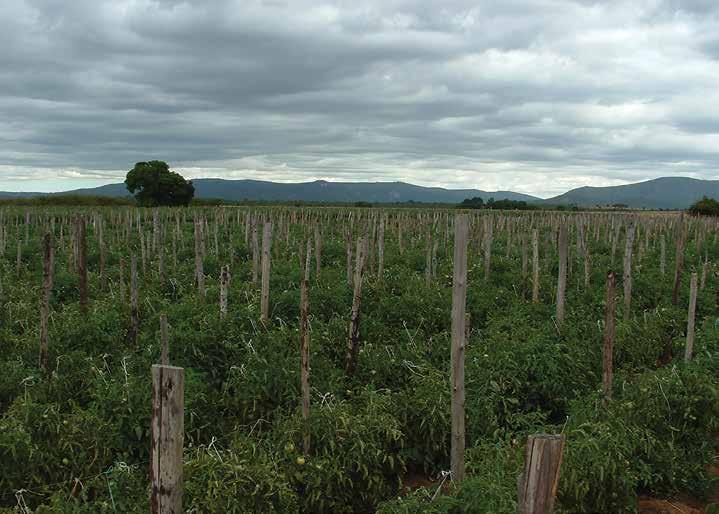
Overcast and cloudy weather can have a significant impact on tomato production, particularly in open-field production, where environmental conditions cannot be controlled. While short periods of reduced sunlight may have a limited impact, extended cloudy conditions influence plant growth, yield potential, fruit quality and disease pressure. Understanding these effects allows growers to anticipate challenges and manage crops more effectively.
Jaco Erasmus SAKATA
Tomatoes are highly dependent on adequate sunlight to achieve constant, successful production. Prolonged cloud cover reduces light intensity, limiting the plants’ ability to produce energy. This slows the overall growth of the plants, delays flowering and ultimately reduces yield potential. Crops may appear less vigorous, with thinner stems and slower canopy development compared to plants grown under full sunlight.
Vegetative imbalance and canopy density
Cloudy weather is frequently accompanied by cooler temperatures, which slow nutrient uptake and plant metabolism. When nitrogen levels remain high under these conditions, plants tend to produce soft, excessive vegetative growth. Dense canopies reduce airflow and light penetration, creating a microclimate that further limits photosynthesis and increases the risk of disease.
Low light levels combined with high humidity can negatively affect pollen viability and pollination efficiency. As a result, flower drop often increases and fruit set becomes inconsistent. When cloudy conditions persist during flowering, plants may set fewer fruit, leading to uneven fruit size and reduced
overall yield.
Reduced sunlight also affects fruit development and ripening. Tomatoes take longer to size and colour, extending the time to harvest. Sugar accumulation may be lower, which can impact flavour, particularly when cloudy conditions occur close to maturity. Uneven ripening is also more common under lowlight conditions.
Increased disease pressure
One of the most significant consequences of overcast weather is elevated disease pressure. High humidity, frequent rainfall and prolonged leaf wetness create ideal conditions for fungal and bacterial diseases such as blight and bacterial speck. In these conditions, diseases can develop rapidly and spread quickly if preventative measures are not in place.
Plant water demand decreases during extended cloudy periods. If irrigation is not adjusted, soils can become waterlogged, reducing root oxygen and nutrient uptake. This can weaken plants and increase the risk of nutrient-related disorders, including calcium deficiencies and blossom-end rot.
Management tips for cloudy conditions
Although weather conditions cannot be controlled, there are some management practices that can assist the grower:
Tomato field with overcast weather.
• Adjust nitrogen applications to avoid excessive vegetative growth;
• Maintain good plant spacing and selective pruning to improve airflow;
• Monitor soil moisture closely and reduce irrigation frequency when needed;
• Focus on potassium, calcium and magnesium for fruit quality and plant strength;
• Implement preventative fungicide programmes before disease symptoms appear;
• Avoid late-day irrigation to reduce overnight leaf wetness.
Overcast and cloudy weather affects tomato production by slowing growth, reducing fruit set, increasing disease pressure
and delaying maturity. While weather conditions cannot be controlled in open field systems, understanding their impact allows growers to adjust management practices proactively. Through disciplined nutrition, effective canopy management, careful irrigation and strong disease prevention, growers can protect yield and fruit quality even during extended periods of limited sunlight.
DISCLAIMER: This information is based on Sakata Seed’s observations and/or information from other sources. As crop performance depends on the interaction between the genetic potential of the seed, its physiological characteristics, and the environment, including management, Sakata Seed give no warranty, express or implied, for the performance of crops relative to the information given, nor do Sakata Seed accept any liability for any loss, direct or consequential, that may arise from whatsoever cause. Please read the Sakata Seed Southern Africa (Pty) Ltd Conditions of Sale before ordering seed.
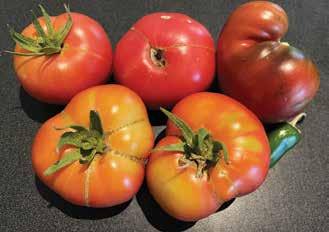
Uneven ripening of tomato fruit.
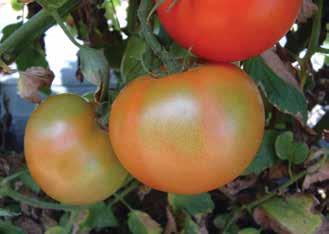
Poorly pollinated tomato fruit.
ETomatoes for all
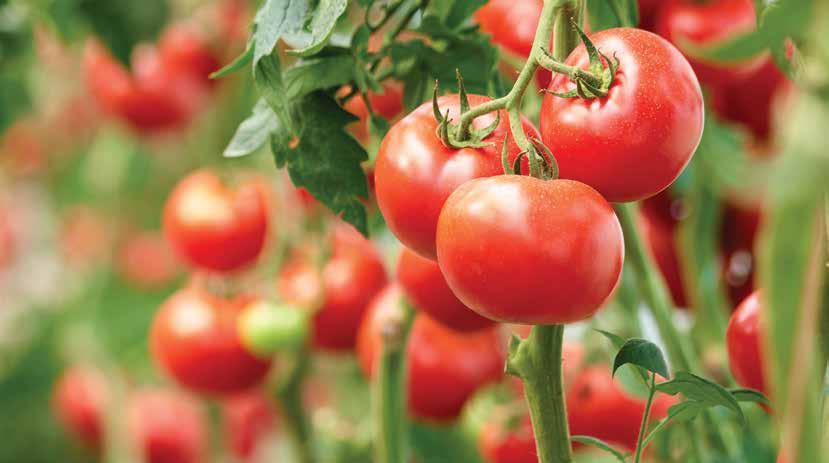
Tomatoes are one of South Africa’s most widely consumed vegetables and are a familiar presence in kitchens, fresh-produce markets and retail shelves across the country. Their year-round availability is supported by a well-established network of production regions that span a wide range of climates and soil types.
ach region contributes in its own season and rhythm, helping to maintain a steady national supply. For producers, tomatoes offer consistent demand, although production is shaped by water availability, climate variability and ongoing pressure to deliver uniform, high-quality fruit.
This national supply depends on several key production areas, including Limpopo, Mpumalanga, the Eastern and Western Cape and parts of the North West. Conditions differ widely between these regions, from temperature patterns and rainfall distribution to soil structure and access to irrigation.
These regional differences influence production decisions, from cultivar selection and planting dates to pest-management strategies. While large commercial producers often operate with extensive irrigation infrastructure, smaller growers rely heavily on local knowledge and careful planning to manage the same environmental pressures with fewer resources.
Manage the water
Across all regions, water management is one of the most decisive factors influencing crop performance. Rising temperatures, delayed rainfall and increasing evaporative demand place ongoing pressure on irrigated systems. Research by the National Agricultural Marketing Council has highlighted how sensitive tomato production is to climate variability, particularly during flowering and fruit set. Even short periods of extreme heat can reduce fruit numbers, limit size and lower overall yield. In response, producers are increasingly adopting efficient irrigation systems such as drip irrigation and regulated deficit strategies to reduce water losses and stabilise production.
Alongside water management, soil health plays a critical role in supporting sustainable tomato systems. Many tomatoproducing areas are characterised by sandy or sandy-loam soils that drain easily but hold limited nutrients. To manage these conditions, producers rely on regular soil testing, organic-matter inputs and carefully planned fertilisation programmes. These practices help maintain nutrient balance throughout long production cycles. Extension specialists often point
out that well-managed soils not only support stronger plant growth but also improve water infiltration and reduce disease pressure.
Even under careful management, yields vary significantly across the country. Commercial operations that use fertigation, trellising and protected-cropping systems are often able to achieve high and consistent yields. In contrast, smallholder producers frequently face constraints related to limited access to inputs, higher pest pressure and inadequate irrigation infrastructure.
Studies published in the South African Journal of Agricultural Extension show that yield differences between commercial and small-scale systems can be substantial. These gaps reflect differences in management intensity, technology adoption and access to technical support.
Crop protection
Pest and disease pressure is a constant concern in tomato production. Insects such as the tomato leaf miner and fruit worms, along with bacterial wilt and a range of fungal diseases, can spread rapidly during warm and humid conditions.
Producers using shade netting or tunnel systems often report more stable crop health, provided that airflow and humidity are carefully managed. Integrated approaches that combine crop rotation, biological controls, regular scouting and targeted chemical applications are increasingly favoured. These strategies help reduce resistance development while limiting environmental impact.
Once fruit is harvested, post-harvest handling plays a critical role in determining how much of the crop reaches the market in good condition. Tomatoes are particularly sensitive to bruising, and delays in cooling or transport can quickly reduce shelf life.
Supply-chain research shows that small-scale producers often experience higher post-harvest losses due to limited access to cooling, grading and packaging facilities. Larger operations benefit from controlled post-harvest environments that pro-
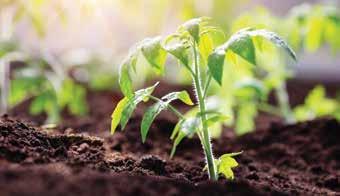
Advances in breeding have delivered cultivars with improved disease tolerance, better shelf life and greater suitability for protected-cropping systems, supporting more consistent production across regions.
tect fruit quality during transport to regional markets and retail distribution centres.
Market conditions add another layer of complexity to production planning. Fresh-produce markets in Johannesburg, Pretoria and Cape Town absorb a large share of national tomato volumes, and prices respond quickly to changes in supply from major production regions. This can lead to periods of volatility that require careful timing and planning.
Many producers stagger plantings or grow multiple cultivars to manage price fluctuations. Consumer preference for firm, smooth and evenly coloured fruit continues to guide grading standards, influencing on-farm practices such as pruning, irrigation management and harvest timing.
Rising operational costs have added further pressure on producers. Fertiliser, labour, electricity and transport make up a significant share of production expenses. To manage these costs, many producers have turned to precision technologies that help optimise input use.
Moisture probes, remote-sensing imagery and digital fertigation platforms are now common in commercial systems. These tools support more accurate irrigation scheduling, reduce nutrient losses and help prevent over-application, improving both economic and environmental outcomes.
Tomatoes remain strong
Even so, tomato production continues to be an attractive op-
tion for many growers. The crop offers relatively quick production cycles compared to perennial crops and benefits from steady demand in both fresh and processing markets. Advances in breeding have delivered cultivars with improved disease tolerance, better shelf life and greater suitability for protected-cropping systems, supporting more consistent production across regions.
Knowledge sharing continues to play an important role in supporting the sector. Extension officers, industry bodies and producer networks provide platforms for growers to exchange practical experience and access up-to-date information. Regional associations, informal farmer groups and input-supplier field days help spread awareness of pest outbreaks, cultivar performance and changing market conditions. These networks also foster collaboration among producers facing similar challenges.
The future of tomato production in South Africa depends on the industry’s ability to adapt to climate change, manage limited resources and maintain quality standards. Continued investment in efficient irrigation, soil health and post-harvest systems will be central to long-term sustainability. Research institutions, government partners and industry organisations all have roles to play in supporting producers with reliable information, practical tools and improved market access.
Tomato producers operate in a demanding environment, yet the sector continues to demonstrate resilience. Through experience, adaptation and the thoughtful use of technology, growers remain committed to supplying a crop that is central to South Africa’s food basket. Every tomato on the shelf reflects a balance of climate, soil, labour and management, highlighting the challenges and opportunities that define modern vegetable production.
References
National Agricultural Marketing Council. South African Tomato Value Chain Analysis
National Agricultural Marketing Council. Sustainable Tomato Production for Smallholder Farmers
Tomatoes on the market floor
Tomatoes are one of the first vegetables buyers look for when they step into a fresh-produce market. Volumes move quickly, prices respond fast, and even small changes in supply are felt almost immediately across the trading floor.
Recent trading has shown just how sensitive tomatoes are to production timing and weather conditions. When supply tightens, buyers become more selective. Firm, evenly coloured tomatoes that arrive in good condition sell quickly, while fruit showing softness or uneven ripening struggles to compete. On busy days, the difference between a strong consignment and a weaker one becomes clear within hours.
Traders note that supply has become less predictable. One day may bring solid volumes from a particular region, followed by quieter market days when fewer trucks arrive. These shifts make prices more reactive, rising or easing depending on what comes through the gates that morning. For growers, this has
highlighted the value of steady deliveries rather than chasing short-term price spikes.
Quality pressure increases when markets are well stocked. Buyers have choices, and tomatoes affected by heat stress, bruising or handling damage are discounted quickly. Where harvesting, packing and transport are well managed, tomatoes hold their value longer and maintain buyer confidence.
Rising transport and energy costs are also shaping market decisions. Longer travel times increase the risk of quality loss before tomatoes reach the market floor. Some growers are responding by adjusting harvest timing or prioritising nearer markets.
Despite these challenges, tomatoes remain one of the most reliable crops in fresh-produce markets. Consistent demand keeps them moving, making tomatoes a daily indicator of market mood and trading conditions.
Fertilization strategies for tomatoes and potatoes
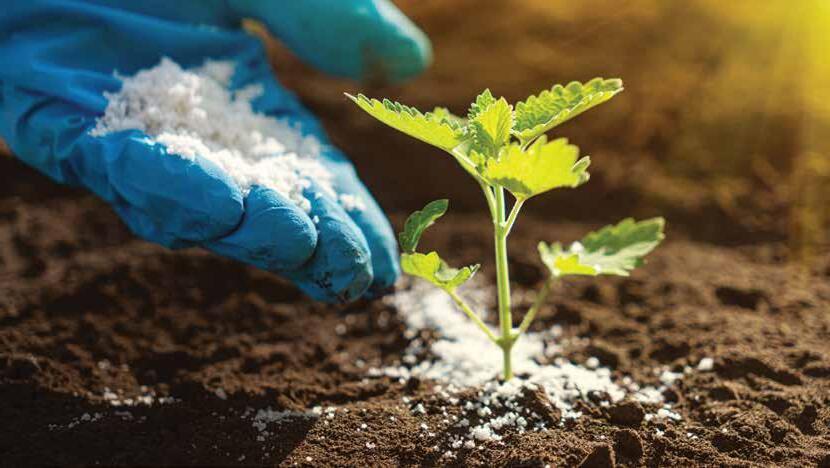
Tomatoes and potatoes may look very different in the field and on the shelf, but from a nutritional point of view they share many similarities. Both crops rely on carefully balanced, well-timed fertilization to develop strong plants, achieve consistent yields and deliver produce that meets market expectations.
Across South Africa, producers working under a wide range of climatic and soil conditions have learned that fertilization involves more than nutrient application. It requires an understanding of crop growth patterns, soil behaviour and how timing links the two. As pressure on water resources increases and climate variability becomes part of everyday farming decisions, effective nutrition management has become a central production tool.
Start below ground
Everything starts below ground. Sound fertilization planning begins well before seedlings are transplanted or seed potatoes are placed in the soil. Soil analysis provides the foundation of any programme, offering insight into nutrient reserves, pH levels, organic matter and potential limitations such as compaction, salinity or poor structure.
Many South African production areas, particularly those with sandy soils, struggle with nutrient retention, while others face acidity challenges that restrict phosphorus availability. Understanding these constraints early allows producers to make informed adjustments. Extension specialists from the KwaZuluNatal Department of Agriculture continue to emphasise that soil
preparation, whether through liming, organic amendments or structural correction, sets the tone for the entire season.
Once soil conditions are understood, attention turns to the main nutrients that drive growth. Nitrogen, phosphorus and potassium form the core of most fertilisation programmes, but their management differs between crops and growth stages. Tomatoes rely on nitrogen for early vegetative growth, although excessive nitrogen can delay flowering and negatively affect fruit firmness.
Potatoes also require nitrogen early in the season to establish a healthy canopy, yet overapplication often promotes foliage growth at the expense of tuber development. For this reason, many producers have adopted split nitrogen applications, frequently delivered through fertigation, to improve control and respond more effectively to changing seasonal conditions.
Alongside nitrogen, early root development is critical. Phosphorus plays a key role in establishing strong root systems and supporting early vigour in both tomatoes and potatoes. Welldeveloped roots improve access to water and nutrients and help plants cope better with stress later in the season.
In acidic soils, where phosphorus availability is reduced, TO PAGE 20
Sumisclex® SC
Rely on the quality of Japanese technology with protection you can count on.
Sumisclex® SC is a dependable solution in controlling early blight on potatoes caused by the plant pathogen Alternaria solani. Start application of Sumisclex® SC as soon as the first symptoms of the disease are noticed. Repeat the application at 7 - 10 day intervals and use sufficient spray mixture to obtain good coverage of the plants.
KEY HIGHLIGHTS INCLUDE THE FOLLOWING:
Sumisclex® SC contains the active ingredient Procymidone (dicarboximide), a fungicidal compound in the FRAC Group: 2. Always consider promoting disease resistance management by using different FRAC-group fungicides registered against early blight.
Sumisclex® SC is a translaminar systemic fungicide. Always use a suitable tank mix partner as registered on the Sumisclex® SC label for optimum efficacy.
Sumisclex® SC is registered as a ground or aerial application on potatoes against early blight. Make sure to adhere to label recommendations when applying Sumisclex® SC
For more information on Sumisclex® SC to control early blight on potatoes, contact your nearest Philagro-representative.
THE LABEL BEFORE USE. SUMISCLEX® SC (Reg. No. L6377, Act No. 36 of 1947) contains Procymidone (Dicarboximide) (250 g/L). WARNING: Suspected of damaging to fertility or the unborn child. SUMISCLEX® is a registered trademark of the Sumitomo Chemical Company, Tokyo, Japan.
Philagro South Africa (Pty) Ltd, Reg no: 98/10658/07 PostNet Suite #378, Private Bag X025, Lynnwood Ridge 0040 Pretoria: 012 348 8808 l Somerset West: 021 851 4163 www.philagro.co.za
Fertilization strategies for tomatoes and potatoes
careful placement near the root zone becomes essential. Timing is equally important, with applications targeted to early growth stages when demand is highest. Soil testing continues to guide these decisions, helping producers balance efficiency with crop requirements.
Yield formation
As crops move beyond establishment and into yield formation, nutrient priorities shift. Potassium demand increases as tomatoes enter fruit development and potatoes move into tuber bulking. In tomatoes, potassium influences fruit colour, firmness and shelf life. In potatoes, it affects tuber size, dry-matter content and skin strength.
Sandy soils, common in many production regions, are particularly prone to potassium leaching, making regular applications or fertigation necessary. Research shared by Potatoes South Africa has shown that potassium deficiencies during tuber bulking can reduce yield potential and compromise storage quality. Similar trends are observed in tomatoes, where inadequate potassium supply is often linked to uneven ripening and reduced marketability.
Beyond the primary nutrients, secondary elements play a quieter but equally important role. Calcium and magnesium are frequently overlooked, yet both contribute to crop quality. Calcium strengthens cell walls and helps reduce physiological disorders in tomatoes, while also supporting tuber quality and skin integrity in potatoes.
Calcium uptake is closely linked to water movement within the plant. Inconsistent irrigation can limit calcium transport, even when soil levels appear adequate. Magnesium supports photosynthesis and becomes particularly important during periods of rapid vegetative growth. Deficiencies are more likely in sandy soils or where high potassium applications create nutrient imbalances.
At lower concentrations, micronutrients complete the picture. Elements such as boron, zinc, manganese and molybdenum are required in small amounts but play critical roles in plant development. Boron supports flowering and fruit set in tomatoes, while zinc influences root development and hormone regulation in both crops.
Deficiencies often occur in coarse-textured soils or where soil pH falls outside optimal ranges. When problems arise during the season, foliar applications provide a practical way to correct deficiencies quickly without disrupting established fertigation programmes.
How nutrients are applied has become as important as the nutrients themselves. Fertigation is now widely used in commercial systems, particularly when combined with drip irrigation. Delivering nutrients directly to the active root zone improves efficiency and reduces losses through leaching.
Studies in irrigated vegetable systems continue to highlight the value of fertigation during sensitive growth stages such as flowering and tuber initiation. Water quality also plays an important role. Elevated salinity, bicarbonates or unsuitable pH levels can interfere with nutrient availability and place additional stress on crops. Regular water testing allows producers to adjust programmes and maintain efficiency.
FROM PAGE 18
This focus on efficiency has renewed attention on soil health. Intensive cropping, frequent irrigation and repeated tillage place pressure on soil structure and biological activity. In response, many producers are incorporating organic matter, cover crops and reduced-tillage practices into their systems.
These approaches support microbial activity, improve nutrient cycling and enhance overall resilience. Reports from the National Agricultural Marketing Council indicate that healthier soils are often associated with more stable yields and reduced seasonal variability.
Timing
Even with the correct nutrients in place, timing remains critical. Tomatoes require steady, balanced nutrition throughout an extended fruiting period, with adjustments as clusters move from flowering to harvest. Potatoes follow more defined growth stages, from sprouting and canopy development to tuber initiation and bulking.
Poorly timed applications may be inefficient or counterproductive. Late nitrogen in potatoes can delay skin set and affect storability, while excessive nitrogen late in tomato production may reduce fruit firmness and encourage unwanted vegetative growth.
Climate conditions add further complexity. Higher temperatures increase evapotranspiration and influence nutrient uptake, placing greater emphasis on precise coordination between water and nutrition. In drier regions, producers are exploring controlled-release fertilizers and soil conditioners that improve water retention.
Interest in biological products, including microbial inoculants and organic stimulants, is also increasing. Horticultural research suggests these products perform best when integrated into well-managed systems with sound soil health and balanced chemical nutrition.
Technology is also changing how decisions are made. Satellite imagery, drone scouting and digital monitoring platforms help producers identify stress, detect nutrient deficiencies early and track irrigation performance. These tools enable quicker responses and more precise adjustments during the season.
Ultimately, fertilization is a balancing act. It involves matching nutrient supply with crop demand, working within soil and water constraints and responding to the plant as it develops. Producers across South Africa continue to refine their strategies as research advances and new tools become available.
Despite rising input costs and increasing climatic uncertainty, well-managed nutrition remains one of the most reliable ways to protect yield, quality and crop health. For tomato and potato producers, decisions made from the first soil test to the final fertigation cycle shape both productivity and resilience.
References
KwaZulu-Natal Department of Agriculture. Tomato and Potato Production Nutrient Guidelines.
Potatoes South Africa. Nutrient Requirements and Fertilisation Practices for Commercial Potato Production.
National Agricultural Marketing Council. Soil Health and Sustainable Vegetable Production in South Africa
Biological crop protection: from complementary to critical for SA growers
Export markets are tightening, chemical control options are becoming increasingly limited, and global scrutiny around food production practices is intensifying.
For South African growers, the need to adopt an integrated approach, with biological crop protection at its core, is no longer optional but essential for maintaining market access and ensuring long-term sustainability.
“We are at a turning point,” says Martin Booyens, Technical Marketing Specialist for Biological Solutions at InteliGro, with international experience in countries like Spain and Israel. “Growers are facing increased phytosanitary pressure, especially from the EU, where new regulations and stricter import inspections have recently been implemented. At the same time, we are losing access to chemical products at an alarming rate. Those who do not start taking biology seriously will fall behind.”
Booyens outlines three major forces behind the change:
• Fewer chemical products are available due to international regulations.
• Residue limits in export markets, especially Europe, leave little room for traditional chemical programmes.
• Advances in technology now allow biological products to be just as effective as chemical solutions against certain pests.
Restrictions on chemical products include the CMR classification (carcinogenic, mutagenic, or reproductive toxins), along with strict regulations requiring only certified PCOs to handle certain substances at the farm level. The EU Green Deal demands a 50% reduction in pesticide use and 20% less fertiliser by 2030. These targets are placing pressure on exporting countries like South Africa to adopt biological alternatives more swiftly.
“We have used natural enemies such as parasitic wasps and predatory mites for decades,” says Booyens. “The difference is that they used to be supplementary. Today, they form the backbone of Integrated Pest Management (IPM), marking a shift away from over-reliance on chemistry towards a balanced approach where biological solutions play a central role.”
Real-world examples
“International examples, such as Almería in Spain, show what is possible,” says Booyens. “Once known for high residue levels, Almería is now a global leader in biological farming, with 40 000 hectares of crops under production. We are using the same technology in South Africa and have already made sig-
TO PAGE 22
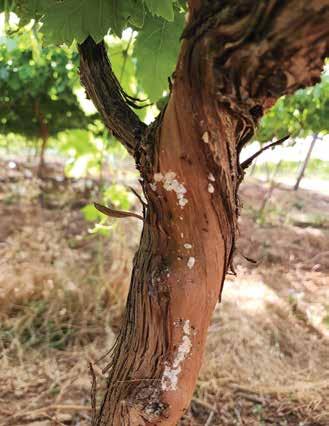
Live mealybug beneath the bark of a grapevine trunk, photographed in Kakamas.
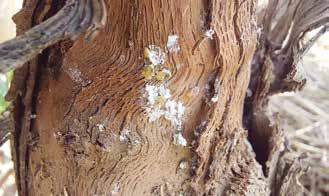
Pupae of parasitic wasps such as Anagyrus spp. or Leptomastix spp., which have parasitised mealybugs beneath the bark of a grapevine trunk, photographed in Kakamas.
Biological crop protection: from complementary to critical for SA growers
FROM PAGE 21
nificant progress, exporting soft fruit, table grapes, and citrus with zero pre-harvest residues to strict markets.”
Local success stories are already emerging:
• Peppers and cucumbers: In controlled environments, nearcomplete biological control is possible.
• Citrus: With the support of Citrus Research International, South Africa is a leader in the field. Local growers use biological strategies such as viruses to control bollworms, sterile insect technology for fruit flies, and bicarbonate for black spot.
• Table grapes: Bacillus, bicarbonate, and Trichoderma are effectively managing powdery mildew and Botrytis. These products also play a key role in row crops.
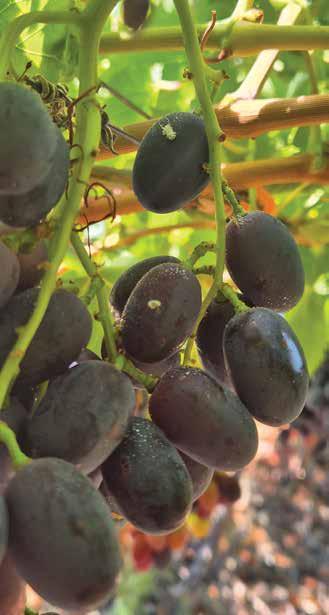

A table grape producer from Trawal on the West Coast, Jannie van Niekerk, says: “We have been struggling with a cultivar that has been hit hard by Botrytis for years. After incorporating biological products into our programme, we were very satisfied with the quality of the grapes we exported. The combination of chemistry and biology brought a noticeable improvement.”
Morné Paxton, also a table grape producer in Trawal, agrees: “I feel that the biological products strengthen the overall programme and reduce the risk of residues. They also improve resistance management, thanks to a broader spectrum of available solutions.”
New opportunities, new responsibilities
Booyens predicts a major industry shift over the next five to 10 years.
“Macrobiology – the breeding of beneficial insects – is growing internationally at 17% to 25% per year. However, being an integrated producer using both biological and chemical tools is more complex. It requires greater discipline, accurate monitoring, better training for farm workers, and the right equipment for precision farming.
“We are seeing large multinationals acquiring smaller biological firms and fast-tracking advanced technology into South Africa,” adds Booyens. “This means better product quality and faster access to new generations of biological solutions for our farmers.”
Booyens cautions that biological products work differently from chemicals: “We are used to rapid results from chemical
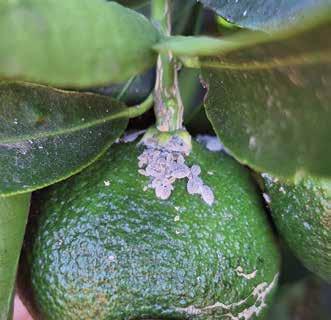
On the top grape berry, photographed in De Doorns, is the larva of Cryptolaemus, and on the bottom berry is a pupa of Anagyrus vladimiri. Both are beneficial insects that have killed the mealybug.
Martin Booyens, InteliGro’s Technical Marketing Specialist in Biological Solutions.
Live citrus mealybug, photographed in Clanwilliam.
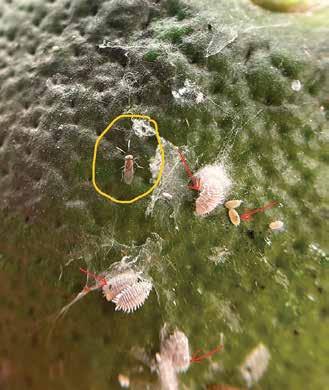
The insect with antennae on this citrus fruit is a live parasitic wasp, Anagyrus. The black marks on the mealybug are encapsulation scars, indicating successful parasitism.
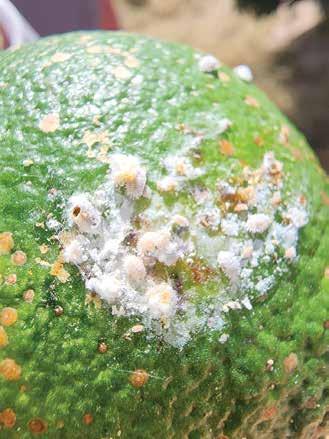
The hole in the mealybug on this citrus fruit is the exit hole where the parasitic wasp, Anagyrus, emerged after completing its full larval stage inside the mealybug.
products. Biology works more preventively and takes longer to show impact, but the results are more sustainable and build healthier soils and ecosystems.
“Growers who are gaining experience now are building a strong advantage,” says Booyens, whose practical advice to farmers includes:
• Start small and start early: trial it in a test block.
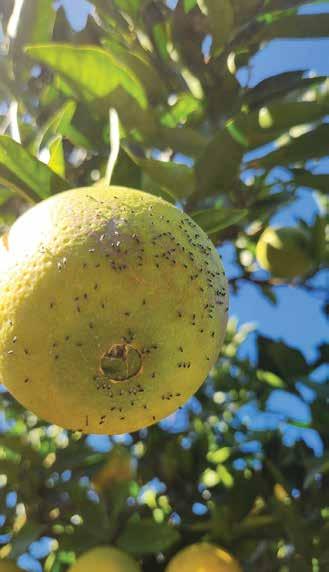
An explosion of parasites after successful mealybug control on this citrus fruit, photographed in the Kirkwood region in the Eastern Cape. The only surviving insects are the parasites, as all mealybugs have already been parasitised. The next step is for the parasites to migrate and search for mealybugs elsewhere.
• Prepare your team: good monitoring and equipment are essential.
• Stick with it: the second season often shows the clearest results, with no yield losses.
“Biological products are no longer just in the trial phase. They are commercially proven, produced by reputable international companies, and registered under Act 36 of 1947. At InteliGro, we use technologies like weather mapping and precision farming tools to make accurate, timely decisions. Our demonstration farms, trials, and technical team training also play a big role in building trust and understanding – which is why growers know they can rely on our advice.”
Biological crop protection has quickly moved from being a complementary option to becoming essential as part of holistic programmes that integrate chemistry and biology. It enables growers to retain market access, protect their soil and ecosystems, and still deliver high-quality yields.
“When you farm with nature, rather than against it, the outcome is usually positive,” says Booyens. “The time for waiting is over, the future is biological.”

Monitering is ‘n hoeksteen van plaagbeheer
Monitering bly een van die hoekstene van geïntegreerde plaagbeheer (GPB). Dit behels die inspeksie van gewasse en of gebiede vir plae. Monitering geskied deur die direkte waarneming van plae en siektes op gewasse deur mense en/of deur toerusting soos lokvalle te gebruik. Die doel is om die gewas se risiko vir plae en siektes te bepaal.
Jacques Fouché
HOOF: NEXUSAG TEGNIESE AFDELING
Inligting word versamel vir besluitneming rakende optrede om gewasse te beskerm. Deur die regte inligting in te samel, dit te verwerk en te vertolk kan uitgawes vir gewasbeskerming optimaal spandeer word om die gewas en inkomste te beskerm. Monitering is ‘n langdurige en noukeurige proses. Die gebruik van tegnologie kan monitering vergemaklik, maar dit sal waarskynlik nooit ‘n veldbesoek kan vervang nie.
Die monitering van plae vereis tyd en arbeid - twee hulpbronne wat dikwels beperk is. Dit is egter ‘n geringe uitgawe as dit met die aankoop en toediening van plaagbeheermiddels vergelyk word en selfs ‘n kleiner uitgawe indien potensiële skade aan die gewas in aanmerking geneem word. Plae kan ‘n direkte uitwerking op hierdie aandrywers van winsgewendheid hê en daarom behoort monitering ‘n prioriteit te wees.
Plaagmonitering kry weens verskeie redes nie genoeg aandag nie. Wantroue omtrent die akkuraatheid van inligting is waarskynlik een van die groot redes hoekom monitering soms afgeskeep word. Om aandag aan hierdie uitdaging te gee is ‘n moniteringstelsel nodig wat deur opgeleide en betroubare personeel uitgevoer word, asook ‘n standaard moniteringsmetode, toerusting soos vergrootglase en knipmesse en die boekstawing van inligting, verkieslik in digitale formaat vir maklike bestudering en verspreiding.
‘n Tweede uitdaging is om die versamelde inligting korrek te vertolk. Hiervoor is drempelwaardes ‘n nuttige middel. Die uitdaging met drempelwaardes is dat dit nie vir ál die plae en produksiestelsels bestaan nie. Dit moet gereeld aangepas word na gelang van die gewas se waarde en die gevolglike potensiële finansiële verlies en die koste van beheermaatreëls. Beheermaatreëls se koste kan natuurlik baie tussen produkte en seisoene wissel, asook weens die gewas se inkomste.
Landbounavorsing speel ‘n belangrike rol om drempelwaardes saam te stel en dit te evalueer.
‘n Derde uitdaging is meer sielkundig van aard. Slegte nuus het ‘n groter uitwerking op die mens se psige as goeie nuus. Met ander woorde, die vrees vir slegte nuus soos gewasverlies is groter as om vertroue in goeie inligting te hê. Dit beteken dat beheermaatreëls (uit vrees) eerder onnodig uitgevoer word as om glad nie maatreëls toe te pas nie, ten spyte van geen bewyse dat maatreëls nodig is nie.
Wat stel die kundiges voor? Ontwikkel ‘n moniteringstelsel in fases. Gebruik tyd om die regte mense aan te stel en belê in goeie opleiding. Maak seker personeel het die korrekte toerusting. Waarnemings behoort ordelik vasgevang te word. Bestudeer inligting noukeurig. Bespreek die inligting met ervare kundiges van geïntegreerde gewasbeskerming. Voer ingeligte besluite uit, evalueer die resultate en maak aanpassings vir akkurater besluite in die toekoms.
Landbougewasse bestaan in ‘n lewendige en dinamiese ekosisteem waar faktore nie altyd reg of verkeerd, wit of swart is nie. Dit bestaan uit ‘n spektrum van waarskynlikhede en potensiële uitkomste. Dit is nie moontlik om alles te meet of te voorspel nie. ‘n Eerste stap in hierdie dinamiese ekostelsel is om te monitor: kyk of daar plae is, hoe doeltreffend die beheermaatreël is, hoe plae gedurende die seisoen verander, kyk na voordelige organismes en die gewas se vatbaarheid. Hierdie waarnemings en dinamiese aanpassings is fundamenteel tot geïntegreerde plaagbeheer.
NexusAG-gewasadviseurs met Croplife-akkreditasie kan produsente bystaan met kundige advies en maatpas bestuursprogramme wat unieke omgewings en spesifieke omstandighede in ag neem.
Kontak NexusAG gerus vir meer inligting. Besoek www.nexusag.net of skakel: 021 860 8040.
BETROUBARE MONITERING. VOLHOUBARE BESLUITE.
Wanneer dit by jou gewasse kom, maak dit saak wie jy met advies ve rou.

Pesmonitering vorm die basis van geïntegreerde plaagbeheer.
Deur gereelde en noukeurige inspeksies versamel produsente noodsaaklike inligting om gewasbeskermingsbesluite te neem, ’n kritieke stap om plase se risiko’s betyds te verstaan en ingeligte besluite te neem.
Hoekom prioriteit gee aan pesmonitering?
Die proses verseker:
• Proaktiewe risikobepaling – jy weet betyds waar peste en siektes begin ontwikkel.
• Ingeligte besluitneming – data lei jou wetenskaplike besluite, nie aannames nie.
• Koste-effektiwiteit – voorkom oorbodige beheermaatreëls en beperk gewasverliese.
• Volhoubare praktyke – monitering ondersteun verantwoordelike, ekosisteem-gesentreerde bestuur.
Wat stel ons voor?
• Bou inkrementeel: Begin klein en verbeter stelselmatig.
• Kies die regte mense: Gebruik opgeleide, betroubare moniteerders.
• Belê in opleiding: Verseker dat moniteerders die nodige kennis en vaardighede het om monitering te doen en die data akkuraat vas te lê.
• Standaardiseer & belê in toerusting: Gebruik ’n vaste metodiek en die regte toerusting.
• Digitaliseer data: Stoor inligting georganiseerd, digitaal sodat dit maklik ontleed kan word en gedeel word.
• Besluit saam: Interpreteer data met ervare gewas-kundiges.
• Gebruik drempelwaardes: Pas dit gereeld aan volgens gewas- en koste-realiteit.
• Leer voo durend: Evalueer besluite en verbeter jou proses.
• Oorweeg die ekosisteem: Hou peste, voordelige organismes en gewasfases in konteks.
NexusAG CropLife-geakkrediteerde gewasadviseurs kan jou help met kundige advies en maatpas gewasbestuursprogramme wat jou unieke omgewing en spesifieke omstandighede in ag neem.
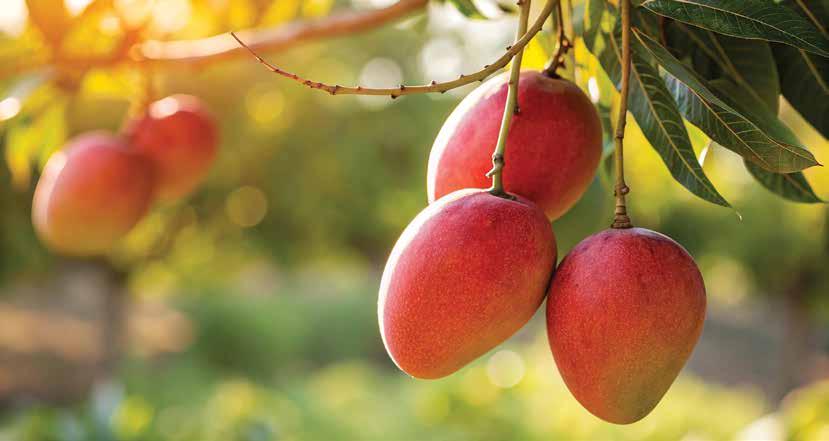
Unlocking export opportunities in South African mangoes
While domestic consumption remains the foundation of South Africa’s mango industry, export growth continues to draw attention.
In recent seasons, exporters, service providers, and government agencies have stepped up their efforts to strengthen export capability, expand market access, and enhance compliance. The success of this ambition depends on aligning quality, regulation, and logistics with market expectations.
Although export volumes are still modest compared to total production, a gradual recovery is evident. The 2024/25 season recorded about 6 445 tonnes of mango exports, roughly nine percent of national output.
Globally, mango exports are competitive and high-value, dominated by suppliers such as Mexico, Peru, Brazil, and India. South Africa’s share remains small, accounting for just over one percent of global export value. To succeed, export programmes must focus on quality, service, and reliability rather than scale alone.
Export market
The Middle East remains South Africa’s largest export destination, absorbing most shipments in recent years. European and Asian markets have been more variable, reflecting shifting consumer preferences and tighter compliance requirements.
European buyers offer attractive premiums for high-quality fruit but are unforgiving of any non-conformity. In Asia, early
access to China through phytosanitary agreements and pilot consignments has shown promise. These initial shipments are building trust and validating export protocols. Expanding into Asian markets could provide a valuable outlet when European demand is subdued or freight space is limited.
Export success depends on strong internal systems across orchards, packhouses, and logistics. The entire export chain must function as a continuous, well-controlled pipeline.
Buyers demand fruit with uniform dry matter, minimal defects, firm texture, balanced flavour, and good shelf life. Visible issues such as scald, anthracnose, or internal disorders invite discounts or outright rejection.
Compliance with phytosanitary standards is non-negotiable. Quarantine pests such as fruit flies and seed weevils must be managed through trapping, baiting, and area-wide control. Traceability from orchard to pallet is increasingly a market requirement, supported by barcoding, lot tracking, and digital audit trails. Exporters who can demonstrate rapid response capability to any detection event gain a clear advantage.
Equally important is contractual discipline. Forward contracts, volume agreements, and performance clauses ensure that risk and incentives are aligned throughout the value chain.
Exporting mangoes is a race against time. Field heat, han-
The Middle East remains South Africa’s largest export destination, absorbing most shipments in recent years. European and Asian markets have been more variable, reflecting shifting consumer preferences and tighter compliance requirements.
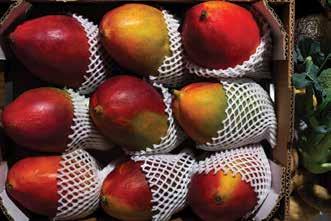
dling damage, loading delays, and temperature fluctuations all reduce fruit quality and market value.
To protect product integrity, exporters prioritise:
• Rapid harvest-to-cooling transitions.
• Strict temperature control during transport.
• Harmonised handling protocols across farms and packhouses.
• Container pre-cooling.
• Efficient scheduling to avoid port congestion.
Because the arrival window for premium-quality mangoes is short, any logistical error can quickly erode profitability. Proximity to ports and container availability are therefore strategic considerations for export growers.
Exporters and grower groups are investing in shared facilities to enhance efficiency and compliance. These include:
• Cold storage depots near production areas.
• Forced-air precooling systems.
• Shared packhouses with certified quality assurance.
• Modified-atmosphere technologies.
• Digital quality-testing laboratories.
Such infrastructure lowers per-unit cost, strengthens supply reliability, and helps attract new participants to export programmes.
Pricing, risk and timing
Export prices depend not only on quality but also on timing, supply alignment, and destination market dynamics. Programmes must target low-supply windows to avoid gluts that depress prices.
Exporting carries inherent risks: currency volatility, freight cost fluctuations, shipping delays, and buyer cancellations all affect returns. Many exporters mitigate these by hedging currency exposure, securing freight slots early or staggering shipments.
Quality variation is another key risk, as mixed-grade fruit can reduce buyer confidence and future demand.
A recurring challenge lies in aligning grower priorities with exporter standards. Growers often face tight margins and may focus on yield rather than premium quality. Exporters, therefore, invest in training, orchard audits, input partnerships, and incentive schemes to encourage compliance and consistency. Collaboration between technical teams and growers reduces rejection rates and builds long-term trust.
Key opportunities for export expansion include:
• Introducing cultivars with longer shelf life and better transport resilience.
• Replanting older orchards with improved layouts and spacing.
• Enhancing digital traceability systems.
• Expanding collaborative cold chain infrastructure.
• Diversifying markets in Asia and emerging premium segments.
• Adopting sustainability or fair-trade certification to differentiate products.
• Developing niche programmes for slow-ripening or specialty varieties.
South Africa’s mango sector does not require mass scale to succeed internationally; it needs consistent quality, reliability, and a reputation for compliance.
The global mango market offers opportunity, but progress depends on disciplined, selective growth rather than volume chasing. South African growers and exporters who strengthen their internal systems, logistics, and traceability will secure durable positions in key markets.
For many producers, the balance between exports and strong domestic or processing sales will remain essential. The future of mango exports rests not only on production, but on building and maintaining a reputation for excellence, season after season.
Sources:
• TradeImeX: “Top 10 Mango Exporting Countries in 202425” reports South Africa exported US$ 20 million (~1.2% of global exports). TradeImex+1
• MangoVaiya: “Top 10 Mango Exporter Countries in 2025” blog echoes similar share estimates. Mango Vaiya
• National Agricultural Marketing Council – “SA Fruit Trade Flow Report” states the mango industry is primarily localmarket anchored with only a small share exported. NAMC
French importers raise concerns over pesticide residue ban
The French Chamber of Fruit and Vegetable Importers (CFIS) has expressed surprise at a decree published by the French government concerning the suspension of fruit and vegetable imports containing residues of pesticides banned in the EU.
The organisation said the measure was introduced without consultation and may conflict with European rules on free movement of goods and health regulations. According to the CSIF, existing EU standards established by
the European Food Safety Authority have been in place for several years and already protect consumer health. It added that imported produce must comply with the same regulatory requirements as EU-grown products.
The decree affects an estimated 56 per cent of fresh fruit and vegetable volumes imported from third countries, representing around one-fifth of total consumption in France. CSIF president Philippe Pons said the measure risks disrupting supply chains without benefiting French producers.
The arrival window for premium-quality mangoes is short, any logistical error can quickly erode profitability.
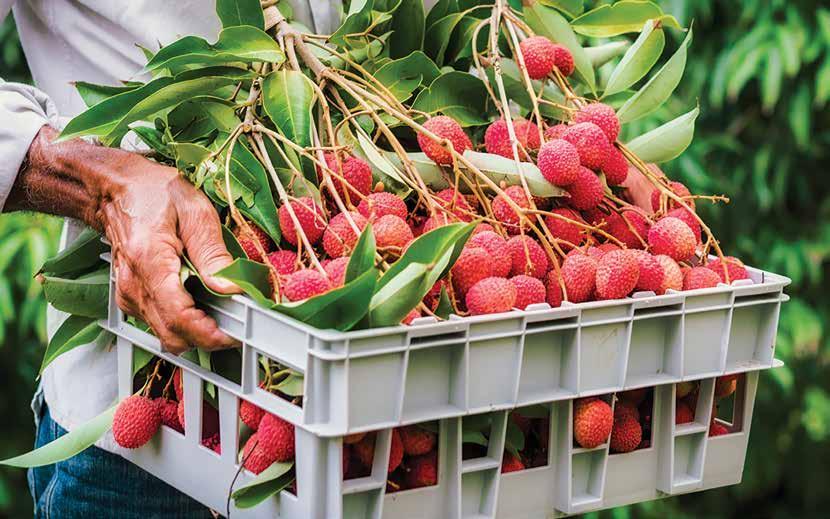
Na-oesblootstelling aan swaeldioksied moet ook noukeurig beheer word om residuvlakke binne kopers se verwagtings te hou.
Marktoegang onder druk en geleenthede vir Suid-Afrikaanse lietsjies
Terwyl boordstelsels aanpas by hitte en watertekorte, bly marktoegang die bepalende kommersiële uitdaging vir lietsjieverbouing. Uitvoerders verkoop ’n premium, hoogs bederfbare vrug aan verre markte, dikwels gedurende vakansietye wanneer logistiek ingewikkeld is.
Onlangse regulatoriese veranderinge, ontwikkelende fitosanitêre verwagtings en veranderende handelsdinamika bepaal hoe Suid-Afrikaanse lietsjies die kopers bereik. Die bedryf reageer met ’n sterker fokus, beter integrasie met nasionale uitvoerstelsels en geteikende beleggings in bestralingroetes vir sensitiewe markte.
Lietsjie-uitvoer val onder nasionale standaarde en die vereistes van handelsvennote. Die raamwerk vir landbouprodukstandaarde bepaal minimum gehalte, gradering, verpakking, merk- en inspeksieprosedures vir alle varsvrugte-uitvoer, met kommoditeitspesifieke kennisgewings wat standaarde vir lietsjies stel.
Die struktuur is nie nuut nie, maar die handhawing en dokumentasieverwagtings het verskerp namate handelsvennote groter klem plaas op naspeurbaarheid en risikobestuur. Verpak-
kers, produsente en uitvoerders wat voldoening aan regulasies as ’n geïntegreerde stelsel benader en nie net as papierwerk beskou nie, hou markte oop.
Kwaliteitreëls geld van boord tot pallet. Volume, defekverdraagsaamhede, houermerke en dokumentasie word streng gespesifiseer om te verseker dat uitvoerbesendings akkuraat verteenwoordig wat binne elke houer is. Uitvoerders wat hierdie besonderhede nakom, vergemaklik inspeksies, verminder vertragings by grense en bou vertroue by ontvangers. Dit lei daartoe dat Suid-Afrikaanse uitvoerprodukte vroeër gekies word binne ’n beperkte afleweringsvenster.
Bestraling om sensitiewe markte te bereik
Bestraling van lietsjies, spesifiek gammabestraling, word gebruik om raklewe te verleng en plae uit te skakel. Dosisse van
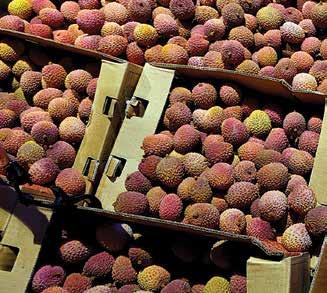
Bestraling van lietsjies, spesifiek gammabestraling, word gebruik om raklewe te verleng en plae uit te skakel.
ongeveer 0,3 - 0,5 kGy is doeltreffend sonder om die voedingswaarde, smaak of kleur beduidend te verander. Hierdie beheerde blootstelling verminder mikrobiese lading en beskerm lietsjies teen siektes en verkleuring, wat ’n lewensvatbare oplossing bied vir die hoogs bederfbare vrug se na-oesbestuur en handel.
Bestraling word gebruik word om fitosanitêre vereistes na te kom in markte wat nie-chemiese kwarantynbehandelings teen plaagspesies verlang. Vir lietsjies wat na die Verenigde State bestem is, handhaaf die nasionale stelsel goedgekeurde lyste van produksie- en hanteringsplekke. Hierdie lyste word seisoenaal aangepas en word saam met prosedures en tariewe gepubliseer in die Departement van Landbou, Grondhervorming en Landelike Ontwikkeling (DALRRD) se openbare uitvoerportaal. Hierdie benadering ondersteun voorspelbare toegang deur boordprodusente, verpakkers en logistiek binne een goedgekeurde raamwerk te bring.
Die bedryf beskou bestraling as aanvullend tot boordhigiëne en kouekettingbestuur. Die behandeling kan nie swak vrugte red nie, gevolglik fokus uitvoerders op rypheid tydens oes, die voorkoming van meganiese skade en die handhawing van temperatuur van die veld af tot by die vliegtuig. Na-oesblootstelling aan swaeldioksied moet ook noukeurig beheer word om residuvlakke binne kopers se verwagtings te hou. Bestraling dien gevolgik as ’n fitosanitêre paspoort, nie as ’n kortpad vir gehalte nie.
Vrugtevlieg, valskodlingmot en gebiedsbeheer Handelsvennote beoordeel plaagrisiko’s streng. Gebiedsgebaseerde vrugtevliegprogramme vorm die basis van vertroue in geïntegreerde benaderings en help om dokumentasie en inspeksie-verslae voorspelbaar te hou. Hierdie programme word gesamentlik deur produsente en die regering bestuur en is in ooreenstemming met internasionale riglyne.
Die valskodlingmot, hoewel oorspronklik met ander gasheerplante verbind, bly ’n bedryfswye bekommernis weens die plaag se wye gasheerreeks en die reputasierisiko van ’n positiewe opsporing binne gemengde subtropiese voorsieningsketting. Daarom die sterk fokus op boordhigiëne, lokvalgebruik, pakhuishigiëne en noukeurige rekordhouding.
Lietsjies is tydsensitief van die boom tot by die verbruiker. Uitvoerders gebruik lugvrag vir hoëwaardebesendings en goed bestuurde seevrag met langer versendingsvensters, veral na
Europa. Hoewel inligting toon dat Europa steeds die grootste koper van Suid-Afrikaanse lietsjies is, diversifiseer die bedryf hul program waar moontlik. Bestraling maak toegang tot die Verenigde State moontlik, asook na geteikende markte in die Midde-Ooste en Asië.
Die samestelling van die nasionale oes speel ook ’n rol. Bedryfsensusse bevestig dat Mpumalanga die kern bly, met Limpopo en kleiner gebiede wat in gunstige jare bydraes lewer. Die uitbreiding van verbouingstreke dui op versigtige optimisme oor uitvoerpotensiaal, mits voldoeningkoste beheerbaar bly.
Handelstendense om dop te hou
Wyer handelsdata bied nuttige inligting. Verslae oor nasionale vrugtehandel toon ’n toename in lietsjie-aanplantings en beraam subtropiese vrugte as ’n klein, maar groeiende deel van vars produkte se uitvoer met langtermynpotensiaal. Die boodskap vir lietsjies is dat gestruktureerde voldoening en geteikende markontwikkeling relatief klein volumes in hoë buitelandse inkomste kan omskakel.
Uitvoerders volg ook kwartaallikse verskuiwings in landbouuitvoer, wat onlangs versterk het. Dit weerspieël ’n mengsel van produktoenames en taktiese versendings tydens gunstige tariefvensters. Hoewel breër kategorie-data nie lietsjie-spesifiek is nie, bied dit insigte vir valutaverskansing, programtyd en kapasiteitsbesluite wat lietsjie-uitvoerders direk beïnvloed.
Alle produsente moet by uitvoerstelsels kan baat. Bedryfswye transformasie-inisiatiewe fokus op vaardigheid en volhoubaarheid, nie net op voldoeningskoste nie. Opleiding oor uitvoerdokumentasie, boordmonitering, residubestuur en na-oesbeheer help ontwikkelende produsente om lewensvatbaar aan uitvoerprogramme deel te neem. Binne die varsproduksektor beklemtoon die transformasiewerkgroep steeds inklusiewe deelname as ’n strategiese doelwit. Vir die lietsjiebedryf beteken dit praktiese ondersteuning wat goeie boerderypraktyke omskakel in uitvoerbare vrugte met volledige dokumentasie en betroubare verpakkers.
Bestemmingsmarkte vereis toenemend regstreekse naspeurbaarheid, vinniger probleemverslagdoening en strenger belyning met plaag- en residuraamwerke. Terselfdertyd bly verbruikers se verwagtings oor die vrugte se voorkoms en smaak onverbiddelik. Die Suid-Afrikaanse lietsjiebedryf se antwoord is om die grondbeginsels te versterk, gekombineer met pakhuise wat gehalte en dokumentasie as een proses beskou.
Bestraling bly ’n praktiese sleutel vir sekere markte. Met voortdurende beleggings in boordaanpassing en uitvoerdissipline kan Suid-Afrikaanse lietsjies hul premieposisie op internasionale rakke behou.
Bronne:
• DALRRD, openbare uitvoerinligting insluitend VSA PUC’s en PHC’s vir bestraalde lietsjies (NDO)
• Landbouprodukstandaarde, vars vrugte-uitvoerregulasies en inspeksieprosedures, en lietsjie-gradering en merkregulasies (dlrrd.gov.za)
• Fruit Fly Africa, gebiedsgebaseerde vrugtevliegbeheer; valskodlingmot-feiteblad (fruitfly.co.za)
• SALGA bedryfsensus en streeksverdelings (Litchisa)
• SouthAfrica.co.za, oorsig van lietsjieproduksie en bestemmingsverspreiding (South Africa Online)
• NAMC, Suid-Afrikaanse vrugtehandelvloei-verslag (NAMC).
South Africa’s food inflation outlook and the role of BRICS agricultural trade
People often forget what they paid for groceries a few months ago, let alone last year. Food prices can feel as though they are rising every day, especially under South Africa’s tough economic conditions. Still, it is important to highlight positive data developments when they emerge.
Wandile Sihlobo AGBIZ

South Africa is ending the year with food price inflation, the rate at which prices increase, cooling to levels not seen in years. After slowing to 2,8% in October 2024, consumer food price inflation decelerated notably to 1,6% in November, the lowest level since October 2010.
The slowdown was broad-based, with the exception of oils and fats and fruit, which lifted slightly. As in the previous month, the deceleration was partly driven by base effects, as food price inflation was elevated at the same time last year. For example, vegetable prices were high a year ago due to supply constraints caused by load-shedding-related disruptions in some production areas.
The avian influenza outbreak also constrained egg supplies, exacerbating price pressures, while meat prices were affected by similar supply-side challenges. In contrast, supply conditions have improved this year, and many of the difficulties experienced previously have eased. As a result, both vegetables and meat were in deflation in November 2024.
Grain prices also warrant attention. Last year, prices faced upward pressure following India’s ban on rice exports. This year, India resumed rice exports, and grain prices generally moderated. Lower wheat prices are also believed to have contributed to softer prices for grain-related food products.
Despite the marked easing in November 2024, grain-related products remain an upside risk to consumer inflation following a poor domestic crop harvest caused by drought conditions. Even so, any potential increase in grain-related food prices is unlikely to be substantial. Forecasts point to ample global wheat and rice harvests in the 2024–25 season, which should provide substitutes and help cushion regional markets.
Overall, the outlook is relatively comforting. A potential recovery in agriculture in 2025, supported by expected La Niña rainfall, should help keep food inflation contained.
While domestic supply conditions and global commodity dynamics shape food prices, trade relationships play an equally important role in the long-term sustainability of South Africa’s agricultural sector. This context helps explain why agricultural trade with BRICS countries features so prominently in policy and industry discussions.
South African agriculture frequently highlights the need to expand export markets to BRICS countries. This emphasis does not diminish the importance of existing relationships with regions such as the European Union, the African continent, or the Americas. These markets remain critical, and South Africa must continue to nurture agricultural trade ties with them.
The focus on BRICS reflects two key considerations. First, South Africa’s agricultural trade with BRICS countries remains relatively low. Although BRICS is not a formal trade bloc, deeper trade relationships could bring significant benefits. Currently, the original BRICS members account for only 8% of South Africa’s agricultural exports, despite being major agricultural importers. High import tariffs and phytosanitary barriers remain major constraints.
Second, there is increasing protectionism in some of South Africa’s traditional export markets. The European Union’s farm protests earlier this year were not solely about environmental regulations. Farmers also raised concerns about imports. Trade frictions are evident in areas such as citrus exports to the EU, an issue now before the World Trade Organisation, as well as in neighbouring markets such as Botswana and Namibia.
These challenges underline the importance of market diversification. While South Africa must preserve and strengthen its existing trade relationships, expanding into new regions is equally vital. Deepening agricultural trade with BRICS countries is therefore not a rejection of established markets, but a strategic effort to broaden export opportunities and reduce vulnerability to rising protectionism elsewhere.
Maak gebruik van die spesialiste
UITGEWERS VAN:
Koringfokus / Wheat Focus: Die spesialistydskrif vir kleingraan in Suid-Afrika
Vegetables & Fruit / Groente & Vrugte: Ontgin alternatiewe moontlikhede in nismarkte
Subtrop Journal:
Joernaal vir avokado-, mango- en lietsjiekwekers.
Jaarboeke:
SA Avokadokwekersvereniging (SAAGA)
SA Lietsjiekwekersvereniging (SALGA)
SA Mangokwekersvereniging (SAMGA)


Using modern technology to simplify and enhance the fruit exportation process
First Technology is bridging the gap between one of the oldest industries in the world and the endless wonders of modern and emerging technology. Through infrastructure transformation and a seamless digital ecosystem of traditional and cloud-based offerings, our holistic range of industry-leading solutions offers tremendous flexibility and can be scaled to address the needs of both SMMEs and Large Enterprises.
Evolve your business and become a global competitor.
From warehouse modernisation and streamlining the exportation process, to automating governance and compliance procedures, our solutions will liberate your workforce from menial responsibilities, significantly cut down operational costs and provide your business with the ability to quickly adapt to market demands and needs.
Get in touch with Mandy McEvoy at mandym@firsttechnology.co.za or call us directly on 021 525 7000.