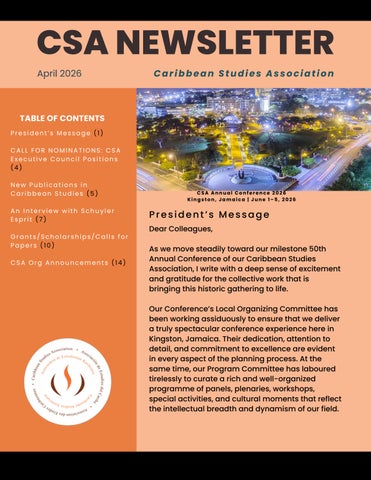
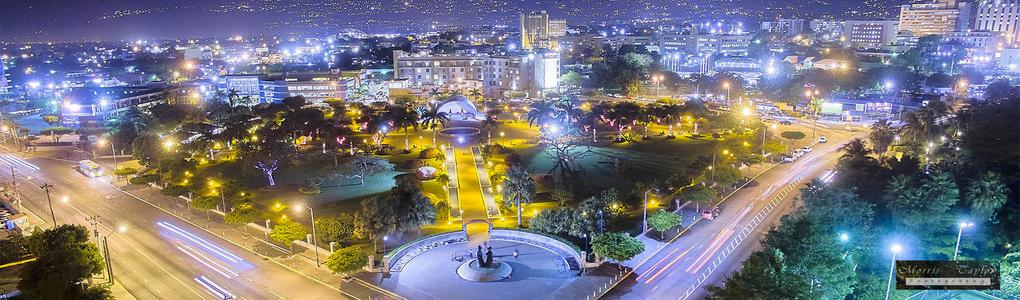
CSA Annual Conference 2026 Kingston, Jamaica | June 1–5, 2026
This 50th conference is not only a celebration of our Association’s enduring legacy, but also an opportunity to reflect critically on the evolving Caribbean and its global intersections. We have been intentional in shaping a programme that is both rigorous and responsive one that honours our past while engaging the urgent questions of our present moment.
Kingston awaits your arrival.
From the intellectual exchange that will unfold in our conference spaces, to the vibrant cultural energy that defines Jamaica’s capital, we look forward to welcoming you to a city that is both historically grounded and culturally alive. The Jamaica Pegasus Hotel and the Courtleigh Hotel and Suites stand ready to host our community, providing spaces for dialogue, connection, and fellowship.
We also take this opportunity to acknowledge and express our sincere appreciation to our sponsors and collaborating partners whose generous support and shared commitment have been instrumental in making this conference possible Their contributions have strengthened our capacity to deliver a highquality, engaging, and impactful programme, and we are deeply grateful for their investment in the continued growth and global relevance of Caribbean Studies
As President, I am also pleased to reflect on the work undertaken over the past year to advance the priorities set at the beginning of my tenure in June 2025 These have included strengthening member engagement, expanding the visibility and relevance of Caribbean Studies in a shifting global landscape, and fostering deeper connections across regions, disciplines, and generations of scholars While this work is ongoing, I am encouraged by the collective energy and commitment of our membership, which continues to drive the Association forward.
This conference, in many ways, represents the convergence of these efforts a space where scholarship, community, and cultural engagement come together in meaningful and transformative ways.
I encourage you to make your plans to join us, to participate fully in the programme, and to contribute to what promises to be a memorable and impactful gathering.
I look forward to welcoming you to Kingston as we come together to engage with, reflect on, and reenvision the Caribbean in a moment of profound global transformation, grounding our conversations in the enduring significance of culture, identity, and the pathways of development that we must navigate.
Warm regards,
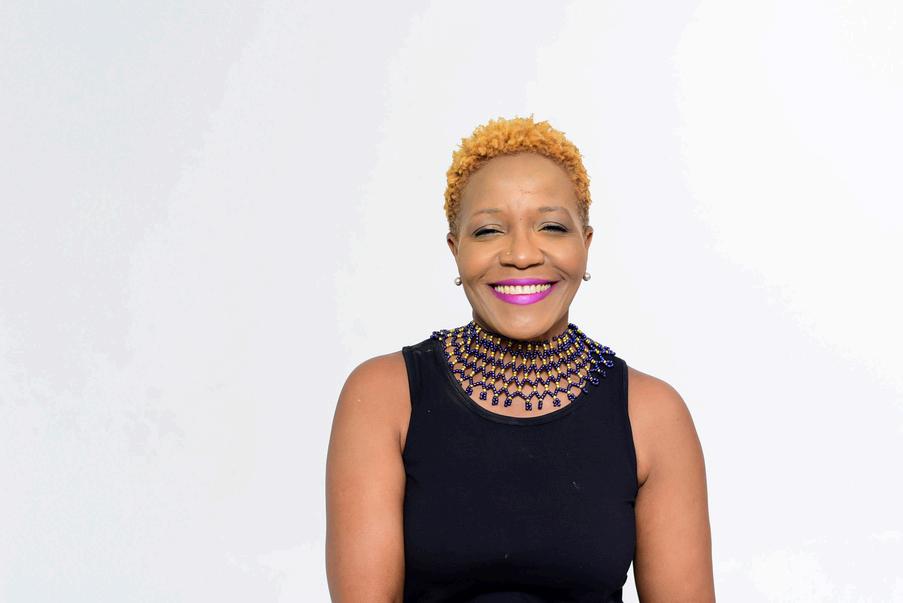
Professor Donna P. Hope President, Caribbean Studies Association
Donna P. Hope, President Professor of Culture, Gender and Society UWI, Jamaica
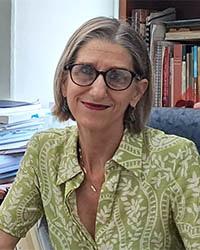
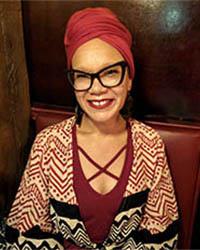
Maggie Shrimpton Masson Professor of Social Anthropology Universidad Autonoma de Yucatan, Mexico
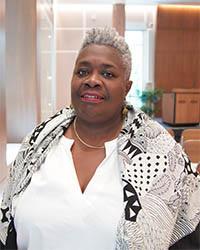
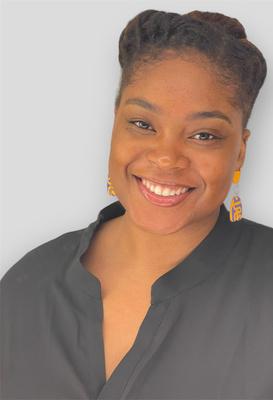
Angelique V. Nixon Senior Lecturer UWI, St Augustine
Patricia Saunders, VP Professor of English University of Miami
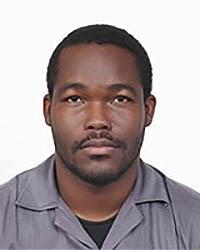
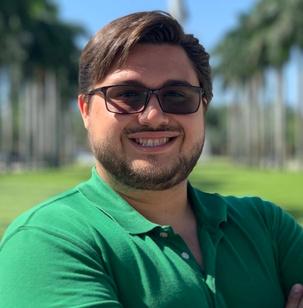
Oneil Hall Full-Time Instructor The Academy Charter School, Hempstead, New York
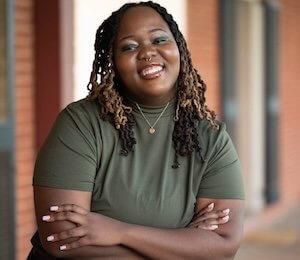
Rashana Lydner Professor of Africana Studies
Georgia State University
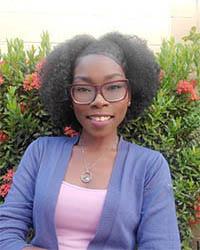
Gabrielle Jean-Louis PhD Candidate
English & Creative Writing University of Miami
Michael R. Soriano PhD Candidate
English & Creative Writing University of Miami
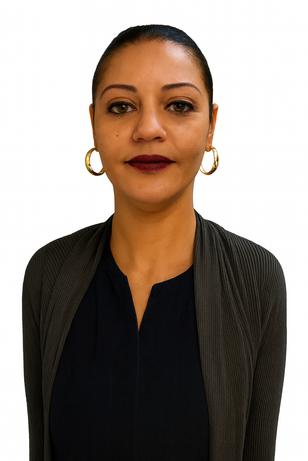
Semone Armorgan Graduate Student, ISER UWI, St. Augustine
Caroline M. DesVallons CFO & Principal Owner DAS inc.
CALL FOR NOMINATIONS: CSA Executive Council Positions
The CSA Nominations Committee is currently seeking nominations for the upcoming annual election of members to the CSA Executive Council. The open offices for the CSA Executive Council 2026-2027/8 period are:
(1) Vice President, (one-year and then assumes Presidency); (2) Two (2) Executive Council Members positions for a two-year term (2026-2028); and (3) One (1) Executive Council Member position for a one-year term (2026-2027)
Guidelines for identification of nominees are also outlined below.
All additional information regarding the duties that accompany these CSA positions are set out in the CSA Constitution and Bylaws
Deadline for Nominations:
All nominations must be submitted by April 30, 2026 All nominations should be submitted by email to the CSA VP at vice.president@caribbeanstudiesassociation.org.
All nominations should be submitted on formal/institutional letterhead and should include the following information:
(a) Name, institutional affiliation, and contact information for the person nominated (b) A summary statement indicating that appropriate guidelines have been met (c) Brief paragraph stating the rationale for nomination
(d) Contact information of the person making the nomination
If your nominee is to be included on the CSA election ballot, the nominator will be asked to help secure the following information from the nominee:
(a) Photograph (b) Biography;
(c) CV;
(d) Candidate statement on their vision for CSA (300-350 words); (e) Letter of Institutional Support (recommended for VP nominees)
All nominated individuals should be in good financial standing with the Association and must be current members
All CSA members in good financial standing are invited to participate in the election process Based on the CSA Constitution Article111 Section 2 “Membership in CSA is established by payment of annual dues on a calendar year basis, from January through December.” https:// www.caribbeanstudiesassociation.org/membership/.
New Publications in Caribbean Studies
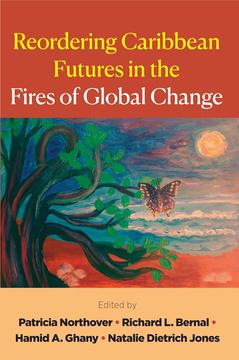
Reordering Caribbean Futures in the Fires of Global Change
Editors: Patricia Northover, Richard L Bernal, Hamid A Ghany and Natalie Dietrich Jones
Based on the contributions of an interdisciplinary collection of scholars and policy analysts, this publication assesses the dominant tensions in contemporary international geopolitics and examines the multidimensional fault lines in Caribbean vulnerability. At its core, the work challenges current models and ways of thinking to re-imagine Caribbean development futures.
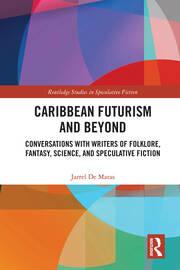
Caribbean Futurism and BeyondConversations with Writers of Folklore, Fantasy, Science, and Speculative Fiction
Caribbean Futurism and Beyond is a tripartite combination of interviews with writers of the sf (speculative fiction, science fiction, fantasy, and folklore) genre, literary and cultural analysis of those interviews within the context of seven discrete yet overlapping dimensions – folklore, mythology, children’s and young adult literature, science, technology, climate disaster, and identity; and a theoretical basis of Caribbean futurism as an esthetic practice reflecting not just future but also past and present experiences of Caribbean people The combination of interviews, analysis, and theory contributes to the ongoing questions that have been and will likely remain central to being and belonging to the Caribbean
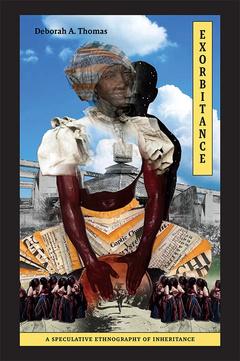
Exorbitance: A Speculative Ethnography of Inheritance
Deborah A. Thomas
In Exorbitance, Deborah A. Thomas calls for new approaches to political sovereignty grounded in the embodied forms of autonomy and relation created in daily life Rather than rooting sovereignty in the violence of the state and its institutions, Thomas conceives of sovereignty as the embodied refusal of law and dominion Drawing on the insights of Caribbeanist thought and studies of Jamaican social, political, and spiritual life, Thomas proposes an exorbitant sovereignty enacted through a phenomenological notion of inheritance.
Jarrel De Matas
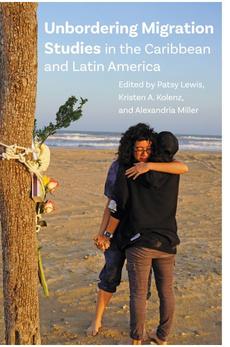
Unbordering: Migration Studies in the Caribbean and Latin America
Edited by Patsy Lewis, Kristen A. Kolenz, and Alexandria Miller
Calling for renewed attention to the spaces, identities, and conflicts that remain understudied and excluded from our hemispheric knowledge of forced movement, the volume reveals a wider diversity of migratory realities and considers race, ethnicity, and class beyond the hegemonic formations that eclipse non-US histories.
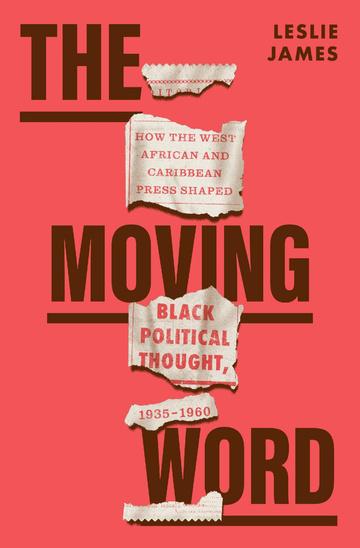
The Moving Word: How the West African and Caribbean Press Shaped Black Political Thought, 1935–1960
Leslie James
Drawing on papers from Trinidad, Jamaica, Ghana, and Nigeria, Leslie James shows how the press on both sides of the Atlantic nourished anticolonial and antiracist movements. Editors with varying levels of education, men and women journalists, worker and peasant correspondents, and anonymous contributors voiced incisive critiques of empire and experimented with visions of Black freedom. But as independence loomed, the press transformed to better demonstrate the respectability expected of a self-governing people.
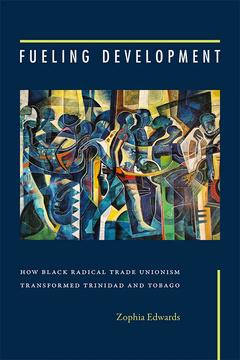
Fueling Development: How Black Radical Trade Unionism Transformed Trinidad and Tobago Zophia Edwards
Despite Trinidad and Tobago’s economic dependence on oil and gas production and its history of colonial exploitation of labor and resources, it enjoys relatively high democratic and redistributive development compared to other nations in the global South. In Fueling Development, Zophia Edwards draws on archival data, historical analysis, and Black radical political economic thought to trace Trinidad and Tobago’s success to a specific form of working-class mobilization she calls “liberation unionism ” A Black radical labor tradition, liberation unionism was multiracial, multisectoral, and gender inclusive; and Pan-African, anti-imperial, anticolonial, and diasporic; it advocated not only for workplace issues, but for economic, political, and social transformation.
An Interview with Schuyler K Esprit
Schuyler Esprit is the Founding Director of Create Caribbean Research Institute (CCRI) and a lecturer in the Department of Literatures in English at the University of the West Indies, Mona, Jamaica. In conversation with CSA Newsletter Editors Gabrielle Jean-Louis and Michael Soriano, Dr. Esprit discussed the growth and evolution of CCRI, and its support from the Caribbean Digital Scholarship Collective The discussion touched on the challenges of accessing research resources in the Caribbean, the importance of digital tools in democratizing knowledge, and the potential and risks of AI, particularly its environmental and social impacts. Dr. Esprit expressed concerns about the geopolitical landscape in the Caribbean and the need for ethical considerations in technology use The full interview will appear in a future issue of Archipelagos Her current book is entitled IMPRINTED: A Social History of Caribbean Reading (Papillote Press 2026)
GBJ: So many CCRI initiatives are invested in expanding access for marginalized creators How do digital tools let you address these absences differently than traditional scholarship might?
SKE: I build a lot of my philosophy around Arjun Appadurai's "The Right to Research." He argues that everybody has the right to research about themselves. That essay always resonated with me, because it says: the average person—even if they have a degree is entitled to participate in these questions, not just observe.
One of the things digital has allowed us to do is give access. Access is a major part of why digital tools matter, particularly around Global South access to information and knowledge. At the core of Create Caribbean's academic work is the idea of repatriating knowledge about the Caribbean. So much of the knowledge written about or sourced from the Caribbean lives outside the Caribbean behind paywalls, in museums, in special collections, at universities The digital lets me think about how we can repatriate and democratize that knowledge at the same time I also wanted to create an environment where students could learn about their history about things not in their textbooks, things treated as tangents during primary and secondary school and share that knowledge with their families
I also had a concrete problem with my first interns Seven students five of them computer science majors and none of them could get through their algorithms and database structures class Some were taking it for the second time I started talking to them about storytelling Tell me what you ' re doing Tell me how And I watched their brains shift.
Create Caribbean was an attempt to put language and stories into the tech, to put people in it. Not to say tech is only for money and national development. And to give young people in the Caribbean a different relationship with technology—one that connects global tools to local knowledge and specific local conditions.
MRS: Discourse on generative AI's ecological costs (water consumption, carbon emissions, energy demands) has largely centered in the US on impacts to Black and brown communities. But the Caribbean faces these pressures on already strained infrastructure. Is ethical AI even possible in that context? And how do you think about the tension between these tools' potential and their harm?
An Interview with Schuyler K Esprit
SKE: I teach a class called Current Trends and Issues in Publishing, and this semester I made AI the theme because I am so committed to telling everybody to leave that thing alone.
There is no such thing as ethical AI. Any tool developed for war is not ethical. "Ethical AI" is a nice way for institutions to say: we are complicit, but we don't feel bad. It's giving Thomas Jefferson I have slaves, but I feel bad about it. That's what it sounds like to me.
Are we all complicit? Absolutely. Are there applications of AI facial recognition, audio recognition, robotics, automation that have made lives more convenient or even saved lives? Yes But as far as generative AI and LLMs are concerned: there is no reason for them to exist All evidence points to the harm they cause, and the scale of that harm is so blatant and extreme that there is no real justification except greed
My aunt died during COVID I couldn't go to the funeral Her birthday came around in January, and one of my cousins posted a birthday note on my aunt's Facebook page Except AI writes those messages now it doesn't just remind you it's their birthday, it composes the message So the AI wrote a full, enthusiastic, presenttense birthday post. For her dead aunt. I didn't realize it was auto-written until my sister told me. I went into the little message box and saw the same message already populated for someone else on my list. That upset me for the entire day. You don't even remember she's dead? All of these tools built for convenience are also built for isolation—for keeping us from community.
At the core of the humanities work we do, we ' re dealing with multiple harms AI is causing. The environmental issues are severe: we are in a global water bankruptcy. The Caribbean is already vulnerable between the hurricanes and the drilling. This is not a sustainable path toward national or regional development. This is one of the reasons why Alex and others in the Caribbean digital humanities community practice minimal computing: to reduce that footprint, and to move our content away from the surveillance architecture that constantly mines our work
So culturally, we have a lot of educational work to do And there's another layer: AI is also producing false narratives about us I found an audiobook on Audible a white man writing the history of Jamaica, with AI listed as co-writer It said so right on the listing When I went back, the author credit had been changed to a company name, hiding the AI involvement There are several of these histories of Jamaica, Sri Lanka, all Global South places master narratives written about our people through AI I don't know how to convey how much ecological risk we ' re in as a region The only places they find to build data centers are places where Black and brown people live in some form of need they can exploit. Meanwhile, Marco Rubio is going to the next CARICOM heads of government meeting. Cuba has given the Caribbean forty years of free education. And our governments are sitting across the table from Marco Rubio while people are dying.
When I say there's no ethical AI, this is what I'm talking about. The geopolitical landscape that makes ethical AI impossible is always going to take from us. This is just another object in the long list of objects used in the Caribbean to cause harm.
An Interview with Schuyler
K Esprit
Isolation and alienation is how they win. We have to keep community going. We cannot let young people feel like they're alone in a world where they're doomed. Hope is the medicine. Community is the antidote.
MRS: How do you imagine CCRI evolving over the next phase? What kinds of collaborations or infrastructure would you like to see develop within Caribbean Digital Scholarship, and what forms of support are most urgently needed?
SKE: I'm working on projects and research that center environment, ecological resistance, and climate fragility alongside reparatory justice and questions of resistance and repair We've always been concerned with these questions, but I want to centralize them more
I've built a different kind of institution As much as it's an institution of awareness and education, it's also becoming an institution of activism. One of the things I want for Create Caribbean in the next few years is visibility in institutional spaces where humanities questions, research, and the uses of technology for cultural preservation are being debated. We've just entered a partnership with the Jamaica Environment Trust a major organization that has been doing environmental work in Jamaica for decades. Archives and libraries remain our priority in terms of preservation. We're working with the National Archives in Dominica and the National Archives in St. Lucia right now. If anyone working with local or community archives needs support bringing in digital technologies, they can reach out to us. One of the things we have to preserve is our knowledge not just our intellectual record, but our forms of knowledge production. We have to protect the people asking the big questions and writing about them.
The two projects going forward are the Traditions of Caribbean Resistance which we demoed at our symposium last year and are taking live this summer and Information at Risk, which is just beginning In terms of needs: I need more people I have great administrative and operational staff, but for the intellectual work the research, the projects themselves it would be wonderful to have space for postdocs or graduate fellows who are trained to do this work in community
What the CDSC grant period gave us was a collective And that collective is so wide and so deep between the microgrants, the trainings, the Summer Institute everybody left with something. Some training, an output, a project they felt moved to pursue. It felt like five loaves and two fishes. It kept multiplying, and everybody got something.
We didn't build a state-of-the-art Caribbean Digital Scholarship Lab. But we went far and wide and deep. We took care of as many people as we could, shared knowledge, invested in communities, made sure people left with skills they could use.
Going forward, I want Create Caribbean to have more visibility and a real team not to be one person anymore. I have more collaborators, partners, equipment, intellectual and social capital, and more outcomes than I've ever had. Whatever happens next, the foundation is there The idea of the collective is the most important thing we took from this grant period We built a collective, and that collective is wide enough and deep enough that people are going to see that name and know something happened 9
Grants, Scholarships, Calls for Papers
Upcoming Conferences
44 Annual West Indian Literature Conference
th 49th Annual Conference of the Society for Caribbean Studies
The 50th Annual Caribbean Studies Association (CSA) Conference
Call for Papers
2026 Annual Conference of the Society for Caribbean Studies
“The Literature of Climate Displacement,” Public Humanities
Caribbean and or South American Culture and Education
Opacity and Forms of Collective Life (Panel for ASAP 2026)
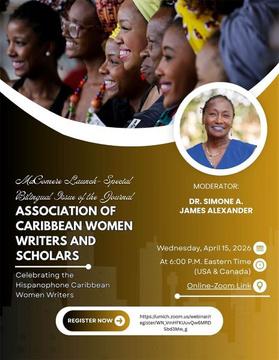
Upcoming Exhibitions/New Journal Issues
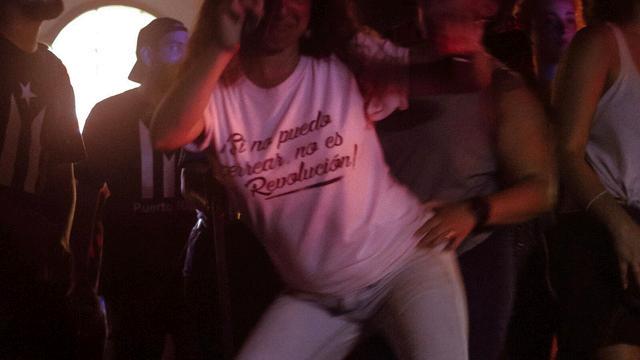
Dancing the Revolution: From Dancehall to Reggaetón
MIAMI ART EXHIBITION: THE ART OF IMPACT
VENICE BIENNALE 2026
Pavilion of The Bahamas at the 61st International Art Exhibition – La Biennale di Venezia presents In Another Man’s Yard: John Beadle, Lavar Munroe, and the Spirit of (Posthumous) Collaboration, curated by Dr. Krista Thompson
The Bahamas Pavilion presents In Another Man’s Yard: John Beadle, Lavar Munroe, and the Spirit of (Posthumous) Collaboration, curated by Dr. Krista Thompson, for the 61st International Art Exhibition – La Biennale di Venezia. The exhibition takes place at San Trovaso Art Space in Dorsoduro, close to both Accademia and Zattere
Marking only the second presentation of The Bahamas at the International Art Exhibition of La Biennale di Venezia following a 13-year hiatus, the Pavilion features the work of two Bahamian artists: the late John Beadle (1964–2024) and Lavar Munroe (b. 1982). Both artists’ practices are grounded in the visual and social traditions of The Bahamas and the broader African diaspora, engaging in themes of collaboration, commemoration, and material transformation Their intergenerational dialogue forms the conceptual and visual foundation of the Pavilion
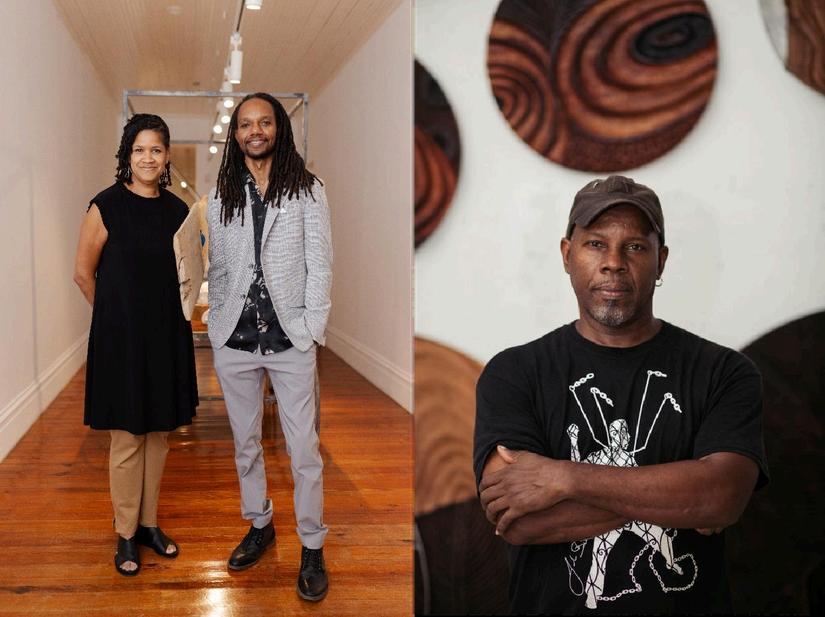
Krista Thompson and Lavar Munroe (left), John Beadle (right)
Photos by Blair Meadows, courtesy The Bahamas Pavilion
Beadle was a revered figure within The Bahamas’ artistic community and an inspiration to many, including Munroe. He was part of a community of makers who create costumes for Junkanoo, the centuries-old biannual national processional festival, which he described as the cultural bedrock of The Bahamas Junkanoo informed his commitment to collaborative artmaking and his use of discarded materials such as cardboard Beadle also incorporated tarp from Haitian sloops abandoned on Bahamian shores. Through these materials and recurring motifs dysfunctional oars, mobile houses, and concealed cutlasses he drew attention to people, things, and artistic processes often disregarded
Munroe has similarly worked at the intersection of Junkanoo and contemporary art He has produced elaborate sculptures from strips of Junkanoo costumes discarded after use, transforming cardboard that had been twice cast aside. Taking the form of monumentally scaled equestrian figures or life-sized dogs, the material composition of Munroe’s works is often not immediately discernible
The Bahamas Pavilion also foregrounds Junkanoo’s memorial and spiritual dimensions When a member of the Junkanoo community passes away, performers gather to honor the deceased. The Pavilion commemorates Beadle through a series of paintings by Munroe depicting a memorial procession, based on photographs by Bahamian photographer Jackson Petit. This work extends Munroe’s broader engagement with spiritual practices developed through recent trips to Tanzania, Senegal, and Zimbabwe It also features includes distinct sections devoted to Beadle and Munroe and features collaborative works Beadle produced with Antonius Roberts and Stan Burnside as part of the Junkanoo-based Jammin collective. The exhibition further includes a section dedicated to “posthumous collaboration ” Munroe began this practice in 2016 to honor his late father, creating works based on unrealized plans he had to collaborate with him and using materials related to his profession as a parasail operator. For Venice, Munroe will incorporate materials connected to Beadle’s practice, including sail material from Haitian sloops he left in his studio.
Resonating with Biennale Arte 2026’s overarching theme, In Minor Keys, envisioned by the late Koyo Kouoh, which celebrates “artists who work at the boundaries of form and whose practices can be thought of as intricate melodies to be heard both collectively and on their own terms,” Dr Thompson’s curatorial approach offers a distinctly Bahamian interpretation of this sentiment. The Pavilion highlights Beadle's and Munroe's use of discarded materials and collaborative processes to call attention to the hidden, the undervalued, “the minor notes,” in society and in the art world.
The Bahamas Pavilion is organised by The Bahamas in Venice Committee, under the aegis of the Ministry of Youth, Sports and Culture and the Honourable Mario Bowleg, Minister, Youth, Sports, and Culture, with assistance from the Italian Honorary Consul to The Bahamas, Michelangela Vismara The Committee comprises cultural leaders dedicated to advancing the nation’s artistic legacy: John Cox, Chairman, National Art Gallery of The Bahamas (NAGB), Artistic Director, Baha Mar and Commissioner of The Bahamas Pavilion; Maelynn Ford, Executive Director, NAGB; Amanda Coulson, Former Executive Director, NAGB (2011–2021)and Producer of the Bahamas Pavilion; Jodi Minnis, Curatorial Director, NAGB; and representatives of the Friends of The Arts in The Bahamas (FAB) Foundation
“Building on the powerful legacy of John Beadle and guided by the vision of Dr. Krista Thompson, The Bahamas’ Pavilion will challenge expectations, spark dialogue, and showcase rigorous material exploration,” stated The Bahamas in Venice Committee. “Our goal is to create a Biennale blueprint for future Bahamian artists ensuring The Bahamas maintains a strong and enduring presence on this global stage for years to come ”
The exhibition is accompanied by a catalogue published by Skira featuring contributions from Dr. Krista Thompson, John Cox, Dr Christian Campbell, Amanda Coulson and Tandazani Dhlakama
Bios
John Beadle, a painter, sculptor, and lifelong Junkanooer born in Nassau to Jamaican-Bahamian parents, combined traditional techniques with the found materials of Junkanoo cardboard, wood, and salvaged objects to create relief monuments and striking sculptural works He addressed social issues, from migration to states of insecurity, in his work He played a formative role across different artistic communities, having a central role in several artistic collectives, and paved the way for Munroe’s generation. He received a BFA from the Rhode Island School of Design before completing an MFA at Tyler School of Art, Temple University
Lavar Munroe, an interdisciplinary artist from Grants Town, Nassau, works across mixed-media painting, cardboard sculpture, and drawing He earned his BFA from the Savannah College of Art and Design and his MFA from Washington University in St Louis He also attended the Skowhegan School of Painting and Sculpture and has completed a postdoctoral fellowship Represented by Monique Meloche Gallery (Chicago) and Larkin Durey (London), Munroe’s work blends spirituality, mythology, and history to create a visual language steeped in African diasporic symbolism and cultural imagination. His mixed-media practice combines paint, airbrush, collage, ceramic, glass, feathers, cardboard, and other sacred objects to explore mythology, spirituality, and identity His work was in the 56th International Art Exhibition of La Biennale di Venezia, curated by Okwui Enwezor in 2015.
Krista Thompson is the Mary Jane Crowe Professor of Art History at Northwestern University, Chicago, Illinois and independent curator. Born in The Bahamas, she is the author of An Eye for the Tropics (2006) and Shine: The Visual Economy of Light in African Diasporic Aesthetic Practice (2015), recipient of the Charles Rufus Morey Award for distinguished book in the history of art from the College Art Association (2016) Thompson is curator and editor of Antonius Roberts: Art, Ecology, and Sacred Space and (with Claire Tancons) of En Mas’: Carnival and Performance Art of the Caribbean (2015). In 2023, Thompson was elected to the American Academy of Arts and Sciences and is the recent recipient of a Guggenheim Foundation Fellowship (2024-25)
John Cox, Commissioner of the Bahamian Pavilion, is a Bahamian artist whose mixed-media paintings and assemblages incorporate familiar objects to explore distant places, histories, and ideas Beyond his studio practice, Cox has played a pivotal role in shaping Bahamian art culture as an educator, curator, and cultural activist, guided by a deep belief that strong platforms are central to the evolution of any thriving creative industry. He is also the founder of Popopstudios, a pivotal community-based artist cooperative that significantly shifted the direction of contemporary art in The Bahamas, nurturing both emerging and senior artists from 1999 to 2018 helping to establish and liberate a new generation of creative practitioners He currently serves as Vice President of Arts and Culture for the Baha Mar Resort, where he oversees The Current and Eccho the resort’s art center and gallery. In 2022, Cox was named a PlaceMaker for the Rosewood Hotel Group, and in 2023 he was appointed Chairman of the Board of Directors for the National Art Gallery of The Bahamas He is also the Creative Director of the Fuze Caribbean Art Fair, an initiative dedicated to unifying contemporary art practices across the Caribbean region.
Amanda Coulson, Producer of the Bahamian Pavilion, is the Founding Director of TERN, a gallery representing Bahamian and Caribbean artists internationally. As the Executive Director at The National Art Gallery of the Bahamas for a decade, a cofounder of the VOLTA art fairs and an art critic and writer, she has worn many hats and has experienced the art industry from many angles She has led large scale productions in the Caribbean, USA and Europe, creating stellar exhibitions and performances As an arts Leader her core strengths lie in art strategy, developing partnerships with artists and institutions and bringing ideas to life.
CSA Organization Announcements
CSA MOVEMENTS
Dr. Janelle Rodriques resigned as Executive Council member on March 30, 2026, due to increased demands at her university Her contribution to our EC discussions and overall management to this date, as well as her work with our Travel Grants and Graduate Student Membership discussions are truly valued. We wish Dr. Rodriques continued success in her university career and do look forward to her ongoing contribution as a CSA member.