
Managers/Scientists
Managers/Scientists
Step 8
Step 7










Managers/Scientists*
Monitor for Triggerpoints Implement Management Action
Step 9
Step 1
Monitor for Effectiveness and Reevaluate Managers
Identify Management Question
Reevaluate
Managers/Scientists
Managers/Scientists
Step 8
Step 7
Managers/Scientists*
Monitor for Triggerpoints Implement Management Action
Step 9
Step 1
Monitor for Effectiveness and Reevaluate Managers
Identify Management Question
Reevaluate
Step 6
Managers/Scientists
Step 5
Identify Adaptation Options Identify Triggerpoints
Prioritize Adaptation Options
Step 2
Determine Meaningful Scenarios
Examine the Science
Step 4
Managers/Scientists
Step 3
Scientists
Scientists
Step 9
Managers/Scientists
Step 8
Step 1
Monitor for Effectiveness and Reevaluate Managers
Identify Management Question
Managers/Scientists Reevaluate
Step 7
Managers/Scientists*
Monitor for Triggerpoints Implement Management Action
Step 6
Managers/Scientists
Step 2
Determine Meaningful Scenarios
Examine the Science
Identify Triggerpoints
Step 5
Prioritize Adaptation Options
Identify Adaptation Options
Managers/Scientists
Step 4
Scientists Scientists
Step 3
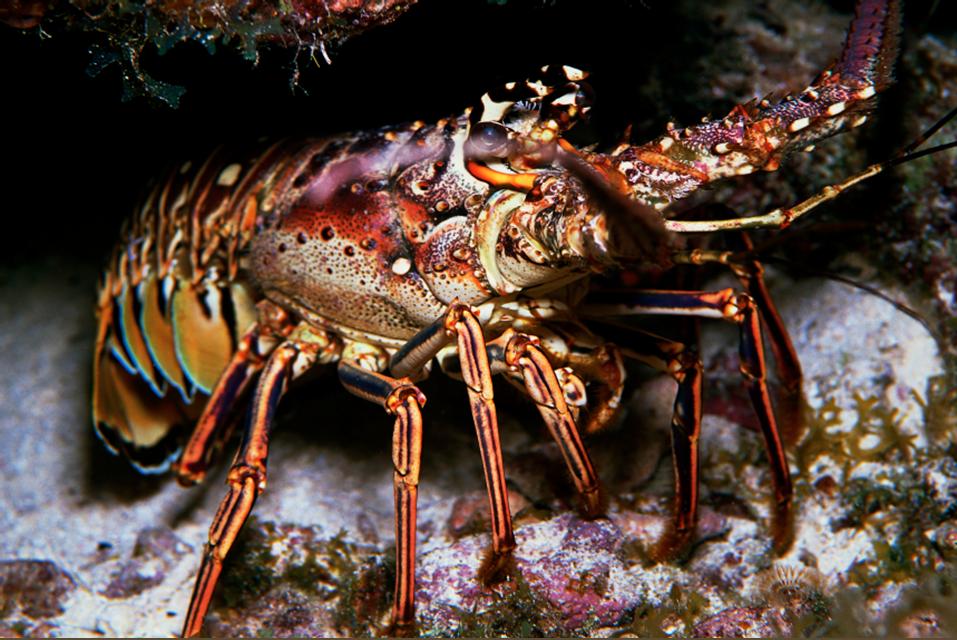
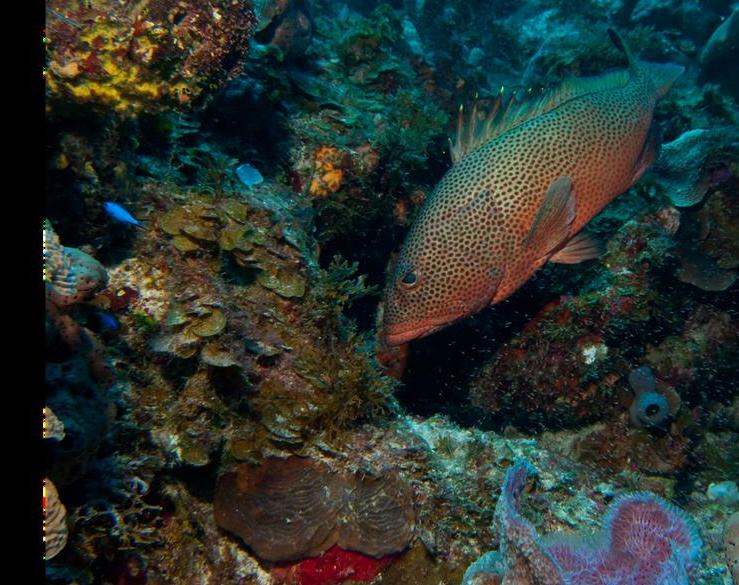
Primary Goal: Identify Adaptation options to Ensure the Sustainability of Red Hind and Spiny Lobster fisheries in the U.S. Caribbean by Identifying and Examining Alternative Future Scenarios
Secondary Goals:
1.Prioritize adaptation options
2.Identify trigger points for adaptation implementation
3.Create a monitoring plan to identify when trigger points have been reached
Step 9
Managers/Scientists
Step 8
Step 1
Monitor for Effectiveness and Reevaluate Managers
Identify Management Question
Managers/Scientists Reevaluate
Step 7
Managers/Scientists*
Monitor for Triggerpoints Implement Management Action
Step 6
Managers/Scientists
Step 2
Examine the Science
Identify Triggerpoints
Step 5
Prioritize Adaptation Options
Identify Adaptation Options
Managers/Scientists
Step 4
Step 3
Current Conditions



Governance
Water Currents
Sea Surface Temperature
Sea Level Rise
Runoff (i.e. hydrology)
Legislative
Enforcement
Fisher Perspectives
Economic Drivers
Alternative Livelihoods
Local Economies
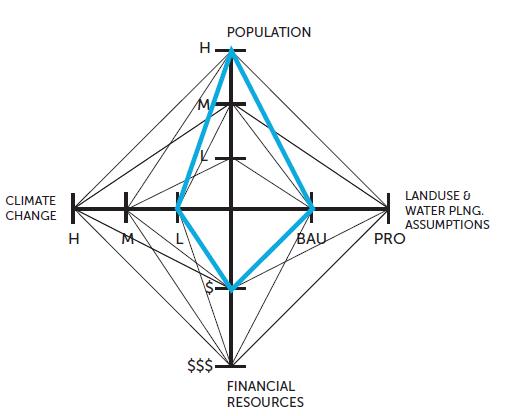
The scenarios combine greenhouse gas emissions pathways with socioeconomic factors
•SSP1-1.9 (Green Growth): Best-case scenario, limits warming to around 1.5°C by 2100. Requires emissions to decline immediately and Net Zero to be reached by 2050. Low population growth, high education, rapid technology development, and low inequality.
•SSP1-2.6 (Sustainability): Optimistic scenario; holds warming below 2°C, requiring significant decarbonization. Trends continue near historical patterns, with moderate development.
•SSP2-4.5 (Middle of the Road): Emissions remain around current levels for several decades before declining, but do not reach net-zero by 2100. Low-income growth, slow technological change, high population growth, and high emissions.
•SSP3-7.0 (Dangerous): High emissions and high, steady temperature increases. Significant disparities in income, education, and technology access, with low adaptation in developing regions.
•SSP5-8.5 (Fossil-fueled Development): Worst-case scenario; CO2 emissions double by 2050. High income growth, rapid technological progress, and high energy demand based on fossil fuels.
The scenarios combine greenhouse gas emissions pathways with socioeconomic factors
•SSP1-1.9 (Green Growth): Best-case scenario, limits warming to around 1.5°C by 2100. Requires emissions to decline immediately and Net Zero to be reached by 2050. Low population growth, high education, rapid technology development, and low inequality.
•SSP1-2.6(Sustainability): Optimistic scenario; holds warming below 2°C, requiring significant decarbonization. Trends continue near historical patterns, with moderate development.
•SSP2-4.5 (Middle of the Road): Emissions remain around current levels for several decades before declining, but do not reach net-zero by 2100. Low-income growth, slow technological change, high population growth, and high emissions.
•SSP3-7.0(Dangerous): High emissions and high, steady temperature increases. Significant disparities in income, education, and technology access, with low adaptation in developing regions.
•SSP5-8.5 (Fossil-fueled Development): Worst-case scenario; CO2 emissions double by 2050. High income growth, rapid technological progress, and high energy demand based on fossil fuels.
Step 9
Managers/Scientists
Step 8
Step 1
Monitor for Effectiveness and Reevaluate Managers
Identify Management Question
Managers/Scientists Reevaluate
Step 7
Managers/Scientists*
Monitor for Triggerpoints Implement Management Action
Step 6
Managers/Scientists
Identify Triggerpoints
Step 5
Prioritize Adaptation Options
Step 2
Determine Meaningful Scenarios
Step 3
Identify Adaptation Options
Managers/Scientists
Step 4



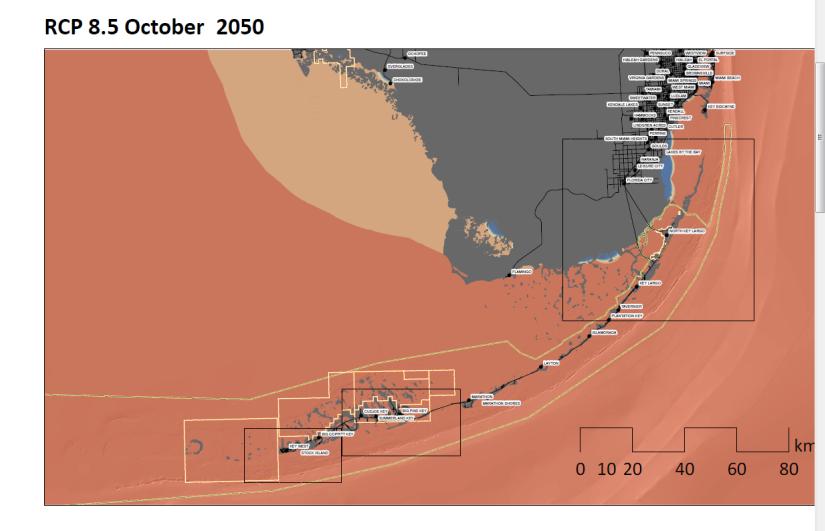
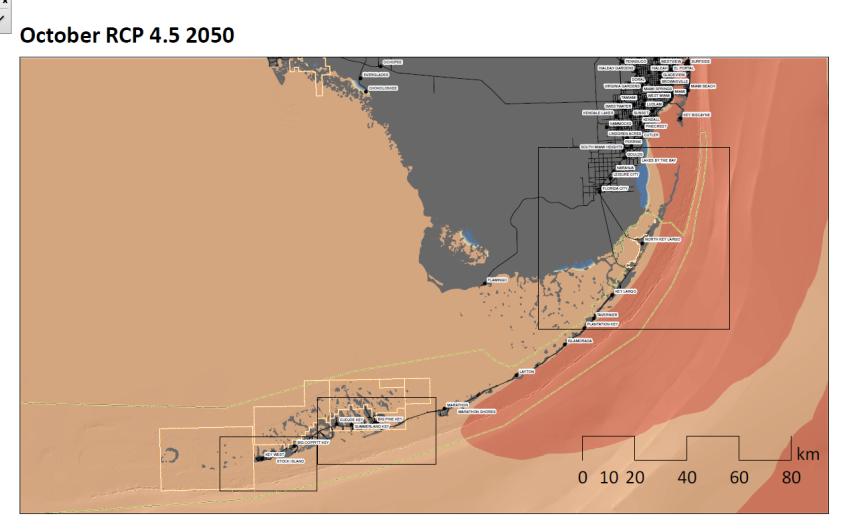
courtesy NOAA-AOML

Step 9
Managers/Scientists
Step 8
Step 1
Monitor for Effectiveness and Reevaluate Managers
Identify Management Question
Managers/Scientists Reevaluate
Step 7
Managers/Scientists*
Monitor for Triggerpoints Implement Management Action
Step 6
Managers/Scientists
Step 2
Determine Meaningful Scenarios
Examine the Science
Identify Triggerpoints
Step 5
Prioritize Adaptation Options
Step 4
Managers/Scientists
Step 3
Scientists
Scientists
SSP1-1.9
SSP2-4.5
SSP5-8.5 S P E C I E S
Socio Economics

Step 9
Managers/Scientists
Step 8
Step 1
Identify Management Question
Managers/Scientists Reevaluate
Step 7
Managers/Scientists*
Monitor for Triggerpoints Implement Management Action
Step 6
Managers/Scientists
Step 2
Determine Meaningful Scenarios
Step 3
Examine the Science
Identify Triggerpoints
Monitor for Effectiveness and Reevaluate Managers Scientists Scientists
Step 5
Identify Adaptation Options
Managers/Scientists
Step 4


Step 9
Managers/Scientists
Step 8
Step 1
Identify Management Question
Managers/Scientists Reevaluate
Step 7
Managers/Scientists*
Monitor for Triggerpoints Implement Management Action
Step 6
Managers/ Scientists
Monitor for Effectiveness and Reevaluate Managers Scientists Scientists
Identify Triggerpoints
Step 5
Prioritize Adaptation Options
Step 2
Determine Meaningful Scenarios
Step 3
Examine the Science
Identify Adaptation Options
Managers/Scientists
Step 4
Sea Surface Temperature Trigger (average temperature over any fifteen day period):
Low Tolerance Species: 27.6 C
Moderate Tolerance Species: 34.2 C
High Tolerance Species: 47.5 C
Salinity Trigger (average salinity over any thirty day period):
Low Tolerance Species: 36.1 ppt
Moderate Tolerance Species: 42.75 ppt
High Tolerance Species: 66.5 ppt
Shoreline Change Trigger:
Moderate erosion, 0.6 m/yr or greater loss of substrate
Saline Wetland Extent Trigger:
Total rate of loss (acres) greater than, or equal to, a half percent annually, based on comparison to the total acreage of saline wetlands for the previous year
Mangrove Accretion Trigger:
An annual increased value of vertical accretion that is equal to or less than current annual SLR measurements
Step 9
Managers/Scientists
Step 8
Implement Management Action
Step 1
Identify Management Question
Managers/Scientists Reevaluate
Step 7
Monitor for Triggerpoints
Managers/Scientists*
Step 6
Managers/Scientists
Monitor for Effectiveness and Reevaluate Managers Scientists Scientists
Identify Adaptation Options Identify Triggerpoints
Step 5
Prioritize Adaptation Options
Step 2
Determine Meaningful Scenarios
Step 3
Examine the Science
Step 4
Managers/Scientists
Determine Approach to Overcome


Overcome
Barriers to Implementation


Priority Barriers Cross Discipline Team
Prioritize Barriers to Overcome


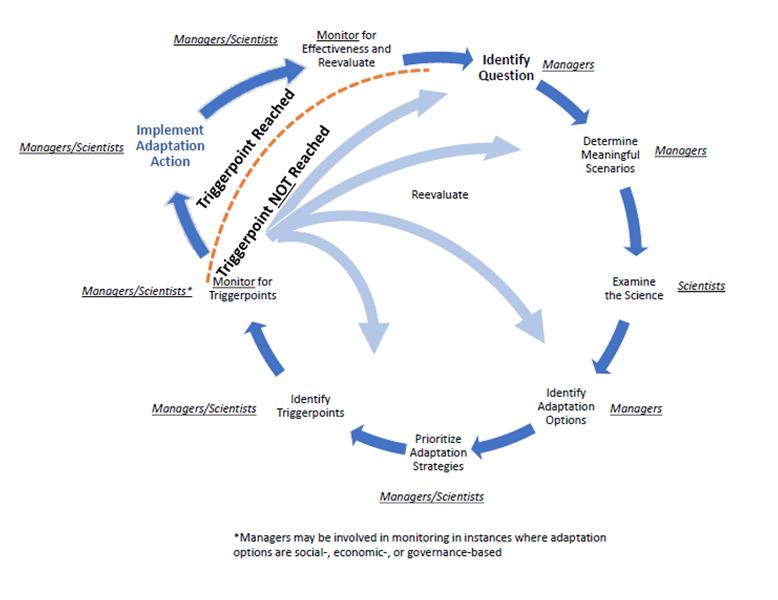


Identify Barriers to Implementation