
ANNUAL REPORT 2017
& FINANCIAL PROJECTIONS 2018-2020
CURRENCY EQUIVALENT
[Dollars ($) throughout refer to United States dollars unless otherwise stated]
ABBREVIATIONS
BMCs - Borrowing Member Countries
bn - billion
BNTF - Basic Needs Trust Fund
BVI - British Virgin Islands
CARICOM - Caribbean Community
CCRIF SPC - Caribbean Regional Technical Assistance Centre
CC - climate change
CCRIF - Caribbean Catastrophe Risk Insurance Facility
CDB - Caribbean Development Bank
CSP - Country Strategy Paper
CTCS - Caribbean Technological Consultancy Services
DPs - development partners
DRM - disaster risk management
EE - energy efficiency
ESIA - Environmental and Social Impact Assessment
GDP - gross domestic product
GE - gender equality
IFAD - International Fund for Agricultural Development
MENFP - Ministère de l’Education Nationale et de la Formation
Professionnelle (Ministry of National Education and Vocational Training)
MfDR - Managing for Development Results
mn - million
MSMEs - micro, small and medium enterprises
OCR - Ordinary Capital Resources
PBL - Policy-based Loan
PCs - participating countries
RMF - Results Monitoring Framework
RCI - regional cooperation and integration
RE - renewable energy
RPGs - regional public goods
RSS - Regional Security System
SDF (U) - Special Development Fund (Unified)
SDF 7 - Special Development Fund (Seventh Cycle)
SDF 8 - Special Development Fund (Eighth Cycle)
SDF 9 - Special Development Fund (Ninth Cycle)
SDGs - Sustainable Development Goals
TA - technical assistance
TCI - Turks and Caicos Islands
TVET - Technical and Vocational Education and Training
WB - World Bank
TABLES & APPENDICES
TABLES
TABLE 1 SDF-Targeted SDGs
TABLE 2 Annual Commitments 2013-2017
TABLE 3 Total Commitments by SDF 9 Strategic Operational Theme
TABLE 4 Annual Disbursements 2013-2017
TABLE 5 Key SDF Interventions and Expected Outcomes
TABLE 6 BNTF 7 & 8 Allocations, Approvals and Disbursement as at December 31, 2017
TABLE 7 BNTF 9 Allocations as at December 31, 2017
TABLE 8 CTCS Technical Skills Training Conducted (2017)
TABLE 9 Distribution of CTCS Network Approvals and Disbursements by Country (2017)
TABLE 10 Summary of Projects Flagged “At Risk” for 2017
TABLE 11 Summary Scorecard of Level 3 and Level 4 RMF
TABLE 12 SDF Programme Level
TABLE 13 Commitment Authority and Use of Funds
TABLE 14 SDF 9 Allocation and Use of Resources
TABLE 15 Summary of Financial Results 2013-2017
TABLE 16 Summary of Projected Financial Results, 2018-2020
APPENDICES
APPENDIX I The Unified Special Development Fund
APPENDIX II Contributions to the Unified Special Development Fund SDF 1-8
APPENDIX III SDF 9 Programme Level, Country Groups and Terms of Lending
APPENDIX IV SDF 9 Commitments 2017
APPENDIX V SDF Portfolio Analysis 2017
APPENDIX VI SDF Financial Statements
VI-1: Summary Balance Sheets as at December 31, 2013-2017
VI-2: Summary Income Statements for the years ending December 31, 2013-2017
VI-3: Summary of Notes, Encashments and Drawdowns 2017
VI-4: Projected Balance Sheets as at December 31, 2018-2020
VI-5: Projected Income Statements for the years ending December 31, 2018-2020
MESSAGE FROM THE PRESIDENT
From inception, the Special Development Fund (SDF) has been the Bank’s main vehicle for delivering on its poverty reduction mandate. In 2017, we were one step closer to achieving that mandate with the launching of the ninth cycle of the Fund (SDF 9). Once again, Contributors demonstrated their strong support by committing resources and approving a $355 million (mn) programme for the period 2017-2020.
The new cycle started in a year dominated by a number of destructive natural disasters that impacted several of our Borrowing Member Countries (BMCs). Dominica and the British Virgin Islands (BVI) were perhaps the two most severely affected, with over 30 lives lost and damage estimated at 226% and 330% of gross domestic product (GDP), respectively.
Chinese philosopher Lao Tzu opined that “New beginnings are often disguised as painful endings.” Led by the affected countries, Caribbean Community governments joined a regional movement to “build back better” and renewed their commitments to actions and policies that embed climate change and disaster risk management (DRM) principles, and build resilience at all levels. The Bank, for its part, assisted both in emergency grants for clean-up following the hurricanes; and loans to support the rehabilitation and reconstruction of more resilient infrastructure.
In this first year of SDF 9, approvals and disbursements performed credibly. Total loans and grants approved amounted to nearly $96mn, slightly higher than in 2016. The majority of the almost $22mn in loan approvals was for immediate response, and rehabilitation and reconstruction of damaged infrastructure. Grants approved exceeded $74mn, including the $40mn allocation to Basic Needs Trust Fund (BNTF), as well as interventions in Haiti for education and DRM totalling just over $24mn. Of particular note also, is the work the Bank is doing to strengthen the governance framework in BMCs, principally through procurement reform; support for evidence-based decision making, and training in public expenditure management for members of Parliament.
We also broke new ground with the approval of a technical assistance (TA) grant to combat the trafficking of persons by improving the institutional framework for services provided by public and non-governmental organisations. Disbursements reached almost $62mn due to direct poverty interventions made through the BNTF programme; and the construction of roads, and river and sea defences in beneficiary countries.
Some major initiatives were undertaken in 2017. These included the completion of negotiations for the establishment of a new Caribbean Development Bank (CDB) office in Haiti, scheduled to become operational in 2018. As the sole BMC currently eligible for grant funding only from CDB, the new office location will increase CDB’s responsiveness to Haiti. Additionally, the SDF lending rate was lowered and unified at 1%, making it more attractive and affordable for BMCs to finance projects that contribute to sustainable development; build resilience to climate change and natural hazards; and support regional integration and regional solutions to shared challenges - the core themes of SDF 9.
In closing, I wish to express my sincere gratitude to:
• SDF Contributors for their direction and guidance;
• BMCs, for engaging cooperatively with CDB to further their development agenda and priorities;
• Development partners with whom we collaborate, recognising the competencies and comparative advantage that each brings to the table; and
• Management and Staff of the Bank, who work tirelessly to implement critical investments
The Region has had to overcome many obstacles in the past 30 years, but with perseverance and a commitment to manage resources effectively and sustainably, we can look ahead with great optimism. Already we can point to examples of countries, namely Grenada and Jamaica who have taken difficult decisions and are now facing brighter prospects. Partnering with BMCs to bring about transformational and sustainable change in the lives of vulnerable persons is at the heart of CDB’s efforts and we will work steadfastly and diligently with our Contributors and BMCs to secure a more prosperous future for our Region.
Wm. Warren Smith, Ph.D., CD President
Wm. Warren Smith, Ph.D., CD President
EXECUTIVE SUMMARY
This 2017 Annual Report of the SDF is the first review under SDF 9 which has a total programme level of $355 million (mn) and spans the period January 1, 2017 to December 31, 2020. The SDF continues to be an invaluable tool to CDB as it works towards its mission of poverty reduction in BMCs (see Appendix 1). It has long been accepted that a necessary condition for poverty reduction is the achievement of sustainable and inclusive growth. SDF 9 brings increased focus to this relationship with the explicit incorporation of Caribbean-relevant SDGs as a core theme, in addition to the other themes of environmental sustainability and promoting regional co-operation and public goods. Specific set-asides under SDF 9 include allocations for Haiti, Basic Needs Trust Fund (BNTF), TA for capacity building, the Caribbean Technological Consultancy Services Network (CTCS), agriculture and rural development, environmental sustainability including climate change (CC) and sustainable energy, disaster response, regional cooperation, building the enabling environment for the private sector development and capacity building in statistics and governance. Implementation of the SDF 9 programme will ultimately depend on the Bank’s ability to remain relevant to its BMCs. In this regard, the reduction of the interest rate on SDF loans to 1% which became effective January 1, 2017, will give strong support to the work of the Bank.
This Report examines the operational performance of the Fund in its first year of SDF 9 relative to 2016 and where appropriate, previous years to better contextualise performance. The analysis also juxtaposes the 2017 out-turn against strategic themes, and planned activity as contemplated in the Contributors’ Report. It highlights the operations of two flagship programmes under the Fund – BNTF and CTCS, and discusses the performance of the SDF portfolio. Additionally, the report calls attention to two issues affecting the Caribbean, namely vulnerability to natural hazards, and good governance and elaborates on the work that CDB has been doing in each. The analysis reports on results, and concludes with the financial outturn and medium projections of the Fund.
At $95.9mn, total commitments in 2017 were slightly higher than for the previous year owing to a strong performance from grants. To a large extent, this was due to the inclusion of the BNTF allocation for SDF 9 of $40mn. However, even if the BNTF allocation is abstracted from the analysis, the underlying movement in grants is still positive with commitments increasing by approximately $11mn on account of significant support to Haiti and assistance to address the fall-out from an overactive hurricane season. The grants performance is particularly noteworthy as it occurred within the context of the new SDF 9 cycle. In previous cycles, both grant and loan commitments declined in the first year as countries revisited programming against the backdrop of revised themes, set-asides and allocations. The performance of the loan portfolio was, however, more in line with the previous patterns for the first year of the
cycle, as commitments declined to $21.5 mn from $71.8mn in 2016. During the year, 10 loans were approved compared with 17 in 2016 and 8 in 2015. When analysed according to operational themes, the bulk of commitments in the first year of the SDF 9 cycle was in support of the SDGs, which accounted for 73.2% of total approvals ($70.2mn). Given the comprehensive nature of the Bank’s assistance, commitments tend to span more than one SDG. Nevertheless, some concentration could be seen on SDGs 1 (ending poverty), 2 (ending hunger and food security), 5 (gender equality), 8 (inclusive and sustainable growth), and 17 (strengthening the global partnership for sustainable development). Building resilience was the next largest category of activity due to weather systems, accounting for 24.9% of commitments ($23.9mn) followed by regional cooperation and integration (RCI) and regional public goods (RPGs) at 1.9% ($1.8mn). Notably the distribution of commitments across themes is consistent with the indicative allocation in the SDF Contributors’ Report.
At the strategic level, the Bank made two significant gains with respect to country engagement in Haiti in 2017. The first, was the completion of negotiations for the establishment of a new CDB office in Haiti, scheduled to become operational in 2018. Additionally, the Board of Directors approved a new Country Strategy for Haiti in December 2017 with emphasis on: (a) boosting agricultural production; (b) increasing access to sustainable energy options; and (c) improving the quality of human capital and strengthening public sector capacity. The Country Strategy Paper (CSP) will provide the overarching framework for the utilisation of the set-aside under SDF 9 as well as concessionary loan funding over the period 2017-2021. In 2017, commitments to Haiti almost doubled to $24.1mn while disbursements were $8.6mn up from $0.5mn a year earlier.
BNTF is CDB’s main poverty reduction programme, providing grant financing to reduce the incidence of poverty in low-income vulnerable communities, primarily by improving access to new and upgraded basic social infrastructure and training. Under SDF 9, $40mn was allocated to BNTF over four years. After an exceptional year in 2016, disbursements were lower at $16.7mn due principally to the winding down of projects under BNTF 7 and 8. Nevertheless, during 2017, participating countries (PCs) completed 163 sub-projects under BNTF 7 and 8, a 220% increase over 2016, which delivered benefits to targeted groups and communities. Some early results include: (a) students (30,803 males and 20,298 females) benefitting from the construction or upgrading of 282 classrooms with additional educational support facilities such as bathrooms, administrative spaces, and facilities for the disabled; and (b) 9,309 households benefitting from expansion in their water systems including 12,644.1 m3 of additional water storage capacity and 52.1 km of new water supply lines.
SUMMARY DATA SHEET 2013-2017
RESOURCES
LOANS AND GRANTS
RESOURCE FLOWS
SDF 9 OPERATIONAL STRATEGY
The operational strategy for SDF 9 has at its core, the principle of inclusivity while promoting poverty reduction through sustainable growth and development. It was formulated within the context of an expanded international development agenda through agreements reached on the SDGs; Financing for Development (Addis Abba Action Agenda); and Climate Change at the United Nations Conference of Parties (Paris).
The ninth cycle has three core, and three crosscutting themes. Given limited resources, and the existence of other partners in the development space, selectivity and focus were guiding principles in arriving at the key themes. It was also determined that development effectiveness could be enhanced, and duplication reduced through partnerships with other key stakeholders, and by adopting regional solutions where appropriate.
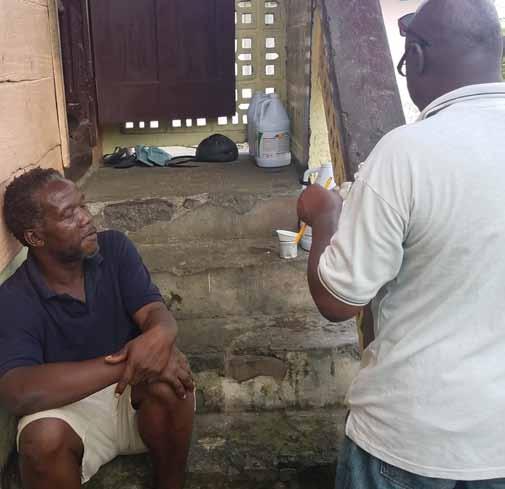
A data collector administers a community engagement survey to a member of the Fitz Hughes community in St. Vincent and the Grenadines, as part of efforts toward improving the country’s ability to withstand and recover from natural disasters.
Consequently, the core themes are:
Support for the SDG targets relevant to the Caribbean and specific to SDGs 1, 2, 4, 5, 6, 7, 8, 9, 10, 11, 13, and 17
With poverty reduction being the ultimate objective, the SDGs focus on inclusivity, equality and resilience as key components of sustainability. Principal components in this theme will be inclusive and equitable education and training, and the provision of resilient social and economic infrastructure.
Building resilience to CC and natural hazards events, and promoting sustainability.
This is both a core and cross-cutting theme, explicitly recognising and provisioning for the need to respond to the incidence of natural hazards. It also acknowledges the threat posed to the Region by CC and prioritises accessibility of the Bank and BMCs to climate financing.
Promoting regional cooperation and support for RPGs.
As BMCs pursue socio-economic advancement, they must seek out opportunities to benefit from economies of scale and scope if they are to overcome the constraints posed by small size. Deepening RCI and seeking regional solutions to shared development concerns has therefore been maintained as a core priority in SDF 9.
Cross-Cutting Themes
The cross-cutting themes are gender equality (GE), which is consistent with SDG 5, good governance (SDG 16) and environmental sustainability (SDG 13).
OTHER STRATEGIC ISSUES
BNTF
and Haiti
The Bank will continue to advance the work of BNTF through the increased allocation under SDF 9, and provide further support for Haiti as a country with special development concerns.
Reform Measures to Improve Institutional Capacity
This focuses principally on enhancing corporate governance and oversight; improving operational strategies, policies and guidelines; and strengthening BMC engagement.
Development Effectiveness and Reporting on Results
This focuses on enhancing capacity to develop and implement SDF 9 priorities as well as undertake programme and country strategy evaluations.
The 2017 Annual Report of the SDF is the first review under SDF 9 which spans the period January 1, 2017 to December 31, 2020. The Report examines the operational performance of the Fund in 2017, relative to 2016 and where appropriate, previous years to better contextualise performance. The analysis also juxtaposes the 2017 out-turn against strategic themes, and planned activity to gauge performance.
The SDF continues to be an invaluable tool to the Bank as it works towards its mission of poverty reduction in BMCs. A necessary condition for poverty reduction is the achievement of sustainable and inclusive growth. While the SDF has always supported this tenet, the ninth cycle brought this principle to the fore with the explicit incorporation of the SDG targets relevant to the Caribbean as a core theme, in addition to the two other themes of environmental sustainability and promoting regional co-operation and public goods. Specific set-asides under SDF 9 include allocations for Haiti, BNTF, TA for capacity building, CTCS, agriculture and rural development, environmental sustainability including climate change and sustainable energy, disaster response, regional cooperation, building the enabling environment for private sector development, and capacity building in statistics and governance.
TABLE 1: SDF-TARGETED SDGs

End poverty in all its forms everywhere

End hunger, achieve food security and improve nutrition and promote sustainable agriculture

Ensure inclusive and equitable quality education and promote lifelong learning opportunities for all

Achieve gender equality and empower all women and girls

Ensure availability and sustainable management of water and sanitation for all

Ensure access to affordable, reliable, sustainable and modern energy for all

Promote inclusive and sustainable economic growth, full and productive employment and decent work for all

Build resilient infrastructure, promote inclusive and sustainable industrialization and foster innovation

Reduce inequality within and among countries

Make cities and human settlements inclusive, safe resilient and sustainable

Take urgent action to combat climate change and its impacts

Strengthen the means of implementation and revitalise the global partnership for sustainable development

resource constrained. Contributors also approved the programme for the ninth cycle of BNTF, the Bank’s leading programme for direct poverty reduction.
As the Bank strives to achieve its mandate, the operating environment remains challenging. The Region has always been vulnerable to a host of natural hazards such as hurricanes, floods, earthquake, volcanic eruption and tsunami. However, the 2017 Atlantic Hurricane Season was unusually active, with 17 named systems and also featured three Category 5 hurricanes, Harvey, Irma and Maria. Hurricanes Irma and Maria passed through the Caribbean within two
such as the Caribbean Catastrophe Risk Insurance Facility (CCRIF SPC), and enforcing building codes.
Another critical development challenge which characterises the operating environment is governance, which is manifested in weak institutions, project implementation deficits, inadequate planning and regulatory frameworks and a lack of competitiveness especially when compared to Latin American counterparts. Added to these, lingering gender inequalities, high youth unemployment and addressing the needs of persons with disabilities present peculiar challenges in ensuring that growth is
the operational performance and highlights critical interventions under the thematic areas, while Section 3 assesses development results achieved from ongoing projects during the first year of SDF 9. Section 4 reports on programme levels and financial resources available during the ninth cycle along with planned versus actual commitments. The final section shows the financial performance of the Fund for 2017 and makes projections for the period 2018-2020.
2. OPERATIONAL PERFORMANCE
OF SDF 9 IN 2017
This chapter highlights the progress of the SDF in supporting the Bank’s objectives. Information on commitments and disbursements is presented, as well as an assessment of the initial allocation vis-àvis commitments to date and a comparison with the previous SDF cycle. Operational performance is also tracked according to commitments consistent with the agreed-to grant set-asides and importantly, the SDF 9 themes which are the main strategic pillars of engagement for SDF.
COMMITMENTS
At $95.9mn, total commitments in 2017 were marginally higher than in the previous year owing to a strong performance from grants (see Chart 1). To a large extent, this reflected the inclusion of the BNTF allocation for SDF 9 of $40mn (see Table 2). However, even if the BNTF allocation is abstracted from the analysis, the underlying movement in grants is still positive with commitments increasing by approximately $11mn. The grants performance is particularly noteworthy as it occurred within the context of the new SDF 9 cycle. In previous cycles, both grant and loan commitments declined in the first year as countries revisited programming against the backdrop of revised themes, set-asides and allocations. Grant commitments reflect significant support to Haiti in 2017, coupled with approvals triggered by an overactive hurricane season and support for building regional procurement capacity. The performance of the loan portfolio was more in line with the previous patterns for the first year of a cycle, as commitments declined to $21.5mn from $71.8mn in 2016. During the year, 10 loans were approved compared with 17 in 2016 and 8 in 2015.
CHART 1: SDF COMMITMENTS 2013-2017 ($MN)
TABLE 2: ANNUAL COMMITMENTS 2013-2017 ($MN)
LOANS
The majority of loans were to assist BMCs’ recovery efforts following damage caused by extreme rainfall events and Hurricanes Irma and Maria. Consequently, most loan interventions were under the theme of building resilience to climate change and natural hazards events, and promoting sustainability. The Bank approved five immediate response loans ($3.8mn) and two rehabilitation and reconstruction loans to Antigua and Barbuda and BVI, the SDF component of which totalled $9.9mn. Other loans were to Grenada in support of: (a) the Climate Smart Agriculture and Rural Enterprise Programme ($5mn) which will help entrepreneurs in poor rural communities to own and operate businesses that incorporate new technologies and practices that build resilience to climate change, and; (b) the Strengthening Food Safety Management Systems Project ($0.9mn) to bring the fresh fruits and vegetables sub-sector in line with internationally accepted standards.The other major intervention was the Ninth Consolidated Line of Credit to Dominica ($2mn) to fund housing, education and social development.
GRANTS
Grant commitments rose more than threefold in 2017, largely on the basis of the BNTF allocation of $40mn approved under SDF 9. Haiti received the bulk of the other SDF commitments, which almost doubled the previous year’s approvals ($12.2mn). Key interventions in Haiti were in education, building capacity for disaster risk management (DRM) and CC in Ile a Vache and supporting Haiti in meeting its commitment to CCRIF SPC. The unusually active hurricane season precipitated an increase in commitments for disaster response. The Bank approved five emergency relief grants to Antigua and Barbuda, the Bahamas, Anguilla, BVI, and Guyana. Environmental sustainability, climate change and sustainable energy also registered an uptick in commitments as the Bank supported BMC participation at the United Nation’s Framework Convention on Climate Change and research on climate change. Two new set-asides approved under SDF 9 to support the creation of the private sector development, and build capacity in governance and statistics got off to good starts in 2017. With respect to the former, there was an approval to establish a Cultural and Creative Industries Fund which will focus on, inter alia, legislative and policy reforms to support the sector, increase the quality and dissemination of information on cultural industries, and enhance the technical capacity of MSMEs to improve their competitiveness. In the case of governance and statistics, several interventions were approved to strengthen implementation capacity. Box 2 elaborates on some of the Bank’s work in governance in 2017.
When analysed according to operational themes, in the first year of the SDF 9 cycle, the bulk of commitments was under the theme of the SDGs, which accounted for 73.3% of total. Given the comprehensive nature of the Bank’s assistance, commitments tend to span more than one SDG. Nevertheless, some concentration could be seen on SDGs 1 (ending poverty), 2 (ending hunger and food security), 5 (gender equality), 8 (inclusive and sustainable growth), and 17 (strengthening the global partnership for sustainable development). Building resilience was the next largest category of activity, accounting for 24.9% of commitments, followed by RCI and RPGs at 1.9% (See Table 3 below). Notably the distribution of commitments across themes is consistent with the indicative allocation in the SDF Contributors’ Report.
TABLE 3: TOTAL COMMITMENTS BY SDF 9 STRATEGIC OPERATIONAL THEME (2017)
DISBURSEMENTS
Total disbursements fell by 5.5% to $61.6mn, on account of a decline in grant disbursements primarily under BNTF. This was due principally to the closing out of projects under previous cycles and reduced implementation capacity in Dominica as a result of Hurricane Maria. This notwithstanding, BNTF disbursed $16.7mn, which is well above the average disbursement under SDF 8. TAs were also down slightly when compared to 2016 but still managed to remain above average for the previous cycle. In contrast, Haiti recorded a near two-fold increase in disbursements
owing largely to the implementation of projects in the education sector. With respect to loans, Bank outlays were also slightly higher (6.4%), reflecting to a large extent, disbursements to Guyana ($8.8mn) which consisted of work to build resilient road and sea and river defences, St. Lucia ($5.1mn) comprising policy-based loan (PBL) proceeds and rehabilitation from Hurricane Tomas, and Belize ($4.3mn) for support to the social investment fund and youth and community transformation.
TABLE 4: ANNUAL DISBURSEMENTS 2013-2017 ($MN)
SDF 9 THEMATIC AND PROGRAMME HIGHLIGHTS
EXPECTED OUTCOMES OF SDF 9 PROJECTS
In the first year of SDF 9, resources were approved under the themes of supporting the attainment of selected SDGs; building resilience to CC and natural hazard events and promoting environmental sustainability; and promoting regional cooperation and RPGs. Gender equality, good governance and environmental sustainability were treated as cross-cutting themes to be mainstreamed in all Bank assistance. This section highlights some of the SDF projects approved under these themes and programmes in 2017 and provides an insight into the expected outcomes of the assistance.
SUPPORTING THE SDGs
Since 2001, global development goals have played a fundamental role in shaping the Region’s development agenda, and supported the Bank’s engagement with BMCs. For the SDF 9 cycle, the Bank agreed to support selected SDGs to advance regional transformation2. The largest intervention in 2017 was a $16mn grant to Haiti to improve the access and quality of basic education, consistent with SDG 4. Other assistance achieved congruence with SDGs 1, 2, 8 and 10 through approvals for agricultural and enterprise development initiatives in Grenada and Dominica. Importantly, the Bank was able to build on
its commitment to partnership and cooperation with other development partners to maximise development outcomes in BMCs. Consistent with SDG 17, the Bank partnered with the WB in the education sector in Haiti and with International Fund for Agricultural Development (IFAD) in agriculture in Grenada. Table 5 highlights some SDF interventions in 2017 and related SDGs.
TABLE 5: KEY SDF INTERVENTIONS AND EXPECTED OUTCOMES
Consolidated Line of Credit ($2mn)
Climate Smart Agriculture and Rural Enterprise Programme (joint with IFAD) ($5mn).
On-lending for student loans, mortgage finance; strengthening capacity in climate risk assessment and gender credit analysis of loans by the Dominica Agricultural Industrial and Development Bank and the Student Loan Advisory Council.
CDB components were mainly for the rehabilitation and climate proofing of rural roads and drainage systems; the rehabilitation and/or expansion of off-farm irrigation systems incorporating climate resilient measures; training of farmers/farmer groups in irrigation system operations and management.
An increase in the number of students graduating from post-secondary and training programmes; improved housing for low and middle-income households; strengthened institutional capacity to assess and manage climate change risks and GE in the project appraisal.
Enhanced capacity of rural communities to sustain their livelihoods
4,5,8,13
Quality enhancement in Public Education. Part of wider programme funded by WB ($16mn).
Neighbourhood policing - safety and security, enjoyed, respected, and valued by everyone
Support to strengthen the technical capacity of relevant units in the Ministère de l’Education Nationale et de la Formation Professionnelle MENFP, including the directorates of primary and secondary education, designing and implementing community education plans, school feeding, including deworming and nutritional supplements; providing instructional and content knowledge enhancement for teachers, student enrolment grants.
This intervention targets some of the key settlements in Suriname. It emphasises proactive problem-solving policing, partnership and relationship building and crime prevention. The Ministry of Justice and Police through Korps Politie Suriname will seek to strengthen institutional and individual capacity by building on existing initiatives at the institutional and community levels
Improved quality of and access to non-public and publicly-supported basic education, particularly in poor and vulnerable communities.
2,5,6, 8,9,10,17
To strengthen the capacity of the Korps Politie Suriname and the neighbourhood watch groups to implement a gender-responsive, inclusive and participatory neighbourhood policing programme at the community level with a view of improving safety, security and overall wellbeing of residents.
1,2,4,5,10, 17
11
Dominica
Grenada
Haiti
Suriname
BUILDING RESILIENCE TO CLIMATE CHANGE AND NATURAL HAzARD EVENTS AND PROMOTING ENVIRONMENTAL SUSTAINABILITY (SDG 13)
The Region’s vulnerability to natural hazards such as hurricane, flood, earthquake and landslides has been well documented. The Caribbean Regional Technical Assistance Centre (CARTAC) (2017) indicated that Caribbean countries are among the top 25 most
vulnerable in the world and over the period 1970 to 2016 had been hit by 324 disasters (on average 5 per year), killing 250,000 persons and affecting 24 mn people. In the absence of appropriate mitigation and adaptation measures, the situation will be exacerbated by the effects of climate change, which include changes in precipitation patterns; increased air temperatures and sea surface temperatures; and higher incidences of extreme weather, including the increasing intensity of hurricanes. The increased incidence of natural hazards in 2017 led to a marked increase in assistance being approved to restore
quality of life and productive capacity. During the year, the Bank approved approximately five emergency relief grants to Anguilla, Antigua and Barbuda, The Bahamas, BVI and Guyana; five immediate response loans comprising three to BVI, one to Antigua and Barbuda, one to St. Lucia; and two reconstruction loans to BVI and Antigua and Barbuda. Indeed, the SDF loan component of assistance ($13.7mn) accounted for more than half of concessional lending in 2017. These interventions are not only critical in returning countries to a positive growth trajectory but also in improving resilience to future natural hazard events.
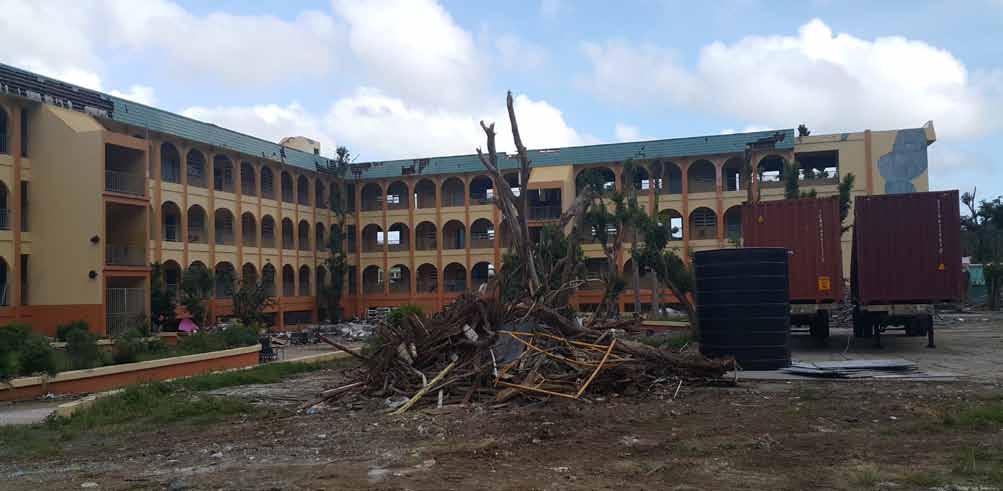
A secondary school in BVI, which was damaged when Hurricane Irma, a category 5 storm hit in September.
Other CDB interventions in this theme have focused on, inter alia, supporting DRM and CC in Haiti, institutional strengthening to assist BMCs in securing concessional financing, facilitating the Caribbean’s agenda at international conferences, and identifying opportunities for entrepreneurs in the area of environmental sustainability/CC. The grant to Haiti of around $4.6mn is multifaceted. It is intended to (a) increase the capacity of central government, local authorities and communities to engage in planning for climate resilience and DRM in Ile a Vache primarily through the completion and integration into national agencies of DRM; (b) strengthen capacity to implement viable and sustainable fisheries; (c) improve access to potable water and information for effective water resources management; and (d) increase access to efficient, affordable electricity for households, businesses and public administrative services.
REGIONAL COOPERATION AND INTEGRATION
For Caribbean islands, regional integration and the adoption of regional approaches to common problems offer tremendous opportunities to overcome challenges associated with small size. In this regard, CDB approved a grant to the Regional Security System (RSS) to conduct an organisational and strategic review of the RSS and for the development of a policy on corruption, fraud and bribery and a risk management system (including training and guidelines for implementation). The expected outcomes of the assistance are to enhance both the integrity framework of the RSS as well as the operational effectiveness and efficiency.
The issue of de-risking has been particularly vexing given the disruption to private sector operations and the potential impact on remittances especially for those countries that are heavily dependent such as Jamaica, Haiti and Guyana. Given the shared impact on BMCs, a regional approach was deemed to be most efficacious. There are three components to the Bank’s assistance in correspondent banking namely:
(i) supporting BMCs in strengthening compliance with international financial integrity standards and the Financial Action Task Force through national risk assessments that will feed into national action plans and the upgrading of laws;
(ii) strengthening the technical capacity of financial institutions (banks and credit unions) to conduct Customer Due Diligence and adopt best practices for the collection of Beneficial Ownership information; and
(iii) improving public-private sector coordination with regulators to more effectively address de-risking and develop an ongoing mechanism for dialogue.
The capacity of the Region to compete in an increasingly competitive environment requires that labour is not only skilled, but that labour markets are flexible. The Bank therefore approved resources to undertake a detailed review of the three components of the factor mobility regime:
The United Nations Environment Programme Adaptation Finance Gap Report (2016), estimated that the cost for developing countries to adapt to CC could range from $140 billion (bn) to $300 bn by 2030. Given ongoing fiscal constraints and capacity limitations, ensuring that BMCs are able to take advantage of concessional financing to lessen the impact of CC is paramount. In 2017, the Bank approved resources for a regional technical workshop aimed at strengthening the capacity of BMCs to develop Green Climate Fund projects in the water and urban sectors. Resources were also approved to enhance BMCs’ understanding of the Adaptation Fund’s project development process/project cycle and project proposal requirements.
(i) the rights of establishment;
(ii) free movement of service providers for the temporary provision of services; and (iii) free movement of skills.
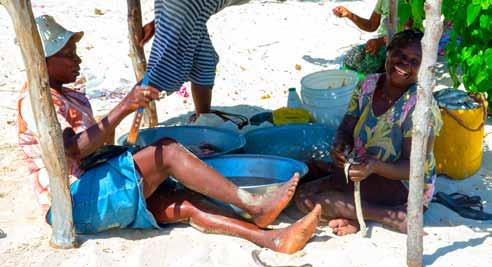
Two women clean fish on the beach in Ile-à-Vache, Haiti. The island of Ile-à-Vache has a population of approximately 15,000, and is particularly vulnerable to the impacts of tropical storms and hurricanes.
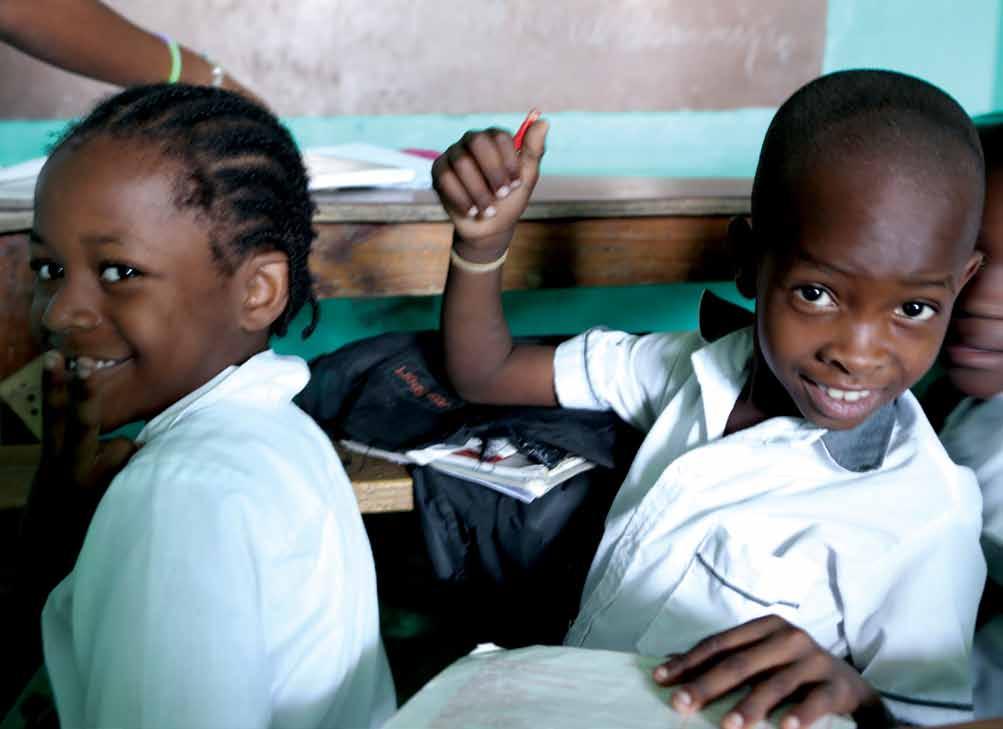
Students attend school in Haiti. Under the Education for All Project 68,000 students, particularly those who live in poor and vulnerable communities, will benefit from improved quality of, and access to, basic education.
CDB IN HAITI
At the strategic level, the Bank made two significant gains with respect to country engagement in Haiti in 2017. The first, was the work towards establishing a physical presence outside of host country Barbados and in this regard, the Bank expects that its Haiti office will be launched in 2018. Additionally, the Haiti CSP was approved in December 2017 with emphasis on: (a) boosting agricultural production through upgrading production and marketing infrastructure and services, and capacity enhancement; (b) increasing access to sustainable energy options; and (c) improving the quality of human capital and strengthening public sector capacity. CDB will also ensure that GE, environmental sustainability and energy are mainstreamed across all interventions. The CSP will provide the overarching framework for the utilisation of the set-aside under SDF 9 as well as concessionary loan funding over the period 2017-2021.
In 2017, with the commencement of construction on four primary schools in the Education for All Phase 2 Project, CDB brought the Government of Haiti closer to its goal of promoting greater participation of the state in the delivery of education services across the country. It is expected that these schools will be completed by mid-2018 and will open under the leadership of MENFP to serve their communities in September 2018.
Implementation of a number of aspects of the project was curtailed as a result of the need to reallocate funds to support the emergency response in the education sector following the impact of Hurricane Matthew in October 2016. Activities impacted included teacher training and capacity building for MENFP. CDB agreed to a reallocation of $2.25 mn to, inter alia, rehabilitate significantly damaged infrastructure, provide additional school feeding, and replace damaged resources. While these emergency response activities continued well into 2017, implementation of a number of other components of the project was completed. These include the tuition waiver programme in which CDB facilitated the participation of 24,163 students to complete the primary cycle of schooling, exceeding the target of 20,000 students set at appraisal. Targets for school feeding were also exceeded. Twenty-one thousand, six hundred and twenty students were supported under the regular programme and another 6,607 were fed as part of the Hurricane Matthew emergency response, significantly exceeding the 6,000 students originally targeted.
A number of activities to strengthen the capacity of MENFP to manage the system were also completed. These include collection of national census data, piloting of a Quality Assurance System, capacity building for officers responsible for multi-grade programming, development of the 2016-2020 Operational Plan for the sector, development of a scorecard for the evaluation of non-public schools receiving donor support and the undertaking of technical studies to track the impact of individual project components. The instruments developed will be used in the Quality Enhancement in Public Education project approved in December 2017
to incentivise and enable non-public schools to achieve minimum standards, as MENFP seeks to demand accountability from non-public entities delivering services in the sector.
CDB launched the Technical and Vocational Education and Training (TVET) Enhancement Project aimed at expanding the supply of skilled and employable labour for the priority sectors, through increased and equitable access to high quality and relevant TVET for both males and females. The Project will support the reconstruction of the largest TVET Centre in Port-au-Prince, the St. Martin TVET Centre, which will have the capacity to provide skills development to over 1,500 trainees annually. The initiative will also provide support for at-risk learners, the participation of women in non-traditional TVET programmes and the development of a National Qualifications Framework and a Gender Strategy for TVET in Haiti.
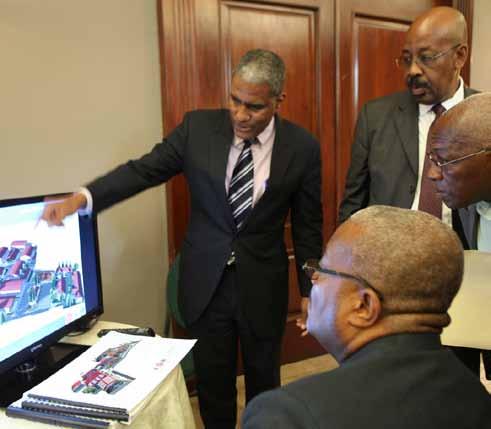
Stakeholders view a rendering of the St. Martin TVET Centre in Haiti, which was completely destroyed by the 2010 earthquake. CDB will reconstruct the Centre under the TVET Project II. The Project will be implemented by the Ministry of National Education and Vocational Training through the National Vocational Training Institute.
BNTF - SDF RESOURCES ADDRESSING THE NEEDS OF THE REGION’S MOST VULNERABLE
BNTF is CDB’s main poverty reduction programme, providing grant financing to reduce the incidence of poverty in low-income vulnerable communities primarily by improving access to new and upgraded basic social infrastructure and training.
During 2017, activities of the BNTF Implementing Agencies (IAs) in the ten BNTF PCs of Belize, Dominica, Grenada, Guyana, Jamaica, Montserrat, St. Kitts and Nevis, St. Vincent and the Grenadines and Turks and Caicos Islands (TCI), focused primarily on project completion under the concurrent BNTF 7 and 8 programmes. A reduction in disbursement in 2017 to $16.7mn when compared to 2016 mainly reflects the winding down of projects under BNTF 7 and 8. Additionally, disbursements were impacted by the destructive Category 5 Hurricane Maria which struck the island of Dominica on September 19, 2017, which was still recovering from the impact of Tropical Storm Erica on August 29, 2015. The departure of experienced BNTF Project Managers in Grenada, St. Vincent and the Grenadines, and Guyana and the long period to fill these positions also slowed implementation and reduced the disbursement rate.
Nevertheless, during the year, PCs completed 163 sub-projects under BNTF 7 and 8, a 220% increase over 2016, and delivered early benefits to targeted groups and communities. Some countries like Dominica, Guyana and St. Lucia were timely in programming savings realised from completed sub-projects or completed commitment of remaining resources under all other components of their Projects. Some 18 additional sub-projects (8 under Education and Human Resource Development, 8 in Water and Sanitation and 2 in Basic Access and Drainage) were approved for a value of $4.76mn ($3.14mn under BNTF 7 and $1.62mn under BNTF 8).

In Maskall Village, Belize, a resident drinks water, following the upgrade of the community’s water system. Upgraded under BNTF, it is now providing potable water to more than 1,500 villagers.
2017 BNTF RESULTS
A total of 119 sub-projects was completed under BNTF 7 while 44 were completed under BNTF 8. For 2017, indicators of success are aligned with SDF Level 2 and BNTF specific indicators.
• 51,101 students (30,803 males and 20,298 females) benefited from the construction or upgrading of 282 classrooms with additional educational support facilities such as bathrooms, administrative spaces, and facilities for the disabled.
• 351 teachers (79 males and 272 females) received training and certification in specific areas of early childhood education.
• 8,071 beneficiaries (4,326 females and 3,745 males) of community-based citizen security interventions under the Youth at Risk – Violence Prevention against Children sub-project in Jamaica.
• A total of 22,021 persons (11,764 males and 10,257 females) graduated from various training activities across the BNTF PCs, a significant number with National or Caribbean Vocational Qualifications in the area of training.
• A total of 9,309 households benefitted from expansion in their water systems including 12,644.1 m3 of additional water storage capacity and 52.149 km of new water supply lines.
• 16,611 persons (7,638 males and 8,973 females) benefited from 22.9 km of new or upgraded community road infrastructure including farm access roads.
• Approximately 11,302 (5,096 male and 6,206 females) benefitted from 6 newly constructed or upgraded basic community infrastructure in St. Lucia.
• Some 0.043 Megawatts of renewable energy capacity were installed in the hinterland regions of Guyana and Belize mainly on new or upgraded indigenous schools and water systems.
By the end of 2017, an additional $3.14mn was approved for 13 sub-projects under BNTF 7 from balances, savings on completed sub-projects or from subproject cancellations. Approximately 97% of the BNTF 7 country allocation has been approved. Under BNTF 7, cumulative disbursement increased by $10.7mn. Similarly, during the same period, an additional $1.62mn for five sub-projects under BNTF 8, was approved. Approximately 97% of the BNTF 7 country allocation has been approved. Under BNTF 8, cumulative disbursements increased by $5.9mn.

Omar Sweeney, Managing Director, Jamaica Social Investment Fund (right), presents CDB Operations Officer, Karl Pivott with a copy of “The Tribe, Break the Silence” storybook. The production of the book was funded under the BNTF 7 sub-project, Violence Prevention against Children.
TABLE 6: BNTF 7 & 8 ALLOCATIONS, APPROVALS
AS AT DECEMBER 31, 2017
FIGURE 1: BNTF 7 & 8 SECTOR ALLOCATIONS ($MN)
Regional Coordination
Institutional Development
Monitoring and Evaluation
Technical Serv ices
Water and Sanitation
Project Management Support
Education and Human Resource Development
Basic Community Access and Drainage
FEATURE
A NEW ERA OF REHABILITATION AND REINTEGRATION UNDER PROJECT REACH
The life of prisoners in Grenada consisted mainly of idleness, depression, frustration and non-productive activities prior to the introduction of Project REACH in 2013. However, with the second installation of the programme between 2015 and 2016, the positive reputation of that project as a rehabilitation and reintegration intervention was cemented. Utilising funding obtained through the BNTF Programme in Grenada, 28 inmates between 18 and 35 years, slated for release, benefitted from training in soft skills, community sports, small business training and direct vocational skills training. Specific focus was paid to life skills, literacy, numeracy and spiritual development, all complemented by the provision of weekly counselling services either in groups or individually. The small business training included, Small Business Labs, Small Engine Repairs, Crop Production and Poultry Rearing. A total of XCD175,000 was allocated to support these activities. Of the 28 inmates who started the programme, 26 inmates completed the training, all receiving various levels of Caribbean Vocational Qualification certification in the various disciplines. Additionally, upwards of 66 Correctional Officers of Her Majesty’s Prison staff also received training in life skills, helping to craft a more facilitative environment for the rehabilitation efforts underway at Her Majesty’s Prison and leading to improvements in officer/inmate relationships. Further, in order to provide one-on-one aftercare and support for prisoners upon release, 19 case managers were trained, creating a critical link to resources and services which ex-inmates may require as they reintegrate into society.
PARTICIPANT VOICES
The process of just locking somebody up does not cut it, but if you find something for them to do, looking for avenues to occupy their time, you would be able to help.
Mr. Christopher
The first time I came to prison, I never really worked on myself. Project REACH helped me to really look within myself and pull it out and be a better person. Check myself, so to speak.
Inmate 1
That training made me focus businesswise. I want to have my business, be on my business and not waste time.
Inmate 2
Stroude, Social Worker, Her Majesty’s Prison
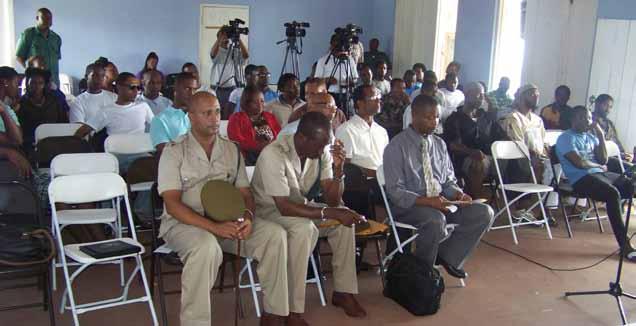
Inmates and correctional officers from Her Majesty’s Prison, Grenada attend the launch of Project REACH
BNTF PARTNERING AGAINST POVERTY
In March 2017, Contributors to SDF 9 approved a contribution of $40mn to the Ninth Programme of the Basic Needs Trust Fund (BNTF 9) for eight PCs of Belize, Dominica, Grenada, Guyana, Jamaica, St. Kitts and Nevis, St. Vincent and the Grenadines and Suriname. An amount of $0.78mn was subsequently approved to include Montserrat in BNTF 9 operations. Government of the nine PCs will provide an additional $6.778mn in counterpart resources. During 2017, approximately $0.058mn was disbursed. BNTF 9 is expected to be fully implemented by December 31, 2020.
Project launch workshops were completed in the last quarter of 2017 in five PCs with the other launch workshops planned for early in 2018. PCs are also in the process of preparing their country policy framework documents which will guide the use of BNTF resources in each PC. An institutional and organisational assessment was initiated in August 2017 to establish a governance mechanism for the delivery of BNTF programming in Suriname, BNTF’s newest PC.
TABLE 7: BNTF 9 ALLOCATIONS AS AT DECEMBER 31, 2017
CARIBBEAN TECHNOLOGICAL CONSULTANCY SERVICES NETWORK – 2017
In 2017, CDB approved and disbursed $0.806mn and $0.646mn, down from $1.3mn and $0.9mn the previous year. These resources facilitated the implementation of 45 TA development activities for MSMEs under the Bank’s CTCS Network. These activities comprised primarily workshops and in-plant assistance aimed at enhancing the managerial capacity and operational efficiency of MSMEs, as well as institutional strengthening of business support organisations.
As at December 31, 2017, a total of 23 TA activities were completed, while 15 were under implementation. Consequently, 863 business people (531 men and 332 women) benefitted from completed and ongoing activities some of which are highlighted below. An assessment of the outcomes of completed activities revealed that 90% (487 men and 289 women) of beneficiaries confirmed that their knowledge and skills had increased and 51% (224 men and 183 women) of beneficiaries confirmed that they were equipped to improve their operations.
CTCS Network also prioritised compliance with international standards by MSMEs as an important mechanism to boost competitiveness, and continued to provide support in this important area. One such project completed in 2017, was the development of a quality management system for the Citrus Research and Education
Institute laboratory in Belize that is compliant with ISO/International Electrotechnical Commission 17025, and which would allow MSME citrus growers in Belize and across the Region to have improved access to affordable and accredited testing services. The Plant World Nursery also received training to meet the requirements for ISO 9001 for accreditation for specified tests. A total of eight persons (4 men and 4 women) were trained and the Plant World Nursery will pursue accreditation in 2018.
CTCS Network also continued to collaborate with the Caribbean Tourism Organisation to provide training for the Hospitality Assured Certification Programme for the Caribbean to improve the competitiveness of tourism-related MSMEs. The Hospitality Assured Certification Programme for the Caribbean is aimed at promoting a culture of quality, service excellence and continuous improvement. At the end of 2017, a total of 12 MSMEs from Belize, Guyana, St. Lucia, St. Kitts and Nevis and St. Vincent and the Grenadines, had already signed on to the Programme and have started receiving in-plant TA to restructure internal processes and institute systems as prerequisites for assessment to obtain Hospitality Assured Certification.
Cognisant of the importance of promoting innovation in sustainable agriculture development, the Bank also approved Capacity Building Support for Aquaponics Farmers and Trainers in Jamaica, which should result in at least 20 extension officers and 45 potential and existing farmers being trained in aquaponics farm management and the development of an online training programme that can be utilised by other BMCs. Additionally, two five-day workshops, Managing an Apiary and Recordkeeping and Marketing for Beekeepers, were conducted in Guyana to increase the understanding of apiary and business management among women and youth so that they may use the knowledge gained to start apiaries. A total of 25 persons (22 men and 3 women) were trained.
CTCS Network continued its efforts to support the cultural and creative industries, recognising the potential contribution of the sector towards addressing high unemployment levels, particularly for youth in its BMCs. In this regard, the Bank conducted Business of Music in the Caribbean Developmental Workshops. In Jamaica, during 2017, one workshop was completed; it focused on Women in Music, Fundamentals of the Business of Music, Negotiating and Managing Contracts, and Accessing International Markets. A total of 398 persons (229 men and 169 women) were trained. The workshops are expected to be replicated in Belize and Trinidad and Tobago in 2018.
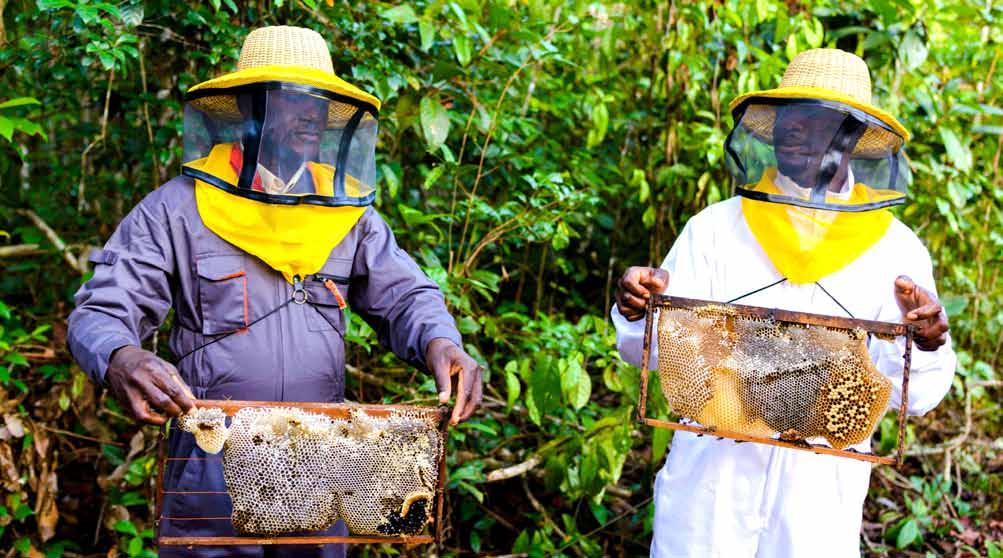
Workshop participants harvest bees’ wax at Long Creek Apiary in Guyana.
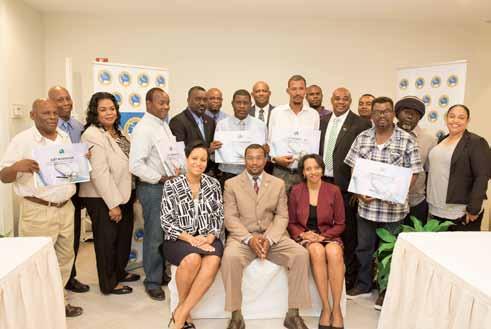
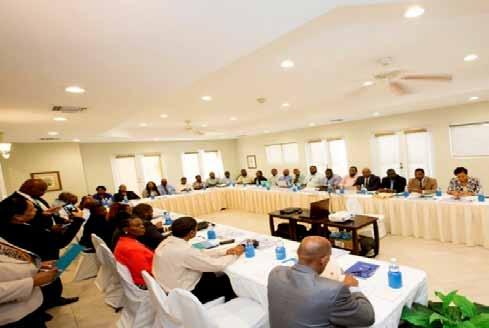
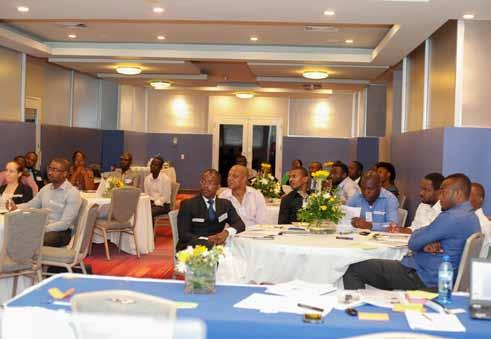
As part of CDB’s revised Energy Sector Policy and Strategy, the Bank revisited its lending products to better support its BMCs in transforming the energy landscape and achieving security in the energy sector. To this end, CDB developed a pilot loan product for development finance intermediaries to facilitate energy efficiency (EE) and renewable energy (RE) lending to MSMEs. In 2017, six MSMEs in Belize benefited from full energy audits which were conducted to provide an assessment of their current state of the energy performance, and identify cost-effective and feasible EE and RE measures that can be implemented to improve EE in their operations. The energy audits will, therefore, facilitate those MSMEs in securing funding for EE and RE projects.
Recognising the potential opportunities for MSMEs to benefit from procurement opportunities, CTCS Network facilitated training of Artisans and Small Contractors in TCI to improve bid competitiveness, project management and costing techniques. A total of 69 artisans and small contractors (56 men and 13 women), inclusive of technical students of the Community College and technical officers of the Ministry of Infrastructure, Housing and Planning in TCI were trained in the use of Computerised Job Estimation Techniques, a computerised tool, which was developed by CTCS Network specifically for artisans and small contractors.
Training in Managing for Development Results (MfDR) to Business Support and Community Development Organisations in Haiti: CTCS Network, in collaboration with Société Financière Haïtienne de Développement S.A, conducted a five-day workshop in MfDR for business support and community development organisations that provide financing and TA to MSMEs in Haiti.
Thirty officials (26 men and 4 women) comprising mid-level to senior staff engaged in the design and/or implementation of MSME development programmes and projects. Participants were equipped to design results-focused projects, taking into consideration gender equality perspectives and principles and gender reporting. In addition, they were provided with programme and project thinking tools, which can be applied in MfDR, including designing and working with Results Monitoring Framework (RMF). The workshop included a strong element of a Train-the-Trainer approach so that participants can train others in their organisations and other relevant organisations in their respective communes/departments, thus effectively cascade the training and add a considerable multiplier effect to the overall impact of the workshop.
Facilitators, artisans and small contractors at a Computerised Job Estimation Techniques Workshop in Turks and Caicos Islands.
Participants attend an MfDR workshop in Haiti.
TABLE 8: CTCS TECHNICAL SKILLS TRAINING CONDUCTED (2017)
SECTOR/SUB-SECTOR
TABLE 9: DISTRIBUTION OF CTCS NETWORK APPROVALS AND DISBURSEMENTS BY COUNTRY (2017)
FIGURE
Turks and Caicos Islands
St. Lucia
Jamaica
Haiti
Guyana
Dominica
Barbados
SDF PORTFOLIO ANALYSIS
INTRODUCTION
The quality and performance of the SDF portfolio is measured by a Project Performance Index (PPI), using a composite score derived from the application of the Project Performance Evaluation System (PPES). This composite score is an indicative measure of the likely impact of the project relative to the Bank’s development assistance objectives, and is the sum of the weighted scores of six core criteria: strategic relevance, poverty relevance, efficacy, cost efficiency, institutional development impact, and sustainability.
The performance rating of the SDF portfolio in 2017 could be categorised as favourable. There were 43 projects in the portfolio with a value of $315mn compared with 51 with a value of $330.3mn in 2016. Approximately two-thirds of the projects were highly satisfactory while 30% were satisfactory and 2% (1 project) were marginally unsatisfactory. Notably, this project was fully disbursed in 2017. This performance rating compares with 52.9% of the portfolio scoring highly satisfactory and 47.1%
satisfactory in 2016. The overall performance score for the portfolio in 2017 was 6, up from 5.8 in 2016.
When analysed by sector, the preponderance of the portfolio was in environment and disaster risk reduction (38.1%) reflecting the Bank’s efforts to respond to the inherent vulnerability of BMCs. Other significant sectors in the portfolio were education (19.5%) and transport and communication (11.7%). Further details on the SDF portfolio are presented in Appendix V.
PROJECTS “AT RISK” (FLAGGED BY PROJECT PERFORMANCE MANAGEMENT SYSTEM)
PPES includes criteria to identify those projects deemed to be “at risk ” of not achieving stated objectives. As at December 31, 2017, 8 projects were deemed to be ‘at risk3’ compared with 9 in 2016. Table 10 identifies the projects “at risk” and summarises the key issues affecting implementation. The Bank continues to work with BMCs of projects identified “at risk” to strengthen implementation capacity and where necessary, re-scope, to ensure delivery of results.
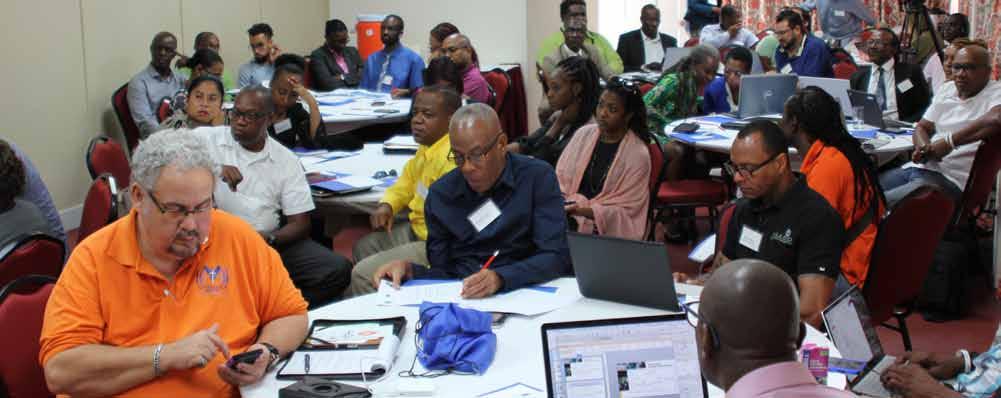
Participants attend a CTCS Digitalisation of Caribbean Music Workshop, part of efforts to help musicians in the Region cash in on the multi-billion dollar digital music industry.
TABLE 10: SUMMARY OF PROJECTS FLAGGED “AT RISK” (2017)
- Changes in project management staff and the time required for new staff to navigate the learning curve slowed implementation progress.
- Inadequate capacity in the line ministry.
- Procurement of services and works suspended due to the passage of Hurricane Maria. Further delays are expected as a reformulation exercise might be required for the three projects
- Limited capacity in line ministry.
- Delays in engaging construction supervision consultant have affected the start-up of construction activities.
- High liquidity levels and weak demand for agriculture and industrial credit/lending have negatively affected project implementation.
- Discussions are ongoing with CDB and Executing Agency aimed at cancelling the undisbursed balance on the loan.
- Weak inter-agency coordination.
- Delays in engaging consultants to prepare design work have hindered the start-up of the civil works component.
1. Belize Education Sector Reform II ($35,000)
2. Natural Disaster Management (NDM)-RRL-Tropical Storm Ophelia ($4,100)
3. NDM-RRL-Layou Flood Event ($10,887 - revised upwards to $13,114)
4. NDM-RRL-Tropical Storm Erika ($30,000)
5. NDM-RRL-Extreme Rainfall ($6,233)
6. Settlement Upgrading ($6,233)
7. St. Lucia Consolidated Line of Credit ($20,000)
8. Technical Vocational Education and Training (TVET) Development ($5,000 - revised to $12,317)
BOX 1: NATURAL HAzARDS IN BMCs IN 2017
The vulnerability of the Region to natural hazards, has been clearly established. Indeed the Region is well known to be vulnerable to, inter alia, flooding, hurricanes, storm surge, earthquake, tsunami, volcanic eruption, and drought. These incidents have the potential to not only erode the social and economic gains made over decades but severely constrain the Region’s development prospects going forward as countries are saddled with unplanned debt to finance reconstruction. CARTAC (2017) notes the average cost of a hurricane in the Region is 81% of GDP compared to 6% in the rest of the world. The table below provides an indication of the impact of natural hazards in the Caribbean. Given the scale of the impact of natural hazards in Haiti, it is not shown in the chart to the right. Over the period 19702016, almost 19 million lives have been affected in Haiti with damage amounting to $1,397.9bn.
The 2017 Atlantic hurricane season was one of the most active and devastating observed in recent times, with unprecedented storm events above average in number and intensity. The season featured multiple Category 5 hurricanes; Harvey, Irma and Maria; and is likely to be the costliest on record (in excess of $5bn). Hurricane Irma was the strongest ever recorded to form in the Atlantic Ocean, and hit the Caribbean on September 6. Less than two weeks later, Maria, the 13th named hurricane of the season became a Category 5 storm near the Leeward Islands on Monday, September 18, 2017. BMCs affected were Antigua and Barbuda; The Bahamas; BVI; Dominica; Haiti; St. Kitts and Nevis; and Turks and Caicos Islands. The impact on the Region has been catastrophic, with lives lost in Dominica, BVI, and Antigua and Barbuda, and damages
IMPACT OF NATURAL HAzARDS IN THE REGION 1970-2016
in excess of 300% of GDP in the BVI and 200% of GDP in Dominica. The table below gives an indication of the damage in selected BMCs from the 2017 hurricane season. The social and economic fallout was severe, and the recovery effort will take years, exacerbating already weak public finances. Virtually no sector was spared, with crippling damage being recorded in housing, health, education, transport, telecommunications, electricity, water, tourism, agriculture, fisheries, financial services, and public administration.
With CC set to exacerbate the frequency and intensity of weather-related events, the issue of disaster financing becomes increasingly important. While governments have long been advised to adopt ex-ante financing instruments/methods such as building fiscal buffers or contingency funds as a type of self-insurance and utilising catastrophe insurance, the uptake has been inadequate. This is largely the result of insufficient mainstreaming of DRM principles in development planning, and adverse debt dynamics that already impede countries’ ability to invest in capital programmes and other critical social development expenditures. The result is that countries have typically relied on ex-post financing of natural hazards e.g. commercial credit (including bond placements) and emergency finance from multilaterals like the International Monetary Fund, WB and CDB. The CDB study “Public Sector Debt in the Caribbean: An Agenda for Reduction and Sustainability” highlights that in addition to off-budget expenditures, financing natural disasters has been a major cause of rising debt.
DAMAGE FROM NATURAL HAzARDS IN 2017
Source: Country Reports
Given that BMCs’ average effective interest rate on debt is around 7% with comparatively low growth rates of less than 2% and small primary surpluses, the availability of concessionary finance becomes vital in mitigating the effects of debts incurred to fund large expenditures. While CDB has provided Emergency Relief Grants, Immediate Response Loans, Rehabilitation and Reconstruction Loans, and most recently PBLs in support of emergency and reconstruction efforts, given that ex-post financing is likely to dominate disaster funding in the foreseeable future, significant resource gaps will emerge. The provision of highly concessional funding would greatly reduce the extent of the debt overhang from these events and provide countries with the space to continue implementing their development agenda.
BOX 2: SUPPORTING GOOD GOVERNANCE - A NEW SET-ASIDE UNDER SDF 9
INTRODUCTION
The issue of governance is one that requires urgent attention by policy-makers given the far reaching implications for the efficient functioning of government institutions and by extension, economic performance and attainment of development outcomes. Cognisant of this, a grant set-aside dedicated to governanceenhancing initiatives was approved in SDF 9. This box highlights some of the early interventions approved by the Bank under this new rubric. One of the key constraints to government effectiveness is the implementation deficit that can be found in some BMCs. To address this issue, the Bank has adopted a two-pronged approach which will see it supporting delivery initiatives in countries, as well as through TA assistance inter alia in procurement reform and a pilot project for parliamentary training in public expenditure scrutiny.
DELIVERY INITIATIVE
This is based on the principle of “deliverology” which is a performance management approach attributed to Sir Michael Barber that at its core identifies and removes the barriers to support implementation of high priority initiatives. It requires: (a) a clear view of what success looks like across the organisation and with relevant development partners; (b) clear accountabilities; (c) the setting of clear targets that are owned by management and supported appropriate resources; (d) timely reporting to track effectiveness; (e) performance dialogues that are focused, fact-based and action-oriented; and (f) actions are taken to improve performance. The Bank’s actions to date have focused on building awareness through a presentation to the Caribbean Community (CARICOM) Heads of Government. This was followed by a conference in September 2017 “Caribbean Leadership and Transformation Forum (CLTF): Delivering Results” that provided policy makers with practical tools and techniques to build core skills and attitudes that are necessary for improving effectiveness in implementing key strategies and priorities. Subsequently, a publication “Implementation: Delivering Results to Transform Caribbean Society (2017)”, was produced and an online course “Leading Transformation to Achieve the Sustainable Development Goals”, was launched in January 2018 in partnership with the University of the West Indies, the State University of New York, and the Malaysia-based Performance Management and Delivery Unit Associates. The Bank also conducted readiness assessments in Trinidad and Tobago and TCI to: (i) identify the main issues hindering the countries’ ability to deliver on their development mandate; and (ii) provide useful evidencebased information for further support to strengthen implementation.

1. The Bank has already conducted readiness assessments in Trinidad and Tobago and TCI.
OTHER SELECTED GOVERNANCE-ENHANCING INITIATIVES
CONDUCTED IN 2017
Procurement Reform
Effective resource mobilisation is critical to the attainment of a country’s development outcomes, and in this regard, an efficient, fair and transparent procurement process is paramount. The Region has been plagued with procurement challenges ranging from outdated legislation, or legislation that has been passed but not enacted, to slow project implementation ratios. In 2017, the Bank approved funds to strengthen procurement systems and capacity in Anguilla, Antigua and Barbuda, BVI, Montserrat, and St. Kitts and Nevis. The intervention will comprise an assessment of the public procurement system and a post-assessment workshop to consider findings and examine the scope for harmonised approaches. Importantly, there is also scope for downstream reform to draft or revise procurement laws, regulations, develop manuals/guidelines and support capacity building as needed.
Public Expenditure Scrutiny Training for Members of Parliament
The national budget is an important policy tool of a government, and provides a comprehensive statement of government priorities. Effective participation in the budget process provides checks and balances that are crucial for transparent and accountable government and ensuring efficient delivery of public services. Greater parliamentary scrutiny would help ensure that Governments follow correct procedures and allocates scarce resources in line with agreed development priorities, taking into account the various the needs of key stakeholder groups. It would improve oversight during implementation of the budget, and ensure that value for money considerations and lessons learned are taken into consideration. Consequently, CDB approved funding to Guyana to strengthen the capacity of Members of Parliament to scrutinise all aspects of the budget cycle so as to enable them to better conduct their fiduciary responsibilities and enhance overall budget effectiveness. The expectation is that once successfully piloted in Guyana, CDB would be able to roll out the training in other BMCs.
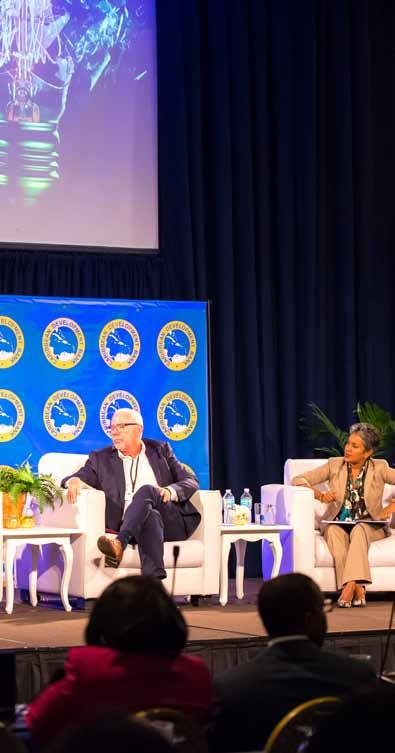
Panellists during a discussion at the CLTF hosted by CDB in Barbados
This chapter of the report presents a summary discussion of the results achieved within the context of the SDF 9 RMF. A more detailed exposition can be found in the companion publication, the Development Effectiveness Review 2017. The RMF tracks progress at four distinct stages. At the highest stage is Level 1The Caribbean’s Progress towards Development Goals and Outcomes, Level 2 captures CDB’s Contribution to Development Outcomes, Level 3 tracks how well CDB Manages its Operations and Level 4 measures How Efficient CDB is as an Organisation. Figure 3 below shows the relationship between levels of the RMF.
In the past two decades, the Caribbean’s progress towards development goals and indicators (Level 1) has been sluggish, owing to a challenging social and macroeconomic environment. This situation is precipitated by several factors including: (a) protracted slow growth in the global economy which threatens to become the new normal and now exacerbated by the inward-looking policies of several developed economies; (b) structural weaknesses in the Bank’s BMCs including the need for ongoing institutional and policy reforms to enhance governance systems and improve competitiveness; (c) significant debt overhang in some countries which stifles growth; (d) adverse commodity price movements in some resource rich countries; and (e) the ever-present vulnerability to natural hazards and the need to build resilience to climate change. Notwithstanding these challenges, some BMCs have shown marked improvement in their economic situation (e.g. Jamaica and Grenada) as a result of sustained commitment to a comprehensive reform agenda supported by development partners including CDB.
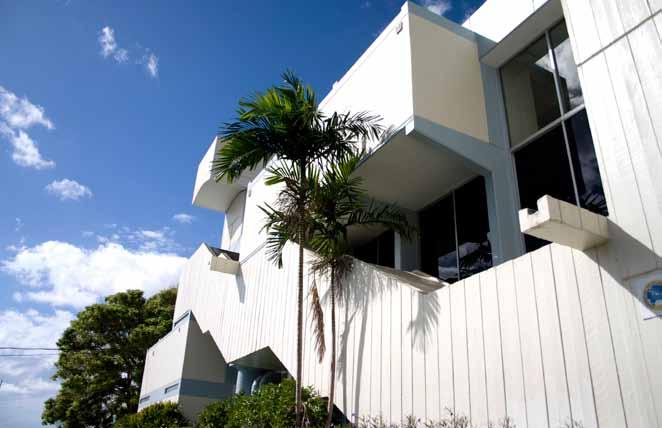
FIGURE 3: THE STRUCTURE OF CDB’S RMF
CARIBBEAN DEVELOPMENT PROGRESS
LeveL 1
Progress towards SDGs and Regional development outcomes
CDB’S DEVELOPMENT EFFECTIVENESS
LeveL 2
CDB’s contribution to development outcomes
LeveL 3
How well CDB manages its operations
LeveL 4
How efficient CDB is as an organisation
CDB’s Headquarters in St. Michael, Barbados.
With respect to Level 2, the Bank made significant strides in helping BMCs to meet their development objectives in 2017. The Bank advanced the wellbeing of persons through interventions in the areas of economic and social infrastructure, agriculture, education and training, environmental sustainability, private sector operations, governance and accountability and regional cooperation and integration. Perhaps the most notable outcomes were in the areas of economic and social infrastructure development where over 108,000 persons (of which 54,000 females) benefitted from the construction and rehabilitation of 59 kilometres of road. Additionally, investments in water and sanitation have improved the quality of life of over 9,000 households through the provision of safe and reliable water supply and upgraded/ installed water systems. The Bank has also improved life-chances through investments in the education sector. In 2017, 23,599 students benefitted from improved physical classroom conditions, enhanced teacher competence, and access to loan financing.
Level 3, CDB Organisational Effectiveness and Operational Efficiency, improved in the areas of project disbursement and processing time. The disbursement ratio increased from 13% to 18% at the end of 2017 while processing time declined from an average of 3 months to 1.6 months. These gains are attributable in part to CDB’s responsiveness in addressing the devastation caused by the hurricanes and the use of advances to accelerate implementation. CDB also recorded improvements in implementation performance largely as a result of the completion of several ageing projects that were over seven years under implementation and with at least one revision to their final/ terminal disbursement date. Importantly, the Bank showed progress (from 58% to 71%) in resource allocation and utilisation through the use of the performance-based allocation system. Nevertheless, the Bank continues to struggle with preparing and completing evidence-based PCRs. This hinders the learning process and weakens the self-evaluation system as information which could have been used to improve the implementation of ongoing projects and the design of future projects is not incorporated in a timely manner. See Table 11 for summary scorecard.
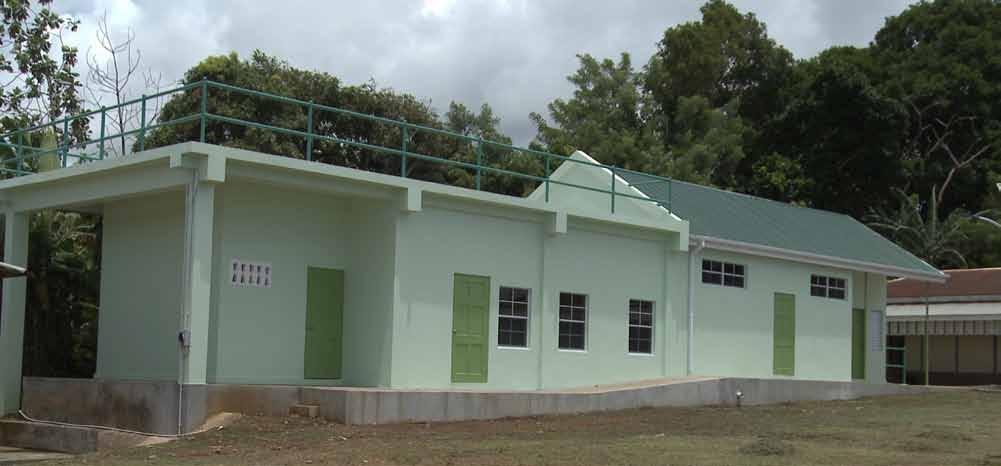
A refurbished building at the Mirabeau Campus will house the T.A. Marryshow Community College Environmental Sustainability Programme. Upgrades have transformed the campus into a modern, technical, agricultural training centre, where students now have the ability to engage in scientific testing and research—key elements of climate-smart agriculture.
TABLE 11: SUMMARY SCORECARD OF LEVEL 3 AND LEVEL 4 RMF
LeveL 3
How weLL CDB manages its operations
Operational processes and practices and
portfolio performance
Resource allocation and utilisation
Strategic Focus
Disclosure, transparency and risk management
Level 4 , How Efficient CDB is as an Organisation showed notable progress in 2017 as it relates to increasing capacity utilisation especially with respect to professional staff, and a reduction in the use of administrative budget resources (per $1mn of project disbursements). A key strategic priority for the Bank is resource mobilisation. During 2017, CDB mobilised additional resources totalling $128mn under the second phase of the European Investment Bank Climate Action Line of Credit Programme, with continued focus on CC and RE/EE initiatives. This increase is in keeping with the global commitments made under the Paris Climate Agreement to scale up finance towards addressing the needs of Small Island Developing States, including adaptation and mitigation and the SDGs. In 2017, 24% of CDB’s financing was invested in projects using common arrangements or procedures. Indeed CDB’s financing model continues to reflect growing strategic partnerships with other development partners in areas such as climate change and resilience including energy, private-sector development, and PPPs. See Table 12 for summary scorecard.
LeveL 4
How effiCient CDB is as an organisation
Capacity utilisation
Use of administrative budget resources
Harmonisation, alignment and partnerships
On track – more than half of all indicators on track to achieve the 2019 target.
Watch – half or fewer of all indicators not progressing as desired but are within reach of the 2019 target.
Off track – more than half of indicators are not progressing as needed to reach the 2019 target.
A review of the Bank’s development effectiveness also highlighted some challenges. In addition to the delays in completing PCRs, other issues included lengthy start-up and project implementation periods and the need to deepen country dialogue to improve service delivery. Actions proposed and underway to address these issues include: (a) organisational restructuring to improve project supervision; (b) enhancing the quality of PCRs through the consistent use of evidence to support ratings and giving PCR completion the same level of priority as the project appraisal process; (c) engaging short-term consultants to support project implementation in country; (d) supporting delivery improvements in selected BMCs; and (e) the opening of the first country office in Haiti to improve Bank’s responsiveness to the needs of its most vulnerable BMC.
4. FINANCIAL RESOURCES AND PROGRAMME LEVELS
SDF 9 PROGRAMME LEVEL
The SDF 9 programme level approved by the Contributors amounted to $355mn, up slightly from $348mn in the previous cycle. It comprised a base programme of $314mn and an unallocated structural gap of $41mn. The base, or minimum programme consisted of internally generated resources of $132.4mn (inclusive of brought forward commitment authority), pledged contributions of $166.6mn, and
an allocation from OCR net income of $15mn. The remaining $41mn is expected to be financed from prospective new members and Contributors.
Current projections suggest that the Fund is on track to achieve the base programme level as higher commitment authority at the start of the cycle offset lower projected internally generated resources arising
TABLE 12: SDF PROGRAMME LEVEL ($MN)
from the decline in net income. (See Table 12 below). Other sources of commitment authority, namely OCR income and pledges are expected to materialise as planned. The structural deficit remains at $41mn and is still anticipated to be filled by new contributions.
*Actual
COMMITMENT AUTHORITY
Funds available for commitment in 2017 amounted to $76.2mn. This comprised $43mn in commitments from pledged contributions, $30.1mn in repayments, $7.7mn in commitment authority at the beginning of the 2017, and a reduction for the $4.6mn loss incurred during the year. Of the funds available for commitment, $13.2mn in net loans and $42.6mn in net grants were approved. Consequently, at the end of 2017, $20.4mn was carried over to 2018. Over the life of the cycle, an additional $41mn in new contributions is expected in support of the Bank’s development mandate.
TABLE 13: COMMITMENT AUTHORITY AND USE OF FUNDS ($MN)
ALLOCATION AND USE OF RESOURCES
For SDF 9, $155mn was allocated for individual country lending, $25mn for natural disaster response and regional projects and $119mn set-aside for regional grants. In 2017, only Dominica and Grenada accessed their loan allocations. Other loans approved formed part of the Bank’s support to address the effects of natural hazards which given the frequency and severity of the damage resulted in 68.3% of the
allocation being utilised in 2017. The grant performance was also relatively brisk, but this was accounted for mainly by specific set-asides to Haiti and BNTF. The remaining grants approved accounted for almost 40% of their allocation (see Table 14 below).
TABLE 14: SDF 9 ALLOCATION AND USE OF RESOURCES
TABLE 14: SDF 9 ALLOCATION AND USE OF RESOURCES (CONT’D)
5. FINANCIAL PERFORMANCE AND PROJECTIONS
The financial performance of the SDF (U) was weaker in 2017 when compared with 2016. Net income deteriorated as the increase in administrative expenses outpaced the gains made in income generation. Loans outstanding remained on par with the previous year’s levels owing to the near equality between disbursements ($30.0mn) and repayments ($30.1mn).
Undisbursed balances increased by 2% as lingering capacity issues in-country impeded project implementation. The Bank is addressing this issue by
strengthening in-house monitoring and supervision practices; and building BMC capacity to manage project planning and implementation. Consistent with the limited movement in amounts outstanding, loan income was virtually unchanged from 2016 levels. On the other hand, investment income almost doubled in 2017 on account of higher yields associated with rising US interest rates.
Administrative expenses rose by $4.2mn to $20.1mn largely on account of an increase in
TABLE 15: SUMMARY OF FINANCIAL RESULTS 2013-2017 ($MN)
pension obligations following a change in basis for the determination of the applicable discount rate in the actuarial valuations, as well as increased staff costs from filled vacancies and new hires. As a result, the fund incurred a net loss of $4.6mn in 2017. Table 15 provides a summary of key indicators of SDF performance.
NOTES, ENCASHMENTS AND DRAWDOWNS
Promissory notes were issued by seven countries in 2017, amounting to $19.5mn or $2mn more than in 2016. Total encashments were $13mn, or $9.6mn less than in 2016. Conversely, notes receivable rose by $7.5mn to $74.6mn. Total approved contributions to SDF (U) from the time of its establishment amounted to $1,303.3mn. (See Appendix VI-3 for details).
FINANCIAL PROJECTIONS
Driven by the Bank’s ongoing efforts to strengthen project implementation in-house through enhanced supervision, as well as in BMCs by strengthening procurement capacity, loans outstanding are projected to increase by 3.8%. Largely on this basis, a gradual pick-up in loan income is expected over the medium term, as the average lending rate remains unchanged at 2.5% for the purpose of these projections. The rising trend in global interest rates is expected to impact the income statement positively and is the principal assumption behind the rise in investment income. Following the increase in 2017 on account of the pension adjustment, administrative expenditures are expected to normalize, and this, along with efforts by the Bank to contain spending, should reduce expenses in 2018, with only a marginal rise over the medium term. (See Table 16).
APPENDICES
BACKGROUND
Established in 1970, the Special Development Fund (SDF/the Fund) is the Bank’s largest pool of concessionary resources. The facility offers loans with longer maturities and grace periods and lower interest rates than those applied to the Bank’s ordinary operations. Initially, the various contributors to the Fund applied an assortment of terms and conditions which created complexities and inefficiencies in the Fund’s operation. As a result, in 1983, the decision was taken to set up a fund with a uniform set of rules, and the SDF (U) was formed. With consistent terms, objectives and procurement conditions, SDF (U) sought to overcome the problems associated with individual donors and funding arrangements.All members of the Bank are required to contribute to SDF (U) and contributions are also sought from non-members. Contributions are interest-free and provided on a multi-year basis, for an indefinite term. To focus the Fund’s operations, a supplementary governance structure which includes an Annual Meeting of Contributors was created. Nonmembers are also invited to participate as observers in meetings of the Bank’s Board of Directors and Board of Governors.
SDF (U) has a four-year replenishment cycle except for the third replenishment cycle (SDF 4) which was extended by an extra year as a result of additional contributions from a new member of the Bank. The ninth cycle of the Fund commenced on January 1, 2017 and will end December 31, 2020.
TO SDF
FUNDING
Over the nine cycles, contributions or pledges of $1,427.8mn have been made to the operations of SDF (U). A total of $285mn (20%) of the contributions/pledges came from borrowing members with non-borrowing members and non-members accounting for $1,071.4mn (75%), and $23mn (1.6%), respectively. A total of $48mn (3.4%) in allocations from the net income of the Ordinary Capital Resources (OCR) was pledged to fund SDF cycles 7, 8 and 9.
Contributions pledged for the Special Development Fund (Ninth Cycle) (SDF 9) totalled $181.6mn, inclusive of the allocation from the OCR Net Income of $15mn, with borrowing members pledging $60.9mn and non-borrowing members, $105.7mn. Contributions to each cycle by category of membership are shown in the chart below. Details are presented in Appendix II.
APPENDIX I (CONT’D)
THEMES AND PRIORITIES
During negotiations of each cycle, Contributors and the Bank agree on the priorities and issues to be addressed. These discussions focus on the most appropriate entry points through which the Bank can support sustainable poverty reduction initiatives in eligible countries. In recent cycles, SDF has given significant support to thematic areas such as environmental sustainability and advancing the climate change CC agenda; building capacity and maritime transport in beneficiary countries. RCI and enhancing the Bank’s development effectiveness have also been key priorities. For SDF 9, the core themes, which are detailed in the Box entitled SDF 9 Operational Strategy, are selected SDGs, RCI and Building Resilience and Supporting Environmental Sustainability.
PROGRAMME LEVELS SDF (U) 1-9
PROGRAMME LEVELS
The programme level for each SDF (U) cycle is financed with new pledges from Contributors, net income generated by the Fund, reflows from loan repayments, and since SDF 7, an allocation from the OCR Net Income. The programme levels over the nine cycles of the Fund are shown in the chart below. For SDF 9, Contributors approved an overall programme level of $355mn, details of which are given in Appendix II.
ELIGIBILITY OF COUNTRIES
The Bank’s BMCs are assigned to one of three country groups based on their relative per-capita incomes. The country groups help to determine the terms and conditions for SDF lending (refer to Appendix III). While all BMCs are eligible for SDF resources, countries in Group 1 do not receive a country allocation and can only benefit from regional projects and support for RPGs and assistance in the event of a natural disaster.
ALLOCATION OF RESOURCES
Since 2001, a Resource Allocation Strategy has been used to allocate both SDF loan resources to eligible countries and BNTF resources to participating BMCs. The resource allocation formula used by CDB is comprised of a country performance or effectiveness component and a needs component. The country performance element of the formula recognises that countries which have relatively strong policy and institutional frameworks are likely to make more effective use of concessionary resources, especially with regard to poverty reduction and broad-based sustainable growth. It therefore acts as an incentive for improved policy and institutional performance. The needs component of the formula includes a CDB-developed measure of vulnerability, and with effect from SDF 8, a variable representing the number of poor people in a country as an indicator of country need.
CONTRIBUTIONS TO THE UNIFIED SPECIAL DEVELOPMENT FUND (AFTER TRANSFERS FROM EARLIER SDF AND OTHER ADJUSTMENTS) ($MN)
a/ At exchange rates as of dates of payment.
b/ Suriname joined the Bank in September 2013 and Haiti joined in 2007 REGIONAL MEMBERS:
CONTRIBUTIONS TO THE UNIFIED SPECIAL DEVELOPMENT FUND (AFTER TRANSFERS FROM EARLIER SDF AND OTHER ADJUSTMENTS) ($MN)
SDF 9 PROGRAMME LEVEL, COUNTRY GROUPS AND TERMS OF LENDING
SDF 9 PROGRAMME LEVEL
Contributors approved a total programme of $355mn, comprising $211mn in country loans, $20mn in natural disaster mitigation and rehabilitation and $5mn in regional projects. Grant set-asides amounted to $119mn, the bulk of which were earmarked for BNTF and Haiti.
COUNTRY GROUPS AND TERMS OF LENDING
Country groups are used to determine both country eligibility to SDF resources and the terms and conditions of lending. The table below shows how lending terms vary according to Country Grouping. Under SDF 9, Contributors approved a reduction in the lending rate - for Groups 1 and 2, the lending rate was lowered from 2.5% to 1%, and for Group 3 countries, from 2% to 1%.
APPROVED PROGRAMME LEVEL FOR SDF 9 ($MN)
APPENDIX III (CONT’D)
COUNTRY GROUPS AND TERMS OF LENDING FOR SDF 9
COUNTRY GROUP COUNTRY
GROUP 1
Anguilla
Antigua and Barbuda
Bahamas, The
Barbados
(Mainly OCR) British Virgin Islands
Cayman Islands
Montserrat
St. Kitts and Nevis
Trinidad and Tobago
Turks and Caicos Islands
GROUP 2
TERMS OF LENDING
Interest rate - 1%
Maximum Grace Period - 5 years
Maximum Overall Maturity - 20 years
Belize
Dominica
Grenada
(Blend of SDF and OCR) Guyana
Jamaica
St. Lucia
St. Vincent and the Grenadines
Suriname
GROUP 3
(Mainly SDF) Haiti a/
Interest rate - 1%
Maximum Grace Period - 5 years
Maximum Overall Maturity - 25 years
Interest rate - 1%
Maximum Grace Period - 10 years
Maximum Overall Maturity - 30 years
SDF 9 COMMITMENTS 2017 (CLASSIFIED BY THEMES)
APPENDIX IV (CONT’D)
SDF 9 COMMITMENTS 2017 (CLASSIFIED BY THEMES)
APPENDIX IV (CONT’D)
SDF 9 COMMITMENTS 2017 (CLASSIFIED BY THEMES)
APPENDIX IV (CONT’D)
SDF 9 COMMITMENTS 2017 (CLASSIFIED BY THEMES)
APPENDIX IV (CONT’D)
SDF 9 COMMITMENTS 2017 (CLASSIFIED BY THEMES)
JAMAICA
APPENDIX IV (CONT’D)
SDF 9 COMMITMENTS 2017 (CLASSIFIED BY THEMES)
SDF (UNIFIED) PORTFOLIO ANALYSIS – 2017
The quality and performance of the SDF portfolio is measured by a PPI, using a composite score derived from the application of the PPES. This composite score is an indicative measure of the likely impact of the project relative to the Bank’s development assistance objectives, and is the sum of the weighted scores of six core criteria: strategic relevance, poverty relevance, efficacy, cost efficiency, institutional development impact, and sustainability.
TABLE 1: PROJECT PERFORMANCE RATINGS AND COMPOSITE SCORES
The performance rating of the SDF portfolio in 2017 could be categorised as favourable. There were 46 projects in the portfolio with a value of $315mn compared to 51 with a value of $330.3mn in 2016. Approximately two thirds of the projects were classified
as performing highly satisfactorily while 30% were satisfactory and 2% (1 project) were marginally unsatisfactory. Notably this project was fully disbursed in 2017. This performance rating compares with 52.9% of the portfolio scoring highly satisfactory and
47.1% satisfactory in 2016. The overall performance score for the portfolio in 2017 was 6, up from 5.8 in 2016. (See Table 2 below)
TABLE 2: SDF (U) PORTFOLIO PROJECT PERFORMANCE RATING 2017 AND 2016
APPENDIX V (CONT’D)
COUNTRY PORTFOLIO PERFORMANCE
Portfolio performance by country showed some improvement in 2017, with eight countries and a regional intervention ranked highly satisfactory compared to 5 in 2016. Relatedly, only four countries ranked as satisfactory, down from six countries and a regional intervention in 2016. Table 3 below summarises portfolio performance by country.
TABLE 3: SDF PORTFOLIO COUNTRY
PERFORMANCE RATING FOR THE YEARS ENDED DECEMBER 31, 2016 AND 2017
PERFORMANCE RATING 2017 2016
None
Antigua & Barbuda, Belize, British Virgin Islands, Dominica, Guyana, St. Kitts and Nevis, Suriname, Regional, Montserrat
Grenada, Jamaica, St. Vincent and the Grenadines, St. Lucia
None
Belize, Guyana, Montserrat, St. Kitts and Nevis, Suriname
TABLE 4: SDF PORTFOLIO - COUNTRY PERFORMANCE RATING BY PPI
None
None
British Virgin Islands, Dominica, Grenada, Jamaica, St. Lucia, St. Vincent and the Grenadines, Regional
None None
and Tobago
and Caicos Islands
APPENDIX V (CONT’D)
TABLE 5: AVERAGE PERFORMANCE SCORES BY SECTOR
APPENDIX VI
SDF FINANCIAL STATEMENTS
VI-1: SUMMARY BALANCE SHEETS AS AT DECEMBER 31, 2013 - 2017
VI-2: SUMMARY INCOME STATEMENTS FOR THE YEARS ENDING DECEMBER 31, 2013 - 2017
VI-3: SUMMARY OF NOTES, DRAWDOWNS AND ENCASHMENTS 2017
VI-4: PROJECTED BALANCE SHEETS AS AT DECEMBER 31, 2018 - 2020
VI-5: PROJECTED INCOME STATEMENTS FOR THE YEARS ENDING DECEMBER 31, 2018 - 2020
APPENDIX VI (CONT’D)
SUMMARY OF NOTES, DRAWDOWNS, ENCASHMENTS 2017
APPENDIX VI (CONT’D)
SUMMARY OF NOTES, DRAWDOWNS, ENCASHMENTS 2017
INCOME STATEMENTS
($MN)