GUYANA



Visual Art
• Music
• Entertainment
• Technology Radio
• Television
• Craft
• Writing Media
(From CITF Mapping Survey Form)
The Government of Guyana through the Department of Culture is in the process of finalising a national cultural policy after a multi-stakeholder consultaation process - the second phase of which began in October 2019.
(From Department of Public Information Website, October 2019)
Following an initiative to increase international trade and market access for Guyanese creatives, the Department of Foreign Trade under the Ministry of Foreign Affairs has facilitated the creation of a team called the CITF – Creative Industry Task Force that will support stakeholder mapping, policy development, and international market expansion. The task force is currently mapping local stakeholders in the creative industry. Once this exercise is completed a database will become available to the public.
1.2 1.3
Data not available for this Borrowing Member Country at time of research. Readers who may be able to provide relevant data are invited to contact the Fund at ciif@caribank.org.

Shanto
Chutney-Soca
Mari-mari
Cultural events, festivals, celebrations,
Event Month of the Year
Mashramani February
Rupununi Rodeo Easter
Bartica Easter Regatta Easter
Carnival May
Timehri Film Festival June
Lake Mainstay Regatta August
Indigenous Heritage Month September
Rockstone Fish Festival October

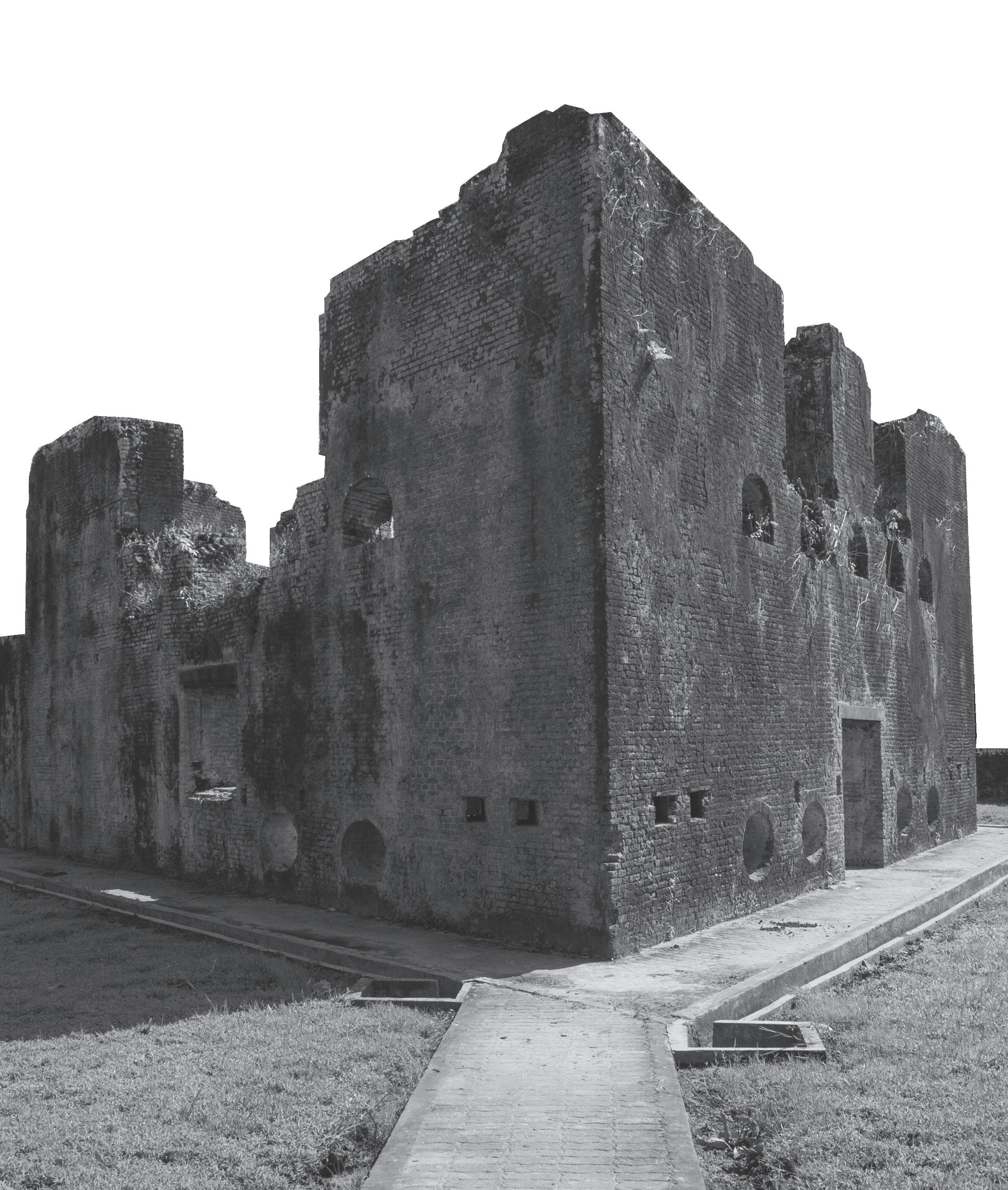
City Hall, Georgetown (15/11/1995) Protected Areas: Fort Zeelandia (including Court of Policy Building) (15/11/1995) Kaieteur National Park
Georgetown's Plantation Structure and Historic Buildings (28/01/2005) Kanuku Mountains Protected Area
Shell Beach (Almond Beach) Essequibo Coast (15/11/1995) Community Conservation Areas St. Georges Anglican Cathedral (15/11/1995) Shell Beach Protected Area
Man Performance Spaces
Theatre Guild EUcalyptus Garden Theatre
3.1

3.2 Main Galleries & Museums
The Walter Roth Museum of Anthropology
The Guyana National Museum
The National Gallery of Art - Castellani House
The Museum of African Heritage
The Guyana Heritage Museum


Cooperation and/or contribution agreements
1. Economic Partnership Agreement between the EU and the Caribbean
2. Economic Partnership Agreement between the CARIFORUM States and the United Kingdom of Great Britain and Northern Ireland
3. Cotonou Agreement
4. Caribbean-Canada Trade Agreement (CARIBCAN)
Muliteratal or bilateral trade/ investment agreements
1. Cooperation and Investment Facilitation Agreement Between The Federative Republic of Brazil and the Co-operative Republic of Guyana
2. Agreement on Promotion, Protection and Guarantee of Investments amongst the Member States of the Organization of the Islamic Conference
3. Agreement between the Government of the Republic of Korea and the Government of the Co-operative Republic of Guyana for the Promotion and Protection of Investments
4. Agreement between the Swiss Confédération and the Republic of Guyana on the Promotion and Reciprocal Protection of Investments
Collaborations with international, intergovernmental, and/or multilateral organizations or institutions
1. International Council on Monuments and Sites (ICOMOS
2. CDB Caribbean Development Bank
3. International Centre for the Study of the Preservation and Restoration of Cultural Property (ICCROM)
4. International Council of Museums (ICOM)
5. International Federation of Arts Councils and Culture Agencies (IFACCA)
6. WIPO- World Intellectual Property Organization
7. CARICOM Caribbean Community
8. World Monuments Fund
9. ICPO/INTERPOL- International Criminal Police Organization
United Nations International Children’s Emergency Fund (UNICEF) 15. United Nations Population Fund (UNFPA) 16. UN WOMEN
1. Revised Treaty of Chaguaramas Establishing the Caribbean Community Including the Caricom Single Market and Economy (February 4, 2002)
2. Global System of Trade Preferences among Developing Countries (May 4, 1989)
3. Panama Convention establishing the Latin American Economic System (SELA) (June 7, 1976)
4. CARICOM - USA Trade and Investment Framework Agreement
5. CARICOM Costa Rica Free Trade Agreement
6. CARICOM – Cuba Trade and Economic Cooperation
7. CARICOM – Dominican Republic Free Trade
8. CARICOM – Colombia Trade, Economic and Technical Cooperation Agreement
9. CARICOM - Venezuela Free Trade Agreement
Data not available for this Borrowing Member Country at time of research. Readers who may be able to provide relevant data are invited to contact the Fund at ciif@caribank.org.
1. The Ministry of the Presidency, Department of Social Cohesion, Culture, Youth and Sport
2. Ministry of Education
3. Ministry of Indigenous Peoples’ Affairs
4. Creative Industries Task Force
1. Ministry of Foreign Affairs
2. Ministry of Communities
3. Ministry of Business
4. Ministry of Business, Department of Tourism
5. Ministry of Trade (Self-reported from UNESCO Questionnaire)
Guyana’s 2017 report on Diversity of Cultural Expressions to UNESCO outlines four goals for its cultural policy measures:
1. Support Sustainable Systems of Governance for Culture
2. Achieve a balanced flow of cultural goods and services and increase the mobility of artists
3. Integrate culture in sustainable development frameworks
4. Promote human rights and fundamental freedoms
(From 2017 Report on Diversity of Cultural Expressions)
Following an initiative to increase international trade and market access for Guyanese creatives, the Department of Foreign Trade under the Ministry of Foreign Affairs has facilitated the creation of a team called the CITF – Creative Industry Task Force that will support stakeholder mapping, policy development, and international market expansion.
In 2019 The Creative Industry Task Force began local stakeholders in the creative industry, with the intent of creating a database.
In 2019 the Department of Social Cohesion, Culture, Youth and Sport launched the Guyana Fund for Cultural and Creative Industries Programme, which provides funding for on productions and publications across all creative industries.
Programs
Ministry of Education Allied Arts Unit
Ministry of Education Craft Production and Design Unit
The School’s Steelband Programme
Children’s Mashramani Programme
Expressive Arts Policy
National Trust Act: Chapter 20.03 (Act 7 of 1972)
Data not available for this Borrowing Member Country at time of research. Readers who may be able to provide relevant data are invited to contact the Fund at ciif@caribank.org.
Data not available for this Borrowing Member Country at time of research. Readers who may be able to provide relevant data are invited to contact the Fund at ciif@caribank.org.
Guyana’s 2017 report on Diversity of Cultural Expressions to UNESCO outlines commitments to “increase the mobility of artists,” and includes plans to update copyright legislation and increase its education and capacity building for artists.
(From 2017 Report on Diversity of Cultural Expressions)
Guyana’s Income Tax Act states that:
Where a painter, sculptor or author obtains any sum for the sale of his work in the production of which he was engaged for a period of:
a) more than one year but not more than two years, the income from the sale of such work shall be taxed, one-hald in the year of receipt of the income and the other one-half in the year preceding the year of receipt of the income.
b) more than two years, the income from the sale of suck work shall be taxed, one-third in the year of receipt of th e income and one-third in each of the two years preceding the year of receipt of the income.
In 2019 the Department of Social Cohesion, Culture, Youth and Sport launched the Guyana Fund for Cultural and Creative Industries Programme, which provides funding for on productions and publications across all creative industries.
Guyana Office for Investment actively promotes non-traditional exports and have identified garments and textiles, and wood, ceramic and woven handicrafts as emergent export and investment sectors. “There is a particular interest in expanding Guyana’s garments and apparel sector to build upon recent successes and to take advantage of preferential access to foreign apparel markets under preferential trade agreements with the U.S., E.U., Canada, CARICOM and other bilateral trading partners.
1. Governing Body: Deeds and Commerical Registry Authority
2. Geographical Indications Act 2005 (2005)
3. Patents and Designs Act (Cap. 90:03) (1973)
4. Trademarks Act (Cap. 90:01) (as amended by Act No. 4 of 1972) (1973)
5. Merchandise Marks Act, 1888 (Cap. 90:04) (as amended by Act No. 4 of 1972) (1972)
6. Copyright Act 1956 (Cap. 74) (1956)
7. The Copyright (British Guiana) Order 1966 (Order No. 79 of 1966) (1966)
8. Competition and Fair Trading Act 2006 (2006)
9. Business Names (Registration) Act (Cap. 90:05) (2000)
10. Deeds Registry Authority Act (Cap. 5:11) (1999)
11. Law Revision Act 1972 (Cap. 2:02, Act No. 4 of 1972) (1972)

Total public expenditure for culture
YEAR AMOUNT
USD5,500,000 2018
(Self-reported from UNESCO Questionnaire)
Sources of funding and support for cultural practitioners 5.1 5.2
FUNDING SOURCE PURPOSE TYPE
Guyana Fund for Cultural and Creative Industries, Department of Social Cohesion, Culture, Youth and Sport
Focus on productions and publications across all creative industries; marketing, distribution and branding of creative products; the development of new cultural products such as festivals; procurement of specialized equipment in support of a particular type of creative production; the creation of intellectual goods, patents and copyrights; and research and designs of innovative new Guyanese products in the creative industries, such as gaming, animation, fashion and condiments/recipes using local content/contexts.
Grant
The Institute of Private Enterprise Development Limited (IPED) For small and medium vendors. Not specific to creative and culltural sectors, but applicable. Loan, Technical Assistance
Small Business Bureau For starting or maintaining a small business. Not specific to Cultural Sector, but applicable. Grant Small Business Bureau For expanding an existing business Loan
5.3
Data not available for this Borrowing Member Country at time of research. Readers who may be able to provide relevant data are invited to contact the Fund at ciif@caribank.org.
Guyana offers a range of investment incentives to both domestic and foreign investors in 8 core sectors under which garments and textiles, and craft manufacturing are prioritised:
1. Exemption from Customs Duty on most plant machinery and equipment
5.4
2. Exemption from Customs Duty on raw materials and packaging materials used in the production of goods by manufacturers
3. Exemption from Customs Duty and zero rate of Value-Added-Tax on raw materials and packaging for manufactures who export 50 percent or more of their products
4. Unlimited carryover of losses from previous years
5. Accelerated depreciation on plant and machinery for approved activities
6. Full and unrestricted repatriation of capital, profits and dividends
7. Benefits of double taxation treaties with the UK , Canada, Kuwait and Caricom countries
8. Exemption from Customs Duty and zero rate of Value-Added-Tax on items approved under an Investment Agreement between the Government and the business
9. Exemption from Excise Tax on items approved under an Investment Agreement between the Government and the business
10. Zero rate of Value-Added-Tax on exports
Creative Goods Trade within the Caribbean
Creative Goods Trade with the EU
Trade Performance by Product Exports, Global
Imports, Global
Study Author/Agency Link
Data not available for this Borrowing Member Country at time of research. Readers who may be able to provide relevant data are invited to contact the Fund at ciif@caribank.org.

PROGRAM
Baby Apparel Vocational 1 year
Pattern Drafting Vocational 1 year
Fine Arts Associate's Degree 2 years
Fine Arts Bachelors Degree 4 years
Fine Arts Diploma
Fine Arts Certificate
Trained Teachers
Certificate
(Specialization in Art)
Associate Degree in Education
(Specialization in Art)
Certificate
Ministry of Education Craft Production & Design Division
Ministry of Education Craft Production & Design Division
University of Guyana
University of Guyana
E. R. Burrowes
School of Art
E. R. Burrowes
School of Art
Cyril Potter College of Education
and
Associate Degree
Cyril Potter College of Education
Hinterland Scholarship Programme
Broad, but includes pursuing training and arts and crafts.
Ministry of Indigenous People’s Affairs
Cultural Entrepreneurship Initiatives
Hinterland Employment and Youth Service
In 2019 the Department of Social Cohesion, Culture, Youth and Sport launched the Guyana Fund for Cultural and Creative Industries Programme, which provides funding for on productions and publications across all creative industries.
Programmes to support job creation in CCI
Data not available for this Borrowing Member Country at time of research. Readers who may be able to provide relevant data are invited to contact the Fund at ciif@caribank.org.
8.1 8.2 8.3
Ministry of Business
Department of Social Cohesion, Culture, Youth and Sport
8.4
3. The Guyana Fund for Creative Industries gives preference to projects that include collaborations and have demonstrated to benefit/include large numbers of artists, especially women, youth and out of city participants from across Guyana.

Data not available for this Borrowing Member Country at time of research. Readers who may be able to provide relevant data are invited to contact the Fund at ciif@caribank.org.
Data not available for this Borrowing Member Country at time of research. Readers who may be able to provide relevant data are invited to contact the Fund at ciif@caribank.org.
Data not available for this Borrowing Member Country at time of research. Readers who may be able to provide relevant data are invited to contact the Fund at ciif@caribank.org.
Data not available for this Borrowing Member Country at time of research. Readers who may be able to provide relevant data are invited to contact the Fund at ciif@caribank.org.
Data not available for this Borrowing Member Country at time of research. Readers who may be able to provide relevant data are invited to contact the Fund at ciif@caribank.org.
Information for these profiles was sourced from publicly available documents and data sets including the UNESCO Quadrennial Report, national budgets, national cultural policy plans, local media sources and others. Additional information was obtained via surveys of regional cultural industry practitioners and stakeholders, which were conducted for this project. Further information was sourced from ‘Research conducted for the CARICOM Secretariat in relation to the Consultancy to prepare the Regional Strategic Plan for Cultural and Entertainment Services/Cultural Industries in CARIFORUM States (2016-2018), with financing from the European Union 10th European Development Fund, provided courtesy of CARICOM.