

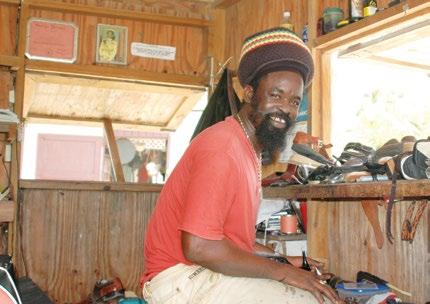




Micro, small and medium-sized enterprises (MSMEs) are often the mainstay of the economies of Caribbean countries.
MSMEs contribute substantially to economic and social development in the Region, accounting for more than half of regional enterprises, and over half of Gross Domestic Product1.
The Caribbean Development Bank (CDB) recognises the importance of supporting MSMEs, which form a vital sector for promoting employment, regional competitiveness and innovation, and are a major instrument for poverty reduction.
In 1982, the Bank established the Caribbean Technological Consultancy Services (CTCS) Network to support the growth of MSMEs in the Region through technical assistance. CTCS provides this assistance in the areas of capacitybuilding, technology adoption and adaptation, productivity improvement, and competitiveness.
Since its inception, CTCS has successfully implemented thousands of training
workshops and short-term technical assistance interventions benefitting over 10,000 micro and small business entrepreneurs.
The CTCS Network has been a leading mechanism by which the knowledge and skills of experts from the Bank’s Member Countries are mobilised, adapted and transferred, through short-term consultancy services. Their services support the improvement of the competitiveness and the managerial and operational efficiency of MSMEs in the Bank’s Borrowing Member Countries (BMCs).
The CTCS Network represents the Bank’s pioneering work in providing support services to fledgling businesses that are often unable to get assistance, and lack business systems and vital know-how to manage successful enterprises and projects. For more than 35 years, the Network has strengthened the professional services offered by business support
1Micro, Small and Medium Enterprise Development in the Caribbean: Towards A New Frontier, 2006, 6
organisations and public bodies to MSMEs. The range of projects completed over the decades demonstrates a strong legacy of work in business development and entrepreneurship. Some of this work is highlighted in this booklet.
To facilitate growth-oriented technical assistance to micro, small and mediumsized enterprises in areas of capacity building, technology adoption and adaptation, productivity improvement, and competitiveness
Through grants, the CTCS Network provides technical assistance to MSMEs, at a nominal cost to the enterprises.
The CTCS Network operates in collaboration with Cooperating Institutions –regional and national institutions that provide technical assistance and/or financing to MSMEs.
Cooperating Institutions are the Network’s main conduit to MSMEs in BMCs. They help identify technical assistance needs and execute, monitor and evaluate technical assistance interventions.
The CTCS Network provides technical assistance to MSMEs in several areas, including:
market research to ascertain the potential for new and expanding businesses
planning plant layout and production flow
CDB uses the number of employees as the primary indicator and the volume of turnover as the secondary indicator in the classification of MSMEs.
practical, on-the-spot advice and assistance with financial management, quality management and control, and other general management challenges
upgrade of production systems and resolving production, and maintenance problems
selection of machinery and equipment
the development of business, technical and marketing plans
staff training in all disciplines
**Classification based on turnover will be assessed on a case by case basis
support for institutional audits
Between 2012 and 2016, CTCS interventions benefitted 2,202 women and 1,322 men around the Region. Beneficiary businesses, sub-sectors and sectors which received support from CTCS spanned small hotels; guest houses; restaurants; arts and craft; agro-processing; fishing; agriculture; construction; energy efficiency and renewable energy; and business development support agencies.
COUNTRY
NUMBER OF PROJECTS DISBURSEMENT, IN USD
*Interventions in which all or some BMCs participated, or from which they benefitted
5
4
7 7 7 5 5 10 30 6 6 9 10 8 13 3
BAHAMAS REGIONAL*: $939,417 19
$94,062 $80,344 $231,252 $107,790 $150,735 $143,438 $121,119 $89,674 $157,281 $44,755 $87,831 $150,496 $96,343 $623,649 $161,638 3
GRENADINES
AND TOBAGO
8
Using moulds can make a significant difference in the operating performance of businesses that produce ceramic and pottery products, helping them meet demand for their crafts. In 2015, through CTCS, 30 MSME owners (20 women and 10 men) in Guyana who make ceramics and pottery received training in cutting-edge manufacturing techniques to produce moulds.
CDB collaborated with the Georgetown Chamber of Commerce and Industry to deliver the programme. To complement
the training activity, the CTCS Network completed a gender analysis of the arts and craft sector in Guyana. The research aimed to identify the opportunities and challenges facing each gender within the sector.
Findings revealed that gender imbalances in the sector mirrored the realities of the general culture of Guyana. Specifically, the analysis showed that certain specialities such as leather craft are maledominated and females are culturally discouraged from learning skills that
have been traditionally considered to be related to “a man’s job”. The data also indicated that lack of access to financing is a major impediment to small-business development, particularly among femaleowned enterprises in the craft industry.
The results of the analysis are informing how the CTCS Network and other agencies design projects and interventions for the sector—to better harness opportunities for both men and women, and address the issues the analysis revealed.
Over the past eight years MSMEs on Montserrat have benefitted tremendously from the intervention of the CDB CTCS programme. During this period, some 20 interventions were undertaken resulting in approximately 375 potential business and existing business owners having their skills developed and or enhanced through the Technical Assistance of the CTCS Programme. Many of businesses operating on island today attribute their success to lessons learnt from various CTCS workshops they attended.
Agatha Aspin, Business Services Manager, Division of Tourism, Office of the Premier, Montserrat
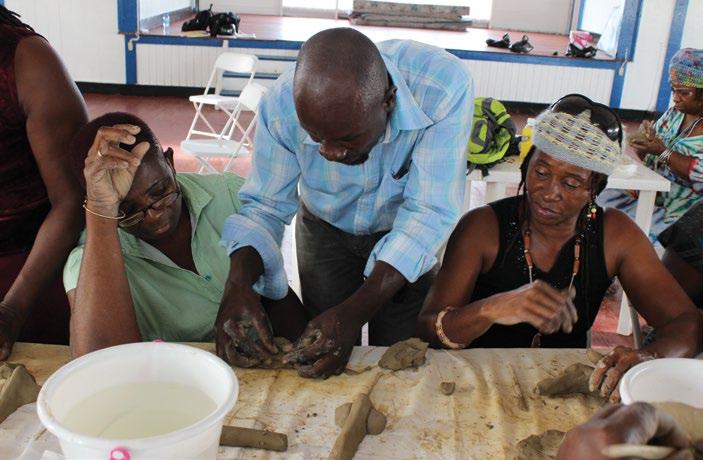
Thirty participants attended a workshop on Modern Techniques for Mould Design and Manufacturing for Ceramic and Pottery Producers in Guyana, held in May 2015. The majority (93%) strongly agreed or agreed that, following the training, they had the confidence to use the knowledge gained in their individual businesses.
Participants indicated that the intervention was timely and could contribute to improving their business productivity.
Beneficiaries: Knowledge gained from artisan training can be applied in businesses
30%
63% Agree
Strongly Agree
When agro-processing and food service businesses in the Caribbean can meet the highest standards of food safety and quality, they are better positioned to win the trust of consumers, grow revenue and compete in global markets.
Through CTCS, CDB has prioritised professional training in food quality and safety for MSMEs. The Bank’s work in this area has included two major initiatives since 2014.
Through CTCS funding, 183 food service managers and handlers from six BMCs— Anguilla, Antigua and Barbuda, Dominica, Grenada, Guyana and Montserratt— have been trained as ServSafe® Food Protection Managers. ServSafe® is a United States-based educational course that provides comprehensive training for food service professionals. It is accepted throughout the Caribbean Region and recognised as a fundamental certification for food handlers.
Through the ServSafe® Food Protection Manager Training and Certification Programme implemented by CTCS, participants learned food safety principles and techniques such as cleaning and sanitation; Hazard Analysis and Critical Control Points (HACCP); methods of thawing, cooking, cooling and reheating food; safe food preparation; and time and temperature control.
Thirty-four food service managers, chefs and cooks within the hospitality sector capitalised on the opportunity provided by CTCS to participate in the ServSafe Food Protection Manager Certification programme. While 19 persons received their certification, the knowledge and skills of the others, in relation to safe food handling practices and the role they play in keeping food safe for consumption, would have been broadened and upgraded for application within their own operations or that of employers. CTCS has contributed to enhancing the capacity and skills of more than 200 business owners and managers through several workshops.
Khesha Mitchell, Vice President, Business Development, Grenada Investment Development Corporation, Grenada
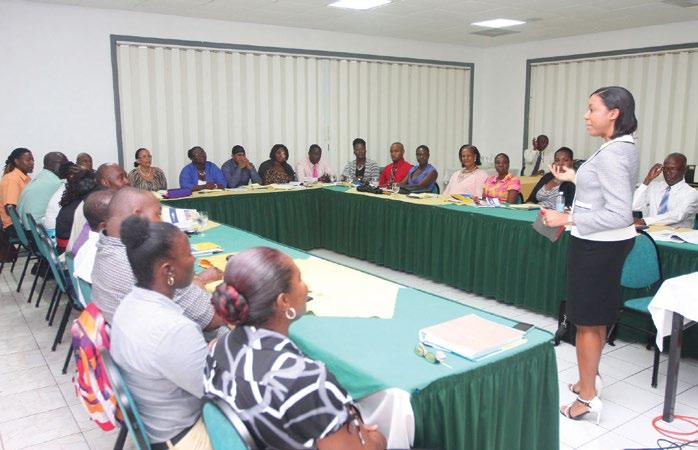
Thirty-three participants evaluated the ServSafe® Food Protection Managers workshop conducted in Dominica in February 2016. The overwhelming majority of participants stated their intention to apply the improved food practices, confirming the effectiveness of the training.
Beneficiaries: The ServSafe® Food Protection Manager Workshop met its objectives Agree
Strongly Agree
Between May and October 2015, 13 MSMEs in the agro-processing sector in Jamaica participated in a CTCS project to build their capacity in International Food Safety Requirements. Recognising the critical need for the businesses to sustainably implement a food safety system, CTCS developed a cadre of trained, competent workers to, in turn, train their co-workers and lead the implementation of HACCP, the internationally recognized food safety approach. Twenty-six trainers (19 women and 7 men) were equipped to deliver training to other workers within their businesses and to lead implementation of HACCP.

More than 70% of participants were confident that their knowledge of food safety was improved, and their capacity to implement HACCP strengthened. More than 60% felt that CTCS helped them to build knowledge of good manufacturing practices, and were in a better position to organise their recordkeeping and improve documentation management. Almost 90% of the trainees indicated that food safety awareness on the job had been improved and that they could go on to make their operations much safer, and provide a higher quality of products. Of the participants, 98% agreed that participating in the CTCSfunded training had improved their ability to write procedures and HACCP plans, and 82% were confident and willing to share, or advise on, standard operating procedures in food safety. Ninety-six percent of the CTCS trainees strongly agreed/agreed that the course content was useful for work.
Beneficiaries: Training improved capacity to apply food safety practices
food safety awareness on the job
ability to write procedures and HACCP plans
and willingness to help others
The workshop exceeded our expectations! We not only learnt the principles of HACCP but how to apply them to our work to make an immediate impact. We would unreservedly recommend this seminar to anyone that runs a food establishment. [We] were new to the Manufacturing Industry; we were like blank slates and the lecturers made the information simple and easy to grasp. They used a lot of relevant examples that tied in to real life situations. We were able to learn on our own and as part of a team during the seven day workshop over the two month period. This programme also expanded our network as we bonded with the other participants as well as the lecturers. This was an excellent workshop with practical exercises and worthwhile information that we can use in both our professional and personal life. We are truly grateful.
Leela Chambers, Goeshen Manufacturing and Distributors Ltd., Jamaica
After the catastrophic earthquake in 2010, the Government of Haiti began to focus on enhancing the country’s tourism product as a way to rebuild the devastated economy. The country’s Tourism Master Plan made provisions such as incentives to current and prospective hotel owners and emphasised increased promotion of the country’s rich offerings. Recognising these efforts to grow the industry, CDB agreed to provide support through a specially designed training programme for persons working in the hotel sector.
The CTCS Network facilitated a Train-theTrainer Workshop and training attachments for six Haitian nationals at the Crane Residential Resort in Barbados. Implemented in collaboration with Association Touristique d’Haiti (ATH), the programme was designed to equip each participant with the knowledge and skills that would enable them to deliver training in Hospitality Services. Namely, Food and Beverage Management (FBM), Front Desk Operations (FDO) and Housekeeping (HK) to hotel and restaurant employees in different communes and departments in Haiti.
The follow-on training activities in Haiti have benefitted 202 hotel and restaurants employees (141 women and 61 men) and were coordinated in collaboration with SOFITRAINING, the Non-Financial Services Division/Training Unit of Société Financière Haïtienne de Développement
S.A. Training in each Hospitality Services area was held in four major communes in Haiti: Port-au-Prince, Cap-Haitien, Côte des Arcadins and Les Cayes.
Training in each area of Hospitality Services was conducted in three-day
workshops, which were followed by a series of in-house or on-site sessions to provide support to the hotels and restaurants represented at the learning events. During these one-to-one sessions, an operational audit of the different establishments was undertaken, including assistance and recommendations to establish and implement an improved FBM, FDO and HK protocol.

Participants display their certificates after successfully completing attachments in Barbados.
Beneficiaries: The course content responded to participants’ needs
Beneficiaries: Participants can apply the concepts taught in the course
5% 5%
10%
Very Good
Very Good Good Excellent Excellent
85%
95%

One hundred and thirty-two MSME operators in eight BMCs can now more efficiently record, track and generate financial information that will help them make data-driven internal decisions and generate better projections.
When seeking financing for working capital or to upgrade and expand their operations, they are also now better equipped to provide relevant and timely information to financial institutions.
The training was delivered through a CTCS-funded intervention that provided technical assistance in Computer Management Accounting Systems (CMAS), to the operators (95 women
and 37 men) of MSMEs engaged in the production of goods and/or delivery of services. They came from Anguilla, Antigua and Barbuda, British Virgin Islands, Grenada, Montserrat, St.Kitts and Nevis, Saint Lucia and St.Vincent and the Grenadines.
CTCS provided the technical assistance in conjunction with business development organisations in the respective countries. It
consisted of training workshops, followed by in-plant or on-site support, which comprised assessments of the operations of participating MSMEs, including guidance on how to set up CMAS tailored to their operations.
Training and other assistance received from CTCS by MSMEs in Saint Lucia provides opportunities for training and development which may not have been possible due to high costs and length of time required to complete extended programmes. Collaboration between the Government and CTCS also provides more opportunities for training of MSMEs and the building of much needed networking opportunities during training. MSMEs are becoming more aware of CTCS assistance through a more coordinated approach, in addition to the benefits which may be derived from their participation. Having received the training, MSMEs can observe the improvements in business performance linked to the provision of the training, which encourages continuation and enhancement of their business processes.
Junia Emmanuel-Belizaire, Commerce & Industry Officer, Department of Commerce, International Trade, Investment, Enterprise Development & Consumer Affairs, Saint Lucia
All the participants who participated in the workshop in Grenada, agreed that training met their expectations.
Beneficiaries: Content of Computerised Management Accounting Systems Training met participants’ expectations
40%
60% Agree Strongly Agree
More than 90% of participants were satisfied that the training objectives had been met and they would able to make more informed decisions in the future with the help of Computerised Management Accounting Systems. They also indicated that they could now organise their businesses to become more functional in such a way that they could improve their competitive advantage.
Beneficiaries: Satisfaction that the purpose and objectives of the Computerised Management Accounting Systems training were met 35% 6%
MSMEs in CDB’s BMCs can apply for assistance from the CTCS Network.
Anguilla
Antigua & Barbuda
The Bahamas
Barbados
Belize
British Virgin Islands
Cayman Islands
Dominica
Grenada
Guyana
Haiti
Jamaica
Montserrat
St. Kitts and Nevis
Saint Lucia
St. Vincent and the Grenadines
Suriname
Republic of Trinidad and Tobago
Turks and Caicos Islands
For more information on eligibility requirements and other details about the CTCS Network, visit www.caribank.org/ctcs
Technical Cooperation Division
Caribbean Development Bank
P.O. Box 408, Wildey, St. Michael, Barbados BB11000
Tel: +1 (246) 431-1679/431-1683
Email: thomasmi@caribank.org/noelj@caribank.org