PURPOSE
“The purpose of the Bank shall be to contribute to the harmonious economic growth and development of the member countries of the Caribbean (hereinafter called the Region) and to promote economic cooperation and integration among them, having special and urgent regard to the less developed members of the Region.”
Article 1 - Agreement establishing the Caribbean Development Bank
MISSION STATEMENT
CDB intends to be the leading catalyst for development resources into the Region, working in an efficient, responsive and collaborative manner with our Borrowing Member Countries (BMCs) and other development partners, towards the systematic reduction of poverty in their countries through social and economic development.
CDB MEMBER COUNTRIES
Borrowing Members
Anguilla
Antigua & Barbuda
The Bahamas
Barbados
Belize

British Virgin Islands
Cayman Islands
Dominica
Grenada
Guyana
Haiti
Jamaica
Montserrat
St. Kitts & Nevis
Saint Lucia
St. Vincent & the Grenadines
Suriname
Trinidad & Tobago
Turks & Caicos Islands
Non-borrowing Members
Brazil
Canada
China
Colombia
Germany
Italy
Mexico
United Kingdom
Venezuela
OVERVIEW
The extreme vulnerability of the Caribbean Region was highlighted once again in 2017. Many of Caribbean Development Bank’s (CDB) Borrowing Member Countries (BMCs) were affected by the hurricanes that passed through the Caribbean in September. It will take considerable time for some BMCs to recover from the significant economic and social damage and losses they experienced. Notwithstanding the devastating events of 2017, there was an overall uptick in economic growth to 0.6%. The rebound in oil prices helped producers such as Suriname and Trinidad and Tobago, although they stayed in recession. However, higher oil prices also put unfavourable pressures on the external positions of many other countries. Fiscal balances remained weak in most cases, and public sector debt continues to be worryingly high in many BMCs.
1: GROWTH (%) IN REAL OUTPUT, 2009-2017
Although growth returned in 2017, the Region continues to underperform in comparison with other country groups. Since 2009, annual growth has averaged 0.8%1; while in other small developing states, growth averaged 4.8%.
Looking ahead, the Region is expected to grow by 2% in 2018, benefiting from a projected increase in global economic growth, but risks are tilted on the downside. Mitigating these risks will require improved resilience on many levels. Macroeconomic stability, increased competitiveness, improved human development, and environmental preparedness are all necessary conditions to improve resilience, and ensure sustainable, inclusive growth and development.
Comparable Country Groups - Real GDP Growth Rates
Sources: CDB; International Monetary Fund (IMF) World Economic Outlook Database (October 2017)
Other small developing states
World
Emerging market and developing economies Advanced economies
CDB Borrowing Member Countries
INDIVIDUAL BMC PERFORMANCE IN 2017
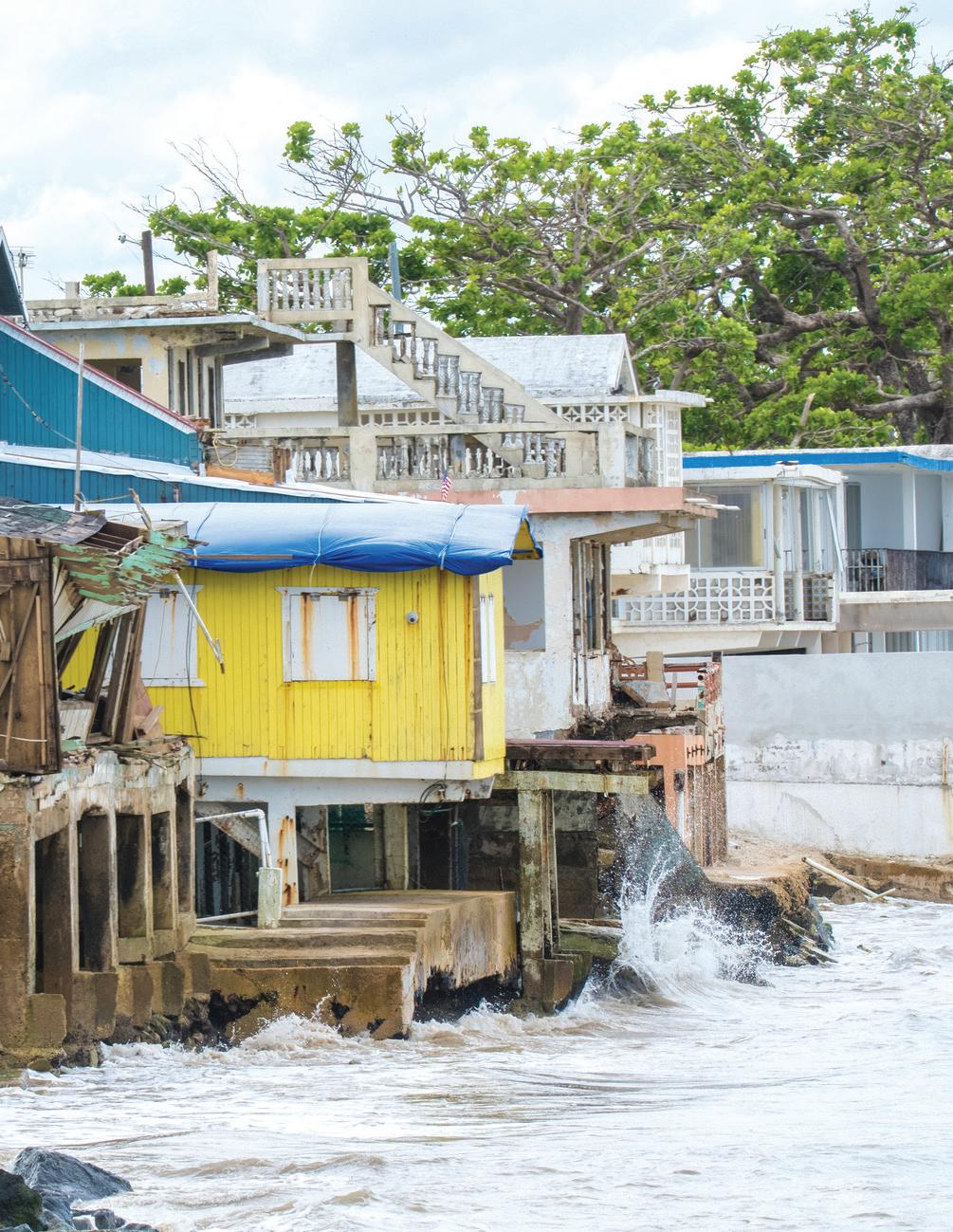
Many BMCs were affected by extreme weather events in 2017, particularly Hurricanes Irma and Maria, two category five hurricanes that passed through the Region in September. They impacted 10 BMCs, most significantly Anguilla; Antigua and Barbuda; British Virgin Islands (BVI); Dominica; and Turks and Caicos Islands (TCI). Both hurricanes caused considerable damage to economic and social infrastructure, and loss of life. Authorities estimate the costs of damage and losses at about 225% of GDP in Dominica and more than 300% in BVI. In all of the affected BMCs, the social impacts are yet to be fully assessed; but the consequences of displacement and unemployment, especially for more vulnerable households, are potentially severe for future growth prospects.
Most of the impact in TCI was felt on Grand Turk, where cruise ship visits were disrupted; however, overnight tourism, mainly based on the larger island of Providenciales, was less affected. In St. Kitts and Nevis, construction activity levelled off and overnight tourist numbers fell; but cruise ship visitor numbers bounced back late in the year. In The Bahamas, growth is estimated to have returned to positive territory, following the delayed opening of Baha Mar, the mega resort.
Of the Region’s other economies, Cayman Islands; Grenada; and Saint Lucia are estimated to have grown, due primarily to positive developments in their tourism and construction industries, and in Grenada, the education industry. The rate of growth in Jamaica was the highest since 2006, despite a contraction in agriculture following floods in May. There were strong performances in tourism, construction and manufacturing.
Tourism and construction also performed well in Barbados, although overall growth was more modest. Growth is expected to have been dampened by the impact of austerity measures that were introduced to reduce domestic demand to restore external and fiscal stability. In St. Vincent and the Grenadines, visitor numbers were down despite the opening of the new airport. This was partly because room stock declined following closure of the Buccament Bay Resort.
Four of the five major commodity exporters—Belize, Guyana, Haiti, Suriname, and Trinidad and Tobago—all saw improved performance compared with 2016. Growth remained negative in Suriname, and Trinidad and Tobago. In Suriname, crude oil production targets were not met, although output from the refinery increased following an upgrade in 2016. Gold production increased but there were also cuts in public expenditure as part of the Government’s adjustment programme, which has been implemented to restore macroeconomic stability. In Trinidad and Tobago, output from the dominant oil and gas sector is estimated to have increased marginally, as previously commenced infrastructure maintenance work was completed, and new activities came on stream.
Following contraction in 2016, there was recovery in Belize. Agriculture and fishing bounced back marginally from drought and disease respectively. Visitor numbers continued to increase, although the tourism sector fell slightly overall, as tourists opted for cheaper accommodation options. Manufacturing contracted, partly due to lower oil production, and to lower production of alcoholic and non-alcoholic beverages. Growth in Guyana was underpinned by increased construction and manufacturing output. The public sector investment programme was ramped up, although some disbursement issues remained. Gold production fell slightly but its price rose. Rice output increased but sugar output fell, due to repairs at one estate, and industrial action in opposition to sugar industry restructuring. Haiti benefited from improved output of textiles and food. There were also increases in industrial production and in construction, some related to rebuilding following Hurricane Matthew in 2016.
TABLE 1: GROWTH (%) IN REAL OUTPUT, 2013-2017*
Sources: National Statistics Offices, Central Banks and CDB *Data for 2017 are preliminary estimates
Regional consumer price inflation continued to edge up in 2017. On balance, regional inflation (proxied by the median rate) was estimated at 2.4%, up from 0.9% in 2016. The rise in consumer prices was partly influenced by higher international crude oil and commodity prices, the impact of weather-related shocks to domestic food supply, and an increase in aggregate demand in some BMCs. Generally, price rises exceeded the median inflation rate in 11 of the 19 BMCs, with the most pronounced increases recorded in Haiti (15.3%), Suriname (9.2%) and Jamaica (5.0%).
SOCIAL ISSUES –POVERTY AND UNEMPLOYMENT
The majority of BMCs are ranked in the high human development category2. Notwithstanding, issues of persistent poverty and indigence; inequality; vulnerability; and the inability of the poor to sustainably improve their well-being remain. The BMCs have high levels of poverty and income inequality. CDB’s forthcoming programme of Enhanced Country Poverty Assessments (ECPAs) will provide up to date and more reliable measures of poverty, which will allow improved targeting of the factors underlying poverty.
Sources: Regional Government Reports, CDB, WB; †WB Poverty Gap at $5.50/day
The BMCs that have experienced sustained economic growth and declining unemployment since the period 2008 to 2009 are likely to have recovered from increases in their poverty rates during the global financial crisis, while those with negative or no growth probably experienced some deterioration. The countries which reported declines in their unemployment rate
in 2017– Belize, The Bahamas, Grenada, Jamaica and Saint Lucia—also recorded positive economic growth. However, double-digit unemployment remains an area of concern for most of the Caribbean, and youth and women are disproportionately affected.
2005-17
2017 Estimate Unless Otherwise Noted
Sources: National Statistics Offices, Central Banks, International Monetary Fund (IMF)
FISCAL PERFORMANCE AND DEBT
Fiscal conditions in the Region deteriorated in 2017 and public debt remained high. The median fiscal deficit of central governments worsened from 0.7% of GDP in 2016 to 1.6% in 20173. This reflected sluggish revenue performances related to commodity outputs, declining receipts from citizenship by investment programmes, and inadequate responses on the expenditure side. Three BMCs (Barbados, Suriname, and Trinidad and Tobago) received credit rating downgrades, as the ratings agencies expressed concerns about deficit and debt levels, as well as underlying economic strength4. All three tightened their fiscal stance, by rationalising public expenditure and introducing revenue-enhancing measures. Belize also tightened its fiscal stance, following restructuring of its commercial debt in March. These actions resulted in its credit rating being upgraded, having been downgraded in late 2016 when the government first announced its intention to restructure.
High levels of indebtedness remain a challenge, with increasing debt service payments crowding out the productive expenditure needed to stimulate growth. The median public debt burden declined marginally from 66.7% of GDP in 2016 to 64.6% in 2017. Table 3 shows that debt-to-GDP ratios fell in 13 of the 19 BMCs as at the end of 2017, due to continued implementation of economic reform programmes (Grenada and Jamaica); improved revenue performance; lower interest costs associated with active debt and liability management; and a return to moderate economic growth in the tourism-driven economies. However, debt is still above 60% of GDP in 12 BMCs. In addition, following the passage of hurricanes Irma and Maria, it is anticipated that there will be sizeable fiscal and/or debt slippages during the period 2018 to 2019, as reconstruction efforts pick up.

3 Source: IMF WEO Database. Not including the five UK Overseas Territories.
4 Suriname was downgraded by Fitch in February (to B- from B+), and by Standard and Poors (S&P) in April (to B from B+). Later in the year, Moody’s placed Suriname on review for downgrade. Barbados was downgraded by Moody’s in March (to Caa3 from Caa1) and by Standard and Poor’s (S&P) in September (to CCC from CCC+). In April, Trinidad and Tobago was downgraded by Moody’s (to Ba1 from Baa3).
EXTERNAL PERFORMANCE
External positions improved in the commodity-producing BMCs, but in other countries the situation worsened, and the level of foreign reserves came under further pressure. The current account deficit fell in Suriname and in Trinidad and Tobago, owing to increased oil and gas prices. Suriname also benefitted from an increase in the price of gold, as did Guyana, although there the current account returned to deficit, as imports related to the extractive industries went up. The current account improved slightly in Belize, as the trade deficit narrowed, helped by higher exports of sugar, bananas and marine products. Imports also
CHART 3: FOREIGN RESERVES (IN MONTHS OF IMPORTS)
AS AT END OF 2016
declined, as the effects of a restrictive budget set in. The external reserves positions were below or close to the recommended threshold in Barbados; Belize; The Bahamas; and Suriname, although they improved slightly in the latter two BMCs in 2017. In Barbados, despite strong visitor performance, the external current account remains in deficit mainly due to higher fuel prices driving increases in the price of imports. In Belize, a dramatic fall in exports in 2016, and settlement of payments for two previous nationalisations, put pressure on the reserves position.
Sources: Central Banks
MONETARY DEVELOPMENTS AND FINANCIAL STABILITY
Monetary conditions in the BMCs were consistent with the anemic real GDP growth. Generally, monetary growth slowed in 2017, consistent with sluggish domestic credit growth in The Bahamas; Barbados; Eastern Caribbean Currency Union; Suriname; and Trinidad and Tobago. Jamaica was an exception, where an easing of credit conditions underpinned household and private-sector credit growth.
Generally, the regional banking system remains relatively stable. Bank capitalisation continued to be satisfactory, with capital adequacy ratios above prudential guidelines. However, some vulnerabilities persisted across BMCs, with high (albeit declining) levels of non-performing loans (NPLs) and increasing supervisory costs; both of which are drags on banks’ profitability.
Expectations are that high levels of liquidity will be maintained over the medium term, given the uncertain economic environment. Furthermore, modest improvements in credit quality indicators are expected, as banks ratchet up efforts to address the NPLs on their balance sheets. The loss of correspondent banking relationships continued to pose a threat to the stability of some domestic banks, amidst tighter lending conditions and increased oversight for anti-money laundering and combating the financing of terrorism.
OUTLOOK
As small open economies, the BMCs’ prospects partly depend on developments in the global economy. The IMF is forecasting that global growth will increase in both 2018 and 2019 to 3.9%, from 3.7% in 2017, reflecting existing growth momentum and tax policy changes in the United States (U.S.)5. However, the Fund warns against complacency, citing medium-term downside risks, such as a correction in financial markets; inward-looking policies; geopolitical tensions; and political uncertainty in some countries.
At the regional level, exposure to the global risks are high, but there are also the known risks associated with natural disasters and other weather-related events. The increasing frequency and intensity of these events highlight the need to improve resilience. Economies heavily reliant on financial services will continue to face levels of scrutiny from the international community regarding the use of offshore financial centres for tax avoidance. U.S. corporation tax reform could also mean profits being repatriated from offshore, with a possible effect on revenues in the Caribbean. These reforms may also lead to higher U.S. interest rates and appreciation of the U.S. dollar, further undermining the competitiveness of the fixed-exchange-rate tourist destinations6
On the upside however, the same reforms could increase disposable incomes, leading to a positive impact on tourism and remittances.
While the Region cannot influence any of these events, it can take mitigating actions to lessen their impacts and build resilience. By increasing their resilience, BMCs can put themselves in a position to ensure that vulnerabilities are reduced, so that growth is sustained and inclusive.
With these considerations in mind, CDB is projecting regional economic growth of 2% for 2018, to which all BMCs are expected to contribute. Returns to positive growth are forecast for Suriname and Trinidad and Tobago, driven by recovery in the energy sectors, and in Suriname's case, gold. Higher gold output
is also anticipated in Guyana, where there is also expected elevation in construction and investment activity in advance of oil first coming on stream in 2020. In Belize, increased economic activity is expected as both agriculture and fisheries continue to recover, and tourism picks up again. Construction will also increase, although public investment could be limited by budget tightening to comply with the conditions of debt restructuring. Haiti is likely to continue to grow, although the need to mobilise local resources through taxes, which recently led to protest and labour unrest, will need to be managed carefully.
4: GDP GROWTH 2017 AND 2018 (%)
As far as the service-dependent economies are concerned, reconstruction activity should drive growth in the five countries most affected by Irma and Maria (Anguilla, Antigua and Barbuda, BVI, Dominica, and TCI). Elsewhere, the Bahamian economy will finally benefit from Baha Mar operating at full capacity, following phased openings in 2017; and there will be further hotel investment in St. Kitts and Nevis and Saint Lucia. An increase in growth is forecast for Jamaica, as agriculture recovers and mining picks up following the opening of a new operation. New inward investment is also planned for Barbados, but uncertainty over the future of economic and fiscal policy during a general election year is likely to affect investment decisions.