Table 5 Distribution of CTCS approvals and disbursements by country
Table 6 Summary of the number of beneficiaries from CTCS activities in 2019
Table 7 Summary of projects flagged at risk
Table 8 SDF programme level
Table 9 Commitment authority and use of funds
Table 10 Allocation and use of resources
Table 11 Summary of financial results, 2015-2019
Table 12 Summary of projected financial results
Appendices
APPENDIX I The Unified Special Development Fund
APPENDIX II Contributions to the Unified Special Development Fund
APPENDIX
APPENDIX V SDF portfolio analysis, 2019
APPENDIX VI SDF financial statements
VI-1: Summary balance sheets as at December 31, 2015-2019
VI-2: Summary income statements for the years ending December 31, 2015-2019
VI-3: Summary of notes, encashments and drawdowns, 2019
VI-4: Projected balance sheets as at December 31, 2020-2022
VI-5: Projected income statements for the years ending December 31, 2020-2022
Executive Summary
The 2019 Annual Report of the Special Development Fund (Unified) [SDF (U)] is the third report on the performance of the Fund in the Ninth Cycle. It examines the Fund’s performance in 2019 relative to 2018 against the backdrop of agreed operational themes and set-asides. It also showcases the activities of key grants-only-funded programmes, such as Haiti, the Caribbean Technological Consultancy Services (CTCS) Programme and the Basic Needs Trust Fund (BNTF).
SDF resources continued to be deployed in key areas of development for Borrowing Member Countries (BMCs). These ranged from disaster response, to the provision of critical infrastructure that underpins efficient and socially inclusive growth.
Disaster risk management is a priority for BMCs, as the increasing frequency of natural hazards highlights the inherent vulnerability of the Caribbean. In 2019, the Region was impacted not only by hurricanes resulting in loss of lives and livelihoods, but also by prolonged drought, which saw Belize declare a state of emergency in affected districts. In these circumstances, the Caribbean Development Bank (CDB) intervened with its emergency response grants to aid the immediate recovery effort. The ability to transfer risk is a critical component of disaster risk management, especially for BMCs that are consistently ranked among the most vulnerable in the world. During the year, the Bank also assisted Haiti in meeting its obligations to the Caribbean Catastrophe Risk Insurance Facility (CCRIF) as part of its efforts to respond appropriately to hazards.
The provision of safe and resilient infrastructure is important for vibrant and sustainable growth. During the year, the Bank approved resources to help St. Vincent and the Grenadines strengthen the enabling environment for growth by improving port efficiency. By facilitating more efficient handling of containers and improving business processes, modernising port
operations can promote trade facilitation, amplify external trade competitiveness, and enhance private sector-led growth.
The Fund also targeted improvements in financial sector governance, as well as supported positive youth development, access to basic services and productivity in the micro, small and medium-sized enterprise (MSME) sector.
The SDF recorded several operational highlights in 2019. In response to capacity constraints in the public sector, the Project Cycle Management (PCM) and Public Policy Analysis and Management (PPAM) programme trained over 2,000 persons across 19 BMCs in principles of effective public policy analysis and project management. Additionally, the Bank’s programme in Haiti bolstered the transformation of schools in four rural locations. Thirty-two new classrooms with a capacity for 1,280 students now cater to primary-age learners with provision for pre-primary education for children 3-5 years old. Under the inaugural security forces component of the Youth Resilience and Inclusive Social Empowerment Project, students in Belize benefitted from terrestrial defence force training. Beneficiaries also accessed complementary training in critical soft skills, such as problem-solving, time management, work ethic, effective communication, and the social graces. These outcomes are critical to minimise the risk of participation in crime and violence and anti-social activities, thereby
increasing opportunities for beneficiaries’ social inclusion, well-being and broadened life chances, all critical components in developing productive citizens.
Totalling $18.2 million (mn), overall commitments were less than in previous years. Loan approvals amounted to $10.5 mn in 2019, compared with $26.7 mn a year earlier, with St. Vincent and the Grenadines the sole recipient of loan financing to modernise the port and undertake a feasibility study to upgrade the runway on Canouan. Loan approvals were affected by BMCs’ limited implementation capacity, as well as authorities’ efforts to improve debt dynamics. Grant commitments, on the other hand, were impacted by the slow movement in the Haiti programme on account of civil and political unrest.
When overall approvals are reported by SDF theme, the bulk of 2019 commitments was geared towards deepening the implementation of the Sustainable Development Goals (SDGs), in particular, building resilient infrastructure (SDG 9) and, to a lesser extent, inclusive and sustainable growth (SDG 8). Thus far, commitments by themes were broadly in line with allocations. In terms of the rate of utilisation
(% commitments to allocation), building resilience, environmental sustainability and climate change was highest at 43.4%, mainly on account of the active hurricane season in 2017. This was followed by regional cooperation and regional public goods at 43.3% and the SDGs at 40.9% as BMCs sought shared approaches to development challenges.
The CTCS Network, which is the Bank’s flagship programme to upgrade technical and managerial capacity in small and medium-sized enterprises, approved and disbursed $0.7 mn in 2019. These resources facilitated the hosting of two regional and 15 national workshops, which included a number of on site and online technical assistance (TA) and mentorship sessions and benefitted 1,781 business people (1,078 men and 703 women).
With respect to BNTF, the Bank’s direct poverty reduction programme, an additional 89 sub projects were approved for poor and vulnerable communities, committing a further $23.3 mn in grant resources in 2019. Of total approvals, 13% was committed to 13 sub-projects in the water and sanitation sector; 14% to 12 sub-projects in the transport and storage sector
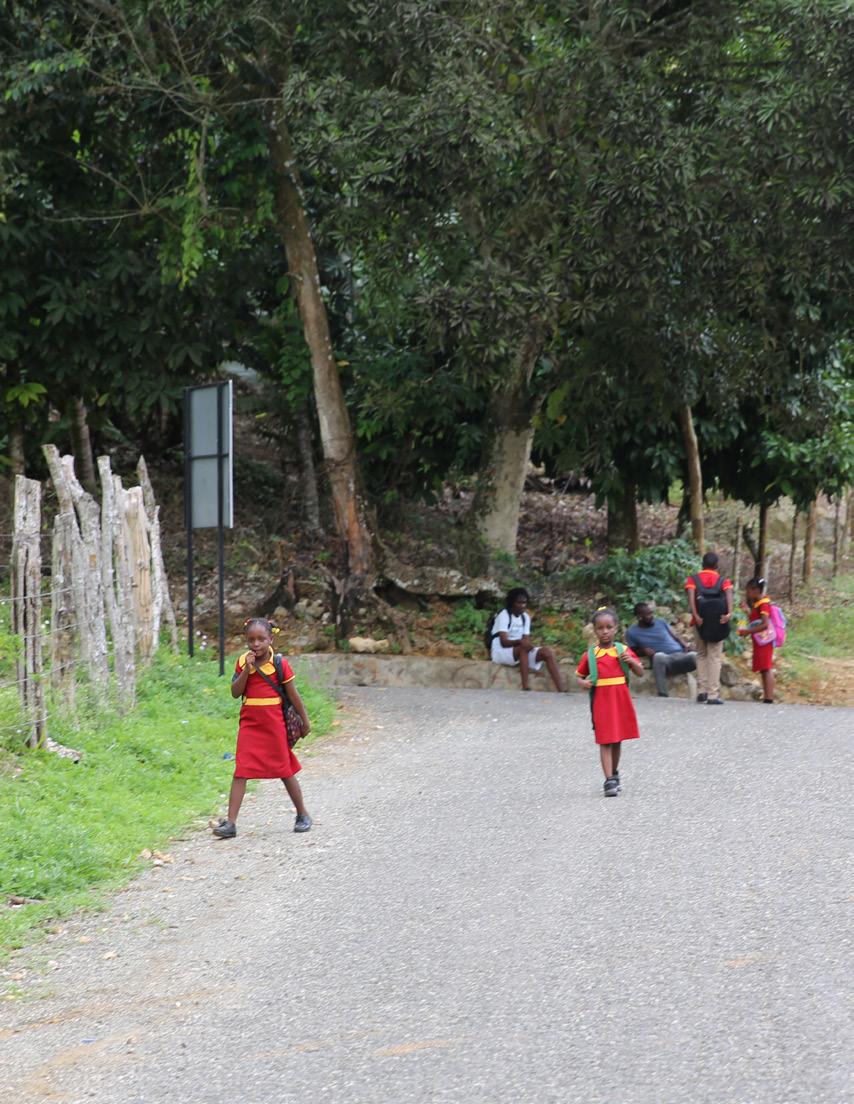
Girls in a rural classroom
and 73% to 64 sub-projects in the education sector.
A Mid-Term Evaluation (MTE) of BNTF 9, conducted in 2019, concluded that the BNTF programme was responsive to the needs of communities, and allowed for a high degree of flexibility to respond to changing circumstances. Bolstered by positive development outcomes, CDB remains committed to this programme, which offers a unique and direct response to the needs of the most vulnerable in peri-urban and rural underserved communities.
An independent Mid-Term Review (MTR) of the SDF cycle was also undertaken during the year. The analysis reinforced the need for, and importance of, the SDF in providing concessional support to tackle issues of poverty and vulnerability. The review also offered useful recommendations, which focused on strengthening country engagement, increasing operational flexibility, improving project implementation, and revising the criteria for accessing SDF resources. Noting that work had already commenced in these areas as part of the ongoing business process reviews and process mapping to inform CDB’s revamped operations going forward, the Bank has committed to advancing measures that will expand the efficiency and efficacy of resources to deepen the SDF’s development impact.
The financial performance of SDF was boosted in 2019. The Fund recorded net income of $8.5 mn compared with $0.1 mn in 2018, largely based on an increase in investment income. Loans outstanding increased marginally by $2.2 mn as disbursements picked up, representing a turnaround from the $7.8 mn decline in 2018. Undisbursed balances dipped to $197.8 mn, reflecting the uptick in loan disbursements; and upgraded portfolio management, which led to the cancellation of some loan balances.
With the SDF Ninth Cycle (SDF 9) drawing to a close, replenishment discussions commenced in December 2019 with a preparatory meeting to guide the negotiation process for SDF Tenth Cycle (SDF 10). These deliberations will take place during 2020 and are intended to ensure that there is a seamless transition to SDF 10, which will run from January 2021 to December 2024. This is concurrent with the period of the new Strategic Plan 2020-2024. SDF 10 will, therefore, seek to align with the plan’s strategic objectives of building social, economic, environmental and institutional resilience supported by the cross cutting areas of digital transformation, regional cooperation and integration, gender equality and good governance.
Laying new layer of asphalt
Summary data sheet
2015-2019 ($ mn)
1. Resources
2. Loans and grants
3. Resource flows
4. Financial summary
SDF 9 operational strategy
The operational strategy for SDF 9 has, at its core, the principle of inclusivity while promoting poverty reduction through sustainable growth and development. It was formulated within the context of an expanded international development agenda through agreements reached on the SDGs; financing for development (Addis Abba Action Agenda); and climate change at the United Nations Conference of Parties (Paris). The ninth cycle has three core, and three cross-cutting themes.
Given limited resources, and the existence of other partners in the development space, selectivity and focus were guiding principles in arriving at the key themes. It was also determined that development effectiveness could be enhanced, and the risk of duplication reduced through partnerships with other key stakeholders, and by adopting regional solutions, where appropriate. Consequently, the core themes are:
Support for SDG targets relevant to the Caribbean and specific to SDGs 1, 2, 4, 6-11, 13, and 17.
With poverty reduction being the ultimate objective, the SDGs spotlight on inclusivity, equality and resilience as key components of sustainability. Principal components in this theme will be inclusive and equitable education and training, and the provision of resilient social and economic infrastructure.
Building resilience to climate change and natural hazards events and promoting sustainability.
This is both a core and crosscutting theme, explicitly recognising and provisioning for the need to respond to the incidence of natural hazards. It also acknowledges the threat posed to the Region by climate change and prioritises accessibility of the Bank and BMCs to climate financing.
Promoting regional cooperation and support for regional public goods.
As BMCs pursue socioeconomic advancement, they must seek out opportunities to benefit from economies of scale and scope if they are to overcome the constraints posed by small size. Deepening regional cooperation and integration and seeking regional solutions to shared development concerns have therefore been maintained as a core priority in SDF 9.
Cross-cutting themes
The cross-cutting themes are gender equality, which is consistent with SDG 5, good governance (SDG 16) and environmental sustainability (SDG 13).
Other strategic issues
BNTF and Haiti
The Bank will continue to advance the work of BNTF through the increased allocation under SDF 9 and provide further assistance to Haiti as a country with special development concerns.
Reform measures to improve institutional capacity
This emphasises enhancing corporate governance and
oversight; improving operational strategies, policies and guidelines; and strengthening BMC engagement.
Development effectiveness and reporting on results This focuses on enhancing capacity to develop and implement SDF 9 priorities, as well as to undertake programme and country strategy evaluations.
1 Introduction
Introduction
The 2019 Annual Report of the SDF (U) examines the performance of the Fund in 2019 relative to 2018, against the backdrop of the agreed operational themes and set-asides. It is the third report on the performance of the Fund in the ninth cycle and showcases the activities of key grants-only-funded programmes, such as Haiti, CTCS, and BNTF.
SDF resources continued to be deployed in areas of development priority for BMCs. These range from disaster response interventions to critical infrastructure that underpins efficient and socially inclusive growth. The Fund also targeted upgrades in governance systems, as well as promoted enhanced outcomes in education, access to basic services and productivity in the MSME sector. The work of the SDF was also facilitated by the mainstreaming of critical issues, namely, environmental sustainability, regional cooperation and integration, and gender.
Disaster risk management remains a priority for BMCs, as the frequency and intensity of natural hazards highlight the inherent vulnerability of the Region. In 2019, the Region was impacted not only by hurricanes, resulting in loss of lives and livelihoods in the Bahamas, but also by prolonged drought, which led Belize to declare a state of emergency in affected districts. In these circumstances, the Bank intervened with its emergency response grants to aid the immediate recovery effort. The ability to transfer risk is also a critical component of disaster risk management, especially for BMCs that are consistently ranked among the most vulnerable in the world. During the year, the Bank ensured that Haiti was able to meet its obligations to CCRIF.
Notwithstanding the Fund’s interventions in priority areas, its work in the Region was constrained in 2019. Loan approvals dipped on account of BMCs’ limited implementation capacity as well as authorities’ efforts to improve debt dynamics, while prolonged civil unrest in Haiti with sizeable grant programme, delayed grant commitments.
During the year, the Bank conducted an independent MTR to assess the performance of the Fund. The analysis reinforced the need for and importance of the SDF in providing concessional aid to tackle issues of poverty and vulnerability. It also included recommendations to strengthen country engagement, increase operational flexibility, improve project implementation, and revise the criteria for SDF access. Noting that work had already commenced in these areas as part of the business process reviews and process mapping needed to inform the Bank’s revamped operations going forward, the Bank has committed to advancing measures that will improve the efficiency and efficacy of resources to deepen the SDF’s development impact.
The relevance of the SDF remains strong, as countries continue to face well-entrenched challenges. These include pockets of poverty, even amongst middle and high-income countries, sluggish implementation capacity, infrastructure gaps, vulnerability to natural hazards, and a weak enabling environment for private sector investment and growth. There are also other issues related to small size, geographic location and openness of Caribbean economies. Given these, and other myriad development challenges, the Region needs to concentrate on building resilience to ensure that the social, economic and environmental vulnerabilities do not reverse the socio-economic gains made over past decades.
With the impending conclusion of SDF 9, replenishment discussions commenced in December 2019 with a preparatory meeting to guide the negotiation process for SDF 10. These negotiations will take place during
2020 and are intended to ensure that there is a seamless transition to SDF 10, which will run from January 2021-December 2024. This timeline is concurrent with the period of the new Strategic Plan 2020-2024. SDF 10 will seek to align with the plan’s strategic objectives of building social, economic, environmental and institutional resilience buttressed by the cross-cutting areas of digital transformation, regional cooperation and integration, gender equality and good governance.
To reflect the key aspects of the operational and financial performance of the SDF in 2019, the rest of the report is presented as follows: Section 2 outlines the operational performance of the Fund in 2019 and section 3 reports on results. Section 4 elaborates on financial resources and programme levels; and finally, section 5 reviews the financial performance in 2019 and provides projections for the period 2020-2022.
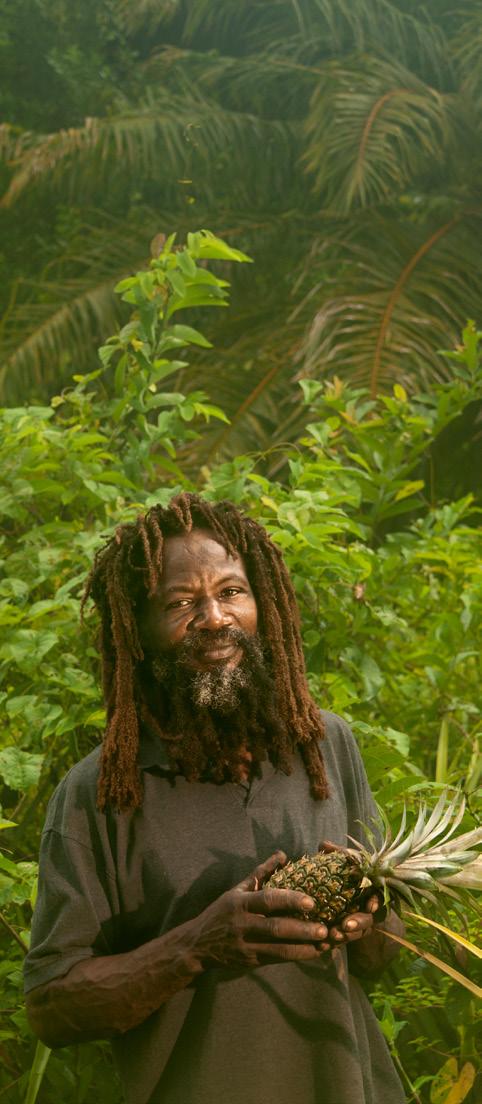
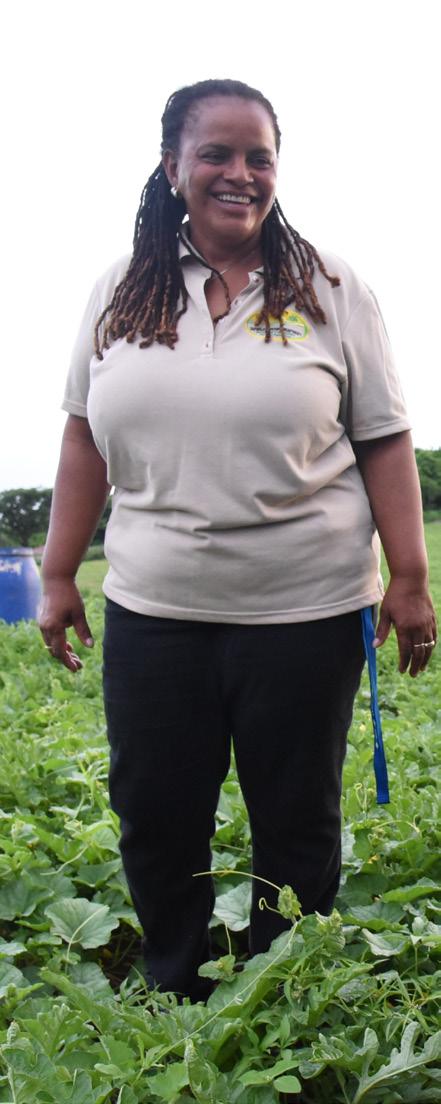
Pineapple farmer
Operational performance of SDF 9 in 2019
Operational performance of SDF 9 in 2019
This chapter tracks the progress of the SDF on an annual basis against key performance benchmarks. It provides information on the movement of commitments against key setasides and strategic themes and compares actual and planned activities.
It also reports on disbursements as an important initial metric for realising outcomes. Additionally, the chapter details some key programme achievements for the year, most notably under BNTF, CTCS, and Haiti, which are grant-only programmes. Lastly, it briefly analyses the SDF portfolio, paying particular attention to projects flagged as at risk.
Commitments
Totalling $18.2 mn, overall commitments were less than in previous years, as both loans and grants
declined (see Figure 1). For the most part, the performance of loans was affected by BMCs’ limited implementation capacity, as well as authorities’ efforts to improve debt dynamics. Grants, on the other hand, were constrained primarily by the slow movement of the Haiti programme, which was affected by civil and political unrest. Nevertheless, the SDF was still able to direct resources to areas of development priority, such as infrastructure development, governance, capacity building, and disaster response.
Figure 1: SDF commitments, 2013-2019 ($ mn)
Commitments for the first three years of SDF 9 (20172019) were subdued relative to the previous cycle. At the end of 2019, the Bank had approved 43% of the programme compared with 69.8% for the same period of the SDF Eighth Cycle (SDF 8). While grants progressed relatively quickly with 79% of the programme allocation committed, loan approvals were sluggish with 24.9% of programme committed. However, the Bank in consultation with BMCs developed a robust pipeline of projects that should result in the full utilisation of the programme. These projects will address BMCs’ urgent development priorities to, inter alia, advance social protection systems, upgrade access to education, close infrastructure gaps and strengthen public financial management.
Loan approvals amounted to $10.5 mn in 2019, compared with $26.7 mn a year earlier. St. Vincent and the Grenadines was the only recipient of loan financing during the year for the Port Modernisation Project ($10 mn) and TA for Canouan Runway Rehabilitation ($0.5 mn). Port modernisation is a key component of the Government’s vision to transform the country into a
modern, resilient, competitive and inclusive economy. As BMCs seek to advance economic development by improving productivity and strengthening the enabling business environment, the efficiency of port operations takes on increasing importance given the direct impact on the costs of goods for importers and exporters1 Modernising port operations has tremendous potential to facilitate trade, improve external trade competitiveness, and enhance private sector-led growth.
The Canouan Runway Rehabilitation Project responds to the need to ensure the safety and resilience of the runway. The tourism industry is vital for the livelihoods of residents of Canouan and is also important for the entire St. Vincent and the Grenadines. The airport provides the only air access to the island and is therefore critical to the social and economic well-being of residents and essential to the provision of tourism services. The TA will provide officials with a project design for the rehabilitation of facilities that is technically and economically viable while taking into consideration social and environmental concerns ($0.5 mn).
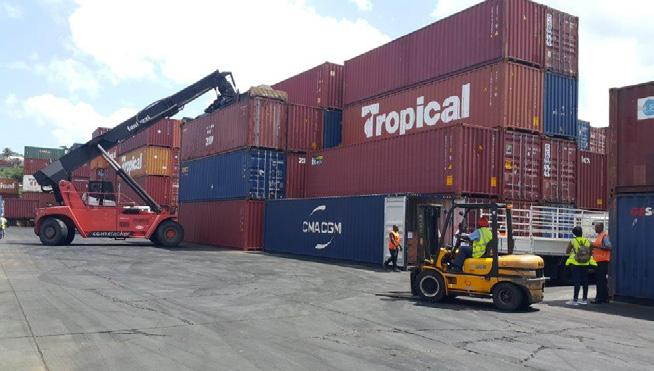
Port of Kingstown, St. Vincent and the Grenadines
Grant commitments amounted to $7.7 mn in 2019, down from $11.9 mn the previous year (see Table 1). Approvals were centred around disaster risk management as the Bank aided Haiti in meeting its CCRIF premiums for the year and aided BMCs as they responded to drought and the passage of Hurricane Dorian. Governance also featured prominently as BMCs sought to boost integrity and financial transparency to strengthen project and reform implementation and mobilise
Table 1: Annual commitments ($ mn)
resources more efficiently. Lastly, under the TA set-aside, the Bank supported capacity-building within a national utility regulatory commission and facilitated efforts to strengthen regional energy security. Under the CTCS programme, the Bank endeavoured to strengthen service delivery in the tourism and hospitality sector and equip artisans and small contractors with the technology and skills to improve bid competitiveness, project management, and costing techniques.
Disbursements
SDF turned in a commendable disbursement performance in 2019 when compared with 2018, as several projects entered the implementation phase of the project cycle. Loan and grant disbursements increased by $10.5 mn and $7.8 mn, respectively, to reach $32.2mn and $27.8mn (see Table 2). For the first three years of the cycle therefore, SDF disbursed approximately
Table 2: Annual disbursements ($ mn)
$162.8 mn to support, inter alia, safe and efficient social and economic infrastructure, the enhancement of educational outcomes, evidence-based decisionmaking, and improved disaster risk management. The outturn for 2017-2019 however, was below the comparable period for SDF 8 when disbursements amounted to $227.8 mn, and was symptomatic of underlying implementation challenges, which the Bank in collaboration with the BMCs sought to address.
In 2019, Guyana, Saint Lucia, and St. Vincent and the Grenadines were the main recipients of loan disbursements. St. Vincent and the Grenadines received the bulk of disbursements ($9.1 mn) primarily to advance outcomes related to the expansion of the road transport and technical and vocational education. The road infrastructure project will contribute meaningfully to economic activity, as the South Leeward Highway serves the important container port and industrial area at Campden Park, as well as the majority of the island’s tourism sites and attractions. Cognisant of the importance of education in enhancing productivity at the individual, enterprise and national levels, the Technical Education and Training Development project will seek to expand the supply of skilled and employable labour in St. Vincent and the Grenadines with regionally acceptable certification.
Outlays to Guyana ($7.7 mn) were principally to boost efficiency and safety of road transportation along the
West Coast Demerara Road. Schools, health centres, places of worship and government offices are serviced by the road. Indeed, this road is the primary link for the movement of people, agricultural and other produce from Region 3 (the third most populated region) to the capital and other parts of the country, and therefore represents an important investment in Guyana.
Disbursements to Saint Lucia amounted to $5 mn. The objective of the first intervention was to boost the safety and reliability of potable water to residents and businesses in Dennery North, as the water supply was unreliable in both the dry and rainy seasons due to the inadequacy of the infrastructure. The second major project – to establish a Performance Management and Delivery Unit – responded to the need to improve performance management of projects, programmes and policies. Building on earlier work in which a country diagnostic of sectoral and institutional conditions was conducted, the current assistance advanced the
establishment of a project development management unit and developed an institutional framework to improve the implementation and sustainability of programmes and policies.
With respect to grants, much of the activity occurred in Haiti as the Bank advanced work on community-based agriculture and rural development, disbursed resources to help Haiti meet its CCRIF premiums, and continued its work on improving education sector outcomes. Disbursements were supported through partnerships and the use of resources on the ground. The SDF programme also recorded an uptick in disbursements as implementation of BNTF Ninth Cycle (BNTF 9) accelerated. Dominica, Jamaica, and Saint Lucia were the primary beneficiaries during the year.
Regional interventions accounted for a sizeable portion of TA outlays. In particular, the PPAM/PCM
Training Programme and the project to conduct airborne light detection and ranging (LIDAR) surveys were major recipients of funding. The PPAM/PCM Training Programme sought to address several challenges faced by BMCs, including weak institutional systems and workplace practices, limited planning skills and understanding of managing for developing results. and inadequate access to data for evidence-based planning. The programme trained over 2,000 persons across 19 BMCs in principles of effective public policy analysis and project management (see Box 1). The high-resolution geo-spatial data provided by the LIDAR technology will enhance the BMCs’ capacity to design climate resilient investments, formulate disaster risk management strategies and engage in evidencebased decision making, as they seek to build resilience to climate change and mitigate the impact of natural hazards.
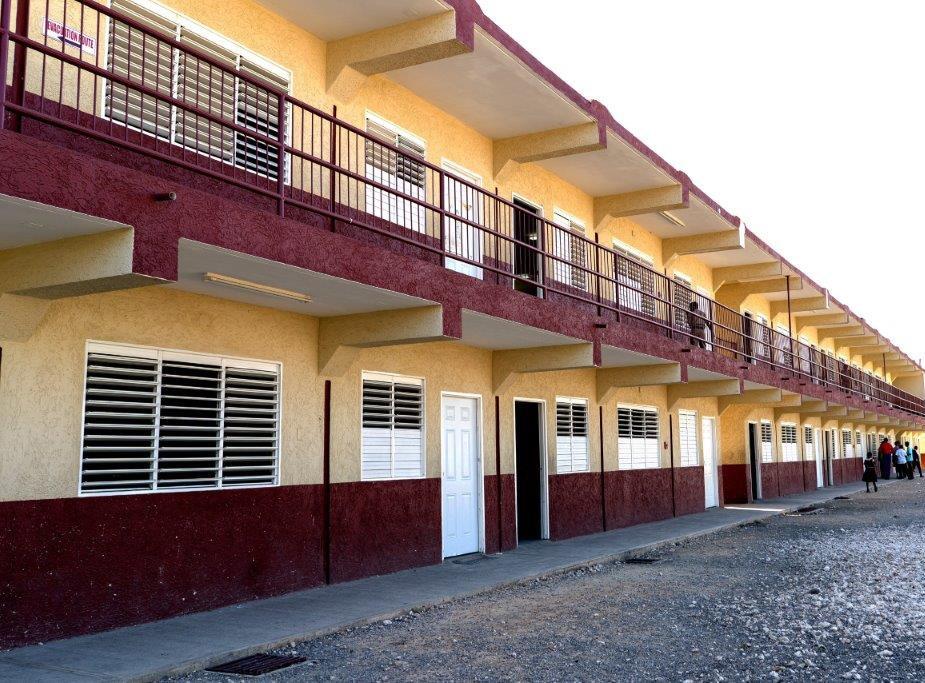
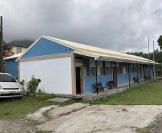
BNTF Project – Mineral Heights Primary School, Jamaica, construction of an additional classroom block
Box 1: Transforming governance: PPAM/PCM Training Programme
During 2016-2019, the PPAM/PCM Training Programme funded under the SDF, was implemented in all 19 BMCs. The programme was a relevant response to the capacity constraints in PPAM and PCM in the public service. In the face-to-face component of the programme, a total of 1,782 (36.4% male and 63.6% female) individuals benefitted from training, and more than 200 online courses were completed (Programme Evaluation 2019). Ninety-eight CDB staff members also completed at least one module of the PPAM/PCM masterclass. Overall, the programme was effective in increasing the number of trained BMCs and CDB staff able to apply acquired PPAM/PCM knowledge and skills to their work. This was principally as a result of participation in the 10-module face-to-face training spanning areas from planning to implementation, procurement, and monitoring and evaluation.
On average, 88% of participants reported that they have applied the knowledge gained to the workplace and felt better equipped to perform their jobs or to develop new approaches to their work as a result of the training. Additionally, in 16 BMCs, more than 60% of the supervisors who participated in a post-training survey reported good or better improvement in the ability of their staff to do their work.
In addition to the training in countries, the programme brought together over 200 policymakers, programme managers, trainers, and development partners from across the Region, to network and explored significant emergent themes and solutions at regional events. As part of the programme two conferences were held, titled Leadership in Action for Public Sector Policy Leaders and Project Cycle Management: A Cornerstone of Implementation and Delivery.
What programme participants had to say about PPAM/PCM
Karlene Bramwell (Policy Officer, Gender Affairs Unit, Ministry of Community Affairs, Cayman Islands) felt that the module Principles, Process, Tools, and Skills for PCM was excellent.
She noted “It was practical, the information was presented well, and I learnt so much! The facilitators are really excellent, and the content is also excellent. It really was a wonderful experience, which I hope many more persons will take advantage of. The tools presented and the skills learnt are immediately transferable to my daily work!”
What programme participants had to say about PPAM/PCM CONT’D
PPAM/PCM in action
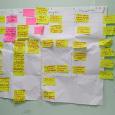
Rickie Morain (Planning Officer, Ministry of Youth Development, Sports, Culture and the Arts, Grenada) reported that utilising what he had learnt in the Project Planning and Implementation module, along with the course materials and aid from a colleague who had also completed the module, he developed a project matrix for a youth small business development programme in Grenada.
The project matrix appears on the wall behind his desk so that those with whom he interacts can provide additional inputs based on the visual.
Rickie Morain (Grenada) and his action plan
He believes that he has used a much clearer and more methodical approach than in the past and that the plan has a greater focus than any other plan he has prepared. When asked about the factors that were important to converting his action plan to a tangible project, he indicated the knowledge he obtained, the specificity provided by the action plan, the support of his colleague who attended the PPAM/PCM programme and the assistance of government officials. Morain has submitted the project plan to the Government for potential funding.
SDF 9 thematic and programme highlights
Reflecting the multi-facetted nature of development, the operational direction of the SDF is provided by three core and two crosscutting themes. The core themes are:
(a) supporting the achievement of SDG targets relevant to the Caribbean and specific to SDGs 1, 2, 4, 6-11, 13, and 17 (see Figure 2);
(b) building resilience to climate change and natural hazard events and promoting sustainability; and
(c) promoting regional cooperation and support for regional public goods.
These are buttressed by cross-cutting themes of gender equality, good governance, and environmental sustainability. This section reflects on the SDF performance in 2019 within the context of these themes and highlights interventions that exemplify the work of the Bank in each area.
The majority of 2019 approvals were under the theme of the SDGs, followed by building resilience and regional cooperation and regional public goods (see Table 3). Thus far, commitments by themes were broadly in line with allocations for the cycle. In terms of the rate of utilisation, building resilience, environmental sustainability and climate change was highest at 39.1% mainly on account of the active hurricane season in 2017. This was followed by regional cooperation and regional public goods at 36.7% and the SDGs at 35.6%.
Figure 2: SDF-targeted SDGs
SDG 1
SDG 2
SDG 4
End poverty in all its forms everywhere
End hunger, achieve food security and improved nutrition, and promote sustainable agriculture
Ensure inclusive and equitable quality education and promote lifelong learning opportunities for all
SDG 6
SDG 7
SDG 8
Ensure availability and sustainable management of water and sanitation for all
Ensure access to affordable, reliable, sustainable and modern energy for all
Promote sustained, inclusive and sustainable economic growth, full and productive employment and decent work for all
SDG 9
SDG 10
SDG 11
SDG 13
SDG 17
Build resilient infrastructure, promote inclusive and sustainable industrialisation and foster innovation
Reduce inequality within and among countries
Make cities and human settlements inclusive, safe, resilient, and sustainable
Take urgent action to combat climate change and its impacts
Strengthen the means of implementation and revitalise the global partnership for sustainable development
Support for SDG targets relevant to the Caribbean and specific to SDGs 1, 2, 4, 6-11, 13, and 17
In 2019, principle outcomes under this theme were consistent with:
(a) SDG 8 – promoting inclusive and sustainable economic growth, full and productive employment and decent work for all; and
(b) SDG 9 – building resilient infrastructure, promote inclusive and sustainable industrialisation and foster innovation.
SDG 8 is critical to the sustainable and inclusive development of the Region. The Bank’s interventions under this SDG encompass assistance for private sector and youth development. Work to help private sector development will centre around enhancing equitable access to finance by strengthening the capacity of development financial institutions and adopting more robust enterprise risk management practices. Also, essential under SDG 8, is the work of the CTCS, which
seeks to increase the competitiveness of MSMEs. During 2019, key outcomes concentrated on increasing the export readiness of agro-processors by providing training in quality standards; enhancing the capacity of artisans and small contractors to ensure the provision of resilient and better-quality infrastructure, and training in post-harvesting handling of fruits and vegetables to reduce spoilage and improve viability.
In 2019, CDB assistance to encourage programmes for youth development, centred on enabling practitioners to better understand and apply core concepts and principles of youth development while improving their capacity to incorporate positive youth development into project design, implementation, and monitoring and evaluation. This intervention built on previous youthtargeted investments in the areas of education, training and community level models of entrepreneurship. Importantly, such programmes also informed the Bank’s first Youth Policy and Operational Strategy, which will provide a strategic framework for gender-responsive and socially inclusive youth development. See Box 2 for a description of the CDB-funded youth development project in citizen security.
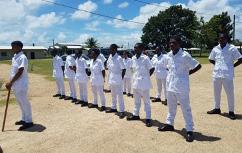
Students participating in defence force training in Belize
Under the inaugural security forces component of the Youth Resilience and Inclusive Social Empowerment Project (Belize), 41 students (24 females and 17 males) benefitted from terrestrial defence force training.
Given the interest of participants and initial benefits realised in exposing and instilling discipline in atrisk youth in Dangriga, the Government of Belize and key stakeholders are exploring the possibility of expanding the security forces programme to include maritime (coast guard) and homeland (policing) training. Beneficiaries of this programme also accessed complementary training in critical soft skills, such as
Transforming young lives – Youth Resilience and Inclusive Social Empowerment Project (Belize)
problem-solving, time management, work ethic, effective communication, and the social graces. The coordinated delivery of these components by the Government and participating agencies is expected to realise improved academic achievements and positive behavioural responses resulting from the discipline inculcated through the delivery of structured programmes. These outcomes are critical to minimise the risk of participation in crime and violence and antisocial activities, thereby increasing opportunities for beneficiaries’ social inclusion, well-being and better life chances, all critical components in developing productive citizens.
SDG 9 is critical to the work of the Bank. In 2019, efforts to build resilient infrastructure were advanced through an intervention centred around port modernisation, as well as by enhancing the understanding of practitioners in key areas, such as runway rehabilitation, urban development, and water and solid waste management. With an overarching objective to ramp up the ability of BMCs to develop and implement climate resilient investment plans for water and solid waste management, the Bank facilitated high-level fora to:
(a) reinforce understanding of impacts on and challenges to water resource management by integrating scientific and traditional knowledge; and
(b) raise awareness of the social, economic and environmental impacts of poor waste management at the ministerial level.
In terms of urban development, it is noteworthy that the Caribbean population is becoming increasingly urban, with an estimated 70% living in urban areas2. Building on the work it has conducted previously in the area, and mindful of the synergies with the Bank’s own forthcoming Urban Sector Policy and Strategy, TA resources were approved to increase the capacity of staff in planning ministries and civil society organisations to formulate and implement sustainable urban development initiatives.
Building resilience to climate change and natural hazard events and promoting sustainability
This is both a core programme area and a crosscutting theme, explicitly recognising and provisioning for ex-ante and ex-post responses to the increasing incidence of natural hazards. Key aspects of support under this theme are related to enhancing disaster risk management, by ensuring that one BMC has adequate CCRIF coverage for the 2019-2020 hurricane season; and providing emergency relief grants to two BMCs following the passage of Hurricane Dorian in one instance, and drought in another.
CDB’s knowledge products, and in particular, its thematic papers, are an important avenue through which the Bank advances regional knowledge on specific issues of development importance. In 2019, the Bank approved resources for a study of the regional energy environment to ultimately reduce the long-term cost of energy provision and raise energy security.
The Caribbean is in the process of developing new and sizeable renewable and non-renewable energy sectors because of oil discoveries (primarily in Guyana) and geothermal initiatives (mainly in the Eastern Caribbean). The development of these energy sectors will likely position the Region as an energy surplus area and net exporter. The study will contribute to the establishment of an evidence base that will guide Caribbean planners and policymakers as they develop institutions, mechanisms, and policies to manage the transition.
Promoting regional cooperation and support for regional public goods
To overcome the constraints of small size, BMCs must seek opportunities to benefit from economies of scale and scope. Deepening regional cooperation and integration and seeking regional solutions to shared development concerns are therefore priorities in SDF. Noteworthy interventions under this theme seek to:
(a) strengthen the effectiveness of the Regional Security System (RSS) by promoting the development of a maritime security strategy; and
(b) deepen intra-regional trade by facilitating the completion of the Caribbean Community (CARICOM) interactive marketplace and suspension of procedure (CIMSuPro) portal.
The Caribbean Sea, the second largest sea in the world, is only partially enclosed by Barbados and the member countries of the Organisation of Eastern Caribbean States (OECS). Challenges related to maritime security include drug trafficking, weapons smuggling and limited capacity to conduct patrols in their respective exclusive economic zones. The overlap of exclusive economic zones means that cooperation and information-sharing between RSS member countries are essential for maximising maritime and port security.
CDB’s assistance to create national and regional maritime security strategies for Barbados and the OECS countries will facilitate the creation of a set of common standards, increase information sharing and effective risk analysis. With respect to CIMSuPro, the provision of a web portal containing a database of regional suppliers will allow regional traders to access online information on the availability of regionally produced goods, the effect of which would provide Caribbean buyers with the opportunity to purchase from a regional supplier rather than from a third country supplier.
Gender
The Bank has actively sought to mainstream gender equality in all of its operations and where feasible, engage in discrete gender-specific projects. In 2019, approximately 60% of the Bank’s interventions were gender mainstreamed as measured by the gender marker. The gender specific intervention seeks to respond to the paucity of research and analytical skills required to appropriately interrogate the issues surrounding gender inequality in the Region. The outcome of the assistance, therefore, is to improve the evidence-base of research and experiences by enhancing the capacity of persons to conduct the appropriate gender analysis to address socio-cultural, economic and political challenges facing the Caribbean.
The research activities will be further fostered through the piloting of an innovative Seed Grants Programme accessible to current and former participants of the
Caribbean Institute in Gender and Development, to test and upscale innovations in gender equality across the Region.
In 2019, the Bank refreshed its Gender Equality Policy and Operational Strategy (GEPOS), to deepen its engagement in the area over the next five years. The policy will seek, inter alia, to address gender issues in the external environment, highlighting patterns in work as evident in the gender-based labour market segmentation in the Caribbean Region, as well as gender-based trends in education, crime, and violence, inclusive of gender-based violence.
Governance
Good governance is necessary for growth. Evidencebased decision-making, transparency, accountability and institutional effectiveness are all tenets of good
governance needed to maximise development outcomes. In this regard, the Bank was active in 2019, particularly at the regional level, where it is seeking to strengthen the framework to combat money laundering and the financing of terrorism in the Eastern Caribbean Currency Union. This will be done principally by helping BMCs to formulate national risk assessments and national action plans and updating laws and regulations as recommended by the financial action task force to ensure compliance.
Other noteworthy interventions include the provision of timely and accurate data for evidence-based decision-making, where the Bank is encouraging the dissemination of data from the CARICOM population and housing census; and strengthening procurement capacity and frameworks in key BMCs to step up project implementation.
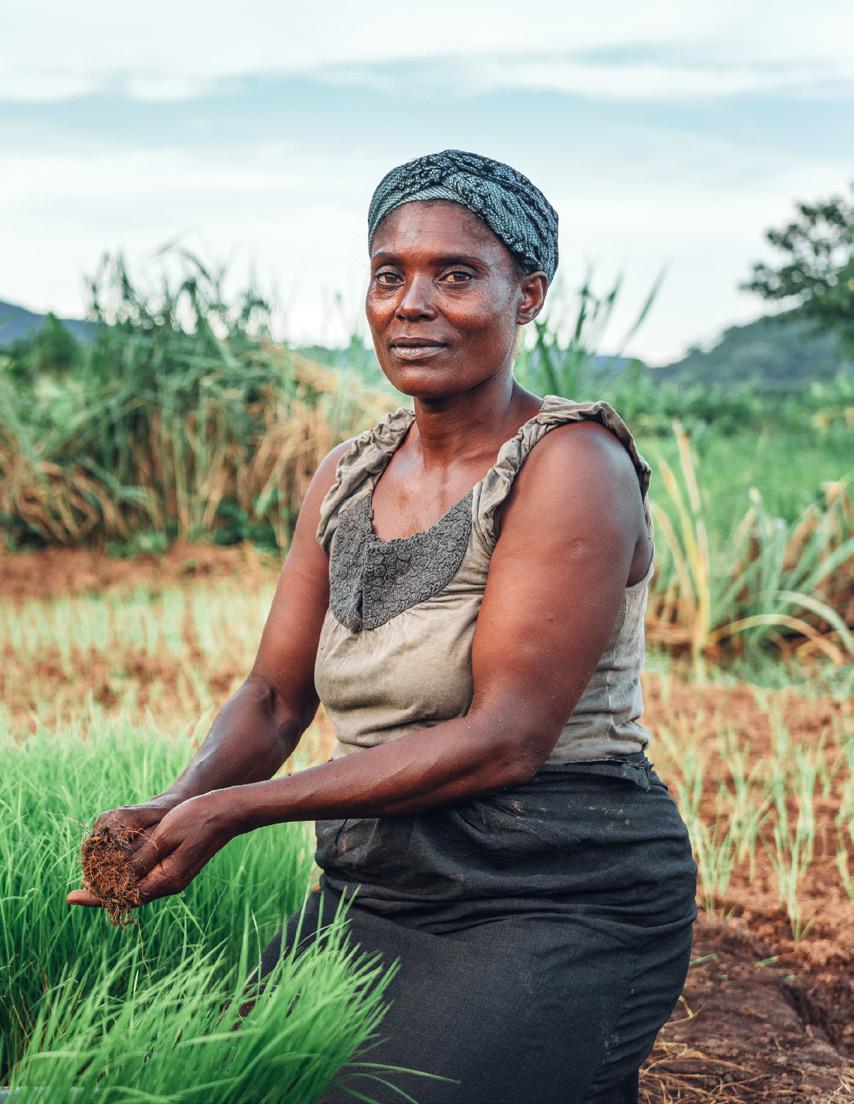
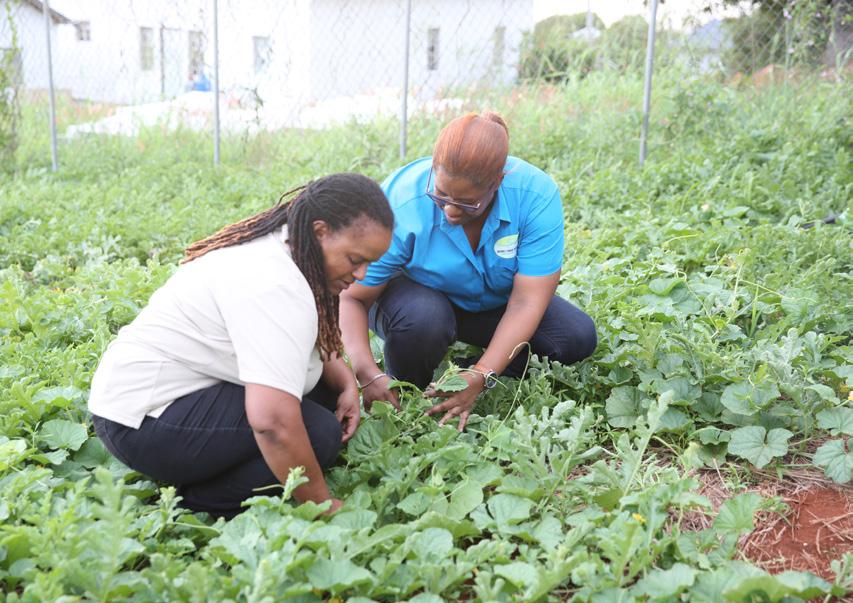
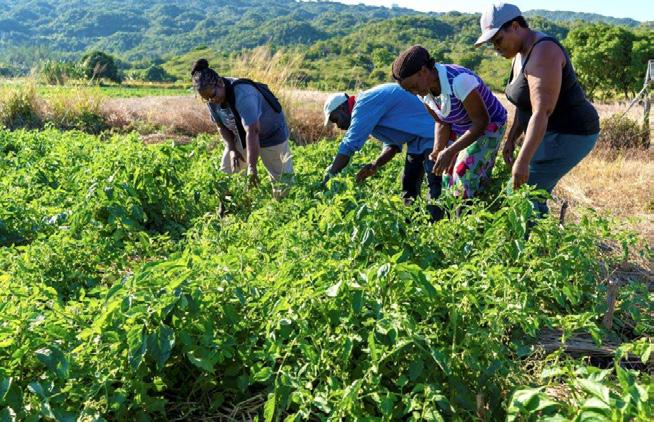
Farming with drip irrigation in drought-prone Southfield, St. Elizabeth, Jamaica
CDB in Haiti
Categorised as a fragile state, Haiti requires special attention because of the enormous challenges it faces. These include large development deficits, very high levels of poverty, lack of basic infrastructure, significant security problems and weak institutions. A protracted political crisis and prolonged civil unrest have at times, brought the country to a standstill and shut down most economic activity.
The Country Office3 was established to extend CDB’s engagement with the authorities, and to assist the country’s further integration into CARICOM, support project implementation and build strategic partnerships both with other development partners and within the public and private sectors and civil society. The Office in Haiti has enabled the Bank to work much more collaboratively with key stakeholders, to design interventions that are more robust and better adapted to the local situation (a fragile state) and enhance CDB’s participation in policy dialogue. This in-country presence has augmented programme efficiency and effectiveness, facilitated communication and
information-sharing, built partnerships, and enabled the Bank to cooperate more effectively in donor mechanisms.
The Haiti Country Office’s main responsibilities fall under two pillars:
(a) coordinating the Bank’s aid and providing project implementation support; and (b) strengthening relationships with key stakeholders.
The office’s main activities in 2019 under each pillar included:
Pillar 1 – Coordinating the Bank’s aid and providing project implementation support
In 2019, the Haiti Country Office worked closely with government ministries and implementing agencies to advance implementation in the areas of agriculture, education, and environment. The Office has worked with the Ministry of National Education and Vocational Training and the World Bank to improve the quality of and access to basic education. Thus far, three
3The Haiti Country Office currently has three staff and is headed by a Resident Representative.
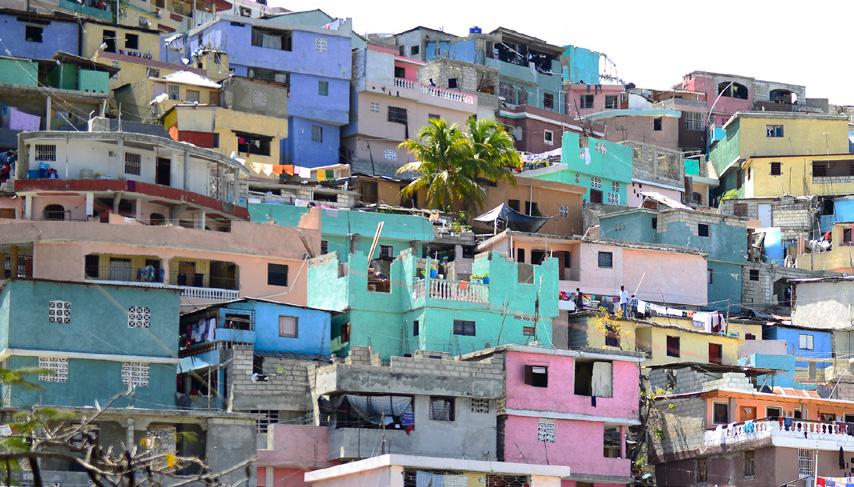
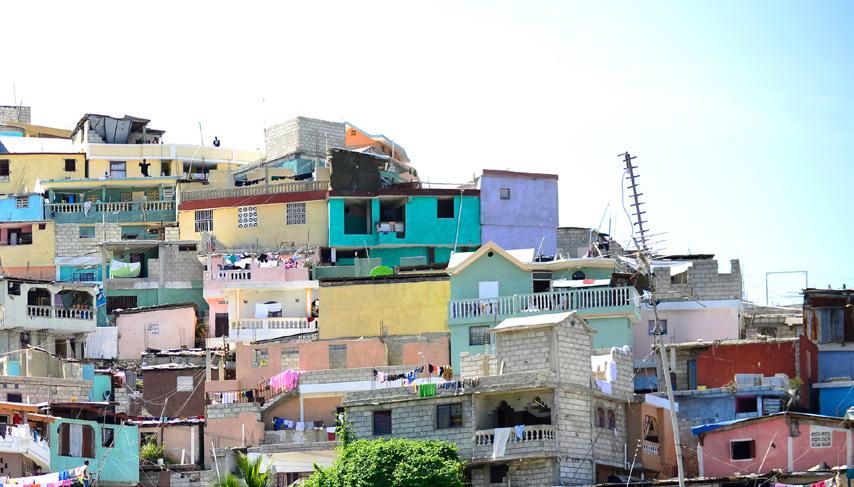
Stacked housing in Port-Au-Prince, Haiti.
community primary schools have been completed in the South Department and considerable work has been done to identify and address the needs of the Centre Department (see Box 3). The Office has been involved in institutional strengthening of the Ministry of Agriculture, Natural Resources and Rural Development, to ensure that the Ministry can conduct monitoring and evaluation activities on the Community-Based Agriculture and Rural Development Project. Additionally, the Office continued to facilitate the payment of Haiti’s annual CCRIF payments and provide implementation support and guidance for the Building Capacity for Disaster Risk Management Project in Ile à Vache.
In 2019, the Cultural and Creative Industries Innovation Fund (CIIF), in partnership with the Haiti office, sought to further develop the creative industry by rolling out accelerator programmes offering skills development, business training, market integration, and prize grants.
CDB’s Private Sector Development Unit has supported and sits on the Steering Committee of the National Support Programme for structuring Haitian Entrepreneurship. The Programme is spearheaded
by the Canadian Government and is a technical aid programme that aims to promote greater access to financial and non-financial services for MSMEs. The Haiti Country Office attends the Steering Committee meetings of this project.
Pillar 2 – Strengthening relationships with key stakeholders
To strengthen strategic relationships with key stakeholders, the Haiti office participates in Heads of Cooperation Committee meetings (and its sub-committees) with the Government. These have given CDB an opportunity to contribute meaningfully to policy dialogue. Meetings have also been held with international and national non governmental organisations working in CDB’s priority sectors, (e.g. Haven, Pan American Development Foundation, Centre for International Studies and Cooperation, and Haitian Resource Development Foundation). The interactions and the sharing of experiences with development partners enable a better understanding of local development issues and priority needs and create opportunities for more efficient collaboration in priority sectors.
CDB continued its interventions in primary education in Haiti by extending its partnership with the World Bank on the Education for All Project – Phase II. The project was designed to:
(a) improve access to quality education; (b) assist teaching and learning; and (c) strengthen institutional capacity and governance.
Under the project, CDB contributed $11 mn, which emphasised early childhood education and the promotion of multi-grade teaching. The project also encouraged community-based activities for school building and maintenance, and teacher training.
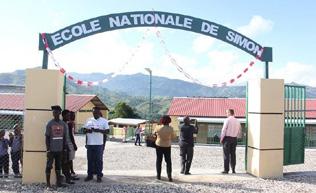
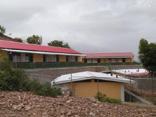
Four new community primary schools were constructed and equipped at rural locations in the south –
Bresilienne (88,000 inhabitants), Goman Mapou (20,000), Simon (35,000), Source Jean Jacques (104,000).
These schools, which were completed in August 2019, cater to primary age learners with provision for preprimary education for children 3-5 years old. Each school is equipped with an administrative block, a
kitchen, a cafeteria, two sanitary blocks, and a playing field. Electricity at each location is supplied by a solar energy installation.
The four schools combined provided a total of 32 new classrooms with a capacity for 1,280 students. For the academic year 2018/2019, 872 students (540 boys and 332 girls) were enrolled under the supervision of 24 teachers, who were trained and recruited using CDB funding. This is the start of a programme to expand access to quality public education in rural and remote rural communities in Haiti.
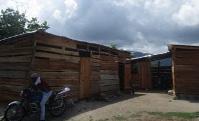
Before
Simon National School
Outfitted classroom
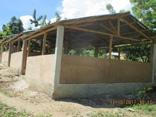
After
Box 3:
Outcomes in agriculture
Haiti’s agricultural sector, including fisheries, continues to be plagued by underinvestment in infrastructure and services; limited stakeholder access to modern technologies, production and marketing resources; and environmental degradation. These circumstances, coupled with extremely high national poverty rates, cause a large segment of the population to suffer from food and nutrition insecurity. In 2019, Haiti’s Global Health Index (GHI) score was 34.7, the lowest value since 2000 and at the very high end of the Serious category on the GHI Severity Scale.
In 2019, political unrest, high inflation, and a drought in some parts of the country magnified Haiti’s already precarious food and nutrition related challenges. The January 2020 Haiti Nutritional Survey indicated that nutritional situation of children under five is poor (6%) and had worsened significantly since 2012 (4.1%).
Basic Needs Trust Fund – stepping up the response to incidences of poverty
BNTF is a cyclical grant-funded programme, which was launched in June 1979 and is the principal vehicle in
Figure 3: BNTF sector approvals
CDB, through the Haiti Community-Based and Rural Development Project (North-West Department) and in partnership with Welthungerhilfe, is promoting the Government of Haiti’s ongoing efforts to address food and nutrition insecurity. Utilising novel approaches, CDB has been able to positively impact the lives of hundreds of residents in targeted communities. Key achievements in 2019 include:
(a) establishment of improved irrigation, drainage and flood control systems, directly benefiting 722 farm families;
(b) training of 245 water users in the operations and management of irrigation systems; and
(c) commencement of a training programme in nutrition targeting nursing mothers, infants under five years.
CDB for targeted poverty reduction initiatives. Belize, Dominica, Grenada, Guyana, Jamaica, Montserrat, Saint Lucia, St. Vincent and the Grenadines, and Suriname are the nine participating countries (PCs) in BNTF 9 approved on March 16, 2017.
During 2019, an additional 89 sub-projects were approved and a further $23.3 mn of CDB grant resources committed for poor and vulnerable communities. Of total approvals, 13% was committed to 13 sub-projects in the water and sanitation sector; 14% to 12 sub-projects in the transport and storage sector; and 73% to 64 sub projects in the education sector (Figure 3 shows that 13% of these resources were committed to capacity building and livelihoods enhancement interventions). This brings the total number of approved sub projects since the start of
BNTF 9 to 98 (28 small <$100,000; 50 medium <$400,000 and 20 large <$700,000) and the total amount committed to $25 mn or 96% of $25.6 mn available for sub-projects in the original grants to PCs.
At the programme level, a total of $30 mn (73.6%) of $40.8 mn was committed by the end of 2019 for all grants, including regional coordination by CDB (see Table 4). The distribution of total commitments to December 31, 2019, is given in Figure 4.
Table 4: BNTF approvals and disbursements, 2019
Figure 4: BNTF programme approval as at December 31, 2019 ($’000s)
An MTE of BNTF 9 was conducted in 2019. The independent MTE consultants concluded that the BNTF Programme remained a highly valued programme in all PCs. The assessment also determined that “the community development model embodied within the BNTF Programme is genuinely responsive to country/community-identified needs; poverty reduction remains a key priority in all PCs; its
programmatic nature provides the potential to amplify visibility and continuity; and it allows for a degree of flexibility and customisation to local situations”. CDB remains committed to this programme, which offers a unique and direct response to the needs of the most vulnerable in peri-urban and rural underserved communities in our PCs. Box 4 showcases the responsiveness of the BNTF programme.
Figure 5: SDF performance-based incentive distribution
At mid-term, the distribution of the unallocated $5.2 mn performance-based incentive under BNTF 9 was determined for the seven eligible PCs based on their relative performance. Additional grants (see Figure 5) were fully executed by December 31, 2019, and PCs were already seeking approval from a pipeline of previously identified sub-projects. CDB anticipates that the sector allocation will be the same as the current distribution, in accordance with the respective amended Country Policy Framework for each PC.
Special assistance was extended to Dominica in December 2018, to continue implementation of BNTF 7 and 8 projects together with BNTF 9 until December 2020. By the end of 2019, seven subprojects were completed while three sub-projects were under implementation. Those completed were:
(a) three water supply sub-projects providing 0.76 kilometres (km) of water supply pipelines and connections expanding the water systems to 3,121 households, thereby providing safe and quality water and a reduction or elimination of the incidents of waterborne diseases related to the use of untreated water sources.
(b) two basic community access and drainage sub-projects providing physical protection for a community resource centre and access road from the risk of landslides and benefiting some 1,560 persons.
(c) two education infrastructure sub-projects at two rural primary schools providing 10 upgraded classrooms, bathroom facilities, ramped up security, light-emitting diode lighting, and upgraded utilities for 137 students (81 males, 56 females), which have led to improved student attendance.
Implementation of BNTF 9 accelerated in 2019. This positively impacted annual disbursement with a notable ramping up of requests for resources. Disbursement increased from $1.45 mn in 2018 by an additional $9.3 mn in 2019, with further raise expected in 2020 based on the significant approvals achieved during the year in review.
Flexibility of BNTF –Responding
in times of crisis
Even the best-laid plans can go awry. Such was the situation faced by the BNTF implementing agency in Dominica on September 18, 2017, when Hurricane Maria made landfall at 160 miles per hour winds. Lives in Dominica were disrupted and upwards of 90% of infrastructure adversely affected by the hurricane, interrupting the implementation of BNTF 7 and 8. In the aftermath, it was clear that the BNTF projects on the island could not proceed as planned.
For the BNTF implementing agency, the response had to be quick and directed at the emergent needs manifested on the ground. Among the approved sub-projects affected midstream were the San Sauveur and the Clifton primary schools. The passage of Hurricane Maria turned the routine repairs and maintenance works being carried out on those schools into expanded and urgent reconstruction works necessary to help return a sense of normalcy to the education sector in Dominica. CDB responded quickly by rescoping already approved and ongoing sub-projects, extending the terminal disbursement date for the Dominica Country Project and enhancing partnership in the rehabilitation process. In November 2019, following the completion of the reconstruction process, staff and students returned to schools that were safer and better equipped to withstand hazards. A total of $427,429 was spent on San Sauveur and Clifton primary schools impacting 137 (81 males, 56 females) students and staff. Under the BNTF 9, an additional $181,487 was allocated from the country’s bonus tranche of $373,000 to procure additional furniture, equipment and resource materials for both schools.
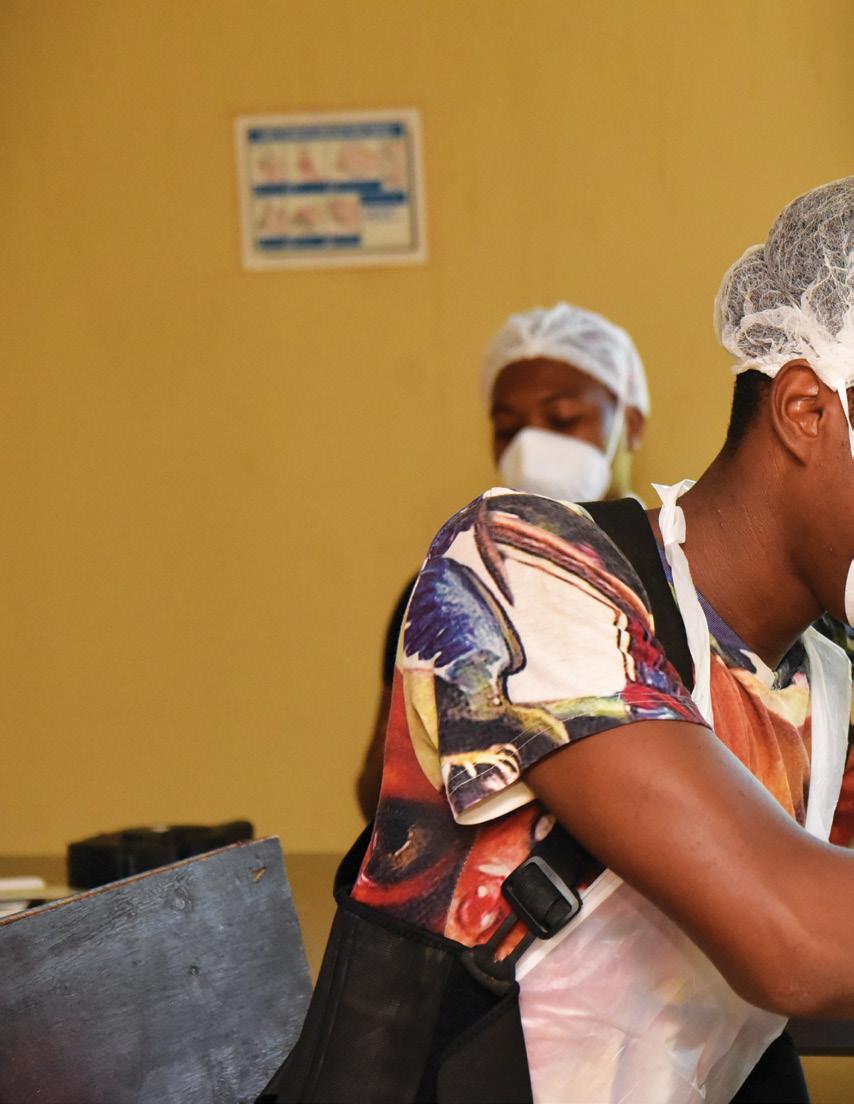
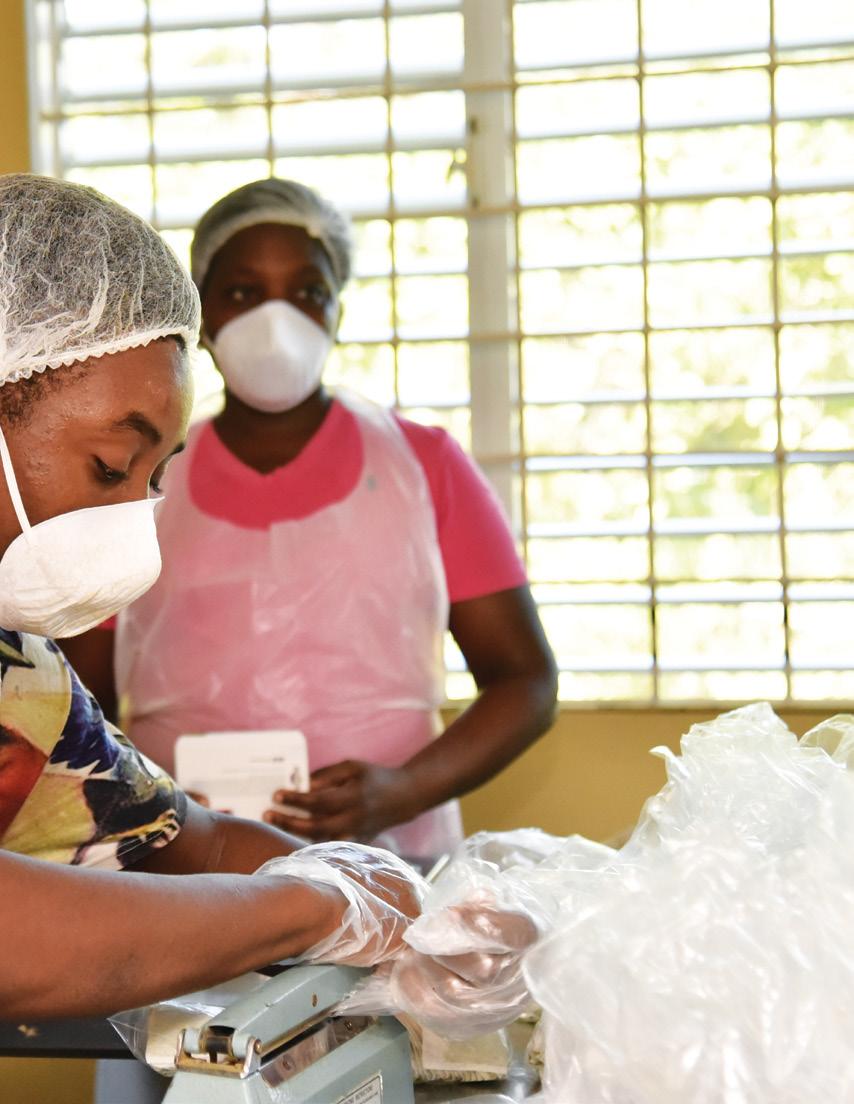
In 2019, CDB, approved and disbursed $0.7 mn to facilitate the execution of interventions under its CTCS Network (see Table 5). This activity resulted in the execution of two regional and 15 national workshops, including a number of in-plant or onsite and online TA and mentorship sessions, which
impacted all BMCs and benefitted 1,781 business people (1,078 men and 703 women) as reflected in Table 6. These interventions sought to strengthen the institutional capacity of business aid and technical training institutions, encourage entrepreneurship, and enlarge the operational capacity and competitiveness of MSMEs engaged in agriculture, tourism and construction-related activities.
Table 5: Distribution of CTCS approvals and disbursements by country ($)
Table 6: Summary of number of beneficiaries from CTCS activities in 2019
Two of these interventions – Strengthening the Entrepreneurial Spirit of Caribbean Youth and Caribbean Tech Entrepreneurship Programme – were approved in 2018 and implemented in 2019 in collaboration with youth development agencies, as part of the Bank’s digital transformation and youth economic empowerment agendas. As a result, a total of 882 young entrepreneurs (488 men and 394 women) in 12 BMCs were trained and provided with
technical assistance, inclusive of mentorship, to help them start or grow their businesses. These projects have enabled a number of young persons to embark on innovative initiatives, such as an agro-processing venture that caters to locally-made organic baby food in Trinidad and Tobago, and a creative, edutaining and innovative technology-based business that provides
opportunities for youth through
in Guyana.
Recognising the need to build on previous training and undertaking a sustainable approach to step up the capacity and competitiveness of artisans and small contractors, CTCS, through a train-thetrainer workshop, trained 41 trainers (33 men and 8 women) from 18 BMCs in Computerised Job Estimation Tool (CJET). The tool was developed by CDB to enable artisans and small contractors to prepare tender documents and job estimates more accurately and reliably. This would allow them to improve the quality of bids, especially the bill of quantities for construction-related projects. The training was intended to institutionalise CJET in technical training institutions, in order to strengthen their construction-related training programmes for both aspiring and practicing artisans and small contractors. To date, CJET has been institutionalised in technical training institutions in six BMCs (Antigua and Barbuda, Belize, Cayman Islands, Grenada, Guyana, and Jamaica).
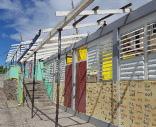
CTCS, in collaboration with ministries and departments of housing and planning in six BMCs, trained 432 persons (376 men and 56 women) comprising artisans and small contractors, building
inspectors, engineers and architects in Improved Construction Practices for the Construction of Houses. This was a continuation of the Bank’s interventions, which began in 2018, to strengthen the resilience of BMCs, following the devastating impact of Hurricanes Maria and Irma on housing infrastructure in the Region in 2017, and complements CJET training.
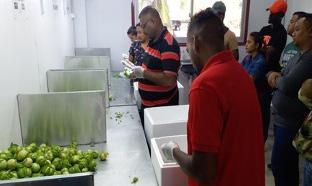
To assist the Government of Suriname in its endeavour to reduce post-harvest losses of fruits and vegetables and boost exports, CTCS developed a training and reference manual and partnered with the Suriname Business Forum and the Ministry of Agriculture to conduct three workshops in post-harvest handling of fruits and vegetables. A total of 67 persons (45 men and 22 women), including farmers, exporting firms and airport cargo handling personnel, were equipped with knowledge and skills in best practices and procedures for the handling of produce. It is anticipated that these interventions will ultimately result in Suriname meeting export market demand for its goods, thereby contributing to increased income and sustained employment for both men and women engaged in the export supply chain.
Participants at training in post-harvest handling of fruits and vegetables
SDF portfolio analysis
The Project Performance Index (PPI) measures the quality and performance of the SDF portfolio (projects under implementation). It is derived from the application of the Project Performance Evaluation System (PPES). The methodology was revised and a template was developed using four criteria (strategic relevance, cost efficiency/efficiency, efficacy/ effectiveness, and sustainability) compared with six criteria under PPES (poverty relevance, strategic relevance, cost efficiency, effectiveness, institutional development, and sustainability). The revised template is being used by CDB for validation and evaluation purposes.
The performance of the SDF portfolio 4 in 2019 was assessed to be favourable. Data for 31 projects suggests that most achieved a performance rating of satisfactory, and the remainder, highly satisfactory.
The majority of the portfolio was in education (32%), followed by financial business and other services (23%), and environment and disaster risk reduction (19%). Further details on the SDF portfolio are presented in Appendix I.
Projects at risk (flagged by Project Performance Management System)
Included in PPES are criteria to identify those projects deemed to be at risk5 of not achieving stated objectives. Three projects were deemed to be at risk as at December 31, 2019”. Table 7 identifies those projects and summarises the major factors affecting implementation. The Bank will continue to actively engage BMCs on these projects, to improve in-country capacity for project execution and if necessary, re scope the intervention to ensure delivery of results.
Table 7: Summary of projects flagged at risk
National disaster management –Rehabilitation and Reconstruction –Extreme Rainfall Event ($8,612) Grenada 725 (8%)
Seventh Water (Vieux Fort Water Supply Redevelopment) Project ($19,675)
National disaster management –Rehabilitation and Reconstruction Loan (Hurricane Irma) ($65,291)
High turnover of key staff and poor record keeping within country continues to be an issue. Inadequate project management.
Saint Lucia 1,114 (6%) 4.5 Delays in meeting conditions precedent and then in finalising the scope of works for the infrastructure works. However, the design-build contractors were engaged in January 2020.
Virgin Islands 16,585 (25%)
Works delayed by national elections, the inclusion of the Recovery Development Agency as an executing agency to the project and changes in the scope of works of the project.
4The Bank is in the process of transitioning to a new portfolio management system. The information provided by the two systems, however, is not directly comparable. Given that the 75% of the data needed for a portfolio analysis of the SDF still resides in the current system, this report utilises the information provided by the existing system. The entire SDF portfolio consists of 47 projects with a value of $303.4 mn
5The PPES evaluates project performance at the various stages of the project cycle (preparation/appraisal, supervision, and completion). The PPES uses six criteria to rank or gauge performance. These are strategic relevance, poverty relevance, efficacy, cost efficiency, institutional development impact and sustainability. Projects are deemed at risk if project performance exhibit more than two of the following six risk criteria: weighted score for any criterion is equal to or below 0.5; a composite performance score below 4.0; a decline in any project performance rating score by more than 15%; timing performance more than 15% behind target; CDB performance unsatisfactory, and borrower performance unsatisfactory
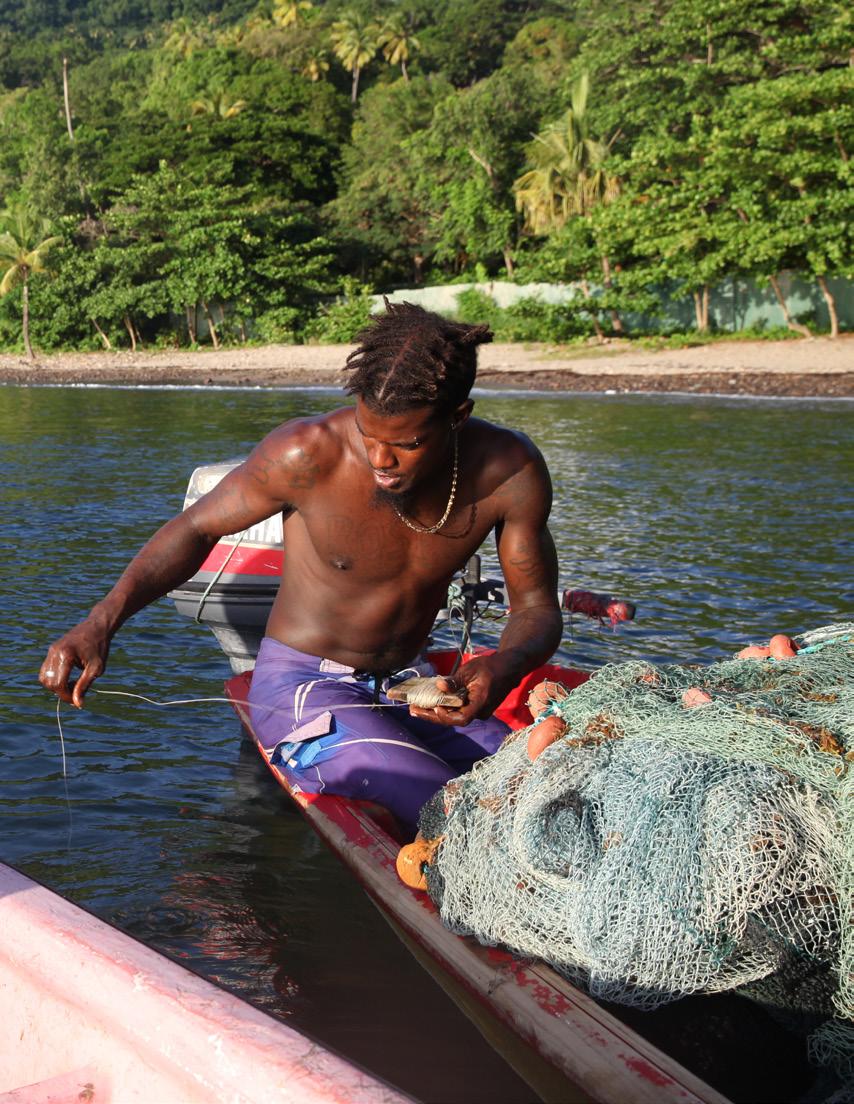
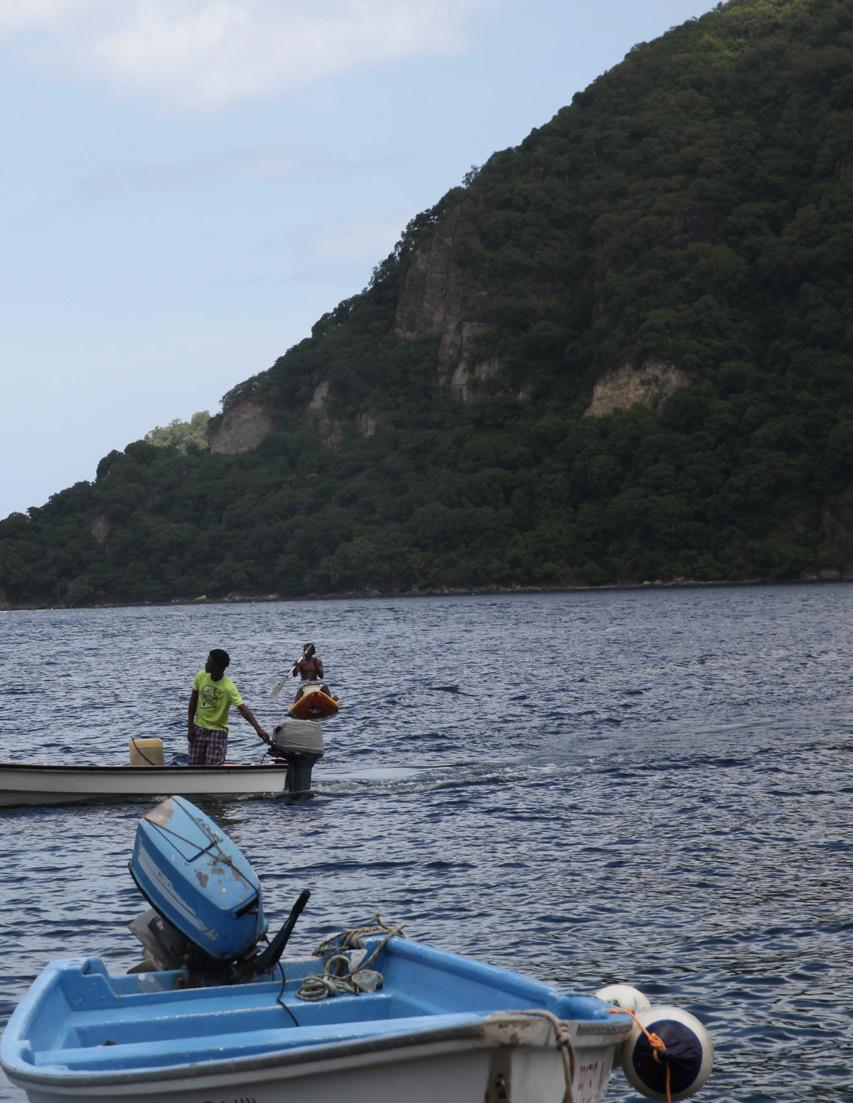
Shore fishing in Soufriere, Saint Lucia
Reporting on SDF 9 results
Reporting on SDF 9 results
This chapter reports on the results achieved within the context of the SDF 9. Further details can be found in the accompanying document, the Development Effectiveness Review 2019.
The Results Monitoring Framework (RMF) tracks progress at four levels. Level 1 traces the Caribbean’s progress towards development goals and outcomes and Level 2 captures CDB’s contribution to development outcomes. Level 3 tracks how well CDB manages its operations, particularly as it relates to the portfolio and resource allocation, strategic focus, and resource utilisation while Level 4 measures how efficient CDB is as an organisation by reflecting on metrics of capacity utilisation, partnerships, and use of the administrative budget. Figure 6 shows the relationship between the levels of the RMF.
Figure 6: The structure of CDB’s RMF
Assessing the Region’s progress towards achieving the SDGs and regional development outcomes has been hampered by a paucity of data at the national level. Severe data gaps exist with respect to poverty and environmental indicators.
The education sector, which has the most comprehensive dataset, performed favourably in 2019, indicative of the importance given to and investment in the sector as a critical pathway for human development and socio-economic advancement. Most notable, however, was the decline in basic secondary education for SDFeligible countries from 81.4% to 80.8% for girls and 77.9% to 77.1% for boys. This primarily reflected low levels of access in Belize, Guyana, Haiti, and Suriname6 as most other countries have achieved universal secondary education.
Those macroeconomic variables for which data does exist, show a lacklustre performance in 2019. Although the per capita growth rate increased to 2% per annum in 2019, it was insufficient to positively impact unemployment, which rose from 12.7% to 13.8% for females and 11.1% to 11.3% for males, exacerbating the gender inequality in the labour market.
Another key metric is the enabling environment for doing business, which is a useful indicator for gauging current and future levels of competitiveness and by extension economic activity. As measured by the distance to frontier (DTF) score out of 100, the Region’s DTF score has remained largely unchanged at around 56 for the past five years. This suggests that collectively, the Region has made little progress to close the gap between the regional status quo and best practice as measured across the sample of indicators for doing business.
When compared to 2018, the Bank’s Level 2 performance was assessed to be favourable, as it posted gains in most of the categories. Resilient social and economic infrastructure, which is necessary for inclusive economic growth, showed improvement in several areas. These included roads built and upgraded, most notably in Belize and Dominica, where 9.5 km of road was built benefitting about 41,240 persons, including 20,274 females. Additionally, 5,142 m3 of water capacity was installed in Belize and Saint Lucia.
As it relates to development in agriculture and rural areas, the Bank turned in a fair performance as it was able to train stakeholders in climate smart agriculture and compliance with internationally recognised food safety standards with interventions in BMCs, such as Grenada, Haiti, Jamaica, and Suriname.
The Bank also contributed to further gains in education, as all indicators registered increases. Most noteworthy, was students benefitting from better physical classroom conditions, enhanced teacher competence, or access to loan financing, which rose by a further 95,880 persons. A further 2,384 teachers and principals were also trained in 2019.
Ensuring the safety and well-being of its citizens is a primary objective of authorities. The Bank contributed to this effort by financing projects designed to reduce vulnerability of children and youth who are at risk for crime and gang membership in a number of vulnerable communities. In Belize, Grenada, and Saint Lucia an additional 4,726 persons benefitted from community based citizen security interventions and another 1,552 persons from youth at risk projects.
Private sector development also made some advancement primarily through CTCS interventions and CIIF, which conducted three capacity-building accelerators for 62 persons (48% were male and 52% female).
Regional cooperation and integration provide an opportunity for regional economies to address disparities within and across economies, and accelerate economic development by formulating co-ordinated responses to common challenges. Through its interventions to develop an online portal that will facilitate buyers seeking regional goods to purchase, as well as the development of national quality policies in Grenada and Suriname, the Bank stepped up the number of regional public goods created or strengthened.
Good governance and accountability mechanisms are the hallmark of an effectively functioning system. The Bank contributed to strengthening project management systems in 2019 mainly through its PPAM/PCM Training Programme. The programme reached over 2,000 men and women in 19 BMCs.
The Bank turned in a fair performance at Level 3 in 2019. Disclosure, transparency, and risk management performed well with the Bank maintaining its AA+ rating and publishing data on capital projects approved on the International Aid Transparency Initiative. It also turned in a credible performance in resource allocation and utilisation with upgrades in disbursement metrics7, as well as concessional resources allocated according to the performance-based allocation system (from 76% to 98%).
However, there is room for improvement as it relates to operational quality and portfolio performance and strategic focus. With respect to operational quality and portfolio performance, the incidence and length of project extensions, as well as the time taken from appraisal to approval and from approval to first disbursement increased relative to 2018.
Going forward, these indicators are expected to benefit from process enhancements, which will see the Bank intensifying efforts to frontload operations and provide
greater support during implementation so that projects, once approved, can be implemented and disbursed more expeditiously.
On a more positive note, under this rubric, the percentage of the portfolio rated excellent to satisfactory rose from 70% to 84% while Project Completion Reports, an important tool to facilitate selfevaluation and advance future project design, moved from 95% to 97%. Strategic focus addresses the level of financial aid provided to key operating sectors and cross-cutting themes under the Strategic Plan. Areas for further improvement, such as financing directed to less developed BMCs, approved country strategies in use and projects reporting on gender results during implementation, are expected to be strengthened with the rolling out of the new Strategic Plan 2020-2024 and the GEPOS.
The Bank continued to perform well at Level 4, enhancing the utilisation of its human, financial and
Bull Savannah irrigation system, Jamaica
technological resources, to ramp up delivery of its development mandate. Capacity utilisation benefitted from the upgrading of posts, and reallocating resources across the Bank, without increasing the headcount. The ratio of professional staff to support staff therefore increased from 1.91 to 1.98.
Staff in management positions who are women held firm at 40% in 2019. Consistent with the recentlyapproved GEPOS, the Bank will continue to pursue efforts to ensure good gender balance in all aspects of its operations, including recruitment.
The use of administrative budget resources showed further improvement in 2019 declining to $0.12 mn for
every $1 mn in disbursements and reflects the Bank’s efforts to ensure value for money for every dollar spent.
Harmonisation, alignment and partnerships are important aspects of the Bank’s engagement in country, as it reduces duplication while increasing the quantum of resources available and allowing organisations to specialise in the delivery of components in which they may have comparative advantage. The Bank held steady relative to 2018 in all components of this indicator, namely projects utilising common arrangements, capacity development through coordinated programmes, projects financed by multiple sources and joint Country Strategy Programme and development partner missions.
Financial resources and programme levels
Financial resources and programme levels
The approved programme level for SDF 9 was $355 mn. It comprised brought-over commitment authority of $6.5 mn, internally generated resources of $125.9 mn, an allocation from the Ordinary Capital Resources (OCR) of $15 mn and pledged contributions of $166.6 mn.
The remaining structural gap of $41 mn was expected to be closed by new pledges. The base funding or minimum programming level was $314 mn as articulated in the Contributors’ report (see Table 8).
Table 8: SDF programme level ($ mn)
*Actual balance as at January 1, 2017
At the end of 2019, or three years into the cycle, the overall programme is expected to be the same at around $355 mn. However, the composition of the sources of commitment authority are expected to differ somewhat from expectations at the beginning of the cycle. While the majority of resources are still anticipated to come from new or pledged contributions, a further $55.2
mn is projected to materialise from a review of the SDF portfolio. This will eliminate the structural gap of $41 mn and in addition to slightly higher opening commitment authority of $7.7 mn, will compensate for the non-materialisation of OCR net income on account of the need for capital protection given heightened risk levels in the portfolio.
Commitment authority
An estimated $134.8 mn in funds were available in 2019, consisting of $8.5 mn in net income largely arising from the favourable movements in the investment portfolio; $43.1 mn from pledged and
new contributions; and $30 mn in repayments. Of the funds made available, $17.7 mn were allocated to grants, while loans net of cancellations amounted to -$24.8 mn. These movements resulted in an end-of-year commitment authority of $141.9 mn to be carried over to 2020 (see Table 9).
Table 9: Commitment authority and use of funds
*BNTF approval of $40 mn in year 1 of SDF 9 was apportioned over the cycle so as not to breach authority in any one year
With respect to the allocation and use of resources, eligible BMCs were allocated $195 mn in lending, with a further $25 mn in loans for natural disaster response and regional projects and $119 mn in grant set asides (see Table 10). In 2019, St. Vincent and the Grenadines accessed loan resources, totalling $10.5 mn. None of the loan set-asides were accessed during the year. So far, for the cycle therefore, Belize, Dominica, Grenada,
Guyana, St. Vincent and the Grenadines and St. Lucia have utilised their allocations. Priority projects, which would result in the full commitment of resources by the end of the cycle, have been identified. In terms of grants, activity in 2019 was dominated by aid to Haiti, followed to a lesser extent by assistance to strengthen governance frameworks and capacity building.
Table 10: Allocation and use of resources
Country allocations - loan Group 1: Anguilla, Antigua ad Barbuda, The Bahamas, Barbados, Cayman Islands, Montserrat, St. Kitts and Nevis, Trinidad and Tobago, Turks and Caicos, and Virgin Islands
2:
5
Financial performance and
projections
Financial performance and projections
Financial results
The financial performance of SDF improved in 2019. Table 11 shows the fund recorded net income of $8.5 mn largely on the basis of a rise in investment income, while loans outstanding increased marginally by $2.2 mn as disbursements picked up somewhat in 2019.
Table 11: Summary of financial results 2015-2019 ($ mn)
Undisbursed balances dipped to $197.8 mn in 2019, reflecting:
(a) the uptick in loan disbursements in 2019; and (b) a thorough review of the SDF portfolio, which resulted in the cancellation of a major loan.
The resources released from the review were returned to the SDF pool for redistribution among eligible BMCs.
With respect to income, the investment portfolio performed well in 2019, reflecting the combination
of a more favourable interest rate movement and the implementation in 2018 of the Bank’s new Investment Guidelines to permit investment in a wider range of investment grade securities. Consequently, investment income more than tripled to $13 mn from $4.1 mn a year earlier. Also impacting positively on the net income outturn were efforts to contain administrative expenses. These measures, which included the increased utilisation of technology, contributed to a $0.9 mn reduction in administrative expenses. Loan income remained virtually on par with the previous years’ levels at $12.1 mn.
Notes, encashments and drawdowns
Total encashments in 2019 rose by $13.6 mn to $22.4 mn, reversing the decline of the previous year. Consistent with agreements with Contributors and in an effort to avoid adverse exchange rate movements, non-US dollar denominated notes were encashed when received. Notes receivable declined from $74.1 mn in 2018 to $71.7 mn. The value of approved contributions at the end of 2019 was $1.4 mn, an increase from $1.3 mn a year earlier.
Financial projections
Loan growth is projected at around 5% over the medium term. Although the Covid-19 pandemic will adversely impact economic outturns in several BMCs, the Bank, as a development institution and explicitly as part of its mandate, will help BMCs through the downturns in the economic cycle. This assistance has been articulated in
CDB’s Covid-19 response, which will be funded primarily by the SDF. It is expected that financing required for the recovery will replace regular development aid over the medium term. The Bank’s efforts to further step up implementation through the use of officers in selected BMCs and the rolling out of the Transformation Programme alongside other capacity enhancing measures in the areas of procurement and project and policy implementation, will support the Fund over the next 2-3 years. Under this scenario, loan income could approach $14 mn by 2022 (see Table 12).
Investment income should be in the vicinity of $5.5 mn as downward pressure on yields may be partially offset by the more flexible investment policy for SDF. As it relates to expenditures, some elevation is expected in 2020 on account of the Transformation Programme, which seeks to improve operational efficiency and productivity. Thereafter greater utilisation of technology alongside other measures to boost operational efficiency are expected to constrain the rise in costs.
Table 12: Summary of projected financial results ($ mn)
Appendices
APPENDIX I
The Unified Special Development Fund
Background
Established in 1970, the SDF is the Bank’s largest pool of concessionary resources. The facility offers loans with longer maturities and grace periods and lower interest rates than those applied to the Bank’s ordinary operations. Initially, the various Contributors to the Fund applied an assortment of terms and conditions, which created complexities and inefficiencies in the Fund’s operation. As a result, in 1983, the decision was taken to set up a fund with a uniform set of rules, and the SDF (U) was formed. With consistent terms, objectives and procurement conditions, SDF (U) sought to overcome the problems associated with individual donors and funding arrangements.
All members of the Bank are required to contribute to SDF (U) and contributions are also sought from non-members. Contributions are interest-free and provided on a multi-year basis, for an indefinite term. To concentrate the Fund’s operations, a supplementary governance structure, which includes an Annual Meeting of Contributors, was created. Non-members are also
Contributions to SDF (U)
invited to participate as observers in meetings of the Bank’s Board of Directors and Board of Governors.
SDF (U) has a four-year replenishment cycle except for the third replenishment cycle (SDF 4), which was extended by an extra year as a result of additional contributions from a new member of the Bank. The ninth cycle of the Fund commenced on January 1, 2017 and will end December 31, 2020.
Funding
Over the nine cycles, contributions or pledges of $1,427.8 mn have been made to the operations of SDF (U). A total of $285 mn (20%) of the contributions/pledges came from borrowing members with non-borrowing members and non-members accounting for $1,071.4 mn (75%), and $23 mn (1.6%), respectively. A total of $48 mn (3.4%) in allocations from the net income of the OCR was pledged to fund SDF 7, 8 and 9.
Contributions pledged for SDF 9 totalled $181.6 mn, inclusive of the allocation from the OCR net income of $15 mn, with borrowing members pledging $60.9 mn and non-borrowing members, $105.7 mn. Contributions to each cycle by category of membership are shown in the chart below. Details are presented in Appendix II.
APPENDIX I
Page 2
Themes and Priorities
During negotiations of each cycle, Contributors and the Bank agree on the priorities and issues to be addressed. These discussions focus on the most appropriate entry points through which the Bank can advance sustainable poverty reduction initiatives in eligible countries. In recent cycles, SDF has given significant support to thematic areas, such as environmental sustainability and advancing the climate change agenda; and building capacity and maritime transport in beneficiary countries. Regional cooperation and integration and enhancing the Bank’s development effectiveness have also been key priorities. For SDF 9, the core themes, which are detailed on page 10, SDF 9 operational
strategy, are selected SDGs, regional cooperation and integration, building resilience, and promoting environmental sustainability.
Programme Levels
The programme level for each SDF (U) cycle is financed with new pledges from Contributors, net income generated by the Fund, reflows from loan repayments, and since the SDF 7, an allocation from the OCR net income. The programme levels over the nine cycles of the Fund are shown in the chart below. For SDF 9, Contributors approved an overall programme level of $355 mn, details of which are given in Appendix III.
Contributions to SDF (U)
APPENDIX I
Page 3
Eligibility of countries
The Bank’s BMCs are assigned to one of three country groups8 based on their relative per-capita incomes. The country groups help to determine the terms and conditions for SDF lending (refer to Appendix III). While all BMCs are eligible for SDF resources, countries in Group 1 do not receive a country allocation and can only benefit from regional projects and support for regional public goods and assistance in the event of a natural disaster.
Allocation of resources
Since 2001, a Resource Allocation Strategy has been used to allocate both SDF loan resources to eligible countries and BNTF resources to participating BMCs. The resource allocation formula used by CDB is comprised of a country performance or effectiveness component and a needs component. The country performance element of the formula recognises that countries, which have relatively strong policy and institutional frameworks are likely to make more effective use of concessionary resources, especially with regard to poverty reduction and broad-based sustainable growth. It therefore acts as an incentive for improved policy and institutional performance. The needs component of the formula includes a CDB developed measure of vulnerability, and with effect from SDF 8, a variable representing the number of poor people in a country as an indicator of country need.
In the CDB-supported farmers group in Southfield, St. Elizabeth, Jamaica, three of four members are women and often have the role as the breadwinners for their families.
8There were four country groups during SDF 1-7
APPENDIX II
Contributions to the Unified Special Development Fund (after transfers from earlier SDF and other adjustments) ($ mn)
aAt exchange rates as of dates of payment.
bSuriname joined the Bank in September 2013 and Haiti in 2007.
cMexico contributed $5 mn and $3.33 mn to SDF Other in 1984 (SDF 1) and 1988 (SDF 2).
dSDF 1 contributions include amounts originally contributed to earlier special funds.
eNo longer a member as of October 2000.
fJoined in 1998 subsequent to the replenishment negotiations on SDF 4.
SDF 9 programme level, country groups and terms of lending
SDF 9 programme level
Contributors approved a total programme of $355 mn, comprising $211 mn in country loans, $20 mn in natural disaster mitigation and rehabilitation and $5 mn in regional projects. Grant set-asides amounted to $119 mn, the bulk of which were earmarked for BNTF and Haiti.
Country groups and terms of lending
Country groups are used to determine both country eligibility to SDF resources and the terms and conditions of lending. The table below shows how lending terms vary according to country grouping. Under SDF 9, Contributors approved a reduction in the lending rate for Groups 1 and 2, the lending rate was lowered from 2.5% to 1%, and for Group 3 countries, from 2% to 1%.
Country groups and terms of lending for SDF 9
Group 1 (Mainly OCR)
Group 2 (Blend of SDF and OCR)
Anguilla
Antigua and Barbuda
Bahamas, The Barbados
Cayman Islands
Montserrat
St. Kitts and Nevis
Trinidad and Tobago
Turks and Caicos Islands
Virgin Islands
Belize
Dominica
Grenada
Guyana
Jamaica
Saint Lucia
St. Vincent and the Grenadines
Suriname
Group 3 (Mainly SDF)
SDF 9 commitments 2017-2019 (classified by SDF 9 themes)
St. Vincent and the Grenadines
Building
Antigua and Barbuda
Belize
Third Water (South Ambergris Caye Water and Sewerage Expansion) Project
Grenada Assessment for the Enhancement of the T. A. Marryshow Community College 17-May 500
Strengthening Food Safety Management System 17-Jul 250 -
Guyana
Development of an Evidenced-Based Gender Equitable Framework for Climate Smart Agriculture Interventions
Combating Trafficking in Persons
for Local Government Reform
Infrastructural Enhancement of the Library of the University of Guyana
Strengthening Service Delivery in the Tourism and Hospitality Sector in Guyana
Feasibility and Design Study – St. Catherine and Clarendon
Support to Jamaica Intellectual Property Office for Strengthening the Intellectual Property Ecosystem to Increase Innovation, Competitiveness and Growth of Micro, Small and Medium-Sized
for Implementation and Resource
of Civil Society Organisations to Address Childhood Obesity Prevention in Borrowing Member Countries (BMCs)
Environmental Change Through Accessible Learning
International Teachers’ Task Force for Education 11th Policy Dialogue Forum on Teachers and Teaching
Finance Institutions Engaged in Gender Equality
Mid-Term Review of the Ninth Cycle of the Unified Special Development Fund
A Caribbean in Transition: Navigating the Changing Regional Energy Environment
13th Caribbean Institute for Gender and Development Intensive
Thematic Evaluation of CDB’s Technical Assistance Support (20102018)
20th Annual Regional Conference on the Theme Rethinking Caribbean
the Caribbean: a
Disabled Peoples’ Intl. North America and the C'Bbean Inc. Tenth
– To Support Improving Integrity and Financial Transparency in the Eastern Caribbean Currency Union
Support for the Dissemination of Data from the Population and Housing Census in the Caribbean Community (CARICOM)
Participatory
– To Support the Implementation of Caribbean Development
Support of the Caribbean Water and Wastewater Association Ministerial Fora – Water and Solid Waste Management (28th CWWA Annual Conference and Exhibition)
Institution of Structural Engineers Caribbean Regional Group Biennial Conference 2019
Designing and Piloting of a Methodology to Improve Strategic Planning and Projects Implementation in the
Promoting regional co-operation and support for regional public goods Regional
Strengthening Financial Transparency: Rebuilding Trust in Correspondent Banking in the Caribbean
CARICOM Single Market and Economy (CSME) Factor Mobility Regime (FMR) – Performance, Constraints, Challenges and the Way
Meeting to Develop a Roadmap on MultiSectoral Action in Caribbean Countries to Prevent Childhood Obesity Through
Support to the Conference Entitled “Delivering Economic Growth Through Partnership – Private Sector Participation in Infrastructure Development” – Regional
Support to the Small Business Association of Jamaica Limited (SBAJ) to Facilitate the Inaugural Caribbean Micro, Small and Medium-Sized Enterprise (MSME) Conference
Institutional Strengthening of the Regional
System (RSS) –
a Regional Educational Leadership
Review of the Youth Development Context in Borrowing Member Countries and Preparation of the Caribbean Development Bank’s
Procurement Reform Workshop for Organisation of the Eastern Caribbean States
Review of the Youth Development Context in Borrowing Member Countries and Preparation of the Caribbean Development Bank’s Youth
TA – Enhancement of The University of the West Indies
TA – For Preparation of a Conceptual Study/Proposal for the New Science and Technology Facility at The University of the West Indies, Cave Hill
Support to the Tech Beach Retreat on November 30-December 2, 2017 in Jamaica.
Strengthening of Regional Quality Infrastructure Programme –Caribbean Regional Organisation for Standards and Quality
Support for the 19th Annual Sir Arthur Lewis Institute of Social and Economic
Regional Workshop on the CARICOM Strategy and Plan for Regional Implementation of the World Trade Organisation (WTO) Agreement
Antigua and Barbuda
Natural Disaster Management – Immediate response loan and Use of Funds (Consultancy Services) – Hurricane Irma – Antigua and Barbuda
Guyana
Disaster Management Emergency Relief Grant: Hinterland Flooding Regions 7 (Cuyuni/Mazaruni) and 8 (Potaro/Siparuni) - Cooperative Republic of Guyana
Haiti
Building Capacity for Disaster Risk Management and Climate Resilience Project Ile á Vache
Support for Haiti to Meet Commitment to Caribbean Catastrophe Risk Insurance Facility 2017-2018
Support for Haiti to Meet Commitments to Caribbean Catastrophe Risk Insurance Facility for the 2019-2020 Hurricane Season
Jamaica
Establishing an Environmental and Social Risk Management System –Development Bank of Jamaica
Regional
to the Scientific Research Council – Caribbean
From the Caribbean to Paris: Supporting the Caribbean Agenda at the Twenty-First Meeting of the United Nations Framework Convention on
Strengthening the Capacity of Borrowing Member Countries to
Caribbean Regional Workshop for Enhancing Knowledge on the Adaptation Fund
the
Support to Emergency Operations and Preliminary Damage
the Tenth Caribbean Conference on Comprehensive
Building Individual and Social Resilience to Cope with the Impact of Natural Hazard Events: Enhancing Capacity for Mental Health and Psychosocial Support in Disaster Management in the Caribbean
Climate Change Forum – Eleventh Faculty of Science and Technology Conference, The University of the West Indies Mona
for Conducting Air-Borne Light Detection and Ranging
for Haiti to Meet Commitment to Caribbean Catastrophe
and Restoration Project
Investment Forum Under the Caribbean Nationally Determined
Implementing the Paris Agreement: Supporting the Caribbean Agenda at the Twenty-Fourth Meeting of the
the Caribbean Agenda at the Twenty-Fifth Meeting of the
APPENDIX V
SDF Portfolio Analysis 2019
Table 1: Project performance ratings and composite scores