The contents of this publication are based on research commissioned by CDB, carried out by Kairi Consultants Limited in 2014 and 2015.
Date of publication - MAY 2015
FOREWORD
The Basic Needs Trust Fund (BNTF) is an important instrument through which the Caribbean Development Bank (CDB) has been making a direct and significant impact on the lives of the poor and most vulnerable people in the Caribbean. Transformative change is at the centre of BNTF’s work; and the words of those who have benefited directly from the Programme tell the best stories of how lives have been transformed by the BNTF.
After thirty-five (35) years of BNTF in operation, there are undoubtedly numerous stories of changes in the lives of beneficiaries of this Programme.
This compilation of stories represents only a small sample of the thousands of sub-projects funded under BNTF. However, it speaks of some of the far-reaching impacts, and sometimes unintended benefits, as a result of investments in key areas of water and sanitation, education and skills training, community access and empowerment. It also captures some of the lessons learnt, which can inform future design and aid in the BNTF becoming an even stronger vehicle for poverty reduction.
We are pleased to share some of the stories in this publication. We invite you to read the stories told by the women, men, boys and girls of all ages in five of the ten BNTF participating countries: Commonwealth of Dominica, Belize, Jamaica, St. Lucia, and Saint Vincent and the Grenadines.
Back in October 1979 when the first BNTF allocation of USD6.7million was approved for seven Borrowing Member Countries (BMCs), no one could have anticipated how far-reaching this programme would become. BNTF has become the major engine of the Bank’s poverty reduction efforts, touching the lives of some two million people through eight cycles totaling almost USD 300 million, including the Government counterpart contribution.
BNTF is funded through contributions from regional and non-regional members of the Bank to the Special Development Fund (Unified). Initially, the Programme focused on small public works, especially schools, roads and health facilities. The policy agenda has now been broadened to focus more directly on poverty reduction and to involve communities in the design and implementation of interventions. CDB recognises the role that the Governments, communities - women, men, youth, civil society organisations and the private sector have played in making this a successful initiative. We are proud of our track record of bringing about transformative change in those countries which have benefited from the BNTF Programme.
As we look toward to the future, our plan is to harvest the benefits of BNTF investments and move to other levels of innovation where we can better respond to the development challenges and make bigger strides in reducing poverty.
Wm Warren Smith President Caribbean Development Bank
6 Case 1: Water – Strengthening Community Relations in Belize – BNTF 5
10 Case 2: When the Village Water Board Works: Improving the Water Supply System in San Pedro Columbia Village, Belize – BNTF 6
15 Case 1: Empowering Women toward Self Sufficiency in Dominica – BNTF 6
19 Case 2: Community Self Help: A Viable Mechanism for Community Empowerment and Development - The Case of the Providence Footpath, Commonwealth of Dominica – BNTF 4 24 JAMAICA
24 Case 1: School ah Boss in Gibraltar, Jamaica! – BNTF 5 and BNTF 6
27 Case 2: The Afterlife: The Thornton/Golden Valley Water Supply System, St. Thomas, Jamaica - BNTF 6
33 Case 1: Walking in Style – Bacadere, Saint Lucia – BNTF 4
37 Case 2: Water –The Case of Rudy John Beach Park and Craft Centre, St. Lucia – BNTF 5 41 SAINT VINCENT AND THE GRENADINES
41 Case 1: The Ageless Classroom – NACALCOG, Saint Vincent and the Grenadines - BNTF 5
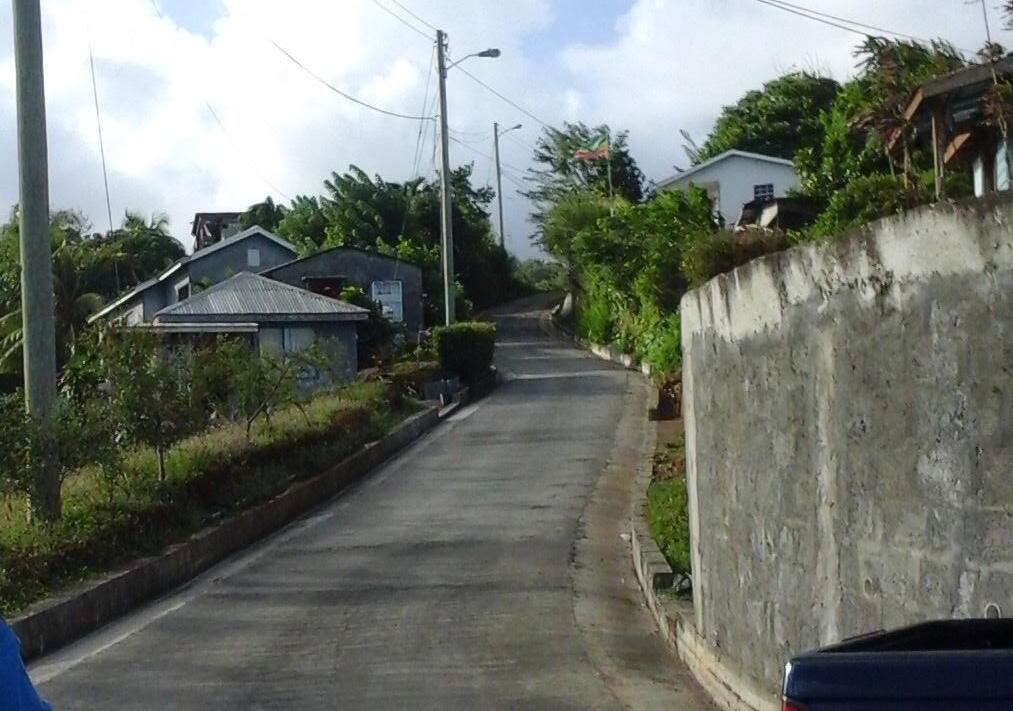
45 Case 2: The Top Hill Road – A Game Changer for Top Hill Residents, Biabou, Saint Vincent and the Grenadines – BNTF 5
50 FREQUENTLY ASK QUESTIONS
ABOUT BNTF
Since its inception in 1979, the Basic Needs Trust Fund (BNTF) Programme has been contributing to poverty reduction in targeted communities by providing infrastructure and livelihood enhancement services nationally and regionally. By 2014, there have been eight BNTF Programme cycles, implementing over 2,000 subprojects to directly impact the lives of more than 2.8 million people in poor communities. The Programme supports a socially inclusive development process that empowers the poor and vulnerable, and supports institutional development. Community participation is essential to every sub-project, as this facilitates local ownership of BNTF investments and enhances social capital within each community.
Successive BNTF Programmes have undergone design modifications and increased resource contributions, and currently support interventions in ten participating countries (PCs) with financing mainly from the Unified Special Development Fund (SDF) of CDB and counterpart financing from participating Governments. Previous cycles have also received co-financing from USAID and CIDA. The Participating Countries are Belize, The Commonwealth of Dominica, Grenada, Guyana, Jamaica, Montserrat, St. Kitts and Nevis, Saint Lucia, Saint Vincent and the Grenadines, and the Turks and Caicos Islands.
CDB’S MISSION
CDB intends to be the leading catalyst for development resources in the region, working in an efficient, responsive and collaborative manner with our BMCs and other development partners, towards the systematic reduction of poverty in their countries through social and economic development.
BNTF’S MISSION
By providing resources to poor communities, we improve access to basic public services and enhance employability. We aim to reduce the economic and social vulnerability of women, men, girls and boys, lowering risks that may otherwise impact their income and well-being.
BELIZE
The Issue
Situated close to the Altun Ha Maya ruin, the once vibrant breadbasketproducing communities of Northern Belize have experienced Belizeans and foreigners migrating due to lack of potable water, electricity and telephone services. Various methods have been used to solve the challenge of potable water in the community. Wells and hand pumps were introduced to the villages between the 1960’s and the1980’s; however, this did not resolve the issue of potable water. Although residents limited their use of water from the pond, the wells dried up in the dry season and they could not drink the water from the hand pumps. Residents attested to drinking rainwater as the pumps produced rusty water and had to be pumped before one could get clean clear water. The combined population derived from the 2000 census, made up of 161 men, 135 women and a youth population of 27 males and 21 females between the ages 14 – 29 years1 , all had the task of fetching water for household use; however, teachers, village council and community members believed women and children had the heaviest burden. A daily average of 10 trips were made to the water pumps with the closest house being about ½ mile and the farthest house 3 miles. Some children had to skip school when they did not complete their chores or when water was scarce. The village health worker attested to treating numerous cases of diarrhea, skin rashes and itching from residents. It was under these circumstances that the prospective candidate for the Santana Village Council Chair won her campaign and approached the neighboring villages of Corozalito and St. Ann’s to join in her effort to provide potable water for the three villages.
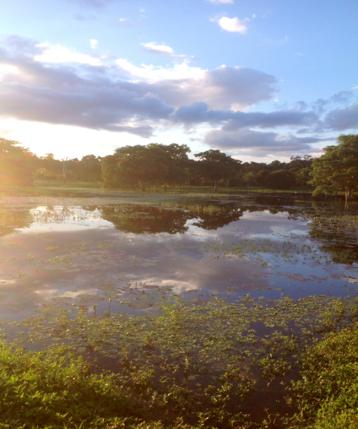
Lake in Corozalito Village, a source of water for villages prior to sub-project.
Case 1: Water – Strengthening Community Relations in Belize – BNTF 5
1 2000 census data was the most recent information available during sub-project initiation phase. Youth figures for St. Ann’s were unavailable in the 2000 census.
The Challenge
The seed for this vision was officially sown on July 19, 2007 when an official proposal was presented to the Belize Social Investment Fund, which implements the Basic Needs Trust Fund (BNTF) Project in Belize. The main objective of the proposal was to construct a rudimentary water system to provide potable water for the three villages. This entailed:
• the construction of a new pump house close to the three villages;
• a 20,000 gallon ferroconcrete reservoir;
• water meters to provide house connections for 114 homes - 47 in Santana, 47 in St. Ann’s, and 20 homes in Corozalito;
• location of a second well to ensure the water system maintains adequate supply for the 3 villages; and
• training in maintenance and operation of the water system, meter reading and recording, basic accounting skills for the water board clerk and efficient water usage and sanitation for villagers.
The Sub-project
This vision became a reality on 19 March 2008 when all three Village Chairpersons received congratulatory sub-project approval letters. The cost of the sub-project totalled US$461,568 (BZ$920,776.00), with 80% financial support from the Caribbean Development Bank (CDB), 13.2 percent community contribution and 6.8 percent Government of Belize contribution. The sub-project was targeted for completion in six months. The sub-project commenced on May 2009 and was completed on October 14, 2011. Due to heavy rain conditions and an unanticipated rocky surface for the
proposed site, sub-project experienced tremendous delays. The work called for unforeseen mechanical excavation, tools for workmen had to be constantly replaced and a change in the location of the pump-house for an alternative site had to be considered. Although adverse weather conditions could not have been controlled, some of the delays were man made, which led to the termination of one consultant’s contract.
The Impacts
Community members are proud of their contribution towards subproject. About 46 percent of the total labour cost was generated within the communities, 34 villagers contributed manual labour towards the trenching and the work force included a supervisor, masons, steel benders and helpers. Gender segregation in construction sector led to the majority of the workers being male with less than ten females engaging in any economic activity during the construction phase of the water system.
All the objectives of sub-project were met. ‘The Santana, Corozalito and St. Ann’s Rudimentary Water System Construction Project’ led to the reduction of vulnerability amongst disabled persons in the communities, housewives and children. Families have an easier time doing chores such as washing, which previously was an ordeal. Children attested to not missing school on family washing days, sleeping longer and having time to watch television and do their schoolwork. Teachers acknowledged a slight improvement in student performance. The local primary school recorded its first A grade in Mathematics and English in 2013 for the Belize Junior Achievement Test. Since the commencement of sub-project, the school has been able to embark on the state school-feeding programme, provide dispensers in the school for children to drink water and observe an increase in school attendance.
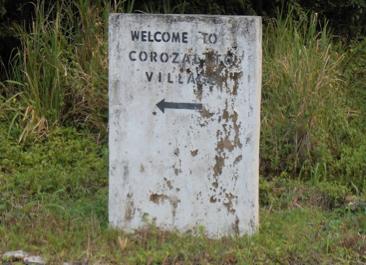
Direction to Corozalito Village
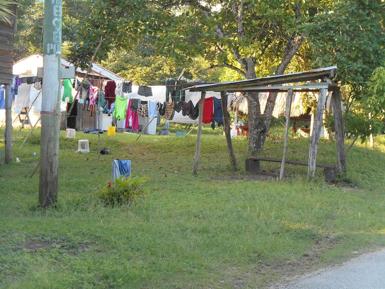
Family Home in St. Ann’s Village
A review of school statistics depicted a steady increase of school attendance with the highest percentage increase occurring during the years when sub-project was in construction and near completion (2010 – 2011). During this period School attendance for males increased by 40% and 25% for females (see Figure 1).
“School Attendance – Zion Park Methodist School, Santana, Belize (2009-2013) by Sex”
Community Governance
“When there‘s a function we take our things and sell. We did it two times for the year, made $100 from sewing and jam…”
Member of Women’s Group
“Source: School Attendance Records (2013)”
The health nurse has seen a decrease in reported cases of diarrhea, cholera, and skin rashes. However, due to record keeping practices of amalgamating, all patient visits for the seven serving villages, extrapolation of data for Santana, Corozalito and St. Ann’s was not feasible. Members of the three communities emphasized the camaraderie and close relationships the three villages now enjoy which previously did not exist. Friendships and bonds have been created, starting when the three villagers, worked together to build the water system.
Although unintended, the partnership that developed from the water system construction project introduced the villagers to other services being offered by the Belize Social Investment Fund. The availability of regular potable water enhanced the capacity and economic activities of the local women’s group. Members were able to fully utilise the training room kitchen, creating opportunities to develop skills such as cake decorating; and food processing of fruits for jams and jellies. The women’s group also received further support from the Belize Social Investment Fund for training in business and accounting. Due to the water system construction project, a once dormant women’s group was revived to enhance the lives of the women in the community. Women who were previously not earning an income now can make money to help their children. Disabled persons who previously had to hire someone to get water from the pumps, can now personally do simple chores, such as washing dishes, in their homes.
Sub-project management committee during construction became the water board. The water board is made up of villagers nominated by the local Member of Parliament. Villagers query this process of selection, as from their perspective it limits the efficiency of the board and the sustainability of its affairs. Nevertheless, the Government sees this process as a means of building local leadership capacity and enhancing local self-governance. The water boards are responsible for using funds collected to pay state fees and finance water related projects in their communities. The water board worked closely with the Ministry of Local Government, guided by the Village Council Water Board Act, when sub-project was completed to determine the average amount of water used by each household and the appropriate fees to establish for the water rates. For three months villagers had free usage as a trial phase. Following this period a rate of $15 for every 3000 gallons used was the base rate applied. Water used beyond the base figure of 3000 gallons incurred additional costs. One of the main vulnerable groups in the village, the elderly, expressed their dissatisfaction with the water rate. As retired farmers receiving US$50 (BZ$100) per month, paying a monthly water bill of US$7.50 (BZ$15) is exorbitant to the senior citizens. Villagers are contemplating lobbying the water board to give the elderly (beyond the age of 70) free water supply. To date all 72 households, with the exception of a 95 year old elderly man, can access water directly in their homes. Prior to the water system project, villagers had only two Water Closets (WC) in Santana. As of January 2015 the number of WCs had increased to 10, even though villagers who could afford the WCs choose to continue using pit latrines. The village community centre and the school have free access to a water supply; however, due to limited resources the school continues to use pit latrines.
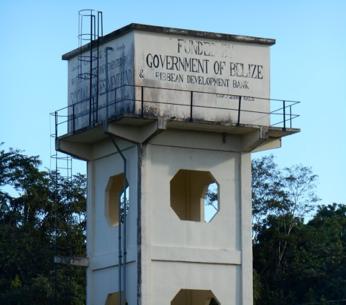
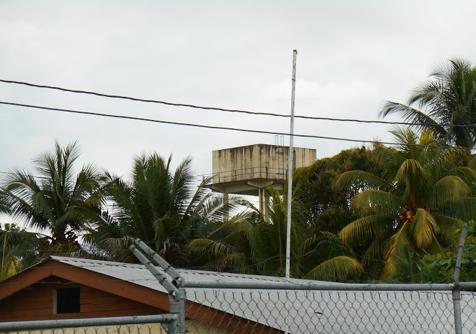
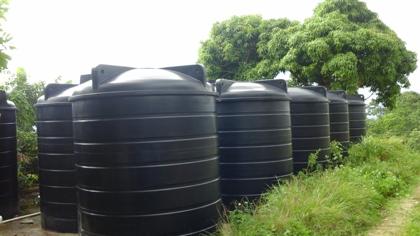
Water tank built for the three villages
On October 14, 2011 when the construction of the Santana, Corozalito and St. Ann’s Water System Project was completed, it became the property of the Government and the responsibility of the people of Belize to manage its efficient operations and maintenance. The sub-project has created employment for a female billing clerk and a male maintenance meter reader operator who is responsibly maintaining the water system.
Due to the nature of sub-project, most of the works were concealed underground. Visual observation of sub-project was limited to the hose bib and water meters, isolation meters at Corozalito junction, the pump house and concrete tank. Protective works could have taken place to mitigate damage of the house bib and water meters. The structure of the pump house and concrete tank depicts a cracking at the soffit at the water tank base slap and moisture penetration nevertheless, the above mentioned physical structures were rated satisfactory.
Lessons Learnt
Prior to construction, a thorough feasibility study is imperative to determine the efficient methodology for construction. The challenges of rocky surfaces were unearthed during construction. This omission resulted in additional funds being expended on sub-project and extending sub-project implementation phase.
The collaboration between the three villages and the community’s involvement during all phases of sub-project created a sense of pride and ownership amongst villagers thus facilitating social cohesion and kinship.
Recommendations and Conclusion
The Santana, Corozalito and St. Ann’s Water sub-project remains the pride and joy of the residents in the villages. The enjoyment of a cool shower after a hard day’s work and the sense of pride it brings the villagers when residents in nearby villages lament about their desire for a similar project, are some of the impacts that could never be quantified in dollars and cents but enhances the well-being of the beneficiaries. The following are recommended based on implementation of this sub-project:
• Employment opportunities for women during the project implementation phase should be explored to create a gender balance and equity.
• Villagers should be allowed the option of electing at least one villager on the water board to make allowance for a democratic process.
• Pre project consultations should address and include discussions on water for vulnerable community residents who will not be able to afford the water rates.
• A more thorough appraisal study of the project sites should be a mandatory requirement that is carefully monitored.
“The enjoyment of a cool shower after a hard day’s work and the sense of pride it brings the villagers when residents in nearby villages lament about their desire for a similar project”
Case 2: When the Village Water Board Works: Improving the Water Supply System in San Pedro Columbia Village, Belize – BNTF 6
The Issue
On entering San Pedro Columbia on a typical mid-morning, one is struck by the peacefulness of the surroundings. From the lushness of the vegetation one can only conclude that water is no problem here. Not many men can be seen at this time of day since they typically farm on lands at some distance from the village. The women are out, engaged in activities around their homes. An outdoor tap is a common sight. This is to be expected since the village has had access to improved water supply since 1997. The presence of a stone or two around some of the outdoor taps peaks interest. The stones are from the Columbia River, once a hub of activity where women socialise daily while they collect water, bathe, wash dishes and wash their family clothes using the nearby rocks in the river. The tradition of washing clothes with rocks has now moved to the outdoor tap. A traditional practice transformed by the delivery of an improved water supply.
Located some two miles from the ancient Maya ruins of in the Toledo District, Southern Belize, the village of San Pedro Columbia provides an example of how communities can successfully shape and manage its potable water supply. Commitment and an effective water board are only two of the critical success factors in this story.
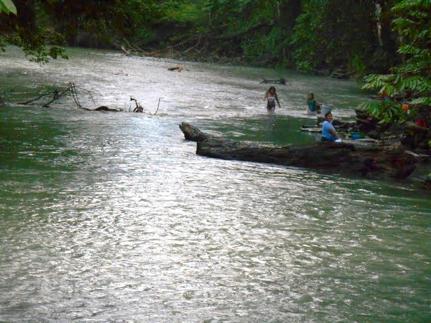
Women gather at the river to wash clothes and dishes, to bathe and to chat with their friends
Description
San Pedro Columbia is the largest Kekchi Maya village in Belize. The village is situated about 20 miles from Punta Gorda Town. Generally, the village is spread over a large area, however the ‘village centre is where the critical services such as health centre, community centre and water board can be found. The preschool and primary school is located nearby. Children generally walk to school, some as far as two miles. The population is approximately 2,800 of whom the majority are Ketchi Mayas with the remaining population consisting of Mopan Mayas, Mestizos and East Indian.2 The majority of the male villagers engage in subsistence farming (planting of corn, rice and beans) for their livelihood, but some are also involved in the rearing of farm animals (pig, poultry and cattle). Some of the residents are also involved in small businesses including corn mills, guest houses, grocery shops, bars, handicraft and tour guiding to the nearby Lubaantun Maya Ruins.
The Columbia River, which runs north of the village on its way to the Rio Grande River, remains a intricate part of life in San Pedro Columbia. Women still go to the River to do household chores but not as much anymore. During the rainy season, between June and September, the river floods and sometimes cuts off sections of the community for up to three days. When this happen children are unable to attend school and villagers are unable to use the river.
Most Caribbean governments rely on large water utility operations to produce and provide potable water to their population. While in the urban areas of Belize, such a utility exists in the form of the Belize Water Services Limited (BWS), the provision of potable water in rural Belize is provided through village water boards.
The work of the village water board is governed by the Village Councils Act (Chapter 88 of 1999). Village water boards, which fall under the jurisdiction of the Ministry of Labour, Local Government and Rural Development (MLLGRD), are expected to be financially autonomous and independent from village councils, and they are responsible for overseeing the day-to-day management and operation of rudimentary water systems in their village or, in some cases, in multiple villages). The San Pedro Columbia Village Water Board, like others in the country, consists of seven members (five men and two women) who are appointed by the Minister of Local Government.
The Challenge
In 2009, it was reported that 97 percent and 81 percent of the population in Belize had access to an improved potable water source and improved sanitation, respectfully. Yet despite these impressive achievements, the country’s water services face institutional challenges in operations, maintenance, and finance. At the time of
2 Source: Village Council records
their application to the BNTF, the San Pedro Columbia Water Board was weighed down with challenges that led to inadequate provision of water services to their customers.
Before the sub-project, customers in the upper and distant reaches of the community connected to the system were unable to receive water, while those closer to the water source in the village centre enjoyed a 24-hour supply, which they reportedly abused. Many of the 335 household customers were vocal about the service they received and expressed their dissatisfaction with the water system and the performance of the Board by withholding their monthly US$10 water rate payments. In the meantime, the Water Board had problems with the operation of the water pump and experienced difficulties paying their monthly electricity bill, which in the dry season could reach as high as US$2,000 to US$2,500.
“The best time to get drinking water from the pumps was very early morning when the water was still ‘clean,’ after that the water would be ‘rusty’ or it run out. Now the water taste good.
I used to fill ten buckets of water for the day (to do housework). I would get up 3:00 to 4:00 am to “steal” water (laughter)”…
‘… Yes I was a thief. I had to get up real early like a thief…’
Excerpts from the women’s focus group discussion
Traditionally, it was the responsibility of women and children to fetch water for the family and more so the children who collected water before and after school. The Primary School Principal indicated that before the sub-project, some children’s attendance and schoolwork suffered and personal hygiene was an issue.
For the men and women of San Pedro Columbia, their day begins early. The men would leave home around 4:00 am to head to their farmlands, situated one to two hours away from the village. Women get up early to prepare their husband meals before beginning their housework. Before the sub-project most days, women spent a considerable amount of time by the river. The further their homes are from the village centre, greater the chance that the women had to perform their water-related chores there. Given the practice of littering by the river and free range pigs found on the banks of the river, the quality of the river water was also questionable.
The Sub-project
To improve the water system in San Pedro Columbia, the Water Board and Village Council, guided by the Rural Development Department, MLLGRD applied to the BNTF in 2009 for the expansion and upgrading of the existing water system. This application was made through the Belize Social Investment Fund. The sub-project was expected to provide safe potable water for the residents of the community to ensure better sanitation and good health especially in the reduction of water-borne diseases. With the upgrade of the system, residents would also be able expand their businesses and take advantage of business opportunities that would attract more visitors to the community. Although it took two years from application to implementation, the community was fully on board at every stage of sub-project implementation process. The community provided labour at a subsidised rate for the trenching and backfilling required for pipe installation in the extension areas.
The San Pedro Columbia Rural Water System Upgrade sub-project, which was implemented at a cost US$611,646.80, began in 2011 and was completed in 2012. It involved the rehabilitation and fencing of the 20,000-gallon water tank and the pump house; the purchase and installation of a new pump and chlorination system; and the improvement of the water intake system. The water distribution system was expanded to fast growing areas in the village and to areas not previously connected to the system. Meters were also installed for customers for better monitoring and management of the water supply.
To enhance their capacity to better manage the water system and improve their business function, Water Board and Village Council members received training from SIF with special reference to proper operations and maintenance of the water system. The Ministry of Rural Development contributed with regard to bookkeeping, accounting and water conservation and the Ministry of Health on chlorination and sanitation issues.
The Impact
Since the completion of the sub-project, the community receives a 24/7 water supply with more than 95 percent of the households connected to the system. The monthly cost of water to the average household has doubled and now stands at US$20 to US$25 and US$15 for a new connection. Generally, residents are happy with the quality of the service now offered by the Board; the supply is now consistent and of a high quality. However, there are those who feel that the water rates are too high and limit opportunities for going into business, while there are those who are willing to pay given the level of freedom the water supply has brought to their life. Moreover, there are concerns that there is need to offer special rates for the vulnerable (e.g. the elderly who lives alone) and households that may be have difficulty paying their water bill.
The women of the community now have an alternative to going to the river to fetch water to complete domestic chores and although they, particularly the older women, still go to the river to wash clothes and to bathe, they are able to sleep longer and spend less time there. Women, therefore have more time to spend with their families and to focus on other meaningful pursuits, such as income generating activities, which women felt the Government and other development agencies might assist them to achieve.
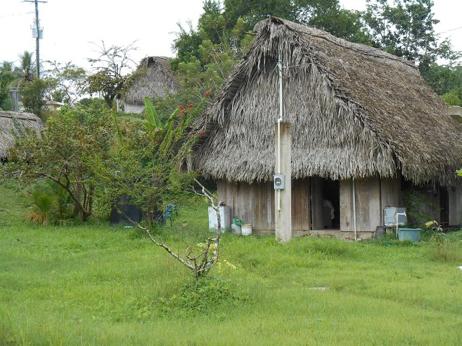
Traditional housing, all part of the life in San Pedro Columbia
There are now less absenteeism and late arrival at the primary school
River water quality remains a concern, with reports that a significant number of people still prefer to drink river water.
Corn milling has increased because of increased water availability and so five more corn mills have since sprung up in the community bringing more competition for the Uxbentun Women Group who before the sub-project operated the community’s sole mill.
The training received by the Water Board and staff has greatly improved the efficiency of their operation, making the San Pedro Columbia Water Board one of the most efficiently run rural water boards in Belize. Since the sub-project, the Board has expanded the water distribution system in other areas not previously reached by the sub-project. They are now in a very healthy financial position with a sizeable Bank savings, which allow the Board to respond quickly to emergencies. Worldwide there is a gender gap in water management leadership at all levels of the water sector government, from national to community levels. Usually, they are missing in key areas of water-related decision making. However, the female-led San Pedro Columbia Water Board provides a model that can be followed in other rural communities.
Lessons Learnt
Overall, the installation of water meters has changed behaviour and introduced water conservation practices. Although more homes have washing machines, women still go to the river to wash to reduce their water bill, preferring only to wash at home on rainy days or when the river floods. Residents are now more aware of the amount of water they use and so there are no longer reports of water wastage and abuse. The Primary School Principal remembered the challenges faced before the sub-project by teachers and children in accessing quality drinking water. He noted, “…nowadays the school receives a free drinking water supply from the Water Board and students’ exposure to waterborne diseases, which was once a serious concern, has reduced considerably.”
Water pricing should be one of the subjects for discussions among the Water Board, the community and the Ministry of Rural Development from the onset of the sub-project and continues until the pricing is finalised. Residents should feel empowered by the decision-making process for the water pricing which should include a discussion on how the price is calculated and who should be given special concessions.
If developed properly the life of a well could be extended. However, climate change poses a big risk to the sustainability of community water supplies and life of water wells. The impact of climate change should be factored into the planning and design of water subprojects.
Water metering plays a major role in water conservation and changing behaviour and is recommended as an important element of future water system development and expansion of projects. However, what happens if the meter is removed? Would people return to wasting and abusing water? Consideration should be given to implementation of a community education and outreach programme for villagers, which reinforces and complements the metering programme.
Household activities are easier for the women of San Pedro because safe potable water is now available
Household activities are easier for the women of San Pedro because safe potable water is now available
Recommendations and Conclusion
The sub-project provides working example for duplication in other rural communities. However, strengthening of some water board may be required. It may be important for members of the San Pedro Water Board and members of other successful Boards to become actively involved in assisting other Boards undergoing a similar process. It will send a powerful message about the importance of community governance and as the saying goes, “If I can do it, so can you!”
BNTF at a Glance
The Basic Needs Trust Fund (BNTF) programme is a community-based, par ticipator y pover ty reduction initiative that:
Targets the poorest people and communities
Responds to their priorities and demands in 10 countries
Engages them as stakeholders in the development process
Enables their par ticipation in the full sub-project cycle
Builds community and organisational capacity for sustained development
Is responsive to men’s and women’s expressed gender needs
Promotes par tnerships for additional ser vices and support in communities
COMMONWEALTH OF DOMINICA
The Issue
The Basic Needs Trust Fund (BNTF) Office, housed within the Ministry of Social Services, Family and Gender Affairs, was established by the Government of Dominica. The BNTF Project in Dominica, jointly funded by the Government of the Commonwealth of Dominica and the Caribbean Development Bank (CDB), delivers direct services to the people living in poor communities to improve their social
Case 1: Empowering Women toward Self Sufficiency in Dominica – BNTF 6
3
The Dominica 2008/2009 Country Poverty Assessment identified skills training as a community need for the Silver Lake area and noted the odds of being poor highest in the St. Patrick parish households. Various Government policy papers and strategies have prioritised vocational/skills training as a means of alleviating poverty and empowering young people. The 2006 National Gender Policy for Dominica articulates a policy objective under Education and Human Resource Development “to improve women and men’s access to quality vocational training, science and technology and continuing education and to develop non-discriminatory education and training” (Government of the Commownwealth of Dominica, 2006). This vision is also shared as a priority action in the 2006 Commonwealth of Dominica Medium Term Growth and Social Protection Strategy, to “provide support to… Youth Skills Training Programme, Adult Education” (Commonwealth of Dominica, 2006).
This case study focuses on sewing and cosmetology skills training programmes implemented in 2010 and 2012 respectively. The objective of both initiatives as indicated by the Ministry of Education was to train community residents in economically viable skills for sustainable livelihoods. The aim was to achieve an outcome that will increase self-employment through micro projects and increased capacity at the community level.
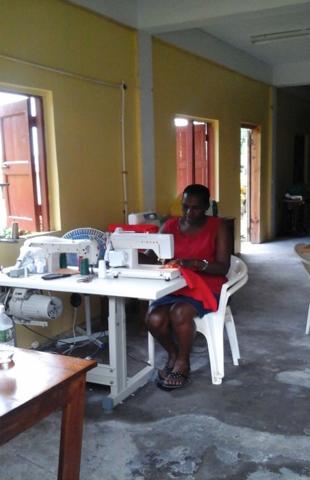
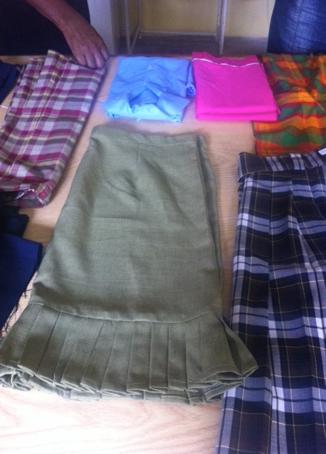
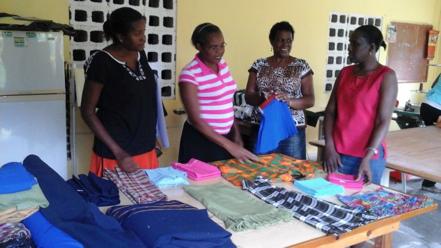
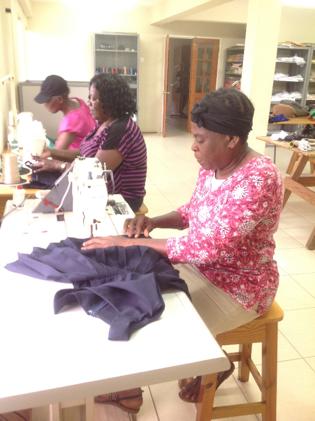
Woman at work sewing uniforms, La Plaine, Dominica
The Challenge
The two sub-projects though similar in nature had their differences. The La Plaine New Dimensions Group, an established incorporated women’s group, implemented the sewing project, while the cosmetology skills training was executed by the National Development Foundation of Dominica Ltd (NDFD) targeting at risk and unemployed youth. The purpose of the La Plaine New Dimensions Group was to teach interested women to sew and become seamstresses in a collective effort as a group or as individuals, empowering them to be self sufficient and to provide a necessary service to the population. The cosmetology training focused on the human resource development of those in need, so they could acquire knowledge and skills to contribute to the development and sustenance of micro and medium business enterprises in their communities, earn wages to improve their standard of living and alleviate poverty within the Commonwealth of Dominica.4
The Sub-projects
Working with at-risk and unemployed youth, the NDFD’s objective was to equip 15 participants in the Marigot area (a rural community) and 15 participants in the Roseau environs (an urban area), with formal knowledge and skills in the area of cosmetology, focusing on manicures and pedicures. Additional skills gained would enable the participants to better secure employment or create and launch their own small business enterprises. The US$16,000 project trained young people on topics such as professional ethics, dress code and personal hygiene, customer service, nail and skin disorders, sterilisation, sanitation tools and equipment, manicure and pedicure for diabetic clients and effecting a basic manicure and pedicure. The programme also had a business component, which focused on customer service, entrepreneurship development, marketing, and record keeping.
In La Plaine, an application for funding in 2011 for approximately US$7,407 over a six-month period, was made for twelve women to be equipped to assemble school and work uniforms including outfits for special occasions. This involved purchasing an embroidery machine, supplies and materials, a computer for record keeping, and paying stipends for workers and instructors. Apart from the technical training received, partnering with the Adult Education Division led to the programme being enhanced with additional instruction in basic entrepreneurial and social skills. During the sewing skills training programme, participants had to revisit the training schedule to make adjustments for their socialised reproductive roles of caring for children after school and preparing meals for their families. To this end, training sessions were held from 10:00 am instead of 2:00 pm to 5:00 pm and sub-project acquired a stove to assist the mothers in preparing meals for their children and to work longer hours with limited interruptions.
The Impacts
The sewing project was primarily dedicated for women; however, the cosmetology training was open to both male and female youth in the designated communities. Nonetheless, the ‘clear gendered occupational segregation in Dominica’ (Baksh, 2014), mentioned in the Dominica Country Gender Assessment, led to only young women registering for the cosmetology skills training programme. The two sub-projects presented an excellent opportunity to examine the impact of empowerment projects for women.
4 Project objective outlines from the La Plaine Women’s Group in their project proposal and BNTF Summary sub-project profile form for the Cosmetology skills training.
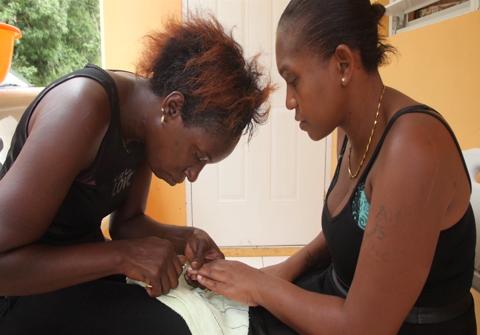
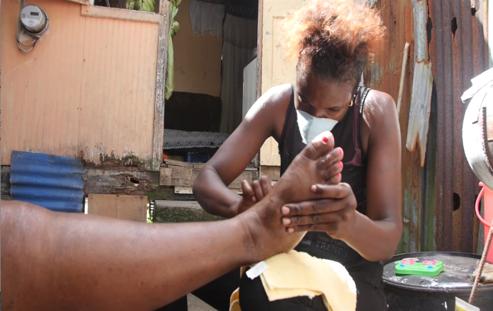
On the left, past student attending to a client on the right
Items sewn by the La Plaine New Dimensions Inc
Prior to the skills training programme, the women in the La Plaine New Dimensions Inc. were seasonal workers engaged in making clothes only during the summer holidays. The women considered their performance requiring about 50 percent enhancement to attain the professional standards demanded by the markets. They were primarily busy housewives working in their homes and caring for their families. While some of the young women were primarily unemployed, they took care of children, engaged in odd jobs when they became available, such as hair styling, manicure and pedicure treatments for friends and family. Both groups were eager to embark on the training to enhance and gain new skills yet both groups experienced a number of participants not sustaining the initial interest shown. Two years following the La Plaine training, seven out of the twelve women who embarked on the programme were still actively involved while two young people were actively engaged in rendering manicure and pedicure services. Sixty percent of the young people from the cosmetology training were actively contributing to the economy of Dominica by working in other areas and using the skills gained to earn extra income as the opportunity arose. Occasionally they also attended to the nails of friends and family.
The active nail technicians attested to having over 100 clients, although the market rates for manicures and pedicures continue to remain the same. Both groups of women attested to being better equipped to work with their clients, handle conflicts within a group or with clients. Due to the challenges faced in the past years, the La Plaine New Dimension’s Group Inc. believed they would not have been together as a group had they not received training in group dynamics and conflict resolution.
The women are contributing to the promotion of national culture and pride by sewing cultural outfits during festive seasons and using national colours to paint the nails of their clients during national holidays. The confidence level of the young women has been enhanced as one of the beneficiaries attested to by saying, “I always stayed to myself and did not talk much, but now I talk”. Preparations for skills training in La Plaine accelerated the efforts of the women’s sewing group to become established as a recognised Community Based Organisation (CBO). The sustainability of the group is also enhanced since as a CBO the group receives community visits by Government local district officers who monitor their operations and assist with state interventions when needed. Additionally, the group is also in a viable position to work with the local government body, thus assisting the Government to achieve its plans for the municipality. Due to limited data, Government partners were unable to quantify sub-project’s impact on unemployment however, they remarked on the 9 gainfully employed women impacting on national unemployment figures and national Millennium Development Goals (MDGs) reporting; specifically Goal 1 (Eradicate Extreme Poverty and Hunger) and Goal 3 (Promote Gender Equality and Empower Women).
Employment Opportunities
The La Plaine women acknowledged the quality of their work improved by 70 percent. This improvement was reflected in the number of clients the group gained and the income generation opportunities available to them. The group no longer works seasonally but year-round. Apart from sewing for walk-in clients, the group has a standing order for uniforms for seven secondary schools. The training has increased their average monthly income by 40 percent relative to the income earned during the summer season.
The two sub-projects have demonstrated the success rate of an established group being higher than that of training individuals who are thereafter left on their own to seek employment without follow-up mentorship or guidance.
Lessons Learnt
Sub-projects were implemented in the absence of market research data to inform on the viability of the proposed skills gained. Working with established businesses to access informal market needs can add value to skills training programmes. The La Plaine New Dimension’s group acknowledged 3 persons in their group dropping out due to their strong political views. It is imperative that training takes place in a politically neutral environment where all can work together towards self-sufficiency and economic empowerment.
A few missed opportunities can be noted in both projects. The skills of the women in the sewing programme could have been enhanced to include sewing of trousers. This would have increased the market
Members of La Plaine New Dimensions Inc.
share of the group to include male secondary schools. The young women in the cosmetology training, as well as the women in the sewing group, could have been assisted to formalise them into a cooperative; the curriculum could have included formal business skills to equip cooperatives to be viable and profitable entities. This observation was shared by the young women in the cosmetology course who made this assumption as an outcome of the course prior to joining the training programme. The services of NDFD, which includes mobilising funds for credit for micro and small enterprises, could have been extended to the young women trained in cosmetology and who are presently in need of acquiring tools to keep their micro enterprises operational.
• Augment the use of private sector knowledge on the markets in the absence of local labour market statistics. Services of the national chamber of commerce can become a valuable asset in determining market needs and curriculum content.
• Conduct of tracer studies of skills training programmes to assist in measuring impacts.
• Include civic education in skills training curricula to highlight the value of political tolerance as this is key for Small Island Development States (SIDS) where politics can be contentious and cause dissonance.
• Diminish the time frame for project approvals as inflation adversely affects budgeted items in project proposals thus causing further delays when price revisions have to be made.
Recommendations and Conclusion
The evidence of skills training as a policy action for employment creation is clear. Creating the necessary environment to equip participants to complete training programmes either due to the time of the training programmes, the reproductive roles of women or being fully equipped with the right mix of business skills to manage one’s own business or a cooperative are necessary ingredients for success. The following are the key recommendations from this subprojects:
• Engage key Government stakeholders such as Departments of Adult Education, Gender and Youth as well as private sector stakeholders in the design and planning of skills training programmes.
• Provide a comprehensive business development curriculum that includes an internship to all skills training programmes geared towards self-employment.
Consider the gendered roles of men and women and make the necessary provisions to facilitate participation and retention.
Past student attending to a client in her home
Case 2: Community Self Help: A Viable Mechanism for Community Empowerment and Development - The Case of the Providence Footpath, Commonwealth of Dominica – BNTF 4
The Issue
Community self-help projects can be an effective mechanism through which communities and governments work together to improve the quality of life of residents in poor communities. The goal of the BTNF in Dominica is to provide resources to poor communities to increase access to basic public services, enhance employability and reduce social vulnerability. The Providence Footpath sub-project implemented in 2002 demonstrates the empowerment of one community and the role of the Paix Bouche Village Council in the construction of the Providence footpath; with the assistance of the Government and the BNTF in improving access and transforming the lives of residents in this section of the community.
Description
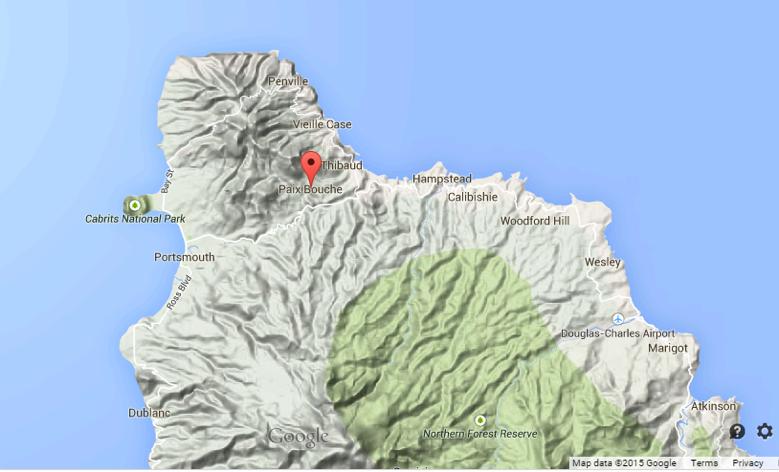
Nestled in the foothills of Morne aux Diables in northern Dominica, Providence forms part of the extended community of Paix Bouche. Paix Bouche/Moore Park Village/Providence is situated in the Parish of St. Andrew, the country’s second most populated parish. Six percent of the parish’s population lives in the area (Table 1). The latest poverty assessment showed that St. Andrew accounted for 19.4 percent of Dominica’s poor.5 It was one of the five parishes with a headcount poverty index (38.1%) that was higher than the country’s average index of 28.8 percent. Moreover, with a poverty gap of 14.98 and a poverty severity level of 7.25, it was one of two parishes where poverty was found to be deepest and most severe.
Paix Bouche is an agricultural based community. Nowadays residents have access to several basic infrastructure and amenities within the community – water, electricity, telephone, mobile and internet services, passable roads, pre-school and primary school education facilities, primary healthcare facilities (in Dos D’ane). The closest police station is located in Vieille Cas about four miles away from the community. School aged children travel outside the community to access secondary education.
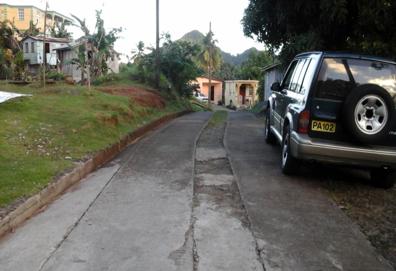
Road built by villagers
The driving force behind the Providence sub-project was the Paix Bouche/Dos D’ane Village Council. The Village Council was first established some 54 years ago and has remained vibrant over the years. The council which consists of a chairperson and five elected and two nominated councillors, has been instrumental in the delivery of a number of community social events and development projects within the community, such as hosting community family/sporting days, refurbishment of the Resource Centre, academic and life skills training programmes, and the development of footpaths and roads, including the Providence Motorable Footpath sub-project.
The Challenge
Before 2002, life for residents living in the “labou” in Providence, Paix Bouche was difficult and prospects for improving their socioeconomic position were hampered by the lack of a proper access road to their homes. The unpaved footpath, which was only accessible by pedestrians, was generally almost impassable when it rained because of mud and the ravine, which ran across the ‘track.’ With heavy rainfall, residents would become stranded and be cut off from the rest of the community because of the flooded ravine. Residents recollect the falls and injuries that they experienced when traversing its path. Older folks whose homes were located there were particularly vulnerable. During storms and hurricanes, these residents would sometimes find themselves isolated, unable to access emergency shelter. Often young people from the community would have to physically carry the elderly to safety or to access emergency health care. Complaints by villagers on the condition of the footpath to the Village Council only increased with the passage of time.
The Sub-project
After continued complaints by residents, the Village Council approached the Government and the BNTF in 2002 to help solve the problem. The main objective of the sub-project was to improve access of residents who live in the enclave. The original sub-project involved the upgrading of the unpaved track to a five-foot wide concrete paved footpath. However, given the number of senior citizens living along the path and the need for better access to ambulance services, a decision was taken to upgrade the sub-project to the development of a ‘motorable footpath.’ This decision was reached between the Village Council and the Government/BNTF with the understanding that the BNTF could not provide additional financial support. The Village Council noted the quick response of the BNTF Office and recalled that the sub-project was approved three months after the
To highlight its strength and commitment to development of their community, the Village Council was able to keep cost down by procuring and supplying all labour, technical expertise, tools, equipment, transportation, and crew supervision. The Council was also responsible for obtaining the agreement of landowners along the path to donate the land necessary to develop the 210 feet by 12 feet access. Ultimately, the Council took responsibility for the legal transfer of the road as a public property by surveying, documenting and legal transfer of the road as a public property in accordance with the country’s laws. The sub-project, which was originally estimated at US$3,195 (EC$8,634) would have tripled that estimated cost, if the cost of labour and other resources supplied by the community was included.7 BNTF provided 78 percent of the financing (US$2,493 or EC$6,737), while the remaining 22 percent (US$702 or EC$1,897) was provided by the Government of Commonwealth of Dominica.
The Impacts
The tradition of community self help is strong in Dominica. Every year for its National Day of Community Service held November 4th, community-based organisations (CBOs), individuals, private sector, public sector, civil society and faith-based organisations throughout the country engage in the implementation of small projects to enhance the physical environment of communities and improve living condition of citizens. Paix Bouche has always been actively involved in its development and has had a long tradition of community development through self-help projects. According to one resident, most of the side streets and footpaths off the community‘s main access road were developed through self-help initiatives.
In the Providence Footpath sub-project, the Village Council essentially took on the role of the Contractor and successfully utilised the range of competencies and expertise that reside in Paix Bouche. The road was built in record time (in three weeks) at a cost of US$1425.11 (EC$3,847.79), less than half the estimated cost of the material. The additional materials and funding from sub-project was used to construct the public convenience facility in Dos D’ane, which falls under the jurisdiction of the Village Council.
Villagers reminisce about their experience before and during the construction of the road
New homes being constructed, while the evidence of old homes remains Some of the homes built after sub-project
7 Matthew Carrette, BNTF Manager (Dominica), personal communication, January 14, 2015
The constructed road has met the expectations of residents and has enhanced their quality of life by improving access to residents, particularly for the elderly and the disabled. The new road meant easier walking for residents as they make their way to and from their homes. Vehicles now drive along the road, allowing better movement of people, goods and services, and rainy days no longer restrict movement. Residents can get to the community hurricane shelter in the event of extreme weather. Residents indicate that because the street is a dead end, children are able to play freely there without fear of accidents. Over the years, the street has been used as the venue for block parties and other social events.
Today, with most of the homes along the road renovated or rebuilt, the area has transformed considerably. Residents recalled the ease with which they were able to transport building material to their lots, a task, which in the past was a very arduous and time-consuming affair. Originally, there were six to seven one-bedroom homes in the area: there are now 11 houses in this corner of Providence, some two to three bedrooms.
Location of Paix Bouche on the Map of Dominica
There has not been the need for any major infrastructural works to the access road since its official opening and handing over to the Village Council in 2003. The road is now routinely cleaned by villagers in the area who have a vested interest in ensuring it remains in good condition.
Lessons Learnt
The Providence Footpath sub-project represents a successful model of how self-help projects can transform community life and demonstrates how public-community partnerships can result in the economic and social empowerment of communities in the Caribbean. The structure of the BNTF allows sub-projects to reach the vulnerable in very fundamental ways that could help transform lives and improve their circumstances. Community participation is a critical element of the BNTF Programme from planning to implementation and community groups are encouraged to apply for sub-projects. The success of a sub-project hinges on the strength of community organisation and its ability to capitalise on resources at its disposal that will allow it to be an effective partner in the development process.
From the onset of the sub-project, the community and the Village Council took ownership of the sub-project. By supplying some of the critical resources (labour, equipment, etc.), the sub-project was able to achieve a level of efficiency and effectiveness not always possible in public sector projects. Thus far, the access road has achieved its objective; improving access to the households along its length.
Maintenance planning is part of every sub-project design. Given that the maintenance of the road falls under the responsibility of the Village Council, this may be a good arrangement to ensure its longterm sustainability. Although there is no formal management and maintenance plan for this asset, residents in the enclave willingly clean the street, thus demonstrating the stake they have in using and preserving this key communal resource that ensures unrestricted movement to and from their homes. The continued involvement of residents will be important in any decisions and formal arrangement by the Village Council regarding its maintenance and management.
Recommendations and Conclusion
In the end, the residents of Providence, Paix Bouche got their improved access and provided lessons for other communities to follow. Out of this case study, the following recommendations are highlighted:
• Village councils should be equipped with the financial resources to engage in community maintenance projects;
• Regular monitoring of road conditions by the state is needed for sustainabilty; and
• The case of Paix Bouche is a model for replication for other Caribbean communities, demonstrating how social cohesion lead to gains in community development.
JAMAICA
The Issue
Case 1: School ah Boss in Gibraltar, Jamaica! – BNTF 5 and BNTF 6
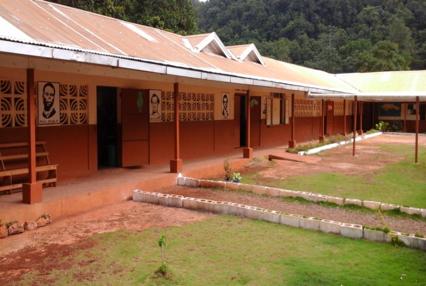
Cozily located in the southern part of the St. Ann’s parish of Jamaica approximately forty kilometres from Brown’s Town is the rural community of Gibraltar. Nestled in this community is the ‘Gibraltar All Age School’ (GAAS) built in 1953 to provide basic education to children.
The Jamaica Social Development Commission in 2010 noted the community as one of the poorest where 45 percent to 68 percent of its citizens live below the poverty line.
As the only basic school within the vicinity, the Gibraltar All Age School is a haven for many children. The location is ideal for a school yet its facilities and amenities in the past lacked standards that promote learning and recreation for children.
The Challenge
In order to enhance the quality of life of the children at the school, the Jamaica Social Investment Fund (JSIF), in partnership with the Caribbean Development Bank (CDB) through the BNTF 5 Programme, were engaged in renovating the sanitary block of the GAAS. During the initial stages the dilapidated condition of the school, which did not meet the Ministry of Education standards, became apparent to the JSIF technical team. Leaking roofs, continuous interruption of learning by animals entering the unfenced school compound, a kitchen in total disrepair and children and parents navigating down a rough patchy hill daily to access the school, were some of the conditions observed and raised by the Gibraltar Community
Development Committee (GCDC) – the initiators of this project. The GCDC also instanced the case of a pregnant woman, accompanying her toddler to school, falling down the hill and causing damage to her shoulder. There was obviously need for further infrastructural improvements.
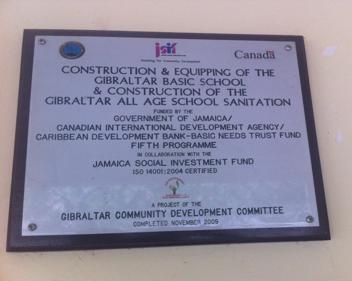
Project plaque displayed at the school
Table 1:
The Sub-project
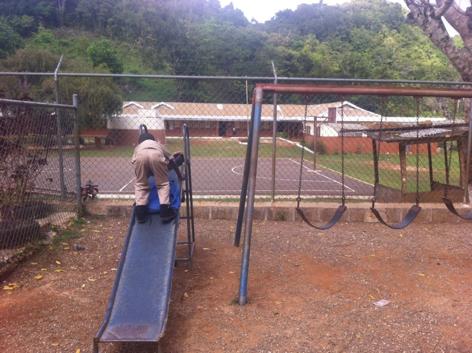
In order to enhance access to the facility and further upgrade the school to meet Ministry of Education’s all-age primary school standards, “it was agreed that the renovation of the kitchen space, paving of the school’s entrance to create a roadway, building of steps along the hill, repair of the pedestrian walkway for students along the classroom blocks, rehabilitation of the school roof, window panes and doors would be financed under the BNTF 6 Programme”. Additional facilitates such as a multi-purpose court, a water fountain, perimeter chain link fence, a planter box adjacent to the classroom block, movable partitions, ramps and bathroom stalls for disabled persons and covered walkways were constructed. The water closet and face basins were replaced, grills were installed and the entire school was painted.
The Impacts
Of the US$310,216 project, nine percent made up community contributions via the provision of land for civil works, clearing bushy areas to accommodate construction, cleaning-up exercises after construction, security services and storage facilities for construction materials and machinery, discounted labour, refreshments at meetings as well as the planning, organising and sponsoring of refreshments for the signing and handing over ceremony. All of these accounted for the community’s investment of US$26,571 towards the project.
Initially designed to impact the lives of 273 children, ten teachers, one gardener and one staff member at the GAAS as well as ten female and two male youths,8 the sub-project had an actual impact on the lives of 1,728 males and 1,696 females.9 Children from neighbouring communities are attending the school, including one student from Brown’s Town. The children are generally happy to be in a child-friendly space with a playground, sanitary conditions and classrooms conducive to promoting learning.
Apart from the men and women in the community who provided discounted labour, six males and two females were gainfully employed during the implementation phase of sub-project and two women in the community opened up new businesses to supply food to the workers during the construction phase.
A Model of Community Pride
The entire community now uses the school as it has become central to community life. Weddings, political meetings, and community group meetings are held under a tent on the school’s multi-purpose court. New facilities at the school have now made it possible for a dentist to be assigned for regular visits. Eight years following the implementation of the four month project the children are very pleased with the sanitary bathroom conditions especially the water closet toilets, although they wish they had a library. Teachers are relieved that learning is no longer interrupted during the rainy season, as previously students would have to be huddled into one corner of the room when the roof started to leak. Mothers who had children attending school in neighbouring communities due to the previous deplorable conditions of the school attested to saving US$4.35 (JM$500) in travel and lunch money.
To the surprise and unexpected realisation of the community, the community’s involvement in the clean-up exercise after the construction promoted cohesion and kinship which still pervade today. The school is now the envy of neighbouring villages and parents are proud of the school. As one parent articulated, .”Our school is numero uno”. Students, teachers, the school board, parents and members of the Gibraltar Community Development Committee feel more secure with a fence around the school warding off animals and intruders. The trek to and from school is so much easier for parents, especially single mothers escorting their children.
Lessons Learnt
Construction projects that utilise skills of the local population engaging both men and women increase community cohesion and foster partnership amongst local entities. The success of the Gibraltar All Age School can be attributed to the involvement of stakeholders in all stages of the development process. The involvement of the school board, parents and teachers has enabled them to become advocates for the school.
In depressed communities where local communal assets are scarce, construction projects should take into consideration the potential multifaceted use of the facilities. Regular monitoring of investments by state and funding agencies should be encouraged.
Recommendations and Conclusions
Creating an environment where children at an early age can enjoy school and learning is a recipe to promote life-long learning and reducing truancy amongst students. The Gibraltar All Age School is indeed a model to be replicated elsewhere in the Caribbean region.
“Teachers are relieved that learning is no longer interrupted during the rainy season, as previously students would have to be huddled into one corner of the room when the roof started to leak.
Mothers who had children attending school in neighbouring communities due to the previous deplorable conditions of the school attested to saving US$4.35 (JM$500) in travel and lunch money.”
Case 2: The Afterlife: The Thornton/Golden Valley
Water Supply System, St. Thomas, Jamaica - BNTF 6
The Issue
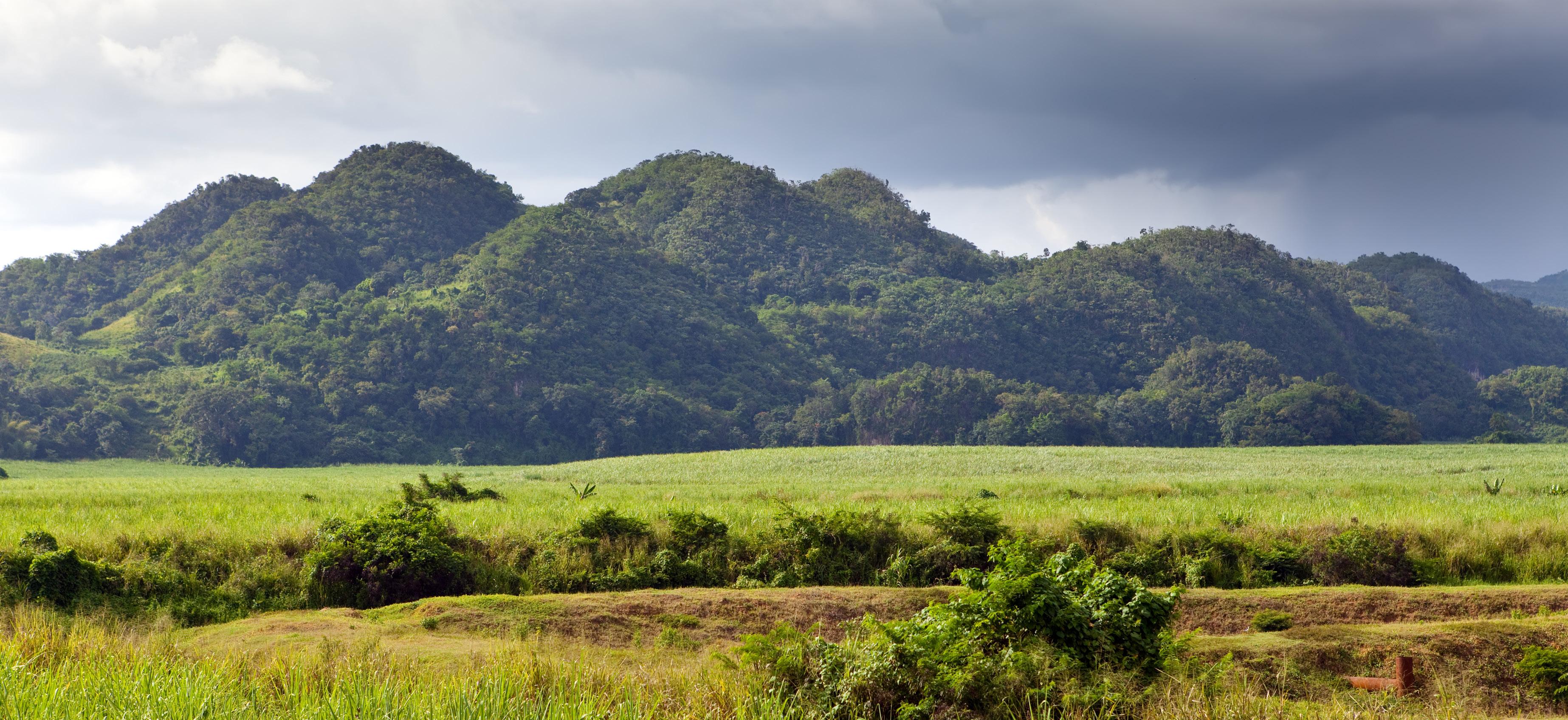
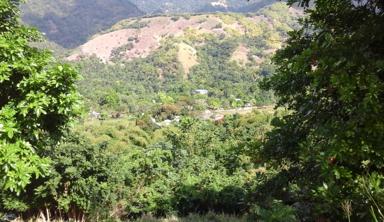
The hillside district of Thornton provides an impressive vista on the surrounding terrain, which starts with a picturesque view of the district of Golden Valley in the valley floor below with the steep mountains rising almost abruptly and stretching northwards as far as the eyes can see. Given their proximity to each other, it is not surprising that the communities of Thornton and Golden Valley are closely connected. One such connection is their public water supply.
Originally, Golden Valley enjoyed access to water through the National Water Commission (NWC) facility located within the district. However, the situation was quite different for their neighbours in Thornton who were without a consistent water supply. Given that the system in Golden Valley had adequate capacity, upgrading and expansion of the water system offered a viable solution to supply water to the neighbouring communities. Water from a spring in Golden Valley is pumped uphill to the water storage facility in Thornton which is then distributed to Golden Valley, Thornton and other surrounding communities. With the success of sub-project measured by the number of connections to the new system, a review is made of life for residents of Thornton and Golden Valley one year after the improved water system was commissioned in 2014.
Description
Thornton and Golden Valley are located in the eastern region of the Parish of St. Thomas. Home to a population of 93,902 residents, the parish with a poverty rate of 14 percent, was identified in the 2012 National Poverty Report as the poorest parish in Jamaica. About 71 percent of its total population live in rural communities.10 The rating of Thornton and Golden Valley as Quartile 4 communities11 place them among the poorest in the country. Farming is the mainstay of both communities.
Generally, St Thomas, like the rest of Jamaica, is characterised by high levels of access to an improved water supply. Of the 93,902 persons who live in St Thomas, 95 percent live in Utility Service Areas (29 percent in Urban area and 66 percent in Rural Area) and 5 percent live in Non-Utility Service Areas. Some 75 percent of rural residents in Utility Service Areas have piped water supply and 74 percent of rural residents in Non-Utility Service Areas use improved water sources (60 percent use public standpipe, 6 percent rainwater harvesting systems, and nine percent trucked water). However, 26 percent of residents in Non-Utility Service Areas in St. Thomas do not have access to improved water sources (8 percent depends on river/lake/spring/pond, one percent on bottled water, and 17 percent on well/other/not stated).
10 Government of Jamaica, 2015. Rural Water Supply Development Strategy January 2015. Website source: http://www.mwh.gov.jm/Library/Public/Rural%20Water%20Supply%20 Ltd/Rural%20Water%20Supply%20Development%20Strategy%20-%20January%2026,%202015.pdf. Downloaded March 20, 2015.
11 A community’s poverty level is the Poverty Map for Jamaica developed by the Planning Institute of Jamaica (PIOJ). The Map ranks communities into four categories (Quartiles), with Quarile 1 being the least poor and Quartile 4, the poorest. The ranking of a community is based on four indicators: 1) percentage of households without piped water; 2) percentage of households without exclusive use of water closet (flushable toilets); 3) percentage of the labour force within the community that is unemployed; and percentage of community population with primary education only.
The Challenge
In 2004, the residents of Thornton listed the lack of a piped water system in the community as their number one development priority. Some seven years later after a previous failed attempt to bring water to the community, the problem remained the same. The Thornton residents relied on rainfall harvesting and trucked water from the NWC and St. Thomas Parish Council. However, the trucked water supply from both sources was generally unreliable, and water quality was questionable because the water was stored in drums located along the side of the road and fully exposed to the elements. Because the drums were normally left uncovered, they created an additional hazard because of the breeding of mosquitoes, which had the potential to cause serious health problems.
Additional relief offered by the Parish Council to install communal water tanks was unsuccessful because filling of the tanks was also unreliable, taking three weeks on average for water delivery. As a result, there were times when residents were unable to access potable water to wash their clothes, to cook and to maintain basic hygiene effectively around and in their homes. At such times, children were unable to go to school, thus affecting their attendance records. Parents also had to give their children money to buy water to drink. Residents frequently sought alternative and sometimes unsafe sources of water to meet their household water needs.
The river water in the gully was considered unreliable and unsafe. Apart from the distance to the source, the constant erosion of banks made it difficult to traverse.
Ms. Dean, a community leader in Thornton, recounted what life was like for residents who had to fetch water, most of whom were women and children. She recalls, “We used to go to the spring and gully and had to walk half a mile to collect water. We usually make two trips per day starting as early as 5:00 am getting water to drink and do some household chores. We could not make more than two trips, one in the morning and one in the evening, because it was real hard to walk back up the hill with a bucket of water on your head. Sometimes, we would make a second trip in the morning to the river (Plantain Garden River), which was one mile away to wash clothes. That was a whole day affair, so we used to cook there one time. We used to go to the river sometimes twice per week.”
The river water in the gully was considered unreliable and unsafe. Apart from the distance to the source, the constant erosion of banks made it difficult to traverse. In addition, the water was untreated and activities around the river unregulated thus increasing the chance of contamination.12 Thornton had reportedly experienced a migration of residents that was directly related to the lack of water in the community.13
Golden Valley on the other hand always had a potable water supply. However, residents remembered times when they would have to go without water for weeks. While their water challenges were less severe compared to Thornton, the frequent breakdown of the old pump meant residents had to collect water for home and other use from alternative sources – go directly to the water intake, use the river, harvest rainwater and obtain trucked water. The trucked water supply was reportedly inadequate and unreliable, and businesses in the community suffered as a result.14
12 Appraisal Report for the Thornton Water Supply Booster Station and Storage Tank Construction sub-project (Ref#072338) 16 pgs. 13 Ibid 14 Jamaica Observer, 2014. Finally! - Thornton residents celebrate new water supply. March 31, 2014. Website source: http://www.jamaicaobserver.com/news/Finally. Downloaded March 20, 2015
The glimpse of the mountains above the Golden Valley community
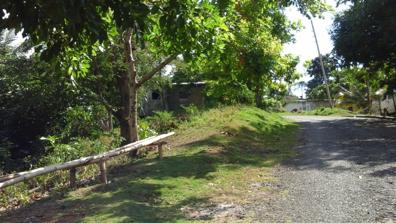
On the way to Thornton Community
The Sub-projects
Under the country’s Vision 2030 National Development Plan15, water is considered a fundamental strategic resource, essential for improved quality of life and for increasing the country’s competitive advantage. It is recognised that water plays a key role in improved sanitation and hygiene to support human health, in the protection of ecosystems and in the reduction of poverty. One of the key strategies in the National Medium Term Socioeconomic Policy Framework (MTF), 2009-201216 and continued in next MTF, 2012-201517 was to ensure adequate and safe water supply and sanitation services to the country’s population. Under this strategy, focus is placed on the development and upgrading of water infrastructure across the island. The objective is to increase the availability of potable water for all Jamaicans, from 73 per cent to 85 per cent by 2020. The Thornton/Golden Valley Water Supply fits into Government’s plans for increasing water to the population of Jamaica.
An initial attempt in the early 2000s to bring water to the community was deemed unsuccessful by residents who noted that they were only able to access water intermittently when the pump was working. As one resident put it, “the pump was always on and off, more off than on.” The objective of the Thornton Water Supply Booster Station and Storage Tank Construction sub-project and the Thornton/Golden Valley Water Supply Completion sub-project was to provide a consistent and safe potable water supply to the residents of Thornton and neighbouring communities. Achieving this objective involved the upgrading and expansion of the existing Golden Valley system and the provision of an ongoing mechanism for preventive and routine maintenance of the water scheme.
The first, the Thornton Water Supply Booster Station and Storage Tank Construction sub-project began in June 2011 under BNTF 5, but a number of setbacks resulted in the need for additional resources (for the purchase and installation of a new pump) to achieve subproject objective. This latter sub-project was financed under BNTF 6. This was done under the second sub-project, the Thornton/ Golden Valley Water Supply Completion sub-project which began in October 2012 and was completed in February 2013. The subprojects totalled US$312,719.40 (JM$36 million), with cash and in-kind contribution of US$12,769.38 (JM$1.47 million) from the community.
The sub-projects were community-based and demand driven with the initial application to the Jamaica Social Investment Fund (JSIF) spearheaded by the Jamaica Agricultural Society (JAS) in response to the outcry of members in Thornton. The sub-project to bring water to Thornton was a collaborative effort involving JSIF, the NWC, the St. Thomas Parish Council and the community of Thornton. From the onset, the community played an active role from conceptualisation to commissioning of the water system. Through JSIF, the community of Thornton was involved in project planning, design, and implementation. A community resident donated the land for the storage tank site and provided assistance in site clearance, security and storage of materials. Community members also gained employment for laying of the pipes in the community and construction of the storage facility. A two-day management and maintenance training programme was also held and involved the participation of service providers and the community members. Originally, the Parish Council was expected to take over the management and maintenance of the system. However, the system is currently being managed and maintained by the NWC.
15 Planning Institute of Jamaica, 20. Vision 2030 Jamaica National Development Plan. 376 pgs. Website source: http://www.vision2030.gov.jm/National-Development-Plan. Downloaded March 20, 2015.
16 Planning Institute of Jamaica, 2009. Vision 2030 Jamaica National Development Plan: Mediuim Term Socioeconomic Policy Framework, 2009-2012. Website source: http://www. vision2030.gov.jm/Portals
17 Planning Institute of Jamaica, 2012. Vision 2030 Jamaica National Development Plan: Medium Term Socioeconomic Policy Framework, 2012-2015. Website source: http://www. vision2030.gov.jm/Portals
Housing and living conditions in Thornton (Photo 1) and Golden Valley (Photo 2)
The Impact
It was estimated that the sub-projects would benefit almost 600 households and some 1,710 persons in Thornton, Golden Valley, Seaforth, Sunning Hill, Montpelier and Prospect. Since the subprojects were completed and the water system was commissioned in March 2014, the access to water has increased for some residents in Thornton. Overall, residents believed that they have benefitted from the sub-projects. Women no longer have to walk excessive distances and spend up to two hours daily collecting water to drink and for household use, nor do they have to spend 5 to 6 hours at the river on washdays. Knowing that one can turn on the tap and water will be there or can choose to bathe and perform everyday water-related household chores at any time of day or night has been a liberating experience for residents from the restrictive lifestyle they once had. There is less time also spent on performing domestic chores as well. Women now have more free time to relax or perform other activities.
Before the sub-projects residents paid the Parish Council a fixed rate of US$6.95 (JM$800) annually. They are now expected to pay a one-time connection fee of US$165.10 (JM$19,000) and US$78.21 (JM$9,000) for the meter and a monthly water bill which on average could range between US$33 (JM$3800) and US$34.76 (JM$4,000), a sum some residents indicated they cannot afford.
Hygiene and sanitation around the home has improved, and the number of indoor bathrooms and toilets has reportedly increased now that there is more water available. Bathing at the river is now a recreational act and more hygienic.
However, not everyone is satisfied now that the sub-projects have been successful in bringing water to Thornton. Having an improved system and increased potable water available has come at a high price to householders, many of whom have indicated that they cannot pay the increased cost. Therefore, while a safe water supply is available, access to that supply by all is questionable. Before the sub-projects residents paid the Parish Council a fixed rate of US$6.95 (JM$800) annually. They are now expected to pay a onetime connection fee of US$165.10 (JM$19,000) and US$78.21 (JM$9,000) for the meter and a monthly water bill which on average could range between US$33 (JM$3800) and US$34.76 (JM$4,000), a sum some residents indicated they cannot afford. To date one year after the commissioning of sub-project, only four households have been connected legally to the new system. Such water charges residents felt should have been discussed from the start of the initiative so that workable solutions could have been factored into the sub-projects.
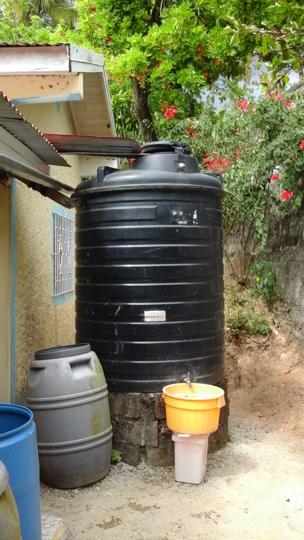
Rainwater harvesting, and to a lesser extent trucked water (at a cost of US$ 2.60 or JM$300 per barrel), remain viable options for some households, even for those with legal connections because of the need to conserve water. The health concerns raised by the use of uncovered water barrels by householders remain a challenge because of the breeding of mosquitoes.
The aftermath of the community meeting with Gold Valley and Thornton residents
In the background, the community water tanks installed by the Parish Council
Key components of the Thornton Golden Valley Water Supply sub-projects:
1. the installation of a pump, pumping unit and motor control centre at the water source.
The Thornton and Golden Valley communities also noted an additional challenge, including the lack of security fence around the storage tanks which makes it possible for anyone to tamper with the system and affect water quality and the distribution of water.
Lessons Learnt
Greater discussions with beneficiaries on the water pricing regimes (connections and rates) should be held from the onset of the subproject. This builds mutual trust between the service provider and communities, promotes transparency and ensures sustained operation of the water supply system.
2. the installation of 14 (7,571 litre/2,000 gallon) water storage tanks, chlorination and sand filtration system and the necessary pipework.
3. the laying of 3,600 metres of 10 millimetre (4 inch) diameter, ductile iron pipes below ground with takeoffs to individual homes.
Water catchment facility in Golden Valley
Mr. Eric Taylor gave an account of what life was like before water came to Thornton. Mr Taylor played a key role in bringing water to Thornton Village.
Storage tank facility, Thornton
Rain harvesting remains an important water source for the community of Thornton.
The initial investment that householders require for the first time water connection seems to be beyond the reach of some poor rural customers. The recently completed Jamaica’s Rural Water Supply Development Strategy (2015) now offers a number of ways that Utilities could assist low-income customers to ensure inclusive, universal access to poor rural households that cannot afford to pay the full cost of service. One such option is for the rural customer who is connecting for the first time and the Utility to reach an agreement that would allow the customer to pay for the connection in installments over an extended period. This provides a solution for the residents of Thornton.
In similar water sub-projects in the future, it may be important for the utility service providers to consider different payment options for the customers (e.g. schedule payment for connections over an extended period of time; offer community rates, etc.) or the cost of meters and connections be factored into project design. Economic analysis during project planning should also be undertaken to identify the various costs to beneficiaries.
While the installation of water meters usually guarantees the adoption of water conservation practices, the type of conservation methods and its impact (for example, the impact of improperly installed rainwater harvesting systems on public health) must be considered. Rainwater is an economical alternative to public water, especially for exterior water uses. It is predicted that it would become an important
alternative water source as the signs and impacts of climate change deepens (increased drought and more frequent intense rainfall). In communities such as Thornton where rainwater harvesting is a tradition and is likely to remain a viable water conservation practice, it may be important to have a more integrated approach to the design of community water systems and therefore factor it in subproject design. This would ensure that proper treatment and storage of the harvested rainwater be considered and implemented along with the upgrading or development of a communal water system.
Residents continue to store water in uncovered barrels.
School in the Golden Valley
Ms Jean was also instrumental in bringing water to her community. Her household is one of four households with a legal water connection.
SAINT LUCIA
The Issue
The simply beautiful island of St. Lucia recognized for its landscape of gorgeous beaches and the majestic Pitons,18 like most small island developing states in the Caribbean is not void of the challenges of social inequalities. Located in one of the country’s main entry points by land and sea is the quaint and vibrantly bustling town of Vieux Fort. Behind the scenes, and probably unnoticed by visitors upon entry, Vieux Fort houses some of the poorest households in St. Lucia. The country’s latest Poverty Assessment Report revealed the town to have large concentrations of the indigent poor. The highest concentration of indigent poor males above the age of 15 can be found in Vieux Fort, accounting for an estimated 40.3 percent of the total. Ranking second amongst the country’s female indigent poor are the women of Vieux Fort with a 21.8 percent concentration, while the children of Vieux Fort are placed third at 19.5 percent comparatively to other indigent poor children in the country (Kairi Consultants Ltd, 2007). Located south of Vieux Fort are the residents of Bacadere, the beneficiary community researched for this case study.
The Challenge
Living closely-knitted together with very little spacing between the houses, the unplanned or spontaneous settlement of Bacadere is made up of approximately 200 households. Bordering the community in the west is a lagoon that flows into the sea. Bacadere is mainly accessible by footpaths; described as dusty in the dry season and
muddy in the rainy season, prior to the footpaths and drains project. Residents have experienced the lagoon flowing into the residential area during high sea levels and the lack of drains along the footpaths made the community additionally susceptible to flooding, thus resulting in stagnant water and dangerously inaccessible footpaths. This inaccessibility was extended to the police, fire and ambulance services, leaving the community extremely vulnerable to disasters during emergencies. Wastewater was often seen running off the footpaths and stacked debris along the footpath was a regular occurrence in the rainy season posing environmental and health hazards to residents.
One of the many footpaths built by the sub-project
Case 1: Walking in Style – Bacadere, Saint Lucia – BNTF 4
A joint clean-up venture by the Solid Waste Management Authority, the Office of the Prime Minister and the Saint Lucia Basic Needs Trust Fund, led to the removal of an estimated 150 cubic yards of garbage.19
Residents had to be given ‘piggy back rides’ to access the main road leading in and out of their community. For an indigent poor community with 12.9 percent males and 4.8 percent females unemployed (Kairi Consultants Ltd, 2007, p. 59), residents had to expend a sizeable amount of household income on shoes as the conditions of the footpaths especially in the rainy season exacerbated the wear and tear on shoes. Women acknowledged having to leave the house with two pairs of shoes and the wearing of high heels in the community was a luxury they could not afford, due to the conditions of the footpaths. The hope of a new Bacadere with accessible footpaths, a promise made to community members by the Vieux Fort Member of Parliament, had the chance of being fulfilled when in April 1999 the “Bacadere Footpaths and Drains” project proposal was submitted to the Saint Lucia Basic Needs Trust Fund.
The Sub-project
The Caribbean Development Bank along with its partners, the Canadian International Development Agency and the Government of Saint Lucia - the main funders of the sub-project, agreed for work to commence on May 2000 to build 10 footpaths and 13 drains in Bacadere. This was approximately 2,160 meters (7,000 feet) concrete footpaths and 2,455.7 sloped to U or V meters drains. The initial project had to be adjusted to redirect one of the drains to the river, construct an additional concrete drain to limit the overflow of water onto adjacent lots and a footpath slab for a newly constructed laundry facility. This led to an additional 55 feet of drainage being added to the initial proposal request. Thus, the Bacadere Footpaths and Drains sub-project amounted to US$131,086.14 with an overrun cost of US$46,358.86.
The Impacts
The aim to improve the living conditions of residents by providing accessible pathways, addressing the issue of flooding and providing adequate manageable drainage from households, was expected to ameliorate the quality of life, social living standards and create a healthier environment in Bacadere.
Four years following the implementation, the residents, although they could not recall the planning meetings held to discuss the sub-project, had very fond memories of the spirit of volunteerism generated by the sub-project and the employment opportunities it offered the men in Bacadere. Given the high rate of unemployment among males in Vieux Fort, the sub-project expended 45 percent of the sub-project costs on labour, providing an estimated 470 working man-weeks to a majority of the men in Bacadere including workers from the environs of Vieux Fort. A few women were employed as ‘water girls’ with a number of persons volunteering to get the job done.
The sub-project has enhanced the economic activity in the community. A local handyman acknowledged working along the footpath and fixing electrical equipment and cars for his clients who previously could not park near his shop. The development of the footpaths has led to the opening of two mini grocery shops and a liquor store in the community.
The owner of the liquor store attested to his shop being a reality due to the construction of the footpaths. His location had experienced extreme flooding prior to the construction of the footpaths and drains. Entrepreneurs had to pay couriers to transport goods to their shops prior to the construction of the footpaths and drains. With the new development, monies spent on courier services can be used as savings for residents and entrepreneurs.
19 Extracted from page 2 of the Bacadere Clean Up Report produced by the Saint Lucia BNTF Office, October 2000
Cleaning up exercise in Bacadere
Village electrical workshop
Specific health data for the Bacadere community were unavailable. However, residents affirmed to experiencing fewer cases of mosquito-borne diseases due to the significant decrease in stagnant water in the community which facilitated mosquito breeding. When residents encounter emergency health care needs, ambulances can gain access into the community. Sanitation within the community has improved. Garbage vehicles have access to the community enabling residents to dispose of their garbage at regular intervals. Wastewater from households is efficiently disposed of in the constructed drains leaving the community free of stench and unsightly waste residues. The footpaths and drains have given residents a sense of selfworth and pride in their community. Residents host block parties, engage in beautification projects to plant flowers, paint their walls, initiatives which previously could not have been done. While the footpaths and drains lack adequate construction joints and have insufficient compaction at the base, residents are satisfied with their handiwork and the sense of security it offers them, especially since the neighbourhood is now accessible to the police.
In a community where houses are in close proximity to each other with extremely limited open spaces for children to ride bicycles and play, the footpaths have created an area for recreation where children play and have fun. Following the handing over of the sub-project to the Government and people of Saint Lucia, the state maintains the sub-project by providing the necessary means for the upkeep of the footpaths and drains including garbage collection in the community. Though unintended, the construction of the footpaths and drains created the opportunity for the Saint Lucia Social Investment Fund, with funding from the Caribbean Development Bank, to address the drainage of the overflowing lagoon. In 2015/2016, a retaining wall will be built along the banks of the lagoon to halt the overflow of the lagoon during high tide.
Lessons Learnt
The evident benefits of construction projects are easily recognized in communities and tend to be appreciated by all. The absence of a ‘bottom-up’ approach, especially in the planning and project design phase, can lead to additional costs being expended. Although having the political will can facilitate implementation, local knowledge from the community cannot be underestimated. Harnessing this knowledge by sharing project plans with stakeholders can guide the process and limit construction cost overruns.
Construction projects in heavily segmented labour markets tend to be financially more beneficial to men than to women during the implementation phase. In order to promote gender equity and equality, efforts to bridge this gap should be strategically taken and shared with consultants and contractors as they proceed with the hiring of workers.
Recommendations and Conclusion
The residents of Bacadere are very pleased with the construction of the footpaths and drains in their community. Stories of family members being carried across muddy flooded footpaths sound like fables to the younger generation. Leaving home with two pairs of shoes and an extra bottle of water to wash one’s feet are events of the past. Today, residents enjoy walking in style in any pair of shoes they choose, not worrying about their shoes getting muddy or falling apart in flood waters. Two key recommendations coming out of this experience:
• Involve stakeholders and beneficiaries in all phases of the sub-project cycle. Their involvement should be well documented and easily accessible when needed.
• Improve gender equality and equity requirements in construction projects: this can also include gender sensitization training for consultants and community members during sub-project-planning phase.
• Strengthen the collection of community baseline social statistics to enhance impact evaluation results of community sub-projects.
The footpaths make for easy walking and access in Bacadere.
Works Cited
Baksh, R. K. (2014, May). Caribbean Development Bank. Retrieved Feb 23, 2015, from http://www.caribank.org/uploads/2014/12/ CGA-Dominica_Vol-I-July012014-FINAL.pdf
Commonwealth of Dominica. (2006). Medium Term Growth and Social Protection Strategy. Roseau: Ministry of Finance.
Free Trade Areas of the Americas. (2008). National Strategy for Trade Capacity Building in Saint Vincent and the Grenadines. Ministry of Foreign Affairs, Commerce and Trade , Trade Policy. FTAA.
Government of the Commownwealth of Dominica. (2006). National Report on the Development and State of the Art of Adult Learning and Education, Saint Vincent and the Grenadines. Roseau: Ministry of Community Development, Gender Affairs and Information.
ILO. (n.d.). International Labour Organization. Retrieved March 23, 2015, from Cooperatives: http://www.ilo.org/empent/units/ cooperatives/lang--en/index.htm
Kairi Consultants Ltd. (2007). Trade Adjustment and Poverty in Saint Lucia. Caribbean Development Bank.
Simmons, A., & Jackson, S. (2008). National Report on the Development and State of the Art of Adult Learning and Education (ALE), St Vincent and the Grenadines. Government of Saint Vincent and the Grenadines.
The Issue
The province of Laborie is home to a population of over 7,000 people and is located in the south western area of Saint Lucia. It is comprised of the communities of Augier, Banse, Gentil, Laborie Village, Mc. Diamed, Sapphire and environs. The district is 70 km from the Capital City of Castries and roughly a 15 minute drive away from the town of Vieux-Fort, on the road to Soufrière. Poverty levels in the area have varied from community to community, with Laborie Village experiencing poverty of 42.1 percent, in the last Survey of Living Conditions conducted in the last decade. This was among the highest for the island, but Park Estate was even higher (Kairi Consultants Limited, 2007).
It is acknowledged that more integrated and targeted development may be one of the most appropriate approaches to address the challenges of poverty and unemployment which prevailed in the district and environs. On the basis of a strategic development plan done by the Community in 1999, the Saint Lucia Social Development Fund consulted with the Anse Kawet Craft Association, the Laborie Development Foundation and the Laborie Village Council to identify the most pertinent needs of the community. A number of projects were identified for implementation. However the majority did not fall under the aegis of the St. Lucia Social Development Fund. Ultimately the promotion of the development of craft activity via the training of residents and the construction of a Craft Centre met the criteria of the BNTF.
Together with the Arts and Craft Centre, training in craft was expected to contribute to decreased unemployment, decreased poverty, and sustainable usage of the resources of the areas and greater sales of
Case 2: Water –The Case of Rudy John Beach Park and Craft Centre, St. Lucia – BNTF 5
ornamentals and craft products. Furthermore, given the construction and sustained success of a number of hotels in the south of the island, along with other tourism developments, stakeholders in Laborie believed that investing in such a project would leave the community poised to benefit substantially from the expected expansion of the tourism industry.
Description
The Craft Centre occupies a site of 43,560 square feet on the main road linking the village with Vieux Fort in the south-east and Soufrière in the south-west of St. Lucia. The architecture reflects detail consistent with art and craft, and the paint selection attracts attention while still blending in with the natural surroundings. There is seafrontage which lends to the beauty of the facility. There are outlets for the display and sale of craft goods, and office for the Manager and a small museum which houses relics and artefacts of the area, dating back to the period of early colonial settlement. There are toilets, bath and cubicles which serve as a change area for visitors wishing to use the beach or a swim in the bay famed as the nesting ground for turtles.
The built facilities form a semi-circle rim around part of a court-yard that looks out to the bay or sea-front. This open space is paved and can easily accommodate open-air events like the St. Lucia Jazz Festival or community events where large numbers are involved. It is now adapted for wedding ceremonies and receptions.
The Sub-project
Conducted under BNTF 5, the sub-project consisted of two components, skills training and infrastructure. The sub-project was originally conceived by the Anse Kawet Crafters and developed into a project for funding by the Laborie Foundation. The subproject commenced with a series of Craft Skills Training Workshops conducted by the Anse Kawet Crafters. BNTF agreed to provide financial assistance to the Anse Kawet Craft Association for the provision of equipment, materials, emoluments, stipends and travelling allowances to complete the sub-project. The series of workshops included training sessions on Starting a Craft Business; Sewing, Knitting and Crochet; Basketry; Flower Making and Floral Arrangement; Bamboo and Wood Craft, and Culinary Seafood Art.
The sub-project also involved the construction of four units, two of which were to provide stalls and the other two to serve as an administrative block inclusive of a training room and a toilet block. The sub-project involved extensive civil works with the construction of a retaining wall, a courtyard and a parking apron. It was expected that the sub-project would serve as a retail outlet for craft produced in the Laborie community and even for craft artisans in the southern region of St. Lucia, as well as provide space for a nursery for the community.
Sub-project Funding
The original project cost in the approved proposal was summarised as follows:
However, the original sub-project was later revised and the revised contract amount for the project increased to EC$1,381,605.72 (US $511,705.82), possibly because of the cost over-run on the foundation.
Examples of items found at the craft centre
Examples of items found at the craft centre
The Impacts
Prior to the construction of the centre, crafters would sell their products door to door through personal networking. The completion of the centre has provided a well-situated location for crafters in the community to display their goods. The optimal positioning of the craft centre has resulted in increased supply and higher sales of craft and the facility has been utilised by other community groups involved in the creative arts. There is also increased demand as information spreads about the location.
During the construction of the beach park a number of short term jobs were created for close to 100 individuals in the south western region. Since completion, not only have the members of the Anse Kawet Association obtained a fixed and strategic location for the sale of their craft products, but also the wider community has and continues to enjoy the benefits of the arts and craft centre. The construction of the Craft Centre has also contributed to increased economic activity in the village as a whole. Since completion, the centre has created full time employment for 10 persons from the south western area of the island in addition to the Artisan Crafters.
Furthermore, the craft centre is used as a venue for a range of events including Parties, National Day Events, Weddings, and more importantly the St. Lucia Jazz Festival. Its use as a venue for the Jazz Festival has raised the profile not only of the village but also the island at large. Prior to the construction of the centre there was minimal tourism activity in the district. Now with arrangements with a local travel agency, tourists are being brought to Laborie specifically to view and purchase the craft products available at the centre. The centre has also become a recreational area for persons within the community.
One critical factor that affected the potential impact of the centre was the downturn in the tourism sector following the global financial crisis of 2009. It was expected that the completion of the craft centre would coincide with the building and opening of additional hotels in contiguous communities. However, the decline or slow growth in personal incomes in the main source markets has led to reduced tourist arrivals and the shelving or postponement in the building of an additional hotel plant.
One unintentional cost of the sub-project has been the surface runoff from the main road which traverses the perimeter of the site at a higher elevation. While the structure itself is solid, surface water coming from the road side and the hills across the road could potentially pose a challenge of erosion in the future if not effectively managed.
Indeed, the initial design did not take full account of the risk of erosion and the geotechnical analysis under-estimated the risk of erosion. During construction, the engineer had to alter the foundation plan. Over 50 percent of the planned project costs had to be reallocated to alteration of the foundation, thus occasioning massive cost overrun, and a need for supplementary financing to complete the building. In spite of this, on the basis of certain assumptions made about income flows to the persons directly employed as a result of the sub-project, an internal rate of return as high as 18 percent might have been generated. With less liberal assumptions, the sub-project might still yield an internal rate of return well above bank rates and thus, in excess of what might be used as the rate of discount for development projects.
Two views of the front of the craft centre
Lessons Learnt
There are a number of lessons that derive from this experience. Firstly, construction in much of the Caribbean has to take account of heightened environmental risks as global climate change has changed the parameters in physical planning in ways not readily recognised by the engineering community. The environmental impact assessment and the geotechnical analysis did not take full account of the risk of erosion in a foothill area of the Laborie area, that is now subject to higher rainfall and greater run-off of water than might have been the case when the main part of the town was being built out more than a century ago. In the planning of physical facilities, attention has to be paid specifically to the matter of global climate change and risks of environmental events that might occur more frequently than in the past.
Another lesson from the exercise is the need to recognise the close link between economic activity in St. Lucia and changes in the rest of the world and in the international economy. Indeed this has been the lesson of the global economic slow-down. Crafters in Laborie could hardly contemplate a tourism sector going into precipitous decline, and with that, a reduced possibility for demand for their products. It is unlikely that in the preparation of the proposal for this sub-project that the assumptions about demand for craft goods might have been extended to an analysis of international tourism on the economy of St. Lucia.
Just as importantly, there would have been need to take into account in the training of craft artisans the ever present threat of competition of craft goods from China that might arrive at the market place in St. Lucia and be available for sale at lower prices while yet serving as memento for visitors to the island. Craft artisans need to examine constantly how to maintain viability through competitive pricing with products from abroad, and measures for differentiating their products as genuinely local and as such, fully differentiated from the Chinese product.
Another lesson that has been learnt from this project is the adaptability that the management has shown in adjusting to a different reality than might have been contemplated when the subproject was conceived. The facility is now part of the entertainment infrastructure, utilised for the St. Lucia Jazz Festival, for the staging of open air community events, and weddings and in domestic tourism. As part of the entertainment infrastructure, it offers a product that is different to Gros Islet in the north of the island which has become associated with open air weekly parties. The Rudy John Park is seen as a more sedate offering available for plays and targeted at audiences seeking less noisy and boisterous entertainment.
Recommendations and Conclusion
Both men and women benefitted in different ways from this project based on traditional gender roles. There were many more jobs created for men than for women in the construction stage, even though such a large scale construction might have afforded the opportunity for women to secure training in construction skills that might have stood them in good stead following completion of the building.
Once the structure was completed, it is mainly women that have secured employment and income from the sale of craft goods and the running of the craft supply outlets at the facility. Greater attention might be paid to training young men in artisan activities.
The Government has had to step in to support the sub-project by meeting the maintenance costs, and thus transforming the sub-project from a community project to a national project. While this might have resulted in a necessary subsidy to the Laborie Community, it is not sufficient if the full costs of maintenance of the facility are not factored into the annual budget and the facility is allowed to deteriorate slowly. Its location makes it subject to high maintenance costs in controlling erosion. However, there is a large public goods element in so far as Rudy John Park stands out as a unique and idyllic facility in one of the poorer villages of St. Lucia.
It has lifted the profile of the village itself and has rendered the entire area a distinct product in the tourism industry of St. Lucia. Priority should be given to maintenance at the site as is done for museums and other national treasures and assets that are highly valuable.
The societal benefits extend much beyond the immediately measurable benefit of incomes of craft artisans and other operatives who earn an income from the presence of the facility. This would be important in the conduct of a more complete benefit-cost analysis
Entrance to the Rudy John Beach Park and Craft Centre,
Saint Vincent and the Grenadines
The Issue
The thirty-two-island nation of Saint Vincent and the Grenadines, situated in the Eastern Caribbean, is economically known as one of the agricultural-producing countries of the region. Famously known for its banana industry, global economic shocks, natural disasters emanating from hurricanes, loss of preferential markets in Europe, and the effects of agricultural diseases have led to a decrease of the share of agriculture in the nation’s Gross Domestic Product (GDP). “Whereas agriculture and the export of bananas accounted for approximately 21.2 percent of the total GDP in 1990, by 2000 agriculture’s contribution to GDP was only 9.8 percent.”(Free Trade Areas of the Americas, 2008, p. 6).
It was on the heels of this economic crisis, and a nationwide effort to equip unemployed adults with literacy skills, that a select group of residents from the New Grounds, Adelphi, and Chapmans environs decided to continue along the educational path inspired by the Literacy Crusade Programme and started a skills training programme.
The Challenge
Economically displaced by the declining banana industry, the former agricultural workers, basically unemployed except for some single mothers preparing snacks for sale; engaging in minor craft work and occupying their time with backyard gardening, approached their literacy coordinator to inquire about alternative productive means
of employment. The idea, shared by a member of the group, of a skills training programme that will aid participants to access training for employment was appealing. The group of adults were informed of possible funding opportunities from the Basic Need Trust Fund (BNTF) office however, to their dismay, accessing funds was limited to formally established groups.
Case 1: The Ageless Classroom – NACALCOG, Saint Vincent
Farmer in Adelphi, one of the communities where persons in the NACALCOG organisation reside
Determined to see their idea birthed into action, the select group of adults decided to formally establish themselves as a communitybased organisation. Using the initials of their residential areas, (N for New Grounds, A for New Adelphi and C for Chapmans) the select group of adults formally established themselves with the Government authorities and called themselves the New Grounds, Adelphi Chapmans Adult Literacy Coordinating Group (NACALCOG). The new identity of the group expedited their efforts and by 30 November 2007 a sub-project proposal was submitted to the Saint Vincent and the Grenadines BNTF Office.
The Sub-project
Implemented in 2012 under BNTF 5, the objective of the skills training sub-project was to raise technical and literacy skills levels by enhancing the education and knowledge base of young adults between the ages of 15 and 35 to access training for employment in the areas of electrical installation, electronic repairs, garment construction and plumbing. Participants were also given the option of choosing supporting courses in social, interpersonal, attitudinal, entrepreneurial and business skills. Subsequent to a pre-selection process, 60 persons were selected, with 15 persons assigned to each course. The composition of the training courses and their respective costs were as follows:
only count on the anecdotal evidence provided by the participants interviewed. Despite the low retention rate in electrical repairs and plumbing, which were attributed to pregnancy, migration, loss of interest and employment opportunities, seven women and two men became gainfully employed in other disciplines following the skills training programme. Beneficiaries interviewed during the evaluation process had limited information regarding the economic activities of the other members of the course. Facilitators for the course noted challenges with the delivery of tools and the inconvenience of practicum exercises located at a second site for the plumbing class.
The 100 percent retention rate of the garment construction course is commendable. Acting on recommendations from the BNTF office the sewing group registered themselves as a legal entity in 2012 to operate under the Cooperative Society Act 12 / 2012 of Saint Vincent and the Grenadines. The Co-operative comprises 15 women and 5 men; the positions of President, Vice President and Treasurer are held by men.
100%
RETENTION RATE OF THE GARMENT CONSTRUCTION COURSE IS THE IS
COMMENDABLE
The duration of each course was over a 5-week period, with each component taught twice a week for three hours. Participants in the garment construction course added an additional tutorial day in order to complete the curriculum within the stipulated 5 weeks.
The Impacts
At the end of the five-week training period, the skills training programme graduated 47 adults, 10 from plumbing, 15 from garment construction, 12 from electrical installation and 9 from electrical repairs. In the absence of a tracer study, the evaluation could
The establishment of the Cooperative has kept the group together and enhanced their economic activities. Although the NACALCOG Co-operative (Co-op) is yet to break even and make profits, the seven members of the sewing group can earn US$14.80 a day generating an income which they use to support their families. Even though the sewing group is made of a select group of women who are members of the Cooperative, their activities impact over 500 persons in Saint Vincent and the Grenadines. The NACALCOG sewing group is the main supplier of uniforms for approximately seven schools contracted by the Ministry of Social Services to provide school uniforms for needy students in the various schools, the group is employed year-round.20 Although the quantitative measure of success is unavailable, the training created a sense of pride in participants and has reduced poverty for the group of women involved. Even though participants in the other skills training courses might not be formally employed, the skills gained allows them to apply the knowledge gained at home on jobs, which in the past would have been contracted out hired help. Happiness and an improved self-esteem are two indicators of success which beneficiaries mentioned, as very important to them compared to financial gains.
20 Schools identified by beneficiaries include Diamonds, George Newtown, Lowmans, Lauders, George Town Secondary, including, Both Secondary and Primary
The Adult Education Division had set a goal to train 1500 adults nationally. By 2014 the NACALCOG skills training programme made a 3.13 percent contribution towards meeting the national adult education targets by graduating 47 adults.
The Division of Adult Education and the Cooperative Department are working closely with the group to augment the skills of the group by sewing other products and developing the Cooperative into a profit-making venture. The group due to their current administrative expenditure is yet to experience a profit, a fact the Cooperative Department attributes to lack of training in pricing.
The NACALCOG Co-op together with the two government departments hopes to be successful in their application to the BNTF for funding in 2015. The aim is to augment the skills of the Co-operative to Caribbean Vocational Qualification (CVQ) certificate level, enhance skills in managing and operating a Co-operative including business skills that will assist the group to develop a business plan to secure a permanent working space. The group currently shares the space of a Government Learning Resource Centre.
Lessons Learnt
The importance of a tracer study as a vital follow-up action of skills training programmes is evident. The lack of information on all participants who had completed the course makes it difficult to present a comprehensive analytical impact evaluation.
Although the activities of the NACALCOG Co-op can be improved, their activities affirms the observation of the International Labour Organisation that ‘cooperatives have a proven record of creating and sustaining employment.’21
Recommendations and Conclusion
• Establish comprehensive data collection mechanisms to facilitate tracer studies
• Tracer studies should become key follow-up components of BNTF Skills Training Programmes
• Strengthen the collection of accurate sex disaggregated data to facilitate gender analysis of sub-projects and effective targeting
• Enhance skills training programmes with internships as this will facilitate work experience in the chosen field and will motivate participants to establish themselves in their newly acquired skill.
The NACALCOG Co-op promises to be a policy action mechanism to reduce poverty, enhance economic activity to fulfill the mission of the Adult Education Division, which is, ‘to assist in the socioeconomic development of Saint Vincent and the Grenadines by facilitating the education, training and developmental needs of all persons over the age of fifteen years old who are outside of the regular school system’. Thus, the ageless classroom will continue to produce productive citizens with sustainable livelihoods to advance nation building in Saint Vincent and the Grenadines.
21 See ILO website http://www.ilo.org/empent/units/cooperatives/lang--en/index.htm accessed 24 March 2015
NACALCOG women at work
Uniforms produced by NACALCOG
Works Cited
Baksh, R. K. (2014, May). Caribbean Development Bank. Retrieved Feb 23, 2015, from http://www.caribank.org/uploads/2014/12/ CGA-Dominica_Vol-I-July012014-FINAL.pdf
Commonwealth of Dominica. (2006). Medium Term Growth and Social Protection Strategy. Roseau: Ministry of Finance.
Free Trade Areas of the Americas. (2008). National Strategy for Trade Capacity Building in Saint Vincent and the Grenadines. Ministry of Foreign Affairs, Commerce and Trade , Trade Policy. FTAA.
Government of the Commownwealth of Dominica. (2006). National Report on the Development and State of the Art of Adult Learning and Education, Saint Vincent and the Grenadines. Roseau: Ministry of Community Development, Gender Affairs and Information.
ILO. (n.d.). International Labour Organisation. Retrieved March 23, 2015, from Cooperatives: http://www.ilo.org/empent/units/ cooperatives/lang--en/index.htm
Kairi Consultants Ltd. (2007). Trade Adjustment and Poverty in Saint Lucia. Caribbean Development Bank.
Simmons, A., & Jackson, S. (2008). National Report on the Development and State of the Art of Adult Learning and Education (ALE), St Vincent and the Grenadines. Government of Saint Vincent and the Grenadines.
Case 2: The Top Hill Road – A Game Changer for Top Hill
Residents, Biabou, Saint Vincent and the Grenadines – BNTF 5
The Issue
The Top Hill Road is a key communal asset which provides vehicular and pedestrian access in and out of the community. Its construction symbolises a significant and immediate change in the quality of life and wellbeing of residents who before its development faced hardships and high cost in transporting goods and services to their doors. Although some may say that the roads are not always a good thing, the people of Top Hill would argue otherwise.
Description
Top Hill forms part of the village of Biabou, located 14 miles from Kingstown and south of the community of North Union, along the windward coast of Saint Vincent. Biabou is a windswept coastal village situated at the foothill of the Adelphi Hills, which rise inland towards the northwest. Top Hill is located on the slopes of the central hill overlooking the village centre. Of the estimated 1,055 women and men living in Biabou, about 296 reside in Top Hill.
Traditionally, Biabou is a farming community. This tradition, though weakened, remains fairly strong today, despite visible signs of the negative fallout experienced with the decline of the banana industry. Many of the farming plots bordering Top Hill have long since been abandoned with only a few fields currently in production.
Essentially, agriculture is generally subsistence in nature, with excess produce exported or sold on the local market. Many former banana workers find sporadic unskilled and semi-skilled employment in the construction industry (some on the construction of the international airport), but unemployment in this village remains disproportionally high.
Biabou falls within the census region of Bridgetown, which has a total population of 6,754 persons (3,293 women and 3,461 men)22 Based on the number of registered unemployed persons in Biabou, unemployment was estimated about 35 percent, at 374 persons (233 women and 141 men). The unemployment rate recorded for Top Hill was about 37 percent (68 women and 42 men).
The Challenge
Residents recalled the conditions they faced daily before the road was constructed. The unpaved road, which was the main access into Top Hill was in a dilapidated condition which made it hazardous for residents and visitors to traverse, particularly at nights and during the wet season. Poor drainage and excessive runoff had resulted in the presence of deep gullies in the roadway and undermined and exposed the foundations of the concrete retaining walls and fences bordering the road. One resident described the previous road as “hills and gutters, a dig up pathway difficult to walk especially when wet.”
Home construction posed a major laborious challenge and carried an additional cost to homeowners who had to pay people to carry material to the construction site. In most cases, it is family members, including children, who worked long hard hours to carry the construction material.
There are substantial acreages of agricultural lands at higher elevations at the end of the road. However, farmers’ access to these lands was difficult. Transport of farm inputs into and produce out of the fields along the road meant a lengthy and laborious affair that would have affected farm productivity, produce quality and farmers’ income, particularly on wet market days.
The Sub-project
Consequently, walking proved to be challenging when it rained and the roadway became wet and slippery. For the adults (especially the elderly) and children from Top Hill, the journey to and from their homes was longer. Personal safety was a serious issue with many residents subjected to falls and injuries when traversing the road. Also quick evacuation out of the community was problematic. Children reportedly faced the humiliating experience of going to school with muddy clothes or forced to return home for a change of clothes. Normally, children from the upper reaches of the community would walk barefooted, either part of or all the way to school at which time they would wash their feet and put on their shoes. Because of these conditions, it became the norm for children from Top Hill to be late for school on rainy days. Adults were not spared similar experiences, which sometimes resulted late arrivals or absence from work.
Vehicular access was impossible and represented a major limitation to development of the community and the wellbeing of community members. Medical home care and access to security services (police and fire) and to ambulance services were restricted. Those in need of attention would have to be carried by family and neighbours to and from the point where transportation could be accessed. Out of necessity, householders burnt their garbage, an act which is hazardous to human health, or carried their garbage ‘off the hill’ to the nearest point to be collected.
“… and when people get a barrel from their family, they used to empty it at the bottom of the hill and then get people to take the things up to their house…”
The objective of the sub-project was a construction of the all-weather commune-level access road, which links the Top Hill Community of Biabou to central Biabou. The sub-project which commenced in 2011 involved the construction of 679 meters (2,228 feet) long Top Hill Road which was done in two phases. Although, the construction drawings specified a road width of 12 feet, the actual width varies from 3.5 meters (12.8 feet) at the entrance of the road to 5.2 meters (17.1 feet) at several sections along its length.23 A recent evaluation of the road rated the asset as generally adequate.24 Its construction has provided residents with easier access and allows for the flow of goods into and out of the community and to market.
“The overarching developmental aim of the sub-project was the facilitation of poverty alleviation by the removal of the socioeconomic constraint to further development in the community imposed by the lack of an adequate all-weather commune-level access road. The provision of a proper access road in this community should contribute significantly to new (even if limited) economic dynamics in the community”
The road, drains, culverts and curbs were constructed out of reinforced concrete, while the retaining walls to the top and bottom of the embankments were constructed out of reinforced concrete block work with the cores of reinforced and filled solid with concrete. With the exception for the last home in upper Top Hill, property access was constructed where required. Drainage was achieved through the construction of curb and slipper drains along the upper embankment and at the edge of the carriageway and culvert crossing.
23 ECMC Ltd, 2015. Regional Condition Survey of BNTF’s Infrastructure Sub-Projects: Top Hill Road, Charlotte,St. Vincent and the Grenadines - Conditions Survey and Beneficiary Assessment. Prepared for Caribbean Development Bank. 24 Ibid.
Sub-project Sign located at the start of the Top Hill Road, Biabou
The road was developed in two phases, at a cost of US$494,674.46 (EC$1,336,958). However, the support and cooperation of residents was the key factor determining the success of the sub-project, which many felt was very difficult, if not impossible, to complete. From the onset, the community was on board with the sub-project and participate fully in the preconstruction meetings held by the Basic Needs Trust Fund (BNTF) Office. Some residents readily donated land to the cause. Community members were also actively involved in the development of the road as sub-contractors or labourers and semi-skilled workers. Noteworthy was the contribution of Ms. Josephine Peters (Mimi) who had to have her kitchen relocated; Mr. Pope whom the contractor had to excavate up to three feet into his property; and Ms. Cleo Rogers who gave up two feet of her property to the construction effort.
The Impacts
Relevance to National Development Goals
Over the years, improvement of the country’s road network has been identified as main priority in the country’s development agenda. Although prepared during the road’s construction phase, the country latest National Economic and Social Development Plan, 2013202525 reiterates the Government’s commitment to rehabilitating and upgrading roads and bridges and routinely maintaining and expanding the road network. This also includes the upgrading of minor/access roads. This sub-project supports and complements Government’s access road upgrading efforts, and if extended in the future can become a strategic connector to other agricultural communities.
Poverty reduction is also the main goal of this sub-project and this is in keeping with Saint Vincent and the Grenadines national and international obligations to improve the living conditions of its citizens.
Socioeconomic Impacts
The direct beneficiaries are the residents of Top Hill located along the road (including adults, children and the elderly), and the farmers whose plots are situated along and at higher elevations beyond the reaches of the road. Other direct beneficiaries are visitors to the neighbourhood or the individuals who provide public sector services and private sector goods and services to the households along the route.
For the residents, the road represents a major game changer in the social dynamics of the community and has definitely improved the current and future outlook of residents. If one could measure level of satisfaction by the expression of relief and gratitude of individuals, then the construction of the road was a great success. Those interviewed recalled the years of hardship and the many ways in which their lives were made easier. The sense of community pride in the road was evident as they spoke about ‘their road.’
The simple act of walking and travelling is now easier along the Top Hill road for both parents and children alike. One woman indicated that now she could “walk the road anytime of day and night and remain clean.” Yet another, who recalled her persistent lateness and absence on rainy days from her workplace outside the community, noted the improvement in her attendance record because of the new road.
Similarly, children now attend classes clean and on time. The school has reportedly seen an improvement in attendance and punctuality, while teachers are no longer required to “make concessions for Top Hill children to ensure they keep them abreast of their school work.” Restrictions placed on older students attending after school and evening training programmes are now removed, although other factors may still restrict their participation.
“God bless that road. It changed my life. I am a home owner at 32.
Residents spoke about attending church and social events without having to “stop by Ms. Mimi to wash their feet and to put on their shoes.” Top Hill itself now attracts other social activities that were not previously possible. It is one of the preferred routes used by teachers to take kindergarten and Grade I children on their Friday morning walks to observe community life. Top Hill has become a favourite for a group of teachers who exercises together after school.
Potential homeowners and householders doing home repairs now have their construction material delivered directly on site. Since the construction of the road, two additional homes have been built along
A view of the Top Hill Road
its route, and in both cases, the new homeowners indicated that the road was the prime reason for doing so. One new homeowner recalled that she purchased the land cheaply (at US$0.46 (EC$1.25) per square foot) more than five years ago, but decided to seek land elsewhere to build her home, because as she stated, “she would have had to use the entire mortgage to pay people to ‘jogue’ material to the site.” Now her property value has increased tremendously (revalued at US$3.52 (EC$9.50) per square foot after the road was constructed) and she reasoned that this may the case with other properties in the community.
One of the major impacts anticipated was an increase in cultivated farmland, improved farming practices and farming incomes. It was also envisaged that the knowledge and skills gained by community members employed during the road construction would enable them to obtain additional employment and opportunities along the same field. The new road has also brought with it land speculation mainly for the construction of residential buildings. One new homeowner noted the calls she received and visits to her home by professionals and ‘returnees’ from USA and England with an interest in purchasing land or building on their existing properties in the area. This situation needs careful monitoring and response given Biabou’s close proximity to the new airport and the possibility of rapid residential development and change in land use from agriculture to residential and potential increase in land value outside the range of residents who currently live the area. Such interests are in direct conflict with Government’s plans for agricultural development in Biabou and surrounding areas.
Public utilities and other services are now accessible or have improved. Since the construction of the road, Top Hill has access to internet and cable services. The Biabou Council now offers garbage collection services to householders. Emergency responders, such as the police and ambulance services can easily reach the affected. Quick community evacuation of residents is now possible; however, a community plan is required for such eventualities.
Sustainability of the Asset
The maintenance of road is critical for its sustainability. Apart from the routine cutting of roadside grass and cleaning of drains during seasonal times (August and December), there is no scheduled road maintenance plan. However, householders have a standard practice of cleaning ‘the area in front of their property daily.’ Consequently, the lower sections of the road, which is more heavily populated, are better maintained compared to its upper reaches, where there are fewer houses that are some distance from the road. A more structured maintenance plan is required; however elements of community participation should also be incorporated.
Security and Safety
Generally, a narrow road does pose of added risk to pedestrians; however, there are additional areas of risk that should be considered. It may be important to assess the level of risk to residents and take adequate corrective action. There are areas along the route where a retaining wall was required, while in others the existing retaining wall is not high enough. Some slopes have been planted with Vetiver grass in an effort to stabilise them. However, there are sections where there is evidence of soil erosion, which could become bigger problems in the future. For homes at the lower end of the road that are located below the road level, the lack of crash barriers poses some risk to households in these vulnerable areas.
Villager cleans the road in front of her home, while recalling the difficulties that her daughter faced to get to school on rainy days.
Ms. Josephine (Mimi) Peters spoke about the past. Neighbours used to walk with their shoes in hand until they reach her home and then wash and put on their shoes before taking the concrete path to the Biabou Main Road.
The full cooperation and involvement of beneficiary communities in the construction of the road can be a powerful testament of the type of partnership that can be forged between communities and development and implementing agencies. The Top Hill Road helped to improve the wellbeing of Top Hill residents through better access to socioeconomic opportunities. It also helped to bring improved services to the community and ensure that goods and supplies can be delivered to the people’s doors. The sub-project was planned, administered and executed with the active participation of the community. In fact their involvement was critical without which the sub-project would not have gotten off the ground. It is clear that the community has claimed ownership and responsibility of the road and should have a voice and be involved in its maintenance and any further development works.
Recommendations and Conclusion
The construction of the Top Hill Road has indeed improved the status of the community and the wellbeing of its members. The following actions are recommended:
• Strategically, it was envisaged that the Top Hill Road would spur an increase in cultivated farmland and improved farming incomes. However, Government may need to address the broader constraints to agricultural development in order for this outcome to be realised.
• Local subcontractors and community residents employed during the implementation of the sub-project could be involved in maintaining this and other local roads. However, additional technical skills training and other support (increased information, management capacity building, and financial resources) may be required to propel them to the level where they proactively seek existing business and economic opportunities.
FAQ
What is the Programme’s Organisational Str ucture?
The BNTF Structure
Three main organisational units shape the BNTF Programme, as follows:
1. The Caribbean Development Bank (CDB) has responsibility for overseeing the entire BNTF Programme and granting sub-project approvals and no-objections
2. The Oversight Entity (OE) has overall responsibility for the coordination and guidance of national BNTF sector por tfolios
3. The Implementing Agency (IA) and its staf f are responsible for the day-to-day management of project activities.
How does the BNTF align with regional and international development frameworks?
The BNTF Programme aligns with the Caribbeanspecific Millennium Development Goals. It aims to strengthen pover ty reduction and human development. Its objective is consistent with strategic objectives and corporate priorities of the Caribbean Development Bank (promote broad-based economic growth, inclusive social development and associated corporate priority to promote social protection measures; promote good governance and associated corporate priority to promote social par tnerships).