Office of INTEGRITY, COMPLIANCE AND ACCOUNTABILITY
Annual Report 2019
The Three Lines of Defence Approach to ICA-related Risks
Operationalisation Strategy
Risk Radar for 2019
Whistleblowing - Intake Statistics
Investigations - Resolution Statistics
Case Management System
IDD Toolkit
Internal Advisories for Institutional Integrity and Ethics
Counterparty Due Diligence
Advice to and Collaboration with the Operations Area Symposium
Joint Outreach with IDB and CPDC
Procedures for the Projects Complaints Mechanism Investigations
Cooperation and Information Sharing
Mandatory Training 2019 - All Functions and Induction
Integrity and Ethics Training - Continued Focus on Fraud and Corruption
A MESSAGE FROM THE HEAD, OFFICE OF INTEGRITY, COMPLIANCE AND ACCOUNTABILITY
CDB of the Future: Change and Transformation with Integrity and Accountability
Toussant Boyce, Ph.D.
“If we never do anything which has not been done before, we shall never get anywhere.”
Lord Denning
This Annual Report is a summary of the fourth successful year of accelerated operationalisation of the Office of Integrity, Compliance and Accountability (ICA).
ICA is a convergence of an independent integrity office, an investigative office, an ethics office, a compliance office, a whistleblower intake office and an independent accountability mechanism. This unique convergence enables ICA to take a holistic, innovative, balanced, synergistic and agile approach to delivering its broad mandate, while learning from other offices and best practices.
Our model builds trust and confidence among stakeholders and thereby facilitates appropriate stewardship of CDB’s development resources. It adds efficiency, breadth and resilience to CDB’s internal governance framework. The Office is often required to resolve challenges with novel solutions. To achieve success during 2019, ICA relied on this model and its operationalisation strategy to apply a risk-based, phased, proportional, incremental and strategic approach which emphasised the prevention of violations and the conduct of robust independent investigations, when warranted.
For instance, since 2016 the Office has leveraged innovative technology, including applications for confidential whistleblower complaints handling and
case management. The Bank is continually monitoring, assessing and evolving to effectively address the changing needs of it member countries. So too, ICA has adapted to meet the Bank’s shifting priorities, operating environment and risks arising from digitalisation and private sector interventions through the use of modern approaches, tools and techniques. This approach will continue as CDB implements its Strategic Plan, 2020-24.
During 2020, CDB is celebrating its 50th year of existence. ICA has a key role to play in CDB’s ongoing comprehensive transformation process. Central to the transformation will be the drive for the Bank to become more responsive, agile and flexible. This imminent transformation may may be a catalyst for future changes in the internal governance architecture, in ways that are difficult to predict today.
Despite this challenge, ICA will continue to proactively identify blind spots, stumbling blocks and new vulnerabilities that the Bank will face. Helping management find innovative and cost effective solutions, while ensuring the Bank delivers its development mandate with integrity and accountability remain top priorities.
Toussant Boyce, Ph.D. Head, ICA
6 1 management training
Topics covered:
• Strategic Framework
• Learning Outcomes all staff
• Combatting Corruption,
• Fraud Prevention,
• Sexual Harassment,
• Integrity Due Diligence
• Training for New Staff
Topics covered:
OVERVIEW
Progress Report on Operationalisation of the Strategic Framework
ICA’s Five Functions
ICA is an independent office mandated to operationalise, manage and refine the Strategic Framework for Integrity, Compliance and Accountability (Strategic Framework). The Office is a convergence of five internal governance functionsinstitutional integrity (fraud and corruption); ethics (staff misconduct); whistleblowing; compliance (money laundering, terrorist financing and financial sanctions) and accountability for environmental and social harm allegedly caused by CDB-financed projects.
The Board of Directors (BOD) oversees the Office through its Oversight and Assurance Committee. In 2019, ICA effectively continued the accelerated operationalisation of the Strategic Framework, in alignment with its implementation strategy.
Three Lines of Defence Approach
For the Strategic Framework, ICA applies the three lines of defence approach approved by the BOD in 2015. At the first line, frontline staff in business units work to prevent, detect and report relevant risks and violations by relying on written procedures, their knowledge of the Bank’s counterparties and the particular circumstances of each activity being undertaken by the Bank. ICA is the second line and functions as a dedicated internal independent office with preventive and investigative powers and authority. Finally, at the third line are the internal and external auditors.
The Three Lines of Defence Approach to ICA-related Risks
Operationalisation Strategy
ICA’s operationalisation strategy enables the Office to evolve and implement its mandate for each of its five functions, in a manner that is tailored to the risks faced by CDB and its operating environment, needs, size and resources.
In summary, ICA’s strategy is• risk-based and proportional;
• strategic to emphasise the prevention of violations which will also help to reduce the volume of costly investigative activities; • incremental; and • phased.
Intake
Preliminary
Preliminary
External
Recommendations
Recommendations
Table 3 ICA’s mandate
Table 3 ICA's mandate
Risk Radar for 2019
ICA identifies and works to mitigate proactively and reactively vulnerabilities in the Bank’s internal systems
and external operations that are relevant to ICA’s mandate. Some of these vulnerabilities are illustrated on ICA’s Risk Radar for 2019 in Figure 2.
Integrity violations, fraud and corruption
De -risking of correspondent banking relationships
Environmental and social harm
Ethical violation, code of conduct
violations Money laundering violations
Corruption and failure national governance
Cyber fraudhacks, malware, ransomware Data theft
Counterparty financial and fiduciary
Figure 2: ICA's Risk Radar as at October 2019
PILLAR I WHISTLEBLOWING, ETHICS AND INTEGRITY
Whistleblowing - Intake Statistics
ICA manages the Whistleblower System which provides complainants with multiple secure, anonymous, confidential internal and external channels to report any suspected wrongdoing. The six reporting channels are: a secure hotline and electronic webform managed by an independent service provider; mail; emails; office visits; and telephone. The Whistleblower System is accessible on every page of the Bank’s website. Staff whistleblowers are protected from retaliation.
Reports made using the hotline and webform platforms are automatically registered in ICA’s electronic case management system. In 2019, ICA enhanced the implementation of the Whistleblower System to better manage complaints reported through those platforms.
Figure 3 illustrates intake statistics of screened reports made through the CDB Whistleblower System.
Figure 3: Sources of Screened Intake Statistics from Whistleblowing Channels, December 2019
Investigations - Resolution Statistics
ICA conducted a wide range of integrity and ethics-related investigative activities that included collaboration with the Integrity Vice Presidency of the World Bank (WB) and the Office of Institutional Integrity of the Inter-American Development Bank (IDB).
In 2019, there was a relatively small decline in the number of investigative activities conducted by ICA. This is one indicator that ICA’s prevention-focused strategy worked well. Figure 6 displays resolution statistics of ongoing and resolved matters for the period 2016 to 2019.
Case Management System
Figure 5 illustrates ICA’s resolution of screened cases, entered into its new ICA Case Management System in 2019.
Samples of concerns, complaints and Integrity Due Diligence (IDD) investigative activities undertaken during 2019, are provided in Table 1.
Figure 4: Resolution of and Ongoing ICA Matters (2016 – 2019)
Issue, Concern or Allegation
Fraudulent Practice
Fraudulent and/or Corrupt Practice
Fraud and Theft
Integrity Due Diligence
Fraudulent Practice
Corrupt Practice
1: Sample of Concerns, Complaints and IDD Addressed
Scenario Status
Allegation that a bidder in a joint venture had submitted a false document on behalf of the joint venture.
Complaint alleged that Firm A, the awardee of a CDB-financed contract, had falsely represented its experience by claiming the experience of another entity.
Concern that funds allocated to a CDB project were misappropriated to make unauthorised advance salary payments.
Concern that the borrower, and by extension CDB, were exposed to integrity and other risks from ongoing criminal action against a major shareholder of the Borrower.
Claim that multiple firms with the same name were registered in different countries and included one firm that was incorporated two days after bids were invited
Investigation to determine whether CDB procurement process had been corrupted by the recipient of CDB resources awarding the contract to a firm allegedly part-owned by a Government official.
Firm temporarily suspended.
Not substantiated. Closed
Not substantiated. Closed with recommendations.
Integrity Plan with recommendations. Closed
Firms temporarily suspended.
Not substantiated. Closed
IDD Toolkit
Consistent with its operationalisation strategy to prioritise prevention, and in alignment with the three lines of defence approach, ICA has worked to protect the Bank through the use of due diligence techniques, to enable better decision-making.
Specifically, frontline staff members conduct simplified IDD, while ICA conducts enhanced due diligence (EDD). During 2019, ICA provided training focused on the IDD Toolkit launched in April 2018. The training was opened to all staff, with special emphasis on those who engage in project and corporate procurement of goods and services. The training was mandatory for staff in the Operations Area.
In addition, ICA consulted with, and provided targeted assistance to the Operations Area so staff may better understand and embed IDD in their work.
Internal Advisories for Institutional Integrity and Ethics
ICA issues internal advisories to all staff as part of its work to undertake proactive steps to prevent the occurrence, or recurrence of integrity and ethics violations. In 2019, ICA issued four advisories related to institutional integrity and one advisory related to cyber-fraud.
The advisory highlighted cybercrime, specifically, cyber-fraud risks such as spoofing, phishing, interception of emails with wire transfer-related information and diversion of wire transfer payments. Cyber-fraud appears on ICA’s Risk Radar and is monitored by ICA. Cyber-fraud may arise from actors external to the Bank or staff-related conduct. When manifested, cyber-fraud can disrupt the Bank’s mission, damage its reputation, aid money laundering and give rise to financial losses
PILLAR II COMPLIANCE
Counterparty Due Diligence
ICA conducts counterparty due diligence (CDD) on the Bank’s financial counterparties for Know Your Customer information collection. As at October 31, 2019, initial CDD on the six primary financial counterparties of CDB had been undertaken.
ICA also conducted multiple CDD to identify and assess any risk presented by financial institutions at which designated accounts are held in the Caribbean. Designated accounts are used to facilitate disbursement of CDB financing for projects.
Advice to and Collaboration with the Operations Area
ICA advised the Bank on the terms of a renewable energy financing agreement which imposed AML/CFT compliance-related obligations on CDB in its role as an intermediary.
ICA participated in initiatives to deal with re-risking and the use of technology to maintain correspondent banking relationships. In one case, ICA participated in a World Bank demonstration of a remittance initiative.
Symposium
In May 2019, ICA participated in the inaugural ACAMS Barbados Anti-Financial Crime/CFT Symposium. During the symposium, the Head, ICA moderated a panel on Best Practices for Obtaining and Maintaining Correspondent Banking Relationships.
PILLAR III ACCOUNTABILITY
Joint Outreach with IDB and CPDC
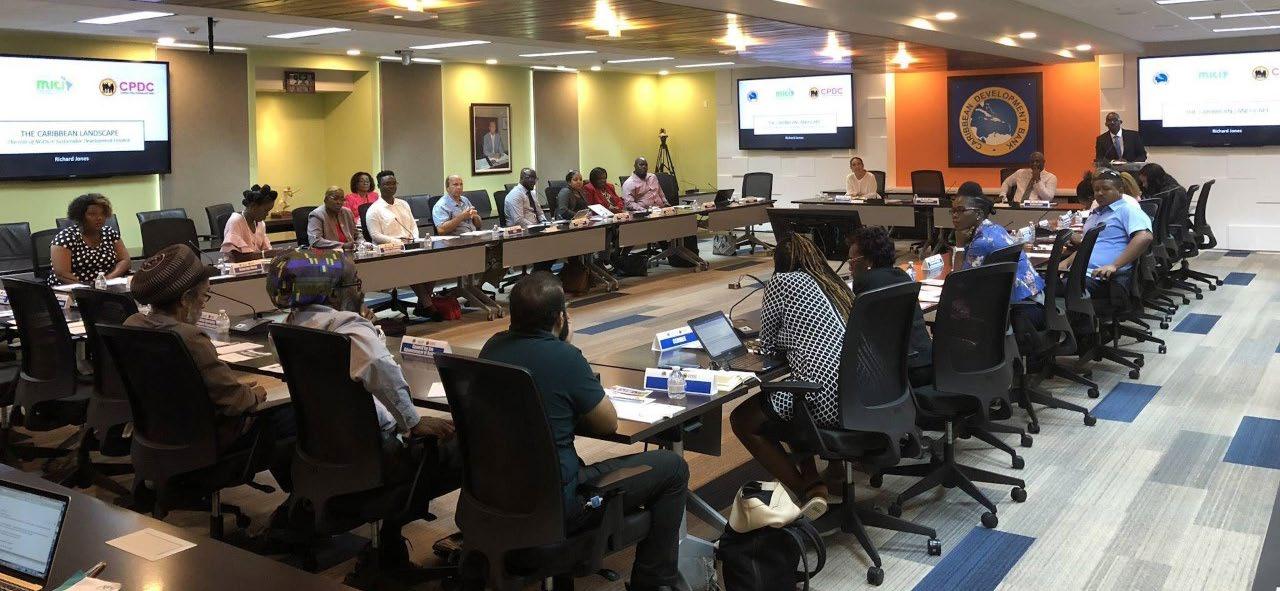
On February 28, 2019, ICA, together with the IDB’s Independent Consultation and Investigation Mechanism (MICI) and the Caribbean Policy Development Centre (CPDC), hosted an interactive outreach workshop for local Civil Society Organisations and Non-Governmental Organisations located in Barbados, as shown in Figure 6.
The purpose of the outreach was to raise awareness about the existence and work of independent accountability mechanisms like ICA and MICI. It focused on how ICA and MICI can be accessed
by complainants and others, who wish to report environmental and social harm, allegedly arising from CDB and IDB-financed projects.
Procedures for the Projects Complaints Mechanism
ICA is currently finalising revisions to its procedures for dispute resolution, compliance review and investigations. ICA also drafted procedures and related protocols to be used by experts to conduct dispute resolution and prepare compliance review reports.
Investigations
During the period under review, ICA received, investigated and resolved a complaint that alleged environmental harm pursuant to a CDB-financed project as summarised in Table 3.
Social Harm Accountability An 81-year-old complainant alleged that trucks conveying material to a worksite for a CDB-funded project had broken power lines, which affected, mostly senior citizens, including one disabled person, residing in the same village. The complainant reported damage to home appliances in six homes, inconvenience and disruption of livelihood. There was a three-month delay in resolution of the complaint at the project level grievance redress mechanism (GRM) before the complaint was escalated to ICA, as CDB’s organisational level GRM.
Resolved by GRM following ICA’s intervention and in collaboration with CDB Projects Department. Closed by ICA
Table 3: Example of an Accountability Complaint made to ICA
PILLAR IV COLLABORATION
Cooperation and Information Sharing
During the period under review, ICA:
(a) collaborated with the independent offices of other international financial institutions (IFIs), on integrity-related investigative activities;
(b) collaborated with the IDB’s independent office, MICI, on accountability-related outreach activities;
(c) commenced planning collaborations with independent accountability mechanisms from other Multilateral Development
Banks(MDBs) for possible future joint outreach activities focused on resolution of complaints related to environmental and social harm;
(d) concluded Memoranda of Understanding for information sharing, collaboration and cooperation with the investigative units of two major international organisations.; and
(e) commenced planning collaborations with the Ethics and Business Conduct Office of the World Bank.
TRAINING AND CONSULTATIONS
Mandatory Training 2019 - All Functions and Induction
ICA conducted six mandatory training and awareness for all staff in 2019, as outlined in Table 4.
Integrity and Ethics TrainingContinued Focus on Fraud and Corruption
ICA is mandated by its Terms of Reference to undertake all steps to ensure prevention and detection of fraud and other integrity and ethics violations. Ethics
violations cover fraudulent representations made by members of staff. During the first half of 2019, in response to the rapid evolution and sophistication of fraud risks and methods in the external environment as well as an increase in attempted fraudulent activity and risks in external projects, ICA increased emphasis on corruption and fraud, specifically fraud prevention. Four training sessions were conducted during this period to ensure members of staff remain aware of, and are actively engaged in fraud prevention.
Management of the Bank has primary responsibility for ensuring that all members of staff are properly trained. ICA is responsible for delivering effective training to staff as part of its mandate to leverage prevention. In this regard, one challenge faced by ICA was to deliver effective training while accommodating the high volume of travel by the staff of the Operations Area.
ICA responded to this challenge by undertaking three initiatives:
(a) leveraging information technology to deliver “training on the go”, for example, the e-quiz which will be extended to the Bank’s learning management system and the Microsoft Teams product;
(b) increasing the number of training sessions; and
(c) collaborating with management to ensure attendance by staff.
Going forward ICA intends to work to reinforce the culture of integrity and ethics within CDB and externally by its stakeholders.
CONFERENCES, WORKSHOPS AND MEETINGS
Green Climate Fund’s GRM Workshop
The workshop organised by the Independent Redress Mechanism of the Green Climate Fund (GCF) covered both organisational level and project level GRMs.
During the visit the Head, ICA met with other heads of accountability and grievance review mechanisms of accredited GCF entities GCF. ICA was able to share insights from CDB’s experience with establishment of its projects complaints mechanism, as well as gather knowledge which will assist CDB in its role as an accredited entity with accountability for the use of climate funds from GCF in its Borrowing Member Countries.
Conference of International Investigators and Heads of Integrity Meeting
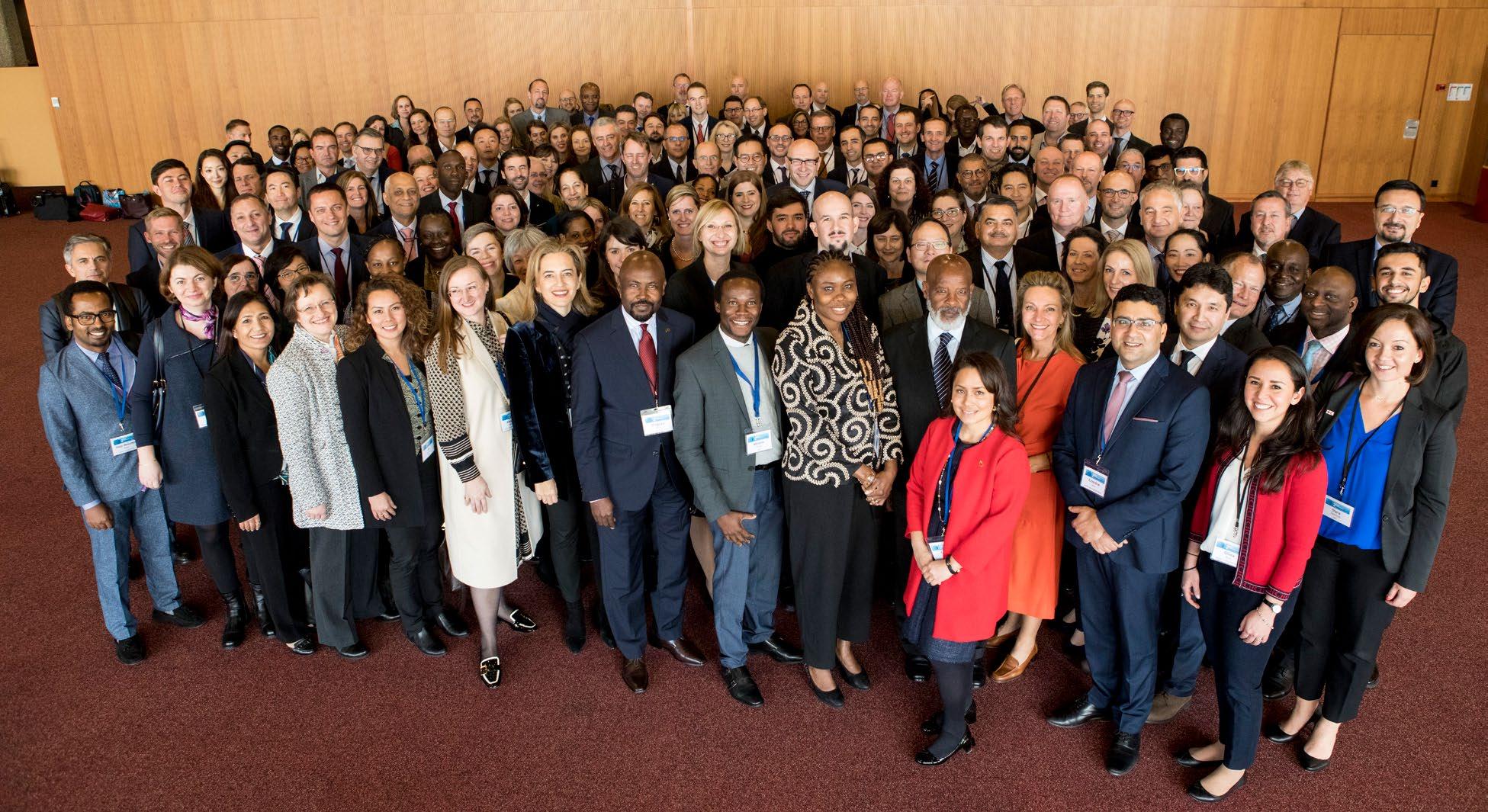
The Conference of International Investigators (CII) 2019 and related meetings provided the Head, ICA with an opportunity to participate in the Meeting of the Heads of IFI Integrity Investigation Offices and other bilateral meetings with Heads of Integrity Offices from other IFIs.
CII is the only body that establishes global investigative standards and guidelines for all IFIs.
ICA also benefitted immensely from training workshops on investigating matters involving sexual harassment, exploitation and abuse.
Figure 7: Conference of International Investigators 2019 and Heads of IFIs Integrity Offices
The workshops on forensic retrieval of evidence for integrity investigations provided training on the use of highly specialised software for forensic extraction of digital evidence from computers, mobile devices and web pages. The workshops on sexual exploitation and abuse provided training focused on how to conduct any type of investigation, while using a trauma sensitive approach to obtaining evidence. It also highlighted how to better engage with victims and survivors of sexual harassment, exploitation and abuse in order to ensure effective and satisfactory outcomes for all stakeholders.
IDB Roundtable and Meetings
The ‘Roundtable on Access to Information and Transparency with Caribbean Experts’ and the IX Annual IDB Group-Caribbean Civil Society Meeting titled, ‘Citizen Engagement for Transparency,’ both focused on the importance of accountability, building public trust and the role of civil society in promoting transparent interactions among governments, citizens and MDBs. The Roundtable highlighted how access to information could raise citizens’ awareness of the work of MDBs throughout the Caribbean. The Civil Society Meeting shared perspectives on the role of citizen engagement in fostering transparent and open governments, and the use of emerging technologies to reduce incidence of corruption through increased information flow.
These fora enabled ICA to engage in information exchanges with regional stakeholders. In particular, ICA shared insights on the Whistleblower System, the work of the integrity function in the prevention and investigation of allegations of prohibited practices like corruption, fraud, coercion and collusion, and the Projects Complaints Mechanism to resolve complaints of social and environmental harm.
OUTLOOK FOR 2020
During 2019, ICA managed an increased investigative workload without losing pace on its preventionfocused work. In doing so, ICA met and overcame several challenges, while impacting CDB positively in ways that cannot be comprehensively measured. Measuring the success of ICA’s prevention activities will always be challenging. For instance, a timely word of advice on due diligence delivered from ICA to management may quietly save CDB millions in financial loss and an immeasurable amount of reputational damage and thereby help the Bank to deliver seamlessly on its mission. This reinforces the need for ICA’s work in 2020 to keep pace with CDB’s evolution in light of planned changes and transformation.
ICA plans to convene a Caribbean Conference on Corruption, Compliance and Cyber-fraud at an appropriate time in the future. The goal of the Conference is to educate Caribbean stakeholders, particularly CDB beneficiaries, on cutting edge approaches to identifying and mitigating relevant risks and drivers of corruption, money laundering, and cyber-fraud in the Caribbean.
During 2020, ICA will conceptualise a plan to organise and engage in community-based activities that reflect social responsibility, while undertaking outreach exercises aligned with its core mandate and strategy to educate about fraud, corruption and other corrosive activities. This will include, for example, engaging with school children and socially underprivileged communities in organised activities to educate them about the need for integrity and accountability.
ICA will continue to help ensure that CDB meets its mission, during this milestone year and beyond.
REPORTING FRAUD, CORRUPTION AND ETHICS VIOLATIONS
Complaints about suspected fraud or corruption may be submitted to ICA through/by:
Telephone: the globally accessible Whistleblower Hotline at +1 770-409-5029
The Whistleblower Webform [Link “webform” in PDF to: https://secure.ethicspoint.com/domain/media/en/gui/55678/index.html]
Email to ICA at ica@caribank.org
In-person visits to ICA
Mail (whether posted or hand delivered marked Strictly Confidential) to ICA at the following address:
Head, Office of Integrity, Compliance and Accountability