Office of INTEGRITY, COMPLIANCE AND ACCOUNTABILITY
Annual Report 2018




Office of INTEGRITY, COMPLIANCE AND ACCOUNTABILITY
Annual Report 2018
sustainable growth, resilience and poverty reduction by adhering to integrity, ethics, compliance and accountability
The year 2018 was the third year of existence of the Office of Integrity, Compliance and Accountability (ICA). It also was, equally, ICA’s most challenging and most productive year. The broad scope of ICA’s work during 2018 confirmed the effectiveness of the strategy of the Caribbean Development Bank (CDB) to model ICA as a convergence of five governance functions. It also confirmed the effectiveness of ICA’s strategy to accelerate its operationalisation of a strategic framework for integrity, compliance and accountability in an incremental, phased and riskbased manner. In this context, the significance of the arc of ICA’s evolution within the context of CDB’s historical evolution is noteworthy.
CDB was established almost 50 years ago, at a time when concepts like anti-corruption, anti-money laundering, independent accountability mechanisms and accountability for environmental and social harm were not used by international financial institutions (IFIs). Today, as it was then, two fundamental fiduciary operating principles of stewardship are observed in IFIs like CDB. One principle is to ensure that each dollar loaned or granted is used for its intended purposes. Another principle is that projects financed by IFIs should help and do no harm.
Today, these fundamental principles have evolved into hard policies overseen by modern independent offices like ICA, handling integrity, compliance, ethics, whistleblowing and accountability. In this way, ICA helps to protect CDB’s internal systems, external
operations and stakeholders from reputational damage and financial loss likely to be caused by wrongdoers. ICA is the result of a plan by CDB to enhance its internal governance. ICA’s creation is timely and consistent with the evolution of similar offices.
Historically, as the scourge of corruption, money laundering, environmental and social harm and other corrosive practices evolved into modern methods that target development funds, IFIs responded to these risks by establishing separate and, in most cases, independent offices like ICA.
More than 30 years ago, offices within IFIs that respond to breaches of internal ethics standards were created. This history is also true for offices that receive and handle confidential whistleblower complaints and protect whistleblowers from retaliation.
Some 25 years ago, accountability for environmental and social harm became prominent. At that time, the need to account for harm caused by projects drove the establishment in IFIs, of citizen-driven independent accountability mechanisms to respond to complaints that allege environmental and social harm caused by the projects they financed.
About 23 years ago, when corruption was first described as a costly cancer to IFIs, anti-corruption was planted firmly on the internal governance agendas of multilateral development banks (MDBs) as they began to acknowledge openly that the global
environment, in which they work, had changed significantly, and for the worse. This response led to the establishment of integrity offices in MDBs.
Approximately 17 years ago, anti-money laundering, combating the financing of terrorism and targeted financial sanctions became globally prominent responses to crime. At that time, countries and financial institutions either voluntarily joined or were conscripted to join a global response to prevent
criminal abuse of the global financial system. This response triggered the creation of compliance offices in MDBs.
Over the past year, ICA has significantly advanced this broad five-pronged mandate. In doing so, ICA provided critical support to CDB’s mission and strategy to promote sustainable growth, resilience and the reduction of poverty with adherence to integrity, ethics, compliance and accountability.

6 training sessions (3 targeted sessions and 3 mandatory sessions for) 158 staff
Successful collaborations with other MDBs for training and outreach on integrity and accountability matters
Integrity Outreach Workshop hosted jointly with another MDB Accountability Panel Discussion on Sexual Exploitation and Abuse
Cyber-fraud risks tracked
ICA is an independent office that is mandated to operationalise, manage and refine the Strategic Framework for Integrity, Compliance and Accountability (Strategic Framework).
CDB’s Board of Directors (BOD) approved the Strategic Framework and created ICA to help mitigate myriad integrity, compliance and accountability risks that could threaten the Bank. The Strategic Framework and ICA are designed to help CDB achieve its developmental goals with due regard to the need for integrity, compliance, ethics and accountability in internal systems and external operations. For this reason, ICA is a convergence of five distinct governance functions in a single office. ICA reports directly to BOD through the Oversight and Assurance Committee (OAC) to preserve its operational independence.
The Strategic Framework is further articulated through four key policies across all five functions in Table 1. Through CDB’s Integrity and Ethics Policy, ICA’s institutional integrity function covers prevention
Table 1
Key activities for all five functions
and investigation of wrongdoing, such as fraud and corruption. The Ethics function covers prevention and investigation of misconduct by Staff.
Through CDB’s Compliance Policy, ICA’s compliance function covers money laundering, terrorist financing and monitoring to avoid violation of financial sanctions. Through CDB’s Projects Complaints Mechanism Policy (PCM Policy), ICA’s Accountability function provides a projects complaints mechanism that responds to complaints of environmental and social harm. Through CDB’s Whistleblower Policy, ICA’s Whistleblower function covers the confidential intake and secure handling of complaints related to all other four functions.
ICA’s operationalisation strategy is to implement the Strategic Framework in a phased, risk-based, incremental and streamlined manner. ICA strategically prioritises the prevention of wrongdoing.
Risk Assessments: ICA’s Risk Radar for 2018
A key to ICA’s success is the proactive management of integrity, compliance, ethics and accountability risks related to the functions that are covered by ICA’s mandate. ICA identifies and mitigates through
proactive and reactive steps, any vulnerabilities that may arise in the Bank’s internal systems and external operations.
During 2018, ICA focused on vulnerabilities that could potentially disrupt CDB’s mission, damage its reputation, and give rise to financial losses.
Some of these vulnerabilities identified during 2018 appear on ICA’s Risk Radar in Figure 1 below.
Figure 1
ICA’s Risk Radar 2018
De -risking of correspondent banking relationships
Environmental and social harm
Integrity violations, fraud and corruption
Corruption and failure national governance Counterparty financial and fiduciary
Cyber fraud: hacks, malware, ransomware Data theft

Implementation of the Strategic Framework during 2018 focused on the drafting and implementation of procedures required for full operationalisation of all five of ICA’s functions.
Key work undertaken included training and other
prevention exercises, investigations, drafting of procedures, extensive research on best practices, benchmarking, consultations, outreach, joint engagements and agreements with other MDBs and development agencies.


ICA drafted procedures for these three functions and conducted the following activities:
(a) due diligence for integrity and ethics;
(b) integrity risk assessments;
(c) investigations;
(d) sanctions and enforcement;
(e) reporting;
(f) staff-related integrity and ethics issues;
(g) collaborating, outreach and sharing information with other MDBs; and (h) referrals, and internal and external communications.
In addition to intake and investigative work, ICA conducted consultations and five training exercises for Staff. Training is aimed at promoting prevention of fraud, corruption and other corrosive conduct in the Bank’s internal systems and external operations.
During the year, ICA conducted multiple exercises to enhance the Bank’s ability to better engage with its counterparties and to assist the Operations Area in the conduct of due diligence in its projects and other engagements.
Consistent with its operationalisation strategy to prioritise prevention, ICA has published on CDB intranet and started implementation of guidelines and red flags checklists for integrity due diligence (IDD) in April 2018 through the following procedures:
(a) Introductory/Explanatory Memorandum on IDD.
(b) IDD Guidance for the Operations Area.
(c) Web Search Links.
(d) Master Red Flags Checklist.
(e) Guidance for Engagements with Third Parties.
(f) Wire Transfer Red Flags Checklist.
The IDD procedures are intended to:
(a) provide written guidance to Bank Staff about the need for, and use of, IDD;
(b) provide a mechanism to enable Staff at the first line of defense to identify red flags and generally to conduct IDD;
(c) ensure that the appropriate scrutiny and levels of controls are in place for potential and ongoing engagements with the Bank’s counterparties;
(d) enable the conduct of appropriate IDD during the appraisal process for projects in the Bank’s public and private sector operations and to mitigate and manage any potential integrity risks; and
(e) protect the Bank generally and to enable better decision-making across the Bank.
ICA undertook proactive steps to prevent the occurrence or recurrence of integrity and ethics violations through specific guidance and general advice on controls and the use of tools like advisories. During 2018, ICA issued eight advisories on a wide range of issues, including:
(a) cyber fraud;
(b) partisan political activity under the Staff Code of Conduct;
(c) ICA investigations-related communications;
(d) notification to Staff of certain entities and individuals of interest to ICA, if ICA receives an allegation or information that they are suspected of engagement in a fraudulent practice; and
(e) temporary suspension of an entity and individuals under investigation by ICA.
Globally, cyber fraud is a primary risk for financial institutions. The Bank’s Information Technology Solutions Division (ITSD) handles all matters related
to the Bank’s cyber infrastructure and monitors email traffic for adverse activity. ICA covers the detection, prevention and investigation of any potential, attempted or actual cybercrime attempted against the Bank, particularly, cyber fraud.
Like most MDBs, CDB is not generally considered to be high risk for cyber fraud that may result in massive financial losses. However, like every financial institution, it is susceptible to cyber fraud through spoofing, phishing and interception of emails with wire transfer-related and other relevant information. Cyberfraud risks may arise from actors external to the Bank or Staff-related conduct and may disrupt the Bank’s mission, damage its reputation, aid money laundering and if manifested, give rise to financial losses.
ICA began to address cyber-fraud risks during 2016, with guidance to Staff and through a special training initiative with the United States Federal Bureau of Investigations for cybercrime training delivered to the Bank in July 2017 and an internal advisory on cybercrime, specifically on ransomware payments. In January 2018, ICA started monitoring email traffic
Figure 2
Investigative Activities (2016–2018)


for new and emerging cyber-fraud methods. During the year, when cyber-fraud attempts increased, ICA collaborated with ITSD to issue a Cyber-Fraud Advisory to all Staff.
Investigative Activities
ICA conducts investigative activities, particularly screening, preliminary assessments and internal and external investigations, in accordance with the Conference of International Investigators Uniform Principles and Guidelines for Investigations. 1
Internal integrity and ethics investigations cover violations and misconduct allegedly committed by or involving Staff arising from any type of CDB activity. External integrity investigations cover allegations related to violations, specifically of prohibited practices (fraudulent practice, corrupt practice, coercive practice and collusive practice) in CDB’s external operations.
During 2018, ICA conducted general investigative activities for 47 matters, including IDD, and five full investigation cases related to integrity and ethics

1 As endorsed by the 10th Conference of International Investigators held from June 10-12, 2009 at the Dead Sea, Jordan
issues. The number of investigative activities more than doubled within three years.
ICA conducted a wide range of investigative activities, as illustrated in Table 2 which displays resolution statistics of ongoing and resolved matters.
Inevitably, with the mainstreaming of ICA’s work in
Table 2
Investigative Statistics of ICA Matters for 2018
CDB’s operations, detection of wrongdoing and thus, investigations will increase. In preparation for this, ICA drafted comprehensive procedures for investigations, sanctions and enforcement during 2018.
Consultation and review of these procedures with the Legal Department and other stakeholders will be done during the first quarter of 2019. These procedures will enable ICA to conduct efficient investigations and also enable the Bank to sanction and publicly name individuals and entities found by ICA to have engaged in integrity violations, like fraud and corruption, in CDB’s operations.
ICA continued to monitor and mitigate compliancerelated risks. ICA conducted counterparty due diligence for know-your-customer information collection on our financial counterparties.
ICA also collaborated and shared insights with other regional stakeholders on compliance-related issues, like de-risking of correspondent banking relationships resulting from money-laundering and terroristfinancing concerns.
ICA completed draft procedures for dispute resolution, compliance review and investigations. The procedures drafted focus on key process issues, such as eligibility criteria for complaints, selection of experts to conduct reviews, reports and related protocols, which are being reviewed.
In 2018, ICA received and resolved two concerns about environmental harm allegedly caused by a CDB-financed project. However, neither concern was eligible for registration with the Projects Complaints Mechanism. Preliminary assessments determined that in each case the key issue of concern was not financed by CDB and both matters were also the subject of litigation. Concerns, which are identical to complaints submitted to judicial authorities for resolution, are inadmissible for the Projects Complaints Mechanism.
On June 22, 2018 pursuant to submissions made by ICA during 2017 and early 2018, ICA was notified that it has satisfied all of the ICA-related conditions precedent to disbursement from the Green Climate Fund through CDB.
CDB Panel Discussion on Practical Insights into Sexual Exploitation and Abuse for Development Institutions
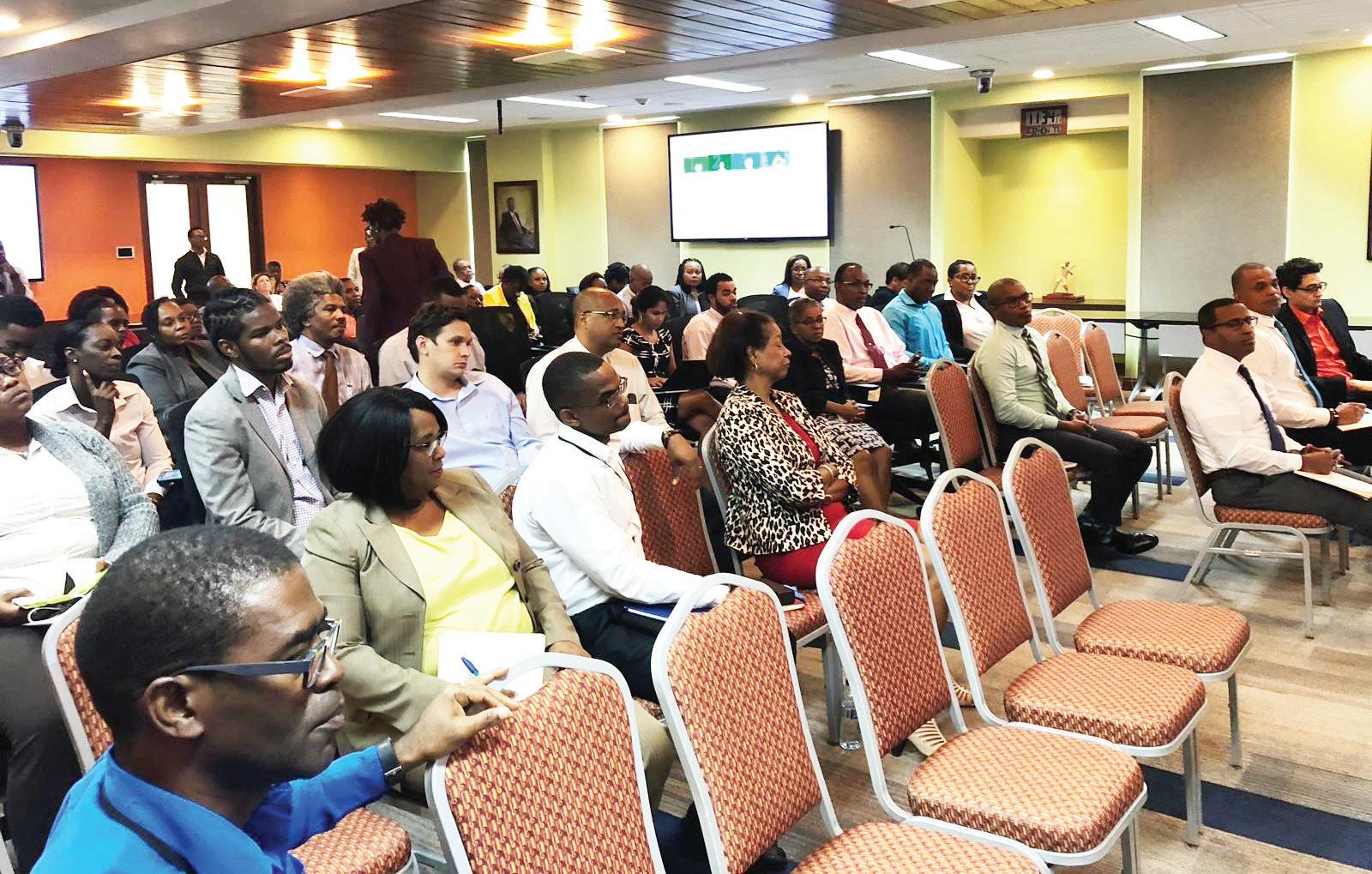
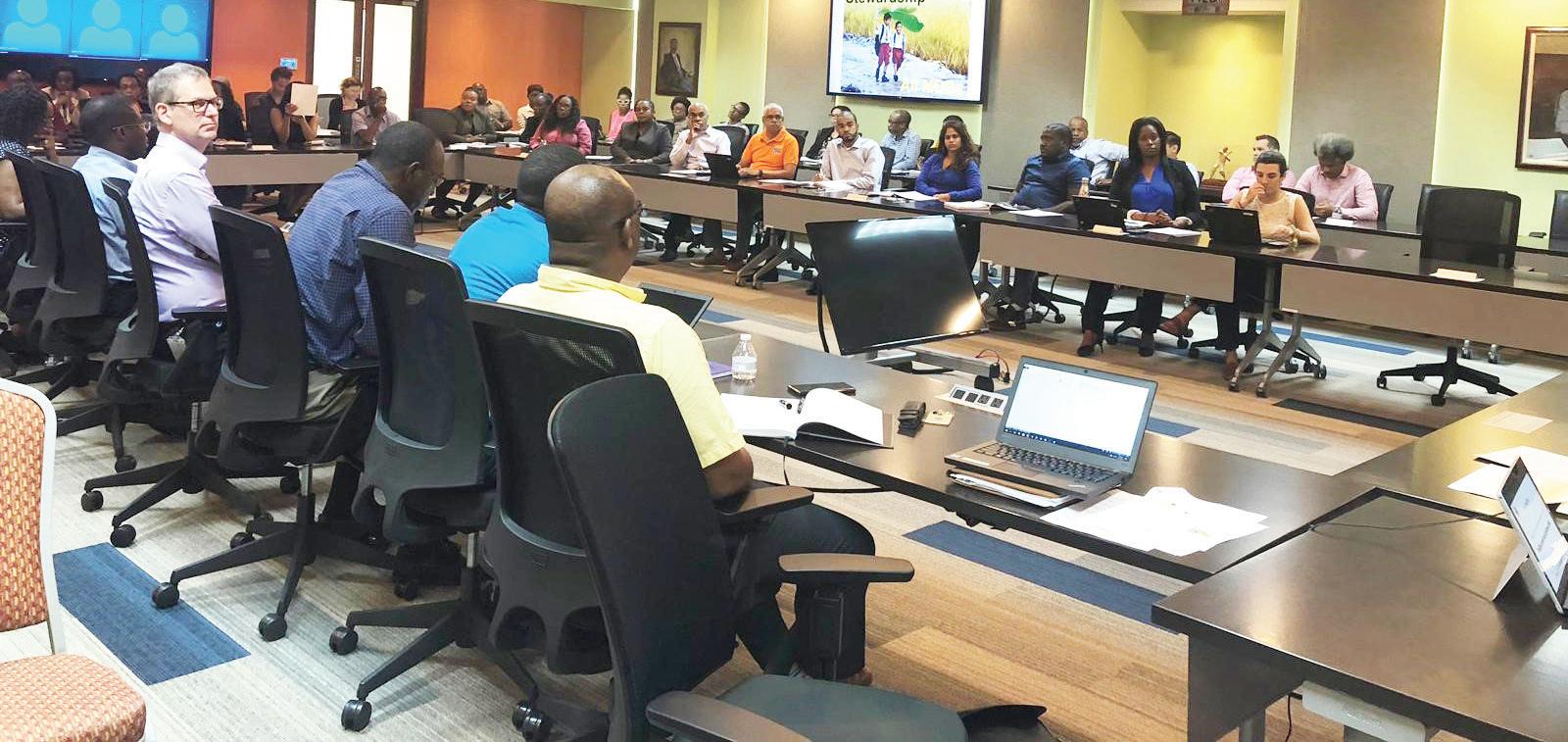
On October 22, 2018, ICA, in collaboration with the Human Resources Division and the World Bank’s Inspection Panel, hosted a panel discussion on Practical Insights into Sexual Exploitation and Abuse (SEA) for Development Institutions. The event was attended by 81 Staff, including those from the Bank’s Operations Area, for whom it was mandatory training and awareness.
In the context of the Accountability function, SEA is a social harm. It is defined as any actual or attempted
abuse of position of vulnerability, differential power or trust for sexual purposes, including but not limited to, profiting monetarily, socially or politically from the sexual exploitation of another.
All IFIs are encouraged to ensure that their projects do not facilitate SEA and other forms of gender-based violence, particularly against vulnerable groups like women and children.
The Strategic Framework and other CDB policies like the PCM Policy, Whistleblower Policy, Code of Conduct and Environmental and Social Review Procedures (ESRP) provide a relatively comprehensive framework to combat social harms like SEA and other forms of sexual harassment and misconduct.
The PCM Policy makes provision for ICA to investigate
social harm in CDB-financed projects and to ensure the Bank’s compliance with applicable social procedures. The Whistleblower Policy establishes a comprehensive policy for reporting wrongdoing and protection from retaliation, including provisions on accountability-related safeguards violations and complaints in external environment and projects.
The rationale for the session was to promote SEA prevention. The discussion enabled the panellists to share insights on best practices about how to best integrate social safeguards in the design and implementation of development projects. The session included an overview of CDB’s ESRP by Marlene Johnson, a Social Analyst at CDB. The main presentation was made by Tamara Milsztajn from the World Bank Inspection Panel.

During 2018, ICA signed two Memoranda of Understanding for information sharing, collaboration and cooperation with two development agencies. ICA also:
(a) collaborated with the Office of Institutional Integrity (OII) of the InterAmerican-Development Bank (IDB) on an outreach activity in Guyana;
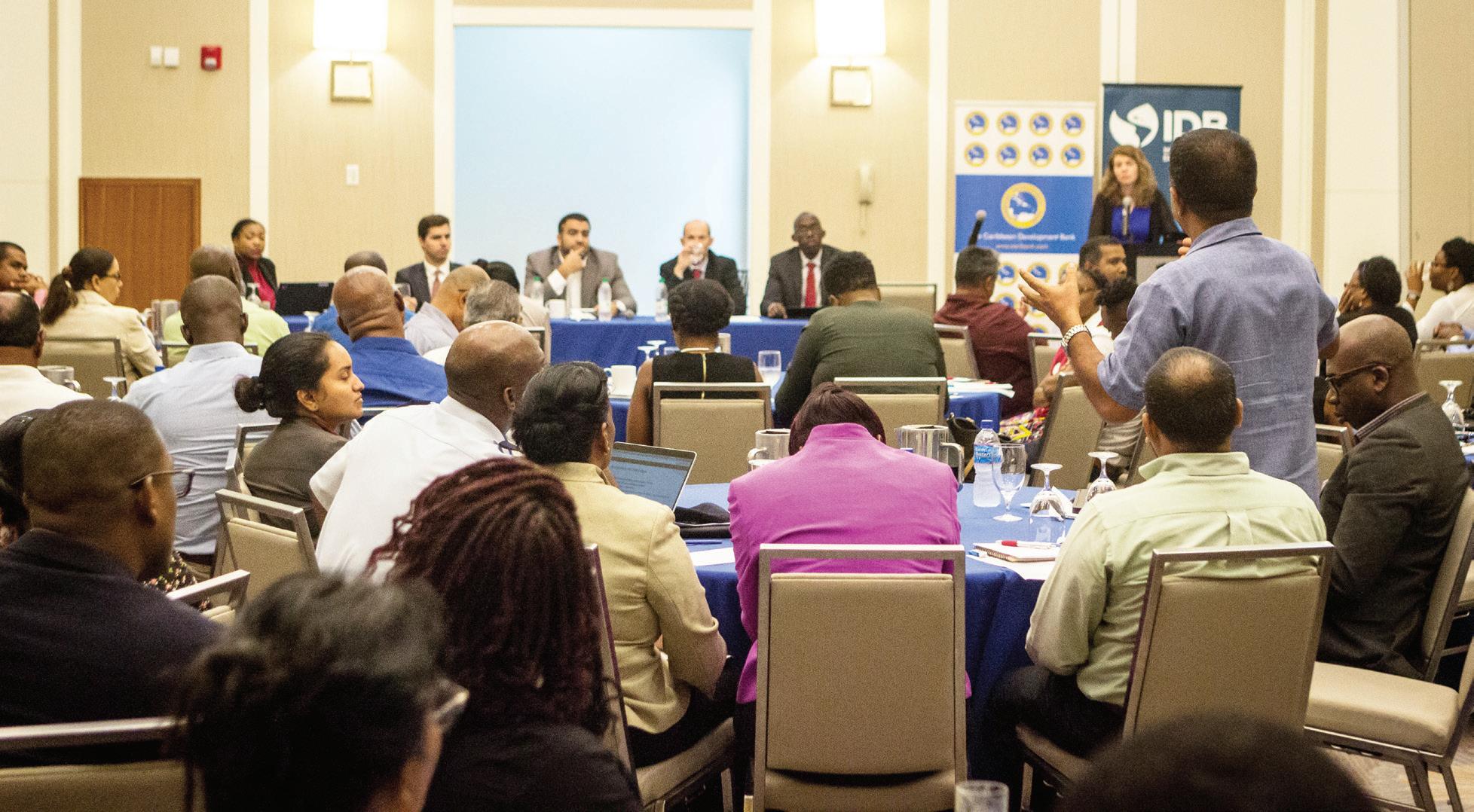
In accordance with its work plan and in response to concerns notified to ICA from a partner development agency, ICA collaborated with CDB’s Procurement Policy Unit, IDB’s OII and the Ministry of Finance of Guyana to conduct its first outreach exercise in the country in May 2018.
Specifically, the aim for the outreach session was to mitigate proactively, certain integrity risks identified by ICA and to raise awareness about CDB’s Strategic Framework and the work of ICA. The focus of the
(b) commenced planning collaborations with independent accountability mechanisms from the IDB and the World Bank for possible future joint outreach activities focused on resolution of complaints related to environmental and social harm; and
(c) collaborated with the fraud investigations office of a partner development agency on an investigation of mutual interest to CDB and that agency.
outreach was on the role of the country mechanisms in ensuring integrity in the procurement process and how CDB and IDB can identify and mitigate risks of fraud and corruption in their respective projects and mechanisms for IDD, whistleblowing and investigations.
The outreach was attended by more than 80 Government officials. It was well received and covered by the media.
ICA conducted mandatory and voluntary training and awareness for all Staff in January, February, March, June, October and December 2018. The June training session included induction training for new Staff members.
ICA conducted a special session for the Advisory Management Team (AMT) on learning outcomes and investigative experiences from 2018. The session focused on how those learning outcomes may be
beneficial to management. ICA also conducted mandatory training and awareness for AMT that covered fraud prevention, sexual harassment and integrity due diligence.
On June 20, 2018 ICA in collaboration with the Bank’s Procurement Policy Unit conducted a joint training session on Integrity in Procurement. This training was mandatory for all Staff of the Operations Area and also covered the new IDD Toolkit issued by ICA.
The Head of ICA attended the International Financial Institutions Summit on Safeguards for Sexual Exploitation and Abuse from October 18-19, 2018, hosted by the Department for International Development in London, United Kingdom. The Summit’s outcome will assist in the alignment of the Bank’s architecture for combatting SEA in its operations through internal training, cultural changes, mechanisms like ICA’s Whistleblower System and investigations.
The Head of ICA participated in the Heads of Independent Accountability Mechanisms Network (IAMnet) meeting of IAMs conference held in Washington DC, from November 13-15, 2018. The meeting is the premier forum for collaboration, shaping international best practice and networking among the heads of independent accountability mechanisms of international financial institutions.

In late 2019, the Bank will start observing its 50th year of existence, which is a significant milestone for the institution. It will also be a time to take stock of how far the Bank has evolved to create and embed an independent office like ICA to help improve its internal governance.
ICA has an ambitious work plan for 2019 which may be extended based on investigative events outside of ICA’s control. It is important to note that ICA can neither predict nor plan for most of its day-to-day work, particularly: the volume of intake through the Whistleblower System; the number of IDD requests; and the volume of integrity, ethics and accountabilityrelated investigative work it has to conduct. In these
circumstances, ICA’s current operationalisation strategy and work plan should enable the Office to cover all new work while also finalising and implementing procedures for its full operationalisation and other related activities for each of its five separate functions.
During 2019, ICA will continue to conduct training, expand its internal procedures and human resources and enhance its toolkit as appropriate to meet all of the challenges likely to arise. In summary, ICA will also continue to operationalise the Strategic Framework, while taking into consideration the Bank’s resources, size, needs, operating environment and evolving risk profile.

Complaints about suspected fraud or corruption may be submitted to ICA through/by:
Telephone: the globally accessible Whistleblower Hotline at +1 770-409-5029
The online Whistleblower webform https://secure.ethicspoint.com/domain/media/en/gui/55678/index.html]
Email to ICA at ica@caribank.org or projectscomplaints@caribank.org
In-person visits to ICA
Mail (whether posted or hand delivered marked Strictly Confidential) to ICA at the following address:
Head, Office of Integrity, Compliance and Accountability
Caribbean Development Bank
P.O. Box 408
Wildey, St. Michael Barbados BB11000