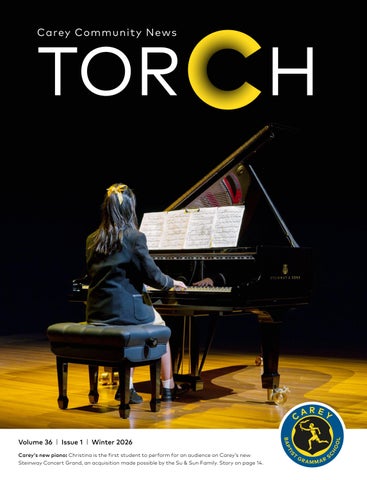
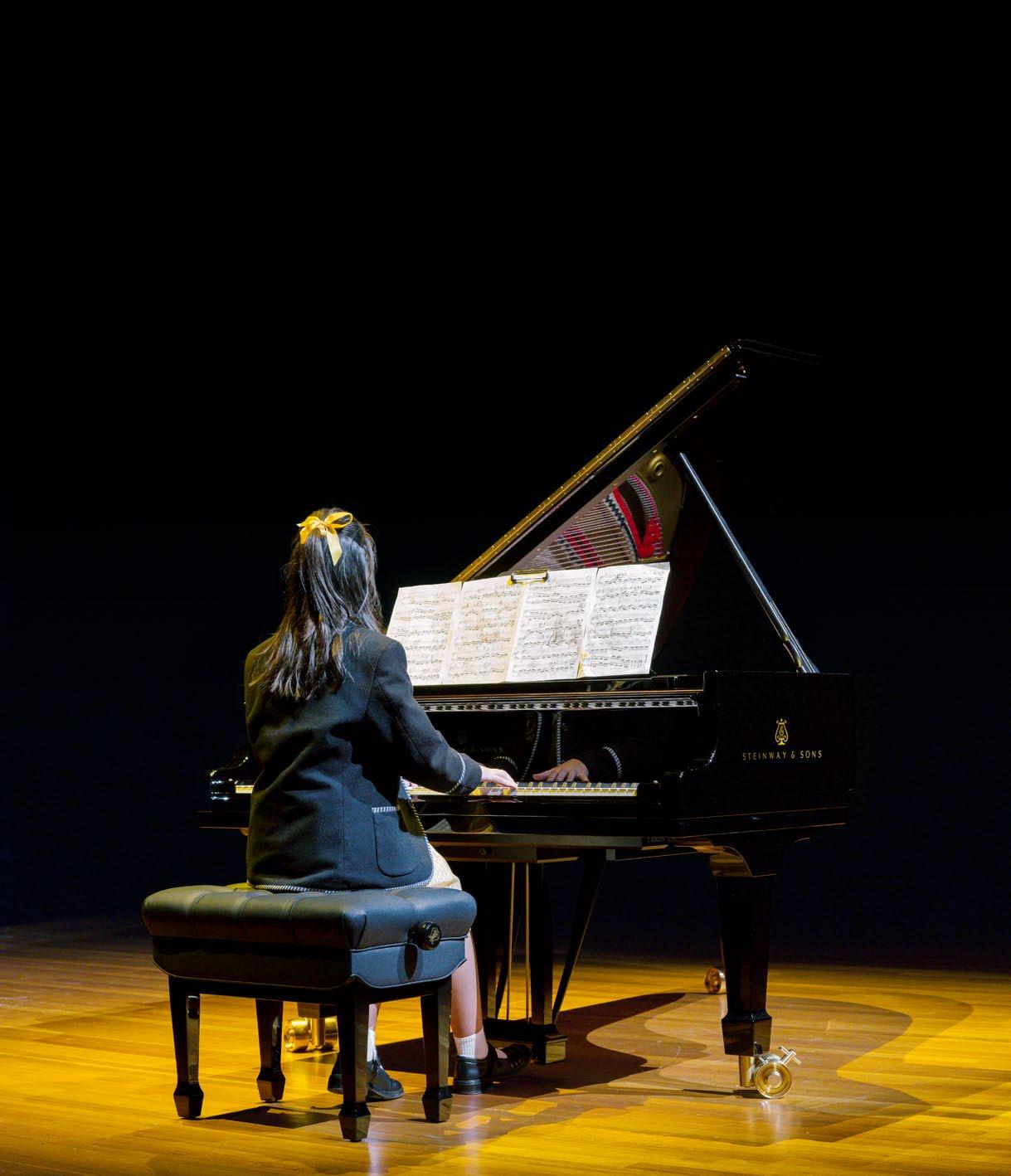
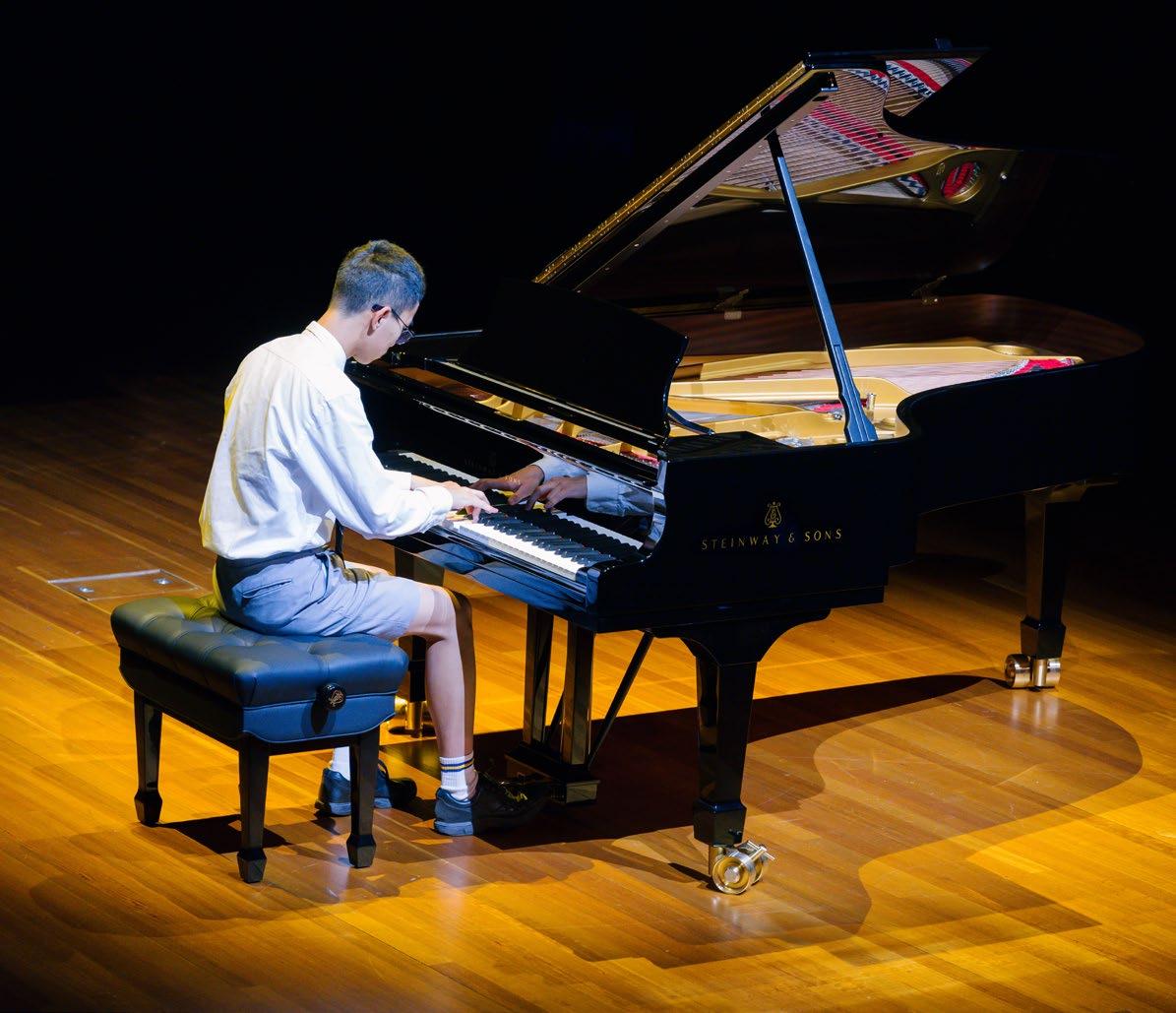
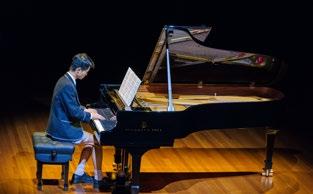
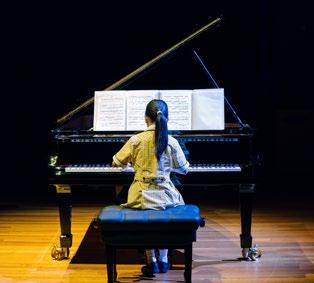
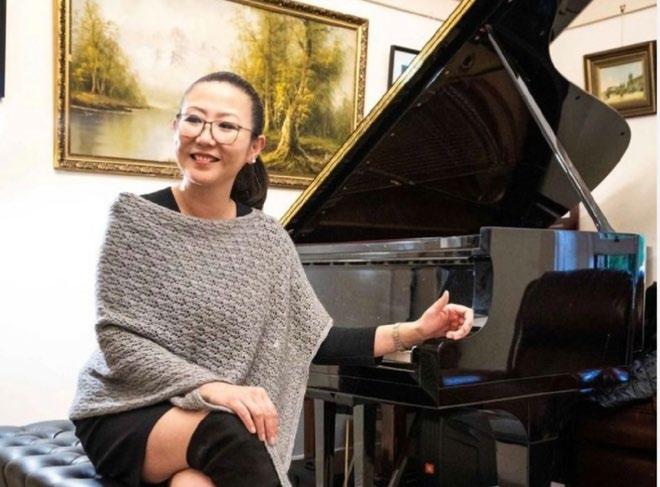
Carey’s new piano: Christina is the first student to perform for an audience on Carey’s new Steinway Concert Grand, an acquisition made possible by the Su & Sun Family. Story on page 14.
Volume 36, Issue 1, Winter 2026
Publisher
Carey Baptist Grammar School
Torch Givingback
349 Barkers Road, Kew Victoria 3101 Australia 03 9816 1222
Editor Kelly Southworth
Graphic Design
Felix Lam
Kelly Southworth
Cover Photography
Fiona Sexton
Inquiries communityengagement@carey. com.au
We acknowledge the Wurundjeri people, the Traditional Custodians of the land on which Torch was created, and we honour their continuing connection to land, sea and community. We respect their Elders past and present, and recognise the injustices endured by the First Nations peoples of this country.
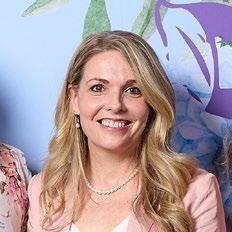
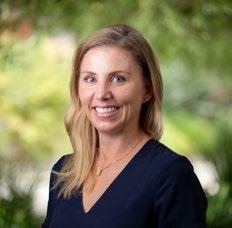
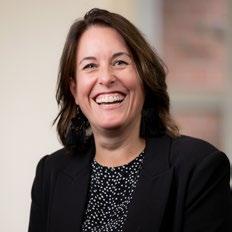
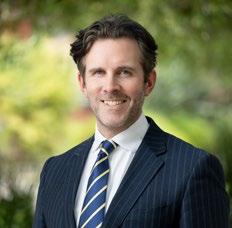
One of the most important aspects of the Carey community is the understanding of our shared responsibility to give back. Community service can take many different forms, and sometimes the smallest acts can have the biggest impact. This edition of Torch celebrates the joy of giving, in big ways and small, through stories from our students, staff, parents and alumni.
The commitment, trust and generosity of the Carey community
Jonathan Walter Principal
One of the great privileges of leading Carey is the opportunity to witness the strength of our community across generations, past, present and future. Term 1 presented many opportunities to reflect not only on the progress we are making together, but, importantly, on the people whose lives and service have shaped the school we know today.
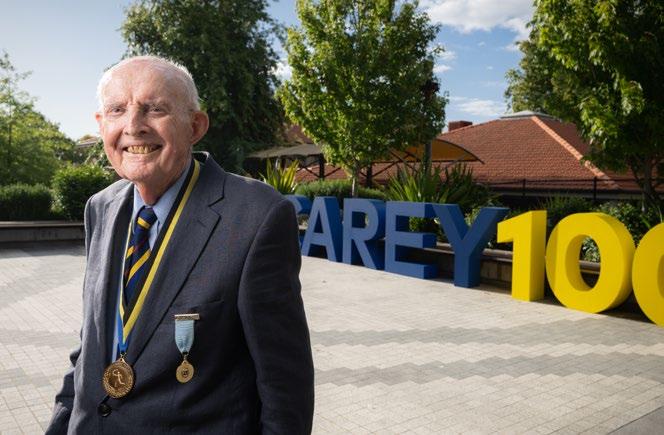
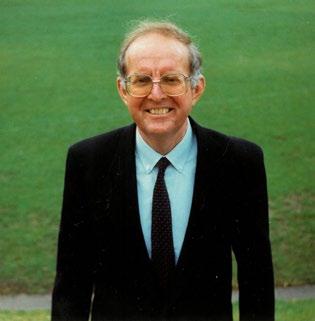
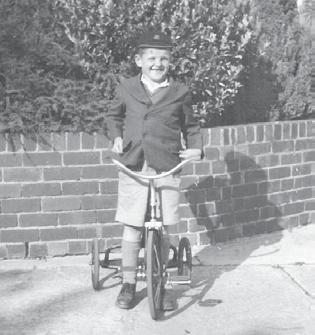
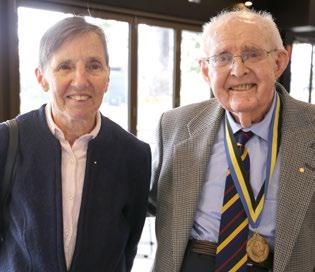
Recently, we gathered as a community to honour the life of Bruce Murray, a man whose story is profoundly intertwined with the story of Carey itself. Bruce first came to the School in 1949 as a five‑year‑old boy. What began then became a lifelong relationship of more than 70 years – first as a student, then as a teacher, parent, leader, historian and unwavering steward of the Carey community.
Bruce embodied the very best of Carey: scholarship, service, leadership and humility. As a student, he served as School Captain and Dux of Humanities; and as a staff member of 33 years, he taught, coached, led Moore House and strengthened the School’s connections as Registrar, Director of Community Relations and Director of Alumni Relations. Even in retirement, his devotion did not diminish. Through his work with the Carey Heritage Committee and countless acts of quiet service, Bruce ensured that the stories,
relationships and spirit of Carey were preserved and honoured.
His legacy reminds us that schools are not defined by buildings or programs alone, but by people, by those who invest deeply in community and give generously of themselves for the benefit of others. As Carey continues to grow and evolve, we do so standing firmly on foundations laid by people like Bruce Murray.
It is from this place of gratitude and continuity that we look ahead, committed to striving for excellence for all across the breadth of our learning programs.
Strengthening global connections
In March, along with Executive Director – Community Engagement, Julianne Brandon and Admissions Manager,
Candy Lui, I travelled to China. The purpose of the visit was clear: to strengthen relationships, deepen our understanding of what families are seeking in an Australian education, and position Carey thoughtfully within an increasingly global educational landscape.
A key component of the trip was attending the Australian Education Assessment Services’s education agent workshops in both Shanghai and Hong Kong, where we connected with 35 international education agents. Our conversations provided valuable opportunities to share Carey’s direction and educational philosophy, while also listening carefully to the aspirations and expectations of Chinese families.
We also ran a series of in‑person and online webinars and student interviews with prospective families across
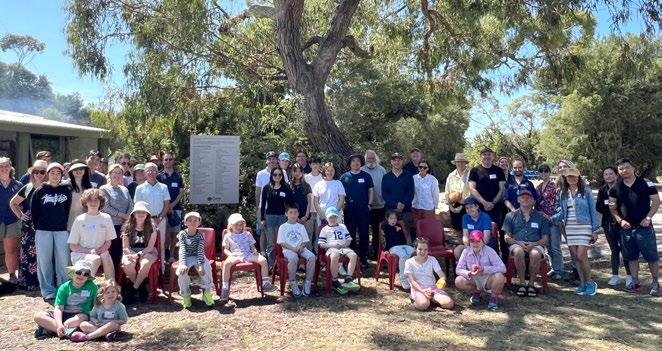
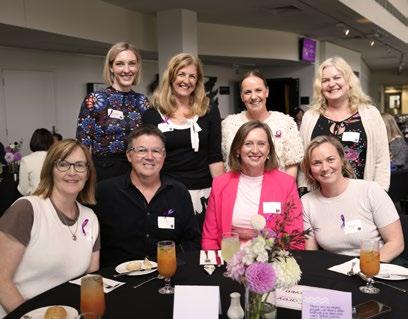
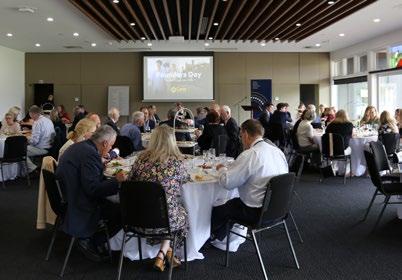
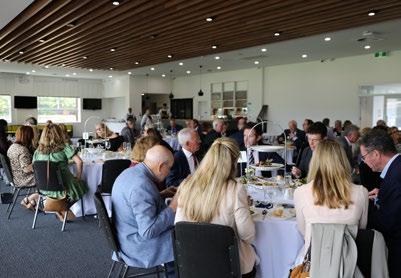
Donors to the Toonallook Appeal were honoured at our recent Community Day.
Shanghai, Hangzhou, Guangzhou, Shenzhen and Hong Kong. The depth of interest and the quality of questions were affirming, particularly around learning, wellbeing and the values that underpin life at Carey.
Our visit included school partnership conversations with some of China’s high performing and progressive schools. I look forward to developing these possibilities for sharing and exchange in the years ahead.
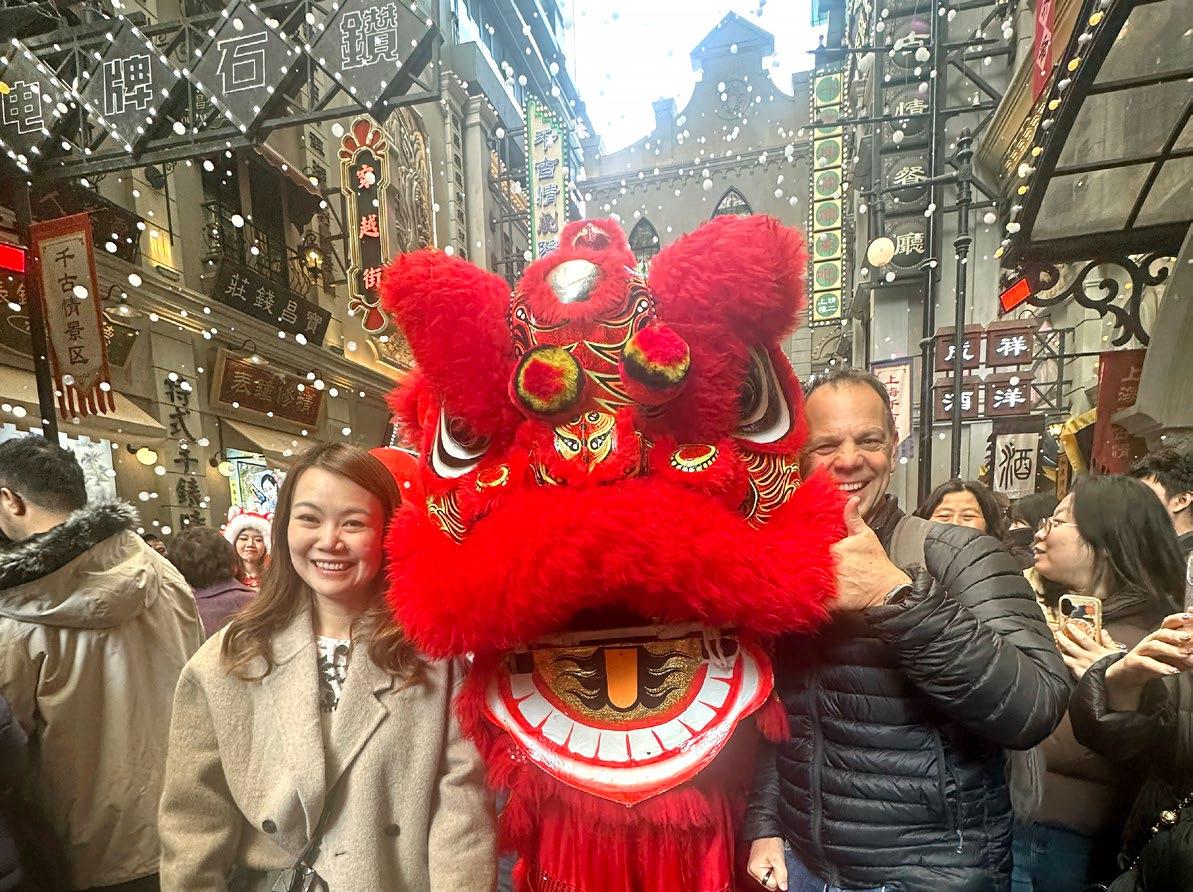
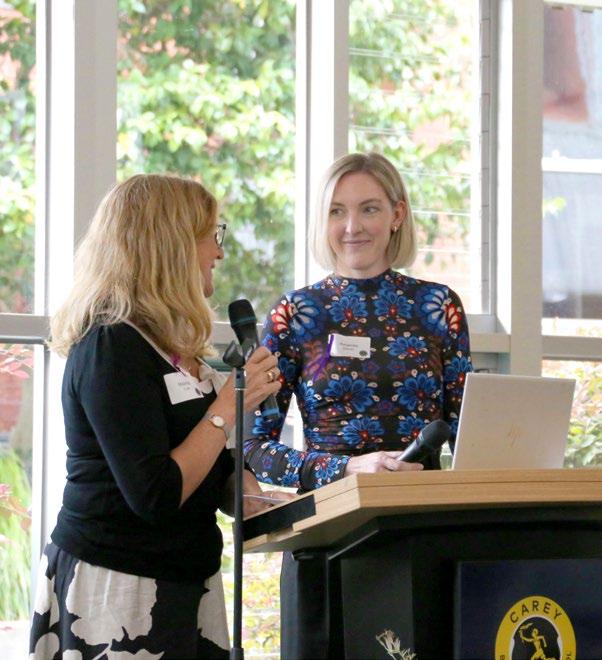
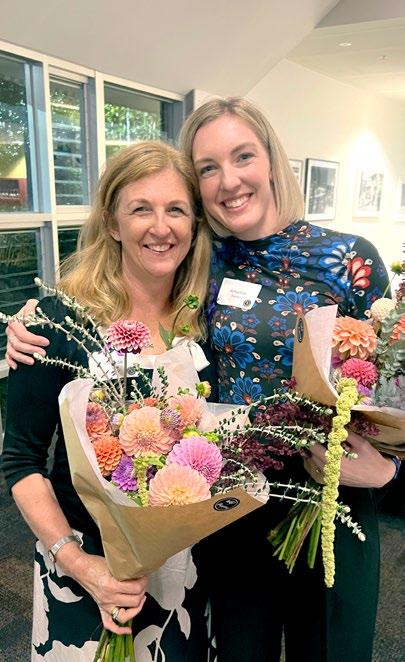
Beyond formal meetings, we were delighted to host two community events and spent time reconnecting with alumni, current parents and donors. We were also delighted to host a donor thank‑you event with Cherry Sun, recognising the Su & Sun Family’s generous Steinway piano donation –read more on page 14.
I was overwhelmed by the warmth and generosity of all we had the honour of meeting throughout the trip.
It is from this place of gratitude and continuity that we look ahead, committed to striving for excellence for all across the breadth of our learning programs.
Gratitude for community support of Toona
Finally, I would like to extend my sincere thanks to our community for its continued generosity and support of Carey’s Toonallook Appeal. Through this support, we have been able to upgrade facilities at Camp Toonallook, ensuring the camp continues to provide rich outdoor learning experiences for generations of Carey students.
It was wonderful to see so many families attend the recent celebration day at Toonallook. The strong turnout and shared sense of pride reflected just how deeply this place is valued within our community. Camp Toonallook has long been a site of connection, challenge and growth for Carey students, and these upgrades ensure it will remain so well into the future.
As we reflect on the past months of honouring those who have shaped us,
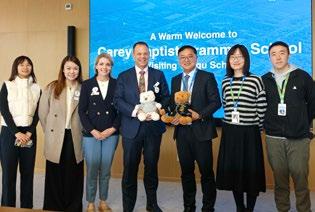
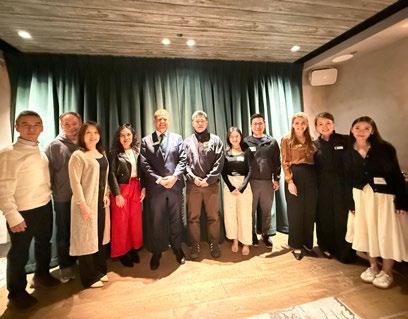
Connecting with the Yungu School in Hungzhou, China.
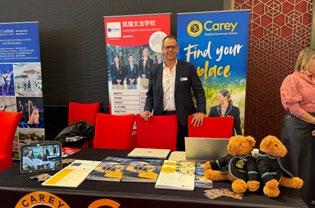
Jonathan representing Carey at the Australian Education Assessment Services expo in Shanghai.
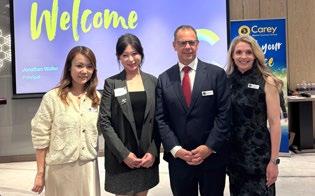
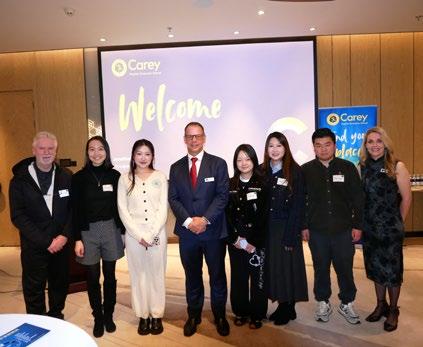
L–R: Candy, Carey parent Cherry Sun, Jonathan and Julianne at an event for Carey’s Shanghai community.
Jonathan recently visited China with Executive Director – Community Engagement, Julianne Brandon and Admissions Manager, Candy Lui (pictured).
Mark: If someone proves me wrong in a way that substantially advances the field and ultimately benefits human health, no one will be happier than me!
Prof. Mark Shackleton on Carey, cancer and c han g e
Bonnie Lee and Kaixin Li 2026 School Captains
Prof. Mark Shackleton (1985) is Professor of Oncology at Monash University and Director of Oncology at Alfred Health, and is internationally recognised for his stem cell and cancer research. He has co-authored influential papers in leading science journals, and is a recipient of many major national honours, including the Australian Science Minister’s Prize for Life Scientist of the Year in 2012, the Victorian Premier’s Award for Medical Research and the NHMRC Achievement Award.
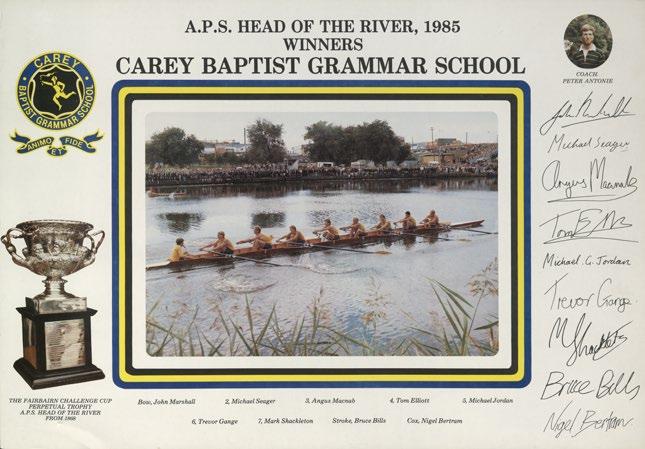
Before all of this, however, he was a Carey student. In Year 12, Mark was School Captain, recipient of the Henry Meeks Senior Award and a proud member of the First VIII Rowing Crew, who won the 1985 APS Premiership.
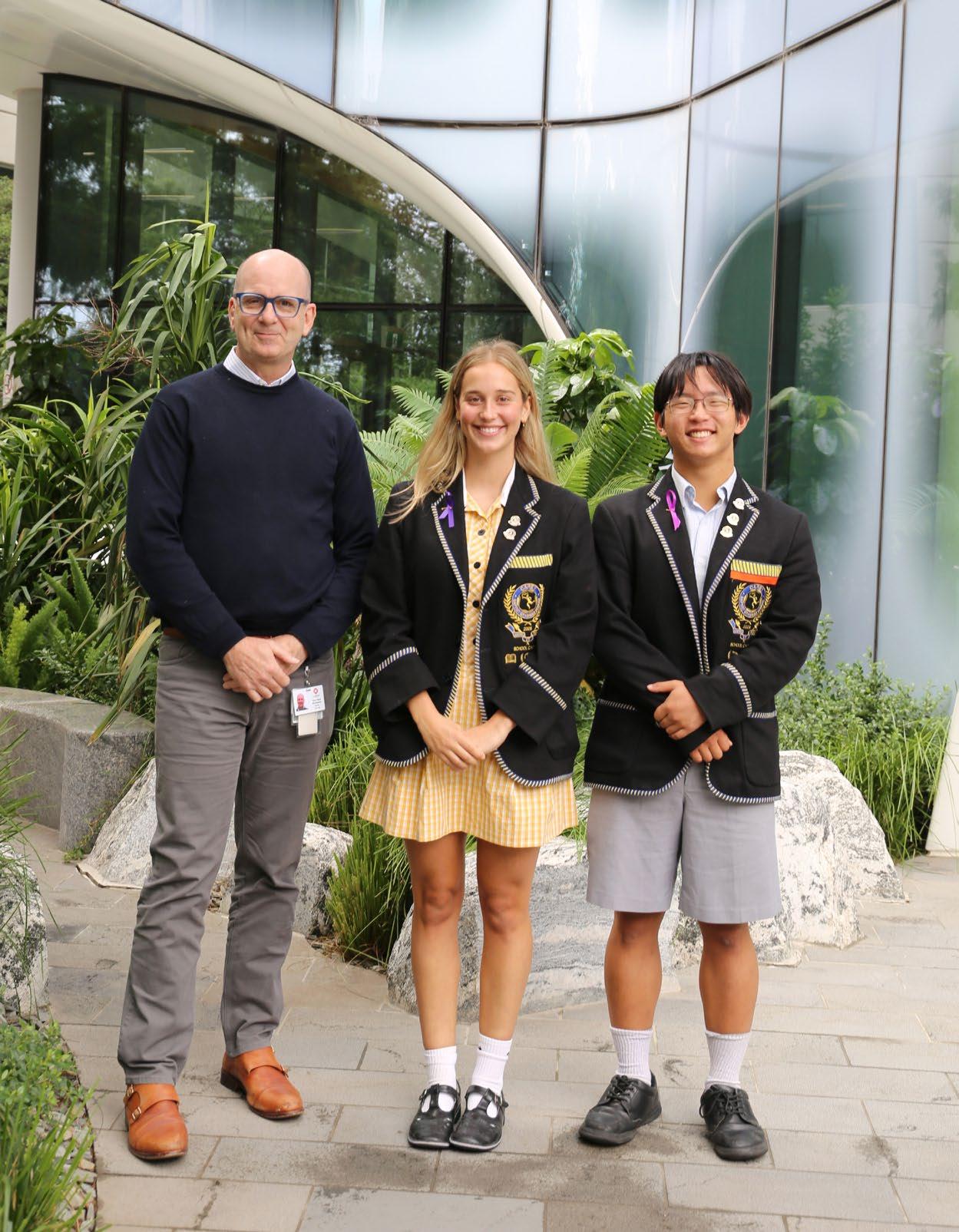
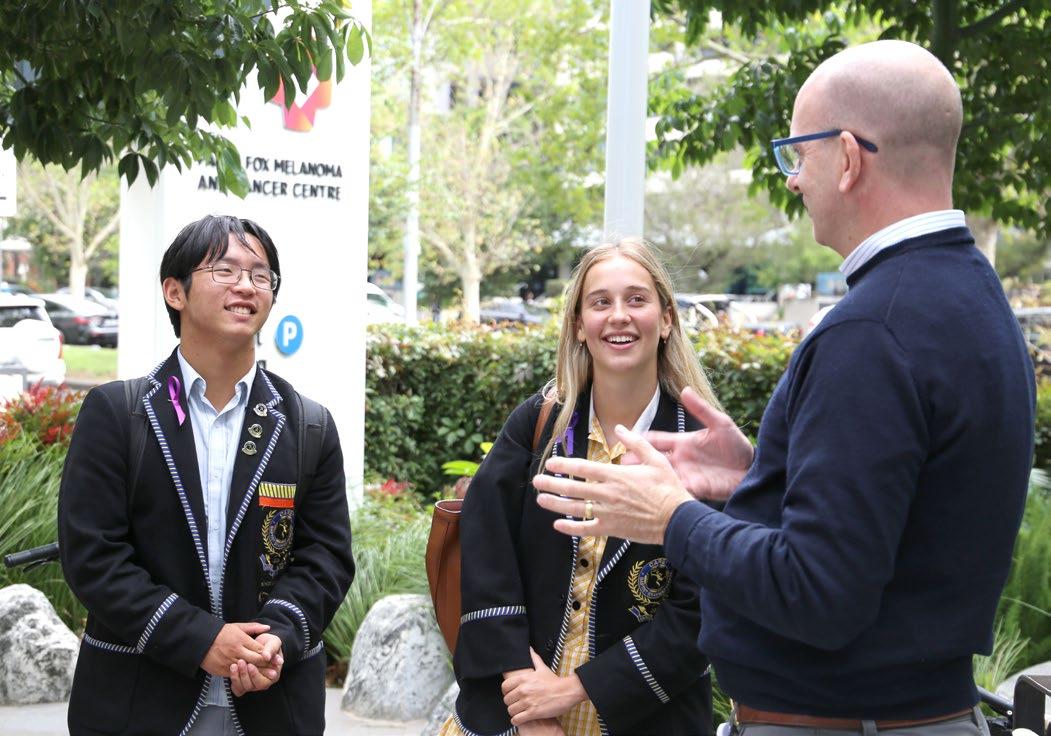
Our 2026 School Captains, Bonnie and Kaixin, met with Mark at the Alfred Hospital’s newly built Paula Fox Melanoma and Cancer Centre to take a tour of the facilities and find out more about Mark’s work, philosophies and Carey memories.
Bonnie: You’ve received many accolades. Which one means the most to you and why?
Mark: Of all the recognition I’ve received, the one that means the most to me is my wife saying that I’m a good father. That holds more value than any professional achievement because it reflects who I am beyond my career.
Bonnie: How do you manage work-life balance while working on long-term projects such as cancer research and also being a parent?
Mark: I don’t think I manage balance perfectly. Rather than trying to divide time evenly, I focus on being fully present in whatever I’m doing. I work a lot, often 12 hour days, which means significant time away from my family. We’ve always tried to have the attitude that when we’re together, we try and have a good time and maximise the time that we’re together. I think prioritising quality rather than quantity is the key.
Kaixin: In your research work, which do you think contributes more to medicine: a big leap made at once or small, incremental progress?
Mark: I don’t think they’re mutually exclusive; in fact, I suspect they’re interdependent. Big quantum level advances in patient care do come quickly when new technology or concepts are discovered, but they don’t occur without prior incremental advancement.
Take, for example, cancer immunotherapy. In the late 1990s I was working on clinical trials trying to harness the immune system, but during that time our research was built on about 20 years of fundamental immunology work. The advances were pretty small, but the knowledge and ideas generated led, about a decade later, to one of the biggest transformative changes in medical treatment ever: the first cancer immunotherapy treatments.
Kaixin: Part of your work relates to immunotherapy as an emerging alternative to cytotoxic treatments like chemotherapy. Increasingly, longstanding medical practices are being regarded as outdated. Do you hope your research will eventually be viewed in that way?
Mark: People used to treat respiratory illnesses by prescribing cigarettes, but I don’t think the people at the time were behaving unethically by the standards they had. If someone proves me wrong in a way that substantially advances the field and ultimately benefits human health, no one will be happier than me! There’s aspects that can’t be controlled sometimes, like certain technologies that don’t even exist yet. My PhD made a major discovery in stem cell biology. We found that the hierarchical organisation of cells, previously only proven in the blood system, actually applies to epithelial tissues like the gut and lungs, which is where most cancers arise. At the time, we thought we’d more or less finished that bit of biology. But 10 or 15 years later, brand new technologies emerged that could track the fate of individual cells in living systems, revealing a surprising degree of cellular plasticity where, unlike blood, epithelial cells can actually revert to more primitive states. We had no idea about this, and we had didn’t even have methods to test it. It doesn’t
Continued next page...
exactly disprove or undermine my original research, but it turns out we’d only discovered one little bit of what is a much more complex system. A new technology came along – that’s how knowledge advances.
Bonnie: Ethical dilemmas frequently arise in medical research. How do you approach decisions when scientific opportunities might conflict with moral or societal considerations?
Mark: This is a complex issue that is addressed during medical training. In direct patient care, the priority is always the individual. When I’m working with a patient, my responsibility is to act in their best interest, regardless of broader societal considerations. For example, if a treatment is extremely expensive and only offers limited additional life, I still focus on what’s best for that individual in front of me. That money could probably have a great net impact elsewhere, but that’s not what I’m thinking about in my interaction with the patient – and we’re not trained or expected to.
However, I’m also involved in some of these decisions at a policy level, and the broader ethical questions are discussed there. Decisions about how resources
are allocated, like whether funds should go toward expensive treatments or more widely beneficial procedures, are made collectively. I might take a different perspective there, but it’s a different context and a different hat I have to wear as a contributor to a governmental process. Clinical care prioritises the individual, while policy decisions consider the collective good. There are no definitive answers, which is why these discussions are important.
Bonnie: What part of your Carey journey shaped who you are today, both professionally and personally?
Mark: I was lucky that schoolwork came naturally, and I was fortunate to have some influential teachers along the way. My English teachers, particularly in Middle School and Year 12, taught me how to articulate arguments and build narratives. I still use those skills today. Those classes also gave me a love for literature – I think if I didn’t do medicine, I would have been happy studying English Literature. I was also strongly influenced by my science teachers, especially chemistry.
I was a big rower, too. We had a good crew, we won a lot of races and we’re still friends to this day. But the environment was often challenging.
There was conflict and exhaustion from balancing training with academic responsibilities, but on the day, you still have to put everything aside, get in the boat and perform. It taught me how to manage relationships under stress, stay focussed and deliver results even in difficult circumstances. I think it’s the most important life skill that I’ve taken beyond school.
Kaixin: You’ve lived through many technological changes. How does this experience give insight into how you might address or employ the usage of AI in your work?
Mark: I use AI to make administrative tasks more efficient, like the more routine parts of writing research grants. But I approach everything it produces with an expectation that it may not be correct or may not reflect what’s actually needed. Again, I think of those English classes and the ability to critically evaluate or appraise and to interrogate deeply. The skills my English teacher instilled in me, combined with a lot of medical training around scrutinising research and clinical trial methodology, have shaped how I engage with AI output. Things are changing fast, but I try to be careful and critical rather than suspicious.
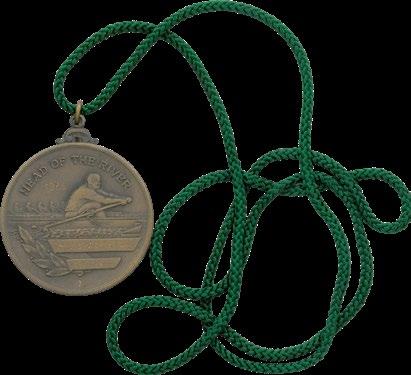
Head of the River 1985: Mark was the seven seat in the 1985 First VIII Rowing Crew, the first Carey team to ever win the APS Head of the River premiership.
Mark: The world is changing rapidly, but there are a breadth of skills like communication, collaboration and adaptability that will always be required and will prepare you for a range of opportunities – even those that may not exist yet!
Bonnie: What advice would you give to Year 12 students?
Mark: My advice to students is to take full advantage of the opportunities available. Engage in a wide range of activities, whether it’s academics, sports, arts or leadership. Rather than focussing too heavily on a specific end goal, immerse yourself in it, enjoy what you’re doing and get as much from it as you can. While having ambitions is valuable, becoming overly focussed on a single career path can be limiting. The most important objective during your early years out of school is to acquire as many skills and capabilities as possible and prepare yourself for whatever comes along. You could get too fixed on one goal, and it might not exist in 10 years’ time. The world is changing rapidly, but there are a breadth of skills like communication, collaboration
and adaptability that will always be required and will prepare you for a range of opportunities – even those that may not exist yet!
Kaixin: Have you ever had an end goal that you aspired to, and has it changed over time?
Mark: Apparently, as a toddler, I told my grandmother I wanted to be a doctor and cure cancer. But coming out of my cancer specialist training about 13 years after high school, I was actually pretty underwhelmed. A lot of the time I was making people sick with harsh treatments for not a lot of obvious benefit. Working with an immunotherapy research group at that time, I felt strongly that the status quo wasn’t good enough and that the only way to do better was research. That became a real driving ambition.
My early research was quite successful with high impact publications, and I was involved in some significant advances in understanding cancer processes. But, over time, I’ve come to appreciate that incremental advances are just as important; you don’t have to be on the cover of a journal to be making a difference.
In recent years, what I have felt I could contribute most is supporting the next generation of bright young people doing PhDs and working in clinical trials. Nurturing as many of them as possible to become productive, contributing researchers is my current ambition. I still love the research itself, but goals evolve, and I think that’s healthy. Reflecting constantly on what’s essential, what’s achievable, what’s actually working is an important thing to do as you move along.
How 952 families brought Angel to Carey
Kelly Southworth Editor
At only three years old, Angel met Australian humanitarian and past Carey parent Moira Kelly, who vowed to make sure Angel had every opportunity to succeed.
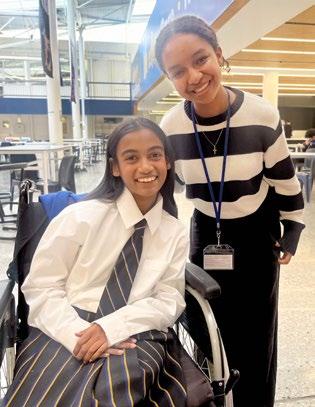
Angel is a creative, outgoing girl with a big smile and vibrant sense of humour. She also has CLOVES Syndrome, a rare condition characterised by the overgrowth of tissue and blood vessels, leading to mobility issues and pain. With the support of Angel’s parents, Moira brought her to Australia to receive life saving medical treatment that she wasn’t able to access in Pakistan.
Moira is one of Angel’s guardians in Australia, along with Beth Evans and Yasmina McGlone. Together, they have ensured Angel has had a fun, enriching and loving childhood in Australia. They wanted Angel to have all the opportunities they had themselves as children: things like making friends, celebrating milestones and going to school.
‘You can’t underestimate the importance of being in school,’ Beth says. ‘Being part of a community, navigating friendships, managing your learning, getting up on time – they’re all important parts of growing up.’
The 2020 pandemic was particularly hard on Angel, and she wasn’t able to continue with school beyond Year 2. When Angel said she wanted to go back to school three years later, her guardians did everything they could to make that happen. Moira knew the Access and Equity Scholarship
Angel: It feels like everyone at Carey wanted to contribute to a school life for me and now I can have that. I’m really grateful for all
of the opportunities they’ve given me.
program at Carey would be the perfect opportunity to bring Angel into a supportive and engaging school environment.
In 2025, Angel became the first recipient of an Access and Equity Scholarship fully funded by voluntary fee contributions. Since 2023, Carey has offered parents the option of making a donation alongside their usual school fees. All voluntary fee contributions are used to provide a scholarship to a student who otherwise wouldn’t be able to attend Carey. Since this initiative began, 952 Carey families have donated and, together, made a Carey education a reality for Angel.
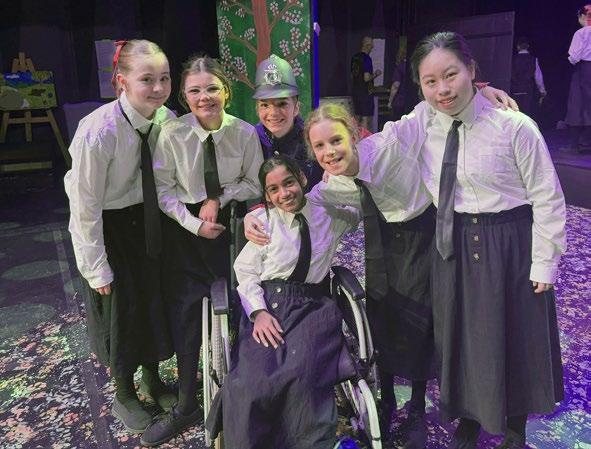
Angel backstage before performing in Mary Poppins Jr
‘I feel very special,’ Angel says. ‘It feels like everyone at Carey wanted to contribute to a school life for me and now I can have that. I’m really grateful for all of the opportunities they’ve given me.’
Last year, Angel joined Carey’s Donvale campus. ‘Angel went from Year 2 to Year 6. It was a steep learning curve, but she absolutely loved it,’ Beth says. ‘She’s very extroverted and she just loves going to school.’
Angel made a tight knit group of friends, figured out which subjects she loved (PE and art) and those she didn’t (maths!) and took part in the Junior School – Donvale campus musical,
a production of Mary Poppins Jr. ‘That was awesome,’ Angel says. ‘It was a bit nerve wracking being on stage, but it was also really fun getting to experience it all with my friends.’
Yasmina says coming to school has been great for Angel’s mental health and independence, too. ‘She is a lot happier, more confident and has grown so much,’ Yasmina says. ‘A lot of Angel’s life has revolved around her medical condition, but since starting at Carey, she gets to just be a kid.’
Moving into Year 7 at the Kew campus was a big change, but Angel felt ready and was happy that many of her
close friends from Junior School are still in her mentor group. Angel says a highlight of this year so far has been going on school camp.
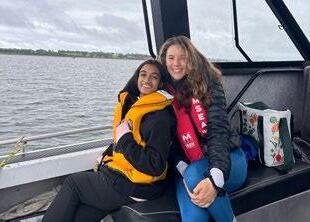
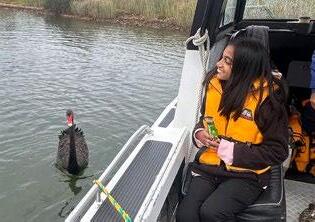
‘I loved camp, we had so much fun,’ Angel says. ‘The Outdoor Educators were really nice and I got to stay in a cabin with my friends. I even went on a speed boat!’
Year 7 Outdoor Education at Camp Toonallook is a hallmark of the Carey experience. It is an opportunity for students to get to know the classmates they’ll spend the next six years with and build relationships with their mentors and House teachers.
‘I personally want to thank the Carey community,’ Beth says. ‘Everyone who has made this happen for Angel – the parents who donated money on top of their school fees to have a scholarship and all of the staff who made her transition into school and then into Year 7 so seamless – thank you.’
Carey receives many applications for needs based Access and Equity Scholarships. If you want to learn more about how you can provide this opportunity for more children who otherwise wouldn't be able to attend Carey, get in contact with the Rebekah Trachsel, Head of Advancement: rebekah.trachsel@carey.com.au
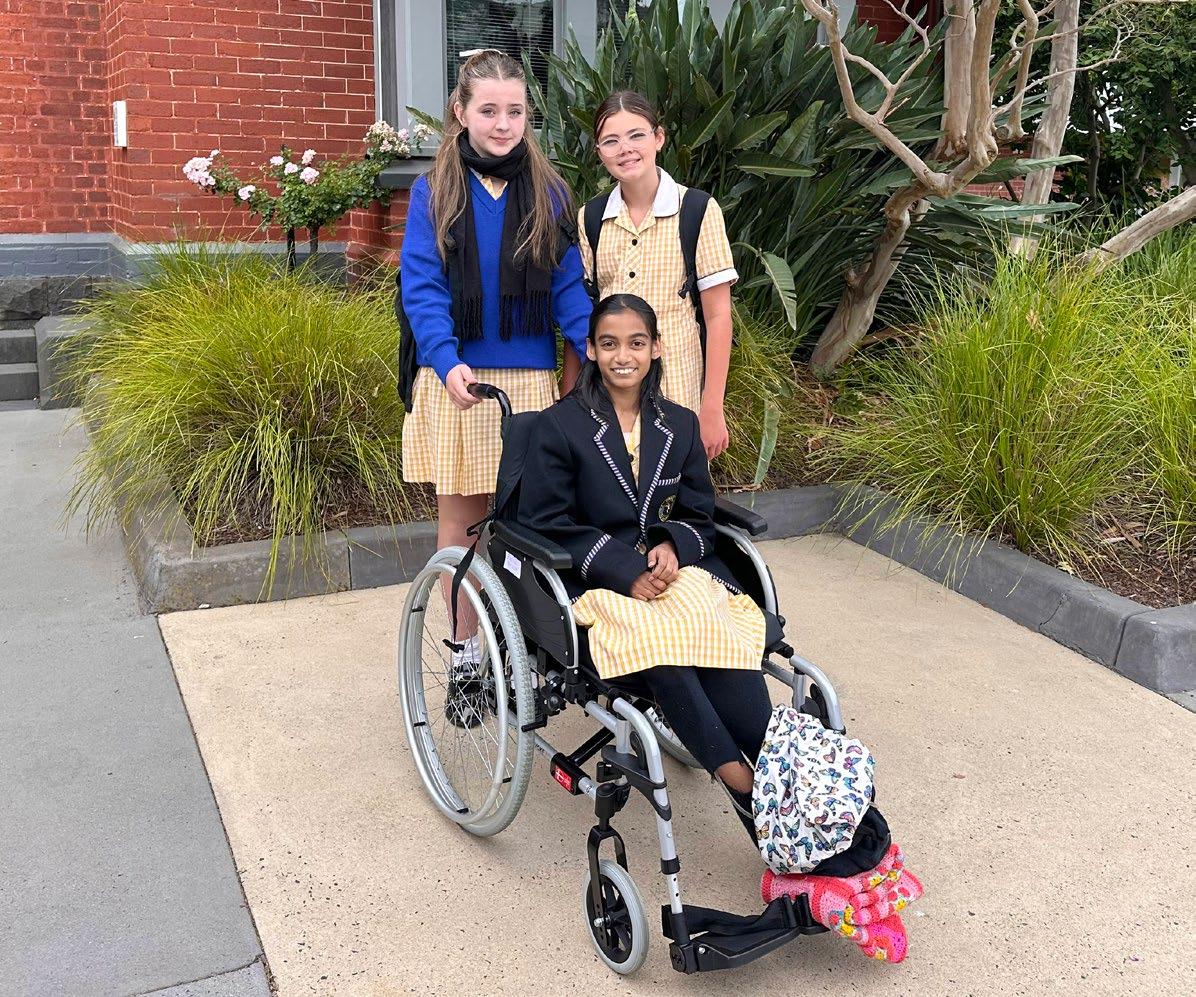
Angel began Year 7 at the Kew campus this year, along with some of her best friends.
Angel and Amineh, one of Carey’s Learning Development staff.
Angel and Yasmina loved the Year 7 Outdoor Education trip to Eagle Point and Camp Toonallook.
Meet our Leadership Team
At Carey, we are led by a passionate group of education professionals, who do a lot of work behind the scenes to manage our school. We got personal with our Executive Leadership Team to get to know who they are and what inspires them.
Jonathan Walter BA, DipEd, MA
Principal
Jonathan first came to Carey as a graduate Outdoor Education teacher in 1992, and returned in 2020 as Principal. Since rejoining Carey, he has nurtured a culture of forward momentum, seeking to ensure that a Carey education prepares young people for an uncertain world. Jonathan emphasises the need for personalised learning pathways, celebrating success and fostering a strong sense of belonging.
What do the Carey values of Care, Respect and Growth mean to you?
Our values underpin all that we do within our community. They guide our behaviours and interactions and they are a simple and constant reminder of how we should be as we work to support every individual to reach their potential and feel confident and capable in their lives beyond school.
What about Carey’s educational philosophy speaks to you?
We are working to support each member of our community to discover what they are most interested in and passionate about, then to learn how to learn, extend and challenge themselves, and ultimately gaining not only skills but a desire to give back and make a positive contribution to the world.
Who are you outside of Carey?
Whenever I have a break from Carey, I head to the ocean or the mountains; I love being able to have time in nature. I like to surf, sail and hike, and be challenged by what the environment presents to me, or to sit quietly in the landscape and capture an impression in paint.
Where and when are you happiest?
Spending time with my family at Port Fairy over summer, playing on the beach, cooking meals together and celebrating the simple pleasures.
Which talent would you most like to have?
I wish I had a photographic memory so I could remember the face and name of everyone in our community.
Kylie Baxter BEd, PostGradDipEd(StudWelf)
Deputy Principal – ELC–Year 6
With over 25 years’ experience in managing all aspects of school operations and implementing improvements in teaching and learning, Kylie was appointed Head of Junior School at Carey in 2021 and became Deputy Principal – ELC–Year 6 last year. Kylie worked tirelessly throughout 2025 on integrating our two Junior School campuses and believes deeply in the importance of community and the connection between wellbeing and learning.
What is your overarching philosophy for your role at Carey?
To create a culture where every child feels known, challenged and inspired, and where strong relationships underpin meaningful learning and growth.
Why did you choose to come to Carey?
Carey’s commitment to developing the whole child and its strong sense of community deeply resonated with me.
What do the Carey values mean to you?
They guide every interaction: care for others, respect for diversity and perspectives, and a shared commitment to continuous growth.
Who are you outside of Carey?
A dog lover who enjoys time by the water with my husband and border collie, visiting family in Tasmania and exploring new places overseas or in our own beautiful country.
Where are you happiest?
At home with family and friends, immersed in a great book or walking my dog along the beach.
Kellie Lyneham
BArts, PGradDipEd, PGradCertTESOL
Deputy Principal – Quality and Innovation
Kellie joined Carey in 2021 as Head of Senior School, where she led a culture of improvement and excellence. This year, Kellie began her role of Deputy Principal – Quality and Innovation. With 20 years of leadership in education, contributing to strategic, governance and operational best practice, Kellie’s current role involves overseeing a broad portfolio of learning, experiential and functional operations.
Why did you choose to come to Carey?
Carey is known for creating great humans and is widely respected across the education sector. Combined with Jonathan’s thoughtful leadership and compelling vision, it felt like a community I genuinely wanted to belong to. What do the Carey values mean to you?
Care, Respect and Growth make my work meaningful. When those values are alive at Carey, helping young people grow into their best adult selves feels not only possible, but deeply important.
Who are you outside of Carey?
Outside Carey, I’m a mum, wife, daughter, sister, friend and (self declared) favourite aunt – pending nephew verification! I’m passionate about many things, but most of all my family: my husband, daughter and our much loved schipperke, Luna.
When are you happiest at work?
I’m happiest at Carey when our students are flourishing – especially after challenge or growth. Their capacity to surprise and inspire never gets old.
What is your greatest fear?
Spiders and being in prison. I really don’t like to imagine the overlap. What do you consider your greatest achievement?
Raising my daughter is my proudest and most important ongoing life project.
Jake Plaskett
BArts(MusEd), MPsych, PGradDipEd
Deputy Principal – Years 7–12
Jake is responsible for the strategic and operational leadership of the Middle and Senior School academic, wellbeing and co-curricular programs. Jake is a strategic and innovative leader with experience leading school-wide pedagogical reviews across several well-regarded independent schools. His heart-driven approach is characterised by passion, authenticity and a strong desire to deliver excellence in student and staff outcomes.
What is your overarching philosophy for your role at Carey?
We have such an extraordinary team of teachers and professional staff. With so much collective expertise and wisdom, I believe my leadership philosophy at Carey must be grounded in caring, connecting and co ordinating. Why did you choose to come to Carey?
The balance of a classic and future focussed curriculum, the focus on deep learning within the classroom and beyond, the commitment to developing good people and the supportive community really resonated with me.
Who are you outside of Carey?
I love ‘dad jokes’ and even named my cat with that in mind (Grayson, because he is gray and he is my son). Also, I was born and raised in California – apologies in advance for my Americanized spellings.
Which talent would you most like to have?
I wish that I could sing in tune! In university, I studied both mathematics and music because I was interested in the neuroscience linking the two; however, I am pretty much tone deaf so it is rare that I get invited to karaoke.
Julianne commenced her career as an educator and has worked in the area of school development for over 20 years, overseeing the areas of fundraising, enrolments, marketing and communications, alumni and community engagement. Having joined Carey in 2011 in the role of Admissions Manager and being appointed to lead the Community Engagement team in 2014, Julianne has a deep understanding of and passion for building and sustaining community.
Why did you choose to come to Carey?
Carey is very well known for its strong and connected community. It made the idea of joining the Carey community very appealing, especially when you work in Community Engagement!
What about Carey’s educational philosophy speaks to you most?
I am proud to work at a school that encourages students to be themselves, think independently and that supports students to pursue their passions through personalised learning pathways.
Who are you outside of Carey?
At heart, I’m a country girl! When I’m not immersed in the life of the Carey community, you’ll often find me outdoors, soaking in the natural beauty of Australia’s landscape.
What is something that would surprise people to learn about you?
That I am a graduate of the Conservatorium of Music at the University of Melbourne and, for many years, taught music.
Which talent would you most like to have?
Speaking any language – would add to the ease and fun of travel.
Michelle is a CPA-qualified Chief Financial Officer with 20 years’ experience in executive positions. Michelle manages the finances and operations of Carey with a high level of commercial acumen and strategic leadership. Michelle has a strong alignment with Carey’s values and appreciates our culture and community.
What is your overarching philosophy for your role at Carey?
To help Carey do big things sustainably: clear numbers, sensible risk management and decisions that protect learning today while funding what’s next.
Why did you choose to come to Carey?
Because it’s a school with both ambition and heart. I love helping big plans happen responsibly so great ideas can fly with the numbers quietly behaving in the background.
What do the Carey values of Care, Respect and Growth mean to you?
People first, listen well, be fair, be transparent and keep improving our systems and ourselves without losing what makes Carey, Carey.
What about Carey’s educational philosophy speaks to you most?
It balances high expectations with genuine care for the whole student. I love the blend of tradition and innovation, grounded values and the mindset of constant improvement.
Who are you outside of Carey?
Outside of Carey, I enjoy good walks, good coffee, gardening and a good weekend project. I’m also a devoted list maker – there’s something satisfying about a tidy plan.
What do you consider your most valuable skill?
Staying calm under pressure. If tension rises, I get steady (and quietly develop a strategy).
Sophie Lukeis BArts, GradDipHR, GAICD
Executive
Director
– People
Sophie is passionate about working with teams to create a workplace where all employees can thrive and is motivated by the impact that staff culture can have on the student experience at Carey. Having worked in human resources for over 25 years across a number of industries, Sophie has led HR teams to play a positive and impactful role in employee engagement, wellbeing and culture change.
Why did you choose to come to Carey?
To support Jonathan’s vision and be a part of a warm and caring community. Who are you outside of Carey?
A wannabe farmer building her dream home in the country with my husband and slightly unhinged Kelpie. What is something that would surprise people to learn about you?
I used to be a personal trainer and trained two famous opera singers. What is your greatest passion in life?
My two grown up daughters.
Where are you happiest?
At our farm in Alexandra.
Dr Karl Sebire
BComms(AppDes), GradDipEd, MEd, MDes, PhD
Executive Director – Strategy and Partnerships
Karl is a published researcher whose work examines the intersection of technology, cognition and learning, aiming to equip schools and universities to navigate the challenges and opportunities of a rapidly changing world. Karl’s role at Carey will drive the development of new programs, partnerships and enterprise opportunities that will advance Carey’s strategic vision and support our sustainability into the future.
What is your overarching philosophy for your role at Carey?
To build a future-focussed school that balances innovation with humanity – where strategy, partnerships and learning design expand opportunity while remaining true to how we think, learn and relate.
Why did you choose to come to Carey?
Carey is willing to think beyond itself – embracing innovation, partnership and system-level impact. That ambition, coupled with strong values, made it a compelling place to build something meaningful. What do the Carey values mean to you?
Care is relational, not procedural. Respect is intellectual and interpersonal. Growth is intentional and evidence-informed about people, not just performance.
What is your greatest passion in life?
Travel, it’s where all my disposable time (and money) is spent. What do you consider your most valuable skill?
Synthesising complexity into clear, usable ideas… and I can paint.
What is your greatest fear?
Regret, and sharks.
Which talent would you most like to have?
Anything musical; I can barely clap in time.
An enduring legacy of excellence in music
Kelly Southworth Editor
The performing arts are a cornerstone of the Carey experience, and enabling access for our students to exceptional performing arts facilities and resources is a privilege of delivering our programs. One of our generous Carey families, who shares this philosophy, has enabled the School to enhance its Music program with the purchase of a Steinway Concert Grand piano for all of our students to experience.
The Su & Sun Family has been a part of the Carey community since their eldest daughter, Christina, who is now in Year 6, joined our Kew campus in ELC. Her younger sister, Chantelle, is now in ELC and excited to follow her sister’s footsteps into the Junior School.
A gift inspired by a passion
‘We chose Carey because it is a school that nurtures the whole child, not only academically, but also through music, the arts and character development. Students are encouraged to explore their passions and grow with confidence,’ says Cherry Sun, mother of Christina and Chantelle. ‘We also strongly believe in co education – we think it’s important for girls and boys to learn together.’
When Cherry was young, she dreamt of being able to learn piano. When Christina showed interest in learning,
Cherry was thrilled. ‘I will always make sure she has everything she needs to be as good as she can be,’ Cherry says. Christina has become a highly proficient player, well beyond her 12 years. Christina has performed in (and won!) competitions all around the world, which has allowed her to play for audiences in New York and Tokyo.
The Su & Sun Family is passionate about excellence, and we are so grateful that their donation will make such an impact on Music education
at Carey. Steinway pianos are considered the gold standard, and our students will benefit from the quality, inspiration and unmatched experience of performing and practising on our Steinway for generations to come.
‘We wanted every Carey student to have the opportunity to play the type of piano the best musicians in the world play,’ Cherry says. ‘I hope it encourages them to learn more and play more. I want to do my best to help others – that’s what brings me joy.’
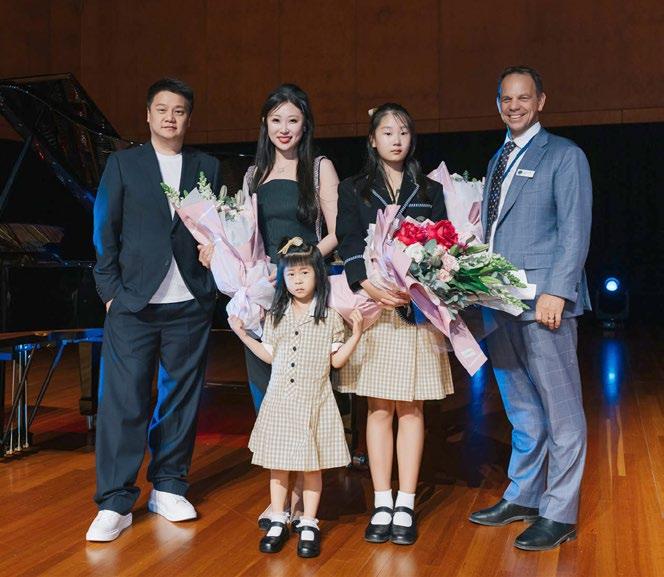
The Su & Sun Family with Principal Jonathan Walter (L–R): Hao, Cherry, Chantelle, Christina and Jonathan.
Cherry: We wanted every Carey student to have the opportunity to play the type of piano the best musicians in the world play.
Debuting Carey’s Steinway
To celebrate our new piano and to thank the Su & Sun Family, we held a special unveiling event in February. The piano’s debut performance was by Christina, who played Étude Op. 10 No. 12 by Frédéric Chopin.
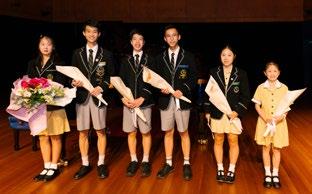
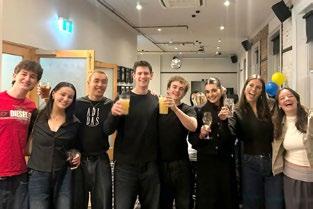
Our other five student performers on the night, who are pictured above from left to right, were Callum (Year 12), Eamon (Year 10), Jerry (Year 11), Angela (Year 10) and Jossie (Year 4). Each of their performances showcased
not only the students’ skill, passion and dedication to their craft, but also the beautiful rich tones of the Steinway Concert Grand.
We felt deeply honoured to donate the Steinway piano to the School. We hope it will inspire many students at Carey to discover the joy of music and to pursue their dreams with dedication and creativity.
– The Su & Sun Family
We thank the Su & Sun Family for this prestigious gift.
Photography by Fiona Sexton and VISPENN
‘Hope alone is not a strategy’: International Women’s Day at Carey
Kaushini Fernando Alumni and Community Manager
‘International Women’s Day did not begin as a celebration. It began as a call to action.’
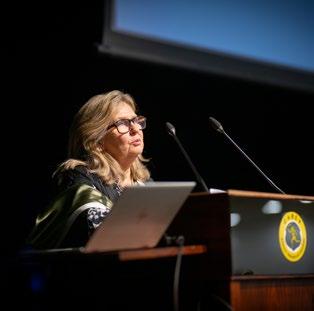
This powerful sentiment expressed by Deputy Principal Kellie Lyneham at this year’s International Women’s Day Dinner framed the evening as an opportunity to reflect on how far we have come and how far we have yet to go. Our keynote speakers, mother and daughter alumni duo Melinda Crole (1986) and Amanda Rayner (2008), further pushed the message that we must move beyond optimism and into action, as ‘hope alone is not a strategy’.
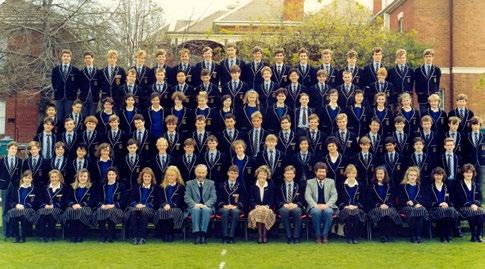
In Year 12, Melinda’s cohort was made up of around one third girls to two thirds boys. When she entered the workforce, that imbalance continued.
‘On many occasions at executive meetings, I was the only woman in the
room, and ensuring your voice is heard and understood in those circumstances is genuinely challenging,’ she says.
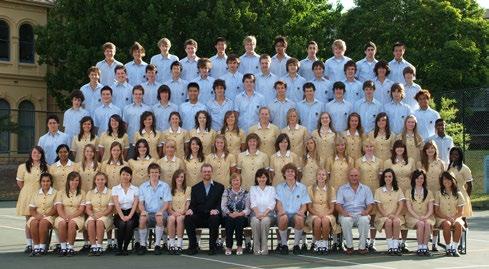
By the time Amanda graduated in 2008, the gender balance at Carey was closer to 50:50. She recalls all leadership roles being evenly split between boys and girls, and that she felt unaware of gender inequality. However, a school environment characterised by balance and fairness was a stark contrast to what she experienced in the workplace. When she started working at a law firm as a graduate, she was shocked by how unequal the industry was – senior and partnership positions were predominantly held by men, despite women making up the majority of law graduates and entry level solicitors at the time. ‘If the scales tip, it can catch
you off guard if you haven’t really seen them out of balance before,’ Amanda says.
Sometimes, it seems that progress can disguise inequality rather than eliminating it. Despite workplace equality laws in Australia, the Workplace Gender Equality Agency still consistently reports a national gender pay gap above 20%, and men are nearly twice as likely to be in the highest paying roles in Australian workplaces. The Australian Government Treasury reported that women’s earnings fall by around 55% in the first five years after the arrival of a child, while men’s earnings remain unaffected or, in some cases, increase. The evidence suggests that this is a result of the bulk of unpaid domestic labour in households continuing to be taken on by women.
Newnham House, 1986: Melinda is in the front row, second from the right. Melinda was one of only 27 girls in a House cohort of 90.
Dunshea House, 2008: Amanda is in the front row, sixth from the left. At this time, Carey was approaching a 50:50 gender balance.
Amanda: While I hope that gender inequality statistics will look vastly different by the time my daughters and nieces move into the workforce, I know that I cannot sit around and wait for that to happen.
‘These are not abstract numbers,’ Melinda says. ‘They represent real women receiving less than their male counterparts, year after year, compounding over a lifetime.’
Both Melinda and Amanda’s experiences have taught them that although some issues of gender equality may seem insurmountable, small daily actions can collectively shift the status quo. ‘Constant frustration at these statistics doesn’t sit well, and it’s not sustainable,’ Amanda says. ‘While I hope that gender inequality statistics will look vastly different by the time my daughters and nieces move into the workforce, I know that I cannot sit around and wait for that to happen.’ They encourage every individual to practice small daily actions like calling out inequality, advocating for change, amplifying girls’ and women’s voices and modelling this behaviour to our children, students and the young people in our lives.
Our International Women’s Day keynote speakers: Melinda Crole (1986, left) and her daughter Amanda Rayner (2008, right) both attended Carey, and are now both advocates for workplace equality.
‘For Mum and me, Carey laid a foundation built on courage and faith,’ Amanda says. ‘The task before us is to honour that foundation by having the courage to act every day, even in small ways, and the faith that those actions over time will balance the scales.’
Moved deeply by Melinda and Amanda’s address, Kellie stated that, as parents, educators or school staff, ‘We are in the business of hope’. She expressed the hope that she feels every day at Carey, witnessing the young men and women we have the privilege of nurturing. Kellie also emphasised the importance of our co educational school to not look away from the reality of gender inequality, to learn from discomfort and to shape a more equitable future, together.
‘Importantly, this means giving our students a voice in this dialogue,’ Kellie says. ‘They are not simply observers of this moment. They are the generation who will carry this work forward. They will inherit both the progress we have
made and the challenges we have not yet solved. Our responsibility is to create the conditions in which they can speak honestly, think critically and develop the moral confidence to do better than the generations who came before them.’
The 2026 United Nations theme for International Women’s Day was Balance the Scales, a call for a renewed commitment to equity and justice. It reflects the belief that every woman and girl, regardless of background or identity, should feel safe, be heard and have the opportunity to shape her own future. While progress continues, this theme acknowledges that significant challenges remain, including gender based violence, systemic inequities and barriers to justice experienced by many across Australia and around the world. This International Women’s Day was a reminder that we have so much to celebrate – as a school community and as a society – but the work to create a more equal future for our students and children must continue.
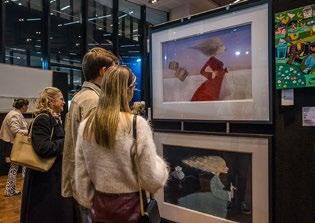
community
Top
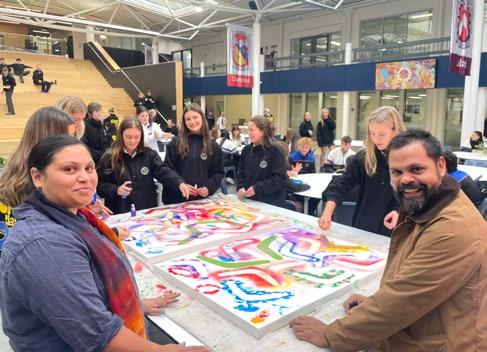
During Reconciliation Week 2025, Middle and Senior School students co-created an artwork with First Nations artists Carmal and JEM from Yarn and Learn. The artwork, called Returning Well, is now on display in Senior School.
Top
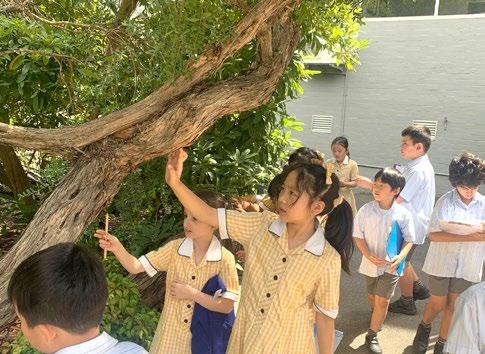
The oldest tree at Carey’s Kew campus is a tea tree, which has medical and cultural significance for the Traditional Custodians of the land where Carey lies. Year 2 students learnt about the tree and acknowledged the Wurundjeri people and their ongoing connection to nature and the land of the Kulin Nation.
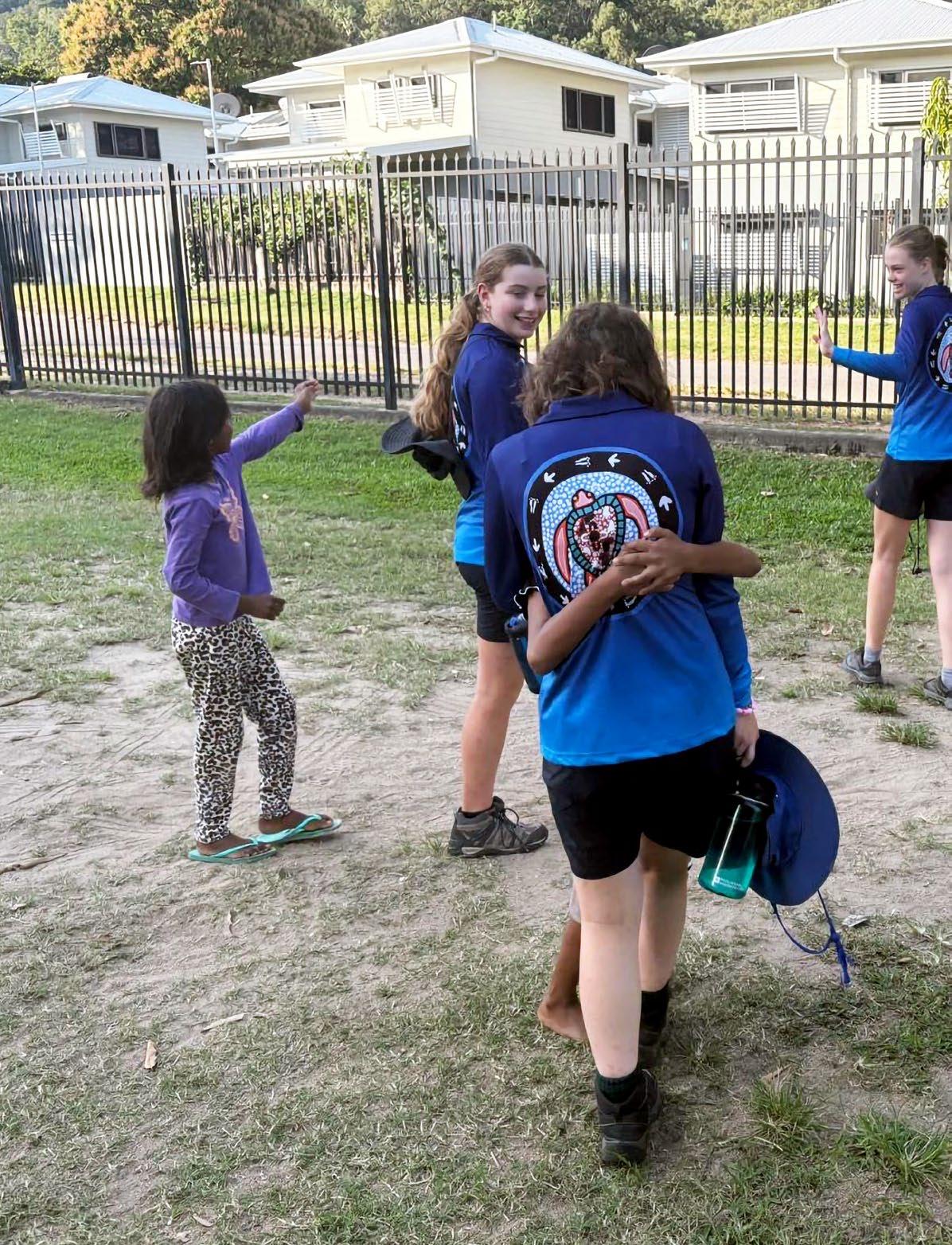
Above: Carey students visited and built connections with the
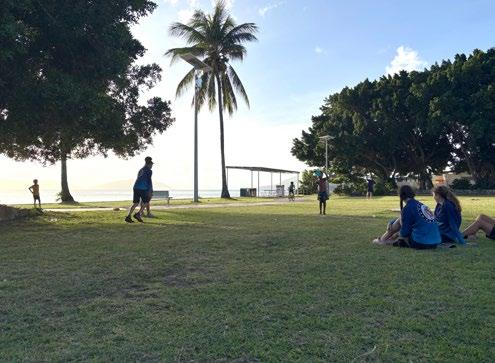
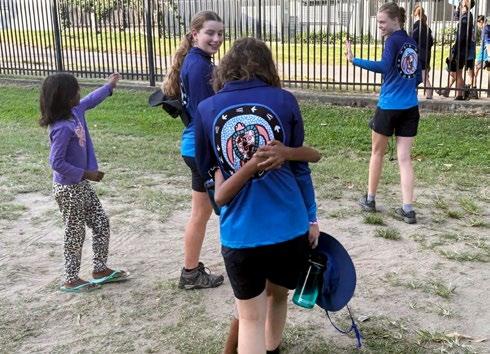
at Palm Island in northern Queensland as part of the Carey Zero program.
left:
right:
Bridging now to next: Carey’s commitment to Reconciliation
Amanda Siva Careers Practitioner and Carey Reconciliation Leader
The 2025 National Reconciliation Week theme, Bridging Now to Next, offered a meaningful reminder of the importance of learning from the past while looking confidently toward the future. This message strongly aligns with our mission at Carey. While we have long been committed to deepening our understanding of First Nations histories, cultures and perspectives across our curriculum and student experiences, 2025 marked a significant milestone: the publication of our first Reconciliation Action Plan (RAP).
Our RAP serves as a formal, school wide commitment to continuous growth in our Reconciliation practices. It is underpinned by our Reconciliation strategy, which focusses on four key areas – acknowledging First Nations histories and culture, growing cultural awareness by celebrating diversity, supporting First Nations staff and students and advancing partnerships with First Nations communities.
Throughout 2025, we made significant progress on implementing our RAP commitments. Key achievements included:
• publishing a guide to First Nations terminology to support respectful communication
Our commitment to Reconciliation is grounded in our responsibility to help create a more inclusive and respectful Australia – one where all cultures and stories are valued.
• co ordinating a whole school Reconciliation Week program, including a fundraiser for Children’s Ground
• establishing an Allies in Reconciliation staff team and dedicated Canvas resource hub
• deepening our connection with the Palm Island community through the Carey Zero program
• providing targeted staff professional learning to build cultural capability.
Our commitment to Reconciliation is grounded in our responsibility to help create a more inclusive and respectful Australia – one where all cultures and stories are valued. As an educational institution, we are guided by the Australian Professional Standards for Teachers, which require us to ensure students develop understanding and
respect for Aboriginal and Torres Strait Islander histories, cultures and languages.
We are also committed to meeting the Victorian Government’s Child Safe Standards, which emphasise the importance of creating culturally safe environments for Aboriginal children and young people. Beyond meeting these requirements, we strive to exceed them – building a school culture where Reconciliation is a shared journey.
In the coming year, we will continue to develop our Reconciliation learning experiences. A key action in our 2026 RAP is to communicate our Reconciliation practices and learning with our community – this article is one of many stories you will be able to read in Carey publications.
By deepening engagement and fostering stronger partnerships, we hope to continue building a community grounded in inclusivity, cultural understanding and mutual respect. Our ultimate goal is to inspire young people to become active citizens – individuals who demonstrate leadership, empathy and a commitment to positively contributing to Australia’s multicultural society. Reconciliation is an ongoing journey, and we are proud to continue walking that path together.
Education for a j ust world: lessons from Reggio Emilia
Kylie Baxter
Deputy Principal – ELC–Year 6
Last April, we had the privilege of travelling to Reggio Emilia, Italy, to immerse ourselves in an educational philosophy that has inspired schools around the world.
The Reggio Emilia Approach is an educational philosophy that treats children as capable, active participants in their learning. By focussing on broader social aims – peace, equality, democracy and social integration – it seeks to foster creativity, curiosity and critical thinking while building community and empowering children to take ownership of their own learning.
Our study tour brought together passionate educators from around the world to visit Reggio Emilia’s Infant
Emma Chiera
Deputy Head of Junior School – Personalised Learning
toddler Centres and Preschools and hear from a range of experts at the Loris Malaguzzi International Centre, home to the Reggio Emilia Approach. Reggio Emilia positions education as a vehicle for societal transformation. This idea, woven into every space, relationship and learning encounter, became one of the most powerful insights from our time there.
Democracy, equality and participation
Democracy was perhaps the most unexpected yet profound theme of our study tour. Participation is one of the core values of the Reggio Emilia
Approach, and it is through enabling participation that democracy is enacted and equality is achieved.
In Reggio schools, decisions about projects, materials, groupings and shared spaces are made collaboratively with children. Children are treated as co‑researchers, co‑constructors and full citizens of their learning environments, rather than passive recipients of a curriculum. Spaces are designed so all children can access materials independently, and projects are created in response to their theories and ideas. Every child is seen as capable, competent and rich in potential.
One educator described the classroom as a ‘miniature city’, where each child
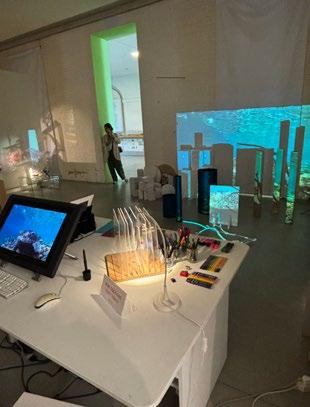
Loris Malaguzzi Centre: The Ray of Light Atelier is a place of research and experimentation where light in its different forms is investigated.
Luigi Bellelli Nido Centre: By using a specific colour palette, educators invite children to observe nuances of tone, shade and light.
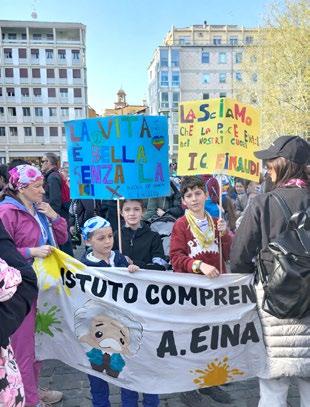
Piazza Martiri: Schools came together on a Sunday morning to raise awareness of current issues. The blue placard says 'Life is beautiful without wars'.
Children are treated as co-researchers, co-constructors and full citizens of their learning environments, rather than passive recipients of a curriculum.
learns the rights and responsibilities of being part of a community. The school mirrors the society it hopes to create: one where individuals feel empowered to shape their environment through ideas, open dialogue and creativity. We were deeply moved by the intentionality behind this stance because it demonstrated that participation is central to learning and every contribution matters. It enables curiosity, inclusion and the development of lifelong learners – important attributes children must develop as they move through schooling and beyond.
Social integration through community building
The Reggio philosophy teaches us that schools are not isolated institutions, but social and cultural centres. The relationship between school and city is reciprocal. Families, artists, community members and local organisations are contributors to the learning ecosystem.
Part of the tour involved exploring the city of Reggio Emilia, giving the program a social, cultural and educational context. The values of the approach align with that of the city, and we found many parallels between Reggio Emilia and Melbourne – both are welcoming cities and cultural hubs that embrace diversity, creativity and opportunity.
We saw examples of children engaging with their neighbourhoods through projects that fostered a sense of belonging and connection. Whether exploring local architecture, interviewing community members or exhibiting their work in public spaces, children were consistently positioned as active participants in the life of the city.
This reminded us of the powerful role schools can play in strengthening social cohesion. When learning extends
beyond the classroom, students can see themselves as agents of change with a role in shaping their communities.
Education as a foundation for peace
In the Reggio Emilia Approach, peace is not framed as the absence of conflict, but as the presence of understanding. Every classroom functions as a community where differences are acknowledged and explored, and children are encouraged to negotiate ideas, test perspectives and make meaning collaboratively. Conflict is treated as a natural component of learning – a chance to develop empathy, communication and respect. Watching children engage in democratic dialogue, even at the age of four or five, was striking. Educators gently guided discussions to encourage deeper thinking and shared problem‑solving. Through dialogue,
children learn the fundamental skills of peaceful coexistence: listening, compromise and mutual care. Peace is essential for collaboration, community and relationships, and is something we must teach, model and practise daily. At Carey, we strive for students to feel agency in their learning, where they can do what they love and positively contribute to society in ways that reflect who they are. The Reggio Emilia Approach aligns strongly with Carey’s values. The study tour renewed our sense of purpose and has encouraged us to further embody the Reggio principles in our classrooms, leadership practices and broader school culture. Our time in Reggio Emilia was energising and transformative. It affirmed our belief that education must be more than the acquisition of knowledge; it must be a force for building a more peaceful, equitable, democratic and connected society.
Emma and Kylie visited Reggio Emilia, Italy, last year to discover how Carey can learn from the educational philosophy of the Reggio Emilia Approach.
Learning by giving: the student volunteers of Carey
Jacquie Jones Community and Events Co ordinator
Cooking sausages, baking cakes, selling snacks and drinks and helping backstage at musicals are tasks that are synonymous with parent helpers at schools. However, in my new role as Community and Events Co-ordinator, I realise there is a lot more to it. I now have the privilege of working closely with the Parents Associations and in my short time in the role, I have
Piari
been quite in awe of the amount and variety of work our parent volunteers undertake.
The benefits of volunteering are immense and it sets an example for our students that giving back is not only important, but enjoyable. Community service is also woven into the curriculum from the very beginning of a Carey student’s journey
in ELC and continues throughout their schooling journey. It is heartening to see that many of our students engage in regular voluntary roles in addition to the opportunities presented by the School. We have interviewed four students who go above and beyond in their contributions to their communities to learn about their experiences as volunteers.
Organising committee for Hawthorn Park National Women’s Day Celebration, Year 11 leader on Junior School camp, Year 6 School Guidance and Mentoring
What led you to volunteering?
My grandmas both led me to become involved in volunteering. One is a retired teacher who frequently plans group events, and the other is currently president of a charity called SESTAA (Society for Empowerment, Service, Training and Awareness), so helping out has always been a major part of my life. At school, my enjoyment for Outdoor Education led me to join the Year 11 Leadership program and, as a result, I was given more opportunities to contribute to Junior School.
What motivates you to dedicate your time to volunteering?
Volunteering allows me to gain new experiences and create meaningful memories. While I regularly work among people I love, I am also motivated by the fact that I am able to create new connections with people of all ages through volunteering, as it enables me to interact with many different individuals. What have you learnt from volunteering for International Women’s Day and Carey?
Assisting with the International Women’s Day event allowed me to put my organisational skills into practice and taught me what goes into planning a major event. However, volunteering for Carey taught me a vastly different set of skills. During my time as a leader at Toona, I was immediately put on the spot and quickly had to adapt to think on my feet. I also worked alongside teaching staff, which taught me valuable teamwork and communication skills.
Why do you think student involvement is important for the Carey community?
I think student involvement at Carey is crucial in forming inter year level connections with both teachers and students. I think this is a very important contributor to the foundation of our community. While everyday school gives us the opportunity to bond with our peers on a social level, being involved in whole school programs permits students to develop a greater sense of community awareness and purpose.
Ben and Leo
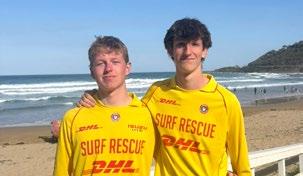
Dedicate their summers to the Wye River Surf Lifesaving Club
What led you to volunteering?
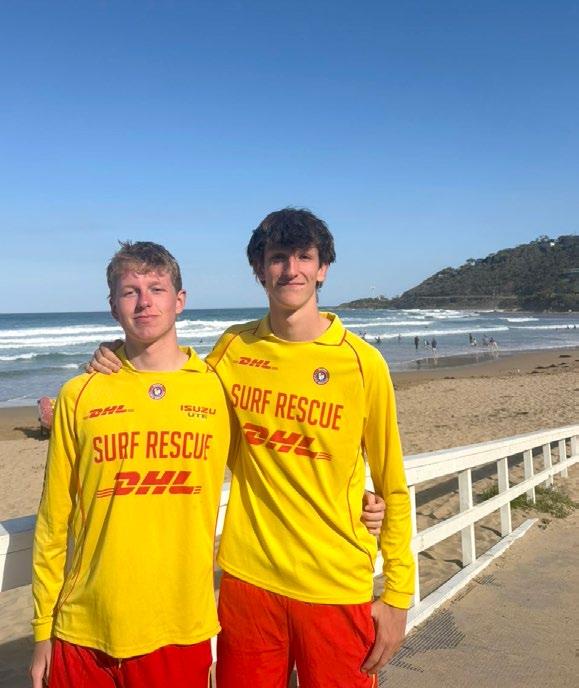
We began as Nippers when we were seven years old for the Wye River Surf Lifesaving Club. As we moved up over the years we got the chance to gain new skills, starting with our surf rescue certificate at 13, allowing us to patrol for the first time, and eventually leading us to our bronze and silver medallions in the five seasons since.
What motivates you to dedicate your time to volunteering?
The community we’re part of at our club makes lifesaving feel like an opportunity rather than an obligation. The importance of our role on Australian beaches also provides motivation: being the difference between life and death through rescues and preventative actions has been a privilege that gives us a reason to dedicate our time to this cause.
What have you gained from volunteering with Surf Lifesaving?
Through lifesaving, we have developed valuable skills such as advanced resuscitation and first aid. We appreciate the chance to look out for people as they enjoy a day at the beach, and value how genuinely grateful people are for our role in the community. Starting as Nippers ourselves to now having the chance to train the next generation is also incredibly rewarding. Why do you think student involvement is important for the Carey community?
Student involvement strengthens the Carey community by encouraging us to give back to others. We both recognise the privilege and opportunities we have had at Carey and in life, so giving back not only supports others, but also fosters a more connected and supportive community.
Ailsa
JMB Stand at Melbourne Marathon, Year 11 Leader on Middle School camp, National Homeless Collective BBQ Fundraiser and the Big Bold Swim raising money for breast cancer
What led you to volunteering?
My main motivation behind putting my hand up for fundraisers, programs and events was that I simply wanted to have new experiences. Doing the International Baccalaureate Diploma pushed me to be asking to do things or signing up to things completely outside of my comfort zone. Once I did one event, I felt genuinely valued in my community, and from then I kept putting my hand up.
What motivates you to dedicate your time to volunteering?
I want to be a part of other people’s memories! Even though volunteering does take time and energy, I always remind myself of the influence it has on other people. Everyone has different experiences and perceives things so uniquely, so if I can have even a little impact on improving things for them, it’s worth it.
What have you learnt from volunteering for so many organisations?
I appreciate the small interactions I have with people. Those quick conversations, laughs, learning about their lives, and seeing firsthand the positive influence I’ve had, even if it’s small. Different organisations showed me the numerous forms of volunteering and the many ways you can help out.
Why do you think Carey student involvement in volunteering is important to our community?
In a world where human connection is dissipating, and people are becoming increasingly unaware of the importance of community, I think Carey students need to be that change. So many times, I’ve been acknowledged as a part of Carey, at an event or program that has nothing to do with school, and I realise the influence being actively involved in community has. Small change is still change!
From an open quadrangle to a premier gallery
Jonathan Oppy (1968)
Alum, former parent, current grandparent and organiser of the Camberwell Art Show
As a student who spent 12 formative years at Carey, I could never have imagined that the open quadrangle – once filled with the scent of the chemistry laboratory and the sounds of school life – would one day be transformed into a sophisticated contemporary gallery. Yet, this July, that very space, now the Jeffrey O Thomas Quad, will host the 61st Camberwell Art Show –an extraordinary convergence of tradition, community and excellence.
For those who remember the quadrangle as a thoroughfare between classes, its evolution is symbolic. Carey has always valued growth, vision and adaptation. To see the once open grounds enclosed and elevated into a modern exhibition venue capable of hosting one of Australia’s most respected art shows is both nostalgic and inspiring.
The event will commence with the Friday 3 July Gala Opening Cocktail Evening and Awards Presentation – an elegant and celebratory occasion. The Gala will welcome approximately 400 patrons, collectors and supporters, setting the tone for the 10 day exhibition. The show opens to the public on Saturday 4 July, inviting art lovers, collectors and families into the transformed quadrangle. Throughout the opening weekend, visitors will enjoy engaging art demonstrations offering insight into technique and process. The
To see the once-open grounds enclosed and elevated into a modern exhibition venue capable of hosting one of Australia’s most respected art shows is both nostalgic and inspiring.
exhibition continues through the week and closes on Sunday 12 July.
This year’s show reflects its remarkable scale: more than 1,000 paintings by over 600 artists from across Australia will be curated and displayed. Behind the scenes, a dedicated team of more than 50 volunteers works tirelessly to ensure every detail – from intake and installation to sales and collection – is managed with professionalism and care.
A highlight for our community will be the special Carey evening
on Wednesday 8 July, featuring complimentary admission with wine and cheese – an opportunity for past, present and future families, past and present staff, and alumni to gather and experience the exhibition together. It is a fitting acknowledgment of Carey’s role in hosting this significant cultural event. More details will be shared in due course on the Camberwell Art Show website.
Over more than six decades, the Camberwell Art Show has firmly established itself as a premier large scale exhibition on Australia’s cultural
calendar. That reputation is built on consistent commitment to excellence, rigorous standards and an unwavering dedication to artists and patrons alike.
The show is underpinned by the extraordinary efforts of the Camberwell Rotary Club, supported by a legion of volunteers and friends. Their contribution demonstrates how community driven initiatives, guided by clear purpose and strong leadership, can achieve outcomes of national significance.
Behind the scenes, a sophisticated computer management system supports the assessment and selection of works with efficiency and fairness, ensuring the calibre of artwork remains exceptional. The operational precision required to stage such a complex event continues to strengthen relationships with artists and collectors, enhancing the show’s standing and credibility.
Beyond its artistic prestige, the Camberwell Art Show is a testament
to service. Since its inception, more than $5 million has been raised to support local, national and international humanitarian projects. Proceeds from this year’s exhibition will again be directed toward charitable, educational and humanitarian causes in Australia and abroad. Each painting sold and each ticket purchased contributes to meaningful change.
For Carey, hosting this event is more than a logistical achievement – it is a statement of values: community engagement, artistic excellence and service beyond self. For me, it is a full circle moment. The quadrangle that framed my school days now frames creativity, generosity and impact.
What was once a simple courtyard stands ready to become a gallery of possibility. In that transformation lies a story worthy of Carey’s proud history – one that now embraces artists, patrons, volunteers and the wider Carey community.
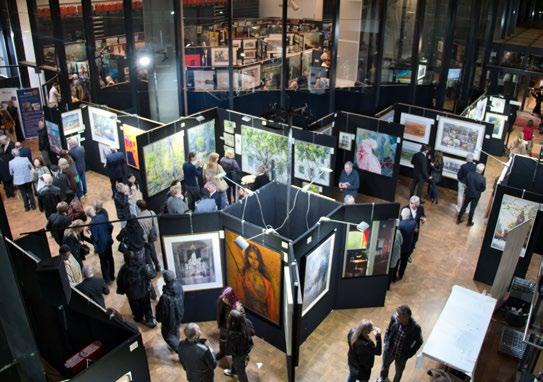
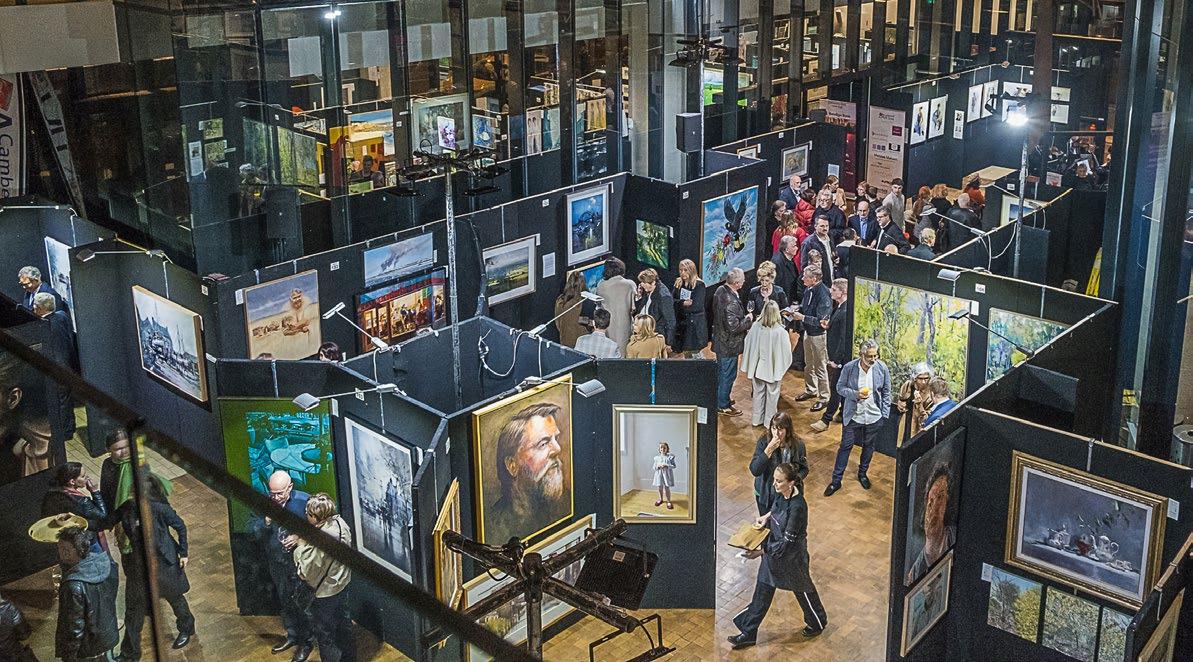
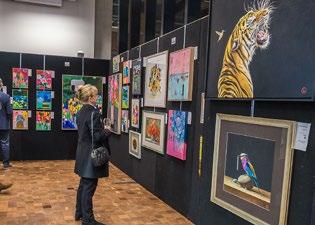
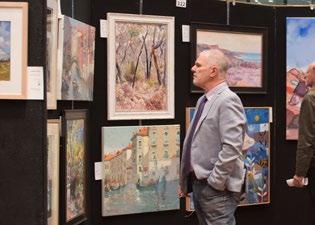
Photos from the 2025 Camberwell Art Show, taken by Jill Edwards and Kitty Vivekananda from the Camberwell Camera Club.
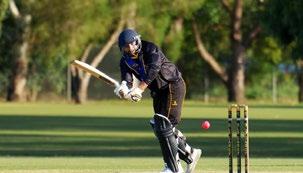
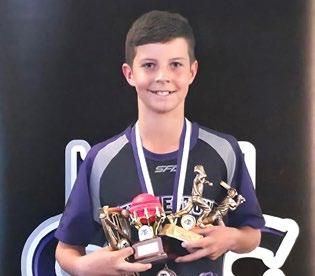
Sport is my biggest passion, and it pretty much always has been. In Prep, I remember playing cricket with my Year 6 buddy, Tom. We ran out of tennis balls because I was having so much fun hitting them over the fence! Then in Year 2, I had a really sporty teacher, Mr Oakley, who encouraged me to start trying lots of different sports. Cricket is my favourite sport – I love being in Year 5 and playing cricket in the APS competition this year. I also play cricket outside of school. I had some great highlights this season that I’m really proud of; in my local competition, I scored my first ever century, took five wickets in a match and came home with four trophies and a medal at the club presentation night (pictured above). I was lucky enough to be the Under 12 Champion Player in the league, which goes to the best overall player for batting, bowling and fielding. I also played representative cricket over the summer, and I scored the winning runs in the Grand Final! It was an amazing feeling, and I love using what I’ve learnt to try to help other people, especially my younger brother, who also loves cricket. I’m
Oliver Mens
Year 5 student
really hoping I can coach or umpire for some of the younger sides one day. I also love playing football and basketball in teams with my friends. This year, I’m playing in Division 1 for Beverley Hills Junior Football Club. I’m happy playing any sport though –tennis, swimming and athletics are all great as well!
When I grow up, I want to be a professional cricketer. I know I need to train hard and practise lots. For me, the most important thing is having fun. Just in case I don’t get into sport, my backup plan is to be a lawyer. I really like debating – which I do lots of with my siblings! I love writing and entered a poetry competition at school recently. I also enjoy reading; right now, I’m reading The Hunger Games series. My favourite subject at school, second only to PE, is probably Maths. I’ve entered the Maths Talent Quest every year since Year 2, and last year I received a High Distinction for my project. I measured the disposals, marks, goals and Brownlow medal votes for the top 10 highest paid footballers in the AFL to see if they were a good return on investment
for their clubs. I think maths is more interesting when I can make it about something I love, like sport.
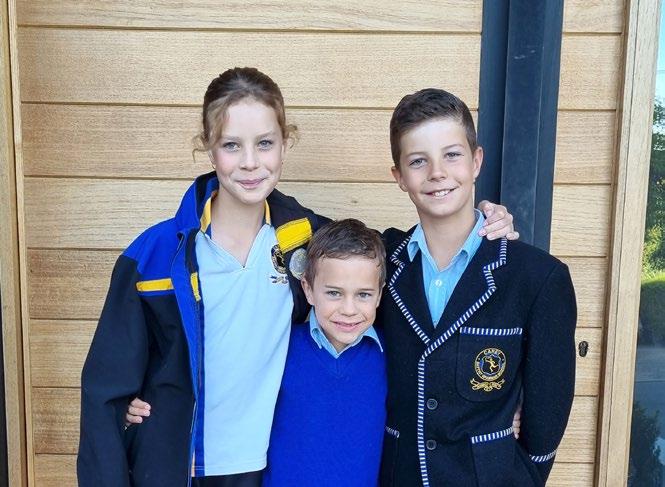
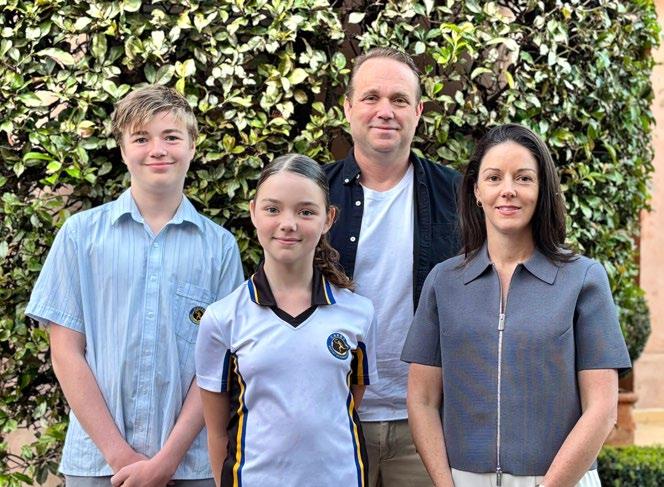
I also play piano and clarinet, and I love travelling with my family. I’m half South African, so I get to visit my family over there every second year. We’ve also been to Mauritius, Malaysia, Singapore, England, France, America and more! We love travelling around Australia too. I’m really close with my brother and sister (Spencer and Charlotte, pictured above), and we have lots of fun together as a family.
I think school is awesome, and Carey Donvale is like a second home to me. I’ve been coming here since I was three years old, and when I wake up, I’m always excited for the day to come. I’m going to go for the School Captain role next year because I really want to do what I can to make the school the best it can be. I want to help other kids get ready for moving over to the Kew campus when Donvale closes at the end of next year, and I think if we can make Donvale the best place it can be, then we can bring that to Kew, and make Kew a better place too.
My interest in housing started when I was very young. While other kids were collecting footy cards, I was collecting real estate brochures. In primary school I had already decided I was going to be an architect. I loved everything about houses – drawing plans, visiting open inspections and even watching building sites. I enjoyed school too and was quite academic, and I was lucky to take on leadership roles like school captain.
I did become an architect and spent time working on large construction sites and in design studios. But the work wasn’t quite what I had imagined. I started volunteering on weekends and realised I actually enjoyed that more than my day job. It made me wonder if the skills I learnt at uni could be used in a different way. That question eventually led me to community housing.
When I started learning more about the sector, the scale of the issue really struck me. In Victoria, around 30,000 people are homeless on any given night, including children, and over 65,000 people are waiting for social housing.
Today, I’m the Director of Property at Unison Housing, where I oversee
Danni Nash
the development, maintenance and planning of nearly 3,000 social and affordable rental homes across the state. These homes are for people on moderate, low and very low incomes, with rents set at affordable levels. In simple terms, my team works to make sure people have safe, stable places to live. Another big part of my role is working with different levels of government and philanthropic partners to secure funding so we can build more homes. Support from donors makes a real difference in getting projects off the ground.
Some moments stay with you. I’ll never forget handing someone the keys to their home for the first time. They told me it felt like winning the lottery. That moment really changed how I think about housing – a secure home doesn’t just make someone’s day, it can change the course of their life.
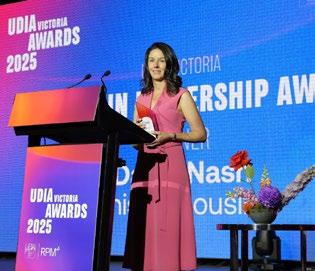
Property and construction are still male dominated industries, and recently I was honoured to receive a Women in Leadership award from the Urban Development Institute of Australia (pictured above). For me, it felt like recognition for the many people
in our teams who show up every day to make a difference. If there’s one thing I wish I’d known earlier in my career it’s that not for profit and purpose driven organisations offer real career opportunities. Recently, I took on a new challenge by joining the Board of the Community Housing Industry Association Victoria, which is another reminder that learning doesn’t stop and there are always new ways to contribute.
Our family started at Carey in ELC, and I still remember the sense of calm the moment we walked in. I love how different interests are encouraged and celebrated here, whether academic, sport, creative, leadership or community, and how each child can find their own path. That’s what I hope for my own kids: the confidence to explore, to learn and to find work that feels purposeful and true to who they are.
At the heart of my work is a simple belief that everyone deserves access to opportunity, and a safe home is where that begins. Stable housing can change lives, and I want more people to have that foundation.
Parent of Penelope (Year 5) and Jacob (Year 8)
‘This is an excellent project, Peter. One day I think you should be a commercial artist with a secretary who’s a good speller. A+’ This comment from my grade 5 teacher stayed with me. It captured my early learning perfectly. I found confidence and joy in drawing and storytelling, while other aspects of school were far more challenging. From an early age, I realised that art was my thing.
When adults asked what I wanted to be when I grew up, I would say, to their amusement, ‘a bookmaker’. What I meant, of course, was someone who made books. I loved creating stories through images, and that passion stayed with me. It eventually led to freelance illustration and working in publishing. The recession in the early 1990s forced me to change direction. My interest for communicating ideas led me to pursue a Postgraduate Diploma of Education and become a teacher.
I’ve now spent 30 years at Carey, teaching IB Art and VCE Visual Communication and Design. Building strong connections with students has been central to my work, encouraging
Peter Schmidli
them to have the confidence to think independently, show perseverance and deal with uncertainty, especially in those moments when they don’t yet know the answer. Learning to trust the design process is something I’ve always emphasised. Many people believe that being ‘good at art’ is something you’re born with, but I’ve always enjoyed helping students challenge that idea. With practice, effective strategies and the right mindset, creative thinking ultimately supports the development of soft skills, such as problem solving and a deeper appreciation of Art and Design.
One of my most formative experiences at Carey was taking part in five Art Study Tours to Yuendumu. It was a privilege to experience Warlpiri culture and to see art that is deeply connected to identity, community and storytelling. This experience broadened my perspective both as a teacher and as an artist.
Sometimes people ask why I have stayed so long at Carey. The answer is the people, and the culture that working with talented and supportive
colleagues creates. I watched my son flourish at Carey, forming lifelong friendships and developing a thirst for learning. As a parent I appreciated the care, teaching and support he was given.
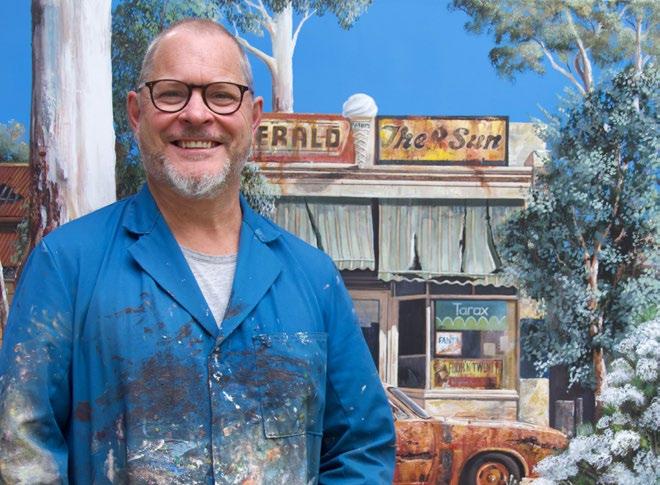
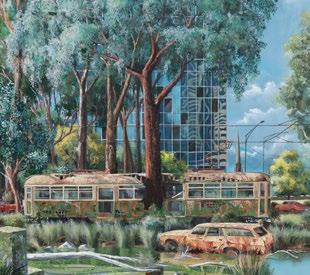
Now, as I move into a part time role, I’ve been able to dedicate more time to my art. Over the years I have explored a range of media and techniques but have recently focussed on landscape paintings. My work often explores environmental themes, sometimes celebrating the beauty of nature, and at other times questioning humanity’s impact, often through a nostalgic lens of alternative possibilities. My lifelong engagement with art history, constant reading and regular visits to exhibitions continues to nourish my practice and inform my teaching.
In many ways, I’m still that young student telling stories through images, just with a bit more experience, creativity and perspective gained along the way.
You can see more of Peter’s art on Instagram.
Art and Design teacher
Both of my parents are musicians. They met in the orchestra, and I never doubted that I would do anything else.
I started piano at four in China. We moved to Australia when I was eight and knew no English. It was difficult; I didn’t really find my place until high school at the Victorian College of the Arts Secondary School. I loved it. We spent half of each day training in music and had lots of opportunities to perform in large venues like the NGV.
In Year 10, I moved to MLC for VCE. It was like moving to a new country again! I was still heavily involved in music – I was Music Captain, organised concerts and arranged to have my tutor, Professor Farren Price, one of the most respected pianists in the world, do a masterclass at school.
I went to the University of Melbourne and completed a Bachelor of Music and then began a Master of Music (Music Performance). Halfway through my masters, I received a scholarship to study at the Royal Academy of Music in London for two years. It was an incredible experience: I had some amazing teachers, I had the opportunity to play for Queen Elizabeth II and I got heavily into competing.
Christine Luo
Piano teacher and parent to Enzo (Year 5) and Sebastian (Year 4)
I had started competing early and at 11 was a finalist in a Kawai Australasian competition for pianists 25 years and younger. I performed at the Sydney Opera House with a full orchestra for the first time. It was overwhelming but that was how I fell in love with national and international competitions.
After I completed my Master of Music, I decided to try teaching. I did a Master of Music Teaching and got the job at Carey. Until then, my paid work was performing, accompanying, adjudicating and masterclasses – Carey was my first real job with a payslip!
I love teaching – it inspires me to strive to be better, explore new repertoire, find lesser known composers and keep my students excited about music.
I now find so much joy in both adjudicating international and national competitions and in encouraging my students to compete. Seeing them winning competitions is one of the greatest rewards of my teaching career. Last year, one of my students performed at the Piano Star International Competition Winners’ Concert in New York, and I was presented with the Teacher of the Year award, which was such an honour.
I recently had the privilege of being involved in 3MBS Melbourne’s ‘The Talent’ radio program. I was on the audition panel before airing to select the musicians who would have the opportunity to perform live, and I was a guest mentor on an episode alongside some incredible Australian musicians.
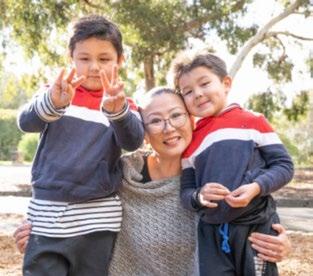
Outside of music, my time is dedicated to my family. I have two boys who are heavily involved in sport, which is a whole new world to me so I am learning a lot. My oldest was chosen to be part of the Team Victoria swim team and his goal is the 2032 Olympics. My youngest is deeply passionate about soccer and has been selected for the Real Madrid Junior Academy in Spain. They both also love music, but the main thing I have passed onto them is the importance of commitment, dedication and resilience.
It’s one of the most important lessons I teach my students as well. If they are pursuing piano as a hobby, I can support them to learn as much as possible and have fun with it. But if they want to take it further and study music as a career, I make sure they have every opportunity to advance, push themselves and develop, while keeping the joy of music alive.
How grief became hope
Michael Lord Chair of the Carey Medal Committee
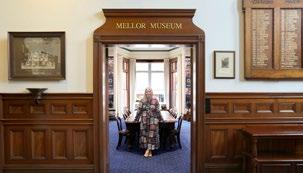
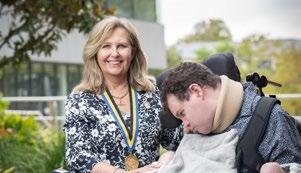
The Carey Medal Committee is delighted to announce that the 2025 recipient of the Carey Medal is former Carey parent, former staff member and beloved member of our community, Robyn Brewin. The award recognises the significant and positive impact her work through the JMB Foundation has made to the lives of many young Australians living with an acquired brain injury.
The Carey Medal recognises people in our community making positive change. It is presented to a member of the Carey community (a past or present student, staff member or parent) in recognition of exceptional and outstanding service to the wider community either within the state, nationwide or internationally.
A mission inspired by personal tragedy
James Macready Bryan (2004) is the elder of two brothers who attended Carey; his step brother also attended. While at school, James was a valued member of the First XVIII Football Team and Vice Captain of the First XI Cricket Team. A friend to many, James was known as being sporty and fun loving. In an instant, one fateful act changed his and his families lives forever.
In October 2006, James was out with friends celebrating his 20th birthday. What was supposed to be a joyous occasion for a young man on the precipice of his adult life turned devastating when an unwarranted and cowardly blow left James permanently disabled. The attack caused a catastrophic acquired brain injury (ABI)
and left his family to find a way to provide him the ongoing care he needed. That spineless and destructive act has led to a story of hope, empathy and a determination to make our world a better place for people like James. James’s mum, Robyn Brewin, turned this personal tragedy into a mission for awareness, assistance and advocacy.
Robyn with her family at Founders Day in February 2026, where she was presented with the 2025 Carey Medal.
Robyn and James.
Driven by grief, love and deep compassion for others in the same situation as herself and James, Robyn set out to make a difference.
Establishing the JMB Foundation
Two of every three cases of ABI are sustained before the age of 25. The number of people in Victoria living with an ABI is around 73,000, over 31,000 of whom need ongoing assistance or supervision. Many severely disabled young people are forced to live in aged care facilities as they have nowhere else to go to get the nursing care they need. When Robyn learnt of this, it became impossible for her to solely focus on improving conditions for her own son. Driven by grief, love and deep compassion for others in the same situation as herself and James, Robyn set out to make a difference.
With the support of family and friends, Robyn helped establish the JMB Foundation in 2007, with the goal to provide support for disability care and services for young people living with an ABI in Australia. While also caring for her son, Robyn has spent almost 20 years advocating for and raising funds to support families affected by ABI as well as raising awareness of the consequences of senseless violent acts.
The impact of Robyn’s dedication to JMB is evident not only in the outcomes achieved since 2007, but also in the confidence and respect the foundation commands across the sector. Her contribution has been vital in ensuring
the foundation remains both principled and effective in the causes it supports. Robyn also was instrumental in the Step Back Think Campaign against violence and she has led a fight to stop NDIS assistance from being cut, as this would jeopardise the ongoing care for people who need full time assistance. She is also a Community Visitor for the Office of the Public Advocate, visiting disability homes to ensure residents are well cared for.
Robyn’s Carey story
Robyn was a Carey teacher for 36 years, having joined in 1981 after graduating from university. She taught Chemistry and Maths, and became the Head of Mathematics and Information Technology. She was also an important advocate for girls’ sport and was integral in the development of the Carey girls’ cricket program. Robyn coached the girls to undefeated success on several occasions in both the Eastern Suburbs Association competition and the Victorian Schoolgirls’ grand final.
To ensure our whole community could be involved in cricket, she established the Old Carey Women’s Cricket team, which she captained to a Premiership in 1983. In February 2022, the inaugural Robyn Macready Bryan Cup match was held between the Old Carey Women’s Team and the Carey First Girls Team as an ongoing recognition of Robyn’s impact on the sport at Carey. Robyn was also named a Companion of the Old Carey Grammarians Association in 2025, recognising her contribution to Old Carey Cricket.
Robyn Brewin is a Carey legend who has been part of shaping our school into the one we know today. Since 2007, Robyn has committed herself wholly to advocating for those living with ABI, improving outcomes for affected young people and their families, and caring for her son James, giving him a fulfilling life of joy, love and kindness. Robyn is a very worthy recipient of the 2025 Carey Medal. Learn more about the JMB Foundation.
Thank you, Maggie
Don Maloney President of the Carey Past Families Hub
Maggie Bassily has made an amazing contribution to the Carey community through numerous volunteer roles over the past 24 years.
Maggie Bassily’s three children all attended Carey, starting in Prep at the Donvale campus and through Middle and Senior School at Kew. As a child, Maggie’s family moved around a lot, and she attended six different schools. Keen for her children to attend the same school for their entire schooling, finding a school like Carey was very important to Maggie – and we are so glad she did.
Every year since her eldest started in 2002, including after her youngest graduated in 2021, Maggie has performed volunteer roles at Carey. Throughout her time, Maggie has been:
• on one or more parent associations in each of the 20 years that Maggie had a child at Carey
• a member of the Carey Theatre Association for nine years
• a member of Friends of Carey Music for 10 years
• an organiser of the annual Mothers Day Lunch
• co founder and co organiser of the JMB Ladies Night annual fundraiser (read more about JMB on page 30)
• a founding member of the Carey Past Families Hub – which has grown to over 350 members since its establishment in 2019 – and President for three years.
Maggie stepped down from the Carey Past Families Hub committee at the end of 2025, marking the end of an extraordinary 24 years of service as a volunteer to the Carey community.
Maggie is greatly respected for the work she has undertaken for the Carey community. It has been said that one role is never enough for Maggie and that she is dynamite at balancing career, family and volunteering.
It has always been a pleasure to work with Maggie: she has a wealth of knowledge and is a great communicator, and she is able to connect deeply with everyone she works with. She is empathetic, selfless and dedicated to the community, and she has a great sense of humour. Nothing is ever too much for Maggie; given any task, she could be relied upon to do it professionally, happily and with no room for errors.
Carey has been a huge part of the Bassily family’s life, particularly the Donvale community and Performing Arts department. Maggie says the support from teachers and the School’s professional staff was invaluable in making them feel a sense of belonging at Carey. Contributing to
this community to help build a positive environment for all of our children has been a significant driving force behind her dedication to volunteering at Carey. Maggie has loved the connections she has made with parents and staff through her various volunteer roles and has formed many lifelong friendships. She has enjoyed learning about Carey, acquiring new skills and being around her children and supporting their learning and growth. She believes roles like the ones she has undertaken at Carey are vital; supporting the School with co curricular activities and events enables staff to focus on the learning needs of the children.
Despite completing her volunteer work, Maggie’s connection to Carey will continue. We look forward to catching up with her at Carey musicals, plays and music performances and Carey Past Families Hub events.
Thank you Maggie for your incredible contribution to the Carey community in so many ways for so many years!
Maggie (right) with Past Families Hub members Vera and Kathy at the 2025 Carey International Women’s Day Dinner.
Why we volunteer
Marcele De Sanctis (2001) Junior School Parents Association – Kew, current parent and alum
Volunteering plays a vital role in shaping the vibrant and inclusive community that defines Carey. For many parents, getting involved is both a continuation of long held values and a meaningful way to stay connected to their child’s school life. I asked some members of the Junior School Parents Association – Kew about what inspires them to volunteer at Carey – this is what I learnt.
For some, the motivation to volunteer is deeply rooted, having grown up in families where community involvement was a way of life – working bees planned around kitchen tables and parents heading out to committee meetings after dinner. Volunteering now, for many parents, feels natural. For others, involvement offers a valuable pathway to connection, particularly when work commitments limit daily presence at school drop off and pick up. Committees are a flexible and purposeful way to remain engaged and contribute to the life of the School.
Volunteering feels most meaningful when it brings people together. Whether welcoming prospective families, supporting current parents, working alongside staff or engaging directly with students, volunteers consistently describe the greatest reward as helping others feel informed, included and connected. Moments of shared learning, conversation and collaboration – reinforced by smiling faces at school events – endorse why this work matters.
The impact of volunteering is most keenly felt in the sense of community it helps create. By fostering relationships
between families and ensuring parent voices are included in school life, volunteers at Carey help shape an environment that feels welcoming and connected. Social events, in particular, play a powerful role. Parents recall moments when families, especially those new to the School, expressed how included they felt because of opportunities to meet others and build relationships early on. These connections often extend well beyond the school gates, strengthening the broader Carey community.
Volunteering also deepens a sense of belonging. Volunteers describe feeling they are part of an ecosystem where parents and staff work together to build an inclusive and supportive environment. This shared effort not only enhances parents’ connection to the School but helps children feel a stronger sense of belonging, seeing their families actively involved in the place where they spend so much time.
The impact of volunteering is most keenly felt in the sense of community it helps create.
Along the way, volunteers develop new skills and capabilities. From overcoming a fear of public speaking to building cross cultural awareness, volunteering provides opportunities for personal growth alongside community contribution.
What matters most to volunteers is feeling valued – knowing their time and perspectives make a difference. Being included in conversations, consulted on decisions and recognised as partners in shaping the School reinforces the importance of their role.
Getting involved in any capacity is deeply rewarding. It offers a flexible way to stay connected, form friendships, better understand the School and model the value of giving back. Volunteering enriches the entire Carey community – creating a place where everyone feels they belong.
Help us Power Carey’s Future !
Jonathan Walter Principal
At Carey Baptist Grammar School, we have always believed in making thoughtful decisions that strengthen our school and the educational experience of young people today and for decades to come.
Like many schools, Carey is experiencing sustained increases in electricity expenses. Now more than ever, these costs are reducing what we can invest directly into teaching, learning and student opportunities.
That is why we are scaling up Powering Carey’s Future, a decade long investment to install large scale solar energy systems across our campuses.
This initiative is a key pillar of Carey’s Sustainability Plan and the installation of 466 solar panels, to be housed on top of our Middle School buildings at our Centre for Creativity and Collaboration, will be our largest sustainability undertaking yet.
At Carey, I see firsthand the impact of projects that connect learning, community and purpose, so when considering this solar initiative, my first thought was: what does this mean for our students?
It means real, measurable benefits – clean energy that reduces our environmental footprint, lower operating costs and a powerful example of sustainability in action. Our students regularly explore issues of innovation and social responsibility, and this project brings those values to life in a visible, practical way.
The financial savings from this project – estimated at more than $40,000 every year – will be reinvested directly
‘As a school community, we aim to lead by example. This project may come with an initial cost, but it’s an important investment in an impactful, net-zero future.’
The financial savings from this project ... will be reinvested directly into student programs, facilities and learning opportunities.
into student programs, facilities and learning opportunities.
The installation of 466 solar panels and associated infrastructure will annually:
• save 278MWh of energy
• avoid 195 tonnes of CO2 emissions
• generate energy equivalent to the usage of over 60 homes.
Together we can build a lasting legacy: reduced operational costs, reinvested savings for our students and a school powered by clean energy for generations to come – made possible by your generosity and the support of our community.
Every donation – large or small – will support this important project and be matched by the School, doubling the community’s impact.
With a gift of $747.90, you’ll fund one solar panel and have your family’s name celebrated on the forthcoming Powering Carey’s Future Honour Board at our Kew campus.
I would love to see your family’s name included alongside many of our alumni, parents and staff.
I hope you will join with me in helping to secure Carey’s future.
Luca, Year 12 Environment Captain
Powering Carey’s Future – Timeline
2022 | Camp Toonallook
Toona is our four hectare Outdoor Education campus for students in Years 4 to 7. The solar energy system powers all dining and recreation energy needs at the camp.
32MWh energy saved annually = 22 tonnes of CO2 avoided
2024 | Carey Zero – Mission Beach
Home to our Year 10 Zero Journey program, our solar energy system at Mission Beach makes the campus’s energy use nearly cost neutral.
63MWh energy saved annually = 45 tonnes of CO2 avoided
2024 | De Young Centre for Performing Arts
The centre is the home to performing arts at the Kew campus. This 2024 project saw the installation of the largest solar energy system currently in place at Carey
115MWh energy saved annually = 80 tonnes of CO2 avoided
2026 | Centre for Creativity and Collaboration solar installation
To be housed on top of our Middle School buildings, the forthcoming system represents Carey’s largest energy investment to date and will deliver savings across the School.
What is
MWh?
A megawatt‑hour (MWh) measures the total amount of electricity used or produced over time.
It tells us how much power the solar energy system actually produces and saves each year.
1 megawatt (MW) = 1,000,000 watts of power
466 solar panels
278MWh energy saved annually
195 tonnes CO2 emissions avoided
‘Using sunlight to power our everyday lives is not only convenient, but extremely cost-effective in the long run! This project shows great progress towards our collective goal for a sustainable future.’
Nilly, Year 12 Environment Captain
A day in the life of the Carey Archivist
Helen Wolff Archivist
Most days begin with a question. It might be from a staff member searching for a name or a date, a request from the Principal for background on a past school policy or decision, or a query that arrives with very little to go on – just a fragment of memory and the hope that somewhere, in the archives, there’s an answer.
From there, the day can unfold in unexpected ways. What begins as a search often becomes an opportunity to rediscover a small part of the School’s story.
On any given day, as the Carey Archivist, I might be cataloguing school council minutes, carefully digitising fragile photographs or sorting through boxes that have not been opened in years. Some tasks are methodical –labelling, scanning, recording details – while others feel more like detective
work. A name scribbled on the back of a photograph, a date that doesn’t quite match, a face that seems familiar but cannot yet be placed; each small clue matters.
Not all archives stay tucked away in boxes. Around the School, they take on more visible forms, such as in the Mellor Museum, on the Carey Heritage Trail across the Kew campus marking significant sites and stories, and historical displays developed with the School’s graphic designer, such as the recent ‘Senior School Musicals Through the Years’ exhibition in the Memorial Great Hall foyer. Researching material for a Junior School assembly or writing stories for newsletters and Torch magazine also brings the archives into the present. These projects create a bridge between past and present, inviting the community to encounter
What begins as a search often becomes an opportunity to rediscover a small part of the School’s story.
A photo from 1960 showing the Dunshea family limousine in front of the construction of Gadsden Pavilion.
The ‘Senior School Musicals Through the Years’ display was created to celebrate 40 years of the Senior School Musical.
the School’s history as part of their daily experience.
There are moments when the archives becomes more personal. Writing an obituary for an Old Grammarian is one of them. It is a responsibility that requires care – not just accuracy, but respect. Piecing together a life through records, anecdotes and contributions to the school community is both a privilege and a reminder of the lasting connections people carry with them long after they leave. At other times, that connection takes a different form. Earlier this year, I was contacted by the family of an alum who had lost all their Carey photos in the January Harcourt bushfires. Being able to provide digital copies of many of those images was a small but meaningful way of restoring a part of that family’s history.
There are also the smaller, more unexpected discoveries. A program from a long forgotten event. A handwritten note tucked into a file. A list of names that, at first glance means little, but on closer inspection reveals a story of achievement, loss or change. These are the moments that remind me that the archives is not just a collection of objects, but a collection of lives. Among the records are around 300 audio cassettes, each containing voices that have not been heard for years. There is a particular anticipation in playing them for the first time. Sometimes the sound is clear, and a speech or event emerges immediately; other times, it is faint, distorted or incomplete. But there is always a sense of presence, of a moment briefly returning.
Of course, the work is not without its challenges. There is always more to be done: backlogs to clear, decisions to make about what should be kept and what can be let go. Not everything can be preserved and that responsibility requires careful thought. There is
also the practical side: deciphering handwriting, dealing with damaged materials and ensuring that digital records are organised in a way that will make sense now and for years to come.
Despite these challenges, the purpose of the work remains. A school is a continuum, shaped by generations of people, each leaving behind traces of their time here. The archives ensure that those traces are not lost, both holding the past and giving it meaning. In a world that moves quickly, where so much is temporary and easily discarded, taking the time to preserve and reflect is more important than ever. At the end of the day, the box is closed and returned to its place on the shelf. Its contents are no longer quite as unknown as they were before. A photograph has been identified and scanned, a donation catalogued, a small piece of the School’s history brought back into view.
The work is quiet, often unseen. But it is, in its own way, an act of remembering.
The Carey Heritage Trail takes visitors on a historical tour of the Kew campus.
Donations to the archives
December 2025 to April 2026
List of donors
Anonymous
Holt, N J, The House of Laycock, 1879–1959: A Record of Family Achievement Through the Generations (1959).
Elias, D, ‘A woolly friend bows out as quilt takes over’, unidentified newspaper, 25 February 1981.
Notes relating to the Canterbury mansion known as Frognall, which was the home of the maternal grandparents of Foundation Scholar Alfred Mellor (1933).
McWilliam, Gwen, ‘Frognall – a short history’, unidentified newspaper, date unknown.
Drinks coaster – RAAF ‘Frognall’ Sergeant’s Mess, c. 1940s, date unknown.
Mrs Linda Blaufelder (1980)
School issued summer hat and dress worn by donor’s daughters, Clarissa (2009) and Brittany (2012).
Mr David Crawshaw
DVD, 90th Senior School Speech Night, Thursday 18 October 2012, Melbourne Town Hall.
DVD, 91st Senior School Speech Night, Thursday 10 October 2013, Melbourne Town Hall.
David Crawshaw biography written by David Morgan OAM (1961), 19 October 2025, published in Carey Chronicle (2025).
Summary of David Crawshaw’s time at Carey, My Life at Carey, 1982–2025.
Correspondence from the Physical Education Department to Old Grammarians encouraging use of the Carey Sports Club, Bulleen, undated.
Correspondence from the Headmaster and President of the OCGA relating to the Carey Foundation Annual Giving Program, 13 February 1989.
Flyer promoting events held during OCGA Week, 6 to 12 May 1989.
A Midsummer Night’s Dream program, 1980. Donated by Dr Stephen James (1982).
Click here to explore the photographs and documents listed here and more on our digital archives, Carey Collections.
If you have any special Carey items that you would like to donate, contact our Archivist, Helen Wolff, on 03 9816 1331.
Alice in Careyland school revue program, 1982. Donated by Dr Stephen James (1982).
Report magazine, 1970. Donated by Mr Torsten Dowell (1973).
Junior School Handbook, c. 1977. Donated by Mr Craig Fryer (1985).
Carey’s unsung heroes
Carolyn Apostolou Chair of the Carey Heritage Committee
Carey Baptist Grammar School has been shaped by countless individuals whose contributions have often gone unrecognised. While many notable figures, such as those in positions of responsibility, have been honoured in the past, there are many others who work behind the scenes, significantly impacting our school community without ever stepping into the limelight. Recognising this, a movement began to honour these remarkable individuals. The Carey Heritage Committee has taken the initiative of compiling biographies of these unsung heroes, capturing their stories for future generations.
This collection is a tribute to those who have played a vital role in our school’s history since its founding in 1923. By sharing their stories, we both acknowledge their efforts and deepen our understanding of Carey’s rich heritage. The collection is a work in progress, with many inspiring stories already recorded and many more waiting to be told. We invite the entire Carey community to contribute by submitting the names and stories of those who have made a difference. Whether it’s a teacher, student, parent or staff member, every contribution is valuable in building a comprehensive history of our school.
By contributing to this collection, you help ensure that stories like Paul’s are not lost to time. To submit a suggestion or share a story, please email archives@carey.com.au. Together, we can ensure these legacies are preserved for years to come.
You can read more stories on Carey Collections, at archives.carey.com.au
Paul Allsopp
Carey Staff, 2003–present
Dr Paul Allsop joined the Carey staff in 2003 and has taught Mathematics throughout the Senior School. His primary focus is VCE higher mathematics, and this is where he shines.
During his tenure he has studied and completed a PhD in the discipline, his major emphasis being on statistics. Curiously, but felicitously, he chose to centre his studies on cricket records: a fecund source of material. To most of us, the subject is recreational and recondite (even to avid cricket aficionados), but to Paul it combines a love of the game with a profound exposition of statistical principles.
There is an urban legend that suggests that 87 is a score that bodes ill for the success of Australian innings, and a collective sigh of relief is palpable as the score is passed without the loss of a vital wicket (the English teams dread 111 for the same reason). Paul has triumphantly debunked this superstition through sedulous research, but I don’t suppose that will have any effect on the belief.
Paul is one of that rare breed: someone of whom no one speaks ill. He is a humble, honest and decent man devoted to his students, his colleagues and his family. His nickname at his previous school was ‘The Animal’. This was applied, as Charles Dickens once noted, for its utter want of application. There is only gracious and gentle collegiality.
Paul’s other great sporting love was cross country running, and he could often be seen pounding out the laps and the kilometres, sweating a little, but invariably smiling and cheerful. He is a master of his subject, and a true and trustworthy friend and colleague.
Written by David Morgan OAM (1961)
Maintaining connection after graduation
Sasha Edney (2022)
Old Carey Grammarians Association
Life after Carey looks different for everyone, but connection to the community remains a constant. Within the Old Carey Grammarians Association, the Young Alumni committee works to nurture this connection post-graduation, targeting the most recent five years of graduates.
Maintaining these connections is particularly important as the transition to life after school can be a challenging one. Staying anchored to a familiar community during that period enables young alumni to navigate new challenges more confidently, knowing that a network of shared experience and mutual support is never far away.
So far this year, the Young Alumni committee has run several events to support Carey’s recent graduates. The first of these events was an informal coffee catch up at the University of Melbourne. This event offered young alumni the opportunity to reconnect in a relaxed and welcoming setting. The gathering created space for genuine conversation, sharing past school experiences and discussing different university endeavours.
The turnout reflected an appetite among young alumni to stay connected, supporting the effort to run these coffee catchups at different university campuses across Melbourne. We hope to build on this momentum,
organising informal catchups more frequently across the calendar year.
Our second event, the Young Alumni Night, brought the community together in a lively setting over drinks and food. The evening drew alumni from different graduating years, sharing a mix of old memories and new experiences and combining the warmth of old friendships with the energy of new connections, all under one roof. Scheduled at the beginning of the university semester, the Young Alumni Night aimed to welcome the Class of 2025, creating an opportunity to reconnect with familiar faces before a period of significant change. By continuing to run events like this, the committee deepens the connection between recent graduates and Carey’s broad alumni network, reinforcing the sense of community that sits at the heart of the OCGA.
The Young Alumni team plays a vital role, acting as a bridge between current students, young graduates and the wider alumni network. The committee has plenty more in store for the year ahead, whether you attended one of this year’s events or are yet to join us for the first time, we would love to see you at a future gathering! At its core, the OCGA and the Young Alumni team exists to ensure that the relationship between Carey and its graduates remains alive, meaningful and always moving forward.
The Young Alumni team ... [acts] as a bridge between current students, young graduates and the wider alumni network.
70 years of the Old Carey Cricket Club
Chris Angus (1995) Vice President of the Old Carey Grammarians Association
The Old Carey Cricket Club recently passed its 70th anniversary, having started out in 1955 from the vision of David Lord (1953) and Clive Lord. It has evolved in recent years, from having three men’s sides a decade ago to now possessing four men’s, one women’s and one veterans’ (over 40s) side. We’re comfortably the largest past-APS student cricket club, and the only one with a women’s side. A core focus of the club is to provide a place for alumni to play our game regardless of their profile – ranging from the young to the not so! Reinvigorating the women’s side in 2021, following its initial incarnation when Robyn Brewin (nee Macready Bryan) established the program in 1982, was the first major step in this process. The second was introducing a veterans’ side in 2024, which has expanded our coverage across the cricketing ecosystem and made us accessible to a wider audience. We have increasingly focussed on providing game opportunities to current
school members. This has been highly successful, with half of the women’s side regularly made up of current students, while several father–son duos graced the field this season.
History on the field
The club has been a long term member of the Eastern Cricket Association and became well regarded quite quickly. The likes of David Lord, John West (1955) and Noel Voigt (1953) led the way early on, before handing the baton to a highly talented group that included names such as Jeff Chapman AM (1965), Jeffrey O Thomas (1964) and Rob Wade (1967), who spearheaded the club’s first golden era in the early 1970s, picking up three First XI premierships. Dave Macrae (1977) took over the leadership, and with additions such as Ian Woolf (1971) and Andrew Macready Bryan (1975), a second golden era followed along with another three First XI premierships in the early 1980s. The club drifted into a cricketing wilderness for nearly three decades, rising up in a more sustained way around 2016, with five First XI premierships arriving over the last nine years and three Second XI premierships. Tad Merry (1993), Daniel Clarke (2014), Cal Still, Ricky Khera, Sam Morarty (2017) are some of the contemporary stars.
The Old Carey Women’s First XI narrowly missed out on a premiership after a stellar 2026 season.
A new golden era
Our women’s side is presently led by Emily Nottle (2019), with Sam Morarty (2017) leading our Men’s First XI and Andrew Oppy (1994) leading the Vets. In the season gone, the Men’s First XI won the Dunstan Shield premiership, the highest division in the Eastern Cricket Association (ECA), for the third time in the last five seasons. Nine of the 11 players are alumni, with Jacob de Paiva (2015) taking five wickets for 31 runs of 22 overs to win the Man of the Match medal, and Sam Morarty named Captain of the ECA’s Team of the Season. The Women’s First XI made the grand final again, a great effort for such a young side. Not to be outdone, the Vets made up for last year’s agonising defeat by tasting premiership success. Notably, the side contains a mix of current and past Carey parents. And a final highlight: our Second XI and Third XI were the highest ranked sides in their competitions. We annually play the Carey Boys and Girls First XI Cricket Teams for the David Lord and Robyn Macready Bryan trophies respectively. The men retained their trophy while the schoolgirls re captured theirs. These always enjoyable games were played alongside each other for the first time, which made for a great day of Carey Cricket. While success has flowed, we’re mindful of playing the game in a way that balances the social aspect that the sport brings with knuckling down when the moment requires. Being able to grace some of the best grounds in Melbourne, with Jim Keppell and his team doing an amazing job at Carey’s Bulleen Sports Complex, it’s easy to come back for more! If you’re interested in joining and contact us at https://ocga.com.au/#occc(cricket)
Top: The Men’s First XI won their third premiership in five years.
Middle: Ricky Khera is one of the star players in the First XI. He represented Victoria at a recent National Over 40s Championship.
Bottom: The Veterans XI reclaimed the premiership this season.
Carey John Newman (1975)
I commenced at Carey in Year 7, and I was one of two boys in my cohort who was named after William Carey. I was in Fullard House and the great cricketer Typhoon Tyson was House Master. I didn’t do well academically, so when I graduated in 1975, I went straight into the workforce.
My first full time job was counting tram tickets, and I then worked in roles across many industries: insurance, retail sales, car assembly at Ford, public service. Then, I finally found something I was good at and I threw myself into it: welding and manufacturing. I went to TAFE and learnt specialist welding processes and achieved the qualifications to work on high pressure pipes, vessels and structures. I worked in construction – steel and paper mills, oil refineries and ship building, bridge building and underground mining.
I sustained an eye injury and decided to make a complete change. I enrolled in the Phillip Institute (now RMIT) and completed a Bachelor of Personnel Management and Industrial Relations, and then a Graduate Diploma in Risk Management at Swinburne. I worked with Toyota as an Industrial Officer, then in the dairy industry as a Personnel Officer and I entered HR Management with Nestlé. My last company was a major international food packaging company where, for 12 years, I headed
Jenni Webster (1986)
As a member of Carey’s first coeducational cohort who attended from Year 7 through to Year 12, my time at the School was defined by discovery. I embraced every opportunity available, packing my weeks with as much sport and music as possible. While the experience may not have suited everyone, I look back fondly on the freedom we were given to push boundaries as girls in what was, up until then, a boys’ school. Exposure to woodwork and metalwork, as well as spending hours in the art house with Mr and Mrs Nance, may well have inspired my path into architecture. That early encouragement to experiment and think freely was further supported by a university education that, at the time, allowed us the space to explore ideas without the financial pressures many students face today.
During my studies, I took a year off to travel, seeking out buildings I had studied in books. Back then, European architecture was often considered the benchmark, but it has been rewarding to see Australian architecture gain global recognition in the years since.
A chance opportunity on a return trip from Mexico led me to New York for what was meant to be six months, but became six years. I eventually returned home with my husband, our first child and invaluable experience
the HR teams in Australia, New Zealand, Japan and Korea.
I have a passion for motorbikes that started at 15 when I bought my first bike from a kid from Carey – I now have nine! I’ve raced them, toured on them, ridden to work on them, restored them and travelled internationally on them. I have two children and I spend my time between our apartment in Ivanhoe East and our home located on a golf course north of Melbourne.
I learnt very early on in my time at Carey about ‘Courage and Faith’. I practiced the courage part by taking on roles I might have been unprepared for and things that scared me. I failed sometimes; I prayed many times. I had times of discomfort, of being alone and of wanting to give up. But I had faith, too, and I was successful many times. I wouldn’t be who I am without Carey.
working as an architect specialising in educational design. That passion –for creating meaningful educational and community spaces, particularly in government and low socio economic settings – has continued to grow. More recently, it led me to volunteer with The Anganwadi Project, in partnership with Architects Without Frontiers, designing facilities for forest village communities in far northwest India.
I’m deeply grateful for my time at Carey – for the lifelong friendships, memorable teachers and the spirit of opportunity that defined those years. Whether kicking the footy at lunchtime (when it wasn’t considered a girls’ game) or challenging larger expectations, Carey gave me the confidence to give anything a go, and an enduring sense of responsibility to recognise and value our privilege.
Kate Pratt (2006)
Some of my strongest memories of Carey involve standing on a stage – usually as part of a choir, band or musical – heart racing, hoping I wouldn’t miss my cue. I found it nerve wracking, but the feeling of connection with the audience was electric. Looking back, I’m deeply grateful for those opportunities. They taught me how to show up, speak up and contribute as part of a team – skills I still draw on today, even if the stage now looks more like a meeting room. Since leaving Carey, my career path has been anything but linear. I’ve often described it as accidental, opportunistic and occasionally chaotic – despite my very planning oriented brain. I started out with degrees in engineering and psychology (a combination that reliably earns a, ‘that’s an interesting combination’ from strangers), fully
expecting a neat consulting career. Then the Global Financial Crisis intervened and I sidestepped into road safety research instead, which led me into the Victorian Government and a career defined by secondments across a broad range of portfolios. Today, I work in the Department of Health, overseeing governance for major health infrastructure projects – ensuring the right people are in the room and that projects deliver what they set out to achieve. It’s a role that
Boston Everitt (2024)
I joined Carey from the Gold Coast to study the International Baccalaureate (IB) while pursuing my passion for AFL. It was an experience that played a significant role in shaping the direction I’ve taken since.
After graduating, I began a Bachelor of Biomedicine at the University of Melbourne and, in early 2025, after a preseason with Williamstown Football Club in the VFL and training intermittently with St Kilda, I made the difficult decision to step away from AFL and pursue a new opportunity – punting in American Football. This meant a complete reset in my sporting journey, learning an entirely new craft while balancing full time university study. I quickly developed a routine, and I credit much of this to the discipline and study habits built throughout my IB studies at Carey, which allowed
me to manage both the demands of biomedicine and intensive training with Inside20 Punting.
In January 2026, I received an unexpected call offering me a full scholarship to play football and study at the University of Iowa. Within just 15 days, I had moved to the United States and stepped onto campus. It was a rapid transition, but one that reinforced a mindset I’ve developed over time –that the biggest growth comes from stepping into the unknown, embracing
involves a steep learning curve, plenty of acronyms (many discreetly googled under the table), and a deep sense of responsibility. Increasingly, though, my focus – and my heart – is drawn to mental health and wellbeing.
Outside work, I’ve found real meaning as a volunteer Beyond Blue community speaker, sharing my lived experience of anxiety and depression. One of the most meaningful moments is hearing that someone felt safe enough to open up after one of my talks – a quiet reminder of why I do what I do.
If my teenage self could see me now, she’d likely be surprised I’m not doing something musical, but pleased with my family (a loving partner, two daughters and two sausage dogs), my art, my new found love for DIY renovations, and the fluidity and resilience that comes from embracing a winding path.
change and taking opportunities even if you’re uncertain about what’s next. I’ve now been in Iowa for a few months, studying pre medicine and playing college football as a punter for the Iowa Hawkeyes. The environment here is incredibly high performance, with a strong emphasis on excellence in both academics and football, and I’ve loved being part of a program with such a proud culture, high standard and deep history in college football.
My time at Carey played a significant role in shaping my mindset and work ethic. Balancing the IB and footy pushed me out of my comfort zone and taught me the importance of fully committing to whatever you pursue.
I still keep in touch with many of my friends from Carey and can’t wait to come back and see them again soon. Go Hawkeyes!
2016 10-year reunion
2006 20-year
reunion
1996
30-year reunion
1986
40-year reunion
1976
50-year reunion
Hong Kong
International Women’s Day Dinner
International Reunions
Georgia Isabelle Grieshaber
15 February 2025. A daughter for Amy Wagner (2008) and Zac Grieshaber, and a sister for Samuel.
Sophie Louise Stewart-Holmes
14 October 2025. A daughter for Ingrid Stewart Holmes (Mohr, 2006) and Alistair Stewart Holmes (2001), and a sister for Jack and William.
Addison Danielle Vezzoso
20 May 2025. A daughter for Hayley Vezzoso (Hunter, 2005) and Shaun Vezzoso.
Georgia May Evans
18 October 2025. A daughter for James Evans (2009) and Bella Evans, and a sister for Poppy.
Are you expecting a future Carey Grammarian?
Carey receives a high volume of applications for enrolment. We encourage you to apply for your child as early as possible after birth. For more information about enrolment, and to apply online, go to www.carey.com.au
Stanley Shokichi Dickson
8 October 2025. A son for Riri Dickson and Al Dickson (2012), a grandson for Russell Dickson (1975) and great grandson for Don Dickson (1940).
Robbie Jack Kruger
20 October 2025. A son for Caitlyn Roberts (2006) and Paul Kruger, and a brother for Madison and Gemma.
Jude Nikita Gleeson
26 November 2025. A son for Elly Gleeson (Petroulias, 2009) and Adam Gleeson.
In memory of Bruce Lindsay Murray OAM
Angus Murray
My name is Angus David Lindsay Murray. I am the son of Richard Lindsay Murray, himself the son of Bruce Lindsay Murray, himself the son of Lindsay Murray. With the same pride and gratitude with which I’ve shared that name with my father, grandfather and greatgrandfather, I write this on behalf of my grandmother and our family to remember a leader, a teacher, a mentor, a friend and a true gentleman, my Poppa, Bruce Murray.
Bruce Murray was the son of Lindsay Murray and Elsie Parmenter, and the brother of David and Ann. Poppa spoke some years ago of his childhood, saying that, ‘Throughout our school days, our parents were a constant source of encouragement.’ It’s hardly a surprise then, that it was our grandfather’s consistent encouragement and his steadfast belief in others that marked his life and his time here at Carey, as well as his role in our family.
Our grandfather finished as a student at Carey the equal Dux of Humanities, thrice a member of the First XVIII, twice a member of the First XI, a member of the Athletics Team, a member of the Christian Crusaders’ Association, the Captain of Tranter House (like his son, followed by both daughters as House Vice Captains and his granddaughter Charlotte now a Middle School Tranter leader), the President of the Students’ Representative Council, a Prefect in 1960 and the School Captain in 1961. He was quite the under achiever.
I was very proud to learn that, in 1960, our grandfather was part of a group of Carey boys who founded the Aboriginal Scholarship Committee. This committee sought out Aboriginal boys from across the country and supported their education through Carey, a
concept well ahead of its time – such was Poppa’s lifelong dedication to social justice and community service.
In a way, Carey is a member of our family; Poppa’s beloved school. For Poppa, a man who lived for others, nothing could matter more than the character a school instilled in its young people. His firm belief that the men and women of Carey were called to be torchbearers of all the School stands for should and will catalyse many years of graduates to live as he did, with those flames of dedication, integrity and respect burning bright.
Poppa went to the University of Melbourne where he achieved a Bachelor of Commerce with honours before working as an accountant and earning a Master of Business Administration. But, as we’re all very aware, my grandfather rested not on his graduate laurels, and was not yet finished with Carey, which played a dominant part in his life for 77 years.
Poppa returned to Carey as a teacher in 1973, the School’s 50th year.
Primarily teaching accounting and commerce subjects, our grandfather became the Head of Moore House in 1978 and served in the role for 15 years. He cherished the opportunity for mentorship and student engagement that being Housemaster presented him. In 1993, Poppa became the Registrar, later the Director of Community Relations, and finally the Director of Alumni Relations. These roles all built in my grandfather a rich and truly unique living memory and knowledge of generations of Grammarians.
Some years ago, it was written that our grandfather deserved a medal. Two came; in 2023, Bruce Murray received the Carey Medal in the School’s 100th year, half a century after beginning as a teacher. At the assembly where the Medal was presented, Poppa said, ‘One thing Carey has taught me is not to take life and myself too seriously, and that perspective is clear across the entire school.’ He was so proud that day. Our grandfather’s loyalty to this school,
his true belief in and love of it, should inspire students for the rest of time.
The next year, Poppa received the Medal of the Order of Australia on Australia Day. It was with his characteristic humility that Poppa received his OAM from Her Excellency the Governor of Victoria. It was as if the entire matter wasn’t about him, and that he was just a grateful observer. That is how our grandfather seemed to reflect on his many accomplishments – as if everyone else had performed very well and he had been glad and lucky to be there too. This true modesty was a hallmark of his gentlemanliness.
Poppa told us recently of his whirlwind romance with Nanna, Liz, who had been introduced to him by his sister Ann. True to form, the story began with the Old Carey Grammarians Association. My great aunt asked my grandmother if she would attend a function for OCGA with my grandfather. With a very proud grin, Poppa told us it was a mere six weeks before they decided to marry after a happy night at the Old Brighton Grammarians’ Dinner. Poppa always sparkled at the memories of this time with Nanna. He told us how lucky he’d been having our grandmother by his side for 54 years, married for 53.
In 2006, at his retirement celebration at Carey – ‘retirement’ being a concept my grandfather totally failed to comprehend and fulfil – Poppa spoke of his wife, saying, ‘Words cannot express
my love for her.’ As a husband, he has been an example to Patrick, Jack and me, and a benchmark for Sophia, Heloise, Felicity, Pippa, Charlotte and Abigail. Our grandparents’ marriage and life together is a great triumph of loyalty and love. Together they built a close and lively family, raising my father, Richard, and my aunts, Simone and Lisa, to value their connection as siblings, which in turn has ensured my siblings and cousins and I have grown up not just as relatives, but as friends.
In 1961 at Speech Night, for his final address as the Captain of Carey Baptist Grammar School, our grandfather received a standing ovation. As a student, a teacher, a School leader, an honoured Old Grammarian, a Carey Medallist, a son, a brother, a husband, a father, a father in law and a grandfather, his words stayed with people, and they meant something. The final words Poppa offered my brother and me were words of thanks and gladness, to have lived ‘such a wonderful life with such wonderful people’.
These, together with all his many words said at Carey and elsewhere, ensure our grandfather lives on.
‘Still are thy pleasant voices, thy nightingales, awake; For Death, he taketh all away, but them he cannot take.’
Poppa, from a loving, proud and grateful family, thank you. May flights of angels sing you to your long and well earned rest.
In memory
We extend our sincere condolences to the family and friends of the following people:
Christopher Richard Glen Yeo (1972) on 14 October 2025
Louis (Allen) Reese (Past staff) on 4 December 2025
Jessica May Mueller (2016) on 10 December 2025
Professor Michael John Grigg (Past staff) on 21 December 2025
Alexander Charles Clarke (1998) on 18 January 2026
Bruce Lindsay Murray OAM (1960) on 26 February 2026
Thomas George Farmakis (2021) on 6 March 2026
Henry (Harry) Thomas Clarke (Past staff) on 12 March 2026
David Richard Lord (1953) on 30 March 2026
Alumni and community events 2026
22 June Game Changers: Careers in Sport Showcase All community
Alumni, past and current
15 August Carey Ball parents, past and current staff
4 September Fathers Day Dinner
Alumni, past and current parents
Alumni, past and current parents,
11 September Business Breakfast current staff
16 September Esteemed Luncheon
Alumni, past staff
Alumni, past and current parents,
September (date TBC) OCGA Networking Night current staff
5 November Community Memorial Service All community
23 November Carey Community Christmas Carols All community
Please refer to the Carey website at carey.com.au/events or OCGA website for alumni events at ocga.com.au for the most up to date details relating to a particular scheduled event. If you have any inquiries, please contact the Community Engagement team at communityengagement@carey.com.au
Senior School
seniorschooloffice@carey.com.au
Middle School
middle.school@carey.com.au
Junior School – Kew campus careyjuniorschoolkew@carey.com.au
Junior School – Donvale campus donvale@carey.com.au
Community Engagement communityengagement@carey.com.au
Archives archives@carey.com.au
Advancement advancement@carey.com.au
Admissions admissions@carey.com.au
Kew campus
ELC, Junior, Middle and Senior Schools
349 Barkers Road
Kew Victoria 3101 Australia
Telephone: +61 3 9816 1222
Donvale campus
ELC and Junior School 9 Era Court Donvale Victoria 3111 Australia
Telephone: +61 3 8877 8500
Connect with Carey
Website: carey.com.au
Intranet: careylink.com.au
Facebook: @CareyBaptist
Instagram: @CareyGrammar
Connect with the OCGA
Website: ocga.com.au
Email: ocga@carey.com.au
Facebook: @OldCarey
LinkedIn: CareyGrammar
Instagram: @oldcareygrammarians
Help Power Carey’s Future!
Carey is investing in a solution to one of our largest and fastest‑growing expenses: energy. The savings – estimated at more than $40,000 annually – will be directly reinvested into student programs, facilities and learning opportunities.
Learn more about this project on page 34.
You too can be part of Carey’s sustainable future by making a gift today!