

Chief Executive’s View

IN THIS ISSUE
Make your voice count and help inform pay across the sector PAGE 7
Interantional Nurses Day 2026 PAGE 10
Designing care uniforms for comfort all year around PAGE 12
Want to refocus your workforce? Start with your systems PAGE 32
The changing face of care: staying ahead of the curve with stronger data PAGE 36
This month, I was called to a meeting at the Nursing and Midwifery Council to be told that, for the last 12 years, they had not investigated disclosures properly by registrants of some very significant and material issues.
The fact that this had been going on for 12 years before it was finally picked up is a damning indictment of the NMC and raises some serious questions about the organisation, its management, governance and its performance. They are not the first regulator to be in crisis, and we are all having to bear the consequences of the dreadful way in which CQC was managed and governed before the current regime took over.
What is different about the NMC is that, having been at a meeting with them, I had serious concerns about the competence of the turnaround team. During our meeting, the figures seemed to change, and they gave a commitment that they would deliver a range of information before the story hit the press, but they failed to deliver this. One of the things any organisation in turnaround must understand is that when you make commitments, they must be honoured. The other thing that I find incredible is the way in which these quangos seem to expect us all to give them leeway and time to effect change. It is interesting to note that they never show the same level of understanding when it comes to the people they regulate. There are countless examples of regulators who demand immediate action from care providers when they feel they are not meeting required standards, and it is only right that we should expect the same to apply to these failing regulators.
What was also very telling was that the Chief Executive said in the meeting that the top priority of the NMC was the registrant. I had to remind him that the regulation was not there for the staff; it was supposed to be the cornerstone of public protection, and I did not understand why they seemed to think the staff were the most important element that needed protecting. This, for me, was a fundamental red flag, and illustrated where they saw the priorities, and this was very much framed in the needs of staff, not citizens.
It is time somebody in the Department of Health and Social Care, and indeed somebody at the heart of government, got to grips with these failing organisations, and they are a very powerful reminder that people in the public sector and its quangos should focus on outcomes for citizens rather than an obsession with themselves. I shall be watching the NMC’s progress with great interest and will call out when I see that they are not delivering a timely and appropriate response.
The same goes for the CQC, which I understand is on a journey of recovery, but we cannot and should not wait forever to see substantial progress in their performance.
Professor Martin Green OBE Chief Executive: Care England
DH: Independent Sector Dementia Champion

Care England team at the Parliamentary reception (May 2026)

Staying Connected: Why Keeping Your Details Up to Date with your Pension, Investment and Protection Company is
Important
Many people build up pension savings or life insurance policies over their lifetime, often through different jobs or Life and Pension companies. Over time, it’s easy to lose touch with these policies, particularly through moving home, changing name, or simply losing the paperwork – it’s easily done. Keeping your contact details up to date is one of the simplest ways to ensure you stay connected and continue to receive important information about pensions, savings and life policies.
When Life and Pension companies lose contact with customers, vital communications can go undelivered. This can include annual pension statements, updates about changes to benefits, and important tax documents such as a P60 covering annuity payments, which many people need for tax records or welfare payments. Being unaware of these communications can lead to confusion, financial stress, or missed entitlements –issues that are particularly challenging for older and vulnerable people.
The ABI (Association of British Insurers) and the wider pensions and insurance industry work hard to trace customers they have lost contact with, especially where mail is returned as “gone away”. When a customer enters care, providers sometimes struggle to either remain in contact with that customer or confirm whether that customer is in care. Letting a pension or insurance company know about a change of address, a move into care, or a change in who supports with finances (i.e. Power of Attorney) will make a real difference and can improve the customer’s retirement.
By keeping records up to date, individuals and those supporting them can help ensure peace of mind, protect financial interests, and make sure nothing important is missed. In order to ensure that contact details are correct or if they need changing, it is recommended that residents and or families call the company providing the policy to stay connected and receive future information.
To trace old or lost policies, please visit the Government’s Pension Tracing Service or Money and Pensions Service website on How to find old or lost pensions.

Better care starts with smaller changes
Social care has spent years focused on responding to pressure at scale, whether that means rising dependency, workforce shortages, increasing complexity or growing hospital demand, yet inside many care homes some of the most meaningful improvements in resident wellbeing are not emerging from dramatic transformation programmes, but from smaller operational changes that quietly improve how residents experience everyday life and, in particular, how they rest and recover overnight.
For decades, night time care has largely operated around reassurance through routine because staff needed certainty that residents were safe, even if that meant opening bedroom doors repeatedly, switching on lights and waking people throughout the night, with interrupted sleep gradually becoming accepted as part of residential care simply because there appeared to be little practical alternative for providers. The difficulty is that poor recovery overnight rarely remains isolated to the night itself because, in older people particularly, fragmented sleep can affect almost every aspect of wellbeing during the following day, contributing towards agitation, confusion, emotional distress, reduced mobility and increased falls risk, while many behaviours providers attempt to manage during daylight hours are often heavily influenced by what residents experienced the previous night, even though providers historically had little understanding of what residents were actually experiencing overnight unless a serious incident took place. That’s why more providers are beginning to rethink long established assumptions around care delivery and asking whether certain routines genuinely improve outcomes or whether they simply became operational habits that continued unquestioned over time because there was no better way to understand what was actually happening overnight.
Care homes using Ally’s AI resident monitoring technology frequently describe how relatively small adjustments have started creating wider improvements in wellbeing once teams gained clearer visibility overnight. Residents believed to
be awake throughout the night often found to be sleeping peacefully for extended periods, while others assumed to be settled are discovered to be experiencing repeated coughing, distress or disruption that previously went unnoticed.
What follows from those insights is rarely dramatic transformation, but instead a series of thoughtful operational adjustments that gradually improve resident experience. From reducing unnecessary room entries for residents who are resting safely to personalising support around individual overnight patterns or identifying deterioration earlier, subtle changes become visible across consecutive nights rather than only after a crisis develops.
For a sector under enormous pressure, this shift in thinking matters because sustainable improvement rarely comes from one major intervention alone. Increasingly, the homes making the greatest progress are the ones reflecting on the smaller disruptions, routines and assumptions that have become normalised over time. They are recognising that better outcomes are often shaped not by doing more to residents, but by understanding them better, disturbing them less and creating environments where recovery, comfort and dignity are treated as fundamental parts of good care rather than secondary considerations once the busy work of the day is complete.
Learn more about the impact of smaller changes or contact Ally Cares to discuss this further.
Make your voice count and help inform pay across the sector
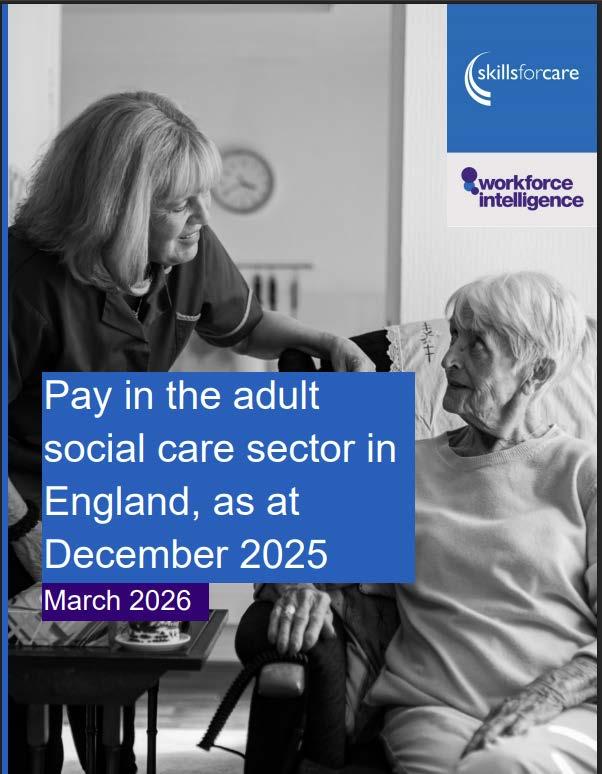
In March, Skills for Care published their latest ‘Pay in the adult social care sector in England’ report. It provides an up-to-date analysis of pay levels and emerging trends across the adult social care sector. It also looks at the impact of the new National Living Wage rate and the side effects of the increasing wage floor.
The report was only made possible because over 20,000 adult social care providers share their data through the Adult Social Care Workforce Data Set (ASC-WDS). As well as sharing data on things like job roles, demographics and qualifications, ASC-WDS users are invited to anonymously add pay information for their staff. This information is then collated, analysed and translated into tangible statistics and insights included in the pay report.
The Government and other policy makers rely on the information gathered, using it to inform their thinking on things like the Fair Pay Agreement and the recent Women’s Health Strategy. New questions around pay and pensions have recently been added to ASC-WDS. The Government requested that they be included to help them to understand sector remuneration at a granular level. By having robust information about the current state of the workforce, Skills for Care can make the case for improvements in future.
The good news is, as an adult social care employer, you can help. By creating an ASC-WDS account and adding your own workplace data, you’ll be adding to the national understanding of adult social care. It’s easy to create an account and start adding information.
The ASC-WDS service has also recently added a new feature making it easier and quicker to add and update staff pay information for multiple staff in one go. This feature helps reduce administrative workload, improves accuracy by minimising repetitive data entry, and ensures pay information remains consistent and up-todate across the workforce.
Keeping your ASC-WDS account up to date is just as important as using it in the first place. If you’re already registered, you can make sure we have the best information by logging in regularly and updating your account. This is especially helpful when there are changes such as new staff joining, meaning your information remains accurate and complete.
Find out more about ASC-WDS, including the other benefits of creating an account and how to register.
A care plan is like someone’ fingerprint
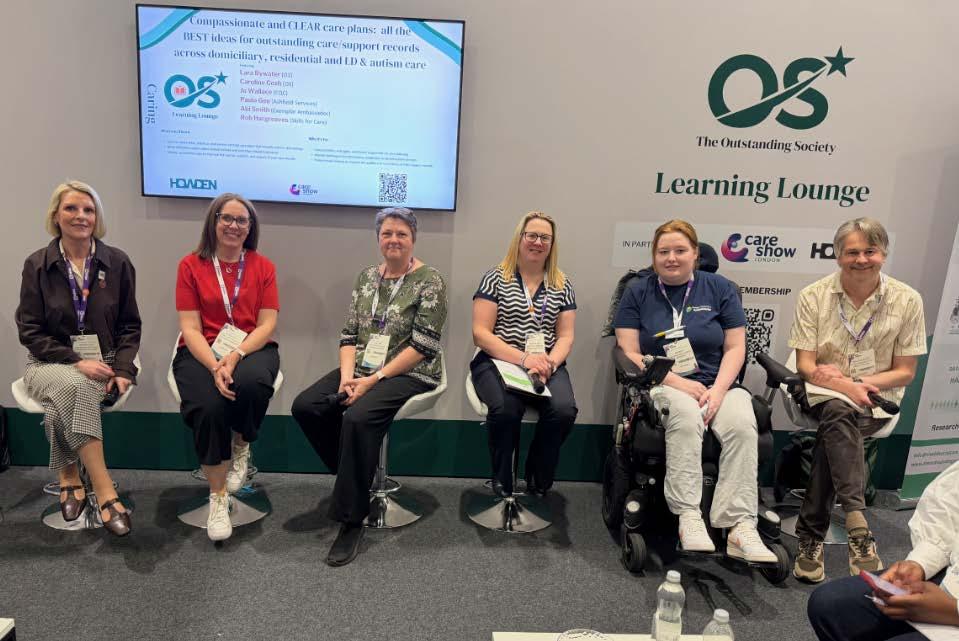
In a recent panel discussion, Abi said something that has stayed with me ever since: “A care plan is like someone’s fingerprint.” What a beautiful way to describe care plans – I can now imagine something unique, personal, and impossible to replicate. It was such a simple comparison, yet incredibly powerful—and it reframed how I think about care planning entirely.
Abi lives in a care home and brought both lived experience and clarity to two panel discussions: Caring beyond compliance: how outstanding services empower people with dignity and choice and Compassionate and CLEAR care plans. Across both conversations, one message stood out— care plans are not just documents, they are reflections of a person’s identity.
Too often, care plans risk becoming standardised, compliance-driven paperwork. But as Abi reminded us, they should capture the individuality of the person: their preferences, routines, communication style, and what truly matters to them. Like a fingerprint, no two should ever look the same.
In the session on compassionate and clear care plans, we explored fundamental questions: Who are these plans really for? What purpose do they serve? At their best, care plans are practical tools that guide consistent, person-centred support. They should empower both the individual and those supporting them, enabling dignity, choice, and independence.
We also shared practical ideas—keeping plans accessible, using clear and meaningful language, and ensuring they are regularly reviewed with the person at the centre.
Abi’s words were a reminder that outstanding care goes beyond compliance. It lives in the detail, the humanity, and the commitment to truly see each person as an individual.
That idea—that a care plan is as unique as a fingerprint—is one I’ll carry forward in every conversation about care.
Zoë Fry, Outstanding Society (OS) Executive Director of Nursing
The OS is a Community Interest Company, free to all providers regardless of rating, offering a platform to share and celebrate best practice, support improvement and promote careers in Social Care. Please contact Sonia - info@theoutstandingsociety. co.uk for more information or follow the links below:
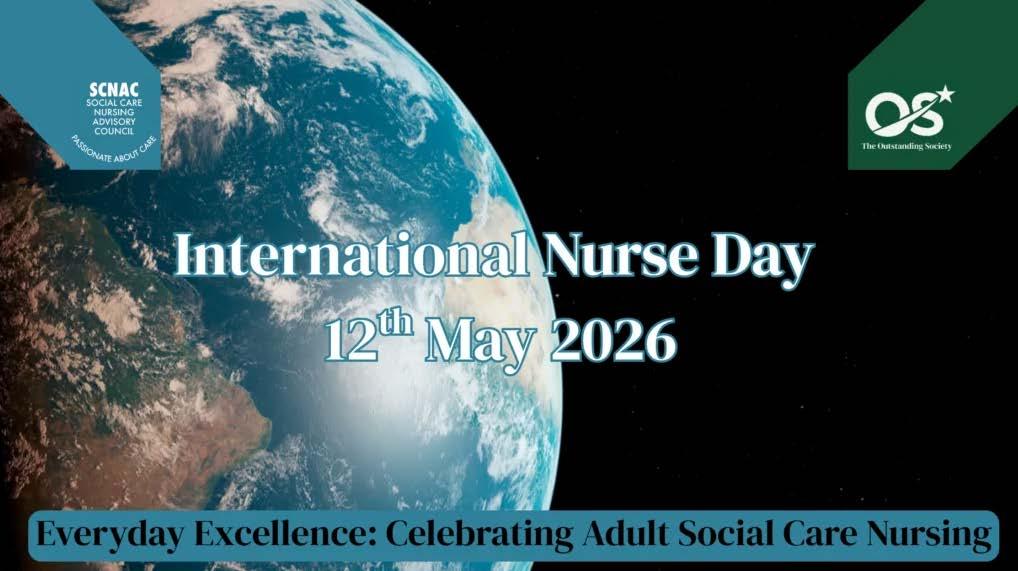
International Nurses Day 2026
As part of International Nurses Day 2026, we were proud to celebrate the remarkable contribution of nurses working across adult social are. Through a series of heartfelt video messages and short clips, colleagues, leaders, partners, and communities came together to share one simple but powerful message: thank you!
This special event was a celebration of the compassion, expertise, leadership, and dedication shown every day by nurses across the social care sector. It provided an opportunity to recognise the vital role adult social care nursing plays in supporting people, families, and communities, while also looking ahead to the future of the profession.
The event featured an engaging panel discussion chaired by The Outstanding Society (OS), alongside Professor Deborah Sturdy, Chief Nurse for Adult Social Care. Together, speakers explored what outstanding adult social care nursing looks like today, the strengths within the profession, and the opportunities to continue building a confident and skilled workforce for the future.
Attendees also heard from the Co-Chairs of Social Care Nursing Advisory Councils (SCNACs), who shared insights into their current work, priorities, and ambitions for advancing adult social care nursing.
Throughout the event, we celebrated innovation, highlighted best practice, and recognised the incredible people driving positive change across the sector. Most importantly, it was an opportunity to honour nurses for the exceptional care, leadership, and support they provided every single day.
This was more than a celebration — it was a moment to connect, reflect, and champion the future of adult social care nursing together.
To listen to the session again and watch some of the fabulous videos recorded for International Nurses day, click here.
For more information on the SCNACs and opportunities to get involved, reach out to The OS (https://theoutstandingsociety.co.uk/ scnac/ or contact Sonia on Admin.SCNAC@ theoutstandingsociety.co.uk) or speak to your regional contacts today.
Zoë Fry, Director of Nursing for the OS and SCNACs
The OS is a Community Interest Company, free to all providers irrelevant of their rating. It is a platform to share and celebrate best practice, help others to improve and promote careers in Social Care. Please contact Sonia - info@theoutstandingsociety.co.uk for more information or follow the link below:


Leadership Accountability in Regulated Care: What Really Matters
Accountability in care is often assumed but rarely tested until something goes wrong.
In regulated environments, leadership accountability is not defined by structure or hierarchy alone. It is demonstrated through visibility, decision-making, and the consistent translation of governance into practice.
For many organisations, frameworks exist on paper. Roles are defined, reporting lines are clear, and governance structures appear robust. Yet during inspection or periods of pressure, gaps begin to emerge not because systems are absent, but because accountability is not fully embedded.
Effective leadership accountability is built on three core principles.
Clarity.
Leaders must understand not just their responsibilities, but how those responsibilities translate into day-to-day oversight. This includes clear ownership of risk, performance, and quality across services.
Visibility.
Accountability cannot sit behind reports. Leaders need a direct line of sight into what is happening within services, from care delivery to workforce challenges. This requires more than data; it requires engagement, presence, and the ability to interpret what that data is really telling you.
Consistency.
In high-performing organisations, accountability is not reactive. It is consistent. Decisions are made with confidence, actions are followed through, and there is alignment between strategic intent and operational delivery.
Where accountability frameworks fall short, common patterns tend to appear.
Risk is identified but not escalated effectively. Issues are discussed but not owned.
Performance is monitored but not acted upon. “In many organisations, accountability exists on paper but not in practice. The difference is leadership
behaviour, how visible leaders are, how quickly decisions are made, and whether risk is genuinely owned or simply reported.”
— Fabio Cecchi, Commercial Director, Fulcrum Care Consulting
Over time, these gaps compound, often becoming visible only at the point of inspection or incident. Strengthening leadership accountability does not necessarily require new structures. More often, it requires a shift in how existing frameworks are used.
This includes:
• Ensuring leaders are actively engaged with service-level realities
• Embedding clear ownership of risk and performance
• Creating a culture where accountability is understood, not avoided
• Supporting leaders to make informed, timely decisions
Ultimately, accountability is not about scrutiny, it is about confidence.
When leadership accountability is working effectively, organisations are better equipped to manage risk, respond to challenges, and deliver consistent, high-quality care. It creates a foundation where governance is not just present, but meaningful.
In a regulated sector, that distinction matters.
Fulcrum Care Consulting supports care providers in strengthening governance, leadership oversight and accountability frameworks across services. For more information or guidance, visit: www. fulcrumcareconsulting.com





Workforce Pressures in Social Care: Why Transparency, Support and Culture Matter More Than Ever
By Jayne Connery, Director of Care Campaign for the Vulnerable (CCFTV)
The workforce crisis in adult social care is no longer something the sector can quietly absorb behind closed doors. It is visible every single day in care homes, hospitals and community services across the country. Staff shortages, burnout, retention challenges and increasing complexity of care are placing enormous pressure on providers and frontline teams alike.
Yet while there is much discussion around recruitment, we also need to ask a more difficult question: why are people leaving care in the first place?
Through my work at Care Campaign for the Vulnerable, supporting families and working closely with providers nationally, one issue continues to stand out above many others — culture.
Good care staff do not leave simply because the work is hard. Many leave because they feel unsupported, fearful of blame, emotionally exhausted and unable to work within open, transparent environments where concerns can be raised safely.
The reality is that care has changed significantly. Residents are presenting with increasingly complex dementia, mental health needs and physical frailty, yet many frontline teams still feel underprepared and under-supported. Families are also more informed, more involved and understandably expect greater transparency and communication regarding the care of loved ones.
This is where solutions around culture, transparency, communication and safety technology can play an important role in supporting workforce stability rather than adding pressure to it.
At CCFTV, we strongly believe that proactive, consentled safety monitoring and transparent practices can actually protect and support good care staff. When implemented correctly, technology should never be about blame. It should be about reassurance, learning, safeguarding and accountability.
We have seen providers use safety monitoring solutions to improve communication with families, strengthen safeguarding processes, support staff training and reduce the fear and uncertainty that can arise following incidents or allegations. In many cases, it also helps providers evidence good care and protect dedicated carers who are doing incredibly difficult jobs under immense pressure.

Alongside this, providers who prioritise staff wellbeing, listening cultures and meaningful dementiaspecific training are often the services that retain compassionate, skilled teams. Workforce challenges cannot be solved through recruitment campaigns alone. Staff need to feel valued, protected, heard and equipped to manage the realities of modern care.
The sector must also move away from defensiveness. Honest conversations about challenges do not weaken social care — they strengthen it. Families understand that care is difficult. What they struggle with is poor communication, lack of accountability and feeling excluded when concerns arise.
The future of workforce sustainability in social care will depend not only on numbers, but on trust, transparency, leadership and culture.
Because ultimately, good staff want the same thing families want — safe, compassionate and dignified care.
For further information and support, contact Care Campaign for the Vulnerable (CCFTV) via LinkedIn or visit Care Campaign for the Vulnerable


Why continuous improvement may matter more than ever under the CQC’s proposed ‘Regulatory Reset’
The Care Quality Commission’s proposed “Regulatory Reset” is prompting important conversations across adult social care — not only about inspections themselves, but about how providers create cultures that support continuous learning, improvement, and accountability.
Although the proposals are still in draft form, the direction of travel suggests regulation may increasingly focus on how organisations maintain quality every day, rather than solely how they perform during inspections. For providers, this creates an opportunity to reflect on whether existing systems support improvement across services, teams, and leadership structures.
To help you better understand the proposed reforms and what they may mean in practice, Care England and WorkNest are hosting the webinar:
Regulatory Reset | What providers need to know about the CQC’s draft changes
16 June 2026
2:00pm – 3:00pm
The session will explore the proposed changes, explain how the regulatory landscape may evolve, and provide practical insight into how providers can begin preparing now. Register here
Why Continuous Improvement Matters
One of the most significant themes emerging from the proposed reset is the idea that quality improvement should be embedded within everyday practice. Strong services are rarely built through inspection preparation alone. Instead, sustainable quality often comes from organisations that regularly review performance, encourage learning, and make improvements proactively.
This may involve:
• Reviewing feedback trends from staff, residents, and families
• Learning from incidents, complaints, and safeguarding concerns
• Using audits and quality checks effectively
• Encouraging reflective leadership and open communication
• Identifying small improvements before issues escalate
These approaches not only support better outcomes for

people using services, but may also help organisations feel more confident as regulatory expectations evolve.
Moving From Reactive to Proactive Approaches
For many providers, operational pressures can understandably lead to reactive ways of working. However, the proposed regulatory direction may increasingly reward organisations that can demonstrate ongoing oversight and forward planning.
This means providers may benefit from considering:
• How risks are identified and monitored
• Whether governance systems support early intervention
• How teams communicate concerns and improvements
• Whether evidence reflects consistent day-to-day practice
• How leaders monitor service quality over time
Importantly, proactive quality improvement does not always require major structural change. Often, it involves strengthening consistency, visibility, and accountability across existing systems.
Creating Confidence Through Understanding
Regulatory reform can feel uncertain, particularly while proposals are still developing.
Educational webinars and sector discussions are valuable because they allow providers to step back from dayto-day pressures and focus on understanding the wider direction of change
By engaging early with conversations around the proposed reset, providers can better understand what future expectations may look like and identify practical areas for preparation.
The upcoming webinar from Care England and WorkNest aims to support that understanding, helping providers explore not only what may change within regulation, but also how strong cultures of improvement can support long-term quality, confidence, and readiness across adult social care.

Ally’s Resident Monitoring System is revolutionising care, delivering life-changing outcomes for residents and game changing results for care homes:
Fewer monthly discharges: Enhanced care outcomes and increased capacity to support higher-risk residents mean longer stays and fewer vacant beds.
Higher average weekly fees: Evidence of increased resident needs and showcase exceptional care outcomes which funders will pay for.
Increased admissions: Accept residents with more complex needs and convert more enquiries with proven care outcomes.
Don’t wait – enhance resident outcomes, strengthen your care reputation, and grow your bottom line with Ally.

Considering Sale & Lease Back? -
RIDEA vs Triple Net Leases: What Care Home Operators Need to Know
How the Two Models Work
Triple Net Lease (NNN): The long established traditional approach in the UK places responsibility for property operational costs, insurance and maintenance firmly on the tenant, in addition to a base rent. In the care home sector NNN leases commonly involve property portfolios, namely ‘Propco’ leased to operators under fixed annual rent escalators, regardless of occupancy or local market conditions. This structure gives landlords predictable income and generally minimal operational involvement, while operators retain full control of care delivery. After rent the provider still benefits from the cashflow generated from the ‘Opco’.
RIDEA Manco Structure: A performance linked model and used by, amongst others, Welltower. RIDEA stands for the REIT Investment Diversification and Empowerment Act. This enables investors (usually REITs) to actually participate in the net operating income (NOI) of a care home, provided operations are run by an independent management company through a Taxable REIT Subsidiary (TRS). Under RIDEA, the REIT leases the asset to its TRS, which then contracts a third party operator, normally the initial care home provider selling the properties. This is the Manco which is used to manage care services and shifts the focus from fixed rent to performance driven results.
Key Differences That Matter to Operators
NNN leases provide predictability for landlords but also transfer financial volatility to providers, who must absorb trading fluctuations and sustainability pressures while still meeting stepped increasing annual rent obligations. By contrast, RIDEA spreads operational risk and reward between the provider and investor, giving both a stake in improving net operating income generated. This can be beneficial in periods of growth — but may leave operators feeling pressure to deliver higher performance consistently for the Manco.
Under NNN, tenants often shoulder both minor repairs and major capital expenditure, though obligations vary by contract/landlords and should always be reviewed carefully. Some landlords encourage such
expenditure and will adjust rents to recoup costs over an agreed period. RIDEA structures typically keep major capex responsibilities with the REIT, which benefits from reinvesting to drive long term income growth. This can support those operators with limited capital access.
NNN offers maximum operational independence. A provider can control care quality, staffing, service mix and pricing without third party operational oversight. In RIDEA, collaboration with the REIT and the TRS is essential. Investors often take more active interest in occupancy strategies, pricing and operational efficiency. Their returns depend on net income performance.
So NNN if…
• Your organisation values autonomy and minimal investor involvement.
• Your homes are stable, with reliable occupancy and predictable margins.
• You have strong internal asset management and maintenance capabilities.
And RIDEA if…
• You seek growth capital, refurbishment investment or turnaround support.
• You are comfortable with partnership decision making.
• Your strategy relies on boosting occupancy, efficiency or service mix to grow income.
Both models remain viable in today’s care home landscape.
For more information contact Derek.a.breingan@virginmoney.com

As part of a national legal firm with over 150 specialist health lawyers, we cover all aspects of health care related law and practice.
We have a long history of providing market-leading legal advice to care providers. Our large team of specialist and experienced care homes lawyers advise our regulated care business clients daily across wide-ranging areas including:
▪ Inquests and inquiries
▪ Safeguarding and investigations
▪ Employment and HR advice including immigration
▪ Refinancing and restructuring advice
▪ CQC issues and regulatory advice
▪ Commercial disputes and debt recovery

To find out more about the care services we can offer, contact Julia Appleton, Partner, at julia.appleton@weightmans.com
weightmans.com
My CQC registered service hasn’t been inspected for years! How do I get inspected?
This is a question we are asked on a regular basis. For a great many services languishing uninspected for many years with a ‘Requires Improvement’ rating can be both demoralising and be hitting you financially.
Good news is on the horizon
CQC are alive to this issue and have recognised that a long uninspected service potentially carries risk. In January 2026, CQC revised its inspection priorities in an aim to reduce its backlog of inspections. If your service fits into one of these categories, CQC could be at your door very soon:
Services with high, urgent, or emerging risks
• Services that have never been assessed or have been registered for over a year
• Services with older ratings (six years or more)
There are steps that you can take as a service that might bump your service up the list
Your starting position is making sure you are compliant with the Fundamental Standards of Care in the Regulated Activities Regulations, and that you have addressed all the deficiencies identified in your last report.
Shout about the work you’ve done on your website. You have to show your CQC rating, but you can also show good news stories about changes and improvements made that help show the wider public that the service is not reflected by the old report you still must share.
An RI rating can hit you financially and CQC consider financial hardship within the high urgent or emerging risk category listed above; they don’t want services closing because of their ratings.
If you’re a care home – can you show that the number of vacancies has increased?
Have local authorities stopped placing people?
If you’re a domiciliary care service – can you show you have missed out on tenders for more work, or re-tendering for services you are already providing because of your rating?
Put together a business case demonstrating the
financial impact of the RI rating on your service and present it to CQC alongside evidence of the improvements you have made. Anecdotal commentary from CQC is that if they can find a way to, for example, confirm breaches have been addressed or carry out short, focused inspections instead of a full review, then they will take that action.

Get your Local Authority on board. If you can demonstrate to them your compliance – whether that’s through a PAMMS audit or other local authority assessment tool. Whilst CQC will never rely on it themselves, it’s great evidence of the strength of your service and something that may help get CQC back into your service.
Be patient but be prepared
Make sure you’ve got good quality evidence to show CQC that how you operate now is very different to the previous service. We can’t guarantee when CQC will come back to your service, but if you don’t ask you don’t get, and if you can present a compelling, measured case to CQC you just might strike lucky!
Contact Jolena Bullivant-Clark
j.bullivant-clark@hempsons.co.uk www.hempsons.co.uk

Immigration compliance in social care: from workforce
lifeline to regulatory
minefield
International recruitment remains essential to sustaining adult social care across England and Wales. Yet at the same time, the regulatory framework governing sponsored workers has become significantly stricter, creating a level of operational risk many providers are only beginning to fully understand.
Aston Brooke Solicitor’s Director, Kashif Majeed outlines how the Home Office’s approach to immigration compliance has fundamentally shifted. With nearly 30 years of experience dealing with immigration matters and almost two decades working directly within social care, his message is clear: sponsor licence compliance is no longer viewed as an administrative exercise, but as a serious operational responsibility.
For many providers, the current climate feels familiar. The sector has repeatedly experienced cycles where overseas recruitment is encouraged during workforce shortages, only for restrictions to tighten later. Despite ongoing political pressure to reduce migration, social care continues to rely heavily on international workers to fill vacancies and maintain services.
As Kashif notes, the argument that the domestic workforce alone can meet demand has been tested repeatedly over the past 15 to 20 years, yet recruitment shortages persist. The central question remains unresolved: if international recruitment is reduced further, where will the workforce come from? What has changed most significantly is enforcement. Historically, providers were often given opportunities to correct minor compliance issues. Today, enforcement is faster, more data-driven, and considerably less forgiving. Integration between HMRC payroll systems and Home Office compliance monitoring means discrepancies can now be identified almost instantly.
In some cases, sponsor licences are being revoked for relatively small salary inconsistencies or reporting failures. For providers employing overseas workers, the consequences can be severe. Revocation can lead to the loss of sponsored staff, disruption to care delivery, and increased scrutiny from regulators and local authorities.
Many of the issues triggering enforcement action are surprisingly common. Salary compliance remains a major risk area, particularly where fluctuating hours, sick leave, or operational changes affect pay. Even temporary variations may need to be reported through the Sponsor Management System. Changes in job roles can also create problems if the assigned SOC code no longer accurately reflects a worker’s duties. Right to work checks remain another persistent area of noncompliance, especially where outdated procedures or incomplete records are relied upon.
The challenge for providers is that workforce management in social care rarely fits neatly within rigid immigration rules. Domiciliary care services, for example, often operate with changing schedules and fluctuating demand, creating additional compliance pressures.
As scrutiny increases, providers are being forced to move from reactive compliance to proactive risk management. Regular audits, accurate reporting, aligned payroll systems, and strong audit trails are no longer optional safeguards, they are essential protections in an increasingly unforgiving system. Need help staying compliant? Get legal support today.
020 3475 4321
support@astonbrooke.co.uk
Care England members can access an exclusive 10% discount on legal fees and a complimentary 15-minute consultation through Aston Brooke Solicitors.
Do you meet the new ACAS regular overtime annual leave payment guidelines?
Don't get caught out. One provider is paying the price for using the wrong software; it wasn't kept up to date with ACAS guidance, and staff took action as a result. It proved a costly mistake, only resolved by switching to software designed specifically for care homes.
The updated guidance reinforces the principle that employees should receive “normal pay” when taking annual leave. This means that where overtime is worked regularly and forms part of an employee’s normal earnings, it should be reflected in holiday pay calculations. The guidance applies not only to guaranteed overtime, but also to non-guaranteed and, in many cases, voluntary overtime where it is worked consistently over time.
As a service you need to review your payroll practices against these requirements and confirm that holiday pay calculations now appropriately take account of regular overtime payments where applicable. This ensures employees taking annual leave are not financially disadvantaged compared with periods when they are actively working.
The updated approach includes:
• Inclusion of regular overtime payments within holiday pay calculations
• Use of the recommended 52-week averaging reference period where applicable
• Alignment of payroll procedures with current ACAS guidance and Working Time Regulations
• Ongoing monitoring of employment law and payroll compliance requirements
• Regular review of payroll and HR processes to maintain accuracy and fairness
Under the ACAS guidance, employers are expected to assess whether overtime forms part of an employee’s normal remuneration. This includes situations where employees regularly work additional hours, take on weekend shifts, or consistently receive overtime payments over an extended period.
Are your software’s payroll procedures aligned with this approach?
Regular overtime earnings are now considered as part of the holiday pay calculation process using the relevant averaging period where required. This
provides greater consistency, transparency, and fairness for employees across the organisation.
The updated ACAS guidance also confirms that other regular payments linked to normal work patterns, such as certain allowances or commission payments, may also need to be included when calculating statutory holiday pay. Your obligation is to ensure your approach reflects both legal requirements and best practice guidance.
The changes introduced by ACAS are designed to ensure employees receive fair pay during periods of annual leave and to reduce the risk of workers being discouraged from taking leave due to reduced earnings. By implementing compliant payroll processes, you can support employee wellbeing while also strengthening governance and employment compliance standards across the business.
As part of your ongoing commitment to compliance, you will need to continue to monitor developments in employment law and ACAS guidance, including future changes relating to holiday pay record-keeping requirements and working time regulations.
At Syncurio, we continually review our employment practices to ensure they align with the latest UK employment legislation and ACAS guidance. Following the updated ACAS guidance on annual leave and holiday pay, we are pleased to confirm that payroll and holiday pay processes meet the current requirements relating to employees who work regular overtime.
Read the full article: https://www.careengland.org. uk/do-you-meet-the-new-acas-regular-overtimeannual-leave-payment-guidelines/
Author: Sharon Gallagher, Sales Director
To find out more, please visit syncurio.co.uk
Get the operational clarity to deliver quality care.
Manage staffing, finances, compliance and growth from a single, integrated system built for residential care.

Most care home operators are making decisions based on last month’s numbers — or no numbers at all. Agency spend creeps in unnoticed. Payroll takes days. And the time that should go into running a good home goes into holding the admin together instead.
Syncurio gives you visibility of what every home is actually costing you — labour, agency, resident billing — so you can act on it before it becomes a problem.
Operators using Syncurio save 12–13 hours a month on rostering alone, reduce agency spend by 30% on average, and close payroll in hours, not days.
That’s time and money that goes back into delivering quality care.
Rostering
Payroll
Time & Attendance
Residents & Billing
Reporting
Ready to see it in action? Book a 30-minute demo at syncurio.co.uk
The enquiry gap: why care home marketers are losing conversions they can’t see
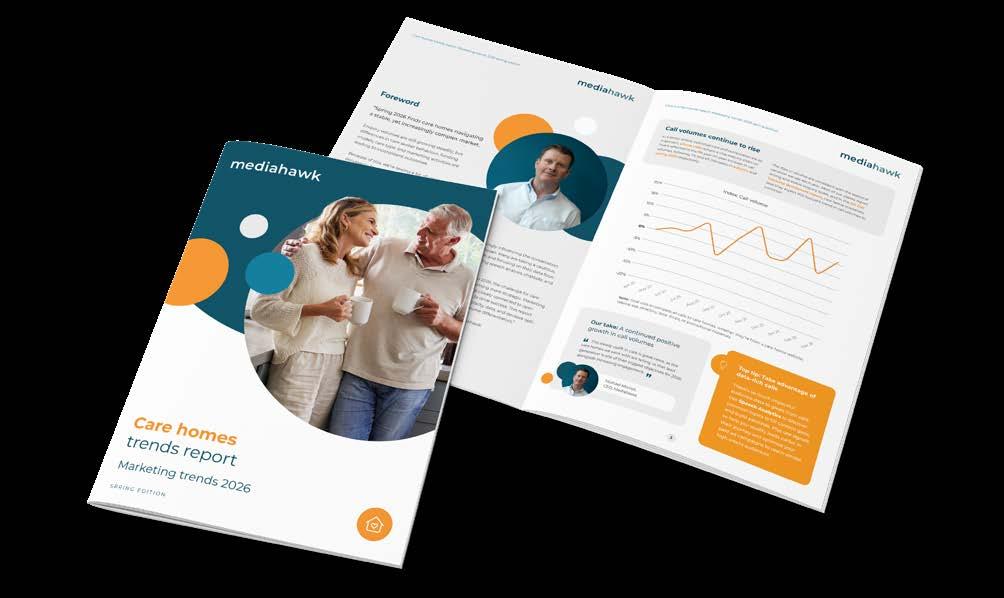
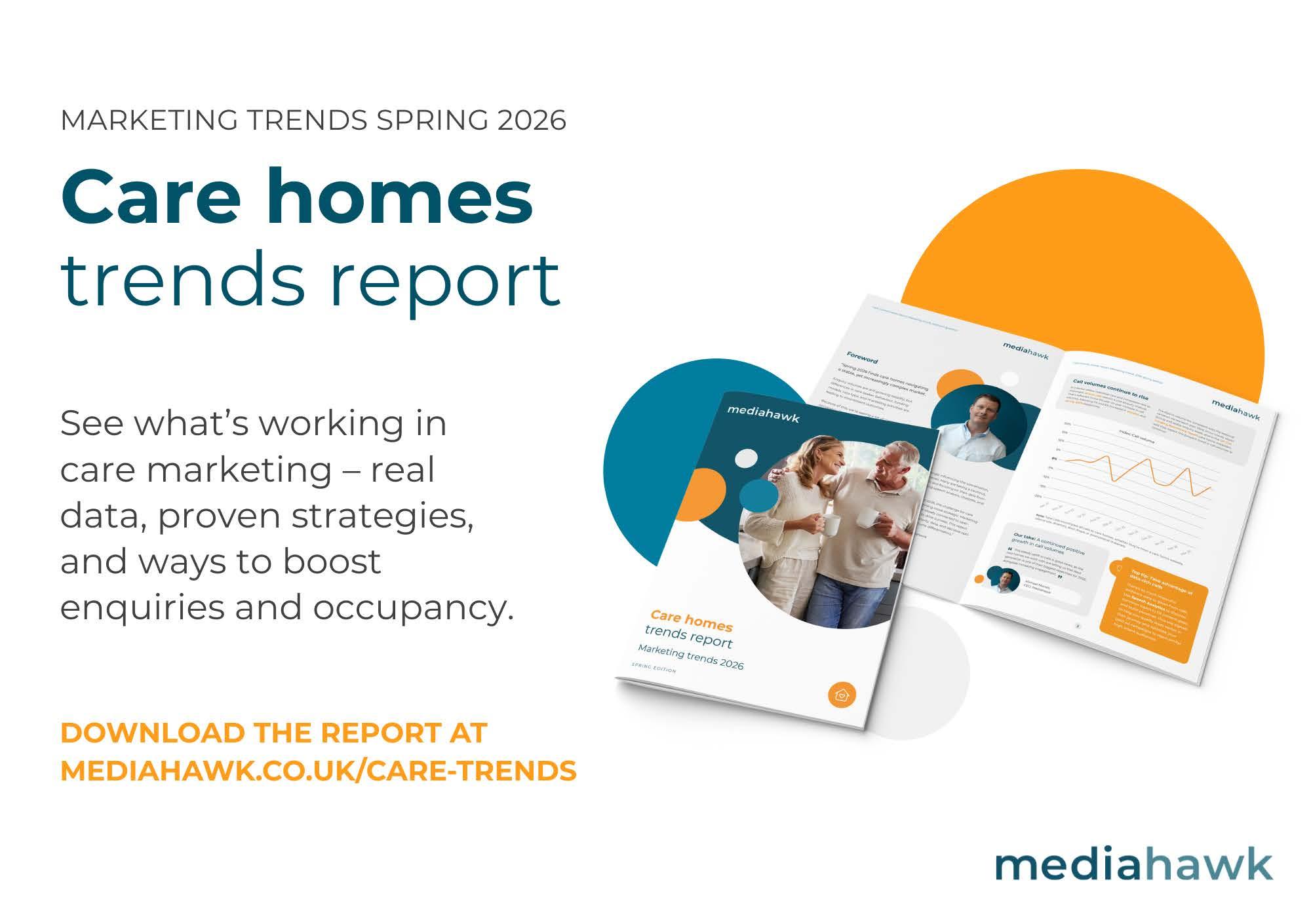
Enquiry volumes are up. Budgets are holding. So why are so many care home groups still struggling to convert interest into occupancy? Mediahawk’s spring 2026 care homes trends report points to a common culprit – and a clearer path forward.
The headline data looks encouraging. Call volumes and website visitors both increased by 9% year on year, and marketers are holding their budgets. But growth in enquiry volume doesn’t automatically translate to growth in occupancy. Care seekers are taking longer to make decisions, moving between channels, and arriving at enquiry with more complex needs than a last-click metric can capture. For care home groups without end-to-end tracking in place, those journeys are happening just out of sight.
The research cycle is getting longer
The visitor-to-call ratio (VCR) – visits to a care home’s website versus calls originating from it –dropped by 7.5% year on year in spring 2026, which tells us that more people are researching on the website before they pick up the phone.
A longer research cycle means more opportunities to build trust and intent. But it requires your content to work harder. Micro-conversions – brochure downloads, fee guide requests, virtual tour views –are signals of intent, and they need to be tracked. The groups converting at the highest rate pair those resources with clear calls to action and ensure every touchpoint feeds into a coherent attribution model.
Care seekers are telling you what they need
Mediahawk’s call data reveals a telling pattern. Enquiry volumes dip in summer and winter – but calls driven by the ‘respite’ keyword peak during exactly those periods. The short-stay market is active precisely when long-term enquiries slow down. For operators with keyword-level call visibility, that’s actionable intelligence. For those without it, it’s a missed opportunity.
The call remains one of the most important conversion point in the sector. A well-handled call –from a handler who knows where the care seeker has been and what they’ve been looking for – accelerates the decision considerably. Call tracking and Speech Analytics make that level of preparation possible at scale.

Channel mix is shifting – and it’s working
Many marketers increased pay per click (PPC) spend last year to offset the potential impact of AI search –and the data suggests it’s working. Google PPC traffic rose by two percentage points; Bing and Facebook PPC saw growth of 553% and 121% respectively. Notably, the care sector appears more resilient to AIdriven search disruption than most. The complexity and personal nature of care decisions sustains demand for direct engagement, whether that’s a website visit or a phone call.
The groups making the most of this moment aren’t always those with the largest budgets. They’re the ones with the clearest picture of their marketing performance – who’s enquiring, from where, and why they convert. That clarity is what turns steady enquiry volumes into measurable occupancy growth.
Read the full article: https://www.careengland.org.uk/ the-enquiry-gap-why-care-home-marketers-arelosing-conversions-they-cant-see/
Download Mediahawk’s spring 2026 care homes trends report at mediahawk.co.uk/care-trends for the full data, analysis, and insight.


Raising Standards, Improving Lives: NaDCAS and the Drive for Exceptional Dementia Care
Around one million people in the UK are living with dementia. Behind each of those individuals is a family, a network of carers, and a care team trying to get it right every day, in every interaction. The quality of that care varies enormously, and for too long there has been no consistent, credible benchmark against which providers could measure, demonstrate, and continuously improve it.
That is the gap the National Dementia Care Accreditation Scheme (NaDCAS) was created to fill. What NaDCAS Does and Why It Matters
NaDCAS supports care providers across the UK to develop, demonstrate, and continuously improve their dementia care through their evidence-based framework - and to evidence that commitment through a quality mark families and commissioners can trust. Their frameworks, now specialised for residential and homecare settings, were developed alongside leading research universities, sector experts, and people with lived experience of dementia, and cover nine key pillars of dementia care excellence.
Accreditation gives providers a clear, practical pathway towards care that is compassionate, enabling, dignified, and truly person-centred. The process includes assessment based on 140 evidence-based standards, tailored feedback, and ongoing development support, keeping improvement continuous and the focus firmly where it belongs: on the lives of people living with dementia.
NaDCAS and Carehome.co.uk: A Partnership That Extends That Reach
NaDCAS has recently partnered with carehome.co.uk - the UK's leading care home review website - and the implications for families, providers, and the wider sector are significant.
Families searching for specialist dementia care can now identify NaDCAS-accredited homes directly within carehome.co.uk listings. For families navigating such a difficult decision, this represents meaningful reassurance and a signal that a provider goes beyond compliance to commit to something greater.
Claire Reading, Director of Partnerships and Operations at NaDCAS, explained: "By partnering with carehome.co.uk, we can help more families access trusted information about dementia care and highlight the providers who are committed to going beyond minimum standards to deliver exceptional, person-centred support."
Will Blackwell, Chief Executive of carehome.co.uk, echoed this in his statement: “This partnership will help raise awareness of what exceptional dementia care looks like and support providers committed to delivering it.”
Better Information. Better Decisions. Better Care. This partnership matters because transparency drives improvement. Dementia is a condition that asks a great deal of everyone it touches - the person living with it, their family, and the professionals supporting them. When exceptional care is visible, recognised, and celebrated, it raises expectations across the sector and ultimately improves outcomes for the people at the centre of it all.
Take the Next Step
NaDCAS believe that all care providers should have access to the tools they need to improve outcomes for people living with dementia and so have made their frameworks free to access for all care providers. To register your interest NaDCAS accreditation and request your copy, visit www.nadcas.org
For more information, contact Director of Partnerships Claire Reading at claire.reading@ nadcas.org or call 07982 368163.
Designing care uniforms for comfort all year round
Sara Catanzaro, Design Manager at Alsico, discusses what care providers should consider when reviewing uniform provision and why comfort, flexibility and fabric performance matter more than ever.
1. Why should uniforms be a bigger consideration for care providers today?
Care providers are rightly focused on workforce wellbeing and retention, but uniforms are often overlooked within those conversations. In reality, uniforms are one of the few things that employees interact with throughout every shift, so they have a direct impact on comfort and day-to-day experience.
Our latest research found that uniform ranked among the top contributors to job satisfaction for care workers. That tells us uniforms are not simply about appearance or consistency, but that they form part of the wider support system around staff.
2. What are the biggest challenges care workers experience with uniforms?
From the countless conversations we’ve had over the years, the most common issues are poor fit, overheating and restricted movement. Care work is so physically demanding, involving constant bending, lifting and movement over long shifts, so uniforms need to support that activity rather than hinder it. Through our nationwide survey last year, we found that 58% of care workers agree their uniform fit affects how well they can carry out their duties, and nearly a third had experienced wearing uniforms that did not fit properly. Small discomforts may seem minor initially, but over the course of a long shift they can become physically and mentally draining.
3. How should the warmer UK weather influence uniform selection?
Temperature regulation is becoming increasingly important within care environments. Unlike many workplaces, care homes are typically maintained at warmer temperatures to ensure residents remain comfortable, meaning care workers are often operating in heated environments throughout long shifts. During periods of warmer weather, these conditions can become even more challenging and affect comfort, concentration and overall wellbeing. When selecting uniforms, providers should look closely at breathability, moisture management and fabric weight. Fabrics that support airflow and wick moisture away from the body can make a significant difference during physically demanding shifts.

4. How important is staff feedback in the selection process?
It’s essential. The people wearing the uniforms every day are best placed to identify what works in practice. Simple measures such as garment trials, fit sessions and regular feedback can give organisations much clearer insight into comfort and functionality. 5. What does good uniform design look like in a modern care setting?
Good uniform design balances durability with comfort, flexibility and practicality. Care providers should be considering movement, inclusive sizing, fabric performance and ease of laundering alongside cost and longevity. A uniform may look appropriate on paper, but if it does not perform well during long, physically demanding shifts, it is unlikely to properly support staff.
That is why collaboration with uniform manufacturers is so important. Working with suppliers ensures garments are designed around the realities of care work and the specific needs of their teams. This includes discussing fabric choices, fit, temperature regulation, movement and laundering requirements, as well as gathering feedback directly during trials or review periods. The most effective uniform strategies are often those developed through ongoing dialogue, rather than one-off procurement decisions.
To start a conversation, reach out to us at: https:// www.alsico.com/uk/contact/

LaingBuisson Events - Social Care Summit
For years, adult social care in the UK has operated in a state of crisis. Demand continues to rise, the complexity of population needs is intensifying, and providers are being asked to deliver more with less. Yet despite repeated reviews and reform pledges, the sector still lacks the long-term certainty it desperately needs.
The numbers alone are difficult to ignore. Skills for Care estimates the adult social care vacancy rate in England stands at 7%, significantly higher than the wider UK economy. At the same time, people are living longer with increasingly complex physical, neurological and behavioural conditions. The result is a system under sustained strain, where providers and care leaders are forced to make critical decisions in an environment defined by uncertainty.
Without meaningful reform, the sector risks becoming trapped between rising public expectations and a funding model struggling to keep pace with modern care needs. Workforce shortages continue to impact care quality, providers face mounting operational pressures, and policymakers continue debating structural change while frontline organisations navigate immediate realities.
Adult social care is entering a new era shaped by investment, innovation, emerging technologies and system redesign. Organisations that thrive over the next decade will be those able to anticipate change, adapt strategically and rethink traditional models of care delivery.
That is precisely why the morning keynote agenda at the LaingBuisson Events’ Social Care Summit matters. Opening the day on 17 June at Church House Westminster, London, “The unfinished revolution: Why care reform still hasn’t arrived and how it could” confronts one of the sector’s biggest unanswered questions. This session brings together respected thought leaders including Sir Andrew Dilnot, Simon Bottery and Devika Wood to examine why reform has repeatedly stalled and what opportunities and risks could emerge from future National Care Service proposals and the Casey Commission.
The conversation then shifts from policy to evidence as William Laing delivers LaingBuisson’s annual facts and figures keynote. Drawing on more than 30 years
of proprietary market intelligence, this session will provide a data-driven assessment of the sector’s current position and the trends likely to define 2026 and beyond.
The morning continues with “The future of social care: ownership models, strategy and system change”, a forward-looking discussion exploring how investment, operational strategy and evolving ownership structures are reshaping the sector. Featuring senior leaders, the session examines the strategic decisions providers must make now to remain resilient in an increasingly complex market.
Rounding out the morning sessions, the Summit turns to one of the most significant developments facing care providers today: artificial intelligence (AI). The final morning session explores how predictive technologies are already being used to anticipate need, strengthen workforce capacity and improve outcomes. Crucially, the session moves beyond hype to address the ethical, operational and policy questions leaders must answer if AI is to deliver meaningful value across care services.
To learn more about the Social Care Summit and how it can help give you key insights to build your strategy, please visit www.laingbuissonevents. com.
Data (Use and Access) Act 2025: what does it mean in practice for health and social care?
Nearly a year has passed since the Data (Use and Access) Act 2025, and legislative changes to the UK GDPR took effect on 5 February 2026. Whilst some changes are codifications of existing guidance and best practice, others could pose a significant data security compliance risk for health and social care organisations.
Processes and procedures for dealing with information requests should be reviewed in light of the changes. Key areas to consider include:
Automatic recognition of some legitimate interests and changes to purpose limitation
The UK GDPR has been amended to introduce ‘recognised legitimate interests’. These legitimate interests create automatically lawful grounds to process personal data without the need for a Legitimate Interests Assessment. Legitimate interests include preventing crime, safeguarding vulnerable people, responding to emergencies and delivering tasks in the public interest as required by law. Having a recognised legitimate interest as a reason for processing personal data does not mean that other interests shouldn’t be examined in an LIA, nor does it negate the need to assess whether processing is necessary.
Clarifying response times for Data Subject Access Requests
The Act introduces a new timescale system for data subject access requests (DSARs). The new time limit states that a response should be made within an ‘applicable time period’. The time period given is one month from when the data controller receives clarification on an information request or is asked to confirm the identity of a person making an information request. Also, any fee charged for manifestly unfounded or excessive requests must be paid before responding to the request.
This legislative change codifies existing ICO guidance and clarifies the time constraints in making or processing DSARs. However, data controllers should aim to respond to most requests within 30 days and request ID information promptly.
International data transfers – a new UK-centric regime
International data transfers will soon be governed by a more simplified and flexible regime. The most important change is made in the GDPR, replacing the adequacy model of acknowledging data security in third-party countries with a new approvals mechanism managed by the Government. The standard for making a restricted transfer is that the protections for a UK data subject in the destination country are ‘not materially lower’ than in the UK.
Mandatory data complaints policies
Data controllers will be required to have a data protection complaints process in place by 19 June 2026. For some organisations, this will involve drafting a separate policy to handle such complaints, whilst others will be able to incorporate this into wider processes for data handling and data disclosure. Organisations should consider putting these processes in place now and update their privacy notices to ensure that data subjects have access to clear information about how to raise a complaint.
Whilst many of the changes are in line with expectations, organisations can’t afford to be complacent. To discuss how these changes affect your organisation, please get in touch.

Inquests: A practical guide for care home providers
Unexpected deaths are always distressing for residents, families and staff. In some cases, they also lead to a coronial investigation. For care homes, involvement can range from providing records to attending an inquest hearing to give evidence. Understanding the process –and how to prepare – can make a difficult situation more manageable.
Our specialist inquest team has written an article explaining what an inquest is, why care providers may be involved, the issues most commonly explored, and how care home providers can prepare and support staff throughout the process.
You can read the full article on the Care
England website here.
If you would like guidance or support around an inquest – please contact Neil Ward. You can find out more about health and care inquest services.

Navigating complex inquest proceedings
We guide clients through every stage of the inquest process, including:
Preparation of statements and evidence
Supporting staff in preparation for a hearing
Attending court both at pre inquest reviews and the inquest
Post inquest learning and risk management
Support and guidance with media attention and reputational risk
To find out more please get in touch.
Neil Ward Partner, Inquests and Healthca neil.ward@mills-reeve.com 07918287141

Want to refocus your workforce?
Start with your systems
Social care’s workforce is under increasing pressure, with operational inefficiencies leaving teams with less time for meaningful engagement with the people they support. This not only impacts morale across the workforce but, ultimately, compromises the consistency and quality of care being delivered. For many providers, there’s a systems-based challenge sitting beneath the surface — and its impact is being overlooked. Too much of every working day is still being consumed by administration, duplicated records and disconnected systems. Not because teams aren't working hard enough, but because the infrastructure around them is making the work harder than it needs to be.
Care teams across the sector spend hours logging the same information twice, coordinating paperwork and chasing updates that should already be visible. At a time when providers are being asked to deliver more with less, this hidden burden is pulling staff away from the people they came to care for. It's a scenario most management teams will recognise –and one that rarely shows up in workforce strategies. Treherne Care Group knows it well. Supporting adults with complex mental health needs across residential and supported living settings in Snowdonia, the organisation had long relied on paper-based processes and manual coordination across sites. Oversight depended on phone calls, physical travel between locations and hours of informationgathering before any decisions could be made.
On one pilot site alone, eight team leaders were dedicating significant portions of their shifts simply to collecting and collating records across a 24-hour rota. Skilled, experienced staff absorbed by process rather than people.
The shift came when Treherne implemented Log my Care – replacing fragmented systems with real-time digital recording and centralised oversight. Staff could log care at the point of delivery. Managers gained instant visibility across all services without interrupting frontline support.
The results were striking. Treherne estimates the change has saved more than 25 hours per day across services – over 9,000 hours per year. Crucially, that time wasn't cut from the workforce, but was
redirected back into care. Team leaders previously tied to administration were redeployed into more meaningful roles, strengthening continuity and reducing operational pressure across services. That recovered time shows up in ways that don't always appear on a compliance report: supporting someone with something they enjoy, responding more quickly to a change in need, simply being more present. It also gives managers stronger, faster visibility across services, enabling earlier identification of risk and more proactive support.
This is what genuinely sustainable workforce capacity looks like. Not more staff doing more tasks, but the right infrastructure allowing existing teams to do what they're actually there to do.
Technology cannot replace care teams. But the right technology can remove friction, reduce unnecessary administration and help providers refocus their most valuable resource – their people – on the work that brought them into care in the first place.
Because the future of workforce sustainability is about giving teams better tools to do what matters most.
To find out more about how your care management system can free up your workforce for more meaningful support, visit logmycare.co.uk

Avoiding Accidental Managers: Recruiting with Intent to Build Stronger Workforces
In care, workforce challenges are never far away - skills shortages, disengagement, turnover, and inconsistent performance. While there are many contributing factors, one of the most overlooked is the way we recruit and develop managers. Too often, we fall into the trap of creating “accidental managers”: individuals promoted for their caring competence rather than their leadership capability. Too often, we hear this practice leading to teams that lack direction, and employees who feel unsupported. When management appointments happen reactively, often as a reward for tenure or performance in care facing roles, organisations risk placing individuals into positions they are neither prepared for nor suited to. Caring expertise does not automatically translate into people leadership. In fact, without the right support, it can hinder it. Accidental managers frequently find themselves overwhelmed, lacking the confidence and skills needed to lead effectively. This doesn't just affect them; it impacts team morale, productivity, and retention.
Care organisations approaching this differently are moving beyond job descriptions focused solely on experience and outputs, and are prioritising behaviours, mindset, and leadership potential. What does success in leading this service truly require? How will this individual influence, motivate, and develop others? By answering these questions upfront, we create a clearer, more purposeful recruitment strategy.
Intentional recruitment also means embedding structure and rigour into the hiring process. This includes using care specific succession planning assessments, behavioural interviewing techniques, and realistic role insights to ensure candidates are evaluated not just on what they’ve done, but how they think and lead. It also involves being honest about the challenges of the role, enabling candidates to self-select based on genuine alignment rather than assumption.
However, recruitment is only one part of the solution. Setting managers up for success is equally critical. Even the best hires will struggle without the right

foundations. This is where organisations must invest in structured onboarding, clear expectations, and ongoing development. Providing new managers with practical tools, coaching and frameworks empowers them to lead with confidence from the outset. It transforms management from a trial-and-error experience into a deliberate, supported journey. We see firsthand how a more intentional approach to manager recruitment can transform organisational outcomes. By helping organisations identify the right leadership behaviours, assess candidates effectively, and implement development frameworks from day one, we support organisations to build stronger, more resilient teams. The difference is visible - not only in improved performance, but in increased engagement, lower attrition, and a clearer sense of direction across the workforce.
Workforce challenges are not going away. But by addressing one of the root causes -the way we select and support managers - organisations can create lasting, positive change. The era of accidental managers must come to an end. In its place, we need deliberate, capable leaders who are equipped not just to manage work, but to inspire people too.
We help caring organisations recruit managers with better intent: visit activatepeople.co.uk and carecharacter.com. For more information, contact careengland@cohesionrecruitment.com.
A Barista Gets More Training Than Most Dementia
Carers. But Training Alone Won’t Fix This.
A barista typically receives around 40 hours of training before they make a flat white. Meanwhile half of all dementia training packages offered to care staff contain just one to two hours of dementia-specific content. Over half of carers start supporting people with dementia with no training at all. These findings, published this month by Alzheimer’s Society and Leeds Beckett University, confirm what the sector already knows. 70% of care home residents live with dementia, yet only 55% of staff have received any dementia-specific training and only 52% feel competent in the care they provide.
But even a well-trained barista makes bad coffee.
Training teaches you what to know. Confidence comes from having the tools to act. And right now, most carers don’t have them. They know person-centred care matters. What they lack is a structured, evidence-based framework that says: here is something therapeutic you can do, this week, with these residents, that applies this training in practice.
NICE guideline NG97 recommends group Cognitive Stimulation Therapy as the frontline intervention for mild-to-moderate dementia. CST is the world’s leading nondrug therapy for mild to moderate dementia with consistent evidence of cognitive and quality-of-life benefits. But delivering CST is more than a day’s training. It requires session planning and clinical oversight most homes cannot access.
Ayla, a digital platform, bridges this gap. It guides frontline care workers through structured 14-session CST programmes step by step, not replacing clinical expertise, but giving carers the framework and confidence to deliver therapeutic activity themselves.
One staff member reported, “It helped my confidence to grow, and helped me to improve my communication skills with the residents. Ayla has encouraged me to change the way that I converse with residents encouraging better and more enjoyable conversations.
Another said, “Ayla helps residents and staff to interact in a more meaningful and positive way. Ayla helps staff to build better and more understanding relationships with residents as it encourages them to open up about their past experiences.”
In a sector where annual turnover exceeds 25%, giving frontline workers a reason to feel capable isn’t a soft outcome, it’s a retention strategy. The dementia care workforce doesn’t need another e-learning module. It needs tools that work on the floor, in real time, with real people.
Governance Is a Team Effort, but Accountability Stays with the Manager
By Ben Miller and Mark Horton – Cornerstone Care Solutions Consultants
This article draws on more than 30 years of joint experience in working in and managing care services, supporting registered managers and senior teams to build governance systems that are practical, proportionate and effective in real operational settings.
Many managers worry that governance means doing everything themselves. In reality, effective governance is shared, but accountability always rests with leadership.
From our experience, our consultants have seen delegation work extremely well when done properly. Responsibilities are allocated to capable team members, each focusing on one or two governance areas, while the manager retains oversight. As one of our experienced consultants notes, “Several people focusing on specific areas works well, but only when the manager checks the work and follows up.”
This approach recognises the reality of busy services. Managers cannot complete every audit, log or review alone. However, governance fails when tasks are delegated without review. Assuming work has been done properly without checking is one of the quickest ways for risk to creep in unnoticed.
Supervision and appraisal are common examples. They are often underestimated as governance tools. When used well, they provide insight into staff confidence, morale, training needs and emerging risks. When rushed or completed without genuine conversation, they lose their purpose.
Our consultants frequently observe, “We see many services where supervision is completed by management and handed to staff to sign. It becomes a tick-box exercise and a missed opportunity.” When this happens, managers lose a valuable chance to understand what is really happening on the floor. Good governance uses these conversations to test assumptions. Are staff confident? Are systems working as intended? Are pressures building that audits alone will not reveal? These insights are critical for early intervention.
Governance also plays a key role in openness and transparency. Strong services address issues clearly and honestly. Weaker services minimise or ignore problems. Our consultants often say, “Governance simply says this is not right, why, and what we are doing to fix it.”
For managers, governance should feel supportive rather than threatening. It provides structure, clarity and evidence. It helps leaders manage risk calmly rather than defensively, and it gives them confidence when making difficult decisions.
The consistent lesson from operational experience is clear. Without good governance, you cannot deliver good service. But when governance is lived day to day, it becomes one of the strongest tools a manager has.
If governance currently feels overly dependent on you personally or fragmented across systems, it may be helpful to review how responsibilities are shared and how oversight is maintained. Often, a brief conversation with someone experienced in operational governance can bring clarity and ease pressure before challenges escalate.

The changing face of care: staying ahead of the curve with stronger data
Population demands and operational costs are challenging the status quo. How can providers stay ahead of the challenges?
Care home providers are navigating a financial landscape that remains unsettled. Inflation may be cooling and agency pressures easing, but wage costs are still climbing and scrutiny over pricing strategies by funders, families and investors is as sharp as ever.
Carterwood provides high-quality data and advisory services to investors, developers, operators and advisors in the elderly care and adult specialist care sectors. Their data provides an accurate, current view of population dynamics, enabling analysis of occupancy, supply and demand assumptions, and location-based factors such as drive times and postcode catchments as well as fee data.
The data is clear; demand remains strong, but affordability and sustainability are becoming sharper pressure points.
A balancing act: fee uplifts in a changing market
Contributing to the King’s Fund Social Care 360 Report this year, Carterwood shared that quoted fees by care homes for older people to self-funders in England had increased 8.2% for residential care and 7.6% for nursing care between 2024/25 and 2025/26.
Carterwood’s report Balancing act: fee uplifts in a changing market shows that self-funded fees continue to rise with newer and higher-quality homes sustaining strong premiums. Meanwhile, local authority funding uplifts remain modest by comparison. Across Great Britain, the average quoted local authority fee rate for personal care rose by 5.8% on the previous year. Meanwhile nursing care (exclusive of FNC) reached a 7.2% uplift.
Government attention in 2025 has focused heavily on community-based care models, concrete funding commitments have been limited, leaving local authorities to manage rising demand within constrained budgets. The widening gap with local authority rates risks sharpening pressures and the room for uplift may be narrowing.
Looking ahead: greater transparency leads to sector wide resilience
Detailed insight into trading performance is increasingly seen as essential to understanding risk and protecting returns. Providers with a clear understanding of their local market, their cost base, and the pricing levers available to them will be most resilient to change.
Looking ahead, the challenge is clear: maintaining financial resilience without pushing beyond what local markets and consumers can absorb.
“Demand remains rooted in need, and private wealth continues to support the ability to pay. Fee uplifts will remain an important lever, but they are only part of the picture. The bigger test lies in how successfully operators can manage the balance between cost pressures, competition, and affordability. With increasing demand underpinning the market and cost growth set to ease, the trajectory remains upward but with a sharper focus on sustainability rather than pace.”
Amanda Nurse, Co-Founder, Carterwood
For operators, developers, and investors alike, the key is not just to respond to market shifts, but to anticipate them.
To download the full report or explore how Carterwood’s data and insight can support your decision-making, email info@carterwood.co.uk


Data-Driven Care: Using Metrics to Drive Strategy
is about how efficiently a facility consumes and disposes. For years, waste management was viewed as an "invisible" utility, a fixed cost that happened in the background. However, as the industry moves toward tighter margins and more rigorous ESG requirements, the most successful care providers are turning to a new ally: data.
At Veolia, we believe that you cannot manage what you do not measure. By transitioning from a reactive waste model to a data-driven strategy, care home managers and group directors can unlock significant operational advantages.
The Power of Visibility: Knowing Your Numbers
For many care homes, "recycling" is a goal, but without data, it is merely a guess. Data-driven waste management provides a clear, granular view of your diversion rates. Understanding exactly how much of your waste stream is being recycled versus sent to energy recovery allows you to set realistic sustainability targets. This isn't just about "doing good", it’s about providing evidence of your green credentials to the CQC, local authorities, and the families who trust you with their loved ones.
Strategic Precision for Multi-Site Groups
For directors of multi-site care groups, the challenge is often the lack of uniformity. One home might be a recycling champion, while another struggles with contamination or escalating costs.
Centralised data reporting acts as a "heatmap" for your organisation. By comparing metrics across locations, you can identify outliers instantly.
• Focusing Resource: Data allows you to pinpoint exactly which sites require further staff training or a change in bin configuration.
• Benchmarking: You can identify "best practice" sites and replicate their success across the rest of the group, ensuring a standard of excellence regardless of geography.

Beyond the Bin: Identifying Inefficiency
Perhaps the most immediate financial impact of data is the ability to monitor bin weights. Traditional waste contracts often rely on scheduled lifts, regardless of how full the bin is. Our data insights allow you to see:
• Underweight Bins: Are you paying for the collection of air? If bins are consistently half-full, we can optimise your collection frequency to save costs.
• Overweight Bins: Are you being hit with unexpected heavy-weight surcharges? Overweight bins often signal that the wrong materials (such as food waste or heavy clinical items) are ending up in the general waste stream.
Full Traceability: Where Does Your Waste Go?
In an era of high accountability, "out of sight" can no longer mean "out of mind." Data provides the "cradle-to-grave" visibility required for modern compliance. You can track your waste’s journey, ensuring it is processed at the correct facilities and contributes to the circular economy.
Take the Next Step
Data is the bridge between simply "throwing things away" and running a sophisticated, sustainable operation.
Is your data working for you? We would like to invite you to a 1-to-1 consultation with a Veolia expert to review your current waste profile and demonstrate how our reporting tools can drive strategy in your care home.
https://www.veolia.co.uk/
Why care recruitment is losing good people before interview
Adult social care providers are working harder than ever to attract staff, yet many organisations may be losing candidates long before they ever reach interview stage.
The issue is not always pay, vacancies or even competition from other sectors. Increasingly, it is the recruitment experience itself.
Long application forms, poor communication, delayed responses and overly complicated hiring processes are causing candidates to walk away. In a labour market where applicants have more choice and higher expectations, even small frustrations can result in providers losing skilled people to faster, more responsive employers.
For a sector already facing workforce shortages, this creates a serious operational challenge.
The latest Candidate Experience in UK Recruitment 2026 research from our supporter member Jobtrain explores why candidate experience has become one of the biggest recruitment issues facing UK employers, and what organisations can do about it.
The report highlights how recruitment expectations have changed dramatically. Today’s candidates expect mobile-friendly applications, faster communication and a recruitment process that feels personal rather than transactional. When these expectations are not met, candidates disengage quickly.
For care providers, the impact goes beyond recruitment numbers. A poor hiring experience can damage organisational reputation, reduce applicant quality and affect retention before employment has even begun.
Importantly, the report focuses on practical solutions rather than theory. Readers will learn:
• Why candidates abandon applications midway through the process

• How communication gaps are damaging recruitment outcomes
• What applicants now expect from employers
• How technology and automation can improve efficiency without losing the human touch
• Simple changes organisations can make to improve candidate engagement and retention
The findings are particularly relevant for care organisations reviewing recruitment processes in response to ongoing workforce pressures. Small operational improvements can make a significant difference to candidate confidence, employer reputation and successful hiring outcomes.
For providers looking to strengthen recruitment in an increasingly competitive market, this report offers timely insight into one of the sector’s most overlooked challenges.
Read the full report here: https://jobtrain. co.uk/candidate-experience-in-ukrecruitment-2026-research/
Sub-contractor safety in care settings: the dos and don’ts
Bringing third-party contractors into a care setting is part and parcel of running a safe, well-maintained service. Whether it's an electrician popping in for fixed wire testing, a fire safety engineer servicing alarms, or a builder carrying out refurbishment work, all these visits are essential. And they bring extra risk to your staff, to residents, and to the smooth running of your service.
Getting sub-contractor management right is a key part of your Health & Safety responsibilities, and it's something CQC and other regulators will look at closely. Here's a simple guide to the dos and don'ts from the Health & Safety experts at Citation.
What you need to do with subcontractors
• Check their paperwork before they set foot on site
Review risk assessments and method statements (RAMS) in advance, not when they’re at the door. Make sure they're current, relevant to the job, and specific to working in a care environment. The same goes for insurance documents, qualifications, and any required accreditations.
• Brief them on your site before work begins
A short induction goes a long way. Walk them through your emergency procedures, fire exits, nogo areas, and anything else they need to know. If residents have specific needs – dementia, mobility issues, sensory sensitivities – contractors need to understand that, too.
• Agree clear working hours and areas
Noisy, dusty or disruptive work shouldn't clash with mealtimes, medication rounds, or quiet periods for residents. Planning upfront can avoids more stress further down the line.
• Keep a written record of everything
Sign-in logs, copies of RAMS, induction signoffs, and any incidents or near-misses. If something goes wrong, this paper trail is your best friend.
• Supervise the work
A nominated member of staff should be the point of contact throughout the visit, checking in on progress and stepping in if something doesn't look right. What not to do with subcontractors
• Assume they know your environment
A contractor who works mostly on building sites may not realise that leaving a toolbox in a corridor is a trip hazard for a resident with low vision. Make everything as clear as possible.
• Let work start without RAMS in place
No paperwork, no work – a simple rule that protects everyone.
• Forget to communicate with your team
Staff need to know who's on site, what they're doing, and where. This helps them keep residents calm, redirect visitors, and flag anything unusual.
• Overlook the impact on residents
Unfamiliar faces, loud noises, and disruption to routine can be unsettling, particularly for residents living with dementia. Plan how you'll support them through it.
• Tick the box and forget
Sub-contractor management isn't a one-off task. Review your processes regularly, especially when bringing in new contractors or starting larger projects.
Getting it right with Citation
Managing sub-contractors well protects your residents, your staff, and your service. If you'd like expert support to strengthen your Health & Safety arrangements, Citation is here to help. Get in touch on 0345 844 1111 or click here to find out more. Remember to quote 'Care England' to access preferential rates.

a breath of fresh air Bringing to
your care homes
With our professional-quality products and sustainable systems
We supply all the essential consumables and equipment care homes need (apart from the food, of course) and focus on product performance to deliver exceptional overall value to our customers.
Our strategy, of supplying only the highest-quality products and proven systems, enables care homes to do more with less, saving you time, effort, energy and waste. On top of all the savings, our customers tell us their homes are visibly cleaner, and smell amazing too!
With resident-first thinking from our team of helpful experts
Changing supplier is a lot of work. We get that. We’re grateful to every customer who puts their trust in us and we reward it with maximum effort and zero complacency from day one. Why? So you and your team can focus on what really matters: ensuring your residents live their days in comfort and with dignity.
‘Best for Infection Control and Cleaning Services’ Award-winning specialist supplier of Medical, Housekeeping, Laundry, Incontinence, Equipment and Furniture to care homes
Let us help you get more from your budget
To find out where you can make savings, schedule a free operational cost review with our helpful experts Best for Infection Prevention and Cleaning Services