
Chief Executive’s View

IN THIS ISSUE
Understanding Incontinence: Breaking the Myths PAGE 12
Audits Are Only Useful If You Act on Them PAGE 16
Supporting Social Care in a Rapidly Cashless Society PAGE 20
The Final Countdown to the 2027 Digital Switchover: Why Care Homes Must Act Now
PAGE 23
Why financial control matters more than ever in care , Rising pressures increase the need for control
PAGE 30
The Care England conference, Stand by Me, was a great success. The event underlined the need for the sector to stand together to weather the extremely difficult times we are going through.
There are so many issues affecting our sector: the Employment Rights Bill, the Fair Pay Agreement, changes to overseas visas, and, of course, the impact of increasing employers’ national insurance contributions have made this sector a very difficult place to work and succeed. Despite these enormous challenges, the room was full of energy and enthusiasm, and it is this level of commitment and positivity at times of adversity that makes our sector so successful despite the actions of successive governments.
The event began with a fantastic performance by The Baked Bean choir, which gave us three songs, including “ Stand by Me”. This was a good way to start our conference, as it reminded everyone why social care is so important. We exist to improve lives, and the way The Baked Bean choir connected with the audience was truly outstanding. It was so good to see a practical example of people who are living well because of social care.
We also heard from Chris Badger, the chief inspector of social care at CQC, who really connected with the audience and was frank about the challenges at CQC and how long the journey to recovery will be. Whilst we sympathise with some of the challenges, we do have to remind CQC that we are paying for a service and we do want to see some significant improvements in the near future. There are so many services with out-of-date assessments that do not reflect the work they have done to improve their quality. The impact of a poor CQC rating cannot be underestimated. Not only does it have an enormous impact on the service’s ability to attract new clients, but it also has a massive impact on the staff’s morale, who are not being acknowledged for the quality of care they provide.
There was also a fantastic discussion with leading figures from the Working Age Adults Board, who discussed the challenges and showcased some of the best services in the
sector and their impact on people’s lives.
What was fantastic about the Care England conference was the way the sector came together and remained positive despite the challenges we all face. We were also fortunate to be joined by some excellent supporter members and those who deliver services to the care sector. The partnership between providers and suppliers is amazing, and this year we saw many innovative new
products brought to market to improve people’s lives and increase care efficiency.
Despite the difficult times we are going through, I remain optimistic, and the conference reinforced that optimism. This sector will be successful because of the commitment, creativity and innovation that are at the heart of the sector and because of the amazing people we are fortunate enough to have working within social care.
Professor Martin Green OBE
Chief Executive: Care England
DH: Independent Sector Dementia Champion

Thu 18 Jun 2026 7:00 PM - 11:00 PM Civic Suite, Wandsworth Town Hall, SW18 2PU https://www.tickettailor.com/events/thebakedbeancharity/2052344




Skills for Care continues to improve ASC-WDS to benefit its users
The Adult Social Care Workforce Data Set (ASC WDS) continues to develop to help adult social care providers better support their workforce and plan for the future. A new feature, shaped by adult social care provider feedback, makes it easier to manage training information across an organisation.
You can now create and store training courses directly within ASC WDS, entering details such as the name of the training, who provides it and how it’s delivered, only once. This then automatically populates future training records, helping you save time and maintain consistent, accurate data.
The new feature allows you to add training courses to individual staff or multiple staff at the same time. Each record will automatically include accreditation status, validity periods and provider information. It then continues to generate expiry alerts, while keeping all previously uploaded certificates and notes.
Having an active and up to date ASC WDS account also gives you access to funding for staff training. Providers must have up-to-date data in ASC WDS to remain eligible
for Learning and Development Support Scheme (LDSS) funding. The fund allows you to claim staff training costs for eligible training, including for the Oliver McGowan Mandatory Training on Learning Disability and Autism. Make sure you create or update your ASC-WDS account to be eligible to claim from the fund this year, before Friday 20 March 2026.
Adding your workplace data to ASC-WDS also means that you’re helping to inform and shape the future of adult social care. The data we gather through the service is anonymised and used to create reports around trends in the workforce. For example, we have recently published new data and insights about pay in the adult social care sector. This helps local planners and national policymakers to better understand things like pay rates in different parts of England and uptake of the Real Living Wage.
Don’t miss out in helping to support informed decisionmaking in the adult social care sector and make the most of the benefits of an ASC-WDS account today.
Login or create and ASC-WDS account
Why we’re proud of our NICHE Leeds Virtual Care Home
by Peter Hodkinson,
Managing Director of Westward Care and Chair of the Leeds Care Association. Westward Care are partners in NICHE-Leeds.
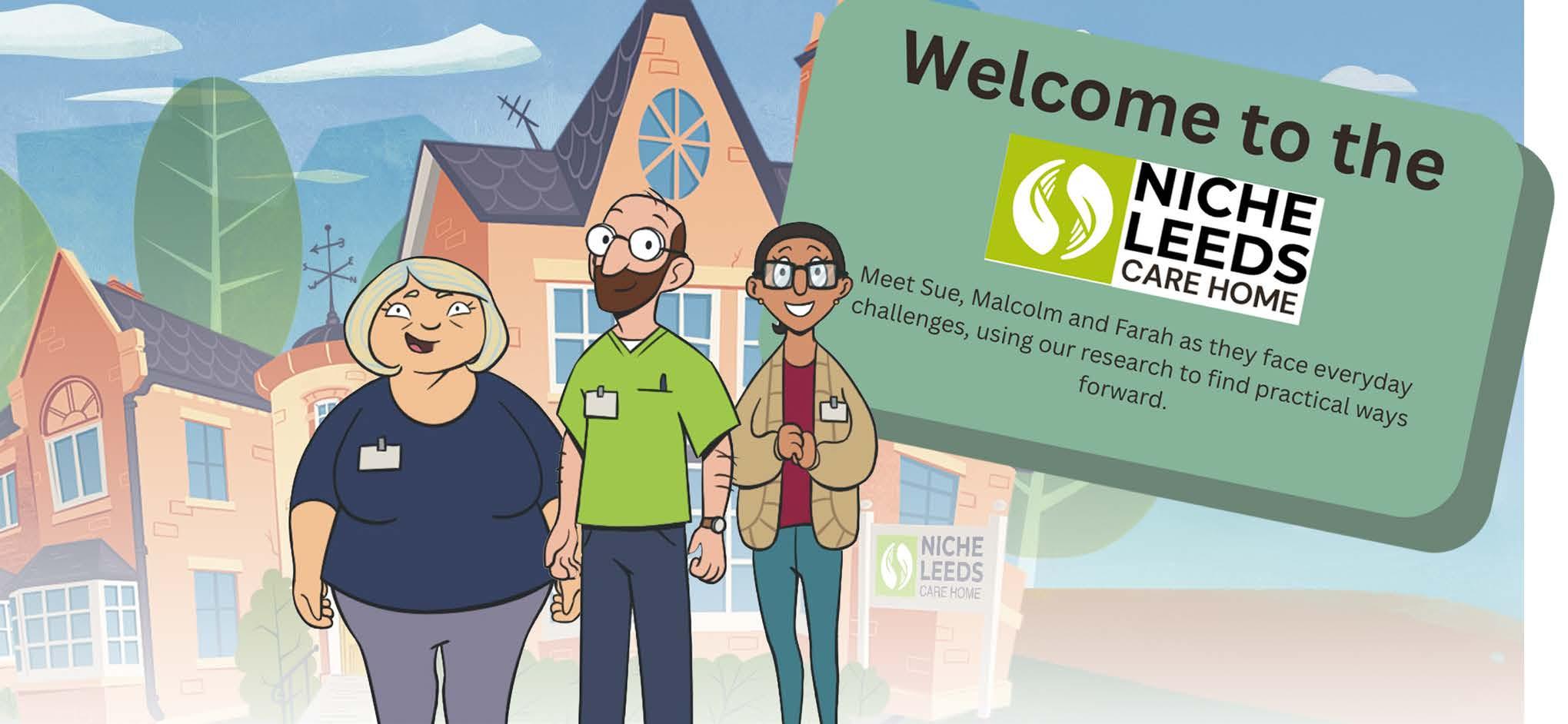
I am deeply committed to learning, innovation, and improving the everyday lives of our residents and staff. I am delighted to share the launch of our NICHE Leeds Virtual Care Home.
NICHE Leeds1- established in 2018 - is built on a simple but powerful belief: that care homes and researchers achieve more when they work as equal partners. For us, that partnership has been transformative. It has helped us make research meaningful, practical, and rooted in the realities of daily care. Most importantly, it ensures that residents remain at the centre of every question we explore together.
Our new Virtual Care Home brings this approach to life. It is an illustrated, fictional home where staff, residents, and researchers collaborate to drive improvement. The stories and resources within it are recognisable to anyone working in the sectorbecause they were shaped with frontline teams who understand what good care looks like and what gets in the way of delivering it.
The first theme embedded in the Virtual Care Home, mouth care, includes posters, leaflets, and an animation based on a NIHR funded study2. The tools that we have developed help staff build confidence, understand best practice, and appreciate the real impact that good mouth care has on residents’ health and dignity. For us, these resources are already strengthening practice and supporting professional pride among our teams.
Being part of NICHE Leeds has raised the profile of our organisation, enhanced our recruitment appeal, and deepened our culture of curiosity and learning. But more than that - it has shown our staff that their insights and experience genuinely shape research and change.
I encourage care providers across the country to explore the NICHE-Leeds Virtual Care Home. The resources are freely available, and I believe they will inspire many others, just as they have inspired us.
Visit the Virtual Care Home here: https://niche.leeds. ac.uk/home/virtual-care-home/
1 NICHE-Leeds is a partnership between care organisations and universities in Leeds. Partners include Westward Care, Springfield Healthcare, HC-One and the University of Leeds, with Leeds Care Association, Leeds Beckett University and Leeds City Council.
2 National Institute for Health and Care Research, Health and Social Care Delivery Research pprogramme funding award: NIHR131506
Caring Optimally: promoting effective Mouth MInuTes in care homes (COMMIT Study) - NIHR Funding and Awards
There’s Real Power in Getting the Right People in the
Room
There’s real power in getting the right people in the room.
Our recent annual strategy meeting—kindly hosted by Howden—was a powerful reminder of exactly that. It wasn’t simply a date to plan the year ahead, but a moment to pause, reflect and raise the bar for our partnerships, our platform and, most importantly, the Adult Social Care (ASC) sector we serve.
The energy in the room was unmistakable. Honest conversations replaced polite updates and big thinking moved quickly into action. Ideas were not just shared—they were shaped, challenged and are already taking form. When people who care deeply about ASC come together with a shared purpose, momentum builds quickly.

Unsurprisingly, Care Show London was central to our discussions. With the agenda now agreed, we are excited about what we have created together. The programme reflects both the complexity and opportunity within ASC today.
We are delighted that the Care Quality Commission (CQC) will join eight of the nine sessions in the Learning Lounge. Their presence signals not just regulatory oversight, but meaningful engagement with providers. These sessions will offer insight, clarity and space for constructive conversation at a time when understanding and collaboration are more important than ever.
In the Keynote Theatre, we will co-host a ‘live hack’ with Howden—an interactive, solutions-focused session tackling real challenges facing providers. It’s an opportunity to move beyond theory into practical problemsolving, drawing on expertise from across the sector.
We will be welcoming Professor Deborah Sturdy, Chief Nurse for ASC who will explore what ‘well-led’ means for nursing teams, colleagues from UKHSA discussing the heatwave plan, along with contributions from people with lived experience, providers achieving outstanding outcomes, Skills for Care and many others. We have a purposeful and packed two days ahead.
Beyond the event, our strategy conversations focused on strengthening the platform that supports these voices year-round. With our partners, we’re exploring shared monthly themes across our magazine to create a more cohesive conversation—offering richer insight, broader perspectives and stronger sector leadership. Rather than isolated articles, we want to foster connected thinking that reflects the reality of ASC.
We also discussed expanding short-form video and “talking head” content—concise, impactful soundbites that bring expertise to life across our website and social channels. Insight doesn’t just need to be written well; it needs to travel well. By embracing accessible formats, we can extend the reach of important conversations.
With the OS rebrand taking shape and partnerships stronger than ever, there is a real sense of momentum. Care Show London 2026 is not just another event—it’s a platform for leadership, collaboration and practical change.
When the right people come together with shared intent, progress follows. We look forward to seeing that energy brought to life on the show floor. To book your free ticket to Care Show London 2026, you can use the link here
Zoë Fry, OS Director of Nursing
Transforming Carer Wellbeing Through Ergonomic Bed Design
Across the care sector, the conversation around workforce wellbeing has never been more critical. With an increasing number of residents requiring full assistance with mobility, the physical burden placed on care teams is immense. Repositioning remains one of the most essential, yet physically demanding and repetitive tasks carried out in care homes every day.
Yet, while the sector rightly focuses on recruitment, retention, and career development, there is a growing recognition that environmental design and ergonomics play an equally important role in sustaining workforce health. The beds and equipment carers use every day directly affect their posture, physical exertion, injury risk, and overall wellbeing.
This is where modern ergonomic bed design, and particularly technology enabled repositioning support, can meaningfully shift the experience of frontline care. enabled repositioning support
The Hidden Physical Load of Repositioning
Manual turning is essential for:
• Pressure injury prevention
• Maintaining comfort and dignity
• Facilitating personal care routines
• Sling application and mobilisation preparation
When residents cannot move independently, these tasks require repeated exertion, often involving two staff members, multiple times a day. Care teams frequently report:
• Musculoskeletal strain
• Fatigue during night shifts
• Interrupted workflow
• Reduced time for relational, person centred care centred care
Repositioning is also relentless, and unlike episodic tasks, it does not lessen with experience or skill.
Ergonomic Bed Design: A Pathway to Workforce Relief
Newer generations of care beds, especially across Europe, now integrate ergonomic features that reduce physical effort while improving comfort and safety for residents. One notable innovation is under mattress lateral support systems, which provide gentle, automated, controlled movement beneath the mattress to support natural repositioning. mattress lateral support systems, which provide gentle, automated, controlled movement beneath the mattress to support natural repositioning.
Systems like these are:
• Discreet and non intrusive
• Compatible with existing care beds
• Adjustable to individual residents’ needs
• Supportive of single handed care
• Designed to work quietly day and night
They help alleviate the biomechanical forces required for manual turning while improving consistency in pressure relief protocols. In practice, this means carers can focus more on care engagement and less on repeated heavy handling.
A Proven Benefit for Carer Wellbeing
Independent evaluations of automated turning solutions have shown meaningful benefits for staff, including:
• Improved ergonomic posture
• Reduced physical effort during turning tasks
• The ability to safely reposition some residents with one carer instead of two
• Greater physical relief across long shifts
• More time available for meaningful interactions and personal care tasks
For residents, studies report increased comfort, reduced discomfort during turning, and supportive pressure care outcomes.
Transforming Care Through Design
As the care sector continues to evolve, the role of ergonomic design and smart bed technology will only grow in importance. Workforce wellbeing is shaped not just by staffing levels but by the practical, everyday conditions in which carers operate.
By easing the physical burden of routine tasks like repositioning, modern bed systems help create safer, healthier workplaces, allowing carers to dedicate more energy to connection, communication, and dignity centred care. centred care.
For more information on ergonomic care support solutions, visit our website https://www.wi-bo.com/en-WI or contact us on solutions@linet.uk.com or 0844 248 1833. support solutions.

Safe Freedom: Supporting the Care Workforce While Protecting Residents
By Jayne Connery, Founder and Director, Care Campaign for the Vulnerable
Across the care sector, workforce pressure is one of the most discussed challenges. Recruitment, retention and staff burnout continue to place enormous strain on providers, managers and frontline teams. Yet while the sector often talks about staffing numbers, we do not always talk enough about the working environment carers operate within and how this directly impacts their confidence, wellbeing and ability to provide outstanding care.
Care workers carry immense responsibility. They are supporting people with complex needs, managing risk, responding to families and meeting regulatory expectations, often all within very limited time. When something goes wrong, whether it is a fall, a safeguarding concern or a complaint from a family member, it is usually the frontline team who feel the pressure most intensely.
One of the most common concerns we hear from care staff through Care Campaign for the Vulnerable is the fear of being blamed when incidents occur, even when they have done everything they reasonably could. This fear can lead to defensive practice, stress and, ultimately, people leaving the profession altogether.
Supporting the workforce therefore requires more than recruitment campaigns. It requires creating an environment where staff feel supported, protected and able to do their job with confidence.
This is where independent safety monitoring and transparency can play an important role.
Choice-led safety monitoring systems, including agreed use of technology within care environments, can support both residents and staff. For residents and families, they offer reassurance that loved ones are safe and that concerns can be addressed quickly and transparently. For staff, they provide protection and clarity when incidents occur, helping to establish facts rather than assumptions.
Importantly, these systems are not about surveillance or blame. When implemented properly and with
consent, they form part of a wider culture of openness, learning and shared responsibility.
Technology is also beginning to support care teams in other ways. Artificial intelligence tools can help audit care plans, identify potential risks earlier and ensure documentation is kept up to date. By reducing administrative burdens and highlighting issues before they escalate, these tools allow staff to focus more of their time on what matters most: caring for residents. The goal should always be to support what I often describe as “safe freedom.” Residents deserve the dignity of living meaningful lives with appropriate independence, and staff deserve the confidence that they are supported while delivering that care.
If we want to strengthen the workforce, we must build systems around them that promote transparency, trust and shared learning rather than fear.
Care staff are the heart of the sector. When they feel supported and protected, the quality of care naturally follows.
For further information about Care Campaign for the Vulnerable and our work supporting safe, transparent care environments, please contact CCFTV.cares@gmail.com or visit www. carecampaignforthevulnerable.com.
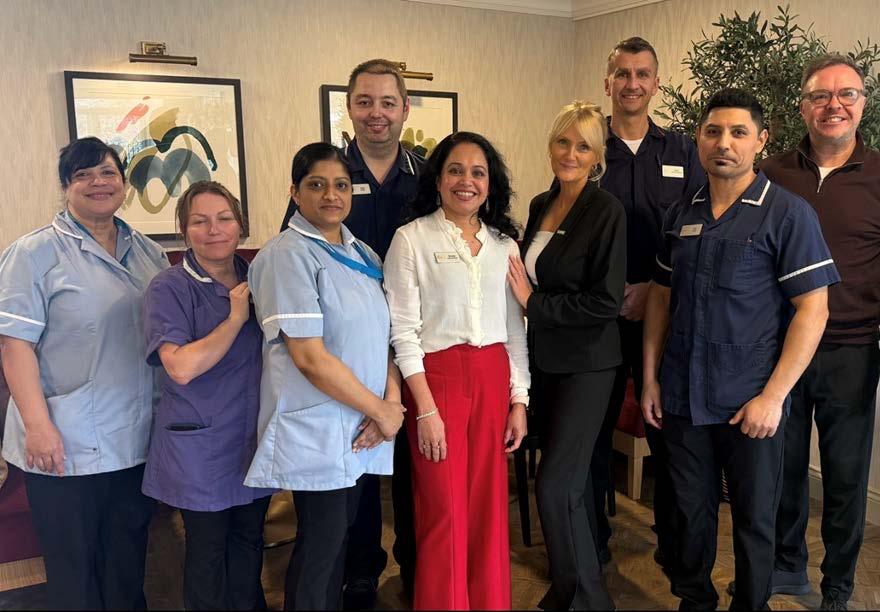
Picture: Jayne welcomed by MMCG Bentley Grange Care Home

Your trusted partner in Health & Safety, HR, and care compliance
Are you ready for anything? With Citation’s all-in-one compliance support, you can focus on providing safe, high-quality care with confidence.
HR & Employment Law
Expert HR support that covers everything from recruitment and retention challenges to disciplinaries, absence management and tribunal protection.
Health & Safety
We’ll help you create a safe environment for your service users, staff, and visitors, with on-site inspections, risk assessment support, incident reporting guidance and sector-specific training.
Fire safety
Build a safe, secure environment in your care setting with fire risk assessments that identify hazards, implement clear action plans and meet your obligations.
Regulatory compliance
Our compliance solutions – including mock inspections, care policies and procedures, and our online tool CQC Pro – keep your care business up to scratch, reducing the risk of non-compliance and penalties.
As a Citation client, you could be…
93% less likely to receive an employment tribunal claim*
47x less likely to face an enforcement notice*
72% less likely to have an accident at work*
7x less likely to suffer a major incident in the workplace*
*versus national averages
Recommended by Care England

“Citation has a broad suite of services and an unparalleled knowledge of the care sector and care business. They’re able to provide the right information in an accessible form in a way that other providers don’t.”
Professor Martin Green OBE


Understanding Incontinence: Breaking the Myths
Incontinence is a common yet often misunderstood condition. Despite affecting millions of people, it remains a taboo topic, with many individuals reluctant to seek help or even discuss it with their GP. This silence is often driven by persistent myths that can delay diagnosis and treatment.
Let’s address some of the most common misconceptions:
“Incontinence is just part of getting older.”
While more common in older adults, incontinence is not an inevitable part of aging. It’s often linked to other factors such as mobility challenges, cognitive decline, or medication side effects. Many cases can be managed or even resolved with the right support.
“It’s to be expected after having a baby.”
Pregnancy and childbirth can temporarily weaken pelvic floor muscles, leading to stress incontinence. However, with consistent pelvic floor exercises and physical rehabilitation, many women regain bladder control over time.
“Everyone experiences a bit of incontinence.”
Not true. While it’s widespread, not everyone will experience it. Around 1 in 10 men and 3 in 10 women will encounter incontinence at some point, but many cases are temporary and treatable.
“Once you’re incontinent, it never goes away.”
Incontinence is not always permanent. It can result from surgery, illness, or temporary physical changes. With appropriate treatment—such as pelvic floor therapy, lifestyle adjustments,
and medical guidance—many individuals can significantly reduce or eliminate symptoms. “Incontinence affects everyone the same way.”
There are several types of incontinence—stress, urge, overflow, and functional—each with different causes and treatments. It can affect people physically, emotionally, and socially in unique ways, which is why personalized care is essential.
Why Education Matters
Raising awareness helps break the stigma and encourages early intervention. Understanding the causes, types, and treatment options empowers individuals to seek help and improves quality of life.
If you or someone you know is experiencing symptoms of incontinence, don’t ignore them. Speak to a healthcare professional to explore the right treatment path.
For more information on continence care and product solutions, visit www.id-direct.com.

Poor CPD Quality and Lost Records Are
Costing Care Providers. Here’s The Fix.
Care providers invest heavily in staff development. But unaccredited, untracked CPD is invisible to the regulators, commissioners, and potential staff members who matter most. In a sector where workforce quality directly affects the people in your care, that is a risk worth addressing.
Why CPD Matters in Care
Care staff are expected to keep pace with evolving regulations, best practice, and the complex needs of the people they support. CPD is what makes that possible. It keeps knowledge current, builds confidence, and helps staff do their jobs safely and effectively.
It also supports retention. Staff who feel invested in are more likely to stay, and in a sector where turnover is a persistent challenge, CPD is key.
CPD Is Only as Good as Its Credibility
When a care worker completes their CPD, what does it actually mean to regulators, commissioners, or a future employer? Without independent quality assurance, it is difficult to differentiate strong CPD from a tick-box exercise.
CPD accreditation provides that assurance. Content assessed by a recognised accreditation body like The CPD Group has been reviewed against standards for quality, relevance, and measurable learning outcomes. For example, The CPD Group's A.C.C.R.E.D.I.T.E.D Framework.
That means your CPD provision carries real weight with CQC inspectors, commissioners, and the skilled staff you want to recruit and retain. It also sends a clear message to your existing workforce: their professional development is valued and taken seriously.
Tracking CPD Should Not Be This Hard
Even the best CPD can still create a headache if nobody can keep track of it. HR teams chasing paper certificates, staff unsure what they have completed, employers scrambling to pull together an audit trail ahead of an inspection. It is time-consuming, stressful, and entirely unnecessary.
CPD Passport removes that burden. It gives care workers a single digital record of their professional development that can be built up and accessible throughout their entire career. Completed CPD is easy to log, evidence, and share. For employers, it means clear visibility of CPD activity across the whole team, straightforward compliance reporting, and significantly less admin time spent on paperwork. Make CPD Count
When accredited CPD feeds directly into a trusted digital record, everything becomes simpler and more valuable. Staff have a verified, portable portfolio of development they can be proud of and take with them as their career progresses. Employers can clearly demonstrate to regulators, commissioners, and prospective employees that professional development is not an afterthought.
In a sector under constant pressure to evidence quality and retain good people, that combination saves time and builds trust.
Prove You Invest in Your People
CPD reflects the culture of your organisation. Becoming an accredited employer through The CPD Group demonstrates that commitment to regulators, commissioners, and prospective staff. It shows professional development is embedded in how you operate, not just ticked off when compliance demands it.
See how accredited, tracked CPD can transform your workforce. Visit thecpd.group or email info@thecpd. group.




Audits Are Only Useful If You Act on Them
By Ben Miller and Mark Horton – Cornerstone Care Solutions Consultants
This article is informed by more than 30 years of joint experience working in and managing care services, including registered manager roles, operational leadership, governance reviews and supporting services through inspection, improvement and recovery. The lessons here reflect what consistently separates services that improve from those that repeat the same issues year after year.
One of the clearest realities for managers is that audits alone do not improve services. Action does. Many services can show that audits are completed on time yet still struggle with quality, consistency and staff behaviour.
From our work supporting services, our experienced consultants note, “There is nothing more frustrating or embarrassing than an inspector identifying something you already knew was a problem but did nothing about.” This situation is more common than many managers would care to admit.
Audits often highlight the right issues, but followthrough is weak. Actions are logged but not completed. Deadlines drift. Responsibility becomes blurred. Over time, staff learn that standards can slip without consequence. This is not because managers do not care, but because governance systems are not being used assertively.
We have seen services where poor staff behaviour was widely known. Shifts started late. Breaks were taken incorrectly. Residents were ignored while staff gathered together. Team morale declined. Audits reflected these concerns. Meetings were held. Expectations were discussed. But actions were not followed through.
Our consultants recall, “Managers kept explaining what they wanted to see, but there was no consistent follow-up. Staff quickly realised they could get away with it.” Complaints increased, families lost confidence, and the service eventually lost its ‘Good’ rating.
This is the real cost of weak governance. Not because systems were missing, but because leadership failed to act on what was already known. Governance without action creates a false sense of safety that will
eventually collapse under scrutiny.
Effective governance requires managers to be confident enough to follow through, even when it is uncomfortable. Addressing poor practice is never easy, but avoiding it sends a clear message. Inaction becomes part of the culture.
Our consultants often say, “Audits are not about catching people out. They are about protecting people who use the service and supporting staff to work to a clear standard.” When actions are taken consistently, staff confidence improves and expectations become clearer.
If audits in your service feel repetitive or disconnected from real improvement, it may be time to step back and ask whether actions are genuinely owned and reviewed. A fresh perspective can help turn audits back into a practical improvement tool rather than a paper exercise.


Supporting the Care Workforce: Why Leadership and Systems Matter More
Than Ever
Workforce pressure remains one of the most significant challenges facing the care sector. Recruitment difficulties, staff retention challenges and increasing regulatory expectations are placing a growing strain on services and the people working within them.
While recruitment often dominates the conversation, many workforce issues run deeper than simply filling vacancies. Providers frequently report that the real pressure lies in supporting managers, strengthening leadership and ensuring teams feel confident and supported in delivering high-quality care.
When leadership teams are stretched, the effects are felt throughout the service. Decision-making becomes reactive, compliance responsibilities build up, and valuable time is diverted away from supporting staff and residents. Over time, this can contribute to burnout, lower morale and increased staff turnover, creating a cycle that can be difficult for providers to break.
As a result, many services are beginning to look beyond recruitment alone and are focusing on strengthening the systems and leadership structures that support their workforce.
As Fabio Cecchi, Commercial Director at Fulcrum Care, explains:
“Workforce pressure in care is often framed as a recruitment issue, but what we consistently see across the sector is that it frequently begins with pressure on leadership teams. When managers have the right support, systems and oversight, services become more stable, and staff are far more likely to stay.”
One of the most effective ways to address workforce pressure is by strengthening the operational foundations of a service. Reviewing governance systems, quality assurance processes, and internal communication structures can often highlight where unnecessary pressures are building and where improvements can be made.
Leadership support is also an important part of this process. Across the sector, many managers step into demanding roles with significant responsibility
but limited opportunities for external guidance or structured reflection. Access to experienced consultancy, coaching and practical support can help managers strengthen decision-making and develop sustainable systems that support both staff and residents.
Importantly, strengthening workforce resilience does not mean adding more processes or paperwork. Instead, it is about ensuring that the systems already in place work effectively and support the people using them.
Across the sector there is enormous dedication from care professionals who want to deliver the very best outcomes for those they support. By strengthening governance, leadership and operational systems, providers can create environments where staff feel supported and services remain stable even during periods of workforce pressure.
Through its work with care providers across the UK, Fulcrum Care has supported services to strengthen leadership teams, embed practical governance systems and introduce structured training and oversight frameworks that help managers and staff operate with greater confidence and clarity. By working alongside providers to stabilise services and build sustainable systems, Fulcrum helps organisations create stronger leadership cultures and more resilient teams.
For further information and support, visit www. fulcrumcareconsulting.com or contact the Fulcrum Care team to discuss how we can support your service.

As part of a national legal firm with over 150 specialist health lawyers, we cover all aspects of health care related law and practice.
We have a long history of providing market-leading legal advice to care providers. Our large team of specialist and experienced care homes lawyers advise our regulated care business clients daily across wide-ranging areas including:
▪ Inquests and inquiries
▪ Safeguarding and investigations
▪ Employment and HR advice including immigration
▪ Refinancing and restructuring advice
▪ CQC issues and regulatory advice
▪ Commercial disputes and debt recovery

To find out more about the care services we can offer, contact Julia Appleton, Partner, at julia.appleton@weightmans.com
weightmans.com
Supporting Social Care in a Rapidly Cashless Society
Supporting Social Care in a Rapidly Cashless Society
The UK is becoming an increasingly cashless society. Contactless payments, digital wallets and online shopping are now the norm for many people, with consumers regularly paying using cards, phones and wearable devices. Research indicates fewer people now carry physical wallets as digital payments become more widely adopted in everyday life.
At the same time, businesses are adapting. Research from the ATM network LINK shows that one in seven high street businesses have gone cashless, driven by fraud prevention, security concerns and lower demand for cash. This shift reflects a broader transformation in how society pays for goods and services.
However, across parts of the social care sector, day-to-day spending for vulnerable individuals is still often managed using systems that rely heavily on cash. For many care providers, supported living services and deputyships, the traditional process will feel familiar. Cash is withdrawn from the bank, placed into envelopes or floats for individual clients, and taken out by support staff when they go shopping with – or on behalf of – the people they support. Receipts are collected, change returned and later reconciled on a spreadsheet.
While this approach has existed for decades, it is becoming increasingly difficult to maintain as fewer businesses accept cash and digital payments dominate. Online purchases are now part of everyday life, and many services cannot be paid for using cash. For frontline staff, managing cash can also be timeconsuming and stressful. Missing receipts or simple human error can create compliance concerns. Managers often spend hours reconciling transactions, and cash handling introduces safeguarding risks for both the individuals whose money is being managed and the staff responsible.
Cash-based systems can also contribute to digital exclusion. While the rest of society benefits from digital payments, many vulnerable adults are unable to access them safely.
Purpose-built technology can help bridge this gap.
Cleva is a digital wallet and payment card platform designed specifically for the care sector. It enables care organisations to support vulnerable individuals with spending in a secure, transparent and digital way.
Each person supported has their own digital wallet, while support workers can be issued payment cards linked to one or multiple wallets. Transactions are recorded in real time and receipts can be uploaded through a simple app, creating a clear audit trail.
Staff no longer need to manage cash floats or envelopes of money, while managers gain real-time visibility of spending, making reconciliation faster and simpler. Individuals receiving care can also participate more fully in a modern digital economy while safeguards remain in place.
As the UK continues its shift toward a cashless society, social care organisations must balance independence, protection and operational efficiency. Moving away from cash-based systems helps ensure vulnerable people remain included in the financial systems the rest of society relies upon.
Cleva is proud to partner with Care England to support care providers in navigating this transition while improving safeguarding and reducing administrative burden.
For further information, contact Cleva at www. clevacard.com or email sales@clevacard.com

Treasured items from Boots help rekindle memories for those with dementia
As part of the Alzheimer’s Society’s Dementia Action Week, Boots recently launched a nationwide initiative to spark conversation and rekindle memories for those affected by dementia.
As the UK’s leading health and beauty retailer, Boots created over 1,000 multi-sensory memory boxes which have been distributed to care homes and communities across the UK.
The initiative follows research by Professor Victoria Tischler and colleagues from the Universities of Surrey, West London and Nottingham that supports the connection between smell, handling familiar objects and memory,1 conducted using the Boots Memory Boxes.
In many people with dementia, handling familiar objects that combine distinctive smells, and attractive designs can provide wellbeing benefits including enhanced mood, social inclusion and memory retrieval. Simple prompts like familiar smells from a person’s past can stimulate recall and bring people into the present moment.
The Boots Memory Boxes are filled with items carefully selected by the Boots Archive team and include familiar smells and sounds to trigger

memories. For example, popular toiletries and soaps can remind them of a loved one and cough medicine or bath salts can help them remember times they looked after themselves or others. The boxes will also feature items with familiar sounds, like the click an old powder compact, or camera.
1 D’Andrea, Dening and Tischler (2022) Object Handling for People With Dementia: A Scoping Review and the Development of Intervention Guidance | Innovation in Aging | Oxford Academic
Further details can be found at:
Treasured Items information: Treasured items from Boots can help rekindle memories for those with dementia
Treasured Items video: https://m.youtube.com/ watch?v=E--CPM5xmR8
So what happens when that trust doesn’t land early on? Ultimately, if you can’t show your value upfront, someone else will. Families swipe left. They bounce off the website. They opt for another provider whose online presence looks more transparent, even if the care itself isn’t any better.

The biggest reform to mental health law in over 40 years is underway.
Are you ready for what it means in practice?
The Mental Health Act 2025 is not a technical update. It is a structural shift in how mental health law will operate across England and Wales, and social care will feel the impact. With Royal Assent granted in December 2025 and phased implementation beginning, the direction of travel is to:
• Fewer hospital detentions
• Greater complexity of need in the community
• Stronger legal duties around care planning
• Increased emphasis on autonomy and advance decision-making
• A more assertive, rights-based framework
For social care providers, this is not distant policy. It is a strategic and operational issue that requires early preparation.
Join Anita Rao, Partner at Hempsons LLP, for a practical, no-nonsense webinar and live Q&A exploring what the Act will mean for your organisation and what you should be thinking about now.
Why This Matters to Social Care
The reforms are designed to modernise mental health law and align it more closely with human rights and the Mental Capacity Act. But in doing so, they are expected to shift more responsibility into community settings. That means:
More complexity of need in community services
The new detention threshold raises the bar for hospital admission. In practice, more individuals with significant mental health needs, including those with learning disabilities and autism, are likely to need to be supported in community settings. Providers must begin asking:
• Are we equipped to support higher acuity mental health presentations?
• Do we have the right training and workforce capability?
• Are our relationships with community mental health teams strong enough?
Statutory Care and Treatment Plans
For the first time, care and treatment plans will sit on a statutory footing for individuals under Community Treatment Orders (CTOs), guardianship, and certain other arrangements. The CQC will expect provider to know who should have one, and act on its contents.
Providers will need to demonstrate:
• That they know which individuals should have a care and treatment plan;
• That care and treatment plans are held locally, and actively inform dayto-day support

• That communication with Responsible Clinicians and Community Mental Health organisations is robust
Advance Decisions move from optional to operational reality
The Act significantly strengthens the role of advance decision-making in the context of treatment for mental health conditions. For providers, this raises important questions:
• Are we routinely discussing future mental health treatment wishes?
• Do staff feel confident initiating these conversations?
• How does this integrate with our existing “planning for the future” approach?
To support providers through these changes, we invite you to join Hempsons’ webinar for Care England on 21 April, where we will explore the Act in more depth, share updates, and discuss real, practical steps providers can take to prepare for implementation.
Contact:
Anita Rao, Partner, Hempsons a.rao@hempsons.co.uk

The Final Countdown to the 2027 Digital Switchover: Why Care Homes Must Act Now
With the UK’s digital switchover set to complete in January 2027, when the analogue Public Switched Telephone Network (PSTN) will be permanently switched off, care providers must urgently review their current connectivity. Waiting until the deadline approaches could leave homes exposed to serious disruptions, communication failures, and potential risks to resident safety.
Communication sits at the heart of every care setting. From coordinating daily care routines and updating families, to responding to medical emergencies, dependable phone and internet services are critical. As traditional landlines are phased out and replaced with digital Voice over Internet Protocol (VoIP) systems, homes without robust broadband infrastructure may find their services unreliable or completely inoperable. Preparing early ensures that vital systems, including nurse call alerts, lift lines, alarm systems, and telecare devices, remain fully functional after the switchover.
The impact on residents is equally significant. For many individuals in care, particularly those with limited mobility or distant relatives, digital communication tools such as video calls and messaging platforms provide essential social interaction. These connections reduce isolation, support emotional wellbeing, and help residents maintain meaningful relationships with loved ones. Without strong and stable internet access, these digital lifelines can become frustratingly unreliable or unavailable altogether.
Clinically, care delivery is increasingly dependent on digital tools. Electronic Health Records (EHR), online medication management systems, and telemedicine consultations are now commonplace across the sector. These technologies enable faster information sharing, improved accuracy, and more coordinated care. However, they rely entirely on consistent, high-quality internet connectivity. Weak or unstable connections can delay access to critical medical information, hinder remote GP consultations, and prevent timely updates to care plans. In turn, this can lead to avoidable hospital admissions or compromised outcomes for residents.

Staff productivity is also closely tied to reliable connectivity. From accessing records and scheduling rotas to communicating with external healthcare professionals, digital systems underpin modern care home operations. When systems run slowly or fail altogether, valuable time is lost, frustration increases, and the overall quality of service can suffer.
At Orbital Net, we understand the unique connectivity challenges facing care homes, particularly those in rural or hard-to-reach locations. We specialise in delivering robust, tailored solutions designed specifically for the care sector. Whether you require digital phone (VoIP) systems, dedicated leased lines, fibre-to-the-premises (FTTP), Satellite or Wireless technology or full fibre broadband, our team works closely with you to design infrastructure that is resilient, future-proof, and fully prepared for the 2027 digital switchover.
The switchover deadline may seem distant, but upgrading connectivity can take time, particularly where infrastructure improvements are required. Acting now allows for careful planning, testing, and implementation without the pressure of last-minute changes.
Orbital are currently offering free, no-obligation internet audits to help care homes assess their readiness, identify potential gaps, and build a clear action plan for 2027. The digital switchover is coming. The question is not whether to prepare, but when. The time to act is now. Contact us via soultions@orbital.net / www.orbital.net
What happens at night matters more than we think
In care homes, most attention naturally falls on what happens during the day — activities, therapies, mealtimes and visits. Yet the hours when the building is quiet may have an even greater influence on resident wellbeing and staff workload.
Night-time is where many of the patterns that shape the next day begin.
Poor sleep can leave residents more fatigued, less steady on their feet and more prone to confusion. For people living with dementia, even small disturbances overnight can trigger agitation, anxiety or distress the following day. What appears to be a daytime care challenge is often rooted in what happened the night before. But sleep in care settings is rarely simple.

Advances in AI resident monitoring like Ally Cares is increasingly making this possible. Rather than relying solely on routine physical checks, care homes can gain real-time insight into activity levels, unusual sounds or signs that a resident genuinely needs assistance.
Traditional night routines are built around reassurance and risk prevention. Staff carry out regular room checks to ensure residents are safe. These checks are well-intentioned, but they can create a difficult contradiction: in order to keep people safe, we sometimes wake them. A door opens. A light switches on. A resident who had been sleeping peacefully becomes unsettled.
Over the course of a night, those small interruptions can accumulate. For residents who are already vulnerable, fragmented sleep can quietly affect mood, appetite, mobility and overall health.
The impact is not limited to residents. For night teams, routine checks can consume a large proportion of the shift, regardless of whether anyone actually needs support. In a sector already managing workforce shortages and rising levels of acuity, that time matters.
So, what if care teams could understand what was happening in residents’ rooms without disturbing them?
The difference is subtle but important. Staff intervene when it matters, and residents are able to sleep undisturbed when they do not.
Many homes using Ally’s technology describe an immediate shift in the atmosphere of the building at night. Corridors remain darker and quieter. Doors stay closed. Residents who previously woke confused or distressed are able to rest for longer periods.
Over time, those calmer nights translate into better days. Residents appear more settled and engaged. Teams spend less time on routine interruptions and more time responding where care is truly needed.
The lesson is a simple one.
Night-time care is not merely about supervision. It is about recovery, restoration and dignity. When sleep is protected, everything else in care, from wellbeing to workforce sustainability, becomes easier to support.
For further information about creating sleeppositive care environments, contact Ally Cares at www.allycares.com or call 0203 026 4506 to book a demo at a time to suit you.
Could 2026 Be the Turning Point for Palliative Care?
With resident wellbeing and dignity in mind, CareHomeLife asks: could 2026 be the year in which palliative care finally receives the focus it rightly deserves?
Each year, UK hospices provide palliative and end of life care to around 310,000 people, ensuring comfort, dignity and quality of life in their final months and years.
But with more people living for longer, many with chronic and increasingly complex conditions, the need for specialist palliative and end of life care is growing. Naturally, this places additional pressure on the hospices themselves. Everyone deserves compassionate care in their final days, and yet, not everyone has access to hospice beds. Hospice UK recently revealed that as many as two in five hospices cut services in 2025. In fact, almost 20% of England’s 2,000 hospice beds are unable to be used due to financial pressures.
Clearly, this is a complex, live issue with few easy answers – but we mustn’t lose sight of what matters most: the quality of care for those with life-limiting conditions, and the support available to loved ones and care teams alike. So, what is being done to futureproof palliative care?
A Vision for Holistic Care
With UK hospices under mounting pressure, the wider care sector has a greater role to play in making palliative care services accessible to more people. On the surface, this is nothing new. Palliative care has long been a mainstay of the UK care sector. But if care providers intend to meaningfully bridge the hospice gap, they may need to go further to raise awareness and challenge people’s perceptions.
We know from experience that many providers offer the same high standard of palliative care that hospices do – ensuring peace and comfort for residents and, by extension, their loved ones when it’s needed most. But hospices and homes remain the preference for many, and this has created an unnecessary bottleneck. The UK is recognised as having one of the finest palliative care workforces in the world today – and it’s time we celebrate that fact and ensure everyone knows that hospices are far

from the only avenue.
And for those providers not currently offering end of life care, opportunities for specialist training –such as the launch of the North West’s Hospice and Palliative Care Academy in December 2025 – are beginning to take shape.
Preserving Palliative and End of Life Care
Without sustained investment, hospices won’t be able to provide the same level of specialist care our loved ones deserve – and with demand growing steadily, consistent funding is needed now more than ever. In the meantime, there is an opportunity for caregivers to provide the kind of holistic end-to-end care that gives residents the comfort, consistency and reassurance they need. In 2026, everyone should have the right to compassionate end of life care.
Support Hospice UK with a donation by visiting hospiceuk.org/support-us/donate
Additionally, to find out how CareHomeLife partners with the care community to support palliative and end of life care, visit carehomelife. co.uk/.
Solving the social care workforce crisis: why continuous feedback is the answer
The social care sector is experiencing a severe workforce crisis. High turnover, burnout, and relentless workloads are putting enormous pressure on care organisations. Despite their dedication, many professionals feel overlooked, with infrequent, traditional appraisals leaving staff undervalued and disengaged. This not only affects staff morale but also puts the quality of care at risk.
To address these challenges, organisations must fundamentally shift their culture—moving away from retrospective annual reviews and embracing continuous feedback.
The reality of the social care retention challenge
Recent statistics highlight the urgency. Adult social care vacancies in the UK have stayed around 150,000, with turnover above 28%. This constant churn increases recruitment costs and places more strain on those who remain. To break the cycle, it’s crucial to help staff feel valued and supported every day.
Breaking away from the annual appraisal
Annual performance reviews often come too late to make a real difference. In the fast-moving world of care, this approach simply falls short. Continuous feedback, by contrast, delivers immediate, meaningful support and guidance, keeping teams aligned and agile.
Sharpening recognition to boost morale
Feeling unappreciated is a top reason for staff leaving. Recognition and morale are deeply linked. When care workers experience timely, specific feedback—such as being praised for handling a challenging situation— job satisfaction and commitment rise. Proactive check-ins also help managers pinpoint and address staff needs, reducing frustration and empowering career growth. When team members can see a future within their organisation, they are more likely to stay.
Elevating the standard of care
Continuous feedback doesn’t just improve retention; it raises the standard of care. Open, clear
communication means expectations are always understood. Teams can share knowledge quickly and adapt practices instantly, which is vital in both residential and domiciliary settings. Real-time updates ensure a rapid response to patient needs and regulatory requirements, delivering higher quality care.
Implementing a culture of open communication
Adopting a continuous feedback culture requires removing barriers to communication. Leaders must create an open atmosphere and adopt user-friendly tools that fit seamlessly into busy workflows. Mobilefriendly platforms and regular, simple check-ins support teams even on the most hectic days, helping staff feel guided and valued.
The urgency of acting now
The workforce crisis is the most pressing challenge facing the care sector today. If organisations fail to adapt, they risk losing experienced staff to competitors and other industries. Building a resilient, engaged workforce is no longer optional— it’s an immediate necessity. By replacing outdated appraisals with ongoing, real-time support, you demonstrate to your staff that their wellbeing and growth truly matter.
Ready to build a more engaged, empowered care team? Connect with our expert team today to discover how continuous feedback can transform your organisation.
Building the future care workforce: Why youth recruitment and apprenticeships are central to the solution
Adult social care is facing one of the most significant workforce challenges in its history. Vacancies remain stubbornly high, demand continues to rise, and employers are under increasing pressure to deliver high-quality, compassionate care in a complex operating environment. While there is no single solution to the recruitment and retention gap, one thing is becoming increasingly clear: we cannot build a sustainable future for care without bringing more young people into the sector and supporting them properly once they arrive.
As a training provider, Paragon Skills works closely with care employers across the country, gaining insight into both the opportunities and challenges they face.
For many young people, adult social care is invisible as a career option. When it is visible, it is too often framed as low paid, emotionally demanding and lacking progression.
If we want to attract young people, we need to reframe care as a credible, aspirational and valuesdriven career. Care offers all three, but the sector must tell that story more effectively.
Employers play a crucial role. Engagement cannot start at the point of vacancy; it needs to begin earlier, in schools, colleges and communities. What’s outdated is assuming young people will “find” care on their own. What works is proactive, visible and authentic engagement.
There are multiple entry routes into care, from entrylevel roles to placements and later career changes. Apprenticeships stand out because they combine paid employment, structured training and recognised progression.
At their best, apprenticeships provide a supported route that builds competence, confidence and commitment over time. They allow employers to shape staff from day one, embedding values and quality standards alongside technical skills.
Recruiting young people comes with challenges. Many new entrants need support with confidence,
communication and workplace expectations. These are not failings but development needs. The key question is not “are young people ready for care?” but “how do we make care ready for young people?” From day one, they need structure, clarity and support, including onboarding and clear expectations.
One of the biggest risks is treating young people as a short-term fix rather than a long-term investment. If care is positioned as a “first job” with no visible future, they will leave.
Progression matters. Young people need to see pathways into senior roles, specialist areas or leadership. Apprenticeships support this progression, helping employers grow their own talent and reduce reliance on external recruitment.
For employers, operational challenges can feel like barriers. What makes the difference is clarity, partnerships and shared ownership. Those who succeed are not those with the most resources, but those with a long-term mindset.
The question is no longer whether we can afford to invest in young people. It’s whether we can afford not to.
If you’d like a conversation about how this could work in your organisation, with no obligation get in touch to explore how we can support your recruitment and workforce development goals. www.paragonskills.co.uk 0800 783 2545

Edge View Care Homes - Case Study
Effective March 31, 2025, Simpler Recycling is in force across the UK. This law mandates that businesses, schools, and organisations with more than 10 employees must separate their recyclable materials. England’s regulations do not impose a minimum weight requirement for food waste collections, and Phase 2 will extend this requirement to all businesses regardless of size. The separation of food waste, paper, card, and dry mixed recyclables (DMR) is designed to improve recycling quality, reduce landfill use, and support the UK’s broader sustainability goals.
Veolia began working with Edge View Care Homes, a care home group with three sites in and around Birmingham, in 2024, implementing Simpler Recycling practices ahead of the deadline. The primary aims were to reduce operational costs and focus on decarbonisation. Between 1st March and 31st December 2024, the care homes recorded 334 collections with a total spend of just over £10k. Their overall waste tonnage was 18.8 tonnes, with a recycling rate of 12.95%, resulting in 5,246kg of CO2 saved.
Following the implementation of Veolia’s Simpler Recycling initiatives, the same period in 2025 saw 352 collections across the original three sites, with a total spend of just £4.98k, approximately half of the previous year. Veolia also onboarded two additional sites, bringing the total to 509 collections and an overall spend of £7k across all five sites. Waste tonnage rose to 25.2 tonnes, with a recycling rate of 25.81%, resulting in 7,317kg of CO2 saved. These figures demonstrate just how significant the impact of a well-structured waste management strategy can be.
The Simpler Recycling tactics implemented by Veolia included introducing separate bin collections for each waste stream, reducing general waste and increasing recycling rates. Veolia also offers comprehensive waste audits, where an expert account manager visits the

care home to assess current waste output and understand the specific needs of the site. These audits consider the high volumes of food waste generated by on-site kitchens, as well as hygiene waste requiring separate handling. By understanding each site’s operational layout, Veolia provides flexible, bespoke collection schedules tailored to each location’s individual requirements, ensuring a seamless experience for staff and management alike.
This is just one of many examples of Veolia transforming waste management through Simpler Recycling. In total, Edge View Care Homes achieved cost savings of 50.55% through their consolidated package, alongside a 12.86% increase in recycling rates, resulting in an additional 2,071kg of CO2 saved.
Are you looking for a waste management provider with the expertise to deliver costeffective, environmentally responsible solutions for your care home?
Book your free waste audit and a member of our team will be in touch directly!
Any questions or queries? Read our Simpler Recycling guide for more information.
https://www.veolia.co.uk/services/wastemanagement/simpler-recycling - SR guide
https://docs.google.com/forms/d/ e/1FAIpQLSd2UsTq-xWiebsgnB6wnCU7xPsbg0u 41s5VLJPTCTfe6vGczw/viewform?usp=headerFree waste audit
Turning Pain into Promotion: Ending the Era of ‘Accidental Managers’
Through ongoing research with a range of care providers, Care Character has identified one consistent truth: managers play an essential role in shaping workforce culture, stability, and service quality. While some organisations have a structured plan for identifying future leader, others take a reactive approach. And it’s in this space, that we often find what the sector refers to as ‘accidental managers.
These are individuals who are promoted into leadership positions, not because they were ready, but because they were next in-line when the vacancy opened. While they are often exceptional carers, these managers are rarely given the support required to transition into leadership roles. The result? Managers who feel overwhelmed, underprepared, and unsure how to translate their frontline experience into managerial success.
A Section Wide Challenge
This pattern is common across the care sector. May providers don’t have the space or capacity to identify and develop leaders ahead of time. When managers leave, the priority becomes filling the vacancy, rather than planning the pipeline. So, the longest-serving or most experienced carer is promoted, even if they’ve not been supported to develop the skills that leadership demands.
While many accidental managers eventually find their feet, the journey there can be difficult for them and disruptive for the team around them. New managers often struggle to delegate tasks, resolve conflict, and communicate clearly — all of which are essential capabilities for creating confident and consistent teams.
The Case for Succession Planning
If the sector wants skilled, confident leaders who can guide teams through complexity and change, the solution isn’t to react to vacancies — it’s to plan for them.
Succession planning doesn’t need to be complicated, it’s about identifying leadership potential early, nurturing it intentionally, and ensuring anyone stepping into a managerial role does so with the clarity, training, and support they need to succeed. It transforms leadership from a moment of panic into a planned progression.
Using Insight to Identify Future Leaders
A practical starting point is understanding each person’s natural leadership tendencies. Tools like Care Character Advance can support this process by helping organisations reflect on four core areas of care leadership:
• Managing Self – personal organisation, resilience, and self awareness
• Managing Service – decision making, prioritisation, and maintaining quality
• Managing People – communication, coaching, and confidence in difficult conversations
• Building the Culture – modelling values, consistency, and team cohesion
These areas act as a simple framework for recognising who may thrive in leadership, and what support that individual may need to do so. Building Confident, Supported Leaders
In a sector where compassion and continuity are essential, strong leadership is not an optional extra; it is a safeguarding measure. Ending the era of accidental managers is entirely achievable when leadership potential is spotted, supported, and strengthened long before vacancies arise.
For further information and support on strengthening your approach to succession planning, please contact Damien.wilkins@carecharacter.co.uk and explore our upcoming webinar. You can also join our Retention Club to continue learning from your peers across the sector.
Why financial control matters more than ever in care
Rising pressures increase the need for control
The UK care sector continues to operate under sustained strain. Workforce shortages, rising demand and constrained funding remain defining features of the landscape. Alongside these challenges, another priority is becoming increasingly important for care teams: financial control.
Although inflation has eased from recent peaks, pressures on household budgets remain. The Office for National Statistics reports that inflation remained around 3–4% through 2024, while household costs rose by approximately 2.8% in the year to December 2024. For care providers and their staff, these conditions reinforce the importance of predictability in both personal finances and day-to-day operations. In an environment shaped by uncertainty, knowing what is coming in, what is going out and when payments are due is more important than ever.
Limited visibility creates operational pressure
For many providers, maintaining financial control is not straightforward. Care businesses often manage multiple funding streams, different payment timelines and a mix of payroll, supplier and operational costs.
Research highlighted in Modulr’s care e-book found that more than 80% of home care providers with public sector contracts have experienced late payments. When income is delayed, the pressure quickly shifts elsewhere. Payroll still needs to run, suppliers still need to be paid, and managers are left balancing priorities with incomplete visibility.
Fragmented systems and manual processes can add further strain. Time is lost chasing information, reconciling payments and resolving avoidable issues.
Payment accuracy builds workforce confidence
Financial control is not just about cash flow. It is also felt directly by the workforce.
Modulr’s recent research also shows that 60% of employees have spotted mistakes on their payslips. In an industry where many staff manage tight budgets, inaccuracies or delays in pay can quickly undermine confidence.
For care providers, reliable payroll is about more than administration. When pay is accurate and on time,
it removes unnecessary stress. When it is not, the impact is felt in morale, confidence and, over time, in retention.
Operational efficiency supports stronger control In many cases, weakened financial control is not the result of poor oversight but of operational friction.
Manual processes, disconnected systems and repeated data entry create extra work and increase the risk of error. They also make it harder to maintain visibility and respond quickly.
Improving operational efficiency can help care providers regain control. Clearer processes, better accuracy and stronger oversight of payments reduce pressure on managers and finance teams, supporting more confident decision-making.
Better processes support better care
Providers cannot remove every external pressure facing the sector, but they can review the processes within their control.
Improving payroll accuracy, payment timing and accounts payable workflows can reduce friction, strengthen oversight and support more predictable operations. As the care sector is built on trust, those improvements matter.
Ultimately, financial control builds stability for staff, resilience for organisations and better conditions for delivering high-quality care.
Learn more about how care providers are modernising payments:
www.modulrfinance.com/care-payments

Why Transparency is the New Recruitment Standard in the
Care Sector
When we talk about the “workforce crisis” in social care, the conversation almost always centres on the employer’s struggle. We talk about the rising cost of agency staff, the constant churn of recruitment, and the uphill battle of finding the “right fit” for a home. But there is a second, equally important side to this story that often gets overlooked: the experience of the person looking for their next career move.
Care professionals aren’t just looking for a vacancy to fill; they are looking for a community to join. They want an environment where clear quality is a reality. They need to know that management is stable, that their daily efforts will be supported by a robust framework, and that they will receive the genuine recognition they deserve.
The Recruitment Gamble
Right now, the care landscape is far too opaque for those on the outside looking in. A care home might proudly display a regulatory rating from three or four years ago, but in social care, three years can be considered a lifetime. In that window, management can change, resources can fluctuate, and the daily culture of a home can shift entirely.
Without a clear window into a home’s current reputation and operational health, care workers are effectively entering new roles blindly. It’s a gamble. And this lack of clarity is a primary driver of the sector’s retention problems. When the reality of the Tuesday morning shift doesn’t match the promise made in the Thursday afternoon interview, talented people inevitably move on. To fix retention, we must start by fixing the information gap.
Breaking the Cycle with Real-Time Data
This is where the dynamic is finally starting to shift. OpenScore provides the UK’s first real-time quality score, aggregating 65 distinct data points into a simple score out of 10 for every care home. While this is a massive win for families, it is also becoming an essential tool for reputation management for the workforce. It allows prospective staff to verify an employer’s actual standing before they ever submit an application.

By looking at the OpenScore breakdown, an applicant can identify the green flags that indicate a well-run, supportive environment. They can see evidence of a true commitment to safety through live ‘Infection Prevention and Control’ (IPC) data and staff training records. They can look at dining choices and food safety audits (noting where staff are empowered to use dignified language) which speaks volumes about a culture of respect. Even ESG metrics and digital care plans serve as a signal that an employer is forward-thinking and willing to invest in the right tools. Furthermore, access to a manager bio allows a candidate to vet the leadership they’ll be reporting to before day one.
Reputation as a Recruitment Tool
When the workforce can identify the best-performing care homes through OpenScore, reputation stops being a static badge and starts being an active asset. Transparency replaces the vacuum left by outdated inspections with a live, trusted metric.
For further information on OpenScore, please visit: www.openscore.org.uk

Raising the Standard of Dementia Care Across Every Setting
Behind every dementia diagnosis is a person with a life story, relationships, and a need to feel safe, understood, and valued. Yet too often, care can become task-focused, inconsistent, or disconnected from the individual. For providers, the challenge is clear: how do you move beyond meeting basic standards to delivering care that truly enhances someone’s quality of life?
The National Dementia Care Accreditation Scheme (NaDCAS) exists to help answer that question.
At its core is the NaDCAS framework: an evidencebased, practical tool developed with leading research universities, sector experts, and people with lived experience of dementia to create a comprehensive overview of the elements that make dementia care exceptional. Built around key areas such as emotional connection, person-centred engagement, the environment, and leadership, it helps organisations look closely at what it really feels like to live with dementia within their service. It asks the important questions: Are people known as individuals? Do they feel a sense of belonging? Are environments enabling and homely?
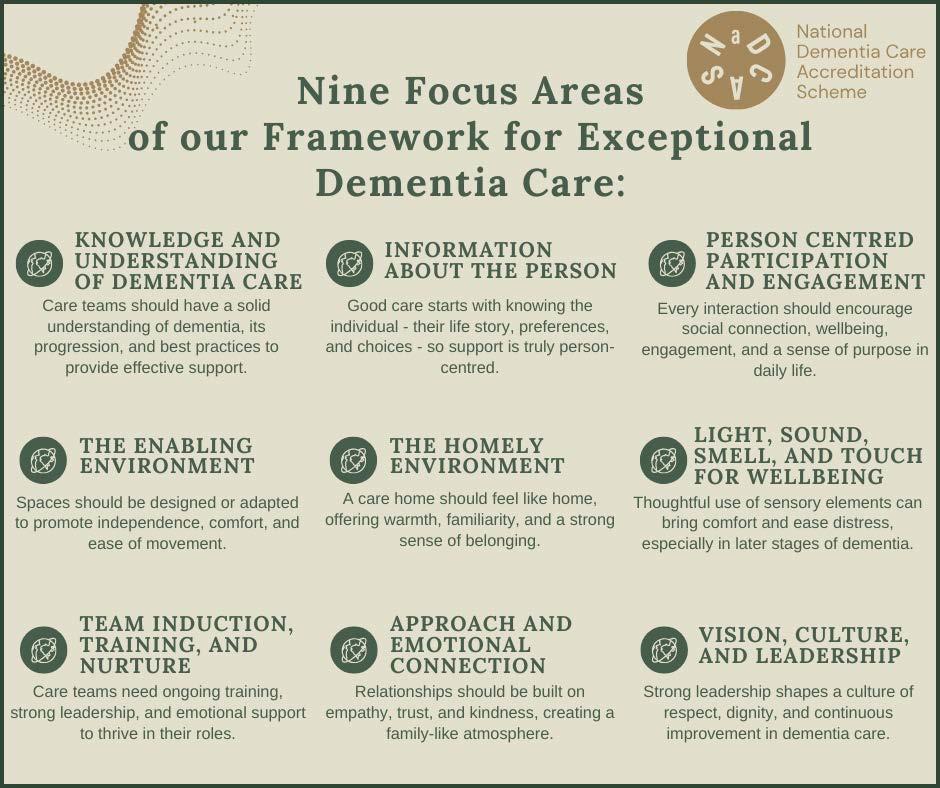
But what makes NaDCAS different is how this journey is delivered.
There is no “one-size-fits-all” approach. Every accreditation pathway is bespoke, shaped around the unique context, challenges, and ambitions of each organisation. Whether supporting a care home, hospital, community service, or home care provider, NaDCAS works collaboratively with teams to identify
where they are now and where they want to be. Together, meaningful and achievable improvements are put in place, changes that are not only visible on paper, but felt in the day-to-day lives of people receiving care.
Their collaborative approach ensures that improvements are not short-term fixes, but integrated, lasting changes. From strengthening staff confidence and skills, to creating more enabling environments, to deepening emotional connections between staff and those they support, the impact is tangible and truly felt.
Importantly, NaDCAS recognises that dementia care does not only happen within care home walls. With more people choosing to remain in their own homes, the scheme has developed a dedicated Home Care Accreditation, supported by its own separate framework. This reflects the unique realities of delivering care in someone’s personal space where trust, continuity, and truly knowing the person are essential.
Accreditation is not simply a badge. It is a commitment to raising standards, continuous improvement, and most importantly, to improving the everyday experiences of people living with dementia. Because at its best, dementia care is about far more than meeting needs. It’s about preserving identity, joy, dignity, and moments of real human connection.
NaDCAS believes that every care provider should have access to its Framework for Exceptional Dementia Care. That’s why it is available free of charge to all providers. To download your free copy, visit www.nadcas.org/framework
To check your accreditation readiness, you can complete the online pre-assessment qualifier to benchmark against the framework at: https:// onlineassess.scoreapp.com/
For further information, guidance, or to explore what accreditation could look like for your organisation, visit www.nadcas.org or contact Claire at claire.reading@nadcas.org or call 07982 368163.
Is it time for action against gender inequalities? The Government think so
In anticipation of International Women’s Day 2026, the Government published its plans that will require employers to take additional steps to address gender inequalities in the workplace. Gender pay gap reporting will continue as it is, but larger employers will also need to publish action plans. These will explain how they intend to reduce their gender pay gap and how they support staff experiencing menopause and related menstruating conditions such as endometriosis and PCOS.
Although the announcement is presented as a way to help break down barriers and improve outcomes for women, the real impact will only become clear over time. For now, the key questions for care providers are outlined below.
Which organisations will be affected?
This will impact employers with over 250 employees. These are the organisations who already publish their gender pay gap data. It will not be mandatory until April 2027, but the Government is encouraging employers to start early and submit their action plans from April 2026 if they so wish. Further guidance and an updated system are planned, so that employers can upload their action plans and gender pay gap data together.
What will those organisations be required to do?
Employers will need to publish at least one action aimed at reducing their gender pay gap and one focused on supporting women experiencing menopause. While the minimum requirement is modest, the Government makes it clear that employers should be encouraged to consider more than one action. Guidance lists of evidence-informed actions to help employers shape these plans was published alongside the announcement.
Some of the suggested steps may already be familiar to many organisations. Examples include tracking recruitment trends to identify barriers or drop-off points, improving transparency around pay progression, strengthening menopause support networks and introducing menopause policies.
What happens if organisations do not comply As with gender pay gap reporting, there is no formal sanction for non-compliance. However, the risk lies in reputational damage and the impact on recruitment. In the care sector with a historic dependency on a predominately female workforce and an ongoing labour shortage, this is a key issue for providers to consider.
You can read the Government literature for more information or get in touch with any member of our team for specific advice on preparing your action plans and/or any other ED&I issues or queries.



“Nourish just makes everything easier”
Amanda Brooke, Chief Transformation Officer, Lifeways
Why Choose Nourish?
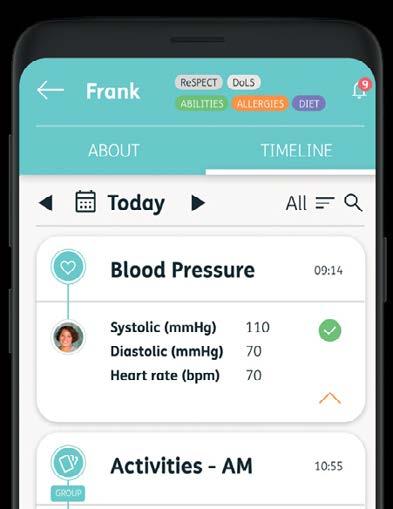
With over one million people impacted by our platforms every day, Nourish Care is building the digital ecosystem for social care alongside care providers. Our platforms are co-produced to simplify processes, reduce risk and improve outcomes through digital interconnectivity and personal connections.
Find out more about Nourish as a digital partner, book a personalised demo with us on 023 8000 2288 or email hello@nourishcare.com
nourishcare.com
Navigating the social care sector?
Our experts are here to help your business grow.
We support clients with: buy and build programmes
mainstream mergers and acquisitions
REIT equity and operator transactions
debt finance and refinancing
restructuring and reorganisation
VAT and other tax structuring
joint ventures
To find out more get in touch.
Julian Smith Partner, Head of Healthcare Corporate julian.smith@mills-reeve.com 07500 012203