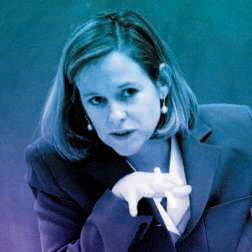
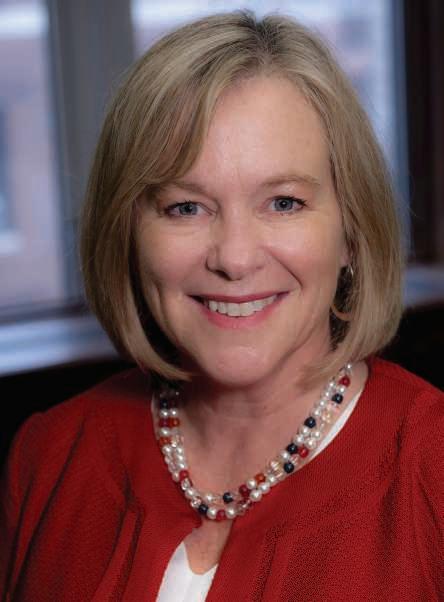
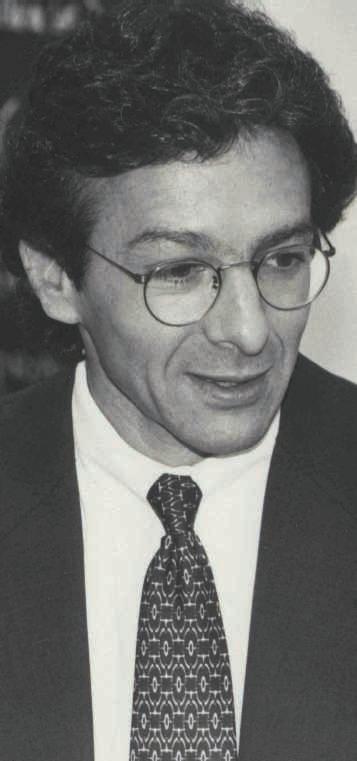
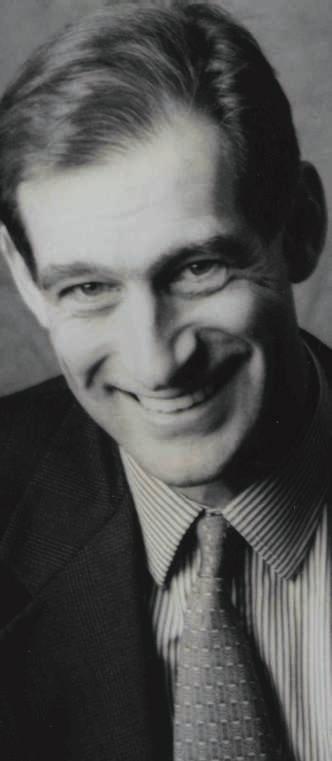
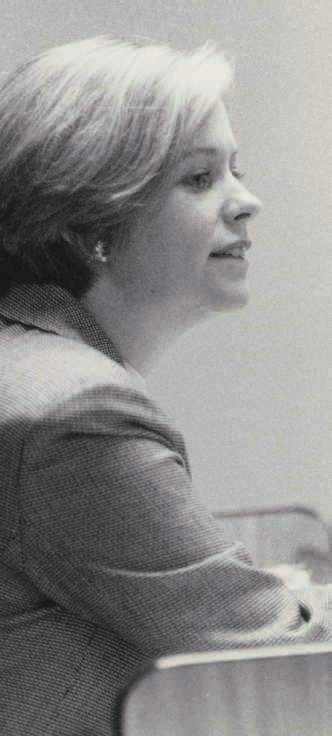
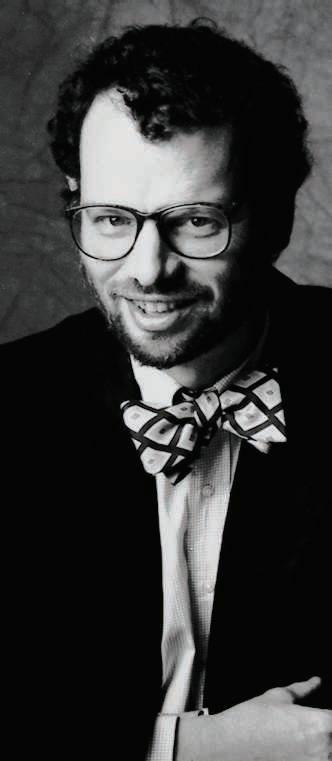
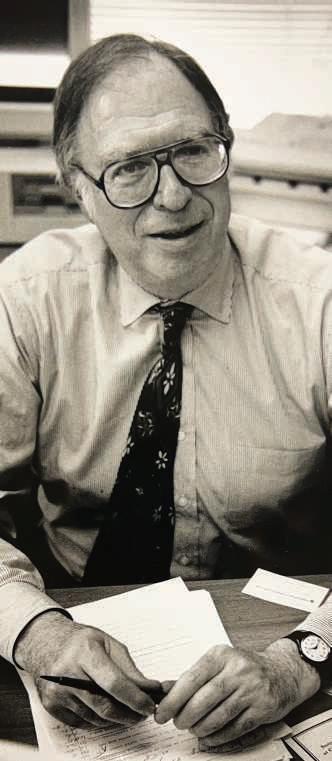
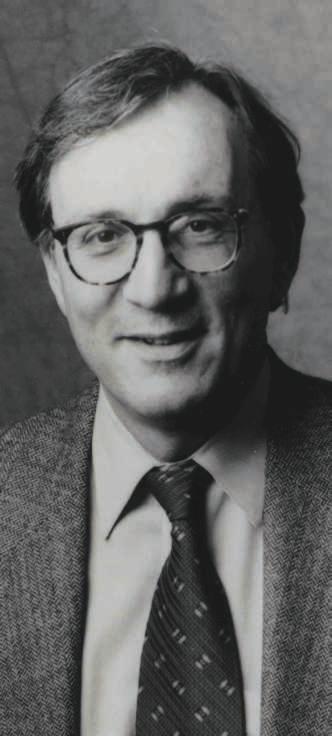
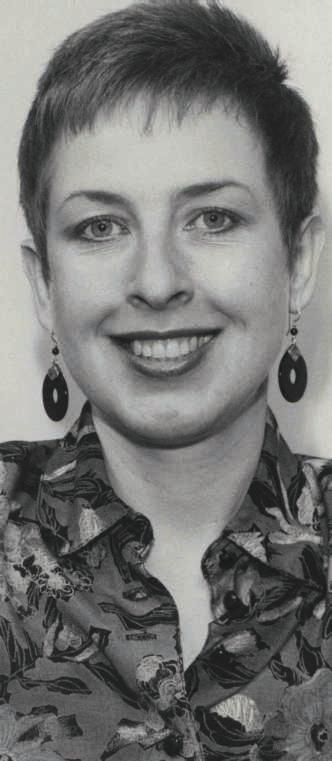
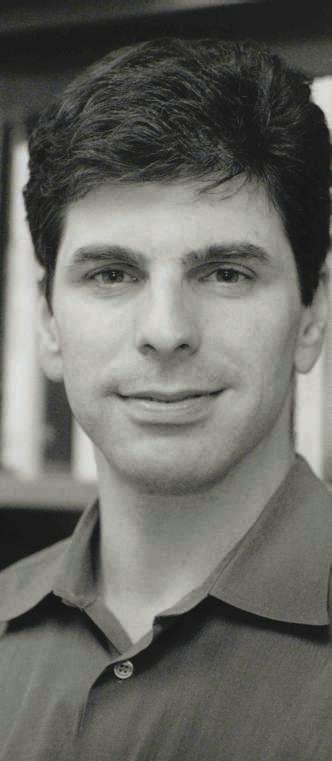
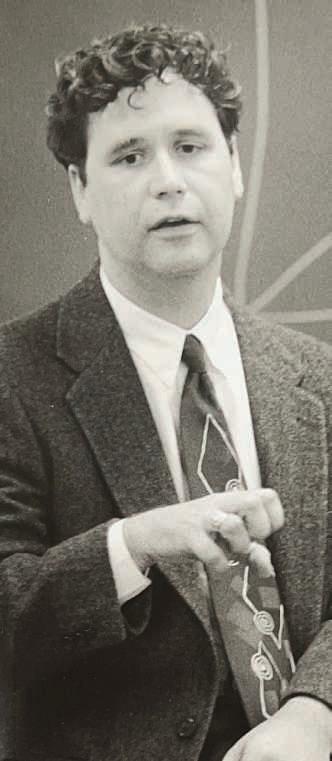
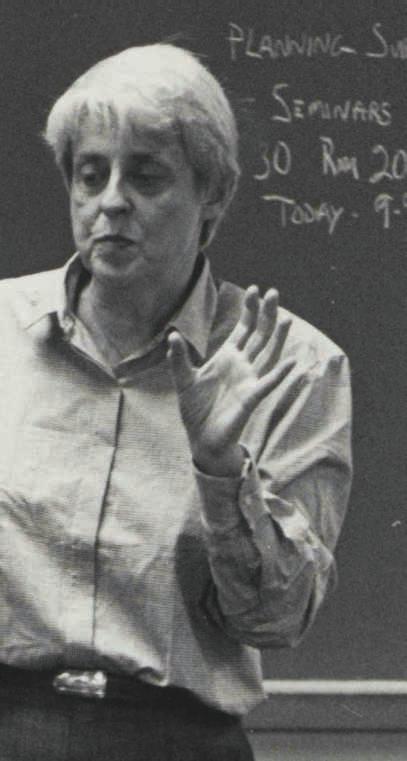
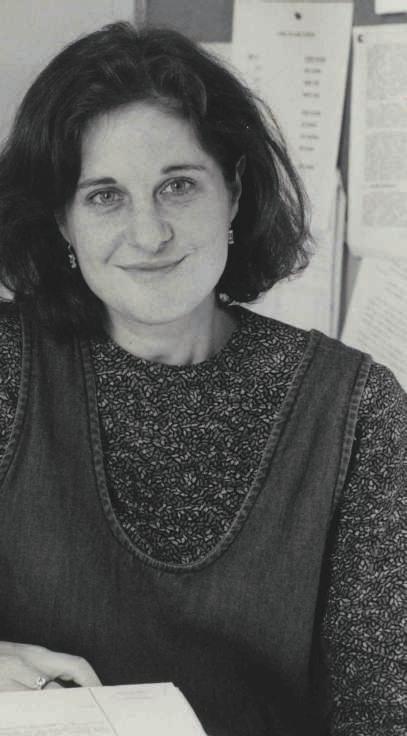
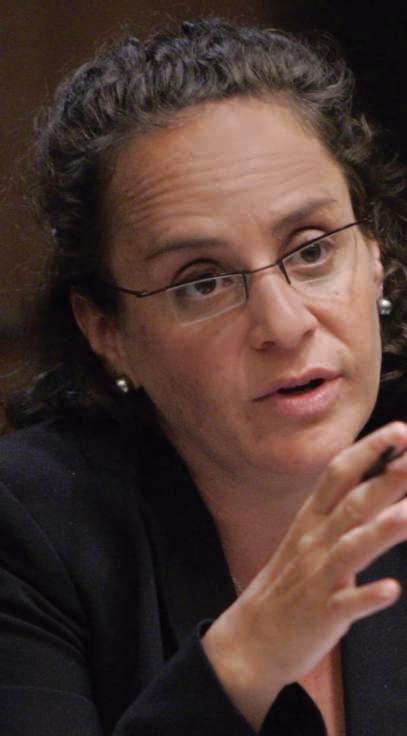
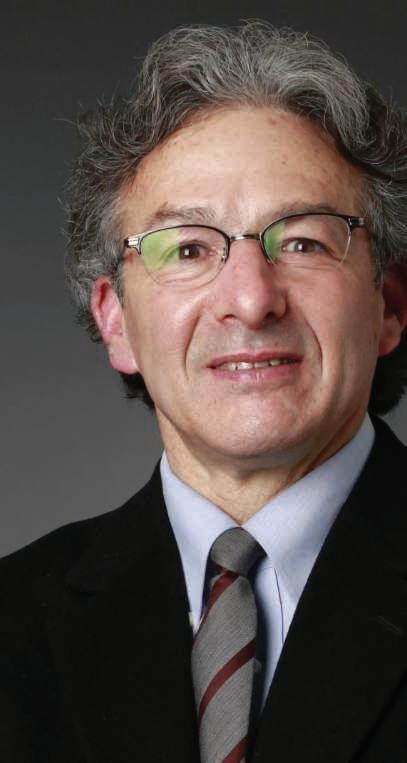
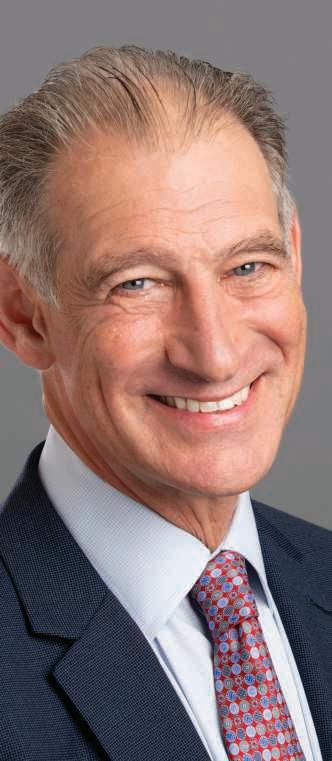
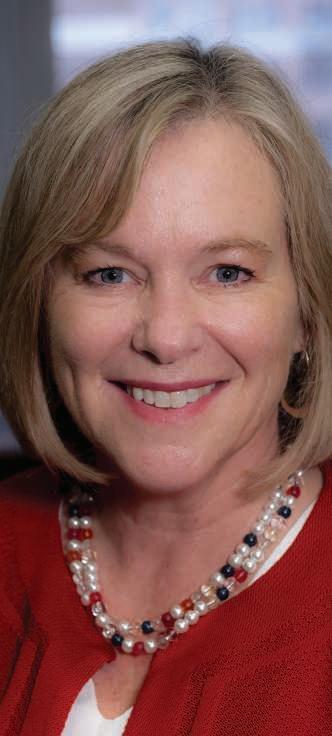
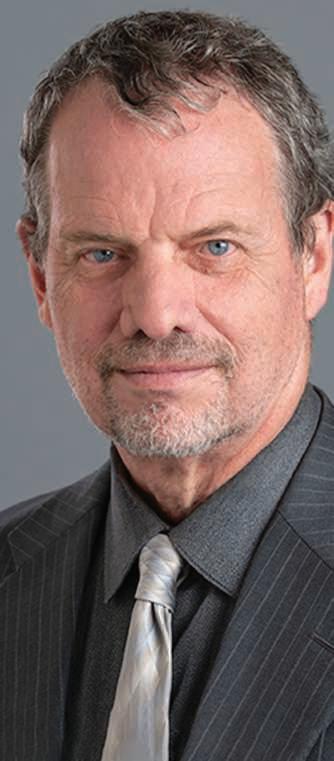
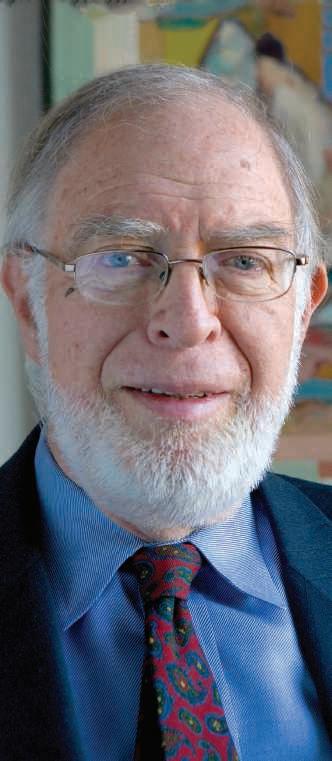
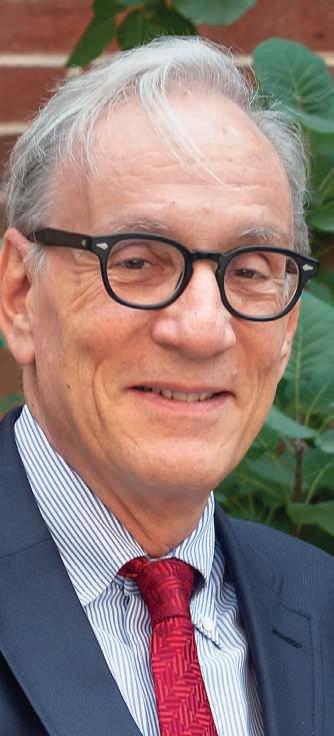
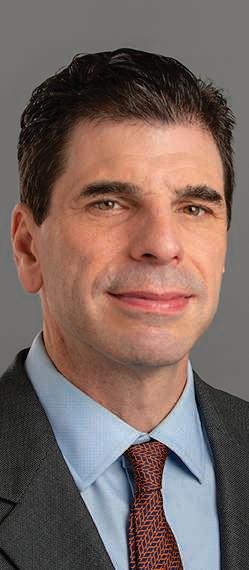
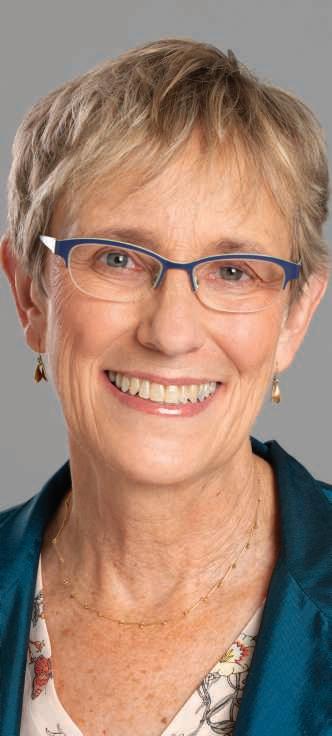
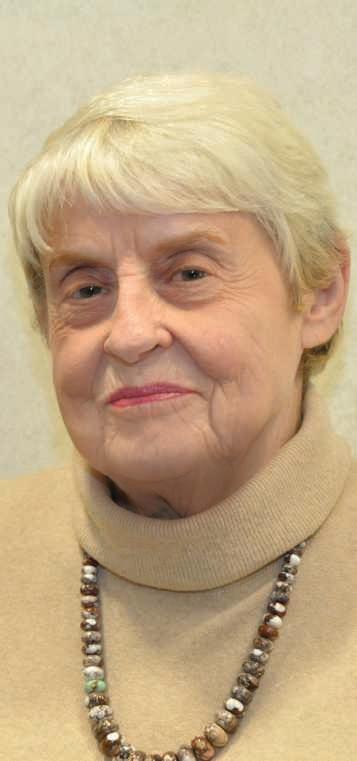
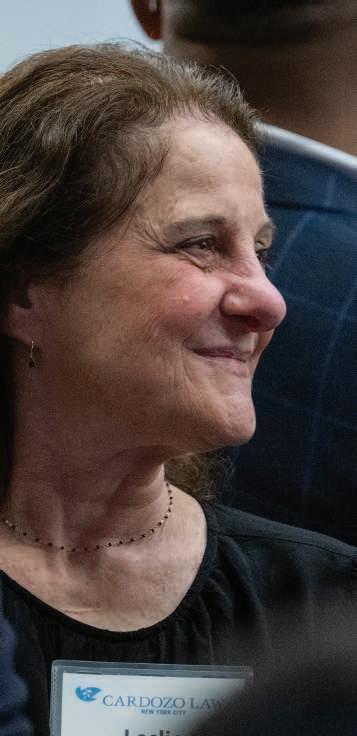
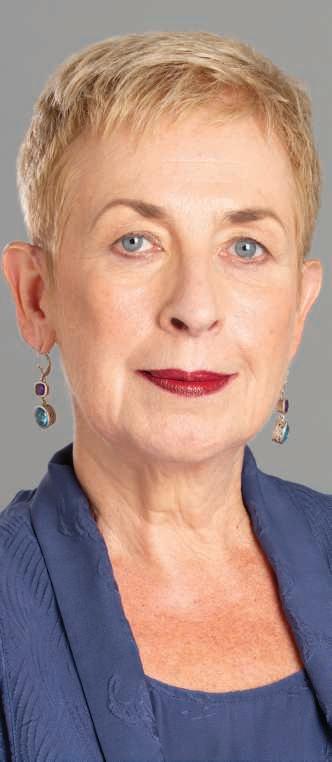
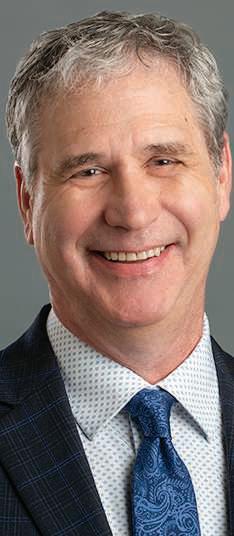
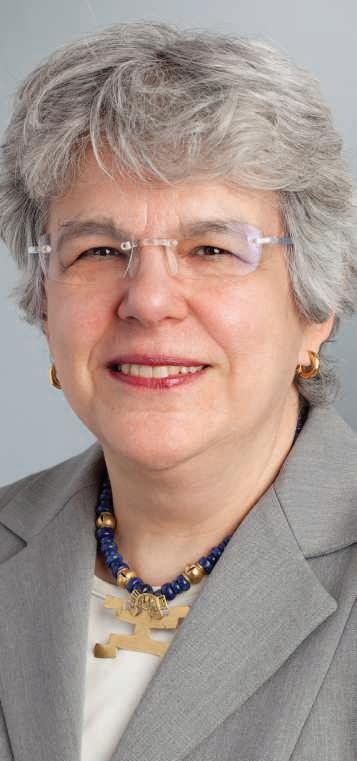
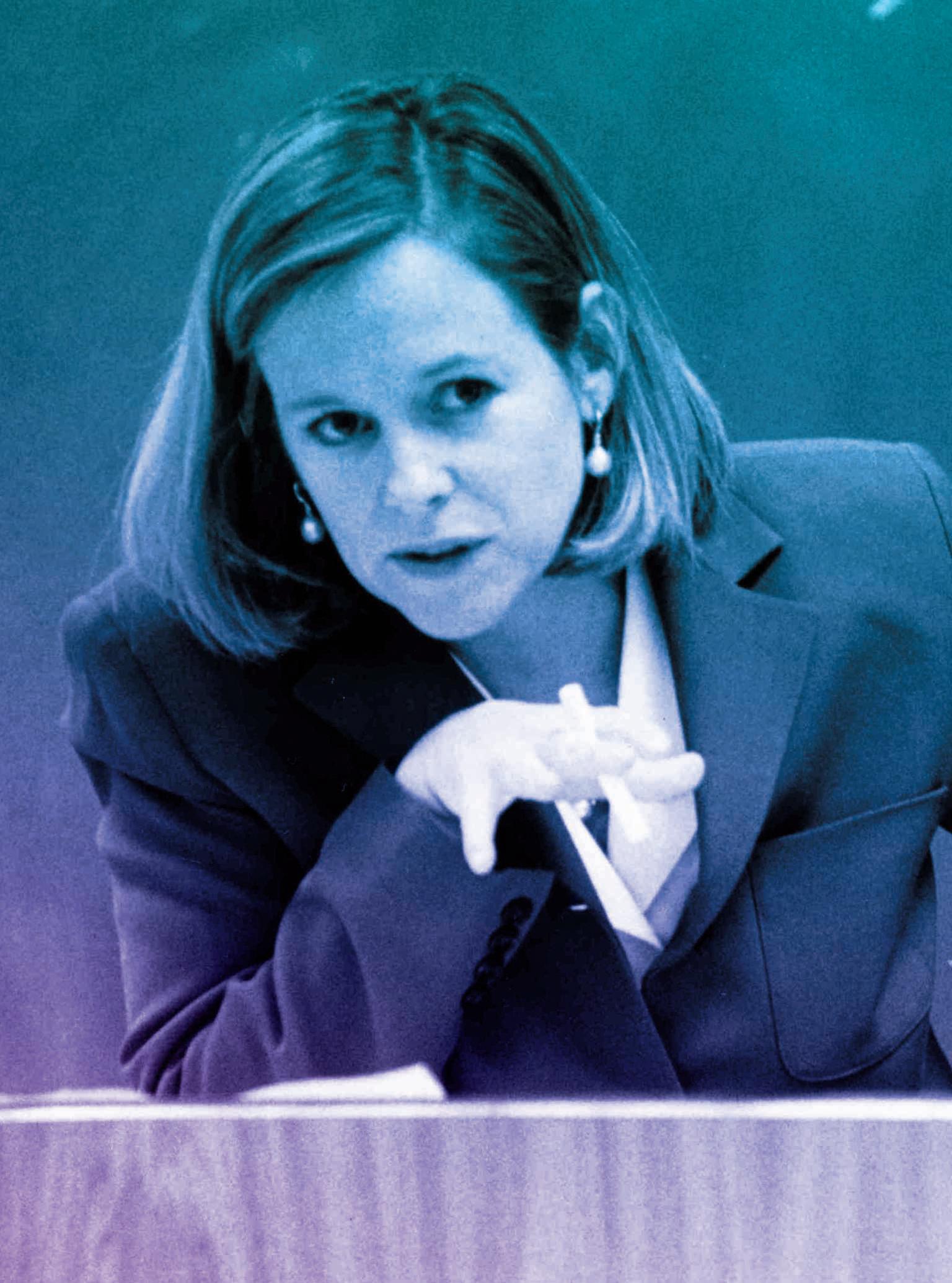
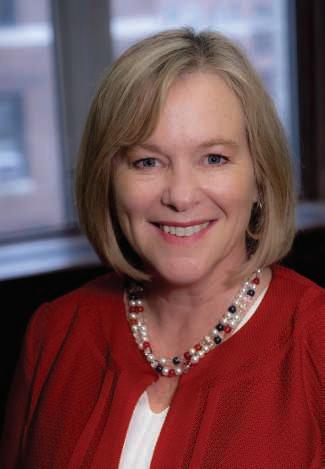
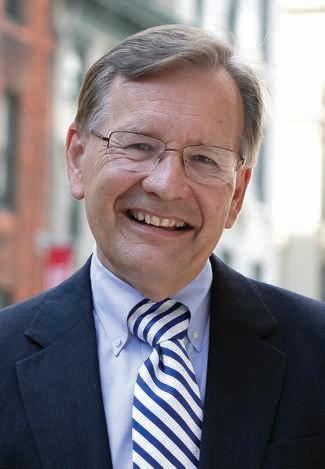
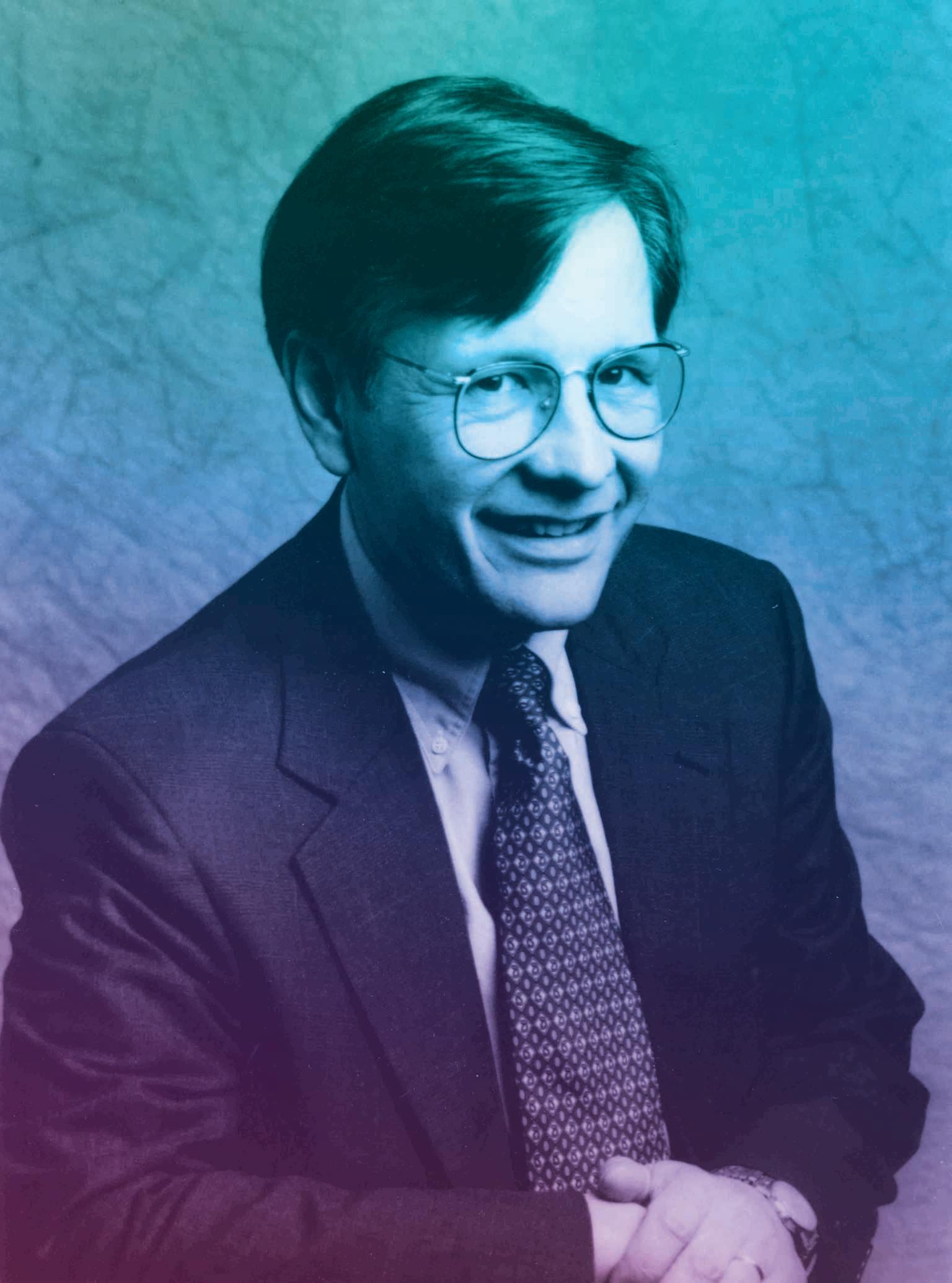
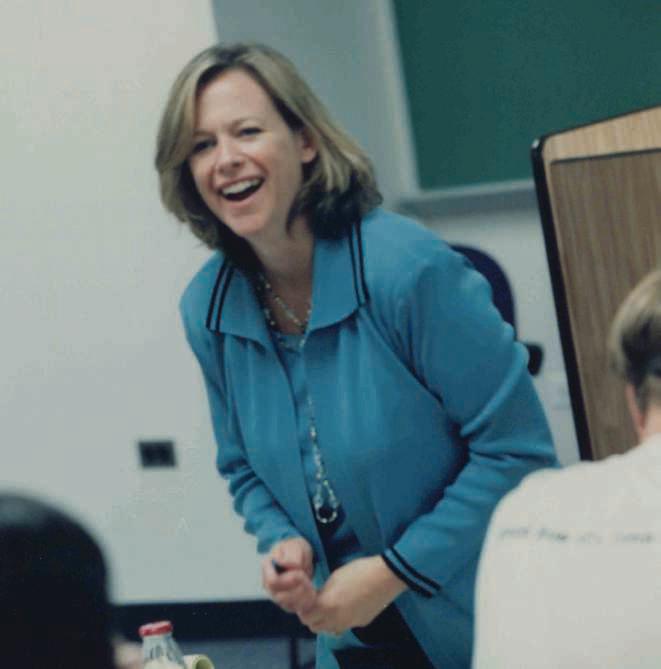
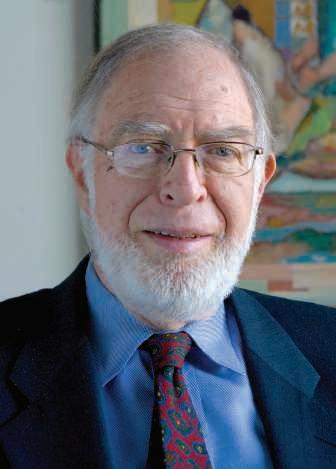
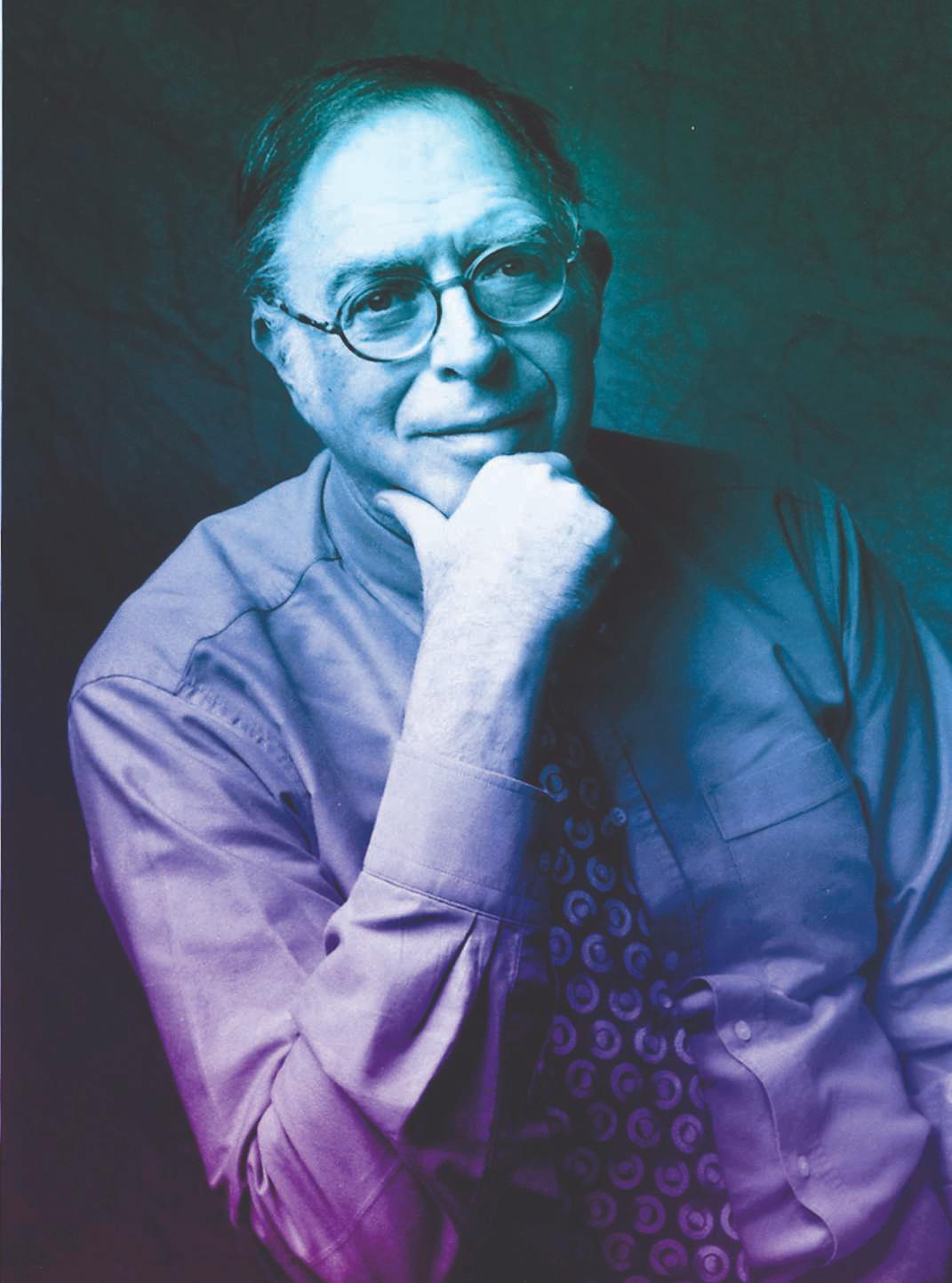
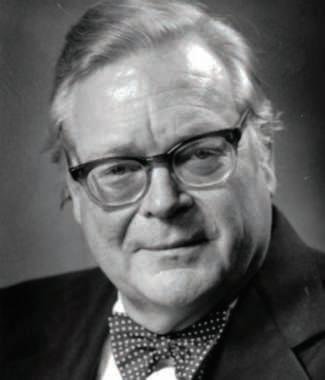
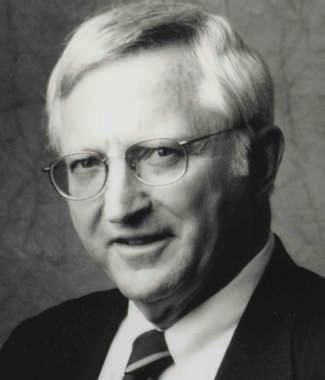
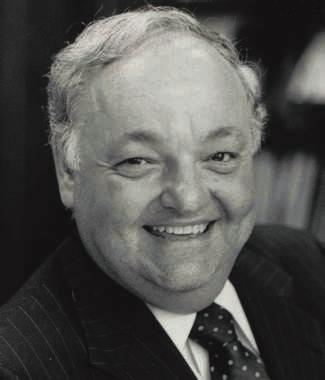
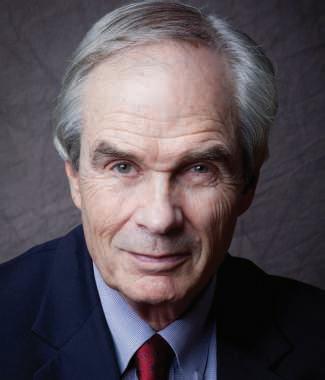
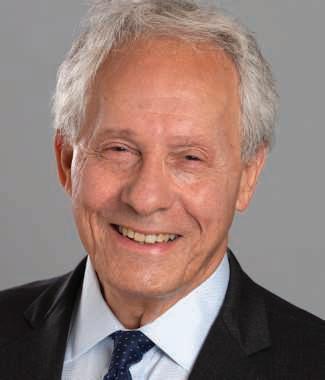
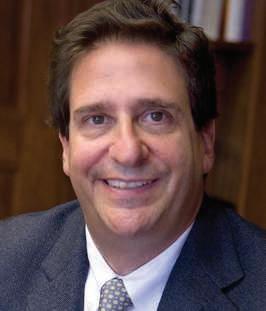
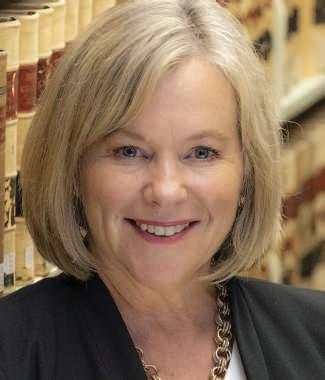
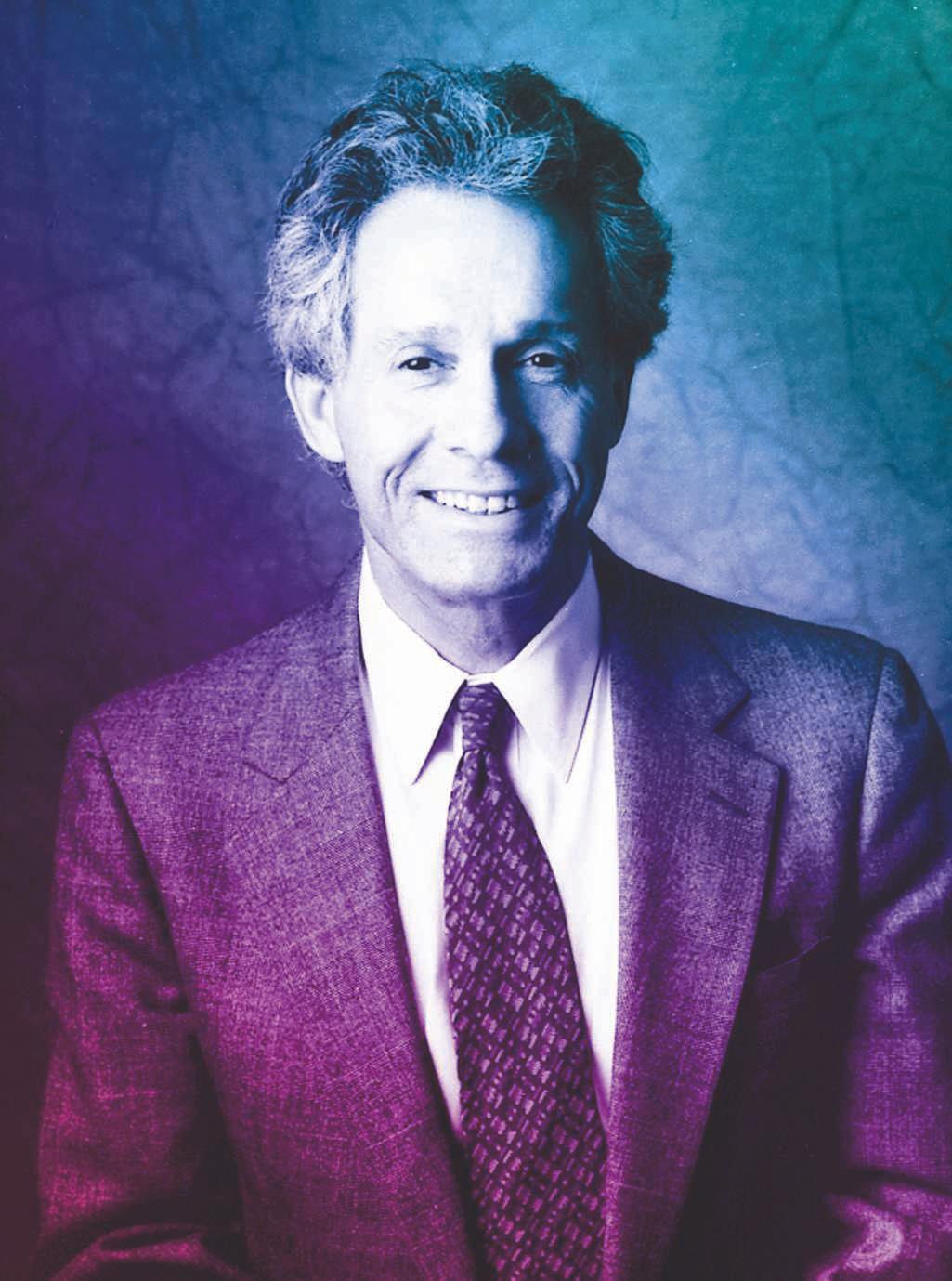
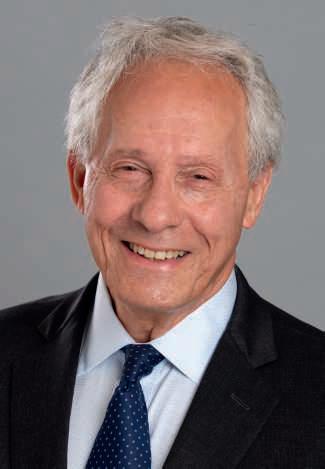
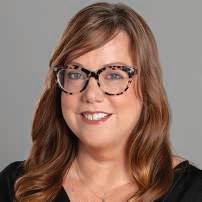
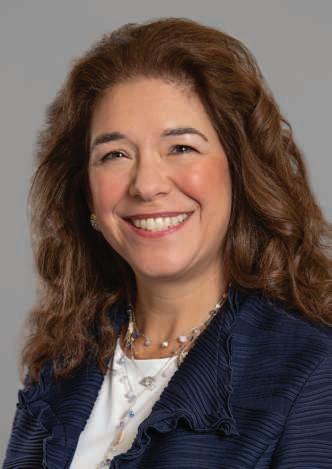
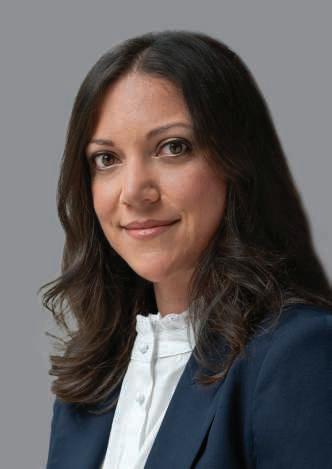
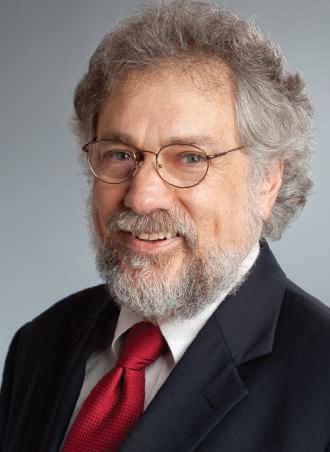
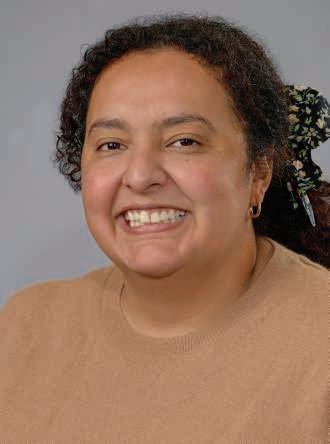
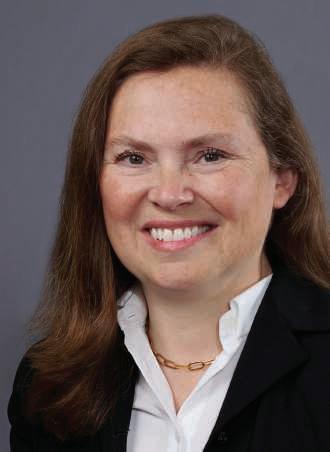
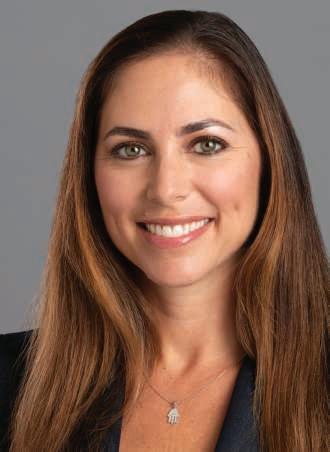
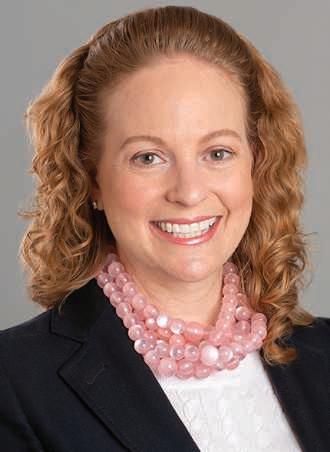
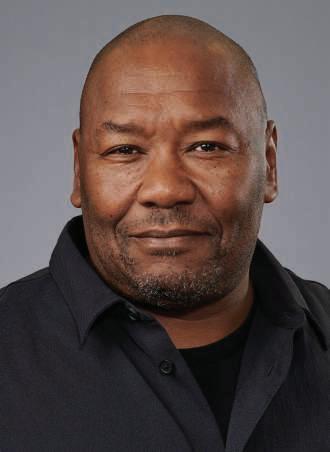
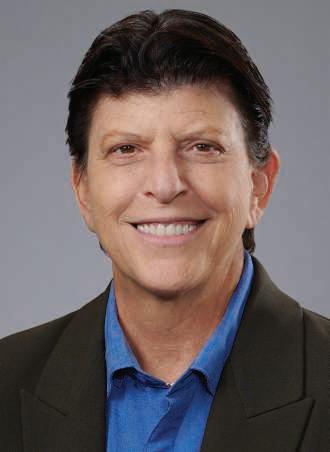
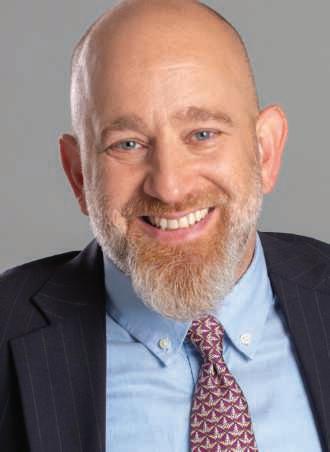
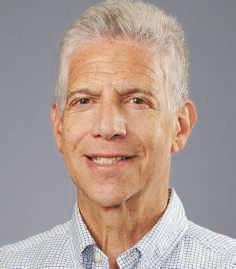
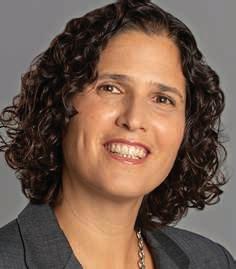
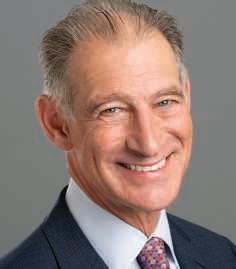
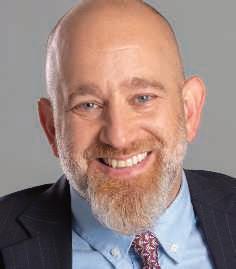
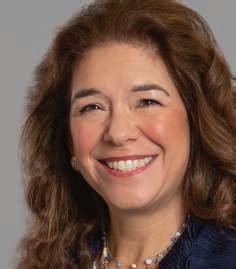
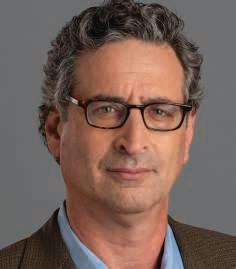
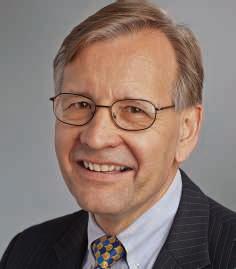
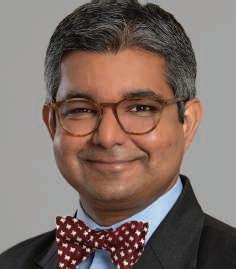
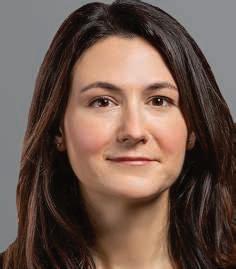
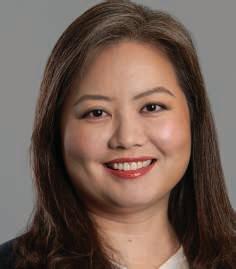
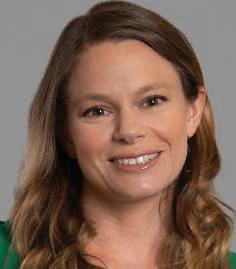
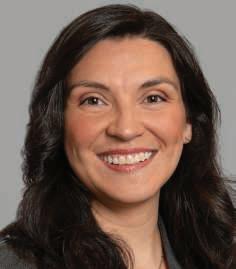
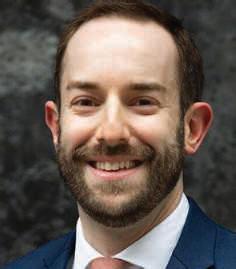
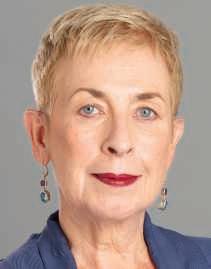
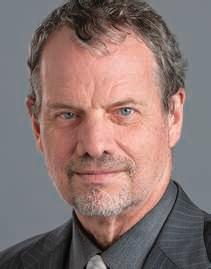
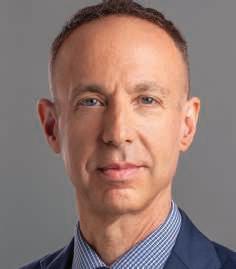
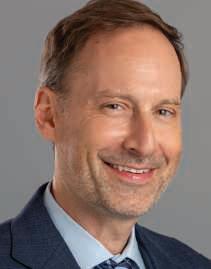
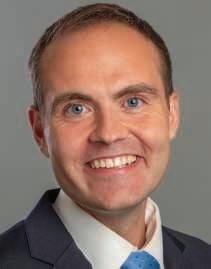
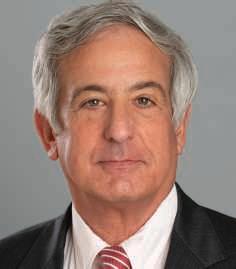
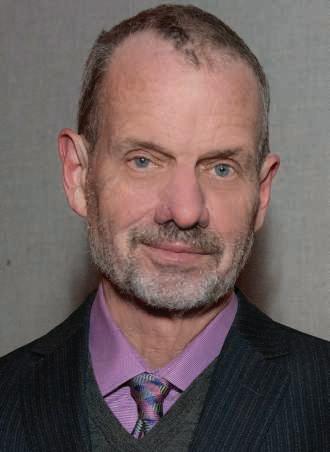
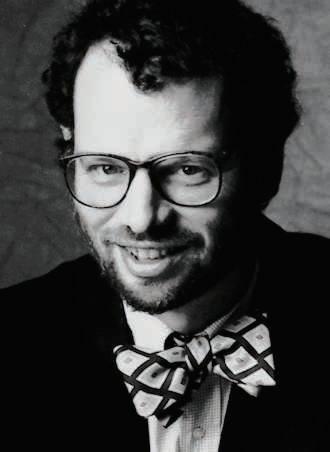
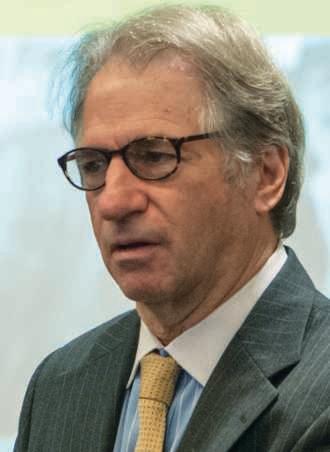
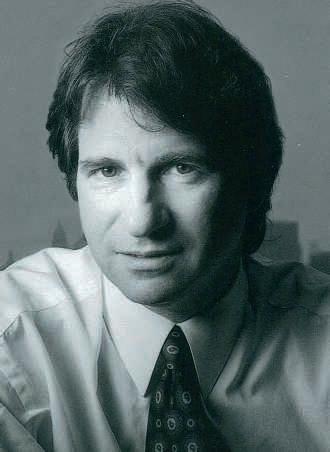
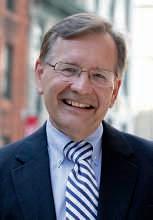
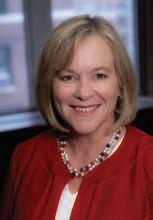
Deans Monroe Price, David Rudenstine, and Melanie Leslie on Cardozo’s Legacy
A Historic Look at Cardozo’s Renowned Intellectual Property and Dispute Resolution Programs
$6M Gift from Kwanza Jones and José E. Feliciano Supports Clinical Education
Judith and William Greenblatt Career Success Center Established
JOHN D ENATALE
ASSOCIATE DEAN, COMMUNICATIONS AND PUBLIC AFFAIRS
JUDY TASHJI CREATIVE DIRECTOR
CATHERINE FERRIS WRITER/MANAGING EDITOR
KAITLYN HART WRITER/NEWS EDITOR
BRYAN JACKSON DIRECTOR OF DIGITAL MARKETING AND COMMUNICATIONS
MICHAEL DIVITO, SARI GOODFRIEND, JORG MEYER, ERYC PEREZ D E TAGLE PHOTOGRAPHY
MELANIE LESLIE ’91
DEAN, DR. SAMUEL BELKIN PROFESSOR OF LAW
IRA S. DIZENGOFF ’92 CHAIR, BOARD OF DIRECTORS
RABBI DR. ARI BERMAN PRESIDENT, YESHIVA UNIVERSITY
DARE TO STAND FOR JUSTICE
Connect with Cardozo
FACEBOOK: CARDOZO SCHOOL OF LAW
INSTAGRAM: @CARDOZO_LAW
LINKEDIN: CARDOZO SCHOOL OF LAW
TWITTER: @CARDOZOLAW
15 Alumni News
• Kwanza Jones and José E. Feliciano Program for Clinical Education made possible by $6 million gift
• A $5 million gift establishes the Judith and William Greenblatt Career Success Center
18 50 Years of Daring to Illuminate
• A Glimpse of Student Life Through the Years
• Can You Name That Professor?
42 50 Years of Daring to Innovate
• Dispute Resolution: A Bold Challenge to the Status Quo
• Setting the Stage: Professor Barbara Kolsun Talks About 10 Years of FAME
• Intellectual Property: Passion, Innovation, and Fearless Creativity
• Cardozo’s Trailblazing Clinical Program
66 Faculty in the Media Cardozo faculty in the news for analysis, opinions and expert commentary.
Three deans. One vision. From the school’s earliest days to the present, leaders reflect on Cardozo’s remarkable journey.
‘Ahead of the Curve’: Two Leaders Reflect on Cardozo’s Remarkable Evolution
The Idea Dean: A Conversation with Former Dean Monroe Price
Building Cardozo’s Resilience: An Interview with Former Dean David Rudenstine
70
Faculty Scholarship
Recent contributions to intellectual discourse on law, democracy and public policy.
92
Cardozo in a Word Cardozo alumni describe their alma mater in one word.
Dear Friends,
This year marks the beginning of Cardozo’s 50th anniversary celebration, which will culminate in an Anniversary Gala in the fall of 2026. Once we confirm the gala details, we’ll let you know so you can mark your calendars.
We have so much to celebrate!
When Cardozo first opened its doors in the fall of 1976, we attracted a group of plucky, courageous students who took a chance on what Cardozo would become. Our first dean, Monrad Paulsen, compiled an impressive inaugural faculty that attracted immediate attention. From the start, they applied their energy and entrepreneurial spirit to developing an excellent law school. In the coming year, we’ll remember and celebrate the daring spirit that has defined Cardozo from the beginning and the wonderful innovations, projects, and initiatives that took root here and continue to flourish.
least one year of post-college work experience, and 58% have at least two years.
These successes are a reflection of the tireless work of our faculty and administrative leadership team. It is one of my greatest joys to work with this inspiring group of talented people.
Powered by our excellent faculty, we continue to grow, thrive, and create. The Kathryn O. Greenberg Immigration Justice Clinic announced the creation of the National Immigration Habeas Institute, a joint venture with the National Immigration Litigation Alliance that will train immigration attorneys in habeas corpus practice. Students in our Criminal Defense Clinic began work on death penalty cases in addition to representing defendants in criminal court. And we’ve launched an online master’s degree program in employment law for non-lawyer human resources employees.
We’ve also achieved some record-breaking numbers: The Class of 2024 had a 97% employment rate and landed six federal judicial clerkships.
Ninety percent of the members of the Class of 2024 who took the New York bar exam passed on the first attempt.
The new 1L class boasts a record-breaking median LSAT of 165 (the 88th percentile for LSAT takers), and the median for the top quarter of the class is 167 (the 91st percentile).
Seventy-eight percent of the entering 1L class have at
The success of our school is also due to you, our outstanding alumni. Our reputation is driven by your achievements. Thank you for the support you give the law school, students, and fellow alumni. Whether it’s hiring Cardozo graduates, meeting with and mentoring students, or making philanthropic gifts, you are coming through in record numbers.
Thanks to transformative gifts from Kwanza Jones, Class of 1999, and José E. Feliciano, and Judith and William Greenblatt ’82, P’14, the law school has exceeded its $50 million Rise Up for Cardozo campaign goal on the eve of its 50th anniversary. Their extraordinary generosity is inspirational, propelling us into our anniversary celebration with renewed energy and vision. The momentum of the campaign is impressive—please join us by giving to one of our core fundraising priorities: student financial aid, faculty growth and retention, support of clinical education and public service, and renovation of the building.
On a personal note: It has been an honor and a privilege to serve as your dean for the past 10 years. As I begin my 11th year, I am thrilled to stand alongside our 16,500 alumni and hundreds of faculty members whose work has made this community extraordinary. And to the Class of 1991—I look forward to celebrating our 35th reunion on May 20, 2026!
With gratitude and excitement for what lies ahead,
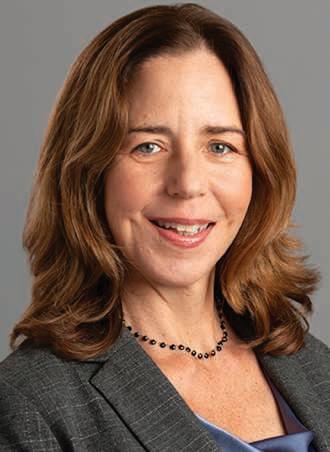
MELANIE LESLIE Dean and Dr. Samuel Belkin Professor of Law
TOP NEWS events
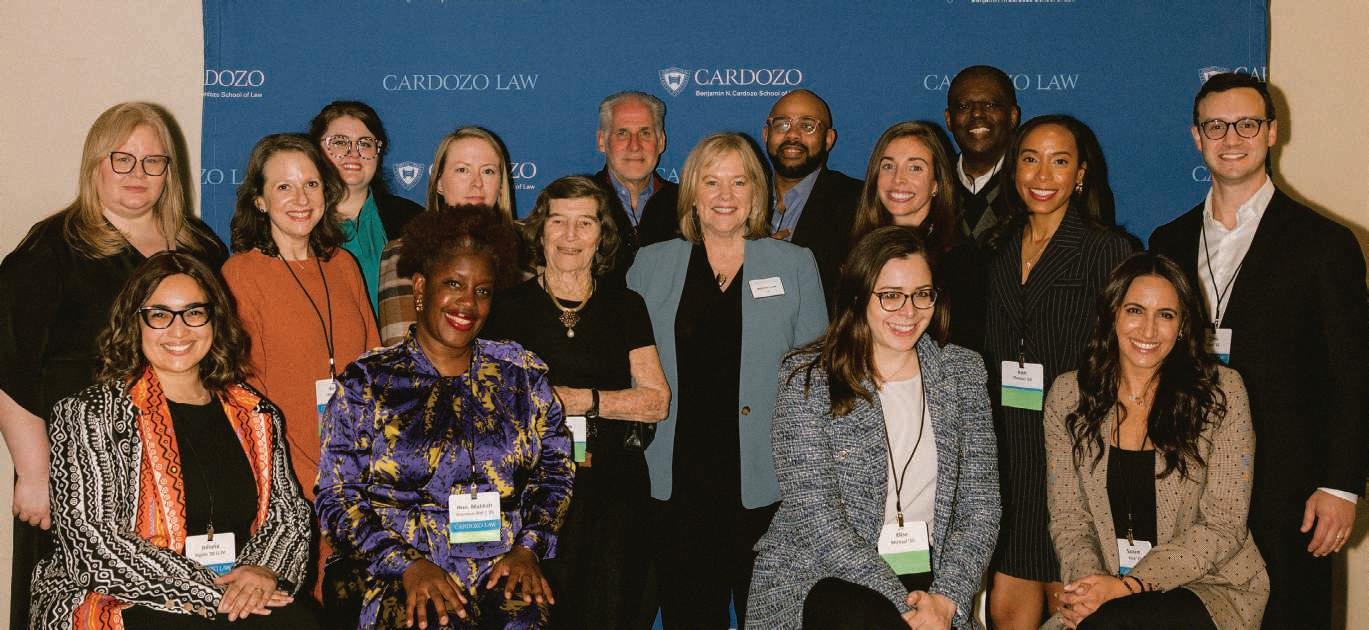
Cardozo Honors Trailblazing Advocates for Change
SCIENCE MEETS DIPLOMACY. ZAFRA LERMAN RECEIVES THIS YEAR’S INTERNATIONAL ADVOCATE FOR PEACE AWARD
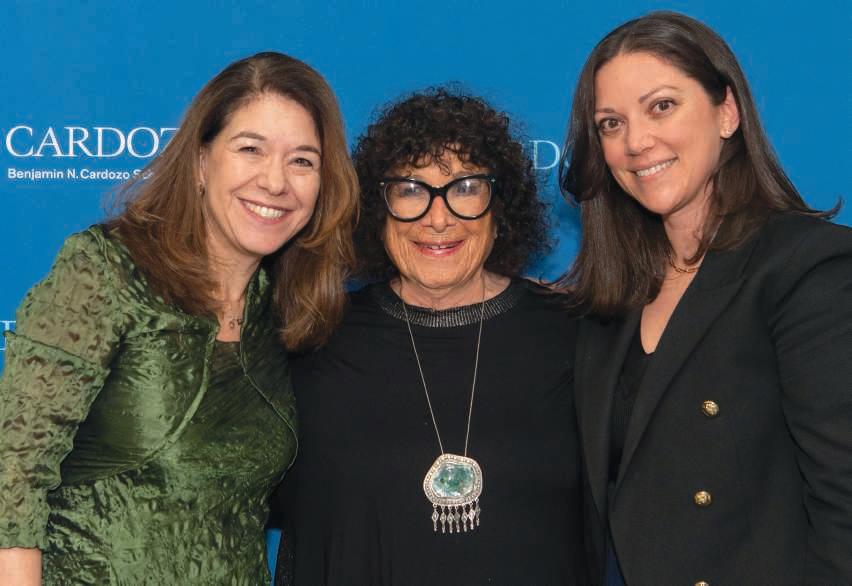
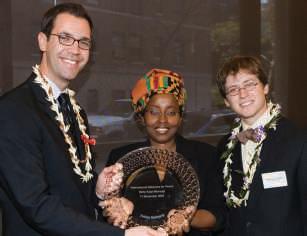
Zafra Lerman, a scientist, educator, and humanitarian, received the 24th Annual International Advocate for Peace Award on March 6 from the Cardozo Journal of Conflict Resolution She conceived, coordinated, and launched the Malta Conferences— the biennial, international meetings of scientists, Nobel laureates, and political leaders from the Middle East that use science diplomacy as a bridge to peace. As president of the Malta Conferences Foundation, Lerman has promoted peace by bringing together these experts to discuss issues and foster inter-
national scientific and technical collaboration. The five-day conferences cover a variety of topics, including science education, air and water quality, and alternative energy sources.
A former chair of the American Chemical Society’s Subcommittee on Scientific Freedom and Human Rights, Lerman has worked on numerous human-rights cases worldwide, including in the former Soviet Union, Russia, China, Guatemala, Cuba, Peru, South Africa, and Iran. She was nominated for the Nobel Peace Prize in 2018, 2019, 2020, 2021, and 2023.
Professor Andrea Schneider, director of the Kukin Program for Conflict Resolution, said, “We are thrilled to be able to highlight the
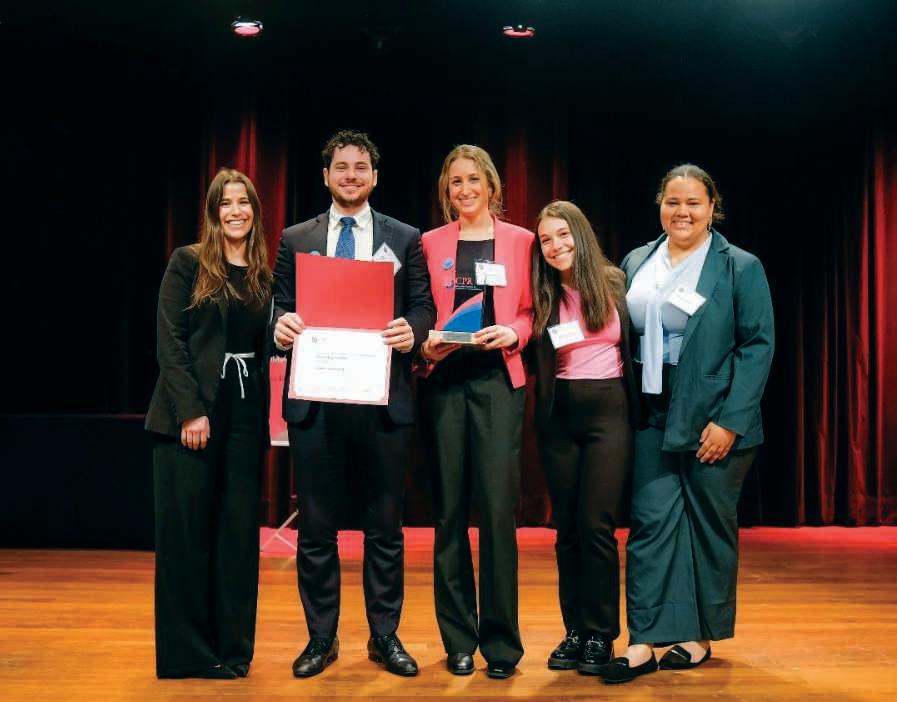
TOP LEFT: IAP Award Honoree Zafra Lerman (center) joined by Professor Andrea Schneider, director of the Kukin Program for Conflict Resolution (left) and Robyn Weinstein, director of Cardozo’s Mediation Clinic
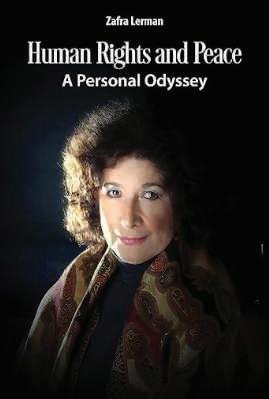
TOP RIGHT: Lerman signed copies of her book “Human Rights and Peace: A Personal Odyssey”
important work of Zafra Lerman. This award celebrates her innovation in international peacemaking in creating the Malta Conferences. Her work to bring people together in this region is more crucial today than ever.”
Each year, the Cardozo Journal of Conflict Resolution has presented the
&
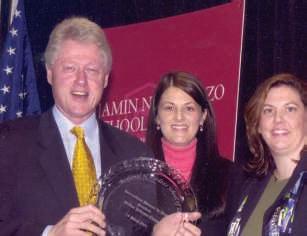
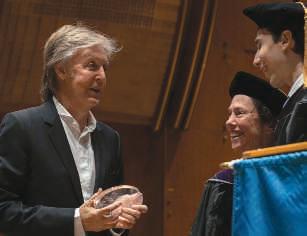
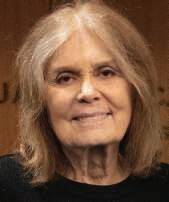
award to an individual, organization, or group that has made significant contributions in the field of conflict resolution and in the promotion of peace around the world. Past recipients include Gloria Steinem, President Jimmy Carter, President Bill Clinton, Archbishop Desmond Tutu, Sir Paul McCartney, Sen. George Mitchell, and diplomat Richard Holbrooke.
At the ceremony, Lerman, in a lively conversation with Schneider, spoke about her childhood, her time as an educator helping her students think about science differently and more creatively than they have been taught, and her work in science diplomacy.
“Science education for me is a human right,” Lerman said. “Because, if we leave out a huge population that doesn’t have any education in science and technology, we really form a two-class society, separated not by royalty, but by knowledge of science and society. You cannot go ahead in life today not knowing it. So, I think it’s a human right, and this is the responsibility of everybody to make science accessible to all.”
Lerman has published numerous works on science diplomacy.
Her most recent book, a genrebusting firstperson narrative titled “Human Rights and Peace: A Personal Odyssey,” was published in 2024. In it, Lerman recounts her life, from growing up in Israel to her time in the Soviet Union, Peru, China, and Cuba, where she fought for peace and for dissidents being denied basic human rights. After her remarks, she signed copies of the book.
Professor Lela Love (center) with Robyn Weinsten (left) and Professor Andrea Schneider
All You Need Is Love
PROFESSOR LELA LOVE HONORED AT CARDOZO’S PEACE GALA
Inspirational. Compassionate. Revolutionary. Those were among the adjectives that guests at Cardozo’s Peace Gala used to describe Professor Lela Love, the founding director of the law school’s Kukin Program for Conflict Resolution.
In November, Cardozo celebrated her legacy through tributes and reflections from former students and colleagues. During her remarks, Love asked members of the audience to stand when she acknowledged various groups she has worked with, including members of the mediation clinic, co-authors and editors, professors, and mediation contest participants.
In her warm remarks, Dean Melanie Leslie referred to Professor Love as a force.
“Lela Love created this program through a sheer force of will, and she never stopped. She believed in her vision, she pursued it forcefully every day at Cardozo, and the results are visible here tonight in the tremendous outpouring of support from our alumni.
Love, a renowned mediator and dispute resolution pioneer, joined Cardozo in 1985 when she founded the Cardozo Mediation Clinic, one of the first clinical programs to train law students to be mediators. In 1990, she established the Kukin Program through a generous gift from Ira and Doris Kukin.
A trailblazer in the field, Love made an impact on classrooms and communities, paving the way for future mediators.
Read more about the Kukin Program for Conflict Resolution on page 44.
WEISBERG LAUNCHES NEW BOOK EXPLORING LEGAL AND MORAL LESSONS OF THE HOLOCAUST
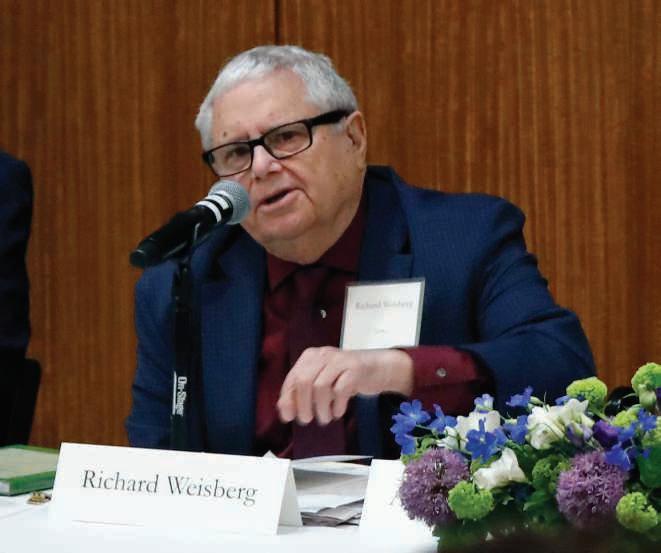
Professor Emeritus Richard Weisberg, a leading scholar of law and literature, launched his latest book, “Law, Literature, and History: A Fateful Rendezvous with the Shoah,” at Cardozo in April. It focuses on close readings of acclaimed 20th-century novels and works of popular culture that lend an understanding to how a clash of religious values led to genocide in World War II Europe. He is the founding director at Cardozo of the Holocaust, Genocide and Human Rights Program and the Floersheimer Center for Constitutional Democracy.
Legal scholars and experts participated as speakers and panelists during the day-long event. Renowned First Amendment lawyer and senior counsel at Cahill Gordon & Reindel LLP Floyd Abrams was among the panelists.
Abrams has argued 13 cases before the U.S. Supreme Court and is the author of three books, most recently “The Soul of the First Amendment” (Yale University Press, 2017).
Professor Weisberg successfully helped litigate landmark settlements and cases on behalf of Holocaust
survivors and their heirs, providing compensation and a measure of justice for World War II victims.
In 2014, Professor Weisberg was appointed by President Obama to the Commission on the Preservation of America’s Heritage Abroad.
President Nicholas Sarkozy of France awarded him the Legion of Honor in 2008. The founding director at Cardozo of the Holocaust, Genocide and Human Rights Program and the Floersheimer Center for Constitutional Democracy.
Distinguished Scholar Stephen Vladeck Visits Cardozo
Georgetown University Law Center
Professor Stephen Vladeck, a leading expert on federal courts, national security law, and military justice, spent two days at Cardozo in February as the Order of the Coif Distinguished Visitor. He taught a 1L Con Law class, presented a paper to the faculty, ate lunch with students, had a series of informal meetings, and capped the visit with a public lecture on the U.S. Supreme Court.
Acknowledging the significant decline in public confidence in the court, he argued that it can and should be “the court we need.” He reviewed how the court became so politically polarized and laid out institutional reforms that would
make it more accountable and give it the ability to regain the public trust.
Professor Michael Herz, who organized the visit, said hosting Vladeck was “a treat for the entire community. I don’t think there’s another member of the academy with his combination of deep knowledge, clarity, and engagingness.”
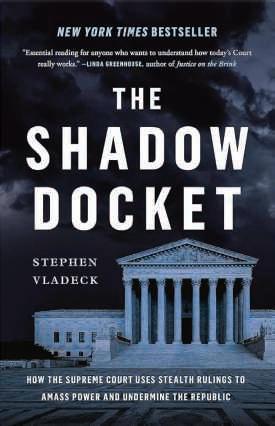
Vladeck is the author of the New York Times bestseller, “The Shadow Docket: How the Supreme Court Uses Stealth Rulings to Amass Power and Undermine the Republic,” which won the 2023 Writers’ League of Texas Book Award for Non-Fiction and was a finalist for the 2024 ABA Silver Gavel Award for Media and the Arts.
&
Cardozo Welcomes Five New Faculty Members
ANEIL KOVVALI
Associate Professor of Law
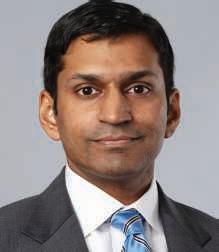
Kovvali comes to Cardozo from Indiana University’s Maurer School of Law, where his research and teaching focused on corporate law and governance. Before joining the Maurer School of Law faculty, he was a Harry A. Bigelow Teaching Fellow and Lecturer in Law at the University of Chicago Law School. He previously worked as a litigation associate at Wachtell, Lipton, Rosen & Katz and clerked for The Hon. Christopher F. Droney on the U.S. Court of Appeals for the Second Circuit. He earned his J.D. and A.B. from Harvard University.
JAMES MACLEOD
Professor of Law
Professor Macleod comes to Cardozo from Brooklyn Law School, where he taught courses in evidence, statutory interpretation, and torts. He was also the director of the law school’s Center for Law, Language and Cognition. Before joining the Brooklyn Law faculty in 2019, Macleod was an associate in law at Columbia Law School and a law clerk for The Hon. Raymond J. Lohier Jr. on the U.S. Court of Appeals for the Second Circuit. Macleod also served as an associate at Williams & Connolly and at Gibson Dunn, where he performed extensive work with mock juries and jury consultants while litigating mass torts and white-collar criminal cases. He earned his J.D. from the University of Chicago Law School and his B.A. from the University of Michigan.
JARED MAYER
Assistant Professor of Law
Mayer joins Cardozo from the University of Chicago Law School, where he was a Harry A. Bigelow Teaching Fellow and Lecturer in Law. His research mainly focuses on corporate reorganizations and other domains of private law, such as tort law, bankruptcy law, and the law governing fiduciary duties. Before his fellowship, he was an associate in the business restructuring group at Ropes & Gray LLP. In his practice, Mayer represented companies, lenders, equity sponsors, and other institutions in an array of in-court and out-of-court restructurings. Prior to that, he served as a law clerk to Justice Barry T. Albin when Albin was on the New Jersey Supreme Court. He received his J.D. from the University of Chicago Law School and his B.A. and M.A. from Johns Hopkins University.
DARE TO REIMAGINE
PRIANKA NAIR
Associate Clinical Professor of Law, Co-Director Bet Tzedek Civil Litigation Clinic
Nair joins Cardozo as co-director of the Bet Tzedek Civil Litigation Clinic after serving as Assistant Professor of Clinical Law and the Faculty Director of the Disability and Civil Rights Clinic at Brooklyn Law School. Before joining the faculty at Brooklyn Law, she was a public-interest attorney at Disability
Rights New York, where she conducted abuse and neglect investigations, focusing on access to services in correctional facilities across New York State. She has also litigated cases and led policy initiatives to achieve equal rights for persons with disabilities. Her litigation included cases involving violations of the Americans with Disabilities Act, the Individuals with Disabilities Education Act, and the Fourteenth Amendment. She has also represented clients in all aspects of guardianship and related proceedings in state and federal court. She earned her law degree in Australia and served as a solicitor for the Australian federal government before completing her LL.M. at Columbia Law School, where she was a James Kent Scholar.
BRITTA REDWOOD
Assistant Professor of Law Redwood comes to Cardozo Law from Seton Hall University, where she was an assistant professor at the School of Diplomacy and International Relations. Her research and teaching focus on international law, critical legal theory, and reparatory justice. Before her appointment at Seton Hall, Redwood taught at the Howard University School of Law and at the New York University School of Law and served as the interim director of the Thurgood Marshall Civil Rights Center at Howard Law School. Before teaching, she worked at the European Center for Constitutional and Human Rights, the Strategic Litigation Project at the Atlantic Council, and Cleary Gottlieb Steen & Hamilton LLP. She earned her J.D. from Yale Law School and her B.A. from Princeton University.
Bet Tzedek Honors Professor Leslie Salzman on 40th Clinic Anniversary
Professor Leslie Salzman was honored at a joyous celebration commemorating her retirement after 35 years on the occasion of the Bet Tzedek Civil Litigation’s 40th anniversary. The event was attended by Cardozo faculty, staff, and the generations of students who work with the clinic.
Salzman embodied the spirit of the Bet Tzedek clinic, working with individuals with physical and mental disabilities, mediating in community mediation centers in Manhattan and Brooklyn. She was a key player in litigation concerning rights under the Constitution, Americans with Disabilities Act, Social Security, and the Fair Housing Act.
“During her time at Cardozo, Leslie taught generations of students what it means to be not just a good, but a great, lawyer,” said Professor Rebekah Diller, co-director of the Bet Tzedek clinic. “She has inspired many students to devote themselves to public-interest law. And those students who do not become full-time public-interest lawyers have learned the value of and need for pro bono work that they carry forward into their professional lives.”
The Bet Tzedek Civil Litigation Clinic represents elderly and disabled people seeking health, disability, and housing benefits.
Dean Melanie Leslie lauded Salzman and shared some comments from past student evaluations. One wrote learning from her was a “special opportunity and a once-in-a-lifetime experience.”
In her remarks, Dean Leslie said, “She’s true, she’s sincere, and she cares deeply about her students. Everything you see is real. She is an incredible example of what it means to be an ethical lawyer.”
Salzman fondly looks back on her work with Cardozo and said it was a privilege to learn from and laugh with her colleagues and students from 35 Cardozo classes. It was their energy, enthusiasm, and dedication to their clients that kept Salzman going for nearly four decades.
“Cardozo has given me the support and freedom to represent low-income elderly and disabled New Yorkers who would have been without legal representation—in class actions and individual cases brought against governmental entities, major institutional actors, and individuals who violated our clients’ rights,” she said. “This support enabled me to respond to client needs and work on an ever-interesting range of substantive legal issues.”
Professor Leslie Salzman’s retirement from Cardozo was celebrated by Cardozo staff, faculty, and students
FUELING DREAMS
Bold Giving Transforms Lives at Cardozo
On April 9, Cardozo celebrated its outstanding scholarship and stipend recipients and the generous donors who support them at the annual Donors & Scholars Reception. The reception also featured a book talk moderated by Dean Melanie Leslie ’91 about William Greenblatt’s ’82, P’14 memoir, Every Day Sucks, which chronicles his journey in transforming a small family business into a $3-billion enterprise. Earlier that day, Greenblatt and his wife, Judith, announced the opening of the Judith and William Greenblatt Center for Career Success, made possible by a generous $5-million commitment from the couple (page 16).
Samantha Harberg and Rebecca Malek Selected as 2025 Recipients of Mark Whitlock Scholarship
THIS SCHOLARSHIP WAS ESTABLISHED BY THE FRIENDS AND FAMILY OF MARK WHITLOCK ’10, WHO DIED WHILE A STUDENT AT CARDOZO.
Cardozo School of Law is pleased to announce that Samantha Harberg and Rebecca Malek have been selected as the 2025 recipients of the Mark Whitlock Scholarship.
The Whitlock Scholarship was established by the friends and family of Mark Whitlock ’10, who died while a student at Cardozo. It is awarded to outstanding third-year J.D. students who, through individual effort, energy, spirit, and initiative, contribute to and/or expand and strengthen student life and community at Cardozo, in honor of Mark’s joyous spirit and vitality. This year marks the third time the scholarship has been awarded to two Cardozo students.
“Both Sam and Becca have clearly demonstrated the characteristics identified by this scholarship, and I know I speak for many when I say it has been an absolute privilege and joy getting to know them through their time here at Cardozo,” said Jenn Kim, dean of students. “We hope you will join us in congratulating them.”
Harberg’s enthusiasm and commitment to the Cardozo community are well-known around campus, most notably through her work as editor-in-chief for the Dispute Resolution Competition Honor Society. As one nominator writes, “Sam’s leadership is emblematic of the qualities that Mark possessed—she is dedicated, enthusiastic, and operates with much goodwill for her fellow students, outside judges, and coaches, and the Cardozo administration.”
Harberg participated in the Cardozo Mediation Clinic, worked as a research
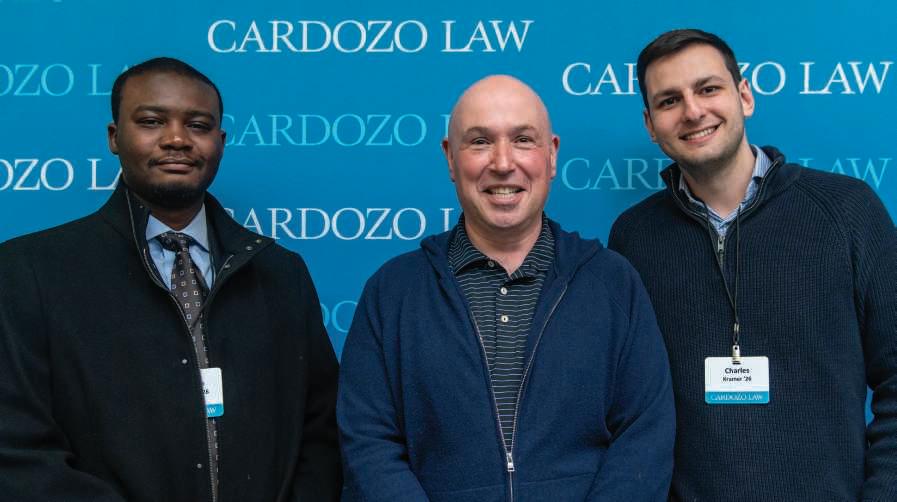
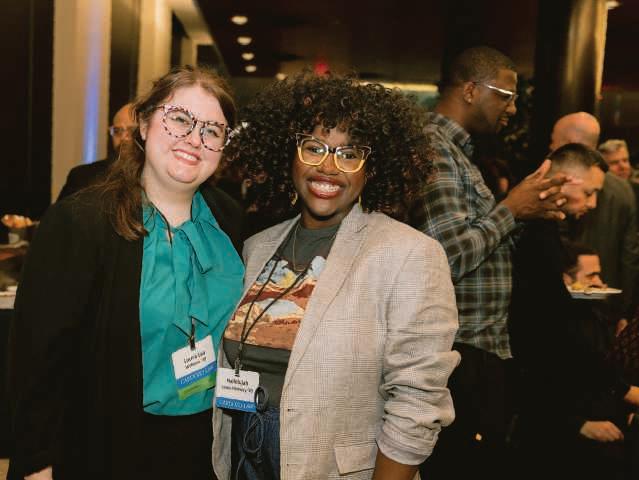
Ira Dizengoff ’92 with scholarship recipients Kwadwo Amponsah ’26 (L) and Charles Kramer ’26.
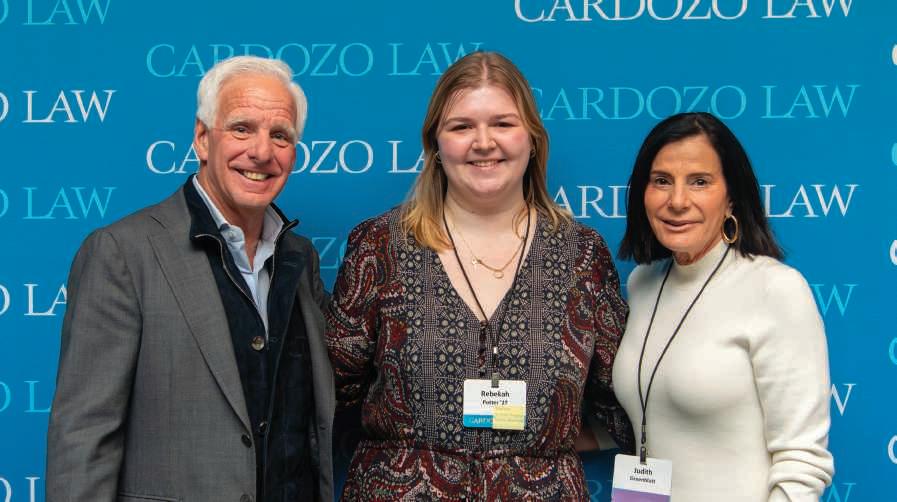
William Greenblatt ’82 P’14 and his wife, Judith Greenblatt, with their scholarship recipient, Rebekah Potter ’27.
assistant for Professor Andrea Schneider, and can often be seen giving tours of the school as an Ambassador for the Office of Admissions, sharing information to prospective students with her trademark warmth and enthusiasm. As another nominator writes, “Sam is dedicated to Cardozo and is perennially good-natured
while working hard to improve the Cardozo experience for all.”
Malek’s dedication to the advancement of the Cardozo community also is widely known on campus. She has served as a Gates Scholar mentor and ambassador, executive editor of the Alternative Dispute Resolution Competition Honor
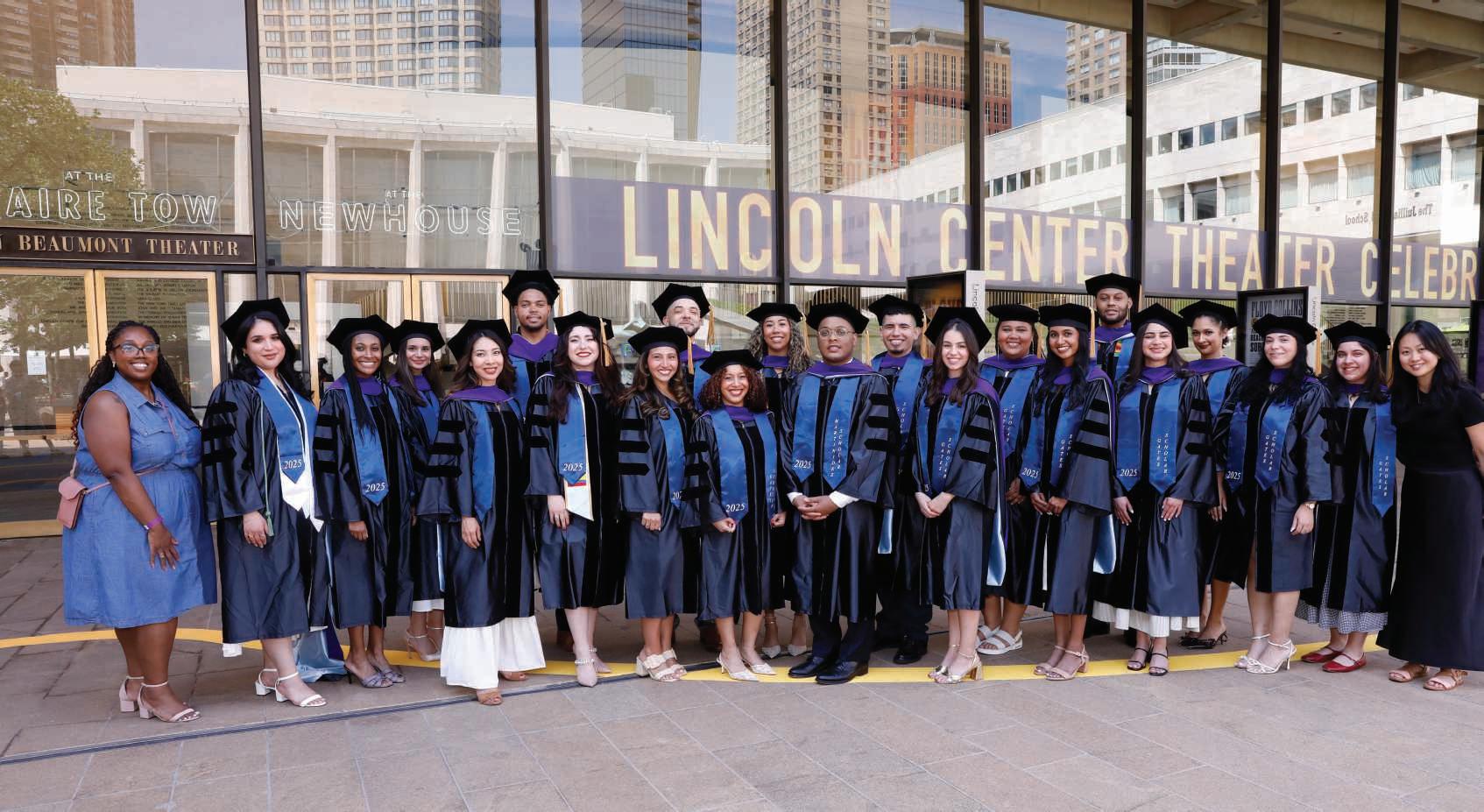
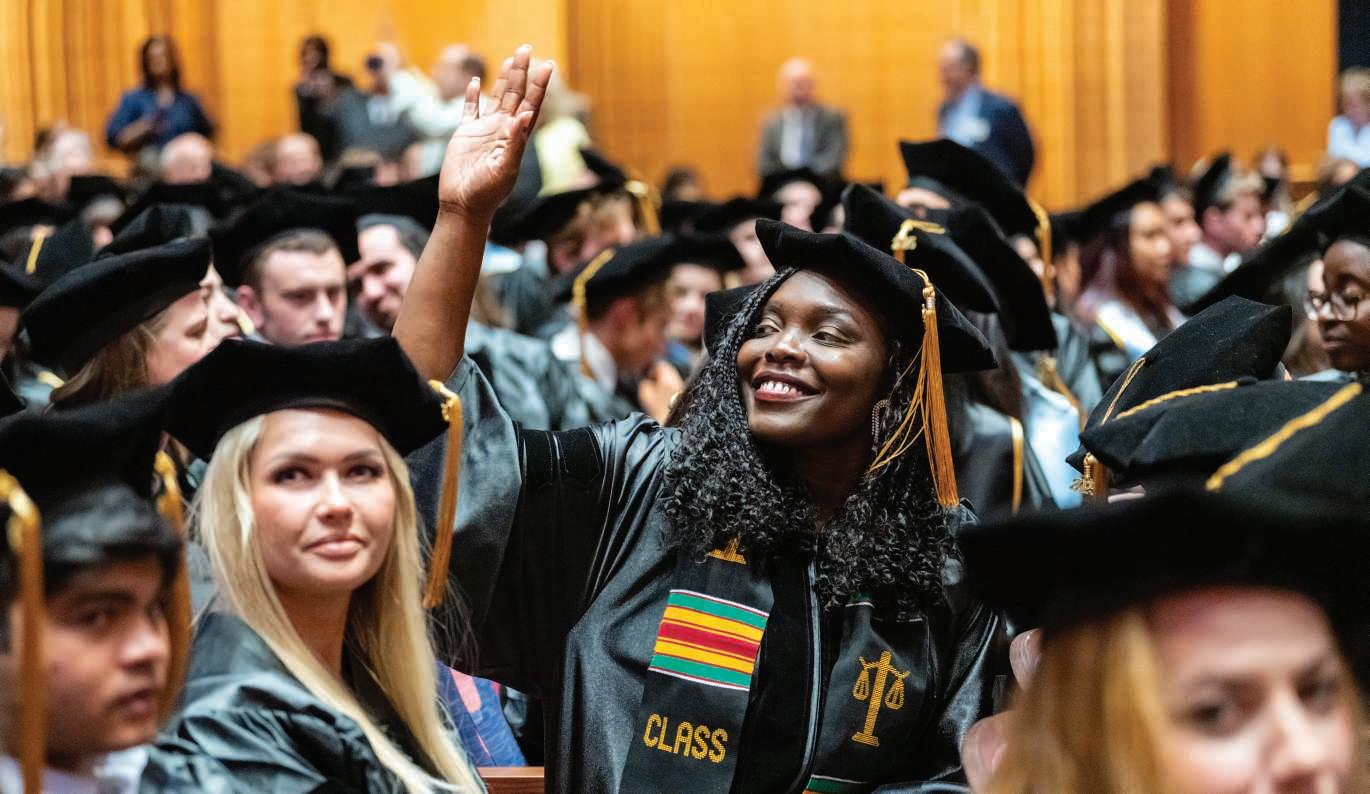
Second Class of Gates Scholars Graduates
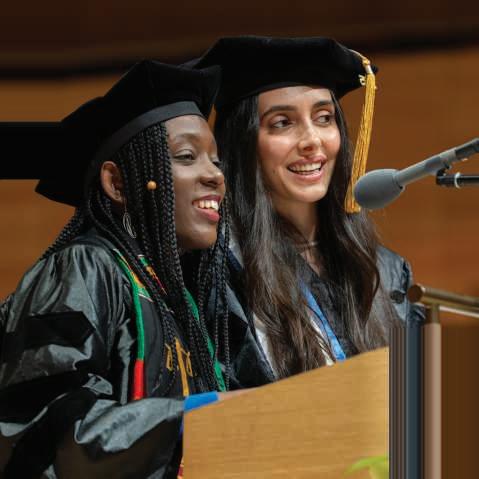
In June, the second class of Gates Scholars graduated in a ceremony at Lincoln Center’s David Geffen Hall.
The E. Nathaniel Gates Scholarship recognizes students of great potential who are first-generation or graduate school students who have faced barriers or challenges on their path to a career in law. With a focus on building community, the
Society, Academic Chair for the Black Law Student Association, Ambassador for the Office of Admissions, and teaching assistant to Adjunct Professor Michael Wildes, and participated in the Divorce Mediation Clinic. Through all of her commitments, she has been a mentor and leader to many with great kindness and humor. As one nominator writes, “as a mentor, she is inclusive, strong, encouraging, and empowering, always striving to bring out the best in others.” As another nominator writes, “whether she’s giving advice, helping with outlines, or being there for a friend who needs support, she’s the type of person who lifts others up … she embodies everything this scholarship represents—passion, dedication, and a genuine desire to strengthen the Cardozo community.”
Gates Program provides support, networking, and mentorship as students pursue their careers.
The Gates Scholars Program is named in honor of E. Nathaniel Gates, a Cardozo professor who worked at the school from 1992 until his death in 2006. He was the first member of his immediate family to attend college and law school. Gates was an advisor to important Cardozo student initiatives and organizations, including the Diversity Coalition and the Black Asian Latino Law Students Association.
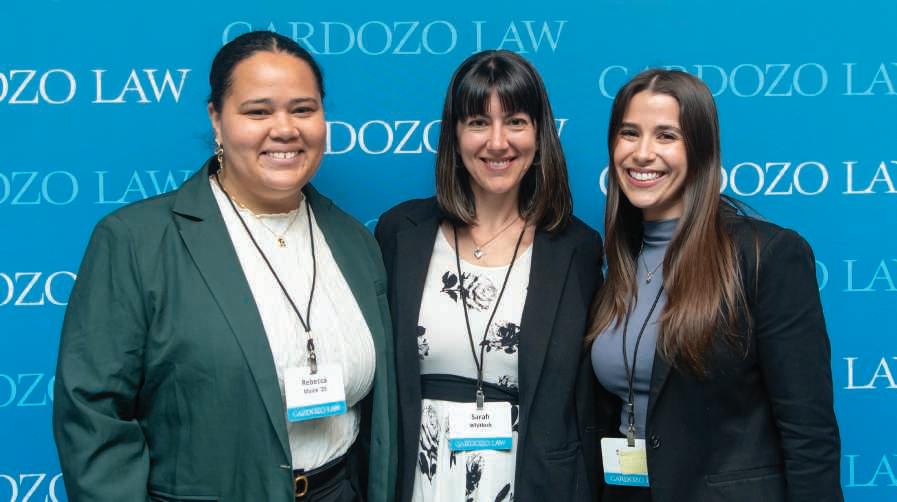
Sarah Whitlock (center) with Mark Whitlock Scholarship recipients Rebecca Malek ’25 (left) and Samantha Harberg ’25.
Cardozo Celebrates the Class of 2025 at 47th Commencement
“The Constitution you will soon swear to uphold represents our enduring commitment to liberty, equality, and justice. You will serve as the Constitution’s interpreters and defenders. This calling will require your courage, wisdom, and integrity.”
— DEAN MELANIE LESLIE
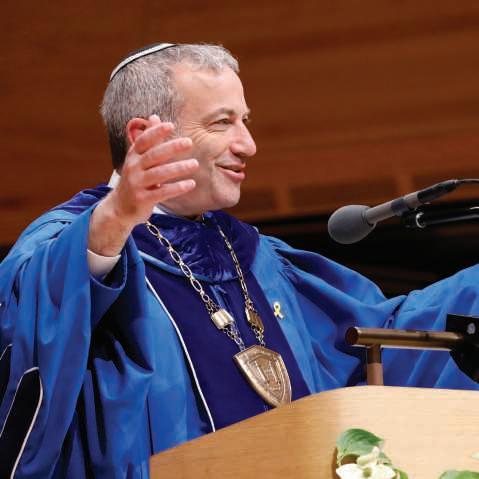
Rabbi Ari Berman sharing his remarks
Keynote Speaker The Hon. Caitlin J. Halligan
J.D. Speaker Talia Raoufpur
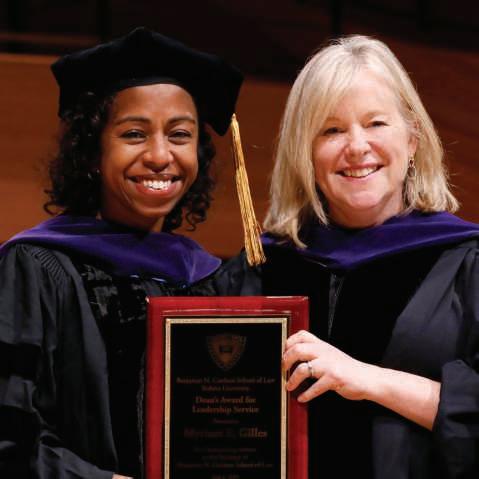
Dean Melanie Leslie with Professor Myriam Gilles
LL.M. Speakers Denise Pasi and Koral Bahat
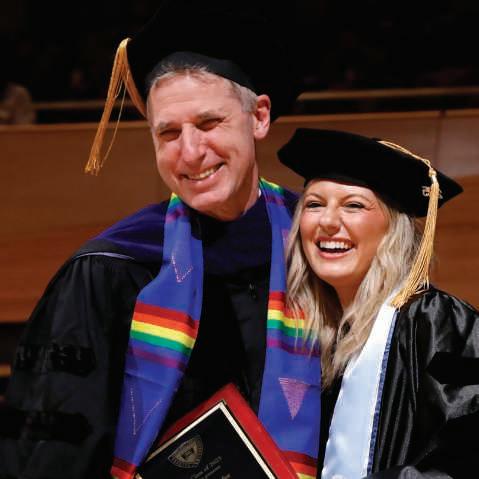
Professor Alex Reinert with Maria Kayser
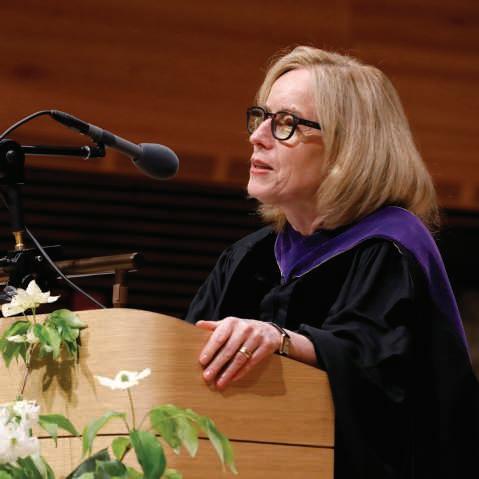
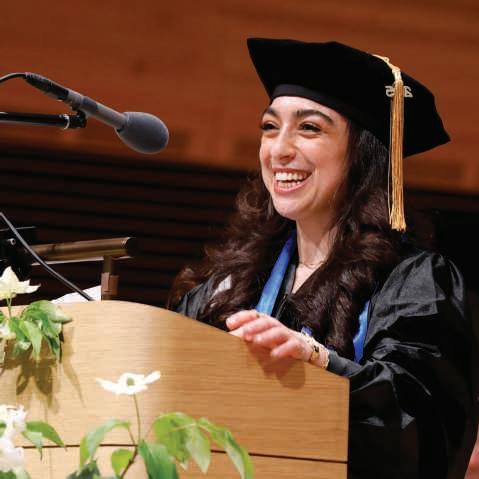
The Cardozo community gathered on June 4 at Lincoln Center’s David Geffen Hall to celebrate the commencement of the Class of 2025.
In total, 304 J.D. graduates and 83 LL.M. graduates were awarded degrees.
Dean Melanie Leslie ’91 recalled the day she sat in the same theater at Lincoln Center to receive her law degree, not knowing what the future would hold—a feeling shared by many of the graduates. However, Dean Leslie assured them that their education has prepared them for successful careers and the responsibility that comes with taking an oath to defend the Constitution of the United States.
“The oath you will take is not merely ceremonial,” she said. “It must be the foundation of your professional identity. The Constitution you will soon swear to uphold represents our enduring commitment to liberty, equality, and justice. You will serve as the Constitution’s interpreters and defenders. This calling will require your courage, wisdom, and integrity.”
In the keynote commencement address, The Hon. Caitlin J. Halligan, associate judge of the Court of Appeals, recalled law school as an eye-opening experience during which she made lifelong friends. She encouraged the graduates to seize opportunities to represent people and causes they believe in to drive the law forward.
“As you all close this chapter today as students, I hope each one of you considers the myriad options ahead and that each of you chooses a path that is meaningful to you,” Judge Halligan said.
LL.M. graduates Koral Bahat and Denise Pasi were chosen by their peers to address the graduates. They reflected on the journey of their LL.M. colleagues who came from 34 different countries, and celebrated friendships formed among varied cultures.
“As we go out into the world, our differences are not barriers, but bridges—and we are capable of crossing them and achieving greatness,” Pasi said. “And now, looking around, we see not just classmates, but friends, future colleagues, and people who inspired us every step of the way.”
J.D. graduate Talia Raoufpur was chosen to address the Class of 2025 and touched on the resilience of the close-knit community. Despite unpredictable challenges, she said, everyone bounced back.
“The piece of parchment that we have spent three years earning bestows important responsibilities upon each of us to help others, to spread light, and to repair this world,” she said. “So, let’s stay supportive and remain resilient as we enter into this next era.”
Rabbi Dr. Ari Berman, President of Yeshiva University, urged the graduates to seek opportunities in the practice of the law to influence outcomes ethically and to do good, whether on a grand scale or with quiet kindness.
“We are confident that you will seize those moments, that you will be the person who lifts someone else up and will act with purpose and care,” he said.
The graduates honored Cardozo faculty members who helped them throughout their law school journey.
Awards were presented by Student Bar Association President Maria Kayser. The recipients honored were Myriam Gilles for Best First Year Professor, Alexander Reinert for Best Professor, Gary Galperin for Best Adjunct Professor, Jenn Kim for Best Administrator, and Carey Bertolet Grand for Outstanding Assistance to the Student Body.
Dean Leslie presented three distinguished awards to faculty members. Professor Gilles received the Dean’s Award for Leadership Service. Professor Leslie Salzman was honored with the Monrad Paulsen Award. Professor David Weisenfeld received the Dean’s Award for Distinguished Service.
The Cardozo Faculty Awards ceremony took place in the morning at the law school where 58 students received honors for their distinguished achievements during their law school studies.
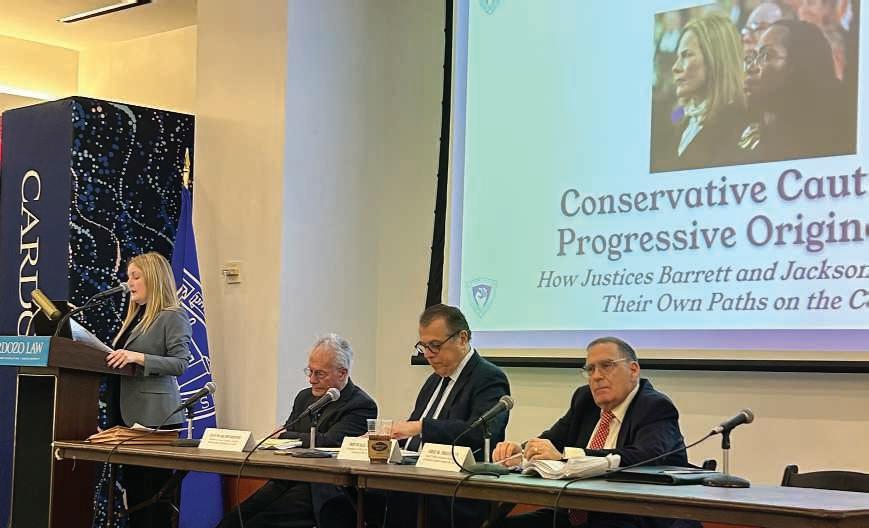
Symposium Examines Justices Barrett and Jackson’s Evolving Supreme Court Legacies
The Cardozo Journal of Equal Rights and Social Justice held its annual symposium, Conservative Caution v. Progressive Originalism: How Justices Barrett and Jackson Are Paving Their Own Paths on the Court, in March.
Three panel discussions covered presidential immunity, gun rights, and ideology and judicial decisionmaking. Speakers examined Justice Amy Coney Barrett’s willingness to side with liberal justices and her “workable” model of originalism, as well as Justice Ketanji Brown Jackson’s independence and her take on progressive originalism.
During the event, the journal’s former editor-in-chief, Hope Peraria ’25, said the faculty advisor, Professor David Rudenstine, suggested the symposium topic after the court passed down its June 2024 decisions. It was also influenced by a previous symposium the journal held.
“The topic was inspired by the 1991 symposium that Professor Rudenstine organized shortly after Justice Scalia joined the court, and it became clear that his jurisprudence would be influential,” Peraria said.
Rudenstine said Justices Barrett and Jackson made it clear that they had a jurisprudential approach of their own, and they would not shy away from expressing their
Cardozo’s annual symposium touched on Justices Barrett and Jackson’s jurisprudence
views in published opinions.
“Both are comparatively new members of the court, and both are sticking their jurisprudential necks out for all to observe,” he said. “It was that development during the last few years that prompted my recommendation to the journal that it hold a symposium on the developing jurisprudence and independence of Justices Barrett and Jackson.”
Several esteemed panelists were featured that day, including Pulitzer Prize-winning journalist Linda Greenhouse, constitutional law experts, and gun-rights specialists. Rudenstine, Professor Haiyun Damon-Feng, and Professor Michael Pollack moderated the event.
Rudenstine lauded the students’ efforts.
“They identified topics, invited speakers, and orchestrated a superb symposium,” he said. “And they did that some months before The New York Times ran a front-page report on how Justice Barrett is her own pathfinder amidst the quagmire of originalism and Supreme Court precedent. Our students deserve major congratulations for their accomplishment.”
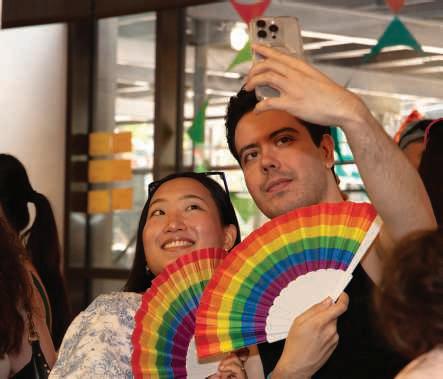
CARDOZO CELEBRATES PRIDE WITH 10TH ANNUAL PRIDE BRUNCH
Students and alumni gathered in Cardozo’s Ruth & H. Bert Mack Pavilion on June 29 to watch the NYC Pride March at the 10th annual Pride Brunch.
Hosted by the Cardozo Alumni Association and the OUTlaw Alumni Group, attendees celebrated the school’s and the city’s vibrant and diverse LGBTQ+ community.
OUTlaw Alumni Co-Chairs Chantelle “Elle” Gyamfi ’20 and Davis Villano ’23, emphasized the importance of community. Gyamfi encouraged alumni to get involved in OUTlaw.
This year’s march was special for many in the LGBTQ+ community, as it marked the 10th anniversary of Obergefell v. Hodges, the Supreme Court case that legalized same-sex marriage in the United States.
Pride Brunch raises critical funds for students, with some of the proceeds going toward the Paris Baldacci Scholarship, which is named after the late Cardozo professor, whose litigation and scholarship concentrated on the rights of people in non-traditional families. Notably, he was a lawyer in the seminal 1989 Braschi v. Stahl Associates case, in which the New York Court of Appeals ruled that the surviving partner of a same-sex relationship counted as a family member entitled to remain in the couple’s apartment after the partner’s death.
The scholarship is awarded to a 3L or LL.M. Cardozo student who has done exemplary work at the school that’s related to lesbian, gay, bisexual, transgender, queer, two-spirit, nonbinary, or intersex rights in a clinic, credited externship, or through non-credit work, such as organizing and activism.
Centers and Programs
Center for Rights and Justice
LITIGATION AND THE 2024 ELECTION: CRITICAL QUESTIONS
In partnership with the Cardozo Law Institute in Holocaust and Human Rights and the Jacob Burns Center for Ethics in the Practice of Law, the Center for Rights and Justice hosted a panel consisting of Professors Jessica Roth and Wilfred Codrington III and Sean Morales-Doyle, director of the Brennan Center’s Voting Rights and Elections Program. Moderated by Professor Alexander Reinert, the panelists discussed litigation surrounding the 2024 presidential election and the ethical constraints for lawyers involved in raising challenges to the election.
Fashion, Arts, Media & Entertainment Center
THE CREATIVE LAWYER: ENTERTAINMENT ATTORNEYS PURSUING ARTISTIC ENDEAVORS
The FAME Center and the Entertainment Law Society hosted a panel of attorneys, some of whom are Cardozo alumni, in March. They talked about their experiences working in film, music, and theater.
THE FUTURE OF NAZI-LOOTED ART RESTITUTION: BEST PRACTICES FOR THE WASHINGTON PRINCIPLES AND BEYOND
Nazi-looted art. Founding Partner of Schindler Cohen & Hochman LLP
Steve Schindler, Partner and Co-Chair of Pryor Cashman’s Art Law Group
William L. Charron, Counsel at Freedman Normand Friedland LLP
Yaél M. Weitz, and Curator of Provenance Research for Yale University Art Gallery Antonia Bartoli spoke.
The Cardozo Law Institute in Holocaust and Human Rights
(CLIHHR)
25TH ANNIVERSARY OF THE WOMEN’S INTERNATIONAL WAR CRIMES TRIBUNAL
CLIHHR co-hosted this event in March with the Weatherhead East Asian Institute, Korean American Civic Empowerment, and Korean American Lawyers Association of Greater New York to honor the legacy of the “comfort women” and the feminist-led people’s tribunal that centered the voices of survivors. This event brought together scholars, advocates, legal experts, and community leaders.
CASTE ACROSS BORDERS: LEGAL LEGACIES, GRASSROOTS RESISTANCE, AND SOLIDARITY
LEGAL GRASSROOTS AND SOLIDARITY
In April, experts discussed caste and its impact on law in society, as well as how the historical and colonial frameworks of caste continue to shape identity, human rights, and citizenship.
JUSTICE, HUMAN RIGHTS, AND THE NEW CHARISMA OF ANTI-DEMOCRATIC IDEOLOGIES
Professor Dr. Matthias Mahlmann, chair of philosophy and theory of law, legal sociology, and international public law at the University of Zurich, delivered a lecture in April about the rising pull toward anti-democratic ideologies. He discussed external pressures that democracies face from authoritarian regimes, as well as internal pressures from political movements.
Floersheimer Center for Constitutional Democracy
SCOTUS TERM PREVIEW AND RETROSPECTIVE
HUMAN AND THE
TURNING OVER THE BALLOT: DIRECT DEMOCRACY AND STATELEVEL CHANGE
This event, held in April with the Art Law Society, featured a panel on the state of arbitration as it related to
In this September event, five Cardozo professors discussed recent Supreme Court decisions and previewed the upcoming term. It was part of Cardozo’s Constitution Day program.
Alabama State Rep. Phillip Ensler ’17, Executive Director of Common Cause-NY Susan Lerner, and University of Wisconsin Law School
Professor Miriam Seifter joined Professor Wilfred Codrington III in February to discuss ballot measures, direct democracy, and change at the state level.
THE BRO-ECONOMY AND THE BRO-DEMOCRACY
Professor Michael Pollack hosted a panel discussion in March that featured George Washington University Law School Professor Michael Abramowicz, University of Virginia Professor Jennifer Lawless, and Public Citizen Government Affairs Lobbyist AND THE
Craig Holman. They discussed the manosphere, election betting, and prediction markets, as well as how they all shape our democracy.
Samuel & Ronnie Heyman Center on Corporate Governance
WHO DECIDES—JUDGES OR EXPERTS? LOPER BRIGHT, THE END OF CHEVRON, AND ITS IMPACT ON CORPORATE GOVERNANCE
In partnership with the Floersheimer Center in October 2024, the Heyman Center featured panelists Professor Michael Herz, Varu Chilakamarri of K&L Gates LLP, Professor Haiyun Damon-Feng, and Rishi Zutshi of Cleary Gottlieb. They discussed the implications of the Supreme Court’s summer 2023 decision in Loper Bright Enterprises v. Raimondo. They also talked about how regulations, rules, and opinions produced by federal agencies may be in jeopardy now that Chevron deference is no more.
ANTITRUST
COMPLIANCE FOR THE MODERN AGE
Two panels were held in November as part of a joint event with the American Bar Association and the New York State Bar Association. Professor Sam Weinstein hosted a fireside chat with Deputy Assistant Attorney General of the U.S. Department of Justice’s Antitrust Division Manish Kumar. Jeffrey Martino, a partner at Baker McKenzie, moderated the second panel featuring Honeywell General Counsel Jillian Charles, Principal U.S. Antitrust and Senior Regulatory Counsel at Siemens Dierdre McEvoy-Cappock, and New York Office Chief of the D.O.J. Antitrust Division Sean Farrell.
PROFESSOR BARBARA
PROFESSOR BARBARA KOLSUN, the founding director of Cardozo’s Fashion, Arts, Media & Entertainment Law Center, was honored with the 2025 Gold Dust Lawyer Award.
Kolsun was a trailblazer in her field, serving as the general counsel of several iconic fashion brands, including Kate Spade, Stuart Weitzman, and 7 For All Mankind.
But it was Kolsun’s spirit of empowerment that Alice Pang ’11 highlighted when honoring her.
“She sees possibilities where others see limitations,” Pang said. “She is our industry’s fairy godmother, sprinkling her golden dust of wisdom and guidance, transforming careers and lives with her unique grace and real talk.”
It is the belief Kolsun has in her students and alumni, Pang said, that gives them the confidence to seek out their dreams.
The FAME Center builds on Cardozo’s intellectual property curriculum, offering externships, clinics, and events featuring leaders in the field.
Students and alumni have gone on to work at major corporations, including Chanel, Universal Music Group, and SAG-AFTRA.
TAXES VS. TARIFFS:
BUSINESS UNDER THE SECOND TRUMP ADMINISTRATION
In March, a panel consisting of Professor Luís Carlos Calderón Gómez, Scott Maberry of Sheppard Mullin, Fordham Law School Professor Harlan Grant Cohen, Gregory Spak of White & Case, and Sean Lyons of White & Case discussed the tariff measures, likely consequences for revenue, and how each panelist would advise clients.
Jacob Burns Center for Ethics in the Practice of Law
CANCELING LAWYERS: CASE STUDIES OF ACCOUNTABILITY, TOLERATION, AND REGRET
In October, Cornell Law School
Professor Bradley Wendel discussed his book “Canceling Lawyers: Case Studies of Accountability, Toleration, and Regret” with Professor Raymond Brescia, the Harold R. Tyler Chair in Law and Technology at Albany Law School. Wendel said the representation of odious clients and
criticism of those lawyers who represent them are consistent with ethical lawyering.
BOOK TALK: “WATCHDOGS: INSPECTORS GENERAL AND THE BATTLE FOR HONEST AND ACCOUNTABLE GOVERNMENT”
This November book talk hosted Glenn Fine, who was the inspector general of the Department of Justice during the Clinton, Bush, and Obama administrations and the acting inspector general of the Department of Defense from 2016 until 2020. He discussed the role of inspectors general, how they hold the federal government accountable, and why they need more protection.
THE FIRST OF ALL FREEDOMS: FREE SPEECH, ANTISEMITISM, AND LESSONS FOR THE JEWISH COMMUNITY FROM THE DREYFUS AFFAIR
Professor Joel Swanson of Sarah Lawrence College visited Cardozo in April to talk about the debates over free speech and its boundaries within the French Jewish community during the Dreyfus Affair. This event was co-sponsored by CLIHHR.
INVESTING IN CLINICS AND CAREERS
Kwanza
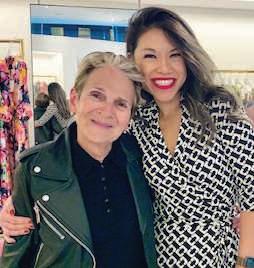
Jones ’99 and José E. Feliciano Make a $6M Impact Investment To Transform Cardozo’s Clinical Program
BY CATHERINE FERRIS
Opportunities for transformation and growth have guided Kwanza Jones ’99 throughout her life.
With a background in dispute resolution nurtured by her years at Cardozo, Jones has lived by her motto, “Own your power. Live your purpose. Be of service,” while defining what power means to her: direction, not domination, and the choice to uplift others, not to control them.
Jones seized opportunities to create change and growth—while at Cardozo, she participated in the Mediation Clinic and worked as a mediator for New York Civil Court to help resolve disputes as a neutral third party. She went on to co-found
the Kwanza Jones & José E. Feliciano Initiative with her partner in business and life, José E. Feliciano. Their philanthropic organization focuses on education, entrepreneurship, equity, and empowerment.
One of her latest transformational endeavors is a $6-million impact investment to Cardozo’s renowned clinical program, renamed the Kwanza Jones and José E. Feliciano Program for Clinical Education.
The gift will be used for a 6,200-square-foot renovation, slated to begin in 2026. It will advance Cardozo’s legacy as a leader and innovator in clinical education. The renovated space will create modern offices for client meetings, faculty offices, a conference room, and collaborative areas for students.
Even before participating in the school’s well-respected Mediation Clinic, Jones was no stranger to conflict resolution. As one of four children, conflict was bound to occur. But with parents who were lawyers,
learning to resolve those conflicts through communication, compassion, and growth was imperative. Law school seemed inevitable.
“Those exchanges shaped me,” Jones said. “They taught me that law, like life, is dynamic, malleable, and constantly evolving.”
She carried those lessons from childhood and law school as she underwent her own transformation, taking on new roles as an acclaimed musical artist, philanthropist, and investor.
“That foundation shaped how I see the world and fuels my passion for dispute resolution,” Jones said. “I believe that friction can be fuel for transformation. We live in a world where conflict abounds, and that’s not a problem; it’s an opportunity. Each day, we’re presented with the raw material for growth.”
She earned her undergraduate degree from Princeton University. When deciding where to go for law school, Jones said she wanted
“Own your power. Live your purpose. Be of service.”
an environment that embraced experimentation and evolution.
Cardozo offered that and much more.
The school’s top-ranked programs in dispute resolution, intellectual property, and entertainment law spoke to her aspirations of curiosity and creativity and her commitment to empowering others and working to build a more just world.
“Cardozo, still young at the time, represented exactly that—a school unafraid to challenge convention and explore new possibilities,” Jones said. “It was one of the first to make mediation and dispute resolution core to its curriculum.”
The school gave Jones space to build and share ideas that reflect her life motto of connecting and uplifting.
She credits Cardozo with teaching her to think critically and strategically, ask better questions, and see issues from multiple perspectives. Her professors and the clinical programs showed her that there is strength in service.
Her passion for dispute resolution lies in taking difficult moments as an opportunity to grow and build bridges.
“That insight continues to guide what José and I do—from investing capital in people, ideas, and communities … to creating music and media that amplify voices and speak to social justice, to hosting community convenings that spark dialogue and action,” Jones said.
Their gift to Cardozo helped the law school exceed its $50-million Rise Up for Cardozo campaign goal on the eve of its 50th anniversary.
Jones said real transformation takes time, and it is not just about long-term thinking, but about action.
“Building change that endures, like Cardozo’s 50 years of daring to evolve, requires creating momentum that outlives the moment—and doing it together,” she said. “After all, no one succeeds alone.”
$5 Million Establishes Judith and William Greenblatt Career Success Center
BY CATHERINE FERRIS
William Greenblatt ’82, isn’t one to pass up a lesson.
In December 2024, he released his book, “Every Day Sucks,” which details how he transformed a small family business into the world’s largest backgroundscreening company. In it, he discusses the lessons he learned along the way.
He joined Sterling, now a First Advantage company, in 1975 and progressed through the company, now serving as chairman and CEO. His leadership changed the way companies conduct their hiring processes. In 2017, he founded Montague Street Capital and embraced his family to focus on investing in all asset classes and working to grow small business into larger established corporations.
One of the lessons that stayed with Greenblatt is detailed in his book’s chapter, “Epiphany on the Fairway,” which touches on investing in people who have extraordinary skills. Greenblatt wrote that investing in them would produce a team that is in alignment with the mission of the business, leading to the company’s success.
Just as each chapter of Greenblatt’s book comes with a lesson, so, too, did his chapter at Cardozo School of Law.
He grew up in New York, attended college in Maryland but wanted to return to New York City. It was Cardozo’s Greenwich Village location that lured him.
Greenblatt, who was interested in litigation, attended law school with the intention of practicing law.
However, by his second year at Cardozo, Sterling’s business began to flourish, and he decided to pursue it full time. His career plans may have pivoted, but Greenblatt said his law school experience taught him how to think and gave him credibility as a businessman. Classes such as tax code, property law, and contract law were applicable to his career.
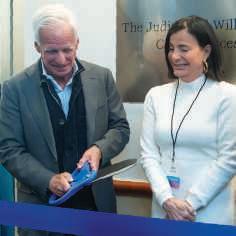
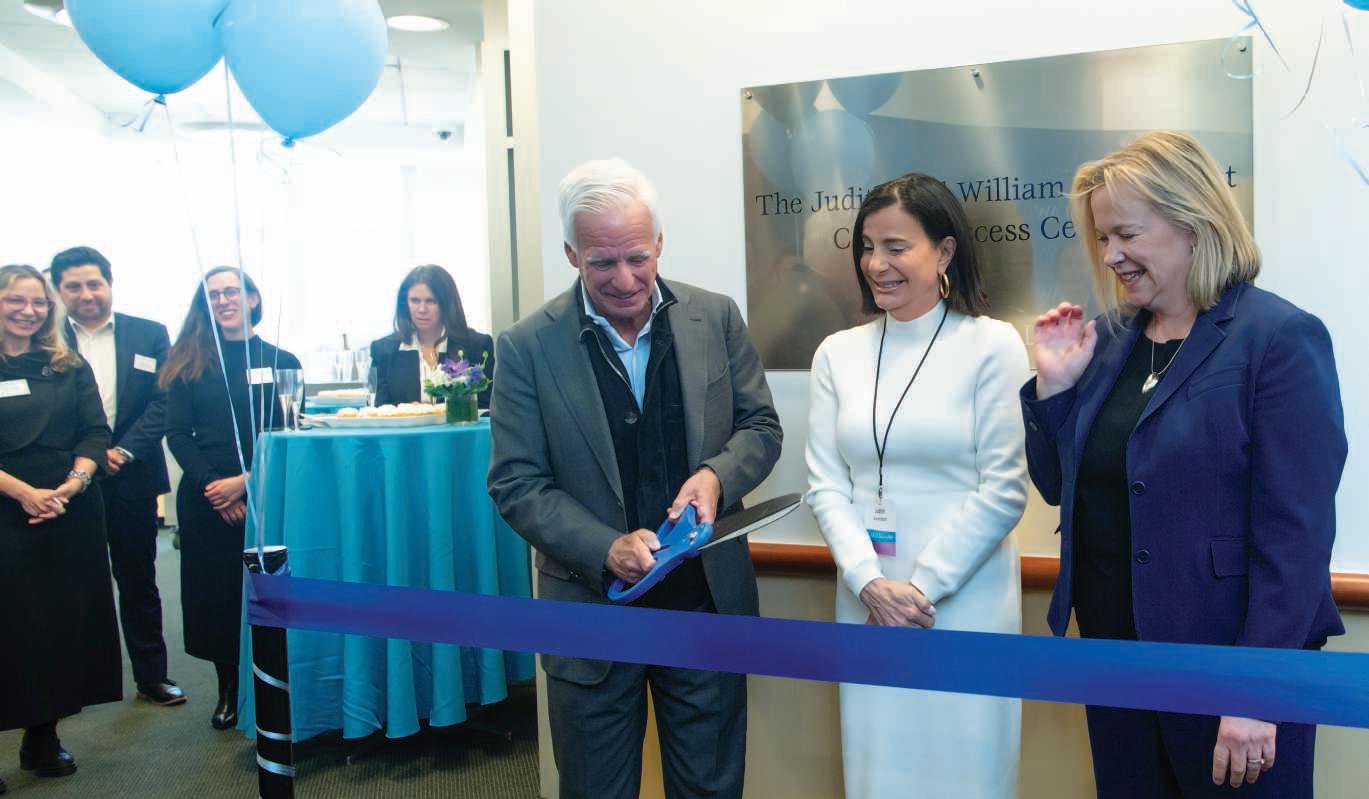
As a businessman and a member of the law school’s Board of Overseers, Greenblatt found importance in careers and made a $5-million gift to Cardozo, establishing the Judith and William Greenblatt Career Success Center.
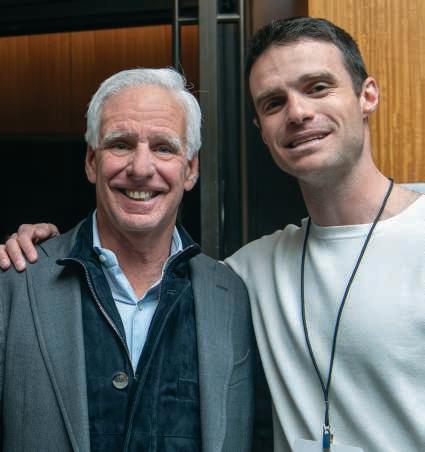
Greenblatt, left, pictured with his son Brandon Greenblatt ’14
“I believe that our only job is to get people jobs,” Greenblatt said. “I employed people my whole life. Finding talent was the most important thing in my career.”
He said he found that businesses thrived when he found spectacular people to fill positions.
He has applied the same principle to Cardozo—he wants to ensure that top-tier students attend the school and go on to work at high-level jobs. That will, in turn, attract more top-tier students who see the success of the school’s alumni.
Greenblatt said his desire to prioritize careers for students was not initially shared, and it nearly led him to leave the board.
At that time, in 2015, the selection process that resulted in Dean Melanie Leslie’s becoming dean began. Greenblatt had reservations, but after a rigorous process, he was convinced that she was right for the job.
“I became close to her, and I did a complete 180,” he said. “I became her biggest supporter.”
That partnership eventually led to Greenblatt’s gift, which supports and expands the career success center.
The gift is in line with Greenblatt’s own lesson of investing in a team with extraordinary talents, and the students have benefited. The school hired additional staff and career counselors, which contributed to a record 97.4% employment rate for the Class of 2024.
“Finding talent was the most important thing in my career.”
William Greenblatt ’82, P’14, left, cutting the ribbon to celebrate the establishment of the Judith and William Greenblatt Career Success Center.
As a new generation of law school students and graduates prepare for their professional careers, Greenblatt said that taking ownership of their future will be a huge step toward their success.
“I tell my kids that if you do the right thing every day, the fruit will fall from the trees,” he said.
His son Brandon, a 2014 graduate, started out working for the global law firm Fried Frank. Now, he is running Remote Legal, a legal tech firm, and Greenblatt credits Cardozo with shaping him.
“The school is amazing, and it keeps getting better,” he said. “The leadership is fantastic, and all of us who are successful should give back.”
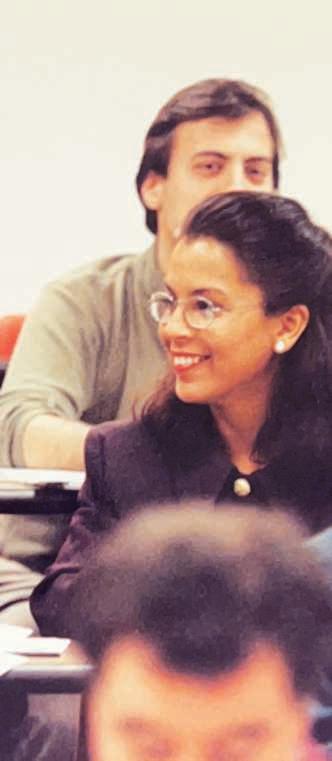
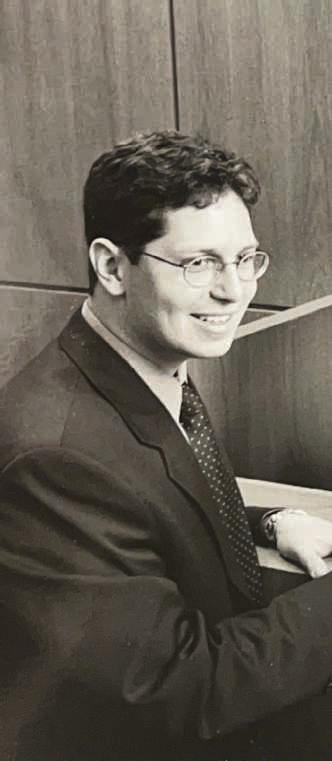
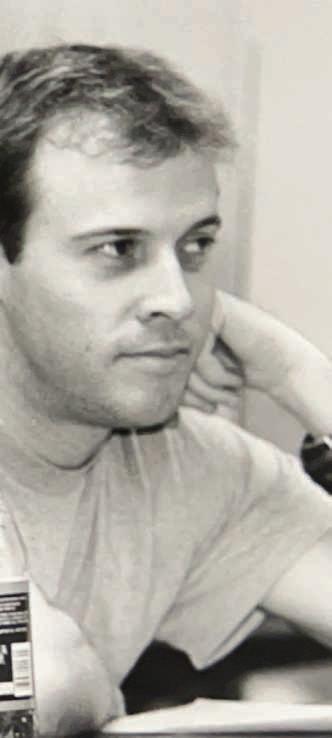
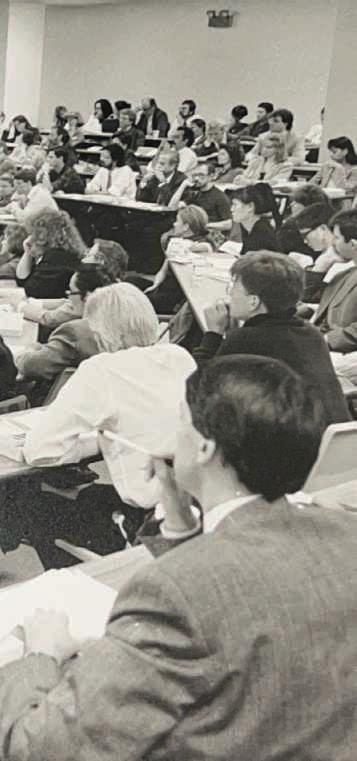
50 YEARS OF DARING TO ILLUMINATE
CARDOZO FACULTY AND STUDENTS
LIGHT THE WAY
For 50 years, Cardozo professors have fostered a stimulating intellectual environment: They guide students to fully understand legal principles, to grasp where they come from and what their goals are, to evaluate whether they meet those goals, and to analyze how to put them into action. At every turn, Cardozo professors take the law into the real world, helping students to see real-life consequences. This is true in our doctrinal classrooms, and in our 11 in-house clinics, which are led by full-time faculty who are at the top of their fields and who are committed to training the next generation of lawyers. Armed with these tools, students learn to effectively represent their clients, anticipate counterarguments, and advocate for new policy.
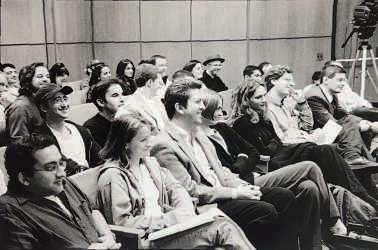
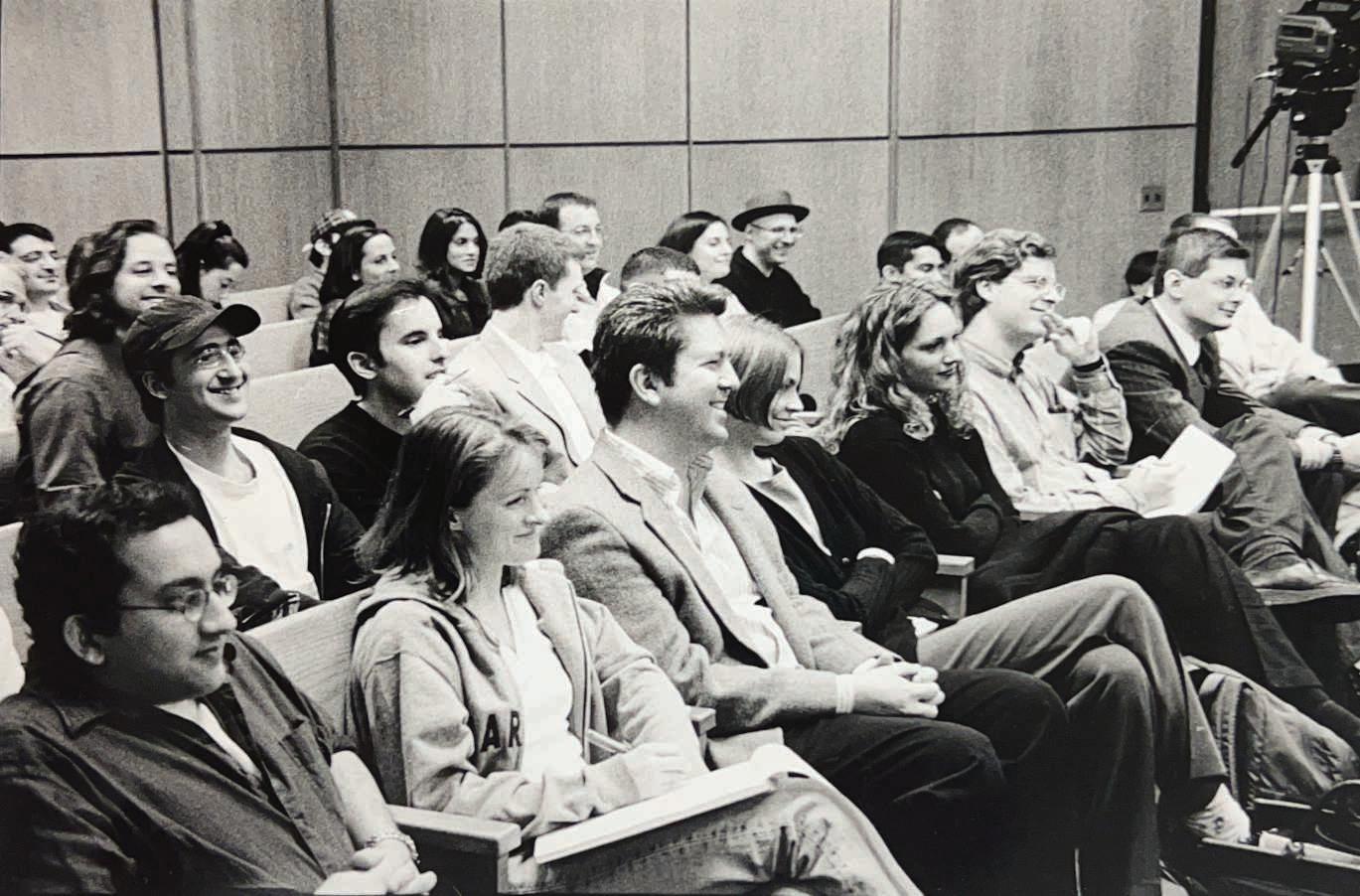
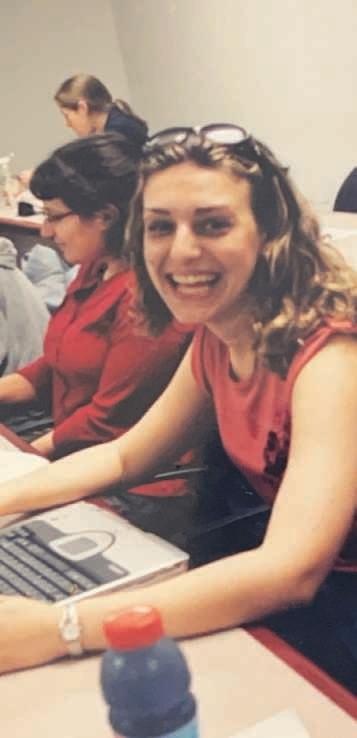
Many students may have replaced a pen and paper with laptops and tablets, but the same passion and enthusiasm remains for each class that passes through Cardozo.
NAME THAT PROFESSOR
[
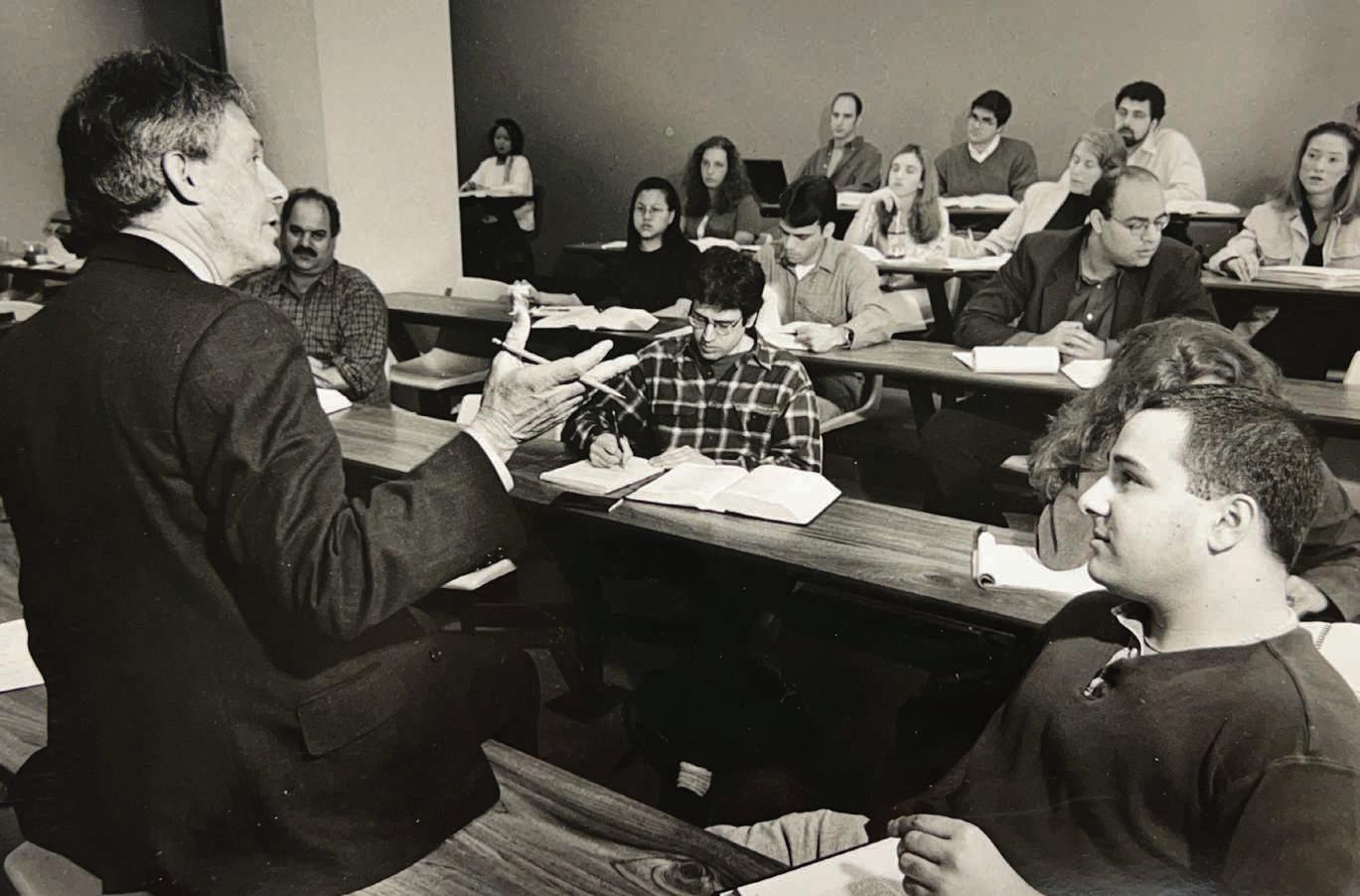
David Rudenstine has taught Constitutional Law at Cardozo since 1979— and he continues to teach it today.
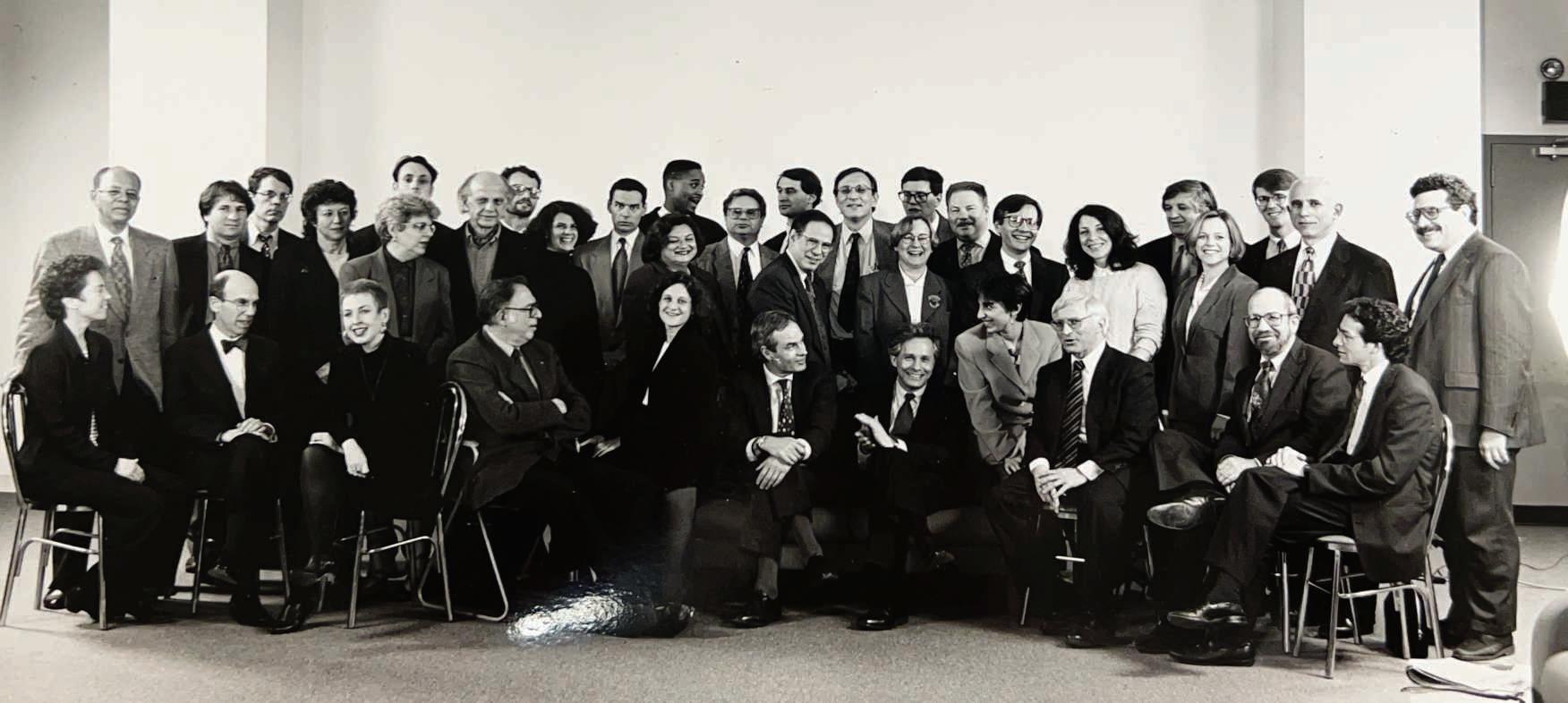
Can you spot them?
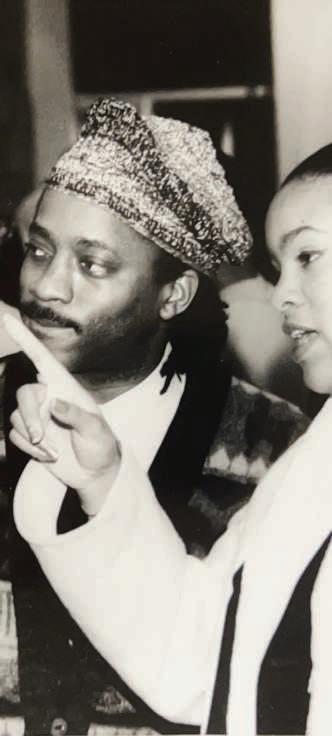
This portrait of the Cardozo faculty from 1997 captures four of the law school’s deans: Monroe Price, Paul Verkuil, David Rudenstine, and Melanie Leslie.
Malvina Halberstam Michael Herz
Monroe Price Ed Stein
Eva Hanks
Sheri Rosenberg Melanie Leslie Michel Rosenfeld Laura Cunninghams Leslie Salzman
Jonathan Oberman David Carlson
Jeanne Schroeder Kyron James Huigens
Toby Golick
A FEARLESS, UNDAUNTED APPROACH TO BUILDING A NEW LAW SCHOOL
THREE DEANS. ONE VISION.
A LAW SCHOOL IN NEW YORK CITY
BUILT TO EMPOWER GENERATIONS OF IMPACTFUL LAWYERS.
As Cardozo School of Law approaches its 50th anniversary, its legacy is best captured not only in the milestones of its institutional growth but also in the voices of those who helped shape its journey.
Three former deans and one of the earliest faculty members—each a steward of the school’s evolving mission—share their perspectives on what made Cardozo exceptional from its earliest days to its emergence as a nationally respected law school. Their words reveal not only a history of determined innovation but also a deep and abiding commitment to building a vibrant, supportive community devoted to academic excellence, career dedication, and the pursuit of justice.
Monroe Price was dean from 1982 to 1991. David Rudenstine joined the Cardozo faculty in 1979 and served as dean from 2001 to 2009. They recall a fledgling institution with audacious ambitions and a rare intellectual energy. Melanie Leslie became dean of the law school on July 1, 2015, and is the Dr. Samuel Belkin Professor of Law.
Stewart Sterk has been a professor of law at Cardozo since 1979, serving as an advisor to many deans. He recently earned the title of Distinguished Professor at Yeshiva University and is the director of The Center for Real Estate Law & Policy.
Together, they remember the phases of Cardozo, and how it grew from its early days to what it is today. What emerges from these conversations is a picture of a law school rooted in vision and heart. Their leadership guided Cardozo through periods of growth, challenge, and renewal—and consistently highlighted the same themes: a tireless pursuit of excellence, a distinguished faculty that changed lives, and an alumni network deeply committed to clients and the ethical practice of law. Over the past five decades, Cardozo has launched thousands of legal careers—careers that have advanced the interests of clients, protected individual rights, upheld the rule of law, and served the public good.
Cardozo has always been more than a law school. It is a community—vibrant, caring, and unshakably committed to the highest ideals of the legal profession.
IT’S GREAT FOR ME TO REMEMBER THAT STUDENT SITTING IN MY PROPERTY CLASS, SO UNSURE, SO WIDE-EYED ABOUT WHAT’S GOING ON AND TO SEE THEY HAVE COME TO THIS POINT IN THEIR CAREER.
—DEAN LESLIE
‘Ahead of the Curve’: Two Leaders Reflect on Cardozo’s Remarkable Evolution
Stewart Sterk has been a professor of law at Cardozo since 1979, recently earning the title of Distinguished Professor at Yeshiva University. He is the director of The Center for Real Estate Law & Policy and the editor-in-chief of the New York Real Estate Law Reporter. Sterk is the sixth most-cited property law scholar in the country. He earned his J.D. from Columbia University Law School and was the managing editor of the Columbia Law Review. His areas of expertise include conflict of laws, copyright, estates, land-use regulation, property law, real estate law, and trusts.
Melanie Leslie became dean of the law school on July 1, 2015, and is the Dr. Samuel Belkin Professor of Law. She is the first Cardozo Law graduate and the first woman to hold the position of dean. A graduate of the class of 1991, she became a Cardozo professor in 1995. She is a leading scholar in trusts and estates, fiduciary obligations, and nonprofit governance, and has taught property, trusts and estates, nonprofit governance, and evidence.
Together, they co-wrote the case book Estates and Trusts, Cases and Materials, which is in its 7th edition.
The city wasn’t quite the same draw that it is today. But we managed to do a terrific job attracting groups of students who previously hadn’t considered law school.
Many of our best students were women who had not had the opportunity to go to law school when they were 22 or 23 but were now deciding to return. Some of our best students were women who were a little bit older. We had many more students who were more years out of college than was the norm at the time.
It made for a terrific and interesting student body, even from day one.
Dean Melanie Leslie:
Stew, when you started teaching here in 1979, what was New York City like? What was going on then?
Professor Sterk:
We weren’t far removed from the “Ford to City: Drop Dead” when the city was going bankrupt and President Ford refused to bail it out, and the local newspapers came up with that headline.
That was in the mid-70s.
Fourteenth Street, when I started to teach and for a considerable time after that, was basically variety stores selling goods on the street, and the shops were decrepit. It wasn’t dangerous in any way, but it was certainly not an upscale neighborhood in the way it has become.
Dean Leslie:
At that time, instead of the beautiful lobby that we have now, there was a store carved out of the corner.
Professor Sterk:
We had Beefsteak Charlie’s cutting off the lobby, and there wasn’t anything like the current Moot Court Room. Eventually, there was a Moot Court Room that was built so that you had to go around a bunch of corners in order to get into it. The physical plant was certainly not attractive. When the law school opened, two other divisions of the university were in the building—the social work school and the graduate psychology school. The building was like a 1970s high school. It was not really an attractive thing.
...IT WAS IN THE MID-70S. WE WEREN’T FAR REMOVED FROM THE “FORD TO CITY: DROP DEAD” HEADLINE, WHEN THE CITY WAS GOING BANKRUPT AND PRESIDENT FORD REFUSED TO BAIL IT OUT.
—PROFESSOR STERK
Dean Leslie:
“WE
ARE PRODUCING GRADUATES WHO ARE LEADERS IN THEIR FIELDS AND TEACHING THEM TO THINK LIKE LAWYERS IN TRANSFORMATIVE WAYS.”
—MELANIE
LESLIE, DEAN FROM 2015–PRESENT
You know, when I was a student, the lockers were orange metal.
Professor Sterk:
To Yeshiva University’s credit, it put most of the money into programs, not into facilities.
I think that served us well in terms of building a good faculty and building that student body, but there were things that needed help.
We’ve had a number of deans, and all of them brought something to the institution, something different, but they all brought something up.
Monrad had brought a reputation and an eye for talent to begin with, which was enormously helpful. Next was Monroe Price who was an amazing person and tremendous dean. He had loads of ideas, and many of them still are hallmarks of the school today. Monroe was an idea a minute.
(See interview on page 33.)
I remember a conversation I had with him at one point where he said to me, “Look, I know that I have a lot of crackpot ideas, but I figure if I’m batting 300, I’m doing great.” I think he batted maybe a little bit better than 300. He was terrific at putting programs together.
Frank Macchiarola became dean. He was totally studentoriented, and he wanted to make the student experience as good as possible. That was his focus. As dean in the ‘80’s Paul Verkuil was very much interested in building a professional institution.
David Rudenstine brought in the perspective of somebody who had been a long-time faculty member, knew the institution really well, and worked on improving the building and building student morale and student relationships.
Matthew Diller came with a public-interest perspective and a focus on clinical programs that built our clinical programs in a way that they hadn’t been built before.
Then you came, and that was the total package. You had every experience as a student, as a faculty member, and you just understood the institution as well as anybody could.
Dean Leslie:
You started as a professor shortly after the school opened.
What was it like to teach here then?
Professor Sterk:
I started as a professor in 1979, and the school had been here for two and a half years. I had the privilege of teaching the first graduating class in their last semester of law school. I taught them trust and estates and contracts. It was quite an experience because unbeknownst to me, the school had signed up 201 people to sit in my trusts and estates class.
Dean Leslie:
Who was in the administration when you started?
Professor Sterk:
When I got here, Monrad Paulsen was the dean. And he had one administrator he had brought from the University of Virginia and a secretary. That was the administration.
Dean Leslie:
No dean of students? No admissions director? No head of career services?
Professor Sterk:
We didn’t really have a dean of students. Eva Hanks, one of the earliest professors, was the associate dean, and she dealt with the students.
Dean Leslie:
The school opened in a pretty crowded market. There were already a lot of law schools in the New York tristate area. Right away, it has been told to me, Cardozo quickly developed a great reputation. What do you attribute that to?
Professor Sterk:
I think it’s a couple of factors that led to Cardozo’s reputation in the early days. One is Yeshiva University and particularly Einstein Medical School. The notion was that if Yeshiva was going to start a law school, given the model that it started with the medical school at Einstein, it was going to be a first-rate institution.
Another part of it was bringing in Monrad Paulsen, who had an enormous reputation within the academy. Monroe had been the dean of the University of Virginia, he had been a faculty member at Columbia, and he was known as a person who recognized quality when he saw it.
Dean Leslie:
Who did he bring in as faculty in the beginning?
Professor Sterk:
The tenured faculty started with a group of only about four or five people, and they were Eva Hanks, who came over from Rutgers, Malvina Halberstam, who had come from Los Angeles, Richard Hobbet, who came up from Duke, and Lester Brickman, who came from Toledo.
Now let’s talk about your arrival at Cardozo, Melanie. You came to Cardozo as a student after a career as a performer. What was that transition like?
Dean Leslie:
It was exciting because the hallmark of the field I’d been in was uncertainty. You could get a big break one day and think you’re on your way and then not get an opportunity for six months. It was just very up and down and rocky and a tough way to make a living.
Even though there were some pluses to it and I loved it, you kind of had to take whatever work came your way. You don’t have the luxury of picking or choosing what you’re going to do. I was getting a little bit bored with what was happening in my career, and I was itching to learn more and to grow as a person. So, I applied to law school.
Professor Sterk:
And if I remember, in your first few weeks of law school, you were doing double duty.
Dean Leslie:
I made the mistake of thinking I could keep flying around and doing singing gigs on the weekends in my 1L year, and then I got my first legal writing assignment back, and it was covered in blood-red ink. I had written that assignment in Miami at two in the morning on the floor of my hotel room before there were computers.
I thought, “Oh, what am I doing?” I had been given this
incredible privilege, this incredible opportunity. I can’t waste it. I have to quit performing. I have to just devote myself to this.
I was in your property class.
Dean Leslie:
I remember writing the midterm exam for you. This is back when property was a yearlong course. I was sitting in the library studying for several days. I had gotten an A on your midterm and been stunned. You came and found me in the library because there was no email then.
You said, “Miss Leslie, can you come by my office when you have a chance?” I thought, well, there it is. He’s going to tell me that I screwed up the exam. He got the grade wrong, and he has to fix it.” I was terrified. When I walked in, you asked me to be your research assistant. That was how we got to know each other.
Professor Sterk:
It was a great, great decision on my part. One of the best I’ve made.
Dean Leslie:
You were known as a consummate teacher, and you pushed students to think on their own and to be creative thinkers. You were super tough, but you were never unfair. Who were your teaching influences? How did you adopt or create your style of teaching?
Professor Sterk:
I had a variety of different types of teachers when I was in law school. I think I learned a lot by doing rather than by modeling somebody. I recognized from an early stage the value of making students speak in class and think things through on their feet.
Dean Leslie:
I know what that’s like, because when I first taught at Cardozo, I was an adjunct before I was on the faculty. I had one particularly terrible class where I couldn’t get the right words out. It was going terribly. You were sitting in the back of the class.
I remember you came and found me afterward, and you just gave me a rundown, and you just laid it out for me. I had made a rookie mistake of going to the most interesting and complicated part of the legal concepts that we were discussing without building it up or laying the foundation.
Professor Sterk:
Well, you were a quick learner because you certainly became a consummate teacher over the time you taught until you became dean.
What were the challenges that you found the most daunting when you moved from becoming a faculty member to becoming a dean?
Interview continues on page 91
Dean Melanie Leslie sharing a laugh with students.
The Idea Dean: A Conversation with Former Dean Monroe Price
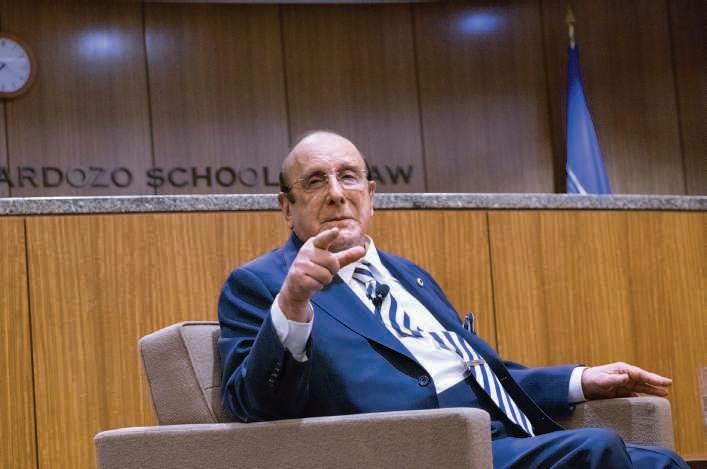
Monroe Price served as Cardozo’s dean from 1982 until 1991 and continued teaching at Cardozo for over two decades. Under his leadership, the law school underwent a critical period of growth that paved the way for many of its most notable programs and initiatives. His visionary way of thinking created many of the programs that have been definitional in enhancing Cardozo’s reputation. As dean, Price earned a reputation for being entrepreneurial and creative, a leader who pulled in people to start initiatives and built many aspects of the Cardozo community still seen today. This interview was conducted by Dean Melanie Leslie and has been lightly edited.
Dean Melanie Leslie:
You were always seen as an idea factory and someone who attracted people to Cardozo. I wouldn’t have come here as a student if it weren’t for your influence.
When you were chosen to be the new dean of a very young law school, how did you go about developing an agenda for the growth and development of Cardozo?
Monroe Price:
It posed a really interesting question of how a law school distinguished itself in a market like New York City, which already had 10 or 11 law schools.
How could we break out of a mold? I thought we needed to develop a new agenda that takes us beyond the existing competition, beyond the existing conception of law schools, and make it something distinctive with attributes that Yeshiva University could stand for and that Cardozo could stand for.
Dean Leslie:
What did you come up with that would set Cardozo apart or give it a unique reputation?
Monroe Price:
I was looking at areas of practice and industry in New York that were not deeply taken care of by existing law schools.
Fashion was an example of that, or real estate, or arts and entertainment. These are areas that make New York New York.
The question was how to embrace that within the law school and give the law school the excitement that exists because it’s in New York.
Dean Leslie:
At the time, the field of intellectual property was not what was thought of as a very robust field. Not much had changed in the field for a long time. You really supported and helped grow our presence in this field and, as a result, we became a leader in the field.
Monroe Price:
I think partly it was my experience at UCLA Law School and my friendship with Mel Nimmer, who was like the king of copyright.
As I watched the field change, it had been focused on a few people, and there was about to be a democratization of the field of copyright.
It was a good time for Cardozo to enter, and it received support.
Mel Nimmer came and spoke at Cardozo several times, and later his son David, who was close to people teaching at Cardozo. I think they helped to bolster the field of copyright at Cardozo.
Dean Leslie:
Your vision and guiding principle were what’s special about New York and what’s interesting about practicing law in New York. That really has held up and stays with us today.
Monroe Price:
“WE WANTED TO MAKE SOMETHING VERY SPECIAL.”
—MONROE PRICE, DEAN FROM 1982–1991
The goal was to take Cardozo, which was small and young, and make it have a broader impact. An example of that was the Broadcast Music Inc. (BMI) Moot Court Competition, an idea of how we could bring Cardozo into a leadership role within American law schools, connected to intellectual property and gain recognition within the music industry.
Dean Leslie:
And just for those who might not know, what is the BMI Moot Court Competition?
Monroe Price:
There were two copyright societies, American Society of Composers, Authors and Publishers (ASCAP) and BMI, and these stood for improving legal understanding of copyright and the arts.
[The BMI/Cardozo Entertainment and Communications Law Moot Court Competition was an appellate advocacy competition run by Cardozo and Broadcast Music Inc., focusing on problems that emphasize copyright and entertainment law and policy, with fact patterns that often include other intellectual property law issues such as trademarks. Though it is no longer active as of 2023, Cardozo hosts a competition on its own through the FAME Center.]
It was an area that I thought Cardozo could develop a strong presence in. We did, and that continues today.
Dean Leslie:
You also started the arts and entertainment law journal.
Monroe Price:
Journals are a way of giving students recognition so that they could put something out and have exercise in writing and in defining problems.
These are things that law firms look to. We started the law and literature journal, the Cardozo Arts & Entertainment Law Journal, and others.
Dean Leslie:
People always said that you were a man who had more ideas in five minutes than most people in years. Another important program you started was in business. How did the Heyman Center on Corporate Governance come about?
Monroe Price:
Sam Heyman was my classmate at Yale, and he had distin-
guished himself by helping to invent a whole new way of looking at corporate board members in society. The question was if Cardozo could be a place that helped capture that, distinguishing itself as bringing in an important contribution to the legal underpinnings of the corporate structure and the economy. Sam and Ronnie [Heyman] were supportive of this idea.
The idea was to bring together scholars and practitioners and to engage Cardozo with legal counsel, outside counsel, and with big law firms.
Dean Leslie:
It sounds like you were thinking about turning Cardozo’s innovation into an opportunity for students to have access to jobs, access to the upper reaches of the profession?
Monroe Price:
A challenge that you face as the dean of a fairly new law school is the lack of an alumni base working in New York City and the possible impact that might have on your ability to connect students to jobs.
I think there was a willingness among a lot of people to support Cardozo in many industries that we distinguished ourselves for.
Dean Leslie:
You thought about entertainment law, you thought about corporate law, but you also did something that was unusual at the time, which was to think about law and philosophy as a way of distinguishing Cardozo’s reputation for scholarship and intellectual discourse.
Monroe Price:
I think it was a tribute to Cardozo’s faculty brought together by Dean Monrad Paulsen, the first Cardozo dean. He had his own unusual vision for what was excellent and hired exceptionally talented and distinguished faculty members, people who were interested in PhD- JD combined approaches and were thinking philosophically.
I asked how do we turn that into an advantage?
One way I thought to get Cardozo better known among the law schools around the country was by offering law and literature, and philosophical courses.
Dean Leslie:
Another area you had a great impact on was clinical education. When you arrived, I think we had only one clinic at
THE GOAL WAS TO TAKE CARDOZO, WHICH WAS SMALL AND YOUNG, AND MAKE IT HAVE A BROADER IMPACT… FASHION, OR REAL ESTATE, OR ARTS AND ENTERTAINMENT. THESE ARE AREAS THAT MAKE NEW YORK NEW YORK.
—DEAN PRICE
Cardozo—the Criminal Defense Clinic. You changed that as well.
Monroe Price:
This was a big question for all law schools. The Ford Foundation was financing the idea that law schools should have more clinical education. This was inconsistent with a traditional way of thinking about law school.
It was controversial, even within the Cardozo faculty, how many clinics to add and how much credit to give for clinical training, as opposed to traditional training.
But it was also tied to my thinking that the law school should present itself as solving intractable problems in the society, like medical schools could offer cures for diseases like cancer.
Clinics provided that opportunity.
It has had enormous consequences for the field.
I think Cardozo deserves credit for helping to support and develop the Innocence Project.
This is an example of recognizing a way that a law school can change society.
Now, the Kathryn O. Greenberg Immigration Justice Clinic, Bet Tzedek Civil Litigation Clinic, and other clinics do something similar.
It was very important at the law school to give it a sense of meaning beyond bar passage.
CARDOZO’S DEANS
Dean Leslie:
What was your objective in starting the clinics?
Monroe Price:
Supporting clinics was a way to communicate that Cardozo could make a contribution to resolving societal issues of great importance.
If you think about it, you had graduate schools, which were intensely academic, and you had medical schools, which were intensely clinical.
Law schools were somewhere in between these things.
The question was how to take the best of medical school education and graduate education and fuse it together with the best of legal education. We were able to foster a multitude of clinics, which you and other deans built on and continue to develop.
Dean Leslie:
Another programming area you sparked was mediation and dispute resolution.
The Kukin Program for Conflict Resolution is a leader in the field, and this year ranked fourth in the country by U.S. News & World Report.
Monroe Price:
There was activity and interest by Ira Kukin in developing studies in clinical mediation. One day, Lela Love showed up
Monrad G. Paulsen (1976 • 1980)
Lester Brickman Acting Dean (1980 • 1982)
Frank J. Macchiarola (1991 • 1996)
Monroe E. Price (1982 • 1991)
in my office and was interested in teaching at Cardozo, and I was able to see an instant match between our idea of having a mediation program and Lela’s potential and talents. Here’s a good example of someone spending 20 years or 30 years developing a pioneering concept at our law school that has flourished and has paid wonderful dividends.
Dean Leslie:
You also have a reputation as someone who could spot talent.
Monroe Price:
The question was to move away slightly from the traditional standards, traditional measures of excellence and to diversify them.
It is true that I liked what I sometimes called the elevator connection. I would get in the elevator with a prospective student on the second floor and admit the student to the law school by the time we got to the 10th floor.
It almost always worked out.
Dean Melanie Leslie:
You convinced me that Cardozo was the right place for me when I was applying.
Monroe Price
I certainly remember that day. Of course, I didn’t know that
you would be a future dean!
I think that it’s an idea that has given me great pleasure, which is that education is transformative.
The idea that at the heart of it is some sort of transformative function is something that is associated with intimacy and development.
And the question was what more could we do to give students coming to Cardozo confidence and give them opportunities that they might not otherwise have?
Dean Melanie Leslie:
What are some of the best memories you have of your time as dean?
Monroe Price:
I remember I wanted to distinguish the school, and I invited the entire incoming class or maybe the most distinguished members of the incoming class, to dinner at the Harvard Club. That started what became a regular feature, which was inviting students to our home.
Another area that I loved was our efforts to expand the international connections of the law school.
Here was an area where Cardozo could make a contribution.
By the end of this, we had summer programs in Oxford and Hong Kong and Beijing and Budapest.
Interview continues on page 90
Paul R. Verkuil (1997 • 2001)
David Rudenstine (2001 • 2009)
Matthew Diller (2009 • 2015)
Melanie Leslie (2015 • Present)
THE CITY WAS COMING OUT OF THE ’70S, WHICH WAS NOT A GOOD TIME… THE SUBWAYS WERE DIRTIER AND MESSIER, AND THERE WAS A LOT MORE GRAFFITI, BUT I’M NOT SURE WHAT IMPACT THAT HAD ON WHAT WE DID INSIDE THE WALLS HERE.
—DEAN RUDENSTINE
Building Cardozo’s Resilience: An Interview with Former Dean David Rudenstine
Professor David Rudenstine served as the dean of Cardozo School of Law from 2001 to 2009 and has taught constitutional law since 1979. He joined Cardozo when it was young, working with other faculty members to push the school toward excellence. As dean, he took on the responsibility of stabilizing the school following 9/11, built out new programs, and completed major building renovation projects in the lobby and on the third floor. He witnessed the evolution of New York City since the ’70s and what it and the school offered to optimistic and energetic students. The following interview has been lightly edited.
Cardozo Life:
You started teaching at Cardozo in 1979. Tell me a little bit about what the ambitions of the new school were and what the spirit of the place was like.
David Rudenstine:
The expectations were just out of sight, a little bit over the moon. The hopes were high. The ambitions were extraordinary. The law school was going to make itself into something that was going to be different, very special, and it was going to be a tremendous success.
The faculty was young and energetic. [Professor] Eva Hanks was the vice dean, and she was a major cheerleader. Monrad [Paulsen] was the dean. I think his presence was a presence of excellence. Monrad had had an extraordinary career as a scholar and as a teacher.
Everybody thought that if he was going to be the dean of the law school, the law school was going to have high aspirations.
Cardozo Life:
How were you going to excel and be different?
David Rudenstine:
If I had to say what would be special about the law school, I would say that there was an enormous emphasis on
the importance of critical thinking.
We were going to help students really think. We were going to change how they thought, how they express themselves. I thought that that was an endearing and noble ambition for the law school.
We were going to push an educational experience that was very demanding and emphasize to the students that they were here to learn how to think in ways that were going to surprise them.
By the time they graduated from this law school, their minds and what they could do were going to be fundamentally different because of the educational experience they had here.
Cardozo Life:
What about the students who came here in those early years? What were they like?
David Rudenstine:
Students early on were remarkably optimistic, self-confident, and energetic.
They were just a lovely bunch of people, for people who were entering a law school that did not have a lot of luxury to offer. They weren’t being given the kind of support that you might have at a more established law school.
The students were still very positive, very energetic, and believed in themselves and in the possibilities of careers that were just astonishing.
Cardozo Life:
What was the city like when the school started?
David Rudenstine:
The city was coming out of the ’70s, which was not a good time for the city. The subways were dirtier and messier, and there was a lot more graffiti, but I’m not sure what impact
“THE EXPECTATIONS WERE JUST OUT OF SIGHT.”
—DAVID RUDENSTINE, DEAN FROM 2001–2009
that had on what we did inside the walls here.
Within the law school, I think the attitudes and the feelings were not at all dependent upon what was going on in the city as a whole.
Cardozo Life:
When you became dean, what were your challenges? What were the things you looked at to lead the school to the next chapter?
David Rudenstine:
The first thing that was on my mind was to help stabilize the law school because it was just weeks after 9/11 [when I became dean], and it wasn’t clear if we were going to get hit with another attack. Student morale was a little bit up in the air about whether it was safe to still be in the school or in the city. Things were really precarious.
We wanted the admissions cycle for the fall of 2002 to be strong. We had to reach out to employers and assure them that the quality of our students was going to be maintained and would get stronger. We had to recruit new faculty. We were renovating the lobby, which [Former Dean Paul] Verkuil had started.
Cardozo Life:
Were you consciously building out new programs?
David Rudenstine:
I was willing to do anything that would make the school stronger and attract more students. And more exciting for the faculty. That could take a lot of different avenues. I was very committed because of perhaps my own career in public-service work. I put a lot of energy and strength into public-service programming.
We built that out over time, and the clinical side of the program at Cardozo became larger and stronger. An increasing number of students participated in those programs as the years went by.
Cardozo Life:
What are the things about the school that make you most proud when you say, “I was the dean of Cardozo Law”?
David Rudenstine:
The single best thing about the law school is the quality of the education. That always was front and center.
You’re not going to have, in my view, a better educational program than what the faculty can provide. Hiring good people, maintaining good people, supporting the people who are really making contributions. That’s totally number one.
Cardozo Life:
We’re at 50 years, and the natural thing to think about is what’s the next phase for the school? What do you hope for the school in the years to come?
David Rudenstine:
I think that the leadership of the law school is such, and has been for years, that it’s going to be determined to stay on top of the curve and keep pushing the curve.
I am optimistic and hopeful about where the law school is and where it’s going.
Cardozo Life:
What was your most memorable moment, what surprised you?
David Rudenstine:
When I became dean, I wasn’t looking forward to raising a lot of money, but I found raising money to be a fascinating and engaging responsibility. I enjoyed meeting people who were potential donors and chatting with them about what their interests were, what the law school’s capacities were, and what the law school needed, to see if we could find a match.
Renovating this floor that we’re now on and the library. We didn’t have the money for it, but I was determined to raise the money. I wanted to start the work before I had the money in hand.
There was no student lounge, and there was no cafeteria. We wanted to build a real café and have a lounge for the students and have an assembly hall outside of the courtroom.
The university more or less said yes again on a shoestring, with the promise of raising the money. Jeffrey Rosengarten was the vice president in charge of physical facilities at the time, and he said it was going to happen.
He told me on a day I was in a meeting uptown, and the construction was supposed to start that morning. I was in the meeting until that afternoon. The meeting was going to go all day. I couldn’t stand the suspense. So, I left the meeting early. I came downtown to see if it actually was taking place.
I walked onto the third floor, and most of the walls were down. I got tears in my eyes. I couldn’t believe it actually happened. And it did.
We put the cafe on the fifth floor, and during the rest of my deanship, I would go around and say, “How many law schools put the student cafe with windows facing Fifth Avenue?” •
Hosted by Dean Melanie Leslie and Dean Carey Bertolet Grand, SPARKS offers an inside look at the real journeys of Cardozo alumni who are shaping the legal world.
From big law partners and entertainment dealmakers to mediators and social justice advocates, each episode delves into the pivotal moments that shaped their careers, including the challenges, detours, and triumphs they encountered along the way.
Hear the stories behind the successes and the sparks that ignited their passion for law.
All episodes available here
Dean Melanie Leslie Dean Carey Bertolet Grand Grayson Moronta ’22 Labor & Employment Attorney, Seyfarth Shaw
CARDOZO’S PIONEERING LEADERSHIP IN INTELLECTUAL PROPERTY, DISPUTE RESOLUTION, AND CLINICAL EDUCATION
No celebration of Cardozo Law’s first 50 years would be complete without honoring the bold, visionary work that has defined its legacy in Intellectual Property, Alternative Dispute Resolution, and Clinical Education. Long before these fields became standard pillars in legal education, Cardozo was leading the charge—launching trailblazing programs that redefined how lawyers are trained and how law is practiced. These stories showcase the faculty, alumni, and students who dared to challenge the status quo and built programs that continue to shape the future of legal education and advocacy.
A Bold Challenge to the Status Quo Creating Cardozo’s Pioneering Dispute-Resolution Program
BY CATHERINE FERRIS
There was no money for a new clinic. Resources were scarce.
But approval from then-Dean Monroe Price was Professor Lela Love’s golden ticket in 1985 to establish Cardozo’s Mediation Clinic, which served as a catalyst for the rapid growth and development of dispute resolution at the law school—and at other law schools around the country.
Today, Cardozo’s Kukin Program for Conflict Resolution is among the country’s top programs for students to hone their skills to become modern-day problem solvers.
A Trailblazer Carves Her Path
Love’s first dip into the alternative dispute resolution (ADR) field came not long after she graduated from law school in 1979 and was teaching philosophy of law to undergraduates at George Washington University.
“I came to think that the adversarial system as a system of justice, whereby each side argues the best case for themselves and tries to destroy the other side, might not be the most just system.” Love recalled. “So, In my philosophy of law course, I started studying other approaches.”
At that point, ADR was still in its infancy.
“Mediation seemed new age—in contrast to the win-lose adversarial fight of litigation,” Love said. “Part of the evolution toward collaboration is the effort to get people to understand each other’s point of view and to get an optimal outcome, making things better for everyone involved.”
She and her husband moved to New York, and Love pursued mediation, her primary interest, and arbitration, while teaching part time at Cardozo. She signed up to be an arbitrator and attended mediation training at the Brooklyn Mediation Center. From there, her passion for mediation deepened, and she considered ways to bring ADR to students.
Dean Price said “yes” to a mediation clinic, partially because Love had already successfully pioneered a small business clinic at George Washington University and because he was an innovator himself. Although Price told her he did not have money to fund a new clinic, Love was determined to develop it, and she was given a green light if she could find a cost-effective way forward.
“I’ve learned in life that ‘yes’ is golden,” Love said. “It didn’t matter that he said we didn’t have funding for a proper clinic. If I could do it, it was just up to me to find a way.”
Partnering with the Brooklyn Mediation Center, Love taught a course, and the students were trained as volunteers for the Center, minimizing the cost to Cardozo.
She continued her own work in the field, mediating a case in Glen Cove, New York, which involved the town and day laborers. Love recalled the anger, tension, and friction between the two sides, but fighting was costly and risky to both sides. Just reaching out to hear the other side’s concerns developed momentum for a resolution.
“Everybody had a story to tell that was moving,” Love said, “including the day laborers, the town officials, the police, and the lawyers.” Together they crafted a way that day laborers could secure employment and feel welcome in the town, and town citizens could feel safe.
Eventually, the vision became how to educate lawyers and how to incorporate mediation into a law school setting.
The Program’s Evolution and the Leaders Who Pushed It Forward
Within a few years, the program took off.
By 1990, Love was the founding director of Cardozo’s Kukin Program for Conflict Resolution. Through a generous gift from the late Ira and Doris Kukin, the program allowed the growth and expansion of negotiation, mediation, and arbitration offerings for students.
Director, Kukin Program for Conflict Resolution and the Cardozo Mediation Clinic
Director, Kukin Program for Conflict Resolution
“It helped us build a real program, and it created a commitment by the law school to this endeavor,” Love said.
Expansion did not stop at the curriculum or the clinic. Love said students came up with new ideas for the program, including the Cardozo Journal of Conflict Resolution, which was founded in 1998, and the Cardozo Dispute Resolution Competition Honor Society, which came to rival Moot Court, competing in ADR competitions nationally and internationally.
The journal notably presents the International Advocate for Peace (IAP) Award to an individual, organization, or group that is exemplary in the field of conflict resolution. This year, scientist, educator, and humanitarian Zafra M. Lerman received the 24th IAP Award. Ms. Lerman joins Desmond Tutu, Paul McCarthy, George Mitchel, Jimmy Carter, Bill Clinton and other notables in receiving this Award. (Read more on page 47.)
As the program evolved, so did the leadership. In 2022, Professor Andrea Schneider took the helm of the Kukin Program.
Director, Cardozo Mediation Clinic & Associate Director, Kukin Program for Conflict Resolution
Schneider got her start when she took what she calls a “game-changing” class in negotiation while she was a student at Harvard Law School. She found the interdisciplinary aspects of negotiation, including economics, psychology, and communication, in the negotiation process, fascinating. The course “fit together the puzzle pieces for me,” she said. The rest is history.
In 1996, Schneider worked at Marquette University Law School in Wisconsin, where she created a program in dispute resolution. At that point, although Love and Schneider had not yet crossed professional paths, Schneider said Love served as a “guiding light” for her work building up the dispute resolution program at Cardozo.
Later, the two worked together for the first time on a several textbooks. Schneider recalled that Love was gracious, thoughtful, and welcoming.
Schneider came to Cardozo not long after the COVID-19 pandemic where she had the opportunity to continue building the program in person, taking advantage of what was available in New York, and unifying the program’s pieces.
“I CAME TO THINK THAT THE ADVERSARIAL SYSTEM AS A SYSTEM OF JUSTICE … MIGHT NOT BE THE MOST JUST SYSTEM.”
—LELA LOVE
Professor Lela Love Founding
Professor Andrea Schneider
Robyn Weinstein
“IF YOU LOOK AT THE IMPACT THAT CARDOZO HAS HAD IN NEW YORK, THERE IS PRESUMPTIVE MEDIATION … WHICH DOESN’T HAPPEN OVERNIGHT.”
—ANDREA SCHNEIDER
“The majority of top American organizations in dispute resolution are headquartered in New York,” Schneider said. “Cardozo has worked on building connections with all of them, and we’re proud that we have alumni who are at the helm of leadership.”
One such alumnus is Brian Farkas ’13, a Cardozo adjunct professor and partner at ArentFox Schiff.
While at Cardozo, Farkas served as the editor-in-chief of the Journal of Conflict Resolution. He called his experience in the Mediation Clinic “transformative,” crediting Love with teaching him that lawyers are problem solvers.
“I’ve found that the best lawyers are often the ones who are good listeners; who are creative; and who look for winwin compromises,” he said. “Learning to mediate also teaches students how a neutral views a dispute. When you sit in the center of the table, so to speak, you appreciate the perspective of mediators, arbitrators, and judges. For me, that clinical experience taught me invaluable lessons about what makes effective advocacy.”
Thanks to the program, Robyn Weinstein ’09 had her own storied career around the country before returning to Cardozo as director of the Mediation Clinic.
Since day one, Weinstein knew she would pursue mediation. She approached Love, who introduced her to Tracey Frisch ’06, a recent graduate at the time, who is now associate general counsel for the American Arbitration Association. Frisch advised her to pursue ADR at Cardozo.
Connecting with Cardozo alumni and participating in the program’s offerings—including the Journal of Conflict Resolution, the Dispute Resolution Society, and the Mediation Clinic—helped guide Weinstein through law school.
“That was a pivotal experience for me in getting to mediate live disputes,” Weinstein said. “I kept doing it after I finished the clinic and maintained a mediation volunteer practice.”
After graduation, the reputation of Cardozo’s dispute resolution program helped open doors for a conflict resolution career in California. Weinstein was hired for several dispute resolution roles, including as director of arts arbitration and mediation for the Los Angeles Office of California Lawyers for the Arts and as an adjunct clinical professor of
mediation at Pepperdine University before returning to New York.
She returned to work with Love as a fellow for the Kukin Program before working as an ADR administrator for the United States District Court of the Eastern District of New York where she mediated federal cases and helped developed many new initiatives to expand the use of mediation throughout the district.
“My move back to Cardozo was really driven by my love for this clinic, my belief in the power of mediation, and my desire to have it continue and be an opportunity for students long into the future,” Weinstein said.
The Next Chapter
The field has certainly evolved since it was labeled “new age.”
When Schneider got into the field, she said working in dispute resolution was something that needed to be “justified.”
“You still had to say why a lawyer needed to learn these skills,” she said. “There weren’t mediation clinics. Cases were not mediated in court.”
Over time, however, the attitude shifted, something that Cardozo has been a part of.
“If you look at the impact that Cardozo has had in New York, there is presumptive mediation in the state of New York, which doesn’t happen overnight,” Schneider said.
Weinstein echoed the sentiment, adding that mediation has become a much more standard part of the litigation process and practice.
In some instances, though, it’s grown to the point where mediation is not being utilized as it was intended.
Love said mediation should bring the two parties together to understand one another, but in some cases, lawyers are keeping parties apart by insisting on not having joint sessions.
“Many mediations these days look like ‘litigation-light,’” she said. “The parties are kept apart, lawyers speak for
IAP AWARDS
The Cardozo Journal of Conflict Resolution is the country’s preeminent legal journal of arbitration, negotiation, mediation, settlement, and restorative justice. It is one of the most frequently cited legal publications in the field of conflict resolution. The journal awards the International Advocate for Peace Award to an individual, organization, or group that is exemplary in the field of conflict resolution.
2000
RICHARD HOLBROOKE
BETTY KAARI MURUNGI
For his distinguished career seeking peaceful resolution to intractable conflicts around the world 2001
PRESIDENT BILL CLINTON
For his tireless work to create conditions for dispute resolution in conflicts from Korea to Kosovo, from Ireland to the Middle East 2002
SENATOR GEORGE J. MITCHELL 2003
ARCHBISHOP
DESMOND M. TUTU
For his fight against apartheid in South Africa 2004
PLAYWRIGHT, AUTHOR, FEMINIST, AND ACTIVIST
EVE ENSLER
For fighting for women’s human rights, and for her service as the director of the Urgent Action Fund-Africa 2007
AMBASSADOR DENNIS ROSS 2008
ECONOMIST AND PUBLIC POLICY ANALYST
JEFFREY SACHS 2009
AMIRA DOTAN 2010
AMBASSADOR STUART E. EIZENSTAT 2011
FILM PRODUCER, SOCIAL
ACTIVIST ABIGAIL DISNEY
For her PBS series “Women, War & Peace,” and other documentary films, about the role of women in peace processes around the world
2012
FOUNDER OF SEARCH FOR COMMON GROUND AND COMMON GROUND PRODUCTIONS JOHN MARKS
2013
PRESIDENT JIMMY CARTER
For negotiating the Camp David Accords between Egypt and Israel and the SALT II Treaty with the Soviet Union 2014
THE HONORABLE DANIEL WEINSTEIN
2019
SIR PAUL McCARTNEY
PETER, PAUL AND MARY 2016
LAWYER BENJAMIN FERENCZ
For a career of holding war criminals accountable at the Nuremberg Trials, defining crimes against humanity, and his dedication to bringing an end to war 2017
RAJIV SHAH 2018
PEACE ACTIVIST
LEYMAH GBOWEE
For a lifetime of work through music with messages of understanding, empathy, and connection 2020
MEDIATORS BEYOND BORDERS INTERNATIONAL 2022
WILLIAM URY 2023
GLORIA STEINEM
For her work as an activist who championed equal rights and led international protests to end oppression
2024
DR. RICHARD N. HAASS 2025
SCIENTIST AND HUMANITARIAN
ZAFRA M. LERMAN
clients rather than parties speaking to each other, and there is little, if any, collaboration between parties to make proposals to resolve matters.”
Cardozo continues to stand at the forefront of dispute resolution, preparing students for the evolving legal landscape. In a significant milestone, dispute resolution has now been added as a section on the NextGen Bar Examination—affirming its importance in today’s legal profession.
Recognizing the weight of this change, Professor Andrea Schneider and her colleagues have been actively developing cutting-edge textbooks and materials to ensure Cardozo students are fully prepared. Their work not only equips students for success on the bar but also contributes to the broader academic and professional community with the latest insights in the field. Schneider’s mission is clear: to build a program and curriculum that empower all students to thrive in dispute resolution and beyond.
At the same time, Schneider continues to be concerned with gender equity in the field—a long time research interest. One of Schneider’s most impactful contributions is her recent co-authored article, “The New Glass Ceiling,” published in the 2024 Wisconsin Law Review, alongside Abigail Bogli of Quarles & Brady LLP and Hannah Chin of the Whitefish Bay School District in Wisconsin.
Her journey in this area dates back to 1999, when, as a junior faculty member, she noticed a gap in research: a landmark 1976 study on negotiation styles lacked enough female participants to analyze gender differences. While literature from the 1980s and ’90s suggested women negoti-
ated differently, Schneider’s own experiences told another story—one that she set out to explore through rigorous research.
Her findings challenged the prevailing narrative—early research revealed minimal gender differences in negotiation on behalf of clients and her later studies showed that female law students were negotiating at the same rate as their male peers. But in her most recent research, she uncovered a critical disparity in law firms: although women were entering law school and being hired at firms in equal numbers, they were still underrepresented in top leadership roles.
Driven by these findings, Schneider has shared her insights widely—through a TED Talk in 2016, continued scholarly work, and most recently as the 2025 Lawrence Lecturer on Dispute Resolution at The Ohio State University Moritz College of Law.
In a field that demands composure, empathy, and skill, Cardozo—and leaders like Schneider, Love, and Weinstein— are shaping the next generation of thoughtful, effective dispute resolution professionals, who can successfully manage the persistent challenges of inequality, while continually developing their own skills.
“Getting good at negotiation and dispute resolution is a journey in understanding who you are, what you bring to the table, and how you continue to build those skills,” Schneider said. “It is your job to continue to learn and work on it and yourself.” •
FEATURED SPEAKERS
Rachel Waranch ’05
Senior Managing Counsel Business Ethics & Legal Ops, Chanel
Samantha Anderson ’16
Art and Museum Law Attorney, Patterson Belknap Webb & Tyler
Waleed Diab ’04
Senior Director, Global Head of Recorded Music Business Development, YouTube
Rachael Pierce ’14
V.P. Associate General Counsel, Miami HEAT
Setting the Stage: 10 Years of FAME
For more than a decade, students have been coming to Cardozo for its Fashion, Arts, Media, & Entertainment (FAME) Center.
With Professor Barbara Kolsun ’82 at the helm, the program offers rigorous coursework, externships at some of the industry’s top companies, and symposia that feature leaders in the field. The FAME Center builds on Cardozo’s renowned intellectual property curriculum, focusing on trademark, copyright and patent, and privacy law.
Kolsun graduated from Cardozo, studying under Professors David Rudenstine, Lester Brickman, Richard Weisberg, and Barry Scheck, before going on to become a leading fashion industry attorney. She was the first general counsel of Kate Spade, Stuart Weitzman, and 7 For All Mankind. Kolsun was also the assistant general counsel at Calvin Klein Jeans. While in private practice, her clients included Ralph Lauren and Tommy Hilfiger.
With alumni relations, we pulled together the names of Cardozo alumni who were working in the FAME world and built the coursework.
I became the director of the FAME Program.
Cardozo Life:
FAME is the first of its kind. What makes it different? Did you find difficulty in attracting students, or was this something that students were looking for?
Prof. Barbara Kolsun:
It’s the only of its kind, as far as I know, and students were definitely looking for it.
We’re in New York, which is arguably the center of what the program stands for.
When we started FAME, we were offering entertainment law and sports law once a year. But we saw we had the goods, and it was just a question of advertising it and building on it.
Cardozo Life:
What compelled you and Dean Melanie Leslie to start the FAME Center?
Prof. Barbara Kolsun:
I spoke with past deans about expanding our creative courses here at Cardozo, starting with fashion, because that’s what I was teaching.
When Dean Leslie started as dean, she was excited about this idea. She comes from a performing background like me. She was a professional singer and I was a singer and actress. We sat down, and I said we should pull together what we already have. We have lawyers who are named as the best music lawyers. We have lawyers in the entertainment business. We have lawyers in the sports world. We have lawyers in the art world. We have lawyers in the fashion world.
We had no trouble attracting students. They were excited to apply to a school that had FAME, because the program embodied everything. They might come and be interested in getting into the film industry. They’d like to work in the music business, where we have alumni working with companies like Sony and Warner Music Group. Similarly, with art, we had a Cardozo graduate—before FAME—who was at Christie’s.
When we launched the FAME Center, we got more applications.
Cardozo Life:
You’ve had speakers from the various pockets of the entertainment industries. What is the benefit of connecting those students with the professionals who come to the school for these events and panels?
Prof. Barbara Kolsun:
Hearing their stories is always very moving. We’ve had Steve Madden here a couple of times, and he spent some time in prison. He’s still built a business before, during, and after. He’s an inspirational speaker.
We’ve had Clive Davis, who discovered Whitney Houston, Alicia Keys, and other successful musicians. His son
“HAVING SO MANY ALUMS WORKING IN THE FAME WORLD IS A REAL BENEFIT TO OUR STUDENTS.”
—BARBARA KOLSUN
and daughter also attended Cardozo.
Hearing from the speakers we had, like Sam Edelman, Stuart Weitzman, Lyor Cohen, and Isaac Mizrahi, is good for law students because they may represent and work for people like this.
A lot of our FAME students come from the creative world themselves. I have a student who was a ballet dancer. I have students who worked in the art world. They worked in every sector of the FAME world before coming to law school, where they can counsel rather than perform.
Cardozo Life:
The alumni network has grown to become a valuable source of networking for alumni across the globe. How does that bring value to the center?
THE FAME ADVISORY BOARD
SAMANTHA ANDERSON ’16 Art Law Attorney Patterson Belknap Webb & Tyler
KORI CLANTON ’15 Vice President, Business & Legal Affairs OneTeam Partners
BRAD COHEN ’05
SVP, Associate General Counsel & Head of Litigation Warner Music Group
DANIEL DARDANI Director of Physical Sciences and Digital Innovation Licensing and Corporate Alliances Duke University
WALEED DIAB ’04 Director, Global Head of Recorded Music Business Development YouTube
VIVIANE EISENBERG Of Counsel, Moses Singer
JEFFREY D. GOLDFARB ’02 Executive Vice President G-III Apparel Group, Ltd.
ABBEY GREEN ’99 Owner Abbey Green Law
DOUGLAS HAND Partner Hand Baldachin & Associates LLP
Prof. Barbara Kolsun:
I think our alumni feel committed to helping our students. We spent a lot of time keeping up our lists of alumni who are working in the FAME world, whether it be law firms or companies. Our alumni are generous with their time.
Having so many alums working in the FAME world is a real benefit to our students. I’m not sure any other law school in New York can necessarily say that.
Cardozo Life:
As you look back on a decade of FAME, what are you most proud of?
Prof. Barbara Kolsun:
That it exists. Dean Leslie, who also had been a performer in her past life, was behind it. We were lucky to have a dean
BARBARA KOLSUN Director, FAME Center Professor of Practice Cardozo School of Law
ROZ LICHTER ’82 The Law Firm of Rosalind Lichter Tribeca Film Center
PETER MASTROSTEFANO Senior Vice President & General Counsel PUMA North America Inc.
CLAUDINE MEREDITH-GOUJON Partner
Paul, Weiss, Rifkind, Wharton & Garrison LLP
ALIYA NELSON ’01 Partner
Greenspoon Marder LLP
WILLIAM PEARLSTEIN Partner
Pearlstein McCullough & Lederman LLP
CATHY PERIFIMOS ’09
Vice President, Media Affairs
Hearst Media Production Group
who understood it. I can’t tell you how many of my students who I meet with who say they came to Cardozo because of the FAME program.
Cardozo Life:
What’s next for FAME?
Prof. Barbara Kolsun:
I think it will continue to grow. I think more of our alums will stay in the FAME world, whether it’s as outside counsel or as in-house counsel for FAME companies.
We have more students who come here because of what we are. We’re unique in that we combine all of the FAME disciplines.
One thing that I’ve learned, which is one of the reasons behind creating FAME, is that there’s an overlap. Sports figures partner with Nike, and musicians who partner with movie studios. Tom Ford, the fashion designer, directed movies. Alicia Keys has a beauty line, Keys Soulcare.
I think we’re unique. It’s a very cheerful field. I love teaching my fashion law course because this is joy. •
RICHARD L. PERKAL
CEO & Managing Partner Firelight Capital Partners LLC
MICHAEL SELTZER ’92 Alta Music Group
AARTI SHETH ’14
Director HR Business Partner Netflix
MADHU GOEL
Southworth Head of Marketing Legal, SVP Business & Legal Affairs, Advertising and Marketing NBC Universal
LEE SPORN Of Counsel Olshan, Co-Founding Director FAME Center
RENEE WILM
Chief Legal and Administrative Officer Liberty Media
Senior Executive Vice President, Chief Legal Officer, & General Counsel National Hockey League
Top: Music executive Lyor Cohen
Left: Fashion designer Kenneth Cole
Right: Record executive and lawyer Clive Davis
Passion, Innovation, and Fearless Creativity Building Cardozo’s Legacy in Intellectual Property
BY SUZI MORALES
When Gale Elston ’83 was considering law schools in the early 1980s, one thing stood out about Cardozo Law: “They were just very innovative and, I thought, doing things that other law schools weren’t doing.”
Among those innovations, Elston recalls learning that there was a bioethics department and that Blondie frontwoman Debbie Harry was a guest speaker for an entertainment law course. “Wow, that’s great,” she remembers thinking. “Really progressive.”
Elston began her career in real estate law, first with the New York Attorney General’s Office and then in private practice, where many of her clients were artists. As she advised them, their needs inevitably turned toward their copyrights and other intellectual property. Today, Elston is the principal of the boutique art law firm Gale P. Elston P.C.
Fast forward about 40 years. Kayla Flanders ’26 earned her undergraduate degree in chemical biology and was thinking of going a “sciency route” for her career but found herself drawn to reading, writing, and crafting arguments and “game plans.” She was attracted to the Cardozo IP program because it would allow her to pursue her interests in both science and advocacy.
Flanders gravitated toward classes like patent law but also took a range of courses, became a staff editor and then senior notes editor of the Arts & Entertainment Law Journal (AELJ), and participated in the Fashion, Arts, Media & Entertainment Law (FAME) Center.
The innovation that drew Elston to Cardozo was intentional and so was the expansion to the robust program Flanders encountered. As a new law school in New York in the late 1970s and early 1980s, Cardozo nurtured a concentration in intellectual property law that set it apart —and continues to set it apart—from peer institutions.
The Early Years: Expanding Opportunities
In 1982, Monroe Price became the third dean of Cardozo School of Law. During a 2024 interview between Price and current Dean Melanie Leslie ’91 (see p. 33), Price remembered his strategy to set the nascent school apart during his nearly decade-long tenure.
“I was looking at areas of practice and industry in New York, for example, that were not deeply taken care of by existing law schools. So fashion would be an example of that, or real estate, or arts and entertainment,” Price said.
Intellectual property was a niche field at the time, but Price saw it was growing and embraced a vision for the school to grow with it. He founded the Cardozo/BMI Moot Court Competition, operated in connection with copyright management organization BMI. He also began the AELJ, which continues to rank consistently among the top journals in arts, entertainment, and sports.
According to Vice Dean Felix Wu, Cardozo has “one of the oldest and most longstanding IP programs. We were doing IP before IP became quite the hot field as it is today.”
The 1990s: The Information Age
In the mid-1990s, large swaths of the public began using the internet, and Cardozo’s programming in IP and enter-tainment law was undergoing another expansion. When Peter Yu ’99 enrolled, Cardozo formally established the IP program.
“It quickly became a model for a lot of other IP programs around the country that came later on,” he recalls. Yu was among the first class of Cardozo graduates inducted into the Order of the Coif national legal honor society. In 1998, Cardozo launched its LL.M. in General Legal Studies program, which would go on to offer a degree in IP. “Cardozo added many new curricular offerings for a lot of the graduates,” says Yu.
Shortly after he graduated, Yu, whose interests and edu-
“WE WERE DOING IP BEFORE
IP BECAME
QUITE THE HOT FIELD AS IT IS TODAY.”
—VICE DEAN FELIX WU DIRECTOR, CARDOZO DATA LAW INITIATIVE
cational background included art, music, and computer programming, was invited back as the executive director of the IP program and the deputy director of the Howard M. Squadron Program in Law, Media and Society, as well as to teach international IP courses. He taught many of the students interested in IP and in the newly formed LL.M. program.
Since then, Yu has directed IP programs at multiple law schools and is now a university distinguished professor and the director of the Center for Law and Intellectual Property at Texas A&M University School of Law. From that vantage point, he has followed the further expansion of the Cardozo Law IP program over the past two decades. One of the changes has been in the name of the program itself. Now officially the IP and Information Law Program, it reflects the realities of the practice and the inclusiveness of the subject matter.
“The way in which information, qua information, travels and is controlled and is channeled and sold and so forth—as much as the technology of patent law, the commerce of trademark law, and the creativity of copyright law—the information that’s at the heart of all of that can be its own subject of study,” says Professor Saurabh Vishnubhakat, the director of the program. “That’s why we want our students to take a much broader and more ecumenical view of what IP is.”
The 2010s: Experiential Education
Mankind, and Stuart Weitzman.
In 2015, Kolsun brought her experience and connections back to campus, becoming the founding director of the FAME Center, established under Leslie, which connects students to practitioners and businesses in creative industries. For example, in the advanced course Fashion Law Practicum, Cardozo Law students advise students at the Fashion Institute of Technology on startup issues.
Cardozo Law is also the home of clinics that help clients tackle IP, along with other business issues. In 2013, the Tech Startup Clinic began offering business and IP advice. During the 2024–2025 academic year, the clinic broadened its focus, becoming the Entrepreneurship and Community Business Clinic.
“Students, not only those who want to geek out about the tech part of patent law but also the larger business environment in which this technology is being deployed—the business questions and the transactional and personnel questions for a new company—can get a terrific, wide-ranging introduction to all those questions through this clinic,” Vishnubhakat says.
Similarly, the Filmmakers Legal Clinic, founded in 2011, helps creatives, many of whom have a social-justice mission, with copyright protection and other issues. Clinical Professor Michelle Greenberg-Kobrin is the director of the clinic as well as director of the Center for Visual Advocacy, which is a hub for artists, academics, and creative professionals seeking to navigate contractual, legal, and business issues.
The ongoing expansion of the Cardozo IP and Information Law Program has been evident in the development of clinical and experiential programs.
Barbara Kolsun ’82 was another early Cardozo Law graduate. She graduated the year Price became dean. As a student, Kolsun took the only IP course offered, which covered patent, trademark, and copyright. Eventually, she went on to create legal departments and become the inaugural general counsel at the fashion brands Kate Spade, 7 For All
In addition, the Patent Diversity Project Clinic, once part of the Tech Startup Clinic, has become a standalone initiative. Led by Cardozo alumnus Victor Wang ’15, the clinic helps entrepreneurs secure U.S. patents. In 2021, it secured its first patent, on behalf of inventor Rose Coppee, who created a modular hairbrush that applies hair product.
Externships also play an important role in building student experience and con-nection. Adjunct Professor and Lippes Mathias Partner Matthew Asbell ’07 teaches the Intellectual Property Ex-ternship Seminar. It is a fitting role, as he once held an externship with Kolsun when she was an
in-house attorney. Now, as a professor, he mentors students as they consider their careers.
The 2020s: Cutting-Edge Scholarship
Wu has a PhD in computer science and became interested in the law as he was researching digital music file sharing in the mid-1990s. His work at the intersection of IP, information privacy, and free speech was part of the impetus for changing the program’s name to include “information.”
“We looked around at what we were doing and realized that a lot of it fell into a larger umbrella than just IP in particular,” Wu says. He is the director of the Cardozo Data Law Initiative (CDLI), a groundbreaking program that prepares students for careers in the legal fields of information law, e-discovery, data privacy, social media law, and cybersecurity.
Just as the program started with Price’s embracing emerging specialties in IP and entertainment, its growth has been sustained as scholars with expertise in growing fields have joined the faculty.
Professor Michael Burstein has degrees in molecular biology and public policy, and his scholarship ranges from
CARDOZO & IP MILESTONES
patent law to the political economy of innovation. He served as vice dean from 2018 to 2023 and observes that the Cardozo IP faculty is not “siloed.” “We all actually can teach across subjects. … We see IP as a unified field.”
In recent years, Associate Professor of Law Jacob NotiVictor joined the faculty, bringing expertise on copyright and generative AI. Assistant Professor of Law Rachel Landy, who began her career in private practice working on technology transactions before handling government affairs and public policy for YouTube, also joined the Cardozo faculty.
“As usual, with Cardozo, the school starts with a strong faculty,” says Yu. “The faculty is stellar in the IP area. It brings a good mix of theory and practice.”
Beyond being experts in the many disciplines encompassed within intellectual property, the Cardozo faculty, according to students and alumni, is open and welcoming.
Kolsun remembers her first visit to the school in the 1970s. “I felt the professors were very, very accessible,” she says, “and it’s funny because even now, I hear this from prospective students.”
One of those students was Flanders, who notes that she received “open-door support” from Burstein and Vishnubhakat as she wrote her AELJ note on patent regulation of gene editing.
& Law Program
Cardozo Law’s LL.M. in General Legal Studies program launches and has grown to include an LL.M. in intellectual property
World Wide Web releases into the public domain
Benjamin N. Cardozo School of Law founded
Monroe Price becomes dean of Cardozo Law
Professor Marci Hamilton joins the Cardozo faculty— she was instrumental in shaping the Intellectual Property
Cardozo Arts & Entertainment Law Journal founded
Beyond the Classroom
Just as the definition of IP has evolved throughout the school’s history, so has the job market. Wu says the alumni community plays a “crucial role.”
“Anytime an alum reaches out to me, … I’m going to follow up, and I’m going to try and figure out what the best way for me to contribute to their desire to help is going to be,” says Vishnubhakat. “My job as a program head is not to tell them, ‘Here’s all we need from you.’ It’s primarily to figure out how they’re enthusiastic about contributing and help them achieve it.”
One such conversation between Vishnubhakat and Elston led to a launch event for Elston’s book on art law, which helped to connect students with local artists.
Asbell describes the alumni community as “amazing.”
As a co-chair of the Cardozo IP alumni group, he is in touch with alumni across the country and, through the school’s strong LL.M. program, internationally. As part of the externship program, he says a number of firms consistently hire Cardozo students. His own firm recently hired a Cardozo graduate as an associate.
While Cardozo alumni consistently make top lists in music and entertainment, the school helps students find and embark upon whatever careers are a fit for them. Alumni are often a part of that process.
“Career trajectories can be pretty surprising, and they don’t always take the direction or shape that one thinks they might. … [Many alumni] have been surprised at what turns out to be interesting to them but also surprised at what kinds of opportunities end up arising, particularly given the way in which technology evolves and new technologies come onto the horizon,” says Wu.
Flanders began reaching out to Cardozo alumni nearly as soon as she arrived on campus as a 1L and says that they “always responded” to her requests for informational interviews. “The Cardozo alumni network was the single thing that was most helpful pursuing a career in IP in New York. Because it is a small, interconnected community, a lot is about the networking aspect,” says Flanders.
“We want our students to be able to solve problems, not be lawyers in particular subjects, because a client’s not going to walk in and say, ‘I’ve got a patent problem,’” says Vishnubhakat. “They’re going to walk in and tell you a story. You have to decide what kind of problem they have. That’s the scope of the program. It’s IP and all the kinds of problems you might be able to solve if you’re doing IP at a high level.”
As courses, curriculum, and even the name evolved, the Cardozo IP and Information Law Program has consistently prepared students for the future, whatever it holds. •
Former IP Program Director
Justin Hughes helps found the Intellectual Property Scholars Conference annual event with UC Berkeley School of Law, DePaul University College of Law, and Stanford Law School
IP program
Filmmakers Legal Clinic opens
Arts, Media & Entertainment Law (FAME) Center created
Patent Diversity Project Clinic secures first U.S. patent
Tech Startup Clinic transforms into Entrepreneurship and Community Business Clinic Cardozo Data Law Initiative established
Music Modernization Act goes into effect, updating copyright law for digital licensing
Practice Makes Progress Cardozo’s Clinic Directors on the Impact of Their Programs
BY ANDREW CLARK
The Kwanza Jones and José E. Feliciano Program for Clinical Education has made Cardozo a leader in experiential legal education. Its 11 in-house clinics, 15 field clinics, and a wide array of externships immerse students in meaningful, real-world legal work seeking justice and giving a voice to the voiceless. Whether students are working to protect vulnerable seniors, advising independent filmmakers, or aiding prosecutors, the clinical opportunities are a core part of their Cardozo experience.
Bet Tzedek
Civil Litigation Clinic
Bet Tzedek means “House of Justice” in Hebrew, and that’s exactly what we strive to be. Our mission is to advance disability and aging rights through civil litigation and other legal tools. Established more four decades ago, it’s the oldest continuously operating civil clinic at Cardozo, and over that time, we’ve represented countless clients, seeking the health benefits, disability accommodations, and housing rights they are entitled to.
Students step into the role of a lawyer from day one. At the start of the year, they join a team and are assigned a case—sometimes brand new, sometimes already in motion. The work varies: drafting and filing a complaint, negotiating a settlement, arguing a motion, preparing for and conducting a hearing. Whatever the case, the goal is the same: By the end of the semester, the student has taken a significant step toward resolving it and has built a
relationship of trust with the client.
One recent case that stands out involved two students who tried a matter in state supreme court over six days. Their advocacy preserved an affordable apartment our client had lived in since childhood. We’ve also fought to end unnecessary and overly restrictive adult guardianships, restoring civil rights to clients in an area of law that is still developing, and to
obtain Medicaid home care benefits that enable clients with disabilities to remain in their homes and avoid institutionalization.
Students leave the clinic as more than capable attorneys-in-training. They carry with them an understanding of the law’s power to make real change and a lasting commitment to representing marginalized clients.
We’re expanding the clinic beyond
Clinical Professor Rebekah Diller (left) and Associate Clinical Professor Prianka Nair, Co-Directors, Bet Tzedek Civil Litigation Clinic
litigation to embrace movement lawyering—partnering with community groups, using advocacy alongside legal action, and finding new ways to serve the broader disability justice movement.
Civil Rights Clinic
At the Cardozo Civil Rights Clinic, we provide client-centered representation to individuals and groups whose civil rights have been violated by law enforcement officials. We also seek to help our clients use the courts to initiate change, transparency, compensation, and decarceration.
The clinic regularly represents people—individuals and classes—who are living in unconstitutional and inhumane conditions of confinement. We have represented people who have been denied medical care behind bars, those who have been subjected to the torturous conditions of solitary confinement, the wrongfully arrested, and individuals who have been beaten by those tasked with protecting them.
Central to the clinic’s mission is providing an immersive experiential learning environment for students and teaching them the skills and habits that they will bring to their own practice. Civil Rights Clinic students take on every aspect of our cases, working closely with clients, appearing in court, and negotiating with opposing counsel. The clinic provides them with opportunities to prepare and reflect upon these tasks as a way to improve and build lawyering habits and skills.
Clinic students have gone on to become civil-rights attorneys in New York City and elsewhere. Others have gone into public service in other practice areas. As a result of the work of clinic students, our clients have gotten needed medical care, monetary compensation for inhumane treatment, access to previously censored
reading materials, release from incarceration, and release from solitary confinement.
One thing I’m looking forward to for the clinic’s future is that we are planning an expansion beginning in fall 2026. We’re hiring a co-director who will work with me to double the number of students we enroll. The clinic has continued to evolve since its inception, always taking on new and challenging and more complex cases, working with new partners, and expanding its reach.
Death Penalty and Criminal Defense Clinic
In the Death Penalty and Criminal Defense Clinic, students represent clients at two extremes of the system—people facing misdemeanor charges in Manhattan Criminal Court and people sentenced to death in southern jurisdictions. This gives the students an opportunity to view the criminal legal system at work holistically. They learn to advocate for clients facing charges of different severity, at different stages of the criminal legal system, and in states with different political orientations. While the clinic has long focused on misdemeanor representation, a reinvigora-
tion of the death penalty has inspired us to expand our advocacy to where it is most needed. This semester, our students prepared to travel to Texas to meet the clinic’s new client and to begin an investigation into his postconviction case.
One of our clinic’s recent victories was securing executive clemency for Joaquin Winfield, who received a life sentence for two nonviolent drug offenses—one of the harshest sentences handed down under New York’s nowrepealed Rockefeller Drug Laws. Although Mr. Winfield had already served over 26 years in prison, he was not eligible for parole until 2034. Our students worked with Mr. Winfield to draft a clemency application, laying out the injustice of a sentence imposed
Clinical Professor Betsy Ginsberg Associate Dean for Clinical Education Director, Civil Rights Clinic
Professor Kathryn Miller (top) and Clinical Professor Jonathan Oberman, Co-Directors, Death Penalty and Criminal Defense Clinic
under laws long since dismantled. Governor Kathy Hochul commuted his sentence, and Mr. Winfield has been free for over a year. We visit him frequently, and clinic students continue to assist him with his reentry.
For students, cases like this are transformative. They see the system up close and gain valuable hands-on experience by working with people for whom the stakes are so high. Many of our graduates go on to be public defenders or defense lawyers, but even those who don’t carry these lessons into every corner of their careers. Our students keep in touch with us. They have told us that they come out of the clinic well prepared to be strategic and intentional lawyers, which makes us very proud.
Divorce Mediation Clinic
At the heart of divorce mediation is one unifying goal: helping people move forward constructively. That’s what we teach our students, and it’s what we try to offer every couple who comes to us for help.
Since launching in 2010, the Cardozo Divorce Mediation Clinic has served a dual purpose. First, it trains law students—both J.D. and LL.M.—in the art of divorce mediation and the practical realities of New York family law. Second, it provides no-cost mediation services to New Yorkers who can’t afford private attorneys or mediators. Over the past 15 years, our students have helped more than 675 couples work through separation and divorce, often finding resolution with far less financial and emotional damage than litigation might bring.
One moment that sticks with me is what happens at the end of a successful session. One person will pause, often surprised, and thank us for making something difficult a little more manageable. We are here to try to bring a peaceful resolution to what is
Professor of Practice Robert Collins Director, Divorce Mediation Clinic
often a quite difficult process. And that gratitude says everything.
The students who come through this clinic take on real responsibility and learn skills they’ll carry for life— whether they continue in family law or bring that problem-solving mindset into other areas of practice.
While our format has evolved—we now work over Zoom, expanding access to clients across New York State— our mission remains steady. I’d love to see more clinics follow this model: blending real-world service with deep mentorship from practitioners.
At its best, divorce mediation offers people a way to end a chapter without burning the whole book. I’m proud that our students get to be part of that.
Entrepreneurship and Community Business Clinic
The mission of the Entrepreneurship and Community Business Clinic is to make high-quality legal services accessible to entrepreneurs who typically can’t afford them. We support low- and moderate-income clients—small-business owners, startup creators, and nonprofit founders—who are often navigating a maze of regulations and paperwork to get off the ground. The clinic cuts through that red tape and
helps people turn their ideas into viable, sustainable ventures.
Although we’re a new clinic, the impact is already visible. In our first semester, we took a team of students to a small Central Valley town in California. They delivered a workshop at the library, walking aspiring entrepreneurs through some of the basics—entity formation, intellectual property, and scam avoidance. At first, the audience was skeptical. But as the students gained confidence and connected on a practical level, people leaned in, asking questions and taking notes. That kind of direct, empowering exchange is what we stand for.
Clinical Professor Mariana Acevedo Nuevo Director, Entrepreneurship and Community Business Clinic
Students come away from the clinic with real-world skills: They build client relationships, draft documents, and tackle complex legal issues. But they also learn something deeper—how to use their legal training to support economic justice. Some students have even come to me with ideas for how we can expand our reach in New York. That kind of initiative gives me hope for the clinic’s future.
My vision is to grow this into a trusted resource for under-resourced entrepreneurs, both here and in communities I’ve worked with in
Assistant
California. There are so many people who have a vision and a passion to start a business. There is no shortage of demand—just a shortage of access. And we are here to help change that.
Externships & Field Clinics
For a law school to afford its students a vast array of real-world field placement opportunities is priceless. It gives them the chance to take what they’ve learned in the classroom and bring it to life. This hands-on experience readies law students to take that next step and to hit the ground running when it comes to building their careers.
Each year, through our extensive externship and field clinic programs, Cardozo students fan out across the city to learn from lawyers in myriad organizations. Coming from a wide range of backgrounds, students find positions tailored to their interests and goals, from working with judges to honing their skills at nonprofits.
Experiential learning helps students gain confidence. In their field placements, students receive intensive supervision. And, not only do our students benefit by gaining this realworld experience, but the greater
community benefits as well. Many of our students have placements in the public sector, helping attorneys with a diverse range of services. In areas where lawyers are in short supply, this allows our students to give back.
In the coming years, our field placement programs will continue to evolve as we go in new directions, follow student interests, and expand the opportunities students can pursue.
The possibilities are limitless in New York City and field placements really get students excited for practice. Having spent all this time learning in the classroom, they are eager to get out there and apply their knowledge. Cardozo’s field placement programs are training an enthusiastic, ethical, and practice-ready group of future attorneys.
Benjamin B. Ferencz Human Rights and Atrocity Prevention Clinic
The Human Rights and Atrocity Prevention Clinic was created to give students more than just a foundation in international law. We wanted them to step directly into the work of human rights advocacy. Since launching as part of the Cardozo Law Institute in Holocaust and Human Rights in 2005, the clinic has grown into a space where students partner with affected communities and human rights defenders to hold states accountable for human rights violations while also reminding them of their duties and obligations under international law. As legal interns, students work with their partners on strategic litigation, factfinding and report writing, advocating for legal reform, engaging in norm setting, or employing various legal and non-legal strategies to disrupt systemic patterns of exclusion and inequality globally.
Our focus is prevention—stopping genocide and other mass atrocities, as
Clinical Professor Jocelyn Getgen
Kestenbaum
Director, Benjamin B. Ferencz Human Rights and Atrocity Prevention Clinic; Faculty Director, Cardozo Law Institute in Holocaust and Human Rights
well as the identity-based discrimination and violence that lead to them. When atrocity crimes occur, we assist victims-survivors in their pursuit of accountability and justice. One of our most powerful projects involves legal strategies to pursue justice and accountability for Yazidis, an ethno-religious minority community who were enslaved, slave traded, and targeted for genocide by ISIS in 2014. Because the International Criminal Court (ICC) lacks jurisdiction in Iraq and Syria, our students are working across multiple countries—including the United States—to assist prosecutors and others in universal jurisdiction cases and reparations claims, and to deliver the accountability that survivors deserve.
Students leave the clinic not only with practical skills and real-world contacts but also with a deeper understanding of the complexity of international human rights law. We challenge them to think critically about the law and to be interdisciplinary in their advocacy. Our approach is antiracist, anti-colonial, and rooted in a commitment to justice.
Looking ahead, we see rising instability—from climate displacement to
Robbi Smith Assistant Dean, Externships & Field Clinics
CLINIC HISTORY
1978
The Clinical Legal Education Program opened. Professor Barry Scheck established the Criminal Defense Clinic, which expanded into the Death Penalty and Criminal Defense Clinic, now directed by Professors Jonathan Oberman and Kathryn Miller.
1985
Professors Toby Golick and Janet Lessem founded Bet Tzedek Legal Services, which later became the Bet Tzedek Civil Litigation Clinic, to advocate for elderly and disabled people seeking health, disability, and housing benefits. Professor Rebekah Diller and Associate Clinical Professor Prianka Nair are co-directors.
The Mediation Clinic, founded by Professor Lela Love and now led by Robyn Weinstein, was among the first of its kind in preparing students for conflict resolution through supervised mediations.
1992
The Innocence Project was founded at Cardozo School of Law by Barry Scheck and Peter Neufeld. Over the decades, students and their supervising lawyers worked to free hundreds of wrongfully convicted people.
2005
Cardozo launches the Benjamin B. Ferencz Human Rights and Atrocity Prevention Clinic. An outgrowth of Professor Richard Weisberg’s early restitution work for Holocaust victims and founded by then Professor Sheri Rosenberg, it is directed by Professor Jocelyn Getgen Kestenbaum.
Under the guidance of Professor Elizabeth Goldman, students in the Securities Arbitration Clinic represent small retail investors in securities arbitration and mediation.
2008
The Kathryn O. Greenberg Immigration Justice Clinic empowers students to engage in immigration advocacy as they work on cases that involve deportation defense, litigation, and policy reform.
2010
Led by Professor Robert Collins, the Divorce Mediation Clinic offers students practical training in alternative dispute resolution and family law through hands-on divorce mediation experience.
2011
Formerly the Indie Film Clinic, the Filmmakers Legal Clinic allows students to work on transaction and First Amendment matters by having them provide pro bono support in IP, contracts, and licensing under the supervision of Professor Michelle Greenberg-Kobrin.
2013
The Civil Rights Clinic, led by founding director Professor Betsy Ginsberg, offers students the opportunity to work on civil litigation and advocacy, focusing on issues such as unconstitutional prison conditions and police misconduct.
2017
The Patent Diversity Project Clinic, led by Victor Wang, partners law students with inventors from historically underrepresented communities to support patent applications, conduct prior-art research, and connect them with pro bono attorneys to help bridge the patenting gap.
2022
The Freedom Clinic at The Perlmutter Center for Legal Justice: Students learn how to use forensic science on clemency and exoneration cases to seek justice for the unjustly incarcerated.
2024
The Entrepreneurship and Community Business Clinic, directed by Professor Mariana Acevedo Nuevo, equips students with transactional lawyering skills by providing pro bono legal support to startups, small businesses, and nonprofits led by low-to-moderate-income entrepreneurs and community organizers.
armed conflicts—that will demand bold new approaches. Every day, we see in the news the challenges that face our world and the challenges that are on the horizon. We are here to help face those issues. Our clinic is positioned to innovate in how we identify risks and intervene earlier, before atrocities begin. That’s where the practice of law can and must do more.
We train students to be lawyers that are responsive, responsible, and ready.
Filmmakers Legal Clinic
The Filmmakers Legal Clinic has two main goals, and they go hand in hand. We want to make sure important stories—often told by people and communities that have been overlooked— get made and seen. And we want our students to learn how to be excellent transactional and intellectual-property lawyers while working in a space where the law directly supports social justice.
Our clients are documentary filmmakers, visual advocates, and video journalists. They come to us with ideas that can change the way people see the world, but they also face a thicket of contracts, rights issues, and business decisions. We help them navigate all of it—so the creative work doesn’t get derailed by legal barriers.
One of the projects I’m most proud of is Pay or Die, a documentary about the price of insulin in the United States. It tells the story of families who lost loved ones in their 20s after they could no longer afford the drug. The film reached the Biden White House, was referenced in the State of the Union, and helped push drug companies to lower the price. That’s the power of pairing a strong story with solid legal support.
The clinic’s work covers a wide range: entity formation, corporate governance, licensing agreements,
Clinical Professor Michelle Greenberg-Kobrin Director, Filmmakers Legal Clinic
fair-use opinions, First Amendment questions, and now, increasingly, the legal implications of generative AI. Many of our clients are working journalists, which adds another layer of urgency.
We’ve been expanding partnerships, too, including a training series with filmmakers from Historically Black Colleges and Universities. Visual advocacy—especially in digital formats—is only growing, and our students are learning the legal side of it in real time.
For them, it’s a chance to see how law can clear the path for stories that matter. For our clients, it’s the support they need to keep telling them.
The Freedom Clinic at The Perlmutter Center for Legal Justic
The Perlmutter Clinic exists because no one should spend their life in prison for a crime they didn’t commit—or face decades behind bars because of a system that misuses science and stacks the deck. Our hope is that the legacy of our clinic is to instill the belief that justice belongs to everyone. Every American—poor or rich—should get access to a fair trial. Too many
people have gone to prison and don’t belong there. We are here to help fix this critical issue.
Our mission is to educate students, lawyers, judges, and anyone working in criminal justice on the correct use of forensic evidence while fighting to free people who have been wrongfully convicted or sentenced excessively. The clinic reviews applications from incarcerated individuals, asking them to fill out detailed questionnaires that help us evaluate their cases and to decide where we can have the most impact. Each semester, nine students join the clinic, and they quickly learn that this work is legally complex and deeply personal.
Some of our most meaningful victories speak to that. Bruce Bryan, who spent 30 years in prison, earned
Derrick Hamilton (top), Deputy Director, Perlmutter Center for Legal Justice, and Karena Rahall, Senior Staff Attorney
clemency after a long campaign that showcased his remarkable work behind bars, including creating a gun buyback program. Another individual, Ernest Taylor, who was sentenced to 25 years for an $8 attempted robbery, is finally going home at 69.
Students leave this experience changed. They see firsthand how science has been misapplied and how race and poverty shape outcomes in courtrooms.
We deeply appreciate the support from the Laura and Isaac Perlmutter Foundation, as there are so many disenfranchised people who need our help. We also appreciate the partnership we have with Milbank to combat inequities in the criminal justice system. Justice belongs to everyone, and every case we take is a reminder of why this work matters.
Kathryn O. Greenberg Immigration Justice Clinic
When you ask what our clinic stands for, the answer is simple. We are here to stand with immigrant communities. From day one, our goal has been to provide not only legal defense but also lasting support—fighting unjust deportations, working alongside grassroots organizations, and opening the door for our students to learn what it really means to be an advocate.
Some of our most impactful work has come from giving students the space to develop ideas and see them through. Together, we’ve helped shape New York City’s sanctuary laws, partnered with community groups to build multi-pronged advocacy campaigns, and even helped create a public defender-style model for detained immigrants. These projects aren’t just theoretical—they’ve changed lives and systems.
The clinic has also evolved with the times. In the early years, we focused heavily on building up deportation defense infrastructure. Today, we’re stepping into areas the system still largely overlooks—helping people challenge wrongful deportation orders or convictions that never should have happened and crafting legal strategies to push back against federal immigration enforcement in bold, creative ways.
Students often tell us this work changes them. Some arrive planning to pursue a different path only to discover that immigration law is where they’re meant to be. What they learn here—how to represent someone with both skill and heart—sticks with them.
So many stories dominate the news these days that highlight just how important it can be to have an advocate in your corner to navigate the landscape of immigration law. Looking ahead, our hope is that we continue to be a place where students think big,
where clients find fierce advocates, and where we help shape the future of immigration law in ways that matter.
Mediation Clinic
We are here to train students to see conflict not as a failure but as an opportunity. Our goal is to develop lawyers who are not only skilled advocates but also thoughtful, creative problem solvers—people who can navigate complexity and help others do the same.
Clinic
Associate Dean of Equity in Curriculum and Teaching Peter Markowitz (left) and Professor Lindsay Nash, Co-Directors, Immigration Justice Clinic
Since its founding 40 years ago, the Mediation Clinic has introduced generations of Cardozo students to the power of alternative dispute resolution. Over the course of the year-long program, students work in New York’s small claims and civil courts, with the Equal Employment Opportunity Commission, and at the Office of Administrative Trials and Hearings, tackling everything from business and landlord-tenant disputes to employment and community complaints. Many of these cases don’t involve attorneys. They’re personal conflicts for people without many resources—and our students help create space for dialogue and resolution.
What’s remarkable is how often
Robyn Weinstein Director, Mediation
students carry these skills into their careers and lives. Some go on to become professional mediators. Yet for the ones who don’t, it is the lessons and values that they learn in the clinic that they keep with them as they progress in their professional careers. Their time in the clinic teaches them to listen deeply, to get curious rather than reactive, and to build resolution out of difficult moments.
We have kept the heart of the program intact over the years—even as we’ve expanded into remote and hybrid models. Now, students can serve even more communities while exploring how technology can support human-centered conflict resolution.
What makes me proudest is seeing our alumni out in the world, carrying these lessons with them—not only in courtrooms or boardrooms but also in everyday relationships. That’s the real legacy of the clinic: helping students lead with empathy, even when the stakes are high.
Patent Diversity Project Clinic
Many people aspire to be inventors. Yet, in today’s world, aspiring innovators are often underrepresented and lack access to the resources needed to bring their ideas to life. Our clinic is committed to changing that.
When it comes to securing patents, it is typically a story of the haves and have-nots. There are countless individuals with a creative and inventive mindset, yet they aren’t in a socioeconomic position to make patenting their inventions a reality. My passion is to help those who fall through the cracks, and this clinic addresses those needs. Throughout the years, the clinic has obtained many patents, and has changed many people’s lives in the process.
One powerful example comes to mind: an individual attended one of our community outreach seminars,
Victor Wang ’15 Director, Patent Diversity Project Clinic
having little professional direction at the time. She shared a concept for a mechanical invention and my students reviewed it for the possibility of obtaining patent protection. After a year of navigating the patent system, she obtained her patent and was awestruck by the recognition. The experience sparked something in her, as she reinvented herself professionally and became an outspoken proponent of entrepreneurship.
While our primary mission is to serve under-resourced inventors, the clinic also provides law students with invaluable, hands-on experience. It bridges the gap between theory and practice in a truly meaningful way.
In a doctrinal patent course, students learn the foundational principles of patent law—novelty, non-obviousness, and other core concepts. In the clinic, they apply those principles to real-world situations. What does it truly mean for an invention to be novel? How is obviousness evaluated in a practical setting? These are the questions they learn to answer through experience.
What I love is watching students engage with the patent system not as a mythical machine, but as a real-world process that affects people. Students gain a deeper understanding of the challenges under-resourced inventors face, from the words and passions of
the inventors themselves.
Over time, this clinic has become a professional launchpad for students interested in patent law, innovation, and startups. It helps them refine their interests in intellectual property and guides them in exploring career paths within broader entrepreneurial ecosystems.
Looking ahead, our goal is to continue securing patents for those who need support the most. I would also like to expand our services to include trademarks and other forms of intellectual property. Ultimately, we want to be a trusted resource for all inventors and entrepreneurs, and continue to help them take their ideas from concept to reality.
Securities and Arbitration Clinic
The Securities Arbitration Clinic represents real people, educates communities, and works with regulators to protect our client population. It not only does arbitrations, but it also brings cases in federal court and reparations cases before the Commodities Futures Trading Commission.
Most of the clinic’s clients come from marginalized communities. Many don’t have English as their first language or don’t have a lot of formal
Clinical Professor Elizabeth Goldman Director, Securities Arbitration Clinic
education. Some have disabilities that make it more challenging for them to assess the information that’s presented to them. Most are older adults.
Students regularly meet with CFTC and SEC officials and file public comment letters published in the Federal Register to highlight for regulators issues that are impacting the clinic’s client population.
Every student in the clinic does a community presentation to promote financial literacy. Sometimes they’re done in other languages. Immigrant populations are often targets of fraudulent investment schemes and students often present to immigrant populations in schools, because teenagers are often the primary speakers on behalf of their family. When the clinic identifies a fraudulent scheme targeting a particular community, the clinic will endeavor to reach people in the community to help better protect them. Some presentations are made in senior centers because seniors are often targeted in social media and internetbased scams, and they may not be familiar with how to check the validity of a website or tell whether the person speaking to them is real or a bot.
Clinic students go on to work in private practice, for financial institutions and in public service. All of them leave the Clinic committed to probono work. Many go on to do corporate work. Some go on to regulatory and enforcement roles at the Commodity Futures Trading Commission and the Securities and Exchange Commission after building some work experience. Others become prosecutors or defense lawyers, and some go into corporate litigation. All of them take with them the lessons learned in the clinic as well as the commitment to public service that brought them there in the first place.
My hope for the future is that our clinic can find a way to better inform and protect people so that they aren’t losing their life savings or being defrauded out of their homes. •
Cardozo School of Law Expands its Criminal Defense Clinic To Address the Lack of Representation for Those on Death Row
Cardozo’s Criminal Defense Clinic, the school’s first clinic, has expanded as death sentences and executions in the United States are on the rise. The clinic, known as The Death Penalty andCriminalDefenseClinic(DPCDC), will work to provide representation to those condemned to death.
This clinic gives students specialized training in a critical area of need, preparing them to be defenders and capital litigators.
The clinic will represent clients on a national scale, with a focus on cases in southern jurisdictions like Texas, which has carried out the most criminal executions in recent years, and in Alabama, which does not guarantee or provide counsel to individuals in postconviction proceedings, even when they are facing execution.
“Individuals on death row often lack access to competent counsel for a variety of reasons, from the high number of caseloads attorneys are handling to a lack of specialized knowledge that is required for capital cases,” said Kathryn Miller, co-director of DPCDC and Cardozo professor.
“Many of the people on death row are not necessarily there because they committed the worst crime, but because they had the worst lawyer.”
The clinic practices defense work at the front end and the back end of the criminal legal system. In their long-standing partnership with the Legal Aid Society, clinic students will continue to represent people charged with misdemeanors and felonies at the trial level in New York City courts. Students will also gain the skills of high-level capital litigators by traveling to the southern states to conduct field investigations and interview witnesses so they can draft post-conviction legal claims on behalf of people sentenced to die.
Cardozo extends its gratitude to Vered Rabia ’98, and to Cardozo Board of Overseers members Eric Cohen ’83, P’12, and Shai Waisman ’96, for their generous contributions that helped make this expansion possible.
Miller has a decade of experience litigating capital cases in Alabama, Arizona, Georgia, and Texas as a staff attorney at Bryan Stevenson’s Equal Justice Initiative and as a clinical supervising attorney at the Berkeley Law Death Penalty Clinic. Co-Director Jonathan Oberman has nearly four decades of experience representing lowincome individuals at trial, on appeal, and in post-conviction proceedings.
The Future of Clinics
Cardozo’s commitment to justice spans its 50-year existence. Clinics have sought to advance disability and aging rights, to defend those unjustly treated by the criminal legal system, and to advocate for immigrant communities. They have worked to seek justice for those who are unjustly incarcerated, to protect the financial interests of families, and to advocate for those facing unfair prison sentences. Cardozo students and clinical faculty are at the forefront of the battle of justice for all.
The school continues to explore innovative ways to grow and reach as many people as possible in its fight for justice. This year, Cardozo announced that two clinics will expand as they continue their important work.
Cardozo Law Launches the National Immigration Habeas Institute, as Part of its New Center for Immigration Innovation
Cardozo School of Law launched the Center for Immigration Innovation, which will house its immigration issue-related initiatives, including the newly formed National Immigration Habeas Institute (NIHI) and its renowned Kathryn O. Greenberg Immigration Justice Clinic.
NIHI—a joint venture between the Center for Immigration Innovation and the National Immigration Litigation Alliance (NILA)—will address an emerging critical gap in the capacity of immigration legal-service providers to challenge the detention or deportation of noncitizens. Many immigration lawyers only practice in immigration courts. However, because of recent changes in law and policy, filing a habeas petition in federal court is often the only way to protect immigrants.
“In federal habeas proceedings, the substantive law and procedural norms are vastly different than in immigration court, and it is now essential that immigration attorneys be trained to handle matters in both immigration and federal courts,” said Peter
Markowitz, co-director of the Immigration Justice Clinic and the Center for Immigration Innovation. “NIHI will be centered around an intensive training program where participants will learn how to litigate federal habeas petitions from some of the nation’s top litigators and scholars.”
The first NIHI training took place on Oct. 16 and 17.
“Both the development of the center and NIHI enable us to offer more robust services and help to catalyze innovative, community-centric solutions,” said Lindsay Nash, co-director of the Immigration Justice Clinic and the Center for Immigration Innovation. “We’re proud of Cardozo’s longstanding leadership in advancing immigration justice, particularly in New York City, and remain deeply committed to continuing this critical work and training the next generation of immigration attorneys and scholars.”
The establishment of the Center for Immigration Innovation builds on Cardozo’s efforts in providing legal support to the immigrant community, developing new ideas in response to pressing problems, and generating cutting-edge scholarship and analysis.
Historically, this work has been conducted through the Kathryn O. Greenberg Immigration Justice Clinic at Cardozo. The Immigration Justice Clinic works with community-based
and national advocacy organizations to improve immigration law and policy and to advance the quality of justice afforded to immigrants. The clinic has worked on a variety of legal and policy issues, including providing access to counsel for immigrants and developing the first detainer discretion law in New York City.
The third component of the Center for Immigration Innovation is the Immigration Research Institute, which will include:
Cardozo Immigration Enforcement Workshop: An annual event that brings leading scholars in the immigration arena together to share new research and responses to issues impacting the field.
Speaker Series: The institute regularly invites leading scholars, advocates, and people with expertise through lived experience in the immigration regime to campus to discuss topics impacting immigration law and policy.
Service-Learning Trips: Students travel to different areas of the country and beyond, including to both sides of the U.S.-Mexico border, to learn from individuals who have been impacted by the immigration system and to provide legal services in underserved areas. •
Cardozo Faculty in the Media
In addition to their legal scholarship and classroom expertise, Cardozo professors appear frequently on major media outlets.
Here is an overview of news analysis, opinion and commentary from the faculty. •
LUÍS CARLOS CALDERÓN GÓMEZ
Associate Professor of Law
Supreme Court likely to side with Catholic Charities seeking exemption from state taxes
CNN (3/31/25)
“Taking religious organizations at their word on the religiousness of their activities makes it hard for the government to challenge if those activities are actually religious. You open the doors for abuse when you just look at whether there’s a sincerely held belief rather than actually looking at the activity.”
WILFRED CODRINGTON III
Professor of Law
Walter Floersheimer Professor of Constitutional Law
Biden says Equal Rights Amendment should be considered ratified but not taking action
ABC News (1/17/25)
“If Congress is not doing something to suggest that the amendment is ratified, then that’s kind of where the ball is going to end. Congress is ultimately the gatekeeper when it comes to amendments.”
HAIYUN DAMON-FENG
Assistant Professor of Law
Co-Director, Samuel & Ronnie Heyman Center on Corporate Governance
Trump’s Immigration Crackdown Is Specifically Targeting Children Again
Slate (3/13/25)
“As I tell my constitutional law students, our federal government is built on a system of checks and balances that requires coordination and pushback among the branches to work well. When the president overreaches in his assertions of executive power, it’s imperative that our other institutions—Congress and the courts—stand up for due process and the rule of law. And, in a democracy like ours, it’s imperative that We, the People, hold our government to account when it falls short. In this case, holding our government to account includes ensuring that unaccompanied immigrant children continue to receive access to legal services. As the Trump administration moves to prioritize unaccompanied children for deportation, these kids will need lawyers to ensure that they have a fighting chance to have what we all want for our own kids—safety, security, and a chance to thrive as they grow up.”
GARY J. GALPERIN
Adjunct Professor of Law Faculty, Intensive Trial Advocacy Program
Evidence Coach, Trial Team
Luigi Mangione’s Defense to Hinge on Mindset, Emotion, Evidence Bloomberg (12/15/24)
“Second-degree murder can be elevated if there is evidence the defendant intended to terrorize a wide group of people and not just his victim. If Mangione was looking to influence the way the health care industry handles claims or if he wanted to scare, threaten, intimidate or coerce a civilian population, that could qualify.”
BETSY GINSBERG
Associate Dean for Clinical Education Director, Civil Rights Clinic
Clinical Professor of Law
El Salvador Offers to Take U.S. Deportees of Any Nationality Including Imprisoned Americans
Wall Street Journal (2/4/25)
“Under the Constitution, inmates are entitled to medical care, basic hygienic living conditions and to be free of excessive force being used against them. A question would be whether the conditions of confinement in El Salvador would meet the constitutional level that we require.”
FACULTY IMPACT in the media
MICHAEL HERZ
Arthur Kaplan Professor of Law
DOGE says it’s saved the federal government $115 billion. Experts say the figures don’t stack up.
Fortune (3/13/25)
“The constitutional point is that the President lacks the authority to impound funds. If Congress says, ‘spend this,’ then the President, who is constitutionally obliged to ensure that the laws are ‘faithfully executed,’ must do so. He can’t just say, ‘I think this is a stupid idea so won’t pursue it’; it’s Congress’s call.”
PETER L. MARKOWITZ
Associate Dean of Equity in Curriculum and Teaching Professor of Law
Co-Director, Kathryn O. Greenberg
Immigration Justice Clinic
Adams Is Allowing ICE to Return to Rikers. Here’s What to Know.
New York Times (4/10/25)
“The executive order is a Trojan horse meant to circumvent the sanctuary laws. My overall take is that the
mayor’s claim that this effort to put ICE back on Rikers is about public safety and criminal law enforcement is just not a candid presentation of what’s really going on here.”
KATHRYN MILLER
Professor of Law
Co-Director of the Criminal Defense Clinic
Luigi Mangione Death Penalty Bid May Pit Prosecutors Against Each Other
New York Times (4/10/25)
“The speed of the announcement in the Mangione case is a little bit reckless. If the Trump administration is committed to seeking death in every eligible case, they may end up running afoul of the Constitution. You’re supposed to be narrowing in the types of cases that you seek death for.”
MICHAEL POLLACK
Professor of Law
Associate Dean for Faculty Development
Judge Blocks White House From Ending Congestion Pricing
New York Times (5/27/25)
“The judge called the federal government’s arguments “nonsensical,” “erroneous” and lacking “a single
historical source that supports their view.” If I were a lawyer at the M.T.A., I’d be feeling very good about my chances on final judgment.”
JESSICA ROTH
Professor
of Law
Co-Director, Jacob Burns Center for Ethics in the Practice of Law
‘Sovereign’ Status of Manhattan Federal Prosecutor Hangs in the Balance
New York Times (2/2/25):
“It’s a defining moment for the office in terms of its independence and integrity. Dropping the charges without good cause would be totally demoralizing for the professionals who work there—to everybody who has been trained in a culture of following the facts and the law, without regard to political influence or favor.”
ZALMAN ROTHSCHILD
Horn Family Distinguished Research Scholar in Law and Religion
Assistant Professor of Law
My religious education was unparalleled—and that’s the problem
The Washington Post (5/20/25)
“Liberty is not just passive permission to be something; it is the ability to become something and to be able to
make meaningful choices in life. And for children born into a Hasidic community—or an Amish or other insular religious community—the skills a secular education imparts are important for a host of reasons, but one chief among them: They make it possible for an individual to leave the community, should he or she one day choose to, for the wider world— a choice that should be every child’s right.”
ANDREA SCHNEIDER
Director of the Kukin Program for Conflict Resolution
Professor of Law
Why Costco’s new pay hike could backfire as union strike looms Business Insider (1/31/25)
“Costco likely made the announcement to lessen “the incentive for a strike” by assuaging concerns about stagnant wages. Compensation is commonly the motivating factor behind a work stoppage. I think Costco’s response to immediately grant the salary increases to everybody is in some way to lessen that chatter and to say, ‘Well, you don’t need the Teamsters. We’ll take good care of you. Trust us to do the right thing.’ Now, the Teamsters are in a position where they have to get more than what the non-unionized would get.”
ANTHONY SEBOK
Joseph and Sadie Danciger Chair in Law
Co-Director, Jacob Burns Center for Ethics in the Practice of Law
Farmingdale High School bus crash: The latest on the lawsuits Newsday (12/10/24):
“The volume of claims may reflect a basic legal strategy. Lawyers want to be cautious, and they want to make sure they don’t miss any opportunity to survive a motion to dismiss. The more claims they can make, the more chances they have to survive those motions.”
STEWART STERK
H. Bert and Ruth Mack Professor of Real Estate Law
Director, Center for Real Estate Law & Policy
Distinguished Professor at Yeshiva University
SAURABH VISHNUBHAKAT
Professor of Law
Director, Intellectual Property and Information Law Program
Can Donald Trump circumvent a TikTok ban?
The Guardian (1/17/25)
“If all he wants is to buy some time to ‘save TikTok’, then he can do that – all it takes is simply doing nothing. All he has to do is not enforce the law vigorously right away, and the status quo can carry on. The president has enforcement discretion over the attorney general and justice department. Even though the TikTok ban is law, Trump could instruct the justice department to simply ignore it.”
MATTHEW WANSLEY
Professor of Law
Robotaxis without a brake pedal or mirrors? Not so fast, feds say.
The Washington Post (3/11/25)
NYC is lifting broker fees for most tenants. Here’s what to know. Gothamist (11/18/24)
“The legislation will certainly force landlords and brokers to adapt to a new landscape. It’s a bill that’s bad for brokers [but] I don’t think it’s bad ultimately for landlords.”
“The findings do not necessarily mean the vehicle is inherently unsafe, nor do they say anything about the ability of Zoox’s autonomous driving system to safely navigate traffic. I just don’t know how the California DMV can continue to let Zoox test with this vehicle without some document from NHTSA that exempts Zoox from compliance.”
Faculty Scholarship with Impact
Since Cardozo’s inception in 1976, faculty members have been engaged in wide-ranging and highly impactful research scholarship. As Cardozo embarks on its 50th anniversary, we proudly celebrate an exceptionally productive year, with over 25 papers in journals. Cardozo is #34 in the nation on the Sisk study on scholarly impact rankings. Our professors are experts in their fields who shape the study and practice of law. The energy and engagement exhibited by our faculty continue to make Cardozo a leader in legal education. Following are some of their recent contributions to law school journals. •
LUÍS CALDERÓN GÓMEZ
(with MITCHELL KANE)
Associate Professor of Law
Coin Taxes
U.C. Irvine Law Review
New kinds of private money are thriving, with increasing circulation, growing acceptance, and rapid technological innovation. But this new suffers from an old problem: bank runs. … As a result, these new types of money remain critically vulnerable to bank runs, and the potential for financial contagion from their failure poses catastrophic risks to society.
WILFRED CODRINGTON III
Walter Floersheimer Professor of Constitutional Law
Professor of Law
Is it Time to Scrap Stare Decisis?
Illinois Law Review Online
Stare decisis may not be an inexorable command. But it is a command—a long-standing one—and for good reason. This should be considered when the Supreme Court issues its next decision overruling legal precedent, whether it is Humphrey’s Executor or another ruling, whether explicitly or by stealth, and irrespective of the merits of the underlying dispute. It may just be a valuable
piece of evidence in the case for or against stare decisis. Certainly, the jury is out as to whether we should continue to stand by the ideal or sit down to think more deeply about perpetuating the doctrine given its practical demerits. Rather than allowing the justices to continue a facade, perhaps we should just accept that this is a new reality. It just may be that by removing this metaphorical ace from the deck (or Joker, if you’re Thomas), the house of cards at One First Street will come crumbling down. If that comes to pass, at least it may present the opportunity to draw up a new blueprint that instructs how to lay a more stable, “more perfect” foundation. And on those grounds, “we the People” can erect a true temple of Justice, one actually worthy of “ourselves and our posterity.”
HAIYUN DAMON-FENG
Assistant Professor of Law Conscripted Surveillance Florida Law Review (Forthcoming 2026)
This Article provides a rich descriptive account of ISAP’s surveillance powers and posits a new theory of ISAP as a form of “conscripted surveillance.” ISAP’s incredible and invasive reach has largely been justified on grounds that individuals consent to its terms, but this consent is a fallacy. It is based on a coercive choice—agree to ISAP or go to jail—and an empty threat—ICE could not actually send everyone it threatened with ISAP to jail if they refused. As such, ICE functionally conscripts immigrants into service as beacons of community surveillance,
using the data it collects through ISAP to make mass arrests and facilitate mass deportations. Understanding ISAP in this way reveals how our administrative and legal systems fail to meaningfully oversee the harms that ISAP perpetuates, and it provides a new lens through which to evaluate and critique the terms and scope of immigration detention in the U.S.
PETER GOODRICH Professor of Law Director, Program in Law and Humanities
Occursus: An Introduction to My Ghosts Law, Culture, and the Humanities Sitcoms, K-dramas, Ted Lasso to Lawless Lawyers to Legal High to Lunchbox, popular streamed shows provide comedy, entertainment, advocacy, and instruction in the phantoms of the not yet, the democracy to come. As studies of laughter show, comedy builds community, and sitcoms, which hold a mirror to non-dyadic and heterosocially emergent concatenations of new forms of relation and their sense of possibility, are potential agents of change. The community formed by a comedy has significant social implications for forms of life and recognition of different structural places for amity and intercourse. We do not any longer have to view the transition from work to leisure, business to play as a separation of spheres but rather as an enhancement of experience and deepening of networks. What Berlant coined as the intimate public sphere is now the remediated character of a streamed
FACULTY SCHOLARSHIP with impact
sociality, in which the intimate is always also public. Play, the spectacle of the social, the theatre of institutions, is fully fused with the mobility of governance and the stream of images that impact the contemporary affective polarization. A new dialogism is emerging in which we risk losing the arc and trajectory of the past but equally have the hope of novel visibilities generating meaningful change. The prospect of a heterosocial equilibrium, of living that law of heterosocial amity in accelerating times is an aspiration and a hope to embrace ad legem et amorem. Nostrils flaring, hair dishevelled, garish spectacles, arms whirling, mice perched on the thigh, retro tie, arrow in the eye, they leave—exeunt—laughing.
REBECCA INGBER Professor of Law
The Abuse of Neutrality
Virginia Journal of International Law
Neutrality law is a musty and obsolete body of international law that nevertheless rears its creaky head now and again in dangerous ways, most recently in the RussiaUkraine conflict. The law of neutrality is a study in contradictions. It is obsolete yet remains on the books in treaties and military manuals. It purports to keep the peace and protect non-warring states yet today
is invoked to expand conflict and protect aggressors. The legal benefits of neutrality have been entirely overtaken by other regimes. And yet neutrality law has not lost its luster despite losing its value. Instead of letting it fade into respectable oblivion, states, scholars, and practitioners continue to resurrect neutrality law as pretext for inaction and as justification for the unjustifiable. In the process, they muddy the legal waters, making escalation to war more rather than less likely. This Article seeks to put an end to this abuse of neutrality law, ideally by interring it for good.
YOUNG RAN (CHRISTINE) KIM
(with DMITRY EROKHIN)
Professor
of Law
Algorithmic Tax Ownership
BYU Law Review (Forthcoming 2026)
This paper offers clearer guidance on the relevant importance of factors in tax ownership analysis using machine learning.
My previous research doctrinally analyzed tax ownership case law and literature and distilled the excessive number of factors (in the context of litigation financing) to two primary factors—economic risk and legal control of the underlying asset. However, it had limitations, including the limited number of available cases in litigation finance contracts. If there are enough cases regarding tax ownership analysis, creating a formula and assessing the relative importance of criteria is possible. We believe that more established financial transactions, such as repo, present this opportunity. Furthermore, machine learning can process
a large number of data quickly, produce models automatically, and offer more accurate results. Once the models for tax ownership analysis are established, we plan to expose the models to new data to test the performance and reliability of the models.
RACHEL LANDY
Assistant Professor of Law
Swiping Rights
U.C. Davis Law Review (Forthcoming 2026)
This paper offers clearer guidance on the relevant importance of factors in tax ownership analysis using machine learning. Much has been written about the intersection of regulation and entrepreneurship. But sparse attention has been paid to the unintended consequences on early-stage companies of more subtle regulatory interventions like contract rules—especially those with inconsistent or conflicting requirements among the states. This Article begins to fill that gap and uses as a case study a set of contract laws passed long ago to govern traditional matchmaking services, but now equally apply to Tinder and its brethren.
ALMA MAGAÑA
Assistant
Professor of Law
Diagonal Representation
B.U. Law Review
A lot has been written about the crisis of indigent defense and the plethora of factors that have led to the crisis, like the lack of guidance on how indigent defense providers can most efficiently distribute their insufficient resources. This lack of guidance has left jurisdictions across the country to their own devices, resulting in a national landscape of very different models, each with its own variations of the same problems plaguing indigent defense.
JACOB NOTI-VICTOR
(with MARK LEMLEY)
Professor of Law
Anticompetitive Acquiescence
Florida Law Review
Across a wide range of lawsuits, regulations, and administrative adjudications, companies are giving up. They settle cases they are likely to win. They agree to regulations they know they could avoid. And they pay for intellectual property (IP) and other assets even when the law does not require it. We think the explanation for this puzzling behavior is a phenomenon we call “anticompetitive
acquiescence.” We argue that companies behave in this seemingly irrational way in many different circumstances because they know that even if they will suffer the consequences of paying too much or limiting their behavior, doing so will make their competitors suffer even more. We document nearly a dozen different categories of conduct that fit within the anticompetitive acquiescence label, from generative AI companies agreeing to pay for data that they might not be legally required to license, to generic drug manufacturers agreeing not to invalidate a patent that prevents them from entering the market, to social media companies asking Congress to subject them to costly regulation. In providing the first account of anticompetitive acquiescence, we also explain why this problem is particularly complicated, and why courts and regulators have so far done virtually nothing to stop it.
JESSICA ROTH
(with BRUCE GREEN)
Professor of Law
Co-Director, Jacob Burns Center for Ethics in the Practice of Law
Subordinate Prosecutors’ Independence Stetson Law Review
This essay is about subordinate prosecutors’ independence to do what they think constitutes “seeking justice” when they perceive that their boss, or their boss’s boss, wants them to do something that is unjust—not illegal, but unjust. Of course, if subordinate prosecutors want to do either what they are told to do or what they infer that a higher-up
wants them to do, they can do so, as long as the conduct is legal. Subordinate prosecutors might choose to disregard their own professional judgment of what justice requires because they share their boss’s objectives, because they see conforming as a route to advancement, because they are worried about their job, because they are indifferent, or for other reasons. But if one is assigned responsibility for a criminal investigation or prosecution, when is it permissible to act on one’s independent judgment about what prosecutorial norms require, and when might doing so be a transgression or insubordination? This is obviously a question of importance for federal prosecutors in 2025, given the current administration’s insistence on prosecutors’ loyalty to the president, his administration, and his agenda. But we began asking this question before the 2024 election, and, in our view, the question we ask is important at any time for prosecutors in any prosecutor’s office.
JEANNE SCHROEDER & DAVID CARLSON
Professors of Law
Property & Information
Washington University Jurisprudence Review (Forthcoming 2025)
One of the significant contributions to modern private law is the information cost theory of property expounded by Professor Henry E. Smith. This theory is derived from the Coase Theorem and is designed to explain why the economy is organized by property concepts (most basically by the right to exclude others), as opposed to contract. In
FACULTY SCHOLARSHIP with impact
this paper, we argue that the theory is flawed. Prof. Smith presupposes the existence of contract and believes that property is a problem that needs to be explained. In fact, property logically precedes contract and Coase’s transaction-free universe presupposes property endowments.
Forthcoming Scholarship
DAVID CARLSON
Professor of Law
The Safe Harbor for Leveraged Buyouts in Bankruptcy American Bankruptcy Law Journal
MICHAEL HERZ
Arthur Kaplan Professor of Law
An Alternate History of Chevron, With a Lesson for Today Fordham Environmental Law Review
PETER MARKOWITZ
(with MAURICIO NOROÑA)
Associate Dean of Equity in Curriculum and Teaching Professor of Law
Co-Director, Kathryn O. Greenberg
Immigration Justice Clinic Who Decides Who Gets Deported? Florida Law Review
LINDSAY NASH Professor of Law
Co-Director, Kathryn O. Greenberg Immigration Justice Clinic
Resurrecting Immigration Releases Yale Law Journal
ELLIE NORTON
Clinical Teaching Fellow, Kathryn O. Greenberg Immigration Justice Clinic Immigration’s Prejudice Problem Nevada Law Journal
According to Prof. Smith, conveying and understanding information is costly. Consequently, there is a tradeoff between the amount of information that can be conveyed and the size of the audience that can understand the message. Contract allows speakers to create complex, finely grained legal rights but they are enforceable against only the very few people who actually contract with the speaker. Property, in contrast, allows speakers to assert simple claims against a very large audience (the “world”). We argue that stinting on information costs cannot
explain the institution of private property. Prof. Smith’s theory is “constative” in nature in the terminology of J.l. Austin. Property is conceived as the cost of “delineating” an already-existing title and the cost to non-owners of interpreting these delineating. In fact, we think these are sunk costs; marginal costs in delineating property do not exist. Furthermore, although Prof. Smith claims to be distinguishing between property and contract, he, in fact, implicitly segues between claims to possession (property) and alienation (contracts), conflating delineation by owners with title risk by buyers.
MICHAEL POLLACK
Professor of Law
Associate Dean for Faculty Development Sidewalk Living William & Mary Law Review
ALEXANDER REINERT
Max Freund Professor of Litigation & Advocacy Director, Center for Rights and Justice Notice Pleading’s Quiet Return Washington University Law Review
ZALMAN ROTHSCHILD
Horn Family Distinguished Research Scholar in Law and Religion
Assistant Professor of Law Anti-Zionism, Antisemitism, and the Promise and Problems of Antidiscrimination Law
Indiana Law Journal
SAM WEINSTEIN
Professor of Law and Co-Director, Heyman Center on Corporate Law and Governance
Consumer Tradeoffs
Arizona State Law Journal
CHARLES YABLON
Faculty Director, Cardozo Data Law Initiative Professor of Law
The Two Faces of Stays Pending Appeal
Notre Dame Law Review Online
STEWART STERK
(with REID K. WEISBORD)
H. Bert and Ruth Mack Professor of Real Estate Law Director, Center for Real Estate Law & Policy
Distinguished Professor at Yeshiva University
Joint Bank Accounts: Who Needs Them? Iowa Law Review (Forthcoming 2025–26)
This Article makes three novel claims: first, in light of widespread acceptance of payable-on-death accounts, that joint accounts no longer serve any useful function outside marriage; second, that joint account ownership disputes are frequent and expensive to litigate; and third, that most depositors who open joint accounts do not understand the attendant risks. It then reports findings from an original empirical field test in which funds supplied by the authors were used to open a series of joint accounts to
document onboarding procedures currently used by banks for new accounts. That study revealed that bank clerks provide little-to-no information about lifetime ownership rights during the onboarding process, that written account agreements (provided only after the initial deposit) are generally silent regarding the rights of joint depositors as against each other, and that some banks fail to provide any written disclosures at all.
MARTIN STONE Professor of
Law
Gregory Keating’s Framework for Understanding Tort Law Law & Philosophy
Gregory Keating seeks to ground tort rights and obligations in a balancing of people’s objective interests in liberty and security, with security taking priority because it is a requirement of effective agency. I argue that Keating’s approach shares in the structural shortcomings of the economic theories he criticizes. Both theories appeal to monadic, freestanding values (efficiency, effective agency) that concern individual parties in isolation; neither theory gives an adequate account of tort law’s relational (transactional) structure. The common law distinction between misfeasance and nonfeasance illustrates the point. Keating’s harm-based framework fails to explain tort law’s most basic duty limitation, the principle that there is no duty to rescue others from perils one did not create. Drawing on the corrective justice tradition, I argue that an explanation of tort law requires relational rather than
monadic concepts, focusing on interpersonal transactions rather than the promotion of independently valuable states of affairs. Despite its moral orientation, Keating’s framework remains fundamentally instrumentalist in ways that make it vulnerable to the criticisms that have been directed toward economic accounts.
(with BRIAN BROUGHMAN)
Weinstein: Professor of Law and Co-Director, Heyman Center on Corporate Law and Governance Wansley: Professor of Law
No Exit
NYU Law Review
(Forthcoming 2025)
In this Article, we show how startups have responded to the antitrust crackdown not by choosing a different exit but by choosing no exit. Startups are easing liquidity pressure by letting employees cash out their shares in tender offers. Venture capitalists are extending their exit horizons by forming continuation funds. Would-be acquirers have developed new structures to evade antitrust law, such as the centaur—a private company funded by public company cash flows—and the reverse acquihire—a mass employee exodus from a startup to a public tech company, coupled with a cloaked payoff to the startup’s investors. We explain the implications of these changes for competition policy, capital formation, and the continuing erosion of transparency into socially important businesses.
EDWARD ZELINSKY
Morris and Annie Trachman Professor of Law
Defending U.S. Citizenship-Based Taxation in Theory and in Practice: An Essay on Fiscal Citizenship in a FATCA World Cardozo Law Review
On a theoretical level, the United States’ citizenship-based taxation compellingly implements what tax scholars increasingly designate as “fiscal citizenship,” “contributing one’s appropriate share—however modest—toward the financing of the political community of which one is a member.” Other nations’ income taxes define such membership via domicile or residence. From the vantage of fiscal citizenship, an individual’s permanent home is a political community to which that individual, by virtue of his membership in that community, owes an obligation of tax support in accordance with his ability to pay wherever that individual may live. A U.S. citizen who lives abroad is, by virtue of her U.S. citizenship, a member of the national political community of the United States. As a normative matter of fiscal citizenship, this overseas citizen (like a citizen living at home) is properly called upon to support that community through her tax payments based on her total, worldwide income.
SAM WEINSTEIN & MATTHEW WANSLEY
RETIREMENTS
Richard Carlson, Professor and Scholar in Philosophy
to
Retire
Professor David Carlson, an expert in commercial law, bankruptcy and whose scholarship in philosophy and legal jurisprudence was groundbreaking, will retire from teaching this year. He has taught at Cardozo since 1981 when the school was in its early days, guiding generations of Cardozo students.
As a scholar and as a thinker, Carlson, the author of more than 90 articles about debtor-creditor law and legal philosophy, helped shape the school.
“When I started working at Cardozo, the school was finding its footing,” Carlson said. “One of my earliest assignments was advisor to the Cardozo Law Review.”
It was a different era, he said. Few
“When it was hardly fashionable, he and other Cardozo colleagues made Cardozo one of the prominent law school touchstones for exploring the didactic between philosophy and legal jurisprudence.”
professors around the country wrote pieces of scholarship, and manuscripts were hard to come by.
While advisor of the Cardozo Law Review, one of Carlson’s early suggestions, a live symposium of Hegel and law, led to an endowment.
“A school benefactor, Jacob Burns, attended the conference, liked what he saw, and endowed the Jacob Burns Institute for Advanced Legal Studies, which makes Cardozo one of the best endowed schools for collaborative interdisciplinary studies,” Carlson said.
The mission of the Jacob Burns Institute for Advanced Legal Studies is to make Cardozo a hub known for integrating the insights offered by social sciences and the humanities into the study of law. It sponsors scholarship, workshops, and lectures.
Not only did the event have a major impact on the school, but it also deeply affected Carlson: It inspired him to become an expert in Hegelian philosophy and write a 600-page book on Hegelian logic.
Though he is known for his work in academia, Professor Peter Goodrich knows Carlson as much more: a chef, genealogist, and the owner of a mosaic of the owl of Minerva—a symbol of wisdom.
“Carlson wanted to show that he sees the owl of Minerva in the morning, long before its flight at
night,” Goodrich said. “As he takes emeritus status, he is most succinctly to be viewed as a figure who has achieved the wisdom of a nocturnal philosophy.”
Professor David Rudenstine shared that Carlson was “indispensable” to the school’s development, thanks to his dedication, influence as a professor, and as a scholar who bridged the unlikely scholarly subjects of debtor-creditor law and legal philosophy.
“When it was hardly fashionable, he and other Cardozo colleagues made Cardozo one of the prominent law school touchstones for exploring the didactic between philosophy and legal jurisprudence,” Rudenstine said.
Carlson is also, Goodrich said, a good friend.
“When I first visited Cardozo in the early 1990s, I stayed on the couch in Professor Carlson’s apartment in the West Village, in kicking distance of the law school,” Goodrich said.
“He and his most generous partner, Professor [Jeanne] Schroeder, were a power couple in the faculty and the most welcoming of hosts.”
Although Carlson is stepping away from his teaching role, he plans to continue his work in research and commenting on legal doctrines.
“I intend to come into the office, so it won’t seem like I’ve retired at all,” he said.
“What makes the Innocence Project effective is that it taps into something very fundamental that everyone understands on a spiritual level. And that is this whole struggle that our clients and their families engage to overcome injustice.
“It has transformed the discussion in the criminal justice system.”
Professor Barry Scheck Retires, Leaving a Transformative Legacy at Cardozo School of Law
In 2025, Professor Barry Scheck, a founding visionary of the Innocence Project and one of the most influential figures in American criminal justice reform, will retire from the Benjamin N. Cardozo School of Law. For over three decades, Scheck not only taught generations of Cardozo students but also inspired them to challenge and reimagine the legal system. His groundbreaking work through the Innocence Project clinic reshaped how the legal profession— and the nation—view wrongful convictions and the pursuit of justice.
clinic that would go on to become a national leader in exonerating the wrongfully convicted and reforming criminal-law practices. Under his leadership, the clinic became a hub for innovation, advocacy, and education, where students engaged directly with real cases and contributed to a movement that changed lives.
reforms in state and federal law. Through litigation and advocacy, he helped pass landmark legislation, shaped forensic science standards, and catalyzed a cultural shift in how society understands crime, punishment, and the fallibility of the justice system.
Scheck’s impact at Cardozo is difficult to overstate. At a time when few law schools were willing to confront the flaws of the criminal justice system, he made it central to legal education. In 1992, along with Peter Neufeld, he co-founded the Innocence Project at Cardozo, a
“Barry paved the way for Cardozo—and for the nation,” said Dean Melanie Leslie. “As a student here, I remember hearing about the work being done at the newly formed Innocence Project. No one else was taking on this challenge like Barry. He showed us how the legal system was failing and demanded that it be reformed. His work inspired generations of students to pursue the cause of justice.”
Over the course of his career, Scheck helped exonerate hundreds of innocent individuals, bringing national attention to wrongful convictions and spurring critical
His work with Neufeld since the late 1980s has been foundational in establishing the forensic use of DNA evidence in court. Their legal advocacy helped prompt a groundbreaking National Academy of Sciences study on forensic DNA testing, and their efforts led to key legal and scientific standards that still guide the field. Together with journalist Jim Dwyer, they coauthored the acclaimed book Actual Innocence: Five Days to Execution and Other Dispatches from the Wrongly Convicted, which brought the stories of wrongfully convicted individuals to a national audience.
Reflecting on the broader mission of the Innocence Project, Scheck said
RETIREMENTS
in a 2010 interview with Cardozo Life, “It has transformed the discussion in the criminal justice system.” He later added, “What makes the Innocence Project effective is that it taps into something very fundamental that everyone understands on a spiritual level. And that is this whole struggle that our clients and their families engage in to overcome injustice.”
Beyond his work at the clinic, Scheck has had an illustrious career in legal advocacy. He served as a commissioner on New York State’s Forensic Science Review Board, which regulates the crime and forensic DNA laboratories in the state, and he is a past vice president of the National Association of Criminal Defense Lawyers. He also served on the National Institute of Justice’s Commission on the Future of DNA Evidence. His clients have included Hedda Nussbaum, O.J. Simpson, Louise Woodward, and Abner Louima—cases that placed him at the center of some of the most high-profile legal battles of our time.
Before joining the Cardozo faculty, Scheck was a staff attorney at The Legal Aid Society of New York, where he honed his lifelong commitment to justice and public defense.
Scheck leaves behind not only a transformed institution but also a living legacy—reflected in the countless students he mentored, the lives he helped restore, and the powerful idea that justice is worth fighting for, especially when the system gets it wrong.
Cardozo Law celebrates Scheck’s extraordinary career and thanks him for his profound contributions to the school, to the legal profession, and to the ongoing pursuit of justice.
BOARD OF OVERSEERS
OFFICERS
Chair
IRA S. DIZENGOFF ’92
Partner, Akin Gump Strauss Hauer & Feld Llp
Vice Chair
SHAI Y. WAISMAN ’96
Senior Advisor, Kroll
Secretary
BARRY A. SHENKMAN
President, Jacob Burns Foundation
CHAIR EMERITI
KATHRYN O. GREENBERG ’82
Founder and Honorary Chairman, New York Legal Assistance Group
THE HONORABLE
EARLE I. MACK
Senior Partner, The Mack Company
LESLIE E. PAYSON ’91
Lead, Office of Transformation, Financial Institutions Group, Fiserv
DAVID P. SAMSON ’93
Host, Nothing Personal with David Samson & co-host, The Sporting Class, Meadowlark Media
OVERSEERS
RABBI DR. ARI BERMAN President, Yeshiva University
Associate Justice of the Appellate Division, First Department
STEPHANIE KNEPPER BASMAN ’08 Counsel & Principal, SKA Marin
JONATHAN F. LENZNER ’04 Partner, Fenwick & West LLP
MICHAEL LESSER P ’23
Executive Directive, Medical & Mental Health Risk Assistance Network + Exchange (RANE)
TRICIA R. PANTZER ’98
HON. DIANNE T. RENWICK ’86
Presiding Justice, New York State Supreme Court, Appellate Division, First Department
JOSHUA A. SUSSBERG ’03 Partner, Kirkland and Ellis
SETH T. TAUBE ’79
General Counsel, McKenna & Associates LLP and Senior Counsel, Baker Botts LLP
HONORARY OVERSEERS
NATHAN KACEW ’98
RACHEL WARREN ’92
STEPHEN A. WEISS ’90 Partner, Seeger Weiss LLP
STUDENT briefs
Kathryn O. Greenberg Immigration Justice Clinic Wins Victory for Client Under Convention Against Torture
Cardozo School of Law’s Kathryn O. Greenberg Immigration Justice Clinic won a major victory for a man who faced torture in his country of origin.
Supervised by Clinical Teaching Fellow Ellie Norton, students Vasundhra Navjeevan ’25 and Anais Rosenblatt ’25 successfully demonstrated that their client qualified for relief from deportation under the Convention Against Torture and cannot be sent back to his home country.
According to the United Nations, the convention prohibits torture and other acts of cruel, inhuman, or degrading treatment or punishment. Signatory parties to the convention prevent acts of torture by not returning people to a country where they may face torture.
Rosenblatt and Navjeevan were assigned to the case during their first month with the Immigration Justice Clinic. Norton has represented the client since 2020 and brought the case with her to the clinic in 2023.
“We were both looking to work with non-traditional clients that usually are looked over by pro-bono service providers,” Rosenblatt said. “We both believed strongly in the merits of our client’s case and felt that return to [his home country] would have devastating consequences. It was incredibly exciting and validating that the immigration judge agreed, adopting many of our arguments in his final decision.
Navjeevan shared the sentiment.
“My time working on this case has taught me the importance of holistic legal care, taking the time to set forth and counter-predicted opposing counsel arguments in briefing, and the power of empathy,” Navjeevan said. “I believe we won this case because, through our extensive social science and country conditions research, we convinced the immigration judge to see our client as a human being truly afraid for his life.”
The team members poured hours of work into the case, familiarizing themselves with a record spanning thousands of pages and conducting extensive legal research, all of which resulted in a 50-page legal brief.
They also prepared for two appearances on behalf of the client in immigration court.
“Now more than ever, this victory means the world to our client, and it is truly a testament to Vasundhra’s and Anais’ dedication and hard work,” Norton said.
Civil Rights Clinic Files
Brief in Solitary Confinement Lawsuit Against Mayor Eric Adams
The New York City Council and Public Advocate Jumaane Williams filed a joint lawsuit to invalidate New York City Mayor Eric Adams’ emergency executive orders that suspend parts of Local Law 42, which bans solitary confinement in city jails. Cardozo School of Law’s Civil Rights Clinic represents the #HALTsolitary Campaign & Jails Action Coalition. Clinic students Elisa Davila ’26 and Ciara Lavin ’26, along with Clinic Director Professor Betsy Ginsberg, are filing an amicus brief on their behalf. The organizations joined public defenders’ offices and the New York Civil Liberties Union as amici to the case.
In December 2023, the City Council voted to ban solitary confinement in city jails, but Adams vetoed the bill. The Council overrode his veto, but the day before the law was to go into effect, Adams declared a state of emergency and issued an order that blocked parts of the law. He has since continued to extend the emergency order.
“It is critical that more lawmakers and politicians follow the lead of the New York City Council and Public Advocate by taking a stand to end solitary.”
Vasundhra Navjeevan ’25, left, and Anais Rosenblatt ’25, right.
The clinic’s brief details the more-than 12-year democratic process that was led by coalitions, including people who lived through solitary confinement and others who lost loved ones due to the practice.
“The brief argues that the Mayor’s Emergency Orders strip the public of meaningful participation in the democratic processes of New York City. Members of the public and their elected representatives engaged in a robust political debate over the course of more than twelve years that resulted in the enactment of Local Law 42. The Mayor’s use of his executive power to block the implementation of a law that was passed by a supermajority of the City Council is undemocratic and unlawful,” Ginsberg said.
The #HALTsolitary Campaign is a statewide campaign that seeks to end solitary for all people throughout New York and the country, while promoting humane and effective alternatives. The Jails Action Coalition is made up of activists that includes people who are formerly incarcerated or currently incarcerated, family and community members working to promote human rights, dignity and safety for people in New York City jails.
Both Juan Méndez, a United Nations expert, and the National Commission on Correctional Health Care (NCCHC) issued statements about solitary confinement in 2011 and 2016 respectively.
Méndez said solitary confinement should be banned as a punishment, as it may be comparable to torture.
The NCCHC states that solitary confinement lasting more than 15 consecutive days is “cruel, inhumane, and degrading treatment, and harmful to an individual’s health.” It also noted that juveniles, those suffering from mental illness and pregnant people should be excluded from any solitary confinement.
This is not the first time Cardozo
has gotten involved in a solitary confinement case.
Professor Ginsberg and the Civil Rights Clinic filed a lawsuit that brought an end to the practice of indefinite 23-hour solitary confinement for all incarcerated people serving death sentences in Louisiana, bringing to an end decades of life in solitary for many individuals housed on Death Row. Professor Alex Reinert served as co-counsel with lawyers from Cuti Hecker Wang LLP in April
2023, which brought about a historic $53 million settlement in Miller v. City of New York. The 4,413 people held in isolated conditions at Rikers Island and Manhattan jails between 2018 and 2022 were entitled to a payment averaging $9,000.
“Prisons and jails here in New York and around the country have relied heavily on solitary confinement, causing tremendous physical and mental trauma and sometimes death to those subject to the cruel practice,” Ginsberg said. “It is critical that more lawmakers and politicians follow the lead of the New York City Council and Public Advocate by taking a stand to end solitary.”
CARDOZO DISPUTE RESOLUTION COMPETITION HONOR SOCIETY TEAM EARNS TOP HONORS AT CPR’S 2025 INTERNATIONAL MEDIATION COMPETITION
The Cardozo Dispute Resolution Competition Honor Society (CDRCHS) Team competed at this year’s CPR International Mediation Competition April 3–5 in São Paulo, Brazil. The negotiation team of Alan Gitelman ’26 and Rachel Sadow ’26 won first place and Maya Horwitch ’26 was awarded second place for her performance as a mediator. The team was led by Samantha Harberg ’25, Outgoing Editor-in-Chief, and Rebecca Malek ’25, Outgoing Executive Editor.
Ginsberg
Cardozo Welcomes Newest Class of J.D., LL.M. Students
“You
will encounter a diverse array of views and opinions. Do not be threatened— seek to understand. Your experience will be richer if you listen at least as much as you talk.”
— DEAN MELANIE LESLIE
Cardozo opened the new school year by welcoming the J.D. Class of 2028 and the LL.M. Class of 2026. The 1L students come from 36 states and from across the globe, including Albania, China, Israel, Italy, and South Korea.
The J.D. Class of 2028 has 326 students, while the LL.M. class has 53
LL.Ms and 18 exchange students. Jeanne Widerka, the associate dean of admissions, highlighted the class’s accomplishments. They come from a variety of professional backgrounds and include elementary, middle, and high school teachers, a registered nurse, a certified sommelier, a former model, and a competitive ski racer.
Dean Melanie Leslie, who is an alumna of Cardozo, spoke of being in their shoes when she was a 1L, and of the lasting relationships she made.
“You have something to learn from every single person here,” she told them. “You will encounter a diverse array of views and opinions. Do not be threatened—seek to understand. Your experience will be richer if you listen at least as much as you talk.”
She also told them that “[e]very time you take the time to help someone who doesn’t understand, you understand it better yourself.
Every time you help someone who needs support, you exercise the compassion you will need to be a successful leader.”
On the last day of the Aug. 13–15 orientation, Justice Dianne T. Renwick ’86 administered the law student oath in the Moot Court Room. Renwick, the presiding justice of the New York State Supreme Court, Appellate Division, First Department, is a Cardozo alumna and Cardozo Board of Overseers member. In remarks before giving the oath, she spoke warmly about the Cardozo experience and the welcoming community of students, faculty, and administrators.
After orientation, students participated in an annual Cardozo tradition: They took a boat ride around lower Manhattan, from Chelsea Piers to the Statue of Liberty, seeing the city that will be their home for the next several years.
Cardozo Celebrates Public Service at 33rd Annual INSPIRE! Awards
Cardozo’s Center for Public Service Law celebrated the INSPIRE! Awards on May 20, a yearly event that honors students and alumni who are community leaders who have made strides in public service over the past year.
This year’s honoree was Victor Cueva Milla ’15, an immigrantrights advocate who has spent his career serving vulnerable immigrant communities. He is the fellowship director of the Immigrant Justice Corps, where he provides support and mentorship to over 100 new immigration attorneys a year. He joined the corps in 2015 as a Justice Fellow and has since worked as legal director, managing attorney, pro bono supervising attorney, and senior staff attorney at immigration legalservices organizations throughout New York State, including Neighbors Link, the Center for Safety and Change, Catholic Charities Community Services of the Archdiocese of New York, and the Worker Justice Center of New York.
Cardozo students who have made a difference in public service while in law school were also recognized for their achievements.
2025’s community impact honoree Victor H. Cueva Milla ’15, an immigrant rights advocate who has spent his career serving vulnerable immigrant communities, with Professor Lindsay Nash, Co-Director of the Kathryn O. Greenberg Immigration Justice Clinic. 2025’s community impact honoree Victor H. Cueva Milla ’15, an immigrant rights advocate who has spent his career serving vulnerable immigrant communities, with Professor Lindsay Nash, Co-Director of the Kathryn O. Greenberg Immigration Justice Clinic.
DARE TO STRIVE FOR A BETTER WORLD
Alumni Signature Events
Daniel J. Dominguez ’05 Honored and Three Students
Receive Awards at
the 15th Annual BALLSA Celebration
Cardozo alumni, students and faculty gathered for the 15th Annual BALLSA Celebration, one of Cardozo Law’s three annual signature events, to recognize the evening’s honoree, Daniel J. Dominguez ’05, Partner at Latham & Watkins, for his leadership, commitment to equity and inclusion, and for inspiring excellence. This event is hosted by the Alumni Association and the Black Asian Latino Law Students Association (BALLSA) Alumni, whose mission is to create more equitable spaces at Cardozo and in the legal and business professions..
Dominguez reflected on his own years at Cardozo, saying, “People were committed to community, excellence, perseverance, and paying it forward. In this ecosystem, in a spirit of abundance, you climb with one hand, and you reach back with the other to pull people up.”
Alexandra Nieto ’19 and Nicole Fabian Peña ’24, co-chairs of BALLSA Alumni and the BALLSA Celebration Host Committee, said, “(We are) reminded that we are in the presence of trailblazers who have overcome challenges that have long impacted the legal profession.”
Proceeds from this event support the BALLSA Scholarship Fund, a need-based award in the amount of $5,000 for students who have overcome hardship and contributed to the
diverse student associations at Cardozo. This year’s recipients were Stacy Moses ’25, president of the South Asian Law Student Association (SALSA) and a legal intern with Cardozo’s Kathryn O. Greenberg Immigration Justice Clinic, and Andrea Mendoza Diaz ’25, an E. Nathaniel Gates Scholar who has served in various leadership positions, including as co-president of the Minority Law Student Association (MLSA) from 2023-2024 and as a mentor for the Latin American Law Student Association (LALSA).
The inaugural Seeger Weiss LL.P. BALLSA Scholarship was presented by Seeger Weiss Partner and past BALLSA honoree, Parvin Aminolroaya ’08 to recipient Elisa Davila ’26. Davila is the staff editor of the Cardozo Moot Court Honor Society, president of the Cardozo Latin American Law Student Association (LALSA), Affinity Group Outreach Coordinator for the Native American Law Student Association (NALSA), and a Gates Ambassador for the Gates & Martinidez Scholars Program.
Dean Melanie Leslie ’91 thanked attendees “for [their] enthusiastic support as we reaffirm our commitment to creating and continuing to
Daniel J. Dominguez, center, was honored at the 15th Annual BALLSA Celebration. He is pictured with Alexandra Nieto ’19 (right) and Nicole Fabian Peña ’24, co-chairs of BALLSA Alumni.
work to create an environment where every student feels welcome and is supported to reach their full potential.”
Dominguez encouraged those at the dinner to pay forward the support they received from friends, professors and others at the law school.
“Invest in this mission because community excellence and perseverance are what you all embody and what we can all continue to build in our community,” he said. “Not just within our law firms, but in our profession and in our society.”
Cardozo Law, its Alumni Association, and BALLSA Alumni are grateful to the Celebration’s generous sponsors; Executive Sponsors, Professor Elizabeth Goldman ’90 and her husband Stephen Kotran, and Latham & Watkins LLP, Counselor Sponsor, Seeger Weiss LLP, and Dean’s Council Sponsor, Noel Williams ’87.
Our Graduates of the Last Decade shined at our GOLD Reception in November at Swingers NoMad. The evening was filled with laughter between old friends and new, opportunities to make new connections, and a chance to catch up with former professors.
Global Highlights
LONDON REUNION
LL.M. alumni came from all parts of the world to London for the Global Alumni Reunion in May. The historic city’s energy and culture served as the backdrop for 45 alumni who reunited with former classmates and connected with new friends.
Joined by Dean Melanie Leslie and Associate Dean Val Myteberi, alumni enjoyed lunch and dinner and toured Western Marble Arch Synagogue. For many, this was their first time entering a synagogue.
“They were deeply inspired by the experience, expressing enthusiasm for more educational opportunities to explore Jewish history and culture,” Myteberi said. “We also enjoyed superb kosher cuisine, honoring our institution’s Jewish heritage while strengthening our bonds as Cardozo alumni.”
Myteberi added that Cardozo remains grateful to alumnus Jia “Jack” Yipeng and Hylands Law Firm in China for their sponsorship of the school’s global gatherings.
BRISTOL
A partnership was established between Cardozo and the University of Bristol Law School. Cardozo and Bristol alumni were invited to hear from University of Bristol Professor in Law Sarah Green, who also serves as head of digital assets and trade finance at D2 Legal Technology.
Green discussed the ever-evolving world of cryptocurrency and digital assets, sharing her perspective as law commissioner for commercial and common law at the Law Commission of England and Wales.
CARDOZO GLOBAL ALUMNI
SAVE THE DATE FOR LONDON!
We’re thrilled to announce that Cardozo will host a special alumni reception during the INTA Annual Meeting in London in 2026! Details to follow. We can’t wait to see you across the pond!
O.P. JINDAL GLOBAL DELEGATION
In January, Dean Melanie Leslie and Associate Dean Val Myteberi traveled to India for a visit sponsored by O.P. Jindal Global Law School to meet with colleagues and schools in New Delhi, Chennai, Thiruvananthapuram, Mumbai, Guwahati, and Sonipat.
“The Indian hospitality was nothing short of exceptional, and it left a profound impact on us,” said Myteberi. “We look forward to continuing our work in developing innovative programs with top law schools there.”
The visit will help increase the school’s footprint in India and bring some of its top students to Cardozo.
In July, Dean Melanie Leslie, Katz School of Science and Health Vice Provost Paul Russo and several faculty members welcomed Vice Chancellor Dr. Raj Kumar and his colleagues from O.P. Jindal Global University. Joined by Associate Dean Val Myteberi via Zoom, they discussed AI and the law and how technology is reshaping the future of law.
Alumni Association Presented Reunion for Evening of Reconnecting and Reminiscing
Alumni returned to Cardozo for Reunion 2025, where they enjoyed an intimate cocktail hour with peers from various journals and affinity groups, mingled with classmates, faculty, and recent graduates at the All-Alumni Cocktail Party, and enjoyed live music, sprawling buffets and professional headshot sessions. It was a particularly joyful evening of nostalgia and networking as alumni gathered to commemorate their graduation and celebrate with the Cardozo community.
CLASSnotes
Class of 1982
Michael Reinert and Julie Swidler were included in Billboard’s 2025 Top Music Lawyers. Reinert is a Partner at Fox Rothschild. Swidler is Executive Vice President, Business Affairs and General Counsel for Sony Music Entertainment, where she oversees business, legal and governmental affairs for the company globally. They were also named to the Circle of Legends by the T.J. Martell Foundation.
Class of 1984
Martin Aron was recognized in the 2025 edition of Chambers USA, a prestigious annual guide ranking the leading law firms in the United States, for his labor and employment practice.
Sharon Katz-Pearlman, Cardozo Board of Overseers member, was featured on the Bloomberg Tax “Talking Tax” podcast, where she weighed in on IRS audits of intercompany transactions.
Class of 1986
Rafael Castellanos was honored at this year’s West Side Spirit Thanks You (WESTY) Awards for his service to the Central Park Medical Unit. He has been with the unit since 1973.
Matthew Greenberg was included in Billboard’s 2025 Top Music Lawyers. He is a Managing Partner at Greenberg Chopurian-Valencia & Associates LLP.
Presiding Justice Dianne T. Renwick, Cardozo Board of Overseers Member, received the Advancement of Judicial Diversity Award from the New
York State Bar Association. This award honors legal professionals who promote diversity throughout the New York State judiciary.
Class of 1988
Mark R. Osherow published Guide to Florida Litigation: Tools, Strategies, and Key Principles for Clients and Lawyers in November 2024. The book is a resource for collaboration between lawyers and their clients as they navigate Florida civil litigation.
Class of 1991
Seth Goodman Park was honored at the 2025 West Side Spirit Thanks You (WESTY) Awards for his impact on immigrant communities through the Asylum Support Clinic.
Class of 1992
Justin Brasch won the Democratic primary for mayor of White Plains, NY.
Daniel Edelman joined Baker Donelson as a Shareholder and member of the Commercial Litigation Practice. His practice focuses on commercial disputes.
Marc Lieberstein joined Akerman’s Intellectual Property Practice Group as a Partner. His practice focuses on intellectual property licensing and franchising.
Class of 1993
Stephanie L. Adler-Paindiris, a principal at the national employment law firm Jackson Lewis PC, was individually recognized in the 2025 edition
of Chambers USA, a prestigious annual guide ranking the leading law firms in the United States, for her labor and employment practice.
Adam Greenberg joined Coffey Modica LLP as a partner. His practice focuses on insurance defense litigation.
Class of 1994
Todd Hellman joined Weber Gallagher as an Associate.
Mark A. Treitel co-chaired TechTainment™ 2025 in Los Angeles in October. He founded the conference, which combines technology and entertainment, and has co-chaired it for over 10 years. He is an attorney at Quinn Emanuel Urquhart & Sullivan LLP.
Class of 1995
Julian Chung was appointed Chief Legal Officer at The Church Pension Group.
Jason M. Fink was featured in Marquis Who’s Who for his experience in real estate and business-dispute law. Marquis Who’s Who profiles professionals with notable visibility in their fields.
Jonas Kant was included in Billboard’s 2025 Top Music Lawyers. He is the Senior Vice President of Business and Legal Affairs at Sony Music Publishing.
Class of 1996
Jeffrey Gandel was included in Billboard’s 2025 Top Music Lawyers. He is the founder of The Law Office of Jeffrey B. Gandel.
Robert J. Sherman was included in Billboard’s 2025 Top Music Lawyers. He is a Partner and Co-Chair of the Entertainment Finance Practice at DLA Piper.
Class of 1997
Paul Keller joined Brownstein Hyatt Farber Schreck LLP’s Intellectual Property Department as a Shareholder.
Class of 1998
Greg Haber was appointed SVP of Global Class Action Business Development at Verita Global.
Brian M. Satz joined Stevens & Lee as a Shareholder. His practice focuses on corporate and commercial transactional law.
Class of 1999
Monika Tashman was included in Billboard’s 2025 Top Music Lawyers. She is a Partner at Loeb & Loeb.
Class of 2000
Jason Boyarski was included in Billboard’s 2025 Top Music Lawyers. He is a Founding Partner at Boyarski Fritz LLP.
Class of 2001
Pamela C. Bobowski was honored by Marqis Who’s Who for her expertise in Estate Planning, Trust Administration, and Probate Services.
Jessica Horani was sworn in as President of the New York State Association of Criminal Defense Lawyers.
Aliya Nelson was included in Billboard’s 2025 Top Music Lawyers. She is a Partner at Greenspoon Marder LLP.
Class of 2002
Chris Lick was appointed Executive Vice President, General Counsel and Corporate Secretary of Scholastic.
U.S. Rep. Grace Meng was appointed Chair of the Congressional Asian Pacific American Caucus for the 119th Congress. She will be the main advocate for the Asian American, Native Hawaiian, and Pacific Islander community in the House Democratic Caucus.
Steven Singer is running for reelection to the BridgewaterRaritan Board of Education.
Shira Weiner joined C Street Advisory Group as General Counsel, overseeing the group’s legal operations and human resources.
Class of 2003
Michael Frisch was included in Billboard’s 2025 Top Music Lawyers. He is a Partner at Herbsman Hafer Weber & Frisch.
Deborah Ginsberg was appointed Chief Operating Officer and General Counsel at Bravo Property Trust. She joins Bravo Capital’s executive committee and manages the firm’s operations.
Eric Hochstadt joined Orrick as Head of Antitrust Litigation and as a Member of the firm’s Management Committee.
Kelly Slavitt appeared on the “Quantum Street” podcast, where she discussed the impact of AI on the healthcare industry.
Viking W. Tao joined Bradley Arant Boult Cummings LLP’s Corporate & Securities Practice Group as a Partner.
Class of 2004
Lyonel Jean-Pierra, Jr. was nominated by Governor Maura Healey to serve as Associate Justice of the Massachusetts Probate and Family Court.
Jacqueline T. Lopardo, Esq. was honored by New York City
Mayor Eric Adams at his annual Caribbean-American Heritage Month Celebration.
Phillip Wang joined BakerHostetler as a Partner in the Labor and Employment Practice Group and a member of the firm’s Employment Deal team.
Class of 2005
Eric Biderman was promoted to General Counsel at Cowbell.
Andell Brown was named one of Legacy Magazine’s Most Powerful and Influential Black Business Leaders of 2025. He is the Founding Senior Partner of Andell Brown & Associates Law Offices PLLC.
Brad Cohen was included in Billboard’s 2025 Top Music Lawyers. He is the SVP, Associate General Counsel and Head of Litigation at Warner Music Group.
Seth Henslovitz joined Kirkland & Ellis’ Real Estate Practice Group as a Partner.
Class of 2006
Belinda Enoma was featured in Business Day for her work in privacy and data protection at Privacy & Security Consulting (PS).
Erin Glover-Frey has become a Florida Bar Board-Certified Specialist in Condominium and Planned Development
Law. She is Of Counsel to Saydah Law Firm in Oviedo, Fla.. During the application process, she reconnected with her Section C classmate Jonathan Goldstein, ’06, of Haber Law in Miami.
Emma Horowitz began an expanded role in Ma’ayanot Yeshiva High School’s college guidance department.
Class of 2007
Archana Iyer was appointed to the City Bar Fund Board for 2025–26. She is a Partner at Fragomen.
Lindsay Lewis has served on the board of directors of the National Association of Criminal Defense Lawyers for two terms. She is a Founding Partner at Dratel & Lewis and has served as Co-Chair of NACDL’s Criminalization of Pregnancy and Reproductive Health Task Force since its founding. She has also served as Co-Chair of the Women in Criminal Defense Committee and as Vice Chair of NACDL’s Second Circuit Amicus Curiae Committee for the past eight years.
Reuben G. Muller was elevated to Member in Cole Schotz P.C.’s Tax, Trusts & Estates Practice.
Yarona L. Yieh was named Partner at Ortoli Rosenstadt LLP. Her practice focuses on corporate and securities Law.
Class of 2008
Carrie DiCanio joined Haynes Boone as an Insurance Recovery Partner at the firm’s Denver and New York offices.
Ira Friedman was included in Billboard’s 2025 Top Music
Lawyers. He is a Partner at Carroll Guido Groffman Cohen Bar & Karalian, LLP.
Alexis Robinson was included in Billboard’s 2025 Top Music Lawyers. She is a Partner at Sheppard Mullin and Leader of the firm’s Entertainment, Technology and Advertising Practice Group and Music Industry Team.
Class of 2009
Chris Fenlon, Partner at Hinckley Allen, was part of the legal team that secured a record-setting $34.5-million settlement in a high-profile Sarbanes-Oxley (SOX) whistleblower retaliation case on behalf of Carlos Domenech Zornoza, the former CEO of Terraform Global and EVP of SunEdison.
Eric J. Gitig of the national employment law firm Jackson Lewis PC was individually recognized in the 2025 edition of Chambers USA, a prestigious annual guide ranking the leading law firms in the United States, for his labor and employment practice.
Cathy Perifimos joined Hearst Media Production Group as Vice President of Business Affairs.
Class of 2010
Talia Azzaretto joined McCarter & English as an Associate. Her practice focuses on trusts, estates, and private clients.
Katya Fisher was featured in Law360 for her successful legal tech platform Aracor AI.
Arielle Katzman was promoted to Counsel at Simpson Thacher & Bartlett.
William Koslow was featured as an 18 Under 50 Honoree by jewishaz.com.
Jaime Leggett, Co-Chair of Cardozo’s Florida Alumni Chapter, was promoted to Partner at Bast Amron. He was also honored at the MiamiDade Bar’s Young Lawyers Section 40 Under 40 awards.
Cheryl Nieman Brechlin was listed in San Diego Metro Magazine’s article “San Diego’s Top Attorneys 2025.”
Class of 2011
Ira Hoffman was included in Billboard’s 2025 Top Music Lawyers. He is the Vice President of Business/Legal Affairs at Universal Music Publishing Group.
Evan Mintz was named the Houston Chronicle’s Editor of Opinion and Community Engagement.
Russell Porter joined Sills Cummis & Gross PC as a Commercial Litigator.
Class of 2012
Perri J. Koll was made Counsel of CSG Law’s Litigation Group.
Stephanie M. Steinberg joined Fox Rothschild in New York as Counsel in the Labor & Employment Department.
Class of 2013
Jon English was promoted to Partner at Morgan Lewis. His practice focuses on finance.
Matthew Winkel joined McCarter & English as Special Counsel in the firm’s New York Corporate Practice Group.
Class of 2014
Matthew Baione wrote and released his short film 8:48.
Lindsay Edelstein was promoted to Partner at Mitchell Silberberg & Knupp.
Julie Levine joined Offit Kurman’s commercial litigation practice in the firm’s New York City office as counsel.
Robert Salame joined Vedder Price as a Shareholder. His practice focuses on commercial real estate transactions.
Class of 2015
Rebecca Goldstein was elevated to Shareholder at Littler Mendelson PC. Her practice
focuses on a range of employment topics.
Eric Marder was included in Billboard’s 2025 Top Music Lawyers. He is a Partner at Reed Smith LLP.
Alex Selarnick joined Holland & Knight LLP as a Partner. His practice focuses on compliance, regulatory, and insurance practice.
Class of 2016
Alison Benedon was made a Partner at Paul, Weiss. Her practice focuses on securities litigation.
Ariane Rockoff-Kirk was elected Partner at Paul, Weiss. Her practice focuses on investigations.
Kaitlin Zellner joined Biztech Lawyers in its New York office as an Associate.
Class of 2017
Joseph Kamelhar was promoted to Counsel at Morrison Cohen LLP. His practice focuses on business litigation.
Michael Maizel was promoted to Counsel at Otterbourg PC. His practice focuses on restructuring and bankruptcy.
Harry Roberts was included in Billboard’s 2025 Top Music Lawyers. He is a Partner at Mark Music & Media Law.
Cardozo faculty celebrated the 10-year milestone of Melanie Leslie ’91 serving as dean of the law school. She has been the driving force behind numerous initiatives at the school, including the establishment of The Perlmutter Center for Legal Justice and the FAME Center. She guided the 50th anniversary campaign, which raised more than $50 million for Cardozo. Her vision has helped students succeed not only in law school but also in their careers.
Daniel Spencer was named to Variety’s Hollywood’s New Leaders List for his work as an Associate at Fox Rothschild.
Ana Gabriela Urizar was named to the NYC-TriState Latinos 40 Under 40 Class of 2025 by Negocios Now.
Blake Hunter Yagman was named Partner at Spiro Harrison & Nelson. His practice focuses on antitrust and data privacy.
Class of 2018
Arielle Vishny won the National Jewish Book Award in Young Adult Literature for her novel Night Owls
Class of 2019
Ishara Quick was named a 2024 New York Metro Rising Star. She is an Associate at Reitler Kailas & Rosenblatt LLP. Her practice focuses on securities and corporate finance.
Class of 2020
Casey Katz Pearlman joined Fox Rothschild in New York as an Associate in the Labor & Employment Department.
Ariel Kirshenbaum joined Stevens & Lee in the firm’s Bergen County, NJ office as an Associate.
Evan M. Kleiman joined Sills Cummis & Gross as an Associate. His practice focuses on estate planning.
Class of 2021
Carly E. Wheaton joined Blank Rome LLP’s New York office as an associate in the Matrimonial & Family Law Group.
Class of 2022
Rebecca Yin joined Rivkin Radler’s Professional Liability Practice Group as an Associate.
Class of 2024
Ross Herman joined Leech Tishman as an Associate. His practice focuses on commercial real estate and corporate law.
Class of 2025
Justin Cohen joined Riker Danzig’s Governmental Affairs and Real Estate Law Groups as an Associate.
Douglas Notaris joined Moritt Hock & Hamroff in the firm’s Creditors’ Rights, Restructuring & Bankruptcy and Secured Lending, Equipment & Transportation Finance Practice Groups as a law clerk
THE IDEA DEAN
An Interview with Monroe Price, continued from page 33
All those were important development efforts for the law school and general academic efforts. I had had many contacts in Hungary because of those programs.
It was pretty clear that what often distinguished this law school was the quality of its faculty. I think people benefited tremendously.
Dean Melanie Leslie:
Two of the faculty members you brought to Cardozo were Telford Taylor and Toby Golick.
Monroe Price:
They were important people in my life and the life of Cardozo.
Telford had been my teacher at Yale Law School. He was a brigadier general during World War II, associate counsel in the Nuremberg trials, and he had been general counsel to the FCC.
He taught FCC Law at Yale Law School, and I was a student in this class.
It was great to have him associated with Cardozo, both because of his tie to Nuremberg and because of his tie to the FCC.
Toby Golick, his wife, was a wonderful clinical lawyer. She loved Bet Tzedek, one of the first clinics at Cardozo, and she dedicated much of her career to the clinic.
[The Bet Tzedek Civil Litigation Clinic represents elderly and disabled people seeking health, disability, and housing benefits they could not get without Clinic assistance.]
Dean Melanie Leslie:
What’s your hope for the future of the law school?
Monroe Price:
The question is identifying significant areas where a law school can make a contribution, where you can gather interesting individuals and develop a dynamic community there.
You can’t conquer the world, but you can try to develop some areas of enrichment.
That would be my hope for the next 50 years. • If
AHEAD OF THE CURVE
An Interview with Dean Leslie and Professor Sterk, continued from page 32
Dean Leslie:
The law professors understand law schools, they understand students, and they understand teaching, but the dean is in charge of a multimillion-dollar budget, managing a large staff, fundraising, and figuring out a mission strategy.
The whole thing was daunting in the beginning. I was lucky to have board members who had a lot of business experience and who served as mentors. I just read a lot of books as fast as I could. The whole enterprise was daunting, but also so much fun and exhilarating.
There’s nothing more fun than having to learn a lot of things all at once, at least to me.
This experience of suddenly managing all aspects of a law school is why I co-created the Dean’s Leadership Academy, which is in its fifth year. Working together with Dean Ken Randal of George Mason University’s Scalia School of Law, I helped create a two-day online program to help incoming deans hit the ground running. I believe in improving the law school experience for everyone, and that collegiate value springs from my Cardozo experience.
Professor Sterk:
You started trying to transform the institution from a time when it was not at its zenith to where it is today.
Dean Leslie:
We had some difficulties after the Great Recession. There had to be some financial strategy in place to reverse the losses that we had incurred during the recession.
Luckily for me, the provost at the university, Selma Botman, was very supportive of the plan, and later the current president, Rabbi Berman, was also very supportive. Together, with the help of Yeshiva University, we were able to implement a plan that really turned a lot of those things around. That is something that was extremely gratifying.
Professor Sterk:
The law school was deeply in your debt for managing to do that, for having the skill to shepherd it through those years.
Dean Leslie:
It wasn’t just me. The faculty has always been amazing. I knew going in that if you have a faculty like this, that it was hard to go wrong. If the problem had been that the faculty wasn’t strong, that’s much harder to fix.
Professor Sterk:
Maybe you could talk a little bit about what it was like
coming to the faculty for the first time after having been a student.
Dean Leslie:
It was weird to suddenly be on the faculty. I remember coming around the corner and running straight into Eva Hanks. She was my elements professor, and I was very intimidated by her. And I thought, “Oh my gosh, we’re colleagues.”
I was still considered to be a student by a lot of people. That works itself out over time, but in the beginning, it was odd to go from being a student to suddenly being someone’s colleague.
Professor Sterk:
You’re now the longest serving dean in the school.
Dean Leslie:
That’s interesting. One of the things that really impacted me as dean was my experience as a student, because you don’t forget that law school is such an intense environment and that everything you’re learning is transformative It imprinted itself on my memory. I understood things about the school that were fantastic.
I also thought there were things that needed to be changed, in particular around student support, in terms of academic success, in terms of career services, things like that.
I really brought my student experience to that task of trying to serve the students as a whole, not just have a great classroom experience. We want to make sure they’re connected to us and they have support throughout their journey and into their careers.
We want to turn out a whole person, a whole lawyer, not just someone who did well in some classes.
Professor Sterk:
What surprises you from the time you were either a student or when you first came as a faculty member?
Dean Leslie:
I think that what really changed over time is the establishment of Cardozo as a really serious, great law school. And that was reflected in the upgrades to the building. It was reflected in the credentials of the student body, which became incredibly successful and competitive in the job market. It was reflected in the continuous growth of the faculty to have a national reputation for excellence. And it is gratifying to see how our alumni are investing in the future of Cardozo. This year we received a $5 million gift from alumni and board member Billy Greenblatt that allowed us to enhance our student job outreach counseling and create the Judith and William Greenblatt Career Success Center We received a $6 million gift from Kwanza Jones of the class of 1999 and her partner José Feliciano to renovate and revi-talize our clinic spaces next year. We are incredibly grateful to have that kind of dedication from our alumni who want to see the law school continue to grow and help our students succeed. It means so much when the Cardozo community invests in the law school’s future. •
CARDOZO IN A WORD
In celebration of our 50th Anniversary we asked alumni to choose one word to describe what Cardozo means to them. To view all the videos, please scan the QR code.
Encouraging
Impactful
Life-Changing
Vibrant
Engaging
Experiential
Hallelujah Lois-Flannery ’20
Anita Delshad ’05
Akinyele Jordan ’20
Joan Toro ’00
Troy Clifford-Dargin ’20
Jackson Kerr ’18
CARDOZO IN A WORD
In celebration of our 50th Anniversary we asked alumni to choose one word to describe what Cardozo means to them. To view all the videos, please scan the QR code.
Encouraging
Impactful
Life-Changing
Vibrant
Engaging
Experiential
Hallelujah Lois-Flannery ’20
Anita Delshad ’05
Akinyele Jordan ’20
Joan Toro ’00
Troy Clifford-Dargin ’20
Jackson Kerr ’18
FIFTY YEARS OF DARING DAILY
As we celebrate Cardozo’s 50th anniversary, you can make a lasting impact. Your support propels the next generation of Cardozo lawyers and leaders and drives the innovation, excellence, and community that will define our next 50 years.
JACOB BURNS INSTITUTE FOR ADVANCED LEGAL STUDIES BROOKDALE CENTER • 55 FIFTH AVENUE NEW
cardozo.yu.edu
UPCOMING ALUMNI EVENTS
FEBRUARY 2026 — D ate to be Announced! BALLSA Celebration
MAY 20, 2026 Reunion
The Classes of 1981, 1986, 1991, 1996, 2001, 2006, 2011, 2016, 2021 are celebrating milestone reunions All alumni are welcome
JUNE 28, 2026 Pride Party for the NYC Pride March
FALL 2026 50th Anniversary Gala For a complete list of events: cardozo.yu.edu/events