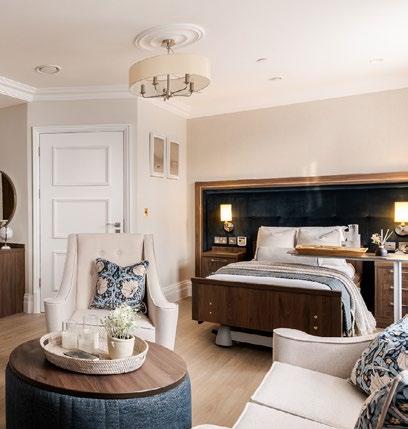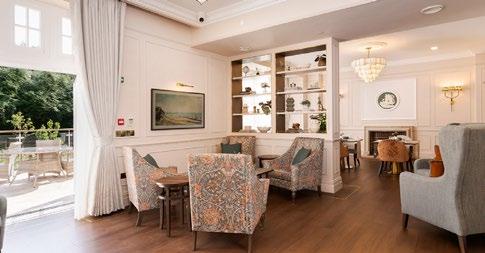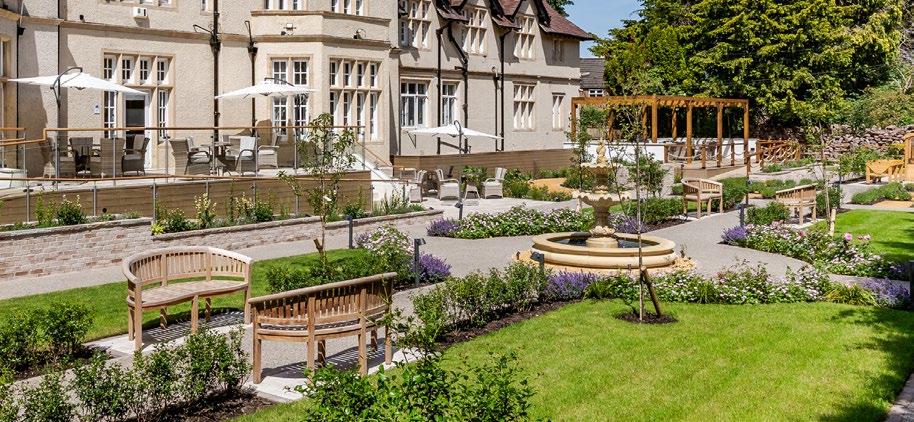


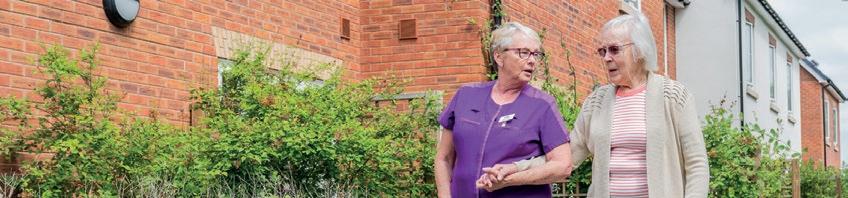
At Llys Herbert and Llys Cyncoed in Cardiff our highly trained teams are experts in providing high quality care from residential and dementia care to short-term care. Our homes offer luxurious facilities, including a coffee shop, hair salon and beautiful landscaped gardens with a passionate Lifestyle team that
means your loved one’s day will never be the same.
A lifestyle tailored to you
At Llys Herbert and Llys Cyncoed our teams are passionate about supporting you to enjoy a fulfilling life. We’ll learn all about your interests and preferences so we can create a fully personalised lifestyle plan that you’ll enjoy; whether it’s gardening, cheese and wine socials or playing chess.
To find out more about all 0333 060 2897.
Llys Cyncoed care home 127 Cyncoed Road, Cyncoed, Cardiff, Glamorgan CF23 6AF
Llys Herbert care home Ty-Draw Road, Lisvane, Cardiff, Glamorgan CF14 0AW
careuk.com/cardiff
Quality care, 6 weeks free*
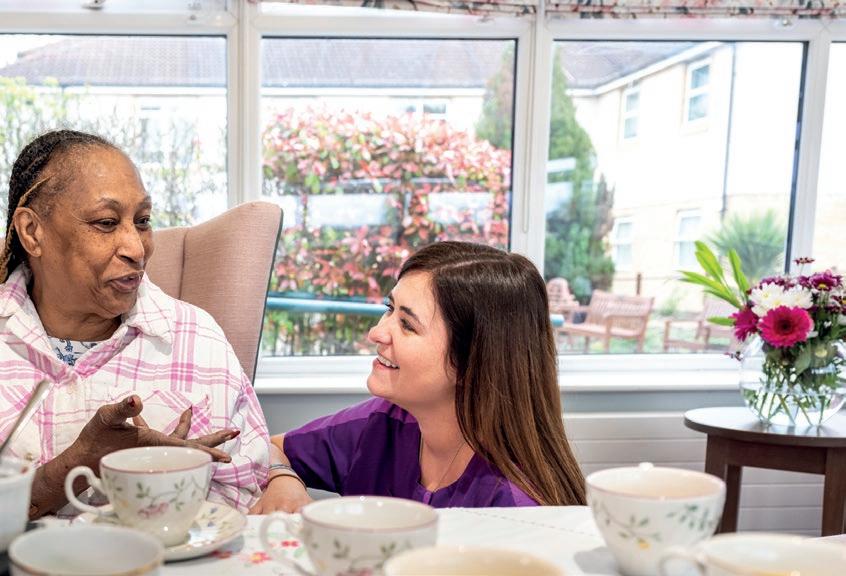
At Llys Cyncoed and Llys Herbert you can be sure that your loved one will receive the highest quality of care. What’s more, we’re offering new permanent residents six weeks’ free.
Llys Herbert care home, Lisvane Llys Cyncoed care home, Cyncoed 0330 029 6609 careuk.com/cardiff Trusted to care

Bwrdd Ymddiriedolwyr ScoutsCymru
chi helpu i lunio
dyfodol Sgowtio yng Nghymru?
Mae ScoutsCymru yn chwilio am unigolyn proadol i ddod yn Gadeirydd nesaf y Pwyllgor
Cyllid ac Adnoddau – rôl wirfoddol strategol sydd wrth galon ein Bwrdd Ymddiriedolwyr.
Nid rheoli'r cyllid o ddydd i ddydd yw diben y rôl. Ein tîm staff proadol sy'n gwneud hynny.
Yn hytrach, rydym yn chwilio am rywun a all ddod â goruchwyliaeth strategol, barn gadarn a her adeiladol, gan helpu i sicrhau bod ein hadnoddau'n cael eu defnyddio'n effeithiol fel y gall mwy o bobl ifanc ledled Cymru ennill sgiliau ar gyfer bywyd.
Efallai bod gennych broad mewn:
○ Cyllid neu gyfrifeg ○ Llywodraethu
○ Archwilio ○ Rheoli risg
○ Neu rôl uwch arall sy'n ○ Arweinyddiaeth cynnwys goruchwyliaeth fasnachol ariannol strategol
Nid yw proad blaenorol fel ymddiriedolwr elusen yn hanfodol.
Rôl wirfoddol yw hon, gyda threuliau rhesymol yn cael eu had-dalu, a hyfforddiant a chyfnod sefydlu llawn yn cael eu darparu.
Os hoffech ddefnyddio'ch proad i wneud gwahaniaeth parhaol, byddem wrth ein bodd yn clywed gennych chi.
Diddordeb? Mae popeth sydd angen i chi ei wybod am y rôl, beth sy'n gysylltiedig â hi a sut i wneud cais yn ein pecyn gwybodaeth i ymgeiswyr a scoutscymru.org.uk/news

ScoutsCymru is looking for an experienced individual to become our next Chair of the Finance and Resources Committee – a strategic volunteer role at the heart of our Board of Trustees.
This isn't about managing the day-to-day nances. Our experienced staff team does that.
Instead, we're looking for someone who can bring strategic oversight, sound judgement and constructive challenge, helping ensure our resources are used effectively so that more young people across Wales can gain skills for life.
You might have experience in: ○ Finance or accounting
Audit ○ Governance
Risk management ○ Or another senior role ○ Commercial leadership involving strategic nancial oversight
Previous charity trustee experience isn't essential.
This is a voluntary role with reasonable expenses reimbursed, full induction and training provided.
If you'd like to use your experience to make a lasting difference, we'd love to hear from you.
Interested? You can nd everything you need to know about the role, what's involved and how to apply in our candidate information pack at scoutscymru.org.uk/news


by Mark J Robson
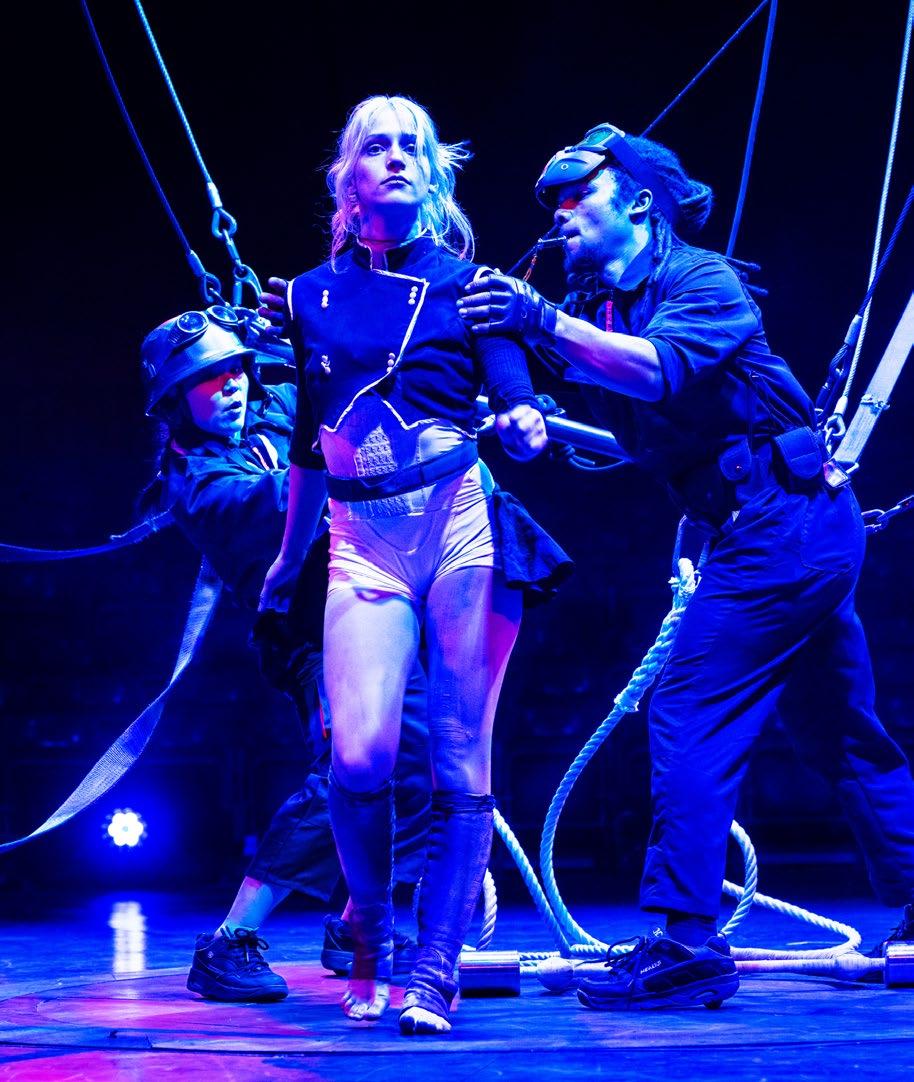
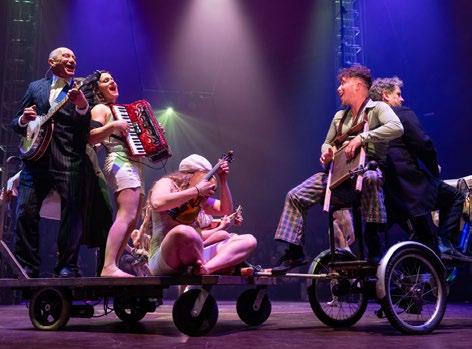
Daring aerial feats, bold cinematic imagery and jaw-dropping physicality combine in a fully immersive experience that surrounds you from every angle. CARNATION unleashes dazzling skills and heart-stopping moments of ordinary people doing extraordinary things. A powerful reflection on the times we live in and a call to stand up and be heard. mae’r chwyldro’n nesáu a does gen i ddim byd i’w wisgo the revolution is coming and i have nothing to wear
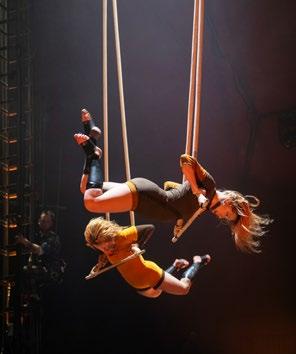
‘Once inside the big top, you are enveloped in a world of magic.’ The Guardian
‘Wild, witty, rebellious and wonderfully alive, CARNATION is circus with heart, muscle, humour and political bite.’ Brighton & Hove News
With 40 years at the forefront of European circus, NoFit State continues to thrill, surprise and mesmerise. This is an edge-of-your-seat spectacle. Unmissable. booknow.nofitstate.org

My favourite radio station, Times Radio, had a fun feature this morning (8th July); little white lies our parent told us when we were kids – or which we’ve told our kids. In a surprising number of cases not only did the kids not question the veracity of the claim but they still believe it today. The presenters of the breakfast programme, Stig Abell and Kate McCann, noted that the white lies that mothers told might be thought of as hygiene/ health-related, whereas the fathers’ lies were more ‘for the heck of it’.
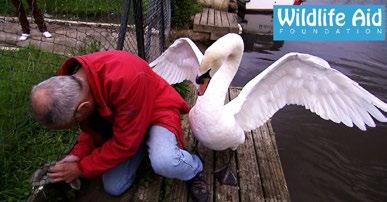
What are the little white lies that you were told or that are still prevalent within your families? I’ll admit that for quite a while I was inclined to believe that if one annoyed a swan the bird would as likely as not break one’s arm. Just thinking of this made visits to Roath Park lake a lot tenser than they needed to be. I think this fell under health/ hygiene categories probably emanating from my mother. I’m 67 years old now and I’ve never once met or heard of someone who’s arm has been broken by a swan. I imagine mam used it when my sister and I were toddlers, to keep us from getting too close to the water’s edge. I will admit that I have told The Girl, my daughter who has Down Syndrome, to keep away from swans. That had less to do with a fear of swan-related broken arms as with The Girl was very small and the swans at the park towered over her. You decide which of the following are healthrelated and which ‘for the heck of it.
• If you eat crusts you’ll get curly hair.
• Don’t play with your belly button or your bum will fall off.
• Bees make honey but wasps make mustard.
• If you put sugar on your cereal you’ll get worms.
• You can’t have bubble-gum because if you chew it too long it will turn into a cowpat.
• You should not have chewing-gum because, if swallowed it would wrap itself round and around one’s heart.
• You’ll get tummy ache if you keep running around on a cold floor. [I can’t make the connection myself.]
• My primary-school-teacher told her pupils that If you tell lies your eyes will change colour.
• A Times Radio listener had to think fast when their budgie was eaten by the cat. When their kids asked where the budgie was they were told that budgies only live for three weeks. A couple of weeks later the primary school teacher asked the class to list animals that don’t live very long. The kid from the budgie family answered that budgies only live for three weeks. The whole class laughed at them. They’ve still not forgiven their parents.
• My dad used to tell us that white chocolate was milk that had been sicked-up by babies and left to dry in the sun.
• “Good people don’t do things like that.”
• One dad used to tell his kids that After Eights were just pig fat. In fact, he loved them and just wanted to keep them for himself.
• Don’t swim for three hours after lunch or you will get cramp and drown.
• If you wee in a swimming pool the water will turn blue (or green).
• The French call a swimming pool a ‘piscine’ because they piss een it.
• If you chew your nails the bits will get stuck in your liver.
• If you chew your nails the bits will get stuck in your appendix and cause appendicitis.
• Some parents tell their kids they are allergic to all pets… so they never asked for one.
• Some parents told their offspring that the TV only worked when it rained.
• Some parents told their kids that the ice cream van was a butcher’s van.
• Others said ice cream vans are libraries.
• Others that when an ice cream van was playing a tune it was empty.

• When travelling by plane one parent would surreptitiously turn on the overhead reading light and tell his
misbehaving child that it was a warning from the captain.
• If you put cold hands onto a hot radiator you’ll get chilblains.
• If you sit or lean against something cold you’ll get piles.
• “This hurts me more than it hurts you.”
• If you catch Santa delivering presents he’ll never come again.
• If you pull a face and the wind changes you’ll stay like that for ever.
One correspondent had surprisingly strong opinions: “I’ve always hated things like that. I was brutally honest with my children. Why should they not know the truth?”
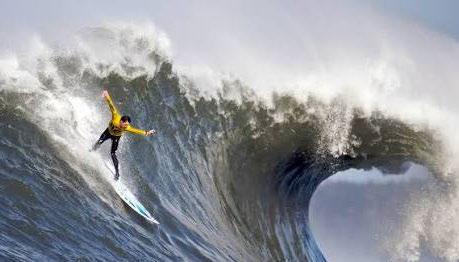
Ho hum. On the home front The Girl gained second place out of nine in her most recent trampolining competition, representing Wales as a region. Before the end of the summer holidays she will travel to Derby for another big event. She has also twice gone surfing in Caswell Bay on the Gower coast. I remember being told by hospital Consultants and mid-wives that my daughter’s Down Syndrome might preclude her even walking. So I leave it to your imagination and empathy to appreciate how The Boss and I felt seeing our Girl standing balanced on her board, coming in with the waves.
May we wish you all a happy summer.



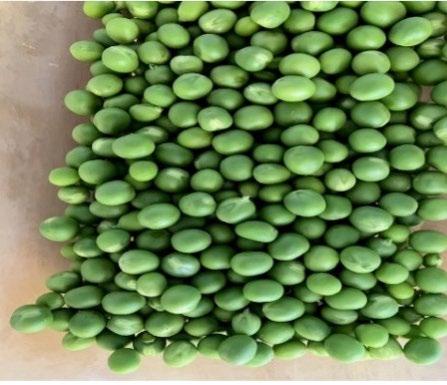
To splod or to pod (the peas) that is the question. My Dad used to have an allotment and was forever bringing home the fruits of his labours. Well, there weren’t any fruits per se but nobody says bringing home the vegetables of their labours or do they? Anyway, I digress. This being the Summertime I recently purchased a large bag of peas in pods from the local pea emporium. All very nice but they had to be podded or splodded depending on where you was dragged up. Quite time-consuming but there was nothing on the telly apart from that football thing that was going on somewhere overseas. Anyway, it was worth the effort as you can see.
All of which reminded me of the story of a lemon, a potato, and a pea who worked together at the local greengrocers. (It’s a joke get over it). They decided to let off some steam with a pub crawl at the weekend. They had a great time, hitting pub after pub, but being so genetically different, the alcohol affected each of them in different ways. At the end of the night they found
by Vince Nolan
themselves leaving a pub at the top of a big hill, when all of a sudden the pea said: “Lads! Lads! I’ve got a great idea! We’re all vaguely round in shape, let’s roll down the hill!” Before the others could protest he was off - shooting down the hill at a rate of knots. The lemon lurched after him but soon started listing violently from side to side owing to his oval shape, which did nothing for his unsettled stomach. With a sigh, the potato trundled along slowly behind. By the time the potato had bounced his way to the bottom of the hill, the lemon was spewing lemon juice all over the pavement, but the pea was already jumping up and down: “That was great, that was great, let’s do it again he said!” The lemon was now chundering up pips with the acid, but the pea didn’t seem to care “Come on! let’s go again, that was great,” he repeated. The potato turned to him quietly and said: “Easy peasy, lemon’s queasy.” I’ll get my coat.
Saw this article the other day: Me to School: “Can I take my kids out of school for 2 days please, we have a Wedding.” School to Me: “Absolutely not, they will miss essential learning and you will be fined a million pounds per parent if you dare to break our rules.” School email to me this week: “Sorry, hope you had no plans Tuesday-Friday but you need to pick your kids up at 12.30 as it’s going to be a bit hot in the classrooms and we assume you all live in igloos.”
I was approaching a well-known supermarket to buy essential comestibles for The Current Mrs Nolan (knuckleduster, taser and pepper spray replacements) and as I was about to enter when an old
lady collapsed in front of me. Boy Scout training kicked in and I rushed to help as did another bloke who was alongside me and we checked that she was ok. I went into the shop, found an employee, told her what had happened and asked her to phone 999. She did not react and seemed rooted to the spot. Meanwhile I picked up a patio chair from the nearby garden furniture display and brought it outside where we sat the lady down (having checked for broken bones etc). I went back into the shop to the fridges, took a bottle of water from one and gave it to the lady.* It seemed that the heat had got to her. Quite why these workers are not trained in first aid is beyond me. Let’s hope they never need any themselves! *I was not charged for the use of the chair or the bottle of water but the lady probably was. Staying with health matters, I haven’t had much luck recently. I cut myself trying to open a box of plasters!

He said: “Come up quickly, I fought with my wife and now she wants to throw herself out of the window.” The manager replied: “Sir this is a personal matter and we can’t get involved.” The man interrupted and said: “No! This is a maintenance issue. I can’t open
I went to the local hair emporium to have the Nolan bouffant cut down to size and whilst waiting was sat next to a two year old little guy and his mum. A bloke walked in and the boy shouted “Daddy.” Mum quickly explained to him and to us that it was not his Daddy but a man who had the same coat that Daddy wore. My how we all laughed. The bloke looked scared!
her: “In your dreams. Too close for what?” She said: “They should put those distancing markings back on the floor.” I said: “Let’s have another pandemic then shall we?” She said: “I’ve got a virus.” Me: “Well a mask would have been a good idea all round then wouldn’t it? Let’s hope it’s nothing trivial.” At this point the Boss and I left and learnt the next day that my “new friend” was there for another half hour disrupting and abusing the classy clientele in the caffeined calm of the café (good example of alliteration there). How do they find me? All of this was very sad so what do you call a sad coffee? A Depresso and what’s the opposite of coffee? Sneezy.
When I first started drinking many centuries ago we lads used to frequent the Taff Vale Pub on the corner of Queen Street and Paradise Place (honest). It was 17 pence a pint in the bar and 19 pence in the lounge so five pints for £1. Now it’s £5 for 1 pint. How did that happen? On the same subject, a gorilla visited a pub and ordered a pint of beer. “That’ll be £7” said the barman. As the gorilla paid, the barman said: “We don’t get many gorillas in here.” The gorilla replied: “I’m not surprised at these prices.”
French and very good English/Welsh. On New Years Eve their leader Franck sent this message to us: “Blwyddyn newydd dda” His French mate quickly followed this up with: “Don’t tell everyone your computer password Franck.”
Whilst the New Year hostilities are now long faded into the distance, I have two tales from that time which I should like to share with you. The first involves the bar manager at our local alehouse, The Fisherman’s Ar - - . That should be The Fisherman’s Arms but the last two letters fell off in the recent high winds. We
She Who Must Be Obeyed and I were enjoying a salubrious (I know, spoiling that woman). I was one of two people in the queue. There was a lady in front of me who turned around and said to me: “You are standing too close.” I said to
Saw this headline in the local paper recently: Navy Plans Reflect A Sea Change in How Future Wars Will Be Fought.” A sea change, you don’t say! What if the RAF said: “There’s something in the air tonight.” Or the Army: “Tanks very much.”
Until the next time my Chums.
Staying with rugby matters, we recently lost a much-loved member of St. Peter’s Rugby Club, Bart O’Brien. He lived to the fine old age of ninety, was a former Club Captain and a great wit. I had the honour of playing alongside his three sons and he was an avid reader of this publication. As part of the eulogy, his son Bernard shared the following with us: “Bart was very much on the ball and retained his humour and enthusiasm to the very end. He was asked to attend a Doctors appointment as his memory was apparently showing its age (understandably so). The Doctor said to him: “I want you to give me a list of as many animals you can think of. Take your time” Bart thought for a second and said: “Ten cows, twelve sheep and twenty horses.” Brilliant! At the other end

played each other and we now communicate with each other regularly via WhatsApp in schoolboy

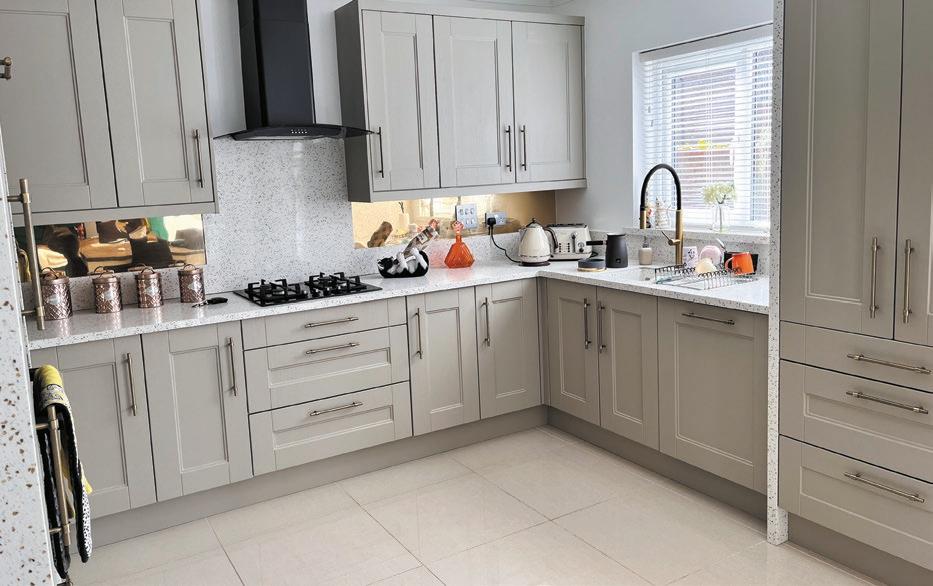
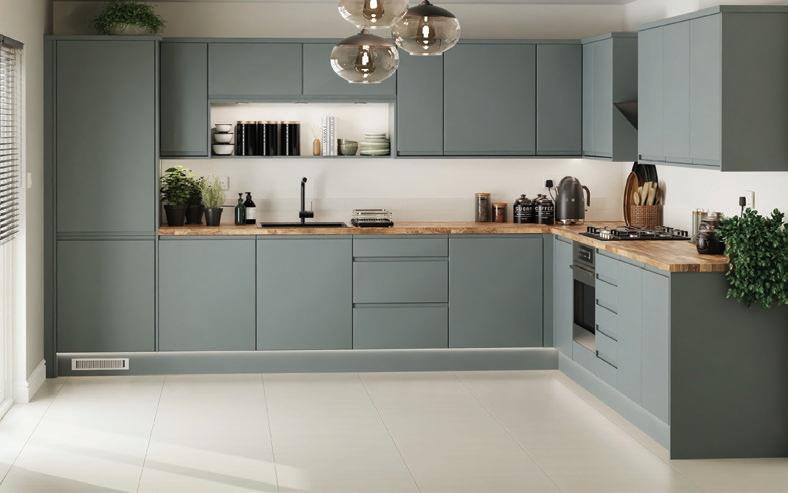
By simply replacing your existing doors, panels and trims, we can completely transform your kitchen in as little as two days, without the cost, mess or disruption of a full replacement.
Why choose a kitchen makeover instead of replacing it?
✓ Fall in love with your kitchen again
✓ A brighter, fresher, more modern space
✓ Huge choice of stunning designs
✓ No need to empty cupboards
✓ Fully fitted in as little as 2 days
✓ Fraction of the cost of a new kitchen
Enjoy now - pay later. It’s that simple.
Secure your kitchen makeover with just a 10% deposit & nothing to pay until 2027*.
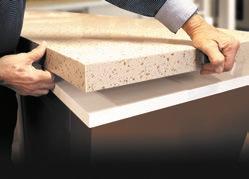
Complete your summer look with a natural stone overlay from Quartzize
Why replace your worktops when this unique 100% SILICA FREE QUARTZ OVERLAY simply fits over your existing surface? Here are some of the benefits:


Every now and then, a country quietly exceeds every expectation you had before you boarded the plane. Korea was exactly that. I expected fantastic food, fascinating history and plenty to write about, but I hadn’t expected to enjoy it quite so completely. It was one of those countries that leaves you thinking, “I definitely need to come back,” because one visit wasn’t enough. And before anyone asks… yes, Japan was every bit as incredible too. Still, I’m deliberately saving that review until next month’s column because it deserves a piece all of its own.
This month’s interview is one I’ve wanted to do for a very long time. Whether you know Clare Grogan from Altered Images or as Susan in the much-loved Gregory’s Girl, she’s remained one of the warmest and most instantly likeable people in British entertainment. We spoke about those whirlwind early days, songs that have somehow become part of so many people’s lives and why, more than four decades on, she still genuinely enjoys performing. It’s one of my favourite interviews of the year, so I’ll leave the full conversation to the next page.
The biggest surprise of my trip wasn’t Seoul, although I loved its energy, remarkable public transport and just how safe it felt to explore. Nor was Busan, with its beaches, temples and spectacular coastline. It was Gyeongju.
Often described as “the museum without walls”, it somehow manages to make almost a thousand years of history feel completely natural. Ancient royal tombs sit amongst parks and cafés, while places like Cheomseongdae Observatory and Donggung Palace blend effortlessly into everyday life instead of feeling like isolated tourist attractions. Looking back now, Gyeongju wasn’t just my favourite place in Korea; it was probably the biggest surprise of the entire trip. I’d expected to enjoy it, but I certainly hadn’t expected to fall for it quite so completely.
by Carl Marsh
My stay at BonghwangMansion only added to that feeling, making it incredibly easy to slow down and enjoy where I was. Add in fantastic food, incredibly welcoming people and a country that consistently felt clean, efficient and safe, and it’s easy to see why Korea has climbed so high on my list of favourite destinations. One visit isn’t enough; it’s somewhere that deserves a second, and probably even a third.
As for Japan… You’ll have to wait just a little longer. Next month I’ll be looking back on two and a half unforgettable weeks travelling from Fukuoka through Hiroshima, Osaka, Kyoto, Mount Fuji and Tokyo, sharing the moments, places and surprises that made it such an unforgettable experience. For now, though, Korea deserves the spotlight all to itself. Oh, I purposely didn’t just put South Korea, as I did visit the DMZ and could see North Korea, which I hope explains my wording on this page.
Until next month, please enjoy the rest of your summer, make the most of the sunshine while it lasts and, if you’re anything like me, keep searching for the next adventure. And even if we have any more heatwaves, at least I can cope now, as Japan was off-the-scale heat for me!
See you next month,
X [Twitter] — @InTheWordsOf_CM YouTube — InTheWordsOf Website — InTheWordsOf.com
Words: Carl Marsh
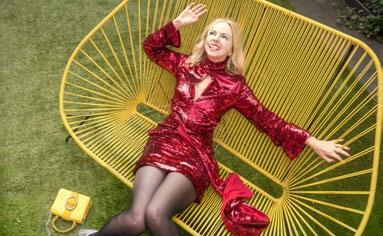
I’ve long admired Clare Grogan’s work, so to finally get the chance to do a live video interview with the Altered Images frontwoman was an absolute pleasure. Ahead of the band’s return to Bristol’s Thekla this September, we spoke about early fame, Glasgow, creativity and why, more than forty years on, the greatest thrill still comes from walking on stage.
More than four decades on, what still gives you that buzz when you walk on stage?
Clare Grogan: The response. When I look out at the audience, I think we’ve all been through a lot of stuff, and here we all are in the same room together, determined to have a good time. I love that. The energy is different from the early ‘80s, but people still want to be up on their feet, dancing. None of us quite want to let go of who we were.
Looking back, how different does touring feel now compared with those whirlwind early years?
Completely different. Back then I was on a tour bus with a bunch of nice boys, but it was such a maledominated world that sometimes I felt quite isolated. Now I’ve got girls in the band, and I’m much more in control because I’ve got the experience to be that person. That’s a really good place to find myself.
You touched on fame earlier. How has your relationship with it changed since those first years with Altered Images?
I wasn’t doing it to be famous. I was doing it because I wanted to perform and be part of an industry I absolutely loved. Fame comes and goes. I enjoyed it, but I never particularly courted it. I genuinely want to do a good job.
Was there ever a point where all that success became genuinely overwhelming?
Oh yes. When I went to America, the pressure shifted up a gear, and the self-doubt crept in. I felt pulled between music and film and couldn’t quite get it right for anyone. I was so young, and I found it really hard.
If a young artist asked you for one piece of advice about surviving today’s music industry, what would you tell them?
Remain true to yourself. It sounds simple, but it’s really difficult. If something doesn’t sit well with you, say no. You’re allowed to stop and think things through rather than just being steamrolled into the next thing.
When audiences sing Happy Birthday back to you after all these years, what goes through your mind?
I always call it the song that keeps on giving –financially as well!” [laughs]. “When you write a song like that, you have no idea where it’ll take you. It’s taken me to so many amazing places and experiences. It’s genuinely been a gift.
Growing up in Glasgow clearly shaped you. What is it about the city that continues to inspire so many creative people?
Completely. Glasgow is a beautiful, inventive, creative place. Lots of people I knew were in bands, or poets or artists, and you weren’t ridiculed for wanting to do something different. Glasgow lets you fly. Everywhere I’ve flown to, I’ve missed Glasgow.
Finally, after everything you’ve achieved in both music and acting, what still excites—or even scares—you about performing?
I think being a lead singer is terrifying and fabulous at the same time. Just before I go on stage, I sometimes think there’s been some terrible mistake, but the minute I walk out it’s, ‘Look at me!’ I love live audiences, and I love the possibility that it could all go wrong. The end of the world isn’t getting it wrong. The end of the world is not to try.
Altered Images return to Bristol’s Thekla on 5th September.
Words: Carl Marsh
Japan had always been the destination I’d dreamed of visiting, so when I finally booked a three-week Far East adventure, South Korea almost felt like the warm-up act. Flying with Etihad Airways in Business Class from London Heathrow via Abu Dhabi set the tone perfectly, with attentive cabin crew, a bar on the plane, and enough comfort to ensure I landed at Seoul’s Incheon International Airport feeling refreshed. I’d done plenty of research beforehand, but nothing prepares you for your first glimpse of Seoul. It’s a city that somehow manages to feel futuristic without losing its identity. There are towering skyscrapers that stand alongside ancient palaces and quiet neighbourhoods. More than anything, though, I was struck by how clean, organised and incredibly safe everything felt. Within an hour of landing, I was navigating the city’s superb public transport network and, despite not speaking a word of Korean, getting around proved remarkably straightforward. If you’re nervous about travelling independently in Asia, South Korea is about as welcoming a place as you could wish for.

For my four nights in the capital, I stayed at the Mangrove Sinseol, with the accommodation kindly provided for review. Complimentary stays always come with an obligation to be honest, and thankfully that isn’t difficult here because the hotel gets the important things right. My room was larger than expected, modern, exceptionally clean and, perhaps most importantly, wonderfully quiet after days of walking more than 20,000 steps. The surrounding neighbourhood felt extremely safe, even late at night, while the nearby metro station meant virtually every corner of Seoul was within easy reach. It isn’t trying to compete with five-star luxury hotels, nor should it. Instead, it offers comfortable, practical accommodation at a sensible price, making it an excellent base for anyone wanting to spend their time exploring rather than sitting in a hotel room.
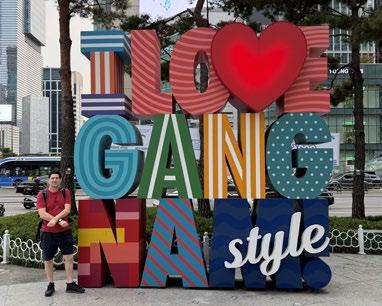
Seoul itself exceeded every expectation. Like most visitors, I headed to Gangnam to see whether it lived up to its famous
reputation. Beyond the catchy song that made the district a household name, Gangnam is exactly what you’d expect from one of Asia’s wealthiest neighbourhoods: immaculate streets, gleaming office towers and designer shopping. Only a short metro ride away lies Hongdae, where students, independent cafés, quirky shops and live street performers create a completely different atmosphere. That’s one of Seoul’s greatest strengths. Every district feels like its own little city, while the metro links them together so efficiently that exploring becomes effortless. Trains arrived on time, stations were spotless, fares were extremely inexpensive and clear English signage meant I was never more than a glance away from knowing exactly where I needed to be. Don’t get me wrong, I did make a few mistakes with directions, but that was my own fault for rush reading!
One place that should be on every visitor’s itinerary is the War Memorial of Korea. Even if military history isn’t usually your thing, it offers an important insight into the country’s past and the sacrifices made during the Korean War. That understanding becomes even more powerful if, like me, you also visit the Demilitarised Zone. When I was standing only a short distance from North Korea, it brought home the reality that this remains one of the world’s most heavily fortified borders. It’s a thought-provoking experience rather than a conventional tourist attraction, and one that stayed with me long after I left. The trip itself to the DMZ consisted of a very early start and lots of walking, but it had to be done. To cap off that day, I got to hear a talk by a defector from the North, and I’ve got his book on the escape now too.
By the time I boarded the train south towards Gyeongju, I’d already been won over by South Korea. The capital had delivered everything I’d hoped for and more, but little did I realise the destination that would leave the biggest impression was still waiting for me.
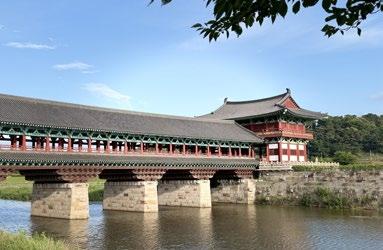
Gyeongju is often described as “the museum without walls”, but even that doesn’t quite do it justice. Once the capital of the ancient Silla Kingdom for almost a thousand years, it’s a place where history isn’t confined to museums but woven into everyday life. Grass-covered royal tombs rise from parks, ancient observatories stand proudly in the town centre and beautifully restored wooden buildings sit comfortably alongside cafés and restaurants. It was also the biggest surprise of my Korean adventure. I’d expected to enjoy it, but certainly not to fall for it quite so completely. My base was BonghwangMansion, a relaxed and welcoming place that perfectly reflected the town itself. Having breakfast with a view of some of the Royal tombs was a pinch-me moment. It also represented excellent value for money and, after the pace of Seoul, was exactly the change of gear I hadn’t realised I needed. Wandering through Gyochon Hanok Village, admiring Cheomseongdae Observatory and spending an early evening at Donggung Palace and Wolji Pond as the lights shimmered across the water remain among my favourite memories of the trip. Unlike many historic destinations, Gyeongju never felt crowded. Instead, it encouraged me to slow down, put the camera away and enjoy being there. If I had to recommend just one place to experience the true character of South Korea, this would be it.
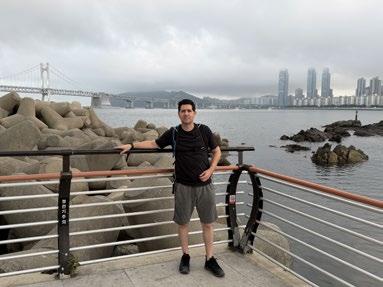
My final stop before crossing into Japan was Busan, South Korea’s second city, which once again offered a completely different experience. While Seoul thrives on energy and Gyeongju on history, Busan blends mountains, beaches and temples with an easy-going coastal atmosphere. I stayed at the Hound Hotel Busan Station, which is an excellent base right next to the station and port, ideal for both exploring the city and catching the overnight ferry to Fukuoka. The rooms were comfortable, but the highlight was undoubtedly the rooftop pool. Swimming there after sunset with the lights of the Busan skyline became one of those unexpected travel moments I’ll never forget. The hotel also had a lovely touch, introducing guests to a different friendly dog each day, something that perfectly reflected the warmth I encountered throughout Korea. Before leaving, I visited Haedong Yonggungsa Temple, dramatically perched above the sea,
before finishing the evening at Gwangalli Beach as families strolled the promenade beneath the illuminated bridge. It was the perfect farewell to the Korean mainland.
Looking back, what impressed me most wasn’t one attraction but how smoothly the country works. Public transport deserves every bit of its outstanding reputation. Whether travelling around Seoul by metro or between cities by rail, everything was punctual, clean, extremely affordable and incredibly easy to understand. Safety was equally impressive. I lost count of the evenings spent wandering unfamiliar streets after dark, yet never once felt uneasy. Food also deserves a mention. From Korean barbecue and bibimbap to grabbing something quick from one of the country’s excellent convenience stores, eating well was both easy and affordable. If you like coffee, then you’ll be spoilt for choice as I’ve never seen so many coffee shops next to each other on every street! And the open-air markets are an experience in themselves. You could have spent hours in them just eating different types of food, although I do draw the line at eating octopus that’s still swimming about in the fish tank outside. When I boarded the overnight ferry from Busan to Japan, I realised just how wrong my original assumptions had been. South Korea had never been the main event; it was simply the gateway to the country I’d always dreamed of visiting. Yet somewhere between Seoul’s futuristic skyline, the silence of the DMZ, the timeless charm of Gyeongju and a rooftop swim overlooking Busan Harbour, my opinion changed completely. South Korea deserves far more than a few days as part of a wider itinerary. It offers world-class cities, remarkable history, beautiful scenery, outstanding value and some of the warmest people you’ll meet anywhere in Asia. As the ferry slipped quietly away from Busan and the city lights faded into the distance, and I was settling into my room on the boat, I wasn’t thinking about Japan waiting on the horizon. I was already wondering when I’d return to South Korea.
감사합니다 (gamsahamnida), which means “Thank you” in Korean.



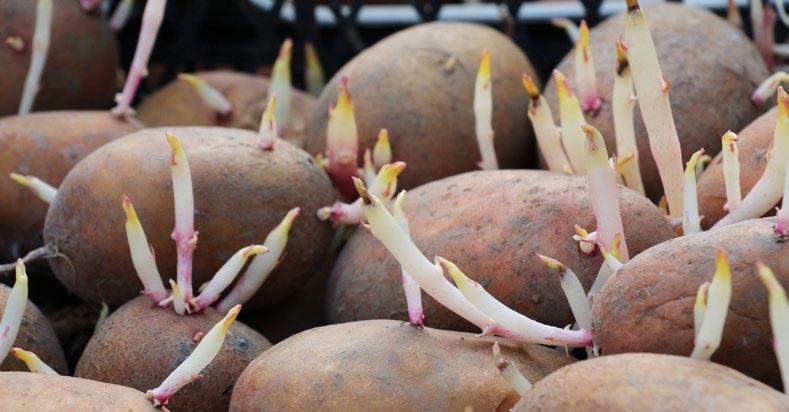
• The Actualising Tendency – Carl Rogers’ Potato Story illustrates his belief that all living beings, including humans, have an innate drive to grow and fulfil their potential, even in challenging conditions.
• Impact of Environment – While growth is natural, the quality of that growth depends on external conditions. Just as the potatoes in the cellar became pale and spindly due to lack of sunlight, people can struggle when placed in restrictive, unsupportive environments.
• Conditions for Flourishing – Rogers argued that for individuals to thrive, they need an environment of unconditional positive regard, empathy, and authenticity. These principles underpin his person-centred therapy and extend to broader societal structures.
• Modern Relevance – The Potato Story serves as a reminder that human potential persists even in difficult circumstances. However, institutions like schools, workplaces, and governments can either nurture or inhibit growth, making it crucial to create conditions that support well-being and self-actualisation.
It’s a simple image - one that might be overlooked in the grand sweep of Carl Rogers’ work.
A box of potatoes, neglected in a dark cellar, stretching their pale, spindly shoots towards an absent light.
And yet, for Rogers, this became a profound metaphor for human existence, a way of understanding the indomitable pull towards growth, even in the most unpromising conditions.
This is The Potato Story, an anecdote Rogers included in his 1980 book A Way of Being, a reflection on his life’s work and the philosophy that underpinned it.
For a man who spent his career advocating for the full, authentic realisation of human potential, these struggling potatoes came to symbolise something both humbling and extraordinary. Even in darkness, without encouragement, life pushes on.
But The Potato Story is more than just an evocative metaphor. It raises questions about the environments we find ourselves in, the structures that shape us, and what it truly means to flourish.
At a time when psychological distress is soaring and our institutions feel increasingly unfit for purpose, Rogers’ ideas - and the potatoes in the cellar - may have more to teach us than ever before.
Carl Rogers was one of the most influential psychologists of the 20th century, a pioneer of humanistic psychology and the founder of person-centred therapy.
At the heart of his approach was a radical faith in what he called the “actualising tendency” - an innate drive in all living beings to grow, develop, and fulfil their potential.
Carol Dweck’s work on growth mindset supports the idea that human potential persists even in difficult circumstances and that institutions play a key role in fostering or hindering self-actualisation.
Unlike the Freudians, who saw human nature as a battlefield of unconscious forces, or the behaviourists, who reduced it to conditioned responses, Rogers believed that people, when given the right conditions, naturally move towards greater wholeness and self-understanding. He argued that human beings are organismic, meaning we are inherently motivated to seek out experiences that nourish us and reject those that stunt our growth.
This is where The Potato Story comes in. Rogers described a childhood memory of potatoes stored in the basement of his family farm. Though they were deprived of sunlight and proper nourishment, they still grew. Their shoots were pale, thin, and twisted - far from the robust plants they could have been - but they reached out all the same.
For Rogers, this was a powerful demonstration of the actualising tendency. Even when conditions are poor, even when life is constrained and deformed, the drive to grow does not disappear. The potatoes might not have flourished, but they had done the best they could with what they had. And so, he suggested, do we.
If the actualising tendency is so fundamental, why do so many people struggle? Why does psychological distress seem to be rising rather than falling? Rogers’ answer lies in the conditions of worth imposed on us by society.
From an early age, we learn that our value is conditional. Love and acceptance are often tied to how well we meet the expectations of parents, teachers, and cultural norms.
A child who is encouraged only when they behave in a certain way - when they achieve academically, suppress emotions, or conform to gender roles - learns that parts of themselves are unacceptable.
Over time, this leads to a split between the self (our true, internal experience) and the self-concept (the version of ourselves we present to the world to gain approval).
This incongruence, Rogers argued, is the root of much psychological distress. When we deny our own needs, feelings, and aspirations to fit in, we become alienated from ourselves.
We might succeed outwardly but feel empty inside. We might meet society’s standards but suffer from anxiety, depression, or a vague sense that something is missing.
The potatoes in the cellar were doing their best to grow, but their environment limited them. Many of us are in the same position - stretching towards the light, but in conditions that fail to nourish us.
This idea that the quality of human growth and development is shaped by environmental conditions is confirmed in Uri Bronfenbrenner’s ecological systems theory, where he explores how various environmental layers influence individual development.
Rogers’ great contribution to psychology was his belief that healing does not come from being “fixed” by an expert, but from an environment that allows growth to happen naturally.
His person-centred therapy was based on three core conditions:
1. Unconditional Positive Regard - accepting the client fully, without judgement.
2. Empathy - deeply understanding their experience.
3. Congruence - being authentic rather than distant or performative.
When these conditions are in place, Rogers argued, people begin to reconnect with their actualising tendency. They move towards greater self-awareness, self-acceptance, and psychological well-being. They do not need to be directedonly given the right space in which to grow.
But this principle extends beyond the therapy room. If people thrive when given unconditional acceptance and the freedom to be themselves, what does that say about our schools, workplaces, and governments?
In a culture obsessed with productivity, efficiency, and rigid performance measures, how many of us are like those potatoes, growing in distorted, unnatural ways?
How many children are trained to chase grades rather than curiosity?
How many workers are forced into roles that deaden them?
How many people suppress their true selves to fit into a society that demands conformity over authenticity?
Rogers’ Legacy in a Fragmented World
It’s easy to dismiss Rogers’ ideas as too optimistic. His unwavering belief in human potential can seem naive in a world racked by inequality, political chaos, and ecological collapse. But perhaps that’s precisely why his work matters more than ever.
If the potatoes in the cellar tell us anything, it’s that growth
is inevitable - but the quality of that growth depends on the conditions we create. We can build institutions that foster openness, creativity, and emotional intelligence, or we can maintain systems that produce anxiety, alienation, and burnout. The choice is ours.
Rogers was no revolutionary in the political sense, but his work carries radical implications. He believed in listening rather than dictating, in trusting people rather than controlling them, in creating environments where individuals could flourish on their own terms.
In a society where so much feels constrained - where economic precarity, social divisions, and mental health crises dominate the headlines - this perspective is a challenge to business as usual.
What if we designed schools that nurtured curiosity rather than obedience?
Workplaces that valued authenticity over constant performance?
Governments that prioritised well-being over GDP? Rogers’ vision may have been simple, but its implications are profound.
Thepotatoesgrewbecausetheyhadnootherchoice.Wedo.
“I remember that in my boyhood, the bin in which we stored our winter’s supply of potatoes was in the basement, several feet below a small window.
The conditions were unfavourable, but the potatoes would begin to sprout — pale, white sprouts, so unlike the healthy green shoots they sent up when planted in the soil in the spring. But these sad, spindly sprouts would grow 2 or 3 feet in length as they reached toward the distant light of the window.
The sprouts were, in their bizarre, futile growth, a sort of desperate expression of the directional tendency I have been describing. They would never become plants, never mature, never fulfil their real potential. But under the most adverse circumstances, they were striving to become.
Life would not give up, even if it could not flourish. In dealing with clients whose lives have been terribly warped, in working with men and women on the back wards of state hospitals, I often think of those potato sprouts. So unfavourable have been the conditions in which these people have developed that their lives often seem abnormal, twisted, scarcely human.
Yet, the directional tendency in them can be trusted. The clue to understanding their behaviour is that they are striving, in the only ways that they perceive as available to them, to move toward growth, toward becoming.
To healthy persons, the results may seem bizarre and futile, but they are life’s desperate attempt to become itself.”
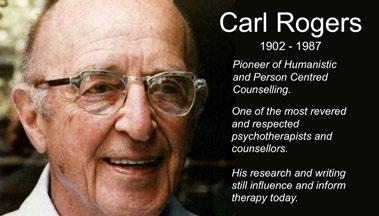
Carl Rogers died on 4 February 1987, but his legacy endures, reminding us that, given the right conditions, every individual has the capacity to grow, heal, and thrive.
Because I did. Even in the darkest phase of Complex Post Traumatic Stress, I managed to grow. With hindsight, like the potatoes, I knew that I felt that innate need to grow and, in doing so, to heal. Once I found myself in the right conditions again, I found myself actually thriving. I was not just back to where I was before the traumatic incidents, but better and stronger than ever!
Andguesswhat?There’ssomuchmoretocome...

By Gareth Strangemore-Jones (Alchemy Life Therapy & The Brain Gym)
MHFA, DCST, PDPCP, HPD, DSFH, DMH, AHD, MNCPS (Reg.), MNCH (Reg.), MAfSFH (Reg.), MCNHC (Reg.), FSE (Fellow), IFfS (Assoc.), NCTJ, MSC-CPA, PGCE I & II
Mental Health First Aider | Pluralistic Counsellor | Clinical Psychotherapist | Consultant Medical Hypnotherapist | Mindfulness Teacher | PGCE-Trained Teacher | Lecturer | Corporate Trainer | Workplace Wellbeing Consultant | PR & Marketing Consultant | Psychology & Behaviour Advisor | Author | Journalist | Broadcaster
Advocate for Mental Health, People & Planet Website: www.alchemylifetherapy.com LinkedIn: www.linkedin.com/in/garethsj/

Self-guided courses, free wellbeing tools and Plain English neuroscience
All in one place...
Whether you are caring for your own mental health, supporting clients as a therapist, or looking after a team at work, The Brain Gym meets you where you are. Individuals, practitioners, schools and workplaces, and NHS and blue light staff all belong here.
Interactive, self-guided courses grounded in neuroscience
Free wellbeing tools, from a mood tracker to guided meditation
Plain English articles and ebooks, fully referenced
A therapist and client portal to assign resources and track progress
A community forum and personalised, quiz-based recommendations
Use the site in Welsh or English, with dark mode, high contrast, reduced motion and a dyslexia-friendly font built in. NHS and blue light discounts are available too.
Visit www.thebraingym.org and take the free quiz for personalised recommendations, then explore courses, tools and articles. Search everything in one place and continue on any device.
Start today, your first steps are free
Take the free quiz at www.thebraingym.org and get a plan made for you. GET IN TOUCH
Phone 07419 195673
Email info@thebraingym.org
Web www.thebraingym.org
Train your brain. Free your mind.

by Ralph Oates
In this months edition of the Cardiff Times, Adam Munn, who is the Welsh Boxing Non Executive Director kindly gave his time to give his views on various aspects of the sport.
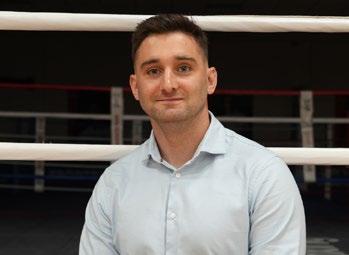
Ralph Oates In which year were you born?
Adam Munn 1995.
RO Where in Wales were you born?
AM I was born in Llandough hospital and grew up in Barry and Rhoose.
RO You are the Welsh Boxing Non Executive Director what does this role entail?
AM As a Non-Executive Director at Welsh Boxing, my role focuses on governance, strategy and support-ing the development of the sport across Wales. That includes helping shape long-term plans, ensuring the organisation is run effectively, and supporting initiatives to grow participation at all levels—from grassroots clubs through to elite amateur boxing. A big part of the role is making sure we’re creating opportunities for people across Wales to get in-volved in boxing, whether that’s competing, coaching or being part of their local club.
RO Have you ever boxed?
AM Not competitively. I had a summer training stint in my uncle’s gym when I was younger, but nothing more than that. Although maybe something to revisit in the future!
RO Have any members of your family ever boxed?
AM Yes—boxing runs in the family. Both of my younger brothers have boxed. My brother Jay represent-ed Wales as an amateur at the Commonwealth Youth Games in 2017, and my youngest brother Alex is currently boxing. My uncle also runs a local boxing gym, so I’ve grown up around the sport.
RO Which do you prefer amateur or professional boxing?
AM I probably watch more professional boxing, but from a Welsh Boxing perspective, amateur boxing is really important. That’s where a lot of the talent comes through and develops.
With the Commonwealth Games coming up next month, I’ll definitely be watching and supporting the Welsh fighters.
RO Who do you feel is the best boxer to have held the world heavyweight title?
AM It’s a tough one because there are so many greats like Muhammad Ali, Mike Tyson and Lennox Lew-is, but I’m a bit too young to have watched them live.
From my generation, I’d say Oleksandr Usyk stands out. To go undefeated at both cruiserweight and heavyweight is an incredible achievement, and his skill, movement and boxing IQ are exceptional.
RO What in your opinion was the best world heavyweight title fight to have taken place?
AM From a more recent perspective, Fury vs Wilder II really stands out for me. What I liked most about it was how Tyson Fury executed a game plan that nobody really expected.
At the time, Wilder was seen as one of the most dangerous knockout punchers in the division, so a lot of people thought Fury would box cautiously and try to win on points. Instead, he completely flipped the script—he came forward, was the aggressor from the start, and ultimately stopped Wilder. From a boxing and tactical perspective, that was really impressive to watch.
RO Who is your favourite modern day boxer?
AM Saúl ‘Canelo’ Álvarez. I love watching him box—he’s a multi-weight world champion and has never been afraid to take risky fights, which says a lot about his mentality and legacy.
RO Who is your favourite old time boxer?
AM Joe Calzaghe—he was probably the first boxer I really followed growing up and, from a Welsh perspective, he’s a huge role model.
RO Do you think professional boxing would be best served with just one world boxing organisation rather than four or are you happy with the present situation?
AM It’s a difficult balance. From a fan’s perspective, having one champion per division would make things clearer and easier to follow. But from a boxer’s perspective, having multiple organisations creates more opportunities to compete for titles, which can be really important for their careers and financial opportunities.
RO Over the years there have been a number of boxing commentators on TV, who was your favourite?
AM For me, it would be Adam Smith. I’ve listened to him commentate on so many big fights over the years, especially Anthony Joshua’s fights. He brings a real sense of occasion to the commentary and makes those moments even more memorable.
RO How do you feel about women boxing?
AM I think it’s been one of the most positive developments in the sport. At Welsh Boxing, we’re focused on making boxing more accessible, and we’re already seeing strong growth in female participation. Hopefully that continues over the coming years.
RO Do you feel that women’s world title fights should be increased from 10 rounds to 12 or stay as it is?
AM It’s an interesting debate and there are valid arguments on both sides. I do think athletes—both current and former professionals—should have a say, given their experience of competing at that level.
That said, it’s also important that any decision is taken with welfare and safety in mind. Ultimately, it should be a balanced decision, informed by medical advice, the views of the athletes, and the govern-ing bodies responsible for the sport.
RO How do you feel about there being so many weight divisions in boxing?
There are pros and cons. More weight divisions create more opportunities for fighters, which is posi-tive, but it can also make the sport a bit harder to follow for fans.
At the same time, weight divisions are really important from a safety perspective—they help make sure there aren’t big mismatches in size and strength, which is obviously key in a sport like boxing. So, it’s about getting the balance right between opportunity, clarity and safety.
AM Looking back at the history of Welsh boxing who in your opinion was the best boxer pro-duced in Wales?
Based on my own experience and the fighters I’ve followed, I’d say Joe Calzaghe. He’s Wales’ only undefeated world champion and set an incredible standard for the sport.
RO Who do you think will be the next professional world champion to emerge from Wales?
AM Joe Cordina, although he’s already been a world champion, having held the IBF super-featherweight crown. I’m hoping he’ll go on to become a world champion again and continue flying the flag for Welsh boxing.
More broadly, we’ve got some strong talent coming through, particularly from the amateur system, which is a big focus for Welsh Boxing in developing future champions.
RO Do you have a favourite boxing film?
AM Rocky III—I watched a lot of the Rocky films growing up. I also really like The Fighter with Christian Bale and Mark Wahlberg.
RO What changes if any would you like to see made in boxing?
AM From a Welsh Boxing perspective, the focus is on continued growth and accessibility—making sure more people across Wales can get involved in the sport.
RO Apart from boxing what other sports do you enjoy?
AM Football and rugby, especially following Welsh teams.
RO What are your ambitions for the future?
AM In terms of Welsh Boxing, I’d like to play a role in helping the sport continue to grow across Wales— whether that’s increasing participation, supporting clubs or helping develop the next generation of boxers.
RO Do you have any hobbies?
AM I enjoy keeping fit—either in the gym or going for a run. I also have a young family with two daugh-ters, so that keeps me busy most weekends.
I would like to thank Adam for his very interesting views on boxing. All at Cardiff Times wish him every success for the future.






by Natalie McCulloch
To quote Canadian singing legend, Celine Dion, “These 3 words can change your life forever”, and whilst we are not talking about love like in her song (although we never know where the power of this app will take people!), we are definitely talking about 3 words that can be life changing or even life saving. What’s more, it only takes a few moments to download and is so simple even a technophobic person (like me!) can use it!
what3words is an app started by a previous gig organiser, Chris, who made it in response to the frustration of bands turning up at the wrong location which made him question how accurate street addressing systems around the world, are. He concluded that Street addressing systems around the world aren’t accurate enough, don’t exist for many places, like parks, hiking trails, and delivery loading bays – and they aren’t compatible with today’s technologies.
So, what are these 3 words?
Well, it depends where you are reading this as what I am referring to is an app called “what3words” which is a global standard for precise location or, to summarise, “The simplest way to talk about location”.
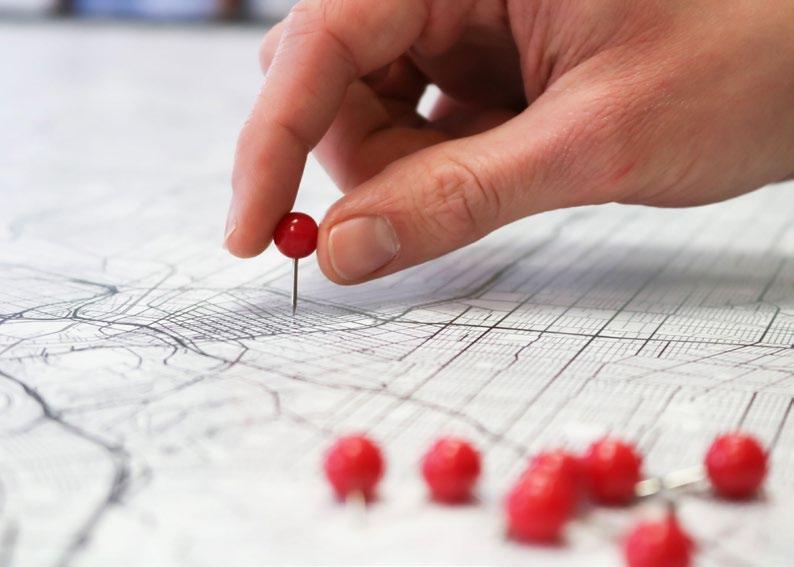
That’s why he created what3words – a global standard for precise location and a great tool to use whenever you need to give or receive a location. what3words has given every 3 metre square in the world a unique address made of 3 random words making It a very simple way to communicate precise locations and can be useful in all sorts of scenerios.
Give your delivery location - Help orders arrive exactly where you want them by adding a what3words address at checkout, and in your delivery app profiles.
Get help in an emergency - Be prepared to give emergency services and breakdown companies a what3words address so they know where to find you.
Enter your driving destination- In many cars and motorbikes you can enter a what3words address to get directions to your precise destination.
Save useful locations - Keep track of places you’ve found, or have been sent by others, so you can re-find them, from work locations to travel tips.
Signpost your premises - Encourage people to use your what3words address by adding it to contact details, booking emails or displaying it on a sign.
Meet up and organise activities - Help everyone arrive at the right place. Share the what3words address of meeting points, parking and event locations.
Even when you’re totally offline, without a data or cellular connection, you can still find the 3 words for your location and navigate to other locations. This is because our app uses a GPS signal to work, which has near-universal coverage wherever you are in the world.
what3words has been accepted by a growing number of businesses and is now used by millions of people worldwide. Why not join them? Its completely FREE to download and use it.
On a personal note – I started using what3words last summer after a pleasant walk through a local park went a bit amiss when I discovered an elderly gentleman collapsed on the trail. Unusually there was no one else around, or those that were around
didn’t stop to help him, I approached him and noted he needed emergency services so dialled for an ambulance. Now, my sense of direction is pretty poor at the best of times, but it was even worse in a panic situation, so giving them the exact location was a challenge which is when they asked if I had what3words app. At the time I hadn’t even heard of it but after this I downloaded it straight away and have since found it very useful for joining walking groups and meeting friends. I would highly recommend it to save time, especially in an emergency situation where time is essential. Luckily, in this situation, 2 men stopped to help me, one of whom had the app and thus the services were able to reach the gentleman with a stretcher in good time.
If you would like to know more about the app, please log onto:
https://what3words.com/ or email: support@what3words.com or WhatsApp them on +447401265449







Worktops
Gwobr Cennin Pedr
Roedd gwir gyffro yng Nghastell Caerffili wrth i ScoutsCymru a Cadw lansio Gwobr Cennin Pedr newydd yn swyddogol, gyda phobl ifanc o bob cwr o Gymru yn derbyn y bathodyn cenedlaethol newydd am y tro cyntaf.
Wedi’i datblygu mewn partneriaeth â Cadw ac wedi’i llunio gan bobl ifanc, mae’r wobr yn annog Scouts o bob oed i archwilio diwylliant, treftadaeth, iaith a hunaniaeth Cymru trwy gyfrwng ystod eang o weithgareddau deniadol. O ddarganfod hanes a thraddodiadau lleol i ymweld â safleoedd hanesyddol a dathlu’r iaith Gymraeg, mae’r wobr yn cynnig cyfleoedd hyblyg y gellir eu teilwra i bob adran.
Daeth y lansiad â phobl ifanc o bob cwr o Gymru ynghyd, ochr yn ochr â gwirfoddolwyr, cefnogwyr a gwesteion gwadd, i ddathlu dechrau’r hyn sy’n addo dod yn rhan barhaol o Sgowtio yng Nghymru.
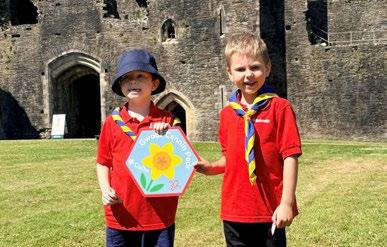
Nid yw eiliadau fel hyn yn digwydd heb wirfoddolwyr. Boed yn helpu pobl ifanc i ennill bathodyn newydd, arwain gweithgareddau, cefnogi digwyddiadau neu rannu sgil, mae gwirfoddolwyr yn gwneud Sgowtio’n bosibl bob wythnos.
Wrth i fwy o bobl ifanc ymuno â Scouts ledled Cymru, mae angen mwy o oedolion arnom i ymuno â’r antur hefyd. Y newyddion da yw bod gwirfoddoli’n hyblyg – p’un a allwch chi roi ychydig oriau bob mis neu ymgymryd â rôl fwy rheolaidd, mae lle i chi.
Os hoffech helpu, byddem wrth ein bodd yn clywed gennych.
Ewch i ScoutsCymru.org.uk i ddysgu mwy am wirfoddoli a darganfod sut allwch chi wneud gwahaniaeth mewn ffordd sy’n gweithio i chi.
Celebrating Welsh heritage with the Cennin Pedr Award
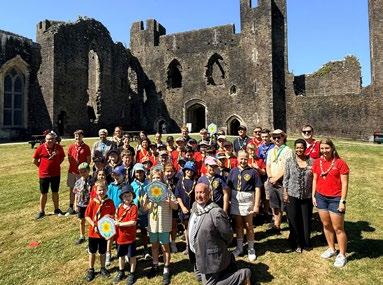
There was a real sense of excitement at Caerphilly Castle as ScoutsCymru and Cadw officially launched the new Cennin Pedr Award, with young people from across Wales becoming the first to receive the new national badge.
Developed in partnership with Cadw and shaped by young people, the award encourages Scouts of all ages to explore Welsh culture, heritage, language and identity through a wide range of engaging activities. From discovering local history and traditions to visiting historic sites and celebrating the Welsh language, the award offers flexible opportunities that can be tailored to every section.
The launch brought together young people from all over Wales, alongside volunteers, supporters and invited guests, to celebrate the beginning of what promises to become a lasting part of Scouting in Wales.
Moments like these don’t happen without volunteers. Whether it’s helping young people earn a new badge, leading activities, supporting events or sharing a skill, volunteers make Scouting possible every single week.
As more young people join Scouts across Wales, we need more adults to join the adventure too. The good news is that volunteering is flexible – whether you can spare a few hours each month or take on a more regular role, there’s a place for you.
If you’d like to help, we’d love to hear from you.
Visit ScoutsCymru.org.uk to find out more about volunteering and discover how you can make a difference in a way that works for you.


£12 £12





















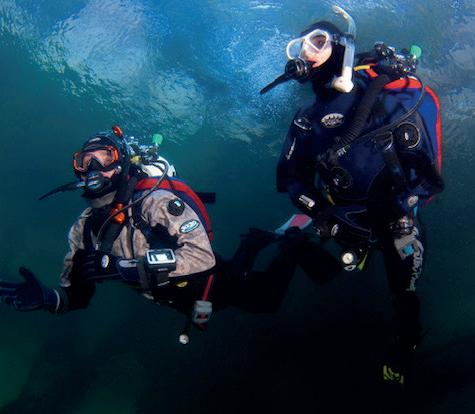






Why not try a new hobby this Summer by learning to scuba dive?

School and Instructor Development Centre.
professional dive instructor. From ages 8 years
kmartin@welshdiving.co.uk
m 07753 691794

Head to Sherman Theatre this autumn and Christmas for superb Cardiffmade family entertainment that’s that little bit different. With exceptional Made by Sherman productions and a famously warm welcome, Sherman Theatre is the place where special family memories are made.
Balloon Girl (9 – 24 Oct)
A Sherman Theatre and Tilt co-production
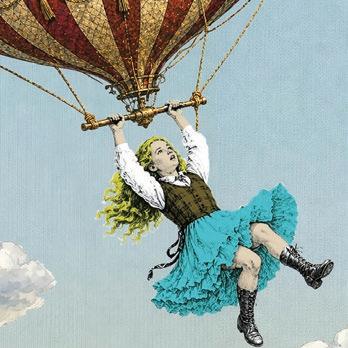
Go with Balloon Girl on a wild, fantastical ride through 2000 years of Welsh history. In this unstoppably fun adventure created by Hannah McPake (Tales of the Brothers Grimm, Alice: Return to Wonderland) you’ll encounter Roman invaders, Viking raiders, Victorian Cardiffians and much more.
Inspired by the extraordinary true story of Cardiff’s very own Balloon Girl, Louisa Maud Evans, our production honours her legacy and bursts with life, laughter and spectacular storytelling. This riotous new show for everyone aged 8+ celebrates bravery, the power of curiosity and invites us all to dream bigger, be bolder and embrace our own spirit of adventure.
Prepare to be lifted up by the wonder of Balloon Girl – the perfect show for curious young minds and grown up imaginations.
Supported by Arts Council of Wales.

Pinocchio (23 Nov 2026 – 2 Jan 2027)
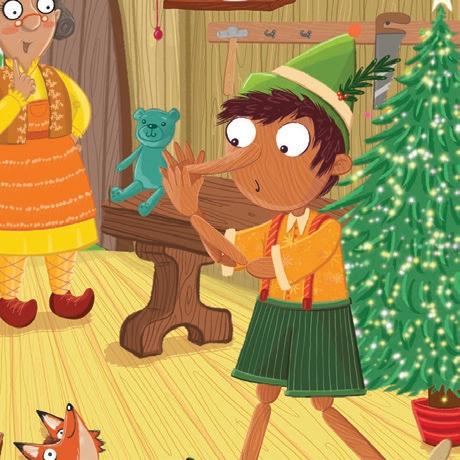
Pinocchio longs to be real so he can explore the big wide world. He wants to be ‘good, kind and true’, but after a tiny fib makes his nose grow, he runs away on a whirlwind adventure of snowballs, silly games, mischievous new friends, and chaotic fun. Will he learn the difference between right and wrong and make it home in time for Christmas?
This joyful new retelling of Pinocchio is packed with music, laughter, and a host of much-loved characters, brought to life by an actor-musician cast. With an informal setting and seating on mats, benches and chairs, Pinocchio is the perfect introduction to the wonder of live theatre for children aged 3–6 and their families.
Performed in Welsh and English at separate performances.
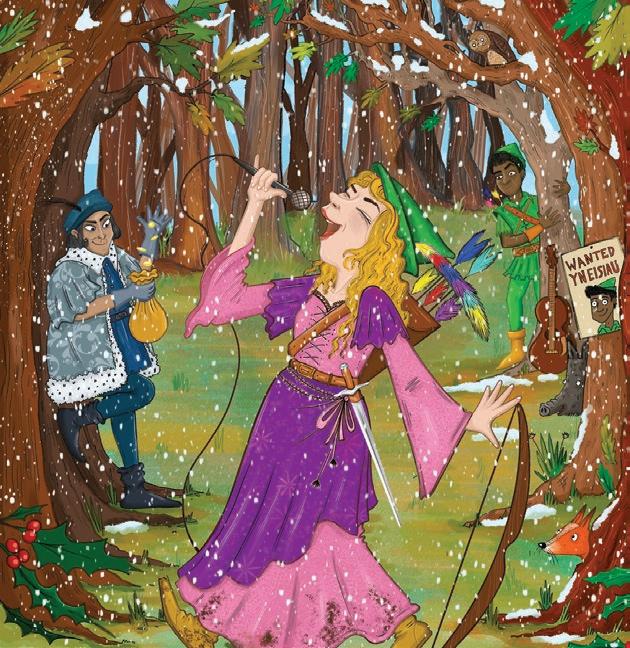
The Merry Adventures of Maid Marian (27 Nov 2026 – 2 Jan 2027)
Join us in our main house this festive season for a rip-roaring, south Walesset, new take on the famous tales of Robin Hood. The Merry Adventures of Maid Marian is filled with legendary characters brought to life by an outstanding cast of actor-musicians.
Specially created for everyone aged 7+.