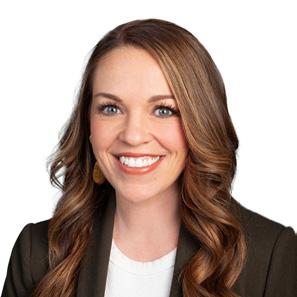
Our mission has always been rooted in the belief that no child or family should face a cancer diagnosis alone. Every day, we work to ease the burden, whether emotional, financial, or logistical, so families can focus on what matters most: their child’s healing. The strength we see in these children inspires everything we do, and it’s the generosity of our community that makes this work possible.
Laura Allen Children’s Cancer Partners Executive Director
CAPTRUST Community Foundation
The CAPTRUST Community Foundation’s 2024 Partnership Grant winner, Children’s Cancer Partners (CCP), provides resources, community, and compassion to children with cancer and their families.
A childhood cancer diagnosis instantly reshapes a family’s emotional and financial reality, often requiring travel, lost wages, and extended stays far from home. CCP bridges the gaps by providing practical support, financial relief, and emotional support so families can focus on their children.
DEAR FRIENDS,
I hope this letter finds you well and enjoying the warmth of the season. One thing I love about summer is the way it invites reflection without urgency. It gives us time to wander and think about what we want more of, not just what comes next.
In that spirit, this issue of VESTED is meant to keep you company—whether you’re at the beach, by the pool, or cooking in your yard. It’s an issue to linger over during long evenings, on quiet mornings, or while traveling.
As always, the stories and ideas in these pages have grown out of the questions you’ve been asking and the conversations we’ve been having. I hope they offer perspective, spark inspiration, and perhaps open the door to new possibilities as the summer unfolds.
Our Second Act story features Bill Kerig, a former professional skier, journalist, filmmaker, and entrepreneur who has shaped his life through a series of decisive reinventions. Today, through his Traction Business Accelerator, he mentors founders navigating transitions of their own, helping them move forward with clarity, curiosity, and integrity.
This issue’s Lifestyle Feature, “The Realities of Retiring Abroad,” is written by former CAPTRUST Chief Marketing Officer John Curry, who retired and moved to Spain in 2024. The article explores why people choose to move between countries, along with some of the key considerations, documentation, and logistics involved.
You’ll also find articles on maintaining muscle as you age, film festivals as a
vacation option, organizing your digital life, why procrastination is so common, and how to talk to heirs about money.
Lastly, in the Investment Feature, Eshani Gupte, a member of the CAPTRUST Investment Group, explores the real meaning of risk. Her thoughtful article defines risk from both an individual investor’s and an investment professional’s perspective—concepts that are core to how CAPTRUST advisors approach risk management.
We hope you enjoy what we’ve put together for you. Thank you for reading, and as always, we welcome your feedback.
Onward and upward!
All the best,
J. FIELDING MILLER CAPTRUST Chief Executive Officer
Volume 12, Issue 1 | Spring 2026
Chamberlain
Hopkins Communications
Advisor Sam Kirby Investment Strategy & Communications
Megan Loftin
Mandy Ritter
Planning
Briana Smith Financial Advisor
Eddie Welch
Madeleine Albright Graphic Designer
Allen Art Director
Kaylin Nuñez
Roxanne Bellamy
Lonzetta
THE WRITERS
ROXANNE BELLAMY
Roxanne Bellamy is a freelance writer and editor, specializing in outdoor adventure and sustainability. In her 20-year career, she’s written for many industries, including beer, textiles, and finance. Her retirement dream is to be a National Geographic Explorer.
EMMIE BROOKS
Emmie Brooks is an editorial associate on the CAPTRUST marketing team. A North Carolina native, she earned her Bachelor of Arts in English from East Carolina University. Her writing has appeared in several local arts and culture publications, including Our State, WALTER, and EastBound Magazine
JOHN CURRY
CAPTRUST’s former chief marketing officer, John Curry is now constructing his own Second Act and adjusting to unretirement in Spain. In the finance industry since 1986, Curry was instrumental in the launch of VESTED magazine, serving as its original editor in chief.
ESHANI GUPTE
Eshani Gupte is a manager in the CAPTRUST Investment Group, where she focuses on investment strategy and communications. Gupte brings more than a decade of investment research experience, having covered the technology, consumer discretionary, and real estate sectors in her previous roles at South Texas Money Management and Bloomberg LP.
NANCI HELLMICH
Nanci Hellmich, an award-winning multimedia reporter, covered myriad topics for USA TODAY for more than 30 years, and now she writes for AARP and other organizations. She’s been named a top online influencer on weight loss and nutrition and has appeared on numerous television shows, including NBC’s TODAY. Hellmich has written for VESTED for more than a decade and is now defining her own retirement. You’ll find her final VESTED article on page 42.
JEANNE LEE
Jeanne Lee is a Cleveland, Ohio–area writer specializing in lifestyle, wellness, and personal finance. For VESTED, she writes about purposeful living, pursuing new passions, and giving back to the community. She also keeps an eye on emerging technology and what's coming next. Her work has appeared in Fortune, Money, and USA TODAY, and on Health.com.
“Before I turned 50, I asked myself what I wanted to do before I died,” says Amy Mortimer, a real estate broker and business owner in Blacksburg, Virginia. “One of my answers was to become fluent in Italian.”
Mortimer studied in Italy in college, an experience that stayed with her throughout her life. Years later, her lingering interest in Europe turned into a real question: What if I lived abroad?
Today, Amy and her husband Michael divide their time between the U.S. and… no, not Italy, but Spain. They’re part of a wide community of Americans who have retired—or are planning to retire—abroad, and their path reflects a broader shift in how people are thinking about life, work, and place.
The Practical Pull
The U.S. State Department estimates that roughly 9 million American citizens live outside the country, and more than 700,000 Social Security beneficiaries receive their monthly payments outside the U.S. Typically, relocation is driven by work or by retirement. For many, it begins as a question about lifestyle.
For the Mortimers, extended time in Spain brought those comparisons into sharper focus. Everyday expenses—from groceries to transportation—felt more manageable, especially when they lived like locals rather than tourists. They realized their money could stretch further while supporting a lifestyle that felt fuller and more connected.
From Dream to Due Diligence
What begins as a financial calculation soon becomes a deeper question of identity and lifestyle.
Peddicord, who splits her time between Panama City, Panama, and Paris, encourages people to begin by thinking about priorities instead of specific destinations. Factors such as weather, walkability, culture, cost, public services, and pace of life often matter more than national borders. Once those priorities are clear, the list of viable locations naturally narrows.
Most people who have moved abroad will tell you the appeal is less about romance and far more about practicality. Cost of living is a common catalyst, particularly for retirees who worry their savings won’t support the lifestyle they envisioned in the U.S.
“Affordability is what gets people thinking about this in the first place,” says Kathleen Peddicord, founder of the resource hub Live and Invest Overseas and a longtime relocation researcher who has spent more than three decades helping Americans explore life outside America.
A generation ago, retirees often relocated to lower-cost U.S. cities. Today, online tools make it easy to compare housing, health care, and daily expenses across borders. Places like Mexico, Panama, Costa Rica, Colombia, Portugal, and Thailand now appear regularly in retirement conversations, not as fringe ideas but as plausible options.
Melissa Cella, a CAPTRUST financial advisor in Folsom, California, has helped several clients plan for and manage international lives. She says her first priority when talking with someone who wants to live internationally is to understand whether the idea is still exploratory or beginning to feel concrete.
Few people do it all at once, she says. More often, the plan unfolds gradually through short trips, longer stays, and a growing sense of what fits and what doesn’t. They might rent apartments in different cities for a few weeks or months, shop at neighborhood markets, learn the local transit systems, or linger in public spaces long enough to observe daily rhythms.
“Spend some time in the new country and speak with those who have already made the move,” says Cella. The goal is to experience ordinary days.
For the Mortimers, it was Italy that sparked the idea. Extended stays in multiple countries over several years helped refine it. And over time, their firsthand experiences answered questions that cost-ofliving charts and visa guides never could.
“Somewhere along the way, we realized we wanted to be in a larger city with a lot of cultural opportunities—restaurants, shows, museums—and easy transportation to other places,” Mortimer says. “We also wanted to be on the Mediterranean and close to an international airport.” Barcelona felt like the best possible fit.
Life Happens Locally
Of course, choosing a country is only the beginning. Daily life doesn’t unfold at the level of national borders. It happens on specific streets, in familiar restaurants, near certain parks and stores, and along particular transit lines. As a result, relocation decisions have become increasingly granular, shifting focus from countries to neighborhoods.
“Your lifestyle is completely different depending on where you are in a country,” Peddicord says. “Living in Panama City is a totally different experience than living in Panama on the coast or in the mountains. Weather, cost, neighbors, housing—everything changes.”
The same logic applies across Europe, South America, and Asia. In any country, different neighborhoods can feel like separate worlds. Some cater to visitors or expatriates. Others center on schools or markets. Those distinctions shape daily life and rhythms.
For the Mortimers, the final layer of decision-making came down to neighborhood feel. They landed in Barcelona’s Eixample district, drawn by its walkability, safety, access to cafés and markets, and proximity to transportation.
Two Buckets
Once the emotional decision is made, the questions turn practical. This is where some people stall, as the life they imagine collides with paperwork, unfamiliar systems, and timelines that don’t conform with American hustle.
The dream and the logistics can feel inseparable. Peddicord suggests treating them as two distinct pieces.
One is about the life you want to live—daily rhythm, community, culture, and pace. The other focuses on the logistics required to support that lifestyle, including residency rules, banking, real estate, taxes, utilities, and documentation. Trying to solve both at once can create unnecessary friction, but separating them makes the administrative work more manageable.
Professional guidance can help reduce confusion, especially as residency programs evolve and cross-border systems intersect. The Mortimers worked with a concierge service to coordinate identification numbers, real estate, and residency requirements. “It didn’t make the process instant, but it did make things clearer,” Mortimer says.
TAX FACTS FOR AMERICANS ABROAD
The U.S. is one of only two countries in the world that practices citizenship-based taxation; the other is Eritrea in East Africa. This means that as long as you hold a U.S. passport, the IRS requires you to report your worldwide income every year, regardless of where you live or where the money was earned. While foreign tax credits often mitigate double taxation, high-net-worth individuals with complex investment structures may face additional reporting and compliance obligations.
Beyond income tax, the government also requires specialized reporting for foreign assets. If the total of your foreign bank accounts exceeds $10,000 at any point in the year, you must file a Foreign Bank Account Report (FBAR). Larger assets may trigger additional requirements under the Foreign Account Tax Compliance Act (FATCA). Failure to comply with these requirements can result in significant penalties that quickly erode the cost-ofliving benefits of moving abroad.
For high-net-worth households, property structures, tax residency, healthcare access, and estate planning often span multiple jurisdictions and require careful coordination. Some choose to purchase real estate to anchor their presence. Others prefer renting. Some retain U.S. property for family or diversification purposes. Others choose to sell.
Cella sees three things that create the most complexity: understanding the full cost and structure of daily life; navigating cross-border tax obligations; and ensuring that estate plans account for assets held in more than one country.
Legal Realities
Living abroad is both a legal and a lifestyle choice. Immigration rules vary by country, but in general, long-term residency paths fall into three broad categories.
One common route is through income-based visas, including work permits, retirement or non-lucrative visas, and digital nomad programs. Requirements vary, but most involve providing proof of financial means, healthcare coverage, background checks, and documentation. Some of these visas can eventually lead to permanent residency or citizenship.
Another path is residency through investment, which is typically tied to real estate purchases or government-approved investment funds. These programs have become more regulated in recent years, but they remain an option in some jurisdictions.
Remember, visa programs are tools, not guarantees. They evolve alongside political priorities and economic conditions. The Mortimers qualified for residency through a real estate purchase under Spain’s Golden Visa program. However, in 2025, Spain phased out the real estate–linked component of that program amid concerns about housing affordability.
A third option, called citizenship-by-descent, offers individuals with qualifying parents or grandparents a more durable legal pathway to citizenship, though documentation can be time-consuming and complex. Countries including Italy, Ireland, Poland, Portugal, Hungary, and Mexico have citizenship-by-descent programs with varying qualifications and documentation requirements.
“Residency programs change, and tax rules evolve,” Cella says. “The key is building flexibility into the plan so that your lifestyle decisions don’t create unintended consequences.”
Which route makes sense depends on your personal circumstances, including finances, family history, career plans, healthcare needs, and how permanent the move is intended to be.
The Day After
People tend to imagine life abroad at its most polished. What they rarely picture is how disorienting the early days can be. “When you step off the airplane, that’s when you know the least,” Peddicord says. “The first day can be the hardest.”
Americans often arrive with expectations shaped by digital access, speed, and clear instructions. Outside the U.S., those assumptions don’t always translate. Even in places like Puerto Vallarta, Mexico, where many services cater specifically to American retirees, daily life still operates on local terms.
Peddicord’s advice: “Leave your expectations at the border.”
The friction between expectations and reality rarely stems from a single major problem. More often, it comes from a series of small ones. Errands may take longer than expected and require more attention than they ever did back home.
In Cella’s experience, the challenges tend to involve interactions with everyday systems, such as communication across countries, banking, learning transportation systems, and getting used to cultural norms that don’t show up during shorter trips.
Buying groceries, for instance, can become an exercise in both vocabulary and patience. But once you’ve done it, the mystery fades. The second visit is easier. By the third, you know where to go, what to get, and which questions to ask.
In many parts of the world, systems run on relationships rather than efficiency. Processes happen at the pace of tradition, not convenience.
“Nowhere in the world is as easy as the U.S.,” Peddicord says. “But easy isn’t necessarily what makes people happy.”
What changes is your relationship to uncertainty. Over time, curiosity replaces frustration. Those who settle in learn to approach unfamiliar tasks as something to be learned, not something to be fixed. They learn that a system isn’t broken just because it doesn’t match their expectations.
Also, not every relocation becomes permanent.
Some people return home after a year or two, surprised by how much they miss being close to family or the comforts of cultural familiarity. But that doesn’t mean the adventure failed. Moving abroad for a trial run can clarify what matters—whether that’s a change of pace or a renewed appreciation for home.
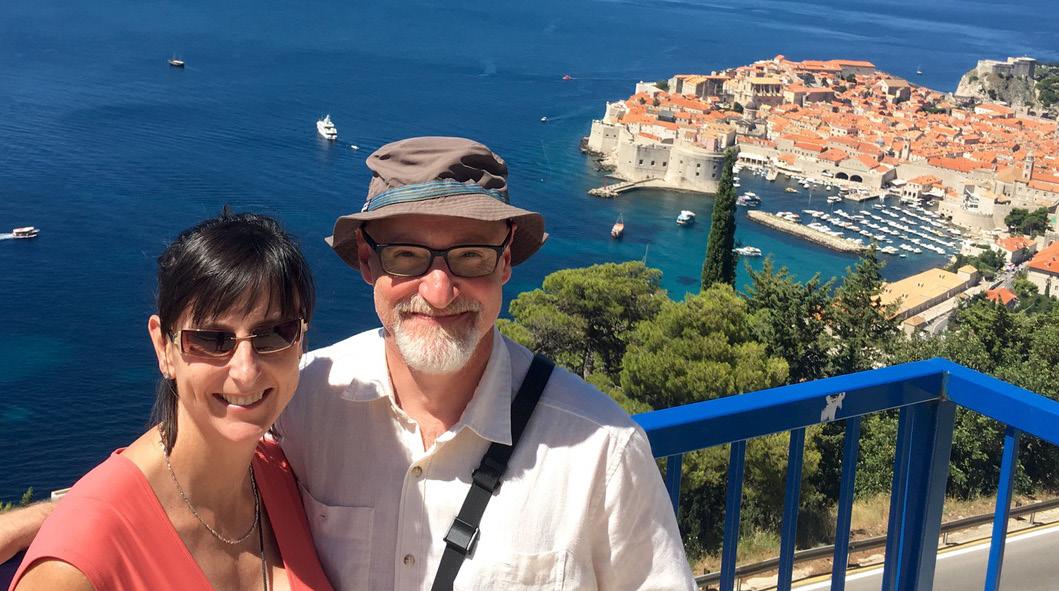
Pictures in this article show Barcelona, Spain, and Amy and Michael Mortimer.
SECOND ACT
by Roxanne Bellamy
Wind whips through New York City as Bill Kerig opens the door to an overheated East Village thrift store. It’s 1984, and 23-year-old Kerig needs cash to finance the first of many life-changing decisions. Despite his new finance degree, plus stints in insurance and currency trading, he knows a financial career is not for him.
He wants to go skiing to figure things out.
“People have been going to the mountains for centuries, looking for meaning,” says Steve Haugen, Kerig’s longtime collaborator. “For Bill, skiing isn’t just skiing. It’s where he finds answers.”
Exit Number One
The store smells like patchouli. Hippie music plays as Kerig lays a garment bag on the counter. The clerk thumbs through his work suits, scanning for tears, but they’re almost brand-new. She lowballs an offer. Kerig counters with conversation, and the two find common ground.
Her hair is wild, dyed blue, she says, for a recent Rangers game. So now he knows they’re both hockey fans. The connection helps them negotiate a price that makes her happy, and it’s enough for Kerig to buy a one-way airline ticket.
“How about you throw in that cashmere overcoat you’re wearing?” she says.
“This I’m keeping,” says Kerig. “I’ll be back in the city one day.”
But he never will be. And the coat—which eventually does go to a thrift store—will be one of many uniforms worn and shrugged off throughout a career that carries him across industries and identities, from athlete and journalist to filmmaker, entrepreneur, and finally to a calling that pulls all his skills together: startup mentor.
Everyone Has a Plan Until
Snowbird Ski Resort in Salt Lake City, Utah, stands 7,760 feet above sea level, which is why Kerig calls his next job “a high-level career move.” In truth, he’s a dishwasher, but the gig comes with nightly dinner and a season pass. He takes full advantage of both. One day, he watches skiers warming up for competition.
“These guys were getting paid to ski, and I wondered if I could get to that level,” says Kerig. “I knew I couldn’t beat the best ones, but maybe I could make the top 20 and somehow parlay it into a living.”
This willingness to try, and to adapt, became a lifelong theme and a key tenet of Kerig’s mentoring methodology. When something stops working, financially, physically, or psychologically, he changes direction—something he’s done repeatedly, across decades.
The only throughline is that he’s always chosen his path by leaning into what makes him feel alive and stepping away from what doesn’t.
Registration for the mogul-skiing contest cost him a week’s wages. But he knew it was the right move, despite what happened next.
On his third training run, his binding fails. The ski flies up and hits him in the face. His goggles fill with blood. The next day, Kerig watches other skiers compete from behind two black eyes, a stitched-up cheek, and a broken nose.
“In hockey, they say everyone has a plan until they get punched in the face,” says Kerig. “I was the opposite. I didn’t have a plan until I got cracked in the nose by a ski. Then I knew I wanted to be a pro skier.”
“
In hockey, they say everyone has a plan until they get punched in the face. I was the opposite. I didn’t have a plan until I got cracked in the nose by a ski. Then I knew I wanted to be a pro skier.
Bill Kerig
The Edge of Never hits the big screen just one year after the eponymous book hits shelves.
Kerig creates the PowerBar Pro Mogul team
Proof of Life:
The Collected Works of Bill Kerig
RallyMe is acquired by NBC Sports
Kerig founds Traction Business Accelerator
A Decade on Tour
Vail, Colorado, sits even higher than Snowbird. Moving up in elevation, if not the career ladder, Kerig relocates there to be at the center of the mogul tour.
He writes for the local newspaper, and—thanks as much to his press pass as his skiing talent—gets onto a team sponsored by K2, a popular ski brand.
When the team captain is injured, Kerig takes over and looks beyond the usual sponsors. He negotiates a deal with a fledgling company that’s launching a new product called an energy bar.
Kerig spends the next decade as captain of the K2 PowerBar Pro Mogul Team. He is officially a professional skier.
The Wandering Medium
While traveling, Kerig leverages his pro status to write and take pictures for a range of magazines. Eventually, he leaves the tour, creates his own magazine, The Wasatch Journal, and writes two books: The Snowboarder’s Total Guide to Life and Utah Underground.
When his curiosity moves again, this time to broadcast media, Kerig again taps his strength as a skier to pursue a pivot. He hosts the show Ski Tips on the Weather Channel; provides commentaary for ESPN’s X Games; and works as a producer at both the 1998 (Nagano) and 2002 (Salt Lake City) Olympics. He even makes a murder mystery for 48 Hours on CBS.
A few years later, he uses the same strategy to transition from broadcast media to film.
On assignment for an article, Kerig befriends ski resort owner Kenny Griswold. They partner to make a movie called Net Worth, starring Daniel Baldwin and Craig Sheffer, about a group of friends competing to earn the highest net worth in 30 days, in a new city, with no cash or connections.
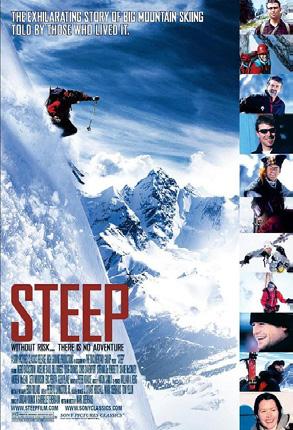
The process piques Kerig’s interest in film, but his focus shifts again, this time toward documentaries. First comes Steep, about bigmountain skiing, then Ready to Fly, about women’s ski jumping, which wins big at the Banff Film Festival.
His most ambitious project is The Edge of Never, which Kerig writes as a book before producing and directing the feature documentary. The story centers on a teenage skier attempting the backcountry route that killed his father, guided by a group of expert ski mountaineers.
Tech Entrances and Exits
A Boeing 737 wings over Iowa. It’s 2011 and Kerig is traveling with Ready to Fly protagonist Lindsay Van. They’re discussing a scene in which Van and another skier are at a farmers’ market with a folding table and a salad bowl, panhandling for their chance to compete in the Olympics.
Van recounts her humiliation at having to beg for money. Kerig commiserates. He raised a portion of the funds to produce this film through a rudimentary fundraising site he and a colleague created. “Where’s the crowdfunding platform for athletes?” Kerig asks. “Maybe I can build one.”
A year later, he has.
It’s called RallyMe, designed to help Olympic and amateur athletes raise money for training, travel, and competition. Van’s campaign is the first on the site. She raises almost twice her goal. Four years later, RallyMe is acquired by NBC Sports.
Kerig works with NBC for a while but leaves to launch another new idea: Great Coach, a website and app intended to increase transparency in youth sports. As a longtime hockey coach, he sees the need firsthand.
Great Coach makes a splash by publishing an aggregated list of coaches banned by various sports governing bodies. Then, the pandemic hits, and its revenue base vanishes almost overnight.
Rolling with the Punches
Kerig has to shut down a company he believes in. He loses money, including funds invested by his family and closest friends, and he’s almost 60. Most of his peers are stabilizing, not starting over.
Kerig doesn’t describe this time as failure, but the consequences were real. Financial collapse. Personal responsibility. The weight of a business that just didn’t work.
What stands out now is how he recalibrated.
“I just try not to get stuck,” he says. “If I think I’m heading in that direction, I’ll start working on something creative, even if I know it’s not going anywhere. Or I’ll reach out to people who need my help. It’s a strange kind of selfishness, but really listening and helping someone else not only makes me feel good, it keeps me moving.”
Movement is his other way to force recalibration. “Forward motion is the cure,” he says, “whether physical, creative, social, or professional.”
On Two Wheels
After Great Coach, Kerig takes the last of his money, buys two motorcycles, and heads north with his son on the Continental Divide Trail.
Like mogul skiing, adventure motorcycling demands focus. It means reading terrain, managing risk, and knowing when to adjust speed or direction, skills Kerig has spent decades developing.
He says this time on the trail freed his mind long enough to imagine finding success again.
“When you crash your bike in the middle of nowhere, you fix it and get back on,” says Kerig. “You have to keep going and do it with focus. This helped me reframe where I really was—not starting over at 60, just adjusting course and getting on with it.”
As for the physical risk of motorcycling, Kerig isn’t worried.
“I can calculate risk vs. return pretty quickly,” he says. “I can look at a ski slope where, if you fall, you die, and know immediately whether it’s worth it.”
The Risk of Retreat
Physical risk provides immediate feedback. Emotional and financial risks unfold over time, often without clear signals. They’re harder to read and control. Yet those are the risks Kerig continues to take.
“I think it’s a blessing to have to push through the discomfort of earning a living, because it keeps you engaged,” he says.
That word—engaged—comes up often. For Kerig, it seems disengagement is the real risk. He works hard to avoid stagnation but isn’t particularly worried about failing.
“Engaging with the world is sometimes really tiresome, but disengaging sounds worse,” he says. “All those skills you’ve built just atrophy and leave you weak and inconsequential.”
This perspective keeps him involved, and it gives him a way to move through periods and pivots he isn’t quite sure about. Leap and the net will appear.
Momentum and Reinvention
After the motorcycle trip to Canada, Kerig got a message from a former Great Coach employee. Julie Glusker was now head of U.S. Performance Academy (USPA), an online middle and high school for student-athletes. She wondered if Kerig might take a look at its business operations.
The school was 10 years old, sending kids to top colleges, but stuck in an unprofitable rut. Kerig met with its founder, Pete Smith, and
interviewed much of the USPA team. He came on board to help scale its model, refine its offering, and navigate an exit.
Smith says Kerig didn’t give them a formula. Instead, he offered a journalist’s talent for listening, a tech founder’s toolbox, a filmmaker’s sense of successful narrative, and a team of proven freelancers.
“Bill won’t tell you what to do,” says Smith. “He’ll help you realize it yourself, then support you while you execute. He gave us confidence in the value of what we were doing. He kept us from compromising.”
Smith says, in their years working together, Kerig never once flexed his résumé. “His ego is completely checked at the door,” says Smith. “He’s a hoodie-and-hat kind of guy, even in business meetings.”
The two-way flow of trust between them led to a fourfold increase in revenue and a lucrative acquisition.
“So many of us act out of insecurity,” says Smith. “Bill doesn’t. He trusts his own judgment, and he doesn’t outsource the work to make things happen.”
Kerig enjoyed the experience so much he created what he says is his favorite company yet: Traction Business Accelerator. Through it, Kerig works with entrepreneurs facing personal and professional transitions, plus private equity firms looking for turnaround tactics for acquired companies.
Watching him, it’s easy to see he’s having as much fun helping others crack the code as he once had re-engineering his own life.
Trail as Old as Time
In 2025, Kerig had double knee-replacement surgery. Six months later, he blew out one of those knees again. For someone accustomed to constant motion, the result was debilitating.
Pain and anxiety set in, from the injury itself and the loss of momentum.
Kerig descended into despair. He called people to offer support, tried to write again, but wasn’t coming out of it. Confined by crutches and a doctor’s order not to put weight on the knee, he felt stuck.
When his doctor finally gave him permission to ride a stationary bike at low resistance as a form of physical therapy, Kerig took it to the next level. He bought an e-bike with big, mountain-ready wheels and started looking for trails nearby.
Moving on the Moon
Accessed by a seven-mile causeway through the Great Salt Lake, Utah’s Antelope Island is a moonscape of billion-year-old metamorphic rocks. It’s a timeless chunk of land on an inland sea, where bison and antelope roam.
“ So many of us act out of insecurity, Bill doesn’t. He trusts his own judgment, and he doesn’t outsource the work to make things happen.
Pete Smith ”
Kerig grabs his crutches and walks to the back of his truck. He lifts his e-bike slowly off the tailgate. With its electronic assistance, he says, he can control the resistance of the pedals and get moving, safely, outside.
There’s still snow on the island’s 6,500-foot Frary Peak when he tries his first ride, but the sandy trails lend traction. The effect is immediate.
“Being able to move through this beautiful space, to feel the wind and my heart beating faster, took me out of that darkness,” he says. “I know buying a bicycle is not what most adults would consider a mental-health strategy, but it worked.”
A Goal and a Plan
Kerig doesn’t view his life in terms of eras or pivots. He treats it as a series of decisions made with the information available and revised as necessary.
“To Bill, barriers are normal parts of the operating environment,” says Haugen. “He has challenges and setbacks. He doesn’t ignore them, but he doesn’t obsess about them either.”
This keeps Kerig from becoming rigid or defensive.
“In my experience, having a plan and rigidly sticking to it generally doesn’t work,” he says. “Having a clear goal with a loosely conceived plan has always worked better. Most of the meaningful things in my life came from taking paths I couldn’t have predicted.”
Into the Great Wide Open
The evening is warm with a breeze off the lake as Kerig—flushed from his bike ride and relieved to finally walk without crutches—pushes through the door of a neighborhood bistro. An aprés-adventure cocktail in hand, he reflects on a life shaped less by linear progression than by his own relentless participation.
“So far, adventure has mostly meant moving through space and time,” he says. “But one day, it could mean taking a wild ride through a great book. The conversations I’m having with my body aren’t going to be the same in 10 years, or 20. At some point, it will tell me, ‘No, we’re not doing that.’ In the meantime, I look at aging as a gift. Not everyone gets to do it.”
Now 64, Kerig is still in Salt Lake City, where he lives a sort of portfolio lifestyle through his 25-year-old production company, Thousand Faces Media, and his newest venture, Traction Business Accelerator.
It’s not always stable—in fact, on the day of our photo shoot, the funding fell through for a film he’s trying to make—but still, it keeps him engaged.
“Every time I start something new, I wonder if I can do it,” says Kerig. “Sure, I’ve pulled it off before, but I wouldn’t be human if I didn’t wonder: Will this be the time it doesn’t work out?”
For Kerig, the question isn’t rhetorical. It’s an invitation to keep moving and find out.
Most of the meaningful things in my life came from taking paths I couldn’t have predicted.
PASSION PURSUITS
by Jeanne Lee
Paul Sloop admits he thought movies were just another form of entertainment.
That is until a friend dragged him along to watch a Swedish film about a boy who is sent to live with relatives when his mother becomes ill. Sloop had low expectations.
“I had always mocked subtitled films, making jokes about who wants to have to read when you go to the movies,” he says. But before the lights dimmed, a festival organizer got on stage to introduce the film to the audience. “I had never experienced someone speaking before a film, offering background about both the film and the filmmaker. It infused the experience with a special sense of gravitas .”
It was the 1980s. The film? My Life as a Dog.
It was the first feature film from director Lasse Hallström, who then was known mainly for ABBA music videos, and it moved Sloop deeply.
“I saw something more real in that film than I had ever experienced before,” Sloop says. His exhilaration at being one of its first viewers compounded when the movie earned an Oscar nomination. It soon became a much-beloved, international classic and a significant part of movie history.
Sloop has been hooked on festivals ever since.
“There’s a vibe and an energy that goes with a film festival that’s quite different than just going to the average cineplex,” he says. “Some of that is having the actors and filmmakers in attendance and experiencing Q&A sessions after the films, and often, getting to meet and speak to filmmakers directly. But it’s also the passion of the audience that gathers to celebrate the art of independent filmmaking.”
After his first festival, Sloop became a regular volunteer, then an organizer, and now serves as the director of programming for three festivals: the Cleveland International Film Festival in Ohio, Film Pittsburgh in Pennsylvania, and the Cordillera International Film Festival in Nevada.
The most prestigious festivals, like Sundance, Venice, and Cannes, evoke images of red carpets, celebrities, and extra-long standing ovations. But there are thousands of film festivals every year, and these magical experiences are not reserved only for entertainment industry insiders. Anyone can attend and share in the excitement of these multi-day debut celebrations for the some of the best movies of the year.
Plan a Movie Getaway
A film festival can be the backbone of a unique family vacation, since so many are in scenic locations. Imagine savoring a film—or two or three—each day with your favorite people, while relaxing in a mountain resort, a beach town, or a desert.
Take the Sedona International Film Festival as an example. “It’s in a beautiful part of Arizona and features an excellent program of films for a mainstream audience (not just film industry professionals), plus amazing live shows, Q&As, super fun parties, and an awards ceremony that everyone is welcome to attend,” says Dr. Rebekah Louisa Smith. A Texas-based consultant also known as The Film Festival Doctor, Smith helps creators get their films recognized and screened at festivals.
“You automatically feel like you’re there with family and friends,” she says. “And you make new friends while you’re there.”
Film festivals offer several tiers of entry, including single-day or weeklong passes, individual film tickets, and, usually, a rush line: a festival tradition that offers last-minute entry to otherwise sold-out shows.
To best experience the full buffet, choose an all-access pass. “This will ensure that you have access to sold-out screenings, avoid the stress of individual ticket booking, and secure priority seating,” says Smith. “Passes often also include exclusive access to panels, networking events, and VIP lounges, allowing for a deeper, more costeffective immersion into the festival experience.”
Prefer to sample the festival à la carte?
“Using me as an example, I’d say buy a single ticket, attend a single screening, and you never know what might come of it!” says Sloop. “At a minimum, you’ll have a very different and impactful experience and, if the stars align, like they did for me, you might just find a new lifelong passion.”
Single tickets or multipacks offer convenience and flexibility with less time commitment.
For peak spontaneity, join the rush line. You’ll be part of a unique communal experience with other filmgoers who share your taste in actors and directors. With any luck, you’ll score a lastminute ticket and get to watch the movie with new friends you made in line.
Interested in art-focused philanthropy? If so, take note of the many perks that come with donating to a film festival.
Members and donors get priority access to the best screenings, plus special chances to engage with film communities. For example, at Sundance, members at various levels can buy pre-sale tickets and choose screenings before the general public. At the Toronto International Film Festival, benefits for patrons include industry parties and film talks, while toplevel donors are invited to attend its celebrity-laden opening and closing night galas.
Whether you prefer heartfelt dramas, independent comedies, documentaries, shorts, or any other genre, there is a festival for you.
Do you also enjoy wine? If so, the McMinnville Short Film Festival may be a good fit. “The town of McMinnville, Oregon, is charming, walkable, friendly, and gorgeous,” says Smith. “It’s also in wine country, offering many free wine samples and plenty of tasting opportunities. It’s the kind of festival that is so welcoming that, if you attend once, you’ll want to come back every year.”
A great festival for the young at heart is the Mammoth Lakes Film Festival, described as “a summer camp with hot springs” by MovieMaker Magazine , a respected industry source.
MovieMaker also highlights the Martha’s Vineyard AA Film Festival and the Woods Hole Film Festival as vacation-worthy events. Both take place in beautiful settings.
Whichever festival suits your fancy, the common theme is the wonder and energy created when an enthusiastic audience comes together with the artists who made the film.
“When you put people together in a dark room with a big screen and allow them to share the full experience as a community, then discuss what they saw with the artists themselves, it elevates the power of the filmgoing experience,” says Sloop. “And it exponentially adds to the film’s ability to educate, entertain, inform, and inspire.”
PREPARING THE HANDOFF
by Emmie Brooks
Family financial conflicts don’t often begin with a bad decision. They begin with missing information. Money symbolizes different things to everyone—security, influence, comfort, responsibility—which makes it uniquely difficult to discuss plainly, even with the people you know best.
Silence about money can feel protective. Parents may tell themselves, “We don’t want to create entitlement” or “It’s none of their business.” But a lack of communication can defer risk to the future through misunderstandings, hasty decisions during illness, or avoidable friction among siblings. For many families, silence becomes the default, not because it feels ideal, but because the consequences of speaking feel uncertain.
After decades of working with multigenerational families, Dr. Richard Orlando, a legacy enterprise consultant and coach at Legacy Capitals, has observed that parents often hesitate to share information out of concern about how it might shape their children’s choices, expectations, or sense of independence. But as Orlando reminds families, silence does not prevent consequences, it only delays them. “What you don’t want,” he says, “is for the next thing that speaks to your family to be your will or estate plan.”
For some families, particularly those with first-generation wealth, financial success is inseparable from sacrifice, work ethic, and identity.
“Families with first-generation wealth remember what it was like not to have the money they have now,” says Orlando. “Their loved ones have a very different starting point. Some couples have said to us, ‘How do we not lose our middle class? How do we avoid impacting our kid’s work ethic?’”
In that light, withholding information can feel like an act of stewardship rather than avoidance. John Keeton, a CAPTRUST financial advisor in San Antonio, Texas, suggests differently.
“If adult children are more aware of their potential financial picture, that awareness could guide and support them into making much bigger, life-changing decisions in pursuit of fulfilling a type of happiness,” says Keeton. “We need to reframe this as an opportunity, instead of a potential cost.”
“ Take the long-game approach. Have small conversations that build over time to where your kids can take the information and make decisions based on it. John Keeton ”
Reframing the Conversation
Rather than asking whether families should talk about money, a more useful question may be how those conversations are framed.
“If a parent is hesitant to share too much, then don’t, but continue the conversation,” says Keeton. “Those conversations will build, and you’ll start to get more comfortable sharing.”
CAPTRUST Financial Advisor Mark Chamberlain adds that when families avoid discussing money, children do not stop forming opinions about it. They simply turn elsewhere. Chamberlain describes this as “learning horizontally.”
Social media, peers, and online narratives might fill the gaps, but they offer information without context, nuance, or family values attached. Without direction, those influences can shape expectations about wealth, success, and risk in ways parents never intended.
Another way families can reframe money conversations is by clearly distinguishing support from spoiling. Orlando often encourages parents to explain financial help not as a reward or entitlement, but as an investment tied to effort, values, and personal responsibility.
“With my own daughter, she realizes that her tuition is expensive,” says Orlando. “I say to her, ‘Fortunately we can pay for it, but Mom and I are investing into what you’re investing in: yourself. You have great grades, and you’ve earned your way in.’ So it’s not a spoiling message, it’s an investment into them.”
This type of framing is not a one-time explanation. It’s part of a longer process of communication that deepens as children mature. “Take the long-game approach,” says Keeton. “Have small conversations that build over time to where your kids can take the information and make decisions based on it.”
A Long-Game Approach to Family Readiness
Often, the moment that forces a money conversation isn’t a conflict; it’s a change. Orlando says he once worked with a family that experienced a major liquidity event after selling the operating business that had anchored their wealth for decades.
Almost overnight, the family shifted from running a company to managing complexity: investments, governance, estate structures, and shared philanthropy—along with the relationships those decisions would inevitably touch.
At the center of the transitions were two generations already involved in the family’s financial decision-making, alongside a much larger next generation: cousins ranging from mid-teens to adults, all of whom would eventually be beneficiaries and stewards in some form.
“The broad ask was helping them prepare the next generation for the responsibility they were going to have in perpetuating not just the assets, but the family’s legacy,” says Orlando.
Rather than begin with numbers, the family focused on building understanding. Over time, they introduced education through structured family retreats and small-group sessions designed to make the unfamiliar more accessible.
“We weren’t talking about dollars and cents,” Orlando says. “It was broad overviews—how the estate plan flows, how assets are allocated, and why the family invests the way it does.”
To reinforce the learning, the family involved younger members in philanthropy discussions and created committees that allowed them to observe governance in action. The impact became clear during one family meeting. A younger family member, who had openly admitted, early on, that the conversations felt like a foreign language, shared a simple observation: This was the first meeting I didn’t have to Google and look up words.
“Some were more interested than others, but everyone was gaining fluency,” says Orlando. “Not everyone needs to be equally savvy. What matters is confidence. They no longer needed a translator.”
Just as importantly, the process eased pressure on the older generations. “The grandparents and parents felt more confident too,” says Orlando. “They could see that the preparation was working. Even if someone never takes a formal role, they’re all going to be stewards.”
The family is still learning, but the direction is clear. “This doesn’t happen overnight,” Orlando says. “But when you embed these practices and rituals into the family culture, it becomes natural to continue. That’s when families start to say, ‘We’re on the right path.’”
Conversations That Grow with the Child
For children ages 4–10, money conversations can be simple and concrete. Allowances tied to basic choices—spend, save, give— introduce the idea that money reflects decisions. Storybooks, jars, and other age-appropriate tools help children connect effort, choice, and outcome without introducing anxiety or comparison.
“I suggest the Berenstain Bears books Trouble with Money or Dollars and Sense,” Orlando says. “Or get piggy banks that are divided up into save, invest, donate, and spend.”
3 PRINCIPLES FOR HEALTHY MONEY CONVERSATIONS
Families that navigate money conversations well tend to follow a few shared principles, whether they realize it or not.
Start with values, not numbers.
“You don’t have to talk about your net worth or inheritance intentions. Get that off the table initially. That’s down the road. We’ll get there,” says Orlando. Instead, he encourages families to find their shared values and multigenerational mission. Consider the purpose of this legacy. “It doesn’t always make it easy, but it helps provide that North Star for the couple, for the children, and for the family to stay aligned.”
Set ground rules.
Before sharing information, families can benefit from agreeing on how conversations will work. Who is this conversation for?
What is, and is not, on the table today? Is this about education, planning, or decisionmaking? “There are times when family conversations almost resemble a business meeting, which can cause some awkwardness because, generally, family conversations are more fun and relaxed,” says Keeton.
“The question is, how can you overlay the family dynamic to make that a comfortable conversation for everyone to be involved in?”
Use neutral, shared language.
Chamberlain encourages parents to speak in a way others can easily understand. “It’s important for parents to learn how to speak the kids’ language,” he says. “Then, what is said means more. A conversation is only as effective as the response that it elicits.” If terminology or assumptions create confusion, communication can break down. The goal is not to impress but to be understood.
As children mature and enter early adulthood, conversations can shift toward budgeting, earning, and trade-offs. Keeton, both a financial advisor and a parent, encourages families to start with children’s own financial lives, rather than pulling them into their parents’.
“Get them to understand their decisions and the consequences that could potentially result from those decisions,” Keeton says.
Early adulthood also provides an opportunity for the conversation to shift toward financial literacy. Orlando emphasizes how important understanding money concepts can be, beginning in young adulthood. “What does it mean to have a will? What’s a trustee? What’s a beneficiary? A generational giving trust? An annual exclusion gift? Give them the language,” he says.
As children reach college age, they are faced with important, independent years to grow and learn, not only in school but also about life. “They come out of their cocoon,” Orlando says.
“That stage is a great place to shift from fully taking care of their finances,” he adds. “Instead of giving the child an unlimited credit card, what about saying ‘Here’s your budget for the month, and here’s its purpose. If you spend it all, you’ll run out, and if you don’t spend it all, you have more for the next time.’”
John Keeton, both a financial advisor and a parent, encourages families to start with children’s own financial lives, rather than pulling them into their parents’.
When a Neutral Voice May Help
In some families, a third party can change the dynamic for the better. Advisors, facilitators, or family therapists can help translate values into structure and reduce emotional friction. “If it can be explained in a different way that isn’t mom and dad explaining it to a child, then the conversation may have a different impact on them,” says Chamberlain.
A neutral voice can normalize questions, clarify misunderstandings, and keep conversations focused on shared goals. But, as with most things, the right fit matters. Effective facilitation should feel collaborative, not hierarchical.
“It doesn’t matter how old the advisor is; there just needs to be a connection there,” says Keeton. “It shouldn’t be a disconnected, disjointed conversation where it feels like information being passed down. It should all be on one equal level. There should be pathways of communication between everyone sitting at the table.”
KEY TAKEAWAYS
Ultimately, families don’t build financial readiness through perfect timing or complete certainty. They build it through conversations— imperfect, ongoing, and responsive to each stage of life.
Silence may feel easier in the short term, but it leaves too much to chance. When families choose to talk early and often, anchoring money discussions in values, context, and shared responsibility, they replace uncertainty with understanding.
Over time, those conversations do more than prepare the next generation to manage wealth; they prepare them to steward relationships, make informed choices, and carry the family’s legacy forward with confidence.
EXPERT ANGLE
Stronger in the golden years
by Roxanne Bellamy
For many of us, muscle is associated with youth. It’s earned in gyms and slowly surrendered with age. But the truth is, muscle plays an important role, no matter how old you are. It helps you keep doing the things that make life feel like yours.
Maintaining muscle is less about aesthetics and more about independence: the ability to travel comfortably, lift luggage to the overhead bin, pick up your grandchild, recover from illness, carry your groceries, catch yourself from falling, and stand up from the floor, a chair, or the toilet without using your hands.
Think of muscle as a form of functional wealth. Like financial capital, it compounds with consistent investment, and, after age 50, the stakes rise.
The good news? Muscle remains surprisingly responsive—even later in life—when we give it the right signals. Those signals come from two places: resistance training and adequate protein intake. Together, they form a practical foundation for aging well.
Why Muscle Matters More with Age
Starting in our 30s, we gradually lose muscle mass, a process known as sarcopenia. Left unchecked, it can affect balance, posture, metabolic health, and overall resilience. At the same time, our bones become more fragile and need more skeletal muscle for support.
Sedentary habits quietly accelerate normal, age-related decline. Strength training slows that loss and can even reverse it. But, for many people, especially women, heavy resistance training feels unfamiliar and intimidating.
Maura Copsey, a CAPTRUST financial advisor in Greenville, South Carolina, was one of those people. She was healthy and active for most of her life, but a midlife bone-density scan revealed issues. “The reality is that, as we age, the tests start to reveal weaknesses in certain areas, no matter what we’re doing to stay active,” she says.
Copsey’s doctor gave her clear, direct advice. “She was very specific that I needed to be lifting weights—heavy, heavy weights. And I didn’t know how to do that at all.”
Many people get stuck in this moment, when good intentions collide with new physical realities. Knowing something matters isn’t the same as knowing how to begin.
Heavy Is Subjective
Copsey was fortunate to have an accountability partner. Her daughter, then in her late 20s, offered to start strength training with her. Together, they found a personal trainer at a community gym.
The routine wasn’t flashy: two days a week, 60 minutes per session, dumbbells, bodyweight exercises, and modified pull-ups. Progression was slow and individualized. “It’s not like, at age 60, you can go and start to lift heavy right away,” says Copsey. “It’s a journey. The goal is to lift heavy, but a lot of times, it’s really just asking what your body can do right now.”
Progress is more important than perfection. Remember the adage “Use it or lose it”? Strength training sends your body a clear signal that this tissue is still needed.
Copsey’s trainer, Brendan Kearns, says he likes to focus on movement patterns first, ensuring that clients have solid form
before adding weight. “I want them to be brilliant at the basics,” he says. “As they get better at a movement, we’ll start layering more in. We might move from pushups on the wall to push-ups on a counter before we ever head down to the floor.”
“The human body is designed to find efficiencies,” says Kearns. “That means, over time, you work your way into movement patterns that use as little muscle—do as little work—as possible. We have to teach the body new movement habits to make it work hard again.”
Confidence as a Side Effect
One of the biggest barriers to resistance training isn’t physical; it’s psychological. Many people worry they’ll get hurt, and weight rooms can feel unwelcoming, especially to beginners. Kearns calls this gymtimidation.
Copsey says she felt it at first, and she knew she needed a guide. “If I had walked in there by myself a year ago when I was starting my journey, there is no way I would have known what to do,” she says. Having her daughter as a partner helped, and, as she grew more familiar with the movements, her fear faded.
“It didn’t take that long, actually. After about a month, I realized it wasn’t going to be intimidating,” she says. “Brendan was reasonable,
and he respected where we both were. I started having fun once I realized I wasn’t going to be judged for not doing enough.”
The American College of Sports Medicine recommends that adults, ages 18 through 65, perform at least 150 minutes of moderate-intensity exercise each week, or 60 minutes of vigorous exercise, plus two strength-training sessions that work all major muscle groups.
“That is the minimum effective dose,” says Kearns. “For people who are starting off pretty far from that benchmark, it’s a good idea to find a trainer who can set them up for success.”
Kearns recommends meeting with several personal trainers before
The human body is designed to find efficiencies. We have to teach the body new movement habits to make it work hard again.
Brendan Kearns
making a commitment. Interview them, and choose someone you trust.
“Your first goal should just be to show up consistently,” he says. “It takes six weeks for your central nervous system to start changing. After four weeks, you’ll notice a difference in your body. In eight weeks, your friends and family will notice, too. In 12 weeks, everyone will see the benefits. Do whatever it takes not to give up before then.”
For Copsey, the benefits went beyond strength. “I’m stronger, but also I think my posture is better,” she says. “My lower back used to hurt, and I think it’s because I didn’t have great muscle strength. Now, I’m more aware of how I should sit, how I should hold myself, how I should lift things—and I have the muscles to do it.”
Copsey’s story spans three generations. Her 95-year-old mother also works with a trainer at her retirement community. “She doesn’t use a walker, and she lives independently,” says Copsey. “She would attribute a lot of that to her weight training.”
The weights she lifts may be light, but the impact is not. “Everything’s relative,” Copsey says. “What I’m lifting would be heavy for my mom, but my daughter is lifting heavier. You have to find what works for your body.”
Where Protein Fits In
Training is only half the equation. Muscle repair and growth require adequate protein, something many adults underestimate, especially as appetite declines with age.
“As we age, our muscles become less sensitive to protein,” says Kearns. “We have to increase how much we’re consuming just to maintain the muscle we have.”
“The recommended dietary allowance is 1.2 to 1.6 grams of protein per kilogram of body weight,” says Kelly Murphy, a registered dietitian in Raleigh, North Carolina. “For people trying to lose weight, gain muscle, or do both, I recommend aiming for the high end of that range. The average person is eating way less protein than they need. If you aim for the high end, you’re more likely to get close to the target.”
Since most Americans aren’t familiar with kilograms, Murphy suggests a simpler daily guide of 1 gram per pound of body weight. A 150-pound person should aim for 150 grams a day. “Although this is higher than the standard recommendation, it helps with muscle development vs. just maintenance,” she says.
Instead of cramming most of your protein into one large meal or smoothie, eat smaller doses throughout the day. Higher doses activate your body’s muscle-building mechanisms. Low protein often leads to higher hunger, lower muscle retention, and a slower metabolism.
“You should be getting 25 to 50 grams at every meal,” says Murphy. “Remember, protein isn’t only for muscles. You need it for your skin, hair, hormones, metabolism—everything. Your body will use protein more effectively if it’s processing it throughout the day.”
The High-Protein Trend
Right now, protein is having a moment far beyond the gym. Walk through a grocery store, and you’ll see it everywhere: proteinenhanced cereals, waffles, chips, bars, and even lattes boasting as much protein as a meal. This surge is no accident.
As Americans live longer—and spend more of those years managing weight, blood sugar, bone density, and energy—protein has become shorthand for strength, stability, and staying capable.
But not all protein is created equal. “The good thing about the protein trend is that it’s raising awareness,” says Murphy. “People are starting to count their grams. But you also have to pay attention to the quality of protein you’re eating.”
“Whole, unprocessed foods are best,” she adds. “Animal proteins are more easily digested than plant proteins, and they’re considered complete proteins because they contain all the necessary amino acids. Supplements, like powders and bars, can help fill gaps, but you shouldn’t rely on them.”
Most protein-enriched foods found in grocery stores are highly processed and high in carbohydrates. That can be less than ideal for people with blood sugar issues. “If you’re having protein pancakes for breakfast, maybe just consider having regular pancakes with a side of eggs instead,” says Murphy.
Common Pitfalls to Avoid
In conversations with trainers, a few patterns repeatedly arise:
• Overreliance on supplements (including protein powders and bars) instead of food;
• Under-fueling, especially among active women;
• Doing cardio alone, assuming it’s enough; and
• Expecting rapid change, then giving up too soon.
Maintaining muscle means reinforcing the systems that support your daily life. To start, aim for two strength-training sessions per week, spread your protein intake across meals, and look for a trainer, weekly class, or program that prioritizes proper form. Don’t be embarrassed to admit you’re a beginner—most people are.
“Weightlifting is like investing,” says Murphy. “People are worried they’ll get hurt, so they never get started. But that’s like holding all your money outside the stock market because you’re too scared you might lose some of it. In the long run, you’re more likely to get hurt by not working out.”
HOW TO WRITE YOUR NEXT ACT BY BILL KERIG
Editor’s Note: Through his Traction Business Accelerator, Bill Kerig helps founders assess stagnant businesses, shift identity and strategy, and create promising futures. He says the steps he teaches his clients are the same for people looking to create their own second acts. Interested? Try the following exercise, straight from Bill.
The Setup: To start any journey, first you need to tell yourself a story about where you’re going and how you’ll get there.
For this exercise, imagine you are the lead character in an uplifting movie about the second act of your life (or third act, or fourth act, etc.). You’ve just watched the film festival premiere and now, you’re going to write the coverage, or synopsis, for a big studio that wants to make it a blockbuster. I’ll use myself and a current project to provide examples in italics.
WHO?
Succinctly describe yourself. Lifelong entrepreneur Bill Kerig… That’s enough. Backstory is boring.
WHY CHANGE? WHAT'S AT STAKE?
Write all the reasons you want to change, then edit them down to the most basic. is afraid that if he stops challenging himself to create, he’ll shrink away from the world and die. (I know, a bit dramatic, but we’re setting up a drama here, so let your lizard brain bark.)
WHAT DOES THE CHARACTER WANT TO DO?
This is pretty straightforward. Here’s mine: Hoping to redefine what it means to age adventurously, Kerig wants to create a YouTube channel for long-form, film-quality stories about people absolutely crushing their own second acts.
THE PROBLEM WITH THE PLAN IS...
Be honest about your weaknesses. But at 64, he’s ancient for a YouTuber, has never even uploaded a YouTube video, doesn’t have enough money to pay a team, and needs a distribution plan to find an audience.
BUT OUR HERO DOES HAVE...
Luke Skywalker had the Force. What do you have? Show us your assets. What Kerig does have is a network of experienced colleagues who know how to tell successful stories in film, TV, and print. He also knows how to run startup businesses.
WHO ARE YOUR ALLIES?
A hero does best with three key helpers: a mentor, a coach, and a cheerleader. The mentor has accomplished something similar and will provide guidance from a remote vantage point. The coach has also done something similar but will get in the trenches with you and provide tactical, technical directions. The cheerleader will convey positivity, reminding the hero that they’re a hero after all. Guided by [insert mentor], he teams up with [insert coach] and enjoys the never-ending support of his wife of 25 years.
WHEN?
Make it specific, not something vague like “as soon as everything feels comfortable.” He shoots, edits, and uploads the trailer for the first episode by July 1, 2026.
HOW?
This gives a high-level look at the grittiest details. For my scenario, that’s finding funding and distribution. Securing funding from [insert brand partner, investor, or lender], Kerig jump-starts distribution for the series by collaborating with [insert valuealigned brand or creator with a following].
GREAT! NOW BRING IT HOME.
Share the hero’s successful outcome. While hosting and directing the show, Kerig builds a brand and finds a community of likeminded adventurous souls.
Copy and paste each of your answers, in order, to form a paragraph. Save it in your phone, or tape a printout on your bathroom mirror. To see how my story came together, head to youtube.com/@billkerig, where you should see my new “Older and Bolder” series about over-50 adventurers.
Your vagus nerve is the longest cranial nerve in your body. It’s a major highway that connects your brain to the rest of your body. Messages travel along this route to help regulate breathing, heart rate, digestion, and more. It also helps direct traffic during stressful moments.
But when this nerve is on edge, traffic can crawl to a halt. The signals telling you to relax don’t get through, and you stay stuck in high gear—leaving you feeling stressed, tense, and irritable.
That’s where a vagus nerve reset comes in. By using techniques that soothe your vagus nerve, you can help your body to naturally shift out of fight-or-flight mode so you can relax, heal, and recover.
Neurologist Emad Estemalik, MD, explains how you can calm an overstimulated vagus nerve and return to a relaxed, more balanced state.
5 Ways to Reset Your Vagus Nerve at Home
You can stimulate your vagus nerve yourself with some easy, at-home techniques that promote stress relief and mental clarity.
“It’s all about regulating your cardiovascular and respiratory functions,” Dr. Estemalik says. “When you’re breathing easily, and your heart isn’t beating too fast or too slow, your body can dial down the stress.”
Here’s what to try.
1. Breathe with intention.
Deep, purposeful breathing is one of the simplest ways to refresh your vagus nerve.
“Breathwork is a powerful way to regulate your autonomic nervous system,” Dr. Estemalik says. “It can help lower rapid
breathing, reduce heart rate, and bring down cortisol (stress hormone) levels.”
Try this: Inhale for four seconds, then exhale for six seconds. When you exhale longer than you inhale, it tells your vagus nerve that you’re not in danger, which allows it to relax.
You can also pair deep breathing with practices like mindfulness, yoga, or meditation to enhance the calming effect.
2. Move your body.
Exercise is another natural way you can reset your vagus nerve. Moderate aerobic activity has been linked to better autonomic balance and lower stress levels.
“Exercise helps your body shift between the sympathetic and parasympathetic systems,” says Dr. Estemalik. “That balance is key for good heart health and lung function.”
The exercise you do doesn’t have to be intense. Try things like walking, swimming, or cycling.
3. Try cold exposure.
Cold-water immersion has gained popularity as a mental refresh—and for good reason. Cold exposure can activate your body’s calming response, giving your nerves a chance to reset.
You can try:
• Splashing cold water on your face
• Holding an ice pack to your neck
• Taking a brief cold shower
These strategies may help slow your heart rate and redirect blood flow to your brain, helping you feel more centered.
4. Engage your senses with sound.
Your vagus nerve passes through your throat and inner ear, which may explain why sound and vibration can influence how you feel.
Try humming, chanting, or singing—especially long, drawn-out tones like “om.” You can also listen to calming music with low, steady rhythms.
5. Practice massage.
Massage not only feels good but may also help improve the function of your vagus nerve and encourage your body to rest.
Certain types of touch—especially around your feet, neck or ears—may help calm your nervous system. And you don’t have to go to a professional to enjoy the benefits.
Try this simple foot massage:
• Gently rotate your ankle.
• Use your thumbs to press along the arch of your foot.
• Lightly pull and stretch each toe.
Benefits of Resetting Your Vagus Nerve
Because your cranial nerve connects to so many systems in your body, showing it some love can have wide-ranging effects for your physical and mental wellness.
“Resetting the vagus nerve helps bring your body back into balance,” Dr. Estemalik encourages.
That may help:
• Regulate your emotions
• Reduce stress
• Lower anxiety or depression symptoms
• Lower blood pressure
• Slow your resting heart rate
• Improve your digestion
• Encourage better sleep
• Reduce inflammation
• Manage migraines or cluster headaches
For some people with depression or seizures or who are recovering from stroke, specialized medical devices that stimulate the vagus nerve can help, too. There’s also early research suggesting an overstimulated vagus nerve may play a role in long COVID symptoms, like dizziness, low blood pressure, and voice changes. But further testing is needed.
Most at-home techniques are low-risk for healthy people. But it’s a good idea to check with your provider before trying anything new, especially if you:
• Have a heart condition or irregular heartbeat;
• Take medications that affect your nervous system;
• Have a history of fainting or low blood pressure; or
• Are pregnant.
Also, keep in mind: do-it-yourself vagus nerve resets aren’t a replacement for medical treatment. If you’re dealing with persistent symptoms, talk to a healthcare provider to find the root cause.
“While these strategies can be helpful, they’re part of a larger picture,” Dr. Estemalik advises. “They work best alongside other healthy habits and medical care when needed.”
CAPTRUST and Cleveland Clinic now offer the CAPTRUST Wellness Advantage: Powered by Cleveland Clinic to help clients align their wealth plans with their health plans.
The program combines access to Cleveland Clinic’s medical services with CAPTRUST’s signature client service, offering a conciergesupported approach to both financial and physical well-being.
What is the maximum decline you can withstand across your investment accounts before you seek a more conservative strategy?
How flexible are your financial goals if your investments fall short of expectations?
These are two of the many questions a financial advisor may ask their client at the start of an advisory relationship. Although thinking about declines and shortfalls can be uncomfortable, the answers to these questions are critical in evaluating each client’s individual risk profile.
From an investor’s perspective, the goal is straightforward: earn sufficient returns to meet future financial needs.
From an advisor’s perspective, things are more nuanced. Advisors seek to deliver returns that meet a client’s unique financial goals on specific time horizons, while also carefully managing performance to the client’s unique risk tolerance and risk capacity.
To do this, the advisor must combine a client’s risk profile (their financial and emotional capacity to endure certain investment outcomes) with risk-management practices, constructing a portfolio that is efficient, diversified, and consistent with the intended investment experience.
That’s one of the reasons investment professionals spend so much time thinking about risk: how to define it, how to explain it, and how to prudently manage it. For professional investors, the journey toward a client’s time horizon is just as important as the destination.
This article examines risk through two lenses: the client’s and the advisor’s.
How Individual Investors Define Risk
In its most basic form, risk is defined as exposure to danger and harm, or the possibility of loss. But this definition is overly simplistic because it implies that risk is unusual or avoidable, when in fact, it is both common and inevitable.
We face risk every single day—in small, almost unnoticeable ways, like sipping hot coffee while driving, and in more extreme ways, like jumping out of an airplane.
Degrees of risk vary based on the activity, the environment, and the individual involved. A skydiving instructor and a first-time jumper facing the same situation will experience it differently. For one, jumping is routine. For the other, it may be terrifying.
Whether you’re thinking about skydiving or investing, risk itself is subjective.
Investment risk is the possibility that an investment’s actual outcome will differ from expectations. This includes the potential to lose some or all invested capital.
But this definition is also simplistic. Real investment risk is complex, multifaceted, deeply personal, and frequently misunderstood. No single definition can encapsulate all investors’ tolerance or capacity.
And while there is a common misconception that investors can eliminate risk through careful selection or highly conservative strategies, the reality is that risk cannot be avoided, only managed to a level that a particular investor can reasonably and emotionally accept.
Several factors shape a person’s risk profile.
• Time horizon defines the length of time before invested funds are needed. Shorter time horizons generally warrant more conservative investments to protect invested capital. Longer horizons can allow for greater exposure to growth-focused or higher-risk investments.
• Financial goals are specific and actionable targets (such as purchasing a home or supporting a person in retirement) that define the purpose of the invested capital. In this context, risk is defined as failure to meet the intended objective.
• Liquidity needs determine what portion of assets must be accessible for near-term spending or unexpected expenses. Liquidity risk arises when investment losses coincide with the need for cash, potentially resulting in permanent loss of value.
• Risk capacity is the objective financial ability to withstand financial losses. It is a quantitative measure of financial resilience based on the individual investor’s income streams and financial stability, access to other assets, and ability to adjust their financial goals.
• Risk tolerance is its counterpart: a subjective and behavioral measure of how much uncertainty, market volatility, and loss an individual investor is willing to accept. Stated risk tolerance is often theoretical until it’s tested by real-world events.
Real investment risk is complex, multifaceted, deeply personal, and frequently misunderstood.
Several less apparent forms of risk can be equally impactful to an investor’s long-term plan. These include shortfall risk (when realized returns are lower than expected and leave insufficient funds to meet financial objectives), inflation risk (purchasing power erosion from the failure to keep up with inflation), and longevity risk (in which returns fail to keep pace with financial goals due to external circumstances).
Taken together, these factors underscore why risk is neither simple nor static. Because investors experience and respond to risk differently, no two investors share the same risk profile. This makes a professional investor’s task increasingly complex as they work to combine stated goals with these elements to construct resilient portfolios.
Factors Contributing to a Client's Risk Profile
an aging parent, can materially alter her liquidity needs and reduce her willingness to tolerate market volatility.
These examples underscore a critical reality. Risk is not just a market concept. It is life-driven and life-determined, and must continually adapt. Over time, portfolios must be recalibrated to stay aligned with financial goals, risk capacity, and risk tolerance.
Real-World Tolerance
Risk is often reduced to, or misunderstood as, volatility. Volatility is only one dimension of risk, but it often garners the most attention because it is the most easily observed.
Volatility is better defined as short-term price fluctuation driven by economic, political, corporate, or consumer events or data.
For example, we might note that market volatility was heightened in early 2026, driven by geopolitical events in the Middle East and shifting interest-rate expectations. This led to sharp, headline-driven swings in the S&P 500 Index.
Evolution Over Time
Short-term, headline-driven market swings are an inherent part of investing.
Adding complication is the reality that each investor’s relationship with risk is not fixed. As life changes, so do financial priorities and liquidity needs. Often, multiple objectives with different time horizons must be managed at the same time.
Consider a young couple, early in their careers. They want to buy a home soon, and they want to be prepared for retirement.
Given their circumstances, they may reasonably pursue a growthoriented investment portfolio while retaining some element of conservatism that will lend them the liquid cash they need for a down payment. As their family grows, paying for school becomes another goal. Their investment strategy must adapt to accommodate this new goal and its time horizon.
Now consider an individual in her early 60s. Her income is stable, her kids have finished college, and now, she’s almost ready to retire. An unexpected change, such as the need to fund long-term care for
True risk emerges when a person’s natural emotional response to volatility creates the potential for permanent loss or failure to meet stated financial goals. This can happen when people get spooked by market declines and withdraw money impulsively, thereby locking in permanent losses. Investment professionals can help clients look beyond volatility to maintain decision-making discipline, particularly around long-term goals.
How much volatility or market drawdown should investors be willing to endure? The answer depends on each individual’s unique risk tolerance. Remember, risk tolerance is a subjective measure. Often, it’s defined at the start of an advisory relationship via risk-profile questionnaires or personal conversation. However, it’s difficult to understand a person’s true risk tolerance until they’re faced with real-world volatility.
The reality of assets flowing out the door can change an investor’s perspective quickly. In this way, periods of market stress can validate true tolerance. Unfortunately, a person’s risk tolerance tends to correlate with recent market environments. Perceived risk tolerance is higher in up markets and lower in more volatile markets. This could
Over time, portfolios must be recalibrated to stay aligned with financial goals, risk capacity, and risk tolerance.
2 KEY TYPES OF INVESTMENT RISK CONTRIBUTORS TO RISK
Volatility
Market prices naturally uctuate. Fluctuation itself is not a risk, but emotional reactions to uctuation can increase the risk of a permanent loss of capital.
Underperforming a Benchmark
Falling behind a market benchmark isn’t inherently risky, but sustained underperformance can jeopardize a client’s ability to meet absolute objectives.
be because, as humans, we tend to feel the pain of loss more acutely than we feel the joy of gain.
What matters is recognizing whether our stated tolerance aligns with our lived experience. If not, we need to reframe accordingly. Although risk cannot be fully eliminated, the level of risk in a portfolio should be bearable enough for a person to maintain throughout periods of market stress.
The Investment Professional’s Perspective
The investment advisor’s role in managing risk can be just as complicated as risk itself.
After all, managing risk in a portfolio is not a one-time calculation. It is a core and continuous discipline.
First, the advisor must understand their client’s risk profile and financial objectives, then construct an appropriate investment strategy aligned to these priorities. They must continue to monitor and adjust risk exposure amid ongoing market events and shifts in investment positioning. Most importantly, they must clearly communicate the role that risk plays in each client’s portfolio.
Risk should never feel accidental. It must be intentional, understood, and appropriately compensated.
For investment advisors, failure often means a permanent loss of capital or the inability to achieve the desired level of return. These types of failure can have many drivers, including market volatility, forced decisions at inopportune times, misalignment between assets
Permanent Loss of Capita l
Failing to Earn
Required Return
and time horizons, or inadequate liquidity when cash is needed.
To avoid these circumstances, professionals build and monitor portfolios with risk always in mind.
Connecting Risk to Portfolio Construction
One key investment idea says higher returns require more risk. But if higher returns were guaranteed, would the investment truly be risky?
Within this framework, lower-return investments are assumed to have lower risk. However—as you may have guessed by now— correlation between risk and return is not the sole consideration when predicting return potential.
The choice to avoid risk by holding excess cash or overly conservative assets introduces its own, separate forms of risk, including inflation risk and shortfall risk.
Also remember that all investments inherently carry the risk of an unlikely outcome that could lead to lower returns or asset losses. You’re probably familiar with the common disclaimer: Past performance does not guarantee future results. All investment involves risks.
Investment professionals manage these trade-offs by aligning investments returns with portfolio objectives, rather than investing in the highest-returning asset just to generate gains. Prudent portfolio design aligns assets to the client’s financial goals, liquidity needs, and time horizons.
Consider the same young couple from earlier. They have a growing family and three key financial goals: home purchase, college tuition, retirement. Their portfolio would need a combination of short-term, more conservative assets to meet the first goal, plus longer-term, higher-growth assets to help meet their goals for college and retirement.
Second, reconsider the woman who is caring for an ailing parent. Given her new and elevated liquidity needs, her portfolio should not be invested in illiquid assets, such as real estate, because she won’t be able to access their value when she needs it. Instead, her advisor is more likely to consider fixed-income assets with consistent yields.
Well-constructed portfolios recognize that different objectives can and should require different levels of risk.
Preparation Breeds Confidence
One more investment principle comes into play here: prepare, don’t predict.
Even the most well-informed and well-educated investment professional cannot predict what will happen in the future. Therefore, their goal is to make sure portfolios are prepared for a wide range of potential outcomes.
Stress-testing (also called scenario planning) under different economic and financial assumptions helps the advisor understand how portfolios may behave during downturns, how assets correlate under stress, and how financial flexibility could be impacted. Then, portfolios can be diversified accordingly, not only across asset classes but also across responses to various economic drivers.
Once a portfolio is constructed, the investment professional must manage risk on an ongoing basis.
Disciplined decision-making, particularly during difficult periods in financial markets, is more critical to long-term success than maximizing returns during stronger periods.
Preparation and planning can help investors avoid the sort of knee-jerk reactions that often lead to permanent losses. Preparation also enables adjustment, allowing investors to adapt as necessary when circumstances change.
Well-constructed portfolios recognize that different objectives can and should require different levels of risk.
Mitigation, Not Avoidance
Risk is a natural, unavoidable part of investing—and life. Its inevitability shouldn’t scare people away but should encourage thoughtful, intentional investment approaches that manage risk appropriately.
A skilled and trusted financial advisor can be a partner in the process. By viewing risk holistically and managing it proactively, advisors help investors stay focused on what matters, achieving long-term financial objectives with clarity and composure.
FUTURE HOMER'S PROBLEM
by John Curry
There’s an old The Simpsons episode called “MoneyBart,” in which Marge confronts Homer about shirking his responsibilities again. Instead of reflecting or changing course, Homer shrugs off the warning with a now-classic line:
“That’s a problem for Future Homer. Man, I don’t envy that guy.”
It’s absurd but painfully familiar. We all do it: the medical appointment, overdue insurance review, or difficult family conversation that keeps sliding to the next month.
Procrastination doesn’t usually show up as outright defiance. Instead, it’s quiet, polite, sometimes sneaky, and incredibly persistent.
The trouble is, while it may feel like a minor delay in the moment, procrastination has a compounding effect, especially when it comes to the big decisions that shape our financial lives.
Slipping Away
For high-net-worth individuals navigating retirement or other life transitions, procrastination rarely looks like Homer-level neglect. Instead, it shows up as indecision open browser tabs, half-finished forms, or vague intentions to circle back.
But it can quietly shape outcomes in ways that become more difficult to reverse with time.
Delaying retirement savings early in life is one of the most measurable examples. Starting retirement contributions at age 25 vs. 35 can mean
a difference of hundreds of thousands of dollars by age 65, even with the same total contributions, purely due to the extra decade of compounding.
This logic applies later in life as well, particularly when you postpone reallocating portfolios to align with new goals or delay planning for your retirement paycheck.
Putting off insurance decisions—life, disability, or long-term care— can result in higher premiums or limited options later, especially if a health condition arises.
“If you’re working, you need disability insurance,” says CAPTRUST Financial Advisor Megan Loftin in Raleigh, North Carolina. “Most people will have coverage through work, but it may not be sufficient for their needs. You don’t want to wait until you need it to find out if you have enough coverage.” Many employer-provided plans cover only 60 percent of base salary, which often isn’t enough for high earners.
Conversations about legacy are often emotionally charged, and therefore easy to postpone. Failure to act, whether that means updating wills, clarifying beneficiary designations, or having conversations with heirs, can leave a legacy of confusion instead of support.
“I have clients who needed estate documents,” says Loftin. “If something happened to either of them, it had the potential to become messy. Creating their documents was something they intended to do, but finding out that one of them needed major surgery is what finally got everything in motion.”
It’s not just about cost. It’s about peace of mind for yourself, and for those who may one day need to step in on your behalf.
None of these delays are unusual. But each carries more weight the longer it stays unresolved. To understand why these delays happen, it’s helpful to look at how people actually make decisions.
Time Is on My Side
Procrastination is not a character flaw. In fact, it’s often strongest in highfunctioning people who are juggling complexity, managing other people’s expectations, and staying busy with what’s urgent.
“Home maintenance is a big area of procrastination for me,” says Loftin. “We’ve had a basketball hoop in our garage for a year, just waiting to be hung. I’d love to find a handyman and give them a list of things that need to be done—but I guess I’ve also procrastinated on finding that person.”
Beneath the surface, a few well-studied behavioral patterns help explain why even capable, well-resourced individuals put off important decisions.
Present bias, also known as hyperbolic discounting, pulls us toward immediate comfort and away from long-term benefits. The discomfort of sitting down to review a life insurance policy or initiate an estate planning conversation outweighs the distant satisfaction of having it done.
Then comes the planning fallacy, our tendency to underestimate how long tasks will take. We tell ourselves we’ll get to it next weekend, after the year ends, or when things settle down. We assume each task will be quick and straightforward, despite past evidence to the contrary.
Last, add in optimism bias, which is when we assume that when we finally do act, everything will go smoothly. No curveballs, no complications. It’s a hopeful illusion, one that often keeps us from starting at all.
Emotional Rescue
But cognitive bias isn’t the whole story. Our emotions shape our decisions just as powerfully as our reasoning.
Sometimes we avoid decisions not because we don’t care, but because the task feels emotionally heavy, abstract, or wide open. This is called task aversion, and it’s especially common with decisions that affect our family, identity, or future.
“The most important decisions can be the hardest to make,” says Loftin. “Fear, anxiety, and apprehension can all combine to basically paralyze someone trying to make an important decision.”
And finally, there’s energy. Mental fatigue can reduce our capacity for self-control and decision-making. When we’re depleted—after a long day, a tough meeting, or just too much noise—we default to what feels easiest in the moment: nothing.
The most important decisions can be the hardest to make. Fear, anxiety, and apprehension can all combine to basically paralyze someone trying to make an important decision.
Megan Loftin
The opposite of procrastination isn’t hustle. It’s clarity.
Start Me Up
The opposite of procrastination isn’t hustle. It’s clarity. The more clearly we see the task and the more compassionately we relate to the part of ourselves that’s avoiding it, the easier it becomes to move.
Here are a few ways to bring mindfulness and momentum into the process.
• Shrink the task. You don’t have to fix your entire estate plan in one day. You just have to send the email or book the meeting that gets the ball rolling. As productivity expert David Allen notes, most people don’t procrastinate on doing—they procrastinate on deciding what the next step is. Loftin agrees: “Breaking down a big decision into smaller decisions can help create forward momentum.”
• Make a list. Vague, open-ended tasks create mental friction. To start moving, write down one or two actual next steps. Create due dates for yourself, and include relevant information like phone numbers and names of whom to contact. This will help ensure that when you have the mental capacity to focus on the task, you also have what you need to complete it.
• Time your energy. It’s not only about when you’re free. It’s about when you have mental bandwidth. Financial decisions often require emotional clarity and executive function. This is why reviewing your estate plan after a stressful workday rarely goes well. Schedule it for Tuesday morning instead.
• Build in a buffer. The planning fallacy is real. Get started when you can, not when things become urgent. Give yourself more time than you think you’ll need. This adds breathing room, which reduces resistance.
• Create accountability. You don’t have to go it alone. Share your intention with a trusted advisor, spouse, partner, or friend. A little accountability can help you break the cycle of delay.
None of these ideas are about working harder. They’re about working with the grain of human behavior, instead of against it. The goal isn’t to beat procrastination; it’s to move gently, deliberately, and often.
Break the Spell
Procrastination lives in the gap between intention and action. You don’t have to bridge that entire gap today. You just have to take the first step. Usually, it starts with a little self-honesty.
“Really think about why you’re delaying whatever it is,” says Loftin. “Is it an uncomfortable conversation, something you don’t feel educated on, or are you trying to do too many things at once?”
Don’t look at the whole plan all at once. Just pick the one thing you’ve been avoiding. Maybe it’s emailing your advisor for a policy review, opening that estate planning folder, or scheduling a quick 20-minute check-in. Choose one thing, and do it this week.
Don’t leave it for Future You. Take one clear step today—even Future Homer would approve.
LASTING LEGACY
DIGITAL DEATH CLEANING
by Nanci Hellmich
Swedes have a term, döstädning or death cleaning, for the practice of decluttering late in life.
Death cleaning is about making decisions ahead of time—what to keep, what to toss, and what others will need to find quickly—so your heirs aren’t stuck with the burden of sorting things after you’re gone.
Digital death cleaning applies the same idea to the invisible stuff we accumulate on computers, phones, cameras, and the internet: everything from bank accounts, financial statements, and tax returns to passwords, emails, insurance policies, social media profiles, family photos and videos, music and movie libraries, and even wills and trusts.
A 2024 NordPass survey found the average person manages 168 personal passwords, and Apple reported in 2025 that the average iPhone user keeps almost 3,000 photos on their phone, plus more in cloud storage.
As you consider what you’ll leave behind, it’s important to organize, trim down, and make these digital assets accessible. This can help your heirs manage your affairs without spending weeks searching for what they need. “Digital preparedness is an important part of estate planning,” says Nick DeCenso, CAPTRUST senior director of wealth solutions.
CAPTRUST Financial Advisor Bri Smith agrees. “If you are grieving for someone, you don’t want to be dealing with the logistics of tracking down various accounts and passwords.”
Decluttering your digital life requires both time and effort, Smith says, but it’s worth the investment. “Digital clutter and documents build up gradually over time,” she says. “But they can usually be organized in a few focused sessions.”
Creating a Digital Road Map
Digital clutter can accumulate faster than physical clutter, and it can feel more intimidating to tackle, says Productivity and Organizing Consultant Julie Morgenstern, author of Shed Your Stuff, Change Your Life.
“I recommend you organize before you declutter,” Morgenstern says. “One efficient way to approach it is to create a digital road map on paper, which serves as a digital estate overview. The road map is a flashlight into your digital storage.”
“ Digital preparedness is an important part of estate planning.
Nick DeCenso ”
Morgenstern says to start by asking yourself two questions. What would people need to find if something happened to me? And how can I give them an accessible guide on where to look?
“You want to give your heirs a simple guide that shows what they need to find, where to find it, and how to access it,” she says.
To do that, Morgenstern recommends compiling a one-page printed document that can serve as an inventory of your digital world. The document should include information about your password manager or password list, email and social media accounts, recurring subscriptions, photo libraries, online banking institutions, and any digital repositories that house important documents such as appraisals, wills, and trusts.
It should also list direct contact information for your financial advisors, attorneys, accountants, insurance agents, and any other trusted individuals with access to your passwords or who can help manage your estate. Keep this document in a safe place or with someone you trust, Morgenstern says.
Taking Out the Trash
Once you’ve created your digital road map, review each digital account in your inventory and remove any unnecessary or outdated items, Morgenstern says. For instance, you might want to discard your digital diary (if you don’t want anyone to read it), outdated documents, and folders of old emails, she says.
Smith agrees. She recommends reviewing your digital files thoroughly to identify which versions are up to date, which documents are worth keeping, and which can be removed. “This process can be time-consuming, so you should plan to tackle it gradually,” she says.
Reducing outdated or unnecessary documents clears the path for your heirs, making it easier for them to discern which documents and logins matter.
Managing Your Passwords
Passwords can pose a particular challenge. According to NordPass, the average American manages 168 individual logins. “People have passwords for their bank accounts, financial records, shopping and travel websites, subscriptions, and streaming services,” DeCenso says.
Some people hide their passwords in books, an office binder, or on sticky notes in a cabinet drawer, he says.
To simplify, others rely on password managers such as 1Password, Bitwarden, Dashlane, LastPass, or NordPass. These can be especially helpful in digital death cleaning. With a password manager, the executor of your will can gain access to all your accounts simply by knowing a single password, DeCenso says.
“
I recommend you organize before you declutter. One efficient way to approach it is to create a digital road map on paper, which serves as a digital estate overview. The road map is a flashlight into your digital storage.
Julie Morgenstern, author of Shed Your Stuff, Change Your Life
Morgenstern has seen the value of password management firsthand. Two of her friends shared their passwords with each other for access if one of them passed away. However, when the first friend died, the other was so overwhelmed by grief that he couldn’t remember the code he had memorized. Although he eventually recovered it, with help, the process would have been far easier if the information had been written down and stored securely, Morgenstern says.
Storing Important Documents
Document storage and organization is another critical component of death cleaning, DeCenso says.
People are increasingly choosing digital vaults to store their important documents. These are secure, centralized platforms, and there are many options available. For example, CAPTRUST clients have access to WealthView, an online portal that tracks bank accounts, investments, and lines of credit. It also provides a digital vault for essential documents such as wills and trusts, insurance policies, passports, and property deeds.
DeCenso says using a digital vault such as WealthView benefits people when they’re alive by making things easy to find and benefits their family after the person passes away. “It’s one of our best practices,” he says. “It’s a secure way to share documents with your financial advisor, and your heirs, so it’s a tool we strongly encourage our clients to use.”
Another tip: “If you have physical wills and trusts, you should digitize them and store them in a digital vault,” he says.
Smith adds that while some people prefer a physical estate-planning binder, she encourages them to store the information in a digital vault as well. “Consider it a backup in case the binder is lost or damaged,” she says.
Smith makes it a point to meet with her clients and their heirs or executors to ensure everyone knows exactly where digital information is stored.
DeCenso does too. “As financial advisors, we’re strong advocates for clients during this process,” he says. “We have experience guiding families through these situations, but also, it helps us sleep better when we know our clients are taken care of. They’re thinking about their digital lives as part of their legacy.”
GO DEEPER
Many books offer strategies for decluttering, including:
• Decluttering at the Speed of Life: Winning Your Never-Ending Battle with Stuff by Dana K. White
• The Gentle Art of Swedish Death Cleaning: How to Free Yourself and Your Family from a Lifetime of Clutter by Margareta Magnusson
• The Joy of Less: A Minimalist Guide to Declutter, Organize, and Simplify by Francine Jay
• The Life-Changing Magic of Tidying Up: The Japanese Art of Decluttering and Organizing by Marie Kondo
• Shed Your Stuff, Change Your Life by Julie Morgenstern
• Tame the Digital Chaos: Declutter, Organize, and Thrive in a Data-Driven World by Lee Simon
READER Q&A ?
In this installment, we explore scenario planning, action bias, and how taxes work after a divorce.
With so much uncertainty in the markets right now, how can I keep my financial plan on track without having to constantly change it?
AIn many cases, the answer isn’t to rewrite the plan; it’s to make sure it was designed with uncertainty in mind.
Periods of uncertainty can make even the most disciplined investors uneasy. When the future feels unclear, it’s natural to wonder whether your financial plan needs to change. One way planners address this concern is through scenario planning.
Scenario planning doesn’t attempt to predict exactly what will happen. Instead, it prepares for a range of possible outcomes. Rather than relying on a single forecast, a financial plan can be tested against multiple scenarios—such as slower economic growth, higher inflation, or unexpected life events—to see how resilient it is.
This approach helps separate short-term noise from meaningful signals. Markets, interest rates, and economic conditions change frequently. Scenario planning allows you to ask: If this happens, does my plan still work? If the answer is yes, there may be no need to make changes.
A well-constructed plan often includes built-in flexibility, such as diversified investments, emergency reserves, and appropriate time horizons. These elements are designed to absorb uncertainty without requiring frequent adjustments.
The goal isn’t to eliminate uncertainty. That’s impossible. The goal is to build a plan that can function well across a range of outcomes.
If you’re unsure whether your current plan accounts for uncertainty, reviewing it with a financial advisor can help clarify where flexibility exists and where adjustments may be appropriate.
There’s an old saying that “the best investors are dead.” What does that mean?
AThe phrase is intentionally provocative, but its message is straightforward: investor behavior often matters as much as, if not more than, investment selection.
The saying reflects research showing that frequent trading and reactive decision-making can hurt long-term results. Investors who buy and sell in response to headlines, short-term performance, or emotional discomfort may unintentionally undermine their own outcomes.
This tendency is often linked to action bias: the belief that doing something is better than doing nothing. In periods of uncertainty, inaction can feel irresponsible, even when it’s the more disciplined choice.
In investing, however, not every situation requires a response. Markets are volatile by nature. Prices move daily, sometimes dramatically, without any change in a long-term investor’s goals or financial needs.
In those moments, inaction can be intentional and productive. Staying invested allows time, diversification, and compounding to do their work.
That doesn’t mean investors should never act. The key distinction is why you’re acting. Decisions driven by thoughtful planning tend to be measured and purposeful. Decisions driven by fear, excitement, or boredom rarely are.
Quiet markets can be especially challenging. Without clear signals, investors may feel pressure to make changes simply to feel engaged. But those quieter periods are often when discipline matters most.
A well-defined financial plan provides a framework for knowing when to act, and when staying the course may be the wiser choice. A financial advisor can help put market movements in context and reduce the urge to react unnecessarily.
How will divorce affect my taxes and filing status?
AYour marital status on December 31 generally determines your tax filing status for the entire year.
If you are legally divorced or separated by the end of the year, you are typically considered unmarried for that tax year. In that case, your filing options may include single or, if you meet specific requirements, head of household.
If your divorce is not final by December 31, the IRS generally considers you married for that year, even if you lived apart. In that situation, you would usually file as married filing jointly or married filing separately.
These distinctions matter because filing status affects tax brackets, standard deductions, and eligibility for certain credits.
Divorce can also affect other areas of your tax return.
• Dependents: Only one parent can generally claim a child in a given year, a decision often addressed in divorce agreements.
• Alimony: For divorces finalized after 2018, alimony payments are generally not deductible by the payer or taxable to the recipient at the federal level.
• Withholding: Changes in income, household structure, or filing status may require updates to tax withholding.
• Property transfers and retirement accounts: Certain transfers may carry tax implications if not handled correctly.
Because these rules can be complex—and because state tax laws may differ—it’s important to review your situation carefully.
Divorce doesn’t just change your personal life; it reshapes your financial and tax picture. Understanding how these changes affect your filing status and tax obligations can help you avoid surprises and support more informed planning decisions.
Before filing, consider consulting with your financial and tax advisors to ensure that your filing status and tax strategy align with your new circumstances. You might even consider looking for a financial advisor who has a Certified Divorce Financial Analysis® (CDFA®) credential. CDFA® professionals complete an intensive training program to hone their skills in providing expertise that’s directly related to the financial issues of divorce.
If you have a question for the VESTED team, we’d love to hear from you. Please send your questions to VESTEDmagazine@captrust.com
GIVING BACK
For 2025, the CAPTRUST Community Foundation (CCF) announced total contributions of more than $1.8 million, including a $100,000 donation to its Charity of Choice, Roc Solid Foundation. Each organization supported by the CCF aligns with the foundation’s mission to benefit the lives of children in communities CAPTRUST serves. Last year, the CCF donated more than $200,000 in crisis grants, including $125,000 for flood relief in Texas.
CAPTRUST GROWTH
Since October 2025, CAPTRUST has continued to expand its national footprint, welcoming six new partner firms and nearly 100 new colleagues nationwide.
Cobblestone Capital Advisors of Rochester, New York established our first upstate New York office. Cobblestone was led by CEO John DiPasquale, Chief Investment Officer Jason Garlock, and Managing Director of Business Development Chris Mooney.
“We’re always looking for firms that deliver exceptional client service but also that share our long-term vision and cultural DNA,” said Rick Shoff, CAPTRUST head of acquisition integrations. “Cobblestone strengthens our Northeastern presence and deepens our bench of talent.”
In the Midwest, Meritage Portfolio Management of Kansas City, Kansas, was led by President and Co-Chief Investment Officer Mark Eveans and Principal Jim Klein. Meritage joined CAPTRUST with 17 employees: a full roster of experienced investment and wealth management professionals.
“This gives us access to a broader network of resources and support that will help us create new opportunities for both our clients and colleagues,” said Eveans.
Out west, Southern California–based Alpha Cubed Investments was led by CEO and Chief Technical Analyst Todd Walsh and President Tony Jabczenski. They bring robust experience and specific capabilities in one of the nation’s most dynamic wealth management markets.
“Joining CAPTRUST marks an exciting next chapter for our firm,” said Walsh. “We are energized by the opportunity to evolve with partners who share our philosophy on client service, while continuing to deliver the thoughtful, high-quality advice our clients expect.”
Suncoast Prosperity Advisors, based in Tampa, Florida, and led by President Jeff Strouse, helped deepen CAPTRUST’s roots in the Florida market.
“Their team adds meaningful depth to our private wealth business, and we’re excited about the momentum we can build together,” said Eric Bailey, CAPTRUST principal and Southeast regional leader.
A second Tampa, Florida–based team, led by Jennifer Williams, Andrew Knust, and Kory Lee, also joined CAPTRUST, enhancing our advisor talent in the South.
Rounding out the group, Stillwater Capital Advisors of Devon, Pennsylvania, brought a small, agile, and highly talented team, led by co-founder Doug Swope.
“Stillwater strengthens our private wealth presence in the Mid-Atlantic region, and we’re excited to support their continued growth,” said Shoff.
2026 is flying past, and we’re excited to see what the rest of the year holds.
4208 Six Forks Road, Suite 1700 Raleigh, NC 27609
captrust.com | 800.216.0645
Since 1997, CAPTRUST has provided financial advice and investment services to individuals, families, nonprofit organizations, and retirement plan sponsors across the nation.
CAPTRUST has more than 90 locations across the country. Since the last VESTED, we’ve added offices in Arizona, California, Florida, Kansas, New York, North Carolina, and Pennsylvania.