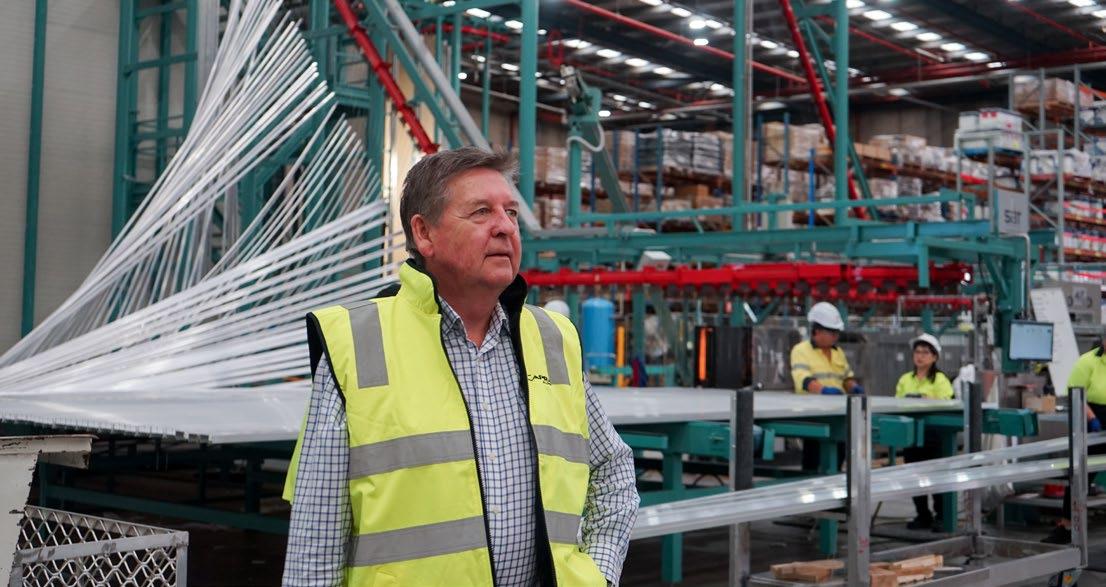
The Capral Story: Celebrating 90 Years of Australian Manufacturing
This commemorative publication celebrates Capral’s 90-year legacy as a cornerstone of Australian manufacturing. It serves as both a historical record and a tribute to the people, innovations and partnerships that have shaped the company’s journey. Through stories, archival material and reflection, the magazine honours Capral’s past, showcases its present, and looks ahead to its future.
It is intended to inspire pride among employees, appreciation among partners and curiosity among future generations. We hope you enjoy it.
Words and editing by Kellie Moore
Design and layout by Andrew Creelman
ACKNOWLEDGEMENTS
This magazine would not have been possible without the generous contributions of current and former Capral employees, leaders and partners who shared their stories, insights and memories.
Special thanks to the Capral Historical Research Project team Sacha Fraser, Jacqui McMullan, Damir Merdovic, Brendon Orth, Darren Walters, Allan Harris, Hedi Sirmais, and Deb Ward, along with Donna Paton and Gloria Gauci, for their work in preserving and organising decades of archival material.
Particular thanks go to Sacha Fraser, who spent days trawling through archives and microfilm at the State Library of New South Wales to help piece together gaps in our company documentation.
The archive this team has created will become an invaluable resource, providing access to photographs, documents, newsletters and internal communications that bring Capral’s rich history to life.
We are deeply grateful to everyone who helped shape this commemorative edition.
Foreword
When we reflect on ninety years of history, we are reminded that Capral’s story did not begin with scale or certainty. It began with belief. Belief in a new materialaluminium. Belief in Australian industry. Belief that local manufacturing mattered. This has been our enduring philosophy through to this day.
From the first shipment of rolled products from Granville in June 1941, through decades of expansion, challenge, innovation and reinvention, our business has continually adapted to meet the needs of Australian manufacturers and fabricators. The foundations laid by pioneers such as Gus Waterhouse created more than just a company, they established a culture of technical excellence, resilience, resourcefulness and ambition that still defines Capral today.
Across generations our people have built aluminium extrusion presses, rolling mills, smelters, distribution networks, trade centres and customer partnerships that have shaped Australia’s built environment and
supported its manufacturing sector. Our business has experienced; wartime production, post-war expansion, public listing, industry consolidation, import competition, a pandemic, economic downturns and technological transformation. Each chapter has strengthened our resolve to remain a reliable, forwardlooking Australian manufacturer.
In more recent years, we have continued that legacy through strategic acquisitions, investment in automation and digital capability, a renewed focus on safety and the introduction of lower-carbon aluminium solutions. We are committed not only to extruding and distributing aluminium, but to do it responsibly, transparently and sustainably.
I joined Capral in 2013 starting a journey that has been both the most challenging and rewarding of my career. At that time the business had yet to recover from the difficulties associated with the opening of Bremer Park and surging imports. We were in a challenging financial
position having lost the confidence of investors, suppliers and customers. The goal was to provide value to customers, regain the respect of suppliers and industry peers, build shareholder confidence, and most importantly build a business that our people would be proud to be part of.
I pay tribute to all the leaders that have shaped the company over the past ninety years. We thank our longserving chairman, Rex Woodward, for his stewardship and support of the Capral management team over a defining 15 year period. I also want to acknowledge the contribution of Richard Michael whose untimely passing in 2019 rocked us all. Richard was passionate about the aluminium industry and loved the company he devoted his working life to for over 30 years.
What gives me the greatest confidence in our future is our people. More than any asset or facility, it is the experience, skill and commitment of our teams across extrusion, finishing, sales, distribution and support functions that set Capral apart.
The pride in manufacturing, the care in serving customers, and the willingness to adapt are qualities that have endured for ninety years.
This book captures some moments in time, but our story is far from complete. As we look ahead, our focus remains clear: to strengthen Australian manufacturing, to support our customers with innovative and sustainable aluminium solutions, and to ensure Capral
remains a business that future generations are proud to lead and proud to be part of.
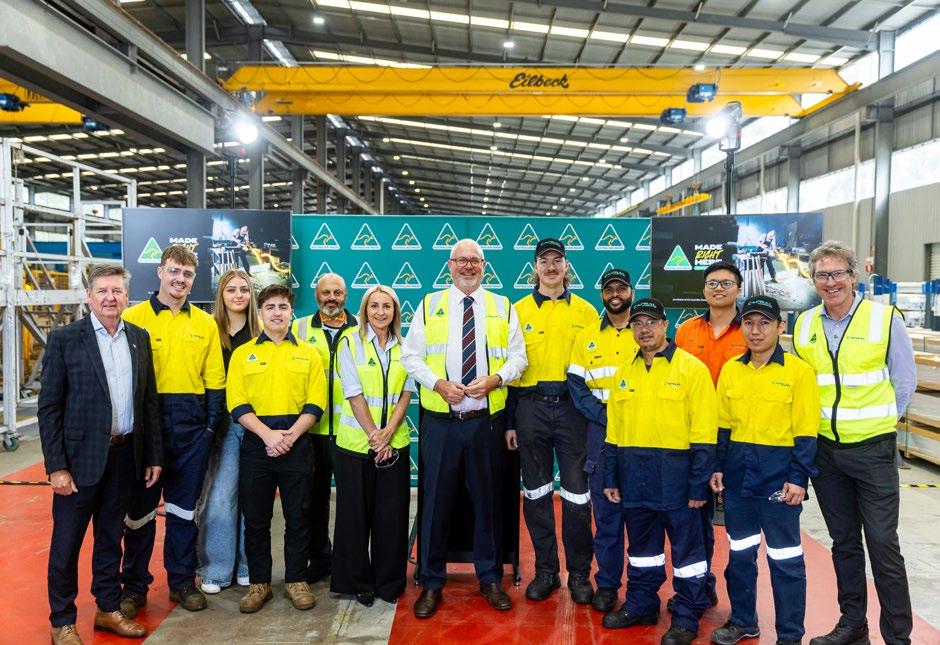
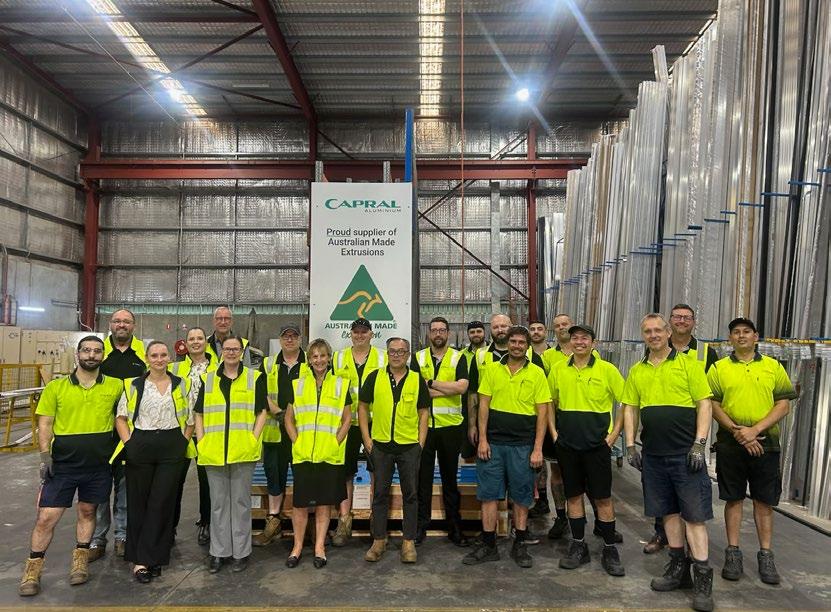
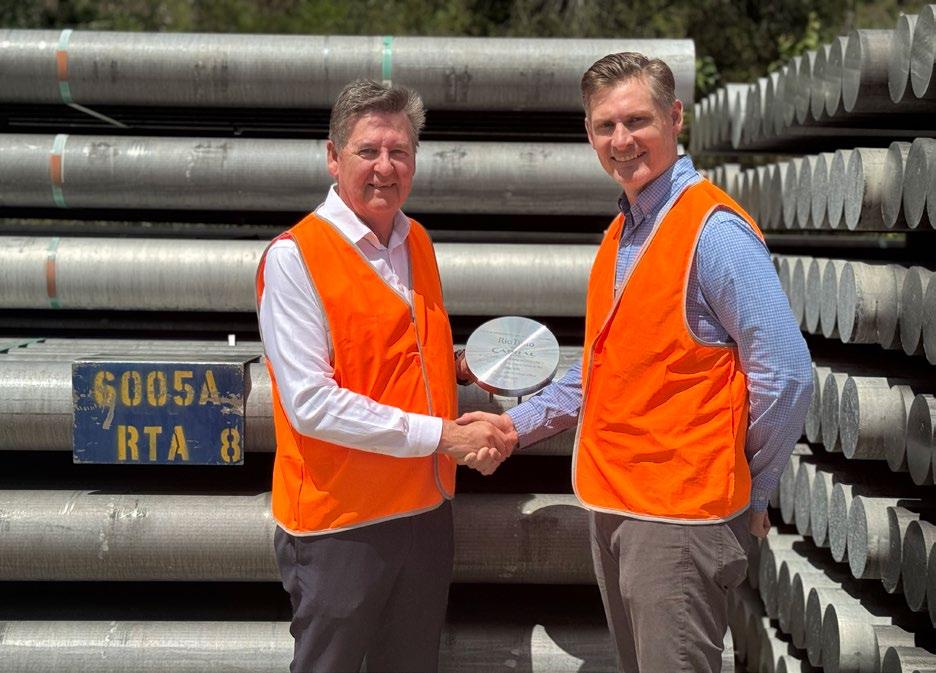
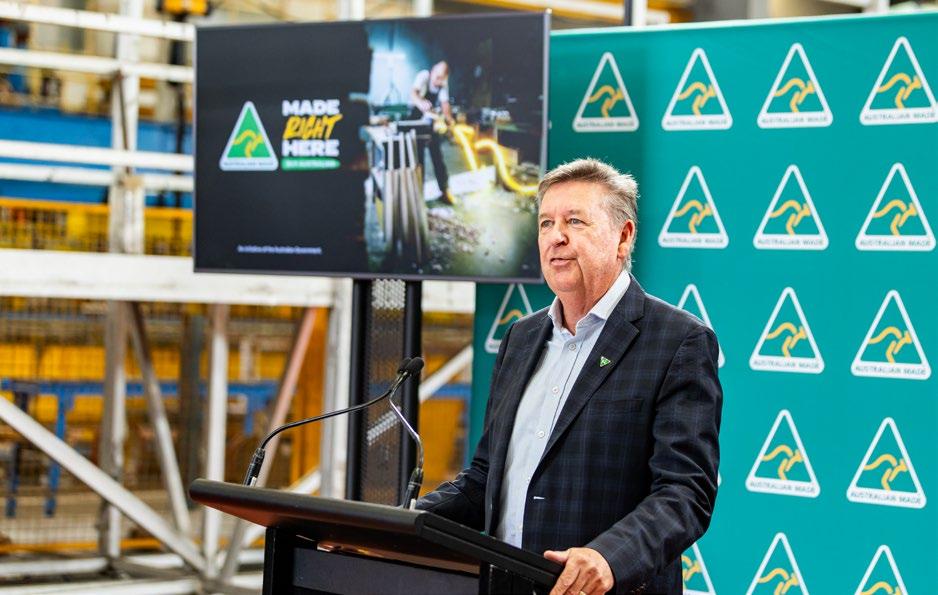
We were honoured to be selected by the federal government as the launch site for the high profile 2026 Australian Made Campaign. Fittingly in Capral’s 90th year, I believe this is a reflection of our current standing as Australia’s leading aluminium supplier.
It is a privilege to serve as Managing Director and CEO of Capral during this milestone year. I thank my team for their leadership, willingness to embrace change, commitment to continuous improvement and creating value for our customers. I thank every past and present member of the Capral team for the role they have played in shaping our history. Together we honour the past, act with purpose in the present, and remain firmly focused on shaping the future.
Tony Dragicevich Managing Director & CEO
The Making of Capral
A LONG HISTORY OF PEOPLE, PERSEVERANCE, CAPABILITY, AND CHANGE
Discovering a Metal and Imagining an Industry
The history of Capral stretches far beyond the borders of the company itself. It begins with the discovery of aluminium as a new metal in the nineteenth century, a material that did not exist in any meaningful industrial form until the intersecting breakthroughs of science, chemistry and electro-metallurgy finally made it possible. Sir Humphrey Davy proposed its existence in 1807; H. C. Øersted isolated a tiny sample in 1825; and mid-century efforts by Henri Sainte-Claire Deville generated larger, though still expensive, quantities. Only when Paul Héroult in France and Charles Martin Hall in the United States filed patents in 1886 for what became the Hall–Héroult process, and when Karl Bayer established a reliable way of producing alumina from bauxite shortly afterwards, did aluminium step out of the laboratory and into modern industrial life.
By the early twentieth century, aluminium had become a defining material for aviation, transport, electrical applications and architecture. In Australia, however, its presence was still tentative. In 1923, Metal Manufacturers Limited produced the nation’s first commercial aluminium products — power cables made from aluminium wire stranded around a steel core. Over the following decade, extrusions, castings, foil for packaging, and cooking utensils trickled into the market through companies such as Austral Bronze, G. E. Crane and others, but Australia had no domestic fabrication capacity and no integrated supply chain.
Several known bauxite deposits existed in Gippsland, Mount Tamborine, Gosford and Moss Vale, though they were used only for chemicals, pharmaceuticals and steel additives. No mining company had yet identified the potential for primary aluminium in Australia.
The non-ferrous metals sector remained focused on copper, zinc and lead, and aluminium appeared to be an interesting, but peripheral, curiosity in the national industrial landscape.
It was in this context that a young New South Wales engineer and Sydney University Graduate, N. Warren “Gus” Waterhouse, developed a conviction that would shape Australia’s aluminium future. During postgraduate work in Europe and North America in the early 1930s, Waterhouse observed rapid advances in aluminium fabrication and returned to Australia determined that this new metal offered significant industrial opportunity.
In 1932 he approached senior management of Aluminium Limited (later Alcan) in New York and Montreal seeking support to establish an Australian presence. They recognised his insight and sent him for extensive training at Banbury in England and Rorschach in Switzerland, where he studied the full suite of aluminium manufacturing techniques — rolling, extrusion, forging and foil production. He returned to Sydney in 1934 as South Pacific representative for the Aluminium Union Limited, Aluminium Limited global sales arm. His early imports of sheet, circles, ingot and extrusions quickly found local customers, from bus and train manufacturers to cookware producers. Aluminium’s potential in Australia was becoming visible.
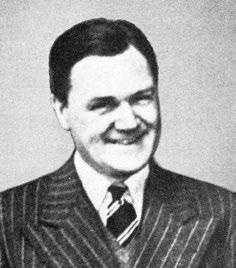
N. Warren “Gus” Waterhouse
1936–1941
Establishing Australco and the Granville Works
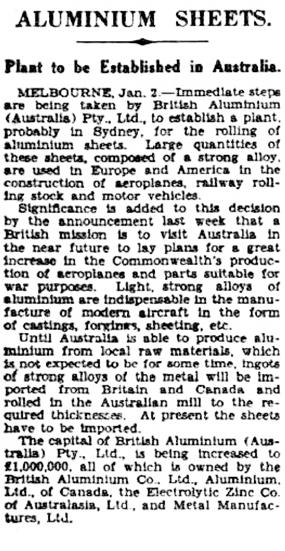
By the mid-1930s it was clear that aluminium fabrication in Australia needed a formal corporate footing. In November 1936, British Aluminium (Australia) Proprietary Limited was incorporated as a joint venture between the British Aluminium Company (BACO) of London and Electrolytic Zinc Company of Australasia.
On 15 February 1939 the company adopted the name Australian Aluminium Company Pty Ltd, although the shorthand name Australco soon became its widely used identity.
Waterhouse selected Granville, New South Wales, as the site for the company’s first works. The selected site covered more than 47 acres (19ha) and was purchased in 1939 for £30,000. The land was rough bush, fringed by modest suburban streets, inhabited by snakes, foxes and stray animals. Yet it offered strategic advantages: proximity to rail, to Sydney’s industrial core, and to a growing labour pool.
Waterhouse imagined barges delivering ingot up the Duck River, an idea that ultimately gave way to road and rail transport, but which showed his determination to build an adaptable and well-connected operation.
Construction began in September 1939, the same month Britain and Australia entered the Second World War. Early equipment ordered from Britain was cancelled as the British government diverted all strategic capacity to its own defence needs.
Waterhouse and his team urgently sourced replacement equipment from the United States. Meanwhile, the first thousand tons of Canadian ingot arrived as a protective stockpile for a factory still under construction. The small on-site workforce even acquired a Great Dane named Pete, who adopted Waterhouse as his preferred companion and roamed the grounds with a seriousness that gave the construction site an unlikely mascot.
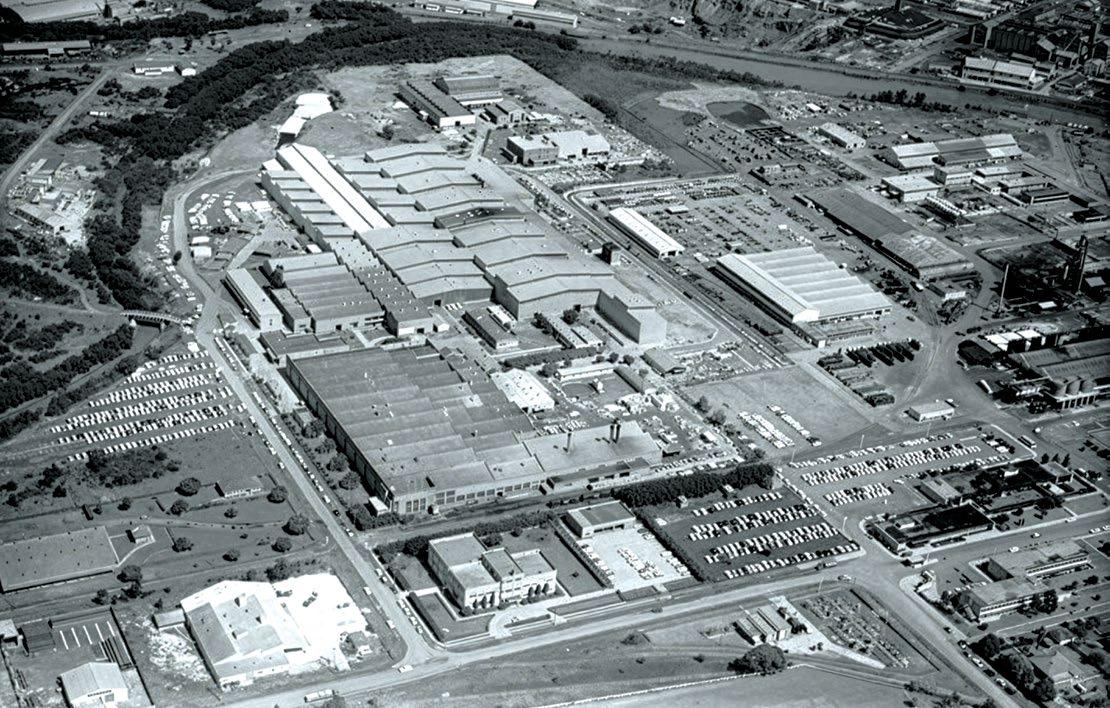
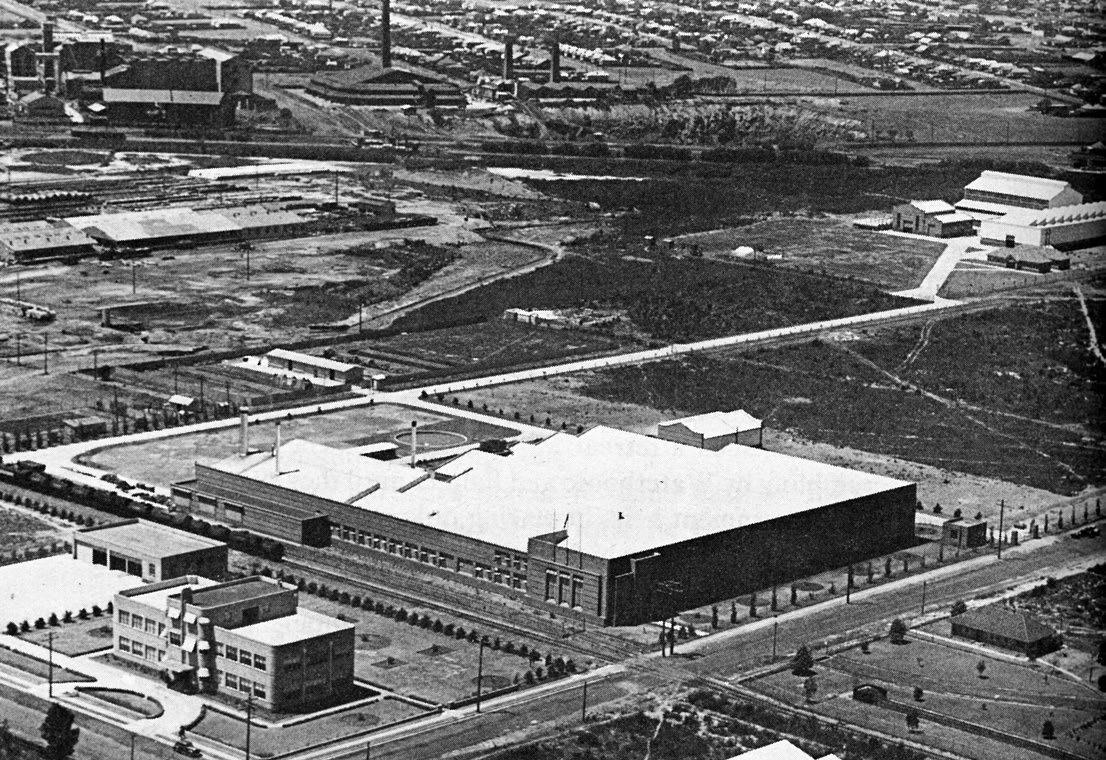
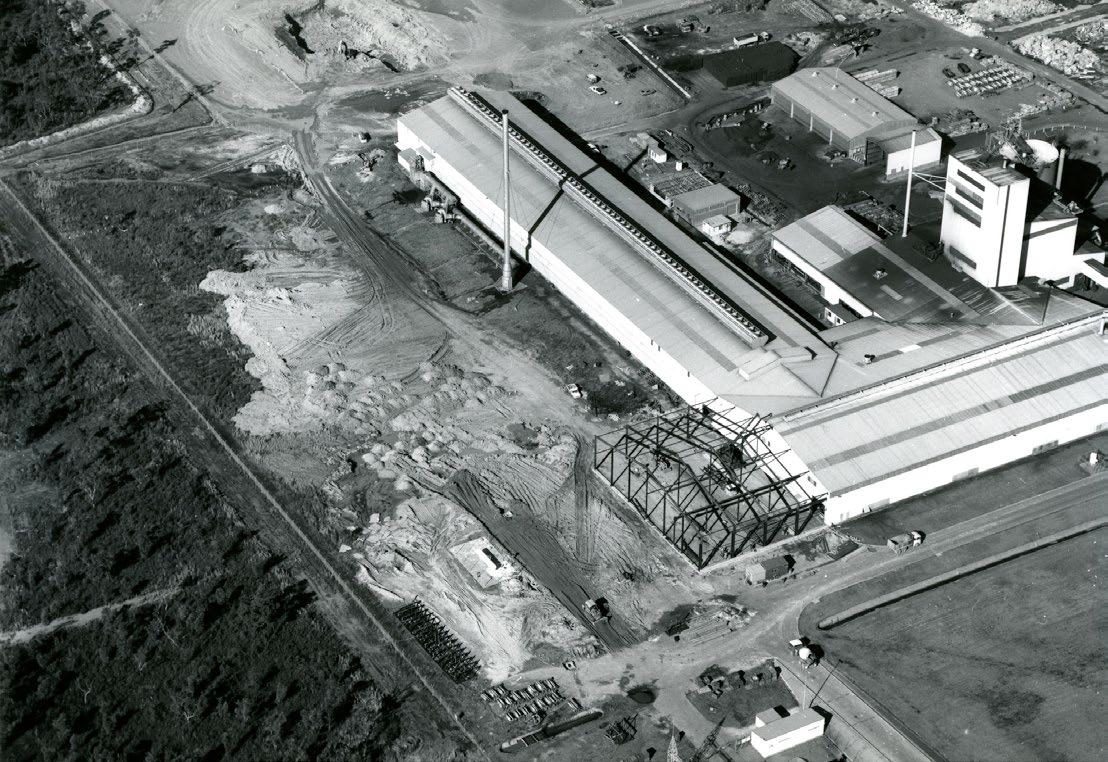
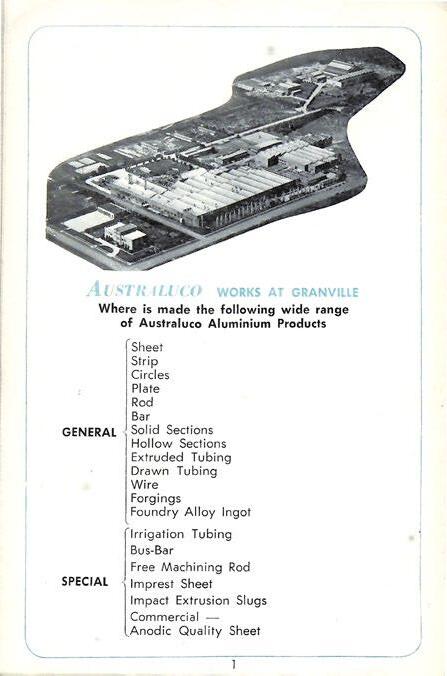
Aerial shot of Granville site, circa 1945
Throughout 1940 and into 1941, Waterhouse assembled a capable foundation team. Metallurgist Laurie Malmgren arrived from BACO’s laboratories; Canadian engineer Gerry Curry joined as engineering manager; Company Secretary Arthur (“Mac”) McNaughton established the administrative backbone of the enterprise; and several younger metallurgists and engineers, including Derek Foote and Derek Barnett, took roles that would continue well into later decades.
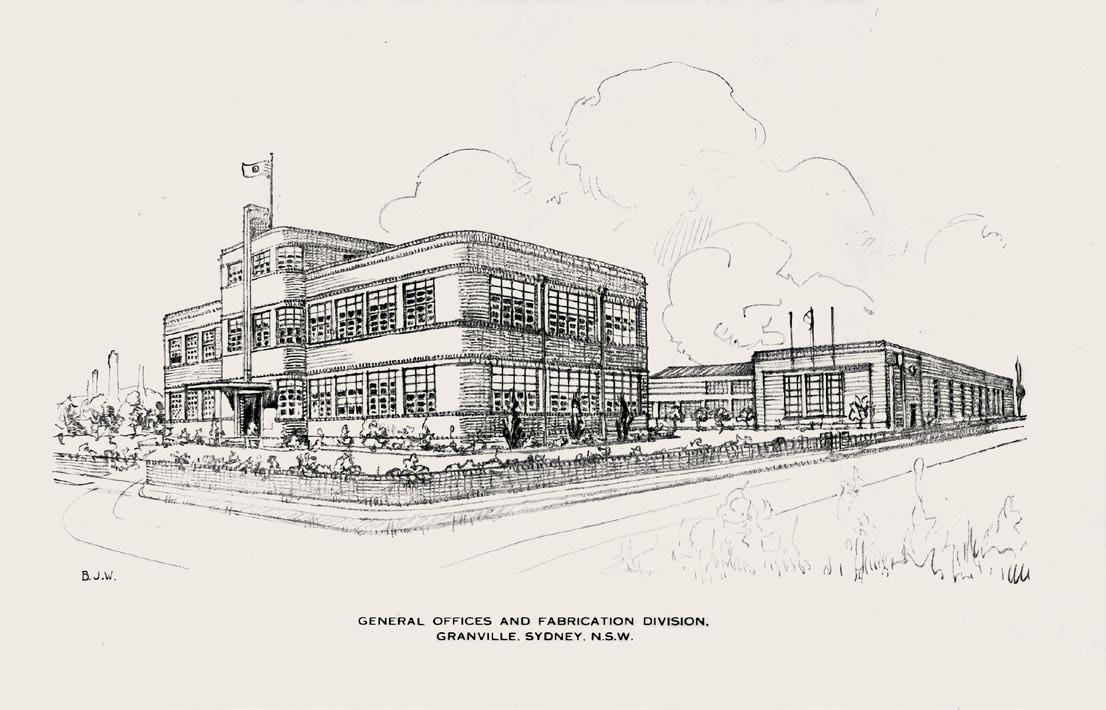
Architects illustration of Granville Office building designed by WJ Grassick
Gerry Curry (pictured left) with Newton P Taylor and L I Barron
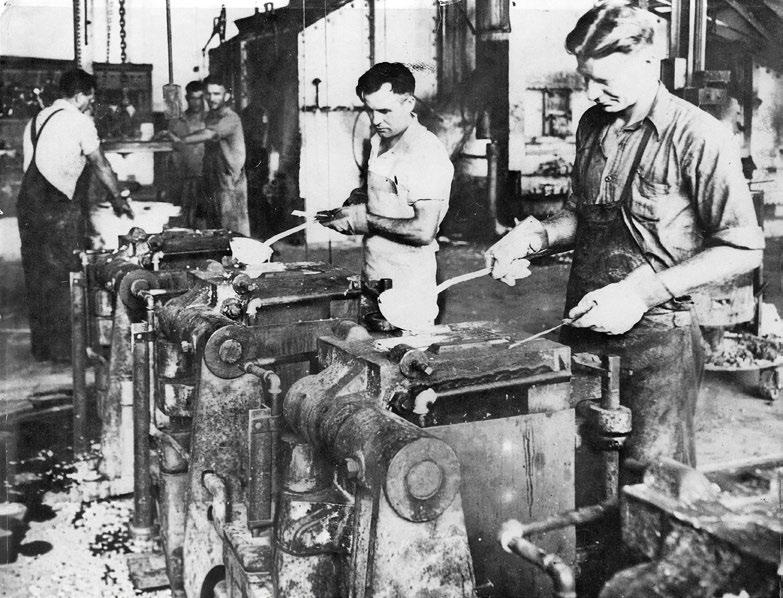
Before any rolling or extruding could begin, the remelt was brought online. It was the first department to start production, working from the thousand-ton stockpile of small Canadian ingots that had been secured in 1939 as wartime insurance. The furnaces were coke-fired, demanding constant effort: shovelling coke, stirring in copper and other alloying additions, and casting the rolling slabs and billets that would feed every other part of the works. It was dirty, physical, sweat-heavy work — but it was also teamwork at its best, the essential starting point from which the entire plant would draw its material.
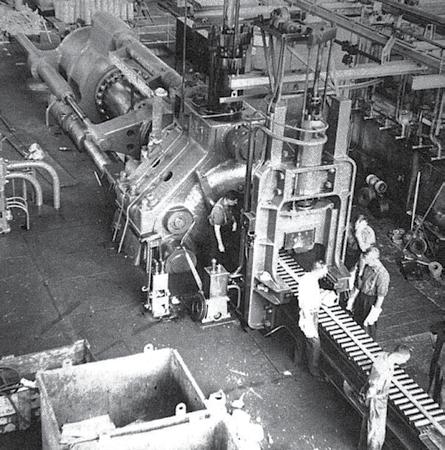
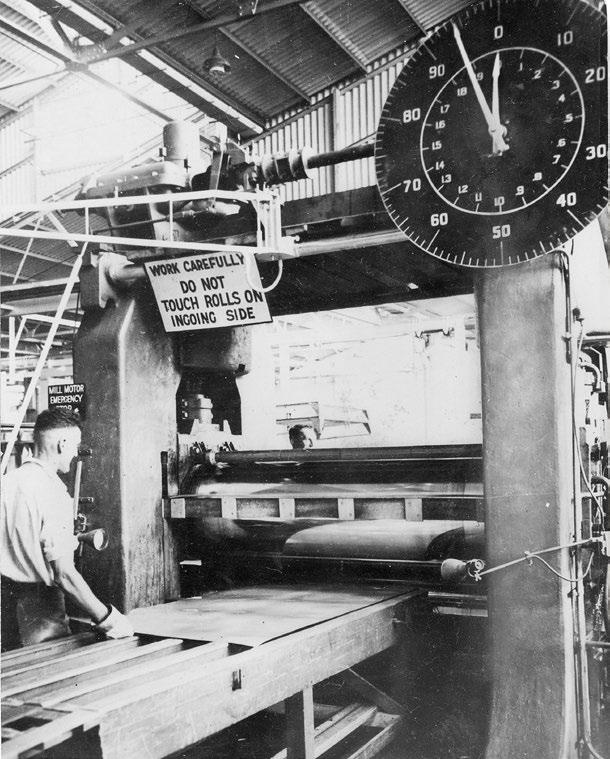
The principal equipment installed at the site for rolling was: a 60-inch non-reversing hot mill, a 40-inch nonreversing strip mill, a 30-inch reversing strip mill and six non-reversing flat sheet mills. A 3000-ton hydraulic extrusion press, which later became known as No.1 press, was also installed at the site and remained operational until 1978.
By June 1941, around 460 employees had been trained in the full range of aluminium fabrication activities, despite most having never previously set foot inside an aluminium works.
On 10 June 1941, Granville produced its first rolled aluminium sheet. Extrusions followed on 15 August, and forgings on 18 September. The achievement generated immense pride across the site. A group of distinguished guests gathered to witness the first sheets roll off the mill that June morning, a keg of beer was tapped on the factory floor to mark the occasion, and the first delivery departed the works.
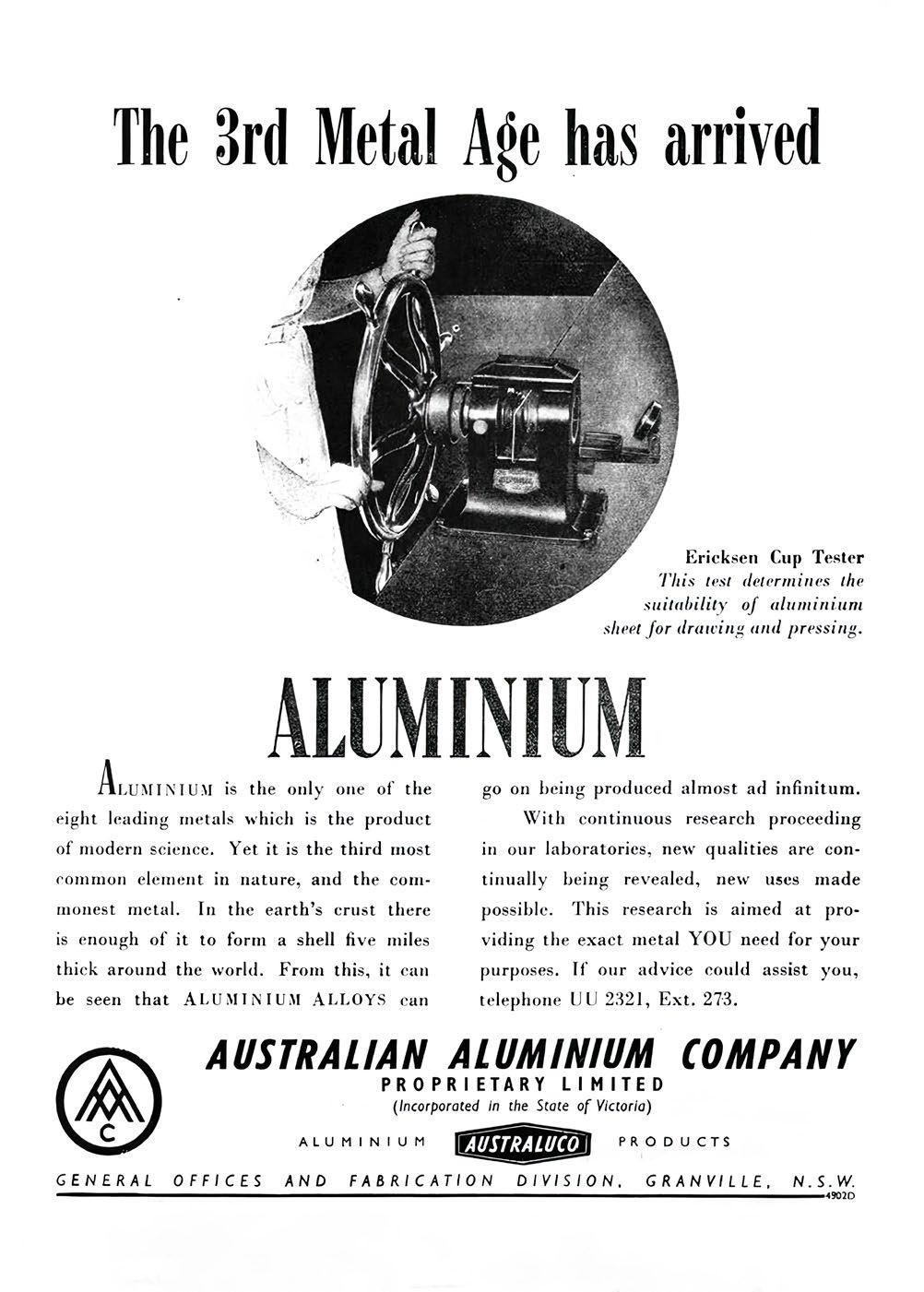
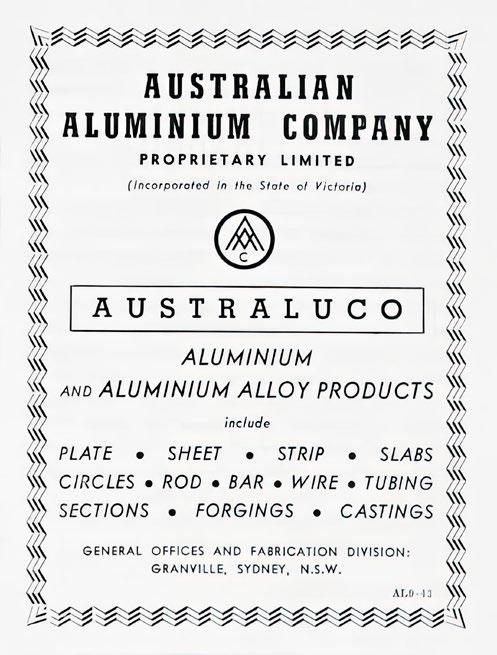
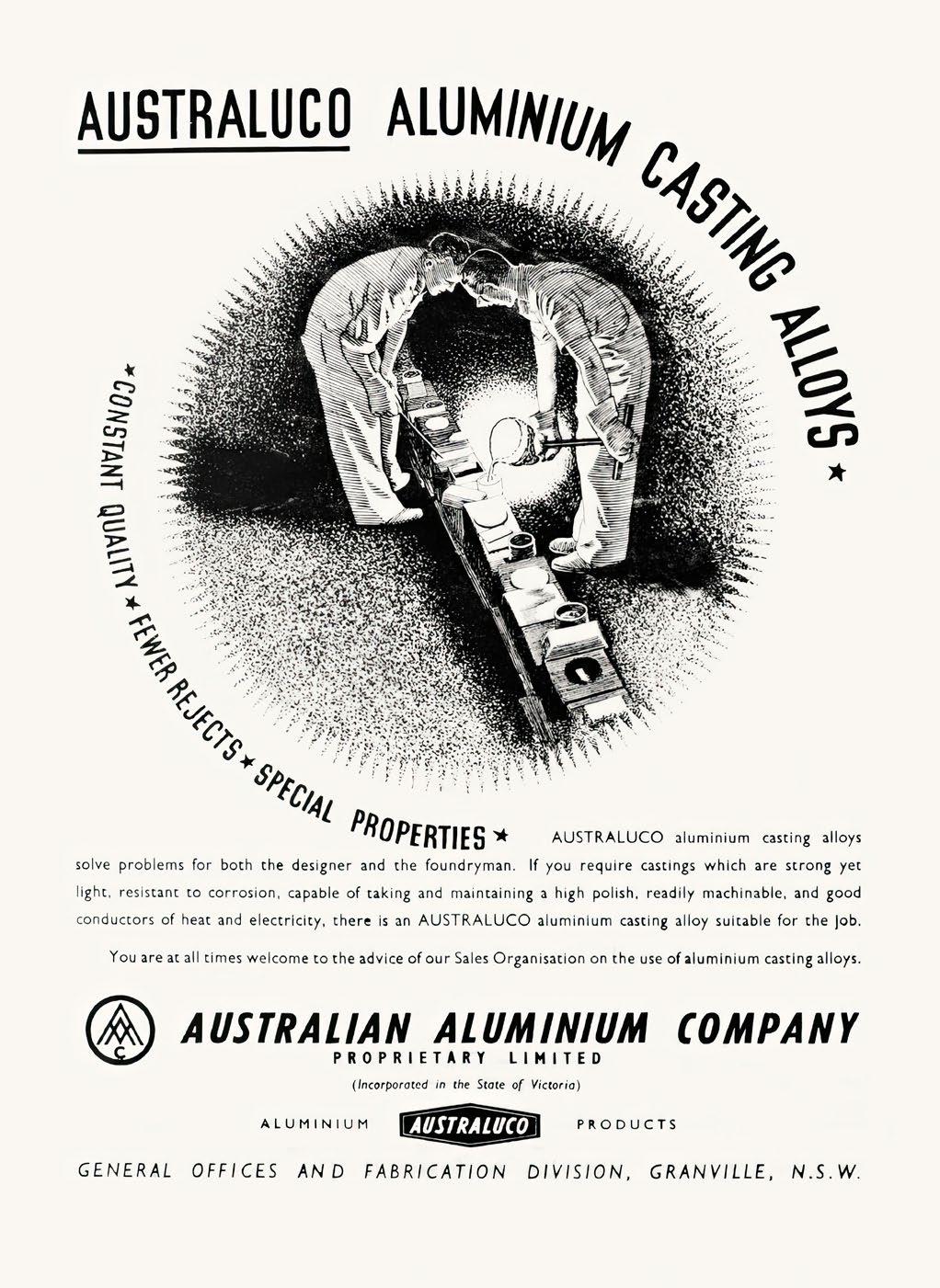
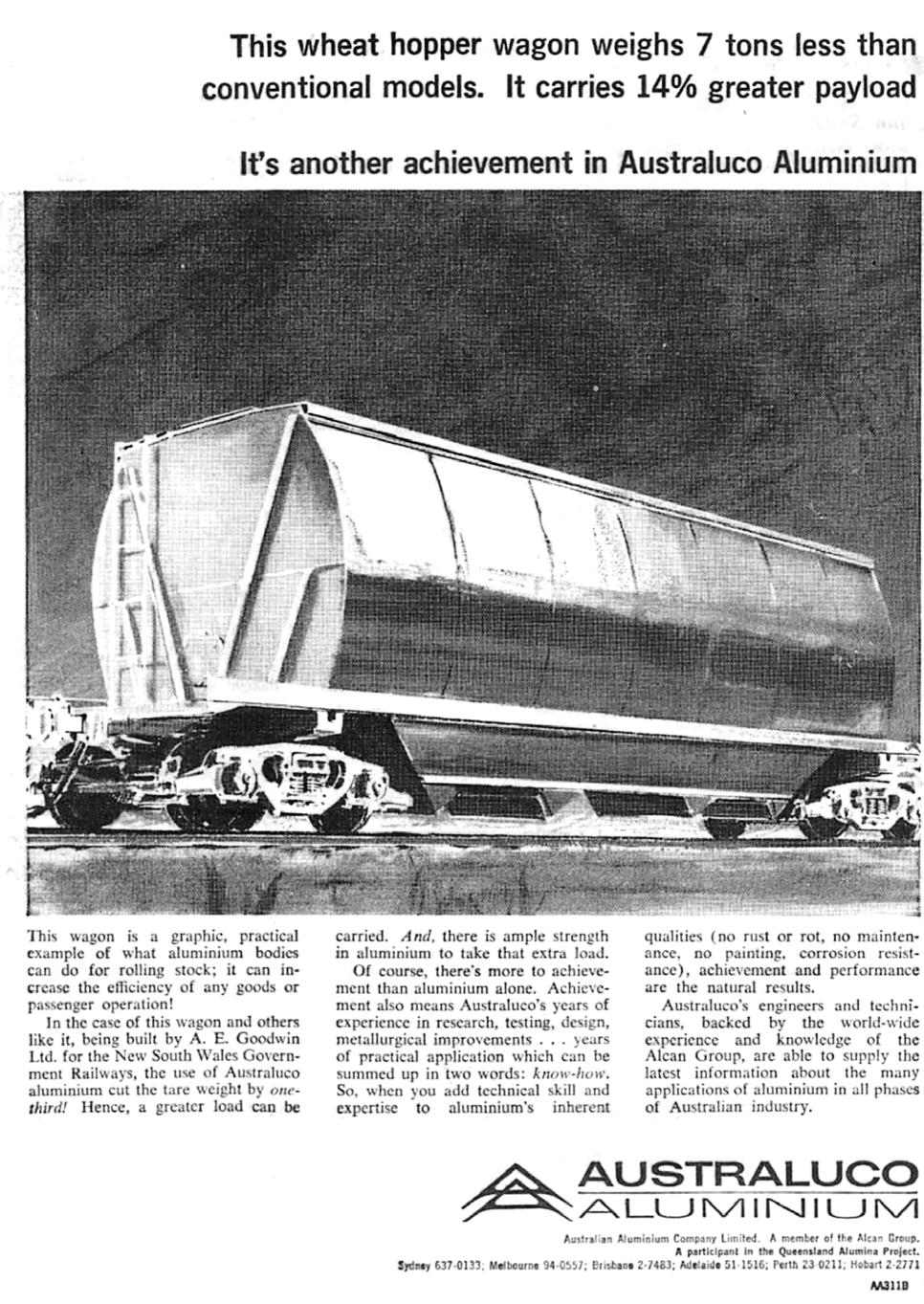
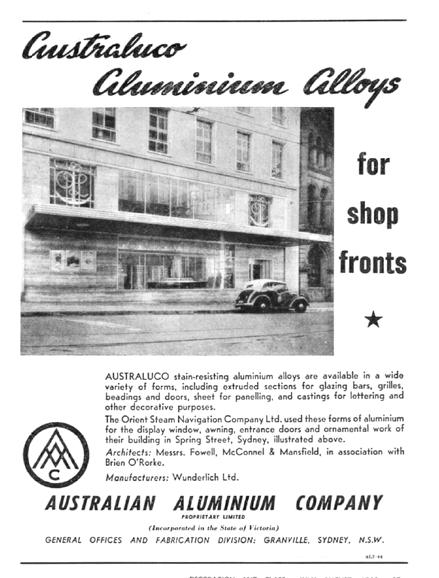
Advert in Decoration and Glass Australia, September-October 1943
First rolled delivery leaving the Granville plant.
First extrusion press at Granville affectionately called Dingo.
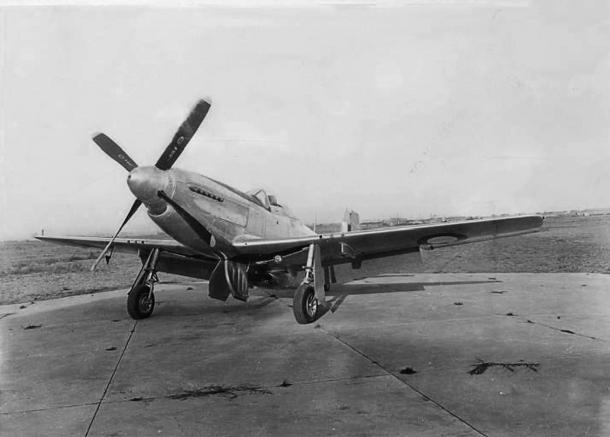
The early months of production involved intense government oversight as Australia’s defence needs surged. Aircraft tubing, forgings, structural components and propeller parts were produced under exacting standards, monitored by a large corps of embedded defence inspectors.
And across all of this, extrusion remained a profoundly manual craft. Operators loaded ingots into the press by hand, guided each length of hot metal as it emerged, and then painstakingly straightened most sections one by one using a small hydraulic tool. It was laborintensive, physically demanding work that relied on skill, coordination and sheer endurance — a reminder of how far the technology, and the industry, has evolved since those first months at Granville.
Aluminium sheet being hot rolled at the Australian Aluminium Company in Granville, New South Wales, around 1942. H4882-1, 14, 25, Collection: Powerhouse Museum.
Aluminium being sand cast at the Australian Aluminium Company in Granville, New South Wales, 1940s. H4882-1, 14, 25, Collection: Powerhouse Museum.
1941–1945
Wartime Operations and the Shadow Factory
With Japanese forces advancing in the Pacific, the strategic vulnerability of Granville became a national concern. The Commonwealth government implemented a two-part contingency plan. First, they established a duplicate set of records at a house at 130 The Boulevarde, Strathfield, daily trips to this location became part of the job for the company accountant. Second, and more significantly, they built a fully equipped alternate plant at Wangaratta, Victoria far from the coast. This site included a remelt operation, rolling mill and extrusion press, duplicating the capabilities of Granville.
Although the full shadow facility was never activated, the remelt did operate briefly, and the site leadership famously included engineer Gerry Curry, who was
known to traverse the grounds on horseback — one of many distinct personalities in the company’s early history.
Granville functioned at capacity for the duration of the war, producing an extensive range of defence-critical components. Quality assurance standards were intense, and the technical knowledge gained during this period formed the basis of the company’s post-war expertise. Workshops, laboratories and rolling mills that were expanded or hastily repurposed for the war effort would later underpin major civilian applications as the country reoriented to peace.
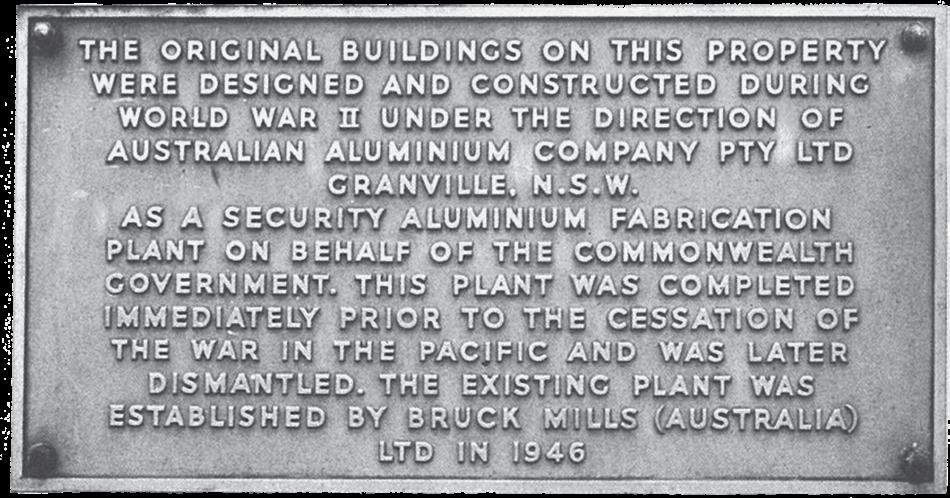
Plaque commemorating the establishment of the Wangaratta Works, a plant built to reduce reliance on imported metal following the Pearl Harbour attacks.
1946–1958
Post-War Expansion and Early Diversification
When wartime production ended, Australia’s appetite for aluminium grew rapidly. New housing, transport networks, industrial equipment, appliances and architectural projects created sustained demand. At the same time, reduced output from North American smelters caused metal shortages worldwide. Granville’s furnaces operated under pressure, and the company adopted every available technical improvement to maintain supply and extend its product range.
The furnaces transitioned from coke-firing to oil-firing, improving heat consistency. A new 48-inch strip mill was installed. Four second-hand foil mills were acquired as Australco attempted to enter the aluminium foil market, although the limitations of the site and the relative lack of foil-specific expertise led to the discontinuation of foil rolling in 1954. Extrusion capacity increased through the installation of a 4000-ton press in 1952 and the addition of the Wangaratta 3000-ton press, relocated to Granville in 1955. These upgrades supported the architectural and automotive sectors as demand expanded.
Product development also diversified. Aluminium applications were adopted in consumer packaging, structural building products, transport systems and industrial machinery. The introduction of aluminium into the building sector accelerated with the spread of post-war housing estates and the growing preference for lightweight, corrosion-resistant materials. Granville’s operations grew in step with these trends, supported by global knowledge flows from the wider Alcan group.
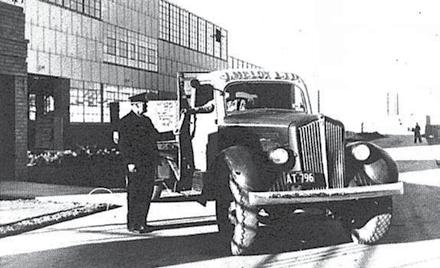
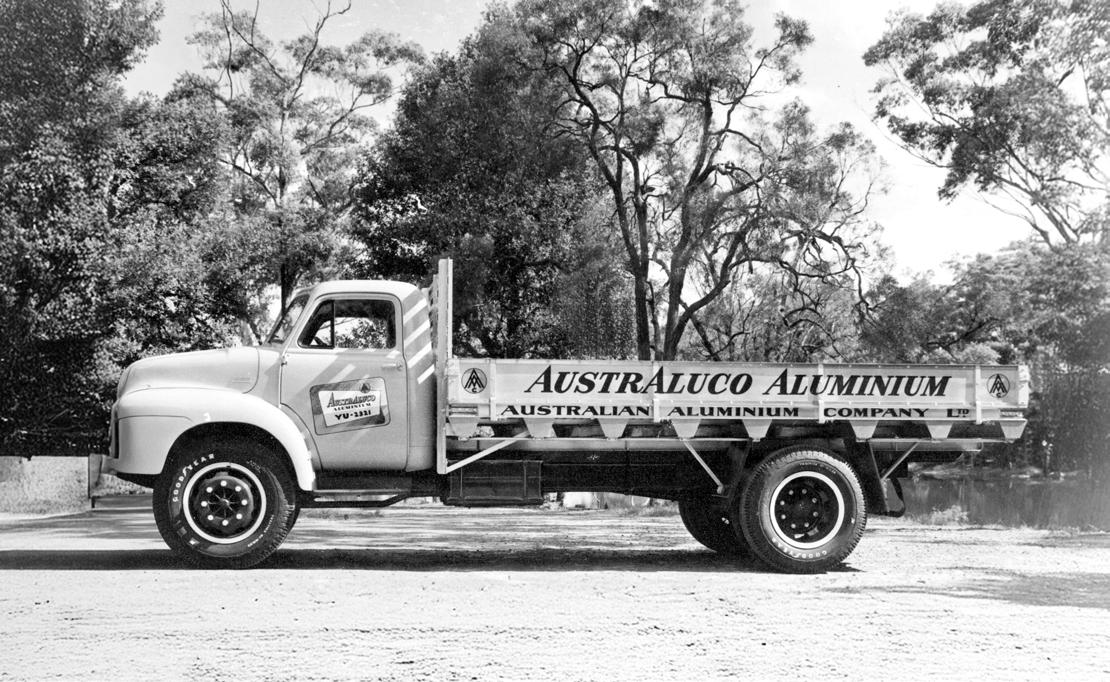
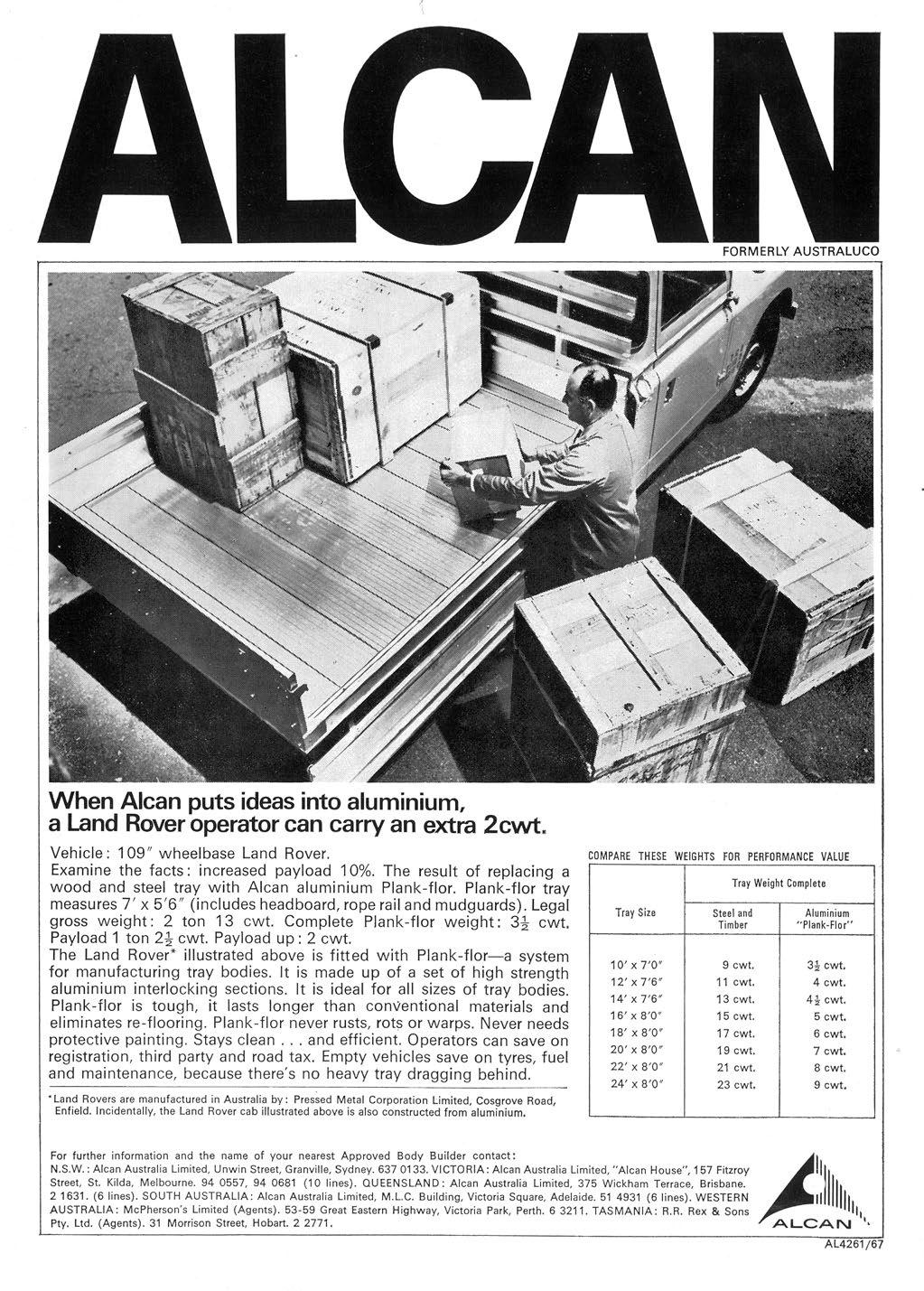
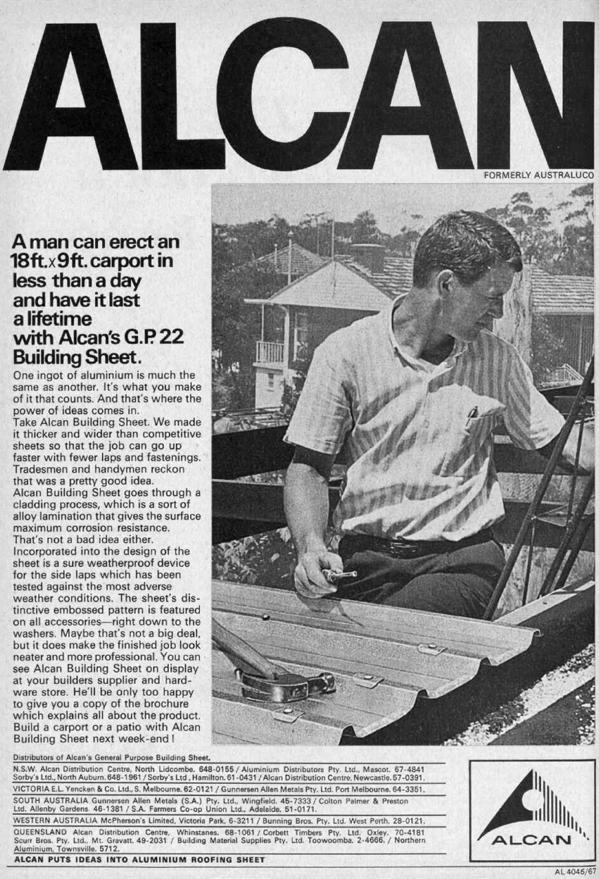
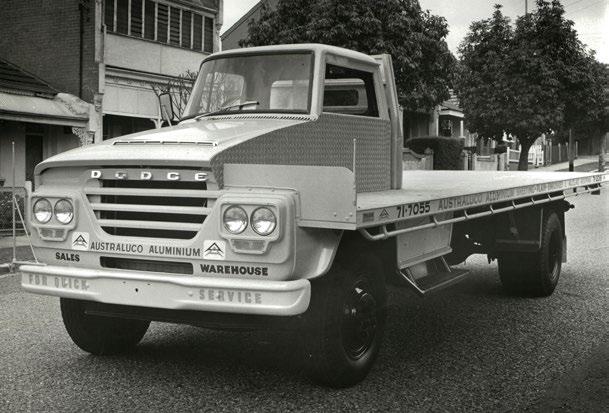
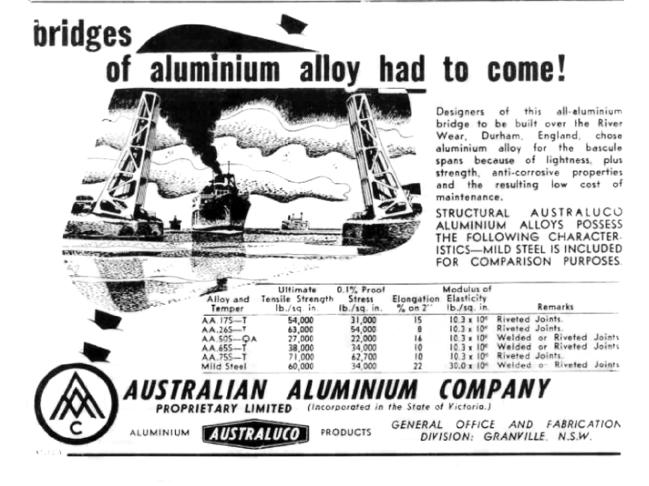
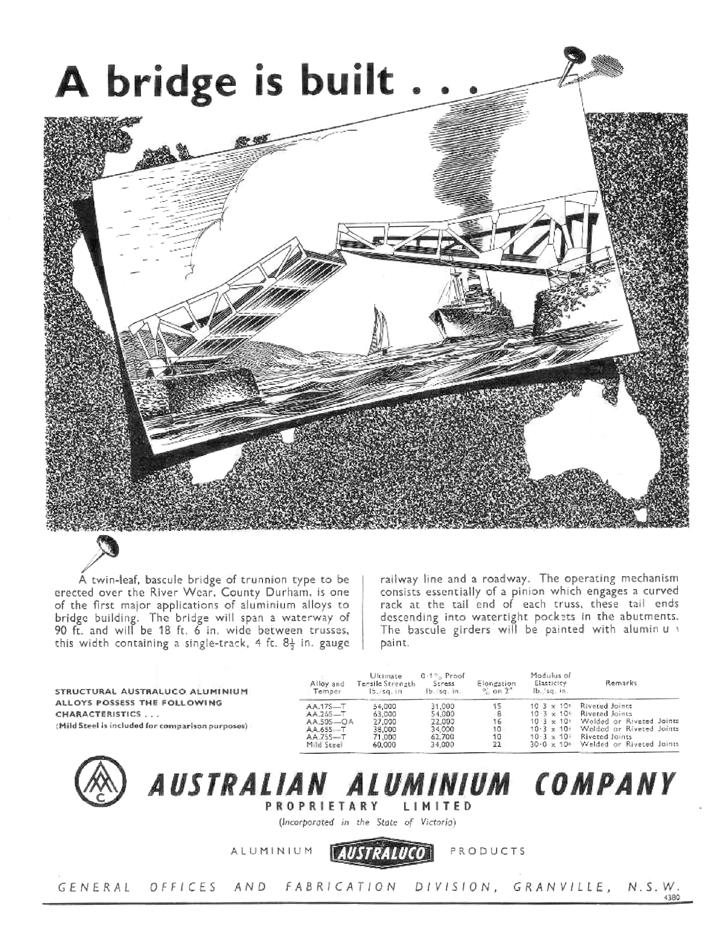
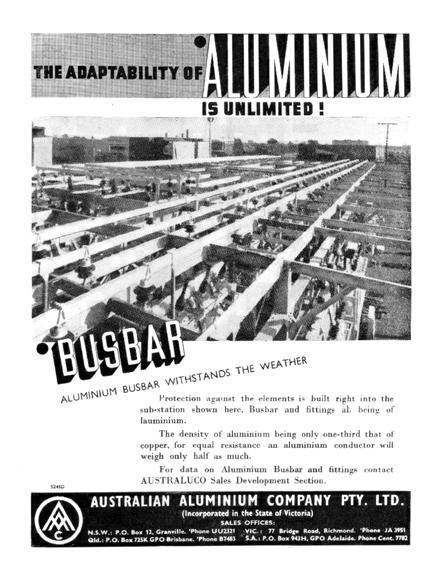
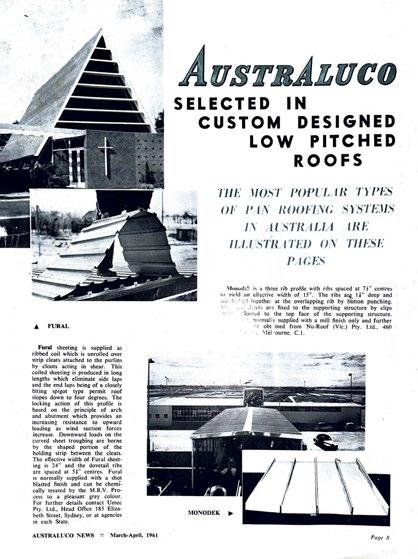
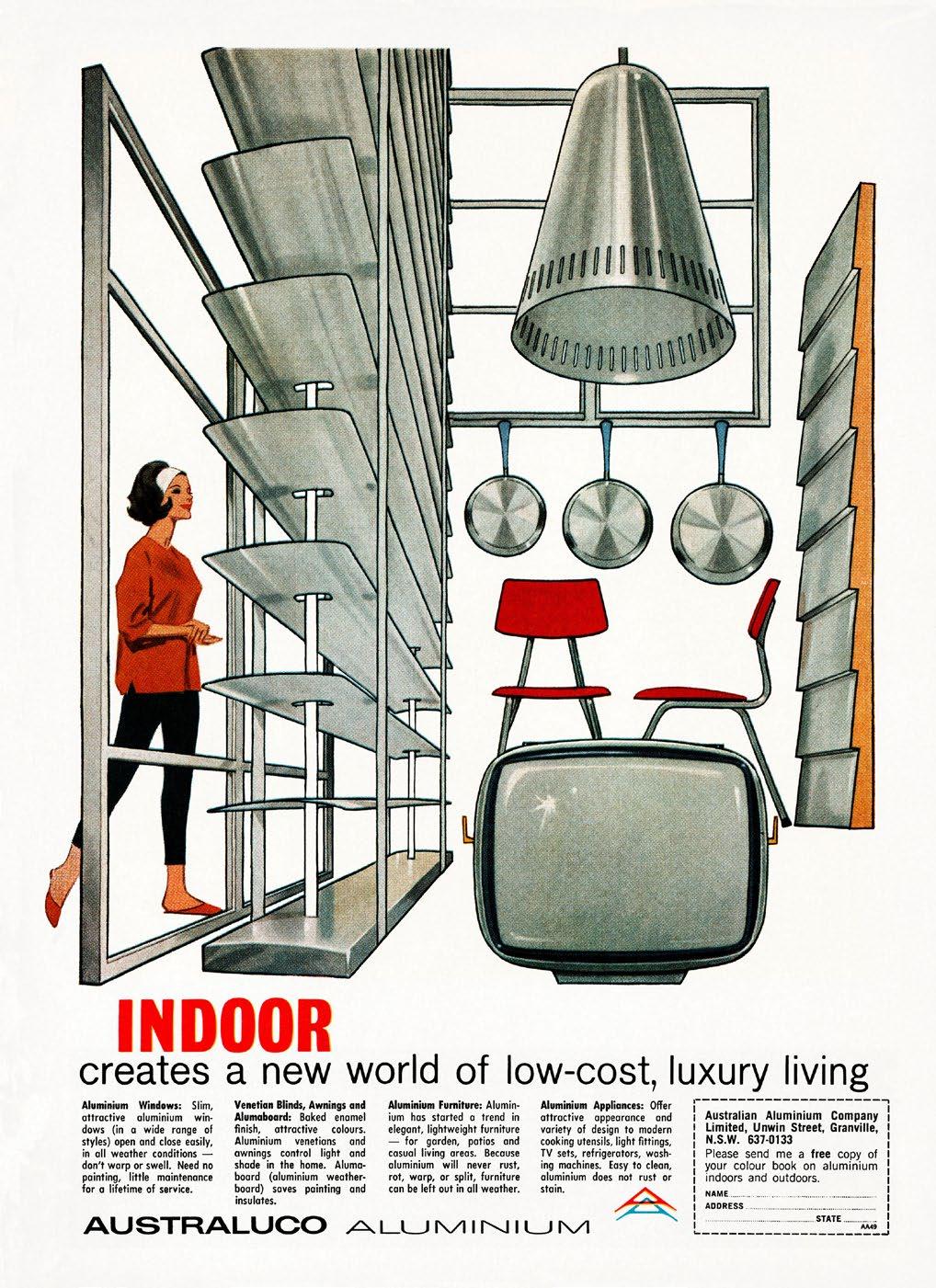
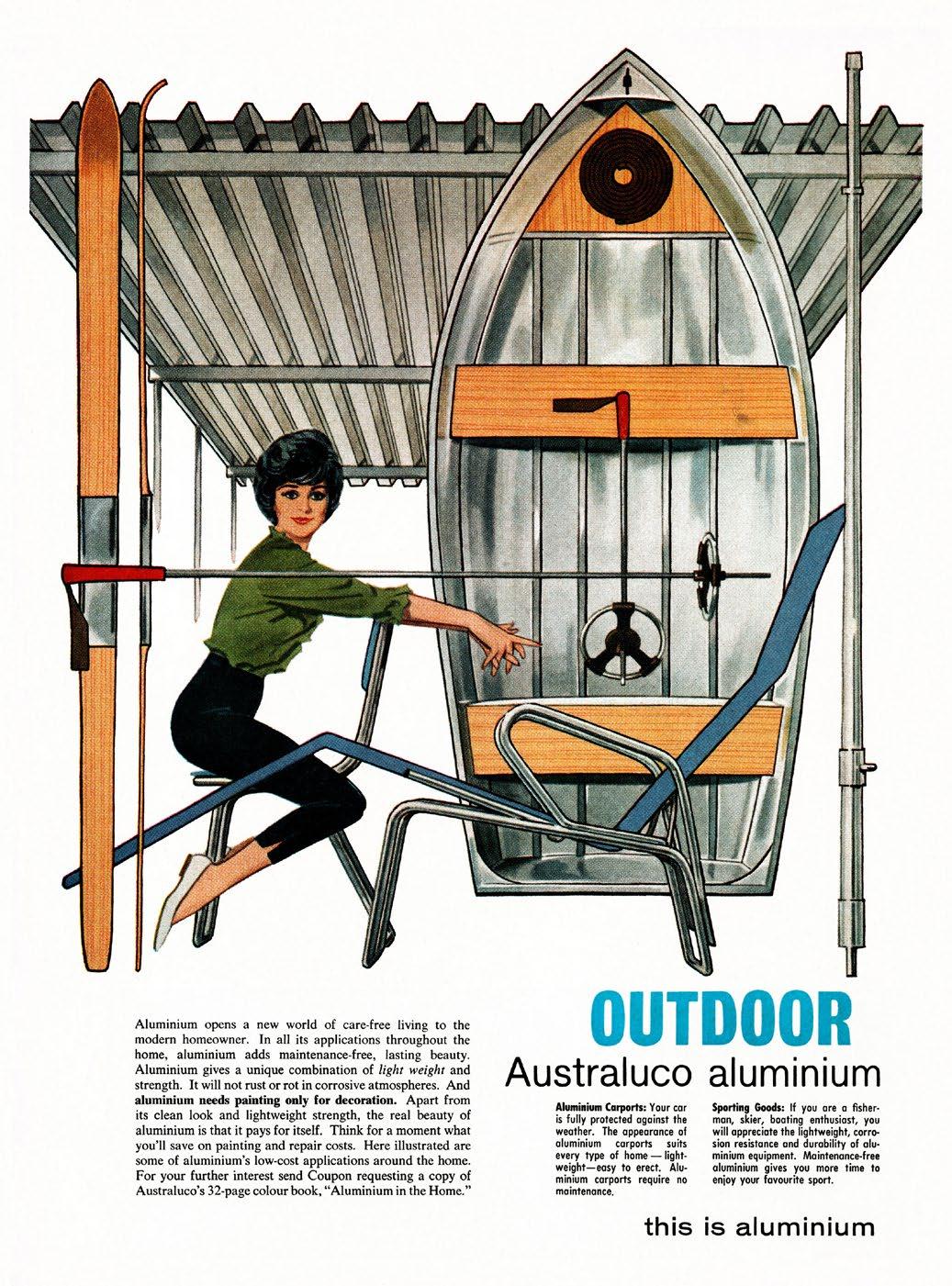
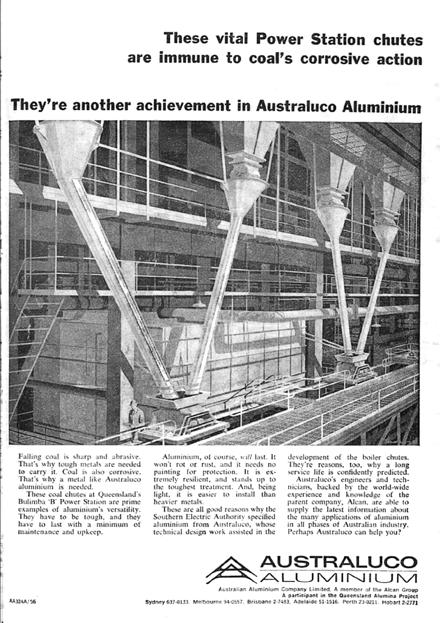
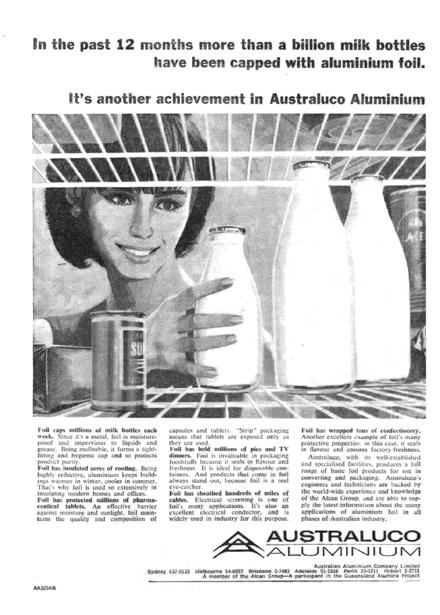
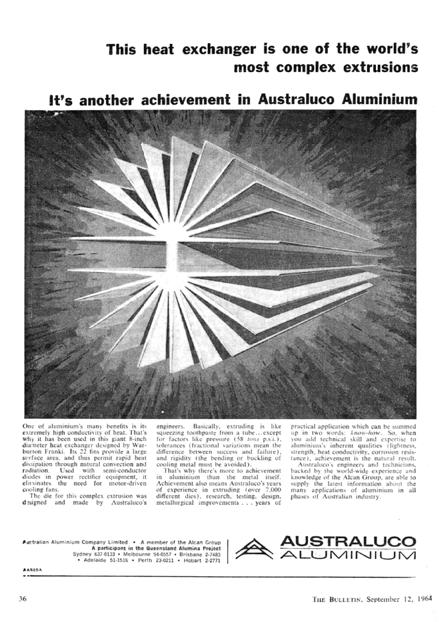
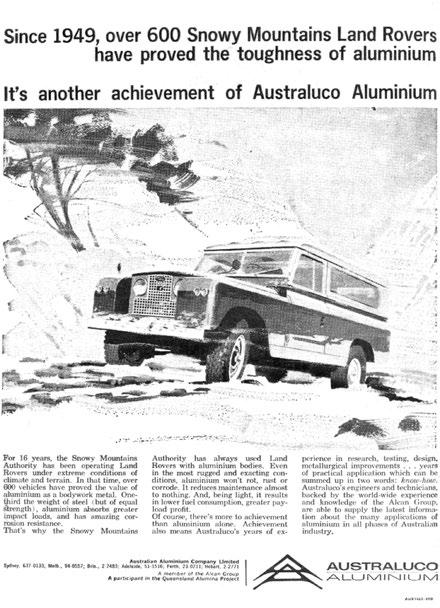
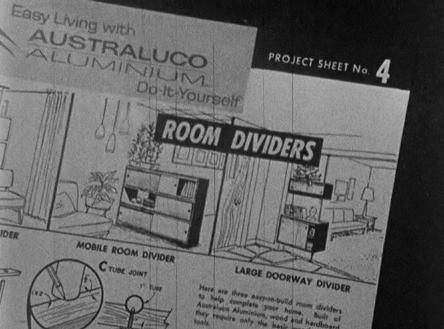
The business traded as Australuco from the 1940s until it was rebranded Alcan in the early 1960s
Australuco delivery vehicle, 1950s
1958–1986
Becoming Alcan Australia and Building National Capability
The late 1950s marked the beginning of a new era for the organisation. In 1958, Australuco became a publicly listed company on the Australian Stock Exchange as Australian Aluminium Company Limited, giving it the financial reach to accelerate investment in manufacturing capacity.
That same year saw the installation of a new 3000 ton extrusion press at Granville and the launch of a multi-million-pound rolling-mill expansion — significant upgrades that reflected rapidly growing domestic demand for aluminium across construction, packaging, transport and industrial markets. The total Australian consumption of aluminium in all forms in 1958 was approximately 31,500 tonnes. This shift accelerated through the early 1960s.
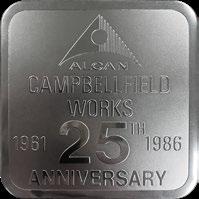
In 1960, the company established a major new manufacturing presence at Campbellfield, Victoria, with the opening of an extrusion and rolling plant designed to serve southern Australian markets more efficiently.
Campbellfield quickly became a cornerstone of the company’s operations, strengthening its ability to supply extrusions and sheet into Victoria’s growing automotive, building and transport manufacturing sectors.
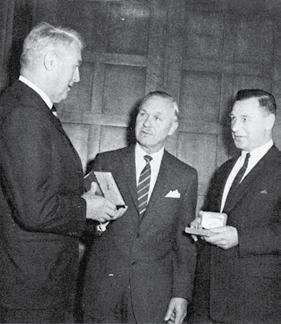
The same year the Company’s wholly owned subsidiary, Aluminium Foils (Australia) Pty. Limited, completed the erection of its plant at Cabramatta in New South Wales. The Cabramatta plant was officially opened by the Prime Minister, the Right Honourable Robert Menzies, on 25th November 1960. Mr J. A. Dullea, a Director of Aluminium Limited, Canada, and Mr. W. J. Thomas, a Director of The British Aluminium Company Limited, England, journeyed to Australia to represent the Company’s Shareholders at the opening ceremony.
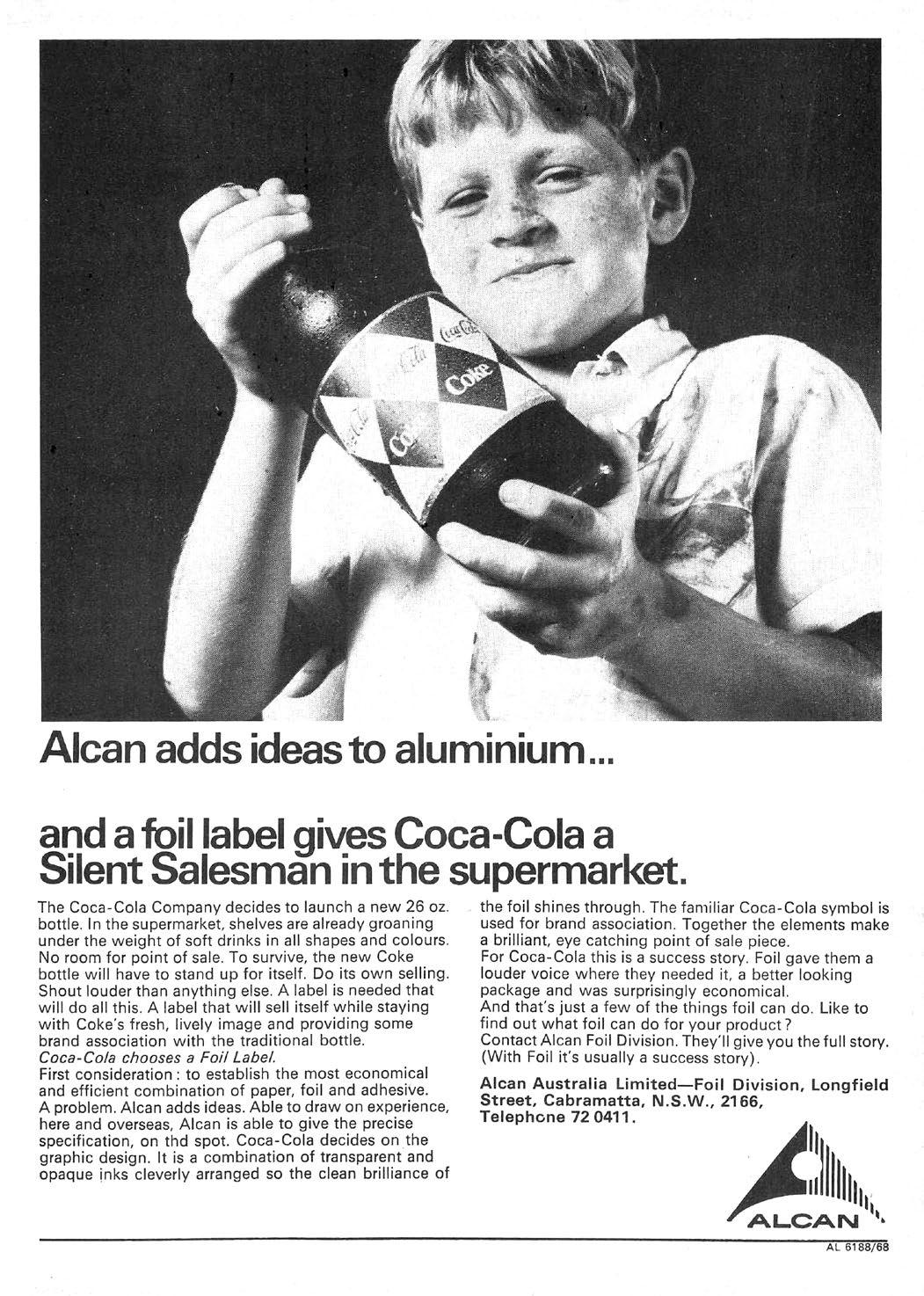
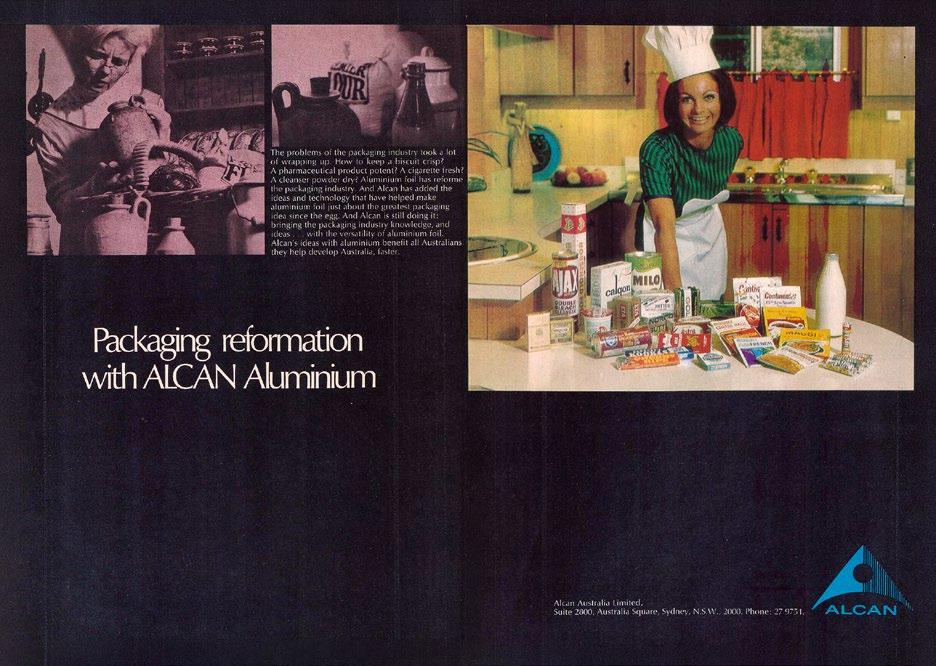
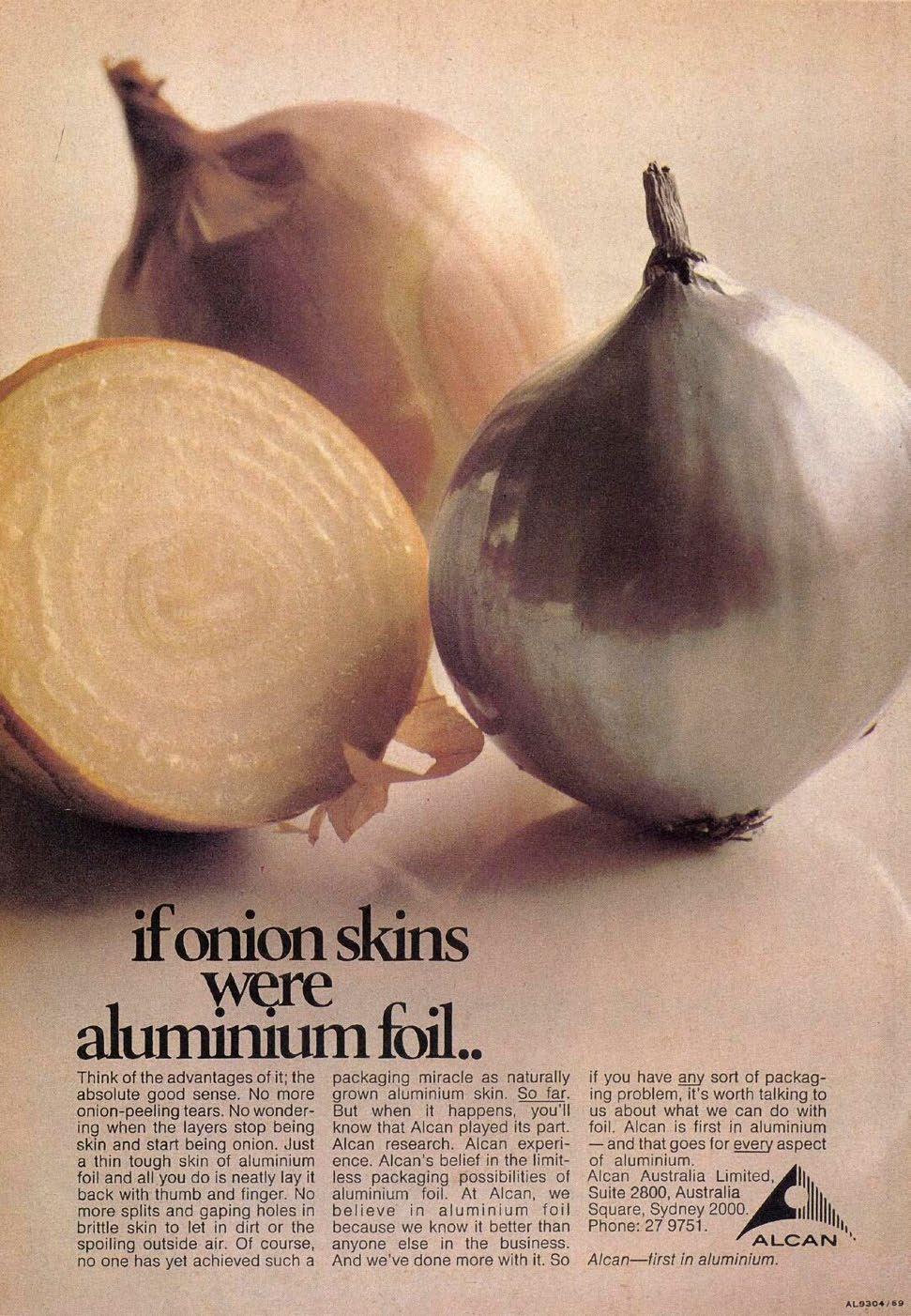
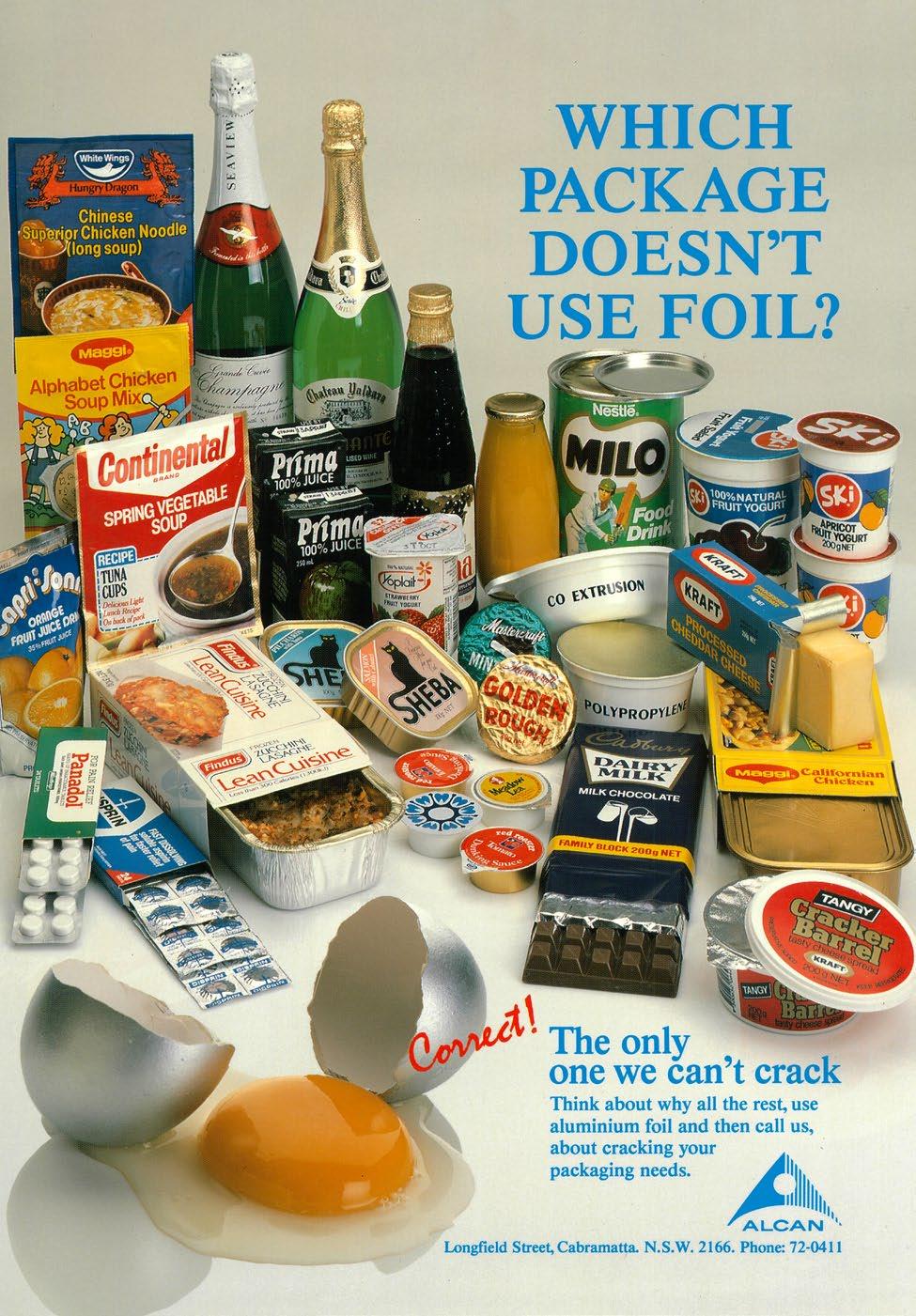
By 1961, the Cabramatta plant was fully operational, producing foil stock and later paper-aluminium laminates that supported the rapidly growing domestic packaging industry. Cabramatta played a crucial role in supplying material to hospitals, foodservice and consumer-goods manufacturers through the 1960s and 1970s.
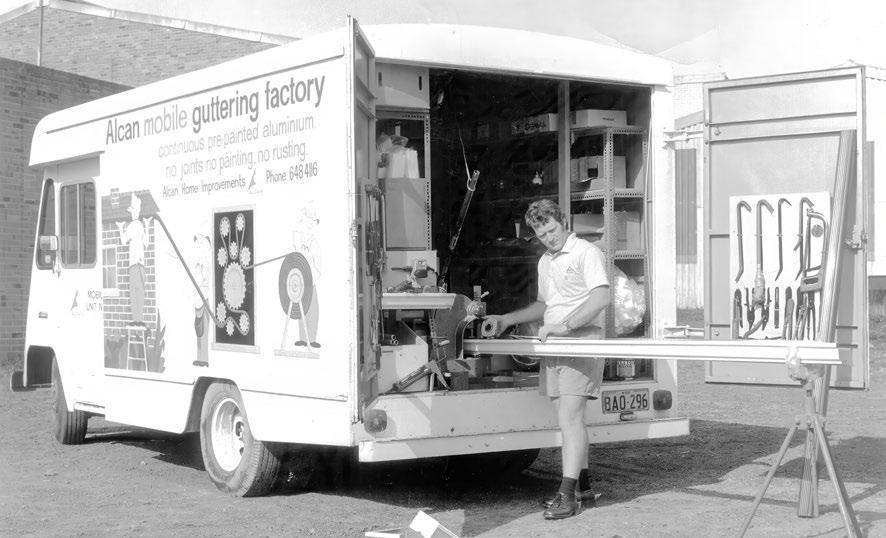
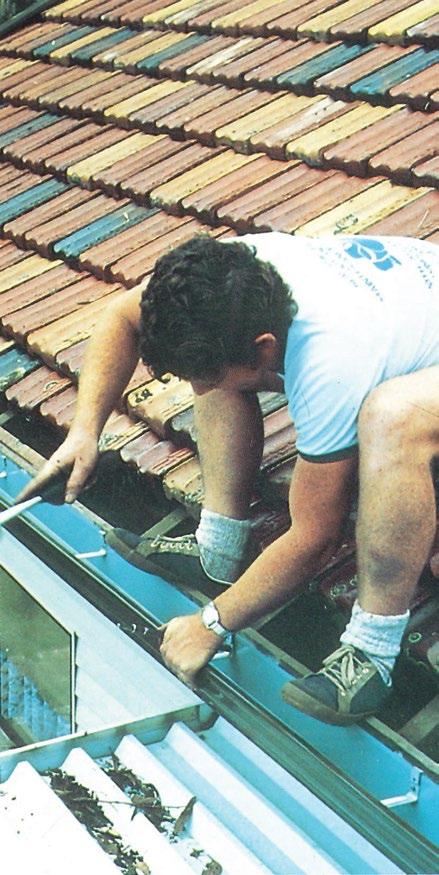
Alcan’s mobile guttering service brought aluminium gutter forming and installation directly to building sites, 1970s.
As ownership consolidated through the mid-1960s, culminating in full Alcan control, the business formally adopted the name Alcan Australia Limited on 3 January 1967. This shift aligned the company with global technical resources and enabled a period of expansion that reshaped the aluminium industry in Australia.
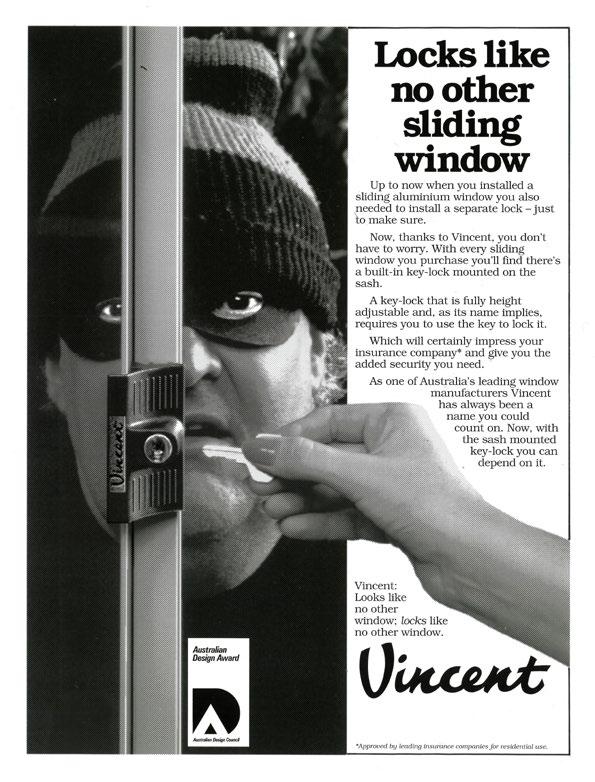
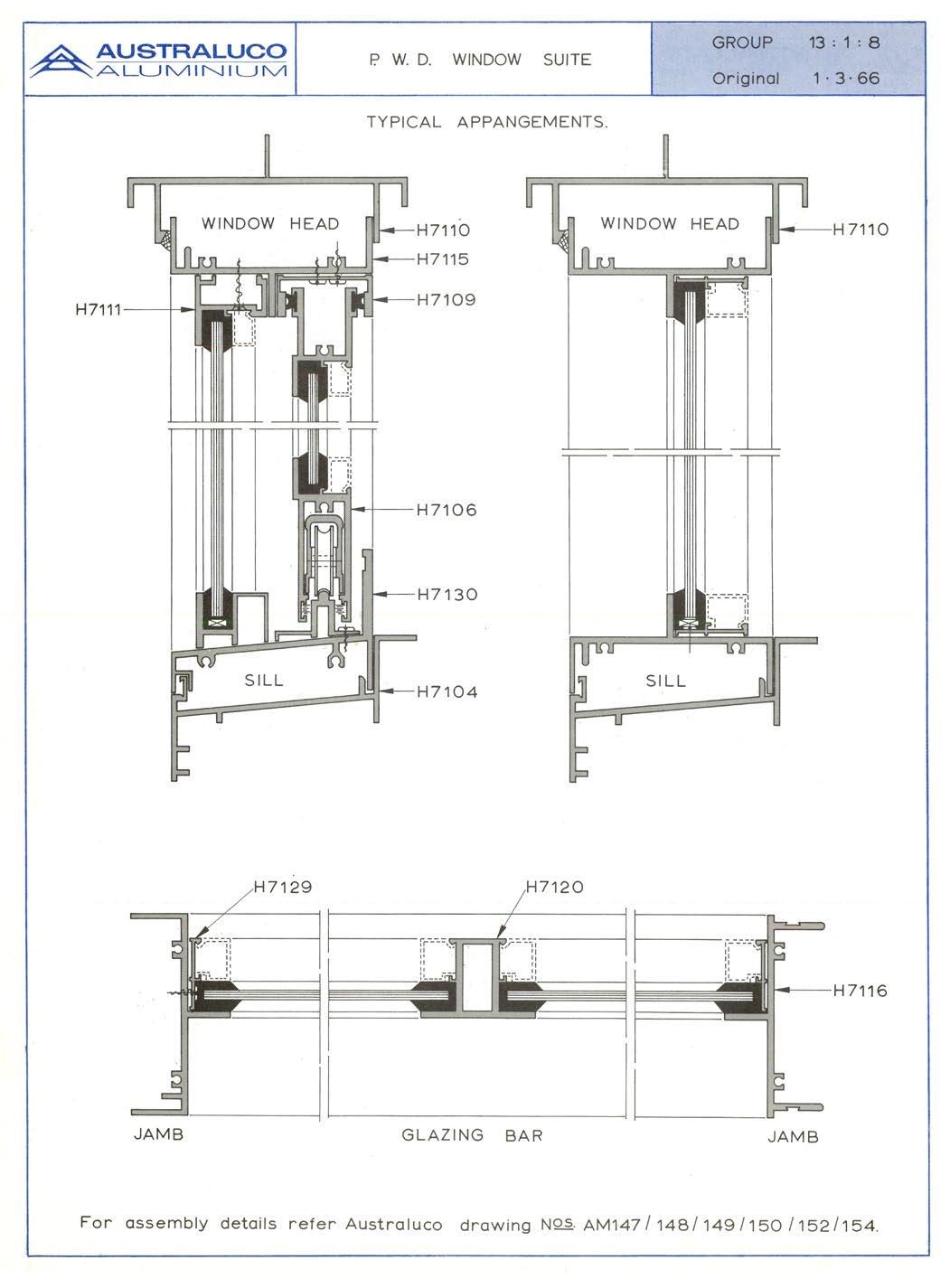
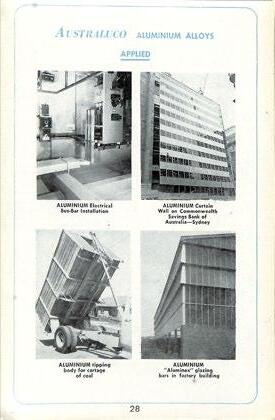
By 1969, Alcan had operational extrusion presses and finishing equipment in the Granville, Campbellfield and Brisbane plants and carried extrusion tooling for well over 10,000 different extruded shapes, which are made into window frames, curtain wall systems, ceilings, partitions, shop fronts and doors.
The business announced plans to add additional extrusion capacity to Campbellfield and Brisbane, where the markets for extruded aluminium products were rapidly expanding.
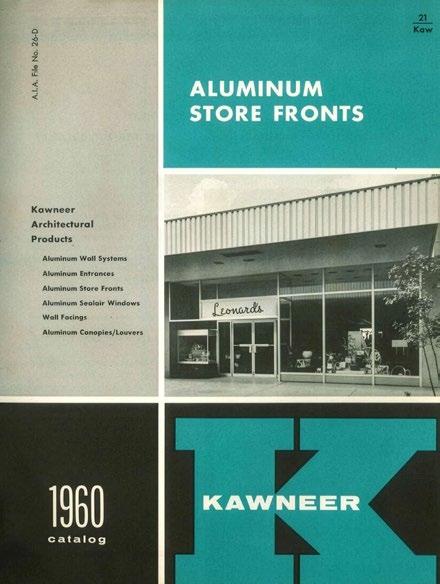
The acquisition of Kawneer’s Australian operations in 1970 strengthened the company’s presence in architectural systems, shopfronts, and curtain wall components. This addition complemented the company’s already growing catalogue of domestic windows and doors and contributed directly to the formation of a dedicated Window and Door Fabrication Division, which serviced both residential and commercial markets and enabled the company to deliver finished systems rather than raw extrusions alone.
In 1971, Alcan commissioned a new anodising facility in Brisbane, alongside upgrades to its existing operations in Sydney and Melbourne. These investments reflected the dramatic rise in aluminium use in architectural applications —particularly in commercial buildings, where anodised finishes were becoming standard.
The establishment of the Architectural Systems Division in 1973 brought structure and national coordination to this growing market. The division drew on global Kawneer expertise while developing systems tailored specifically to Australian climatic and regulatory conditions.
By the mid-1970s, the company’s architectural products were widely used in both high-rise and suburban development, and aluminium windows and doors had become common features of Australian housing.
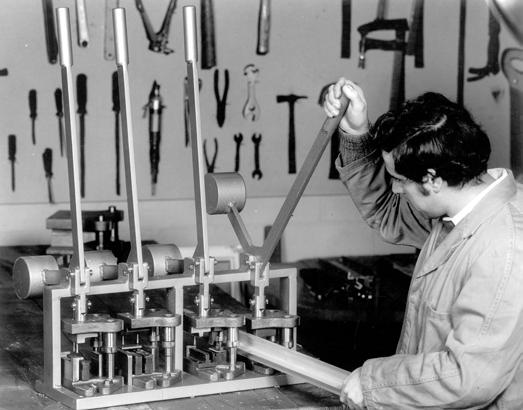
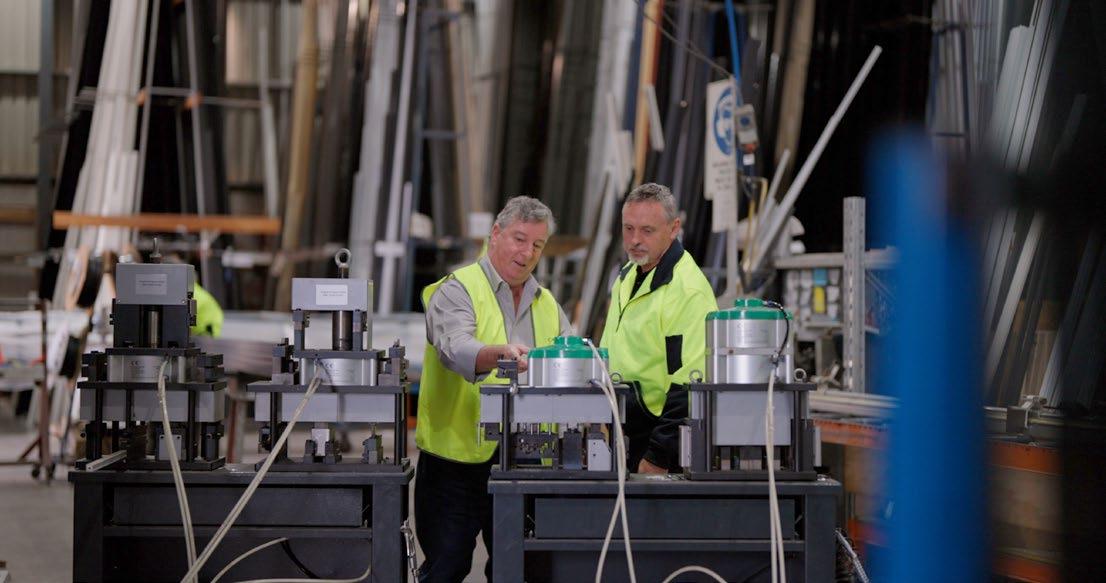
Early press tool used to perform punching operations on window and door sections, 1980s
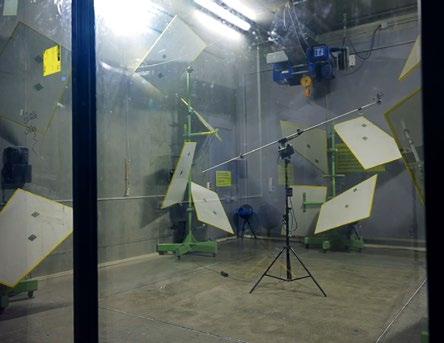
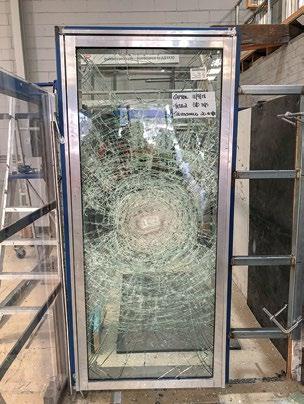
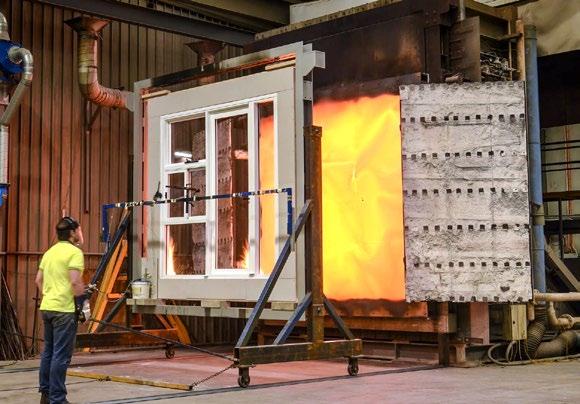
From the early 1970’s the business has maintained NATA accredited testing facilities for windows and doors at various sites including Girraween, Lidcombe and later Campbellfield
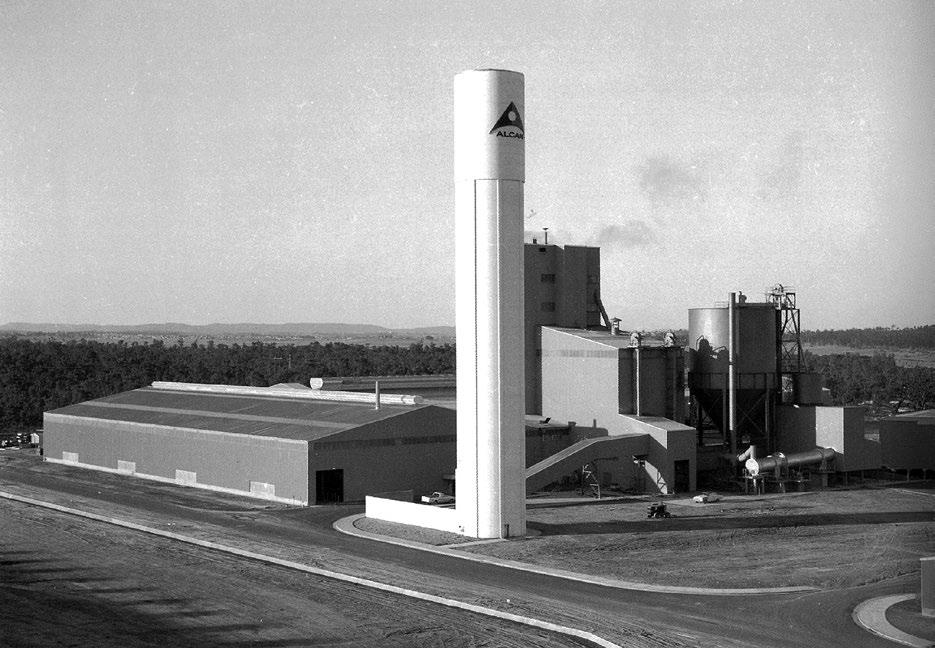
Kurri Kurri smelter
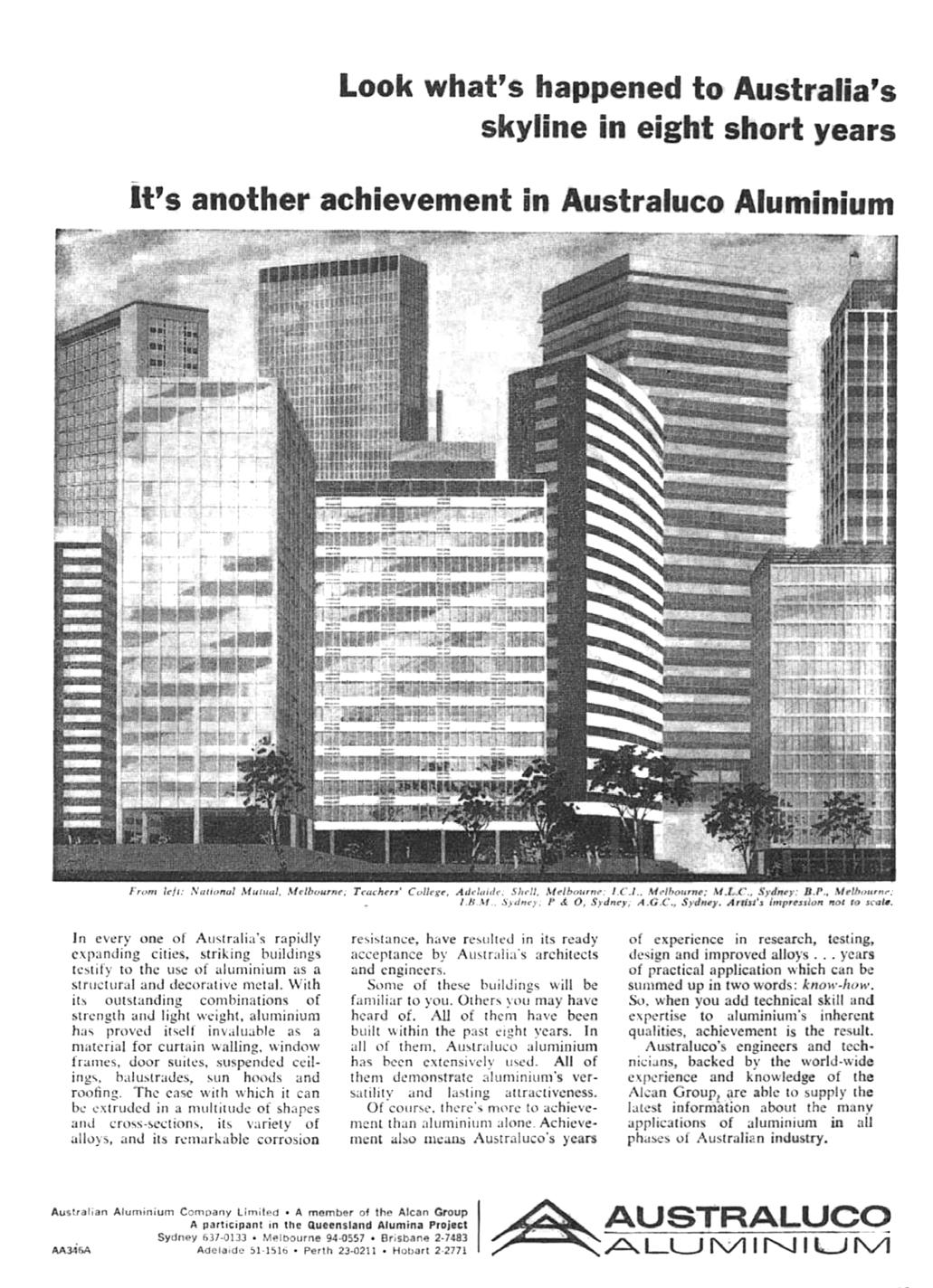
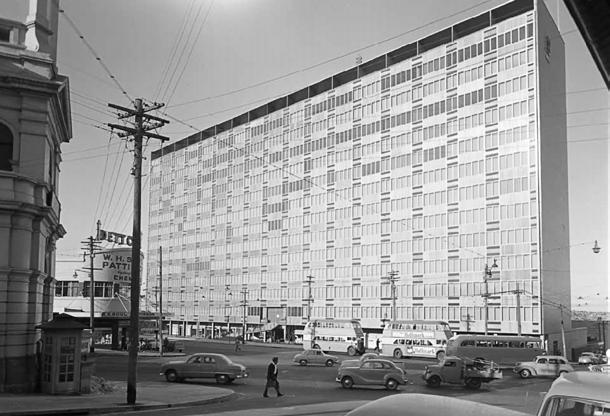
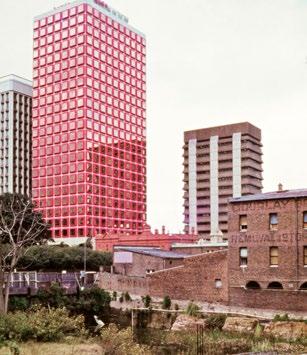
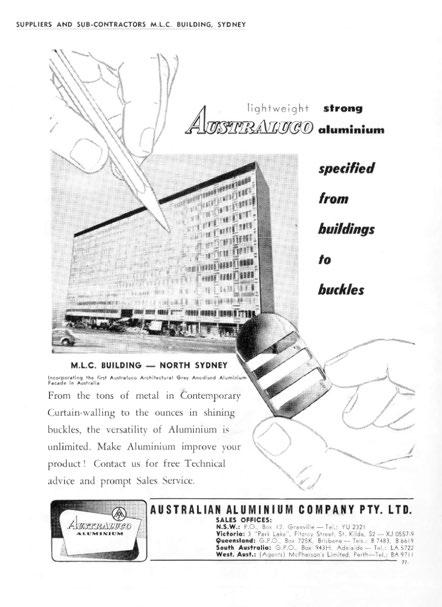
The business had already seen its products used in a number of monumental building projects, including the Reserve Bank of Australia building in Sydney, MLC Buildings in Sydney and Brisbane, IBM Building in Melbourne, and Adelaide Teachers College.
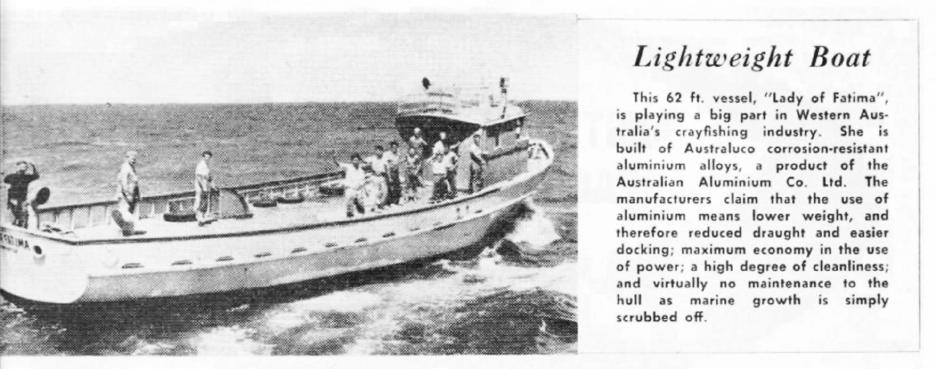
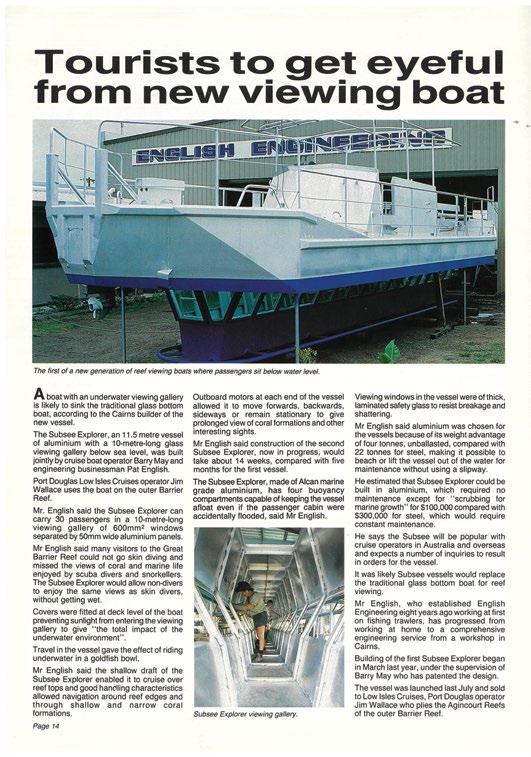
These years also saw the emergence of the company’s presence in the marine sector. Aluminium’s corrosion resistance and lightweight properties opened a new market for rolled plate and extruded structural shapes, prompting the creation of a dedicated Marine Division. This division supplied boat builders across Queensland, Western Australia and the Northern Territory, regions where aluminium hull fabrication would soon become an industry in its own right.
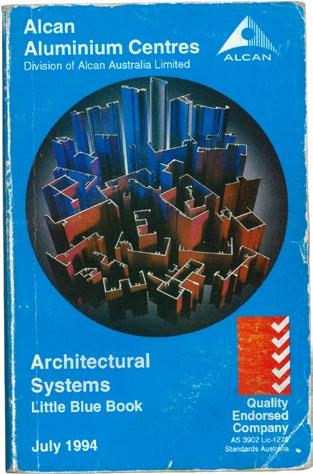
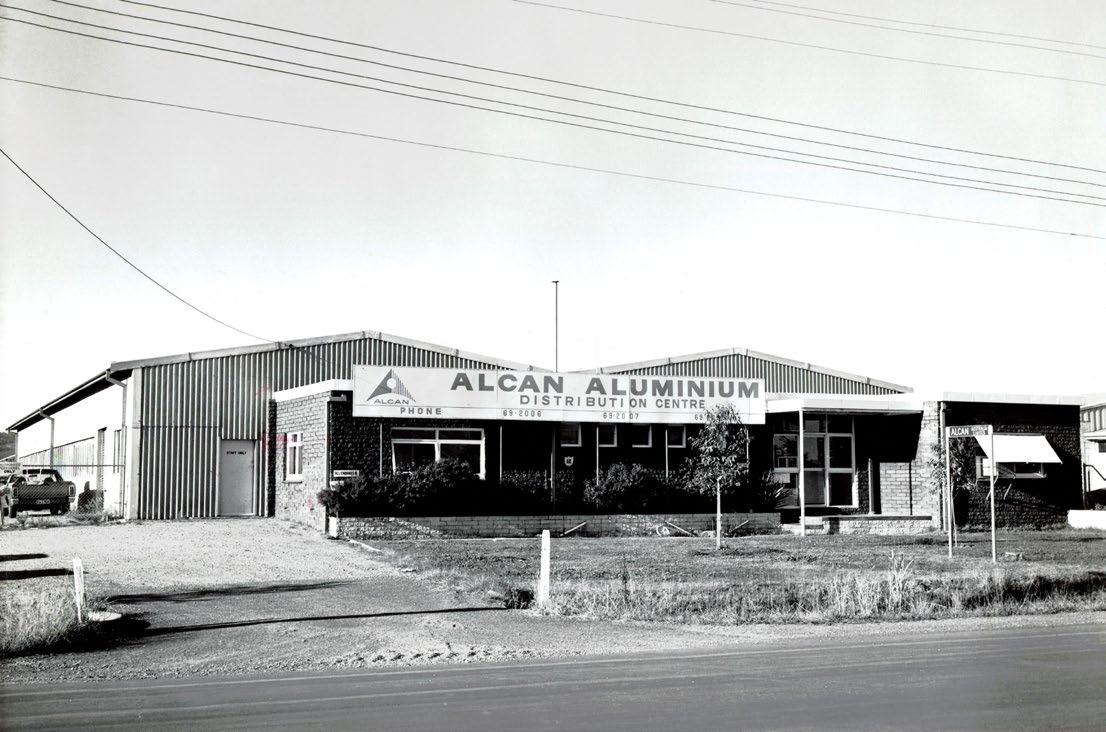
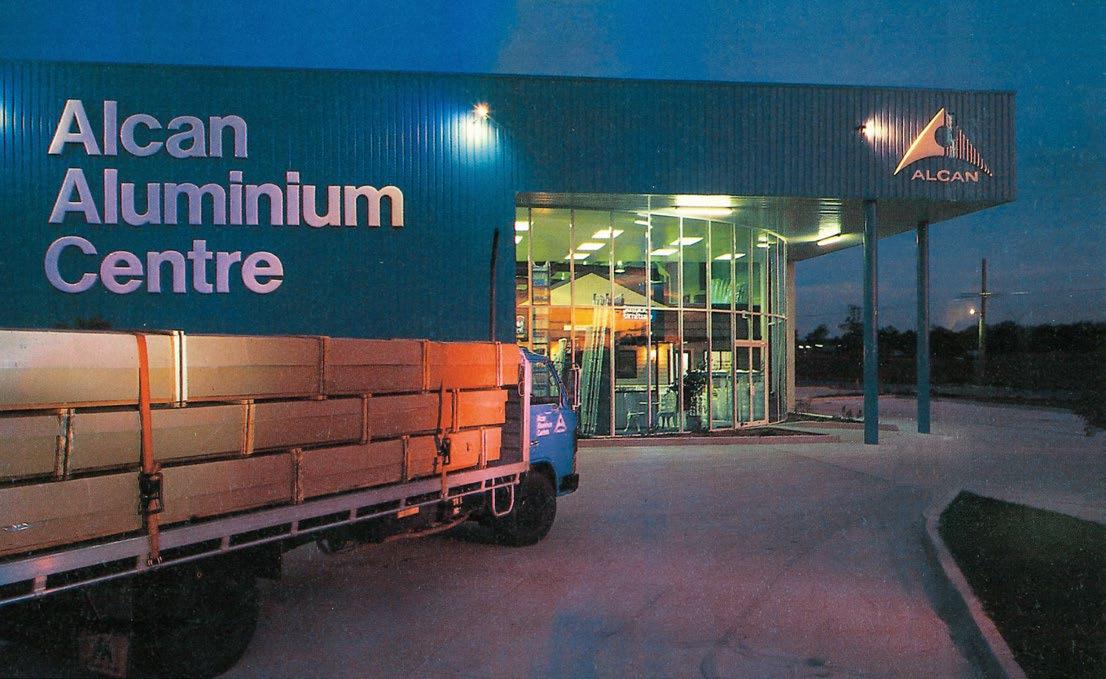
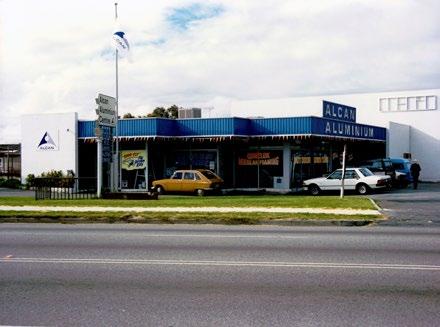
To support these expanding sectors, Alcan began establishing broader customer-service infrastructure. Throughout the mid-1970s, a series of regional “Alcan Aluminium Centres” were opened — multi-function sites that combined stockholding, cut-to-length processing, technical advice and trade counter service.
Early centres operated in Newcastle, Brisbane, Adelaide, Perth and Melbourne between the late 1960s and mid1970s. These centres were direct precursors to the Capral Aluminium Trade Centres that would later define the distribution network. Their purpose was simple: to be close to the customer, whether that customer was a window fabricator, transport body builder, marine workshop or DIY homeowner.
The company’s ambitions during this period were not limited to downstream operations. Primary production took a major step forward with the commissioning of the Kurri Kurri smelter in 1969, which gave the Australian operation a substantial and secure supply of primary metal. Kurri Kurri expanded through the 1970s to support domestic rolling and extrusion demand, reinforcing the company’s integration across the value chain.
By the late 1970s, the organisation had matured into a diversified industrial enterprise supplying aluminium into virtually every major economic sector — construction, transport, marine, packaging, appliances, and heavy engineering.
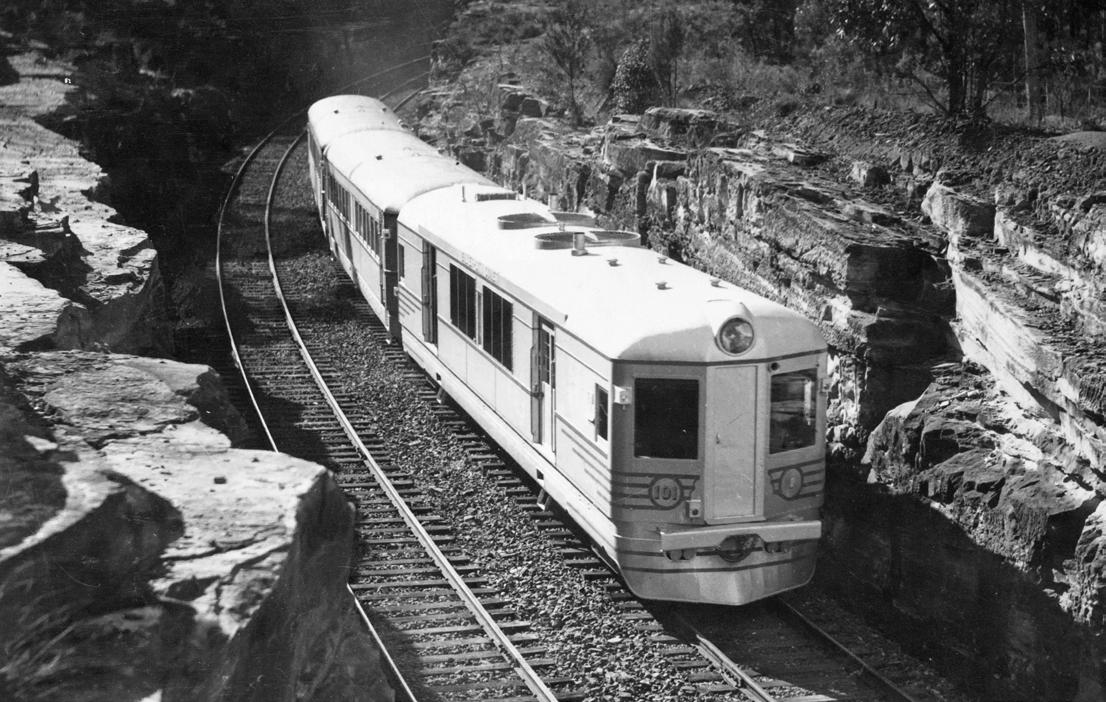
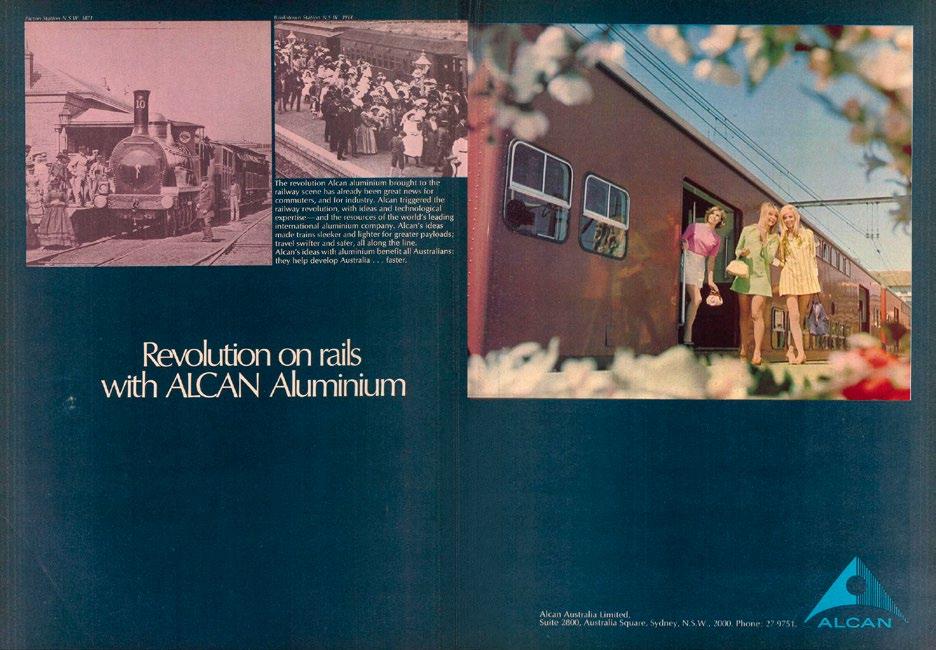
Investments across finishing, extrusion and primary metal ensured growth in key markets, including fuel tankers, truck bodies, caravans, rail stock, commercial glazing systems, marine vessels and architectural façades.
The 1980s brought continued refinements: a major expansion at Kurri Kurri financed through Australia’s first $100 million commercial industrial loan in 1980; development of new aluminium door systems in 1982; the Trimview acquisition in 1983 which expanded operations in Western and South Australia; and plans for a new centralised anodising facility in 1984, alongside the retirement of the ageing Granville paint line.
By the mid-1980s, with more than 30 sites connected through one of the country’s earliest industrial computer networks, Alcan Australia had become a fully integrated aluminium supplier — a business with national reach, diversified manufacturing capability, and products embedded in the transport, marine, commercial, industrial and domestic fabric of Australia.
1986-2000 Restructuring and the Emergence of Capral
By the mid-1980s, Alcan Australia had become one of the most far-reaching aluminium operations in the country. Its footprint stretched across every layer of the value chain.
Kurri Kurri supplied primary aluminium to the domestic market; Granville and Cabramatta produced rolled sheet, foil and laminates; and the extrusion presses in Sydney and Melbourne turned out the shapes that fuelled the building, transport, marine and manufacturing sectors.
Across the states, a growing network of Aluminium Centres connected the business to its customers.
Alcan’s products were woven into everyday Australian life — into buses and tankers, boats and caravans, packaging and appliances, windows and doors.
But the global industry was shifting beneath the surface. The late 1980s brought new competitive pressures and new expectations on multinational producers. Around the world, aluminium companies were questioning the wisdom of running vast, vertically integrated structures stretching from bauxite mines and smelters to the
fabrication of architectural windows and catering foil. Rising capital intensity, changes in global trade, and the emergence of specialised downstream competitors pushed producers to reassess which parts of the value chain they truly wanted to own.
It was within this context that a significant turning point arrived. Alcan Aluminium Ltd of Canada divested its 73.3 per cent shareholding in its Australian downstream subsidiary, bringing nearly six decades of foreign ownership to a close. The transaction marked the beginning of a new chapter in the life of the business — one in which its future direction would be shaped locally rather than as a branch of a global smelting empire.
In 1995, the business formally adopted a new identity: Capral Aluminium Limited. The new name severed the final ties to its Alcan origins and signalled a renewed focus on what had always been its strength — downstream manufacturing, building systems, and the day-to-day needs of Australian industry.
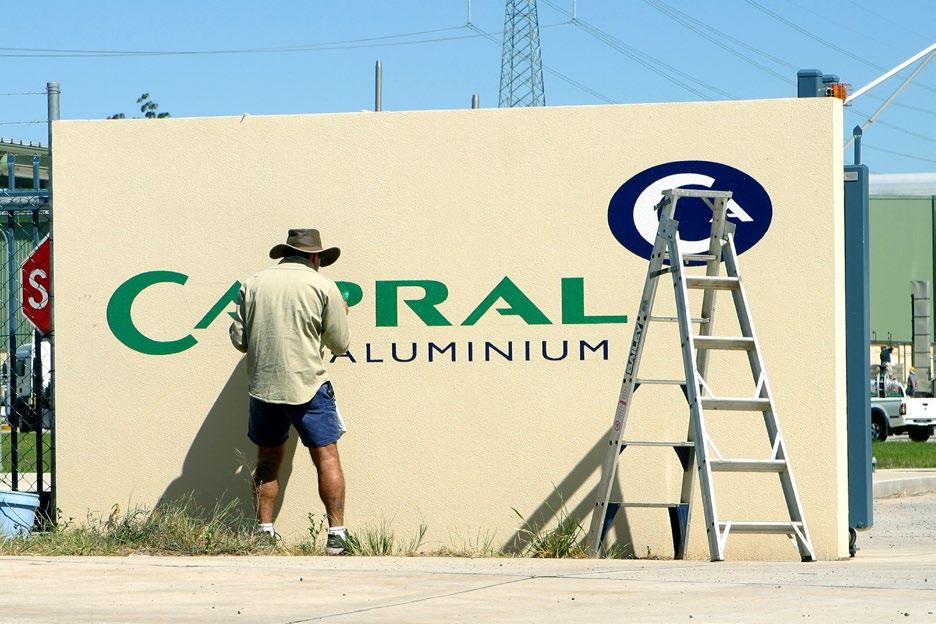
Capral sign being installed at Hoepner Rd
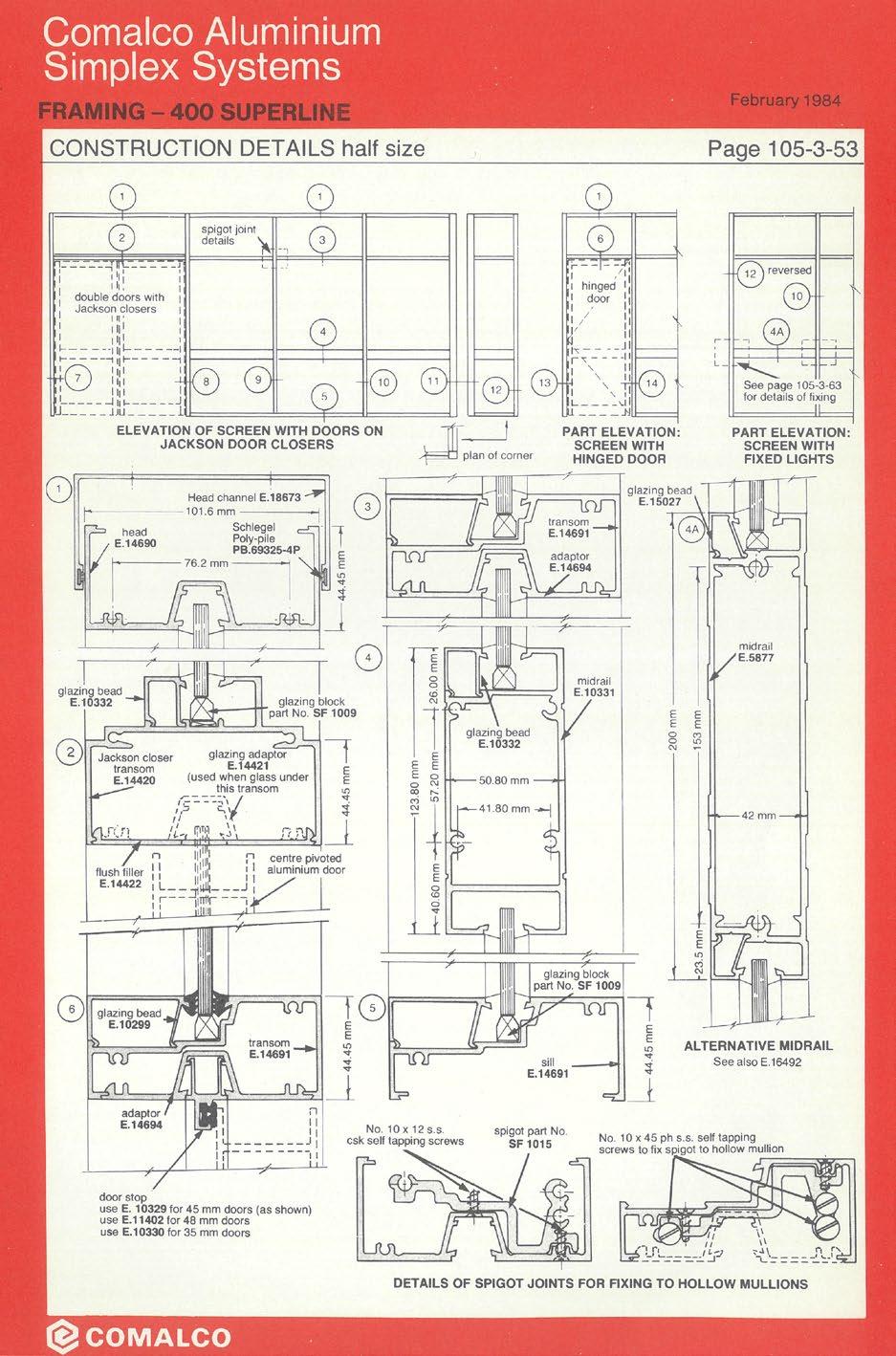
The moment was fortuitous. That same year, Capral undertook one of the most significant acquisitions in its modern history: the purchase of Comalco’s downstream extrusion and distribution businesses, including the important Canning Vale extrusion plant in Western Australia. For decades, Comalco had been a central force in the Australian aluminium sector.
Its decision to divest its fabrication and distribution assets formed part of its strategic shift toward upstream operations such as bauxite, alumina and primary metal. For Capral, however, these assets represented an unparalleled opportunity.
The 1996 completion of the Comalco acquisition instantly reshaped Capral’s national profile. New extrusion presses, broadened fabrication capability, and a strengthened distribution network came under Capral’s banner, bringing with them long-standing customer relationships across construction, transport, industrial manufacturing and marine fabrication.
The acquisition firmly established Capral as Australia’s largest integrated downstream aluminium manufacturer and distributor, giving it the scale and footprint that remain core to the company’s identity today.
While Capral grew its downstream capability, the structure of the former Alcan Australia continued to evolve. The most significant structural change came at the close of the decade with the separation of the Kurri Kurri smelter — a site that had been a pillar of the business since 1969. As Capral defined itself increasingly as a downstream specialist, Kurri Kurri no longer aligned with the company’s future direction. In 2000, the smelter was sold to VAW Aluminium, and soon after transferred to Hydro Aluminium following Hydro’s global acquisition of VAW in 2002.
This sale marked a decisive moment in the company’s history: Capral had formally exited primary aluminium production. The business that had once been part of a fully integrated multinational smelting group was now focused entirely on extrusion, distribution and building systems — the products Australians touched every day.
By the end of the 1990s, Capral Aluminium had completed its transformation. From a set of downstream units within a global company, it had emerged as an independent Australian enterprise with national reach and sector-defining capability.
The legacy of decades of manufacturing experience — stretching back to the first sheets rolled at Granville in 1941 — now carried a new name and a renewed purpose. Capral entered the new century not as a branch of an overseas parent, but as Australia’s own largest dedicated aluminium extruder and distributor, ready for the next era of local innovation and industry leadership.
WHATS IN A NAME? THE ORIGINS OF CAPRAL
The name Capral has its origins in one of the most ambitious industrial projects ever proposed by Alcan in Australia, a project that ultimately never proceeded.
In the late 1970s, Alcan developed plans for a major export aluminium smelter in Queensland, intended to serve growing demand in Japan and take advantage of Australia’s coal-based energy resources. The project was given the code name Capricorn, reflecting its proposed location near the Tropic of Capricorn at approximately 23½ degrees south of the equator (23.5°S latitude). Planning and feasibility work began in earnest in 1977, with a formal public announcement made in August 1979.
A dedicated internal team was established to advance the project and became informally known within Alcan as the Capral team, a shortened working name derived from Capricorn Alcan. As planning progressed, detailed engineering studies were completed, sites in central Queensland were assessed, and work advanced on power supply, environmental approvals and potential joint venture arrangements.
By early 1981, global conditions had shifted sharply. A downturn in the international aluminium market, falling demand and prices, a strong Australian dollar, and competing capital requirements led Alcan to reassess the project’s viability. In April 1981, the decision to proceed with construction was postponed, and later that year the Capricorn project was abandoned, despite approximately $20 million having been invested in studies and engineering.
When Alcan later exited ownership of its Australian downstream businesses, the Capricorn project name did not disappear. Instead, the shortened internal name used by the project team, Capral, was selected from over 100 employee submissions and adopted for the newly independent company.
2000-2010 Consolidation, Reinvention and Operational Modernisation
The early 2000s brought a new set of challenges for Australian manufacturing. Global competition intensified, imported extrusions increased, and currency fluctuations placed sustained pressure on local producers.
Capral, now operating as an independent downstream aluminium business focused on extrusion, building systems and national distribution, faced these pressures head-on — and responded with one of the most significant transformations in its modern history.
Capral began the work of unifying and modernising its expanded operations. This process coincided with the gradual consolidation of older legacy sites, including the eventual closure of the Granville works — the historic heart of the company where aluminium had first been rolled in 1941 was officially closed in 2006.
The closure marked the end of an era, but also reflected the realities of a modernising business shifting towards newer, more efficient facilities with the scale and capability required for the decades ahead. The legacy of Granville lived on in the expertise, systems, standards and culture that continued across every Capral site.
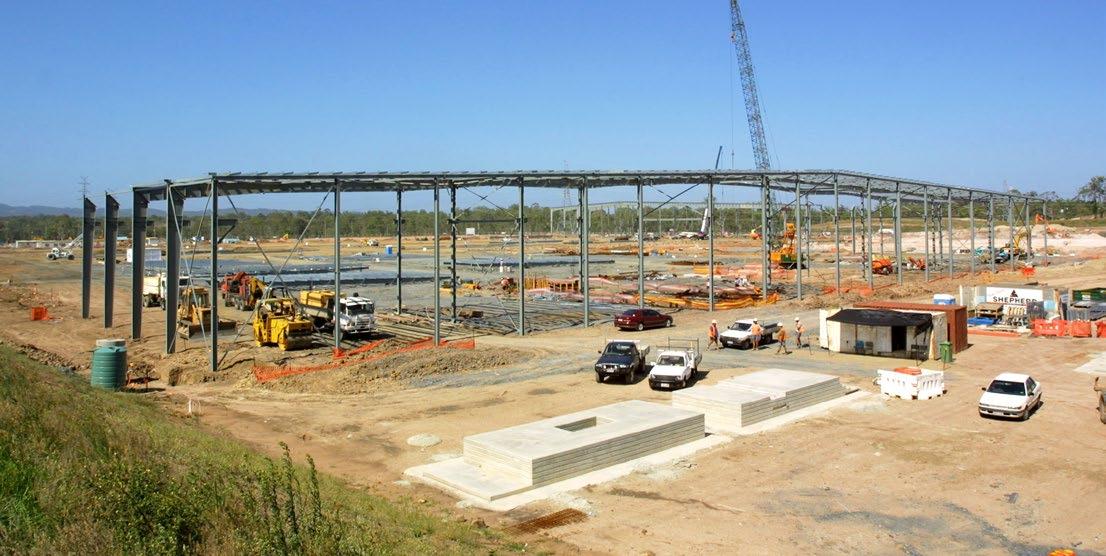
Construction of the Capral Bremer Park Site in Bundamba QLD began in 2002, and the site was officially opened in 2005 as part of the Bremer Park industrial development.
Unlike earlier factories that had grown in stages over decades, Bundamba was conceived from the outset as a fully integrated aluminium manufacturing and distribution complex. Its capability set was exceptional: four extrusion presses, a dedicated anodising plant, full powder-coating operations, and a highly advanced warehouse and distribution centre designed for highvolume, rapid-turnaround supply across Queensland.
As the state’s construction, transport, marine and industrial sectors grew, Bundamba became the backbone of Capral’s presence in Queensland — efficient, scalable, modern, and strategically located within the state’s industrial corridor.
In 2005, Capral acquired Crane Group’s aluminium business. Crane had long been a major force in Australia’s downstream aluminium sector, with strong manufacturing capability in Penrith (NSW) and Angaston (SA), as well as an extensive distribution network under
Construction of Bremer Park site, 2004
the SMART Aluminium banner, and deep relationships with builders, fabricators and industrial customers nationwide.
The acquisition dramatically expanded Capral’s scale. Major extrusion presses, finishing assets, trade centres and long-standing customer portfolios moved under the Capral banner, instantly reshaping the national competitive landscape. What emerged was a business with unmatched reach — Australia’s largest and most geographically extensive supplier of extruded aluminium.
As the network evolved, Capral’s modern manufacturing footprint took shape, anchored by major extrusion hubs at Campbellfield, Penrith, Angaston, Canning Vale and a rapidly rising centre of capability in Queensland — Bremer Park.
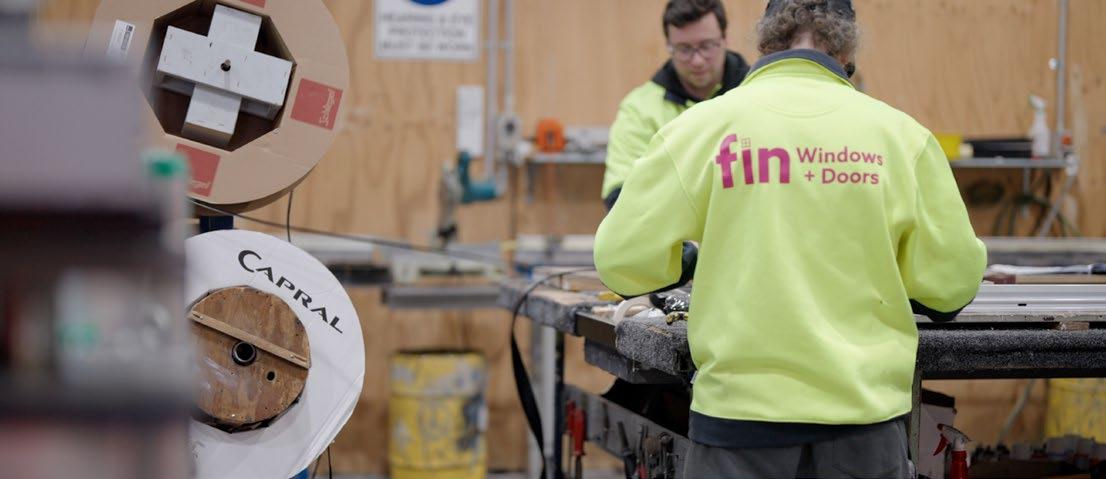
Across the national network, Capral continued investing in technology and infrastructure. Extrusion presses were upgraded for improved throughput and consistency; saws, stretchers and handling systems were modernised; CNC machining capability expanded; and powder-coating lines were enhanced to deliver better finish quality and faster cycle times.
These upgrades ensured that Capral could meet the evolving needs of industries ranging from residential construction to transport, marine fabrication, agriculture, defence and specialist manufacturing.
Product development also accelerated during this decade. Within the window and door systems portfolio, Capral refined and expanded suites to meet stricter thermal, acoustic and structural requirements.
The company’s testing capability grew significantly, with Capral Technical Services providing expanded support in compliance, prototyping and system design. These improvements strengthened Capral’s position as a leader in architectural and commercial aluminium systems.
Digital transformation began to take root as well. Earlygeneration customer interfaces, online ordering tools, electronic scheduling and inventory systems laid the foundations for the more sophisticated digital platforms that Capral would develop in the years to follow. Even in its early stages, this technological shift modernised customer experience and improved efficiency across the supply chain.
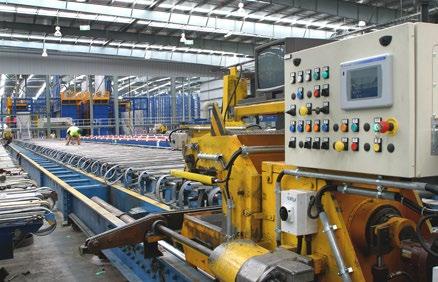
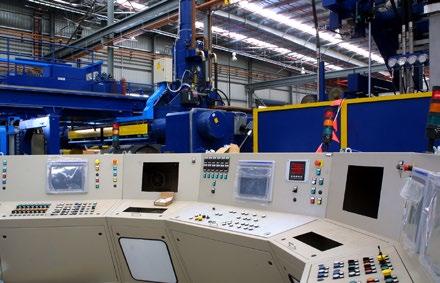
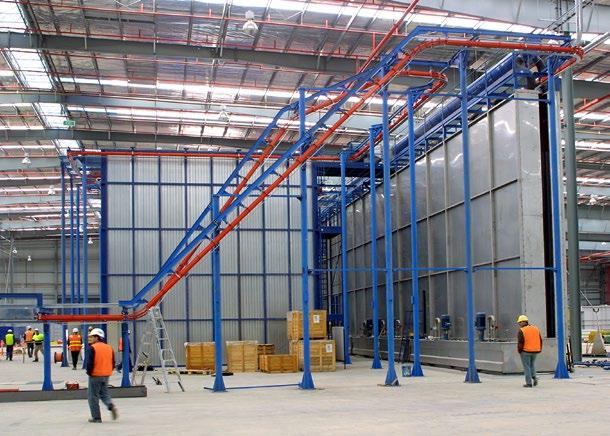
Stretch line refurbishment (top right), new control panel for press (middle),vertical powder coat line (bottom), 2004
2010-2020 Renewal and Strategic Repositioning
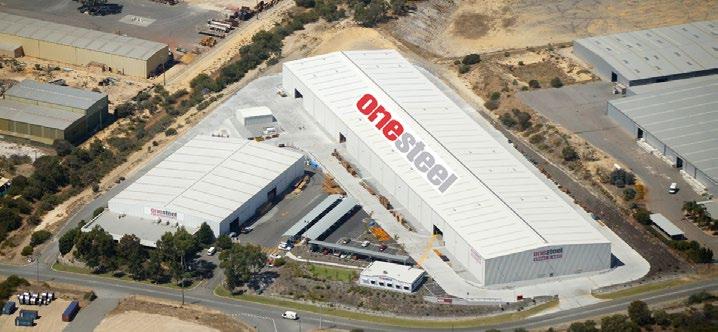
In 2013 Capral acquired OneSteel’s aluminium distribution division, for $18.7 million. The transaction expanded Capral’s rolled and value-added product capability and strengthened its position across aluminium and steel distribution.
Beyond the immediate portfolio benefits, the acquisition triggered a period of network consolidation. Both businesses operated parallel warehouse and distribution facilities in several locations, which were progressively rationalised to reduce duplication and improve efficiency.
In Western Australia, this resulted in the consolidation and integration of three sites into a single operation, bringing two distribution centres onto the Canningvale manufacturing site, and supporting new investment, including the addition of a modern vertical paint line.
This shift reinforced Western Australia’s role as a fully integrated manufacturing, finishing and distribution hub within Capral’s national network. The OneSteel site at Kilburn was chosen as the location for Capral’s South Australian distribution centre moving forward.
By the late 2010s Capral had stabilised its position and begun a period of strategic consolidation and reinvestment. Customer focus sharpened, operational
reliability improved, and the company re-established itself as Australia’s leading extrusion business by both capacity and national reach.
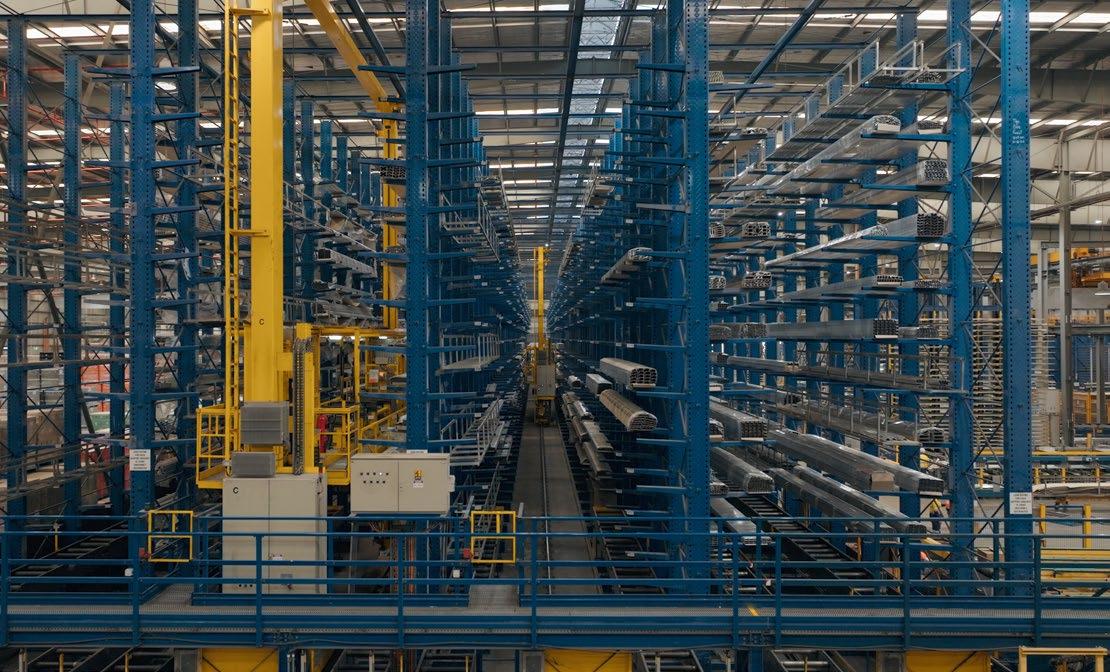
Major plant improvements were undertaken across extrusion, powder-coating and warehousing operations. Automated cranes in some facilities improved storage and retrieval efficiency. Energy efficiency projects, waste reduction efforts and modern maintenance strategies enhanced site performance.
By the late 2010s, the Bundamba (Bremer Park) site had already proven itself as one of Capral’s most important manufacturing and distribution assets. A significant restructure was undertaken in 2019, not to increase scale, but to optimise how the site operated and to prepare it for the next phase of the business.
The program involved a reconfiguration of site layouts to improve material flow, reduce double handling and more clearly separate manufacturing and highvolume distribution activity. Warehouse systems were modernised, and as part of the restructure the inhouse anodising plant was removed and one extrusion press taken offline, reflecting a decision to right-size the facility in line with demand and productivity requirements.
Following this work, Bremer Park continues to operate as a highly integrated manufacturing and distribution hub, supporting construction, transport, marine and industrial customers across Queensland and northern New South Wales.
Capral also reinforced its role in national construction through updates to key commercial systems, enhancements to thermally improved designs, and expanded engagement with architects, fabricators, and industrial customers.
Ad for Capral Architectural Glazing Systems (AGS) framing system, 2013
2020-2025
Building a Modern Responsible Aluminium Business
The arrival of the COVID-19 pandemic in early 2020 was a watershed moment for industry across the world. Supply chains buckled, international freight stalled, and manufacturers who had long relied on offshore supply suddenly faced uncertainty. For Capral, the crisis underscored something the company had known for decades: local manufacturing matters.
With extrusion capability in Queensland, New South Wales, Victoria, South Australia and Western Australia, and with a national network of Distribution Centres at its backbone, Capral was able to maintain a stable, reliable flow of extruded aluminium to builders, transport fabricators and industrial manufacturers at a time when global supply chains were faltering. For many customers, the ability to access Australian-made aluminium became not just a convenience, but a necessity.
In late 2020, Capral acquired the Smithfield extrusion site from G.James Aluminium. The acquisition added a significant manufacturing presence within the Sydney basin, strengthening Capral’s ability to service New South Wales and surrounding markets. The site formally transitioned to Capral operations in 2021, increasing local extrusion capacity and improving access to Australian-made aluminium for customers across Capral’s largest market.
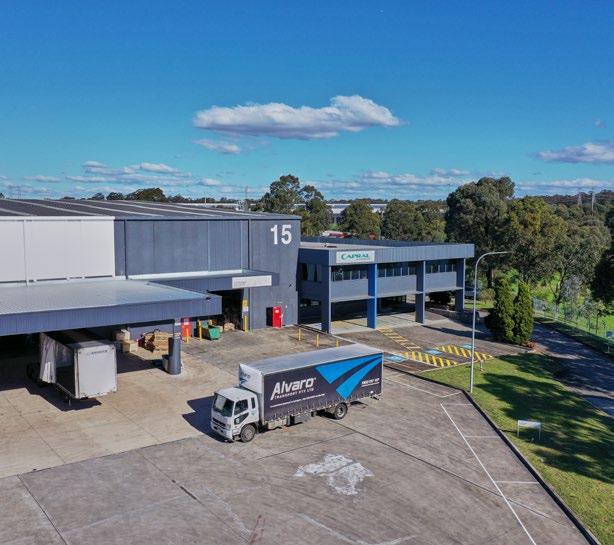
Alongside the acquisition of the Smithfield site, Capral made a decisive move to strengthen its New South Wales service model through the consolidation of key functions at Huntingwood. This involved the closure of the Erskine Park distribution site and the relocation of Capral’s New South Wales head office and associated operational activities to a single, more strategically positioned facility.
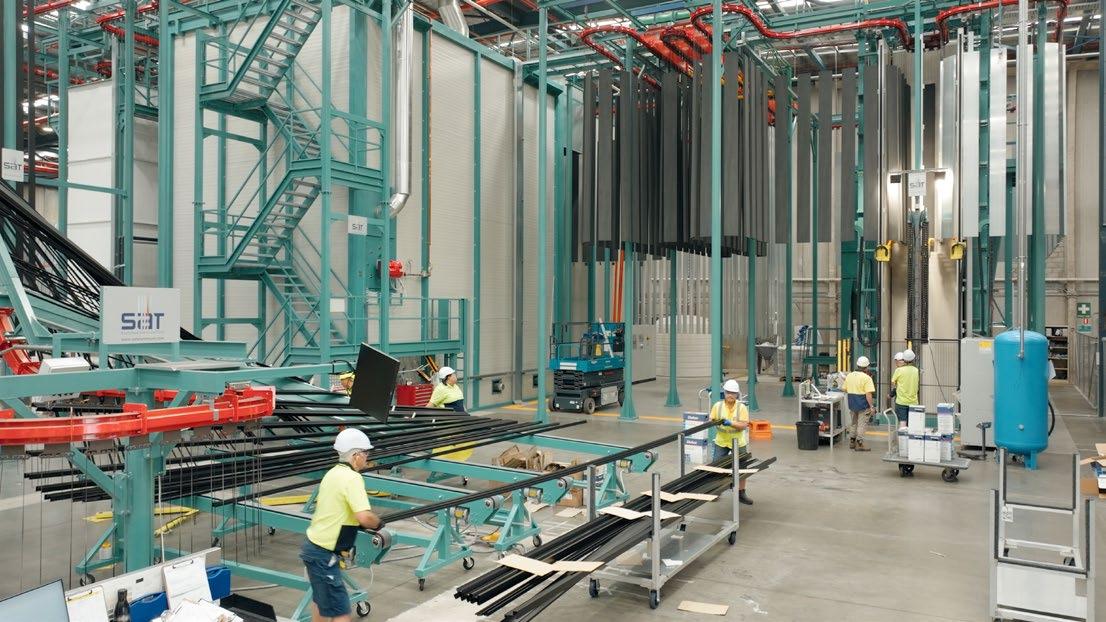
Capral Huntingwood Vertical Paint line comissioned in 2023
The decision reflected changing customer expectations and the growing importance of integrated service delivery. Huntingwood provided improved access to Sydney’s arterial road network, enabling more efficient service to metropolitan Sydney, Western Sydney and regional New South Wales.
The Huntingwood site was configured to operate as a high-performance distribution centre aligned to the needs of modern fabricators and manufacturers, with improved picking efficiency, better stock visibility and enhanced logistics planning. It became a critical link between Capral’s manufacturing operations and its New South Wales customer base.
That capability was further strengthened with the installation of a new Vertical Paint Line (VPL) in 2023, which became fully operational in 2024. The VPL represented a significant upgrade in finishing technology, supporting higher throughput, improved surface consistency and faster turnaround for painted aluminium products. For customers, this delivered greater reliability and reduced lead times on finished profiles — an important advantage in construction and architectural markets increasingly driven by program certainty.
This decade saw Capral strengthen and extend its Aluminium Centre footprint through the acquisition of several well-established regional operators.
In 2022, Capral acquired Altec in Deception Bay and Allyman Aluminium, in Wollongong, both distribution businesses servicing their local regions. This was followed in March 2024 by the acquisition of Aluminium Trade Centre (ATC), with sites at Carrum Downs and Noble Park in Victoria, and in July 2024 by the acquisition of Apple Aluminium, an Archerfield-based aluminium supplier and fabricator in Brisbane. In July 2025, Capral further expanded its Western Australian presence through the acquisition of Comsupply, a Perth-based aluminium systems and hardware distributor. Progressively knitting together a unified coast-to-coast Aluminium Centre and distribution network.
Each acquired operation brought strong customer relationships and deep knowledge of its regional market, and folding them into the Capral platform created a national distribution system capable of servicing fabricators, builders, manufacturers and trades with consistent product ranges, reliable delivery and local expertise.
Huntingwood site, 2022
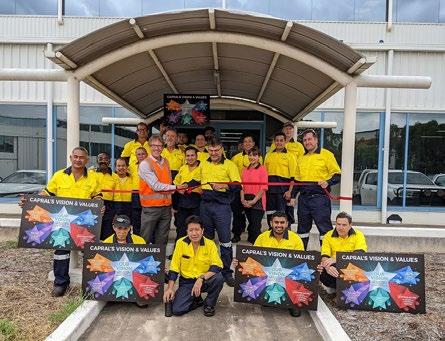
Richard Axe, David Usher and members of the Smithfield team cutting the ribbon following the site acquisition, 2021
Smithfield plant, 2022
This same period marked the beginning a commitment to sustainability, responsible sourcing, and lower-carbon aluminium. The launch of LocAl® signalled a decisive shift in how Australian manufacturers could think about embodied emissions.
LocAl® Green and LocAl® Super Green provided a lowercarbon aluminium option, allowing architects, builders, and OEMs to specify aluminium with confidence. It positioned Capral at the forefront of carbon-aware aluminium supply in Australia.
The company also intensified its longstanding work in trade advocacy, particularly in relation to anti-dumping. As low-priced imported extrusions continued to pressure the domestic market, Capral took an active role in advocating for the domestic industry to ensure fair competition.
Consistently articulating the importance of a level playing field for Australian manufacturers, Capral’s voice has become central to the national conversation about the future of sovereign manufacturing capability and the risks posed by unfairly priced imports.
Capral deepened this commitment further by achieving Aluminium Stewardship Initiative (ASI) Performance Standard and Chain of Custody certification — becoming the first aluminium extruder in Australasia to hold the full certification suite. This milestone was more than a badge; it required rigorous assessment of governance, environmental management, human rights practices, sourcing transparency and chain-of-custody controls. It represented a cultural shift inside the business as much as an operational one, embedding sustainability into decision-making, procurement and long-term planning.
By 2025, Capral had become a markedly different company from the one that entered the decade. It was more modern, more data-driven, more sustainabilityfocused and more outward-facing in its advocacy for Australian industry. Yet despite the transformation, the company’s defining features remained unchanged: local manufacturing, national reach, deep technical expertise and a commitment to supporting the builders, fabricators and industries that rely on Australian-made aluminium every day.
Ninety Years of Adaptation and Capability
As Capral celebrates its ninetieth year in 2026, the company stands as a product of continuous reinvention. Its origins lie in the entrepreneurial initiative of Waterhouse, the early investments at Granville, and the depth of knowledge accumulated during wartime operations. Its growth reflects major industrial shifts: the establishment of smelting at Kurri Kurri, the evolution of architectural systems, the rise of national distribution networks, and the transition from a fully integrated multinational operation to an independent Australian enterprise.
Every decade brought structural adjustments, new market conditions, technological progress, and changes in leadership. Sites opened, expanded or closed as needs evolved. Equipment was upgraded or replaced. New systems were designed, tested and adopted. And through these changes, the company maintained a continuous commitment to manufacturing capability and customer service within Australia.
Today’s Capral is the sum of all those decisions and transitions — an Australian business shaped by the practical realities of industry, strengthened by nearly a century of accumulated expertise, and positioned to contribute meaningfully to the next era of aluminium extrusion, distribution, design, and sustainability.
The Sites that Shaped the Business 2
FROM FOUNDATION PLANTS TO A NATIONAL FOOTPRINT
This chapter traces the physical footprint through which the business took shape, grew and adapted over time. Each site reflects a specific moment in the company’s evolution, shaped by the demands of war and peace, shifts in technology, changing markets and the realities of geography. From foundational manufacturing works to specialist plants, distribution hubs and later consolidations, these locations were not interchangeable. Together, they reveal how capability was built, how it was redistributed as the business matured, and how place, people and purpose combined to shape the organisation that exists today.
Granville, New South Wales
Granville was both the first site for the Australian Aluminium Company and its proving ground.
Construction was undertaken by Hutchinson Bros. of Sydney, with plans prepared by W. J. Grassick of Collins House, Melbourne, commencing in September 1939, the same month war was declared. The site sat on largely undeveloped land beside Sydney’s Duck River. Early workers walked in from surrounding suburbs, and snakes and foxes within the perimeter were common enough to go unremarked.
Equipment originally ordered from Britain never arrived. With the outbreak of war, shipping lanes were disrupted and industrial priorities redirected, making delivery impossible. Instead, rolling mills, furnaces and presses were sourced from the United States under wartime urgency and installed at remarkable speed.
By early 1941 the plant was operational. On 10 June 1941, the first aluminium sheet was rolled, an event that became legend within the business. Extrusions followed on 15 August and forgings on 18 September. A keg of beer marked the moment, and for years afterwards employees commemorated the date as members of the “10th June Club”.
By June 1941, some 460 employees had been trained in aluminium melting, casting, rolling and extrusion, most with no prior exposure to the material. Quality standards were exacting. Defence inspectors checked, tested and stamped almost everything that left the site. Tubing for aircraft, propellers, forgings and high-strength alloys flowed out of Granville as Australia’s strategic vulnerability became clear.
Aerial view of the Granville site , circa 1949
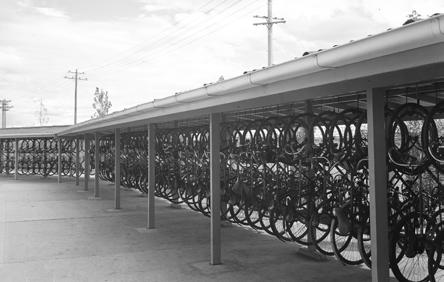
Granville was vast, noisy and physically demanding. The original 3,000-ton extrusion press was powered by clanking water pumps and operated so slowly on hard alloys that workers joked nothing was moving at all. To traverse the sprawling site, bicycles became the preferred mode of transport, ridden between furnaces, presses and mills long before site vehicles were common. Bicycle sheds and racks were a familiar sight, and bikes remained part of site life well into the postwar decades.
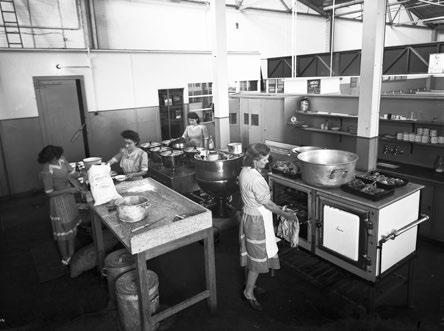
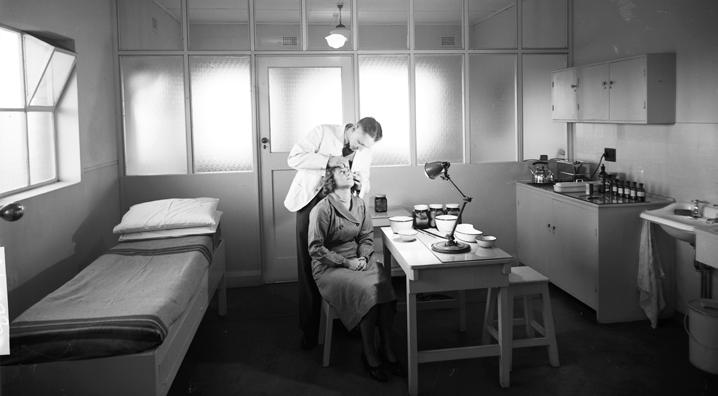
The scale of operations made Granville largely selfcontained. A cafeteria served shift workers around the clock. A medical centre treated everything from minor injuries to heat exhaustion, an ever-present risk in rolling and casting operations. A technical library supported training and skills development, reinforcing Granville’s role as both a production facility and a centre of learning. These amenities were essential to sustaining a large workforce operating heavy equipment under demanding conditions.
After the war, Granville did not slow down. It reinvented itself. In 1952, a new 4,000-ton extrusion press was installed, better suited to lighter commercial sections. In 1955, the 3,000-ton press from the government’s Wangaratta shadow factory was relocated to Granville, expanding capacity further. Furnaces were progressively converted from coke to oil firing, improving control, consistency and efficiency.
The Kitchen, bike racks and infirmary at Granville. Images sourced from the Museum of History, NSW
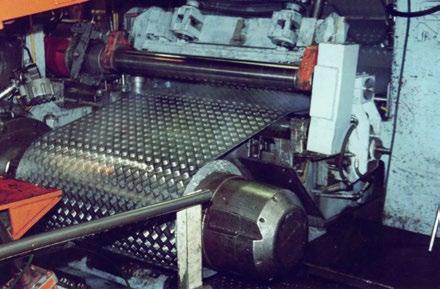
Between 1958 and 1962, Granville underwent its most dramatic physical expansion. In 1958, an additional 3,000-ton extrusion press increased capacity by 60 per cent. In 1960, a new hot rolling mill was commissioned, housed in a 250,000-square-foot structure clad entirely in aluminium building sheet. At the time, it was the largest hot rolling mill in the southern hemisphere and among the most advanced anywhere in the world. Cold rolling mills followed in 1962 and 1963, doubling rolled product capacity and lifting output to approximately 20,000 tonnes per annum.
An anodising plant was installed in 1966, reinforcing Granville’s role as a full-service manufacturing site. In 1969, a new 2,000-ton extrusion press was added, followed in 1970 by a modern remelt facility with two high-rate furnaces and automated billet handling. Through the 1970s, additional cold mills, homogenising furnaces and finishing equipment were installed as demand continued to grow.
By the late 1970s, the realities of age and changing industrial economics became more apparent. Older presses were progressively retired, and a major remelt modernisation program undertaken between 1979 and 1980 increased capacity by approximately 11 per cent.
Environmental controls were also upgraded in the early 1980s, including improved emissions management for anodising operations, reflecting rising regulatory expectations and community scrutiny.
Despite continual reinvestment, the scale, age and configuration of the Granville plant ultimately worked against it. As manufacturing strategy shifted toward newer, more efficient sites and consolidation accelerated, operations were progressively wound down. By the early 2000s, extrusion activity had transferred to Minto and Yennora, while sheet rolling and remelt operations closed.
In April 2002, the Granville site was sold, marking the formal end of manufacturing at the location.
Granville did not close overnight. Portions of the site, including the Unwin Street offices, were leased back to allow corporate and administrative functions to remain during a transition period. The on-site data centre was outsourced, and corporate teams were progressively relocated. The final departure of corporate personnel and closure of the site occurred on 22 December 2006, bringing more than six decades of continuous occupation to a close.
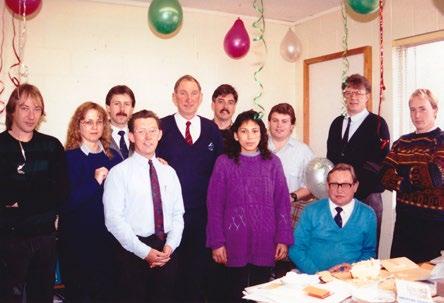
Granville Rolling Kaizen Team - including Ewen Cameron right of centre , November 1990
WANGARATTA, VICTORIA
Wangaratta was born of wartime anxiety and foresight. Established by the government as a shadow factory during the Second World War, the site duplicated Granville’s critical capabilities, including remelt, rolling and extrusion. It was staffed by senior personnel from Granville and maintained in operational readiness in case the primary works were damaged.
Although full production was never required, the remelt was used and the site stood ready throughout the war. One manager famously rode a white horse around the grounds, a tale that became part of company folklore. In 1955, key equipment, including the 3,000-ton extrusion press, was transferred to Granville, bringing Wangaratta’s operational life to a close but extending its legacy.
Vertical Paint Line (top) and Sheet Mill (below), Granville, 1988
Kurri Kurri, New South Wales
Kurri Kurri stands apart from every other site in the business. Unlike Granville and the extrusion, fabrication and distribution facilities that defined the business’ core operations, Kurri Kurri was a primary aluminium producer. Established to smelt aluminium from alumina, it represented a decisive move upstream in the value chain and a fundamental shift in the scale and ambition of the business.
The decision to establish a domestic aluminium smelter in 1965 reflected both national and commercial priorities. While Australia possessed abundant bauxite resources, it remained heavily reliant on imported primary aluminium.
Kurri Kurri was conceived to anchor primary production locally, secure supply for downstream fabrication and reduce exposure to international disruption.
Construction began in the late 1960s, and in 1969 the smelter commenced operations. From the outset, Kurri Kurri operated on a scale unmatched elsewhere in the company. Long potlines ran continuously, day and night, and once energised could not be shut down without severe risk, demanding exceptional operational discipline and technical control.
By 1971, extensions had lifted capacity to approximately 50,000 short tonnes per annum. Further expansions announced in 1977 and 1978 reflected confidence in long-term demand. In 1980, a landmark $100 million loan funded construction of a third potline, increasing capacity from 90,000 to 135,000 tonnes per annum.
At the time, it was the largest commercial borrowing ever undertaken in the Australian money market and cemented Kurri Kurri’s position as one of the nation’s most significant aluminium smelters.
Aerial View of Kurri Kurri, circa 1978
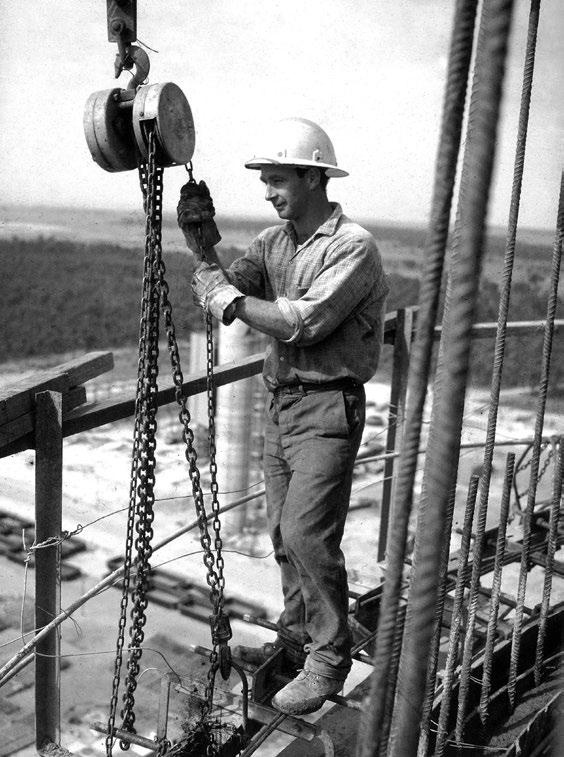
Construction worker at Alcan Kurri Kurri, 1968. Photo by Greg Ray.
Kurri Kurri smelter, 1968. Photo by Greg Ray.
Kurri Kurri carried enormous responsibility. During severe industrial disruptions in the mid-1970s, the site was operated under statutory order to protect the integrity of the potlines and avoid catastrophic restart costs.
Conversion from oil to natural gas in the 1980s improved efficiency and reduced emissions. The scale and continuous nature of smelting fostered a distinct culture of discipline, technical expertise and teamwork, markedly different from downstream fabrication environments.
By the early 2000s, Capral had repositioned away from primary aluminium production. In 2002, the company divested its interest in the Kurri Kurri smelter, ending its direct involvement in upstream aluminium smelting and refocusing on extrusion, fabrication and distribution.
Cryolite being cleared from potline anodes
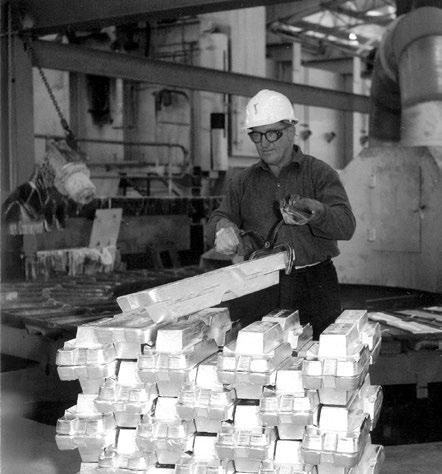
Aluminum ingot castings
Checking anode baking
Under subsequent ownership by Norsk Hydro, Kurri Kurri operated in an increasingly challenging environment. Electricity costs were the dominant factor shaping competitiveness, with the expiry of legacy power contracts exposing the smelter to commercial pricing estimated to increase effective power costs by around 50 per cent. At the same time, new global smelting capacity emerged in regions with access to low-cost electricity, eroding the relative advantages of Australian operations.
In this context, ongoing operation was judged unsustainable. The Kurri Kurri smelter ceased production in 2012, bringing more than four decades of primary aluminium production at the site to an end.
Kurri Kurri remains one of the most ambitious industrial undertakings ever associated with the business. Fundamentally different from Capral’s fabrication and extrusion sites, it stands as a reminder of a period when the company extended to the very front end of the aluminium value chain and operated at true industrial scale.
Kurri Kurri carried enormous responsibility. During severe industrial disruptions in the mid-1970s, the site was operated under statutory order to protect the integrity of the potlines and avoid catastrophic restart costs.
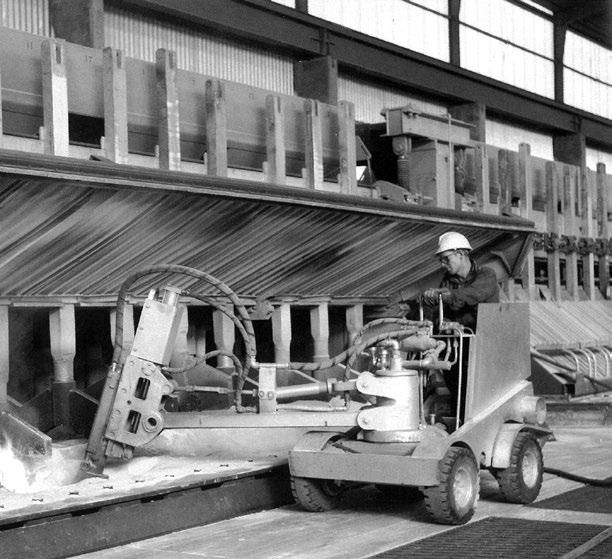
Syphoning aluminium from a smelter cell, Kurri Kurri, 1988
Cabramatta
New South Wales
Cabramatta was built with precision in mind. Officially opened on 25 November 1960 by Prime Minister Robert Menzies, the Aluminium Foils (Australia) Pty Ltd plant was purpose-designed for fine foil production after Granville proved too industrial for the cleanliness and control required.
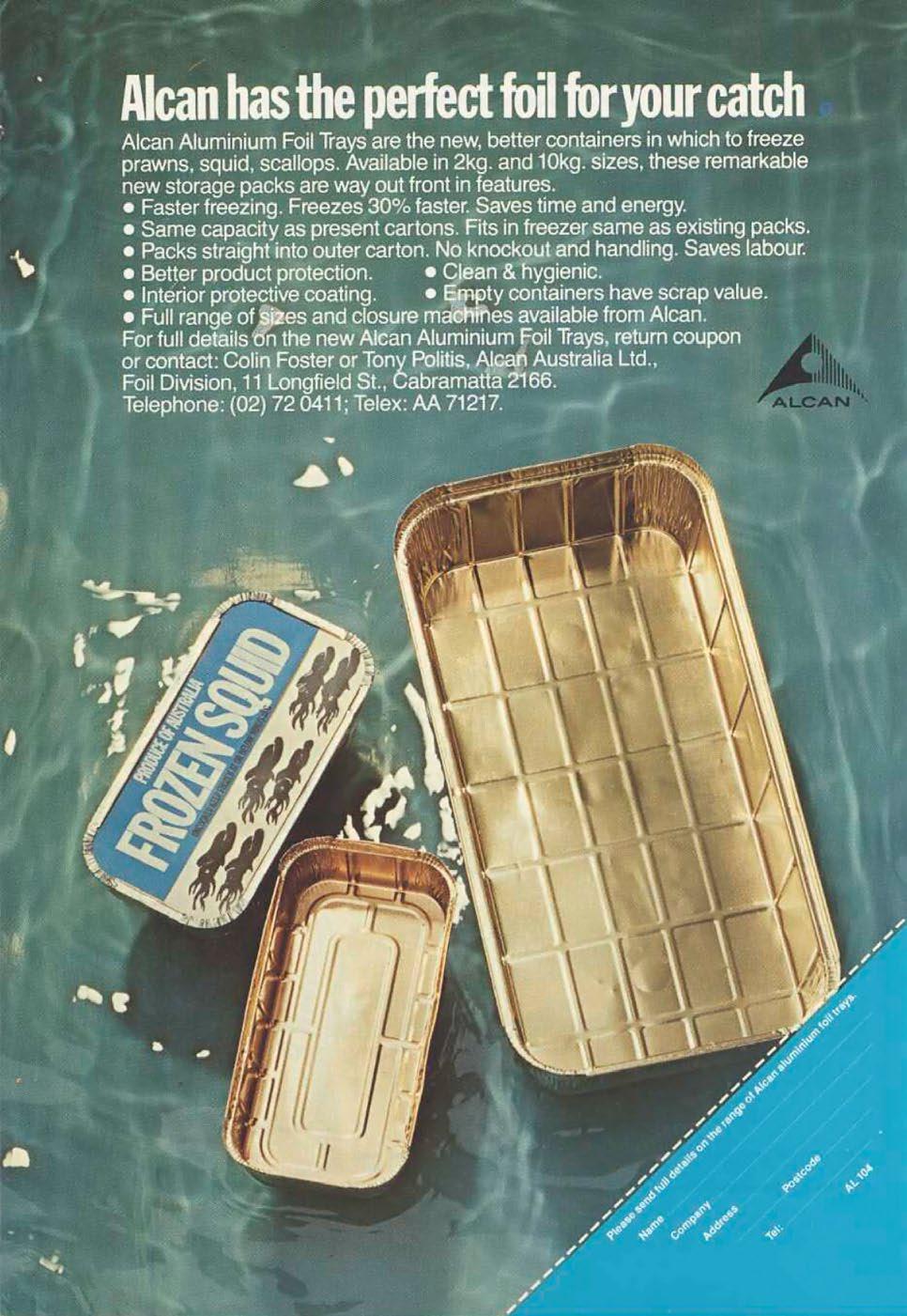
From the outset, Cabramatta developed its own identity. Early operations focused on foil rolling, but by the late 1960s specialised finishing equipment had been installed to support packaging applications. In 1970, aluminium-paper laminates and rigid foil containers were introduced, supported by new converting lines for frozen food and bakery packaging.
The Consumer Foils Division relocated to Cabramatta in August 1975, consolidating household foil production on site. Warehousing expanded in 1978 to support growing distribution. High-capacity gravure printing presses were installed in 1980 and 1981, followed by an eight-colour rotogravure press commissioned in 1982 at a cost of $3.6 million.
Cabramatta became a place where aluminium met everyday life. Household foil, food trays and packaging rolled out in enormous volumes, quietly embedding aluminium into Australian kitchens while building a specialist workforce skilled in printing, converting and finishing.
Processing coated foil. Cabramatta, 1988
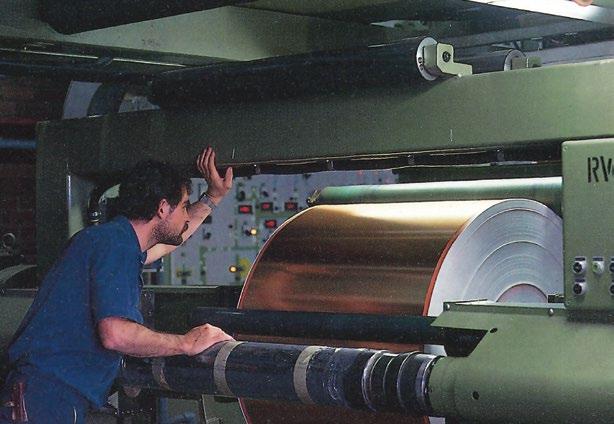
Foil production, Cabramatta, 1970s
EXCERPT FROM SPEECH BY THE PRIME MINISTER, THE RT. HON. R. G. MENZIES OPENING OF ALUMINIUM FOILS (AUST.) PTY. LTD., CABRAMATTA FRIDAY 25TH
NOVEMBER, 1960
I am constantly reminded by the highest authorities that I don’t know much about anything. But I could certainly tell you all I knew about aluminium quite briefly.
I know, for example, that we call it “aluminium” and that in the United States and in Canada, they call it “aluminum”. But with that happy instinct for compromise which characterises us, they go one step further back in the process of manufacture, and they have all agreed that one is “alumina”.
I also know that aluminium is a subject about which my colleague, Senator Spooner, constantly talks to me. If I were to meet him at midnight on some remote airport, he would say to me “I’d like a few words with you about aluminium”. (Laughter) So by a happy association of ideas, when I was invited to come to open this factory I said, “Yes, I’ll come; I’ll convert this from the world of theory into the world of practice: I’ll have a look at it”.
Then I read, by kind courtesy of those who have already spoken to you, a rough idea of what they were going to say. I read that little bit about using this foil for wrapping up the joint. Do you remember it? I mean the joint you eat. (Laughter) I’ve seen other joints wrapped up in it, but they tell me that that was some insulating purpose. But at any rate the good old roast beef can be wrapped up in this commodity, and we’ve been told that it will preserve
the flavour, and that it will keep the pan clean. I don’t understand that. I thought you had to put things on beef in the process of cooking it.
What I really want to know, in pursuance of my quest for knowledge, is this: Do you wrap it up tightly, and when the meat is cooked, do you eat the aluminium with it? (Laughter) Because this would open up a new universe to me — edible aluminium. I wouldn’t be surprised; they’ll come to that.
They will find that there is some strange medicinal quality about aluminium taken orally. And no doubt some ingenious fellow will invent ways and means of giving it a flavour, (Laughter) which, of course, would greatly add to the results of unsatisfactory roast beef.
But all that is a mere by the way. The fact is that this is really a splendid event and a splendid venture. I’m a great believer — I think we all are — in the development in Australia of industries, more and more industries, of greater and greater quality in their production, because we know that we have a destiny in the world which won’t be determined by the events of this year or next year, but which will steadily grow and expand over the course of the decades, and, indeed, I hope, over the course of the centuries.”
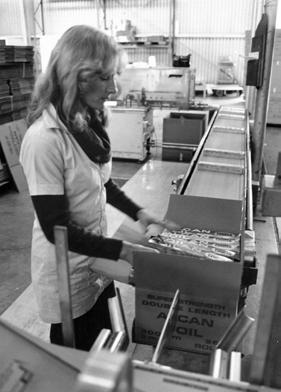
Alcan foil being boxed, Cabramatta, 1970s
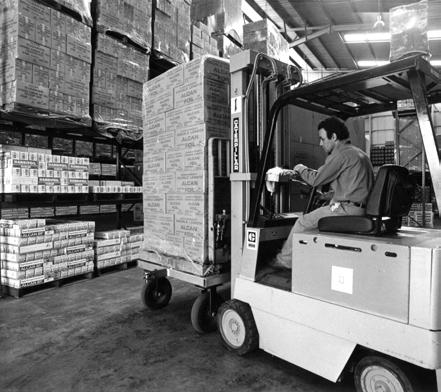
Forklift operator at Cabramatta,1970s
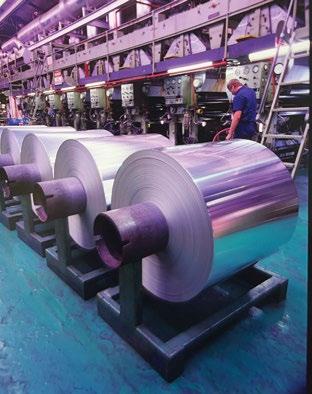
Foil stock, Cabramatta, 1988
Eagle Farm, Hamilton Industrial Estate, Queensland
Queensland operations evolved steadily from distribution to manufacturing. A Brisbane distribution centre opened in 1966, followed by plans for extrusion capability as demand accelerated. In 1969, land was secured at the Hamilton Industrial Estate, and by 1970 a major complex was nearing completion.
The Hamilton site housed an 1,800-ton extrusion press and a modern clear anodising plant, reaching full production in early 1971. Further anodising upgrades were commissioned later that year.
Major expansion works were undertaken around 1980 at the site now generally referred to as Eagle Farm, increasing capacity and strengthening Queensland’s ability to supply its own rapidly growing construction market.
The site supported the decentralisation of manufacturing, reducing reliance on southern plants and embedding capability closer to customers.
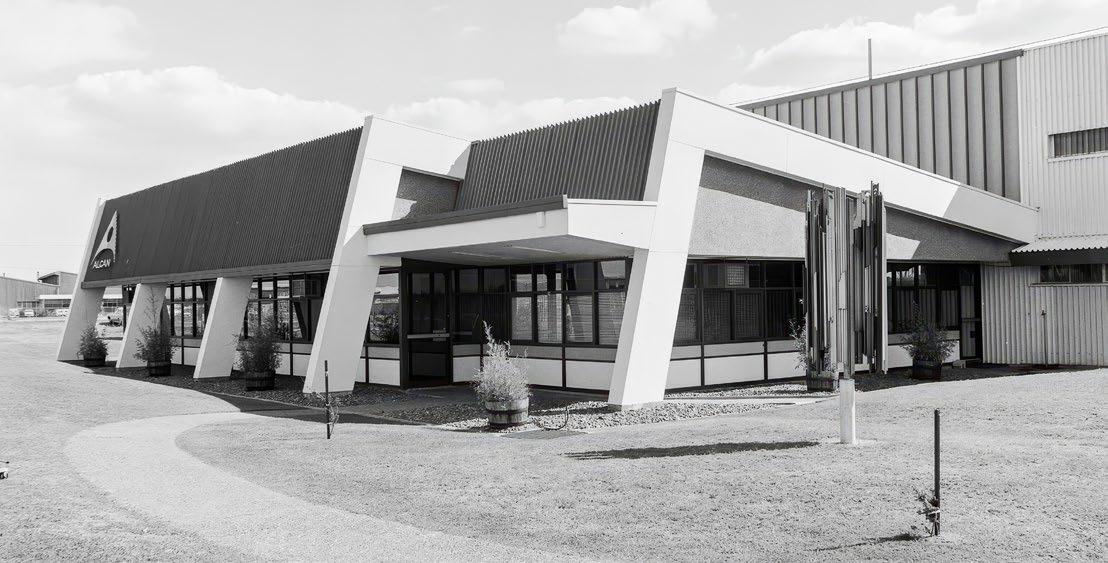
Eagle Farm admin building, 1972
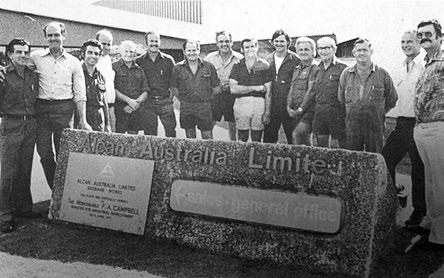
Eagle Farm Pioneering Team, 1971.
Pictured: Charles de Bono, Willaim Barber, Charlie Fenech, Ron Nutley, Joseph Curnie, Brian Schmidt, Rex Pincath, John Friend, William Glastonbury, Noel Elwell, Kevin Mill, Aubrey Finney, Syndey Sutcliffe.
HEMMANT, QUEENSLAND
Established in 1965, the Hemmant site formed part of Comalco’s expansion of aluminium distribution and service capability in Queensland during a period of strong growth in domestic aluminium demand. Located in Brisbane’s eastern industrial corridor, the facility supported the local market through warehousing and processing functions, complementing Comalco’s broader extrusion and manufacturing operations in the state.
Following Capral’s acquisition of Comalco’s aluminium business in 1995, Hemmant became part of Capral’s national network, contributing to its Queensland footprint during a period of transition and consolidation. The site continued to operate until its closure in 2001. Equipment from Hemmant, including an extrusion press, was subsequently refurbished and relocated to Bremer Park, where it continued service as part of Capral’s next phase of investment in Queensland manufacturing.
Steven Lee and Richard Kooper in distribution warehouse, Eagle Farm
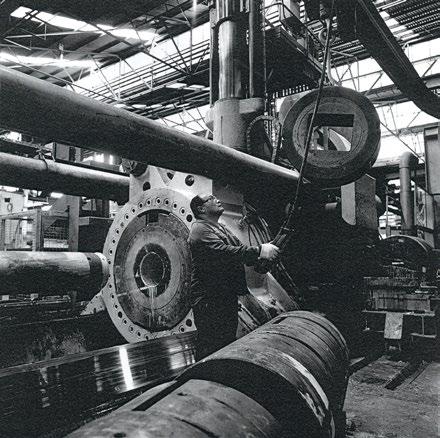
Extrusion Press, Eagle Farm, 1971
Penrith, New South Wales
Penrith is one of the company’s longest-established manufacturing sites, its story defined not by recent emergence but by continuity through change. The site entered the business through the acquisition of Crane Aluminium operations, bringing with it an established extrusion plant, experienced tradespeople and a strong connection to Australia’s architectural and building products markets.
For a significant period, Penrith operated at scale. At its peak, the site housed three extrusion lines, reflecting both the strength of demand at the time and Penrith’s importance within the eastern seaboard manufacturing network. The plant produced a wide range of architectural and structural sections, and its workforce developed a reputation for deep technical skill and practical problem-solving, honed over decades of continuous operation.
As the business evolved, national manufacturing capacity was progressively rationalised. Production was consolidated and extrusion capacity at Penrith was reduced. From three presses, the site transitioned to a single extrusion line. This contraction was not a reflection of diminished capability, but of a broader shift in how the company structured its footprint, prioritising efficiency, specialisation and scale across the network.
Historical photos of the Penrith Site prior to its acquisition by Capral in 2005
Schloemann Press, Penrith
What distinguishes Penrith is that contraction was followed by reinvestment. Automation initiatives introduced in 2018 improved material handling, throughput and safety, aligning the site with contemporary lean manufacturing practices.
Rather than remaining a legacy operation, Penrith entered a new phase of modernisation.That reinvestment accelerated in the mid-2020s. At the beginning of 2024, the press was modernised, representing a significant upgrade in performance, reliability and control. In 2025, major upgrades were completed to the billet oven, modernising the front end of the extrusion process and improving energy efficiency, consistency and temperature management.
Today, Penrith operates a single extrusion line, but it does so with modern equipment and renewed capability. Its evolution from a multi-line, high-volume plant to a focused, upgraded manufacturing site mirrors the broader trajectory of the business itself and a deliberate focus on quality, efficiency and long-term viability.
Site upgrades including press modernisation and replacement log furnace between 2024 and 2025
World first robotic billet loading at the newly modernised press
Penrith manufacturing team at the end of 2025
Angaston, South Australia
Angaston is a significant regional manufacturing site within Capral’s current national footprint, acquired as part of the Crane Aluminium acquisition in 2005. By the time Capral assumed ownership, the site already carried a strong industrial legacy, shaped by earlier investment decisions that had established Angaston as a modern aluminium manufacturing facility with national reach.
The site’s origins predate Capral’s involvement and stem from a major industrial expansion undertaken under previous ownership by Boral in 1986. At that time, a substantial investment was made to construct a purpose-built aluminium extrusion and window manufacturing plant in the Barossa Valley. The decision followed extensive feasibility studies across multiple states and was supported by state and local government as a catalyst for regional economic development and employment.
From the outset, the Angaston facility was designed as a technologically advanced operation. It incorporated contemporary manufacturing systems along with full powder-coating capability, positioning the plant to support both South Australian manufacturing operations and interstate markets.
From its early years, the majority of production was distributed beyond the state, reinforcing Angaston’s role as a contributor to national supply rather than a purely local operation.
When Capral acquired the site through the Crane transaction, Angaston entered a new phase as part of a broader, integrated national manufacturing network. Its established infrastructure, skilled workforce and finishing capability made it a valuable asset, bringing maturity, depth and regional resilience into the business.
Through subsequent periods of industry change, consolidation and market volatility, Angaston has continued to play a leading role, supported by ongoing upgrades and capability additions.
Team photograph circa 1990 with several employees who continue to be part of the Angaston workforce today: John Swyghuizen (front left), Stuart Gerhardy (back left), Mark Kalleske (back second from left) and Jeffro Laubsch (back second from right). Angaston has long been shaped by the loyalty and continuity of its people.
Angaston, 2024
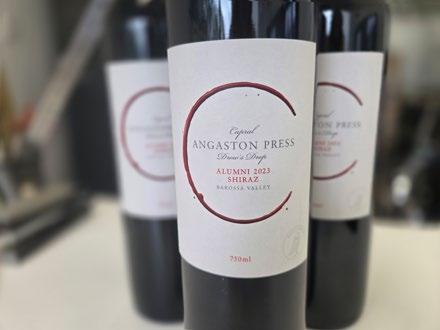
The grapes grown at the Angaston site are used to produce the muchcoveted Dew’s Drop, Capral’s own wine named in memory of Andrew Barlow, Capral’s National Commercial Manager, a long standing and much loved member of the team who passed away. The wine is shared with customers and friends of the business standing as a warm reminder of Andrew’s contribution and the community he helped to build at Capral.
These have included the introduction of additional alloys, customised packaging solutions, safety enhancements and tailored shipping configurations to meet evolving customer needs.
The site’s value-added department has grown significantly, with the addition of punching and thermalbreak capabilities to support the production of highthermal-efficiency door and window frames.
Angaston’s world-class productivity and quality are underpinned by a stable, highly experienced workforce, many of whom have spent more than 30 years at the plant. This continuity of knowledge and skill has been central to the site’s ability to adapt while maintaining consistently high standards.
In a reflection of its unique setting, the Angaston site also includes a working vineyard, producing a prized batch of wine each year shared with Capral’s customers and stakeholders. The vineyard formed part of the original Boral landholding and was reserved for potential future expansion, becoming an enduring reminder of the site’s history and its connection to the Barossa region.
Celebrating its 40-year milestone since its establishment in 1986, Angaston stands as an example of how regional manufacturing capability, once established at scale, can remain relevant, competitive and productive across decades of change.
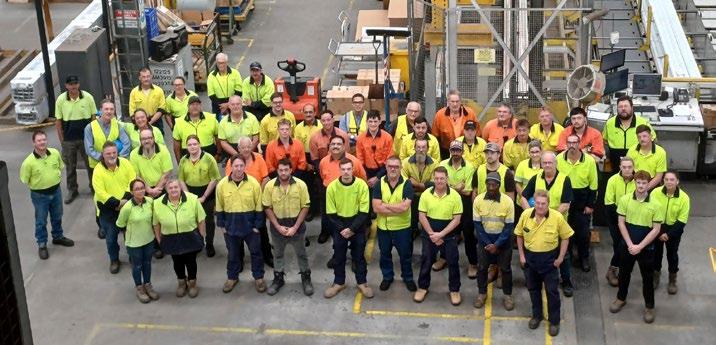
Members of Capral’s Angaston team, early 2026
Campbellfield,
Campbellfield has been central to the company’s Victorian manufacturing capability for more than six decades, evolving from a post-war expansion site into a highly specialised industrial extrusion, finishing and processing facility. Established in 1960, the site marked a deliberate move to embed manufacturing capacity in Victoria, reducing reliance on interstate supply and supporting the state’s rapidly growing construction and industrial sectors.
From its early years, Campbellfield was an extrusionfocused operation. Initial plant investment established the site as a counterpart to Granville, producing architectural and general-purpose extrusions for the southern market. The first press, Press 4, a 9-inch extrusion press, was commissioned with the opening of the site in 1960, forming the backbone of early production.
Demand grew steadily through the 1960s, and in 1969 plans were announced for a further expansion, leading to the installation of Press 7, a 7-inch extrusion press,
in the early 1970s to complement existing capacity. Built by an Australian supplier, this press was among the largest of its type manufactured locally at the time, reflecting confidence in long-term demand and reinforcing Campbellfield’s role as a serious production site rather than a satellite operation.The site continued to expand through the 1970s, not only in output but in strategic importance. In 1977, a dedicated extrusion die manufacturing facility was constructed at Campbellfield, bringing die design, manufacture and maintenance in-house. This was a critical investment that supported extrusion plants nationally and embedded deep metallurgical and engineering expertise within the business. Campbellfield became the technical backbone of the extrusion network, supplying tooling to Granville, Brisbane and later sites.
As volumes grew, Campbellfield’s role broadened beyond manufacturing. Expanded warehousing and distribution facilities were progressively added, with major developments occurring in the early 2000s and again later in the decade as distribution was
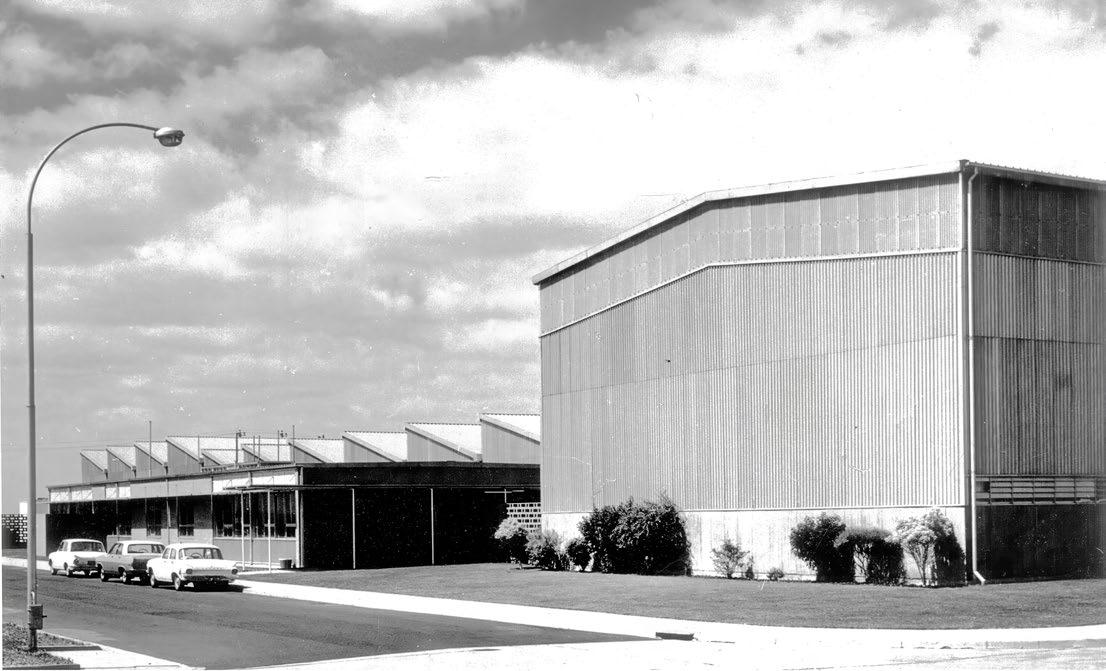
Victoria Campbellfield, 1960s
more closely integrated with extrusion and finishing operations. These investments strengthened the site’s ability to receive, store and dispatch product efficiently, linking production directly with customers across Victoria and reinforcing Campbellfield’s position as a regional hub rather than a single-purpose plant.
Finishing capability followed a similar consolidation path. In 1984, Campbellfield became the centre of a major surface-finishing rationalisation when a new centralised anodising facility was opened on site. Two older anodising plants at Girraween in New South Wales and Moorabbin in Victoria were closed, with their work
transferred to Campbellfield. This decision modernised finishing operations, improved environmental performance and concentrated specialist skills in one location. From that point, Campbellfield was not only an extrusion site, but a finishing hub for Victoria and beyond.
Through the 1980s and 1990s, Campbellfield developed a strong industrial identity. While architectural products remained important, the site increasingly supported heavier industrial applications where consistency, strength and tight tolerances mattered. Long-serving tradespeople, die makers and press operators
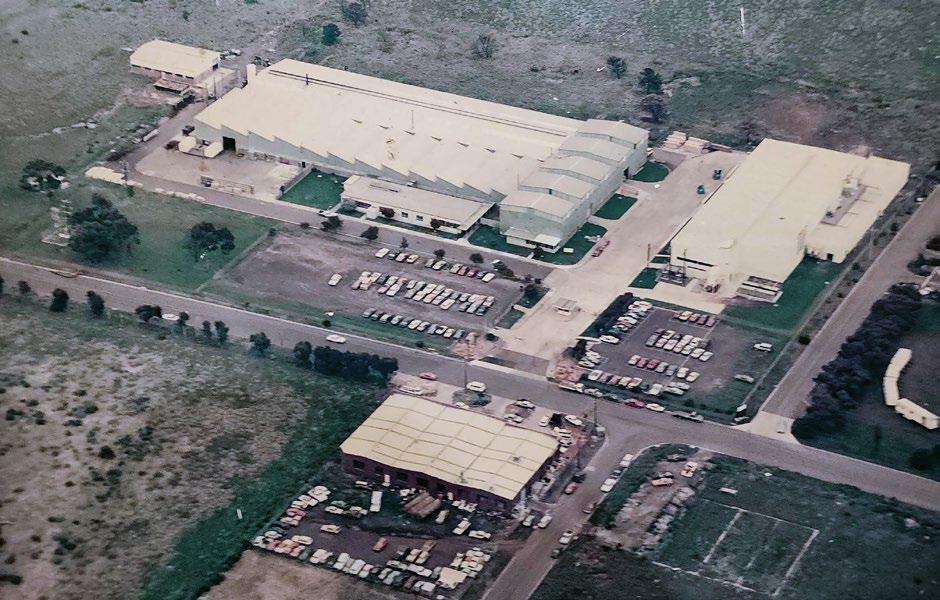
The Campbellfield site prior to the addition of the RDC building, 2004. The aerial shot captures the site and surrounding area before significant expansion, a landscape almost unrecognisable today
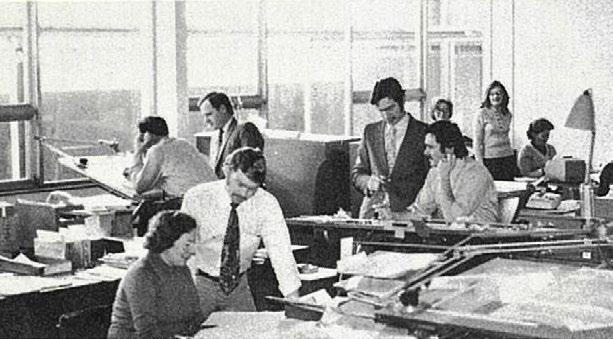
Alcan general office staff at work, Campbellfield, 1972
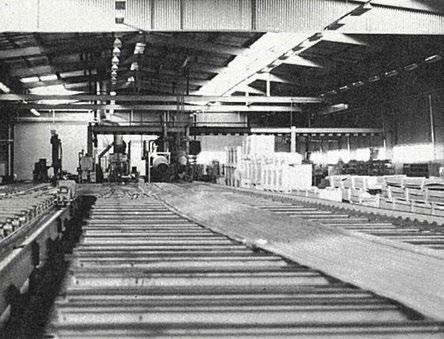
View of the no.7 press and extrusion bay, Campbellfield, 1972
developed a reputation for precision and problem-solving, and the site became known internally as a place where complex jobs could be made to work.
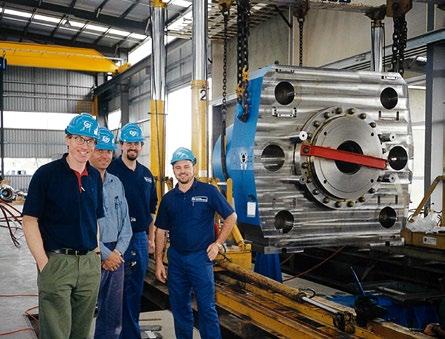
A defining step in Campbellfield’s modernisation occurred in 2002 with the installation of a 12-inch, 4,400-ton SMS Meer extrusion press, then the largest in the Southern Hemisphere. At the same time, the 7-inch and 9-inch press lines and associated anodising operations were decommissioned, marking a deliberate strategic shift. Campbellfield repositioned itself to capitalise on Victoria’s significant industrial market, focusing on large, demanding industrial and certified marine profiles. The new press significantly enhanced control, reliability and throughput, extending the site’s capability and relevance.
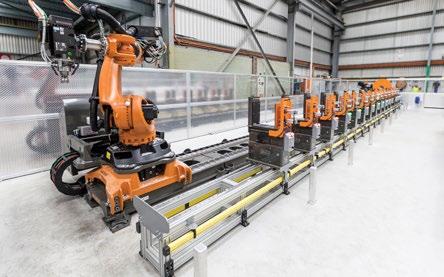
Rather than standing still, Campbellfield continued to add value around its long-length extrusion capability. The site expanded into advanced job-shop machining and routing, including the machining of flat products, supported by multi-axis long-bed CNC equipment. Today, Campbellfield operates five machining centres capable of processing lengths from 4 to 17 metres, including a novel robotic system with seven degrees of freedom, enabling full 360-degree machining. These capabilities formed part of the broader AVA investment, reflecting a strategic move toward higher-value products and services built on the site’s deep technical base.
From 2010 onward, a series of life-extension and performance upgrades further strengthened the industrial press. In 2015, modern linear guidance was fitted, delivering largely maintenance-free press alignment and contributing to highly consistent metal flow and repeatable profile accuracy. Campbellfield also followed its Penrith sister plant in adopting a unique robotic billet loader capable of handling 300-kilogram billets, eliminating hydraulics in favour of electric motor control.
The site became an early adopter of advanced manufacturing systems, implementing the Inductive Automation Ignition platform as a shop-floor manufacturing execution system. This enabled realtime data acquisition from field devices via PLCs, along with two-way communication between the plant floor and the SAP ERP system, improving visibility, control and decision-making.
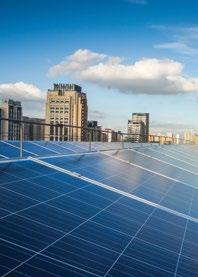
In 2022, Campbellfield took a further step in sustainability, installing an 800-kilowatt-peak DC solar rooftop system with grid connection. The system comprises 1,482 angled bifacial photovoltaic modules mounted using Capral extrusions and supported by ten inverters, enabling the site to self-generate approximately 15 per cent of its power requirements.
Campbellfield’s story is not one of dramatic expansion or contraction, but of steady, deliberate adaptation. It absorbed functions when others closed, took on specialist roles as the network evolved, and modernised core assets to extend their life and relevance. In doing so, Campbellfield exemplifies a recurring theme across the company’s footprint: longevity built not on scale alone, but on technical depth, skilled people and the willingness to evolve.
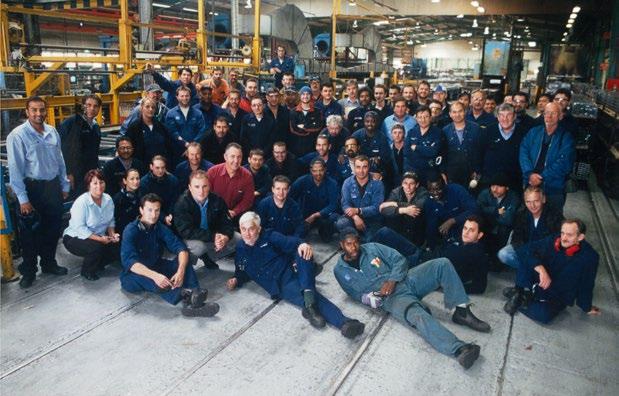
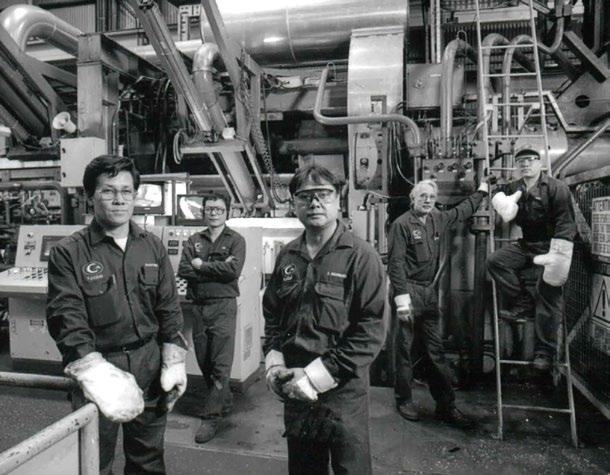
Campbellfield manufacturing team shortly before the installation of the site’s industrial press, 2002.
Capral’s advanced 7-axis CNC machining centre at Campbellfield, comissioned in 2017
GEELONG, VICTORIA
The Geelong site formed a short but informative chapter in the company’s Victorian manufacturing history. Acquired in approximately 1986–87 when Alcan purchased Unalex from Olympic Aluminium, the operation had been running for only two years at the time.
The site housed two extrusion presses, a 6-inch and an 8-inch press, along with a stretching machine for expanded security grille products and limited value-added capability. After a brief period of assessment under new ownership, a decision was taken to close the facility.
One press and a small number of employees were relocated to Eagle Farm around 1988 as part of broader consolidation efforts.
Though short-lived, the Geelong operation contributed to lessons around scale and consolidation that shaped later manufacturing strategy.
Campbellfield RDC team, afternoon shift, 2023
Campbellfield RDC team, day shift, 2023
Campbellfield manufacturing team, 2025
Bremer Park, Bundamba, Queensland
When Capral first conceived the idea of a dedicated, purpose-built modern extrusion plant, the intention was to develop the facility at Smeaton Grange in Sydney. Despite extensive planning, the proposal was unable to proceed due to land constraints, protracted planning and approval processes, and the limited availability of suitably zoned industrial sites.
During this period, the Queensland Government moved to capitalise on the delays in New South Wales, presenting a counter-offer that included two potential sites in Queensland and a package of incentives. The contrast in approval timelines was stark, with Ipswich Mayor Paul Pisasale later noting that development approval in Queensland was secured within six weeks. As a result, the project was redirected to Queensland, where greater site availability, more accommodating planning conditions and proximity to growth markets supported the establishment of the Bremer Park facility and enabled the project to proceed as originally envisioned.
Induction group, 2004
Damir Merdovic, Extrusion Business (Plant) Manager, Queensland
Bremer Park was conceived as a decisive step in Capral’s long-term manufacturing strategy. Emerging in the early 2000s, the project reflected a clear business intent: to establish a large-scale, integrated production and distribution facility capable of supporting sustained growth in Queensland while strengthening national supply capability. Rather than incremental upgrades to existing sites, Bremer Park represented a deliberate shift toward consolidation, scale and operational efficiency.
Located at Bundamba within the Bremer Industrial Park corridor, the site was developed as a purposebuilt complex designed to bring together extrusion, finishing, processing and distribution in one location. Construction took place over several years and was completed in the mid-2000s, forming part of a major capital investment program that signalled Capral’s confidence in the future of Australian aluminium manufacturing.
From the outset, Bremer Park was designed to operate at industrial scale. The site housed multiple extrusion presses, advanced processing equipment, a vertical paint line and a large distribution centre intended to service Queensland and support interstate supply. The physical footprint of the facility was substantial, with expansive buildings, hardstand areas and internal logistics designed to handle high volumes efficiently. Bremer Park was not simply another extrusion plant. It was engineered as a throughput site, where production and distribution were tightly integrated.
Operationally, the early years were characterised by commissioning complexity rather than immediate optimisation. Bringing a site of this size and sophistication into full production required time. Systems needed to be stabilised, workflows refined and teams developed. Capacity ramp-up was gradual, and the learning curve was steep. These challenges were a natural consequence of the scale and ambition of the project and reflected the reality of establishing a new flagship facility rather than extending an existing one.
Opening Day tour., Bremer Park, 2005
The iconic Blue Forest, Bremer Park
Queensland Premier speaking at the opening of Bremer Park, 2005
Over time, Bremer Park settled into its role as a cornerstone of Capral’s manufacturing network. As markets shifted and the business navigated periods of volatility, the site’s scale and integrated design became increasingly valuable. Rather than retreating from the investment, Capral focused on optimisation. Automation initiatives were introduced, processes refined and operating models adjusted to improve efficiency and resilience.
By 2019, a major restructure and automation program at Bremer Park was completed. These changes lowered the site’s operating breakeven point and improved consistency, reinforcing its role as a reliable, highvolume production and distribution hub. The site evolved from a bold expansion into a stabilising force within the national network, capable of absorbing demand when conditions were strong and operating efficiently when conditions tightened.
Culturally, Bremer Park came to embody a different way of working. Its scale required coordination across disciplines that were often separated elsewhere: extrusion, finishing, processing, warehousing and logistics. The site fostered a production culture focused on flow, reliability and execution, with an emphasis on serving customers at scale rather than specialising in niche outputs.
Bremer Park stands today as one of the most significant physical investments in Capral’s history. It reflects a moment when the business chose to think long-term, commit capital and build for scale. Its story is not one of instant payoff, but of intent followed by perseverance, optimisation and eventual integration into the fabric of the business. In doing so, Bremer Park reshaped not only Capral’s Queensland operations, but the way the company approached manufacturing capability nationally.
Bremer Park manufacturing (above) and RDC (below) teams
Canning Vale, Western Australia
Canning Vale became the focal point of Capral’s Western Australian operations following the acquisition of Comalco’s distribution assets in 1995 and the subsequent consolidation of manufacturing, processing and distribution activities across the state. The Comalco acquisition provided the foundation for Capral’s long-term presence in Western Australia, a market defined by distance, scale and logistical complexity, and set in motion a gradual reshaping of how the business operated in the west.
For many years, Western Australian operations were spread across multiple locations. Bibra Lake played a particularly significant role following the acquisition of the OneSteel aluminium distribution business in 2013, bringing with it a substantial plate and rolled product operation, an established customer base and a highly experienced team with deep market knowledge.
As Capral integrated the OneSteel business into its Western Australian footprint, a strategic decision was taken to consolidate operations, bringing together the Bibra Lake and Canning Vale sites into a single, modern
hub at Canning Vale. This consolidation was a major undertaking. It required careful coordination between two established teams, extensive planning around stock movements, systems integration and a shared commitment to maintaining service levels throughout the transition.
A key element of this process was the relocation of the Wangara Building Systems Regional Distribution Centre to Canning Vale. The move further consolidated Western Australian operations into a single, modern distribution and processing centre, strengthening operational efficiency and improving stock flow across the state.
At the same time, Capral was deliberate in preserving its North-of-the-River customer presence. Rather than withdrawing from the area, the business established a Wangara Sales Hub to maintain accessibility and service continuity for northern customers.
The Wangara Sales Hub now incorporates a dedicated customer sales and service team, an Aluminium Centre,
a Window and Door Kit Centre and a small distribution warehouse. This structure ensures ongoing local service while leveraging the operational strength and scale of the consolidated Canning Vale site.
The consolidation was as much about people and culture as it was about infrastructure. Different operating practices and ways of working were brought together into one cohesive operation, strengthening the Western Australian business and creating clearer lines of responsibility, improved efficiency and greater resilience.
Canning Vale developed a strong identity around aluminium plate and rolled product processing. The installation of large-format plate routers enabled precision cutting and value-added services for industrial, transport and construction customers, embedding genuine processing capability rather than operating solely as a distribution point.
Over time, this capability expanded significantly, and Canning Vale emerged as the largest plate and rolled product store in Australia, holding depth and range unmatched elsewhere in the network.
A further step-change occurred in 2018 with the commissioning of a new technology paint line at Canning Vale. This investment significantly enhanced local finishing capability, improving turnaround times, quality consistency and service reliability. In a geographically isolated market, the decision to install advanced coating capability locally reflected a deliberate strategy to shorten supply chains and reduce reliance on interstate finishing.
Today, Canning Vale stands as a mature, integrated operation shaped by acquisition, consolidation and targeted reinvestment.
The Canningvale team, 2026
Smithfield, New South Wales
Smithfield entered the network through acquisition, with the extrusion plant acquired in 2021 as part of the purchase of the G. James Smithfield facility. The acquisition brought established infrastructure, experienced people and immediate manufacturing capacity into the business at a time of strong market recovery, strengthening Capral’s footprint in its largest domestic market.
Originally constructed in 1999, the Smithfield plant was designed from the outset as a modern, highly automated extrusion facility. Built under the direction of Richard Axe and David Usher, the site incorporated advanced material-handling concepts that distinguished it from more traditional extrusion plants of the period.
Central to this was a unique pinze handling technology, enabling automated gripping and transfer of extrusions through key stages of the process, reducing manual intervention and improving consistency and safety.
The plant’s automation extended beyond handling systems. Smithfield was engineered with a strong focus on process control and repeatability, making it particularly well suited to demanding profiles and higher-performance alloys. Its cooling capability supports the effective processing of hard alloys, enabling applications where mechanical properties and dimensional stability are critical.
Smithfield plant construction, circa 1999
Since joining the Capral network, Smithfield has proven to be more than an incremental addition of capacity. Its design and automation profile have positioned it as a proving plant for next-generation manufacturing approaches, particularly in the field of mechatronics. Under David Usher’s leadership, the site continues to play an important role in developing new skills, systems and engineering capability, contributing to the growth of a new generation of Capral technicians and engineers.
Smithfield now complements the broader New South Wales manufacturing and distribution footprint, adding a technologically advanced extrusion operation that aligns with Capral’s ongoing focus on automation, safety and precision. Its origins as a purposebuilt modern plant, combined with its integration into a national network, reinforce Smithfield’s role as a forward-looking site within the company’s manufacturing portfolio.
Members of the Capral Team with Senator Tim Ayres at the Australian Made launch event at Smithfield, 2026
Kilburn, South Australia
Capral’s South Australian distribution presence can be traced back to Wingfield, where Alcan and later Capral Aluminium operated from Hanson Road through the 1990s. During this period, aluminium operations in the state were spread across multiple sites, reflecting earlier operating models where trade, distribution and specialist activities were often separated. Alongside Wingfield, a Building Systems Group presence was also established at Somerton Park, located next door to powder coating operations at the time.
A significant shift occurred in 2005, when Capral acquired Crane Group, along with the SMART Aluminium network. At the time, SMART Aluminium operated branches at Lonsdale and Wingfield. The Crane acquisition brought a large-scale distribution site at Kilburn into the Capral network for the first time and marked the beginning of a broader consolidation of South Australian operations.
In the years that followed, Capral progressively rationalised its South Australian footprint. The SMART Aluminium Wingfield operation was closed, with staff moving into the Capral Trade Centre at Wingfield. By 2010, the Lonsdale site was also shut down, with operations consolidated back into Wingfield, further streamlining the business.
Further consolidation occurred in 2011, when the Wingfield site was closed and operations were relocated to Kilburn, which had originally been a Crane site. This move was significant not only locally but nationally, as Kilburn became the first Capral distribution facility to trial a Trade Centre operating within a warehouse environment. The model combined stockholding, service and customer access within a single site and proved well suited to the South Australian market.
In 2013, when Capral acquired the industrial aluminium division of OneSteel, including OneSteel’s Kilburn site, Capral’s Kilburn operations were relocated into the former OneSteel facility in September the same year, where the business remains today. This move brought together distribution, trade and industrial capability at a single location and completed a consolidation journey that had unfolded over more than a decade.
Today, the Kilburn facility comprises approximately 8,000 square metres of warehousing and holds more than 3,000 standard and customer-exclusive extrusion profiles, alongside a comprehensive local range of aluminium rolled products. This depth of inventory allows the site to service a wide cross-section of customers, from small fabricators to larger commercial operators, with daily distribution runs extending across South Australia.
The site is also home to Capral’s South Australian architectural showroom, showcasing the company’s commercial and residential window and door systems. This function reinforces Kilburn’s role not only as a logistics hub, but as a customer-facing centre supporting specification, design engagement and system selection.
Kilburn’s role reflected a broader shift across Capral’s national network toward, larger and better-equipped distribution centres that combine inventory depth, service capability and customer engagement. In South Australia, Kilburn stands as the physical outcome of decades of change, bringing together multiple operational legacies into a single, modern site that continues to support local industry and customers across the state.
The Kilburn team, 2026
Huntingwood, New South Wales
Huntingwood opened in 2021 as a deliberate consolidation of Capral’s New South Wales service and distribution model. Developed as a high-performance warehouse and distribution centre, the site also became the company’s New South Wales head office, bringing together leadership, logistics and customer service functions in a single, strategically located facility.
The 11,000 square metre site is centrally positioned between Capral’s two Sydney-based extrusion plants at Penrith and Smithfield, strengthening connectivity between manufacturing, finishing and distribution. In conjunction with its opening, Capral consolidated its Erskine Park distribution operations into Huntingwood, closing the Erskine Park site and transferring stock, systems and teams into a single, larger facility.
Huntingwood Paintline, 2022
Huntingwood RDC Day Shift (above) and afternoon shift (below), 2026
The move simplified the New South Wales distribution footprint and improved efficiency, responsiveness and coordination across the state.
From Huntingwood, the distribution centre receives daily shipments of extruded aluminium from Capral manufacturing sites nationwide, acting as the primary gateway for product flowing into the New South Wales market. The warehouse incorporates a mix of vertical and horizontal racking systems designed to maximise storage density and picking efficiency. It holds more than 4,000 cases of standard and customer-exclusive aluminium extrusions, along with over 800 pallets of aluminium sheet, plate, treadplate and security grille, supporting fast response times across metropolitan Sydney and regional New South Wales.
A significant expansion of capability occurred in 2023 with the commissioning of a state-of-the-art vertical paint line at Huntingwood. Installed to strengthen local finishing capability for New South Wales customers, the line reduced reliance on interstate coating and shortened lead times. The chromate-free system lowered environmental impact and enabled the supply of industry-leading Akzo Nobel and Dulux powder coat finishes, including warranty-grade architectural finishes.
By combining distribution, finishing and corporate functions in one location, Huntingwood became a central coordination point for Capral’s largest market. It exemplifies the company’s shift toward fewer, larger and more capable hubs, designed to support scale, service reliability and national integration.
Lina, Erroll, Nam, John and Mani from the Capral Master Data and IT teams
Austex, Ingleburn
Austex Dies is a wholly owned subsidiary of Capral Aluminium and forms part of the specialist infrastructure that supports the company’s extrusion operations.
The story of Austex reaches back well before it carried its current name. The capability traces its origins to Comalco who established operations in 1956, where a dedicated tool and die function existed to support large scale extrusion operations. When Comalco’s extrusion business, including the Minto site, was acquired by Capral in 1995, this tooling capability became part of a combined Capral die shop environment, drawing together experience and practices developed over decades.
Retired Austex employee Glenn Buyers, who commenced work at Comalco in 1976, recalls the Comalco Tool and Die shop operating from a very old and basic building within the Comalco Minto site, with much of the facility and equipment already 20 years old or more at that time. Among the most tangible links to those earlier years is a 1936 Lumsden grinder. Glenn recalls training on this machine early in his career. Remarkably, it has survived successive eras of ownership, upgrades and modernisation and remains part of the Austex workshop today. The machine shown in the accompanying photograph stands as a rare physical connection to the earliest generations of Australian extrusion tooling.
In the years that followed, the die shop moved through changes in structure, branding and ownership. For a period, it operated independently from Capral under the Phoenix name, before being re-established within the Capral group.
In 2010, Capral acquired Austex, formally bringing die design, manufacture and maintenance back into the business at a time when control over critical manufacturing inputs was becoming increasingly important.
The acquisition strengthened Capral’s ability to support its extrusion plants internally and reduced reliance on external die suppliers, allowing closer coordination between tooling, press operations and technical development. It also reinforced the understanding that extrusion dies are foundational to product quality, consistency and production efficiency.
Today, Austex operates as a fully integrated die manufacturing facility, with in-house machining, electrical discharge machining, turning and heat treatment capability. These facilities enable the manufacture and ongoing maintenance of a wide range of dies, supporting both Capral’s extrusion requirements and external customers. Austex has capacity to produce up to 2,000 dies annually and has built experience across a broad range of applications, from general extrusion tooling through to specialised high precision work, including projects for organisations such as ANSTO.
The site’s continuity has been shaped by the skills of its workforce. Successive generations of technicians and designers have contributed to the operation, maintaining a strong focus on safety, technical accuracy and steady improvement in processes and equipment. While not a large scale manufacturing site in its own right, Austex plays an important supporting role within Capral’s broader manufacturing network, underpinning the performance of extrusion presses and the quality of the products they produce.
Alcan, New Zealand
Alcan New Zealand Limited was established in 1961, with its head office and principal manufacturing operations located in Auckland. Created to meet rapidly growing post-war demand for aluminium, the business marked New Zealand’s transition from import reliance to local fabrication. The site housed the country’s only aluminium plate mill alongside two extrusion presses, supported by remelt, anodising and finishing capabilities. At its peak, Alcan New Zealand employed around 230 people and operated as a significant contributor to the nation’s construction, industrial and packaging sectors.
In 1987, Alcan New Zealand became a subsidiary of Alcan Australia Limited, strengthening trans-Tasman integration across management, production and technical expertise. In 1993, the business became the first aluminium extrusion company in Australasia to achieve ISO 9001 certification, reflecting a strong commitment to quality systems and continuous improvement. The operation was rebranded as Capral Aluminium in 1995.
In 2002, Ron Holden and Bill Bradnam, together with Capral Aluminium Australia, formed NALCO to acquire the assets of Capral Aluminium New Zealand Limited. In 2006, Holden and Bradnam purchased Capral’s remaining shareholding, becoming sole owners of NALCO and marking the end of Capral’s direct ownership of the New Zealand business. In subsequent years, the operation attracted investment from Fletcher interests and now trades under the Altus brand.
5-bar treadplate rolling
Aerial view of Alcan premises
A tenure celebration for Bill Hayward, pictured bottom right, including Ewen Cameron and Richard Michael on the right.
Yennora, New South Wales
Commissioned by Comalco in 1961, the Yennora plant quickly developed into a full-scale aluminium facility, combining extrusion, rolling, foil, remelt and distribution under on a single site. A large Schloemann press, installed in 1971, became the flagship, while two smaller presses supported high-volume extrusion supply of microtubing and other specialised extrusions for the automotive sector.
Alongside extrusion, the site also produced aluminium cans and operated a remelt facility, further expanding its capabilities. When Capral acquired Comalco downstream operations in 1995, Yennora became the centre for large-press extrusion in the east. Its workload was later transferred to Campbellfield following the commissioning of its industrial press. For decades Yennora stood as a model of integrated aluminium production, delivering everything from packaging to precision profiles for the car industry.
Minto, New South Wales
Minto was purpose-built in the early 1980s by Comalco as a dedicated extrusion centre with a strong focus on precision. Equipped with three extrusion presses and its own die manufacturing facility - now Austex Dies - the site specialised in aluminium profiles for architectural and industrial use. When Capral acquired Comalco’s downstream operations in 1995, Minto became part of its national network. Unlike other sites, it held no major warehousing or distribution role; its function was singular and efficient: extrusion, and mill direct shipments to customers or Capral distribution centres. In time, two of its presses were relocated to Bremer Park. The plant was decommissioned in the early 2000s.
From LeadershipTransport to Energy Transformation 3
THE STORY OF ALUMINIUM WITHIN AUSTRALIA’S INDUSTRIAL IMAGINATION
Once the war years had proven its capability in high-performance and high-stress environments, aluminium began moving rapidly into civilian industries that had long been dominated by steel. What followed was a transformation.
Engineers, designers and transport operators discovered that aluminium allowed them to carry more, move faster, maintain less and endure longer. Markets that had once dismissed the metal as exotic soon found that the economics told a different story. By the late twentieth century, Alcan and later Capral’s industrial divisions were guiding entire sectors through this transition, shaping the evolution of rail, marine, road transport and defence in ways that now feel foundational to modern Australian industry.
Aluminium in the Air: Aircraft Alloys and Defence Engineering
The earliest industrial advances were made in the air. Wartime aviation created intense demand for alloys with exceptional strength, low weight and consistent performance. Australco and later Alcan Australia became one of the few Australian manufacturers able to supply these specialised materials. High-strength, heat-treatable plate not available anywhere domestically was imported and processed to exacting specifications. These alloys were used in aircraft components and in industrial moulding, where aluminium increasingly replaced steel.
Australco’s Granville Works supplied forgings that supported defence programs well into the 1950s. New presses installed in 1952 and 1955 expanded extrusion capacity to a standard unmatched in the region. Two products in particular were essential for the aircraft industry: drawn tube and wire for rivets. Demand for aluminium tubing grew so rapidly during the war that two additional draw benches were installed in 1942 and remained in service until the mid-1980s. Quality control was uncompromising. The Aircraft Inspection Directorate enforced strict standards and Australco’s inspectors soon earned the authority to carry out inspections independently, referring only the most complex cases back to the Directorate.
Propellor forging, Granville, circa 1940s
Surface finish on aircraft sheet was critical, with material often rejected for even minor imperfections. In the forge annexe, finished components such as engine casings and propeller blades were produced for aircraft including the De Havilland Mosquito, the Bristol Beaufort and the North American Mustang. A smaller hydraulic press formed pistons and propeller hubs. These activities established aluminium not as a substitute for steel but as a superior engineering material wherever lightweight strength was essential.
During the 1990s, Capral supplied Australian recreational aircraft manufacturer Jabiru with rolled products to be machined into components for aircraft engines before domestic aircraft production tapered off and the industry pivoted toward being a highcapability partner in global aerospace supply chains. Today, domestic aircraft manufacture continues at a smaller but resilient scale, centred on lightweight aircraft, engines, composites and kits for sport aviation, with Australian manufacturers recognised more for innovation, efficiency and rugged design than for mass production.
Aluminium aeroplane construction, Australian Aluminium Co Pty Ltd, Granville, New South Wales, Australia, c.1947 H4882-19, Collection: Powerhouse Museum.
Rail Innovation: From the Silver City Comet to Advanced Wagon Design
Rail offered another early proving ground. The introduction of the Silver City Comet in 1936, the first aluminium-bodied train in the British Commonwealth, signalled a shift in thinking about vehicle performance, weight and efficiency. Its long aluminium beams and reduced mass offered a glimpse of the future.
In the decades that followed, Alcan engineers developed advanced analytical tools including finite element modelling by the early 1980s that enabled rail authorities to improve wagon and rolling stock design. Aluminium’s corrosion resistance and ability to reduce axle loads made it ideal for Australian conditions where long distances, extreme temperatures and coastal exposure challenged steel structures.
In 1963 Australco’s technical service aided the development of NSW Government Railways new aluminium double deck suburban passenger cars, working closely with Tulloch Ltd whose engineer Roy
Leembruggen proposed the high capacity design. Tulloch’s use of lightweight aluminium sheathing, supported by Australco’s alloy and fabrication expertise, made the double deck configuration feasible without increasing train lengths. The resulting cars attracted international interest and demonstrated how aluminium could reshape suburban rail design.
The following year NSW Government Railways ordered 150 aluminium wheat hopper wagons. Alcan and Australuco engineers assisted in the design of this vehicle, which reduced tare weight and improved grain carrying efficiency. These projects marked an important shift toward aluminium as a material capable of redefining both passenger and freight rail.
Silver City Comet, 1937. H4882-1, 14, 25, Collection: Powerhouse Museum.
The Rise of Road Transport: Alcan’s transport division and the Hockney Alcan Era
As Australia’s highway network expanded in the post-war decades, road transport emerged as one of aluminium’s most important industrial frontiers. The establishment of Alcan’s Transport Equipment Division in 1970 marked a decisive shift in the company’s role within the sector. This was no longer simply a materials supply business. The division designed, engineered and manufactured complete aluminium vehicle bodies, applying fabrication expertise directly to the needs of commercial transport operators.
Among its earliest and most recognisable products was the one-tonne aluminium tray body, commonly known as the Alcan tray. By reducing tare weight, it delivered immediate gains in payload while lowering vehicle wear and fuel consumption. The introduction of the Luton van, extending above the driver’s cab, further demonstrated the design flexibility aluminium offered over steel.
Demand expanded rapidly for aluminium tipping bodies, agricultural service vehicles, delivery vans and custom fleet vehicles. Large tippers for quarrying, grain and bulk materials clearly illustrated how reduced tare weight translated into measurable productivity gains, while the pairing of aluminium dog trailers with conventional prime movers by the late 1970s enabled even greater capacity improvements.
By 1980, the division’s capabilities extended beyond civilian transport. When the Australian Defence Department required redesigned vehicle bodies, Alcan’s engineers delivered working prototypes and moved into full production within ten weeks. This rapid response highlighted both the adaptability of aluminium fabrication and the maturity of Alcan’s engineering capability, reinforcing aluminium’s value across civil, industrial and defence transport applications.
The second aluminium semi-trailer tipping body built by Australian Blue Metals, 1956
A major turning point came in 1983, when Alcan merged its Transport Equipment Division with the Hockney Engineering Group, founded by Phil Hockney in the 1970s. Hockney was widely regarded as a pioneer in aluminium petrol tanker construction, with specialist expertise in fluid-carrying vessels and a strong reputation for technical innovation.
The resulting joint venture, Hockney Alcan, combined Alcan’s materials and fabrication knowledge with Hockney’s deep tanker and tipper experience, creating a more technically capable and competitive organisation with national influence.
This partnership emerged at a time when regulatory scrutiny, safety expectations and fuel costs were all rising. Transport operators increasingly sought lighter, safer and higher-capacity tankers and tippers, and aluminium proved uniquely suited to these demands.
Hockney Alcan accelerated innovation in tanker and tipper design and reinforced aluminium’s position as the preferred material for bulk liquid and heavy transport applications. The venture represented the maturity of Capral’s industrial operations and demonstrated the strategic value of collaboration with specialist manufacturers.
Phil Hockney
Capral’s direct involvement in transport body manufacturing concluded in 2000, when Hockney Alcan was acquired by Holmwood Highgate. While this marked the end of an era, the influence of the Transport Equipment Division and the Hockney partnership remained clearly visible in the industry. The aluminium tanker and tipper designs pioneered during this period became standard across Australian roads.
Today’s transport manufacturing continues to build on these foundations. Leading trailer builders such as Freighter, Sloanebuilt, Muscat and Vawdrey draw on Capral’s extrusions and plate for curtain siders, bulk tippers, tankers and intermodal equipment operating across national freight networks.
While weight reduction remains central, modern requirements now extend to fatigue performance, dimensional accuracy and long-term durability under demanding operating conditions. Reduced maintenance, improved fuel efficiency and increased payload capacity continue to position aluminium at the heart of modern freight productivity, carrying forward principles first established by Alcan’s Transport Equipment Division and refined through the Hockney Alcan era.
Brad Ryan, Victoria Industrial Sales Manager, examines aluminium extrusion used on the construction of Vawdrey trailers.
Marine Applications: From Quintrex and Clark to Commercial Vessels
Marine applications reveal another dimension of aluminium’s industrial potential. In 1976 Alcan acquired Quintrex Aluminium Boats Pty Ltd and by the early 1980s the marine products division encompassed both Quintrex and Clark Aluminium Boats, already well known in recreational boating. Despite economic conditions, the division continued to innovate and the Quintrex Sea Rider was recognised as Aluminium Boat of the Year in 1982.
At the same time Alcan materials were used in commercial vessels including the Rottnest Island ferry in Western Australia, which demonstrated the durability and corrosion resistance of marine grade aluminium. Capral later divested its boat building interests in 1983 but continued to support the marine industry with alloy expertise, extrusions and technical service.
The first of a new generation of reef viewing boats constructed by English Engineering who remain a Capral customer to this day, Alcan News, 1985
Austal Cape Class vessels constructed using Capral Aluminium
As Australian shipbuilding advanced, aluminium became the defining material for high speed and long range vessels. Shipbuilders such as Austal relied on Capral extrusions and plate for the Cape class patrol boats used for border protection and defence operations. These vessels depend on aluminium for strength, hydrodynamic efficiency and weight critical performance. Capral’s Lloyd’s Register and DNV certifications underpin this capability, ensuring its products meet stringent international standards.
The frontier of aluminium naval architecture is exemplified by Incat’s Hull 096, the world’s first large scale battery electric fast ferry. Constructed during 2024 and 2025 entirely from marine-grade aluminium, it demonstrates how lightweight structures enable engineering possibilities that steel cannot achieve. Hull 096 represents a continuation of the principles established in earlier projects.
With aluminium, designs once considered impossible can become achievable.
Incat 111m catamaran constructed using Capral aluminium
Capral’s Luke Batchelor visits Incat during the construction of Hull 096, the world’s first large scale battery electric fast ferry
Car Manufacturing: Aluminium in a Vanished Industry
Alcan and Capral once played a highly specialised role in Australia’s automotive manufacturing supply chain, supplying aluminium components for drivetrain, safety and climate systems used locally and exported overseas. Drawn aluminium tube was supplied to Unidrive for use as drive shafts and torque tubes, with components ultimately used in high-performance vehicles including Corvette and Maserati in the United States. These applications demanded tight tolerances, fatigue resistance and weight reduction that aluminium was uniquely able to provide.
In the 1990s and into the 2000s, Capral supplied extruded housings for ABS braking systems to Bosch in Australia and the United States, produced at Yennora and Campbellfield. This work drove the installation of the Campbellfield industrial extrusion press in 2002 and later the addition of advanced CNC machining capability, enabling the manufacture of safety-critical components such as airbag housings and seatbelt clamp systems. Gallery tube for automotive air-conditioning systems was also produced for export.
As domestic car manufacturing in Australia declined and ultimately ceased, demand for locally produced automotive components disappeared with it. While this marked the end of Capral’s direct involvement in automotive supply, the technical capability developed during this period was redeployed into transport, marine, defence and energy applications, ensuring that the engineering discipline forged in the automotive era continued to underpin Capral’s industrial future.
Aluminium ABS brake housing made for Bosch
Aluminium driveshafts and torque tubes extruded at Campbellfield for Corvette
Cold drawn process - achieving the overall tolerances for driveshafts and torque tubes.
Expanding the Industrial Footprint: The OneSteel Aluminium Acquisition
Capral strengthened its industrial position further with the acquisition of OneSteel Aluminium in 2013. OneSteel operated a national network selling extruded and rolled products that aligned closely with Capral’s downstream strategy. The acquisition included inventory, assets and experienced staff, immediately broadening Capral’s customer base across marine, transport, fabrication and general industrial markets.
Integrating OneSteel’s distribution with Capral’s manufacturing capability delivered operational efficiencies and strengthened Capral as a full service provider. Among the assets acquired were plate routers in Western Australia, housed at the OneSteel Bibra Lake facility.
These continue to operate within the business today from our Canning Vale site enabling precise routing and kitting of marine-grade plate for a variety of applications including shipbuilding and general fabrication.
Through this acquisition, Capral consolidated decades of industrial expertise into a more integrated organisation capable of supporting complex aluminium needs across Australia’s manufacturing sectors.
Nigel Williamson and Graham Briggs celebrate the final load exiting the OneSteel Bibra Lake site, marking the consolidation of Western Australian distribution and manufacturing operations onto the Canning Vale site.
OneSteel Bibra Lake, later consolidated to Canning Vale
PLP EnergyConnect project (above and below)
Aluminium and the Energy Transition: Capral in the New Industrial Era
Aluminium has re-emerged in the modern era as a material of national significance. The global shift toward decarbonised energy has created new demands for materials that are light, conductive, corrosion resistant and endlessly recyclable. Capral’s industrial capability now intersects directly with Australia’s renewable energy ambitions.
Large scale solar installations rely on aluminium for mounting systems, frames and cable supports. The PLP EnergyConnect project, spanning multiple states, incorporated Capral extrusions and fabricated components for high voltage transmission assets. These applications reflect the same qualities that once made aluminium indispensable in aircraft construction.
During 2024 Capral formed important partnerships to support domestic solar manufacturing.
• A Memorandum of Understanding with Tindo Solar committed to supplying aluminium extrusion for Australian made solar panels produced in South Australia.
• A collaboration with Sundrive followed, supporting the development of advanced high efficiency solar cell technology. Both partnerships place Capral at the centre of Australia’s clean energy manufacturing capability.
Across these projects aluminium continues to demonstrate its essential role. Solar farms, interconnectors, battery storage enclosures and electric vehicle infrastructure depend on the material’s properties. Capral, with its national extrusion network and technical expertise, remains a key contributor to this transition.
The story that began with aircraft components and early railway beams now extends across solar arrays, transmission lines and the electrified infrastructure that will shape Australia’s future.
Aluminium once again stands as the material of progress and Capral, as it has for almost ninety years, remains at the heart of its evolution.
Tindo Solar
Capral with the team at Sundrive
Architectural Aluminium 4
FRAMING THE AUSTRALIAN SKYLINE
Aluminium and the Built Environment
By the early 1960s, aluminium had become a defining material in Australia’s rapidly expanding cities. Across commercial, civic, industrial and institutional buildings, aluminium was no longer experimental or decorative alone. It was structural, architectural and integral to Australia’s built environment.
As Australuco’s marketing team enjoyed highlighting at the time, striking new buildings in every major city testified to the value of aluminium as an architectural element, combining both strength and light weight with exceptional corrosion resistance.
Aluminium appeared throughout the built environment in curtain walling, window frames, door suites, suspended ceilings, balustrades, sun hoods and roofing. The ability to extrude aluminium into a wide variety of shapes and cross-sections, coupled with an expanding range of alloys, allowed architects and engineers to design buildings that were lighter, more expressive and better suited to Australia’s climate than ever before.
Decoration and Glass, July 1946
These applications were not isolated experiments. Many of Australia’s most prominent commercial buildings of the period, including the National Mutual, BP and ICI in Melbourne, MLC and A.G.C. buildings in Sydney, made extensive use of aluminium supplied through Australuco.
What distinguished aluminium’s adoption was not novelty, but confidence. By the mid-1960s, architects understood its performance, engineers trusted its structural behaviour, and fabricators had the skills to translate design intent into durable building components.
Demonstrating Early Versatility through Landmark Projects
MLC BUILDING
NORTH SYDNEY, 1957
Rising above Miller Street in the late 1950s, the MLC Building in North Sydney announced a new way of building, one in which aluminium played a central role. Designed by Bates Smart and McCutcheon, the building was completed in 1957 and, at the time, was the largest office development in the country.
The project rejected traditional, site-filling office forms in favour of two slender office slabs set back from the street, rising from a landscaped podium. This approach maximised light, outlook and ventilation and reflected emerging international modernist ideas that were still largely untested in Australia.
Central to the building’s innovation was the use of Australuco aluminium in its curtain wall system. The east and west façades were clad in lightweight, anodised aluminium and glass curtain walls, representing one of the earliest large scale uses of anodised aluminium curtain walling in Australia. The system combined speed of construction and structural efficiency with a refined modern aesthetic that defined the building’s identity.
Beyond appearance, the aluminium curtain walls played a critical role in environmental performance. Twin layers of glass with adjustable venetian blinds housed within the cavity helped manage heat load and daylight, supporting one of Australia’s earliest sophisticated, fully ducted air conditioning systems for a high rise office building.
The MLC Building’s aluminium façades established a powerful precedent. As a highly visible and widely celebrated project, it demonstrated aluminium’s potential as both a technical and architectural material, securing its place at the forefront of Australia’s modern commercial architecture.
SABEMO BUILDING NORTH SYDNEY, 1970
In commercial architecture, aluminium was increasingly used to shape the visual identity of modern buildings. A notable example was the Ibis Building in North Sydney, constructed by SABEMO, where Alcan’s ARCLINE wall cladding system was installed on the building’s north-west façade. The ARCLINE system combined extruded aluminium mullions with flat infill sheets to create a vertical fluted appearance that responded dynamically to sunlight, producing changing shadow patterns throughout the day. Beyond aesthetics, the system addressed thermal performance by protecting the concrete structure from heat shock and reducing air-conditioning loads. This project marked one of Australia’s first large-scale applications of a fully integrated aluminium cladding system.
MLC Building, North Sydney
Sabemo building, North Sydney
PYRAMID GLASS HOUSE
ROYAL BOTANIC GARDENS, 1972
At a civic scale, aluminium played a prominent role in the Royal Botanic Gardens in Sydney, where Alcan fabricated and erected the aluminiumframed pyramid glasshouse structure. Designed to replace ageing nineteenth-century glasshouses, the new structure allowed public access through and around the building while maintaining controlled internal environments. The project showcased aluminium’s suitability for complex, lightweight structures requiring precision, durability and environmental control. Its use in such a prominent public setting reinforced aluminium’s acceptance as a material capable of meeting both architectural ambition and functional demands.
Pyramid Glass House, Royal Botanic Gardens, circa 1986
Acquiring Kawneer and the Development of the Architectural Products Division
As buildings became larger and more complex during the post-war boom, particularly with the rise of multistorey commercial construction, demand shifted from individual aluminium components toward coordinated architectural solutions.
This transition was formalised in 1970, when Alcan formed its Architectural Products division following the acquisition of Kawneer Products Australia Pty Limited in 1969 from its American principals Amax and local shareholders Wormald Brothers. The acquisition marked a decisive step into the architectural sector at a time when aluminium was becoming central to modern commercial building design.
The Kawneer connection brought with it an international design philosophy that fused engineering discipline with architectural ambition. For the first time, Australian fabricators could work with systems developed explicitly for commercial glazing, tested to international standards and supported by the experience of a global façade pioneer.
This foundation influenced decades of system development within Alcan and later Capral, informing profiles, gasketing methods, jointing principles and the growing expectation that a window or façade product must perform with both precision and elegance.
Indeed, the origins of Narrowline framing still offered by Capral today can be traced back to Kawneer who introduced the system in 1958 and subsequently registered the Narrowline brand name.
By the time of acquisition, Kawneer contracting in Australia was already becoming involved in the construction of window walls and curtain walls for highrise city office buildings, positioning the business at the forefront of vertical commercial development.
Kawneer Aluminium Store Fronts catalogue, 1960
The Creation of the Building Products Division
Alongside the growth of Architectural Products, Alcan continued to expand its range of aluminium products for the broader building industry. These included cladding systems, roofing, rainwater goods and home improvement products supplied across commercial, industrial and housing markets. By the late 1960s and early 1970s, this activity had grown sufficiently to warrant its own organisational focus.
The Building Products Division was established to serve both commercial and residential construction, providing aluminium solutions that extended beyond high-rise façades into everyday building applications.
This division supported projects such as large-scale wall cladding installations, including the ARCLINE wall cladding system used on the SABEMO Building in North Sydney. ARCLINE demonstrated aluminium’s ability to deliver both architectural expression and functional performance, reducing thermal shock to concrete structures while creating a distinctive façade profile.
The Building Products Division reflected Alcan’s recognition that the role of aluminium in construction was no longer confined to specialist architectural applications but was embedded across the full spectrum of building types.
Ad in The Bulletin, May 1967
Amalgamation and the move to Architectural Systems
As architectural and building products matured, Alcan undertook a strategic reorganisation to align with changing market expectations. The Architectural Products Division and the Building Products Division were amalgamated in 1977, creating a single, expanded building products structure operating across both commercial and residential sectors. Labelled the Architectural Systems Division and located at Amax Avenue, Girraween, this consolidation brought together system design, construction services and manufacturing under one coordinated framework
The division served the architectural segment of the building and construction market, including office buildings, shops, hotels and motels, hospitals, schools and similar large-scale projects.
The division was built around the concept of complete systems rather than individual products. In shopfront framing alone, five distinct systems were developed to suit different building types and applications, offered in a range of finishes and supplied with all required hardware and fittings.
These systems were supported by comprehensive technical data, engineering information, and full fabrication and installation instructions. Customers could purchase either components or fully fabricated systems, providing flexibility while maintaining system integrity.
Over time, the Architectural Systems Division refined its range, developed new systems and expanded into new market areas.
It pioneered aluminium systems not previously developed in Australia, including shopfront framing systems on a “supply only” basis to other fabricators, along with swing, sliding, concertina and stack-away doors, vertically-pivoted reversing windows, sliding and awning windows, fixed lights, sun-control systems, cladding, suspended ceiling grids, and associated architectural products.
Alongside systems development, Alcan rapidly expanded its contracting capability, moving beyond supply into full responsibility for the delivery of complex building envelopes. Since the formation of the Architectural products division in 1970 the business had completed more than 150 major projects across Australia, many involving bespoke extrusions and extended programmes of prototype development and performance testing.
Arthur Rose
Residential window & door area, 1977
Testing was undertaken onsite and at local CSIRO facilities in NATA-approved weather test chambers, ensuring systems met demanding performance requirements before installation. Once designs were approved, Alcan proceeded to manufacture, install, glaze and seal curtain walls and window walls, delivering completed building envelopes rather than partial assemblies.
A critical differentiator was Alcan’s in-line clear and colour anodising plant, which placed finishing at the centre of its architectural offering. By integrating anodising directly into the manufacturing process, Alcan was able to control surface quality, colour consistency and durability across entire systems, rather than treating finishing as a separate downstream step. This capability reinforced the division’s philosophy of “One Source – Total Responsibility”, enabling Alcan to deliver fully finished aluminium components as part of a coordinated building solution.
Notable projects delivered through this model included the Bank of New South Wales building in Martin Place, along with major developments in Sydney such as the Westfield Tower complex including the Boulevard Hotel, 40-storey Hilton Hotel, and the 32-storey Barclay Building in Bligh Street, Centrepoint. In Melbourne, the 38-storey St. Martins Tower in Victoria, Collins Place, and Switzerland House; and in Brisbane the 33-storey MLC Building and Central Railway Development for the SGIO.
This contracting activity was managed by the Construction Department.
Don Edwards
Trevor Fitch, ceilings department
Fred Portelli
Jack Gala
Extending Capability and Geographic Reach:
Trimview and R&W Vincent
Following the consolidation of architectural systems and building products, Alcan entered a period of targeted acquisitions designed to strengthen both capability and geographic reach.
A key milestone occurred in early 1980s with the acquisition of Trimview and R & W Vincent, expanding Alcan’s architectural and residential presence at a critical stage in the business’s national development.
The Trimview acquisition in 1982 was particularly important in extending Alcan’s footprint in Western Australia and South Australia, regions where the company had previously operated with limited resources.
Trimview brought established local knowledge, fabrication capability and strong customer relationships in markets where demand for architectural aluminium was growing but national system support had been less developed. This acquisition enabled Alcan to better support architects, builders and fabricators outside the eastern states and reinforced its ambition to operate as a genuinely national architectural business.
The acquisition of Vincent Windows in the early 1980s complemented this expansion by strengthening Alcan’s position in the residential window and door market.
Vincent specialised in entry-level aluminium products designed for stock and mass-produced housing, with
an initial focus on sliding windows and sliding doors. The systems were single-glazed, offered in a limited colour range and engineered for efficient, high-volume manufacture, aligning closely with the needs of Australia’s growing home-building sector.
Over the following decade, the Vincent range expanded to include a new sliding window system, multiple sliding door configurations beyond traditional stacker formats, as well as double-hung and awning windows.
At the time, Vincent operated as the largest residential window and door manufacturer of its kind under one roof. Its integration strengthened Alcan’s residential capability and laid the groundwork for deeper engagement with volume builders and the evolving housing market.
Together, these acquisitions reinforced Alcan’s transition toward a fully national architectural and building products business, capable of supporting projects, fabricators and residential construction markets across Australia. Both Trimview and Vincent were subsequently sold in the late 1980s when Alcan transitioned away from the manufacture of finished window products. Trimview was sold to Stegbar, and Vincent to Trend both businesses later acquired by the Jeld-Wen group we know today as Ventora.
Design Team at R&W Vincent including John Germaine, Brian Worrall, and David McCleary, early 1980s
Vincent residential window manufacturing, 1988 Award winning sliding window lock developed by David McCleary, designer at Vincent Windows in conjuction with Mike Alchin, Doric.
ALCAN HOME IMPROVEMENTS
Alcan Home Improvements operated as a specialist home renovation and improvement business from the 1970s through to the early 1990s, providing a broad range of aluminium products and installation services for residential customers. A defining feature of the operation was its fleet of mobile roll-formers, which enabled the on-site manufacture of long, joint-free runs of aluminium guttering and fascia, reducing installation time while delivering a cleaner, more consistent finish. Services also included patio covers, screened enclosures and the replacement of windows, fascias and soffits.
The business adopted a supply-and-fix model designed to minimise disruption for homeowners and sat alongside Alcan’s expanding Aluminium Centre network. Through this connection, Alcan Home Improvements also distributed a wide range of do-it-yourself and home building products, including aluminium windows and doors, roofing and wall cladding, guttering, patio and awning components, balustrades and other light building systems. Sold through Aluminium Centres, hardware chains and trade outlets, these products helped familiarise Australian homeowners and builders with aluminium as a durable, modern and low-maintenance material for domestic use.
Shaping a National Fabricator Network: The Importance of Comalco
and Crane
By the mid 1990s, Capral Aluminium had moved away from the production of fully fabricated windows, doors and curtain wall assemblies. Instead, the business increasingly focused on the comprehensive design, testing and technical support of window and door systems manufactured by independent fabricators throughout Australia. Kit centres were established in Sydney, Melbourne, Perth and Brisbane to support this model, supplying window fabrication kits that included aluminium pre-cut, punched and machined for efficient local assembly.
A defining step in shaping Capral’s architectural business occurred in 1995 with the acquisition of Comalco. This acquisition brought with it established commercial window system designs, a capable and experienced research and development team, and a loyal fabricator network operating across multiple regions. These systems were already embedded in the market and well understood by architects and fabricators, strengthening Capral’s architectural offering and extending its reach within the commercial window sector.
This trajectory continued in 2007 with the acquisition of Crane Group, which further expanded Capral’s downstream systems portfolio and deepened its connection to the fabrication community. Like Comalco, Crane contributed proven window and door systems and an established fabricator base, reinforcing Capral’s shift toward a fabricator-led model centred on system design, testing and long-term market support rather than fully fabricated supply.
Importantly, the Crane acquisition extended beyond architectural window and door systems. Through Crane’s aluminium businesses, Capral also acquired Amplimesh, one of Australia’s most established residential security screen brands. Originating in South Australia and later consolidated under Crane Aluminium Systems, Amplimesh brought with it a long-standing national dealer and fabricator network operating across the residential building market. This complemented Capral’s broader systems strategy by extending its fabricator relationships beyond architectural glazing into security and building products more broadly.
Fin Windows, Newcastle
Through Crane, Capral acquired not only residential window and door systems, but also access to an established network of fabricators with deep practical understanding of manufacturing, installation and inservice performance.
This ensured systems were not only well designed and rigorously tested, but also well understood and widely adopted by the people responsible for turning designs into buildings and homes.
The Crane acquisition accelerated Capral’s transition toward a fabricator-led systems model. It reinforced the importance of supporting independent manufacturers with reliable, tested systems, clear technical documentation and ongoing product development. In doing so, it helped shape the national fabricator network that would become central to Capral’s Building Systems and Building Products divisions in the decades that followed.
These fabrication businesses, many of which remain long-standing Capral customers, formed the critical link between system design and built reality. They
translated architectural drawings into shopfronts, windows, sliding doors, hinged suites, security doors, screens and façades installed across Australia.
Fabricators became both Capral’s partners and its most valuable critics, providing practical feedback that influenced system evolution. Their insights shaped details as small as bead geometry and as significant as whole-system redesigns as the industry began demanding higher water penetration resistance, improved acoustic performance and more robust framing suited to increasingly harsh Australian climatic conditions.
The architect–fabricator–manufacturer triangle became the engine room of what is now Capral’s Building Systems division: a continuous cycle of ideation, testing, refinement and specification support that continues today.
NSW BSG Account Manager Ian Burnett discusses Capral press tools with Michael from Fin Windows.
The Evolution of Window and Door Design
By the late twentieth century, architectural aluminium systems were expected to do more than simply frame openings. Australian buildings demanded systems designed for local climatic conditions, construction practices and regulatory requirements. This shift drove the progressive development of proprietary window and door ranges that would become central to Capral’s architectural identity.
During the 1970s, aluminium window and door systems in Australia became increasingly systemised. Building on the Kawneer lineage, Alcan offered two important framing platforms. Narrowline, a centre-glazed framing system born out of Kawneer, addressed the growing demand for refined commercial glazing solutions, while Frontline, a front-glazed shopfront framing system, was developed to meet the needs of retail and commercial façades. These early systems were exact replicas of those sold in the United States and were supplied as imperially dimensioned, single-glazed platforms, including a 3½” × 1¾” centre-glazed system and a 4½” × 1¾” offset-glazed system.
As the Australian market evolved, the narrower option was dropped in favour of a 4” × 1¾” centre-glazed
footprint, which proved better suited to local construction practices. Although Australia metricated in 1966, these systems retained their imperial DNA. Even today, many equivalent profiles continue to reflect this lineage, measuring approximately 101.6 mm × 44.45 mm, a direct legacy of Kawneer’s original design logic.
At the same time, competitor Comalco introduced parallel offerings, including Superline, a centre-glazed system, and Flushline, a front-glazed shopfront system. Together, these platforms defined the commercial aluminium window and shopfront market for more than a decade. Architects and fabricators became deeply familiar with their proportions, performance characteristics and detailing, and these systems formed the backbone of commercial aluminium construction across Australia.
The acquisition of Comalco in 1995 marked a turning point. Along with Comalco’s business came established system designs, intellectual property and a strong national fabricator base. Rather than maintaining parallel product families, Capral undertook a deliberate rationalisation process. The strongest elements from the Alcan and Comalco ranges were selected, refined and consolidated into a single, coherent architectural platform.
This work formed the foundation of Architectural Glazing Systems, or AGS, a name adopted in the early 1990s and retained as the systems matured. AGS represented a step change in how architectural aluminium systems were conceived and delivered. Instead of individual extrusions or loosely connected product lines, AGS was developed as a fully integrated system suite encompassing shopfronts, sliding doors, awning windows, commercial framing and high-performance systems suitable for multi-storey construction.
Each element within AGS was designed to work cohesively within a unified framework, supported by consistent detailing, shared components and coordinated finishes. Technical documentation, CAD support and structured testing regimes became central to the system’s development, ensuring performance could be validated and reliably repeated across projects.
Firmly recognised by architects throughout Australia, AGS remains one of the most comprehensive commercial aluminium systems available nationally. Its continued relevance reflects Capral’s disciplined approach to system design and its long-standing collaboration with fabricators. The AGS platform established the template for Capral’s subsequent architectural development and created a strong foundation for ongoing advances in performance, energy efficiency and façade design.
Genesis brochure, 2006
AGS brochure, 2013
Capral AGS products included a distinctive identification pip within their extrusion profiles. This discreet mark provides a permanent means of identifying genuine Capral product, even after cutting or fabrication.
The Genesis Range Sliding Door
capral.com.au/urbanplus
Crane played a significant role in the development of residential aluminium window and door systems in Australia. Following Capral’s acquisition of Crane in 2007, this residential expertise became an important part of Capral’s architectural lineage. Capral Residential systems included Genesis, a joint development between Capral Aluminium Limited and Crane Aluminium Systems, along with Platinum. These systems were designed to balance appearance, performance and ease of manufacture.
As market expectations shifted, these platforms were progressively refined and expanded to respond to changing demands around performance, compliance and design flexibility. Over time, this evolution gave rise to the system families now known as Urban and UrbanPlus.
Together, Urban and UrbanPlus reflect the maturation of residential aluminium systems, translating decades of system development, fabrication knowledge and testing into suites that meet current performance and compliance requirements while remaining adaptable to future change.
Urban Plus print ad, 2021
Genesis Range Sliding Door cover, 2016
The Technical Services Group (TSG) team, 2026. Uday Kumar, Eric Putland, Matt Leishman, Karin Glockner, Sten Nigol, Meng-Khiang Beh, Brendan Moloney, Sangam Thapa, Sione Ahoafi
Innovation, Testing and the Pursuit of Performance
From the earliest days of architectural aluminium, Capral’s architectural business has been shaped as much by testing as by design. As aluminium systems moved into increasingly demanding roles within the building envelope, performance could not be assumed. It had to be demonstrated, measured and documented. Australian conditions made this imperative unavoidable. High wind loads, intense solar exposure, cyclonic events, acoustic requirements and increasingly complex façade geometries all placed sustained pressure on window and door systems.
Some of the earliest testing undertaken by the business was necessarily experimental. Archival photographs capture a striking example from a CSIRO facility, where aluminium window systems were mounted into a test rig and subjected to extreme wind forces generated by a jet propulsion engine positioned directly in front
of the specimen. The thrust from the engine was used to simulate high wind pressure acting on glazing and framing, allowing engineers to observe deflection, structural behaviour and points of failure under conditions far beyond everyday use. While rudimentary by modern standards, these tests reflected an early and deeply held commitment to proving performance rather than relying on theoretical assumptions.
By the early 1970s, testing had become formalised. A NATA-accredited test rig was established at the Girraween site, marking a significant step in bringing performance evaluation under controlled and repeatable conditions. This facility allowed window, door and framing systems to be tested against defined criteria, supporting compliance, specification confidence, and product development. One of the earliest Test reports Capral holds on file today relates to the Alcan 50 Series
Early window and door testing by CISRO (above and opposite page)
Window, test number ALCAN158 completed in 1974. This is the same 50 Series window Capral sells today under the AGS brand.
As operations evolved, the test rig was later relocated to the Lidcombe site, ensuring testing capability remained integrated with manufacturing and engineering activity. Throughout this period, testing was not treated as a regulatory hurdle, but as a development tool. Systems were repeatedly prototyped, evaluated, refined and retested before being released to market.
The lineage of this capability continues today at Campbellfield, where the current test rig is located. The Campbellfield facility traces its formal certification back to October 1974 under Crane’s ownership, when the test rig was first accredited by NATA. This continuity of
accreditation underscores the long-standing role of independent, third-party validation in Capral’s architectural systems development.
Within these facilities, mechanical performance evaluation has remained central. Window, and door assemblies, are subjected to rigorous assessment for air infiltration, deflection, operating force, structural strength and resistance to water penetration, in accordance with AS 4420.1, for the purposes of determining compliance with AS 2047. These tests ensure that systems perform reliably under service conditions consistent with Australian building standards and expectations.
As architectural systems diversified, testing expanded accordingly. Security screen doors, security window grilles and related products are evaluated for knife resistance in accordance with AS 5039.3 Section 7, supporting compliance with AS 5039. This breadth of testing reflects the growing complexity of aluminium systems and the varied roles they now play within the building envelope.
Every architectural system developed by Capral carries with it a documented history of evaluation. Test reports, certificates, drawings and laboratory data form an extensive technical archive that spans decades of development. Prototypes are subjected to laboratory testing, field trials and iterative refinement, ensuring performance is validated before systems are specified or fabricated.
Over time, testing evolved from an internal engineering discipline into a defining characteristic of the business. Architects gained confidence that Capral systems could be specified for applications ranging from suburban schools to exposed coastal high-rise towers.
Fabricators relied on independently verified performance data to support manufacture and installation. Regulators and certifiers increasingly expected this level of evidence as part of approval processes.
Today, Capral offers more tested window and door systems to the Australian market than any other system supplier, reflecting sustained investment in research, development and independent verification. Testing is no longer a final checkpoint. It is embedded at the beginning of system design, influencing geometry, material selection, detailing and performance targets from the outset.
From jet-engine wind simulations at CSIRO to NATA-accredited testing at Girraween, Lidcombe and Campbellfield, the history of testing within Capral tells a consistent story. Architectural aluminium has never been about assumption. It has always been about proof.
The Campbellfield test rig
Acoustic testing
The aftermath of Cyclone impact testing
Bushfire testing, CSIRO, Sydney
Architectural Showrooms: Spaces for Specification and Collaboration
Architectural showrooms form a practical extension of Capral’s role in Australia’s built environment, providing dedicated spaces where architects and specifiers can engage directly with system detail, performance requirements and technical support.
The Darwin showroom, opened in 2015, was the first of these spaces, supporting specification in the demanding cyclonic and coastal conditions of the Northern Territory. In 2017, Capral opened its signature Docklands showroom in Melbourne, creating a contemporary setting to review full-scale window, door and façade systems.
The space was redesigned in 2022 to reflect the evolving product portfolio. The Kilburn showroom, also opened in 2017, further strengthened Capral’s connection with South Australia’s architectural community and provides access to locally extruded and finished aluminium solutions.
Across all locations, the showrooms support correct system selection and documentation, with technical guidance shared through to Capral’s national fabricator network to ensure compliant and buildable outcomes. The spaces are also available for fabricator use, reinforcing collaboration between design and manufacture and supporting better project delivery.
Darwin Showroom, NT
Kilburn Showroom, SA
Docklands Showroom, VIC
Thermally broken Futureline extusions (above) and a project featuring thermally-broken Futureline products (below).
Energy Efficiency and the
New Architectural Frontier
The early twenty-first century marked a fundamental shift in the way buildings were designed and assessed. Energy efficiency, airtightness, thermal modelling and whole-of-façade performance moved from secondary considerations to central design drivers, shaped by tightening regulation and growing awareness of building life-cycle impacts. Architectural aluminium systems were required to deliver measurable performance outcomes alongside structural integrity and visual clarity.
Capral responded by advancing the thermal performance of its architectural systems, introducing improved glazing pockets, refined profiles, and optimised system detailing designed to reduce heat transfer while maintaining buildability and design flexibility. These developments aligned closely with the evolving requirements of the National Construction Code and the increasing use of performance-based design methodologies.
The introduction of the Futureline thermally broken commercial framing suite in 2012 marked Capral’s entry into advanced, energy-focused system design. Futureline was developed to address tightening energy codes and the growing importance of thermal breaks in commercial glazing. It combined structural strength with
refined aesthetics and significantly improved thermal performance, providing architects with a system capable of supporting contemporary façade design while meeting emerging compliance requirements.
Futureline also created a platform for the integration of higher-performance insulating materials, larger glazing modules and façade configurations suited to increasingly complex commercial buildings. Its development reflected a broader transition within architectural aluminium toward systems designed not only for strength and durability, but for thermal efficiency and long-term environmental performance.
By 2025, demand for thermally broken systems had expanded beyond the commercial sector into residential construction. In response, Capral introduced Urban Comfort, extending thermally broken technology into the residential market. This marked an important step in aligning residential window and door systems with the same performance expectations increasingly applied to commercial buildings, reinforcing energy efficiency as a defining feature of contemporary architectural design.
The Capral team at AUSFENEX, 2025
Matt Leishman at the thermal break machine
Brendon Orth and Shruti Patki represent Capral at an Architect trade night, 2025
Strengthening Hardware Capability: The Acquisition of Comsupply
Capral had long supplied hardware alongside its aluminium window and door systems, recognising the critical role hinges, locks, rollers and fittings play in system performance.
The acquisition of Comsupply in late 2025 marked a strategic step in strengthening this capability. Rather than introducing hardware supply for the first time, Capral Aluminium acquired specialist expertise and dedicated focus in the sourcing, testing and application of window and door hardware.
This addition enhanced Capral’s ability to better align hardware selection with system design, reinforcing its role as a systems partner supporting independent fabricators across residential and commercial markets.
The ComSupply team, 2026
THE EVOLUTION OF ESTIMATION AND FABRICATION TOOLS
Written by Andrew Maslin
Capral in its various forms has been supplying aluminium window and door systems into the building systems market for decades and as technology has progressed, so have the tools that Capral has used to support our customers.
Prior to when computers were common-place, window and door manufacturers had to create quotes and manufacturing details manually often with just a list of extrusions, components and a (usually quite limited) technical manual.
This very manual method of quoting was done by highly skilled estimators, almost all of whom would have come from the factory or building site. They had to use their extensive product and site knowledge to estimate the costs to purchase the aluminium, glass and components, estimate the labour requirements to build the products, estimate the site costs to install the products, as well as identify areas of structural concern and arrange engineers to calculate product performance.
It was a manual exercise where the potential was always there for an error or omission to occur.
As computers became more common particularly in businesses, window and door system suppliers began developing software that could perform more and more of the tasks that an estimator would have previously done manually. Software now can price, configure, quote, control machinery, and a raft of other functions that make manufacturers more efficient.
One of the first computer systems available to Capral customers was Quocut which was a comprehensive tool targeted at residential window and door fabricators. This tool was introduced to Capral in 2000 is been actively maintained and is still in use today which indicates the reliance on software solutions to run a business.
Another tool with a very long history in Capral (from around the year 2000) is CRE8, which is Capral’s product database based on the V6 software platform. This has evolved from a simple design tool to a comprehensive solution targeted mainly at the commercial market where the software has to be very flexible to cater for the wide variations in requirements, configurations and products used.
A newer entrant to the Australian market around 2015 called Logikal has brought more choice to our customers than ever before. Born from the machining industry, this program has a larger focus on the manufacture of products providing additional native functionality for controlling manufacturing machinery.
Over the years – much like our products and Capral itself – estimation software has evolved significantly and now plays an essential role in any window and door manufacturer. It takes a team to support this, and the knowledge and expertise of that team is crucial for fabricators to make the best use of the software tools.
Software will continue to improve and evolve as technology and manufacturing methods improve and change and we look forward to Capral being at the forefront of this for many years to come.
Members of the Capral Software team, 2026
Southern Ocean Lodge, Kangaroo Island. Architect: Max Pritchard Architects Builder: Gildail Developments. Fabricator: KR Installations. Photographer: George Apostolidis
Capral and the Australian Architectural Landscape
From its early involvement in architectural aluminium through to the development of sophisticated, high-performance systems, Capral has become an integral part of Australia’s built environment. Its systems frame airports, civic buildings, commercial towers, retail precincts and homes across the country, supporting architecture at every scale.
Capral’s influence can be read across generations of Australian design. The crisp shopfronts of the post-war decades, the expansive commercial glazing of the late twentieth century, the refined residential forms of the 2000s and the performance-driven façades of today all reflect the steady evolution of aluminium systems shaped by local conditions and local expertise.
Architects continue to pursue new geometries, higher performance standards and more ambitious sustainability outcomes. Fabricators continue to innovate, adapt and refine the way aluminium systems are manufactured and installed. Capral continues to support this ecosystem by supplying the systems, materials, testing and technical knowledge that allow architectural intent to become built reality.
The Local Connection 5
ALUMINIUM CENTRES AND THE COMMUNITIES THEY SERVE
Capral’s national network of Aluminium Centres has long served as the public-facing engine room of the business. From their earliest iterations as distribution depots and state offices through to the modern aluminium trade centres of today, they have been essential in supplying Australia’s tradespeople, fabricators, DIYers, Homeowners and smaller manufacturers. This chapter tracks the expansion, transformation, and role of these centres in the wider context of the business’s commercial operations.
Foundations: Distribution-Driven Growth
During the 1960s, the business began moving gradually from reliance on independent distributors toward building its own distribution network, giving it greater control over supply and service.
For decades, Australco and later Alcan depended on a patchwork of long-standing agents—Harrisons & Crosfield in New South Wales, McPherson’s in Queensland, Gunnersen Allen Metals in Victoria and South Australia, and Northern Aluminium Pty Ltd in North Queensland, among others—to bring aluminium into local markets.
These agents played an important role in forming early demand for aluminium in Australia, but as markets grew and diversified, so too did the company’s desire to directly manage inventory, service and turnaround.
The first major investment into internal distribution came in 1963, with the opening of a sales warehouse in Sydney to improve order turnaround for smaller fabricators. This centre was located in Ashfield and operated alongside independent NSW distributors.
This site was later closed and replaced with the Lidcombe site, a purpose-built distribution centre which became Sydney's major aluminium hub. Situated close to Parramatta Road, a major Sydney arterial, the Lidcombe Distribution Centre was opened in September 1966. It was built to meet increasing demand and support the future development of Australia’s rapidly expanding aluminium industry.
Alcan, Lidcombe
Designed by architects Hedley, Carr, Allen and Watts, the building featured extensive use of aluminium. 23,200 square feet of Alcan’s mill finish L.T. 6 Building Sheet was used to cover the roof. The Lidcombe Centre is believed to have been one of the largest of its kind in Australia at the time.
Lidcombe was designed as a model for other distribution centres to follow and remained a key logistics hub for decades. It was eventually consolidated into the Erskine Park distribution site in 2006.
In Brisbane, Alcan products were initially distributed through McPherson’s, but the business established its own Brisbane distribution outlet in the late 1960s.
Staff at Alcan, Lidcombe
Alcan Distribution Centre at 12 Davison St, Maddington, Perth, 1970
By 1970, a new 14-acre site at Hamilton, later known as Eagle Farm, integrated extrusion, anodising and warehousing facilities, revolutionising aluminium distribution in the state. The Hamilton site became a key Queensland base, servicing trades and industry across the state. This facility remained in use until it was replaced by more modern logistics channels in the 2000s.
During 1966, a majority shareholding was acquired in Gunnersen Allen Metals Pty. Limited, which operates major distribution facilities in Victoria and South Australia, to expand the footprint into those locations.
By 1968, there was an Aluminium Centre in Newcastle and by the early 1980s, Alcan operated fourteen Aluminium Centres nationally. Each was strategically situated to provide ex-stock availability to local customers. This included locations in Sydney, Melbourne, Brisbane, Perth, Townsville, and Adelaide.
These centres focused on local stock availability, cutto-length services, technical advice, and showroom displays where applicable. Many also featured small fabrication areas for specific customer requests.
Flagship Aluminium Centres like Lidcome in Sydney or Osborne Park in Perth carried a diverse range of products, including an extensive stock of aluminium shapes, tubes, sheets and roofing. In addition, a diverse range of products for garden settings, awnings, balustrades and ladders were stocked.
Newcastle Distribution Centre staff, circa 1969
After rebranding as Capral Aluminium in 1995, the company doubled down on its aluminium centre strategy. From 1995 to 2005, the acquisition of Comalco and Crane distribution assets including the Smart Aluminium Network added outlets in Western Australia, Victoria, South Australia and New South Wales.
Bringing together multiple distribution businesses inevitably led to overlap. In the years that followed, Capral moved carefully to consolidate sites, balancing the need for efficiency with the importance of local presence. Some centres were closed or merged, others were upgraded, and the overall footprint gradually evolved into a more focused network that better reflected how aluminium was being bought, made and used across Australia.
Alcan Aluminium Centre, early 1990s
Alcan, Osborne Park, WA, late 1970s
Recent Developments
TARGETED LOCAL GROWTH
Between 2022 and 2025, Capral renewed its focus on expanding its aluminium centre footprint through acquisitions. In 2022, Capral acquired Allyman Aluminium in Wollongong, NSW and Altec in Deception Bay, QLD, integrating them into the Capral network. This was followed by the 2023 acquisition of ATC in Victoria, which operated in Carrum Downs and Noble Park. In 2024, Apple Aluminium in Archerfield, Queensland, joined the network.
A NATIONAL FOOTPRINT
As of 2025, Capral operates 14 Aluminium Trade Centres across all mainland states. While centralised logistics and digital integration have modernised the offering, local presence remains critical. These centres serve as regional touchpoints, ensuring Capral’s products are available quickly and reliably, while also maintaining close relationships with Australia’s trades and fabricators. From Rockdale to Perth, Darwin to Hobart, the Aluminium Centres are embedded in the everyday business of building, manufacturing and making – a visible, practical expression of Capral’s national reach and local commitment.
STANDARDISED OFFERINGS AND SERVICES
Today’s Capral Aluminium Trade Centres provide a tailored set of standardised offerings that reflect Capral’s focus on local accessibility and service excellence. These include stocked inventories of extrusions, sheet, and plate, including standard geometric, industrial, transport, coolroom, marine and security profiles. Services across the sites include cutto-length and basic fabrication services; retail counter sales and showroom displays in selected locations; technical advice and project support from trained staff; and integration with Capral’s online store for streamlined pickup.
Chris Garrett discusses aluminium with a trade customer
Cathy, Andrew, Mandy, Ryan - Townsville, 2026
Nigel, Arron - Welshpool, 2026
Kilburn Trade Desk, 2026
Michael, Eli, Amanda, Ben, Clayton, Nick - Cairns, 2026
For ninety years, Capral and its former entities have told a story about aluminium in Australia. In the early decades, marketing was as much about education as it was about brand. Advertising and promotion played a vital role in creating awareness of aluminium itself, positioning it as a modern, practical and attractive alternative to heavier materials such as steel. Long before branding became a formal discipline, these efforts helped shape demand, familiarity and trust.
Products such as Australuco DIY Aluminium reflected this approach, speaking directly to households, builders and handymen and encouraging Australians to experiment with aluminium in everyday applications. The focus was on usefulness and possibility, showing what the material could do and how easily it could be adopted. Over time, that functional storytelling began to take on a warmer, more recognisable personality.
That shift was perhaps most memorably captured in the Home Improvements Division’s long-running television advertising of the late 1980s and early 1990s. For more than six years, aluminium guttering was promoted through the cheerful, singalong campaign featuring four grinning tradesmen and the jingle We Are the Boys from Alcan.
A successor to the earlier Cheer Up Your House with Alcan advertisements, the campaign struck a chord with Australian audiences. Its impact was immediate and tangible, with Alcan’s switchboard lighting up whenever the ads aired as viewers rang to enquire about new guttering for their homes. When the campaign was retired in August, 1992, it had already secured its place as one of the most recognisable chapters in the company’s advertising history.
As the business evolved, so too did its marketing.
Logos, slogans, uniforms, packaging and trade displays changed with the times, reflecting shifts in design, technology and audience expectations. Yet the underlying purpose remained consistent: to communicate capability, reliability and pride in Australian manufacturing. More recently, this spirit has carried through into campaigns such as Crafted with Capral, which place people, Australian innovation and collaboration at the centre of the story.
The expansion into digital channels marked another turning point. Websites and social media created new ways to explain, connect and share stories at scale. That evolution extended into the digital era, with Capral’s website recognised by a Melbourne Design Award in 2020. It marked a point of transition, supported by committed internal teams and partners, and reflected the way the business was beginning to tell its story through new formats.
Presented primarily through images, this chapter captures moments rather than milestones. Together, they form a visual record of how Capral, and the businesses that came before it, have communicated who they are, what they stand for, and how they have chosen to be seen across nine decades of change.
Australuco Aluminium Data book,
An Australian review of architecture and the allied arts and sciences, October-December 1950
Australuco News, March-April 1961
Various Australuco ads published in The Bulletin, 1964-65
AUSTRALUCO
DO-IT-YOURSELF ALUMINIUM
TV ADVERTISEMENT
SCAN TO WATCH THE AD
The Bulletin, 1969
“WE ARE THE BOYS FROM ALCAN”
TV ADVERTISEMENT, 1986
For more than six years, the home improvements division of Alcan Australia promoted its aluminium gutters with a cheerful, singalong television advertising campaign that featured four grinning Alcan tradesmen and the jingle ‘We are the boys from Alcan’. The campaign, which was the successor to the equally breezy ‘Cheer up your house with Alcan’ ads that ran in the early 1980s, was a success. Every time the ‘We are the boys’ ads appeared, Alcan’s switchboard lit up with calls from people who wanted new guttering for their homes. During the 1980’s Alcan was spending roughly $500,000 pa on TV
SCAN TO WATCH THE AD
c.2000
c.2002
c.2008
c.2005
c.2011
c.2019
c.2023
c.2008
c.2013
c.2017
c.2022
Sharky mascot, 2012 (left) and 2025 (right)
Amplimesh display stand at its first Home Show (above) and the team running it (below), 2022
Our People 7
CULTURE, VALUES AND EVERYDAY LEGENDS
This chapter looks at Capral through the people who have carried it, often quietly, across decades of change. It brings together moments, traditions and personal reflections that reveal how culture is formed not by policy orleadership alone, but by what is practised every day on the floor, in offices, across sites and between colleagues.
The Values that Shape Us
For much of Capral’s history, expectations about behavior, responsibility and contribution were clearly understood, even if they were not always formally expressed. A snapshot from Alcan’s annual report to employees in 1978 captures this well. The company’s stated aims at the time spoke to securing the future of the Australian aluminium industry, providing job satisfaction and security, delivering strong customer service, achieving fair returns for shareholders, and playing a responsible role in the community.
While the language reflects its era, the intent is unmistakably familiar. Safety, fairness, performance, service and long-term stewardship were already part of how the business saw itself.
Around a decade ago, Capral made a conscious decision to bring this thinking into sharper focus. Under the leadership of the executive team, and with strong involvement from people across the business, Capral developed a single, clear Vision and a set of core Values that could be consistently understood and lived across every site and division.
This was not about inventing new principles, but about simplifying, clarifying and putting into plain language the behaviours that mattered most.
The Vision, to be our customers’ first choice supplier of aluminium products and solutions, set a clear direction. The Values, Safety First, Customer Success, Play Fair, Better Every Day and Own It, translated long-held expectations into everyday actions. Together, they created a shared framework for decision-making, accountability and performance, regardless of role or location.
The introduction of the Vision and Values Awards in 2017 was a critical part of making this real. The awards recognise individuals who consistently demonstrate these values in action, often in ways that go beyond their formal role.
Over time, they have become an important part of Capral’s culture, reinforcing what good looks like, celebrating positive role models, and creating moments of pride across the organisation. The growing list of recipients reflects not only individual excellence, but the breadth of Capral’s people, spanning sites, functions and disciplines across the country. An annual winner is selected from monthly recipients for each category and recognised at a Gala held annually in conjunction with Capral’s Leadership Conference.
Excerpt from 1978 Alcan Annual Report to employees
Angela Burling and Ruth Mullett
ANNUAL AWARD WINNERS
CATEGORY NAME YEAR SITE DIVISION
Safety First
Chris Peacock 2017 Bremer Park Operations
Darryl Bigera 2018 Canning Vale Operations
Maurizio Manase 2019 Bremer Park Operations
Darren Butler 2020 Campbellfield Industrial
James Crane 2021 Erskine Park Industrial
Abdul Rahim 2022 Campbellfield Operations
Jody Galey 2023 Rockdale Industrial
Scott Girling 2024 Canning Vale Operations
Ashley Jones 2025 Angaston Operations
Customer Success Ben Tilley 2017 Campbellfield TSG
Graham Briggs 2018 Bibra Lake Industrial
Riri Hohaia 2019 Bremer Park BSG Software Solutions
Nathan Edwards 2020 Bremer Park Industrial
Siddhesh Saraf 2021 Bremer Park Operations
Rikki-Lee Clayton 2022 Bremer Park Industrial
Sarah Webster 2023 Canning Vale Industrial
Marion Tan 2024 Canning Vale Operations
Abusufiyan Lalmiya 2025 Penrith Operations
Play Fair
Danielle Bredin 2017 Campbellfield MCG
Paul Woodhouse 2018 Campbellfield Industrial
Andrew Curtis 2019 Campbellfield Industrial
Jason Jones 2020 Canning Vale Operations
Michael Gray 2021 Kilburn Industrial
Amy De-Kock 2022 Bremer Park MCG
Sarah Musuki 2023 Bremer Park Procurement & Supply Chain
Karen Wakely 2024 Bremer Park Operations
Damien Gibson 2025 Bremer Park Industrial
CATEGORY NAME
Better Every Day Ikshit Sanghrajka 2017 Campbellfield Operations
Alex Fugle 2018 Campbellfield Marketing
Matthew Hubrechsen 2019 Angaston Operations
Nam Doen 2020 Parramatta Master Data
Marina Turnbull 2021 Smithfield Operations
Dwayne Miller 2022 Huntingwood IT
Sean Moran 2023 Campbellfield Industrial
Hung Tang 2024 Penrith & Smithfield Operations
Karin Glockner 2025 Campbellfield TSG
Own It
Lucy Crea 2017 Campbellfield Industrial
Robyn Burns 2018 Bremer Park Procurement & Supply Chain
Leagi Manase 2019 Bremer Park Operations
Kylie Mayfield 2020 Bremer Park Procurement & Supply Chain
Palitha Abeyasinghe 2021 Bremer Park Operations
Chris Peacock 2022 Bremer Park Operations
Lisa Fenn 2023 Huntingwood Master Data
Felicia Mclay 2024 Bremer Park Procurement & Supply Chain
Tim Rossow 2025 Bremer Park Operations
2024 Annual Values winners receiving their awards from Tony Dragicevich. Scott Girling (left), Marion Tan (centre), and Karen Wakely (right)
The 25 Year Club
The Alcan Australia 25 Year Club was established in late 1969, following requests from long-serving employees for a formal way to recognise extended service. Its first meeting was held on 21 November 1969 and brought together both current and retired employees who had reached twenty-five years of service with Alcan Australia Limited or its subsidiaries.
The purpose of the club was to acknowledge loyalty, maintain connections with retired colleagues and provide a forum for sharing experiences and preserving corporate memory. Membership reflected the belief that long service mattered and that contribution to the business did not end at retirement. The club is documented in two surviving scrapbooks, which bring together photographs, newspaper cuttings and small artefacts that record its activities and members.
An annual general meeting and dinner became the club’s focal point. The first was held in June 1970 and deliberately aligned with 10 June, the anniversary of the first production of aluminium sheet at Granville in 1941.
The 25 Year Club continued through the 1970s and into the late 1980s, before quietly winding down as the organisation evolved. While the club no longer exists, the values behind it endure. Capral today continues to be shaped by many long-serving employees, and if a 25 Year Club were re-established now, a number of current team members would qualify for immediate entry.
Together, these individuals represent decades of accumulated knowledge, continuity and commitment that has helped sustain the business across generations.
Hedi Sirmais, our longest serving employee, pictured working in the server room in the 1980 Alcan Annual Report (left) and at the 2025 Leadership Conference Gala Dinner (right).
Article about the first annual general meeting of the Alcan Australia 25 Year Club, June 1970
The Heartwarming History of the Capral Tievember Initiative
Written by Mary-Anne Huggins
Every great tradition starts somewhere — often with a small spark and a couple of people willing to try something different. At Capral, Tievember began exactly that way. Today it is one of our most loved initiatives, but its story starts back in 2019 at our Bremer Park facility, where two colleagues found a simple yet powerful way to lift standards and positivity: by wearing ties.
That year, Marc Banks, now Group ESG & Risk Manager, and Leo Santini, then Queensland Regional Manager –Industrial, noticed that workplace dress standards had slipped. Rather than sending reminders or introducing formal rules, they chose a more creative approach. The pair made a quiet pact to wear ties to work every day. No speeches, no posters — just two leaders leading by example and having a bit of fun.
Their idea sparked conversation, laughter and curiosity. More importantly, it tapped into something deeply Australian — mateship. A quiet “we’re in this together” spirit encouraged people to join in and lifted the mood around the office. At the time, Capral’s workforce was approximately 87% male, and that simple act of wearing a tie opened the door to conversations about something men often avoid: looking after themselves.
The true turning point came later that year. Moments before her presentation at Capral’s annual leadership conference, Mary-Anne Huggins, Group HR Manager, was struck by an idea. What if this light-hearted tie initiative could become something bigger — something that genuinely supported men’s health?
In a bold moment of inspiration, she approached Managing Director, Tony Dragicevich and proposed that Capral donate $20 for every employee who participated, with all funds going to men’s health. Tony agreed and in that instant, the Capral Tievember revolution began. What started as a fun dress-standards idea suddenly had purpose, direction and impact. Tievember became a collaboration, strengthened by leaders and employees across the business who embraced the message and helped shape what the initiative would become.
Although 2019 planted the seed, Tievember bloomed in 2020, when the initiative was officially rolled out across the business. Toolbox talks, emails and site communications invited employees — from the mills to the corporate offices — to join the cause and be part of something bigger than just wearing a tie. That first official year saw 84 employees take part, proudly wearing their ties, snapping photos and raising $1,680.
Nadiene Humphrys, Sarah Towns, Tanya Lansdell from the Capral MCG team celebrate Tievember.
The 2020 theme — “When Was Your Last Service?” — compared men’s health to the maintenance of a car, something many Capral employees know well. It made people smile, and it made them think, encouraging men to check in on their mental and physical wellbeing just as they would check the oil, tyres and engine of a vehicle.
In the years that followed, Tievember continued to evolve. By 2025, Capral had taken the initiative into the digital age, using creative content — digital posters, short videos, QR-enabled donation links and photo galleries — to bring the message to life across every site. This fresh, modern approach helped keep Tievember visible, engaging and embraced by employees nationwide.
Yet even as it grew and modernised, Tievember remained grounded in the same spirit that sparked it in 2019: mateship. Checking in on workmates, sharing a laugh, and standing together for something that truly matters. That willingness to look out for one another has made Tievember far more than a campaign — it has become part of who we are.
By 2025, the growth was extraordinary, 909 employees participated — our biggest turnout ever — raising $18,160 for men’s health charities. What began with two leaders trying to lift dress standards has grown into a Capral tradition built on compassion, humour, community spirit and genuine care for our mates.
From little things, big things truly grow — and at Capral, they grow through mateship, collaboration and looking after one another.
Jayne Murray, Ewen Cameron, David Still, Nick Stevens, Kylie White from the Capral MCG team celebrate Tievember.
Members of the Bremer Park manufacturing team.
Members of the AVA Team
Capral SEQ BSG Sales Team
The Richard Michael Scholarship
Richard Michael was an instrumental member of the Capral team, dedicating more than 25 years to the business and the Australian aluminium industry. Appointed Executive General Manager Manufacturing in 2012, he led significant operational improvements and was widely respected for his commitment to manufacturing excellence, innovation and problem solving. Just as importantly, he was deeply invested in developing people and building capability, leaving a lasting impact on both Capral’s operations and culture.
Established in 2021, the Richard Michael Engineering Scholarship honours his contribution and his passion for supporting the next generation of engineers. Delivered in partnership with tertiary institutions across Australia, the scholarship is awarded to a high-performing undergraduate engineering student entering their final two years of study. It provides $10,000 per year for two years, along with opportunities for work-integrated learning at Capral locations, continuing Richard Michael’s legacy within the industry he helped shape.
This scholarship continues to serve as a meaningful link between Capral’s engineering heritage and its future, investing in people who will help shape the next chapter of Australian manufacturing.
RICHARD MICHAEL ENGINEERING SCHOLARSHIP
2021 Mark Vlasnovic Deakin University Electrical & electronics Engineering
2022 Alec Landstra University of Wollongong Mechatronic Engineering
2023 Lucia Alvarez Chamarro University of Adelaide Joint Honours Mechanical Engineering & Finance & Banking
2024 Jaidyn Willis University of Adelaide Mechanical Engineering
2025 Rob Kammermann University of Adelaide Joint Honours: Mechanical Engineering with Mathematics & Computer Science
Richard Michael (left) and Peter Darvell (right), General Manager Southern Region, at Capral's Golden Ticket Event, 2016
Keeping People Informed and Connected
From the earliest days of the business, Capral and its predecessor organisations placed strong emphasis on communicating directly with their people. Company newsletters have been a constant presence across every era, evolving in name, format and style as the business itself changed. Early publications such as Australco Sheet and News connected employees across growing operations, sharing updates on production, safety, milestones and the people behind the work. As the company became Alcan, this tradition continued through publications like the Alcan Journal, which documented expansion, innovation and day-today life across sites.
Building on this foundation, Alcan introduced an illustrated Annual Report to Employees in the mid1970s, separate from the statutory report prepared for shareholders. Management wanted employees to understand how the company was performing, where it
was investing, and how individual effort contributed to overall results. At a time when most corporate reporting was written almost exclusively for investors, the employee report represented a deliberate shift toward transparency and inclusion, which was recognised not only within but outside the organization.
The initiative did not stand alone. It evolved into regular communication with employees, including half-year updates, and became an important expression of the company’s belief that a well-informed employee was more likely to be engaged, motivated and proud of their contribution. Today, this lineage continues through Captivate, Capral’s contemporary internal publication. While formats and channels have changed, the underlying principle remains unchanged. Clear, consistent communication has long been central to how Capral connects with its people and builds culture over time.
Australuco News, Alcan Journal and Capral Captivate - an evolution of employee engagement, communication, and connection
Safety First: Ninety Years of Choosing to Care
Written by Marc Banks, Group ESG & Risk Manager
There’s a moment in every shift, just before the press fires, just before the billet meets the die, where everything aligns. Metal, machine, and the person standing beside it. That moment has repeated itself millions of times across nine decades at Capral. And every single time, someone has come home safe because someone else chose to care.
Ninety years is a long time to stay in the business of shaping aluminium. It’s an even longer time to stay in the business of shaping a safety culture. But that’s what Capral has quietly, persistently done. Built something harder to forge than any alloy: a workplace where people look out for each other.
Last year proved it. Our safest year on record. Not because of a single policy or a new piece of equipment, but because of a thousand small decisions made by people who understood that safety isn’t a rulebook. It’s a reflex. It lives in the pause before the task, the conversation at the toolbox talk, the tap on a mate’s shoulder.
Capral has always extruded its own path. We didn’t borrow someone else’s safety system and bolt it on. We built ours from the inside out. Integrated, connected, shaped by the hands of the people who use it every day. And then we gave it a backbone. Our Internal Management System - IMS, our playbook, brings together the best of everything into one living system. Every person, every site, every department, all connected through safety by design. It doesn’t sit on a shelf. It moves with us, grows with us, and holds us accountable to each other.
That’s the philosophy: connection and progression. If you help design the system, you believe in the system. And belief is where behaviour begins.
Two words that carry ninety years of weight. Connection to each other, to the work, to the reason we do it. Progression because standing still was never in Capral’s nature. Not in 1936, not now, not ever.
So here’s to the next chapter. To every person who walks through our gates and makes the choice, again, today, tomorrow, to protect themselves, their colleagues, and the business we’ve built together. Ninety years strong. Our safest yet. And still pushing forward.
Bremer Park employees stretching before a shift
Carpal IMS system now accessed via tablet on the floor
Stories from Capral
The following stories have been generously shared by Capral team members, written in their own words and drawn from personal memories and reflections on their time with the business. Each contribution adds colour and character to our history, capturing
FROM A PRANK CALL TO A CAREER: IKKY’S CAPRAL STORY
By Ikky Sanghrajka, Extrusion Business Manager Penrith
I arrived in Australia in 2015 with ambition in my suitcase and optimism doing most of the heavy lifting. Fresh off the plane and straight into my Master of Engineering at Deakin University, life quickly became a balancing act of lectures, late-night study sessions, and early-morning shifts at Coles — because dreams, it turns out, are not self-funded.
One ordinary afternoon, after finishing an early shift and getting home, my phone rang. Unknown number. I almost ignored it.
“Hello, this is Richard Axe from Capral Aluminium.”
I paused.
For a brief moment, I was convinced one of my friends was playing a very elaborate prank. But Richard patiently explained that he was calling to invite me for an interview for a Robotics Engineer Intern role at Capral’s Campbellfield site, supporting the installation of a six-axis KUKA robot in the Added Value Department.
Still skeptical, I asked the obvious question —how did you even get my number?
When he mentioned that my resume had been shared by my professor, Dr. Moshe Goldberg, without my knowledge, surprise quickly replaced doubt. What I didn’t know then was that this single phone call would quietly reshape my future.
The very next day, I turned up to Campbellfield suited up, heart racing, ready for my first-ever Australian interview. Richard introduced himself, smiled, and asked his first obvious question:
“So… where are your safety boots?”
That was the moment I learned two things:
1. Capral takes safety seriously.
2. Wearing a suit without safety boots in a factory is… optimistic at best.
After the introductions, I met the wonderful team, saw the robotics project firsthand, and immediately fell in love—with the challenge, the environment, and the sense of purpose in the work. Before I knew it, I had started as an engineering intern at Campbellfield, juggling my final year of my master’s degree and stepping into the world of Australian engineering & manufacturing.
But what truly shaped my journey wasn’t just the technology or the projects—it was the people.
I found an exceptional mentor and leader in Richard Axe. He consistently encouraged me to step outside my comfort zone, challenged me to take on new responsibilities, shared his deep technical expertise, and, just as importantly, provided honest, constructive feedback. He led by example, and in doing so, helped shape not just my career, but the leader I strive to be today.
As they say, the rest is history.
Nearly 10 years on, I’ve been fortunate to work across several roles and contribute to some truly fascinating projects. Looking back, it’s incredible to think it all started with an “unknown number” and a missing pair of safety boots.
As Capral celebrates 90 years, I feel proud to be part of a company that invests in people, innovation, and possibility. And as I look ahead, I can’t help but feel excited —excited for what the next 10 years will bring, and excited to see Capral reach new heights as it marches confidently toward its centenary.
FROM A SIMPLE ENQUIRY TO A SIGNATURE PROJECT
By Will Ceaser, Branch Sales Coordinator, Wangara, WA
One of my proudest moments at Capral came from what began as a very ordinary Trade Centre enquiry. I had been with the business for less than two years at the time, still finding my feet, when a customer reached out about a straightforward extrusion requirement. Nothing about it suggested it would become anything more than a typical day at the counter.
But as the discussion developed, the scope grew. That simple enquiry evolved into a significant, large-scale project with an unusual design and a demanding list of needs. We supplied 240 lengths of mill finish 100x50x3 RHS along with mesh — it was the first sizeable order I had ever handled, and it pushed me in all the right ways. I found myself deep in the detail, working closely with the customer to understand their requirements, coordinating supply and making sure we could deliver exactly what the project needed.
I enjoyed the challenge. It was unique, technically interesting and a real test of what I could bring to the role. Seeing it come together gave me a genuine sense of achievement.
Today, when I drive past that building, I think about the part I played. I can say with certainty that I supplied locally manufactured Capral aluminium for that job. For me, it stands as an early milestone in my career here and a reminder of what can grow from even the simplest enquiry when you take ownership and lean into the opportunity.
BREMER PARK –THE PLANT THAT TESTED US
By Damir Merdovic, Extrusion Business (Plant) Manager, Queensland
If there is one site in Capral’s recent history that could have its own chapter in this book, it is Bremer Park.
Bremer was designed to consolidate multiple extrusion plants and supply the Australian market from one modern, efficient facility. Instead, in its early years, it became the centre of significant operational and financial pressure for the business.
In the mid-2000s, the need to stabilise the manufacturing footprint became urgent. Martin Haszard had recently rejoined the business as part of the Crane acquisition and, as Executive General Manager – Manufacturing, he was given the task of fixing Bremer Park.
That was not a small task.
At the time, I was National Engineering and Projects Manager. Martin asked me to relocate to Bremer and help turn the site around. Output was too low. Costs were too high. The plant had the capability, but it was not delivering performance.
We started with engineering fundamentals. In2006, we invested heavily in automation, particularly in material handling. This included the backbone crane and bundling stations, which were critical to improving flow and efficiency. We restructured operations, reset responsibilities and removed duplication. Around 100 roles were removed as part of that first restructure. It was difficult, but it was necessary.
Performance improved steadily. Output increased. Costs reduced. By 2009, Bremer was profitable.
In 2012, Martin Haszard decided to retire and Richard Michael who was than the Penrith Plant Manager, stepped into the role of General Manager – Manufacturing, vacated by Martin. I was than asked to move to Sydney and into the role of the Penrith Plant Manager.
In 2016, the market shifted again.
Volume returned and focus moved back to growth. Headcount at Bremer increased by around 100 people to support higher demand.
When volume softened again, the cost base remained. Bremer moved back into loss.
In 2017, I stepped back into a national projects role and was tasked with consolidating three Western Australian sites into one at Canning Vale, including the installation of a new vertical paint line. Shortly after, further automation was introduced at Bremer. New packing lines were installed, bundling stations were automated, and material movement into and out of the Blue Forest storage system was upgraded.
In 2019, following the passing of Richard Michael and with Bremer again under financial pressure, I was asked to return to the site and repeat what we had done a decade earlier. This restructure went deeper. One press was closed. Anodising was shut down. One of the two paint lines was removed. Part of the Blue Forest was removed. A third of the site was subleased. Operational structures were reset and another significant reduction in headcount followed.
Between the 2018 automation program and the 2019 restructure, more than 100 additional roles were removed. Loss-making operations were eliminated. Rental costs were reduced. Discipline returned.
Bremer returned to profitability and has remained so.
Bremer has been both a driver of decline and a catalyst for recovery within Capral. It influenced the closure of legacy plants. It triggered acquisitions that rebuilt lost capability. It reshaped the national extrusion footprint. At different times, it tested leadership, engineering and financial resilience.
There were moments when the business was under extreme pressure. Bremer sat at the centre of that pressure.
What it ultimately reinforced for me was this: scale alone does not guarantee success. Engineering discipline, operational control and clear accountability do.
Working through Bremer twice taught me that difficult decisions cannot be delayed and performance cannot be assumed. It also reinforced something I learned under Martin Haszard’s and Richard Axe’s leaderships — integrity matters. Tough calls must be made, but only for the right reasons and with clarity.
Sustained recovery, however, also requires stability at the top. In more recent years, the business has benefited from consistent leadership, clear direction and the trust to invest properly in capability rather than react to shortterm pressure. That support has made the difference.
Bremer tested the business. It tested the people. It forced change. But it also proved that recovery is possible when the fundamentals are right and leadership remains steady.
PIONEERING AN UPGRADE ON THE 12-INCH PRESS
By Nathan McBride Control Systems Engineer, Campbellfield
In December 2015, our 12-inch SMS press at Campbellfield reached the point where a major overhaul was unavoidable. The press was twelve years old, and while it had served us well, it was getting worn and press alignment was starting to become a big problem, so it was time to bring it up to a new standard of performance and reliability. What began as a necessary maintenance project soon turned into something far more significant.
I spent considerable time reviewing the engineering designs with SMS, looking closely at how we could extend the life and accuracy of the machine. During those discussions, we made a decision that placed Capral at the forefront of large-press upgrades worldwide. We became the first operation anywhere in the world to convert a 12-inch SMS press from the traditional bronze guiding shoes to a modern linearbearing system. Until that moment, SMS had only applied this technology to presses up to 8 inches. Scaling it up to a 12-inch machine was a first.
The benefits of that decision are most evident now. Ten years on, the press has not required a single major alignment. The linear bearings remain extraordinarily accurate, and the consistency they deliver has validated the risks we took back in 2015.
Undertaking the upgrade was no small task. As the photos from the time show, the scale of the work required part of the roof to be removed so major components could be lifted out using a 200 tonne crane. It was a complex, disruptive and technically demanding operation, but the payoff has been long-lasting.
Looking back, the project stands as a milestone for our Campbellfield team. It marked Capral as an early adopter of advanced press technology and demonstrated our willingness to push beyond standard practice to secure long-term capability and reliability.
YOU MUST DO WHAT IS NECESSARY
By Brendon Orth, National Manager Commercial Systems & Specification
When I started out as a sales representative, Otto Christensen, a fellow rep, shared a piece of advice that has stayed with me throughout my career. He said, “You must remember this quote by Og Mandino and apply it.
To say you are doing your best is not good enough; to be successful you must do what is necessary.”
About two months later, I found myself putting that philosophy to the test. I was trying to win over a new customer when I learned they urgently needed a case of aluminium that afternoon so their factory could operate through the weekend and meet their site requirements. I asked the warehouse if we could organise a delivery, but the answer was no.
Thinking about Otto’s advice, I asked myself what I could do to make it possible. I got in my car, drove to Repco and bought a pair of roof racks. I returned to the warehouse, had the case loaded onto the top of my car and set off to deliver it myself.
The look on their faces when I drove into the driveway with the delivery was something I’ll never forget. That customer remained loyal to Capral for many years. I’ve followed that philosophy ever since and have enjoyed the benefits of helping people whenever I can.
GROWING WITH CAPRAL: ONE CAREER, MANY CHAPTERS
By Deb Ward, Account Manager, Industrial, Capral South Australia
My career with Capral began in 1997 after my motherin-law encouraged me to apply for a casual Inventory Controller position that was available at the time. What started as a temporary opportunity quickly developed into a long and rewarding career within the business.
In 1999, I transitioned into a permanent role, with my responsibilities expanding to include logistics coordination, banking processes and ongoing inventory management. This broader scope provided valuable exposure to Capral’s operational and financial functions and helped build a strong foundation for future leadership roles.
In 2006, I was appointed Trade Centre Manager, a role that allowed me to further develop my leadership skills while managing daily operations and supporting both customers and team members. In 2011, I moved into an Account Manager position following the closure of the Wingfield site and its relocation to Dry Creek. This shift marked another key career milestone, allowing me to deepen customer relationships and contribute directly to business growth.
Over the years, I have held various roles across the organisation, and I believe this diversity of experience is a significant reason I have remained with Capral for more than 25 years. During this time, I have worked through multiple site transitions, including the closures of Wingfield and Brighton; the later closures of another Wingfield site and Lonsdale; the consolidation into Dry Creek; and ultimately the move to our final site at Kilburn. Each transition presented new challenges and learning opportunities, reinforcing the importance of adaptability and teamwork.
Throughout my journey with Capral, I have had the privilege of working with and learning from many exceptional people. I continue to meet new colleagues and build lasting friendships, which remains one of the most rewarding aspects of my time with the company.
WELCOMED ON DAY ONE, ENCOURAGED EVER SINCE
By Roger Causero, Account Manager, Building Systems NSW
Working at Capral has given me many memories. Some fantastic, some great, some good and a few not so good, but that is life. One of the clearest memories I have is from my very first day. I was met at the local car hire depot by Caroline Macao. Anyone who knows Caroline will understand exactly what greeted me: a loud “Hello darling, welcome to Capral.”
It set the tone for the years that followed.
Over my ten years of service, I have been involved in many large projects supplied by Capral, but the achievement that means the most to me is something less tangible. It is the respect and friendship of my customers. There is no better feeling than walking into a customer’s premises and being welcomed with a smile and a coffee by the directors. That tells you you’ve earned something real.
Two colleagues in particular have had a lasting impact on me. Kurt Kavanagh and I had a conversation a few years ago that changed the direction of my career. I am still at Capral today because of that discussion. And Peter Crichton has been an inspiration in his own right, both for the hours he puts in and for the depth of knowledge he has built over more than thirty years with Alcan and Capral.
What encourages me most at Huntingwood BSG now and looking ahead is the team. We have a strong mix of experienced people and a new generation coming through, and together I believe we have a great future. The vibe in the office is always positive, and it still makes me laugh when I have to explain a Dad joke to the younger staff. It’s one of the simple things I enjoy most.
A CAREER BUILT AT ANGASTON, AND A LIFE BUILT ALONGSIDE IT
By Damian Langly, Logistics Coordinator, Angaston
I began working at the Angaston site in 1994, just eighteen years old and starting out in the workforce. Two years later I became Team Leader of the Packing Line, a role I would hold for more than twenty years. Those early decades shaped much of who I am today. They taught me responsibility, teamwork and the importance of doing the job well, no matter how busy or demanding the day might be.
For the past nine years I’ve worked in the office as Logistics Coordinator, a very different role but one that still connects me to the people, the production flow and the rhythms of the site that I’ve known for so long.
Angaston has also been important to me for reasons beyond work. It’s where I met my wife, Tracey. She joined the site in the late 1990s and for a time worked on my team before becoming a Packing Line Team Leader in her own right, on the opposite shift. For several years we would only see each other at shift handover, passing each other in those brief moments between day and night.
We married in 2001, and next year marks our twentyfifth wedding anniversary. Tracey eventually moved into a career in child care, but Capral will always be the place where our story began.
After more than three decades, Angaston remains a big part of my life. It’s where I grew up, built a career, formed lifelong friendships and met the person I would share my life with.
LENNY BOMBAS: A MUCH-LOVED COLLEAGUE, LEADER, AND FRIEND
By Jody Galey, Aluminium Centre Manager Rockdale
Lenny Bombas began his career with Alcan on 16 January 1986. Over the next 30 years, he built a reputation as a respected leader and a truly unforgettable character. When Lenny passed away in January 2016, he left behind a legacy that still lives on today.
At the Granville site, Lenny managed the ALF, Anodising, Paintline, and Drawn Products departments. Early on, he made changes to shape the site with the same drive and passion he was known for. After making several changes, he famously asked Adam Bounader for feedback, saying, “I want your honest answer — don’t piss in my pocket.” That was Lenny: direct, genuine, and always wanting to do things right.
Lenny had a unique ability to earn respect simply by being himself. Customers trusted him, colleagues admired him, and his team loved him. He always did whatever it took to ensure his customers were never let down, and he supported his staff like they were family. He brought in cakes, took people out for meals, and stretched more than a few lunch breaks over a game of cards.
A man of strong habits, Lenny resisted technology for as long as humanly possible — hanging onto his ancient 9-digit mobile phone and avoiding laptops until he had no choice. His love of Coca-Cola, soccer, and hard rock music filled the Granville site, sometimes quite literally, as he sang along with the stereo turned up loud.
When the Granville site closed and everyone moved to Yennora, Lenny became a full-time Account Manager. The team was sad to lose the boss they respected so much, but he never stopped giving his all to the people around him.
Despite living on the Central Coast, he drove to Sydney every day because he genuinely loved his job.
Lenny had trademark greetings: in his early years, it was “Champion,” later it became “Workers.” Every day began with “Hello Workers!” and ended with “Bye Workers!” — little things that people still remember fondly.
Lenny’s passion for his work sometimes came at the expense of his health. Even two days before his passing, he was on the phone to Adam in dispatch making sure his customers were being looked after. On the day he died, he was still working from home.
He passed from a sudden blood clot in his lung, a shock to everyone who knew him and a loss that was felt deeply across the business.
Lenny carried an extraordinary amount of customer knowledge in his head, and when he passed, that knowledge went with him. His dedication was one of the reasons C4C was later introduced at Capral — to ensure vital information wasn’t lost again.
Today, Lenny is remembered not only for his work but for his loyalty, humour, toughness, and generosity. In Graeme Mackenzie’s office, Lenny’s old Alcan work bag hangs proudly in a frame — a small reminder of a big personality.
Lenny Bombas was truly one of a kind, and he is missed by so many people as a colleague, a mentor, and a friend.
Information for this story was contributed by: Graeme Mackenzie, Jacqui McMullan, Adam Bounader, and Tang Nguyen
CELEBRATING 90 YEARS OF CAPRAL –A PERSONAL REFLECTION
By Lucy Crea, Customer Service Operator, Campbellfield
As Capral celebrates 90 years, I reflect on my own journey that began back in October 1987. At 19, I remember walking into my interview with John McCarthy, the Accountant at the time. His office was filled with cigarette smoke, the sound of typewriters echoed in the background, and I felt a mix of nerves and excitement. I was offered the position on the spot and began the following week at Alcan Australia Limited, as a Payroll Clerk in the Mill Manufacturing Department.
Back then, Barry Road was mostly paddocks and open land, with Alcan standing as one of the biggest buildings in the area. It was the era of personal secretaries, facsimiles, memos and typewriters, there were no emails, scanners, or cloud systems! Each week, we would manually calculate employees’ hours from their clock cards, on our trusty Casio calculators and arrange the cash required for Armaguard to deliver. We would then fill the pay envelopes for our 155 factory workers, and walk around to hand them out under the watchful eye of Armaguard. Those were memorable days that truly highlight how far technology and Capral itself has come.
At the time, Campbellfield consisted of the Mill Manufacturing Plant with two extrusion presses — Press 4 and Press 7, as well as its own Die Shop, Die Maintenance, Drawing Office, and Anodising Plant. Remarkably, several employees from those early Mill days are still with Capral today. We share mutual respect and friendships built over decades of working side by side through countless changes and milestones.
Over the years, I’ve witnessed many transformations, from Alcan becoming Capral in 1995 to the company’s continued growth, including the acquisition of Crane Aluminium Systems, new extrusion sites, aluminium centres, and many others. I’ve been fortunate to work across many areas, from payroll, accounts, finance,
quality administration, Mill Sales, reception, to my current role in the RDC, looking after admin, payroll and BSG tooling. Along the way, I’ve also had the privilege of visiting sites such as the Kurri Kurri Smelter, Foil Division, Granville, and Eagle Farm extrusion sites, all which have since closed as part of the company’s many restructures.
One of my proudest moments was being awarded the “Ownership” Employee Value Award, a highlight that reaffirmed my own work ethic that taking responsibility, caring about what we do, and striving for excellence really does make a difference.
I’ve grown up at Capral, both professionally and personally. From starting as a teenager to building a career, getting married, raising a family and now becoming a grandmother, Capral has been a constant part of my life. The support, friendships, and sense of belonging I’ve experienced here are what make this company so special.
Looking back, it doesn’t feel like 38 years have passed. Capral’s journey and my journey within it, has been one of growth, resilience, and pride. To see how far we’ve come, and to be part of a company that continues to go from strength to strength, fills me with gratitude.
I am truly proud to be part of the Capral story and I look forward to seeing where the next chapter takes us.
Here’s to 90 years of Capral and to everyone who has been part of this remarkable journey.
PARALLEL CAREERS, SHARED VALUES
Peter Darvell, Regional General Manager Southern Region
Capral’s performance over the past decade has been strong, and leadership today is steady and clear. But there were times when that was not the case. There are still some of us in the business who remember the early 90s as a disrupted and often confronting time.
At that point, I had moved from the Sheet Division at Salmon Street into Extrusion at Campbellfield as Victorian Extrusions Sales Manager. It was a period marked by restructures and regular redundancies.
One moment from that era remains vivid. We were asked to stand at the front gate at Campbellfield. Those who had a role going forward were told to return inside. The rest were directed to the mill office to receive their redundancy papers. Some had been quietly warned the day before. Others had not. That was the reality of the time.
Around then, Alcan acquired Unalex in Geelong, an independent extrusion business previously associated with Olympic Aluminium interests. I was told I needed manufacturing experience and was asked to run the site. Despite being based in Melbourne and having a young family, I travelled daily to Geelong, believing I would eventually return to Campbellfield. Six months later I was informed that the intention was to close Geelong and that I would be expected to relocate to New Zealand. With a wife and two young children, that was not a move I was prepared to make. When I made that clear during a face to face meeting with leadership at Granville, I was dismissed on the spot.
I remember boarding the flight home without a job. By the time I landed, there were two messages waiting, one from a board member and one from the CFO advising that Email was looking for a Sales Manager. If you have been in this industry long enough, you understand how quickly word travels.
I joined Email’s Alumex business and had barely settled in when it became clear that Email intended to sell Alumex, with potential buyers including OneSteel or
Crane Enfield. I was asked to help facilitate the sale process. In the end, the business was sold to Crane. I was offered the option of remaining with Email in another capacity or joining the acquiring business. I chose Crane.
That decision proved significant. It ultimately led me back to what would later become Capral, and it was there that my professional path intersected more directly with Martin Haszard.
The extrusion business at Crane required a General Manager and, given my knowledge of the industry, I was asked for my view. I suggested Martin. I had followed his career for some time. He had started with Alcan in New Zealand in the early 1980s, progressed through senior operational roles there, moved to Canada in a technical leadership capacity and later relocated to Australia to lead extrusion operations. He joined Crane during a period of change, bringing with him a depth of operational and commercial experience that was rare in the industry.
I still remember sitting outside the office when he came in for his interview. When he walked out, I congratulated him as our new General Manager. It felt like the right appointment.
Martin was knowledgeable, steady and fair. He understood aluminium from extrusion through to customer. More importantly, he understood people. In an industry that could at times be unforgiving, that steadiness mattered.
When Capral acquired Crane in 2005, many of us found ourselves back under the same banner. I returned with a mixture of uncertainty and optimism. As you would expect, there was natural friction between the two organisations. The line was often repeated: Capral brings the equipment and capability, Crane brings the know how. Whatever your view, and whichever side you came from, both organisations respected Martin.
He returned as Executive General Manager Manufacturing and took on the difficult task of integrating the combined extrusion operations. He remained in that role until his retirement in 2013, mentoring many of the leaders who continue to shape the company today.
Another career that ran parallel to both Martin’s and mine was Michael Cherry’s. Michael commenced with Alcan in 1991 as Quality Manager before moving into marketing and business development. He played a key role in stewarding the transition from Alcan to Capral in 1995, marking a new beginning for the business. Later, he joined Crane and ultimately became General Manager.
I worked closely with Michael on the Boral acquisition of Angaston. That was not a simple transaction. Angaston has always had a strong local identity and a fiercely loyal workforce. Greg Colwell was an important figure there, and the people at Angaston are extremely stoic and proud of their history. Michael understood that bringing Angaston into the fold required more than a commercial agreement. Many long hours were spent on site working through the detail. It was a significant outcome and one that strengthened the business at an important time.
Through all of this, Martin and I remained connected. We have a lot in common. We share the same birth date, five years apart, something we have often laughed about. Over time, professional respect became genuine friendship.
Across Alcan, Email, Crane and Capral, the industry shifted around us, but certain constants endured.
A desire to succeed. A belief in the industry. Loyalty.
There were difficult decisions along the way, including site closures, redundancies and restructures, moments that tested everyone involved. I have both experienced those decisions and, at times, been responsible for making them. What set Martin apart was not that he avoided hard calls, but that he approached them with fairness and calm authority. You always knew where you stood.
As for my own journey, it has taken me from Alcan to Email, to Crane and back again to Capral. I have seen the business at its strongest and at its most uncertain. I have been dismissed, I have been tested and I have had to make hard decisions in uncertain times. I have also had the responsibility of backing leaders I believed in. We often talk about shaping the future. In truth, those experiences have shaped me just as much.
If I were to summarise what defined both Martin’s contribution and my own journey, it would come down to shared values, a desire to succeed, a belief in the industry and loyalty. In stable times and in turbulence, those values matter. Martin lived them. And in our industry, that made all the difference.
FROM “DREAM ON” TO CAPRAL CONNECT
Lily Thomas, BSG Marketing Lead
If you had asked me in high school where I would be three years later, helping coordinate a 200-person event for the largest aluminium extruder in Australia, I probably would have laughed and said, “Dream on.” But here I am, and what a ride it has been.
At 20, I was lucky enough to join the Capral marketing team while finishing my university degree. What started as an opportunity quickly became something I genuinely loved. I was thrown into the real world of marketing. Social media campaigns, email promotions, website builds, trade shows. It was fast paced, hands on and nothing like a textbook. I learned by doing, and I loved every minute of it.
Two years in, Kellie, my manager, told me we were reimagining our events. Instead of hosting smaller gatherings across each state for our window, door and security fabricators, we were bringing everyone together for one major national event called Capral Connect. My response was a very confident “Sweet!” with absolutely no idea what I had just signed up for.
Kellie tasked me with sourcing the entertainment for the nights. No pressure. I wanted something that felt different. Something no one had seen before. I spent hours researching, brainstorming and imagining what would create a genuine wow moment for our customers and team.
When the event finally arrived, it all felt very real. The welcome reception was set outside near the beach pool area, fairy lights twinkling overhead and a buzz of excitement building as everyone gathered. After Tony welcomed the group, we delivered the first surprise. Jet ski performers suddenly appeared, soaring across the water, flipping and twisting while holding a giant Capral flag. The reaction from the crowd made every late night worth it.
But that was just the beginning.
For the gala night, I wanted something completely different from the usual comedian or cover band. Instead, we brought in a dance group outfitted with lasers, an electrifying violinist who kept the energy high, and a team of drummers who pounded out a beat that you could feel in your chest. It was bold, high energy and unlike anything we had done before.
Being part of coordinating an event of that scale at 21 was surreal. It stretched me, challenged me and taught me more than any lecture ever could. I am incredibly grateful to Capral's leadership for trusting me with such a big responsibility and giving me the opportunity to step up.
Now the only question is, how do we top it next time?
STICKING WITH A GOOD THING
By Adam Bounader Regional Distribution Team Leader NSW
I started with Capral a long time ago, and like many people who have stayed, I did not plan for it to become my life. It just happened. One day you are turning up for work, the next you realise you care deeply about the place, the people, and getting the job done properly.
In the early days, work was very different. We used to do rotating shifts, mornings one week, afternoons the next, then nights. On top of that, there was something called a double shift, which does not exist anymore.
What really made the difference over the years, though, was the people. We had a few managers come and go. Some were fine, some were better, but one who really stood out was Lenny Bombas. He was tough but fair, and he cared deeply about the place and the people in it. He was more than a manager, he was a family man, and he treated work the same way.
I will never forget the fact that two days before he passed away, while he was in hospital, he rang me at work to ask if we could get an order out for a customer. I told him not to worry and to focus on getting better. Losing him was a shock. He was far too young, and his impact is still felt. He is someone who will always be part of our memory.
That is the thing about working at Capral. Once you are here long enough, it becomes part of you. I have seen so many people leave, thinking they would find something better, only to ring back later and say they wish they had stayed. There is an old saying about sticking with a good thing, and I think that sums it up well. That is how I ended up staying as long as I have.
I started at Granville, where my uncle worked. He helped me get my start, and from there I moved through different sites, from Yennora, Erskine Park and then Huntingwood where I am now.
Each move brought new people, new challenges, and new memories. Along the way, I worked in fabrication areas where we welded, bent, and assembled aluminium, often doing long hours and plenty of double shifts because there was so much work on. Those places felt like one big family. Everyone relied on each other, and everyone took pride in what we produced.
Today, I am a team leader. I look after setting up jobs, organising the workflow, and making sure trucks are loaded in the right order so everything runs smoothly. It is different from when I started, but the responsibility and the care are the same.
When I look back over the years, what stands out most is not the machinery or the long shifts, but the people. I have met so many fantastic individuals, and I genuinely enjoy coming to work. It has not always been easy, but I have always tried to tackle whatever came my way.
Capral has been a great place to work, and I would recommend it to anyone. For me, it has been more than just a job. It has been a journey, a community, and a big part of my life.
Capral Today and into the Future 8
Today, Capral Aluminium stands as Australia’s largest aluminium extruder and distributor, operating at national scale while remaining deeply connected to local industry and communities. Proudly Australian, Capral employs more than 1,000 people nationwide, supporting skilled jobs and industrial capability across the country. The modern Capral is defined by integration, service capability and a clear-eyed view of the future, shaped by sustainability, digital transformation and the enduring value of Australian manufacturing.
What sets Capral apart in this era is not simply the breadth of its operations, but the intent behind them. The business has deliberately evolved from a traditional materials supplier into a service-led partner, supporting customers across design, supply, fabrication and delivery. Within building systems, this includes ongoing investment in innovative product development aligned to changing market expectations, tighter building codes and higher performance standards. This evolution reflects both the shifting needs of customers and Capral’s long-standing belief that capability, reliability and trust are as important as the aluminium it supplies.
Ryan Little inspects aluminium extrusions at Capral customer Well Hung in Townsville
A National Footprint Built on Service
Capral’s national footprint is one of its greatest strengths. A network of manufacturing sites, distribution centres and Aluminium Centres enables the business to serve customers across metropolitan, regional and remote Australia. This reach is supported by continued investment in logistics, warehouse consolidation and inventory management, ensuring consistent service levels regardless of location.
In recent years, Capral has significantly expanded its value-added capability through investment in finishing, CNC machining and pre-fabrication services. These enhancements allow the business to deliver a more comprehensive service offering, strengthen quality control, and provide greater value to customers. At the same time, increased automation in areas such as packing and materials handling has improved consistency, safety and product quality across the supply chain.
Digital transformation has been a key enabler of this service model. Improved freight tracking and logistics visibility have strengthened Capral’s ability to manage deliveries proactively and communicate more effectively with customers. These systems support faster response times, better coordination across sites and a more reliable customer experience.
The continued development of Capral’s e-store and customer portal has further enhanced this model, giving customers greater access to self-service tools, realtime product availability and ordering, while remaining closely integrated with local sales and service teams. The result is a balanced operating model that combines digital efficiency with human expertise, allowing Capral to scale service without losing connection.
Alongside organic investment, Capral has pursued a considered strategy of acquisition to strengthen its footprint, capability and customer access. Targeted acquisitions have expanded geographic reach, added complementary services and brought proven local expertise into the national network. This approach reflects Capral’s focus on long-term value, reinforcing its ability to support customers wherever they operate.
Huntingwood RDC warehouse, NSW
Product Innovation
Building on decades of experience, Capral continues to develop an industry-leading range of window and door systems for the Australian built environment. Working closely with its national fabrication network, the business focuses on designing and testing new systems that respond to evolving regulatory, environmental and performance requirements.
As building standards continue to rise, particularly around energy efficiency and thermal performance, product development is increasingly centred on highperformance window and door systems, including the advancement of thermally broken solutions. These systems are designed for Australian conditions and developed to meet, and anticipate, increasingly stringent building codes and standards.
Looking ahead, Capral remains committed to the disciplined evolution of its product portfolio and service offering for Australian window and door fabricators, ensuring its range remains relevant, efficient, and aligned with changing market needs.
In a market facing sustained pressure from imported products of inconsistent quality and compliance, Capral’s focus on locally designed, tested and supported systems positions its partners and customers to compete with confidence as the Australian construction landscape continues to evolve.
Matt Leishman inspecting window during testing
Sustainability, ESG and the Path to Net Zero
Sustainability is central to Capral’s strategy and longterm decision-making. The company has set a net zero emissions aspiration for 2050, supported by interim emissions-reduction targets and practical initiatives across its operations. This commitment reflects both the role aluminium plays in a lower-carbon future and Capral’s responsibility as a manufacturer to reduce its own environmental impact.
Capral’s ESG approach is grounded in transparency and action. Environmental priorities include material stewardship, emissions reduction, circularity and waste minimisation, supported by ongoing investment in energy efficiency, recycling capability, and process improvement.
In 2023, Capral achieved Aluminium Stewardship Initiative Performance and Chain of Custody Certification. ASI certification is a globally recognised, independent framework that assesses environmental, social and governance performance across the aluminium value chain. It provides assurance that aluminium is produced, processed and supplied in a responsible and traceable manner, giving customers confidence in both the origin of the material and the standards under which it is manufactured. Three years on, in 2026, Capral remains the only ASI-certified aluminium extruder in Australasia, reflecting the depth of its commitment to responsible production.
Strong governance and a focus on people underpin this approach. Capral is committed to high standards of business integrity and transparency, while maintaining a safe, inclusive workplace that supports training, development and community contribution. Sustainability is viewed as a shared journey, requiring collaboration with customers, suppliers and industry partners to deliver meaningful, long-term change.
LocAl® and Lower-Carbon Aluminium
The introduction of LocAl® Aluminium in 2022 represented a defining step in Capral’s sustainability journey. Developed to meet growing demand for lower-carbon materials, LocAl provides customers with access to aluminium produced at an emissions intensity of less than 8 kg CO₂e per kilogram of aluminium*, compared with the prevailing international average of approximately 12.4 kg CO₂e. This offer is underpinned by clear definitions and independent verification, providing confidence and credibility in a rapidly evolving market.
In 2023, LocAl® was recognised at the Architecture & Design Sustainability Awards as winner of the Green Building category.
LocAl® was, and remains, market-leading within Australia and has played a pivotal role in shifting momentum across the local industry. By accelerating awareness and adoption of lower-emissions aluminium options, Capral helped influence a broader movement among both upstream local suppliers and domestic competitors toward low-carbon offerings.
As sustainability reporting requirements continue to tighten and embodied carbon becomes an increasingly important factor in project specification, the clarity provided by LocAl has proven, and will continue to prove, critical. It reflects Capral’s broader philosophy, not as a niche product or short-term initiative, but as part of a practical transition toward lower-emissions manufacturing that can grow alongside customer demand.
Salim Koko, Caroline Macao, Victor Zannettides, Kellie Moore, Andrew Creelman, Luke Hawkins, and Mark Murray at the Architecture & Design Sustainability Awards, 2023
Recycling & Circularity Partnerships
Recycling has long been part of Capral’s operational DNA, and today it sits at the centre of the company’s circular economy ambitions. Aluminium’s ability to be recycled repeatedly without loss of performance makes it a critical material in reducing lifecycle emissions. Capral continues to invest in scrap recovery and reuse across its operations.
In 2024, Capral’s Bremer Park facility partnered with Rio Tinto on a closed-loop recycling trial that demonstrated the viability of returning post-industrial, pre-consumer extrusion scrap directly back into the aluminium supply chain. At a time when domestic, commercial-scale recycling of pre-consumer extrusion scrap was virtually non-existent in Australia, the success of this initiative highlighted both the environmental and commercial potential of locally based circular manufacturing models.
This work was further strengthened in 2025 through an expanded collaboration involving Rio Tinto and Sims Metal, formally establishing a closed-loop aluminium
recycling pathway. Under this arrangement, preconsumer scrap generated at Capral’s Bremer Park facility is collected, sorted and returned to Rio Tinto for remelting into aluminium billet containing a minimum of 30 per cent recycled content.
This billet can then be resupplied to Capral for local extrusion, reducing reliance on primary aluminium, lowering emissions intensity and enhancing supply security, while reinforcing Capral’s commitment to responsible sourcing and Australian manufacturing capability.
By embedding recycling into both its manufacturing processes and product offerings, Capral is enabling customers to participate in circular outcomes without compromising performance, quality or reliability.
Tony Dragicevich with Rob Chatfield from Rio Tinto
Australian Made and National Industry Leadership
Capral’s commitment to Australian manufacturing remains a defining constant. With extrusion, finishing and distribution operations located across the country, the business continues to invest locally, supporting skilled jobs, apprenticeships and industrial capability in an increasingly competitive global market.
In 2025, Capral formally joined the Australian Made Campaign, reinforcing its long-standing belief in the value of locally produced aluminium and the importance of sovereign manufacturing capability. For Capral, Australian Made is not simply a label, but a responsibility to operate to high standards, invest for the long term and contribute meaningfully to the national economy.
This commitment was further demonstrated in 2026 when Capral hosted the national launch of the Australian Made Made Right Here campaign at its Smithfield manufacturing site in New South Wales. The $20 million, government-backed campaign was designed to promote Australian manufacturing, highlight locally made products and encourage greater consumer recognition of the economic and community benefits of buying Australian made.
The launch, attended by the Hon Tim Ayres and the Hon Chris Bowen, underscored the campaign’s message by showcasing the people, facilities and supply chains that underpin Australian manufacturing.
In a period marked by global disruption and supply chain volatility, Capral’s local manufacturing footprint has proven to be a strategic advantage, providing customers with greater certainty, responsiveness and continuity of supply.
Tony Dragicevich speaking at the launch of the Australian Made “Made Right Here” Campaign
Looking Forward
As Capral looks to the future, its ambition is clear: to remain Australia’s most trusted aluminium partner by manufacturing responsibly, serving customers better and continuing to evolve alongside the industries it supports. The next chapter of Capral’s history will be shaped not only by what the company produces, but by how it operates, collaborates and leads.
Central to this future are Capral’s people. The knowledge, skill and commitment of its workforce, developed over decades and renewed through ongoing training, apprenticeships and leadership development, remain the foundation of the business. As technology, sustainability and customer expectations continue to evolve, it is Capral’s people who will drive innovation, uphold standards and maintain the relationships that define trust.
After nearly nine decades, Capral continues to do what it has always done best: adapt with purpose, invest with confidence, and build a future for Australian aluminium that is resilient, responsible and proudly local, shaped by the people who make it possible.
AUSTRALIA TODAY 2025 SNAPSHOT
Official RBA cash rate: 3.85%
Average cost of a can of Coca-Cola (375 mL): ~$3:50
Average cost of a loaf of bread: $4:00
Median Sydney dwelling price: $1.3 million
Aluminium price (LME cash): US$3,150 per tonne*
* London Metal Exchange benchmark price for primary aluminium, excluding premiums FEBRUARY 2026.
CAPRAL TODAY 2026 SNAPSHOT
Aluminium supplied 2025: 65,000 tonnes
Revenue 2025: $688 million
Profit after tax 2025: $36 million
Capral sites nationally: 25
Employees nationwide as at 31st Jan 2026: 998
LEADERSHIP
Chief Executive Officer: Tony Dragicevich
Chief Financial Officer: Tertius Campbell
BOARD MEMBERS
Mark White — Chair
Tony Dragicevich
Bryan Tisher
Laurie Lefcourt
Tertius Campbell — Company Secretary
I Was There
STORY
THIS CHAPTER CAPTURES A MOMENT IN CAPRAL’S STORY.
It lists, alphabetically, the people working at Capral on 30 January 2026, those who were here to celebrate our 90-year milestone. It reflects a snapshot in time within a much longer journey, shaped by those who came before and carried forward by those still to come.
A Ngo
Aamir Ahmed Sayeed
Aaron Blatchford
Aaron Windsor
Aaron Palepale
Aaron England
Abdul Rahim
Abdul Abdul Wahab
Abdul-Basit Ali
Abusufiyan Lalmiya
Alberto Fuiello
Alec Landstra
Alec Hulse
Aleksandar Durdevic
Alex Cho
Alex Ferrari
Alex Toluono
Alex Bush
Alexander Ray
Aleyah Menogue
Aby Kompanaparambil Rajan Babu
Aby Andrews
Adam Bounader
Adam Elder
Adam McDonald
Adoc Makwai
Adrian Straniero
Ahmet Sonmez
Ahmet Akyuz
Aidan McMahon
Akmal Nasimi
Akol Wol
Alfonso Afalla
Alfred Ongarato
Alida Langlois
Alisha Jeffree
Alistar Sliz
Aliyah Ozbal
Allan Serrano
Allan Harris
Allan McCubben
Alyssa Noguera
Aman Aman
Amanda Schaefer
Amanda Claire
Amer Mohamed
Amrinder Singh
Ana Pereira
Ana Lui
Andreas Schneider
Andrew Sweet
Andrew Maslin
Andrew Creelman
Andrew Curtis
Andrew Jackson
Andrew Edwards
Andrew Parry
Andrew Casey
Andrew Fairfull
Andy Ho
Angelo Elape
Anthony Smith
Anthony Dragicevich
Anthony Limare
Anthony Green
Anthony Sirimanotham
Anton Pallichan
Antonio Potter
Anwar Ali Abdurahman
Aries Gonzales
Aristo Agapitos
Arjen Nieuwland
Arnold Francisco
Arron Cox
Arturo Durana
Arundeep Grewal
Arvind Kumar
Asad Hanif
Ashish Patel
Ashley Piper
Ashley Jones
Ashley Kasiaras
Ashley Viney
Ashley Elvey
Ashley Sanders
Ashraf Mohammed
Ashton Potter
Atanas Gjorgovski
Aung Naing
Austin Yost
Avneesh Kumar
Aziz Duman
Bailey Taylor
Bao Hoang Pham
Bar Yer Sein
Barry Lunn
Barry Barker
Ben Lalor
Ben Harrison
Ben Dravsnik
Ben Nguyen
Ben Garside
Ben Lott
Benigno Felizardo
Benny Young-Faulkner
Berke Kortay
Bishnu Rai
Bobbyjo Manning
Bounyuad Louangsombath
Boyd Williams
Brad Ryan
Bradley Beedeison
Bradley Stuart
Bradley Robinson
Brayden Laffrey
Breanna Parada
Brendan Moloney
Brendan Poole
Brendon Orth
Brent Hapi
Brett Heinicke
Brian Morrison
Brodie Whincup
Bruce Soliola
Bruce Cheong
Brue Middleton
Bruno Rocca
Bryan Tisher
Bulent Sari
Caleb Oxenham
Caleb McFadden
Calen Pengilly
Calvin Fisher
Cam White-Jones
Cameron Twidale
Carl Habgood
Carla Mort
Carla Clark
Carlos Fernandes-Martins
Carlos Benossi
Carly Mayvis
Caroline MacAo
Catherine Anderson
Cathy Hornburg
Cathy Cullen
Cayce Jeffrey
Charity Levao
Charlie Han Le
Chayton Baldwin
Cheryl Blackley
Cheten Norbu
Cheyne Devine
Chirath Ediriwickrama
Chloe Maidment
Chris Peacock
Chris Easter
Chris Profke
Chris Hurlock
Chris Dudman
Chris Marcar
Chris Leeder
Chris Hayward
Christian Cammarano
Christian Enriquez
Christine Lythall
Christopher Bales
Christopher Maxwell
Christopher Sutton
Christopher Coultis
Christopher Slattery
Christopher Ekin
Christopher Bingham
Cindy Antony
Claude Gumina
Clayton Lee
Codey Dawes
Cody Price
Cody Moll
Colin Till
Colin Robinson
Connor Moran
Connor Lindsell
Connor Golding
Conrado Parreno
Corey Smith
Corey Steinert
Corneliu Colompar
Corrina Hampford-Hughes
Craig Murphy
Craig Babatsikos
Craig Carton
Craig Ellar
Cristian Castillo
Cuong Tran
Dahle White
Dale Johnston
Dale Partridge
Damian Frood
Damian Langley
Damien Moser
Damien Gibson
Damien Costigan
Damir Merdovic
Dan Sparks
Dan Cunningham
Dane Whitnall
Daniel Size
Daniel Redfern
Daniel Blundell
Daniel Trajkovski
Daniel Hoenig
Daniel Wykes
Daniel Harasymiw
Daniel Field
Daniel Gofton
Daniel Winterford
Daniel Martinez
Daniel Connell
Danielle Bredin
Danielle Mitchell
Danijela Merdovic
Danish Khan
Danny Mallinson
Danny Davitkovski
Darren Low
Darren Walters
Darren Crook
Darren Szczurowski
Darren Rosenzweig
Darren Francis
Darren Budd
Darryn Reid
Dasarina Kilipati
Dave Riddle
David Usher
David Still
David Geddes
David Tobin
David Geyer
David Conteh
David Perrett
David Condon
David Edwards
David Stone
Dean Baldwin
Dean Beitzel
Dean Freiberg
Dean Lewis
Deb Ward
Debbie Mattiske
Debra Bishop
Dennis Gomez
Derek Hooper
Dermas Mihreteab Abraha
Derrick Elliot
Devon McCauley
Dimos Paspaltzis
Dinakar Sanagapalli
Donna Kretschmer
Donna Dupuis
Donna Paton
Dorotheo Negapatan
Drizzt Atherton
Dro Kusen
Dwayne Miller
Dylan Davis
Ed Kim
Eddie Kosena
Eddie Leota
Edip Ibrahimoglu
Eduard Abzalov
Eduardo Gutierrez
Edwin Rendon
Eldine Spykerman
Eleever Rodriguez
Elisabeth Eberl
Elizabeth Palmer
Ella Fung
Elmer Mabbagu
Elton Buchanan
Elton John Puaga-Crichton
Emilian Naidoo
Emma Phillips
Eric Putland
Errol Dias
Errol Joson
Esi Vea
Euta Leiataua Tanoi
Ewen Cameron
Faizah Vassallo
Felicia McLay
Femi Akinola
Fenny Tsai
Ferdinand Morales
Fiti Tikeri
Flynn Griffin
Francis Malek
Francisco Noguera Jr
Frank Ellis
Frankie Muscat
Gabrielle Atran
Garry Walsh
Garry Nicol
Garry Ward
Gary Hagan
Gary Langdon
Gavin Peters
Gavin Walsh
Gavin Schaefer
Gaz Rayner
Geethu Krishna Suresh
Geoff Geeson
Geoffrey Potter
Georg Mende
George Zinenko
Geovane Angeli da Silva
Gerard Prosper
Giovanni Nicolais
Glen Vasa
Glen Hartridge
Glenn Bode
Glenn Anthony Haar
Gloria Gauci
Goran Serafimovski
Graeme MacKenzie
Graeme Butler
Graham Briggs
Graham Wilson
Greg Crombie
Gregory Stenning
Gregory Manders
Gurdev Singh
GWangarajae Ju
Gwen Smith
Haki Te Amo
Halil Ikiz
Hamish McNally
Hannah Lupe
Harshit Jain
Hayden Johns
Hayden Prosper
Heath Paley
Hedi Sirmais
Heinset Aung
Hieu Luong
Holly Lipczynski
Hongxu Yan
Houssam Ghieh
Hunter Bennett
Huu Nguyen
Huzef Mannasaheb
Ian Burnett
Ibrahim Jabateh
Ikky Sanghrajka
Isabella Dalziel
Ivan Jurcic
Jack Ware
Jack Ryan
Jackie Nguyen
Jackson Wentworth
Jacob Mastop
Jacob Dobson-Gardner
Jacqui McMullan
Jade Fink
Jagwinder Singh
Jaidyn Willis
Jaime Li
Jake Oest
Jake Roberts
Jake Emanuel
James Watkins
James Hohepa
James Natter
James Gianinotti
James Lawton
James Crane
James Hammer
James Balfour
James Le Duc
James Lovelock
James Lee
Janaya Marsters
Jane Frederick
Jasmine Liao
Jason Cochrane
Jason Norbury
Jason McVey
Jason James
Jason Mace
Jason Marshall
Jason Woodbridge
Jason Manning
Jason Mold
Jason Schulz
Jason Hammang
Jay Camacho
Jay Saud
Jayden Capper
Jaydn Watts
Jaylen Wallace
Jayne Murray
JDL De Leon
Jeffrey Haynes
Jeffrey Laubsch
Jeffrey Dix
Jeffry Jacosalem
Jenelle Cabban
Jennifer Osborne
Jennifer Menogue
Jeremy Baker-Schaefer
Jerry Liu
Jesse Mann
Jesse Bowtell
Jesse Lim
Jessè Mamahit
Jet Mason
Jian Zhu
Jiayue Ji
Jim McCann
Jimmy Linke
Jinan Goga
Jo Taalili
Jocelyn Tatnell
Jody Galey
Joe Crooks
Joe Magri
Joe Cosentino
Joe Mafi
Joel Farrelly
John Treschman
John Toohill
John Young
John Telianidis
John Oxenham
John Matafeo
John Swyghuizen
John Tran
John Ale
John Rojas Gil
John Cooper
Johnathan Sheppard
Jon Daly
Jonathon Barakat
Jonluca Percuoco
Jordan Cupitt
Jordan Landers
Jordan Shepherd
Jose Magnou
Joseph Papalii
Joseph Ufiufi-Finau
Joseph Ioane
Joseph Patruno
Joshua Schmidt
Joshua Medlow
Joshua Stalker
Joshua Abela
Joshua Perkins
Joshua Aboud
Jovan Dochovski
Jozsef Kiska
Jude Rodricks
Judith Te Maro
Justin Walker
Justin Hati
Justin Smith
Justin Rasmus
Justin Way
Kade Reynolds
Kaitlyn Browning
Kalvin Baldwin
Kamal Chahrouk
Karen Wakely
Karen Amos
Karen Secretaria
Karin Glockner
Karl Oates
Karys Apelu-Schmidt
Kathleen Innis
Katlin Arnold
Katryn Aragones
Kavita Vekeria
Kelli Ross
Kellie Moore
Kelvin Tran
Ken Hockey
Kev Smith
Kevin Downey
Kevin Nguyen
Kevin Clarke
Kevin Berry
Kevin McCarthy
Kojo Yeboah
Krishna Prasad Cherayaramal
Kristian Johnson
Krste Dimoski
Kurt Kavanagh
Kyle Jehle
Kyle Lewcock
Kylie Mayfield
Kylie White
Kym Doughty
Lachlan McGill
Lachlan Murphy
Lachlan Wilks
Lachlan Kego
Lachlan Hutchinson
Latu Lolohea
Latu Lolohea
Laura Maher
Laurie Lefcourt
Leanne Cannarella
Lee Manase
Lee Jones
Lee Sapranidis
Lee Giles
Leigh Corkill
Lemuel Embalsado
Lenny Nou
Leslie Alexander
Liam Whittaker
Libby Kearns
Lily Thomas
Lina Fenn
Lina Yokhana
Lindsay Bossy
Lindsay Ferguson
Khaw Nay Htoo Khaw Nay Htoo
Kieran White
Kirpal Singh
Kirstie Smee
Knox Fereti
Kobe Davis
LInh Truong
Liu Leota
Liumalo Uaita
Logan ooper
Logan Barrett
Logan Cole
Lucia Alvarez Chamarro
Lucy Crea
Luigi Zilli
Luigi Lovato
Luis Merlo
Luke Francis
Luke Grobbelaar
Luke Hawkins
Luke Batchelor
Luke Houliston
Luke Irvine
Luke Bergroth
Luke Meakins
Luminita Barabas
Luteru Su’a
Lydia Acanski
Ma Alma Hayag
Mackenzie Higgins
Macorley Langmaid
Madaline Patterson
Madeline Natter
Madhu Joseph
Maelisala Bruce
Magdelna Isaia
Maher Zohaib Ahmed Kathia
Malcam Wright
Mandy Mawhinney
Mandy Raw
Mani Rana
Manish Bhandary
Manish Kumar
Manjeet Singh
Manoj Singh Kulegi
Maota Sapati
Marc Sibun
Marc Banks
Marc Swyghuizen
Marcus Hall
Maria Holloway
Marier Marier
Marina Turnbull
Mario Gianino
Marion Tan
Mark Palmer
Mark Robinson
Mark Murray
Mark Pakoti
Mark Verrall
Mark Morrissey
Mark White
Mark Kalleske
Mark Horner
Mark Su’a
Marshall Baldwin
Martin Ni
Martin Dowler
Mary Ireland
Mary-Anne Inguanez
Mary-Anne Huggins
Massimo Montalto
Matthew Prickett
Matthew Lee
Matthew Mallen
Matthew Hubrechsen
Matthew Leishman
Matthew Price
Matthew Harrison
Maurizio Carozza
Maurizio Manessi
Megan Arnott-Kanapati
Melissa Lewis
Melissa Herrmann
Melissa Virgona
Melody Fogarty
Melvin Vasallo
Meri Stisnijovski
Metin Eroksuz
Mia Filipovski
Michael Hansen
Michael Tobin
Michael Issa
Michael Gray
Michael Tryhorn
Michael Heinrich
Michael Zimsen
Michael Aupaau
Michael Duncan
Michael Clyne
Michael San
Michael Harding
Michael Sais
Michael Sale
Michael Novak
Michael Chrisanthopoulos
Michelle Wielemaker
Michelle Madelaine
Michelle Slater
Miguel Pontt
Miguelle Tuason
Mihai Codreanu
Mike Matthews
Miles Prouten
Miro Slavuljica
Mitchell Laing
Mitchell Fender
MK Beh Beh
Mohammed Khan
Mohan Chitta
Mohhammed Safipour
Mona Nasr
Montaek Sauni
Muhammed Ikiz
Mukhiddin Mukhamedov
Mukhtar Ali
Nadeen Makin
Nadiene Humphrys
Nahhee Bishop
Naire Locke
Nalaka IllAngastonge
Nam Doan
Nangsey Wangaradi
Naomi Wulf
Narelle Nolan
Natalie Szeremenda
Nathan Jefferson
Nathan McBride
Nathan Marks
Nathan Schmidt
Nathaniel Carvalho
Nathaniel Seupule
Natsumi Shigeki
Naveesh Puthiya Purayil
Navroop Pannu
Nawal Rola
Nazar Elebad
Neal Beitzel
Neil Stubbings
Neville Singh
Nevmin Hewage
Nicholas Udowika
Nicholas Reid
Nicholas Padgett
Nick Stevens
Nick Tsamis
Nigel Williamson
Nigel Rose
Nigel Matthews
Nikolce Bogoevski
Nima Gyeltshen
Nimesh Shah
Nishant Somani
Nithin Cherian
Nitika Dhatwalia
Noah McCarthy
Norbert Roda
Ofa-Ki-Telekava Toli
Oliver Huang
Omai Taialataua
Ornella Cacace
Osahon Obamwonyi
Paige Mattsson
Paisa Finai
Paisa Motu
Palitha Abeyasinghe
Papanna Krishnappa
Parvez Vahora
Patrice Te Maro
Patrick Keomoungkhoun
Paul Stacey
Paul D’Arcy
Paul Woodhouse
Paul Vukaikaikai
Paul Wright
Paul Morgan
Paul Newlan
Paul McBride
Peah Otunuku
Peni Asotaua
Peniamina Vitale
Perenise Olive
Pete Roland
Peter Darvell
Peter Crichton
Peter Bulka
Peter Muscat
Peter Ferris
Peter Winterbottom
Peter Kaczmarek
Peter Owens
Peter Sarapu
Peter Majak
Peter Smith
Phil Aspinall
Philip Awu
Phoebe Bode
Phong Vo
Poutalie Visan
Puran Subedi
Putu Putra
Quennie Ann Aguinaldo
Quoc Dau
Quyen Tang
Rachel Landers
Raghu Rao
Ram Lamsal
Ramelo Jayco
Raphael Paul
Raymond Logan
Rebecca Harrison
Rebecca Mohr
Reece Ramsden
Renessa Eyre
Restie D Sace
Rhiannon Whitnall
Rhodel Cabigquez
Richard Axe
Richard Ewins
Richard Faulkner
Richard Isais
Richard Mocke
Rick Stacchino
Rick Noney
Ricky Miller
Ricky Jackson
Rinchen Norbu
Rinzin Lhendup
Rizaldy Joson
Rob Capper
Rob Edwards
Robert Ashfield
Robert Seiler
Robert Paul
Robert Morrison
Robert Palmer
Robert Hibbs
Robert Thorpe
Robert Ponce
Robert Te Amo
Robert Kerr
Robert Freier
Robin Beeftink
Rodrigo Rogers
Roger Causero
Roger Jordan
Roi Buensuceso
Rolando Coloma
Ronnie El-Ters
Rory Whitnall
Rosemary Virgona
Ross Edgecombe
Ross Henderson
Ross Kuhn
Ross Peachey
Ross Maccarrone
Roudel Herrera
Roxanne Sparrey
Rupert Shebbeare
Russell Wright
Ruth Mullett
Ryan Nugent
Ryan Little
Ryan Hancock
Ryan Letford
Ryan Macdonald
Ryan Sandford
S M Shagor
Sacha Fraser
Saed Vongsaly
Saipele Manutai-Esau
Salah Salah
Saleem Khan
Salim Koko
Sam Seuala
Sam Mounarath
Sam Copping
Samane Chanthaboury
Samantha Lawrence
Samantha Welshpoolh
Samip Upadhaya Nepal
Samiuela Langi
Samson Ierome
Samuel Linklater
Samuel Gebremariam
Samuel Higgins
Samuel Morgan
SAngastonm Thapa
SAngastonran Ravichandran
Sanjiv Pillai
Santhosh Kalathil-Mani
Sarah Musuki
Sarah Webster
Sarah Townsvilles
Saul Lemusu
Saurabh Sushant Das
Scott Girling
Scott Cozens
Scott Hutchinson
Scott McLean
Sean Burgess
Sean Anderson
Sean Ockwell
Sean Moran
Sean Russell
Sebastian Rizzo
Sebastian Olyve-Mulcahy
Segaula Iosia
Seyed Moslem Hosseini
Shainy Rayaroth Koderi
Shakir Lalmiya
Shalini Sultania
Shamsul Rasuly
Shane Block
Shane Eric
Shane Fisher
Shannon Balsys
Shannon Placzek
Shari Harbottle
Sharleen Roberts
Sharon Cross
Shaun Coulter
Shawn Goldsworthy
Shelley Power-Davis
Sherrie Frichot
Shiralee Dillon
Shruti Patki
Siaosi Tiata
Siddanth Shetty
Simione Panuve
Simon Jukkola
Simon McGilloway
Simrandeep Sandhu
Siniva Telea
Sione Halahingano
Sione Ahoafi
Soana Tulikaki
Soeuth Phim
Soia Avauli
Sok Sok
Sonu Mehta
Sosiah Panuve
Sreemon Vattathara Viswambaran
Sridhar Nonavinakere
Sten Nigol
Stephanie Tranter
Stephen Robinson
Stephen Russell
Stephen Thompson
Stephen Herden
Stephen Clarke
Stephen Szenczy
Stephen Thompson
Steven Bull
Steven Butterfield
Steven Larchin
Stew Jeffery-Jones
Stewart Mitchell
Stuart Gerhardy
Stuart Peach
Summer Todd
Sunga Jheneil
Suresh Madambath
Suresh Hanumanthaiah
Sushil Chhetri
Suwinder Pal Singh
Tadeo Layson
Tamieka Lennox
Tan Tran
Tan Lansdell
Tanya Jones
Taranveer Bhomara
Tashiana Johnson-Williamson
Tativa Matafeo
Tegan-Lee Perry
Tempa Gyeltshen
Tendai Chuma
Teoni Mende
Te-Riri Hohaia
Tertius Campbell
Tevita Lepolo
Thang Ly
Thang Duong
Thanh Nguyen
Thanh Hung Tang
Thanh Truc Nguyen
Thi Ngoc Hoang
Thomas Coupland
Tiffany Miller
Tijo Joseph
Tim Looney
Tima Funaki
Timothy Rossow
Timothy Dann
Timothy Both
Tom Kypriotis
Tonga Tangitau
Tony Nash
Tony Cvetanovski
Tony Salfi
Tori Maxwell
Trent Harris
Tri Nguyen
Trian Pike
Tristan Corcoran
Troy Fuller
Trung Nguyen
Truong Vo
Truong Nguyen
Trystan Tunstell
Tsruy Tesfay
Tua Dana Iuliano
Tuan Hai Vo
Tupou Toli
Ty Zegers
Tyler Luke
Tyler Kaczmarek
Tyra Sigley
Uday Dilly Bhaskar
Udaya Kumar Kokkarne
Umesh Reddy
Van Huynh
Van Nguyen
Van Duc Nguyen
Van Nam Nguyen
Vasili Kritikos
Vaughn Gianino
Venkata Tumati
Veronica Maszke
Vicki Georgopoulos
Vince Cesarini
Vincent Martini
Vincent Bernardino
Vincent Murray
Viswanathan Mangastonlath
Vladamir Sarancic
Vlado Sikic
Vladyslav Vovk
Wade Holden
Warren Stainwall
Warren Mills
Warren Dess
Warren Hughes
Wayne Bingham
Wayne Barron
Wayne Manson
Will Snyman
William Barton-Hobbs
William Loneragan
William Creaser
William Wanjang
Wing-Kin Sit
Wolfgang Chojniak
Yashwin Dwarika
Yohanna Nghath
Zac Douros
Zachary Myers
Zackary Dare
Zahli Fridd
Zaine Owen
Zoran Lazarevski
Bremer Park packing team
Bremer Park extrusion team
Bremer Park AVA team
Bremer Park maintenance team
Penrith manutacturing team
NSW Industrial customer service
Nick & Ewen, MCG
Campbellfield
Townsville team
Warren Stainwell and Lydia Ancaski
Campbellfield
Huntingwood IT & Master Data
VIC BSG Customer Service
Profile Solutions Group
Khoa Nguyen & Nick Reid
Campbellfield RDC team
VIC BSG Sales
Sammy & Trent, MCG
Bremer Park Die Shop
Bremer Park Extrusion Team
Hung Tang with the team at Penrith
NSW Industrial Sales
BSG Sales
Bremer Park Administration team
Customer Service
Senior Team Leaders
Rose, MCG NSW BSG Customer Service & Sales
Huntingwood Finance team
Marketing team with Sacha Fraser
CHAIRMEN OF THE COMPANY
Sir Alexander Stewart Chair 1939—1949
F. B. Clapp Chair 1950—1953 1957—1958
W. Miller Chair 1953—1954
Geoffrey Thomas Hartigan Chair 1954—1955 1958—1972
W. I. Miscoe Chair 1955—1956
G.S. Clark 1956—1957
John B Clarkson Chair 1972—1983
A. F. Black Chair 1984—1985
Jeremy G. Davis Chair 1988—2000
Graeme J. Cureton Acting Chair 2001—2001
John Crabb Chair 2002—2004
Phillip J. Arnall Chair 2005—2009
Rex Wood-Ward Chair 2010—2023
Mark White Chair 2024—Present
MANAGING DIRECTOR AND CEO
N. W. Waterhouse
A. McNaughton
O. F. McMahon, O.B.E.
J. E. Hatton
John P. Lee
R.W Berriman
D. A. Aspinall
General Manager 1939—1943
Managing Director 1943—1945
Acting General Manager 1945—1946
General Manager 1946—1953
Managing Director 1953—1958
Joint Managing Director 1958—1961
General Manager 1953—1958
Joint Managing Director 1958—1961
Managing Director 1961—1966
Managing Director 1967—1969
General Manager and CEO 1970—1971
General Manager 1972—1979 Managing Director 1980—1981
A.F Black Managing Director 1982—1983
J. R. Plackett
Robert J. Fox
Ian Edwards
Greg L’Estrange
Phillip J. Arnall
Robin W. Freeman
Philip Jobe
Managing Director 1983—1985
Managing Director 1989—1990
Managing Director 1992—1999
Managing Director 2000—2003
Managing Director 2004—2004
Managing Director 2005—2008
Managing Director 2009—2012
Tony Dragicevich Managing Director 2013—Present
Alcan board, 1981
Capral board, 2026 From left: Tertius Campbell (Company Secretary), Laurie Lefcourt, Mark White (Chair), Tony Dragicevich, Bryan Tisher
CONSOLIDATED SALES - TURNOVER & PROFIT AFTER TAX
EDITOR’S NOTE
This book has been prepared with care, respect and a strong sense of responsibility to the people and places that have shaped our story. We have drawn on archival records, annual reports, newsletters, photographs, and personal recollections to bring together more than nine decades of history.
Where possible, we have cross-checked dates, names, and events. However, records from earlier decades are not always complete, and memories differ. If we have unintentionally overlooked a contribution, misstated a fact or simplified a complex chapter, it has not been for lack of care but a reflection of the challenge in capturing such a long and evolving history.
This is our considered account of Capral’s journey so far. We are grateful to those who have helped preserve it and welcome any corrections that strengthen it for the future.
In 2024 Capral extruded and supplied 700 tonnes of LocAl® lower-carbon aluminium for Western Sydney International Airport’s iconic ceiling installation - this was Capral’s single largest order of aluminium.