
LETLOW TAKESBIG LEAD IN SENATE RACE
John

With Trump’sbacking,she’llface Flemingas Cassidyconcedes loss
BY TYLER BRIDGES Staff writer
Backed by President Donald Trump’sendorsement,U.S.Rep. Julia Letlow oustedSen.BillCassidy Saturday in Louisiana’shotly contested Republican Senateprimary
State Treasurer John Fleming finished second, with Cassidy running third.
“This is not the result Inecessarily wanted,” Cassidy told asmall crowd of supporters at Boudreaux’sCatering in Baton Rouge, shortly before 10 p.m., adding that he hadconcededto Fleming and Letlow.His wife,Laura, stood by his side.
The results in the closedpartyprimary mean thatLetlowand Fleming will advance to the June 27 Republican Party runoff, while Cassidy’sbid for athird term will end. He is scheduled to leave theSenate in January,only the second senator in Louisianatolose reelection in 94 years.
INSIDE
ä All five amendments fail. Page 6A
ä Newclosed party primarycauses confusionatthe polls. Page 6A
ä Burris wins seat on state Supreme Court Page 7A ä Cao, Schroder head to runofffor education board. Page 7A
in Louisiana.

Letlow won about 45% of the vote, compared to 28% for Fleming and 24% for Cassidy. Polls in recent days have shown Letlow with an edge over Fleming in ahypotheticalrunoff between the two. She will likely have muchmore money than Fleming —asshe did during the primary —which would bolster her chances for becoming the first female Republican senator ever
Roofing contractors install atemporaryroof on a home in NewOrleans East on Sept. 8, 2021, after damagecaused by Hurricane Ida. Louisiana officials are reviewing recommendations for potential historic changes to the Federal Emergency ManagementAgency, including increased state responsibilities andfaster payments for disaster relief.
Letlow’sfirst-placefinish— and Cassidy’scrushingdefeat —shows theenduring power of Trump’sbrand forconservative voters.She didn’t get into the race until three days after she received the president’sendorsement on Jan.17, andshe brandished his support afterward at every opportunity On Truth Social, Trump thanked “the Great People of the State of Louisiana” for “this Big Victory.” “Bill Cassidy,after falsely using his “relationship” with me during hispolitical career,and winningElections because of it, voted to impeach me on preposterous chargesthatwere fake then, and now,are criminally insane!” Trump wrote. “His disloyalty to the manwho gothim elected is nowapart of legend, andit’snicetosee that his political career is OVER!”
While Cassidy didn’taddress Trump by name, he clearly responded to the


St.George school district fails to pass
BY CHARLES LUSSIER Staff writer
TheSt. George movementsuffered a crushing defeat Saturday after voters both statewide and in East Baton Rouge Parish said aresounding no to forming apublic school district to match the young city of St. George, acity whose difficult formation was meant to ease the path to educationalindependence for the southeastern portion of the parish.
The proposed constitutional amendment, the second of five on Saturday’sballot, failed badly statewide and even more so in East Baton Rouge Parish, where only about three outof10votersapprovedofthe newdistrict, according to unofficialresults. It needed to pass not just statewide, but also across the entirety of East BatonRouge Parish. It failed in both.
president’s dislike of him
“Insults bother me only if they come from apersonwithintegrity,” Cassidy said.
Saturdaynight’s result is avictory for not only Trumpbut also Gov.Jeff Landry,who backed Letlowaswell. Landry raised money for two outside groups that didn’thave to report their donors and began relentlessly attacking Flemingwhen his rise threatened to keep her out of the runoff.
Cassidy’sdefeat —the firstinhis careeraftersix victories,beginning with his election to the state Senate in 2006 —will be news throughout the country because media outlets outside Louisiana have reportedonhis fate as alitmus test of Trump’sinfluence and popularity Cassidy,68, lost even though he and apro-Cassidy super PACoutspent Letlowand her super PACbyabout 4-1.
Three Democrats also competedin their partyprimary on Saturday.Jamie Davis, acorn, soybean and cotton farmer in northeast Louisiana who hadthe state DemocraticParty endorsement, ran first with 48% of the vote In therace for theother runoff spot: As of 11:07 p.m., Nick Albares, apolicy analyst in New Orleans who was backed by his former boss, exGov.John BelEdwards, was slightly ahead of Gary Crockett, who served
ä See SENATE, page 6A
“Obviously,I’m disappointed,” said St George Mayor Dustin Yates. “I’m disappointed forthe kids in St. George. I’mdisappointedfor the families thathaveput so much into this forthe last 15 years.” Supporters have been striving since at least 2011 to create Louisiana’s70th public school districtand the fifth in East Baton Rouge Parish. They have been following in the footsteps of Baker,Central and Zachary in breaking from the parish school system and forming independent school districts. Backers say the new district is an overdue answer to the poor quality of manyBaton Rouge public schools. The East Baton Rouge Parish school system hasanoverall academic lettergrade of aC andisranked55thout of 69 districts in the state.
Opponents argued that aSt. George school district would exacerbate racial segregation in the parish, reduce thequalityofeducation for poorer children left behind in the Baton Rouge public schools and encourage more breakaway school districts in the future. Kaitlyn Joshua, who helpedlead that opposition,saidshe waspositive goinginto election day that theproposedamendment would be defeated, but is surprised at the size of that defeat.
“I think we are more alike than we think we are,” Joshua said.“(The voters) were able to read thetea leaves.Theyknewthe amendments were badand thatSt. George was bad.”
LaMont Cole, superintendent of the East Baton RougeParishschool system,from which St.Georgesought independence, did nottakeapublic positionahead of Saturday’s vote.Inastatement,Colecredited voters for weighing the issue carefully
“Tonight’s outcome reflectsthe will of the voters, andIbelieve ourcommunity took this decisionvery seriously,” Cole said.
La.leaders mull plan to revamp FEMA
implement the suggestions.
BY MARKBALLARD Staff writer
WASHINGTON Louisiana officials are thankful that aTrumpadministration task force did not recommend shuttering theFederal Emergency Management Agency, butthey arestill workingtoun-
derstandapotentially historic revamp that could speed payments even as states shouldermore of the disaster response responsibilities andcosts. “There aresomethingsthat need to occurwith FEMA,some things that need to occur to streamline the way FEMA works. But the devil is in the details,” said Lafourche Parish President Mitch Orgeron. Overall, he likeswhathesees suchassending disaster aidasa block grantdirectly to the states, butOrgeron saidhe’swaitingfor thespecifics on how FEMA will
“I can tell you that if Lafourche Parish had a50% match on anything related to Hurricane Ida, it would bankrupt Lafourche,” Orgeron said. “Ifthey’re not providing that last-resort assistance, you’re effectively not going to be able to have local government sustainable in the long run. And that’sgoing to be the key issue.” President Donald Trump appointeda 12-memberFEMA Review Council to do adeep dive into the agency’scapabilities and
Task force recommends states take on more responsibility,cost ä See FEMA, page 8A

STAFF FILE PHOTO By JAVIER GALLEGOS
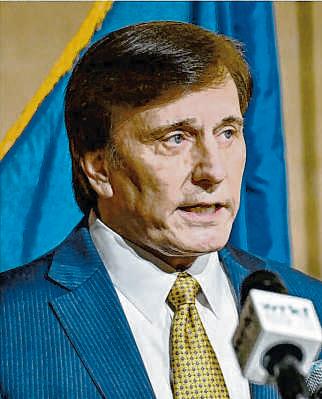
Louisiana Treasurer
Fleming
STAFF FILE PHOTO By MICHAEL JOHNSON
U.S. Rep. Julia Letlow
Cassidy
BRIEFS FROM WIRE REPORTS
U.S. allows Russia oil sales waiver to expire
The Trump administration allowed a waiver that encouraged more Russian crude sales to lapse, even as the Iran war stokes concerns about global oil supplies and higher fuel costs.
The expiration effectively ends for now a brief period where the administration eased sanctions on some Russian oil, enabling purchases that would otherwise be barred. The Trump administration issued an initial waiver in March and a second after the first expired in April both applying only to a subset of Russian oil that had already been loaded onto tankers.
The waivers have been controversial, especially with European allies who see sanctions as essential to starving Russia of crude revenue and depriving Moscow funding for its war in Ukraine. Critics say the sanctions relief has served to enrich Moscow — even though it’s been limited to waterborne oil especially as crude prices surge But some countries, including India and Indonesia, had lobbied the Trump administration for extended sanctions waivers, as the Iran war and the near-closure of the Strait of Hormuz deprive global markets of millions of barrels of crude daily
The Trump administration has also pivoted on the issue, responding to entreaties from countries heavily reliant on crude imports. Treasury Secretary Scott Bessent in April initially said the U.S. would not renew the sanctions waiver allowing purchases of some Russian crude before ultimately issuing a new authorization two days later
Rwandan genocide suspect dies in custody
KIGALI, Rwanda A Rwandan suspect charged in connection with the 1994 genocide died in a hospital while in custody in The Hague, Netherlands, a U.N. court said Saturday, three years after the court declared him unfit to continue standing trial.
Félicien Kabuga, 91, was accused of encouraging and bankrolling the mass killing of Rwanda’s Tutsi minority His trial began in 2022, nearly three decades after the 100-day massacre that left 800,000 dead.
In 2023, the judges declared him unfit to continue standing trial because he had dementia and said they would establish a procedure to continue hearing evidence without the possibility of convicting him.
On Saturday, the U.N International Residual Mechanism for Criminal Tribunals said in a statement that Kabuga died while hospitalized in The Hague, and the medical officer of the U.N. Detention Unit was notified immediately
An investigation into his death has been ordered to establish the circumstances of how he died, the statement said.
An arrest warrant for Kabuga was issued in 2013, and a $5 million bounty was announced. He was arrested in 2020 in France, and his trial started in 2022
Kabuga was charged with genocide, incitement to commit genocide, conspiracy to commit genocide, as well as persecution, extermination and murder He pleaded not guilty If he had been convicted, he would have faced a maximum sentence of life imprisonment.
Shark fatally mauls diver in Australia
MELBOURNE,Australia A shark fatally mauled a diver off an Australian tourist island on Saturday, police said.
The 38-year-old man had been spearfishing with a friend when he was attacked on a coral reef off Rottnest Island near Australia’s southwest coast, Western Australia Police Sergeant Michael Wear said.
The victim was near a dive boat when he was bitten on the legs, Wear said. He was then taken by that boat 1,100 yards to the island, where paramedics could not resuscitate him.
Lifeguards reported a 16-foot white shark had been seen in the vicinity before the attack.
The attack was Australia’s first shark fatality since January, when a 12-year-old boy died in a hospital days after he was mauled by a bull shark in Sydney Harbor
Trump: Islamic State group head killed
U.S., Nigeria carry out joint strike
BY MICHELLE L PRICE and OPE ADETAYO Associated Press
WASHINGTON — U.S. and Nigerian forces killed a leader of the Islamic State group in Nigeria in a mission carried out Friday, President Donald Trump said.
Trump announced the joint operation in Africa’s most populous country in a late-night social media post. He said Abu Bakr al-Mainuki was second-incommand of the Islamic State group globally and “thought he could hide in Africa, but little did he know we had sources who kept us informed on what he was doing.”
Al-Mainuki was viewed as the key figure in IS organizing and finance, and had been plotting attacks against the United States and its interests, according to an official who spoke on condition of anonymity because they were not authorized to share sensitive information.
Nigerian President Bola Tinubu confirmed the operation and said Al-Mainuki was killed alongside “several of his lieutenants, during a strike on his compound in the Lake Chad Basin.”
The joint operation is the latest by both countries since their new security partnership that kicked off last year after Trump claimed Christians were being targeted in Nigeria’s security crisis and threatened U.S. military intervention. Residents and security analysts have
said Nigeria’s security crisis affects both Christians, predominant in the south, and Muslims, who are the majority in the north.
According to the spokesperson for the Nigerian military task force that carried out the Friday operation, the mission was a “highly complex precision air-land operation” and was carried out during three hours of darkness early Saturday without any casualties or loss of assets.
“His elimination represents the single most consequential counterterrorism outcome” in the region since the inception of the operation in 2015, Sani Uba, the spokesperson for the task force, said in a statement.
United Nations experts in their latest report said IS had intensified efforts in West Africa, citing more than 500 attacks between

PRESS PHOTO By ABDEL KAREEM HANA
ASSOCIATED
Palestinians attend the funeral of Izz al-Din al-Haddad, the leader of Hamas’ Qassam Brigades, and his daughter and wife on Saturday in Gaza City They were killed in an Israeli strike Friday evening
Israeli strike kills Hamas’ military wing leader
Israel says he was an architect of Oct. 7 attacks
BY SAMY MAGDY and SAM MEDNICK Associated Press
TEL AVIV, Israel An Israeli airstrike in Gaza killed the leader of Hamas’ military wing who was one of the last surviving architects of the attacks that triggered the war in late 2023, the Israeli military said Saturday Hamas confirmed the death.
Izz al-Din al-Haddad was killed on Friday, Israel’s army said, describing him as one of the senior Hamas military commanders who directed the planning and execution of the Hamas-led attacks on Oct. 7, 2023, which killed around 1,200 people in southern Israel and saw more than 250 taken hostage.
A Hamas spokesperson, Hazem Qassem, confirmed the killing on social media.
The ceasefire between Israel and Hamas remains fragile, and the top diplomat overseeing it says it has stalled because of the deadlock over disarming Hamas. Both sides have traded accusations of violations. Gaza has seen near-daily Israeli fire with more than 850 people killed in the Palestinian territory since the ceasefire went into effect in October, according to Gaza’s Health Ministry
The ministry is part of Gaza’s Hamasrun government, but staffed by medical professionals who maintain and publish detailed records viewed as generally reliable by the international community. The ministry overall says Israel’s retaliatory strikes in the war have devastated the Palestinian enclave and killed more than 72,700 people. Israel said that al-Haddad had assumed the role of Hamas commander after his predecessor, Mohammed Sinwar, was killed. The army said that al-Haddad had surrounded himself with Israeli hostages during the war as a shield against an attack
Al-Haddad’s family confirmed his death in Friday’s strike to The Associated Press. Six other people, including his wife and daughter, were also killed. His two sons were killed earlier in the war
His body was wrapped in Hamas and
Palestinian flags as it was carried by mourners at Saturday’s funeral in Gaza City
Al-Haddad joined Hamas when it was established in the 1980s, and was a member of the Qassam Brigades’ Majd section tasked to go after collaborators with Israel. He was also a member of Hamas’ Military Council, the highest group of commanders that played a key role in the attacks that sparked the war
Israel’s army chief of staff called his killing a significant operation, and said that Israel would continue pursuing its enemies to hold them accountable.
Violence flared Saturday in the occupied West Bank, where Israeli troops shot and killed a 34-year-old Palestinian in the Jenin refugee camp, according to the Palestinian Health ministry Hassan Fayyad was fatally shot in a thigh, the Palestinian Red Crescent said. Israel’s military said that troops first fired warning shots at a person trying to infiltrate the camp and shot him when he didn’t comply They provided him with medical treatment as he was transferred to a hospital, it said.
Israeli troops on Thursday shot and killed a 15-year-old boy in Eastern Lubban town in Nablus, according to the Palestinian Health Ministry. Israel’s military said that it identified three people hurling rocks toward Israeli vehicles and “endangering lives,” and troops fired at them, killing one.
On Friday, settlers set fire to a mosque and vehicles in the village of Jibiya, northwest of Ramallah, Palestinian religious authorities said. Security camera footage showed people pouring flammable material on the mosque and at least two vehicles, said Sabir Shalash, the head of Jibiya’s municipal council. Spraypainted Hebrew slogans were found on the mosque’s walls, he said.
The Ministry of Awqaf and Religious Affairs described the attack as “a cowardly terrorist act” and criticized the international community’s inaction over mounting Jewish settler attacks against Muslim and Christian sites in the occupied Palestinian territories.
The Israeli military and police said that they were deployed to the area and didn’t locate any suspects, but were investigating. The army said that it “strongly condemns” attacks on religious institutions.
January and October last year
Born in Nigeria’s Borno province in 1982, al-Mainuki took the helm of the IS branch in West Africa after his predecessor, Mamman Nur, was killed in 2018, according to the Counter Extremism Project, which tracks militant groups.
Al-Mainuki was based in the Sahel area, the monitoring group said, adding that it is believed that he fought in Libya when IS was active in the North African nation more than a decade ago. He was sanctioned by the U.S. in 2023.
Trump, in his social media announcement, said Al-Mainuki was “second in command globally,” hiding in Africa, a claim that some analysts say is off the mark.
The Nigerian military, in a statement, also said intelligence shows that earlier this year Al-Mainuki might
have been “elevated to the position of Head of the General Directorate of States, placing him the second most senior leader within the ISIS global hierarchy.”
U.S. Secretary of Defense Pete Hegseth also said Al-Mainuki was the senior ISIS General Directorate of Provinces Emir — “the number two for ISIS globally — responsible for overseeing the planning of attacks, directing the hostage-taking and managing financial operations.”
There is no way to verify his position within IS independently Analysts say AlMainuki was the deputy to Abu Musab al-Barnawi, the leader of the Islamic State West African Province who was reported to have died in 2021. He is regarded as one of the central proponents of the formation of ISWAP, after its split with Boko Haram in 2016.
Driver plows into pedestrians in Italy
8 injured as driver detained
BY GIADA ZAMPANO Associated Press
ROME A driver plowed into pedestrians in the northern Italian city of Modena on Saturday injuring eight people, four of them critically, before trying to flee and being detained by police, local authorities said. They said the man was known to officials for having mental disorders. Authorities identified the driver as Salim El Koudri, a 31-year-old secondgeneration Italian born in Bergamo and living in the province of Modena.
El Koudri, who holds a degree in economics, is unemployed, authorities said He was detained and questioned at police headquarters in Modena as investigators tried to determine whether he acted deliberately Investigators said at a news conference Saturday evening there was no
immediate indication the man was under the influence of drugs or alcohol. His home was searched as part of the investigation.
Modena Prefect Fabrizia Triolo said el Koudri had been known to local mental health services for schizoid disorders, while officials stressed that early findings pointed to possible mental instability but required further verification. No links to extremist groups emerged.
Mayor Massimo Mezzetti said no one was killed in the dramatic crash but four victims were in serious condition. He said a woman was pinned against a shop window and required the amputation of both legs.
Mezzetti said the vehicle entered one of the city’s main streets and the man “drove onto the sidewalk sending several people flying,” before crashing into the shop window Victims were taken to hospitals in Modena and Bologna, including by helicopter for the most critical cases.

GET IN TOUCH
Customer Service: HELP@THEADVOCATE.COMor225-388-0200 News Tips /Stories: NEWSTIPS@THEADVOCATE.COM
Obituaries: 225-388-0289 • Mon-Fri9-5;Sat 10-5;Closed Sun
Advertising Sales: 225-388-0262 •Mon-Fri 8-5
Classified Advertising: 225-383-0111 •Mon-Fri 8-5
Subscribe: theadvocate.com/subscribe E-Edition: theadvocate.com/eedition Archives: theadvocate.newsbank.com
TheAdvocate(USPS363-040)ispublisheddailyinBatonRougeandatadditionalmailingoffices.Periodicals postagepaidatBatonRouge,LA.ISSN:1061-3978.CapitalCityPress,proprietor.POSTMASTER:Send addresschangestoTheAdvocate,CirculationAccounting,P.O.Box588,BatonRouge,LA70821.Newspaper
Trump’s comment on Taiwan raises anxieties
U.S. president says island a ‘good negotiating chip’ with China
BY SIMINA MISTREANU Associated Press
Recent comments by President Donald Trump that arms sales to Taiwan are a “very good negotiating chip” in the United States’ dealings with China are heightening anxieties on the island democracy that Beijing claims as its own.
Trump made the comment in a Fox News interview with Bret Baier that aired right after the U.S. president wrapped up a high-stakes visit to China on Friday China sees Taiwan as a breakaway province, to be retaken by force if necessary
The U.S., like all countries that have formal ties with Beijing, doesn’t recognize Taiwan as a country but has been the island’s strongest backer and arms supplier
Trump is now suggesting that is open to negotiation.
Asked if he would approve a $14 billion arms package to Taiwan that has been held up for months, Trump said that’s up to China.
“I’m holding that in abeyance and it depends on China,” he said. “It’s a very good negotiating chip for us, frankly It’s a lot of weapons.”
The U.S. is bound by its

President Donald Trump walks with China’s President Xi Jinping on Friday at the Zhongnanhai leadership compound in Beijing.
own laws to provide Taiwan with the means to defend itself and sees all threats to the island as a matter of grave concern.
By conditioning U.S. arms sales to Taiwan on his negotiations with China, Trump may play into one the island’s
“nightmare scenarios,” said William Yang, a Northeast Asia senior analyst for International Crisis Group: that Taiwan, instead of being at the negotiating table, is on the menu.
Although Trump didn’t say specifically what he would want from China in return for denying Taiwan the weapons, he has been pressing Beijing to buy more
American goods and to help put pressure on Iran.
Trump and the U.S. Congress already approved in December a separate $11 billion arms sales package to Taiwan. Beijing reacted furiously by staging live fire drills around the island.
China has framed Taiwan as “the most important issue in China-U.S. relations” during Chinese President Xi Jinping’s recent summit with Trump The visit is to be followed next week by a trip by Russian President Vladimir Putin to Beijing.
In one of his strongest statements to date, Xi on Thursday warned Trump of “clashes and even conflicts”
if the issue of Taiwan is not handled properly
Taiwan’s presidential office on Saturday sought to smooth over the tensions by highlighting “that the consistent U.S. policy and position toward Taiwan remain unchanged.”
“The Republic of China is a sovereign, independent, democratic country; this is self-evident, and Beijing’s claims are therefore without merit,” said Presidential Office Spokesperson Karen Kuo, referring to Taiwan’s official name. She added that the island remains grateful to Trump for his support and stressed that U.S. arms sales to Taiwan
are stipulated by law
Another statement that raised concerns on the island was Trump’s call for Taiwan’s microchip sector the world’s largest and most advanced — to pick up and move to the U.S.
“I’d like to see everybody making chips over in Taiwan come into America,” Trump told Fox News, describing such a move as “the greatest thing you can do.”
Trump has long pressed Taiwanese chipmakers, which produce more than 90% of the world’s most advanced chips, which are used for artificial intelligence, smartphones and military equipment, to base some of their production in the U.S.
Taiwan’s leading chipmaker, TSMC, has committed an investment of $165 billion in a mega-campus in Arizona.
The island’s government, in a sweeping trade agreement with the U.S. earlier this year pledged $250 billion in investment in the U.S. microchip sector, which included TSMC’s previous commitment.
Trump also reiterated older accusations that Taiwan “stole” its chipmaking sector from the U.S. decades ago.
While Trump during his summit with Xi did not alter U.S. policy wording on Taiwan — which many observers had feared he would he did seem to adopt some of the Chinese president’s own narrative about the island’s government.
Beijing has branded Taiwanese President Lai Chingte as a “Taiwan independence diehard,” and warned that he would bring war and destruction to the island.
Trump and other top U.S. officials don’t usually communicate with Taiwanese leaders but have shown support in the past for example by allowing former Taiwanese President Tsai Ing-wen to transit on U.S. soil en route to visiting Latin American countries. Lai, who is about to reach his presidency’s two-year mark, has yet to set foot on the U.S. mainland, and some observers have interpreted that as a rollback of support by the Trump administration.
In his interview with Fox News, Trump stressed that he didn’t want to see a change of status quo between Taiwan and Beijing. “But they have somebody there now that wants to go independent,” he said, likely referring to Lai.
“They’re going independent because they want to get into a war and they figure they have the United States behind them.” He added that he is not looking to fight a war thousands of miles away Trump’s worrying statements about Taiwan may be another instance of “his transactional rhetoric being turned up to the max,” said Wen-Ti Sung, a fellow with the Atlantic Council. “What matters more is the substance, which Taiwan is holding its collective breath for.”
Putin to visit Chinese leader days after Trump’s trip to Beijing
By The Associated Press
Russian President Vladi-
mir Putin will meet with Chinese leader Xi Jinping on a two-day trip to Beijing next week, the Kremlin said Saturday
The announcement comes less than 24 hours after President Donald Trump
finished his own state visit to China, where he also met Xi to discuss trade and the U.S. and Israel’s war in Iran.
In a statement, the Kremlin said that Putin’s trip, planned for May 19-20, had been scheduled to coincide with the 25th anniversary of the 2001 Sino-Russian Treaty of Friendship
When Putin visited China in September 2025, Xi welcomed his counterpart as an “old friend.” Putin also addressed Xi as “dear friend.”
The Russian leader is also scheduled to visit China for
It said that the two leaders would discuss bilateral relations as well as “key international and regional issues” and economic cooperation. Relations between China and Russia have deepened in recent years, particularly since the start of Russia’s full-scale invasion of Ukraine in early 2022 left Moscow shunned on the global stage and heavily reliant on Beijing for trade due to Western sanctions.
the Asia-Pacific Economic Cooperation summit in the city of Shenzhen in November Ukraine repatriated the bodies of fallen soldiers Saturday following an earlier exchange with Moscow involving prisoners of war Russia returned 528 bodies that “according to the Russian side, may belong to Ukrainian servicemen,” Ukraine’s Coordination Headquarters for the Treatment of Prisoners of War said in a statement. Experts will now “take all necessary measures aimed at identifying the deceased who have been repatriated,” it said.







ASSOCIATED PRESS PHOTO By MARK SCHIEFELBEIN
USS Ford returns home after 11-month deployment
By The Associated Press
NORFOLK, Va.
— The USS Gerald R. Ford, the world largest aircraft carrier, returned home to Virginia on Saturday after an 11-month deployment, the longest since the Vietnam War, that saw it support the U.S. war with Iran and the capture of Nicolás Maduro when he was Venezuela’s president.
The most advanced U.S. warship and two accompanying destroyers docked at Naval Station Norfolk with about 5,000 sailors waiting to see their families for the first time since June. Besides combat operations and traversing continents, the sailors aboard the carrier faced a noncombat-related fire that left hundreds without places to sleep and forced lengthy repairs on the Greek island of Crete.
Defense Secretary Pete Hegseth was on hand for the arrival of the warships, which included the destroyer

USS Bainbridge Hegseth commended the crew of the Bainbridge for a “job well done.” “You didn’t just accomplish
a mission, you made history,”
Hegseth said on the destroyer’s deck. “You made a nation proud.”
Hegseth also spoke to the
crews of the USS Mahan, a destroyer, and the Ford.
In recognition of their service during the Iran war, the Ford and the accompanying
ships were awarded the prestigious Presidential Unit Citation, lauded for “outstanding performance in action” against “a determined enemy.” It’s the highest award a unit can receive and one typically reserved for significant achievement in combat.
The Ford’s 326 days at sea are the most for an aircraft carrier in the past 50 years and broke the record for the longest post-Vietnam War deployment, according to U.S. Naval Institute News, a news outlet run by the U.S. Naval Institute, a nonprofit organization. The only longer deployments were the 1973 deployment of USS Midway at 332 days and the 1965 deployment of USS Coral Sea at 329 days.
The Ford’s long time at sea has raised questions about the impact on service members who are away from home for long periods as well as about increasing strain on the ship and its equipment beyond the fire, which
started in one of the carrier’s laundry spaces. When the Ford first left Virginia’s coast in June, it headed to the Mediterranean Sea. It was then rerouted to the Caribbean Sea in October as part of the largest naval buildup in the region in generations.
The carrier took part in the military operation in January to capture Maduro. Then it would see more battle heading toward the Middle East as tensions with Iran escalated. The Ford participated in the opening days of the Iran war from the Mediterranean Sea before going through the Suez Canal and heading into the Red Sea in early March. Technically, the crew of the USS Nimitz was on duty and away from home for a total of 341 days in 2020 and 2021. However, that included extended isolation periods ashore in the U.S meant to help prevent the spread of COVID-19.
Strike shuts down North America’s largest commuter rail system
BY PHILIP MARCELO and MICHAEL R. SISAK Associated Press
NEW YORK The Long Island Rail Road, North America’s largest commuter rail system, was shut down Saturday after unionized workers went on strike for the first time in three decades.
The railroad, which serves New York City and its eastern suburbs, ceased operations just after midnight after five unions representing about half its workforce walked off the job.
The unions and the Metropolitan Transportation Authority, the public agency that runs the railroad, have been negotiating for months on a new contract, with talks stalled over the question of workers’ salaries and healthcare premiums. President Donald Trump’s administration tried to broker a deal, but the unions were legally allowed to strike starting at 12:01 a.m.
Kevin Sexton, national vice president of the Brotherhood of Locomotive Engineers and Trainmen, said no new negotiations have been scheduled.
“We’re far apart at this point,” Sexton said early Saturday “We are truly sorry that we are in this situation.”
MTA Chairman Janno Lieber said the agency “gave the union everything they said they wanted in terms of pay” and that to him it was apparent the unions always intended to walk out.
The walkout, the first for the LIRR since a two-day strike in 1994 promises to cause headaches for sports fans planning to see the Yankees and Mets battle this weekend or to watch the Knicks’ playoff run at Madison Square Garden, which is located directly above the railroad’s Penn Station hub in Manhattan
The station was devoid of its usual weekend bustle in the afternoon Only a few dozen people were seen

blocked off with bicyclerack style barricades and roll-down gates as MTA police officers stood sentry, directing people to alternative transportation. If the stoppage continues into the workweek, the roughly 250,000 people who ride the system each weekday will be forced to find other routes to the city from its Long Island suburbs. For
many that likely means navigating the region’s notoriously congested roads.
Gov Kathy Hochul, a Democrat, blamed the Trump administration for cutting mediation short and pushing the negotiations toward a strike. Trump, a Republican, responded on his Truth Social platform, saying he had nothing to do with the strike and “never even heard about
it until this morning.”
“No, Kathy, it’s your fault, and now looking over the facts, you should not have allowed this to happen,” Trump said, renewing his endorsement of Long Island politician Bruce Blakeman, who is challenging Hochul’s reelection bid. “If you can’t solve it, let me know, and I’ll show you how to properly get things done.”
traversing the main concourse, many dragging rolling luggage from departing or arriving Amtrak trains, which are not affected by the strike.
Departure boards normally showing upcoming trains
by destination instead listed ghost trains marked “No Passengers.” A few signs affixed to customer service windows explained that the railroad was shut down because of a strike.
Access to platforms was


BREC is preparingtooffer anew season of summer fun with significant upgrades at LibertyLagoon, arenewed focusonswimmingeducation at communitypools and an enhanced partnershipwithSELAAquaticsthatis designedtoimprovetheoverallexperienceforpatrons “We’vebeenworkingverycloselywithBRECsincelast summer,particularlywhenitcomestoLibertyLagoon, said RobDowie,president andCEO of SELA Aquatics “We’ve takenintoaccount alot of onlinereviews and social mediacomments. BREC’s leadershipislooking at aquatics in away it hasnot been looked at before.It’s ahigherprioritythisyear, andI thinkthe changesthat we have made aregoing to make things easier andmore enjoyableforeveryone.”
in apoolmultipledaysa month. Even adults whohave swimming knowledgeneedtocontinuetopracticeand makeitapriority.
Atotal of eightweeks of swimming lessonswillbe offeredatHowellCommunityParkthisyear,withfourof thoseweeksgearedtowardteensandyoungadults.There will also be twoweeks of swimming lessonsatAnnaT JordanCommunityParkandfourtotalweeksoflessons atCity-BrooksCommunityPark–twoweeksforchildren andtwoweeksforteensandyoungadults. Outsideoflessons,somecommunitypoolswilloperate onarotatingscheduletoensureresidentshaveopportunitiestoswimmultipletimesthroughouttheweek.Afull scheduleisavailableatbrec.org/aquatics


LibertyLagoonresetswithmajor makeover AtthecenterofthetransformationisLibertyLagoon, BREC’s waterpark, whichhas undergonewhatDowie describedasa“majormakeover”aheadofthesummerseason LibertyLagoonguestswillnoticechanges from the momenttheyarrive.Anewpoint-of-salesystem,similar to ones used at majorsportingevents, is expected to reducelongentrylines.Updatedsecuritytechnologywill streamline thecheck-inprocess,asvisitors’ bags will be electronicallyscannedfirstandthenmanuallyinspected onlyifthesystemdetectsprohibiteditems. Inside LibertyLagoon, Dowiesaidthe lazy riverand slideshavebeenrefurbished,whilebothsidesofthepopular FlowRidersurfingattractionhavebeenrepairedandwill befullyoperational.Inaddition,CityPorkCateringwill provideelevatedfoodandbeverageofferings
“Wedon’t see alot of people swimming laps at the communitypoolsorLibertyLagoon.It’smostlyfamilies andkidswhowanttocooloffandrelax,”Dowiesaid.“A rotationofopenpoolsletsushaveadequatestaffingateach locationandgivespeoplemultipleopportunitieseachweek topracticetheirskillsandgainconfidenceinthewater. What to know before yougo
LibertyLagoontickets will be availableonline24 hoursinadvance.Dowie said people should plan ahead andcheck theweather forecastbeforepurchasing, since ticketsarenon-refundable.Ticketsrangefrom$12to$20 perperson, dependingonaccesstoattractions like the slidesandFlowRider.Moredetailsareavailableatwww. libertylagoon.com.



Dowieadded that LibertyLagoonisalsointroducing aone-day ticket system,replacing theprevioussessionbased model.Oncevisitorsenter thepark, they canstay as long as they like untilclosing time,althoughre-entry willnotbepermittedonthesameday
“EverythingatLibertyLagoonismorestreamlined.We wantedthingstobefreshandmodern,whilealsoofferinga betterguestservicesexperience.Peopleshouldn’tbewaiting anhourtogetinandanhourtogetconcessions,”Dowie said.“Wewereabletomakesomeeducatedchangesbased onwhatweobservedlastyear Thisrefreshedapproachhas helpedustocreateahardresetandapproacheverything correctlyfromthestart. Astrongerpush forswimmingskillsatcommunitypools Meanwhile,Dowiesaidtherewillbeastrongeremphasis on swim instructionatseveral BREC communitypools thisyear,aresponsetowhathedescribedasaconcerning lackofswimmingproficiencyintheregion.
“Weare goingtodoubledownand focusontryingto change that this year,” Dowiesaid. “Weliveinanarea whereknowing howtoswimisessential because we are surroundedbywater.Swimmingisfunandagreatexercise, butit’salsoa survival skill. We’reencouraging everyone to take advantageofthe swim lessonsand practice in thepools.Childrenlearn howtoswimwhentheyget
Forall BREC waterattractions,Dowie remindsthe communitytoavoidbringinglargeinflatables,alcoholor weapons. However, they should bringtowels, sunscreen andproperswimwear.
“Knowingyouaregoinginthewateristhefirststep.It’s soimportanttopracticeswimsafety&planahead.You’ll haveabetterexperiencewhenyoubringeverythingyou needandcansimplyenjoybeinginthewater.” LibertyLagoonwillopenfor the2026SeasononMay 23.AlldetailsforaquaticsofferingsatBRECcanbefound at www.brec.org/aquatics

THE VIRGINIAN-PILOT PHOTO By KENDALL WARNER Sailors make their way to their loved ones Saturday after disembarking from the USS Gerald R. Ford at Naval Station Norfolk in Norfolk, Va., following an 11-month deployment.
ASSOCIATED PRESS PHOTO By HEATHER KHALIFA
A pedestrian walks Saturday past closed-off tracks inside Penn Station on the first day of a Long Island Rail Road strike in New york.
By Amanda McElfresh| amcelfresh@theadvocate.com
This articleisbrought to youbyBREC.
Groups rallyinAla.for Blackpolitical representation
Demonstration held in birthplace of CivilRights Movement
BY KIM CHANDLER Associated Press
MONTGOMERY, Ala.
Thou-
sands of people rallied Saturday in the cradle of the modern Civil Rights Movement to mobilize anew voting rights era as conservative states dismantle congressional districtsthathelped secure Black political representation.
U.S. Sen. Cory Booker,of New Jersey,called Montgomery “sacred soil” in the fight for civil rights.
“if we in our generation do not now do our duty,wewill lose the gains and the rights and the liberties that our ancestors afforded us,” Booker said.
Thecrowd was ledin chants of “we won’tgoback” and “we fight.”
“Weare not going down without afight. We are not going down to Jim Crow maps,” Shalela Dowdy,a plaintiff in the Alabama redistricting case said.
Acrowd of thousands gathered in front of the city’s historic Alabama Capitol, the place where the Confederacy was formed in 1861 andwhere theRev.Martin Luther King Jr.spokein1965 at the end of the Selma-toMontgomery Voting Rights March. The stage,set in front of the Capitol, was flanked from behind by statuesof ConfederatePresident Jefferson Davis and civil rights icon Rosa Parks —dueling tributes erected nearly 90 years apart.
Speakers said the spot was once thetemple of the Confederacy and became holy ground of the civil rights movement.
Some in the crowd saidthe effort to redraw lines has echoes of the past.
“Welived through the “60s

It takes you back.Whenyou think that Alabama’smoving forward, it takes two stepsback,” said Camellia A. Hooks, 70, of Montgomery,Alabama.
The rally began in Selma, where aviolent clashbetween law enforcement and votingrights activists in 1965 galvanized support for passage ofthe Voting Rights Act. It then moved to the state Capitol, where King gave his “How Long, Not Long” speech thatsame year.
Arecent U.S. Supreme Court rulinginvolving Louisiana hollowed outvoting rights law that wasalready weakened by aseparate decisionin2013 andthen narrowed further over the years. That helped clear the way for stricter voter ID laws, registration restrictions,and limits on early votingand pollingplace changes, including in states that once needed federal preclearance before theycould change voting laws because of theirhistorical discrimination against Black voters Veterans of theCivil Rights Movement are alarmed by the speed of therollbacks, noting thatprotectionswon
through generations of sacrificehave been weakened in little morethan adecade.
Kirk Carrington, 75, was ateen in 1965 when law enforcementofficersattacked marchers in Selma on what became known as “Bloody Sunday.” AWhite man on ahorse wielding astick chased Carrington through thestreets.
“It’sreally just appalling to me andall theyoung people that marched during the ’60s, fought hard to get voting rights, equal rights and civil rights,” Carrington said. “It’ssad that it’scontinuing after 60-plus-odd years thatweare still fighting for thesame thing we fought for back then.”
Montgomery is home to one of the congressional districts that is being altered in thewakeofthe Supreme Court ruling.
Afederal court in 2023 redrewAlabama’s2nd Congressional District after ruling that the state intentionallydilutedthe voting power of Black residents, whomakeupabout 27% of itspopulation. The court said there should be adistrictwhere Black people are amajorityornear-majority
andhaveanopportunity to elect theircandidate of choice.
But the Supreme Court clearedthe wayfor adifferent map that could let the GOPreclaim the seat. While the matter remainsunder litigation, the state plans special primaries Aug. 11 under the new map DemocraticRep.Shomari Figures, who won election in thedistrictin2024, said the dispute is not about him but ratherpeople’s opportunity to have representation.
“When Republicans are literally turning back the clock on what representation, whatthe faces of representation, look like, what the opportunities, legitimate opportunities for representation look like across this country,then Ithink it starts to resonate with people in a little bit of adifferent way,” Figures said.
Alabama House Speaker Nathaniel Ledbetter,aRepublican,saidthe Louisiana ruling providedanoppor-
tunity to revisit amap that wasforcedonthe stateby the federal court. “People tendtoforget what happened. When this thing went to court, the RepublicanParty had that seat, congressional seat two,” Ledbetter said last week. “There’sbeen apush through the courts to try to overtake some of these red state seats, and that’scertainly what happened in that one.”
Evan Milligan, the lead plaintiff in theAlabama redistricting case, said there is griefoverthe implosionof the Voting Rights Act but it is crucial that people recommittothe fight.
“Wehave to accept that this is the new reality, whether we like it or not,” Milligan said. “Wedon’t have to accept that this will be the reality forthe next 10 years or twoyears or forever.”





























Voters reject all5 constitutional amendments
BY MEGHAN FRIEDMANN Staff writer
Louisiana teachers stand to lose a
$2,000 stipend they have received over the past several years and the state’sinventory tax will remain untouched after aset of constitutional amendments resoundingly failedto pass at the polls on Saturday
The results also mean that the city of St. George in EastBaton Rouge Parish willnot get its own school district,and that the mandatory retirement age for judges will remain set at 70 instead of increasing to 75. Voters further rejected ameasure that would have given theLegislature more power over the civil service status of state employees.
The amendments took abeating in an election cycle marred by controversy: Gov.Jeff Landry suspended the U.S. House races at the last minute so that the state could redraw its congressional maptofavor Republicans after alandmark Supreme Court rulingdeclared Louisiana’sexisting map unconstitutional. With Democratic turnout high
during the early voting period, political punditspredicted backlash to the redistricting effortscould reduce the odds that the five constitutionalamendments would pass Amendment 3,which would have made permanenta $2,000stipend forteachersand giventhem another $250 to boot, fared bestout of the five constitutional amendments, though it too did poorly. At 10:45 p.m., with most precincts reporting, only42% of voters cast theirballots in favor of the measure, according to unofficialresults on theLouisiana Secretary of State’swebsite.
Allthe other measures failed to geteven40% of thevote. At the bottomofthe pack wasAmendment 1, which won only 22% of thevote, those results showed.
That change wouldhave allowed the Legislature to decide which state government jobsshould be at-willpositionswithout civil service protections.Supporters said it wouldhelp make thegovernment more efficient, while detractors argued it would leavestate employees vulnerabletopartisan politics Meanwhile, Amendment 2, which was fiercely fought in East Baton
Rouge Parish,would have created anew school district in St. George, taking it out of the Baton Rouge public school system.
Voters in 2019 created the new city,and after along legal battle, the courts allowed it to ramp up a government in 2024.
Proponents of anew school district for thenew city contend it is a needed antidote to many of the parish system’spoor-quality schools. Criticssay it would exacerbate racial segregationand leave poorer studentsbehind.
Amendment 3would have liquidated stateeducation trustfunds to pay off teacher retirementdebt, andthenused the savings fromthat debt to permanently raise teacher salaries by $2,250.
Teachers received a$2,000salary increaseseveral yearsago, but it came in theform of atemporary “stipend” as the Legislaturedeclined to make along-termcommitment to fund it.Amendment 3 would have given teachers another $250 on top of the $2,000 they were already receiving.
Support staff, who had been receiving $1,000 stipends, would have
gottenanother $125. Now,teachersmightget $2,000 less each year —state Senate President Cameron Henry previously warned that if Amendment 3failed, theLegislature would not backfill the money In amajor defeat forthe business lobby,voters also shotdown Amendment 4, which would have allowed parishestostop taxing business inventory in exchange for one-time payments from the state. It was pitched as away to help parishes attract investors; parishes that opted to do away with the tax would not have been able to reinstate it downthe line.
Amendment 5would have raised the mandatory retirement age for judges from 70 to 75.
Currently,judges who turn 70 can serveout their terms, but they may not run for reelection.
Raising the retirement age would have allowed judges with expertise to continue serving, according to supporters of the amendment. Critics said the mandatory retirement ageprotects thepublic fromjudges who experience cognitive decline as they age.
Newclosedparty primarycausesconfusion at thepolls
Cancellation of Houseraces adds to exasperation
BY TYLER BRIDGES Staff writer
Louisiana’s new closed party primary system on Saturday left many voters confused and electioncommissioners exasperated.
Most of the angst centered on the new rules for no-party voters, who have to choose whether to vote Democratic, Republican or no-party on a one-page form called Declaration of Ballot Choice.
Election commissionersreported delays throughout the day from having to explain the new process to noparty voters and then having those voters choose which electiontovote in.
No-party voters who checked the “no-party” box found whenthey went behind the curtain that they could not vote in the high-profile Senate election for one of the Republican or Democratic candidates. To do that, they had to check the box for Republican or Democratic.
Louis Perret, the clerkofcourt in LafayetteParish,saidone election commissioner was so frustrated that she went home for lunch on Saturday and didn’treturn.
“I’ve been here 22 years,” saidDiane Broussard, the clerk of court in Vermilion Parish. “By far,this has been the worst election. I’m on a text chain with other clerks of court. There’sconfusion throughout the state.”
Broussard and other clerks of court reported another problem: Some people who have been registered as Democrat for years, but who typically vote Republican, showed up not realizing that, under the semi-closed party primary,they could only vote foraDemocrat.
SENATE
Continued from page1A
24 years in the Navy and ownsfour businesses in New Orleanshad anarrow leadover.But only 393 votesseparated the two, and two parisheshad not reported early voting returns. The top two will advance to the Democratic Party runoff on June 27 The winners of the Democratic andRepublican runoffs will meet in ageneral election on Nov.3,with the Republican candidate heavily favored.
Polls closedonSaturday at 8p.m Tenminutes later, the Secretary of State posted initial results from absentee voting, the firstsign thatCassidy would have along night as Letlow took abig lead, and thesenator was in third place.
Mark Spencer,who ownsaMardi Gras online store in Belle Chasse and called himself a“Guns and Bible conservative,”finished adistantfourth in the Republican primary Letlow,45, who before herfirst run foroffice worked for the University of Louisiana at Monroe, said during the race that she never expected to be ahigh-level political candidate. Her entry into politics was born of tragedy.Her husband,Luke,was elected to represent the 5thCongres-
The closed party primary is idiotic.It’sawaste ofmoney,” said Harry LeBlanc, aretireeand no-party voter,after he voted at Lakeshore Playground in Metairie. “I don’tunderstand why it exists except for the parties trying to give themselves an advantage.”
LeBlancnotedthat, havingchosen on Saturday tovoteinthe Republican primary,hewill now have to vote for Republicans in the June 27 runoff as well.
“That takes away choices,” LeBlanc said.
Many polling stations reported no problems on Saturday Early votingfrom May 2-9 alsoproduced many problems.
In theSenateelection, U.S. Rep. Julia Letlow andstate Treasurer John Fleming aretryingtounseatSen.Bill Cassidy, as islittle-known business owner MarkSpencer
Three Democratsare on the ballot Saturday in aseparate party primary
They are Jamie Davis,afarmer from northeastLouisiana who hasthe endorsement of the Louisiana Democratic Party;NickAlbares, apolicy analystinNew Orleans whohas the support of hisformer boss, ex-Gov John Bel Edwards; and GaryCrockett, abusinessowner in New Orleans who spent 24 years in the Navy Cassidyheldanewsconference by phone with reporters on Friday to express concernsabout the newsemiclosed party primarysystem.
Cassidyopposed moving from the open, or jungle primary,inJanuary 2024 when Gov.Jeff Landry pushed thechangethrough theRepublican Legislature, with thesenator citing thecost of having an extrarunoff electionunder thenew system.
On Friday, Cassidy warned that turmoil would disenfranchise voters and who wouldend up notvoting.
“As Louisianans vote today, it’sbecomingcrystal clearthat no-party voters arefacing adisjointed, difficultprocesstoactuallycast avote in



sional District House seat in December 2020but died 24 days later,just before he took office. Letlow raninhis stead and was elected in April 2021. She won reelection twice more and moved from Monroe to Baton Rouge with her two young children. Fleming, 74, is adoctorwho has served as the state treasurersince 2024 Cassidy opposed the creation of the closed party primary in January2024 by Landry and Republican legislators, with political analysts saying he faced a tougher path to victory if conservative Democrats could notcross over and vote for him. Cassidy appealed to Democrats to switchtonoparty so that they could vote forhim. Under thenew election rules, no partyvoters could choose on election day tovote in either the Republican or Democratic primary But after Feb. 1, only 7,488 Demo-
the GOP primary,” he said Saturday.
On Friday,Cassidy noted that thenGov. BobbyJindaland theLegislature switched to apartyprimary in 2008.
“It was adisaster,” Cassidy said. “So after one election, we went back to the open primary, which has serveduswell.”
Landry initially sought acompletelyclosedparty primary system where only Democrats could vote for Democrats andRepublicans for Republicans.
ButU.S. Sen. John Kennedy and others got the state Senate to amend theclosed party primary bill by then-stateRep.Julie Emerson, RCarencro, whoisnow Landry’schief of staff, to allow no-party votersto choose whichparty primary to vote in Kennedy said thechange was necessary to allow the state’sno-party voterstoparticipate in theprimary As of May1,no-party voters constitute about813,000 voters, or 27% of the electorate, according to pollster John Couvillon, who conducted surveys for Fleming.
WilliamVandermeer,aretiree in New Orleans, thought he hadchanged hisregistration to no-party to be able to vote for Cassidy on Saturday
But he learnedwhenhewentto vote at afire station on Norman C. FrancisParkway that he was still listed as aDemocrat.
Underthe jungle primary,Vandermeer noted he could have voted for Cassidy or any of the other Republicancandidates.
Adding to the confusion is Landry’s April30decision —following acourt order —tocancel thesix U.S.House races in Louisianabut proceed with theraces for Senate, Public Service Commission, state Supreme Court, Board of Elementary andSecondary Education andlocal races.
“A lot of people thinkthe whole election hasbeen canceled,” Broussard said.“Voters have been calling
crats switched their partyregistration. Cassidy,adoctor whospecialized in treating liversbefore he gotinto politics, faced averydifferent politicallandscapethis year in his third campaign for the Senate.
As aU.S. House member in2014, he defeated then-U.S. Sen. Mary Landrieu,aDemocrat,byrepeating over and over again that she had voted with President Barack Obama “97% of the time.”
Cassidy won reelection in 2020 by trumpetinghis conservative voting recordand Trump’sendorsement.
ButCassidy’s fortunes changed when he voted to convict Trumpon impeachment charges of inciting the Jan. 6, 2021, attack on the Capitol by the president’s supporters.
Louisiana’sRepublican Party immediately censured him, andCassidy’ssupport amongRepublicans plummeted.
Only 26%percent of Republican primary voters hada favorable opinion of Cassidy,while 62%held an unfavorable view,according to a survey takenonMay 11-12 by Greg Rigamer,aNew Orleans pollster,for AltonAshy,amajor lobbyistwho has raisedmoney for Letlow
The biggest question in Louisiana politics during thesecond half of 2025 was whether Letlow would give up an easy reelection race for her5th
ST.GEORGE
Continued from page1A
“Regardless of where people stood on Amendment 2, onething is clear: The citizens of Baton Rouge care deeply about accountability,stability, and the future of public education.”
Afterunsuccessful breakaway attempts in 2012 and2013, St.George supporters shifted gears to wage abitter decadelong fight to createa new city,which they called St. George. They modeled theeffortafter Central, whichcreated its own city in 2005 and,within twoyears, parlayedthat incorporationinto anew Central school district. By anarrowmargin, voters living within the would-be city agreed in October 2019 to incorporate themselvesasthe city of St.George.The newcity,though, was on hold until April2024, when the Louisiana SupremeCourt cleared St. George to become areality
all week about that. There wasn’t enough time to getout the word.”
Perret agreed
“All the educationand outreach efforts thatall of us put togetherseem to have made asmall dent but not a big dent in voter confusion,”Perret said At 2p.m., he found only 6.9% turnoutofLafayette Parish’sregistered voters, leading him to estimatethat the overall turnout would be less than 30%.
The office of Secretary of State Nancy Landry is projecting a28% turnout, which would be abig drop from the typical 50% turnout for past primaryelections in nonpresidential, even years.
StateRep.AimeeAdatto Freeman, aDemocrat whorepresents Uptown New Orleans, said she found uncertainty when she went to vote Saturdaymorning at theSt. Joan of Arc School on Cambronne Street
She said she didn’tsee asign telling votersthattheir vote in the 2ndCongressional District wouldn’t count. Freeman went ahead andvoted anyway for U.S. Rep. Troy Carter.
“Weneed to go back to the jungle primary,” saidFreeman, whovoted two years ago against moving to the semi-closed party primary
AndrewFarnsworth, an elections commissioner at Hynes Charter School in the Lakeview neighborhood of New Orleans, said he and others have been able to resetvoting machines for no-party voters who chose “no-party” andthenemerged irate fromthe polling booththatthey didn’thaveachoiceinthe Senate election.
“It’sslowing things down,”hesaid, adding that commissioners began taking extra time to explain the new rules to no-party voters beforehand.
Said Judy Chauvin, an election commissionerworking anothertable at Hynes: “Ifthey don’tchangethe system before the general election, we’re staying home.”
Congressional District seat and challenge Cassidy
While she mulledthat over,state Rep. Julie Emerson of Carencro and state Sen. Blake Miguez of New Iberia jumped into the race.
But whenTrump endorsed Letlow, Emerson and Miguez exited, leaving Fleming as the only other major challenger to Cassidy
After years in the House representingnorthwest Louisiana,Fleming finished fifth in the 2016 Senate race, so political analysts didn’ttakehis candidacy seriously in the early going for this year’sSenate campaign.
But Fleming showed enduring strength, powered by his staunch opposition to anew technology known as carbon capture and sequestration that he said threatened to poison waterways andstrip landownersof their property rights.
Fleming showed such strength that Landry raised big money from energy industry executives to finance an anti-Fleming attack ad campaign.
TheAccountability Project, oneof the pro-Landry outside groups, said Fleming is soft on border security, didn’tserve as Trump’sdeputy chief of staff in his first term and voted for carbon capture and sequestration bills as amember of Congress more thanadecade ago. Fleming called all thoseattacks “lies.”
Within ayearofthat court victory,leaders of the newcity wonagain, this timeatthe Legislature. They successfully lobbied previouslyhesitant lawmakers to put a proposalonthe ballot to create aSt. George school district.
Supporters and opponents of aSt. George school district campaigned locally and statewide ahead of Saturday’s vote. St.George supporters so far have reported raising nearly$500,000 for their campaign, while opposition groups reported raising about $117,000. Yates saidthe message of the voters was clear andhesaidhewill go back to think aboutwhat comes next for the new city “I’m ahuge fan and a proponent of the democraticprocess and the people’s right to vote, andatthe endofthe day, you have to respect the people’svote,” Yates said. “I will neverfall into the category of someonewho will second-guess that.” Joshua said that voters around the state were unhappy with the amendments, including the return of one they rejected last year,especially proposals theydon’t understand.
TheEast Baton Rouge Parish School Board voted ayear ago to oppose the St. George school legislation,seeking unsuccessfully to amend the bill so thatthe newschool district wouldpay fora proportional share of an estimated $361 millionin “legacy” costs —largely the costofmedical insurance for retirees The School Board opted not to take an official stance on the proposed constitutionalamendment. Five of the nine board members said they wouldvote against the amendment and four publiclycampaigned for its defeat St. George leaders estimated that their school district would have had more than$153 million in money starting off, making it among the richest in Louisiana, rich enough to give city residents atax break and still have tens of millionsofdollars left in the bank. At the same time, creating the new district would have resultedinanestimated net loss of about $60 million ayear for the parish school system. Baton Rouge public schools wouldconsequently have to reducespending by up to 9% to offset the loss. And the demographicsof the system would become morechallenging, with a higher percentage of minority students andthose from economically disadvantaged homes.
Email CharlesLussierat clussier@theadvocate. com.
Albares
Crockett
Davis
Jackson-Guillard wins family courtseatafter 2023 loss

Jackson-Guillard
BY QUINN COFFMAN Staff writer
Democrat Caulette“Twin”
Jackson-Guillardbeat out Republican Joseph Cataldie for the Baton Rouge Family Court’sempty judgeseat
Both are familyattorneys with morethan 15 yearsofexperience. Intheir campaigning, both also said that personal experience with family court, on
both sides of the bench, motivated them to run. At the end of Saturday’svoting, Jackson-Guillardwon with 51% of thevotecompared to Cataldie’s49%.
“I experienced dysfunction growingup,”Jackson-Guillard said. “I knowwhat it feels like when families struggle, when stability is uncertain, and when children are caught in the middle. Thatexperiencedidn’t
break me, it shaped me. It gave me purpose.
Jackson-Guillardhas 20 years of experiencepracticing family law,and says she’swanted to do this kind of work since she was 10 years old.
“I alsobelieve in encouraging early resolutionwhenappropriate, through mediation that’s available on thefourth floor every Tuesday and problemsolving, so families can avoid
Burriswinsseaton stateSupreme Court
BY ALYSE PFEIL Staff writer
StateDistrictJudge BillyBurris

was elected Saturday to the Louisiana Supreme Court, representing parishes in the southeastern part of the state. Burris won 58% of the vote, defeating appeals court Judge Blair Edwards, according to unofficial results from the Secretary of State’sOffice.
He will fillout theremaining two years of former Justice Will Crain’sterm. Crain vacated
the seat after President Donald Trumpnamedhim afederal judge.
The districtincludes Livingston,St. Tammany,Washington, Tangipahoa and St. Bernard parishes, andasmall piece of Orleans Parish.
TheSupreme Courtisthe highest in Louisiana, with final authority over mattersofstate law Burrisisajudge in the22ndJudicial District covering St. Tammany and Washington parishes Edwards is a1st Circuit Court of Appealsjudge and former juvenile judge.
Both ran campaignsheavily focused on theirconservative credentials in adistrictthat is heav-
ily Republican. No Democrats ran for theseat.
Burris hadthe backing of business and industry groups, while Edwards had thesupport of influential plaintiffs’ attorneys.
Theelection wasbitterlycontested,with attack ads and ethics complaints.Earlier this month, theLouisiana Judicial Campaign Oversight Committee publicly chided Burris, saying he knowinglymadeafalse claimabout Edwards during acandidate forum.
Twositting Supreme Court justices also qualifiedinFebruary and ran for reelection unopposed: Jay McCallum, in northLouisiana’s4th District, andCadeCole, in west Louisiana’s3rd District
Staterepresentative, ex-parishpresident to face off forPublicService Commission
BY ALYSE PFEIL Staff writer
State Rep.Stephanie Hilferty,of New Orleans, and former Jefferson Parish President John Young advanced to the June 27 runoff in the Republicanprimary for a seat on the Public Service Commission. They bested threeother candidates: state Rep. Mark Wright, of Covington; Wayne Cooper; and John Mason. Because no candidate received more than 50% of the vote, the top two candidates will compete headto-head in June.
Whoever wins the primary runoff for the District 1seat will advancetothe November general election andface Democrat


Connie Norris, of Slidell, who ran unopposed in her party’sprimary, and Chris Justin,who qualified as ano-party candidate. Hilferty has had acareer in commercialreal estate for nearly two decades. She waselected to theLouisianaHouse in 2015 and is term-limited in that chamber Young wasJeffersonParish president from 2010 to 2016. Before that, he served on theJefferson Parish Council, and he was
also an assistant district attorney there. He has acivil litigation law practice.
The five-member Public Service Commission oversees utilities in Louisiana and regulates electric, water,wastewater,natural gas and some telecommunications services. It hasplayeda critical role in approving power generationplans for Meta’smassive data center in north Louisiana. District 1ofthe PSC includes portions of Jefferson, Livingston,Orleans and St. Charles parishes. It also covers the parishes of Plaquemines, St.Bernard, St. Helena, St. Tammany,Tangipahoa and Washington. CommissionerEric Skrmetta, aRepublican, is vacating his seat due to termlimits.
prolonged conflict,” JacksonGuillard said, “especially when children are involved.”
Jackson-Guillard ran for another family court judge seat in 2023, losing to Judge Kyle Russ.
This year,her campaign raised more than $24,000, mostly fromindividual donors including other local attorneys.
Cataldie’scontributions totaled almost $56,000, again mostly from individuals and
attorneys’ offices. Cataldie said he wasalso proud of his endorsements from the Baton Rouge police and fire unions. In addition to being astaffattorney forafamily court judge andrepresenting families with the Prendergast Law Firm, Cataldie said he’s asingle dad and co-parent to his daughter Email QuinnCoffman at quinn. coffman@theadvocate.com.
Cao, Schroder head to runoff for educationboard
June27winner will face Angela Hershey
BY PATRICK WALL Staff writer


JosephCao andEllie Schroder will compete in aJune 27 Republican primary runofffor aseat on the Board of Elementary and SecondaryEducation, whichcontrolspublic school fundingand policymaking. Whoever wins thatvotewill advancetothe Nov 3general election, where voterswill choose aboard member to represent District 1, whichincludesSt. Tammany Parish andparts of Orleans, Jefferson and Tangipahoa. The GOP candidate will face off against Angela Hershey,the unopposed Democratic candidate. The District 1seat opened up after BESE Member PaulHollis stepped downinDecember to lead theU.S. Mint. Gov. Jeff Landry appointed Cao to fill the seat on an interim basis. The election winner will serve the remainder of Hollis’ term, which ends in 2028. The Republican primarydrew three candidates with varying levels of name recognition. Cao, an attorney who lives in Metairie,is aformerone-termcongressman. Schroder,aretired public schoolteacher andadministrator who lives in Covington, is married to former State Treasurer JohnSch-
roder. Mike Hollis, an insurance company executive who resides in New Orleans, was running to fill his brother Paul’sformer board seat.
Cao had 47% of the vote and Schroder had 31% as of 10:55 p.m., according to unofficial results from the Secretary of State’soffice. Hollis had received 22% of the vote. All expressed support for Landry’ssignatureeducation program, LA GATOR, whichhelps families pay for private education. The Republican governor wants it to serve morestudents, but some toplawmakers say thestate can’t afford to expand the program
The candidates also sought to highlight their conservative values as they campaigned in the heavily Republican district. Cao and Schroder spoke about keeping transgendergirls outofgirls’ sports, and aflyer said Hollis “will stand with President Trump.” Caospent about$44,000 on his primary bidfrom April 7-26, the mostrecent reporting period in campaign filings,and had$93,000 remaining. Hollis spentabout$500 during that periodand hadabout $24,400 left. Schroder spent about $300 during that periodand had nearly $120,500 remaining.
The11-membereducation board oversees teacher certification,school ratings,student testingcharter school authorization and other policies that affect the state’sroughly 660,000 public school students. It also adopts the school-funding formula thatdetermines how much state money public schools receive.
Voters elect eight of its seats, and the other three are appointed by Landry.Nine of its current members areRepublicans, and twoare Democrats.
if the sheriff, school board andparish governing authority approve. Parishes choosing to fully exempt inventory taxes could receiveaone-time payment from theRevenue Stabilization Trust Fund. YES. 34% NO 66%
AMENDMENT 5
To change the mandatory retirement ageofjudges from 70 to 75 years of age. YES. 23% NO 77% EAST BATONROUGE PARISH
329 of 329 precincts JUDGE, FAMILYCOURT, ELECTION SECTION3,DIVISION A Joseph Cataldie,R 49% Caulette “Twin” JacksonGuillard, D. 51% FOREST HEIGHTS PARK CRIME PREVENTION AND NEIGHBORHOOD IMPROVEMENTDISTRICT
To continue the $220 annual parcel fee foreach residential structure within the district for 10 years, ending on Dec. 31, 2035. The governing authority mayincrease the parcel fee without election,but notto exceed $250 per parcel per year. Proceeds of the parcel fee, estimated at $40,260 ayear, aretobeused to aid in crime prevention, beautification andfor theoverall betterment of the district. YES. 55% NO 45%
FIRE PROTECTION DISTRICT NO.6
PROPOSITION To continue the 9-year, 5-mill property tax, estimated at $351,194 ayear, for 9years ending in 2034, forthe development, operation and maintenanceofthe fireprotection facilities. YES 30% NO 70%
LIVINGSTON PARISH
80 of 80 precincts ASSOCIATE JUSTICE,LOUISIANA SUPREME COURT 1ST DISTRICT,REPUBLICAN PARTY
(runs in multiple parishes) William “Billy” Burris
Blair Downing Edwards
PUBLICSERVICE COMMISSION DISTRICT 1, REPUBLICAN PARTY
in multiple parishes)

Burris
Hilferty Young Cao
Schroder
operations, then come up with ideas on streamlining and economizing disaster response.
Its report was released May 7and includedabout 150 suggestions to simplify and expedite getting money to victims and impacted communities; transfer many current federal tasks to the states; require states handle environmentalimpact studies and audits; raisethe damage threshold for FEMA to get involved; shrink the National Flood Insurance Program, including increased involvement of private insurance; embark on a strategic review of staffing and downsize by moving employeesinWashington to the regional offices.
It also said the agency shouldstophelping survivors secure long-term housing and focus on temporary housing and rental assistance for those whose homes weredestroyed andrelease federal money to the states in theform of grants rather than reimbursements.
“I have heard from countless Louisianafamilies, small businesses and local officials who are frustrated with how FEMA delivers relief,” said House Majority Leader Steve Scalise, R-Jefferson. “I applaud President Trump for establishing this review council to put FEMA backontrack, because Louisianaisnostranger to disasters.”
U.S. Rep. Troy Carter,DNew Orleans, was less laudatory
“Proposals to privatize floodinsurance or shiftmore costs to states raise serious concerns, especially as Louisiana families alreadyface soaring insurance premiums and private insurers continue pullingout of high-risk markets,” Carter said. “If these recommendations are implemented as proposed, they risk weakening FEMA andleaving Louisiana communities even more exposed when the next storm hits.”
The panel’ssuggestions— at least the ones accepted by FEMAbrass and Congress —will take two to threeyearstofully implement.The 79-pagereport is going through its monthlong public comment stage. Then FEMA officials will have to addspecifics for how the proposals wouldactually work. Some of the ideas can be instituted with an executive order,but mostwill need legislation approved by Congress.
Potentialchanges
TheFEMA panel wants NFIP to rely more on the private sector.Abouta halfmillion Louisiana home and business owners arerequiredtocarry insurance issuedthrough thefederal government to cover damagefrom risingwater
Butthe rates of the federally subsidized policieshave notkept upwith therisks of flooding, leaving NFIP about $20billion in debt and at a real risk of collapsingaltogether
Oneissue to consider,said state Insurance Commissioner TimTemple, is that very few companieswrite flood insurance in Louisiana.
Temple testified before the council.
On the other hand, private insurers have access to modeling tools that more accurately reflect risk and betterrecognize mitigation, such as houseelevationand higher levees, that could be reflected in their premium rates.
“Today,there is not enough capacity in the private market to transition policyholders away from theNFIP,and significant work remainsif we want to build the capital andmarket capacityneeded to do so over time,”Temple said. “The mostimportant steps we can take center on long-term, consistent coordination amonglocal, parish and state agencies to invest in community andcoastal mitigation projectsthat measurablyreduce risk.”
Post-disasterresponse
Changes to thethree main post-disaster reliefpro-
gramswill need legislative authoritytodelivera major portion of thefederal grants to local and stategovernments within30days.
To accomplish thattimeline, the council recommended calculations include variableslike the size of thehurricaneand impact on localcommunitiesto come up with an estimate that can be paidmuch faster than the current process of figuring outhow muchto payafter lengthy damage assessments.
The task force also suggestedraising the thresholdbymore than 50% before FEMA gets involved. About 29% of the disasters declared between 2012 and 2025 wouldn’thave qualified.
Sitting on the coast,with receding marshes bringing a storm’sfury furtherinland, Louisiana’s disasters tend to be worse than most, said Louisiana National Guard Brig.Gen.Jason P. Mahfouz, whoisdirector of the Governor’sOffice of Homeland Security andEmergency Preparedness.
“I’ve looked at nearlyevery major disaster declaration we’vehad for the last10 years, and we would qualify even under thenew per-capita threshold,” Mahfouzsaid.
State and parish emergency managersare analyzing theprogrammatic changes recommended in the report and applying the new variablestothe existing oneto give legislatorsand state officials abetter understanding of “what position that we would be in andwhether that canbeanadvantage or disadvantage,” he said.
Mahfouz saidhewasn’t

surprised by what he saw in the report. And he noted that the guidelines that reduced thefederal footprint in disasters could be overridden by the president actingoncircumstances of a particularstorm, tornado, earthquake, wildfire or other disaster.
Mark Cooper,who was a member of the taskforce, said the panel’sgoal was to make it easier.For instance, disaster survivors find help spread across14programs, requiring the individual to fillout 14 differentapplications with the same information.
“Andwethought,‘How can we do it so it’s just asingle program and give it to the state so they can getit to theindividuals quicker?’” said Cooper,aBaton Rouge consultant whoheaded GOHSEP underRepublican Gov.Bobby Jindal and was chiefofstafftoDemocratic Gov. JohnBel Edwards.
“Louisiana is going to have to do certain things. If they don’thavethe staffing, they needtolook at makingthose arrangements,going eitherthrough anonprofit or through afor-profit agency to see if they can support like individualassistance, for example,” or seeking help fromother states, Coopersaid.
“There’s aneedfor FEMA, especially at the federal level for catastrophic disasters, but pushing more of theresponsibilitydown to the FEMA regions and to the states to get things done quickerand more effectively.”
EmailMark Ballard at mballard@theadvocate. com.







LSULCMCHealthCancer Center reshapes healthcare with clinical trials that areatthe forefront of medicalinnovation

By Amanda McElfresh | amcelfresh@theadvocate.com
ForDenisePhipps, afrightening trip to theemergency room forchest pain turned into adiagnosis that could have easily stripped away hope ThelifelongNew Orleansresident, amotherofsix andagrandmotherofmorethan20, initiallythought shemight be having aheart attack.Instead,doctors discovered amassinone of herlungs. Furthertesting revealed themasswas Stage3 lung cancer that was already spreading to otherpartsofPhipps’ body
In many hospitals, thefocus wouldhaveshifted to palliative care –treatmentdesignedtomanagesymptoms andextendlife, rather than cure thedisease.But, physiciansattheLSULCMCHealthCancerCentersaw anotherpossibility
Phippswaseligibleforanationalclinicaltrial,oneof morethan100activetrialscurrentlyunderwaythrough theLSULCMCHealthCancerCenter.Today,aftertreatmentthatincludedadvancedtherapiesandsurgery,she is in complete clinicalremission
“She hadaremarkableresponse,”saidDr. Leonard Wudel,ChiefofThoracicSurgeryandAssociateProfessoratLSUSchoolofMedicine.“Almostallofthecanceroussitesweregoneafterherclinicaltrialwascomplete. It’s amazingtosee what canhappenwhenyou areable to treatapatientwithcurativeintent, especially when youknowasaphysician that sheprobablywould not havesurvivedifaclinicaltrialwasnotavailabletoher.”
‘Builders’ drivemedical innovation and precisiontreatments
TheLSU LCMC Health Cancer Center hasrapidly expandeditsclinicaltrialportfolioinrecentyearsasit positionsitselfasoneoftheGulfSouth’sleadingcancer research hubs andworks toward achievingNational CancerInstitutedesignation,astatusnotcurrentlyheld by anyinstitutionsinLouisiana or Mississippi.
“Medicinecannotadvance withoutclinicaltrials. Theyaretheonlywaytodeterminewhetheranewtreatmentoranewpreventativemeasurewillwork,”saidDr. LucioMiele,directoroftheLSULCMCHealthCancer Center.“Clinicaltrialsarenolongerseenastherouteyou takewhenyouhavenootheroptions.Ourtrialsrunthe gamutofcancertreatmentfromthe very earlyphases to late phases.Wehavetrialsthatinvestigatenot only newinterventions,butnewstrategiestopreventcancer or detect it earlier.”

Dr.Miele said theongoing clinicaltrialsatLSU LCMC Health Cancer Center addressdifferentforms ofthedisease,includinggynecological,breast,lungand pancreatic.The center is expandingits clinicaltrials intobraintumors,andplanstosoonbeginnewstudies on CAR-Ttherapy To be acandidate for aclinicaltrial,Dr. Mielesaid apatientmustmeetcertainclinicalanddemographic criteria.Increasingly,researchersalsoensurepatients havetumorswithspecificmolecularfeaturesthatindicate acertain medication or treatmentismorelikely to be effective
“Whatweare doingnow is precisiononcology.We areworking to be at theforefront of medicine with the trialsthatusethisapproach,”hesaid.“That’swhyIlook for builders –high-energy people whoare notcontent with doingthingsthe waytheyhavealwaysbeendone. Icameheretomakeadifferencebybringingthebestin cancer medicine to an area whereitpreviouslyhas not been available,and I’mlooking to bringinpeoplewho sharethatgoal.” Treatmentaccessspurs renewedhopeand a fight forthe future in Louisiana Unsurprisingly,Phippssaidshe hada deeply emotionalreactiontolearningabout hercancerdiagnosis.Therewereplentyoftearsfromherandherfamily. AsalongtimecaregiverandCertifiedNursingAssistant formorethan40years,shehadseenfirsthandtheimpact that diseases canhaveonpeople.
“Wecriedalot,”shesaid.“Nobodyeverwantstohear that they have cancer.Ithit allofusreallyhard.
When Dr.Wudel andhis colleagues recommended Phippsenrollinaclinicaltrial,therewasnohesitation. “Iwasupforitrightaway,”shesaid.“Icouldtellthat Dr.Wudel knew what he wastalking about.
Patientsalwayshavethefinalsayinwhethertoparticipateinaclinicaltrial,but Dr.Wudel said it is rare that someonedecidesnottoenroll.Whensomeonesaysyes toaclinicaltrial,Dr.Wudelsaidheandhiscolleaguesare intentionalaboutexplainingthedauntingcommitment thatliesahead–oftenatleastayearfulloftests,labwork, procedures,medical appointments andmedications
“Weexplain that this is goingtobethe focusofyour life for at leastthe next 12 months,” he said.“It canbe adifficult conversation becausea more conventional treatmentpathisnotreadilyavailable,andpatientshave tounderstandthattheclinicaltrialmightnothelpthem. But,themajorityofpatientswanttodothis.Theywant togivethemselvesachanceandhavesomehopewhere thereotherwise mightnot be any.”
InPhipps’case,sheunderwentsurgery,chemotherapy andother treatments,and recently hadanother operation to addresscancerthathad spread to herthyroid Today,sheisdoingwellandisworkingtoregainhervoice soshecankeephavingconversationswithherchildren andgrandchildren,including anew baby on theway “Itwas abig decision,but Iprayedonitand IknewI wasdoing theright thing,”she said Phipps’treatment wasmadeeasierbythe fact that ittookplaceinNewOrleans.Dr.Mielesaidakeypriorityfor theLSU LCMC Health Cancer Center is to help morepeoplelikePhippsaccesscutting-edgetreatment withoutleaving thestate “Travelisexpensive andinconvenient, andnot everyone canaffordit. It createsabarrier to clinical trialparticipationthatwewanttoeliminate,”Dr.Miele said.“WewantLouisianapatientstohavejustasmuch of an opportunityfor clinical trials as residentsinany otherpart of thecountry.”








Search suspended for 4 Italians in underwater cave
Military diver dies in effort in Maldives
BY KRISHAN FRANCIS and GIADA ZAMPANO Associated Press
COLOMBO, Sri Lanka Maldivian authorities on Saturday suspended the search for the bodies of four Italian divers believed to be deep inside an underwater cave, after a military diver died during a perilous mission to try to reach them.
The group of five Italian divers is believed to have died while exploring a cave at a depth of about 160 feet in Vaavu Atoll on Thursday, according to Italy’s Foreign Ministry The recreational diving limit in the Maldives is 98 feet.
Maldives presidential spokesman Mohamed Hussain Shareef said the search was suspended after Mohamed Mahudhee, a member of the Maldivian National Defense Force, died of underwater decompression sickness after being transferred to a hospital in the capital.
Authorities are awaiting
the arrival of three Finnish divers, experts in deep and cave diving, on Sunday, to rethink their search strategy, he said Mahudhee will be buried with military honors in a funeral attended by President Mohamed Muzzu on Saturday night. The diver was part of the group that had briefed Muizzu on the rescue plan when he visited the search site on Friday
“The death goes to show the difficulty of the mission,” Shareef said Rough weather has repeatedly hampered rescue efforts.
Search operations on Saturday involved eight local divers who worked in shifts to locate the missing Italians, the Italian Foreign Ministry said. Initial teams had already dived to identify and mark the entrance to the cave system where the Italians disappeared. The cause of the deaths remains under investigation. Italy’s Foreign Minister Antonio Tajani said everything possible would be done to bring the victims home. He offered his condolences for the death of the Maldivian diver during the rescue efforts.

The victims have been identified as Monica Montefalcone, an associate professor of ecology at the University of Genoa; her daughter, Giorgia Sommacal; marine biologist Federico Gualtieri; researcher Muriel Oddenino; and diving instructor Gianluca Benedetti, according to the Maldivian government Benedetti’s body was recovered on Thursday. His body was found near the mouth of the cave and authorities believed the remaining four had entered
the cave.
Montefalcone and Oddenino were in the Maldives on an official scientific mission to monitor marine environments and study the effects of climate change on tropical biodiversity, the University of Genoa said in a statement Friday However, the scuba diving activity during which the deadly accident occurred was not part of the planned research and was “undertaken privately,” it said.
The statement also said the two other victims stu-
dent Sommacal and recent graduate Gualtieri — were not involved in the scientific mission.
Carlo Sommacal, Montefalcone’s husband and Giorgia’s father, expressed doubts over the accident, saying that “something must have happened down there” given his wife and daughter’s extensive experience.
Speaking to Italian TV, he described Montefalcone as a careful and highly disciplined diver who would never put her daughter or other colleagues at risk.
The Italian tour operator that manages the Maldives’ diving trip denied authorizing or knowing about the deep dive that violated local limits, its lawyer told Italian daily Corriere della Sera on Saturday Orietta Stella, representing Albatros Top Boat, said the operator “did not know” the group planned to descend beyond 30 meters. That threshold requires special permission from Maldivian maritime authorities and the tour operator “would have never allowed it,” she said.
The dive far exceeded what was planned for a scientific cruise focused on
coral sampling at standard depths, Stella added. The victims were experienced divers, but the equipment used appeared to be standard recreational gear rather than technical equipment suited for deep cave diving, she said. She also clarified that Albatros only marketed the cruise and neither owned the vessel nor employed the crew which was hired locally Cave diving is a highly technical and dangerous activity that requires specialized training, equipment and strict safety protocols. Risks increase sharply in environments where divers cannot head straight up and at depth, particularly when conditions are poor Experts say it’s easy to become disoriented or lost inside caves, particularly as sediment clouds can sharply reduce visibility
Diving at 160 feet also exceeds the maximum depth recommended for recreational divers by most major established scuba certifying agencies, with depths beyond 131 feet considered technical diving and requiring specialized training and equipment.
BY GEIR MOULSON and STEFANIE DAZIO Associated Press
BERLIN A humpback whale found dead last week off a Danish island has been identified as the animal released two weeks ago in a spectacular and contentious rescue effort, after repeatedly becoming stranded off Germany’s Baltic Sea coast, authorities said Saturday. The dead whale was stranded on Thursday just off the small island of Anholt in the Kattegat, the broad strait between Den-
mark and Sweden that connects the Baltic Sea to the North Sea.
The site is south of the location about 45 miles from Skagen, on the northern tip of Denmark, where the whale that gained the nicknames “Timmy” and “Hope” was released on May 2 after being transported toward the North Sea in a barge.
“It can now be confirmed that the stranded humpback whale near Anholt is the same whale that was previously stranded in Germany and was the subject of rescue attempts,” Jane Han-



sen, head of division at the Danish Environmental Protection Agency said in an emailed statement.
She added that conditions on Saturday made it possible for a Danish Nature Agency employee to locate and retrieve a tracking device that was still fastened to the whale’s back, and “the position and appearance of the device confirm that this is the same whale that had previously been observed and handled in German waters.”
The finding brought a sad end to weeks of efforts to guide the mammal back to its habitat in the Atlantic Ocean.


whale was first spotted off the German
Businesstravel,familytrips andculturalexperiencesboost Louisianatourismeconomy













Kathleen G.







Tourismplays avital role in Louisiana’s economic andculturalidentity,supportingjobs, businesses andcommunities acrossthe state. From world-renowned festivalsand cuisine to historyand outdoorexperiences,Louisiana attracts millions of visitors each year to both largecitiesand smalltowns In 2024,Louisiana experienced$16.2 billion in travel spending, andtraveldrove $990 millionintax receipts in thestate,according to theLouisiana LieutenantGovernor’sOffice. Thetourism industry supportedapproximately 107,700jobsinthe state, making it Louisiana’s sixth-largestjob sector Regional tourismleaders recently spoke with TheNew OrleansAdvocate| TheTimes-Picayuneand nola.com aboutthe traveltrends they areseeingand what keepspeoplecoming to thearea.
Tourists enjoycomingtoSouth Louisiana forvacation, butthousands of visitors each year arealsomakingtheir waytothe region as they attend business meetings,professional conferencesand industry conventions. Walt LegerIII,president andCEO of NewOrleans &Company,saidthese rangefrom10-person meetings to internationalconferences with upwardsof25,000 attendees By theend of 2026,New Orleanswillhave hosted eightmajor medicalconferences,Leger said,including oneinDecember forwhich two AirFrancecharter flightshave alreadybeen booked.While some organizations previously shiedawayfromhosting events in NewOrleansinthe summer duetothe threat of hurricanes, LegersaidNew Orleans&Company has allayedthose fearsbyinvitingattendees to see thestate’s coastalrestoration work andrisk reductiontechnologyfirsthand
“We’re able to show them that we areone of themostpreparedcommunities alongthe Gulf Coast,”hesaid.

Corey Rosales, presidentand CEOofNew OrleansTours, said histransportationbusiness worksfrequentlywithsmall groups of professionalswho rely on locals to advise them on the best places to eat,drink andvisit
“Theywanttoget involved with theculture. Everybody hastourism,but they don’t have the NewOrleans culture,”Rosales said Terrie Birkel,chief operatingofficer and vice presidentofmarketing forVisit JeffersonParish, said theagencyshiftedmuch of itsworkinwards during theCovid slowdown, taking time to highlightwhattheydoand why tourismmatters.The messageresonated with locals,manyofwhomare nowencouraging their friends andrelatives from outofstate to come spend some time with them
“We’re seeing that payoff as more residents have gotten to know us,” Birkel said Birkel addedthatmanyresidents areproud to showcase thearea’srichnatural resources, includingthe LouisianaOysterTrail and GrandIsle, whichincludesseven milesofsandy beaches, astate park andsomeofthe bestfishinginthe world.
“Those areall great optionsfor families who arelooking foragreat waytohave agoodtime outdoors,”she said Legeradded that more families arealso traveling to theregiontowatch theirchildren, grandchildrenand otherrelatives play anyofthe growingnumberofyouth sports tournaments that take placeyear-round.
“There’s onething that people arealways goingtodo, andthat’sprioritizetheir kids,” he said.“If kids aretraveling forsports, that means families aretraveling with them.”
Watchthe full discussion nowatwww youtube.com/@NOLAtp.
VisitJefferson Parish is accredited through Destinations Internationalfor itshighqualityand performance. Itsmission is to partner with thetourism andhospitality industries by marketingand sellingthe JeffersonParish experience to visitors.New Orleans&Company is theofficial destinationsales andmarketing organizationfor NewOrleans,witha vision to ensure thecityremains remarkable,uniqueand welcoming. NewOrleans Toursisa family-owned companywithmorethan50years of experience in grouptransportation.Ithas afleet of morethan300 modern vehicles to help guests getwhere they need to be on time,stress-free, safely andinstyle
PROVIDED PHOTO By MALDIVES PRESIDENT’S MEDIA DIVISION
Divers prepare to search Saturday for the four missing Italian divers near Alimathaa Island, Vaavu Atoll, Maldives.
By Amanda McElfresh | amcelfresh@theadvocate.com This articleisbrought to youbyVisit JeffersonParish, NewOrleans &Company andNew OrleansTours
Congolese report constant burials as ebola deaths rise
At least 80 reported dead
By The Associated Press
BUNIA, Congo At least 80 deaths have been reported in Congo’s new Ebola disease outbreak in the eastern Ituri province, authorities said, as health workers raced Saturday to intensify screening and contact tracing to contain the disease. Officials first announced the outbreak on Friday, with 65 deaths and 246 suspected cases.
Meanwhile, Associated Press journalists in Ituri’s capital, Bunia, interviewed locals who recounted their fears and constant burials.
“Every day, people are dying and this has been going on for about a week. In a single day we bury two, three, or even more people,” said Jean Marc Asimwe, a resident of Bunia. “At this point, we don’t really know what kind of disease it is,” said Asimwe Congolese Health Minister Samuel-Roger Kamba said late Friday that there have been eight laboratory-confirmed cases, among them four deaths.

to
A health official uses a
Test results confirmed the Bundibugyo virus, a variant of the disease that has been less prominent in Congo’s past outbreaks. This is Congo’s 17th outbreak since Ebola first emerged in the country in 1976 Ebola is highly contagious and can be contracted through bodily fluids such as vomit, blood, or semen The
disease it causes is rare, but severe and often fatal.
The suspected index case in the latest outbreak is a nurse who died at a hospital in Bunia, Kamba said. He said the case dates back three weeks to April 24.
He did not say whether samples from the nurse were tested, but said the person presented symptoms sugges-
tive of Ebola.
Uganda confirmed Friday an Ebola case that authorities said was “imported” from Congo. The person died at the Kibuli Muslim Hospital in Uganda’s capital, Kampala, on May 14. The Africa Centres for Disease Control and Prevention had said it is concerned about the risk of further spread
due to the proximity of affected areas to Uganda and South Sudan.
The body of the patient who died in Kampala was later taken back to Congo and no other local case has been confirmed, Uganda’s Health Ministry said.
On Saturday, people were being screened at the entrance of the Kibuli Muslim Hospital.
Ismail Kigongo, who resides in Kampala, said the new outbreak reminded him of his father, whom he lost during the COVID-19 pandemic. “I really get scared because I remember burying my father without looking at his body,” he said.
Kenya, Uganda’s neighbor, said Saturday that there is only a “moderate risk of importation” of the Ebola virus due to regional travel.
Kenya’s government said it has formed an Ebola preparedness team and has strengthened surveillance at all points of entry Congo has experience managing Ebola outbreaks but often faces logistical challenges in delivering expertise and supplies to affected regions.
As Africa’s second-largest
country by land area, Congo’s provinces are far from one another and mostly battling conflict. Ituri, for instance, is around 620 miles from the nation’s capital Kinshasa and is ravaged by violence from Islamic State-backed militants.
The disease has so far been confirmed in three health zones in Ituri province, including the capital city, Bunia, and the areas of Rwampara and Mongwalu, where the outbreak is concentrated. Only 13 blood samples have been tested at the National Institute of Biomedical Research; 8 tested positive for the Bundibugyo strain. The remaining five could not be analyzed due to insufficient sample volume, the health minister said. In Bunia, Ituri’s main city, businesses and regular activities in public places appeared normal on Friday Resident Adeline Awekonimungu said she hopes the outbreak is quickly contained. “My recommendation is that the government take this matter seriously and that it takes charge of the hospitals so that this matter can be brought under control,” she said.
BY NICOLE WINFIELD Associated Press
VATICAN CITY Pope Leo XIV has created a study group on artificial intelligence, the Vatican said Saturday, as he gears up to release his first encyclical that is expected to emphasize the need for an ethics-based approach to the technology that prioritizes human dignity and peace. The Vatican said Leo had decided to create the in-
house study group because of the acceleration in AI’s use, “its potential effects on human beings and on humanity as a whole (and) the church’s concern for the dignity of every human being.”

The announcement came a day after Leo signed his encyclical, 135 years to the day after his namesake, Pope Leo XIII, dated his most important encyclical “Rerum Novarum,” or Of New Things. That document addressed workers’ rights, the
limits of capitalism, and the obligations that states and employers owed workers as the Industrial Revolution was underway It became the foundation of modern Catholic social thought, and the current pope has already cited it in relation to the AI revolution, which he believes poses the same existential questions that the Industrial Revolution posed over a century ago. The new encyclical is expected to place the AI question in the context of the church’s social teaching, which also covers issues

such as labor, justice and peace.
“I think that the Catholic Church in many ways is going to be the adult in the room on some of these debates about how we are going to integrate AI into the rest of our society,” said Meghan Sullivan, a philosophy professor at the University of Notre Dame who directs its ethics institute. “For sure, the pope is going to be one of the most forceful advocates for human dignity in these discussions.”
Just days after his 2025 election, Leo told the cardi-
nals who made him pope that the Catholic Church owed it to the world to offer the “treasury of its social teaching” to confront the challenges posed by AI on “human dignity, justice and labor.”
The public release of the encyclical, expected in the coming weeks, will likely become a new flashpoint between the Chicago-born Leo and the Trump administration, which has made the rapid development of AI a matter of vital national economic and security strategy The United States has strongly rejected international regu-
latory efforts to rein in AI and the Trump administration has removed bureaucratic roadblocks slowing its development domestically
The flurry of Vatican activity came as U.S. President Donald Trump wrapped up a visit to China that included AI business. Traveling with Trump on Air Force One were, among others, Elon Musk, whose social media platform X features his AI chatbot Grok, and Nvidia CEO Jensen Huang,





ASSOCIATED PRESS PHOTO By HAJARAH NALWADDA
thermometer
screen people Saturday in front of Kibuli Muslim Hospital in Kampala, Uganda.
Maine mourns firefighter killed in lumber mill blast
At least 11 injured
By The Associated Press
MORRILL, Maine A 27-year-
old firefighter killed in a huge fire and explosion at a lumber mill in Maine’s midcoast region was honored Saturday, a day after the incident that injured at least 11 others.
A memorial of flowers dedicated to Andrew Cross sat outside of the Morrill Volunteer Fire Department as a procession of dozens of firetrucks, police cars and other vehicles escorted his remains to a funeral home.

Dozens of first responders and other community members gathered in Morrill to salute and pay their respects.
The procession routed through the small town of fewer than 1,000 people on
FDA official ousted in latest shake-up at agency
Doctor scrutinized COVID shots, antidepressants
BY MATTHEW PERRONE Associated Press
WASHINGTON A Food and Drug Administration official involved in scrutinizing the safety of antidepressants, COVID-19 vaccines and other widely used therapies has been removed from her role leading the agency’s drug program.
Dr Tracy Beth Hoeg will be replaced as FDA’s acting drug center director by Dr Mike Davis, who has been serving as deputy director, according to an email sent to agency staff Friday that was obtained by The Associated Press. Hoeg said in a social media post late Friday that she was “fired,” from the agency, adding: “I learned so much and leave with no regrets.”
Hoeg’s departure is the latest in an ongoing shake-up at the powerful regulatory agency FDA Commissioner Marty Makary resigned last week, and Dr Vinay Prasad, the agency’s vaccine and biotech chief stepped down last month following intense criticism from drugmakers, patients and investors.
The agency also announced Friday that Karim Mikhail
would take over as acting director of the vaccines center Mikhail, a longtime pharmaceutical executive, was hired by Makary last spring. Makary’s ouster from his role atop the FDA followed weeks of complaints from President Donald Trump’s political allies, including antiabortion groups and vaping lobbyists, who are frustrated with the direction of the agency Hoeg, who is closely aligned with Makary and Health Secretary Robert F. Kennedy Jr had been leading FDA’s drug program since December, the latest official to briefly hold that po sition of Hoe the by moted his seeing center
lating most U.S. prescription and over-the-counter drugs.
FDA center directors are typically career agency scientists with decades of experience. Hoeg had no previous government or management experience.
Since arriving at the FDA last March, Hoeg led investigations into the safety of injectable RSV drugs for children, antidepressants and COVID-19 vaccinations.
Those inquiries reflected Hoeg’s longstanding interests and concerns from before joining government
A sports medicine physician and public health scientist, Hoeg first gained atten
its way from Augusta to Belfast, Maine, a journey about 46 miles long.
Roughly two dozen fire departments had responded to the massive flames that tore through a silo at Robbins Lumber in a rural area, according to the state fire marshal’s office. Officials on Saturday identified Cross as the firefighter who was killed.
Cross joined the Morrill Volunteer Fire Department when Jethro Pease was fire chief, Pease told the Portland Press Herald.
“He was a good, bright young man,” Pease said. “He’d do anything for anybody.”
The cause of the fire remains under investigation.
MaineHealth Maine Medical Center in Portland, which has a Level 1 trauma designation, said Saturday that eight of 10 patients brought to the hospital were still being treated. Two patients had been transferred. Northern Light Eastern Maine Medical Center in Bangor had been treating one patient who was in critical condition but said Saturday that that patient was transferred to another facility Robbins Lumber’s website describes the company as a “high-tech lumber manufacturer” that has been in
existence since 1881 and family-owned for five generations. The mill in Searsmont, about 95 miles from Portland, was cooperating with authorities on the investigation and would cease operations at this time, said family spokesperson Christian Halsted. Halsted said Friday that it was a “hugely devastating day for the family.” Lumber and wood products are a critical and historic industry in Maine. The Maine Forest Products Council said it contributed more than $8 billion to the state’s economy in 2024 and provides about 29,000 jobs.
Canadian cruise passenger receives presumptive positive hantavirus test
BY JIM MORRIS Associated Press
VANCOUVER British Columbia
One of four Canadians who returned home from a cruise ship where there was a hantavirus outbreak received a “presumptive positive” test result for the virus, Canadian officials said Saturday
Results from the National Microbiology Lab in Winnipeg to confirm the case are expected to come over the weekend, said Dr Bonnie Henry, the public health officer for the province of British Columbia.
“Clearly this is not what
we hoped for, but it is what we planned for,” Henry said.
The person, one member of a couple in their 70s, began showing mild symptoms, including a fever and headache, two days ago. Both are in a hospital in Victoria.
“The patient is stable, the symptoms remain mild at this point,” said Henry “They are still in hospital, in isolation, being monitored and receiving care as needed.”
The second person showed “very minor symptoms” and tests were negative, she said.
“It is encouraging that
symptoms were identified early supportive care can be provided, and they will be monitored carefully over the next few days,” Henry said. Three people have died since the hantavirus outbreak began on the MV Hondius. If confirmed, the Canadian patient would be the 10th person from the ship to test positive. The outbreak on the ship has reached 12 cases, nine of which have been confirmed. Among those who died are a Dutch couple who health officials believe were the first exposed to the virus while visiting South America.



Workforcetraining programs at LCTC evolve alongsideLouisiana’s industrial growth

As thestate’s industrial sector expands to includenew job opportunitiesinautomation, advanced manufacturingand steel production,Louisiana Communityand TechnicalCollegesisworking to ensure theirprogramsadapt to meet current andfuture demands
ForBaton RougeCommunity CollegestudentsJaidenTrahanand Hope Robertson, theseprogramsrepresent pathways toward stable long-term careerssupportingthe state’seconomy
“BRCCisaffordable, closetohomeand hasagoodreputation forpreparing students forreal-world jobs,” said Trahan, whois studying process technology at BRCC.The program prepares students forcareers in industrial plants,suchaschemical,petroleumand manufacturingfacilities.
Trahan said theBRCCprocess technology traininghas been robust,coveringplant operations,safetyprocedures, equipment operation, process control andproblem-solving.The educationhas also helped Trahan learntoworkwellunder pressure andaspart of ateam. As he nearscompletioninthe program, Trahan said he envisionsastrongfuture in the field.
“Mycareergoalistoworkasaprocess operator in aplant,” he said.“Iwanttohaveastable, well-payingjob andpossiblyadvance into higherpositions over time,suchasa lead operator or supervisor.”
Hope Robertson, another BRCC processtechnologystudent,said shewas attractedtothe program becauseofits accessibilityand relevancy in themoderneconomy. Thepractical knowledge sheis gaining, including howequipment such as distillation columns coolingtowersand control loopsoperate,willbeapplicablein multiple settings
“Mycareergoalisnot only to become aprocess operator,but to excelinmy field,”she said.“Iamcommitted to developing the skills andknowledge necessarytosucceed,provide formyfamily andbuilda stable andrewardingfuture.”
LCTC educatorssaidthatcreatingthose typesofviablecareer pathways reflects thebroader mission behind theinstitutions’ workforcetraininginitiatives.Tofulfill that mission, LCTC works closelywithindustrypartnerstoensurethat programsare aligned with workforceneeds. Akey wincameinFebruary, when officials brokegroundonthe newRiver Parishes Community CollegeHyundai Training Center in Donaldsonville.The center is expected to open in late 2027 or early 2028,althoughsomesteel manufacturing education is expectedtobeavailable at RPCC campuses sooner.The curriculum will focusonelectricalmaintenance,mechanical maintenanceand advanced manufacturing
“Webelieve that thetalentedindividualstrained here will play a vital roleinthe successful start-up of oursteel mill andinachieving rapidand sustainablegrowthinthe yearsahead,” Hyundai Steel Presidentand CEOBoRyong Leesaidatthe groundbreakingceremony.
“Weare acompany that investsinpeople, technology andthe local community.Weare deeply committedtoworking in harmonywith thecommunityand growingtogether,strivingtomakemeaningful

contributionstoits development.
B.J. Bertucci,RPCCDeanofCareerand Technical Education, said the partnership with Hyundaiisa greatexample of howthe collegeworks withindustriestodevelop programsthatwilltrain localstudentsnot only forexistingcareers,but forjobsthatare expected to become availableinthe future as technology evolves. In addition to the Hyundai training center,RPCCisplanningtolauncha comprehensive advanced manufacturingprogram in thecomingyears.Meanwhile, Bertucci said RPCC instructorsare weavingadvanced manufacturing educationintoexistingprogramsinprocess technology,welding industrial maintenance anddrafting.
“We’re having alot of conversationswithindustrypartnersto learnmoreabout what aspectsoftheir manufacturingare now automated or on theirway to beingautomated,” Bertucci said “We’re trying to look at what theneeds will be threeto five years in thefuture so we canaddress thosenow.” As an educator,Ray Tanner uses that same philosophy each day. Tanner is aPolymer MajorMachinery Specialist at ExxonMobil ProductSolutions in BatonRouge,and also serves as an instructor in BRCC’s millwright program.Tanner said hiscourses includebasic knowledge aboutconstructionand millwrighting,propertoolusage howtotakeaccuratemeasurementsand more.Healsoemphasizes safety proceduresand howimportant it is to do things theright way, even if it takesalittlelonger.
“It’sverygratifyingtosee students whocome in withoutany knowledgeabout millwrighting,thentheir eyes lightupwhenthey graspthe concepts andunderstandtheyhavethe abilitytoworkin this field,”Tanner said.“They arelearning skills they canuse for therestoftheir lives, andtheystart to seethat thereare career opportunities forthem. IlovetobeapartofBRCCand stepping up to help students learn they have notonlythe capacity to do these jobs, butalsoanavenuetoreachthose goals.


PHOTO PROVIDED By MAINE DEPARTMENT OF PUBLIC SAFETy Flames rise Friday from a large fire at Robbins Lumber in Searsmont, Maine.
THE CABILDO
TheNorth BatonRouge Industrial Training Initiative is oneexample of howinstitutionslikeBaton Rouge Community Collegepartner with localcompanies to teach students in-demandskills.
TheRiver Parishes Community CollegeHyundai Training Center in Donaldsonville is expected to open in late 2027 or early2028. Students will preparefor jobs in steel manufacturing.
After China trip, Trump returns to escalating inflation
BY JOSH BOAK Associated Press
WASHINGTON President Donald
Trump returned from the spectacle of a Chinese state visit to a less than welcoming U.S. economy — with the military band and garden tour in Beijing giving way to pressure over how to fix America’s escalating inflation rate.
Consumer inflation in the United States increased to 3.8% annually in April higher than what he inherited as the Iran war and the Republican president’s own tariffs have pushed up prices Inflation is now outpacing wage gains and effectively making workers poorer
The Cleveland Federal Reserve estimates that annual inflation could reach 4.2% in May as the war has kept oil and gasoline prices high.
Trump’s time with Chinese leader Xi Jinping appears unlikely to help the U.S. economy much, despite Trump’s claims of coming trade deals The trip occurred as many people are voting in primaries leading into the November general election while having to absorb the rising costs of gasoline, groceries, utility bills, jewelry, women’s clothing, airplane tickets and delivery services. Democrats see the moment as a political opportunity
“He’s returning to a dumpster fire,” said Lindsay Owens, executive director of Groundwork Collaborative, a liberal think tank focused on economic issues. “The president will not have the faith and confidence of the American people — the economy is their top issue and the president is saying,
‘You’re on your own.’”
The president’s trip to Beijing and his recent comments that indicated a tone-deafness to voters’ concerns about rising prices have suggested his focus is not on the American public and have undermined Republicans who had in-

tended to campaign on last year’s tax cuts as helping families.
Trump described the trip as a victory, saying on social media that Xi “congratulated me on so many tremendous successes,” as the U.S. president has praised their relationship.
Trump told reporters that Boeing would be selling 200 aircraft and maybe even 750 “if they do a good job” — to the Chinese. He said American farmers would be “very happy” because China would be “buying billions of dollars of soybeans.”
“We had an amazing time,”
Trump said as he flew home on Air Force One, and told Fox News’ Bret Baier in an interview that gasoline prices were just some “short-term pain” and would “drop like a rock” once the war ends.
Trump departed from the White
House for China by saying the negotiations over the Iran war depended on stopping Tehran from developing nuclear weapons. “I don’t think about Americans’ financial situation. I don’t think about anybody I think about one thing: We cannot let Iran have a nuclear weapon,” Trump said.
That remark prompted blowback because it suggested to some that Trump cared more about challenging Iran than fighting inflation at home. Trump defended his words, telling Fox News: “That’s a perfect statement I’d make it again.”
The White House has since stressed that Trump is focused on inflation.
Asked later about the president’s words, Vice President JD Vance said there had been a “misrepresentation” of the remarks. White House spokesman Kush Desai said
the “administration remains laserfocused on delivering growth and affordability on the homefront” while indicating actions would be taken on grocery prices.
But as Trump appeared alongside Xi, new reports back home showed inflation rising for businesses and interest rates climbing on U.S. government debt.
His comments that Boeing would sell 200 jets to China caused the company’s stock price to fall because investors had expected a larger number There was little concrete information offered about any trade agreements reached during the summit, including Chinese purchases of U.S. exports such as liquefied natural gas and beef.
“Foreign policy wins can matter politically, but only if voters feel stability and affordability in their daily lives,” said Brittany Martinez, a former Republican congressional aide who is the executive director of Principles First, a center-right advocacy group focused on democracy issues.
“Midterms are almost always a referendum on cost of living and public frustration, and Republicans are not immune from the same inflation and affordability pressures that hurt Democrats in recent cycles,” she added.
Democratic lawmakers are seizing on Trump’s comments before his trip as proof of his indifference to lowering costs. There is potential staying power of his remarks as Americans head into Memorial Day weekend facing rising prices for the hamburgers and hot dogs to be grilled.
“What Americans do not see is any sympathy, any support, or any plan from Trump and congressional Republicans to lower costs — in fact, they see the opposite,” Senate Democratic leader Chuck Schumer of New York said Thursday Vance faulted the Biden admin-
istration for the inflation problem even though the inflation rate is now higher than it was when Trump returned to the White House in January 2025 with a specific mandate to fix it.
“The inflation number last month was not great,” Vance said Wednesday, but he then stressed, “We’re not seeing anything like what we saw under the Biden administration.”
Inflation peaked at 9.1% in June 2022 under Biden, a Democrat. By the time Trump took the oath of office, it was a far more modest 3%.
The data tells a different story as higher inflation is spreading into the cost of servicing the national debt.
Over the past week, the interest rate charged on 10-year U.S. government debt jumped from 4.36% to 4.6%, an increase that implies higher costs for auto loans and mortgages.
“My fear is that the layers of supply shocks that are affecting the U.S. economy will only further feed into inflationary pressures,” said Gregory Daco, chief economist at EY-Parthenon.
Daco noted that last year’s tariff increases were now translating into higher clothing prices. With the Supreme Court ruling against Trump’s ability to impose tariffs by declaring an economic emergency, his administration is preparing a new set of import taxes for this summer
Daco stressed that there have been a series of supply shocks. First, tariffs cut into the supply of imports. In addition, Trump’s immigration crackdown cut into the supply of foreign-born workers. Now, the effective closure of the Strait of Hormuz has cut off the vital waterway used to ship 20% of global oil supplies.
“We’re seeing an erosion of growth,” Daco said.
By The Associated Press
Later



ASSOCIATED PRESS PHOTO By MARK SCHIEFELBEIN
President Donald Trump speaks to reporters Friday aboard Air Force One as he returns from a trip to Beijing, China.
LOUISIANAPOLITICS
Kennedy’sbillpasses,
WASHINGTON —Because legislationbyU.S.Sen. John Kennedy was unanimously approvedlast week in the upper chamber,senators won’tget paid when the government shuts down in the future because partisan bickering keeps Congress from passing spending authorizations


The government was fully operational for only 103 days out of the last 226 betweenOct.1, when the current fiscal year began, and Friday
The Madisonville Republican predicts another shutdown before voters go to the pollsand decide if Republicans will maintain majoritiesinthe House and Senate But the pay ban won’ttake effect until after the November midterm elections —apoint to whichKennedy agreed to get his resolution passed.
Kennedy voiced concern “that my Senate colleagues on the Democratic side are going to try to shut down government yetagain right before the elections to try to create chaos to affect the midterm elections.”
Without authorization to spend money,the federal government ceasedmanyoperations for arecord43 days in 2025, when Democrats demanded an extension of subsidies forthosewho would otherwise see their Affordable CareAct healthinsurancepremiums double. Then, the governmentclosed for another four days earlier this year because ofdelays on the votes necessary to continue operations.
The Department of Homeland Security then went without funding for another 76 days, from Feb. 14 to April 30, over Democratic demands for greater accountability in the Trump administration’s deportation efforts after federal officers fatally shot two U.S. citizens.
Legislature heading into homestretch
The Louisiana Legislature has until June 1tofinishworkon several major issues, including congressional redistrictingand a budget for state government.


The latter part of this year’s session hasbeen dominatedbya hurried effort to draw new districts for the U.S. House in the wake of aU.S. Supreme Court decision that found the state’scurrent voting map unconstitutional.
After several marathon hearings and intense debate, the Senate has passed a map that would eliminate one of the state’stwo majority-Black, Democratic controlled districts.
The House and Governmental Affairs Committee is expected to take up the bill this week, in ahearing that could mirror the

Theseshutdowns were over appropriations forthe Fiscal Year 2026,which beganOct.1,2025, andexpiresonSept. 30, 2026.
This week, the Househopes to consider legislation that clears up theshort-term patches used to getgovernment back to workin Fiscal Year 2026, House Speaker MikeJohnson,R-Benton, said at aFriday morning news conference. Senate Majority Leader JohnThune, R-S.D., told reporters Thursday that the Senate also would be advancingits version.
To end thelast partial government shutdown, Congress began fundingDepartment of Homeland Security officessuch as the FederalEmergency Management Agency andthe Transportation Security Administration —but not the Immigration &Customs Enforcement andU.S. Customs &Border Patrol officers. FEMA, TSA, andother parts of Homeland Security got caught up in a partisan battle over how theICE andBorder Patrolagentswere carrying outthe Trumpadminis-
hourslong,emotionally charged meetings in the Senate. Avote in thefullHouse will likely happen late this week or early nextweek
House Speaker Phillip DeVillier has said he generally supports themap theSenate passed,but members of his chamber maywanttotweak some of the specificdistrictlines. If they do, the bill would have to go backtothe Senate for concurrence.

tration’sdeportation effort.
Democrats wanted agents to removetheir masks, wear badges and body cams, as well as other provisions. Republicans —atleast most of them —refused to consider those changes. So Democrats refused to approve Homeland Security funding, knowing that the Sen-
tional costs, is also potentially on thechopping block.


Meanwhile, the Senate will be figuring out how to trim the budget for stategovernment that the House passed earlier in the session.
Theforecast for how much revenue the state has for the next fiscal year,which starts July 1, has shrunk by roughly $104 million.
SenatePresident Cameron Henry has said his chamber will remove Gov.Jeff Landry’srequesttoadd to $43 million tothe state’sLA GATOR school voucher program.Other new spending in the House version of thebudget, including newmoney for prisons, payraises for judges and increased fundingfor school opera-
While those two marquee debates are happening, lawmakers will also be pushing over the next two weekstopass any other legislation they have proposed. That includes a bill that makes it illegal to sleep on the street,which supporters say is meantto get homeless people into treatment or other help; bills giving theLegislature more power to removejudges and other elected officials from office; and abill to get rid of inspection stickers, among hundreds of others.
Kennedy introduces bill to cap insulin price
U.S. Sen. John Kennedy,RMadisonville, has introduced a bill that would cap the price of insulin, the drug used to treat diabetes, at $35 amonth.
Kennedy’sbill would set aprice cap and require theDepartment of Health and Human Services to create aprogram reimbursing entities for costs over the limit.
He argues thebill will ultimate-
ate would need 60 votes and the Republicanmajority held only 53 seats. House andSenate GOPleadership opted to again go with a parliamentary procedure called reconciliation, which is only supposed to be used in emergencies when more money is needed than was originally approved. The
ly save the federal government money by reducing the expensive treatments that ensue when people skip doses of insulin due to cost, leading to much moreserious health problems.
“My bill is not somenew welfare program that spends money we don’thave. My bill saves money,” Kennedy wrote.
A2024 law that capped the price of insulin at $35 forAmericans on Medicaid reduced diabetesrelated medical expenses by 5%, Kennedy said in the release.
About 486,600 adults in Louisiana havediabetes, the release said. The federal government spends about$307 billion ayear on diabetes-related healthcare. LindaMcMahon endorses increase to LA GATOR
U.S. Secretary of Education Linda McMahon has endorsed Gov. Jeff Landry’spush to roughly double funding forLAGATOR, thestate’sschool voucher program
“I urge Louisiana lawmakers to support @LAGovJeffLandry’s budget proposal to expand the incredibly successful GATOR school choice program,” McMa-
method is now frequently pulled out to get around the filibuster rules and pass budget itemswith abare majority of 51 votes. Congress has approved 24 budget reconciliations in the 46 years since the rules were established. Last summer’sOne Big BeautifulBill Act was areconciliation. The massive measure included tax breaks, Medicaid workrequirements, and other pieces of Trump’sdomestic agenda, which no Democrat would support. Reconciliation is acrooked path that requires beginning in committee, then passing by the parliamentarian to ensure that the language fits the strict reconciliation rules. Then, aseries of procedural votes is necessary Thune wants a“thin reconciliation” that focuses only on funding ICEand Border Patrol without the concessions Democrats sought. Johnson is pushing asimilar resolution in the House. Conservatives in both chambers also want moretax breaks, more spending cuts and arequirement to show proof of citizenship when registering to vote. Others want to makeadjustments to healthcare.
But leadership fears adding other elements would open the door forDemocrats to try to include, say,anextension on subsidies that helped workers whoearn too much to qualifyfor Medicaid pay medical insurance policies bought on the Affordable Care Act marketplace.
Additional issues also could create factions among GOPmembers. To avoid failure, leadership can’tafford but three Senate Republicans switching sides or three House Republicans. Johnson and Thune say Republicans are considering athird reconciliation bill forlater this summer to include those other issues.
Email Mark Ballard at mballard@theadvocate.com.
hon said in apost on X. “This expansion will empower more families and students across the Pelican State to choose the best possible education.”

Landry has asked lawmakers to add $45 million to the program, which gives parents money to send their children to private school or cover homeschooling expenses.
The state House has approved a budget that includes the increase, but the Senate is likely to remove it before the session ends June 1. Senate President Cameron Henry, R-Metairie, has been adamant that senators have concerns about unsustainable growth in the program’s cost. Also, legislators are having to cut money from the budget after recent revenue forecasts came in lower than expected.
Landry thanked McMahon for her support of LA GATOR in a response post on X.
“Pro LA GATOR meanspro student and pro family!” Landry wrote.



Mark Ballard
ASSOCIATEDPRESS PHOTOS
U.S. Sen. John Kennedy, R-Madisonville, center,speaks withreporters in the Ohio Clock Corridoratthe Capitol earlier this year
Speakerofthe House MikeJohnson, R-Benton, right, speaksduring a news conference on Capitol Hill on Friday.
BY VALERIE GONZALEZ Associated Press
PORT ISABEL, Texas Until re-
cently,young children ran in and out of their public housing homes in this Gulf Coast town, playing on sundappled lawns as mothers lookedover theirshoulders for the school bus to dropoff their older kids. Suddenly, couches, dressers and refrigerators started appearing curbside for movers or garbage collectors
Within weeks, the neighborhoodwas aghost town and the playground was empty What prompted the mass exoduswas abungled message from the housing authority in Port Isabel, a South Texas communityof 5,000 people, many of whom are immigrants working at hotels and restaurants on the beaches of nearby South Padre Island. The Port Isabel Housing Authority indicated aTrump administration proposal wasabout to take effect that would end housing assistance to families with at least one member in the country illegally The events that followed provided aglimpse of what could happen in communities across theU.S.ifthe proposedrule is actually finalized.
“The impact was not limited to undocumented immigrants, but really to immigrants who are here legally as well as people within their families who are citizens,”
MarieClaireTran-Leung, senior staff attorney at National Housing Law Project said.
For decades, families with at least one legal or eligible resident have been allowed to live in public housing provided those who are here illegally or are otherwise

ineligible due to their immigration status pay afull, unsubsidized shareofrent.
The U.S. Department of Housing and Urban Development wantstoreverse that.
Advocates estimate up to 80,000peoplewouldbe kicked out of their homes nationwide underthe measure that is partof President Donald Trump’simmigration crackdown. They includeU.S.citizens, manyof them children born in this country but whoseparents were not.
On Feb. 3, thePortIsabel Housing Authority sent residentsaletter saying that the Trumpadministration wanted every household member to prove legalstatuswithin 30 daysorface eviction. Three weeks later,the agency senta noteof“clarification” that no such proofwas
required.
It was already too late.
Half of residents living in Port Isabel public housing left within amonth of receiving the first letter.The occupancy rate plunged from 91% in January to 43% in May,far below thenational average of 94%.
The proposed rule from HUD still hasnot taken effect.
The housing authority gave no explanation for the initial misunderstanding and officials did not respond to repeated requests for comment from TheAssociated Press.
Rumors andpanic Fears about eviction and rumors that U.S. Immigration andCustoms Enforcement might getinvolved prompted panic among someresidents.



“My kids andI spokeand wondered what we were going to do, but then we said it’sbetter to leaveand avoid any retaliation,” a single mother from Mexico raising two teenagers who areU.S.citizenstoldThe Associated Press. She, like other formerresidents, spoke on condition of anonymity due to fears of beingdeported
She turned to legal service organizations that toldher and others they could stay in public housing. But she andher children decided it was too risky andleft their home of nearly adecade, finding an apartmentwithin thesame school district that costsabout$500moreper month
The movealso added about 10 minutes to thecommute to the island, where both themotherand herdaugh-
ter work. The18-year-old gets homefrom school at 4:30 p.m. and grabs aquick dinnerbeforeher mom drives her to ajob that starts at 5p.m.
Thedaughterisa topstudent in her senior class and plans to go to college in the fall with help from scholarship offers, but she worries howher family will make ends meet.Her brother was laid off, and their momunderwent cancer treatment last year,depleting her energy and straining their finances.
Other families face even greater challenges.
Amother of three said she moved her family into a one-bedroom trailerhome illegally parked between two othertrailerhomes.Her oldest sonsleepsinthe living room
Another family of three

sold beds and other furniture so they could squeeze into asmall trailer home, only to find out the landlord wouldn’t letthem use the mailing address, affecting her children’sschool and health insurance.
“Since we got the letter, everything changed from one day to the next. It wasn’t the same anymore. Before theletter,the kids were happy,playing outside,” the mother of two said.
Apreview of aproposal
The Trump administration proposed in February that any household with one ineligible resident would disqualify an entire family, estimatingthat24,000 recipients wereineligible in 20,000 households.
“Wehave zero tolerance forpushing aside hardworking U.S. citizens while enabling others to exploit decades-old loopholes,” HUD SecretaryScott Turner said at the time.
The Center on Budget and PolicyPriorities, which advocates forlow-incomefamilies, estimates that 79,600 people couldbeforced to leave their homes, with a disproportionate impact on children and Latinos.
The rule drew more than 16,000 public comments, many of them critical, including from city leaders across the U.S. For example, theNew York City Council told HUD that an estimated 12% of city of households have at least one member wholacks legal status. Some240,000 children are in those homes.
“This proposed rule will unequivocally lead to increaseddisplacement, homelessness, poverty, and decreasededucationaland health outcomes,” the council wrote. HUD is expected to publish afinal version of the rule after considering public comments. It is almost certain to face legal challenges.

















BY SHARON LURYE Associated Press
ARDMORE,Pa.— For high school senior Aliyah Pack, getting distracted during school is thenorm. Kids in her Pennsylvania schooldistrict use iPads starting in kindergarten, switch to Chromebooks in second grade and get their own MacBooks in eighth grade.
Aliyah said she has difficulty focusing, and she finds it hard to concentrate when she’slearning from ascreen. She’ll watch Netflix in class on her school laptop, hiding her earbudsbehind her long, curly hair
“It’svery hard to get into the mindset of being in school,” Aliyah said.
Aliyah’smother saw her grades were falling and asked the school to take away her laptop.But she was told that wasn’tpossible.
Across the country,parents are voicing concerns about excessive screen time in schools and lobbying educatorstogoback topencil and paper
In places like Lower Merion Township, where Aliyah goes to high school, some are taking it even further.Over 600 peoplein the affluent Philadelphia suburb have signed apetition asking to preserve parents’ ability to opt their children out of using digital devices during the school day.The public school districthas pushed back, saying it’snot feasible to let hundredsofstudents opt out of technology that is essential tothe curriculum. At ameeting last week,school boardmemberssaidtheywere considering manyways to respond to parental concerns about technology,but allowing opt-outs wasnot one of them.
“There is not an option for us to not have technology in schools,” said Lower Merion School Board member Anna Shurak.
EDUCATION
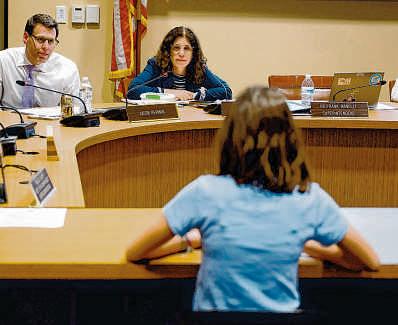
Theboard wasmeeting to discuss updates to the district’s technology policies, including repealing apolicy that allows optouts. Over 100 peopleshowed up to protest, many wearing buttons that said “Screens Down, Pencils Up.”
Many emphasizedthey’renot anti-tech —infact, mostparents agree that learning how to responsibly use computers is an essentiallifeskill. They just don’twant tech todominatethe classroom.
“Teaching how to use technology is not the same thing as using technology to teacheverything else,” said Sara Sullivan, aparent.
Technology inescapable
The debate inLower Merion raisesthe question of whether technology has become so intertwined with learningthat it’s impossible to opt out
Kidsuse devices to play educationalgames,submit their homework,accessonline resourcesand write essays —but parentsare questioningthe value of gamified edtech software.
Subashini Subramanian said thesoftware her second-grade daughter uses formath, DreamBox, incentivizes rushing through levels to gain points. When she encouraged her daughter to think through the problemsmethodically,the 8-year-old said, “IfIgo through all the steps, it’sslowing me down. Ihave to click, click, click.”
At the school board meeting, manyparents saidthey wereexhaustedfrom battlingtheir kids over screen time.
Adam Washington says hisson struggles with screen addiction, so sometimes he takes away his phone or TV —only to find him watching YouTube on the school laptop instead
“The screen is killing him.Itis killing me, and him, together with ourrelationship,” Washington said.
Anotherparent at the meeting questioned what students would do instead of using their computers. “Opting out is not asolution. It’s avoiding the hard work of finding

asolution,” Seth Ruderman said. Parental pushback
The pushback on technology in theclassroom has gained steam around the country.Atleast 14 states have proposed laws to limit screen time in schools, according to Ballotpedia, with four states —Alabama, Tennessee, Utah and Iowa —passing such legislation.
In Los Angeles, the nation’s second-largest school district said it will ban screens until secondgrade,require daily caps for screen time per grade, ban YouTube and require an audit of all education technology contracts.
In Vermont, proposed legislation would allownot justparents but alsoteachers to decline to use classroom tech.Democratic State Rep. Angela Arsenault, abill cosponsor,saidshe’s responding to parents’ worriesabout edtech.
“Parents in many districts and states just aren’t being listened to or not being heard when theyask that theirstudents not be forced to use these products,” Arsenault said.
The Lower Merion school districtsaid it’slistening to community concerns andhas already made changes, including blocking some problematic websites flagged by parents.
“Wehave wonderful teachers who have continuously prioritized human interactionand relationships,”Superintendent Frank Ranelli wrote in aletter to parents. He declined to commenttothe AP for this story
The district said it is looking into possible changes,includingstronger cellphonerestrictions, not allowing the youngest students to take devices home andinstalling software to monitorstudents in class.
However,surveillance software can bring its own problems and poses risks to student privacy.In 2010, the Lower Merion School District paid$610,000 to settle lawsuits by two studentswho alleged thedistrict had spied on them via thewebcam on their school-issued
laptops.
High school student Mia Tatar, 16, raised concerns at the board meeting that there’sbeen an unintended consequence to theantitech backlash. The internetfilters on school computers arenow so strict, she said she’s been blocked while doing research on appropriatetopicsfor school,like breast cancer Mia said students need to learn how to responsibly use technology, and adding filters or getting rid of laptops won’tdothat.
“It doesn’tteach kids howto hold themselves accountable and how to be responsible for regulating their ownscreen timeonce they’re in the world,” Mia said in an interview
Her friend Elliot Campbell, 15, said there should be strict limits on screen use in the youngest grades, but students should get morefreedom as they get older
“If we lose ourlaptops or if we lose the partialfreedom we have on them, it’snot going to prepare us forcollege,” Elliottoldboard members at the hearing.
Fellow high schooler Joaquin Imaizumi takesadifferent view. He said it’s“completely unfair” to expect children to regulate their usage of devices that even adults find addictive.
“This isn’tabout learning to constrainyourself,” he said in an interview.“We don’tgivesomeone drugs and say,‘OK,now learn how to deal with this.’”
His biggest concern is that devices make it far too tempting to accessAItoolslike ChatGPT,which he sees eroding his classmates’ ability to think forthemselves.
“I’ve seen the atrophy of my peers’ thinking, whichisexistentially concerning,” Joaquin said.
Theinfluence of AI starts early. Asecond-grader named Lillian Keshet, whogot up to speak at the boardmeeting, said Google Docs will give her “suggestions” about what to write in class.
“I’m apretty good writer by myself,” Lillian said. “I don’tneed your suggestions, Google!”







Attorney divesintoTulsa Race Massacre reparations
Hisbook is intended as ablueprint forjustice
BY AARON MORRISON Associated Press
NEW YORK It wasn’tuntil his junior year of college that civil rights attorney Damario Solomon-Simmons learned about adevastating massacre that took place in his hometown of Tulsa,Oklahoma.

of the Biden administration, the Justice Department released areport saying it had determined there is no longer an avenue forcriminal prosecution over the massacre.
But the fight continues, Solomon-Simmons says, for cash payment to Randle and other descendants, as well as thereturnoflandstolen after themassacre and during aperiod of urban renewal in Tulsa.

His African American studies professor lectured aboutwhatisknown today as theTulsa Race Massacre —the days in 1921when White mobs carriedout ascorchedearth campaign against an outnumbered Black militia protecting the fabled Black Wall Street, aprosperous all-Black community
“I actually told ateacher, ‘I’m from Tulsa. That’snot true,’ ”Solomon-Simmons recalled. “And of course, I was wrong.” That day planted aseed for the then-aspiring attorney,who went on to leada reparations campaign for thelivingsurvivorsofthe massacre and their descendants. Nearly 105 years later,noone has been compensated for what they lost, and none of the culprits have been held accountable. That fight for reparations is the subject of SolomonSimmons’ first book, “Redeem aNation: The CenturyLong Battle to Restore the Soul of America,” whichis intended as ablueprint for justice in historic atrocities that Black Americans endured but never received reparations for After the massacre, more than 35 city blocks of the neighborhood known as Greenwoodwere leveled in fires, an estimated 191businesses were destroyed, and roughly 11,000 Black residents were displaced. The state of Oklahoma declared the death toll to be only 36 people, although many historians and experts who have studied theeventput the death toll between 75 and 300. Greenwood, founded in 1906, had been abustling city within acity,with Black-owned grocery stores, soda fountains, cafes, barbershops, amovie theater, music venues, cigar and billiard parlors, tailors and dry cleaners, rooming houses and rental properties.
“If you canignore Greenwood, which was the beacon of Black prosperity and Black progress in the history of this country,then you can ignore Black people in general,” Solomon-Simmons recently said.“Ithink that’swhy people around the nation are so focused on the work that we’re doing, because they understand what it means to all of Black
America.”
Solomon-Simmons’sbook comes just months before the United States will mark 250 yearssince its founding in 1776. That was89 years before theinstitution of chattel slavery —meaning an enslaved person was held as legal propertyofanother —was abolished.The civil rightsattorney questions the idea that Americanscan truly celebrate the country’saccomplishments when it has yet topay reparations, which historians say informs modern day disparities in wealth betweenBlack andWhite people.
“Wecannot talk about what America has been and will be, withoutmaking sure that these issues arediscussed and we getreparatory justice for both” slavery andthe Tulsa massacre, Solomon-Simmonssaid.
‘Never hadasoul’
In 343 pages, SolomonSimmons does more than recite the history of the massacre ormake alegal thrillerout of his reparationscampaign. For him, securing justice for the survivors and descendants of the massacre is also about healing anationwhoseearliest promises of equalityfor all ranghollow
“When IspeakofrepairingAmerica’s soul, Idonot mean restoring something that was once whole,”Solomon-Simmons writes in the book. “America has never hadasoul. …There was no moral center to recover.”
He suggests that America’ssoul cannot be repaired if it is forced to choose between rebuilding the nation or repairing Black America. They must do both, he says “The struggle for justice in Greenwood is not about returningtoa mythical past It is about proving whether America can build asoul at allthrough truth, through justice, through repair.”
Reparations for slavery andother historical racial injustices has been debated in the U.S. since Reconstruction,through theCivil Rights Movement and for much of the 21st century.Jennifer L. Morgan, aprofessor of history at New York University, said such debates are complicated by the questionof exactly who pays the reparations and exactly who receives thepayment.
“I don’tthink that we’re talkingabout individuals who owe anybodyelse reparations. Ithink we’retalking aboutstates, aboutin-
stitutions, about the nation,” Morgansaid. “Americais still grapplingwithreparations because America is still grappling at the legacy of slavery, racialdiscrimination, Jim Crow,and violent exclusionofBlack people from thebody politic.”
Some opponents of reparations argue there areno living culprits or direct victims of enslavement, much lesspeople with verifiable claimsofharm thatcan be presented in acourt of law
Solomon-Simmons disagrees.
“Weknow who did the massacre —the perpetratorsare still living in Tulsa,” he said referringtothe city and the chamber of commerce, which plaintiffs allegedhad ahandinobstructing Greenwood’srecovery. There is one remaining massacre survivor involved in thereparations lawsuit: 111-year-old Lessie Benningfield Randle.
“If we cannotget herreparationswhile she’s alive, for the massacre, it’s gonna makeitthat much harder for us to get reparations for enslavement,Jim Crow, redlining and all those things that we are owed,” SolomonSimmonssaid. Fightcontinues
In the book,SolomonSimmonsreflects on what committed him to thereparations fight
While in law school,hewas introducedtohigh profile civil rights attorneys workingfor theReparationsCoordinating Committee— the late Harvard professor CharlesOgletree Jr., who mentored Barack and Michelle Obama; and the late Johnnie Cochran, whois widely known for defending O.J. Simpson during his trial for murderofhis ex-wife Solomon-Simmons became a law clerk for the committee.
After witnessing Ogletree argue aTulsa reparations caseinfederal court in 2004, Solomon-Simmons said the practice of law stopped being just acredential for speaking, writing, or teaching. It became acalling. In 2020, Solomon-Simmonsled alawsuit on behalf of 11 plaintiffs,including the last threeknownliving survivors of the massacre, againstthe CityofTulsa and seven defendants. The suit was the first of its kind in state court andthe first to get far enough to see a judge. In 2024, the Oklahoma Supreme Court dismissed thelawsuit. In the final days

In 2025, the city’sfirst Black mayor,Monroe Nichols, endorsed abroad proposal dubbed Project Greenwood, which calls for financially compensating Randle,funding ascholarship program fordescendants of victims, anddesignating June 1asTulsa Race Massacre Observance Day Solomon-Simmons also runs the nonprofit Justice forGreenwood, whichhe founded ayear before the
community marked the centennial of the massacre in 2021. “One thing I’ve learned from this work, and as alawyer in general, is that people want justice,”hesaid. “People want reparations, but people (also) want acknowledgment. They want to be seen. They want people to understand that something happened to them andtheir family,and they want an apology.”







“One of my favorite things is to seedogsrun in excitedtobebackinour grooming space,”said PaigeSmith,owner of FurKrewe,locatedat3406 Drusilla Ln,Baton Rouge, LA 70809. TheteamatFurKrewetakesyourpet’scomfortto heart. Providingasafespace whereall tail-wagging friendscan be themselves whilegetting dolled up is atop priority forthe team at FurKrewe,and it shows. They were recently honoredwiththe silver designationfor Best PetGroominginthe Best of BatonRouge competition, votedonbyBaton Rouge communitymembers TheFur Kreweteamiscertifiedbythe National DogGroomersAssociation of Americaaswellas theAKC®S.A.F.E.GroomingProgram.Eachpet stylisthas more than 20 yearsofexperience, and thebusinesshas become atrusted staple in the BatonRouge community sinceopeningbeforethe COVID-19 pandemic
ForSmith andher team,groomingisabout far more than appearances. Thestaff focusesoncreatingpositive, low-stress experiences forpets. One of FurKrewe’s standout features is itskennel-free environment, whichhelps pets feel more relaxed during theirvisit.Instead of waitingfor services in akennel, dogs aregiven opportunitiestointeract anddecompress in asupervisedsetting whilethey awaittheir grooming appointments
“Wereallywantevery pettofeelcomfortable andcared for from themomenttheywalkthrough thedoor,”Smith said.“Everydog hasadifferent personalityand differentneeds,sowetakethe time to gettoknowthem.
That personalized approach hashelpedFur Krewebuild aloyal customer base throughout Baton Rouge. Whetherit’sa first-timepuppy appointment, aseniordog requiringextra attentionora nervous petneeding additional reassurance,the staff tailors each appointmenttothe individual pet.
In addition to traditional grooming services such as baths, haircuts,nailtrims andear cleaning, Fur KreweoffersThera-Clean microbubbletreatments for dogs with sensitiveskin. Thechemical-free soak
deep cleans hair follicles, releasingtrapped bacteria andallergens that mayirritate theskinorcause unwanted odors. Theteamalsoeducatespet owners on proper maintenancebetween appointments and offerscustomizedgroomingplans basedonbreed, coat type andlifestyle Forbusypet owners,Fur Krewealsooffersa playcare servicedesignedtogivepetsa fun, social and supervised environmentthroughoutthe day. The daycareprogram allows dogs to play,exerciseand interact with otherpetswhile

THE UNIVERSITy OF TULSA MCFARLIN LIBRARy
Twoarmed men areseen walking away from abillowing cloud of smokeduring the Tulsa Race Massacre, June 1, 1921, in Tulsa, Okla.
SolomonSimmons
THE GULF COAST
Census data reveals slowing population growth
But demand still isn’t letting up
BY MARTHA SANCHEZ Staff writer
The rapid population growth transforming the Gulf Coast slowed down last year in most cities from Mississippi to the Florida Panhandle, according to new estimates from the U.S. Census Bureau. The data, released Thursday, suggests the extraordinary surge of newcomers who have arrived in the region over the last five years may be stabilizing. Many cities are still gaining new residents, but last year’s increases were less intense than in 2024.
Some of the region’s most significant shifts happened across coastal Alabama and Mississippi in cities popular with Louisiana visitors.
About 2,200 newcomers last year increased the population by about 8% in Foley, Alabama, which is growing more than 10 times faster than most cities of similar size around the country But Foley’s growth last year was still slower than in 2024, when the population grew by 12%. Foley, however, was the 14th fastest-growing city in the U.S. last year and is now home to over 30,000 people.
Growth in Fairhope, Alabama, also slowed. The city’s population grew by 0.7%, or about 200 people, last year — down from 4% growth in 2024.
The population also stayed nearly flat last year in Pass Christian, Mississippi. In contrast, the small Gulf Coast city added about 200 residents and grew by 3% in 2024.
The shift is welcome news for some fast-growing cities and towns across the region where leaders have been racing to widen roads and update infrastructure to accommodate the stampede of new citizens.
“Our growth was staggeringly high there for quite a while,” said Jack Burrell, a Fairhope City Council member “We want some
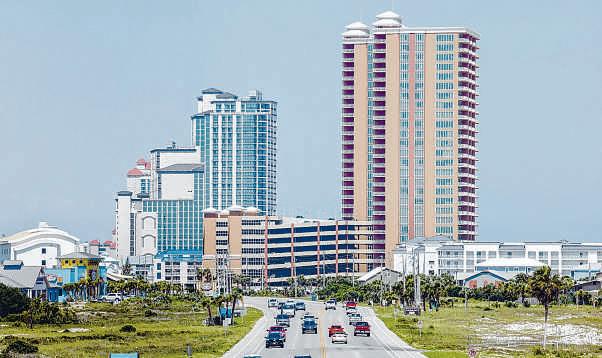
growth but we want something that is sustainable.”
Despite the slowdown, demographers said interest from newcomers is still raising the population in cities across the Gulf Coast. They also cautioned against drawing definitive conclusions from one year of data.
“These are just estimates,” said Cliff Holley, a research associate at the University of Mississippi’s Center for Population Studies. He said ups and downs in Census estimates from year to year are common.
Local leaders and demographers pointed to several reasons why growth may be slowing down. Prices are rising in many beachfront cities, which have become more saturated with newcomers and development since 2020. Some cities have even placed moratoriums on dense subdivision projects in attempt to keep pace with the surge.
The Gulf Coast’s trends also mirrored patterns around the country, where average growth rates dropped last year in most cities

and counties. The Census Bureau has attributed some of that shift to less international migration.
Some cities defy trend Growth slowed slightly last year in Panama City, Florida, and several Mississippi Coast cities,

national averages. Gulfport, Mississippi, grew by about 2% last year — about four times faster than most cities of similar size around the country Population growth in the coastal Alabama cities of Daphne and Orange Beach also outpaced national trends.
Several small inland towns on Alabama’s Gulf Coast also saw striking growth.
The population in Summerdale, Alabama, just north of Foley, grew by 6% last year — a big increase for the town of about 1,700 people. Summerdale Mayor Randy Farris said many newcomers are coming from New Jersey and Minnesota, and are expanding the town’s economy and culture.
“We’re trying to keep control of it,” Farris said “We want to keep our little piece of heaven.”
The population in a few Gulf Coast cities stayed the same last year or shrunk slightly In Mobile, Alabama, the population is flat but local leaders say they are taking steps to improve quality of life and convince families to move in.
The population also stayed flat in the Florida Panhandle cities of Pensacola, Destin and Fort Walton Beach. And Bay St. Louis, Biloxi and Ocean Springs, Mississippi, saw little population growth, despite increasing tourism in the region.
But demographers say it is too early to tell if population growth across Gulf Coast cities is slowing down for good. The Census Bureau released data earlier this year that showed the population in almost every Gulf Coast county from Mississippi to the Florida Panhandle
including Waveland and Long Beach. In Gulf Shores, Alabama, the population stayed almost flat last year despite growing by 2% in 2024. But the slowdown trend was not universal, and many cities across the Gulf Coast grew faster than
“I don’t know that it’s going to subside,” Burrell, the Fairhope City Council member, said. “I think we’re going to see more of the same for quite a while.”


Expertswarnthat risksincrease amid hantavirus outbreak
BY SAM MCNEIL Associated Press
BRUSSELS Driven in part by fears that the frozen landscapes of Antarctica may be irreversibly melting away because of climate change, tourism to the bottom of the world is soaring. And experts warn that with more visitors comesanincreased risk of contamination, illness and otherdamage to the continent.
While visitor numbers are still small —inpartdue to thehighcosts andtimeit can take —they are growing so fast that scientists andenvironmentalists are sounding alarms.
Adeadly outbreakofthe rare hantavirus aboard a Dutch ship on aweekslong polar cruise has brought attention to the growing tourism trend.
Most expeditions head to the Antarctic Peninsula, one of the fastest-warming places in the world.
From 2002 to 2020, roughly 149 billion metric tons of Antarctic ice melted peryear, accordingtothe NationalAeronauticsand Space Administration.
Acommon route is to voyage south from Argentina toward Antarctica before heading north up the coast of Africa —the same route taken by the cruise ship MV Hondius.
“The sites you will see in Antarctica are extremely unique and not replicable anywhere else on the planet —the whales, the seals, the penguins, the icebergs it’sall really stunning and it makes ahuge impressionon people,” said Claire Christian, executive directorof the environmentalgroup Antarctic and Southern Ocean Coalition.

Explosivegrowthoftrips
In 2024, more than 80,000 tourists touched down on the vast ice-cloaked continent and 36,000 viewed from the safety of ships, according to data collected by the InternationalAssociation of Antarctica Tour Operators.
The International Union of Concerned Scientists estimates thattourism toAntarcticahas growntenfold in the past 30 years.
Thatnumber could rise further in the next decade as costs fall with more icecapable hulls hittingthe water and technological advances, said Hanne Nielsen, asenior lecturer of Antarctic law at the University of Tasmania. Her colleagues at the university estimate the annual figure could triple or quadruple to over 400,000 visits in that time.
Some touristscometo Antarcticafor “last chance tourism,” knowing the meltinglandscape israpidly changing, Nielsen said.
Risksofcontamination
Officials have notindicated any evidence of contaminationfrom the MV Hondius.
However,flocks of migratory birdsbrought avian flu from SouthAmericato Antarctica in recent years, according to the U.S. Cen-

tersfor DiseaseControl and Prevention.
That outbreak prompted theInternational Association of Antarctica Tour Operatorsand others to hardenrulesfor tourists’ conduct and hygiene to protect visitors from being contaminated. To protect the fragile ecosystem from invasive species large and microscopic, visitors are toldtostay away from animals and to avoid touching the ground with anything but theirfeet.
“There are rules that people are bound by when they’re heading south,” Nielsen said, describing herfive voyagesasaformer guide.Crews andpassengersuse vacuums,disinfectants andbrushes to scrub shoes andequipment clear of bugs, feathers, seedsand microbe-carrying dirt.
“Between the tongues and the laces of the boots you can find alot of things,” she said.
Cruise ships have been struck by outbreaks of diseases like norovirus, which can spread quickly in aship’sclosequarters. In 2020, aCOVID-19 outbreak on the Diamond Princess turned the cruise ship into an incubator forthe thenmysterious virus
Ha nt av ir us us ua ll y spreads by inhaling contam-

inated rodent droppings.
Island hoppingcruise
TheWorldHealth Organization said Tuesday that MV HondiusleftUshuaia, Argentina, on April 1and visited Antarctica and sev-
eral isolatedislands. WHO is investigating possible human-to-human transmission on thecruise ship,saidDr. MariaVan Kerkhove, WHO’sdirector of epidemic and pandemic preparedness. Officials suspect thefirst infected person likely contracted the virus before boarding, she said, and officials have been toldthere arenorats on board.
Antarcticaisgoverned by the Antarctic Treaty, which in 1959 enshrined the territory as ascientific preserve used only for peaceful purposes. Aseriesofrules that followed “aim to ensure thatall visits, regardless of location, do not adversely impact the Antarcticenvironmentorits scientific and aesthetic values,” according to the treaty’ssecretariat.
“Activity needs to be regulated appropriately, as youwould withany of the world’ssensitive and precious ecological sites,” Christiansaidfrom Hiroshima,Japan, where she was preparing foranAntarctic Treaty Consultative Meeting. There she’ll join calls to strengthen protections for Antarctica’spenguins, whales, seabirds, seals and krill —tiny creaturesatthe base of the food chain. For now,the lure of the frozen frontier continues to drawvisitors.
“You canput afootprint in Antarctica and it’sstill there 50 yearslater,” Christiansaid.
Companies and scientific ventures voluntarily comply with biosecurity guidelinesand submit environmental impact assessments for Antarctic operations. Thetreatywas written when tourism numbers were much lower,Christian said.













Whenyou’recomparing plans ...
forgranted. In fact, your odds of havinga dentalproblemonly go up as youage.2
Treatment is expensive especially theservicespeople over 50 often need
Consider these national average costsof treatment. $274for acheckup $299 for afilling $1,471 foracrown.3 Unexpected bills likethiscan be areal burden, especially if you’reonafixed income























































BR School Board mayquit vettingjob overviews
Powercould be handedto superintendent
BY CHARLES LUSSIER Staff writer
The East Baton Rouge Parish School Board is debatingwhether to continue approving or revising itsmanyjob descriptions, or to hand that power overcompletely to its superintendent.
It’sanauthority,albeit asometimes tedious one, thatthe board has long kept for itself.
Indeed, all69schoolboardsin Louisiana do the same, approving anychanges in the duties and requirements of jobs, ranging from theleast to the highestpaid, according to an Advocate review of district policies and meeting minutes across Louisiana.
The Baton Rouge School Board firstconsidered the idea at its May7 boardmeeting. It initially put off adecision for aweek until Thursday’s board meeting, but then it decided to put it off yet again until the board meets on June 4. Board member Mike Gaudet is leading the charge.
At the board’sMay 7gathering, Gaudet spoke immediately after the board approved the creation of and thedescriptionfor anew position: a“technical intern”specializing in fleet maintenance.
“Just now we hadtopass a board motion to create ajob for atransportation intern,” Gaudet observed. “That is not policy-setting for aboard.”
The school system has thousands of job descriptions. Payroll records list more than athousand currently in use, but there are more that date back years.
The district’shuman resources department afew yearsago embarkedona cleanup project to update many of the old job descriptions.
As part of that cleanup effort, theboard approved several large batches of new and revisedjob descriptions and, in some cases, eliminated old jobs. The board changed job descriptions en masse again in July 2024 after theLegislature set new rules for paying educators extra for extra duties.
“They cluttered up thesystem simply because they didn’twant to come to the board to do any of these,” Gaudet said.
Gaudet said the boardshould leave this duty to Superintendent LaMont Cole.
“I think we owe it to him to let him arrange his team theway he wants,” Gaudet said.
In 2012, Louisiana lawmakers forbade school board members from interfering in personnel matters, assigning to superintendents “primary responsibility” in who gets hired and the work
ä See SCHOOL, page 2B



CAN-DO ATTITUDE
BR Coca-Colabottler unveilscommemorative La.America250cans
BY JOYHOLDEN Staff writer
Coca-Cola is churning out commemorativepackaging representing all 50 states ahead of the country’s250th anniversary,and the limited-edition Louisiana America250 commemorative7.5-ounce mini-can was unveiled this week.
Coca-ColaBottlingCompany United Inc. held an event revealing the “AmeriCan” at its Baton Rouge production center on May 14. The company touts itself as the second-largest privately held Coca-Cola bottler in the U.S. Cory Stewart,director of public affairs and communications for Coca-Cola United’sWest Region, led theunveiling of a3Dmodel of the can.
“This commemorative momentisso
important, so to have the Louisiana can being produced here in our Baton Rouge facility is apretty big deal,” Stewart said.
Attendees received afirst look at the commemorative design during theevent, which highlighted the communities Coca-Cola United serves across Louisiana andthe Southeast as the nation prepares to celebrate its 250th anniversary Speakers includedDerrick Tolbert, Baton Rouge Coca-Cola production center manager;Lt. Gov.Billy Nungesser; and stateRep.Mike Bayham.
The production of thecommemorative can is part of Coca-ColaUnited’sregional tributetoAmerica250, recognizing communities that have shaped theSoutheast forgenerations.
“Louisiana is astate defined by its rich heritage,vibrant culture andthe spirit of itspeople. As our nation marks250 years, Louisianacelebrates itsown 214year history —and remarkably,CocaCola hasbeenbyour side for124 of those years,”Nungesser said.
The center of the collection includes
Census data showsdropinBR
Gonzales, Zacharysee largegains in population
BY AIDAN McCAHILL Staff writer
The latestU.S.census numbers show Baton Rouge haslost more than 3,000 residents since2020 —a1.5% drop.Withsomeexceptions, mostofthe larger surroundingmunicipalities experienced slight populationincreases between2020 and 2025.
In 2020, the U.S. Cen-
sus Bureau estimated 226,065 people lived in Baton Rouge. By 2025, thatnumber dropped to 222,795.
Meanwhile, Gonzales and Zacharymarked the largest population gainsduringthe same five-year period Gonzales’population jumpedbynearly 15%, gaining 1,782 residents, whileZachary also took in over 1,000 people
Since 2020 ,S t. George, the second most populous city in the Baton Rouge metropolitanarea, sawa slight increase of 598 residents to atotal of
78,536 in 2025. Central gained 748 residents during thesametime, accordingtoCensus data.
Baker and New Roads have both lost over 300 residents, while Donaldsonville gained roughly the same amount between 2020 and2025
Across theriver,the town of Addis saw its population increase by 13% to atotal of 7,679 in 2025.PortAllen has been steady during that time period, while Plaquemine has lost over 300 residents, more than 6% of its population.
limited-editionAmerica250packaging, including custom bottles and Coca-Cola’s America250 collectible mini-cans.
Designedfor collectingand sharing, theAmerica250packagingalsoconnects consumers to interactive experiences.
After the presentation and the design reveal, Tolbert led the guests on atour of the production facility. He markedhow significant it wasfor Baton Rouge to produce the cans here.
“Itmeans everything. It showsthat we’rea part of thecommunity.We’re part of thecountry.Whatwedohere, not just the brand,” Tolbert said. “We’re proud of it becausewesupplysomany families. Coca-Cola and the UnitedStates is hand in hand. Youcan’thave one withoutthe other.Soevery picnic,every family function, almost every event that you can think of, we’re there with your family.Sothat’swhy it means so muchtous.”
The commemorative mini-cans will be available for purchase nationwide at major retailers, including Walmart and Target.





STAFFPHOTO By JOHN BALLANCE
Coca-Cola officially unveiled its Louisiana America250 commemorativecan as atribute to America’s 250th anniversary.
New Orleans tourism industry adapting to new trends
Visitor numbers are rising, but summer slump seems steeper
BY STEPHANIE RIEGEL Staff writer
By some counts, 2025 was one of the best years on record for the New Orleans hospitality industry
An estimated 19.4 million visitors poured into the city, according to a recent study by travel consultants MMGY Global, the most since before the pandemic They spent an estimated $10.8 billion, 8% more than in 2024. But in the heart of the city’s tourist district — the French Quarter and downtown — the record numbers didn’t translate into a boost for business at some of the city’s best-known hotels, restaurants and attractions.
At the Audubon Aquarium, where nearly three out of every four visitors is from out of town, ticket sales were off 17% last year, a slump that continued through the first quarter of this year, officials said. Hotel stays were down slightly, with occupancy in the 26,000 French Quarter and CBD hotel rooms averaging a little more than 61% compared to 64% in 2024, according to Smith Travel and Research.
And amid that mixed picture, some industry leaders are concerned about what’s ahead for this year, with potential visitors contending with rising prices, particularly for gasoline, as they decide whether to spend time and money in New Orleans.
“Walking around the French Quarter, you just don’t see the crowds,” said Ralph Brennan, whose restaurant portfolio includes Brennan’s, Napoleon House and Redfish Grill. “Especially during the week, it’s not what we would like it to be.”
Ahead of the annual summer slump, when visitor numbers drop off as temperatures rise, any sense of a possible downturn is particularly concerning, according to interviews
with hotel and restaurant operators.
Local tourism officials acknowledge the city faces headwinds due to a nationwide drop in international visitors, higher travel costs and a more competitive market for meetings and conventions, whose attendees have typically booked longer stays in downtown hotels than regional, drivein visitors.
Still, they say the city has rebounded from a yearslong COVID-19 shock that upended business and leisure travel, and that New Orleans’ visitors economy is showing signs of growth.
“We’re seeing the return of regional visitors to the French Quarter, and we have momentum with the election of a new mayor,” said Walt Leger president and CEO of New Orleans & Co. “We are trending in a positive direction.”
Dueling data?
Leger and others say part of the reason the estimated visitor count was up last year while hotel stays were down is because different companies measure different aspects of the tourism sector in vastly different ways.
MMGY conducts a random sampling online of 70,000 U.S residents, questioning them on travel patterns, places they visited, where they stayed and how much they spent New Orleans & Co., and hundreds of other cities around the world, have used the firm since 2018. Before that, the University of New Orleans Hospitality Research Center was contracted to do visitor counts for the city and used a more conservative methodology which resulted in lower numbers.
Hotel occupancy reports, compiled by Smith Travel and Research, are based on actual overnight stays as reported by the hotels, and track average daily rates as well as the amount of revenue generated by each room. That report shows that downtown and French Quarter hotels have yet to reach 65% occupancy and are still 10 points below their pre-COVID high in 2019 of more than 74%.

Leger said part of the ap-
parent contradiction is the rise in short-term rentals, which are not factored into hotel occupancy reports.
Though tougher city rules passed in 2025 forced platforms like Airbnb to delist hundreds of short-term rentals across the city, thousands of units are still available on any given night, according to online tracking sites.
“The growth of shortterm rental units and usage continues to impact hotel occupancy levels, as many travelers now view shortterm rentals as a primary lodging choice,” he said.
The proliferation of whole house rentals with multiple bedrooms that accommodate the wedding and bachelorette parties that flock to New Orleans have further squeezed hotels, Leger said, because “they can absorb a greater volume of travelers per booked unit.”
Another reason Leger believes hotel numbers are down while overall visitor estimates are up is that a growing number of tourists are regional or drive-in visitors, who may stay with friends and family when
they come if they spend the night at all.
“Hotel occupancy is a major indicator of success,” Leger said. “It is not the only one.”
Weekend warriors
Under her umbrella in front of the Lower Pontalba on Jackson Square last week, artist Heather Widnier, who goes by “Aubery Zapabar,” said she has noticed more regional visitors to the French Quarter over the past 18 months.
“They come from Texas, Florida, Alabama,” she said, dabbing thick paint onto one of her textured acrylic works. “I know because I take a picture with them.”
But sales of her whimsical, New Orleans-themed works are down since foreign tourists cut back on U.S. travel after President Donald Trump took office.
“The Canadians and Europeans would spend more money than the people who come from nearby,” she said.
Chris Valentino, whose family owns seven hotels mostly concentrated in the French Quarter and downtown, said their occupancy
Common ensign wasp a friend
It reduces cockroach population, and not a threat to humans
BY KASEY BUBNASH Staff writer
At a glance, it resembles a creepy crawly black spider but with wings. Your first instinct upon finding one in your home may be to flatten it. Once you discover that it comes from a family of “parasitoid wasps,” the urge to kill will likely intensify
“You should rejoice,” said Aaron Ashford, an entomologist at LSU’s AgCenter in Baton Rouge. “You should be happy to have them there.”
That’s because these freaky little insects, known to scientists as Evaniidae and to laymen as ensign or nightshade wasps, play a vital role in limiting cockroach populations with little to no downside for human beings.
Wasps have a bad reputation for painful stings, sure, but Ashbrook said ensign wasps are harmless.
Solitary creatures that lack nests to defend, ensign wasps use their would-be stingers as ovipositors, tubelike organs used to lay eggs. Ashbrook said the ensign wasp’s ovipositor is sharp and strong, so much so that it can pierce through the tough outer shell of a cockroach egg sac.
That’s where these cuckoolike bugs plant their eggs, one egg per sac, leaving ruin in their wake.
“The wasp adult itself is not the one who kills the cockroach,” Ashbrook said. It’s the egg. When the wasp egg hatches, it molts repeatedly inside the sac, consuming the cockroach eggs as it grows. Once it’s big and strong, the wasp breaks free from the sac and begins its own journey of reproduction and destruction. But don’t get too excited. While

PHOTO PROVIDED By JOHN CARLSON
Ensign wasps are insects that are harmless to humans but can do serious damage to some kinds of cockroach populations.
these wasps are effective soldiers in the war against roaches, Ashbrook said they’re not going to wipe out the enemy entirely Weapon of destruction?
Ensign wasps have their limitations.
A female ensign wasp can lay hundreds of eggs in a lifetime, but her total output depends on how quickly she can find suitable cockroach sacs in just two to three weeks of life. Meanwhile, American cockroaches — the big, red-brown bugs you’re most likely to see scurrying across the pavement at night — can live up to three years, laying more than a dozen eggs per sac.
Plus, Ashbrook said research suggests ensign wasps may not offer foolproof pest control in some of the places most frequented by American cockroaches.
“In theory, it could still work,” he said, “we’d just have to try it perhaps with a different experimental design.”
Perhaps the biggest downside, though, is that ensign wasps are not effective killers of German cockroaches, according to entomologist and pediatrician John Carlson.
Small, tan insects that live exclusively indoors, German cockroaches are most likely to infest
a home and remain notoriously difficult to exterminate. They’re highly prolific, often resistant to pesticides and Carlson said they can carry their egg sacs with them on the go, making them a challenging target Avoid friendly fire
Despite the ensign wasp’s flaws, Carlson said he’s delighted every time he sees one of these little allies. Named for their mobile abdomen, which they lift up and down the way a military ensign lifts a flag, ensign wasps have sapphire blue eyes that Carlson described as “gorgeous,” if a bug can be called such a thing.
If you see one in your house, he said it’s not necessarily a sure sign that you have a cockroach infestation. These wasps are constantly on the hunt for egg sacs, and he said they cover a lot of ground in their short lifetimes.
He recommends catching and releasing them safely outside or, for lack of a better term, letting them cook. With multiple invasive species of cockroaches thriving in New Orleans, we need all the help we can get.
“Nature is wild and wicked out there,” Carlson said.
Email Kasey Bubnash at kasey bubnash@theadvocate.com.
mand for the luxury multibedroom apartment-style units has outpaced expectations.
The Historic New Orleans Collection has also seen growth in the number of visitors to its museums and attractions in the heart of the French Quarter, with about 15% year over year increases on average since 2023. President and CEO Daniel Hammer said much of the growth has come from locals, not tourists.
Outside of the tourist district, demand for high-end boutique hotels in the Garden District and Uptown is strong. Zach Kupperman said occupancy at Hotel Saint Vincent, a luxury hotel in a historic building on Magazine Street, averaged 70% last year, far ahead of the market average.
“Spring has been really strong, too,” he said. “I think we hit a low point over the last two or three years and are on the way up.”
overall is holding steady but that they’re seeing more last-minute bookings.
“We’re not as booked up in advance as we could be, and that has been the case since COVID,” he said. “We are not putting money in the bank before we have it.”
Brennan said his French Quarter restaurants have always drawn regional visitors and continue to do so, though not in any greater numbers than in the past.
His cousin, Dickie Brennan, who owns a separate restaurant group, said he’s seen a decline in regional and drive-in business at his French Quarter restaurants, which include Dickie Brennan’s Steakhouse, Tableau and Bourbon House
“My weekend warriors, my longtime local and regional customers, are not coming down to the Quarter anymore,” he said. “Bottom line, they do not want to see vagrants on the street.”
Positive trends
Still, some establishments have seen an uptick Developer Hammy Halum, who opened the Mayfair hotel in the 1000 block of Canal Street in late 2024, said de-
SCHOOL
Continued from page 1B
those employees do. The Legislature, however, left intact the historic final say that school boards have maintained in approving job descriptions. Consequently all but a handful of school boards, including East Baton Rouge, approved identical or nearly identical policies. These policies all call on superintendents to “make recommendations to the board for adding new positions and for making revisions and/or adaptations to existing job titles and/or descriptions.”
In its review, The Advocate found only a handful of districts whose policies differed from this language. But of that handful, all still routinely bring job descriptions to their board for approval, according to meeting minutes.
The proposed revised policy in East Baton Rouge would remove the board from the equation altogether and have the superintendent alone “add new job titles and descriptions.”
Board member Patrick Martin V expressed concern about making such a big shift in district practice without more research, persuading his colleagues to slow things down.
“This is an area that we’ve had problems in, and I don’t think we’ve had problems simply because people didn’t want to bring it to the board,” Martin said. “They didn’t bring it to the board because maybe they didn’t like what we were going to say.”
“These are not personnel actions themselves,” he said. “These are the policy decisions of what positions do we want to have.”
The board and superintendents have clashed before when it came to job descriptions. Former Superintendent Sito Narcisse ruffled feathers when he went on a hiring spree
Robert LeBlanc, whose Smith + LeBlanc hospitality group owns several trendy new restaurants and hotels, said his properties overall have also performed well, “even in the French Quarter.”
But he’s also noticed some changes in visitor counts in the summer months.
“The summer slump used to start in late June and last until September,” he said. “Now, things really slow down in May and don’t pick up again until October.”
While those in the industry are bracing for a rough few months again, Leger said New Orleans & Co. has been working to bring a variety of new events to the city to generate activity during the slow season. And he points to five major medical conventions scheduled for the fall, on top of three held earlier this spring, that promise to bring thousands of well-heeled visitors to the city
“Summer is just challenging, and August is the worst,” he said. “It’s been like this for 35 years. That’s why we prioritize the events that we do have and make the most of them.”
Email Stephanie Riegel at stephanie.riegel@ theadvocate.com.
after his 2021 appointment, in some cases giving people jobs with unfamiliar titles without first obtaining board approval for the underlying job descriptions.
The new proposed policy would require only that the superintendent report any “new or changed job titles and/or descriptions” to the board as part of his monthly “Personnel Changes” report. The policy also keeps language that the superintendent maintains “a comprehensive and up-to-date set of job descriptions of all positions in the school district.”
James Finney, a board watcher, has taken deep dives in the past in district personnel policy and data and said the school system is still falling short. He told the board on Thursday that before adopting anything like what Gaudet wants, the district administration should post online and maintain up-to-date organizational charts, employee lists and job descriptions.
“Once that happens, turning more of the authority over to the administration seems prudent,” Finney said.
Storm Mathews, a teacher organizer objected to the board giving up its role in approving job descriptions at all.
“I think that at no point should y’all sign your checks and balances away,” Matthews said.
Email Charles Lussier at clussier@theadvocate.com.
LOTTERY FRIDAY, MAY 15, 2026 PICK 3: 7-8-0
STAFF PHOTO By SOPHIA GERMER
A tour group walks through the French Quarter in New Orleans on Thursday
St. Bernard schools superintendent to retire
Voitier says farewell after 55 years
BY MARIE FAZIO Staff writer
“Doris is the reason St Bernard came back so strong,” said Henderson Lewis, a former St. Bernard teacher who went on to lead the New Orleans school system. “She built it back better.”
Now after 55 years in the district, where she started as a teacher in the 1970s and served as superintendent for two decades Voitier will retire next month.

Doris Voitier was sheltering inside Chalmette High School when Hurricane Katrina’s floodwater came rushing toward the campus, engulfing every home and building in its path.
Vo itier, who had become superintendent of St. Bernard Parish Public Schools just a year earlier scrambled with her staff to get the roughly 250 parish residents sheltering in the school to move upstairs. When more people arrived in boats, Voitier helped pull them in through secondstory windows.
After hunkering down in the school for several days with little food and water, they emerged to find a devastating scene.
“The entire St. Bernard Parish was wiped out,” Voitier, 76, recalled recently “There was not a home, church, school or building that was intact.”
Just two months later, with scant assistance from national authorities and most of the parish still shut down, Voitier pulled off an improbable feat: She brought back students, opening a makeshift school inside trailers in the Chalmette High School parking lot.
Voitier’s determination to resume school in the face of utter destruction offered some semblance of normalcy to students and teachers who suddenly were living out of tents and trailers. It also earned her national recognition and helped catalyze the rebuilding of the larger community
It’s the end of an era for St. Bernard schools, which enroll about 7,000 students in the close-knit parish just east of New Orleans Voitier shepherded the district through decades of tumult, from the yearslong rebuilding process after Katrina to the COVID-19 pandemic. She also served on the state Board of Elementary and Secondary Education for eight years, often acting as a voice for educators in policy debates.
While Voitier rose to prominence for rebuilding the destroyed school district, she said that working with students — and her own time teaching are what brought her the most pride and joy
“Buildings are one thing,” she said, “but what takes place inside them is most important.”
Katrina recovery
By the time Katrina hit in 2005, Voitier had been working in the school system for 30 years, rising from a Chalmette High School math teacher to district leader
“When Katrina wiped us out and we had to rebuild the whole school system, that put all of my experiences to use,” Voitier said in a recent interview “I knew every facet.”
Shortly after the floodwater receded, Voitier began the daunting task of reopening the schools in a parish where every building sustained damage and many schools took on eight feet of putrid water and had roofs torn off.

She worked on a borrowed computer, sending student records to families who had evacuated across the country She was undeterred by bureaucratic roadblocks, including funding delays from the Federal Emergency Management Agency.
She took out $17.8 million in loans and sourced trailers from North Carolina and Georgia, often opting to ask for forgiveness — and reimbursement — rather than permission When FEMA said it could not pay for hot lunches for students, she hired a Chalmette restaurant owner to cook meals on a barge in the Mississippi River and sent FEMA a $27,000 bill. (The district was eventually reimbursed.)
The temporary school opened on Nov. 14, 2005, drawing 334 students across all grade levels. By the end of the school year, the “St. Bernard Unified School” had grown to more than 2,400 students, some of whom were moved into
the upper floor of the high school, which was spared flood damage Voitier earned widespread accolades, including the 2007 John F. Kennedy Profile in Courage Award for public officials. At the time, the Kennedy Library Foundation praised Voitier for her “courageous fight to rebuild the St. Bernard Parish Schools in the face of pervasive devastation and bureaucratic indifference.”
She eventually oversaw a $500 million rebuilding plan, replacing the district’s older schools with new and higher-quality facilities while also downsizing from three high schools to one. Chalmette High School’s new campus included a 90,000-square-foot performance venue and an Olympic-sized swimming pool.
Former U.S. Sen. Mary Landrieu, who advocated for recovery funds, called Voitier “the face and the muscle and the brains” of the rebuilding effort, argu-
ing that the parish would not have rebounded as quickly without the school superintendent’s leadership.
“She was an extraordinary leader,” Landrieu said, “and she understood a fundamental truth: that great schools are the heart of any community.”
Lewis, who had been working in the district’s central office when the storm hit, returned to teach high school algebra in the Unified School. He credited Voitier for ensuring teachers kept getting paychecks after the storm and putting “care first, education second.”
“Under her leadership, St. Bernard continued to improve,” he said.
Statewide impact
Voitier became the face of St. Bernard schools after the storm, but her impact extended beyond the parish.
In the 1990s, she helped create the funding formula the state uses to dole out money to schools. Voitier
also was president of the state superintendents’ association and was appointed by Gov John Bel Edwards to serve on the state Board of Elementary and Secondary Education from 2016 until 2024.
“Louisiana education reflects the work of Doris Voitier,” said state Superintendent of Education Cade Brumley calling her more than 50-year career in education “quite remarkable.”
Caroline Roemer, executive director of the Louisiana Association of Public Charter Schools, called Voitier a “walking encyclopedia” on Louisiana education history and policy and a “godmother of education” who understood how decisions at the state level impact classrooms.
“If you agreed with her or not,” Roemer said, “she commanded respect.”
In the St. Bernard school system, Voitier is known as a hands-on leader who makes decisions based on what’s best for students, and who will pick up the phone any time of day
“She’s just phenomenal,” said Tiffani Glapion, principal of Joseph Davies Elementary School in Meraux, who taught at the St. Bernard Unified School. “She is 100% the reason we are here.”
Voitier said she was most proud of expanding the district’s career and technical education and dual enrollment programs, which give students a head start on careers or college. This week, 17 seniors graduated high school with associates degrees, she said.
After Voitier officially retires at the end of June, she plans to spend more time with her family and find some new hobbies. But she said she’ll still help the district whenever she’s needed.
“People have to realize,” she said, “the quality of life in any community is largely dependent on the success of the public school system.”
Lafayette’s adjudicated property program may see overhaul
Council weighs reforms amid staffing shortages
BY DEAN BOUDREUAX
Contributing writer
Lafayette City Council members are weighing changes to the city’s adjudicated property program after mounting complaints that the system is understaffed, inconsistent and leaving north Lafayette neighborhoods vulnerable to outside investors.
Council member Kenneth Boudreaux last week called for the creation of a committee to overhaul the process, arguing the city has failed to properly resource a program intended to return tax-delinquent and blighted properties to productive use.
“We have to create the program that we want and stop pretending about doing something that we actually are not doing,” Boudreaux told fellow council members.
The discussion comes as Lafayette Consolidated Government faces a backlog of roughly 200 adjudicated property applications and an ongoing legal dispute over a Ransome Street property that prompted officials to temporarily pause the process
According to previous reporting, only one employee is currently assigned to process adjudicated property applications. Chief of Staff Christina Dayries has publicly acknowledged staffing shortages and said the pause allows the city to reevaluate the system with outside legal assistance
LCG has hired Monroe attorney Wesley Johnson, who specializes in Louisiana adjudication law, to help redesign the process following a new state law that took effect Jan
1 and changed how taxdelinquent properties are handled.
Council member Andy Naquin said the administration does not plan to wait on additional state action before updating the process, while also acknowledging concerns surrounding the ongoing property dispute.
Any ordinance changes would require approval from both the Lafayette City and Parish councils, a process expected to take at least a month. With litigation still pending over the Ransome Street dispute, officials have not said when the adjudication process could resume Boudreaux, one of the council’s most outspoken critics of the current system, said previous administrations dedicated more staff and resources to the program.
“At most administrations, there were two people committed to working from start to finish in this program,” he said. “We just have to make a decision. Do we want to really do something about it and deal with it the right way?”
During public comment, neighborhood leaders and nonprofit groups urged the council to prioritize community organizations over speculative investors.
Tina Shelvin Bingham, chair of the McCombVeazey Neighborhood Coterie and community development director for Habitat for Humanity of Lafayette, said she has worked inside the adjudication system for years through the Adjudicated Properties Pilot Program, known as APPP The initiative launched in 2023 with 19 properties intended for redevelopment in the McComb-Veazey neighborhood, but Bingham said six were lost because of redemptions and procedural conflicts. “Duplicate applications
came up months after we’d already gone through the process,” Bingham said. “Things like that happen, and then we’re left asking, now what do we do?”
She said the pilot program’s original funding structure was built around those 19 properties and has become increasingly difficult to sustain as the process continues to shift
“We’re constantly trying to adjust the model and make it fit,” she said. “So that it can be something other communities around Lafayette can also duplicate.”
Bingham told the council there are more than 200 adjudicated properties in the McComb-Veazey Cultural District alone and warned that without safeguards, outside investors could buy up land before neighborhood organizations have a chance to redevelop it
“We don’t want it to go to a fire sale,” she said. “People with more resources can come in and scoop up these properties without any conversation with the community or any connection to the neighborhood.”
She pointed to the Community House on 12th Street — now used for meetings and community programming — as an example of a successful redevelopment project that began as an adjudicated property.
Do min ique M ou to n, founder of the T Foundation, also urged the council to reopen access to the process. His organization teaches reconstruction classes and has worked to acquire adjudicated properties on Lafayette’s north side for nearly three years.
“They’re building 40, 50 houses for rent,” Mouton said of outside developers. “That doesn’t make things better It only makes somebody rich who doesn’t even live here.”
Mouton said community organizations understand the process and requirements but are being shut out because of delays and administrative barriers.
“We can’t get into the process,” he said. “Please give us a shot and don’t delay this process again.”
The debate underscored broader concerns about whether Lafayette’s adjudication program has the staffing and structure necessary to address blight while protecting longtime residents from displacement
“This is how we start preventing displacement,” Bingham said. “Long-term residents and community organizations should not be pushed out of the opportunity to help shape their own neighborhoods.”





STAFF FILE PHOTO By ELLIS LUCIA
Chalmette High School is in the foreground of this aerial taken five days following Hurricane Katrina. Evidence of oil spilling from nearby Murphy Oil can be seen on Judge Perez Drive (at bottom of photo) and its intersection with neighborhood streets.
Voitier
PHOTO By ROBIN MAy
The Community House, a joint project between Habitat for Humanity, UL’s Architecture department and the McCombVeazy Neighborhood Coterie, held an open house on July 20, 2019, in Lafayette. The Community House in the McComb-Veazey neighborhood is an example of a successful redevelopment project that began as an adjudicated property
A.
Obituaries to Clay and Una (Melancon) ChauvininBaton Rouge, LA. David was the youngestof12children Davidgraduated from Glen Oaks High School in 1968.Hebegan his career in pipefitting out of Local 198 and progressed to pipe design. His careerincluded work experienceat many different locations throughout the chemical industry.
Clay A. Bankston, Jr. also known as Butch or Brother, he was resident of Amite, LA, formerly of Baton Rouge, LA. He passed away on Wednesday, May 13,2026 at Hood Memorial Hospital in Amite, LA. He was born November 6, 1948 in Baton Rouge,LAand was 77 years of age. He loved his grandkids, animals, and Harley Davidson motorcycles. Clay wasa member of Mt. Nebo Baptist Church and aproud graduate of Istrouma High School. He is survived by daughter, Ash-Leigh Bankston Garcia and husband, Omar; son, Jonathan Clay Bankston and wife, Kelly; grandchildren, Adam "A.J." Calais and fiancé, Ashlee, Ana-Grace Garcia, Grant Bankston, Carter Bankston, Easton Garcia, and Everett Bankston;2 sisters, Mary Ann Kofron and husband, Bob, and Margaret Wascom; and numerous other family members andfriends. Preceded in death by his parents, Clay A. Bankston, Sr. and Bessie MorrisBankston. VisitationatMcKneely Funeral Home, Amite, from 10:00AM until Religious Services at 12:00 Noon on Monday, May 18, 2026. Servicesconducted by Rev. Randel Camardelle. Interment Bankston Cemetery, Amite, LA. For an online guestbook, visit http://ww w.mckneelys.com.

Maxine Louise Broemmelsiek diedathome in August 2025 after along illness at the age of 92. Born in Chicago, Illinoisshe grew up in Nebraska where she earned her Registered Nurse license. Maxine and Gene, her husband of 62 years, made Baton Rouge their home. She is survived by daughters: Mary Ellyn Hale (David) and Theresa Bradshaw, sons: Joseph, Thomas (Michele), Daniel, and John (Leslie Hill), son-in-law Mark Bradshaw, 10 grandchildren: Elizabeth Ferrari (Christopher), Matthew Bradshaw (Danielle), Timothy Bradshaw, Rachel, Teresa, Elsa, Emil,Madison, Andrew,and Elaine Broemmelsiek, one greatgrandson Ben Ferrari brother-in-law Don Metzgar, and numerous nieces and nephews. She is preceded in death by her husband Henry Eugene (Gene) Broemmelsiek, parents Louis and Lois Becker and sister Ellyn Elizabeth Metzgar. Maxine was alifelong learner with wide ranging reading interests in medicine, theology and spirituality, justice issues, fiction, and through her membership in Osher Lifelong Learning Institute (OLLI). She worked at Earl K. Long Memorial Hospital, Women's Hospital, and hospice. Throughout her life she was apeace and justice activist in Peace Links, Bienville House Centerfor Peace &Justice, Pax Christi,volunteering with Sisters of St.JosephatSt. Paul's Adult Learning Center, and belonging to the social justice team at Unitarian Church of Baton Rouge. Maxine and Gene loved their travels visiting family, finding family, and learning about people around the world. Her familyisgrateful for the care shereceived over the years from her son, Joe, and in her last months from Audubon Hospice,all of which enabled her to stay in her home. Amemorial in celebration of Maxine's life will be held on Saturday, May 23rd, 10 am at the Unitarian Church of Baton Rouge, 8470 Goodwood Blvd. All are welcome.

David is survived by his belovedwifeDonna, and8 of his 11 siblings: Linda Chauvin Legleu (Stanley), GailChauvin Montelaro (Louis), Errol Chauvin (Joyce), Ronnie Chauvin Ruth Chauvin Bolourchi (Beau),Carol Chauvin Ortego, CarmenChauvin Hano, HubertChauvin (Betty),and numerous nieces and nephews that he adored.
Davidwas precededin death by his parents, Una and Clay,brothersHoward and Gordon, and sister Thelma Bergeron. AMemorial Gathering willbeheldatGreenoaks Funeral Home 9595 Florida Blvd, Baton Rouge,LA 70815, US on May22, 2026 from 9:00 am to 11:00am. Funeral Services will be held at Greenoaks Funeral Home, 9595 Florida Blvd, Baton Rouge,LA70815, US on May22, 2026 from 11:00 am to 12:00pm.
Rita AlelloCorsentino, beloved mother, grandmother, sister,aunt, and friend, passed away peacefully on May14, 2026, at the ageof94. Born on December8,1931,inBaton Rouge, Rita carried strength, warmth, and fierce devotiontoher family throughout her life.Her home was agathering placefilled with loud conversations, strong opinions, laughter,endless food, and unconditional love. Shewas known for hergenerous heart, devotiontoher husbandand family, nurturingspirit, and herability to feed twenty marines every afternoon. Whether she was cooking Sunday dinneror caring for her husband and grandchildren, she loved deeply and completely. Rita devotedher lifetoher family and took immense pride in raisingher childrenand watching her grandchildrenand great grandchildrengrow.She taughtthose around her the importance of love loyalty, hard work, faith, and tradition. Sheissurvived by her children, SheilaBlountand her husband, DavidBlount, Darlene Cunningham and her husband, Bob Cunningham, and MicheleLaporte; grandchildren, Melody Smyser, Megan Knapp, Lindsay Dean, Brian Irvin, DavidIrvin, Nicholasand MarisaLaporte; and 10 great grandchildren. She was preceded in death by her husband; Joseph Corsentino; siblings; Oscar Alello, SamAlello, Joe Alello, Frank Alello,Russell Alello, Rosalie Montagnino, Anna MaeMontagnino and LucilleMontagnino. A visitation willbeheld on Wednesday,May 20, 2026, at OurLady of Mercy CatholicChurchfrom9:00 am until Mass of Christian Burial at 10:00 am. Burial willfollow at Greenoak's Memorial Park.

career as an accountant in theoil andgas industry. After retiring,Richard returnedtohis hometown, spending his later yearsin his grandparents' house, next to his brother,Randolph, and hiswife,Sher. Thishome became asanctuary forhim, where he enjoyed his oldneighborhood, witnessed theregrowth of BatonRouge, and reconnected withfamilyand friends. Known for his insightful opinions and kindness, Richard'squiet,sweetspirit willbedeeplymissed. He was preceded in death by his parents, Ivy, Sr.,and Harriet Wyatt Creel. He is survived by his brother, Randolph"Randy" Creeland wife Sher, along with many cousins,nieces, and nephews. We miss him immensely
Adistinguished member of theBaton Rougecommunity who left alegacy of many accomplishments passed away on Sunday, May 10, 2026, at The Crossing at ClarityHospice in BatonRouge.Edith Kay Kirkpatrick, known to family and friendsasKay, was born in Jennings, Louisiana, on July14, 1946. Her parents, Edith and ClaudeKirkpatrick, shaped Kay's life and instilled in their daughter apowerful sense of faith,family and public service. Kay's mother and father ledher and her brothers, Tommy and Kris, by example Herfather, Claude, was asuccessfulbusinessman who served twotermsin theLouisiana legislature, Director of Louisiana Department of Public Works, and was theadministrator of theBaton Rouge General Hospital
Her mother, Edith,was an accomplished musician who attendeda summer sessionatthe Julliard School of Music in New York, received aBAinmusic from LouisianaCollege and aMaster of Arts and Musicfrom LSU. She also served on theState Board of Trusteesfor HigherEducationand theLouisiana BoardofRegents.
In 1957, theKirkpatricks were named thefirst "All American Family"of Louisiana.
Kay had many talents and at theage of 12 became achildhoodprodigy playing apiano solowith theNew Orleans PhilharmonicSymphony. When Kaywas 13, thefamily moved to Baton Rouge where she attended Lee HighSchool.
She was very activein highschoolbeing voted Most Likely to Succeed and Student BodyVice-President. In 1963, Kay attended Louisiana Girls' State and was asked to returnas acounselorin1964. For decadesshe volunteered her time to theorganization and was aregular speaker forthe Girls' State conventions.
She lovedmusic but, much to her mother's chagrin, upon graduationshe chose anothercareer path. She wantedtoattend law schoolbut at thetime therewere very few women in lawschooland most lawfirms were not hiring women. So,Kay pursueda Masters and then aPh.D in Speech and Psycholinguistics which she completed in 1972.
While at LSU, Kay joined theChi Omega sorority and became an officer. She wasveryactiveinAngel Flight,roseinthe ranks of theorganization, and soon became aNational Commander in Angel Flight This ledher to friendships with future astronautsand laterattending aspace shuttle launch.
Kay was always arenaissance woman. In addition to excelling in her studies and being amemberofthe ODK Chapterat LSU, she was aCampus Beauty. In her senioryear at LSU, Kay went on an archaeological diginIsrael. She also played in Intramural Sportsincludingsoccer and tennis.
After completing her Ph.D, she begantosee more opportunitiesfor womeninthe legalprofession and decided to pursue acareerinlaw and passed thebar in 1977.
As she explored the job market, an opportunity she never considered presented itself and she joined the office of Baton Rouge District AttorneyOssie Brown. Kay lovedthe intellectual challenge and theresearch involvedinappellateargu-
ment.Shethen became thepersontogotostate Appeals Courtsand the Supreme Court on behalf of theDistrict Attorney. WhenBryan Bush was elected in1984 he retained her in this position. And then anotherunexpected opportunity presented itself.
In 1988, Governor Buddy Roemerwas elected and thegovernor's office wisely chose Kay to be theAssistant Executive Counsel to theGovernor. In this position, her workexpanded beyond criminal law to issues involving theenvironment,publicfinance,educationand many other policy issues. Kay lovedthis positionand especiallybeing "inthe room" when important decisions impacting citizensand government were being made. Kay represented the governorduring thelegislativesession. She found thehearing process tedious butitwas an opportunity to hear the"cacophony" (as she putit) of constituent voices. Kay found theprocess to be instructive and "endlessly fulfilling."
In her various legal positions, Kay always feltthat any discussionshould beginwiththe lawand not a preconceivedoutcome. So,her nextjob was the perfect step forher.
In 1992, newly elected AttorneyGeneralRichard Ieyoub chose her to be the Deputy Attorney Generalin chargeofthe CivilDivision. At thetime,thisdivision handledthe majority of the office's work.Itwas in this role that she became part of theteam negotiating withthe U.S. Department of Justice in their suit challenging theorganization and governance of the state'shighereducation system. They specifically challengedthe existence of historically black institutions. Many changes followedthis litigation. Those changes involved cross-campus degrees and increased diversity on campuses. As aresult, Kay believed that thestate and theDepartment of Justice had an increased awareness of the value of HBCU's.
In her role,she participated in extendednegotiations, againwiththe U. S. Justice Department on prisons and juvenile justice facilities.Additionally, on thestate level, Louisiana pursuedroyalty cases. She was one of thefrontline negotiatorsand litigators in thestate's case against Texaco "Fight forthe things that youcare aboutbut do it in away that will lead others to join you." This quotebyJustice RuthBader Ginsburg best describes Kay's style of negotiation. Kayalways spokesoftly buther intellect, strength of convictionand theability to clearlyand powerfully articulate her position madeher aformidable opponent -nomatter who was on theother side. Anyone who underestimated that didsoattheir own risk Kay's final positionin government was as General Counsel forthe University of Louisiana System This providedthe opportunitytoreturntothe higher educationstructure that was part of the earlierlitigationand to be part of thestate'srelease from theHigher EducationDesegregationSettlement she helpednegotiate In every positionshe held and in every organization she belonged to, Kay wasreveredand respected by thosewho worked with her and for her. Kay Kirkpatrick was devout in her faith and her
familywas her greatest source of pride.She was thesparringpartner for herbrother Tommy, (Colonel K), also alawyer andpartofthe Judge Advocate Corpsfor the U.S. Army. Shewas thediplomaticand communitypartnerfor herbrother Kris, a lawyerand former chiefof staff for U.S. SenatorRussell Longand apartner in theLongLaw Firm.
Every friendknewevery accomplishmentofher nieces andnephews. They all knew they couldgoto Aunt Kay for support in everyendeavor and that she wouldbea confidante in all things
Relationships were important to Kay andshe maintainedfriendships for life. Shewas akindand loyal friendwho was the first to offer comfortand waswilling to jump in to support herfriends'causes as well.Whenshe became friends withformer LSUgymnastics' coach, DDBreaux, sheimmediately became atop-level sponsor, boughtseason tickets and, of course,involved herwhole familyinthe sport Kay wasa strongadvocate for Title IX. Shejoined in thefight for better opportunities and facilities for women's sportsincludingthe LSUGymnastics' Training Center.
Kay haddiverse interestsand got herrecreational pilot'slicense before she could register to vote.True to heradventurous spirit,she loved saltwater fishing, went fly fishinginAlaska, learned to sail,and played golf. Sheloved to read, attend concerts andargue about politics.
Kay wasanavidLSU sportsfan.She hadseason ticketstoFootball, Gymnasticsand Women's Basketball.
Truetoher parents' philanthropicexample as well as herdedication to publicservice,Kay created theE.Kay KirkpatrickEndowed SuperiorGraduate Scholarship in PublicLaw. Shewas predeceased by herparents,Edithand Claude Kirkpatrick; her brothers ClaudeKentKirkpatrickand Thomas Killgore Kirkpatrick; andher niece, SandraKaren Kirkpatrick.
Sheissurvivedbyher brother, Charles Kris Kirkpatrickand wife JaneFosheeKirkpatrick; Sandra Futrell Kirkpatrickwife of Thomas Kirkpatrick; nieces andnephewsMildred (Katie)KirkpatrickJustice andhusbandRichard Todd Justice;Thomas (Kirk) KillgoreKirkpatrick, II and wife Jena Kirkpatrick; Kristopher Scott Kirkpatrickand wife Heather Dupree Kirkpatrick; Charles Stephen Kirkpatrickand wife Mary Elizabeth BuntinKirkpatrick; great nieces andnephews, Thomas (Trey) Killgore KirkpatrickIII,Hudson Brandt Kirkpatrick, Abigail (Abby) Kay KirkpatrickAddisonand husband Daniel, Laura JaneKirkpatrick, Virginia AnnKirkpatrick, Kristopher Claude Kirkpatrick, Leah Elizabeth Kirkpatrick, Charles Jude Kirkpatrick, Jackson Todd Justice,PierceMaughan

Ellis Maughan,and Quentin Maughan. Pallbearers will be Scott Kirkpatrick, StephenKirkpatrick, Kirk Kirkpatrick, Trey Kirkpatrick, Hudson Kirkpatrick, Todd Justice Kristopher Kirkpatrick, Jude Kirkpatrick, Jackson Justice,Joe Juban, Connie Kouryand D-DBreaux. Visitation will be held at RabenhorstFuneral Home at 825 Government Street on Sunday, May17, 2026, beginningat5:00 p.m. until 7:00 p.m. Servicescelebratingher life will be held at First Presbyterian Church 763 North Boulevardon Monday, May18, 2026, with visitation from 10:00 a.m. to 11:00 a.m. and funeral servicesbeginningat 11:00. The familywould like to thank Dr.Louis Minskynot only for hismedical care butfor the friendship and comfortheextended to Kay andthe entire Kirkpatrickfamily; andJill Chaney whonot only made sure that Kay andher belovedcat,Bella, were comfortable butthattheir home needswerealways provided. In lieu of flowers, contributionsmay be made to theBaton Rouge Symphony,the Food Bank of Greater Baton Rouge or to thecharity of yourchoice.
Jamesalways hada smileonhis face, anda witty comebackfor everyone. Hispride washis children.James lovedfishing, especially with hisbrother Jesse, which is evident by themany pictureshesent braggingtohis brother. Jameswas survived by his threechildren, Ryleigh Blank, Ethan Piper and Brooklyn Blank, and the motherofhis belovedchildren,Rachel Blank; his motherand step father, KathleenClouatreRichard andJohnStevenRichard, hisfather,Patrick Piper andhis grandmother, Mary "KiKi" Piper.His brother, Jesse WaynePiper (Angela); step siblings: Shannonand Tracie Richard; Kimand Kaycee Hebert Jameswas proceededin death by hisgrandparents, Arthurand Laura Clouatre, andRalph Piper,Sr. Visitation will be held at OurLady of theHoly Rosary Catholic Church in St Amant, LA, on Monday, May18, 2026 from 9:00 a.m. untilthe Mass of Christian Burial at 11:00 a.m.













































Bankston Jr., Clay
Kirkpatrick, EdithKay
Corsentino, RitaAlello
Piper, James Anthony
Broemmelsiek, Maxine Louise

William "Bill" Lambert Senn Jr., 94, died May7, 2026, in Baton Rouge, Louisiana. He was born January 28, 1932, in Alexandria, Louisiana
Bill earned aB.S., M.S., and Ph.D. in chemistry from Louisiana State University, afoundation that reflected asteady devotion to learning and careful, disciplined work. Commissioned as an officer in the United States Air Force through the ROTC program at LSU, William served two years of active duty from 1957 to 1959, followed by six years in the reserves—service marked by duty, professionalism, and quiet commitment.
Bill's career with Exxon Chemical Americas spanned decades of leadership and responsibility In 1978, he was named manager of the Baytown, Texas, chemical plant.In 1981, he transferred to Baton Rouge, Louisiana, as Manager of the Baton Rouge chemical plant. During that time, he was also responsiblefor developing and implementing personnel safety and safe operations programs for the Exxon chemical committee from its inception in 1988 until 1994. In 1996, he transferred to headquarters as manager of the engineering department for Exxon Chemical Americas Beyond his corporate responsibilities, Billremained actively engaged in industry, governmental affairs, and community organizations. He was affiliated with the Chamberof Commerce (Board of Directors), the Greater Baton Rouge Industrial Managers Association, the Louisiana Association of Business and Industry (LABI), the Public Affairs Research Council (past chairman of the board), the Louisiana Chemical Council(served two terms as chairman of the board), andthe Louisiana ChemicalIndustry Alliance (chairman of the board of directors from December 1990 until May 1996). He participated in the United Way general campaign as 1983 fund chairman and worked with the Baton Rouge Ozone Task Force to develop an ozone reduction program for Baton Rouge. Through these efforts, he brought a measured, public-spirited approach to thework of building safer workplaces andstronger communities.
Bill was married to the former Patricia Harrison of Baton Rouge for 69 years, a partnership defined by constancy and devotion. He found enjoyment and fellowship in golfing, fishing, hunting, and tennis—pursuits that suited his appreciation for time
outdoors, friendly competition,and the simplesatisfactionsofanactive life.
Bill is survived by his wife, Patricia Harrison Senn of Baton Rouge; his sister,Iris SennJamesof Beavercreek, OH;his daughter, KatherineSenn Petti(Russell); hisgranddaughter, Madeleine Petti; his granddaughter,Amelia Petti Rives(Clayton); and six nephews and their families Amemorialservicewill be held at St. James Episcopal Church on Saturday, May23, 2026,withvisitation beginning at 10:30AM until aserviceat11:30AM Memorial contributions can be made to Hospice of Baton Rouge and St. James Episcopal church. Special thanks areextendedtoWilliam Myhand of St. James Place, Susan Boudinot and allthe staff at Hospice of Baton Rouge, Wendy Stanford and allthe staffatStanfordSenior Services, for their care and kindness.

Bob, aloving Father, Grandfatherand friend passed awayatthe age of 92 on May1,2026.Hewas bornonMarch18, 1934 in Chicago IL. He was preceded in deathbyhis parents, Alma and HarryStoothoff. Known to familyand friends asBob, he was a devoted husband to Sherry Stoothoff,lovingfatherto Joe Stoothoff, Jill Trimper and JayStoothoff, and a wonderful stepfather to KevinDenny. He was a proud grandfatherto Jordan, Dana, Shaun,Shelby, Justin and Brennonand great- grandfather to Colton,Scarlet and Kade Bob graduated from Lafayette College in Easton, PA with amaster's in business. He spent hiscareer inchemical sales with Allied Chemical, Ethyl Corp. and Albemarle.Bob was known forhis kind andgentle nature -many would saythey neversaw him get angry.Hewas a devotedsports fanand loved LSUfootball.He loved also spending time with his family and shared aspecial lifelong friendshipwith Bill Liehe. Bob willberememberedasa truly one-of-a kind man and willbedeeply missed by allwho knew and loved him. In lieu of flowers, donations may be made to a charity of your choice. Specialthanks to Bridgeway Hospice fortheir excellent care.A celebrationoflife willbe held on July 18th 2026 at 11 am at Drusilla Seafood 3482Drusilla Ln D, BatonRouge.
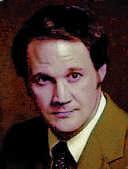
ElmerFayette Tompkins a dedicatedjournalist, lover of animalsand a crack shot,diedMay 8, 2026. Fayette,ashewas known, wasbornOctober 14, 1946, in Homer Louisiana,graduatingfrom Homer High School in 1964 Heobtained B.A. degree fromLSU in 1968, majoring injournalismand aMas‐ter’s degree in journalism fromLSU in 1972. During his time at theuniversity, hewas an active member ofthe Reveillestaff, mak‐ing lifelong friends. He joinedthe State-Timesin 1970, workingfor it andits successor TheAdvocate for more than 30 years. Fayette wasanenthusias‐tic andaward-winning journalist, who enjoyed writing the“OffbeatRe‐port” column,usually about localpoliticsand labor-managementrela‐tions.Whenhis hearing lossaffectedhis abilityto cover news,heshifted to editing posts. In his final years at thepaper,he workedonthe editorial pages.Hewas agrammar guruand took pridein makingcertain that every subject agreed with averb and everypronoun agreed witha noun. He checked (anddouble-checked) the spellingofevery name After retirement,heinsti‐tuted the“Dinosaur Lunches” fornewspaper retirees.Helovinglycared for hispets– adopteddogs and straycats. With akeen interestinguns,heen‐joyed histimeonthe shootingrange.Fayette was preceded in deathby his parentsElmer Tomp‐kinsSr. andGenevieve Tor‐bet Tompkins.Heissur‐vived by hiscousins PamelaTorbetSmith and her husband TimothyE Smith;Shannon Penixand husband Greg Penix; Scott Simpson andwifeAlice and Ashley Turley Teague and husband KevinTeague. A gravesideservice will be heldSaturday, May30at11 a.m.atArlington Cemetery inHomer.Rose-NeathFu‐neral Home in Homerisin chargeofarrangements. For thoseinterestedin honoringFayette with a memorialdonation, they may consider theLSU Man‐shipSchool of Mass Com‐munication
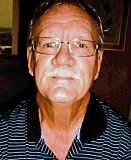
affectionately known as Jack,was born on March 4, 1951, in BatonRouge, Louisiana and grew up in Watson. Jack was known for his remarkable ability to fixalmost anything. Countless people turnedto him for advice and help with all kindsofproblems, knowing he could often find asolution. Hisoutgoing personalityand unique sense of humor madehim unforgettablewherever he went.Hewas fun to be around and always didhis best to make others smile with his jokes and quick wit. Jack lovedthe outdoorsand enjoyed activities such as riding fourwheelers, caring for his lawn and flowergardens, and building outdoor projects. He especially enjoyed working alongside others on various outdoor activitiesand was always willing to lend ahelping hand withsomeone else's project.Healso cherished spending quality timewith his wife, Lisa. Together they traveled to dozensof states and created countless treasuredmemories alongthe way. At home, they spent many happy hourslaughing together whilewatching their favorite movies withtheir beloveddog,Milo. Jack was preceded in deathby his mother, Doris Maggio; his stepfather, Emile Maggio; his brother, Kenneth RayWhitaker; and his son, Jack RandallWhitaker. He is survivedbyhis loving wife, Lisa Bonaventure Whitaker; his daughter, Holly Whitaker Gascon; his sister, Connie Maggio Lassere;and his sister-inlaw, Danell Brice.Heisalso survivedbyhis grandchildren,CarsonGascon and Gavin Gascon; his niece and nephew, Hope Achord and TroyThomas; his wife's niece and nephew, AubreyEffersonand Adam Brice;and his loyal canine companion,Milo, his "opossum-killing pup. Jack
will be remembered for his generosity, humor, willingness to help others, and the joyhebroughttothose around him. He will be deeply missed. Amemorial/gravesideservice will be held at alater date.
Winker, Maurice'Wink'

Maurice Winker,86, a residentofBaton Rouge Louisiana, passed away on May7,2026. He is survived by hiswife,Sophie Winker, anddaughter, Mimi Winker.Visitationwill take place at 10:00 a.m. on Thursday, May21, 2026, at St.George Catholic Church locatedat7808













Tompkins,Elmer Fayette
Stoothoff, Robert 'Bob'
OPINION
OUR VIEWS
FEMA panelhas good ideas, including keepingFEMA
We admit we were concerned when President Donald Trump convened atask forcetorecommend potentially seismicchangestothe Federal Emergency Management Agency
How couldwe notbe, given that thepresident was talking openly aboutdismantlingFEMA and shifting responsibilityfor disasterresponse to states and localities? No stateknows better than Louisiana that some disasters aresowidespread andsevere that they overwhelmthe ability of those on the groundtoeffectively respond withouta federal backstop
So we were pleased that theFederalEmergency Management Agency Review Council’s final recommendations, released earlier this month, called for atransformed FEMAtocontinueto respond during catastrophes. Andasweread thereportfurther,wefoundeven more that sounds promising.
Big picture, the panel proposes dismantling some of the bureaucratic barriers to quickresponse and recovery that we in Louisiana have seen up close.Itenvisions shiftingresponsibilities from Washington to states, localitiesand FEMA regional offices familiar with the areas they cover,and building up local capacity anda network of states to come toone another’said all while preserving astrongfederalrole forthe most dire situations.
Among specific recommendationsare getting hazardmitigation money to areas struck by disaster up front rather than as reimbursements, so that it can be better incorporatedinto rebuilding. The report also suggests combining 15 individual assistance programs, whichpanel members deemed “overly slow,confusing, and inefficient,”intoone,the quicker toget money into thehands of those in need.
The recommendations coincide with the nomination of formeracting administratorCameron Hamilton to hold the job permanently.Hamilton hadbeenfiredlast year after hemadepublic comments about the agency’s ongoing importance. Mark Cooper,amember of thecouncil that produced these recommendations and aformer chiefofstaff to Gov.John Bel Edwards, acknowledged the initial rhetoric surroundingthe council but said that once the groupconvened, killingFEMA was never seriously considered. He said that the panel included peoplewith emergency experience from both partiesacross the country,and that it made apoint of soliciting broad public input, including at alistening session in New Orleans last August on the Katrina anniversary
“The American peopleshouldknow these kinds of processes still happen across party lines,” he said.
The report does leave us withsome lingering concerns, including the future of the National Flood InsuranceProgram, whichishoused in FEMA.The report notes that theprogramis unsustainable on its current course and envisionsshifting to aprivate sector model,ifthe markets can be convinced to take iton. It also embracesRisk Rating 2.0, acontroversialmapping system that hascaused premiums to spike for many Louisianans.
We’ll continue to monitor whether any cost and staff reductions impedethe agency’sability to act whenneeded.
But if one outcome of the process is more timely and efficient help following hurricanes and other disasters,we’re optimistic
LETTERSTOTHE EDITOR ARE
WELCOME. HERE AREOUR
GUIDELINES: Letters are published identifying name, occupation and/or title and the writer’scity of residence
TheAdvocate |The Times-Picayune require astreet address andphone number for verification purposes, but that information is not published. Letters are not to exceed 300 words. Letters to the Editor,The Advocate, P.O. Box 588, Baton Rouge, LA 70821-0588, or email letters@ theadvocate.com.


In Greene case,money is
No amount of money can equal justice. But$4.8 million is about as close as the family of Ronald Greene is likely to get That’sthe amount his family will receive as part of awrongful death settlement that’scoming almost exactly seven years since Green, a49-year old Black man,was dragged from his car, beaten and taunted by ahandful of White police officers alongside arural northLouisiana road as he shouted “I’mscared” and “I’myour brother.” Green initially fled when the officers tried to pull him over for an undisclosed traffic stop in May 2019. But then he stopped running and tried to surrender That didn’tmatter to the officers who rushed his car,hit him twice with astungun, put him in achokehold, punched him in theface, beat him with aflashlight and dragged him, face down, by his ankles across the pavement while he was cuffed and shackled.


age saying “That s*** hurts, doesn’t it?” to abloodied, battered and cuffed Greene. Trooperslater told his family he died from injuries sustained in acar accident after acar chase, an explanation so implausible thatthe emergency room physician who saw Greene when he was brought to the hospital didn’tbuy it, writing “does not add up” in his notes.
Nevertheless, State Police brass publicly maintained that fiction for two years until The Associated Pressobtained and published the body camera footage from the stop, revealing publicly the horror that transpired on that road.
Even after state and federal investigations, thefour troopers (one died in acar crash before the investigation was completed) and one Union Parish sheriff’s deputylargely escaped criminal sanctions. The federal investigation ended with no indictments, and most charges in state court were either tossed or reduced.
them served timebehind bars forkilling Greene.
Oneofthe officers present —there were five LouisianaState Police troopers and one Union Parish Sheriff’s Deputy —could be heard on the foot-
In theend, one trooperand aUnion ParishSheriff’s deputy ended up pleading guiltytomisdemeanor batterycounts in Greene’sdeath. None of
Abroader federal investigation concluded in January 2025 that the Louisiana State Police had apattern of using excessive force, but those findings werelater rescinded by the Trumpadministration. Now the Louisiana State Police has agreed to pay nearly $5 millionto Greene’sfamily to settle afederal lawsuit over his death. The settlement is the closest the Louisiana State Police will ever come—and the Greene family will ever get —toanadmission of guilt. Obviously,it’snot enough. Not enough to undo the night of horrific violence that Ronald Greene endured. Not enough to undo the years of lies and obstruction the agency fedhis family.Not enough to achieve afacsimile of justice. And given that the State Police has anine-figure budget, the pain of the settlement won’t be that bad. Notas bad as Ronald Greene got that night, and not as bad as his family has felt for the last seven years.
Email Faimon A. Roberts III at froberts@theadvocate.com.
We sometimes get requestsfrom readers asking if their names or photos can be removed from articles we have published online. This usually involves someone who has turned their life around after being arrested for an infraction or someone seeking to maintain privacy for safetyreasons.
We takesuch requestsseriously.Weknow these days that online articles can have along
for articles involving serious crimes, we believe there is continuing public interest in knowing whowas arrested and/or convicted. In the same way,for public figures, we have to consider thepublic’sright to know


Arnessa Garrett
Butgenerally,werecognize that once people have turned their lives around, having an unfavorable digital footprint can be burdensome as they It is an evolving area of digital rights that we are navigating, as are other publications.

Turning to our letters inbox forthe week of April 30-May 7, we received 79 letters.
This was the weekthat the Supreme Court issued ahistoric ruling regarding the Voting Rights Act, and that was the top issue in the letters we received. Nine letters discussed the ruling itself and another two focused on the flurry redistricting efforts that followed. Then we had four letters on the Senate race, which wasthen sprinting to aclose. And there were four letters on various bills being considered by the Louisiana Legislature.

Last week, we issued acall forletters from readers: What is aquintessential text of American history and why? We all know the Declaration and the Constitution are on that list. But what are others that explain our American experience? Send your responses to letters@theadvocate.com We will publish aselection of the best letters as America’s250th birthday approaches.

Faimon Roberts
COMMENTARY
Congress cancreativelysolve redistrictingmess
The Supreme Court continues to bollix up congressional redistricting. Congress shouldfixit.
Constitutional textualists —the term the late Justice Antonin Scalia applied to his jurisprudential approach —note persuasively that aclose reading of the language andhistory of Section 2 of the Voting Rights Act does not mandate any particular racial thresholds or results. Instead, it says that if electoral results are consistently and suspiciously skewed, that “is one circumstance which may be considered” when assessing if aviolation has occurred, “provided,thatnothing in this section establishesa right to have members of aprotected class elected in numbers equal to their proportion in the population.”(The italics were mine, for emphasis.)
member system effectively gave littlevoice to what wasthena Black minority in the city


Once the 1982 language was added, many Democrats, aided by court rulings that wandered from that actual text, often have tried turningthe “one circumstance” that “may be considered” into anear-absolute mandatefor so-called “opportunity districts” forBlack voters. For years, theirinterpretations have skewed ever farther from the actual 1982 language.
Contrarily,many Republicans, including legislators in Louisiana and Alabama in the wakeoflast month’sSupremeCourt decision in theLouisiana v. Callais case, are guiltyofignoring the importance andintent of Congress’ 1982 amendment to Section2
The language was added to a simpler,earlier version of Section 2that Congress, with President Ronald Reagan’sassent, amended in 1982 in response to a Supreme Court decision, Mobile v. Bolden. That ruling said courts had no grounds to overturn multimember districts in Mobile, Alabama, even though the multi-
That amendment wasn’t amere piffle; it clearlydid add something to thelandmark 1965 civil rights legislation.
To wit: Legislators still tread dangerouslyifthey drawweirdly configured districts that shoehorn geographically separated groups of Blackvoters into a singledistrict in ways that dilute those voters’ influenceinthe rest
of thestate. Remember: The animating goal of theVoting Rights Act is indeed to safeguard minority rights. The 1993 decision in Shaw v. Reno, widely celebrated by conservatives, reaffirmedthat “traditionaldistricting principles such as compactness andcontiguity” shouldn’tbeflouted.Yet the newLouisiana planproduced by the GOP-dominated state Senate last week arguably violates those principles, especially in appending apredominantly Black sectionofEast Baton Rouge to a districttowhichithas only the slimmest geographical connection.
Yes, that’sbad Alas, the Callais decision whose conclusionIsupported, but not itsreasoning —did little to stopthe endless parsing of what is andisn’ta racial “result” or aracial “intent” in drawing district lines, or of how to adjudgeifdistricts are compact andcontiguous enough to pass muster
Ahalf-centuryofconfusionand discord overredistricting, combinedwiththe past year’sabominable re-redistricting across the country,istoo much.Louisiana’s formerSen. Mary Landrieu and
formerU.S.Rep.CharlesBoustany,inanessay Isaw only after Ibegan writing this piece, are right to suggest nearlythe same thing Ipropose here.Namely, Congress must takecharge. After all, while theConstitution givesstate legislaturesprimary authorityoverthe “times, places andmanner” of holding federal elections, it then givesplenary power to Congress “at anytime by law[to] make or alter such regulations.”
Therefore, Congress should do two things.First, completelyban mid-decade redistricting except in response to aspecific court order. Each state should redistrict only once after each decennial census. Stop thepartisan bloodsport. The second congressional action would be morecomplicated, perhaps necessitating aspecial commission’shelp. It would require takingredistricting away fromstate legislaturesentirely andpermanently. (A constitutional amendmentdoing so might be even better). Instead,completely without regard to racial considerations proorcon —and without regard to Section 2, whichwould no longerapply to redistricting but still apply to allother vote-
related practices —Congress could make each state abide by theexact same, utterly neutral computer algorithmindrawing districts.
Essentially,the algorithm would be programmed to start in onecorner of each state and, following parish or countylines in contiguous order andtothe maximum degree of compactness, create thestate’sdistricts in compliancewithone-person/ one-vote principles. No humanintent. No political considerations. Just acombination of pure, blind mathand already-establishedpolitical boundaries.
If Black citizens(or Hispanic ones, or whoever) live in enough proximitytoeach other to form amajority in adistrict, as they quiteoften will, fine.Ifnot, then not. Regardless,the ruleswould be neutral,all discriminatory intentremoved andgerrymandering would be eliminated forever If Congress doesn’t do something like that, thevicious political brawls, admixed withracial grievance, will only intensify Congress mustact.
Email Quin Hillyer at quin hillyer@theadvocate.com
Murrill’sthreats to N.O. officials make ugly situationevenuglier
Liz Murrill’sgot some kindofnerve
The Republican attorney general added insult to injury when she threatenedtounseat seven Democratic elected officials in New Orleans andreplace them with appointees of Republican Gov.Jeff Landry Their alleged offense? They dared to raise legitimate questions over the new statelaw that effectively removed another elected official from an office to which he’d been overwhelminglyelected Murrill’stargets were not just run-of-themill elected officials. I’m talking about the mayor,the district attorney, both at-large members of the New OrleansCityCouncil and three district members —basically the city’spower structure. And for good measure, Murrill threatened to puta highly respected retired judge— an innocent bystander,she conceded, appointedbythe council to hold down the fort while multiple lawsuits get sorted out —inprison. As Mayor Helena Morenomarveledina videovowing to not back down in theface of thesebizarre threats, Murrill actually putitall down in writing in adownright Trumpian display of weaponizing the state Department of Justiceagainst political adversaries. (Knowing Murrill’spolitics, she
might takethat as acompliment. It most definitely is not.)
Duncan’sterm was set to startearlier this month
Confusion followed and lawsuits started piling up.


Until now,Murrill wasn’tavisible player in the supermajority Republican Legislature’smad dash to negate Calvin Duncan’slandslide November victory for clerk of Orleans Parish Criminal Court by disappearing the office before he could takeit. Butnor,for reasons she has never satisfactorily explained, is she a neutral legal observer Back when Duncan, aformer jailhouselawyer who spent years locked up at theLouisiana State Penitentiary at Angola before hisconviction was tossed out,was challenging incumbent Darren Lombard, Murrill threatened to takelegal action against him for saying he’d been exonerated —anonlegal termthat mostagreed was well within bounds.
Her attack, along with Lombard’s, stoked sympathy among fair-minded voters for Duncanand surely contributed tohis 68% showing.
Rather than accept thevoters’ decision, lawmakers led by West Monroe Republican Sen.Jay Morris —with strong backing from Murrill’sformer boss, Jeff Landry pushed abill to merge theoffice intothat of theclerk of Civil District Court before
Andthen theCity Council, with support from Moreno and DA Jason Williams, passed aresolution saying the existing civil court clerk’soffice had been redefined enough so that it was effectively anew office, one that was vacant andtherefore needed to be filled withanew election.
That created even morecollateral damage, including Chelsey Richard Napoleon, who’d been elected civil court clerk without opposition last fall andassumed new duties under thenew law before the council made its move. Napoleon said she didn’tsupport thelegislation, but she’s now associated in the public’smind with adeeply unpopular policy imposed from Baton Rouge.
Alsocaught up in themess is Calvin Johnson, the retired judge whoagreed to fill thepost on an interim basis, only to be threatened withjail by theAG.
There’sa real basis for legal confusion here, and it’s thecourts’ job to work through it.Thursday,the state Supreme Court agreed to do so quickly.
That’swhat should happen. Bullying from theAG’soffice should not.
For Murrill to say that the chaos caused by her own team could require —her word —that she go after Johnson forusurping Napoleon’sjob and all those other elected officials forhelping him would be simply gratuitous if it happened in avacuum. It didn’t. It happened after the Legislature voted to eliminate the criminal clerk’s office without even consulting NewOrleans officials, or backing up their claim of efficiency with any data, or building in timetoplan such amajor transition. It happened as the clerk’soffice wasgetting ready to oversee an election that, thanks to the introduction of new party primaries, wasalready shaping up as complicated. It happened even as Murrill’sRepublican allies in the Legislature are pursuing an equally rushed drive to eliminate one of the state’stwo Black majority congressional districts, and after Landry canceled U.S. House elections despite votes already having been cast. And Murrill has the audacity to suggest that the New Orleans officials reacting to the Legislature’sand governor’sactions are the only ones playing fast and loose? Spare me. Spare us all.
Email Stephanie Grace at sgrace@ theadvocate.com.
Hantavirus passengers arewitnessingacruel reality


In the hellscape of my worst nightmare, I’m trapped on acruise ship. And that’s without arodent-bornevirus, three dead passengers, others showing symptoms of the disease and dozens aboard who could become infected. On top of this worst-case scenario, no country will allow us to dock. This nightmare is only in my imagination. But for several days,itwas been reality for nearly 150 people who became hostagestoarelatively rare disease —hantavirus —and aworld seemingly uninterested in helping them astheyfloated in limbo off the West Africancoastnear Cape Verde. Officials there have declined to welcome the weary travelers, though three sick passengers were airliftedfromthe ship last week.
Officials in port cities, meanwhile,have been bickering about how to dealwith this floating petri dish. Following days of confusion about how the disease gotonboardand uncertainty about whetherthe virus can be passed from human to human, Spain finally agreed to let the shipdock in the CanaryIslands, against local officials’ wishes. Hantavirus canbefoundanywhere rodents live, but most ofteninNorth and South America. Usually,the virus is passed from rodent droppingstopeople, not from human to human. Butthe Andesstrainof hantavirus, which has been identified on the ship by authorities, canbecontagious among humans.
The Dutch cruise ship, MV Hondius, departed April 1from Argentina,where a

ASSOCIATED PRESS PHOTO By ARTURO RODRIGUEZ
Thehantavirus-stricken cruise ship MV Hondius is seen at anchor at the portofGranadilla in Tenerife, CanaryIslands, Spain, on May11.
rodent known to carry theAndes strain is common. The first passenger became ill on April 6and died on board on April 11. Weekspassedbetween that death and confirmationofthe hantavirus, according to an Associated Presstimeline. Whetherarodent was astowaway or a passengerwas infected beforeboarding is aquestion yet to be answered. This uncertainty surely contributed to fearsabout releasingaboatload of possibly infected people into one’scommunity Moreover,a 65-year-old German passen-
ger who was evacuated was in close contact withone of the people who died. This fact increases the likelihood of further contagion. Obviously,there are ways to mitigate the risks posed by possibly infected people reasonable isolation, testing and monitoring, and fumigation of the ship amongthem. The World Health Organization, which helped coordinatethe ship’stransit to theCanary Islands, insiststhat the overallpublic health risk of the hantavirus “remains low.” That’snice. But imagine being cloistered in acabin on thatboat,waiting and won-
dering. Am Inext? While no one should be paralyzed by fear,anabundance of caution is not irrational. Leaving people indefinitely trapped on asick ship, however,iscruel and unusual by any humanitarian standard. Ikeep thinking of the young manonthe cruise ship, Jake Rosmarin, who made a tearful video of himself explaining howhe and the other passengers were coping. He said they only want to be safe, to have clarity and to go home. It washeartrending to watch. Surely nothing scalds the soul like rejection. To know that the world doesn’t want youbecause you might be sick must feel like alittle death with each passing day.
In full disclosure, I’m biased against cruise ships, which Iprefer to see departing rather than arriving whereverImight be The frequent incidents of troubled voyages, stricken with illness or tainted by passengers gone missing, make the popularity of cruises all the more baffling. Just last year, 23 incidents of gastrointestinal illness were reported on cruise ships by the Centers for Disease Control and Prevention. Though nothing like the hantavirus in potential lethality —and representing only afraction of the total number of cruises each year the risk-reward ratio might give one pause before hitting the high seas.
The poor folks on the MV Hondius signed up foranexpeditionary voyage with an itinerary that included Antarctica, the Falklands and various other small islands throughout the Atlantic. It was, briefly,a naturalist’sdream —though not, as the expression goes, one to die for.
Email Kathleen Parker at kathleenparker@washpost.com.

Quin Hillyer
Stephanie Grace
Kathleen Parker



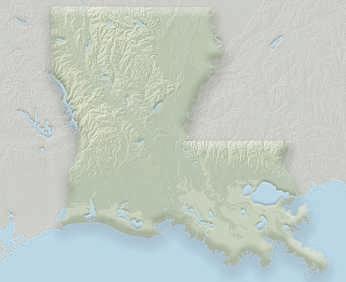







































ON AROLL

LSUblanksVirginiaTechtoadvance to regional final
BY JIMKLEINPETER
Contributing writer
Another day,another dominant performance.
The LSU softball team tightened itsgrip on the NCAA Baton Rouge Regional with asecondconsecutive8-0 runrulevictory,this oneagainst No.2 seed VirginiaTech, at Tiger Park on Saturday.
LSU (39-17)advances to the championship roundset for 1p.m. Sunday,needing onlyone victory to advancetothe Super Regional round. The Tigers will play the winner of Saturday’s Game 5. LSUrun-ruledAkron 8-0onFriday, alsoinsix innings.
The Tigers (39-17) got an efficient two-hit pitching performance from Cece Cellura, who walked one and struck out three while throwing 73 pitches, 50 forstrikes, to keep the dangerousHokies batsincheck Senior catcher Maci Bergeron was the offensive
BY NOAH TRISTER AP sportswriter
LAUREL, Md. —Napoleon Solo reemerged as acolt to watch with avictory in the Preakness Stakes. Now trainer Chad Summerswantsa shot at Kentucky Derby winner Golden Tempo, whose absence left an underwhelmingfield at Laurel Park this weekend “Wewish he was here in thePreakness We were rooting for them when they were thinking about it,” Summers said.“Unfortunately,theydidn’tmake it here. That’s fine Hopefully,wecan seehim down theroad somewhere.” Napoleon Solo heldoff Iron Honor down thestretchonSaturday,reboundingfrom apair of fifth-place showings for his first victory of the year.Golden Tempowas held out of the race, leaving awide-open field ä See PREAKNESS, page 5C
catalyst with asecond-inning, two-run homer —her first since March 7, astreak of 28 games —tostake LSUtoa 2-0 lead. She alsohad her second three-hit game of the season and was on base in all four plate appearances. “Wetalked all year about searching for our best game and trying to find acomplete game and Ithink that was darn near as close toitaswecan be,” LSU coach Beth Torina said. “Weexecutedour plan beautifully andto do that against such aqualityopponent such as Virginia Tech is really something special.Weknowwhata good team they are from top to bottom.
“I can’tsay enough aboutCece’sperformance.She continued to control areally dominant offense. It’ssoeasy to celebratefor Maci to have aday likethat. It makes my heart want toexplode, it’ssocool. She’sthe ultimate Tiger.”
ä See LSU, page 7C

Page 7C
Tigers fall to Gators to endregular season
LSUgetsswept for fourth time in SECplay
BY KOKI RILEY Staff writer
WelcometoPluto, Jay Johnson. Besides his first season at Nevada, LSU’s coachcan’t recall anothertimewhen his team entered the final weekend of the year with nothing to play for. The fateofLSU’s season would be determined next week at theSEC Tournament, andthere wasnothing the Tigers could do against Florida (37-18, 18-12 SEC) this weekend to change that. This was uncharted territory forJohnson.
“I don’twantanybody to thinkthatwinning is notimportantevery time,” Johnson said on Friday.“…This is like Pluto.” Therefore, on Senior DayatAlex Box Stadium,Johnson inserted five seniors into the lineup and used three seniors on the mound in the Tigers’ 15-11 loss to the Gators to finish the regular season. With the result, LSU (29-27, 9-21) gotswept in four of its past five series in Southeastern Conference play
For some of the seniors, Saturday was the last time they’d play in agameintheir careers.
“Today,itwas like,‘Hey,man, let’sgive the guys their flowers,’ ”Johnson said. “And someofthem deserve it with what they accomplished last year collectively.”
Among the seniors, fifth-year senior Seth
ä See TIGERS, page 7C



Jeff Duncan
NFLofficialsare tellingussomethingwith theleague’s2026 schedule. They still don’t believe theSaints are prime-time players. The presence of Tyler Shough and afleet of new offensive weapons wasn’tenough to convince the NFL’sschedule-maker and network partners the Saints are ready for the spotlight. The Saints are one of just seven teamsto have one or fewerprimetimegames on their schedule this season. One year after having no prime-time TV games, the Saints will have just one this season: aMonday Night showcase against the Atlanta Falcons at the Superdome in Week 4. Otherwise, the Saints were shut out from the national spotlight. That Falcons game, which will come a weekafter the 20th anniversary of the historic Domecoming game, and the Saints’ Week 7trip to Paris to play the Steelers are the highlights of the 17-game slate. On paper,the schedule appears to be user-friendly.The Saints play just four teamsthat qualified forthe playoffs last
STAFF PHOTO By MICHAEL JOHNSON
LSU pitcher Cece Cellura delivers apitch against Virginia Tech in the third inning of an NCAA regional game on Saturday at TigerPark. LSU run-ruled Virginia Tech 8-0
ASSOCIATED PRESS PHOTO By NICK WASS
Lopez, right, aboard Napoleon Solo, leadsthe pack to win the 151st running of
StakesonSaturday at Laurel Park in Laurel, Md. It was the first victory
race for Lopez and trainer Chad Summers.
FILE PHOTOByMICHAEL BACIGALUPI LSUpitcherZac Cowan started Saturday’s game against Florida and allowedfour earned runs in three inningsofLSU’s1511 loss.
6:30 a.m. Grand Prix of
1:30 p.m. Georgetown vs. DukeESPNU COLLEGE ROWING
8a.m. Big TenTournament champ. BTN COLLEGE SOFTBALL REGIONALS
11 a.m. Dukevs.Arizona ACCN
11 a.m. Georgia vs. Clemson ESPN2
Noon Texas vs. Baylor ESPN
Alabama vs. SC Upstate SECN
1p.m. Tennessee vs.TBD ESPN2
2p.m. Oklahoma vs.TBD SECN
2p.m. Arizona St. vs.TBD ABC
2p.m. Grand Canyonvs. Nebraska ESPN
3p.m. TexasTech vs.TBD ESPN2
6:30 p.m. UCLAvs.TBD ESPNU
6:30 p.m. Mississippi St. vs.TBD ESPN COLLEGETRACK ANDFIELD
12:30 p.m.Big TenTournament champ. BTN FISHING
8a.m. Bassmaster Elite FS1 GOLF
8a.m. German Masters Golf
9a.m. PGAChampionship ESPN Noon PGAChampionship CBS
2p.m. LPGA: Queen City Champ. Golf HORSE RACING
11:30 a.m.America’s Dayatthe Races FS2
2p.m. America’sDay at the Races FS2 MEN’S IIHF HOCKEY
5a.m. Great Britain vs.U.S.NHLN
9a.m. Denmark vs. Sweden NHLN
1p.m. Germanyvs. Latvia NHLN MLB
11:15 a.m.Miami at TampaBay NBCSN
3:05 p.m.San Francisco at Athletics NBCSN
6p.m.San DiegoatSeattle Peacock
NBA PLAYOFFS
7p.m.Cleveland at Detroit, Game 7Prime
MEN’S SOCCER
6:30 a.m. Nottingham at Man. United USA
7:55 a.m. KilmarnockatLivingston CBSSN
9a.m.Sunderland at Everton NBCSN
9a.m.Brighton at Leeds USA
11:30 a.m.West Ham UnitedatNewcastle USA
WOMEN’S SOCCER
5p.m.Angel City at Portland ESPN2 TENNIS
10 a.m. Rome-ATP Tennis
3a.m.(Mon.) Roland GarrosQualifying Tennis UFL
Noon Columbus at Birmingham Fox WNBA
12:30 p.m.Las VegasatAtlanta NBC, Peacock
5p.m.Seattle at Indiana NBC, Peacock
Smalleyleads buttitle up forgrabs
PGAChampionship still tightheading into finalround
BY DOUG FERGUSON Associated Press
NEWTOWNSQUARE, Pa ThePGA Championship where no onecould take control Saturday is now the major that practicallyeverybody can win.
Alex Smalley at least gets ahead start thanks to his sublime play on the back nine at Aronimink Golf Club, with six birdies over his last 10 holes for a2-under 68 and a two-shot lead.
His finishing kick kept this PGA Championship from having the largest 54-hole logjam in major championship history.There was aseven-waytie for theleadwith an hour to go in the third round and players withhighest pedigree were all within range.
Fourteen players had at least a share of the lead Saturday.Midway throughthe thirdround, 28 players were separated by two shots. And not just any players. Jon Rahm and Rory McIlroy were among those tied at one point. Xander Schauffeleand and Patrick Reedwere rightbehind. About the only one who failed to seize on the moment was reigning champion Scottie Scheffler,who missedsix putts inside 10 feet, four of them for birdie.
Smalley’sfinal birdie putt from

just inside 15 feet put him at 6-under 204, twoshots ahead of Rahm and three ahead of McIlroy Schauffele and Reed Scheffler made a9-foot bogey putt onthe lastholeand was five behind.
“I’ve neverseen anything like this,” Schefflersaid. “I’venever seen aleaderboard like this, this bunched up. Going into tomorrow, it’s quiteliterallyanybody’stournament.”
But itstarts with Smalley,the 29-year-old who lives in North Carolina and is playing only his fifth major,never cracking the top 20.He’salso never won on tour,
but he’sbeen rounding into form lately.Heiscoming up on three straight finishes in thetop 20. He lookedlike he mightcrack early,playing in the finalgroup with MaverickMcNealy,sprayingthe ball off thetee andopening with three bogeys in four holes to disappear from theenormous crowd atop the leaderboard. But even amid thegusts andfast greens, Smalley was resilient as ever.Hetook the leadwitha 25-foot birdieputt on thepar-4 15th —551 yards into the wind —stretched it two shots by reaching the par-5 16th in two for another birdie and then had abogey-birdie finish.
Rahm had acareless three-putt bogey on the final hole that slightly soiled his 3-under 67, but he was part of the five-way tie forsecond withLudvig AbergofSweden (68),Matti Schmid of Germany (65),Nick Taylor of Canada (65) and Aaron Rai of England (67). “Thatwas afantastic round of golf andthrilled to be in agood position for tomorrow,” Rahm said. McIlroy beganthe third round five shotsbehind but with 29 playersahead of him. He blastedhis way to a4-under 66 —his 25th score in amajor at 66 or better He wasn’tsure where that would leavehim when he finished, except that did what he needed.
“I feel like Istill did enough to think Ihave achance goinginto tomorrow,” McIlroy said.
Schauffele had a66and Reed bounced back with a67, two shots behind along with McNealy,who bogeyed the final hole fora71.
The pin positions were farmore accessible than the previous two days,asMcIlroy had predicted. No one shotbetter than 65, though Chris Kirk had adouble bogey on the18th for oneofthose rounds. Justin Rose was outside the cut line on Friday until holing achip from deeprough foreagle on his last hole to makeitwithone shot to spare. He shot 65.
“When youhavea setofgreens like this, you can start to frustrate people pretty easily,” McIlroy said. “It’sfrustrating to us,but at thesametime, it createsa hell of an entertaining championship.”
NASCAR’s All-Star prizeremains stuckat$1M
BY DANGELSTON Associated Press
DOVER, Del. There is aclassic scene from the first “Austin Powers” movie where the fictional supervillain Dr.Evil suggests stealing anuclear warhead and holding it hostage forransom.
Dr.Evil puts his pinky near his mouth, andsays thepricefor releasing the warhead:
“One million dollars.” After abeatofawkward silence, Dr.Evil’ssecond-in-command, Number 2, suggests ahigher dollar amount for the ransom.
“Don’tyou think we should ask formore than amillion dollars?” the villain says. “A million dollars isn’texactly alot of money these days.” The time frame for the movie was 1997. Here it is in 2026, andamillion dollars isn’texactly alot of moneyinsports these days and hasn’tbeen in NASCAR since the days when Jeff Gordon swept the series full throttle into the national spotlight. Yetinanera when a$10 millionannual baseball salary seems like adiscount, NASCAR drivers willrace for the same measly $1 millionprize as they have since 2003 in Sunday’s All-Star race at Dover Motor Speedway
Just as No. 2suggested, NASCAR drivers are openly asking, shouldn’tthey ask for more than amillion dollars for winningthe All-Star race?
“I think an increase would be great, for sure,” said Chase Elliott, NASCAR’smost popular driver.“Imean, Ithink it would be awesome to make thatnumber bigger,what that number needs to be, where it should be, I’m not sure. But certainly,yeah certainly,with the time and all the things that have changed overthe years, Iguess it would seemingly make sense for that to adjust.”

worth about $1.8 million today
Consider therising team costs of fuel, engines, tires —well, just about everything on or in astock car —and it seems only fair the prize should fall in line to assist with theadded expenditures. The All-Star event —and by All-Stars, NASCAR means every single driverin the field that races every singleweek in the series has been defined by annual format changes that can often lead into abit of amystery for fans watching the race.
Drivers have long grumbled thatanincrease is overdue and a $7.7 billionTVdeal that stretches throughthe 2031 season means NASCARcan afford to loosen the winning purse strings. Thecharter deal that guarantees spots in the field gives theteams alump sum of money which is spread throughout the year
“I will say to thecredit of the sport,the team owners have certainly elevated the prize money on the other races,”2012 NASCAR champion Brad Keselowski said.
through aspokesman it was unawareofany immediate plansto raise thewinner’s purse.
“Don’tget me wrong, the payday’snice and stufflike that,” 2023NASCAR championRyan Blaney said. “Butyeah, Ifeel like as acompetitor,Ithink it should be at least double.”
Hey,Bubba Wallace tossedout $5 millionlastyear as asuggested prize, so NASCARwould get off easy with Blaney’ssuggestion and a$1million bump.
Dover’sfutureindoubt
Dover Motor Speedway hada points race on theschedule every year since 1969 andwas the site of two Cupweekends through 2020. The All-Starrace is being run in theNortheast— Christopher Bell won last year at North WilkesboroSpeedway —for thefirst timeinthe event’s history,but that’snot necessarily good news for themile-concretetrack
Hamlin rebounds from spin to winall-star pole
Delaware for yearstocome.
“Whenyou’ve never done this before, you don’tknowwhatto expect and fans vote really with their pocketbook,” Tatoian said. “We’ve been really pleased with all aspectsfrom camping to premium hospitality to ticketsales We’relookingfor as bigorbiggercrowd than we’ve had the last couple of years.”
Without aCup points race this season,the urgencytoreturnone to thescheduleinanera where NASCARleadership has been bolder this decade in trying new cities and venues could be lessened in the future.
“We’llget apointsrace back,” Tatoian said. “Honestly,I just don’tknow whenthat will be.”
Complicatedformat
Oneofthe primary complaints about the All-Star race is that thereisnothing really “All-Star” about the event.
The full 36-driver field will race in the first two segments of the All-Star race before afinal200lap segment that will consist of 26 drivers.
Oh, and19drivers are already locked into that final segment because they are either aformer All-Starrace winner, aformer Cup Series championcompeting full-time this year,orfull-time driver who has won aCup Series points race in either the 2025 or 2026 season.
Six driverswill race their way into the final segment basedon performance during the opening two segments, while one more driver will advance through the NASCARAll-Star fanvote.
“It’scomplicated on how to make it work,” Keselowski said.
DOVER, Del. Denny Hamlin overcame aspin on his warmup lap Saturday to win the pole position for the NASCAR All-Star Race at Dover Motor Speedway
The JoeGibbs Racingdriver looped his No. 11 Toyota shortly after pullingontothe banking on the oval,but he recovered fora two-lap time of 1minute,49.298 seconds that included afour-tire pit stop. Brad Keselowski qualified second, followedbyErik Jones,Ross Chastain and William Byron at the concrete track known as the “MonsterMile,” whichwill become the sixth oval to play host to the AllStar Race.
ConnorZilischand RickyStenhouse Jr.also spun, andthere were 10-secondspeeding penalties for Zane Smith, Michael McDowell and Kyle Larson.
Firstday of qualifying for Indy 500 washed out
INDIANAPOLIS The first dayof Indianapolis500 qualifying was rainedout, race organizers announced Saturday It’sthe first time since 2008 afull day of qualifying waslost because of weather. The decisionprompted some significantschedulechanges forSunday Ashort practice, held in two groups, will begin at 9:30 a.m. for each drivertrying to make the 33-car starting grid. The four-lap qualifying runs will begin at noon. Butthe plantoholdaseries of elimination rounds between the 15 fastest cars has been scrapped, and organizers will revert to the 12-car format used in recent years. The topsix carsadvancetothe final round, which determines the pole winner forthe May 24 race.
Svitolina wins Italian Open; Sinner reaches men’s final ROME Elina Svitolina claimed a third Italian Open title on Saturday by beating Coco Gauff, wholost in the final in Romefor the second straight year In themen’sfinal on Sunday, home favoriteJannik Sinnerwill face Casper Ruud.
Svitolinatooknearlythree hours to prevail 6-4, 6-7 (3), 6-2and win herfirstWTA 1000 titlesincelifting the title in Romein2018. The Ukrainian also won in 2017. Sinner beatDaniil Medvedev 6-2, 5-7, 6-4whentheir rain-delayed semifinal resumed on Saturday andisone victory away from becoming only the second man after Novak Djokovic to winall nine Masters 1000 titles. Djokovic has woneach Masters tournament at least twice.
Yankees’Colenears
100 mph in sixthrehab start
MOOSIC, Pa.— Gerrit Cole reached 99.6 mphwith his four-seam fastball, throwing 86 pitches over 51/3 innings for Triple-A Scranton/ Wilkes-Barre against the Syracuse Mets on Saturdaynight in likely his next-to-last minor league injury rehabilitation start before rejoining the New York Yankees. Returning from reconstructive elbow surgery on March 11 last year,Colethrew 56 pitchesfor strikes and averaged 97 mphwith his fastball.
He allowedone runand sixhits with six strikeouts and one walk his sixth minor league start. A35-year-old right-hander, Cole is asix-time All-Star and the 2023 AL Cy Young Award winner He made his first minor league rehab start on April 17.
Woad leads Kroger Queen City; Korda 9shots back CINCINNATI Lottie Woad leftNelly Korda and everyoneelsebehind on arainy andbreezy Saturday in the Kroger Queen City Championship. Woad shot a5-under 65 —aday after a64—toget to 11-under 199 and take athree-stroke lead over Amanda Doherty into the final round.
Adjusted for inflation, that same prize from 2003 would be
Speedway Motorsports, which ownsthe Delawaretrack, said
Dover president Mike Tatoian said thetrack will have aplace on thescheduleinsome form in 2027 and he remained confident NASCARwould stillthrive in
“You’vegot the whole charter situation, TV wants afull field, so NASCARhas really got to pull together alot of different stakeholders withmaybe notaligned interests. Ithink they’re doing as good ajob of that as you can. Ithink the race has aplace in the sport.”
Korda was nine shots back in a tie for19th after a2-over 72 in her bid for athird straight victory.She was in the final groupinall sixof her previous starts this year,winning the Chevron Championship and Riviera Maya Open in the last two.
Play was delayedfor about 21/2 hours in the morning at Maketewah Country Club, the firstyear venuethatfeaturespar-3 closing holes on each nine. On TV AUTO RACING
ASSOCIATED PRESS FILE PHOTO By LM OTERO
Driver Chase Elliottsigns autographs before aNASCARCup Series race on May3inFortWorth, Texas.
ASSOCIATED PRESS PHOTO By CAROLyN KASTER
Alex Smalleyhitsfromthe fourth tee of the PGA Championship on SaturdayatAronimink Golf Club in NewtownSquare, Pa

U-High’s comeback falls short in loss to Newman
BY JACKSON REYES Staff writer
SULPHUR University
High did all it could in the seventh inning against Newman.
In Game 3 of the Division III select state championship series, the Cubs entered the final inning down by seven runs. U-High kept fighting and quickly plated four runs.
With the bases loaded and two outs, Judah Zito hit a fly ball that was caught by Newman center fielder for the final out.
With that, the third-seeded Greenies defeated the top-seeded Cubs 15-12 on Saturday at McMurry Park to win their third state title in program history
“I have nothing but admiration for our guys,” U-High coach Jon Ramsey said. “They didn’t give up.” Newman (30-8) scored three runs in the first inning. An error and two walks loaded the bases, and consecutive singles made it 3-0.
The error was one of four for the Cubs on the day U-High (30-11) tied it with three in the second inning and added two in the third to take a 5-3 lead following Lane Mixon’s two-run double.
Newman cut the deficit in the top of the fourth.

games when you give extra outs. We didn’t do our job.”
BY JACKSON REYES Staff writer
SULPHUR One game stood between Dutchtown and completing its magical postseason run.
The eighth-seeded Griffins upset nationally ranked Barbe, Division I nonselect’s top seed in the quarterfinals.
The Griffins then scored 22 runs in Game 3 against Zachary in the semifinals to reach the state title series.
In Game 1 of the Division I nonselect state title, the Griffins used a five-run seventh inning to beat Sam Houston 5-1. After Sam Houston evened the series, the teams faced off in Game 3 on Saturday Dutchtown’s bats went cold, however, as No. 2 Sam Houston (34-9) rolled to a 4-0 win at McMurry Park to repeat as state champions. Despite falling short, the state title appearance marked the Griffins’ first since 2009.
“I’m just so proud of my kids,” Dutchtown coach Chris Schexnaydre said. “They competed to the end.
Sam Houston scored first in the opening inning. Ty Smith hit a two-out single to right field and Owen Galley brought him home with
a single.
Sam Houston pitcher Brytn Gardner silenced the Griffins’ bats. He allowed just two hits and struck out five in four innings. Coleston Donaldson entered in the fifth and pitched three innings of no-hit ball.
“Defensively, they were outstanding,” Schexnaydre said. “On the mound, it felt like they ran a new arm out there every inning.”
The Broncos of Lake Charles added two runs in the third on a two-run home run by Carson Christ Dutchtown (29-15) had its best scoring chance to that point in the fourth. A walk and a single put two on with one out. Gardner was then called for a balk, moving both runners into scoring position.
Camden Hanberry then hit a grounder to third base. The Broncos’ third baseman threw the ball home, and the runner at third was caught in a rundown trying to score for the second out A groundout to the pitcher ended the inning and squandered the chance to chip into the deficit.
“It felt like every break went their way,” Schexnaydre said. “They made diving plays. We couldn’t get a timely hit tonight, but that’s part of baseball.”
In the bottom of the sixth, Dutchtown first baseman Brooks Bumstead was ejected after he got into a shoving match with Donaldson on a pick-off attempt. Donaldson ran into Bumstead while getting back to first. Bumstead responded by shoving him off the base.
“Their guy in the fifth went back in hard a couple times,” Schexnaydre said.
“That last time, I think that guy put an elbow in Brook’s chest, and I think Brooks felt like, ‘Hey, he was playing dirty.’ ”
After a brief shoving match, the first base umpire tossed Bumstead.
“It was an unfortunate situation that it happened like that, taking away from a big game,” he said, “but the umpires did a good job of reconciling it.”
Dutchtown managed just three baserunners in the final three innings.
“I just thanked our guys for getting us back,” Schexnaydre said. “Dutchtown’s back.”
The Greenies put runners at first and second with one out after a single and a walk Nicholas Zeringue replaced starter Grant Vollmer but gave up a runscoring single against the first batter he faced.
Zeringue then forced a grounder to keep it a 5-4 game.
In the top of the fifth, Newman’s Malcolm Schairer ripped a one-out single up the middle. George Loop followed with a ground ball to the shortstop, but his throw soared over the second baseman’s head to put runners on the corners. Zeringue hit the next batter to load the bases for the Greenies. Tanner Robert then hit into a fielder’s choice to score the tying run before Jack Falgoust hit a single to shallow right field that put Newman up 7-5. Charles Wilson’s tworun home run to left field capped the big inning to make it 9-5.
Newman scored three more in the sixth to push its lead to seven at 12-5.
Errors resulted in only two earned runs for UHigh’s pitchers. “We just didn’t make a couple plays,” Ramsey said. “It’s hard to win baseball
U-High’s Jaris Hamilton cut into the deficit with a three-run home run in the sixth, but the Greenies added three to push the lead back to seven in the seventh.
U-High led off the seventh with a hit batter and two singles. After a fielder’s choice, Shepherd Gammon doubled to right field to score two runs. Trey Sotile drew the Cubs closer with an RBI single.
After a lineout, Hamilton singled to center field to make it a three-run game. The bases were loaded again after a walk, but the flyout to center field ended the comeback bid. Ramsey said he was grateful for his seniors, who made it three straight trips to Sulphur
“U-High baseball is better because of all the seniors here,” he said. “We’re going to be better down the line because of all these seniors.”




STAFF PHOTO By BRAD KEMP
University second baseman Lane Mixon tags
STAFF PHOTO By BRAD KEMP
Dutchtown second baseman

Spurs focused on the conference finals
BY DAVE CAMPBELL AP sportswriter
MINNEAPOLIS The San Antonio Spurs weren’t supposed to be this far along at this point in their development, entering the Western Conference finals with confidence, momentum — and just about everything they need on the court except for significant NBA playoffs experience.
The Spurs aren’t concerned about everybody else’s timeline. They’ve got another series to play soon against the defending champion Oklahoma City Thunder, and they’re aiming to win it.
“I understand the general expectations of what we were supposed to do in October aren’t necessarily aligned with where we’re at right now,” coach Mitch Johnson said after the 139-109 romp past the Minnesota Timberwolves on Friday night that finished the secondround series in six games “We never talked about what we were going to be or what we were going to do. We just knew that we had a lot of potential and we were going to try to be the best team we could be.”
Drafting Victor Wembanyama with the first overall pick in 2023 was the most obvious step toward this moment for a proud franchise that collective five NBA championships over coach Gregg Popovich’s storied tenure from 1997-2024, but the way they’ve assembled a strong, smart, speedy and slickshooting backcourt around him has proven to be a masterpiece in roster building.
Stephon Castle, who led the Spurs with 32 points and 11 re-
bounds in Game 6 and went 5 for 7 from 3-point range, was the fourth overall pick in the 2024 draft.
Dylan Harper, whose energy off the bench was a consistent edge in the series, was the second overall pick in the 2025 draft. Six of their nine primary rotation players were first-round draft picks by the Spurs.
Then there was the trade for two-time All-Star De’Aaron Fox last year, adding a steady veteran for Castle and Harper to emulate.
“They’re as coachable as anybody we have,” Johnson said. “They listen when we tell them stuff, and they get on the court and they’re just like attack dogs and they just go. I think the one thing I can give them both credit on and praise them is they don’t make a lot of repeatable mistakes.”
The Timberwolves had far more collective experience in the playoffs and overall over the Spurs, but they were the ones who made far more of those correctible gaffes.
The younger Spurs looked like they had the better on-court habits, starting and ending with their determination and ability to get out on the fast break and beat the Timberwolves back in transition.
“We’re a really talented group that plays together and plays very selfless, and we’re all young,” Castle said. “I think we can beat anybody on any given night Us just being very selfless in the way we move the ball, it’s just fun to play.”
Wembanyama in particular ma-
tured a lot within the series, after his ejection early in Game 4 for elbowing Naz Reid in the neck. He came back with a measured vengeance in Game 5 and was content to play a supporting role in Game 6 while Castle and Fox did most of the damage for a machine-like offense that scored 36, 38 and 36 points over the first three quarters.
“It feels like it’s connection between each other in the first minutes of the game,” said Wembanyama, who had 19 points in 27 minutes in Game 6. “This team, whenever we’ve hit first and taken an early lead, we’ve beat them. Really, whenever we beat them it was by like 30 every time. The way they play also makes it that they get tired because they play so physical, and we try to beat them with pace.”
Even though this group has logged only 11 playoff games together, the Spurs clearly don’t look out of their element on the big stage.
“The nature of the playoffs makes it that we’re going to play against better and better teams. There was already a leap between the first and second round. It’s going to be probably an even bigger leap between the second and third,” Wembanyama said. “We’ve got guidance. We’ve got a good coaching staff — the best, actually So we can trust them.”
Starting on Monday night in Oklahoma City
“Just the words ‘conference finals’ is crazy. It’s like something I heard my whole life, and now being in it is just special,” Wembanyama said. “ It’s hopefully many more conference finals to come.
Game 7s have been kind
to Cavaliers, Pistons but one will fall on Sunday
BY TIM REYNOLDS AP basketball writer
Game 7. That’s a phrase that surely brings back a lot of good memories for fans of the Cleveland Cavaliers and Detroit Pistons. Of course, only one of those groups will be happy on Sunday night. For the second consecutive round, the Cavaliers and Pistons are heading to a winner-takeall contest. Detroit plays host to Cleveland on Sunday night in Game 7 of their Eastern Conference semifinal series, with the winner set to face New York in the East finals starting Tuesday Detroit is 6-1 in Game 7s since 1990, while Cleveland is 5-0 in Game 7s since 2016 — with two of those wins coming in road games.
“I’ve seen this movie before,” Cavaliers coach Kenny Atkinson said. “It’s tough. It’s hard. And it should be hard. The good thing is we’ve put ourselves in a position to have a Game 7. But this is what it’s about. Playoffs are hard. We’ve got to close it out in Game 7.” Cleveland’s seven-game win in Round 1 this season was over Toronto; Detroit’s seven-game win in Round 1 this season was over Orlando. The Cavaliers and Pistons both got to be at home for those games; Cleveland doesn’t have that luxury this time around. The Cavs won Game 5 in Detroit to take command albeit briefly — of the series, then lost 115-94 with a chance to close out the series at home on Friday So, back to Detroit they go.
“It’s one game on the road. There’s no other way to put it,” Cavaliers guard James Harden
ä Cavaliers at Pistons.
7 P.M. SUNDAy PRIME
said. “You’ve got to be detailed, you’ve got to get off for a really good start, and you’ve got to maintain and sustain it for an entire game, however long that takes. It really is just one game Not saying you’ve got to be perfect, but we’ve got to do the details that we’ve been preaching.”
The Pistons are now 4-0 this season when facing elimination after Friday’s victory They won four elimination games — total — in the last 20 seasons combined, though in fairness most of those years came and went without Detroit even making the playoffs. But this team is different. A 14-win laughingstock of a club two seasons ago held the No 1 seed in the East for almost this entire season, and a sense of poise seems to have grown from that success.
“We stay in the moment,” Pistons guard Cade Cunningham said. “We don’t get ahead of ourselves. But most importantly, we stick together When things get ugly or whatever, we come together, we talk, we get back in the moment and then we move forward from there.” Added Pistons coach J.B. Bickerstaff: “They just don’t quit. The resolve that they have, the belief that they have in one another they just have the ability to bounce back mentally where they don’t hang onto things. Quarters don’t bother them. Halves don’t bother them They just move on to the next play, stay moment to moment and try to win what’s in front of them.”
Kerr remains committed to coaching Warriors following some doubts
BY JOSH DUBOW AP sportswriter
SAN FRANCISCO Once Steve Kerr came to the realization that there was nothing he’d rather do than coach the Golden State Warriors and the team figured out there was no one better to guide the organization through Stephen Curry’s final seasons, the final decision for both sides was easy
The four-time championship winning coach will remain in charge of the Warriors after signing a two-year contract.
“I still love what I do,” Kerr said Friday “If I were tired and burned out then I would not be doing this. But I love my job, I love coaching the Warriors, being in this city, being in the Bay.”
lined Curry for a large portion of the second half of the season and season-ending injuries to Jimmy Butler and Moses Moody that left Golden State too short-handed to make the playoffs.
But Kerr saw the possibilities when Curry helped lead a thrilling comeback win against the Los Angeles Clippers in the first play-in game. While Kerr acknowledges this current version of the team isn’t able to compete for championships, he wants to make sure the team can play meaningful games once again.
“The idea is let’s see how good we can be next year,” he said.
BY TIM REYNOLDS
The NBA will reveal this season’s Most Valuable Player on Sunday which just happens to be the day before Game 1 of the Western Conference finals between the Oklahoma City Thunder and the San Antonio Spurs Thunder guard Shai GilgeousAlexander is the reigning MVP and he’s one of the three finalists for the award this season along with Spurs center Victor Wembanyama and Denver’s Nikola Jokic Amazon Prime Video announced that it would reveal the MVP winner during its pregame show Sunday, which starts at 7:30 p.m. EDT No matter who wins, it’ll be the eighth consecutive season in which a player who was born outside the U.S. takes the MVP trophy This international run of MVPs started with Milwaukee’s Giannis Antetokounmpo (born in Greece, of Nigerian descent) in 2019 and 2020, then Denver’s Nikola Jokic (Serbia) in 2021 and 2022, Philadelphia’s Joel Embiid (born in Cameroon but has since become a U.S citizen) in 2023, Jokic again in 2024 and Gilgeous-Alexander (Canada) last year Wembanyama would be the first

ASSOCIATED
French player to win MVP and Jokic is seeking a fourth MVP — something only Kareem AbdulJabbar (six), Michael Jordan (five), Bill Russell (five), Wilt Chamberlain (four) and LeBron James (four) have done. It’ll also be the 12th MVP award overall for an international
Oklahoma City on May 22. This year, the Sunday announcement comes a day before the Thunder plays host to Game 1 of the West finals on Monday night.
That was in doubt at the end of a 37-win season that left Golden State out of the playoffs for the fourth time in seven seasons. Kerr thought it might be time to step away and at times it appeared like he might after his emotional embrace of Curry and Draymond Green at the end of a season-ending loss to Phoenix in the play-in tournament.
Kerr took about a week after the season before deciding with his wife, Margot, and the rest of his family that he wanted to remain as coach He then met several times with general manager Mike Dunleavy and owner Joe Lacob before the sides finalized a two-year deal.
“I’m happiest when I’m on the court with my players, when I’m collaborating with Mike and the organization,” Kerr said “I love this, and even through the struggles this year, I love the struggle, I love that challenge. Margot said to me, you know if you leave, you can come back and coach, but you can never coach the Warriors again. That was the most meaningful thing.”
Kerr has been one of the NBA’s most successful coaches since being hired by Golden State in 2015. He won the title in his first season, helped the team set a record with 73 wins in the regular season in 2015-16, won back-toback championships in 2017 and ’18 and won it all again in 2022.
This past season was quite the challenge as Kerr dealt with an aging roster that included several players whose practice and playing time needed to be managed closely, an injury that side-
“We think we can still be good. We have to get some guys back from injury. We have to make some moves. I have to do some things. Let’s run it back and see how good we can be. I think we’re all excited about that.”
Kerr said he believes Dunleavy and Lacob can improve the roster in the offseason and acknowledged that he needs to be a better coach.
Both Kerr and Dunleavy stressed the importance of cutting down on turnovers after the Warriors finished with the fourth highest turnover rate in the NBA this season. Kerr said that starts with him.
“We got a little too loose,” he said. “Literally loose with the ball. But because of our age, because of our injuries, we spent a lot of time resting. So I’ve got to tighten the ship up next year.”
Now that Kerr is in place, the next task is upgrading a roster that wasn’t good enough to make the playoffs after the injuries to Butler and Moody, which will keep them out for significant time next season.
“This just isn’t about the roster, frankly,” Dunleavy said. “This year, I don’t think we came up short because of the talent on the roster It was injuries and things we can control.”
Golden State also has the No. 11 pick in what is considered a deep draft, along with a secondrounder. Kerr said he is “totally” committed to developing and using young players after sometimes being hesitant in the past when the Warriors had a more proven roster
“We’re in a different place now,” he said. “It’s obvious where we are with the injuries to Moses, Jimmy, look at our depth on the wings. That guy has to play He has to earn it.”
ASSOCIATED PRESS PHOTO By ABBIE PARR
San Antonio Spurs forward Victor Wembanyama celebrates a score with guard De’aaron Fox during the first half of Game 6 of a second-round NBA playoff series on Friday in Minneapolis.
My Miss Mo wins Black-Eyed Susanrace

BY NOAH TRISTER AP sportswriter
LAUREL, Md.— After she was scratched from the Kentucky Oaks, My Miss Mo had to wait acouple more weeks to shine.
It was worth it for trainer SaffieJosephJr.
“It was theright decision,” he said. “This wasabetter spot for her.”
My Miss Mo won the Black-Eyed Susan on Friday at Laurel Park, holding off a spirited effort from Jumping the Gun to win the 11/8-mile race for 3-year-old fillies that takes place aday before the Preakness.
Laurel is hostingboth races this year while Pimlico is being rebuilt.
A5-2 favorite,MyMiss Mo was around the frontthe whole way.Savor It showed some early speed as a62-1 long shot, but in the end Jumping the Gunwas the main threat and My Miss Mo
was able to hold her off and win by 13/4 lengths.
“I thought we were going to run on by,but thewinner still hadhorse,” said Luis Saez, Jumping the Gun’s jockey.“We were second best today.”
A. P.’s Girl was third.
The win capped an impressive doublefor Josephafter another of his horses, Navajo Warrior,won the Pimlico Special the race before. My MissMowon forthe first time this year. She finished second in theGulfstream Park Oaks in late March and secondinthe Davona Dale the previous month.
“It’sjust acombination of things,” jockey TylerGaffalione said. “Experience, maturity and moreconfidence in herself.”
Her lone victory before Fridaywas a12-lengthrout at 7furlongs at Gulfstream in November
“This filly,weliked her from the beginning. We
thought she showed so much speed that she was going to be asprinter.Wewere wrong,”Josephsaid. “We didn’tsee the goodness until we stretched her out. She is adifferent filly going longer.”
Jumping the Gun was the morning-line favorite at 3-1 but ultimately went off at 6-1.AndrewSimoff, her trainer,said he’seyeing the Delaware Oaks next month as her next challenge.
“I thought Ihad it,but she just hung that last sixteenth alittle bit. But she’ll do that,” Simoff said. “I was talking to Luis and he said maybe wait alittle longer, don’tmakethe lead at the quarter pole, just see what happens.”
Majestic Lucia was fourth, followed by Miss Fulton Gal. Holly’sHolidayand Braken Poppa, two horses among the favorites, ended up sixth and seventh, the latter after stumbling out of the gate.
other teams with awinning record from ayear ago the Detroit Lions (9-8) and Minnesota Vikings (9-8).
Five of the Saints’ opponents finished lastin their respective divisions in 2025. In addition to the Lions and Browns,who finished last in the NFC North and AFC North, respectively,the Saints will play the fourth-place finishersfrom the NFC East (Giants),NFC West (Cardinals) and AFC West (Raiders) in the NFL’s scheduling formula. Here’swhat stands out about the slate: Toughest stretch
WEEKS 1-2 AT LIONS,RAVENS
The Saints will be underdogs in Weeks 1and 2, as they are forced to open the seasonwith back-to-back trueroad games for the first time in 12 years.And their mettle will be tested
The Lions and Ravens are two of the most physical teams in the league, and each features ahigh-powered offense. The Saints have alosing record in both Detroit and Baltimore. Another 0-2 start is areal possibility Easieststretch
WEEKS 3-5,VS.RAIDERS,FALCONS,VIKINGS
After the brutal doubleheader to openthe season, the Saints return home to play three consecutive games in the Superdome against three beatable opponents. The Raiders, Falcons and Vikings wenta combined 20-31 ayear ago, and all have unresolved quarterback situations. Even if the Saints stumble out of the game, this stretch gives them ample opportunity to recover
Most intriguing game
WEEK 6ATGIANTS
Amatchup of top young quarterbacks —Shough vs.

KAMILKRZACZyNSKI
ChicagoBearsrunning back Kyle Monangai runs withthe ballagainst Saints safetyJustin Reid duringagameon Oct. 19 in Chicago.The Saints returntoSoldier Field in November
Jaxson Dart —shouldmake this afascinatingcontest
TheSaints havehad the G-men’s number,having beatenthem each of the past three seasons. But this Giants team figures to be a tougherout underfirst-year head coachJohn Harbaugh. Leastintriguinggame
WEEK 9VS. BROWNS IgrewupaBrowns fan, but theymight be the least excitingteam in theNFL. Their rosterisasboring as their uniforms,and they appeartobepositioning themselves for arun atArch Manning orDanteMoore in the 2027 draft. At kickoff, most localfanswill still be scratching the cobwebs out of theirheads from the Alabama-LSU game the night before.
Most anticipatedgame
WEEK 7VS. STEELERS
C’mon,this is ano-brainer
The firstNFL game in France has the makings of a classic —especially if Aaron Rodgers electstoplaya22nd season. The Steelers are one of the league’smarquee franchises, and thereare interesting subplots with former SaintsMike McCarthyand Omar Khan as head coach and general manager
in Pittsburgh.
Game that couldget ugly
WEEK 11 AT BEARS
Playing at Soldier Field is never easy,especially in late November when the winds off Lake Michigan often wreak havoc on the playing conditions. The Bears whipped the Saints 26-14 at Soldier Field ayear ago, and the game wasn’tnearly as closeasthe final score indicated. The loss served as the nadir to theSaints season. It dropped them to 1-6 and greased theskids for aquarterback change two weeks later.The Bears went on to win the NFC North and areexpected tobeone of the league’sbestteams again.
Game that lookslikealock WEEK 4VS. FALCONS
Iwas told the Falcons wanted no part of being the opponent for this game, which will be one of the highlights of the Saints’ home schedule. Emotions will be sky-high as the Saints and NFLcelebratethe 20th anniversary of the Dome-coming game and Steve Gleason’s iconic blocked punt. The Falcons will have no chance in this one. They’ll be sacrificial lambs just as theywere in 2006.



PREAKNESS
of 14 horsestocontest the middle jewel of the Triple Crown,whichwas held at Laurel Parkthis year because Pimlico in Baltimore is being rebuilt.
TajMahal was the top choice at 9-2 —the longest odds for aPreakness favorite sincethe race moved to itscurrent distanceof13/16 miles in 1925. Iron Honor hadbeenthe morning line favoriteat9-2, but he was an 8-1 shot by the timethe horses entered the starting gate.
TajMahal broke to the lead early and covered thefirst quarter-mile in 22.66 seconds, but the pace quickly slowed and trainer Brittany Russell’sunbeaten colt couldn’thold on. He was passedbyNapoleon Solo (7-1) near the top of thestretch. Iron Honor was
(RafaelBejarano)—30-1 10. TajMahal (Sheldon Russell) —5-1 11. Corona De Oro(John Velazquez) —30-1 12. Talkin (IradOrtiz Jr.) —20-1 13. Crupper (Junior Alvarado)— 30-1
14. Pretty BoyMiah(Ricardo Santana Jr.) —15-1
athreat late but cameup11/4 lengths short.
“Hewas abit wide on both turnsand it probably took the starch out of him alittle bit when it mattered late,” said Chad Brown, Iron Honor’strainer Chip Honcho (11-1) came
in at third place. Previously arowdy event with throngs of fans and live music on the infield, the Preakness was contested in asubduedatmosphere this year at Laurel,withattendance capped at 4,800. The track’s futureisuncertain —itmay be converted into atraining facility
ThePreakness haslong servedmultiple purposes: It’sobviously anecessity forahorse to winthe Triple Crown, butit’salso asecond chance of sorts for those that didn’t make it to the Derby forone reason or another. This time, it wasprimarily the latter,when only three horses that ran in the Derby showed up. So it came to be thatNapoleon Solo and Iron Honor,who hadn’traced since finishingfifth and seventh in theWood Memorialin early April, went head to head again formuch higher stakes.




ASSOCIATED PRESS PHOTO By STEPHANIE SCARBROUGH
Tyler Gaffalione, atop My Miss Mo, leads the pack during the 102ndrunning of the BlackEyed Susan race on FridayatLaurel Park in Laurel,Md.
Southern tops AlabamaA&M for15thstraightSWACwin
BY TOYLOYBROWN III Staff writer
Southern stayed hot in its regular-season finale.
The Jaguars outlasted Alabama A&M 15-13 on SaturdayatLeeHines Stadium to win their 15th straight Southwestern Athletic Conference game. After the series sweep, Southern (27-21, 20-7 SWAC) closed the season with the second-best winning percentagein the Southwestern Athletic Conference. The last time coach Chris Crenshaw’sgroup earned 20 conference wins wasduring the 2022 season,when it went 21-9 in the SWAC. It started conference play 5-7this yearand waspredicted to finish seventh in the SWAC preseasonpoll
“From where we startedto where we finish, it feels good,” the sixth-year coach said. “15 straight, that’shard to do. We werepicked to finish in the bottom (in the preseason) and we finished at the top. This team stayed together,and we grinded it out.”
Before playing Alabama A&M (10-44, 4-26), Southern recognized its13seniors who played thefinal home game of their Southern careers. Southern led for the vast majority of theafternoon. However, Alabama threatened to make an eight-run comeback. At the top of the eighth, Alabama A&M tallied three runs to trail only 13-12.
The Jaguars displayed their winning composure and gotrunners on base and scored apair of runs after agroundout fromfreshmanKenyon Hughesand aflyout by pinch-hitter Damien Johnson, aredshirt sophomore. This gave them a15-12 advantage, and their defense in the ninth allowed just one score.
“We’re where we’re supposedto be,” said senior K.J. White, who entered leading the SWAC in batting average (.415). “Any (series closer) in the SWAC, Imean, it’s always atoss-up. It’salways gonna be like afootballscore. So,just playing four years, Iunderstand that. Iknow I’ve got to be resilient, stay with the team and we got to stay together.”
Lead-off hitter Ryan Hunter set the tone to open the game with asolohome run over the right-field wall.The junior’s success was asignofthe offense getting off to agood start, as the Jaguars tacked on an additional three runs.
Alabama A&M dropped aroutine flyball,which ledtoanRBI single for Kameron Byrd. Hughes’ sacrifice fly brought senior Jacoby Radcliffe home and thelast run was courtesy of DonnySandifer, who singled to right field, which allowed Byrd to score.
The commanding 4-0 lead for Southern didn’tlast in the second frame. The Bulldogs Charles Morris delivered atwo-RBI double down the left-field line. Southern
LSU
Continued from page1C
Bergeron, aseniorcaptain from Rayne, playing her final weekend at home, hit the first pitch she saw from starter Emma Mazzarone (16-6), who didn’tsurvive the inning. She issued five of the nine walks by Tech’sthree pitchers. Jalia Lassiteradded a sacrifice fly later in the inning to make it 3-0.
“I had prepared well all week for her drop ball,” Bergeron said. “I took arisk swing at the first pitch, and it paid off for me. It’strusting my preparation and being disciplined in the box.
“It’sawesome; I’ve beenworking hard all year long for this moment for my team.Itmeans alot in the regional, where you need awin to move on.” Kylee Edwards had arun-scoringdouble to pad the LSU lead to 4-0and singled home arun in a four-run sixth inning. Alix Franklinhad an RBIgrounder, Tori Edwards asacrifice fly and Char Lorenz finished it with arun-scoring single to plate the eighth Cellura, atransfer from San Diego State, handed the Hokies their first shutout of theseason Tech entered the game with 107 home runs, butCellura coaxed six grounders to account for sevenouts. Jordan Lynchled off the fourth with asingle, but with one out, Kylee Edwards fielded asmash up themiddle by Kylie Aldridge, stepped on second and threw to first to end the inning.

LSUwomen finish ninth, meneighth at SECtrack meet
BY TOYLOYBROWN III Staff writer
LSUtrack &fieldcompetedin theSEC Outdoor Championships at Hutsell-Rosen Track in Auburn, Alabama.
TheLSU menfinished eighth with 48 points, andthe women wereninthwith38. The women lastwon the SEC meet in 2024, and the men last won in 2019.
Here’sall that happened over thethree-day meet for the Tigers.
Trackevents
Men’s100-meter
Jaiden Reid finished seventh in theSEC final with atimeof10.14 seconds.
Women’s100-meterhurdles
Adeyah Brewster earned bronze in theSEC finalwitha personal best timeof12.86. The fifth-year senior also set anew Barbadian national record.
and junior Joshua Caleb.
Women’s4x400-meter relay LSU finishedseventh with a time of 3:27.64.The relay was comprised of senior Keliza Smith, junior Rafiatu Nuhu, freshman Kennedi Burks and freshman Skyler Franklin. Men’s4x400-meter relay
The Tigers earned gold in the relay after finishing with an NCAA-leading 2:58.47. It ranks as theNo. 5timeinNCAAhistory.The relay wascomprised of Glasgow, McKay, Buckmiller and Austin, Women’s3,000-meter steeplechase SophomoreEdnaChepkemoi finishedninthout of 17 competitors with atimeof10:07.08. Women’s5,000 meters Chepkemoi finished 13th with a timeof16:20.55.
left fielder Byrd helpedprevent apotentialthird score,making a strong throw to third thatfroze the trailing runner.
Southern shortstop Edward Gregoryhad achancetoget the team’sthird out if he retrieved a groundball and threw it to first.
Thesenior committed an error by dropping theball,and Alabama A&M scored itsthirdrun. It tied the contestwith an RBI double from Brycen Hammonds.
The Bulldogs’ offensive spurt concluded after Radcliffe made a phenomenaldiving catch in center field,which reinvigorated the home crowd.
In the bottom of thesecond inning, Southern methodically loaded the bases withnoouts:
Sophomore Xavier Bradley was hit by apitch, Hunterhad asingle to right fieldand White reached first on abunt. Jaylon Lucky walked in arun next, giving his team a5-4 lead.
After making thedefensive play of the game, Radcliffe cametothe plate and delivered theteam’sbest moment on offense. With afull count, the center fielderdrilled the ball over theright-field wall for the grand slam,increasing the Jaguars’ lead to 9-4.
Radcliffe said the diving catch was his favorite play made.
“The diving play just because it builds momentum,”hesaid. “I’m grateful for the grand slam, don’t get me wrong, but the diving play Ithink was one of my best plays all year.”
DonnySandifer had an RBI double after theball hit off the left-field wall. The lastscores of theJaguars’ explosion in the second inning wereatwo-RBI triple by Huntertogive Southern a12-4 advantage.
After theJaguars allowed apair of runs in thetop of thethird,Crenshaw made his second change at
themound. He swapped out lefty
junior Jeremiah Eneix after 0.2innings with junior righty Kenneth Jackson. After allowing awalk, he ended the frame with aflyout Jackson’stenurelasted0.1 innings after failing to get an out in the fourthinning. He also walked three batters in the frame. He was taken outfor redshirt freshman Daniel McIntosh. Southern’ssecond out came dramatically.Radcliffe chased down adeep shot to center and dropped it, but he recovered andfired to shortstop Gregory,who relayed to catcher Bradley to tag out the runnerathomeand preventasecond run.
Afterascorelessfourthinning for Southern, it held a12-9 lead. McIntoshhad asuccessfulfifth inning,retiring Alabama A&M in order.The Bulldogs nearly did the same, leaving one Southern player on base after three outs.
The Jaguars’ defense alsotightened.Itbroughtinfreshman pitcher Rupert Blackwood in the seventhand therightyretired the order.This was the third consecutive scoreless inning forAlabama A&M. Southern scored for thefirst time since thesecond inning after aHuntergroundout to second base allowed Bradleytoreach home, takinga13-9 advantage in the bottom of the seventh. Alabama A&Mroared back after atwo-RBI home run from graduate student Tervell Johnson and an RBI single off the center-field wall by sophomore Charles Morris. Freshman GenesisProsper was the sixth pitcher Crenshaw broughtinto thecontest, who needed one moreout.The freshman succeeded with aflyout,and his offense did therest.
Southern’snext game will be on Wednesday in the SWAC Tournament. The bracket will be finalized on Sunday

“It’sawesome; I’ve been working hardall year long for this moment for my team. It means alot
in the regional, where you need a win to move on.” MACI BERGERON,LSU softball catcher
“Thedouble play was so well timed,” Torina said. “Cece throws alot of ground balls, which gives us the opportunity for things like that. It was awelltimed moment to get us off the field.She did agreat job andthe
defense did agreat job.
It was the first loss in seven games against SEC teams forthe Hokies, whowerealso run-ruled for the first time this season. They entered theseries fifth in the nation in homeruns in the best offensive season in program history, according to coach Pete D’Amour
“Wedidn’tplay clean today,” D’Amoursaid. “Wehad nine walks. So,we’vejust gottopound the strike zone and make our defense, let them work and get quick innings. “It’snot just like we laid down We hit someballs hard. We’ve just gotta get through.
Men’s 110-meterhurdles
Senior MatthewSophia finished sixthinthe SEC final with atime of 13.64. In thepreliminaries,he set anew personal record of 13.33, which is No. 5all-time in LSU history.Thatpersonal best time is also No. 6inthe NCAAfor 2026.
Men’s200-meter Reidfinished fifth with aseason-best timeof20.29. This was anew season best for the Caymanian.
Junior Jeremiah Walker, who made his first individualSEC final, was seventh with atime of 20.50.
Women’s200-meter Redshirt sophomore Shawnti Jackson earned silver with atime of 22.33. This was apersonal best forthe Arkansas transfer,the fourth-best time in DivisionIthis year andNo. 8inLSU history
Men’s400-meter Sophomore Amal Glasgow finishedsixthinthe finalwitha time of 45.52.
Junior Grant Buckmiller was seventh with atimeof45.66. Freshman Malachi Austin clocked 45.72 to finish in eighth.
Women’s4x100-meter relay LSU took gold in thefinalwith atime of 42.31. This is the new second-best time in the NCAA this year and the No. 4time in LSU history.The team was comprisedoffreshmanAthaleyha Hinckson,junior Tima Godbless, Aniyah Bigam and Jackson.
Men’s4x100-meter relay LSU took silver in the final with atime of 38.35. This wasa season-best and the new secondbest time in the country and the No. 7time in LSU history.The relayteamwas made up of senior Jeremiah Walker, juniorJaiden Reid, senior Shakeem McKay
TIGERS
Continued from page1C
Dardar,senior Brayden Simpson andsenior Chris Stanfield hadthe bestdays at theplate.Dardarhad two hits anddrove in arun, Stanfield walked twiceand doubled and Simpson hit twodoubles. Sophomore Cade Arrambide was still responsible formostof LSU’soffense on Saturday,smashing his 17th and18th home runs of the year.The second blast cut LSU’sdeficit from three to one.
“Every great coach thatI’ve had in my lifehas always pushed me to be the best possible playerI can be,” Arrambide said. “I think coach (Johnson)… he really gets on me. He’s really hard on me, and Ithink —and I’ve told him to his face andI’ve said it to everyone —that’show Ithrive.”
Senior right-hander Zac Cowan started Saturday’sgamefor LSU,allowing four earned runs in three innings in his final appearance at Alex Box Stadium. Fifth-year senior right-hander GrantFontenot and redshirt juniorright-hander Gavin Guidry followed him, combining to surrendersix hits and four earned runs over 41/3 innings. Theproblem for LSU on the mound wasn’twalks; it was the long ball.The Tigers surrendered fivehome runs despitenot walking abatter until there were two outs in the ninth inning.
Florida second baseman Cade Kurland andcenterfielder Hayden Yost were responsible forall fivehomers, and Yost hit three of them His first homer was the big-
Freshman MicaelaVillarreal finished 21st with atimeof 16:34.39,which is No.8 all-time in LSU history
SeniorSvenya Stoyanoff was 35th after clocking atime of 17:12.41.
Senior Ellas Chesnut was 38th with atimeof18:12.86. Women’s10,000-meter Freshman Abigael Chemnagei finishedfourthinthe eventwith atimeof33:17.93
Fieldevents
Men’sdiscus SophomoreChadHendricks was 14th withathrow of 178 feet, 11 inches.
Fifth-year senior JevanParara finished 16th with athrow of 174-3. Women’sdiscus Redshirt sophomore Princesse Hyman earned thirdwithathrow of 191-6 inches. Redshirt sophomore Leah Acosta finished eighth in the event with athrow of 179-8. Junior Ambria Langley was 12th after athrow of 166-10. Freshman Jillian Scully placed 22nd after she threw 129-7. Men’shighjump JuniorJustine Jimoh jumped 7-1.50 to finish ninth place, which washis season best. Sophomore Kam Franklin finished 11th after ajump of 7-1.50. This was anew personal best Fifth-yearseniorKudaChadenga finished 16th after leaping 6-11.50 Men’sjavelin Jack Larriviere finished fifth with athrow of 247-7. Thiswas the redshirtjunior’s first postseason competition since 2024. Jackson Rimes finished eighth with athrow of 229-4.
Men’slongjump SeniorJordanTurnerfinished second with aleap of 25-11.5.
SEC TOURNAMENT
LSU baseball will faceOklahoma in its firstgame at the SEC Tournament at 8p.m.Tuesdayonthe SEC Network. LSU is theNo.14 seed,while Oklahoma will be theNo.11 seed.The winner of Tuesday’sgame will faceAuburn, the No. 6seed, on Wednesdaynight. LSU sealed itsfate as the No. 14 seed after losing to Florida on Thursday. Combined with SouthCarolina’sloss that samenight, the Tigers couldn’t move up or down the standings on FridayorSaturday. Oklahoma slid intothe No. 11 seed after beating Tennessee 12-9in Saturday’sregular-season finale.
LSU heads intothe SEC Tournament after getting swept in five of itslast six series in conference play.The lone series it took was overSouth Carolina, when the Tigers swept the Gamecocks at Alex Box Stadium at the end of last month. KokiRiley
gest, smashing aback-breaking two-run shotinthe sixth inning that gave theGators a6-4 lead Yost also cracked atwo-run shot in the ninth that helped sealthe victory LSU’s next gameisatthe SEC Tournament in Hoover,Alabama. The Tigers will face Oklahoma andwillplayat8 p.m. on Tuesday. The game will be available to watch on the SEC Network.
Email Koki Rileyatkoki.riley@ theadvocate.com. For more LSU sports updates,signupfor ournewsletter at theadvocate. com/lsunewsletter
STAFF PHOTO By MICHAEL JOHNSON
LSU catcher MaciBergeron celebrates after hitting ahomerun against Virginia Tech in the second inningofanNCAA regional game on Saturday at TigerPark.
STAFF PHOTO By MICHAEL JOHNSON
Southernpitcher Caleb Ellis celebrates after the final out in the game against Arkansas-PineBluff on April 26 at Lee-Hines Field
OUTDOORS

TIME TO PLAY IT SAFE
National Safe BoatingWeekreminds us that
BY JOE MACALUSO
Contributing writer
The renewal of the S.T.A.R. be-
gins Saturday and runs through Sept. 7(Labor Day) to usher in a summer filled with rodeos, tournamentsand allsorts of fun on the water
This annual event, sponsored by Louisiana’sCoastal Conservation Association, opensonthe heelsof National Safe Boating Week and brings with it awarning that safety needs to go hand-in-hand with fishing and fun.
All sorts of folks provide information about safe boating, including our own Department of Wildlife and Fisheries —the BoatUS Foundation, too —and all the advisories tell us safety on the water begins before we get on thewater At all levels, asafety checklist begins with the boat owner and theboat to make sure“allrequired safety equipment is on board and that vesselsare in good working condition.”
To be sure, that starts with life jackets —personalflotation devices in Coast Guard lingo —are serviceable, which means the PFDs are usable, not torn or too worn to be able to do what they’re supposed to do —and thatkeep the wearer’shead up and floating.
Know too, each boat must have a throwable device, afloating cushion, something that can be tossed to someone in trouble andoutside the boat.
It’slike this: Wildlife and Fisheries Enforcement has worked hundreds of boating accidents between 2021 and 2025 with 87 recreational boating fatalities. The average age of the deceased is 50. In just four months this year,wehavehad five fatal boating accidents in our state. What’sworse: amongthe 87 fatalities, 71 were not wearing alife jacket So, to be legal,each boat must have enough serviceable life jackets for everyone aboard, andanyone 16 and youngermustwear a life jacket while underway in boat less than 26-feet long.
There’smore required equipment like asignaling deviceand fire extinguisher, but if you need

By JOEMACALUSO
Along with serviceable lifejackets and other on-the-water life-saving items, a fire extinguisher,left, and signaling devices likeanair horn, signal flares and awhistle are itemsneeded to fulfill safe-boating regulationsinLouisiana waters. Louisiana’sDepartment of Wildlife and Fisheries joined in National Safe Boating Week that began Saturday, and state Wildlife and Fisheries Enforcement agents will be on patrol this week and throughout summer’sheight of the fishing and boating season.
allthe boating requirement go to the agency’swebsite:wlf.louisiana.gov/go-boating
There’s more,and it involves those among us who cannot venture onto ourwaterways without alcohol in theboat
Staying soberwhile driving a boat is amust.Every agency and NGO involved in safe boating talk aboutalcohol being one of the leading causes of boating crash incidents and waterborne fatalities. Several times each year,local andstate enforcementagents take to lakes, bayous andriversand patrols yielddozens of impaired boat drivers who face the same DWI penalties as those convicted of thesamewhile driving avehicle —loss of driver’s licenses and boatingprivileges.
Remember of those87boating fatalities, Wildlife and Fisheries tells us alcohol was afactor in 23 fatalities.
It’s time to remind boatersthat this agency offers free boating safetyclasses, ascheduleofwhich can befoundatthis website: www wlf.louisiana.gov/page/boater-education
Aboutinflatables
What’sclear in thisdiscussion is the statement, “The best PFD is the oneyou wear”—but there’sa little more to this than just wearing it. Lots of fishermen have gone to the inflatable life jacketsbecause they’re easy to wear andaren’t bulky
Butthe inflatables take much moremaintenance than the older types,especially in Louisiana’s high-humidityclimate.
Inflatables have abuilt-incompressed-air cylinder designed to inflate thelife vest when the wearer enters the water
The cylinderisconnected to somethingthe industry calls an “inflator” (although “activator” would be abetter description) and water is the trigger to release the gasinthe cylindertoinflate the life jacket andkeepthe wearer buoyant
There are couple of documented instances in south Louisiana when the inflator didn’trelease thegas when thewearer either was ejected from aboat or fell
Bassmaster Elite COLUMBIA, S.C. Final top fivefromthe four-dayBassmasterElite held on Lake Murraywith anglers, theirhometowns,number of bass weighed in parentheses (five-bass daily limit), total weight in pounds and ounces and prize winnings.Also listedare Louisiana anglers, the big-bass& contingency winners. Only the top 50 in the 101-angler field movedtothe third round, and onlythe top 10 advanced to the final round: Top5: 1, Paul Marks, Cumming, Georgia (20) 90 pounds, 14 ounces,$100,000. 2, Sam Hanggi,Knoxville, Tennessee (20) 87-5, $20,000. 3, Brandon Cobb, Greenwood, South Carolina (20) 86-7, $15,000. 4, Robert Gee, Knoxville, Tennessee (20) 85-11, $12,500. 5, Trey McKinney,Carbondale, Illinois(20) 84-7, $12,000. Louisiana anglers: 17, Greg Hackney,Gonzales (15) 61-0,$6,500. 61, Tyler Rivet, Raceland (10) 34-1. 95, CalebSumrall, New Iberia(10) 23-13. Phoenix Boats BigBass: Alex Redwine,Blue Ash, Ohio, 7-15, $2,000. Rapala CrushCity MonsterBag: Cobb, 26-10, $2,000.
from aboat.
Why? Because humidity rendered theinflator inoperable. Now,inflatablemakers have issued amaintenancelist for these life jackets, to include:
n Inspect yourPFD for damageorexcessive abrasion,wear, tear,orcontamination, and check stitching, straps, and hardware.
n Ensure all “lobe closures,” the breakout zipper or Hook &Loop tape, are securely fastened.
n Check the waist belt to make sure it’snot twisted, andcheck theoral-inflation dust cap to make sure it’s in the “stowed” position.
n Perform aleak test. Using the inflation tube, blow up the inflatable and let stand foratleast two hours —16hours is better —to makesure the PFD holds air,then deflateand repack the jacket.
n Check the inflator,and if the service indicator is red, thenyou need to re-arm the inflator
n Read all instructions.
A floatplan
This is amustfor those youleave behind.
Writedownwhere you’re going, including travel route and the launch site; thetow vehicle make, modeland color;where youplan to fish; what time you expect to return; and, your cellphone number
And, please check theweather
We want you to return to your loved ones.
TUESDAY LAFAYETTE KAYAKFISHINGCLUB
MEETING: 6p.m., Pack and Paddle, 601 E. Pinhook, Lafayette. Call (337) 232-5854. Website: lafayettekayakfishing.com
WEDNESDAY LA. OUTDOORS FOREVER TECHNICALADVISORYBOARD MEETING: 9a.m., state Wildlife &Fisheries Headquarters, 2000 Quail Dr., Baton Rouge LA. OYSTERTASK FORCE MEETING: 10 a.m., Lakefront Airport, 6001 Stars and Stripes Blvd., New Orleans. Task ForceResearch Committee meeting, 9a.m., same venue IATT LAKE PUBLIC MEETING: 6p.m., Wildlife &Fisheriesoffice, 1995 Shreveport Hwy.,Pineville Aquatic vegetation control information. Email Shelby Richard: srichard@wlf.la.gov
FLIES&FLIGHTS: 7-9 p.m,Rally Cap Brewing, 11212 Pennywood Ave., Baton Rouge.Casual flytying. Open to public. Email Chris Williams:thefatfingeredflytyer@ gmail.com
THURSDAY ACADIANA FLYRODDERS PROGRAM: 6p.m., Pack and Paddle, 601 E. Pinhook, Lafayette. Open to public. Email DarinLee: at cbrsandcdc@gmail.com. Website: acadianaflyrodders.org
SATURDAY
STATEWIDE TOURNAMENT & ANGLERS RODEO/S.T.A.R.: Opening dayCoastal Conservation Association’s summer-long fishing eventthrough Labor Day(Sept. 7). Taggedredfish,coastal/offshore species categories &youthdivision. CCAmembership required. Website: ccalouisiana.com/star
HUNTINGSEASONS
SQUIRRELS: Through May24, statewide, private landsonly AROUND THECORNER
MAY24— SOUTH LOUISIANA HIGHPOWER CLUB MATCH: 8:30 a.m., Ascension ParishSheriff’s Range, St. LandryRoad,Gonzales. NRA XTC& F-Classmatch rifle or service rifle,200-yard/50roundsmatch course. Fee$15 members, $20 nonmembers, $5 juniors.$25 annual club (first match free) &Civilian Marksmanship Program membership (allows purchases from CMP).Call Mike Burke(337) 380-8120. Email: SouthLAHighPower@hotmail.com MAY25— RED STICKFLY FISHERS FLY-TYING SESSION: 7p.m., BluebonnetRegional Library,9200 BluebonnetBlvd., Baton Rouge Open to thepublic. Materialsand tools available for beginners Website: www.rsff.org. MAY28— ACADIANA BUGS & BREWS: 6p.m., Pack and Paddle, 601 E. Pinhook, Lafayette. Casual fly-tying and local beersprovided. Open to thepublic. Email Darin Lee: cbrsandcdc@gmail.com. Website: www.packpaddle.com MAY29-30 —NSCASPORTING CLAYSEVENTS: Wilderness Club, Lafayette.
FISHING/SHRIMPING
SHRIMP: Spring inshoreseason open;all outside watersopen OPEN RECREATIONAL SEASONS: Private recreational redsnapper; gray triggerfish; flounder;lane, blackfin, queen and silk snappers &wenchmen among othersnapper species; all groupersexcept closed for goliath& Nassau groupersinstate/federal waters.
CLOSED SEASONS: Greater amberjack; bluefin tuna; gag, goliath& Nassau groupersinstate/federal waters. Commercial greater amberjack seasonclosed.
LDWF UPDATE
CLOSED: Hope Canal Road/boat launch (MaurepasSwamp WMA, leveeconstruction);PearlRiver Wildlife ManagementArea(WMA) &shooting range (flooding, Pearl River gauge above 16.5 feet); LakeCharlesfieldoffice (May19, electrical work)
EMAIL: jmacaluso@theadvocate. com












FILEPHOTO
STAFFFILE PHOTOByBRAD BOWIE
With his dog as co-pilot, aboater navigates the VermilionRiver on March 19, 2024, near Palmetto Island StateParkinVermilion Parish. National
Safe Boating Week, which runs through Friday, servesasareminder to brush up on safety skills, check mandatorygearand stayprepared before heading out on the water
LIVING


As days lengthen in La., remember thepromise of rest DannyHeitman AT RANDOM
As summerapproaches and the days lengthen acrossLouisiana, I’ve been thinking again about evensong, atradition that nudges us to treasure each day,however long, because it must eventually yield to rest
Ihad written last year about evensong, an end-of-day religious service with deep roots in the Anglican Church. The brief liturgy usually includes tranquil choral songs andshort prayers that are meant to put theday to bed. Whenmy wife and Ivisited England in 2019, we tried to see as much as we could.
But the evensong programs we attended at Bath Abbey and Christ Church CathedralinOxford reminded us that experiences can be empty if we don’t take time to reflect on what we’ve seen, felt and done.
After our friend Catherine Harrell learned how much we’d enjoyed evensong in England, she invited us to share an evensong serviceatBaton Rouge’sSt. James Episcopal Church.
“It was moving to see all the singersfiling in, ashared witness to the beauty of the day dimming toward twilight,” I told readers lastyear.“While the service unfolded, the light behind the church’sstained glass windows slowly mellowed as the sun sank lower outside.”
All of this came back to mind last monthwhen Iread anewspaper story from London about some new challenges for evensong in England. As attendance declinesinsome houses of worship and costs rise, many congregations are struggling to keep evensong going. It’s a problem that’sworrying those beyond the Anglican faith, as Associated Press journalist Danica Kirka pointed out, because evensong is apart of Great Britain’swiderhistory and culture.
One scholar told Kirka that the practice of evensong centuries ago helped spreadthe development and reach of the English language.
Reading Kirka’sstory,Iwas heartened by the thought that America’smother tongue had found its voice within adaily observance meant to foster calm. At atime when language is so often weaponized on social media and in other forms of public conversation, it’s inspiring to connect withthe brighter possibility that words can be sources of centeredness and peace. Iwas also moved to wonder whether evensong might be facing another headwind that Kirka didn’tmention. In an age when smartphones and bingewatching tempt us to spend every waking moment on the next urgent thing, maybe the idea of powering down at the close of the day is too strange for many of us to embrace.
I’m looking forwardtomy next evensong service, butin the meantime, I’m trying to bring its ideals into my household routines. That means retiring my phone at least an hour before bedtime, stepping away from the TV and sitting quietly with abook or my own thoughts as the sun sets. At their best, these small habits have given me what we all want each day —namely,a happy ending.
Email Danny Heitman at danny@dannyheitman.com


Tracking down thoseMostLikelytoSucceed,20years later
BY JANRISHER | Staff writer
Everyspring, high school seniorslook forward. High school graduation is,perhaps,the purest moment of collective optimism American lifeoffers— aclassof17- and 18-year-olds face awide-open future. Some graduates aren’tthinking past Saturday night.Others are already feeling the weight of the future.
Butbefore they reach the gymnasium to “Pompand Circumstance,” many of thegraduating seniorsvote to elect superlatives —the Wittiest, the BestDressed, theClassClownand more.
Of the various titles bestowed upon classmates,MostLikely to Succeed has adifferent tone. This superlativemakes aprediction.
Thequestion is:Isbeing elected MostLikely to Succeed an albatross or amarker of assured future success?

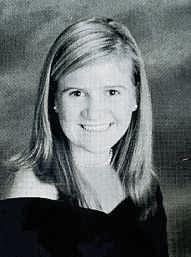
MBY MADDIE SCOTT Staff writer
ary-Kate Lamis was many things in high school: St. Joseph’sAcademystudent-body president,awilderness explorer andthe daughter of entrepreneurs.
As ateenager, shesaw success as experiencing adventure and making an impact on campus, whether that was kayaking in the Bahamas or serving her classmates through student council.
“Seeing my parents own their ownbusiness,start from scratch, build this thing up,” Lamis said.
“I think what Idefined success as was the exposuretothatkind of stuff, theentrepreneurship, the business —and then even more so, the independence.”
Lamis didn’thave an exact career in mind at the time. She just knew the business routewas probably right for her

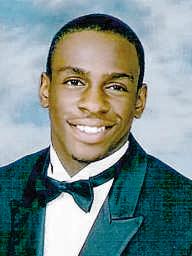
JBY JANRISHER Staff writer
eremy Johnson was always good at math andsolving problems. He expected to become an engineer But the summerbefore his senior year at University High in BatonRouge,heattendedBoys State wherehemet young men his own age who could speak in frontofa crowdlikeitwas nothing. Johnsonhad astutter.Speaking in front of acrowd washis nightmare.
Oneofthe young men at Boys Statespoke so well that he inspired Johnson to try to conquer hisstutter.So, he started writing poetry,performing spoken word and putting himself out there. Stuttering had been abig part of his identity until then, but those whomeet him todaywould never know it


KBY JOYHOLDEN Staff writer
atherine Smith Bligard is aLouisiana girl who has only lived in two places: Baton Rouge and St. Louis, Missouri. As amedical student,a physician and an assistant professoratWashingtonUniversity, Bligard has made St. Louis home since 2010. Bligard graduated from LSU in 2010 with adegree in math. Shethenpursued hermedical career in obstetrics at Washington University School of Medicine, specializing in maternal-fetal medicine, also knownashigh-risk obstetrics. Currently,Bligard is an assistantprofessorinObstetrics andGynecology, Maternal-Fetal Medicine and Ultrasoundwhile also operating as afetal surgeon and associate director of the FetalCareCenteratBarnes-Jewish Hospital. With time,fetal surgeon finds directionafter graduating from Parkview
Mary-Kate Lamis graduated from St. Joseph’sAcademy in 2006.
Jeremy Johnson’s2006 senior portrait from University High
Katherine Bligard, ParkviewBaptist Most Likely to Succeed 2006
See NOW, page 4D

BR US NavySubmarineVeterans
Members of the Baton Rouge-area US Navy Submarine Veterans held their bi-monthly meetingatDrusillaSeafood Restaurant. Shownare, fromleft, seated,John ‘Tiny’ Ruisch, Paul Barker,Donald David, Commander James Stell, William Pedneau, James Powell, James Gutierrezand BrianWatson; standing,Jimmy Fountain, Gary Surber,William Hardin, David Voisin, Paul Helton,Stuart Dupre, Rodney Fielder,Kevin Vizinat, Barry Kalt, Carl Walker, GilbertThomas,and Jimmy Campbell. Present but not in the photo were Donald Neisler, Thomas Lacy and Joel Tews


Past presidents of Attic Trash &Treasure held their quarterly luncheon at Mansurs on the Boulevard on April 14. Gathered are, from left, seated,Sue Rainer,Alice Greer,Miranda Papizan, Sandra Campbell, AletaLester,Linda Montagnino and Iris Eldred;standing, KeighBallard,Kathleen Howell, Chris
Baton Rouge Green issues annual report
Baton Rouge Green has releasedtheir 2025 annual report. Here are the numbers n 592 trees plantedinBaton Rouge n 4,100 trees actively managed by BRG n 2,298 community members engaged
n 22 planting locations around thecity
n 12 schools engaged through education programs n In 2026, BatonRouge Green has already planted 250 trees, withhundreds more togo.
Boomerang Comedy has class, showcase
INTROTOIMPROV COURSE
Boomerang Comedy Theater,1600 Government
St., will start the six-week course IMPROV 101: Intro to Improv &Short Form Games on May 20. Classes will take place on Wednesday evenings. This is the foundational course for Boomerang’simprov curriculum. It covers improv concepts and introduces students to performance games.Graduates are eligible to move on to 201
FYIBR staff reports
(Mechanics &SceneWork) and potentially invited to join a regularlyperforming short-form houseteam upon completion of this class. Cost is $199 includingtaxes.
IMPROV STUDENT SHOWCASE 101 &201
Boomerang Comedy Theater will holda student showcase on May 22.Celebrate theimprovstudents’ accomplishments at the free improv performance. Complimentary tickets must be reserved ahead of time.
Formore information visitboomerangcomedy com/.
Annual SoulFood Festival is May24
Theninth annual Baton RougeSoul Food Festival is family-friendly and free to the public.Itfeatures blues, soul, R&B gospel and Christianmusic, along with aVendor’sVillage ajudged soul food cooking contest and amustard greens and cornbread eating competition. The festival will take place from 11 a.m. to 8p.m. May 24 at the Main Library on
Goodwood.
The stagelineup is expected to include Henry Turner Jr.&Flavor and the Listening Room. All-Stars include Ervin “Maestro” Foster and the My Better HalfBand, King Solomon, Princess Teha and Kelton ‘Nspire Harper.New to thefestival this year is SouthernBlues man Adam Gabriel and the Shadow Road Bandfrom Lafayette. Returning favorites include Gospel singer Xavie Shorts, Soul singer Uncle Chess, Lisa Harrisand her Tina Turner Tribute. The Soul Food Cooking Competition is now open to entrants andhighlights regional favorites from Louisiana, Texas,Mississippi, Alabama, Georgia and Florida. Categories include meats,vegetables and side dishes,breadsand desserts, appetizers and soups,beverages and ices. Criteria includes presentation,taste and the story or history behind each dish. First, second and thirdplace prizes will be awarded in each category Downloadable forms and additional instructions are available on the website. For more information, call (225) 802-9681 or visit www.brsoulfoodfest.com.










PROVIDED PHOTO
Lake SherwoodGarden Club
Members of the LakeSherwood Garden Club honoredDebbie Pacas as their outgoing president. Shown are, from left, hostesses ChristyHarelson, SusanVaughan, Annie Kelly and Pacas.
PROVIDED PHOTO
Attic Trash& Treasure
Jackson, J’on Blumberg,Mary‘Moo’ Svendson, Melissa de Generes and Susan Lipsey.
PROVIDED PHOTO
PROVIDED PHOTO
WBR Garden &Civic Club
Members of the WBR Garden &Civic Club visited AveryIsland’s McIlhennyTabascoFactory and then enjoyeda tour of the island on April7.Shown are, from left, frontrow,Joy Hobbins, Linda Bres, Laurie Roche, Lorry Trotter,Kali Marionneaux, Carol Nevsetzer,JoAnn Newchurch, CathyHebert, PennySaia, Shirley Catanzaro, and Ada Hebert; backrow,Dena Culpepper, DebraEidson, PamWalsh and President KimCallegan.
PROVIDED PHOTO
Harness Club
Officers and committee members heldaSpring Fling at the Baton RougeCountryClubon May6.Shown are, from left, Bettsie Miller,Cheryl Kirchoff, KathyShirley,RandaPatrick, Melanie Patrick, LindaGrace and StephanieCargile.
TRAVEL
Findingthe most interestingpath
Author’s travel advice:
Beingpresent in the weirdness
BY ERIC BOWMAN TravelPulse (TNS)

Elizabeth Gilbert invitedme to play agame, and Icouldn’t wait to get started. Giving the keynote speech to acrowdofover 1,600 attendeesatthe ASTARiver Cruise Expo in Amsterdam this past March, the author of “Eat, Pray,Love,” didn’tspend hertime highlighting bucket list favorites or must-see attractions. Instead, she talked about anxiety.Specifically, what she calls “Purpose Anxiety”:the crushing weight of feeling like we must maximize every second, monetize our passions, and leave aworld-changing legacy. For travelers, this often manifests as afrantic need to “do” adestination correctly The cure? Asimple, radical shift from purpose to presence. To achieve this,Gilbert shared her favorite toolfor navigating the world: The Most Interesting Path Game
“You go out of your hotel or your ship if you’re staying shipboard, and you look to your left, look straight ahead, you look to your right, and you make —without your phone by the way —you make aconscientious decision in the moment of which path looks the most interesting,” Gilbert toldthe crowd. “The phone is good to have with you because it’ll get you back home.Whatyou want
is to get lost, like, that’swhat you really,really want. What you’redoingisyou’re asking your curiosity to be engaged with the presence of themoment. So,this is the important thing. Don’tgointhe direction youthink youshould, that you have some sortofvoice telling you should go. What you do is you’rejust like, what catches your eye?”
Gilbert shared with the crowd thatthe opposite of anxietyisn’trelaxation —it’s curiosity. She said anxiety andcuriosity live on opposite sides of a“toggle switch” in the brain. Youcannot be truly anxious while you are genuinely curious.
“Purpose is always focused on an obsession with the future,”Gilbert toldthe crowd. “Nothingwill bring more anxiety to your life than being focused on the future. If you want to suffer,get afuture.”
To break that future-focused loop while traveling, Gilbert suggests dropping the “shoulds”—the museums you feel obligated to visit or the landmarks you’re “supposed” to see —and playing agame that forces you into the mystery of the present.
“I was recently in Germany andI wasplaying mostinteresting path, and Icameout of my hotel room,and Iwas looking… and Isaw that somebody had taken awhole bunch of potted plants outsideoftheir house in Cologne —like the pots werered and orange and pink, so it’saveryconservative city,but somebodyhad decidedtotake all of thesedifferent colored pots, andthey hadall of these houseplants outside. And it caught the cornerofmyeye. So,Iwent and lookedatit. That’sthe entirety of that story,”Gilbert said, as the crowdburst into laughter
TRAVEL TROUBLESHOOTER
By ChristopherElliott
“That’show youplay most interesting path. It’s,like, oh, that’s interesting, andyou go andlookatit. Youcan live your whole life this way.And you would have an incredible life.”
To illustrate the power of being present in the “weirdness” of travel, Gilbert shared arecentexperienceata German spa. Finding herselfina “textile-free” (entirelynaked) environment where she didn’t know thelanguage or the rules, she was forced to simply watch and participate.
“I had no idea what was going on,”she laughed. “I was present to this giant, hairy German man rubbing ice on my body for some reason NotwhatI expectedtohappen when Iwoke up, but Iwas there.”
This, she argues, is the true valueoftravel. It bumps us out of “past depressionand future anxiety” and leads us into moments thatcannot be planned or replicated. If youfeel “Purpose Anxiety” creeping in during your trip,Gilbert recommends this sensory countdowntolower your cortisol and heart rate instantlybyidentifying four things you can hear,three thingsyou can feel physically two thingsyou can smelland one thing you can taste.
“Life is not amystery to be solved,”Gilbert said. “It’sa mysterytobelived.”
The Most Interesting Path game is afun one. I’veplayed this get lost type gameinAmsterdam before,the lasttime when Ivisited with my wife. This time, going solo provided someexcitingmoments that led to some great pictures, as well as astory or twothat’s best told in person.
So, where will you play The Most Interesting Pathgame next?

7placestoget lost in La.
Staff report
As Elizabeth Gilbert suggests, The Most Interesting Path Game allows people to embrace the “weirdness” that travel often presents. Thegoal is to get lost in anew city and embrace your curiosity.Here are seven places that serve as astartingpoint to get lost in Louisiana.
1. Jackson Square,bound by Chartres Sreet and St.Ann Street, Decatur Street and St. Peter Street, New Orleans Easily one of themost recognizable places in Louisiana, Jackson Square sees over 2million tourists and locals each year,according to nola.gov
2. Louisiana’sOld State Capitol,100 North Blvd., Baton Rouge. The oldstate capitol is now amuseum used to educate thepublic on the state’shistory and the democratic process
3. Cypress Island Preserve,Lake Martin, 1264 Prairie Highway,St. Martinville. Acadianaresidents know Lake Martin well, aquick getaway from Lafayette that attracts thousands of egrets, Roseate spoonbills and herons to nest along its cypress-tupelo woody shores with gators and other critters to spot in the water
4. TheMyrtles,7747 U.S. 61, St. Francisville. The historic site once served as a cotton and indigo plantation, established in 1796. Today,the site offers tours, 20 guest rooms, afull-service restaurant and seasonal events.
5. Cane RiverCreole National Historical Park, 4386 La. 494, Natchez. The historical park wasestablished in 1994 to preserve the resources and cultural landscapes of the Cane River region in Natchitoches Parish. Located along Cane River Lake, the park is approximately 63 acres.
6. PovertyPoint WorldHeritageSite,6859 La. 577, Pioneer.It’sestimated that the people whobuilt the tallest mound at the Poverty Point UNESCO World Heritage Center in northeast Louisiana carried 15.5 million 50-pound basket-loads of soil, or 390,000 tons, to build it. The people of Poverty Point werehuntergatherers, and at the time it was built, its earthworks were the largest in the Western Hemisphere.
7. Abita Mystery House,22275 La. 36, Abita Springs. Also knownasthe UCMMuseum,the mystery house wasfounded by John Preble. The site is aroadside attraction and self-guided folk art museum with thousands of handmade displays.
Hilton timesharedowngrade hasleftcustomerinlimbo
Irecently upgraded our Hilton Grand Vacations timeshare, but Ireally can’tafford it. Iwant to returntoour originalagreement, which Ican honor fully

Christopher Elliott

I’ve contacted Hilton multiple times over several months. Representatives have told me not to makepayments whiletheyhandled the issue. But now my account shows delinquency and my credit score has dropped 43 points. How can I fixthis? —Henry Pash,Woodstock, Ga.
Youdid the responsiblething by reaching out quickly to reverse the upgrade and beforeyou used any of the benefits. But the company’sdelayed responses and conflicting instructions have made the situation much worse.
When arepresentative tells you notto make apayment, you rely on that guidance —but unfortunately,ittriggeredacredit drop, which is completely unacceptable. Before Igoany further,and for the benefit of everyonereading this, let me saythat you could have avoided this problembyrunning the numbers before you upgraded your membership, not afterward. Timeshares are easytoget into, but harder(andsometimes impossible)toget out of.
Youkept adetailed paper trail, which really helpedyour case. Everyemail, voicemailand call note you’ve loggedisessential.
Thatdocumentation is what gives youleverage whena company doesn’t follow through on its promises. In cases like this, it’s oftenyour only protection against
automated billing systemsorinternalmiscommunication.
Youalso have consumer protections on your side. Under the Fair Credit Reporting Act, Hilton mustcorrect any inaccurate information on your credit report promptly
Your account should neverhave remained delinquent while the upgrade reversal was unresolved. The Truth in Lending Act requires clear disclosure of your obligations and proper handling of paymentsduring disputes.
And don’tforget,many states have timeshare laws allowing you to cancel or reverse an upgrade within acertain period. These statutesgive you legal leverage if the company stalls or gives you conflicting advice. Unfortunately, while you re-
quested areversal quickly after your purchase, you appear to have missedthe state-mandated window
Persistence is key.Keep escalating politely but firmly when local offices fail to respond. Copy higher-level executives and maintain your written record. (I publish the names, numbers and email addressesofthe Hilton Grand Vacations executives on my consumer advocacy site, Elliott.org.) That combination of patience, assertiveness and documentation is usually what separates asuccessful resolution from adrawn-out mess.
Ireachedout to the company on your behalf. After months of backand-forth, Hilton Grand Vacations agreed to reverse your upgrade transaction. Your account has
been returned to the original time slot, and Hilton Grand Vacations has refunded your $4,500 down payment.
Best of all, your credit score is back, too.
Yougot lucky.You requested a downgrade after your cooling-off period, but the level of ambiguity in the company’sstatements to you gave you astrong case for a reversal. But as they say,don’ttry this at home. Once you’ve made any kind of timeshare transaction, chances are you can’tundo it that easily
Christopher Elliott is the founder of Elliott Advocacy,anonprofit organization that helps consumers solve their problems. Email him at chris@elliott.org or get help by contacting him at elliott.org.




FILE PHOTO By LIZ CONDO
Greatblue herons are plentiful sights in LakeMartin. Theyare just one variety of the many wadingbirds that nest everyyear at the Nature Conservancy’sCypress Island Preserve,which includes the lake
Gilbert
20 YEARS AFTER A 22-MINUTE OVATION
Del Toro and ‘Pan’s Labyrinth’ return to Cannes
BY JAKE COYLE AP film writer
CANNES, France Twenty years ago, Guillermo del Toro premiered “Pan’s Labyrinth” at the Cannes Film Festival. He went in anxious. It was toward the end of the festival and many journalists had left. The movie’s production had been a nightmare. Then the audience gave it a 22-minute standing ovation, the longest in Cannes history “It’s a commute,” joked del Toro. “That’s about what it takes me to get from home to the office
on the Croisette, a few steps away from where his filmmaking life changed two decades ago.
the well-regarded but not wellknown filmmaker of “Hellboy” and “Blade 2.”

Alfonso Cuarón, who made this movie with me as producer, turned to me at some point and said, ‘Let it in. Relax.’ I was very tense. I’m not very good with praise.” Del Toro returned to Cannes on May 12 to screen a restoration of one of his most beloved films. Shortly beforehand, he met a reporter for an interview at a hotel
JOHNSON
Continued from page 1D
Then came the assembly at University High his senior year Johnson stood in front of the whole school and performed a poem. He says the room almost seemed to spin, but he got through it — and the crowd gave him a standing ovation.
“That was a really big steppingstone,” he said. After that, becoming a lawyer made sense. He wanted to become a mouthpiece for others In 2006, when his University Laboratory School classmates voted him Most Likely to Succeed, he was already on his way to Stanford. After undergrad, he went to Penn Law
A lush fairy tale set against 1944 Francoist Spain, “Pan’s Labyrinth” is about the young Ofelia (Ivana Baquero) who has come with her mother to stay with her new fascist stepfather, Captain Vidal (Sergi López). Taking place largely in northern Spain, it’s Del Toro at his earthiest and most imaginative. Books become alive when held. Doors manifest out of a chalk outline. And creatures — fairies, a faun, the unforgettable Pale Man, with eyes in the palms of his hands — reveal a world of deeper and darker enchantment
A pivot point for del Toro
Del Toro, who has since made “The Shape of Water” and “Frankenstein,” grants that he wouldn’t have become the filmmaker he is today if he hadn’t made “Pan’s Labyrinth.” At the time, he was
The International Baccalaureate program at U High was hard enough to prepare him for Stanford, which opened a variety of doors different geography, people from different places and different ways of thinking.
My people skills have grown a lot from my travels,” he said.

Jeremy Johnson serves as an assistant United States attorney in the Middle District of Louisiana.
He worked for years in El Paso, Texas, with the District Attorney’s Office before making his way back to Baton Rouge, where he serves as an assistant United States attorney in the Middle District of Louisiana.
Johnson grew up in Port Allen and attended University High from kindergarten through 12th grade. His says that his path was shaped by people who believed in him including his mother who worked at LSU and his sister, 12 years his senior and now a Ph.D. at LSU. She was like a second mother — coaching him on grades, college applications, the ACT, what to read.
But his mother’s philosophy never wavered: “Just do the best you can, and your best is enough.”
He also watched his grandfather, who owned a roofing business and raised eight children. Johnson said his grandfather’s work ethic made him want to work harder
LAMIS
Continued from page 1D
“I had a little bit of a different mindset back then,” she said “I was pretty eager to kind of be independent and see a lot of things and be exposed to a lot of things.” She believes that mindset still rings true today Her high school achievements led her to Spartanburg, South Carolina, where she received her bachelor’s in finance and economics from Wofford College. Right off the bat, she landed a job at Deloitte where she worked in several positions over a collective eight years. In Atlanta, Lamis met her husband, a clinical psychologist at Emory University Lamis is currently the senior vice president of strategic business operations at Rhodes Risk Advisors, an independent insurance firm in Atlanta where she works with a team of 60 people to implement strategies on growing the business. As the mother of a daughter, 9, and son, 6, Lamis sees success as being a great parent and spouse, as well as helping, leading and impacting her colleagues personally and professionally She’s lived in a variety of places: Italy, New York and now Georgia, where she observed different ways of life. In Ferrara, Italy, the pace was slower and folks ventured to the market for fresh products every day
“I was getting all the Marvel offers from Avi Arad. It was a real choice to go make the movie no one wanted to finance,” del Toro says. “It was one of the few times in my life that I made a choice. And I made it over and over again because everything that could go wrong went wrong, every door that could have slammed in my face, slammed in my face.”
Del Toro made “Pan’s Labyrinth,” which Cineverse and Fathom Entertainment will rerelease in theaters Oct. 9, for $19.5 million — the same budget for his best picture-winning “The Shape of Water.” But just after del Toro moved his family to Spain for the shoot, a major financier pulled out.
“I said: I’m staying We’re going to make this movie,” the filmmaker recalls. Forest fires in Spain were another complication. Verdant and magical as the forest is in “Pan’s Laby-
rinth,” it took months of irrigation to bring it to life. “Every lush tree you see, we made lush,” says del Toro. “Every fern we planted.”
The iconic tree of the film, though, was the work of Eugenio Caballero’s art design. Del Toro has long been renown for his textured artistry, but “Pan’s Labyrinth” includes some of his most memorable creations. At a time when artificial intelligence is making inroads into moviemaking, the movie’s handcrafted beauty stands out all the more.
“I think people intrinsically know when you’ve made an effort,” says del Toro. “They sense that it’s important to you in the craftsmanship. We don’t only go to movies to see the world We go to see a world we don’t recognize. The more the design is something you haven’t seen before, that was made by hand, you can sense it.”
“Virtual filmmaking to me is not as interesting,” he adds. “You’re not courting an accident You’re not courting humanity.”
Growing up with ‘Pan’s Labyrinth’
Nothing is more human in “Pan’s Labyrinth” than its young protagonist Baquero was just 11 when she shot the film, but del Toro calls her “the most mature actor I’ve ever directed.” Baquero, now 31, also came to Cannes for the screening.
“During the audition process, he didn’t baby me,” says Baquero.
“He treated me like an adult. He gave me a lot of homework. He gave me a lot of movie references, some of which were — like ‘Grave of Fireflies’ very dark.”
“Pan’s Labyrinth,” an R-rated fable with bloody spurts of violence, isn’t quite for children. But Baquero was shielded from none of its cruelties. She grew up with “Pan’s Labyrinth.”
“I can enjoy more and more as time goes by,” she says. “I can distance myself from being in the movie and watch it with different eyes. I almost don’t see myself as that girl anymore. I do, but it was 20 years ago.”
A winter quarter at Oxford in the United Kingdom opened things further When Johnson took a class on World War II from a British perspective, he visited bombed sites and learned how people experience the same event from different vantage points. He took a Dickens tutorial — one novel per week, one paper per novel. He made his first snowman. He majored in political science, concentrating in political philosophy a thread running back to University High, where Steve Delacroix taught the Theory of Knowledge class, which taught him to think carefully and consider different perspectives He has woven that line of thinking throughout his life since.
What has changed most, he says, is his capacity for empathy Living in California, Philadelphia, El Paso, Texas and England gave him that. He came back home able to put himself in other people’s shoes to understand how someone thinks, what matters to them, what they need.
His definition of success has refined accordingly: Make the most of each day Don’t take anything for granted Give whatever you’re doing everything you have, even when the outcome isn’t certain.
“Things might not go the way you want them to,” he said. “But at least if you commit yourself and give it all you got, you can be happy with that.”

“They have their little grocery bags, and they do it on their way when they’re walking in between work and home,” she said. “It’s such a different way that I feel like that’s always been my favorite thing.” But there’s nothing like Louisiana, she said. Lamis visits home four to five times every year because she wants her children to see the home that she loved when growing up.
“I want my kids to know Louisiana and know the life and culture,” she said. “We’re huge LSU fans. We bring the kids to a football game every season.”

BLIGARD
Continued from page 1D
Bligard says that fetuses with anomalies or pregnancy complications related to fetal conditions are her specialty In rare cases, she performs in utero surgery
“The most common surgery I do is something called fetoscopic laser surgery, which is done for identical twins if they share the placenta,” Bligard said. “I basically do a procedure to separate the placenta.”
She uses a small camera to put inside the uterus to look at the placenta and then makes it so their blood can’t go back and forth across the placenta between the babies.
Back in 2006 at Parkview Baptist, Bligard said a medical career was on her radar, but it wasn’t the only thing she was interested in, which is why she majored in math at LSU. She says she found numbers fascinating. She followed her instincts toward what she found interesting.
“The medicine world was a possibility when I was graduating, but it was not like, ‘I must do this.’ It’s kind of been that way every step along the way,” Bligard said. “Even
NOW
Continued from page 1D
In 2011, The Wall Street Journal reporter Sue Shellenbarger examined the designation and found it landed differently on different shoulders. About one-third of recipients felt it as a weight — a high school definition of success that they’d spent years measuring themselves against. Nearly half of the Most-Likely-to-Succeed designees said, for them, the title was an inspiration.
Frank Rusciano, longtime math teacher at University High in Baton Rouge, eventually became the school’s Dean of Students and principal. All told, he worked with high schoolers for 40 years and says that students usually “get it right” when they vote on “Most Likely to Succeed.”
“Adults underestimate how closely students observe one an-
in medical school, I didn’t think, ‘I must be an OB-GYN. I must be a fetal surgeon.’” But, with time, things worked out.
Back in 2006, being chosen as Most Likely to Succeed came as a surprise to Bligard. She says she always made good grades, so she thought her classmates would vote her most intelligent.
“Most Likely to Succeed means to me that not only are you smart, but you’re going to make big moves in your life,” Bligard said.
“It was a huge honor, but I didn’t think like that. I think everyone acknowledged I was smart, but I didn’t know people took that as I’d be able to apply this to do great things with my life.”
One major picture of success for Bligard was her mother, who worked as a physical therapist and then changed paths to become the elementary library assistant at Parkview to be close to her children Bligard is still inspired by her mother’s commitment to be at every game, every event that was important to her children.
That image of devotion stayed with her Bligard is a mother now, too.
She has two sons, ages 3 and 6. She is married to Greg Bligard, an
other over the course of their school years,” Rusciano said.
“They have seen one another in classrooms, on athletic teams, in leadership roles, at parties and dances and in everyday interactions that teachers and parents don’t necessarily see.”
Rusciano, retired in 2024, said that he believes that the student-selected superlatives are insightful.
Students are making judgments based on thousands of daily observations accumulated over at least four years — and sometimes over more than a decade together
“In many ways, they are evaluating character and interpersonal influence just as much as academic performance,” he said. “That collective perspective is usually highly accurate.”
The newspaper’s features team has tracked down those elected Most Likely to Succeed from the Class of 2006 from area Baton Rouge high schools to see where that looking-forward title took
ophthalmologist. The household cheers for both the University of Iowa, his school, and LSU, her school, but she said she makes an effort to deck her kids out in LSU gear more than Hawkeyes gear
“I try to emulate my mom growing up,” Bligard said. “Yes, I work a lot, and I can’t move my job to be at their school, but when I’m not working, I want us to go do all the fun things.”
Today, Bligard looks to her division director, Dr Jeannie Kelly, who is also a physician and a mother, like Bligard. She said that Kelly represents the epitome of success and offers dependable parenting counsel.
For Bligard, the most fulfilling part of her work as a fetal care specialist is spending time with her pregnant patients and walking through the journey of a complex pregnancy with them.
“No one wants to get referred to the fetal center because there’s a difference with their fetus, but I have the privilege in getting to spend a lot of time with my patients,” she said. “I see them like every week or two throughout their pregnancy I feel like I can make a really meaningful impact, even if it’s not a procedure that I can do to fix or make better.”
them 20 years later
What nobody voted on was how the definition of success would change through the years how it would stretch and deepen and surprise the very people it was meant to describe. Among those found and profiled: a minister two attorneys, a physical therapist, a chemical engineer, a history professor and a maternalfetal medicine specialist who separates conjoined twins in utero. In the coming weeks, the newspaper will feature profiles of people elected Most Likely to Succeed to see where they are now But the search is still on. If someone from a Baton Rouge-area high school Class of 2006 was voted Most Likely to Succeed, The Advocate wants to hear from them.
Email Jan Risher at jan.risher@ theadvocate.com the name, high school and contact information. Email Jan Risher at jan.risher@ theadvocate.com.
PROVIDED PHOTO
Mary-Kate Lamis and her husband have two children, a 9-year-old daughter and a 6-yearold son.
PROVIDED PHOTO By GREGG GOLDMAN
Katherine Bligard points to an area of a fetus on an ultrasound
PROVIDED PHOTO
Del Toro
ART&CULTURE
‘Resisting Slavery’ exhibitopens at WhitneyPlantation
Itsfocus is on day-to-day resistance
For the enslaved people on Louisiana plantations, resistance took many subtle and perilousforms.

Dave Walker
The new Whitney Plantation exhibit “Amongst Ourselves: Resisting Slavery at Whitney Plantation” catalogs several: worship, maintainingblood or acquired kinship, education, sharing folktales and foodways, even cultivating herbal remedies.
In the case of Prince and Alex, twoFrench-speaking 14-yearolds, it took the formofescape. A classified advertisement,placed in aNew Orleans newspaper by plantation owner J.J. Haydel, offered a$50 rewardfor their capture. The ad is reproduced at the start of the exhibit, and continues on panel displays throughout the property
Setting the narrative forthe exhibit, the introductory panelasks: “Who taught them?” and “What didthey learn?”
“I think we had avery unique opportunity here,” said Mary Niall Mitchell, history professor anddirector of the Midlo Center for New Orleans Studies at the University of NewOrleans, which collaborated on the exhibit.
“I’ve brought teenagersthrough (tothe Whitney Plantation) for various projectsand things, and they’re often tempted to say,‘If it were me, Iwould run away.’ And you want to break it down for them and explain whatall of the conditions meant, how difficult thatwas to do, even thoughthousands and thousands of people woulddoit.”

Apanelinthe exhibit ‘Amongst Ourselves: Resisting Slavery at WhitneyPlantation’ introduces
two14-year-old boys whoescaped aplantationowned by J.J. Haydel.

Sheteaches, “how dangerous it was, how courageous you had to be,how knowledgeable you had to be.”
Athree-yearcollaboration
“Amongst Ourselves” is a
culmination of athree-year collaboration between the Whitney and the Midlo Center’sfaculty, studentsand graduatestudents. It also draws on “Freedom on theMove,” adigital database of fugitives from North American
THEWHITNEY PLANTATION MUSEUM
5099 La. 18, Edgard
Hours: 9:30 a.m. to 4:30 p.m. daily, closedTuesdays
slavery maintained by Cornell University
“Honestly, historians have argued for decades about what resistance looks like, what it means,” Mitchell said. “Was it really resistance, or wasitjust accommodation, or was it anegotiation?
They decided to focus the exhibit on day-to-day resistance, “that day-to-day effort to carve out emotional space foryourself, physical space foryourself, in order to get through the day-today reacting to the psychological traumaofthings.”
The twoteens, Prince and Alex, help illustrate the point forvisitors. “Interms of anarrative, it’s about resistance being something that’slearned,” Mitchell said. Avisualdeparture
Sinceits 2014 opening, the Whitneyhas focused exclusively on the people enslaved there. Their liveswerealready a part of the visitorexperience, impartedbytourguides and an audio tour
“In allofthose experiences, we try to emphasize the role of resistanceinthe story of American enslavement,” Whitney Executive Director AshleyRogers said. “Of course,itisthings like the 1811 German Coast uprising and these organized, large-scale, militarizedtype revolts, but it’s also these small ways.
The “Amongst Ourselves” panels, with colorful graphic illustrations by Langston Allston, areespecially accessible for the field-trip demographic
“Fromacuratorialperspective, it’sa visualdeparture from what we’ve done in the past,” Rogers said.
“It’sbeen really great to see people engaging and getting these different stories that maybe we don’talways have time to talk aboutonthe tour.”
The plantation’smission to tell its ownstory also is carriedover into the newexhibit.
“Wheneveryou seethat okra flower, there will be narratives aboutpeople enslaved at Whitney,”Mitchell said.
“We’re using voices from lots of different places to tell this story aboutresistance, but when yousee the okra flower,it’ll tell yousomething aboutpeople who livedhere.”
Email Dave at dave@themuseumgoer.com
CharityBallAssociation honors 16 debs at French picnic
The Charity Ball Association of BatonRouge honored 16 debutantes at a French picnic at the Baton Rouge Country Club on Thursday
The young women will be formallypresented at the association’sannual Le Bal de Noel on Dec. 28 at the Renaissance Hotel. The 2026 debutantes are:
n Julia Mae Bauer, daughter of Amy and John Joubert, agraduateofSt. Joseph’sAcademy who attends the Universityof Georgia
n Annaleigh Blair Bruser, daughter of Kennan and Jonathan Bruser,who graduated from IMG Academy and attends LSU
n Isabella Catherine Ferrara, daughter of Dede and Frank Ferrara Jr., agraduate of St. Joseph’sAcademy who attends LSU
n Laura Jane Kirkpatrick, daughter of Heather and Kristopher Kirkpatrick, who graduated from Episcopal School of Baton Rouge and attends SouthernMethodist University,Dallas








The association’sofficers are Kristen Spring, president; Rebecca Valluzzo, vice president; Allison Pham,secretary; Heather Schramm, treasurer; Katey Bergeron and Juliet Boyce, ball chairs, and Gretchen QPeterson, debutante liaison.


n Anna Claire Kouns, daughterofCandace and Sinclair Kouns Jr.,a graduate of St.Joseph’sAcademy who attends the University of Mississippi
n Elizabeth Ann Monsour, daughterofSara and Walter Monsour III, who graduated from St. Joseph’sAcademy and attends LSU
n Grace Katherine Rutledge, daughter of Elizabeth and James Rutledge, agraduateofUniversity Laboratory Schoolwho attends LSU


n HelenMichelle Schliewe, daughterof Stacy Schliewe andScott Schliewe, whograduated from St. Joseph’sAcademy andattends LSU
n Neila Camille Stone, daughterofNeila andLouis Stone,agraduate of St. Joseph’sAcademy whoattends Auburn University
n Amelie Isabelle Stuckey, daughterofRebecca and Thomas StuckeyIII, who graduated from St. Joseph’s Academy andattends LSU
n Avery HelenUnder-


wood,daughterofAnne and Clayton Underwood,agraduate of University Laboratory School andattends the University of Georgia
n Mary Claire Upton, daughterofMary andBrent Upton,who graduated from St. Joseph’sAcademy and attends LSU
n Adeline Ashley Uter, daughterofAshley and Brennan Uter,agraduate of St. Joseph’sAcademy who attends LSU
n HannahGrace Vaughan, daughterofKelly and


Michael Vaughan, who graduated from St. Joseph’s Academy and attends the University of Georgia
n Caroline Caswell Waters, daughter of Kate and George Waters Jr., agraduate of Episcopal School of Baton Rouge, who attends Southern Methodist University n Wilhelmina Tate Wilson, daughter of Garland and William Wilson, agraduate of University Laboratory School who attends University of Oklahoma
The Charity Ball Association of Baton Rouge is anonprofit organization whose purpose is philanthropic. It was formed in 1956 by agroup of civic-minded members who wanted to support the Baton Rouge community through charitable donations. Over the years, the association has contributed more than $500,000 to local charitable organizations. The recipient of the 2026 Charity Ball donation is IRIS Domestic Violence Center, anonprofit domestic violence service organization in Louisiana that provides professional, compassionate and empowering support to battered women and their children in the Greater Baton Rouge area and surrounding parishes.

Avisitor takes in information at the WhitneyPlantation.
PHOTOSByDAVEWALKER
Bauer
Stuckey
BETWEEN THE PAGES WITH JOE BOND
Novelist draws on experience in group homes for new book
BY JOY HOLDEN Staff writer

Joe Bond is an award-winning short story writer whose debut novel “Hope House” explores the lives of a group of troubled teenage boys in a treatment program in the late 1980s. Bond, who now lives in New Orleans with his family, grew up around similar group homes in eastern Kentucky and began working in them when he was still in high school He heard firsthand the stories of hundreds of boys and followed their journeys from intake to aftercare.
Bond
He began drafting “Hope House” after his story
“Damico” won The Masters Review Short Story Award. Octavia Books in New Orleans will host the book launch for “Hope House” from 6 p.m. to 7:30 p.m May 19. The book comes out on May 26.
This interview was edited for length and clarity
What was your inspiration for writing “Hope House?” I grew up around homes that my dad ran. From my earliest memory, he was a counselor in a group home, and he would take me to work with him. I was around the boys from the time I was four or five years old through high school. Our lives as family were just inextricable from the kids that my dad cared for In the summers during college, I would work day shifts, coach the softball team and coach the basketball team
The home becomes its own world There are a lot of good kids with so many impossible situations, and there are people working in the field that care about them.
Tell me about how you fashioned these young men and gave them their own identities in the book.
The home was in eastern Kentucky, but we had kids from all over the state — from around Cincinnati, Louisville, Lexington, the mountains and everywhere. None of the characters are stand-ins for kids I knew, but they’re all based on the truths I knew about the kids I was around.
We had really smart, sharp charming kids who had been through the system and did not trust you because they had been through other homes They knew when you cared about them, and they knew when you didn’t It took time to earn that trust, and they could make changes.

They’re outsiders in the real world They can come together inside the house, but it doesn’t really change their standing outside the home.
How did you develop the characters’ back stories?
I wanted to make the kids as complicated as they were in real life. None of them should come off as caricatures All of the kids I knew were complex, and I think the back stories were about humanizing them, showing them the context of their lives.
They’d done stuff, but things had also been done to them. With each kid, I wanted to make them fully human and also not make them little innocent angels, because none of them were. They made mistakes, and they did things. But to understand those mistakes, you’ve got to understand their situation. I tried to create a full picture of all of that
Why do you think it’s important for people to engage with fiction stories like this?
I think it reveals something in all of us. We need to find our people, our tribe
We’re pretty divided as a country and then you see all these kids who’ve been through so much and are so different. They find what’s common about each other, and they help each other They argue with each other and fight with each other, but at the end of the day, they really care about each other Humanity is there, and this is the kind of setting that brings it out. And that’s what I saw in real life It’s a difficult place, but the boys find a way to care about each other there
I really liked how the peers kept each other accountable.Why did you choose to set up “Hope House” like that?
It’s based on what I grew up around. I think that peers have way more influence on other kids than adults do, so it can be a really powerful setup — if you have a good culture
If you have a bad culture, and you give the kids too much power it can be really bad, and it can be a mistake The kids need to feel like they’re in control, but the adults still could be in control. If it’s a good culture, the kids are holding each other accountable and modeling for each other
What are you hoping the response will be, and what does “Hope House” mean to you? I started working on the first story, probably, in 2018. It’s been a long process. I used to think I just wanted to write a book, and it really didn’t matter to me if a lot if people read it. I was happy with the idea of just writing something and it being good Now, having actually written the book, it really matters. I really want people to read it. I want people to care about these kids. Email Joy Holden at joy.holden@theadvocate.com.

A literary LIFE RAFT
Jesmyn Ward’s voice a poignant reflection on times of despair, hopelessness and her family in Mississippi
BY RIEN FERTEL Contributing writer
“On Witness and Respair,” by Jesmyn Ward, Scribner, 256 pages.
Jesmyn Ward remembers seeing the Mississippi Literary Map on the wall of her elementary school library Iconic names and faces Faulkner Welty and Wright — staring out from the confines of a state that might have then ranked last in the nation among most childhood education and well-being indicators but punched above its weight when it came to literature.
Before she read their work, Ward recognized these writers — most all writers — as “magic-workers.”
“I could already sense the worlds they constructed,” Ward writes in her new book, “On Witness and Respair.” “Why couldn’t I just step through from my world into theirs?”
It should come as no surprise to those who know her work that Ward’s own face now graces that map. The professor of creative writing at Tulane University is a MacArthur Genius Grant-winning author of four novels, including two, “Salvage the Bones” and “Sing, Unburied, Sing,” that have won the National Book Award.
But I much prefer her heart-crushing 2013 memoir, “Men We Reaped,” which documents the tragic deaths of five young men in her life, including her younger brother, Joshua. It is, in my mind, one of the best works of nonfiction published this century
“On Witness and Respair,” Ward’s first essay collection, traces the familiar contours and themes of the author’s life: growing up in DeLisle, Mississippi, the joys and struggles of being Black in America and her unwavering devotion to literature. Though each of the essays, minus the introduction, have previously appeared in print, this is an invaluable collection for Ward’s fans and a terrific introduction to one of the most powerful, and graceful, voices in American literature today Ward’s collection is foremost a love letter to the act and art of reading.
‘Tell it straight’
In an essay titled “Why Fiction Matters,” delivered at the Library of Congress in 2023, Ward reveals the roots of her love for literature. She describes her maternal grandmother Dorothy as “the first storyteller of my life,” born into a “a long line of storykeepers and tale-tellers, part of a lineage of Americans griots who remembered the truth of who we were and what we’d been through and passed it along.”

to survive, how to thrive, in broken worlds.”
Toni Morrison heals her “invisible, starved tribe, fed for years with false fruit: caricature and stereotype.”
Resisting expectations
But it’s not all literary valentines. A reading of “Gone with the Wind” in junior high left Ward feeling “angry Aware. More lonely than I had ever been.” But it also became the novel that “taught me much about America, the South, how others saw me,” a book that “made me want to resist those expectations and be something more.”

She mentored Ward not to ignore the pain life brings, to carry life’s tribulations into her own work.
“Tell it straight,” Dorothy taught. “Tell it all.”
She does exactly that, writing of the struggles her family bore throughout her childhood, troubles that still plague Black children and families in Mississippi.
“I carry the poverty of my Mississippi youth forward with me: By remembering the emptiness inside me,” Ward writes.
“By remembering how that emptiness permeated every bit of me. How I was hungry in my belly and ravenous to fill my brain with something that would one day help ensure that I would not be hungry forever.”
She turns to books, and as a teenager, Ward became a voracious reader “inhaling a title a day.” Black writers writing Black characters mattered most. Reading Ntozake Shange’s “for colored girls who have considered suicide/when the rainbow is enuf” on a school bus “was a revelation.” In those pages, she hears the generational voices of the women in her family
She hears her own voice, revealed like “my secret identity that I yearned to embrace, the aspirational writer.”

When Ward is not focusing on books, she turns her authorial gaze to people. There’s a few skippable essays here: promotional profiles of Regina King, Ta-Nehisi Coates and Ava DuVernay Though engaging when they first appeared in print, they feel inessential years later Few writers are better than Ward at meditating on the meaning of family and home. The collection contains her first published piece of work, “We Don’t Swim in Our Cemeteries,” a reflection on Katrina that feels as vital today in understanding the hurricane’s before and aftershocks as it did when it first appeared in print nearly two decades ago.
“Even after that which you love dies,” she writes of the death of the small town she knew before the storm, “the love you have for it does not die. Grief is learning to live with that love.”
In a more recent essay, she writes of her reluctance to raise a Black son in the United States and wrestles with how to answer her son’s future questions about the young men she calls his “phantom siblings”: Trayvon, Tamir and Emmett.
“I will be denying his childhood,” she writes. “Burdening him with understanding beyond his years. Darkening his innocence.”
Yet, she helps readers understand that her decision is a necessary one.
The title of Ward’s collection contains the rare word “respair” and not, as many a less careful scan might render, its homonym and close-ish synonym, “repair.”
In respair — meaning, per the “Oxford English Dictionary,” “fresh hope, or recovery from despair” — she has settled on the single perfect word to define her writing, which burns with rage as it provides hope, offering a literary life raft in our time — any time — of desperation.
We should all bear witness to Ward’s words. Read and respair
Rien Fertel is the author of four books. He can be reached at rienfertel@gmail.com.

Octavia Butler provides a “template for how
PROVIDED PHOTO By BEOWULF SHEEHAN Author Jesmyn Ward
AT THE TABLE
Flower farm’s bounty resultsinblackberrycrumble bars
and ripe, warm from thesun, staining our fingertips with deep purpleaswepicked. My daughter called out each time she found aparticularly plump cluster,which made filling our basket an easy task.There was akind of abundance there —simple, generousand shared.

Olivia Regard

On aquiet Sunday afternoon, my daughter and Iwandered into apick-your-own flower farm in St. Martinville. The air carried thewarm, green scent of early summer,and rows of zinnias, cosmos and sunflowers stretched under awide Louisiana sky at St. Rose Flower Farm. Armed with apair of borrowed clippers and abucket that seemed far too large at first, we set out to create our own imperfect masterpiece. My daughter approached each bloom with careful consideration, as if she were choosing something far more consequential than aflower —tilting her head, comparing colors, sometimes stepping back before committing to the cut.
Iwatched her hands learn the quiet language of selection and care, realizing how rare it is to have an afternoon that moves at suchanunhurried pace. Together,wegathered stems, arranging them loosely as we went, the bouquet growing into something both wild and intentional. After the flowers, we meandered through the blackberry brambles. The berries hung low
St.Rose Flow Farm is named after St. Rose of Lima, the patron saint for gardeners, who, as a young girl,would gather flowers to sell in themarketplace of her town.There is something enduring in that image: achild finding purpose andbeautyinsmall, daily labor.And, although we were not preparing our flowers or berries for sale,Ifelt aquiet kinshipinthe act— hands busy with stems and fruit, shaping something lovely out of what the earth had offered freely
We left with abouquetcradled gently between us and acontainer of blackberriesthatpromised a delicious treat, though therewas concern theberriesmight not make the car ride home. More than that, we carriedwithusthe softness ofa day spent together —sunlit, unhurried and rooted in the gentle joy of gathering.
Formore information on St. Rose Flower Farm,visit www.stroseflowerfarm.com.



BlackberryCrumbleBars
Makes 12-18 servings; Recipe adapted from Bake from Scratch
For thedough and crumble:
For thefilling:
1. Preheat the oven to 375 degrees.
2. Prepare a9-inch square pan with baking spray and line with parchmentpaper
3. Whisk together melted butter, sugar,and vanilla.
4. In aseparate bowl, whisk together flour, oats, baking powder, and salt.
5. Gradually incorporate flour mixture into butter mixture until combined. Reserve 3/4 cup of the dough in asmallbowl. Press remaining dough into the bottom of theprepared pan.
6. Bakedough until the edges are lightly browned, approximately 15 minutes. Let cool while preparing filling.
7. In asaucepan over medium heat, bring blackberries, sugar, and lemon zest to aboil. Cook, stirring frequently,until the blackberries break downand release mostoftheir juices.
8. In asmallbowl whisk together cornstarch and lemon juice.
9. Stir cornstarch mixture into blackberry mixture and cook, stirring constantly,until the mixture is thick and translucent.
10. Pour filling onto the prepared crust. Crumble the reserved dough on top.
11. Bake for15minutes, then loosely cover with foil to prevent excess browning. Bake another 10 minutes until the bars are golden brown(approximately 20-25 minutes total).


























PHOTOSByOLIVIA REGARD
Blackberry Crumble Bars
By The Associated Press
Today is Sunday,May 17, the137thday of 2026. There are 228 days left in theyear
Todayinhistory:
On May 17, 1954, aunanimous U.S. Supreme Court handed down its Brown v. BoardofEducation of Topeka decision, which held thatracially segregated public schools were inherently unequal and thereforeunconstitutional.
Also on this date:
In 1792, the Buttonwood Agreement, adocument codifying rulesfor securities trading,was signed by 24 NewYork stockbrokers, marking the formation of the New York StockExchange In 1875, the first Kentucky Derbywas held; the race was wonbyAristides, ridden by jockey Oliver Lewis.
In 1946, President Harry S. Trumanseizedcontrol of the nation’srailroads, delaying— butnot preventing —athreatened strike by engineers and trainmen.
In 1973, aspecial committee convenedbythe U.S. Senate began its televised hearings into the Watergate scandal.
In 1980, rioting that claimed 18 liveserupted in Miami after an all-White jury inTampaacquitted four former Miami police officers of fatally beating Black insurance executive Arthur McDuffie.
In 1987, 37 American sailors were killedwhen an Iraqi warplane attacked theU.S. Navy frigate Stark in the PersianGulf. (Iraq apologizedfor the attack, calling it amistake, and paid more than $27 million in compensation.)
In 1995, Army veteran Shawn Nelsontook a57tonM-60tank from aCalifornia NationalGuard armory and terrorized San Diego for23minutes, barreling down residential streets, smashing into cars, street lights and fire hydrants on amileslong path of destruction. Police ultimately forced the tank hatch open and fatally shot Nelson
In 2004, Massachusetts became the firstU.S state to allow same-sexmarriages.
In 2015, ashootout erupted between members of rival motorcycle clubs, followed by police gunfire, outside arestaurantinWaco, Texas, leaving nine of the bikers dead and 20 people injured.
In 2024, the Dow Jones Industrial Average just closed above 40,000 for thefirst time,the latest pop in asurprisingly good year for Wall Street in which theDow gained 19.7% over theprevious 12 months.
Today’sbirthdays: MusicianTaj Mahal is 84. Boxing Hall of Famer Sugar Ray Leonard is 70. Sports announcer Jim Nantz is 67. Singer-composer Enya is 65. TV host-comedian CraigFerguson is 64. Musician Trent Reznor (NineInch Nails) is 61. Actor Sasha Alexander is 53. Singer-actor Kandi Burrus is 50. Basketball Hall of Famer Tony Parker is 44. Screenwriter-actor-producer Lena Waithe is 42. Dancer-choreographerDerek Hough is 41. Former NFL quarterback Matt Ryan is 41.Actor Nikki Reed is 38. Singer-songwriter AJ Mitchel is 25.
Dear Miss Manners: My daughter and Ihave adisagreement regarding graduation invitations. She has stated that sending an invitation meansyou are expecting agift, so therefore it is acceptable not to send the invitation.
graduating, and we’ll get to see her receiving her diploma!”

Ibelieve it is an opportunitytocelebrate amajor milestone in the life of thegraduatewith family and friends. Idonot think this meansyou have to bring agift, and Ithink it is wrong to presumeone’s financial capabilities.Itisa time of celebrating.

Andifthere is a partyinvolved, the excitement would be about basking in Gillian’sglory —orjust enjoying any excuse for aparty
Maybe Grandmama would react this way maybe even aneighbor who watched her grow up.
Butyour daughter is right that people do regard such invitations as bills
GentleReader: How nice that youare an idealist;how fortunate that your daughter is arealist.
It would indeed be sweet if relatives and friends receiving graduation invitations thought “Wow! Gillian is
Graduation ceremonies are tedious to anybut those with thestrongestties and attachments to agraduate. Even people who mightenjoy a party are thinking, “What’s thegoing rate for agraduation present these days?And if we don’tgo, do we still have to sendsomething?”
Of course you are proud
of your daughter’sachievement. When you tell your friends about it, no doubt they will be pleased foryou.
But Miss Manners suggests that you listen to your daughter and not expect them to be as deeply involved as you are. One waytorecognize her achievement is to respect her analysis of the situation.
Dear Miss Manners: Ireceived agraduation announcement forasecond cousin whom I have never met.AmIobliged to send agift?
Gentle Reader: No. But sending congratulations would be nice.
Dear Miss Manners: My children are college students with no incomeand very little money in the bank. Ido not wantthem to spend alot of their money forMother’s Day. They always spend too much, and it really stresses me out. Also, my husband al-
ways ignores my request not to buy me any flowers. Iwould prefer that they just get me ajar of my favorite lotion, which is under $10. Would that be rude to suggest, and how can Idoitina tactful manner?
Gentle Reader: By thanking them and seeming to be delighted with their choices. And especially by refraining from criticizing and attempting to take control over their generous gestures.
Miss Manners considers scorning tributes to be asure wayofkilling the spirit that inspired them
Sendquestions to Miss Manners at herwebsite, www.missmanners. com; to heremail, dearmissmanners@gmail. com; or through postalmail to Miss
When youdon’t want kids at your wedding
the hens take care of their new babies.


Dear Heloise: How do Itell my brother and his wife that their two young boys aren’tinvited tomywedding? I’m getting married in afairly small, formal ceremony on July 4. It’sanevening, candlelit ceremony for adults only,starting around 8p.m. Areception will follow after the ceremony Iknow that only people whose names appear on theinner envelope are invited, but this has never stopped mybrother and his wife from bringing along their two young children. Iprobably wouldn’t mind it if theboys were well-behaved, but they aren’t!They are 7and 5, respectively Lastsummer,the oldest boy climbed atree, then jumped on the roof of my house and refused to come down. We had to call thefire departmenttoget him down. Iwas furious when my sisterin-law laughed and said it was so “cute”! Please help me here. Should Ijust tell them as nicely as Icannot to bring the boys? —Ava and Brent M., in North Carolina Avaand Brent, aformal evening wed-

ding is always an adults-only affair,but somepeople thinkthat theirchildren should be invited no matter what. Bring up thesubject toyour brother and his wife, stating that the two of you talked it over and decided thatyou wanted an adults-only wedding.
Andreally,8 p.m. is too late forchildren this young to attend awedding and areception afterward. If your brother asks if you’ll makeanexception for their two boys, tell them “no” and explain why —Heloise Chicks andhens
Dear Heloise: My husband and Idecided to movetothe country,and we love it out here. Iwanted to raise chickens, but Iwas anovice who didn’tknow what to do. A neighbor told me that Icould introduce adopted chicks to ahen if Itook dayold hatchlings and slipped them under thehen at night when she sleeps. In themorning, both thechicks and hens will have become used to the sound and smell of one another,and the hen will feel like thechicks are hers. Itried it,and sure enough, it works! My little chicks have new mamas,and
Carmen E., in Portales, New Mexico
Curing dryhair
Dear Heloise: My hair is as dry as a bone. Ihave tried hair conditioners and masks, but they only offer temporary relief.I brush my hair often and use the 100-strokes method, but Istill have dull, brittle hair.What should Ibedoing to get agood shine and fewersplit ends?
TanyaG., in Colby, Kansas Tanya, you might want to consult with ahairdresser to find the best routine foryour hair.Inthe meantime, you should probably give yourself afew hot oil treatments. Be sure to workthe oil downthe strands and get them covered. (Olive oil works wellfor this treatment.) Then take ashower cap, put it over your hair,and leave it on foratleast twohours (or overnight if you can). Be sure to tuck all your hair inside the cap. Afterward, washyour hair with amild shampoo and remove all the excess oil. If you need to shampoo twice to get all the oil out, this is OK,but skip the conditioner —Heloise Send ahinttoheloise@heloise.com.






























CA RN IV AL BEARER




BY RICH COLLINS Staff writer
Several years ago, comedian and former “TheTonightShow” hostJay Leno waschattingwithaudiencemembers during astandup set at the Beau Rivage Casino in Biloxi, Mississippi.
Barry Kern,CEO of KernStudios, was sitting close to thestage.
“What do you do for aliving?” Leno asked theNew Orleans businessman
“I build Mardi Gras floats,” Kern responded.
“Whatdoyou do the other 364 days ayear?” Lenoasked, eliciting laughs
from the crowd.
Clearly,neither Leno nor the audience understood how muchtimeittakes to build, maintain andstore hundreds of Carnivalfloats for roughly 20 parade organizations each year.And they had no idea how much Kern’s family business hasexpanded beyond Mardi Gras —and New Orleansitself —this century KernStudios, founded by Barry Kern’slarger-than-life father,Blaine Kern,in1947, has evolvedfrom aNew Orleans Mardi Gras float-building


company into aglobal entertainment production and specialty fabrication enterprise, serving theme parks, parades, festivals, events, schools, businessesand museums worldwide At the sametime, the business has also dramatically increased the size of its NewOrleans footprint, stretching from its original home base in Algiers to nearly two dozenbuildings acrossthe city,includingriverfronteventspaces that host ä See KERN, page 2E
Louisianacasinoexpansion credited forrevenue growth
BY TIMOTHY BOONE
gambling revenues. The state’s10 riverboatcasinos,six land-based properties and four racetrack casinos, or “racinos,” brought in $2.49 billion, up 8.6% from the
year before. Thecomparison against2024 was aided by thefact that Live! Casino &Hotel Louisiana opened in Bossier City in February2025 at thesite of the former Diamond Jacks property, which shut down during the COVID-19 pandemic. That means for most of 2025, there was one morepropertyoperating than there was theyear before. Live! generated $112.9million in revenueduring 2025,solidly establishing itself as the third busiest casino in ShreveportBossier City,behind market leader Margaritaville and Horseshoe BossierCity.
ä See CASINO, page 2E

Mardi Gras
Staff report
South Louisiana businesses and nonprofit groups recently announced the following promotions, new hires and resignations.
Baton Rouge

Bell
Christie Bell has been hired by JD Bank as a mortgage loan originator for the Baton Rouge and northshore markets. Bell previ-
PEOPLE IN BUSINESS
ously worked as a mortgage loan originator with Supreme Lending and as broker-owner of Integrity Home Lending. She also previously worked for Regions Bank, IberiaBank and JPMorgan Chase.

Sinitiere
Ryan Sinitiere has been promoted to vice president of accounts and operations for the advertising and public relations firm Feigley Communications
Caroline Cordell has been hired by Breazeale Sachse. Cordell will focus her practice on administrative law and litigation.
New Orleans

Brandon Corsentino has been hired by the resilience and restoration technology company Natrx as its director of growth. Corsentino was previously regional sales director for the Florida-based autonomous ve-

hicle company Beep Inc.
City Council member Lesli Harris was appointed to the board of directors of Democratic Municipal Officials, a Washington, D.C.based national nonprofit.
Do you have personnel changes to share or other ideas for our business coverage? Drop us a line at biztips@theadvocate. com.

Continued from page 1E
hundreds of thousands of people annually Kern Studios’ year-round activity generates more than $100 million in revenue and employs more than 200 people globally while exporting New Orleans culture and know-how to the world. Besides its local headquarters, the studio now has operations in the Philippines along with smaller offices in Houston; Orlando, Florida; and Philadelphia A Dallas outpost is coming soon.
Guided by Barry Kern, 63, and two of his sons 33-year-old Fitz and 28-year-old Patrick — the family-owned enterprise has outgrown its local float-building peers by exporting the spectacle of modern-day Mardi Gras and by leveraging that international work to support its operations back home.
“We could never maintain the artists, sculptors, carpenters and welders we have in New Orleans if we didn’t have work on an everyday basis,” Barry Kern said.
“We’re just grinding.”
Global reach
Blaine Kern, who died in 2020, is credited with creating much of the contemporary New Orleans Mardi Gras spectacle, including multimillion-dollar, double-decker “superkrewe” floats decked out with giant props, animatronics and fancy lighting. Barry Kern, in turn, has led the charge to export that spectacle to customers outside the city — especially theme parks.
A key moment came in 1989, when The Walt Disney Co. hired Kern Studios to decorate a hotel in Mardi Gras style. After that, a partnership with artists in Valencia, Spain, led to gigs building theming, signage and scenic elements at Disneyland Paris (formerly Euro Disney) in the early 1990s. Similar work followed back in the States, especially in Orlando, where Disney was expanding and other hotels and attractions were being built.
“We became the first outside company ever allowed to produce sculptures of Disney characters,” Barry Kern said Today, Kern’s company works for every major theme park group in the country, including Universal Parks, SeaWorld and Six Flags. It creates scenic elements for attractions and rides and builds elaborate floats for park parades.
“People think you weld some steel together, slap on some wheels and maybe add an electric motor and you have a float,” Fitz Kern said. “But there are a thousand pages of engineering documents for these projects.”
At the Universal Orlando theme park, the studio has built
CASINO
Continued from page 1E
Rob Norton, president of Cordish Gaming & Live Casinos, said in an email the property has done well during its first year of operations. “Performance has been solid and in line with expectations for a new, premium offering — strong early demand supported by brand recognition and an upgraded experience, with encouraging signs of repeat visitation,” Norton said.
Another factor in the rise in Louisiana casino revenue is the 2018 change to the state law allowed floating casinos, which for decades were allowed to operate only over water, to move onto land and open bigger gambling halls with better facilities, more restaurants and adjoining hotels.
Since 2022, four properties have moved onto land: Horseshoe Lake Charles, The Queen Baton Rouge, Treasure Chest in Kenner and Bally’s Baton Rouge. They joined Caesars New Orleans, which for years was the only state-regulated landbased casinos. The moves onto land paid off.
In its first full year of operation as a landbased property, Treasure Chest saw its revenue increase by 31.4% year over year, to finish 2025 with $158.6 million in winnings.
Officials with Boyd Gaming, the parent company of Treasure Chest, noted the move onto land helped boost business in its South and
$3.4
Boyd said the increases were primarily driven by Treasure Chest’s move.


and maintained floats for a seasonal Mardi Gras-themed attraction that has been going on for three decades in a section of the park designed to look like the French Quarter. Each year, Kern’s artists make updates to the procession, which Barry Kern said has helped promote the real New Orleans Mardi Gras since its inception.
“It’s purple, green and gold everywhere,” he said “The crowd loves catching beads and all the interaction.”
This century, the rising popularity of theme parks in Asia spurred by increased urbanization and rising incomes — has led to the creation of several new properties in Japan, Korea, Singapore and China, where the Universal Beijing and Shanghai Disney “mega parks” cost billions to build As a result, more than half of Kern Studios’ team now works at its Philippines facility serving customers in that region and worldwide.
“It was a natural progression of our business to have production capacity over there to serve those markets,” Fitz Kern said.
“It’s easier to be close to the same time zone.”
30-foot tigers, 3-story cows
Nowadays, Kern Studios also gets plenty of work completely unrelated to Mardi Gras or theme parks
One of its specialties is making three-dimensional decorative objects usually out of fiberglass or hard-coated Styrofoam — for seasonal or permanent use. Visible examples in New Orleans include the figures and sculptures that adorn Mardi Gras floats each year But there’s also demand from other customers.
The company has created an enormous armadillo for the State Fair of Texas, a life-size replica of a submarine to help a maritime company woo investors, and hundreds of cows to embellish billboards advertising the fast-food restaurant Chick-fil-A.
“You’d laugh if you saw some of the inquiries that come in,” Fitz Kern said.
Other projects include a 30-foot-long Mike the Tiger prop commissioned by LSU and a basketball-themed entryway sculpture recently installed at the Intuit Dome in Los Angeles.
Additionally, annual events like the Houston Rodeo and Philadelphia’s Thanksgiving parade create more opportunities for work. “New Orleans floats are designed to be beautiful, of course, but they also need to carry dozens of people and thousands of pounds of throws,” Patrick Kern said. “In other places, the floats are more pageant style — it’s a different art form.”
The company’s handcrafted items also turn up in some unexpected places, such as historic renovations.
The Hotel Peter and Paul in New Orleans hired Kern to create several ornate foam pieces for its Victorian-era Elysian bar and it just delivered a pair of cast aluminum columns for a French Quarter renovation.
“We’re mostly doing a lot of exterior pieces because that’s what deteriorates faster,” Fitz Kern said.
Growing along with Mardi Gras Barry Kern said supply chain disruptions, which “seem to happen more frequently,” and unpredictable spikes in the cost of material, shipping and labor create challenges for his company and other specialty fabricators. Looking ahead, though, he’s optimistic that growing interest in immersive entertainment experiences and his company’s multiyear agreements with customers will offset those threats.
Another positive development for the company: Carnival ridership has nearly tripled over the past quarter-century despite a decline in the city’s population.
The effects of that growth were visible in Kern’s workspaces last week. In the company’s Tchoupitoulas Street workshop, carpenters were building wood floats on top of undercarriages that were assembled at another Kern property on Poydras Street. An artist in a separate section of the work-
space was covered in Styrofoam
“snow” as he carved a new prop.
A few blocks downriver, at the company’s Mardi Gras World headquarters near the Ernest N. Morial Convention Center, more artists were sculpting and painting props while a tour guide led visitors through the space. Next door, in the company’s massive River City Venues, caterers prepared to host an event in an interior space designed to look like the outside of an old Southern mansion.
All the activity is good for business, said Fitz Kern.
“Our revenue is growing, and we’ve added over 100,000 square feet to our real estate footprint annually for the last five years to keep up with what we’re doing in New Orleans and worldwide,” he said. And Barry Kern said the New Orleans work plays an essential role in attracting more global business.
“I don’t think it’s a coincidence that the people who run entertainment at Disney Universal and Chick-fil-A want to come down and visit us every year at Mardi Gras,” he said. “New Orleans is a draw.”
Email Rich Collins at rich. collins@theadvocate.com.

million in revenue during its first month operating on land nearly six times as much as it won in December 2024. The downtown casino finished 2025 with $11.3 million in revenues, up more than 71% from what it generated its last full year operating on an aging riverboat The increased business at Bally’s has continued into 2026 The casino has seen its revenues go up every month, according to figures from the Louisiana Gaming Control Board through March. Business at Bally’s sister property downtown, The Queen, also continued to do well. The property brought in $101.2 million in gambling revenues in 2025, up 14% from a year earlier Officials with Bally’s said the company is continuing to build momentum in Baton Rouge.
“Bally’s significant investment across both properties — The Queen and Bally’s Baton Rouge over the past several years has positioned us to elevate the overall guest experience in the market,” the company said in a statement. “In close partnership with local regulators and community leaders, we’re helping catalyze increased downtown activity, supporting sustained revitalization and long-term economic growth.”
New, different experiences Revenue at Caesars New Orleans was up 19% for 2025, coming in at $293.1 million. The downtown casino underwent a major renovation effort to prepare it for the 2025 Super Bowl, adding a 340-room hotel annex, a high-end Nobu restaurant and a 147foot wall of TV screens to its sportsbook Caesars New Orleans’ vice president and general manager said the nine-figure overhaul of the former Harrah’s Casino and the investments the company made at its Horsehoe properties in Lake Charles and Bossier City are paying off because customers want new and different gambling experiences.
“It’s not just about the gaming the slots or table games,” said Samir Mowad. “It’s about the overall experience, and when people hear about a new facility or rebranded facility with new restaurants and amenities, they respond.”
At Caesars New Orleans, customers are split roughly equally between local and regional patrons and out-of-state guests. Mowad said the casino has seen growth from both groups.
Sports betting revenue also contributed to increases, rising 19.3% in Louisiana last year to $557.4 million. The vast majority of that revenue was placed through mobile apps, the report showed.
While gambling revenues in Louisiana were increasing, the story in neighboring Mississippi was different. The Magnolia State was the only U.S. jurisdiction with state-regulated casinos or sports betting to not post an increase in revenue from 2024. Revenues dropped about $200,000 from the $2.43 billion brought in during 2024, mainly due to the closure of Sam’s Town Hotel and Casino in Tunica, which shuttered in November after 31 years of operations. Mississippi has also failed to pass legislation allowing for mobile sports betting outside of licensed casinos. Gamblers who want to bet on a game have to go inside a casino even to
Cordell Harris
PROVIDED PHOTO Workers install a three-story-tall Chick-fil-A Cow at MercedesBenz Stadium in Atlanta.
Patrick Kern, director of operations at Kern Studios, walks through Mardi Gras World in New Orleans.
Artist Casey Lohr paints float props for Kern Studios at Mardi Gras World in New Orleans.
STAFF PHOTOS By BRETT DUKE
A worker moves a prop with a forklift inside a Kern Studios warehouse in New Orleans. Kern Studios’ year-round activity generates more than $100 million in revenue and employs more than 200 people globally while exporting local culture and know-how to the world.
TALKING BUSINESS
ASK THE EXPERTS
Investor’s advice to entrepreneurs: Details matter
BY RICH COLLINS Staff writer
John Roberts and Mickal Adler
who formed the Metairie-based private equity and venture capital fund Boot64 in 2023, are among the state’s most active investors.
Over the past three years, they’ve written 51 checks approaching
$7.5 million to 40 different startup companies around Louisiana — and a few elsewhere
Several more deals are scheduled to close over the next two months.
The partners are participating in a state-run program that supplies federal matching dollars for private investment in early-stage companies that have the potential to grow A few companies in their portfolio have doubled or more than doubled in value.
Roberts, a Tulane University
graduate who spent more than two decades running a chain of convenience stores before partnering to launch Boot64, now spends his days seeking promising companies and evaluating their potential to pay off for his public and private investment partners.
In this week’s Talking Business, Roberts shares his thoughts on how the state’s small business investment program is working three years in and what entrepreneurs should — and shouldn’t — do when seeking startup capital from investors.
This conversation has been edited for brevity and clarity
How did you and Mickal launch Boot64?
In 2022, we learned that Louisiana Economic Development had received federal funding that could be used as matching funds for venture capital firms. We responded to a request for qualifications and became the first to close with the program. We launched June 1, 2023.
Three years later, we will have almost invested our entire $10 million fund After completing four committed deals that we haven’t

Q&A WITH JOHN ROBERTS BOOT64 CO-FOUNDER
Arkansas, and they decide they want to track barges on the river but have never worked in that industry 99% of the time we’re not interested.
You’ve learned a lot about startups over the last few years.What advice would you give to founders looking to raise money and build successful ventures?
No. 1, they need to be prepared to talk about their businesses with investors in detail.
Even though we’re investing a relatively small portion of the company, we are essentially becoming their business partner, so we have to verify all their incorporation documents, sales documents and vendor contracts, and we need to understand the founders’ backgrounds.
Don’t raise $1 million, hire a bunch of people and figure out how long the money can last. No investor cares how long you can pay yourself and your people.
closed yet, we’ll probably only write one or two more checks, and then within about 60 days we’ll be fully invested. Then, we are planning to launch a $20 million fund with LED as an investor again.
ten big. We’ve invested in a couple of sleep, longevity and wellness companies as well as pure biotech companies like Beken Bio and Informuta, which tackle cancer screening and antibiotic identification, respectively
In our industry the traditional way to present all that material is through a collection of documents called a “data room,” which contains all the necessary information for an investor to do due diligence.
Investors care about what milestones and what accomplishments you can achieve with that $1 million that will set you up to be prepared for the next funding round That means boosting your daily active users or reaching a revenue milestone or creating the minimum viable product version of your software. Obviously, being profitable is the best and ultimate goal. What kind of revenue are startups targeting? At the early stage, $1 million in annual recurring revenue is the goal For Series A rounds, investors are going to want to see around three times that. I tell founders not to raise more
How has the state’s startup community evolved since Boot64 debuted?
There are certainly more funds in operation now, so when any of us find a good deal, we have more investors call to say “Hey I found this great deal. Are you interested?” And that’s good because any professional investor is never going to be the only check in the round.
Also, the founders are better educated, the whole ecosystem has matured, and there are more networking events. Founders are having more interactions with investors, and information sharing and conversations like this are happening over beers. What types of startups are hot right now? Health and wellness have got-
As you look at the 40 companies you’ve invested in, what are some of their common characteristics?
We really like domain expertise. If you’ve worked in a particular job or industry for years and you’ve seen a recurring problem and know how to fix it, we love that. For instance, SleepNavigator founder Lea Desmarteau has years of experience working in and owning sleep clinics. She saw the communication problems between doctors’ offices, sleep clinics and insurance companies, and she created software to solve the problem. With AI, anybody can build anything, but they might lack the domain expertise. If we meet somebody who’s just arrived from
Sometimes, we’ll be excited about a potential investment, and we’ll ask the founder to send us their data room, but they won’t know what we’re talking about Then we send them a template, and they respond with disorganized, incomplete or out-of-date information.
Any of those things throws cold water on an investor’s enthusiasm because time kills deals and you’re wondering, “Is this founder capable of running a complex organization, building a team and making sales?” If they can’t put together a good data room, that’s a yellow flag or a red flag.
What else do founders looking for investment need to know? They need to raise money with specific goals and milestones in mind.


AROUND THE REGION
State medical marijuana businesses poised for tax cuts
BY JONAH MEADOWS Staff writer
Louisiana’s two licensed cannabis growers and the more than two dozen medical marijuana dispensaries they supply around the state became eligible for massive tax breaks last month when the federal government changed the way it classifies medical marijuana.
The change came on April 22, when acting U.S. Attorney General Todd Blanche signed a final order from the U.S. Drug Enforcement Administration reclassifying state-licensed medical marijuana from Schedule I to Schedule III of the Controlled Substances Act, wiping out the tax penalty that has squeezed the economics of the industry since states began legalizing it nearly 30 years ago.

Even as states have loosened restrictions on cannabis — 40 states now have some form of legal marijuana — the industry has faced dramatically higher federal tax rates than other businesses because the federal government has, until now treated marijuana as an illegal drug like heroin, LSD and ecstasy “It’s a draconian penalty on medical marijuana, and the federal government’s rescheduling recognizes that medical marijuana should never have been subjected to that kind of penalty,” said John Davis, president of Good Day Farms Louisiana, which produces more than 70% of the state’s legal cannabis at its 250,000-square-foot Ruston facility and effectively operates a majority of its dispensaries.
Davis said the DEA’s new classification of cannabis as Schedule III — alongside ketamine, testosterone and Tylenol with codeine — marks a “significant development” in federal policy toward medical marijuana.
Deducing deductions
Last month’s move from the

Justice Department follows a December executive order from President Donald Trump directing federal agencies to fast-track marijuana rescheduling.
The biggest immediate change of rescheduling is to release medical marijuana businesses from a section of the federal tax code called 280E, which was enacted by Congress in 1982 in response to a Minnesota man who successfully argued in tax court that he should be entitled to deduct the cost of running his drug trafficking operation as valid business expenses.
The standard corporate federal income tax rate is 21% of net profits. But without being able to claim deductions or write off expenses, businesses in the marijuana industry wind up paying at more than three times that rate.
“Many cannabis businesses are estimated to pay effective tax rates
of up to 70%, so that makes it exceptionally costly to own a cannabis business,” said Dave Brown, a cannabis consultant and co-owner of Willow Pharmacy dispensaries on the northshore. “But prior to rescheduling, the implications of 280E disproportionately impacted the dispensaries or retailers more severely than the producer-processors.”
That’s because businesses could still deduct the cost of the goods they sell, but those costs make up a smaller proportion of expenses for dispensaries compared to farms.
Now dispensaries like Brown’s will be able to deduct the cost of their rent or mortgages, employee payroll, marketing, utilities, equipment and depreciation of their assets.
“Our intention would be to declare the full suite of deductions that any other retail business is




million worth of cannabis to dispensaries in the year ending June 30, 2025, a 77% increase compared with the prior fiscal year, according to Louisiana Department of Revenue reports.
As of early this year, nearly 150,000 Louisiana residents are enrolled in the medical program, with the number of patients more than doubling in less than two years, according to figures presented by Davis at a February meeting of the Rotary Club of Baton Rouge.
While every business involved in the production or sale of medical marijuana is poised to benefit from rescheduling, the tax cut is not evenly distributed across the country In the 24 states where cannabis is sold without a prescription many businesses sell both medical and adult-use cannabis products at the same storefront. That presents a challenge for accountants.
“It’s a weird federal tax regime in that situation,” said Brown, who is also a cannabis operator in Washington state and represents operators there. “Some of your business out of the same brick and mortar is considered legal by the federal government, and some of it is considered illegal or illicit, and that presents problems and costs.”
able to declare from their federal taxes,” Brown said.
As for the effect of rescheduling on Good Day Farms a vertically integrated operation that grows and processes marijuana then sells its products to stores it manages through a subsidiary — Davis said it was “premature to speculate on specific operational or economic impacts at this stage.”
A representative of the state’s other licensed producer, Bakerbased Ilera Holistic, declined to comment on the tax change, saying the company is still evaluating the legal implications of the recent rescheduling order
High growth rate
The massive tax cut comes as Louisiana’s cannabis industry has undergone a massive expansion. Medical marijuana producers in Louisiana sold an estimated $90.9
But medical marijuana is the only form of legal cannabis in the Southeast, so no marijuana businesses in Louisiana, Arkansas, Mississippi or Florida run afoul of the IRS.
And because ownership of the Louisiana medical marijuana market is more concentrated — with only two companies permitted to produce cannabis and one of them operating a majority of the state’s dispensaries — the financial benefits of rescheduling fall to relatively few businesses.
“We believe this announcement reflects increasing recognition of the distinction between regulated medical marijuana programs and illicit markets, as well as continued federal alignment with structured state-regulated medical frameworks,” said Davis.
Email Jonah Meadows at jonah. meadows@theadvocate.com.


Davis
STAFF FILE PHOTO By SOPHIA GERMER





Michelle Singletary
It’svery likely you willget the call. It might be for your mother,dad or both. It could be for agrandparent who stepped in to be your guardian. When that call comes, it can be like aroguewave that sweeps you off your feet into acrushing swirl of water and sand.
made me feel helplessagainst the giant financial and legal machine that governs howeverything gets done in the United States.”

THE COLOR OF MONEy
This is the reality of caregiving for older relatives —a wave of financialdecisionsand healthcare crisesthat leaveyou struggling to find your footing
It’swhat Beth Pinsker experienced when she got the call. Pinsker chronicles her journeyin “My Mother’sMoney: AGuide to Financial Caregiving,” the Color of Money Book Club pick this month.
Despite her credentials as aretirement columnist and acertified financial planner,Pinsker found that even her expertise couldn’t keep her from being upended
“I stumbled at every turn as my mom’sfinancial caregiver,” Pinsker writes. “I hadthe book knowledge in asituation that demanded street smarts,and that
Pinsker’s motherwas 76 when shestarted needing help in 2022.
“My mother was excellent at handling her own affairs —until she wasn’t,” Pinsker writes.
The landscapeofsenior caregiving in the U.S. hasreached what experts believe is acrisis point.Family caregivers are the backbone ofthe U.S. healthcare system, yet the sheer volumeof their unpaidlabor often goes unnoticed.Accordingtoareport from theAARP Public Policy Institute, these individuals —59 millioncaregivers —provided 49.5 billion hours of care in 2024, making them among America’s largest workforce. The report estimated theeconomic value of this supportatmore than $1 trillion.
Caregivingisbecoming more intense largely becausemodern medicineisbetter at extending ourlives, even as costs escalate. Despite Medicare, the cost of care in retirementisstaggering.
According to themostrecent data fromFidelity Investments, a65-year-old retiring last year could expect to spend an average
of $172,500 on healthcare and medical expenses over the course of their retirement. Andhere is thekicker: That figure doesn’tinclude the cost of long-term care, mostdental services or over-thecounter medications.
As professional care becomes moreexpensive and resources are strained, friends and family are putting in marathon hours caring for loved ones, often taking over medical and nursing duties that used to be handled by professionals.
It’sone thingtosee the costs in areport, and another to live them. Pinsker provides acandid guidebook for theoften-frustrating and complex life of acaregiver.For a little over ayear,she was afinancial manager,healthcare advocate and finally administrator of her mother’s affairs after she died. This isn’tabook about caregiving being aburden. It’s atribute to bothher mom and dad, and how it’sanhonor to care for someone when they can’tdosofor themselves. There are stories of other caregivers —some of them experts, others regular folks —who answered the call. AndPinsker doesn’tjust feature thewomen who stepped up. She writes about ason who retired early at 58 and
moved his family to care forhis 92-year-old father Caregiving foradults is hard, astatement that won’tcome as news to the manypeople doing it. I’vebeen the caregiver formy grandmother,grandfather,adisabled brother and my father-inlaw.Ittakes grit and grace to do this job.There are days when you want to scream, and you should. Then there are times when you are doing tasks so intimate, such as bathing aparent, that bring tearstoyour eyes because you know they’re embarrassed to need such help from the child they used to diaper and bathe. Pinsker has written aguide that has heart, as wellastips. She walks you through so many issues, from setting up acare schedule andlooking forfinancial red flags to using apower of attorney and fighting forbenefits. There arechecklists. The resource section is expansive and extremely helpful. Useher conversation prompts to have the difficult talks. Here’sone: “I wantto put together an emergency kit for you in case you ever need it. Can Ilook through your papers, pull somethings together,and ask for your help when Ineed it?” Ilove that every chapter has a
“DoNow” directive. It’s agentle nudge to do the things you want to put off, or you might not know you need to do. For example, she recommends you create ahealth history cheat sheet that includes a list of medications. She provides a template. Trust me, this is invaluable during doctor visits. Here’sanother must-do: As best you can, get an inventory of your loved one’sassets to identifyhow you can access cash if needed. Once aperson passes away bank accounts are often frozen, potentially cutting you off from the funds to handle their final affairs. You’ll need aplan forbridge money to cover pressing costs like keeping the rent current while you clear out an apartment or paying forfuneral expenses before the estate is legally settled and the rest of the money is released. This is abook forcaregivers and those whomay someday need one. Pinsker’smost poignant advice is that procrastination can cost your caregivers alot of heartache and money.Get your affairs in order,now Email Michelle Singletary at michelle.singletary@washpost. com.










MADE IN LOUISIANA
Louisiana’s lone single-estate rum producer is growing
BY JONAH MEADOWS Staff writer
Among the hundreds of rums distilled in the United States, only a handful can claim “single estate” status, the farm-to-bottle model with fields, mill and distillery all under common ownership. Oxbow Rum Distillery in Point Coupee Parish is one of them.
The distillery grows its own sugar cane at Alma Plantation, grinds it at its own mill and distills it less than 20 miles away in downtown Baton Rouge.
The decade-old business makes seven types of rum three under the False River brand, including its best-selling spiced rum, and four under the Oxbow brand. It also makes the award-winning Rhum Louisiane Cane Juice Agricole, which is a rum distilled in the French Caribbean agricole style from freshly pressed cane juice rather than molasses.
“It’s the closest to the cane,” said President Olivia Stewart, who grew up at Alma, where her family has lived for generations. “Drinking it is like chewing on a stock of sugar cane, which is something I have really fond memories of.” Sugar has been farmed on the land along False River, an oxbow lake in Pointe Coupee Parish, for longer than Louisiana has been a state.
Alma Plantation was established in 1789 by businessman and political leader Julien Poydras. Since 1859, it has been owned by the Stewart family which has been farming sugar there ever since.
Today, it grows about 2,500 acres of sugar cane and runs one of 11 remaining sugar mills in the state, which grinds cane harvested there and by about 50 other growers. Every harvest season, the mill takes about 2 million tons of cane and grinds it into about 250,000 tons of raw sugar
Olivia Stewart’s cousin launched the distillery in 2016 under a different brand name. She never intended to join the business. She’d earned a master’s degree in art business in London and was living in Manhat-


tillery for a minimum of two years, while most of its second-use barrels are aged at the plantation, where the subtropical climate expands and contracts the wood and imparts stronger flavors onto the rum.
‘Tough category’
Oxbow produces thousands of cases of rum a year, which is distributed in Louisiana, Georgia, Tennessee and South Carolina. Sales in its home state account for close to 90% of its business.
tan when COVID-19 hit. At the same time, her father was looking to unload responsibility for managing the rum operation.
“I was furloughed, and he asked me to just go ahead and move back home and run the distillery,” she recalled.
Stewart oversees a staff of 10 fulltime and seven part-time employees with annual revenues of about $1 million.
Farm to sill
Oxbow uses just a tiny fraction of the cane harvested at Alma each year For the Rhum Louisiane, which can be made only during harvest, a small dedicated mill crushes cane juice separately from the main operation.
The juice starts to break down and oxidize rapidly if it is exposed to air after crushing, so yeast is added to begin fermentation as it’s loaded into tankers to be trucked to Baton Rouge.
“You have to be close to the source to be able to make rum agricolestyle, and we want to be able to control the environment and pitch our own yeast within minutes for the best possible flavor,” Stewart said.
For its molasses-based rums, Oxbow pulls Grade A molasses — think extra virgin molasses — directly from the mill after the first crystallization, using about 30,000 gallons a year Rich with natural sugar, this by-

product of the first cane syrup boil contrasts with blackstrap, the dark, bittersweet molasses left behind after three or four boils.
“Alma yields 10 million gallons of byproduct of blackstrap molasses every year,” Stewart said. “All of that gets sold on the commodity market, mostly as animal feed, and that’s what most rum in the world is made from, that blackstrap lowquality molasses.”
At the distillery, the fermented wash goes through two runs on two separate stills. First, there’s a stripping run in a 500 gallon copper hybrid pot still. The low-strength distillate produced in that run then
ABOVE: Head distiller Cole Brannum samples a batch at the Oxbow Rum Distillery in Baton Rouge.
LEFT: The distillery features shelves of rums from its award-winning Oxbow white rum to its False River dark rum.
STAFF PHOTOS By MICHAEL
JOHNSON
goes through a 250-gallon stainless steel hybrid pot still, where head distiller Cole Brannum separates the desirable portions.
“It’s all by hand,” Stewart said “No digitization; it’s all analog valves and gauges.”
After distillation, the rum is gradually proofed over a period of two weeks, with filtered, deionized water added bit by bit — a technique Stewart learned on a visit to Caribbean distilleries on her honeymoon that tempers the amount of heat generated and the flavor changes that result. New oak barrels are aged in a climate-controlled area of the dis-
That growth follows a difficult year for rum producers. According to the Distilled Spirits Council of the United States, sales volumes fell by 6.2% in 2025, making rum the second-worst performing spirit after brandy and cognac. The only part of the rum market to post any growth was in the “super premium” segment, the most expensive tier, according to the council’s data.
“Rum is a tough category It’s not the hot category right now, like tequila,” Stewart said. “But I’m not caught in a lot of noise. We stand out.”
One opportunity for growth would be to establish a geographic indication for Louisiana cane juice rum. That would benefit Oxbow and the three other agricole producers in Louisiana, where more than 40% of the nation’s sugar cane is grown, putting them on the map internationally and supporting premium pricing by distinguishing their rums from mass-market spirits. It could be an uphill battle, as the U.S. Alcohol and Tobacco Tax and Trade Bureau does not enforce geographic designations, and U.S. regulators do not differentiate between different types of rum.
Nonetheless, such a designation potentially modeled on the appellation of origin that Martinique rhum agricole received in 1996 — would be a good goal for the state’s rum makers, according to Stewart, who is also vice president of the Louisiana Distillers Guild.
“The brand has become about the sugar cane, the land,” Stewart said. “That’s what rum is made from. We want to stay true to that — do one thing and do it well.”

LOOKINGBEYOND: AvidentAdvisors
Client-Centered Site Selection and Economic Development Solutionsfor Smart, Data-DrivenDecisions
Beyondthe Landscape.
In today’scompetitive andglobal economy, corporate site selection andlocationdecisions aredata-driven and oftenoutsourcedtoseasonedprofessionals withdeep knowledge of real estate,finance, workforcetraining, environmentalissues, engineering, tax- andfinancialincentive analyses,negotiation,and other disciplines. As an affiliateofJones Walker LLP,one of thenation’s topeconomicdevelopment lawfirms, AvidentAdvisors combines, in onefirm,thisbroad range of knowledge and experiencerequiredtoprovide effective locationadvisory services andeconomicdevelopmentguidance.
TommyJ.Kurtz,ManagingDirector, AvidentAdvisors tkurtz@avidentadvisors.com Notlicensed to practice law 201St. CharlesAve NewOrleans, LA 70170-5100 504.582.8000 joneswalker.com Suite 2900 811MainSt Houston, TX 77002 713.437.1800
Attorney Advertising. No representation is made that thequality of legal services to be performedisgreater than thequality of legal services performedbyother attorneys. LA-25-19944

PROVIDED PHOTO
Oxbow Rum Distillery President
Olivia Stewart is part of the fifth generation of family ownership of Alma Plantation and sugar mill in Lakeland.


TurningRiskIntoa CompetitiveAdvantage

Thepaceofchange in 2026 is unprecedented. AI is transforming industries, workforce dynamicsare shifting and in Louisiana, rising propertyinsurancecosts andshrinking carrier capacityfrom frequentsevereweatherare putting businesses to the test
One thing is clear: businesses thatunderstand their risk profile, align risk appetitewith strategic goals and use data to make real-time decisionsare better positioned to succeed.
Hereare four trends Gallagher experts areclosely monitoringthis year to better advise our clients on managing risk:
1. AI: astrategic opportunity—ifyou canoperationalize it AI is reshaping industriesfasterthan ever,but the challengeisn’t access —it’soperationalizing AI to fit your business’ needs and risk appetite. ForLouisiana risk managers, this means assessing howAIimpacts operations,decision-making and exposure while identifying waystostreamline processes and boostperformance. DespiteAI’srapid evolution, risk management remains human at its core.Technologyshouldenhance broker-client conversations, deliveringclarity— notcomplexity. Thebesttools foster collaboration, not distance.
2. Severe weather is unavoidable;preparationisnot Louisiana’s Gulf Coastlocation makes it particularly vulnerable to severe weather.While 2026’s El Niño conditionsmay suppress Atlantic hurricanes, localized flooding and heavy rain remain significantrisks.
Preparation is key. Proactiveforecasting, response planning, and assetprotection strategies can minimizedisruptions to people propertyand operations. At Gallagher,wehelp Louisiana businesses develop tailored plans to stay ahead of these inevitable challenges.
3. Know your risk profile —eliminate theguesswork
Aclear risk profile eliminatesuncertainty and can become a powerful competitiveadvantage.Awell-defined risk profile replaces uncertainty withactionable insights, enablingfaster, more confidentdecisions year-round —not justatrenewal. Effectiveriskmanagementiscontinuous, driving better outcomes overtime.This shift from transactional insurancebuyingto strategic, year-round risk managementistransforming how Louisiana businesses protecttheir future.
4. Turningdataintoactionable insights
Digital tools andanalytics arerevolutionizing risk management. Platforms likeGallagher Drive® empowerbusinesses to transform data into actionable insights, delivering the rightinformation at the righttime
ForLouisiana businesses, this meanstracking claims trends, spotting emerging risksand course-correcting beforelosses escalate.With the righttools, youcan stay ahead of risks and make informed decisionsthatprotect your bottomline
Partnering with Gallagher in Louisiana
At Gallagher,weunderstand theunique challenges Louisiana businesses face in 2026.Fromleveraging AI and data, to preparing forsevereweather,our experts areheretohelp clients navigate risk with confidence. Together,we’ll craft strategies that protectyour people,assets, and future—soyou can focuson whatmatters most: growing your business.

futuretogether AboutGallagher

Scan the code to connectwith us.
Gallagher is committedtoservingLouisiana. Combining client-centric servicewith globalresources. We’reatrustedpartner forbusinesses andindividuals seeking insurance,risk managementand consulting solutions. AJG.com/Louisiana

William Jackson SoutheastRegional President




































































•Jared.Gary@hancockwhitney.com
•NMLS 88626
TIM DUBNANSKY
HANCOCKWHITNEY
225-252-6976 •Tim.dubnansky@hancockwhitney.com hancockwhitney.com/tim-dubnansky •NMLS 82027
JUDE BRIDWELL





HANCOCKWHITNEY 225-603-1777 •Jude.Bridwell@hancockwhitney.com hancockwhitney.com/jude-bridwell •NMLS 92661
JEREMYWEIMER
HANCOCKWHITNEY 225-978-2592 •Jeremy.Weimer@hancockwhitney.com hancockwhitney.com/jeremy-weimer •NMLS 175288
BILL HOLT HANCOCKWHITNEY 225-229-8783 •Bill.Holt@Hancockwhitney.com hancockwhitney.com/bill-holt •NMLS 148394
ANGELLEWIS
HANCOCKWHITNEY 225-413-6094 •Angel.Lewis@hancockwhitney.com hancockwhitney.com/angel-lewis• NMLS 700876
MICHAELHEBERT
HANCOCKWHITNEY 225-715-1133 •Michael.Hebert@hancockwhitney.com hancockwhitney.com/michael-hebert •NMLS 79769







































































INVITATION TO BID

uledonMay 28, 2026 at 11:00am,atthe Facilities ConferenceRm, 1Facili‐tiesDrive,Grambling, LA 71245 Copies of thespecifica‐tions maybeobtained in electronic format by vis‐iting the Stateof Louisiana,Office of State Purchasing, LaPACWeb Site, https://wwwcfprd. doa.louisiana.gov/osp/ lapac/dspBid.cfm?sea rch=department& term=53 Copies of specifications are on file in theOffice of the Director of Purchas‐ing,GRAMBLINGSTATE UNIVERSITY, Grambling, La. To obtain acopyof the specificationsfrom GramblingState Univer‐sity, call (318)-274-3280 or e-mail walkere@gram edu. Bids must be returned to the Purchasing Office at purchasingbids@gram. edubythe duedateand timereferenced. Bids mustbesubmitted on the formsenclosedwith the bidspecification,and instrictconformitywith the intent of same with‐out modifications. Bids mustbesignedinink dated,and titleofperson signing thebid should be shownonthe bid. Evidence of GeneralLia‐bility Insurance, Auto Li‐ability Insurance, and Workers Compensation Insurancerequiredfor thiscontract. No bidmay bewithdrawn afterthe scheduled closingtime for receiptofbidsfor at least thirty (30) days TheUniversityreserves the righttorejectany or all bids,and to waiveany informalities
Evidence of authorityto submitthe bidshall be requiredinaccordance withR.S.38:2212(B)(5) and/orR.S.39:1594(C)(4) AnEqual Opportunity Employer.
GRAMBLINGSTATE UNIVERSITY GRAMBLING, LOUISIANA Erin Walker Director of Purchasing TO APPEAR:5/12/2026 BIDDUE:6/16/2026 187591-may17-24-31-3t $89.31
Sealedbidswillbere‐ceivedbythe Purchasing Department, GRAMBLING STATE UNIVERSITY,Gram‐bling,La. On June 9, 2026 at2:05, P.M. for: “50018260027” SimulatedLabo‐ratoryEquipment &Fur‐nishings. At which time and placethe bids will be publiclyopenedand read aloud.Any bidreceived after closingtimewillbe returnedunopened. Copies of thespecifica‐tions maybeobtained in electronicformatbyvis‐iting the Stateof Louisiana,Office of State Purchasing, LaPACWeb Site, https://wwwcfprd. doa.louisiana.gov/osp/ lapac/dspBid.cfm?sea rch=department& term=53 Copies of specifications are on file in theOffice of the Director of Purchas‐ing,GRAMBLINGSTATE UNIVERSITY, Grambling, La. To obtain acopyof the specificationsfrom GramblingState Univer‐sity, call (318)-274-3280or e-mail walkere@gram edu.
Bids must be returned to the Purchasing Office at purchasingbids@gram. edu by thedue date and timereferenced. Bids mustbesubmitted on the formsenclosedwith the bidspecification,and instrictconformitywith the intent of same with‐out modifications. Bids mustbesignedinink dated,and titleofperson signing thebid should be shown on thebid Evidence of GeneralLia‐bilityInsurance,AutoLi‐ability Insurance, and Workers Compensation Insurancerequiredfor thiscontract. No bidmay bewithdrawn afterthe scheduled closingtime for receiptofbidsfor at least thirty (30) days
TheUniversityreserves the righttorejectany or all bids,and to waiveany informalities Evidence of authorityto submitthe bidshall be requiredinaccordance withR.S.38:2212(B)(5) and/orR.S.39:1594(C)(4). AnEqual Opportunity Employer. GRAMBLINGSTATE UNIVERSITY GRAMBLING, LOUISIANA Erin Walker Director of Purchasing TO APPEAR:5/5/2026
BIDDUE:6/9/2026
186887 May10, 17,24, 3t $84.18

y afterclosing time will be returnedunopened. Per-BidMeetingissched‐uledonMay 26, 2026 at 11:00am,atthe Facilities ConferenceRm, 1Facili‐tiesDrive,Grambling, LA 71245. Copies of thespecifica‐tions maybeobtained in electronicformatbyvis‐iting theState of Louisiana,Office of State Purchasing, LaPACWeb Site, https://wwwcfprd. doa.louisiana.gov/osp/ lapac/dspBid.cfm?sea rch=department& term=53 Copies of specifications are on file in theOffice of the Director of Purchas‐ing,GRAMBLINGSTATE UNIVERSITY, Grambling, La. To obtain acopyof the specificationsfrom GramblingState Univer‐sity, call (318)-274-3280 or e-mail walkere@gram edu. Bids must be returned to the Purchasing Office at purchasingbids@gram. edu by thedue date and timereferenced. Bids mustbesubmitted on the formsenclosedwith the bidspecification,and instrictconformitywith the intent of same with‐out modifications. Bids mustbesignedinink dated,and titleofperson signing thebid should be shown on thebid Evidence of GeneralLia‐bilityInsurance,AutoLi‐ability Insurance, and Workers Compensation Insurancerequiredfor thiscontract. No bidmay bewithdrawn after the scheduled closingtime for receiptofbidsfor at least thirty (30) days TheUniversityreserves the righttorejectany or all bids,and to waiveany informalities Evidence of authorityto submitthe bidshall be requiredinaccordance withR.S.38:2212(B)(5) and/orR.S.39:1594(C)(4). AnEqual Opportunity Employer. GRAMBLINGSTATE UNIVERSITY GRAMBLING, LOUISIANA
Erin Walker Director of Purchasing TO APPEAR:5/6/2026 BIDDUE:6/9/2026 187047 May10, 17, 24, 3t $90.18






INSURANCE COMPANY(“WESTON”) BARDATE: AUGUST 8, 2026 If youdonot have a claimagainst Weston,or if youhavealready filed aliquidatedand non-contingent Proof of Claim(“POC”)
On August 8, 2022, the SecondJudicialCircuit Court of Leon County, Florida (“theCourt”) placedWestonintoliqui‐dation(case number 2022 CA 001378).The Court appointedthe De‐partmentofFinancial Servicesofthe Stateof Florida as Receiver,and CANTILO &BENNETT L.L.P.asSDR forWeston. All claims againstWe‐stonmustbesubmitted onthe approved POC formand will be treated asclaimsagainst the Westonliquidation es‐tate.
TheCourt hasestab‐lishedAugust8,2026, as the Claims BarDate, pur‐suant to Section 631.181(5),Florida Statutes. POCs must be postmarkedordelivered tothe SDRbythisdate. Claimssubmitted after August 8, 2026, will be deniedand forever barred. By the Claims BarDate all claims must also be noncontingentand liqui‐dated to be eligible to share in anydistribution ofestateassets. POCs thatremaincontingent orunliquidatedafter Au‐gust8,2026, will be barredfromparticipating indistributions TheCourt previously es‐tablished aClaimsFiling DeadlineofAugust8 2023. POCs filedafter Au‐gust 8, 2023,but on or be‐foreAugust8,2026, will betreated as late-filed claims.Late-filedclaims are unlikely to receive any distribution pay‐ments,exceptasmay be permitted under Section 631.181, FloridaStatutes. Claimssubmitted after August8,2026, will not beacceptedas filed claimsinthe estate POCforms andsubmis‐sioninstructionsare available at https:// weston-ins-liquidation com, where youcan also find additional informa‐tionabout thereceiver‐ship, importantreceiver‐shipdocuments,and FAQs. If youhaveques‐tions aboutthisnoticeor would like to request a mailedcopyofthe POC form, please contactthe SDR by calling512-4786000 or 800-579-6817 toll free. 187718-may17-24-31-3t $853.09
PUBLIC NOTICE Public Hearings will be heldatZachary City Hall 4700 Main St.during a regular meetingofthe Planningand Zoning CommissionmeetingMonday, June 01, 2026 –6:00pmfor thepurpose indicated:
at 12332 Joor Road.Request to rezone LotD-5-B,W.C Watts Tract, from R-2 (Single-Family Resi‐dence) to B-1(Neighbor‐hood Business) zoning district.Comprising1.50 acres. (Applicant/Owner: Cole Foreman) T-26-0002 Swimming Pool in Side Yard.Amend Title 7Unified Development Code andAppendix 1 ComprehensiveZoning Code to allowswimming poolsina side yard and providefor relatedmat‐ters 187212 May12, 14, 17, 24, 4t $75.70





ON THE VERGE OF A BREAKTHROUGH
BY MARGARET DeLANEY Staff writer
Christian Howell, chief executive officer of Cognito Therapeutics, is not a native New Orleanian or a Louisianan. But he went to Tulane University in 1994 before joining the Navy as an officer Now as the chief executive officer of Cognito Therapeutics, a medical technology company that focuses on innovations for neurodegenerative diseases, he’s bringing those technologies to a city and people that he loves. Howell lives in Michigan, but often travels to Louisiana as a representative of Cognito, searching for the best hospital systems to implement its medical designs.

ratory,” is Spectrics, a headset that flashes light and sound to stimulate the system in the brain that preserves brain function. The goggle-like device is designed for at-home use for one hour each day. It delivers synchronized light and sound stimulation through the brain, potentially stopping the progression of neurodegenerative disease. While the initial use of the headset is to stop the progression of Alzheimer’s disease, the technology may also hold potential across a range of neurological conditions, including Parkinson’s disease, multiple sclerosis, traumatic brain injury, stroke and addiction.
This interview has been edited for length and clarity How was this device developed? How does it work?
LSU Health focuses on wellness, nutrition
BY RACHEL MIPRO Contributing writer
One Louisiana hospital system is examining nutrition training in a bid to increase state wellness, battling an entrenched culture of fried and fatty foods and deeply-rooted food insecurities.
LSU Health New Orleans School of Medicine has joined more than 50 schools in a U.S. Department of Health and Human Services and a U.S. Department of Education-driven initiative to incorporate 40 hours of nutrition education into curriculums.
“Medical schools talk about nutrition but fail to teach it,” Health and Human Services Secretary Robert F. Kennedy Jr said in an August news release announcing the initiative. “We demand immediate, measurable reforms to embed nutrition education across every stage of medical training, hold institutions accountable for progress, and equip every future physician with the tools to prevent disease — not just treat it.”
The HHS has faced intense criticism in recent months from health organizations worried over the administration’s approach to vaccines, among other misleading claims made in areas such as raw milk and autism.

For years, there had just been a fundamental belief that the best way to treat the diseases of the brain was using biology or chemistry What we have found is that physics could play a really compelling role as well to treat cognitive decline.
In March, Howell and Cognito announced a partnership with the Ochsner Health system to bring new approaches to treating cognitive decline and Alzheimer’s disease to the Gulf South. At the core of the new brain health collaborative laboratory, or “collabo-
In 2021, Spectris received the breakthrough device designation by the U.S. Food and Drug Administration, recognizing its potential to transform neurodegenerative care. It is not currently approved by the FDA and is being evaluated in clinical trials.
Dr Lee Wei Tsai at the Peak Hour Institute at MIT studied the various activity levels of the brain and what happens biologically at those activity levels. What she found was when the brain is most active, at 40 hertz, the brain begins to express important biomarkers that help to preserve brain structure and function. Those elements were important for preserving cognition and individual independence. Then she started asking, “I wonder if you could stimulate the brain or the brain’s activity to actually replicate that biology.”
One-hour light and sound stimulation headsets can potentially slow the progress of Alzheimer’s disease ä See HEADSET, page 2X
Dr Robin English, LSU Health New Orleans associate dean for undergraduate medical education, described the initiative as a way to focus on public health. “I think it’s pretty inarguable that physicians need to understand nutrition,” English said. “So to me, this is not a political issue. This is an issue of making sure our doctors are well equipped.” English pointed to some of the health problems caused by poor nutrition. Obesity is a major risk factor for chronic diseases such as Type 2 diabetes, heart disease, stroke, hypertension and certain types of cancer. Proper nutrition can also have negative effects on mental health, maternal health and fetal development and immune function, among others.




PHOTO PROVIDED By OCHSNER HEALTH
STAFF FILE PHOTO By JAVIER GALLEGOS
Dr Reuben Battley, from left, slices mushrooms as Dr Madison Flake and Sarah Gray observe his knife skills during a culinary medicine workshop.
Implantable tech emerges as option to treat sleep apnea
BY ROBERTA BURKHART Pittsburgh Post-Gazette (TNS)
For years, Nino Orsini Jr thought his restless nights were normal.
“I would go to bed at a decent hour I would log six to eight hours of sleep where I was unconscious, but I wasn’t getting what is ‘actual’ sleep,” said Orsini, 48, of Seven Fields, Pennsylvania.
Like an estimated 30 million Americans, Orsini was living with obstructive sleep apnea — a condition in which the airway collapses during sleep, interrupting breathing and reducing oxygen levels.
Left untreated it can increase the risk of serious health problems, including heart disease, stroke and chronic fatigue, per the American Medical Association.
For years, the standard treatment was a CPAP machine, using a stream of air to keep airways open during sleep. But in recent years newer, implantable alternatives have emerged for patients who can’t tolerate CPAP
The Inspire device, approved by the U.S. Food and Drug Administration in 2014 and available in Pittsburgh, stimulates the hypoglossal nerve in order to keep the airway physically open, rather than forcing air through.
Orsini’s symptoms were hard to ignore — especially for his wife, Michaelle Callihan, a nurse practitioner.
At night, Callihan would often hear her husband stop breathing, then suddenly take a very deep breath. Sometimes she’d hear a bubbling noise.
“I didn’t know that I was not getting good sleep,” Orsini said. “I thought this was just the way people slept.”
After a sleep study confirmed a sleep apnea diagnosis, Orsini was prescribed a CPAP (continuous positive airway pressure) machine — the standard treatment, which uses pressurized air to keep the airway open. While effective for many, it wasn’t a good fit for him.
“I sleep on my stomach. That’s one of the only ways I can sleep,” he said. “So having a mask on my face makes it very, very difficult to fall asleep and stay asleep.”
Additionally, Orsini describes himself as “a very aggressive sleeper I move around a lot, so I tend to knock the CPAP off my face.”
Callihan said the couple often awoke entangled in the CPAP hose: “It would wrap around my head, around his head, around my feet.”
But Orsini said he still vividly recalls the first night he managed to
HEADSET
Continued from page 1X
That’s when she went to Dr Ed Boyden at the McGovern Institute at MIT What they learned was that if you stimulated the eyes using light and the vestibular cochlear nerve of the ear using sound at 40 hertz, then they could hold that activity level in the brain and prolong the expression of biomarkers that help to preserve the brain’s functions That was the real eye-opener, discovering that we can use a noninvasive stimulation to hold the activity level of the brain to really replicate the biology that preserves brain structure. We had to make sure that we created a delivery modality that was easily adopted. Because we were focusing on Alzheimer’s patients, we wanted to understand what Alzheimer’s patients were looking for It had to be comfortable. It had to be noninvasive. It had to be easy to understand. The device is self guided — there’s one button to activate the therapy It’s going to have an enormous impact in patients with Alzheimer’s disease. But what the science is telling us is that there’s an opportunity for it to be impactful to not just Alzheimer’s disease, but other neurodegenerative conditions like Parkinson’s and MS. Also, potentially neurorestorative conditions like stroke or traumatic brain or concussion.
What were the initial results of the study?
In our studies we have fully enrolled in a 673-patient, 12-month, controlled, randomized trial for patients with mild to moderate Alzheimer’s. Once we’ve confirmed a potential patient’s Alzheimer’s diagnosis, we put them under the stimulation and ensure that they can tolerate the therapy The vast majority of patients have no issue with it. About 2% of patients have an issue, either with light sensitivity or if they’re later stage in the disease or they have trouble sitting for an hour or there is a problem due to hearing loss.
keep the CPAP on all night. “(It) did exactly what it was supposed to do, and I got some of the best sleep I ever had in my life.”
Despite more failures than successful sleeps, he stuck with it on and off for years.
“I would get a couple of nights where it would stay on and it would work,” and then weeks would pass where he just couldn’t get through a night with it staying in place.
Thinking back to that first blissful night of rest when the device worked, Orsini said he grew frustrated, knowing what he was missing.
A different approach
Eventually, Orsini learned about Inspire, an implanted device that works differently from CPAP
Unlike CPAP, which uses air pressure to hold the airway open, the Inspire stimulates the nerve controlling the tongue, preventing it from collapsing backward during sleep.
Basically, the “hypoglossal nerve stimulator,” said AHN sleep specialist Chris Pham, “zaps the nerve in your tongue, so (it) spasms your tongue forward,” creating an open airway
The system includes a stimulation lead with a cuff that wraps around a branch of the hypoglossal nerve beneath the tongue. When activated, it sends a signal that moves the tongue and surrounding airway muscles forward, helping keep the airway open for normal breathing.
A second component, the sensing lead, is a thin wire placed near the ribs that detects each breath. That signal is relayed to a small pulse generator — similar to a pacemaker — implanted just under the skin below the collarbone. In response, the generator delivers a timed signal back to the nerve, prompting the airway to open with each breath.
The device is implanted during a 2- to 3-hour outpatient procedure and is controlled with a remote.
Patients turn it on before bed, and it can be programmed to activate after they fall asleep.
For Orsini, the results were immediate. Following the first night of use, “I had one of the best nights of sleep I’ve ever had.”
He said he’s gotten so used to the tongue sensations when the device is in use that he has to consciously think about whether it’s on or off before taking a sip of water if he wakes during the night.
Not for everyone
The device isn’t a first-line treatment. Patients must meet strict

ALBERTO JORRIN RODRIGUEZ
DREAMSTIME/TNS PHOTO By
For years, the standard treatment for sleep apnea was a CPAP machine, using a stream of air to keep airways open during sleep. But in recent years newer, implantable alternatives have emerged for patients who can’t tolerate CPAP
criteria.
First, a patient’s apnea index score has to be greater than 15 events an hour: in other words, someone with moderate to severe obstructive sleep apnea whose breathing stops or becomes very shallow, on average, more than 15 times for at least 10 seconds every hour of sleep, often resulting in oxygen drops and poor sleep quality, Pham said.
Additionally, prospective Inspire patients must have a body mass index, or BMI, below 32 to 35, and they must have already tried CPAP therapy but been unable to tolerate it.
Common reasons that CPAP fails as a treatment include anxiety, difficulty falling asleep while wearing the mask or sleep habits that make consistent use impractical. For some — like Orsini — being a stomach sleeper or moving frequently during the night can cause the device to become dislodged, limiting its effectiveness.
Even then, additional testing is required to determine whether a patient’s airway anatomy makes them a good candidate. And success is not guaranteed.
“The success rate is somewhere between 60-70%,” said Pham, though outcomes within AHN network have improved to about 80% in recent years. He said 271 AHN patients have received an Inspire device over the past five or so years that the hospital network has offered the option.
“This is still a last-case resort,” he said.
Orsini turned out to be an ideal candidate for the device, because
of his struggles with the CPAP, preference for stomach sleeping, the severity of his sleep apnea and a history of serious health risks that may be exacerbated by the condition, including a heart attack nearly a decade ago.
Currently, of the handful of FDAapproved implantable sleep apnea devices on the market, Inspire and Remede, a phrenic (diaphragm) nerve stimulator, are offered at AHN, a spokesperson said. Both are also available at WVU Medicine, and Inspire is an available treatment at UPMC and St. Clair Health.
Adjusting to the device
After implantation, patients must wait several weeks before activating the device.
“They want to make sure that all the scar tissue heals over,” said Orsini, adding that he waited more than a month before trying it the first time.
And once activated, the sensation takes some getting used to:
“You feel a slight vibration in your tongue that pushes it forward and down,” he said.
“So it was described to me that,
‘I just don’t have control of my tongue.’ You can sound like Daffy Duck when it’s turned on,” Pham said.
Still, Orsini said he found the Inspire device far less disruptive than CPAP
“It’s nothing that, on its own, would make you choke,” he said.
A life-changing difference
For Orsini and his wife, the improvement has been dramatic. Not
only his mood, Callihan said, but “his overall health is better.”
Generally, Orsini said, his blood pressure has improved, and both he and Callihan are sleeping better
“I can sleep. I’m not cranky Nobody wants to shoot me at work,” she said, laughing.
In the past, despite starting work later, Callihan often had to wake up early to get her husband out of bed. After restless nights, he would sleep through alarms, forcing her to turn on the lights and repeatedly nudge him awake. Now, she said, “he actually can get out of bed now by himself with the alarm, which then I get a half hour or 45 minutes of extra sleep.”
Orsini now wakes up more rested — something he didn’t realize he had been missing.
“You don’t understand what good sleep and good rest feels like,” he said. “And the first time you get it, it is amazing.”
Pham emphasized that many people with sleep apnea go undiagnosed, especially if they dismiss snoring as harmless.
The American Medical Association estimates that roughly 80% of the 30 million Americans living with sleep apnea haven’t been diagnosed. Experts expect the total number to climb to 77 million U.S. adults by 2050.
The condition is more common in men — 38% of ages 30 to 70 have sleep apnea versus 23% of the same age group for women, per the AMA.
While snoring is often associated with sleep apnea, “snoring itself is not the true symptom of sleep apnea, but the pauses between the snoring is,” Pham explained. Other signs include waking with headaches, brain fog or a racing heart.
Diagnosis requires a sleep study, and treatment is critical — particularly for those with underlying conditions.
The worse a patient’s sleep apnea, the greater risk they face for stroke, heart failure and heart attack, Pham said.
If left untreated, sleep apnea can increase the risk of heart disease, high blood pressure and type 2 diabetes, per the AMA.
For patients struggling with CPAP, Orsini encourages persistence — and exploration of alternatives.
He calls Inspire “a revolutionary advancement.”
“It is the greatest solution to this problem,” he said. “It has made a massive difference in my life.”

Then, we put the headset on the patient and confirm under an EEG that we get a response from their brain about 93% of these patients receive a response. We set the device’s volume and brightness based on the patient. Then patients go home with a personalized device.
We ask patients to wear the goggles, or headset, an hour a day, every day In our initial studies, 85% of patients wore it at least 50 minutes a day, at least six days a week. What we heard from patients when receiving initial feedback was that the therapy was not disrupting their days. Patients felt like they were doing something each day to take on their disease. We heard from caregivers that they felt like it gave them respite. Rather than having to get loved ones ready to go to the hospital, they stayed at home.
The outcomes thus far have been remarkable. They’re saying that we’ve showed a 77% preservation of function. In our overture study, we showed a 77% preservation of function with patients with an active headset versus those with a sham headset, or one that doesn’t really work.
We’ve never seen a device-related adverse event. We’re confident as we go to the FDA that we’re going to bring them something that is not only clinically meaningful, but has the potential to be both safe and effective. When, ideally will the technology be available to the public?
I will be honest, the study doesn’t keep me up at night. Our team was so thoughtful and has been so purposeful and diligent about running a good, strong study with our clinical trial partners.
I believe the science is so validated and been so deeply researched
that I’m enormously positive on that. What keeps me up at night is balancing urgency and durability When the FDA approves this, there will be millions of people in the United States that will be eligible for this therapy that do not currently have access to another therapy
We will have the last patient out of the study in June. Then we will release our key findings in August. I am unbelievably lucky that I get to be the storyteller of what I believe will be one of the largest research studies in health. We’ll make our formal submission for FDA approval probably in November timeframe. We’re very hopeful that we’ll see an approval the following June.
There will be urgent demand for a therapy People a want to battle this condition as soon as this therapy is available. It’s important to
me that we build a workflow model that’s durable, so that patients can be diagnosed responsibly
They can be brought in for confirmation that the therapy works. We can help them stay compliant and drive daily usage. This won’t happen overnight
That’s why we are partnering with these hospital systems. Our collaboratories have been making sure that we build something responsible.
The work that’s being done in New Orleans with bio development, the work that’s being done in Tulane and LSU and the work that’s being done in Ochsner, should be a real moment of pride for the region The ecosystem here is wellprepared to implement new innovations and technologies.
Email Margaret DeLaney at margaret.delaney@theadvocate. com.
PHOTO PROVIDED By OCHSNER HEALTH
Dr David Houghton, system chair of neurology at Ochsner Health holds the Spectrics technology developed by Cognito Therapeutics
EatFit LiveFit
TT OY OU BY
Yogurt:a simpletradition with endlesspossibilities
Thisweek’scolumniswrittenbyBrittanyCraft,RDN,LDN,wholeadstheEatFitnonprofitinitiativeatOchsnerHealth.
Ialwayskeeparandomfactinmyback pocketforicebreakersorteam-building events.Itusuallystartswiththis:Ihad theprivilegeoflivinginItalyforthree yearsasachild,whenmyfatherwas stationedonaNavybaseinSicily.Ijoke oftenthatItalywas“wastedonme”at thetimebecauseasamiddleschooler, theadventurousfoodieIwouldlater becomehadnotyetfullyemerged.While myexposuretoavarietyoffoodswas certainlybroaderthanmost,Ididn’tquite takeadvantageofitthewayIwouldtoday. Luckily,Iwasabletoremedythatwhen IstudiedabroadinGreeceandGermanyin college,takingaclassonfoodandculture aspartofmyeducationtobecomea registereddietitian.Ihaveavividmemory ofmorningsunlightfilteringthrough thewindowofourbedandbreakfastin Nafplio,Greece.Thatmorning,wewere servedasimpleanddeliciousbreakfast: soft-boiledeggsandtangyGreekyogurt toppedwithfreshfruitandadrizzleof goldenhoney.
Livingabroad,youquicklyrealizethatin manycultures,yogurtisfarmoreversatile andwholesomethanit’softenperceived intheUnitedStates.Here,yogurtis frequentlyassociatedwithbrightlycolored, sugar-sweetenedcupsinarainbowof flavors—productsthatfeelcloserto dessertratherthantradition.
Evenwithitscommercializationin theUnitedStates,yogurtstilltends tocarryastrong“healthhalo.”Itis widelyperceivedasahealthychoice, anditcertainlycanbe.Buttheway itismarketedandsoldoftenmeans someofthemostvisibleoptionson groceryshelvesareloadedwithadded sugar,flavorsandotheradditivesthat movethemfurtherfromtheiroriginal, minimallyprocessedform.Thatdoesn’t

makeyogurtinherentlyunhealthy—itjust makesreadingthelabelimportant.
ChoosingaYogurt
Sugarisoftenwhatsetssomeyogurt productsapart.Allyogurtcontains naturallyoccurringsugarsfrommilk,so evenplain,no-sugar-addedvarietieswill listsugaronthelabel.Thekeydifferenceis addedsugar. WhenIchooseyogurt,Iusually gravitatetowardplainvarieties,likeFage (pronouncedfah-yay)2%Greekyogurt fortheirversatility.However,ifyouneed somethingsweetened,youcanlookfor “less-sweet”options,likeChobaniLess
Sugar,orfullysweetened yogurtsthatutilizenatural, no-sugaralternatives likestevia,monkfruitor allulose,likeOikosTriple ZeroorChobaniZeroSugar. Proteinisalsoan aspecttonote.Greek, skyrandultrafiltered varietieswillgenerally behigherinprotein(and thereforemorefilling). Mosttraditional-style Greekyogurtbrandshave 16-20gramsofproteinper 6-ounceserving.ProteinforwardoptionslikeOikos Proevenhaveadditional wheyproteinadded.Iflookingforanondairyalternative,lookforayogurtwith atleast10-12gramsofprotein,likeKite HillGreek-styleplant-basedyogurt,fora suitableswap. Anotherimportantmarkeristhe presenceofliveactivecultures,which supportprobioticbenefits.Probioticsare beneficialbacteriathatcanhelpsupport guthealth,digestionandevenaspects ofimmunefunction.Lookforvarieties containing“liveandactivecultures,”like Siggi’s,StonyfieldOrganic,FageorChobani. Onethingthatmattersless?Saturated fat.Evenin2%varieties,the2-2.5grams ofsaturatedfatperservingisn’tlikelyto
MollyKimball,RD,CSSD,isaregistereddietitian withOchsnerHealthandfounderofOchsner’sEatFit nonprofitinitiative.Formorewellnesscontent,tuneinto Molly’spodcast,FUELEDWellness+Nutrition,andfollow @MollykimballRDand@EatFitOchsneronsocialmedia. Emailnutrition@ochsner.orgtoconnectwithMollyor scheduleaconsultwithherteam.

Molly Kimball RD,CSSD
beimpactfulformostpeople,butitdoes makeadifferenceinflavorandcreaminess (inthebestway).
Formoreyogurtbrandswelove,check outtheEatFitShoppingGuideonthefree EatFitmobileapp.
HowtoUseYogurt
Wetendtothinkofyogurtinsweet contexts,butsavoryiswhereitreally shines.Plainyogurtwithamoderatefat content,like2%orhigher,oftenworks bestinrecipesasthefataddscreaminess andhelpscreateamorebalancedtexture andflavor.Itcanbeusedasadirect substituteformayonnaiseorsourcreamin manyapplications,bringingbothrichness andprotein.Iespeciallyenjoyusingitin dips,likeacreamyspinachandartichoke version(therecipeisavailableontheEat Fitmobileapp).Foraneveneasierdipor sandwichspread,experimentwithmixing plainGreekyogurtmixedwithgarlic,herbs andspices.
Anotherunderusedapplicationisyogurt asamarinadeforproteins.Whileitadds flavor,italsoplaysavitalfunction:Yogurt gentlytenderizesmeatthroughitsnatural mildacidity,primarilyfromlacticacid whichhelpsbreakdownproteins.Itsthick texturealsohelpscoatmeatevenlyand carryspices,allowingflavorstoclingand penetratemoreeffectively.Thinkdishes likeanIndian-inspiredchickentikka,which usesyogurtmixedwithspices,garlicand ginger,oraGreek-stylechickencoated withyogurtandherbs.
Beyondtechniqueandnutritionlabels, yogurt’sversatilityiswhatmakesit suchaquietstapleacrossculturesand kitchens.Inmyopinion,yogurtatitsbest isstillwhatitwasinthatsmallbedand breakfastinNafplio—simple,nourishing andfulloftradition.
BY THENUMBERS
LOUISIANA’SyOUTH OBESITyRATEINCREASED LAST yEAR
Louisiana ranks 47th in youth obesity with 35.8% of children between the ages of 6and 17 who have obesityorare overweight for their agebased on reported height and weight, aslight increase from last year at 35.6%
Louisiana’sneighbor,Texas, moved from 47th in the nation for youth obesity in 2023 (with 36.7%) to 30th in 2024 (with 31.7%), according to data from the U.S. Department of Health and Human Services.
Childhood obesity is defined as a bodymass index valueatorabove the95th percentile based on age and sex, while overweight is defined as aBMI value at or above the 85th percentile, but below the 95th percentile.
Just under one third of children ages 6to17nationwide are obese or overweight, with anational averageof 31.3%
These states have the highest percentageofchildren ages 6to17
WELLNESS
Continued from page1X
“I think it is important thatmedical studentshave agood grasp of both the foundational conceptsof how those biochemical andphysiologicprocesses work, but then also on abroader levelhow thattranslates to food and the foodthat patients eat and then how that food can help with either general health,asa whole, or in disease management,” English said. As astate, Louisiana struggles with amyriad of food issues, such as heightenedobesity rates and food deserts. The state’sadult obesity rate sits around 40%, according to Centers for Disease Control and
whowere reported as overweight or obese:
n Mississippi with 41.8%;
n Arkansas with 40.2%;
n West Virginia with 39.7%;
n Louisiana with 35.8%; n Alabama and Delaware at 35.7%;
n SouthCarolina at 35.5%;
n Kentucky and Maine at 34.5%;
n Tennessee at 34%;
n and Georgia at 33.1%
These states have the lowest percentageofchildren ages 6to17 whowere reported as overweightor obese:
n Colorado at 23.1%;
n Utah at 24.6%;
n Massachusetts at 25.3%;
n Idahoat 26.6%;
n Minnesota and Virginia at 27.1%;
n NewHampshire at 27.8%;
n Vermont at 27.9%;
n Nebraska at 28.1%;
n NewJersey at 28.5%;
n Washington at 28.7%;
n and Wyoming at 29.2%
Prevention research. Additionally,there is an increasingly prevalent concern for food security.Englishsaid 15% to 20% of adults and 25% of children in the state experience food insecurity
Researchfrom Feeding Louisiana puts Louisiana as third in the country for child poverty.Other data fromthe organization estimates that 1in5Louisiana children live in afood-insecure household, and 827,690 people in thestate live with food insecurity overall.
“They may not have enough money to buy food,” English said. “They maysacrifice other things in order to provide food for their family.So food insecurity is something we also address inour teachingatLSU. That includes being able to provide themselveswith enough food and also to
Overweight or obesechildreninAmerica
Thepercentageofchildrenages6to17who have overweight or obesityfor their agebased on reported height andweight, from 2023-24data










Source:Centers forDisease Controland Prevention
provide patients with resources if they need it.”
Well-Ahead Louisiana putsthe state’sdiabetes level at 15%, and estimates that 47% of Louisiana residents with heart disease are obese.
English said the organization would be examining how to teach effective nutrition to physicians, teaching themhow aspectsofnutrition relate to disease care so students can then incorporate this knowledge into patient care.
Another factor is examining students’ own nutrition —long hours, paired with intense stress, can turn studentstoward disordered eating patterns and poor health habits.
“That’sa really important piece of this,” Englishsaid. “Weknow thatphysicians who are healthy and have healthy lifestyles and diet and
exercise are better able to talk about those things withtheir patients. Physicians are more likely to offer dietary counseling if they themselves know howtofollowahealthy



diet, according to English. “That’spart of this initiative too,” English said. “Tolook at howwe’re encouraging our students to take care of themselvesaswell.”
BEYOND THESCALE
Join us on ahealth journey through 2026 with ‘BEYOND THE SCALE: Addressing Louisiana’s obesity epidemic’ Do youwant to startahealth journey? We want to hearfromyou not about weight, butabout health, stress, food and life.Aswemove through 2026, we are inviting readers to come along ahealth journeywith us. Our nextprojectwill explore community obesity efforts.We pose one question to our readers: Tell us about acommunity group you participate in that makes youfeel healthier Emailyour answers, comments or questions to Margaret DeLaneyat margaret.delaney@theadvocate.com.
BROUGH

Expertcancer care. Close to home.




Followingaroutinemammogram,MichelleA.receivedthelife-changing diagnosisofearly-stagebreastcanceratage50.Throughouthertreatment atOchsnerMDAndersonCancerCenterinBatonRouge,adedicatedteam supportedhereverystepofthewaythroughcoordinated,compassionate care.Throughpersonalizedsupportservices,Michellefoundstrengthin acupuncture,occupationaltherapyandwellness-focusedsupportthat treatedmorethanherdiagnosisalone.Today,Michelleisthrivingandsharing herstorytoinspireotherstoprioritizetheirhealthandseekthecarethey deserve,righthereathome.Whateveryourreasonsarefordoingthethings youdo—we’veonlygotone.You.
Learnmoreatochsner.org/EndCancer
MichelleA. | BreastCancerPatient

‘Who gets to tell itsstory?’
As UNObecomes part of LSU, a researcher asks the importantquestion
BY MARIE FAZIO Staff writer
In the late 1950s ayoungwoman named Merle was one of thefew Black studentsattending theinstitution that was then known as LSU New Orleans. After ageology class, she stoppedby the dining hall on theuniversity’s lakefront campus for lunch.But when she tried to order her food,the cafeteria workers refused to serve her and she eventually left Earlier this year,Amanda MesterBrown, aUniversityofNew Orleans doctoral candidate, sent outa clarion call seeking alumni, faculty,staff, students and community members willing to share memories of the university’s formative years. Her project grew out of afascinationwith the university’s logo, which features Jackson Square But now it has takenonfresh urgency as UNOprepares to officiallyrejoin the LSU system, which governed UNO fromits foundingin1958 until 2013. Mester-Brownwas overwhelmed with responses from people whowanted to share theirstories, and inspired to preserve them during this pivotal moment in UNO’shistory
Some, like Merle, whodidn’twanther last name used in the research, remembered the institution’searly daysofintegration. (The universityhas always accepted all students,but thecafeteria was effectively segregated because the food service companyrefused toserve Black students. They changed course in 1961 following astudent boycott and pressure from A.P.Tureaud and Ernest “Dutch” Morial.)
Others spokeofthe once-bustling university that helped build up the
city’smiddle class. Some recalled meeting their spouses on campus.One remembered thesuccessful student movement to change theuniversity’s name from LSUNO to UNO in 1974, and the selection of the privateer mascot, which for some stood as aswashbuckling symbolofindependence from BatonRouge.
Come July,UNO will officiallybe knownonceagain as LSUNew Orleans andshedblue and silverinfavor of purple and gold.Though officials hope thetransition will shore up the university’srecentfinancial struggles andbolster enrollment,ithas surfaced questions of UNO’s future identity,as we as its past.
“Some of the peoplewho were here in the origins of thisplace developed its identity andIthink foralot of them it feelslike that’s going to go away,” saidMester-Brown, who calls the compilationoforalhistories,researchand public workshops the UNO Community Memory Project.“Most people really want this place to be representative of NewOrleans and the people of New Orleans.”
UNOand JacksonSquare?
UNO is amarkedly different place nowthan when many of MesterBrown’sinterview subjectsattended. At its peak before HurricaneKatrina, there wereabout 17,00 students. Quads buzzed with people andactivity.Parking lotswere full. Now the university hasfewer than 6,000. Campus is often quiet and parking spaces are so copious that asolar panel farm leases an empty lot.
Mester-Brownfirstthoughtshe would focus her inquiry on UNO’sseal, which depictsJackson Square, aNew Orleans landmarkseveral milesfromthe lakefront campus. But when state officials decided to revert UNO to theLSU system, she began to think bigger
“What do we wanttopreserve about this version of the place, what do we want to make sure does not getlost when thesilver and blue turns to purple

andgold?” Mester-Brown asked. “And who gets to decide identity anyway?” She has spent hours collecting oral histories, sifting throughold issuesof TheDriftwood,UNO’s studentnewspaper, andother materials in theuniversity archive, culling together ahistory of the institution’searly days.She’s uncoveredhistoricaldocuments that push back against howthe university presents its own history,including a1958 statement from the LSU Board of Supervisors that deemed Black students it had been forced to admit as “unwanted matriculants.” (LSU’sBaton Rouge campus did notaccept its first Black studentsuntil several years later.)
“(The project) became ‘What does a university’shistorylook like if it’stold from the bottom up as opposed to top down?’”she said. “And whogetstobe thepublic in apublic university?”
Although Mester-Brown has finished collecting oral histories,anyone can still contribute memories through voice recordings online on the project website, which will be digitally archived.
ä See UNO, page 2Y

JanRisher

My mother opened the bathroom door while Iwas putting on my makeup and said, “I have to read this to you.” She was laughing too hard to get through the passage. In her hand was Rick Bragg’s “The Speckled Beauty.” She had just started it. She’sread me such passages my whole life. Itold her to feel free to mark the book in the way she likes. Ihadn’tread it yet and knew Iwould enjoy seeing her little notes when Iget to read it. Ijust picked it up and found she had marked the following passage with the note, “funny.” Bragg wrote: “...you can hear the marching bands in townon Friday and Saturday nights, see the faint glow of stadium lights. They would still play football here if bubonic plague infected the land, if old men rang bells and walked the streets while chanting ‘Bring out your dead.’” Naturally,she underlined that line. My mother and Iknow alot about that kind of town. My dad coached that kind of football team in one of those towns fordecades. My mother has been visiting us fortwo weeks. In that timeshe has done what aretired reading teacher cannot help but do in a house with books stacked in a variety of places: She has read them She picked up “The Speckled Beauty” and couldn’tput it down. She laughed. She cried —sometimes on the samepage. When she finished “The Speckled Beauty,” she picked up “The Lion Women of Tehran,” Marjan Kamali’snovel about two Iranian womenwhose lives take different shapes —one stays in Iran. The other finds herself in New York City.The book tracks their friendship across decades and distance. My mother hadn’tfinished the second chapter when she looked up and said, “It’sabout twogood friends. It reminds me of Jean and me.”
Jean Harrison Sharp has been my mother’sbest friend since they were toddlers. Sharp has never lived outside of Scott County,Mississippi. My mother has never lived outside of Mississippi. And here she was, afew chapters into anovel set in Tehran and NewYork City,already seeing her own lifeonthe page. For fun, Iread fiction —almost exclusively.Nonfiction feels too much like the workI love but need to rest from. Nonfiction exercises the samemuscles as editing or writing astory Agood historical novel, on the other hand, makes my heart sing. Nonfiction rarely ends up on my nightstand.
By complete accident, Istarted listening to Patrick Radden Keefe’s“London Falling: AMysterious Death in aGilded City and aFamily’sSearch forTruth.” It’s anonfiction book about ayoung man’s mysterious death in London. It pulled me in the sameway a great novel does —not because London resembles my life, but because human longing always does.
Keefe is astaffwriter at The NewYorker and author of “Say Nothing,” which becameaphenomenon. Icame to “London Falling” not as adevoted Keefe reader but as someone whowas driving when Spotifymis-followed by voice command. It came on, and Icouldn’tstop to find something else. The book sucked me in quickly
STAFF PHOTOSByDAVID GRUNFELD
Amanda Mester-Brownconducts aUNO memory project workshop at the Midlo Center on theUNO campusinNew Orleans on April 23.
Amanda Mester-Brown at her UNO memory project workshop.
Teachertradesclassroom forthe greatoutdoors
Educator uses hands-on experience to teachlittleones
BY JOYHOLDEN Staff writer
Mandeville native Shel-
ley Smith, owner of Little Learners Outdoors in Baton Rouge, has workedwith kids since high school. After teachingand coaching swimming, Smith graduated from the Universityof Southern Mississippi with a degree in elementary education. She went on to teach sixth grade for two years and then kindergarten for 16 years. While teaching, Smith got her master’sdegree in early childhood education at Louisiana StateUniversity. After teaching for 18 years, Smith left the profession and founded Little Learners Outdoors in 2020, aplace where children get to explore, play and connect withnature in a safe, nurturing environment.
This interview was edited for length and clarity
How did you getinvolved in outdoor education?
While Iwas teaching kindergarten, Istarted doing thisprogramcalled Tinkergarten, an outdoor class curriculum out of Massachusetts. Ioffered it locally on the weekends with my own kids to get them to be outside playing because playbased stuff is important to

me
While Iwas doing Tinkergarten, Istarted following other natureprograms on social media,and Irealized that there were somanyof theseforest schoolseverywhere, but not in Louisiana. That’swhenthe Little Learners Outdoors idea came to me. Ijumped shipin 2020.I think it was ablessingthatithappenedduring Covid because, at that time, parents were lookingfor some alternative options for education
Ifound five families that were willing to start aprogram inAugustwith me
Then Ioffered summer campthatsummerof2020 to help with marketing and get things going. In August
of 2020, Istartedthe first class, my parents dayout class. From there, we grew and now we have our own location.
When you were doingTinkergarten, what did you startseeing in children that wasalight bulb moment about outdoor education?
Iwas taking some of those Tinkergarten play-based activitiesand bringing them back in my classroom. It wasinteresting to me that kids sometimes didn’tunderstand howtopretend playanymore.Iwas teaching that in Tinkergarten. It was alost skill,essentially,how to pretend play Isaw lots of arguments and kids not knowing how to talk to each other,which is what play is. It’s not just play.It’s
learning to socializeand talk and use yourlanguage skills. What is amisunderstandingabout play during those early ages?
Peoplehear “play,” and they think it means just let them do whatever,which you can do that, too. It’s important to let them have unstructured play,but there’s also structuredplay where Iput out certain materials and prompt themwithcertain things. There were acouple things Ihad learned doing Tinkergartenand in my early education classes. All kids in their playdothese same behaviors. They’re really important fortheir development —like lining cars up or putting things in something like abag and

Continued from page1y
Whoselogoisit?
On arecent evening,MesterBrown gathered about adozen alumni, professorsand students around aconference tableina room in the library.The room overlooked alarge lawn, and in the distance was the smokestack, aremnant of the decommissioned naval air station that once occupied campus. Thegroup swappedstories.One
man recalled founding chancellor Homer Hitt’sinsistence on buildingthe library before the administrationbuilding. Another said he regularly studied at the lakefront andfrequenteda musiclistening room inthe University Center that was filled with records and aturntable.Another met his wife on campus.
Mester-Brown polled the group on thelogothat LSUofficials earlier this year said would be used afterthe school transitioned to LSUNO. It has purple and gold letters in the same style as LSU’s other logos.
“It’slike LSU completely took
over,” one participant said. Other suggested it didn’trepresent the university, or even New Orleans.
Toward the end of the workshopparticipants were asked to sketchlogos they thought would better represent the university Suggestions included depictions of an oak tree, birds and musical notes.
“People really love this place,” Mester-Brown said.“It changed their lives. Iwanted to capture people’sfeelings about what this institution meanstothem.”
Email reporter Marie Fazio at mfazio@theadvocate.com

carrying it around. Those are play schemas that all kids do, and it’spart of their brain development. They are actually learningwhen they’re playing.
Let’stalk summercamps. What are some thingsthat parents should know about your summercamps?
We will have camps for ages 3to12this year
Three of them are for ages 3to8,mostly the little learners, whichare my general ages. Idohave twocamps this year for the older kids, forages8 to 12, whichisnew this year.Older kids need to be outside, too. Allofour camps are 9a.m. to 1p.m.
What’sgreat about our program is the kids are outdoors. Some parentsare afraid to send theirkidsout in the neighborhood to just
explore on their own,so we’re giving themthatina place with adult supervision. They get muddy and dirty There’sacreek in the back that we getin. There’sagood little mudslide that they can play on. What can kids learnfrom spending time outdoors? They need way less adult direction than we think. A lot of the lessons that we learn outside are childrendirected.Theyask questions —really good questions. All adults can learn fromchildren morethan we think. Every school everywhere should have more outdoor time. I’m on abandwagon of people pushing that and making it into legislation. Let’sget that to where they have at least two hours of outdoor timeduring the school day,whether that’sa formal class outdoors or just free time. What wouldyou saytoparents who want to gettheir kids outside more? Do it.There are somefun ways. There’sa1000 Hours Outside program that’slike achallengefor the year to try to get 1,000 hours outside.Theyhave little charts you can fill out. Start with the small things. Bringyourfood andgosit outside and have apicnic. Email Joy Holdenatjoy holden@theadvocate.com.

RISHER
Continuedfrom page1y
Keefe narrates the audiobook himself. Authors narrating their own work rarely goes well. “London Falling” was an exception.
As ajournalist, Icould see what he did to write the book. Every conversation was reconstructed from sources. The only edits he madewere to correct the spelling in text exchanges.
The research required is staggering. It may be the best nonfiction book I’ve ever read.
“London Falling” came out in April. Isuspect alot of people will be talking aboutitbefore the year is out.
It does what agreat book does as well as “Speckled Beauty” and “The Lion Women of Tehran.” Great booksdon’ttake readers away.They bring us back to ourselves.
Meanwhile, my mother leaves soon. The books on my nightstand
will stop disappearing. No one will open the bathroom door to read me apassage because they simply had to share it.
As Iwrote the above sentence, my mother appeared at my home office door and said, “I finished ‘The Lion Women of Tehran.’” Iasked how it was. She said, “Excellent.”
Iasked which she liked best “The Speckled Beauty” or this one. She said, “Oh, you know Ialwayslove Rick Bragg, but Ithink I’ll have to say this one. It is special.”
From my mother,that is high praise.
She gave me alot of things, my mother —the instinct to reach for abook being abig one.
The belief that what happens in Tehran, London and Louisiana is worth understanding —and worth caring about —that’sanother giftentirely
Email Jan Risheratjan.risher@ theadvocate.com.












PROVIDED PHOTOS Little Learners explore the woodsduring Parents’ DayOut.
ShelleySmith, center, snuggles with her own children and poses within amakeshift frame made of branches.
STAFF PHOTO By DAVIDGRUNFELD
AmandaMester-Brown conducts aUNO memoryproject workshop at the Midlo Center on theUNO campus in NewOrlean on April 23.
PROVIDED PHOTO
Jan Risher’smother,Nelda Risher,has had thispicture of the twoofthem in aframe on her dresser since1990. Jan Risher says, “When Ithink of Mom and me, thisisthe wayI see us.”
These are storiesofglobal progress, compiled by the media group Fix the News and shared in partnership withThe Advocate/The Times-Picayune.
CORN GENES
Scientistsatthe University of Illinois discovered that genes from teosinte, corn’s wild ancestor,can reshape soil microbial communities in moderncorn. Previous findings revealed that these roots “secrete chemicals capable of suppressing the activity of nitrifying and denitrifying microbes, according to Bioengineer org. These microbes normally convert nitrogen into forms lost to waterways or released as greenhouse gases. By keeping nitrogen in the stable ammonium form, the plants improve nitrogen-use efficiency and reduce water pollution. In field trials using modified cornlines, some showedupto a50% reduction in nitrification and significant decreases in denitrification without reducing crop yield. The research highlights how modernbreeding overlooked root and soil interactions, contributing to nitrogen loss. Reintroducing these ancestral traits could lowerfertilizer needs, cut emissions and improve sustainability.The studydemonstrates anew approach to agriculture that leverages plant genetics to influence soil microbiomes and enhance environmental outcomes.
TUBERCULOSIS
Areportfrom Gavi, the Vaccine Alliance suggests that newtuberculosis vaccines

could mark aturning pointin the fight againstthe infectious disease.Although the existing BCGvaccineprotects young children fromsevereTB, it offers limited protection for adolescentsand adults New vaccinecandidates in latestage clinicaltrials show promising effectiveness in adolescentsand adults and could save millions of lives while generating “up to$400 billion worthofeconomic benefits worldwide by 2050.”
“TB has plagued humanity since before historicrecords began, and defeating it will require atruly global effort. Allstakeholders must come together to supporta joint strategyfor TB vaccineaccess —one that combines early demand signaling, coordinated financingand shared accountability,” the article from Gavi states.
ELECTRICITYACCESS
The streets of BenininWest
Africa are now linedwith new distribution poles carrying light, partofaneffortto expand electricity access in the city which has transformed communities, businesses and daily life. Since 2016, the countryhas worked toward electricity coverage, with a goal of full coveragein2030 —supportedby The World Bank‘s Benin Electricity Access Scale-up Project.So far, 150,000 meters of grid access has been installed,
along with20,000 streetlights that connect “nearly 145,000 households, 2,789 small businesses, and 451 public institutions.”
The initiativehas improved safety, especially in communitieslikeZogbodomey, wherepublic safetyhas improved.
“Workerswho once rushed homebefore dark nowlinger Neighbors gatheroutside in the evenings.The unspoken geographyoffear— where you
could and could not safely go aftersunset— is being redrawn,” the article from World Bank states.
MITCALCULATIONS
Engineersatthe Massachusetts Institute of Technology have developed microscopicsilicon structuresthat can perform calculations using waste heat instead of electricity, introducing anew form of “thermal analog computing.” Instead of encoding data as electrical signals, the system represents inputs as aset of temperaturesusing the excessheatalreadypresent in adevice.Heatnaturally flowsthrough specially designed materials, and its distribution formsthe basis of the calculation, withresults measuredasthermal energyat the output.
The team demonstrated that these structurescan perform matrix vector multiplication —a core operation in machine learning —with over 99% accuracy.Designedusing inverse-design software each dust-sizedstructureis optimizedtoguide heat in precise ways
This approach could improve energy efficiency by turning excessheat, typically wasted in electronics, into auseful computing resource
Fixthenews.com is a solutions journalism newsletter that finds stories of progressand shares them withreaders from across theworld. Acclaimed authorSteven Pinker calls Fix the News “the best source forpositivenewsonthe internet.”













STAFF FILE PHOTOByMICHAEL JOHNSON
Liturgies that build belonging in the world
BY JOY HOLDEN Staff writer
Kat Armas, a Cuban American writer and podcaster, defines liturgy in “Liturgies for Resisting Empire: Seeking Community, Belonging and Peace in a Dehumanizing World” as “the labor of a community, alongside the prayers, meditations and rituals that shape us as we gather.”
Review
She explains that empire is contrary to this work of community “Empire,” Armas writes, “with its hunger for domination, division and isolation trembles at this. It fears our togetherness, our longing for belonging. And so we must resist the forces of individualism and discord that threaten to unravel us.”
In the book, Armas provides a guide for Christians yearning for a countercultural way of living that prioritizes community and humanity over dominance and power Armas has her masters of divinity from Fuller Theological Seminary and is pursuing a masters of theology at Vanderbilt Divinity School. She is also the author of “Abuelita Faith: What Women on the Margins Teach Us about Wisdom, Persistence, and Strength” and “Sacred Belonging: A 40-Day Devotional on the Liberating Heart of Scripture.”
Throughout “Liturgies for Resisting Empire,” Armas uses spiritual practices and biblical theology to help the reader cultivate authentic belonging to God, ourselves, each other and creation.
Each of the nine chapters is titled around rejecting something imperialistic and embracing something sacred like “Rejecting Ideology, Embracing Wisdom” and “Rejecting Dualism, Embracing Paradox.”
Each chapter begins with an invocation, a prayer that sets the

tone for the chapter and a reflection, a story or fable that connects to the content. Similarly, the chapters end in a prayer of resistance, which often takes the form of a confession, and then a benediction, calling upon God to help the readers change and honor God
Throughout the book, Armas confronts the idols and images of empire from the Old Testament to ancient Rome to today As a Cuban American, she is familiar with European colonialism and American imperialism, but her study incorporates history as well as contemporary empires She writes, “It’s impor-
People considering
BY DORANY PINEDA
Associated Press
After Moira Cathleen Delaney was diagnosed with an aggressive form of intestinal cancer her thoughts eventually turned to her eventual death and what she wanted done with her body Delaney’s love of gardening, birds and the forest inspired her decision to be transformed into soil literally — through a process known as natural organic reduction. When she died in October at age 57, her family sprinkled some of her remains under her favorite backyard tree and gave some remains to her closest friends and relatives in glass jars to keep or plant things with.
“For her, it was a very comforting thought to be able to return to the earth in that kind of way, and to have her final physical act contributing to the life process,” said Marcos Moliné, her son Interest in body disposal options that are better for the planet has risen in recent years, according to research commissioned by the National Funeral Directors Association. Researchers and industry experts said people worry about how conventional death practices such as embalming, fire cremation and casket and vault burials affect the climate, environment and people’s health Others simply want their final resting place to be in their cherished outdoors.
“How we die does lead to a substantial impact on not only the people around us and our communities, but the earth itself,” said Mark Shelvock, a psychotherapist and lecturer at Western University in Canada who co-wrote a paper on green death practices.
What’s legal and available varies by country, state and province. Here are some common options.
Conventional practices
Embalming, the process of slowing down a body’s decomposition, involves known carcinogens like formaldehyde that get injected into veins to preserve the body for viewing and services. The Environmental Protection Agency determined the gas poses an “unreasonable risk” to public health, with people who work in
tant to understand the impact of ancient empires, because there are threads we can trace through them all — threads of power and domination, violence and hierarchy, conquest and homogeneity These patterns, though varied, stretch across time, shaping how we understand the world and our place in it.”
To Armas, resistance comes through understanding the past, reclaiming the present and building a just future. She takes a critical eye at American evangelicalism and its relationship to capitalism in creating a cultural marketplace. She includes history Scrip-

ture, memoir, political science, theology and spiritual practices to reinforce her message that Christians can live differently in community than conforming to a structure of hierarchy and dominance.
The invocations, prayers of resistance and benedictions bracket Armas’s bold tone and narrative with spiritual practice and presence. She reminds the reader of the work to be done in our hearts and spirits.
“Liturgies for Resistance” is an important book for people of the Christian faith who are looking for a fresh point of view of Scripture in a turbulent time. The way Armas breaks down various empires of new and old helps reveal patterns of domineering oppression She offers tangible and concrete ways to pursue God outside of such domination.
Armas concludes the text with a “Benediction of Belonging,” which encourages the reader to reflect, confess, appeal, resist and be blessed.
Email Joy Holden at joy holden@theadvocate.com.
Looking for faith across Louisiana
The newspaper is inviting ministers from across Louisiana — every faith tradition, every denomination, every corner of the state — to contribute first-person columns on faith for occasional publication in the Louisiana Inspired section.
Topics are wide open, as long as they’re rooted in faith. Write about doubt, community or why ancient traditions still matter Write about what faith looks like in a flood zone, a small town or a hospital room. Write about why you do this work.
Columns should be 550–750 words, first-person, written for a general audience, original and unpublished. Submissions do not guarantee publication and will be edited for length and clarity Promotional content and attacks on other faith traditions are not a fit. Honest, personal writing about faith in Louisiana life is.
To submit, email the following to Jan Risher at jan.risher@ theadvocate.com: n The completed column (550–750 words) n A headshot n A bio of no more than 100 words n The name and address of your church or place of worship n The best contact phone number for the minister (not to be published). Louisiana has always had a lot to say about faith. We’re listening.
‘greener’ death options to aid carbon footprint

settings where it’s used at greatest risk Research has shown the likelihood of the gas contaminating soil and groundwater is low.
Fire cremation is the most popular option in the U.S., preferred by nearly two-thirds of the respondents to the funeral directors association. The energy for burning is often derived from fossil fuels. The Cremation Association of North America estimates the energy used in a typical cremation is equivalent to powering a 2,000-square-foot home for a week Materials used for caskets and vaults are often made of wood, metal or concrete that require mining or tree cutting and huge amounts of energy to produce.
Concrete, for instance, is responsible for roughly 8% of global carbon dioxide emissions and 2% in the U.S., most of which come from producing and processing the cement to make it.
Cemeteries also take up space and require maintenance, which involves energy and resources for mowing, watering or fertilizing.
“There’s all of this management that goes into conventional cemeteries that looks very much like a
golf course,” said Samuel Perry, a funeral director and president of the Green Burial Council, a global nonprofit that guides green burial standards and certification.
Natural burials
At Prairie Creek Conservation Cemetery in Florida, natural burials are combined with land conservation Graves are dug by hand and bodies are only buried in caskets or shrouds made of biodegradable materials like bamboo or cotton. Embalmed bodies and vaults aren’t allowed, and to bury cremated remains, they must be in biodegradable, chemical-free urns. The idea is to let the body decompose naturally.
It’s an idea Scott King was skeptical of when his mother, Linda, said she wanted to be buried this way But the more he researched, the more he understood the beauty of its simplicity She was buried in a meadow at Prairie Creek cemetery in October last year, and recently King buried his brother Kenneth there, too, close to her “Through death, life begets life,” said King. “She really liked that idea, too, that she can in her
passing, help give life to something else. That was very important to her My brother, I think, sort of went along with the ride.”
The cemetery partners with a land trust to manage, restore and protect the land from development. They remove invasive species and plant native ones, and perform prescribed burns.
The benefits, said executive director Heather Grove, reach further. There’s more biodiversity and wildlife now, and “if you want to talk about carbon capturing and all that, conservation is key to sequester,” she said.
According to the Green Burial Council, a green burial sequesters about 25 pounds of carbon.
Elena Slominski, a researcher who’s studied eco-friendly disposal options, said a conservation burial “is by far the best thing you can do because it’s actually, technically a carbon sink. It actually restores ecological habitat and protects the land.”
But it’s not a good option where space is at a premium, and some argue it’s not practical because it takes up space.
Natural organic reduction
Earth Funeral is a company specializing in natural organic reduction, also known as terramation and human composting. The body remains in a sealed vessel for 30 to 45 days with mulch, wood chips and flowers. Inside, microorganisms break down the body into soil in a natural process that generates heat to reach temperatures of 131 F or higher — enough to kill germs.
“What we are fundamentally doing is using science and technology to accelerate a completely natural process” using renewable energy sources, said Tom Harries, the company’s co-founder and CEO Some of the soil is given to loved ones, and the rest is donated to conservation or reforestation projects.
Fourteen U.S. states allow such a process, and 15 others have introduced bills to make it legal, according to Earth Funeral. Experts said it’s a good option if you live in a city where burial space could be limited and more expensive.
Alkaline hydrolysis
Alkaline hydrolysis is also supposed to mimic and speed up natural decomposition. At the Coloradobased water cremation company Be a Tree, bodies are put into a vessel with 95% water and 5% potassium hydroxide that is then heated to about 200 F for about 18 hours.
Skeletal remains are air-dried, processed and returned to loved ones as powder in an urn or shaped as stones. Most families keep some of the liquid for houseplants or gardening, but most of it goes to land conservation partners to be used as fertilizer, said founder and CEO Emily Nelson. Other companies discharge the residual liquid with other wastewater
This process uses about 90% less energy than fire cremation.
Perry, with the Green Burial Council, said he’s often asked whether the way a person chooses to be disposed of after death makes much of a difference in their environmental footprint.
“The quick and dirty answer is no, I don’t think this one thing is going to change a whole lot. But it’s always about changing industries. And as an industry, if we do better, we are making a bigger impact.”
Daniel Kozin contributed to this report from Gainesville, Fla.
‘Liturgies for Resisting Empire’ by Kat Armas
PROVIDED PHOTOS
Author Kat Armas writes a guide for Christians yearning for a countercultural way of living that prioritizes community and humanity over dominance and power.
ASSOCIATED PRESS FILE PHOTO By MARTA LAVANDIER
Graves are visible in the forest at the Prairie Creek Conservation Cemetery on April 6 in Gainesville, Fla.
SUNDAY, MAY 17, 2026




CURTIS / by Ray Billingsley
SLYLOCK FOX / by Bob Weber Jr





GET FUZZY / by Darby Conley
HAGAR THE HORRIBLE / by Chris Browne






MOTHER GOOSE AND GRIMM / by Mike Peters
ZIGGY / by Tom Wilson






ZITS / by Jerry Scott and Jim Borgman
SALLY FORTH / by Francesco Marciuliano & Jim Keefe





PEARLS BEFORE SWINE /byStephan Pastis


directions: Make a 2- to 7-letter word from the letters in each row Add points of each word, using scoring directions at right. Finally, 7-letter words get 50-point bonus. “Blanks” used as any letter have no point value All the words are in the Official SCRABBLE® Players Dictionary, 5th Edition.
word game
instructions: 1. Words must be of four or more letters. 2. Words that acquire four letters by the addition of “s,” such as “bats” or “dies,” are not allowed. 3. Additional words made by adding a “d” or an “s” may not be used. 4. Proper nouns, slang words, or vulgar or sexually explicit words are not allowed.
todAY's Word — LABYrintH: LAB-ihrinth: A maze. Average mark 42 words Time limit 60 minutes Can you find 64 or more words in LABYRINTH?


ken ken
instructions: 1 -Each rowand each column must contain thenumbers 1through4 (easy) or 1through6 (challenging) without repeating 2 -The numbers within the heavily outlinedboxes, called cages, must combine using thegiven operation (inany order)toproduce the target numbersinthe top-left corners. 3 -Freebies: Fillinthe single-boxcages withthe numberinthe top-left corner
instructions: Sudoku is anumber-placing puzzle based on a 9x9 gridwith several given numbers. The object is to placethe numbers 1to 9in theempty squares so that each row,each column and each 3x3 boxcontains the same number only once. The difficultylevel of the Conceptis Sudoku increases from Monday to Sunday
directions: Complete thegridso that numbers 1–132 connect horizontally, vertically or diagonally

Sudoku
Edited by Rich Norris and Joyce Nichols Lewis
Quiz
Sure to succeed
North-South had a misunderstanding. South intended his three-heart bid to ask for a heart stopperandNorththoughtSouth’s bidding showed a big hand with both minors
South won the opening spade leadwithhisaceanddrewtrumps in two rounds He exited with the nineofspadestoWest’sjack.West led the queen of spades South ruffed, seeing East discard a heart, and led a heart to dummy’s ace. He ruffed a heart and could now be confident that West had no more hearts and East had no more spades He began to run his diamonds. This was the position with one diamond remaining: NORTH
seven of spades, and East had to discard a club to keep the queen of hearts. The king, ace, and nine of clubs took the last three tricks! Note that the jack of clubs was irrelevant to the play. It was just there to give declarer a losing option.
South led his last diamond. West discarded a club to keep his high spade. Dummy discarded the

TAURUS (April 20-May 20) Fix up your digs,rethinkyourlifestyleandlower your overhead. There is plenty you can do to ease stress and build security. Doing something that matters to you will bring about worthwhile connections
GEMINI (May 21-June 20) Reach out, gather information and gain insight into proper protocol before you come across with confidence. A positive attitude will make a difference. Dreams are nice, but they aren’t reality
Tannah Hirsch welcomes readers’ responses sent in care of this newspaper or to Tribune Content Agency inc., 2225 Kenmore Ave., Suite 114, Buffalo, Ny 14207. E-mail responses may be sent to gorenbridge@ aol.com. © 2026 Tribune Content Agency
CANCER(June21-July22) Sizeupwhatever situations you encounter, and use your intelligence, experience and connections, not your cash, to point those in need in the best possible direction, then focus on personal growth. LEO (July 23-Aug. 22) A friendly gesture, a kind word and an original suggestion will put you in an opportune position. Let your charm and enthusiasm set the tone, and you’ll excel.
LIBRA (Sept. 23-Oct. 23) Follow your heart, and ask questions if uncertainty prevails. Be honest and your approach will come across as refreshing. Socialize, research or sign up to master skills that enhance your resume.
ing in activities that challenge and elevate your awareness, strength and courage will help you stand out among your peers. Keep the peace at home.
PISCES (Feb. 20-March 20) Get the lowdown before signing up for something. Choose to surround yourself with those who have something of interest to offer ARIES (March 21-April 19) Choose creativity. Working toward something that you feel passionate about will help alleviate some of the frustration you feel regarding how others conduct themselves. wuzzLes
VIRGO (Aug. 23-Sept. 22) Pause, observe and keep your thoughts to yourself Expect a last-minute change to disrupt your plans. Listen, do your research and look at your expenses before you make a commitment.
SCORPIO (Oct. 24-Nov. 22) Broaden your horizons, and connect with those who share your interests through networking events. Partnering with someone who can offer what you lack and vice versa will help you fast-track your way forward.
SAGITTARIUS (Nov. 23-Dec. 21) Mix and mingle. Socializing and participat-
CAPRICORN (Dec. 22-Jan. 19) Refuse to let anyone stand in your way Listen, digest and respond with accuracy and a resolution regarding what you can and will do. Set the tone, and you’ll rule the outcome.
AQUARIUS (Jan. 20-Feb. 19) Embrace what life has to offer Don’t wait for change to come to you; enforce what you want on the world around you. Size up your to-do list, and move forward with optimism.
The horoscope, an entertainment feature, is not based on scientific fact. © 2026 by NEA, inc., dist. By Andrews McMeel Syndication
Answers to puzzles
super quiz
1. Buffalo. 2. Honolulu. 3. Toronto. 4. Mexico City.5.Sao Paulo. 6. Venice.7.Istanbul. 8. Vatican City.9.St. Petersburg. 10. Orleans 11. Whitehorse. 12. Paris.13. Barcelona. 14. San Salvador.15.Chicago.
SCORING: 24 to 30 points —congratulations, doctor; 18 to 23 points—honorsgraduate; 13 to 17 points —you’replenty smart, but no grind; 5to12points —you really shouldhit the booksharder;1point to 4points —enroll in remedial courses immediately; 0points who reads thequestions to you?
Cryptoquote Answer
Saturday's Cryptoquote: Music comes from an icicle as it melts, to live againasspringwater.— Henry Williamson
word GAme Answer

sudoKu Answer jumble Answer

Crossword Answers
sCrAbble Answers

wuzzles Answers
Ken Ken Answers
hidAtoAnswers



jeFF mACnelly’sshoe/ by Gary Brookins &Susie MacNelly
FoXtrot/ by BillAmend
/bySteve Kelley&JeffParker