When my wife and I boarded an airliner for San Diego last month, we had plenty of company on the flight. The summer travel season was in high gear, and our plane brimmed like a biblical ark.
The boarding line stalled as passengers tried to squeeze luggage into carry-on bins. Travelers inched over each other to shoehorn themselves into the narrow seats. There were sighs all around as everyone sized up the prospect of crossing half the country in such tight quarters.
Wedged in place, I thought of a magazine interview I did last year with Arthur Brooks, who writes and lectures about the science of happiness. He travels a lot, which means many hours on commercial flights. Brooks has come to see it as an opportunity. As he explained, “the airplane is a great laboratory” for a social scientist.
He gets to see human behavior in all its variety
In that spirit, my wife and I focused our attention on the senior airline attendant on our flight, a personable woman named Pamela. In the midst of the bustle, she remained serene, finding a couple of spare seats to create slightly more room. Pamela smiled calmly as she worked the aisle, even joking with a passenger who had requested, tongue-incheek, to be moved to first class.
“I’m happy to do that,” she responded with a wink, “as long as you’re willing to sit in someone’s lap.”
Impressed by Pamela’s easygoing attitude on what was obviously a stressful day my wife asked her the secret to her good humor
“I had the day off yesterday,” she told us. “It helped a lot.” Can a single day of rest really be a game-changer? Such a small interlude of respite might seem like a trifling thing here in summer, when thoughts so often turn to weeklong idylls on the beach and the pleasure of extended time off the clock.
But when I spoke with novelist Ann Patchett a few weeks ago, she touched on this very thing. Patchett is especially busy this summer as she promotes “Whistler,” her new novel, but her work as an author and bookstore owner in Nashville keeps her active all year Patchett has built a life filled with people, and she seems deeply grateful for the community it’s created.
Even so, she’s found that just a single day alone can be restorative.
“And if I spend a whole day by myself, in which I never get in the car, it’s like I’ve spent the day plugged into a generator,” she said. “I have so much energy I have so many great ideas. I can solve any problem, do anything, if I don’t have to see people.” My trip to California gave me a nice weeklong break. I’m back in the thick of things, but it’s good to know that when I need a breather, even a day away from the grind might be worth it.
Email Danny Heitman at danny@dannyheitman.com.
Richard Lipsey stood with JFK and danced with Jackie But this Louisiana icon’s proudest role is Pops
BY JAN RISHER Staff writer
Richard Lipsey briefed presidents and built one of the country’s largest firearms businesses. Ask his children and grandchildren about him, though, and the stories get smaller — and that is the point.
t Jacqueline Kennedy’s command, the 24-year-old lieutenant from Baton Rouge took the first lady onto the dance floor at the White House. By then, Richard Lipsey was already a fixture of the Kennedy Camelot days. He had landed there as an aide to Gen. Philip Wehle who had plucked him from Fort Polk to work receiving lines in the Oval Office
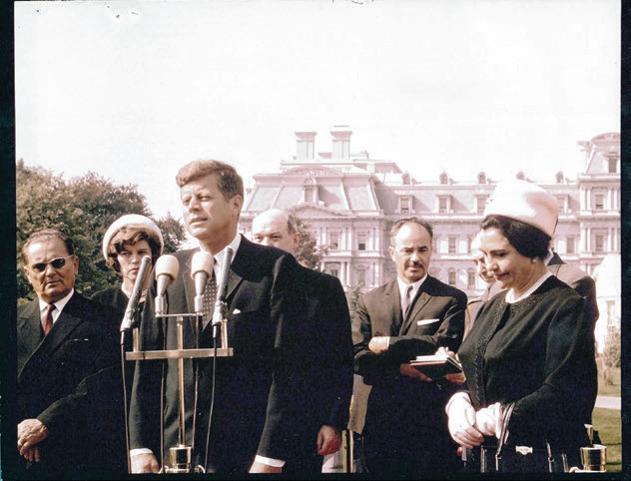
In October 1963, weeks before the assassination of President John F. Kennedy, Marshal Tito, of Yugoslavia, was at the White House to meet with JFK. As Lipsey entered the room for the meeting, camera in hand, a guard told him cameras weren’t allowed. The president said otherwise.
The photographs Lipsey took that day of the president with Tito turned out to be among the last taken of JFK in Washington. Six decades later, ask Lipsey what he is proudest of, and he doesn’t mention Camelot not the Kennedys, not the White House.
“My family’s what I’m most proud of,” Lipsey said, and began to list them: his two daughters, Laurie and Wendy, his grandchildren and his wife of 63
PROVIDED PHOTO
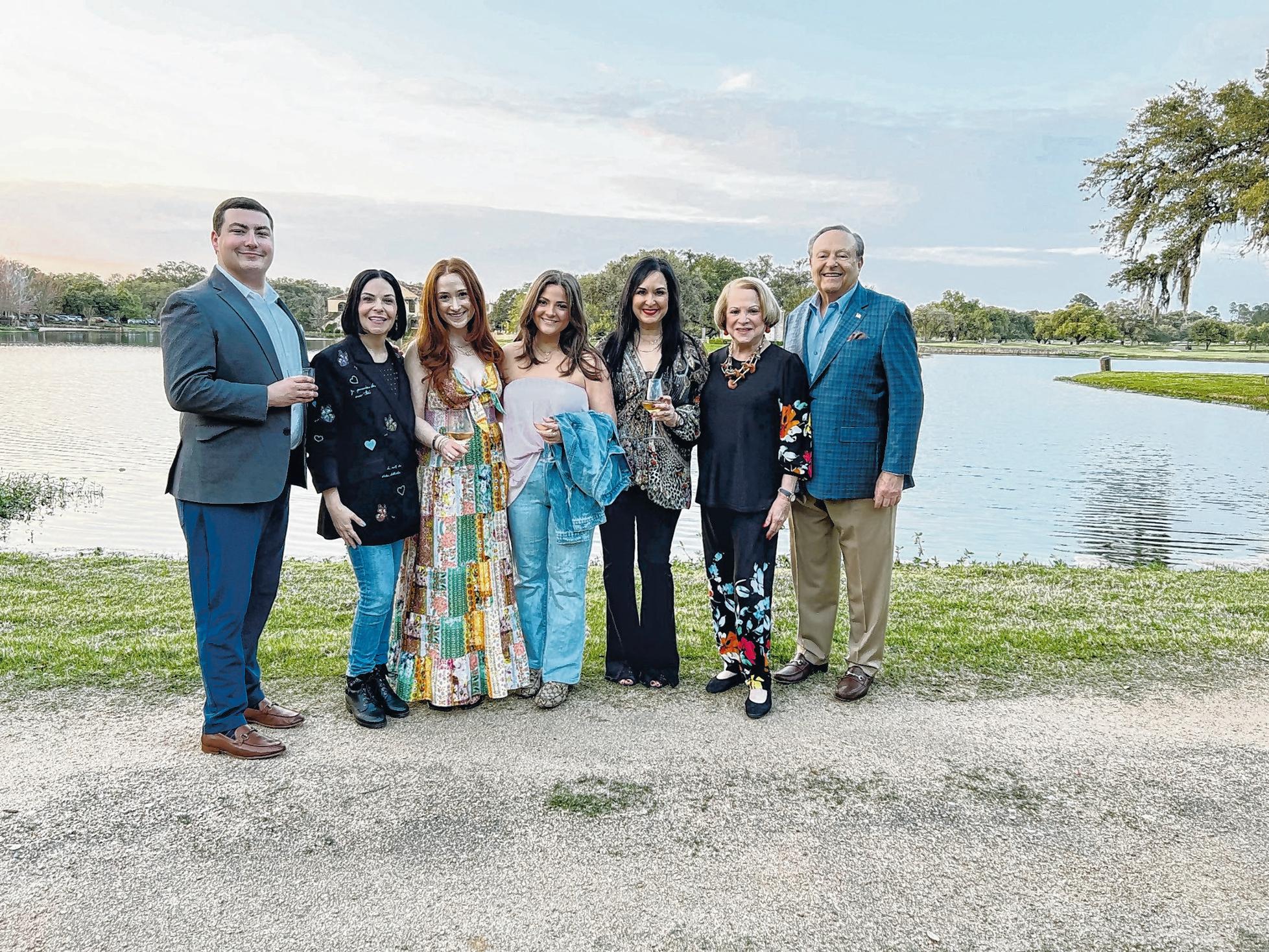
Luke Lipsey, Wendy Lipsey, Anna Aronson, Marla Aronson, Laurie Aronson, Susan Lipsey and Richard Lipsey
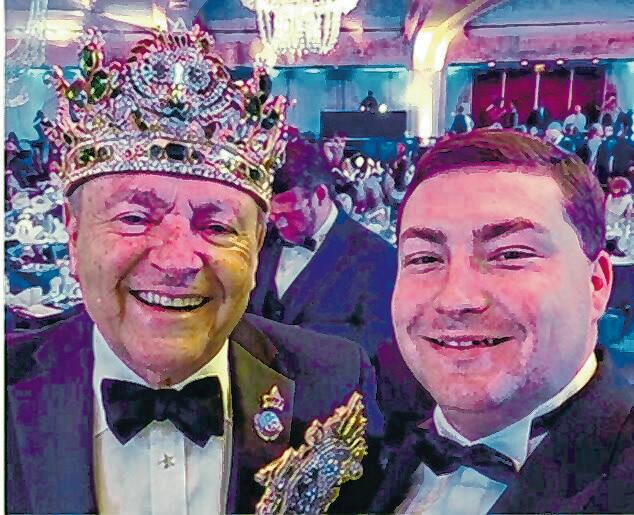
PROVIDED PHOTO Richard Lipsey, king of 2022 Washington Mardi Gras, with his grandson, Luke Lipsey.
PROVIDED PHOTO
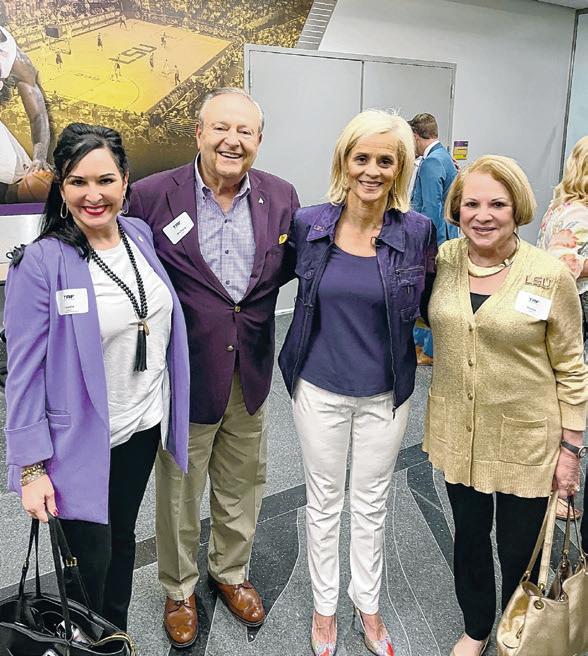
The Lipsey family are huge LSU and Kim Mulkey supporters. Pictured here, Laurie Aronson, Richard Lipsey, Kim Mulkey and Susan Lipsey.
PROVIDED PHOTO
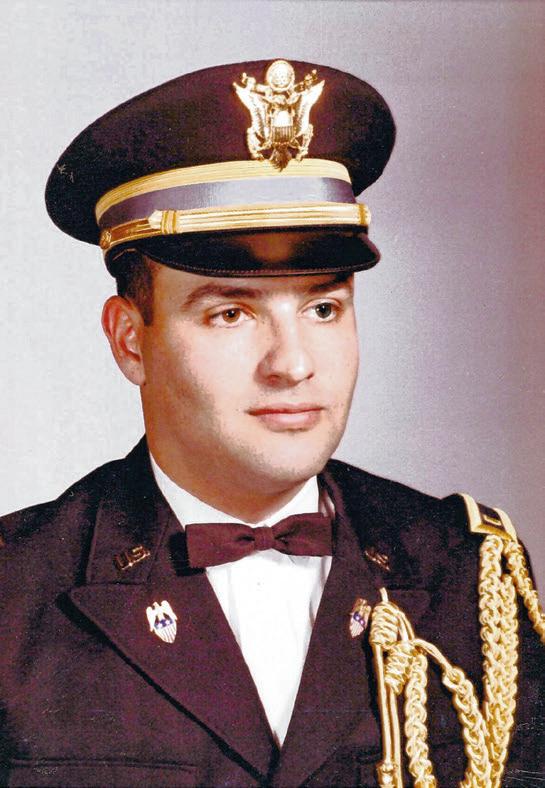
Richard Lipsey in 1963 in his dress uniform in Washington, D.C.
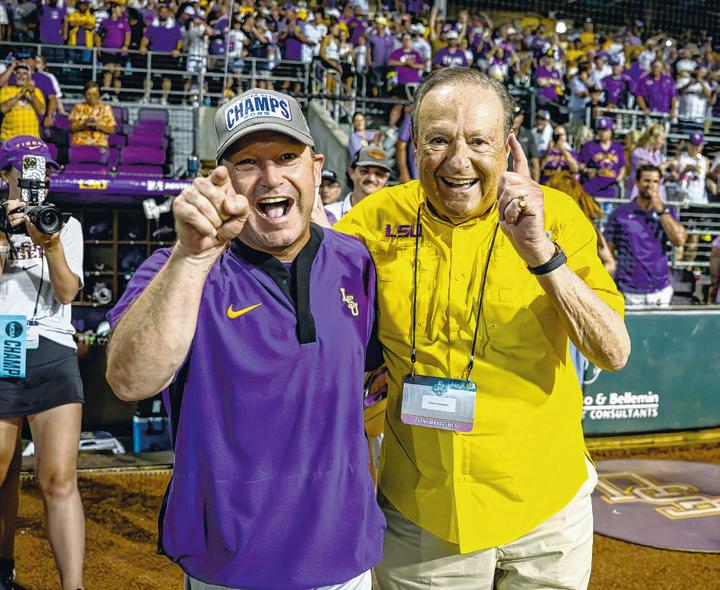
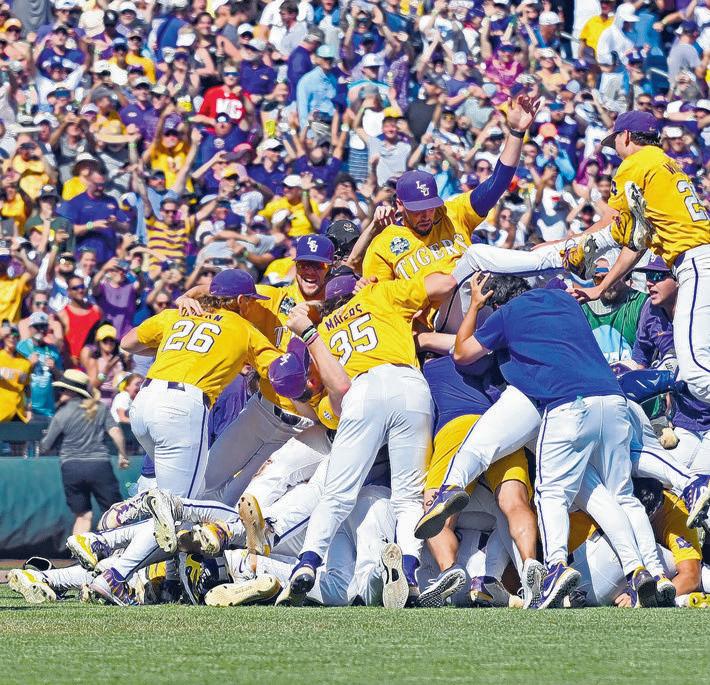
STAFF FILE PHOTO BY MICHAEL JOHNSON LSU coach Jay Johnson celebrates with Richard Lipsey as the Tigers punched its ticket to Omaha in 2025.
LOUISIANA LEADS DECLINE IN U.S. DIVORCE RATES
Divorce is down in America, and Louisiana has the lowest divorce rate in the country.
In 2023, over 1.8 million Americans divorced. Additionally a third of Americans who have ever been married have also experienced divorce.
Louisiana saw its lowest divorce rate in 2022 with 0.7 divorces per 1,000 people In 2023, that rate increased to 0.9 divorces — still the lowest rate in the country, according to data from the Centers for Disease Control and Prevention.
The Pew Research Center reported that the refined divorce rate in the U.S. peaked around 1980, at 22.6 divorces per 1,000 married women, before falling slightly to 20.5 in 2008 It has fallen more sharply in the past 15 years to 14.4 divorces per 1,000 married women in 2023.
One reason the divorce rate has declined is who is most likely to get married these days, according to the Pew Research Center. Over time, the married population has shifted toward adults with higher levels of education as people with lower levels of education have become less likely to marry Adults with more education are less likely to divorce, and these shifts have driven down the divorce rate
LIPSEY
Continued from page 1G
years, Susan.
There is, in fact, a great deal more he could have named.
At 86, Lipsey has lived several lives’ worth of remarkability — and has a book coming out later this year to prove it.
Bound to secrecy
After the Army, he came home, earned a Master of Business Administration at Harvard University and transformed his family’s retail sporting goods business, Steinberg’s, into what is now one of the country’s largest wholesale firearms distributors, Lipsey’s.
His grandson, Luke Lipsey said the Dos Equis man needs to move over because, in reality, Richard Lipsey is the most interesting man in the world.
Despite the glamour of the Kennedy days in the White House, Richard Lipsey was also there for the darkest hours.
In November
Other reasons for declining divorce rates include a decline in marriages, increased access to couples therapy and pandemicrelated delays in both marriage and divorce.
In the past decade, Louisiana’s divorce rate has been halved:
n 2.2 per 1,000 people in 2013; n 2.3 per 1,000 people in 2014; n 2.8 per 1,000 people in 2015; n 2 divorces per 1,000 people in 2016; n 1.9 divorces per 1,000 people in 2017; n 1.7 divorces per 1,000 people in 2018; n 2.4 divorces per 1,000 people in 2019; n 1.4 divorces per 1,000 people in 2020; n 2.2 divorces per 1,000 people in 2021; n 0.7 divorces per 1,000 people in 2022; n 0.9 divorces per 1,000 people in 2023.
These states had the highest divorce rates in the U.S. in 2023:
n Nevada with 3.8 divorces per 1,000; n Idaho and Wyoming with 3.4 divorces per 1,000; n Oklahoma with 3.3 divorces per 1,000; n Alaska and Utah with 3.1 divorces per 1,000; n Alabama,Arkansas and Florida with 3 divorces per 1,000.
These states had the lowest divorce rates in the U.S. in 2023:
has worked alongside her father for 33 years and now runs the company he built, said his six-days-a-week work schedule never got in the way of supporting his children and grandchildren.
“He never missed anything,” she said.
PHOTO Luke and Richard Lipsey hunting in Canada
Wendy Lipsey remembers Saturdays at Steinberg’s, where “put us to work” mostly meant hiding in camping tents and jumping out at customers. The girls also spent hours cranking an antiquated machine that spun red bows for gift wrap, hundreds of them, into a box. And there was the phone.
PROVIDED PHOTO
Richard Lipsey with his granddaughter Anna Aronson and his wife, Susan Haspel Lipsey.
1963, the young lieutenant was the officer placed in charge of the assassinated president’s body He was the only man at the autopsy who was not a physician. Bound to secrecy for years, he kept all of it to himself, and when the restriction was lifted around 1978, he still turned down the talk shows out of respect for the Kennedy family He has never made a dollar from any of it
“My grandfather does not embellish things,” Luke Lipsey said. “He’s very straight-shooting. No pun intended.”
All of those larger-than-life details, though, represent the sliver
That is the word his family keeps reaching for when the Kennedy years come up — a sliver of a far larger life. He came home and became an advocate for Baton Rouge, a huge LSU supporter and several other causes.
Asked to describe him, his daughters and grandchildren didn’t say “historic” or “famous.”
Laurie Lipsey Aronson said honorable, a class act. Wendy Lipsey said a true Southern gentleman. Anna Aronson said a leader, a man of integrity, charitable.
Luke Lipsey said kind, thoughtful, genius.
‘He never missed anything’
What his children marvel at is not the rocking chair in the Oval Office but that he has consistently shown up.
Laurie Lipsey Aronson, the older daughter who
n Louisiana with 0.9 divorces per 1,000;
n Illinois with 1.2 divorces per 1,000;
n Kansas with 1.7 divorces per 1,000;
n Massachusetts with 1.8 divorces per 1,000;
Divorce rates, collected by the National Center for Health Statistics, are based on provisional state counts of divorces. Each divorce, including annulments, is counted in the state in which the marriage was legally ended or legally petitioned
n Iowa with 1.9 divorces per 1,000;
n Arizona with 2 divorces per 1,000; n Texas and Wisconsin with 2.1 divorces per 1,000.
Their father had a rule: no matter who sat across the desk a governor, a chief executive, anyone — if one of his daughters or grandchildren called, he answered.
“Excuse me a minute. This is my daughter,” he would say He spent a few seconds to be sure everyone was all right and then he would call back. The purple popsicle
Richard Lipsey’s approach to fatherhood is linked to his own father Growing up, his family would go downtown for dinner at the Piccadilly all four of them fed for under $2 He remembers that every time a struggling family walked in, his father would find a waiter and slip them a couple of bills with instructions to feed that family
Richard Lipsey’s mother, Anna Lipsey, helped found Mary Bird Perkins Cancer Center, a place the family still treats as sacred ground. Wendy Lipsey spent her young adulthood volunteering on its chemotherapy floor, making beds and holding the bucket for patients too sick to lift their own heads.
Then came the purple popsicle.
After Wendy Lipsey had a liver transplant in 2009 and a kidney transplant in 2015, the one thing she could keep down was a grape popsicle. Her son Luke recognized the power of the popsicle and wondered, “If a purple popsicle could do that much for his mother, what might it do for someone else?”
He used his allowance to buy popsicles for others for years. In 2016, he started
PROVIDED PHOTO
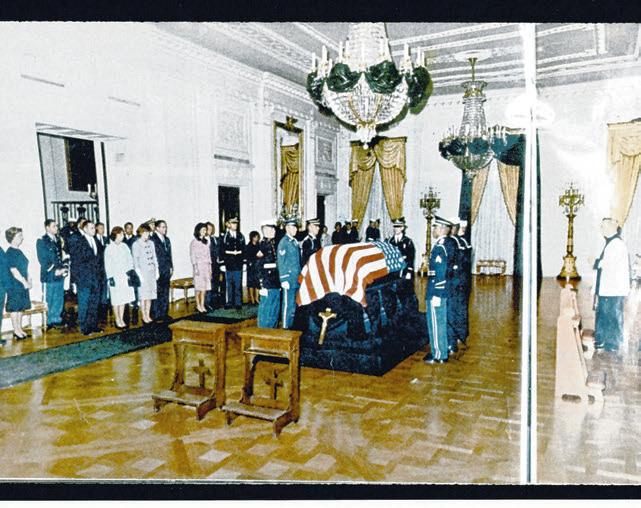
Richard Lipsey describes this photo as: ‘Returning JFK’s body to the East Room of the White house at 4:30 a.m. after the autopsy First lady Jackie is in the pink suit she had worn all that day and night.’ Richard Lipsey is by the door next to family and staff members.
handed them out each month at Our Lady of the Lake Children’s Hospital, trademarking the name “Luke’s Popsicle Pals.”
“It’s a generational thing,” Wendy Lipsey said.
And she has written her own chapter of it. The two transplants that nearly took her turned her into a certified organ-donation speaker carrying her story across Louisiana, and the founder of an annual gala, Fais Do Donate
After this spring’s event, her father told her what he tells her every time: “You are literally saving lives.”
Carrying the name
Richard Lipsey’s grandchildren grew up inside the gravity of the name.
Anna Aronson, his oldest grandchild, did not love it at first. She remembers walking into almost any Baton Rouge restaurant and someone there knowing exactly whose granddaughter she was.
“I love being Richard Lipsey’s granddaughter,” she said. “But being my own person in New York is also very special to me.”
She has learned, too, that the man who wears a sport coat to a New York pizza joint is the same
Richard Lipsey took this
in
describes it as: ‘The last known picture of JFK on the White house lawn with foreign dignitary Marshall Tito, president of the Socialist Federal Republic of Yugoslavia.’ Other people in the photograph include Tito’s wife, Jovanka Broz, an unnamed interpreter, Secretary of State Dean Rusk and Eunice Kennedy Shriver, JFK’s sister
one who flew to Vietnam last summer with her and her younger sister Marla Aronson. The summer before that, he peeled off from the group in London to find Indian food with her when no one else would go.
The most lasting testimony to Richard Lipsey’s legacy may have come from the only grandson. Luke Lipsey’s parents divorced more than a decade ago About four years ago, he decided he wanted to carry the Lipsey name forward — and he went to his grandfather first.
“If you don’t support this idea, I will not do this, out of respect for you,” he told him.
With his grandfather’s blessing, Luke went through the courts and became Luke Lipsey He said he wanted to go through with this while his grandfather was alive. He borrows a sentiment from another Baton Rouge figure the family holds close, LSU basketball coach Kim Mulkey who likes to say: Give me my flowers while I’m alive. Richard Lipsey will most likely spend part of this Father’s Day where his family can find him — at Phil’s Oyster Bar or in front of a ballgame being, to the people who get to call him Dad and Pops, the most interesting man in the world precisely because he has never acted like it.
Email Jan Risher at jan.risher@ theadvocate.com.
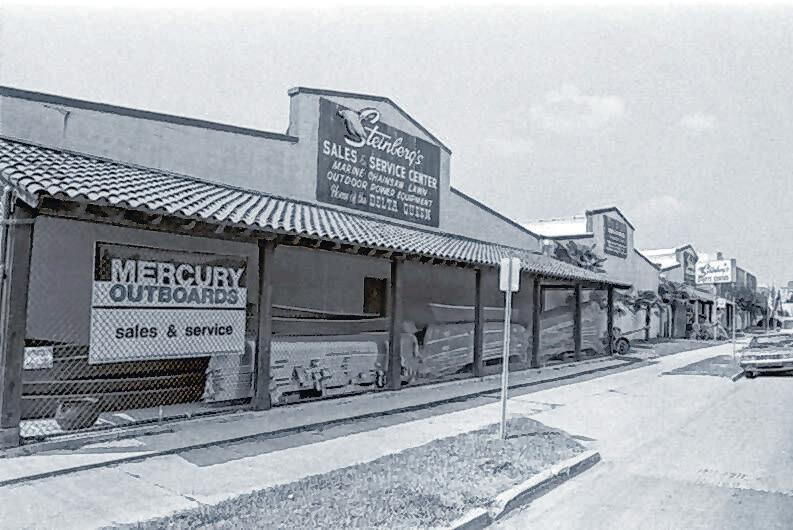
Sporting Goods Store in Baton Rouge
PROVIDED PHOTO
photo
1963. He
PROVIDED
PROVIDED PHOTO BY HEATHER McCLELLAND
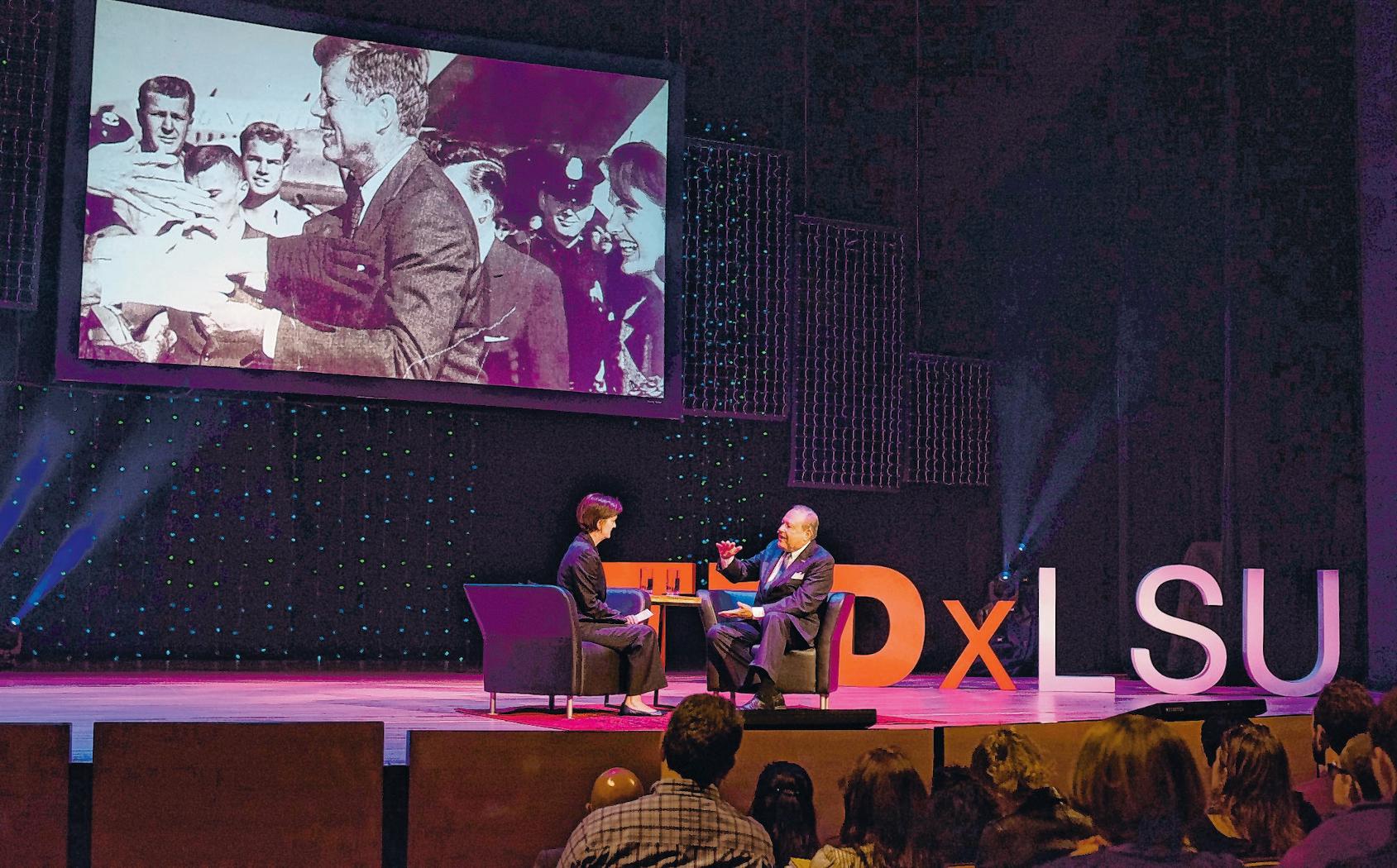
Stacia Haynie, dean of students for the LSU College of Humanities and Social Sciences, interviews Richard Lipsey, an LSU political scientist, who worked as an aide to President John F Kennedy when he was assassinated, during their fireside chat style talk at TEDxLSU 2018.
AT THE TABLE
Fill your empty nest with the aroma of sourdough
I am an empty nester now
Both of my children have graduated from high school and spend the school year in cities away from home. This summer, they are farther away still — out of state, working, exploring and collecting the kind of experiences that only this stage of life can offer
Meanwhile, I remain at home watching the dog and keeping my daughter’s sourdough starter alive until she returns.
I’m no stranger to sourdough. During the pandemic, I eagerly joined the ritual of tending a jar on the counter feeding, discarding, baking After a few years and one ill-timed trip, I let mine go. Yet here I am again, reacquainting myself with the rhythm of sourdough.
There is a quiet kind of magic in flour and water left to sit. With regular feedings, it stirs and sighs with bubbles, alive and capable of transforming the simplest ingredients into something layered and complex. Maintaining it feels less like a science experiment and more like a ritual.
With my prior starter, bread was on regular rotation. But this time, I find myself drawn to baking something less expected and exploring ways sourdough can slip into everyday moments rather than anchor an all-day baking project. I’ve been folding this starter into recipes that feel both familiar and quietly transformed.
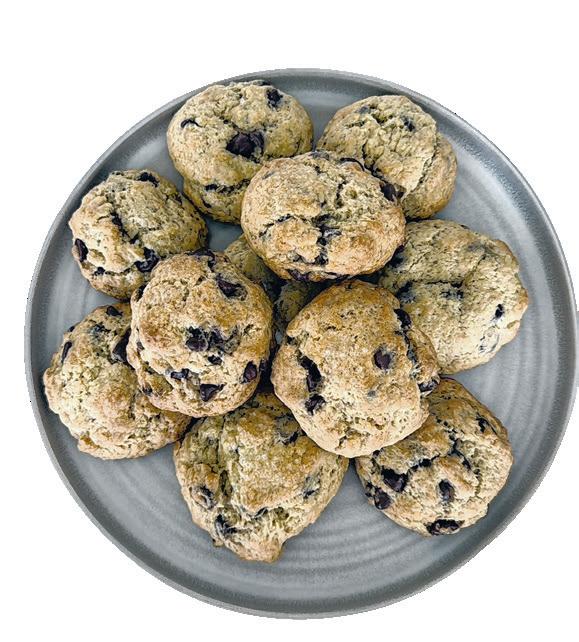
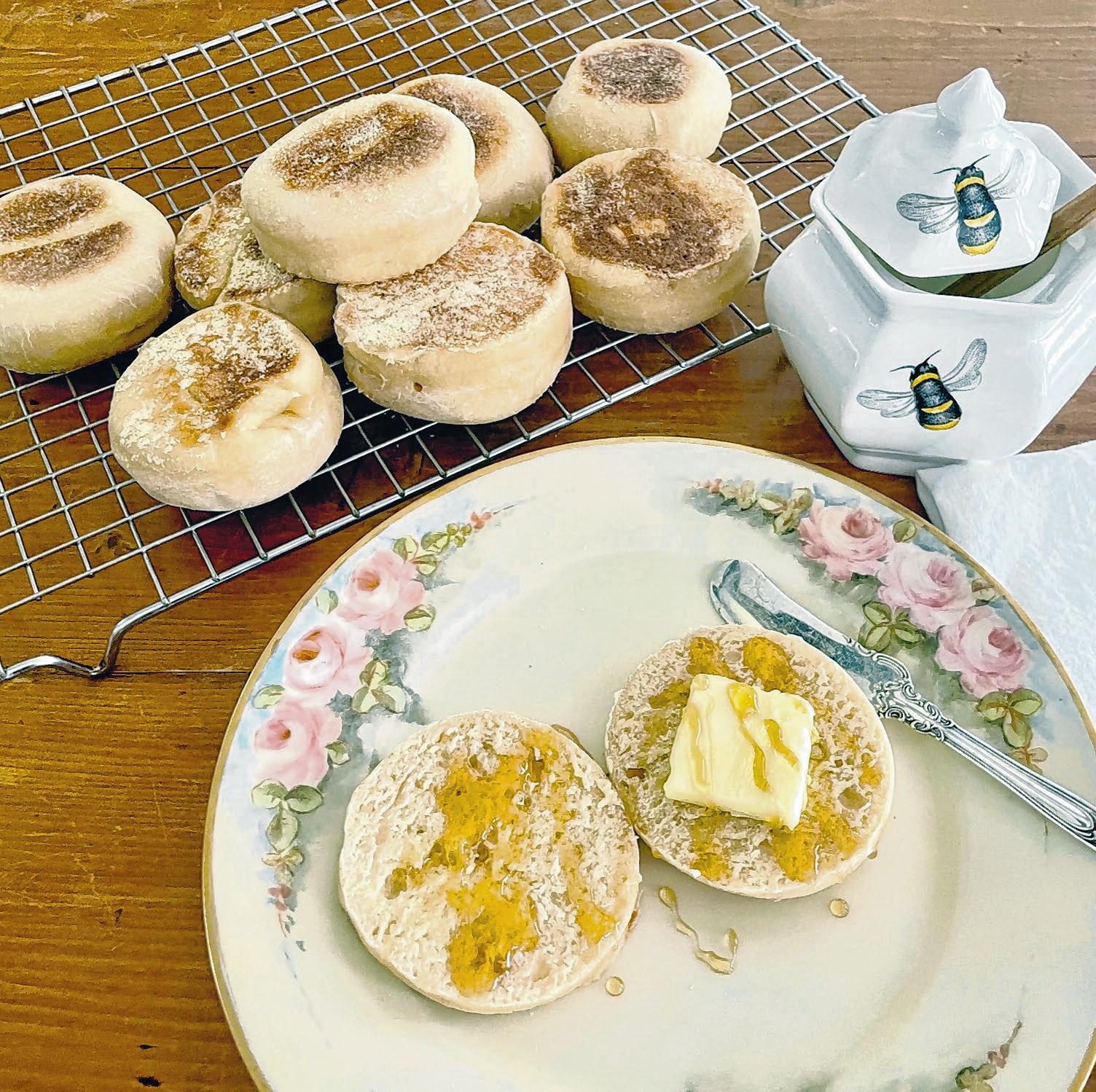
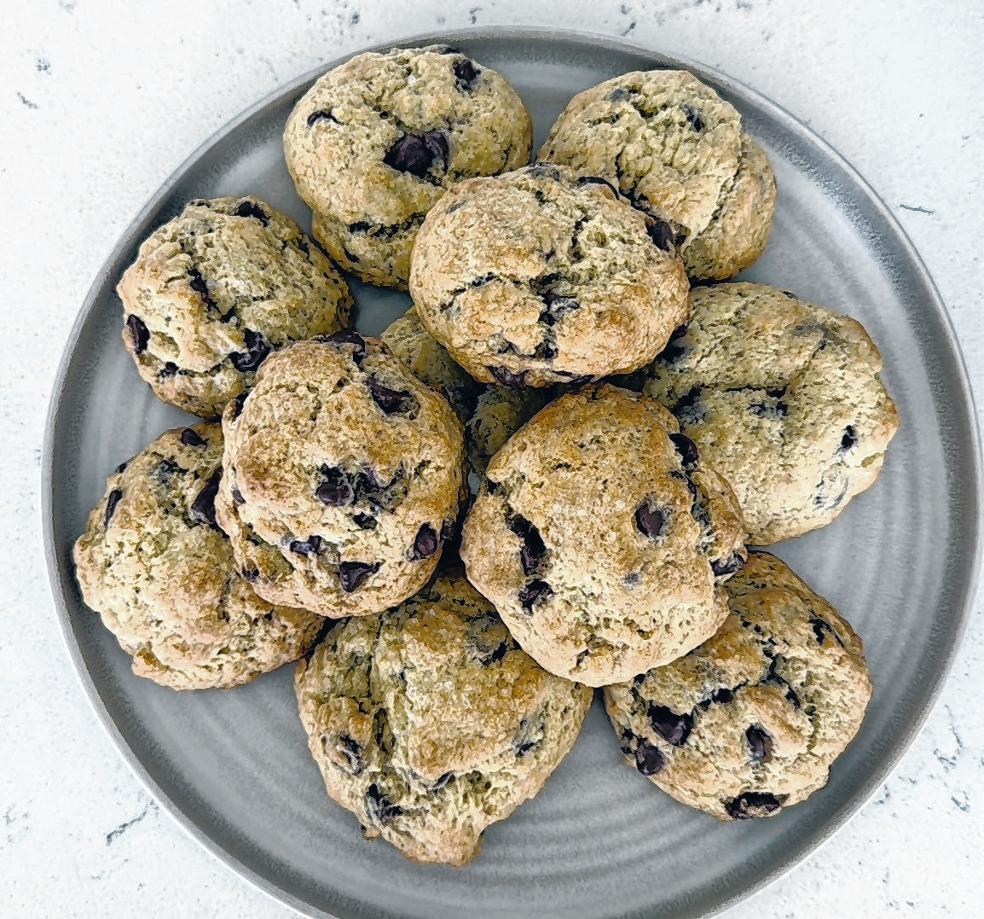
Sourdough English muffins, tender with nooks ready to catch butter deliver the character of long fermentation without the ceremony of a loaf. And sourdough cookies — perhaps most surprising — are thick and chewy with a gentle tang that deepens sweetness and adds unexpected complexity
In this season of transition, as routines shift and the house grows quieter, sourdough feels less like a challenge and more like a companion adaptable, forgiving and quietly alive. Sometimes, transformation looks like a perfectly risen loaf. And sometimes, it’s an English muffin at breakfast or a warm cookie at the end of the day
Sourdough English Muffins
Makes 1 dozen English muffins. Recipe is adapted from King Arthur Flour
1 tablespoon granulated sugar
1 cup water, warm (110 F-115 F)
1/2 tablespoon active dry yeast
1/2 cup sourdough starter, ripe (fed) or discard (ripe will give you a more vigorous rise)
31/2 cups all-purpose flour
1/4 cup nonfat dry milk
2 tablespoons unsalted butter at room temperature
1/2 tablespoon kosher salt Yellow cornmeal, for coating
1. Combine all the ingredients, except the cornmeal, in a large bowl.
2. Mix and knead by hand, electric mixer or bread machine — to form a smooth dough that is soft and elastic, but not particularly sticky Add additional flour if necessary
3. Place the dough in a lightly greased bowl, cover, and set it aside to rise for about 11/2 hours, or until it’s noticeably puffy (Note: For the most pronounced sour flavor, cover the bowl and immediately place it in the refrigerator without rising first. Let the dough chill for 24 hours to develop its flavor.)
4. Gently deflate the dough and turn it out onto a lightly floured work surface. Cover it and let it sit for a few minutes to allow the gluten to relax.
5. Divide the dough in half. Working with one piece at a time, roll the dough to 1/2inch thick, and cut into 3-inch rounds. Re-roll and cut any remaining scraps. Repeat with the remaining half of dough.
6. Place the 12 rounds onto cornmeal-sprinkled baking sheet. Sprinkle with additional cornmeal, cover with plastic wrap and let rise until light and puffy, about 1 hour If the
Sourdough Chocolate Chip Cookies
Makes 1 dozen cookies Recipe is from Camille Regard, as adapted from Little Spoon Farm
cup + 2 teaspoons all-purpose
dough has been refrigerated overnight, the rise time will be about 2 hours.
7. Carefully transfer the rounds (as many at a time that will fit without crowding) rightside-up to a large electric griddle preheated to 350 F or to an ungreased frying pan that has been preheated over mediumlow heat.
8. Cook the muffins for about 5 minutes on their first side; then lay a cake pan, cookie sheet, or similar flat (though not overly heavy) object atop them to help keep them flat. Continue cooking for about 7 minutes. Remove the pan, turn over the muffins and finish cooking without the pan on top for a total of about 10 to 12 minutes (the center of a muffin should register 190 F on a digital thermometer).
9. Remove the muffins from the griddle and cool on a rack before splitting in half. (Use a fork for maximum nooks and crannies.) Serve toasted or at room temperature
Storage note: Store leftover sourdough English muffins tightly wrapped at room temperature for four or five days; freeze for longer storage
5.
6.
ingredients are fully incorporated.
7. Use a cookie scoop to portion the dough into 12 balls and place on a parchment-lined baking tray Cover dough with plastic wrap so they do not dry out and chill the dough in the refrigerator for a minimum of 2 hours up to 24 hours.
8. Preheat the oven to 375 F. Prior to baking, sprinkle each cookie with flaky sea salt and bake the cookies for 15-17 minutes until the edges are golden brown and the center still appears slightly under-baked.
9. Remove from the oven and allow the cookies to rest on the baking sheet for 5 minutes. Transfer to a cooling rack to cool completely
Note: Store baked cookies at room temperature in an airtight container for up to seven days. Store unbaked cookie dough in the fridge, covered tightly for up to seven days. Freeze unbaked dough by portioning out the dough onto a parchment-lined baking sheet and flash-freezing for 15 minutes. Transfer frozen dough balls into a freezer-safe container and keep them frozen for up to three months.
Pennington doctor bridges research and patient care
‘We’re still in an obesity epidemic’
BY MARGARET DELANEY Staff writer
Dr Tim Gilbert, a Lake Charles native, knew he wanted to be in healthcare. What started as bachelor’s in nursing from McNeese State University turned into a career in endocrinology and leading Pennington Biomedical Center’s first independent outpatient clinic. Pennington, a global research center for metabolic, nutrition and lifestyle in Baton Rouge opened the endocrinology and diabetes clinic in March 2025. Gilbert lead the charge for the center, “even down to the phone number,” he said.
For the past 18 years, Gilbert has run a diabetes program at the Cashadi Indian Reservation in Elton. He runs an outpatient diabetes
program once a month at a clinic in southwest Louisiana, seeing sometimes 30 patients in one day Gilbert graduated medical school in 2006 from LSU Health New Orleans, trained in internal medicine at LSU in Baton Rouge and completed his fellowship in endocrinology at Ochsner in New Orleans. In addition to obesity, Type 1 and Type 2 diabetes patients, Gilbert also treats patients with thyroid, pituitary, adrenal, Polycystic Ovary Syndrome and more diseases of the endocrine system. This interview has been edited for length and clarity What sparked your interests in healthcare?
There was an interest in healthcare, but I didn’t have anybody in healthcare in my family My dad was a firefighter, and my mom worked in the dental field as an assistant. When I started, I wasn’t
quite sure what path I was going to take. Nursing, at the time, was in very high demand, and it seemed to offer the most opportunity for diversity if I decided to move on to something different.
When I went to medical school, because of my background in nursing in the ICU, I thought I was going to do pulmonary critical care. Endocrine is a lot of feedback loops, a lot of biochemistry It either clicks for you or it doesn’t. For me, it just clicked. What brought you to Pennington Biomedical Research Center?
It was really out of the blue. I was had been working in Lake Charles for 20 years, and was thinking in the back of my head about a change. I really wasn’t looking, and this position didn’t exist before me.
I was dating a girl (who I’m now engaged to) who’s from Baton Rouge. I was driving into the city one Thursday evening and got a call from the then CEO of
Pennington John Kirwan. Initially the conversations were about me consulting with the center But that quickly led into me moving. What was the vision for the center’s first clinic?
Pennington has been doing cutting edge, worldrenowned research for almost 40 years. They’re recognized as a global leader in medical research, specializing in metabolic health and endocrine disorders. The vision was expanding the mission of Pennington to go beyond research, but to take it to true patient care and patient treatment.
We started seeing patients in March of 2025 after about four to five months’ leg work of onboarding and getting the staff that we needed.
The goal was to bridge research by some of the top scientists in the world and bench-level research and merge it with a clinic that’s actually treating patients.
We were participating in
pretty much the research of every obesity drug on the market and many more to come — as well as a lot of other nutritional studies and lifestyle modification studies.
Also, we now have the ability to recognize patients that we see in clinic that may be candidates for studies, and have the ability to move patients into an appropriate study, whether that be for obesity or thyroid disease.
What are some incoming research studies?
We have an upcoming study with Amgen, called a switch study
We’re looking at patients who are currently on a maximal dose or maximum tolerated doses of the weight loss drugs Wegovy and Zepbound, but are not at their goal weight. We had these patients switch to Maritide to see if we can achieve further weight reduction.
All three weight loss drugs have slightly different active ingredients:
Wegovy contains only semaglutide, or GLP-1s, and Zepbound combines GLP-1s and a peptide mimicking a natural hormone in the body that regulates fat storage in the gut. Maritide is a once monthly injectable that combines different peptide formulations of gut hormones that could be effective in weight loss when Wegovy or Zepbound don’t work. We’re also looking at potentially starting a new study for hyperthyroidism, or Graves’ disease That’s exciting because there’s not been any new treatments made available for hyperactive thyroid or overactive thyroid in the last 30-plus years.
At Pennington, we average between probably 65 and 80 clinical trials at any given time — everything from maternal fetal health to pediatrics, to adult physiology and more.
Email Margaret DeLaney at margaret.delaney@ theadvocate.com.