BMW iX3
IS BMW’S FIRST NEUE KLASSE CAR THE START OF SOMETHING BRILLIANT? P20 2026
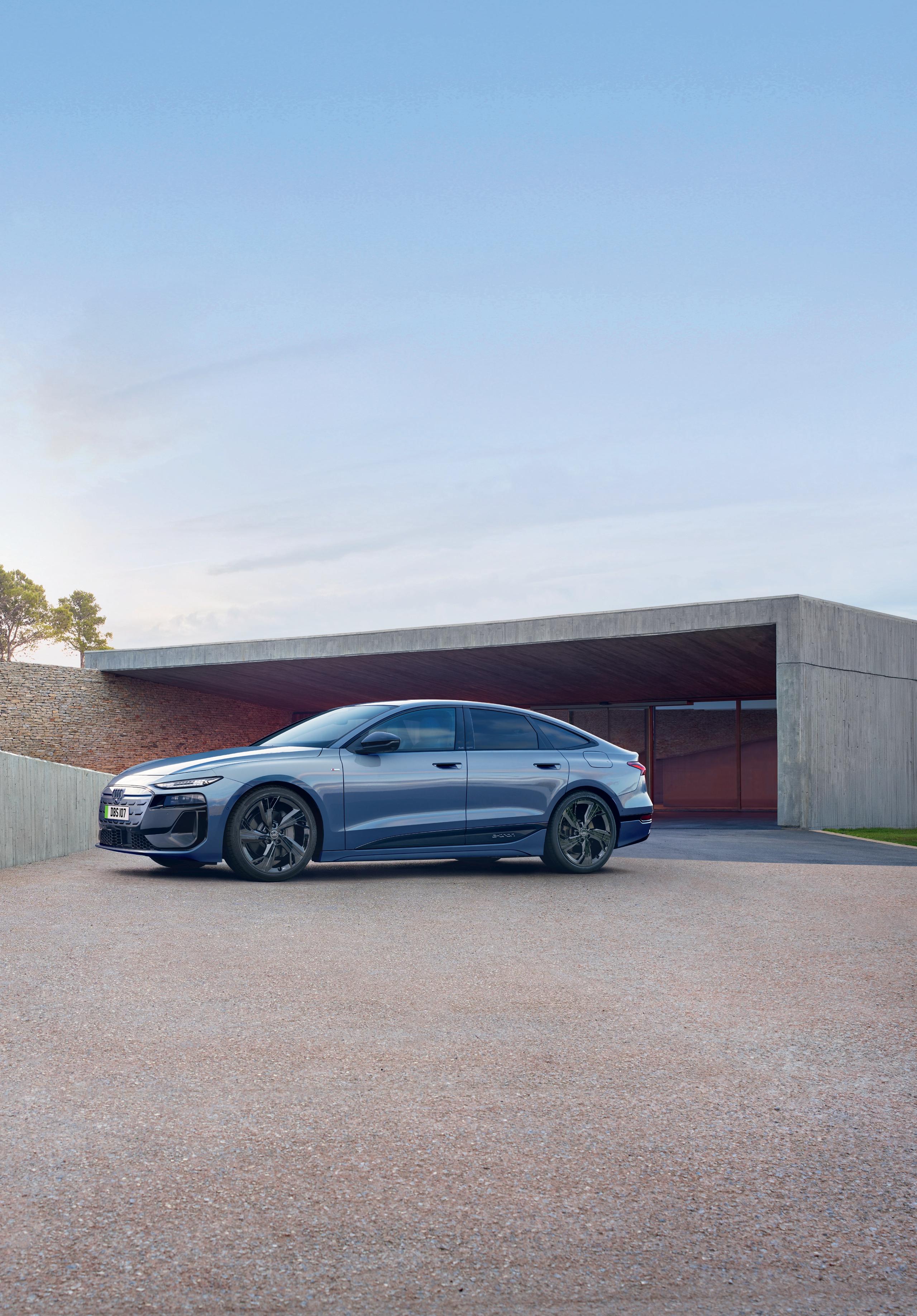

IS BMW’S FIRST NEUE KLASSE CAR THE START OF SOMETHING BRILLIANT? P20 2026
Welcome to the April edition of EV Powered, where I’m going to seamlessly blend geopolitical commentary with talking about racing cars. Or try to, at least.
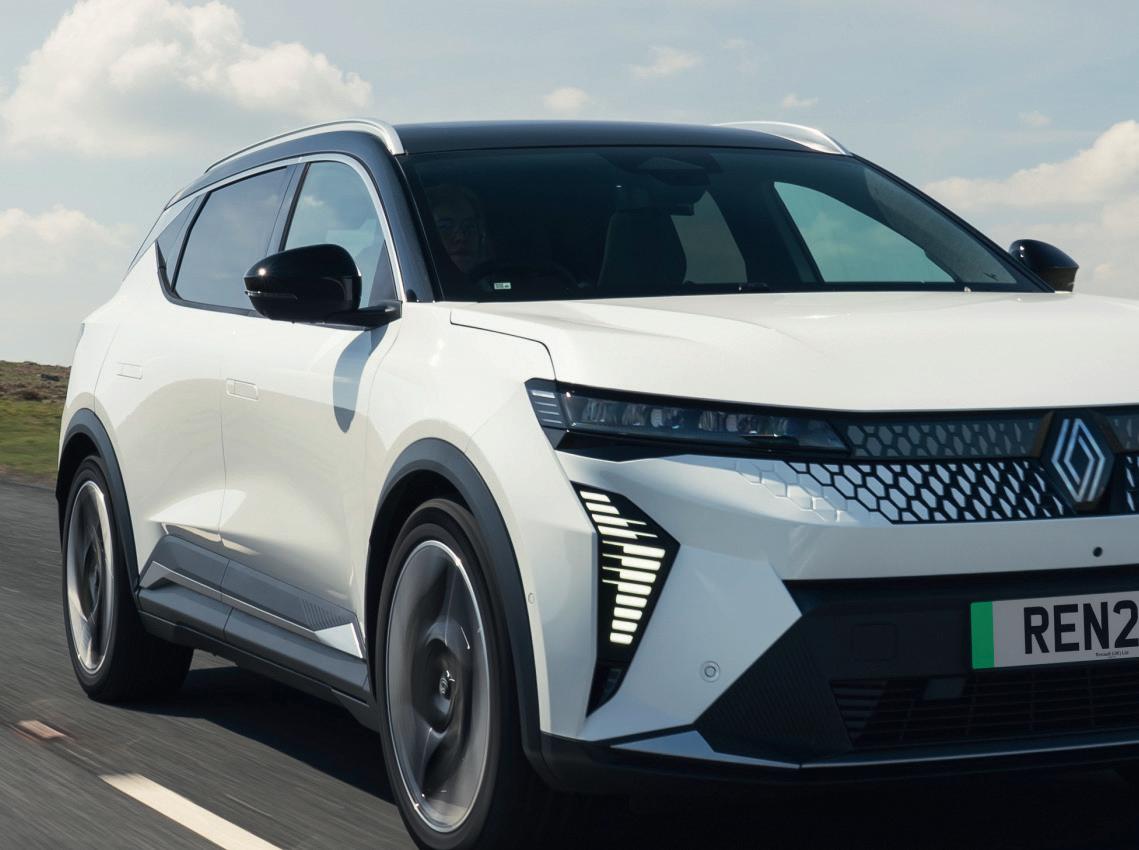
This is not the place, and I am not the person, to dive deeply into the implications of the current war in the Middle East, but it has highlighted once again one of the key positives of EVs and something that still isn’t discussed enough. I had to refuel a small petrol car recently which cost £1.70 per litre, equivalent to around 25p per mile in that particular vehicle. My Renault 5 longtermer, meanwhile, is costing me around 2p per mile. Not 20 pence, tuppence. While purchase price is still an issue for EVs, the running cost benefits, especially in times of fuel instability are clear to see. Anyway, on to less troublesome matters.
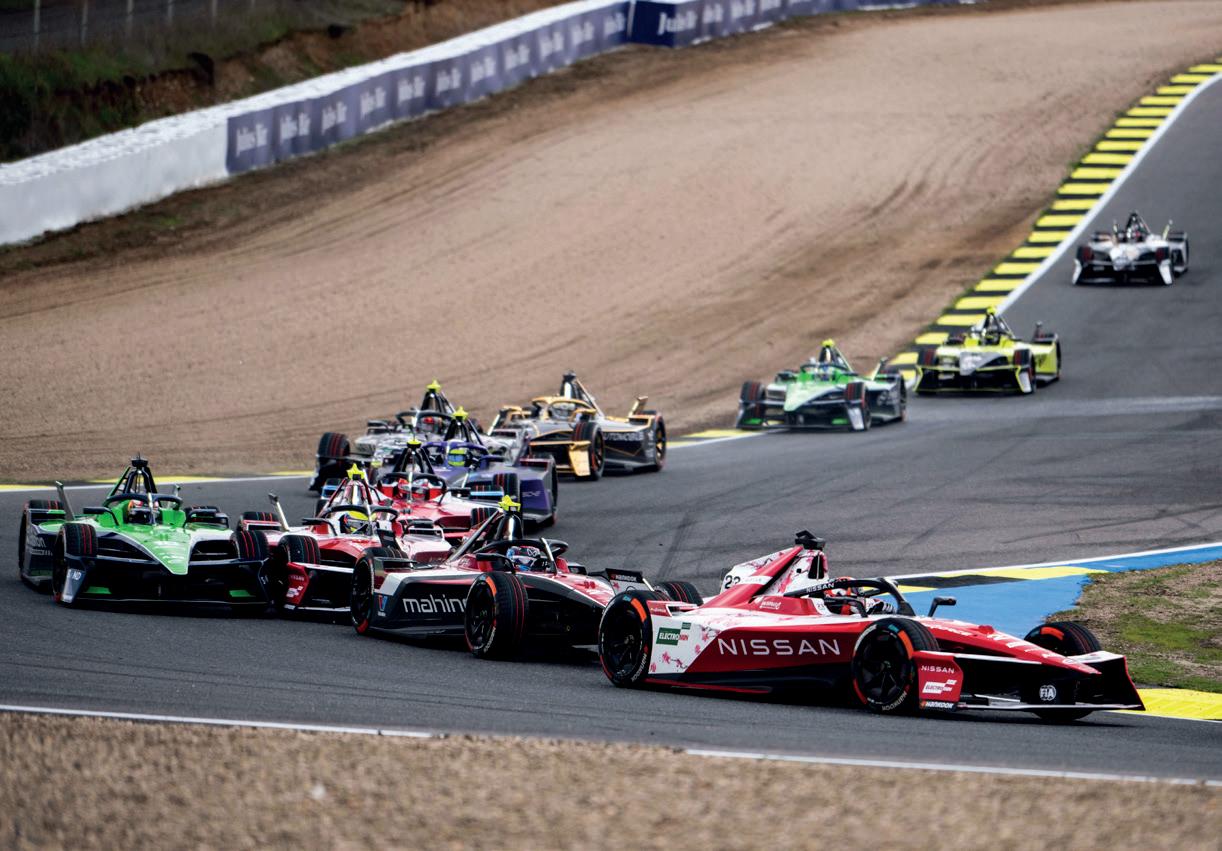
I was lucky enough to attend the Formula E Madrid E-Prix recently. Until now, I’ve largely left the motorsport side of things to my colleague Richard, as I’m left pretty cold by modern motorsport. But this was too good an opportunity to miss and I’m so glad I attended.
The Madrid race was thrilling from the first round of qualifying head-toheads to the final chequered flag of the race. There was wheel-to-wheel (and bodywork-to-bodywork) racing, multiple changes of leaders, collisions, penalties and more all hosted at the amazing historic circuit of Jarama.
Speaking to my hosts at the Nissan team (who had a weekend to forget), what struck me was how much the tech around EVs helped generate the
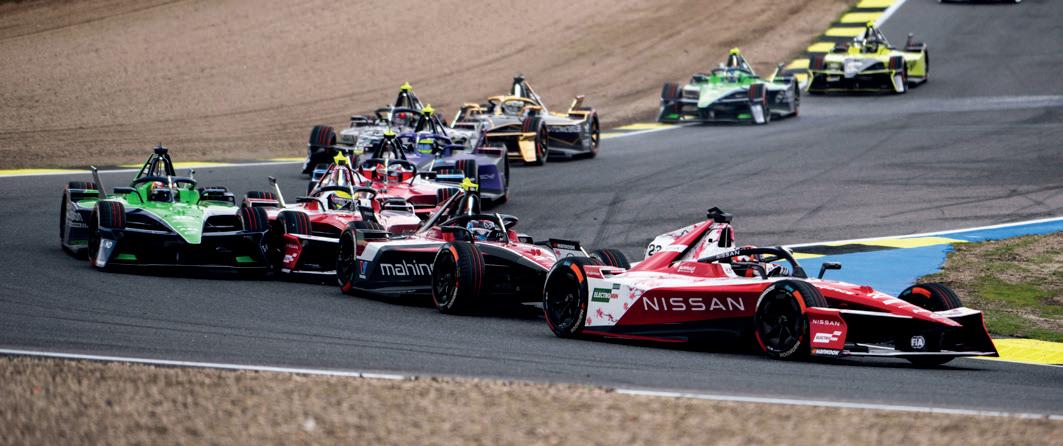




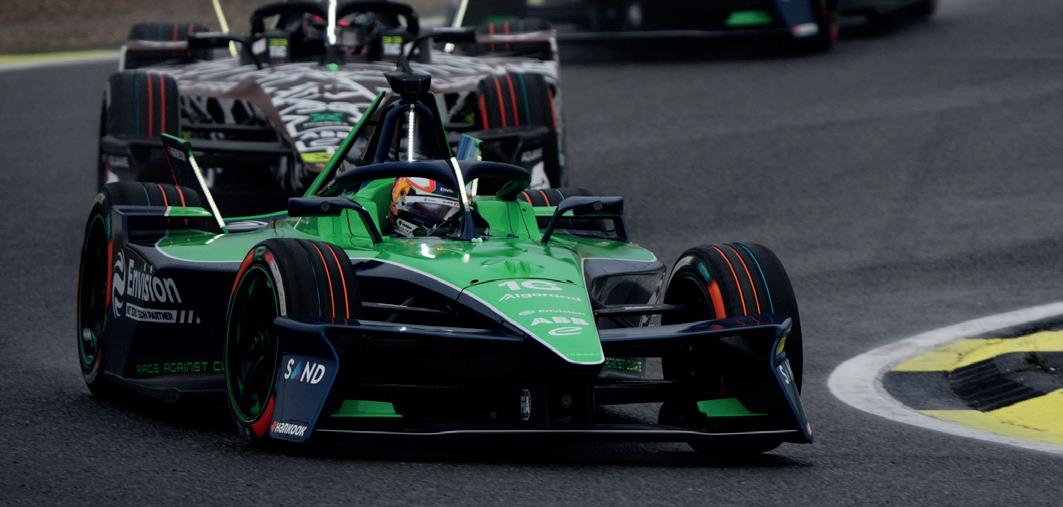
drama and excitement. Elements like Attack Mode and 30-second Pit Boost recharging stops sound gimmicky, but they add another layer of tactics and jeopardy to proceedings and help make races closer and less predictable.
It was also fascinating to see close-up how the series is trying to reduce its costs and environmental impact. This ranges from caps on the number of on- and off-site engineers each team can employ to weight limits on the kit they can carry race to race. There are no gargantuan F1-style extendable motorhomes here, just fold-out gazebos and covered trailers to keep teams and equipment sheltered.
And while we’re not likely to see a 450bhp Leaf Nismo any time soon, it was interesting to hear how teams are working to connect their on-track activities with development of their road cars. Whether it is low-weight motors or the radical 600kW mobile chargers, tech from Formula E is helping inform the next generation of passenger vehicles. And it’s not just a oneway street, Nissan’s road car division played a key role in developing the efficiency improvements that helped the team’s Oliver Rowland secure last year’s drivers’ championship.
You can read more about that in my interview with Nissan team boss Tommaso Volpe later in the magazine. This month you’ll also find reviews of the hugely impressive new BMW ix3 and DS No8, our pick of the best family EVs on sale, and hear more about the radical Mika Mino, which could help revolutionise urban mobility.
Enjoy the read.
Editor
Matt Allan Reporter
George East
Graphic Designer
Grace Moseley
Videographer
Jacob Pinchbeck
Content Sales Manager
Laura Phillips
Capital Business Media, Group MD
Richard Alvin
Business Development Director
Stephen Banks
Chief Creative Director
Stuart Hyde
Finance Director
Andrew Martin
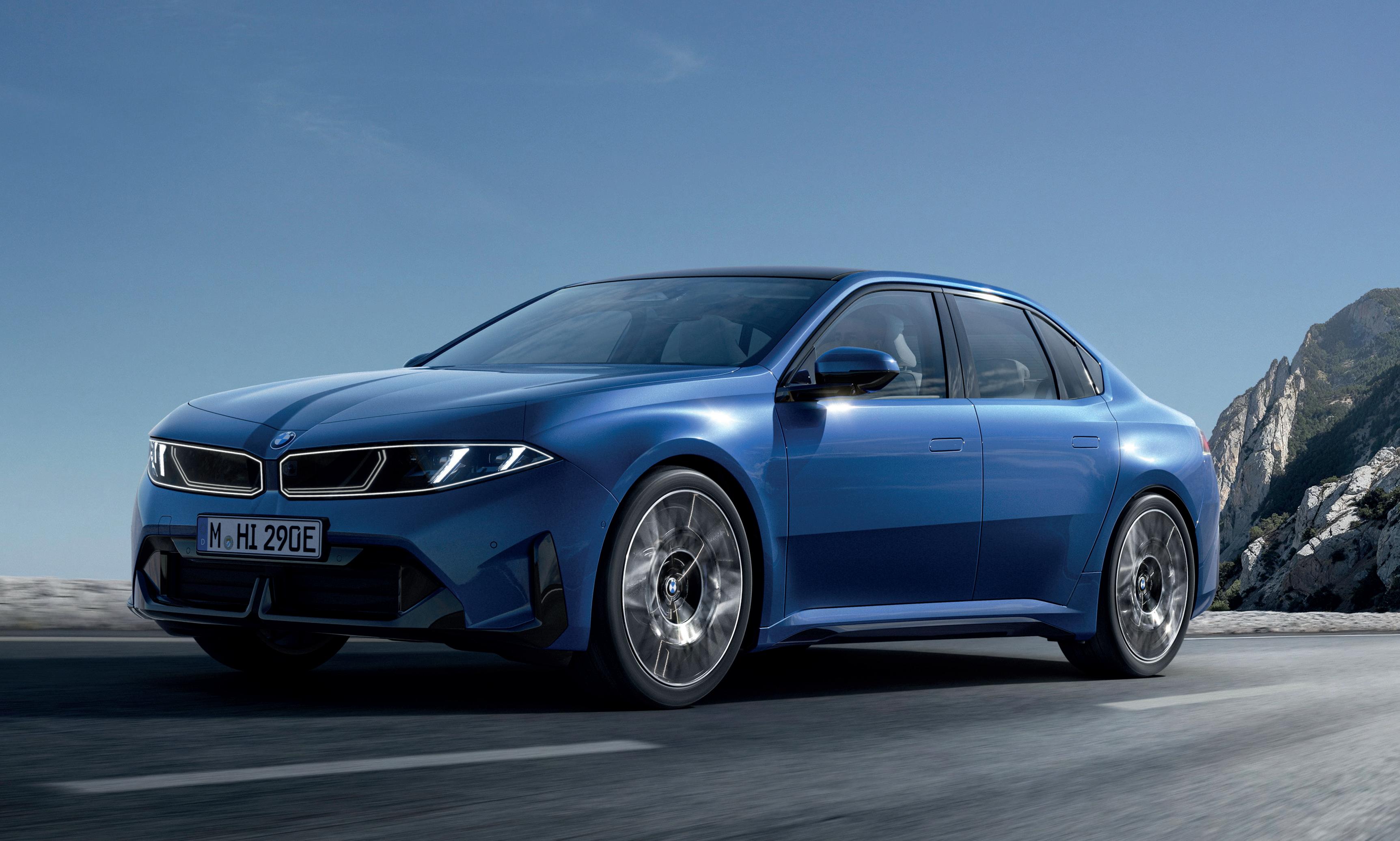
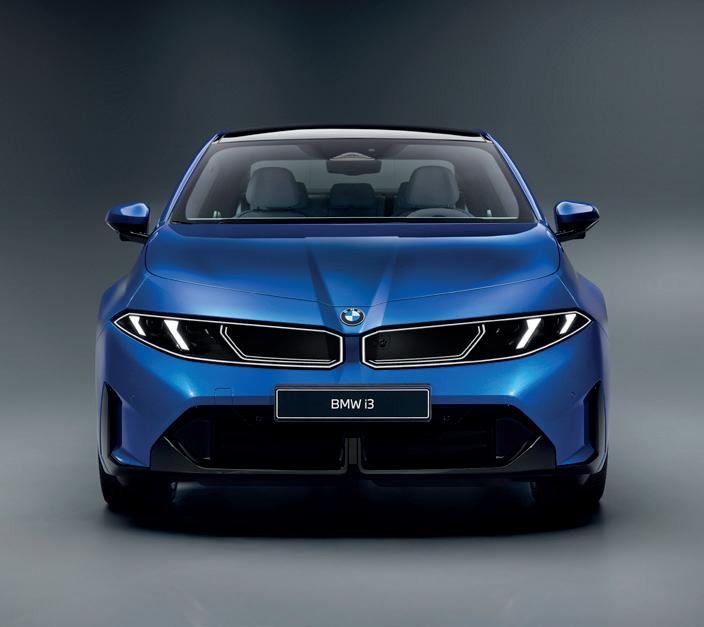
The 2026 BMW i3 is the second EV-only ‘Neue Klasse’ car, following on the heels of the secondgeneration iX3. Both cars share BMW’s EV-only, 800V Gen6 platform.
Taking its name from the iconic BMW i3 hatchback, which was withdrawn from production towards the end of 2022, the electric 3 Series will first be sold as a saloon. A Touring estate will follow later.
Like the latest iX3, the new electric 3 Series marks yet another milestone in BMW’s new electrification strategy, as it has beaten main rivals Mercedes and Audi to the market with an electric compact executive car. The equivalent electric C-Class EQ will arrive in the coming months, with an Audi A4 e-tron expected to follow.
The reborn BMW i3 will initially be offered in allwheel-drive (AWD) 50 XDrive guise, with other
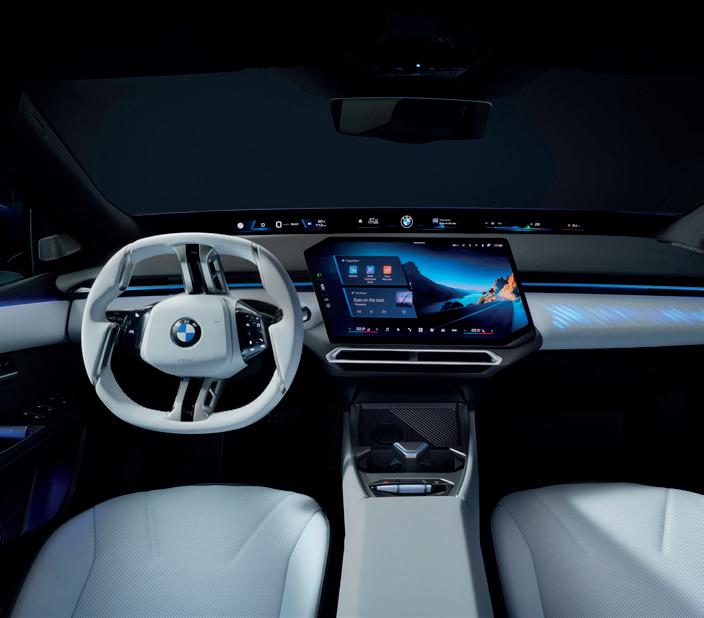
BMW has unveiled the first allelectric 3 Series, reviving the historic i3 name and promising a record-breaking range of 559 miles.
trim levels – including a quad-motor, 1,000bhp M3 – scheduled for later in the line-up.
This eighth-generation car marks the first time BMW has fully electrified the 3 Series. At its core is a 108kWh battery, capable of 559 miles of range on a single charge.
The big battery isn’t the sole factor behind the i3’s mile-munching capabilities. BMW’s Gen6 platform allows the seats to be bolted directly onto the battery pack, ensuring a low roofline to improve aerodynamics. The electric 3 Series’ floor is completely sealed to aid airflow across the car’s underbody.
With a maximum DC charging rate of 400kW, the i3 can onboard 249 miles of range in just 10 minutes. ‘Slow’ AC charging is capped at 22kW.
Weighing 2.3 tonnes and measuring 4.7 metres long, the BMW i3 gets a twin-motor setup producing a healthy 463bhp and 476lb ft of torque. While no performance figures have yet been publicised, the new i3 is expected to achieve the 0-62mph run in around 4.0 seconds. Like the iX3, it gets 50:50 weight distribution, promising an authentic BMW driving experience.
The electric 3 Series ushers in an all-new design language for BMW’s best-seller. Like the iX3, it combines the slim headlights and kidney grilles into one element to emphasise its width. BMW has, however, retained traditional 3 Series
design cues such as the long body and rear overhangs.
Inside, the i3 mirrors its iX3 cousin. A 17.9inch infotainment dominates the centre of the dashboard. Running on BMW’s latest iDrive software, it houses the majority of the car’s controls.
Both cars share the 43.3inch ‘Panoramic iDrive’ display, running the width of the dash under the driver’s eyeline. By displaying vehicle speed and a wealth of other data, the Panoramic iDrive eliminates the need for a driver’s instrument binnacle.
The electric 3 Series will be built at BMW’s Munich factory, and is expected to be priced from around £47,000 when it goes on sale in the coming months.
Chinese brand set to become first car maker to launch a mass-market EV with a semi-solid state battery.
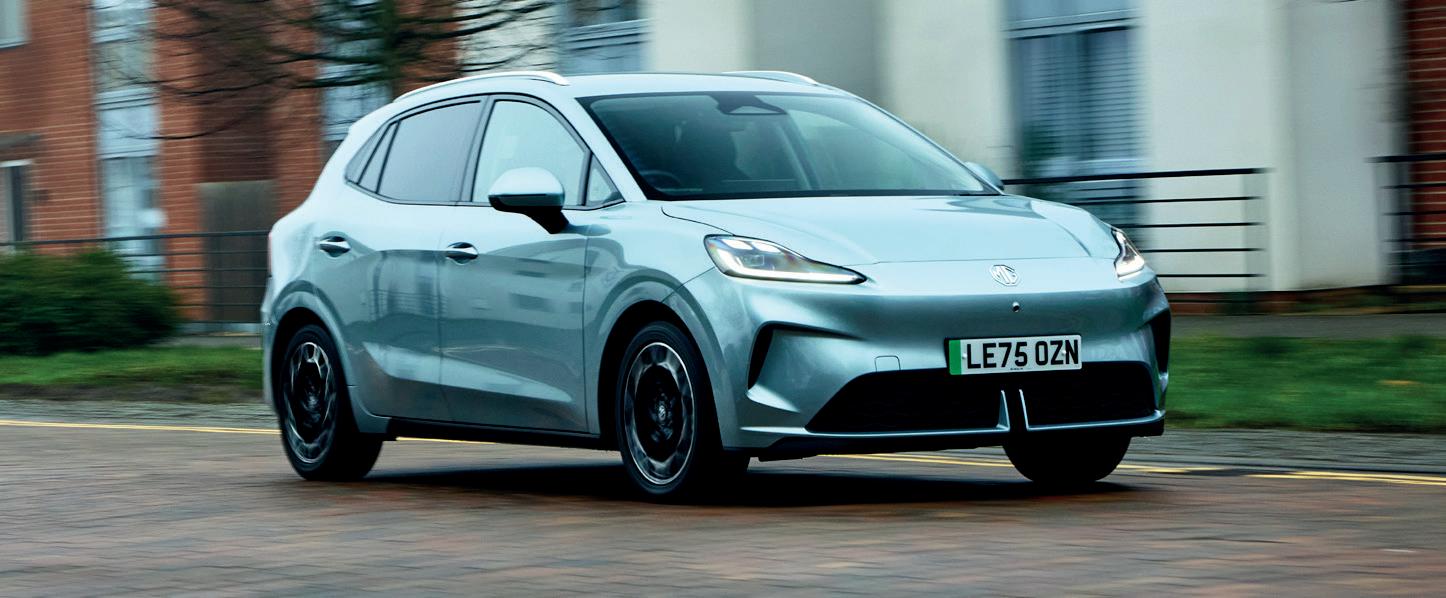
MG has announced plans to release a version of its MG4 Urban model with semi-solid state technology in the UK before the end of 2026.
In MG’s Chinese home market, the semisolid-state battery MG4 Urban gets a 54kWh manganese-based lithium-ion battery capable of 328 miles on a single charge.
However, this is on the generous Chinese CLTC cycle, which tends to quote 15%-20% more range than the European WLTP test. Nonetheless, this still translates into around 280 miles, which is more than healthy for a car aimed at the
likes of the Renault 5, Citroen e-C3, and Hyundai Inster.
As well as some 20 miles more range than the existing MG4 Urban, MG says that the Chinese market version of the semi-solid-state car charges from 30%-80% in 21 minutes – seven minutes quicker than the non-SSSB model. No direct fast-charging figure has been announced yet.
Given the additional tech, it is expected that the semi-solid-state MG4 will command a small premium over the outgoing model when it arrives
by the end of this year. For reference, the existing car is priced from £24,495.
Post-launch, MG will introduce its SSSB tech to other all-electric models, including the 4X, which it revealed online earlier this month. While the range of MG’s first-generation semi-solid-state batteries are not as impressive as what Mercedes achieved with an SSB-driven EQS last year, the Chinese-owned brand’s system promises a wider bandwidth of operating temperatures, with 15% quicker charging in cold weather.
For now, MG’s solid- and semi-solid state batteries have roughly the same energy density as existing packs. However, they are capable of achieving higher energy density, allowing for increased ranges in the future, as well as the same range as current units a lighter, cheaper package.
MG and Mercedes aren’t the only carmaker to be looking into the advantages of SSB and SSSB technologies. Toyota has long been exploring their benefits, and the Volkswagen Group is aiming to have solid-state batteries ready for production by 2030.
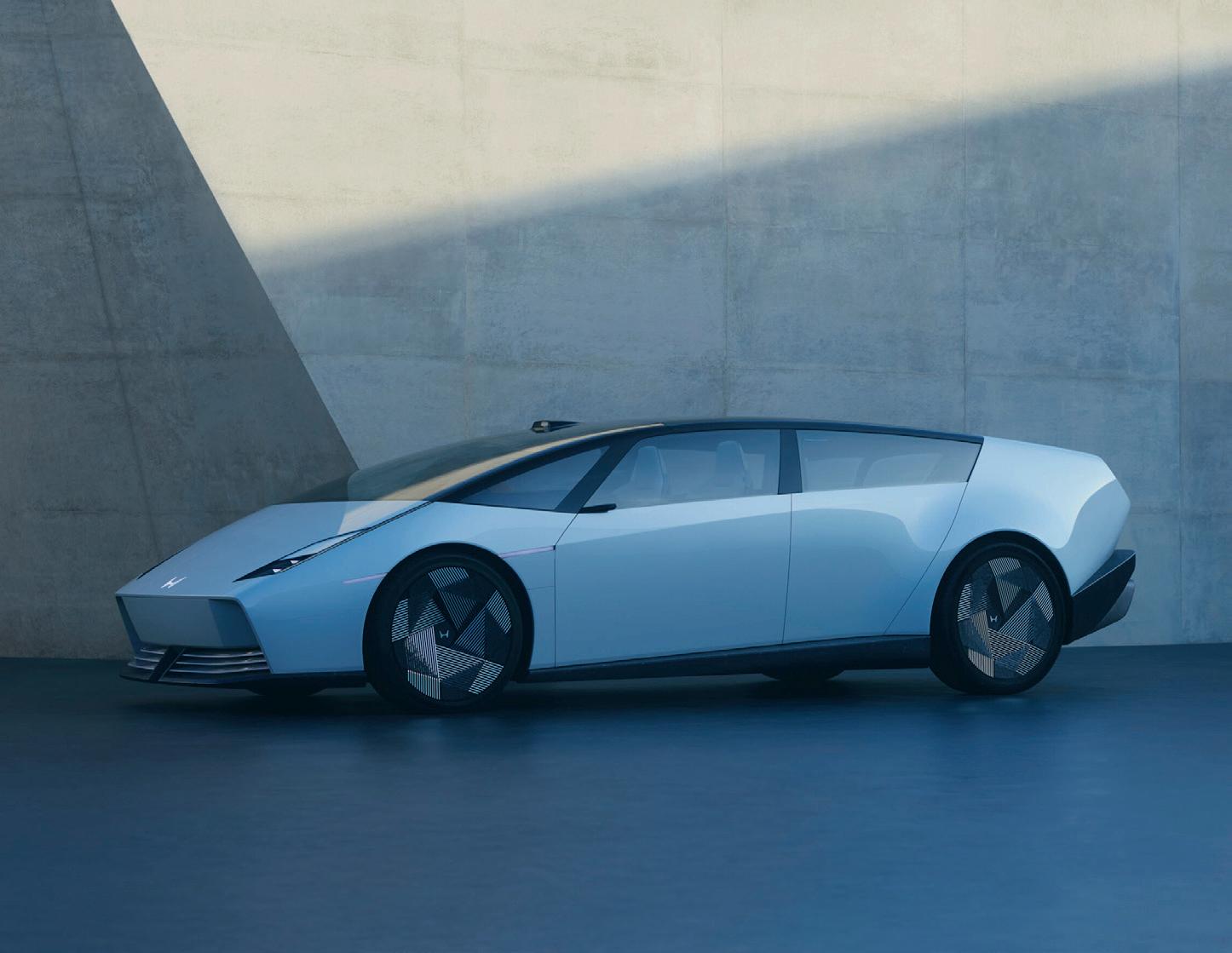
Honda has killed off a series of planned all-electric models in the face of major financial losses.
The Japanese manufacturer has scrapped plans for its Series 0 saloon and SUV just months ahead of the saloon’s launch, and abandoned its Afeela joint project with Sony.
Honda blamed heavy losses and shifting US policies on electric cars for its decision to scrap the Series 0 project. The move also rendered the Afeela programme, which was due to be built at the same Ohio factory, dead in the water.
The Series 0 cars were set to spearhead Honda’s EV strategy in the US. However, it has now cancelled their development along with the US-only Acura RSX, saying: “Starting production and sales of these three models in the current business environment where the demand for EVs is declining significantly would likely result in further losses over the long term.”
The firm partly blamed US President Donald Trump’s violent U-turn on EVs and protectionist tariffs for its troubles, after pouring money into EV development only to see support and interest collapse in the US.
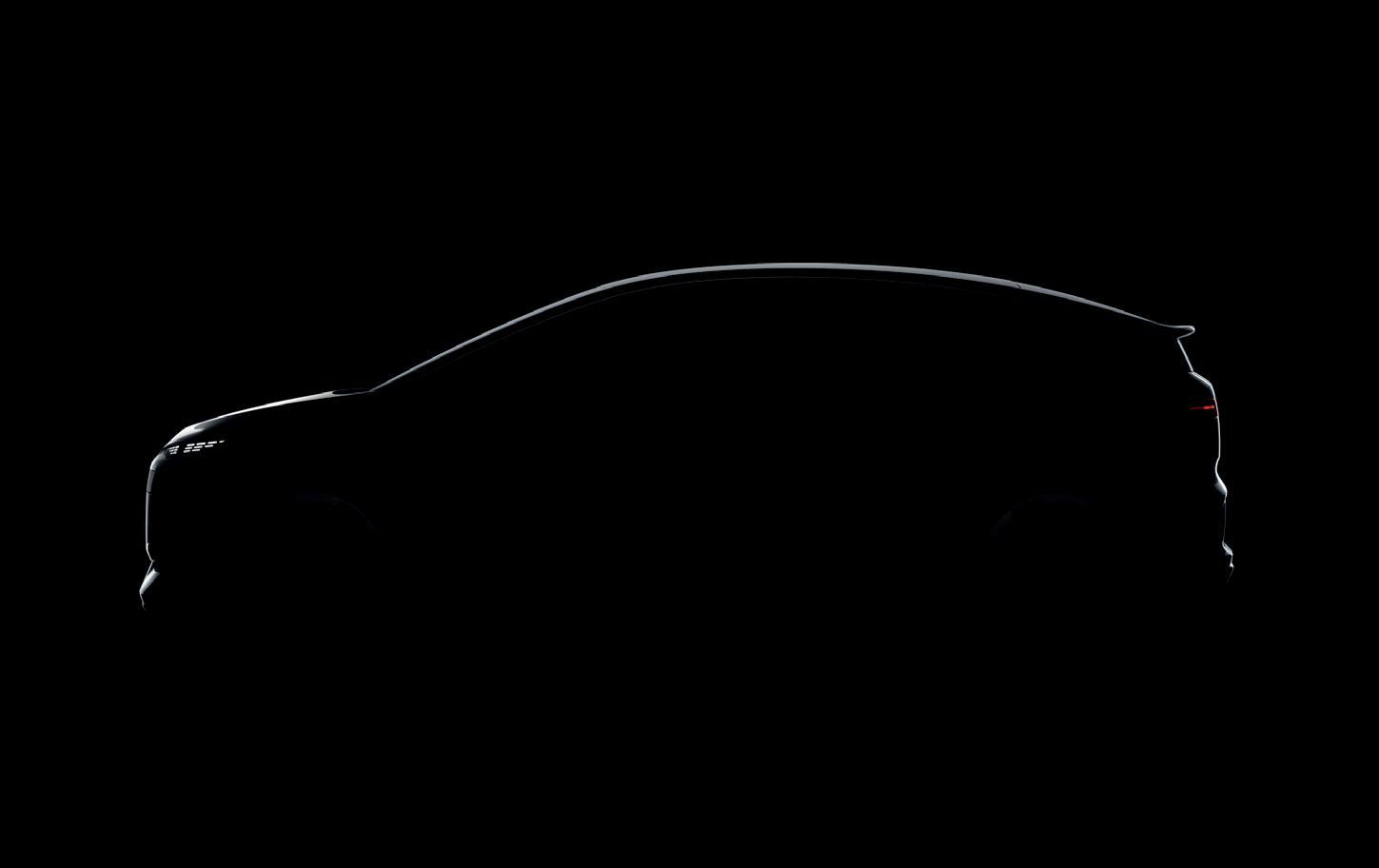
Audi has confirmed that it is bringing back the A2 name with the launch of a new compact EV later this year.
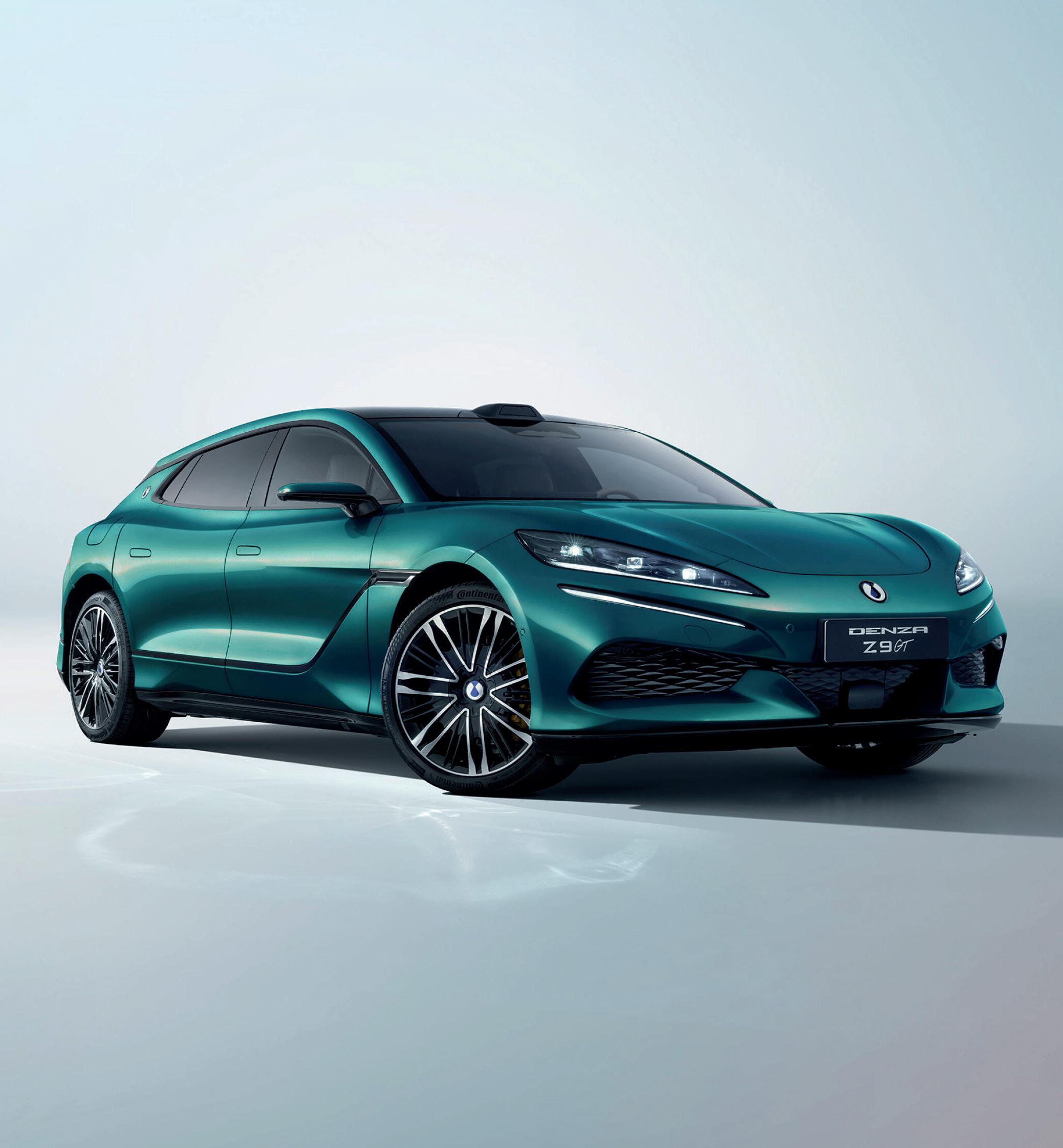
Denza will launch its Z9GT in Europe this month, marking the brand’s arrival on the continent as well as the launch of its Flash charging.
The performance wing of BYD, Denza plans to launch three models in Europe and the UK this year as well as pioneering the group’s 1,500kW DC charging, which will deliver a 60% charge in just five minutes.
The Z9GT is its first offering – a high-performance shooting brake with European-influenced design – and is expected to compete with the Porsche Taycan, Audi e-tron GT and upcoming MercedesAMG 4-Door.
It is due to launch in the coming weeks and will be available in rear-wheel and all-wheel-drive guises. Denza says the rear-wheel-drive model will return up to 497 miles of range from its 122kW battery. Meanwhile the all-wheel-drive model will use a tri-motor setup to deliver more than 947bhp and a 0-62mph time of less than three seconds.
The Audi A2 e-tron will be revealed in autumn 2026 and create a new entry point into its electric line-up. Audi says it will “open up access to premium electric mobility” and meet a growing demand for high-end compact EVs, especially in large European cities.
The A2 e-tron’s name is a “deliberate nod” to its innovative compact hatchback of the early 2000s and Audi says that the new model will honour its legacy and be built at its Ingolstadt factory.
No technical details have been shared but it seems likely that the A2 will be based on the VW Group’s MEB platform. In various guises, this underpins the Volkswagen ID 3 and Cupra Born and new ID Polo and Cupra Raval. It’s not yet clear whether the Audi will sit closer to the B or C segment.
Depending on which variant of the platform Audi uses, the new model could feature batteries ranging from 37kWh to 79kWh and motors offering up to 322bhp.
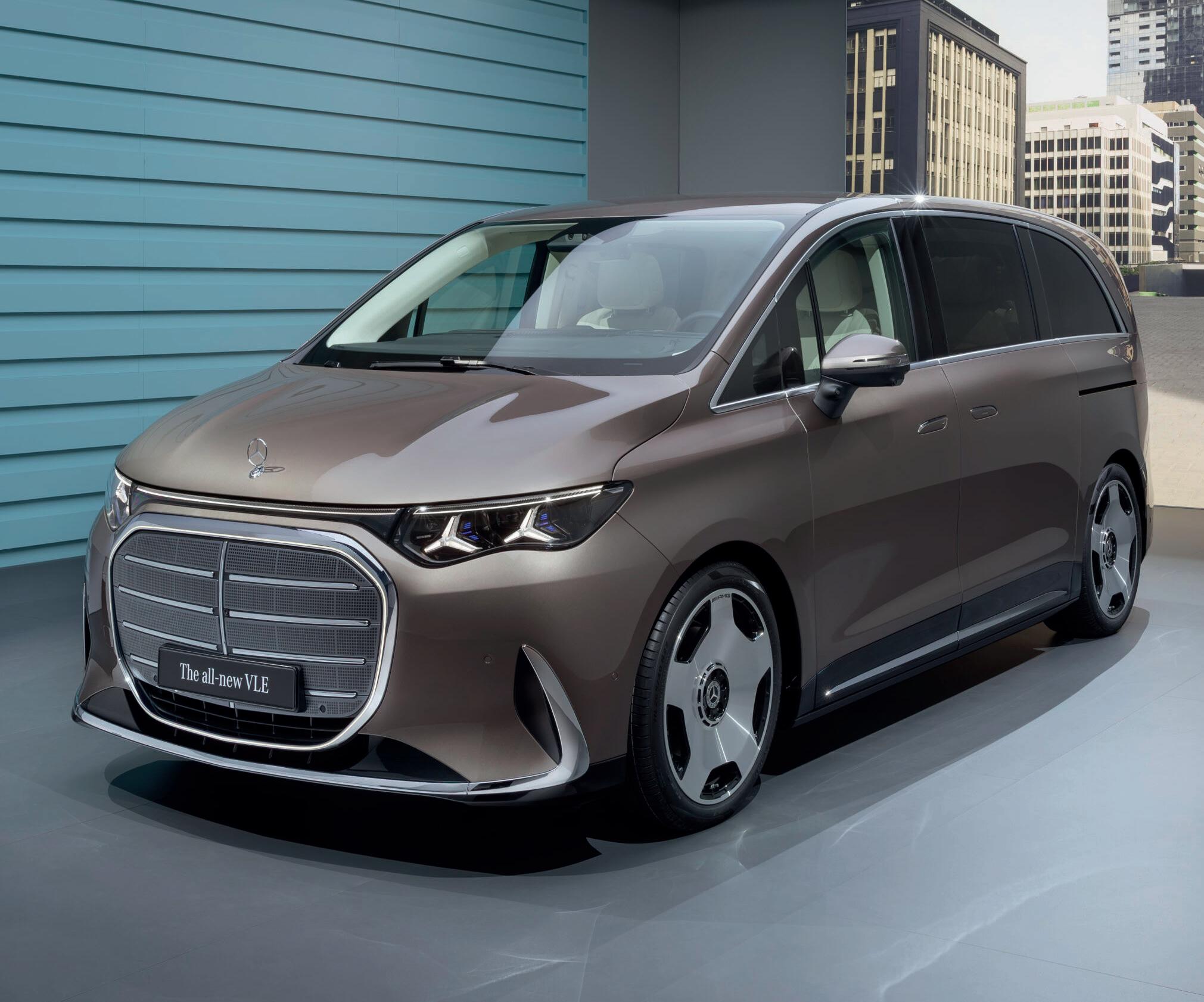
Based on the VAN.EA electric platform, the VLE will “combine limousine-like ride and handling with MPV-style versatility”.
The VLE will come with up to eight seats and allow multiple configurations using an innovative “roll and go” system or remote control in higherspec models. In its most luxurious guise, the VLE features huge “Grand Comfort” seats in the rear with pillows, calf and lumbar support, massage function and wireless phone charging.
They can be paired with a retractable 31.3-inch 8K for watching films.
Underpinning everything is a 115kWh battery and 268bhp motor. The VLE will cover up to 435 miles on a charge, and add 220 miles in just 15 minutes thanks to ultra-rapid charging.
An all-wheel-drive model with more than 400bhp is scheduled to join the range later, along with entry-level versions with a smaller 80kWh battery.
UK pricing and specification will be confirmed closer to launch later this year but expect a sixfigure price tag.
Mercedes-Benz has revealed its new high-end people carrier, promising unrivalled luxury and impressive efficiency for demanding clients.
The DS No7 has been revealed as the successor to the French premium carmaker's best-selling 7 SUV, and will go on sale later in 2026.
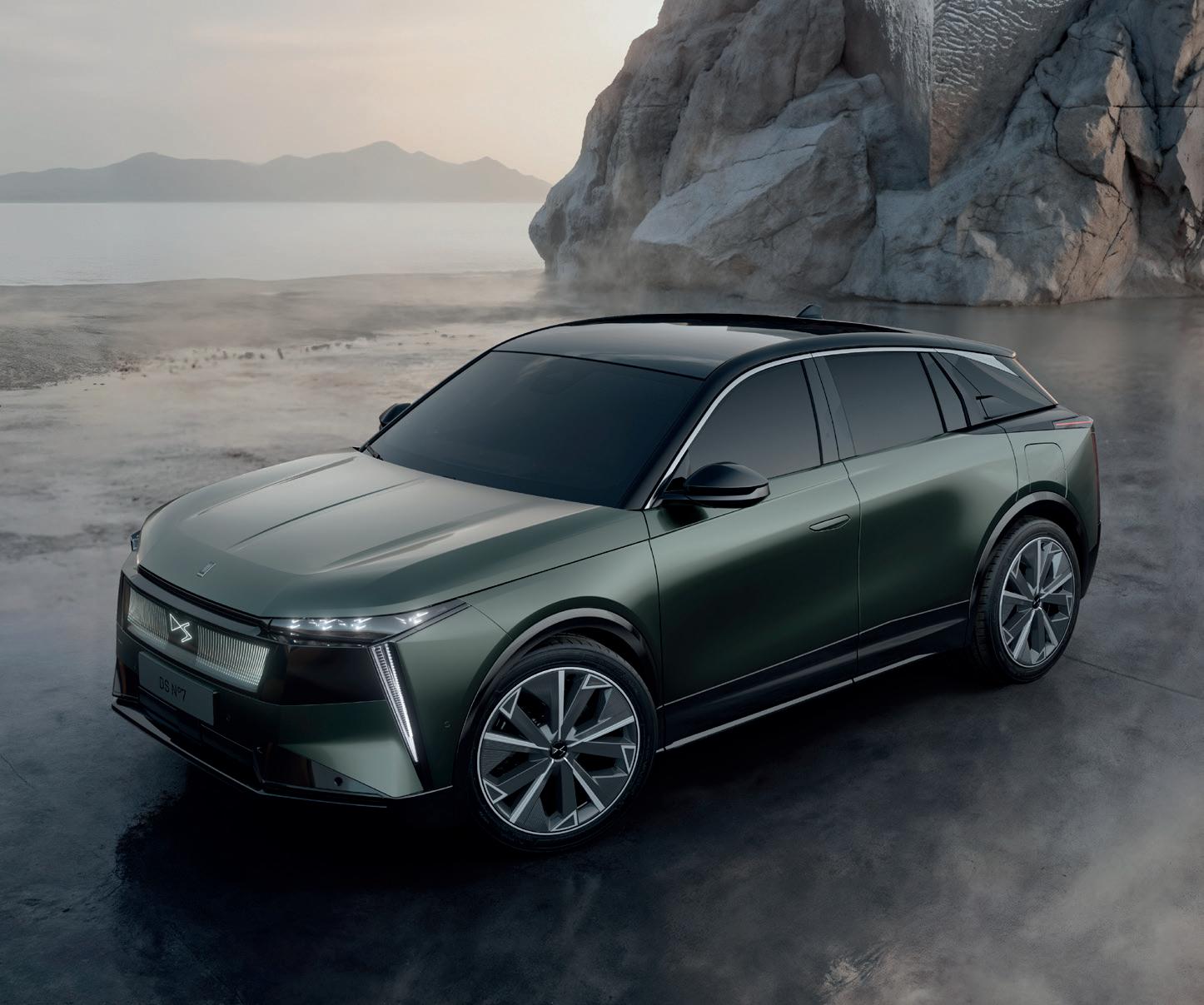
Riding on the same platform as the Peugeot E-5008 and Citroen e-C5 Aircross, the No7 will initially be available with two battery choices.
A front-wheel-drive version gets the same 97.2kWh battery as the flagship DS No8, although its taller, boxier shape means range drops from 466 to 460 miles. Meanwhile, a four-wheel-drive variant adds a motor to the rear axle to boost power from 242bhp to 370bhp but cuts range to 422 miles. A more affordable entry-level FWD car with 228bhp and a 337-mile, 73.7kWh battery will also be available.
Measuring 4.6 metres long and positioned as a premium offering, the DS No7 will compete with the likes of the Tesla Model Y Premium, BMW iX3, and Volvo EX60.
Inside and out, DS No7 adopts several aesthetic cues from the DS No8, including a prominent illuminated grille and visually striking two-tone paint finish. The cabin is equally daring, awash with wooden and embossed aluminium inserts, various textured materials, mood lighting, and gold accents.
The leading retailer is partnering with Moba to carry out battery testing on fully electric and plug-in hybrid cars. Unlike other sellers, who offer the checks when selling used EVs, Arnold Clark will give customers the option of having a check carried out as part of their routine servicing.
The firm’s aftersales director Scott Grant commented: “As battery health checks are not routinely included in manufacturer service programmes, we want to offer customers the option of an assessment during scheduled servicing, providing reassurance on the condition of their BEV or PHEV batteries.”
Battery life and proof of a healthy state of charge are increasingly seen as a key element of selling on electric cars for the best possible price.
Checks from companies such as Moba can determine how much usable capacity batteries have lost over time and can also identify internal problems such as faulty cells before they cause major problems.
Arnold Clark has begun offering battery health checks to EVowning customers.
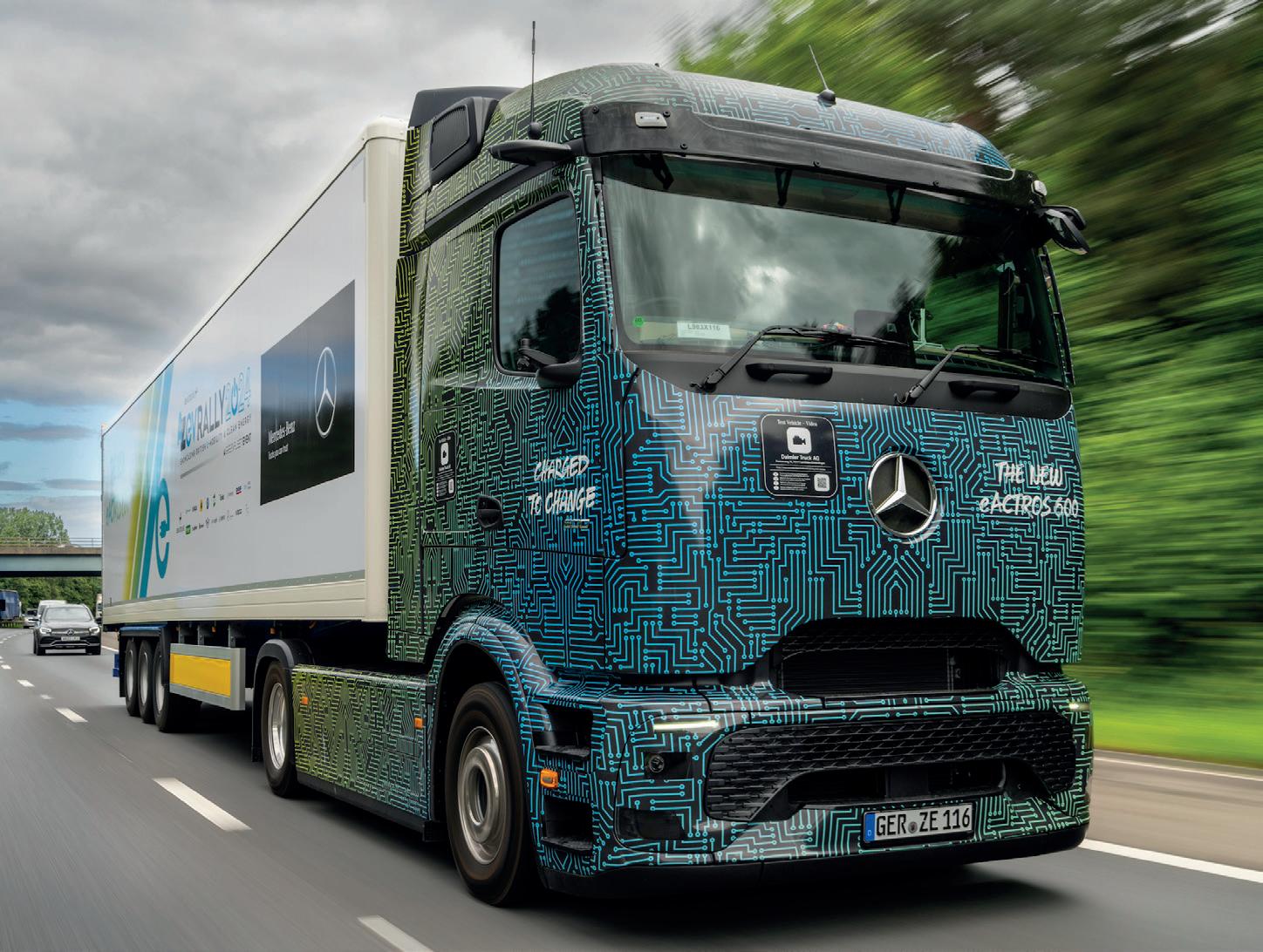
The UK Government has launched a £1 billion funding programme to help businesses swap their petrol and diesel vans and trucks for electric.
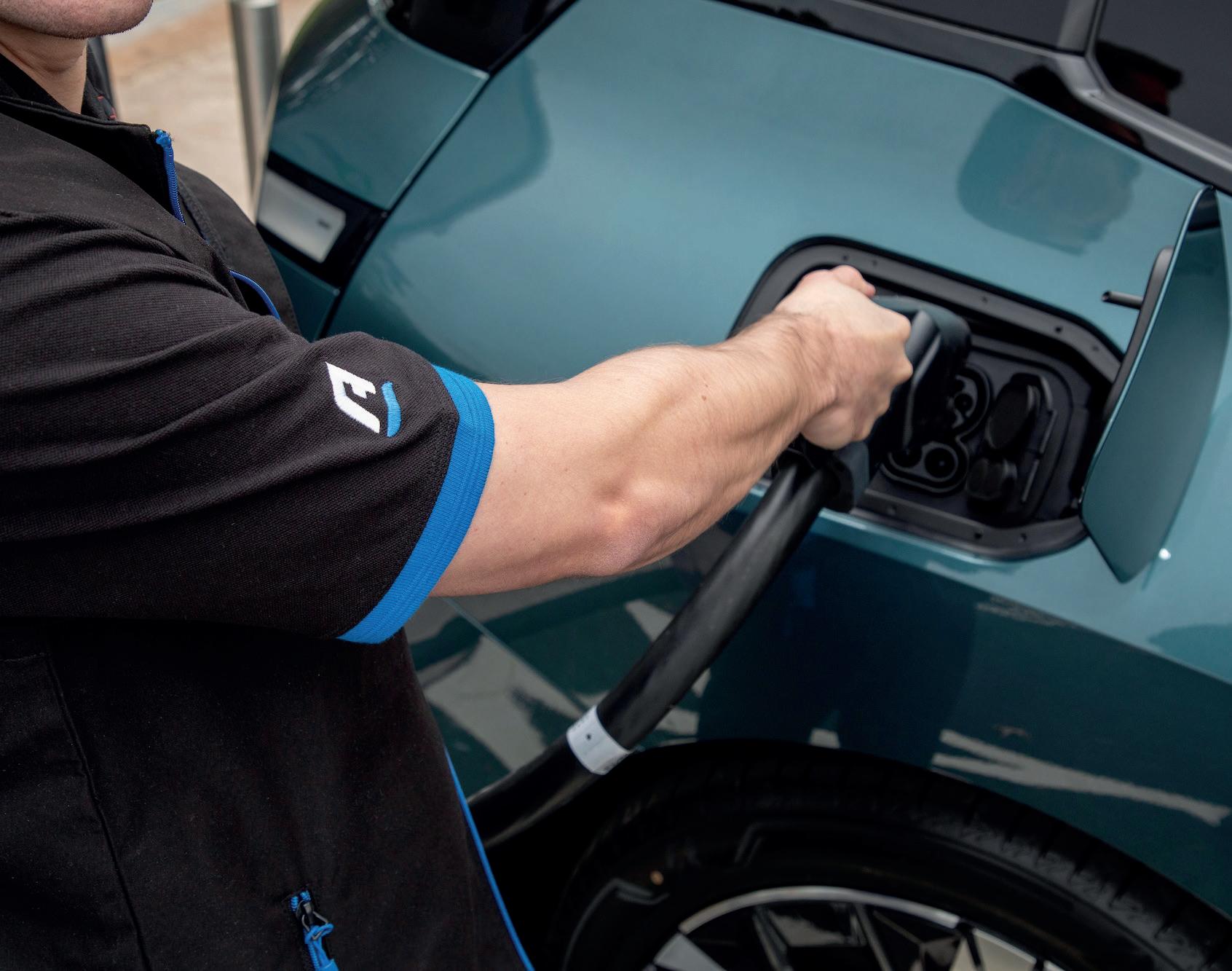
The Zero Emissions Truck and Van grants and the Depot Charging Scheme (DCS) were rolled out on March 25, aimed at tackling two of the biggest barriers to making the switch: upfront costs and charging access.
The truck grant offers discounts of up to £81,000 on the heaviest zero-emissions heavy goods vehicles (eHGVs), covering up to 40% of the purchasing costs. It will also offer up to £5,000 off electric vans.
Businesses and public authorities could also save up to £1 million, or 70% of the cost, when installing charging infrastructure for vans, coaches, and eHGVs through the £170 million earmarked for the DCS.
As well as its ambition to phase out the sale of all new internal combustion vehicles by 2035, the Government said the new grants were introduced to help reduce businesses' exposure to fuel price uncertainty in light of the US/Israel and Iran war.
By GEORGE EAST
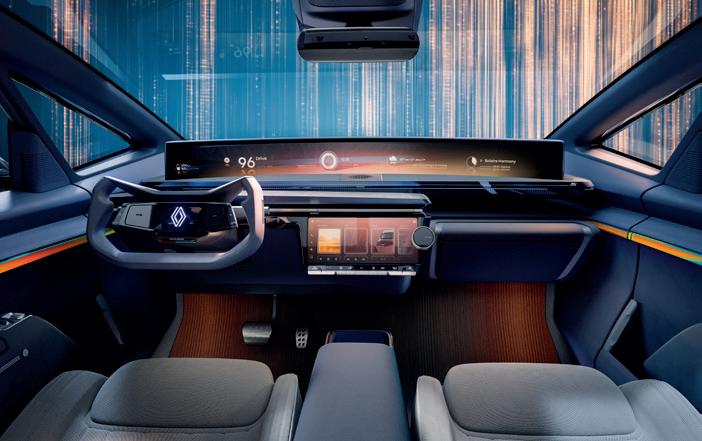
Renault has announced its bold new EV strategy, which aims to introduce 14 new all-electric, software-defined cars to the European market by 2030, ensuring the French brand becomes the "benchmark European carmaker".
Laid out under former Renault boss François Provost, the plan, dubbed futuREady, is effectively the successor to the Renaultution framework developed by former Renault boss Luca de Meo.
Under de Meo’s leadership, the Renaultution revitalised the then-struggling manufacturer. This transformation saw Renault become one of Europe's leading EV makers thanks to the Scenic,
Megane and multi-award-winning Renault 4, Renault 5.
Described by Provost as a "crucial step in the future of the Renault Group", the Group will launch 36 models in the next four years across its three brands: Renault, Dacia, and, Alpine.
Of the 36 upcoming cars, 14 of the 22 Europe-only cars will be fully electric. While Renault aims to electrify all European sales by 2030, plans for the sister brands differ slightly.
Dacia will expand its EV offering from one model to four, beginning with a Twingo sibling later this year. Meanwhile, Alpine is seeking to introduce its
RENAULT
reveals plans for 14 NEW EVS BY 2030 as it bids to become the European benchmark for car makers
fully electric next-generation A110 sports car (see sidebar).
It will also launch its A290 hot hatch and A390 fastback in new markets.
FUTUREADY SOFTWAREDEFINED VEHICLES
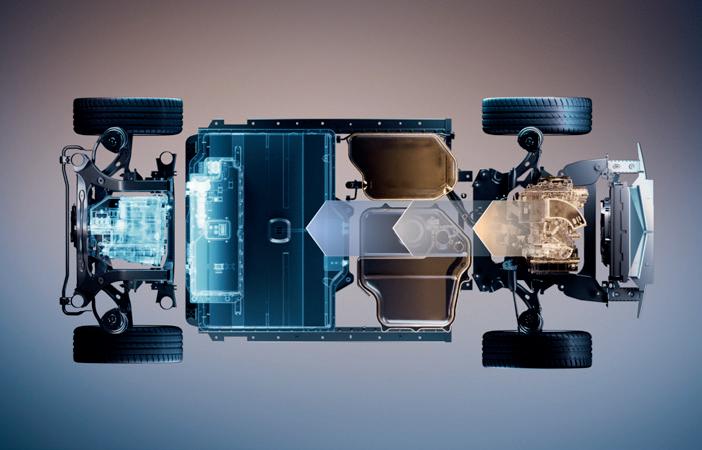
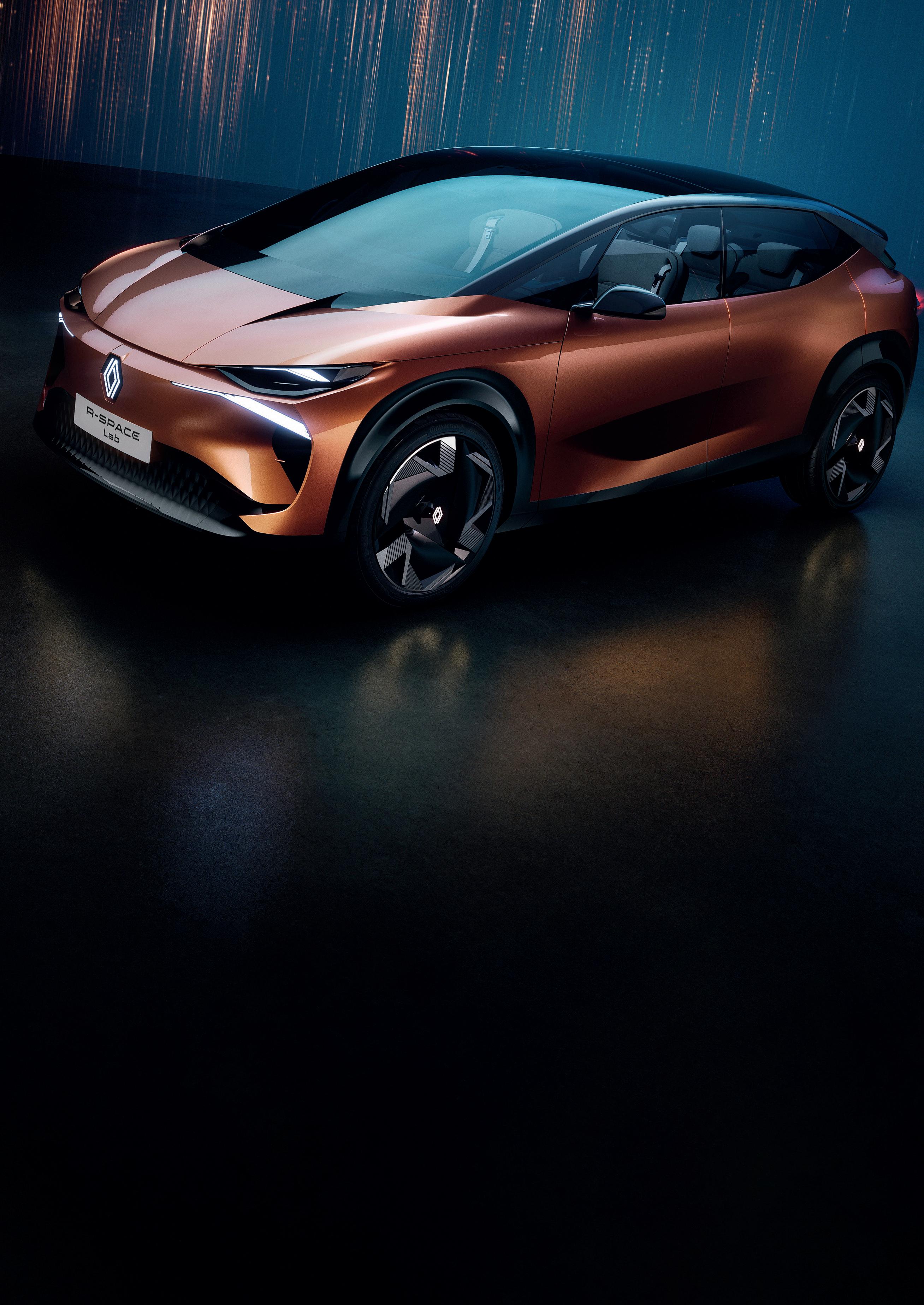
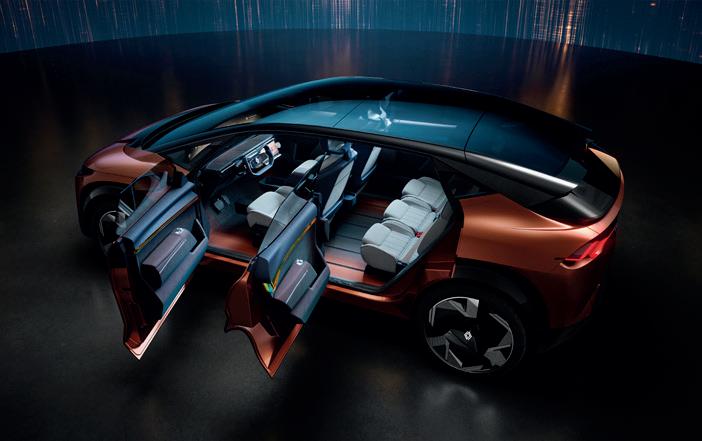
As Renault seeks to expand its electric vehicle range, the futuREady plan will also introduce a new EV platform called RGEV Medium 2.0.
RGEV Medium 2.0 can be used for all body styles from b segment hatchbacks to d- segment MPVs, prompting suggestions that a new
electric Espace could be part of Renault's future. The RGEV Medium 2.0 platform has been developed with a focus on optimising the rangeto-cost ratio and benefits from class-leading 800V architecture, paving the way for ultra-fast charging.
Its battery will use a cell-to-body design with 20% fewer parts than Renault's current EV platform, and will be able to accept pouch, prismatic, and blade cells depending on the car. Renault promises that the RGEV Medium 2.0 underpinnings will offer up to 466 miles on a single charge.
The new platform will introduce Renault's first software-defined vehicles (SDVs) as it seeks to reduce the number of parts used in its building process and introduce a new era of cars whose software can be updated over-the-air.
The Renault Group is also developing two different types of battery. The first is a high-energy-density unit for high-powered, long-range models based on the 800V architecture from 2028 onwards. Meanwhile, a smaller, more affordable battery will be exclusive to small and standard-range models riding on 400V underpinnings such as the R5 and the Twingo.
A new third-generation rare-earth-free electric motor is also in the works, promising 93% efficiency on motorways and 25% more power, totalling up to 273bhp.
Renault is viewing its Twingo as the production benchmark for all EVs developed during the futuREady era. The Twingo was developed in under two years to keep pace with Renault's Chinese rivals. As part of the futuREady strategy, Renault has set the goal for all new projects to be developed in this timeframe and to reduce the number of parts in its vehicles by 30%.
In doing so, it will use new robots during production processes to halve factory downtime and employ operational data stored in what Renault describes as an 'industrial metaverse'.
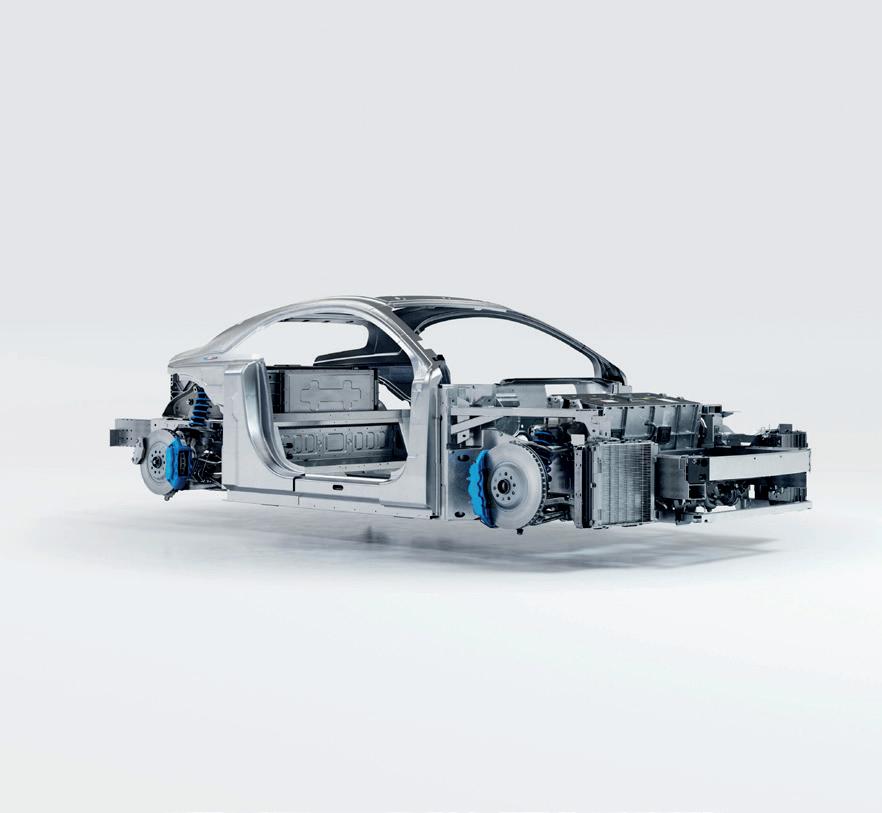
Alpine has announced that its all-new Alpine Performance Platform (APP) will be the cornerstone of its future model line-up, starting with the electric A110 later this year.
As part of parent company Renault's futuREady strategy announcement, the APP will underpin the A110, as well as yet-to-be-named upcoming coupé, convertible (spider) and 2+2 models.
The stiff APP platform is built entirely from aluminium to keep weight low and boasts innovative bonded and riveted technologies to support the structure and lightweight design.
Alpine confirms that the APP has a 40:60 weight distribution to maintain the "balance of a true sports car". The all-electric A110 will come with two battery packs to retain its instantly recognisable profile.
The APP architecture is also 800V compatible, promising ultra-rapid charging times. To ensure performance aligns with Alpine's history, it is also delivering a twin e-motor, 3-in-1 e-axle to deliver "exceptional torque and performance with ultra-fast control".
In addition to two new fully-aluminium suspension set-ups, the APP platform has two new integrated

debuted on the A390 fastback.
Alpine CEO, Philippe Krief, said: "Our ambition is to become the leading French sports speciality brand in the world, offering the best driver’s cars of the EV era. We will do this by constantly embracing new technologies and bonding them with Alpine's DNA... Just as today the Alpine A110 is the foundation of our brand, showcasing our commitment to deliver high-technology products, we will offer the first true EV sports car to the market. It will be true to Alpine's DNA and outperform the best of today’s combustion sports cars, thanks to the Alpine Performance Platform.”

AI is also key to the futuREady strategy. It will allow Renault to respond more quickly to any problems that may arise, improve product quality, and respond to potential supply chain disruptions. This is aimed at cutting vehicle development costs by up to 40% on each vehicle - an average of around £345.
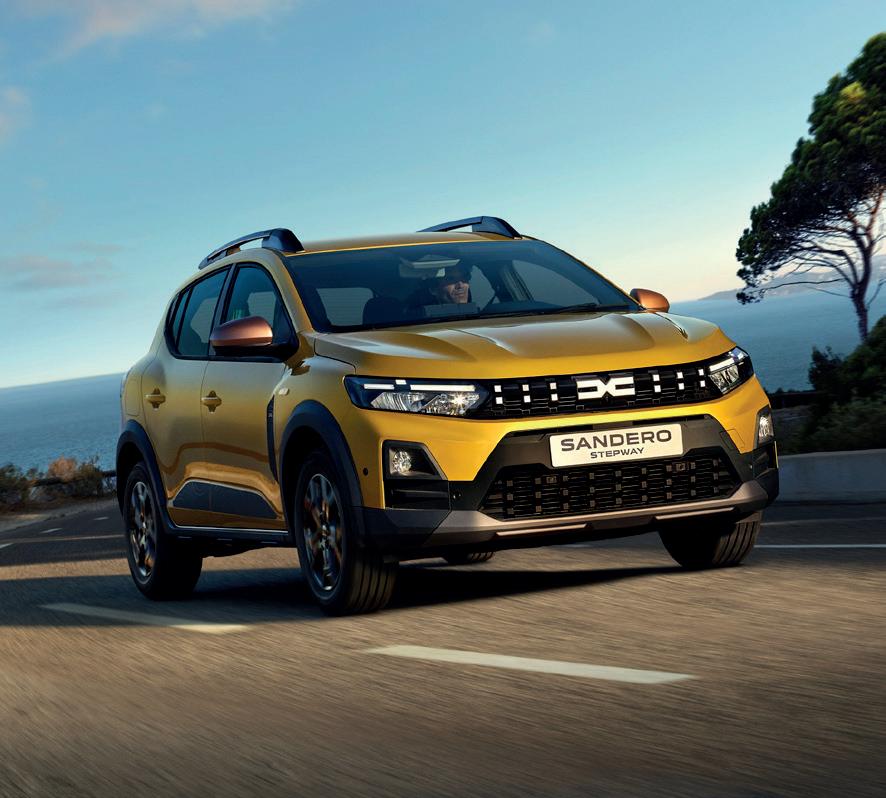
Dacia will launch an electric Dacia Sandero as part of a major EV drive by 2030, along with a sub£16,000 city car based on the Renault Twingo.
The electric Dacia Sandero will run on parent company Renault's modular CMF-B platform, which can support EV as well as purecombustion and hybrid powertrains. Despite the switch to electrification, the Romanian
carmaker promises that its Sandero will "remain the value-for-money" benchmark in the electric C-segment.
Dacia has also confirmed its upcoming, yet-to-be-named city car will share its AmpR Small platform with the Twingo when it arrives later this year, prompting suggestions that the Dacia will receive the same 27.5kWh battery and 160-mile range as its plaudit-winning French cousin.
Despite the expected technical similarities, Dacia has promised its city car will be priced from less than €18,000 (£15,600), undercutting the Renault by around £1,400.
One more, as yet top secret pure EV will also join the Dacia range, along with electrified versions of the newly announced Striker and Bigster, both of which will be available with hybrid and purely internal combustion powertrains.
To keep costs down compared to rivals, Dacia will continue using a "unique business model" with its strict design-to-cost strategy. By sharing Renault Group platforms and deploying a lean distribution system, the Romanian brand has a 15% cost advantage over rivals.
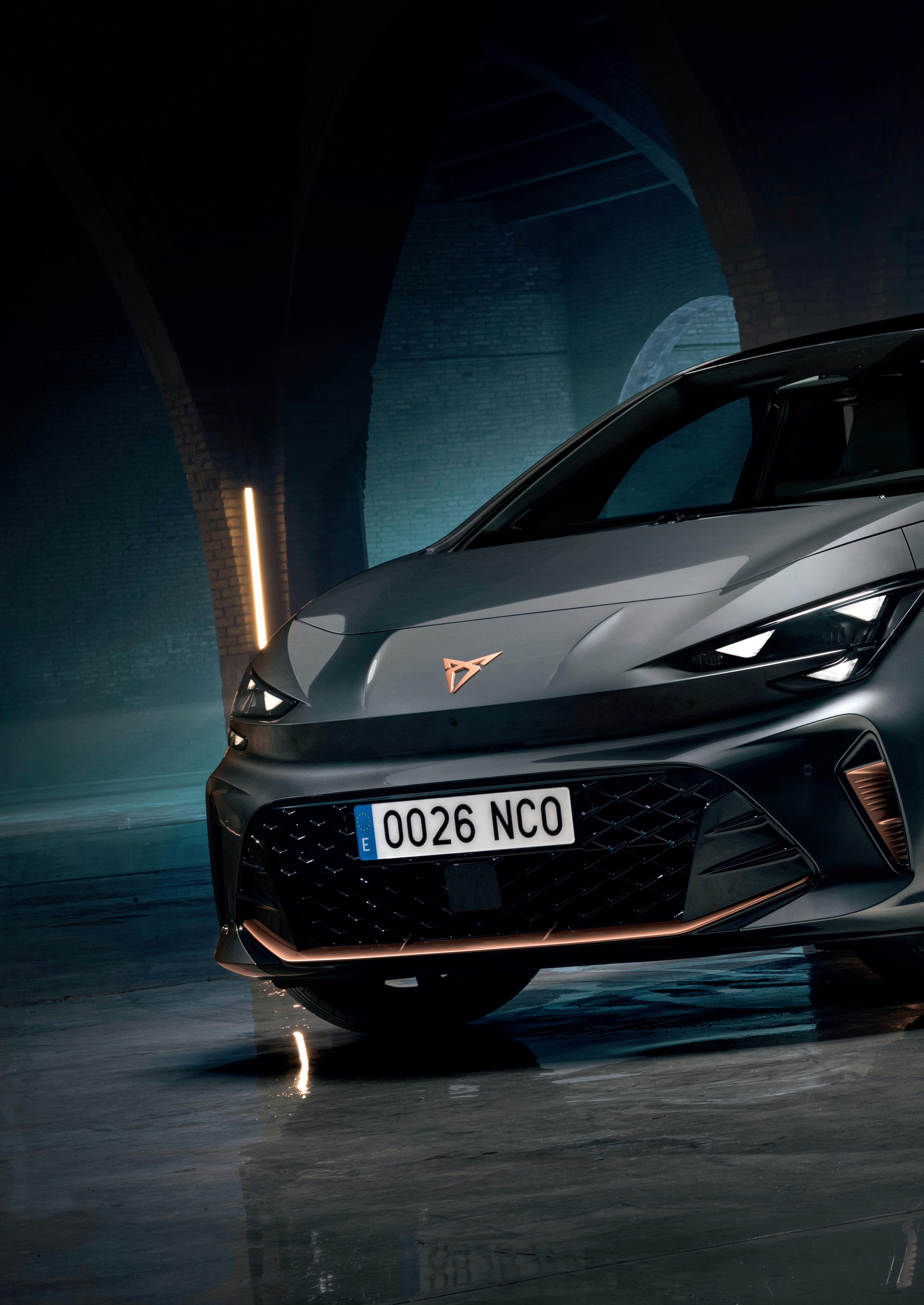
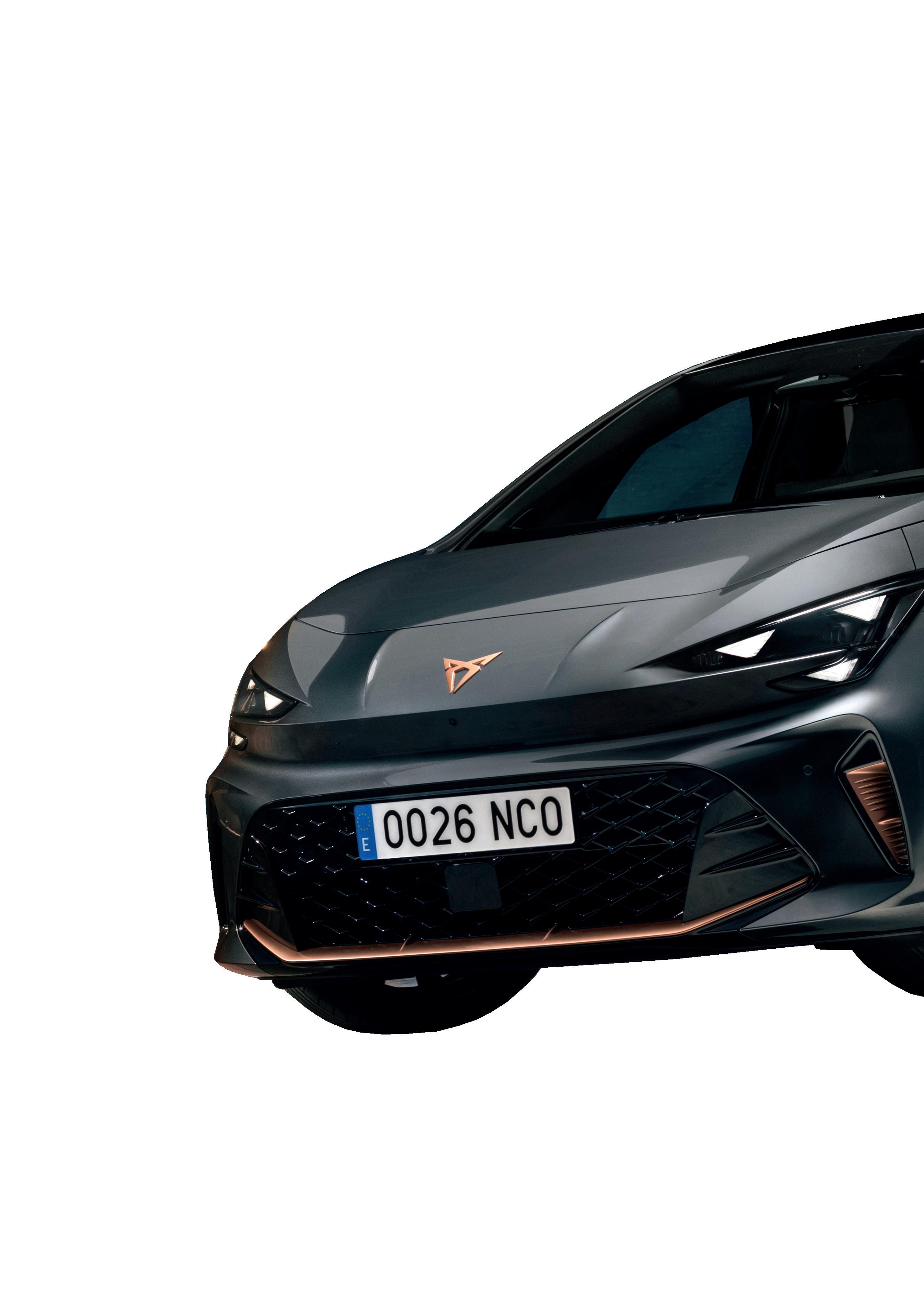
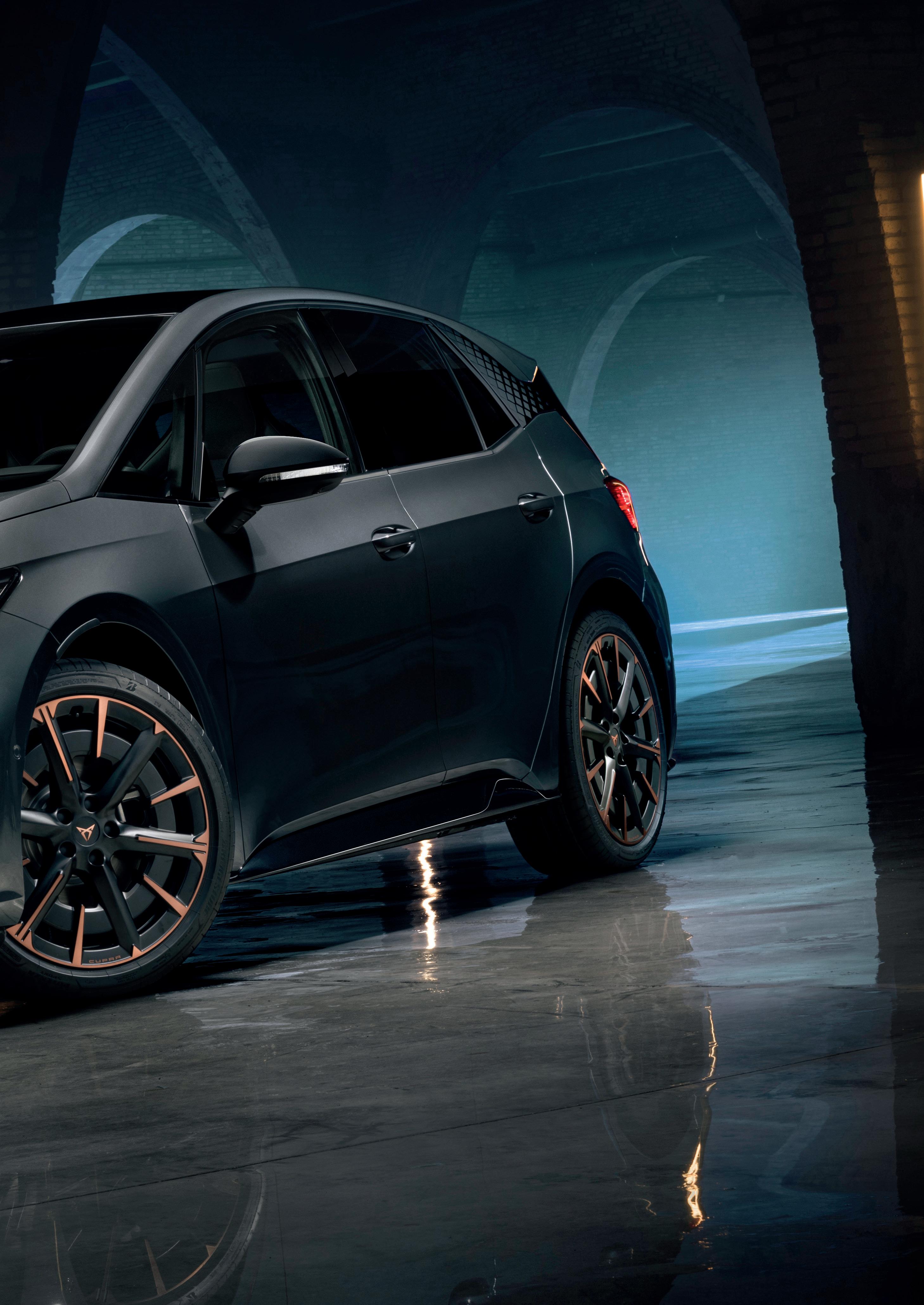
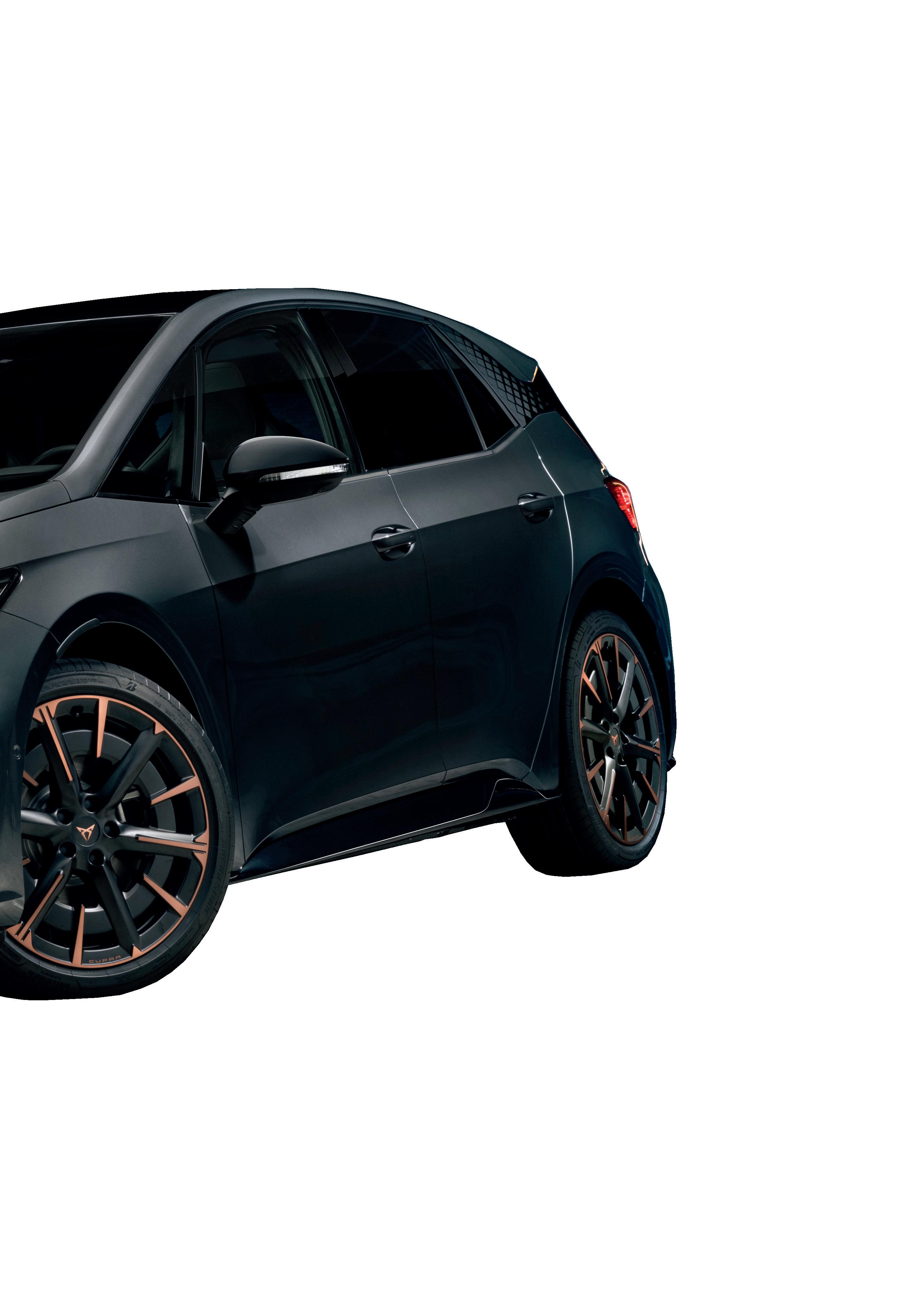
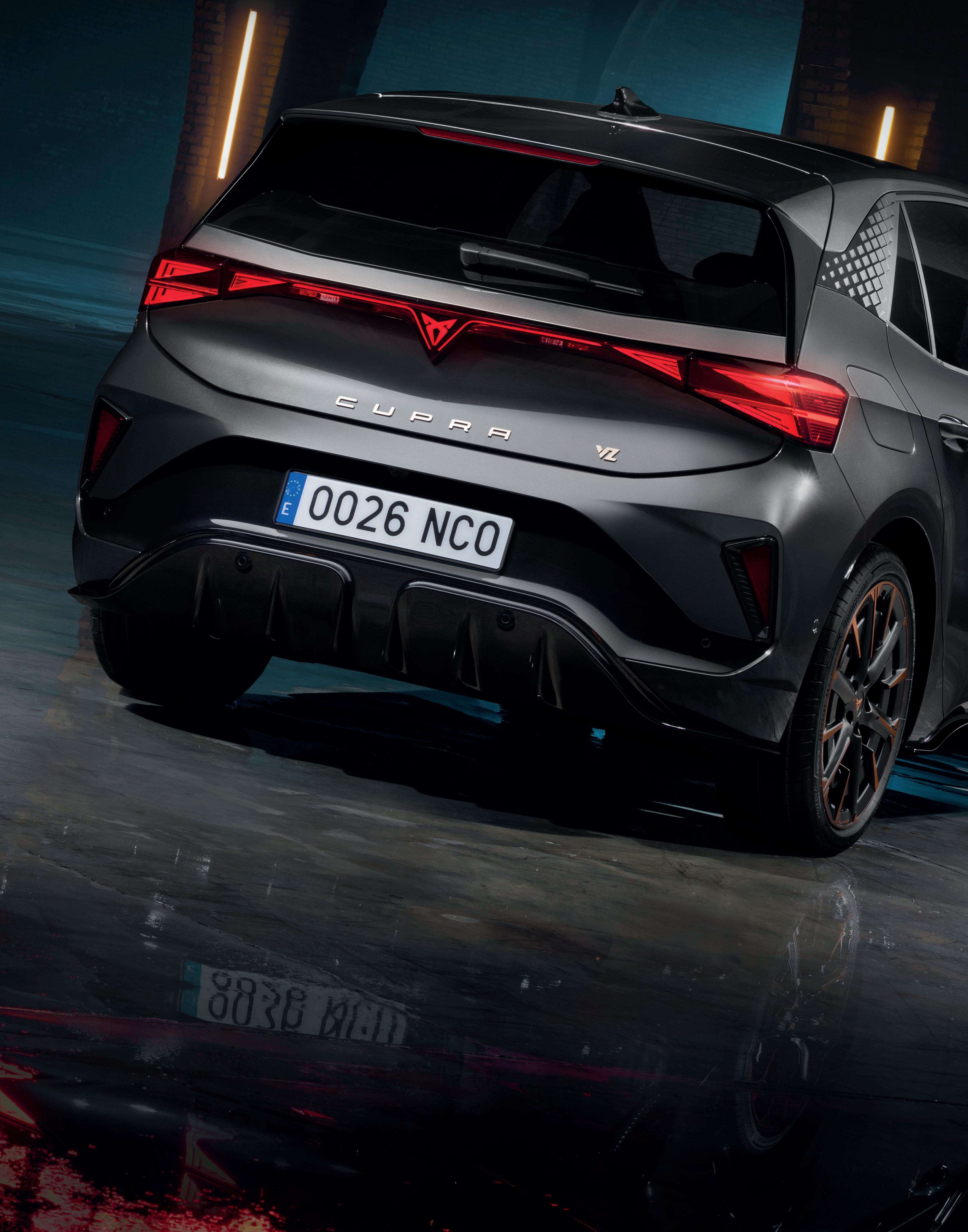
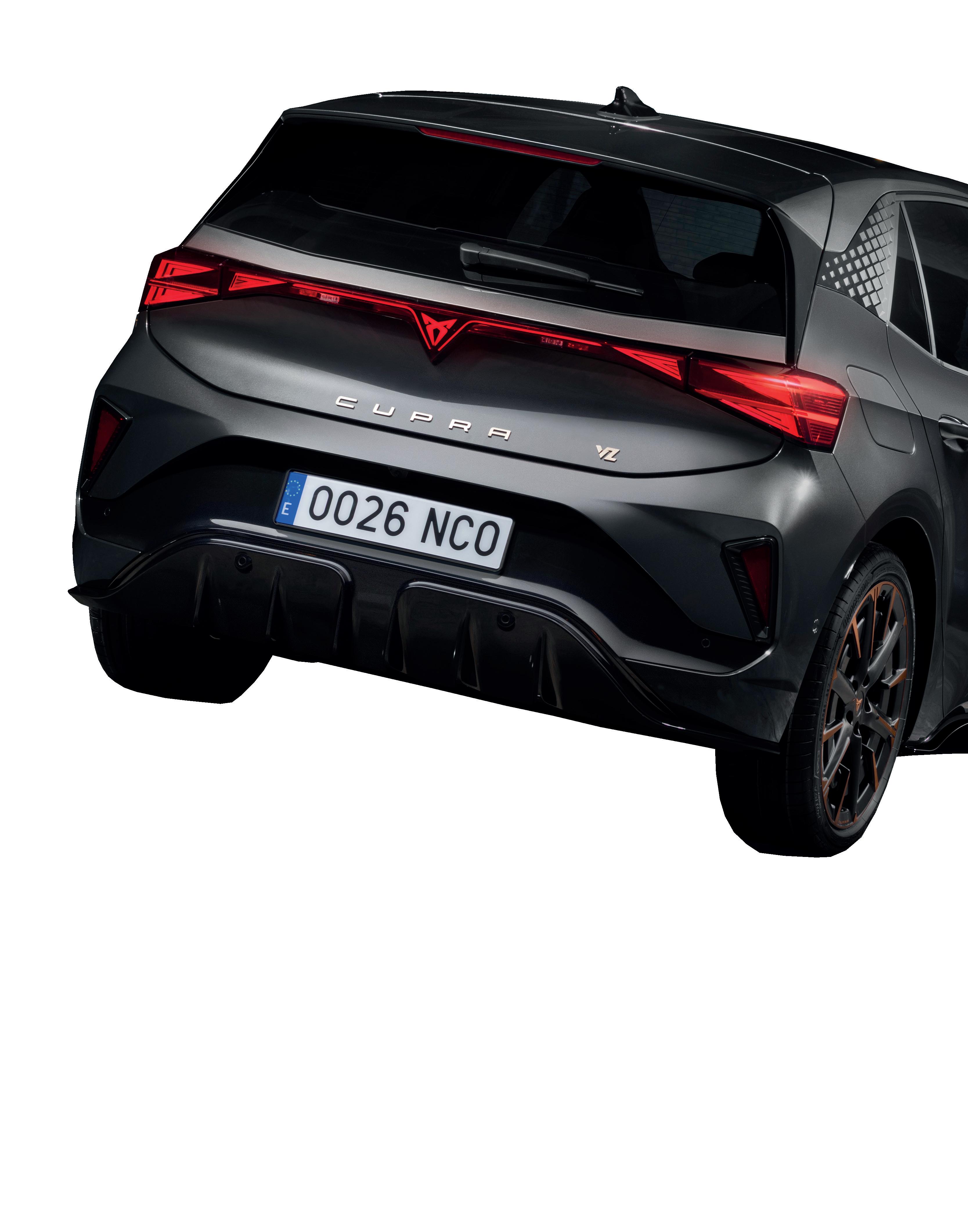
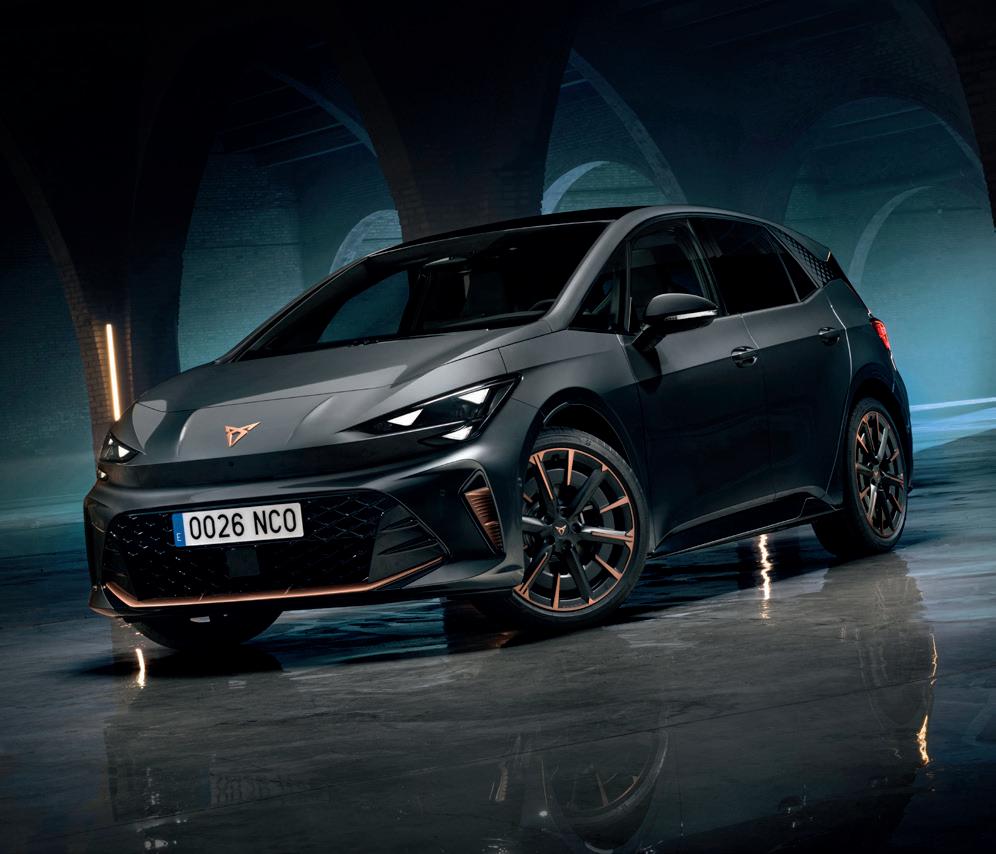
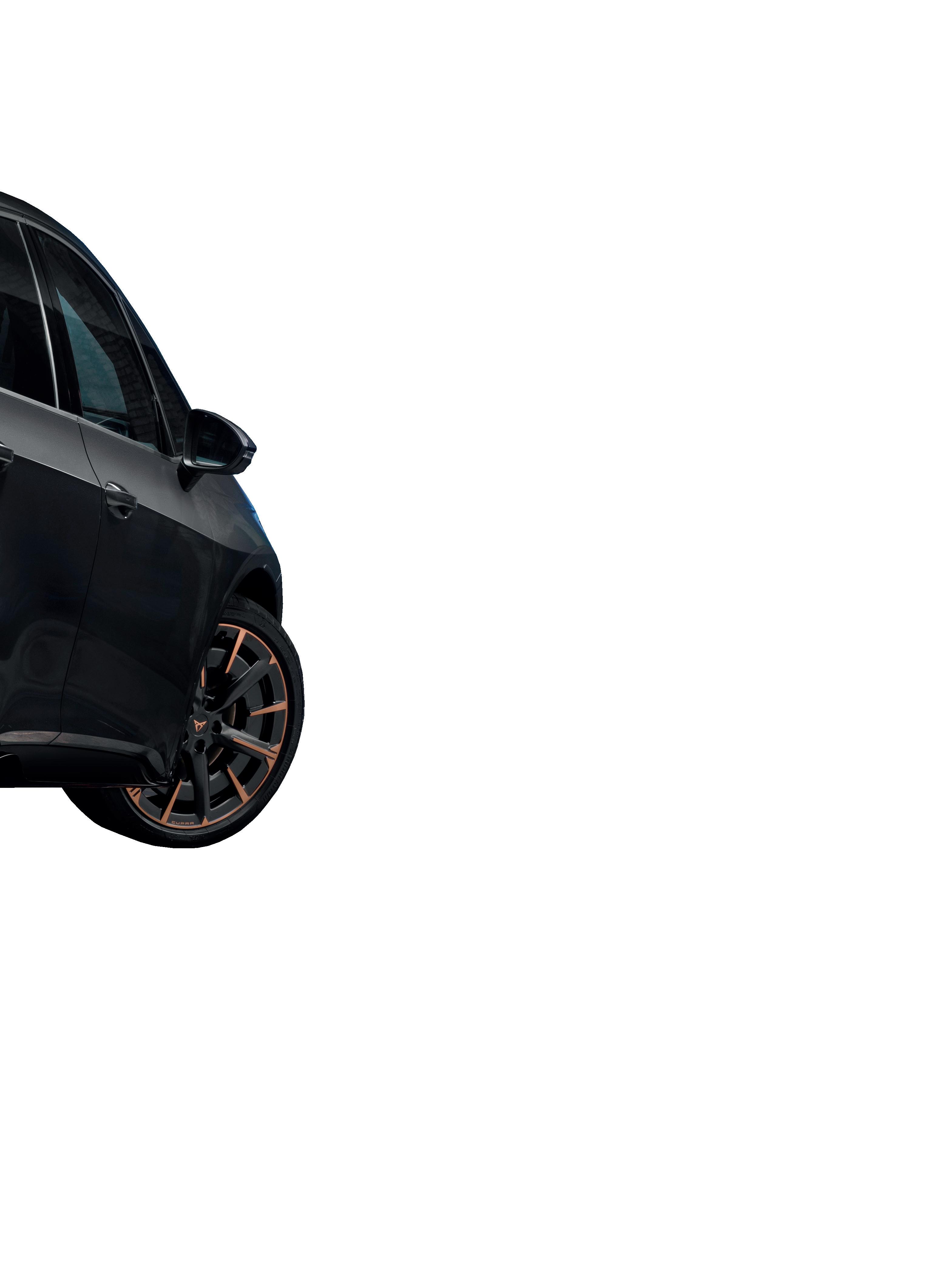
Cupra's signature copper, the new Born's interior reflects the car's performance-focused character. The divisive Cupra copper remains, but I'm a fan of it, so I'm happy it's here. What I'm even
As standard, a 12.9-inch infotainment display sits in the centre of the screen, but it looks more organic than previously. Meanwhile, the 5.3-inch driver display has been binned in favour of a more eye-
criticism for their use of haptic controls so Cupra has listened and the Born now features proper tactile buttons on the steering wheel and for controls such as the windows. It’s also the first Cupra to benefit
look and feel great and bring an interesting extra texture by repeating the parametric shape from the exterior and the more time you spend with the new Cupra Born, the more you understand
This 2026 Cupra Born can also lay claim to being the most tech-friendly Cupra yet. It's the first Barcelona car to come with Vehicle-to-Load (V2L) capabilities, meaning its battery can be used to power electrical items from laptop computers and e-bikes to As previously mentioned, there was nothing wrong with the first-generation Cupra Born. It was a handsome and far more interesting proposition than the ID.3. Nonetheless, it just felt that the Spanish car wasn't quite far enough removed from its dowdy German cousin. This 2026 version
If I had to describe the 2026 Cupra Born in one word, it would be "confident". The mid-sized hatch now wears the same front end as some of Barcelona's finest. The interior now reflects Cupra's ethos of performance, spirited driving, and bold design. In top-tier VZ spec the power is also up there with some of the finest electric hot
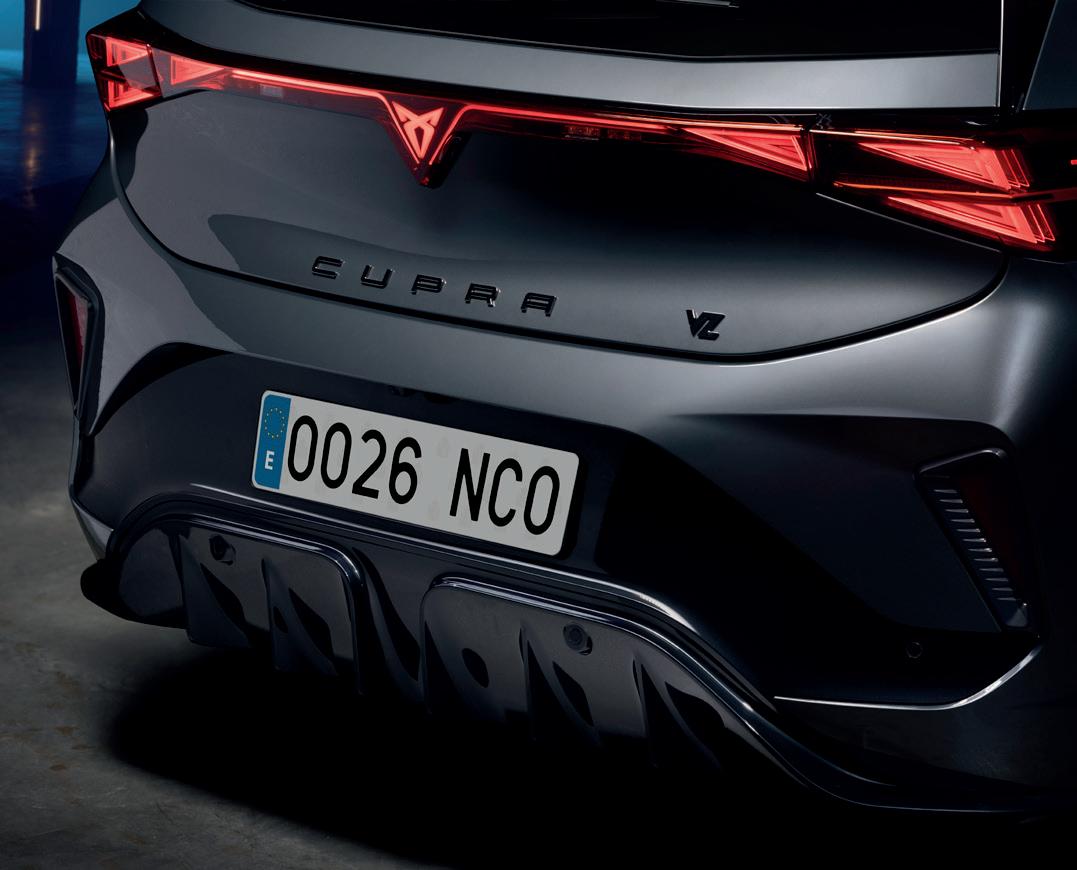
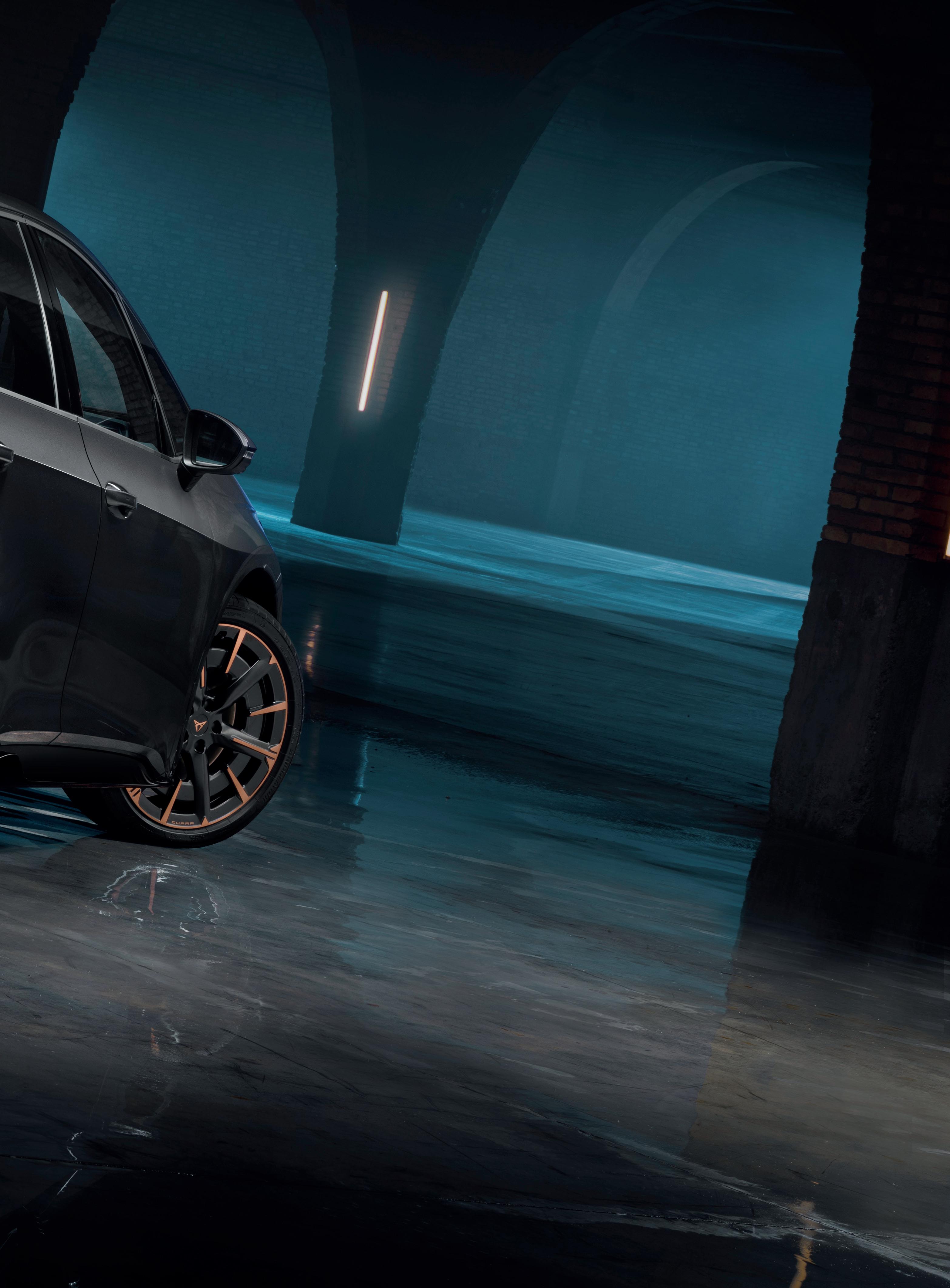
and Endurance also get a new launch control mode, and the VZ comes with 15-stage Dynamic Chassis Control (DCC Sport) to fine tune the ride and handling".
Overall, the 2026 Born feels like Cupra has finally found its own identity. Now it can very much hold its head high as a standalone brand, and not just a maker of fast Seats. If this latest Cupra Born drives as well as it looks, then the future of the battery-powered hatch has just become even more electrifying.
By GEORGE EAST
In this exclusive interview, NIR KAHN and ROBIN HALL, explain why their MIKA MINO will redefine electric urban mobility in the coming years

NIR KAHN
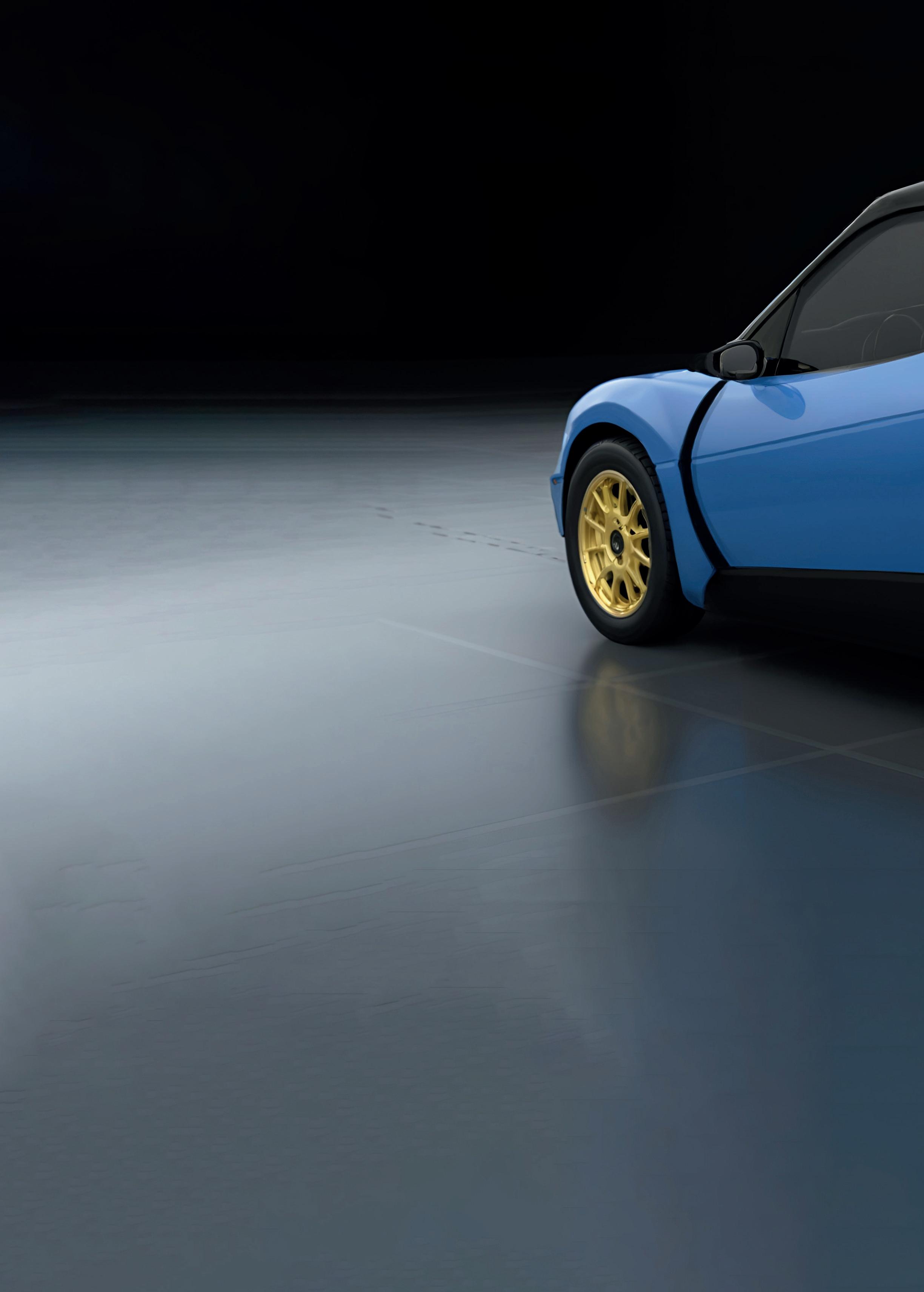
Cars are too big and too expensive. Our roads are too small, our pockets not deep enough. The all-electric Mika Mino is here to fix that.
Next time you step outside, take a look at the cars around you and ask yourself: "When did I last see a properly small car?" The answer to that questionunless you’re a member of a classic car club - is most likely to be "a while ago".
AUTOBESITY - it’s a growing problem
Cars have got bigger. Much bigger. In fact, autobesity is so endemic that 52% of all cars sold in the UK are now wider than the minimum-specified parking space of 1.8 metres.
And it's not just a UK-specific problem, either. Should the European Union's proposed M1e class of EV get the stamp of approval, cars within that category could still measure up to 4.2 metres long. While not exactly packing the heft of a BMW iX or a Hyundai Ioniq 9, that's still bigger than a Renault 5 or a Mini Electric.
A step in the right direction, sure, but M1e still won't address the problems that inner-city mobility faces. Sure, L7 class electric quadricycles such as the Citroen Ami and the Microlino go some way to addressing the issue, but they're not exactly... desirable. And they lack many of the safety features we take for granted in our cars.
If you are a masochist, public transport is another option for getting around, but it's an often grim experience.
What, then, if there were another way of traversing some of Europe's most congested cities without clogging up the roads, using public transport, or sacrificing the basic safety features of "proper" cars.
Cue the MIKA MINO
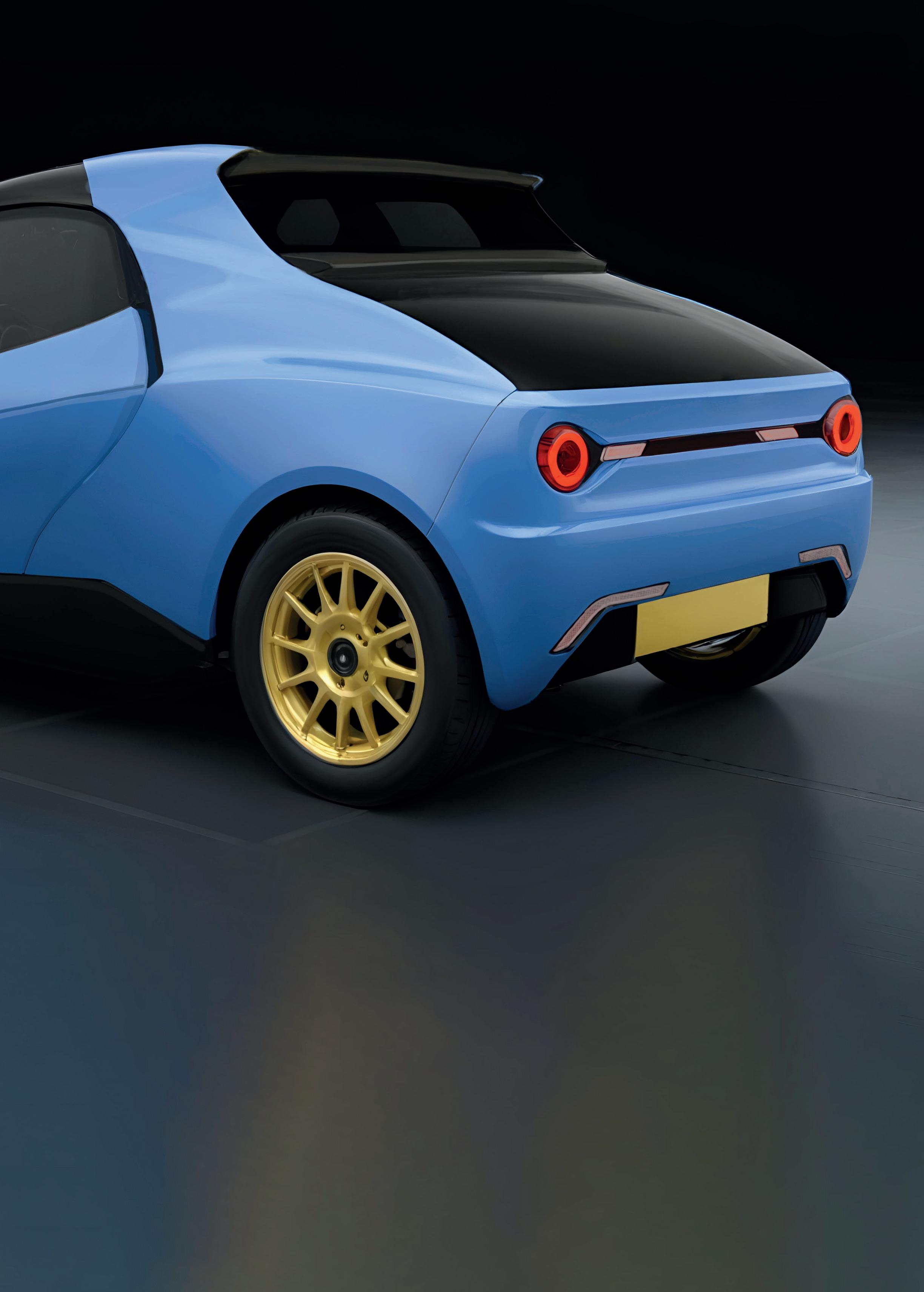
Well, thanks to the Mika Mino, there is.
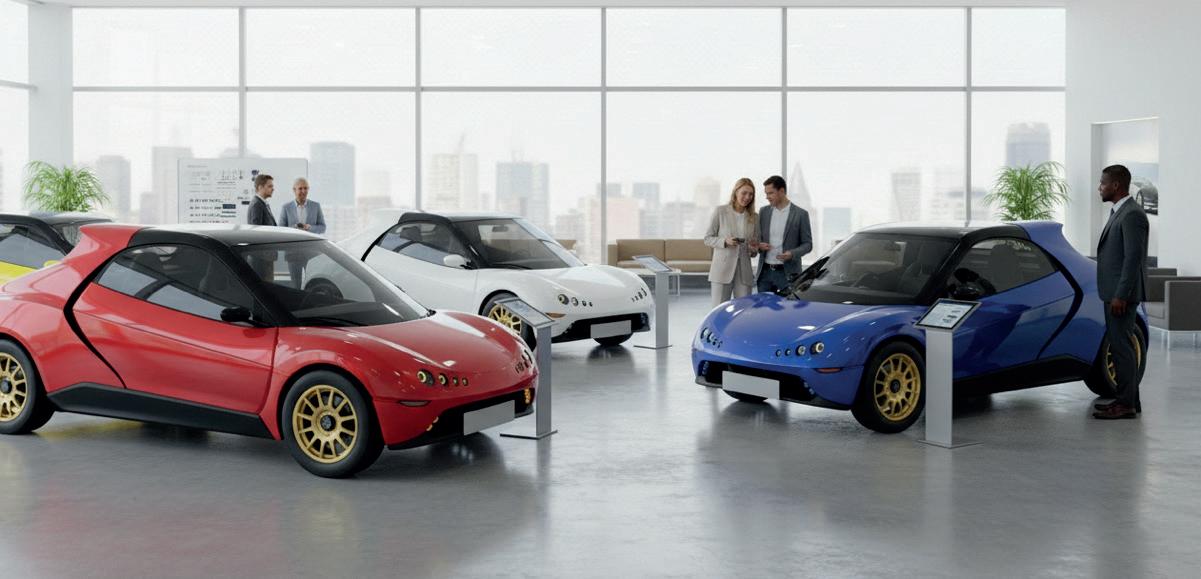
The brainchild of car designer/composites expert Nir Kahn and automotive engineer Robin Hall, the Mino - as Kahn describes it to EV Powered - is an "L7 car with the amount of safety you would normally get in a £25,000 Renault 5, but for around £10,000 less".
Based on Kahn's all-electric Urban Runabout concept, the Mika Mino is built on three fundamentals: Low weight, small footprint, and high driver engagement. With their decades of combined automotive expertise, both men feel they have the ingredients to cook up, well... the ultimate urban runabout.
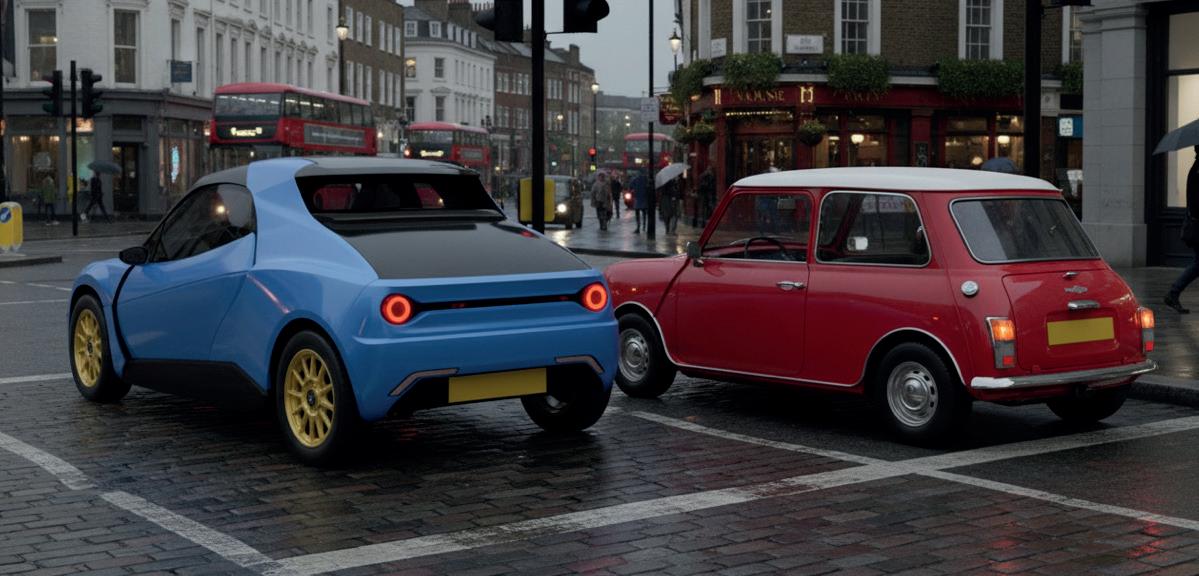
In simple terms, the rear-wheel-drive Mika Mino car will be “a three seater, pretty much the same length, height, and width as the Smart Roadster from 20 odd years ago”. For reference, the Smart measured 3.3 metres long; slender by today’s portly dimensions.
To keep things cheap and simple, the Mino runs on 48V electric architecture, and comes with a choice of two battery options: a 20kWh unit fit for around 120 miles, or a 10kWh pack capable of 65 miles on a single charge.
Given the average European city car customer travels roughly 22 miles per day, the Mika Mino offers no more, and crucially, no less than what’s required in an urban environment. It also tips the scales at around a lithe 500 kilograms. There’ll be no autobesity here.
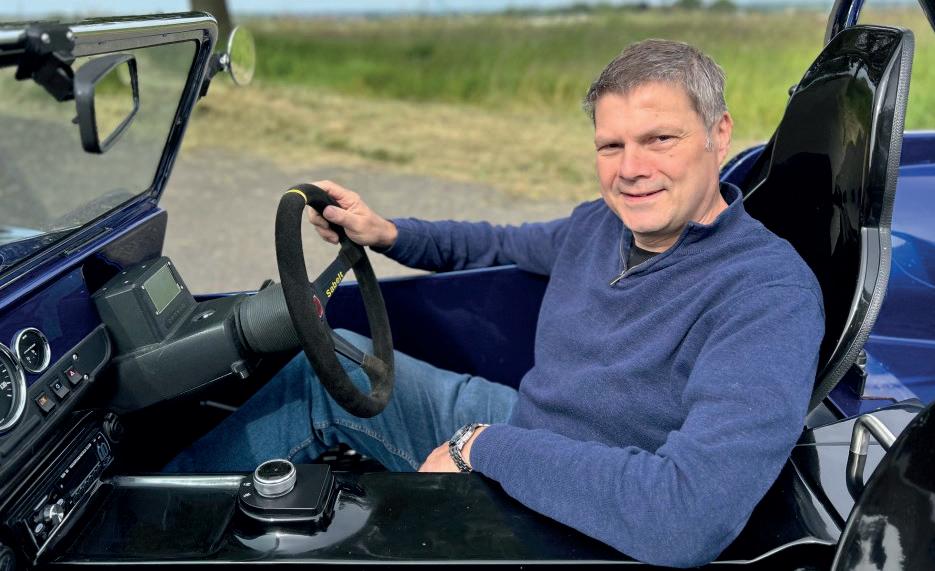
Oh, and Mika? Mika was founded by Robin Hall, who still owns and runs the company from its Warwickshire base. Like Kahn, Hall (pictured below) is another leading British automotive mind who honed his craft during the heady car years of the 1990s and 2000s, where budgets were bottomless, and the sky was the limit.
Continue on next page
While working at Rover during the decade of Cool Britannia, Hall found himself in charge of developing the front axle system for the first of the ‘new’ Minis, the R50. Ahead of the car’s 2001 launch, it was at then-BMW-owned Longbridge that Hall mastered the dark arts of making front-wheel-drive fun.
In his own words, he was at the behest of “our paymasters in Munich, who said 'this has to be the best-handling front-wheel-drive car in the world'. No pressure, then”.
The original Mini penned by Sir Alex Issigonis served as Hall’s muse. “I couldn’t think of anything better than an original Mini as inspiration,” he recalls. “They’re an absolute hoot to drive, because they’re light, and have a steering ratio of 15:1.”
If, like me, you’re far from scientifically minded, a ratio of 15:1 means that for every 15 degrees the steering wheel is turned, the front wheels turn by one degree. This ratio requires less input and returns a go-kartesque driving experience. Think ‘fast and fun’, and you won’t be wrong.
Hall continues: “Since the R50, whenever I’ve designed anything sporty, I’ve thought to myself, ‘well, let’s have a steer ratio of about 15:1’, so I’m certain the Mika Mino will feel a little bit like an original Mini in terms of its fun factor.”
The steering ratio isn’t the only characteristic inspired by the Mini. The battery is positioned close to the rear axle, which houses an integrated drive system (IDS). When fitted to an EV, an IDS usually comprises electric motors and inverters to save space, improve efficiency, and reduce the number of components in vehicle production.
According to Hall, “this is the cheapest, lightest, possible setup, and like the original Mini, it proves that cheap and simple can work exceptionally well.
"I’m certain that the Mika Mino will handle extremely well and turn out to be enormously good fun.”
While driver engagement is something L7 cars are desperately in need of, safety is just as vital. Drawing on decades of experience with composites, Kahn delves into the revolutionary approach behind ensuring that the Mika Mino becomes the safest car in its class.
“We’ve been working with a company that has some very interesting technology for cost-effective, lightweight composites,” he explains. “They normally use that technology to take the weight out of M1 cars [full passenger cars].
“What we've done here is use that same technology and turned it on its head. So rather than taking weight out of a heavier car, we're putting the safety into a lighter car.”
“We’re working with a company that specialises in FEA, or finite element analysis, which is the dynamic simulation of composite materials in crash situations,” Kahn explains. “We've conducted a full feasibility study of the vehicle, which includes front impact and side impact simulations, showing that the vehicle will be able to achieve a five-star Euro NCAP rating.
“So far, the results are showing we are on target to achieve that. The next stage, absolutely, is building real prototypes and slamming them into walls and validating the simulation.”
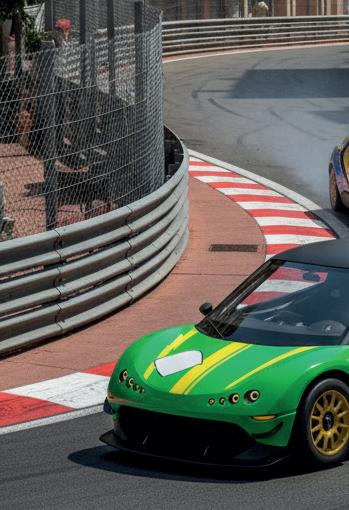
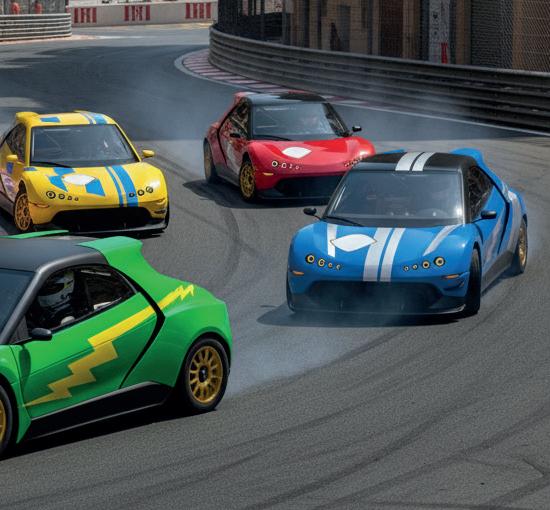
The Mino will be structured around a multi-material composite safety cell, which absorbs all of the impact in the event of a collision. As for the actual materials used in the Mino’s construction, don’t ask.
“I can’t say the exact materials we’re using, but they’re not 100% carbon fibre, and they’re not 100% composite,” says the designer. “But having supermini levels of safety in a car that measures 3.3 metres long is something quite unique, I would say.”
Whats next for MIKA MINO?
Yet all of this begs one major question. An elephant in the room, even: How are Kahn and Hall so sure of their product, when a physical Mika Mino doesn’t exist yet?
Beyond crash testing, the next step is finding partners willing to assist with putting the car into production.
“We’ve had a lot of interest and positive feedback - in fact, 90% of the components are there, and we’ve had some healthy conversations with medium and large-scale car manufacturers,” Hall wraps up. “We’re now just waiting for the right investor to come along and enable us to get to the next stage.”
As to what’s beyond the prototype stage, it involves what Kahn describes as “turning the wick up”. There’s even talk of a Mika Mino-based Formula E support series. But that’s for the next time... and I say “next time” with certainty, because there will surely be a second chapter in this revolutionary little car's story.

“ The next stage, absolutely, is BUILDING REAL PROTOTYPES and slamming them into walls and validating the simulation.”
BY MATT ALLAN
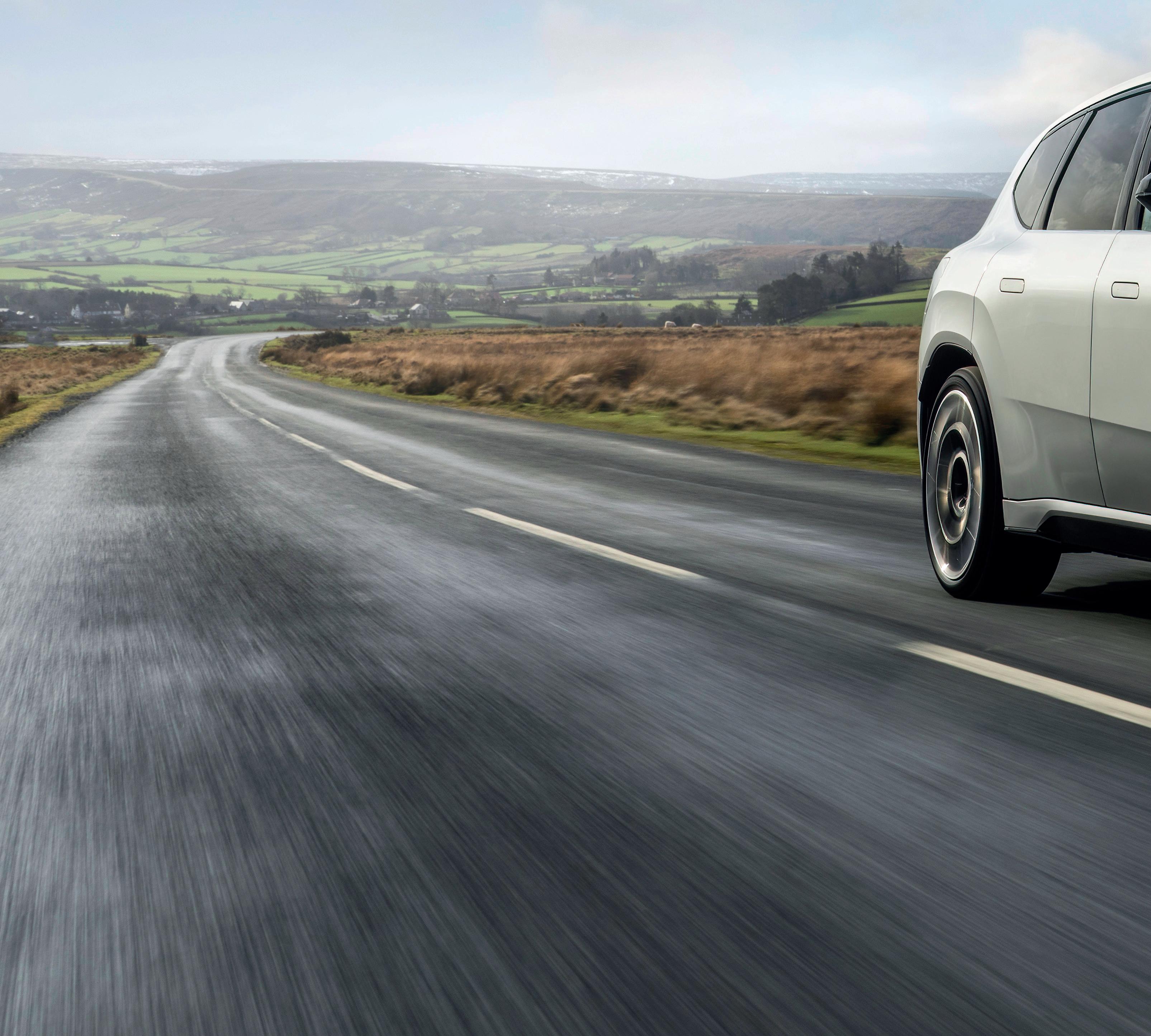

departure from what came before that the team behind it says it will “give the impression an entire vehicle generation has been skipped”.
Bold words.
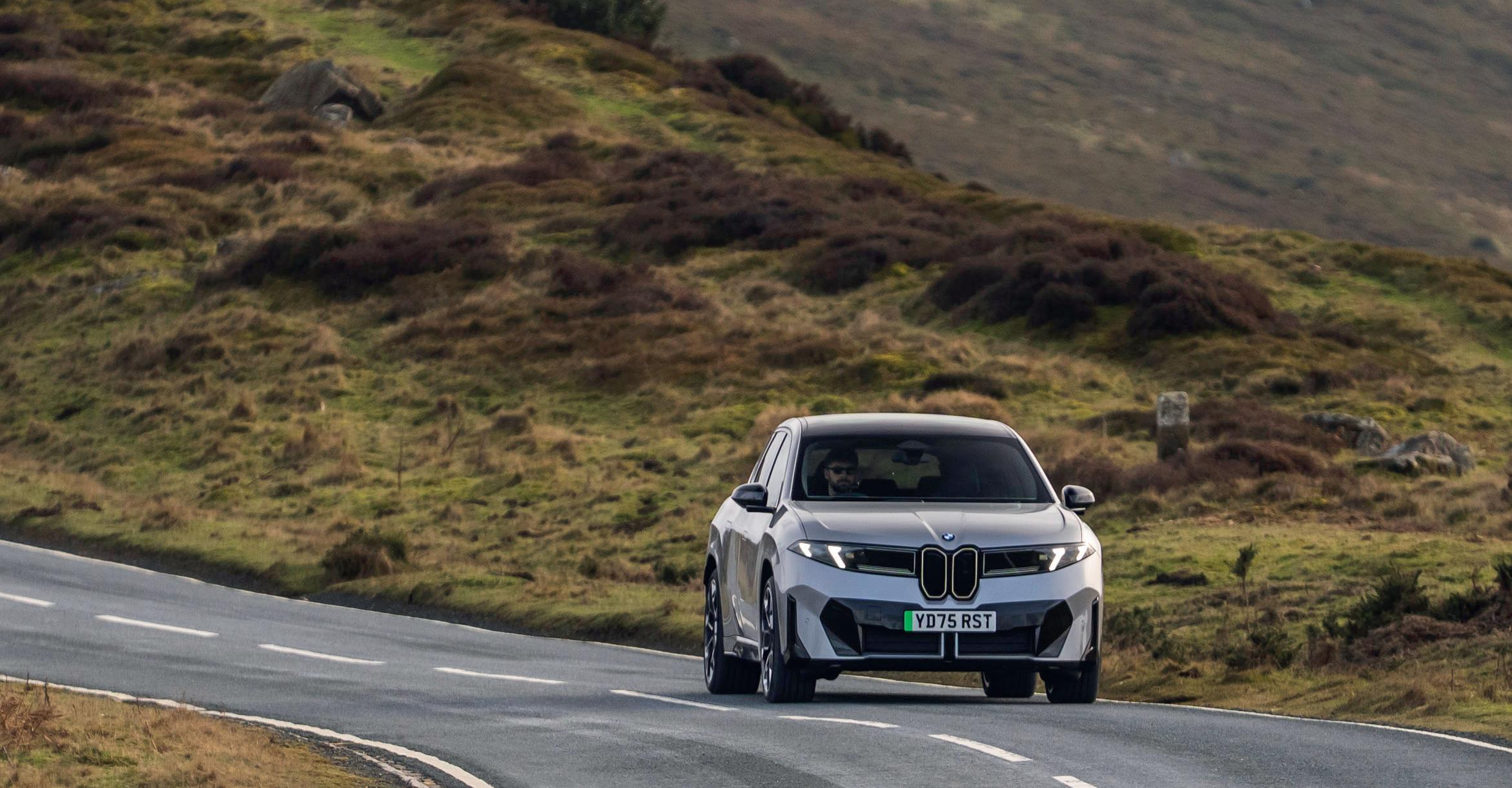
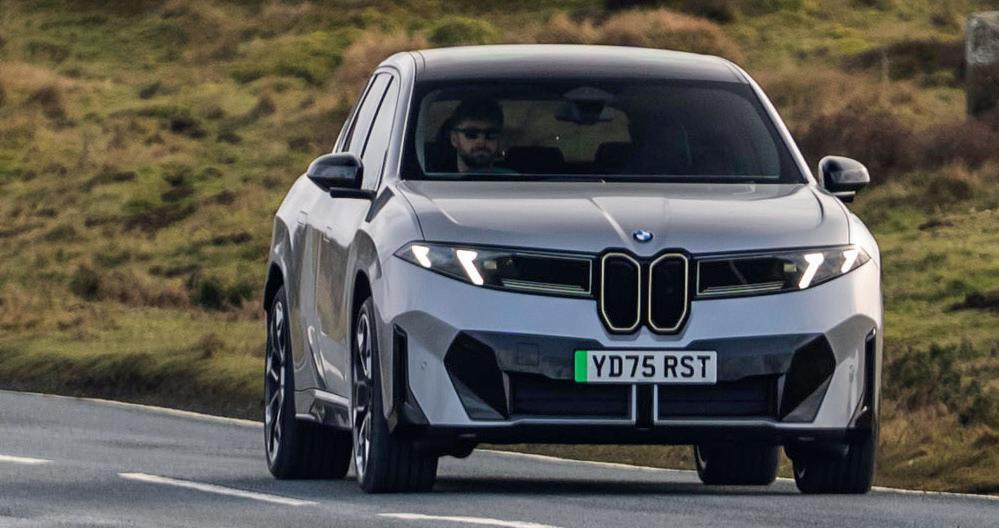
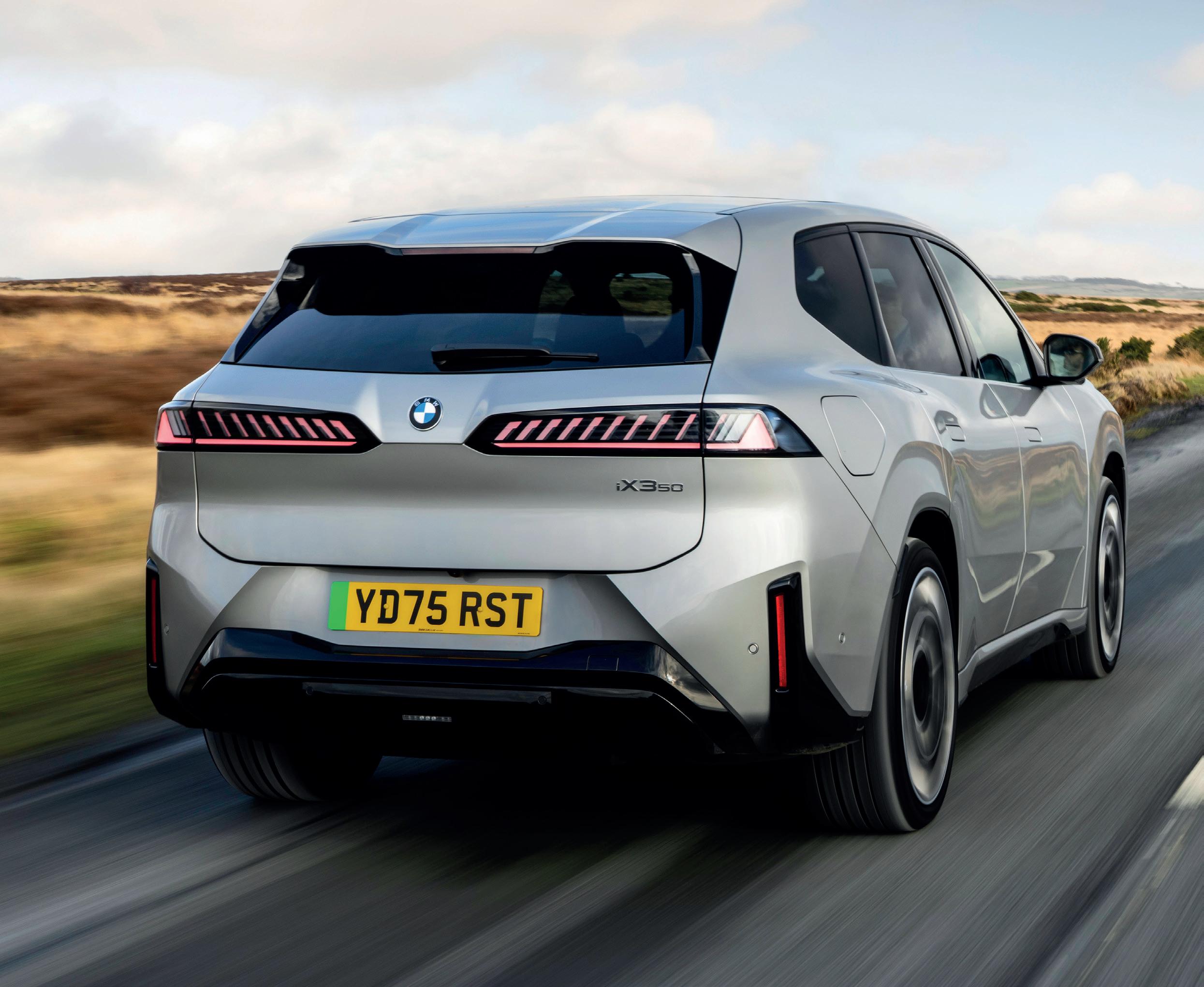
This is the first of the Neue Klasse cars and sets the template for every future BMW. Electric or petrol, new cars will draw from the iX3’s design and onboard tech, and the next wave of EV models will share its cutting-edge powertrain systems.
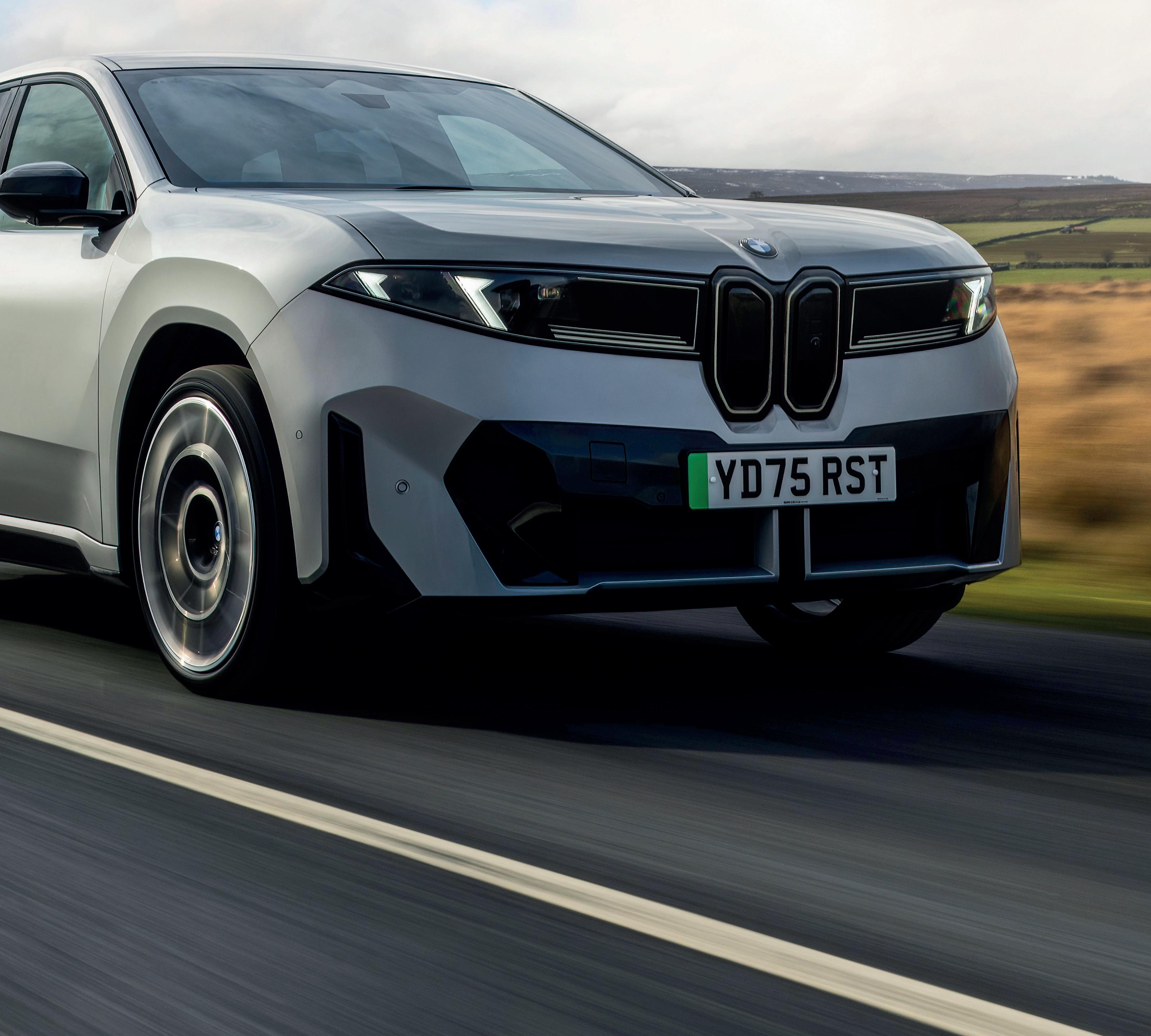
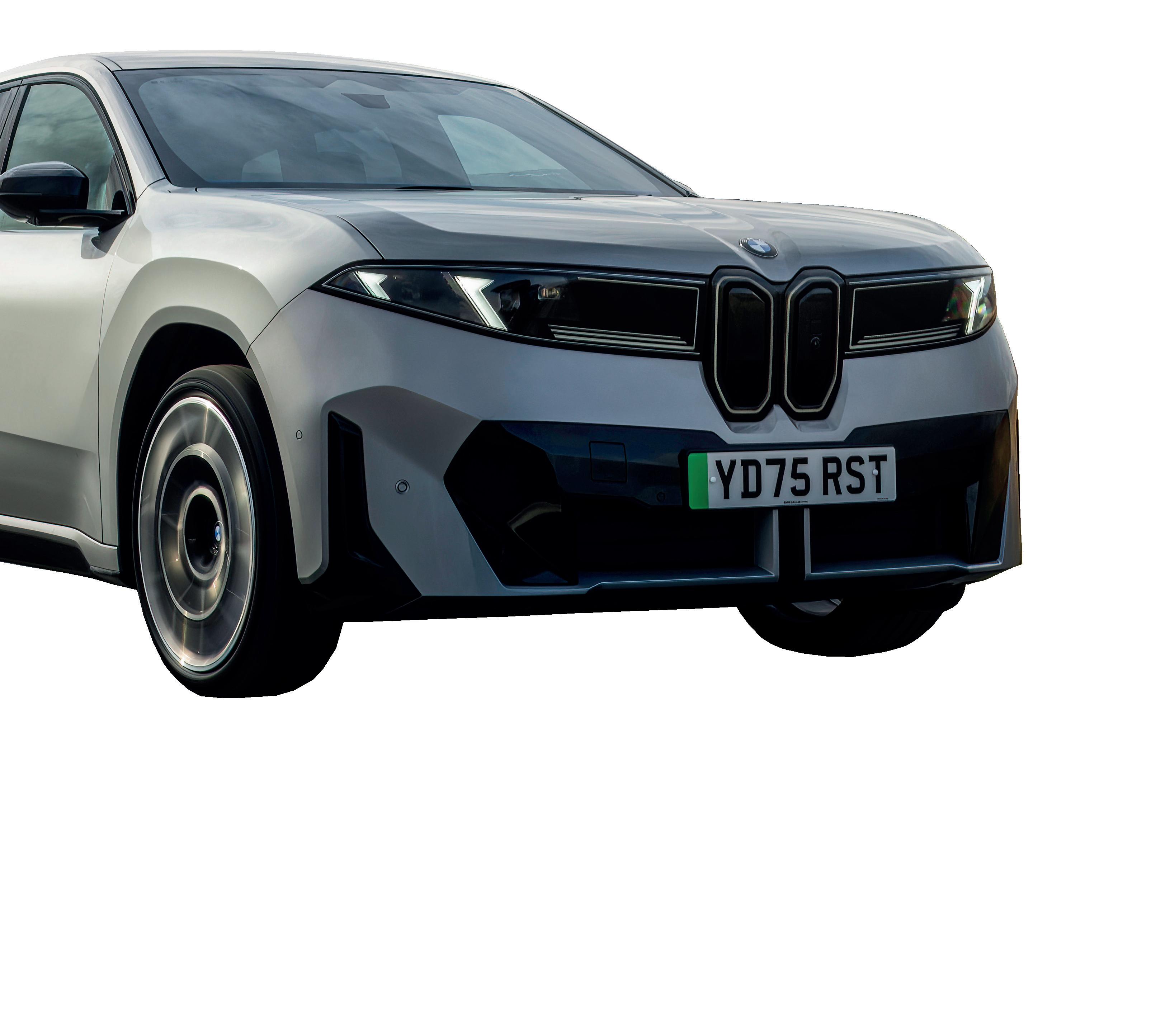
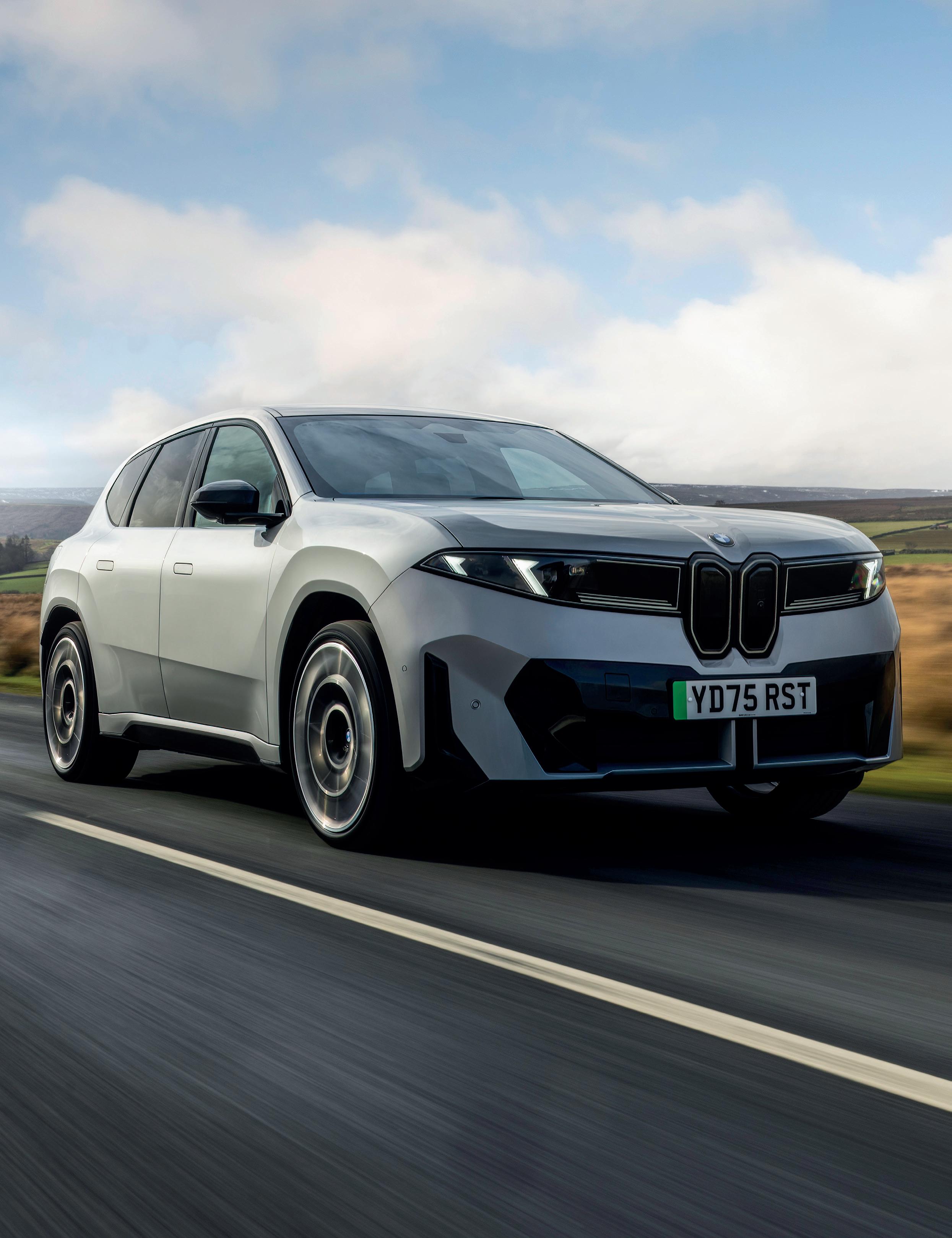
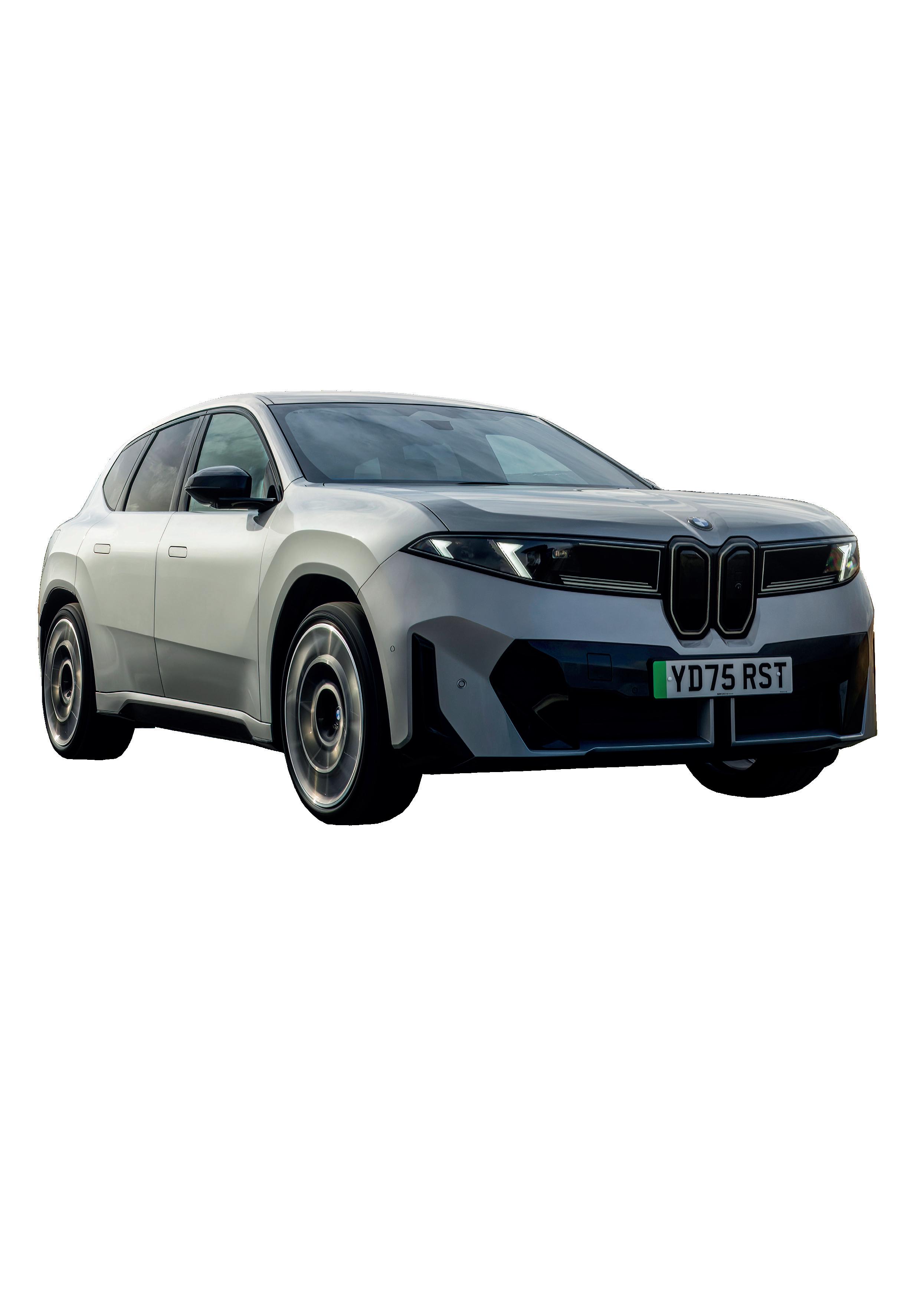
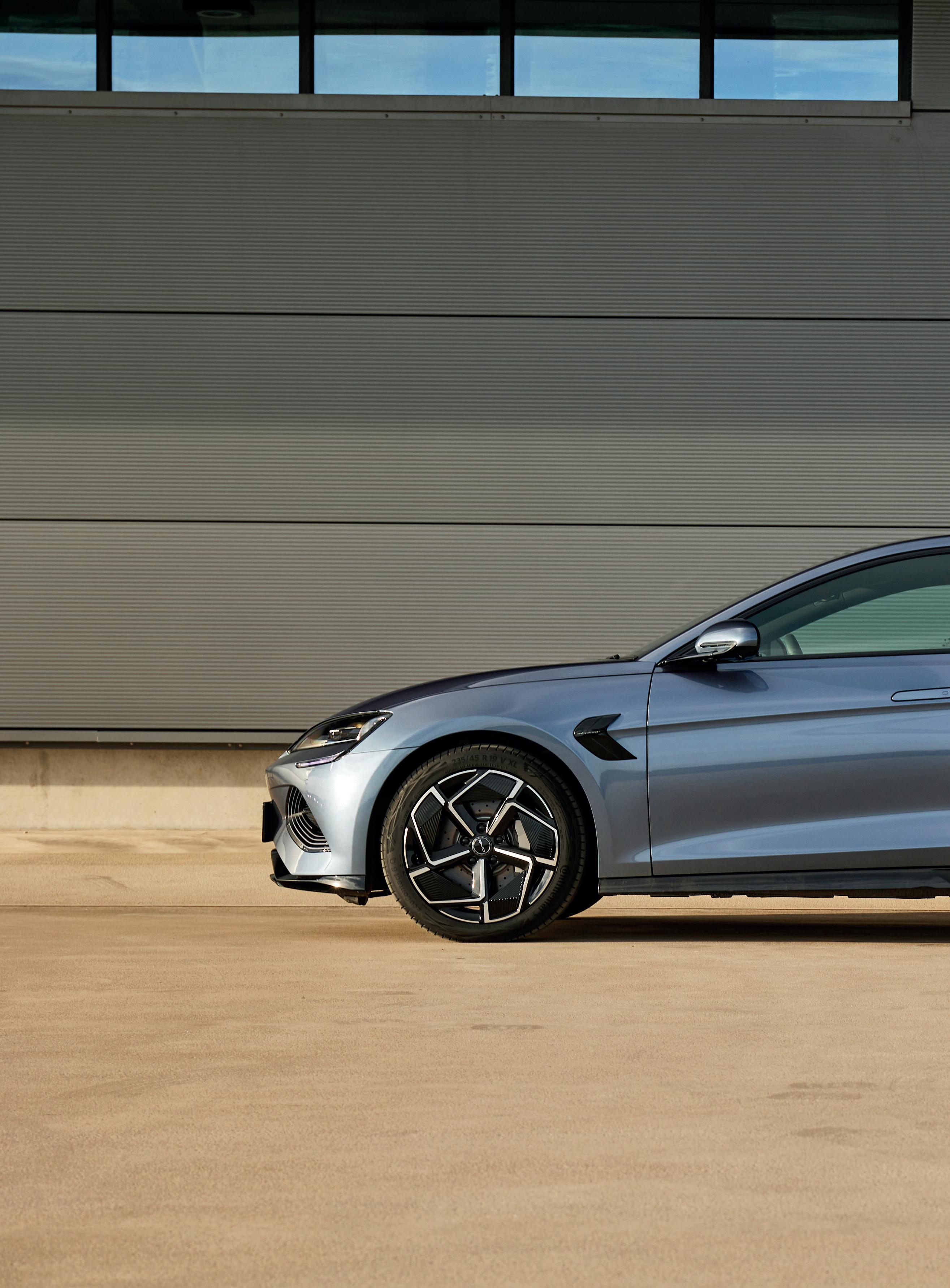
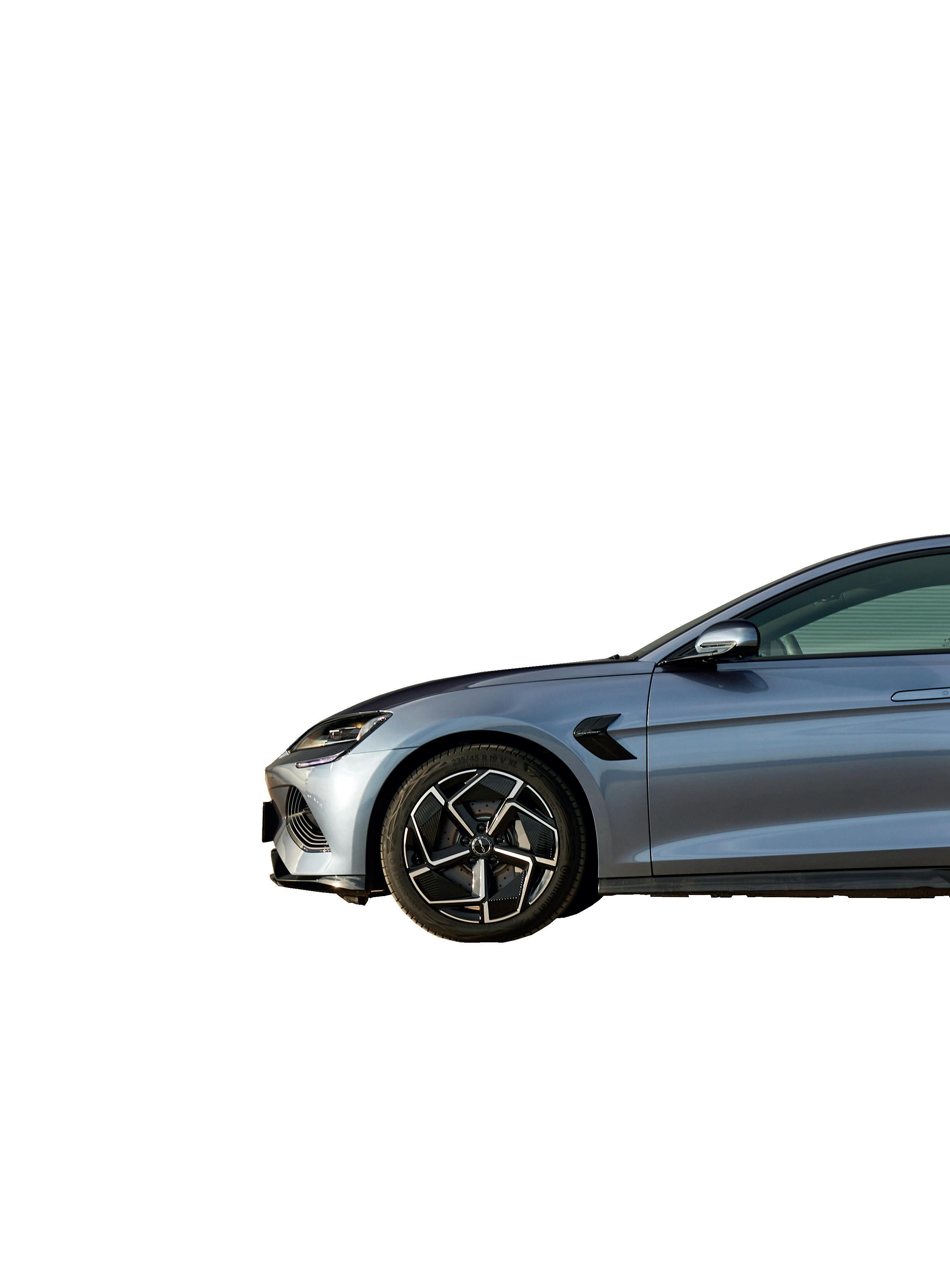
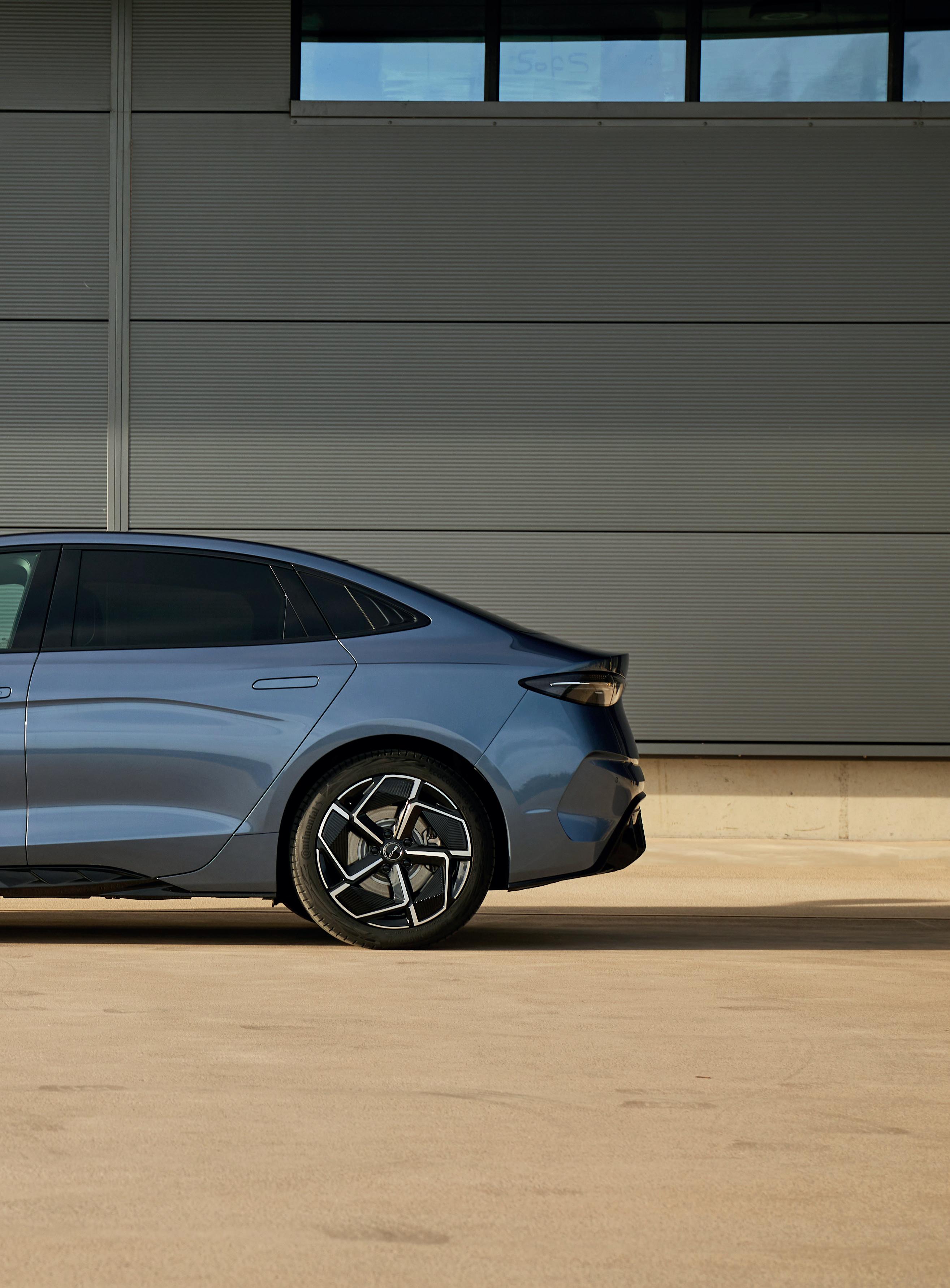
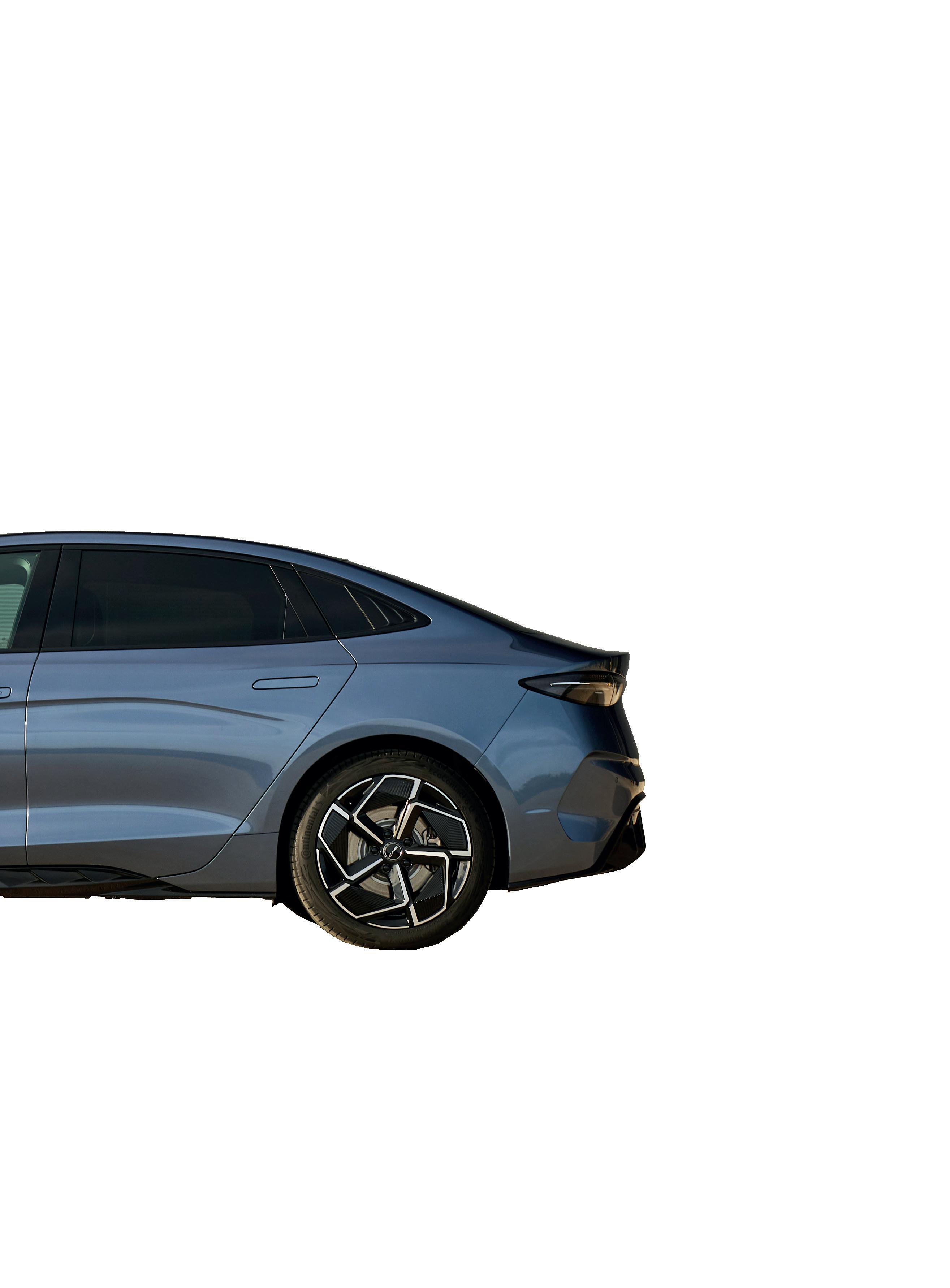
upright kidney grille which is a nod to the original Neue Klass cars of the 1960s. It’s flanked by sharp tapered lighting units with a combination of thin strips and larger adaptive LED units and sits in an upright but angular front end. The whole effect is neater and cleaner looking than something like the gawping X3 while still clearly being a BMW.
Behind the less fussy face is an even less fussy design where a few simple lines define the shape and disguise the car’s size. This is a 4.7-metre long, 1.9-metre wide car with a traditional boxy SUV shape but it doesn’t look bulky in the way the old car did.
It’s still going to split opinion, but it feels like a step in the right direction.
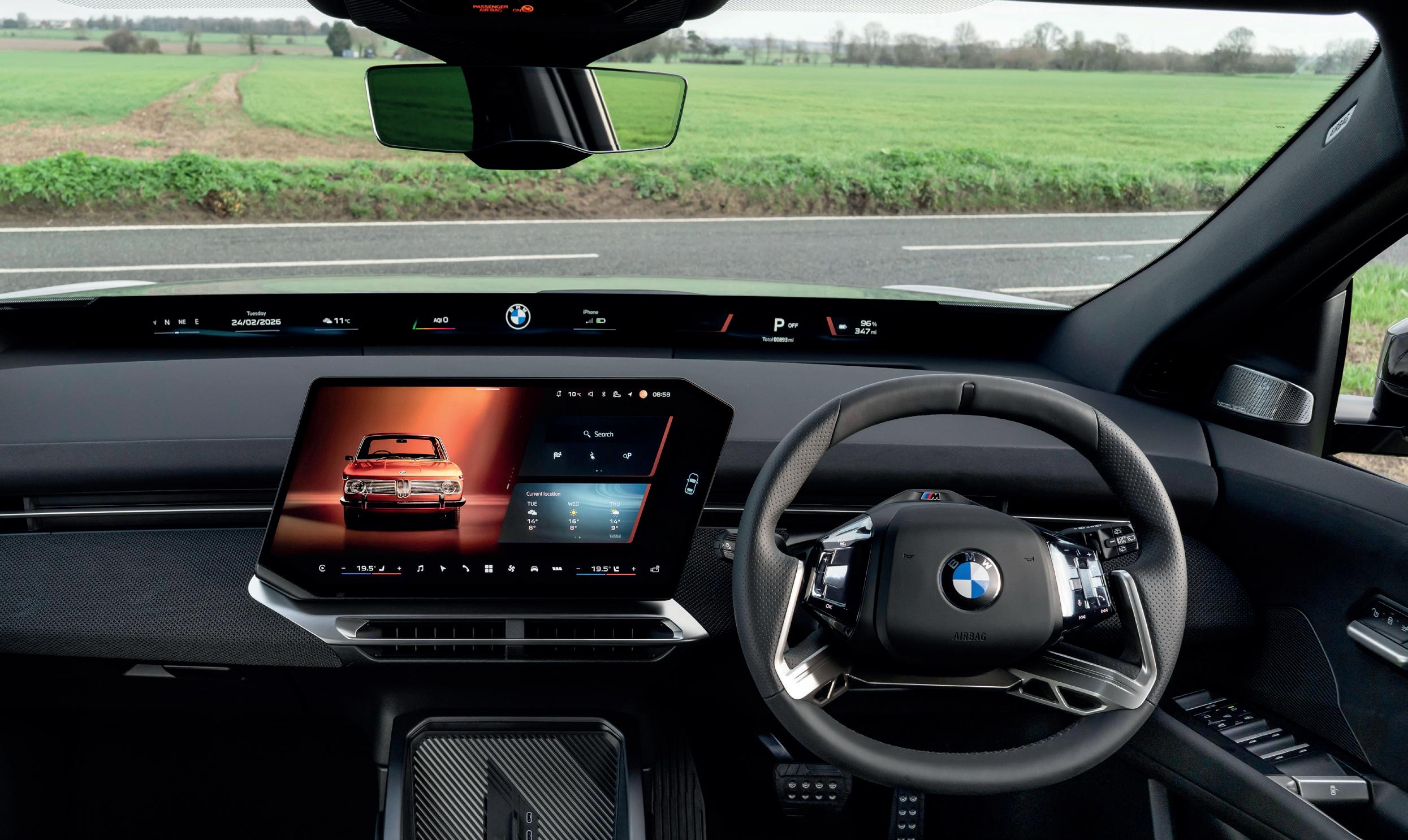
Inside there’s a similarly toned-down feel. Mostly. There are a few big elements in an otherwise simple and open-feeling cabin. The regulation two-tier centre console flows into a simple low-set dash finished in a really appealing fabric which hides the ambient lighting.

The most deliberately different element is the steering wheel, which varies between trim levels but is peculiar in all of them.
Passenger space is generous, with accommodation for the traditional four six-footers to fit with room to spare and lots of adjustment to let any driver get comfortable. In the boot there’s a useful 520 litres of luggage space, supplemented with a 58-litre frunk.
While the overall interior design is relatively simple, there’s a huge amount of technology in the new iX3, including BMW’s new Panoramic Vision. This is a slimline display projected between the dash top and windscreen edge that runs the full width of the car and replaces a traditional instrument panel.
In combination with the huge touchscreen and augmented reality head-up display it delivers an awful lot of information and, if set up wrong, can lead to a lot of duplication.
However, it’s massively customisable – you can display anything from the time and outside temperature to your energy efficiency and battery temperature in five individual slots. Or you can choose a focused mode such as navigation or trip computer. Once it’s set up to your liking it’s remarkably effective and works so well that it never feels overwhelming.
Supplementing the Panoramic Vision is a massive central screen. There’s a lot going on within its 17.9-inch real estate and you could get lost in menus for a long time. But, unlike so many screenfocused vehicles, it’s been set up by people who have actually driven a car. So the stuff you want quick access to is easily accessible. Things like drive modes and temperature controls have permanent shortcuts on the main screen. Even the most-used ADAS controls are right there on the screen’s edge, always within a finger’s stretch of the steering wheel so you can quickly disable them.
Car makers spend a lot (too much) time boasting about all the new tech on their cars. BMW is no different, but the iX3’s admittedly vast array does at least feel developed by and for drivers to actually enhance their experience, not frustrate.
Under the skin, the new iX3 showcases BMW’s latest sixth-generation eDrive systems, developed for this new platform.
This is a big deal because the new 800V systems bring major improvements in energy density, efficiency, range, power and charging speeds.
Everything is new, from the drive motors to the individual battery cells, which have been redesigned for better packaging, cooling and adaptability.
In the iX3, those new cells are part of a 108.7kWh battery. For the moment, that comes paired exclusively with a two-motor all-wheel-drive setup which divides power as it sees fit to provide maximum efficiency and grip.
Combined, the two motors develop 463bhp and 476lb ft.
That’s enough for a 0-62mph time of just 4.9 seconds and gives the iX3 brilliant responsiveness at any speed, delivered via an expertly balanced throttle.
BMW says that, combined, all the new drive technology reduces weight by 10% and energy losses by a whopping 40% compared with the previous generation iX3. So this new model has official efficiency of up to 4.1m/kWh and is the first car in the UK to offer 500 miles of range on the WLTP test cycle.
Of course, real-world use rarely matches WLTP testing, but my test car started out promising 440 miles and, after several hours of pretty unsympathetic driving, reported efficiency of 3.3m/kWh.
That theoretically means around 360 miles of range but doesn’t take into account the energy regained through regenerative braking. BMW reckons its new system will allow 90% of all deceleration to be handled by regenerative braking, adding energy back into the battery and making 400 miles easily achievable. On my drive the car harvested 16kWh. What’s pleasing is that the braking still feels natural and the adaptive regen (should you choose to use it) works well in most circumstances.
The iX3’s 800V architecture also allows for faster charging than before. A peak DC capability of 400kW means a 10-80% charge in just 21 minutes, or adding 231 miles of range in just 10 minutes, if you can find a compatible charger.
Away from the clever battery stuff, BMW says the iX3 is set up to deliver a traditional BMW feel. You won’t mistake this 2.3-tonne SUV for an E30, but it does have the sort of positive driving feel you’d expect from Bavarian’s finest.
There’s a satisfying weight and directness to the steering and on twisty roads the iX3 feels smaller than it really is. Sport mode doesn’t make a massive difference but there’s enough life and feel in the regular setting that you won’t mind. Stick it on a motorway and it’ll cruise easily for mile after mile.
The iX3’s main shortcoming is an overly stiff ride. Perhaps in a bid to retain some sense of sportiness, it’s been tuned in a way that delivers excellent body control but a jarring feel over our pock-marked roads. If it was an adaptive system, you’d swear it was locked in sport mode rather than comfort, but the iX3 has passive damping, so you’re stuck with it. In fairness, our car was running on optional 22-inch wheels and the standard 20-inchers might take away a little of that firmness.
The BMW iX3 range is nice and simple for the moment. There’s just one powertrain – the 50 xDrive – and three trim levels.
The Entry-level car is simply badged iX3 50 xDrive and is priced from £57,750. That’s identical to the plug-in hybrid X3, a smart move that gives buyers a simple way to jump from ICE to EV without a cost penalty.
It comes with 20-inch alloys wheels, heated front seats, dual-zone climate control, wireless smartphone mirroring and the usual glut of connected services and driver assistance ranging from adaptive cruise control to remote parking assistance.
Above that, prices are £60,250 for the M Sport trim, and £61,750 for the M Sport Pro which both bring a host of cosmetic upgrades, and in M Sport Pro, adaptive LED lights, a lightup grille, as well as bespoke seats and steering wheel.
So, does the BMW iX3 live up to the brand’s bold claims?
For the most part, yes.
It’s perhaps not as paradigm-shifting as BMW would claim but it does set a new benchmark for rivals and delivers on the promises made.
Its all-electric heart provides everything needed to shut down EV naysayers. Pacy performance, a comfortable 400-mile+ range and super-fast charging mean it delivers on the school run, daily commute or long-haul holiday.
While there’s an almost overwhelming amount of tech, it feels designed and set up to help rather than baffle the driver, and the interior is spacious, comfortable and refined. Even the design points to a calmer, more sophisticated vision of BMW.
If this is the starting point for BMW’s coming generation of EVs, I can’t wait to see what’s next.
PRICE: £61,750 (£72,162 as tested)
POWERTRAIN: Two-motor, all-wheel-drive
BATTERY: 108.7kWh
POWER: 463bhp
TORQUE: 476lb ft
TOP SPEED: 130mph
0-62MPH: 4.9 seconds
RANGE: 449 miles
CONSUMPTION: 3.68m/kWh
CHARGING: up to 400kW
ByMattAllan
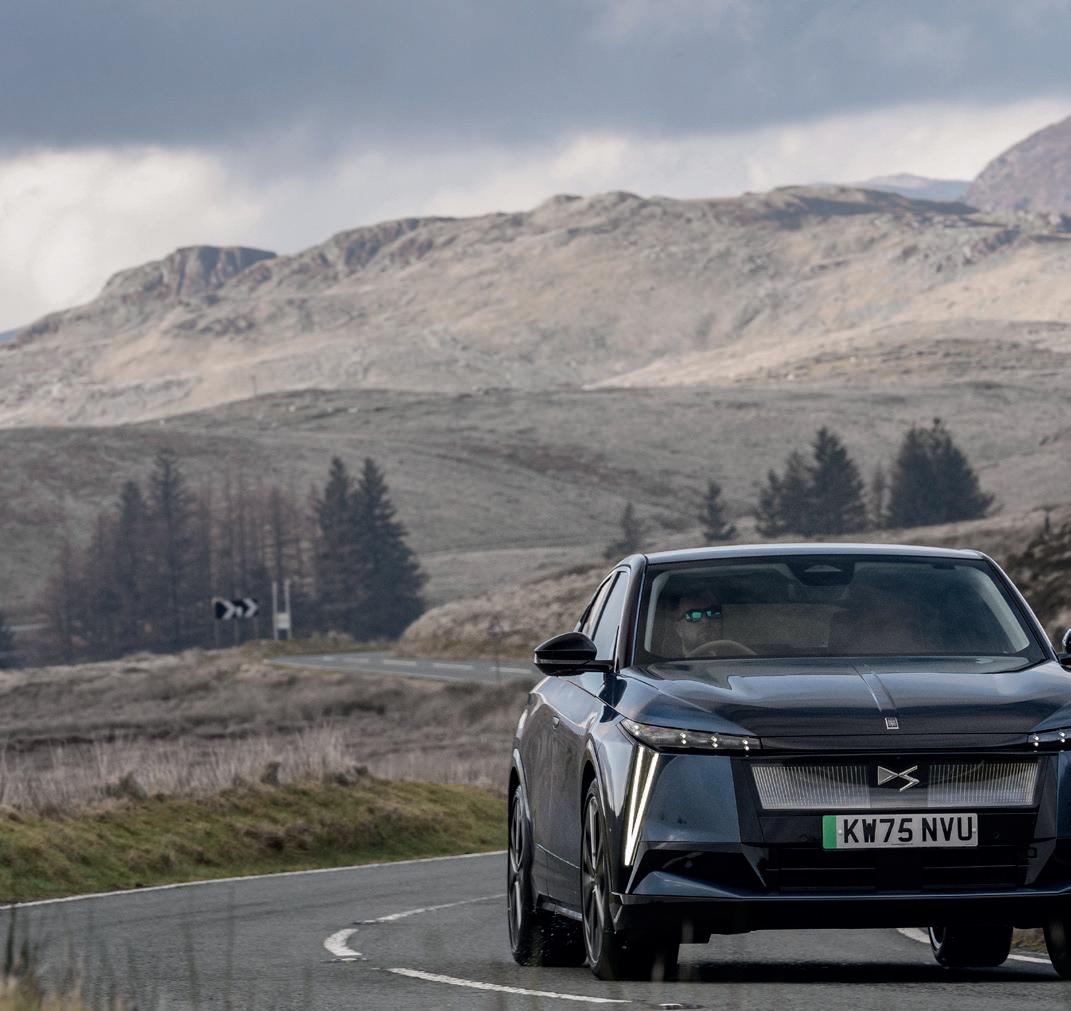
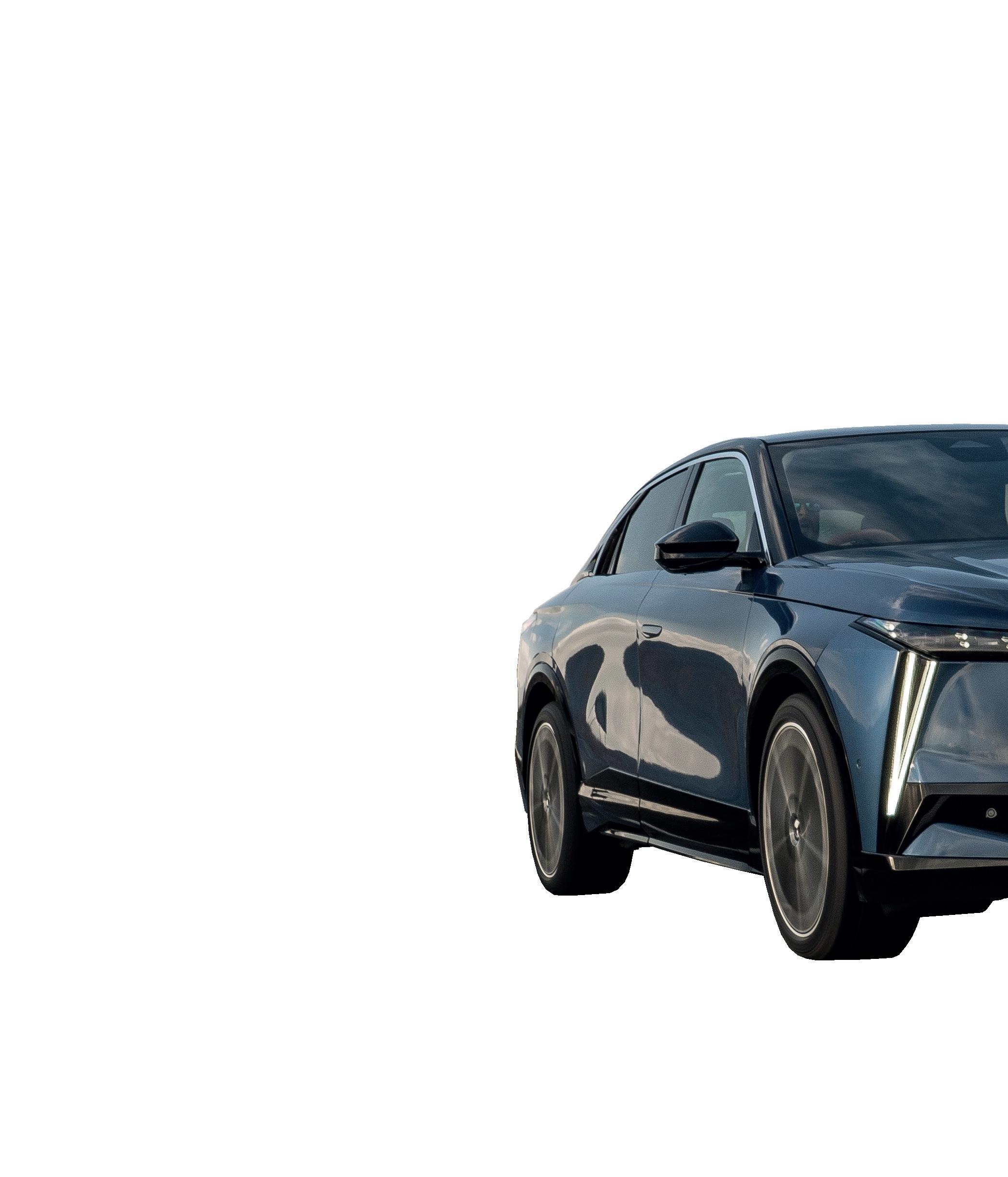
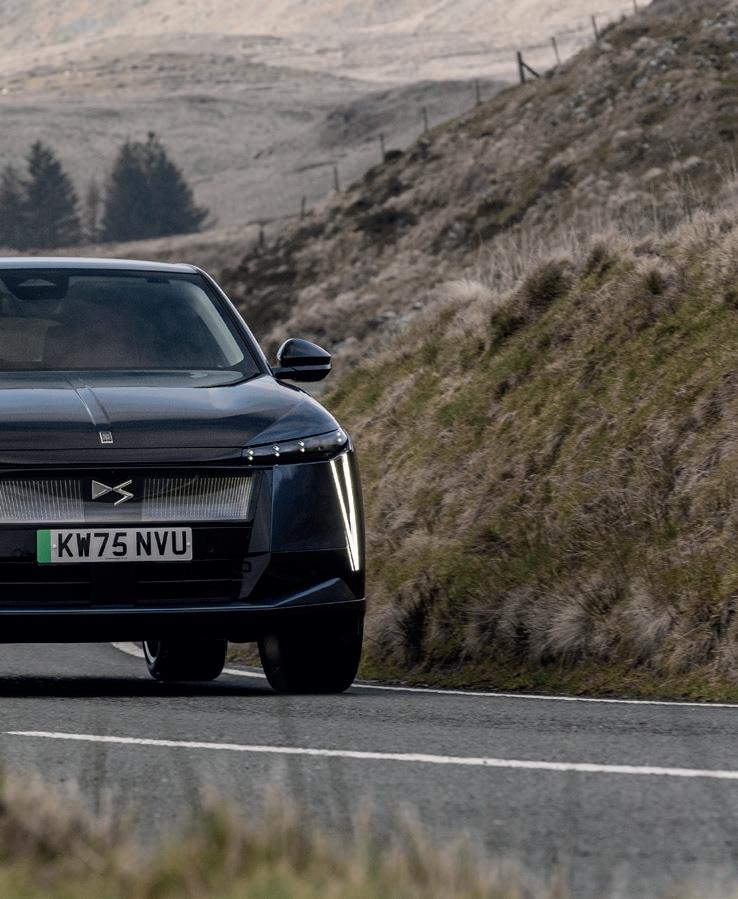
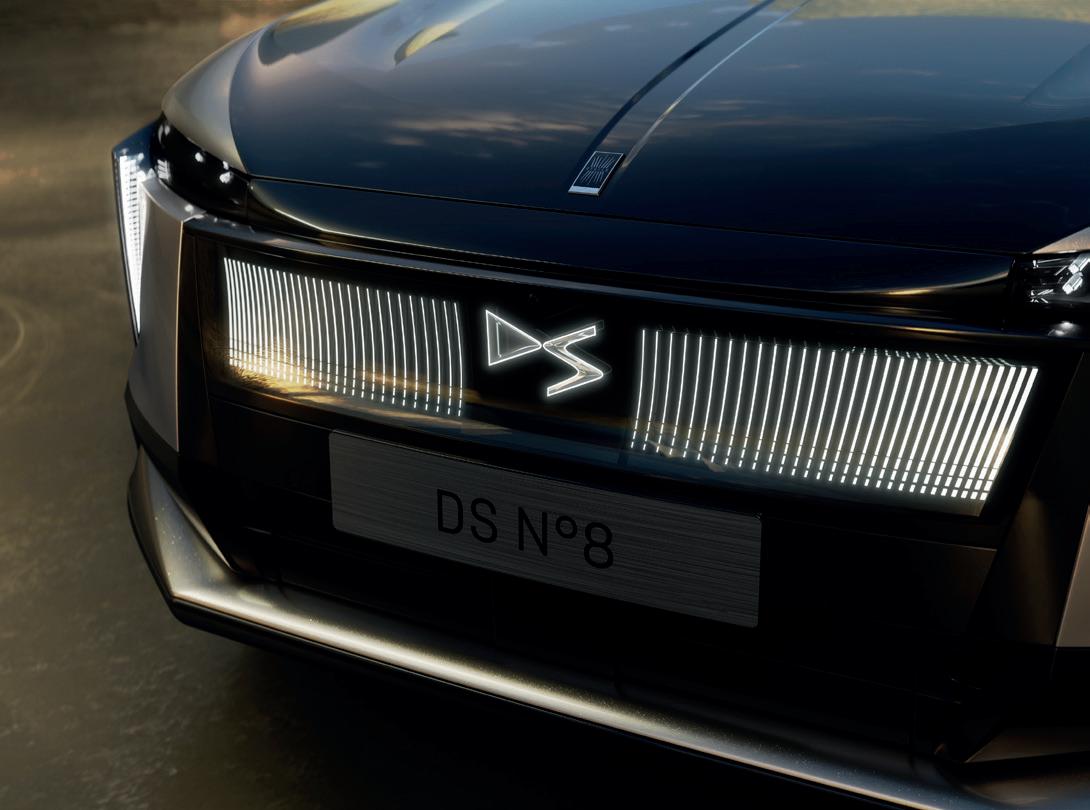
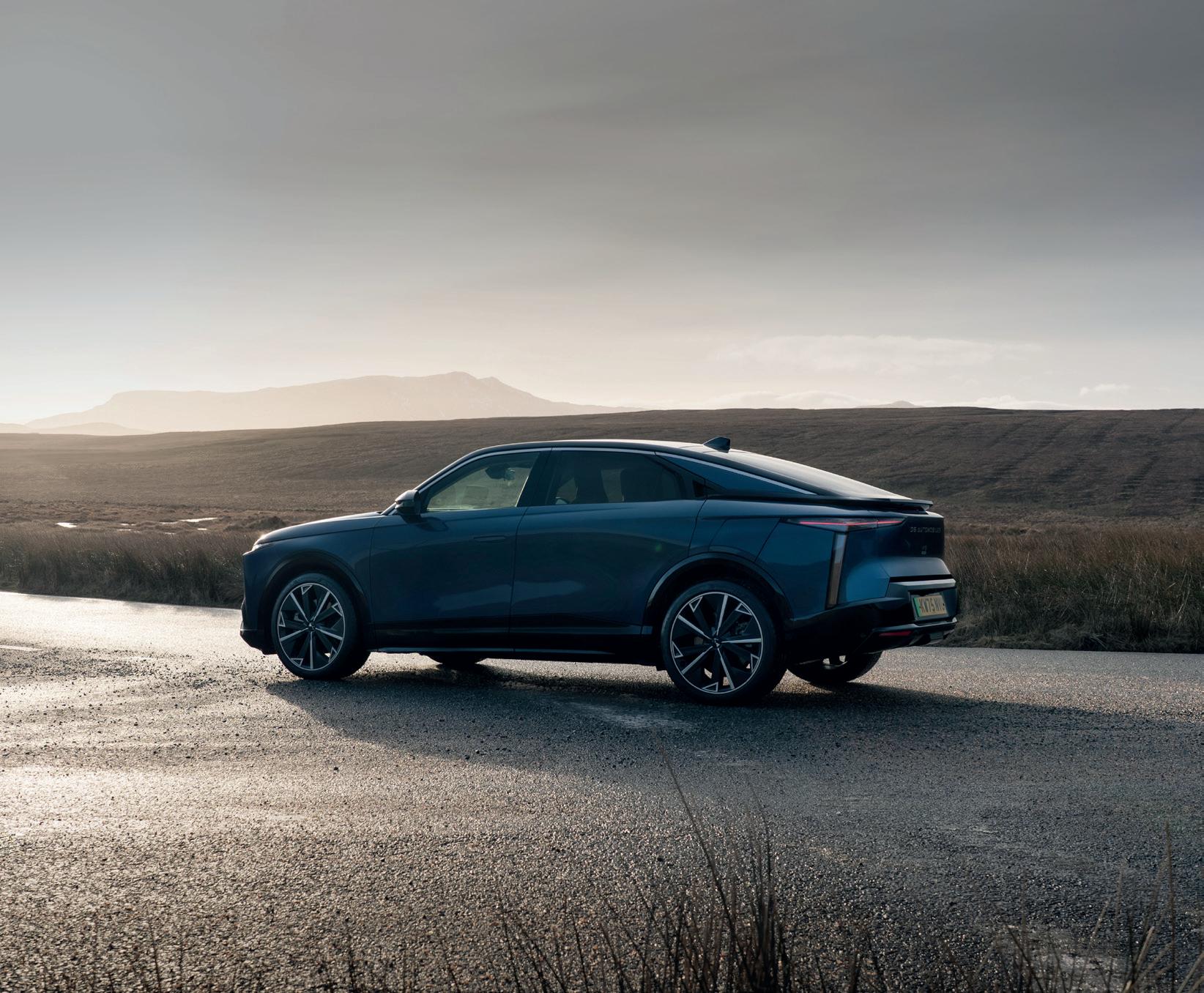
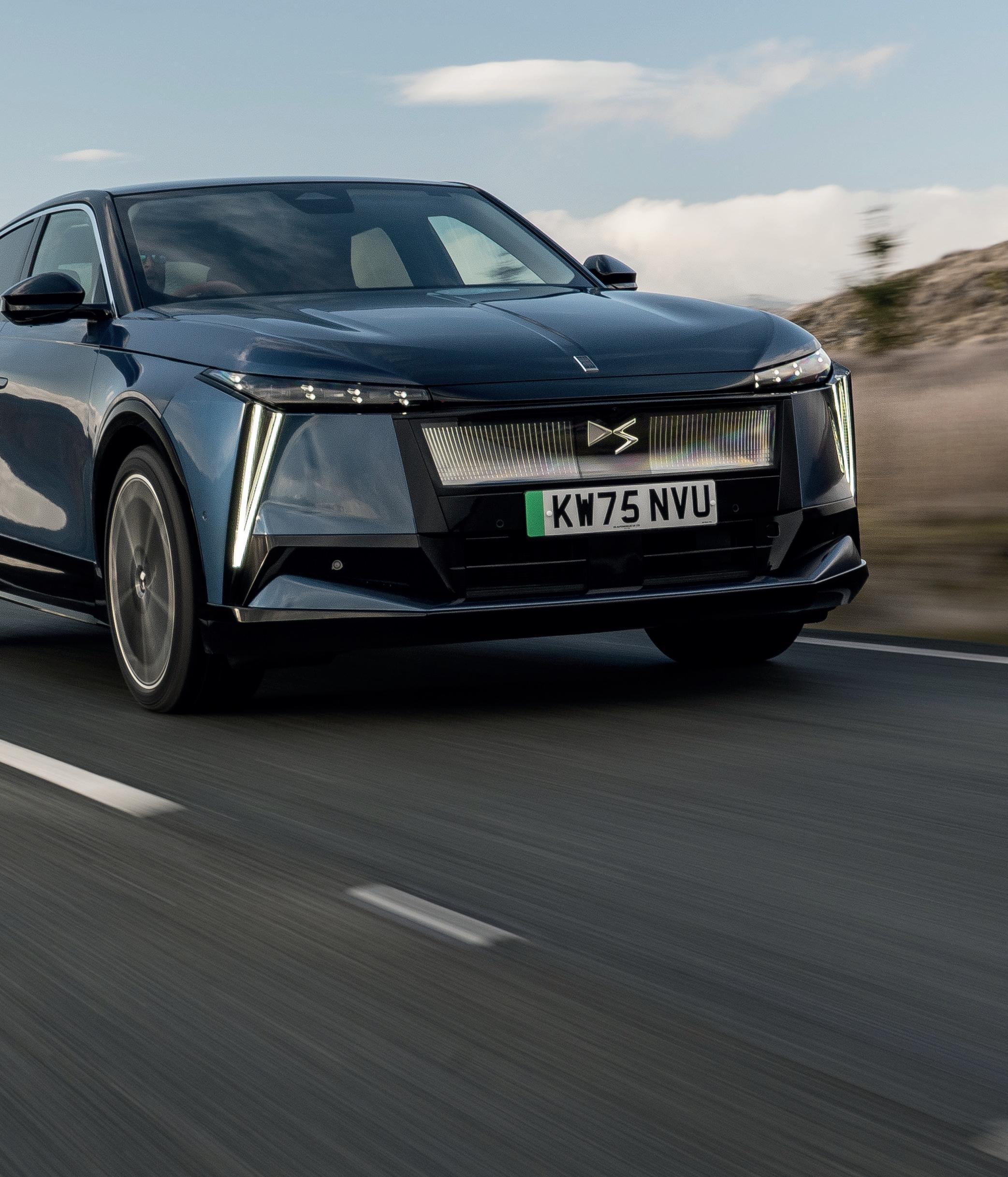
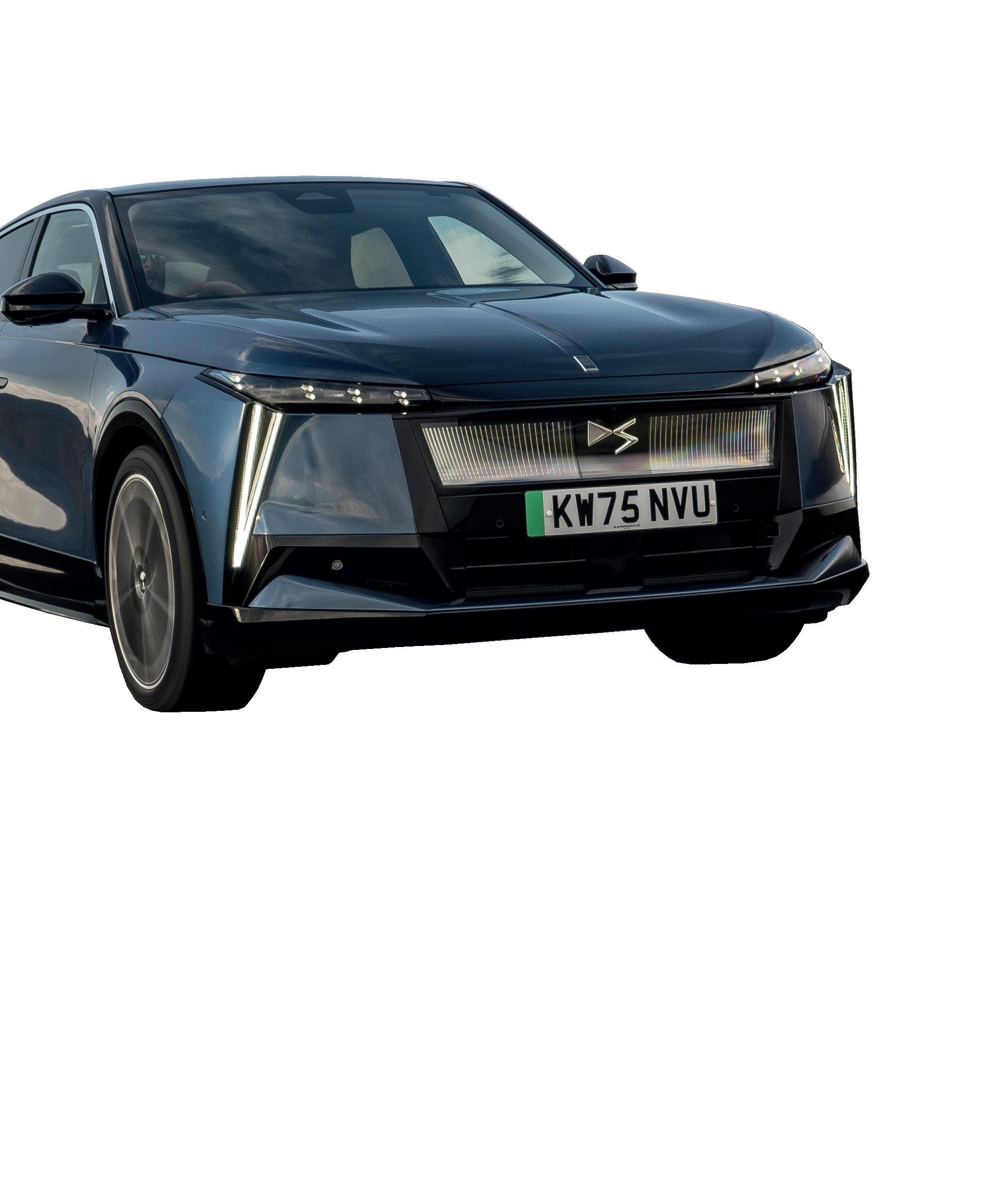
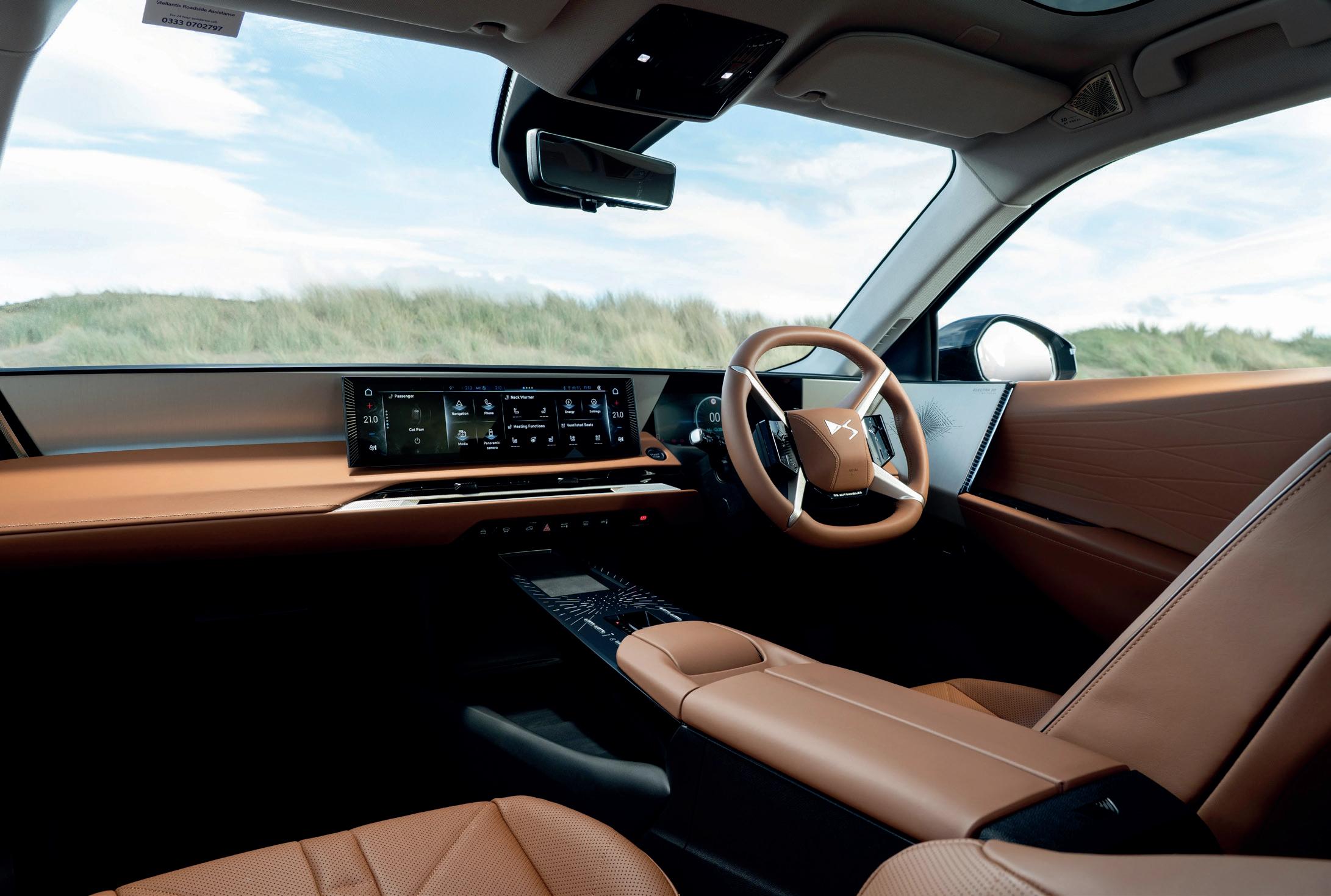
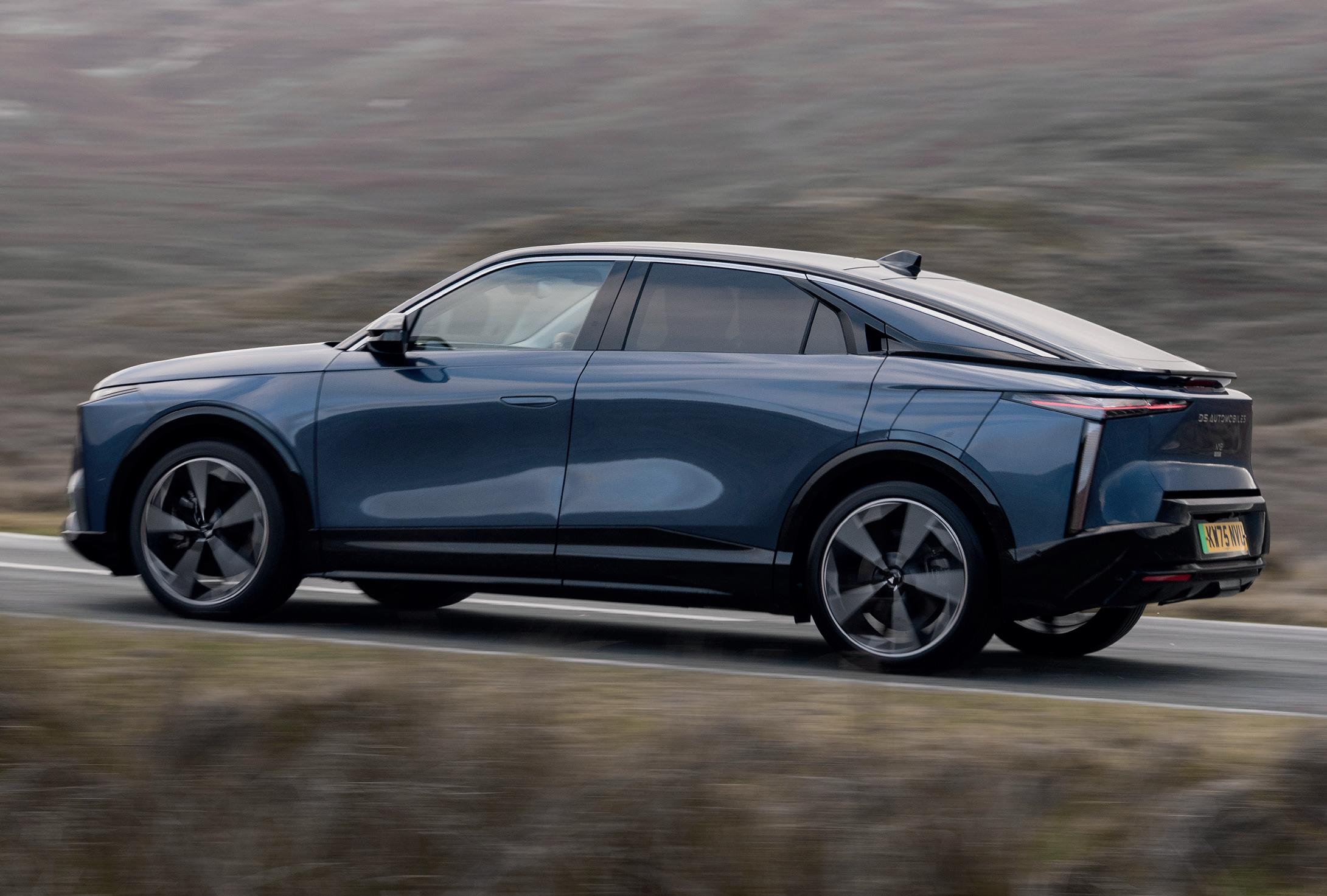
Inside, DS says it wants the No8 to be a “refined sanctuary” that shows high levels of craft and expertise in materials. On first encounter, it seems to do that. Interiors are finished in either a very retro-chic blue Alcantara, or an optional tan Nappa leather with wonderful watchstrap detailing. Both look and feel brilliant in their own ways, and are augmented by avant garde touches such as the four-spoke steering wheel, the starburst pattern on the centre console and the huge, bold speaker surrounds on the doors.
So everything looks lovely but there is a feeling that beauty is only skin deep. Prod too hard and the firm plastic beneath the squishy surfaces becomes apparent. And here and there there are thin, flimsy feeling plastics that you wouldn’t find in a Polestar or Genesis.
Front-seat occupants are well served, with comfortable, supportive seats that offer plenty of adjustment and space, and come with heating, cooling and massage. There’s even a convertible-style neck warmer that helps the climate system’s energy use.
Those in the rear also get the option of heated and cooled seats but legroom isn’t as generous as you might expect, and a high floor gives a slightly kneesup seating position. That rear legroom appears to have been sacrificed for the boot, which is a massive 638 litres.
At the heart of the dashboard a 16-inch widescreen infotainment display handles most of the car’s functions, although there are blessedly simple buttons for drive modes and a few other key functions. The latest DS operating system is snappy, packed with features and with big easy-to-hit buttons but there’s too much flicking between screens to call it truly intuitive.
The DS No8 comes from launch with three powertrain options. Entry-level models get a 74kWh battery paired with a 227bhp motor driving the front wheels.
Above that is a “long-range” model which uses a 242bhp front-mounted motor and bumps up the battery to 97.2kWh. That’s the one which promises up to 466 miles on a full charge. Interestingly, DS also quotes a motorway range of 310 miles, predicting that more demanding use will be the No8’s natural environment. Officially efficiency is an impressive 4.8m/kWh.
At the top of the range is a two-motor, all-wheel-drive version, which uses the same battery but offers 345bhp, 377lb ft and a range of 407 miles. All three cars can also deliver an extra 30bhp but only for short overtaking bursts.
Performance from that AWD setup is reasonably potent. It can’t match the muscle of the Polestar 4 or two-motor Model Y, but in isolation it feels plenty punchy enough. The 0-62mph run is dispatched in just 5.4 seconds and there’s solid pull at any speed. However, both throttle and brake pedal have a distinctly spongy feel and the steering, while well weighted and balanced, feels more calibrated for easy cruising than sporty endeavours.
There are the usual multiple drive modes which sharpen or dull the throttle, plus three levels of braking regeneration managed via steering wheel paddles. There’s also a one-pedal setting, which is activated separately.
Higher-grade models come with DS’s road-scanning suspension that primes the dampers for upcoming lumps and bumps. When active, this offers (whisper it) Citroen-like levels of comfort but even in normal mode, the No8 rides in a way that honours its badge.
That smooth ride is complemented by impressive sound insulation that makes the No8 a quiet, calm cruiser and a very easy thing in which to cover miles.
All versions of the DS No8 come with peak DC charging of 160kW, which in the days of 400kW+ sounds pretty slow. However, DS argues that overall charge time is more important than peak DC performance. It claims its car’s real-world 20-80% charge time is better than alternatives such as the Polestar 4, BMW i4, Tesla Model Y and Audi Q4 e-tron. A 20-80% charge (not the 10-80% quoted by most other brands) takes 27 minutes.
Along with three powertrains, the DS No8 gets two trim levels, with prices starting at £50,970 and rising to £63,290.
Entry-level Pallas comes with the choice of the two front-wheel-drive powertrains, while above it Etoile adds the option of the all-wheel-drive setup. Prices for Etoile start at £54,790 for the standard range FWD and top out at £63,290.
All versions of the No8 get heated front seats and steering wheel, two-zone climate control, a powered tailgate, 16-inch touchscreen with wireless phone mirroring, plus a head-up display, heat pump and adaptive cruise control.
They also all come with 20-inch wheels, so if you want that 466-mile range you’ll need to specify the optional 19s.
Etoile spec adds the active scan suspension, Pixelvision adaptive headlights, active lane change assistance, a 360-degree parking camera and the neck warming seats.
It’s the kind of kit level you’d expect on any premium car. And like any premium car worth its salt, there are still a couple of options packs that add features such as a panoramic sunroof and Focal 14-speaker sound system.
The DS No8 is a likeable big thing with bold individual styling, a comfortable and effortless driving experience, and serious real-world usability thanks to that 400-mile+ range.
However, it’s let down slightly by some dubious interior touches and relatively stingy rear space.
The bigger problem is that when it comes to big cars in the UK French brands have always struggled. And when you can have a Polestar 4 or the phenomenal BMW iX3 for similar money, that’s unlikely to change.
PRICE: £63,290 (£69,190 as tested)
POWERTRAIN: Two-motor, all-wheel-drive
BATTERY: 97.2kWh
POWER: 345bhp
TORQUE: 377lb ft
TOP SPEED: 118mph
0-62MPH: 5.4 seconds
RANGE: 407 miles
CONSUMPTION: 4.4m/kWh
CHARGING: up to 160kW
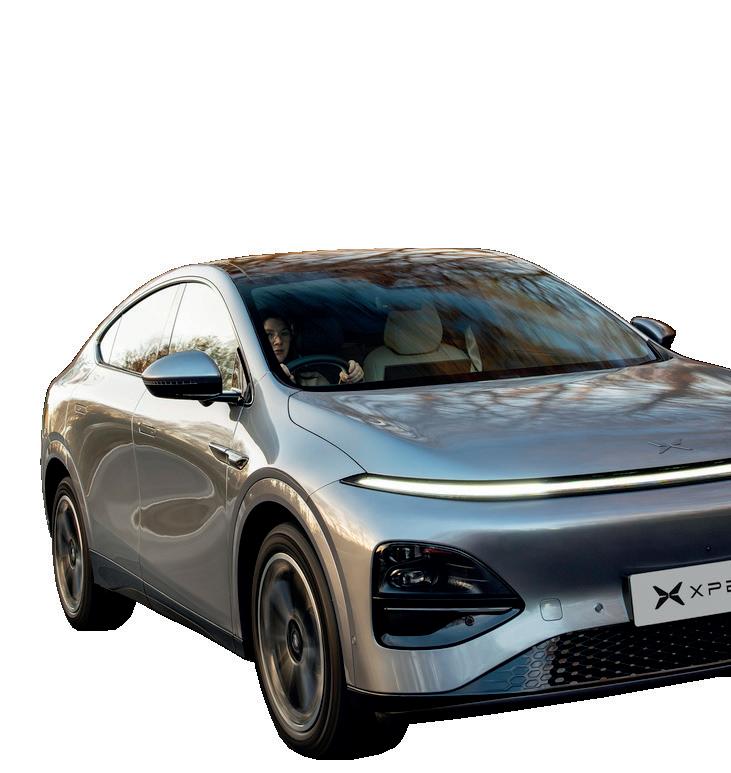
Do a claimed 20,000 UPDATES make a big difference to this Model Y rival?
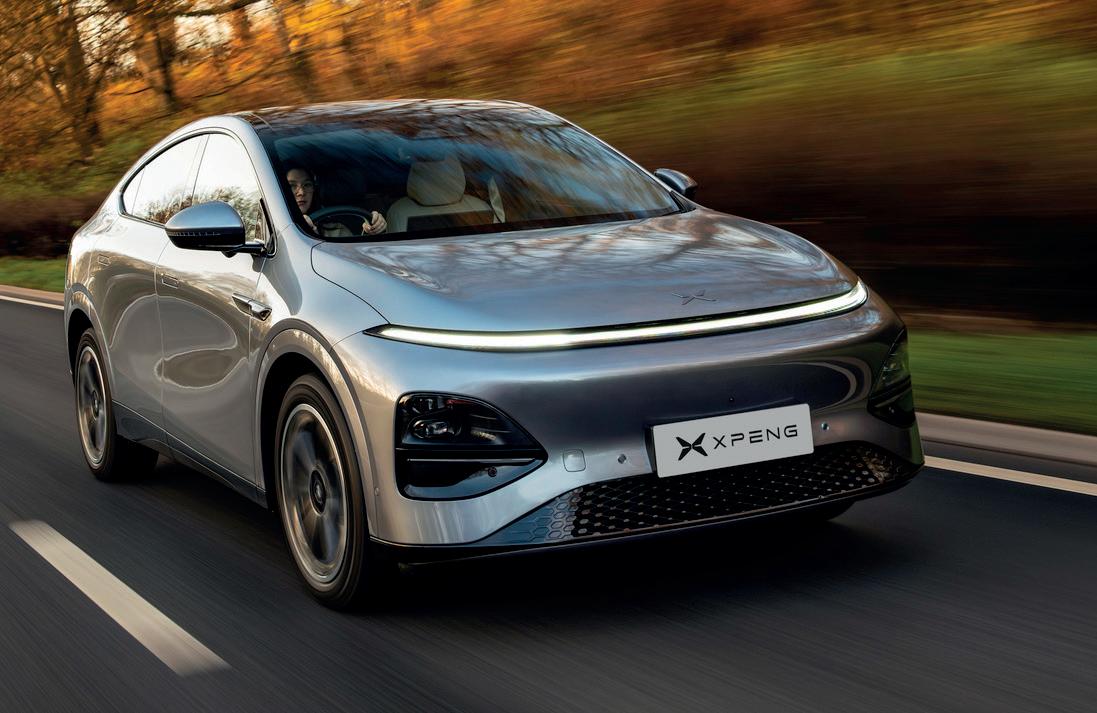
I know, the Xpeng G6 has only been on sale in the UK for a year and already we’re talking about a midlife update. But things move fast in the Chinese car industry and, in fairness, the G6 has been on sale elsewhere for longer, hence the refresh.
Xpeng says it has made 20,000 incremental upgrades. These range from visual updates and a revised battery to less obvious adjustments to the chassis and underlying software.
That all sounds impressive in a press conference, but what does it mean on the road?
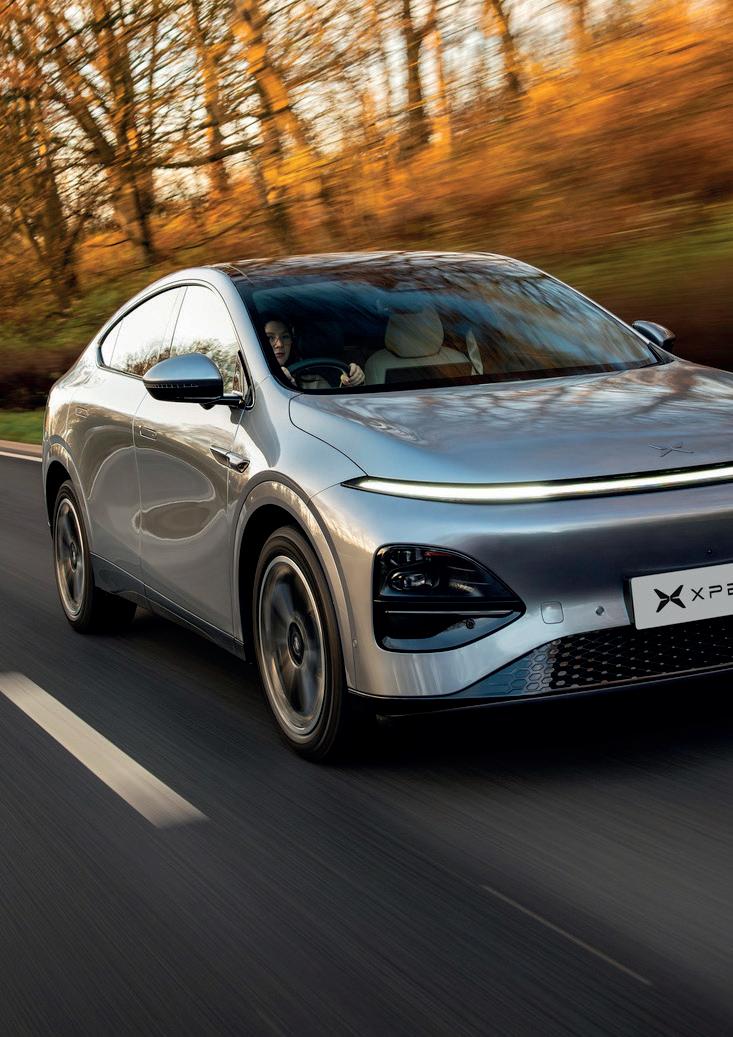
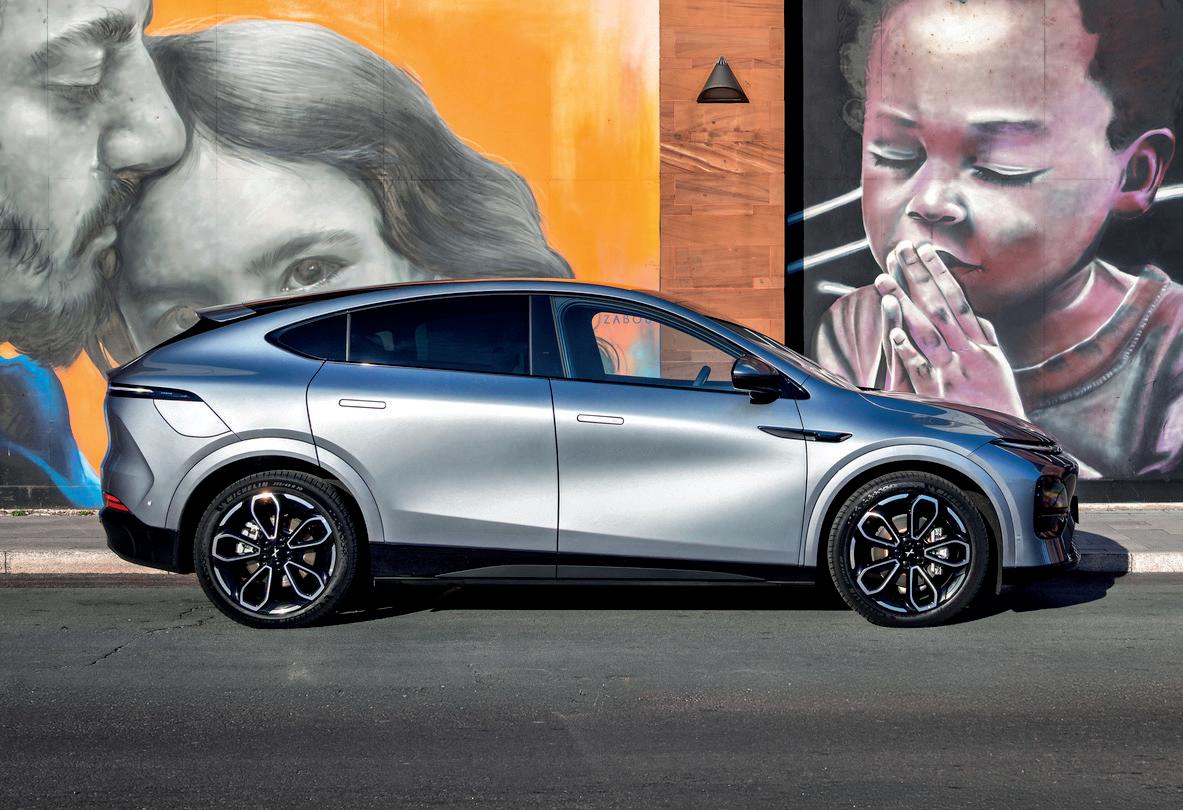
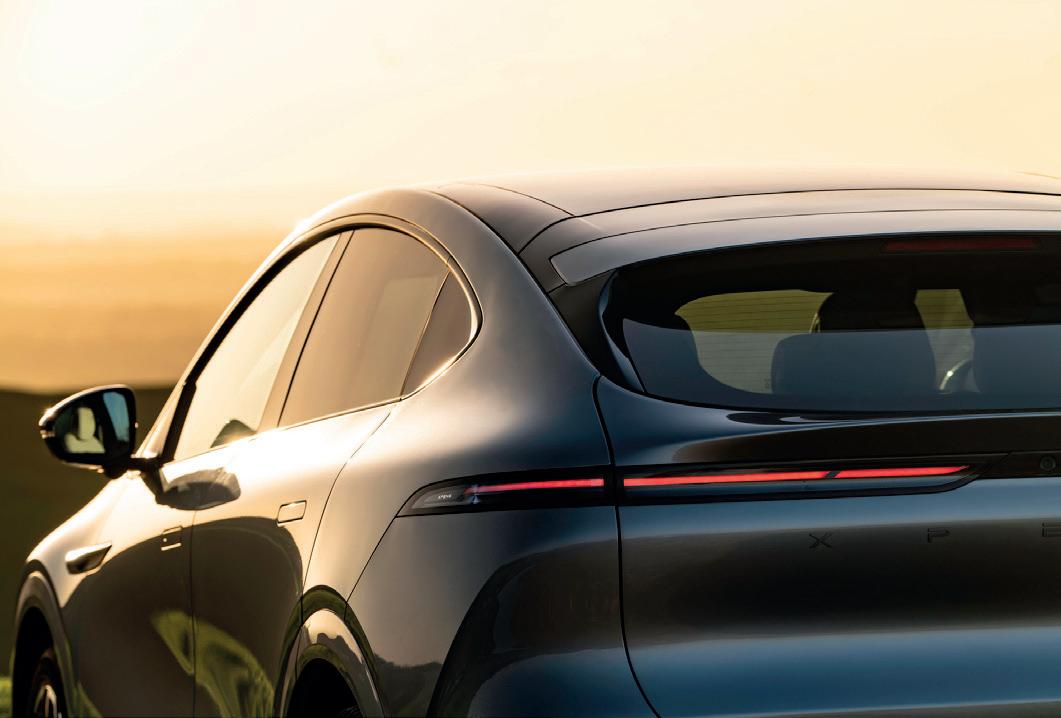
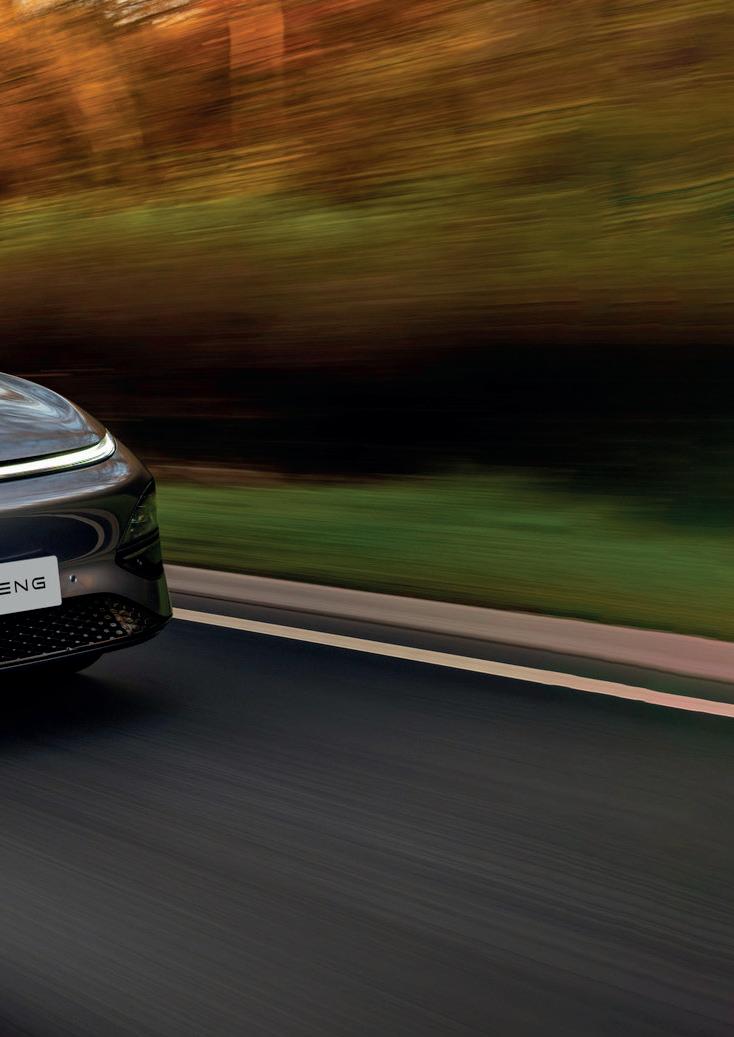
From outside you’d struggle to spot any changes. The front light bar now runs the full width of the car and the badge has moved. At the rear there’s a new diffuser and spoiler, and the wheel arches are now body coloured.
None of the changes are radical and the Xpeng G6 is still decent-looking if faintly anonymous. It won’t cause anyone to point in horror, but nor will it turn heads.
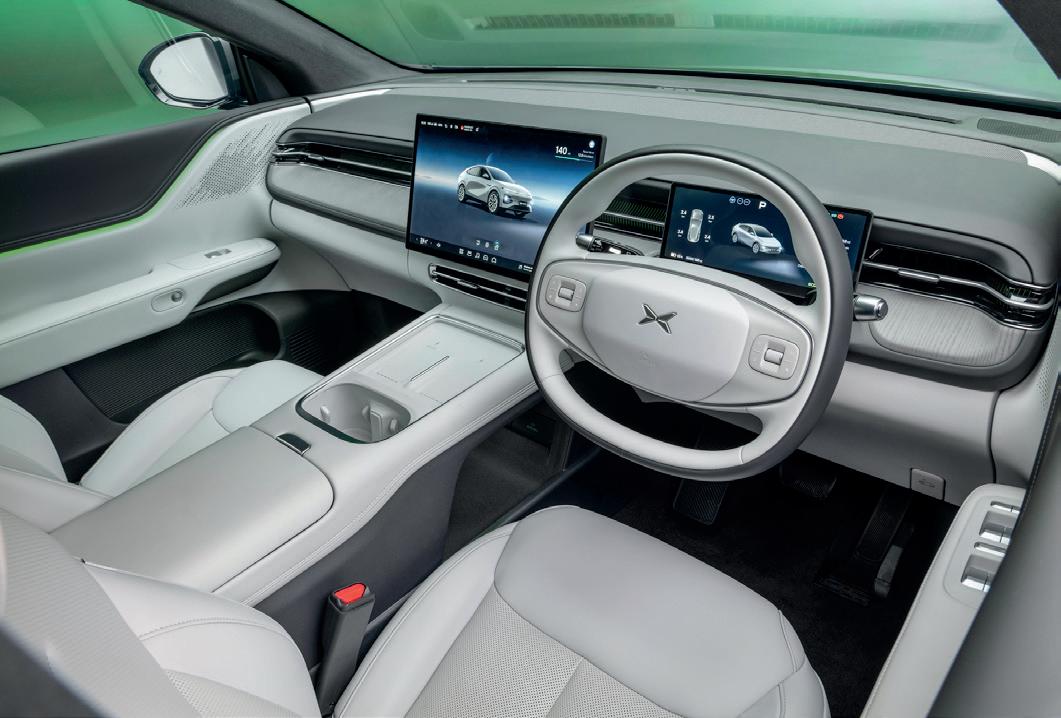
The interior changes are also subtle. New door panels, dashboard, and steering wheel are the sort of thing you won’t spot at first glance, and it’s still a story of a minimalist design with no buttons but two digital screens.

As you’d expect from a tech-first company, everything in the G6 is controlled via the 10.25-inch touchscreen, even functions that would be quicker, easier
Away from the updates, the G6 still feels big and airy, with plenty of space for four adults. Rear passengers get lots of legroom, plus heated reclining seats. Up front the heated and cooled seats now also feature a massage
The G6 updates include new LFP batteries. These come in standard (68.5kWh) and long range (80.8kWh) formats offering 292 miles or 326 miles respectively. That’s actually shorter than the pre-facelift car’s 354-mile maximum. However, the battery is now free of rare-earth metals and has a
While range is shorter, charging speeds have increased to 382kW for the smaller battery, and a market-leading 451kW for the larger one. A compatible
Regular versions of the G6 use a single rear-mounted motor. In standard range models this produces 248bhp, while long range cars get a boost to 292bhp. There’s also the twomotor AWD Performance variant with 480bhp and
The performance of the long range car is already pretty sprightly. The 0-62mph run takes 6.7 seconds and there’s plenty of instantly accessible grunt from the motor.
The previous G6 had a slightly mismatched ride and the chassis tweaks haven’t properly addressed this. It’s quiet, smooth and refined at higher speeds, but there’s a firmness to the ride at lower speeds that leaves it
The chassis tweaks also haven’t done much to change the overall driving experience. The G6 can press on quickly enough but on tighter roads you’re aware of its mass and the sensationless steering.
One area where nothing has changed for the G6 is price. As before, the rear-wheel-drive model starts at £39,990. The Long-range RWD
Those are seriously competitive numbers considering that a Skoda Enyaq with 148bhp, a 63kWh battery and 270-mile range is a shade over £39,000.
And you’re not short-changed on equipment. Full adaptive LED headlights, 20-inch alloys, a powered tailgate and panoramic sunroof are standard. So too are heated and cooled front seats, a heated steering wheel, heated rear seats, an 18-speaker stereo, dual-zone climate control and a heat pump.
For a lot of buyers, that level of equipment and competitive price will be enough to compensate for the G6’s shortcomings.
Despite the thousands of changes, the 2026 Xpeng G6 still has an unnecessarily complex and unintuitive user interface, and the ride and handling don’t come close to the best in class.
More positively, it offers great value and some of best range and charging speeds in its class.
PRICE: £44,990
TRANSMISSION:
Single-motor, rear-wheel-drive
BATTERY: 80.8kWh
POWER: 292bhp
TORQUE: 325lb ft
TOP SPEED: 125mph
0-62MPH: 6.7 seconds
RANGE: 326 miles
CONSUMPTION: 3.47m/kWh
CHARGING: up to 451kW
WE SPEAK TO THE TEAM PRINCIPAL OF FORMULA E'S MOST POPULAR TEAM ABOUT THE SERIES' DIVERSE FANBASE, THE CONNECTION BETWEEN ROAD AND TRACK AND HOW THE SPORT CAN CONTINUE TO GROW
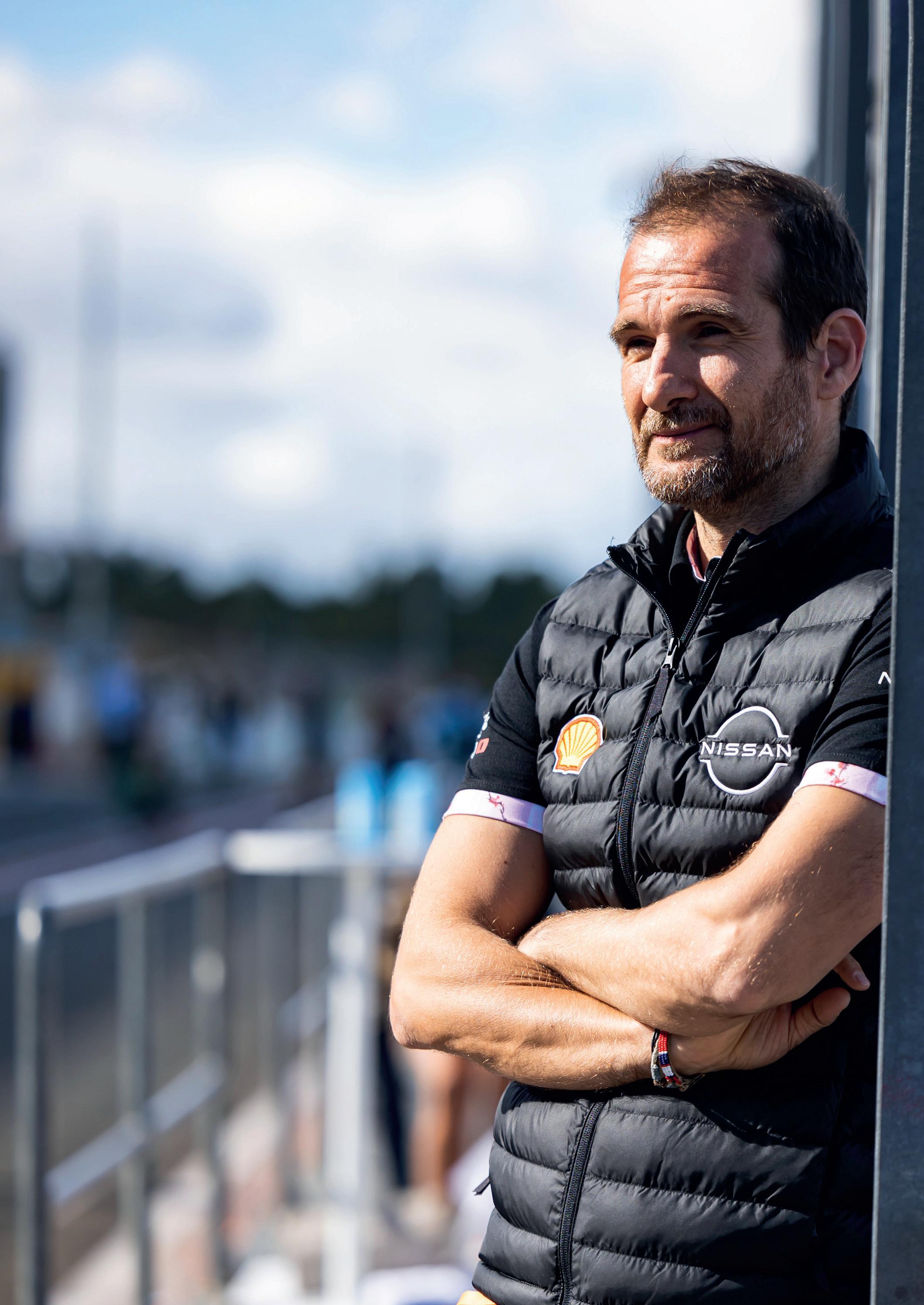
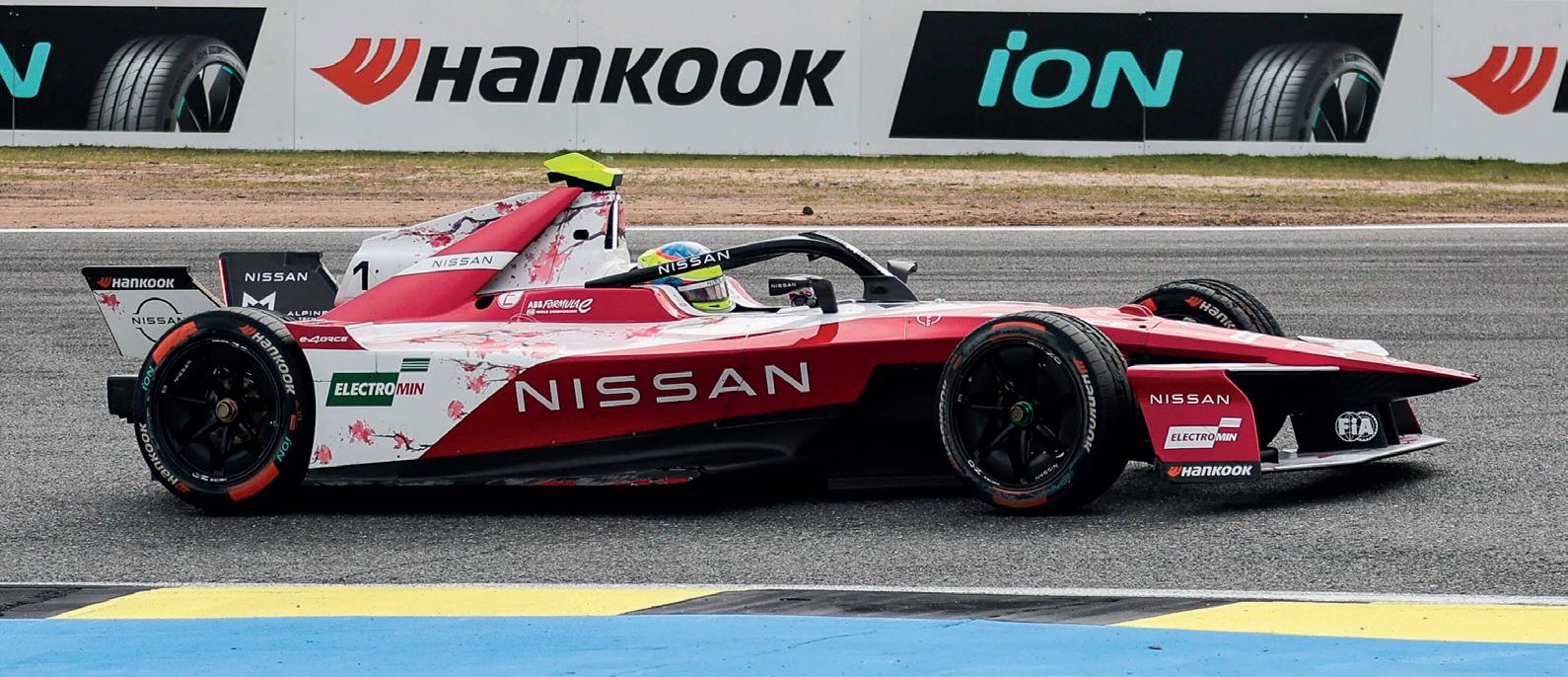
As the championship audience grows, the Japanese marque with its cherry blossomliveried cars has more fans and followers around the world than any other team on the grid.
That’s no doubt due in part to its longevity – it’s been involved since 2018 – and the fact that Nissan’s Oliver Rowland was last year’s champion driver. But for team principal Tomasso Volpe, there’s more to its appeal than success and staying power.
For him, the team’s popularity is tied to Nissan’s global reach and the wider appeal of Formula E, which is bringing a more diverse fanbase to motorsport.
Speaking to EV Powered at the 2026 Madrid E-Prix, Volpe explains: “Nissan is a very inclusive brand and this sport, differently to other motorsports, is more inclusive by nature.
“When you look at the profile of people following Formula E, it's more diverse gender-wise, it's younger and only half of people following are traditional motorsport fans. The other half are more interested in sustainability, innovation and entertainment.”
And, according to Volpe, that more diverse audience is more familiar and comfortable with a name like Nissan, especially given its presence in every market where Formula E races.
“They might feel less the appeal of exclusive brands which are more on the positioning of high performance, while Nissan is more inclusive,” he says.
“We have a portfolio which is very diverse, which can go from high performance cars like the GT-R to family vehicles. So I think the nature and the DNA of our brand appeals more to a certain profile of fans of Formula E.”
Volpe also believes that close links between the Formula E team and the wider Nissan group help reinforce that familiarity.
Says Volpe: “The power of our involvement in Formula E is not just our branding, but there is a genuine connection with our advanced R&D department in Japan.
“This car was heavily improved compared to the previous one thanks to solutions transferred from our R&D department to the design of the gearbox and motor.
“Our promotion of the brand via Formula E wouldn't be as effective if it was not based on the fact that the car is developed utilising Nissan R&D. It's not just a sticker on the car. We have our technology in the car.”
While lots of Formula E’s fans don’t come from a traditional motorsport audience, Volpe

acknowledges that attracting “old-school” fans can only be a positive thing.
Jarama, which hosted the Madrid E-Prix, was made famous in the 1970s by Formula 1, and still hosts regular touring car, motorcycle and truck racing. Volpe believes that using established circuits such as this alongside temporary street circuits can help broaden the sport’s appeal.
“The US is a bit more challenging,” he says. “First of all, it's not always easy to break through with a world championship which is spread out on the planet. They tend to follow their own series. Formula One only after decades started to become successful in the US. And Formula E is only 12 years old.
“Another element is the fact that our narrative is about a full electric powertrain and we all know
Formula E's fanbase is more diverse, younger and only half are traditional motorsport fans
“I think that having some of those [permanent] circuits in the calendar is definitely helping to create more interest in the sport. If you look at these events, it's packed and it's very successful.
“'People in a specific location start to appreciate that there is a venue where there are some events and the moment you are part of this agenda, of course they start to recognise the sport.”
Recognition for Formula E is key to its growth, especially in new markets. Asked about its latest attempt to break into the United States, Volpe is grounded but optimistic.
that this is less impactful as a narrative than in European countries.
“But I have no doubt that step by step the sport will become successful in the US as well.
“And for a brand like Nissan, this is very important. The US is a very important market, so we really wish for the success of the sport there.”
Which brings us back to Nissan’s global reach. If Formula E can crack the US, the Nissan team will have another ready-made fanbase to swell its support.

ABB FIA FORMULA E WORLD CHAMPIONSHIP has reached a decisive inflection point
On track, a commanding performance from ANTÓNIO FÉLIX DA COSTA at the inaugural MADRID E-PRIX has reignited JAGUAR’S TITLE CHARGE.
Off it, OPEL’S confirmation that it will enter the series for the GEN4 ERA signals a deepening commitment from global manufacturers to electric racing’s most competitive proving ground.
Taken together, the events of a pivotal weekend in Spain underline Formula E’s evolution from a niche championship into a central battleground for the future of high-performance electrification.
Jaguar delivers when it matters most
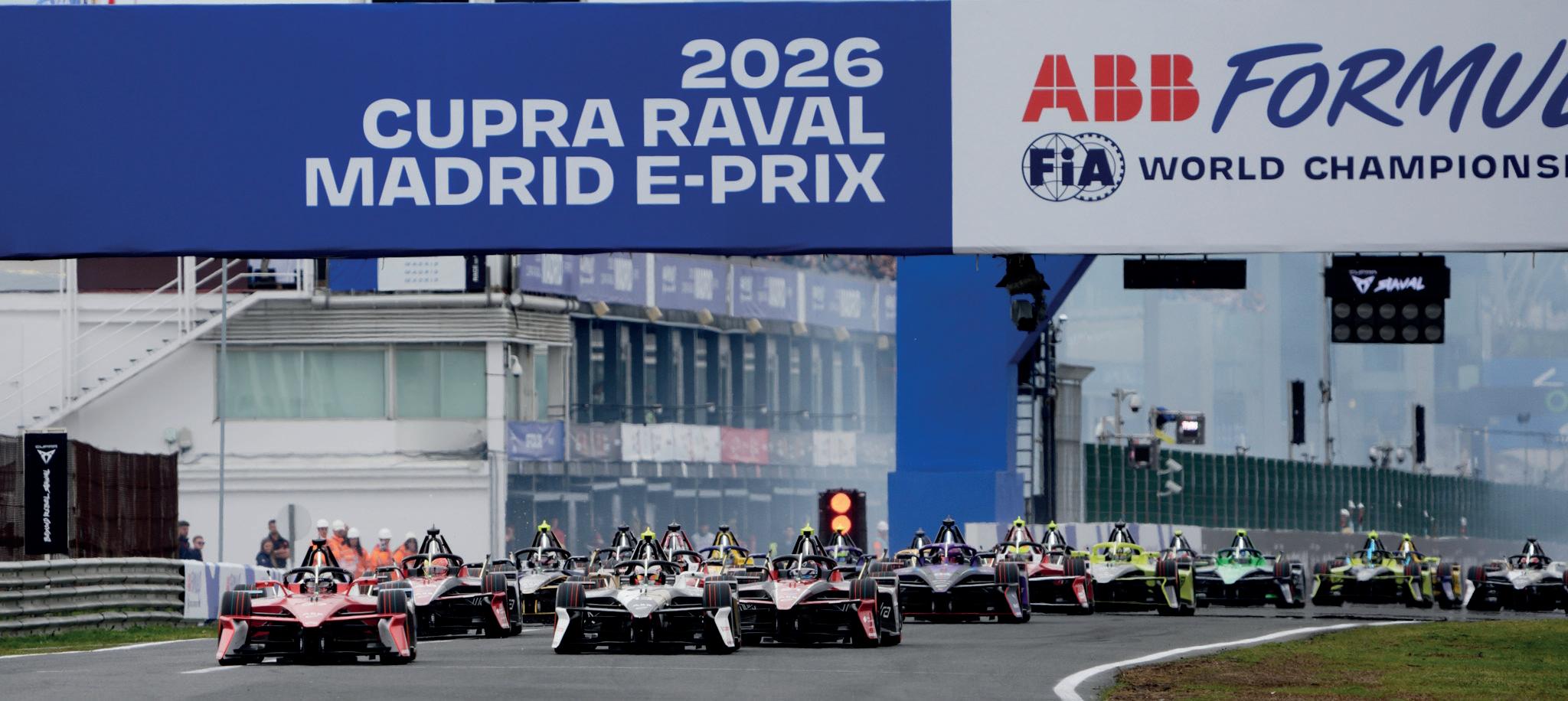
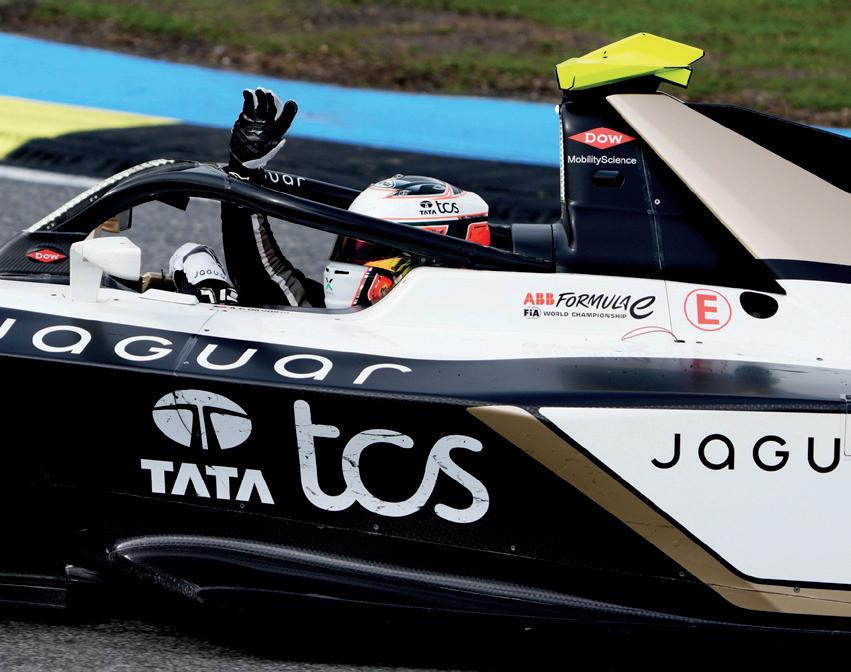
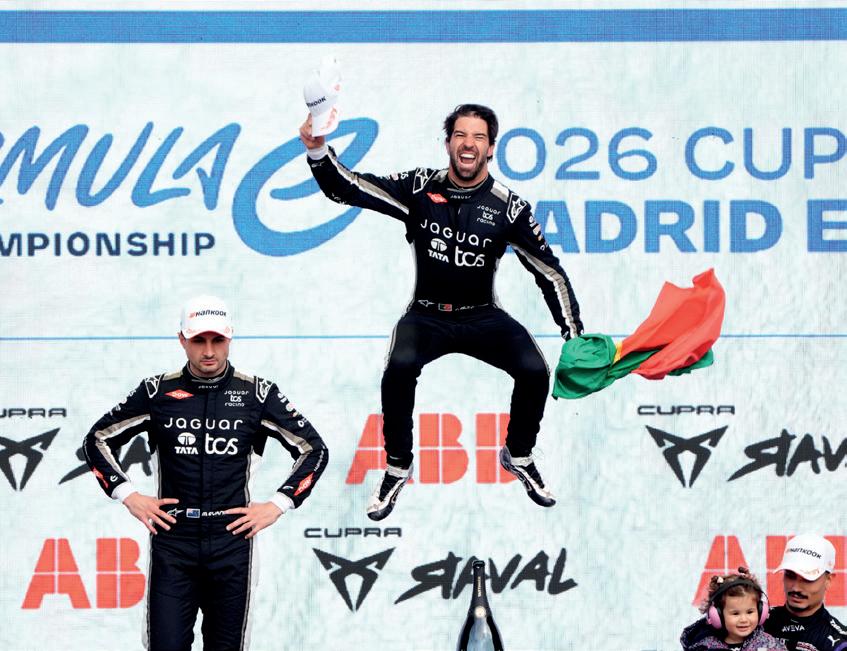
At the newly introduced Jarama circuit on the outskirts of Madrid, Jaguar TCS Racing produced its most complete performance of the season, executing a perfectly judged race to secure a one-two finish led by da Costa ahead of teammate Mitch Evans.
In a race defined by fine margins, strategy proved decisive. Formula E’s increasingly complex tactical landscape, shaped by PIT BOOST stops and ATTACK MODE deployment, once again separated contenders from the rest. Da Costa, starting from third on the grid, committed early to his PIT BOOST on Lap 12, a move that initially dropped him down the order but ultimately positioned him to control the race’s closing phases.
As the field cycled through divergent strategies, the Portuguese driver combined that early stop with a late ATTACK MODE activation, giving him the energy advantage precisely when it mattered most. By the final laps, he had emerged at the head of a tightly compressed lead group, with less than a second covering the top four cars.
Behind him, Evans had taken an alternative route. The New Zealander extended his opening stint, carefully managing energy before launching a late charge through the pack. A decisive move on Dan Ticktum elevated him into contention, and for a
By RICHARD ALVIN
brief moment it appeared Jaguar might face an intra-team fight for victory.
What followed was a textbook display of defensive driving. Da Costa placed his Jaguar I-TYPE 7 with absolute precision, covering every attempt from Evans while maintaining just enough pace to keep the chasing pack at bay. The chequered flag confirmed back-to-back victories for da Costa and a maximum points haul for Jaguar.
Speaking afterwards, da Costa described the result as one of those rare occasions when everything aligns. Evans, while understandably frustrated to
miss out on victory, acknowledged the strength of the team’s execution, a one-two finish that significantly alters the complexion of both the Teams’ and Manufacturers’ Championships.
Title fight intensifies Despite Jaguar’s dominance in Madrid, Pascal Wehrlein ensured that the Drivers’ Championship remains finely poised. The Porsche driver recovered to finish third, preserving his lead at the top of the standings, now holding an 11-point advantage over Edoardo Mortara.


However, the broader picture tells a more nuanced story. Jaguar’s haul of points has reduced the gap to Porsche in both the Teams’ and Manufacturers’ standings to single digits, shifting momentum at a critical juncture in the season.
Behind the leading trio, Mortara added further consistency for Mahindra in fifth, while Sébastien Buemi delivered one of the drives of the race to climb through the field into sixth. Jake Dennis and
longer an outsider pressing for relevance, it is a fully-fledged title contender with momentum, confidence and, crucially, operational clarity.
Opel’s arrival signals a new era
While Jaguar’s on-track performance dominated headlines, the championship’s long-term trajectory was equally shaped by Opel’s formal commitment to join Formula E from Season 13.
The German marque will enter under the banner of the Opel GSE Formula E Team, aligning itself with the introduction of the GEN4 regulations, a transformative shift that promises to redefine the technical and competitive landscape of the series.
At the centre of this transition is a step-change in performance. GEN4 machinery is expected to deliver peak outputs of up to 600kW (816hp) in qualifying and ATTACK MODE, representing a substantial increase over the current GEN3 Evo package. The introduction of permanent allwheel drive will further enhance traction and
Nico Müller followed, while Spanish driver Pepe Martí delighted the home crowd by securing points after briefly leading the race during the pit cycle phase.
The event itself marked a successful return of top-tier electric racing to the Spanish capital, with a sell-out crowd and a high-profile guest list including Felipe VI, Idris Elba and former Real Madrid stars Roberto Carlos and Thibaut Courtois. Their presence reflected Formula E’s growing cultural relevance as well as its sporting credibility.
With the championship now heading to Berlin’s Tempelhof Airport circuit for a crucial doubleheader, the narrative has shifted. Jaguar is no
unlock new strategic dimensions, particularly in energy deployment and racecraft.
For Opel, the timing is deliberate. Entering at the start of a new regulatory cycle offers a clean-sheet opportunity to develop powertrain technology without the constraints of legacy architectures. It also allows the brand to position its GSE (Grand Sport Electric) sub-brand at the forefront of high-performance EV development.
Speaking at the announcement, Opel CEO Florian Huettl framed the move as a natural extension of the company’s electrification strategy, emphasising the role of motorsport in shaping future road cars. That sentiment was echoed by Formula E CEO Jeff Dodds, who described Opel’s entry as a strong endorsement of the championship’s growing importance within the global automotive landscape.
A battleground for the electric future
Opel’s arrival also reinforces the broader commitment of Stellantis to Formula E, adding another layer of manufacturer involvement at a time when the industry is undergoing rapid transformation.
Opel brings significant pedigree to the grid, with a history spanning rallying, touring cars and junior single-seater categories. Its Formula E programme will be led by motorsport director Jörg Schrott, with
a dedicated engineering structure already working towards the GEN4 debut.
Crucially, the knowledge gained on track is expected to feed directly into future production models, including performance-focused variants such as the Mokka GSE and forthcoming all-electric Corsa GSE. This alignment between racing and road car development is precisely what Formula E’s architects envisaged – and it is now being realised at scale.
As the championship approaches its next evolutionary phase, the convergence of sporting intensity and manufacturer investment is unmistakable.
Jaguar’s resurgence in Madrid demonstrates the razorthin margins that now define Formula E competition, where strategic execution can outweigh outright pace. At the same time, Opel’s entry underscores the series’ growing relevance as a platform for technological innovation and brand positioning.
The GEN4 era promises more power, greater efficiency and a deeper roster of manufacturers, setting the stage for a new chapter in electric motorsport. If Madrid was any indication, that future will be as fiercely contested as it is technologically significant.
For now, though, the immediate focus returns to the track. Berlin awaits – and with it, the next decisive swing in a championship that is rapidly becoming one of the most compelling in global motorsport.
This month I’ve had cause to refuel my stupid weekend toy. The middle of another oil war is always going to be an expensive time to run a supercharged hot hatch, but it just drove home to me again the major benefit of the wee Renault.
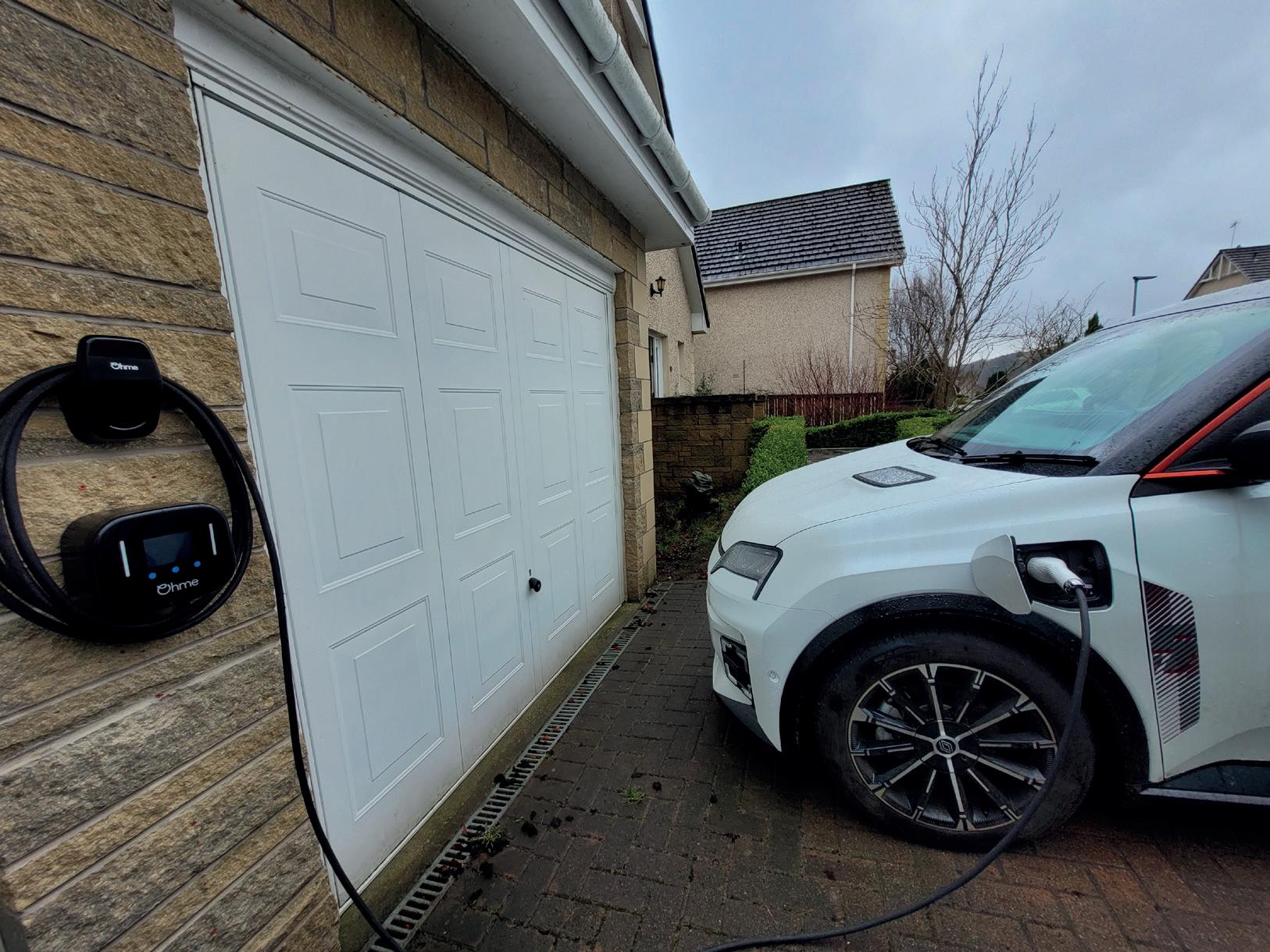
Adding 300 miles of range to my Mini – 60 quid. Adding 300 miles of range to my R5 – £6.24. Even if I was charging an Alpine A290, which is more of a direct analogue to the Mini, it would cost less than a tenner.
With no sign of an end to fuel price volatility, the Renault makes so much sense. And because it is being used like most superminis – for short runs in the local area – the spectre of public charging is never an issue.
I reckon, even with frequent round trips to the Central Belt, I’ll spend less than £100 between now and when the mean people at Renault reclaim it.
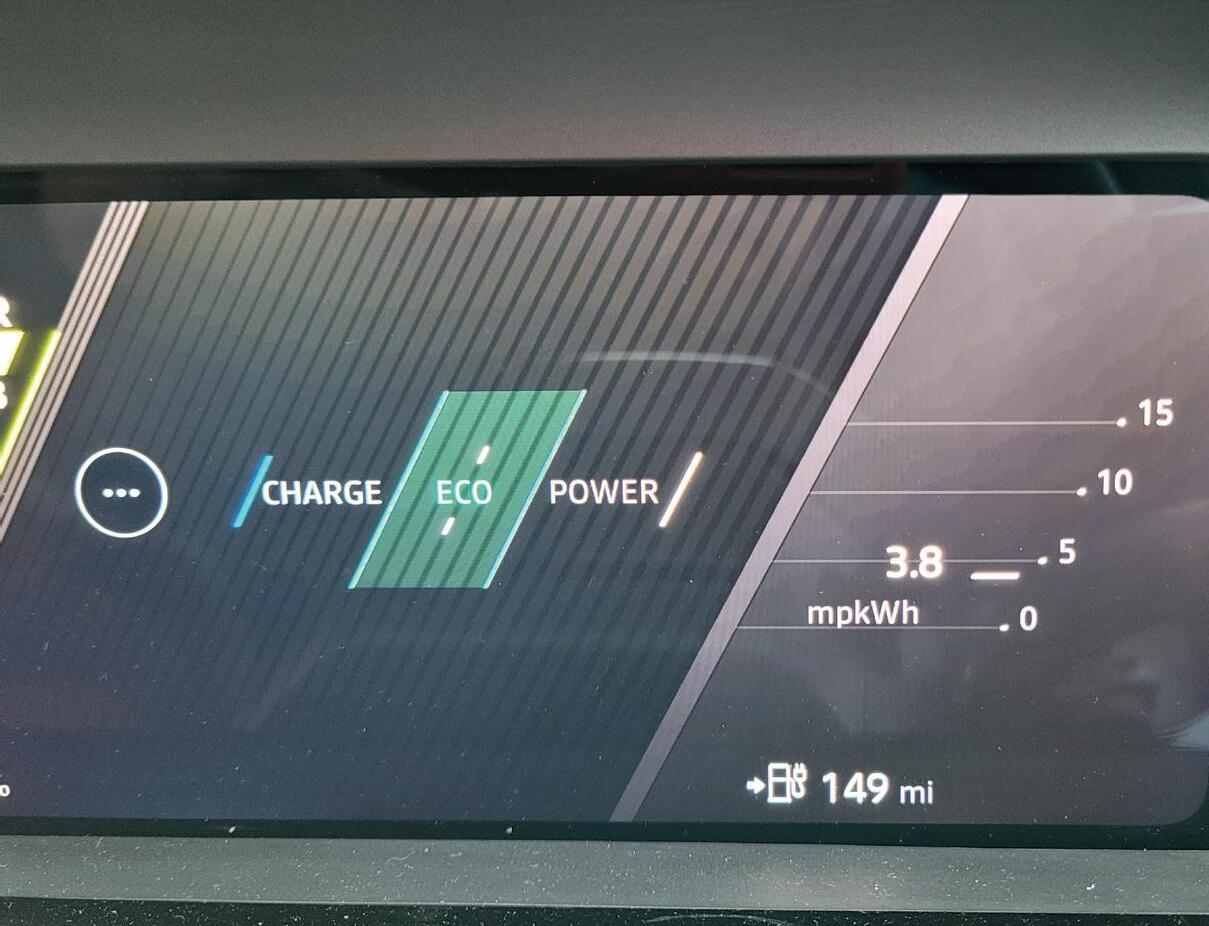
That’s helped by ever-improving efficiency now that the weather’s improving and the 5 is being used for a wider variety of driving.
But comparing the Renault to my R53 Mini also drove home something else.
PRICE: £28,995 excluding ECG (£30,045 as tested)
POWERTRAIN: Single-motor, front-wheel-drive
BATTERY: 52kWh
POWER: 148bhp
TORQUE: 181lb ft
TOP SPEED: 93mph
0-62MPH: 7.9 seconds
RANGE: 251 miles
CONSUMPTION: 4m/kWh
CHARGING: up to 100kW
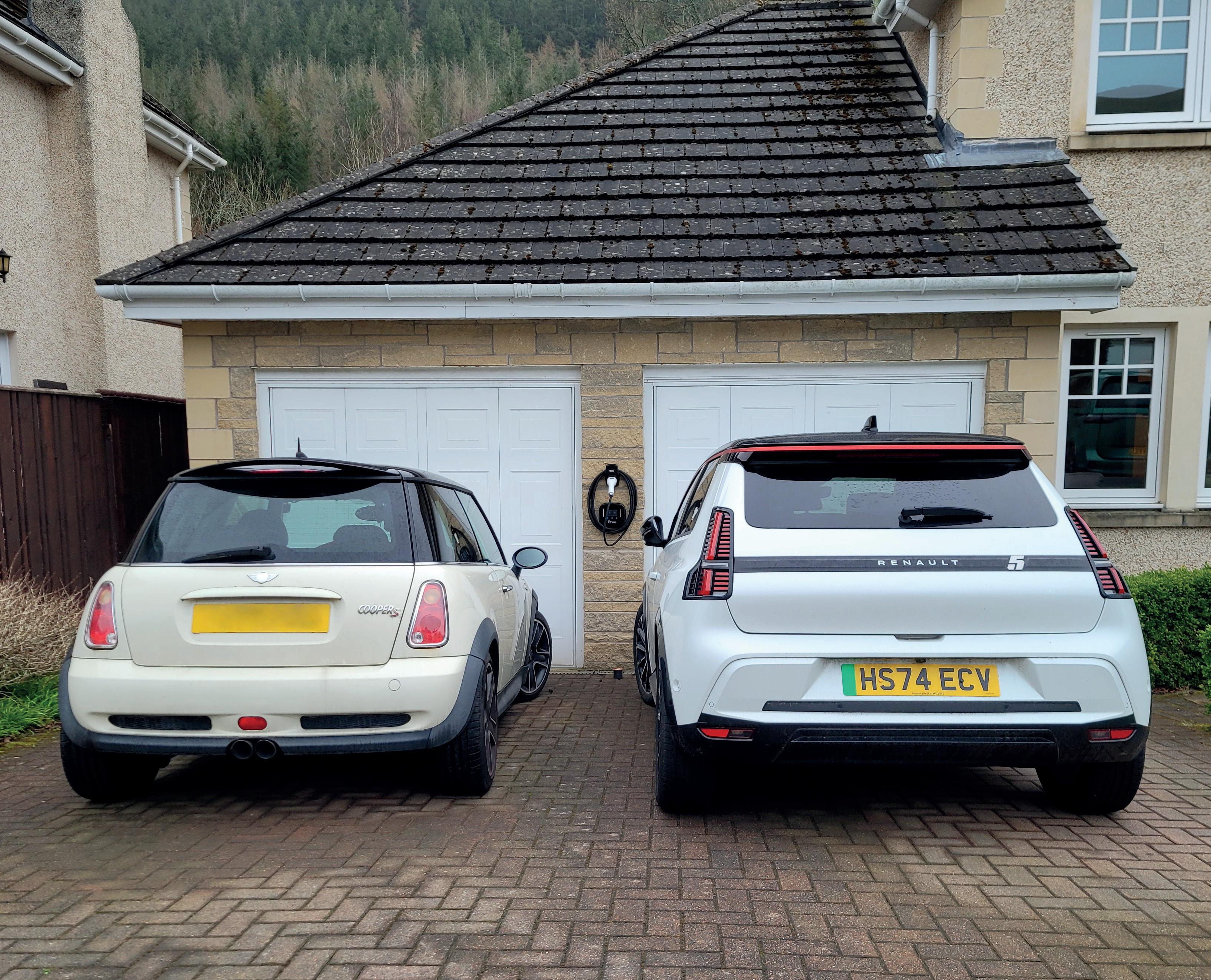
The first generation of BMW Mini was criticised for being too big to be called a Mini. Now, we call the Renault 5 a supermini and hail it as a shining example of the new small car, but it absolutely dwarfs the Mini. We all know cars are getting bigger but seeing two supposed “compact” cars parked side by side on the driveway reinforces how things have changed in 20 years.
I’ve looked it up, and the Renault 5 is 3.92m long, 1.77m wide and 1.5m tall, and that’s by no means unusual for a B-segment car. The Vauxhall Corsa isn’t
as tall but it’s even longer and just as wide, as is the Citroen E-C3. Even the current Mini Electric is 3.85m by 1.75m. The old Mini is barely 3.6m long and 1.68m wide.
Yet, there doesn’t feel like there’s a whole lot more space inside the Renault. As a tall driver, I’ve got plenty of room and adjustment but behind me the rear seat is effectively useless, just like in the Mini. And, despite having three rear seatbelts, there's little hope of fitting more than two people in the back seat.
In fairness, the Renault’s boot is twice the size of the Mini’s and it’s got 20 years’ worth of safety innovation and crash protection, but it comes to something when a “small” car almost fills a supermarket parking space.
It’s no wonder car makers think there’s space below the current crop of superminis for smaller cars like the upcoming Twingo and Kia EV1. It’s encouraging that they also think there’s money to be made there.
Manufacturers started off making larger electric models because that’s where the profit margins were biggest. No doubt that’s still the case, but cars like the Renault 5 and the next crop of even smaller, cheaper models show the technology has developed far enough and dropped enough in cost to make affordable EVs a reality, not a pipe dream.
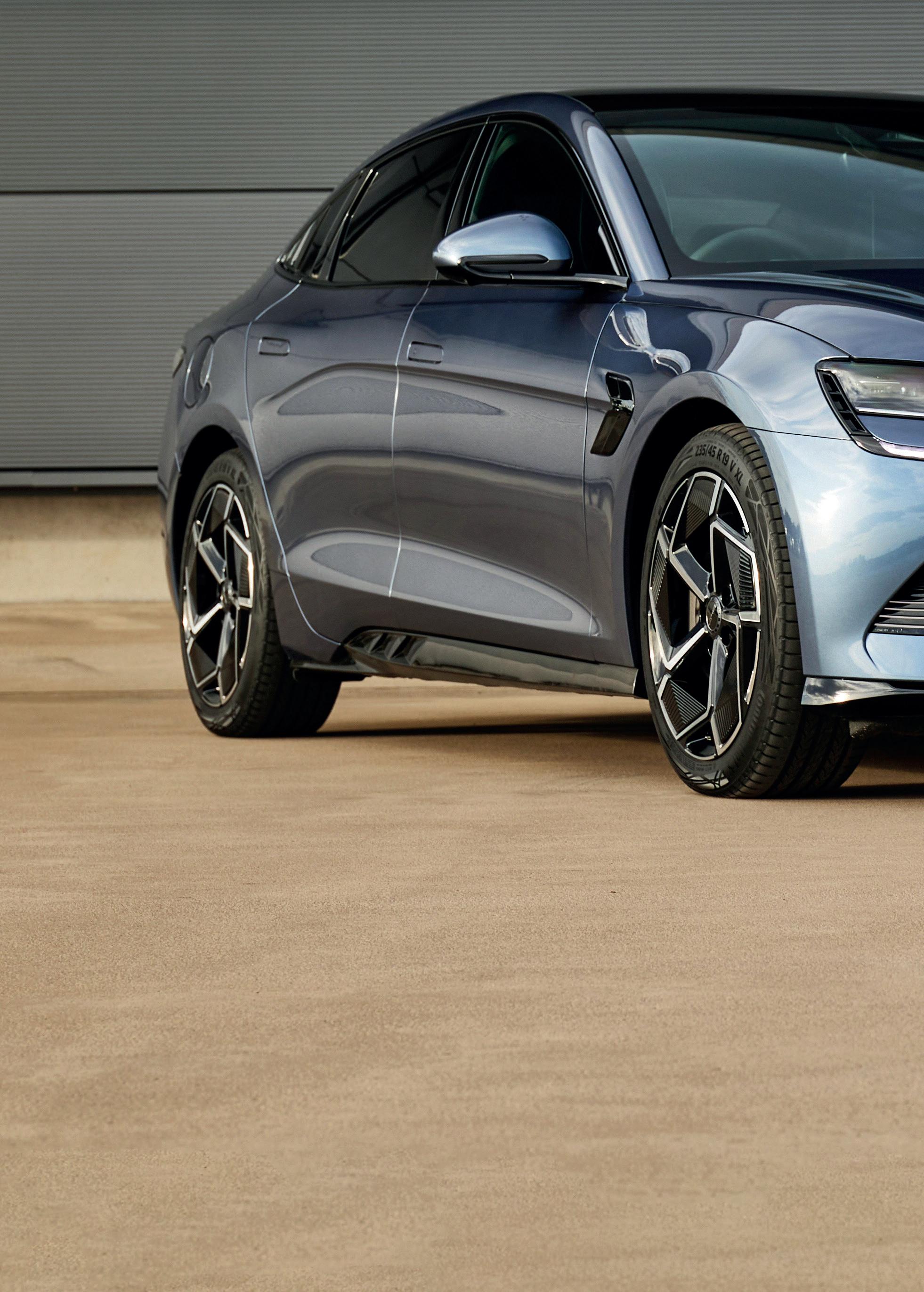
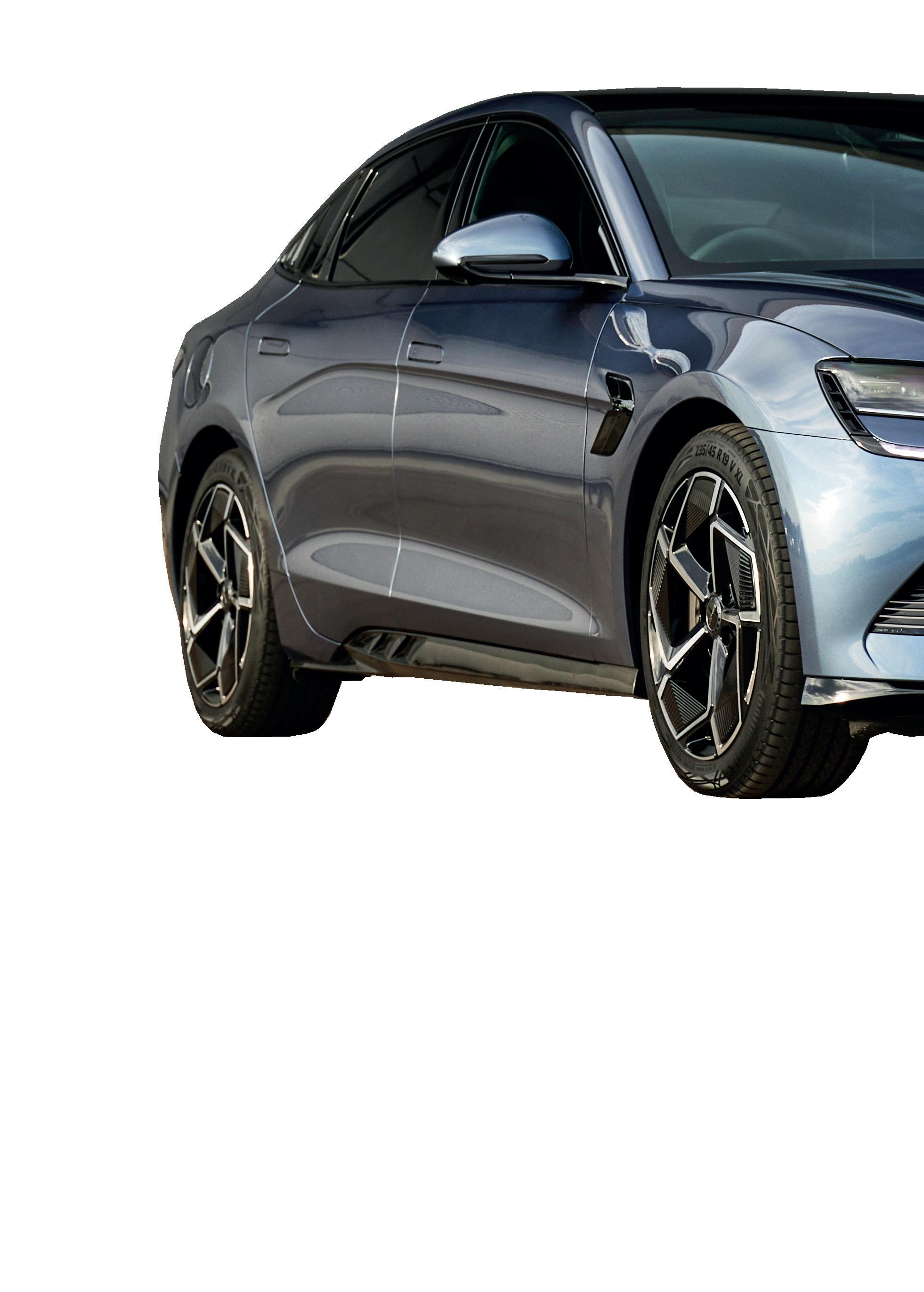
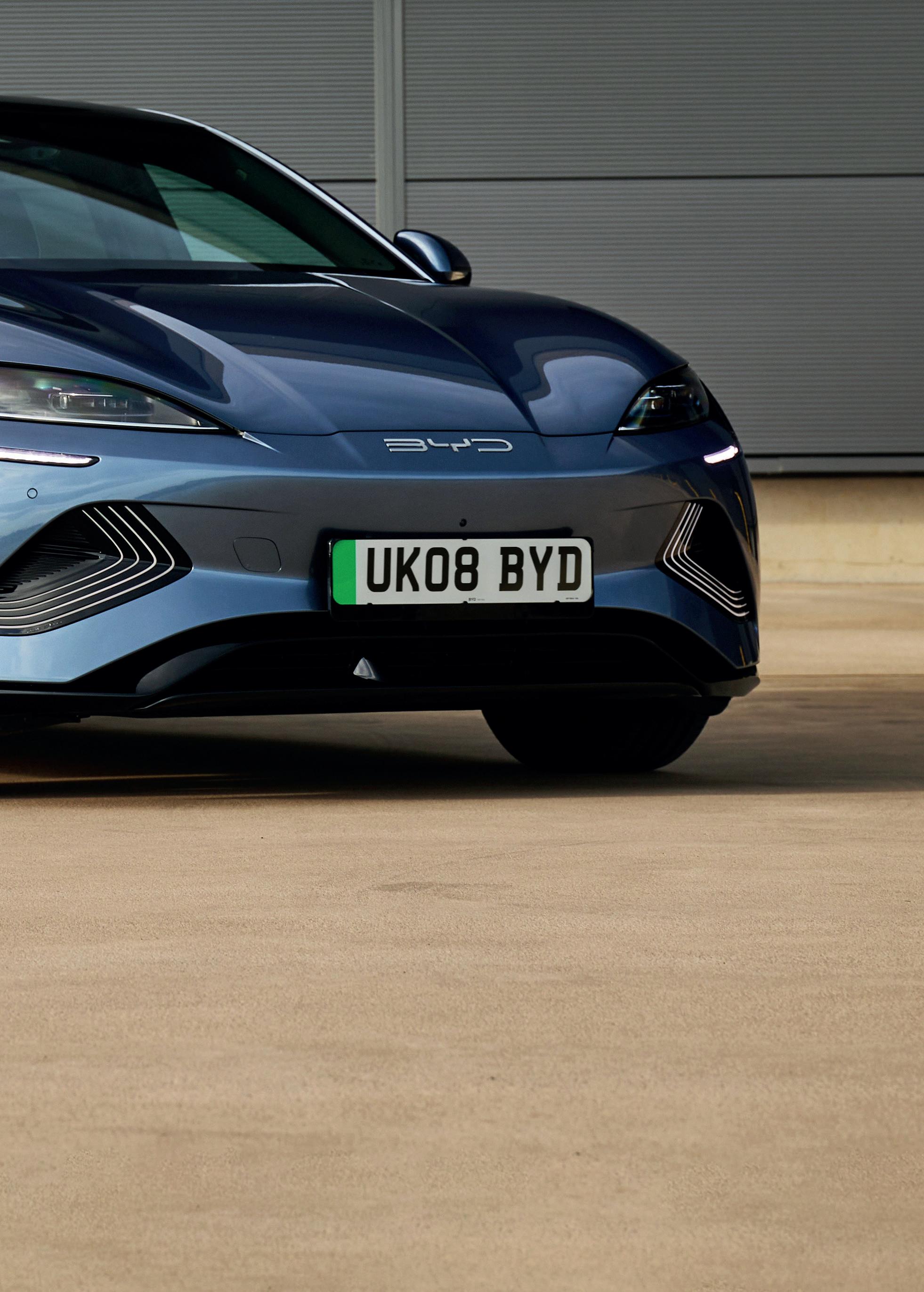
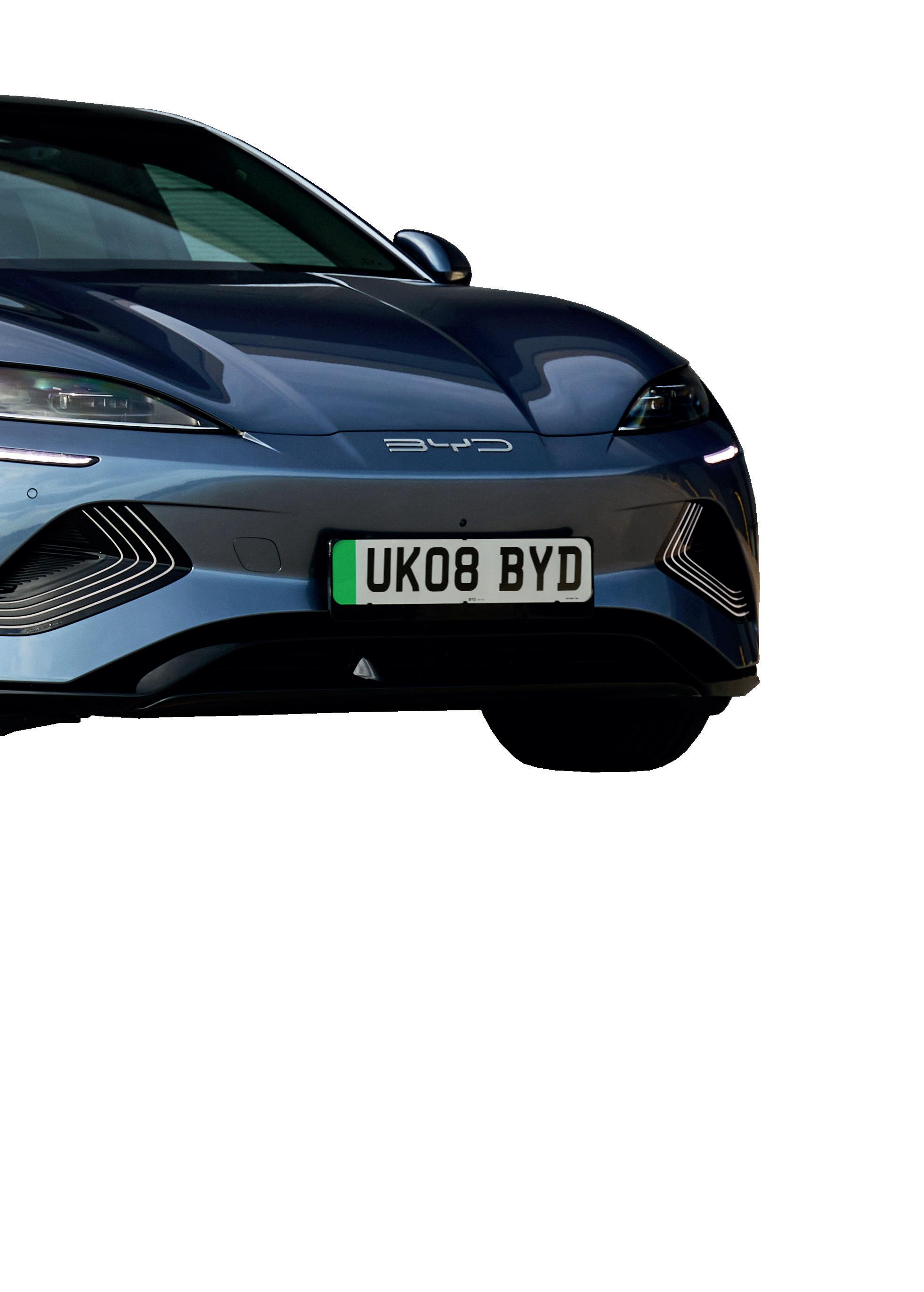
Magnum’s new Melody is a comfort‑cruiser that quietly does a lot right. It looks tidy, rides relaxed, and, crucially, has real capability when you want it. After several rides and two very different range t ests, it feels like one of the strongest value picks in this segment for 2026.
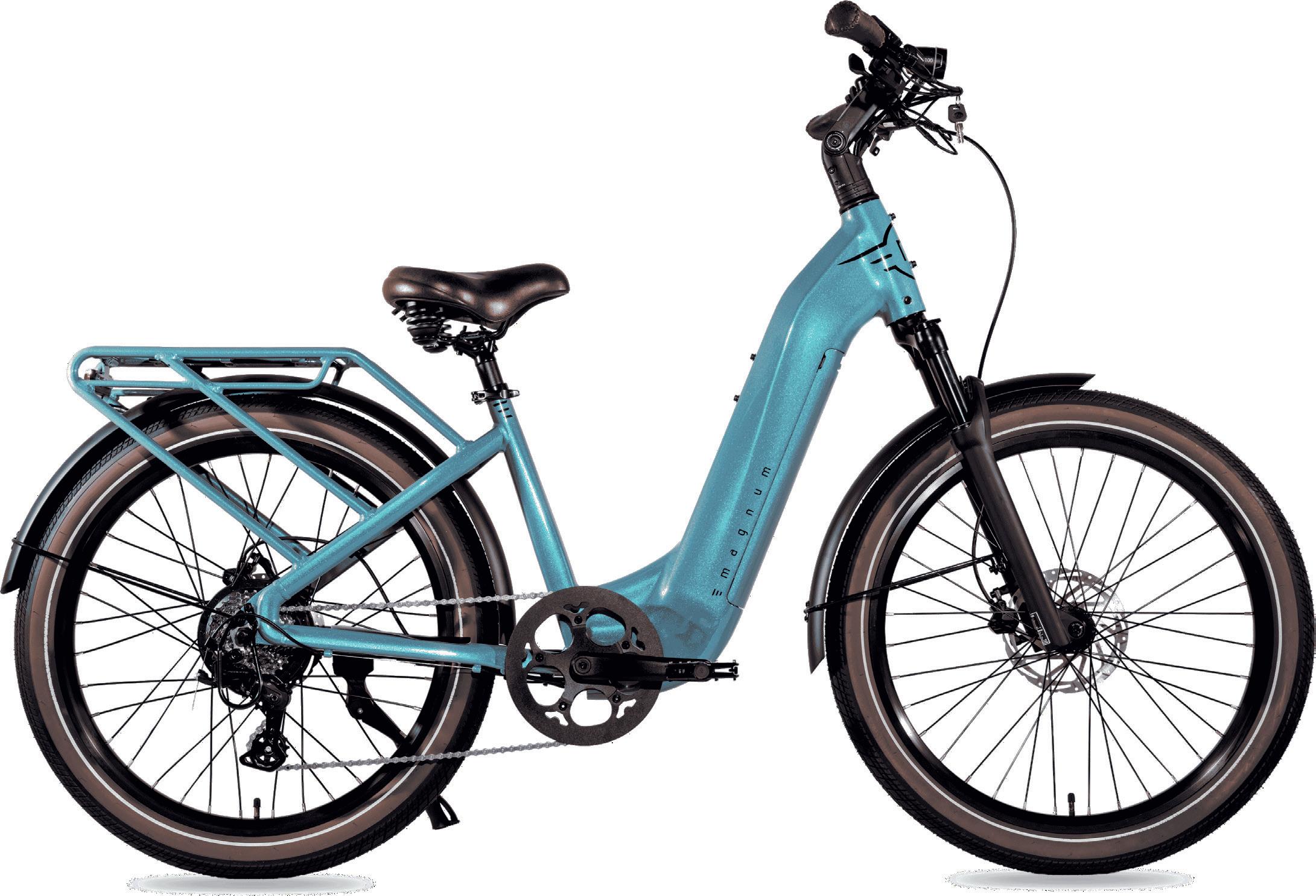
From first sight the Melody is familiar, upright stance, swept bars, springy saddle, but its hardware feels unusually well judged for the money. The stem houses a clean colour display that travels with the stem angle, keeping the screen useful whether you ride relaxed or a touch forward. The grips, saddle and alloy pedals feel substantial rather than cheap, and the bike ships with full fenders, a bright front light, and an MIK rear rack rated for serious cargo. That gives it daily-use readiness most cruisers at this price lack.
The technical heart is a 48 V, 15 Ah, 720 Wh integrated battery with Samsung cells, removable for off-bike charging yet neatly hidden in the frame. It’s paired to a 500 W nominal rear-hub motor, peaking at 750 W, from Sutto by Bafang. Riders can switch between torque and cadence sensing on the fly via the display and choose Class 2 or Class 3 operation, with throttle to 20 mph and pedal assist configurable up to 28 mph. In practice this delivers remarkably natural, usable assistance. There are six PAS levels, from gentle Eco to very punchy Hyper. On flats and gentle hills you can cruise around 12–14 mph without
a burst of speed, a higher level gives genuine thrust rather than a token nudge. That broad range is rare in comfort cruisers and means one bike can cover Sundays in the park, errands, or faster commuting without feeling out of its depth.
Magnum quotes up to 55 miles from a full charge and about 7.5 hours to refill from empty. On paper this is already strong for a comfort bike. The two tests I ran showed even more than expected:
• Low‑assist run: roughly 76 miles, with a rider about 190 lb and nearly 1,000 ft of climbing. No special conservation, just steady riding.
• High‑assist run: around 35 miles while riding hard in a higher assist mode.
Most riders could work through several days of commuting before topping up, or enjoy one long weekend outing with minimal concern about range. In the real world that breadth of usable distance is arguably more valuable than maximum power alone.
Components, braking and practicality
The drivetrain uses Microshift Acolyte 8-speed with a clutch derailleur,
chainstay, an excellent choice for daily riders who rarely want to tinker. Braking is via Tektro hydraulic discs with 180 mm rotors front and rear, plus motor cutoff during braking, which feels reassuring when stopping quickly in traffic or wet roads. Upfront, a suspension fork and a cushioned saddle keep bumps from turning into sharp jolts.
Independent hands- on coverage underscores the Melody’s balanced strengths. Reviewers note it sits neatly between cruiser comfort and commuter practicality, with wide adjustability, upright posture, and simple, sensible controls rather than app overload. Another review highlights the included kit, UL certifications, and solid value at the asking price.
Best use: slow-to -medium paced city riding, errand trips, longer relaxed rides, or commuting where a rider wants comfort but also confidence on hills or faster sections. The torque/ cadence switch and wide PAS range mean it works for different riders on different days without fiddly setup.
Minor trade‑off: the stem-integrated display looks neat and is very functional, but it’s a single unit that could be more
specialised to replace than a standard handlebar display. That’s noted by other testers as well, though they still rate the bike highly overall.
Beyond that, the only real compromise is the bike’s mass: this isn’t an ultra-light city machine to carry up several flights of stairs every day, but that weight buys a large, efficient battery, suspension, a heavy- duty rack, and real stability— practicality over minimalism.
Magnum’s Melody feels like a rider-friendly, long-range comfort cruiser that offers more than the typical style-first machines. It is honest about what it is: a well- equipped, quiet, tidy commuter that never asks for attention yet performs when called on. For 2026, that combination of comfort, capability, and price is impressive, especially when you consider the real-world range, switchable sensor modes, strong spec, and included accessories.
If you want a city e-bike that looks good in the driveway, sits comfortably on longer rides, and still reaches higher speeds when needed, without costing top -tier money, the Melody deserves a serious look.























Electrifying commercial vehicles and HGVs is not just about the vehicles themselves – it involves a detailed consideration of how to keep them on the road without disrupting existing operations. Mer has the experience and knowledge to support you on this journey.






Download Mer’s free eguide for fleet managers to learn more about installing the right EV charging to keep your vehicles powered for their mission-critical journeys

Click here to find out more







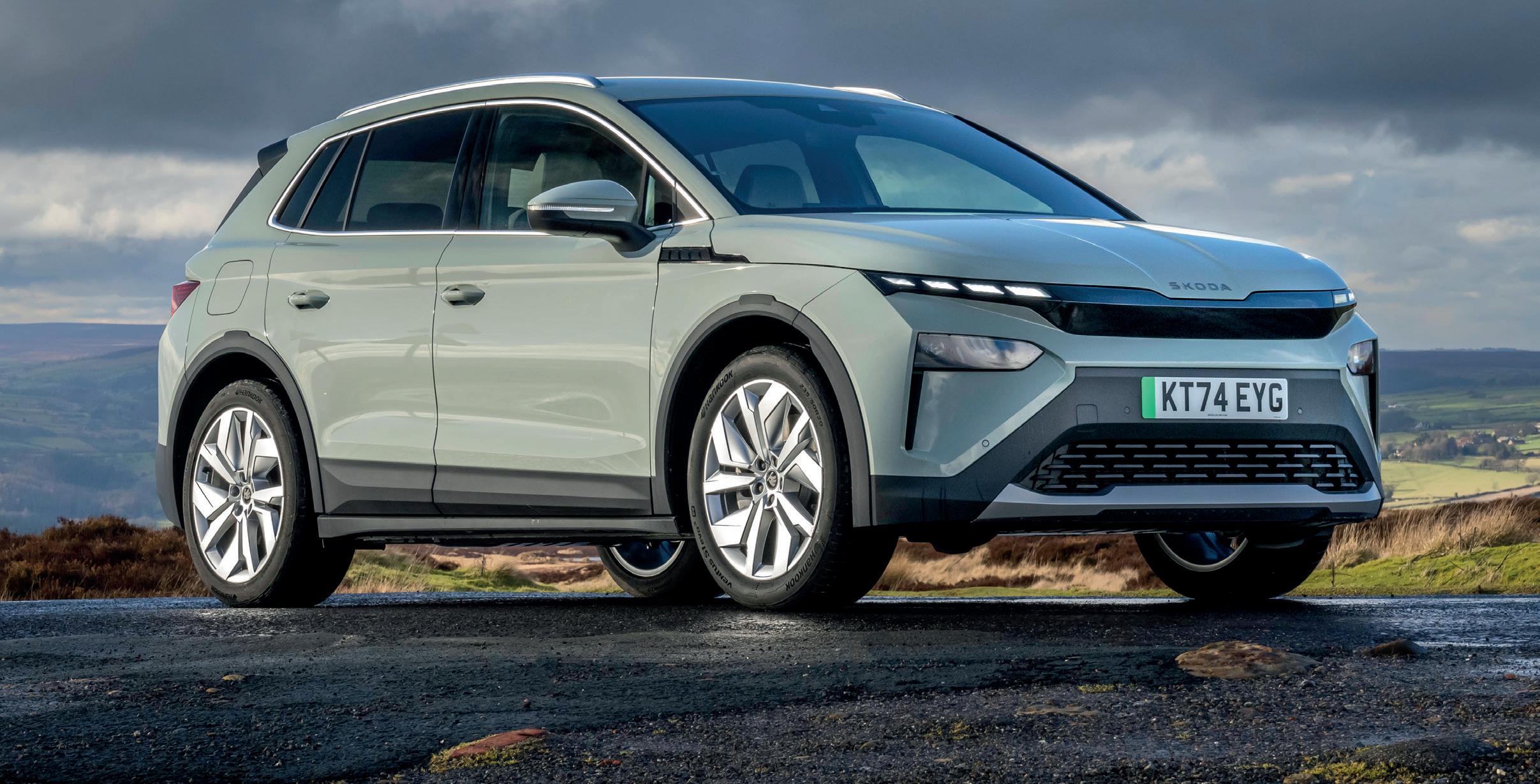
At the end of 2024 the Elroq was fighting it out with the Kia EV3 for the title of the best family EV we had driven that year. Its appeal is simple, for a touch over £30,000, it offers almost as much interior space as the larger and more expensive Enyaq, up to 360 miles of range and a variety of Skoda’s trademark
‘simply clever’ touches to make family motoring even easier. It also offers one of the most refined drives in its class and a choice of powertrains to suit different families’ needs. More than a year later, we still reckon it’s one of the best family EVs on sale.

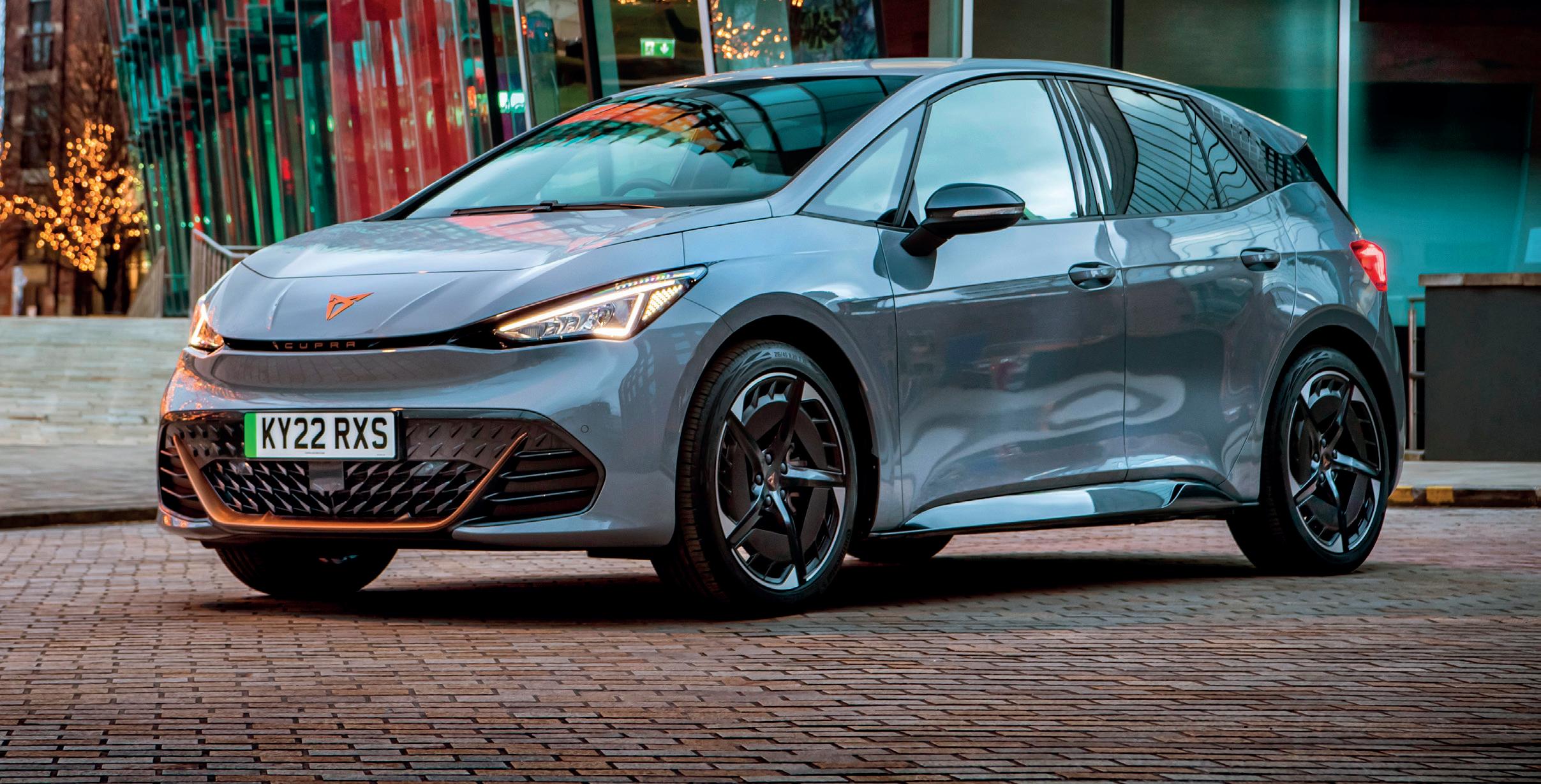
The family car market is dominated by SUVs but there are still some good old-fashioned hatchbacks out there, and the Cupra Born is one of the most appealing, especially with a facelifted version just around the corner. It’s based on the VW Group’s MEB platform and is a more stylish version of the
VW ID.3. The basic recipe and components are the same but the Spanish version has more flair. At the same time, it’s a practical family car with space for four, up to 342 miles of range (soon to rise to 372) and the option of a 322bhp VZ version if you’re hankering for a hot hatch.
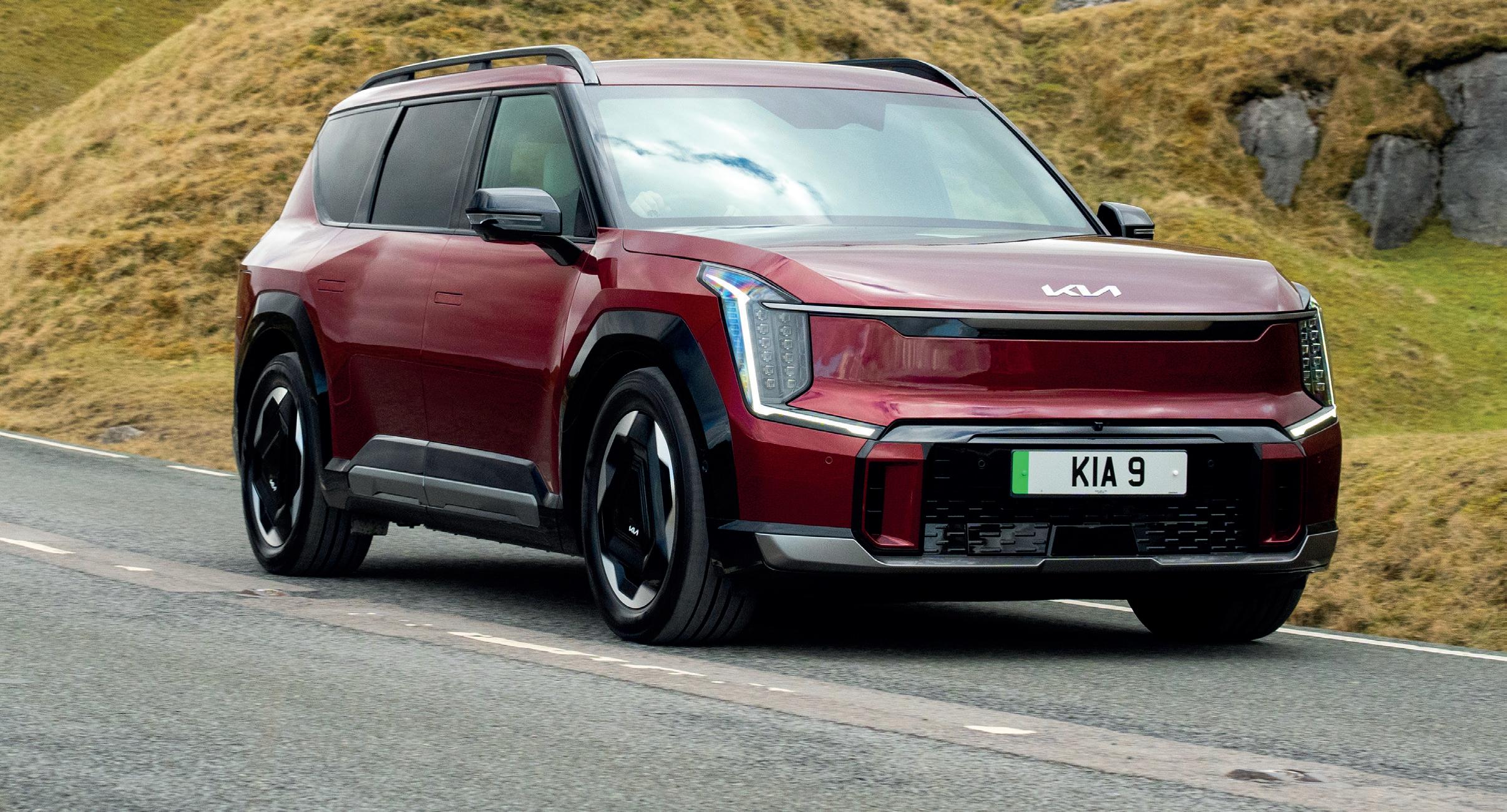
There are a growing number of seven-seat EVs available for families who need more space, including several van-based options. But for a more car-like experience, the Kia EV9 is one of the best in the business. At 5m long and 2m wide, it is massive but that size translates to generous space for seven inside
across all three rows. At £65,000 upwards, it’s not a cheap option but even entry-level models are packed with all the comfort, kit and technology you’ll ever need. A maximum range of 349 miles is impressive for a car this size, and the EV9 has some of the fastest charging on offer, making long journeys easy.
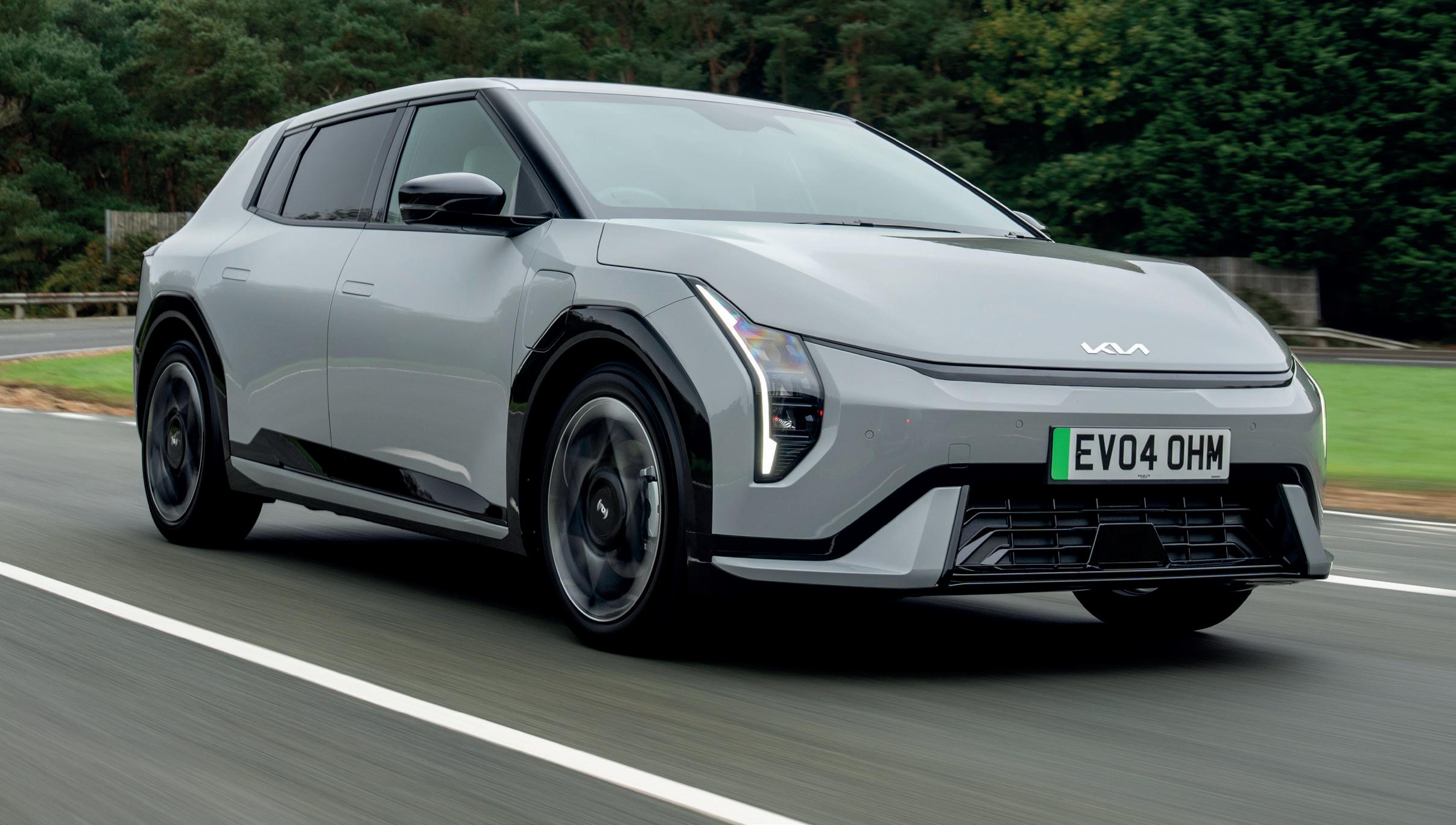
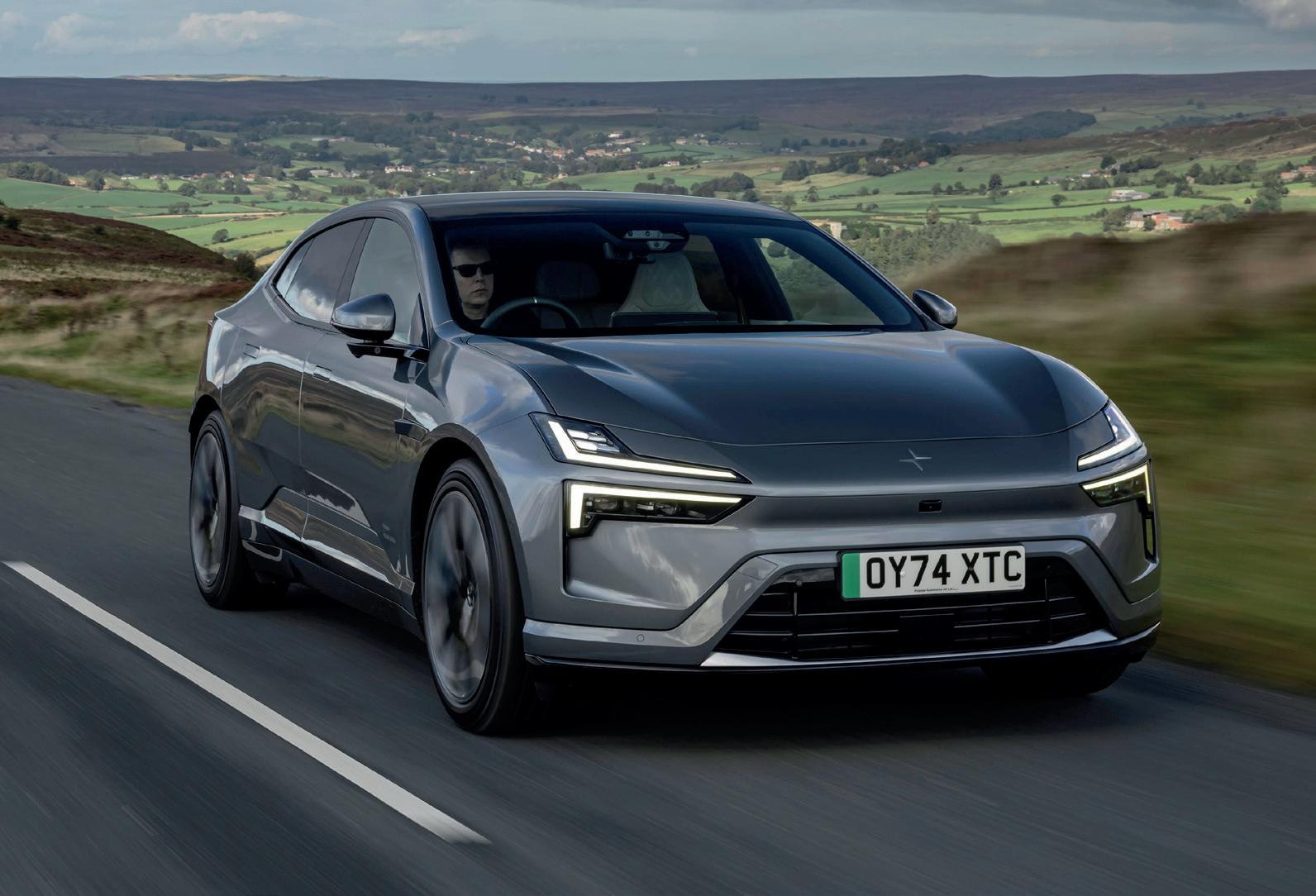
Among the sea of SUVs, the Kia EV4 is another pleasingly old-fashioned hatchback and well deserving of a place on this list. It blends the brand’s EV expertise with years of experience building brilliant family cars. Its technical underpinnings are shared with other Kia and Hyundai models and deliver decent power and more
than 360 miles of range, plus a positive driving experience. On top of that, the EV4’s sharply styled body hides a spacious and comfortable interior with plenty of userfriendly technology and family-friendly functions. And if you really want all of that in an SUV body, the EV3 shares all the same tech beneath its chunky, high-riding skin.
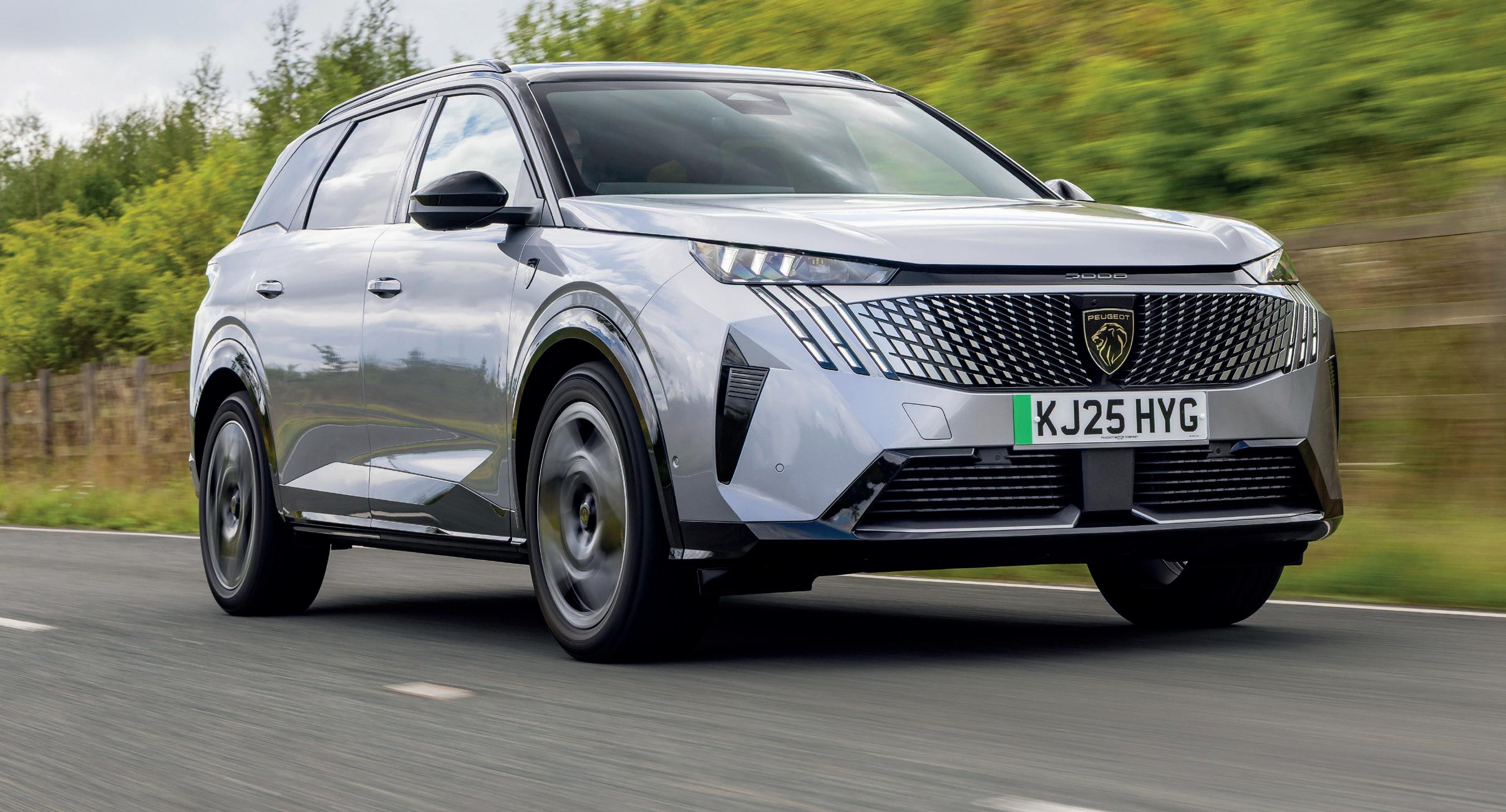
The Peugeot E-5008 is another car for those that need more than the regulation five seats but don’t fancy something that looks like a converted van. Its sevenseat layout isn’t quite as spacious as the EV9’s but it is more affordable, starting at around £49,000. It also still offers plenty of flexibility and practicality, with
up to 900 litres of luggage space even in five-seat mode. And it continues Peugeot’s recent trend for turning out stylish and well-finished cars. If you have the money and need the long-distance capability, the Long Range variant has a huge 97kWh battery that offers one of the longest ranges out there, at 415 miles.
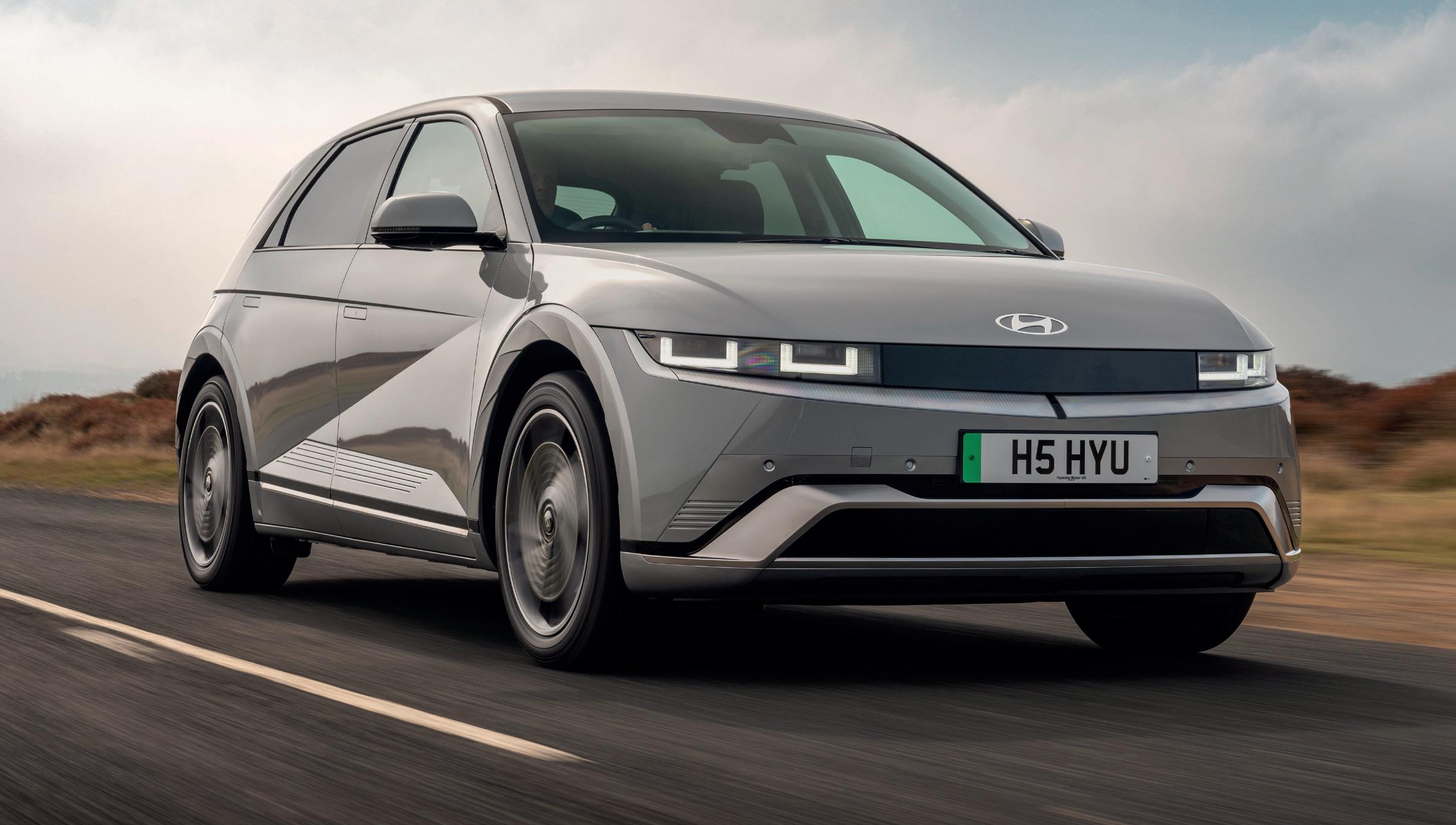
The Ioniq 5 is one of the older cars on this list but keeps a spot thanks to its general all-round brilliance that’s been boosted by a recent refresh. The 80s-inspired design isn’t to everyone’s taste, and the rather bland interior is similarly divisive but where it really matters the Ioniq 5 delivers. The cabin
is hugely spacious, even for five people and the tech on board is a match for most rivals. Under the skin, there are a choice of power outputs, including all-wheel-drive options, plus an 84kWh battery that will return up to 354 miles of range and charge far quicker than 90% of its rivals.
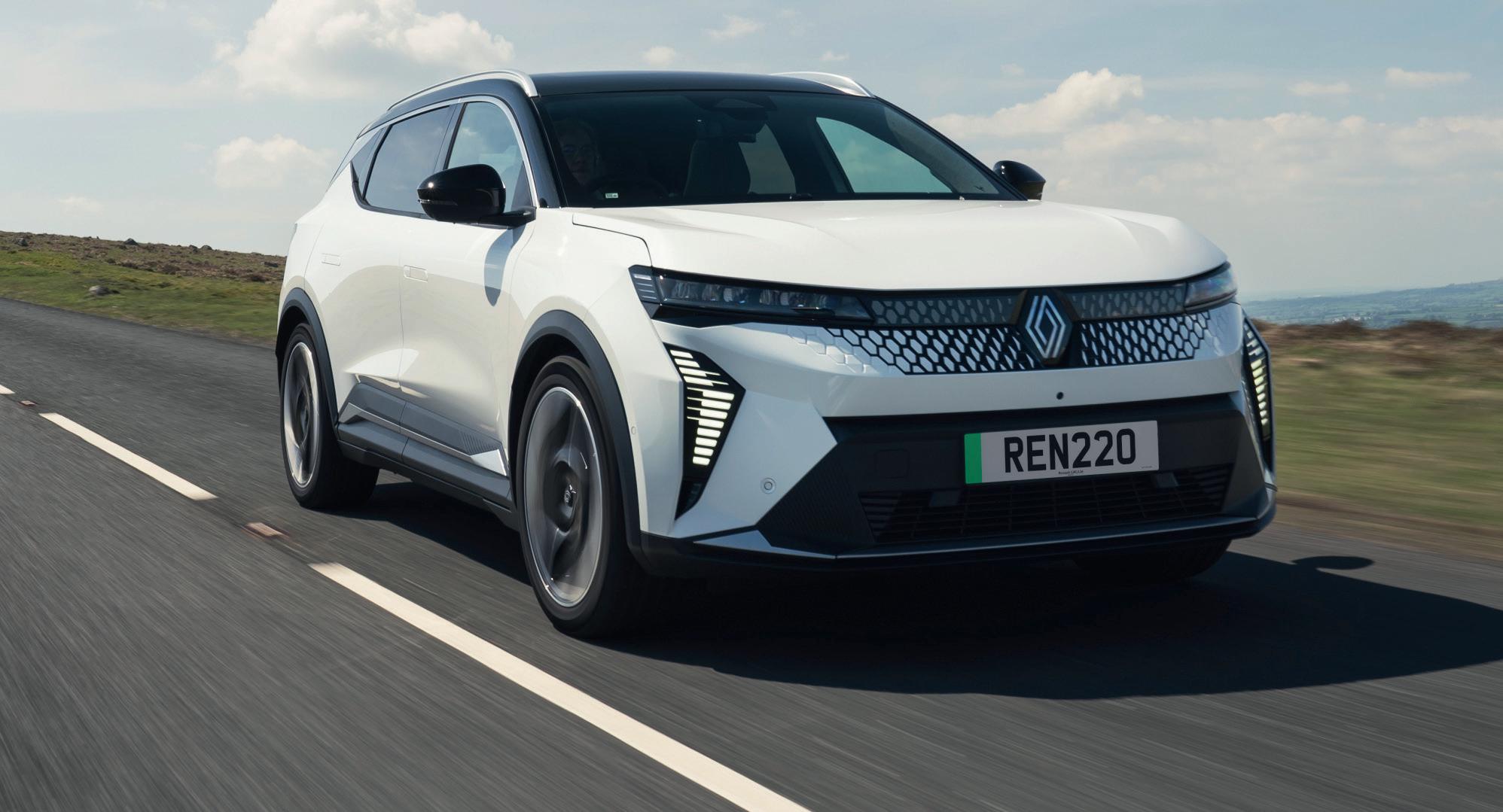
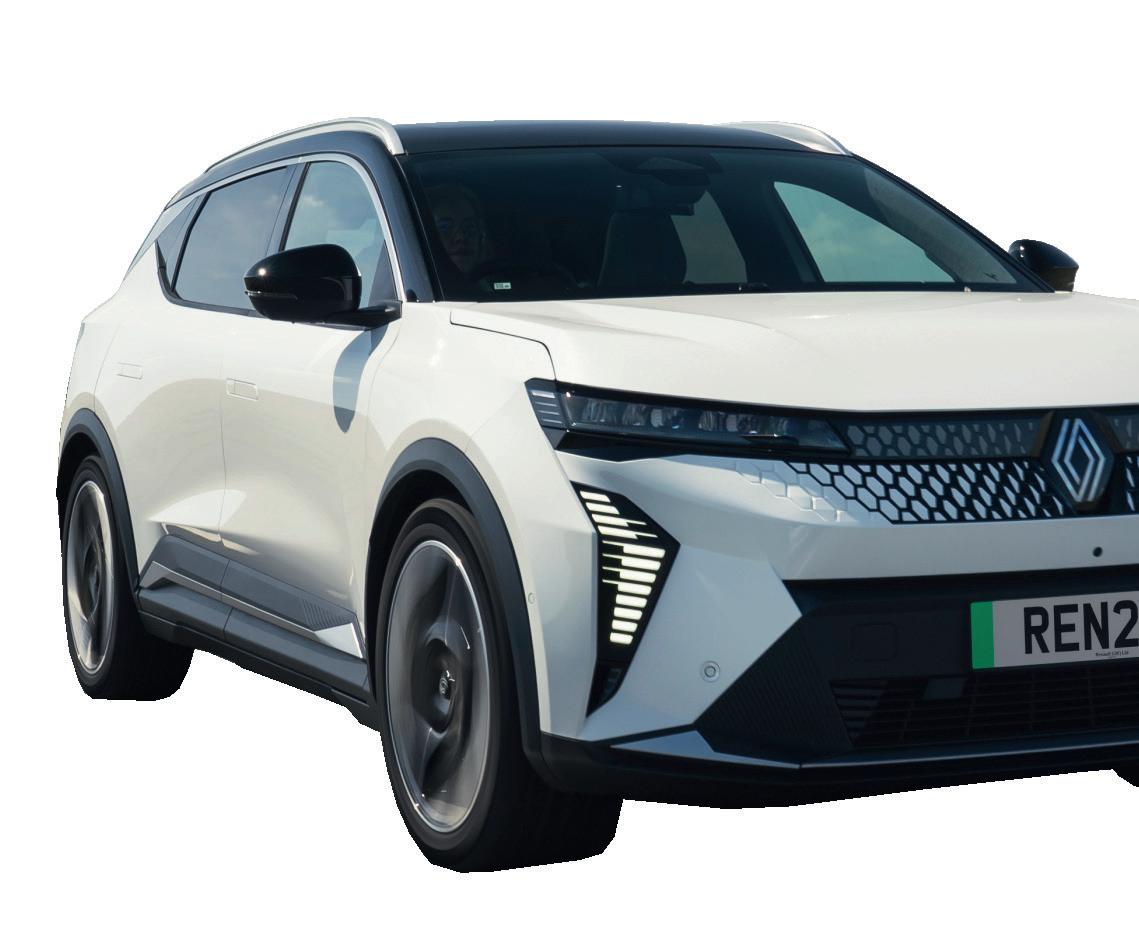
The best family electric cars have to meet a broad range of criteria, from affordability to practicality, as well as making travelling with children easier. The multi-award-winning Renault Scenic does just that, as we proved when we ran one as a long-term test car for six months. Despite costing several
thousand pounds less than most rivals, it offers some of the most generous passenger space, a decent boot and clever tech that others can’t match. On top of that, it has some of the best range in its class, good looks and a pleasant driving experience.
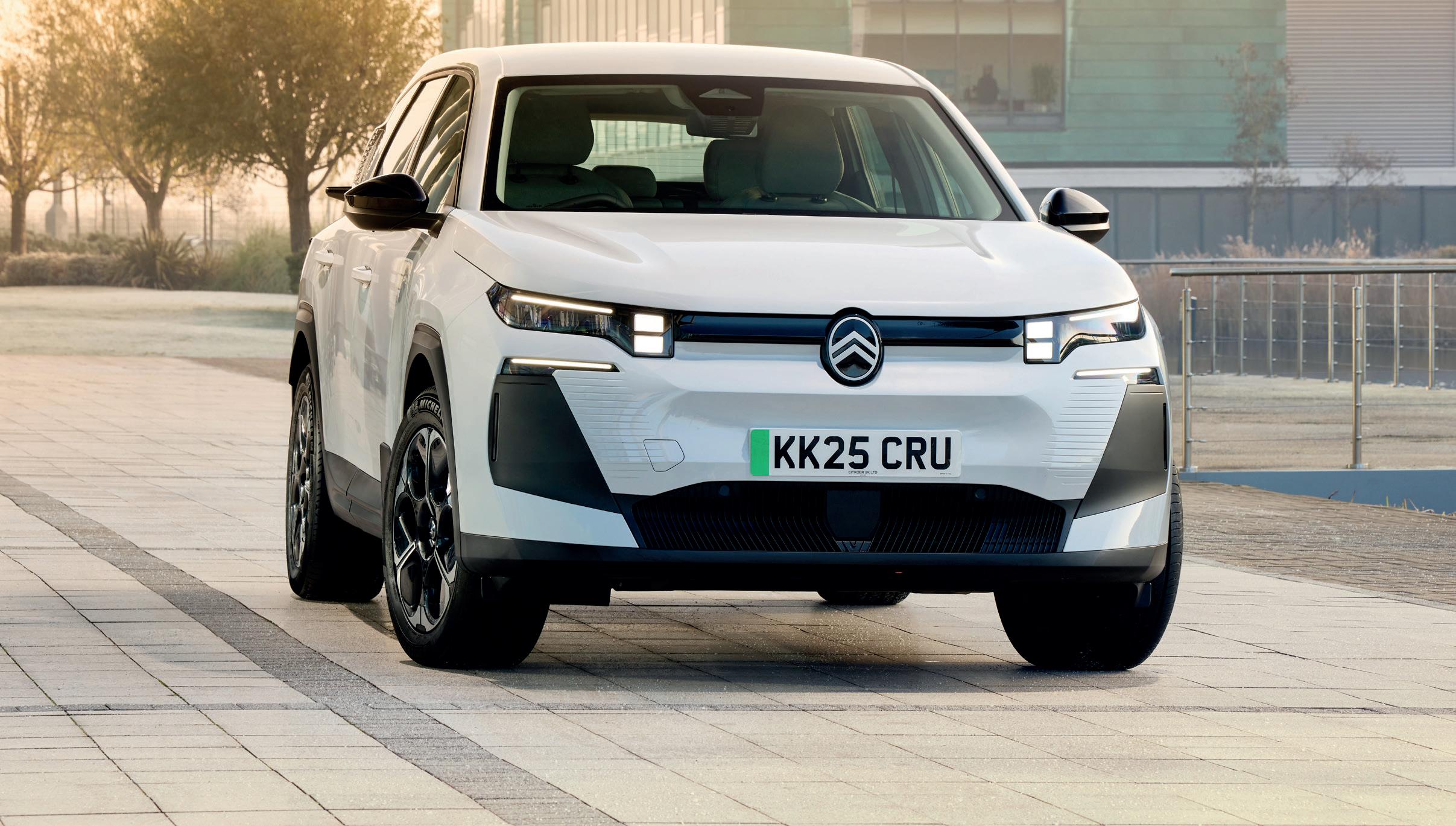
When picking a family car, comfort, range and value are all likely to be high on most people’s list. Which gives the Citroen E-C5 Aircross claim to be among the very best family electric cars at the moment. This big five-seat SUV’s Advanced Comfort suspension and seats provide some of the best ride comfort this side
of a Rolls-Royce and the cabin is bright, stylish and packed with kit. Under the metal, a choice of powertrains offer up to 421 miles on a charge, placing it among the most capable cars on sale. And prices start at £32,500, putting in the same budget bracket as far smaller, shorter-range options.
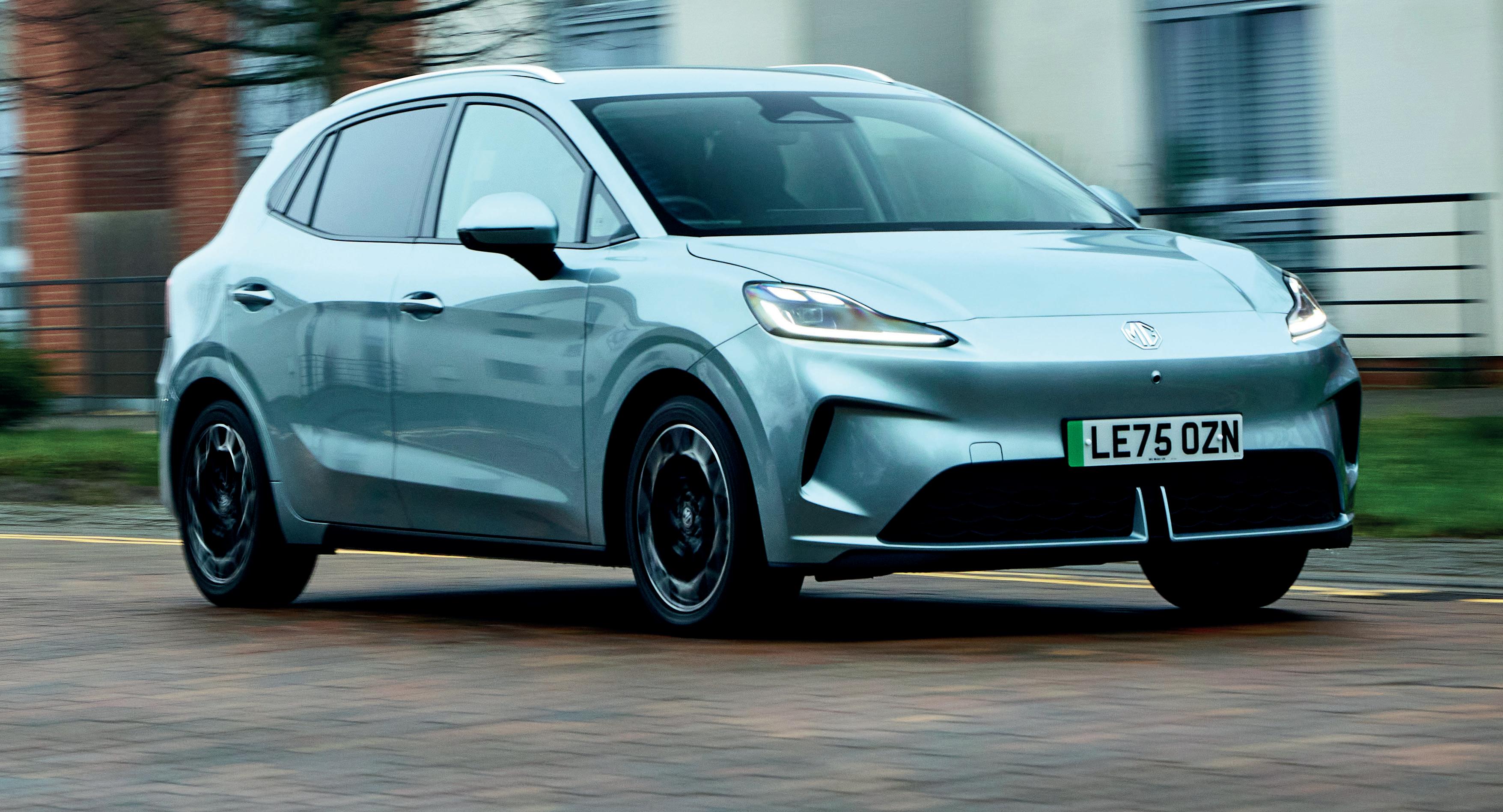
The MG4 Urban is another option for drivers who prefer a hatchback to an SUV and are looking for low-cost family motoring. Launched at the start of 2026 as the more affordable alternative to the already budget-conscious MG4, the MG4 Urban is priced like a supermini at £23,495 but sized like a C-segment car. It’s
actually bigger inside and out than the more expensive MG4. It doesn’t have the style some of the cars, nor the big-number tech specs, but counters those shortcomings with a generous specification in every trim level, and perfectly reasonable performance. If value is your number one priority, it’s a solid choice.
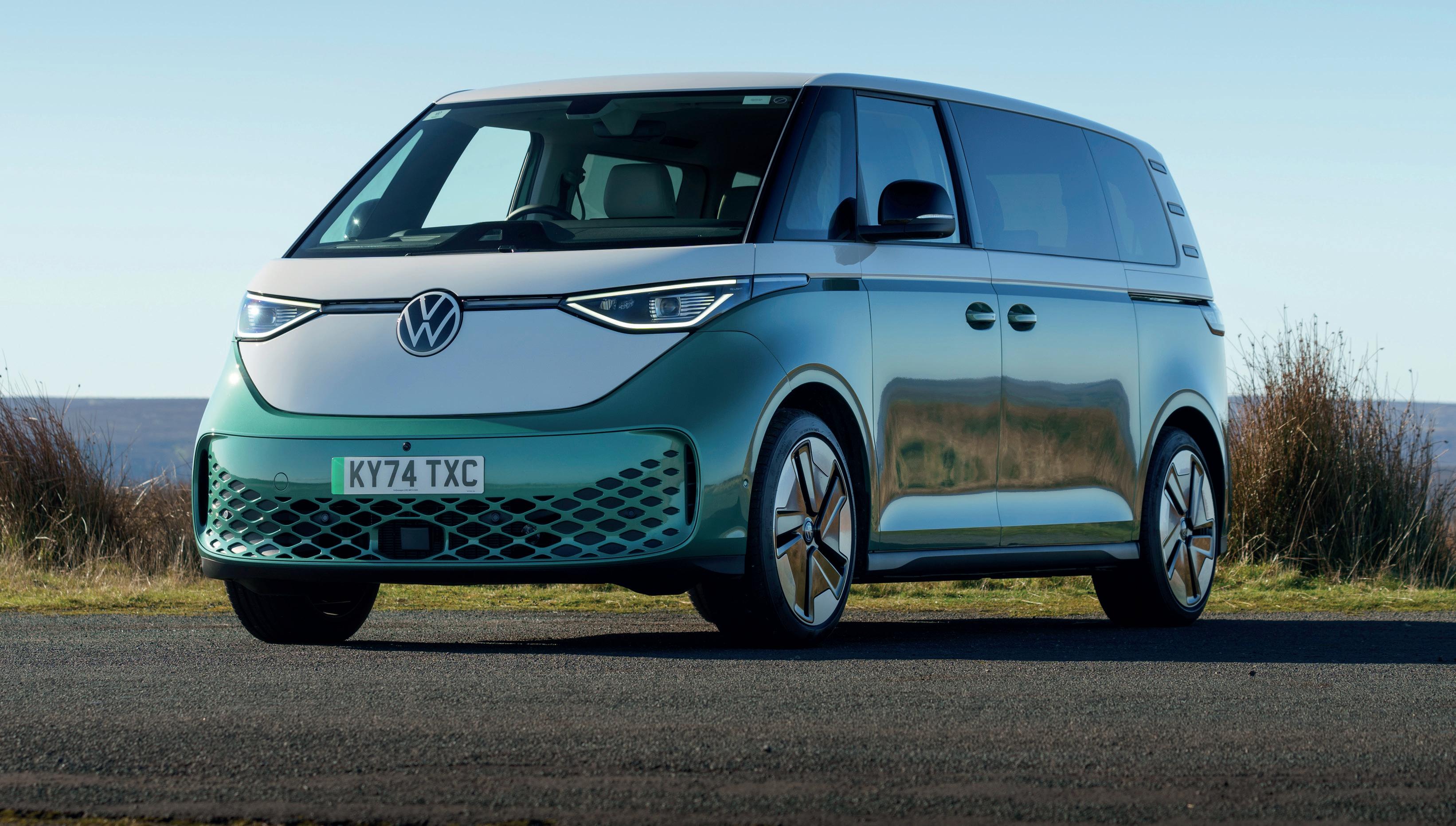
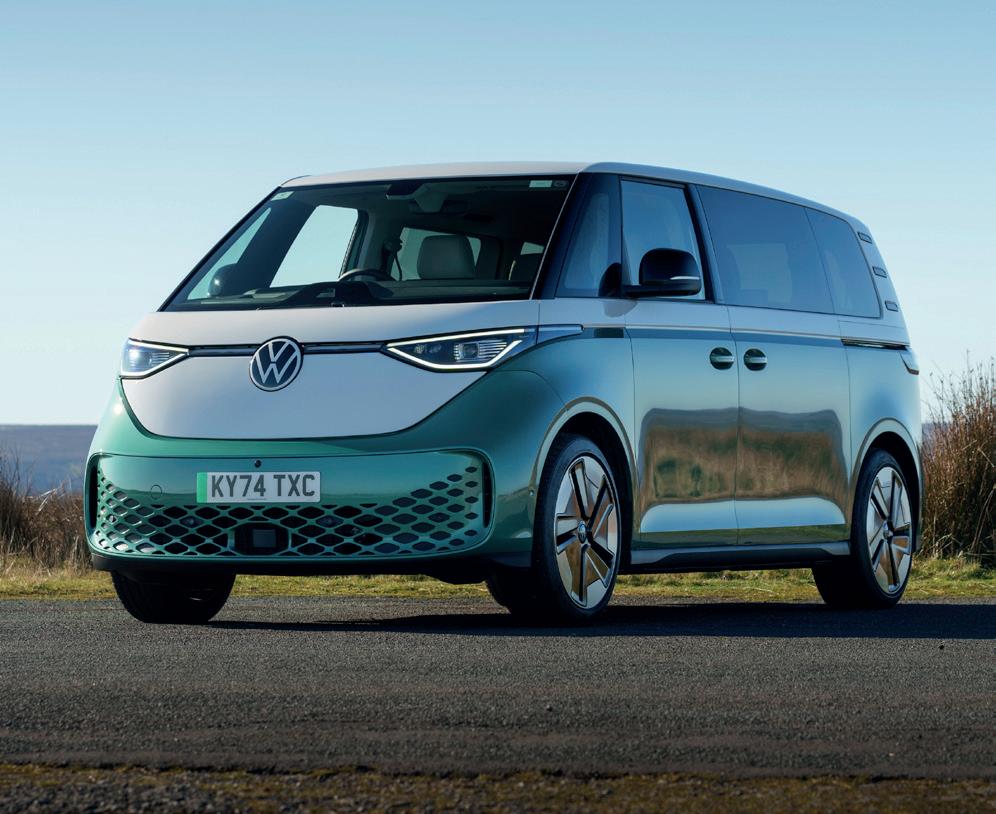
Hatchbacks and SUVs are all very good but for the ultimate family practicality you really need a van. There are a few options with passenger variants but none has quite the kerb appeal of the Volkswagen ID. Buzz. From its twin sliding doors to the acres of cabin space and cavernous boot, it has everything an active family
needs. The arrival of a seven-seat version addressed one of the few criticisms of the Buzz and provided virtually unrivalled space, versatility and practicality. What’s more the seven-seater gets a bigger battery and more power, meaning if you have the budget, the ID Buzz is one of the best family EVs on the market.
Mixed messages from the Government around electric vehicles could slow the UK’s transition, even as the country becomes better prepared, the AA has warned.
The latest AA UK EV Readiness Index found that factors helping the transition to EVs are moving in the right direction but notes that confusing and contradictory policies and actions by the Government risk undermining that progress.
While the Government is encouraging motorists to go electric through the Electric Car Grant and a recent information campaign, it is also putting drivers off with the planned pay-per-mile tax on electric vehicles.
The AA’s quarterly index tracks eight indicators influencing drivers’ readiness to switch to electric vehicles, combining them into a single “readiness rating”.
The most recent report found that the rating had risen from 48.8 in Q4 of 2025 to 53.8 in Q1 of 2026. However, the AA said this was largely down to falling used EV prices and growing charging infrastructure rather than strong consumer demand.
The index showed that used EVs have now dropped below the cost of equivalent petrol cars and were 10% cheaper than internal combustion engine vehicles during the quarter.
The AA noted that the availability of lower-priced vehicles – particularly from ex-fleet supply entering the market – had created new opportunities for motorists. However, it warned that rapid depreciation posed a “significant” challenge to fleets and manufacturers, which rely on strong residual values to support new vehicle sales and leasing.
Edmund King OBE, AA president, said: “Our index shows that conditions for switching to electric cars are improving, with cheaper used EVs opening the door for more drivers. But the reality is that the transition remains fragile.
“Lower prices may be good news for motorists looking for a bargain, but if values fall too quickly it becomes unsustainable for fleets and manufacturers who buy most new electric cars in the first place.”
He also noted that consumer confidence was being affected by contradictory policies from the Government. The index found that 55% of drivers
monitoring shows progress towards electric vehicle parc, but mixed policies could put it at risk, warns the AA
said the prospect of the pay-per-mile eVED may put them off buying an EV.
He added: “Mixed messages from government –including uncertainty around future taxes such as eVED – risk denting confidence just as the market is beginning to mature from the early adopters.
“To keep momentum going we need clearer long-term policy signals and better information for drivers so they can make an informed choice when or whether to switch.”
His comments were echoed by Matt Galvin, managing director at Polestar UK, who called for the Government to take decisive action to support the transition.
He noted: “This research confirms that the transition to fossil fuel-free travel is too slow under the current policy framework.
"The latest energy crisis has sparked a surge in demand for EVs, with manufacturer data showing record interest in going electric in the UK.
“The government must act decisively to nurture this shift: introduce a second-hand EV grant to provide easier access to tail-pipe emissions free driving, reversing the congestion charge for EVs, postpone the widely unpopular eVED, and build the world’s fastest EV charging network by delivering the funding and policy support necessary to complete the transition to electric.”
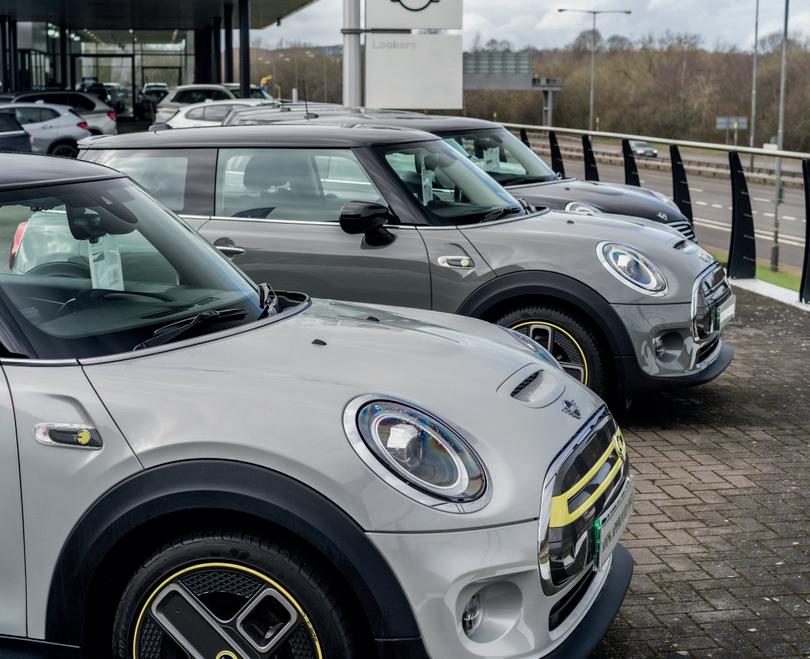
This is Jasmin. She’s one of many business owners who already use a smart meter to feel more in control of their budgeting, because smart meters help you track your energy use and costs over time.
So like Jasmin, you can spend less time guessing and instead know how much you’re spending on your energy bills.
Search ‘get a smart meter’ today.


George Watson creative director at global creative agency forpeople,
examines
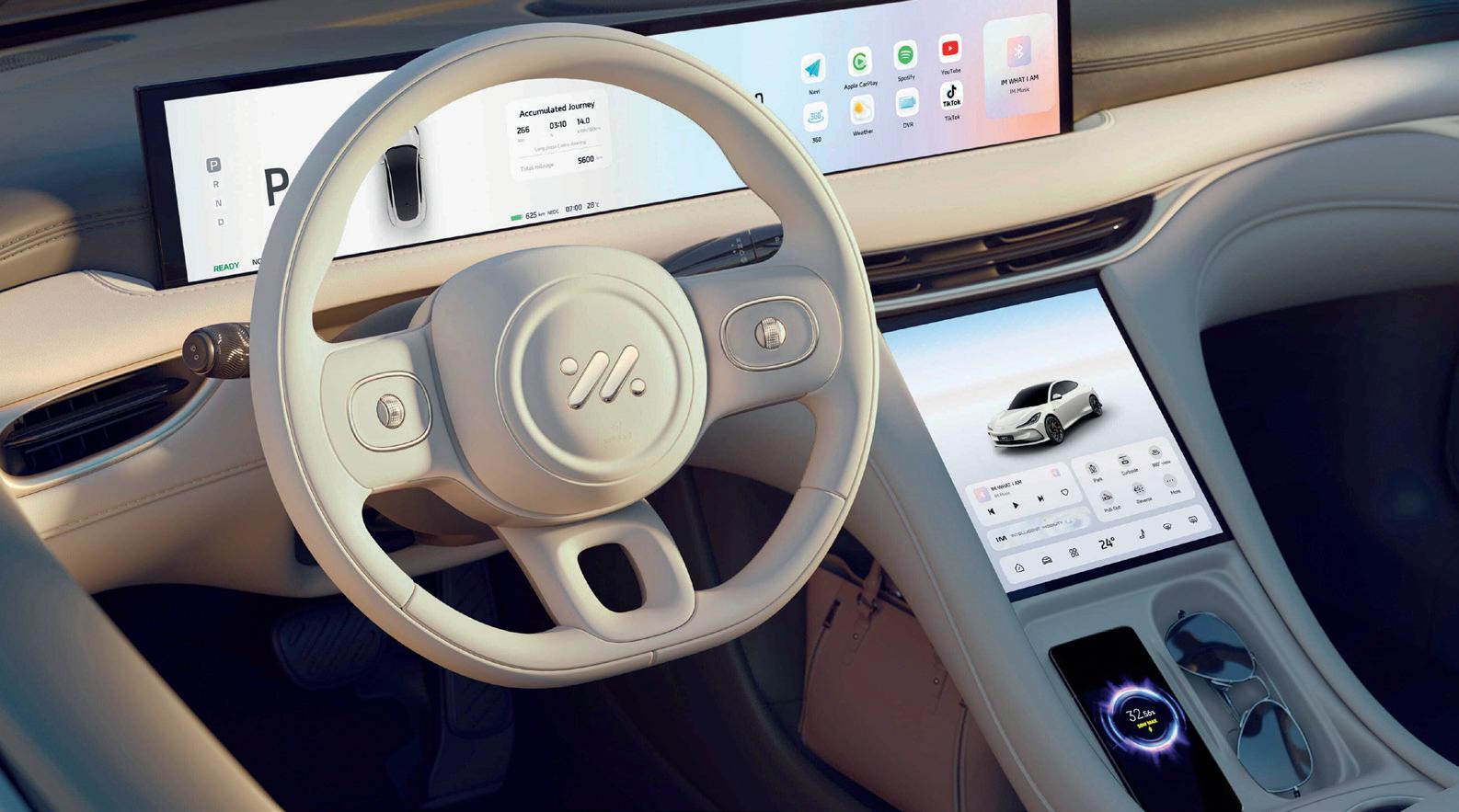
In the early days of electric cars, spec was where it was at. The race was about who could go furthest or which car could accelerate fastest. But we now exist in a space where nearly every EV boasts similar performance, and features an array of shiny new tech. However, we often hear consumers complain that modern EVs feel colder, more complex and harder to trust than their petrol cousins.
So, with brands delivering near-identical performance claims, drivers would be justified to ask themselves: what really sets one EV apart from another? The answer lies in understanding and designing for real people, not just engineering targets, the answer lies in focusing on experience as the new differentiator.
A people-first car doesn’t start with a list of features. It starts with a detailed picture of who will be sitting in it, using it and in what way. NIO’s ONVO L60 family SUV illustrates this. Launched in 2024, ONVO was conceived to bring happiness and good products to family users. Happiness is a measurement that is hard to quantify. But for designers it covers the core user needs, and from this point supports engineering the car around those user needs. Instead of simply stretching the wheelbase, they created a cabin that can flex between a mobile
living room, a quiet workspace or a play area, reflecting the messy realities of family life.
This approach, sometimes called experience- defined vehicles, goes beyond technology. Teams storyboard an entire customer journey from pre- conditioning the car before another school run to how easy it is to charge at night. Designers work with the project team to create a shared narrative that everyone can understand and buy into. When done well, the result should feel like they were designed for you.
As EVs have become more digital, interfaces have become busy and distracting. Owners want fewer menus and more intuitive interactions. Rather than burying features in deep menus, the system should naturally guide the driver with hierarchy and timing.
Natural interaction can also build trust. AI assistants can learn drivers’ routines, speak in a friendly tone and use light signals, reducing the sense of talking to a robot. As vehicles march inevitably toward greater autonomy, designers should strive for more transparent, easily understood and empathic interfaces, which will be important as any sensor suite.
Human- centred design engages more than sight and touch. Our brains are not one dimensional, they interpret spaces through sound, light, texture and even smell. Subtle choices can create comfort or tension. Ambient lighting, historically just a decorative touch, now plays a significant role in contributing to safety and driver mood. Low colour temperatures have been shown to increase comfort, while higher temperatures improve driver alertness.
Sound matters too. Well-tuned chimes, quiet electric drivetrains and natural voice responses reduce stress. Scent is emerging as a design tool as well, using natural materials and purification systems to evoke calm. Multi-sensory design is not decoration; it’s neuroscience. It turns the cabin into a sanctuary and gives a brand a signature feel.
Finally, a people-first approach extends outside the vehicle. New EV brands are acting less like manufacturers and more like ‘experience’ companies. Forward-looking brands are investing in ecosystems outside of the vehicles that engage owners in an emotional and personal way –from community hubs to practical battery swap customer networks to lifestyle products and cultural collaborations. These touchpoints, some mighty and big, often small with outweighed impact, turn routine interactions into positive moments.
EV brands that design every touchpoint to be seamless, personalised and community-focused stand to build loyalty that survives the next tech cycle.
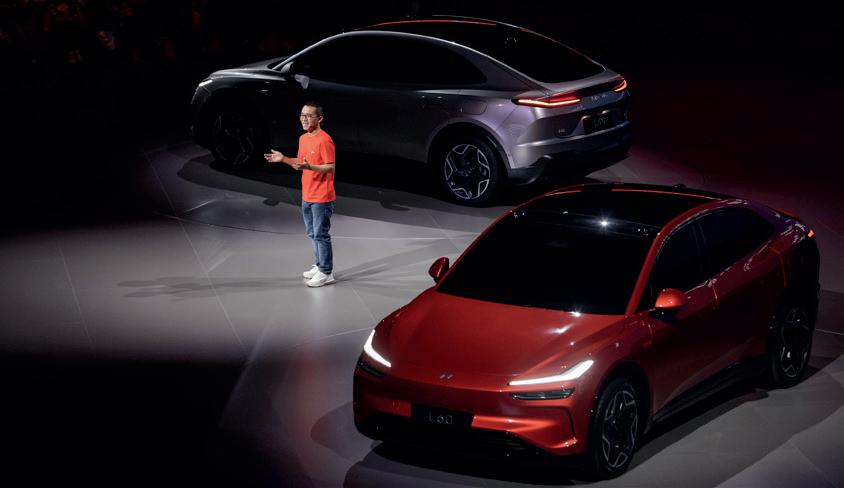
The shift from performance to experience reflects a broader reality: EV technology is rapidly commoditising. When range and acceleration are similar, what endures is how a vehicle makes you feel, how you interact, experience and connect to mobility. Investing in experience-driven design is not about soft power; it’s an investment in trust and emotional connection that will drive advocacy and repeat purchases. As the original Mini and Beetle proved, cars that resonate on a human level can outlast any spec sheet.