
TAKE BACK
While the Battle of Mount Sorrel started in disaster for the Canadians, it ended in triumph By Mark Zuehlke
SCHOOL. SPIRIT. SERVICE. Cover story
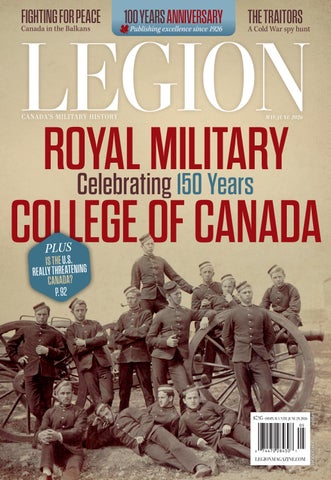
From its founding 150 years ago to today, a look at the Royal Military College of Canada By Ian Coutts
How a Canadian became the first woman to serve as a wireless radio operator at sea By Alex Bowers
Thousands of Japanese-Canadians were deported after the Second World War to a country in ruin By Susan Yatabe
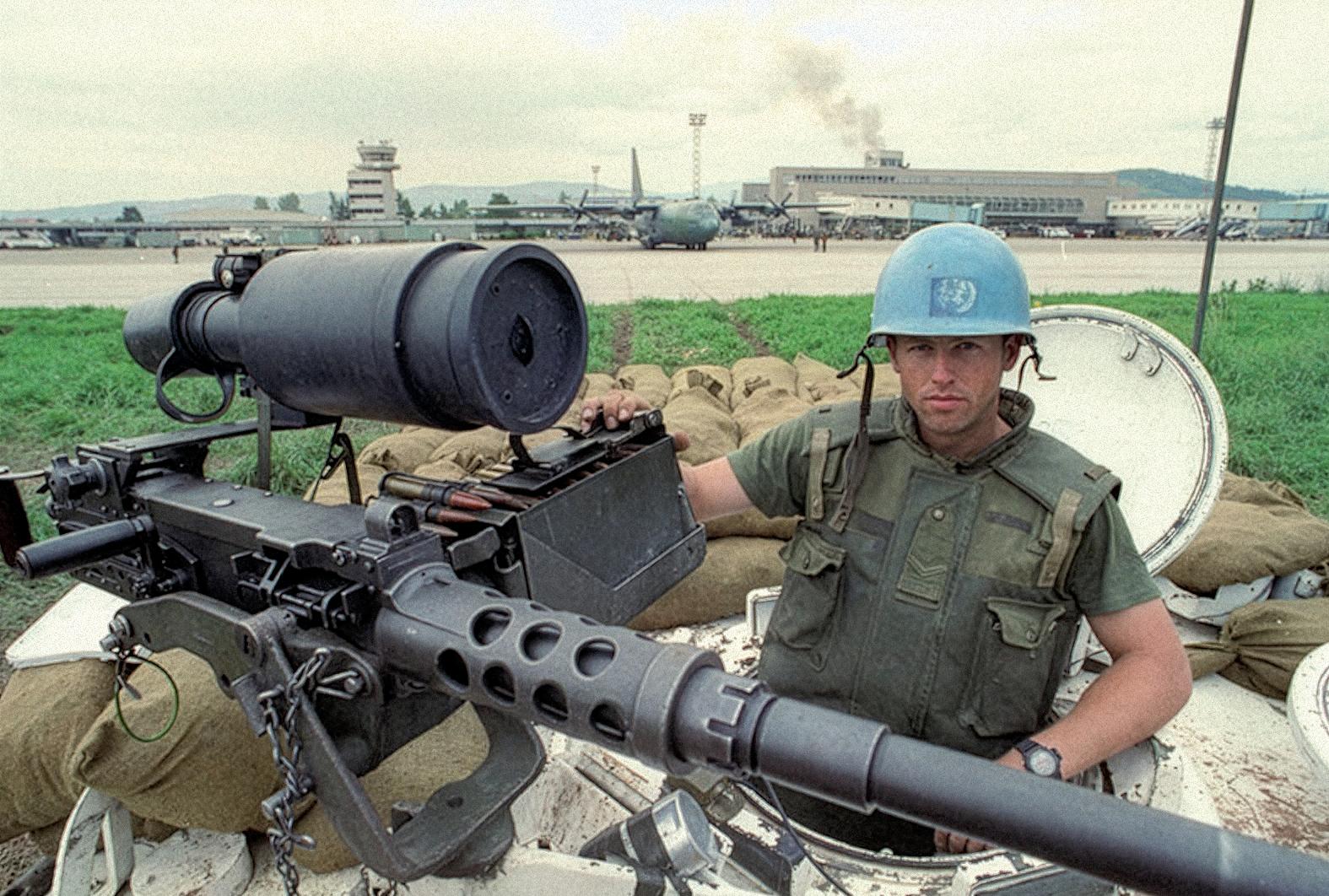
Private Pierre Lévesque poses for a photo at the airport in Sarajevo during the UN peacekeeping mission in the mid 1990s.
DND/VAC
THE WARS NOBODY WON Canadian peacekeepers redefine the role as Yugoslavia breaks up By
John Boileau
AGENTS OF INFLUENCE
Igor Gouzenko and the 1946 royal commission on espionage that changed Canada—and the world By J.L. Granatstein
MISSING FROM THE CONVOY
Celebrating Battle of the Atlantic artwork by renowned painter Eric Riordon—and unravelling a related mystery
Words by Aaron Kylie
To mark The Royal Canadian Legion’s centenary, we’re introducing a new digital experience that invites viewers to explore, learn, and connect with 100 years of service brought vividly to life. This dynamic, interactive website showcases the milestones, memories, and moments that shaped our story— and the vision driving the Legion’s next 100 years.

BOARD CHAIR Sharon McKeown BOARD VICE-CHAIR Berkley Lawrence BOARD SECRETARY Bill Chafe DIRECTORS Steven Clark, Dermod Coombs, Randy Hayley, Trevor Jenvenne, Bruce Julian, Valerie MacGregor, Jack MacIsaac Legion Magazine is published by Canvet Publications Ltd.
SAVE 33% OFF THE COVER PRICE

ADMINISTRATION MANAGER
Stephanie Gorin (on leave)
SALES/ADMINISTRATIVE
ASSISTANT
Lisa McCoy
ADMINISTRATIVE ASSISTANTS
Chantal Horan
Veronika Hughes
ADMINISTRATIVE AND EDITORIAL CONTENT CO-ORDINATOR
Matthew Ryan
GENERAL MANAGER Jason Duprau
EDITOR
Aaron Kylie
SENIOR EDITOR
Michela Rosano
STAFF WRITER
Alex Bowers
ART DIRECTOR, CIRCULATION AND PRODUCTION MANAGER
Jennifer McGill
SENIOR DESIGNER AND PRODUCTION CO-ORDINATOR
Derryn Allebone
SENIOR DESIGNER
Sophie Jalbert DESIGNER
Serena Masonde
Advertising Sales CANIK MARKETING SERVICES
Nik Reitz advertising@legionmagazine.com
Marlene Mignardi marlenemignardi@gmail.com Or call 613-591-0116 for more information
SENIOR DESIGNER AND MARKETING CO-ORDINATOR
Diana Coote
WEB DESIGNER AND SOCIAL MEDIA CO-ORDINATOR
Ankush Katoch
Published six times per year, January/February, March/April, May/June, July/August, September/October and November/December. Copyright Canvet Publications Ltd. 2026. ISSN 1209-4331
Subscription Rates
Legion Magazine is $13.11 per year ($26.23 for two years and $39.34 for three years); prices include GST. For addresses in NS, NB, NL, PE a subscription is $14.36 for one year ($28.73 for two years and $43.09 for three years). For addresses in ON a subscription is $14.11 for one year ($28.23 for two years and $42.34 for three years).
To purchase a magazine subscription visit www.legionmagazine.com or contact Legion Magazine Subscription Dept., 86 Aird Place, Kanata, ON K2L 0A1 Call 613-591-0116 or toll-free 1-844-602-5737.
The single copy price is $7.95 plus applicable taxes, shipping and handling.
Send new address and current address label, or, send new address and old address. Send to: Legion Magazine Subscription Department, 86 Aird Place, Kanata, ON K2L 0A1. Or visit www.legionmagazine.com/change-of-address. Allow eight weeks.
Opinions expressed are those of the writers. Unless otherwise explicitly stated, articles do not imply endorsement of any product or service. The advertisement of any product or service does not indicate approval by the publisher unless so stated. Reproduction or recreation, in whole or in part, in any form or media, is strictly forbidden and is a violation of copyright. Reprint only with written permission.
PUBLICATIONS MAIL AGREEMENT NO. 40063864
Return undeliverable Canadian addresses to Legion Magazine Subscription Department 86 Aird Place, Kanata, ON K2L 0A1 | magazine@legion.ca
United States: Legion Magazine, USPS 000-117, ISSN 1209-4331, published six times per year (January/February, March/April, May/June, July/August, September/October, November/December). Published by Canvet Publications, 866 Humboldt Pkwy., Buffalo, NY 14211-1218. Periodicals postage paid at Buffalo, NY. The annual subscription rate is $12.49 Cdn. The single copy price is $7.95 Cdn. plus shipping and handling. Circulation records are maintained at Adrienne and Associates, 866 Humboldt Pkwy., Buffalo, NY 14211-1218. U.S. Postmasters send covers only and address changes to Legion Magazine, PO Box 55, Niagara Falls, NY 14304.
Member of Alliance for Audited Media and BPA Worldwide. Printed in Canada.
We acknowledge the financial support of the Government of Canada. Version française disponible. From time to time, we share our direct subscriber list with select, reputable companies whose products or services we believe may interest our subscribers. To opt out of receiving these offers, please send your request, including your full name and address, to magazine@legion. ca. Alternatively, you can write to Legion Magazine, 86 Aird Place, Kanata ON K2L 0A1, call 613-591-0116, or call toll-free 1-844-602-5737. We begin by acknowledging that the land on which we gather is the traditional, unceded territory of the Anishinaabe Algonquin Peoples, who have been guardians of, and in relationship with, these lands since time immemorial. We further acknowledge and recognize that our work reaches across all First Nations territories, Métis Homelands and Inuit Nunangat.
Politics aside, Prime Minister Mark Carney’s government has seemingly delivered on its election promise from a little more than a year ago of “unprecedented acceleration of investment” in Canada’s armed forces. From significant increases in defence spending to new security alliances, the contributions to the country’s military are numerous and varied.
Indeed, just a month after being elected in April 2025, Carney announced Canada would meet NATO’s funding target of two per cent of the nation’s gross domestic product (GDP) by year’s end. The previous fiscal, the Liberal government projected its defence allocation as 1.37 per cent of GDP and said it would meet the alliance’s goal by 2032. In his fall budget, Carney then detailed military expenditures to meet NATO’s subsequently revised aim of five per cent of GDP by 2035.
A month earlier, the feds launched the new Defence Investment Agency to replace the procurement system they said was “currently fragmented across several departments, slow to consult industry, and too complicated to respond to rapidly evolving military needs—leaving the Canadian Armed Forces waiting for years, sometimes decades for critical equipment.” Carney tabbed Doug Guzman, a former banking exec with three decades of experience in investment and finance, to lead the agency, which promises to overhaul and streamline procurement.
Notably, the government also said the new agency will “align Canada more closely with partners such as the United Kingdom, Australia and France, who already have dedicated procurement bodies, making joint defence purchases and partnerships easier and more efficient.”
New security alliances also emerged. In early 2026, Canada officially joined the Security Action for Europe initiative, formally strengthening defence co-operation with the European Union. It also offers Canadian manufacturers new opportunities to access and collaborate with
European defence markets as EU member states increase their military spending.
Along those lines, Canada announced a strategic partnership with Sweden in summer 2025, highlighted by discussions related to aviation industry collaboration, including the likes of the former’s Bombardier and the latter’s Saab and its Gripen fighter jet. Canada also announced a pact with Finland and the U.S. to “enhance…collective capabilities to produce world-class icebreaking vessels needed to assert…polar and Arctic sovereignty” in November and a defence agreement with South Korea in February 2026 to “reaffirm…shared commitment to strengthening cooperation at a time of heightened strategic competition, rapidly evolving technologies and increasing pressure on open, democratic societies.”
The new agency will “align Canada more closely with the United Kingdom, Australia and France.”
That same month, Carney unveiled Canada’s first defence industrial strategy, which aims to “transform [the country’s] defence industries by prioritising Canadian suppliers and materials, investing in Canadian innovation and commercialisation, and streamlining procurement to give businesses consistent and predictable demand.”
There was much more throughout the year, too, including: the Coast Guard integration into National Defence; new investments in Arctic and northern security; and the creation of new research hubs for drones and maritime defence innovation.
“The work of defending Canada is the work of building Canada,” said Carney in launching the defence industrial strategy. “Security and prosperity are mutually reinforcing foundations of the true North, strong and free.”
If nothing else, it’s refreshing to see Canada’s military top of mind once more.
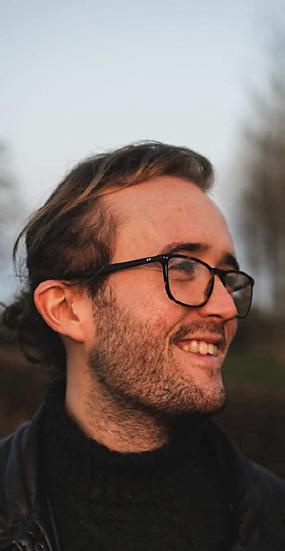
Legion Magazine’s staff writer Alex Bowers has a passion for Canadian military history. In a decade as a freelance writer, he has written for numerous publications and organizations in Canada and Europe, including Canadian Geographic, the Juno Beach Centre and History of War, among others.
The work of awardwinning author and editor Ian Coutts is eclectic, covering a range of topics from backyard birds with artist Robert Bateman to shipping on the Great Lakes. Based in Kingston, Ont., Coutts’ special areas of interest include military history, ocean liners and brewing.


Canadian military and naval historian Marc Milner has written numerous acclaimed books, including his recent Second Front: AngloAmerican Rivalry and the Hidden Story of the Normandy Campaign He is emeritus professor of history at the University of New Brunswick.
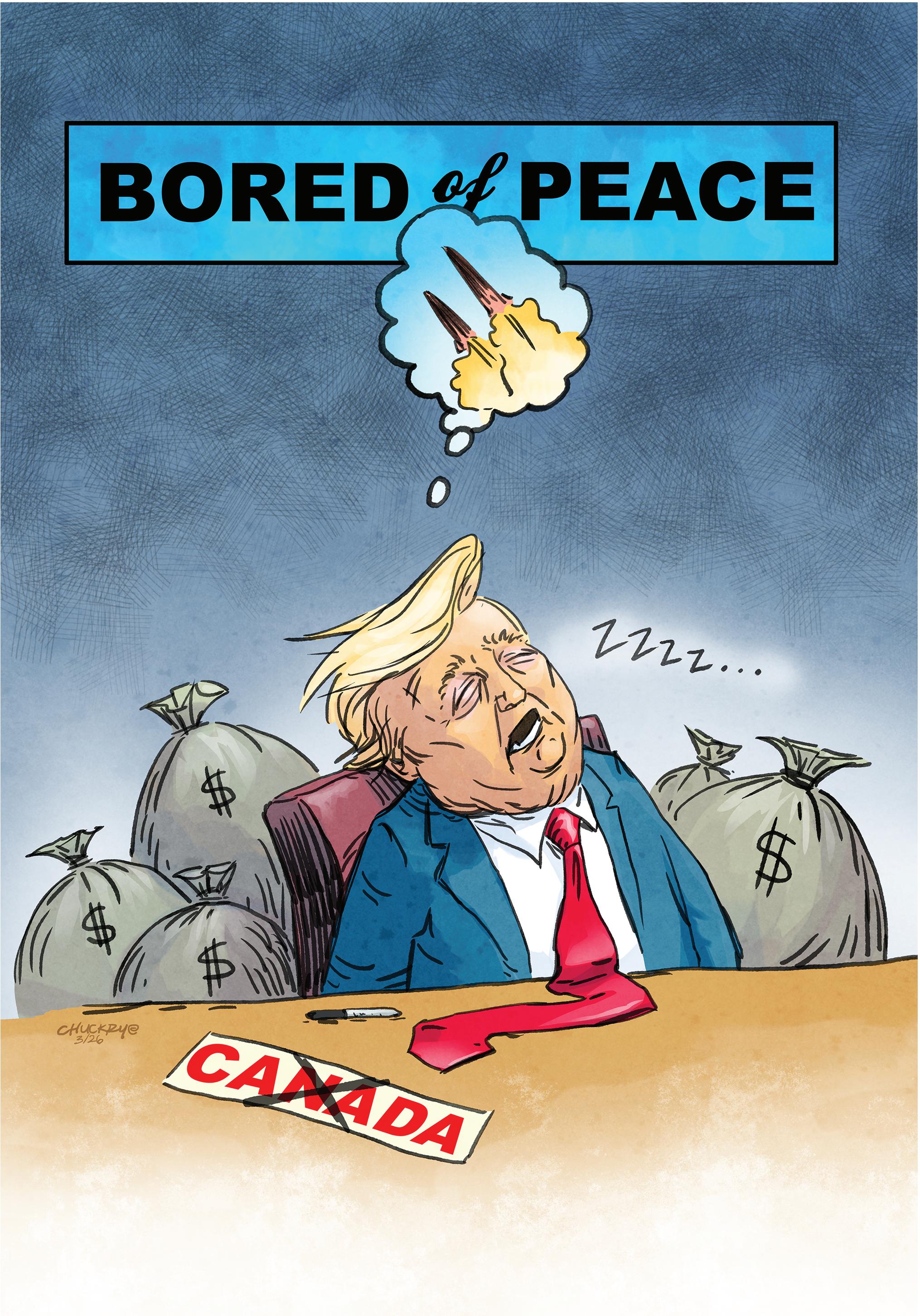
Chris Chuckry is a regular contributor to Legion Magazine (“Exit Strategy”). As a comic book colourist, illustrator and educator, his work has been featured in publications and art exhibitions throughout North America and Europe. Chuckry teaches at Red River College Polytechnic in Winnipeg.


A very good article on George Beardshaw (“The Briefing,” January/ February). My grandfather was also a British Home Child sent to Canada in the late 19th century. He lived a very tough life. Those individuals were never compensated by the British or Canadian governments. Beardshaw then went on to serve his new country and helped defend the one that gave him up. A true hero in my eyes.
Grayce Cameron Calgary
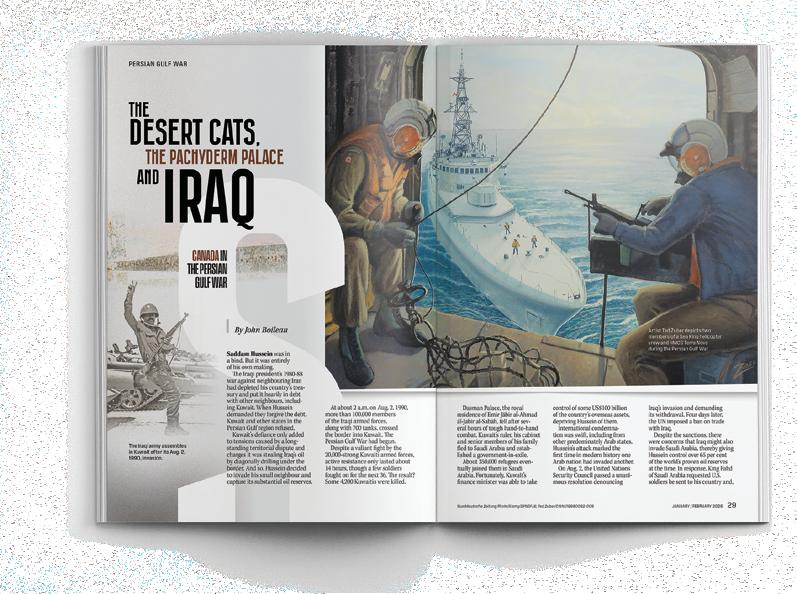
I read with interest the article “The Desert Cats, the Pachyderm Palace and Iraq” (January/ February). In it, there’s a picture showing the 416 Lynx Squadron from Cold Lake, Alta. My father Chris Preston was a Second World War Spitfire pilot flying with 416 Squadron. He attended the re-inauguration of 416 Tactical Fighter Squadron in Cold Lake.
Later, he received memorabilia from some of the F-18 pilots he met who had served in the Persian Gulf War. Thank you to all, past and present, for your service. As a civvy, I’m proud to work as a Legion service officer helping veterans and their spouses.
Brian Preston Portland, Ont.
I want to compliment you on your January/February edition and in particular the story on Canada and the Persian Gulf War. Author John Boileau has written a superb article outlining the Canadian military contribution. He succinctly described the activities of the three Canadian ships with their helicopters, the CF-18s, the field hospital and the army air defence teams in the ships. Keep up the great work with one of the best-ever Canadian magazines. I enjoy every article.
Duncan Miller
Halifax
I just wanted to say how much I enjoyed the article on Kate MacEachern (“Military Health Matters”) in the January/February issue of Legion. It’s always inspirational to read about people who overcome major challenges in their personal and professional lives and
are still able and willing to contribute positively to society by helping others. The things that she has been able to accomplish in her life are amazing. In these times when we always seem to be looking for the worst in people, it’s comforting to read about someone who reflects the best in us. I wish her all the best in her continuing efforts.
Dennis Kinsey Maple Ridge, B.C.
Thanks for publishing “A consequential nation” by Tim Cook posthumously (“On Watch,” January/February). It’s a nice follow-up article to his 2024 book The Good Allies: How Canada and the United States Fought Together to Defeat Fascism During the Second World War and provides a historical context on which Canadians can build a sense of optimism and purpose moving forward.
Jim Little Turner Valley, Alta.
Stack





The article “Badass bagpipers” in November/December 2025 resonated deeply with me, particularly given the significance of the time of year. Bagpipes are an integral part of Remembrance Day services, not only in every Legion branch but also among Canada’s allies. I was especially moved by the quote from Harry Lunan. He was my grandfather, and I had the privilege of accompanying him to the U.K. when he was recognized as the last surviving piper to play troops into battle in the First World War. His stories about the courage and dedication of his fellow bandsmen always touched my heart. Lunan’s interviews are recorded in a threepart documentary, Instrument of War, produced by Westminster King Productions. He was an active member of The Royal Canadian Legion’s Montgomery Branch in
Edmonton and played with the air force pipe band. He also taught the Edmonton Youth Pipe Band.
Thanks to the efforts of Legion branches, Canada proudly boasts one of the largest and most accomplished pipe band communities in the world. During the years, the Legion has played a greater role in fostering and supporting this tradition than any other group.
I’m the pipe major of a band supported by South Burnaby Branch in Burnaby, B.C. To celebrate the Legion’s centenary, the group is creating an educational/ musical production that will tour communities in the province and select cities across the country.
We remember them when the pipers play.
Laurie Duncan Coquitlam, B.C.
I greatly enjoyed the article “11 iconic weapons of the Second World War” on LegionMagazine.com. Many thanks for it. However, I thought it was a bit heavy-handed on American weapons. Why not include the Bren light machine gun, the PIAT anti-tank projector, the Inglis/Browning 9mm pistol and the Sten sub-machine gun? These are all weapons produced in Canada and used by Second World War Canadian army veterans. Regardless, thanks for all your good work.
Daniel J. Glenney Parry Sound, Ont.
As usual, your posts are excellent. Loved the story about the gold from Britain coming to Canada (“The Briefing: Ted Barris on WW II’s Operation Fish,” LegionMagazine.com, Jan. 7, 2026). Barris is a national treasure and it’s very worthwhile attending one of his speaking engagements.
Jim Griffin Markdale, Ont.
Submissions for this department can be sent to magazine@legion.ca. They should be constructive and of general interest. They may be edited for brevity and clarity. The views expressed are those of the correspondents and publication of them does not necessarily constitute an endorsement by Legion Magazine
CORRECTION
The caption accompanying the photo on page 1 of the November/December 2025 issue misidentified a 2025 Legion National Youth Track and Field Championships competitor. Likewise, a caption for an image in “A military town pauses” (January/February) incorrectly identified the 2024 National Memorial Silver Cross Mother. Legion Magazine apologies for these errors.


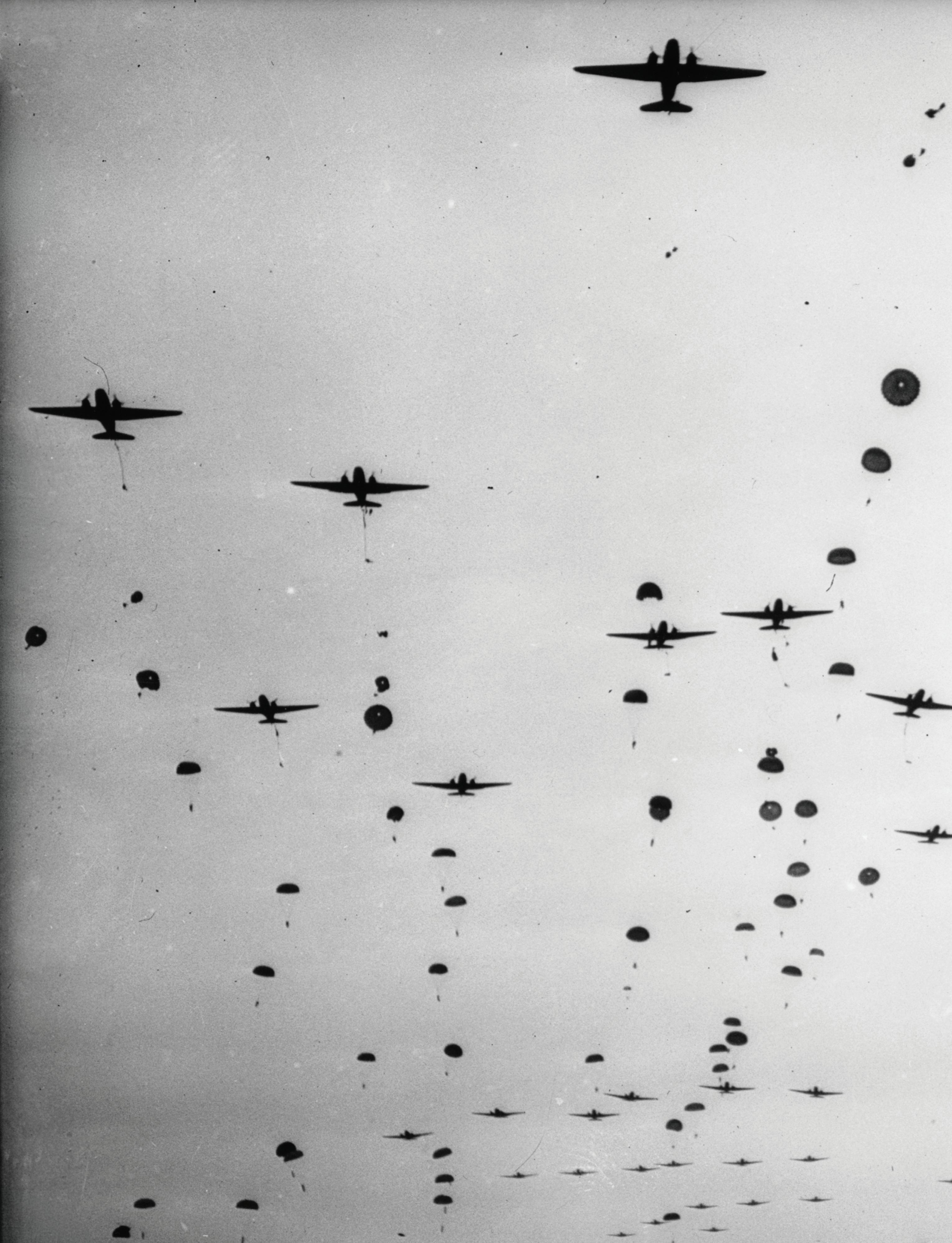
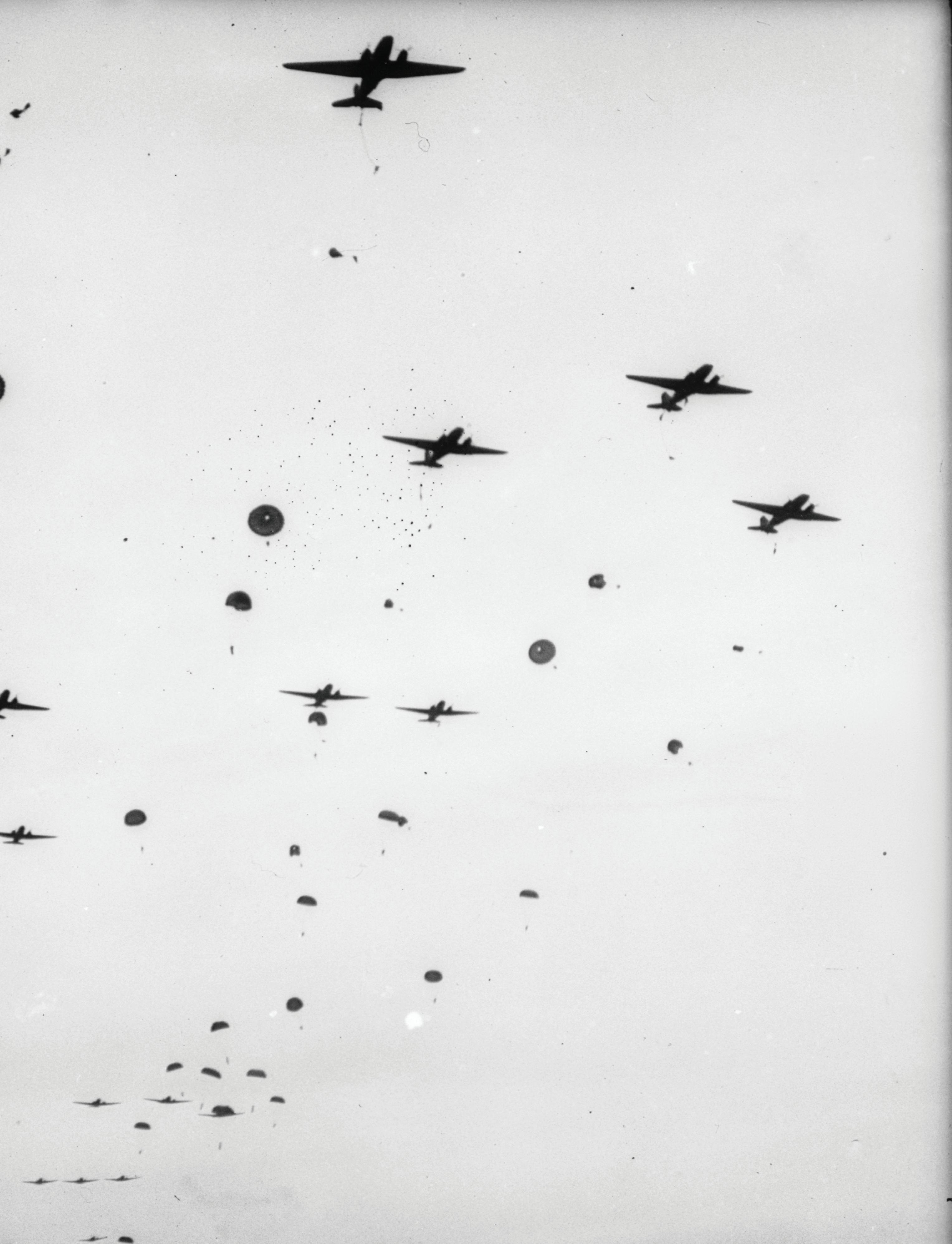
Members of 1st Canadian Parachute Battalion participate in training exercises in Salisbury Plain, England, in 1944, prior to the unit’s debut as part of the British 6th Airborne Division’s actions near Normandy’s Sword Beach landing area on D-Day.
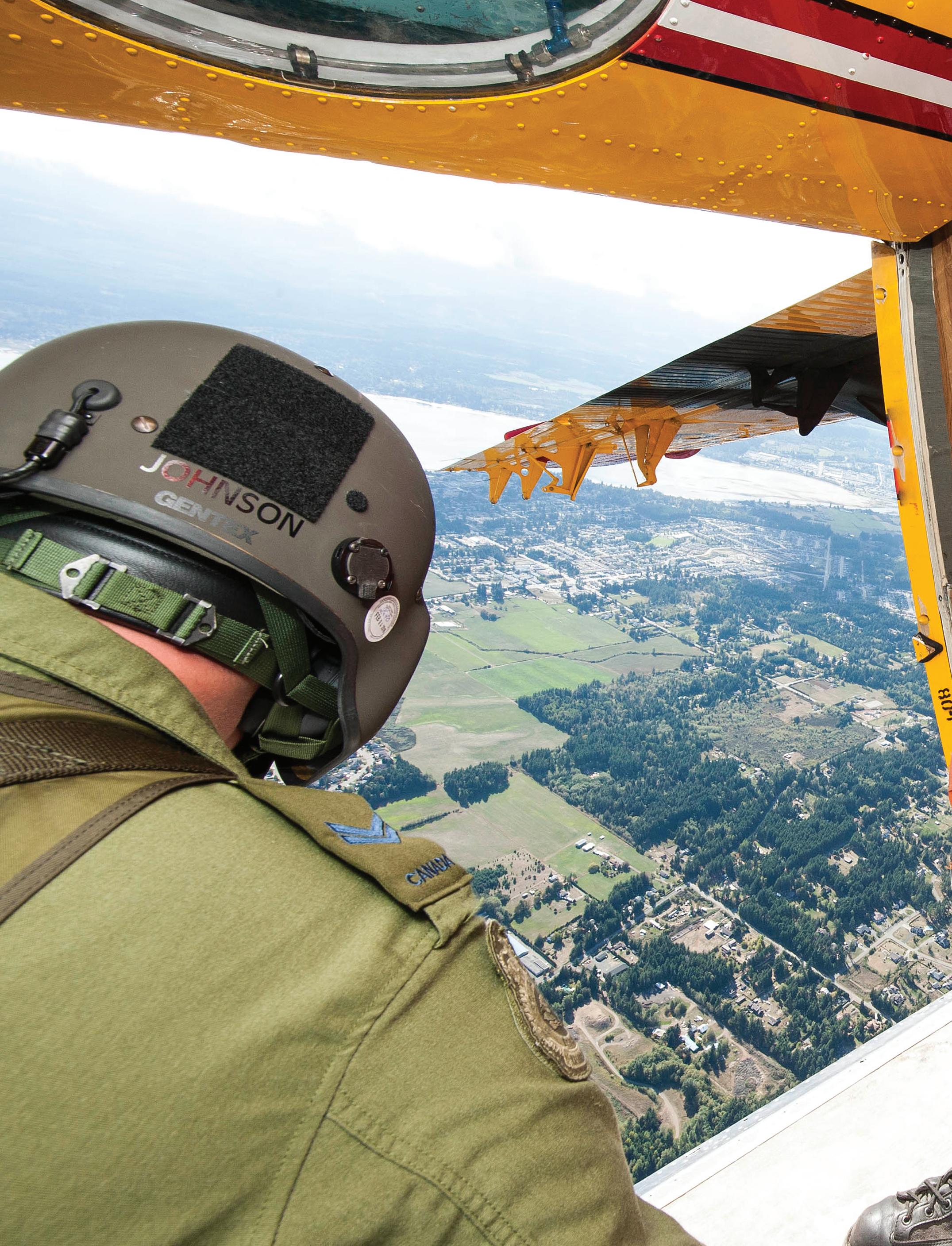
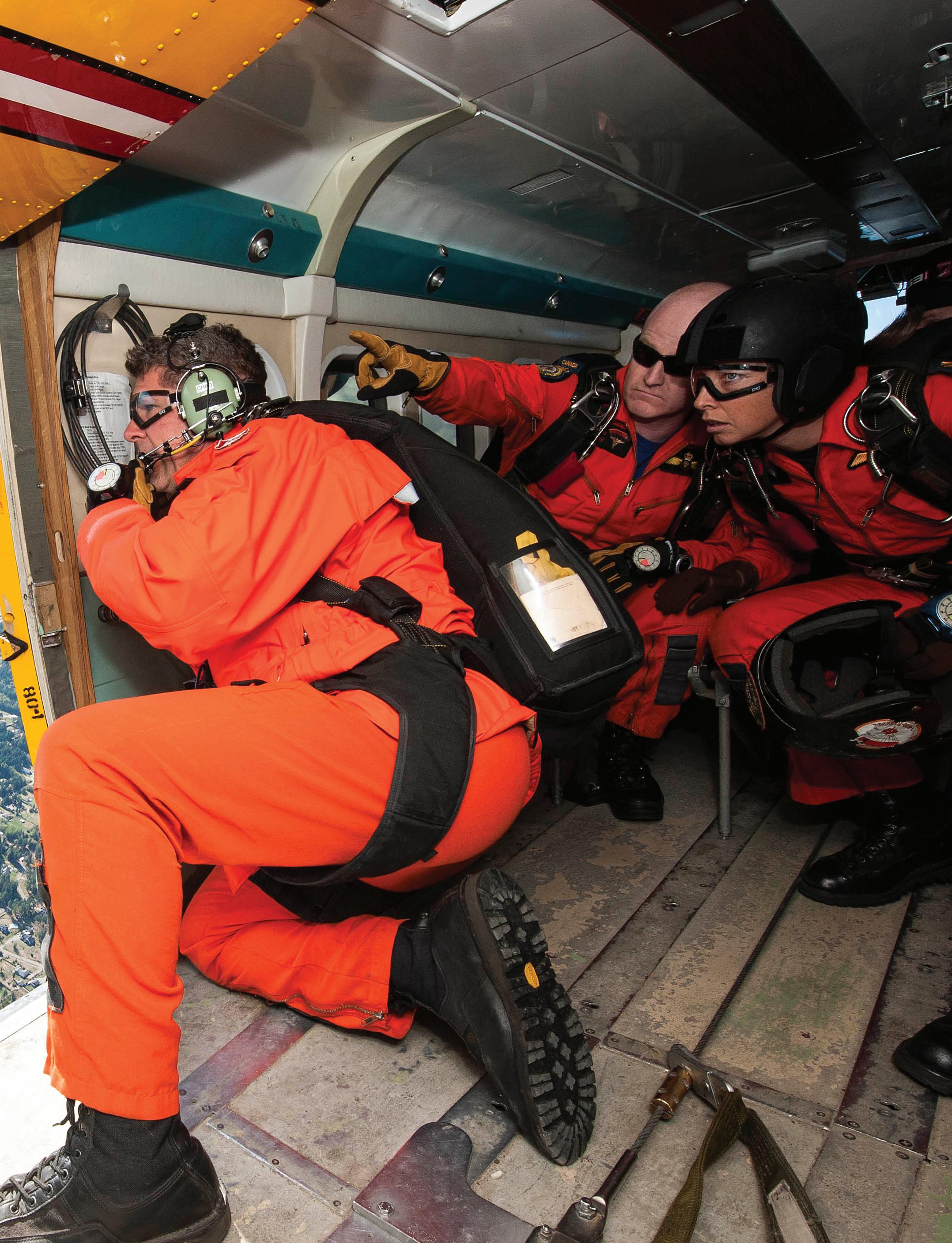
Search and rescue technicians Sergeant Chad Hildebrant, Warrant Officer Norm Penny, Master Corporal Ashley Barker and flight engineer Corporal Lee Johnson survey the land before Penny and Barker parachute out of a Twin Otter aircraft during a training exercise in Comox, B.C., in 2015.
By Alex Bowers
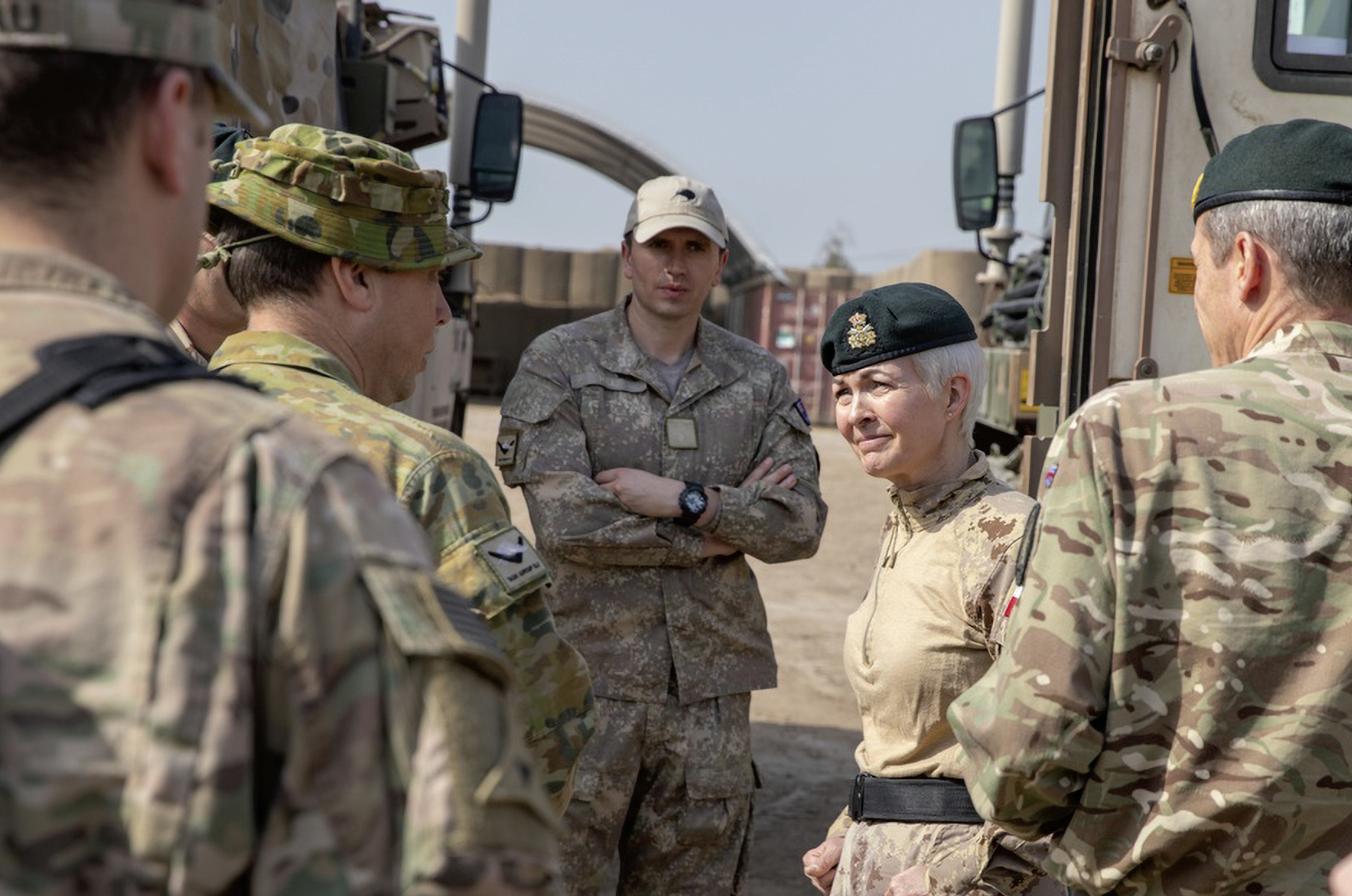
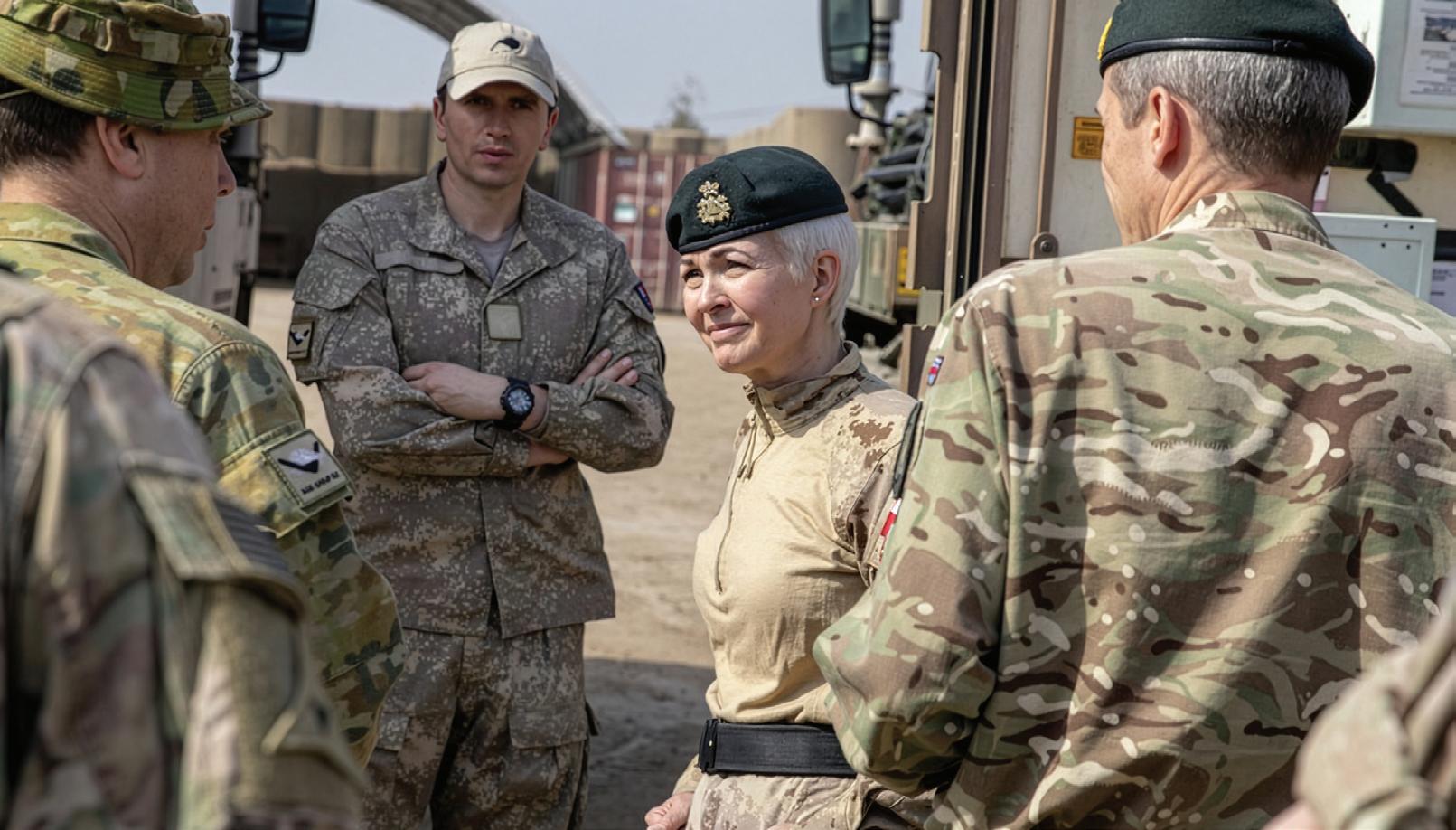
General Jennie Carignan has an idea of how she went from aspiring dancer to military recruit to Canada’s defence chief. “I would say it’s the diversity of experiences, the diversity of positions and types of missions, and layered on top of that, education to be prepared for different situations.”
Born in Asbestos (now Val-des-Sources), Que., Carignan enlisted in the Canadian Armed Forces in 1986. She rose through the ranks, taking her to the Golan Heights, Bosnia, Afghanistan and Iraq—and to Canada’s most senior military position on July 18, 2024.
Today, Carignan presides over an institution striving for change, from its practical applications in an increasingly turbulent world to its cultural identity and beyond. Here, the defence chief makes the case that the CAF is up to the task.
On today’s geopolitical climate
I like to describe the environment as VUCA: volatile, uncertain, chaotic and ambiguous. I think my experience has prepared me well for what we’re observing and living, and for putting into practice what I’ve learned. Nobody likes change. However, we need to see things for what they are and not for what we would like them to be. This is what I repeat to myself as we face issues that we hadn’t necessarily anticipated. So, it’s about being prepared for all types of scenarios and then reacting appropriately.
On the Canada-U.S. military relationship
My role as chief of the defence staff is to respond to the government of Canada’s objectives, and my counterpart in the United States does the same thing. This past year,
we both had a change in government, so we’re both adjusting to the objectives of our governments.
We consistently communicate to better align our posture, to both respond to our governments, but at the same time to do our business of defence. We share the same continent. We share a binational command. And it’s incredibly important that communication, interoperability and collaboration remain very healthy.
We both have to translate our political leaders’ intentions into military effects. At times, we have different interests— as in our governments have different interests or different objectives—but many times, we have very common interests and objectives. That’s when we can bring our strength to bear by collaborating.
On the CAF’s readiness
We have more work to do, but the Canadian Armed Forces are executing all their mandated operations. This includes domestically for various types of responses— for climate events, often. Just last year, between January and December, we responded to seven domestic operations in six provinces, so we’re ready. We’re also leading a multinational brigade in Latvia. We have over 2,000 CAF members on a constant rotational basis there, ensuring security on the eastern border of NATO. So, we’re fulfilling all of our mandated requirements, but also looking at other capabilities that we need to develop.
On evolving the CAF
We have to adjust and transform to the new threats. As an example, new technologies developed by states can now reach our continent, where that didn’t used to be the case. We have to transform and equip ourselves with the necessary capabilities to be able to better detect, defend and defeat what might come to us.
A typical example of this is our air defence systems. In our previous large commitment in Afghanistan, we didn’t use—we didn’t need—air defence systems because when you operate in a counter-insurgency operation and you have air supremacy, air defence systems aren’t required. Plus, they become obsolete over time. We have to equip ourselves differently, which is what we’re working on.
On Canada’s Arctic security
We’re in collaboration with many other government departments because we have to take a comprehensive approach to the Arctic. This is not just a military problem. It is search and rescue related. It is natural disaster related. It could be pollution related. We need the capability to respond to all of this, but those capabilities are not all military. From a military perspective, the coverage for a large territory is layered. It’s a mix of technology, boots on the ground and the ability to project power in various parts of the Arctic. We currently have a permanent presence in the Arctic, and this is done both with permanent installations and the Rangers located in 67 different communities in the Arctic. Layered
on top of that are various sovereignty operations and exercises that we’re conducting.
On her defence chief tenure and beyond The CAF is constantly evolving, changing and adapting, because otherwise, we become irrelevant. I want to bring it as far as I can, so that my successor can take it farther and keep evolving and preparing it over time. It is a long-term endeavour to have a credible defence that offers a deterrence to our adversaries. What we want to be sure to do is offer that deterring effect, because if we do that, and this is successful, then we don’t have to fight—that’s the whole point.
Read the full version of this abridged interview at LegionMagazine.com.

2 May 1915
Lieut. Alexis Hannum Helmer is killed by shellfire near Ypres, Belgium. His death inspired Lt.-Col. John McCrae to write “In Flanders Fields” the following day.
May 1945
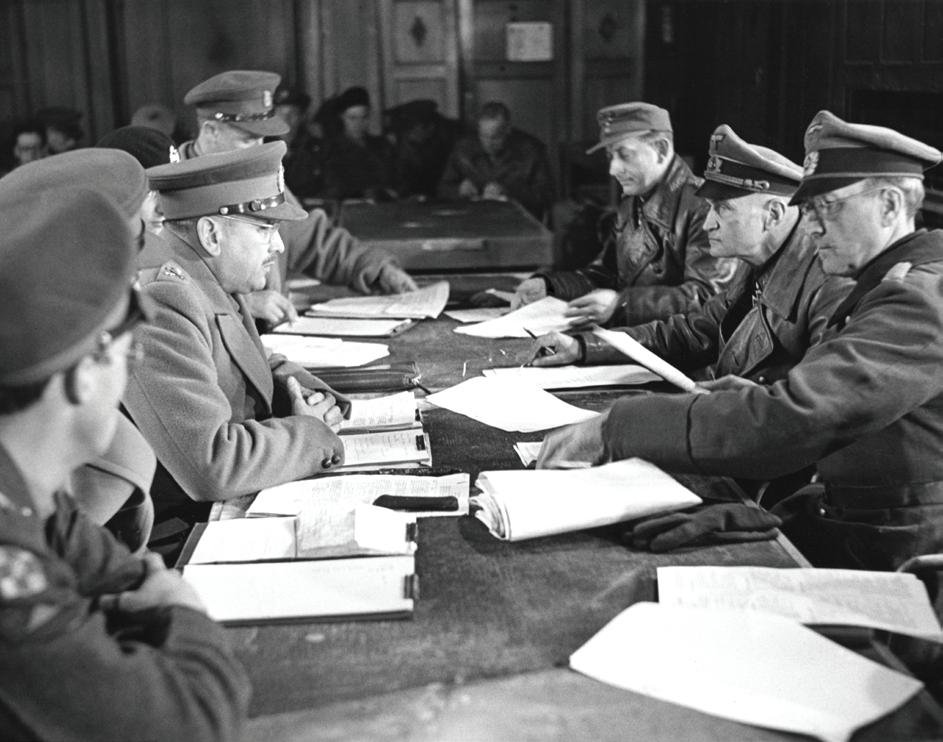
Canadian Lt.-Gen. Charles Foulkes, commander of 1 Canadian Corps, accepts the surrender of German forces in the Netherlands.
7 May 2011
Under intense fire, Canadian Capt. David Suffoletta begins to organize multiple assaults that help Afghan police neutralize Taliban insurgents holed up in a shopping centre in Kandahar. He is awarded the Star of Military Valour.
May 1885
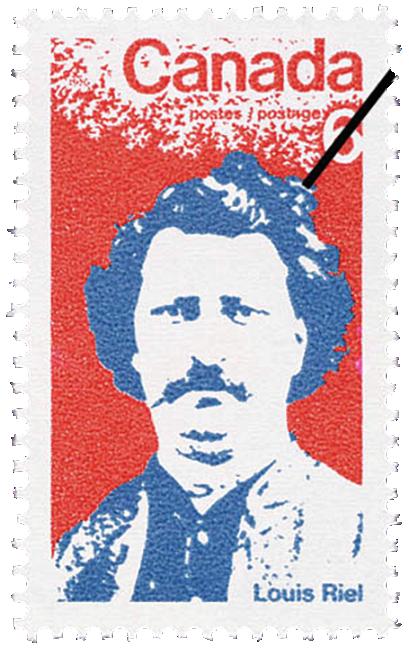
The Battle of Batoche begins. By its end, Canadian authorities defeat Louis Riel’s force of Métis and First Nations allies, marking the beginning of the end of the North-West Resistance.
14 May 2003
The first modernized CF-18 fighters are accepted into service. In total, 80 of Canada’s front-line Hornets receive an upgrade to radar, navigational and electronics equipment.
17 May 1900
The Royal Canadian Field Artillery helps relieve Mafeking, South Africa, from a seven-month Boer War siege.
May 1918
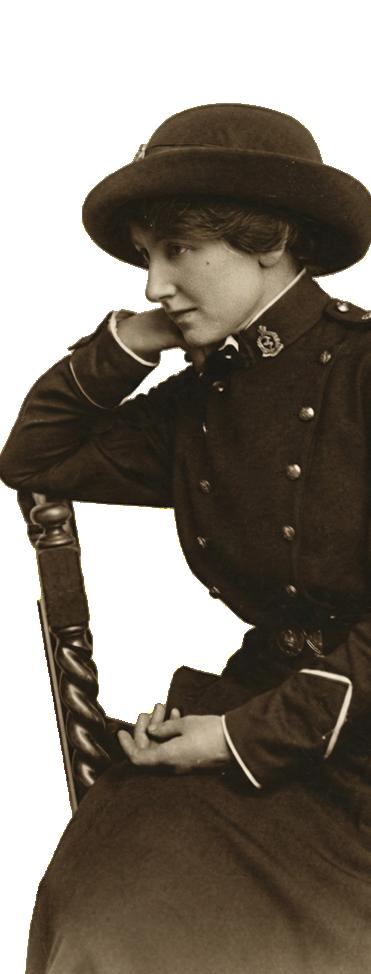
Katherine Maud MacDonald of No. 1 Canadian General Hospital is the first Canadian nursing sister killed in action during German bombings of Étaples, France.
1 May 1952
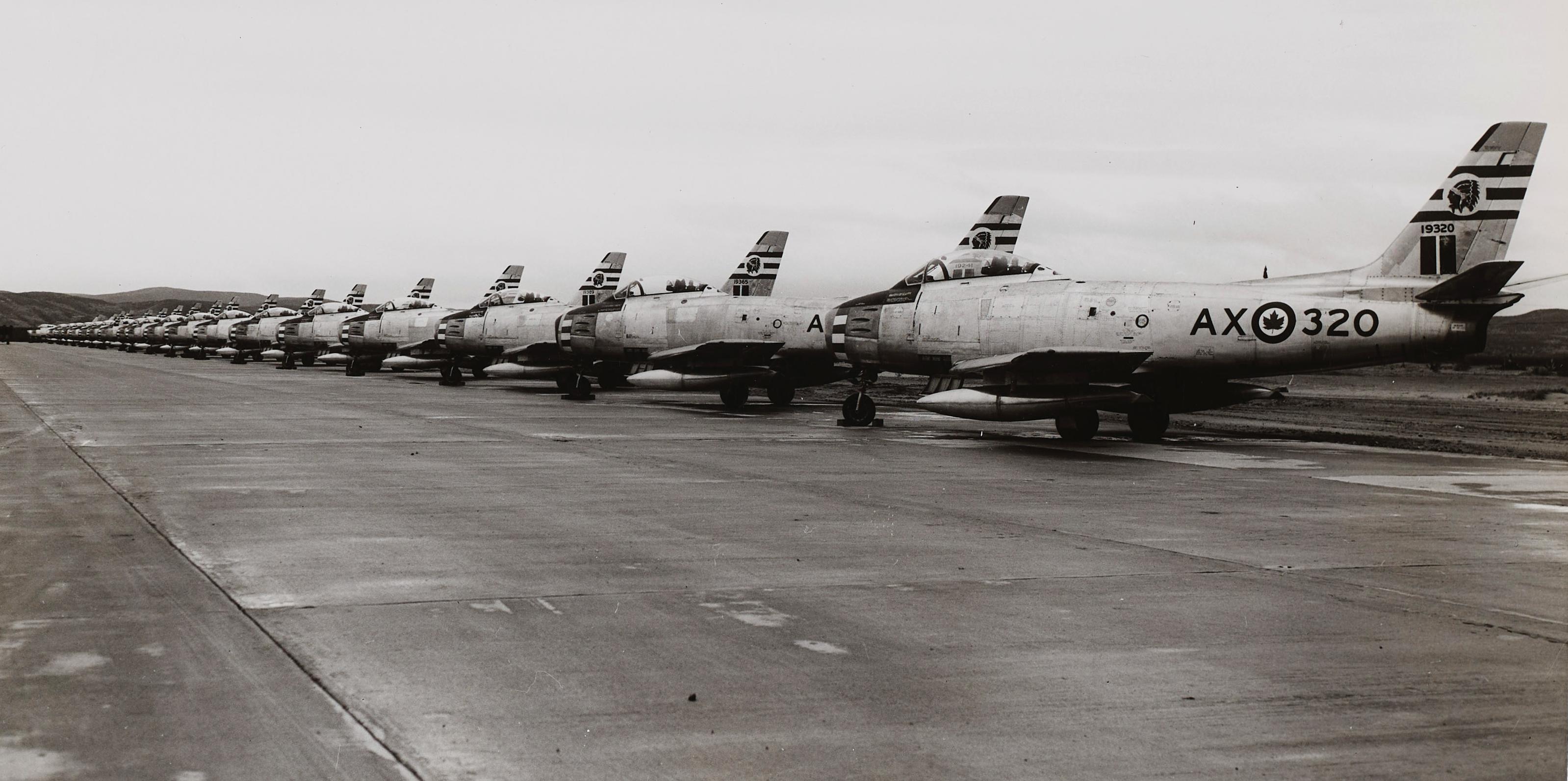
Operation Leap Frog begins. The Royal Canadian Air Force deploys 12 squadrons to join ground forces in western Europe, part of Canada’s NATO commitment to deter Cold War attacks.
21 May 1998
HMCS Ojibwa is decommissioned in Halifax. The Oberon-class, diesel-electric submarine was purchased from the Royal Navy and had been in Canadian service since 1965. Ojibwa is now a museum in Port Burwell, Ont. (also see “The Visual,” page 18).
May 1953
On midnight patrol during the Korean War, HMCS Haida locates and destroys a Chinese supply train.
23 May 1947
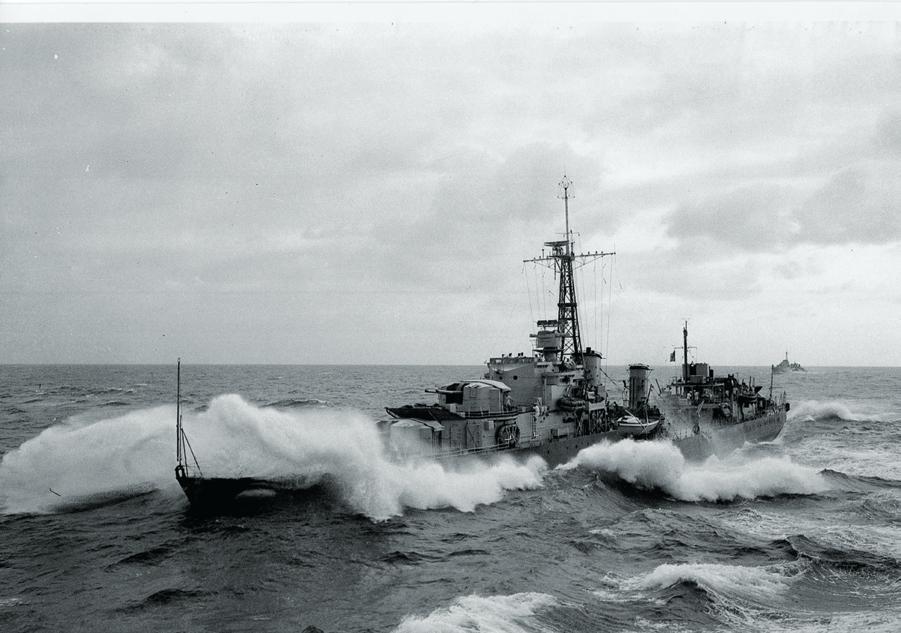
The Canadian Rangers are formed to monitor remote and coastal regions of Canada for Cold War threats. Today, there are roughly 5,000 Rangers, who are primarily members of local Indigenous communities.
24 May 1943
U-boats begin a withdrawal from the North Atlantic.
27 May 1870
Canadian and British troops defeat the Fenians at the Battle of Trout River.
30 May 2008
After a patrol is attacked in Afghanistan, Cpl. Tyler Myroniuk and WO Robin John Crane lead an advance under enemy fire. They are both awarded the Medal of Military Valour.
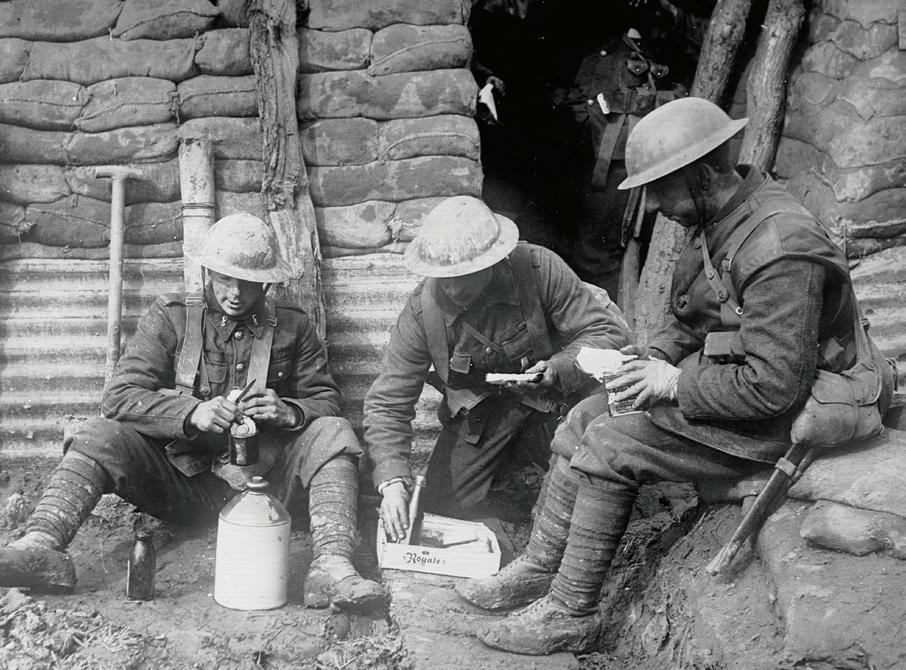
June 1916
Mount Sorrel on the Ypres salient is captured by the Germans following a massive bombardment. By the time the ground is retaken, the Canadian Corps suffers more than 8,000 casualties (also see “The take back,” page 26).
8 June 1992
Chris Hadfield and Julie Payette are among new astronauts named by the Canadian Space Agency.
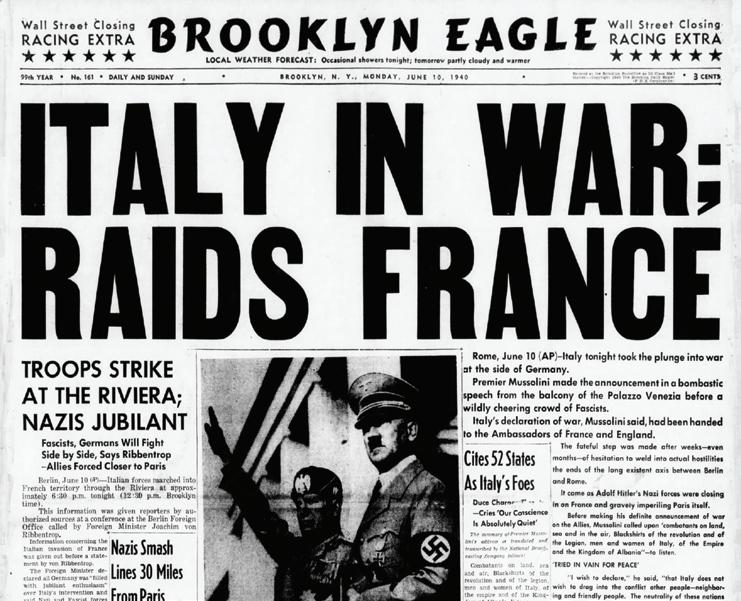
June 1940
Italy declares war on France and Britain, while Norway surrenders to Germany.
11 June 1999
10 2
A UN mission, including more than 600 Canadians, is established in East Timor to help organize elections, support the new government and establish rule of law.
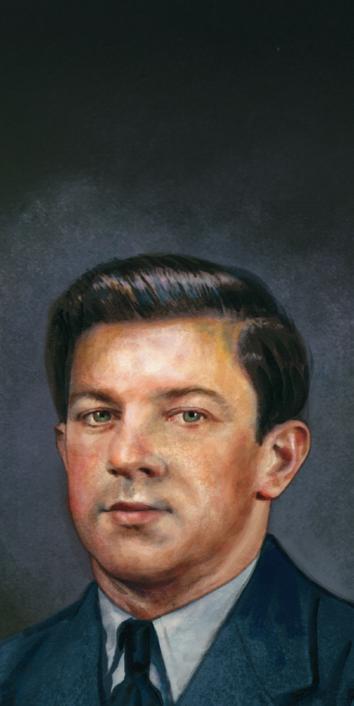
June 1944
With his aircraft on fire, PO Andrew Mynarski delays his own escape to help a fellow crew member. While his crewmate survives the crash, Mynarski is badly burned and later dies from his wounds. He is posthumously awarded the Victoria Cross.
15 June 1846
Britain and the U.S. sign the Oregon Treaty, extending the CanadaU.S. boundary along the 49th parallel west from the Rocky Mountains to the Strait of Georgia.
16 June 1755
After landing earlier in the month, British and New England forces capture Fort Beauséjour, N.B., from French and Acadian defenders and rename it Fort Cumberland.
18 June 1812
The U.S. declares war on Britain; Canada becomes the main battleground in the War of 1812.
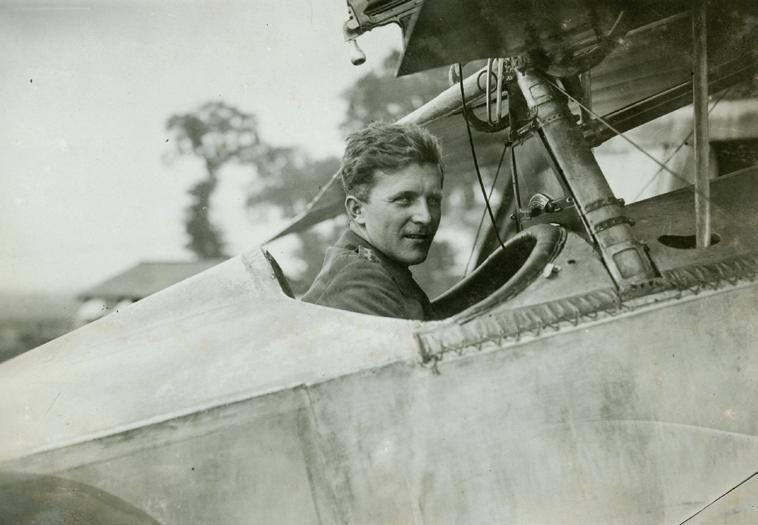
June 1918
On his final day in France, air ace Billy Bishop downs five enemy aircraft, earning him the Distinguished Flying Cross.
21 June 2001
A national monument to Indigenous veterans designed by Lloyd Pinay of Peepeekisis First Nation, Sask., is unveiled in Ottawa. The bronze sculpture honours the thousands of Indigenous Peoples who served Canada during the First and Second world wars and the Korean War.
24 June 1948
The Soviet Union begins a blockade of Berlin in one of the first international crises of the Cold War.
25 June 1950
North Korea invades South Korea, starting the Korean War. Canada deploys nearly 27,000 troops as part of a United Nations force supporting the south.
28 June 1914
Archduke Franz Ferdinand, heir to the throne of the Austro-Hungarian Empire, is assassinated in Sarajevo, Bosnia, sparking the First World War.
29 June 1974
Ballet dancer Mikhail Baryshnikov defects from the Soviet Union while on tour in Toronto.
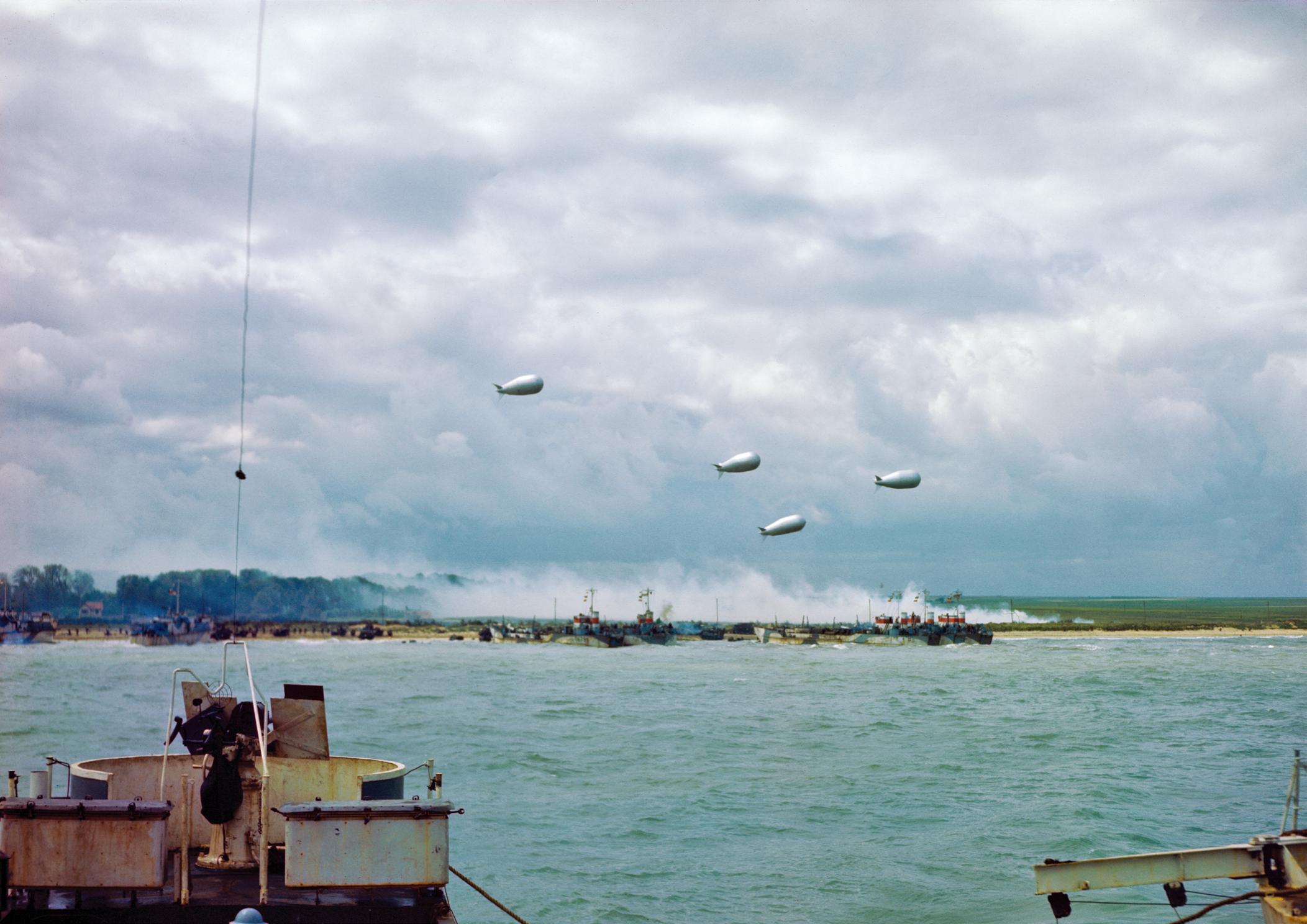
6 June 1944
Canadian troops land on Juno Beach and begin fighting their way inland. Canada also contributes naval and air forces to the five-division assault in Normandy.
From billboards to bus stops, from TV to social media, Korea’s Hanwha Ocean targeted Ottawa with ads in early 2026 for its KSS-III submarine. In August 2025, Hanwha and Germany’s Thyssen Krupp Marine Systems were named as qualified potential suppliers for the Canadian Patrol Submarine

Project, the country’s initiative to replace the Royal Canadian Navy’s aging—and often non-operational—underwater vessels by 2035. While the Koreans flood the nation’s capital with promo as politicos advance the procurement process, here’s a shallow dive into Canada’s submarine past.
—Aaron Kylie
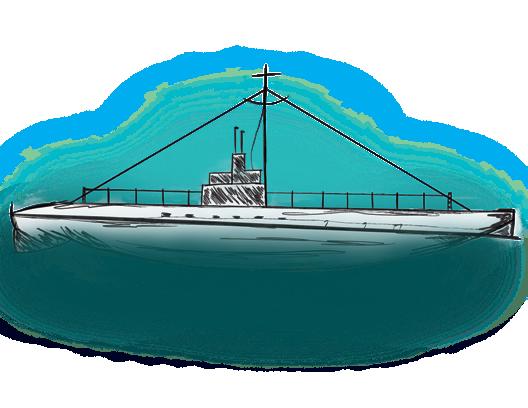
CC-class (1914-1918)
CC 1, CC 2
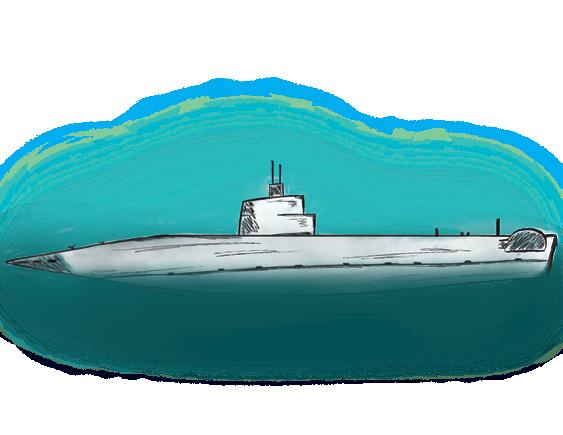
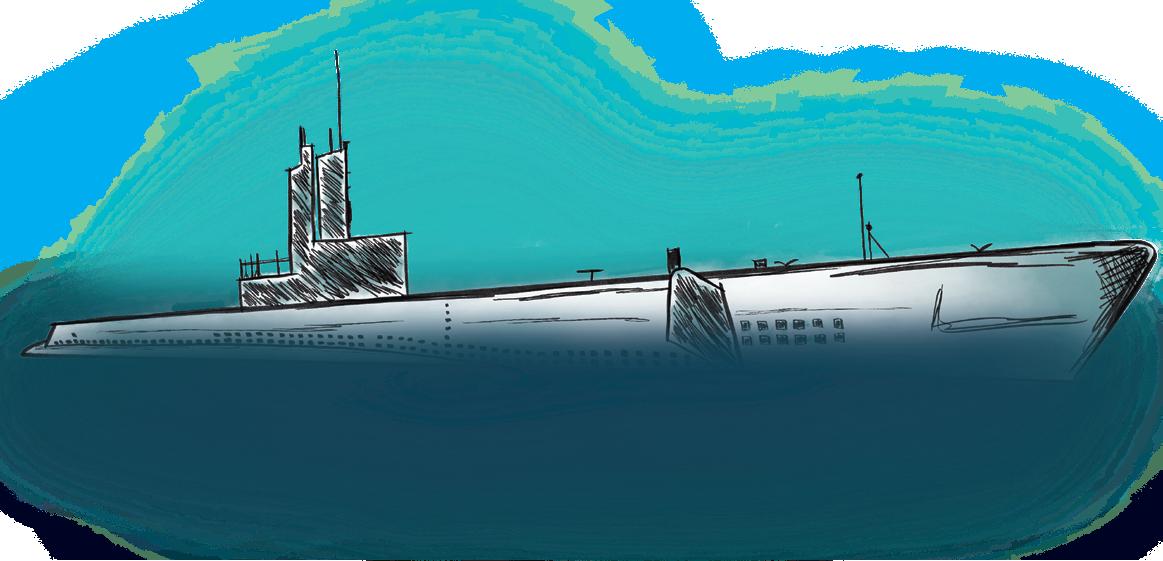
Balao-class (1961-1969)
HMCS Grilse
IXC/40 U-boats (1945-1947)
HMCS U-190, HMCS U-889

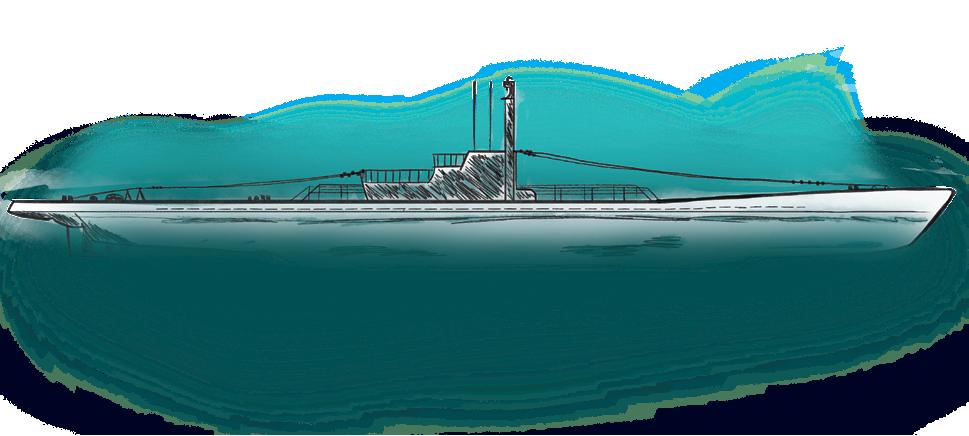
Tench-class (1968-1974)
HMCS Rainbow
$150,000 (plus, it’s believed, millions in refurbishments)
Commissioned as USS Argonautin 1945; sold to Canada in 1968
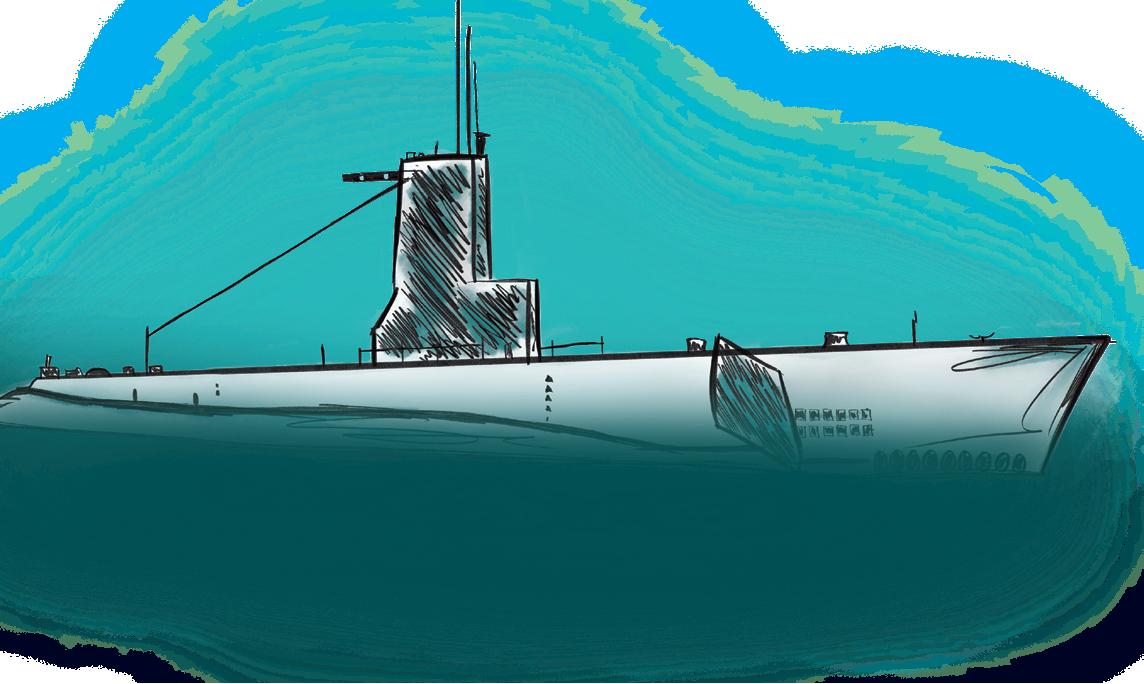
Victoria-class (2002-present)
HMCS Victoria, HMCS Windsor, HMCS Chicoutimi, HMCS Corner Brook

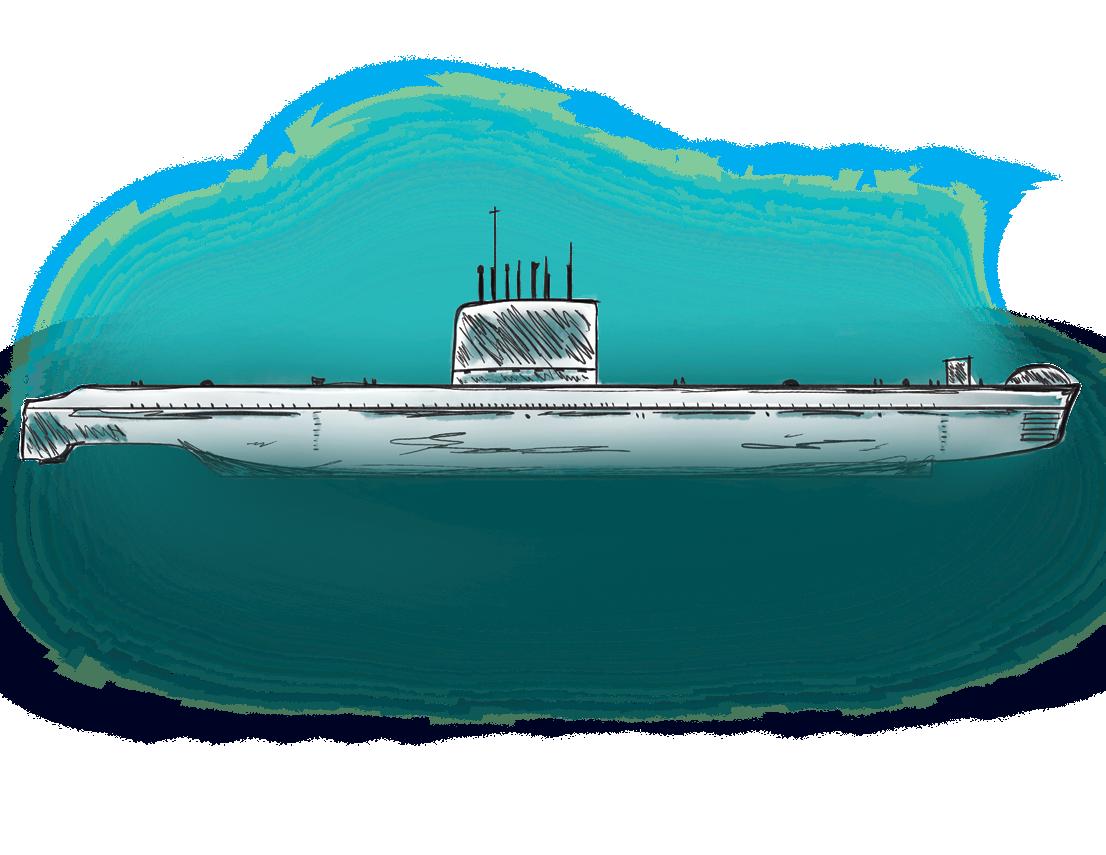
Built for Canada, though Ojibwa was already under construction as HMS Onyx when the purchase was made
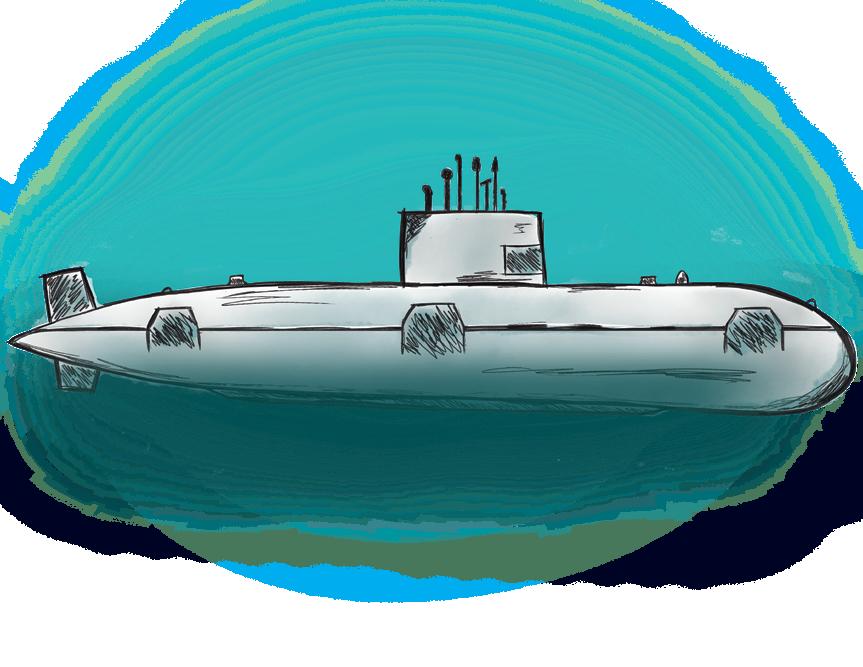

CC-Class four forward/one aft 18-inch torpedo tubes
H-Class
four forward 18-inch torpedo tubes; six torpedoes

IXC/40 U-boats four forward/two aft 21-inch torpedo tubes; 22 torpedoes; 44 mines; 10.5-cm deck gun
Balao-class six forward/four aft 21-inch torpedo tubes; 14-24 torpedoes; 5-inch deck gun; Bofors 40mm and Oerlikon 20mm cannon
Tench-class six forward/four aft 21-inch torpedo tubes; 28 torpedoes; 5-inch deck gun; Bofors 40mm and Oerlikon 20mm cannon
Oberon-class six forward/two aft 21-inch torpedo tubes; 18-30 torpedoes
Victoria-class six forward 21-inch torpedo tubes; 18 torpedoes

By Mark Zuehlke
“My appointment at Stevensville was my obvious duty.”
—Lieutenant-Colonel
Alfred Booker
The Fenians ambushed Booker from behind a fence-rail barricade.
the night of May 31, 1866, about 600 Irish-Americans crossed the Niagara River from Buffalo into Canada West and occupied Fort Erie. They were the first of an anticipated 1,500 Fenians that would form one of a threepronged raid spanning present-day western Ontario to the Atlantic seaboard. Only this first wave, however, materialized—the remainder being blocked by the arrival of the American gunboat USS Michigan. Having failed to detect the Fenian threat, British military officials in Canada scrambled to respond with an operation of their own. While Colonel George Peacocke advanced a force of about 1,700 British regulars and Canadian militia from Chippawa, Lieutenant-Colonel Alfred Booker was to bring 850 more militiamen to Port Colborne and reach Ridgeway by train. His troops would then march to Stevensville, about 12 kilometres from Fort Erie, where the two columns would attack the Fenians from opposite flanks. Booker best understood where the Fenians were and although he proposed moving his troops to Fort Erie to attack their initial mustering point at Frenchman’s Creek, he was overruled. The wealthy auctioneer and devout Baptist, who had been commissioned into the militia in 1851, later wrote that, consequently, keeping “my appointment at Stevensville was my obvious duty.”
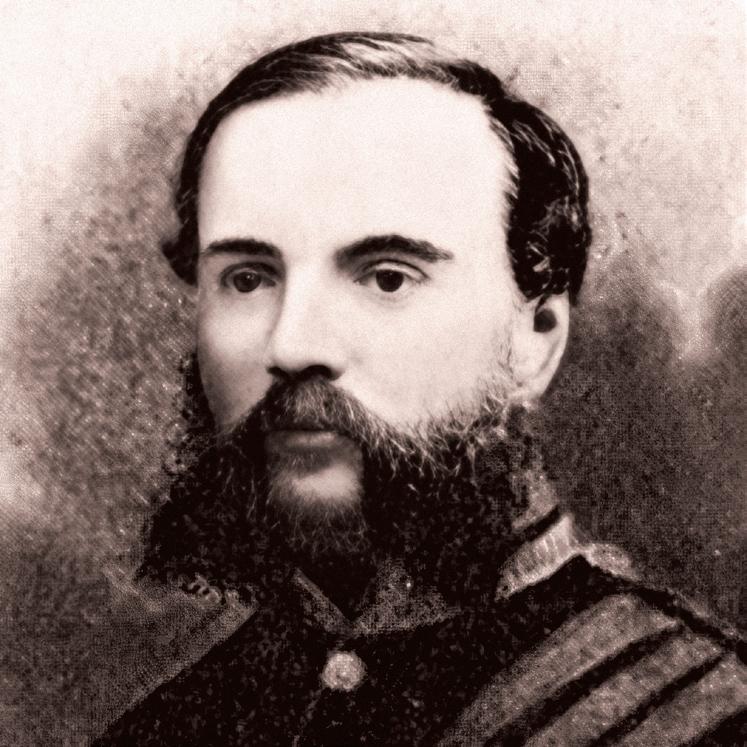
While Booker moved quickly, Peacocke delayed his departure, then followed a meandering route. This left him far from the juncture point when Booker and his men marched toward Stevensville. The Fenians, commanded by U.S. Civil War officer John O’Neill, ambushed Booker from behind a fence-rail barricade they had erected on Limestone Ridge overlooking the Canadian line of march just north of Ridgeway. Unable to withdraw, Booker’s militia met the attack with courage and steadiness until several Fenians on horseback appeared.
Fearing an imminent cavalry charge, Booker ordered his troops to form a defensive square, which exposed them to withering musket fire. Then, Booker’s attempt to conduct an orderly withdrawal failed as discipline disintegrated into a retreat to Port Colborne. Ten Canadians were killed and 38 wounded.
O’Neill’s Fenians withdrew to Fort Erie, then to Buffalo. Following the fiasco, several subordinate officers assigned Booker as solely responsible for the Ridgeway defeat. Even after he was cleared by a court of inquiry, some officers financed a malicious account of the battle still blaming Booker for the defeat. The account’s author, Alexander Somerville, later admitted that his writing was “blind to fair play” and “the work of Col. Booker’s personal enemies.”
Booker resigned his militia command on July 30, 1866, and died in Montreal five years later.

he governing passion of my life apart from my duty to my God is to be at the head of an Irish Army battling against England for Ireland’s rights,” wrote Fenian John O’Neill. “For this I live, and for this if necessary I am willing to die.”
O’Neill had immigrated to America in 1848 during the potato famine and enlisted in the 2nd U.S. Dragoons in 1857. Shortly after, he deserted only to re-enlist in a California-based cavalry unit. Commissioned during the Civil War, O’Neill served with distinction. He was wounded in November 1863 and released the following year. In 1866, O’Neill and other Irish veterans joined the Fenian Brotherhood, which sought to liberate Ireland from Britain by seizing some or all of British North America to be exchanged for their homeland’s independence. They also hoped a series of incursions into Canada might trigger an American-British war that could also be exploited to free Ireland.
O’Neill’s advance to Ridgeway and the ensuing battle proved an unexpected victory and the only one the Fenians would achieve. “Although we had met and defeated the enemy, yet our position was still a very critical one,” O’Neill wrote later.
Knowing that Colonel Peacocke’s column would soon arrive and “not knowing what was going on elsewhere, I decided that my best policy was to
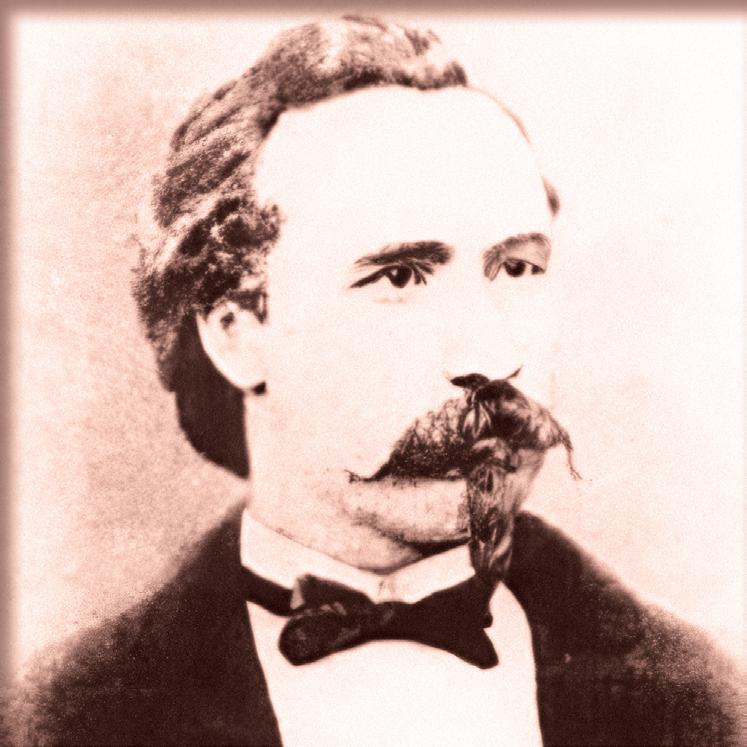
O’Neill’s advance to Ridgeway and the ensuing battle proved an unexpected victory and the only one the Fenians would achieve.
return to Fort Erie,” O’Neill continued. Once there, he hoped to learn that other Fenian raiders were mustering in Buffalo. In that event, “I was willing to sacrifice myself and my noble little command…as I felt satisfied that a large proportion of the enemy’s forces had been concentrated against me.”
Receiving no word of other raids, however, O’Neill withdrew across the border to Buffalo. Here, along with some 600-700 Fenian volunteers, O’Neill was arrested by the Americans for violating U.S. neutrality laws. He was soon released and thereafter referred to by the Irish independence movement as “General” O’Neill. His Ridgeway victory was lauded by Irish on both sides of the Atlantic.
Although support for further Fenian raids was lacking in the Irish-American community and few more army veterans volunteered, O’Neill persisted in the cause. He led a confused raid from Vermont in May 1870, then another from Minnesota in October 1871 before abandoning Fenianism in favour of encouraging Irish immigration to Nebraska. He died of pneumonia on Jan. 8, 1878.
“I was willing to sacrifice myself and my noble little command.”
—Lieutenant-Colonel John O’Neill
By Alex Bowers
he life in the trenches isn’t too bad, from my experience,” penned private William (Willie) Garrow Jr. of Oshawa, Ont., in a Jan. 28, 1916, letter to his sister, Leah. What the Princess Patricia’s Canadian Light Infantry (PPCLI) soldier didn’t know was that such realities would be short-lived.
Four months later, between June 2-4, Garrow was killed during the savage Battle of Mount Sorrel (also see “The take back” on page 26). He was 22 years old.
To recognize Garrow’s sacrifice, his family, like those of 1.3 million others in the British Empire, received a bronze next of kin Memorial Plaque, along with a memorial scroll signed by the King. The plaque was a 12-centimetre (4.7-inch) disc cast in gunmetal. It was designed by Edward Preston, who beat 800 other entries in a public competition, and boasted a traditional figure of Britannia clutching a laurel wreath. The imperial imagery continued with the portrayal of lions, one of which bites into an eagle, symbolizing Germany. Finally, two dolphins, representing British sea power, glide beneath a simple yet profound inscription: “He died for freedom and honour.” Space was also left to inscribe the recipient’s name.
their loved ones.” In the case of Garrow’s family, like others, it was affixed to his tombstone at Oshawa Union Cemetery.
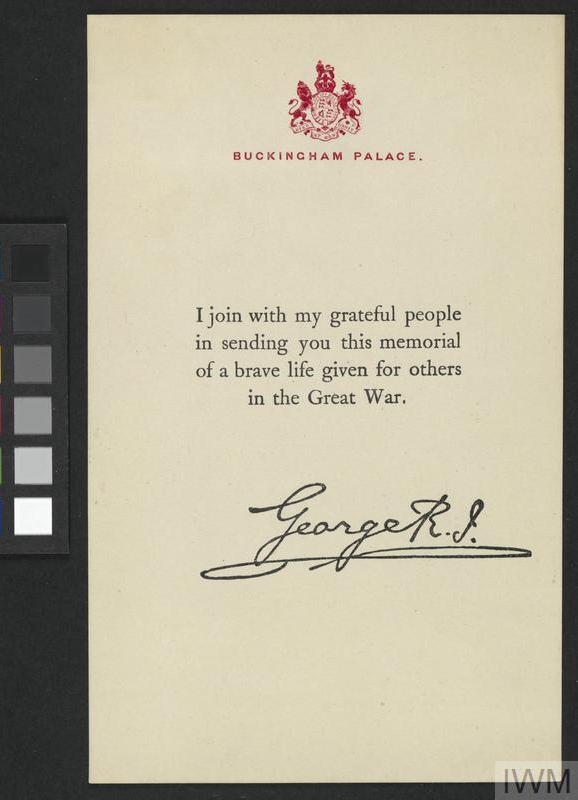
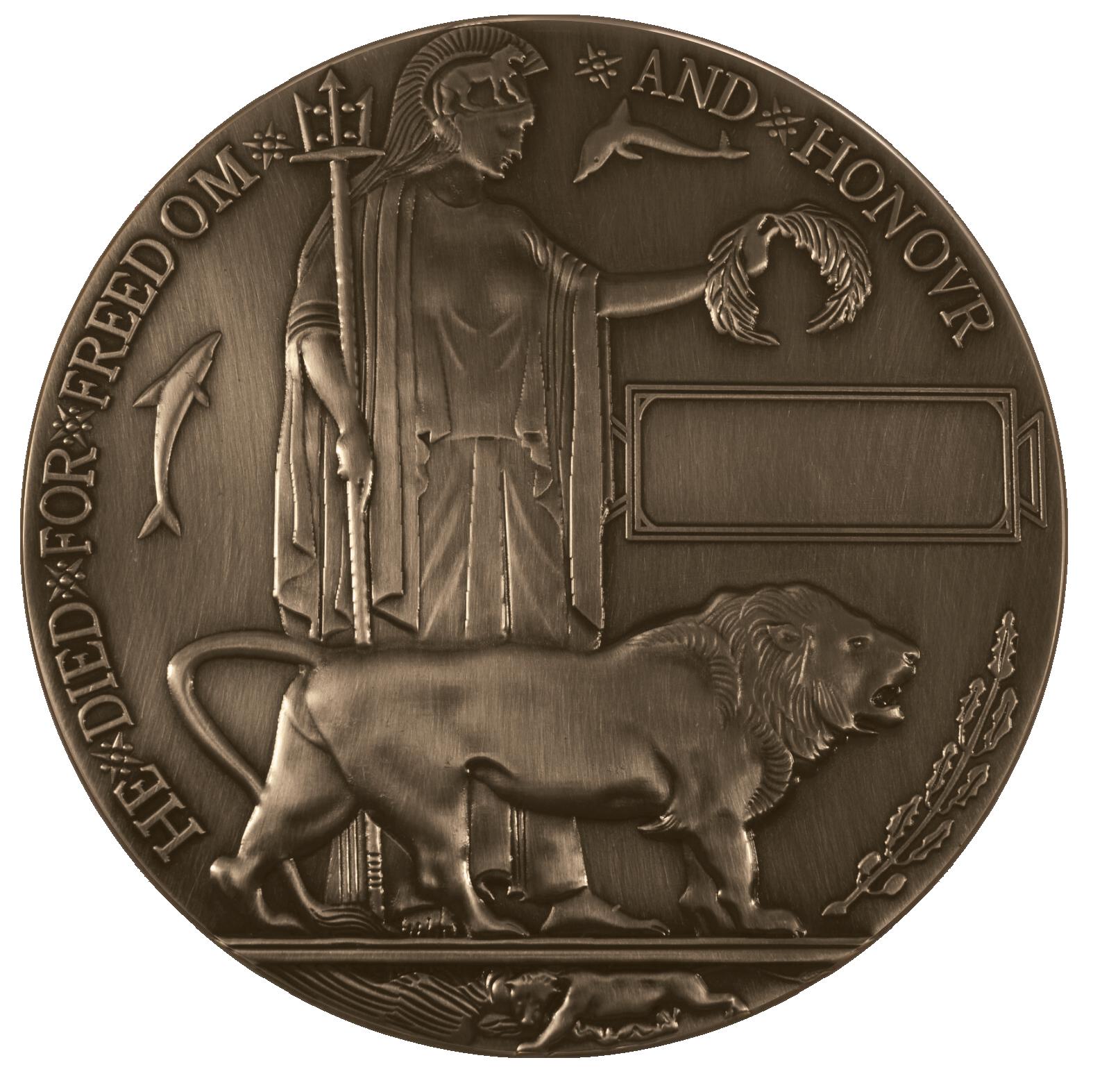
Dubbed the “Dead Man’s Penny” or “Widow’s Penny” for its resemblance to a coin, there was “no formalized etiquette for displaying the plaques,” noted an Oshawa Museum article. Occasionally, they were “hidden away in drawers or chests so as not to be reminders of
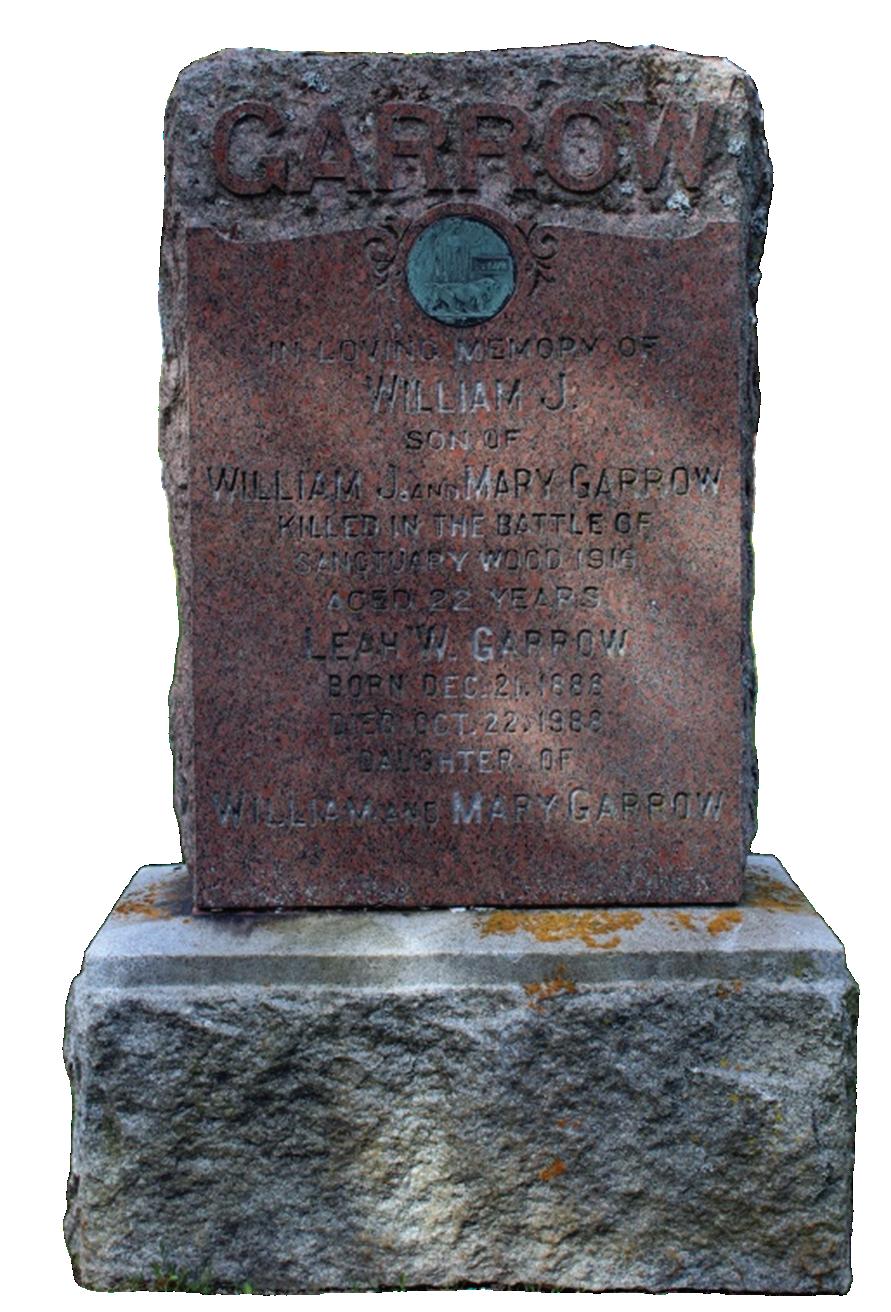
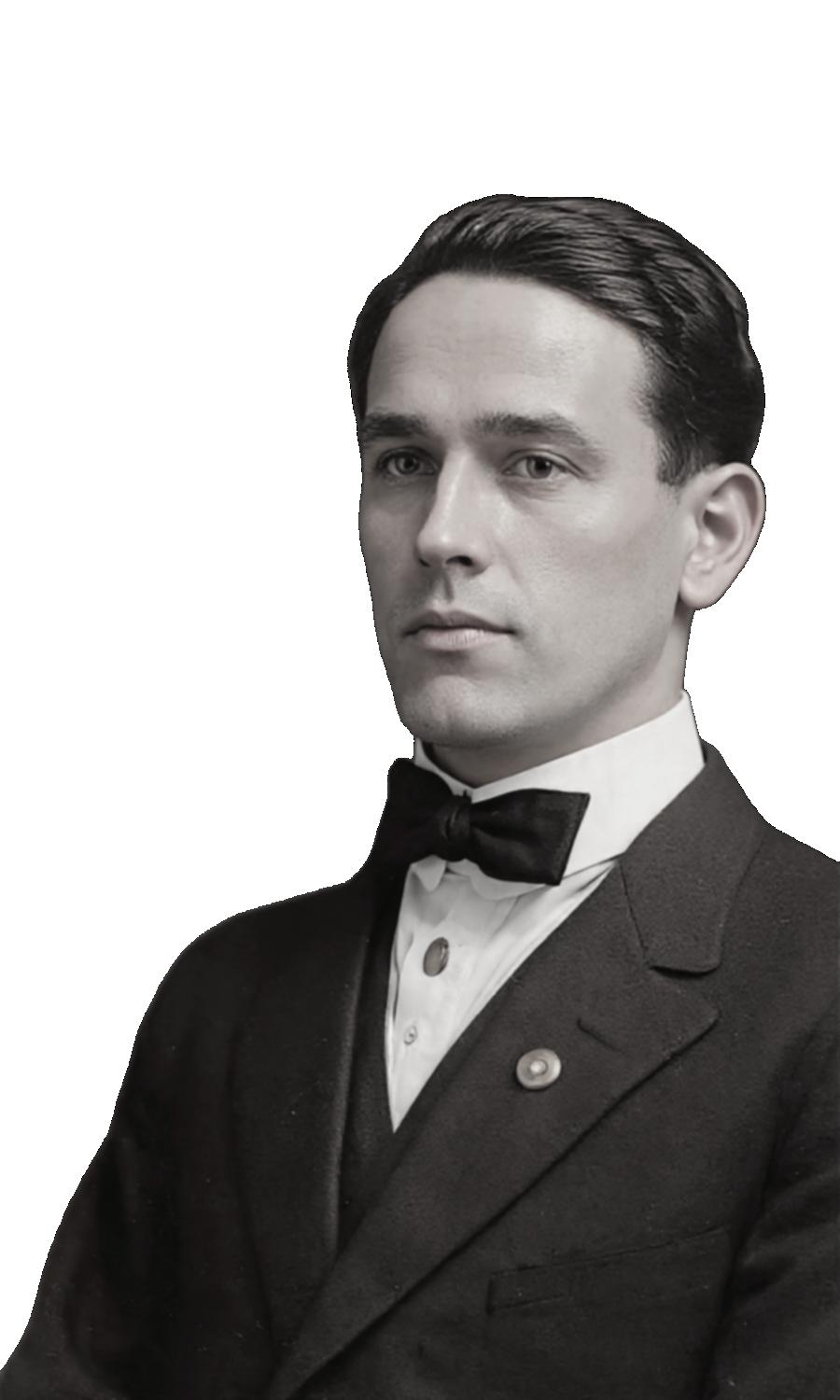

Two dolphins, representing British sea power, glide beneath a simple yet profound inscription: “ He died for freedom and honour.”
June 5, 1916
Dear Mother,
I don’t know if I am allowed to say much about it but you will see by the papers what a fierce fight the Canadians have been into. How I came through without a scratch I can not [sic] tell as we have had terrible losses. I know there has been nothing worse in this war. We had to make a charge in broad daylight but they were ready…and opened up an awful fire on us. That night we were supposed to be relieved but the relief could not get in so we had another awful 24 hrs during which they sent over the terrible high explosives & shrapnel. Two or three times they nearly landed one in our trench. I was hit on the head about four times but my steel helmet saved me. Then I had a bullet go right through a mess tin strapped on my back. I am going to keep it as a souvenir. God must have been watching over us and it made one think about that.
Good by [sic] with love,
George

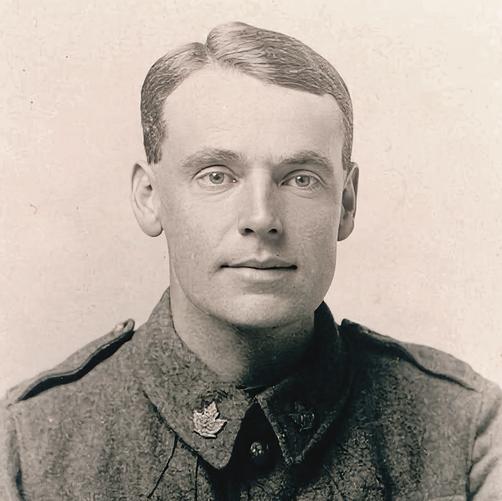
An excerpt of the letter Private George Adkins of 49th Battalion, Canadian Expeditionary Force, sent to his mother during the June 2-13, 1916, Battle of Mount Sorrel (also see “The take back,” page 26). Adkins not only survived the carnage there—in total, 8,430 Canadians were killed, wounded or reported missing— but also the war, returning to Edmonton in March 1919.
Henry Edward
“Pornographic materials or devices are not allowed in the Kingdom of Bahrain,” said a letter from the U.S. Department of Defense sent from an American naval base in the Middle Eastern country.
Toronto’s Grace Bennett, owner of online adult shop Bonjibon, received the missive— subject: “adult item identified during x-ray mail screening”—in September 2025,
along with the return of two sexual aids purchased from her company.
Turns out, pleasure toys are illegal in Bahrain and American military officials there determined they posed an “immediate danger to life or limb, or an immediate and substantial danger to property.”
“For all American soldiers who are stationed overseas, specifically ones stationed in countries where good vibes might be illegal, you cannot order from Bonjibon,” said Bennet in an Instagram post detailing the situation.
So much for Canadians trying to support U.S. military desires.
—Legion Magazine staff
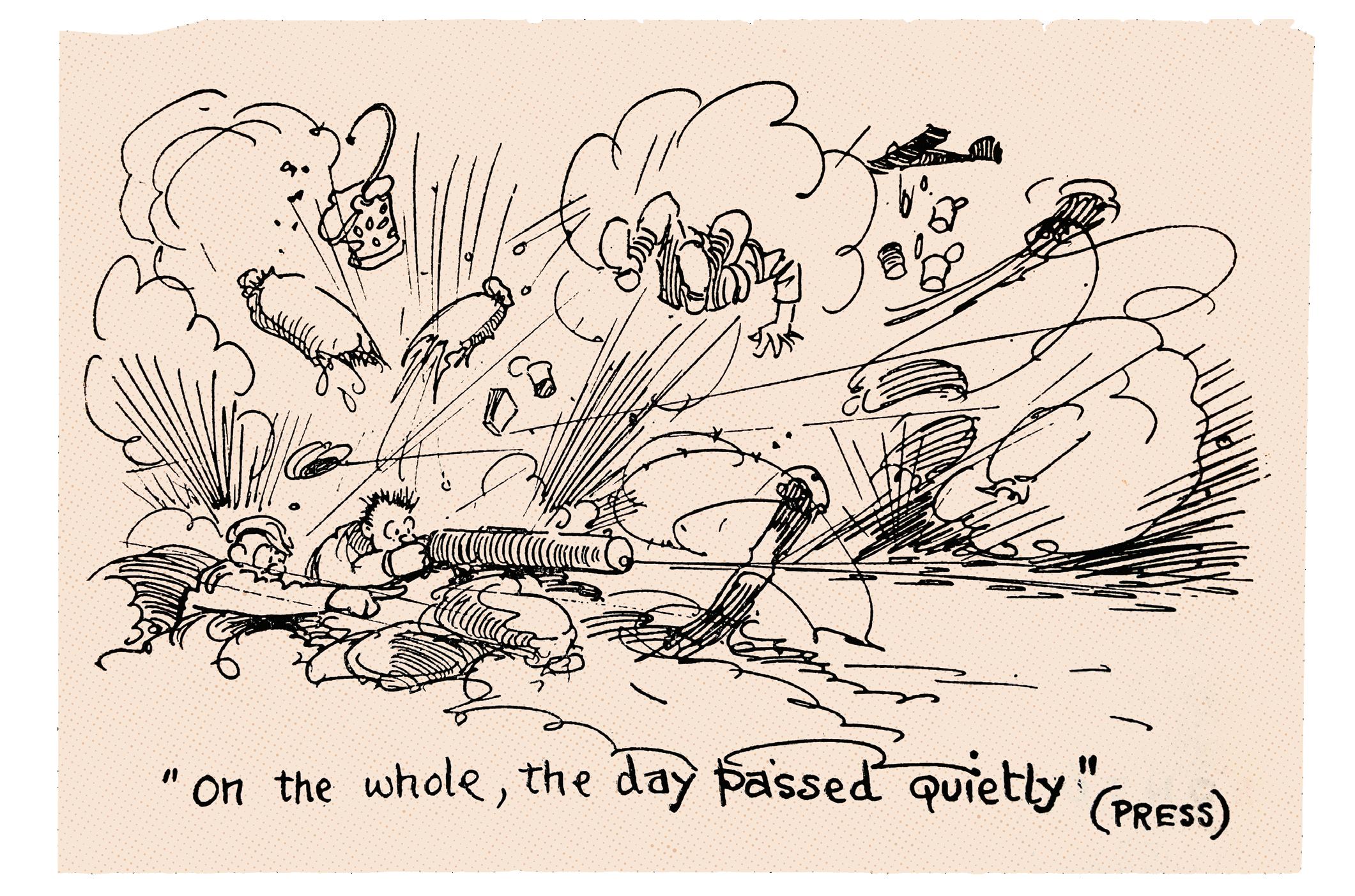
The Legionary magazine, July 1934
1st destroyer: “Sighted spherical object. Please instruct. Presume mine.”
2nd destroyer: “You can have it.”


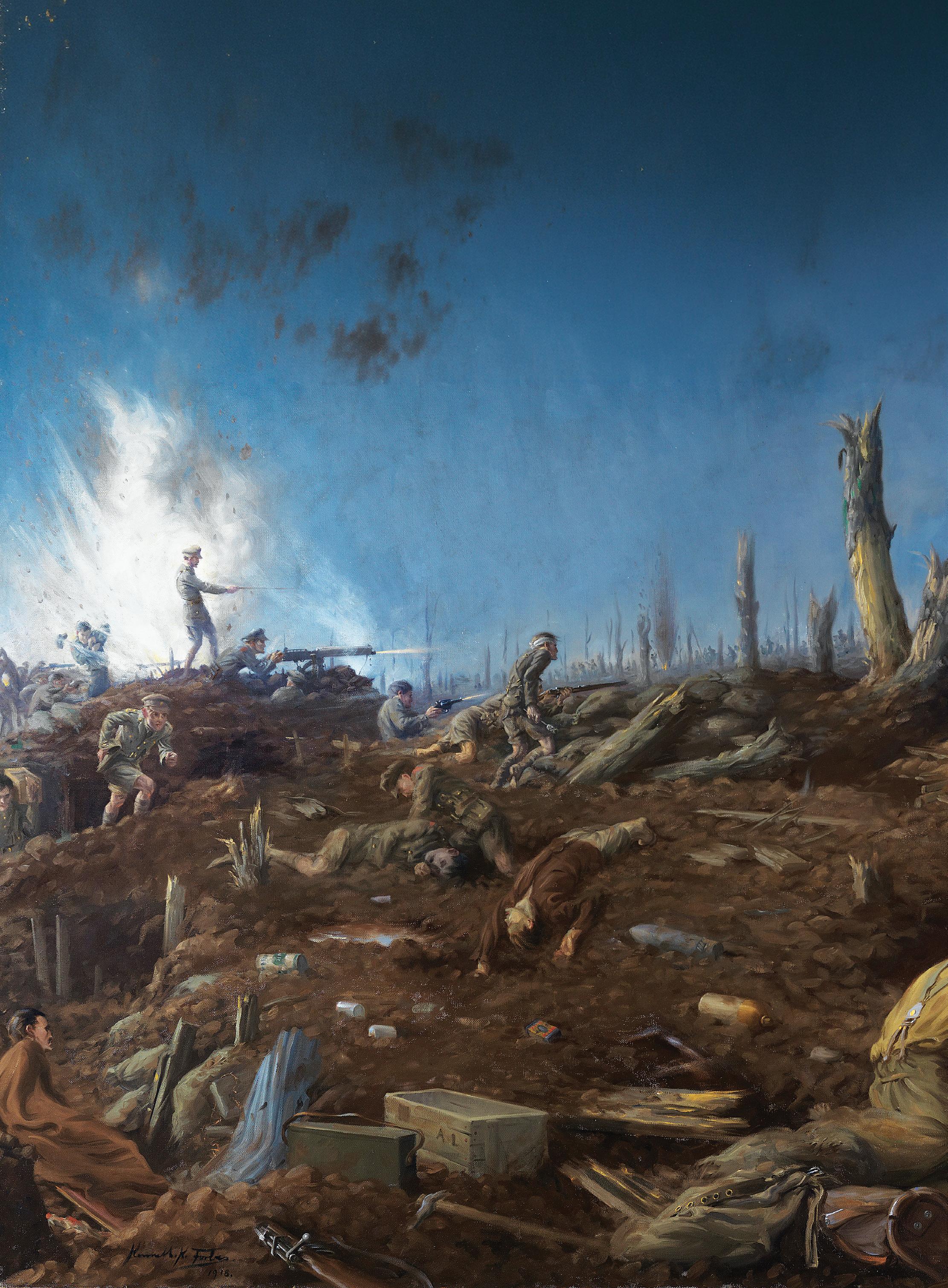
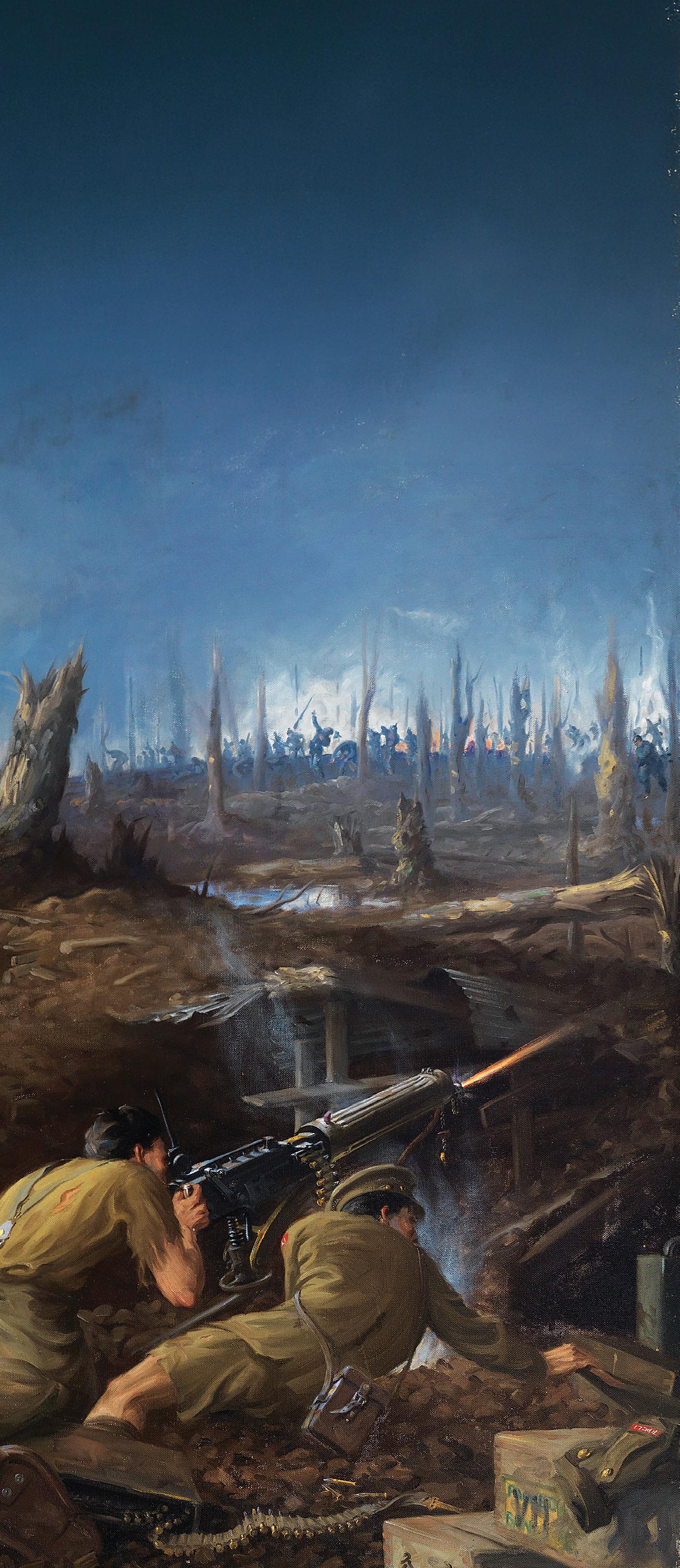
The Battle of Mount Sorrel started in disaster for the Canadians, but ended in triumph
By Mark Zuehlke
June 2, 1916, the Canadian Corps was still recovering from a disastrous April defeat at the St. Eloi Craters. There, British sappers had detonated underground charges near the Ypres salient’s St. Eloi village, creating seven massive craters. The following attack by 3rd British Division on March 27 had started out promising and then unravelled in the face of determined German counterattacks. When 2nd Canadian Division was sent in on the night of April 3-4 to hold the ground that had been won, it was mauled and forced to retreat. This allowed the Germans to recover all the territory they had lost. At the battle’s end on April 16, the Canadians had suffered 1,373 casualties, the Germans 483.
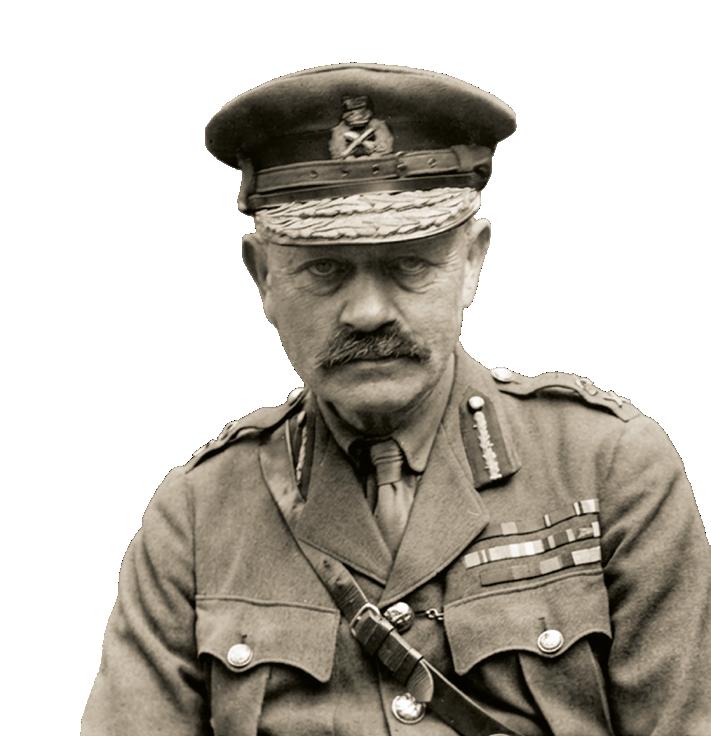
In the aftermath, corps commander Lieutenant-General Edwin Alderson was replaced on May 28 by fellow Brit Lieutenant-General Julian Byng. Having just returned from service at Gallipoli, Byng wasn’t thrilled by being assigned to colonials. And being new to the unit meant he needed time to assess the Canadians’ strengths and weaknesses, as well as those of their divisional and brigade commanders. Fortunately, the salient seemed relatively quiet. British attention was focused on amassing troops, artillery and munitions for a planned July 1 offensive in the Somme, and the Germans seemed content to let current lines stand. Of course, for soldiers on the ground, the salient was never quiet. An ongoing artillery duel claimed about 2,000 Canadian casualties in May alone.
Spring’s unseasonable cold and rainy weather clogged trenches with mud. Soaked soldiers on both sides were miserable. Perhaps it reflected Canadian inexperience or shaky morale at corps command following the messy shakeup around Alderson’s relief, but the Canadians failed to monitor what the Germans in front of them were doing. Nor did they improve defences, prepare artillery fire zones or create a reaction reserve to break up enemy attacks.
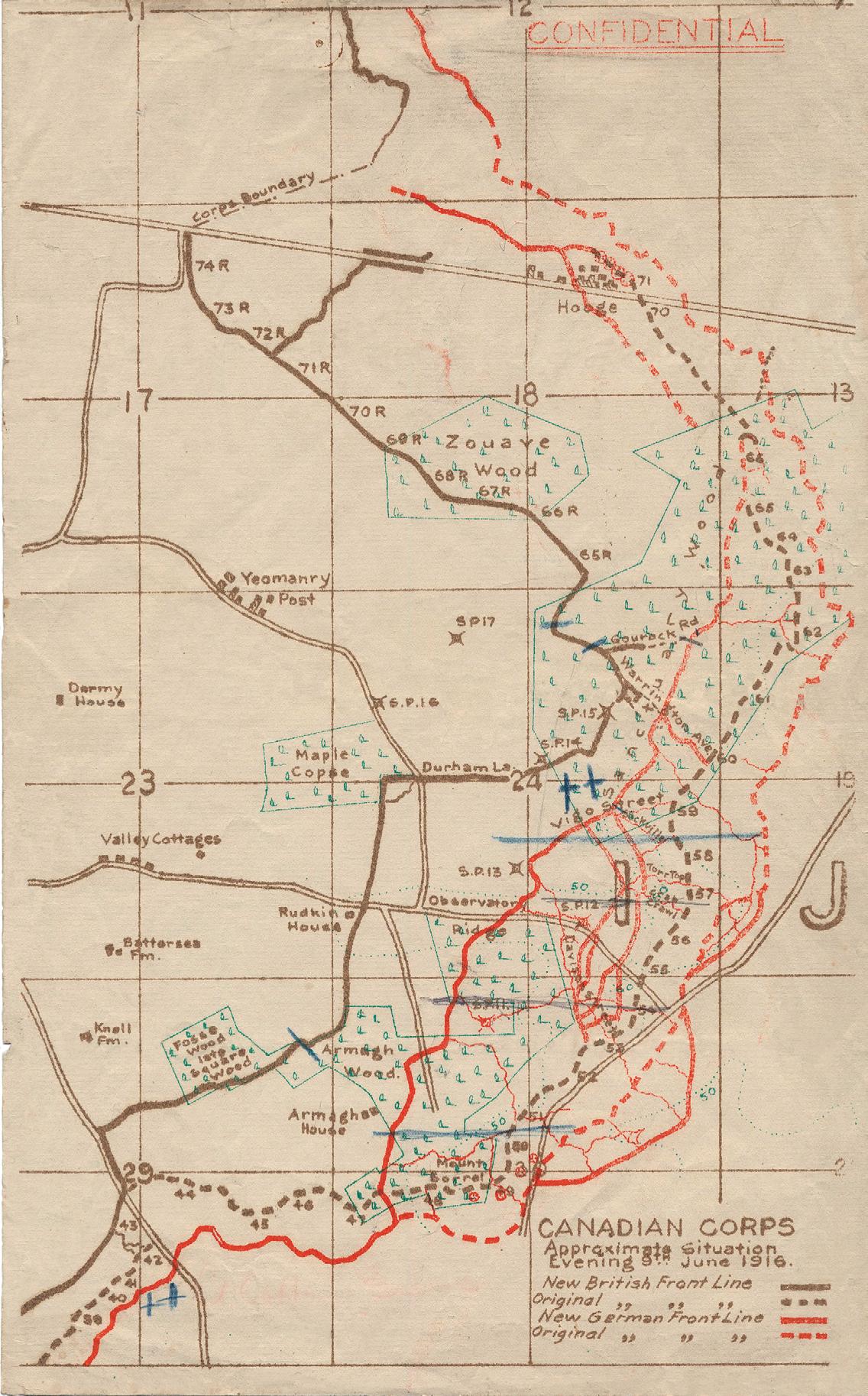
The front defended by the Canadians was both the salient’s most vulnerable and strategically important. Forming the easternmost thrust into German territory, it was the only remaining stretch of Observatory Ridge in Allied hands. Extending from about 1,000 metres east of Zwarteleen beside Hill 60, it passed over the flat knoll of Mount Sorrel and two slightly higher points—Hill 61 and Hill 62, the latter named Tor Top. North of it, the ground fell to Menin Road, while to its west Observatory Ridge
extended 1,000 metres from Armagh Wood to Sanctuary Wood. German 4th Army commander Generaloberst Albrecht was determined to win this high ground. If he could take it—particularly Observatory Ridge—the Allies might have to cede the salient. At worst, losing these heights might require the Allies to “fetter as strong a force as possible to the Ypres Salient,” as the Germans stated, and thereby reduce British ability to undertake a major offensive elsewhere.
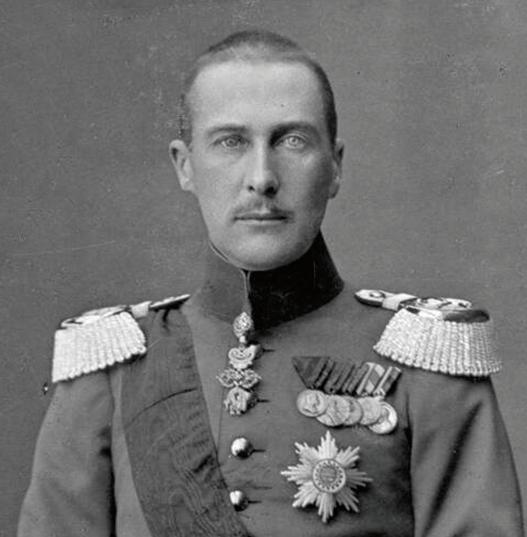
Albrecht, heir apparent to the Kingdom of Württemberg’s throne, was a highly regarded professional soldier. His 4th Army’s 13th Württemberg Corps was top-notch and its 26th and 27th infantry divisions had been preparing an attack for six weeks. Engineers had extended saps on either side of Tor Top.
“The whole enemy position was a cloud of dust and dirt, into which timber, tree trunks, weapons, and equipment were continuously hurled up.”
Although this work was detected by the Allies and subjected to artillery and machine-gun harassment, German engineers worked on. By the end of May, the heads of these saps—now no more than roughly 50 metres from the Canadian front lines—were linked by a lateral trench. Similar works were identified south of Mount Sorrel.
Meanwhile, Allied aerial observation reported what appeared to be dummy fortifications near Menin Road that closely resembled the Canadian defences at Tor Top, which could be serving as a training site for a future attack. There was also evidence that large-calibre trench mortars and other artillery assets, normally associated with offensive operations, were gathering before the Canadians. With the weather making observation difficult and no signs of major infantry concentrations underway, however, these telltale signs were dismissed.
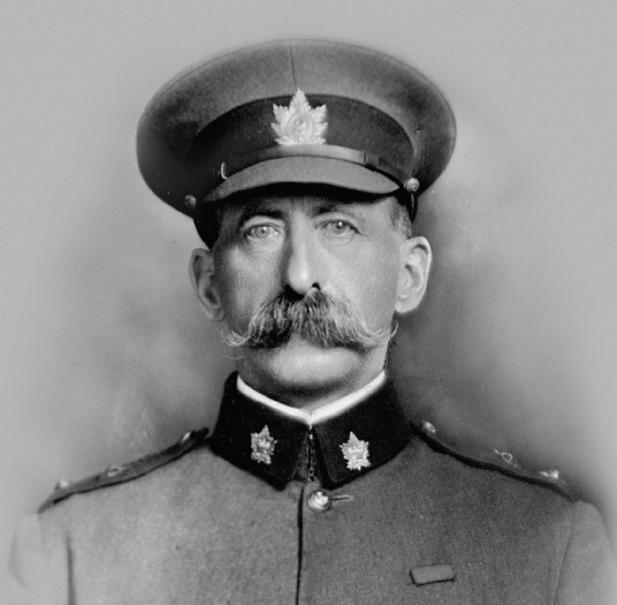
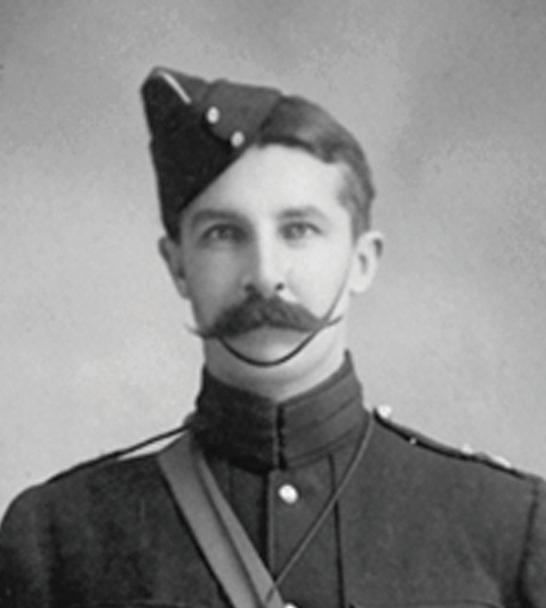
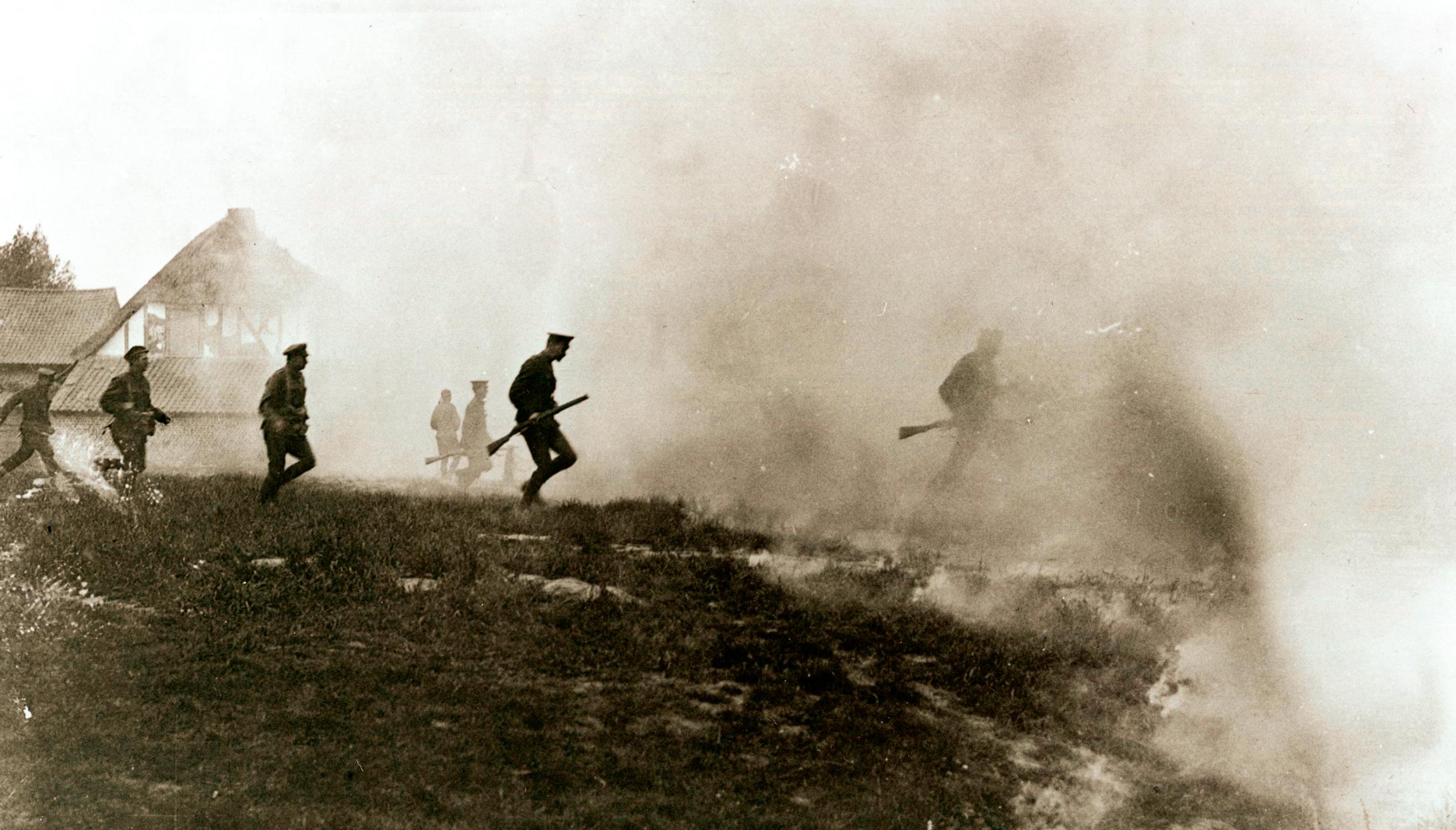
German 4th Army commander Generaloberst Albrecht ( top left ). Major-General Malcolm Mercer (below left ), commander of 3th Division, and Brigadier-General Victor Williams (below right ). Troops attack through smoke at the Battle of Mount Sorrel (bottom).
In the early morning hours of June 2, the Canadians roused to address their defensive weaknesses—not aware it was already too late. At 6 a.m., 3rd Division’s Major-General Malcolm Mercer and Brigadier-General Victor Williams arrived at Mount Sorrel to observe the front lines of 4th Canadian Mounted Rifles (CMR). The battalion’s 8 a.m. diary entry reported a “calm, beautiful and noticeably quiet morning.”
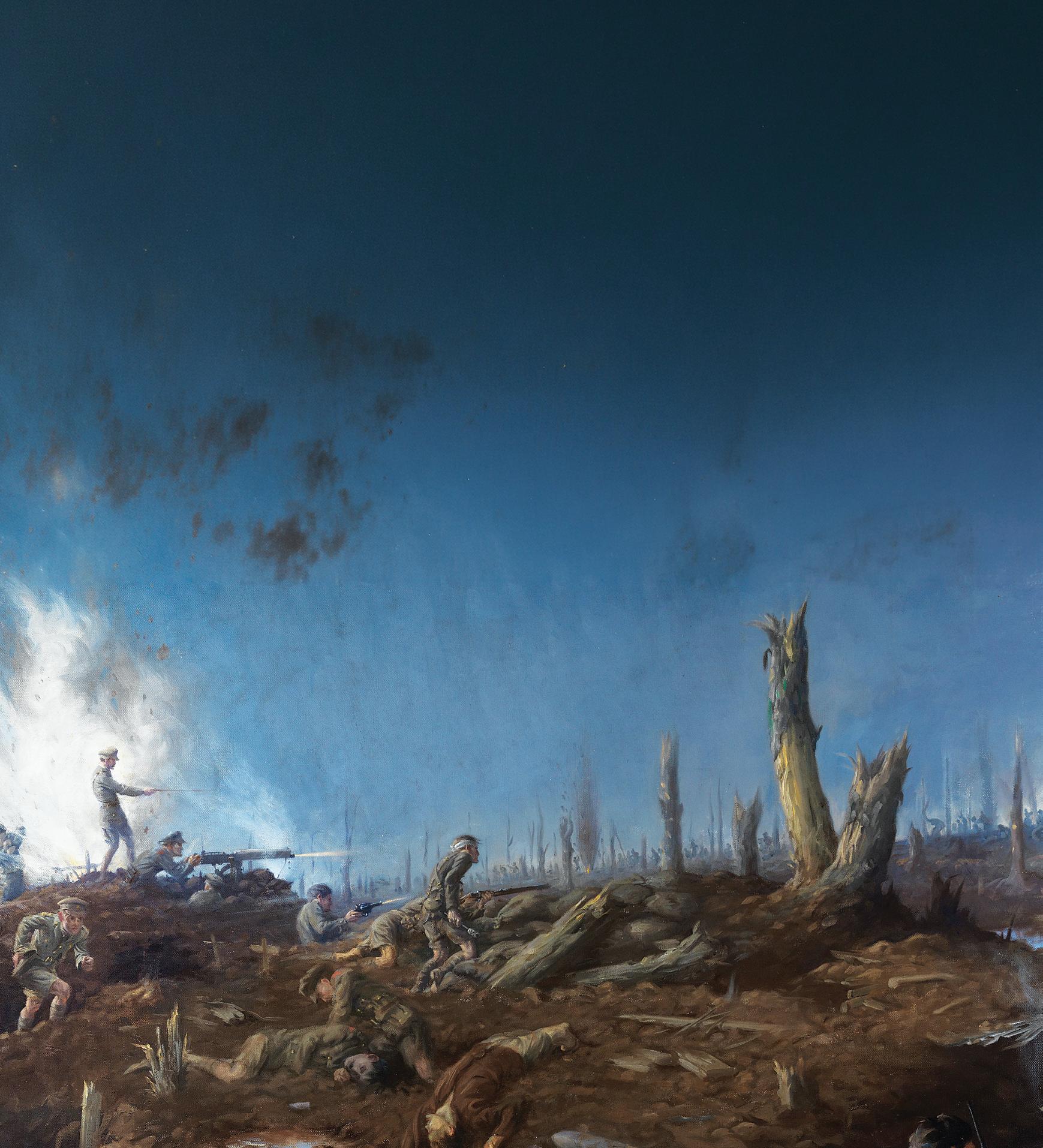
At 8:30 a.m., all that changed as a massive avalanche of artillery shells rained down on a 1,000-metre frontage with 4th CMR caught in the middle. What followed was one of the most intense bombardments to date in the war. For four-anda-half-hours, the artillery storm raged. Canadian gunners tried to respond but the weight of enemy fire overwhelmed them. Caught in the maw, Mercer was killed while Williams was badly wounded and taken prisoner. Mercer would be the highest ranking Canadian officer to die in the war and Williams the highest ranking prisoner of war.
To the rear of 4th CMR, Private George Yule of 5th CMR hunkered in Maple Copse, a small wood near Hill 62. He was caught in the maelstrom. “All those beautiful trees in Maple Copse, by afternoon there wasn’t a stump left higher than a foot and a half. That’s how devastating the barrage was. I was sent back to find B Company…HQ had been blown to smithereens… everything was destroyed.”
fire or buried beyond recovery by showers of dirt and debris.
“The whole enemy position was a cloud of dust and dirt, into which timber, tree trunks, weapons, and equipment were continuously hurled up, and occasionally human bodies,” wrote a German witness.
Until now, much of this section of the salient had been spared full-scale destruction. The barrage finished that. The trees of Maple Copse, Armagh Wood and Sanctuary Wood were shredded, nothing left but craters and jagged stumps. Deadly slivers of wood sliced into flesh, adding to the carnage. Few soldiers caught in the barrage survived. Many simply disappeared, engulfed by
At 1 p.m., the barrage lifted, and four mines emplaced in undetected tunnels under the Canadian front exploded, continuing the slaughter. Then, six Württemberg assault battalions, followed by five more in close support and another six waiting in reserve, struck the four Canadian battalions blocking their path.
As the Germans flooded through the shattered trenches along Mount Sorrel and Hill 62, the isolated bands of survivors from 1st and 4th CMR tried to hold on. Men fought hand to hand with bayonets and grenades. Whenever a
Canadian pocket seemed like it might stand, the Württembergs burned them out with flamethrowers. On the left and right flanks, Princess Patricia’s Canadian Light Infantry (PPCLI) and 5th Battalion from 1st Division ripped the Germans with machine guns. Directly facing the Germans, 5th CMR blazed away with rapid and accurate rifle fire from isolated positions on the edges of Maple Copse, somewhat checking the enemy’s advance. Flooding onto Observatory Ridge, the Germans were met with deadly artillery fire from gunners of 5th Battery, Canadian Field Artillery, shooting over open sights. Despite inflicting heavy casualties, however, the battery was overrun.
“It is fitting to stress that here too the Canadians did not surrender,” one German regimental historian wrote, “but at their guns defended themselves with revolvers to the last man.”
By mid-afternoon, a 1,200-metre gap had been created between Mount Sorrel and Sanctuary Wood. Hills 61 and 62 had fallen, along with the eastern portion of Observatory Ridge. But the battletested PPCLI—the first Canadian unit to have joined the British Expeditionary Force—refused to budge despite the death of its commander, Lieutenant-Colonel Herbert Buller, and the loss of more than 400 men, including 150 killed.
Then, with the road to Ypres open, the Württembergs—obeying preset orders—dug in 600
desperately needed time to regroup. The losses suffered by the battalions in the direct line of attack were devastating. 4th CMR suffered 89 per cent casualties—only 76 of 702 men were unharmed. Of 1st CMR, just 135 men out of 692 reached the rear.
Determined to reverse the debacle, shortly after 5 p.m.
Lieutenant-General Byng ordered that “all ground lost today will be retaken tonight.” A counterattack was critical to prevent the Germans from using their newly won gains
1st Division’s 7th and 9th brigades. This pushed the planned 2 a.m. start to past 7 a.m. on June 3 to ensure battalions reached their jumping-off points. Six green rockets meant to signal the four-battalion advance suffered random failures, and required firing a total of 14. Even then, at least two battalions saw no rockets.
The misfires resulted in the battalions attacking separately, allowing the Germans to concentrate their fire to shred each in turn. Adding to an already confused situation, the Canadians wore primitive gas masks through which they struggled to breathe normally. The largest attack Canada had mounted to date failed disastrously.
During the advance, Private A.Y. Jackson—known later as a Group of Seven artist—saw a soldier beside him stare “in dismay at a great spurt of blood coming from his arm, which was only hanging by a few shreds of flesh.” Struck in the shoulder, back and neck by shrapnel, Jackson also fell wounded.
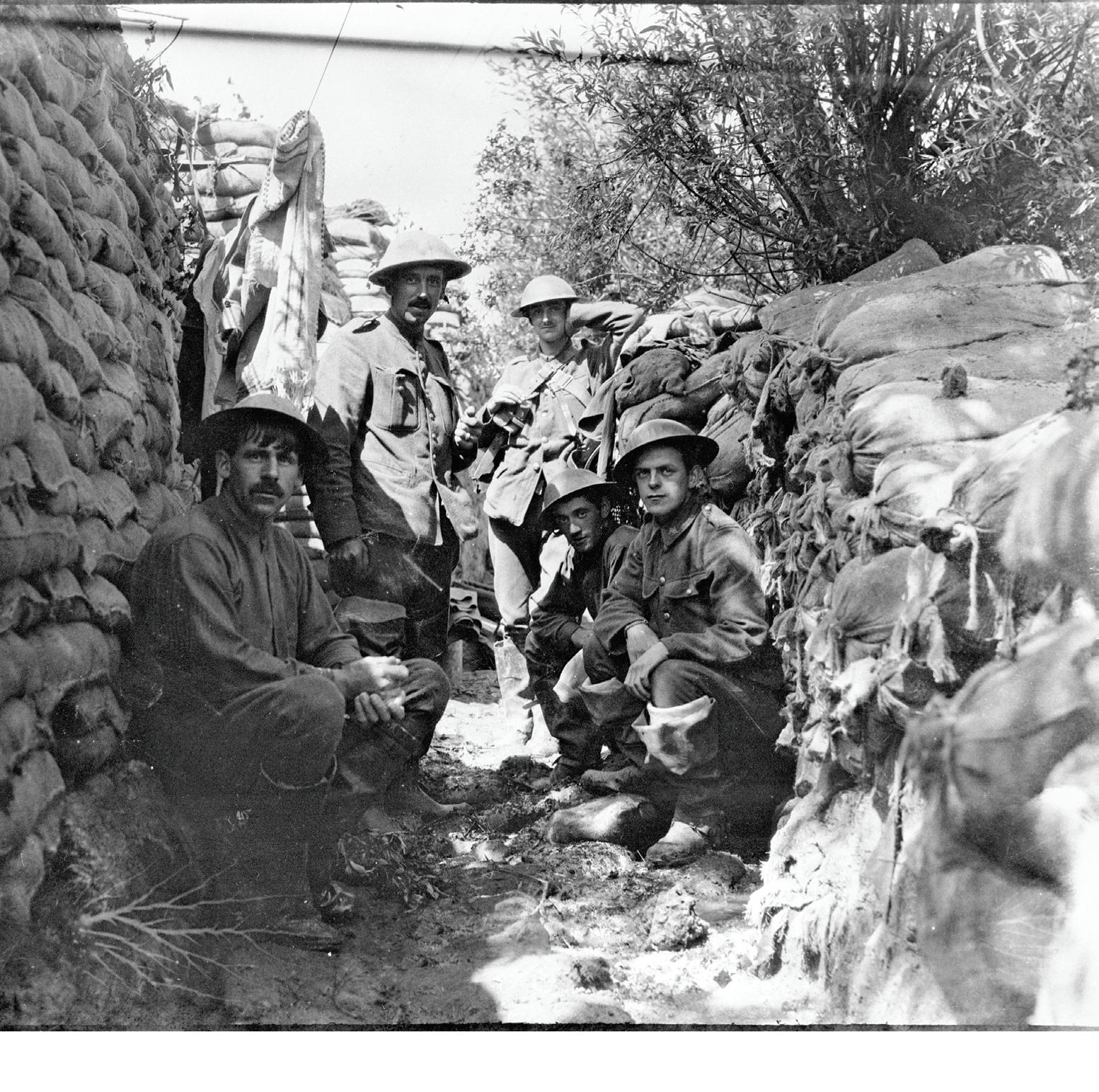
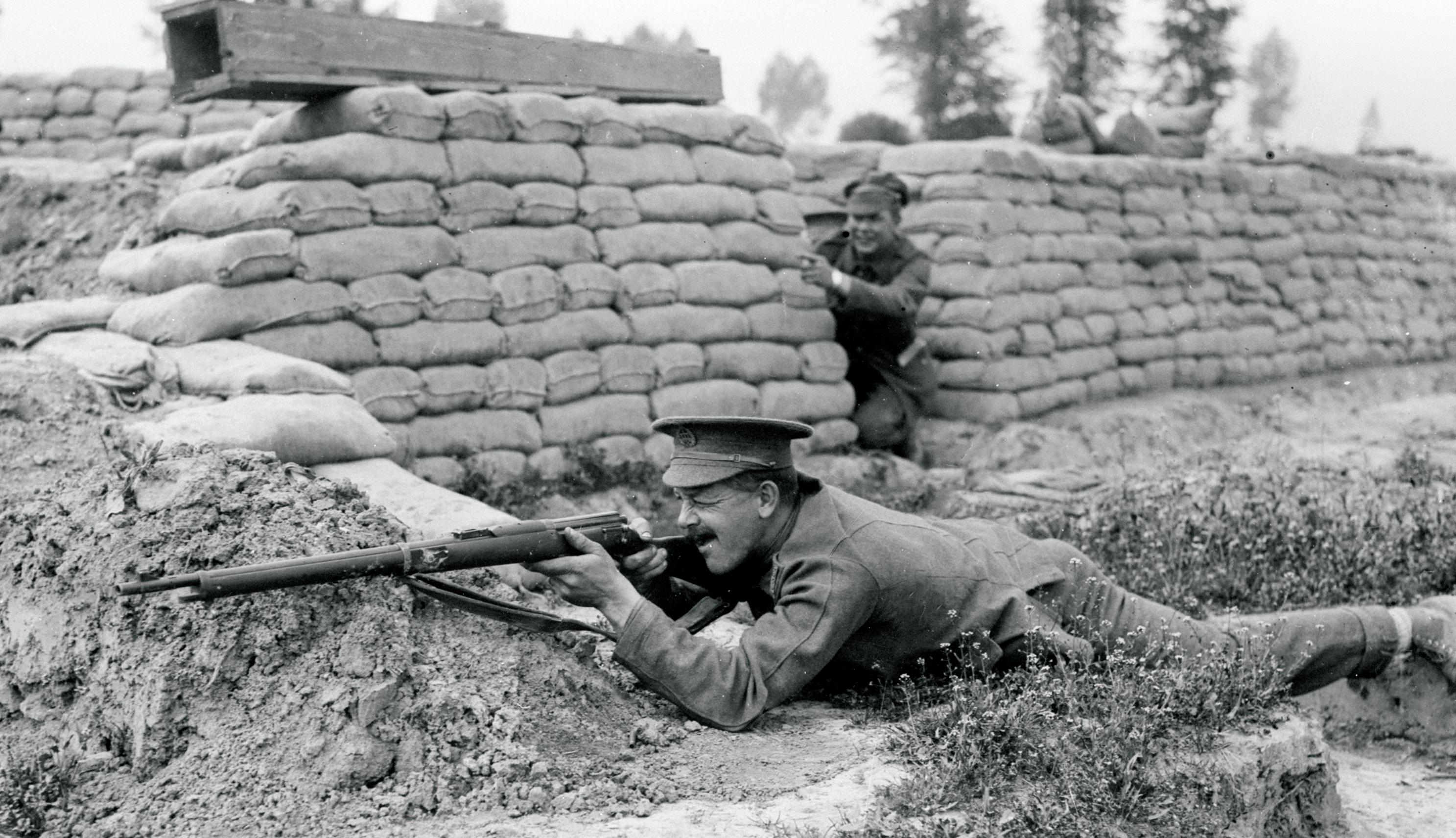
Canadian troops rest in reserve trenches in June 1916 (left ). A prone infantryman wields a Ross rifle (below).

“It is fitting to stress that here too the Canadians did not surrender, but at their guns defended themselves with revolvers to the last man.”
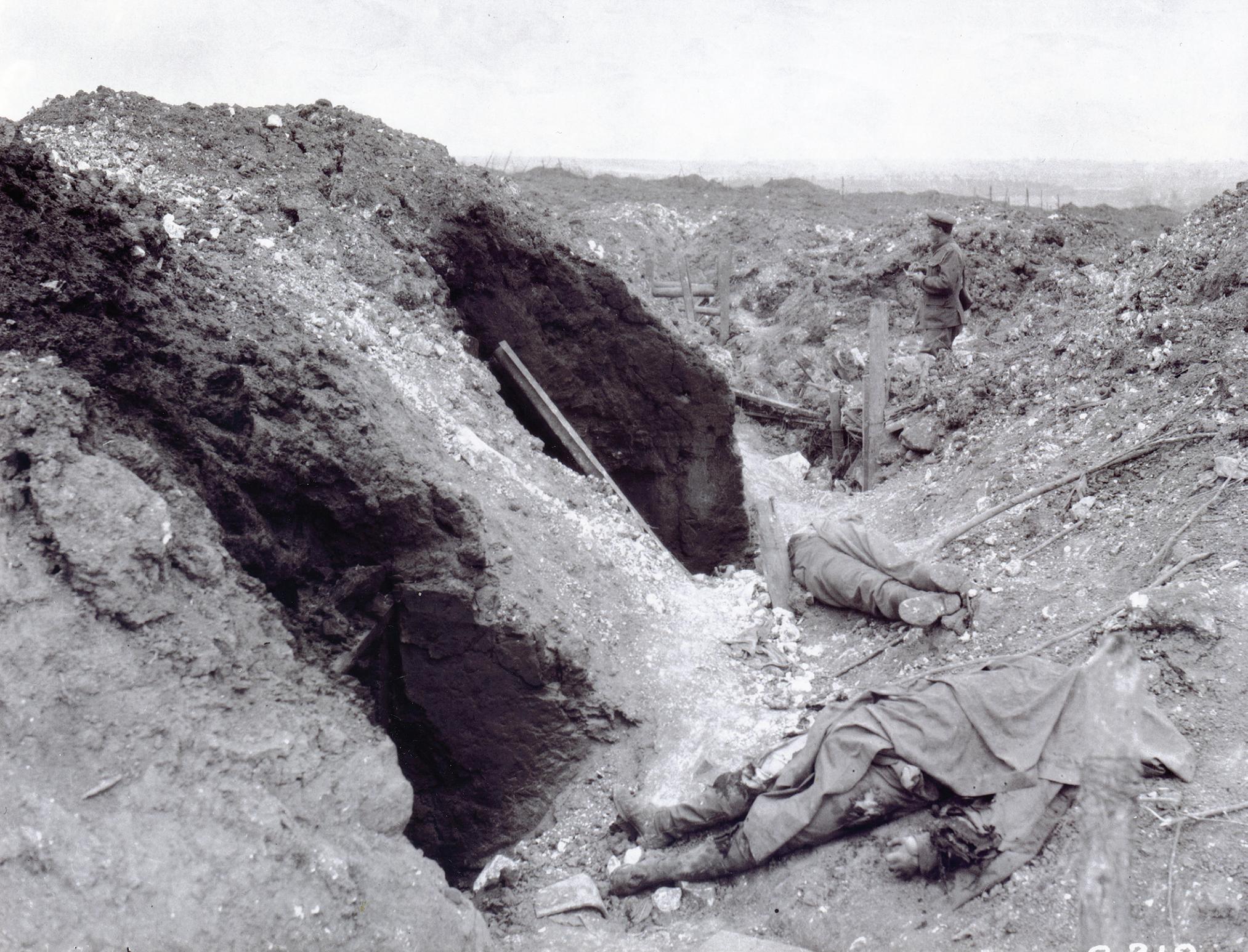
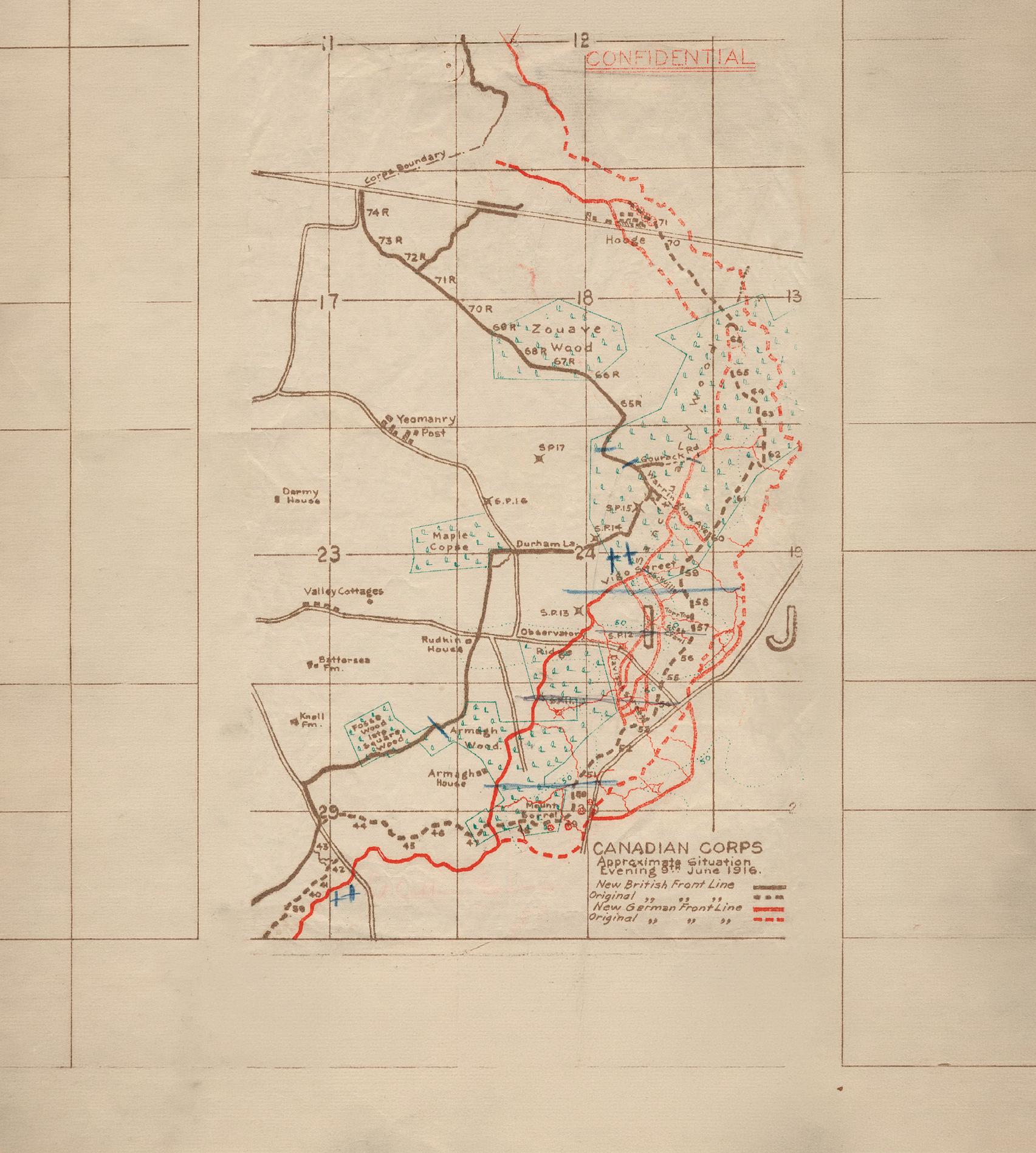
Regaining the lost ground clearly required a more deliberate effort. Byng gave the task to Major-General Arthur Currie’s 1st Division. Currie’s plan was a first taste of what would become the trademark Canadian Corps approach—meticulous attention to detail and heavy use of artillery throughout all operational phases. During the failed June 3 counterattack, artillery forward observation officers had been too far back to effectively direct fire. This time, Currie integrated them into infantry battalion headquarters to ensure close cooperation. Finally, Currie decided on an uncommon night attack.
Between June 9-12, the German lines were pounded by four massive bombardments. Each time the guns stilled, Württemberg troops rushed to front-line positions through the last falling shells to meet an attack that never came, suffering casualties. The final 10-hour barrage on the last night was devastating. One German lieutenant called it a “catastrophe” and wrote: “The trenches are quite destroyed…one shell hole joins the next…the dreadful spectacle of the many dead and the number of missing, depresses everyone.”
At 1:30 a.m. on June 13, four battalions—3rd, 16th, 13th and 58th, from right to left—charged
over the top in a rainstorm and advanced through a morass and countless craters. The creeping barrage that would soon become standard had not yet been devised, so troops raced to close with the stunned Germans emerging and lurching in disorganization toward fighting positions.
“We were on top of them before they knew it,” 3rd Battalion’s Lieutenant H.R. Alley wrote. “There was some pretty bloody bayoneting.”
In places, the Württembergs resisted with heavy machine-gun and rifle fire. Instead of fighting it out with these positions, 16th Battalion’s soldiers infiltrated around their flanks and kept advancing. The attack dissolved into a melee with junior officers and non-commissioned officers controlling small groups of soldiers in engaging the enemy at pointblank range and hand to hand. By 2:30 a.m., the Canadians had won back virtually all ground lost on June 2. Exhausted, they waited for a counterattack that never came.
Instead, the Germans lashed back with a massive artillery barrage that killed many wounded on both sides who lay helpless on the mud-drenched battleground. Fitful but failed counterattacks followed for two days. When the fighting sputtered out, no man’s land was a churned-up cauldron just 150 metres wide.
The two-week battle ended with both sides where they had begun. Canadian casualties numbered more than 8,700—including about 1,000 dead and 1,900 missing. Most of the missing were presumed dead. The Germans counted 5,765 killed, wounded or missing.
The Canadian Corps emerged from the battle not only victorious, but having proved its ability to withstand the worst the Germans could throw at them, and to bounce back to victory with a well-planned and executed counterattack. It marked the Canadians coming of age as a fighting formation and presaged what would come in the summer at the Somme.
From its founding 150 years ago to today, a look at the
By Ian Coutts
The story is that cadets at the Royal Military College of Canada in Kingston, Ont., pass through the Memorial Arch to the school only twice in their careers: when they march through it for the first time to begin their studies; then after their commissioning ceremony held in May of their final year, striding away as freshly minted second lieutenants or acting sub-lieutenants.
The gathering is quite the sight: beaming scarlet-clad cadets, holding their pith helmets or distinctive pillbox hats aloft on their swords, walk—not march—through the gate, to the applause of parents, friends, past graduates and others. Looking at those Victorian-era uniforms, the monument with its long list of battles where past graduates served and fell and the quote from poet Rupert Brooke (“Blow out, you bugles, over the rich Dead!”) chiselled into the stone, one imagines the time-honoured ceremony stretching back a century plus.
But the story doesn’t hold up. Until the late 1970s, the arch was the main entrance to the school. If a student picked up a pizza downtown they would pass through it on the way back to their dorm. Indeed, there was no way around it. But the old road running through the gate connected to Highway 2, where the sightlines were bad and the traffic had grown heavier over
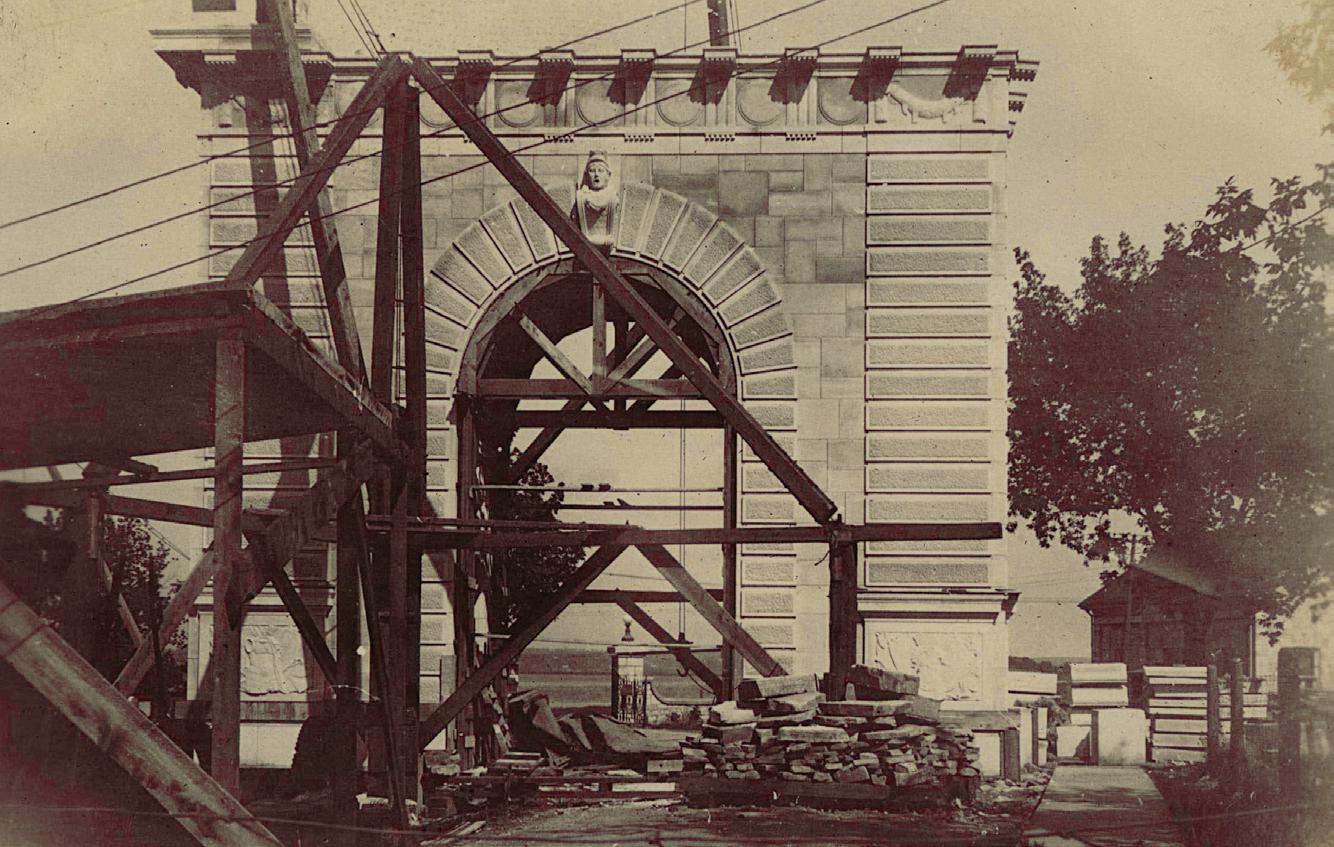
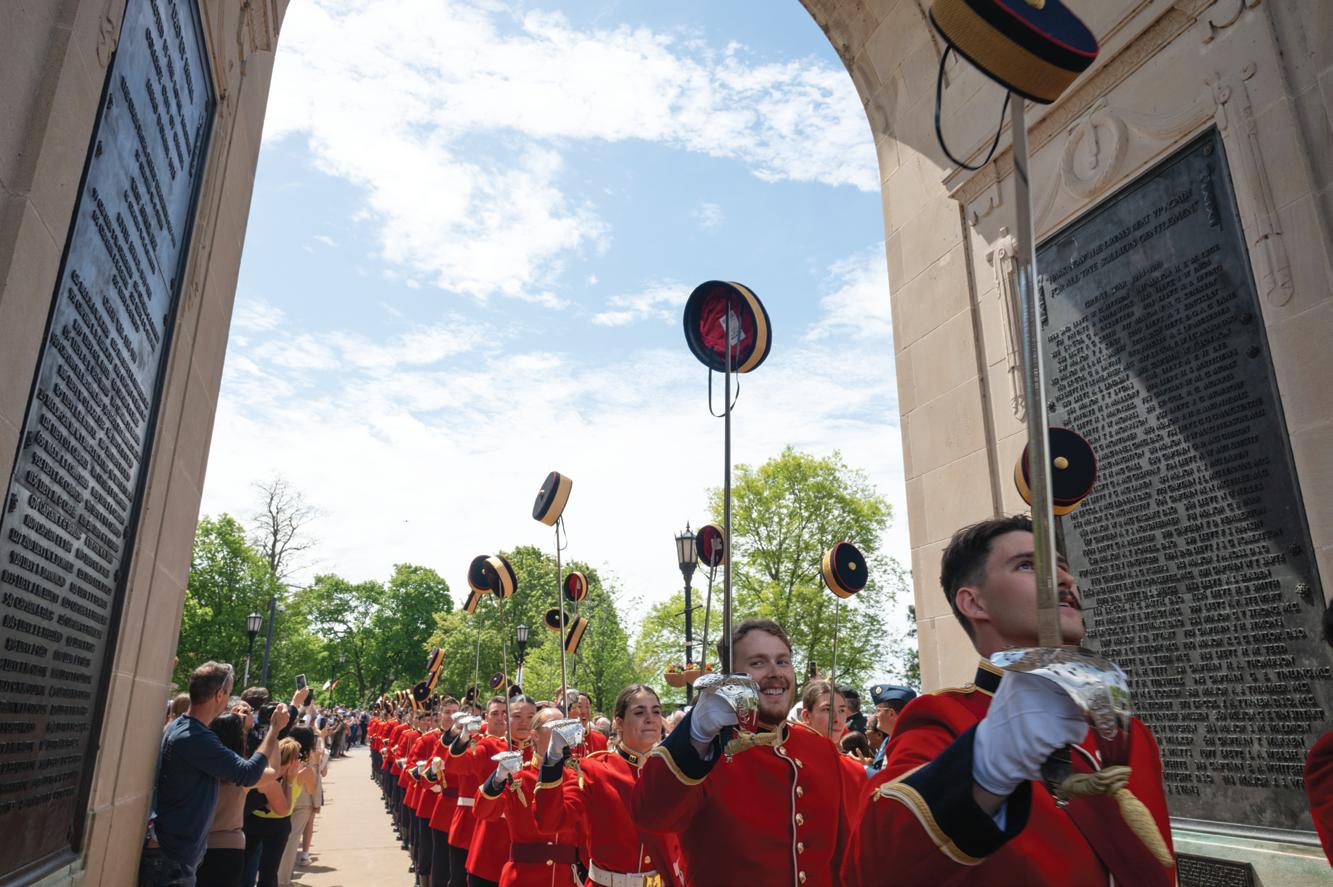
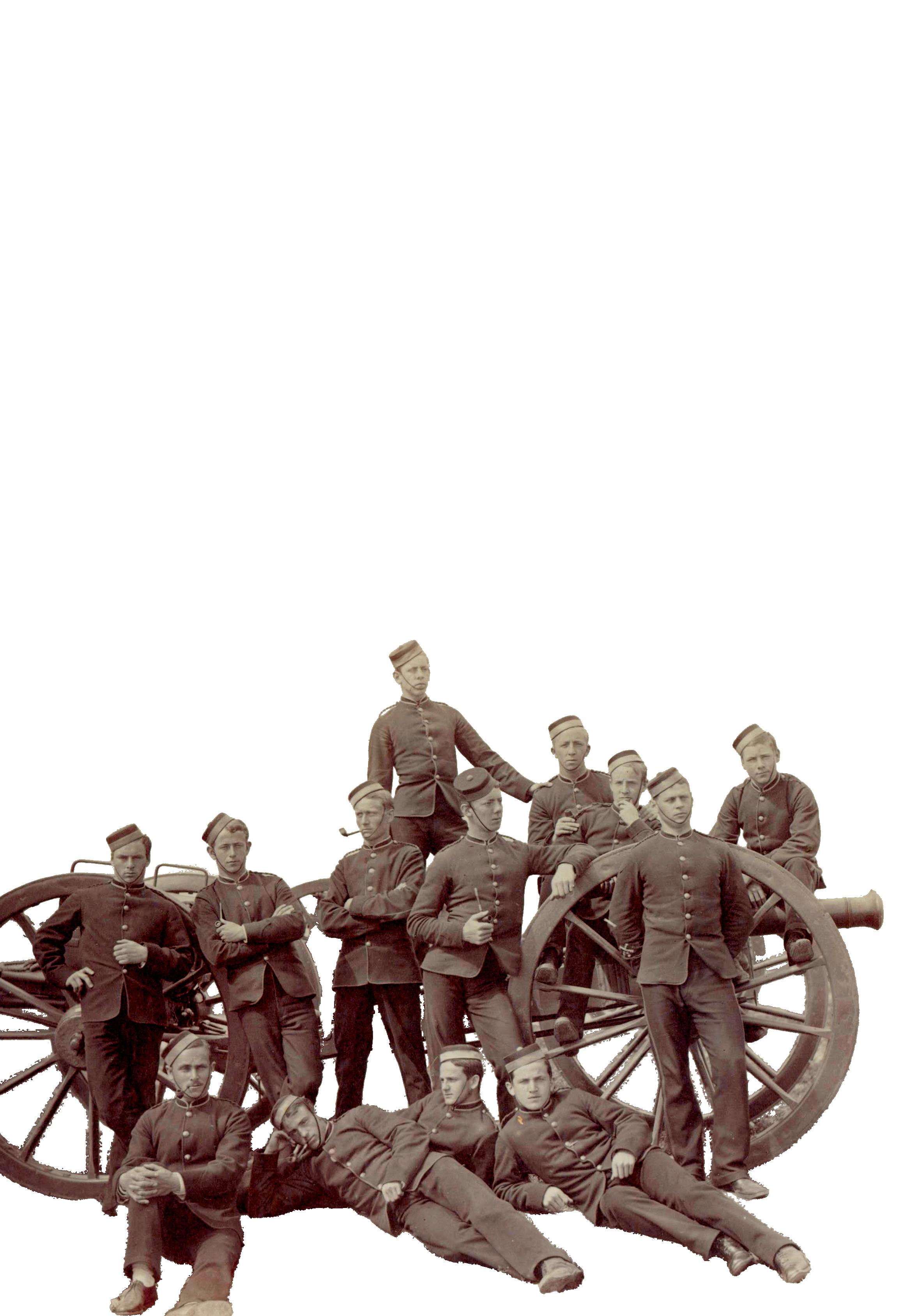
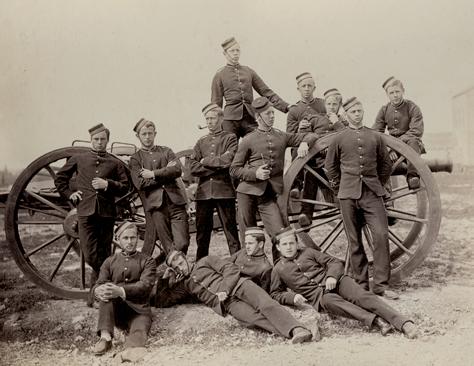
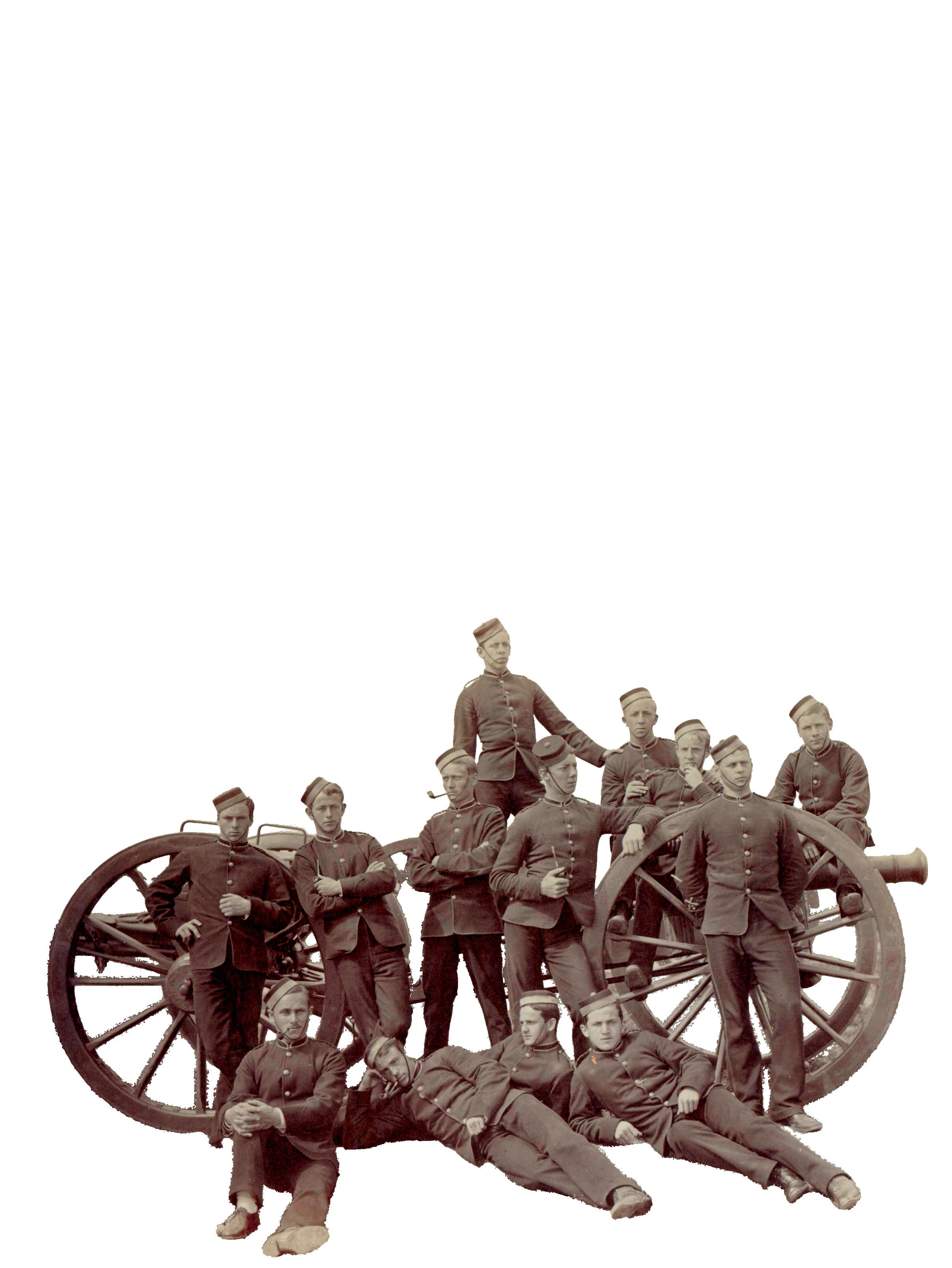
Cadets of the Royal Military College of Canada’s first year pose for a photo after artillery training (opposite). The Memorial Arch under construction in the early 1920s ( top). RMC grads march through the arch during the commissioning ceremony in May 2024 (above).
the years. The danger of a collision was palpable. So, the main entrance to RMC, as it’s known, was shifted east. At some point after that, the “tradition” came into existence. That tradition serves as a metaphor for the college itself: it’s tempting to see it as unchanging but, since its founding more than 150 years ago this year, it has changed regularly as the needs of the military and country have shifted.
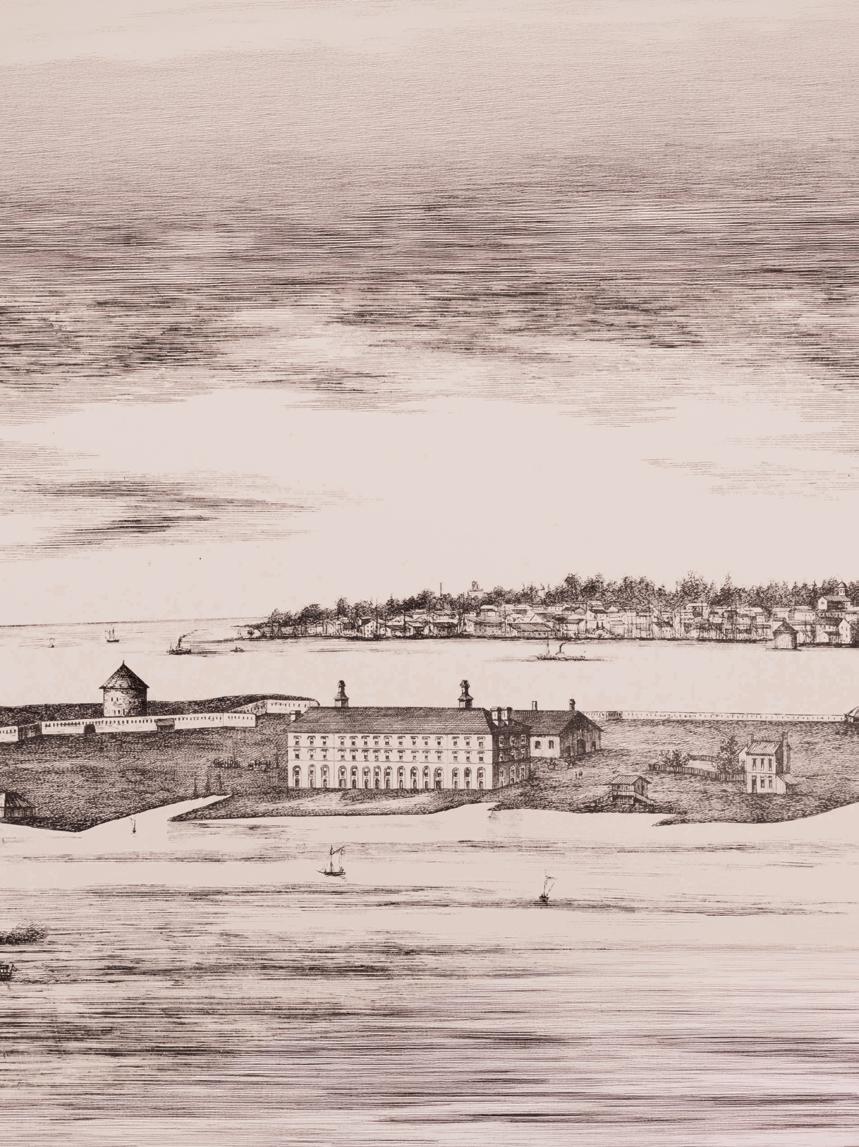
RMC opened its doors to the first cadets (the “Old Eighteen” as they are known today) in 1876. Those originals were lodged in a Georgian building known as the Stone Frigate that still occupies one side
of the drill square today. Standing kitty-corner is the Mackenzie Building, the impressive Victorian edifice where they took their first classes, completed in 1878. Now, it’s home to the college’s administrative offices and an extensive collection of objects and art connected to the school’s history. Modest beginnings, but they were in their way among the first tentative steps on Canada’s road to true nationhood.
The country had gained dominion status in 1867. Just three years later, the Imperial government in London withdrew most of the troops it had stationed in Canada (some remained at Halifax until 1905).
“It was a who’s who of Canadian society that sent their sons here.” Montreal’s Molsons, for example, and similar such families across Canada.
“They needed a military,” said Lena Beliveau, curator of the college’s museum and a keeper of the institution’s lore. There was a part-time militia scattered across the country that had depended for training and administration on British officers. The fledgling government “needed specifically officers to look after the militia.”
However, added Beliveau, “Canadians weren’t super thrilled with having to provide a military,” so the school was positioned to the public as an engineering academy. “Western expansion was happening,” she said, “so they needed roads, they needed railways, and they could kind of sneak in the military aspect.”
With time and changing priorities, said Beliveau, governments came to emphasize the military side. But the school still has strong
engineering ties—about 40 per cent of its current 1,200-some cadets are majoring in the discipline.
“It was a who’s who of Canadian society that sent their sons here,” said Beliveau. Montreal’s Molsons, for example, and similar such families across Canada—well, English Canada, as instruction was originally offered in primarily that language.
Unlike today, when one of the college’s selling points is a fully subsidized education, cadets paid to attend. Typically after three years (some took a fourth at nearby Queen’s University to get their professional engineering qualification), most graduated to a parttime military career. A few gained commissions in Canada’s miniscule regular force and every year five distinguished cadets were offered commissions in the Imperial forces.
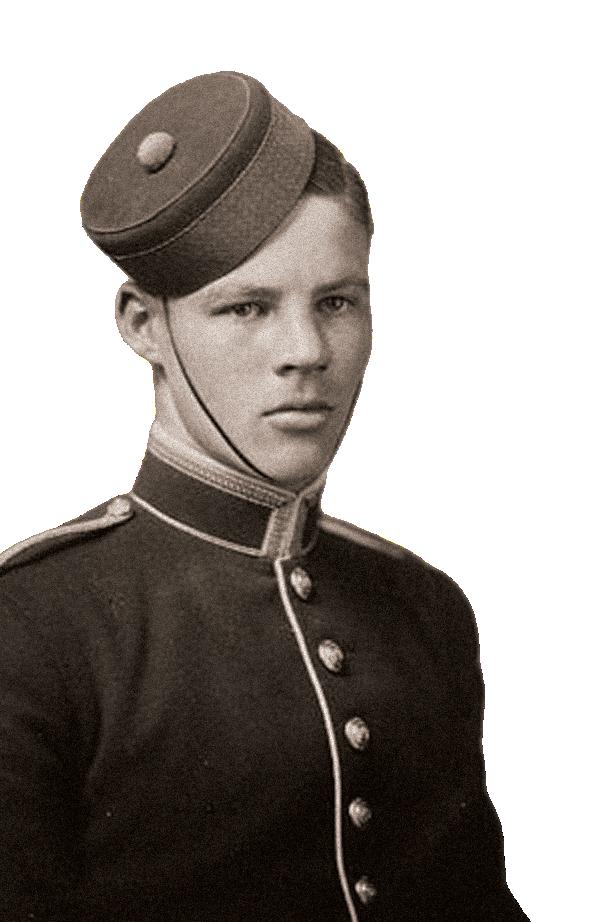
Having a large pool of trained officers, larger than the army could hope to employ in peacetime, had benefits in war. Eighty-six per cent of the school’s eligible graduates served in the First World War, and a similar number did likewise in WW II. Graduate Charles Cecil Merritt earned the Victoria Cross during the ill-fated Dieppe Raid in August 1942.
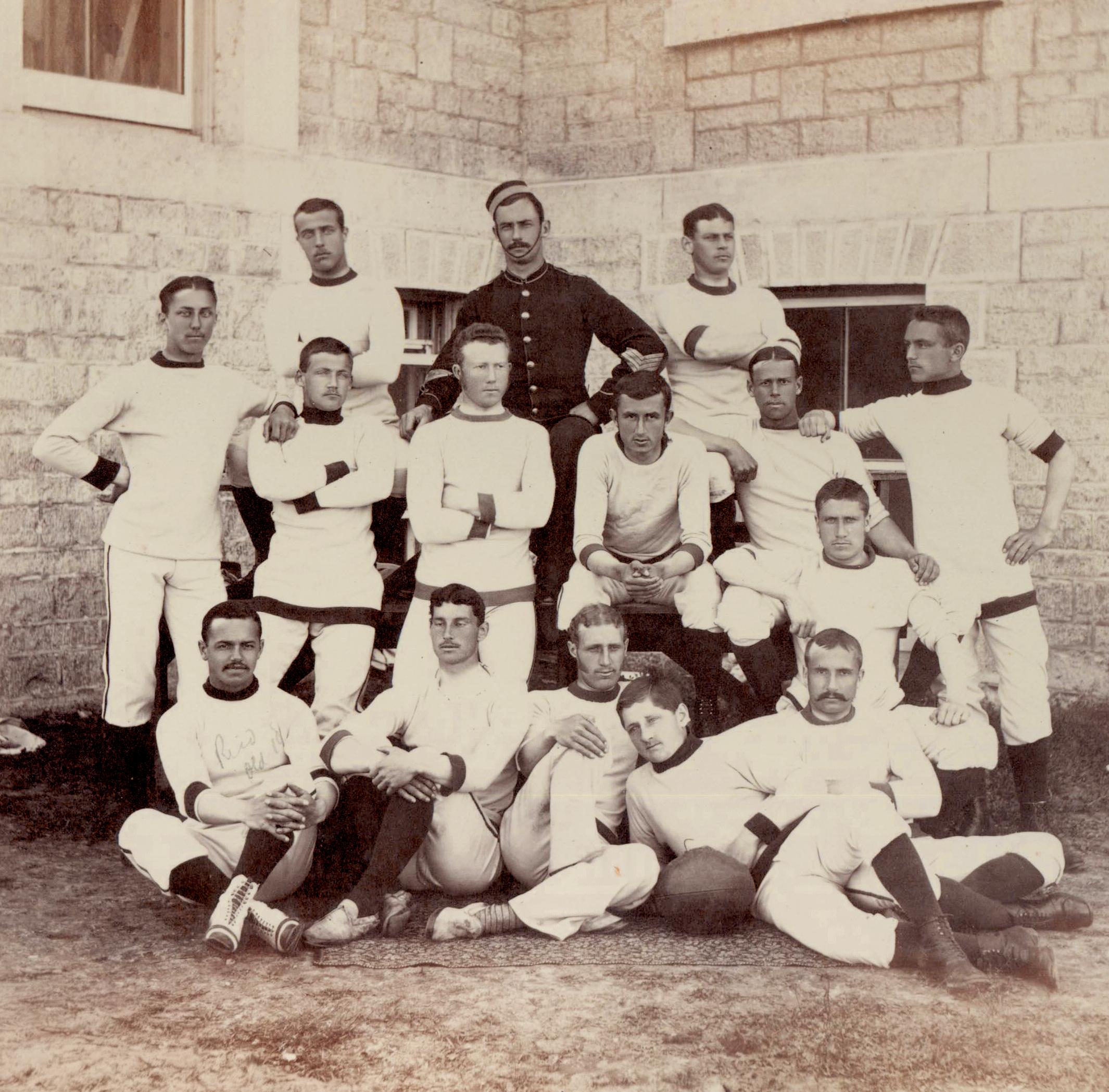
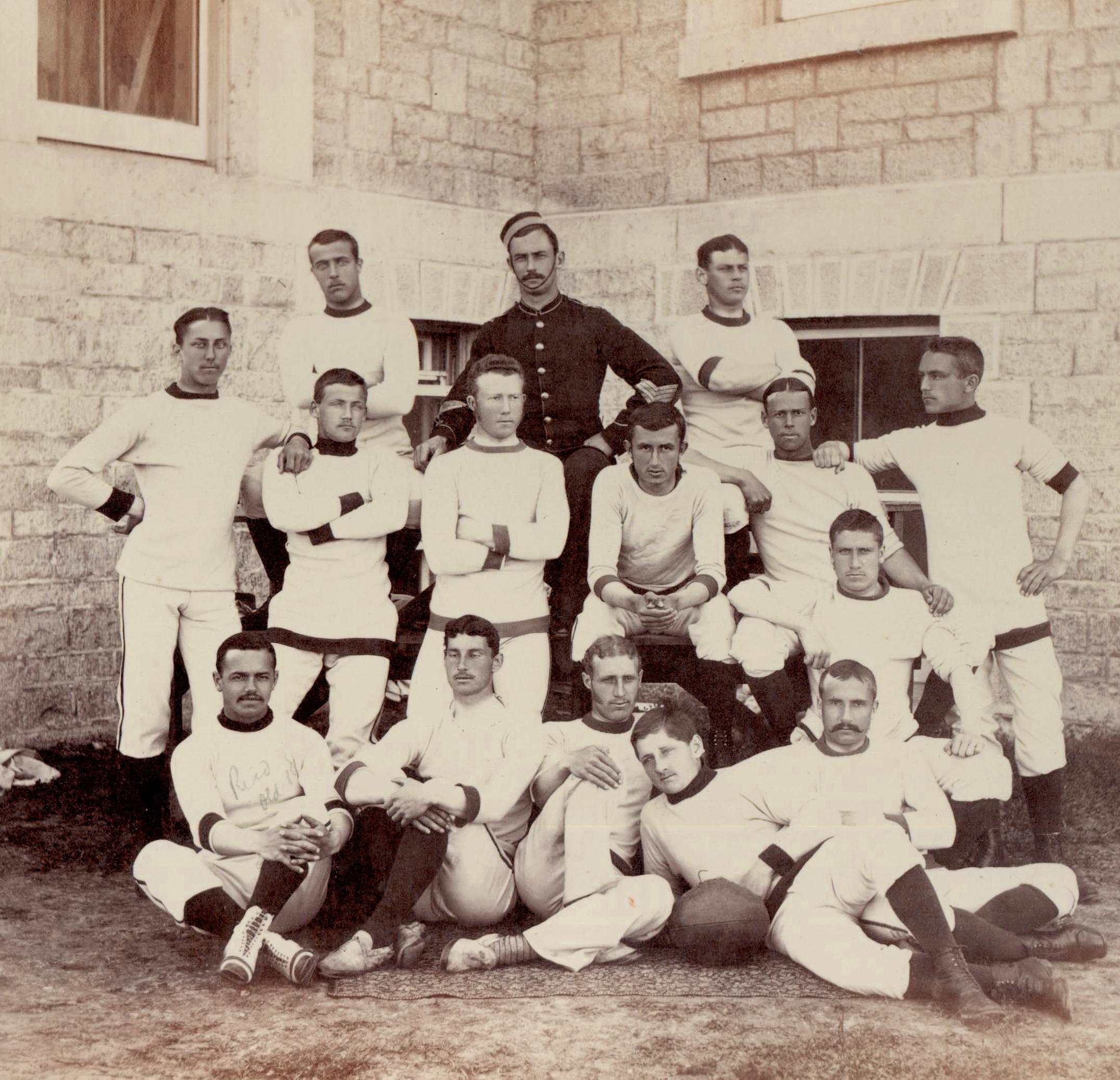
Accounts of cadet life in those days make RMC sound like a 19th-century British boarding school—perhaps unsurprising, as many cadets were graduates of their Canadian equivalents. Sports were everything, said Beliveau. “There were no women available and the cadets weren’t allowed off campus.”
Instead, cadets participated in gymnastics, vaulting, football and hockey. Boxing was popular, too. Students also spent time shooting and horseback riding, though as Beliveau points out, the latter “was less of a sport and more of a military skill.”
Hazing and general mistreatment of fellow cadets wasn’t officially tolerated but was widespread. “In the period between the wars,” said Beliveau, “it was common for senior cadets to use recruits as personal
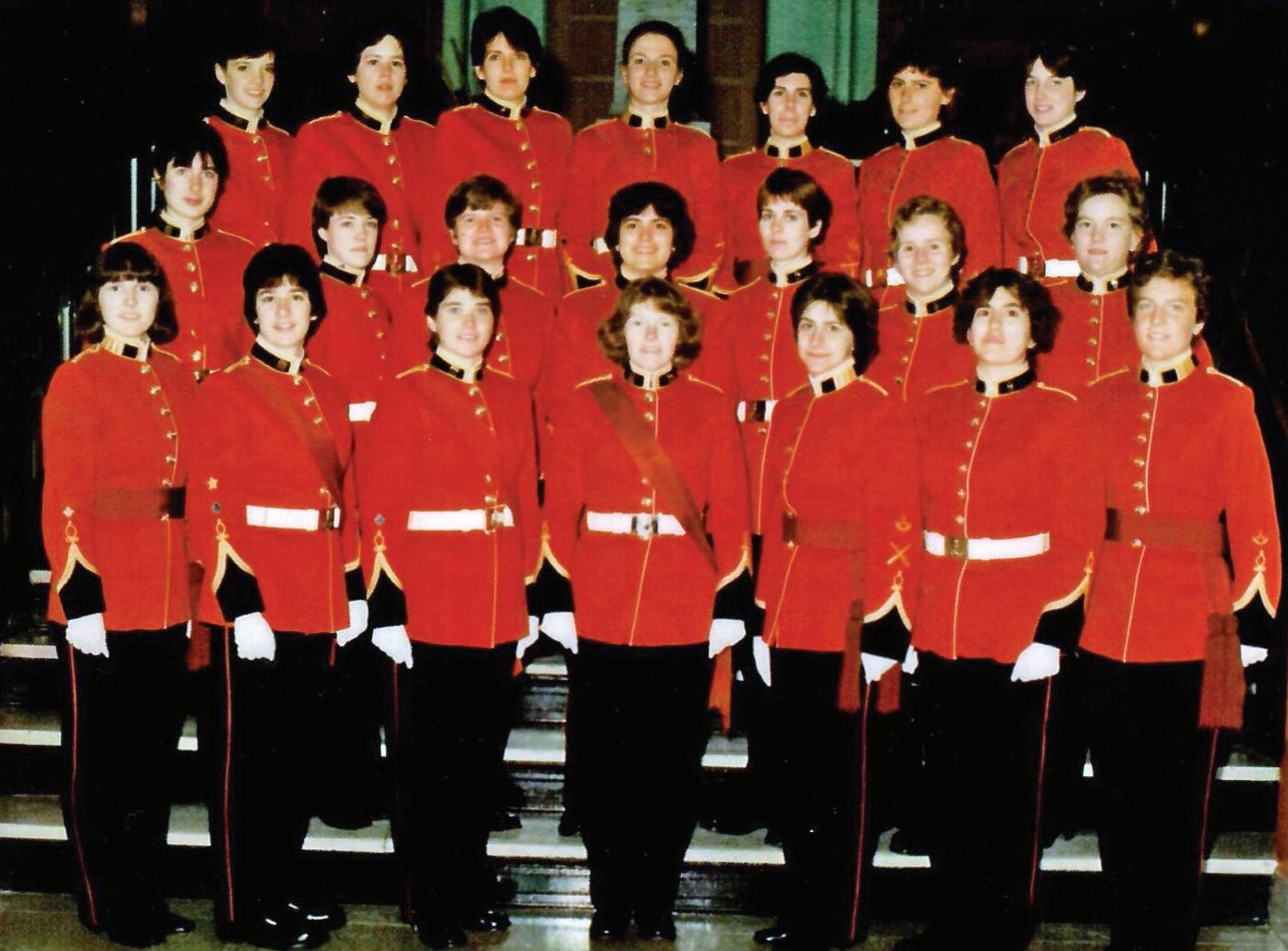
RMC grad Charles Cecil Merritt ( top) would go on to earn the Victoria Cross during the Dieppe Raid. The school’s first-year sports team (left ). RMC’s first women grads, 1984, pose for a group photo (opposite).
servants. If an upper-year cadet needed something when he was in his dorm room, he would just yell ‘Recruit!’ and whoever heard him had to come running and then do whatever it was that he wanted. And if it wasn’t done to that [senior] cadet’s satisfaction, they could hit them with their swagger stick.”
The Royal Military College of today began to emerge after the Second World War. In 1942, the school had essentially shut down. The military still needed officers, but it needed them faster than RMC could provide. The college didn’t reopen until 1948. By then, at the highest levels of the military, specifically the army, there was a belief that, “The world of warfare had changed,” said Howard G. Coombs, a professor of history at RMC and a retired infantry officer.
The development of the atomic bomb meant that “officers were going to need degrees to understand this environment,” continued Coombs.
The school began offering courses in the humanities and social sciences resembling those at civilian universities. In 1952, the chiefs of the staff committee proposed that future cadets would receive a subsidized education in exchange for agreeing to serve for
several years (initially three) after graduation. By 1954, this became virtually standard for all cadets.
The result, according to Richard Arthur Preston’s seminal history of the school, Canada’s RMC, was that the college and its sibling institutions (Royal Roads Military College, founded in 1940, and Royal Military College Saint-Jean, founded in 1952) “now became more than ever a cross-section of the youth of the nation, drawing from all classes from coast to coast, including ‘new Canadians’ and boys of various ethnic origins.”
RMC granted it first degrees in the arts and science in 1959 and engineering in 1962.
It wasn’t until 1980 that the first women were officially admitted, though not without some resistance. Then, in 1995 after the end of the Cold War, both Royal Roads and Saint-Jean were closed as cost-saving measures. That left RMC as the country’s only military college (though Saint-Jean reopened in 2007).
During the years, RMC also introduced several innovations and confronted scrutiny about its operations and aims. As Coombs put it, within the college, and the Canadian Armed Forces and country generally, “There’s a desire always to do better.”
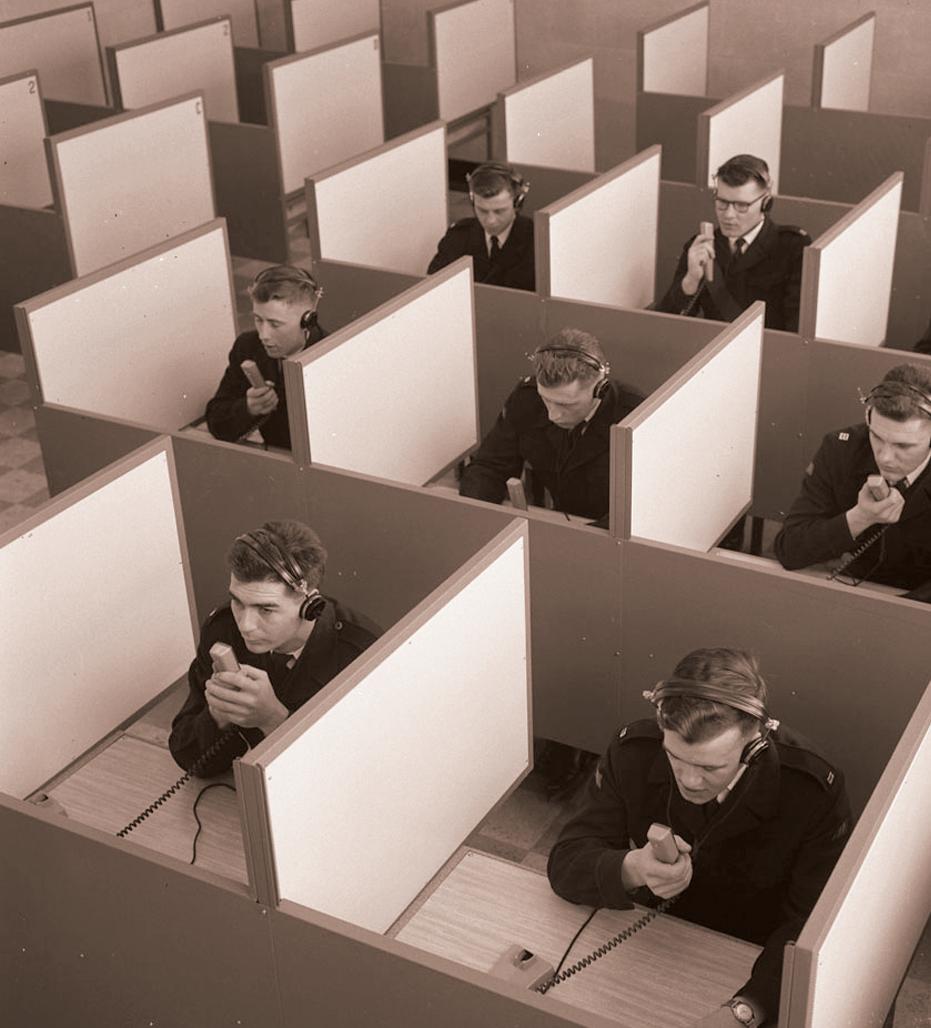
One of the most far-reaching changes in RMC’s history occurred in the late 1990s. In the aftermath of Canada’s 1993 military scandal known as the Somalia Affair, there was, said Coombs, a recognition that, in a new and baffling environment, one that did not resemble a traditional battlefield, “officers weren’t equipped with the cognitive tools to deal with realities of the conflict.” As a result, “intense reform was imposed on the Canadian military, including increased accountability and a renewed professionalism,” as Richard Foot put it in an article for The Canadian Encyclopedia.
At RMC, this led to the so-called Withers Report, a review of the school’s programs to ensure that they responded effectively to the new environment in the Canadian Armed Forces. Conducted by retired general Ramsay Withers, a former defence chief, the study led to a major rejigging of RMC’s curriculum to focus on four pillars: academics, military leadership, physical fitness and bilingualism.
Whatever implementing the four pillars means in theory, in practice it comes down to an epic example of the challenges of time management.
“Time management becomes an asset you need,” Officer Cadet Zachary Bowerman, a fourth-year chemical engineering student at RMC, told Legion Magazine “It becomes an essential asset.”
The school arranged for Bowerman and fellow cadet Gina Ge, also studying chemical engineering, to provide a perspective on what it’s like to attend RMC today.
In December 2025, Bowerman and Ge were in the midst of a project to develop strategies to grow vegetables in the Arctic— something “really applicable in today’s geopolitical climate,” said Ge. In addition to such academic work, Ge is also the commander of the cadet wing, the most senior post held by a student at the school. She also plays rugby and, in previous years, was a member of the RMC’s multi-sport club.
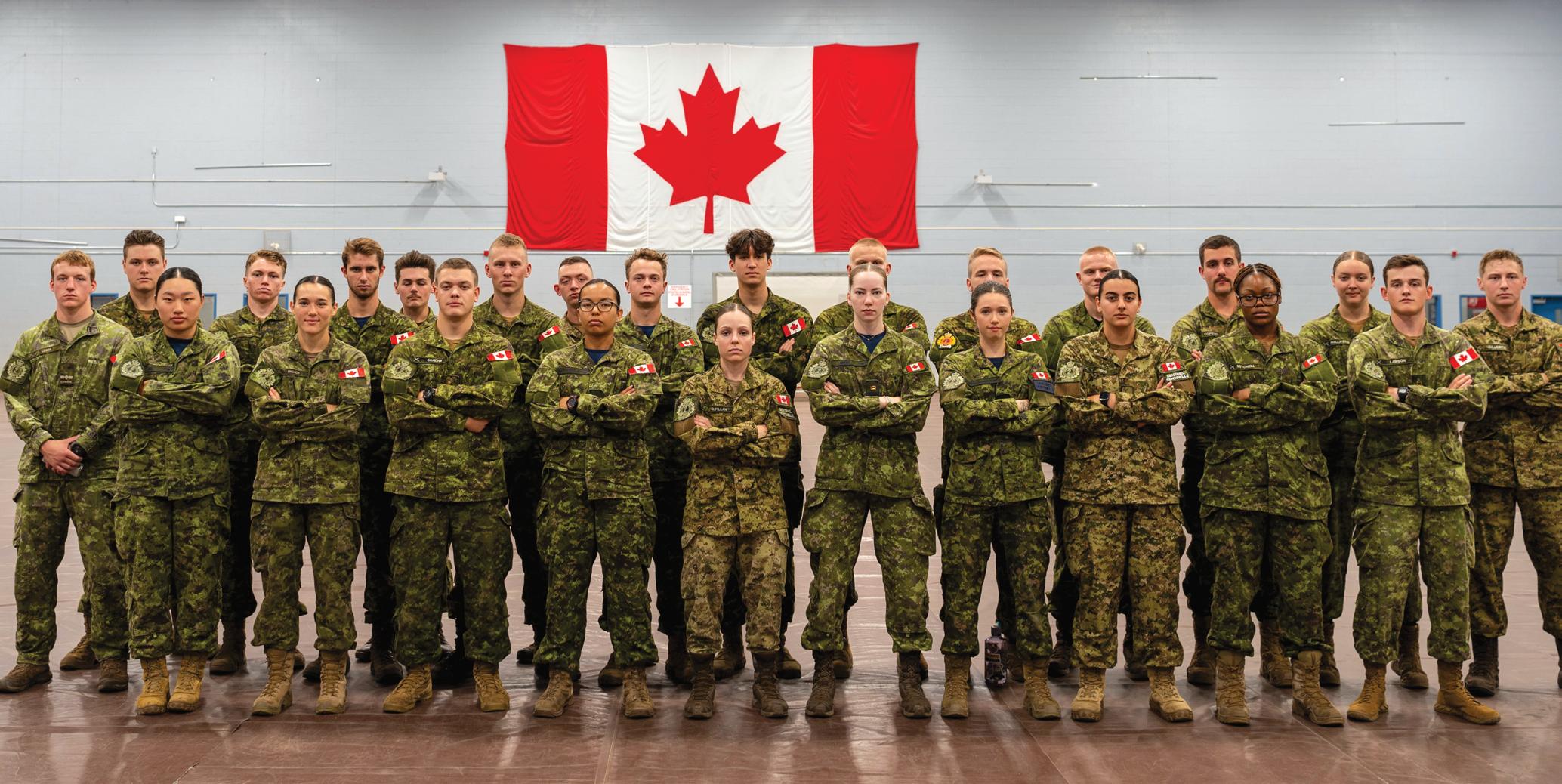
“A lot of people form study groups,” said Ge. “And there’s a lot of support here at the college.” She did note, however, “Sometimes I feel like our work-life balance isn’t necessarily there because we live, work and study in the same place. We don’t have a reprieve from that.”
“I don’t think it’s something that people are meant to do forever,” said Bowerman. “Four years is definitely the limit.”
Both students plan to join the Royal Canadian Air Force after graduating, Bowerman as a pilot and Ge as an aerospace engineering officer.
She hopes to achieve that goal through the CAF’s Military Medical Training Plan, and “stay in as long as possible because I enjoy the environment.”
What will they remember about their time at RMC? “I’m going to really miss the people and the bonds I’ve built here,” said Ge. Bowerman responded similarly. “I’m confident I could name 75 per cent of the people at this college and probably almost 100 per cent of our year, and there’s 200 of us at least.”
Both students also highlighted being tested and challenged more than they had ever been before and about becoming the best version of themselves.
Bowerman, meanwhile, is a cadet squadron leader (students are broken into divisions, squadrons, flights and sections, led by more senior comrades) and captain of the running team.
Ge arrived largely bilingual, but Bowerman spoke no French. In addition to the aforementioned pursuits, like all students, they are also expected to study exclusively military subjects. This can range from classroom time to sports days to inspections.
Nominally, the school day runs from 8 a.m. to 4:30 p.m., but cadets often start before that (Bowerman and Ge get up at 6 a.m.) and continue long afterward. But they all pull together.
Bowerman, who spent time at Ontario’s University of Waterloo, compared the attitude there to RMC: “It’s like an eat or be eaten world at a civilian university, especially Waterloo. It’s very competitive there, and nobody would help you, because you’re the competition for a job.”
By contrast, at RMC, “We already all have our jobs,” said Bowerman. “We already know what our contracts are. So, nobody’s here to stab somebody in the back. We’re here to push each other forward.”
Bowerman hails from Brantford, Ont., and his family didn’t previously have a direct military connection, although his father was a military contractor. Bowerman was in a youth cadets program growing up and has long wanted to join the air force (he got a commercial pilot’s licence prior to attending RMC). When he was accepted to the school, “My whole family was ecstatic,” he said. Bowerman’s looking forward to a long career in the RCAF.
Ge’s path to military college was a little less straightforward. The daughter of Chinese immigrants with no military connection at all, she grew up in Calgary. Speaking of attending RMC, she said, “I didn’t really know about it until I was in Grade 12.” She had been applying to civilian schools, with a long-term goal of becoming a doctor, but realized she wanted something different.
“I wanted to go have a challenge, go on an adventure, do really cool things, and just make a big impact,” said Ge. “So, RMC just sounded really cool.
“I had a big military movie stint during COVID,” Ge also admitted. Now, she’s applying for graduate engineering programs, though, she noted, “I still want to become a doctor.”
“If you want to look for a challenge and like, really push yourself,” said Ge, “this is the place you want to be.”
Given relatively recent events, Ge’s enthusiasm for RMC, in particular, is heartening, as the school has once again had to confront its policies, procedures and practices from the past decade. In light of several widely reported cases of sexual harassment in the early 2020s by senior members of the Canadian Armed Forces, including by a serving defence chief, the government appointed retired Supreme Court justice Louise Arbour to conduct an Independent External Comprehensive Review of culture in the Canadian military.
In her 2022 report, Arbour was critical of the environment Canadian military colleges fostered for women and said the CAF should consider if the schools “should continue as undergraduate degree-granting institutions.” Arbour recommended a detailed review of the schools.
In response, the Defence Department created the Canadian Military Colleges Review Board in 2023. Its report, released in January 2025, maintained that the schools should continue to exist, that they were essential, but that they also needed to continue to change.
“The Board believes that the Military Colleges must conceive
of themselves as, and be understood to be, military units,” said the report. “Although they grant university degrees, they are not the same as civilian universities.”
One key challenge the board identified related to RMC’s four pillars. The report indicated that their emphasis should be altered, to try to offset the time pressure that cadets operate under that sometimes leads to military skills being downplayed.
“I can’t say there were any major surprises in the report,” said Brigadier-General Pascal Godbout, RMC’s commandant since 2023.
The four pillars were intended to ensure the multifaceted education of cadets. “So, how do we achieve the aim of the interdisciplinary degree and the concept of the four pillars moving forward?” asked Godbout. Currently, RMC is considering integrating some of the nonacademic-related pillar activities into academic ones. “To look at how
much of the fitness and wellness strand can be accredited to count as university credits,” said Godbout, “to look at the bilingualism strand, and to see what portion of it could be accredited, and to look at what portions of the military strand could also be accredited.”
The effect, Godbout argued, would reduce the time pressure on cadets. It would also increase emphasis on the other three pillars, particularly the military one. (Godbout is an example of what the military colleges can turn out. A graduate of Royal Military College Saint-Jean, he said that, for a kid from the Gaspé, “to be offered subsidized education, to be paid to go to school, when I came from a hometown where we had a 25 per cent unemployment rate, to me, this was a gift falling from the sky.”)
However it changes in the future, RMC’s core mission will remain the same, said Godbout:
The college “became more than ever a cross-section of the youth of the nation, drawing from all classes from coast to coast, including ‘new Canadians.’”
“to deliver character-based leaders for the Canadian Forces to meet the needs of today and tomorrow, in service to Canada.
“This is a responsibility that the entire team here takes very, very seriously.”
Tucked in behind the charming limestone house where Godbout lives on campus is RMC’s Wall of Honour. Built by the class of 1963, the long stone wall features bronze plaques honouring notable graduates, listing their names, cadet numbers and a brief descriptions of their accomplishments.
What’s surprising about the tribute are the individuals included who achieved successes outside of the military. People such as Larry Stevenson, the founder of Chapters, and Walter Gordon, the business executive, cabinet minister and founder of the Committee for an Independent Canada. They’re a reminder of the college’s enduring influence on the country.
“What we produce is Canadians who have the spirit of service,” said Godbout. “No matter which path they choose.”


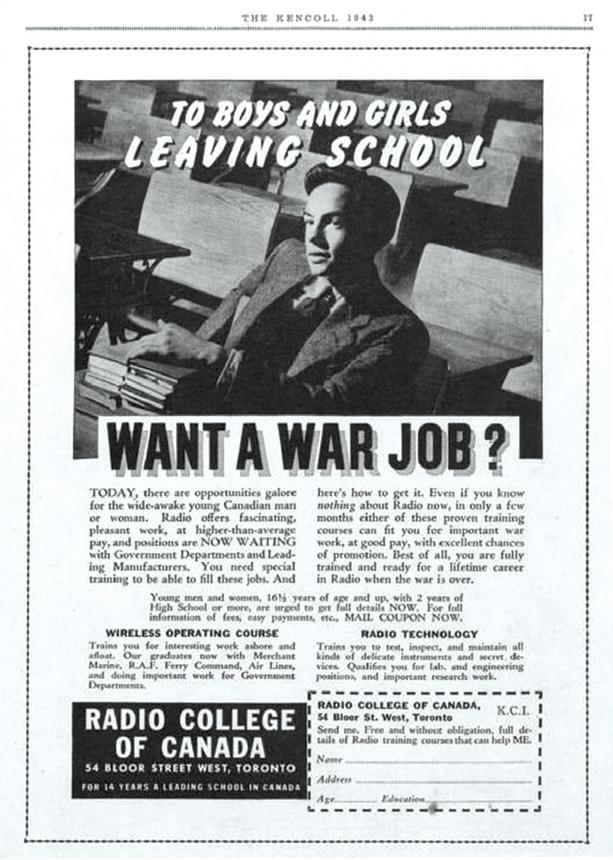


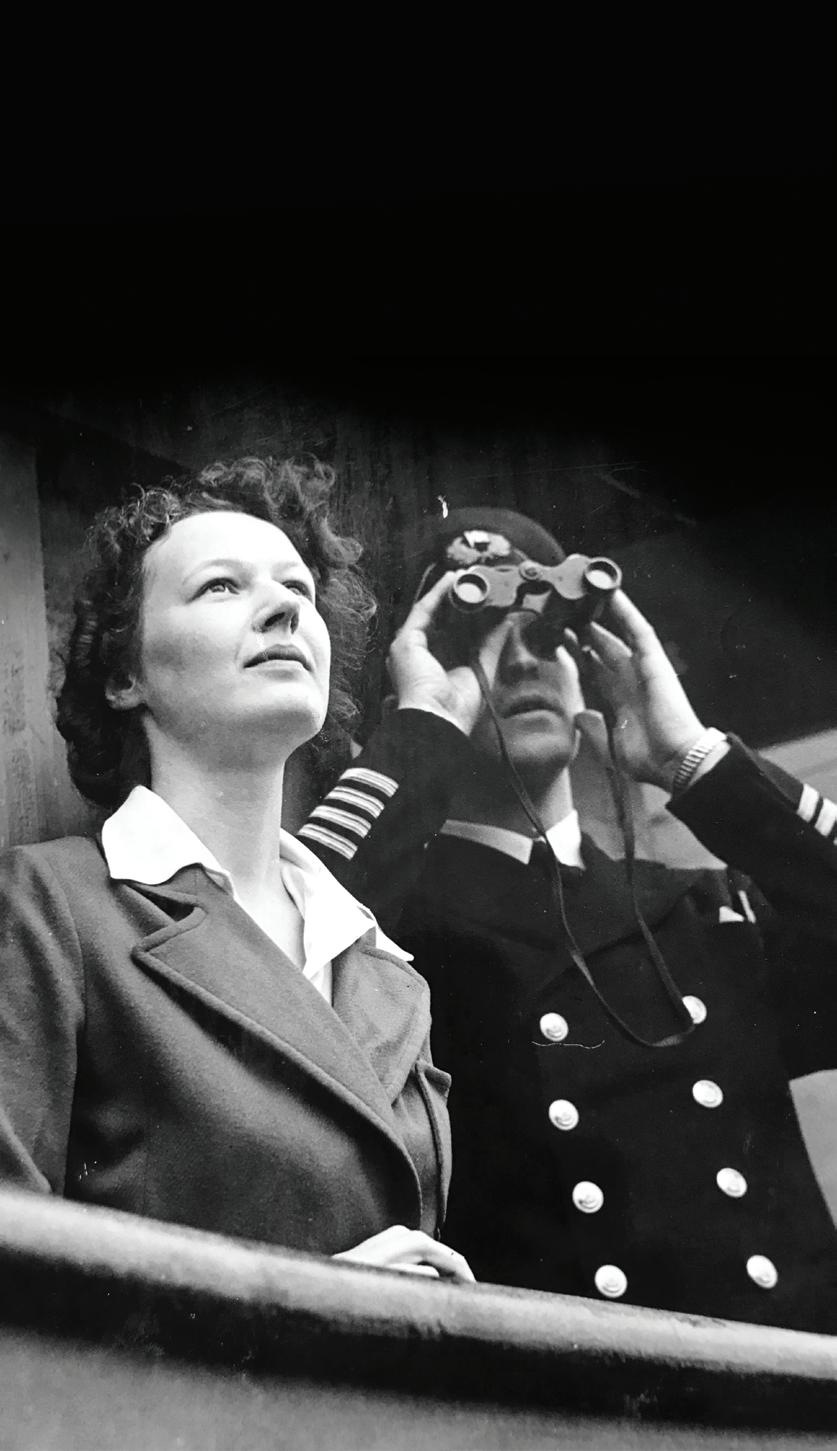
After taking a night class at the Radio College of Canada (left ), Fern Blodgett (opposite) became the first woman to serve as a wireless operator at sea when she got a job aboard Norwegian merchant vessel M/S Mosdale.
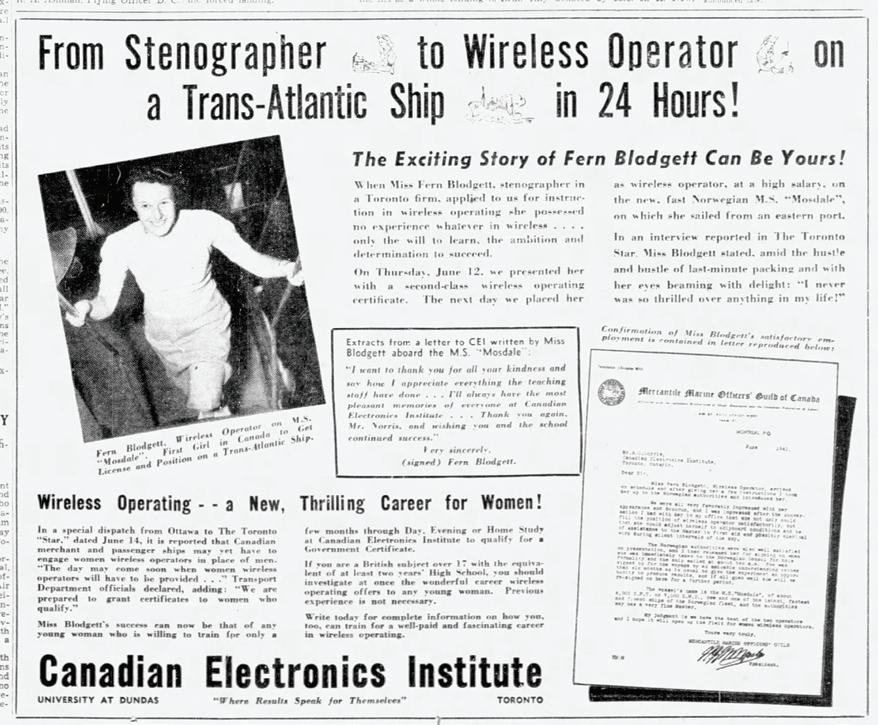

On a train bound for Montreal, Blodgett struggled to sleep as she processed the responsibilities she would soon have, not only of being the first woman believed to perform such duties at sea—her second historic feat in as many days—but also the more immediate concern of ensuring a merchant navy crew’s safety in war. It clearly took no superstition to fret over immense perils amid the Battle of the Atlantic, of waters infested with German U-boats and surface raiders, of a capricious ocean with its capricious weather.
“What if I lost my nerve in a crisis?” she asked herself. “What if I failed?”
Born in Regina on July 6, 1918, Fern Blodgett’s seabound journey began after her family moved to Cobourg, Ont. There, living just a short walk from Lake Ontario, the young girl stood at the shoreline to watch the vessels pass by, insatiably fascinated.
“I wished in those days,” she penned in a 1942 Star Weekly newspaper article, “that I had been born a boy, so I could become a sailor. I would dream about rounding the Horn, and harpooning whales, and standing at the wheel of a sailing vessel, in a North Atlantic gale, bellowing orders at the men in the rigging.”
Blodgett read the sea stories and watched the motion pictures, her dreams continuing until “I’d have to wake up to the fact that I wasn’t a little boy, but a little girl, and go back to my dolls.”
Life certainly seemed like it had conventional plans for her, at least initially. In 1936, Blodgett trained as a nurse only to discover it wasn’t her calling. She then moved to Toronto
“I wished in those days that I had been born a boy, so I could become a sailor. I would dream about standing at the wheel of a sailing vessel .”
in 1938 and took a business class. Landing a job as a stenographer may have been fulfilling for many, but Blodgett wanted more.
A war was now on. “I thought that I ought to do something to help,” said Blodgett, who resolved herself to write “three schools where radio was taught.” Two, she recalled, promptly replied that “they had never had a girl in their radio operators’ class and did not contemplate having one now.” The third agreed.
Norwegian skipsfører (ship captain) Gerner Havig Sunde was impatient and frustrated as he stood aboard his 3,022-ton vessel, M/S Mosdale, docked in drizzle- and fog-drenched Montreal—impatient because he wished to depart with his usual 35-strong crew (with room for 12 passengers); frustrated because their wireless operator had abruptly resigned for an easier existence on the Great Lakes.
Tall, blonde and nearly 30, the experienced seaman had served aboard a number of other ships before the war. Now, having only recently ascended to skipper in a period of considerable jeopardy for his country, Sunde was, perhaps understandably, on edge.

Blodgett knew almost nothing about radio, admitting that her previous knowledge was little more than “how to turn the dial on a receiving set and tune in on my favorite dance band.” Nevertheless, she committed herself to the trade, attending class three evenings a week and studying on the remaining nights at home.
The aspiring member of the “sparks”—the nickname bestowed on wireless operators due to the spark-gap transmitters they used to send Morse code messages via radio frequencies—sailed through her examinations with high marks. No longer a novice, she finally “knew the codes, could do minor repairs on radio sets, knew the principles of electricity and many intricate mechanical devices,” reported a 1942 Montreal Gazette column on Blodgett.
The next leg of her voyage awaited.
Germany had invaded neutral Norway on April 9, 1940, the latter laying down arms on June 10 that year. When Norwegian politician Vidkun Quisling—a Nazi collaborator— demanded that more than 1,000 of the country’s merchant vessels at sea return home to serve the Third Reich, not one obeyed. Both the king and legitimate government went into exile, forming the Norwegian Shipping and Trade Mission—or Nortraship—to oversee the merchant navy as part of the Allied war effort.
So it was that the 1939-built Mosdale, en route to Colombia for a banana shipment when the occupation took place, joined the cause. So it was that a frustrated and impatient Sunde stood ready to receive a replacement wireless recruit to continue the fight.
Accounts have it that the skipsfører was surprised to learn that “F. Blodgett” was a woman as she clambered up the wet gangplank toward him. According to the wireless operator herself, Sunde was aware.
“I knew you were going to be a woman,” he reportedly remarked, “but I expected somebody older.”




Regardless, the persisting ambiguity over whether Blodgett could actually serve under regulations still needed to be addressed. Neither Canadian nor British vessels permitted female merchant navy crew members. Norway, though, had no such rules. Mosdale fully loaded and due to sail for England, the decision was left to Sunde, who determined that Blodgett could don the ship’s radio headset at $170 a month “plus board,” becoming the fourth—yet only female—Canadian sailor on the roster. It was a good thing she wasn’t superstitious, doubly so since many seamen believed that women brought ill luck on deck. She was wholly untested, moreover, confessing to having never been on any vessel larger than a rowboat.
Few expected her to make the return voyage, but for now, here she was, cruising along the St. Lawrence River on Mosdale—one of six similar Norwegian fruit carriers— bound for the unknowns of the Atlantic.
For now, here she was, a krigsseiler a war sailor.
“Who would want to get married and wash shirts and dishes and stand over the stove cooking when she could do this?” Blodgett asked herself as she got familiar with the ship’s wireless instruments, the instructions for which were written in a different language. Alas, at least on her inaugural transatlantic passage, she swiftly wondered if she had spoken too soon after becoming overcome with seasickness, “so seasick [that] I’d have promised to wash shirts and dishes for the rest of my days if only I could get back on land.” Blodgett persevered—she had no choice.
With a bucket by her side, an all-butpermanent fixture throughout her tenure
Blodgett’s daily routine as a sparks consisted of eight hours, with “two hours on and two hours off.” It was her job, among other obligations, to maintain links between ships and land-based stations, sending and receiving navigational aids and weather information—as well as reports of enemy sightings—through continuous wave signals, keyed in via Morse code. The deliberately complex format of those encoded messages changed frequently; a single mistake or misinterpretation could result in a costly catastrophe.
In the event of such attacks, should there be a possibility of the code books falling into enemy hands, the onus was on the sparks to dispose of them, fast.
Off duty, Blodgett made herself known to the crew (having at first expected them to “toss me overboard”) in addition to Mosdale’s steady stream of passengers (“correspondents, technical experts, an African explorer, servicemen, [and] merchant seamen who had been torpedoed”) whose spirits she sustained playing the onboard piano.
Ultimately, the self-confessed landlubber found that her Norwegian comrades, whom she labelled a “grand bunch” while appearing “very loyal and heart-broken at losing their country,” didn’t treat her “any differently than they did the others.”
That may have been the case, but the press, as it was so blatantly prone to in the 1940s, did. “Then came an important question,” wrote one reporter during an interview with Blodgett, “What does your boy friend think of all this?”
She didn’t have one, responded the war sailor with a tactful smile.
In another newspaper article, asked if she would surrender her seafaring service “to settle down in domesticity, Fern, who looks more like a model of size 12 dresses than a wireless operator, laughed…”. Her response: “The fact that I am a woman doesn’t alter the situation.”

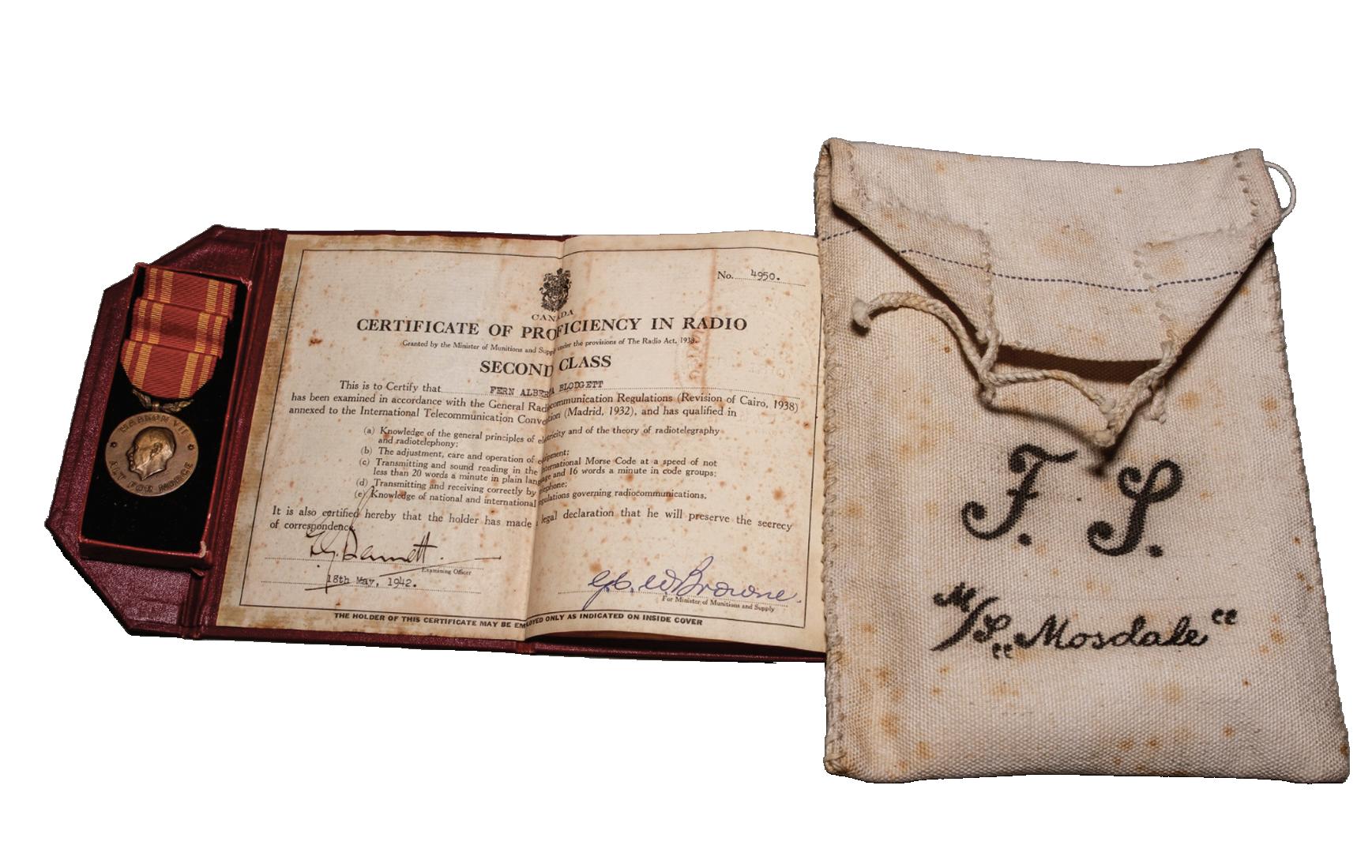
The recently married Blodgett Sunde and her husband, skipsfører Gerner Havig Sunde, aboard M/S Mosdale in 1943 (opposite). Blodgett Sunde’s wireless radio certificate (far left ) and the pouch in which she carried her identification at sea (near left ).

Even so, the thought had once crossed her mind. “I wondered whether I would be a woman or a wireless operator if we were torpedoed,” she recorded. “As a woman, I could be expected to head for the lifeboats. As a wireless operator, as the ship’s ‘sparks,’ I’d be expected to remain on duty.
“I decided I’d be a wireless operator.”
Blodgett still hoped that her dilemma would never be tested.
It was a hope seldom more apparent than amid one gauntlet-running voyage, when “a seaman came rushing” into the room where she was relaxing in search of the captain. A German U-boat had been sighted off the starboard bow.
Ordered to her station, Blodgett “bent over [her] wireless key, frantically tapping out a code message [they had] for just such occasions,” expecting “any second to hear the terrific explosion of a torpedo smacking [their] ship.”
The wireless operator was infected with fear as she struggled to listen. She quickly snapped herself out of it.
“When I did remember to listen in,” Blodgett continued, “I found [the signal] had been picked up and relayed by a coastal station.
“I was the first woman ever to send out a message giving the location of an enemy submarine in wartime.”
The incident ended without an attack, and the U-boat submerged beneath the waves. Perhaps, Blodgett theorized, “it had no torpedoes left.” Perhaps Mosdale’s speed capabilities, gliding through the water at up to 15-16 knots, not to mention its armament and its wireless operator’s communiqué, had deterred the would-be assailant.
Such was the ship’s adeptness at outpacing undersea lurkers that it often travelled alone across the Atlantic. In solitude, though, came some of the greatest dangers, be they shadowy figures on the horizon, uncharted minefields or Mother Nature. Notwithstanding the untold risks, crew members were said to prefer relative isolation over infrequent convoy assignments, where Mosdale could sail only as fast as the slowest freighter.
No material advantage could guarantee safety, of course. “We are more afraid of bombers than submarines,” furthered Blodgett, especially as Mosdale straddled the British coast. On Feb. 4, 1943, an adapted German Focke-Wulf 200 accosted the ship, forcing Norwegian gunner Ingvar Tautra to open fire from the Oerlikon 20mm cannon. Once more, fortune found the crew after the “aircraft departed without having caused any damage,” according to a war sailor online database.
Thousands of kilometres away, in Peterborough, Ont., where Blodgett’s father ran a hotel, the wireless operator’s family worried. “My mother and sister sometimes tried to persuade me to stop going to sea,” she noted. “I couldn’t. I liked it too much.”
But Blodgett also felt that it went deeper than that. “Until the Nazis are defeated,” she wrote, “this is where I belong.”
Besides, it was the blackouts in British ports, not Atlantic confrontations, that Blodgett dreaded most. Even in the absence of air raids, a few days spent in shoreside comfort usually left her pining for “where I can hear the waves lapping against the side of the ship as I go to sleep.”
Blodgett had another reason for staying by that point. Months earlier—on July 20, 1942— the krigsseiler had married her skipsfører in Saint John, N.B. She was now Fern Blodgett Sunde, her honeymoon spent at sea.
By VE-Day, M/S Mosdale had, in a sense, earned two sobriquets.
The first related to its acclaim “bringing over 120,000 tons of meat and bacon to England” in its refrigerated holds, thus acquiring the light-hearted moniker of “pork boat.” The second spoke to the fact that Mosdale was never sunk—unlike its five sibling freighters—to become the “lucky ship.”
The odds had been stacked against it. Of Norway’s merchant seamen—including those who trained at Camp Norway in Lunenburg, N.S.—an estimated 4,000 perished
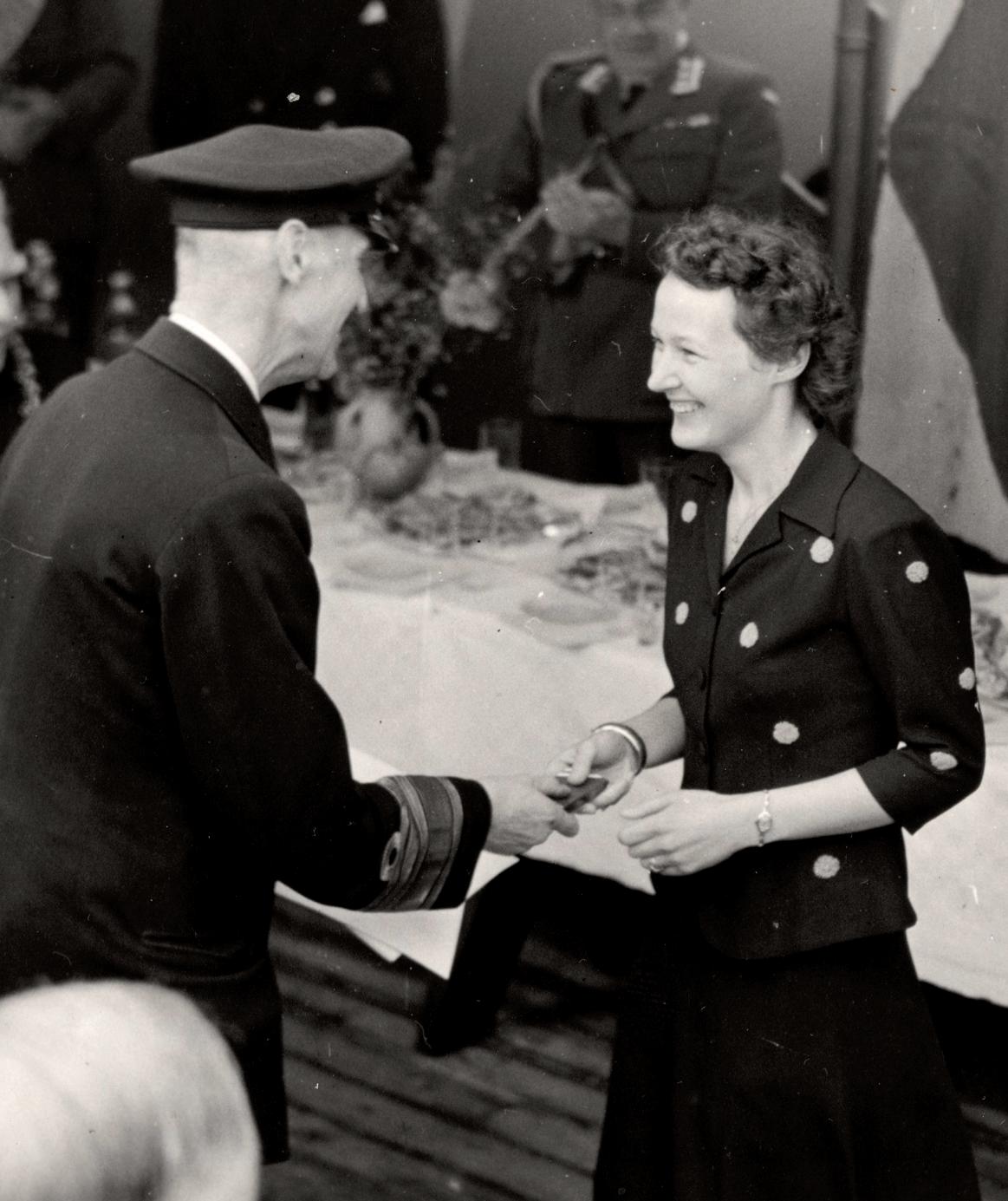

without ever seeing their country’s shackles removed. There was likewise the sheer number of transatlantic crossings that the oncerecord-breaking Mosdale made, amounting to 96 voyages. Blodgett Sunde was aboard for 78 of them, first as the sole sparks, then as chief operator of two new recruits.
The Canadian war sailor’s influence extended far beyond those under her command. Blodgett Sunde’s exploits, reads one biography, “became an unexpected beacon, leading to a small sisterhood of Sparks at sea. Twenty-one Canadian women followed in her footsteps, serving as operators on Norwegian merchant ships during the war.” More still served in the war’s aftermath until “new technology in the 1980s and early 1990s replaced wireless radios.”
Her service didn’t go unrecognized. In July 1943, when the proverbial tide of the Atlantic campaign appeared to be turning in the Allies’ favour, Norway’s King Haakon VII decorated Blodgett Sunde with the Norwegian War Medal, making her the first woman to receive the prestigious honour. Etched into the accolade’s façade was the monarch’s
Blodgett Sunde passed away on Sept. 19, 1991, at age 73. Her legacy has since been immortalized in bronze. On Oct. 17, 2020, a life-sized memorial of the trailblazer was unveiled in Cobourg, Ont. Created by sculptor Tyler Fauvelle, the art installation—located on the same shoreline that a young Blodgett Sunde watched the ships pass by—is entitled “Make Waves.”
Its name is multifold, explained the Sudbury, Ont., artist, affirming that its depicted “wave symbolizes the wave of social changes which came for Canadian women in the storm of war. It also evokes radio waves, as well as the waves of the sea.” The monument, he continued, portrays Blodgett Sunde “stepping forward, with one foot emerging from the wave, but she’s also looking back. Forward is her persistence in breaking barriers, looking back is for remembrance.”
On May 8, 2025—the 80th anniversary of VE-Day for many countries, as well as Liberation Day in Norway—an identical memorial was unveiled on the water’s edge of Farsund, where Blodgett Sunde’s seabound journey ended.
From Lake Ontario to her final fjord, the krigsseiler remains on watch.
The monument portrays Blodgett Sunde “stepping forward, but also looking back. Forward is her persistence in breaking barriers, looking back is for remembrance.”
"Make

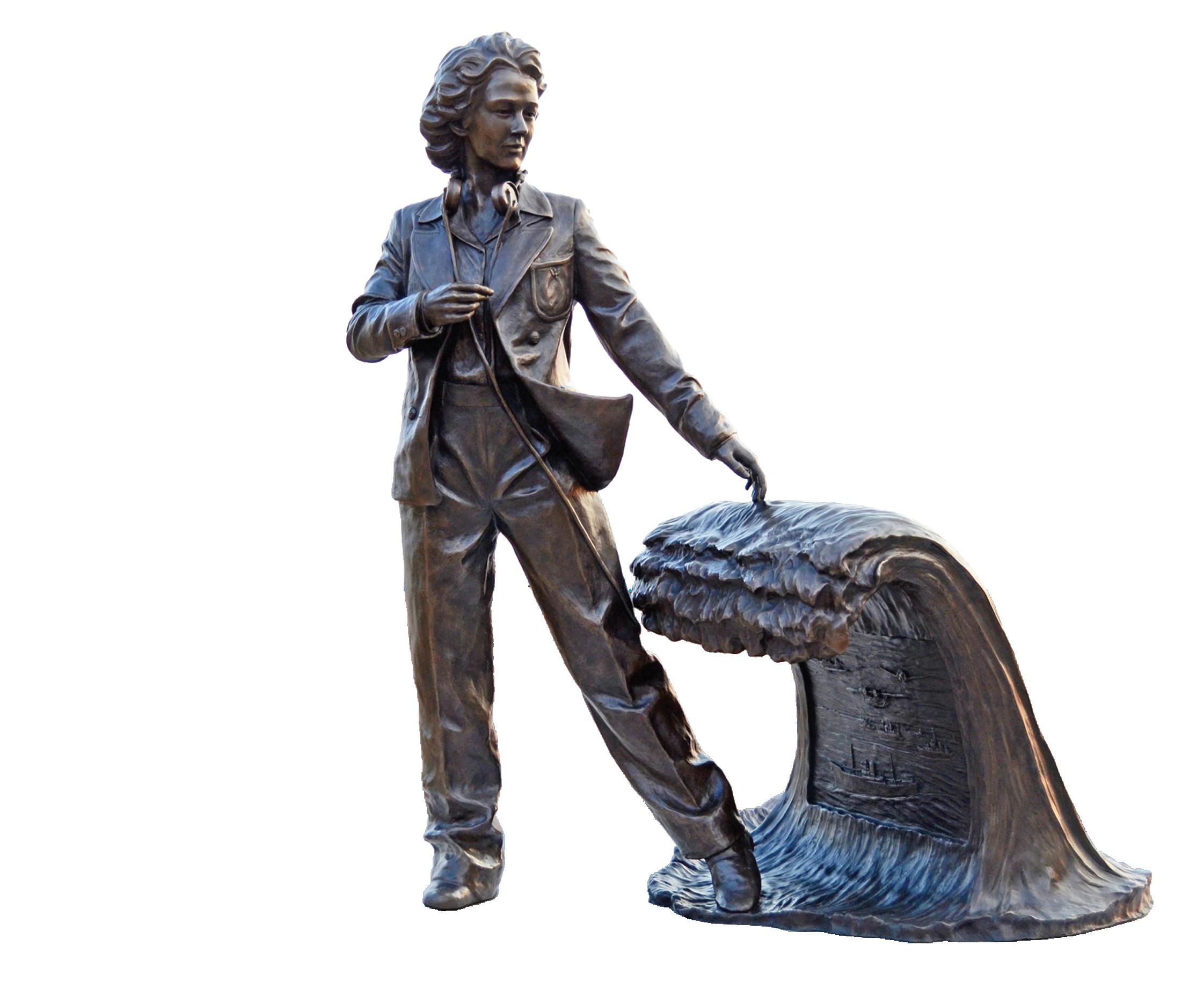

and Farsund, Norway.
Waves" sits at the waterfront in Cobourg, Ont.,




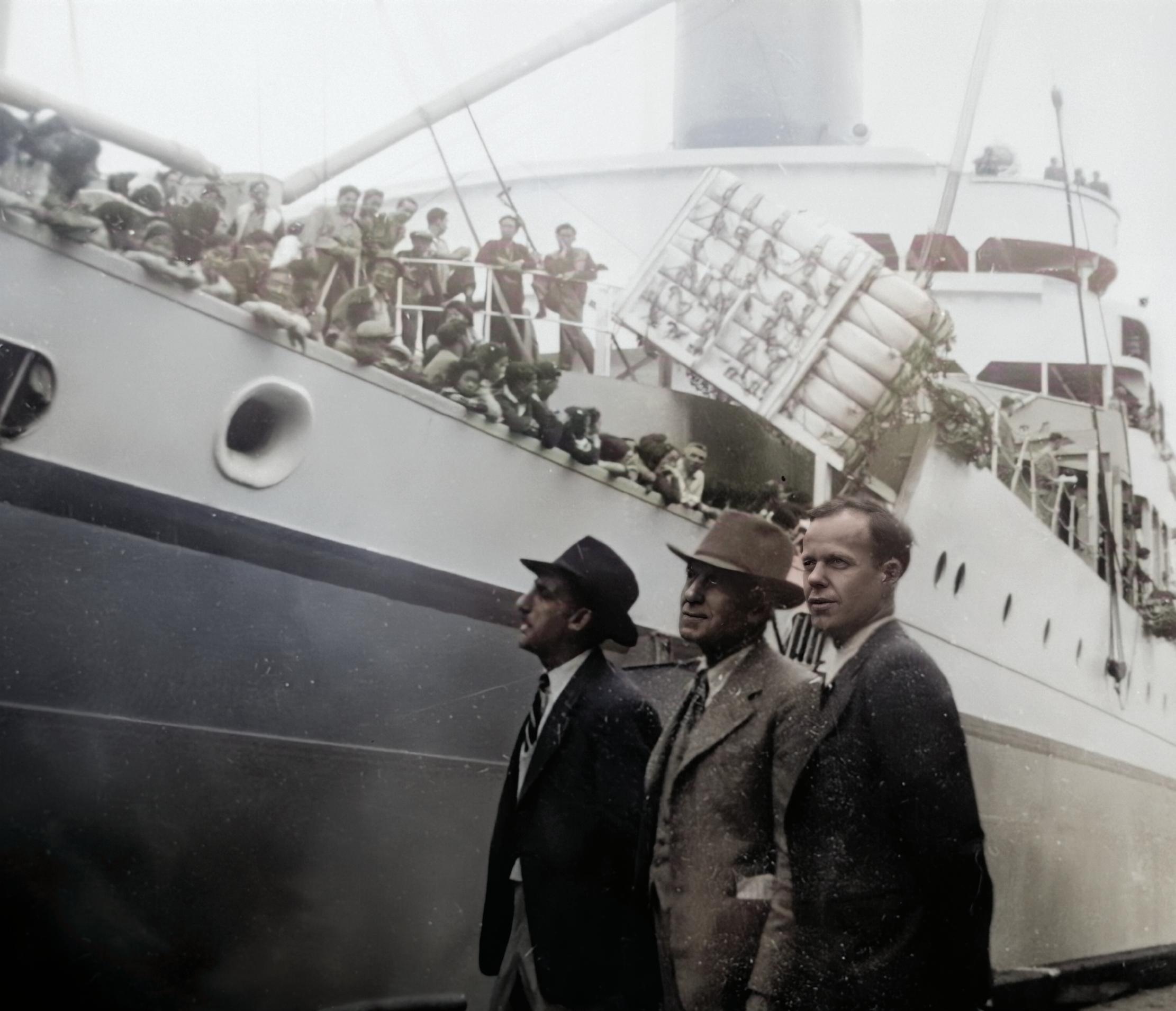

By Susan Yatabe


been well documented that Canada incarcerated JapaneseCanadians (called Nikkei) living in British Columbia during the Second World War. Lesser known, however, are the stories of about 4,000 interned Nikkei who were later deported to Japan, by then a defeated and ruined country.
Since the first Japanese immigrant to Canada was believed to have arrived in the 1870s, Nikkei endured animosity from Canadians, particularly in B.C., where most settled. Politicians in the fledgling province passed laws to limit Nikkei access to immigration, work, basic human rights, and entry into mainstream society. (In 1931, Nikkei Great War veterans became the only Asian people allowed to vote provincially and federally.) Nikkei were limited to working in industries such as mining, forestry, farming and fishing, even if they had Canadian university degrees. They formed their own communities with Japanese churches, newspapers, stores and language schools.
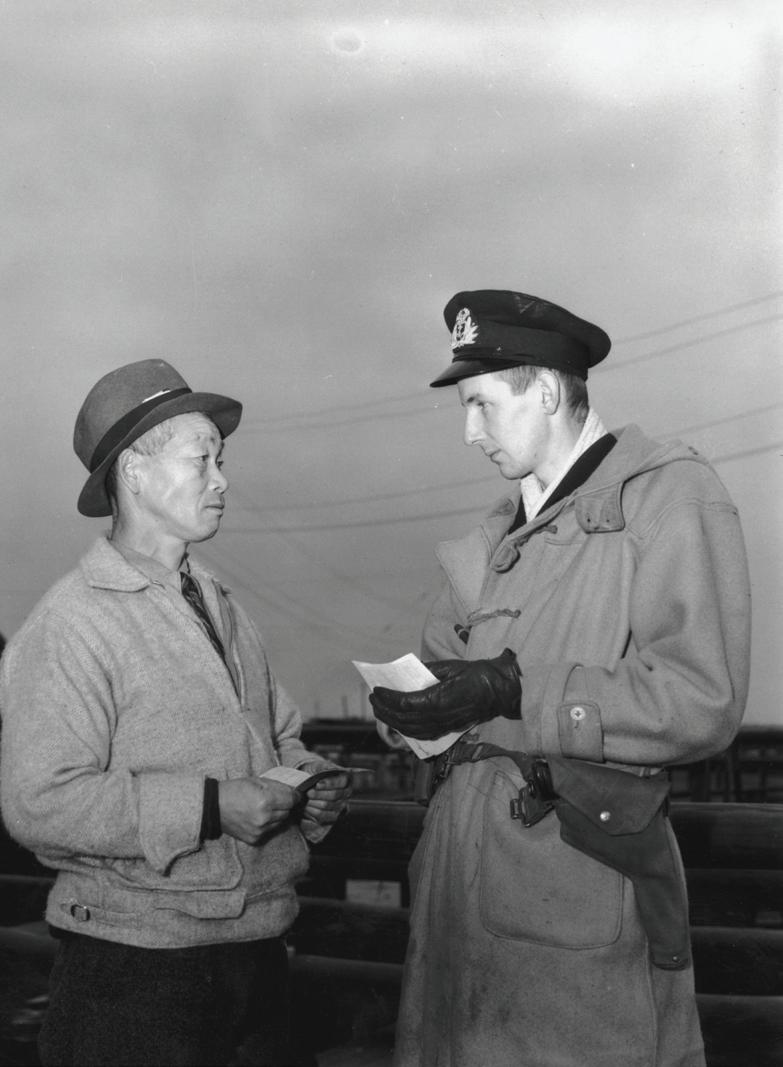

In the 1930s, Japan’s aggression in Asia began to alarm western countries. Following Japan’s attacks on Pearl Harbor and Hong Kong on Dec. 7-8, 1941, fear and resentment toward Nikkei erupted in Canada. The actions of a country, which many Nikkei had never even visited, were used to justify the mistreatment of the entire community. Adding to the anti-Japanese sentiment that had already pervaded Canada for decades, many feared that JapaneseCanadians would help Japan attack the West Coast, despite RCMP intelligence insisting that the community posed no threat.
The repercussions were immediate. When Canada declared war on Japan on Dec. 8, the government ordered all Japanese-Canadians living within 160 kilometres of the Pacific Coast (a so-called “protected area”) to evacuate. More than 20,000 Japanese-Canadians (over 90 per cent of whom lived in B.C.), including war veterans, had their businesses and possessions confiscated and were incarcerated in prison camps, labour camps and on sugar beet farms. The interned Nikkei, all considered “enemy aliens” by Canada, included Japanese citizens, naturalized Commonwealth citizens and people born in Canada. Those who protested were shipped to remote prisoner-of-war camps in Ontario.
By the end of the war, interned Japanese-Canadians were demoralized, unemployed and impoverished. Everything they had worked to achieve was gone. And soon, some would be uprooted again.
Unlike their Japanese-American counterparts, Canadian internees weren’t permitted to return to their homes. Instead, Prime Minister Mackenzie King, despite admitting in August 1944 that Japanese-Canadians had committed no acts of sabotage, announced a program to disperse the population throughout the country, and to exile to Japan those deemed disloyal to Canada.
By early 1945, many interned Nikkei had already left these camps for resettlement outside B.C. Those who remained were ordered to fill out a survey assessing their loyalty to Canada. Their choices were stark and unpleasant: either “repatriate” to Japan at a future date (and renounce their Commonwealth citizenship, even if they were born in Canada or had become naturalized) or
immediately move east of the Rocky Mountains. While the government insisted internees’ decisions were voluntary, the options were presented to motivate them to choose Japan.
“The Canadian government essentially encouraged the Japanese to make this decision because the passage [to Japan] was paid and extra food ration coupons for buying basic foods were provided,” wrote Yoshimi Susan Maikawa in an article for DiscoverNikkei.org, a project to record and share stories of Nikkei worldwide.

This survey caused confusion, duress and disagreement among those still interned. About half of the JapaneseCanadian population signed the loyalty survey. Most remaining in the camps chose “repatriation” to demonstrate their anger at Canada for their treatment.
But by late summer 1945, following Japan’s surrender, many wanted to stay, saying that they had been intimidated into their previous decision. Rumours
circulating about Japan, including the devastation caused by atomic bombs and terrible living conditions, frightened them.
The Canadian government was intent on expelling as many Japanese-Canadians as possible, supposedly disloyal to Canada or otherwise. Although the war had ended, the War Measures Act was still invoked. In December 1945, the government issued three orders-in-council permitting the deportation of Japanese-Canadians who had signed up for exile.
Between May 31 and Dec. 24, 1946, 3,964 interned Nikkei were exiled to Japan on five sailings. Of those on board, 1,943 were aging Issei (first-generation Japanese), 1,308 were Nisei (second-generation Japanese born in Canada) under 16 years of age, and 2,617 (66 per cent) were Commonwealth citizens by birth or naturalization, including 159 former inmates of the Petawawa and/or Angler prisonerof-war camps in Ontario, seven WW I veterans, and 17 patients
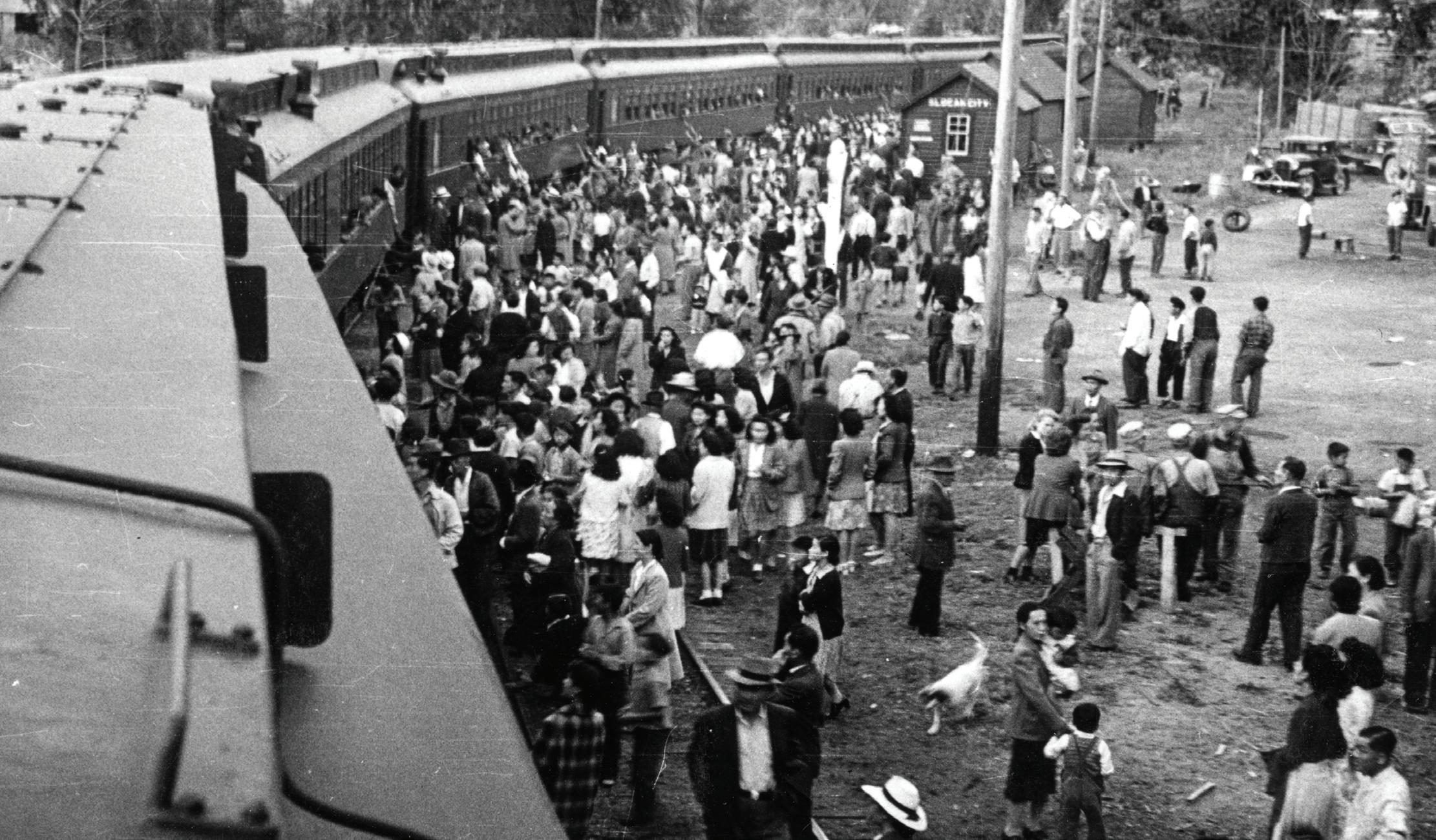
A train at the Slocan City, B.C., internment camp awaits JapaneseCanadians who had chosen to “repatriate” to Japan in 1946.



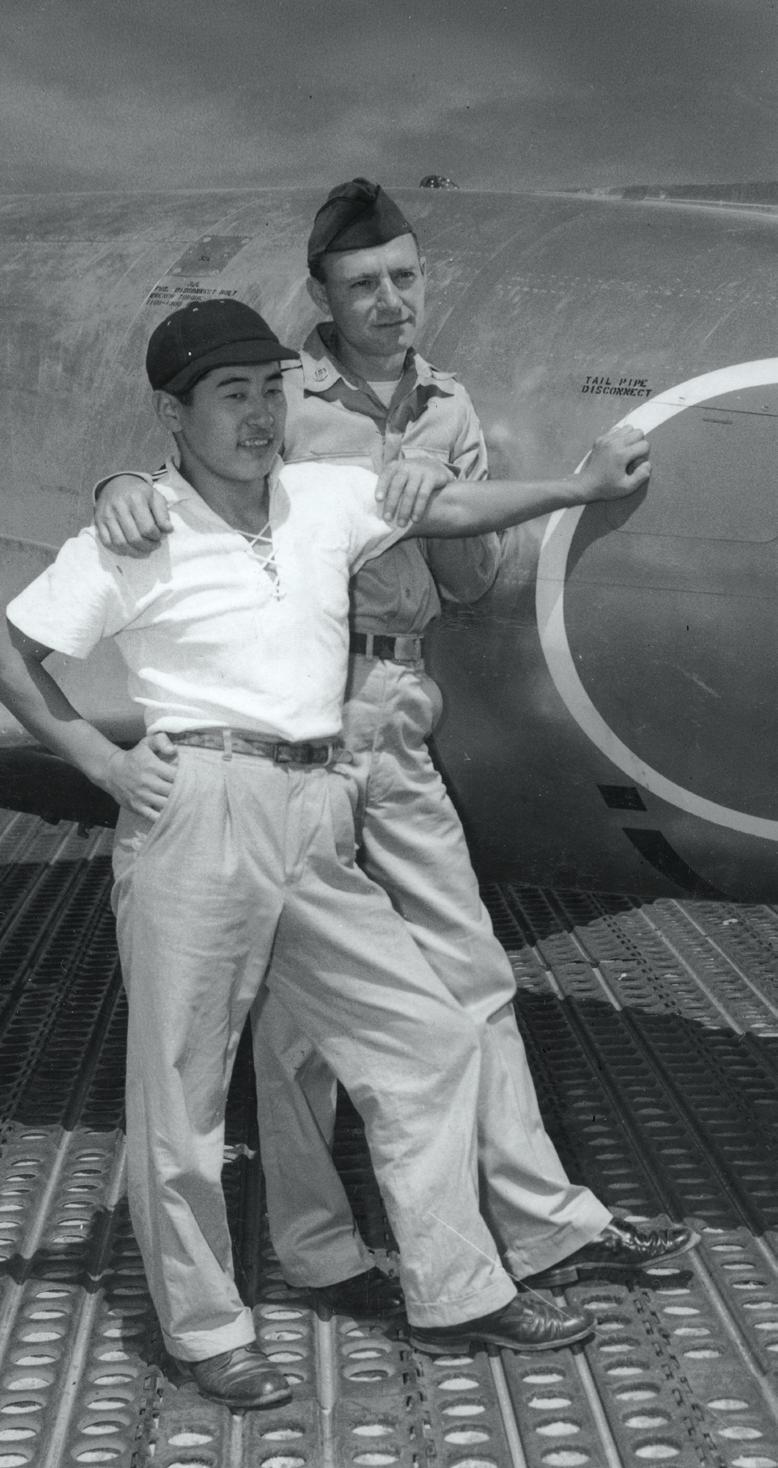
TheCanadian governmentwas intentonexpelling asmanyJapaneseCanadiansas possible,supposedly disloyaltoCanada orotherwise.
of psychiatric facilities (two were veterans, one of whom was deported without signing repatriation documents).
an American officer. After deportation, many Japanese-Canadians used their English abilities to work with U.S. occupation forces.
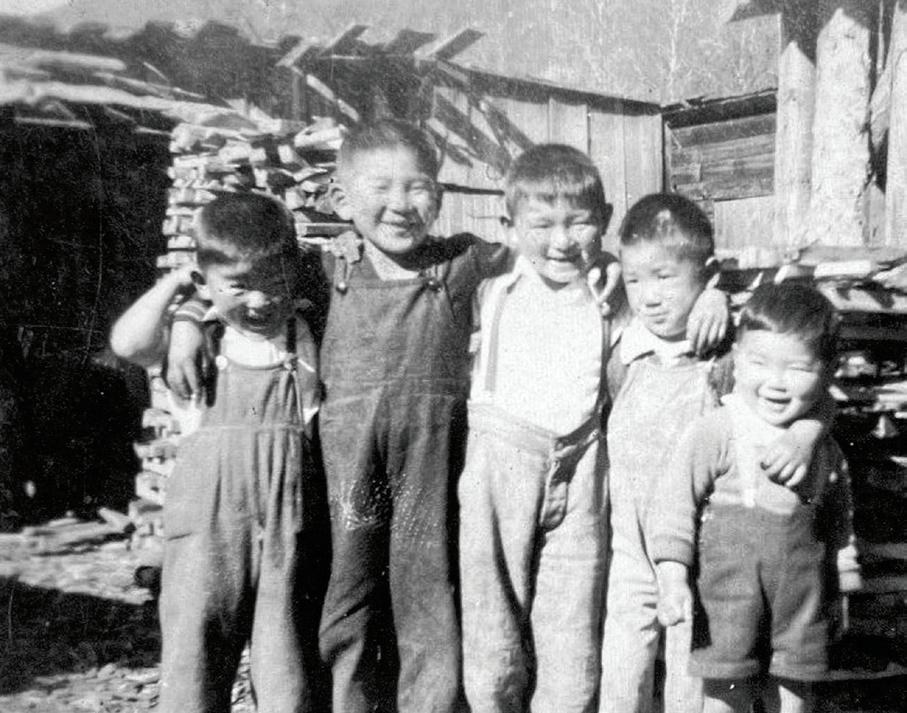
rather bleak, so a painful decision was made to return to Japan.”
Their reasons for leaving Canada were varied; many were exhausted from the treatment they had endured in Canada. Moving yet again to unfamiliar locations east of the Rockies to face further prejudice and struggles for seemingly unattainable employment was not enticing. Some were anxious to reunite with family members living in Japan or stranded there by the war. Most Canadian-born teenagers and young adults wanted to remain in Canada, but felt obliged to stay with their parents.
Maikawa, who was born in Cumberland, B.C., in 1931, explained her family’s choice to return to Japan. “The most prominent factors were: no savings left, no jobs and no house to go to. Their cultural roots were in Japan. There also was a language barrier and there were the many restrictions and limitations placed on the children’s choices of entering most professions. All these factors made a future in Canada look
Roy Uyeda, like many passengers, was seasick during the trip, but remembers that the food served on the ship was good and plentiful. Roy was born in Vancouver, and was 13 years old when he travelled to Japan with his widowed father and two sisters after internment at Slocan, B.C. American women were giving balloons to children on the ship. When six-year-old Mikio Ibuki requested one, he was told, “‘This is for American children and not for Japanese.’ I was shocked and never forgot this,” recalled the second-generation JapaneseCanadian, born in Vancouver and incarcerated with his family at Slocan before exile in Japan.
Some passengers didn’t accept that Japan had lost the war until they saw the extensive damage from the U.S. bombing in Tokyo Bay. Large vessels were unable to enter Yokohama and Tokyo because of the sunken submarines, ships and planes in the bay.

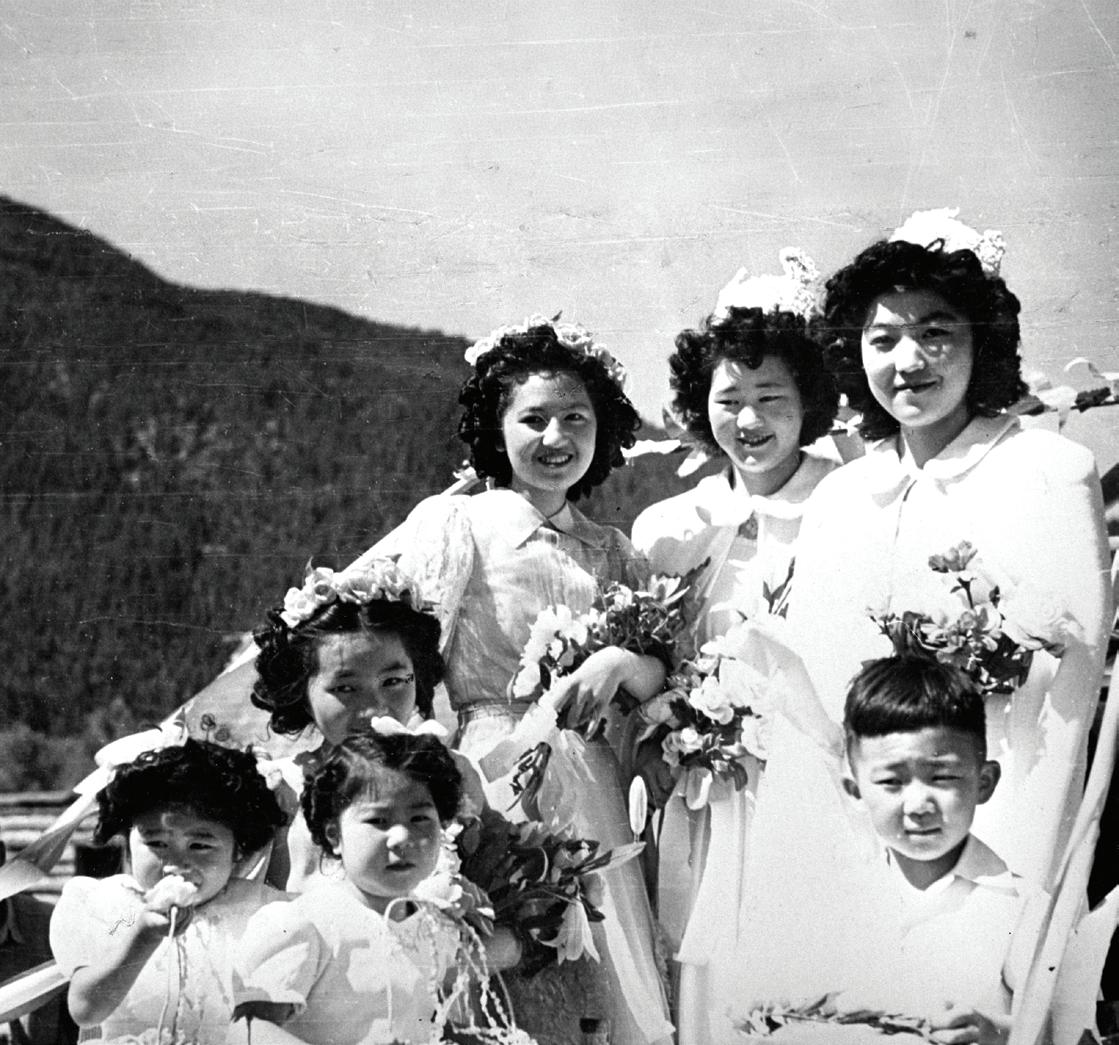
Yukiharu Mizuyabu recounted his deportation experience in the article Japanese Canadian Redress: the Toronto Story. “Indiscriminate bombing had flattened all the major cities, except for the ancient capital of Kyoto…. In addition, the military forces of the United States and her allies now occupied Japan.”
“Tokyo was just flattened. Nothing. Just huts with red tin roofs. You could see from one side of Tokyo to the other; it was a vast flat land of huts,” said Hiroshi Kumagai of his experience recorded on DiscoverNikkei.org.
As the deported Nikkei disembarked and moved to the repatriation centre at Kurihama, residents begged them for food. From Kurihama, they rode trains to their final destinations, typically their family’s ancestral villages. Some had to wait up to a month at Kurihama for space on a train and many recalled the poor quality of food there. Trains were slow and so full that people had to enter
and exit them through the windows, while others missed their stops entirely. Theft was also a problem.
From the train, Margaret Eto saw people living in caves. At each station, beggars would swarm the cars.
At Hiroshima, Eto was frightened by atomic bomb survivors, “scarred, hairless, skeleton-like figures,” trying to board the train. Roy Uyeda said of Hiroshima: “Everybody’s mouth was agape— nobody said anything, because everything was completely flat except for a few rough lean-to shelters. The station was just rough timbers nailed together.”
“For everyone, Issei and Nisei, Japan was a shock,” wrote Roy Ito in Stories of My People: A Japanese Canadian Journal. “There was the terrible destruction of the bombing raids, the despair on the faces of the people. There was no special reception. The returning Japanese were another unwanted problem for the authorities.”
Besides being unwelcome in Japan, deported Nikkei from Canada encountered a perfect storm of postwar issues. Food, in particular, was hard to get, of poor quality and expensive. There were reports of exiled Japanese-Canadians dying of starvation or malnutrition in Japan, including Kikuye Urata, 13,
who died in November 1947, and Kuniko Kawashita, whose family endured years of destitution.
Nikkei from Canada faced inflation, unemployment, poverty and diseases made worse by lack of sanitation and medical supplies. Yoshimi Susan Maikawa’s sister was likely saved by medicine sent from relatives living in Canada. The American occupying force employed DDT liberally in repatriation centres and schools to control vermin and prevent the spread of disease. Housing was scarce. Deported Nikkei arrived as 6-7 million Japanese soldiers and civilians from former colonies were returning to the country.
Maikawa and Kikuye Mochizuki Komori, another deportee, noticed that foreigners of Japanese descent tended to support each other as they weren’t accepted in Japan.
Shigeru Oue was a soldier from Vancouver working in Takamatsu in 1946. “He was shocked one night to meet a Nisei girl whom he had known in Vancouver, and who had been repatriated to Japan, working in a cabaret as a prostitute. When their eyes met, they were both embarrassed, and she turned away with an exaggerated air of not giving a damn,” according to his experience recounted in The Takimoto Oue Living Story by Glenna Theurer and Gerry Oue.
Some Japanese-Canadians arrived in their ancestral villages to conflict, alienation and resentment. The name-calling and harassment they faced in Japan mirrored their experiences as Asians in Canada.
“The Japanese were saying, ‘Why are they coming back here?’ Well, in a way you couldn’t blame them. A defeated country. They didn’t have enough food for their own people and we were coming out there from a country of plenty…. We were strangers to them, foreigners,” said one Nikkei from Canada interviewed in Years of Sorrow, Years of Shame – the Story of the Japanese Canadians in World War II by Barry Broadfoot.

During wartime, communication between Japan and Canada had
AtHiroshima, MargaretEtowas frightenedbyatomic bombsurvivors, “scarred,hairless, skeleton-like figures,”tryingto boardthetrain.

Deportee Kikuye Mochizuki Komori and her brother Yoshio in Japan (opposite top). The pair returned to Canada in the 1950s, while their parents and two sisters remained in Japan. Meiko Bando (opposite below; top row, middle), sister of Yoshimi Susan Maikawa, celebrates May Day with Kikuye Mochizuki Komori (top row, right) at Lemon Creek internment camp, B.C., in 1946. Margaret Eto’s sisters Akemi and Naomi and their mother Yasue Eto (below) return to Canada in 1958.
been solely through the Red Cross and often the messages weren’t delivered. Haru Koyanagi’s family in Japan only found out that she had died in internment in Canada when her husband and nine children were exiled. Similarly, Maikawa’s brother in Japan tried to warn his parents about the desperate living conditions there, but they never received the message and chose repatriation. Mikio Ibuki’s mother only learned about her mother’s wartime death when she was reunited with her father at Yokosuka. And Roy Uyeda’s family arrived in Japan to learn that his brother, a Canadian forced into the Japanese army, had died in Burma.
For younger Japanese-Canadians, their experiences in Japanese schools were strongly influenced by their age and prior knowledge of the language. Older youth were at a disadvantage; their schooling had been interrupted and delayed by internment in B.C. Students unfamiliar with the language had to start from the first grade, regardless of age. Others with some Japanese knowledge were placed in grades with younger children. Those older than 16 couldn’t go to school.
Japanese-Canadian students’ size, speech, behaviour and western haircuts and clothing made them conspicuous. Many were labelled Americans and were associated

by their peers with Japan’s wartime enemies. Students reported incidents of bullying, theft and other abuse, not only by their peers, but by teachers and other adults.
Despite having limited education in Japan, many Nikkei from Canada used their English abilities to work with U.S. occupation forces. The jobs offered generous pay and sometimes accommodations and food. As U.S. military bases began to close in 1952, some Japanese-Canadians moved to civilian jobs that made use of their English skills.
Meanwhile, Nisei unhappy with the living conditions in Japan couldn’t return to Canada because they had renounced their citizenship.
As the forced deportations continued, many Canadians became infuriated with the situation and some advocated against them, starting with the Co-operative Commonwealth Federation party, and other organizations, reinforced by journalists, civil libertarians and church groups. Under pressure, the government referred the orders-incouncil to the Supreme Court of Canada, which ruled that Japanese citizens and naturalized Canadians (born in Japan) could be deported, but not their minor Canadian-born children and unwilling dependants
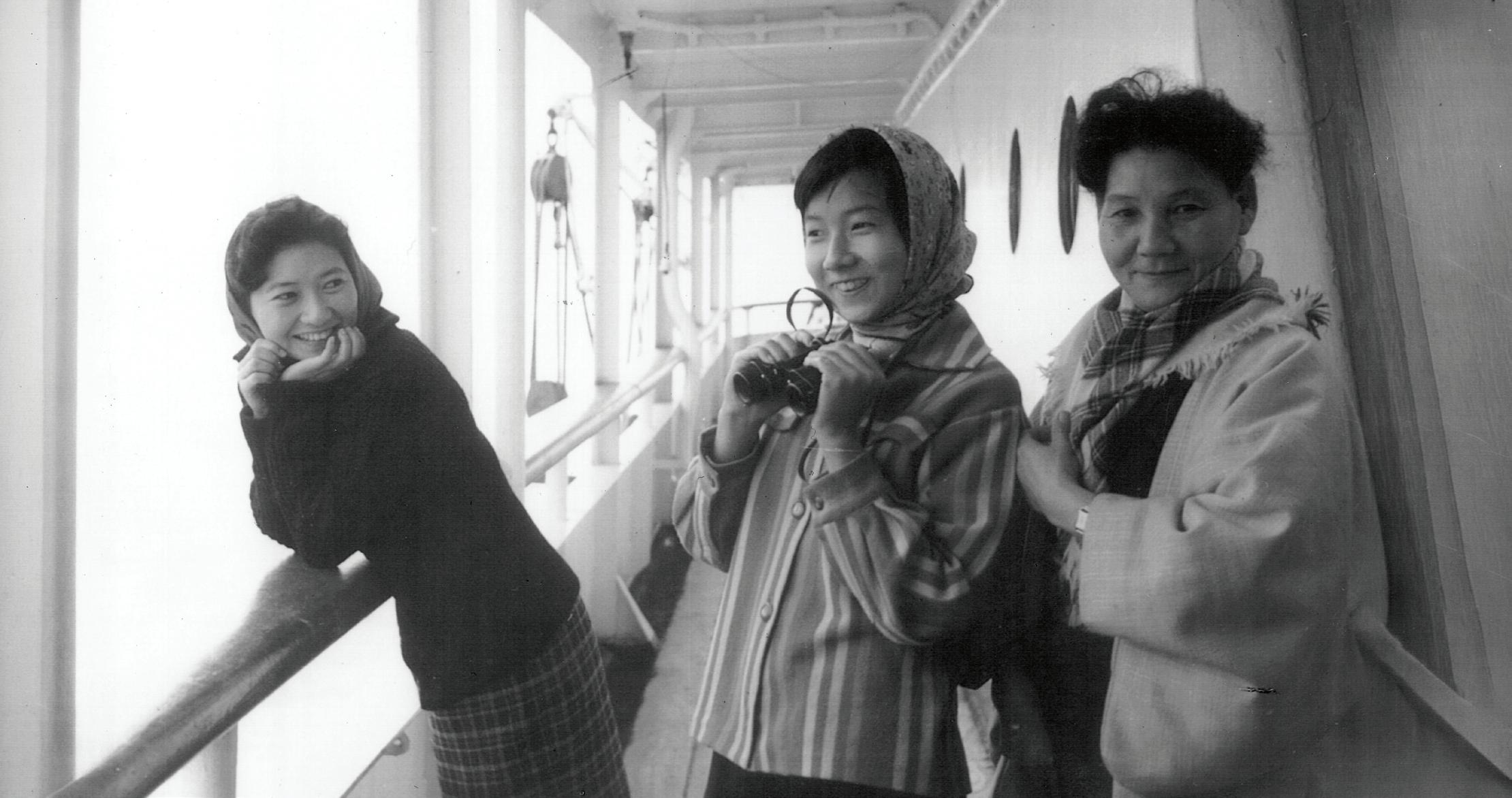

of male deportees. Frustrated by this complication, Canada’s government sent the matter to the British Privy Council. In December 1946, the council ruled the deportation orders were legal. In January, the federal cabinet, facing public backlash, revoked the legislation to deport the remaining interned Nikkei. By then, almost 4,000 people had been exiled to Japan.
In June 1948, Nikkei were granted the right to vote federally in Canada. In March 1949, they were granted full rights of Canadian citizenship, including the right to vote provincially in B.C.
Although deported naturalized Canadians had lost their citizenship, those born in Canada (mostly Nisei) had their citizenship reinstated. In the 1950s, Nisei began returning to Canada. Some again encountered racial discrimination back home.
Returning Japanese-Canadians had to apply for “clarification of citizenship” at Tokyo’s Canadian Embassy, with additional conditions placed on their return.
“This so-called clarification of Canadian citizenship still did not give me exactly the same rights as a European-Canadian residing outside of Canada,” said Yukiharu Mizuyabu. “For example, GermanCanadians who had been abroad during the war were offered government-paid passage back to Canada if they had no funds of their own. There was no similar offer of financial aid to destitute JapaneseCanadians wanting to return to Canada. In fact, even after 1949 when Japanese-Canadians were supposedly given the same rights as other Canadians, any JapaneseCanadian who wished to return had to have someone act as a sponsor as an assurance that he or she wouldn’t become a public burden. Thus, we would be treated like new immigrants even though we were coming back to our native land.”
Some found another way. Around 30 deported Nisei signed up from Japan to serve in the Korean War as Canadian soldiers. Since their families couldn’t afford to return,
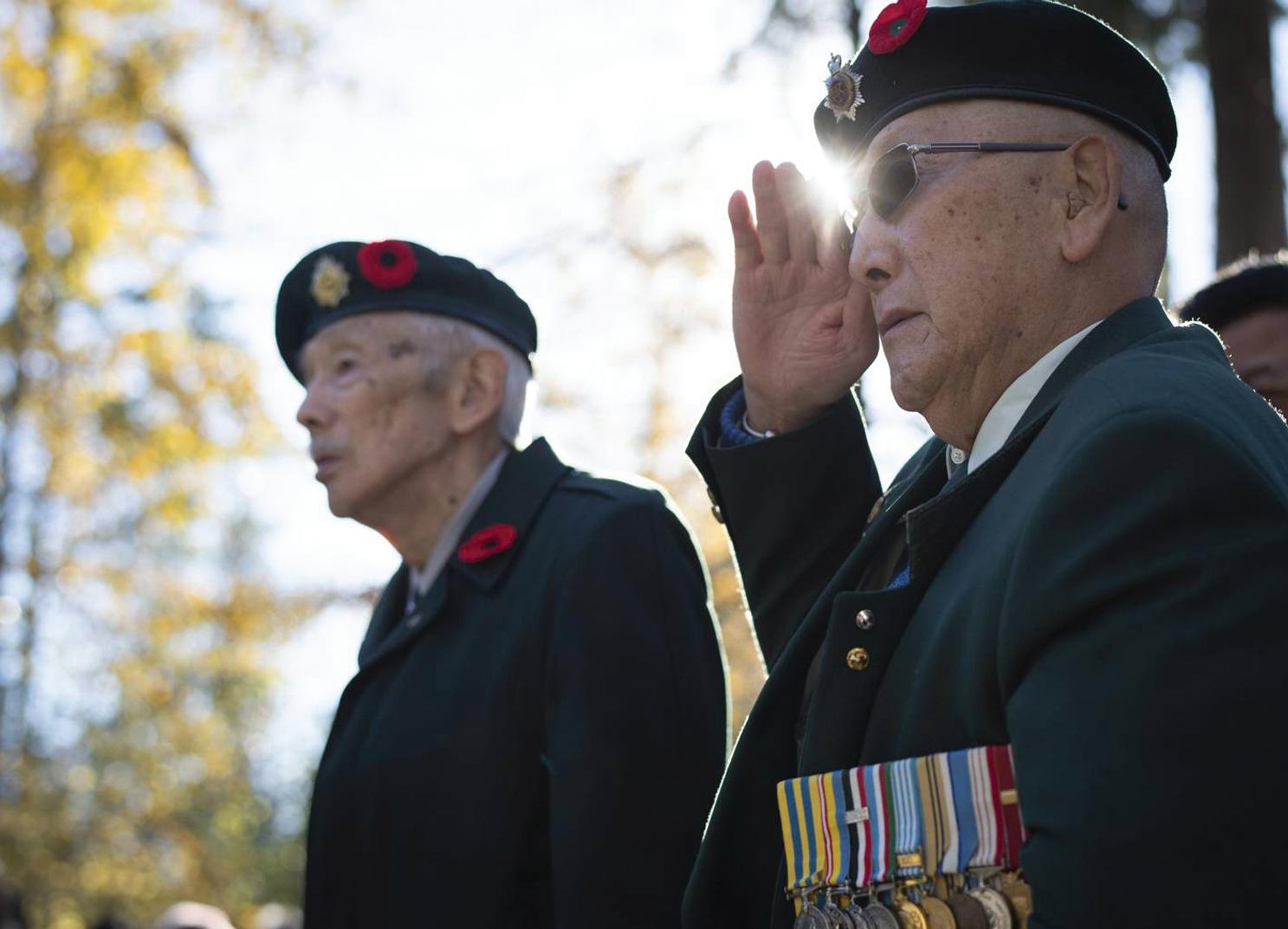

onSept.22,1988.

joining the military guaranteed decent pay and free return to Canada with their units.
Four sons of deported Great War veteran Ryoichi Kobayashi signed up in Japan for Korean War service, and all returned to Canada. Kobayashi himself was originally turned down when reapplying for his citizenship in 1957. The judge relented when he was shown Kobayashi’s war service insignia.
In 1977, Japanese-Canadians commemorated the centennial of the arrival of the first Issei in Canada. Out of this milestone grew a renewed pride and interest among Nikkei in their history, and a movement for redress took shape.
Thanks to the diligent work of the National Association of Japanese Canadians, the Canadian government formally apologized on Sept. 22, 1988, for the treatment of Nikkei during the Second World War. The apology included a compensation package for all surviving internees and funding for community projects. Exiled JapaneseCanadians who were still in Japan also received compensation.
Approximately half of the Nikkei deported to Japan remained there, most commonly because they had Japanese spouses and had raised children in Japan. Some had successful and stable careers or felt obliged to carry on the family estate. And some still resented Canada, which had treated them and their families so harshly. Among the half who returned to Canada were Yoshimi Susan Maikawa, Roy Uyeda, Yukihari Mizuyabu, Margaret Eto and Kikuye Mochizuki Komori.
This time, the decision was theirs to make.

By John Boileau

An unidentified member of the Royal 22e Régiment eyes the landscape from an M113 armoured personnel carrier near a Canadian Armed Forces C-130 Hercules at the airport in Sarajevo, Bosnia and Herzegovina, circa 1992.
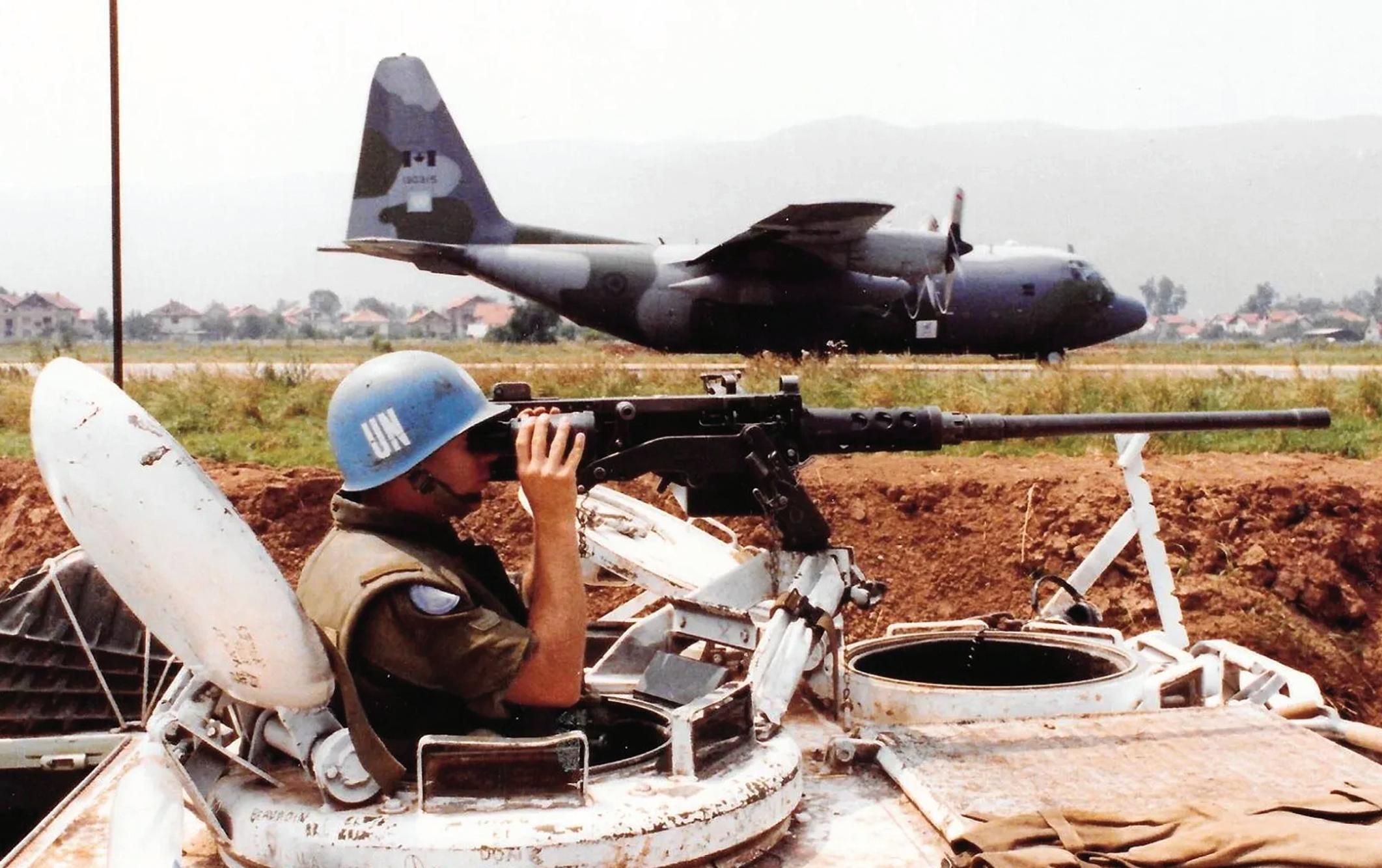


“IFyou saw what I see for the future of Yugoslavia, it would scare you.” How prophetic was Yugoslavian President Josip Broz Tito in 1971?
A little more than 10 years after his death in 1980, the country Tito had helped create and had led since the end of the Second World War quickly descended into a morass of bloody civil wars. Paradoxically, the system Tito left in place—equality among the country’s six republics and two autonomous regions—produced the conditions for the eventual breakup of the Federal Republic of Yugoslavia, beginning in 1991.
During those wars, the world was introduced to a new phrase: ethnic cleansing, a literal translation of the Serbo-Croatian expression etnicko ciscenje, the forced removal of ethnic, racial or religious groups from a given area. The fragmentation of Yugoslavia resulted in atrocious human rights violations and the deaths of up to 140,000.
Forces of European countries, the United Nations and NATO became involved in various attempts to prevent ethnic cleansing. Canada participated in these from the beginning, sending Canadian Armed Forces members and civilian police. At one time, up to 2,000 CAF personnel were serving in the wartorn country.
The breakup of Yugoslavia began on June 25, 1991, when the republics of Slovenia and Croatia declared independence. Two days later, the Yugoslav People’s Army (JNA) marched into Slovenia. Fierce fighting followed for the next two weeks but, by the end, Slovenian militia defeated the JNA. Representatives of the European
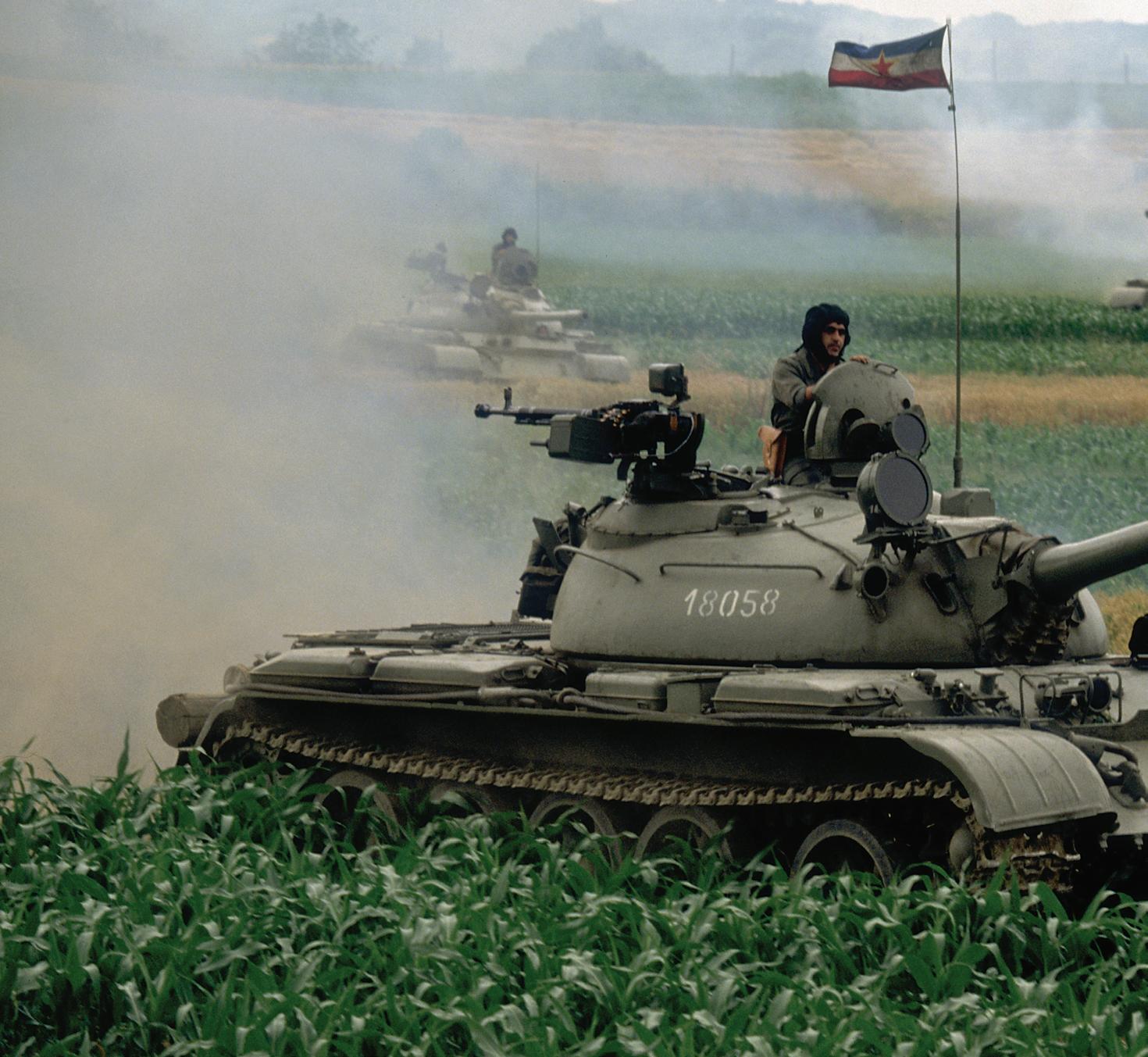
Community (the forerunner of the European Union) negotiated a ceasefire and established the European Community Monitoring Mission in the Former Yugoslavia in July 1991. On Sept. 1, the agreement was extended to include JNA withdrawals from Croatia.
Under the code name Operation Bolster, the CAF provided 10 officer monitors and two support staff on each of six rotations between September 1991 and late August 1994. Canadian officers held a disproportionate number of supervisory positions, including at the monitoring mission’s headquarters in Zagreb, Croatia, and regional centres.
In the July 1993 issue of the Maritime Engineering Journal, Lieutenant-Commander Bryan Leask described his experiences on the mission. In the beautiful medieval walled city of Dubrovnik, Croatia, a local family had invited his team into their home, but already, “it was sad to see from the attitude of the children that another generation of hatred was being bred.”
Colonel Fred Noseworthy served on the mission between

September 1992 and April 1993, double-hatted as chief operations officer and Canadian contingent commander. In a recent interview with Legion Magazine via email, he noted: “Canada’s roles in the former Yugoslavia, particularly during the early stages of the conflict(s) was a sobering test of its theretofore proud peacekeeping heritage and identity, revealing the limitations of traditional approaches to conflict resolution in the face of a savagely brutal ethnic conflict.”
“And to be honest,” Noseworthy continued, “we weren’t nearly as well prepared for what we encountered on a daily basis as might be the case today…lessons were learned but PTSD became all too prevalent for those who returned.”
In mid-1994, Canada withdrew from the monitoring mission because of increasing UN commitments.
Due to the ongoing conflict, UN Protection Force (UNPROFOR), consisting of 12 battalions, support units and civilian police, was established in February 1992. Its mission was to ensure three UN protected areas in Croatia were demilitarized.
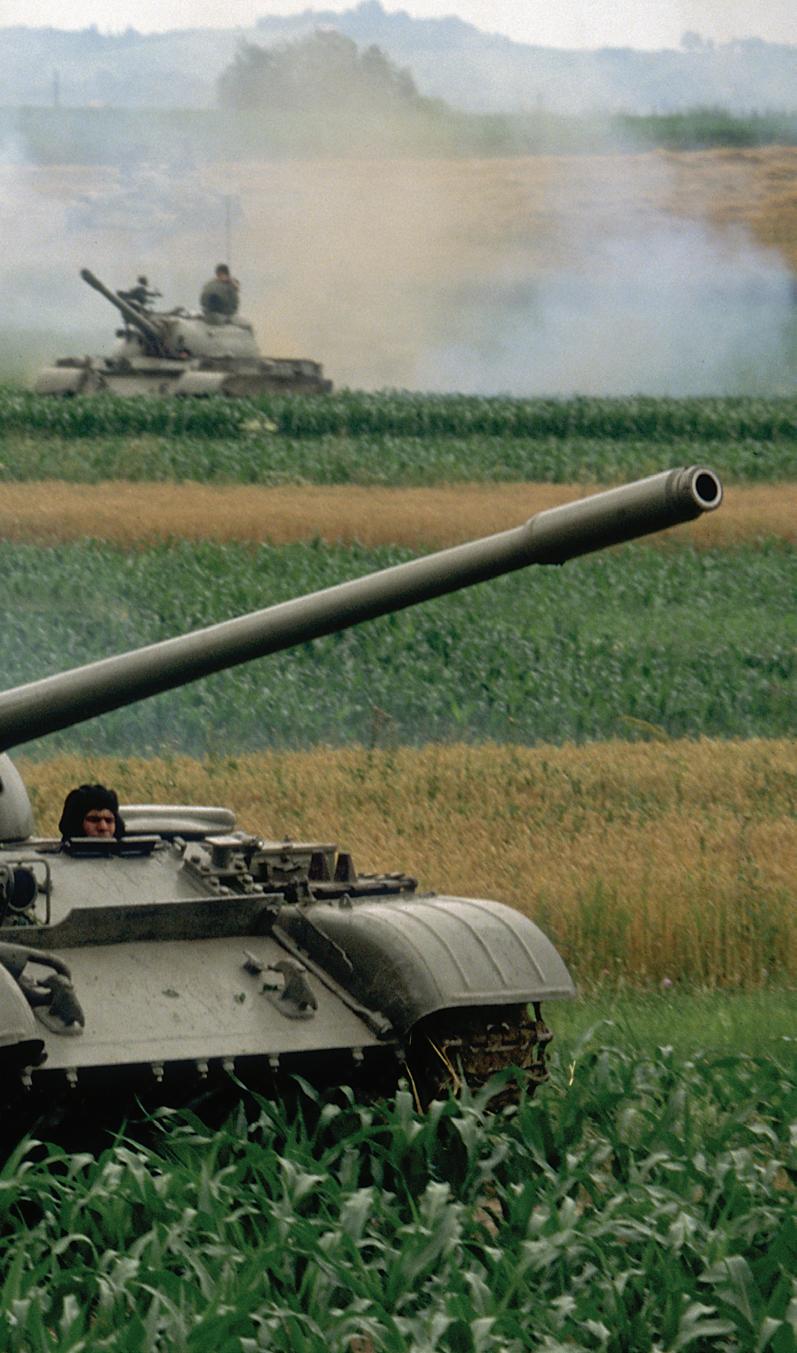
Canadian Brigadier-General (soon to be major-general) Lewis MacKenzie was the UN force’s chief of staff. A veteran of several previous peacekeeping missions, MacKenzie was an ideal choice, as neither the Indian lieutenantgeneral commander or the French major-general deputy had previous UN experience.
To the consternation of the three senior officers, the UN directed the force to establish its HQ in Sarajevo, the capital of Bosnia and Herzegovina, while it was deployed in Croatia, hundreds of kilometres away. It made no sense. But it did provide an opportunity for MacKenzie to appear in living rooms around the world on the nightly news.
In April, the CAF provided a battle group of 860 infantry
“THAT VIcIOUS cIRcLE OF RETALIATION WAS ONE OF THE mAJOR PROBLEmS WITH THIS PARTIcULAR WAR.”
A medical evacuation at a Canadian base in Croatia ( this image). Yugoslavian tanks roll through Slovenia (above) shortly after the republic declared its independence on June 25, 1991. Canadian Brigadier-General Lewis MacKenize (right ) served as chief of staff of the UN Protection Force.
soldiers based on 1st Battalion, Royal 22e Régiment, with ‘N’ Company from 3rd Battalion, The Royal Canadian Regiment attached. Both units were from 4 Canadian Mechanized Brigade Group based in Germany.
Known as CANBAT, the unit operated checkpoints, conducted patrols and monitored the activities of opposing military forces. The CAF also provided an engineer regiment from April 1992
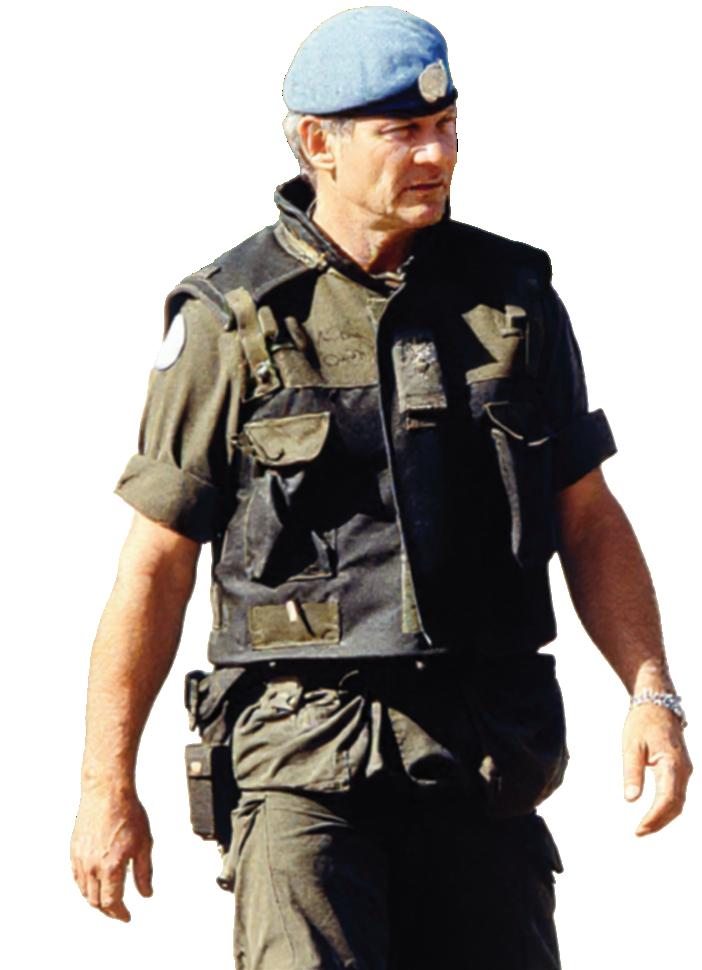

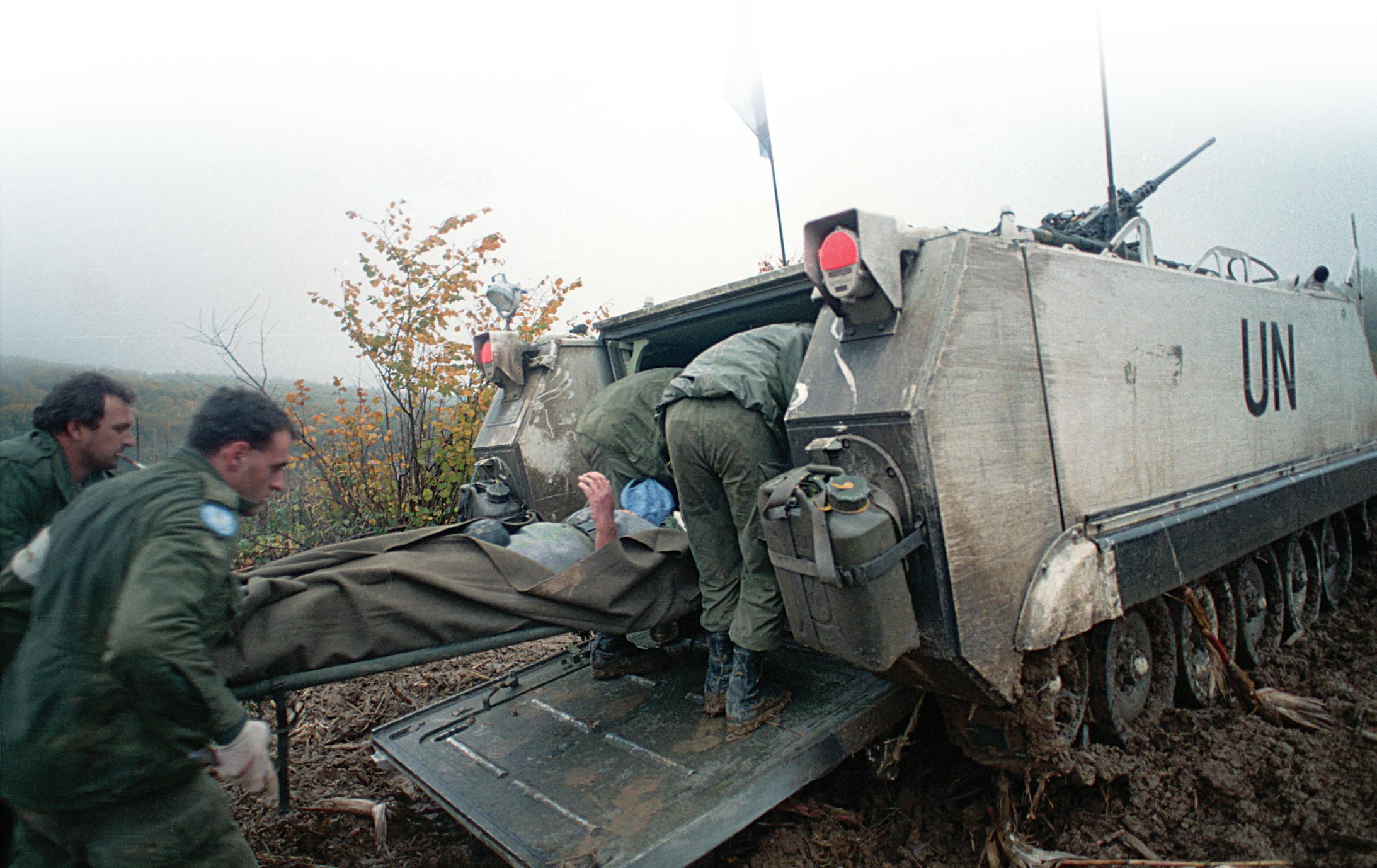


BETWEEN 1992 AND 2010, ABOUT 40,000 cANADIANS SERVED
to March 1993, a logistics battalion from September 1992 to March 1995 and 12 forward air controllers from July to November 1993. The latter two were subsequently absorbed into the battle group.
In June 1992, the conflict intensified and spread into neighbouring Bosnia and Herzegovina when Sarajevo came under sustained attack by Serbs. MacKenzie persuaded his superiors to expand UNPROFOR’s mandate and strength to ensure the security and continued operation of the city’s airport. This mission also included delivering humanitarian aid in the area.
It took CANBAT 48 hours to complete its move to Sarajevo after a day-long holdup by Croatian forces. In the capital, the battalion faced additional difficulties in dealing with Serbs and Bosnians. MacKenzie spent hours journeying
from one side to the other as he tried to convince the belligerents not to fire on each other, UN soldiers or humanitarian aid workers.
“That vicious circle of retaliation was one of the major problems with this particular war,” MacKenzie noted in his book Peacekeeper: The Road to Sarajevo. He resorted to the power of the media to try to embarrass Serbs and Bosnians to adhere to the agreements they had signed. This worked to a degree, but sporadic sniping and shelling remained a constant threat.
Later that year, the UN mission expanded into Bosnia. Canada provided a second battle group, known as CANBAT II, consisting of a mechanized infantry battalion, with an attached armoured squadron. It deployed to Visoko, Bosnia and Herzegovina, a
The first Canadian killed in the former Yugoslavia was Sergeant Mike Ralph, a combat engineer from Canadian Forces Base Gagetown, N.B. On Aug. 17, 1992, Ralph returned to double-check a Croatian minefield that had been cleared the previous day. As he drove a truck through the area, it hit a mine and Ralph died in the subsequent explosion. Canadians were shocked; peacekeepers were not supposed to die from the actions of the people they were trying to help. The Sgt. Ralph Bridge in Gagetown’s training area and Mike Ralph Way in Calgary (above) are named in his honour. Twenty-two other Canadians died in the area before the various missions ended.
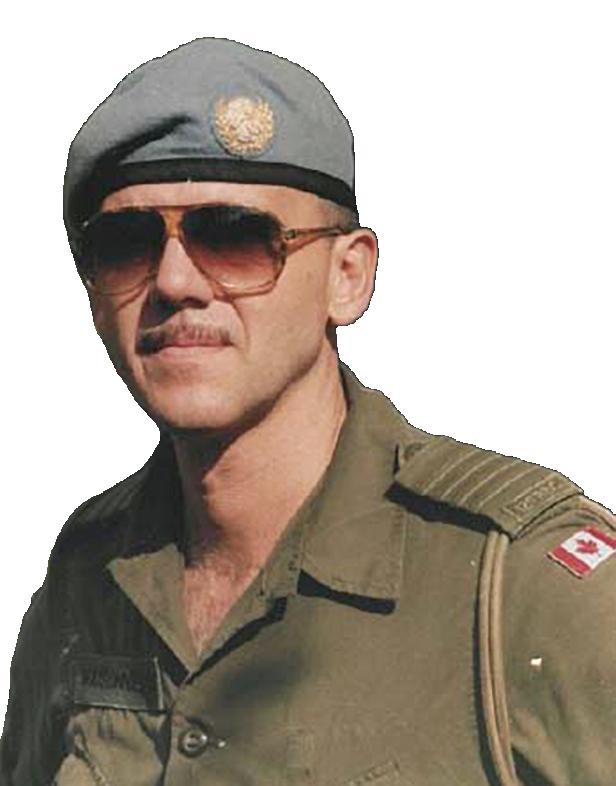


powder keg where all three warring factions vied for control.
The battle group struggled to get aid convoys through, forcing National Defence headquarters (NDHQ) to change its composition to two armoured squadrons, a mechanized infantry company and an engineer company in November 1993.
Despite the presence of UN troops, the combatants continued to snipe, shell and attack each other. Serbian forces took Canadians hostage twice, once subjecting them to mock executions. In Croatia, Serb Krajina forces shelled Croat army positions from high ground near Medak. On Sept. 9, Croat forces began an operation to capture the position. Several days of intense combat followed before yet another ceasefire was arranged. The agreement required all belligerents to withdraw from the so-called Medak pocket, which Croatian units had captured.
Colonel (later lieutenantgeneral) Michel Maisonneuve was the chief of operations at UNPROFOR headquarters. He and a French colleague had drafted the Medak pocket agreement but knew they would need to deploy forces to implement it.
“Of all the forces available…the two Canadian battle groups were [two of the few from] 29 troopcontributing nations that I could deploy in any demanding scenario,” Maisonneuve told Legion Magazine.

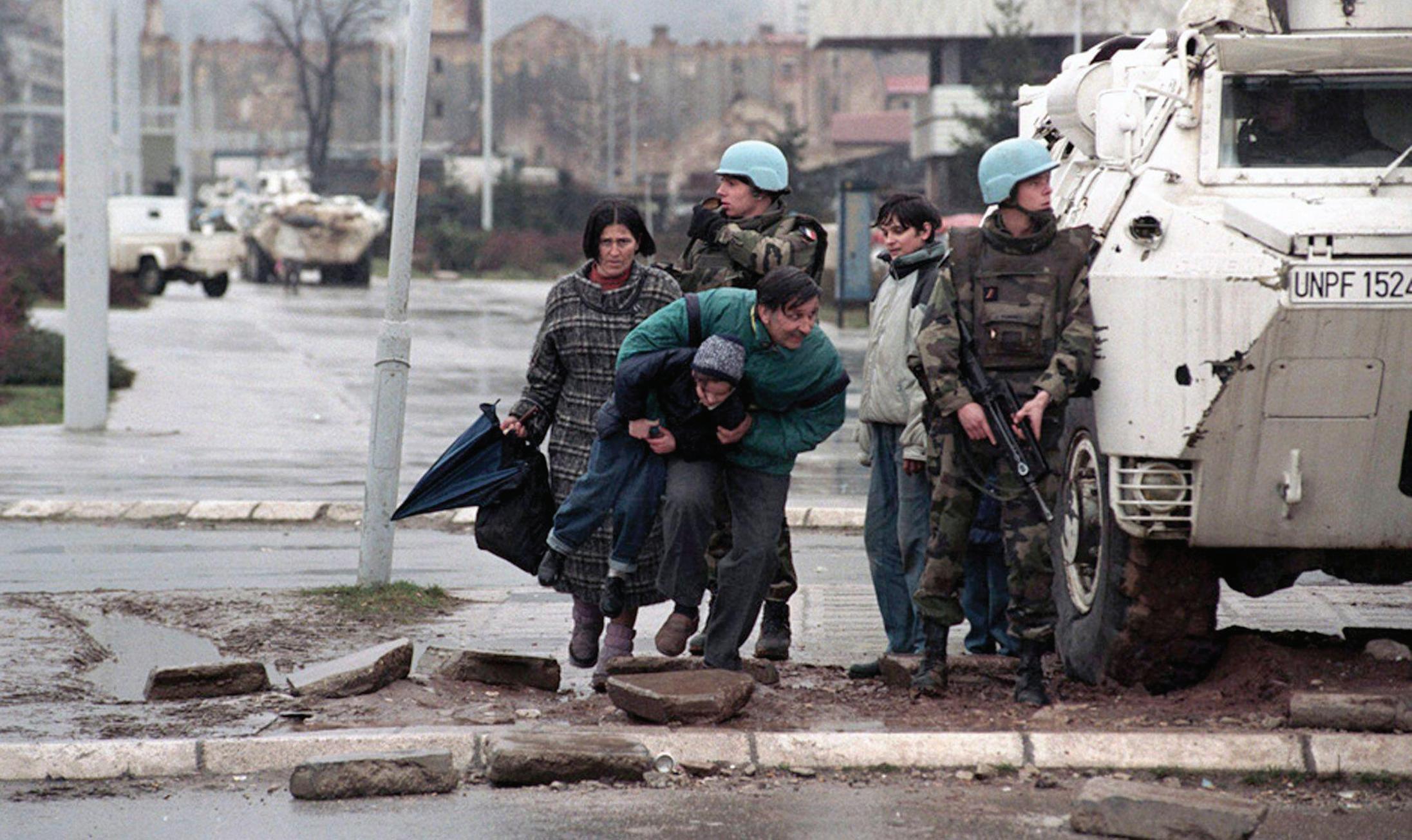
“The Brits, French and Canadians,” he continued, “had deployed proper battle groups…equipped and trained for general purpose warfare.”
Maisonneuve recommended deploying the newly arrived battle group from 2nd Battalion, Princess Patricia’s Canadian Light Infantry (2 PPCLI), along with two French mechanized companies, to northern Croatia to UNPROFOR’s commander. He agreed.
On Sept. 15, UNPROFOR ordered 2 PPCLI (44 per cent of whom were reservists), with French support, to move into the Medak pocket and oversee the withdrawal. The Croats fired on UN forces with machine guns and artillery to try to drive them back. But the Patricias stayed. They constructed a fortified position, returned fire and drove off night attacks by the Croats during a 16-hour battle.
When the Croatian commander realized the Canadians and French were not moving, he agreed to a ceasefire and withdrawal. But on Sept. 16, the Croats held the Canadians up at a heavily fortified roadblock as they attempted to advance into the pocket.
Lieutenant-Colonel Jim Calvin, the Patricias’ commanding officer,
held a spontaneous news conference during which he accused the Croats of having something to hide. Around 6 p.m., the Croatians withdrew. When the Canadians finally advanced into the pocket, they found evidence of Croatian ethnic cleansing of local Serbs. But the actions of the Canadians had prevented further deaths.
Former defence chief Wayne Eyre was a captain commanding 2 PPCLI’s reconnaissance platoon at the time. He led his soldiers into the razed village of Licki Citluk. During the next few hours, Eyre and his men discovered several mutilated bodies. No Serbs were found alive in the village.
“The smoke, the flames, is something I will never forget,” Eyre told the CBC in 2023.
The battle was not publicized by the Canadian government at the time, as it conflicted with the public perception of peacekeeping. Yet the standoff resulted in four wounded Canadians and was the toughest action faced by the country’s soldiers between service in Korea and Afghanistan.
It was not until 2002 that information about the battle began to surface. This culminated in the
first-ever award of a Commanderin-Chief Unit Commendation to the battalion. In an address, Gov. Gen. Adrienne Clarkson noted: “Your actions were nothing less than heroic and yet your country didn’t recognize it at the time.”
In March 1995, the UN Security Council restructured UNPROFOR into three separate but related operations. UNPROFOR remained in Bosnia and Herzegovina, while the UN Confidence Restoration Operation in Croatia and UN Preventive Deployment Force in Macedonia were created. These three missions operated under a new joint theatre command in Zagreb, Croatia, known as UN Peace Forces Headquarters (UNPF-HQ).
In mid-July 1995, one of the worst incidents in the war occurred when Bosnian Serb forces rounded up more than 8,000 Bosnian Muslim boys and men and executed them in Srebrenica, Bosnia and Herzegovina.
Colonel Rick Hillier (later general and defence chief) was serving as director of operations at UNPF-HQ at the time. “In the aftermath of Srebrenica it became overwhelmingly clear the United Nations’ approach to the crisis was dysfunctional and that its presence was

tolerated by the warring parties only as long as each could manipulate it for partisan gain,” he wrote in his book, A Soldier First: Bullets, Bureaucrats and the Politics of War.
The atrocity was the catalyst for the escalation of NATO’s efforts to end the war in Bosnia and led to the signing of the Dayton Accords in December 1995. NATO launched Operation Joint Endeavour to ensure compliance with the agreements. It was the alliance’s first crisis response deployment and resulted in a heavily armed, 60,000-person Implementation Force (IFOR), which operated for a year.
Most NATO members, along with a few non-NATO countries, notably Russia, contributed to IFOR. Operating under Chapter VII of the UN Charter, IFOR’s rules of engagement permitted the use of deadly force to achieve the mandate’s aims. UNPF-HQ was phased out in January 1996, following the creation of the two new UN missions in Bosnia and Herzegovina and Croatia, as well as positive developments in the former Yugoslavia.
Shortly after IFOR was created, Canada announced it would provide soldiers to it—two, sixmonth rotations of about 1,000 troops to be part of a multinational brigade under Canadian command. Operation Alliance, as it was known, was the first operational deployment of a Canadian formation headquarters since the Korean War. Perhaps more noteworthy, it marked the first high-profile mission since the Somalia Affair, the 1993 peacekeeping scandal.
The first rotation was based on 2 Canadian Mechanized Brigade Group, commanded by BrigadierGeneral Bruce Jeffries (later major-general), out of Petawawa, Ont. Among its many tasks: establishing freedom of movement; supervising the withdrawal and separating the combatants; patrolling ceasefire lines and supervising the removal of landmines and unexploded ordnance.
The contingent was known as 2 Canadian Multinational Brigade (2 CAMNB). It consisted of a brigade headquarters and signals squadron, an armoured reconnaissance squadron, an infantry company, engineer squadron, national support element, advanced surgical centre and a military police platoon. The infantry company also included a support weapons platoon, with mortars, anti-armour missiles, pioneers and reconnaissance elements.
In theatre, Jeffries grouped the infantry company with a British armoured regiment to form a small but potent battle group. The Canadians joined Multinational Division Southwest, led by 3 (U.K.) Division. A Czech mechanized infantry battalion rounded out 2 CAMNB.
Jeffries singled out two key components of 2 CAMNB to Legion Magazine: engineers and military police. He referred to the former
as “the Swiss Army knives of the profession of arms—capable of fixing, building, protecting, destroying, maintaining mobility and making like infantry when push comes to shove.”
The military police, meanwhile, “performed a multitude of tasks and acted with economy of force. Such was their utility that I requested NDHQ to increase our establishment with two additional sections.” It was approved.
When 2 CAMNB’s six-month tour ended, it was replaced by units from 5 Canadian Mechanized Brigade Group based out of Valcartier, Que. Elsewhere, Canadian ships had been supporting IFOR by participating in a naval blockade in the Adriatic Sea, while Canadians in NATO’s Airborne Early Warning and Control Force helped enforce a no-fly zone.
When IFOR ended in December 1996, NATO replaced it with a Stabilization Force (SFOR). SFOR
“IN THE AFTERMATH OF SREBRENIcA IT BEcAmE OVERWHELmINGLY cLEAR THE UNITED NATIONS’ APPROAcH TO THE cRISIS WAS DYSFUNcTIONAL.”
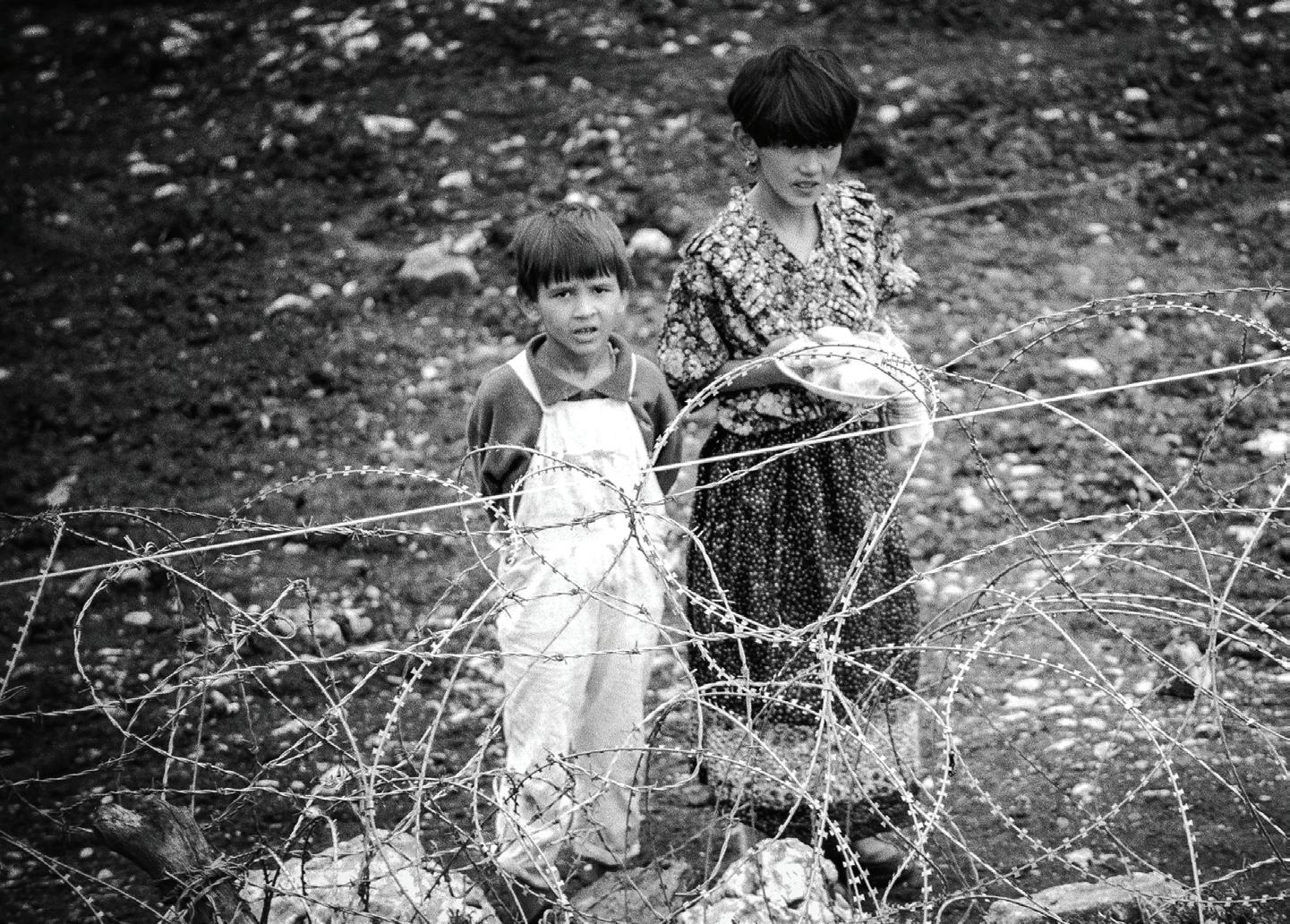

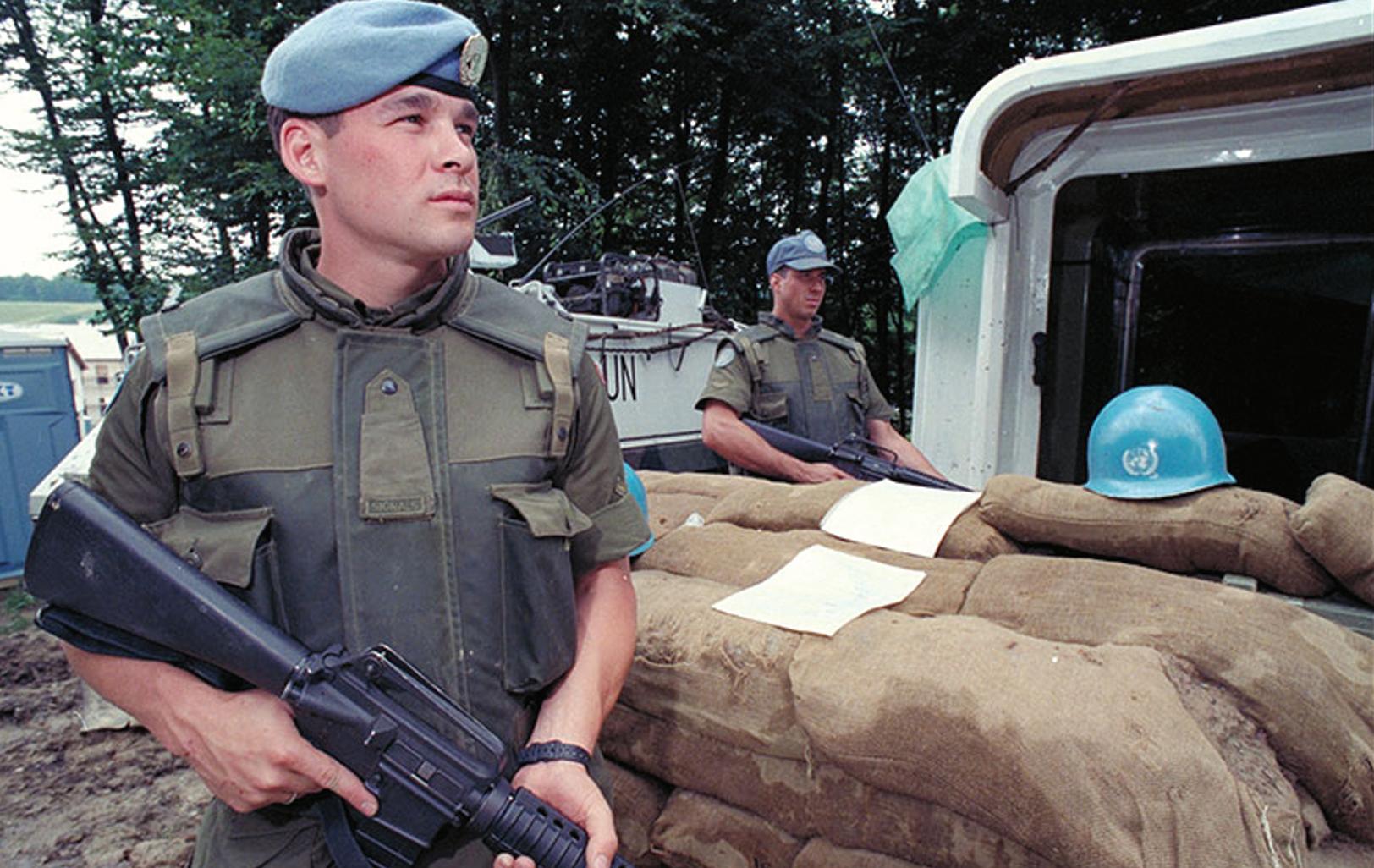
was another multinational operation aiming to bring lasting peace to Bosnia and Herzegovina and to transition its responsibilities to an EU force. SFOR helped maintain a secure environment and facilitate the country’s reconstruction after the devastating 1992-1995 war.
Canada’s overall contribution to SFOR was known as Operation Palladium and included 1,200 Canadians. The country’s contingent was labelled Task Force Bosnia-Herzegovina. Its headquarters and support base were both located in Velika Kladuša, a town in northwestern Bosnia and Herzegovina near the Croatian border. CAF units rotated every six months.
Lieutenant-Colonel Tim Grant (later major-general) commanded the Strathcona Battle Group in SFOR from fall 1997 to spring 1998. Pre-deployment training in Canada had been completed successfully, except for civilian-military cooperation (CIMIC) teams. Before deploying overseas, however, the battle group had been sent to Winnipeg to assist with major floods in the area.
Grant told Legion Magazine that during that experience his CIMIC teams “proved their worth as they made connections with politicians and first responders throughout the city, which allowed me to deploy forces where needed
most.” In the end, said Grant, “the experience was just what the CIMIC teams needed to confirm their readiness for deployment.”
The Canadian task force was part of Multinational Brigade Northwest. The brigade’s headquarters was in Banja Luka and brigade command rotated through the three contributing countries: Canada, Britain and the Netherlands.
On March 24, 1999, NATO launched Operation Allied Force, a 78-day air campaign to force Serbia to cease military actions against the Kosovo Liberation Army, as Serbian operations had caused a humanitarian crisis in the breakaway region. Canada eventually provided 18 CF-18 Hornets, which flew a total of 678 combat sorties as part of this mission.
Once the air operations ended, soldiers were required to enforce the ceasefire and NATO established Kosovo Force (KFOR) on June 10 in Kosovo and Macedonia. Canada’s contribution was known as Operation Kinetic. Canadian Task Force Kosovo (TFK) consisted of an infantry battle group, an armoured reconnaissance squadron, a field engineer squadron, a tactical helicopter squadron, plus national command and support elements.
KFOR’s mission was to facilitate the safe return of refugees and to provide them with immediate humanitarian assistance. TFK
Canadian corporals Darrell Houle and Daniel Proulx guard a Canadian base in Croatia (left ). Orphaned children stand outside the gate of a UN Protection Force compound in Srebrenica, Bosnia and Herzegovina (opposite).
carried out patrol and observation operations and provided aid. The CAF completed two six-month rotations between June 1999 and June 2000 before TFK ceased operations.
In September 2000, Major-General Hillier took command of SFOR’s Multinational Division Southwest, comprised of 4,000 NATO troops. His derisive assessment of the UN after Srebrenica was reinforced in Bosnia; Hillier noted the organization’s “inability to accomplish anything other than to use resources and get in the way of people who were actually trying to do something….
“The UN,” he continued, “could not have performed more dismally than it did in Bosnia.”
Once NATO had successfully implemented the military aspects of the Dayton Accords in 2004, the stabilization operation became a European Union mission, which Canada left in 2007. Other smaller missions were established in the region, to which the CAF also provided personnel and resources. Between 1992 and 2010, about 40,000 Canadians served in the region of the former Yugoslavia, with a handful still working in Kosovo today.
When French General Jean Cot commanded the original UN protection force in the region, he often asked chief of operations Canadian Michel Maisonneuve and senior Canadian visitors why Canada was participating in the mission. “Because a Canadian invented peacekeeping,” said Maisonneuve, “and we are good international citizens who pull their weight.”
Igor Gouzenko and the 1946 royal commission on espionage that changed Canada—and the world
Soviet cipher clerk Igor Gouzenko ( top and right, under wraps during a 1954 TV appearance) revealed an elaborate spy ring when he defected to Canada in September 1945.


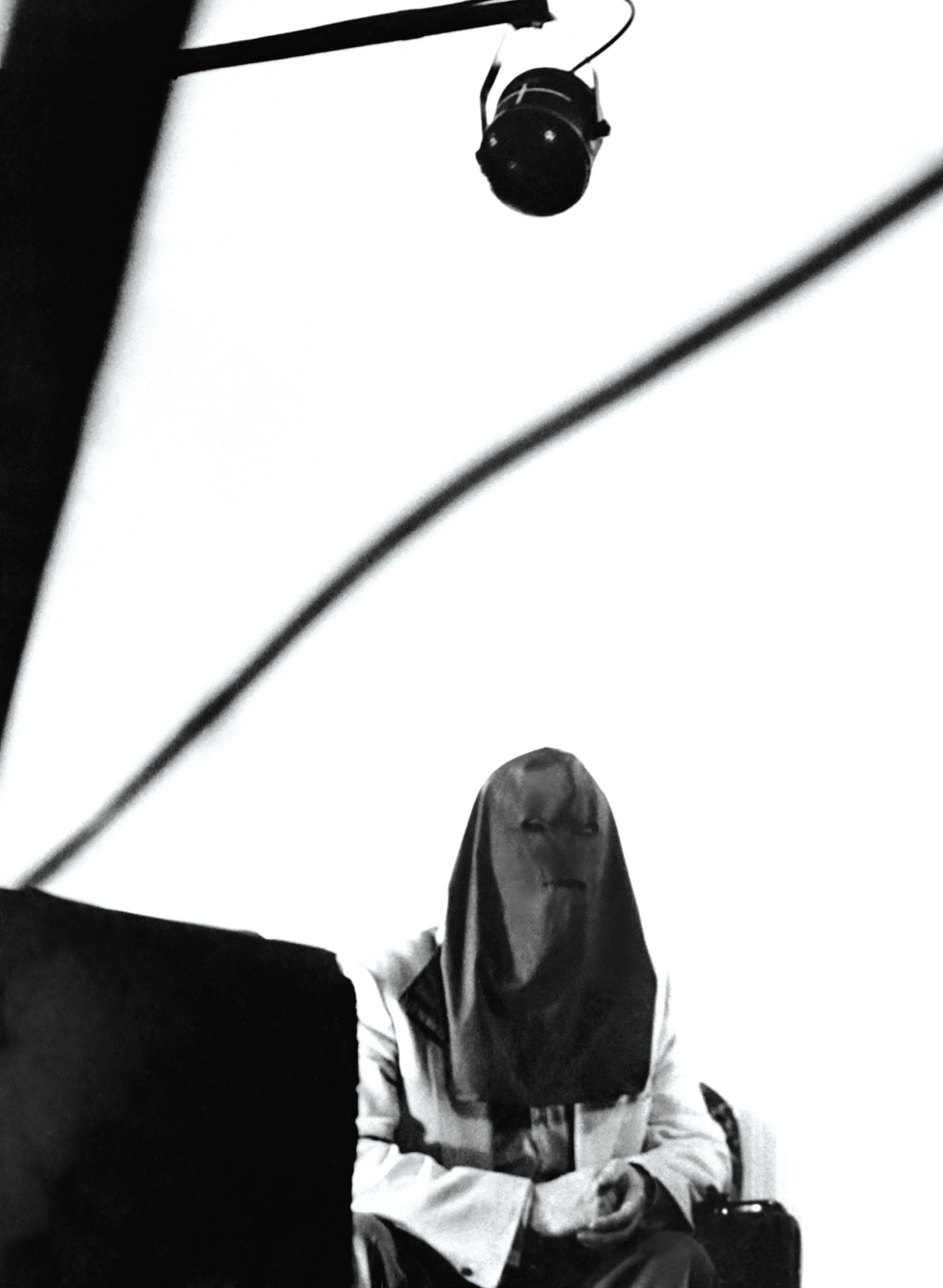

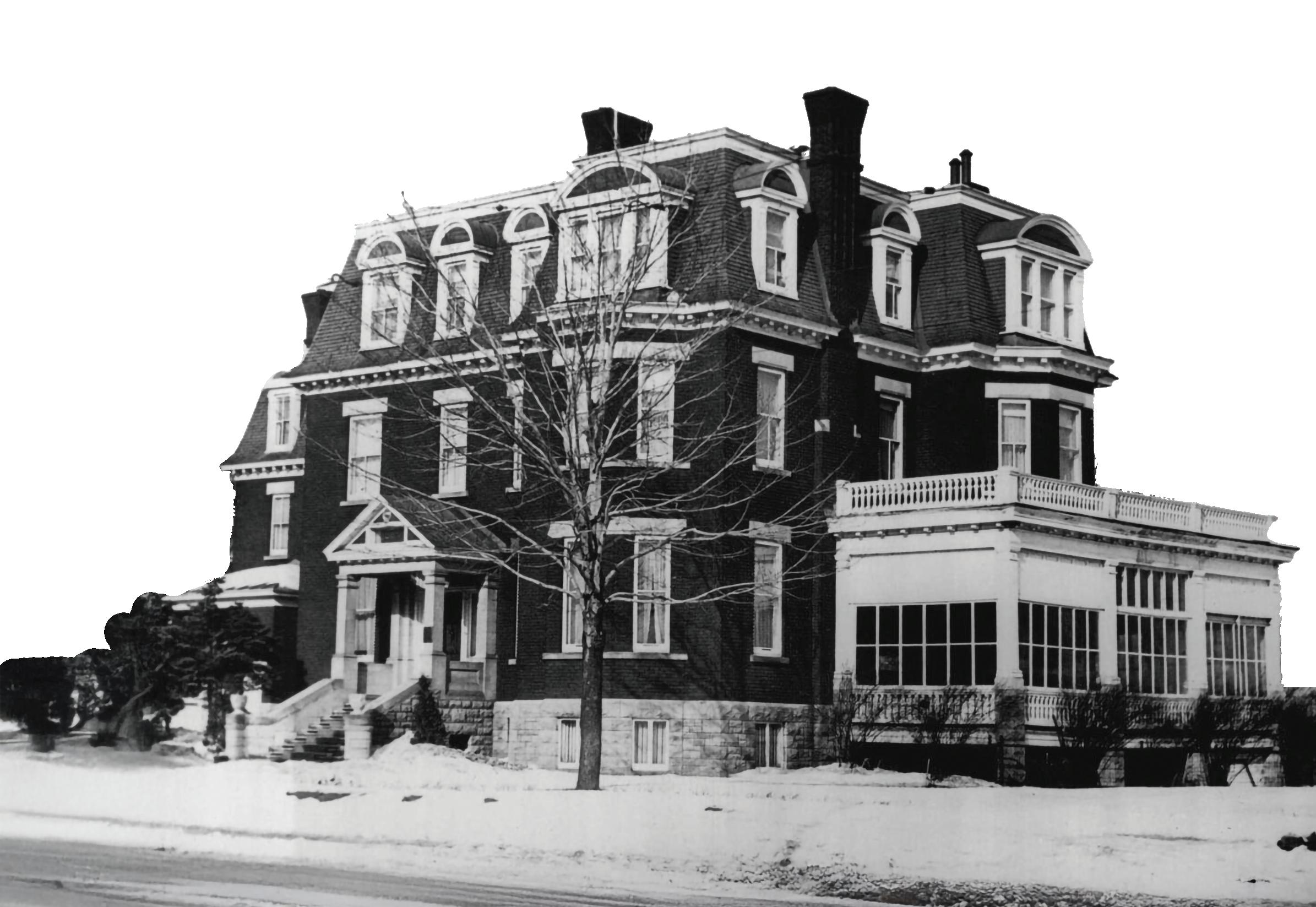
By J.L. Granatstein
Lieutenant Igor Gouzenko of the Red Army left the Soviet Embassy in Ottawa on the night of Sept. 5, 1945, with a sheaf of documents hidden under his clothing. Gouzenko was a cipher officer handling traffic between the GRU, Soviet military intelligence located in Moscow, and the embassy, and the files included evidence of Soviet spying activities in Canada. Moreover, Gouzenko identified traitors in the U.S. and Britain. Equally important, Gouzenko understood how GRU codes worked, something of inestimable value. There had been Soviet defectors before, but Gouzenko was the first in the immediate aftermath of the Second World War, and this courageous but frightened young man’s actions might be considered to have started the Cold War.
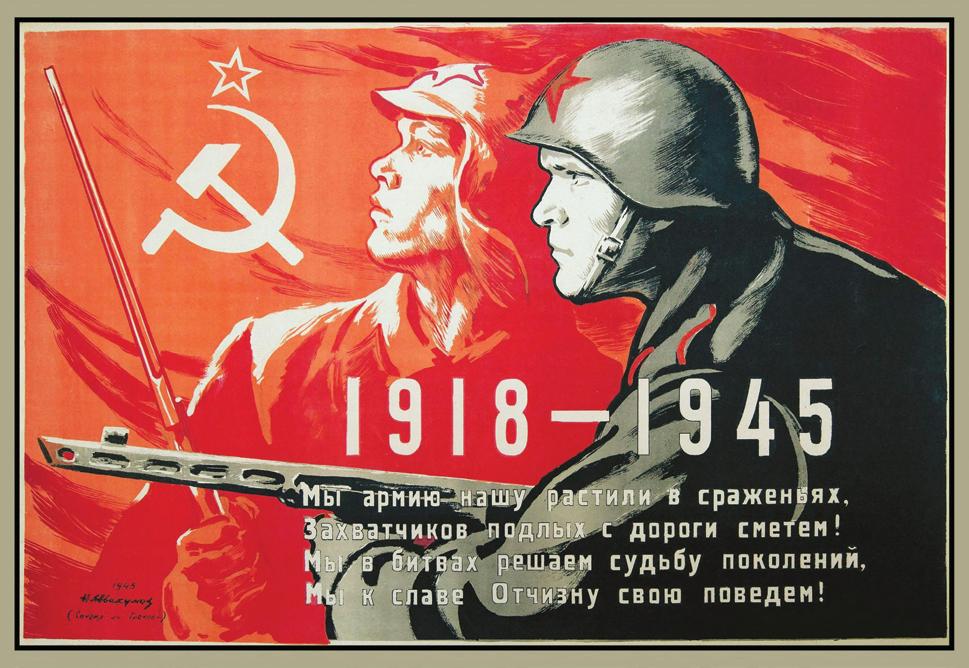
The Second World War had ended days before, following the atomic bombing of Hiroshima and Nagasaki in early August and Japan’s official surrender on Sept. 2. The great powers—the U.S., the U.K. and the U.S.S.R.—had met earlier that year at Yalta in Crimea and Potsdam in Germany to discuss postwar reorganization, albeit amid increasing tensions between them. The triumphant Americans were elbowing a battered Britain out of global influence, while the Soviets were beginning to consolidate a hold over eastern Europe after driving the Nazis out. Suspicion of each other’s motives was starting to overtake the hopes for peace and Gouzenko’s revelations furthered the mistrust.

For Canada, Gouzenko’s defection led to the creation of the Royal Commission to Investigate the Facts Relating to and the Circumstances Surrounding the Communication, by Public Officials and Other Persons in Positions of Trust of Secret and Confidential Information to Agents of a Foreign Power. It prompted the arrest and incarceration of suspects and subsequent trials for many of them. The commission’s actions and its report forced the Canadian government to create a security regime that involved the vetting of public servants, led to increased security in the U.S. and Britain and created a furor among civil libertarians. Igor Gouzenko changed Canada and the world.
At first, however, Gouzenko had difficulty finding anyone to listen to him. He had been impressed with the freedoms Canadians enjoyed, he told the commission, including how openly citizens discussed issues during the 1945 election. Gouzenko must also have been awed by the freedom of the press because
“I thought that [Gouzenko] had done a great service,” said King in July 1946. “I appreciated his manliness, his courage and standing for the right.”

he initially took his secrets to the Ottawa Journal. An editor there told Gouzenko he should go to the Justice Department. By then, it was late evening, no key Justice staff were on duty, and he was sent away. Fearful that Soviet embassy staff would come after him, Gouzenko returned to his apartment. He, his wife and child eventually stayed at a neighbour’s flat. Word had filtered to the Department of External Affairs, and two Mounties and an Ottawa policeman were sent to watch the Gouzenko residence. When Soviet Embassy heavies arrived and broke into his apartment, the policeman sent them away. By Sept. 7, the Gouzenkos and the documents were in a safe place. Norman Robertson, the undersecretary of state for External Affairs, had briefed Prime Minister Mackenzie King on the 6th. Both were horrified by what had happened. The Soviets were allies, and King, skeptical of Gouzenko, didn’t want to see good relations broken by any hasty Canadian actions. But as the Gouzenko documents were translated, the scale and scope of Soviet espionage became clearer. There were men and women, civil servants, scientists, military officers and even a member of Parliament involved. Soon, the British and American secret services were contacted to help the RCMP, inexperienced in such investigations. During the probe, Gouzenko divulged further details. A British atomic scientist working with scientists at McGill University in Montreal was involved and a small amount of uranium-233 and -235 had been sent to Moscow. Details of U.S. and Canadian troop movements and plans, and military production had been compromised,

A hooded Gouzenko poses for an April 1954 photo with actors Irja Jensen and Harry Townes, stars of the film Operation Manhunt about his defection.


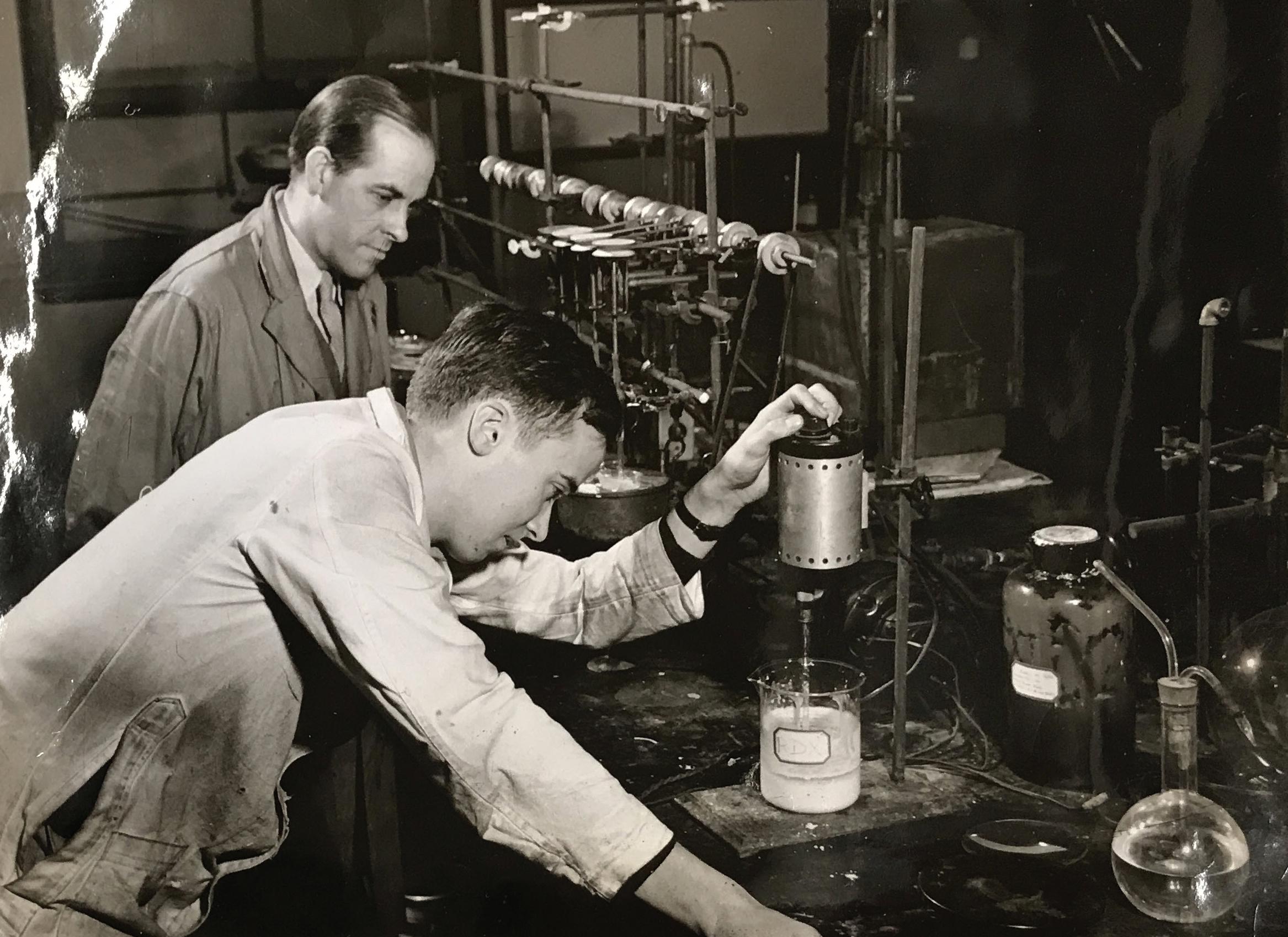

as had the details of the almostcomplete nuclear plant at Chalk River, Ont.
Canada now realized this was a very serious issue, and King decided he must discuss the matter with U.S. President Harry S. Truman and British Prime Minister Clement Atlee. But still, everything had to remain secret without the cabinet, the media or the public learning of the espionage.
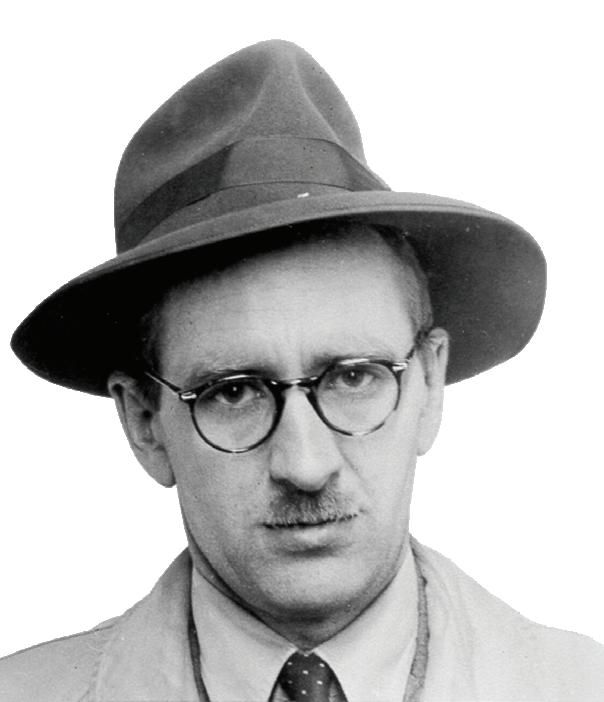
After months of consultations in Ottawa, London and Washington, as well as secret investigations, there was still no action in any of the capitals. There were worries about how to proceed—some doubted that the stolen documents would be admissible in court, while others were concerned the spy case might spark conflict with the Soviets.
Regardless, on Feb. 3, 1946, American syndicated print and radio columnist Drew Pearson broadcast the news that there had been a major spy ring uncovered in Ottawa. He had been tipped off, likely by the Federal Bureau of Investigation or someone in London anxious for action. Now the secret was out, and something had to be done.
Prime Minister King moved quickly. He informed cabinet of the matter on Feb. 5 and told his ministers that he had appointed Supreme Court justices Robert Taschereau and Roy Kellock to lead a royal commission that would begin in secret the next day. During the following week, the pair reviewed the documents Gouzenko had delivered from the Soviet Embassy; then for two days, they questioned Gouzenko. He made a positive impression.
By Feb. 14, the commissioners advised the government that many of those named
in the documents should be taken into custody. Early the next day, 11 people were arrested, including: Raymond Boyer and Durnford Smith of the National Research Council; J. Scott Benning of the Department of Munitions and Supply; Emma Woikin, a code clerk at External Affairs; Gordon Lunan, an army officer at the Wartime Information Board; and Kathleen Willsher of the British High Commission staff. That same day, King informed two Soviet Embassy officials of what was happening. By now, the media also knew. But few were prepared for what came next.
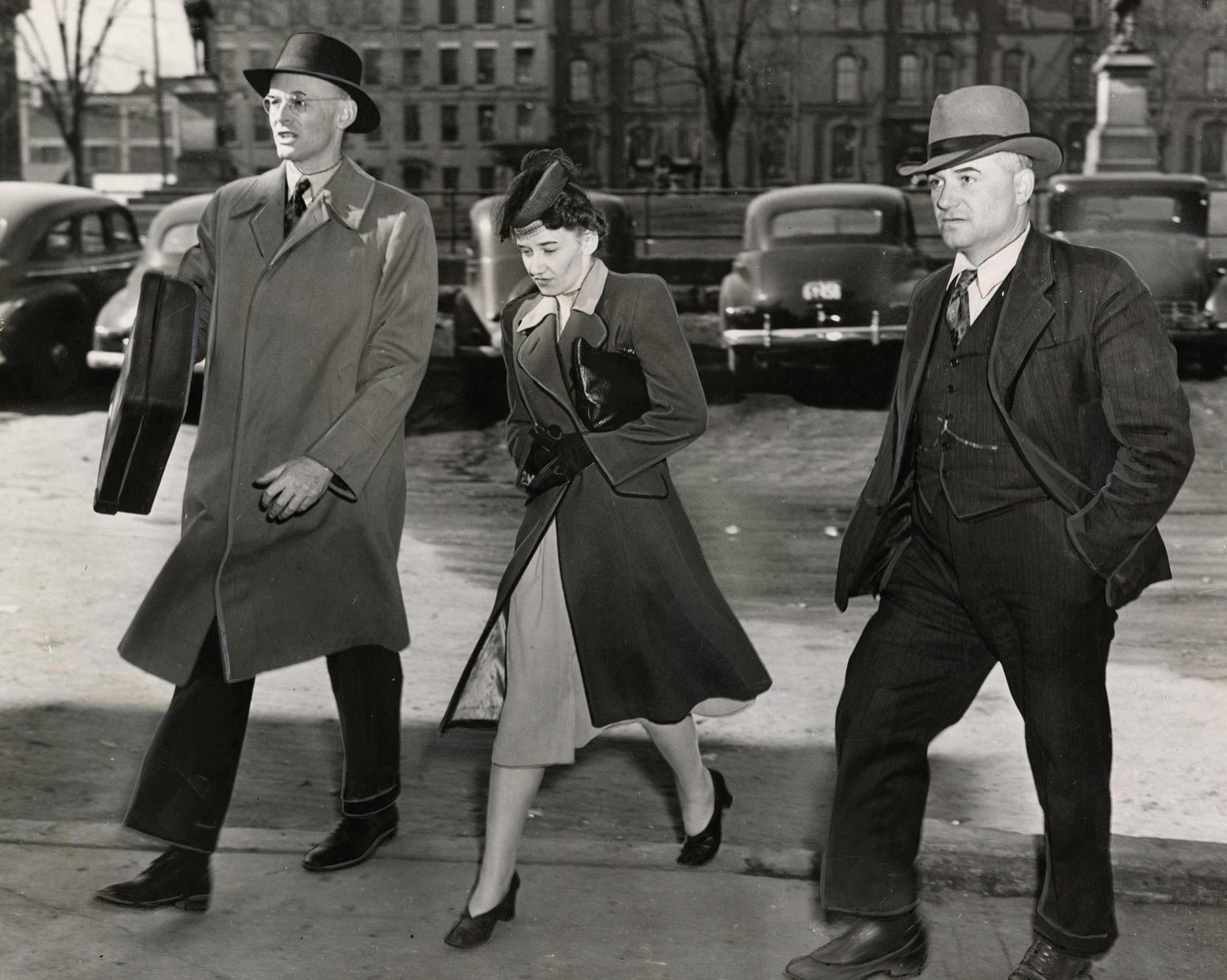
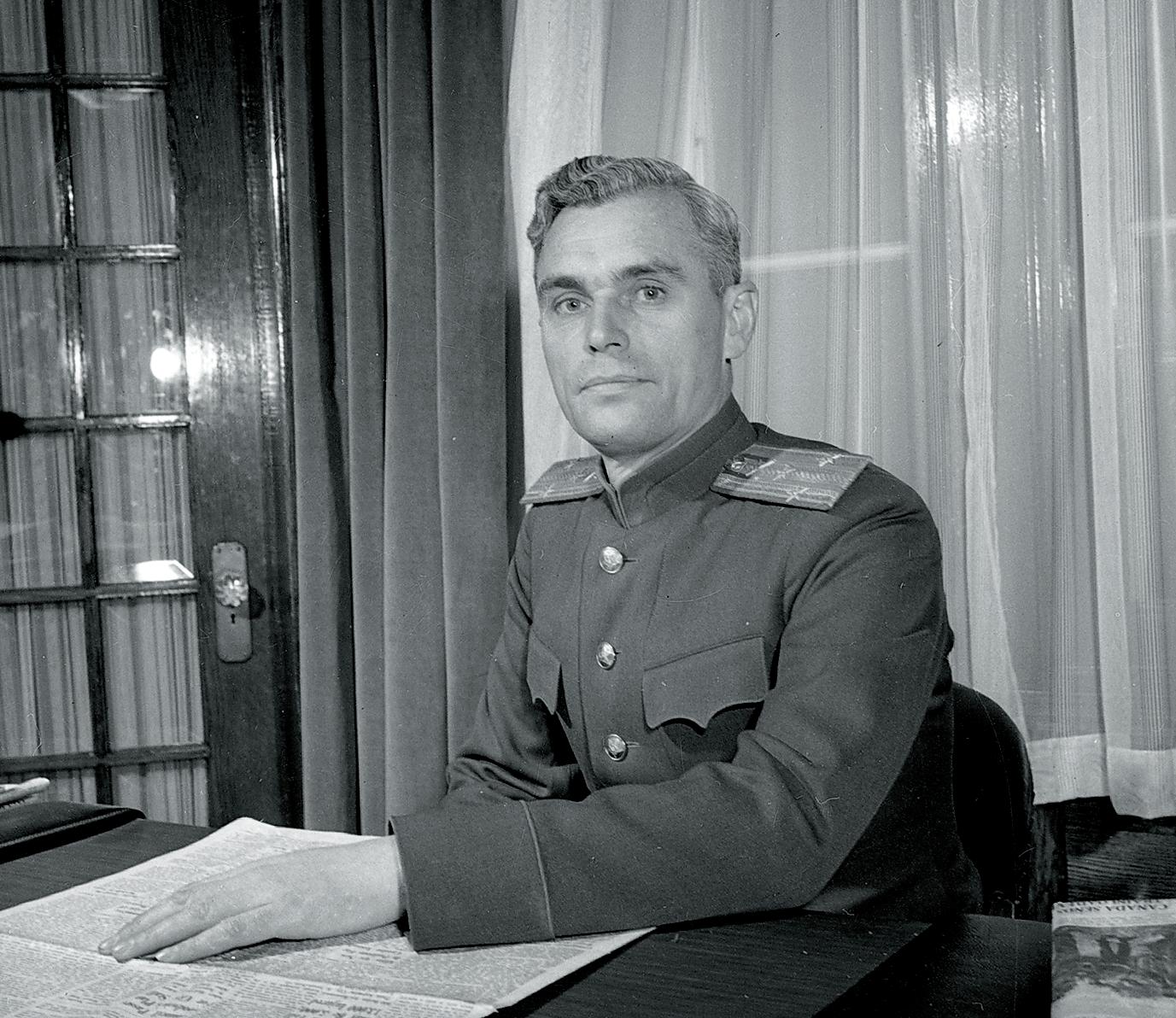
Moscow admitted publicly on Feb. 20 that some members of the military attaché’s staff had received secret information from Canadian nationals.
Most extraordinarily, Moscow admitted publicly on Feb. 20 that some members of the military attaché’s staff had received secret information from Canadian nationals. It was an admission of guilt, but inconsequential, the Soviets said, “in view of the advanced technical attainment in the U.S.S.R.”

In its first interim report, made public on March 2, the royal commission named the Soviet Embassy staff who had recruited and managed the spies and noted that information had been sought on atomic weapons, explosives and Allied troop movements. It also named the aforementioned Woikin, Lunan and Willsher—as well as Edward Mazerall, an electrical engineer at the National Research Council—saying they had “communicated directly or indirectly secret and confidential material to representatives of the U.S.S.R. in violation of the Official Secrets Act….”
Two subsequent interim reports noted that 48 witnesses had been heard in 44 sittings of the commission and laid out further evidence against the suspected spies. Among those named was Eric Adams of the Bank of Canada, and the previously mentioned Smith and Benning.
The commission tabled its 733-page final report in the House of Commons on July 15. It noted that the GRU spy ring Gouzenko had revealed was run by military attaché Colonel Nicholai Zabotin. It added, however, that there were other components—another GRU network, naval and political chains, and a separate suspected NKVD web about which little information had been discovered. The report paid special attention to the ways in
which agents were recruited and the use of the Communist Party and “study groups”— meetings where communist philosophy and techniques were discussed—in those efforts.
Justices Taschereau and Kellock made clear that it wasn’t money that attracted recruits, but instead a desire to serve “humanity” embedded in the professed goals of the Soviet Union and Marxist ideology. Some spies had indicated they had done so because the U.S.S.R. was fighting the Nazis and therefore, they felt, ought to have access to every weapon and all information that would speed victory over Hitler.
One of several operatives named in the final report was Alan Nunn May, an important British atomic researcher who had worked at the nuclear research lab in Montreal. Nunn May had returned to Britain in September 1945 to a post at King’s College London, where he was to continue his research. The British authorities didn’t think they had sufficient evidence to arrest him, but they knew from the Gouzenko files when and where he was to meet his Soviet contact. He was tailed, but the meeting didn’t occur; the contact presumably warned off. Nunn May was arrested in March 1946. He was tried and convicted of espionage and sentenced to 10 years in prison. Particularly striking was the evidence against Fred Rose, the Labor-Progressive Party (LPP) member of Parliament for the Montreal riding of Cartier. He was the major recruiter in Ottawa and Montreal and transmitter of information to the GRU spymasters. First elected in a 1943 byelection and re-elected
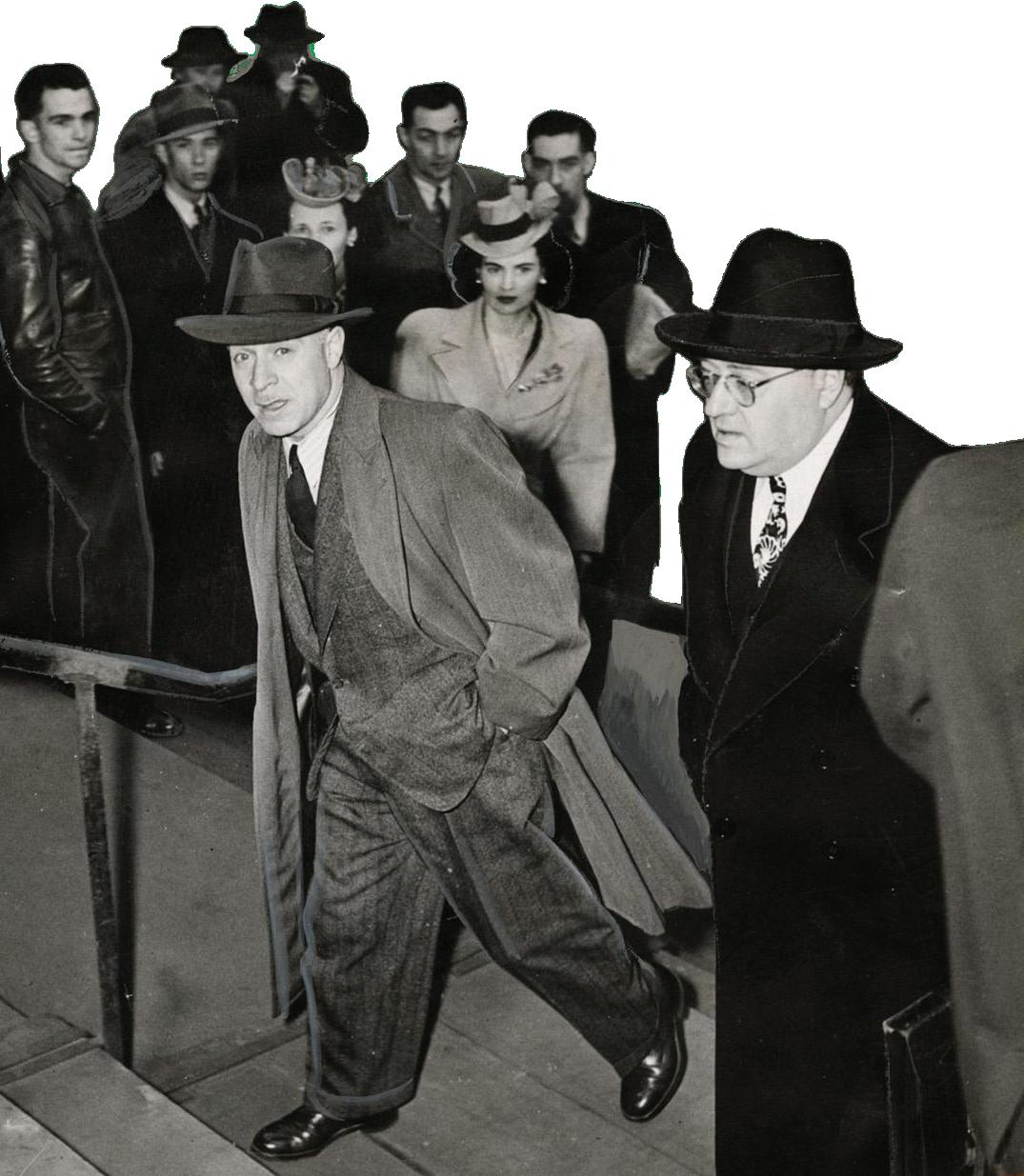



British atomic researcher Alan Nunn May (right ) was convicted of espionage in March 1946. Soviet military attaché Nicholai Zabotin (opposite top) was identified as running the spy ring. MP Fred Rose heads to court in March 1946 (opposite bottom) after his arrest.
in 1945, Rose had been arrested on March 14, 1946. It was a particularly delicate operation, as the government and the RCMP had feared that he might claim parliamentary immunity.
Sam Carr, the national organizer of the LPP (the wartime name of the Communist Party of Canada), was also named as a key recruiter, but he had fled the country.
Of the 22 arrested in early 1946, 11 were found guilty; Sam Carr was arrested in the U.S. in 1949 and, like Rose, sentenced to six years. Others were acquitted on appeals, and several won their cases in court.
Did the acquittals throw doubt on the Gouzenko documents? Probably not: there were legal problems in accepting them and the government wasn’t always able to produce evidence in court that had been presented to the royal commission in secret. Moreover, if the accused didn’t confess to the commissioners, there was often little evidence against them.
This was largely what concerned civil libertarians: those arrested had been held incommunicado without the rights to legal hearings to determine if their detentions were warranted —the legal procedure known as habeas corpus. They were also denied access to their families and often not allowed to secure legal advice. Plus, they were compelled to respond to questions from the commission.
Under the Inquiries Act, a royal commission was supposed to be a “searching investigation—an inquisition as distinct from the determination of an issue” and the witnesses, under Canadian law, couldn’t refuse to answer questions on the grounds that their responses might incriminate them. The only recourse a suspect had was to stay silent.
Progressive Conservative leader John Bracken denounced the government for refusing to allow the accused habeas corpus. The Winnipeg Free Press and The Globe and Mail accused the government of running secret trials and violating fundamental human rights.
The commissioners were often peremptory in dealing with the suspected spies, many of whom claimed a near total absence of recall, even when confronted with exacting details of their actions. The accused who withstood this type of questioning fared best when their cases went to court, as did those who vehemently demanded the right to counsel before the commission. Even still, the interim and final reports
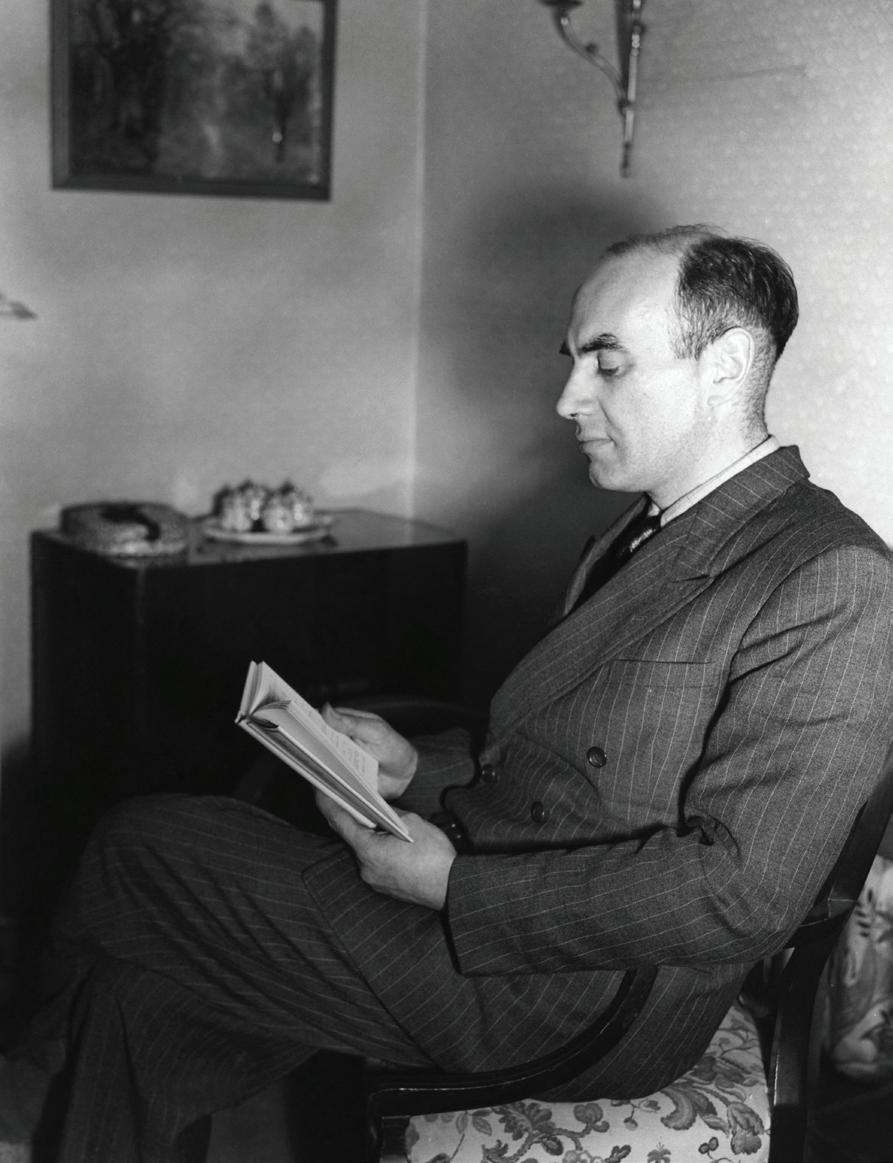
of the commission made public the names of the alleged spies and smeared their reputations before most of them were tried in court.
King agreed with much of this criticism. He had wanted the commission to work faster and wrote in his diary on Feb. 27, that, “I thought it was wrong that those who are suspected should be detained indefinitely…[and should not have] the full rights of protection….”
Opinion polls, however, indicated that Canadians believed the matter had been properly handled and made clear the public now had an unfavourable opinion of the Soviet Union. Ultimately, the commission recommended that the government improve its security and prevent Communist infiltration. In 1946, the cabinet defence committee adopted the idea of a security panel, with senior representatives of key departments and agencies as members and headed by the clerk of the Privy Council.
The panel quickly produced recommendations that, when approved by cabinet, meant that an individual’s political views could be deemed sufficient for firing, being moved to a less sensitive position or denied employment in the public service. In other words, the state had the duty, and the right, to protect itself against subversion, and it would do so.
King, initially dubious about Gouzenko, had come to admire him. “I thought that he had done a great service,” said King in July 1946. “I appreciated his manliness, his courage and standing for the right.”
Meanwhile, the British and the Americans began to search for Communist infiltrators in their own civil services. And hostility between the Soviet Union and western democracies grew into a Cold War that would dominate the globe for almost 50 years. It had begun in Ottawa.

Celebrating Battle of the Atlantic artwork by renowned painter Eric Riordon and unravelling a related mystery


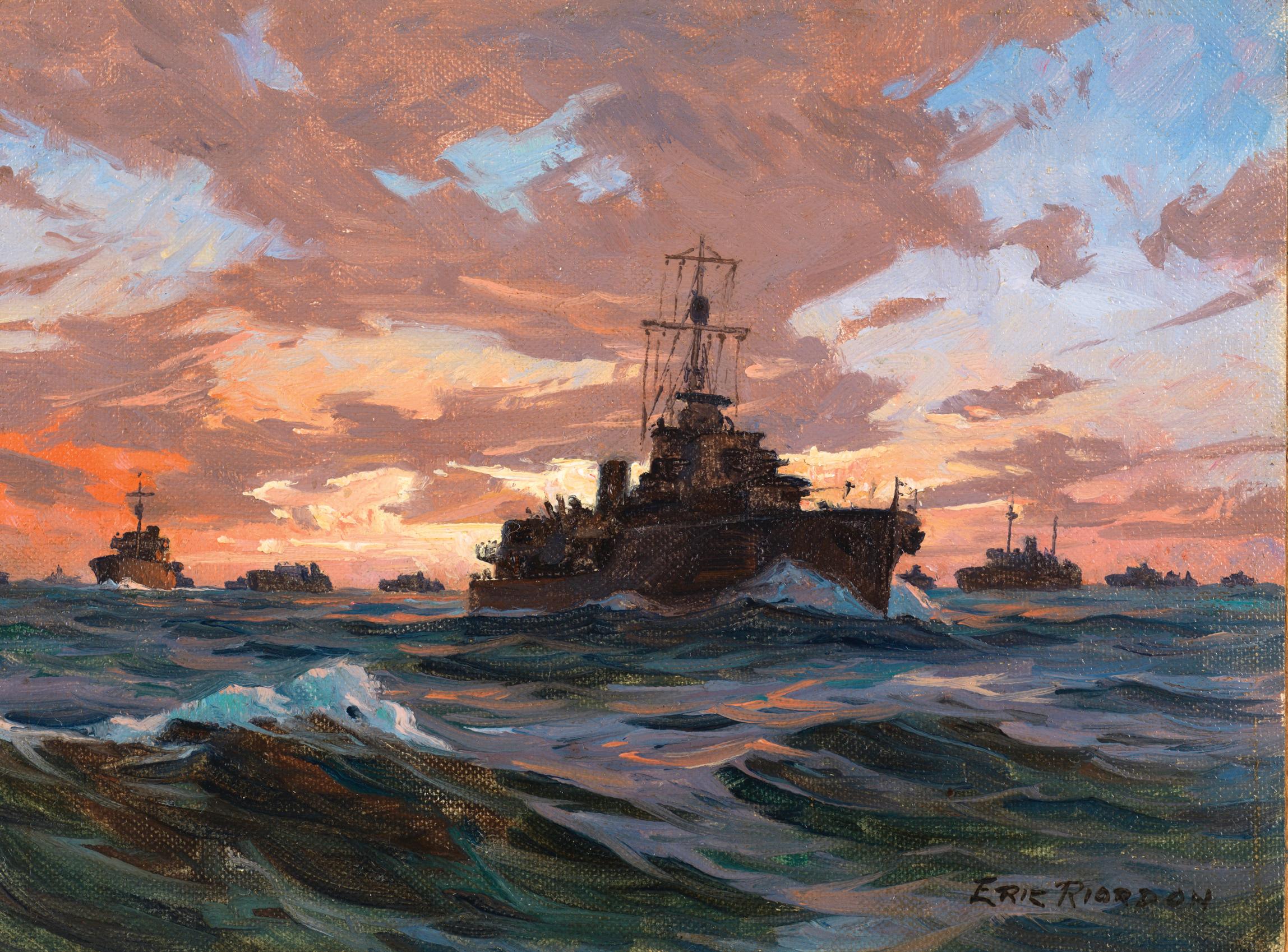
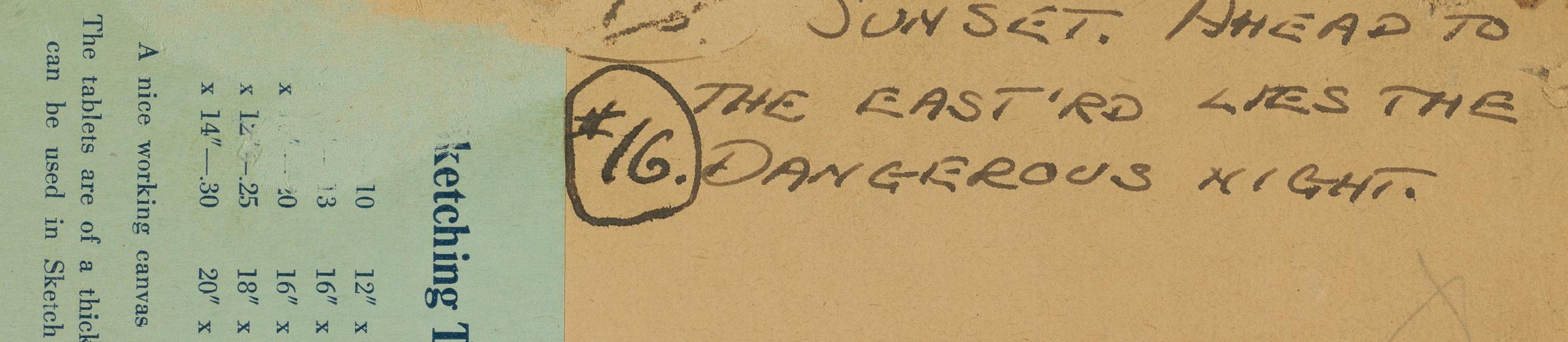
By Aaron Kylie

is the North Atlantic! All too frequently the sea under a roaring gale runs a forty and fifty foot swell, dwarfing the corvette, mast-head high, mighty waves that come hurtling out of the sky, and meeting the staunch little ship head-on they split angrily and fling seething tons of water upon her.”
So wrote Eric Riordon in his artist statement for “Heavy Going!” The piece was one of 34 exhibited as “North Atlantic Convoy”—first at the department store Jas. A. Ogilvy in Montreal through the summer of 1950, then across the country until 1952—depicting naval escort duty during the Second World War’s Battle of the Atlantic.
Riordon, a renowned Quebecbased landscape painter, largely put aside brush and canvas to serve Canada during the Second World War. He enlisted in the Royal Canadian Naval Volunteer Reserve in June 1940 and first went to sea aboard HMCS Fundy in late 1941. The minesweeper served in the Halifax Local Defence Force, responsible for guarding the reaches of Canada’s major East Coast port.
By late 1942, Riordon was first lieutenant on HMCS Kenora, which was assigned to the Western Local Escort Force. Ships in the group escorted convoys individually or as needed, mainly shepherding vessels to/from New York and Halifax and the western Atlantic hand-off location, the so-called Triangle Run. A Kenora log from the time reported that Riordon was “keen and works hard, reliable and should work up a good ship’s company.”
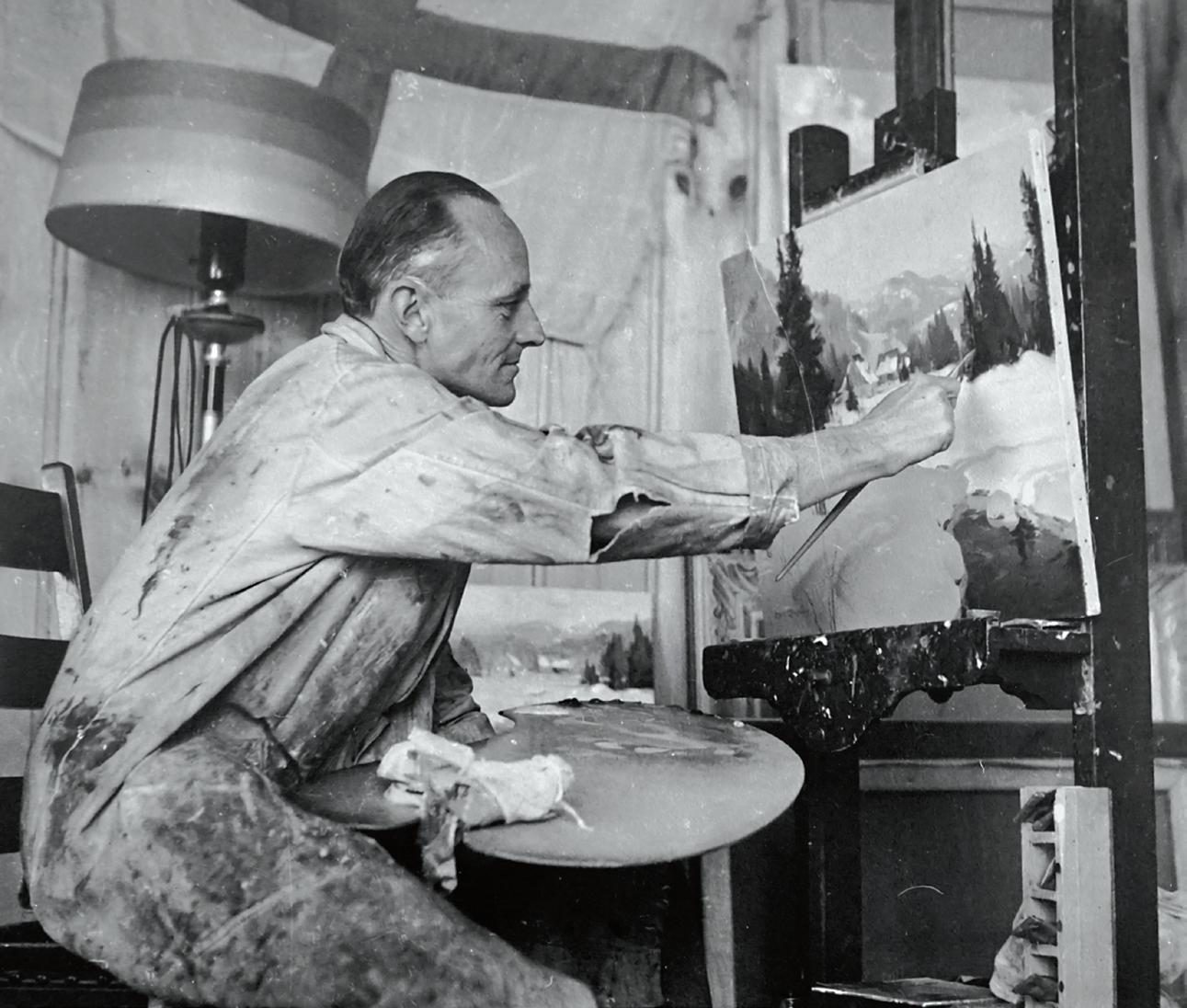
During the war, Riordon continued to have his works exhibited, though he produced very few inspired by his own service. One convoy-themed painting he did in 1941 appeared in a 1945 exhibition, while he produced 22 paintings to accompany the 1944 book Canada’s War at Sea by Stephen Leacock and Leslie Roberts.
Riordon resigned from the navy shortly after VE-Day and returned home to Montreal to resume his artistic career. Unfortunately, it wouldn’t last long. He died of throat cancer a little more than three years later, on Dec. 23, 1948.
Fortunately, he had found time to paint a record of his convoy experience from sketches, notes and personal experience, which his widow Mollie, along with others, staged in that North Atlantic Convoy exhibit. But, like the vagaries of battle at sea, as the works were sold off piecemeal after the exhibit, their provenance became as murky as North Atlantic fog.
Then, in 2020, Toronto-based art collector David Emmerson
purchased a couple of Riordon paintings at auction. In ascertaining their origins, he learned that one was from the convoy series. In searching out others from the group, Emmerson discovered that the whereabouts of several were unknown.
“The incentive for me from the beginning,” Emmerson told Legion Magazine, “was to find all 34 paintings and to recreate, if only virtually, the original North Atlantic Convoy exhibition of May 1950.”
He subsequently created a comprehensive website (ericriordon.ca) dedicated to Riordon, his convoy series works and related topics. It has led to discovering the previously unknown owners of other paintings from the original exhibit, though 11 are still unaccounted for (Emmerson has, however, located images of five).
Herewith, a selection of works from Riordon’s North Atlantic Convoy series, both in celebration of them and in hopes of clearing the fog of war surrounding those lost to time.
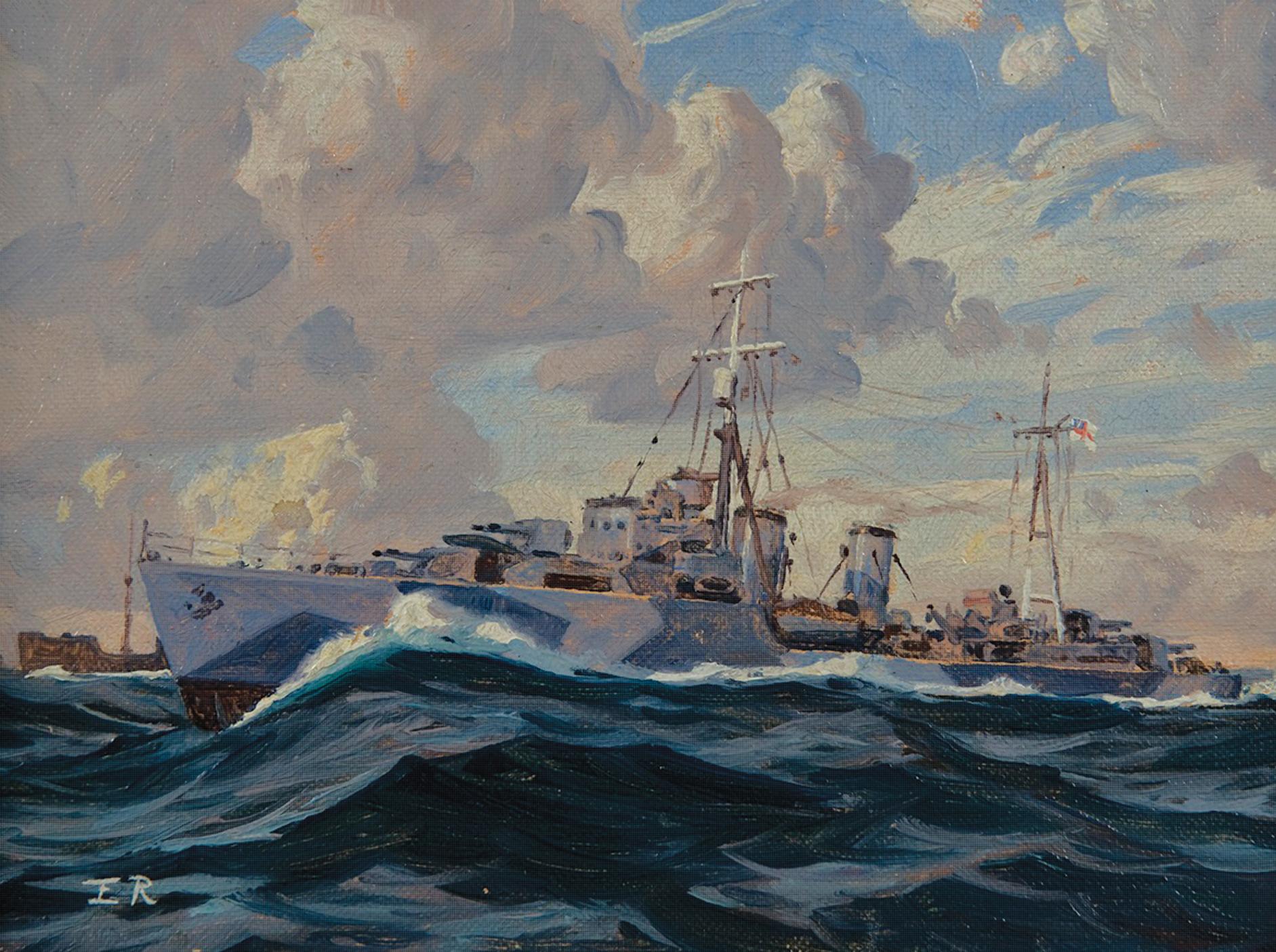
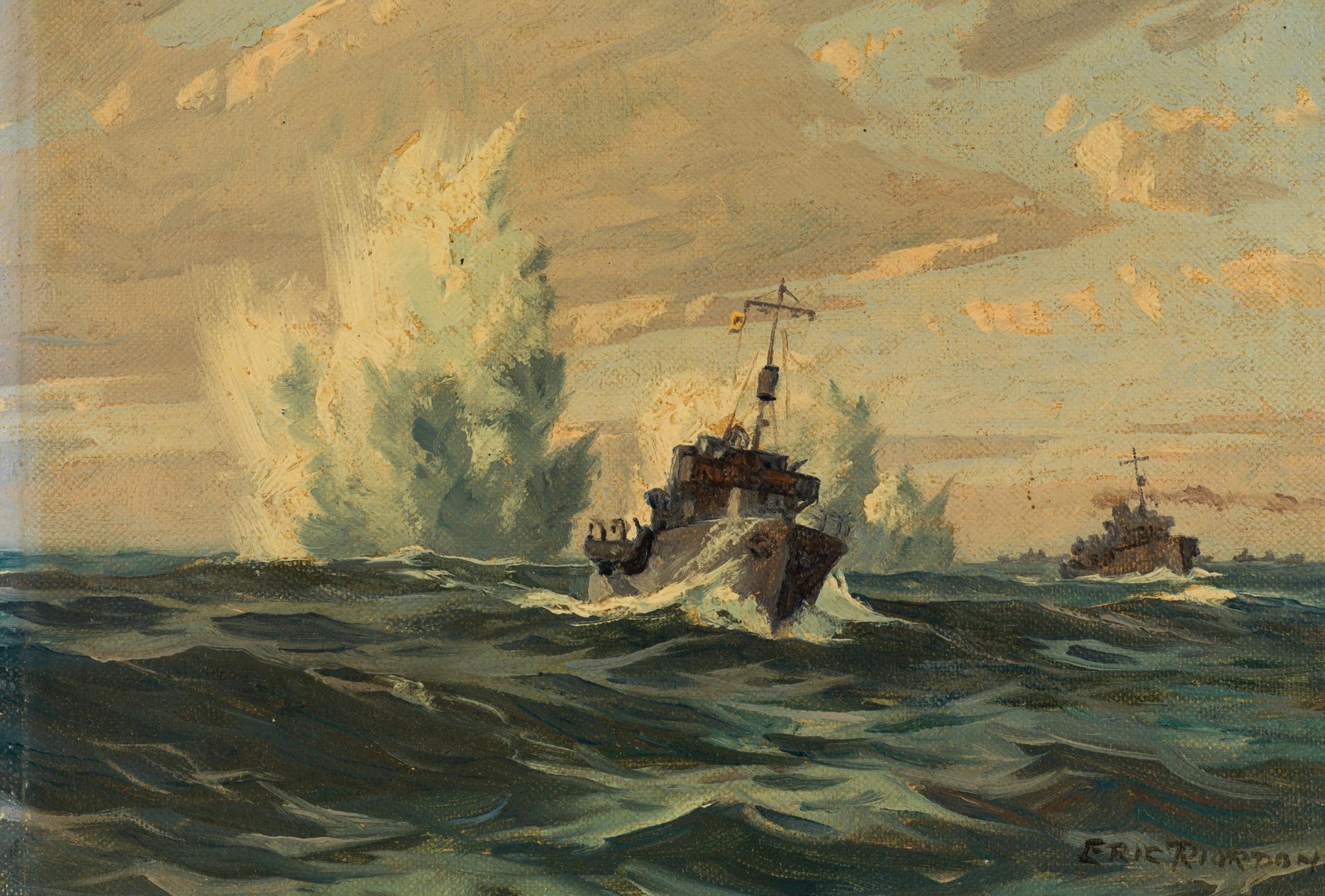
Riordon’s “Tribal Class Destroyer” ( top), “Depth Charge Attack” (above) and “Coming in for the Kill” (opposite).


landscape painter, largely put aside brush and canvas to serve Canada during the Second World War.
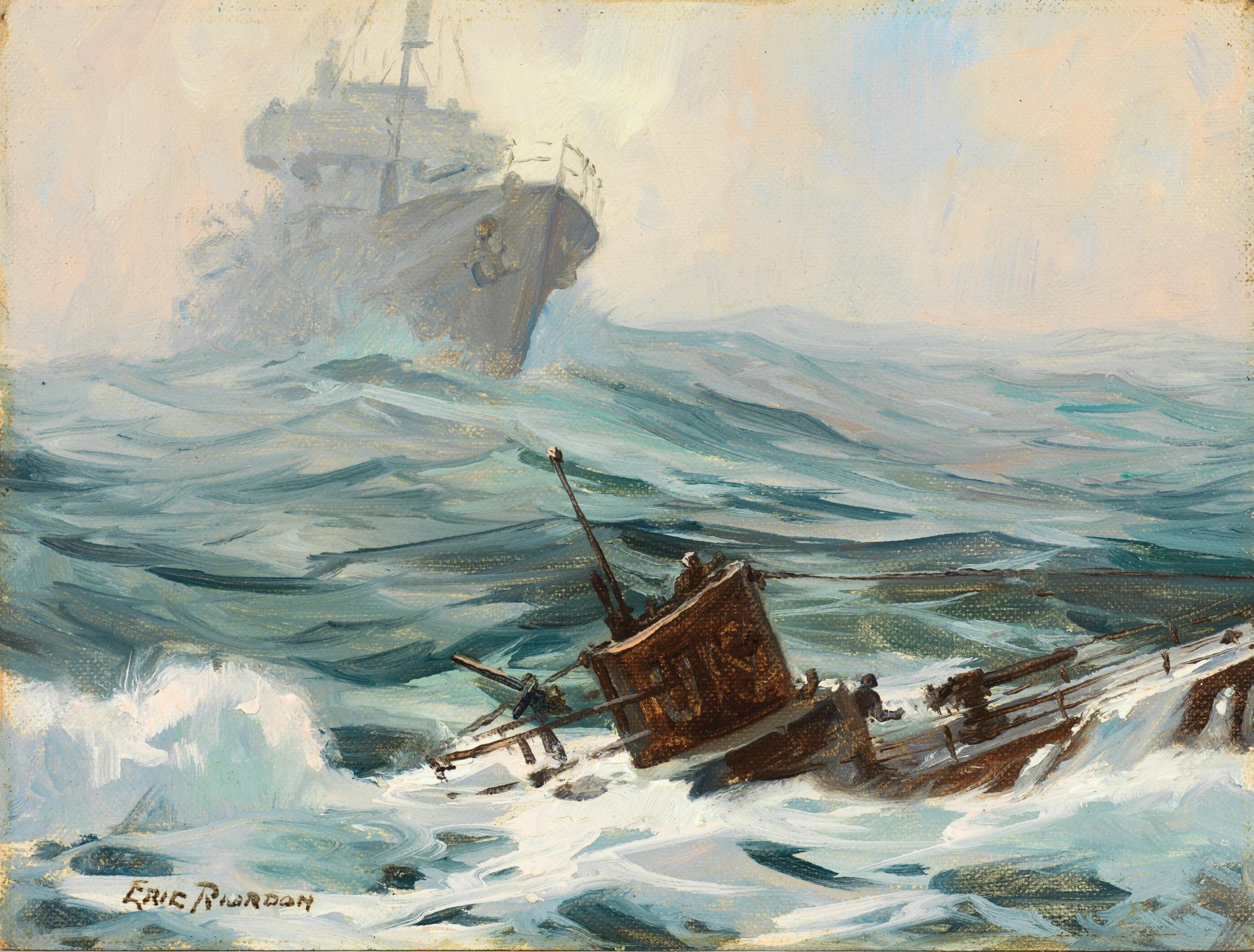


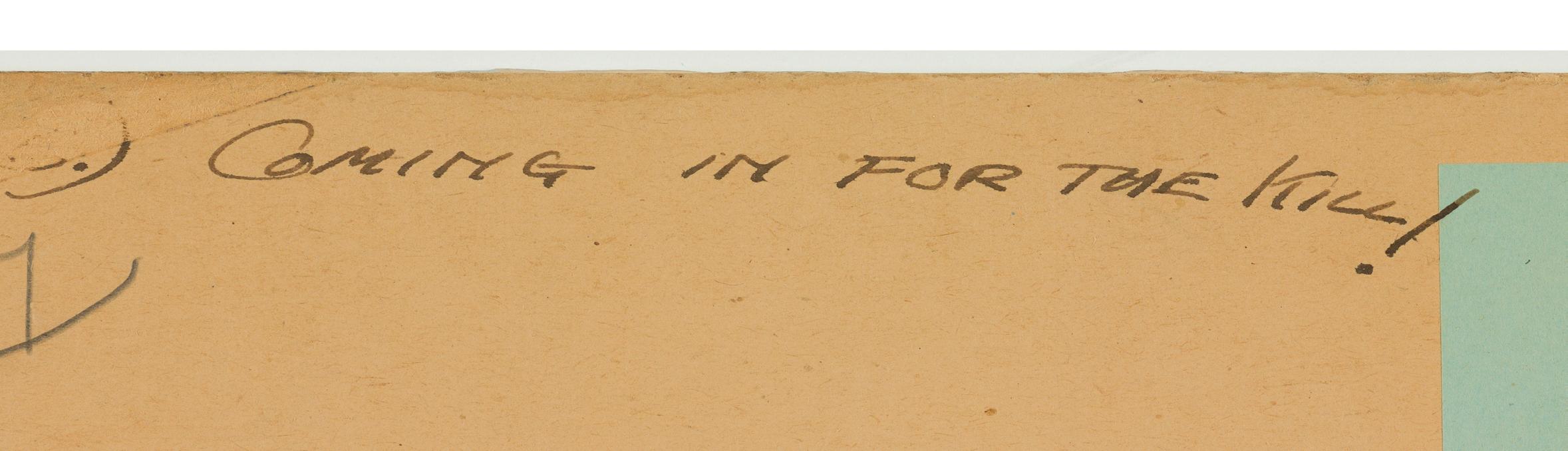

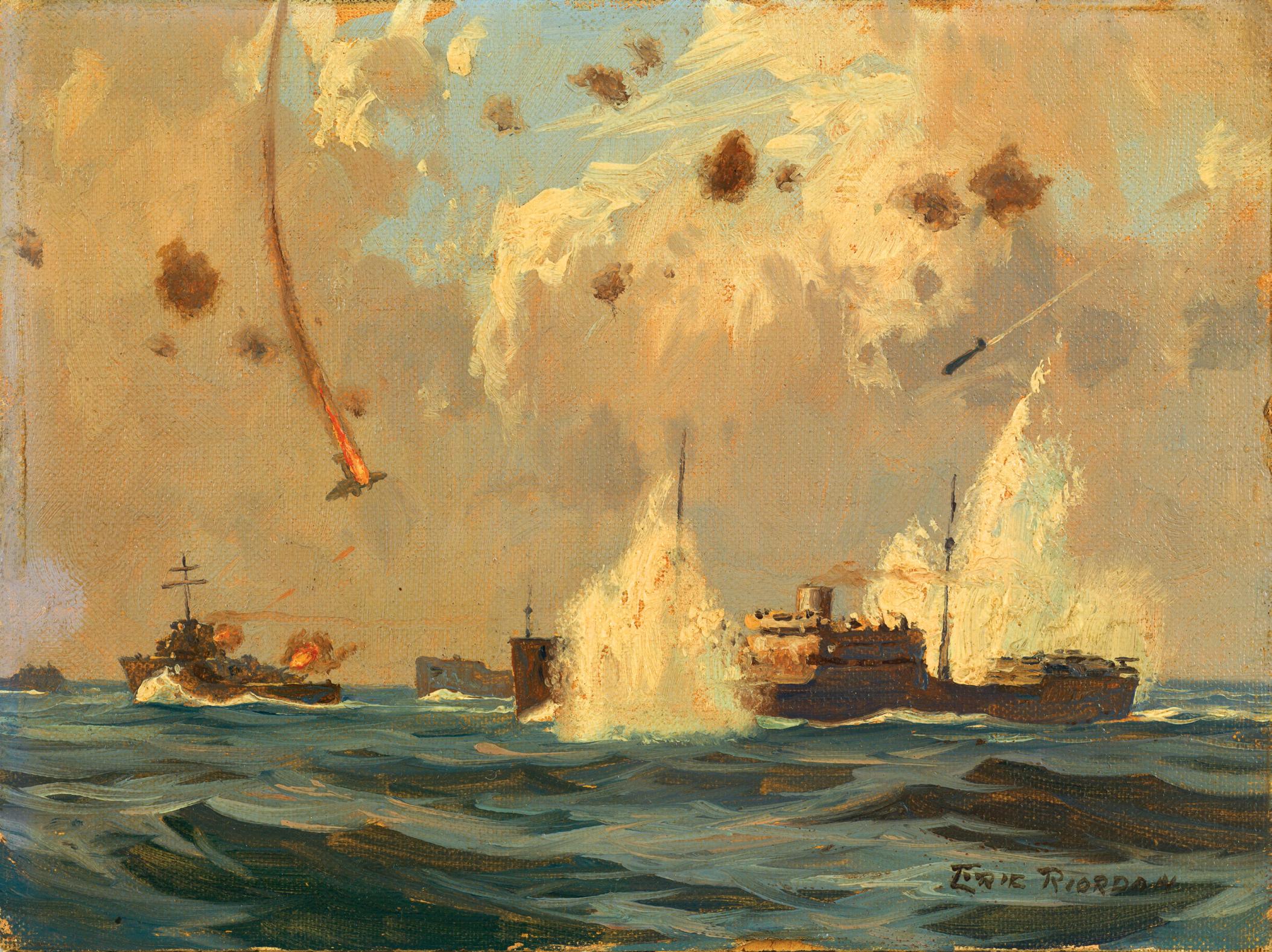
Ships in the group escorted convoys individually or as needed, mainly shepherding vessels to/ from New York and Halifax and the western Atlantic hand-off location, the so-called Triangle run.


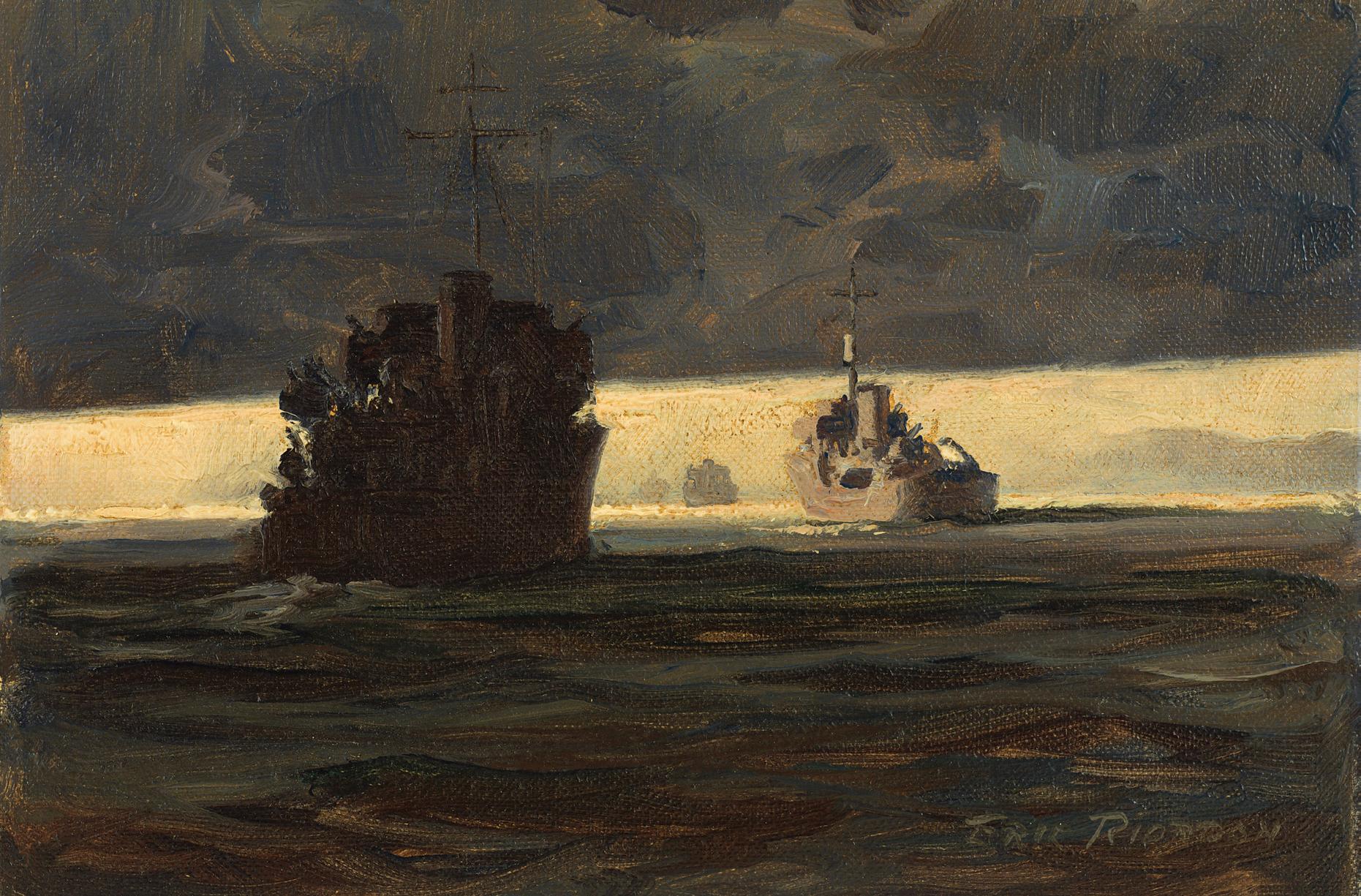
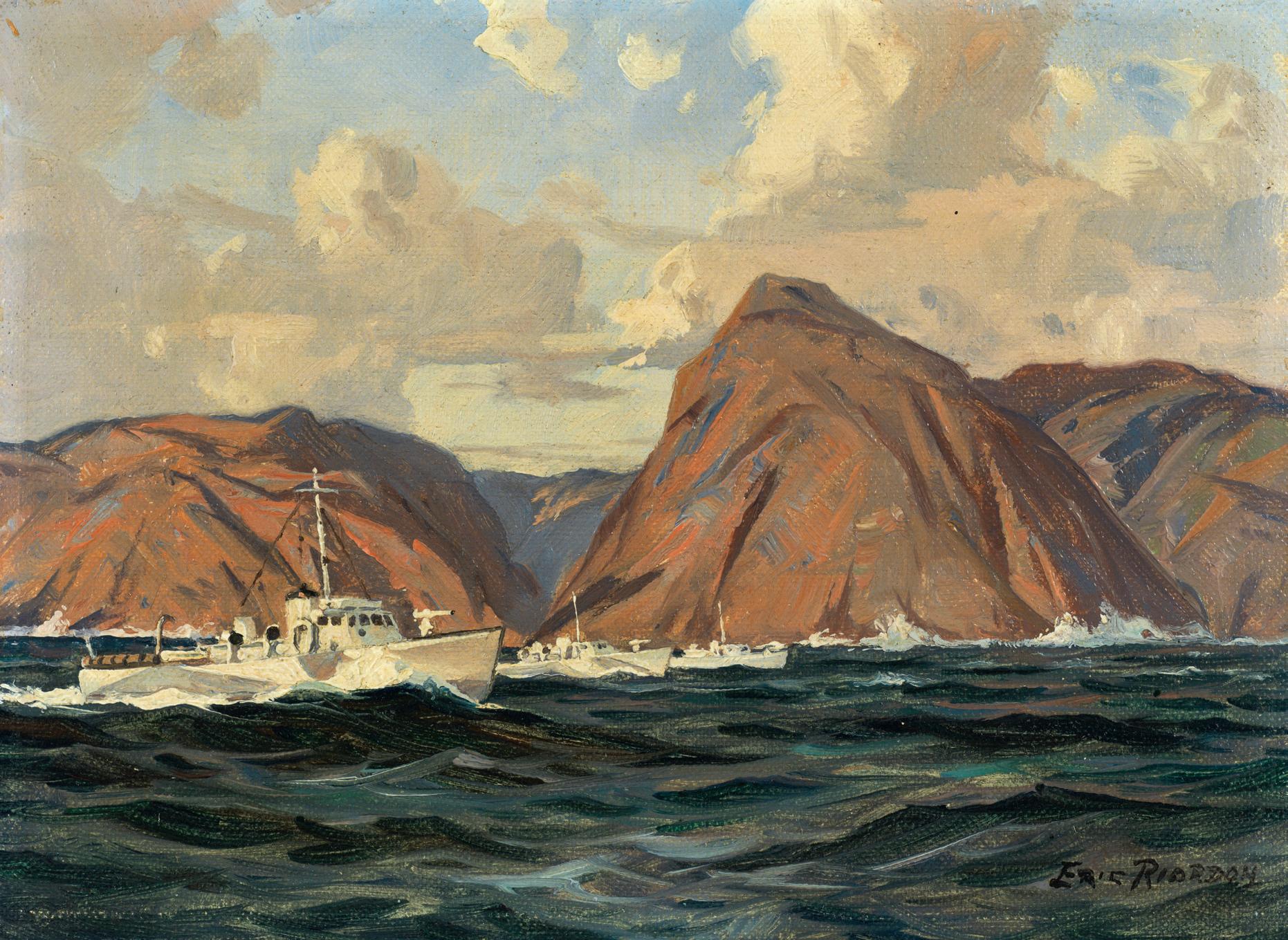
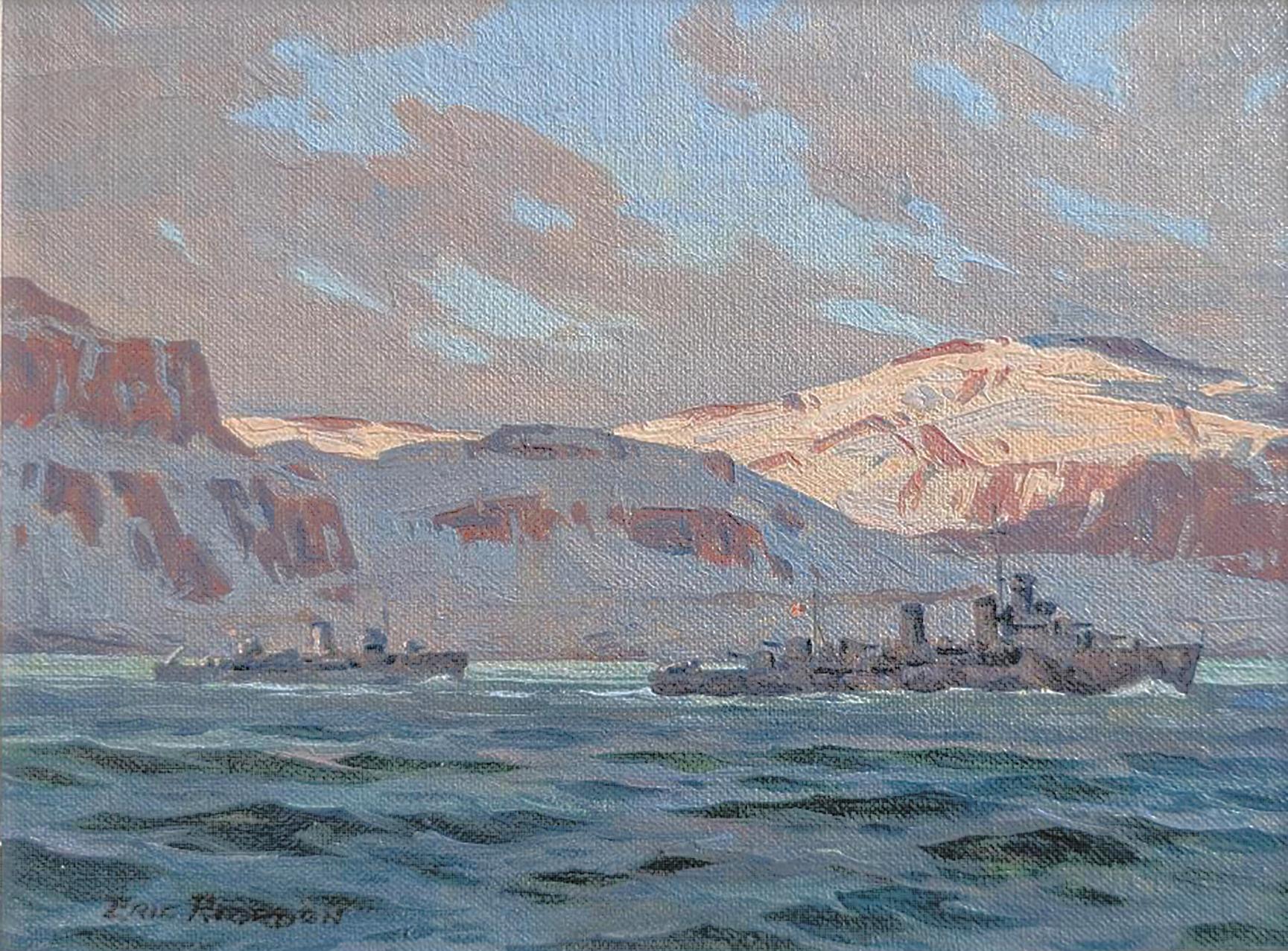
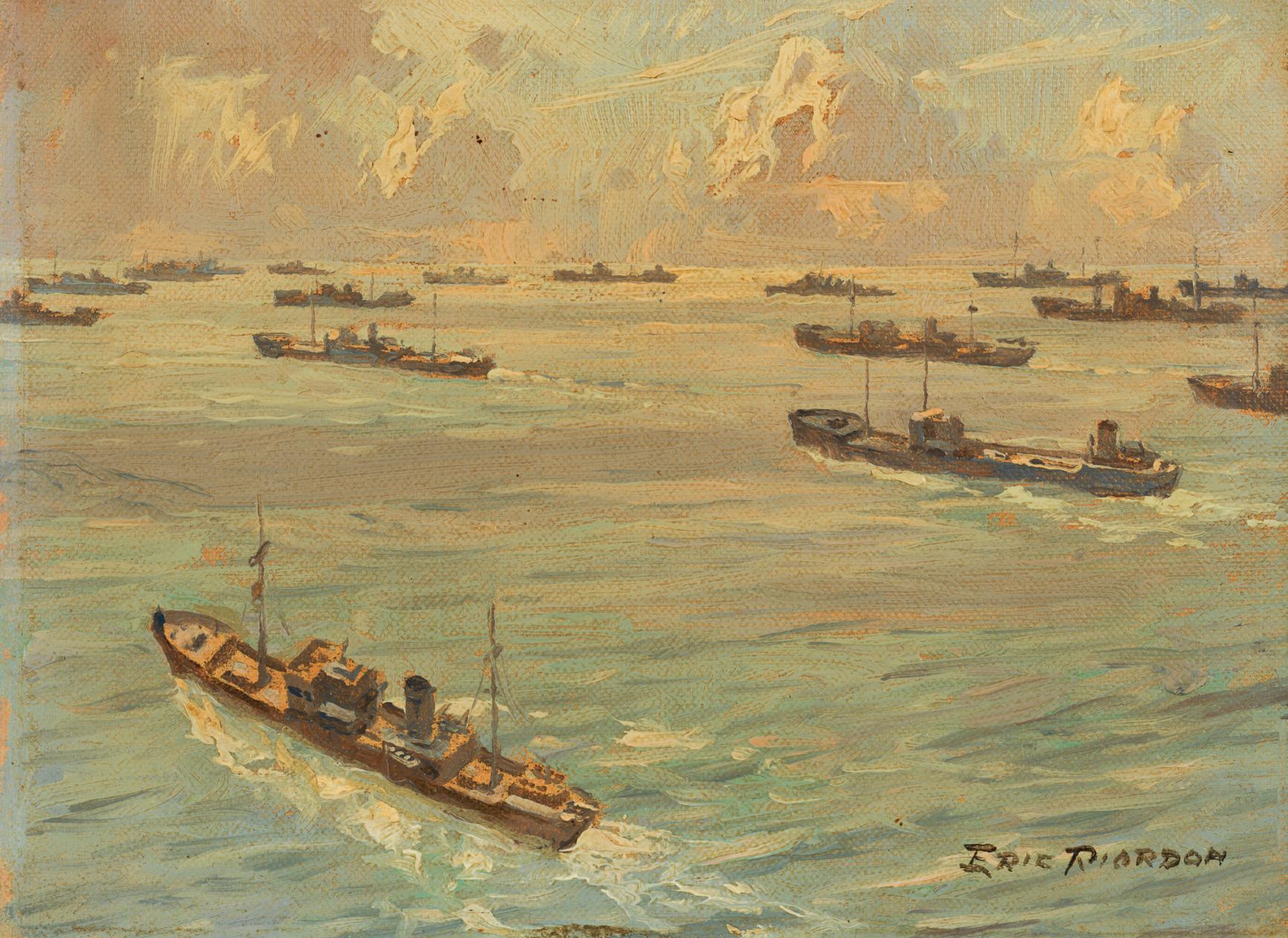

at sea, as the works were sold off piecemeal after the exhibit, their provenance became as murky as North Atlantic fog.
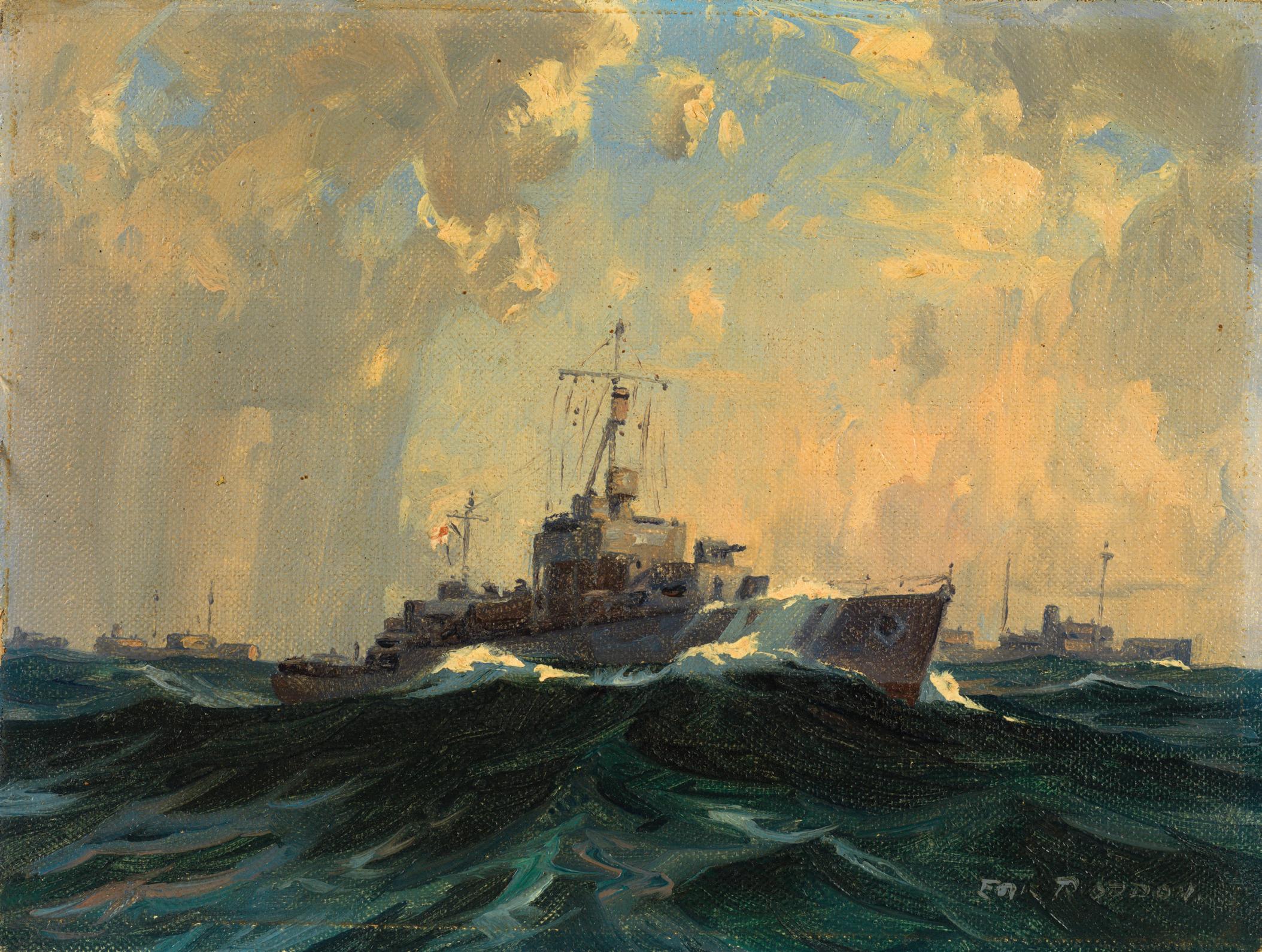


By Michela Rosano

Alex Bowers
By Nujma Bond
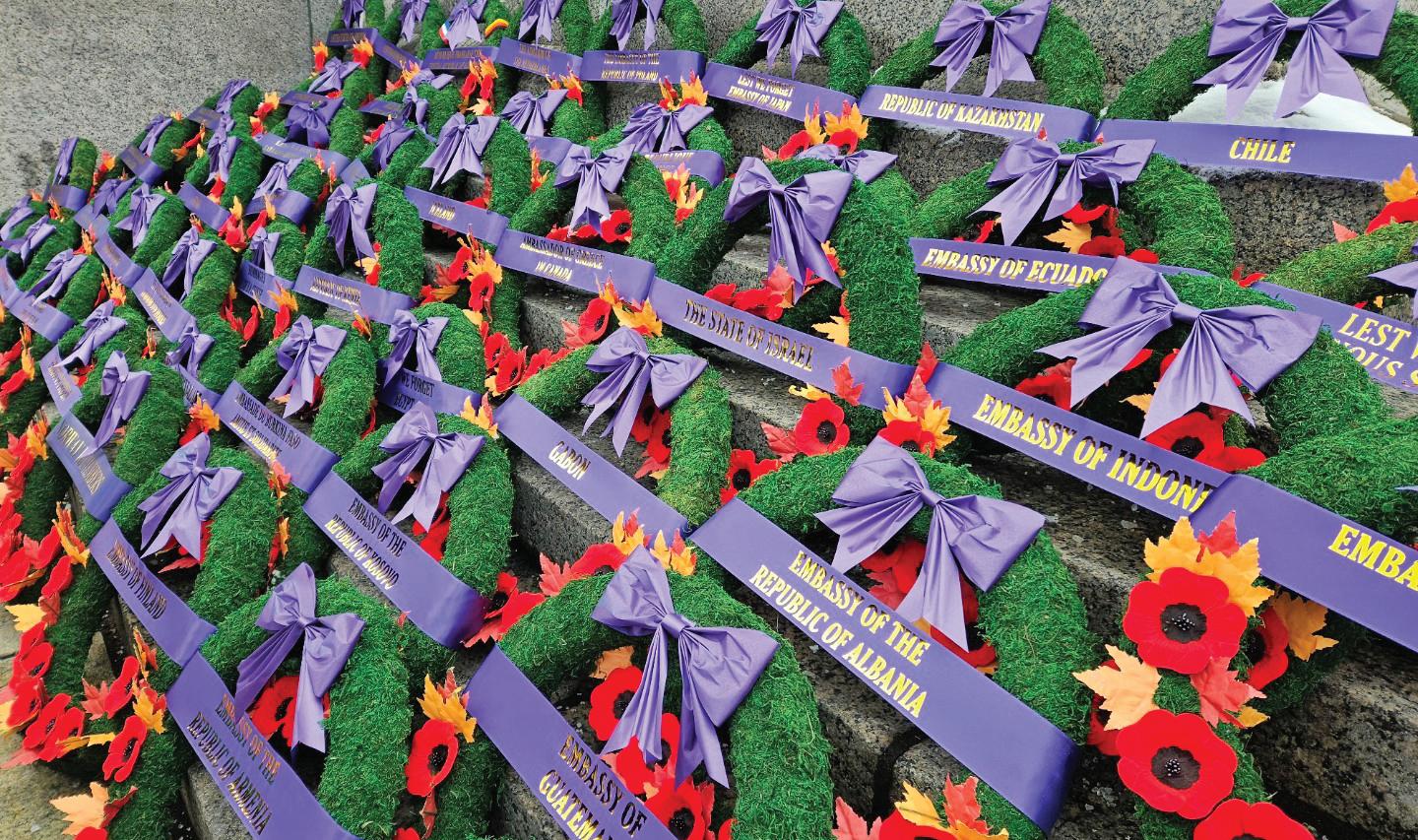
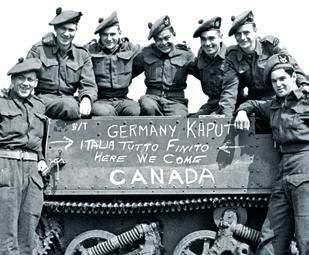
Canada’s largest veteran support and community service organization, The Royal Canadian Legion’s impact can be seen across the country, from its more than 270,000-strong membership to its iconic national Poppy Campaign. This past year had several highlights, including an increase in membership for the fourth consecutive year, welcoming the first para athlete to the Legion National Youth Track and Field Championships, a strengthened relationship with the Canadian Armed Forces Transition Group (CAF TG) and a recordbreaking Poppy Campaign.
“A simple ‘thank you’ seems so inadequate for the work that you and the Legion do for veterans.” Such gratitude from those helped by the Legion is a reminder of the importance of its work.
In 2025, the Legion’s national and provincial service officers helped thousands of veterans in navigating benefits and appeal processes with Veterans Affairs Canada, providing emergency funds for food and housing and connecting veterans to peer-support programs. These undertakings can be daunting to navigate alone and the Legion’s officers assist at no cost, member or not. Last year, national service officers handled additional cases from provincial commands facing staff shortages.
Other important work accomplished by the national veterans services department: the implementation of a new process with VAC to electronically submit paperwork, eliminating postage costs and delays; sharing its services with a wider group, including RCMP, VAC, the Defence Department and the public; and signing a memorandum of understanding with the CAF TG, which will allow Legion service officers to work at
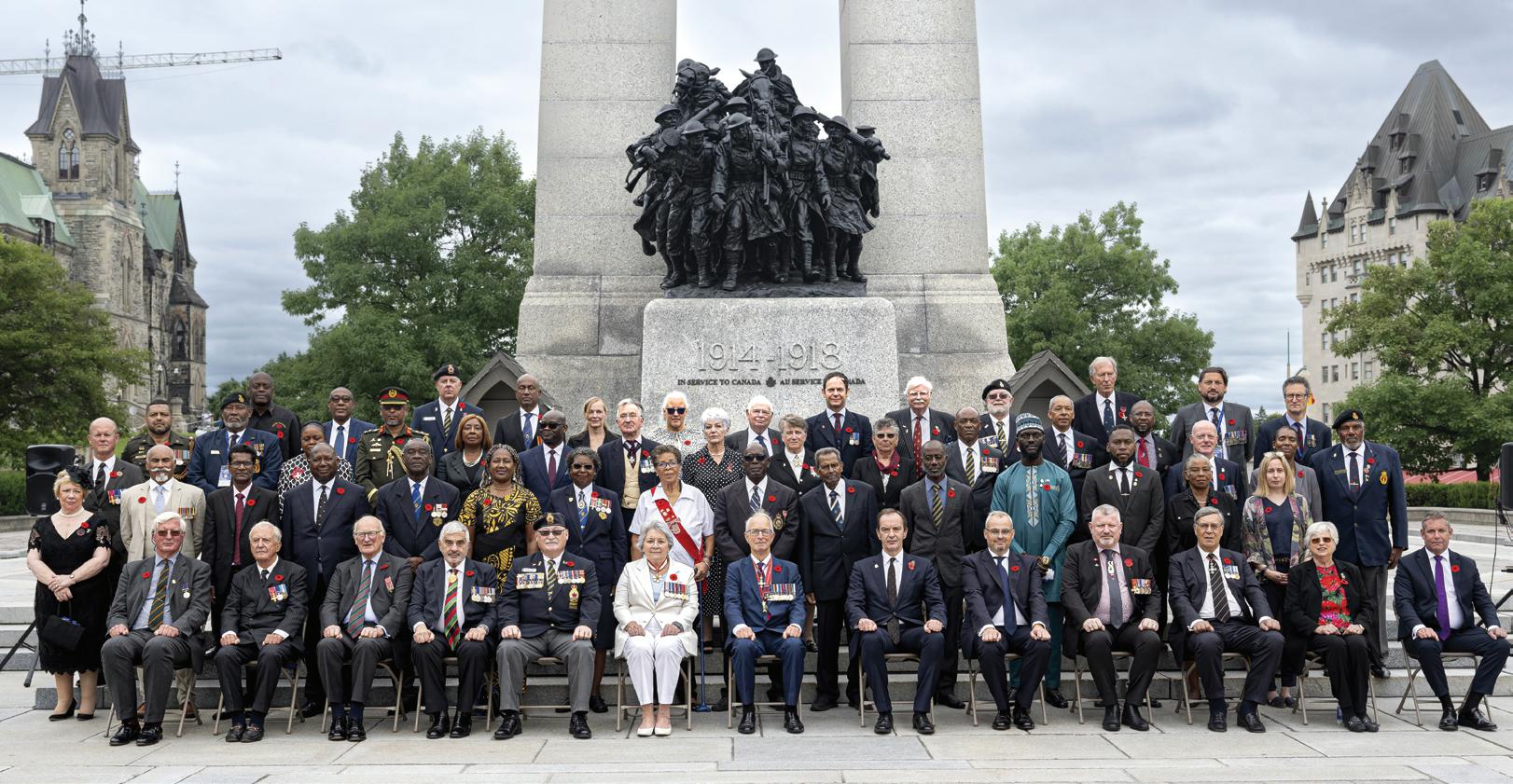
transition support centres across Canada to provide assistance for VAC claims and benefits.
The Legion’s reach extended internationally again with its work as a member of the Royal Commonwealth Ex-Services League (RCEL), assisting veterans and their widows in the Caribbean. In 2025, the Legion, through the RCEL, provided veterans and widows with support to cover two meals per day. The Legion also provided financial support to veterans for other essentials, such as medical expenses and mobility devices. As the North American contact for commonwealth veterans and widows, the Legion also co-ordinated the disbursal of RCEL funds to British veterans and widows living in Canada.
During summer 2025, the Legion hosted the 35th RCEL conference, welcoming delegates from more than 35 Commonwealth countries. The Legion also established an agreement with The Royal British Legion to help co-ordinate applications for British veterans in Canada who require financial assistance from the U.K.
Evidence-based research helps Canada implement new tools to assist veterans. In collaboration with the Canadian Institute of Military and Veteran Health Research, the Legion awarded its $50,0000 PhD research scholarship
to Kim Huynh, a student from Queen’s University in Kingston, Ont. Huynh is researching how repeated non-concussive head impacts from firearm recoil affects the brain physiology of military personnel. The findings “may help diagnose nonconcussive injuries, improving longterm brain health in high-risk roles.”
In advocacy work, National Headquarters made recommendations to numerous groups, including VAC, the RCMP and on behalf of the Veterans Consultation Assembly, which it leads. In 2025, the latter shared Legion’s three main recommendations with the minister of Veterans Affairs: implement recommendations from the 2024 Standing Committee on Veterans Affairs regarding the Persian Gulf War; establish a national monument to recognize women who have served in the CAF and RCMP; and recognize RCMP members as veterans for commemoration purposes.
Marketing and communications efforts helped raise the Legion’s profile in advance of its 100th anniversary, including a national collaboration with Ford Dealers of Canada—the Legion’s official partner for its centenary. In addition, promotional materials and media plans helped further spotlight anniversary celebrations to a wider audience.
In 2025, the Legion was covered by Canadian media relating to a variety of issues, including the federal budget, the national
Wreaths are placed at the National War Memorial on Remembrance Day (opposite). Delegates from more than 35 countries (left ) pose for a photo in Ottawa last summer during the 35th RCEL conference.
Poppy Campaign and Poppy Store products. During summer 2025, large banners highlighting the Legion’s work were displayed near the National War Memorial. The organization also launched an awareness campaign warning veterans of groups and individuals seeking remuneration for applying for VAC benefits or handling appeals on their behalf—services the Legion and VAC provide for free.
“[It was] a monumental year of continued organizational growth, remembrance, and global collaboration as we strategically prepared for the launch and celebration of our centenary,” said RCL National Executive Director Randy Hayley of 2025, which marked the fourth consecutive year of membership growth. That’s poised to continue in 2026 with a free membership offer. That initiative added nearly 50,000 new members by March.
The membership department also introduced new digital tools for members, including an autorenewal option, training videos, digital membership cards, system testing and improvements, and responsive service specialists. Despite major postal strikes and increased tariffs, the Legion’s online Poppy Store achieved its highest ever annual revenue in 2025, shipping more than 400,000 packages and 790 unique products, including 100th anniversary-branded items.
Planning continues for the 2026 Dominion Convention in Winnipeg,
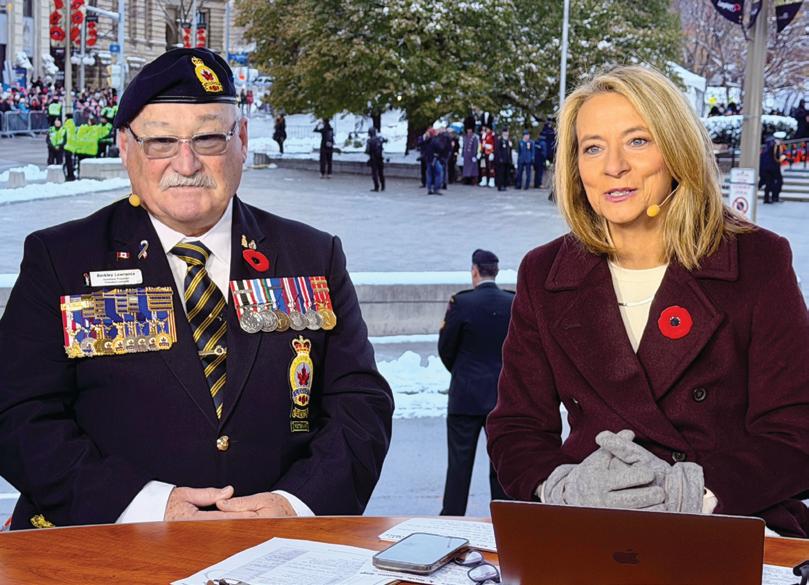
the Legion’s birthplace. Hundreds of delegates from across the country are expected to attend to vote on resolutions, take part in discussions and celebrate 100 years of service.
The Legion continues to play a leading role in Canadian remembrance. In late spring 2025, a commemoration was held to mark the 25th anniversary of Canada’s Tomb of the Unknown Soldier, a memorial brought to fruition through the work of the Legion, its former national secretary, retired brigadier-general Duane Daly, and government partners.
“And so, today, encased in granite, and under the secure cover of his helmet and sword, our soldier lies in peace,” said Daly, who spoke at the VAC-led anniversary event alongside Dominion President Berkley Lawrence, Grand President Larry Murray and national communications manager Nujma Bond, who emceed the ceremony. The proceedings recognized the tomb’s importance as a symbol of service, sacrifice and remembrance.
In November 2025, the Legion once again organized and presented Canada’s national Remembrance Day ceremony, which attracted more than 30,000 to the National War Memorial in Ottawa and millions watched the live broadcast.
As part of the national Poppy Campaign, the Legion renewed its collaboration with Amazon Canada and delivered more than 50,000 poppies—twice as many as the previous year—and other remembrance items to people’s doorsteps.
Dominion President Berkley Lawrence (left ) speaks with the CBC on Nov. 11. The Poppy Store released new products, including this pin (right ), to commemorate the Legion’s centenary. Athletes compete at the 2025 Legion National Youth Track and Field Championships (bottom).
Eighty per cent of those orders came from areas without Legion branches and every dollar earned went directly to the poppy fund.
The Legion also distributed more than 2,300 tap-to-donate poppy boxes across Canada, an increase of almost 20 per cent from 2024. The Royal Bank of Canada covered the cost of the boxes. In total, this initiative raised a record-setting $855,000 in 2025. Other corporate supporters were also instrumental to the campaign’s success.
Funds raised helped support veteran initiatives, such as The Pepper Pod health and wellness retreat centre for women and the Mood Disorders Society of Canada’s online mental health workshops, which each received $90,000.
The 2025 Legion National Youth Track and Field Championships at Calgary’s McMahon Stadium attracted the largest field ever, more than 1,000 athletes, including the competition’s first para athlete. Feedback from parents was positive, with many saying the games help bridge the gap between high school and the next level of competition. The 2026 games will be held in Regina.
ionships also took place in several cities, with titles awarded in cribbage, darts and eight ball.
Throughout the year, the Legion will continue its centenary celebrations with special events, commemorative items in the Poppy Store and youth-focused projects. On July 17, the Legion’s official 100th birthday, the organization will host a national event in Ottawa, as well as commemorations at branches across the country.
The Poppy Store is also launching new centenary-branded products along with an improved customer experience. An anticipated influx of new members will keep the membership department busy, along with efforts to make the experience more efficient. The Poppy Campaign and remembrance work will include expanded youth-focused projects, while veterans services is creating a new service officer handbook.
In 2025, The Royal Canadian Legion helped thousands of veterans and their families, shared the importance of remembrance and prepared for its centenary, thanks to its members, volunteers, supporters, community and corporate partners. Here’s to the next 100 years.
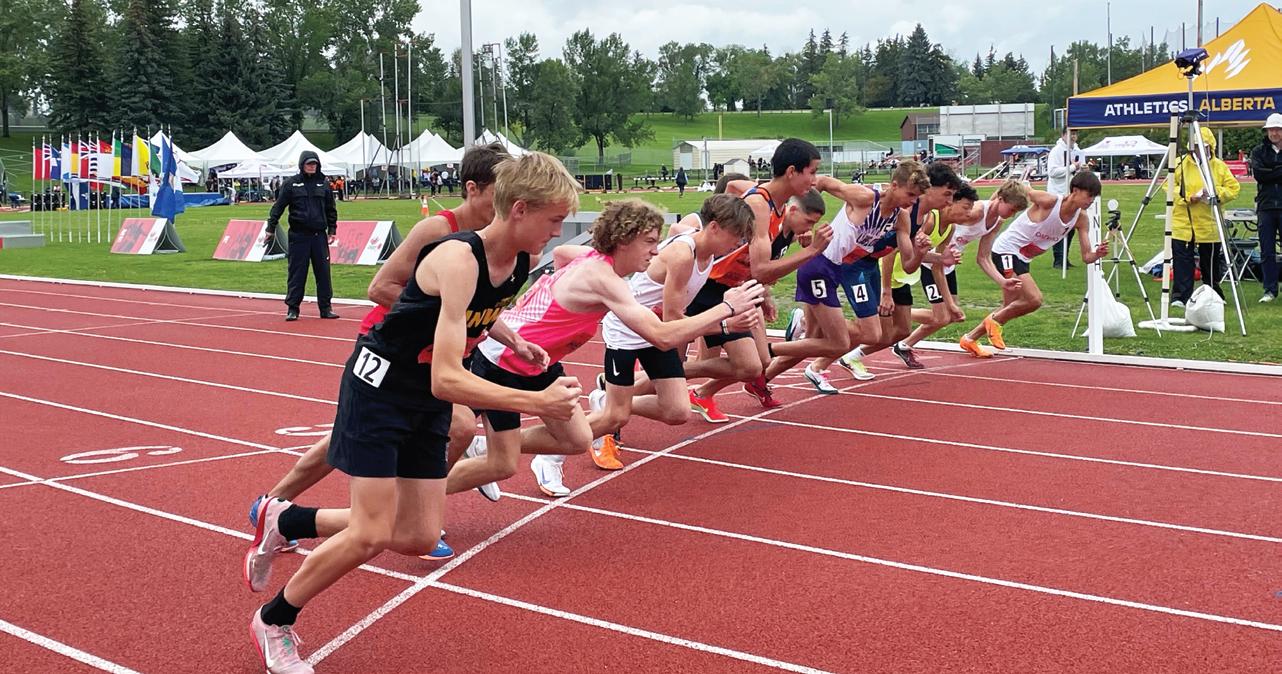
By Michela Rosano
the Canadian Armed Forces works to recruit more personnel in a bid to strengthen the country’s defense, a new report from the office of Mario Baril, ombud for the Defence Department and the CAF, shone light on the barriers still faced by ill and wounded primary reserve members.
The report “Marking Time: A Decade of Stalled Progress for the Primary Reserve,” released in February 2026, found that inequities related to reservists’ access to compensation, health care and administrative support when they become ill or wounded during military service have persisted. Compared to full-time service members, said the report, ill or wounded reservists continue to miss out on benefits to adequately support their recoveries, returns to duty or transitions to civilian life. They are also unsure of their benefit entitlements due to unclear guidelines and have to navigate a complicated application process and other administrative barriers to access compensation. Plus, they receive very little follow-up.
Addressing these issues, said Baril, is more important now than ever, as the defence department aims to increase the reserve force from 30,000 to 100,000, as well as grow the supplementary reserve to 300,000.
“As the Defence Team works to grow their ranks and prepare for mobilization, building strong foundations to support these members is not optional— it is essential,” said Baril.
The report highlighted several specific examples of reservists unable to access adequate
compensation. After more than five months of CAF-supported treatment for a serious wound sustained during training, one class ‘C’ service member was downgraded to class ‘A’ status, in which care isn’t covered by the CAF though covered by provincial health care. While the treatment was still necessary, it was no longer covered and the member was asked to repay the CAF for the previous care.
“The irony is this,” reads an interview with a former director general of reserves and cadets published in the report, “if a Regular Force person is injured off duty, they are entitled to uninterrupted, automatic, full pay and benefits until they recover. No fault. No one does an investigation. At the same time, when a Reservist suffers a servicerelated injury, the CAF makes Reservist families beg for money to pay the mortgage or credit card.”
The report is the culmination of a systemic review, which started in December 2024, of the CAF’s policies and conduct relating to ill and wounded reservists. It identified several factors contributing to the decade-long delay, such as unclear roles and fragmented authority in the CAF affecting how policy is implemented, enduring bias against reservists, staffing shortages and financial pressures, and outdated directives and administrative procedures.
Though progress has stalled, the ombud noted some potentially promising developments, including the $81.8 billion in funding for the CAF announced in the latest federal budget and the CAF’s Reserve Transition Support policy, which launched
in summer 2025 to help facilitate the return to duty or transition to civilian life of some reservists.
“Marking Time” comes on the heels of the ombud’s 2024-2025 annual report, which detailed other systemic investigations focused on the experiences of CAF members. Those include the health care complaint process, military grievances, civilian complaint mechanisms, and the treatment and care of former language and cultural advisors who served in Afghanistan.
“Building strong foundations to support these members is not optional— it is essential.”
Recommendations from some of these studies were cited as evidence in House of Commons standing committee proceedings. Other highlights included the expanded Military Benefits Browser, an online platform launched in 2018 to help members and their families navigate programs and services available to them throughout their careers, and the appointment of Baril in July 2025.
“With nearly two decades of executive leadership in the federal public service, I have dedicated my career to advancing organizational health, strategic governance, and respectful workplaces,” wrote Baril in his initial ombud message. “I bring to this role a deep commitment to fairness and accountability, and a passion for supporting those who serve.”
hanges to disability pensions for RCMP
The latest federal budget proposed a change to disability pensions for current and former RCMP members effective Jan. 1, 2027. Currently, the annual increases to monthly disability pension payments are calculated by the RCMP—and administered by VAC—using either the Consumer Price Index (CPI), or the average of a certain group of public service salaries, whichever is greater. Under this proposed change, however, these calculations would use CPI only, potentially resulting in lower payments for RCMP members.
“What we’re doing is making an adjustment to bring [these disability pensions] in line with many other services and benefits that are offered and bringing it in line across government for consistency,” Veterans Affairs Minister Jill McKnight told CBC in an interview on Remembrance Day.
The initial budget announcement was met with confusion and concern by the wider defense community, as it wasn’t initially clear whether these changes would also apply to Canadian Armed Forces disability pensions. However, in a statement to CBC on Nov. 13, the minister of finance’s office clarified that the changes apply to current and former RCMP members only.
As for how much this could impact disability pensions for the latter, it remains unclear.
“It is too early to determine what the impact may be,” Brian Sauvé, CEO of the National Police Federation union representing RCMP members, told the CBC, “but we will continue to engage with the government and our members as more information becomes available.”
Chronic fatigue, persistent headaches, joint and muscle pain, memory and concentration issues, sleep disturbances and gastrointestinal problems: these are common symptoms of a mysterious illness some veterans have experienced since serving in the 1990-1991 Persian Gulf War.
While the exact cause of so-called “Gulf War Syndrome” is unknown, worldwide studies indicate that exposure to various elements, such as chemical warfare agents, pesticides and other environmental factors could be responsible. Regardless, in December 2025, Veterans Affairs Canada recognized Gulf War illness as an eligible condition for disability benefits claims. Related, VAC implemented a streamlined process for claim applications by Persian Gulf veterans. They will be reviewed by nurse adjudicators who may render decisions without further medical consultations. VAC also created a simple checklist for applicants.
“Recognizing Gulf War illness as a formal diagnosis is more than just a policy change,” said Jill McKnight, minister of Veterans Affairs. “It represents how we are continuing to meet the needs of the women and men who have proudly served our country in uniform. It also offers us another opportunity to continue streamlining administrative processes so that veterans receive timely access to benefits and services.”
Veterans’ advocates and Veterans Ombud Nishika Jardine have highlighted a provision in the latest federal budget that they say is attempting to retroactively
correct a longstanding error that led to veterans in long-term care being overcharged for decades.
While there are exceptions, most veterans covered by Veterans Affairs Canada’s long-term care program have to cover just the cost of their accommodation and meals, a rate that is to be equal to the lowest cost of room and board in the least expensive province. In 2025, veterans using the system paid a maximum of $1,236.90 per month, about the cost of the lowest rate available, in Manitoba.
However, “province” is defined by federal law as “province or territory” and the equivalent charge is much cheaper in the Northwest Territories, where the cost in 2025 was $1,000. So, for 2025, veterans may have been paying $236.90 a month ($2,842.80 a year) more than they should have.
“Instead of owning up to their error, they are trying to change the rules after the fact,” Malcolm Ruby, co-counsel in a proposed classaction lawsuit seeking compensation for the overpayments told the CBC after the budget bill was introduced in November 2025.
Veterans Ombud Jardine likewise urged the House of Commons finance committee in February to “correct the mistake.”
“Make it clear going forward,” she continued. “But don’t wipe out 30 years of having made the mistake and just pretend it never happened.
“If these sections are permitted to stand and [the budget] is passed,” said Jardine, “government will have effectively legitimized its past overcharges to veterans and, as it happens, denied justice to some of our elderly and most disabled veterans.”
It’s believed the change will effectively end the class action before it is set to be certified later this year.
In October 2025, the Defence Department announced funding for 21 new projects and services through a grant program at its Sexual Misconduct Support and
Resource Centre. These projects, led by 20 different communitybased providers across the country, will offer “crisis management, counselling services, support groups and increased access to victim services,” said the department in a release. Current and former Canadian Armed Forces members, defence department employees, Canadian Coast Guard personnel, cadets and Junior Canadian Rangers, their families, supporters
and caregivers aged 16 and older can access these initiatives.
“Survivors of military sexual trauma deserve timely, accessible support. With this funding… our government is helping to ensure that CAF and Veteran MST survivors have access to resources where and when they need them,” said Jill McKnight, minister of Veterans Affairs and associate minister of National Defence.
These new programs are also
meant to meet the needs of people of all gender identities and expressions, as well as provide culturally relevant support for racialized groups, and greater accessibility for people with disabilities and those living in rural and remote communities. The resource centre’s full list of service providers is available online at: canada.ca/en/department -national-defence/services/ benefits-military/health-support/ sexual-misconduct-response.
etired major Bob Crane doesn’t demand a thank you for donning the Canadian military uniform. Nevertheless, observed the Persian Gulf War veteran from Siksika Nation in Alberta, “gratitude is the one thing that we all appreciate when we do something for other people.”
Crane, a former member of 1 Canadian Field Hospital, spoke of the broader service that he and more than 5,000 comrades provided as part of a 35-country coalition force, spearheaded by the United States, to liberate Kuwait from Iraqi occupation after the latter’s Aug. 1-2, 1990, invasion. He remembered, too, the desert, the dust—and, of course, the heat. It was a far cry from conditions in Halifax Feb. 25-March 1, 2026, when those same comrades, encountering a brisk Maritime breeze, gathered to mark 35 years since the end of the conflict. Notwithstanding a blanket of long-settled snow, however, clear skies afforded a sizable delegation of Persian Gulf War veterans—Crane among them— the chance to participate in several commemorative events.
By Alex Bowers
Two wreath-placing ceremonies —first at The Royal Canadian Legion’s local Fairview Branch, then the following day at the city’s war memorial—set a strong tone for remembrance, looking back at the land, sea and air efforts contributed by Canada more than three decades ago. Elsewhere, the screening of a new documentary, Canada Remembers our Heroes: The First Gulf War—The War to Free Kuwait, paid tribute to the contingent’s combined arms, a theme echoed during a reception at Nova Scotia’s Government House, hosted by the province’s Lt.-Gov. Mike Savage.
“We’ve not had a minute of rest,” said Crane, First Vice of the Strathmore, Alta., Legion Branch, “but it’s so exciting. I’ve never been wined and dined and feted in this fashion in my entire life.”
Military and government organizers reserved the greatest dedication for Saturday, Feb. 28, coinciding with the end of the conflict. Beneath a welcome winter sun, delegates and dignitaries assembled at HMC Dockyard for the main commemorations.
The poignancy of the event’s location wasn’t lost on master of ceremonies David Benoit—a retired navy captain—who reminded the crowd that Canadian warships Athabaskan, Terra Nova and Protecteur had once passed through the adjacent waters after returning from the conflict.
“Thousands of Haligonians,” added Benoit, “gathered on the shores of Halifax, Dartmouth, and on the Angus L. Macdonald Bridge to welcome them home.”
In a homage to that scene, as well as in honour of the veterans themselves, HMCS Moncton and HMCS Edmonton sailed through the narrows while, in the skies above, a CP-140 Aurora long-range patrol aircraft performed a flypast.
Proceedings then moved indoors at stone frigate HMCS Scotian, where Lt.-Gov. Savage spoke of what the Canadian Armed Forces had previously helped achieve, noting that “our sailors, our soldiers, and our aviators acted with integrity, discipline and an unwavering sense of duty.”
Also in attendance was Veterans Affairs Minister Jill McKnight, who acknowledged the conflict
as one of many firsts, not least for Canadian women serving as “equal participants in combat roles.” McKnight also alluded to the federal government’s formal recognition of Gulf War illness, characterized as a largely unexplained multi-symptom chronic condition. In December 2025, it become an official diagnosis in Canada, making those living with it eligible for related disability benefits.
Though all remarks appeared well-received, three guests earned standing ovations: Persian Gulf veteran Mark Ryan, wielding a guitar, played a song entitled “Your Sons and Your Daughters”; Natasha Mohr, widow of Petty Officer 1st Class Rick Mohr, recounted her battle to have the government recognize her husband’s passing as service-related (a struggle complicated by the fact that no Canadians
were killed in action); and Harold Davis, president of the Persian Gulf Veterans of Canada.
What remained unaddressed was the government designation of Persian Gulf War veterans, a fight that has persisted since Canada welcomed the last troops home. Despite having engaged enemy forces in an active combat zone, none have received “wartime service” classification, instead being considered “special duty area” personnel.
The implications are both symbolic, such as the sparseness of the Persian Gulf War commemorative landscape, and of real-world consequence relating to disability payments. Whether the federal government intends to implement a policy shift is unknown.
Crane told Legion Magazine that he hoped an announcement on the
topic might come soon. “It took the Korean War veterans years to be recognized. Now, we’ve only been at it for 35 years, so maybe we have a ways to go, but for us to be recognized, it will have an impact on services available, and some of them really need those services —especially as we get older.”
In the absence of fresh government commitments, Crane still appreciated the gratitude shown in Halifax. “I’d like the public to understand,” he furthered, “that we came from all walks of life, all over Canada—Indigenous and non-Indigenous. We put our lives on the line, and we want Canadians to remember that.
“Let’s not wait another 15 years for the Persian Gulf to be recognized. Let’s recognize it now, get it properly legislated, and we’ll be okay.”
SERVING YOU is written by Legion command service officers. To reach a service officer, call toll-free 1-877-534-4666, or consult a command website. For years of archives, visit legionmagazine.com
The Royal Canadian Legion and the Canadian Armed Forces Transition Group (CAF TG) have officially partnered to improve access to veteran support services at transition centres across Canada.
Established in 2018, CAF TG was created to bolster resources for CAF members preparing to leave military service, offering personalized transition services, casualty support and release administration, among other guidance such as career advice, benefits information and connections to likeminded organizations, such as the Legion.
As Canada’s largest veteran support organization, RCL service officers help with VAC benefit claims, appeals when they’re denied and otherwise advocate for veterans. Provincial and national command service officers are
security-cleared and have access to VAC systems and, with consent, to individuals’ files. An October 2024 report on members’ transition to civilian life by the House of Commons Standing Committee on Veterans Affairs highlighted the value of formalizing collaboration between the Legion and CAF TG. While an informal partnership has existed for years, policy-makers recommended signing a memorandum of understanding (MOU) to formally combine the veterans’ support expertise of the entities. The MOU now aims to streamline access to benefits and reduce barriers for CAF members leaving service. Ultimately, the Legion’s service officers will provide on-site assistance for VAC claims and benefits at CAF TG transition centres across Canada. This will improve co-ordination between military and civilian veteran-support systems and help ensure members leaving the military get guidance earlier in the transition process.
If you, a veteran friend or family member, would like assistance in connecting with VAC for disability applications, appeals or other services, contact veteransservices@ legion.ca or call 1-877-534-4666 toll free.

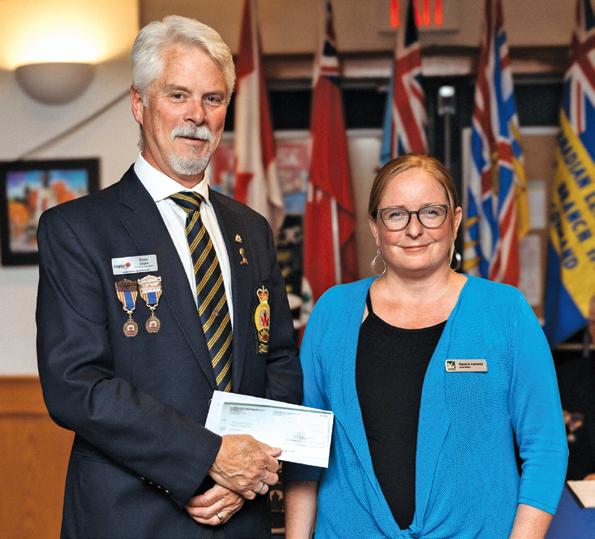
In this issue, Legion branches donated more than $111,795 to their communities
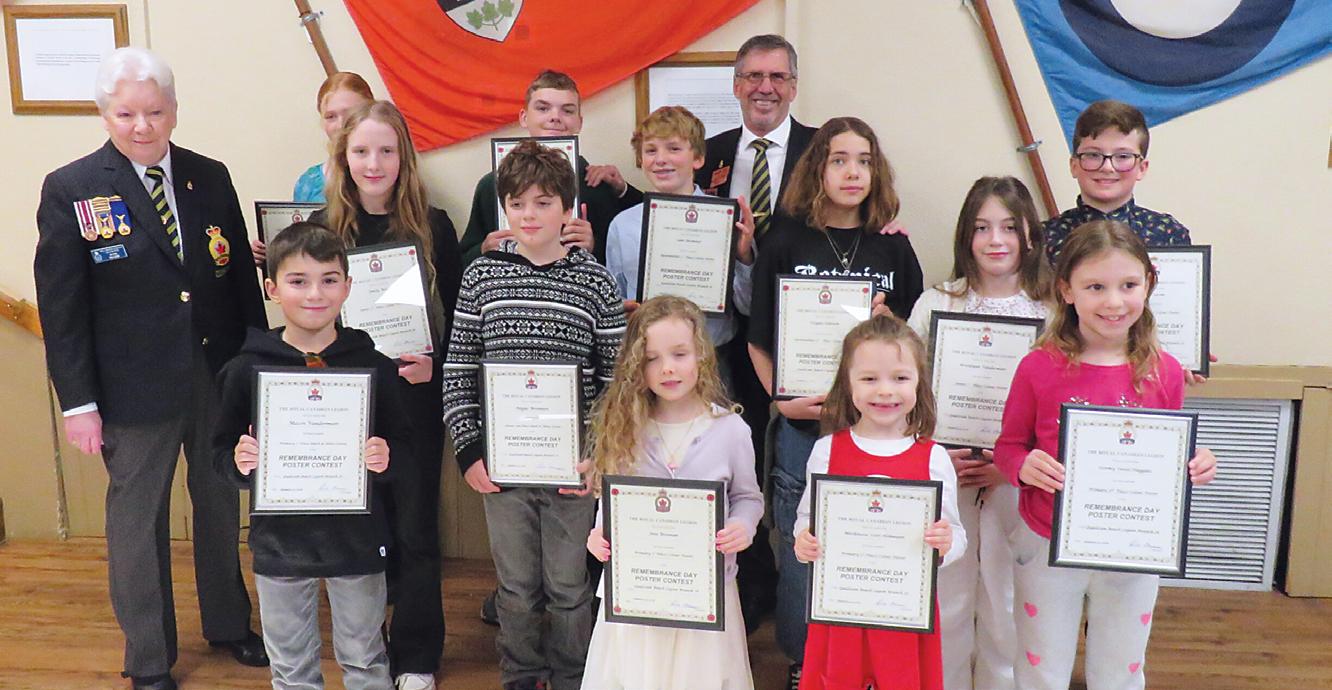
Fraser and President Brian Wiese
Qualicum
Branch present certificates to local National Youth Remembrance Contests winners.
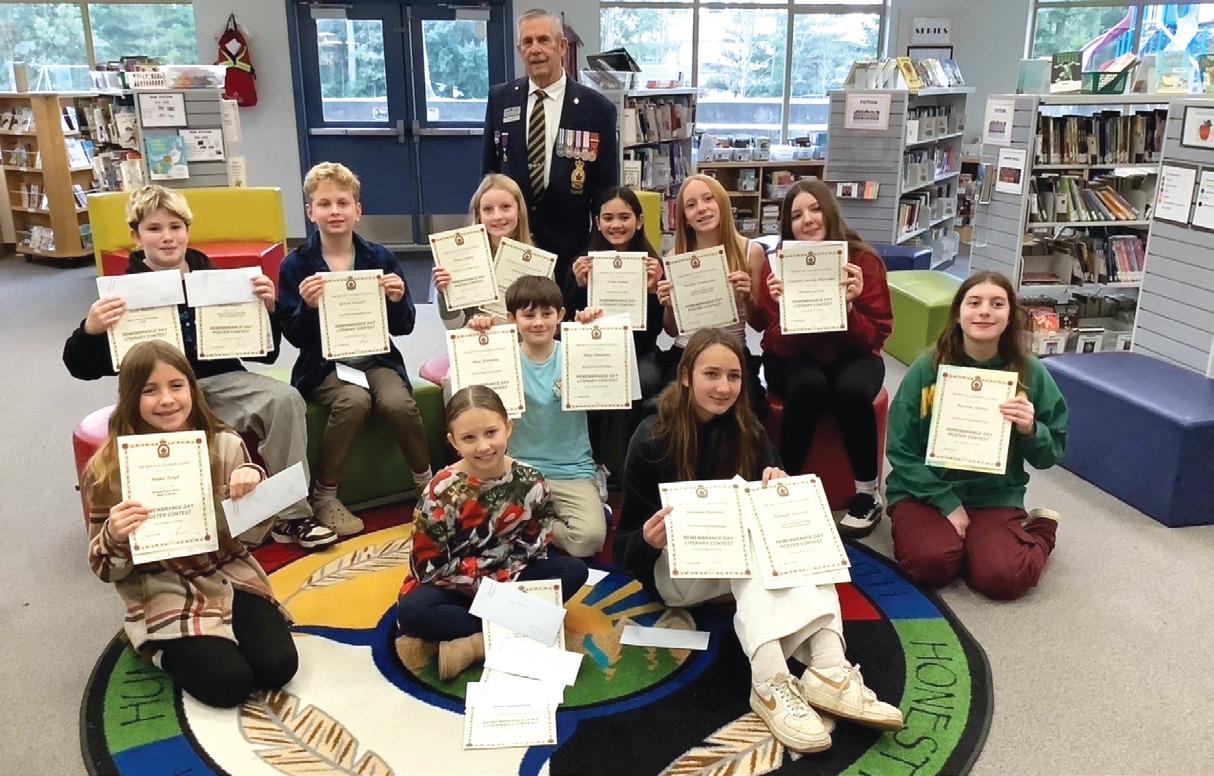
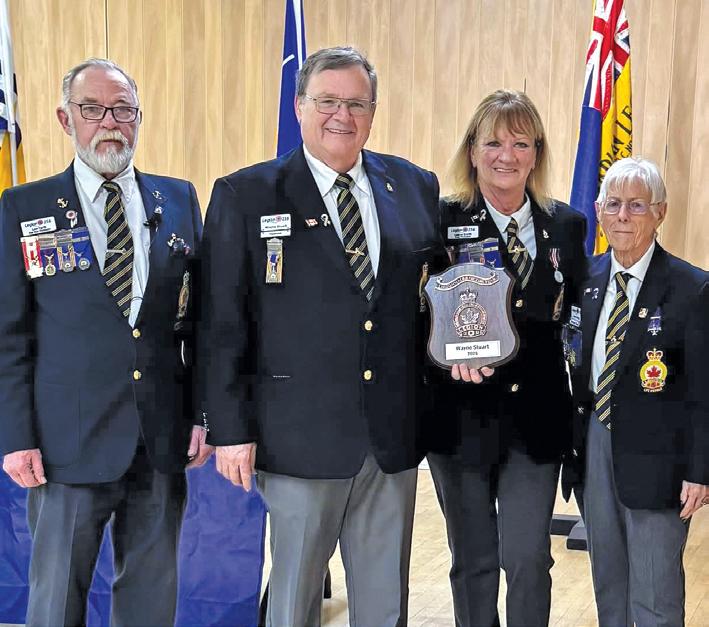
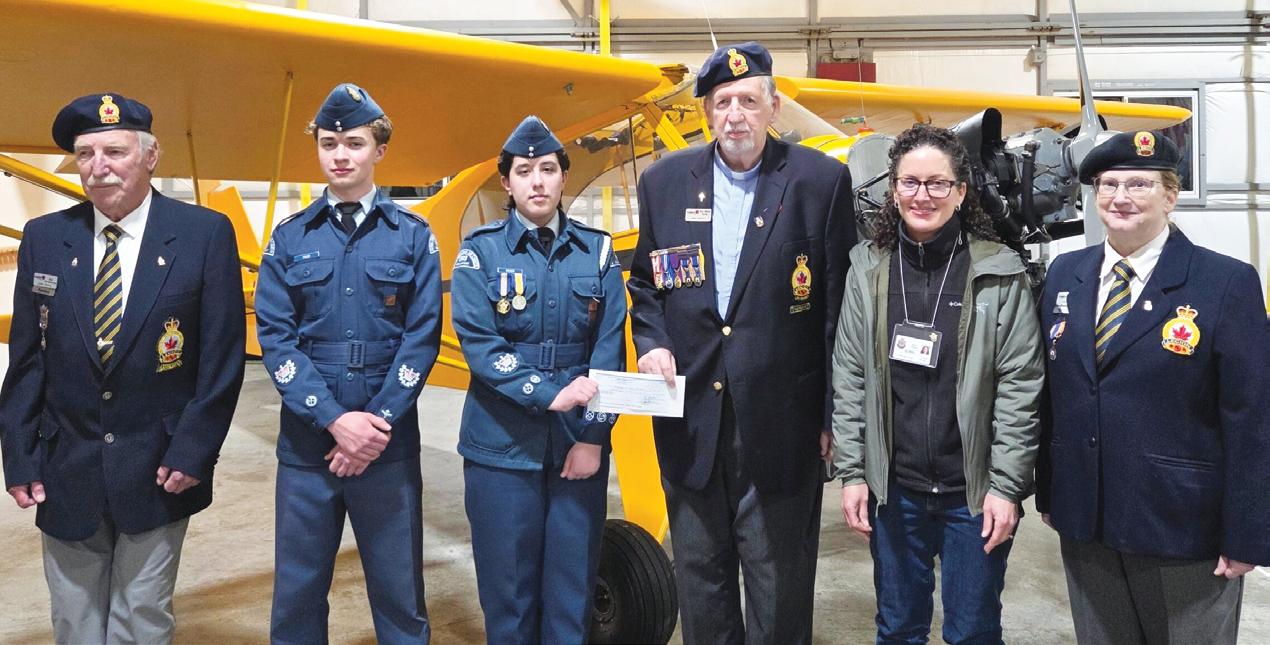
President Neil Van Bemmelen, Padre Brian Kirby and Amanda Wilson of Bowser, B.C., Branch present $350 to 893 Beaufort Squadron air cadet corps.
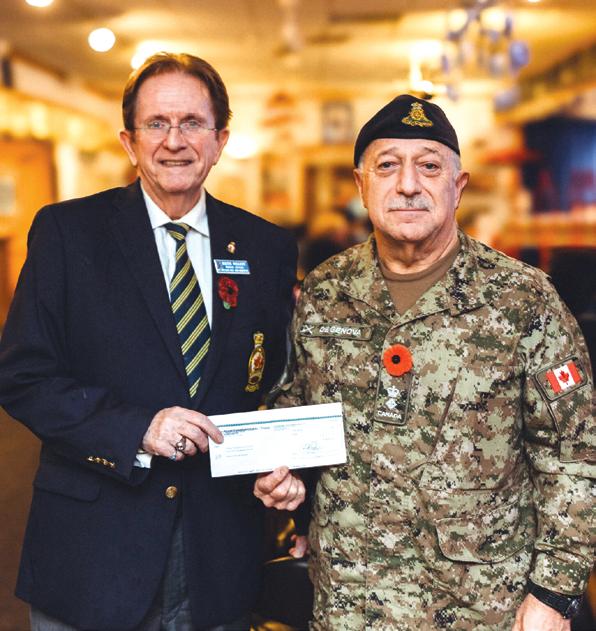
Service Officer Keith Willett of Lynn Valley Branch in North Vancouver, B.C., presents $4,000 to Honour House, represented by its president, Allan De Genova.

Past President John Markwart (left) of Vulcan, Alta., Branch presents $2,206.59 to the Veterans Association Food Bank. BEN MACRAE
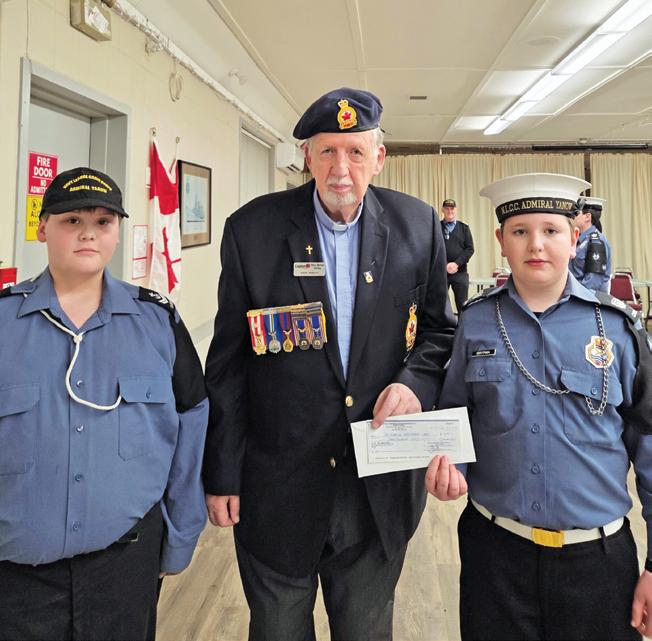
Padre Brian Kirby of Bowser, B.C., Branch presents $350 to 169 Admiral Yanow navy cadet corps.
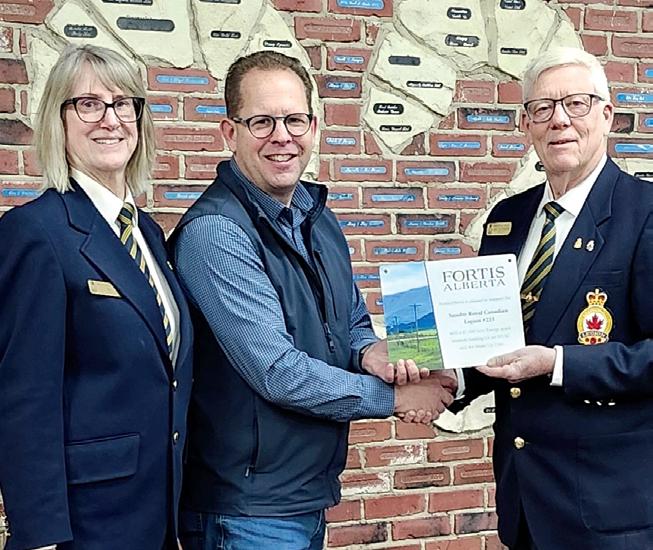
Liz Smith and President Dick Cruickshank of Sundre, Alta., Branch accept a $7,500 grant for HVAC repairs from Fortis Alberta, represented by Chris Burt.
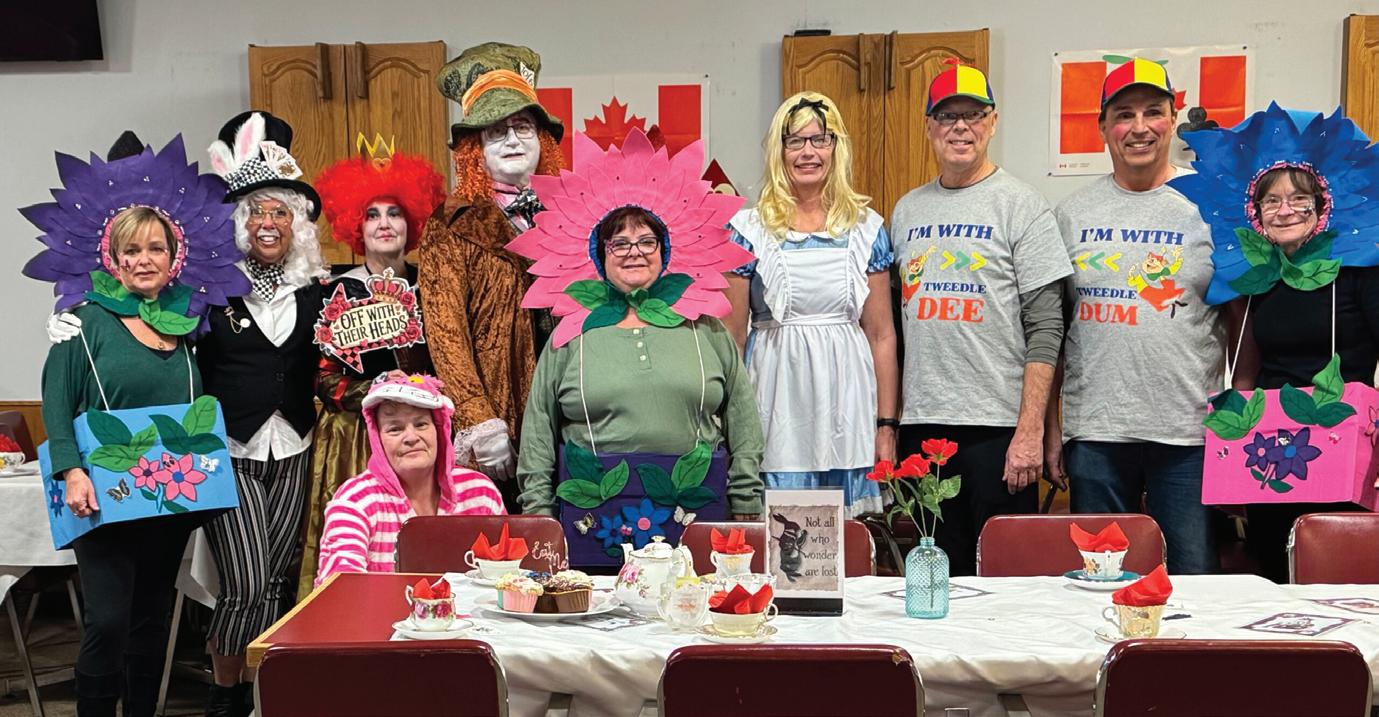
Members of Charleswood Branch in Winnipeg hold an Alice in Wonderland–inspired party to raise funds for the upkeep of the branch’s clubroom.
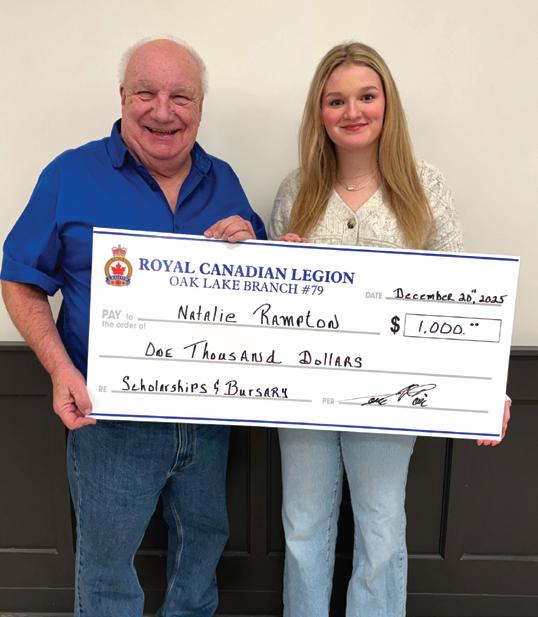
President Cameron Moir of Oak Lake, Man., Branch presents a $1,000 bursary to Natalie Rampton.
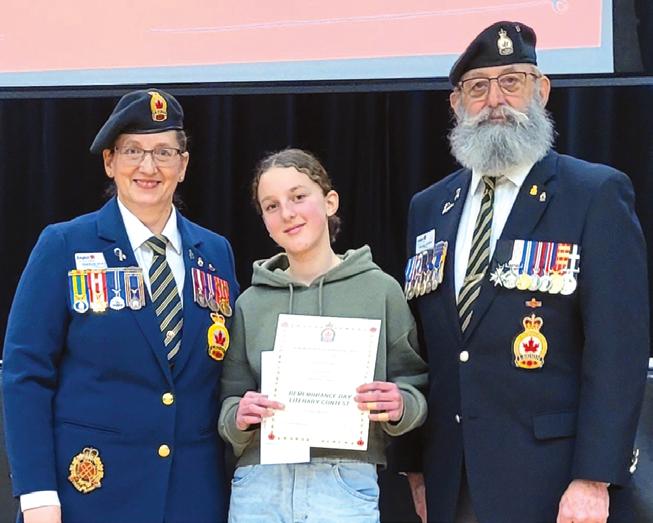
Sharon Scott and President George Romick of Port Arthur Branch in Thunder Bay, Ont., present Nava Widmer with her third-place National Youth Remembrance Contests certificate.
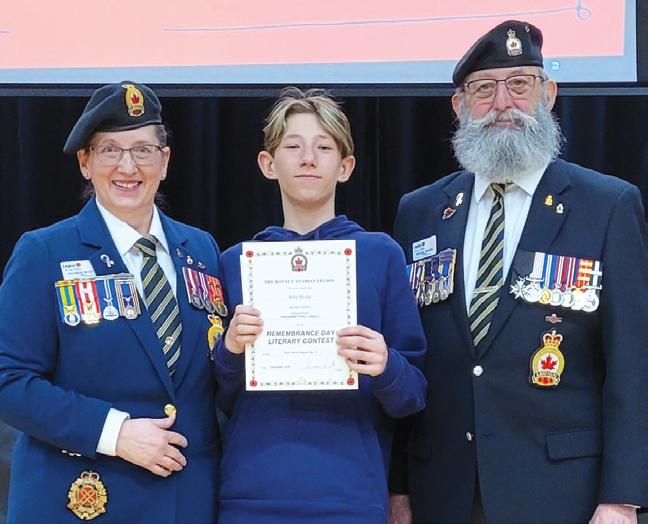
Sharon Scott and President George Romick of Port Arthur Branch in Thunder Bay, Ont., present Riley Rezka with his second-place National Youth Remembrance Contests certificate.
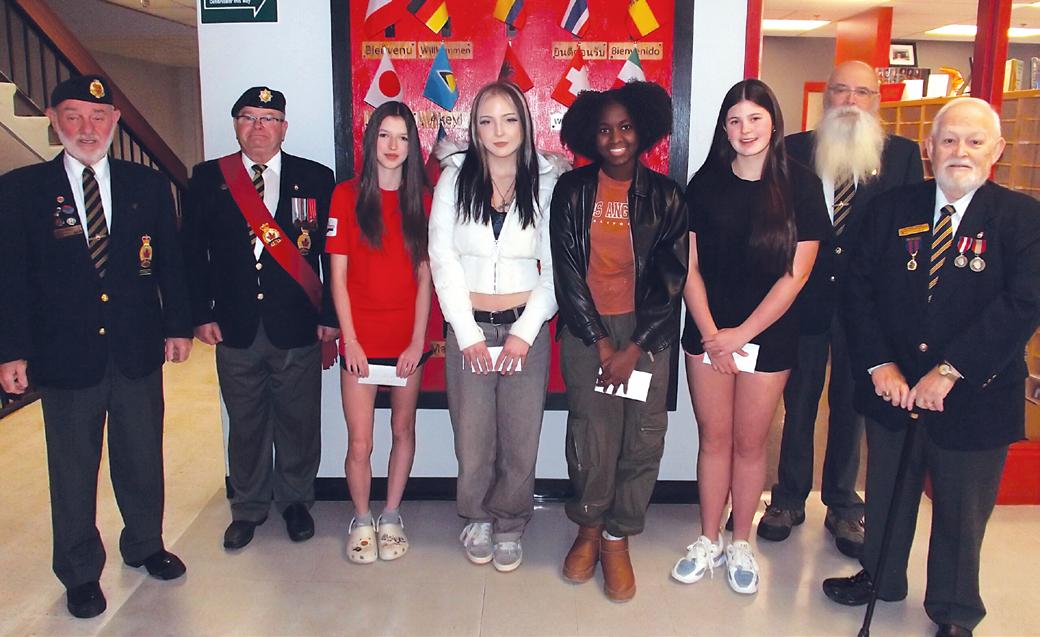
President Graham Wiseman, Sgt.-at-Arms Tommy Jagoe, First Vice Danny Glendenning and Michael White of Herman Good VC Branch in Bathurst, N.B., present certificates to National Youth Remembrance Contests winners from Bathurst High School. GRAHAM WISEMAN
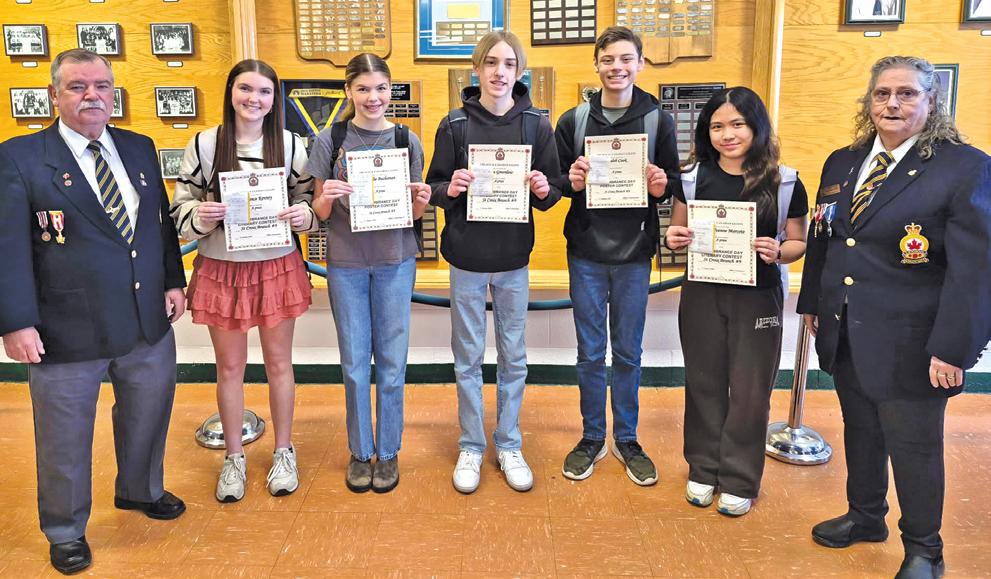
Albert and Delia Fairweather of St. Croix Branch in St. Stephen, N.B., present certificates to National Youth Remembrance Contests winners from St. Stephen High School. GERALDINE
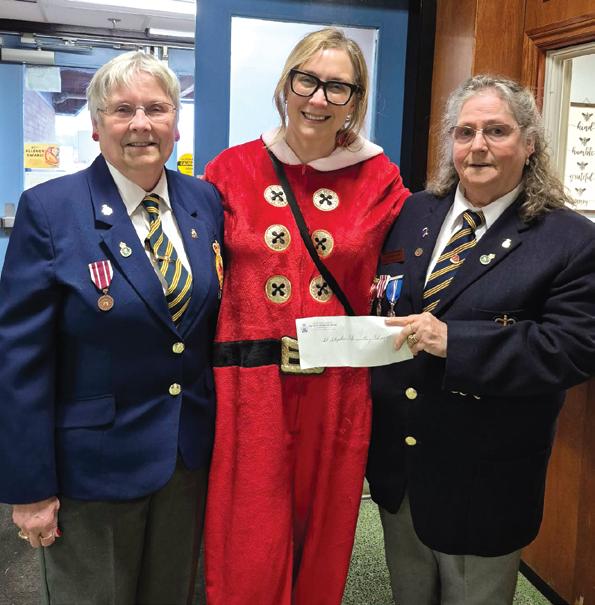
Linda Bartlett and Delia Fairweather of St. Croix Branch
L.A. in St. Stephen, N.B., present $500 to St. Stephen Elementary School, represented by principal Melissa Brown. GERALDINE LEAVITT
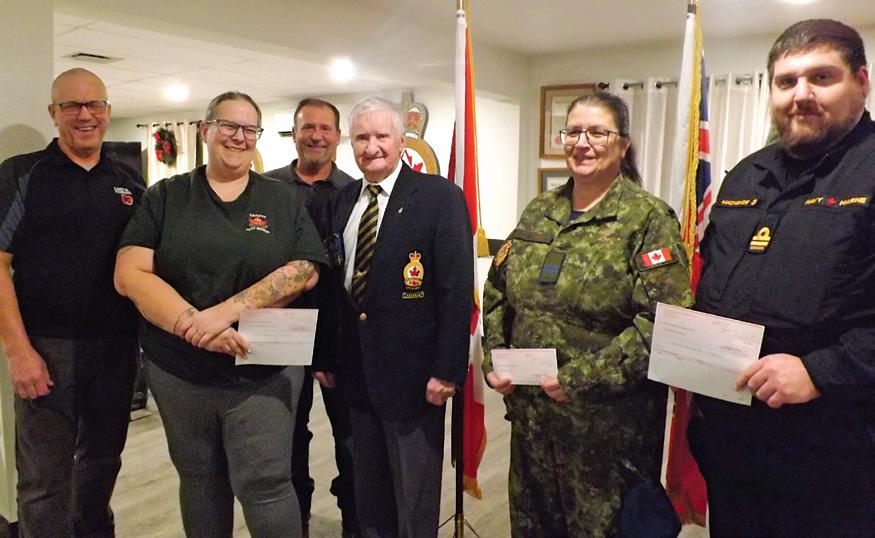
Robert Godin, Rene Frenette (back) and Ron Melvin (centre) of Herman Good VC Branch in Bathurst, N.B, present $1,500 each to 1242 army cadets, 640 air cadets and 275 sea cadets, represented by Alice Comeau, Capt. Karen Theriault and Lieut. (N) Josh MacKenzie. GRAHAM WISEMAN
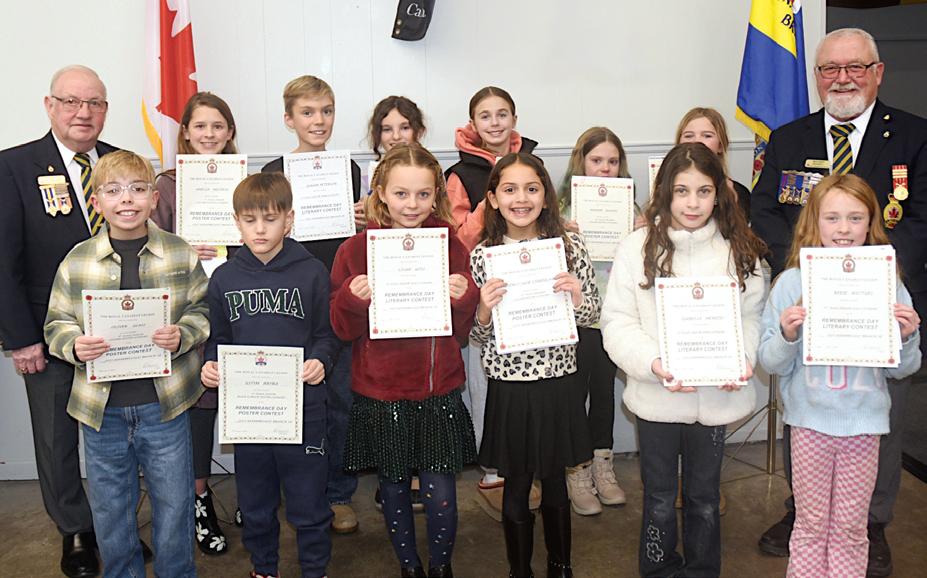
First Vice Art Caravan and President Brian Eisan of Kennebecasis Branch in Rothesay, N.B., present certificates to local elementary school National Youth Remembrance Contests winners. BRIAN
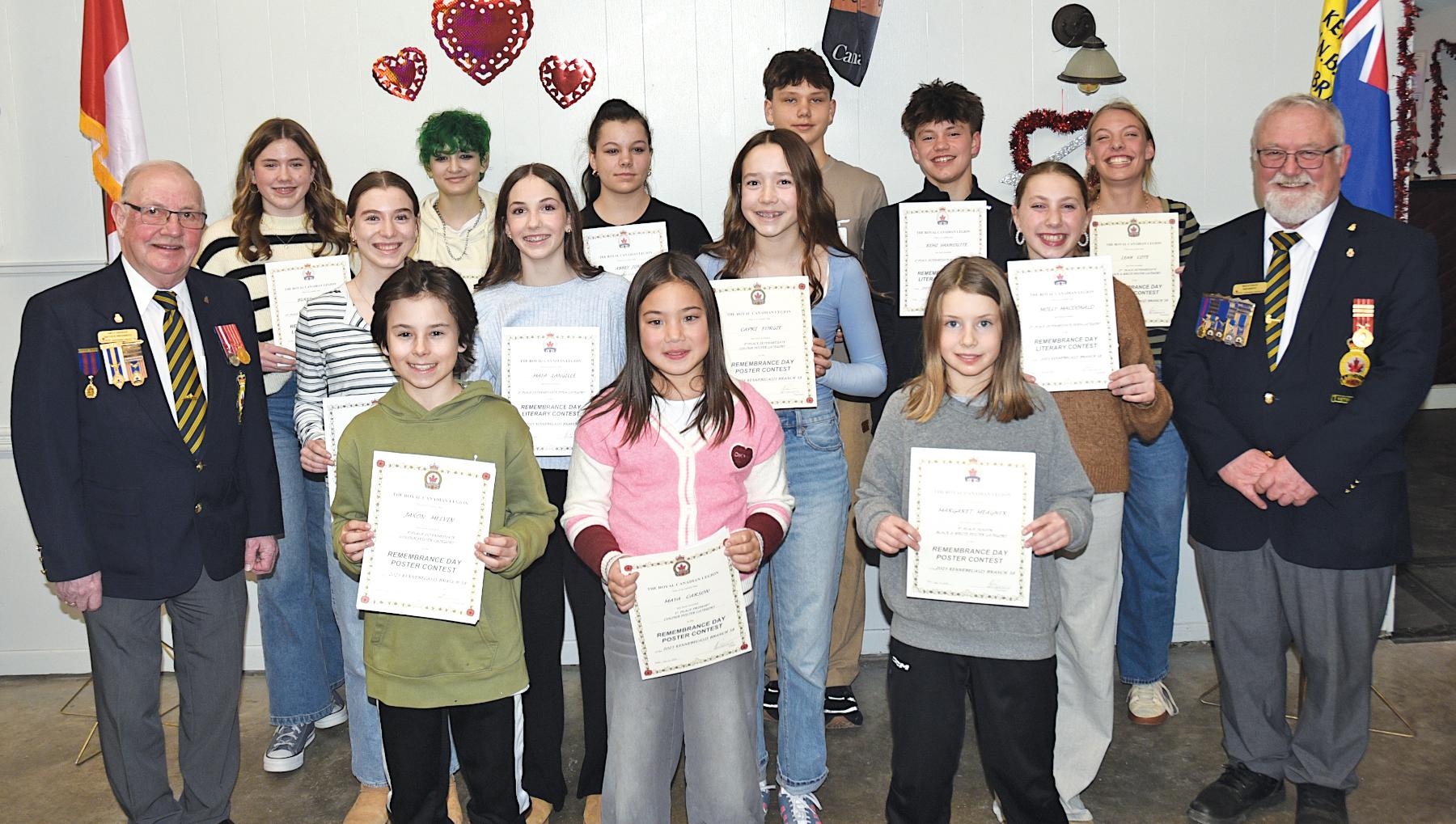
First Vice Art Caravan and President Brian Eisan of Kennebecasis Branch in Rothesay, N.B., present certificates to local middle and high school National Youth
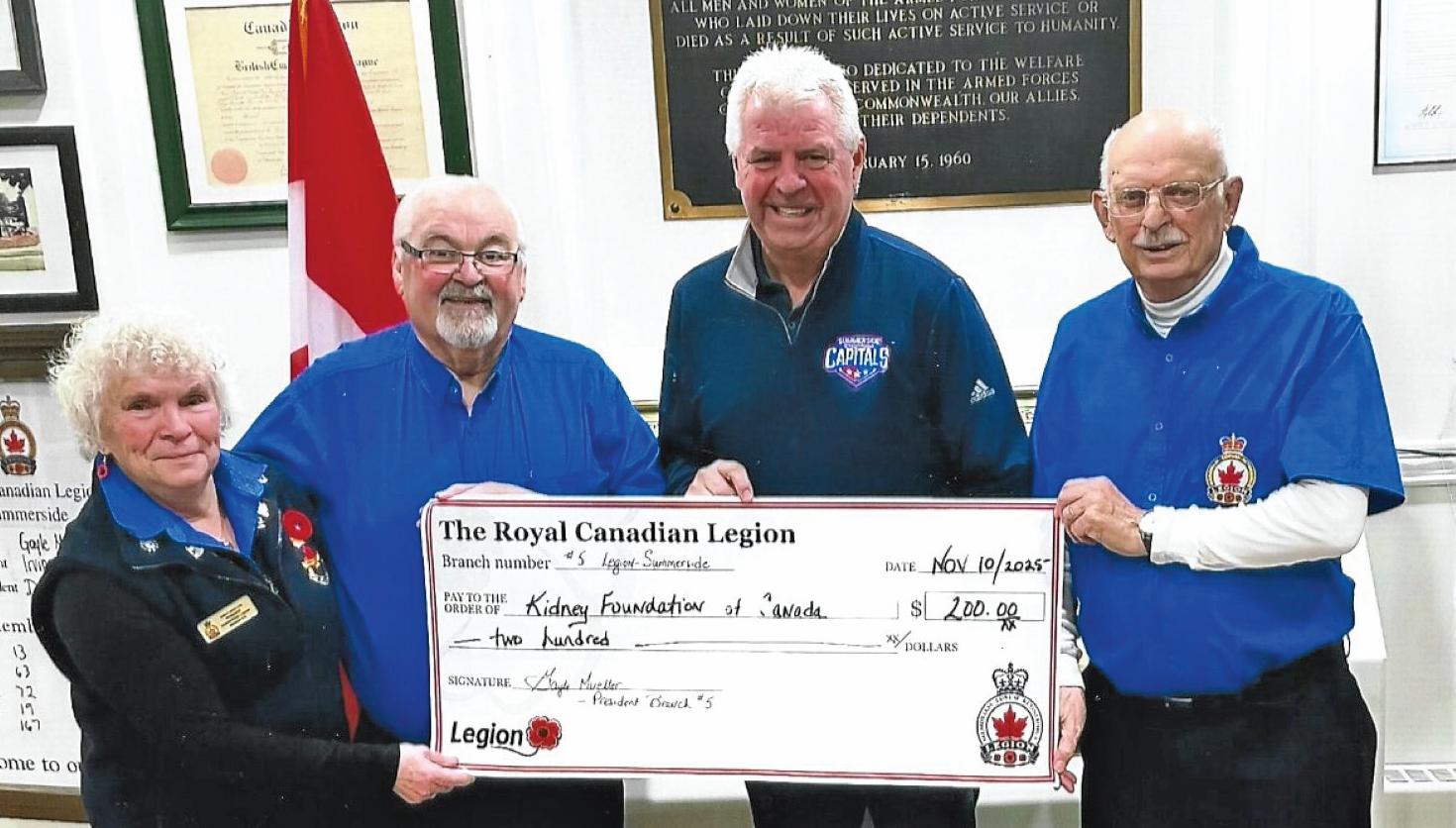
President Gayle Mueller, Dan Praught and Irving Arsenault of George Pearkes VC Branch in Summerside, P.E.I., present $200 to the Kidney Foundation of Canada, represented by David Green.
Nova Scotia-Nunavut Command
President George Della Valle presents Zone 3 Commander John Langley of Isle Madame Branch in Arichat, N.S., with the Provincial Past Office Medal. BONNIE SAMSON
President Alan Crane and treasurer Duane McEwen of Kingston Branch in New Haven, P.E.I., present $500 to the Salvation Army, represented by Beverly Burton. ALAN CRANE
Treasurer Duane McEwen and President Alan Crane of Kingston Branch in New Haven, P.E.I., present $1,000 to the Queen Elizabeth Hospital Foundation, represented by director Mary Ellen Hughes. ALAN CRANE
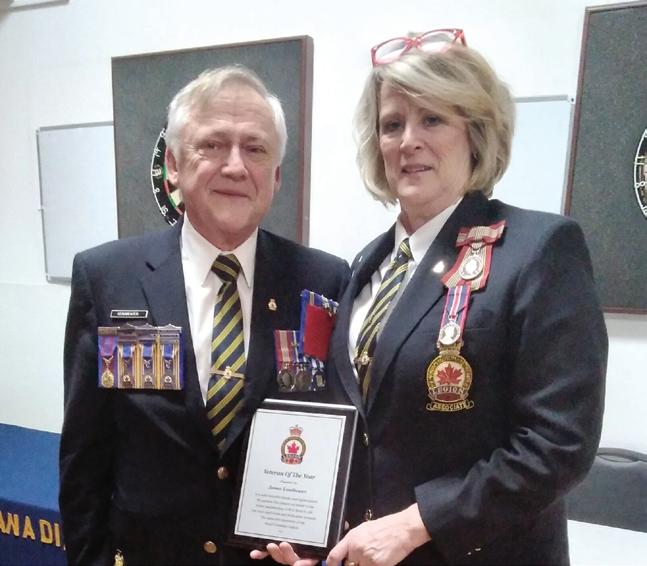
Donna McRury of Whitney Pier Branch in Sydney, N.S., presents Jim Leadbeater with the Legionnaire of the Year award. MARY PHILLIPS
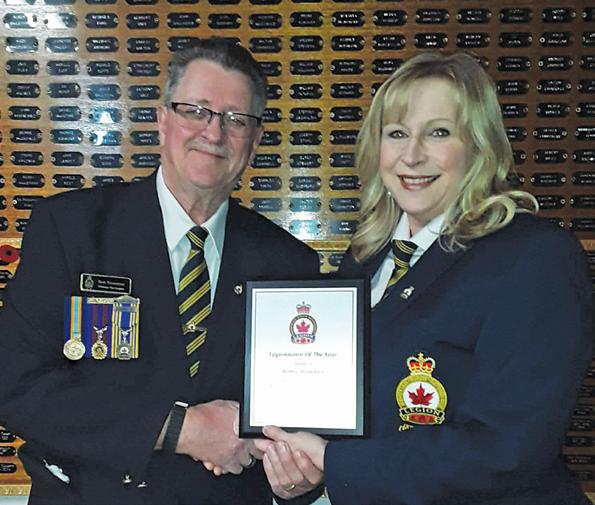
First Vice Kim Hooper of Whitney Pier Branch in Sydney, N.S., presents Robert Monahan with the Legionnaire of the Year award. MARY PHILLIPS
Isle Madame Branch of Arichat, N.S., celebrates the 105th birthday of member Elias Gaudet.
BONNIE SAMSON
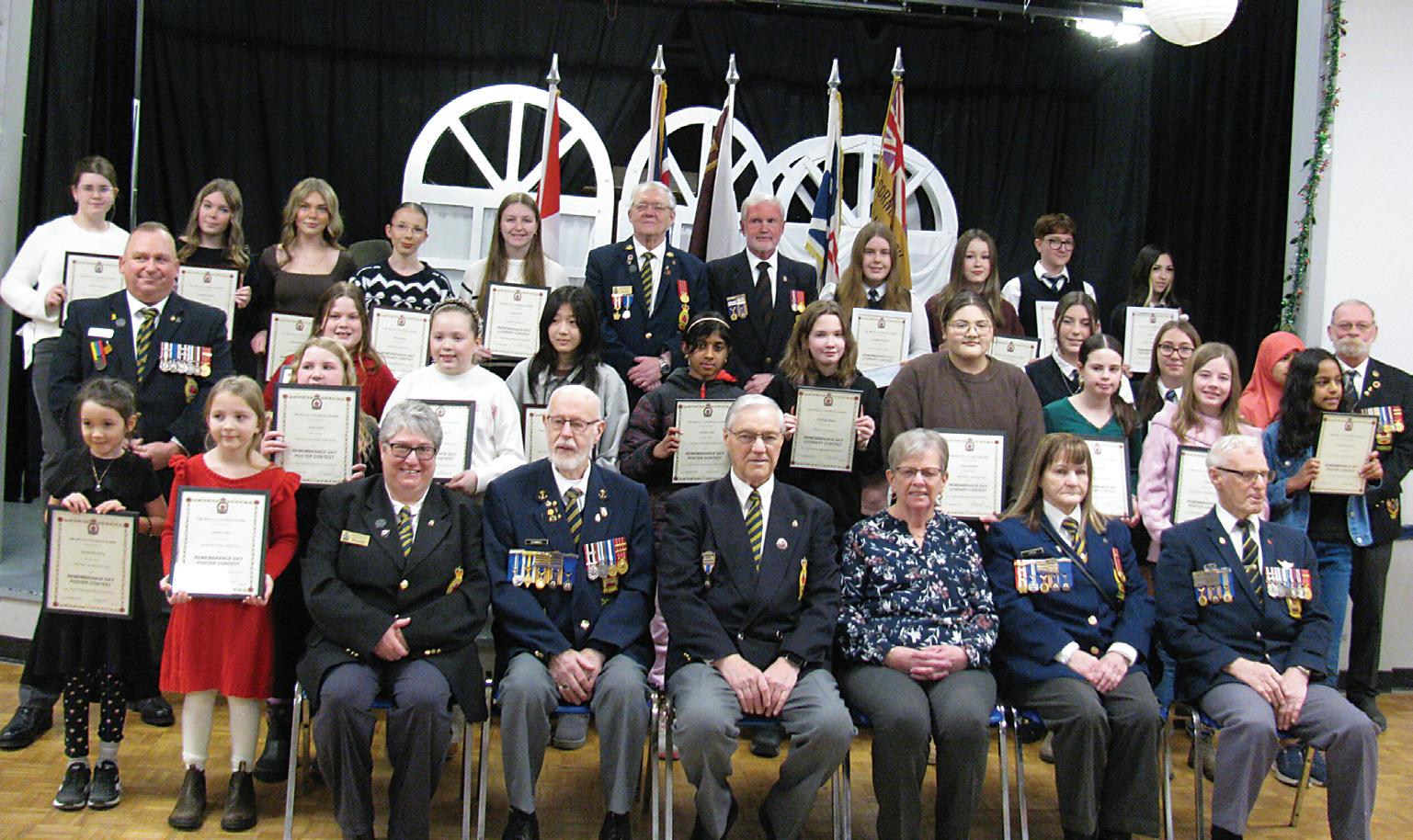
Members of Corner Brook, N.L., Branch present certificates to local National Youth Remembrance Contests winners.
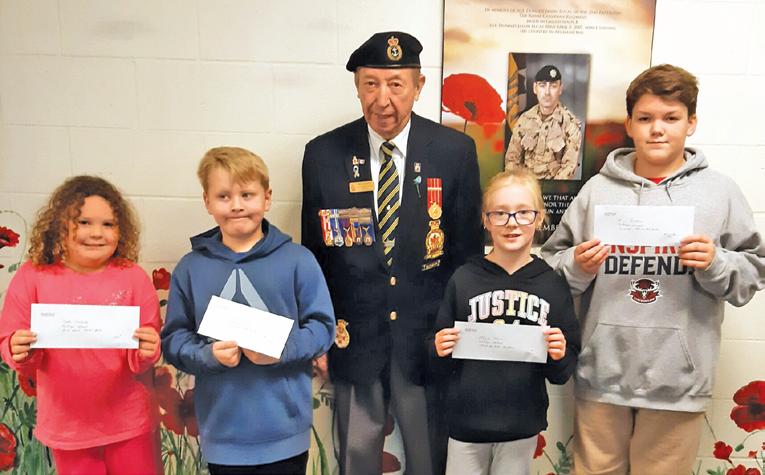
Past President Melvin Heath of Mount Pearl Park-Glendale Branch in Mount Pearl, N.L., presents certificates to National Youth Remembrance Contests winners from Octagon Pond Elementary.
Lino Di Julio of Ruck 2 Remember presents $94,500 to Ontario Command, represented by Ontario Command President Lynn McLellan in support of the Legion’s Leave the Streets Behind campaign.

President Calvin Smith (left), treasurer June King (second from right) and members of Mount Pearl Park-Glendale Branch in Mount Pearl, N.L., present $500 to the Salvation Army, represented by Janelle Colbourne.
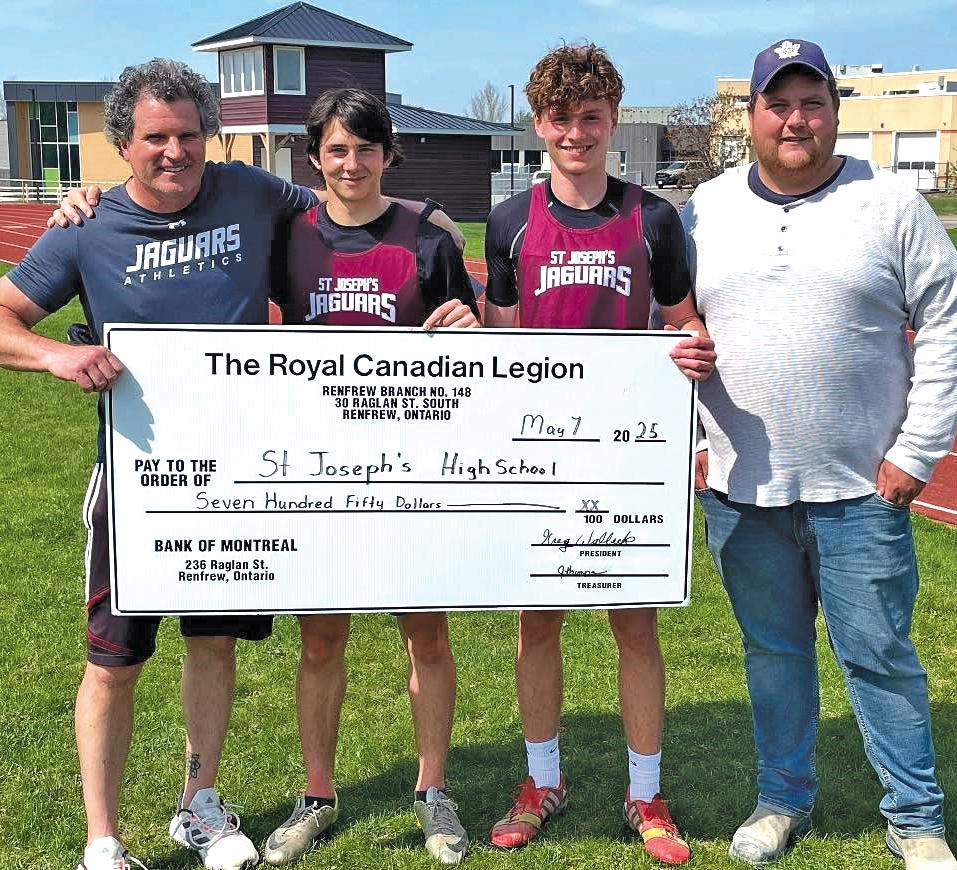
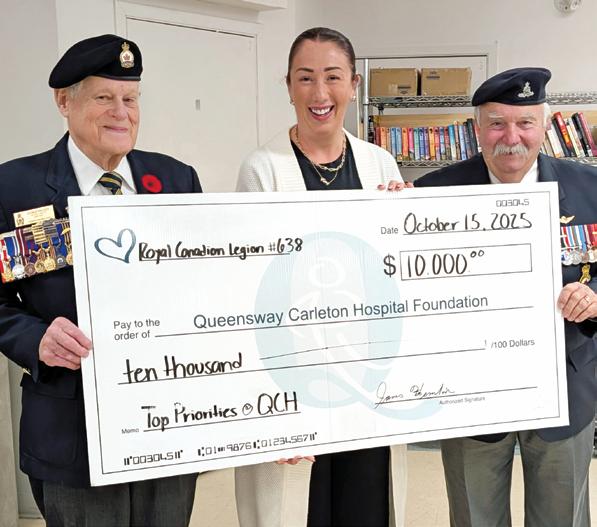
George Pollock and President Jim Hemlin of Kanata, Ont., Branch present $10,000 to the Queensway Carleton Hospital Foundation, represented by Katie King.
WALTER ARKSEY
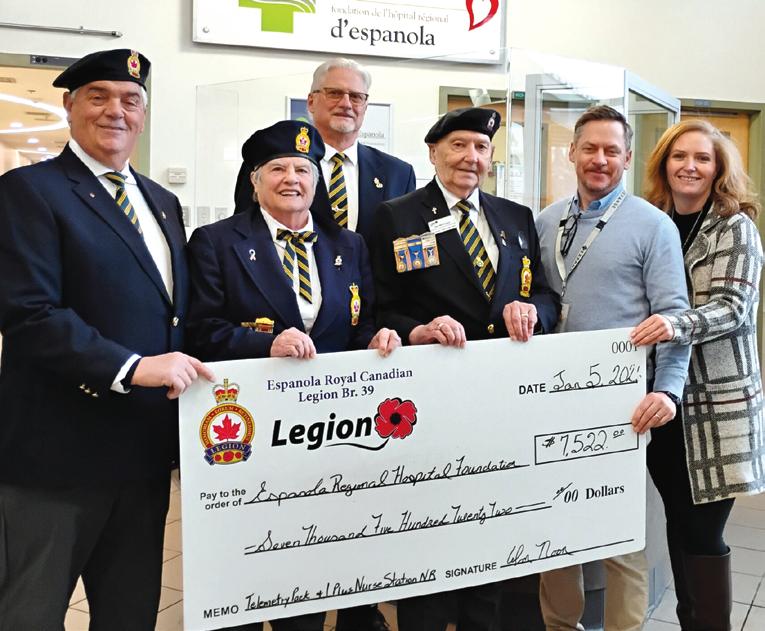
President Bill Noon, Zone H-3 L.A.
Commander Debbie Halverson, Denis Paradis and Zone H-3 Commander and Past President Gary MacPherson of Espanola, Ont., Branch present $7,522 to the Espanola Regional Hospital Foundation, represented by Martin Lees and Marlo Desjardins.
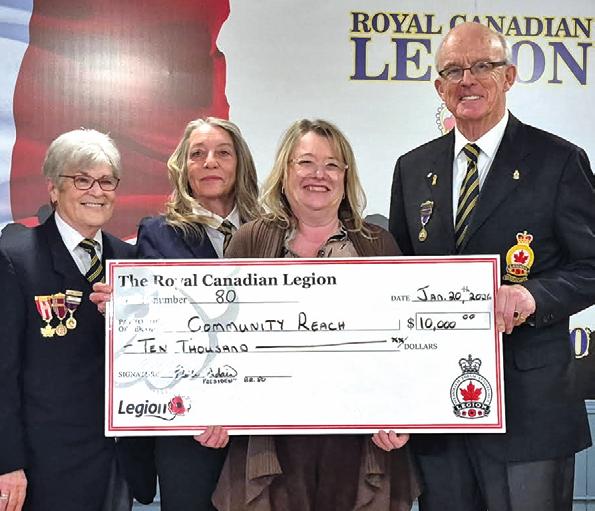
Second Vice Barb Mullen, President Dee Adair and Rene Hackstetter of Midland, Ont., Branch present $10,000 to Community Reach, represented by Deborah Clyne.
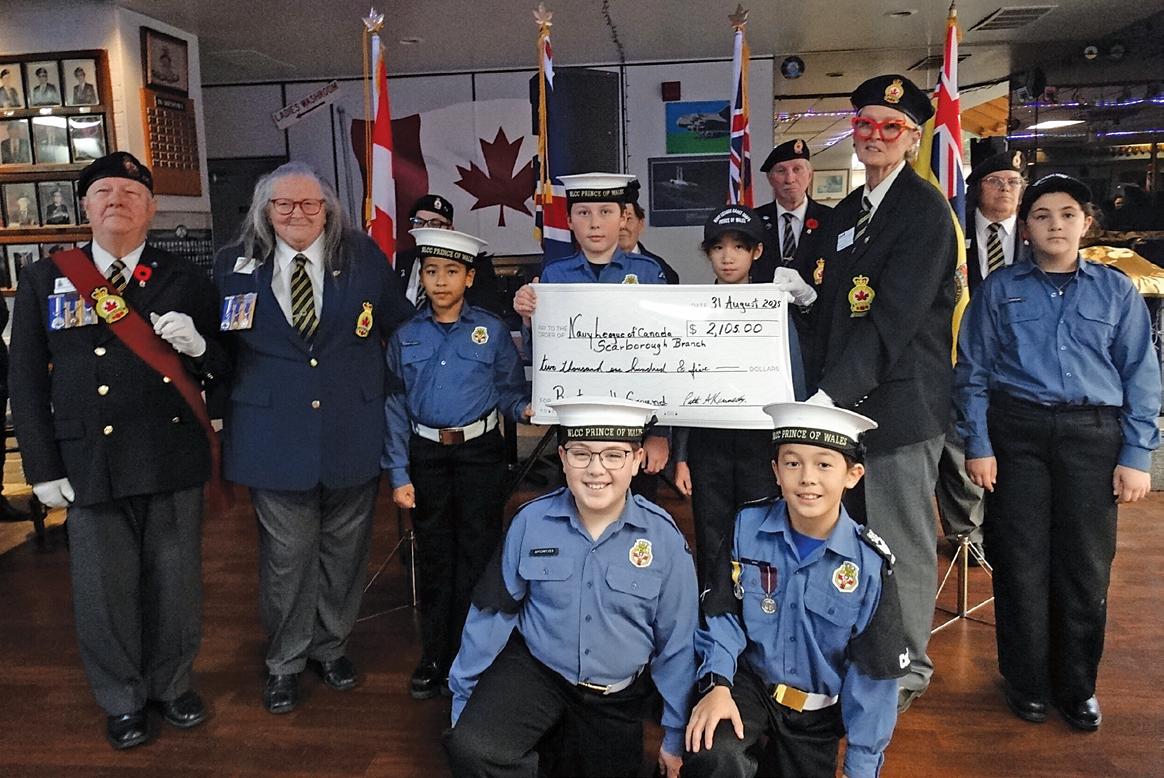
Patti Kennedy (right) and Sgt.-at-Arms Bob Dafoe of Centennial Branch in Scarborough, Ont., present $2,105 for new parade boots to the Prince of Wales Navy League cadet corps, represented by Lieut. (N) Mary Margaret Zulauf.
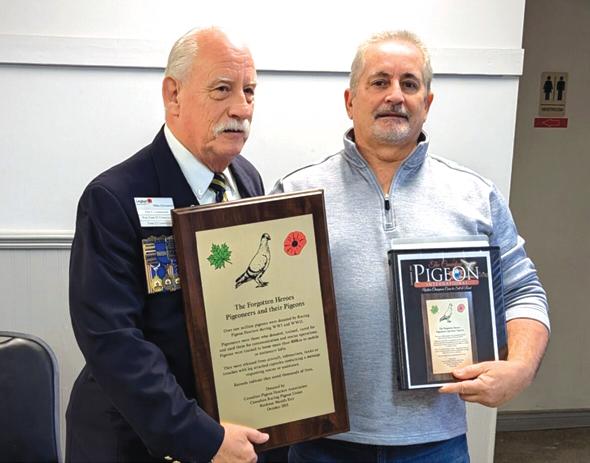
President Mike Giovanetti of Orville Hand Branch in Bradford, Ont., accepts a plaque honouring the service of homing pigeons in the First and Second world wars from Bruce Bidon, president of Canada’s Up North Combine.
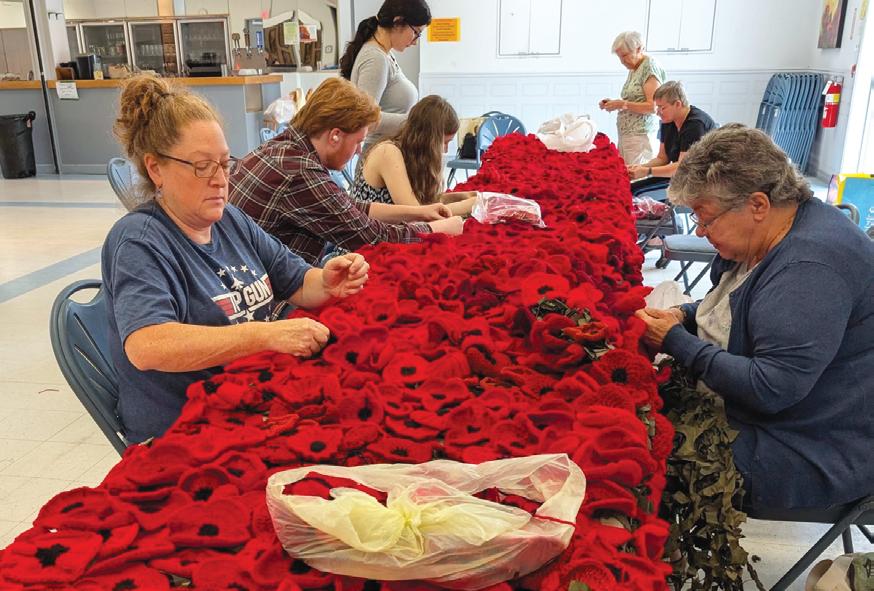
Orleans, Ont., Branch L.A. members and community volunteers crochet and tie together more than 11,000 poppies into a display to hang outside the branch.
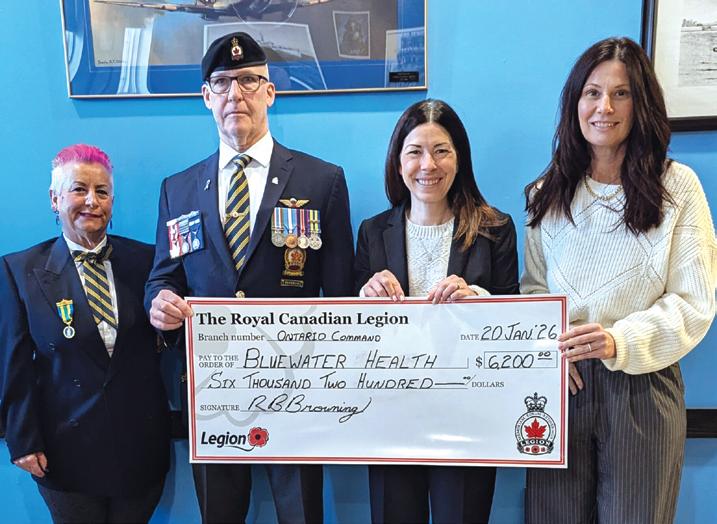
L.A. President Donna Moore and President Les Jones of Sarnia, Ont., Branch present $6,200 to Bluewater Health, represented by executive director Kathy Alexander and gift development officer Rebecca Brander.

members of Long

President Gerry Noel and L.A. President Dianna Bartlett of Rose City Branch in Welland, Ont., present $8,078 to Hospice Niagara’s Walker House, represented by Lorraine Wentz, Frances DeLima, Emma Visca, Louise Facca and Ahmad Khan.
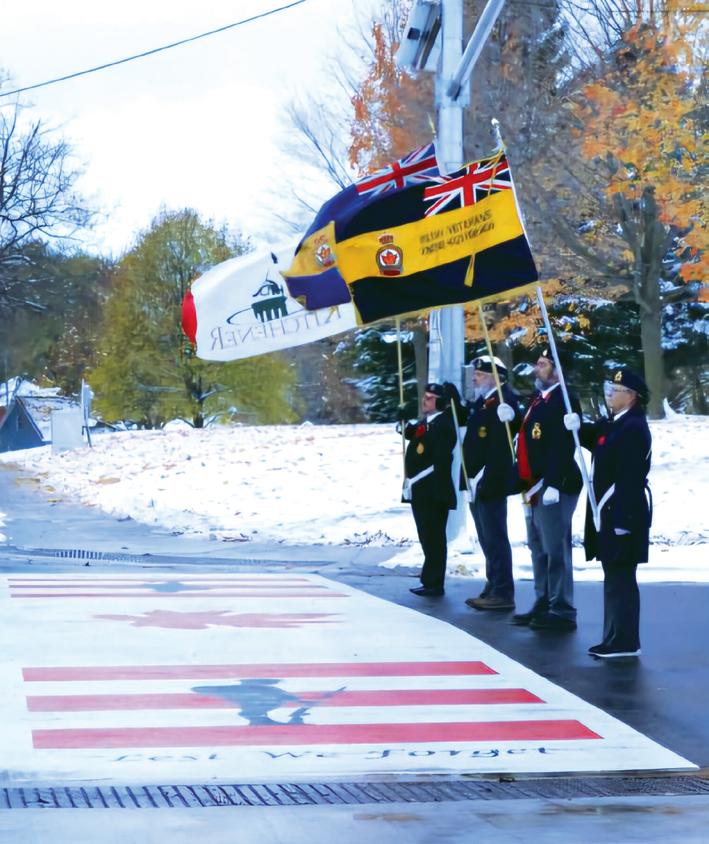
Members of Fred Gies Branch in Kitchener, Ont., unveil the new veterans’ crosswalk near the Kitchener Memorial Auditorium.
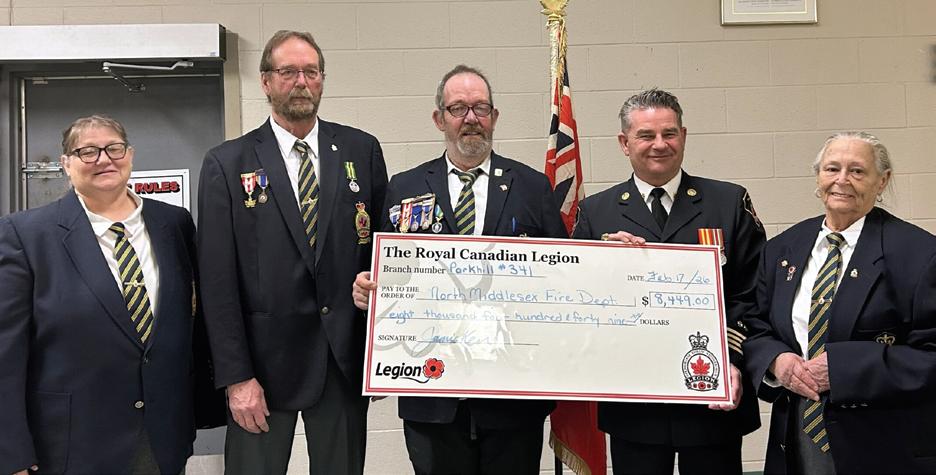
Leona Munro, Vice-President George Pender, President Jamie Kerr and Nancy Ferguson Timmermans of Parkhill, Ont., Branch present $8,449 to the North Middlesex Fire Department, represented by Fire Chief Scott Jones.
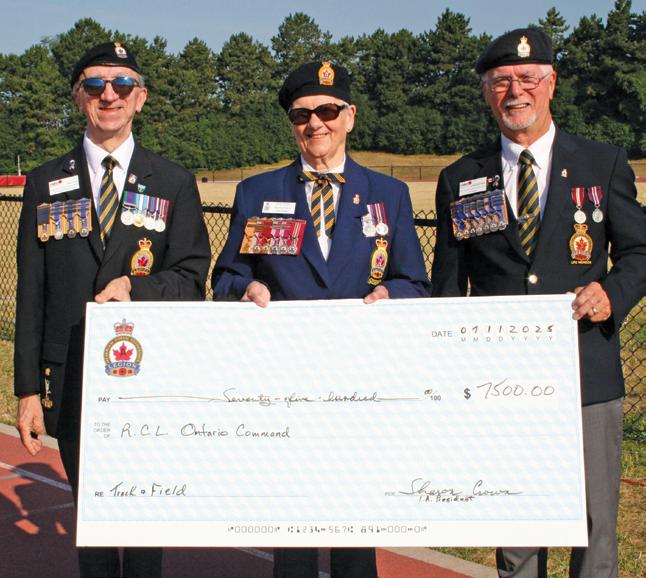
Ontario Command L.A. President Sharon Crown presents $7,500 to Ontario Command Track and Field program, represented by John Crook and Ontario Command President Lynn McLellan.
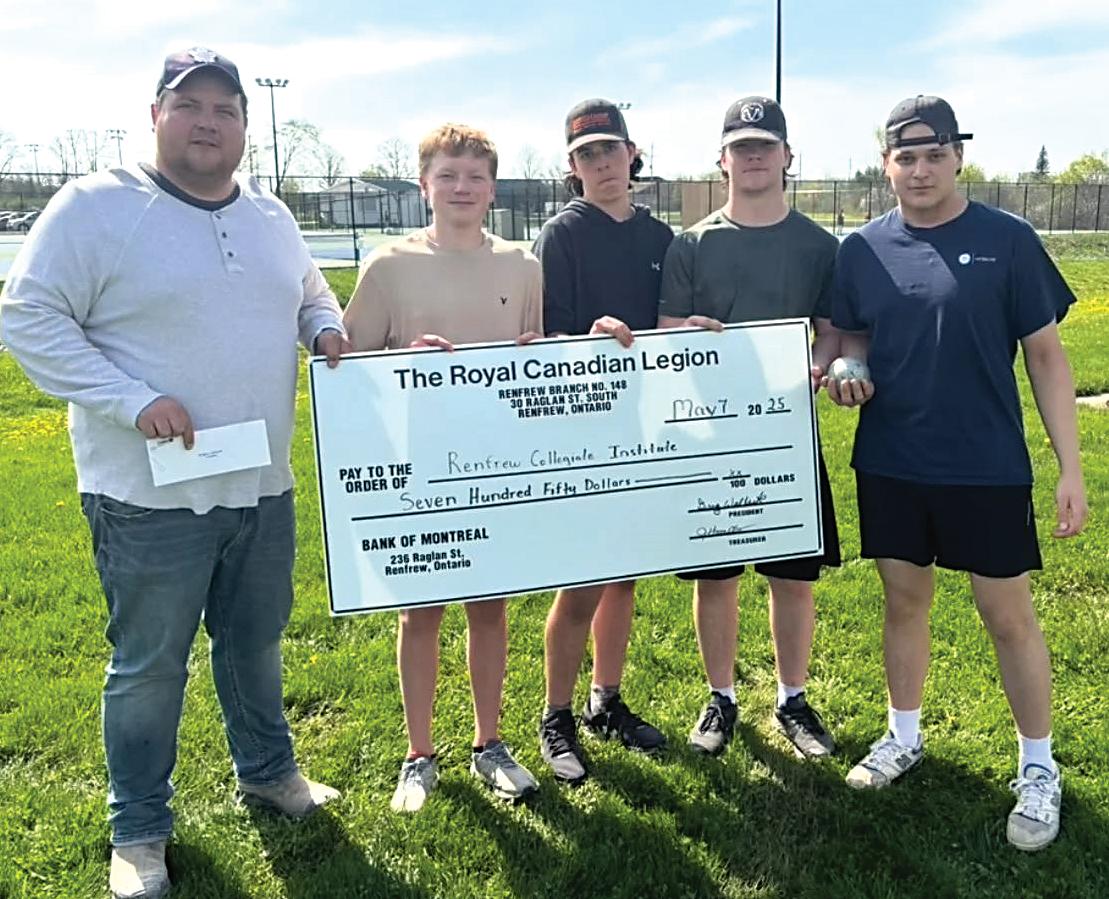
Brady Enright
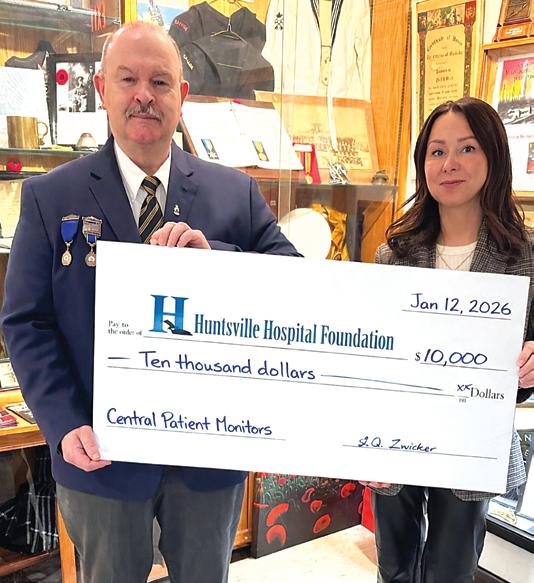
President Kevin Stroud of Huntsville, Ont., Branch presents $10,000 to the Huntsville Hospital Foundation, represented by Natasha Nieder.

Vice
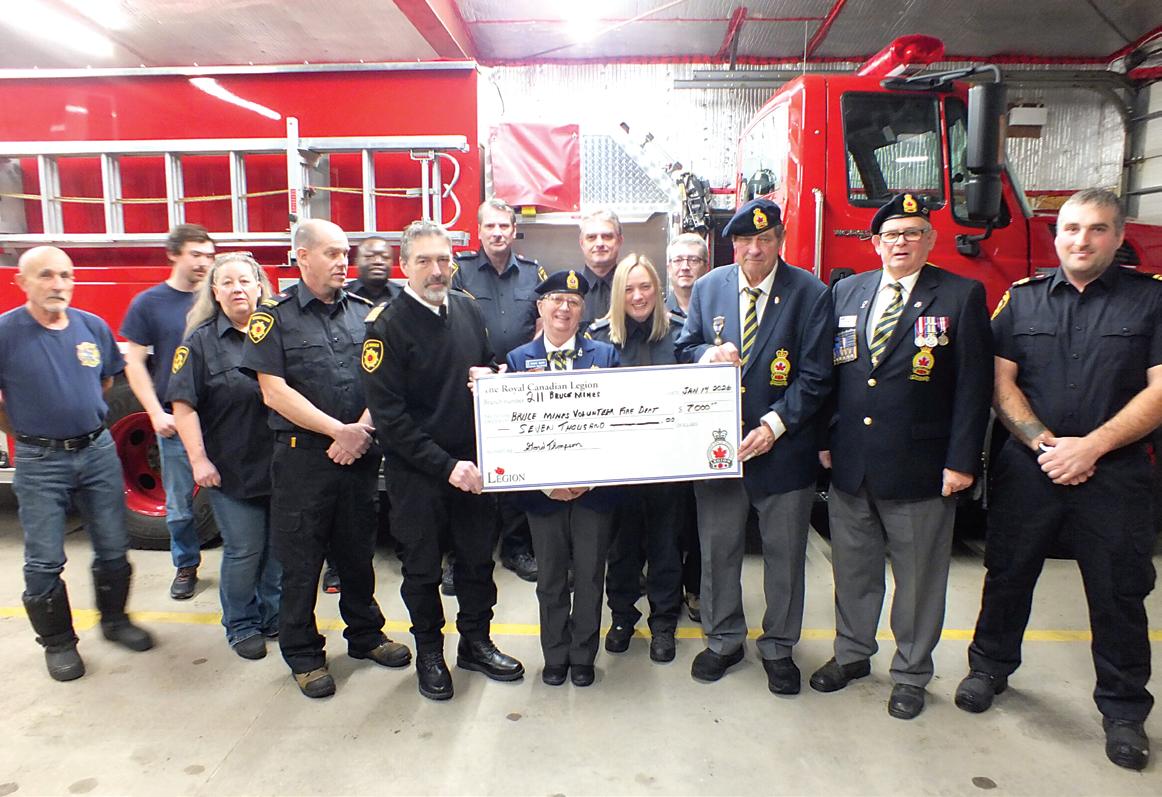
Zone H L.A. Commander Debbie Magee, President Gord Thompson of Bruce Mines, Ont., Branch and John Lewis present $7,000 to the Bruce Mines Fire Department.

President Heather Poliquin of Barry’s Bay, Ont., Branch presents $8,000 to the St. Francis Valley Healthcare Foundation.
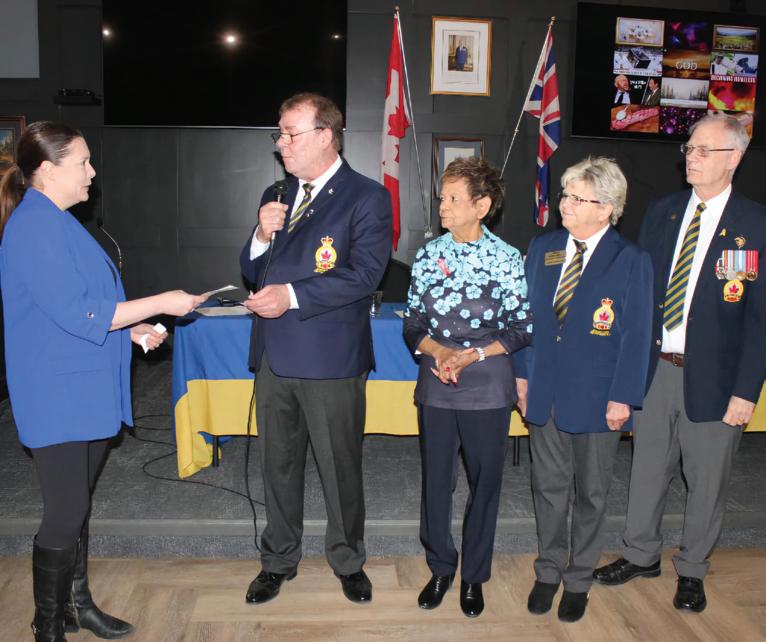
President Carson Duncan, Irene Stevens, Second Vice Penny Stamou and First Vice David Morrison of Highland Creek Branch in Scarborough, Ont., present $2,500 to Scarborough Women’s Centre, represented by president Erin Ritchie.
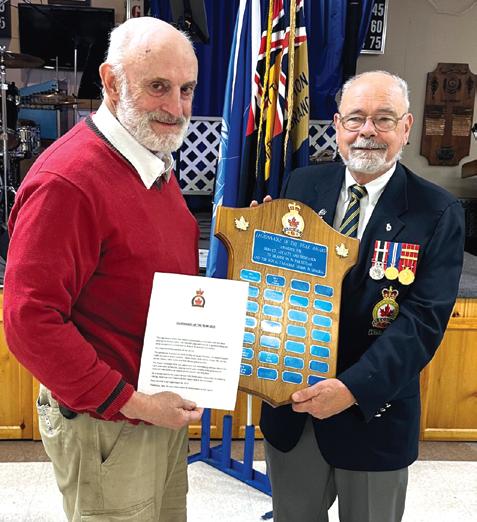
President Bruce Irvine of Smiths Falls, Ont., Branch presents Peter Jerome with the Legionnaire of the Year award.
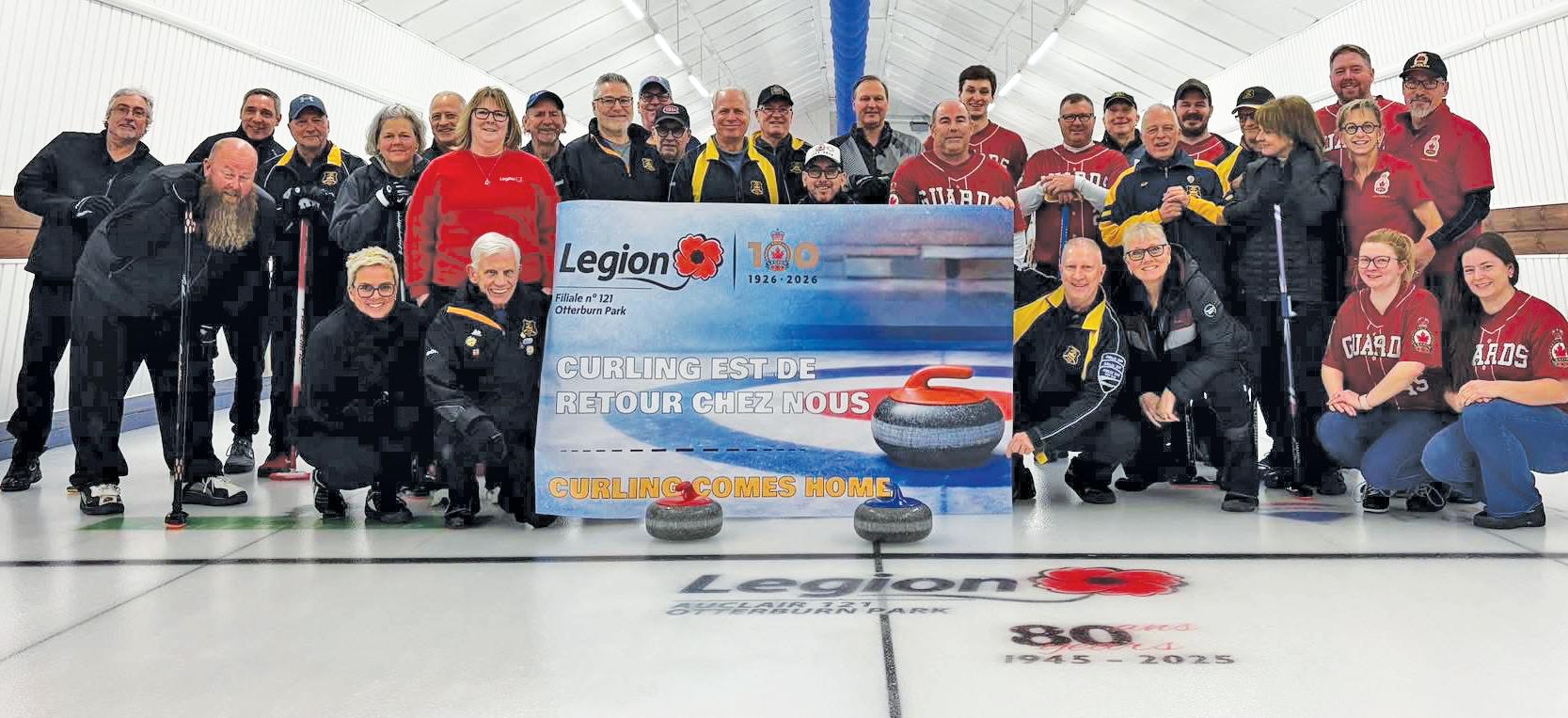
Auclair Branch in Otterburn Park, Que., hosts a bonspiel to celebrate the Legion’s centenary, with members from Hudson, Que., Branch, Dion Branch in Beloeil, Que., and United Branch in North Hatley, Que., attending.
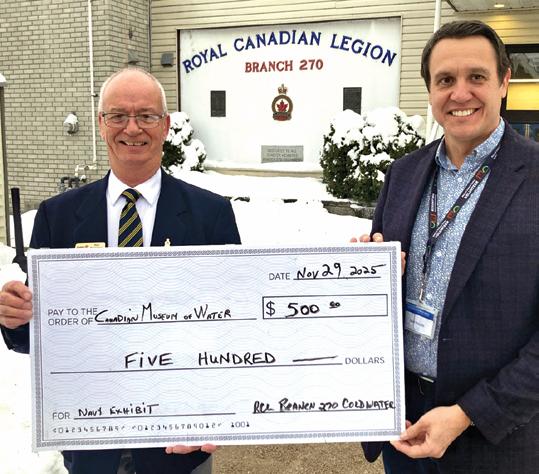
President Kari Malmström of Coldwater, Ont., Branch presents $500 to the Canadian Museum of Water, represented by executive director Daniel Travers.
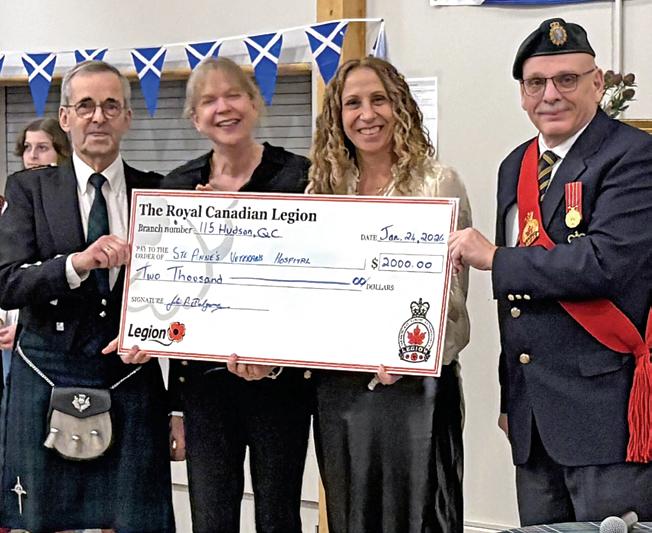
John Dalgarno and Sgt.-at-Arms Robin Pelletier of Hudson, Que., Branch present $2,000 to Ste. Anne’s Hospital, represented by Eileen McDonagh and Anna Teresa Audi.
Brothers David and John Yeo of Kingston Branch in New Haven, P.E.I., were presented with Quilts of Valour by representative Debbie Reid.
President Gayle Mueller of George Pearkes VC Branch in Summerside, P.E.I., presented $300 to the Rolling Barrage, represented by Stephen Vessey.
Sgt.-at-Arms Tommy Jagoe, President Graham Wiseman, First Vice Danny Glendenning and Michael White of Herman Good VC Branch in Bathurst, N.B., presented certificates to National Youth Remembrance Contests winners from Superior Middle School.
Members of St. Croix Branch in St. Stephen, N.B., presented certificates to National Youth Remembrance Contests winners from St. Stephen, Lawrence Station and Milltown Elementary schools.
NEWFOUNDLAND AND LABRADOR
President Calvin Smith, treasurer June King and members of Mount Pearl Park-Glendale Branch in Mount Pearl, N.L., presented $500 to the Society of Saint-Vincent de Paul, represented by Sandra Millmore.
First Vice David Joyce of Lynn Valley Branch in North Vancouver, B.C., presented $1,500 to the Parkgate Community Services Society, represented by manager Holly Koda.
ONTARIO
As part of Ontario Command's Operation Service Dog, Philip Ralph of Wounded Warriors Canada and Ron Goebel of Ontario Command presented John Parks with the initiative's 100th service dog, Pauly.
Chad Buell of Co-operators presented $5,000 to the Ontario Command Track and Field program, represented by Ontario Command President Lynn McLellan.
Send your photos and news of The Royal Canadian Legion in action in your community to your Command Correspondent. Each branch and ladies auxiliary is entitled to two photos in an issue. Any additional items will be published as news only. Material should be sent as soon as possible after an event. We do not accept material that will be more than a year old when published, or photos that are out of focus or lack contrast. The Command Correspondents are:
BRITISH COLUMBIA/YUKON: Lindsay Petrie, 503 - 17665 66A Ave., Surrey, BC V3S 2A7, snapshots@legionbcyukon.ca
ALBERTA–NORTHWEST TERRITORIES: Andrea Legaspi, 2020 – 15 Street NW Calgary, AB T2M 3N8, abnwtsubmissions@abnwtlegion.com
SASKATCHEWAN: Tara Brown, 2267 Albert St., Regina, SK S4P 2V5, admin@sasklegion.ca
MANITOBA: George Romick, 320 Admiral Court, Thunder Bay, ON P7A 8B5, romickg@tbaytel.net
NORTHWESTERN ONTARIO: George Romick, 320 Admiral Court, Thunder Bay, ON P7A 8B5, romickg@tbaytel.net
ONTARIO: Julie Stephens, 2 Malibu Lane, Fenelon Falls, ON K0M 1N0, juliestephenslegion25@gmail.com
QUEBEC: Ron Kappert, 105-2727 rue St. Patrick, Montreal, QC H3K 0A8, PR_RP@qc.legion.ca
NEW BRUNSWICK: Alissa Eisan, Box 183, Moncton STN Main, NB E1C 8K9, nblegionphotos@gmail.com
NOVA SCOTIA/NUNAVUT: Mary Phillips, 319 East Broadway, South Bar, NS B1N 3J9, maryp7910@gmail.com
PRINCE EDWARD ISLAND: John Yeo, 657 Rte. 19, Meadow Bank, PE C0E 1H1, islander657@yahoo.ca
NEWFOUNDLAND AND LABRADOR: Brenda Slaney, Box 5745, St. John’s, NL A1C 5X3, bslaney@nfld.net
DOMINION COMMAND ZONES: EASTERN U.S. ZONE, Gord Bennett, 803-190 Cedar St., Cambridge, ON N1S 1W5, Captglbcd@aol.com; WESTERN U.S. ZONE, Douglas Lock, 1531 11th St., Manhattan Beach, CA 90266, douglock@fastmail.com
Submissions for the Honours and Awards page (Palm Leaf, MSM, MSA and Life Membership) should be sent directly to Legion Magazine, 86 Aird Place, Kanata, ON K2L 0A1 or branchnews@legion.ca.
DIGITAL PHOTOS—Photos submitted to Command Correspondents electronically must have a minimum width of 1,350 pixels, or 4.5 inches. Final resolution must be 300 dots per inch or greater. As a rough guideline, colour JPEGs would be between 0.5 megabytes (MB) and 1 MB.
PHOTO PRINTS—Glossy prints from a photofinishing lab are best because they do not contain the dot pattern that some printers produce. If possible, please submit digital photos electronically.
FRENCH INSERT—To receive a French insert of Legion Magazine content, please contact MagazineSubscriptions@legion.ca or call 613-591-3335.



ROBERT W. BERG
New Hamburg Br., Ont.
ALBERTA-NORTHWEST TERRITORIES
GABBY COLBORNE
Fairview Br.
BRITISH COLUMBIA/YUKON
GREG HILL
Trail Br.
MANITOBA-NORTHWESTERN ONTARIO
BOB MANNS
Kakabeka Falls Br., Ont.
NOVA SCOTIA/NUNAVUT
CYRILLE LeBLANC
Wedgeport Br.
ONTARIO
GERRY EICHLER
New Hamburg Br.
DOREEN GUNSON
Sunset Post Br., Victoria Harbour
DENIS LADOUCER
Sunset Post Br., Victoria Harbour
LINDA PEARSON
Sunset Post Br., Victoria Harbour
FLORA COCHRAN
Sunset Post Br., Victoria Harbour


ESSEX SCOTTISH REGIMENT—Seeking residential, battalion and company-level photographs from 1940-1944 with a specific desire to professionally preserve panoramic shots. Also seeking Larry McIntosh of the same regiment. Contact Tom McIntosh at tdmcintosh97@gmail.com or (519) 671-0848.
FACES OF SCHOONSELHOF —Seeking photographs of Canadian soldiers buried in Schoonselhof Cemetery in Belgium. Please contact Niko Van Kerckhoven at facesofschoonselhof.weebly.com/contact.html.
QUINLAN, THOMAS —Seeking information about Second World War veteran and Legion member Thomas Quinlan (1902-1948) of St. Catharines, Ont. Contact Anne Murtough at amurto@gmx.co.uk.
Luxurious 100% silk scarf
A soft palette of leaf greens, lovely lavenders, cornflower and sea blues bring depth to this beautiful 100% silk scarf. Designed to complement many colours, outfit options are nearly endless with this elegant accessory. Hand-painted in-house by Diana Coote, a Canadian artist. Pair it with a scarf ring for a multitude of easy tying possibilities.


By Alex Bowers
How a not-for-profit is helping veterans transition into construction
For Canadian Armed Forces veteran Justin Curtis, it would almost be a full-circle moment. The uniform was off after some eight years of service, but its weight—including his journey navigating posttraumatic stress—remained.
Now, he walked civvy street once again. The question was, as it so often is, what next?
Yet despite the all-toocommon barriers faced by innumerable personnel transitioning out of the military,
Curtis found his personal passage “seamless,” or, at least, it became so after he decided to work with his hands.
His transition was guided by Helmets to Hardhats (H2H), a nationwide not-for-profit organization helping community members—veterans, reservists, senior cadets, and their families—find rewarding second careers in unionized skilled trades.
An insightful discussion with a group liaison officer set Curtis’ plan in motion.
Dustin Hare (centre), a noncommissioned member in the Royal Canadian Naval Reserves and the business manager of the Carpenters Union Local 1946, gives H2H outreach specialists Normand Trepanier (right) and Pat Rizzo (left) a tour of the London, Ont., facility this past summer.
Within two days, he was in constructive talks with Halifax union representatives. It wasn’t long until he was in construction itself, “working on a project for the Canadian Armed Forces, the navy out here, for building caissons.”
It was, noted the former infanteer, an “amazing place to start.”
Established in Canada in 2012 after success in the U.S., the largely veteran-led H2H operates on a recognition of widely transferable skills and traits between the military and building trades.
“We hear a lot from employers [about] those characteristics,” said Sable Frey, the organization’s director of communications. “Things like having a strong work ethic, showing up on time—usually even early—to their jobs, and especially things like teamwork and leadership, too.
“[Veterans] are very honest and open,” she continued, “and just have a willingness to learn, wanting to grow themselves.”
The results are multifold. Partly through H2H’s role facilitating such personal—and, ultimately,
infrastructural—development, “It also strengthens the unionized construction industry” at a time when “there have been a few reports from BuildForce Canada…that there’s going to be a big lack of tradespeople in the upcoming decade or so,” Frey added.
Where registrants want to go, and what they want to do, is a decision only those transitioning can truly make. Nevertheless, with Canada boasting 14 building trades unions representing more than 60 related occupations, according to the H2H website, the organization strives to expedite the process through employment counselling, resumé assistance and referrals.
“Our outreach advisors…can provide some insights about where [veterans’] skills from the military might line up well in the skilled trades,” said Frey. “Or, some people might want to do something totally different.”
Individuals seeking change outside their skill set can be accommodated through training programs and apprenticeships to achieve journeyman qualifications across all related occupations. Those already wielding the appropriate tools are instead able to pursue career placement opportunities that have passed H2H’s approval process, a procedure that ensures workplace fairness and stringent safety practices.
Along with the acceptance of varying degrees of expertise, there is no time nor age limit for H2H registrants, all of whom, Frey asserted, receive personalized care regardless of rank or military occupation. Inclusivity and respect are two cornerstones cemented within the group’s foundation. And plans are well underway to expand its reach.
“[We’re] really focusing specifically on reaching out to women veterans and those in the 2SLGBTQIA+ community,”
“It’s not about forcing them to leave one role to come into another. If they’re thinking about transitioning, then we’re here for them.”
Frey explained. Inroads have also been made to raise awareness among other underrecognized groups, extending to former interpreters who worked alongside the CAF during the war in Afghanistan. Similar initiatives have been directed toward veterans experiencing homelessness.
In supporting veterans’ immediate relatives, meanwhile, the director of communications emphasized that “the family serves too, and they gain a lot of the skills, like dedication and persistence, that employers are looking for.”
H2H’s work with CAF reservists is equally important, “which is great because depending on the class they’re in, they [might] need employment in addition to their reserve experience,” noted Frey. “When they sign up with Helmets to Hardhats, they know that they’re going to find employment where their employers understand that they’re in the reserves, that they may be taken away from their skilled trades jobs to go out on a different mission.”
One particular reservist’s testimonial resonated with the H2H teamster when they said: “They can build what they protect and protect what they build.”
As of late 2025, Helmets to Hardhats had registered 344 veterans, 30 dependents, and four senior cadets— alongside 51 employers— during the course of the year, though Frey acknowledged that “people will register and continue looking for employment in other areas, too.”
Concurrently, against the background of ongoing military recruit retention issues, Frey addressed how two seemingly contrasting visions for the futures of serving personnel can be reconciled.
“We’ve seen some really great advancements in the Canadian Armed Forces,” she said, “from becoming more inclusive to things like increasing salary. Obviously, our program needs veterans and those military members to transition, but for us, it’s really that we’re ready when they are.
“It’s not about forcing them to leave one role to come into another. If they’re thinking about transitioning, then we’re here for them. If they’ve already left [the military] and are not finding much satisfaction in other civilian roles, then we’re here for them.”
The organization works closely with the CAF, regularly giving presentations at Second Career Assistance Network seminars near military facilities across Canada. Such a robust relationship has been replicated with the unions and their affiliated contractors, “because they provide the things that the veterans are looking for when they leave the military, like stable pay, security, the hours are more standard, but also flexibility and understanding.”
Frey, however, recognizes that it goes beyond the wages, benefits and pension plans: “It’s really about finding that sense of purpose and a sense of identity…[because] you’re still committed to your country; you’re just building your country in a different way.”
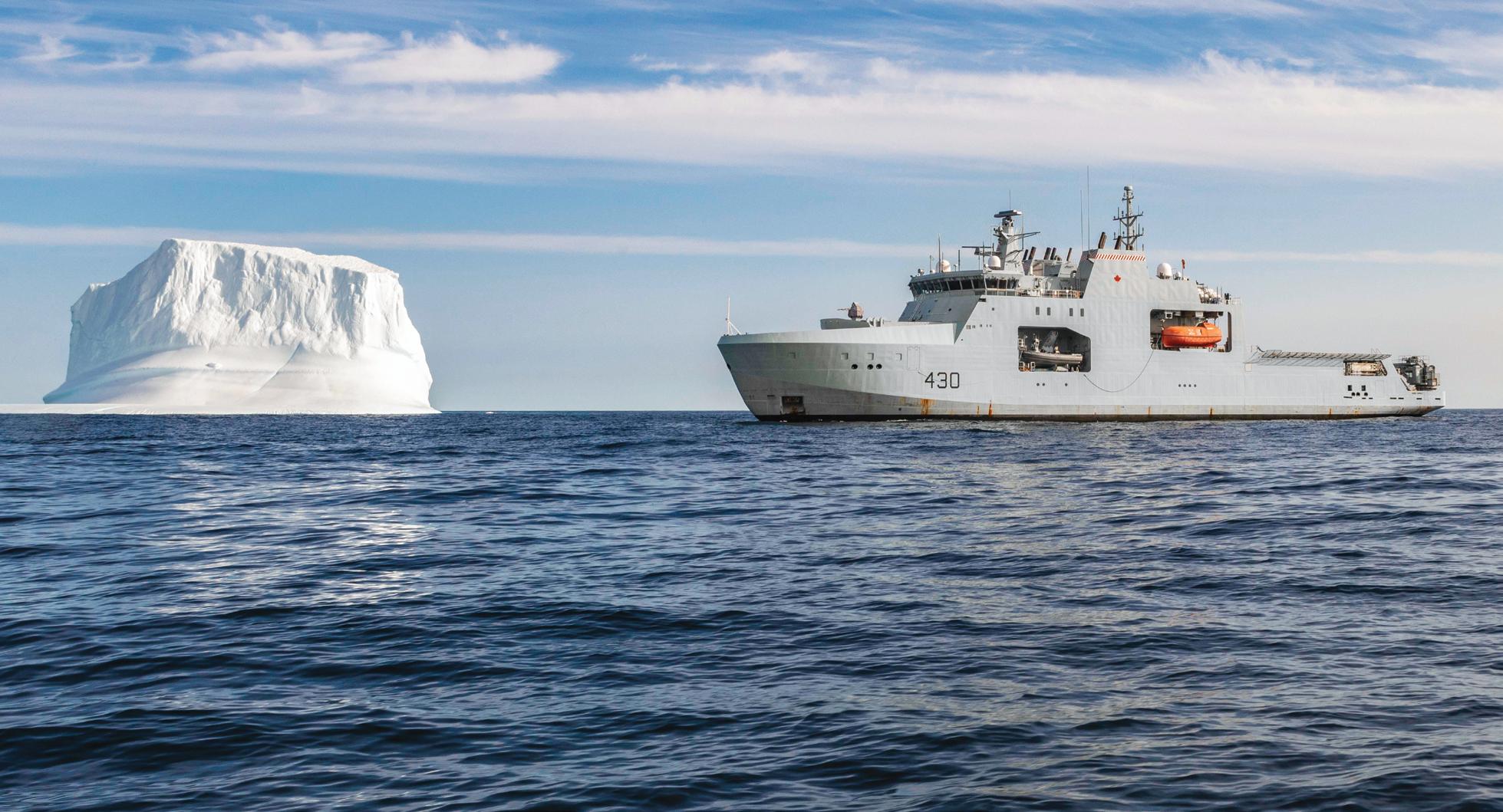
By J.L. Granatstein
What the new U.S. National Security Strategy means for
Canada’s sovereignty really threatened by the United States? The release of the Trump administration’s National Security Strategy [NSS] on Dec. 5, 2025, created a firestorm of fear and criticism in the U.S., Europe and the Western Hemisphere, not least in Canada. Editorials and media commentary offered their takes and there seemed to be almost no one in Canada who found anything to like about what the NSS meant for the country. The Russian government indicated, however, that it was pleased with the document’s views on the world, which, said a Kremlin
spokesperson, are “largely consistent with our vision.”
Russian President Vladimir Putin should be very happy. The NSS characterized Russia and China as superpowers, each with its own sphere of influence. It included nothing critical about Moscow’s invasion of Ukraine or its related crimes against humanity. Instead, Kyiv was criticized for blocking “conditions of strategic stability across the Eurasian landmass….” NATO, the strategy stated, should stop expanding—meaning that Ukraine could never be allowed to join the alliance.
Further, it stated: “it is more than plausible that within a few decades at the latest, certain NATO members will become majority non-European. As such, it is an open question whether they will view their place in the world, or their alliance with the United States, in the same way as those who signed the NATO charter.”
If that sounds racist, it’s because it is. This statement and others from the document are critical of the European Union and praise anti-democratic, far-right parties, essentially calling for regime change and an end to immigration. This infuriated some European leaders who realized the U.S. has become an enemy of liberal democracy. Then there was the document’s reference to the “‘Trump Corollary’ to the Monroe Doctrine.” In 1823, President James Monroe declared, among other items, that European powers should no longer colonize the Western Hemisphere
nor interfere in its systems. It noted that any such attempts would be viewed as hostile. At the time, the U.S. had little ability to enforce the position. But current President Donald Trump does. And the NSS makes clear that his administration intends to do so.
Trump’s NSS document says, “The United States must be preeminent in the Western Hemisphere as a condition of [its] security and prosperity.” In a December 2025 editorial, The Globe and Mail interpreted this vision of countries of the region, including Canada, as “vassal states that exist to serve America’s interests.”
The White House will, says the NSS, “identify strategic acquisition and investment opportunities for American companies in the region and present these opportunities for assessment by every U.S. government financing program….” Any agreements, “especially with those countries that depend on us most and therefore over which we have the most leverage, must be sole-source contracts for our companies,” it continued, and the U.S. “should make every effort to push out foreign companies that build infrastructure in the region.”
The U.S. plan is to “reward and encourage the region’s governments, political parties, and movements broadly aligned with our principles and strategy.” As The Globe and Mail put it, “This sounds distinctly like foreign interference.…”
Trump’s repeated musings about using economic coercion to make Canada the 51st state lend credence to this concern. He also imposed heavy tariffs on Canadian industry in 2025, and the Canada-U.S.Mexico free trade agreement is up for renewal this year. The message of the NSS is clear: buy from the U.S.—or else.
But there’s more. The document also makes plain that foreign investment and trade in strategic sectors, such as rare-earth elements and communication networks and infrastructure, are threats to U.S. security. Canada is working to diversify trade with Europe and southeast Asia, including by purchasing military and naval equipment, which may be viewed unfavourably by the Trump administration. Indeed, the NSS is explicit that it wants “to ensure continued access to key strategic locations.” This undoubtedly includes the Panama Canal. But might it also include Canada’s Northwest Passage? The sea lane connecting the Pacific and Atlantic oceans passes through the country’s Arctic region and its internal waters. The U.S., however, argues it’s an international strait and has never recognized Canadian claims to it. Still, in the 1988 Canada-U.S. Arctic Cooperation Agreement, the U.S. pledged to secure Ottawa’s consent before sending its icebreakers through the route.
The NSS, though, indicates the U.S. “must reconsider [its] military presence in the Western Hemisphere,” including by “establishing or expanding access in strategically important locations.” Does this imply that that 1988 Arctic accord is no longer relevant? Might the Trump administration view Canadian “consent” to access the Northwest Passage as interfering with U.S. security? It seems Canada is being viewed as a banana republic. What can the country do now? Canadians must think hard about their national security. The nation needs to strengthen the Canadian Armed Forces and its defences in and over the Arctic to make it difficult for President
The Globe and Mail interpreted this vision of countries of the region, including Canada, as “ vassal states that exist to serve America’s interests.”
Trump to claim that a weakness there forces him to act to protect U.S. security.
Given the stance outlined in the NSS, Canada and its NATO allies, along with South Korea, Japan and Australia, should quickly intensify defence co-operation, particularly on procurement, cyber networks and infrastructure. They should also continue to support Ukraine’s fight against Moscow’s aggression.
Mark Carney’s government has been addressing these issues quickly, but it must do more. NATO may no longer be important to a U.S. government that seemingly views Putin’s Russia as a country with which it shares many values and interests. But the alliance remains valuable to Canada and the country needs to co-operate with its European allies, as well as with its friends in the Western Hemisphere, in resisting U.S. interference to its sovereignty, territory, governments and institutions.
It’s clear Canada is being threatened by Trump’s United States. Canadians are certain to face difficulties never before contemplated. Perhaps this might change when Trump leaves office, but there’s no doubt that trust has been lost and Canada’s relations with Washington have been altered for the foreseeable future.
By Marc Milner
A call for a Canadian national memorial in Normandy
The 1944 Normandy Campaign was a turning point in the Second World War. Everything cherished about Europe since 1945, not least its peaceful development and prosperity, depended on its success. Europeans understand this intuitively. The U.S. recognized it in 1956 with a national memorial at the Normandy American Cemetery near Omaha Beach, while Britain completed a national memorial to its role in the campaign at Ver-sur-Mer in 2021.
The only major Allied participant not to acknowledge its part with a national memorial is Canada. It’s time it did.
Sure, there are tributes to Canada’s participation scattered across lower Normandy. Two cemeteries, one at Bény-sur-Mer near the coast and another at Brettevillesur-Laize, hold the remains of predominantly Canadian dead, more than 5,000 killed in action. The sites, however, are maintained by the Commonwealth War Graves Commission and, apart from maple leaves on the headstones, they are largely indistinguishable from any other commission graveyard. And general recognitions of Canada’s role in the Allied assault have existed since the 1950s: regimental monuments
honour the contributions of some units in the campaign; many French towns and villages have small memorials acknowledging their liberators; and during the past 30 years, the Canadian Battlefields Foundation has also built some important monuments. Then there’s the largest and most prominent of similar such private initiatives, the Juno Beach Centre in Courseulles-sur-Mer.
Postwar, the expectation was that there would be a national memorial. After all, Canada had erected no less than eight national monuments after the Great War. Nothing like them exists in Normandy.
The traditional rationale for commemoration is the sheer cost of the campaign in lives. Of roughly 40 Allied divisions that fought in Normandy, only two were Canadian, but their losses were enormous. 3rd Canadian Infantry Division fought almost the entire campaign and had the highest casualty rate among Allied divisions. The second highest was 2nd Canadian Infantry Division.
But beyond that, Canada’s role was uniquely important. The task assigned to 3rd Division was monumental and First Canadian Army was critical in the propaganda
push that threatened the opening of a second front in France from 1941 onward. Conventional accounts detail the Canadians were to advance to the Caen-Bayeux highway at Carpiquet and Putot-enBessin astride the Mue River and hold. The assignment, however, was more than just staking out territory. General Erwin Rommel planned to launch a Panzer counterattack in the area, hoping to have four divisions there by May 1944.
So, 3rd Division went ashore as the most powerful Allied formation. In addition to its own three field artillery regiments and one anti-tank regiment, the Canadians commanded three more field regiments, a medium artillery regiment, and I British Corps’ heavy anti-tank regiment of towed and self-propelled 17-pounders. Four of the field regiments operated 105mm M7 self-propelled guns and all their command and observation post elements were mounted in Sherman tanks. It was also supported by a squadron of 90mm howitzers from the Royal Marine Armoured Assault Regiment and the three armoured regiments of 2nd Canadian Armoured Brigade. While not all this panoply got ashore on D-Day, what did proved enough. From June 7-10, formations of I SS Panzer Corps tried to drive the Canadians back. The fighting was close, intense and at times savage. But the Canadians didn’t budge.
Postwar, Hubert Meyer, chief of staff of 12th SS and later the division’s historian, wrote that the German failure was due to the courage and determination of the Canadians, “who were ready for defence and well equipped.” Years later, British historian Brigadier Michael Reynolds described the Canadian defence of
Bretteville and Norrey as “one of the finest small unit actions of the Second World War.”
Meanwhile, two Panzer divisions ordered to join the attack had been suddenly diverted to Pas-de-Calais. The reason? On June 9, the Germans accepted an Allied deception that a landing in that area, with First Canadian army at the heart of it, was imminent.
In a confidential postwar British government report, Roger Hesketh considered the diversion one of the critical moments of the Normandy Campaign. Had the additional Panzer divisions arrived when the landings were still consolidating, they might have tipped the balance. In reviewing material related to the operation, American historian Thomas L. Cubbage concluded that the false threat of an imminent landing in Pas-de-Calais, “Changed the course of history.”
Cubbage was, by all accounts, unaware that 3rd Canadian Infantry Division’s stalwart defence had already thwarted Rommel’s plans. But, accept Cubbage’s take and the fate of the decisive campaign of the war in the west was determined by 3rd Division and the “specially trained Canadian troops” poised to land in Pas-de-Calais. This may be the only time ever that Canada altered the course of global history. That alone warrants a national monument.
But the rationale for a national monument in Normandy goes well beyond the campaign’s first week ashore. The Canadians remained in the thick of the fighting throughout the invasion, usually against Germany’s elite SS Panzer forces. While some historians often lament the apparent futility of the Canadian capture of Carpiquet in early July or the seemingly
pointless operations on the slopes of Verrières Ridge later that month, they did matter.
The former, for instance, made the German hold on the key city of Caen untenable, and much of it was taken just a week later by a major Anglo-Canadian attack. The latter, meanwhile, bought the Americans time to prepare their own delayed offensive and prevented the Germans from shifting Panzer forces west to counter it. Canada paid dearly for that eventual U.S. success. II Canadian Corps suffered roughly 3,000 casualties, including about 1,000 dead. By the time II Canadian Corps reached Falaise on Aug. 17, it had suffered 100 more casualties per battalion on average than the British. But the Canadians plowed on into the Falaise gap where
the Dives between Trun and Chambois, the majority —it seems—between Saint-Lambert and Moisy. Concurrently, II SS Panzer Corps counterattacked from the east to maintain an escape route. The Poles fought with grim desperation, firing their machine guns until the barrels exploded. They were saved by a cordon of exploding shells fired by II Canadian Corps. On one occasion, when it looked like the Poles were about to be overrun by Panzers, fire from 5th Medium Regiment, Royal Canadian Artillery, virtually annihilated the German tanks.
The Polish heroism was honoured by a national monument at Hill 262 in 1994. The South Alberta Regiment erected a plaque at Saint-Lambert-surDives in 1992 to honour Major David Currie, who earned a Victoria Cross for his action,
This may be the only time ever that Canada altered the course of global history. That alone warrants a national monument.
the local German armies were being encircled. 1st Polish Armoured Division led the charge and the Canadians followed down the road to Trun, Saint-Lambert and Moisy to block the crossing points of the Dives River. No one else was willing to do so.
Allied ground forces commander General Bernard Montgomery—and most Anglo-American historians —declared the Falaise gap closed on Aug. 19 when Polish and American patrols met briefly in Chambois. But no one bothered to tell the Canadians, the Poles or the Germans the fight was over.
On Aug. 20-21, some 65,00075,000 Germans swept across
and the Canadian Battlefield Foundation built interpretive panels near Hill 117 overlooking the village. But there is no Canadian national monument.
In these troubled times, it seems appropriate to remind Canada’s European allies that the country has been there when they needed it. And if Cubbage is correct, Canada’s effort “changed the course of history.” That alone makes it long past time to honour the country’s role in Normandy with a national memorial.
Visit legionmagazine.com/ Normandy_Memorial for an extended version of this opinion piece.