


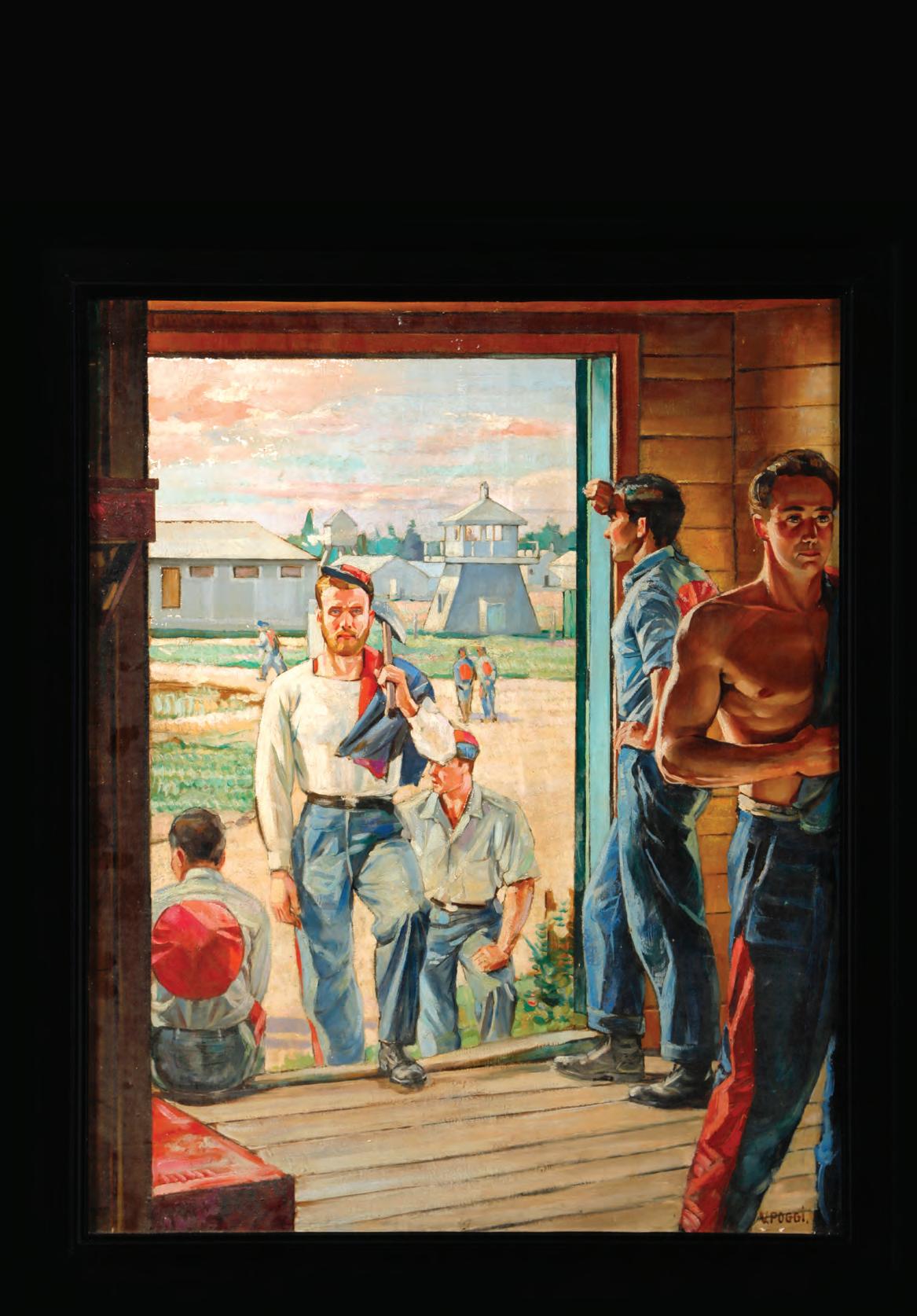
One of artist Vincent Poggi’s many depictions of Italian Canadians at the internment camp in Petawawa, Ont., during the Second World War.
See page 50
18 BOLTING FOR THE BALTIC
How a Canadian battalion’s mad dash to northern Germany at the end of the war stopped Soviet advances toward the West
By Ed Storey
24 LIBERATION!
Feted with parades and banquets, flowers and wine, the Canadian liberation of the Netherlands was a joyous time—though not far from the shadow of war
By Stephen J. Thorne
30 “WE ARE GRATEFUL TO THEM, BUT LET THEM GO HOME.”
Canadian forces nearly overstayed their welcome after liberating the Netherlands in 1945
By J.L. Granatstein
36 FLOOD FORCE
When domestic emergencies strike— such as the November 2021 B.C. floods—the Canadian military often comes to the rescue
By Stephen J. Thorne
46 OPERATION OVERFLOW
Canada’s military faced its first modern mission in response to a domestic natural disaster during the 1948 once-in-a-century flood in southern B.C.
By Hugh A. Halliday
50 VIVA MEMORIA
Reflections on the internment of Italian Canadians during the Second World War
By Tom MacGregor

PHOTO
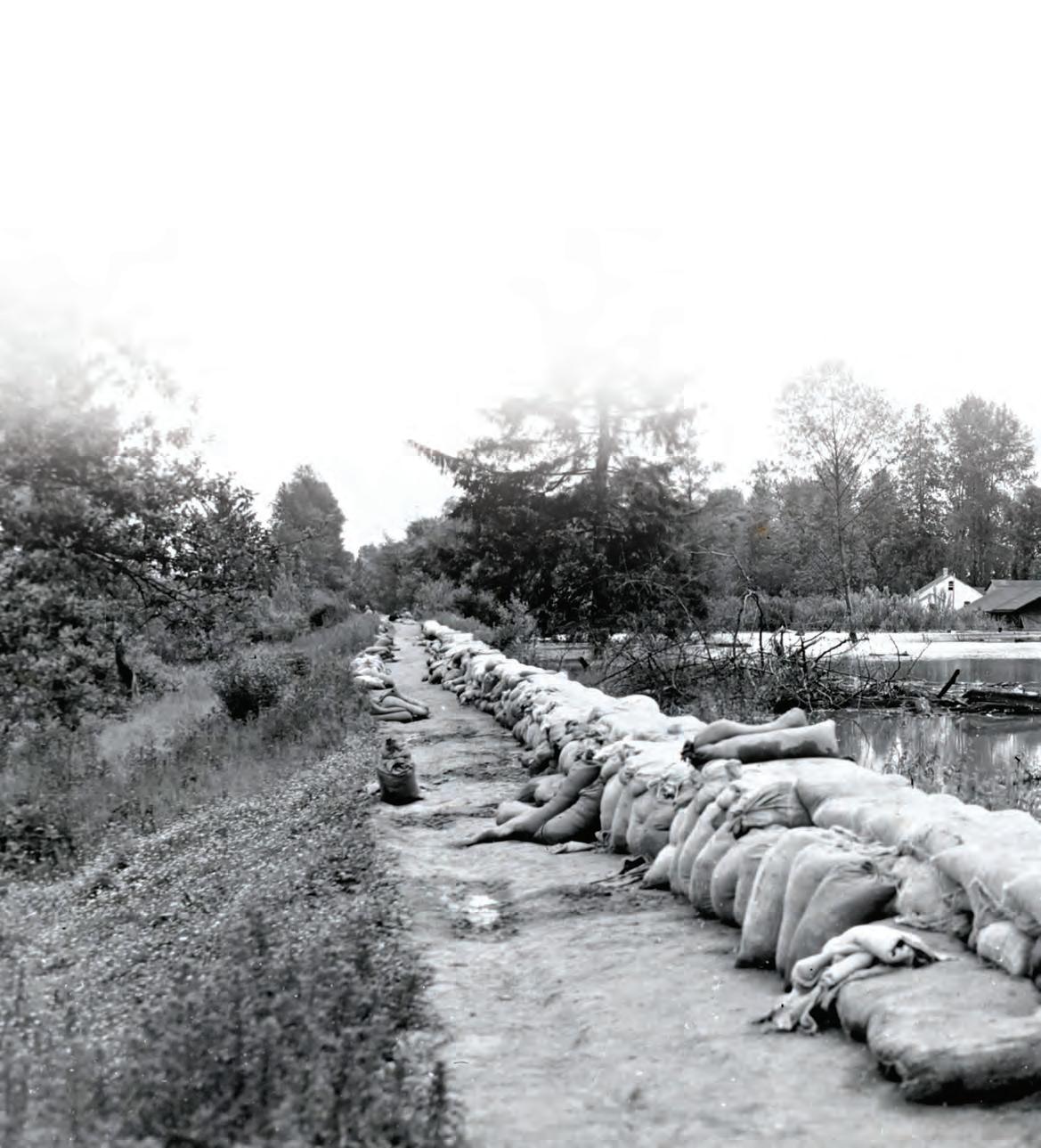
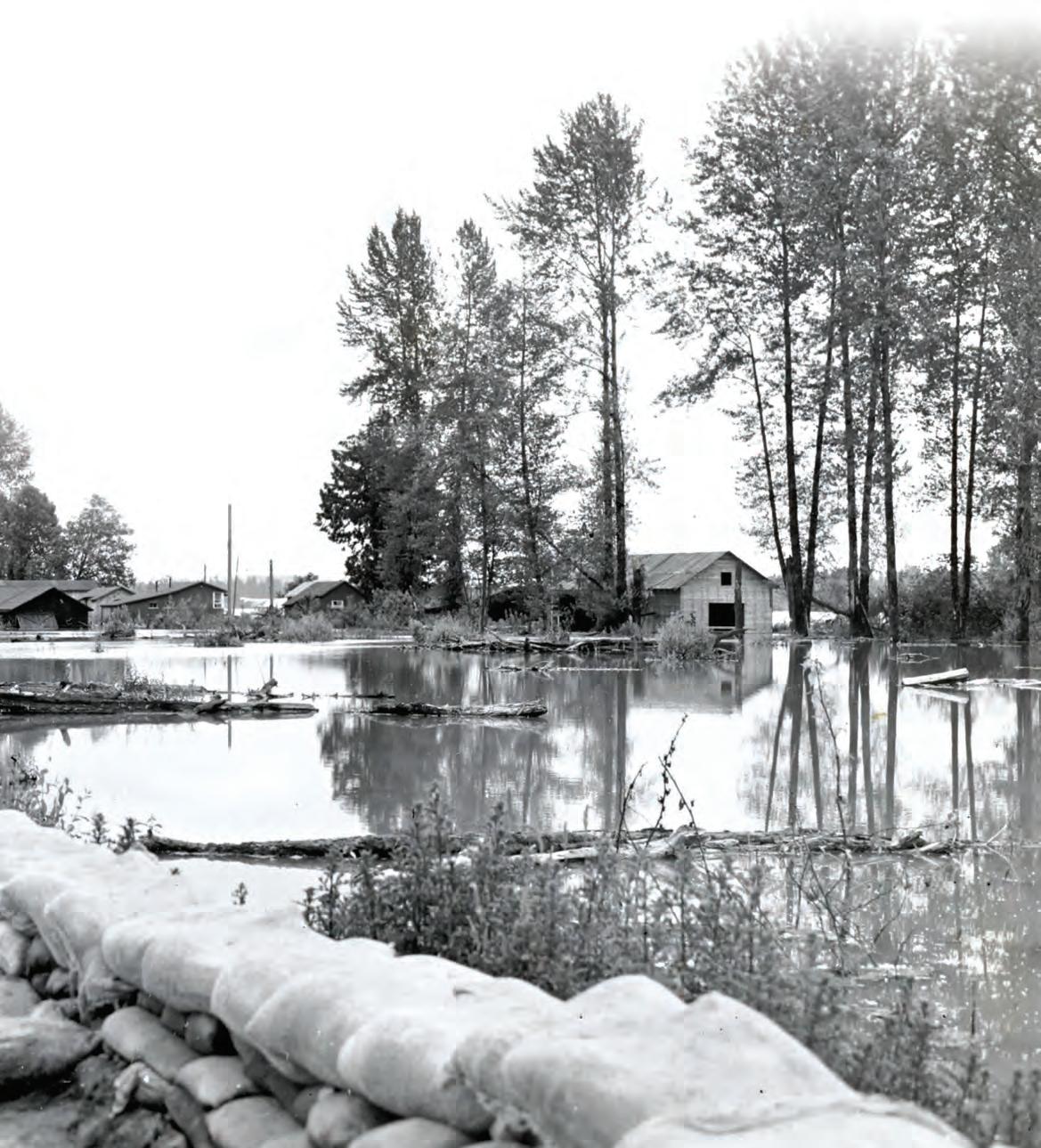
A sandbag dike built by the Vancouver-based 15th Field Artillery holds back flood waters in southern B.C. in the spring of 1948.
15th Field Artillery Regiment, Royal Canadian Artillery Museum and Archives
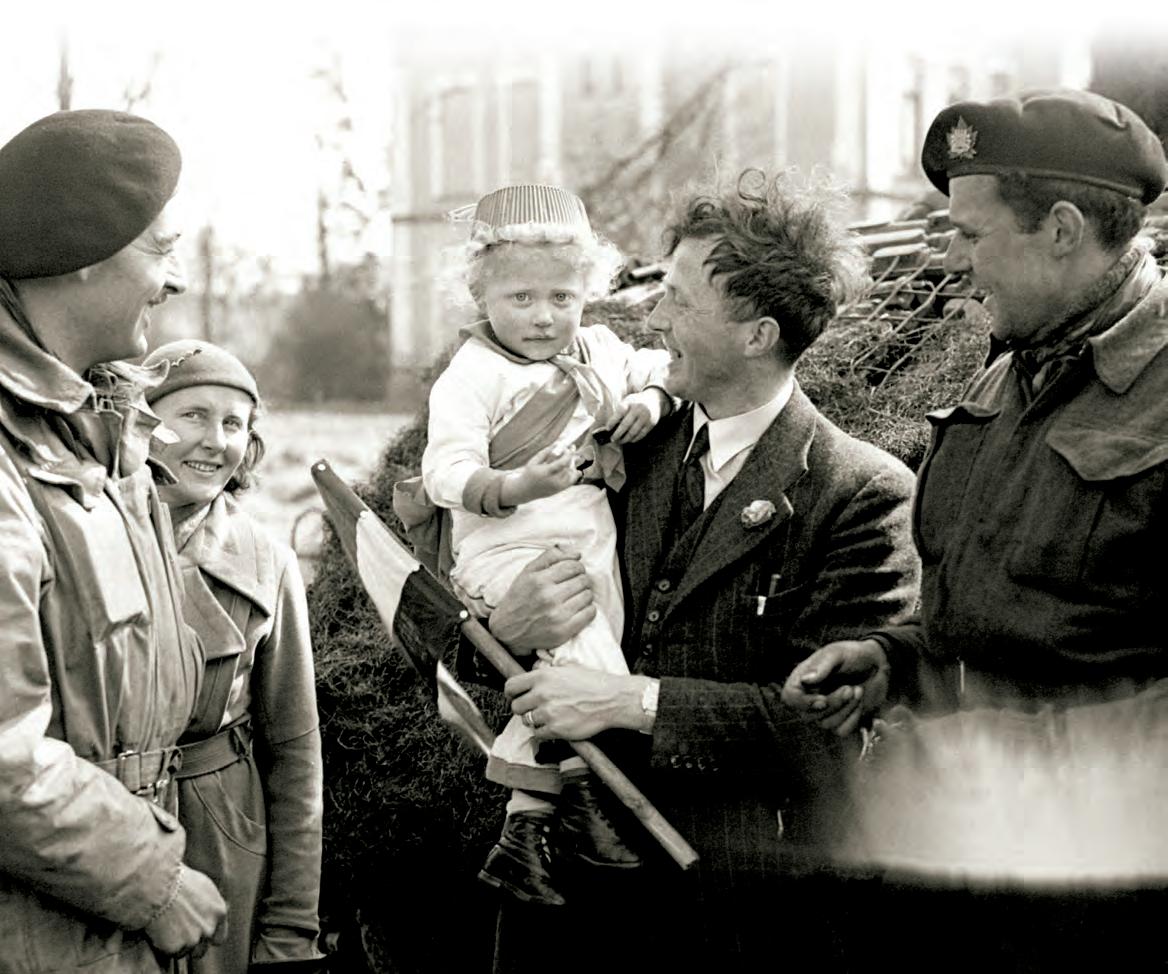
Canadians Lieutenant W.J. Trump and Trooper W.H.G. Ritchie of The Fort Garry Horse greet Dutch citizens during the liberation of Rijssen, Netherlands, on April 9, 1945.
Lieut. Daniel Guravich/LAC/3205690


Vol. 97, No. 3 | May/June 2022
BOARD CHAIR Owen Parkhouse BOARD VICE-CHAIR Bruce Julian BOARD SECRETARY Bill Chafe
DIRECTORS Tom Bursey, Steven Clark, Thomas Irvine, Berkley Lawrence, Sharon McKeown, Louise Tardif, Brian Weaver, Irit Weiser
Legion Magazine is published by Canvet Publications Ltd.
GENERAL MANAGER Jennifer Morse
ADMINISTRATIVE
SUPERVISOR
Stephanie Gorin
ADMINISTRATIVE
ASSISTANT
Mike D’Angelo
EDITOR
Aaron Kylie
ASSISTANT EDITOR
Trevor Oattes
STAFF WRITERS
Sharon Adams
Stephen J. Thorne


ART DIRECTOR, CIRCULATION AND PRODUCTION MANAGER
Jason Duprau
SENIOR DESIGNER AND PRODUCTION CO-ORDINATOR
Jennifer McGill
DESIGNERS
Derryn Allebone
Sophie Jalbert


Advertising Sales
CANIK MARKETING SERVICES
SENIOR DESIGNER AND MARKETING CO-ORDINATOR
Dyann Bernard
WEB DESIGNER
Ankush Katoch
WEB AND SOCIAL MEDIA
CO-ORDINATOR
Mauricio Dimate


TORONTO advertising@legionmagazine.com
DOVETAIL COMMUNICATIONS INC mmignardi@dvtail.com OR CALL 613-591-0116 FOR MORE INFORMATION
Published six times per year, January/February, March/April, May/June, July/August, September/October and November/December. Copyright Canvet Publications Ltd. 2022. ISSN 1209-4331
Subscription Rates
Legion Magazine is $9.96 per year ($19.93 for two years and $29.89 for three years); prices include GST. FOR ADDRESSES IN NS, NB, NL, PE a subscription is $10.91 for one year ($21.83 for two years and $32.74 for three years). FOR ADDRESSES IN ON a subscription is $10.72 for one year ($21.45 for two years and $32.17 for three years).
TO PURCHASE A MAGAZINE SUBSCRIPTION visit www.legionmagazine.com or contact Legion Magazine Subscription Dept., 86 Aird Place, Kanata, ON K2L 0A1 or phone 613-591-0116. The single copy price is $5.95 plus applicable taxes, shipping and handling.
Send new address and current address label. Or, new address and old address, plus all letters and numbers from top line of address label. If label unavailable, enclose member or subscription number. No change can be made without this number. Send to: Legion Magazine Subscription Department, 86 Aird Place, Kanata, ON K2L 0A1. Or visit www.legionmagazine.com. Allow eight weeks.
Editorial and Advertising Policy
Opinions expressed are those of the writers. Unless otherwise explicitly stated, articles do not imply endorsement of any product or service. The advertisement of any product or service does not indicate approval by the publisher unless so stated. Reproduction or recreation, in whole or in part, in any form or media, is strictly forbidden and is a violation of copyright. Reprint only with written permission.
PUBLICATIONS MAIL AGREEMENT NO. 40063864
Return undeliverable Canadian addresses to Legion Magazine Subscription Department 86 Aird Place, Kanata, ON K2L 0A1 | magazine@legion.ca
U.S. Postmasters’ Information
United States: Legion Magazine, USPS 000-117, ISSN 1209-4331, published six times per year (January/February, March/April, May/June, July/August, September/October, November/December). Published by Canvet Publications, 866 Humboldt Pkwy., Buffalo, NY 14211-1218. Periodicals postage paid at Buffalo, NY. The annual subscription rate is $9.49 Cdn. The single copy price is $5.95 Cdn. plus shipping and handling. Circulation records are maintained at Adrienne and Associates, 866 Humboldt Pkwy., Buffalo, NY 14211-1218. U.S. Postmasters send covers only and address changes to Legion Magazine, PO Box 55, Niagara Falls, NY 14304.
Member of CCAB, a division of BPA International. Printed in Canada.
We acknowledge the financial support of the Government of Canada. Version française disponible.
On occasion, we make our
ritish Columbia was beset by major floods in November 2021 and, once again, Canadian soldiers, sailors and aircrew were called on to provide relief in a time of domestic crisis (see page 36).
In addition to its primary role as the country’s fighting force, for decades Canada’s military has routinely been called on to respond to emergencies both at home and overseas, from earthquakes and typhoons in far-off lands to floods and wildfires in virtually every corner of this country.
The resources at the Forces’ disposal include logistical, rescue, medical and engineering expertise, as well as sheer muscle. The Canadian Armed Forces and its 68,000 regular-force personnel, along with 27,000 reservists, have come to be regarded as a ready-access labour pool for those in urgent need of help.
In the face of a changing climate, however, demand for military emergency response has grown exponentially—there were five times as many domestic missions between 2011 and 2020 (30) as there were from 1990 to 2010 (six).
In 2021, besides the B.C. emergency, which severed land access between the port of Vancouver and the rest of the country, the military responded to flooding in Yukon and Newfoundland; a tainted water crisis in Iqaluit; and wildfires in B.C., Manitoba and northwestern Ontario.
Such deployments are in addition to the military’s longstanding role in search and rescue and its Disaster Assistance Response Team (DART), which is primarily tasked with international missions.
Numerous academic, institutional and military studies have documented the increasing demand for the military to provide domestic services beyond its primary role of defending the country, much of it due to climate-related events such as wildfires and weather anomalies.
Many of those reports didn’t account for the COVID-19 pandemic. In 2021 alone, more than 1,700 uniformed personnel were dispatched to work at long-term care homes, while another 22,000 CAF members were placed on standby.
In December 2019, three months before the pandemic compounded the challenge, domestic demand for military relief had become so great and frequent that the army chief, thenlieutenant-general Wayne Eyre (now chief of the defence staff) told legislators: “If this becomes of a larger scale, more frequent basis, it will start to affect our [combat] readiness.”
Barely two years later, the strain appeared to have only worsened as recruiting waned in the throes of the pandemic and amid a sexual misconduct scandal that hampered defence efforts to attract more women.
Addressing an October 2021 conference, Eyre lamented the alarming number of officers and non-commissioned members—the backbone of military leadership—leaving the service, even as planners scrambled to address an existing labour shortage of 7,500 soldiers, sailors and aircrew.
Experts have suggested alternatives to regular-force emergency response, including turning the role over to reservists or a dedicated civilian-based service. Many veterans have the skill and experience to staff such an organization.
Meanwhile, studies have urged Ottawa to reassess the existing reliance on the military and tackle the issues surrounding it immediately and constructively. Our troops, and our country, deserve nothing less. L
Comments can be sent to: Letters, Legion Magazine , 86 Aird Place, Kanata, ON K2L 0A1 or e-mailed to: magazine@legion.ca
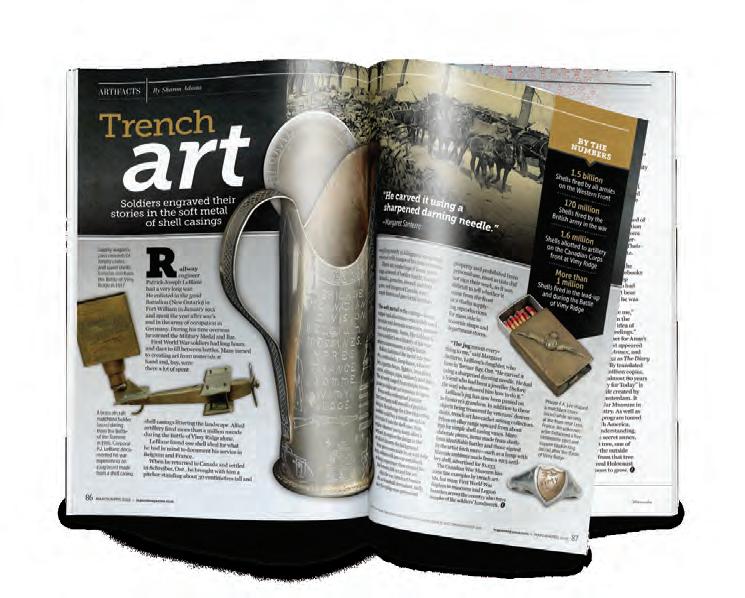
Ireally enjoyed the “Trench Art” article in the March/ April (2022) edition. I inherited a wonderful art piece from my maternal grandfather. He did not serve, but I assume he received it as a gift from one of his friends. It is a biplane with a shell casing body, brass wings and tail.
The wheels are made from what I believe to be British general service uniform coat buttons from the First World War. On the top wing are two German crosses and the name “St Omer,” the French town where the Royal Air Force set up a staging point for British squadrons during the war.
BILL BARKAIE, CALGARY
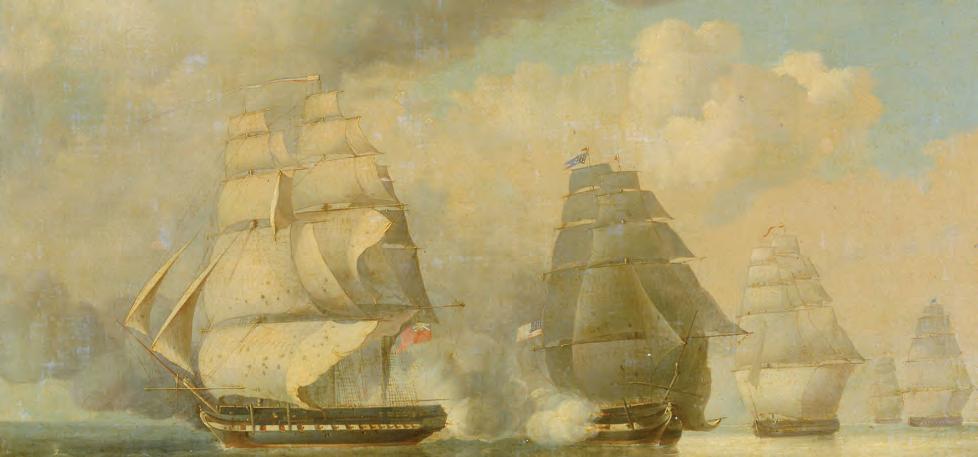
Early on June 23, 1812, British and American warships exchanged the first shots of the War of 1812. For the next two-and-a-half years, the two sides waged war. Towns and cities—the U.S. capital among them—were burned. Naval battles were fought on the Great Lakes. And heroes were born. The Americans thought taking Canada would be a cakewalk. It wasn’t. Now available on newsstands across Canada! Pick up your copy today!



In addition to complete dysfunction in any sort of military procurement, Canada seems determined to buy only ONE type of single-engine fighter jet (“Eye on Defence,” March/April 2022). Canada is large and so the country should buy TWO types of fighter jets. In addition to a single-engine jet, the government should also have a long-range, two-engine interceptor (with refuelling capability—and by Canadian planes, not American ones). The U.S. has 20 different planes. One plane can’t do it all. Also, if the Saab plane is in the running, why not the Super Hornet (two-engines and even easier to integrate into our air force)? The whole process makes no sense.
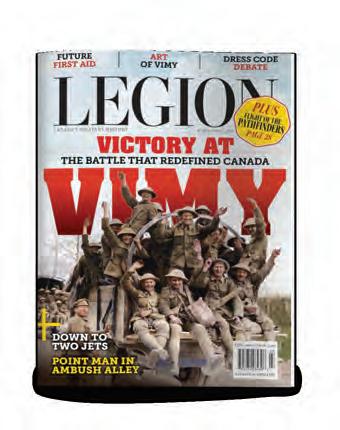
The March/ April 2022 issue of Legion Magazine was outstanding.
Granatstein’s “A Great Victory” provided a look into Arthur Currie’s research and preparations for the storied Vimy assault by Canadian forces. I was unaware that his battle expertise was due to his application, on a larger scale, of earlier French methods.
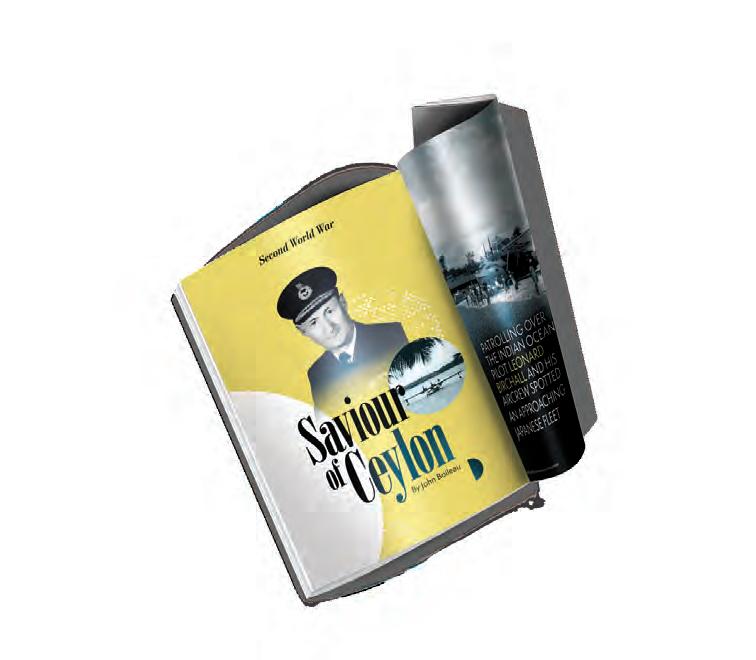
an oft-overlooked aircraft and the crews that spent extended, and I’m sure all-too often tedious, flights seeking out enemy naval forces.
In “Danger Close,” Stephen Thorne proved false those claims that today’s youth could not endure the combat of our First World War and Second World War veterans. Private Jess Larochelle is supremely worthy of t he Victoria Cross.
DAVID POISSANT
HENRY FURLOTT, TORONTO

Being a student of air war, I also appreciated Sharon Adams’ excellent piece “Flight of the Pathfinders,” a group to whom enough honour could never be applied. Carrying on in that regard, “Saviour of Ceylon” by John Boileau told a neat story of





As a high school student, I would like to thank you for striving to maintain such an interesting and insightful magazine. Through Legion Magazine I have learned a lot about veteran experiences that I wouldn’t have previously considered, as well as about Canadian military history in general. I always look forward to reading your latest issue because the subject matter is both informative and engaging.
LEAH M ac INNES, COBOURG, ONT.
I am a good friend of Bob Haden (“Artifacts,” January/February 2022) and was present when he gave the White Ensign to Captain Ouellet. A couple of historical events were not mentioned in the article.
One is that while HMCS U-889 was in Halifax on Christmas Day 1945, as per tradition, the youngest man onboard got to be
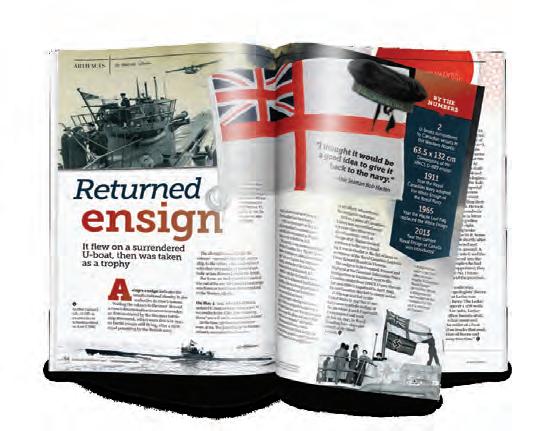
captain for the day. At the time, that happened to be Able Seaman Haden. How many Canadians ever got to command a U-boat? Secondly, in January 1946, U-889 was transferred to the United States Navy. It sailed to Portsmouth, N.H., under its own power, and Haden stood watch in the engine room.
KEN LEVERT
I read with interest “Alberta’s First (Real) Oil Boom” (“O Canada,” January/February 2022) and while it was a catchy title for the article, it gave a false impression of a quick boom-and-bust of the Turner Valley oil field, which also became known for almost 70 years of natural gas production.
At its peak in 1942, Turner Valley produced almost 10 million barrels per day. Then, as production began to decline rapidly, drillers discovered the Leduc oil field southwest of Edmonton in 1947. Although it was overshadowed from that point, Turner Valley continued to produce oil and gas. The Turner Valley Gas Plant also continued to process specialty products until 1985.
JIM LITTLE, TURNER VALLEY, ALTA.
The March 30, 1951, entry in “On This Date” (March/April 2022) was incorrect. RCAF Flt. Lt. Omer Lévesque was the first British Commonwealth pilot to shoot down a German Focke-Wulf Fw-190, on Nov. 22, 1941. He was also the first pilot to shoot down a North Korean MiG-15 during the Korean War, on March 31, 1951 L
Judith Colbert-Barkel
My great-grandfather served in the Veterans Guard of Canada during the Second World War and was stationed at PoW Camp 23 in Monteith, Ont.
Bryan Ethier Internment Camp B70 in Ripples, N.B., allegedly had a mortality rate of close to 10 per cent. There are more than 100 graves at the site. Comments on: “Gestapo PoWs” (January/February 2022)
Jim Gutteridge
We have been disarming since Japan surrendered toward the end of the Second World War. Wait until the United States runs low on water. It will just take Canada’s with no shots fired. Comment on: “Are we disarming?” (January/February 2022)
Kent Gulliford
Canada cannot make a meaningful military contribution anywhere.
The country needs to be solid at home. Canada isn’t nearly as relevant as we think. The importance of the contributions Canadians made during the Second World War has waned significantly as the country’s commitment to its military has diminished. Disaster relief and Cold War-era peacekeeping are not what militaries should be designed to do. Comment on: “Should Canada increase its military involvement in the Indo-Pacific region?” (January/February 2022)
Don Orth
Great article. My thanks to Mr. Sinclair for his service. I wish him all the best.
Cheryl Stapley Brady
Such an interesting story. I worked for Veterans Affairs Canada for more than 24 years in Toronto and Peterborough. Kathy Levasseur-Patterson
Thank you for your service and sacrifices. Comments on: “I felt it was my duty” (Military Milestones, January 11, 2022)
Advertisement

Linda Conron
Look at the corrupt government in China. It is not a democracy. Comments on: “Focus on change, says Canada’s defence intelligence chief” (Front Lines Weekly, January 11, 2022)
Evelyn Brunton
Great to have the people living there, who know the area best, take over the job. Comment on: “Inuit company wins Arctic radar contract” (Front Lines Weekly, March 1, 2022)
Follow Legion Magazine on social media to keep up to date with the latest
1 May 1918
Private Robert Cruickshank is awarded the Victoria Cross for actions under heavy fire east of the Jordan River in Palestine.
2 May 1915

4 May 1951
Lieutenant Alexis Helmer is killed by shellfire near Ypres, Belgium. His death inspires Major John McCrae to write In Flanders Fields
The 27th Canadian Infantry Brigade Group is formed for service in West Germany.
6 May 2008
Warrant Officer David Schultz plunges into enemy fire to extract casualties after an ambush in Afghanistan. He is awarded the Star of Military Valour and is appointed to the Order of Military Merit.
10 May 1990
The Canadian Space Agency Act receives royal assent.
11 May 1943
In an attempt to expel Japanese invaders, the 7th Division of the U.S. army deploys to Attu Island in the Aleutian Islands, Alaska.
12 May 1870
The Manitoba Act is given royal assent, creating the province of Manitoba.
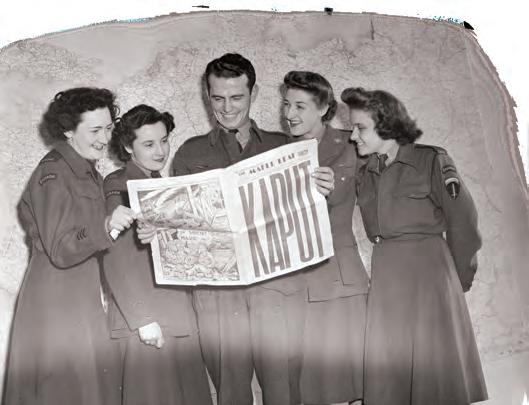
7 May 1945
Nazi Germany unconditionally surrenders to the Allies in Europe.
9 May 2007
Dwight Wilson, one of the last surviving Canadian veterans of the First World War, dies in Toronto at the age of 106.
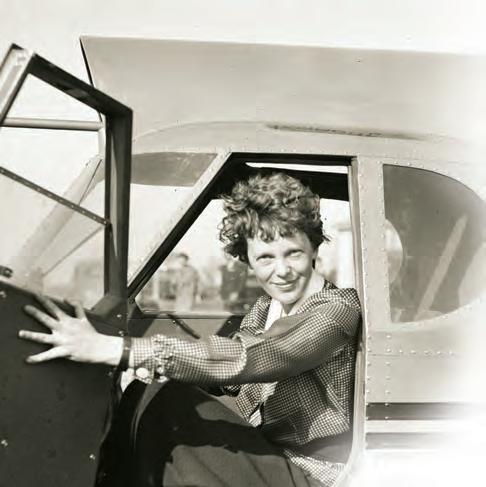
20 May 1932
Amelia Earhart departs Harbour Grace, Nfld., and flies non-stop for nearly 15 hours before landing in Northern Ireland, making her the first woman to make a solo transatlantic flight.
21 May 1939
King George VI unveils the National War Memorial in Ottawa before 100,000 spectators, calling the memorial the “spontaneous response of the nation’s conscience.”
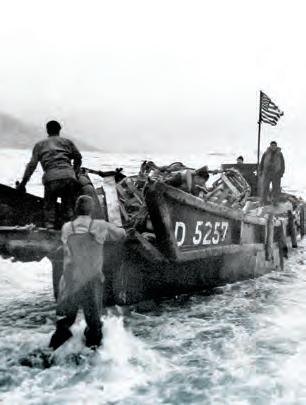
15 May 1918
In Ottawa, 5,000 farmers protest the government’s breach of promise to exempt their sons from conscription. The policy is maintained.
17 May 2006
Captain Nichola Goddard dies in a firefight in the Panjwaii District of Afghanistan. She is the first female Canadian combat soldier killed in action.
18 May 1974
25 May 2009
North Korea tests its second nuclear weapon, causing tension with the international community.
26 May 1972
The U.S. and the Soviet Union sign the Anti-Ballistic Missile Treaty
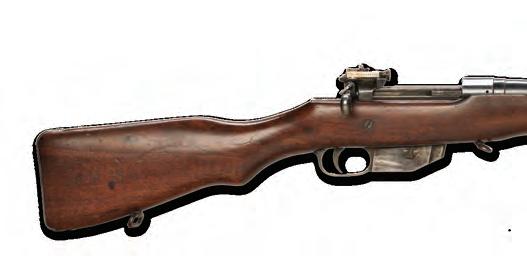
28 May 1916
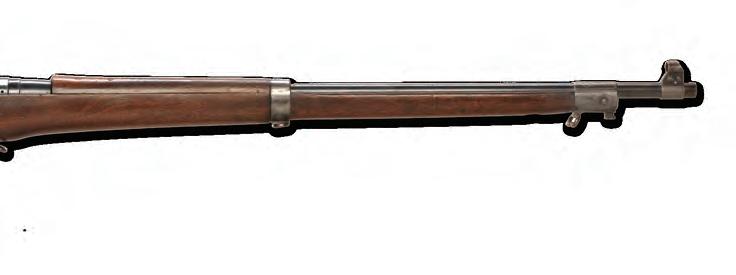
The Canadian government is advised to abandon the Ross rifle after it proves unreliable in combat.
As part of Operation Smiling Buddha, India detonates its first nuclear bomb at a test site in Pokhran, Rajasthan, becoming the sixth nation to do so.

29 May 1982
The National War Memorial in Ottawa is rededicated to include the Second World War and Korean War.

2 June 1917
Billy Bishop launches a solo attack on a German aerodrome and is later awarded the Victoria Cross.
4 June 1989
The Tiananmen Square protests end with the massacre of civilians by the Chinese military.
10 June 1957
John Diefenbaker leads his party to victory in the federal election, ending 22 straight years of Liberal rule in one of the greatest political upsets in Canadian history.
6 June 1813
The British defeat American forces at the Battle of Stoney Creek.
7 June 1944
11 June 2008
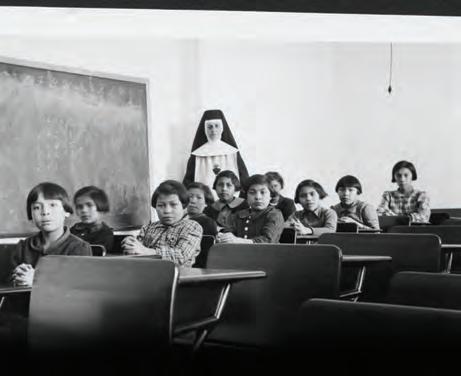
Prime Minister Stephen Harper issues an official apology to Indigenous Peoples for cruelties inflicted in the residential school system.
12 June 1942
Anne Frank receives a diary as a present on her 13th birthday.
13 June 1898
The Yukon Territory enters Confederation.
14 June 1940
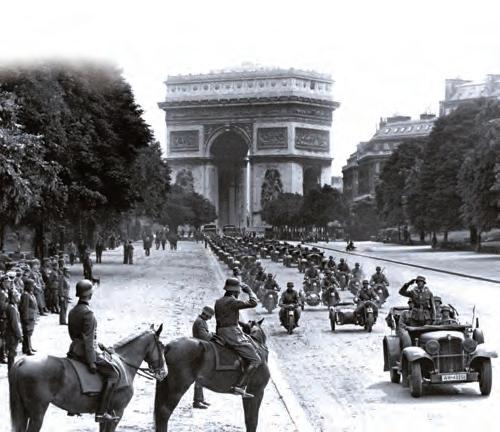
German forces take and occupy Paris.
18 June 1812
U.S. President James Madison signs a resolution declaring war on Britain, igniting the War of 1812.
19 June 1816
The Battle of Seven Oaks breaks out between members of the Hudson’s Bay Company and the North West Company; the latter is victorious.
20 June 1963
Following nuclear tensions amid the Cuban Missile Crisis, the Soviet and American governments agree to develop the “red telephone” hotline to facilitate faster communication.
25 June 1950

Members of the Waffen-SS execute 18 Canadian prisoners of war in the Abbaye d’Ardenne massacre.
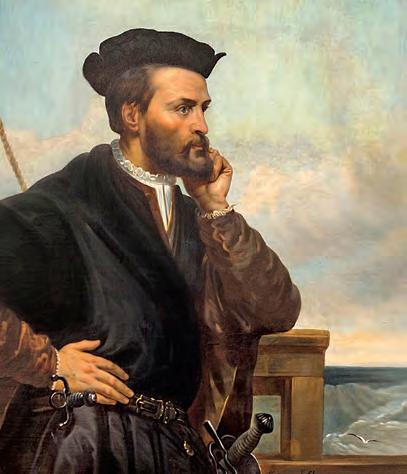
9 June 1534
Jacques Cartier sails into the St. Lawrence River for the first time.
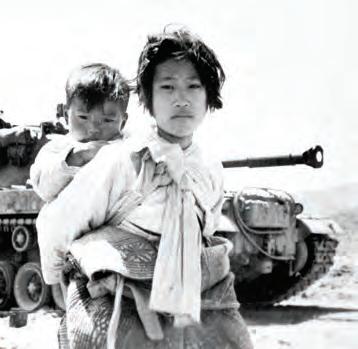
The Korean War begins as Kim Il-Sung’s forces invade South Korea.
28 June 1914
Archduke Franz Ferdinand of Austria is assassinated in Sarajevo, igniting the First World War.
15 June 1944
Tommy Douglas leads the Co-operative Commonwealth Federation to victory in the 1944 Saskatchewan general election, the first socialist government in North America.
17 June 1919
Ten prominent labour leaders are arrested during the Winnipeg General Strike (also see page 88).

By Sharon Adams
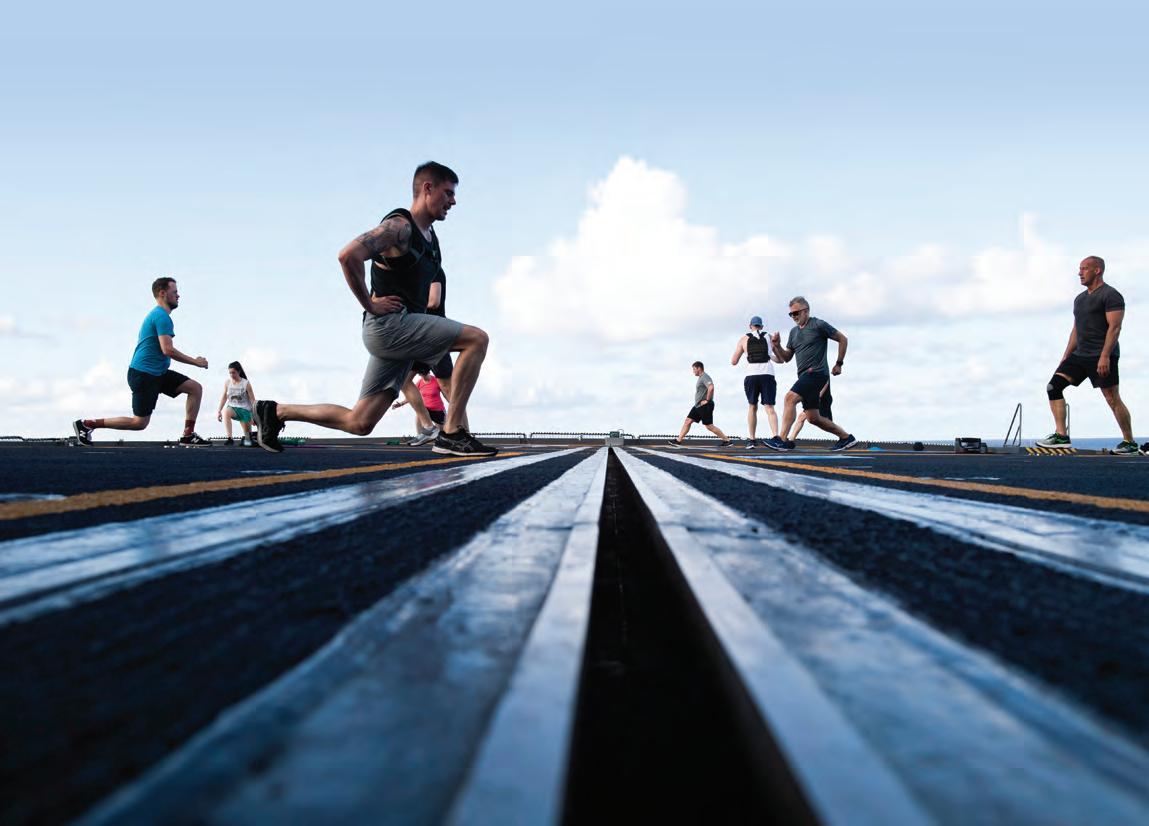
ilitary careers are hard on the body, particularly the joints. Personnel regularly lift and carry heavy loads, and occasionally something very heavy (like injured or wounded colleagues).
When marching, army personnel lug between 35 and 50 kilograms— rations, heavy boots, protective gear, weapons and ammunition—and most military jobs require squatting, twisting and climbing.
Add to that the physical training and sports that keep personnel fit enough to do their jobs, and it’s no wonder lower extremity strains and sprains account for more than a quarter of serious injuries in the Canadian Armed Forces. One in 10 regular force personnel develop repetitive strain injury in the thigh and knee.
Studies indicate nearly a quarter of serving members have chronic arthritis pain, as do more than a third of veterans.
Injuries accumulated in youth often show up later in life as pain, inflammation, stiffness, swelling and loss of flexibility.
It can prevent military personnel from doing their jobs, so the “suck it up, buttercup,” mentality is not a valid approach to injury. Rehabilitation of minor injuries can prevent major problems later, and exercise and the use of assistive devices, such as simple braces, may stave off surgery.
All CAF personnel need to be capable of digging, extracting a casualty from a vehicle, building a sandbag fortification and carrying a stretcher, among other basic tasks. Fitness levels are measured each year in tests that include 20-metre sprints and dragging, lifting and loading sandbags. These tasks and tests are a significant stress on the knees in particular.
Knees are prone to osteoarthritis, also known as wear-and-tear arthritis. It is caused by deterioration of cartilage: the rubbery, slippery material cushioning the ends of the four bones that meet at the knee.
Deterioration can be caused by
repetitive movements, such as squatting, high-impact exercise like marching or by banging or twisting the knee.
Since cartilage cannot be regrown (though scientists are working on it), knee injury sufferers are left to rehabilitate the joint as best as possible and manage pain with heat and cold packs, anti-inflammatory drugs and compression braces. The final option is knee-replacement surgery.
But wouldn’t it be nice if wear and tear and injury could be prevented? Militaries around the world are exploring the possibilities.
In the United Kingdom, stretching and strengthening exercises reduced knee pain of recruits in heavy training by 75 per cent.
Finnish researchers suggest rehabilitation could be better targeted (and more quickly started) if deformed tissue and leakage of protective fluid from cartilage is diagnosed sooner.
Australian researchers found reserve soldiers undergo the same training as regular troops but suffer more knee injuries. They
recommended more physical training for the part-timers and a slower increase of load-bearing work.
The German military is testing knee braces to see which best stabilizes the joint under different conditions—running, climbing stairs, lifting heavy objects. Bracing “might be a cheap and efficient alternative” to prevent injuries such as meniscus tears and osteoarthritis, concluded researchers.
A decade ago, the American Defense Advanced Research Projects Agency (DARPA)—the big guns in Western military research— created a program to address musculoskeletal injury, the No. 1 reason for U.S. military discharges.
DARPA funds research into stabilizing and reducing joint stress, which sped up development of exoskeletons and mechanically assisted knee braces.
And, of course, it wouldn’t hurt if this research also helped meet
another of its goals—augmenting human capabilities to enable personnel to run further, lift heavier loads, sleep less, see in the dark, etc. It’s called human performance enhancement.
In Canada, the Department of National Defence collaborated with Halifax-based Spring Loaded Technology to test a knee brace that stores energy as the knee is bent, then uses that energy to help carry the load when the leg is extended.
It held up to military testing in 2016. Soldiers wearing the brace could do 26 per cent more leg presses and 10 per cent more leg squats when loaded with 45 kilograms.
A soldier with a meniscus injury saw even greater improvements, doing seven times as many loaded squats and 10 times as many leg presses using the brace.
While the army helped with the research, a spokesman for the CAF says it does not use the brace.
Militaries around the world are testing various power-assist knee braces but uptake has been slow.
Dozens of companies around the world have begun marketing so-called bionic knee braces, chiefly to consumers, at prices starting at about $1,500 and rocketing upward, depending on the degree of physical assistance provided and technology used.
These braces could save a lot of pain for people with sore knees and ailing health-care budgets alike.
More than 75,000 knee replacements were performed in Canada in 2019-2020, at an average cost of $10,500, not counting rehabilitation. That’s nearly a billion dollars. Every year.
But health-care budgets, like those of the military, have many demands so it will likely be a while before we regularly see bionic knee braces on our family, friends and defenders of the country. L


AnInuit-owned company has been awarded a seven-year contract to operate and maintain North America’s early-warning radar system in the Canadian Arctic, placing the security and sovereignty of the northern expanse squarely in the hands of its traditional peoples.
The $592-million contract for the operation and upkeep of the
North Warning System (NWS) went to Nasittuq Corp. The Iqaluitbased company takes over from Raytheon Technologies at a particularly sensitive time for Arctic sovereignty and management.
“One of the strongest arguments to demonstrate that the Arctic is within Canadian jurisdiction is the fact that you have people living there and those people are the Inuit,” Clint Davis, the Inuk CEO

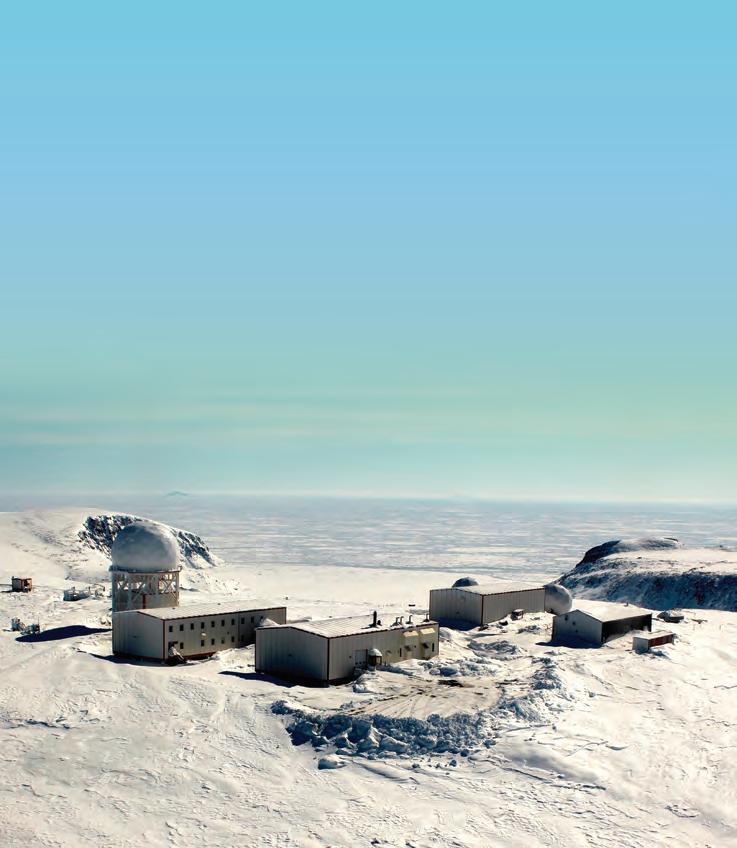
The North Warning System, with radar stations like this one on Brevoort Island, Nunavut, is now run by an Inuit company.
of Nunasi Corp., a Nasittuq shareholder, told Legion Magazine
“The Inuit are the eyes of Canada in the Arctic. And we’ve been living there for thousands of years. I think it’s rather appropriate that you actually have the people who’ve lived there the longest actively involved in operating, maintaining and managing these systems that are there to provide defence for North America.”
The 37-year-old NWS is a network of dozens of remotely operated radar stations strung 5,000 kilometres along the rim of the Arctic Ocean from Baffin Island and along the Bering Sea to southwestern Alaska’s Aleutian Islands. Nasittuq is responsible for 47 of the stations in Canada.
They are the eyes and ears of the continent’s northern gateway, and the Russian military is regularly testing their effectiveness. Moscow often dispatches Cold War-era bombers over the pole to the edge of Canadian and U.S. airspace, where North American Aerospace Defense Command (Norad) aircraft inevitably turn them back.
Russia has the largest presence of any of the six nations bordering the Arctic Ocean, with some two million Arctic residents—half of all people living above the treeline. Its Northern Fleet is the largest of its four naval fleets, and its military has built a chain of bases along its Arctic front unlike anything before them.
These shifts under the hawkish, even hostile, regime of Russian President Vladimir Putin come as the warming effects of climate change shrink the Arctic ice season and render northern waters more navigable. Russian and American vessels periodically pass through the fabled Northwest Passage without seeking permission from Ottawa.
The vast Canadian Arctic spans three territories, extends to the North Pole, and encompasses
75 per cent of the country’s coastlines and 40 per cent of its land mass.
Eight nations—Canada, Denmark, Finland, Iceland, Norway, Russia, Sweden and the United States—have mounted overlapping and disputed Arctic sovereignty claims.
“I think more countries are going to start getting bolder about Canada’s North,” said Davis, originally from northern Labrador. “As the Northwest Passage opens up, I think you’re going to see more traffic going through there and that traffic won’t be monitored.
“I think that does raise concerns about sovereignty and security.”
Meanwhile, plans to upgrade the NWS have been bouncing around for years.
In August 2021, U.S. Air Force General Glen VanHerck, commander of U.S. Northern Command and Norad, said the NWS was designed
to detect “bombers flying at 36,000 feet that had to fly over the homeland to drop a gravity weapon.”
“Ideally, we would like to go to an advanced system—over-thehorizon radar,” VanHerck told a symposium in Washington, D.C. “The North Warning System is limited in its distance…which doesn’t allow us to see far enough out away from the homeland.”
It’s the second time Nasittuq has done the NWS job, which includes flights into some of the country’s most remote locations to service equipment. The new Nasittuq contract includes four two-year option periods for a potential total estimated value of $1.3 billion.
The Arctic is fundamental to the Canadian soul and spirit. But Davis, an honorary lieutenant-colonel to the Queen’s York Rangers, a primary reserve unit based in Toronto, says population growth
and urbanization, mainly along that 300-kilometre-wide belt bordering the United States where most Canadians live, is leaving more and more people disconnected from the North.
“The world sees us as an Arctic country…. It is a part of our identity,” said Davis, who relates a story about a Torontonian who thought she had to travel to Iceland to see the northern lights. “Inuit are First Canadians and Canadians first.”
He says many, however, are “frustrated” with a host of issues largely centred around support and development, and “the lack of collaborative vision” for the North.
“I do hope that certain leaders [make] a real concerted investment in the Arctic. When you look at basic infrastructure, it doesn’t exist compared to other parts of the country. It’s time to change that.” L

By David J. Bercuson
Primordial violence, hatred and enmity.
Carl von Clausewitz called these necessities for war the “paradoxical trinity” in his renowned book, On War. American army Colonel Harry G. Summers borrowed heavily from On War in his 1982 book, On Strategy: A Critical Analysis of the Vietnam War to explain why the U.S. lost in Vietnam. Summers distilled von Clausewitz’s trinity to people, government and armed forces. In Summers’ interpretation, the people provide the emotion that
permits the violence of war, the government—acting on the basis of popular opinion—organizes resources for war, and the military moulds the resources into fighting forces and deploys them to battle. There have been several objections to Summers’ reduction of von Clausewitz’s formula, but Summers’ take can help explain the holy mess that is Canada’s modern defences and why the government was slow to provide significant military support in the form of lethal weaponry to Ukraine in the early months of the crisis.
Russia invaded Ukraine in February with substantial military force, breaking decades of norms in international relations. As Ukraine is not a member, NATO chose not to activate its collective defence mandates, limiting its ability to aid the country. (The organization had sent military trainers to Ukraine, including a few hundred from Canada, but all were withdrawn before the invasion.)
NATO countries, including Britain, the U.S. and the Baltic states, had sent anti-aircraft missiles, anti-tank missiles and other lethal weapons to Ukraine prior to the attack, but Canada refused. Afterward, Germany, Australia and other NATO members sent similar weaponry to Ukraine.
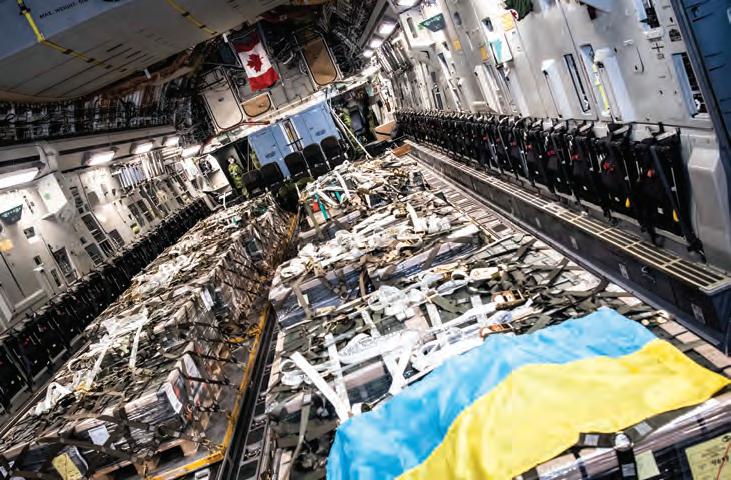
Before the war, Canada had initially offered Ukraine a loan of $120 million, not to be used for weapons, then increased the number of training personnel from 200 to 300 and sent non-lethal aid such as bulletproof vests and nightvision goggles. After the invasion, Canada offered an additional $500-million loan and dispatched 460 additional personnel to Latvia (a NATO member) to bring Canada’s total contingent there to 1,000. Nearly a month into the conflict, Canada finally sent lethal aid to Ukraine—about 100 antitank weapons and 2,000 rockets.
Meanwhile, NATO and NATOaligned countries stepped up
An RCAF CC-177 Globemaster arrives in Lviv, Ukraine, with Canadian military equipment for local forces.
their preparedness. Germany, typically slow to increase military spending, significantly boosted its defence budget to align it with the NATO guideline of two per cent of GDP.
There, in a nutshell, is the root of Canada’s defence dilemma. The government just won’t step up to global norms on military funding. Defence spending remains near all-time lows. Either Canada can’t afford better or it’s not a priority.
Canada is a nation of 38-plus million people with the 10th largest economy in the world, but it only spends about 1.4 per cent of its gross domestic product (GDP) on defence.
Australia, in comparison, has a population of 25 million and the 13th largest economy on the planet, yet its defence spending is a little more than two per cent of its GDP.
This proportion of spending may be due to Australia’s uniquely dangerous place in the world, given its proximity to China. But Canada has threats of its own, with Russia across the Arctic Ocean, the vulnerable North and diplomatic spats with China.
Canada went to war to save Europe in 1939; to save South Korea in 1950. It should be of great interest to the country if its allies are forced into war by belligerent autocracies. The Cold War is back with a vengeance and Canada needs to mobilize as it did in 1951.
At present, Canadians aren’t emotionally willing to condone violence. But the government has a responsibility to lead in matters of defence. The prime minister and his cabinet should shoulder responsibility for the defence of Canada, its people and its interests.
When al-Qaida attacked the U.S., Prime Minister Jean Chrétien—not known for an interest in the military—sent
Canadians to fight in Afghanistan. Paul Martin did likewise and Stephen Harper followed where they led. And although the war was eventually lost, Canada did what it could and did not hold back.
Today, Canada has no practical response to the hard realities of
competing world powers, some of which are autocracies led by men who are endangering global peace and Western interests.
In response, Canada largely ignores its defences again. Canada can do better. Its allies expect it to. L


How a Canadian battalion’s mad dash to northern Germany at the end of the war stopped Soviet a dvances toward the West

WWismar, located on Germany’s Baltic coast, holds a fascinating but little-known place in Canadian Second World War history. It’s where Canadian troops first encountered the Red Army—and effectively blocked a Soviet advance into Denmark.
Until Germany’s reunification in 1990, travel to Wismar was difficult for foreigners. It was located about 40 kilometres behind the Iron Curtain, in what was then known as the Bezirk Rostock region of the Deutsche
Demokratische Republik or East Germany as it was known in the West. After the war, Wismar became one of the East’s largest ports with a well-developed shipbuilding industry. It was also a garrison town and home to two Soviet regiments from the 2nd Guards Tank Army. If the Cold War had turned hot, it was this force that would have thrust west across the North German Plain to capture Lübeck, then north toward Kiel and the Danish border.
The first meeting between eastbound Western troops and westbound Soviet troops occurred at the Elbe River near Torgau, Germany, on April 25, 1945. That
American-Soviet contact was mainly a delicate tactical operation co-ordinated to avoid an inadvertent clash between the two Allies. On the other hand, the rendezvous of British and Soviet forces on the Baltic a few days later was governed by strategic military and political considerations. The British were keen to push north to Wismar to force the German Army Group northwest and the German military in Denmark to surrender to them rather than the Soviets. Plus, seizing the port city would also effectively block the Soviets from advancing into Denmark. Western Allies were fearful of communist expansion through Europe.
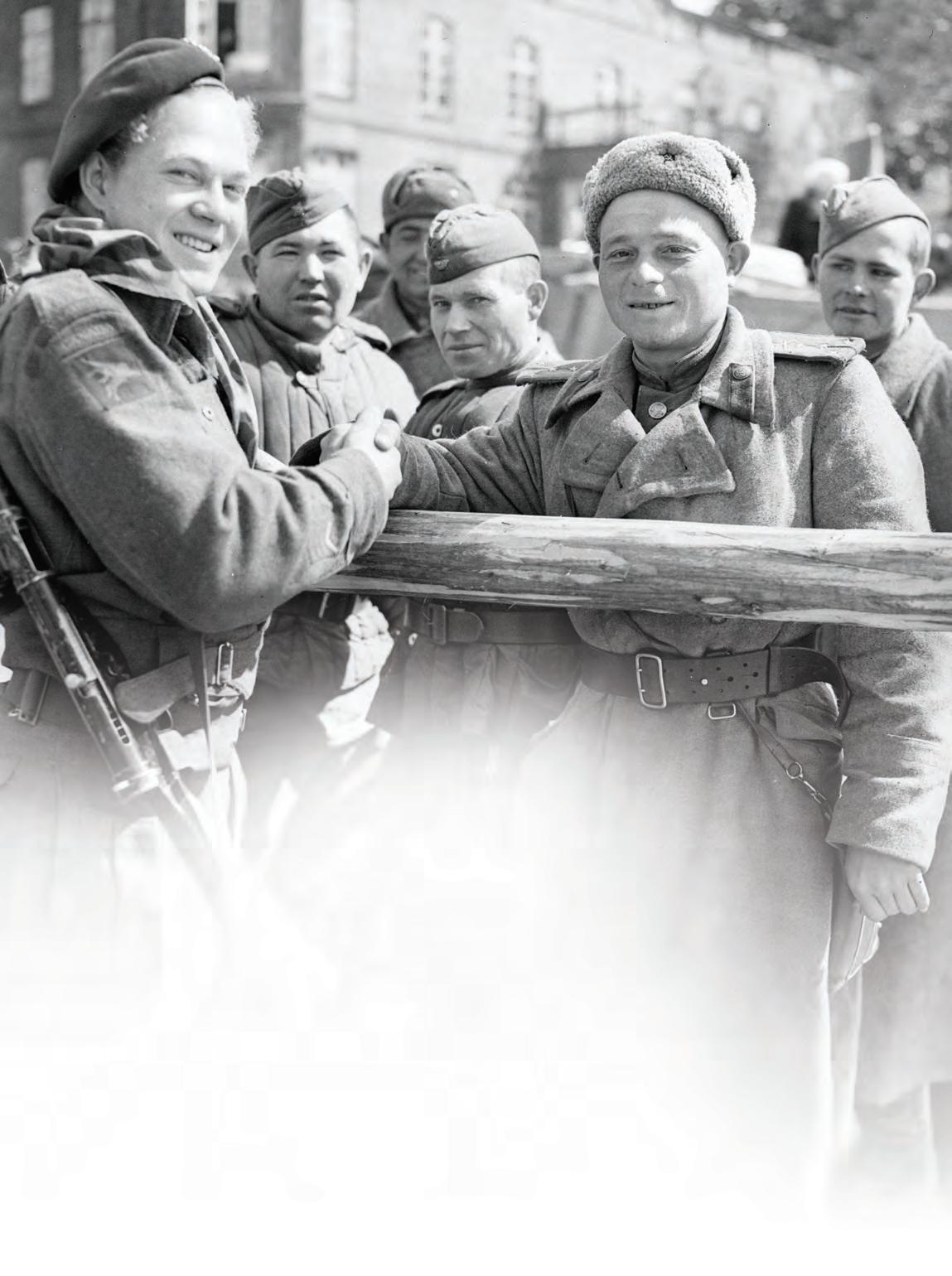
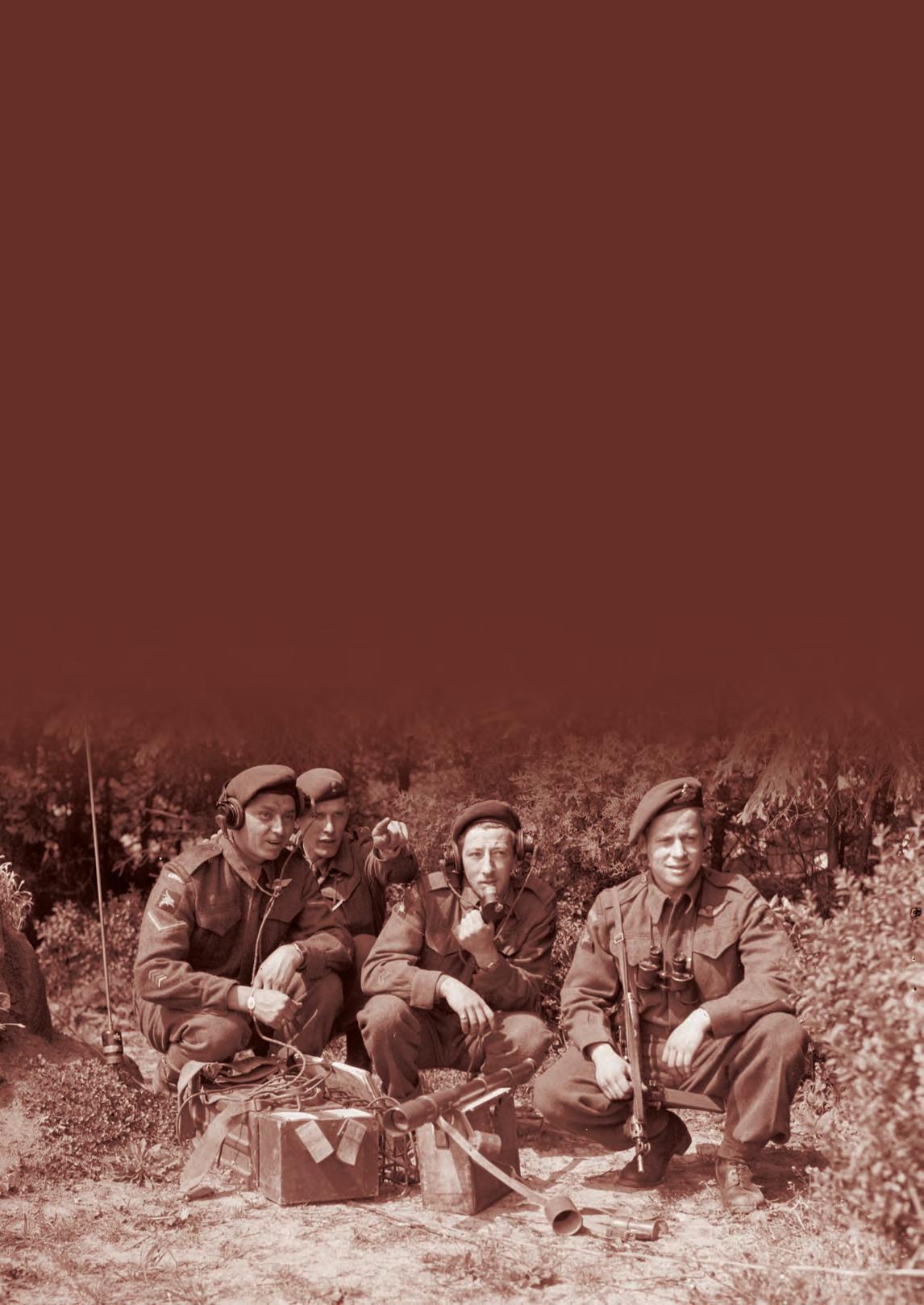
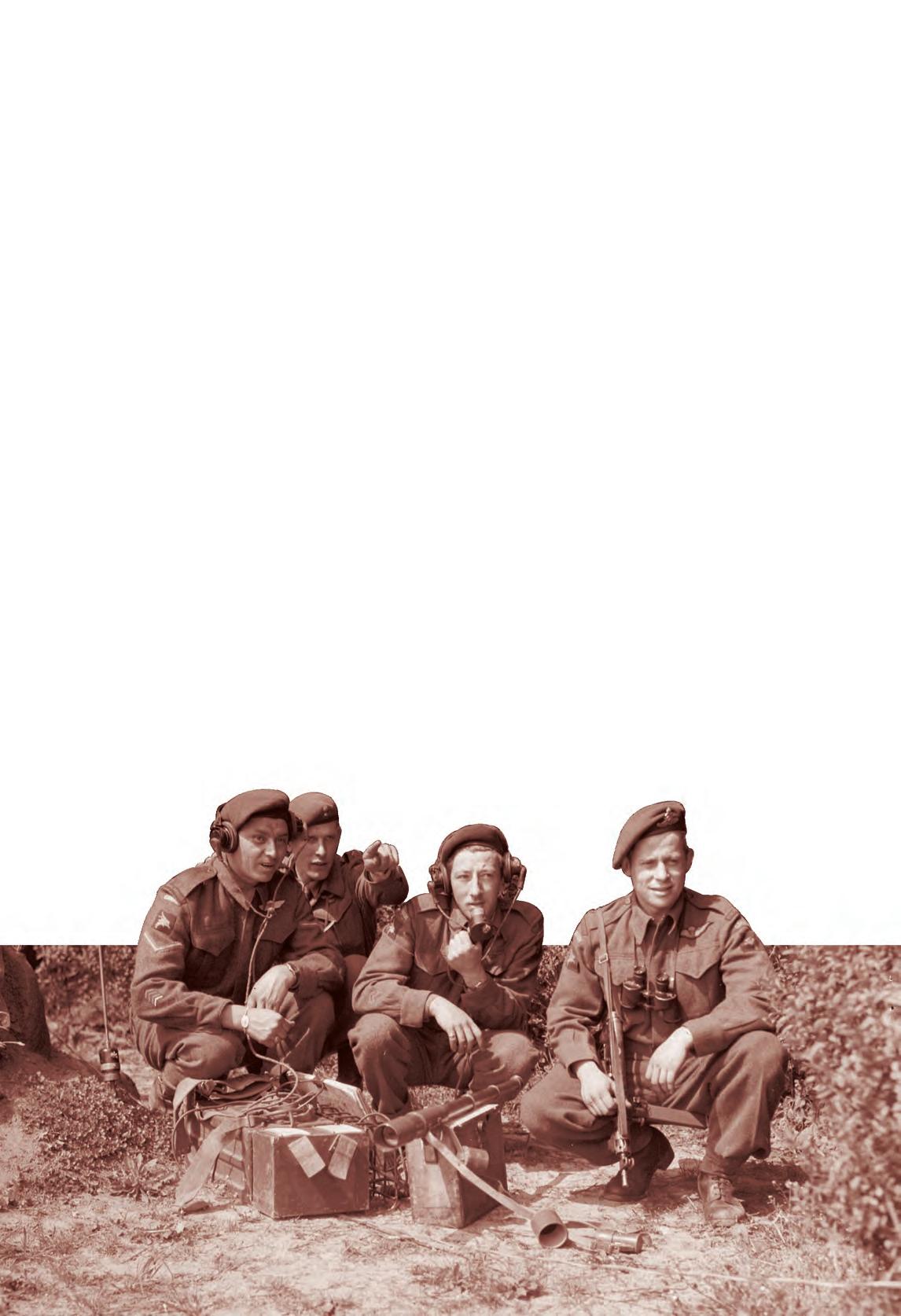
A Canadian soldier greets a Russian counterpart at a roadblock in Wismar, Germany, on May 4, 1945 (above). A forward observation group of the Royal Canadian Artillery (opposite) were the first Allied troops to encounter the Red Army in the city.
Recalled Eadie: "Waters was a Calgary boy. His cowboy instincts took over and he drove the tanks on at maximum speed.”

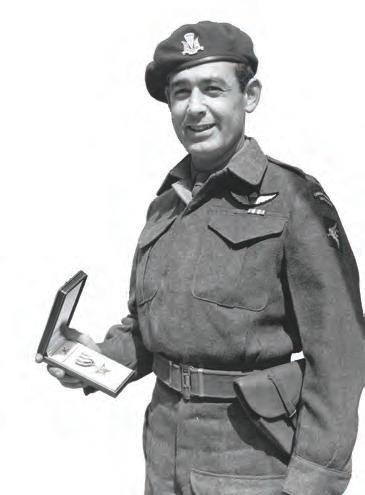
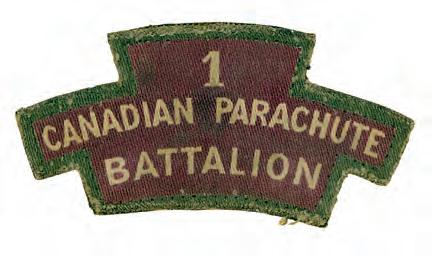
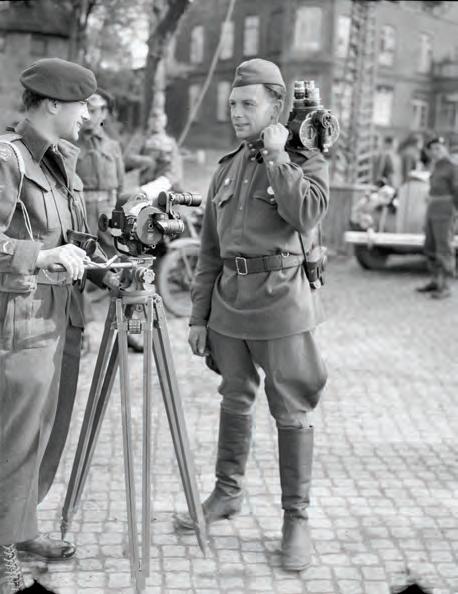
LieutenantColonel Fraser Eadie (right), commanding officer of the 1st Canadian Parachute Battalion, with the American Silver Star he received in Wismar. Canadian and Russian cameramen (below) in the city.
Following the March 24 Operation Varsity airborne assault—the largest air operation ever conducted in a single day in one location—Allied forces crossed the Rhine River to access northern Germany. In anticipation of moving farther north, the XVIII U.S. Airborne Corps, under command of the British 21st Army Group, formed a bridgehead across the Elbe to push north and east toward Wismar. Once
across the Elbe, the British 6th Airborne Division was tasked to advance northeast as fast as possible to block the Russians.
Greys and Canadians overran formations of fully armed German troops. “All resistance had collapsed because the Germans wanted us to go as far as possible,” wrote the Canadians’ war diarist. “Thousands of German troops lined the road and crowded the villages, some cheering us on, though most were a despondent-looking mob.”
Brigadier James Hill, commander of British 3rd Parachute Brigade, ordered the 1st Canadian Parachute Battalion headed by acting Lieutenant-Colonel Fraser Eadie to take the lead. Eadie turned to Major Stanley Waters to mount the tanks of the Royal Scots Greys (2nd Dragoons) and spearhead the advance.
“I followed immediately behind Stan’s tank in my Jeep,” recalled Eadie. “Stan Waters was a Calgary boy. His cowboy instincts took over and he drove the tanks on at maximum speed so that we cleared Wittenburg by 9 a.m.”
Quipped one Canadian paratrooper of the advance: “I never realised that a Sherman could do 60 miles an hour.”
The convoy met occasional pockets of resistance, but they were easily overcome with shellfire from the tanks.
In their dash, the Scots
At the end of the road lay Wismar, and the Canadians and Scots Greys entered the picturesque medieval town on May 2. They encountered some opposition at a roadblock where German troops had dug in but it was quickly overcome by ‘B’ Company who cleared the position while the Greys shot their way through the blockade. Proceeding through Wismar, the Canadians quickly seized the bridges on the east side of the town. Companies were dispersed to ensure Wismar was securely in Allied hands. Several German destroyers and submarines were spotted in the harbour, but all escaped. There was little resistance. The Canadians and Scots Greys covered about 120 kilometres in the 12 hours before they arrived. At 4 p.m., ‘C’ Company, which was covering the bridges on the east side of the town, met the first Red Army troops. The force belonged to the 3rd Tank Corps of the 70th Army of the 2nd Belorussian Front commanded by Marshal Konstantin Rokossovsky. One Soviet officer scouting ahead arrived with no idea that other Allied forces were in Wismar until he met the Canadians.
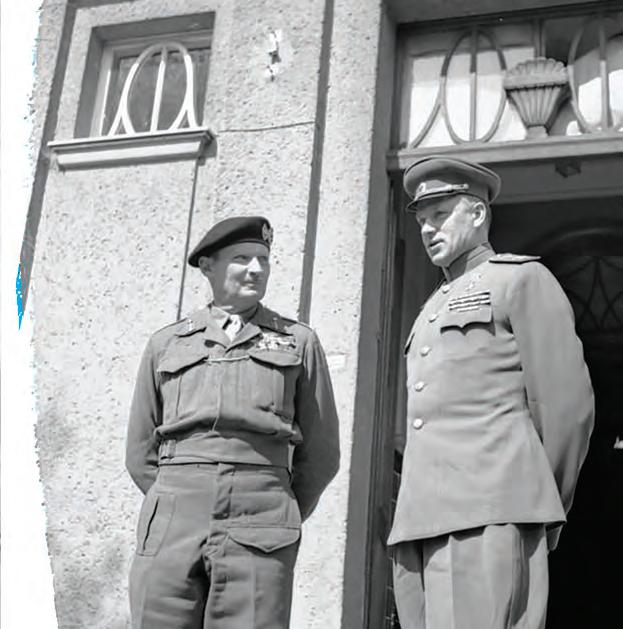
and Soviet Marshal Konstantin Rokossovsky meet in Wismar near the historic old town (right) on May 7.
It’s here Canadian troops first encountered the Red Army—and effectively blocked a Soviet advance into Denmark.
“He was quite put out to find us sitting on what was the Russians’ ultimate objective,” recorded the battalion diarist.
Initially, relations between the two Allies were cordial, despite the Soviet disappointment that their westward advance had been stopped. There was considerable “visiting” between Canadians and Russians. Indeed, the diarist noted the Soviets were the “most persistent and thirsty drinkers they had ever met.” The Canadians also recorded that the Russians were the “hardest looking bunch of toughs,” perhaps testament to the hard-fought campaign waged in the east to defeat the Germans.
On May 5, the Soviets established their own roadblock, 100 metres up
from the Canadians. By May 7, the day that British Field Marshal Bernard Montgomery flew to Wismar to meet with his counterpart Rokossovky, the cordial relationship had broken down.
May 8 was VE-Day, and a week later the Canadians were leaving to start their journey home.
On July 1, the remaining British troops departed.
Wismar had been ceded to the Soviet Zone of Germany based on the occupation agreements of the Yalta Conference.
As a result, the Russian troops soon took control of the city. But the brief occupation of Wismar by the 1st Canadian Parachute Battalion ultimately achieved its goal and helped limit westward Soviet advances.
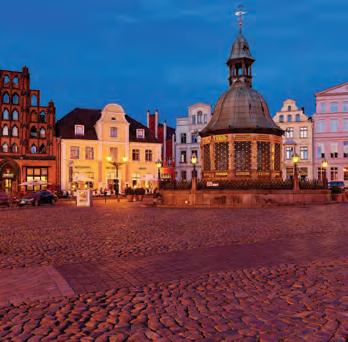
Wismar has been an important Baltic port city since the 11th century and, though heavily damaged by Allied bombing during the Second World War, it remained a busy East German port and tourist region during the Cold War. Today, it’s a UNESCO world heritage site, recognized in particular for its medieval history as a major trading centre of the Hanseatic League in the 14th and 15th centuries.
Locals say life in the city when it was part of the East Germany was not too difficult. Industries associated with the port provided employment and the Baltic coast was a popular destination for Eastern European tourists. It was, however, only after German reunification that historic buildings and churches were fully repaired.
Tourists, especially those from a unified Germany, kept the region busy during the summer and tourism, given its economic benefits, is integral to the city’s business community.
The East-West rivalry that started when the two Allied powers met in Wismar in May 1945 is now in the distant past.
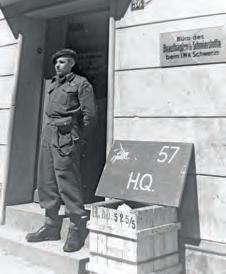
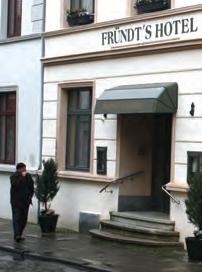
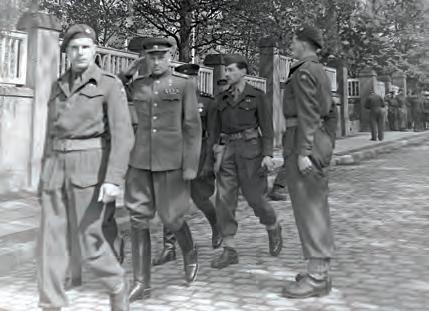
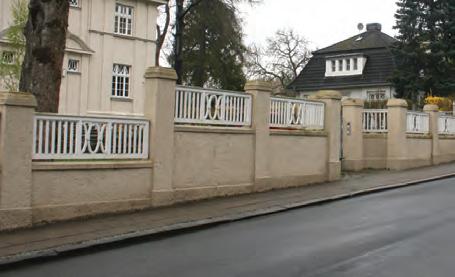

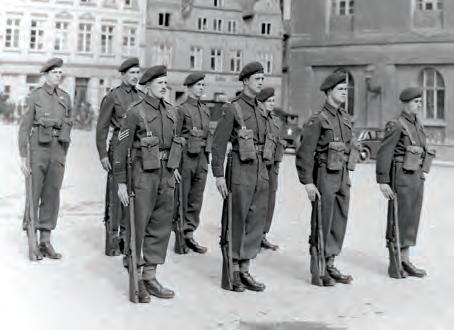
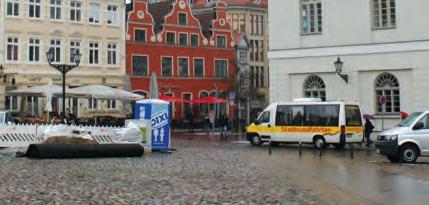
Then and now (top to bottom): Wismar’s Fründt’s Hotel, once the field headquarters of the 1st Canadian Parachute Battalion; Marshal Rokossovsky (second from left) and comrades walk along Dr.-Unruh-Straße near the British field HQ; a section of Canadian paratroopers line up for inspection in Wismar’s old town Markt square.
The Fründt’s Hotel where the Allied battalion had established its headquarters looks virtually the same.
Those visiting Wismar today will find little has changed in the nearly 80 years since the end of the Second World War.
On their march into the city, the British and the Canadians had captured the Flugplatz Wismar, the aerodrome site about three k ilometres northeast of downtown. Montgomery would land at the airport in advance of his meeting with Rokossovsky just five days after their arrival. Today, the small grass runway is used for light aircraft and gliders.
Meanwhile, the Canadians had set up a roadblock at the corner of Rostocker Straße and Gerberhoff, while Allied troops had paraded and held ceremonies in the Altstadt, the historic old town of Wismar and its Markt square, in the war’s waning days.
The Markt’s Wasserkunst, a 16th-century water fountain designed by Philipp Brandin, and the surrounding buildings that figure prominently in the wartime photographs have changed little since 1945.
Likewise, the Fründt’s Hotel where the Allied
battalion had established its headquarters looks virtually the same. And the large, stately house at the corner of Dr.-UnruhStraße and Vogelsang where marshals Montgomery and Rokossovsky met on May 7 —which is only about a kilometre south of the Markt— remains unchanged, too, since the historic showdown. Wismar has recognized the role Canada played during this final stage of the war w ith a small plaque on the side of the town hall (it stands in humble contrast to the large monument at Torgau, Germany, where the U.S. and Soviets met).
Few Canadians venture to Wismar to see the city where Canadian paratroopers met the Red Army, likely because many Canadians don’t even know about the encounter.
Colonel Charles P. Stacey wrote in his book, The Victory Campaign, “It was fitting that the first Canadian unit to fight in Normandy should also be the Canadian unit to penetrate deepest into Germany.” L





Flowers of the 13 Canadian provinces and territories are represented in beautifully illustrated watercolours.
Three varieties to choose from: grizzly bear, loon and timber wolf.
Birches and saplings cast long shadows across a snowy stage.
Canadian autumn leaves stand out against the bright blue sky. Two varieties to choose from.
With the arrival of warm weather comes the Spring Peony mailing label —a burst of vibrant fuchsia and yellow to brighten the season.
North Strong & Free.
The Spitfire was the iconic Allied fighter aircraft in Europe during the Second World War.


Canadian Maple Leaf.
The forget-me-not was adopted as the flower of remembrance by the people of Newfoundland and Labrador.
Commemorating Canada's role in the liberation of the Netherlands in the Second World War.
By Stephen J.Thorne
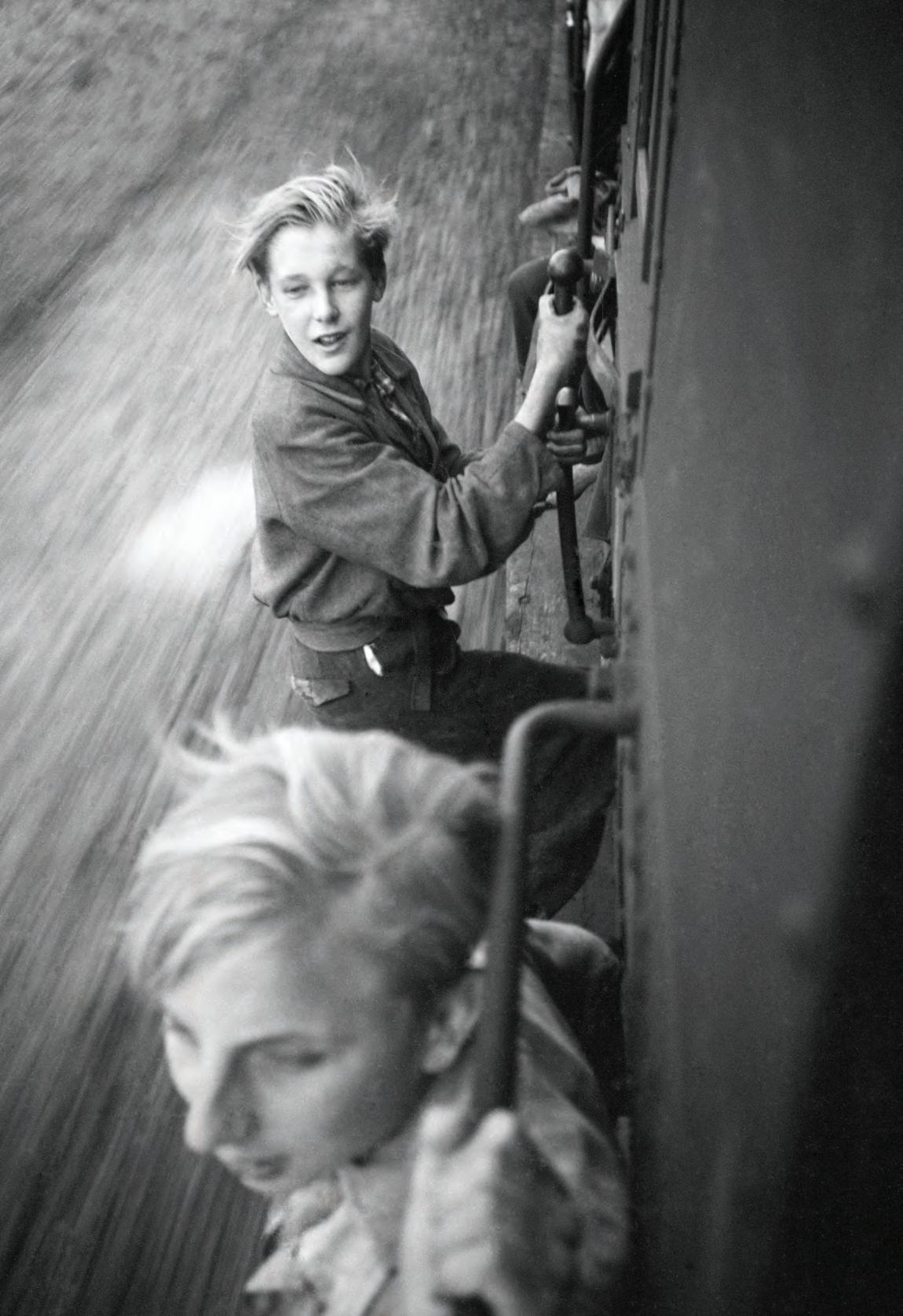
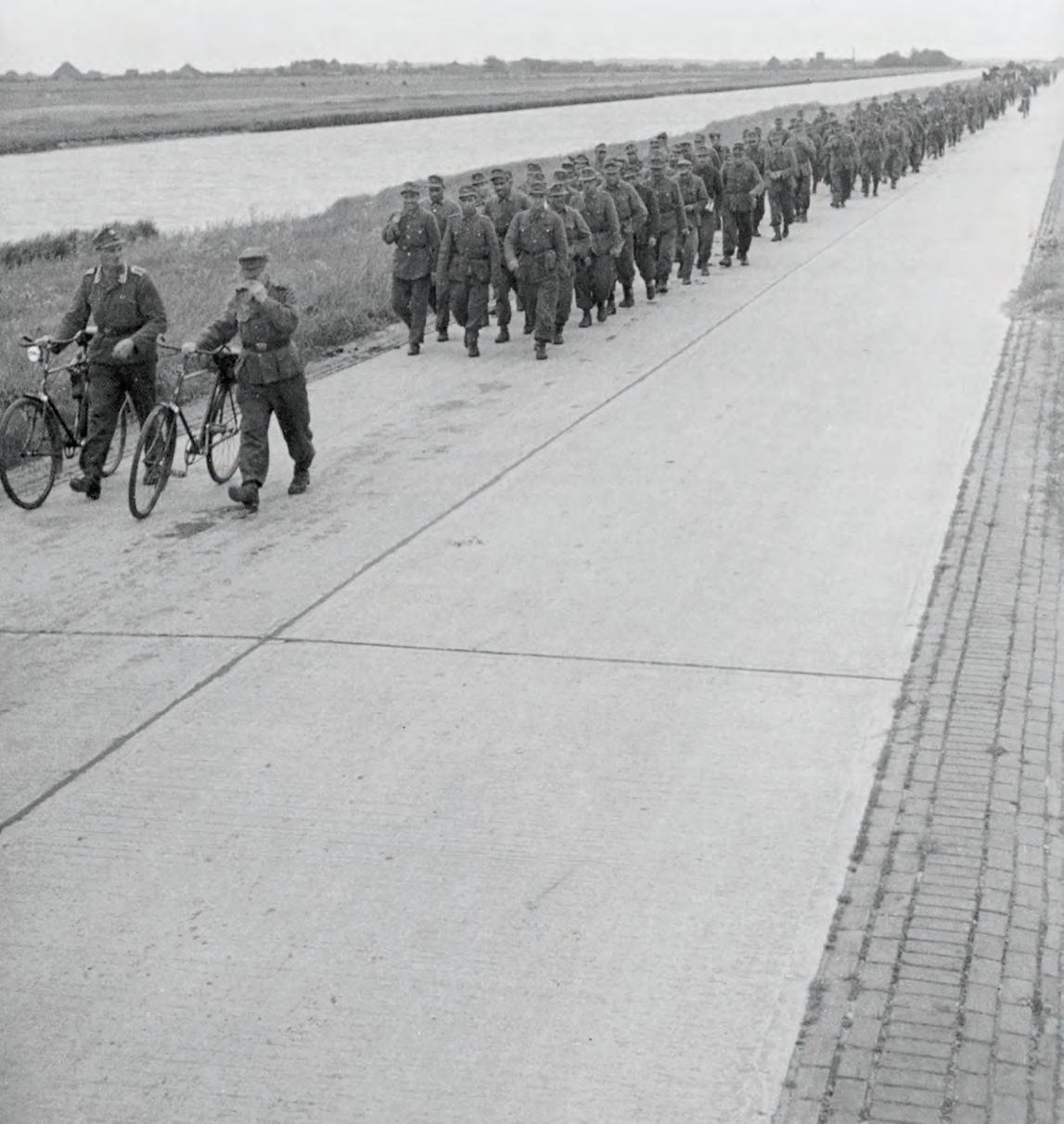
Freed from five years of Nazi occupation, Dutch boys hitch a ride on a train. Defeated German troops (opposite) march out of the Netherlands in May 1945.
Feted with parades and banquets, flowers and wine, the Canadian liberation of the Netherlands was a joyous time—though not far from the shadow of war
Beginning in September 1944, Canadian troops fought their way across the Netherlands, canal by canal, village by village, to end a brutal five-year occupation by the forces of Nazi Germany. By April 1945, weeks before the war in Europe was over, the country had been liberated.
More than 7,600 Canadian soldiers were killed during the eight-month campaign, but the cause was just: nearly 206,000 Dutch men, women and children had died of war-related causes. They included threequarters of the Dutch Jewish population—over 100,000 people—who had been murdered in Nazi concentration and extermination camps. It was the Holocaust’s highest toll in Western Europe.
About 20,000 Dutch citizens starved to death and many more suffered bitterly during the “Hunger Winter” of 1944-45, a famine caused by a German-imposed embargo and compounded by priorities given to Wehrmacht food supply.
The liberators brought with them food relief—and freedom. They were feted with parades and banquets, flowers, wine and jenever, a juniper-flavored gin considered the Netherlands’ traditional drink.
But behind the smiling faces and joyous photographs were a grateful people tired and hurting. The ravages of war had exacted a toll. Homes had been destroyed; businesses and industry wiped out; survivors lost friends and family members, neighbours and colleagues. In some cases,
Dutch had turned against Dutch in their quest to live.
As in France and elsewhere in Europe, informants and enemy collaborators were treated harshly. Liberating forces turned a blind eye as partisans beat and executed traitors. Locals tarred and shaved the heads of women who had fraternized with occupation troops.
The liberation and the wartime sanctuary Canada provided to members of the Dutch royal family forged a lasting friendship between the two countries, marked by annual pilgrimages, flower ceremonies at war graves tended by Dutch schoolchildren and Ottawa’s annual Canadian Tulip Festival, its spring blossoms a reminder of the hope and promise of that “Canadian summer” of 1945. L
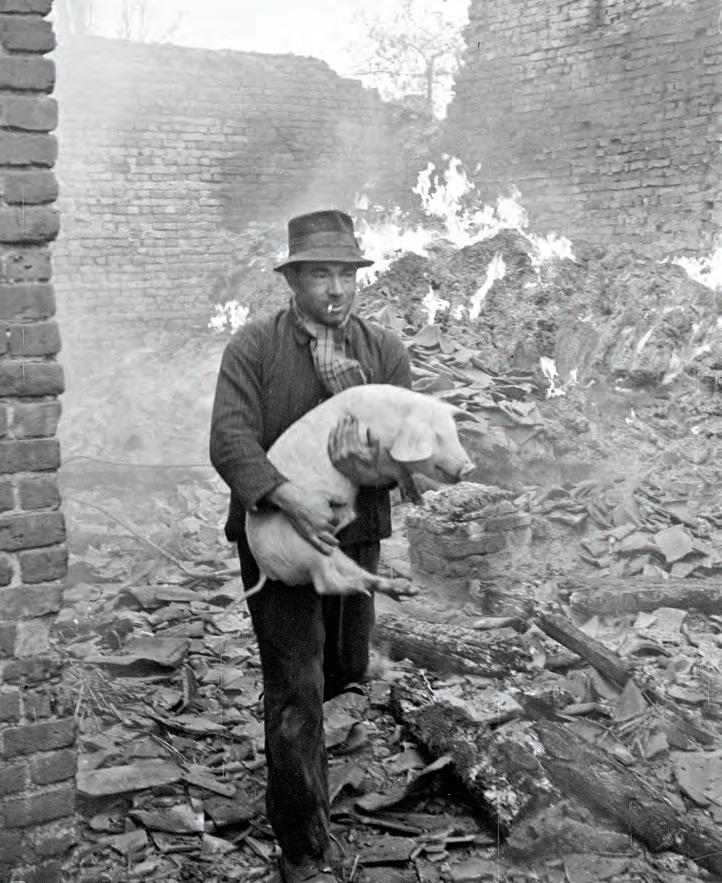
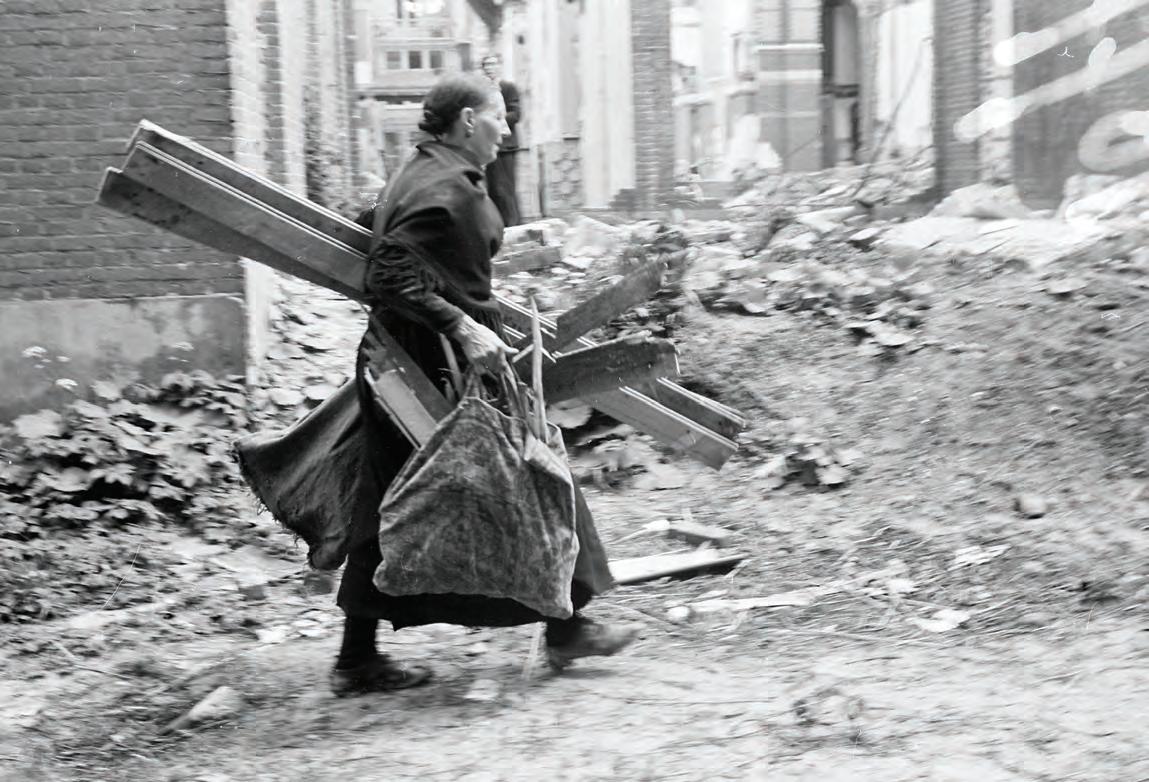
A Dutch farmer rescues a pig from a burning farmhouse in January 1945 (right). A woman carries firewood from a destroyed building in The Hague in 1944 (below).
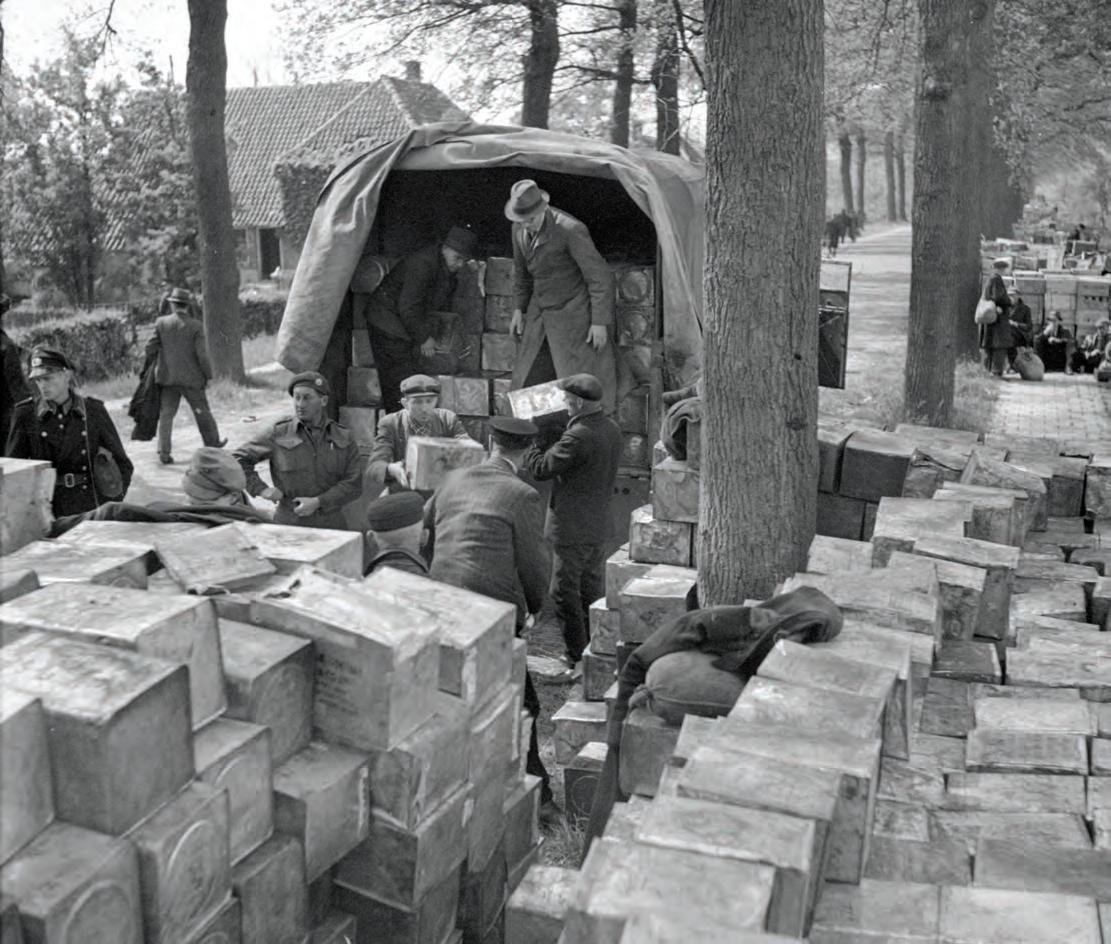
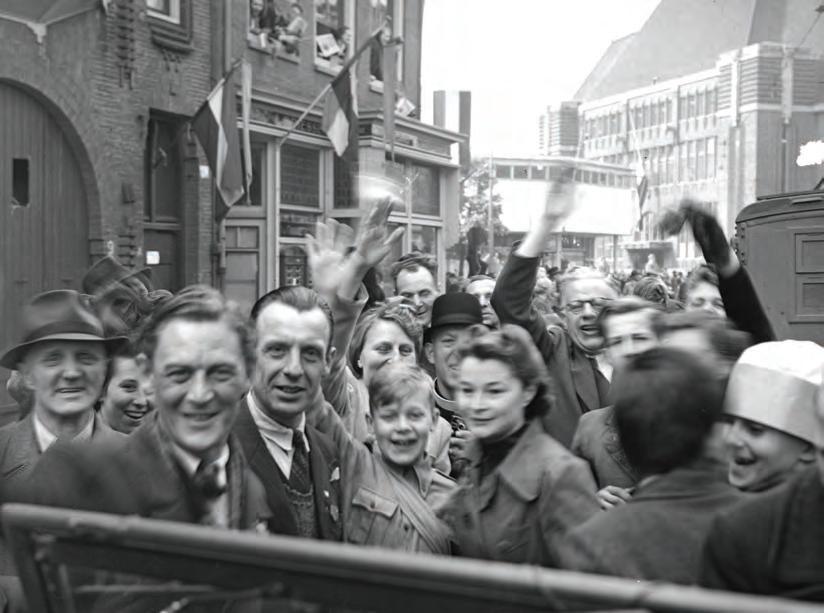
Dutch civilians unload a Canadian truck with food in May 1945 (above), while relieved Dutch crowds welcome their Allied liberators in Utrecht (left).
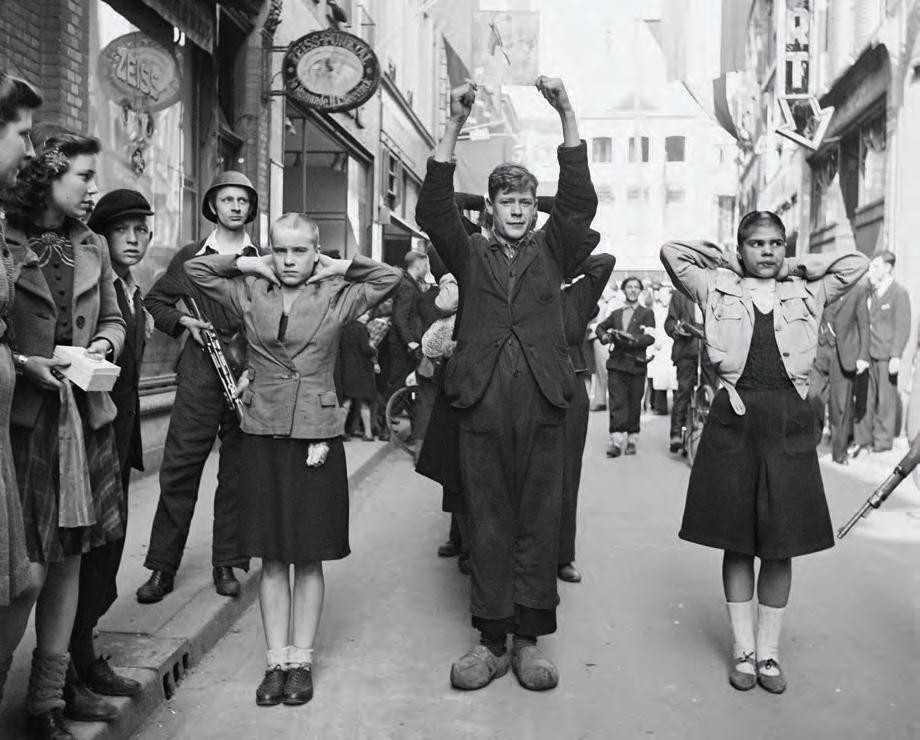
Nazi sympathizers and shaven-headed fraternizers, “Kraut girls,” are marched through Deventer (above). The liberated pile on (below).
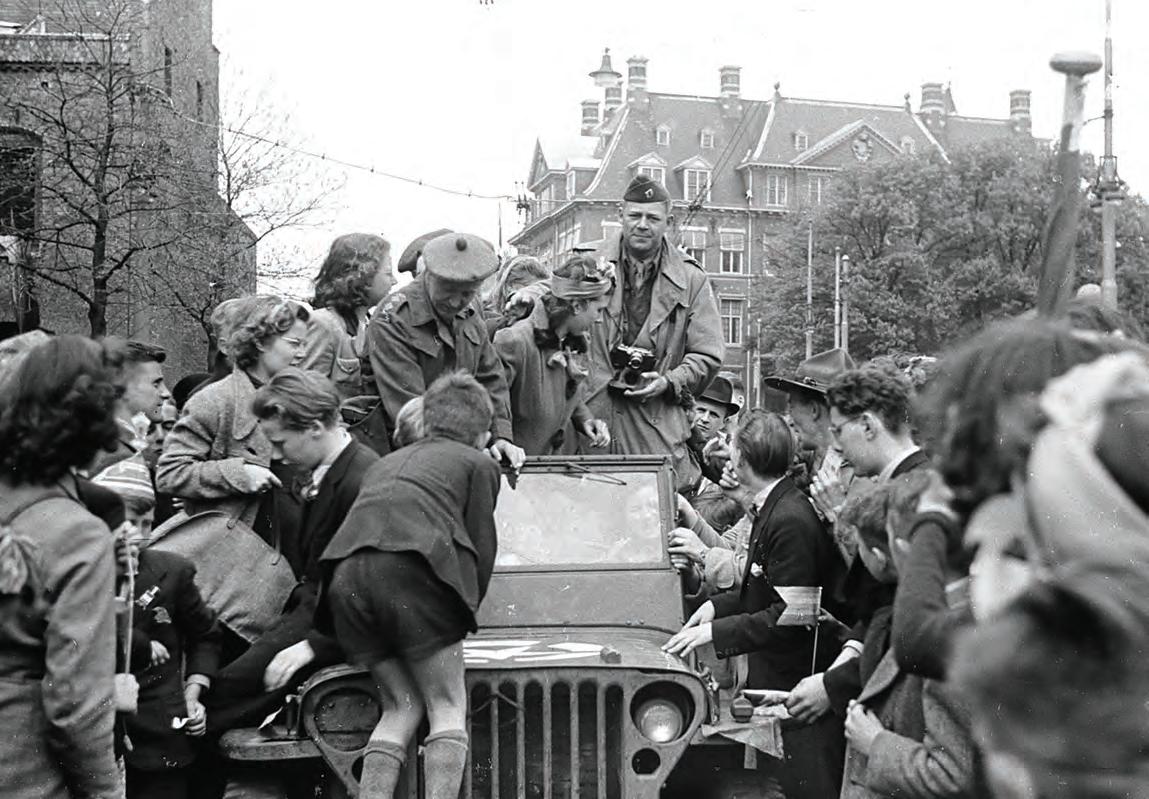
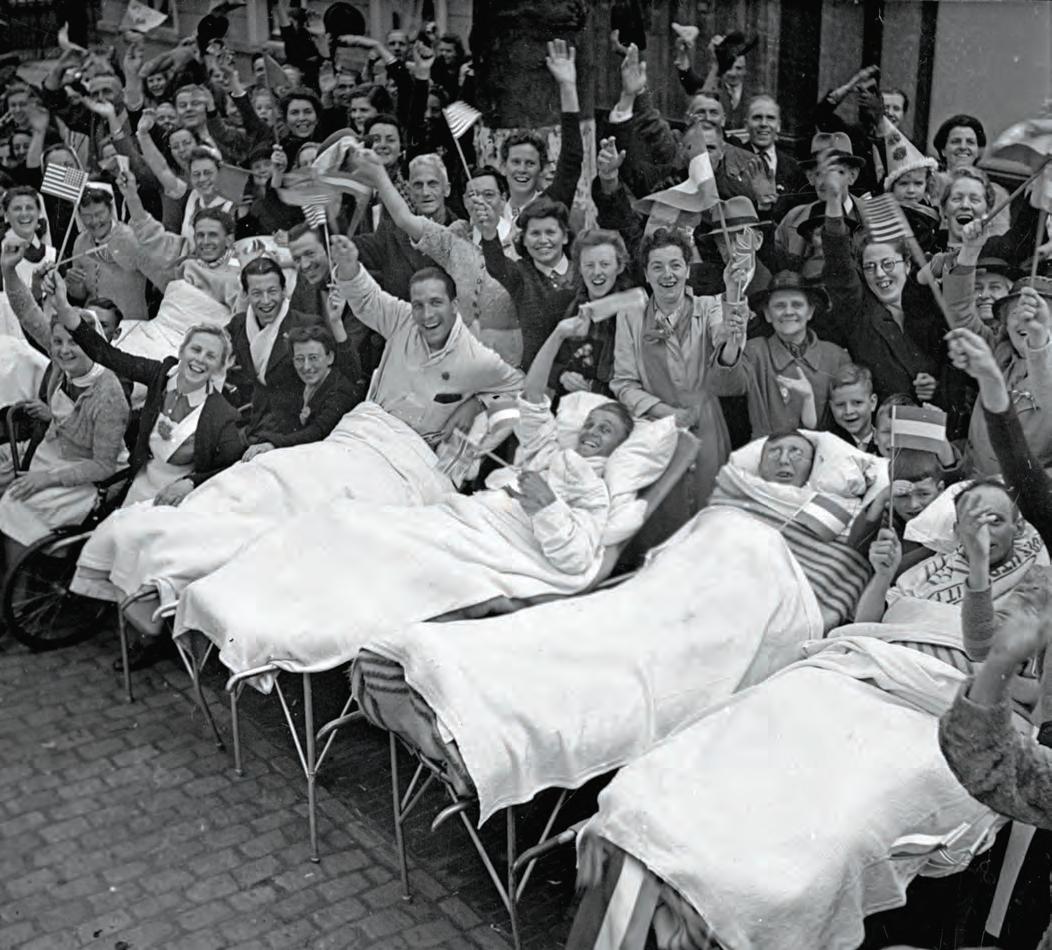
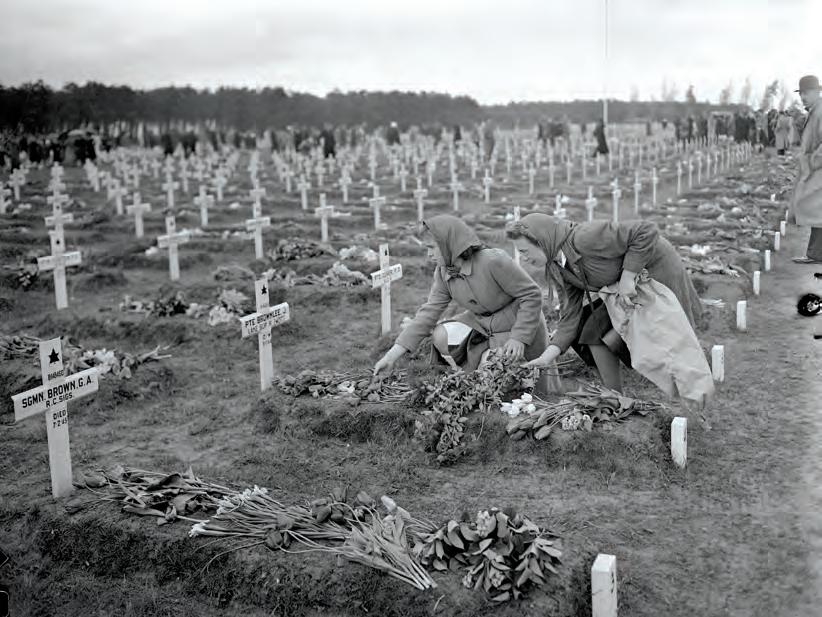
Joyous Dutch, including nurses and hospital patients, celebrate in the streets of Utrecht (above). Dutch women place flowers on the graves of Canadian soldiers at war’s end in Bergen op Zoom (right).
Willem van de Poll/National Archive of the Netherlands/nr900-2456/Wikimedia; Menno Huizinga/Ondergedoken Camera/NIOD Institute for War, Holocaust and Genocide Studies/216805/Wikimedia; LAC/51662-2; Ken Bell/LAC/60821


By J.L. Granatstein
CANADIAN FORCES NEARLY OVERSTAYED THEIR WELCOME AFTER LIBERATING THE NETHERLANDS IN 1945
There is no doubt the Canadian liberation of the Netherlands was hailed by the Dutch. The small country had been terrorized, brutalized and starved by the Nazis for nearly five years. Their men had been shipped to Germany to work in factories, while Dutch Jews had been sent to their deaths in gas chambers.
The liberators from the First Canadian Army fought their way across the

countryside and into the cities bringing food, medicine and freedom with them. The Dutch were enormously grateful and took the troops into their homes—and hearts. They remain thankful to this day, celebrating their liberation with parades of Canadian veterans and tributes in the large Canadian cemeteries. That is the standard story. And it’s true. But there’s more—and it’s not so rosy.
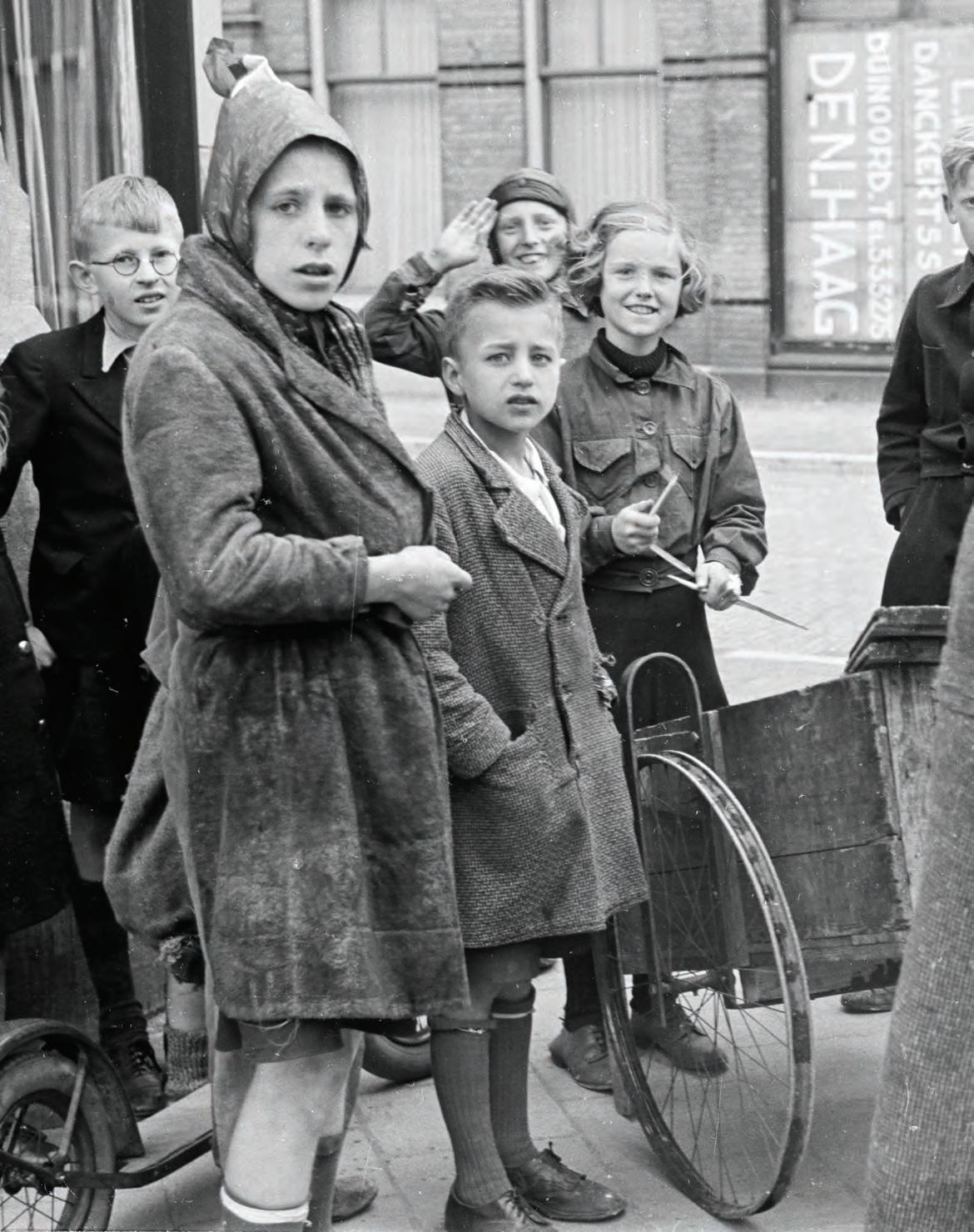
Women and children gather in the street in The Hague as they search for firewood from destroyed buildings.
Dutch newspapers complained the Canadians had shipped food and supplies to Germany.
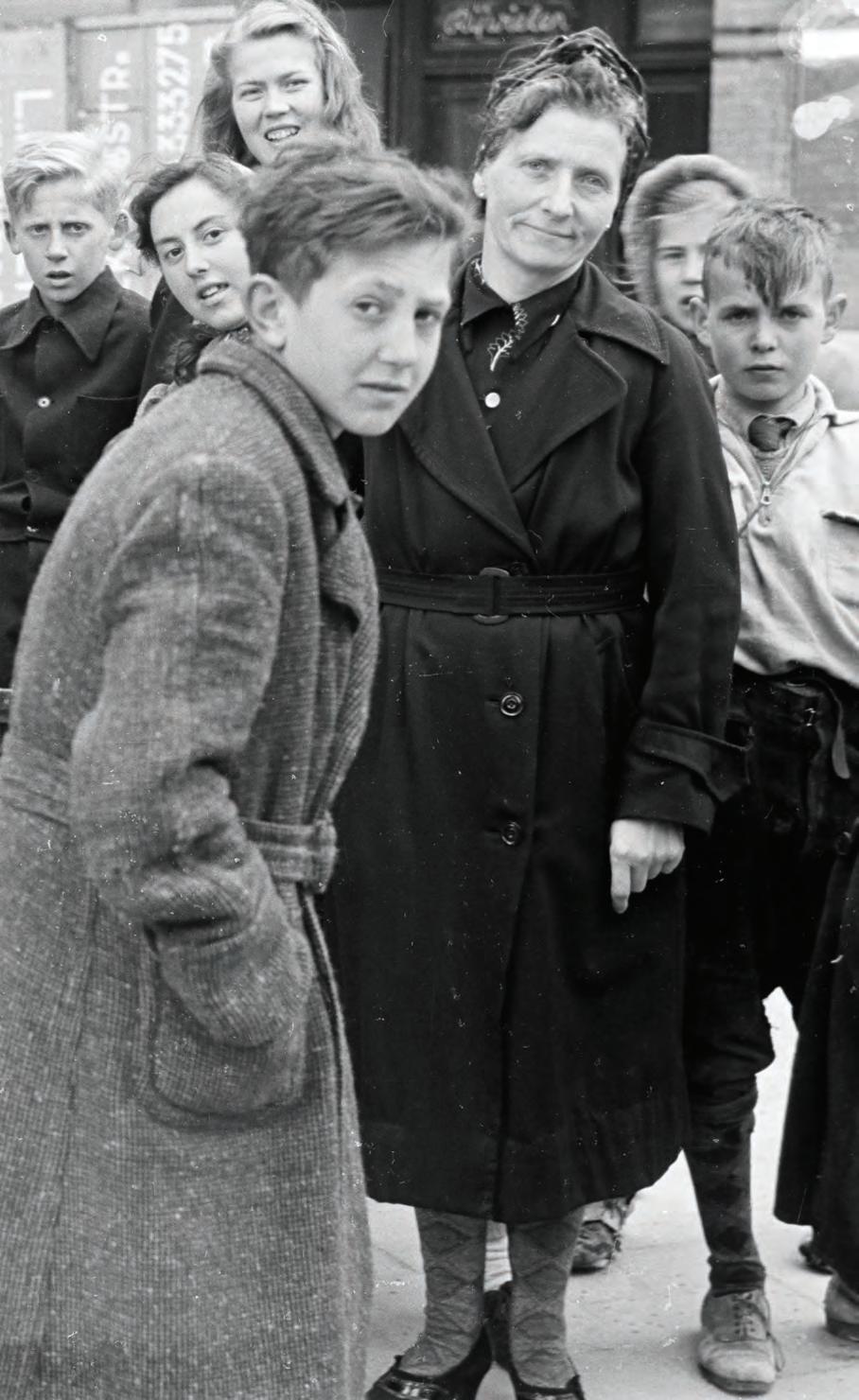
From May 1945 to May 1946 before their repatriation, the 170,000 Canadians based in the Netherlands went from liberators to occupiers. They were far from the brutes the Germans had been, but they weren’t perfect either. They caused problems and, despite continued efforts to improve the situation, the Canadians created several difficulties for the Dutch and their government.
The initial tasks after VE-Day, May 8, 1945, were to ensure a ready supply of food for the Dutch and to collect, disarm and control the defeated Germans. The
first job was huge, as the largest urban centres had the greatest populations and the least food. Convoys ran almost non-stop, and within several weeks, the Dutch had most of what they needed to eat. Some items were still scarce, such as butter. Other goods meanwhile, such as whisky, were simply unavailable to the Dutch, though Canadian messes had ample supply. The shortage of such goods created fertile ground for corruption.
Then there were the Germans. They were herded into vacant factories and other large buildings. To minimize problems, German senior officers remained in command of the detainees. This usually worked well, but on at least one occasion, Canadians turned over two deserters to the Germans in Amsterdam. The men were promptly tried and executed. The eight rifles and 16 rounds of ammunition used to carry out the sentence were

provided by the Canadians.
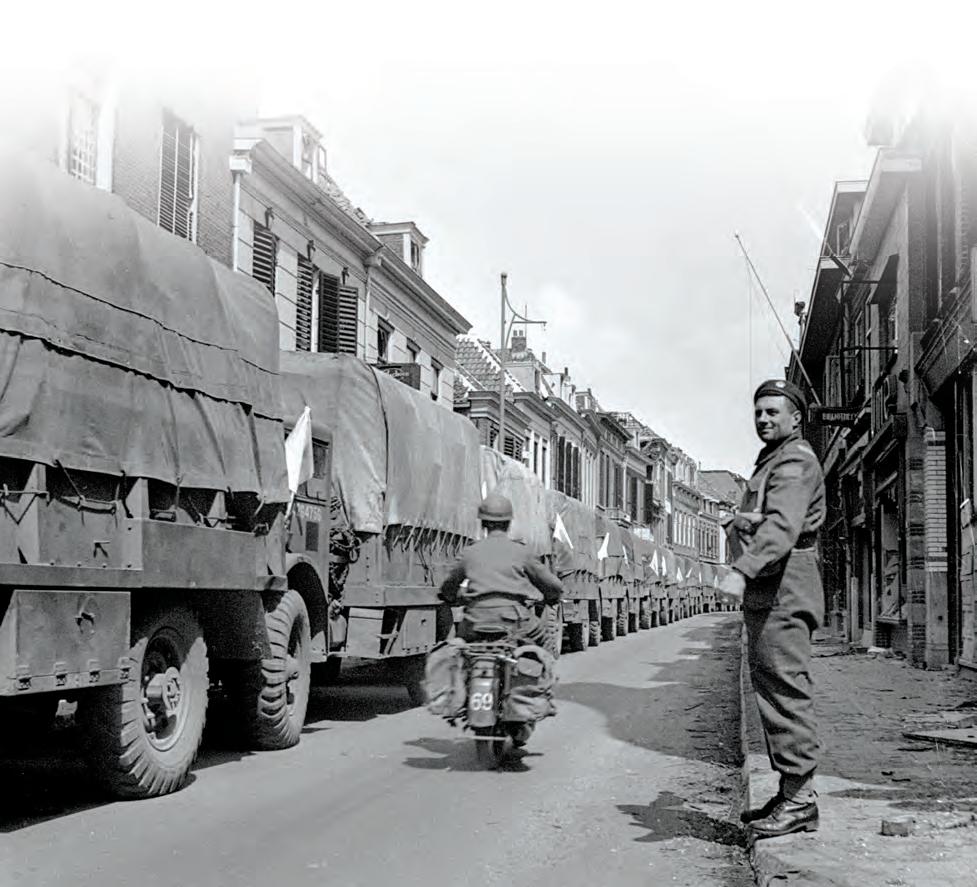
The official departure of “Surrendered Enemy Personnel” began on May 25. German forces were marched in orderly formations of approximately 10,000 men by road. Canadian troops went along to hold back the Dutch. It was “obvious right from the start…” said General Bert Hoffmeister, commander of the 5th Canadian Armoured Division, “the Dutch people would have wounded a lot of them and maybe killed a few.”
Enemy troops and vehicles were occasionally subject to search during the exodus. The items retrieved included fur coats, cars, radios, horses and money. Canadian soldiers also recovered more than 15 million in Dutch currency from the Germans, some of it hidden in ambulances or carried by female auxiliary members

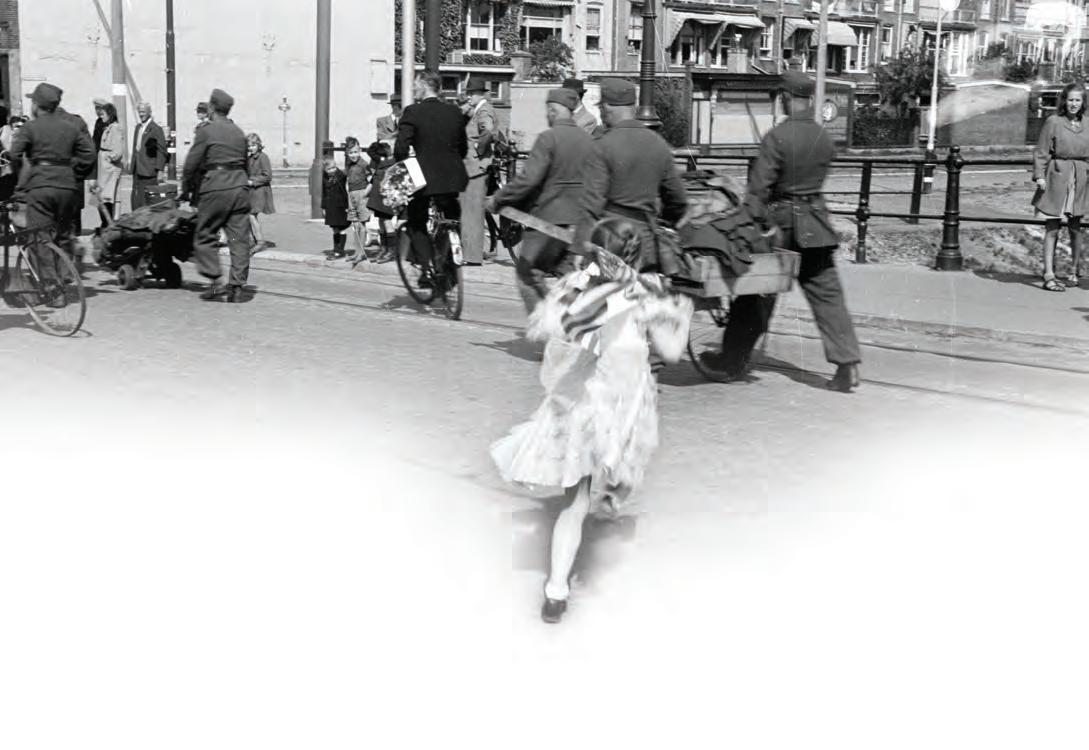
of the German military. All of it was returned to Dutch authorities and the entire German force was home within three weeks.
While the Germans were departing, tons of foods and essential supplies continued to pour into the Netherlands. In all, the Canadians diligently reported that 242,000 tons of food, coal, petrol, stores and equipment arrived by June 22. But why was this detailed list even collected? Because Dutch newspapers complained bitterly that the Canadians had shipped food and supplies to Germany. The commander of the Canadian Forces in the Netherlands, General Harry Crerar, had to account for the precise tally and clarify that the Germans


this situation suggested, the liberators were sometimes viewed with mistrust.
The real difficulties, however, began with cigarettes. Smokes were so scarce that one could cost as much as five guilders (about C$2) on the black market. Dutch people wanted them, though, and they were willing to pay. The Canadians, even the non-smokers, had them. The Canadian government and cigarette manufacturers had co-operated to get Canadian brands to the troops, tax free. A thousand cigarettes could be purchased and
mailed overseas for just $3. At the time, that bounty was usually worth about $400, more than $4,000 today.
While the cigarettes could be used as gifts for Dutch friends, they could also be traded with the desperate Dutch for goods. A decent camera might cost 500 cigarettes; jewels could be had for even fewer. Cigarettes could also be traded for sex. One soldier recalled paying for his wedding with tobacco: “eleven hundred cigarettes for the rings and photographer, and cigarettes and chocolate to settle the hotel bill.”
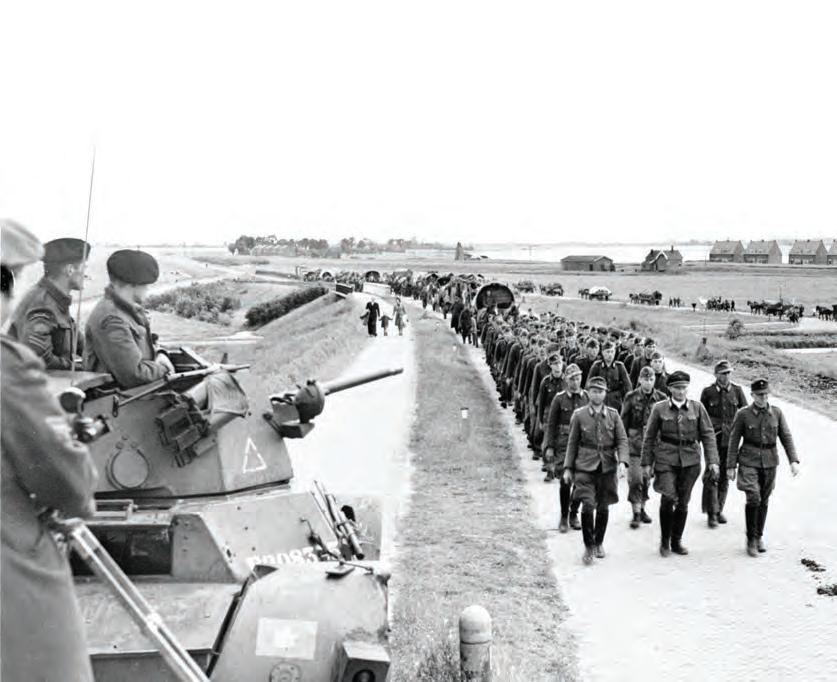
German soldiers march out of The Hague after the liberation (above). Canadian troops oversaw the exodus near Amsterdam (below), as well as the delivery of muchneeded food supplies (opposite).
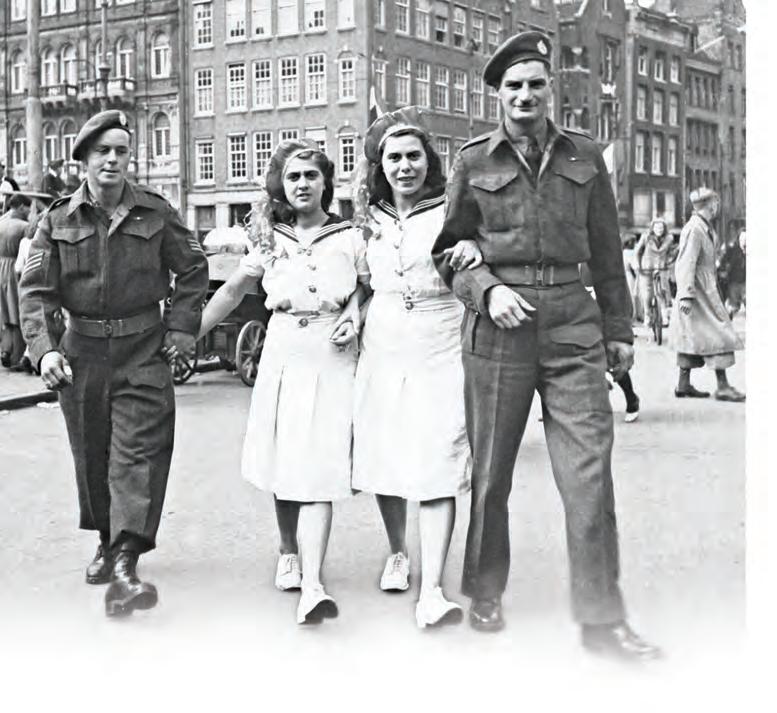
“After what we had been through ,” one woman recalled, “the Canadians looked delicious.”
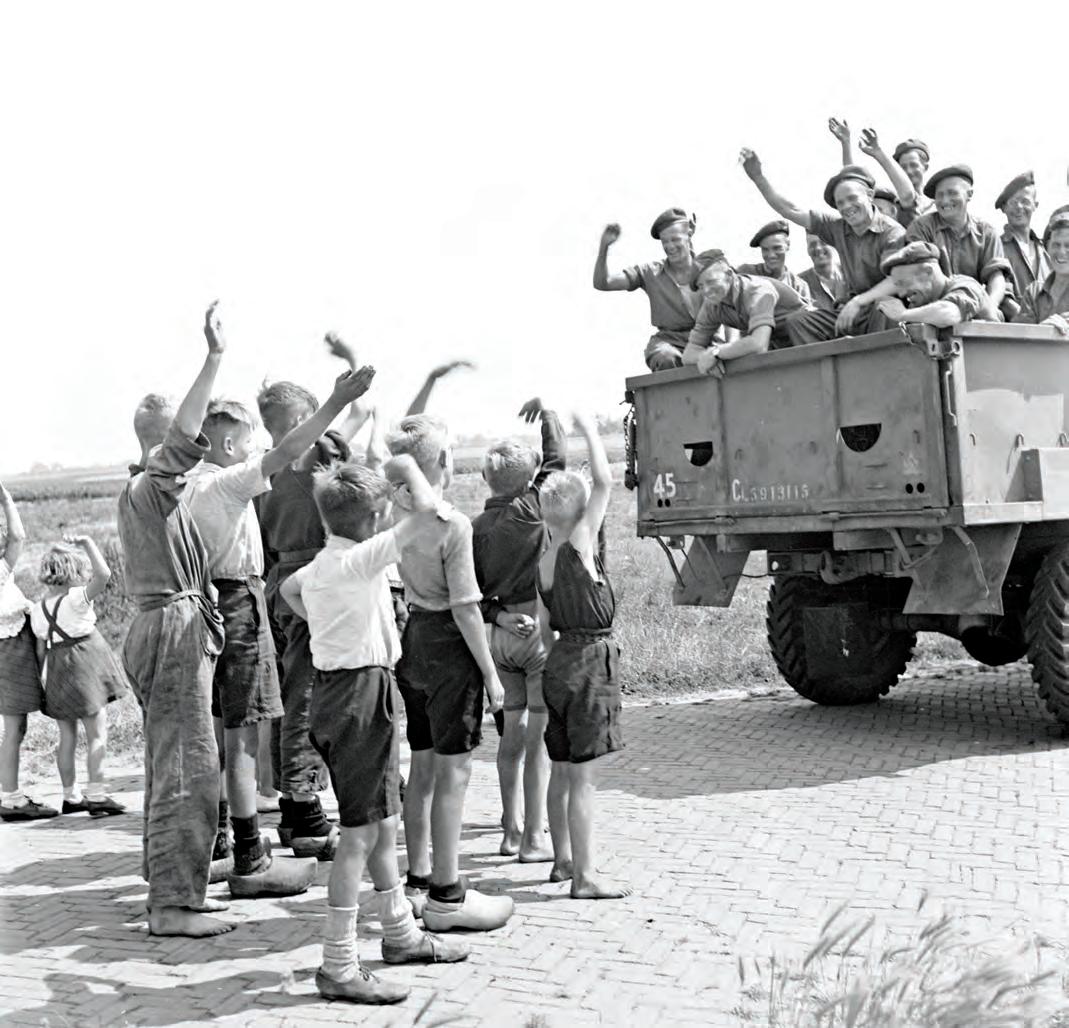
Dutch women accompany Canadian soldiers in post-liberation Amsterdam (above), while Dutch children wave goodbye to Canadians moving out in July 1945 (opposite).

The trade in tobacco, like all black market dealing, was against First Canadian Army orders. But it was so widespread it was unstoppable.
Other Canadian military supplies soon ended up in Dutch hands, too. Canadians, enlisted men and officers alike, traded purloined vehicles, whisky, typewriters, boots, soaps and myriad other rare goods to the Dutch. Valuable paintings—some apparently stolen—were acquired by some officers. Queen Wilhelmina complained about the art thefts to the Canadian government. Spurred on by Ottawa, General Guy Simonds, commanding the Canadians after Crerar returned home, court-martialled the most flagrant offenders.
Unfortunately, Simonds’ own chief of staff was also tried for his dealings in black market diamonds, but “Diamond Jim,” as he became known, was acquitted.
Another irksome issue for the Calvinist Dutch was that local women were attracted to the Canadians. Unlike the hundreds of thousands of Dutch men who were just returning from labour drafts in wartime Germany or civilians recovering from starvation, the soldiers were fit. Love—and sex—inevitably found a way.
“Let’s face it,” one woman recalled, “after what we had been through the Canadians looked delicious.”
A Dutch historian phrased it in harsher terms: “Dutch men were beaten militarily in 1940; sexually in 1945.”
As many as 7,000 children were born out of wedlock in 1946, and pastors and newspapers railed at the women who had lost their honour and the Canadians who had allegedly got them pregnant.
In the city of Tilburg, for example, illegitimacy rates were 10 times higher in 1945 than five years earlier. Dutch comedian Wim Kan later joked of the time the Canadians “threw out the Germans and supplied Dutch men with cigarettes, Dutch women with chocolate and Dutch children with little brothers and sisters.”
Unsurprisingly, the spread of venereal diseases also increased. In August 1945, Canadian medical officers tracked 252 cases of sexually transmitted diseases in Groningen. Prominent locals in that city formed a moral reconstruction group to urge women to be careful: “Girls, we understand that you want a bit of fun… but…remember that love may never be degraded to the game of a few hours.”
Sometimes the Dutch anger boiled over. There were inevitably brawls between soldiers and civilians—though not always
over women. One huge fight involved an estimated 400 men in Utrecht in the late summer of 1945. Several soldiers faced courts martial as a result, though it’s unclear if any Dutch were tried in civilian court.
There were also threats that women consorting with Canadians might have their heads shaved, as had been done to those who slept with Germans. The sexual desires of the troops were beginning to be seen as a threat to public morality and health.
An August 1945 editorial in the newspaper Vrij Nederland wrote: “We will do anything for the Canadians. But our girls must stay away from them. We can’t take the risks. And we will praise God when the Canadians have gone back to Canada.”
The soldiers, of course, also wanted to go home. They were fed up with waiting.
By the end of 1945, the Dutch wanted their nation back. A newspaper in Nijmegen put it bluntly: “We are grateful to them, but let them go home. We won’t forget these nice smiling boys, and they will always have our good wishes and our gratitude.”
The Canadian occupation had gone on too long. Resentment had grown at the sometimes wild behaviour of officers and men. A captain in the North Shore (New Brunswick) Regiment wrote home of an all-night party that ended with a drunken ride in a scout car: “The locals think we’re crazy.” Indeed, they sometimes did. But the Dutch were also upset by a number of other things: the perceived lavishness of the army’s officers’ clubs; the abundance of food and drink available to the Canadians but not to the Dutch; and the parking lots full of seemingly unused vehicles
The Canadians weren’t the brutes the Germans had been, but they weren’t perfect either.
when cars for civilians were virtually unavailable.
In late 1945, Queen Wilhelmina told Simonds he should take his Canadians home. “Including the dead, Your Majesty?” was Simonds’ apocryphal reply.
By the end of March 1946, about 1,000 Canadians remained on Dutch soil. Simonds’ headquarters ceased operations on May 31, 1946, and the Canadian occupation came to an end. While hardships continued in Holland for some years, only good memories of the Canadians remained over time. L


By Stephen J. Thorne
When domestic emergencies
—such as the November 2021 B.C. floods —the Canadian military often comes to the rescue
Over two days in November 2021, a “pineapple express” rolled through the Pacific Northwest, leaving in its wake a swath of devastation the likes of which had not been seen in living memory.
A reference to its oceanic origins northeast of Hawaii, pineapple express is a lyrical moniker for what meteorologists call an “atmospheric river,” or a corridor of concentrated moisture. It sounds less threatening than it is.
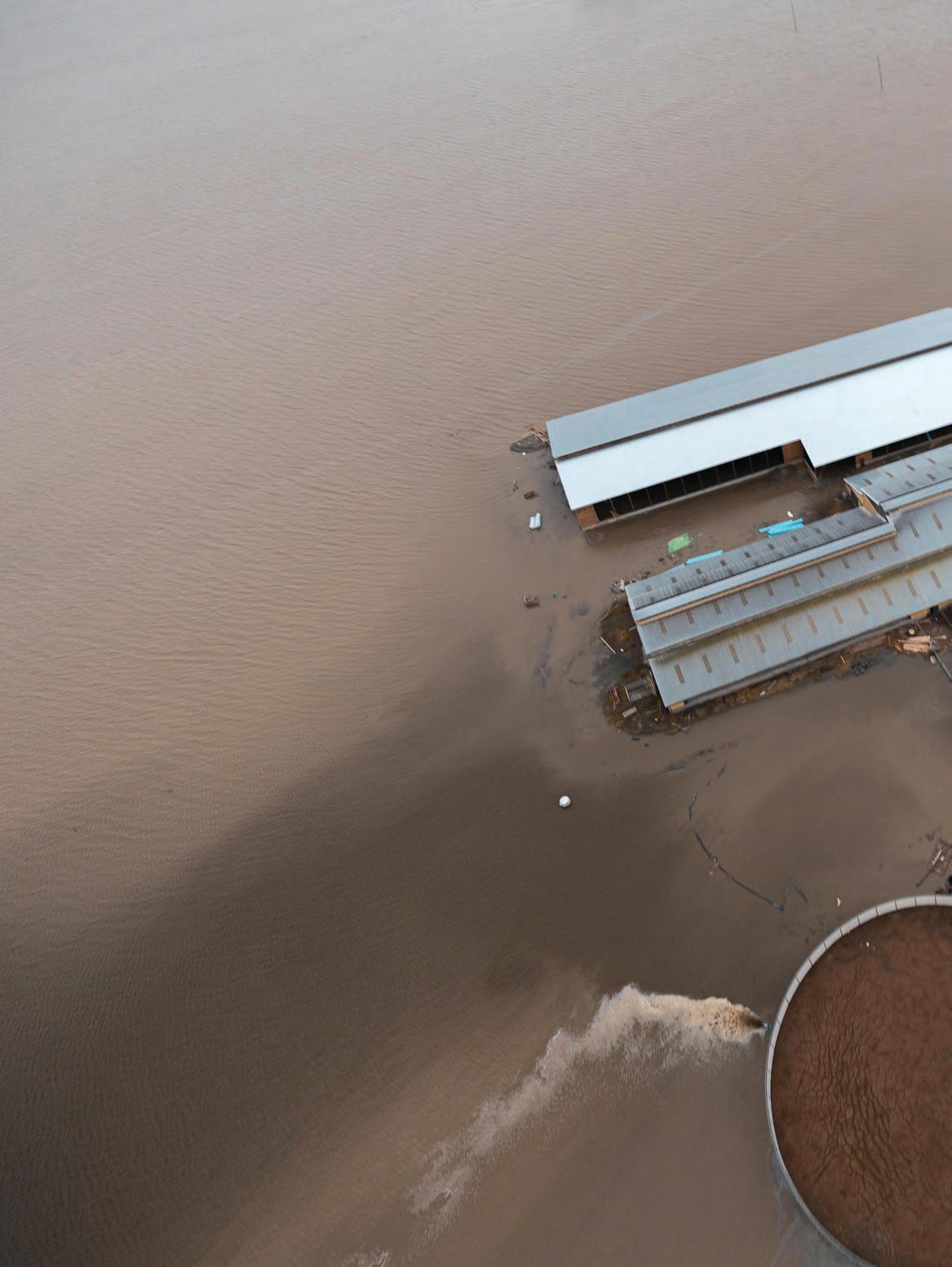
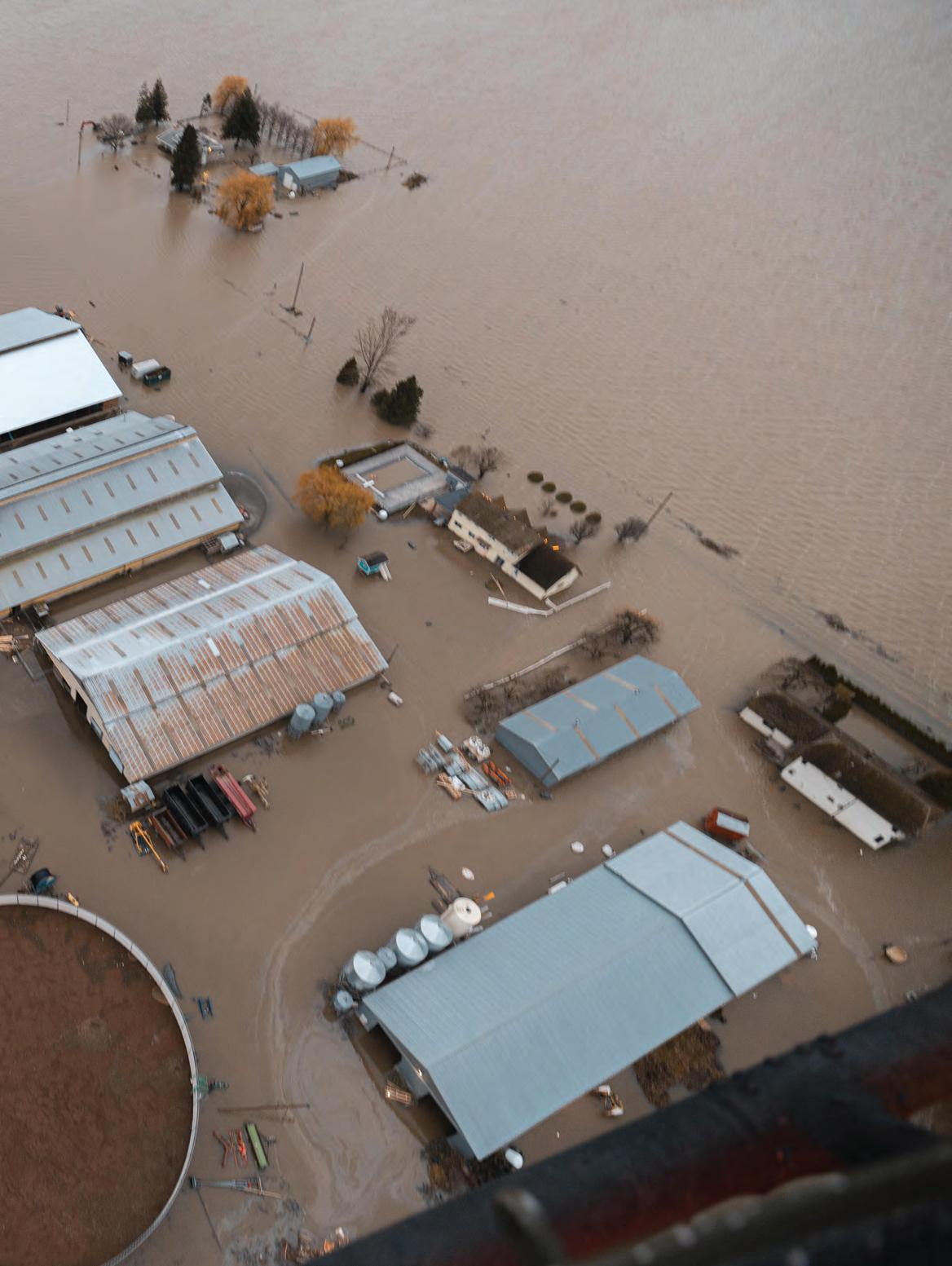
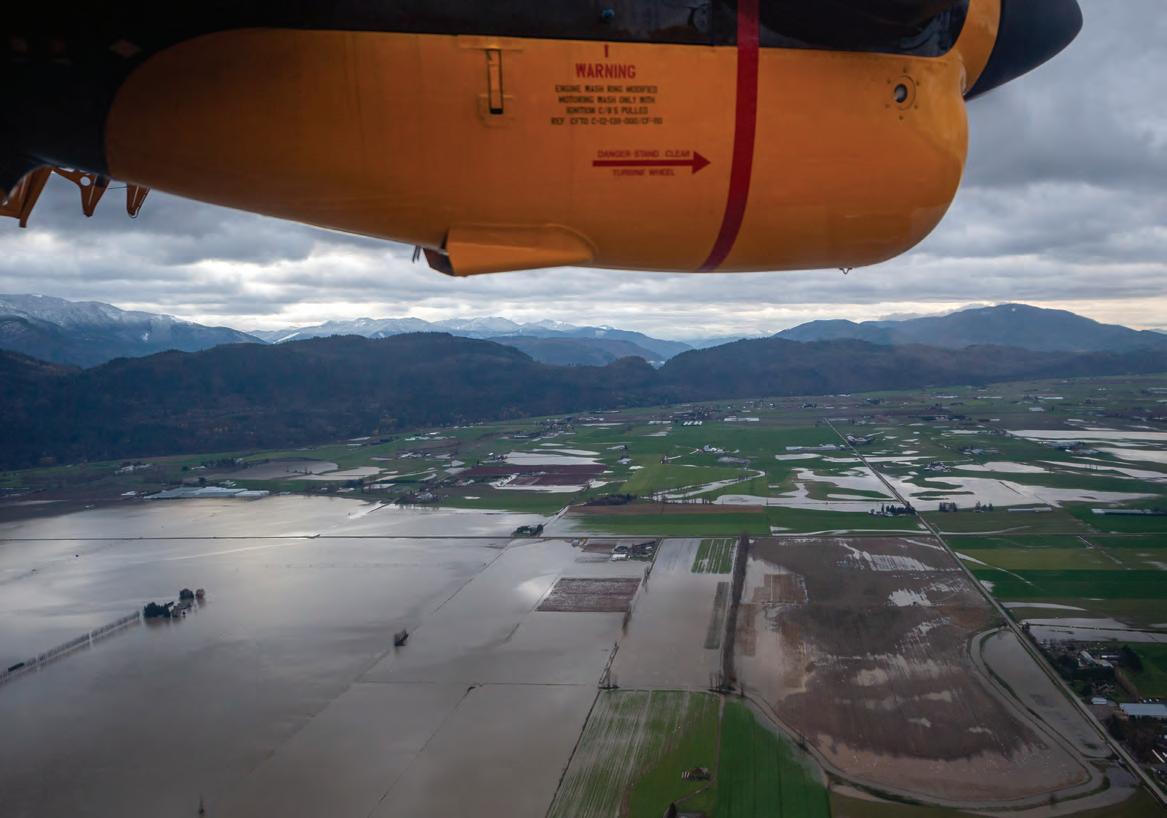
When it made landfall on Nov. 14, the storm commenced a chaotic run of devastation wrought by high winds and heavy rains—a once-in-500-year event that dealt British Columbia up to $9 billion in damages.
By the time the blitz was over, the storm had dumped nearly 30 centimetres of precipitation in some areas of the region. At least five British Columbians were dead. Thousands of others were trapped. Many more would be displaced. Homes and businesses were destroyed. Farms were wiped out; about a halfmillion farm animals killed.
All land links between the port of Vancouver and the rest of Canada—two railroads and two highways—were severed by mudslides and washouts. B.C.’s main northsouth routes—highways 5 and 99—were also blocked.
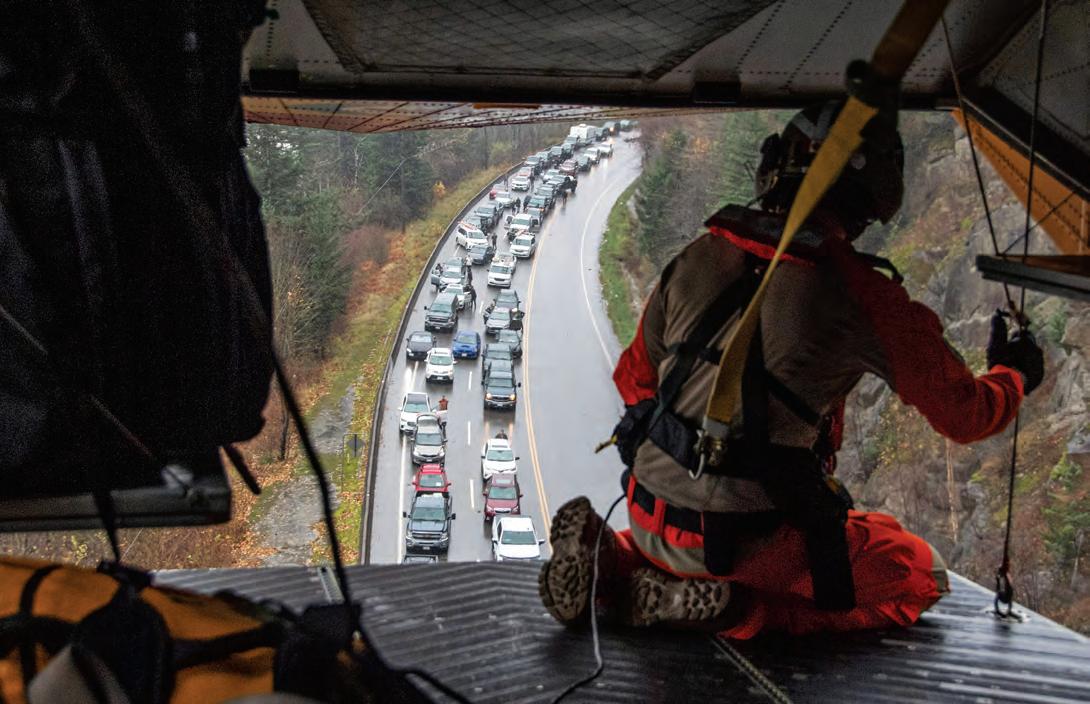
Travellers stuck between mudslides along B.C.’s Highway 7 await evacuation.
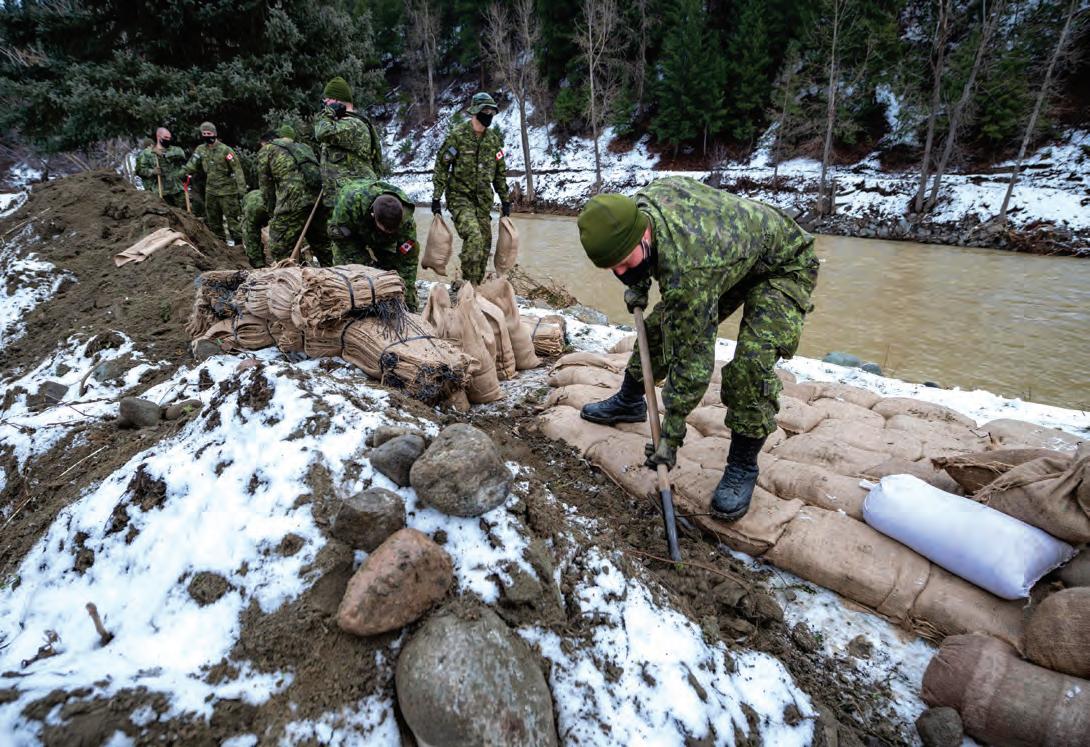
Troops from Lord Strathcona’s Horse (Royal Canadians) in Edmonton (below) lay sandbags in Princeton, B.C., on Nov. 25.




the battered route was difficult.
The storm was in its last throes when Captain Jonathan Groten, a Cormorant pilot with 442 Transport and Rescue Squadron based in Comox, B.C., got word that several vehicles were trapped among mudslides near Agassiz, B.C. The cars were stuck on Highway 7, which runs along the north side of the Fraser River between Vancouver and Hope.
Otherwise short on details, the 13-year military veteran prepared to head out with his crew: co-pilot, Capt. Evan Southern; flight engineer, Corporal Jordan Pugh; and search-andrescue (SaR) techs, Sergeant Ashley Barker and Master Corporal Nick Meade.
They weren’t sure what to expect, though experience did tell them to bring duffle bags for unco-operative pets. But how many people were trapped and what challenges the crew would face were unclear.
“We thought we’d get the job done with one helicopter,” Groten told Legion Magazine. “We were the first helicopter to head out there and we had in our minds certain expectations about how things were going to go.
“As the information kept trickling in, the number of people kept on coming up. They made the decision once we’d already left to call in [the other two] helicopters that we had that were serviceable
and they manned them with crews that they could scrape together, then they launched them out behind us.”
Ultimately, 80 to 100 vehicles were trapped. Some had been there overnight. Cell phones were dying and cars were running out of gas. The threat of more mudslides loomed in the unstable conditions.
One driver, Ryan Berekoff, had been staying in Sunshine Valley when the power went out, so he had decided to head home to coastal Tsawwassen, south of Vancouver. But he got caught in the traffic jam along the way and realized he wasn’t getting through.
He tried to turn around but another mudslide blocked the road behind him. He stayed in his car, snacking on leftover lasagna and occasionally taking his dog out. He ran out of water and resorted to refilling his bottle from runoff.
“Overnight was very eerie and uneasy,” he told Vancouver’s Daily Hive. “It was pitch black.”
Groten, meanwhile, had left his base expecting easy, open highway landings.
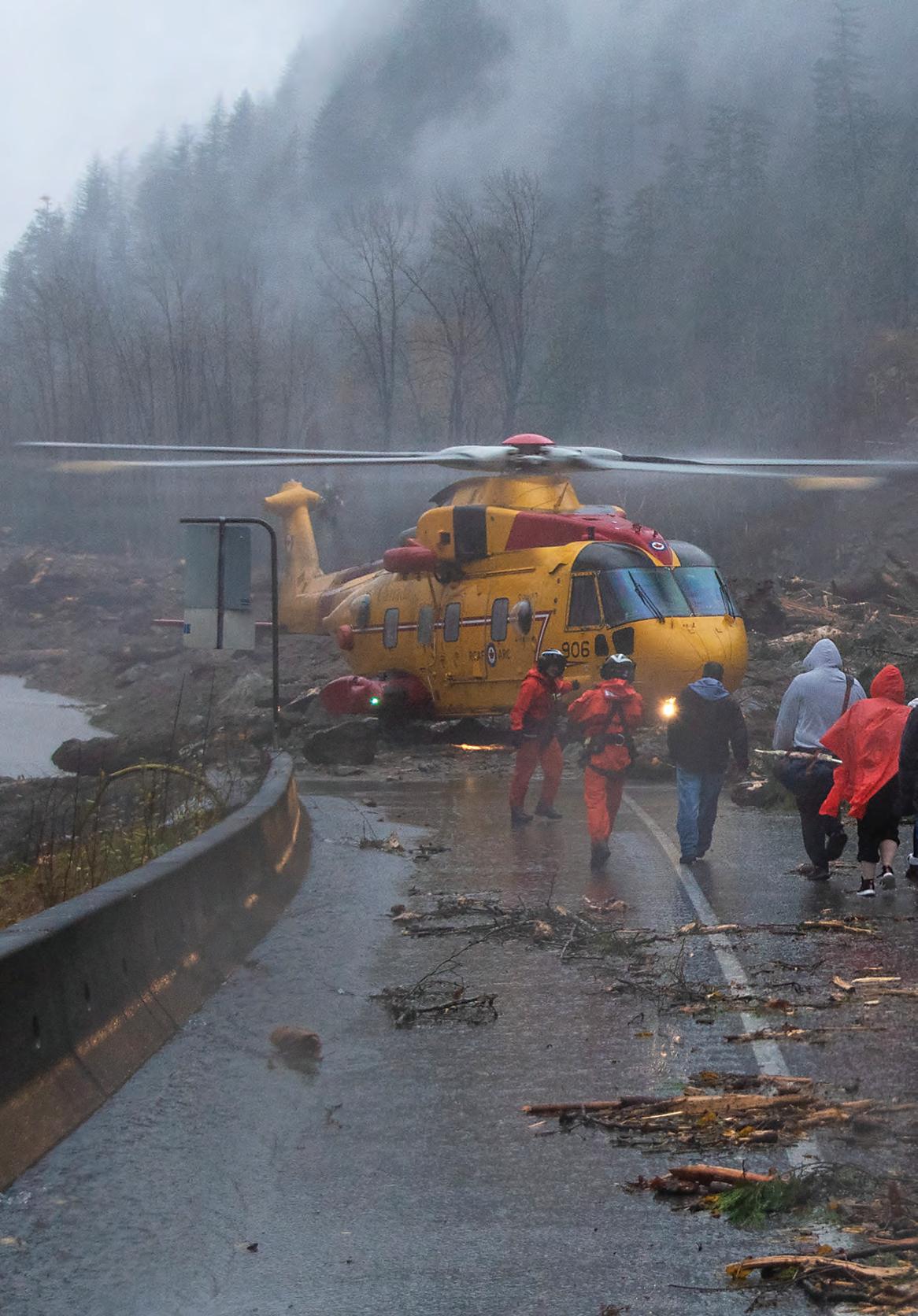
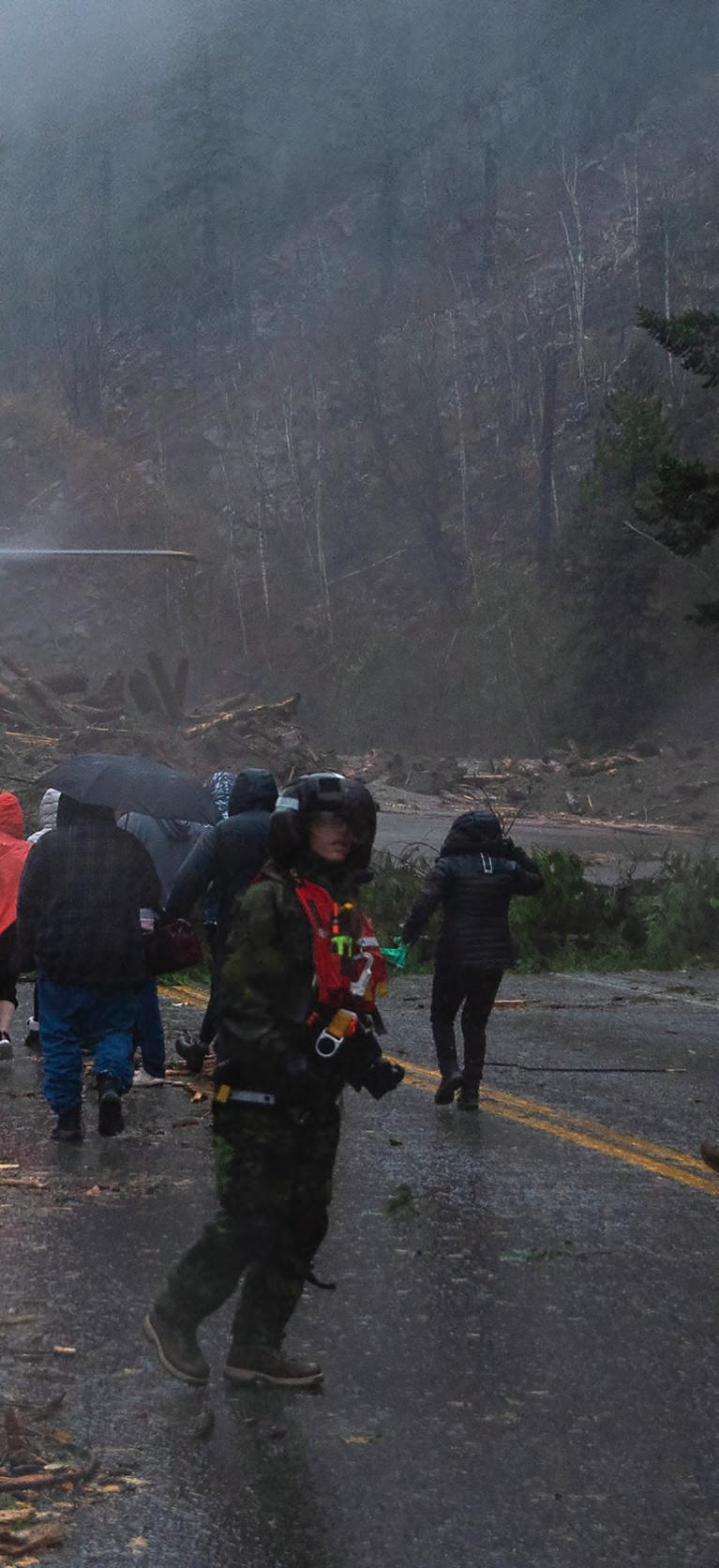
But finding places to put a chopper down along the battered route was difficult. Mudslides had blocked the way and debris was everywhere. Heavy rains hampered visibility. Mountain winds, tricky for helicopters at the best of times, made the situation even more challenging.
“The conditions in the area were really bad,” said Groten, the Chicoutimi, Que.-born son of a SaR helicopter pilot. “There was pretty significant turbulence. There was a frontal system that was sweeping through the area as we were trying to work.
“There was heavy rain, poor visibility. At one point, we almost got stuck in a cloud on the highway and we had to use the helicopter to blow the cloud away out of the confined area we were in.”
He said the landing areas turned out to be adequate, but very tight. People on the ground had to clear debris and, in one spot, hack down trees and brush that were preventing the choppers from getting on the ground at all.
One helicopter had an open landing spot where a mudslide had cleared all the obstacles. But, while it was open, the area was in the middle of a still-volatile slide zone. Beyond the fact they were cold, hungry and stranded, the people they were rescuing were facing the potential that subsequent slides could come roaring down the mountain at any moment.
“They were worried about the stability of the whole mountain above them, essentially,” said Groten, who’s conducted rescues on the high seas, in remote areas and through all weather. He called the Highway 7 operation “very, very challenging,” even while flying the fast and nimble Cormorant, one of 15 CH-149s that began replacing the military’s CH-113 Labrador helicopters in 2001. (The Cormorant fleet was reduced to 14 after one crashed in 2006, killing three crew.)

“The military will always be there to support Canadians in their time of need.”
A crew from 430 Tactical Helicopter Squadron conducts an aerial recce after the floods.
More than 15,000 hectares of southern B.C. were affected.


The situation renewed calls for Ottawa to reassess the military’s role in domestic disaster relief.

A military helicopter flies over flooded farms near Abbotsford, B.C., on Nov. 24. The storm affected more than 1,100 farms.
“We were operating in a tight timeframe in very poor weather,” said Groten. “We had numerous barrier states in front of us, but none of them was insurmountable, thankfully. We were able to use our skill and teamwork and training to overcome some pretty significant obstacles.”
Indeed, training and experience were the key, he emphasized. “You would have had a harder time with less experienced crews or a less capable helicopter. It would have dragged on into nightfall and become extradangerous, extra-difficult to co-ordinate at that point.”
Groten and his crew rescued about 100 people, between 25 and 30 at a time—the numbers rising as their depleting fuel supply lightened the Cormorant’s payload.
“I think we did four or five lifts, taking as many people as we could every time.”
Combined, the three crews evacuated 311 stranded motorists, along with 26 surprisingly co-operative dogs and one cat, the last of them just around dusk—fortuitous timing, said Groten. “Those areas were hard enough to land in during daylight hours. At night, it would have really increased the risk.”
Their job done, Groten and the other crews withdrew from the operation and other Canadian military personnel from Edmonton and Petawawa, Ont., moved in, bringing with them more people and machinery, including several Griffon and Chinook helicopters that primarily conducted medevacs and resupply. Before they left in midDecember, some 748 soldiers packed sandbags and erected flood barriers; delivered food, water and medical supplies; repaired and restored infrastructure; and went house to house in threatened areas, shuttling residents and

animals to safety. They even evacuated 30,000 chickens from a poultry farm.
The deployment was the latest in a mounting list of domestic emergency calls to the Canadian Armed Forces, the bulk of them spurred by events related to climate change. The situation has renewed calls for Ottawa to reassess the military’s role in domestic disaster relief.
“Over the past decade, Canada has become more reliant on the CAF to respond to domestic emergencies, which are growing in frequency,” said The Canadian Armed Forces and Humanitarian Assistance and Disaster Relief: Defining a Role, a 2020 paper for the Centre for International Governance and Innovation in Waterloo, Ont.
Authors Christian Leuprecht and Peter Kasurak, both Royal Military College professors, reported that the Forces performed 30 domestic missions between 2011 and 2020, including 10 in 2017-2018 alone. There were 12 weather-related missions from 1996 to 2006 and just six from 1990 to 2010.
Last year, the CAF also responded to flooding in the Yukon and Newfoundland; tainted water in Iqaluit; and wildfires in B.C., Manitoba and northwestern Ontario.
Firefighting and flood management is “now becoming a routine occurrence, which it had not been in the past,” for the military, the former chief of the defence staff, retired general Jonathan Vance, told the Commons defence committee in 2018.
Emergency response has become so prevalent that military plotters
have factored it into their annual planning cycles.
In March and April, it’s floods; July and August, wildfires. In January 2020, the domestic demand had become so great the army chief, then-lieutenantgeneral Wayne Eyre (now chief of the defence staff), said: “If this becomes of a larger scale, more frequent basis, it will start to affect our [combat] readiness.”
Josh Bowen is a 13-year military veteran who headed the Forces’ domestic disaster response planning for Joint Task Force West and deployed on five domestic crisis operations. He told the Conference of Defence Associations Institute recently that events such as the B.C. floods have refuelled the question of “whether it is appropriate to call on the CAF all the time.”
“The answer is that the military will always be there to support Canadians in their time of need,” he said. “Nonetheless, we need to develop a civilian capacity to be able to respond instead.
“What we need for things like the disasters that unfolded in B.C. and Newfoundland is the ability to deploy people and assets to protect lives, protect property, protect the environment, and protect the economy.
“We need a co-ordinated, federally supported, federally funded model to encourage people to help,” said Bowen. “People do want to volunteer. People want to help, so we need to provide support for those who do.”
He stressed the importance of mitigation, such as building infrastructure and adopting new building standards and practices that
address the threats posed by more severe weather. The latter includes not building in flood plains and creating fire breaks around vulnerable communities.
“We should not have the same flood pattern, on the same highway in B.C. in 1990, and again, 31 years later,” said Bowen. “We need smarter infrastructure, and we need to be smarter.”
Similarly, a paper published by the Defence Associations Institute in 2020 called for a high-level review of Canada’s COVID-19 response once the pandemic subsides, with an eye to the broader question of the military’s role in overall crisis response.
“For too long, the question of what Canadians expect from their military, and to what extent they are comfortable with military personnel operating on the Homefront in peacetime, has gone without serious consideration,” wrote the report’s authors.
“Rather, this drift into serving as the de facto disaster response option for the federal government has been a result of reflexive policy-making without a clear vision of the future.”
For his part, Capt. Groten said the best part of his job is taking people “out of a very uncomfortable situation to a place where there’s warm coffee and they’re safe.
“I’m personally happy for every opportunity the military has to show that we are contributing to Canadian society,” he said. “When we help out with disaster relief…I look at it as an opportunity to say, ‘hey, this is what we do, and this is how we’re able to help.’
“I let the work speak for itself.” L
WW I: The war that shaped a nation It was supposed to be the war to end all wars but the Great War was the most brutal era in Canadian history.

The fight for Italy
More than 92,000 Canadians served in the Italian Campaign waged by Allied forces from July 1943 to February 1945.

Battle of the Pacific: Courage in the Far East
Canada’s war in the Pacific began on Dec. 7, 1941, when Japanese aircraft attacked the U.S. navy base at Pearl Harbor, Hawaii.
WW II: The war that had to be won
The cost was high, but the war that had to be won was a decisive victory over the forces of evil.
Battle of the Atlantic
The Royal Canadian Navy played a pivotal role in this critical campaign, which raged on open and treacherous seas from September 1939 to May 1945.

O Canada: The history of our home and native land
O Canada tells our story from our First Peoples through to our achievements in space. Intro by Canadian comedian and author Rick Mercer.
apply. 40% off back issues expires June 30, 2022.
Korea:
The forgotten war Korea: The forgotten war sheds light on the third major war of the 20th century. Includes archival images, a timeline and five maps.

Twenty-five great Canadian aviators
From early birds to astronauts, every one of these nationally celebrated and lesser-known flyers has made important contributions to Canada’s aviation heritage.
Vimy: The birth of a nation
The hard-fought WW I Battle of Vimy Ridge is sometimes called “the birth of the nation.” In April 1917, the Canadian Corps fought together for the first time and achieved success where others had failed.
Victoria Cross
The most famous decoration for courage in the Western world, the Victoria Cross has been awarded to dozens of Canadians and the lore behind the VC is sprinkled with strange and heartwrenching stories.
The Somme The Somme examines the role of the Newfoundland Regiment and the Canadian Expeditionary Force in the monumental First World War battle that took place in France from July 1 to Nov. 18, 1916.

The Royals: The fight to rule Canada**
Everything you need to know about Canada’s royal heritage from the earliest kings and queens who dispatched explorers to the New World to the modern British monarchy.
Canada’s Ultimate Story engages readers with captivating stories of Canadian events and fascinating people from our earliest days to present times and editions are filled with little-known facts and trivia relating to our great country.
Liberating
Normandy: The road to victory
The Battle of Normandy was the beginning of the end of the Second World War in northwest Europe.
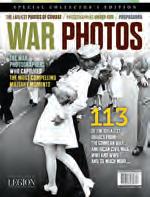
War Photos
War Photos showcases the stunning images and rare photos from the men and women who went into battle with only a camera.

World War I: True stories from Vimy to victory
More compelling stories from the First World War are told in memoirs by surviving Canadian soldiers.
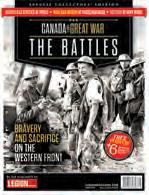
Canada and the Great War: The battles From Ypres in April 1915 through to the Hundred Days campaign, Canadian soldiers experienced one fierce ground battle after another.
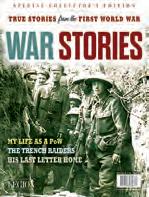
War Stories: True stories from the First World War
When the First World War started in 1914, Canada’s population was less than 8 million, yet more than 620,000 enlisted. Many of the surviving soldiers share their stories in this special issue.
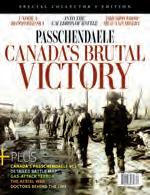
Canada’s brutal victory
The Canadian Corps was thrust into a battlefield of mud and craters to help Allied forces in the Battle of Passchendaele— Canada’s third major victory of 1917.
Experience a piece of

Crime: Canadian style
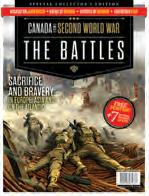
Take a trip to Canada’s seedy underbelly and meet the perpetrators of some of the country’s most notorious felonies and misdemeanors. Canada and the Second World War: The battles Canadians played pivotal roles in many of the most important and costly conflicts of the Second World War. Includes large battle map.
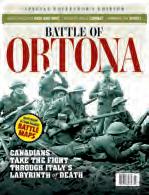
Battle of Ortona
Late in 1943, Canadian troops attacked the German-held Italian city of Ortona. In fierce fighting, Canada pushed up Italy’s east coast and prevailed.
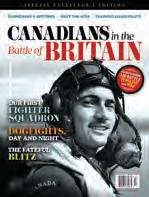
Canadians in the Battle of Britain
By July 1940, Europe had fallen under Hitler’s advance. Before the Luftwaffe could cross the English Channel, their pilots had to master the skies over Britain. British, Commonwealth and other pilots awaited them. “The Few” included 112 Canadians.
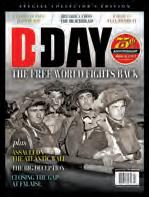
D-Day: The free world fights back It was the spring of 1944 and the Allies could not wait any longer. British, American and Canadian forces would land on five beaches on France’s Normandy coast in the early hours of June 6, 1944.

Canada and the Victoria Cross
No one ever set out to earn a Victoria Cross, which is awarded for “valour in the face of the enemy.” They were mostly spontaneous acts in the heat of battle. Of 98 Canadian recipients, 36 received their award posthumously.
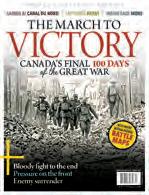
The march to victory: Canada’s final 100 days of the Great War
The Canadian Corps fought several great battles before Germany surrendered, ending “the war to end all wars.”

O Canada: Discover your land
Big land, bigger oceans, huge mountains, wide waterways and wildlife wilderness—Canada offers breathtaking vistas in every direction. Intro by Canadian comedian Cathy Jones.
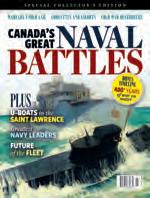
Canada’s great naval battles
The sea brought explorers, colonizers and navies from Europe to North America—as well as rivalries and wars. Join naval historian Marc Milner as he retraces Canada’s history—all from a nautical perspective.

O Canada: The best of everything Find out what really makes our country tick. Packed with Canadian people, places, wildlife, cities, culture, feats and innovations. Intro by Canadian comedian Ron James.
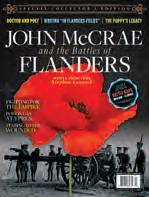
John McCrae and the Battles of Flanders
John McCrae—doctor, gunner and poet—was shaken by the battlefield death of a friend in May 1915, and wrote the poem “In Flanders Fields” in tribute. The poem remains today a renowned symbol of remembrance.
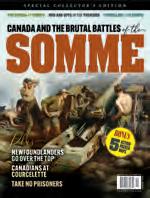
Canada and the brutal battles of the Somme
The Battle of the Somme lasted 141 days, from July 1 to Nov. 18, 1916. For the Canadian Corps, the Somme was a coming of age, setting the stage for their seminal victories to follow.
The Great War had been raging for nearly three years by the time the Canadian Corps stormed and captured Vimy Ridge in April 1917. “How Canada conquered Vimy Ridge” explores why the battle is considered by many historians as a defining moment for our country, detailing the path to victory, the reputation Canadian troops garnered from it, and the importance it still holds today in our national identity.
1945: Canada and the end of the Second World War
The year 1945 started with a massive German bomber attack on Allied airfields. But the Allies soon pushed back and Canadian troops led the advance across Belgium and into the Netherlands.
Canada and the Great War: Liberation
In the final five weeks of the First World War, Canadian soldiers liberated more than 200 cities, towns and villages in France.
“They were so glad to see us,”said one Canadian soldier, “they wept with joy.”

Canada and the liberation of the Netherlands From late 1944 to May 5, 1945, Canadian troops focused on the Netherlands, occupied by Germany since 1940. Canada liberated the Dutch, town by town, village by village.

O Canada: How Canada was shaped by war and peace
Since the First Peoples arrived on this continent, the place that would be called Canada has been shaped by conflict and co-operation. The impacts of war and the bounties of friendship echo through the story of Canada.
CANADA’S MILITARY FACED ITS FIRST MODERN MISSION IN RESPONSE
DURING THE 1948 ONCE-IN-A-CENTURY FLOOD
By Hugh A. Halliday
It is virtually a given that the Canadian Armed Forces will be on hand when disaster strikes at home. Whether it’s wildfires, crippling ice storms or massive flooding, all arms may be called to provide assistance and relief. It has not always been so, but the Second World War was a training ground for more than just combat.
The permanent
and reserve units of the post-war era were equipped and trained for many tasks. They were flexible enough to help civil authorities in ways that would have been unimaginable in the 1920s and ’30s. Operation Overflow in 1948 was the first opportunity to show it.
The B.C. mountains came under an unusually heavy snowfall in the winter of 1947-48, while
March, April and early May were unseasonably cool. In late May, southern B.C. experienced a heat wave accompanied by heavy rains. The result? Significant runoff fed swelling rivers. On the Columbia and Kootenay rivers, damage was isolated to the Kimberley, Trail, Castlegar and Creston areas. The rich agricultural Fraser Valley, however, bore the full force of the flood.
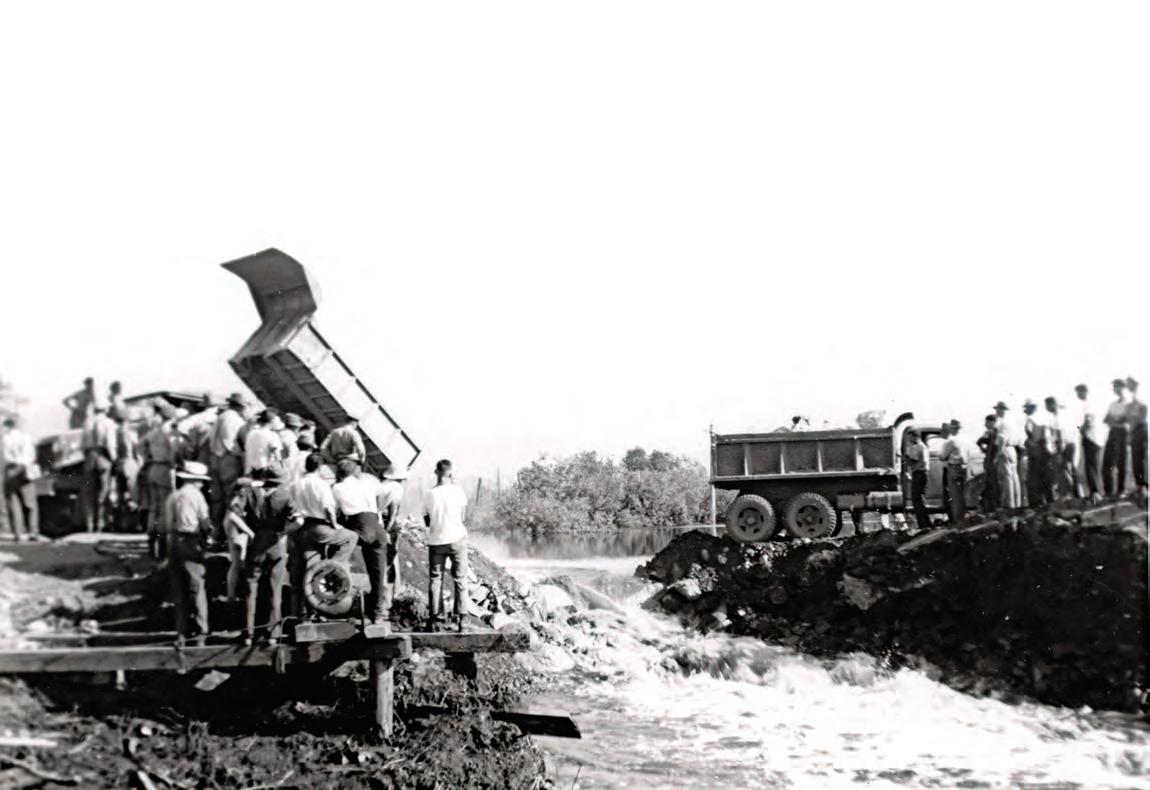
OPERATION OVERFLOW WAS A TRI-SERVICE UNDERTAKING, THE DEFENCE MINISTER HAVING GIVEN SNOW ACCESS TO ALL MILITARY RESOURCES.
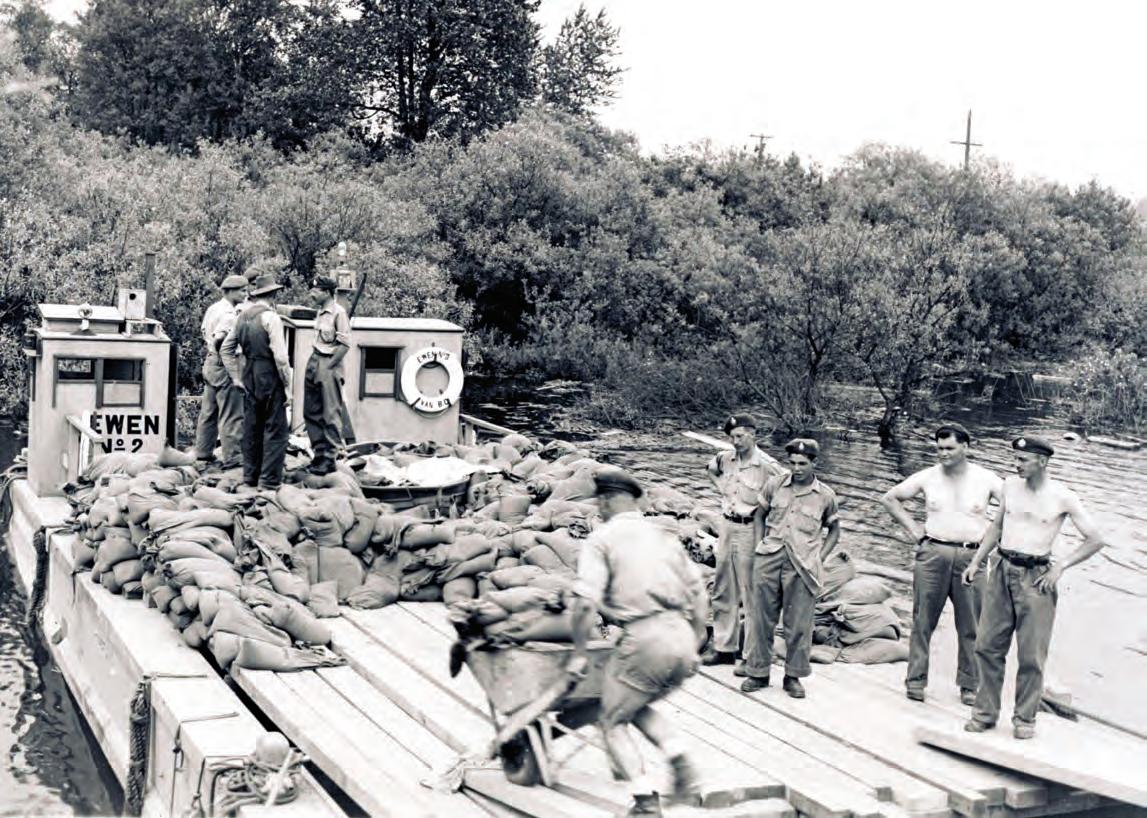
It forced 16,000 people from their homes, destroyed or damaged 2,300 properties, left 1,500 people homeless and killed at least 10.
Army personnel were first to respond when, on May 23, civil authorities asked for assistance in the Kimberley area. Military support increased markedly from May 25 onward, with the Red Cross initially coordinating the response.
By May 31, the severity of the situation called for unified operations. Premier Byron Johnson empowered the commanding officer of the British Columbia area, Colonel Thomas E. Snow, to co-ordinate all response measures, using both civil and military resources.
By this point, the army had mobilized about 620 members of the active force and 682 reservists.
Volunteers repair the dike on Semiault Creek, a Fraser River tributary, during the 1948 floods in B.C. (left), while the 15th Field Artillery Regiment, RCA, transports sandbags near Pitt Meadows (above).
The latter were drawn from many units, notably the Royal Westminster Regiment, Seaforth Highlanders and numerous artillery, engineer and signals units. The Forces’ contingent peaked at 2,987 personnel (active and reservists) on June 12. They worked alongside some 680 civilian labourers and 3,000 civilian volunteers.
Snow chose to divide the main flood area into seven sectors. Each sector was responsible for its own operations. The tasks included diking, evacuating people and livestock, providing shelter and food for evacuees, maintaining communications by radio and landline and even patrolling to prevent
looting. Equipment ranged from earthmovers and trucks to more than 100 kilometres of telephone cable. Provisions were made, too, for vast quantities of tents, blankets and bedding.
Operation Overflow was a tri-service undertaking, the defence minister having given Snow access to all necessary military resources.
The navy moved HMCS Antigonish from Esquimalt to New Westminster as a command ship. A summary of navy resources listed 50 vessels. Most were auxiliary craft supplemented by three Royal Canadian Air Force vessels. They were used for police patrols, evacuations
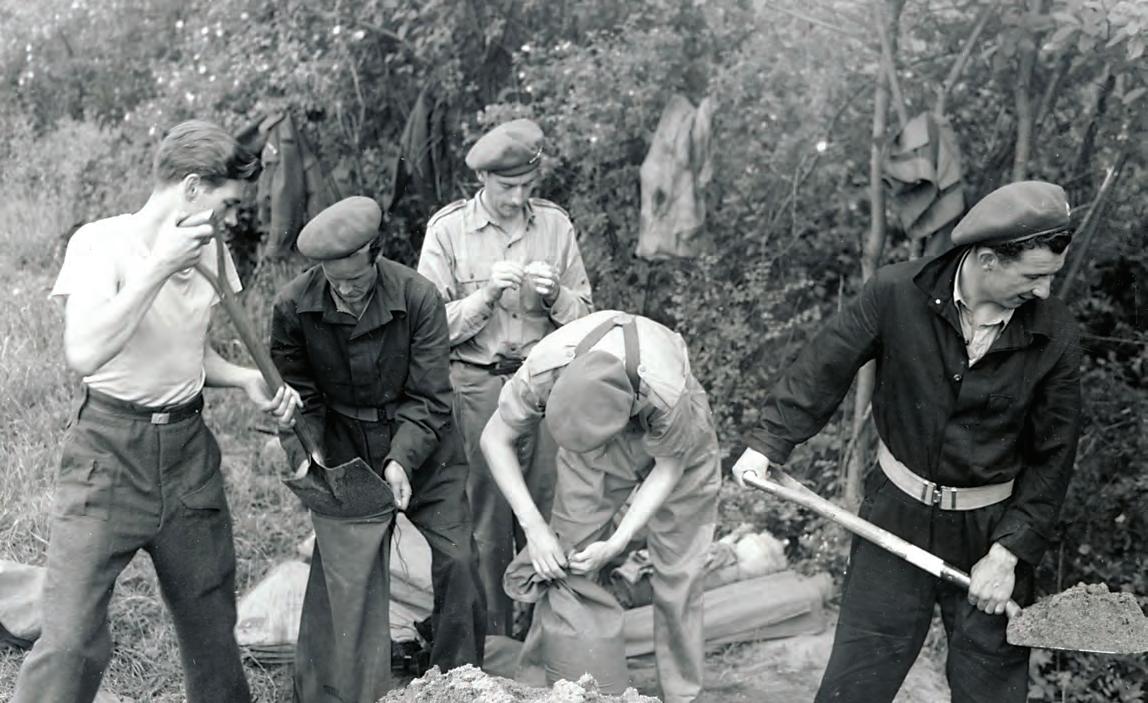
and to transport sandbags. Three vessels were in the Hatzic area transporting feed to livestock and maintaining the supply of milk to Vancouver. Wartime landing craft found peacetime duties,
too: a report noted “400 cattle and 300 sheep evacuated from Deroche area, where cattle are being rounded up and collected from flooded farms; milk is also being taken out by Auxiliary craft.”
In the same region, two river tugs cleared away a log-jam that was threatening the Dewdney bridge. When a radio transmitter at Sumas was flooded, the Esquimalt-based
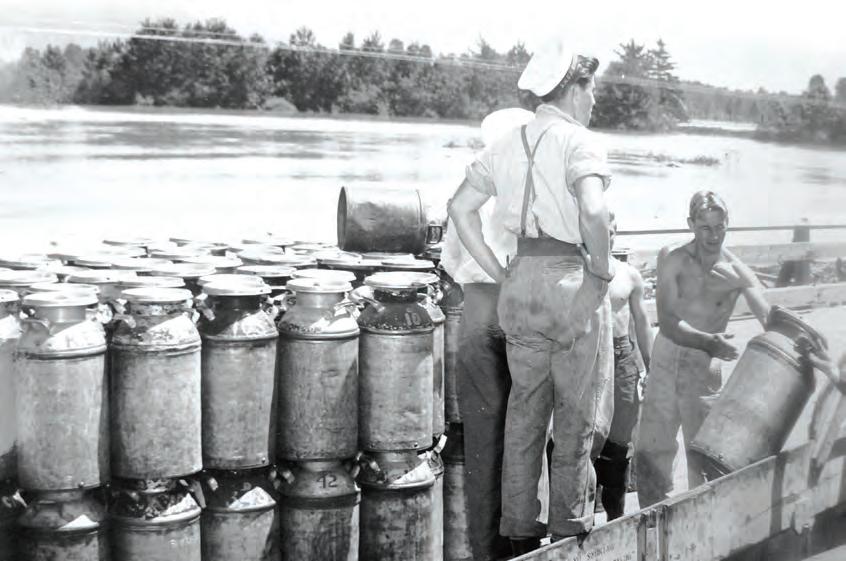
HMCS Ontario oversaw both naval and civilian marine traffic control, as well as commercial radio transmissions.
On May 25, the RCAF used two Canso aircraft to deliver tents
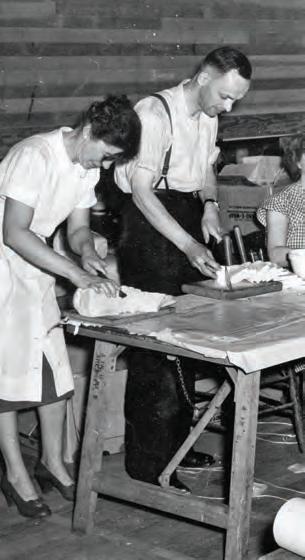

Members of the 15th Field Artillery Regiment work a sandbag line in B.C.’s Fraser Valley (left). Milk cans are loaded onto a Royal Canadian Navy landing vessel near Deroche (bottom left). Volunteers make sandwiches for flood relief workers at the Chilliwack United Church (below).
to call on resources from Air Transport Command (Rockcliffe) and Northwest Air Command (Edmonton).
“IF THE FLOOD WAS NOT SUCH A TRAGEDY, OPERATION OVERFLOW COULD BE CONSIDERED AS A MAGNIFICENT TRAINING OPERATION.”
and other supplies to Cranbrook. Airlifting of sandbags began on May 27—40,000 on the first day, 60,000 the next and thousands more daily until June 14.
To meet the emergency, the air force cancelled all but its most vital flights. Older Dakotas and Lancasters, plus new
North Star aircraft, were pressed into service after being drawn from across Canada. For instance, 103 Search and Rescue Flight in Nova Scotia offered its Lancasters until mid-June when the flooding began to ease.
The RCAF’s No. 12 Group, commanded by Group Captain Z.L. Leigh, was
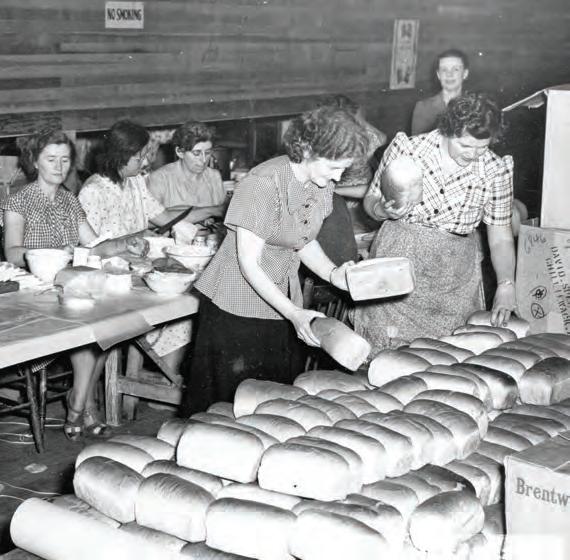

Army specialists were airlifted into the area, along with radio equipment and medical supplies. In one day, aircraft dropped 2,500 pounds of food to Deroche; 3,000 loaves of bread to Hope; 12 tents to Agassiz; 1,000 sandbags to Barnston Island; and 2,000 sandbags and pumps to Keremeos. There would be many similar days, with bad weather in the mountains curtailing the work only once, on June 11.
Apart from transport operations, the RCAF also carried out aerial reconnaissance and photography to guide support efforts. On June 3, for example, one Canso and one Dakota reconnoitred the Fraser as far as Hope. Ultimately, some 29 aircraft and 400 aircrew were dedicated solely to Overflow. Station Abbotsford became an evacuee centre; RCAF personnel estimated that they supported more than 1,000 evacuees, plus uncounted heads of livestock.
Not all support went smoothly. A naval officer in one sector reported that it took two days for the RCAF to conduct air reconnaissance of the flooded area and then to report only that they were successful in doing
tion from the mission. Fortunately, noted the officer, commercial pilots offered to make reconnaissance flights between passenger trips, and they were much more valuable, ultimately confirming a section of river near Agassiz was not passable.
Once the flood levels began to drop, reservists were subsequently released. There had been pressure from their families and employers to return home as quickly as possible. In total, Western Command had dispatched some 471 personnel to B.C.; these came chiefly from the Princess Patricia’s Canadian Light Infantry and the Lord Strathcona’s Horse (Royal Canadians). Most had arrived by air and returned to their bases by rail.
On June 29, B.C.’s attorney general announced that the flood danger had passed. The troops started to withdraw the next day. “If the flood was not such a tragedy,” said Lieutenant-Commander C.A. Law, “Operation OVERFLOW could be considered as a magnificent training operation involving both Three Services and Civilians co-operating together in an efficient manner.
“This brought out, as if in war, the true value of every officer and man. It made them develop their initiative and fend for themselves, their enemy being the flooding water of the Fraser.” L

Tom MacGregor
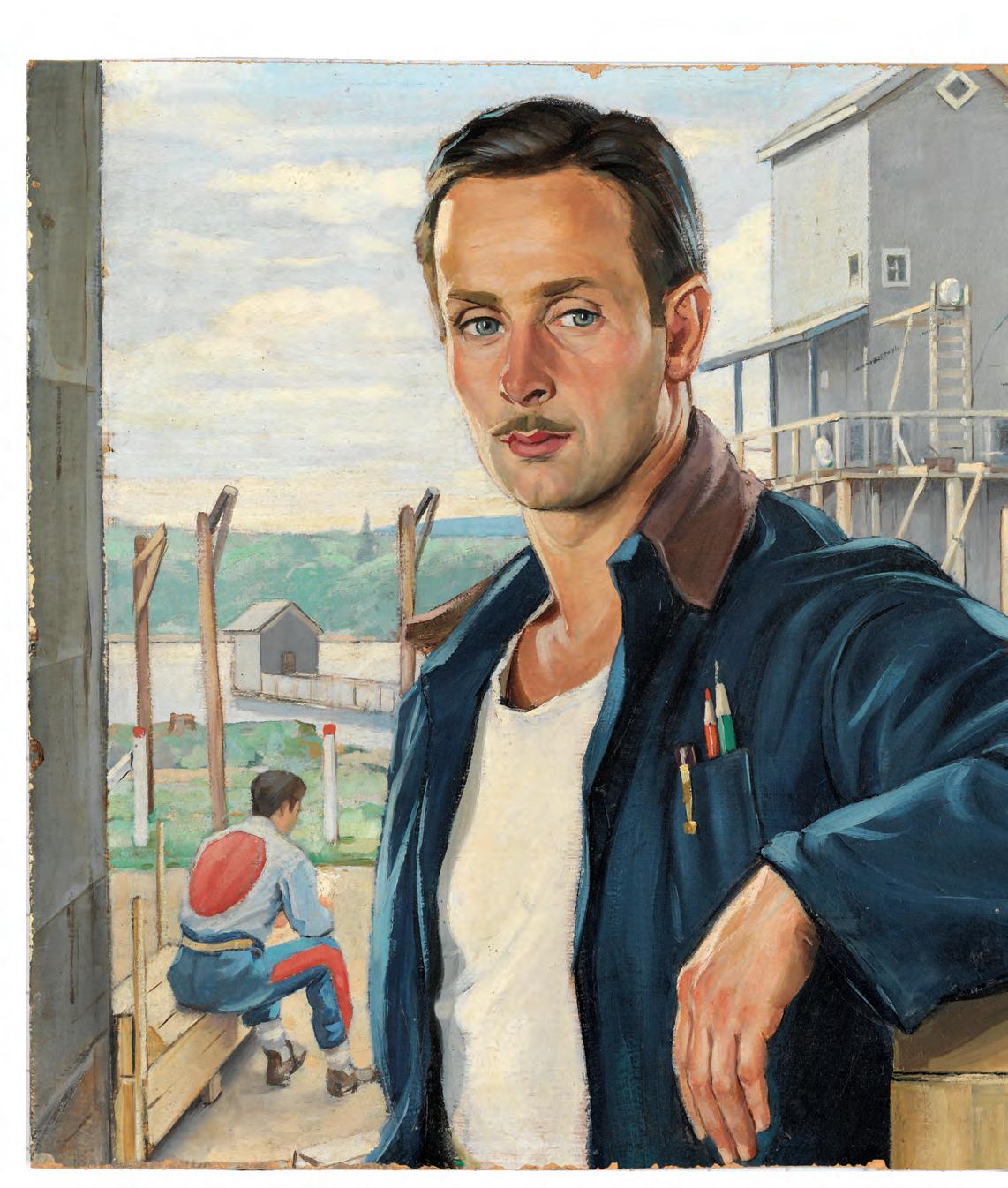
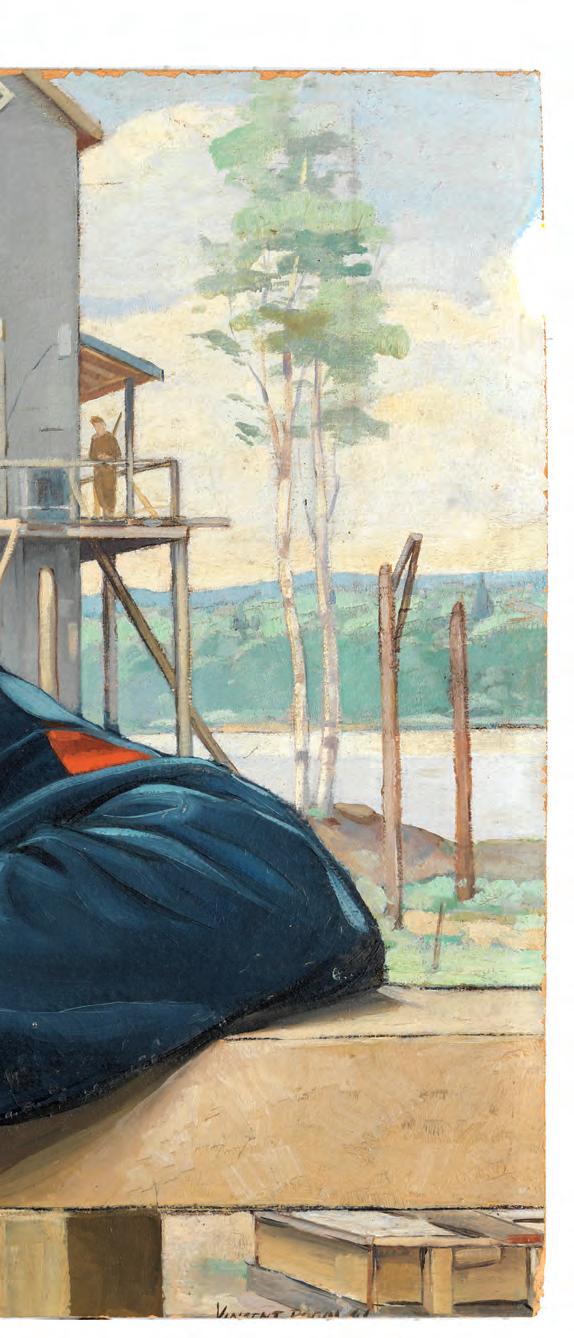

Inthe Piazza Dante across from Ottawa’s St. Anthony of Padua Church, where services are held in English and Italian, is a memorial wall with two columns of names: one for the names of local Italian Canadians who died serving Canada during the Second World War; the other of local men who were detained in internment camps.
In the early days of the war, the federal government of William Lyon Mackenzie King passed the War Measures Act and implemented the Defence of Canada Regulations. The regulations gave the government the authority to detain anyone deemed to be “acting in any manner prejudicial to the public safety or the safety of the State.”
In 1940, Italy declared war on Great Britain and France, and thereby their allies, including Canada. This immediately made some people question the trustworthiness of Italians who had recently come to Canada. Indeed, several Italian
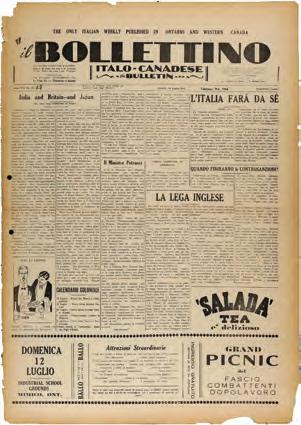
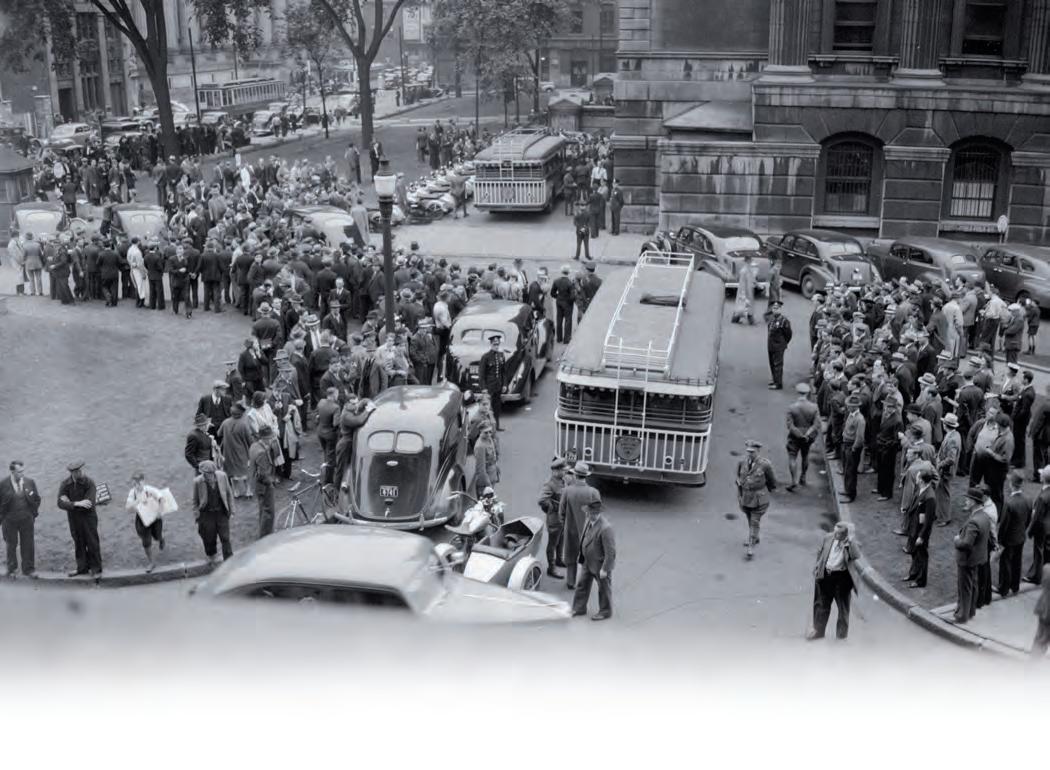

Crowds watch as police raid the Casa d’Italia in Montreal to arrest Italian Canadians on June, 10, 1940 (top). Newspapers such as Il Bollettino (above) shared fascist ideology.
SSome 31,000 Italian Canadians were labelled enemy aliens. More than 600 were sent to internment camps.
fascist groups and newspapers (namely Il Bollettino and the Dopolavoro) existed in Canada. And estimates suggest about 3,000 Italian Canadians were members of fascist groups at the time. However, in many cases these were memberships of convenience rather than ideology.
Still, some 31,000 Italian Canadians were labelled enemy aliens. They lost jobs, their property was confiscated and their businesses vandalized. In addition, more than 600 were arrested and sent to internment camps in Petawawa, Ont., Kananaskis, Alta., and Minto, N.B. In the end, however, no Italian Canadian was ever convicted of crimes against the state.
It was a great injustice, like the treatment of Canadians of German and Ukrainian descent during the First World War and of Japanese descent during the Second World War.
“For King, it was always easier to do nothing, to sacrifice a minority to satisfy the demands of the majority,” wrote historian Tim Cook in his book Warlords, referring to the refusal to accept Jewish refugees from the war.
On May 27, 2021, Prime Minister Justin Trudeau rose in the House of Commons to apologize to the Italian Canadian community for the internments.
“During the Second World War, 31,000 Italian Canadians were labelled enemy aliens, and then fingerprinted, scrutinized and forced to report to local registrars once a month,” said Trudeau. “Just over 600 men were arrested and sent to internment camps, and four women were detained and sent to jail.
“When the authorities came to the door, when they were detained, there were no formal charges, no ability to defend themselves in an open and fair trial, no chance to present or rebut evidence. Once they arrived at a camp there was no length of sentence. Sometimes the internment lasted a few months.
Sometimes it lasted years, but the impacts— those lasted a lifetime,” Trudeau continued.
“To stand up to the Italian regime that had sided with Nazi Germany, that was right, but to scapegoat law-abiding Italian citizens, that was wrong.”
It was not the first time a prime minister had apologized for those actions. Prime Minister Brian Mulroney had also done so during a meeting of the National Congress
of Italian Canadians in Toronto in 1990. And between 2008 and 2013, Canadian Heritage’s Community Historical Recognition Program, created during Prime Minister Stephen Harper’s tenure, made $5 million in grants available for projects to commemorate the experiences of Italian Canadians during the Second World War. The program funded an archive at the Columbus Centre in Toronto, two books published by the Association of Italian Canadian Writers and a sculpture by artist Egidio Vincelli that stands at the entrance of the Casa d’Italia in Montreal, among other initiatives.
Today, approximately 1.6 million Canadians have Italian heritage, one of the largest Italian diasporas in the world. The magnificent St. Anthony of Padua Church, long the social centre of Ottawa’s Italian Canadian community, was designed by Montreal-based artist Guido Nincheri. It boasts several magnificent stainedglass windows he created.
Born in 1885 in Prato, Italy, a town outside Florence, the artist came to North America in 1913. “Back in Italy, his father virtually kicked him out of the house. He didn’t want his son to grow up to be an artist,” said Guido’s grandson Roger Nincheri.
Still, he persisted and made his way to Florence where he studied art and began painting frescoes. He landed in North America in New York.
“He wanted to go to Argentina, but the war was on,” said Roger, who has written about his grandfather’s work.
Church of the Madonna della Difesa, which depicts Italian dictator Benito Mussolini on horseback among Christ’s followers.
But once Italy declared war on Canada, Nincheri, like so many other Italian Canadians, was arrested. He was in Baie-Comeau, Que., working at Église Sainte-Amélie at the time. He was sent to the internment camp in Petawawa, Ont. Authorities offered no explanation for his detainment.
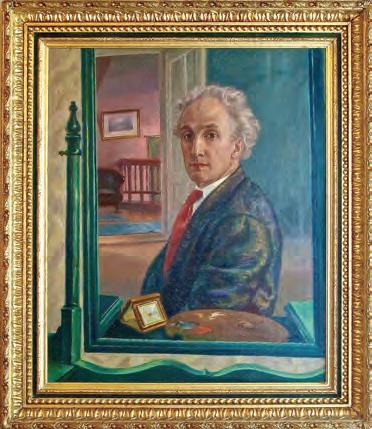
NNincheri had painted a fresco in Montreal’s Church of the Madonna della Difesa, which depicts Mussolini.

In Montreal, Nincheri worked with renowned stained glass artist Henri Perdriau, decorating churches and other buildings in Canada and the U.S. Nincheri practised his glass art and painted frescoes in more than 100 churches, including the Church of Saint-Léon-de-Westmount in Montreal, now a national historical site. His window in Vancouver’s Holy Rosary Cathedral was featured on a Canadian stamp in 1997. And Pope Pius XI called Nincheri “the church’s greatest artist of religious themes.” By coincidence, he had also painted a fresco in Montreal’s

The art of
top left) has appeared on stamps (above) and in many churches, including this well-known fresco (left).
Italian Canadians, including mobster Rocco Perri (back row, second from left), at the internment camp in Fredericton in 1942.
“He was called a traitor and spat on while he was on the train going there,” said Roger. Nonetheless, he was allowed to do some artwork while interned, even giving some of his work to the camp commandant. “After the war, he had to get away and moved to Providence in Rhode Island…he continued to come back to Canada to work, but he never talked about his time in Petawawa.”
Once in the camps, the men were given blue jumpsuits with a red circle on the back. Internees were kept in wooden barracks and worked on roads and logging. Members of the Veterans Guard of Canada, a unit made up of First World War soldiers who were then considered too old to serve overseas, watched over them.

Among those who helped push for the Trudeau apology was historian Joyce
Pillarella, the granddaughter of an internee. Pillarella interviewed dozens of descendants like herself to find out how their lives are still affected by the internments.
“Hiding one’s ethnicity was a common survival technique,” wrote Pillarella in the Toronto Star in 2021. “Italian became the enemy language and speaking it became a marker of disloyalty. Changing one’s name was almost a must, to avoid hostility or to get a job. Identity had consequences.
“The apology is about dignity, not dollars,” she wrote. “Make no mistake, the internment of Italian Canadians does not define Canada, but the apology does. It acknowledges that the failure to recognize basic rights of people is un-Canadian. It demonstrates that Canada is not afraid to face the past and learn important lessons to protect and preserve our democracy and freedoms.”
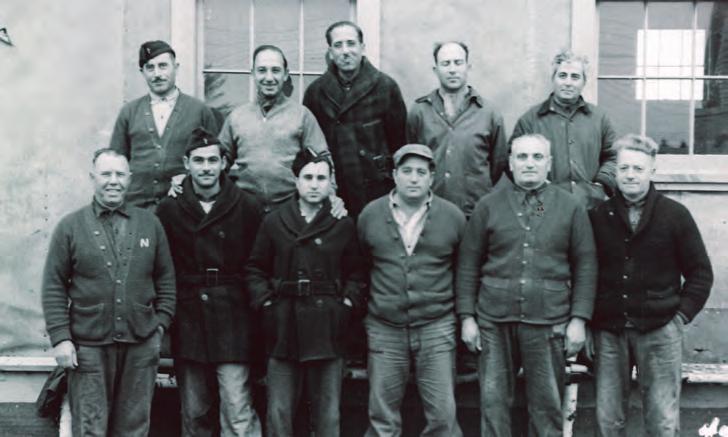
OOne of the Italian Canadians interned in Canada during the Second World War was the notorious “King of the Bootleggers,” Rocco Perri. Until then, the Hamilton gangster had had a remarkable ability to stay out of prison. Perri and his commonlaw wife, Bessie Starkman, ran a bootleg business until Prohibition and opportunity knocked. The Ontario Temperance Act was declared in 1916. Prohibition was declared nationally in 1918 and the U.S. followed suit, introducing it in 1920. Hypocritically, Canada allowed distilleries
to continue producing their product for foreign exports.
Perri’s business flourished as he supplied Canadian whisky to markets in Ontario and the U.S. He became a leading figure in organized crime in southern Ontario and was under routine police surveillance. Suspected of several crimes including
murder, the police rarely intervened in his activities, in part because many officers were on his payroll.
In the late 1920s, he was called to testify at the Royal Commission on Customs and Excise focusing on bootlegging and smuggling. Afterward, he was charged with perjury and served five months in jail.
Prohibition ended nationally in 1919 and in Ontario in 1922, although it continued in the U.S. until 1932. Still, Perri continued to be a major figure in organized crime, branching into narcotics and prostitution.
In 1940, Perri and his brother Mike were arrested as enemy aliens and sent to Camp Petawawa. He was released on Oct. 17, 1943. A little more than a year later, on April 23, 1944, the “King” disappeared and was never seen again.
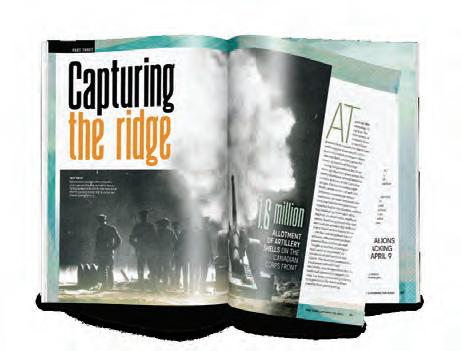
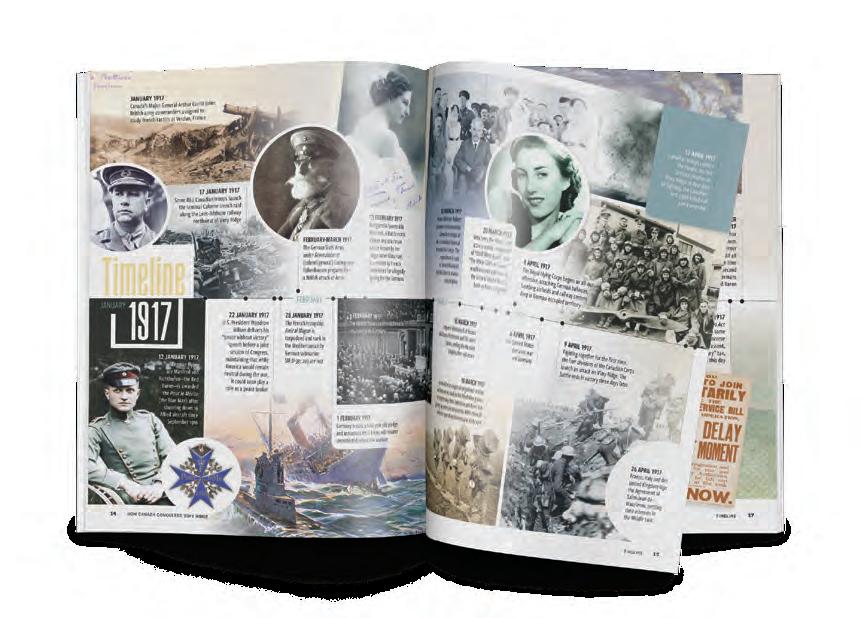
Omar Khadr was captured 20 years ago during the War in Afghanistan when he was 15. He was detained by the U.S. military for 10 years and repatriated to Canada in 2012. A year later, he sued the Canadian government, accusing it of violating his rights. In 2017, the government settled his lawsuit for $10.5 million.
Debates about the settlement are difficult because they are usually derailed by related, but not necessarily relevant, feelings about everything from Canada’s participation in Afghanistan and the broader “war on terrorism” to one’s views of the Chrétien or Harper governments.
Emotional reactions to Khadr’s case are natural, whether it’s sympathy with Khadr for being raised in a terrorist household or anger at his association with al-Qaida, from assembling improvised explosive devices (IEDs) to the firefight that killed U.S. Sergeant Christopher Speer. But neither sympathy nor anger is relevant to the legal and political question of whether the federal Liberal government should have settled his lawsuit.
Why did the government pay so much? The two usual justifications are that: one, Khadr was tortured or otherwise mistreated
as a minor in custody; and two, the Supreme Court of Canada had already held that the government violated Khadr’s Charter rights when it sent officials to question him in Guantanamo Bay.
The first reason is serious, but irrelevant. Any mistreatment, either in Afghanistan, where U.S. doctors saved his life, or in Guantanamo Bay, was committed by Americans. We will likely never know the true extent of that mistreatment and whether it rose to the level of torture but, even if it did, any injuries he suffered were while he was in U.S. custody. Canadians should not be paying for alleged American wrongs.
That leaves the 2010 Supreme Court decision that found the Canadian government had violated Khadr’s rights at Guantanamo Bay. But that case was not a civil suit for damages, which requires
a very different analysis and standard of proof. To recover financial damages, Khadr would still have had to show that our government was responsible for his injuries in American custody. That would have been a tall order, as there was no evidence that the government conspired with the U.S. in his mistreatment, or that he suffered additional injury as a result of anything Canada did.
In 2007, the federal government paid Maher Arar $10.5 million after a commission of inquiry found that he had been tortured after the Royal Canadian Mounted Police “provided American authorities with information about Mr. Arar that was inaccurate [and] portrayed him in an unfairly negative fashion.” In other words, Canadian officials were at least partly responsible for Arar’s torture. But in Khadr’s case, our government paid Khadr the same amount without similar evidence of Canadian responsibility. That makes no sense.
As far as we know, Khadr is reintegrating himself into Canadian society. That is good. One can only hope he is getting the help he needs for his unfathomably traumatic childhood. But there was no good reason to settle a questionable case for $10.5 million rather than let it proceed to court. L
Approximately 420 million children, or one in six globally, live in areas affected by armed conflict, yet many Canadians fail to understand how children affected by armed conflict impact us all.
In 2020, I had the opportunity to bring together two people who were recruited and used as child soldiers—Omar Khadr and Ishmael Beah.
Khadr, born and raised in Canada, was forced to move to Afghanistan as a child to take up arms under his father’s guidance. After the firefight that killed Sergeant Speer, Khadr was detained in Guantanamo Bay for 10 years. At the time of Khadr’s illegal incarceration, Canada failed to uphold international standards to protect children used as weapons of war.
Beah was 13 when he fought in Sierra Leone’s civil war (19912002) but, unlike Khadr, he was rehabilitated rather than incarcerated. Beah is also the celebrated author of A Long Way Gone: Memoirs of a Boy Soldier and a human rights activist.
Beah has argued, “If a 15-yearold child in Sierra Leone or Uganda kills someone in a war, he is a victim in need of rehabilitation, but as soon as that child is accused of killing an American soldier, legal standards no longer apply.”
> To voice your opinion on this question, go to www.legionmagazine.com/FaceToFace
HOWARD ANGLIN is a post-graduate researcher at the University of Oxford. A lawyer, he served as deputy chief of staff to Prime Minister Stephen Harper.
There are, however, several international laws to protect children from being recruited for armed conflict, as well as international guidance that outlines key related definitions and responsibilities. The Paris Principles and Guidelines on Children in Armed Conflict, for example, defines a child solider as any person under 18 who has been
used by an armed force in any capacity, including as a porter, a messenger, a spy, a cook, a sex slave or front-line combatant. It is important to reflect on Canada’s legal obligations when we consider Khadr’s civil suit settlement with the Canadian government.
International law is clear: child soldiers are not to be held criminally responsible for participating in armed conflict.
SHELLY WHITMAN is executive director of the Dallaire Institute for Children, Peace, and Security at Dalhousie University in Halifax. It was founded by General Roméo Dallaire in 2007.
This applies regardless of where they’re recruited, by whom and irrespective of ethnicity, race, religion or political views. Beah has often stated: “Adults are the masterminds to war, the funders of the war efforts, and the ones who reap any rewards from war…they also have the power to stop it from happening.”
Canada has obligations under its Charter of Rights and Freedoms and the United Nations Convention against Torture. In 2010, the Supreme Court called the conditions in Guantanamo “oppressive” and stated unequivocally that Canadian intelligence officials had violated Khadr’s rights as a citizen during their interrogations in 2003.
Our failure to protect Khadr’s rights had to be recognized and compensated for. It should be a lesson about the inviolability of due process and human rights protections Canadians must be afforded.
When Khadr was released on bail on May 7, 2015, he stated, “there is nothing I can do about the past, but…I can do something about the future.”
If we are to break cycles of violence, preventing the recruitment and use of children in all conflicts must be a higher priority for Canadians so that we can all enjoy peace and security. L
By Sharon Adams
By Aaron Kylie
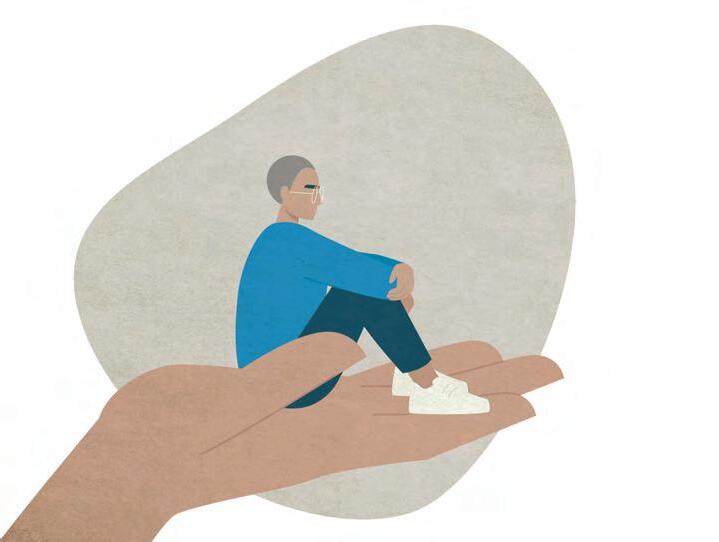
By Stephen J. Thorne
By Stephen J. Thorne
By Sharon Adams
By Sharon Adams
By Stephen J. Thorne
By Sharon Adams
By Sharon Adams
p to two years of mental health services are now available for veterans who apply, or have applied, to Veterans Affairs Canada seeking benefits.
“Early intervention and faster access to mental health services will lead to improved health outcomes for veterans,” said VAC spokesman Josh Bueckert in an e-mail.
Before April 1 this year, veterans required proof of a diagnosed medical condition and disability related to their service in order to have disability benefits approved. They would then qualify for treatement for mental health care.
As of March 2022, there was a backlog of 34,000 unprocessed disability benefit applications, creating up to a two-year lag for mental health care while a veteran waits for approval.
The 2021 federal budget provided $140 million over five years and $6 million in ongoing funding to VAC for a program to cover the aid costs for veterans with post-traumatic stress disorder, depression or anxiety disorders while their disability benefit application is being processed.
“We are pleased veterans will no longer have to wait many months to receive mental health treatment,” said Carolyn Hughes, deputy director of Veterans Services for The Royal Canadian Legion.
“As no additional lengthy forms will be required, the process should be fast and allow for treatment to be timely, hopefully leading to a better outcome and quality of life for veterans and their families.”
Even if their benefits claims are denied, veterans will continue to receive mental health benefits for the two-year period, VAC said.
60
“WE ARE PLEASED VETERANS WILL NO LONGER HAVE TO WAIT MANY MONTHS TO RECEIVE MENTAL HEALTH TREATMENT.”
“For those already in the queue, it is welcome news, that their mental health treatment will be covered,” said Hughes. The costs of treatment and examinations by mental health professionals, including psychologists, addictions counsellors and social workers, and prescription drugs will be covered. Veterans are three to four times more likely to suffer from depression or anxiety disorders
and 15 times more likely to experience PTSD than civilians.
Nearly a quarter of veterans who left service between 1998 and 2007 reported they had a diagnosed mental health condition, a 2010 study revealed.
About one-fifth of Canadian veterans experience a mental health disorder during their life—most commonly depression, anxiety and PTSD. L
By Aaron Kylie
Canadians expecting a Platinum Jubilee medal in recognition of the 70th anniversary of the reign of Queen Elizabeth will have to settle for alternative forms of celebration.
Despite calls for such an honour from numerous politicians and organizations, including The Royal Canadian Legion, the anniversary of the sovereign’s accession to the throne and her coronation seven decades ago—Feb. 6, 1952, and June 2, 1952, respectively— will proceed without hardware from the federal government.
“I am saddened by this decision,” said Dominion President Bruce Julian. “A unique medal would also have allowed us an opportunity to acknowledge the outstanding service of fellow citizens.”
Canada had issued a medal for the Queen’s silver (25th, 30,000
medals), golden (50th, 46,000) and diamond (60th, 60,000) jubilees. In each instance, the award was bestowed upon a wide range of Canadians, from everyday volunteers to veterans, with national organizations involved in nominations.
Medal or not, the government still plans to support community jubilee celebrations in other ways: Canada Post is producing a commemorative stamp, the Royal Canadian Mint and the Royal Mint are issuing a two-coin set and the Canadian Heraldic Authority

produced a Platinum Jubilee emblem.
In the absence of a medal, the Monarchist League of Canada has stepped up to offer individual Canadians up to five lapel pins featuring the anniversary emblem for only the cost of postage and handling (visit store.monarchist.ca).
Queen Elizabeth is the longest reigning sovereign in Canada and
the first to celebrate a Platinum Jubilee. She ascended to the throne at age 25 following the death of her father, King George VI, and has reigned throughout major events including the Troubles in Ireland,
the decolonization of Africa and Britain’s withdrawal from the European Union. She serves as colonel-in-chief, captain general and air commodore-in-chief of 17 Canadian Armed Forces units and is the commissioner-in-chief of the Royal Canadian Mounted Police. The Queen has made 22 official visits to Canada, the most to any Commonwealth country. L
By Stephen J. Thorne
“There’s no life like it,” the recruiting ads used to say.
But the military life appears to be a less attractive option for Canadians these days.
In January, the Department of National Defence reported that the Canadian Armed Forces were shy of their 100,000-member ideal by about 12,000 regulars and reservists at the end of November 2021.
That shortfall has grown by 5,000 since the same period in 2020, when the pandemic forced the closures of recruiting centres and training schools and pushed the deficit to 7,000 (2,000 regular force members and 5,000 reservists).
The federal government has authorized a CAF complement of 71,500 regular force members and 30,000 part-time reservists. The figures are based on available funding and military commitments.
COVID-19 is partly to blame for the most recent enlistment shortfalls. After the federal and
provincial pandemic closures, the military could only provide basic training to about a quarter of the expected number of new hires.
The public health crisis only exacerbated a problem that has plagued Canada’s military for years, particularly since it pulled the last of its troops out of Afghanistan in 2014.
In 2016, federal auditor general Michael Ferguson warned personnel shortages could heap more burden on those in uniform and hurt military operations.
In 2017, the government promised to expand the ranks in the face of growing global instability and emerging threats. Those issues have continued to grow in the last five years, while the Canadian military has failed to meet recruitment targets.
The recruiting challenge has contributed to a push to make the Forces more inclusive as it tries to attract women, racialized people, Indigenous Peoples and members of the LGBTQ2 community.
Factors other than COVID-19 are also at work.
Overseas duties have been scattered since DND ended almost 12 years of high-profile action in Afghanistan. The military has been burdened with more crisis-response missions at home and invested the bulk of its foreign operations in NATO efforts to discourage Russian aggression among former Soviet republics along the Baltic Sea.
United Nations deployments have dwindled to virtually nothing, with just 59 uniformed Canadians on peace operations in six hot spots at the time the recruitment report was filed—five in Africa and one in the Middle East.
Canada pulled about 200 soldiers out of Ukraine before Russian troops invaded the country on Feb. 24. Canadians had been training Ukrainian military forces since 2015.
Ottawa extended the deterrence mission in Latvia and was deploying an additional 460 Canadian
troops to help NATO in Europe, including an artillery unit, a naval frigate and a surveillance aircraft.
The pledge came days after Defence Minister Anita Anand acknowledged concerns about stretching the military too much given its existing commitments, aging equipment and the growing shortage of personnel.
Retired lieutenant-general Guy Thibault, a former vice-chief of the defence staff, has said the emerging crisis in eastern Europe may well force Canada to reassess its other missions.
Then there is the litany of high-profile sexual misconduct cases that began in 2018 with the outgoing chief of the
defence staff, General Jonathan Vance, revelations that appeared to open a floodgate of allegations against Forces’ brass.
The Canadian military has struggled at the best of times to boost the number of women in its ranks and, under Vance,
set a goal of one-quarter female members by 2026.
As of last September, that figure stood at 15 per cent, and an internal study suggested National Defence needs to recruit around 3,500 women a year to meet its target. L

By Stephen J. Thorne
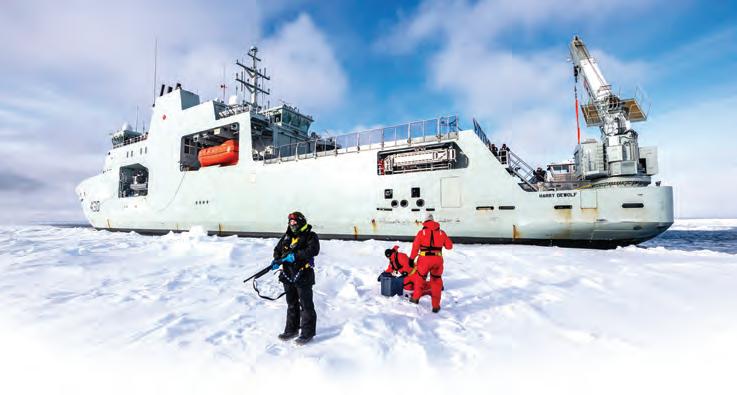
The Royal Canadian Navy returned to Arctic waters for the first time in decades in 2021, and the voyage by the newly commissioned icebreaker HMCS Harry DeWolf couldn’t have come at a better time.
The lead ship in its emerging class of Arctic offshore patrol vessels, DeWolf circumnavigated North America, sailing the Northwest Passage on the first leg of a journey that took it down the West Coast, through the Panama Canal, across the Caribbean and up the East Coast to its home port of Halifax.
DeWolf was the first RCN ship to sail the legendary route in 60 years, and it signalled a new era in Canadian sovereignty over the High Arctic (also see “Front Lines,” page 14). The region is under increasing scrutiny as the warming effects of climate change open previously inaccessible waters and Russia flexes its muscles along the edge of the Arctic Ocean.
“Canada has long paid lip service to the importance of Canadian Arctic sovereignty, but the defence of the
Arctic has long been a low priority for Canadian military expenditures,” Charles Burton of Ottawa’s Macdonald-Laurier Institute told Voice of America in January.
“Now with increasing strategic interest in the region by China and opening up of year-round shipping lanes due to global warming, Canada is waking up to the need to ally with the United States and other like-minded nations and commit resources to uphold its claim to its northern territory.”
DeWolf is the first of six icebreaking warships to be built for the navy under the federal government’s Arctic and Offshore Patrol Ship procurement project, part of the National Shipbuilding Strategy first announced in 2007.
The total project cost, including maintenance, is expected to exceed $5 billion during the six ships’ 25-year lifespan. The second breaker, HMCS Margaret Brooke, was launched in 2019 and conducted sea trials last year before it was delivered to the navy for final approvals.
Civilian contractors and crew work alongside HMCS Harry DeWolf near Frobisher Bay, Nunavut.
Two more ships are currently in the slips at Halifax Shipyard.
Two other Harry DeWolf-class patrol vessels are scheduled to be built for the Canadian Coast Guard, bringing the total to eight.
The Canadian Arctic spans three territories, extends to the North Pole, and encompasses 75 per cent of the country’s coastlines and 40 per cent of its land mass. Eight nations, including Canada, the U.S. and Russia, have mounted contesting Arctic sovereignty claims.
As Russian forces prepared to invade Ukraine early this year, its air force moved new MiG-31BM supersonic jets to an upgraded airbase at Novaya Zemlya, an archipelago on the Barents Sea, directly across the Arctic Ocean from the Canadian Forces station at Alert, on Ellesmere Island.
The Russian Northern Fleet’s 45th Air Defence Division, established in December 2015, maintains airfields and air defence bases across the Russian Arctic, from Temp in the New Siberian Islands in the east to the Nagurskoye base in Franz Josef Land in the west.
CNN has reported Russia is amassing unprecedented military might in the Arctic and testing its newest weapons in a recently icefree region in a bid to secure its northern coast and open a key shipping route from Asia to Europe.
Weapons experts and security officials have expressed particular concern about one Russian “superweapon,” the Poseidon 2M39
torpedo, a stealth torpedo powered by a nuclear reactor. It is designed to evade detection by sea-floor defence systems, delivering a warhead of multiple megatons.
The radioactive fallout of such a weapon would render swaths of the target coastline uninhabitable for decades.
Satellite images detail what CNN described as “a stark and continuous build-up” of Russian military bases and
hardware along its Arctic coastline, together with underground weapons storage facilities.
Besides the MiG-31MB jets, the region is stocked with Russian bombers and new radar systems near the Alaskan coast, where mainland Russia is less than 90 kilometres across the Bering Strait.
At 104 metres in length, the Harry DeWolf-class vessels are the largest Canadian warships launched in more than
By Sharon Adams
The Department of National Defence will participate in the federal government’s $3.2-billion plan to plant two billion trees by 2030 to help reduce Canada’s greenhouse gas emissions.
The tree project is part of Canada’s response to climate change and biodiversity loss. Trees remove carbon dioxide from the air and improve air and water quality. Forests also influence weather and climate.
The federal government is signing long-term agreements with partners, including provinces and territories, Indigenous organizations, municipalities and DND to plant and grow the trees.
The Canadian Armed Forces confirmed in an e-mail that the Canadian Forces Housing Agency (CFHA) will plant trees at most of its locations across Canada during the next seven years.
A partnership agreement was in development at press time. Half the
cost of planting will be covered by the program, with CFHA absorbing the other half, plus long-term tree maintenance. The number of trees to be planted at specific locations will be determined annually by proposal from individual properties.
IN 2021 MORE THAN 30 MILLION TREES WERE PLANTED
Long-term agreements are necessary to both plant trees and simultaneously build the capacity to plant more. Growing seedlings takes time; national nursery capacity needs to increase by 40 per cent to meet the demand. The tree project will gradually ramp up to 2027, when 320 million trees will be planted in urban and rural areas year after year until the target is met.
50 years. Still, they are smaller and less capable than many U.S. icebreakers, which occasionally navigate the Northwest Passage with little regard for protocol.
The first of the new ships conducted exercises with U.S. icebreakers off Greenland after setting sail in August 2021, then worked with the Americans on drug interdiction operations in the Caribbean before returning home in mid-December. L
Millions of conifers have already been planted, chiefly spruce and lodgepole pine in British Columbia. Oak, maple, hickory and black walnut trees have been planted in Ontario and Quebec.
“Planting trees is an important part of our plan to fight climate change, protect biodiversity and create good jobs,” said Natural Resources Minister Jonathan Wilkinson.
DND owns more than 2.1 million hectares of land and manages the 46,000-hectare National Wildlife Area at Canadian Forces Base Suffield in southern Alberta. CFHA manages housing for CAF members and their families at 27 locations across Canada.
Although the national program got off to a slow start, in 2021 more than 30 million trees were planted in 500 projects throughout the country.
“Trees are a critical part of our plan to combat climate change and curb biodiversity loss,” said Steven Guilbeault, environment and climate change minister.
The tree program “will help Canada transition to a net-zero economy, protect and conserve our ecosystems, secure urban resilience to extreme weather events, improve public health and build a nature-positive future.” It is also expected to create more than 4,000 jobs across the country. L
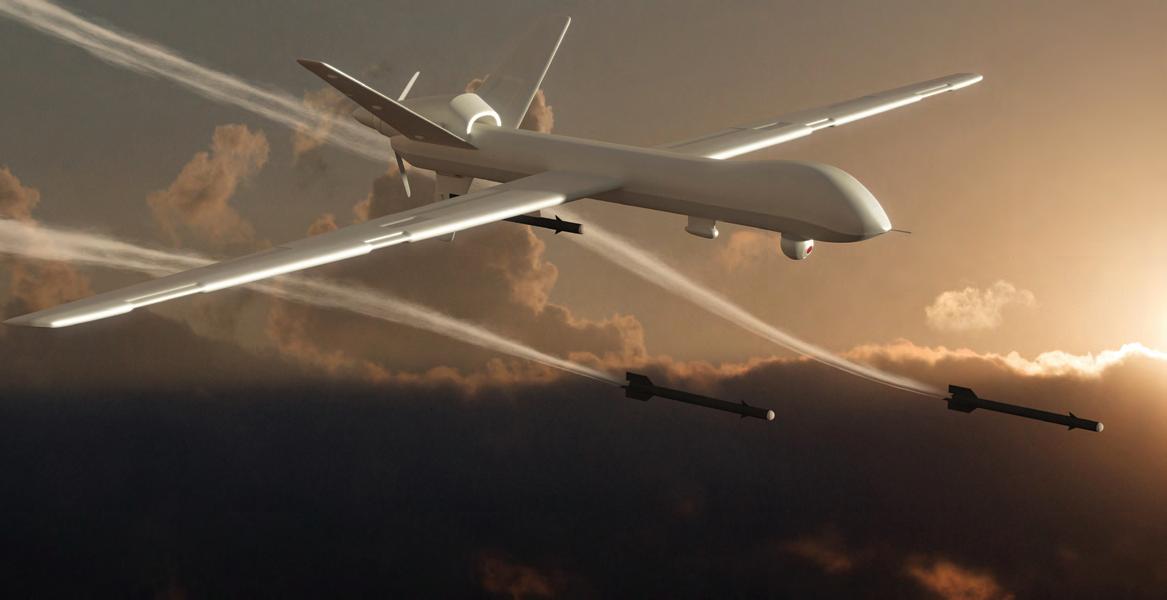
By Stephen J. Thorne
The federal government is looking to buy armed military drones after nearly two decades of debating whether the controversial weapons are the right fit for Canada.
A request for proposals was delivered in February to the two companies shortlisted to bid on the $5-billion contract, which aims to outfit the Canadian Armed Forces with a fleet of unmanned aerial vehicles in the coming years.
A final purchase is expected in 2024 and the first drone is scheduled for delivery no sooner than 2025, with the last to come in the early 2030s.
No number of drones was given. It will be up to the companies to propose how their bids will benefit the military and the Canadian economy.
The aircraft will be based at 14 Wing Greenwood in Nova Scotia and 19 Wing Comox in British Columbia, while the main control centre will be in the Ottawa area. Yellowknife will act as a forward operating location.
The drone force is expected to require 240 air force members—160 in Ottawa, 55 in Greenwood and 25 in Comox.
Ottawa purchased several unarmed drones during the war in Afghanistan, all of which have since been retired. The CAF has never
Advertisement


had a permanent drone fleet even though the aircraft have become ubiquitous among militaries.
Defense News reported last year that more than 100 militaries were using armed or unarmed drones. Missile-firing drones supplied by Turkey played a key role in slowing the advance of the Russian military in the early days of its invasion of Ukraine. On the other hand, U.S. drone strikes on suspected Taliban and al-Qaida forces in Pakistan’s mountainous hinterlands sowed controversy through successive American administrations after some of the attacks killed civilians.
Canadian officials have indicated the unmanned aircraft will be used in surveillance and will deliver pinpoint strikes on enemy forces.
“While the [drone] will be a medium-altitude long-endurance system with a precision strike capability, it will only be armed when necessary for the assigned task,” said the Department of National Defence.
“At all times, employment of precision strike capability will adhere to the Law of Armed Conflict, as well as any other applicable domestic or international laws. Use of force will be applied following rules of engagement applicable to the CAF.” L
embers of the Canadian Armed Forces may now choose to be addressed by female versions of French ranks that best represent their gender identity.
“The modernization of military ranks ensures that CAF members have options, and can be addressed in a way that reflects who they are,” said Major-General Lise Bourgon, acting chief of military personnel.
All CAF members, including those who identify as non-binary, may choose to feminize their rank and specialty in French—la sergente, la majore, la générale, l’aviatrice (aviator), la matelot (sailor).
It is the latest step in furthering inclusivity and gender diversity in the CAF.
By 2026, the CAF wants a quarter of its forces to be female. In 2020, nearly 16 per cent of personel were women. The CAF is also falling short of its goal of 11.8 per cent for racialized communities.
“I’ve felt through my entire career that I didn’t always fit in,” Bourgon told The Canadian Press. “I had to use a masculine term to represent myself. That’s not who I am, not the gender that I’m comfortable with.” Bourgon has been in the military for 34 years.
“Now, I can finally call myself la majore-générale,” she said.
In 2020, the Royal Canadian Navy adopted a more inclusive rank designation in English, ditching the term seaman and substituting sailor. Prior to the move, the navy surveyed more than 18,000 military and civilian personnel and veterans; more than 75 per cent were in favour of adopting gender-neutral terms.
By Sharon Adams
Vice-Admiral Art McDonald, navy commander at the time, said the move was not just about recruiting, but about moving with the times.
In November 2021, Bourgon announced a number of changes to improve diversity and inclusivity.
“I am fully committed to creating a workplace that is welcoming, inclusive, safe and respectful for every member of our team,” she said.
At the top of the list was an update to CAF dress regulations, “focused on removing the barriers to members’ choice of clothing and other aspects of appearance... allowing members the freedom to choose the uniform that makes them the most comfortable.”
Other changes include a Women’s Health Framework, as part of the CAF health and wellness strategy, and a new compassionate leave policy covering loss of a child, family violence, familyrelated situations and religious and spiritual accommodation.
Inclusivity is also being addressed in the employment equity plan, in training processes and in changes aimed at preventing bias in the promotion and selection process.
Professional standards have been updated in the new manual, The CAF Ethos: Trusted to Serve,
which outlines core expectations and values necessary for leadership, focusing on character.
“In the past it was much more of a competence-based focus,”
General Wayne Eyre, chief of the defence staff, said in a Legion Magazine interview. “I firmly believe if you have good character leading, competence will follow.”
Advertisement

By Sharon Adams
Programs to serve and house homeless veterans have continued even as much of the country hunkered down at home throughout the pandemic.
“The pandemic hasn’t slowed down the homeless numbers,” said Ray McInnis, service bureau director of The Royal Canadian Legion. No one knows for sure how many homeless veterans there are in Canada. Pre-pandemic estimates ranged from 3,000 to 5,000.
The effect the pandemic will have on homeless veteran numbers won’t materialize until the toll of job losses, the end of financial support programs and loss of protection from eviction emerges over the coming months.
What is known is that prior to the pandemic, veterans were overrepresented in homeless shelters; although about 1.7 per cent of Canadians are veterans, in 2018 they made up 4.4 per cent of emergency shelter users.
In Ontario, Operation Leave the Streets Behind has helped
some 1,000 homeless veterans, about a tenth of them female, in nearly 200 municipalities since the program started in 2010.
“The pandemic hasn’t stopped us from working,” said Dave Gordon, chair of the Legion’s Ontario Command Homeless Veterans Program. “We never stopped.”
Ontario Command is now developing regional committees to spread the word about the program and identify ways to work with communities to help homeless veterans.
“We are in the early stages,” said Gordon. The committees will knock on doors of local shelters, police,


first responders and municipalities to tell them about the program. After a homeless veteran has been identified, the program can provide food, clothing, financial assistance and other services available in their communities or regions.
In 2012, Ontario’s template was adopted for the Legion’s national Leave the Streets Behind program, which is now operating in six provincial/territorial commands, providing immediate financial support and connecting veterans with social and community services.
Meanwhile, work also continued to increase transitional and long-term housing for homeless veterans. Several new projects have opened since the pandemic began.
In December 2021, the Homes for Heroes Foundation opened its second tiny homes project in Edmonton. The first opened in Calgary in 2019.
ATCO Veterans’ Village provides 20 tiny homes in a village-like setting in an established neighbourhood.
Each tiny home in the community is named after a Canadian soldier who died in service and is less than 28 square metres, but has a kitchen, living room and bedroom. Units are clustered like a neighbourhood and have access to a community garden and communal recreation space where residents can socialize. Residents can use social services and support programs at the on-site resource centre and counsellors’ offices.
Land for the project was donated by the city; Alberta provided $1.1 million in funds,
the federal government ponied up $1 million and $2.3 million came from private donations.
The Homes for Heroes Foundation aims to build such projects across the country. By the end of 2022, it hopes to open its third village, which will provide transitional housing for 25 veterans in Kingston, Ont., and is planning projects in other provinces.
One key feature of this program is on-site continuing support, which can include physical and mental health programs, access to services from Veterans Affairs Canada and social agencies, as well as informal peer support, to
help veterans rebuild their lives.
In January 2021, the Multifaith Housing Initiative in Ottawa opened the $11.5-million Veterans’ House project on the former site of the CFB Rockcliffe Air Base.
The three-storey, 40-unit building provides on-site mental health and addiction support services. Original plans were to house 16 residents but the project expanded several times in response to growing needs. Homeless veterans are estimated to make up about 8.5 per cent of Ottawa’s homeless shelter clients.
The Canadian Alliance to End Homelessness launched Built for Zero Canada in 2019, a group of about three dozen communities
1-877-534-4666, or consult
across the country developing a template to end chronic homelessness and veterans’ homelessness.
In October 2020, London, Ont., became the first Built for Zero community to claim functional zero on veterans’ homelessness—that is, the city of 400,000 said it had enough units to house all homeless veterans.
The work isn’t over, John Slugget, service officer with the Legion’s Victory Branch in London, said in an interview at the time.
“Homelessness will always persist, and we need to continue to come together as a community to support these individuals and ensure they remain housed in our community.” L
Many Canadians including members and veterans of the Canadian Armed Forces— are facing rising debt levels. International tax firm BDO reported in late 2021 that nearly half of Canadians added to their debt in the preceding year. And one in 10 Canadians now carry credit card debt for the first time. Fortunately, there are ways to address debt challenges. Here’s a hypothetical example. Mike released from the military two years ago and settled into a civilian job with comparable pay and benefits. Shortly thereafter, he and his wife Anna purchased their first home, using credit cards to buy furniture and appliances. They managed to pay down the debt quickly until a year ago, when Anna gave birth to twins and went on maternity leave. As Anna’s income was reduced, it proved more difficult to make significant credit card payments.
Anna is now returning to work and has just received a promotion. The couple hopes to clear the debt during the next two years, so they consulted with a local banker to determine some options to do so.
Option 1: Currently, Anna and Mike make a monthly payment of $327 on their credit card debt at an annual interest rate of 28 per cent. At this rate, it will take more than 24 years to pay off the debt and the interest accumulated will amount to $83,660.
Option 2: Increase payments to $769 monthly, which will clear the debt in two years. This would cost $4,442.54 in interest.
Option 3: Their banker offers a consolidation loan to cover the $14,000 at a rate of 10 per cent with a monthly payment of $646. The total interest will be $1,504.70. If they can afford it, Anna and Mike could also use the $120 difference between the monthly payments for options 2 and 3 to open a registered education savings plan (RESP) to start saving money for the twins’ educations. If this scenario seems familiar to you, or if you have other debt challenges, your local bank may be able to offer you moneysaving options, so don’t hesitate to ask for a consultation. L





funds
President
President Gary Bovard and treasurer Cheryl Broad of Hartland, N.B., Branch present $4,299.11 to Lee Patterson, fundraising co-chair of the Friends of Hartland. The money will go toward the Central Carleton Community Complex.

Alexa Chamberlain and Emily McLaughlin of Terry Fox Elementary School in Bathurst, N.B., are rewarded by Herman Good VC Branch for their efforts in the annual poster contest. GRAHAM WISEMAN
President Gary Bovard of Hartland, N.B., Branch stands on a recently constructed wheelchair ramp built for a local veteran using donations and the goodwill of a Hartland building supply company and an area contractor.
Harold Wright (left), president of Jervis Bay Memorial Branch in Saint John, N.B., accepts $11,000 from Greg Boudreau, treasurer of the Turnbull chapter of the Canadian Aviation Historical Society. HEATHER HAMILTON
Al Mooney (left) of Alberni Valley Branch in Port Alberni, B.C., presents $1,000 to Capt. Michael Ramsay of the Salvation Army.

Bonnie McCann of Peninsula Branch in Clifton Royal, N.B., donates 37 handmade Christmas trees to Ridgewood Veterans Wing in Saint
Sgt.-at-Arms Ken Wood of Bowser, B.C., Branch presents $650 to Lieut. (N) John Tarrington of 189 Port Augusta sea cadets.
At the presentation of $500 from Sooke, B.C., Branch to Wounded Warrior Run B.C., are (from left) branch President Ted Davies, run director Capt. Jacqueline Zweng, Mayor Maja Tait, Mike Bowen and Immediate Past President Richard Steele.
Lieut. (N) Brittany Thurber of 296 Esquimalt sea cadets receives $650 from Padre Brian Kirby, cadet liaison of Bowser, B.C., Branch.
Second World War veteran Clifford David Banner receives a Quilt of Valour at Malahat Branch in Shawnigan Lake,
in the company of friends and family.

Jenna Perry, the granddaughter of veteran Ernest Perry, receives a $1,000 bursary from Newfoundland and Labrador Command to help pay for her studies at Memorial University of Newfoundland.
Lisa Alspach of St. Peter’s Hospital in Melville, Sask., receives $2,500 from poppy chair Brian Morris (left), Padre Jesse Darby and treasurer Tom Dick of Robert Combe VC Branch.
Memorial University of Newfoundland student Ashley Granter is congratulated by her grandfather, Gander, N.L., Branch President Nelson Granter, on receipt of a $1,000 Newfoundland and Labrador Command bursary.
At the presentation of $2,500 to St. Paul Lutheran Home from Robert Combe VC Branch in Melville, Sask., are (from left) branch poppy chair Brian Morris, Padre Jesse Darby, home manager Sheri Honeywich and branch treasurer Tom Dick. DIANNE HACK
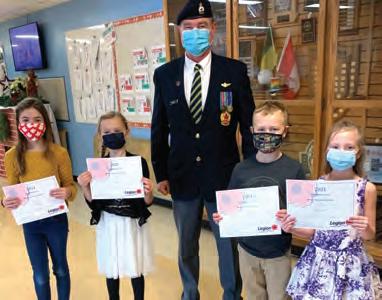
President Gord Kozroski of Gull Lake, Sask., Branch congratulates winners of the primary poster and literary contests (from left) Isabel Migneault, black and white poster; Charlotte Vaughan, essay; Hudson Jahnke, colour poster; Rylynne Gerard, poem.
DONNA HOLTBY
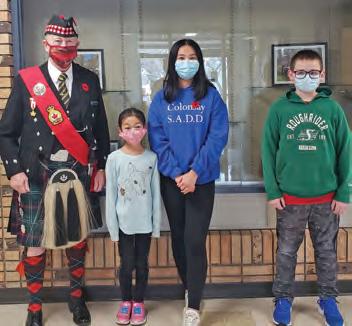
Sgt.-at-Arms John Methven of Viscount, Sask., Branch congratulates winners of the poster and literary contests from Colonsay School (from left) Katy Wang, Wendy Wang and Colten Gray. LOA TITMAN

Mario Miller (back, from left), Jean-Guy Cleary, Jocelyn Jalbert and Thomas Beaulieu of Mascouche, Que., Branch donate $4,000 to the Centre for Help Through Nature, Animals and Therapy. From left front are Carole Hanni with dogs Bella and Ody, and Natacha Berger with Charly.
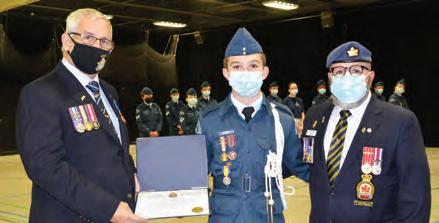
Raynald Bouchard, former president of the Air Cadet League of Canada (left), and President Gerry Harvey of Arvide, Que., Branch present WO Tommy Harvey of 634 Cadets Squadron in Jonquière, Que., with the Legion’s Cadet of the Year 2021 national medal and certificate.
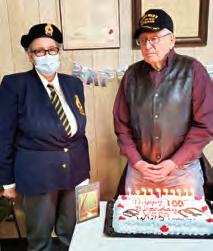
Bev Shulyer of Pleasantdale, Sask., Branch congratulates Second World War veteran Vernon Tyacke of Silver Park, Sask., on his 100th birthday.

Executive member Laura Derry and other Legionnaires worked through the pandemic to fundraise and renovate the interior of Auclair Branch hall in Otterburn Park, Que.
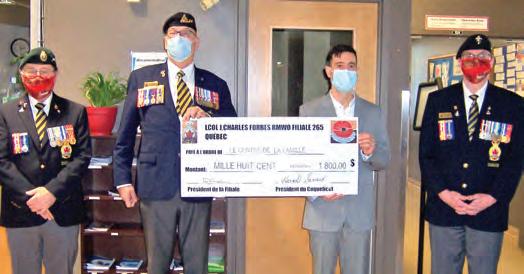
Gaétan Guillemette (left), Third Vice Jacques Bergeron and Harnold Savard of Lt.-Col. Charles Forbes Branch in Quebec City present $1,800 to the Valcartier Military Family Resource Centre, represented by general manager Frédéric Moisan.
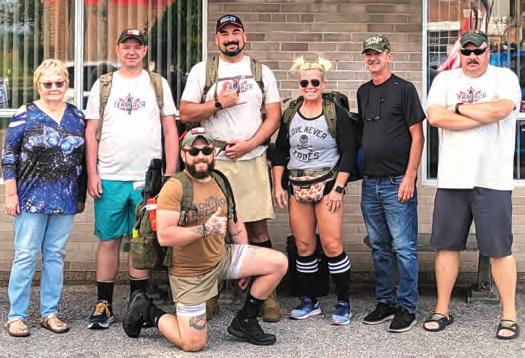
President Myrna Picotte (left) of Bay Ridges Branch in Pickering, Ont., welcomes fundraising ruck marchers for food and rest. The marchers were raising awareness and funds for the homeless veterans program.
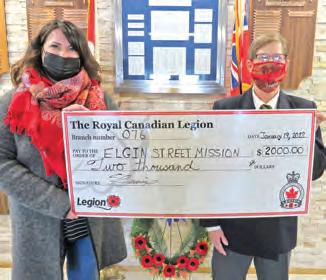
Treasurer Adrienne Lemieux of Dr. Fred Starr Branch in Sudbury, Ont., presents $2,000 to Rev. Amanda Robichaud, executive director of Elgin Street Mission.
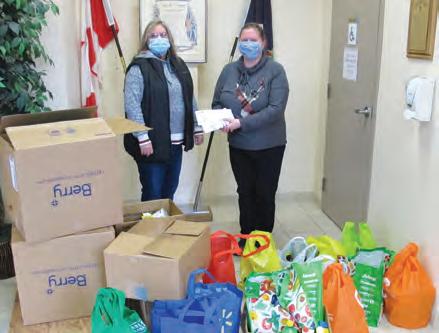
Branch events co-ordinator Joanne Derry (left) of Leslie Sutherland Branch in Corunna, Ont., provides Alyssa Blackman of the St. Andrew food bank with seven boxes and 15 bags of non-perishable food, along with a $560 donation.
Vice-President Roger Cruickshank of Wiarton, Ont., Branch accepts the branch’s 90th anniversary commemorative certificate from Zone C-4 Commander Kathryn Eastwood.
President John MacDonald, veterans service officer Paul Thorne and poppy chair Ben Prouse of Goderich, Ont., Branch present $5,650 to the Huron Residential Hospice, represented by its fund development manager, Christopher Walker.

At Riverside Branch in Windsor, Ont., poppy chair Lynn Girard and former president Keith Bremner present sisters Megan (left) and Sydney Rea with $1,000 student bursaries.

President Andre Labrosse and Melodie Hodges of Brig.-Gen. G.H. Ralston Branch in Port Hope, Ont., present $1,000 to Northumberland Community Care’s Meals On Wheels program, represented by manager Sheri Birney.
Dunnville, Ont., L.A. President Nancy Voakes, Branch President John Woods and First Vice Lisa Baatnes (far right) present $6,000 to Dunnville Hospital and Healthcare Foundation’s Penny Banks on behalf of the Ontario Command Branches and L.A. Charitable Foundation.
President Steve Thomas and First Vice Joan Skrins of Oakville, Ont., Branch present first-place awards to Ben Lustig and Maya Lustig for primary colour poster and intermediate colour poster and essay respectively.
Representatives Anita Walsh and Kathy Sizer (right) of Frankford, Ont., Branch donate $3,858 to the breakfast programs at three local schools, represented from left by Beth Hogan (Stockdale), Joanne Card (Frankford) and Joanne Desantis (Batawa).
First Vice Wayne Tutt of Coldwater, Ont., Branch presents $500 to the 724 Midland Lions air cadets, represented by their commanding officer, Capt. Rosemarie D’Aguiar.
Poppy chair Sandy MacDonald of Bay Ridges Branch in Pickering, Ont., presents $10,000 to the Lakeridge Hospital Foundation, represented by CEO Tracy Peterson.
First Vice Dave Sereda (centre) of Barrhaven, Ont., Branch presents $2,000 to the 75 Barrhaven air cadets program, represented by Maj. Jonathan McAuley (left) and sponsoring committee chairman Russell Lucas.
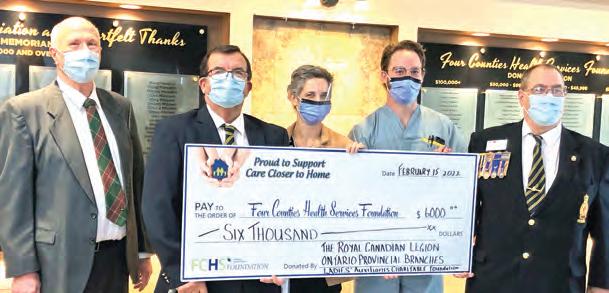
President Rick Close (second from left) of Newbury, Ont., Branch and Zone A-5 Commander Gerry Cross (far right) present $6,000 on behalf of the Ontario Command Branches and L.A. Charitable Foundation to Four Counties Health Services Foundation, represented by chair Tom Jeffery (left) and nurse practitioners Sari Belzycki and Max Lowther.
Lakefield, Ont., Branch presents its Legionnaire of the Year award to Brent Woodford.

Youth education chair Laura Pepper of Central Muskoka Branch in Bracebridge, Ont., presents the top award for junior colour poster in the Legion literary and poster contests to Zara Mekis.
President John MacDonald and Diane Thorne of Goderich, Ont., Branch present $1,000 to the St. Vincent de Paul Society food bank, represented by Pat Clifford.
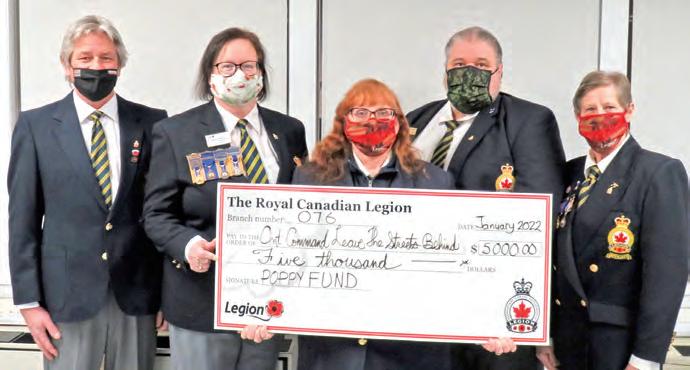
Dr. Fred Starr Branch in Sudbury, Ont., presents $5,000 to the Ontario Command homeless veterans program. From left are First Vice Shannon Thibault, Zone H-3 Commander Sharleen Sissons, poppy chair Bernadette Lamirande, Branch President John Goedhuis and poppy treasurer Adrienne Lemieux.
First Vice Dave Sereda of Barrhaven, Ont., Branch presents $2,000 to Konrad Shourie, commander of the 2958 1st Anti-Tank Regiment army cadets.
Youth education chair Marlene Szabo of Merritton Branch in St. Catharines, Ont., presents Alynah Sappleton with a first-place award in senior essay in the Legion literary and poster contests.
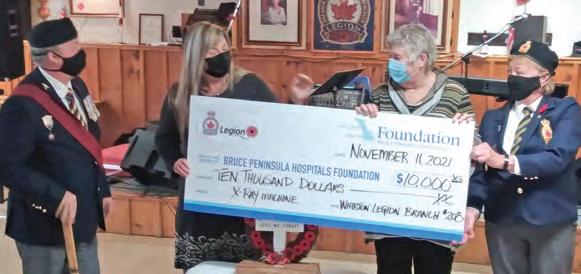
Sgt.-at-Arms Ken Surridge and President Brenda MacDonald of Wiarton, Ont., Branch present $10,000 to Bruce Peninsula Hospitals Foundation, represented by executive director April Patry (left) and board director Ann Iles.
President Gerald Coyle of Charlottetown Branch congratulates Wanita Drake, 2021 Legionnaire of the Year.

The men’s 8-ball league and snooker players at Frankford, Ont., Branch donate $1,000 to the Trenton Memorial Hospital Foundation.
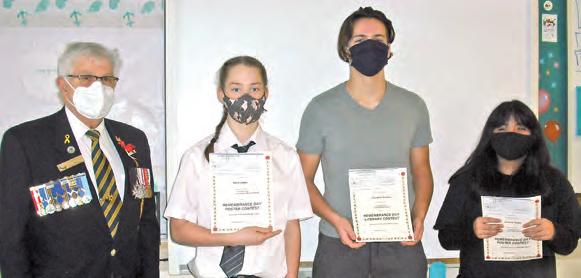
John Yeo of Charlottetown Branch congratulates winners of the poster and literary contests at Queen Charlotte Intermediate School (from left) Elliot Landry, third-place black and white poster; Campbell Burrows, third-place poetry; Anchron Tiozon, third-place colour poster.
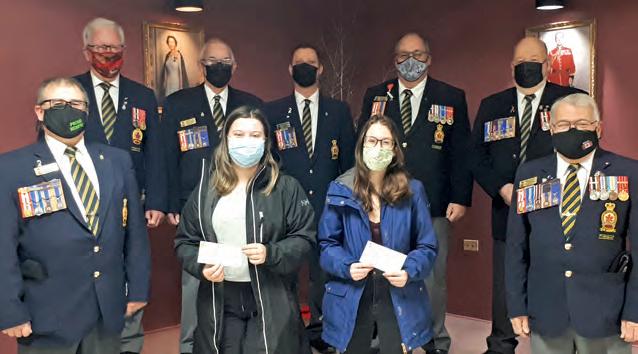
Evangeline Senior High School students Chloé Arsenault (centre left) and Sophie Gallant receive $500 bursaries from Wellington, P.E.I., Branch, represented by (clockwise, from left) Herman Marché, Roger Arsenault, Albert Hashie, Gerald Arsenault, Mario Couture, Branch Immediate Past President Gilles Painchaud and Branch President Dave Gallant.
President Larry Weagle of Mersey Branch in Liverpool, N.S., presents the Legionnaire of the Year award to Paul Neals. REBECCA MUNROE
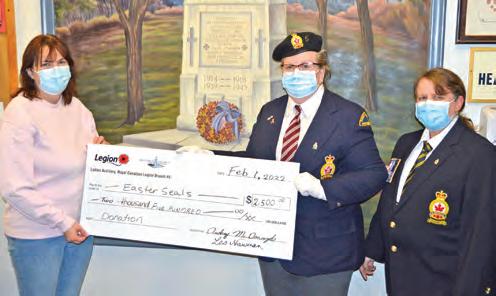
First Vice Lois Foster (centre) and President Katriina Myllymaa of Port Arthur L.A. in Thunder Bay, Ont., present $2,500 to Rhonda Harrison (left), Easter Seals northern region community engagement manager. GEORGE ROMICK
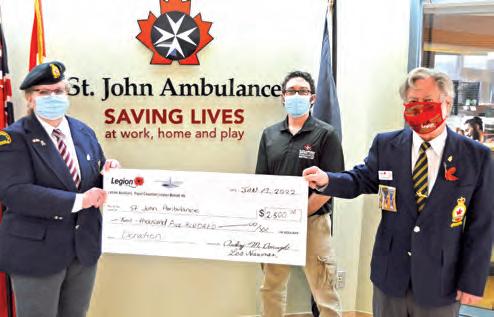
First Vice Don Pawlett (right) of Port Arthur Branch in Thunder Bay, Ont., and L.A. First Vice Lois Foster present $2,500 to Brian Edwards, St. John Ambulance regional fund development and volunteer co-ordinator. GEORGE ROMICK
Blenheim Branch presented a 55-year award to John Jouwsma. Brig.-Gen. G. H. Ralston Branch donated $3,000 to the Salvation Army. H.T. Church Branch in St. Catharines presented 50-year awards to Robert Denapoli, Kenneth Farmer and Dennis Price; a 55-year award to William Speck; 60-year awards to James Tannahill and Don Walters; 65-year awards to John Gray, Lloyd Stoddart and Harvey Bray; and a 75-year award to Edward Holody.
Send your photos and news of The Royal Canadian Legion in action in your community to your Command Correspondent. Each branch and ladies auxiliary is entitled to two photos in an issue. Any additional items will be published as news only. Material should be sent as soon as possible after an event. We do not accept material that will be more than a year old when published, or photos that are out of focus or lack contrast. The Command Correspondents are:
BRITISH COLUMBIA/YUKON: Graham Fox, 4199 Steede Ave., Port Alberni, BC V9Y 8B6, gra.fox@icloud.com
ALBERTA–NORTHWEST TERRITORIES: Bobbi Foulds, Box 5162, Stn Main, Edson, AB T7E 1T4, rfoulds@telus.net
SASKATCHEWAN: Tara Brown, 2267 Albert St., Regina, SK S4P 2V5, admin@sasklegion.ca
MANITOBA: William Trefry, B207 Academy Rd., Winnipeg, MB R3M 0E2, wptrefry@gmail.com
NORTHWESTERN ONTARIO: George Romick, 320 Admiral Court, Thunder Bay, ON P7A 8B5, romickg@tbaytel.net
ONTARIO: Mary Ann Goheen, Box 308, Gravenhurst, ON P1P 1T7, magoheen@sympatico.ca
QUEBEC: Pierre (Pete) Garneau, 105-2727 Saint-Patrick St., Montreal, QC H3K 0A8, webmaster@qc.legion.ca
NEW BRUNSWICK: Harold Wright, 2-299 Main St., Saint John, NB E2K 1J1, foulis20@gmail.com
NOVA SCOTIA/NUNAVUT: Marion Fryday-Cook, 2450 Highway 3, RR #1, Chester, NS B0J 1J0, mfrydaycook@hotmail.com
PRINCE EDWARD ISLAND: John Yeo, 657 Rte. 19, Meadow Bank, PE C0E 1H1, islander657@yahoo.ca
NEWFOUNDLAND AND LABRADOR: Brenda Slaney, Box 5745, St. John’s, NL A1C 5X3, bslaney@nfld.net
DOMINION COMMAND ZONES: EASTERN U.S. ZONE, Gord Bennett, 803-190 Cedar St., Cambridge, ON NIS 1W5, Captglbcd@aol.com; WESTERN U.S. ZONE, Douglas Lock, 1531 11th St., Manhattan Beach, CA 90266, doug.lock@verizon.net.
Submissions for the Honours and Awards page (Palm Leaf, MSM, MSA and Life Membership) should be sent directly to Stephanie Gorin, Legion Magazine, 86 Aird Place, Kanata, ON K2L 0A1 or magazine@legion.ca.
TECHNICAL SPECS FOR PHOTO SUBMISSIONS
DIGITAL PHOTOS—Photos submitted to Command Correspondents electronically must have a minimum width of 1,350 pixels, or 4.5 inches. Final resolution must be 300 dots per inch or greater. As a rough guideline, colour JPEGs would be between 0.5 megabytes (MB) and 1 MB.
PHOTO PRINTS—Glossy prints from a photofinishing lab are best because they do not contain the dot pattern that some printers produce. If possible, please submit digital photos electronically.
FRENCH INSERT—To receive a French insert of Legion Magazine content, please contact MagazineSubscriptions@legion.ca or call 613-591-3335.




WARRIORS’ DAY— All veterans, active military, first-responders and military organizations are invited to march in the 100th Anniversary Warriors’ Day Parade on Aug. 20, 2022, beginning at 10:30 a.m. at Toronto’s Canadian National Exhibition. Details at www.thewarriorsdayparade.ca. Mark Stephens, 96 Chalmers Ave., Barrie ON L4N 8V9, wdparade@rogers.com.
RCAF WOMEN’S REUNION—Dates have changed to Sept. 13-15, 2022, at Hilton Winnipeg Airport Suites, 1800 Wellington Ave., Winnipeg. Patricia Brennan, 1838 Highway 1, Auburn NS BOP 1R0, 902-391-0035, plbrennan@mymts.net or rcaf_airwomen@ yahoo.com.
USS VALLEY FORGE—50th Anniversary Reunion. May 11-15, 2022, in Valley Forge, Pa. Ken Schroyer, 36426 Azalea Ave., Selbyville DE 19975, 410-206-9022, kenschroyer7@gmail.com.
LCpl. HARRY BAKER—M11330 ‘C’ Company Calgary Highlanders Canadian Army Overseas. Seeking family. The late LCpl. Martin Schlinker (M39760) served with the Calgary Highlanders and Stormont, Dundas and Glengarry Highlanders. His belongings included a small envelope with film negatives and ‘L/CPL Harry Baker’ written on the outside. Looking to return to him or his family. Brian Schlinker, 1267 Crockford Cres. NW, Medicine Hat AB T1A 7C3, 403-527-6488, brianms@telus.net.
HMCS ST. STEPHEN—Seeking anyone who served aboard this weather ship between Greenland and Labrador. We then took it to be decommissioned and returned on HMCS Crescent Gerry (Sly Pork) Cunningham, 326 Douglas Ave., Fredericton NB E3A 5T1, 506-451-0619, comsan29@nbnet.nb.ca.
ALICE AND THE MACHINE GUNNER, the unforgettable story of a WW I soldier and his war bride, is available from Amazon or




By J.L. Granatstein
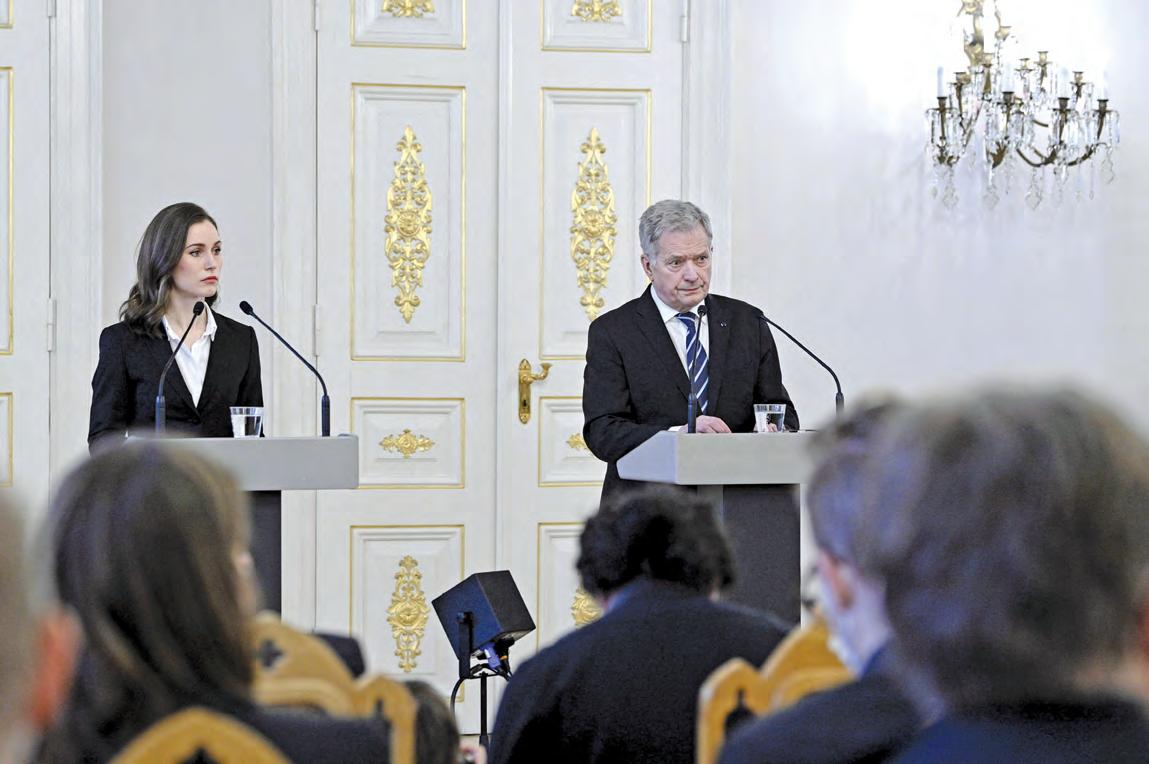
TFinland’s Prime Minister
Sanna Marin and President
Sauli Niinistö speak about Russia’s invasion of Ukraine in late February.
he Russian invasion of Ukraine in late February has shaken the world and Western democracies in particular. It is likely that many members of the North Atlantic Treaty Organization, possibly including Canada, will begin to increase defence spending and the size of their military forces as a result.
There are two neutral Nordic nations near Russia that may react similarly, especially given concerns that Moscow’s attention might soon focus on them— Finland and Sweden.
Finland was invaded by the Soviet Union in 1939. It put up an extraordinary defence that inflicted significant losses on the Red Army—between 321,000 and 381,000 casualties—but in the end, Finland relinquished nine per cent
of its territory in a peace treaty.
When Germany invaded the USSR in 1941, the Finns joined in. After the war, Stalin essentially forced the Finns to become a neutral power, giving rise to the term “Finlandization” to describe the country’s tendency to avoid opposition to Russian foreign policy.
Finland was strictly neutral during the Cold War, largely a result of its 1948 Agreement of Friendship, Cooperation, and Mutual Assistance with the Soviet Union, when tensions between Moscow and the West were near their peak. The treaty ensured Finland would not face a Soviet invasion but, in return, it agreed to stay out of a Western alliance and allowed the neighbouring superpower to exercise significant influence over its domestic and foreign policy.
In the three-quarters of a century since the end of the Second World War, Finland has become a prosperous nation, much more Westernized than it was, and its leaders have declared that their sovereign country can do what it chooses. If the Finns want to join NATO, and if NATO will have them, then no one else has any right to object.
Both President Sauli Niinistö and Prime Minister Sanna Marin have been clear on that stance, the former saying, “Let it be stated once again: Finland’s room to manoeuvre and freedom of choice also includes the possibility of military alignment and of applying for NATO membership, should we ourselves so decide.”
Marin, who had been reluctant to consider joining NATO, changed course after the attack on Ukraine, saying: “Finland is ready to apply for NATO membership if the issue of national security becomes acute.”
Having bolstered its military co-operation with NATO and increasing its defence budget by 35 per cent in 2021 to 1.99 per cent of its gross domestic product (GDP), most Finns once decidedly against entering the Western alliance are now in favour. In a late February 2022 public-opinion poll commissioned by Finnish public broadcaster Yle, 58 per cent of respondents said Finland should join NATO. Given Russian President Vladimir Putin’s strong warnings against the organization’s further expansion, Finns ought to be leery of membership. Russia’s war against Ukraine has changed minds.
Then there is Sweden, the largest and richest of the Nordic countries.
Sweden was neutral in both world wars, but it had little option other than to sell raw materials to the Germans during both conflicts. It was either that or be invaded. As the Cold War progressed, meanwhile, Sweden maintained its neutrality, but Stockholm was forced to rethink its policy when two Russian warships entered Swedish waters in September 2020.
Sweden had abandoned mandatory military service after the end of the Cold War but reinstated it in 2018 after Russia began military exercises in the Baltic and seized Crimea in 2014. Although Sweden also co-operates militarily with NATO (and sent troops to Afghanistan), its defence spending remains low (1.2 per cent of GDP in 2020, not far off Canada’s 1.4 per cent). To join
“ FINLAND IS READY TO APPLY FOR NATO MEMBERSHIP IF THE ISSUE OF NATIONAL SECURITY BECOMES ACUTE.”
the alliance, Stockholm would need to pledge to reach NATO’s two per cent goal. Public opinion on the issue remains divided in Sweden. But after the war in Ukraine began, 51 per cent of respondents to an early-March survey conducted by Swedish tabloid Aftonbladet were in favour of NATO membership and only 27 per cent were against it. In another post-invasion poll, by Ipsos-Novus, 75 per cent also indicated they are afraid of Russia as a superpower. In the Swedish legislature, most of the parties favour an option of joining NATO.
Both countries can likely expect a fierce Russian response if they do seek to join NATO. Neither seems likely to be intimidated, however.
Moscow’s biggest concern would be if NATO stations troops and advanced weaponry in Sweden or Finland. Neither country’s armed forces are large enough to threaten Russia, but NATO troops or weapons there might. Or not. The relatively small NATO forces in Lithuania, Estonia and Latvia, where Canada leads the NATO tripwire units meant to deter aggression, have not led to an increase in Russian threats against these former states of the USSR.
Putin may have counted on his large and fast-moving assault on Ukraine to scare the West. Instead, NATO seems freshly unified in imposing heavy sanctions on Moscow, Putin’s cronies, banks, pipelines and trade. These will hurt. But so, too, would two neutral states clamouring to join NATO.
Public opinion in Russia is not as insulated from the West as it was a few decades ago. The sanctions are biting, and if Sweden and Finland move toward the Western alliance, Putin’s grasp on power might begin to waver. L
approaching the dais at a Royal Military College of Canada parade, the officer at the head of a troop lowered his sword in salute. But as he swept the point down, he went just a bit too low. The point caught a crack in the pavement. The sword bent alarmingly, then sprang loose and bounced down the road, clanking musically as it went. The now-disarmed officer paused for a panicked instant, then snapped his hand to the brim of his cap and held that rigid salute until he was well past the reviewing stand.
A spectator later reported that the most amusing part of the incident was
the reaction of the sergeant major who was watching from the sidelines. “I wondered for a moment if his eyes were going to roll right back into the head.”
Back in the days when Canada maintained an armoured presence with NATO, a troop of Canadian tanks took part in an exercise with a detachment of British engineers. The convoy included a giant bridge transporter vehicle that could span a small river with a track sturdy enough to bear a Centurion tank. The exercise went well until the column had to go through a small village in northern Germany. The lead vehicles rolled through
> Do you have a funny and true tale from Canada’s military culture? Send your story to magazine@legion.ca
the streets and across the little central square without incident. The bridge transporter, however, presented a problem. It was too big—or the square too small. As it came around the corner to enter the area, there was a shattering crash. Glass and bricks clattered down on the transporter and bounced across the cobbles. The bridge had clipped an apartment building and sheared off a whole corner. On the second floor, now exposed to the world, a shocked German family—father, mother and son—sat at their breakfast table, staring at the emptiness that had moments before been their outside wall. No one said a word. Dad slowly lowered a spoon from his mouth and shook his head in disbelief.
In the aftermath, the engineers jumped to help people from their battered apartments and cleared away the worst of the rubble. The transporter backed out very gingerly. Commanding officers took the opportunity to stress, again, the importance of careful reconnaissance when planning road marches. And the Canadians heaved a sigh of relief that the culprits were British.
In 1944 , the Department of National Defence produced a series of booklets detailing Canada’s involvement in the Second World War. The first publication was entitled The Canadian Army at War: The Canadians in Britain 1939-1944 and chronicled the experiences of the tens of thousands of Canadian service people stationed there.
The booklet outlined how, in the aftermath of the British evacuation of Dunkirk, Canadian units were considered a key part of British defences in the event of a German attack. Later, they spent long years training for the invasion of the continent.
A major part of the training involved road marches; the book recounts how British roads posed a serious challenge for military movements. It didn’t mince words in describing the problem:
“Before the Roman came to Rye, or out to Severn strode, the reeling English drunkard made the rolling English road.”
Not likely the sort of description you would find in a modern government publication.
Relations between the Canadians and British were generally warm, although there
were some problems. The book notes how a gamekeeper on a carefully maintained estate worried constantly that the Canadian regiments stationed nearby were filled with poachers determined to snaffle his lordship’s wildlife. However, the record showed that no Canadian was ever caught poaching there.
The British-Canadian relations got warmer once Americans began to arrive in large numbers in 1942-43.
“For the last two years, the Canadians have been trying to explain Americans to the British and the British to the Americans.”
The concerns of the gamekeeper were apparently shared by British farmers. A fellow who served with a Canadian artillery regiment in Britain had a stock of stories, including the tale of how an elderly local once came to the gunner’s camp with a complaint: his flock of 36 hens was down a bird and he suspected foul (or fowl?) play.
He explained to the commander that he understood how soldiers might like a change of diet, but that he and his wife needed the income from egg sales to make ends meet.
The captain assembled his troop and read them the riot act.
The next morning, the old fellow was back again to report a miracle. When he counted his flock that morning he found he now had 38 birds. L
By Mark Zuehlke
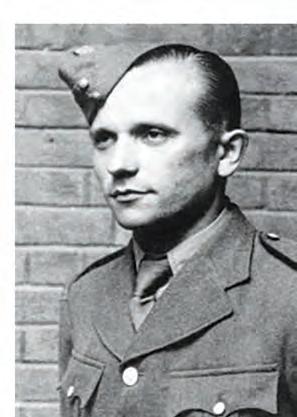
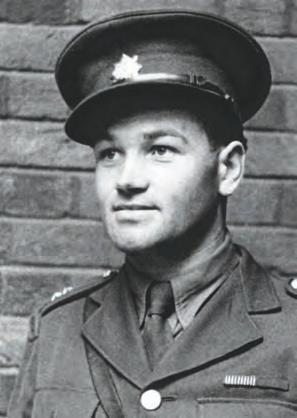
ve been picked for a mission,”

Jan Kubiš told an English couple who had befriended him and his Czechoslovak army comrade Jozef Gabčík. “I can’t tell you what…but hopefully we’re going to come back alive.”
GABČÍK AND KUBIŠ ARE CONSIDERED HEROES IN THEIR HOMELANDS
“Hopefully we’re going to come back alive.”
—Jan Kubiš
The duo had both served in the Czech army, fled to Poland in 1939, then joined the French Foreign Legion in Algiers before coming to England in the spring of 1940. Gabčík was already at a Special Operations Executive (SOE) training centre in Arisaig, Scotland, when Kubiš left the Czech base at Cholmondeley Castle in Cheshire, England, to join him. Their mission: to parachute into Czechoslovakia and assassinate Reinhard Heydrich, the SS Stellvertretender Reichsprotektor (acting protector) of Bohemia and Moravia, regions of the country annexed by Germany in 1939. Planning for it had begun shortly after Heydrich’s Sept. 27, 1941, appointment by Hitler to ruthlessly suppress a growing Czech resistance and ensure no disruption to the country’s vital role in supplying Germany with arms and munitions. Czechoslovakian president-in-exile Edvard Beneš hoped Heydrich’s elimination would inspire his country and prove to the Allies that Czechs and Slovaks stood united against Germany.
On Dec. 28, 1941, Gabčík and Kubiš parachuted from a Royal Air Force Halifax bomber near Prague. Once on the ground, the duo contacted local resistance groups in the city and refined their plan. Resistance leaders expressed fear that the operation—codenamed Anthropoid—would lead to brutal reprisals, but Beneš dismissed their concerns. Heydrich moved freely about Prague in an open-top Mercedes-Benz convertible following predictable routes. On May 27, 1942, Gabčík and Kubiš deployed next to a tram stop where a tight corner forced Heydrich’s car to slow down. As the car turned, Gabčík tried to fire his Sten submachine gun. But it jammed. Seeing the assassins, Heydrich ordered his driver to stop and engaged them with a Luger pistol. Kubiš seized the moment, rolling a British Type No. 73 anti-tank grenade under the car. The explosion peppered Kubiš’ face with shrapnel, but also severely wounded Heydrich, who later died of complications arising from the attack. The assassins escaped, eventually joining a small resistance group inside Saints Cyril and Methodious Cathedral. It was overrun on June 18 by the Waffen-SS searching for the pair. Gabčík died by suicide and Kubiš died of wounds suffered during the two-hour gun battle. Heydrich’s assassination remains controversial, but Gabčík and Kubiš are considered heroes in their homelands. L
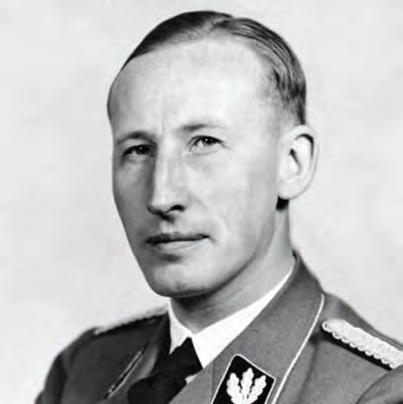

efore Reinhard Heydrich became the governor of Bohemia and Moravia in Czechoslovakia (modern-day Czech Republic), the SS general played a crucial role in implementing the elimination of Jews and other perceived threats to the Nazi state. Alongside SS Reichsführer Heinrich Himmler, he opened the Dachau concentration camp in 1933. On Jan. 24, 1939, key Hitler confidant Hermann Göring assigned Heydrich to oversee the Central Office for Jewish Emigration, which aimed to force Jews to leave the Reich by any means necessary. And two years later, Göring ordered Heydrich to plan details of the “Final Solution.” During the Wannsee Conference on Jan. 20, 1942, Heydrich promised, “Europe would be combed of Jews from east to west.”
Born near Leipzig, Germany, on March 7, 1904, Heydrich embraced racist movements as a teenager before joining the German navy. Dishonourably discharged following a romantic affair, Heydrich joined the SS. With resistance in Bohemia and Moravia growing, Heydrich was appointed to suppress it. Dubbed the “Butcher of Prague,” Heydrich initially used special courts to sentence hundreds of people to death and turn more than 1,000 more over to the Gestapo. He then established Theresienstadt Ghetto, a way station through which nearly 90,000 Jews were deported to other ghettos and ultimately to concentration camps. By March 1942, Heydrich oversaw the purging of thou-
sands of people from cultural, patriotic, military or intellectual organizations. “We will Germanize the Czech vermin,” he declared.
It was this extensive repression that convinced president-in-exile Edvard Beneš to have Heydrich assassinated. The attack was enabled by Heydrich’s hubris. He insisted on travelling without bodyguards in an open car along routine routes. The explosion seriously injured the left side of Heydrich’s body, damaging his diaphragm, spleen, lung and fracturing a rib. Staggering from the car, Heydrich initially appeared only dazed. He returned fire and pursued Gabčík before collapsing.
THE “ FINAL SOLUTION.”
After eight days in hospital and seemingly recovering, Heydrich lapsed into a coma and succumbed to septicemia. Following his death, massive reprisals resulted in the murder of thousands. False leads on the whereabouts of his attackers prompted destruction of the Czechoslovakian village of Lidice, where nearly 200 men were killed, about 200 women were deported to the Ravensbrück concentration camp and 95 children were taken prisoner; most were later murdered. The village of Ležáky suffered a similar fate. It too was destroyed, and all adult residents killed. After Heydrich’s death, Hitler praised him as “one of the staunchest defenders of the…German Reich and one of the greatest opponents of all enemies of this Reich.” L
“We
Sharon Adams
Quick and quiet, this folding bike played a key Canadian role in Normandy
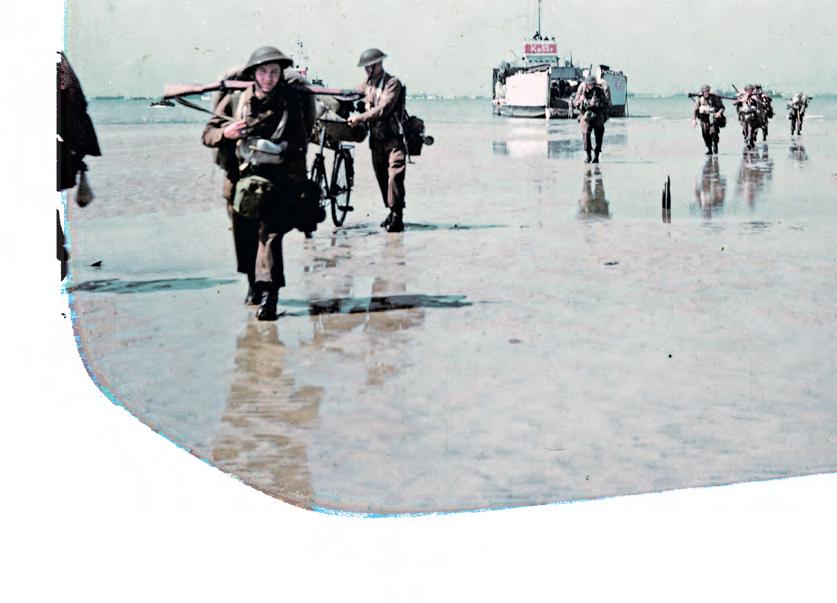
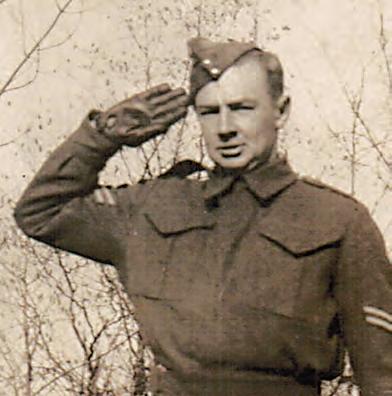
Some Canadians landing on Juno Beach on D-Day (top) carried bicycles like this one, which sparked a friendship between Marius Aubé (above) and Christian Costil (right).
Tthe Canadian museum near the landing beach.
he 14,000 Canadian troops that landed on Juno Beach on D-Day, June 6, 1944, brought with them some seemingly unexpected equipment: more than a thousand bicycles.
As the Allies fanned out from the landing beaches in northern France, the Canadians were to establish a beachhead and head inland to Caen. Most of the bicycles were issued to infantry for quicker and quieter passage, to be cast aside when no longer needed.
Discarded bikes were often picked up by civilians and used for transportation when there were fuel shortages during and after the war. The bikes were typically ridden until they fell apart and so few remain today.
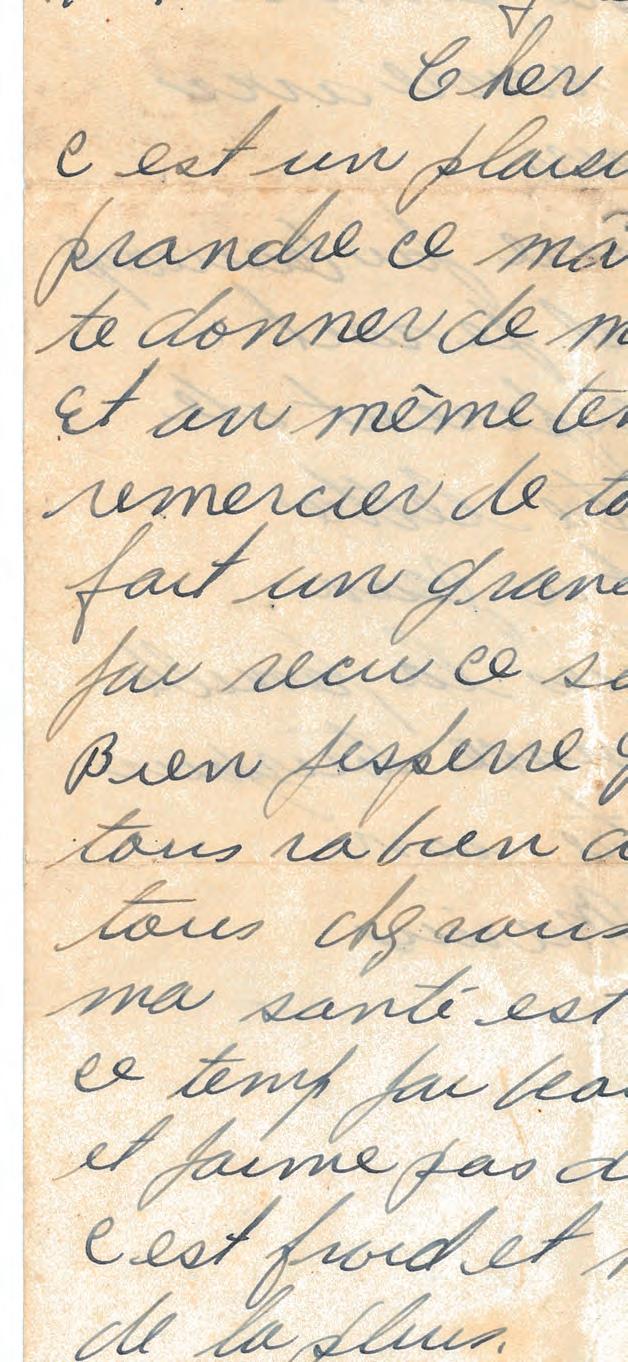
But one of the bicycles has survived to join the collection of the Juno Beach Centre,
“We have acquired a lot more than just a famous bike, we’ve also acquired the human story behind this object,” wrote exhibitions manager Marie Eve Vaillancourt, on the centre’s website.
The Birmingham Small Arms Company (BSA) Airborne Folding Paratrooper Bicycle was issued to Marius Aubé of the Royal Canadian Army Service Corps. He landed on the beach at Graye-sur-Mer on D-Day. The service corps put its bicycles to good use augmenting the heavy trucks and jeeps that supplied food, fuel and ammunition to the advancing troops— as well as to help personnel get around.
Aubé, of Sherbrooke, Que., befriended a farm family in Banville, France, and when the corps left, he gave his bicycle to
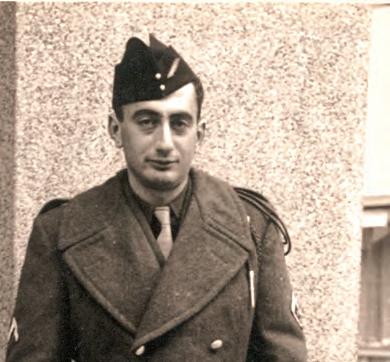
“My dad had an almost otherworldly love for this bike. We weren’t allowed to touch it.”
the family’s 14-year-old son, Christian Costil, sealing a lifetime friendship during which they exchanged many letters. Some of those were also passed along to the museum.
Costil used the bike on the farm for 14 years, then on house-to-house rounds while working as a meter reader until he retired in 1985. The bike was retired, too, a treasured possession painstakingly cared for during his lifetime—and at his direction, donated to the museum after his death in November 2020.
BSA began manufacturing bikes in 1880. During the First World War, it supplied the British army with Lewis automatic machine guns in addition to outfitting British bicycle troops. The bikes quickly proved their worth, providing soldiers with quiet, easy-to-use and quick transportation. Plus, they were easier to care for than horses.
—Marie-Claude Halot, daughter of Christian Costil
BY
1818
Year the first Birmingham Small Arms Company (BSA) bicycle was manufactured
130,000 Second World War BSA military bicycles produced 60,000 BSA Airborne Folding Paratrooper Bicycles produced
The company continued to produce consumer bicycles after the Great War, so it was easy to return to military production when the Second World War began. BSA produced about 130,000 military bicycles, including more than 60,000 airborne bikes that could be loaded into a glider or carried by paratroopers.
1,000+
BSA bikes carried by Canadian troops on D-Day
The airborne frame was hinged and connected by two wing nuts that could be loosened to allow it to be folded in half. A bike could be airdropped with its own parachute but, when folded, it could also accompany a paratrooper when he jumped. The bike’s wheels attached to a parachute suspension line and when the chute opened, the paratrooper could lower the bike so it would hit the ground first. After he landed, he would simply straighten the wheels, tighten the wing nuts and pedal off. L
Wing nuts on the bike’s frame allowed it to be folded and easily carried by jumping paratroopers.
By Don Gillmor
The largest strike in Canadian history started with metal and building workers seeking better wages and working conditions. Labourers had been pushing for similar changes for decades at that point, and the First World War helped bring these demands to the forefront.
MEN WHO HAD FOUGHT ALONGSIDE ONE ANOTHER ONLY A YEAR EARLIER WERE NOW ON OPPOSITE SIDES
Veteran Roger E. Bray addresses strikers on June 13, 1919.
Find many more stories in our O Canada special issues, NOW available in our SHOP!



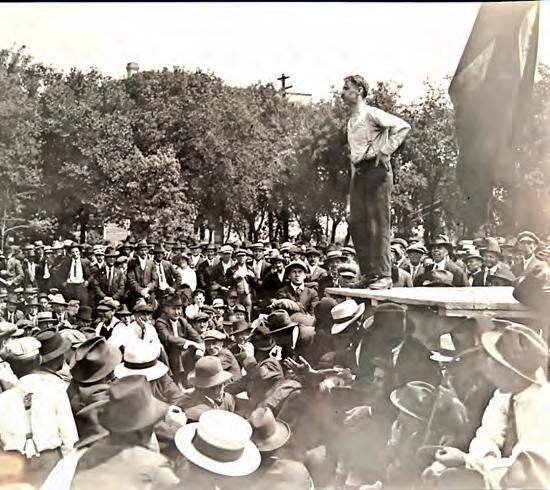
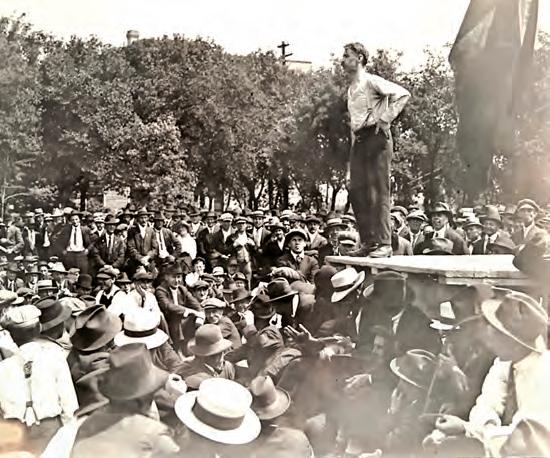
workers were taking the jobs of returning vets. The country had come together for the war effort and now fresh divisions were emerging.
Soldiers returned to find jobs scarce, wages low, housing in short supply and rents exorbitant. Meanwhile, many businesses—manufacturers in particular—had profited from the war. Men returned wounded or traumatized and found the better world they had fought for hadn’t materialized on the home front.
“In Germany I fed on grass and rats,” one veteran wrote in Winnipeg’s Western Labor News. “I would prefer going back to eating grass than give up the freedom for which I fought so hard and suffered so much.”
Some 30,000 Winnipeggers joined a general strike on May 15, 1919. The city ground to a virtual standstill as workers from a wide range of occupations all walked off their jobs.
They were condemned as revolutionists, “alien scum” and Bolsheviks by the government and business leaders. James Woodsworth, a Winnipeg preacher, defended the strike. “These men did their fair share,” he said. “Now the rich should pay theirs!”
The workers formed a Central Strike Committee. But those in charge refused to meet with them. Instead, Parliament quickly amended the Immigration Act so that foreignborn strikers—even the British—could be deported. The country that many of the protesters had fought for was turning on them.
Not all veterans, however, were in favour of the strike. Some felt that foreign-born
Tensions continued to mount, culminating in “Bloody Saturday” on June 21.
A crowd of about 6,000 strikers marched to Winnipeg’s city hall. Then-mayor Charles Gray read them the Riot Act to little avail.
The Royal North-West Mounted Police were waiting nearby. They were joined by a special militia that had been formed to replace striking policemen. Many of the “specials” were veterans, as were many of the strikers. Men who had fought alongside one another only a year earlier were now on opposite sides.
After the strikers set a streetcar on fire, the Mounties, revolvers drawn, charged down Main Street into the mass of protesters. The specials joined the police, patrolling the streets with clubs in hand. At the end of the clashes, two strikers were dead, dozens wounded and 94 were arrested. Workers returned to their jobs five days later. The Winnipeg General Strike was over. Woodsworth was charged with seditious libel, though the case was later dropped. He and other labour organizers formed the Co-operative Commonwealth Federation, a socialist political group that evolved into the New Democratic Party in 1932. Woodsworth was elected to Parliament in 1921 and continued to fight for employee rights as an MP until his death in 1942.
While the strike was convincingly crushed, it paved the way for labour reform, and served to unite workers across the country. L

“Most Canadians don’t know what it’s like for a lot of Veterans just to try and function through a day.” -Warrant Officer (Ret’d) Brian McKenna, National Strategic Advisor at the Atlas Institute for Veterans and Families.
Canadians are often unaware of the physical, emotional and mental stressors that our Veterans and their Families experience. Finding the right services at the right place and time is not as easy as one might think. Time and again, we have heard Veterans and their Families voice their concerns around the inaccessibility to much-needed services.
The Atlas Institute, formerly known as the Centre of Excellence on PTSD, has been growing from the ground up, since being named in the 2017 mandate letter for the Minister of Veterans Affairs. It is working to build capacity for accessible, culturally competent, traumainformed care and support for RCMP and military Veterans and their Families.
The Atlas Institute is led by President and CEO Fardous Hosseiny. He previously worked for the Canadian Mental Health Association (CMHA) as the Interim National Chief Executive Officer and National Director of Research and Public Policy. Hosseiny says the goal of the Atlas Institute is to ensure that Veterans and their families, who have often sacrificed a great deal as part of their service, deserve access to the best possible support and care.
Mental health injuries are common
While approximately 77% of Canadian Veterans report positive mental health, roughly one in four Veterans experiences mental health problems. Many of these problems are hard to understand, due to lack of clinical research. As a result, both Veterans and service providers are left facing a system that is misaligned with their care needs. Veterans have asked for these gaps in knowledge to be addressed.
“It can be challenging to find up-to-date research for this population,” Hosseiny says. “We use new and existing research to inform treatment options and policies that support improvements in trauma-related mental health care,” he adds, referring to the Atlas Institute’s research work with both Canadian and international partners. He also points out that mobilizing research is key to closing the knowledge gap and getting the most relevant research into the hands of service providers and Veterans and Families alike.
The Atlas Institute’s work is guided by the expertise of those with lived experience. Another key pillar of how they work is by building trusted relationships with Veterans and the Families who need support in their own right, engaging with them and empowering them with trusted information that supports their health and well-being journey. “No one can tell the Veteran story better than Veterans themselves and the Families that have stood by their side,” Hosseiny says.
This is echoed by Laryssa Lamrock, National Strategic Advisor, Families at the Atlas Institute, “We embed lived expertise into our staff and processes, regularly engage with Veterans and Families, RCMP members, researchers and service providers, to ensure that our work is guided by—and reflective of—the people we serve. It’s also important for our RCMP Veterans and their Families to know they are part of our remit, that we are here to represent them as well as Canadian Armed Forces Veterans.”
Veterans and their Families deserve equitable access to mental health care without the stigma that surrounds their circumstances. “While we do not offer direct services, we identify the best mental health treatment approaches,” Hosseiny adds. “Veterans and Families have dedicated their lives to serving Canada. Now, it’s our time to give back.”
Hosseiny is supported at the executive leadership level by Deputy CEO and Vice President of Knowledge Mobilization, MaryAnn Notarianni and Executive Vice President of Strategy and Operations, Joy Pavelich. Notarianni joined the Atlas Institute from the Ontario Centre of Excellence for Child and Youth Mental Health, where she led initiatives in quality improvement, knowledge mobilization and stakeholder engagement. Pavelich joined from CMHA both nationally and regionally where her previous work was centered around youth mental health, advocacy, and system change.