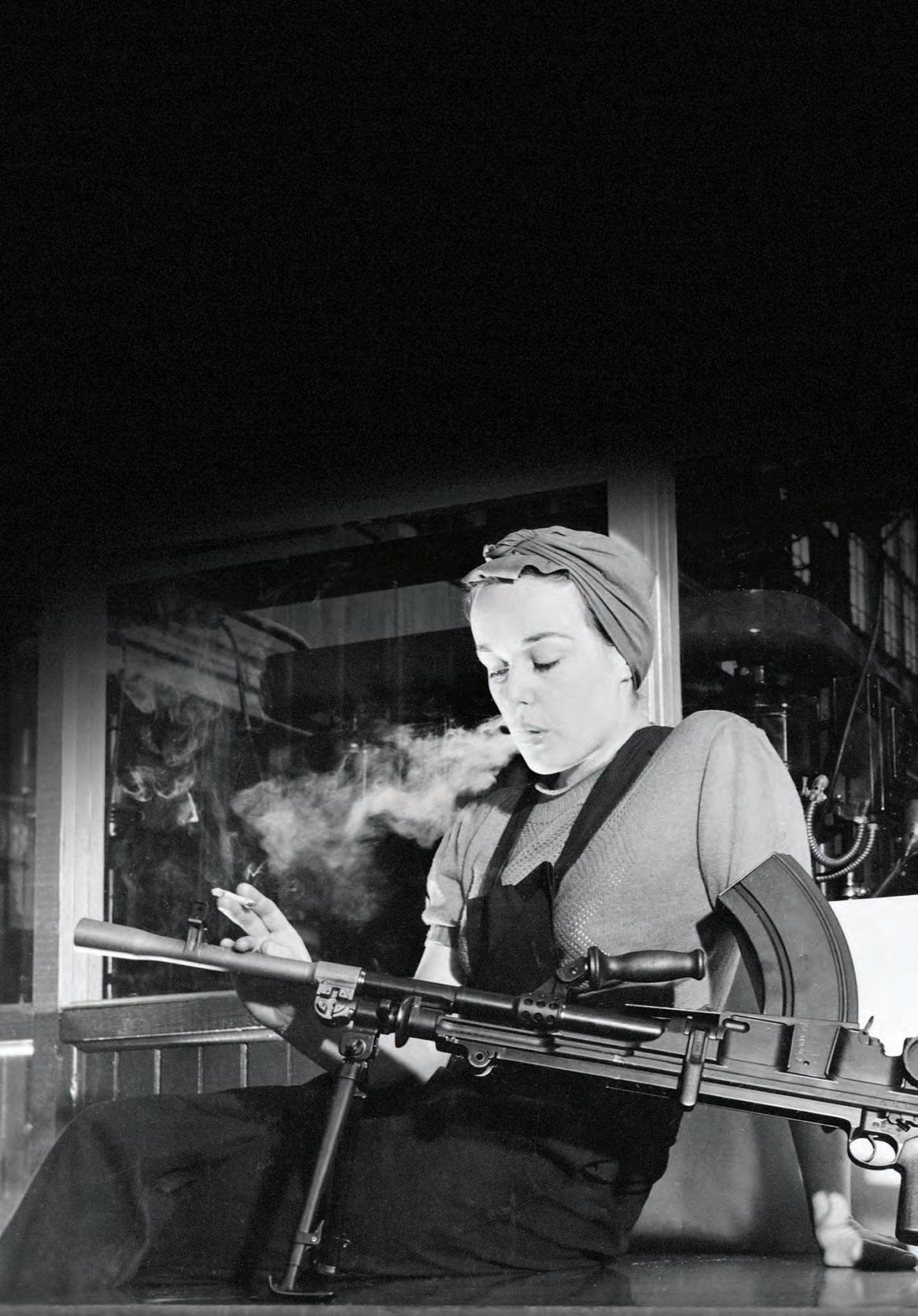
Worker Veronica Foster, known in wartime Canada as the “Bren Gun Girl,” poses with a machine gun in the John Inglis Company plant where the weapons were built.
See page 54
18 DOUBLE DUTY
Some were heroines, some were victims, but most women simply endured and survived the War of 1812
By Sharon Adams
24 “TO THE MEN OF DIEPPE!”
Remembering the courage and fortitude of the Canadian forces that mounted the ultimately ruinous raid
By Tom MacGregor
31 THE DIEPPE MOUNTIE
An RCMP constable who volunteered for overseas service recalls the infamous raid in his own words
By Edward Hammond Stevenson
38
8 myths of Black service in the Canadian Expeditionary Force and the actual realities they faced
By Stephen J. Thorne
46
Recent sexual misconduct scandals in the Canadian Armed Forces have been a catalyst for change. But will it go far —and will it last?
By Sharon Adams
54 RIGHTS FIGHT
As the Second World War wound down, Ottawa assumed wartime working women would return to homemaking— the women had other ideas
By Graham Chandler


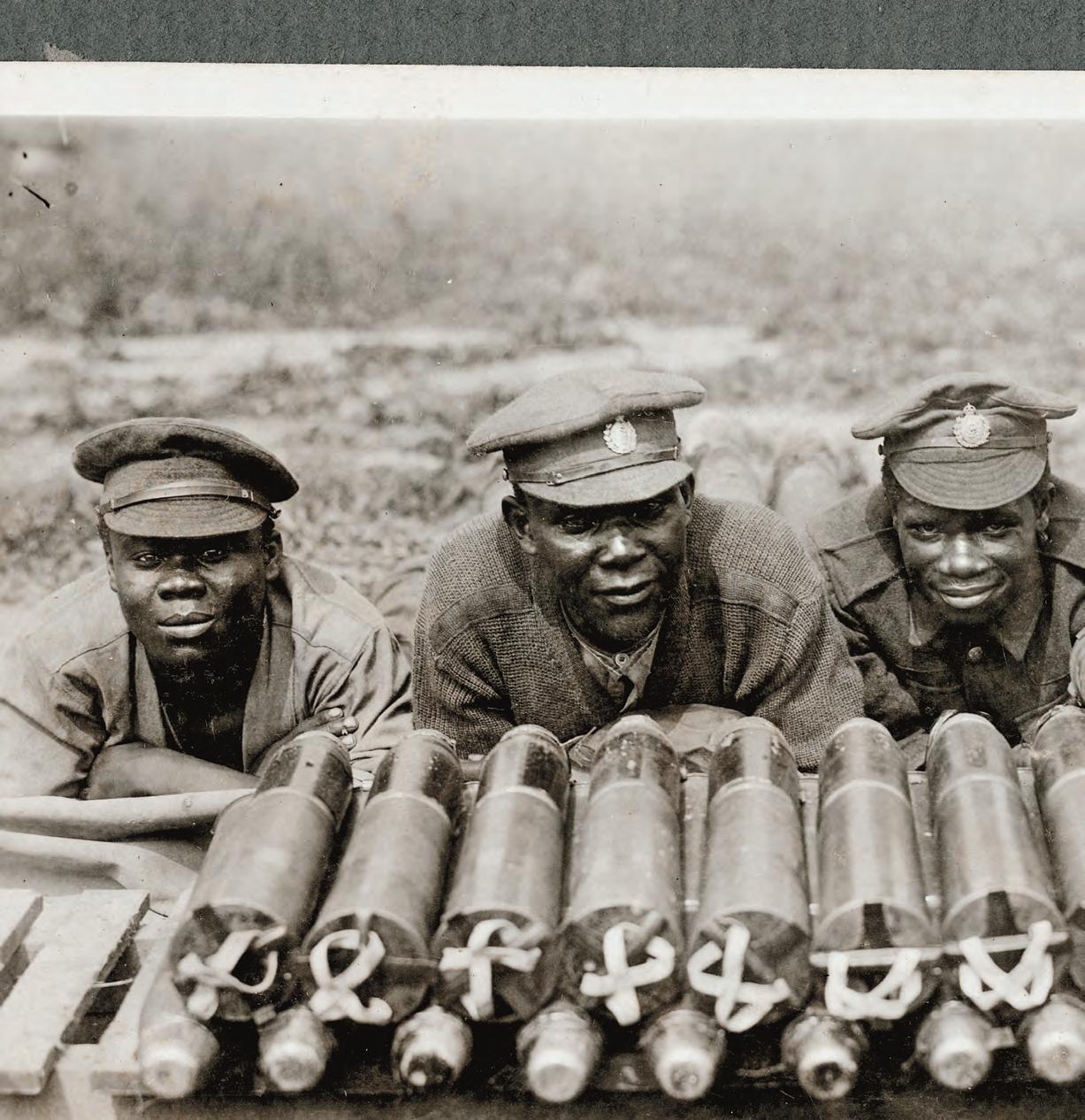
PHOTO
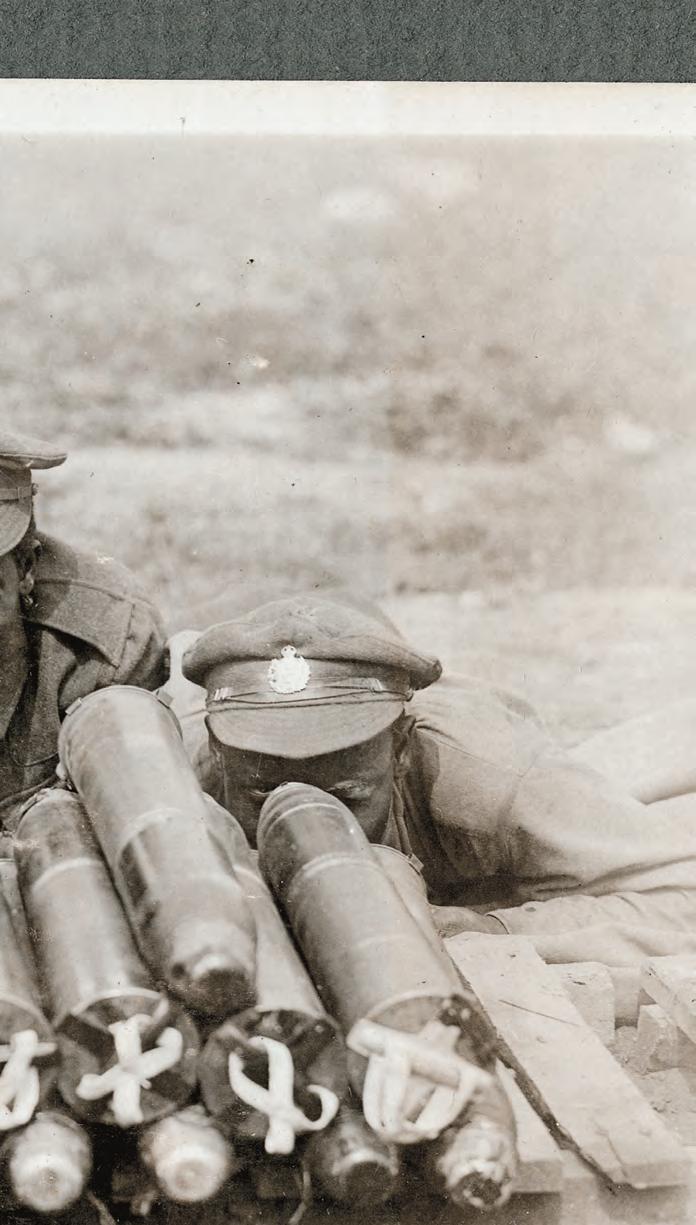
Not all Black soldiers of the Canadian Expeditionary Force were part of No. 2 Construction Battalion. These four unidentified men served with the Royal Canadian Ordnance Corps. CWM/19930012-397
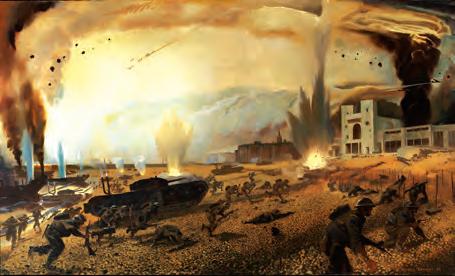
THE COVER
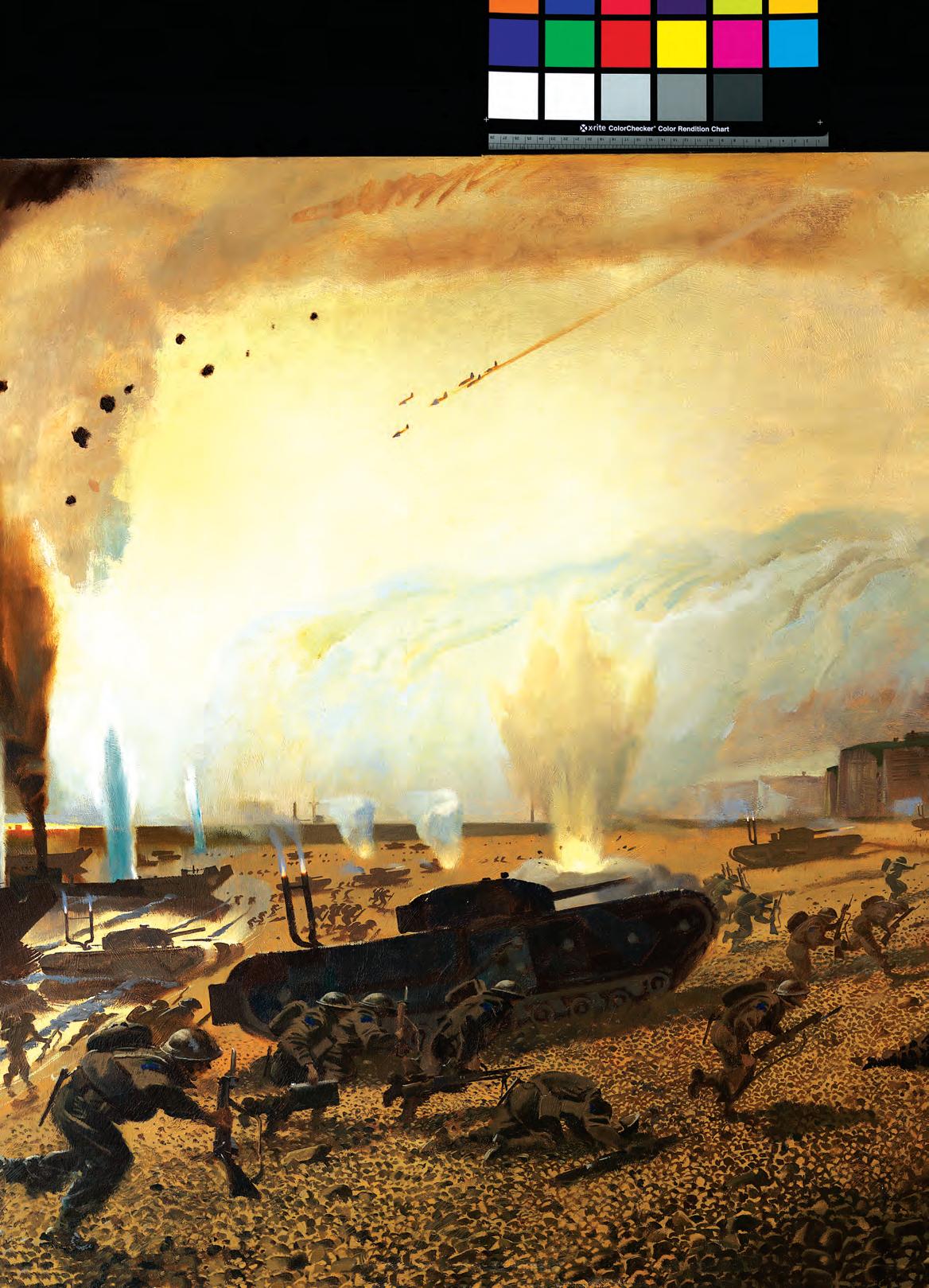
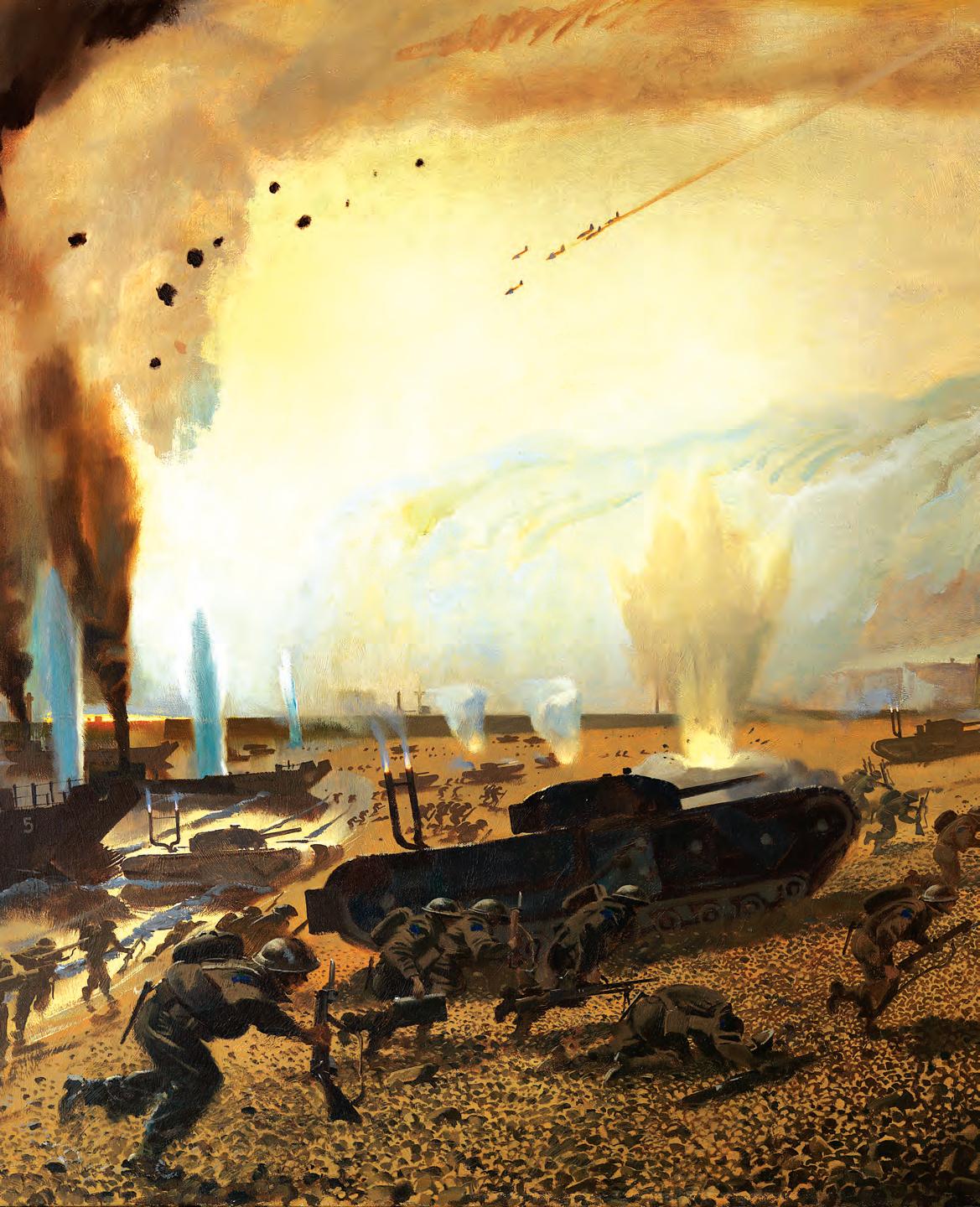
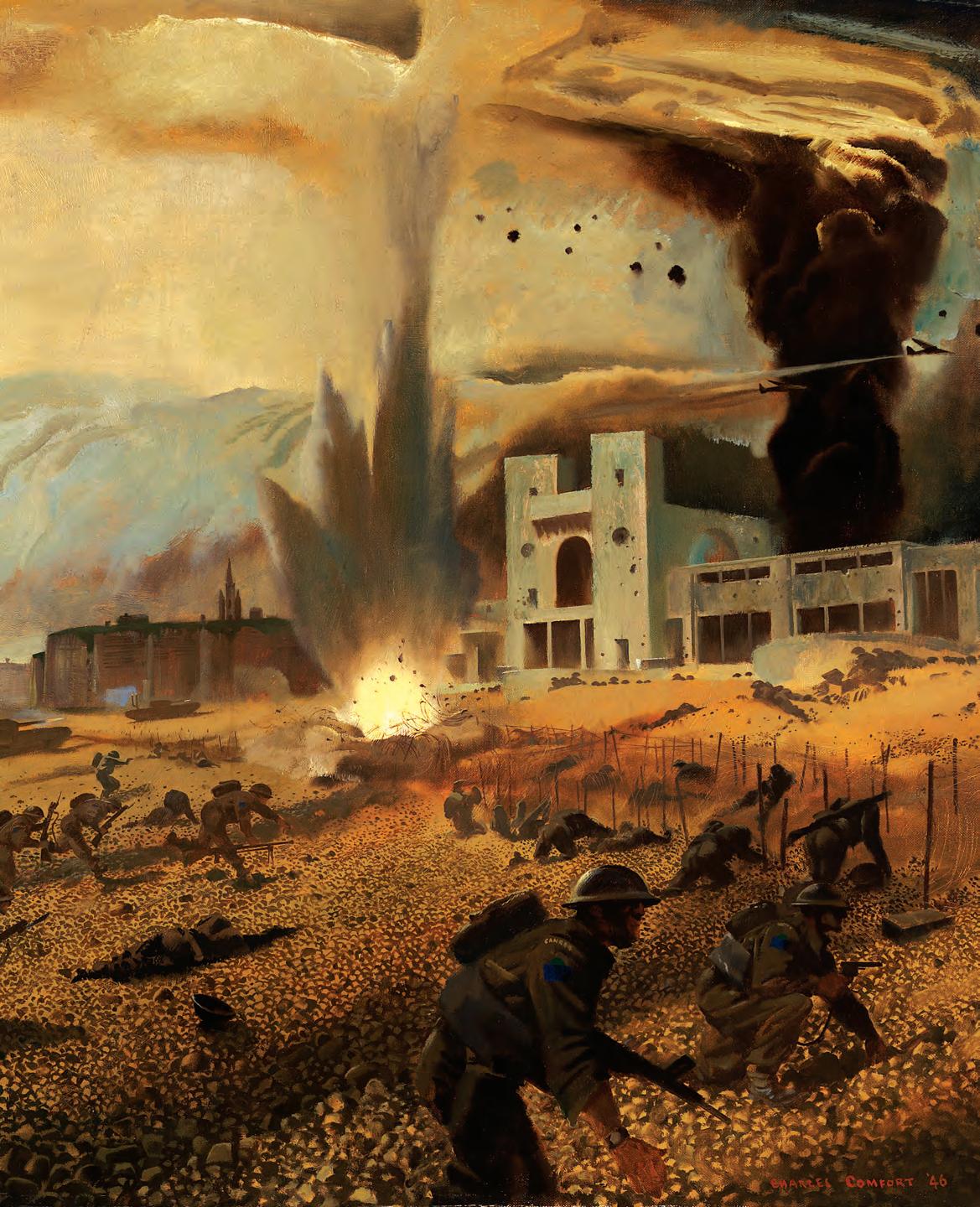
Major Charles Comfort depicted Canadian soldiers as they began the ill-fated Dieppe Raid on Aug. 19, 1942, in this postwar painting.
Maj. Charles Comfort/CWM/19710261-2183
J. Bercuson
Did the Dieppe Raid provide the Allies with lessons critical to D-Day’s success?

March 2022, a Royal Canadian Navy basic training course at Canadian Forces Base Esquimalt in B.C. was shut down after allegations of sexual harassment and racism among recruits.
A sexually explicit photo was shared with a chat group, inappropriate sexualized comments were made and racist, threatening messages were found on some recruits’ personal devices.
After the Canadian Armed Forces took a closer look at the 35 prospective members, a spokesperson said “candidates deemed suitable for retention will be returned to the Naval Training System at the earliest opportunity.” Those who did not live up to the CAF’s Code of Ethics and Values were booted out.
It’s a sign that the new strategy for addressing sexual misconduct in the forces—summarized in its Path to Dignity and Respect document published in October 2020—is
working. Sexists, bullies and racists will not be admitted to the ranks.
The latest approach recognizes that eliminating sexual misconduct is not a one-time mission, but a never-ending cultural evolution. It will entail ongoing training and education, constant monitoring and a continuing role for the new chief, professional conduct and culture.
Indeed, several objectives set this bid at eradicating sexual misconduct in the CAF apart from previous attempts.
This time, the CAF is seeking suggestions to improve its policies and procedures from outside experts, including from those who have experienced sexual misconduct and gender discrimination. It is also targeting a range of disrespectful behaviours at every level and promoting an environment that curbs hurtful actions before they become toxic.
The CAF is developing methods to support individuals experiencing such threats, as well as for bystanders to safely report misconduct. It’s also creating processes for addressing numerous inappropriate actions accordingly.
The military aims to hardwire cultural change by holding leaders at every level accountable for team diversity and inclusivity, and by adding those measures to professional assessments and promotion criteria.
Plus, tackling this issue just might help address the CAF’s recruiting challenge. The cultural changes meant to make military careers more attractive to women, the LGBTQ2 community and racialized Canadians—such as allowing members to dress according to their gender identity, observance of diverse religious holidays and the broadening of leave policies to include bereavement, caring for sick children or parents—will also make the CAF an attractive job option for men.
oyal Canadian Legion members and their families may now access more affordable medication from the Legion’s newest partner in the Member Benefits Package (MBP), Pocketpills.
Fill prescriptions, order refills, buy vitamins and consult with pharmacists through its user-friendly app or website (www.pocketpills.com). Purchases are delivered to your door, anywhere in Canada, in discreet packaging for free. Refills are processed automatically.
Plus, if you take more than one medication, Pocketpills will send
you daily dose pill packs, pre-sorted by date and time. The online pharmacy also co-ordinates with your insurance provider to ensure you get the lowest co-pay. Besides saving money, members using Pocketpills will be donating to the programs of The Royal Canadian Legion, which in turns supports services and initiatives for veterans.
To sign up for free, call 1-855-950-7225 and mention promo code “Legion” or visit www.pocketpills.com/legion.
The MBP offers discounts on specially designed travel insurance
Will we see evidence of the evolution quickly? Not likely. Similar changes to a more inclusive society outside the military’s ranks have been slow. While the armed forces might move faster, relatively, than society at large, the cultural change for those in uniform is still likely to be a methodical march.
But the first steps have been taken. L
packages, retirement living, cellphones, eyewear, funerals and much more. The other MBP partners are IRIS Eyewear–Eye Examinations, Medipac Travel Insurance, belairdirect car and home insurance, SimplyConnect, HearingLife, Arbor Memorial, Canadian Safe Step Walk-in Tub Company, CHIP Reverse Mortgage, Revera and MBNA Canada Bank.
Savings from the ever-growing list of MBP partners can pay for Legion membership many times over. It is just one more reason to join. L
Vol. 97, No. 4 | July/August 2022
BOARD CHAIR Owen Parkhouse BOARD VICE-CHAIR Bruce Julian BOARD SECRETARY Bill Chafe
DIRECTORS Tom Bursey, Steven Clark, Thomas Irvine, Berkley Lawrence, Sharon McKeown, Louise Tardif, Brian Weaver, Irit Weiser
Legion Magazine is published by Canvet Publications Ltd.
GENERAL MANAGER
Jennifer Morse
INTERIM
ADMINISTRATIVE SUPERVISOR
Mike D’Angelo
INTERIM
ADMINISTRATIVE ASSISTANT
Jonathan Harrison
ADMINISTRATIVE SUPERVISOR
Stephanie Gorin (on leave)


EDITOR
Aaron Kylie ASSISTANT EDITOR
Trevor Oattes
STAFF WRITERS
Sharon Adams
Stephen J. Thorne


ART DIRECTOR, CIRCULATION AND PRODUCTION MANAGER
Jason Duprau
SENIOR DESIGNER AND PRODUCTION CO-ORDINATOR
Jennifer McGill
DESIGNERS
Derryn Allebone
Sophie Jalbert


SENIOR DESIGNER AND MARKETING CO-ORDINATOR
Dyann Bernard WEB

CANIK MARKETING SERVICES
TORONTO advertising@legionmagazine.com
DOVETAIL COMMUNICATIONS INC mmignardi@dvtail.com
OR CALL 613-591-0116 FOR MORE INFORMATION
Published six times per year, January/February, March/April, May/June, July/August, September/October and November/December. Copyright Canvet Publications Ltd. 2022. ISSN 1209-4331
Legion Magazine is $9.96 per year ($19.93 for two years and $29.89 for three years); prices include GST.
FOR ADDRESSES IN NS, NB, NL, PE a subscription is $10.91 for one year ($21.83 for two years and $32.74 for three years). FOR ADDRESSES IN ON a subscription is $10.72 for one year ($21.45 for two years and $32.17 for three years).

TO PURCHASE A MAGAZINE SUBSCRIPTION visit www.legionmagazine.com or contact Legion Magazine Subscription Dept., 86 Aird Place, Kanata, ON K2L 0A1 or phone 613-591-0116. The single copy price is $5.95 plus applicable taxes, shipping and handling.
Change of Address
Send new address and current address label. Or, new address and old address, plus all letters and numbers from top line of address label. If label unavailable, enclose member or subscription number. No change can be made without this number. Send to: Legion Magazine Subscription Department, 86 Aird Place, Kanata, ON K2L 0A1. Or visit www.legionmagazine.com. Allow eight weeks.
Opinions expressed are those of the writers. Unless otherwise explicitly stated, articles do not imply endorsement of any product or service. The advertisement of any product or service does not indicate approval by the publisher unless so stated. Reproduction or recreation, in whole or in part, in any form or media, is strictly forbidden and is a violation of copyright. Reprint only with written permission.
PUBLICATIONS MAIL AGREEMENT NO. 40063864
Return undeliverable Canadian addresses to Legion Magazine Subscription Department 86 Aird Place, Kanata, ON K2L 0A1 | magazine@legion.ca
U.S. Postmasters’ Information
United States: Legion Magazine, USPS 000-117, ISSN 1209-4331, published six times per year (January/February, March/April, May/June, July/August, September/October, November/December). Published by Canvet Publications, 866 Humboldt Pkwy., Buffalo, NY 14211-1218. Periodicals postage paid at Buffalo, NY. The annual subscription rate is $9.49 Cdn. The single copy price is $5.95 Cdn. plus shipping and handling. Circulation records are maintained at Adrienne and Associates, 866 Humboldt Pkwy., Buffalo, NY 14211-1218. U.S. Postmasters send covers only and address changes to Legion Magazine, PO Box 55, Niagara Falls, NY 14304. Member of CCAB, a division of BPA International. Printed in Canada.
We acknowledge the financial support of the Government of Canada. Version française disponible.
On occasion, we make our direct subscriber list available to carefully screened companies whose product or services we feel would be of interest to our subscribers. If you would rather not receive such offers, please state this request, along with your full name and address, and e-mail magazine@legion.ca or write to Legion Magazine, 86 Aird Place, Kanata ON K2L 0A1 or phone 613-591-0116.



Pocketpills is the online pharmacy partner of The Royal Canadian Legion. Founded in 2018 by a team of pharmacists and engineers, we set out with the goal of making medication more accessible and affordable for all Canadians.
Pharmacies are an important part of our healthcare system, but the services they provide have not changed much in the last 100 years. Until now, Canadians have been forced to manage prescriptions on their own and pick up their medication in person. We saw there was a need for an easier, more personal pharmacy experience one that puts you first.
At Pocketpills, you don’t have to lift a finger, the pharmacy to you website, you can fill prescriptions, order refills, buy vitamins, and consult with pharmacists—all home. Most importantly, we offer in Canada. Your medication will arrive at your doorstep, discreetly packaged,
If you’re one of the many Canadians taking more than one medication, you know how easy it is to accidentally skip a dose. That’s why we created Pocketpacks: daily dose pill packs, pre-sorted by date and time. We also provide automatic refills so you never have to worry about running out of medication.
Pocketpills does not charge for any of these services. Signing up is free, the only thing you’ll pay for is your medication. We coordinate with your insurance provider to make sure you get the lowest copay possible. By becoming a Pocketpills member, you’ll also be supporting

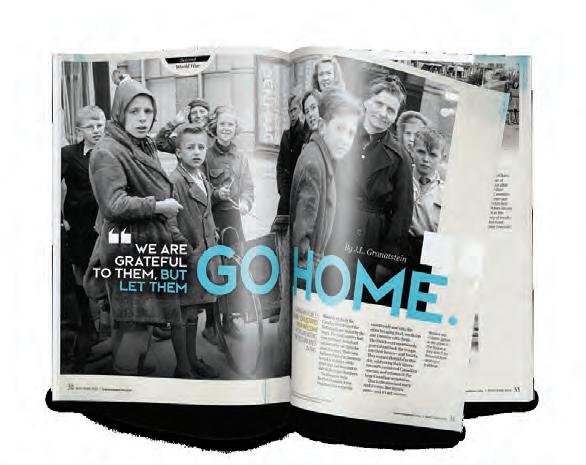
Asa Dutch Canadian born in the eastern part of southern Holland some months before its liberation, I was very interested in the articles on Canada’s freeing of the Netherlands (“Liberation!” and “We are grateful to them, but let them go home,” May/June 2022). My background is a part of why I am so fascinated by the friendship between the two countries. The Dutch joy following the liberation was, at least in part, relief that the tribulations of German occupation and the hunger of the 1944-45 winter were behind them. One Dutch witness observed: “You know, we were overwhelmed by the friendliness and hospitality of our liberators. This was in such sharp contrast to the hostility and arrogance of the Germans.... My friends and I spent much time among the soldiers, worshipping
them as heroes. In turn, they displayed a warm kindness that stood out so noticeably after the years of Nazi tyranny.” Clearly, the Canadian soldiers and the Dutch public got along well. But, as J.L. Granatstein has written, even a welcome guest can stay too long. As transport ships were in short supply, Canadian soldiers were still in Holland in 1946 and there were incidents of friction, though these were temporary. The lasting memory of the liberators’ time in Holland is captured by a skit done by a local town in Groningen to honour departing Canadian soldiers. In it all the different troops were depicted— the Americans with sloppy salutes, the Germans goosestepping, a little Englishman saluting a corporal and hopping. But the house came down as a Canadian soldier entered,

Comments can be sent to: Letters, Legion Magazine , 86 Aird Place, Kanata, ON K2L 0A1 or e-mailed to: magazine@legion.ca
a girl on each arm, a carton of cigarettes and a bottle of whisky in his hands, drunk as can be. People laughed and cheered. The fondness they had for the Canadians overcame the foibles and excesses of the soldier.
GERRY VAN KESSEL, GATINEAU, QUE.
I appreciated John Boileau’s article in the March/April 2022 issue on Leonard Birchall (“Saviour of Ceylon”), which concluded by noting that Leonard himself never used that nickname. Indeed, he was a very modest man. I worked with Leonard when he was an administrator at York University in Toronto in the mid-1970s. I had just graduated and was in my first job, and Len was incredibly friendly, kind and helpful.
I mentioned to my father, Wes, who had served in the air force near the end of the Second World War, that York had hired quite a few ex-military officers. He asked for names and when I said Len Birchall, he almost fell off his chair, so excited that I knew the Saviour of Ceylon. Dad subsequently retired, helped rebuild his local air force association wing and began attending association conventions (he met Len at one). Dad could hardly wait to tell me that both of us could now claim to have met the Canadian war hero. It was nice to remember both Len and my father while reading this article.
MICHAEL MOURITSEN, KINCARDINE, ONT. L
“We should not be impressed when our leaders say firmly, ‘History teaches us’ or ‘History will show that we were right.’ They can oversimplify and force inexact comparisons just as much as any of us can,” wrote Margaret MacMillan in her 2008 book, The Uses and Abuses of History MacMillan, a history professor at the University of Toronto, emeritus professor of international history at the University of Oxford and the author of seven books, won the 2021 Pritzker Military Museum & Library Literature Award for Lifetime Achievement in Military Writing. Her latest work is War: How Conflict Shaped Us She spoke with Legion Magazine in advance of “An evening with Margaret MacMillan,” a free virtual event to be held on Sept. 12, 2022, in collaboration with the Legion National Foundation and Toronto’s

Bill Graham Centre, where she will read from one of her books and share time with attendees. An excerpt from this interview appears below. Read the full exchange at www.legionmagazine.com/macmillan.
For more info on “An evening with Margaret MacMillan,” visit https://www.eventbrite.ca/ e/344132237787.
On going to war
Wars are often started by people who miscalculate. They miscalculate their own strength and they underestimate the enemy. Materiel factors in war—how many tanks, battleships, etc. you have—are also important. But so is organization, training, logistics and morale.
On the rise of nationalism It’s a very powerful organizing force.
People create histories that help create this impression of this eternal nation. Putin has done it. Other nations have done it. They go back into the past and they claim we were always here.
On Canada’s military
Canada hasn’t treated its military that well. We’ve systematically underfunded it. We haven’t taken the needs of the military as seriously as we might have done. We’re now having to face that the world is not necessarily a peaceful place and Canada can’t just assume that everyone’s going to be nice to us. We’re having to think about how we contribute to the defence of the West and in what ways. L
notified of all the latest updates on LegionMagazine.com by signing up for our weekly e-newsletter at www.legionmagazine.com /en/newsletter-signup



















2 JULY 1904
The Canadian Army Medical Corps is authorized.
4 JULY 2007
Six Canadians are killed when their armoured vehicle hits a roadside bomb in southern Afghanistan.
5 JULY 1970
Air Canada Flight 621 crashes in Brampton, Ont.; all 109 passengers and crew are killed.
6 JULY 2012
Canadian Forces Base Borden gets its first female base commander, Col. Tammy Harris.
8 JULY 2006
Under intense fire, M.Cpl. Christopher Harding carries a wounded soldier 150 metres to safety. He is awarded the Medal of Military Valour.

9 JULY 2001
Nunavut Day celebrates passing of the Nunavut Act in 1993.
11 JULY 1930
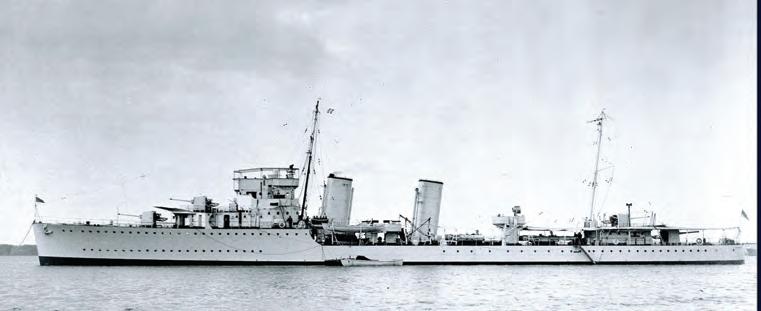
HMCS Saguenay launches.
12 JULY 1940
PO Duncan Hewitt is the first Canadian killed in the Battle of Britain.
13 JULY 1993
A farewell ceremony is held in the town of Lahr, Germany, as CFB Lahr prepares to shut its doors.
14 JULY 1976
The House of Commons abolishes capital punishment in Canada.
15 JULY 1870
Manitoba and the North-West Territories enter Confederation.
16 JULY 1945
Trinity—the world’s first nuclear weapon test—is conducted in New Mexico.
17 JULY 1812
British forces capture U.S. Fort Mackinac, whose troops were unaware war had been declared.
19 JULY 1996
The 100th anniversary of the Olympic Games is held in Atlanta, Canada claims 22 medals, three of them gold.
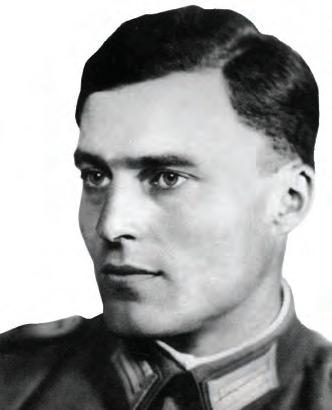
20 JULY 1944
German Col. Claus von Stauffenberg fails in an attempt to kill Adolf Hitler with a briefcase bomb. He and other perpetrators of Operation Valkyrie are executed soon after.
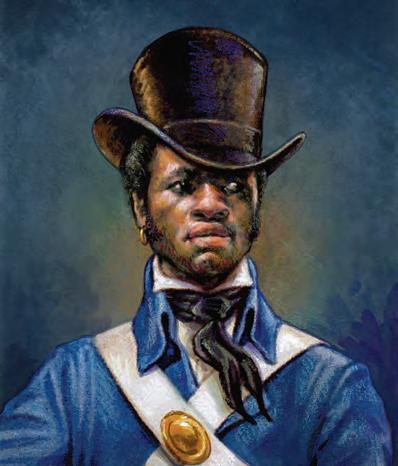
21 JULY 1812
Black Loyalist Richard Pierpoint persuades the government to raise a company of Black troops to help protect Upper Canada’s Niagara frontier.
22 JULY 1943
Canadian troops capture Leonforte and Assoro in Sicily.


24 JULY 1942
HMCS St. Croix sinks German submarine U-90, which had attacked convoy ON-113.
30 JULY 1974
Six army cadets are killed and 54 injured in an accidental grenade blast at a CFB Valcartier cadet camp.
31 JULY 1759
French defenders repel a British attack at Montmorency Falls near Quebec City.
1 AUGUST 1957
Canada and the United States form the North American Aerospace Defense Command (Norad) to integrate air defences.
2 AUGUST 1909
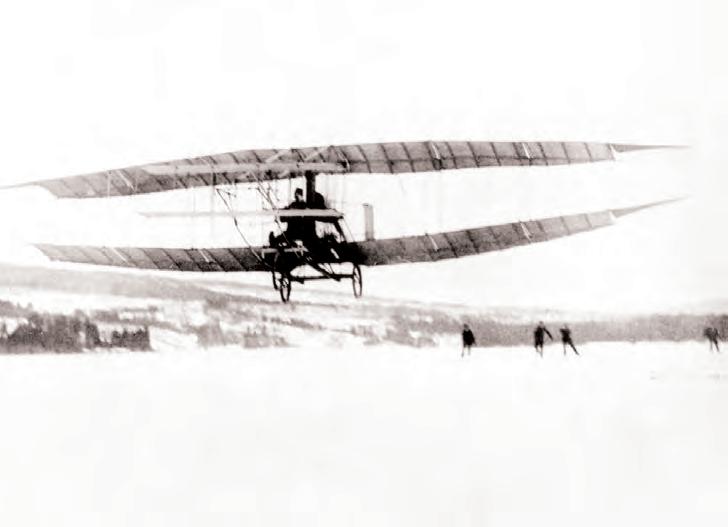
The Silver Dart makes its first passenger flight at an army evaluation at Ontario’s Camp Petawawa.
9 AUGUST 1902
The coronation of King Edward VII takes place at Westminster Abbey.
10 AUGUST 1840
Louis Anselm Lauriat completes Canada’s first manned flight—in a hot-air balloon—in Saint John, N.B.
3 AUGUST 1961
Tommy Douglas is elected the first leader of the New Democratic Party at its founding convention.
6 AUGUST 1945
An American nuclear bomb destroys the Japanese city of Hiroshima.
7 AUGUST 1950
The government approves the Canadian Army Special Force to raise troops for the Korean War.
8 AUGUST 1918
16 AUGUST 1812
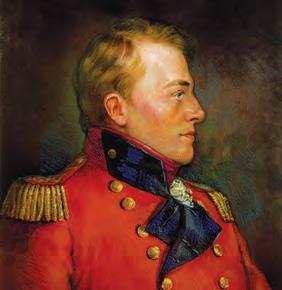
The Americans surrender Detroit and Michigan to forces led by Maj.-Gen. Isaac Brock.

20 AUGUST 1940
Winston Churchill delivers a speech praising Royal Air Force and Allied aircrews during the Battle of Britain, stating “never was so much owed by so many to so few.”
28 AUGUST 1963
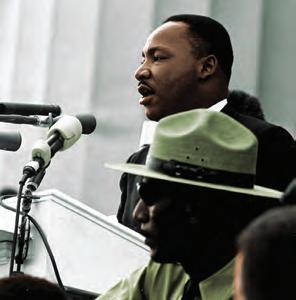
Civil rights leader Martin Luther King Jr. delivers his “I Have a Dream” speech in Washington.
30 AUGUST 2021
The last U.S. troops leave Afghanistan, ending the nearly 20-year war.
31 AUGUST 1997
Princess Diana is killed in a car crash in Paris.
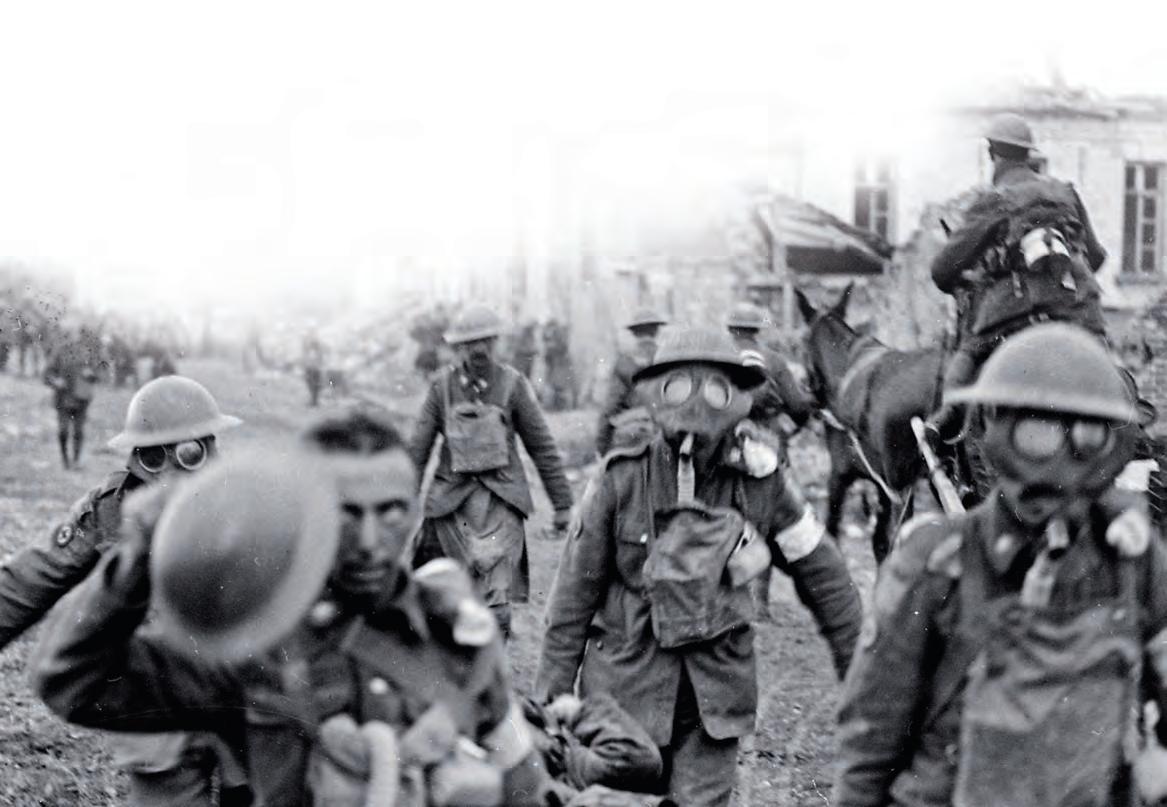
The Hundred Days Offensive of the First World War begins with the launch of a major attack east of Amiens, France.
By Sharon Adams
he pandemic has delivered a wallop to the mental health of Canadian veterans. Loneliness and social isolation are common among soldiers, sailors and aircrew who leave the military and transition to civilian life under normal circumstances. No longer in frequent contact with friends and colleagues at work, recently released veterans may suddenly lose important relationships that developed during their time in uniform. Service often prevents settling in one place, so veterans may not have friends in the community where they put down roots. They may find it challenging to make new friends, especially if they have trouble relating to non-military people. Veterans, particularly those who leave the military with physical

or mental health problems, are at an increased risk to the impacts of these challenges. They can face worsening chronic health conditions, higher blood pressure, poor sleep, depression and more stress.
But two years of periodic quarantine and social distancing during the pandemic have worsened the situation, especially for single veterans living alone.
In 2021, a research team from the Lawson Health Research Institute (LHRI) in London, Ont., launched a study to determine how veterans have been affected by the added stress of the pandemic.
The study is following 1,136 veterans over 18 months, during which time they report on their health every three months. Preliminary results were published

this spring in the European Journal of Psychotraumatology
“Over 55 per cent of veterans indicated their mental health had worsened due to the pandemic,” Dr. Don Richardson of the LHRI and lead author of the study said in a YouTube presentation.
The study also found that a quarter of participating veterans reported thinking about suicide, a big increase from Veteran Affairs Canada’s 2018 Veteran Suicide Mortality Study, which reported eight per cent of regular force veterans had thought about suicide in the previous year.
While thoughts of suicide were seemingly increasing among veterans, pandemic social distancing mandates put an end to most in-person physical and mental health-care services.
Luckily, the study found that many veterans accepted help delivered electronically. Veterans participating in the study who used telehealth services during the pandemic indicated they would prefer to continue receiving electronic psychiatric care after restrictions lift.
Accessing health care from their home may reduce stress and anxiety, said the report, and avoids the stigma of attending a mental health facility.
This finding is already making an impact on plans for future delivery of mental health care, Richardson
said. “The pandemic has forced innovation within health care,” and has providers thinking about how to support telehealth and telepsychiatry for veterans after the pandemic.
Other research has found that pandemic restrictions also resulted in an increase in veterans’ inability (or reluctance) to exercise.
According to a study by U.S. Veterans Affairs Health Care System researchers, while six per cent of veterans reported their physical health improved during the pandemic, 75 per cent reported they exercised less. Nearly half said their physical activity was reduced a lot.
“For those accustomed to working out in gyms, in pools or with groups of friends, pandemicrelated restrictions and closures disrupted routines in ways that could be difficult to overcome,” said the report, Then COVID happened…: Veterans’ Health, Wellbeing, and Engagement
in Whole Health Care During the COVID-19 Pandemic
Despite the easing of pandemic restrictions, some veterans have fallen into a reclusive, inactive routine. Lack of social contact saps their energy to socialize and take care of themselves.
“Humans are social beings, and connection to others is part of what buoys us in a stressful world,” said Dr. Somnath Saha, co-author of the study, The loneliness factor: How much does it drive depression in Veterans?
It’s a worldwide phenomenon. Based on data from step-counting apps on 19 million smartphones, a study in the Annals of Internal Medicine in late 2020 reported a dramatic drop in physical activity levels across the populations of many countries.
Aside from frequent phone calls with family and friends, the No. 1 coping mechanism for
70 per cent of Canadian veterans at the beginning of the pandemic was to watch more television.
While watching the news can help one stay informed, too much of it can affect mental health, especially in times of increased personal stress over the pandemic, angst about the devolution of democracy in other countries and anxiety over ongoing wars and international conflicts.
Doomscrolling—bingeing on negative news on social media, websites and television—causes release of stress hormones such as adrenaline and cortisol. That contributes to mental health consequences ranging from the pandemic blues to more serious problems with anxiety and depression.
Suggested solutions include setting a time limit on social media and scheduling one time a day to catch up on the news, then changing the channel or switching to a new activity. L

At Revera, there is always room to grow. With all your favorite pastimes and plenty of new experiences, you can make every day fresh, fun, and fulfilling.
And now, Legion members can get it all for less with this exclusive offer.
Stephen J.Thorne
Opposition to a French developer’s plan to build condominiums at the site where Canadian troops landed on D-Day was mounting as petitions, protests and political pressure came to bear over what some called the desecration of hallowed ground.
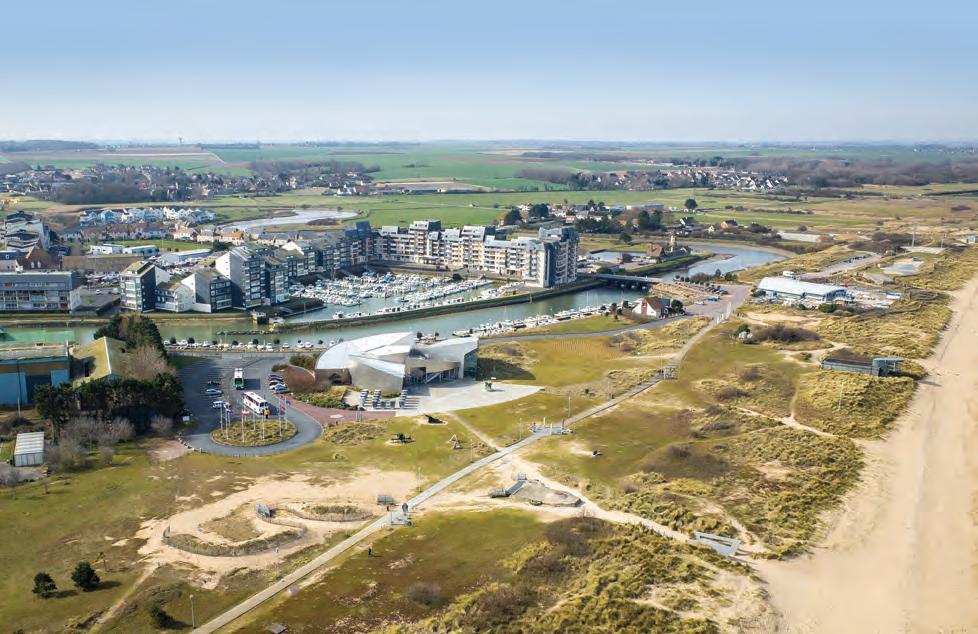
Authorities in Courseullessur-Mer awarded a construction permit for Domaine des Dunes in February 2019. The two four-storey buildings were to go up metres from Juno Beach, where Canadian soldiers fought and died during the June 6, 1944, invasion that marked the beginning of the end of Adolf Hitler’s reign of terror.
More than 60 units and a parking lot are to be built by Foncim next to the Juno Beach Centre, Canada’s primary Second World War museum and commemorative site in Europe. Centre lawyers fought the developers in court for two years.
“To build condos on the memorial site is just an enormous insult to the memory of the Canadians who
volunteered and conquered their fears to fight and liberate France and the continent,” said Cindy Clegg, an Ottawa-based communications consultant who was spearheading efforts to block the project.
More than 14,000 Canadian troops landed and 359 died on the 10 kilometres of sand code-named Juno. It was the outset of what the commander of Allied forces
in Europe, U.S. General Dwight D. Eisenhower, called “The Great Crusade.” More than 5,000 would be killed during two-and-a-halfmonths of fighting in Normandy.
“Canadians are being betrayed,” the centre’s director Nathalie Worthington told Legion Magazine “They have been given this land and now this land—the road— is being taken away. It’s like an expropriation.”
In a statement, the Juno Beach Centre described the project as the “greatest threat” it has faced since it opened 19 years ago. “We are not generally opposed to projects like these on former battlegrounds; the French deserve to enjoy the freedoms our veterans’ sacrifice brought them,” it said.
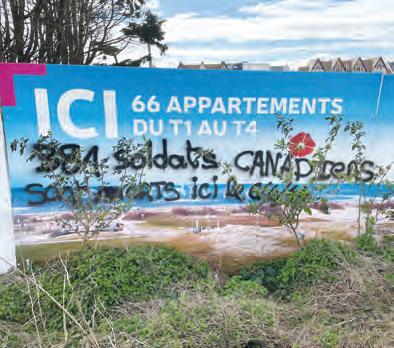
“However, the Dunes project plans to use the [centre’s] private road for access to the building site by construction vehicles and workers. We have great concern for the impact that this will have on the Juno Beach Centre.”
Worthington said basing legal arguments on the sanctity of the ground
on which Canadian blood was spilled won’t fly in court.
“Technically, we are not against the building,” she said. “We are against the fact that they want to use our road because this will make us die. We are limited by the court to this position.”
More than 1.5 million people have visited the centre—a non-profit charitable corporation—since it opened in 2003, including 103,000 in 2019, D-Day’s 75th anniversary year.
The centre’s roadway is the only vehicle access to the site. The museum paid for its construction on land administrators of Courseullessur-Mer leased to it for 99 years “for the sole purpose of providing visitors with access” to the facility.
Foncim lawyers launched legal action for the right to use the route. Museum resources were almost exhausted fighting the effort when a judge in nearby Caen upheld the
building permit and ordered the road open to the developer. Having already spent $400,000 in legal fees, the centre had filed for appeal.
It said construction traffic represents “an existential threat” to the centre and “the Canadian memorial presence in Normandy.”
The number of vehicles using the road was expected to balloon to more than 850. “When that happens chaos will ensue,” said the centre. “The [centre] is now at serious risk of being overrun and severely damaged by this road opening.”
Construction was expected to take 22 months. The centre said the effects of the pandemic combined with the construction would lead to its “decline and possibly…eventual closure.”
Les Amis du Centre Juno Beach and residents of Courseullessur-Mer have been vocal in their opposition to the project. The mayor who approved the permit, Frédéric
Advertisement
Pouille, was recently voted from office. His successor, Anne-Marie Philippeaux, is said to oppose it, but has not revoked the permit.
Canadians have sent nearly 50,000 letters to members of Parliament, cabinet ministers and ambassadors in Canada and France, demanding the development be stopped.
Clegg’s petition—one of several on both sides of the Atlantic—has garnered 60,000 signatures. The Commons veterans affairs committee unanimously passed a resolution supporting resistance efforts and urging government action.
Veterans Affairs Minister Lawrence MacAulay vowed to do “everything possible to bring a proper resolution to this dispute.” The Royal Canadian Legion, the Canadian Historical Association and the Anishinabek Nation were among groups backing the Juno Beach Centre. L


Legion members and their families can benefit from an exclusive discount on their car, home, condo and tenant’s insurance, on top of any other discounts, savings and benefits customers are already eligible for at belairdirect.







To take advantage of this offer, simply call us and mention you are a Legion member to get your exclusive premium. *Note: belairdirect only offers home, condo & tenant’s insurance in BC.















David J. Bercuson
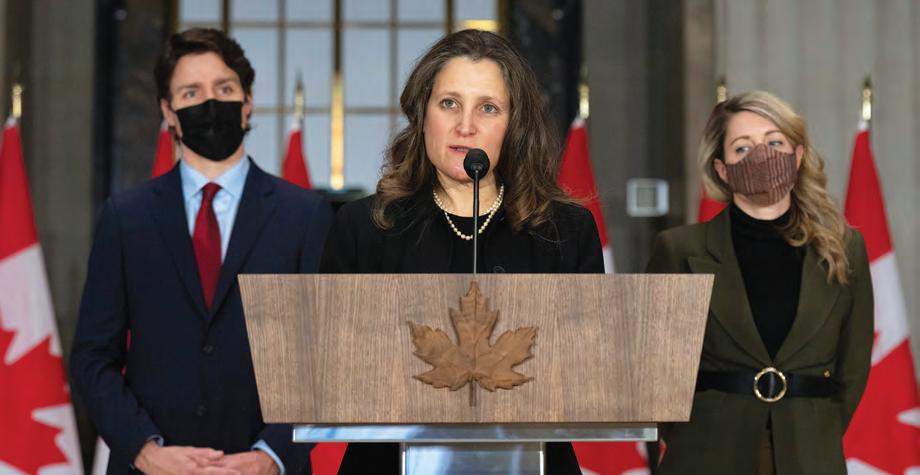
Canada’s 2022 federal budget promised $8 billion more for defence—but is it enough?
TFinance Minister Chrystia Freeland, flanked by Prime Minister Justin Trudeau and Foreign Affairs
Minister Mélanie Joly, addresses the media on Feb. 24, 2022.
he Russian invasion of Ukraine that began on February 24 will alter world affairs as profoundly as the invasion of South Korea by North Korea in June of 1950. Declaring Ukraine to be an artificial nation—despite Russian recognition of Ukraine as a sovereign country in 1991—Russian President Vladimir Putin unleashed some 175,000 troops, backed by his country’s air force and weaponry might, to conquer Ukraine and remove its democratic government.
When the Western world faced Communist aggressions in Korea
in the 1950s, the United States, Britain, Canada and the rest of NATO reacted dramatically, convinced that the invasion was but a feint for further aggression in Europe. The Canadian defence budget doubled in four years. The size of the country’s military increased from just less than 60,000 troops in 1950 to more than 100,000 in 1955. As Canada had spent the interceding years recovering from the Second World War, the stresses of building a combat-ready fighting force put an enormous strain on the country’s economy. Measures not related to war were reduced so that new defence spending would not cause runaway inflation.
Contrast Canada’s Korea response to the federal budget released on April 7. Despite characterizing Putin and the Russian government as “war criminals” and declaring that the “world’s democracies…can be safe only once the Russian tyrant and his armies
are entirely vanquished,” Finance Minister Chrystia Freeland announced that the Canadian defence budget—previously 1.39 per cent of the country’s gross domestic product (GDP)—would be increased by $8 billion by 2027, equivalent to about 1.5 per cent of GDP. That’s still well below NATO’s standard of two per cent.
In the weeks following Russia’s invasion of Ukraine, Defence Minister Anita Anand and Foreign Affairs Minister Mélanie Joly had repeatedly called for large increases in defence spending, hinting at sums similar to those announced by Germany, which has committed to increase its defence budget by 100 billion euros to reach the NATO target as soon as possible. But that was not to be. The spending increase was but a fraction of the defence budget already announced by the government.
Freeland did proclaim that a new defence review would be conducted to establish priorities based on Russia’s actions this year, but current gaps in Canadian military goals are so glaring that some, at least, could have been addressed in the budget. There was no mention of under-ice submarine capabilities, heavy icebreakers or strengthening the chronically undersized Canadian Armed Forces. New money was set aside to modernize North American air defences, but nothing to give the army an air defence capability, upgrade its decades-old Griffon helicopters or provide the navy with additional replenishment and oiler ships.
And what should be expected from a defence review, anyway? Like the recent new fighter jet competition, will it take more than half a decade to tell us what almost everyone else
already knew—that the best fighter available was the F-35?
In fairness, the invasion of Ukraine came as a surprise to the government, giving it little time to shoehorn even a modest increase in defence spending into the 2022 budget. But the numbers still don’t amount to much.
Russia has proven that its foreign and defence policy is now backed by extreme violence: that it will, when it can, resort to armed force and even perhaps war crimes to achieve its objectives. At present, those plans seem evident: bring as much of the old Russian Empire back into its fold as possible; deal with other countries from a position of brute strength backed by a nuclear arsenal; and, of particular concern to Canada, conceivably take Arctic territory beyond its current boundaries, including seabed resources. This is not business as usual. It’s time to pay up. L


Sharon Adams
fter the Battle of Queenston Heights in October 1812, two women anxiously awaited word from the field of the carnage. Had their husbands been injured? Had they even survived?
One of the women was American Betsy Doyle, whose husband Andrew was a Canadianborn U.S. artillery officer. The other was American-born Canadian Laura Secord.
Both went on to be considered national heroines in their respective countries, though only long after their feats of courage.
Much has been written about the exploits of men during the War of 1812—of their heroism, victories and defeats—but not so much has been recorded about women.
History is written, as they say, by the victors—and historically, victors are soldiers and historians, keeping records of manly deeds. There are few records of the experiences and deeds of women
who contributed to the war effort.
But women on both sides of the conflict “participated by any means that they were permitted,” wrote Sherri Quirke Bolcevic in Rhetoric and Realities: Women, Gender, and War During the War of 1812 in the Great Lakes Region
Most women contributed by doing double duty on the home front, filling the roles of husbands, brothers and fathers who were away fighting—while also shouldering their own duties at home.
Women who actively supported the military worked mainly behind the scenes as servants, particularly as nurses, laundresses and cooks.
But some women took on more dangerous roles, serving alongside the men in battle, as Doyle did, or acting as informants, as did Secord.
Doyle learned her husband Andrew had been captured by the British and was being sent


to England to stand trial as a traitor because he had been born in Canada.
All efforts to gain his release were futile.
This steeled Doyle’s determination. She “remained in the fort and...insisted on filling his place and doing his duty against the enemy,” wrote Peter A. Porter in a report to New York state commissioners.
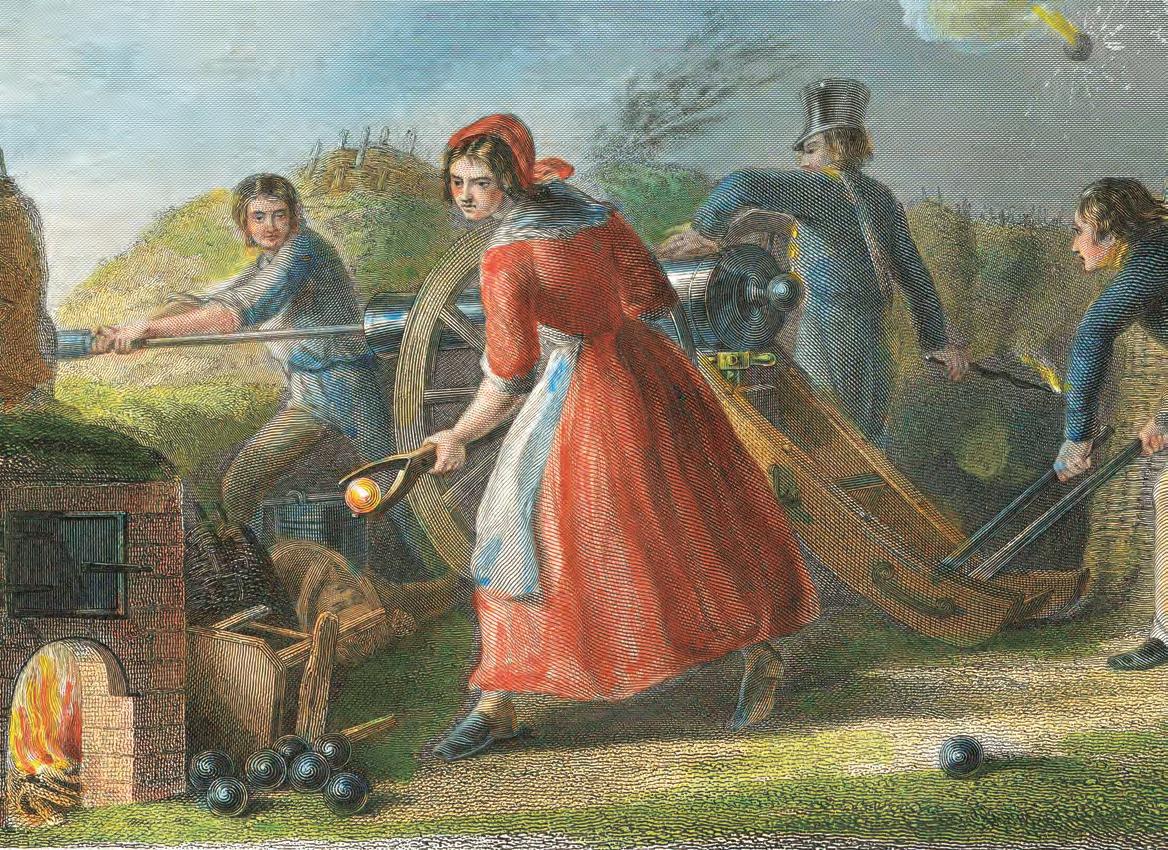
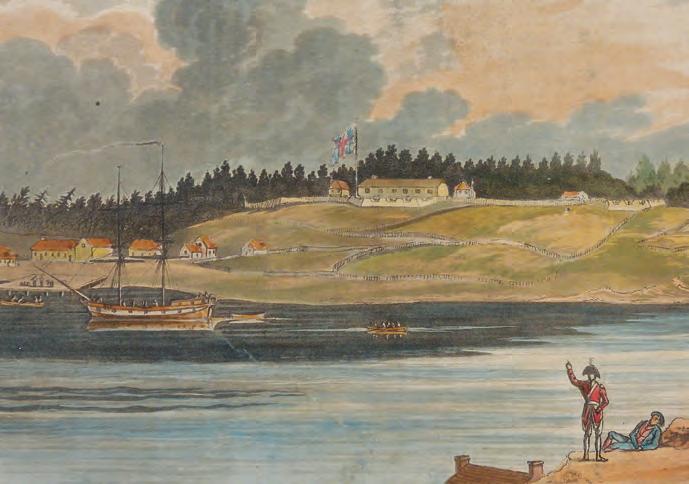
Doyle took an active role in an artillery battle on Nov. 21, 1812, between Fort Niagara, on the U.S. side of the Niagara River, and Fort George in Upper Canada.
The Americans mounted a cannon on the roof of the mess hall so they could fire hot shot into the interior of Fort George in the hopes of setting its wooden structures on fire.
“During the most tremen dous cannonading I have ever seen she attended the six pounder on the old mess house with red hot shot,” wrote Lieutenant-Colonel George McFeely in his report.
Using tongs, Doyle picked up five-kilogramplus cannonballs that had been heated in a fire, then carried them to the rooftop and deposited them in the cannon, “never quitting her post till the last gun had been discharged,” wrote Porter. (See “According to Doyle” on page 20.)
More artillery duels fol lowed. In May 1813, Fort George was captured by the Americans, who billeted officers with local families. This provided the circum stances for Laura Secord to prove her mettle as well. and property destroyed.”

Doyle transfers hot shot to the guns of Fort Niagara during the bombardment of Fort George.
BETSY DOYLE served alongside the men at Fort Niagara from November 1812 until the Americans abandoned it at the end of 1813, even donning a uniform and taking a shift on sentry duty on the last night of the occupation.
After the fort fell, she fled on foot— in the depths of winter—with her four children to escape the British, arriving four months later at an army camp 500 kilometres away near Albany, N.Y. She continued to work as a nurse for the military, despite low and sporadic pay.
She never saw her husband Andrew again. He was released from prison in Britain in 1815 and returned to the U.S. Unable to find his family, he assumed
they were dead. He remarried in 1819, the same year Betsy actually died.
At the time of her death, she hadn’t been paid for a year.
She died “by the want of those necessities which her pay would have procured,” Lieutenant Henry Smith wrote to the war department.
History was also unkind to Doyle.
A book published in 1845 inaccurately recorded the Doyles’ names as Fanny and Tom, a mistake repeated on a monument to Doyle at Fort Niagara.
The historical record was corrected by research for the bicentennial of the War of 1812 by U.S. Niagara County historian Catherine Emerson and her staff.
Women on both sides of the war
“participated by any means that they were permitted.”

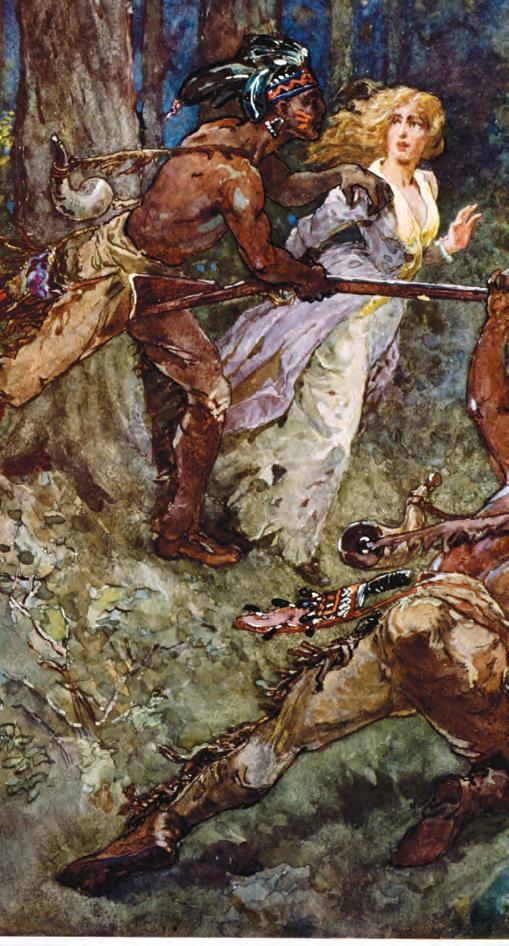
A few weeks after the fall of Fort George, Secord overheard American officers discussing a raid on the British outpost at Beaver Dams some 20 kilometres away. The spot was held by about 50 men commanded by Lieutenant James FitzGibbon.
Since her husband was in no shape to travel, Secord herself undertook to warn FitzGibbon, travelling furtively and circuitously by foot more than 30 kilometres through swamps, fields and woods, through the day and into the night.
Near the end of her journey, she came upon an Indigenous camp.
“I went up to one of the chiefs, made him understand that I had great news for Captain FitzGibbon, and that he must let me pass,” she wrote. The chief guided her to the lieutenant and “FitzGibbon formed his plans accordingly.”
When U.S. Colonel Charles Boerstler and about 500 men approached Beaver Dams on June 24, an ambush by some 400 Indigenous warriors thinned the American ranks.
FitzGibbon was later able to persuade them to surrender.
“Not a shot was fired by any but the Indians,” FitzGibbon reported. “They beat the American detachment into a state of terror and the only share I claim is taking advantage of a favourable moment to offer them protection from the tomahawk and scalping knife.”
(See “Saving Lieutenant FitzGibbon” opposite.)
No mention was made of Secord’s part in the British victory in the Battle of Beaver Dams at the time, possibly because she was living behind enemy lines and would have been treated as a spy.
After the war, the Secords lived in poverty for a time, subsisting on James’ war pension until he secured a post as registrar of the Niagara Surrogate Court. After he died in 1841, Laura, who had raised seven children, was left in financial difficulties and her petitions for a pension were unsuccessful.
Secord was 85 before her exploits became widely known—thanks to a visit to Canada by the future King Edward VII. In 1860, Albert Edward, Prince of Wales, visited Canada and noticed her name among those of 1812 veterans. Secord wrote a memoir of her wartime service for him, describing her frightening journey.
“I returned home next day, exhausted and fatigued. I am now advanced in years, and when I look back I wonder how I could have gone through so much fatigue, with the fortitude to accomplish it.”
She and her husband “stood ever ready and

willing to defend this Country against every invasion come what might,” she wrote. “The services which I performed were truly loyal and...no gain or hope of reward influenced me in doing what I did.”
After returning to England, Edward sent Secord 100 pounds, a tidy sum at the time.
A lesser-known Canadian heroine also showed her mettle during the violence as Fort George was taken by the Americans, and again when it was retaken by the British.
British and Canadian troops in Fort George were on the receiving end of hot cannon balls, musket and mortar fire in May 1813.
They saw, “walking calmly through the shower
of iron hail...Mary Madden
Henry with hot coffee and food, seemingly as unconcerned as if she were in her own small garden.
“Time and again she went and came back with more sustenance, apparently guarded by some unseen angel from the peril which menaced her every step,” wrote an unknown author of the time.

“Through the day until darkness brought respite she was caterer and nurse, the only woman in the company to bind the wounds of those maimed in the fight.”
The Americans took the fort and occupied it until December; before leaving, they torched the town of Newark (modern-day Niagara-on-the-Lake, Ont.), leaving about 400 women,
children and the elderly without shelter in the depths of winter. Many died of exposure.
Henry, whose husband was a lighthouse keeper, was credited with saving many lives. She poured water on the roof of her own house, which survived the arson. Then she opened the doors of her home and the lighthouse, providing shelter, food and medical attention to the homeless.
After the war, the Loyal and Patriotic Society of Upper Canada recognized Henry’s courage with a 25-pound award—the maximum annual pay for a teacher. Working women could only dream of such a salary during the war.

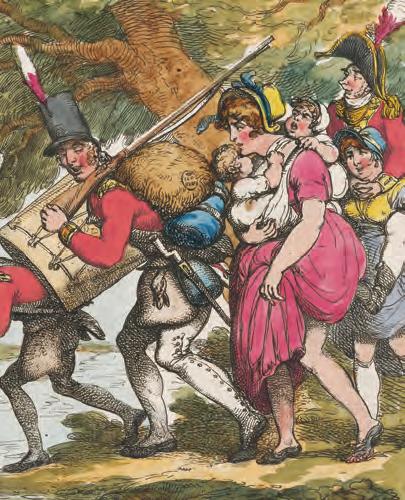
The average battalion in Canada was accompanied by 60 soldiers’ wives and about 100 children, noted Bolcevic. Theoretically, women were provided rations, transportation and lodgings, often sharing a cot with their husbands in overcrowded barracks.
“In actuality they worked
Laura Secord and Indigenous guides head to warn the British of an American raid (opposite). Fort George (left) in cannon range of U.S. Fort Niagara across the river. James FitzGibbon (below) survived the War of 1812 thanks in part to timely interventions by women.
LIEUTENANT JAMES FITZGIBBON might not have made it to the Battle of Beaver Dams but for the quick actions of an innkeeper’s wife.
On June 19, five days before the battle, FitzGibbon was chasing marauders when he entered the tavern at Deffield’s Inn, near Niagara Falls, to investigate the ownership of a horse tied up outside.
He was greeted by two Americans, one of whom was pointing a musket at him.
FitzGibbon extended his hand in greeting,
then seized the gun’s barrel. In the ensuing scuffle the second man grabbed the lieutenant’s sword from its scabbard and prepared to cut short FitzGibbon’s career.
Mrs. Deffield, however, put down the baby she was holding, grabbed the wrist of the man holding the sword, wrested it away and hid it. Her husband arrived to help disarm the men and FitzGibbon took them captive.
Mrs. Deffield was subsequently lost to history—her first name went unrecorded.


her own right. Female camp followers carry children, provisions and even an officer in this satirical etching (opposite) published before the War of 1812.
followed their warrior husbands, but even less is known of their roles than those of settler women.
Indigenous women maintained family encampments, and also often worked for the military as laundresses,
cooks and nurses. Tecumapese,
Shawnee leader Tecumseh, was female leader in her own right and was among the women who accompanied men on military campaigns.
Though paid as servants, Indigenous women may have also fought alongside
Laurence M. Hauptman in American
Tecumseh’s confederacy, including the wives and children of its warriors, fought with the British army in 1813.
After Tecumseh died in battle at Moraviantown in Upper Canada in 1813, Tecumapese and more than 2,000 Indigenous women and children trekked 200 kilometres to Burlington Heights, near present-day Hamilton, Ont., to settle for the remainder of the war.
In 1814, Tecumapese was part of the delegation invited to meet with George Prevost, governor-in-chief of British North America, who was anxious that the BritishIndigenous alliance continue.
considered bad luck to have women on a military ship, the wives of British naval officers sometimes joined their husbands aboard, a courtesy not extended to common sailors. Both the British and U.S. navies provided ration allowances to officers’ wives and children.
Those families also shared privations of life at sea and danger in battle.
“In September 1814, the wife of the steward of the British frigate HMS Confiance was killed by a roundshot as she tried to aid wounded men during the naval battle on Lake Champlain,” wrote Dianne Graves in In the Midst of Alarms: The Untold Story of Women and the War of 1812.
U.S. Commodore Stephen Decatur signed the wives of two crew members on as nurses.
Women played other roles, too, including that of informer.
Alicia Cockburn, whose husband Major Francis of the Canadian Fencibles, recognized the benefit of being perceived as the weaker sex. She wrote to a cousin that she was considering travel to the U.S. under a flag of truce. “To do the Yankees justice they treat with uncommon civility [ladies] whom they allow to go much farther, and peep about much more, than we should do...whatever might be their beauty and accomplishments.”
And the British employed at least one woman as a spy.
In the summer of 1813, the British Commodore Thomas Hardy had three American warships, coincidentally under the command of Decatur, blockaded on a river near New London, Conn.
The British seemed to know about the Americans’ every move, thanks to a spy network established by British consul James Stewart, who was also prisoner agent and in an ideal position to collect helpful information.
Stewart was described by one historian as a charming type “displaying the manners of a courtier, the scruples
of a highwayman and the social buoyancy of a cork.”
In July 1813, Stewart, who was suspected of spying, was forced to move inland. But he left behind his capable wife Elizabeth and their children.
“Mrs. Stewart took over his position as spy master, and she and her agents made New London the conduit for an almost endless stream of American intelligence reaching the entire [British] fleet,” wrote James Tertius de Kay.
In December, Decatur seized an opportunity to break out of the blockade. As the ships moved to the mouth of the river, a blue light was spotted on one side of the river; he called off the attempt when a second light was seen. The British had been forewarned.
The War of 1812 disrupted the lives of all women in Upper Canada, and forever changed it for those who lost husbands.
Her father Prideaux Selby oversaw the provincial treasury, some 3,000 pounds.
Derenzy hid some of the money and put the rest into an iron chest, to which she added public documents.

No one could prove, but many suspected, that Elizabeth was behind the incident. After the war, James and Elizabeth went to Britain, where “a grateful Crown provided [Stewart] and his wife with a pension, chiefly in recognition of Mrs. Stewart’s outstanding espionage work during the war,” wrote de Kay.
Less well-connected women fought, too—to protect their homes, their families and communities.
Abigail Stone of Gananoque, south of present-day Ottawa, was shot in the hip while protecting her home during a raid in September 1812.
When U.S. forces occupied York in the spring of 1813, they torched the Parliament, looted houses and pillaged businesses. Many residents fled, but not Elizabeth Selby Derenzy.

She and Leah Allan, the mayor’s wife, dressed Selby’s chief clerk Billy Roe as “an old market woman, complete with sunbonnet and voluminous skirts” and sent him out of town with a horse-drawn wagon full of vegetables—and a chest of gold, wrote Pierre Berton in Flames Across the Border
The War of 1812 disrupted the lives of all women in Upper Canada, and forever changed it for those who lost men in their lives. Meanwhile, the wives of soldiers or sailors who survived faced months and years of scraping to hold things together until the family was reunited. Wives and children of those who died could face penury.
Those in the path of the fight often encountered financial hardship or devastation. About a quarter of Upper Canadian families lost property due to the war, and about 10 per cent lost everything.
Many of the worst affected were new settlers. “In order to thrive...a frontier farm required at least two adults to complete all the arduous tasks involved in homesteading,” wrote historian George Sheppard in “Wants and Privations”:
Women and the War of 1812 in Upper Canada. Women usually cared for the family and tended the poultry, livestock and garden. Men cleared, plowed and harvested the land. Without men, it was difficult for a farm wife to keep a homestead thriving while her husband was serving. It was nearly impossible if he died.
During, and in the wake of, the war, many farms were auctioned off to pay creditors or to provide a widow funds to start a new life.
Troops on both sides of the conflict looted and burned towns and farmsteads, leaving families to start all over again.
For many women, simply surviving to more peaceful times was victory. L


See ad on page 89 for more on THE WAR OF 1812. Now on newsstands across Canada! Pick up your copy today!
Remembering the courage and fortitude of the Canadian forces that mounted the ultimately ruinous raid
By Tom MacGregor
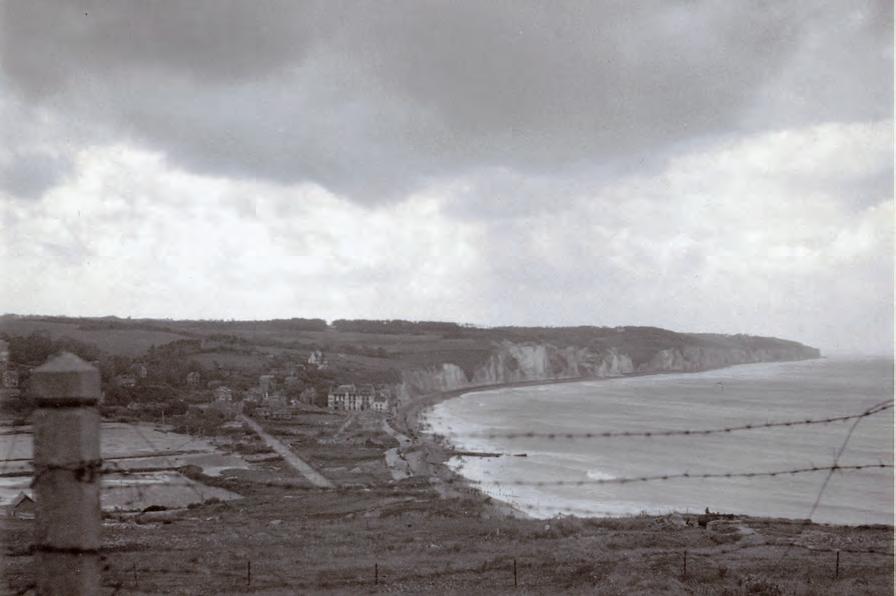
John Goheen has a tradition. When the tour guide on The Royal Canadian Legion’s biennial Pilgrimage of Remembrance to battlefields and war cemeteries in France, Belgium and the Netherlands gets his groups to the French coastal town of Dieppe, he rouses the willing to meet on the stony beach at 5 a.m.
Once the early risers are gathered, he pours everyone a drink of the local Calvados brandy or scotch. Then at precisely 5:20, they raise their glasses and toast, “To the men of Dieppe!”
It was at that time on Aug. 19, 1942, during the Second World War that some 6,100 Allied troops—nearly
4,963 Canadians among them—landed in a daring raid that quickly turned into a disaster.
The tour typically reaches Dieppe in early July. By then the morning light allows the pilgrims to clearly see the menacing cliffs that surround the beach, as well as the concrete fortifications where the German occupiers dug in to face the attack. A 12th-century castle rests on top of one cliff, its ancient defences reinforced for 20th-century warfare. It’s not unusual for one of the pilgrims to remark of the raid: “What were they thinking?”
The truth is that a lot of t hought went into the daring assault.
The idea began with Britain’s Combined Operations Headquarters, headed by the charismatic Vice-Admiral Lord Louis Mountbatten. The unit was established to co-ordinate army, navy and air force units on a series of raids designed to keep the enemy distracted while the Allies gathered enough combined American and Commonwealth forces for a larger invasion of the continent.
The U.S. had come into the war in December 1941. It was anxious to strike at Germany, but had not yet fully established its military might. The planners knew that when they did storm the continent, it would have to begin with an amphibious attack. Part of the mandate of Combined Operations was to build and test new equipment and methods for mounting such a siege. For Dieppe, Mountbatten and his team wanted to plan a raid that was larger than anything the Allies had tried before.
The plan was to capture a French harbour and hold it for a day while causing damage,
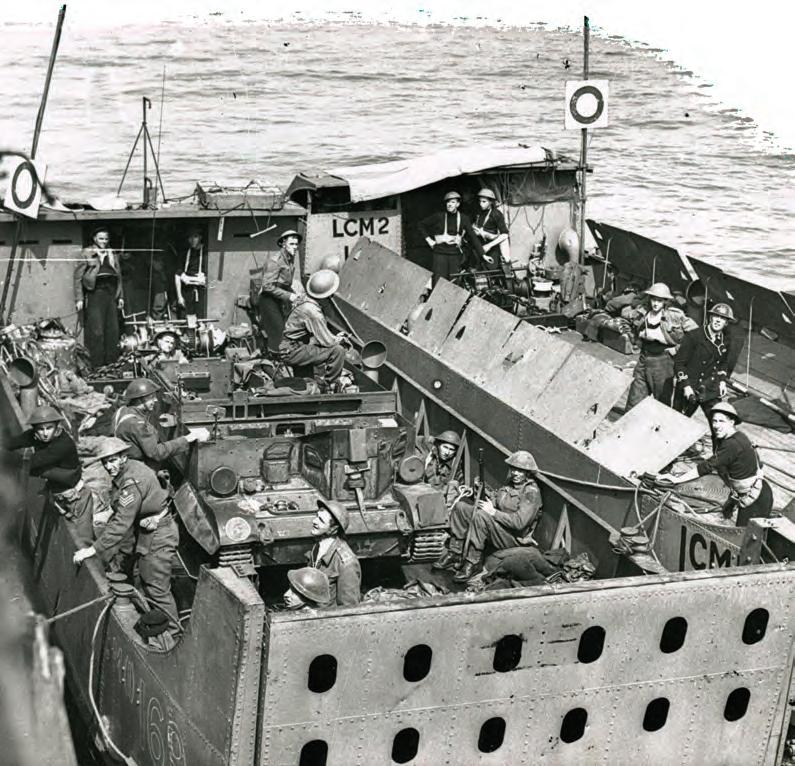
The view from the top of a cliff near Dieppe (opposite) gives a sense of the geography Canadian soldiers aboard landing craft (below) encountered as they launched the attack. taking prisoners and grabbing any intelligence, code books or plans they could find, then depart before the Germans could send reinforcements.
Eventually, Dieppe, a coastal town about 200 kilometres southwest of Calais, was picked and the planning began for Operation Rutter, which was scheduled for early July. Lieutenant-General Bernard Montgomery, head of South Eastern Command in Britain, was one of the mission’s key planners.
The plan was to land on the beach with the new Churchill tanks. Batteries on the surrounding cliffs would have to be captured during the night before so they would be neutralized by the time the attackers came ashore.
When the Americans joined the Allies, German leader Adolf Hitler was convinced they would try to invade the continent. He had already started to build his “Atlantic Wall,” an attempt to strengthen fortifications along the coast from Norway to the Spanish border. Hitler wanted to ensure that if the Allies attacked, the Axis forces could not only halt them, but drive them back into the sea.
What Allied planners didn’t know was that the Germans had already built an elaborate series of caves and other hidden fortifications to fend off an assault.
While this was being planned, politicians in Britain and Canada were getting anxious about when the army was finally going to fight.
Many Canadians had been in Britain for two years and were itching to see action.
Soviet leader Josef Stalin had
demanded the Allies open a Western Front to take the pressure off his forces who were desperately defending their own country in the east.
Canadian Prime Minister William Lyon Mackenzie King wanted to show Canada doing its part in the war, but was wary of too many casualties. Meanwhile, his Defence Minister James Ralston was eager for Canadians to get into battle.
Lieutenant-General Harry Crerar, commanding the Canadian Army in Britain and filling in for General Andrew McNaughton on sick leave, had heard
rumours of the Dieppe plan and demanded Canadians be used for the raid.
Eventually, the 2nd Canadian Infantry Division under Major-General John Hamilton (Ham) Roberts was called on for the mission. The men had already been loaded into their ships in ports across southern England when, after much delay, Operation Rutter was cancelled due to bad weather. There was much disappointment among the Canadians. They had been well trained for their specific tasks and were in topnotch physical condition.
It was back to the drawing board for Combined Operations. But before a new plan was developed, a staffer suggested simply remounting the Rutter plan in August. At the time of the suggestion, Montgomery had left the scene, having been selected to lead the campaign in North Africa. So, Mountbatten took the plan to the British Chiefs of Staff Committee, arguing that,
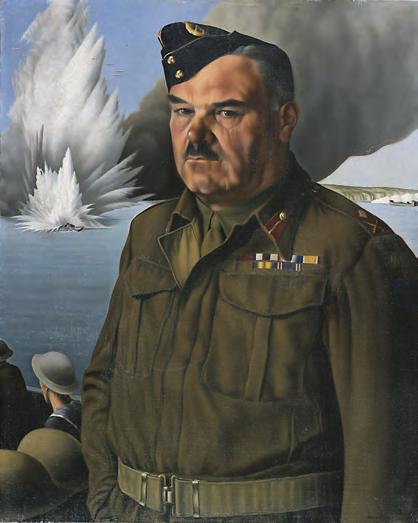
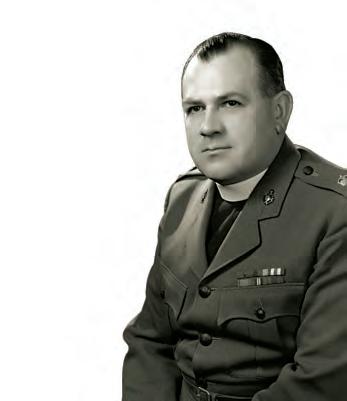
Major-General John Roberts (left) oversaw the raid. Nearly 5,000 Canadians had boarded ships (below) the night before. A propaganda poster (opposite, top) later lionized fighters such as Charles Merritt, who earned the Victoria Cross for his role. Padre John Foote (opposite, bottom) was likewise honoured.
while the enemy might have known that a large raid was planned, there was no evidence that they knew where.
“If by some unsuspected chance they stumbled upon Dieppe as our target, they would never for a moment think we should be so idiotic as to remount the operation on the same target,” he argued. As historian Mark Zuehlke noted in his book, Tragedy at Dieppe, “The circular logic yielded the desired result.” The Canadians went back to training exercises from the original plan.
On the night of Aug. 18, nearly 5,000 men from the 2nd Canadian Infantry Division and 1st Canadian Army Tank Brigade, along with some 1,000 British commandos and 50 U.S. Army
Hitler wanted to ensure that if the Allies attacked, the Axis forces could drive them back into the sea .
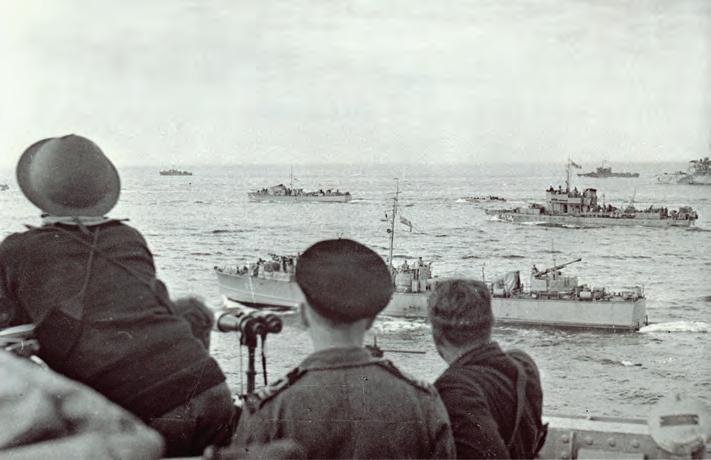
Rangers, were loaded onto ships. Once on board, they were told this would be no drill. There were more than 250 naval vessels and 74 air squadrons supporting them.
The main assault would be in front of the former casino on the beaches code-named Red and White. Flanking forces were to land earlier on adjacent banks to the east and west of Dieppe at Puys (Blue Beach), and at Pourville (Green Beach). British commandos were to neutralize coastal batteries capable of shelling the beaches from farther away. The Royal Hamilton Light Infantry was to lead the assault on White Beach to the west, while the Essex Scottish Regiment would lead the way on Red Beach. Both fronts would be supported by the 14th Army Tank Regiment (The Calgary Regiment (Tank)). The South Saskatchewan Regiment and Queen’s Own Cameron Highlanders of Canada were to land off Green Beach, while the Royal Regiment of Canada and three platoons of The Black Watch (Royal Highland Regiment) of Canada were set to hit Blue Beach. There was to be no aerial bombing before the invasion to keep the element of surprise and to avoid creating obstacles from damaged landmarks that might make manoeuvring tanks difficult. From the start, it all went wrong.
First, the attacking force ran into a German supply convoy on its way to Rouen, France, and a firefight broke out. This alerted the coastal defences to enemy action.
Then the advance parties arrived 35 minutes late at Blue Beach and were quickly pinned down on the waterfront. The Green Beach attackers were on time, but about half the group was put down off their target and lost time getting to their allotted place.
Overhead, the air forces kept up a lively battle with the already weakened Luftwaffe. When the troops caught their first sight of the town of Dieppe, however, they were shocked to see it relatively undamaged. The heavy bombardment called for in the Rutter plan had been replaced by strafing of beach defences by Hurricane fighters moments after the troops landed.
By the time the main force hit the beaches directly in front of the town at 5:20, the element of surprise had been lost. Accurate rifle, machinegun and mortar fire rained down on the soldiers as landing craft came ashore.
Some men were downed in the water, while those who made it to the beach had to run on chert—very hard, fist-sized stones that had been rounded by the tidal action— that slipped under their feet. This was far different from the sand beaches the troops had practised on in Britain.
Those on shore were then hampered by a delay in the arrival of tanks.
Churchill tanks from The Calgary Regiment had been specially waterproofed so that, after disembarking from landing craft, they
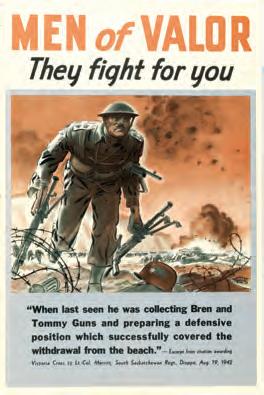
When Lieutenant-Colonel Charles Cecil Merritt saw his troops from the South Saskatchewan Regiment were pinned down by enemy fire at a bridge crossing the Scie River at Pourville west of Dieppe, he stood up, took off his helmet and waved it to the men shouting, “Come on over! There is nothing to worry about here!”
He personally led at least four parties across the bridge, even though he was wounded twice.
Throughout the battle, Merritt, a Vancouver lawyer and militia officer before the war, was fearless in his fighting. As the landing craft
could navigate shallow water before charging ashore.
Unfortunately, some exited the vessels too soon and sank. Tanks that made it ashore, meanwhile, had their tracks clogged by the chert. And the seawall also turned out to be a formidable obstacle. Only a handful of tanks successfully reached the esplanade in front of the beach.
To the west end of Dieppe on White Beach, the Royal Hamilton Light Infantry succeeded in getting through
came in to evacuate the men, he led a rearguard action holding back the enemy while troops boarded. He fought until he ran out of ammunition, then surrendered.
A very different kind of courage was shown on White Beach during the main assault on Dieppe. When the burly Padre John Foote, who had been assigned to the Royal Hamilton Light Infantry, was told that chaplains were ordered to remain in England during the raid, he decided he had to be a stowaway.
Once he came ashore with the troops, Foote was tireless in tending to the wounded. When the evacuation began, he personally carried several wounded men to the vessels. He had a chance to board one himself, but instead insisted he was needed more by the men left behind. He returned to the beach and spent the rest of the war as a prisoner. Merritt would be the first Canadian awarded the Victoria Cross for his actions at Dieppe. His citation appeared in the Gazette in 1942. Foote’s heroics were only known after the war when the men he served with told his story. He was awarded the VC on Feb. 14, 1946.
the barbed-wire barriers that defended the shoreline and cleared the old casino that was being used as a fortification.
Throughout the chaos, communications back to Roberts’ headquarters aboard HMS Calpe were in a shambles. Most of the wireless sets were damaged in the fighting or in the sea water. Roberts was trying to understand what was going on. In addition to the faulty messages he was receiving,
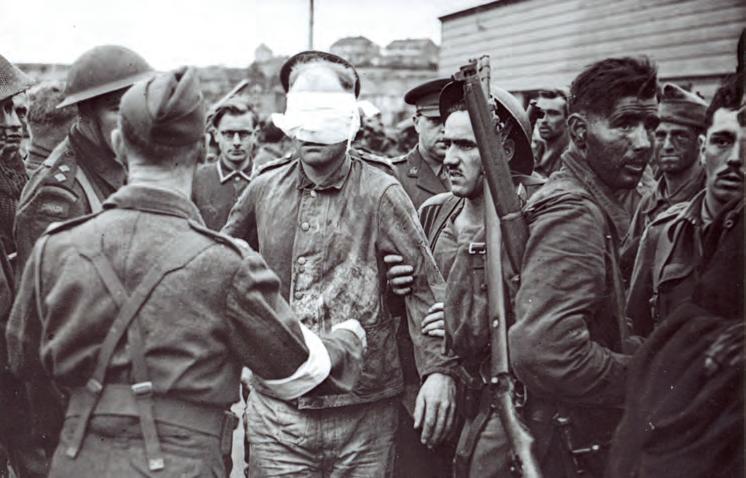
Of the nearly 5,000 soldiers who had embarked on the raid, only 2,210 came back with the retreating forces .
Only 2,210 troops returned to Britain after the mission (above), leaving behind 1,946 prisoners of war.
the Germans were sending out false communications, confusing things even more.
The battle was already a lost cause when Roberts, having received a garbled message that he took to understand as some success on the beach, ordered his reserve force, the Fusiliers Mont-Royal, to go into action in support. It was an order that, even today, remains controversial.
Finally, the order was given to retreat at 11 a.m. The
landing craft were to pick up only men. Tanks, mortars and anti-tank guns were all to be abandoned.
Many units suffered their highest casualties as men left their protected hiding spots to escape to the approaching landing craft. Then, some vessels loaded with wounded men were struck by artillery as they attempted to launch.
Back in England, the troops began to count their casualties and returning men. Of the nearly
The Dieppe Canadian War Cemetery in northern France is markedly different from other Commonwealth graveyards. Here, in the village of Hautot-sur-Mer, five kilometres south of Dieppe, the headstones are placed back-to-back in double rows instead of single rows common in most other cemeteries administered by the Commonwealth War Graves Commission (CWGC). That is because those interred were buried by the occupying German forces following the deadly raid.
5,000 soldiers who had embarked on the raid, only 2,210 came back with the retreating forces; 916 Canadians died; and left behind were 1,946 men who would spend the rest of the war in prison camps.
Much finger pointing followed the disastrous raid with no one really accepting blame. Roberts was relieved of command of the 2nd Canadian Infantry Division in early 1943 and oversaw a recruiting depot for the rest of the war.
No doubt much was learned about amphibious landings during the attack, but it hardly supported Mountbatten’s claim that “The successful landing in Normandy was won on the beaches of Dieppe.”
Still Canadian veterans returning to Dieppe are treated as heroes, regularly hosted at ceremonies or paraded through town. As Canadian historian Steve Harris told veterans during a Dieppe pilgrimage in 2002, “The important thing is what you saw as you paraded in the streets the other day. The success of Dieppe was that after three years of occupation you gave France hope.” L
When Dieppe was liberated in 1944, authorities opted not to disturb the graves.
The cemetery was designed by commission architect Philip Hepworth and was the first CWGC cemetery to be completed after the Second World War. The typical Commonwealth headstones replaced makeshift markers left by the Germans. The graveyard contains 765 war dead, including 582 Canadians. There are also 187 unidentified graves with the inscription “Known unto God.”
An RCMP constable who volunteered for overseas service recalls the infamous raid in his own words
By Edward Hammond Stevenson
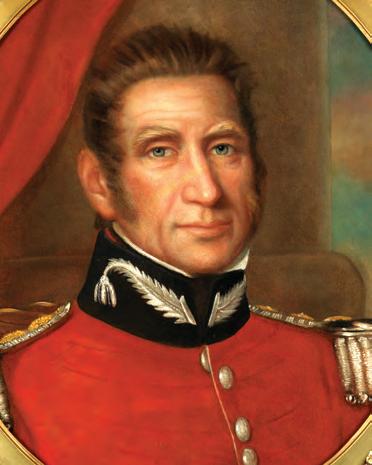
Captain Edward Hammond Stevenson commanded the Dieppe detachment of No. 2 Provost Company, a military police unit that was to help direct troops and keep the beach orderly during Operation Jubilee—until the raid went disastrously wrong. As a constable in Winnipeg, he had volunteered for service overseas, interrupting his career with the Royal Canadian Mounted Police from November 1939 to February 1946. He was discharged from the army with the rank of major and returned to the RCMP, eventually becoming assistant commissioner. After the war, he wrote this account of his experiences of that fateful day, Aug. 19, 1942. It is published here for the first time.
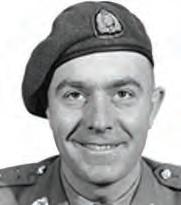
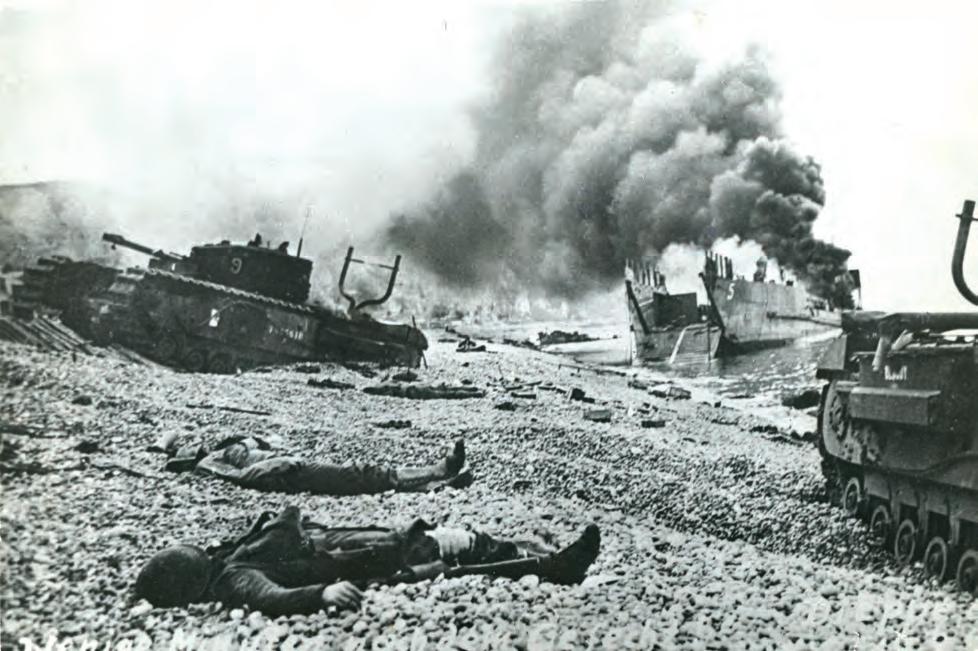
The author (inset) was part of a military police unit tasked with keeping order during the Dieppe Raid (this image).
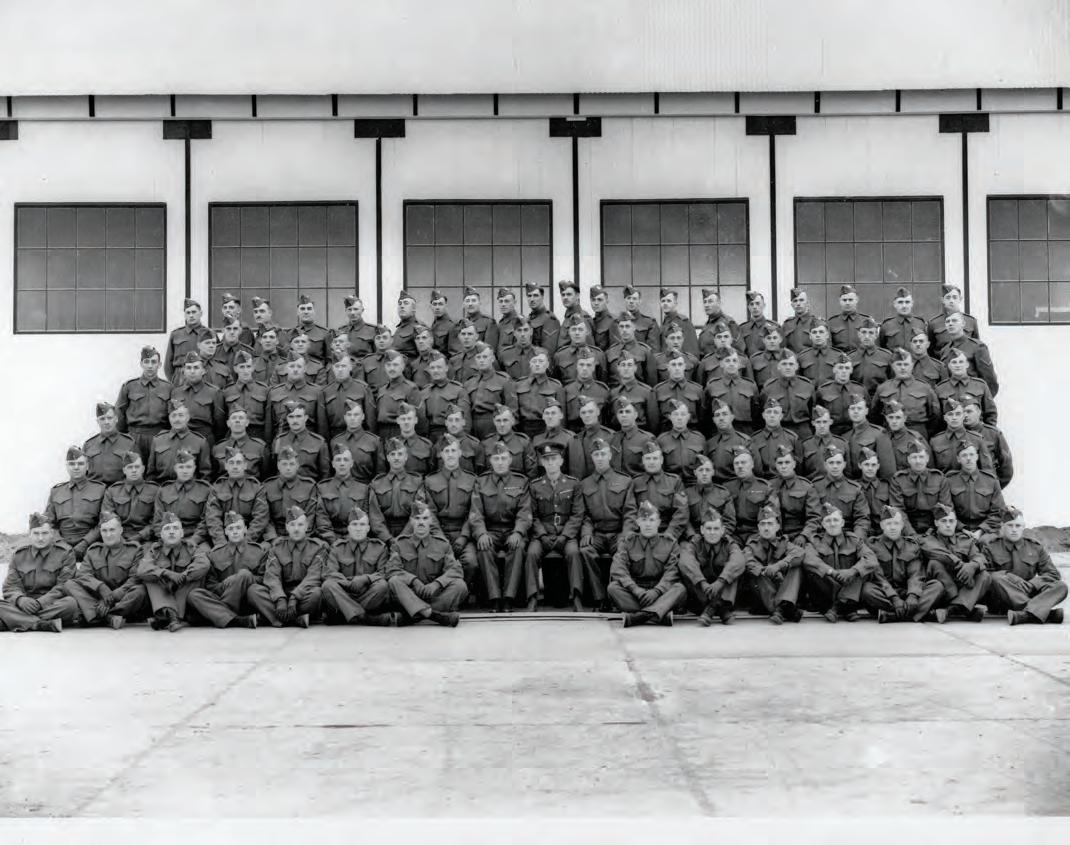
As the 2nd Canadian Division had been chosen for a “raid in force” on the French coast, it was only right that if provost were to be used, it should be the company’s own authorities. Early in 1942, I had been given command of No. 2 Provost Company with two other members of the Royal Canadian Mounted Police, secondin-command Lieutenant Peter (Pete) Oliver, and third officer Robert A. Ogilvie.
discipline came with them.
But No. 2 included men from all walks of life and very few members had actually been police officers previously. Consequently, the company had considerably more to learn than No. 1.
In May, men of the 2nd Division were dispatched to Britain’s Isle of Wight for intensive training and 20 members of No. 2 Provost Company, myself included, accompanied them. On our arrival, we were told that
The provost would be the last to leave—most certainly making us front-line troops .
This company had, almost since it landed in Great Britain, been officered by members who had previously been part of No. 1 Provost Company (RCMP), and so the policy of enforcing
discipline and local orders were to be strictly enforced and, in addition to our regular functions, we were to take part in the exercises. With the strict regulations and the censorship of mail,
every man was aware that this was not just another exercise. And it looked as if the real thing wasn’t too far off. Morale went sky high and every man pitched in with his whole heart.
The men were stationed at Cowes, and their duties became so numerous that it was decided that more troops were needed. As a result, the parent company on the English mainland supplied a further 30 men, bringing the total provost in this special force to 50.
Day after day the practices went on—small scale exercises, weapons training and loading and unloading different landing craft. Given the scale of the operation and the fact one like it had never been attempted, many experiments were conducted, which often caused considerable hardships and many men received an icy bath in the English Channel in the early hours of the morning.
Finally, the day arrived when we were placed aboard various craft. As soon as everyone was on board, we were told the plan—to hit the Germans hard and fast.
We stayed aboard these craft for almost a week wondering what had happened and why the action was delayed. Then, to everyone’s dismay, we were returned to the mainland and back to normal provost duties in a divisional area in southern England. It was a real letdown and there was a feeling of having been misled.
About the middle of August, I was summoned to attend the general officer commanding’s conference where I learned the operation would go ahead. I was instructed to arrange a small exercise within my company. There were many details to arrange, and I took Oliver into my confidence to make plans for the forthcoming mission.
As the provost detail was to travel in tank landing craft, it was decided to split them up into five smaller parties in different boats. This way, if one boat got hit the whole detail wouldn’t be lost. The larger group consisted of two officers and 39 other ranks from the pick of the company.
Our aim was to go in with the early assault wave and assist in clearing the beach as soon as possible. All troops were to be directed off the beach and we were to assist engineers in moving equipment and ammunition from the shoreline as fast as possible. Once this had been done, we were to set up cordons above the beach in Dieppe and direct returning troops to the specific
Of the 41 men we started with, 19, including one officer, had been left in France .
places where the heavier craft were able to land. This would prevent congestion and keep the beach clear and orderly. The provost would be the last to leave—surely an uncomfortable feeling and most certainly making us front-line troops.
The operation commenced in the early hours of Aug. 18. By afternoon, all units were aboard their various craft in different harbours. Everyone travelled light. No one had anti-gas equipment and the main concern was arms, ammunition and food, which consisted of bully beef and hardtack biscuits.
It was a beautiful afternoon, and the English Channel was like a millpond. We moved out into the Channel and formed into convoys. Everywhere one looked there were groups of small boats—there seemed to be no end to them, which did give us a small measure of confidence.
We travelled all that night. In the grey dawn as we approached close to land all hell suddenly broke loose and we were “in it.”
It is hard to record my own reactions for everything happened so fast. We glided up to the beach and started to unload. The shoreline was under heavy crossfire. The fire from the German 88mm guns and mortars were dropping into the boat and all around it.
One after another, the sailors at the helm were killed at their posts until the boat was being steered by a sailor standing on the prostrate bodies of his comrades. I remember, too, the skipper of our boat and his second-in-command taking turns wearing the one steel helmet we had.
All the naval gunners were knocked out and some men took over their posts. While all this was going on, we were unloading three tanks. Unfortunately, they only managed to clear the ramp before they were all taken out. Then the company of infantry started off, but few of them got very far. Our captain pulled back from shore to get a breather.
We went in again alongside a destroyed ship where there were many wounded and dead. As we were of no use on the beach at this time, we helped the casualties into our vessel. We already had quite a few wounded on our ship and they were being looked after as well as possible under the circumstances.
We received instructions not to proceed inland, but to attempt to take as many soldiers as possible off the beaches.
I had no word on the remainder of my group, though I questioned many troops as they came aboard. Many of the provost had gone in earlier and when they found they could not function
as originally planned, they manned machine guns whose gunners had been knocked out and assisted as best they could.
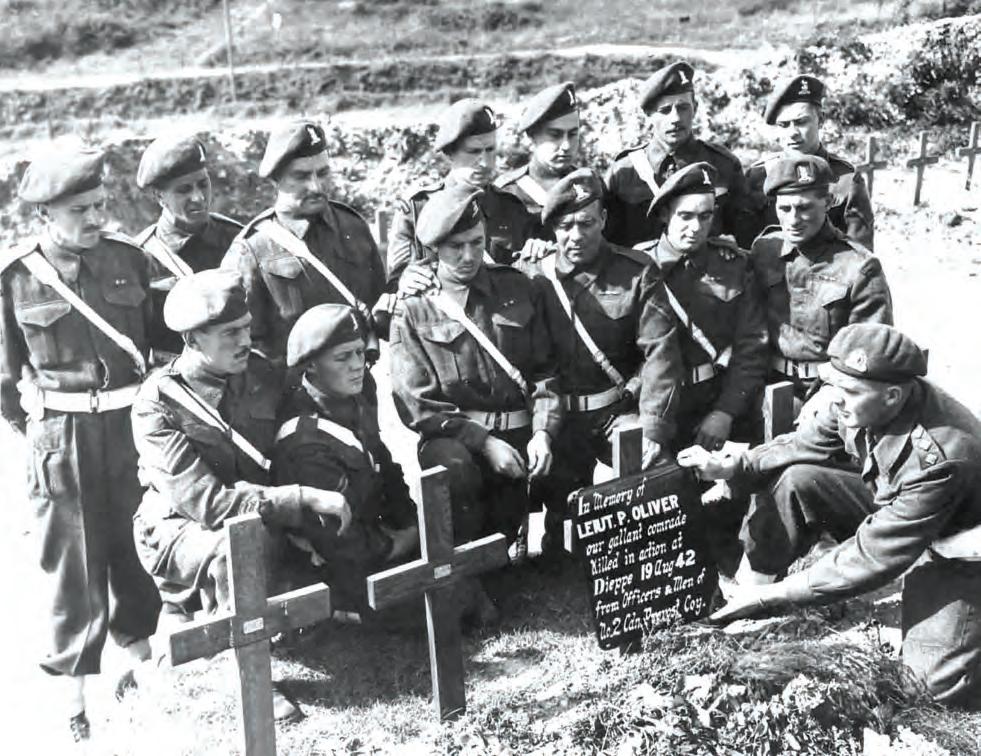
Canadian soldiers, including Captain Chris Forbes (front), hold a memorial service at the grave of provost Oliver in 1944.
The boat I was on returned to Britain, and since we had so many wounded aboard, we were allowed to go right into the harbour. It was a very welcome sight to see members of No. 1 Provost Company on duty.
I returned to my company’s headquarters where Chris Forbes oversaw the rear party and we started checking our numbers. This continued until we had located our wounded, or had at least accounted for all those who took part in the operation. Of the 41 men we started with, 19, including one officer,
had been left in France. Of the remainder, seven had returned wounded.
We learned later that of the boys left in France, all but one was alive, the survivors prisoners of war, although several had been wounded. An eyewitness reported that Oliver had stepped off his boat onto the beach and was almost immediately hit by a mortar shell that killed him.
In the meantime, mail and parcels had accumulated for the PoWs. We wanted to assist these boys and do at least a little bit to ease their lot. Forbes found that all we could do was to send them cigarettes.
A company “smoker” was held where unclaimed parcels were unwrapped and auctioned off. The men of No. 2 Provost Company had
formed a comradeship that was almost brotherly—ultimately collecting more than $200. This was placed in an account known as “No. 2 Pro Coy Prisoner of War Fund” and the smokes were immediately sent on their way to our boys in chains.
As a result of our part in this operation, our “stock” with other troops went up 100 per cent, causing them to take more interest in our work. The result was a much better understanding and a far higher regard for the Provost Corps. L
Edward Hammond Stevenson passed away in 1997 at the age of 84. In 2021, his family received the Dieppe Bar to accompany his Canadian Volunteer Service Medal.








There is no doubt that the raid on Dieppe in August 1942 was a disaster for the Canadian troops involved. To try to justify it by calling it a learning experience for D-Day is a bit of a stretch. Nonetheless, like any inquiry into a disaster, natural or human-caused, lessons can be learned.
The raid was the brainchild of the Combined Operations unit of the British forces, which was tasked with trying to keep the enemy off-balance using a series of raids and sabotage. It was to integrate elements of the army, navy and air force to test new methods and equipment for amphibious attacks.
The head of the unit, ViceAdmiral Lord Louis Mountbatten, knew that if Germany was to be beaten, the Allies would have to bring the war to them with troops on the ground. The Dieppe Raid was the largest such undertaking up to that point. It was to be a one-day effort in which the navy would put an army division on the shores to confuse the enemy, do as much damage as possible, capture any intelligence available and take prisoners.
Combined Operations wanted to test new navy landing craft, built to various specifications to carry troops, vehicles and even
Tom MacGregor says YES
tanks. These vessels could carry a platoon of soldiers from ship to shore. In the bow was a ramp that also served as a shield should the craft be under fire while approaching shore. Once close to shore, the ramp was lowered, allowing the troops or vehicles to disembark directly forward.
LESSON LEARNED WAS THAT TAKING A PORT WOULD NOT BE EASY
how to waterproof the tanks so that they wouldn’t be flooded.
The biggest lesson learned, however, was that taking a port such as Calais, France—the closest one to Britain—would not be easy. German leader Adolf Hitler had worked to have Europe fortified from Norway to the Spanish border, creating what was called “Fortress Europe.” In port towns, rudimentary fortifications, some dating back to the Middle Ages, were already in place and only needed to be reinforced. The beaches, however, were less protected.
The raid was also a chance to test new Churchill tanks, which Britain had developed a year earlier. The Churchills were faster and had better armour than the tanks used in the First World War. Of course, the attack’s planners knew the tanks would likely be disembarking into water, so experiments were conducted on
If the Allies were to land large armies on Europe’s shores, they would need to have a supply point such as a port. On D-Day in 1944, however, the attack was on beaches without a port. The Allies had overcome the need for a port by developing what they code-named Mulberries—two artificial wharves created with concrete, steel and sunken ships— where supplies could be quickly offloaded to support the army.
These and other strategies were learned, or at least experimented with, during that fateful attack at Dieppe—all of which would soon be used in the successful landings not only in North Africa and Sicily but, eventually, Normandy, too. L
> To voice your opinion on this question, go to www.legionmagazine.com/FaceToFace

For decades, D-Day’s success has been cited as justification for the disastrous raid on Dieppe.
It was Lieutenant-General Harry Crerar who, in his orders of the day on June 6, 1944, told Canadian soldiers destined for the beaches and drop zones of Normandy that their impending success was thanks largely to the lessons from the illfated attack two years earlier.
“The contribution of that hazardous operation cannot be overestimated,” the Hamiltonborn Crerar told the D-Day invaders. “It will prove to have been an essential prelude to our forthcoming and final success.”
Crerar may well have been grasping at straws, finding the right words to justify what both experts at the time and later historians called the “fiasco” at Dieppe, and at the same time to inspire the 14,000 Canadian troops who, for all they knew, were facing imminent death.
The raid by nearly 5,000 Canadians, about 1,000 British and 50 U.S. Army Rangers northeast of the D-Day beaches was ill-planned and poorly supported, and it was “never envisioned as an experimental cross-channel invasion,” wrote Irish historian Jonathan Carroll.
Indeed, a member of No. 4 Commando, Royal Marines—the only Dieppe unit to achieve its objective by taking out a coastal
TOM MacGREGOR
is the former news editor of Legion Magazine. Prior to that, he worked for The Huntsville Forester, Edmonton Sun and Maclean’s He is also the author of several plays and four books of poetry.
battery—called it “one of the biggest cock-ups of the Second World War.”
The raiders were said to be under orders to seize and briefly occupy the port, to prove it was possible and to gather intelligence. They were to destroy coastal defences, port facilities and strategic buildings on the way out.
But for more than half of those involved, there was no way out. The operation ended in abject defeat: 3,367 soldiers were killed, wounded or captured, most of them Canadians.
“THE BLUNDERS AT DIEPPE WERE AND REMAIN INEXCUSABLE.”
In 1943, The Globe and Mail broke ranks in calling Dieppe “a fiasco of the first order; a tragedy of military blundering without parallel in this war.”
Historian Jack Granatstein described Dieppe as “an object lesson on how not to mount an amphibious assault.”
“The blunders at Dieppe were and remain inexcusable,” he wrote in 2014.
STEPHEN J. THORNE
is an award-winning journalist, editor, photographer and Legion Magazine staff writer. He has reported on the downfall of South African apartheid and from war fronts in Kosovo and Afghanistan.
Blame rests mainly on the shoulders of the raid’s chief planner, Lord Mountbatten. He, too, claimed that D-Day’s success was due to Dieppe.
Granatstein characterized Mountbatten as “utterly unqualified for his role, a man protected by his royal connections and public relations minions.”
Historian John Maker said in 2014 that one would be better advised to look to the 1942-1943 North Africa campaign and the 1943 invasion of Sicily for lessons that informed the D-Day operation.
Carroll has said British and Canadian morale “plummeted” after Dieppe, while Germany’s soared.
“The staggering losses for no appreciable gain at Dieppe created a scandal that forced many associated with the raid to attempt to justify the cost in light of the lessons learned; undoubtedly to stave off recriminations,” he said, adding that whatever lessons informed D-Day planners were unintentional ones at best.
“Regardless of their spin,” he added, “Dieppe was an unmitigated disaster.”
That, at least, earned Canadians the right to land on the open beaches at Courseulles and Bernières, where they suffered D-Day’s secondhighest casualty rate yet penetrated farther into France that day than any other Allied invader. L
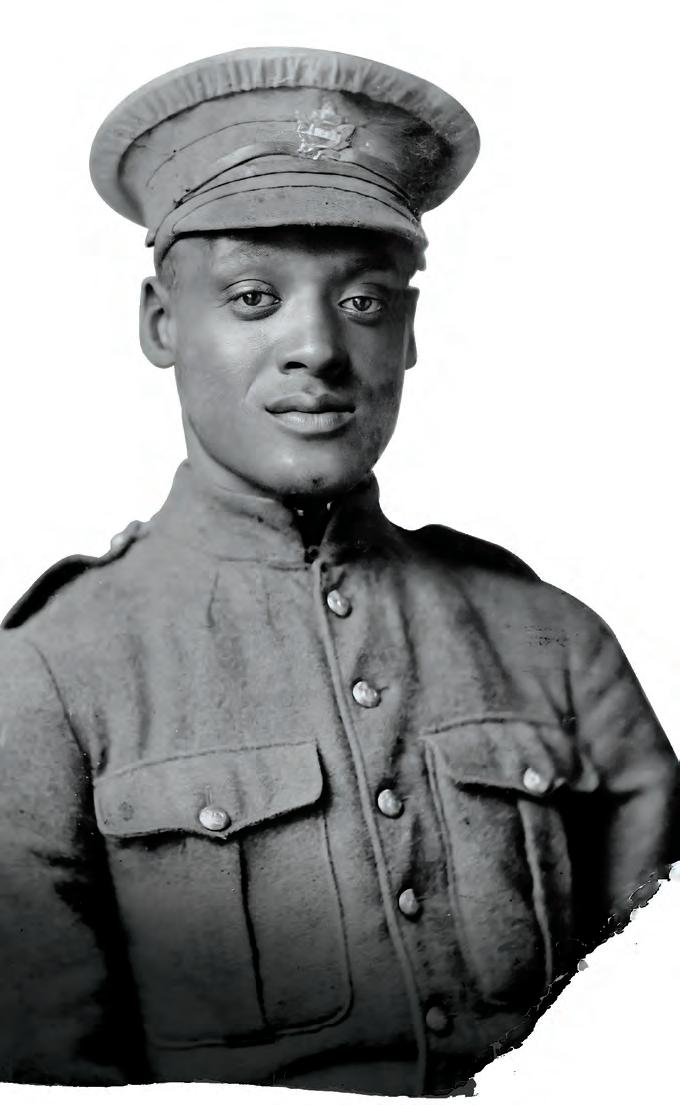
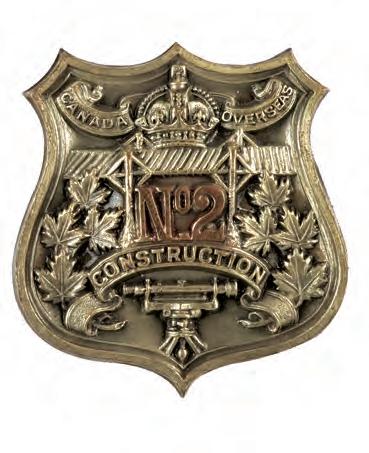
Private Charlie Kelly of Ingersoll, Ont., pitched for the No. 2 battalion baseball team, scoring a run and throwing a 2-1 gem against Orpington Hospital in front of King George V in September 1917. He transferred out to an integrated support company and served in France, Belgium and occupied Germany. Reverend William White (highlighted opposite), an honorary captain, was No. 2’s only Black officer.
BY STEPHEN J. THORNE
of Black service in the Canadian Expeditionary Force—and the actual realities they faced

IN THE FALL of 1915, LieutenantColonel Walter H. Allen, the white commander of the 106th Overseas Battalion (Nova Scotia Rifles), met with a Black Baptist minister, Reverend William White, and made a promise he couldn’t keep.
“I told him if he would get in touch with the coloured men throughout Nova Scotia, and raise enough for a platoon, I would take this platoon into my Regiment,” Allen wrote to military authorities in Halifax.
White said he’d get busy, but by the time Allen followed up on Dec. 14,
1915, the commander had received only a half-dozen or so names. Meanwhile, word had come down from Ottawa that there were to be no racial distinctions on enlistments.
“As soon as this became known, several white men who had been about to sign on, refused to do so if coloured men were to be admitted into the Regiment,” Allen wrote to regional headquarters. “Personally, I think coloured men should do their share in the Empire’s Defence, and I believe that some of them would make good soldiers.
“Still, if I had my choice I would prefer white men…and I would feel very loath to risk the experiment of taking on negroes when plenty of white men were available.
“Neither my men nor myself, would care to sleep alongside them, or to eat with them, especially in warm weather. A white man’s appetite is a peculiar thing.”
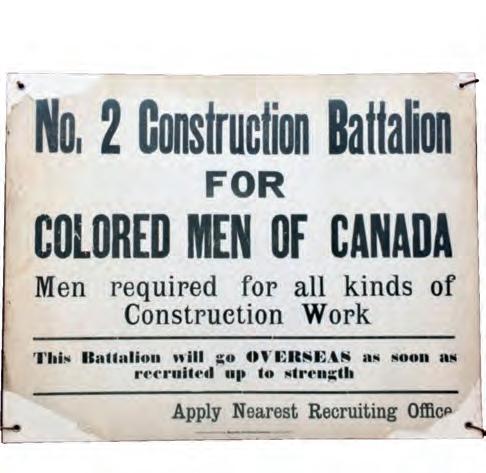
And therein lie the first myths surrounding No. 2 Construction Battalion, Canada’s most celebrated segregated Black unit: that most Blacks somehow wouldn’t make good soldiers, that the proportion of Blacks willing to enlist was small and that racism was not widespread in the Great White North.
“The treatment received by ‘visible’ Canadians did not originate with the military,” James Walker, a leading scholar of Canadian race relations and Black history at the University of Waterloo, wrote in a 1989 paper.
“Recruitment policy and overseas employment were entirely consistent with domestic stereotypes and ‘race’ characteristics and with general social practice in Canada…. Racial perceptions were derived, not from personal experience, but from the example of Canada’s great mentors, Britain and the United States.”
The desire among Black Canadians to join the fight was nevertheless strong, but so was white resistance to their service.
In Saint John, N.B., 20 Black volunteers couldn’t find a battalion to take them. On the West Coast, an officer in Victoria said white battalions didn’t want Black recruits.
Concerns with such attitudes and practices emerged at least as early as November 1914, when Arthur Alexander of North Buxton, Ont., told Militia and Defence Minister Sam Hughes that “the coloured people of Canada want to know why they are not allowed to enlist in the Canadian militia.
I would feel very loath to risk the experiment of taking on negroes when plenty of white men were available.
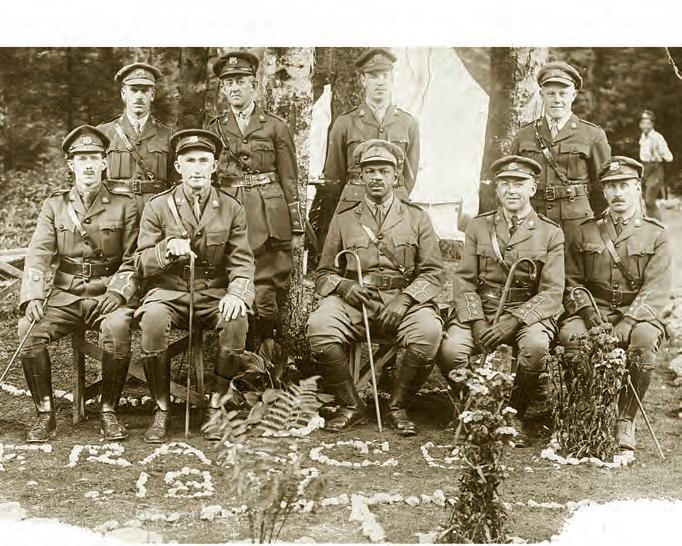
“I am informed that several who have applied for enlistment in the Canadian expeditionary forces have been refused for no other apparent reason than their colour.”
On Sept. 7, 1915, George Morton of Hamilton wrote Hughes “on a matter of vital importance to my people (the coloured), in reference to their enlistment as soldiers.”
Morton wanted to know if Ottawa had an official policy on enlistment of “coloured men of good character and physical fitness.
“A number of coloured men in this city, who have offered for enlistment and service, have been turned down and refused, solely on the ground of colour or complexioned distinction,” he wrote.
“A number of leading white citizens here, whose attention I have drawn to this matter, most
emphatically repudiate the idea as being beneath the dignity of the Government to make racial or colour distinction in an issue of this kind.
“They are firm in their opinion that no such prohibitive restrictions exist.”
Hughes’ directive confirming that stance was issued shortly afterward. But it didn’t seem to matter. By Dec. 31, at least 200 Black Canadian volunteers had been rejected.
The issue of Black enlistment was debated in Parliament before the chief of the general staff issued a memorandum on April 13, 1916, citing what he called the facts.
“The civilized negro is vain and imitative,” wrote Major-General Willoughby Gwatkin, head of the militia. “In Canada he is not being compelled to enlist by a high sense
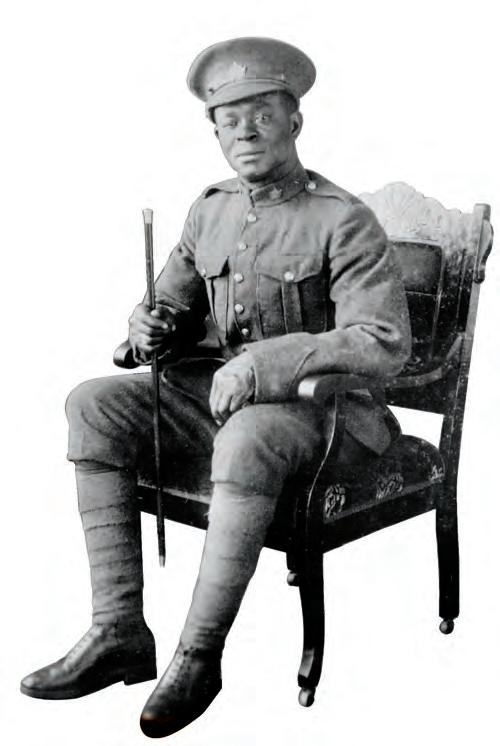
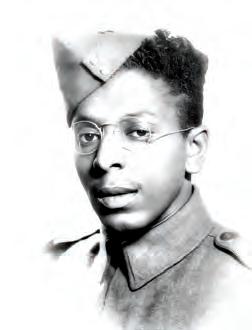

Jamaican-born William Gale (above) served in No. 2. His son Thamis (top), a Second World War veteran, spent years documenting the contributions of Black soldiers in Canada. Barbadian-born infantry Sergeant Christopher Marshall (opposite) stands alongside Trooper Brandie Simms of the Royal Canadian Dragoons. A Nova Scotia native, Simms was killed in action in October 1918.
of duty; in the trenches he is not likely to make a good fighter.
“Not a single commanding officer in the Military District No. 2 is willing to accept a coloured platoon as part of his battalion.”
Ironically, it was Gwatkin who came up with the idea of a Black labour unit.
Both Prime Minister Robert Borden and British authorities approved it, along with a proposal to break with the practice of the day and allow the unit to recruit countrywide. The all-Black battalion, based initially in Pictou, N.S., was authorized on July 5, 1916.
Allen’s 106th eventually took on 18 Blacks, but most were reassigned
Runchey’s coloured corps, a light-infantry unit, saw action in some of the war’s best-known battles.
to other units once overseas. Ultimately, more than 1,300 Black recruits would serve in the Canadian Expeditionary Force. Fewer than 400 of them were conscripted.
“The experience of visible minorities in World War I illustrates the nature of Canadian race sentiment early in this century,” Walker wrote.
“Most abruptly, it demonstrates that white Canadians participated in the Western ideology of racism. This was true not only in the general sense of accepting white superiority, but in the particular image assigned to certain people which labelled them as militarily incompetent.”
From his pulpit in Zion United Baptist Church in Truro, N.S., historians say White—the son of former slaves—was in the process of achieving “almost mythic status” as the “universally recognized leader” of Nova Scotia’s Black community.
A champion of Black enlistment, he would serve as No. 2’s—but not the CEF’s—only Black officer, bearing the honorary rank of captain as its padre.
Kathy Grant, a historian who has dedicated her career to documenting Black military service in Canada, says about eight Blacks served as officers in the CEF and Royal Flying Corps during the First World War—including one infantry officer and two pilots.
Much has been written about No. 2 Construction Battalion
in particular, but many myths and misconceptions surrounding the unit and early Black military service in Canada persist. Here are eight of them.
Myth #1: Blacks didn’t serve in Canadian military units before the First World War.
Walker notes that contrary to this belief, Black and Indigenous Peoples “had a proud record of military service prior to Confederation.”
Robert Reuben Runchey, a tavern keeper from Jordan, Upper Canada, outside presentday Lincoln, Ont., was tapped to lead what became known as Captain Runchey’s Company of Coloured Men in July 1812.
Black settler Richard Pierpoint, who had served as part of the Loyalist Butler’s Rangers during the American Revolutionary War, had petitioned the commander of British forces in Upper Canada, Major-General Isaac Brock, to form a militia corps from Black settlers in the Niagara peninsula.
Brock initially turned down Pierpoint’s request. But by midsummer, he was desperate for volunteers, so adopted it and assigned Runchey, a former officer in the 2nd Flank Company of the 1st Lincoln Regiment of Militia, to assemble a unit. Pierpoint enlisted as a private. He was 68 years old.
Runchey’s coloured corps, a lightinfantry unit, saw action in some of the war’s best-known battles— including Queenston Heights, where they helped recapture the Redan Battery after Brock was killed.
The coloured corps later built a single-gun battery at Mississauga Point to harass ships resupplying Fort Niagara and fought multiple engagements throughout the Niagara region, the Battle of Fort George among them.
A couple of decades later, hundreds of Black militia men fighting in five companies helped put down the Upper Canada Rebellion of 1837-1838.
In November 1857, an alreadydecorated Able Seaman William Hall of Horton’s Bluff, N.S., earned the Victoria Cross after he and another survivor of their ravaged gun crew maintained artillery fire until British forces breached the wall and ousted a band of rebels at the Shah Najaf mosque in Lucknow, India. He was the first Black person and first Nova Scotian to receive the VC.
In the late 1850s, hundreds of Black settlers moved from California to Vancouver Island. About 50 of them organized the Victoria Pioneer Rifle Corps, an all-Black volunteer force also known locally as the “African Rifles.” It was the first officially authorized militia unit in the West Coast colony.
#2: The No. 2
Construction Battalion consisted only of Nova Scotians. Actually, fewer than half the 595 soldiers who shipped out with No. 2 on March 28, 1917, were Nova Scotia-born.
Much of the Caribbean was part of the British Empire at the time and many Trinidadians, Jamaicans and Barbadians felt compelled to volunteer. Americans, too, saw opportunity north of the border as Canada mobilized for war in Europe.
No. 2 offered Black volunteers opportunities they had started to believe were beyond their reach. Nearly 200 American-born soldiers ended up serving in No. 2. With 43 volunteers, Barbados
had the largest representation from the British West Indies.
Blacks served only in support roles with No. 2. By the war’s end, 796 soldiers had served in No. 2, but 400-500 more managed to enlist in infantry and other units. About 100 saw front-line action on the ground or in the air. A high percentage of Black soldiers at the front were wounded; at least 35 serving with the CEF were killed in action.
#4: Blacks wouldn’t make good soldiers.
There are many stories of courage and exceptional deeds by Black soldiers.
One of those was James Post of Ottawa, who at 17 had already been serving two years overseas when he earned a Distinguished Conduct Medal (DCM) for “conspicuous gallantry and devotion to duty” during a 1917 attack at Passchendaele. He was a corporal in the 4th Battalion, Canadian Mounted Rifles.

“When his company was held up by rifle and machine gun fire from the vicinity of a ‘pill-box,’” said his citation, “he crept forward under a shower of enemy hand grenades and assisted a man on to the roof of the pill-box, which was then bombed and the garrison were captured.
“When all the officers had become casualties and the line was in danger of being driven in, with great coolness he held on to the ground gained and sent back valuable information on his own initiative. He set a magnificent example of courage and resource.”
Post, who went on to become a sergeant, had three older brothers who all served in non-segregated units: Patrick was a driver with the 25th Battalion (Nova Scotia Rifles); Montague was a decorated lance-corporal in the 1st Canadian Division who returned to action after he was wounded and gassed at the front and drummer Francis made it as far as England before a bad heart forced him back home.
Then there was Jeremiah Jones of East Mountain, N.S., who was already 58 years old by the time he reached the front with the Royal Canadian Regiment in February 1917 (he had told recruiters he was 38).
Two months later, the six-foot-six private crossed the bloody battlefield at Vimy Ridge and took an enemy machine-gun nest.
“I threw a hand bomb right into the nest and killed about seven of them,” Jones recalled years later. “I was going to throw another bomb when they threw up their hands and called for mercy.”
Jones ordered the halfdozen survivors out of their hole, then marched them at bayonet point back to Allied lines, carrying their weapon. He had them deposit the machine gun at the feet of his commanding officer and asked: “Is this thing any good?”

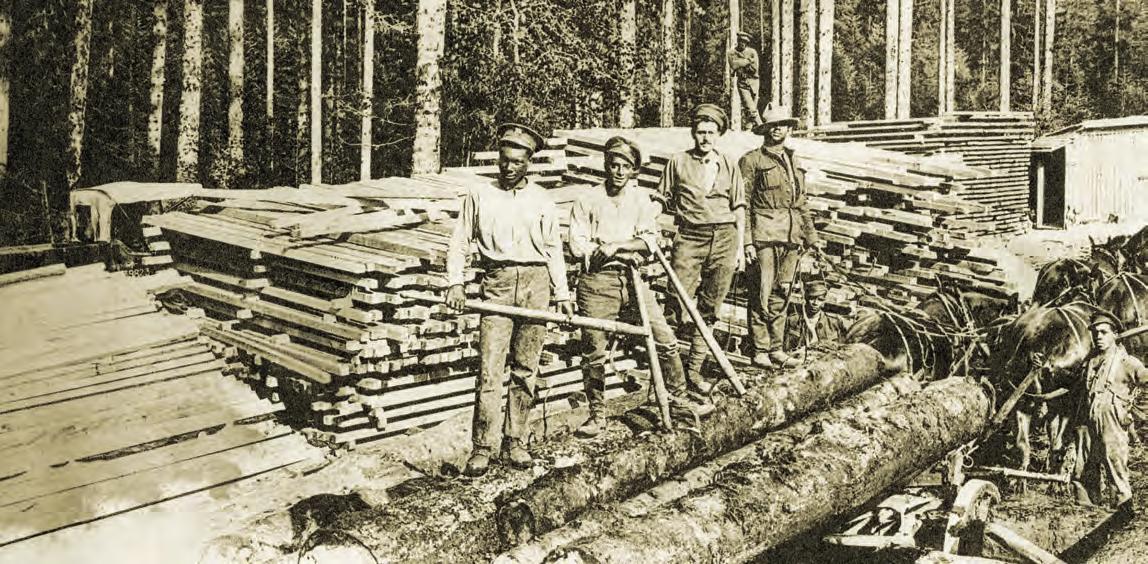
No. 2 harvested and processed lumber, built and maintained roads and railways, and operated and maintained water systems during much of the war.
His exploits earned him acclaim at home and abroad, but they remained the subject of debate from London to Ottawa for almost a century.

By Aug. 17, 1917, his hometown newspaper was celebrating Jones as “a patriot, brave, powerful and resourceful.” His commanding officer recommended him for a Distinguished Conduct Medal. He received nothing and it wasn’t until the 1990s that a campaign was launched to award Jones a medal, more than four decades after he died. It was an uphill battle.
Jones was finally recognized on Feb. 22, 2010, when Ottawa posthumously awarded him the Canadian Forces Medallion for Distinguished Service, a 1989 creation intended for civilians. It was no DCM, but it was recognition.
“Jeremiah Jones put the lie to perceptions of the day,” author, historian and later senator Calvin Ruck told The Canadian Press in 1995. “His actions served to change the view of the ability of Blacks under fire.
“He showed people Blacks could be as good soldiers as anybody else and the majority community didn’t have a monopoly on bravery or devotion to duty. Blacks were just as proud and as loyal to king and country.”
About 100 Blacks saw front-line action on the ground or in the air.
Franklin was the first Black North American killed in the First World War.
For more than a century, it has been believed that James Munroe Franklin was the first Black North American killed in action during the First World War.
He served with the Ontario-based 76th and 4th battalions and died four days shy of his 17th birthday, on Oct. 8, 1916, at Regina Trench in the Somme during the Battle of the Ancre Heights.
The Chicago Defender, an African-American newspaper, reported Franklin and his mount were “blown to pieces” by a “huge grandmother shell.”
“Franklin was a self-raised, brave young man and the first Canadian of his Race to die upon the fields of France,” the paper said. “This
brave young lad, who gave his life that democracy should rule the wide world over, was the only man of his Race in the whole battalion of 2,000 valiant fighters.”
Franklin may well have been the first Black Canadian killed in the Great War, but Grant says at least two other Black soldiers serving with the CEF, both North Americans, died before Franklin.
U.S.-born Charles Green, a private serving with the 10th Battalion (Canadians), was wounded by gunfire in early 1915, probably at the Second Battle of Ypres in Belgium. He died in hospital on April 26, eight months after the cook and baker from New York City had enlisted at Swift Current, Sask.
Wellesley Seymour Taylor, a Trinidadian-born sergeant in the 14th Battalion (Royal Montreal Regiment), had already been shot twice in the right leg the year before he was killed on May 1, 1916, in the Ypres Salient, likely at a position known as The Bluff, where the 14th suffered nine killed and 37 wounded in seven days on the line. They were relieved the same day the 24-year-old died.
Myth #6: No. 2 collected dead, dug trenches, laid barbed wire, defused landmines and was gassed and shelled. No. 2 was a labour battalion; fighting and mortuary duties

were not among its responsibilities, nor did it suffer any casualties due to enemy fire.
Attached to the Canadian Forestry Corps in France, the battalion harvested and processed vital lumber, built and maintained the roads and railways that transported it to the front, and operated and maintained water systems for the camps. It even ran and maintained electrical systems.
The closest members of No. 2 ever came to fighting was in April 1918 when they trained in infantry skills in case they were needed to help turn back the German spring offensive. They were never summoned. No. 2 continued providing vital support to logging operations, producing boards for trenches and observation posts and, later, spruce lumber for the French aircraft industry.
Twenty-nine battalion members died during their service, primarily from disease and other illnesses.
Myth #7: No. 2 was last to be supplied and paid, and members were not adequately clothed.
Grant says this misconception may have stemmed from the padre’s diary, in which White noted that a hospitalized soldier was without socks or underwear. There were also supply delays “across the board” after the U.S. entered the war in 1917, she said. “This didn’t just apply to No. 2; it was overall.”
Bottom line: No. 2’s provisions and accommodations were equal to those of other forestry units.
Walker writes that one reason the Canadians were assigned to French territory was to avoid contact with other British “coloured labour” units who were kept in compounds and not permitted the customary liberties afforded white troops.
Black troops in France were completely segregated, forbidden to leave their bases without supervision and barred from cafés and other public places. Blacks who conversed with white women risked
arrest, and American authorities beseeched the French military to help keep the races separate.
“Throughout the ranks of the Allies, with the partial exception of the French, non-white soldiers and workers were humiliated, restricted, and exploited,” Walker writes. “It was simply not their war.”
Wartime service liberated Black veterans from prejudice and persecution back home. Walker said the First World War experience revealed much about what are now called racialized people in Canada.
“Their persistence in volunteering, their insistence upon the ‘right’ to service, their urgent demand to know the reasons for their rejection, all suggest that ‘visible’ Canadians had not been defeated by the racism of white society.”
Many expected their lives would change upon their return to Canada. Their optimism didn’t last.
Some battalion members famously worked as sleeping car porters on the Canadian National and Canadian Pacific railways after the war, fighting for decades for fundamental union rights. Others went on to become lawyers, doctors and engineers.
But despite their wartime service, virtually all of them faced racerelated obstacles along the way.
“They came back to the same nonsense, the same racism,” said Grant, co-founder of the Black Canadian Veterans Stories website. Black veterans were even denied membership in veterans’ organizations.
“The Great War, unfortunately, did not end all wars and it certainly did not bring an end to racial prejudice on Canadian soil, notes the Canadian Centre for the Great War, which chronicles the conflict’s social history in Canada. “Canadian blacks were still subjected to segregated housing, segregated employment, and in some instances, segregated graveyards.”
In a 2016 paper on Black enlistment battles and emerging race consciousness in Ontario, historian Melissa N. Shaw said the hardships posed by their enlistment struggles during the First World War “marked a decisive turning point for Black Canadian activism in Ontario.”
Denied what she calls “this fundamental privilege of citizenship”— enlistment—Blacks “pragmatically responded using a variety of political activist methods and strategies to articulate their demands for full inclusion in Canadian society.”
“Much like the Black American approach to later activism,” wrote Shaw, “Black Canadians saw the enlistment battle as an opportunity to ensure their recognition as equal citizens.
“Resilient demands for inclusion came from all angles: from church pulpits to impassionedly penned letters. Black Canadians did not capitulate to Canada’s racial state. Their rejection from the CEF sparked a flame of indignation.”
While the war did not in itself transform prevalent white attitudes toward Blacks in Canada, Shaw said it did prove a “transformative moment” in the race politics that emerged afterward.
“While the battle lines in Europe had been drawn, the racial lines in Canada were less pronounced,” wrote Shaw.
“Informal colour lines were palpable to many Black Canadians marginalized to menial jobs regardless of their skill sets and levels of education. Blacks were often barred from public places such as restaurants, swimming pools, skating rinks, theatres, hotels, and pubs.”
Empowered by their wartime service, many Blacks spoke up for themselves—and their brothers and sisters—and demanded fair treatment.
“In doing so,” wrote Shaw, “they were embarking on what was arguably one of the most arduous and unrelenting battles of the twentieth century.” L
WW I: The war that shaped a nation
It was supposed to be the war to end all wars but the Great War was the most brutal era in Canadian history.

The fight for Italy
More than 92,000 Canadians served in the Italian Campaign waged by Allied forces from July 1943 to February 1945.


Battle of the Pacific: Courage in the Far East
Canada’s war in the Pacific began on Dec. 7, 1941, when Japanese aircraft attacked the U.S. navy base at Pearl Harbor, Hawaii.
WW II: The war that had to be won
The cost was high, but the war that had to be won was a decisive victory over the forces of evil.
Battle of the Atlantic
The Royal Canadian Navy played a pivotal role in this critical campaign, which raged on open and treacherous seas from September 1939 to May 1945.

O Canada: The history of our home and native land
O Canada tells our story from our First Peoples through to our achievements in space. Intro by Canadian comedian and author Rick Mercer.
Korea:
The forgotten war Korea: The forgotten war sheds light on the third major war of the 20th century. Includes archival images, a timeline and five maps.

Twenty-five great Canadian aviators
From early birds to astronauts, every one of these nationally celebrated and lesser-known flyers has made important contributions to Canada’s aviation heritage.
Vimy: The birth of a nation
The hard-fought WW I Battle of Vimy Ridge is sometimes called “the birth of the nation.” In April 1917, the Canadian Corps fought together for the first time and achieved success where others had failed.

Victoria Cross
The most famous decoration for courage in the Western world, the Victoria Cross has been awarded to dozens of Canadians and the lore behind the VC is sprinkled with strange and heartwrenching stories.
The Somme The Somme examines the role of the Newfoundland Regiment and the Canadian Expeditionary Force in the monumental First World War battle that took place in France from July 1 to Nov. 18, 1916.

The Royals: The fight to rule Canada**
Everything you need to know about Canada’s royal heritage from the earliest kings and queens who dispatched explorers to the New World to the modern British monarchy.
Canada’s Ultimate Story engages readers with captivating stories of Canadian events and fascinating people from our earliest days to present times and editions are filled with little-known facts and trivia relating to our great country.
Liberating
Normandy: The road to victory
The Battle of Normandy was the beginning of the end of the Second World War in northwest Europe.
War Photos
War Photos showcases the stunning images and rare photos from the men and women who went into battle with only a camera.

World War I: True stories from Vimy to victory
More compelling stories from the First World War are told in memoirs by surviving Canadian soldiers.
Canada and the Great War: The battles From Ypres in April 1915 through to the Hundred Days campaign, Canadian soldiers experienced one fierce ground battle after another.

War Stories: True stories from the First World War When the First World War started in 1914, Canada’s population was less than 8 million, yet more than 620,000 enlisted. Many of the surviving soldiers share their stories in this special issue.
Passchendaele: Canada’s brutal victory
The Canadian Corps was thrust into a battlefield of mud and craters to help Allied forces in the Battle of Passchendaele— Canada’s third major victory of 1917.
a

Crime: Canadian style
Take a trip to Canada’s seedy underbelly and meet the perpetrators of some of the country’s most notorious felonies and misdemeanors. Canada and the Second World War: The battles Canadians played pivotal roles in many of the most important and costly conflicts of the Second World War. Includes large battle map.
Battle of Ortona
Late in 1943, Canadian troops attacked the German-held Italian city of Ortona. In fierce fighting, Canada pushed up Italy’s east coast and prevailed.
Canadians in the Battle of Britain
By July 1940, Europe had fallen under Hitler’s advance. Before the Luftwaffe could cross the English Channel, their pilots had to master the skies over Britain. British, Commonwealth and other pilots awaited them. “The Few” included 112 Canadians.
D-Day: The free world fights back It was the spring of 1944 and the Allies could not wait any longer. British, American and Canadian forces would land on five beaches on France’s Normandy coast in the early hours of June 6, 1944.

Canada and the Victoria Cross
No one ever set out to earn a Victoria Cross, which is awarded for “valour in the face of the enemy.” They were mostly spontaneous acts in the heat of battle. Of 98 Canadian recipients, 36 received their award posthumously.
The march to victory: Canada’s final 100 days of the Great War
The Canadian Corps fought several great battles before Germany surrendered, ending “the war to end all wars.”

O Canada: Discover your land
Big land, bigger oceans, huge mountains, wide waterways and wildlife wilderness—Canada offers breathtaking vistas in every direction. Intro by Canadian comedian Cathy Jones.
Canada’s great naval battles
The sea brought explorers, colonizers and navies from Europe to North America—as well as rivalries and wars. Join naval historian Marc Milner as he retraces Canada’s history—all from a nautical perspective.

O Canada: The best of everything Find out what really makes our country tick. Packed with Canadian people, places, wildlife, cities, culture, feats and innovations. Intro by Canadian comedian Ron James.
John McCrae and the Battles of Flanders
John McCrae—doctor, gunner and poet—was shaken by the battlefield death of a friend in May 1915, and wrote the poem “In Flanders Fields” in tribute. The poem remains today a renowned symbol of remembrance.

Canada and the brutal battles of the Somme
The Battle of the Somme lasted 141 days, from July 1 to Nov. 18, 1916. For the Canadian Corps, the Somme was a coming of age, setting the stage for their seminal victories to follow.
The Great War had been raging for nearly three years by the time the Canadian Corps stormed and captured Vimy Ridge in April 1917. “How Canada conquered Vimy Ridge” explores why the battle is considered by many historians as a defining moment for our country, detailing the path to victory, the reputation Canadian troops garnered from it, and the importance it still holds today in our national identity.
1945: Canada and the end of the Second World War
The year 1945 started with a massive German bomber attack on Allied airfields. But the Allies soon pushed back and Canadian troops led the advance across Belgium and into the Netherlands.

Canada and the Great War: Liberation
In the final five weeks of the First World War, Canadian soldiers liberated more than 200 cities, towns and villages in France.
“They were so glad to see us,” said one Canadian soldier, “they wept with joy.”


Canada and the liberation of the Netherlands From late 1944 to May 5, 1945, Canadian troops focused on the Netherlands, occupied by Germany since 1940. Canada liberated the Dutch, town by town, village by village.

O Canada: How Canada was shaped by war and peace
Since the First Peoples arrived on this continent, the place that would be called Canada has been shaped by conflict and co-operation. The impacts of war and the bounties of friendship echo through the story of Canada.
Recent sexual misconduct scandals in the Canadian Armed Forces have been a catalyst for change. But will it go far enough—and will it last?

By Sharon Adams
Lori Buchart joined the navy reserve as a teenager in 1982, at perhaps the worst time for a woman to join the military in Canada.
After decades of trying to deny entry to women, or at least keep their numbers down, the introduction of the Charter of Rights and Freedoms that year forced the military to open its doors to women.
But they did not receive a warm welcome.
The military was “increasing employment of women because the law required it,” said retired lieutenantcommander Rosemary Park, of Servicewomen’s Salute, which documents and shares the history and experiences of servicewomen and female veterans. Her duties in the 1980s and ’90s included researching expanded roles for women, including combat—which is ironic, she said, because “they didn’t want us.”
Content warning: This story discusses subjects surrounding sexual assault and includes details that some individuals may find unsettling.
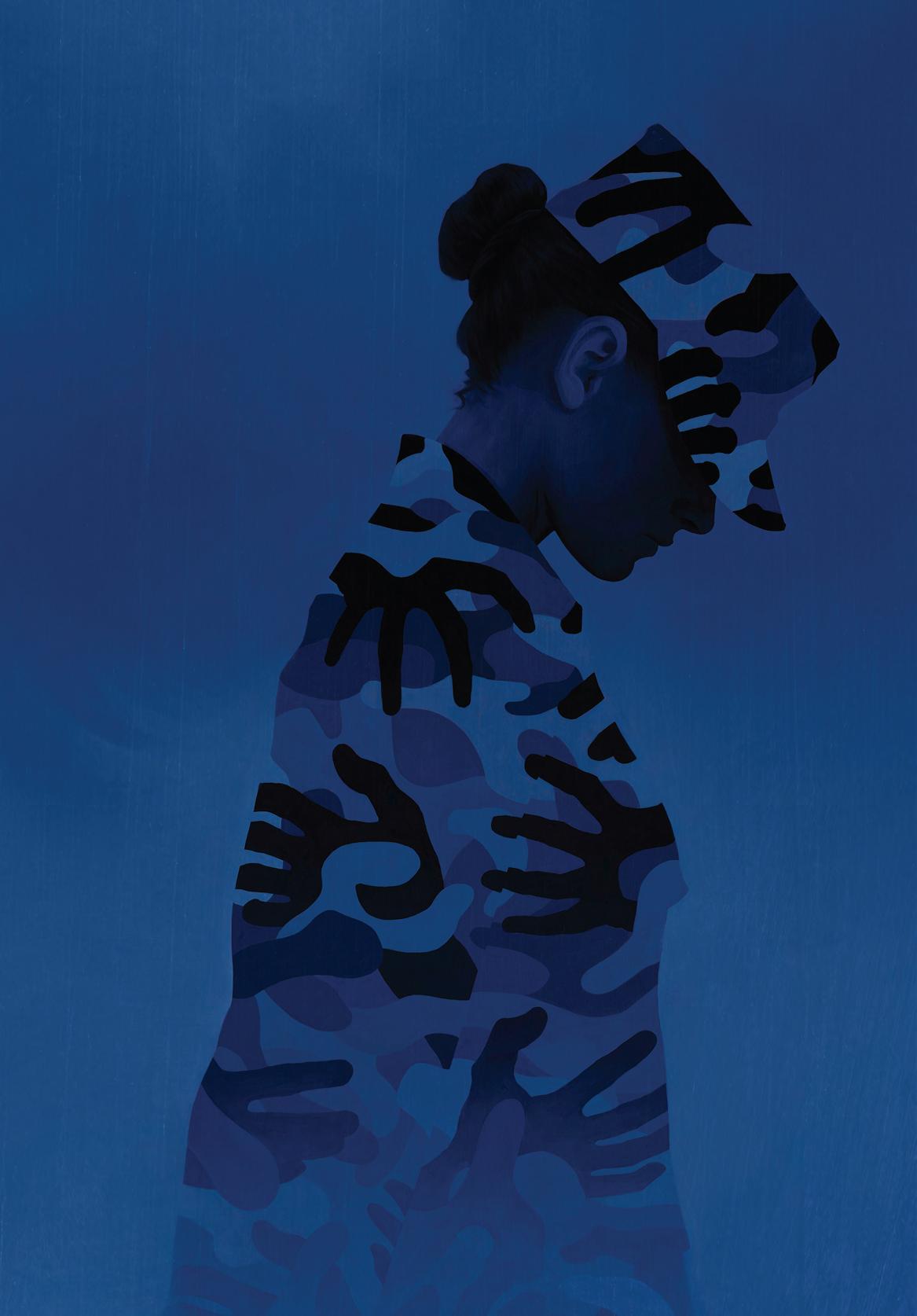
Women who joined the military encountered a sexist, hyper-masculine culture, and gay and lesbian members were already targets of violence and systemic discrimination.
All three groups were ridiculed, belittled and humiliated, both as individuals and as a collective. Violence against them was tolerated, they were not considered equal and they had less power than their tormentors.
Such conditions “create a psychological environment where abuse is likely to occur,” wrote Dr. Mic Hunter in Honor Betrayed: Sexual Abuse in America’s Military.
And it did occur. In the mid1990s, the media reported on a rape crisis in the Canadian military that had been going on for years.
But sexual misbehaviour is not just about sex. It’s about power.

Buchart was raped for the first time shortly after she enlisted at 16—and twice more during her 14-year career. In her rise to lieutenant-commander, she also endured 23 sexual assaults, ranging from men exposing themselves or grabbing her hand to feel erections to groping and attempted rape. In one case, she fought so hard that she broke her assailant’s arm.
“And I’m not the worst case,” she said.
Nor did sexual assault just happen to women. While 27.3 per cent of women in Canada’s regular forces report being sexually assaulted during their careers, so do 3.8 per cent of men. Because men make up 84 per cent of the approximately 68,000 regular Canadian Armed Forces members, nearly as many men have dealt with sexual misconduct as women.
Harvey Gingras of Winnipeg joined the reserves while still in high school in the 1980s, serving with the army for eight years and the navy for seven.
“A warrant officer groomed me over a long period of time. He started exposing himself to me, one time he tried to unzip my pants and perform oral sex.
“He said to me, ʻIf you report it, they’ll believe me, not you. It will destroy your career.’ I didn’t trust anybody in a supervisory role ever again.” Gingras was eventually declared unfit for military duty.
Survivors of sexual assault suffer cognitive, physical and emotional effects, including guilt, shame fear, depression, isolation, amnesia and anger. And for those in the military, where someone is always supposed to have your back—betrayal.
Though Buchart went on to a career as a university professor, the fallout from the assaults— particularly post-traumatic stress disorder—affected every aspect of her life and contributed to the end of her military and civilian careers.
Gingras, meanwhile, was unable to keep a job and couldn’t trust people, particularly in intimate settings. “I wouldn’t let anyone touch me. I couldn’t respond sexually.” He’s hypervigilant, terrified to use public toilets and doesn’t leave his apartment much.
Diagnosed with post-traumatic stress disorder, he is now seeing a psychologist. But the emotional wounds have not healed.
For years, survivors have struggled on, bearing the burden on their own. Eventually, peer support groups formed and calls for reform increased.
In 2015, former Supreme Court justice Marie Deschamps reviewed the situation, finding “an underlying sexualized culture in the CAF that is hostile to women and LGBTQ members.”
That report galvanized CAF action.
In 2015, General Jonathan Vance, chief of the defence staff, initiated Operation Honour to stamp out sexual misconduct in the CAF.
On Jan. 14, 2021, Admiral Art McDonald replaced Vance, who was retiring. Within weeks, both were under investigation for alleged sexual misconduct.
The scandal mushroomed as more survivors were emboldened to disclose their abuses and senior officers were criticized—and some disciplined—for their handling of the issue.
Trust in the CAF had been broken, not only with victims and the public, but with serving members who found their pride in the institution suddenly tarnished. A senior female officer resigned in disgust.
In June 2021, Lieutenant-General Mike Rouleau, vice-chief of the defence staff, and Vice-Admiral Craig Baines, head of the navy, went golfing with Vance, who was still under investigation.
It was like a kick in the gut for survivors of military sexual trauma.
“We truly felt dismissed,” said Buchart, chair of the peer support and advocacy group, It’s Not Just 700 (INJ700), now It’s Not Just 20K.
She wrote to LieutenantGeneral Wayne Eyre, then acting chief of the defence staff. The response caught her off guard.
Baines, who has since been replaced, e-mailed, asking to set up a meeting. She agreed.
“The first thing I asked him was: ‘What were you thinking?’”
It wasn’t about the impact golfing with Vance might have on those who experienced military sexual misconduct.
According to Baines, Rouleau had issued the golfing invitation out of concern for Vance’s health; Baines said he went along in support. But as vice-chief of the defence staff, Rouleau had authority over the investigation probing allegations against Vance.
“There are some errors in judgment from which there is no recovery, but for other missteps or mistakes, there must be,” said Eyre. Rouleau resigned as vice-chief.
Baines was given a chance to redeem himself. He took responsibility, apologized, began to make amends, and, he said, “model what to do when you make a mistake, to proceed forward with humility and honesty about it.
“I wouldn’t have totally understood what the survivors’ experience had been and all the obstacles they faced in terms of reporting” prior to meeting Buchart, said Baines. That first conversation quickly moved on from the golf game and beyond anger and defensiveness.
Buchart shared how betrayed she felt when the chain of command defended the perpetrators, how she felt powerless to help colleagues, how the experience affected her life afterward.
Baines explained that he had wanted to champion cultural change when he took the helm of the navy in January 2021, aiming to make respect the cornerstone of naval service. He also indicated he now understood how he had jeopardized that effort.
“The sad part is [the golf game] would undermine people’s trust in my desire to bring about change. I made a mistake,” said Baines. “I had a blind spot. In

Sexual misconduct is behaviour of a sexual nature that harms others psychologically, physically or economically. It can be abuses of power, such as pressure or coercion into sexual activities, threats for refusing advances or offers of something in exchange for sex. And any assault that violates someone’s sexual integrity as described in the Criminal Code is a crime. It can be verbal (such as jokes, remarks about someone’s body or activities, sexual innuendo, unwanted advances, verbal abuse and harassment); visual (such as exploitive calendars, inappropriate gifts, intimate photographs shared on social media and porn on computer screens); and/or physical (such as unwanted touching, uninvited hugs and caresses, and harassment, including sexualized hazing rituals).
retrospect it seems so obvious.”
He had previously put down sexual misconduct to a few bad apples who would be rooted out. But he came to realize that not all the bad apples were being caught and blind eyes were being turned to some awful behaviours. The system he had thought provided procedural fairness resulted in insensitivity to survivors and lack of understanding and support for their needs.
Buchart asked if he was open to attending a session with more INJ700 members. He was.
Some survivors went into the session wanting Baines’ head on a platter, said Buchart. “Most came out believing he was the man for the job.”
The sessions led Baines to a realization. “I’m a white male. All I had to worry about was being really good at my job, at being competent. I didn’t have to worry about my gender, I didn’t have to worry about being safe or the colour of my skin. My lived experience was very different than that of a lot of my colleagues.”
Baines and Buchart recognized the time was ripe to join forces.
Aside from the human toll, “We’ve got to solve this for the security of Canada,” said Buchart. “This is a fricking distraction. A quarter of the forces are unable to give their full attention and energy to their jobs.”
A restorative session was organized with more survivors and three dozen top navy leaders from across the country.
Participants from both groups were asked before the meeting what they wanted to get out of the meeting. Navy participants wanted to be heard, to speak without being judged and to feel safe.
“It was the same thing people with lived experience had been asking for for years,” said Buchart. “There was perfect alignment.”
“It was a very powerful first session,” said Baines. “These were real people telling real stories about their real experiences and the impact it had on them and the failure in many ways of the chain of command to respond appropriately.”
More military champions for change came out of the discussion. Some survivors benefited, too.
“This entire process...was a huge catalyst for me, let alone the CAF,” one participant, who prefers to remain anonymous, e-mailed Buchart. “‘Golf gate’ and the restorative engagement has transformed another layer of pain, trauma and hurt into some huge, monumental healing, restoration and empowerment for me.”
Until that session, continued the message, “I never referred to myself as a veteran.”
The scandals drove home the realization that the military was going to need outside help to solve the crisis; civilian experts and veteran survivors, who refer to themselves as people with lived experience, have been drafted for the task.
“This is a fricking distraction. A quarter of the forces are unable to give their full attention to their jobs.”
between survivors and armed forces and defence department representatives (but not individual survivors and perpetrators).
Survivors can speak about their experiences, or “talk about gaps, issues, problems, what needs to change,” said Dr. Denise Preston, the centre’s executive director.
Overwhelmingly, participants “really want to be part of changing culture. They don’t want other people to experience the harm they’ve experienced,” said Preston.
retired captain Sam Samplonius, whose career began and ended with sexual assaults.
After joining the reserves in 1981, Samplonius was the victim of a gang rape. She was talked out of reporting it by her boyfriend, who was also in the services.
“He said, ʻYou don’t want to destroy people’s careers; you’ll be labelled as a troublemaker. It’s just sex.’”
But sexual misconduct is not just about sex. It’s about power.

Thousands of personnel in every branch of the services and the defence department have taken part in meetings with survivors.
By the end of 2021, more than 1,300 CAF and National Defence members had participated in survivor-focused workshops developed by Survivor Perspective Consulting Group. The workshops provide training on how to immediately help victims and how to support them without adding to the trauma.
Plus, about 5,000 of the nearly 19,000 CAF members who filed claims under the 2019 sexual misconduct settlement agreement registered for its restorative engagement program.
The $900-million settlement resolved class-action lawsuits for sexual harassment, assault and discrimination against all military personnel and civilian employees, regardless of their gender or sexual orientation.
The federal Sexual Misconduct Response Centre (SMRC) collaborated on development of the restorative engagement program, which facilitates meetings
The centre is one of the successes of Operation Honour, which was discontinued in March 2021, tainted by the disrepute of Vance and derision in the ranks (some referred to it as “Operation Hop on Her”).
“The culmination of Operation Honour has had no effect on us,” said Preston. In six years, the centre’s mandate had expanded from a business-hours information and referral service to round-the-clock support.
The centre provides a single point of contact for members from the time they disclose an incident. Support includes referrals for specialized services, advocating for workplace accommodation and physically accompanying members to appointments.
To better advise CAF on cultural change, the centre has analyzed Operation Honour to see what worked and what didn’t—and why.
The centre is expanding its services for veterans and civilian employees and providing funds to more community-based sexual assault centres that serve military personnel across the country.
The centre changed the landscape for survivors, said
Justice Deschamps had found that “reports of sexual violence highlighted the use of sex to enforce power relationships and to punish and ostracize a member of a unit” in her 2015 report.
Past efforts to end sexual misconduct have “focused on trying to change the individual, rather than trying to change the social environment,” said Alan Okros, a professor at the Royal Military College in Kingston, Ont. Power dynamics are set at the beginning of military careers. In the first week in the military, recruits get yelled at. A lot.

“That sets an important tone, that it’s perfectly acceptable to yell at people,” said Okros. Hearing “suck it up buttercup” conveys the cultural expectation to endure difficult and demanding experiences, push through and carry on.
“It’s not intended for you to carry on when you’re treated in an unprofessional way,” he said, adding that unless that is formally stressed, people will think they have to endure disrespect and abuse, too.
That sets up an atmosphere that invites belittlement and

harassment, which in turn opens the door to more serious assaults.
“I was assaulted a number of times in the first five years of my service,” said Samplonius. “There was daily sexual harassment. Most people I worked with were awesome, but you ran into one or two who thought the only good soldiers were bulked up. They’d pick on women, and they also picked on guys, belittled them, said ‘man up or get out.’
“It drove me to sticking with the reserves instead of pursuing the regular force career I planned to follow.”
In 2016, Samplonius was raped by a stranger who followed her back to her hotel room after a mess dinner.
Operation Honour dictated members had a duty to report sexual misconduct.
“I was older, now a captain, married with two kids.” She and her husband discussed the duty to report. “We’d been married for 23 years,” said Sampolnius. “We both knew it would be tough, but we felt our marriage was strong enough to weather it.”
It wasn’t.

“I was always the person that held stuff together,” said Sampolnius. “When I fell apart, there was nothing holding us together.”
She and her husband, who was also in the services, were posted in different provinces. “I tried to get home as much as possible, but that seemed to be a difficult thing for my chain of command to understand. I wasn’t given time off unless I demanded it.
“It was like: ʻWhat’s the problem?’ It should have been obvious that after being stalked and raped you are not okay,” she said. She was required to provide proof to get resources and assistance that are regularly offered to survivors now.
“I can’t be angry about the SMRC because it was just stood up in 2015; they were still trying to figure out how to best support survivors,” said Samplonius.
Reporting also changed her relationships at work. Her commanding officer “seemed more shocked than anything else. From that point onward, we had no working relationship. She wanted to avoid me. People didn’t know how to respond.”
Samplonius went into weekly counselling, staying late to make up time, but was criticized because her after-hours e-mails reflected badly on her boss. Her contract was not renewed, ostensibly “because
“I believe the main issue [with Operation Honour] has been emphasizing a legal approach rather than a professional one,” said Okros. The legal approach dictates leaders remain objective during investigations, preventing them from providing the same support to victims of sexual trauma as they would when somebody in their unit has been harmed or is in distress.
As well, there’s a high bar for conviction; when no charge follows an investigation, perpetrators believe a not-guilty verdict exonerates them of wrongdoing. But they are guilty of professional misconduct, said Okros, and that has not always been communicated. Neither has the difference between compliance and consent.
More senior leaders have become better informed about victim-centred and trauma-informed support for survivors.
all of a sudden they didn’t need someone in that position” even though it was newly created.
She felt betrayed by the institution. “I felt like you should have been rewarded for continuing to meet obligations as a soldier. I was penalized at a time when I was already struggling to maintain my identity.”
Operation Honour didn’t give Samplonius the support she needed in 2016. Two year later, Statistics Canada reported that 900 regular force members were victims of sexual assault in 2017— virtually no change from 2016.
Though it contributed to cultural change, “Operation Honour didn’t go far enough,” said Eyre, now a general and chief of the defence staff. When he ended the program he said the CAF would build on its successes.
“In a relationship where there is a power differential, compliance may occur, but true consent is not possible,” said Dr. Alexandra Heber, Veterans Affairs Canada’s chief psychiatrist, during a 2021 webinar organized by the Canadian Military Sexual Trauma Community of Practice, of which she is co-chair. Additionally, perpetrators may believe that because someone has complied, they have consented— but they may have acquiesced to prevent physical harm or to survive, to preserve their reputation or to protect their careers.
Operation Honour did not consider some cultural realities. Its duty to report “forced individuals into situations they don’t want to be in,” said Okros.
Some people may have preferred to resolve situations without a formal investigation. Survivors may not be ready to disclose and they may worry about retaliation. Witnesses worry reporting a minor violation could ruin someone else’s career.
Noted Okros: “The result can be that some individuals choose not to see, choose not to act.”
“It’s the exclusionary aspects of our culture we have to excise,” said Eyre. That begins at the team level.

In December 2021, Eyre, along with Defence Minister Anita Anand, apologized for the military’s inaction and the harm suffered by survivors of sexual assault and harassment, discrimination and exclusion based on sex, gender, sexual orientation or gender identity.
“The harm you suffered happened on our collective watch. On my watch,” said Eyre.
“It breaks my heart.”
The apology was a step toward creating a service where “everyone feels welcomed, supported, empowered and inspired,” he said in a Legion Magazine interview.
The plan to achieve that relies on both top-down and bottom-up approaches.
The Chief, Professional Conduct and Culture (CPCC) will spearhead the change of policies and programs to address systemic problems—and not just concerning sexual misconduct but all types of discrimination and harmful behaviours.
“We need to constantly monitor ourselves,” said Lieutenant-General Jennie Carignan, head of CPCC, who describes the process as “using a mirror to look at ourselves. We need to create self-awareness about how our leadership styles, how our manners, how our training,” contribute to an environment where misconduct can take place.
“It’s a deliberate, continuous and all-encompassing defence team approach,” said Carignan. “This cannot be an Ottawa-only solution.”
CPCC has consulted outside
experts and research networks about changes to policies and established advisory groups.
Continuing engagement of survivors is very important, said Eyre. It will take years for the restorative engagement sessions with lawsuit participants to be accomplished. Awareness sessions such as those Baines and senior navy commanders attended are also happening throughout army and air force ranks.
It is a challenge to hardwire change. There is continual turnover in the CAF as new personnel arrive and old hands release or retire.
“Training has to be continuous throughout one’s career, starting in basic training, to inculcate the values and behaviours that we expect. Then again at leadership courses,” said Eyre. “But between those episodes of professional military education, we have to have continuous sessions of improvement.”
Values such as inclusion and strength of character are highlighted in the new document, CAF Ethos: Trusted to Serve
To ensure it has been absorbed, personnel assessments once based on competence have been widened to include character—how leaders plan for and encourage values like inclusion.
“It’s the exclusionary aspects of our culture we have to excise,” said Eyre. And that begins at the team level.
“We are no longer building teams from a homogenous group of
individuals all from the same background. Every individual comes to the table with unique strengths and weaknesses and developmental needs. It’s going to be incumbent on every leader to understand that unique background.”
How difficult that will be was demonstrated this past spring.
In March, a navy basic training course was shut down due to allegations of sexual misconduct and racism among recruits, and an investigation launched to identify and expel the offenders.
Then later that month, two senior female naval officers resigned over the handling of a sexual misconduct incident that resulted in a warning, a $1,500 fine and the eventual release of the perpetrator, a commander.
But the complainant and an officer supporting her said three other senior male officers involved in the case were not held accountable for their roles.
“The entire chain of command could have provided more effective support to the persons involved,” said a statement from Rear-Admiral Brian Santarpia. “[We] failed to meet her needs.”
Then in April, e-mails were sent to VAC, National Defence, health care specialists and academics working with survivors alleging that those who disagreed with INJ700’s approach of working with military leadership were bullied and booted from the organization. The messages also questioned whether training had been properly vetted.
Buchart acknowledges that not all survivors and members of INJ700 agreed with the approach of working closely with military leadership.
“The engagements and sessions... were not qualification-based, but experiential, which is important in helping us better understand the broad implications of misconduct,” DND spokesman Dan Le Bouthillier said in an interview with the Ottawa Citizen

Each service has been challenged to develop its own method of expediting change.
Baines has challenged navy leaders to work with their units to create workplaces where people feel safe to report misconduct and where bystanders “feel safe to correct microaggressions because they know leadership is behind them.”
Commander Landon Creasy tackled cultural change with three new initiatives when in command of HMCS Regina: a written statement of cultural expectations, appointment of a cultural advisor and regular informal discussions of ethical issues led by a non-commissioned officer.
Navy Lieutenant Blythe McWilliam, an underwater warfare officer, was approached to also take on the roles of cultural advisor and harassment advisor.
“I advised the command team on individual personnel issues as well as policies and regulations... to make sure that everybody in the ship was taken into account.”
She briefed crew on cultural expectations and means of redress. “I explained to them... your job doesn’t include putting up with poor treatment. If you’re thinking, ‘Do I have to put up with this? Is this normal?’ then chances are it isn’t.”
One Regina crew member complained about Canadian Forces Base Esquimalt’s drop-off policy, which stipulated members had to be dropped off by someone listed on their military records and that person had to have a military family identification card.
The complainant and their same-sex partner were continually interrogated by commissionaires about the partner’s identity, their relationship, if they were married. “They thought ‘this doesn’t seem right’ and came to see me,” said McWilliam.
“I wrote up a briefing note and pushed it up the chain of command. It went to the base
commander and base operations officer. Within 24 hours the policy changed. Now any CAF member is allowed to be dropped off by a family member or friend, or a shipmate and they’re no longer going to check your record to see if you’re related to this person.”
The cultural advisor had a direct line to Commander Creasy to report incidents—even involving him. He was criticized for a turn of phrase he had been using occasionally through much of his life. McWilliam alerted him it was inappropriate and explained why.
“The job is holding me or anyone else to account,” said Creasy. “If you’re going to enable somebody to provide you advice, you need to be prepared for the very day you might be the subject of that advice.”
Such open communication eased the path for a newly transgendered member and worked out difficulties posed by location of the women’s quarters, a room where the damage-control team had to suit up in firefighting gear. And in securing leave for a Muslim crew member to visit his spouse in Morocco during the COVID crisis.
“Blythe was able to open the brainboxes of a couple of people and adjust the settings so that they
could see it through a different lens,” said Creasy. On issues large and small, “Blythe helped make sure we weren’t accidentally disadvantaging any member of the ship.”
It’s an attitude Dr. Preston has seen more and more as senior leaders have become better informed about victim-centred and traumainformed support for survivors. Many are addressing microaggressions, including use of language.
“This might sound like a small thing, but it’s a big thing,” said Preston. “People are saying things like, ‘You can’t use that word; it’s better to say it this way.’ To me, that’s really heartening.” It’s culture change seen in day-today interactions and attitudes.
Said Preston: “They’re not waiting 10 years for some major program or policy change.”
Despite other issues demanding the military’s attention—such as the invasion of Ukraine or the pandemic—culture change won’t be pushed onto the back burner, said Eyre.
“You could argue that the challenge we’re facing now is because of our inability to adapt 30 years ago,” he said. “What we don’t want to have happen is in 30 years from now, we’re still 30 years behind.” L
Sexual Misconduct Response Centre, 1-844-750-1648
Confidential support including counselling, referrals, advocacy with chain of command and accompaniment to appointments. Information is not shared with the chain of command.
Canadian Forces Member Assistance Program, 1-800-268-7708
Confidential, voluntary, short-term counselling and referrals for members and their families.
Veterans Affairs Canada Assistance Service, 1-800-268-7708
Provides confidential, immediate, free mental health counselling and referrals for military and RCMP veterans, their families and caregivers.


Graham Chandler
As the Second World War wound down, Ottawa assumed wartime working women would return to homemaking— the women had other ideas
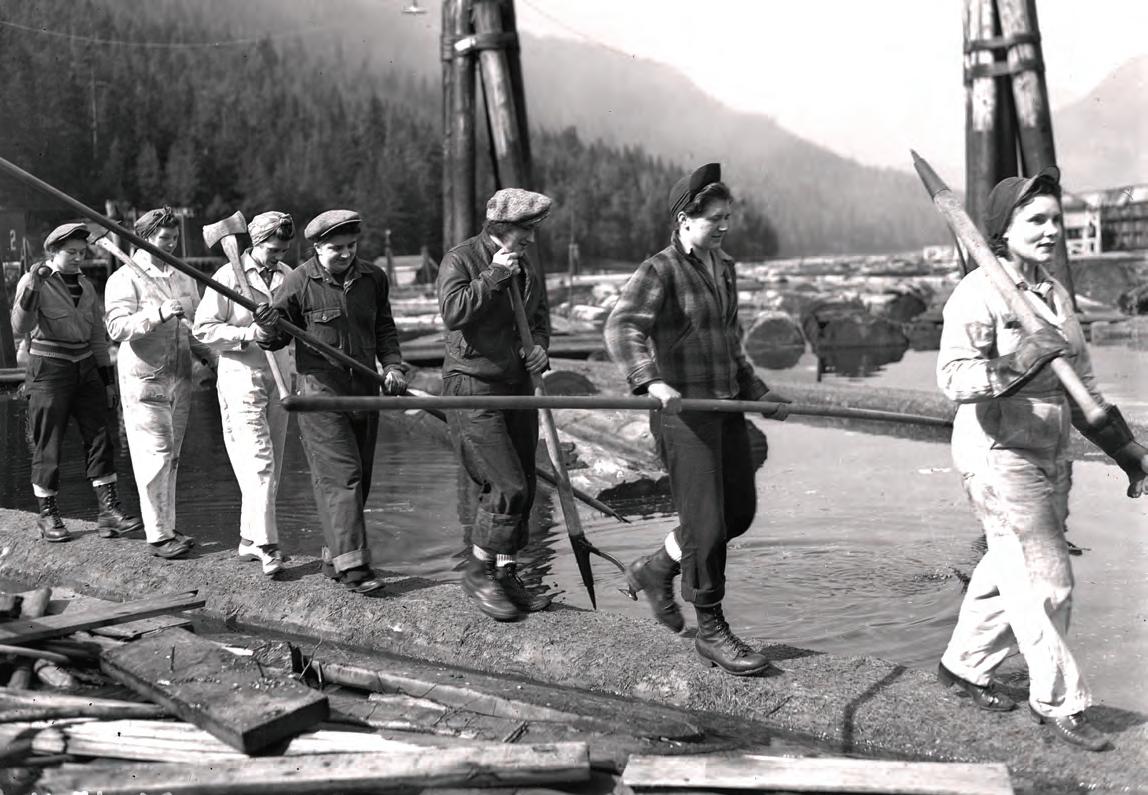
“Whether I marry or not, I want to have a job,” Alison Lindsey told a CBC Radio panel on “The Servicemen’s Forum” broadcast from HMCS Stadacona docked in Halifax on March 22, 1945. The war was winding down and the show’s discussion topic that day was the role of women after the war.
The number of women toiling in Canada’s wartime labour force peaked in the fall of 1944 at 1.2 million, nearly a third of Canadian workers. Ottawa’s Advisory Committee on Reconstruction reckoned the majority would revert to “the normal urge towards marriage, home, and family life” when the conflict ended. Leonard Marsh’s 1943 report for the committee backed the prospect, proclaiming women’s commitment was primarily to “homemaking and childbearing.”
But Lindsey’s philosophy echoed a growing refrain to the contrary. A 1945 Department of Labour survey revealed 72 per cent of women wanted to continue working after the war. They had experienced growth and independence—many for the first time—and now knew they had choices.
So, while generous veterans’ benefits applied equally to servicemen and servicewomen in establishing civilian careers, no such help came for those working women who had contributed to the war effort outside of the military. Though not facing the dangers of combat,
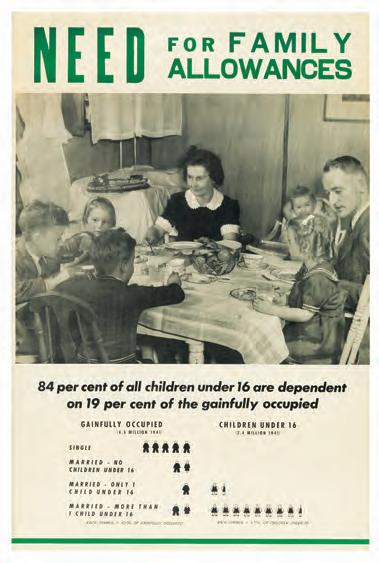
female factory workers weren’t pushovers; in addition to the rigours of the job, most also had to manage their entire households as well.
Women did have some government help, however. In 1942, working wives’ and mothers’ annual salaries up to $660 were made taxfree and a federal-provincial agreement funded daycare and after-school supervision. That same year, such women were given the opportunity to apply for a 25 per cent supplement to the regular servicemen’s dependent’s allowance they received.
Despite the challenges, many women welcomed their new-found financial position, particularly in stereotypically male-held jobs. They were earning up to 75 per cent more than typical occupations held by females and, not surprisingly, they dreaded losing the income as peacetime approached.
A woman welds a magazine at Toronto’s John Inglis Company Bren gun plant in 1942 (opposite) and female loggers head to work in coastal B.C. in April 1943 (top). A 1941 poster (above) promoted support for families.
72 per cent of women wanted to continue working after the war.
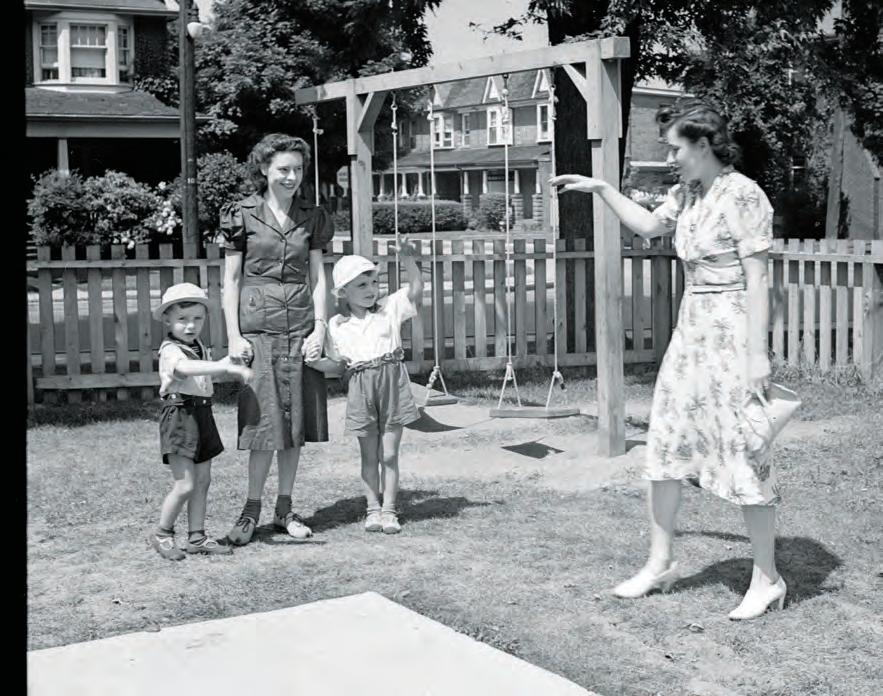
Maintaining the progress would be an uphill battle. The tax breaks designed to attract wives into the workforce during the war were eliminated in 1946, as was federal funding for daycare and after-school supervision. The prewar practice of excluding wives from civil service jobs was reinstated. And postwar, women were encouraged to take home assistants’ courses as opposed to training programs for jobs outside of the home.
The list of hurdles continued, but it spawned a time of vivid awakening and heated debates such as: “Is it right for married women to work? Would children suffer? Should men accept it?” The groundwork for permanent advances in women’s rights in the workplace was being irreversibly laid. Some recognition had already been building.
“You can tell your great-granddaughter some day that this was the time and the place it really started: the honest-to-goodness equality of Canadian women,” wrote Lotta Dempsey in a 1943 Maclean’s story. People were starting to think about equal pay legislation and other employment improvements that are now commonplace.
women during wartime had raised fears about the loss of morals and family stability. Conservative-minded Canadians thought women should return to domesticity, hinting that they were out spending their extra cash in bars and dance halls. Most Canadians accepted working mothers as an emergency measure—but only until the war was won.
Besides, the country was facing reintegration of some 600,000 soldiers, sailors and airmen into the economy after VE- and VJ-days.
So, working women were encouraged, pressured and cajoled in various ways to abandon the job market. Advertisements from appliance companies, for instance, showed them dreaming happily about their kitchens of the future once they were housewives again.
Even more federal initiatives were introduced to encourage domesticity. The 1944 Family Allowance program, monthly payments of up to $8 per child made payable directly to mothers, made it financially easier to have a family.
A Toronto mother leaves her children with a day nurse as she heads to work in a munitions factory in September 1943.
Despite its support for women’s domesticity, the Advisory Committee on Reconstruction recommended in 1944 that Ottawa pass legislation guaranteeing equal pay for equal work and that it introduce retraining programs for laid-off female workers. But the idea received a lukewarm response from MPs.
Clearly there was resistance to gender equality in the workplace. Seemingly radical changes in the daily lives of so many
Veterans’ programs were generally designed to re-establish the man as family breadwinner. The new Department of Veterans Affairs (DVA) provided several benefits to drive that home: pensions and cash payouts were higher than those after the First World War; previous employment, or a comparable job with a former employer, was guaranteed (which often terminated the employment of women in positions formerly held by men);
vocational retraining and university education were free; preference was given for civil service jobs; grants and subsidized loans were available to start a farm or business; and veterans collected an average of $700 in gratuity payments upon discharge. Meanwhile, the opportunities for wartime working women continued to be bleak. In addition to the elimination of subsidies for working wives in 1946, unemployment insurance rules also worked against them. Barriers in the postwar employment market weren’t just policy. Canadian employers continued to stubbornly stereotype women’s careers: in 1950, nearly two-thirds worked in poorly paid clerical and retail jobs. Even those ex-servicewomen who took advantage of DVA benefits encountered barriers. About 2,000 entered university and about 8,000 chose vocational training programs. Yet the majority ended up in era-typical female fields such as hairdressing, office work and teaching. A breakthrough came in 1951. Several union activists, backed by the National Council of Women of Canada and the Canadian Federation of Business and Professional Women, successfully lobbied for the creation of Ontario’s Female Employees Fair Remuneration Act. It caught on. Other provinces and territories followed suit with similar legislation.
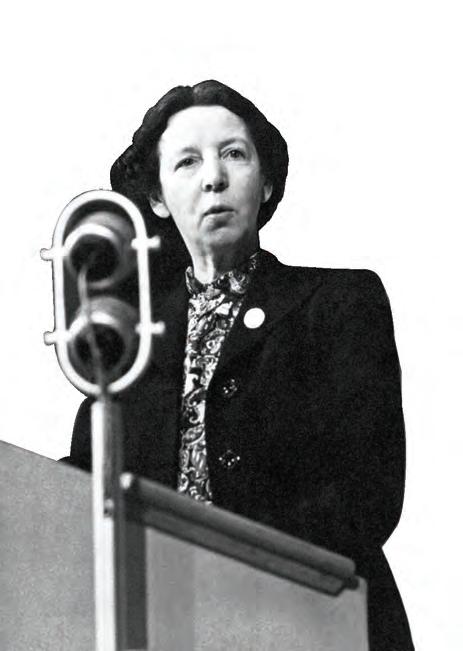
Conservative-minded Canadians thought working women should return to domesticity.
Soon, several other federal laws kept the momentum: in 1953, the federal Fair Employment Practices Act applied gender equality to the civil service; in 1955, working wives were granted equal access to federal civil service jobs; in 1956, the Female Employees Equal Pay Act outlawed wage discrimination based on gender; and in 1957, the unemployment insurance program ended much of its discriminatory rules impacting women in the workforce.
The seeds of change planted in wartime sprouted and grew through the 1950s, gaining recognition and fresh opportunities for labour equality. It provided a solid foundation for further labour changes and feminist movements into the 1960s, ’70s and beyond.
Alison Lindsey was certainly prescient when she summed up her thoughts to that 1945 CBC Radio panel: “If women aren’t encouraged to work then society is worse off in the long run.” L
Postwar women’s movements have a history of expanding around the globe. Following the First World War, women wanted a role in shaping the peace, but were rebuffed. Undeterred, suffragettes from Allied countries gathered during the 1919 Paris Peace Conference for an Inter-Allied Women’s Conference and pleaded their cause. The result? A concession that was revolutionary at the time: all League of Nations positions had to be open to both
genders on equal terms. At the end of the Second World War, only eight female delegates attended the San Francisco Conference in 1945 that established the charter of the United Nations. Despite U.S. diplomats wanting only a generic commitment to include women’s rights, the charter solidly endorsed the “equal rights of men and women,” paving the way for the Universal Declaration of Human Rights—now a worldwide pillar.
Norway's Frieda Dalen was the first woman to address the United Nations General Assembly, at its first session in London in January 1946.
In its very first year, the UN established its Commission on the Status of Women as the principal global policy-making body dedicated exclusively to gender equality and the advancement of women. The fight continues.
UN Secretary-General António Guterres stated recently that gender equality and empowering women and girls is the unfinished business of our time and the greatest human rights’ challenge in the world today.
By Aaron Kylie
By Sharon Adams
By Stephen J. Thorne
By Stephen J. Thorne
By Aaron Kylie
meeting in three years, The Royal Canadian Legion’s Dominion Executive Council (DEC) discussed the continuing challenges facing the organi zation due to COVID-19, as well as the opportunities it presented for new ini tiatives. There was an air of positivity surrounding the Legion’s post-pandemic future and four items stood out from the group’s discussions: poppies, remembrance, member ship and veterans.

“It’s actually great to see all of you today,” said Grand President Larry Murray. “You helped make a big difference for veterans and their families during trying times, and you have also contributed significantly to helping ensure that The Royal Canadian Legion is well positioned to continue its important mission across Canada for another 100 years.”
“For the last two and a half years, we have been concentrating on reacting to situations not of our making and out of our control,” continued Dominion President Bruce Julian in his welcoming
statement. “It is difficult to emerge from a situation that just keeps hanging on. Our branches need to be encouraged to be out there, announcements.
At the day-andmeeting, the Legion announced plans to start distributing 100 per cent biodegradablebrance wreaths, crosses
lapel poppy is made of pressed paper and cotton velvet. While the new items will be available this autumn, existing plastic poppies will still be in circulation; it’s expected to take a few years to implement the change. Meanwhile, Legion members and the public can also expect to see further improvements to the RCL’s online Remembrance Day ceremony locator this fall. It was introduced on Legion.ca ahead of last year’s remembrance period to promote local branch ceremonies.
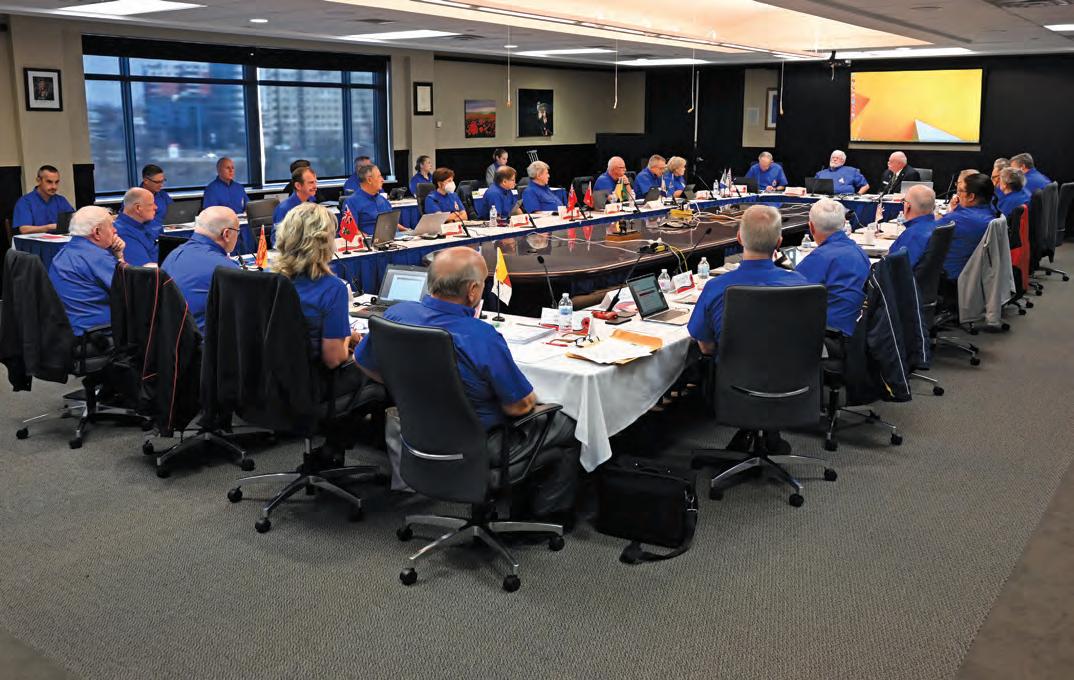
Between Oct. 1 and Nov. 30, 2021, 328 events were highlighted.
DEC unanimously approved $17,500 for additional enhancements to the platform for 2022, which will include making the system more user-friendly for the public and individual branches and streamlining administrative issues at all command levels.
In overall money matters, Dominion Treasurer Rick Bennett reported that Dominion Command ended 2021 with an operating surplus of $290,811. (The 2020 surplus was $1,344,305.) Investment returns were $452,625 in 2021, exceeding the budget by $23,169 despite market volatility—though the returns continue to be compounded by the drawdown of reserve funds for the $3-million Branch Emergency Fund.
The Supply Department finished the year with $3,001,664 in sales, surpassing revenue expectations by $376,664. Supply sales are also up by 20 per cent in early 2022.
RCL committee expenses were under budget again this year (by $422,623), largely due to travel and event cancellations. Member
sports were $323,653 under budget and track and field was $220,153 under budget. The Dominion championships for darts, cribbage and eight ball were all cancelled again for 2022 due to the pandemic.
“YOU HELPED MAKE A BIG DIFFERENCE FOR VETERANS AND THEIR FAMILIES DURING TRYING TIMES.”
Meanwhile, Member Services expenses exceeded budget by $56,163, again, as in 2020, due largely to increases in credit card and mail processing fees and extended hours of operation.
The marketing and communication budget was over by $247,843, mostly owing to a previously unplanned but DEC-approved marketing grant of $150,000 and increased costs for social media planning. The additional promotion proved successful,
though, generating 3,057 new five-year memberships, worth nearly $800,000.
The positive membership news didn’t end there.
For one of the few times in more than three decades, membership showed year-over-year growth in the first quarter of 2022. At the end of March, membership was up five per cent, about 9,700 more members than in 2021. Dominion First Vice-President Owen Parkhouse, the Membership Committee chair, noted that the numbers were continuing to climb, standing then at 12,000. “We are not out of the woods yet,” said Parkhouse, “but we are seeing momentum in membership.”
With the aim to continue that growth, DEC approved two additional initiatives. The first will expand the current one-year free membership for the Veterans Family Welcome Program to include parents and guardians of veterans. Some 500 family members have taken advantage of this project to date. The second item will extend honorary life membership, effective retroactively, to Memorial (Silver) Cross recipients.
Total paid membership in 2021 was 234,615, down by 13,812 members (5.6 per cent) compared to 2020, so the work continues to be a priority.
Naturally, veteran issues also continue to take precedence, and while the Veterans, Service and Seniors Committee did not present any action items, there was important discussion around its advocacy work, as well as that of RCL headquarters staff. Committee chair Julian also briefly summarized the outcomes of the veterans’ consultation assembly (see “Ombud urges VAC to triage, prioritize vets by need” on page 63 for more), held the previous weekend, April 23. Noted Julian: “The Legion is by far the best organization in this country for getting results for veterans.”
The Legion also continues to get results with its use of the poppy emblem. In addition to the biodegradable product announcement, Poppy and Remembrance Committee chair Berkley Lawrence noted in his report that the group continues to both strengthen and expand corporate partnerships, including exploring a pilot project with Starbucks in which poppy donations would be collected through its point-of-sales system, then transferred to local branches.
Lawrence also announced a streamlining of the number of “Pay Tribute” tap-enabled donation boxes for 2022. In last year’s pilot project, only 700 of the 1,000 boxes distributed were in use, so the committee is developing a request form for the system with the goal of ensuring only branches that want to use it will get it. The boxes generated more than $190,000 in 2021.
DEC also approved a range of amendments to the Poppy Manual, in addition to granting funding for two influential veterans’ programs. Initially allocated a total of $599,700 over three years in 2021,
“OUR MEMBERS HAVE THOUGHT OUTSIDE THE BOX TO ENSURE THE NEEDS OF ALL VETERANS WERE UNEQUIVOCALLY MET.”
the Heroes in Mind, Advocacy and Research Consortium, which supports research to benefit the health and well-being of Canadian veterans, public safety personnel and their families, was approved for year-two funding of $199,900.
Funding of $35,000 was likewise authorized for Heroes Mending on the Fly, which supports disabled veterans across the country through fly fishing and related pursuits. The Legion continues to be a principal funder of the program and many DEC members spoke highly of its impact in their local communities.
Defence and Security Committee chair Andrea Siew provided DEC with several updates on her group’s important work. Principal among the committee’s actions was an unanimously approved motion that the Legion support ongoing recognition and commemoration of the contributions of Persian Gulf War veterans.
DEC similarly adopted a recommendation that the RCL request the minister of veterans affairs, in conjunction with the minister of public safety, to amend the current definition of a veteran for commemoration purposes to include the RCMP.
Finally, the committee accepted a recommendation by which the Legion would request a review on the impact of high housing costs for CAF members—and the steps needed to address the issue.
Another notable action was the DEC’s acceptance of the Platinum Jubilee lapel pin, created to mark the 70th anniversary of Queen Elizabeth’s accession to the throne. Until Dec. 31, 2022, the pin can be worn on Legion dress on the
inside of the We Support Our Troops pin. The Jubilee pins are free to all Canadians through the Monarchist League of Canada (though shipping charges apply).
Sports Committee chair Brian Weaver reported that, despite the cancellation of the 2022 member sports championships (cribbage, darts and eight ball) due to the pandemic, host locations for those sports were offered 2023 events instead (and likewise 2023 hosts were offered 2024 events). All host locations accepted the changes.
The 2022 Legion National Youth Track and Field Championships, meanwhile, will proceed as scheduled from Aug. 3-9 in Sherbrooke, Que., which will also host the athletes again in 2023. Calgary will host the event in 2024 and 2025, while a bid process for a host city in 2026 and 2027 will begin next year.
Convention Committee chair Julian reported that the 2024 Dominion Convention is confirmed for Aug. 24-28, 2024, in Saint John, N.B. The 2026 event will be in Winnipeg and will include Legion centenary celebrations. Saskatoon is slated to host the 2028 convention.
Parkhouse, chair of the Centenary Committee, reported that plans continue for the Legion’s 100th anniversary in 2026. The special logo unveiled last year has been updated and DEC approved $100,000 in funding to initiate the committee’s formal planning. Discussions are ongoing with the Canadian Heraldic Authority for a coat of arms, the Royal Canadian Mint for a centenary general circulation coin and Canada Post for a centenary commemorative stamp.
Reports by provincial command presidents revealed a common theme: as the pandemic, hopefully, winds down, the Legion’s nationwide work is once again ramping up.
“Our members have thought outside the box to ensure the needs of all veterans were unequivocally met,” said John Mahon of Alberta/NWT Command, noting that that all branches in his region survived the challenges of the past two-plus years.
Valerie MacGregor of B.C./ Yukon Command reported that the first of two phases of the command’s flagship project, Legion Veterans Village, a 20-storey mixed-use building in North Surrey, B.C., is scheduled to be
completed in late 2022. It will include a centre of excellence on mental health for veterans and first responders, a rehabilitation and health centre, housing units and commercial space.
Keith Andrews of Saskatchewan Command shared that his province’s government has earmarked $1.5 million for the Saskatchewan Veterans Service Club Support Program, which is administered by his team.
Garry Pond of Ontario Command noted that his command’s Homeless Veterans Program achieved a “bittersweet success,” helping to get its 1,000th veteran off the street. Nearly $3 million has been invested in the project, which includes northwestern
Ontario in collaboration with Manitoba/NWO Command.
Kenneth R. Ouellet of Quebec Command, meanwhile, highlighted two particularly noteworthy endeavours in his region, the veterans licence plates (nearly 40,000 veterans in the province have been issued the graphic plates) and the parking for veterans program, in which 15 municipalities in Quebec reserve prime parking spaces for those who’ve served.
Nathan Lehr of Newfoundland and Labrador Command summed up the recent challenges the RCL has faced succinctly: “Through it all we have learned to adapt. These are changing times and I feel confident with the people and support around me.” L
By Sharon Adams
Health professionals should now be moving into the long-delayed $35-million military medical complex at Garrison (formerly Canadian Forces Base) Petawawa.
The new facility is intended to bring together health-care services previously provided from four locations near the base.
The two-storey, 9,740-squaremetre compound will house medical, dental and mental health care services, along with physiotherapy and radiology facilities. A pharmacy will also operate from the location.
“Now we’re looking forward to welcoming both the professionals who will be providing services and those who will benefit from them,” said Arthur Humble, Defence Construction Canada program
leader at Petawawa, in an interview with the Ottawa Citizen.
The project was delayed by three years when the company that won the $30.6-million construction contract entered bankruptcy in 2019. Hard on the heels of that setback came supply chain shortages caused by the pandemic.
The centre was expected to be finished in the summer of 2020, then the fall of 2021. Prior to this issue’s publication date, the completion date had been pushed to August 2022.
It is the latest in a line of upgrades and new construction aimed at improving delivery of health-care services at bases and wings across the country, which a decade ago expanded the health services centre at Gagetown and a 4,066-square-metre
medical facility open at 19 Wing in Comox, B.C. In North Bay, Ont., 22 Wing outgrew the health centre built in the 1960s, and recently welcomed a new $18-million replacement.
“The new health services centre will address the difficulty members at 22 Wing have had in receiving continuity of care while part of the transient military lifestyle,” said Captain Sarah Homer, acting commander of 31 Canadian Forces Health Services when the project broke ground in 2020.
The centre will provide care under one roof by civilian and military doctors, nurses, nurse practitioners, medical technicians, mental health professionals, dentists, physiotherapists, pharmacists and administrative staff, she said. L
By Stephen J. Thorne
This past winter’s COVID-19 protest-turnedoccupation of the nation’s capital amounted to an extremist attempt to take over the government, the prime minister’s top security adviser told a conference in March.
“The occupation of Ottawa was dug in, they had supply chains, they had organization, they had funding coming in from across Canada, but also other countries,”
Jody Thomas told the 2022 Ottawa Conference on Security and Defence.
“There’s no doubt they came to overthrow the government.”
What began as a protest by truckers over pandemic-related border restrictions turned into a full-blown occupation financed and driven by right-wing extremists whose agenda went well beyond the issue of vaccine mandates.
Nevertheless, the movement gained worldwide attention and inspired similar protests in several countries, including the United States. It cost the City of Ottawa some $800,000 a day in policing.
Police brought the loud, threeweek occupation to an end on Feb. 20 after a three-day operation in which they dispersed crowds with pepper spray, horses and stun grenades, towed more than 70 vehicles, and arrested 191 people— including four key organizers whose connections to the trucking industry were tenuous at best. Some 389 charges were initially laid against 103 participants.
The operation involving Ottawa cops, the Royal Canadian Mounted Police, Ontario and Quebec provincial police—along with other forces—came days after a similar
THE MANDATE THE “FREEDOM CONVOY” WAS ORIGINALLY PROTESTING WAS INVOKED BY THE ADMINISTRATIONS IN BOTH OTTAWA AND WASHINGTON
The Canadian Trucking Alliance distanced itself from the JanuaryFebruary protest, saying that, while protesters clogged downtown Ottawa streets, shut down businesses and harassed local residents, 85 per cent of the alliance’s member truckers were fully vaccinated.
The mandate the “freedom convoy” was originally protesting was invoked by the administrations in both Ottawa and Washington.
protest blocking the Ambassador Bridge linking Windsor, Ont., and Detroit was broken up. That week-long blockade cost about C$350 million a day in cross-border trade and forced some industrial plant operations to scale back production and dismiss workers because of supply issues. About 30 of the protesters were arrested.
Some convoy supporters signed a memorandum of understanding
(MOU) issued by Canada Unity, a convoy organizer. The document urged governments to dispense with the “unconstitutional, discriminatory and segregating actions and human rights violations” that the vaccine requirements and passport systems represented.
It demanded that the Senate of Canada and the Governor General end all COVID-19 related mandates, reinstate those who lost their jobs by opposing health measures and form a new branch of government, of which Canada Unity would have partial control. Had the Senate or Governor General denied these demands, the MOU demanded they “resign their lawful positions of authority immediately.”
Canada Unity’s website claimed 250,000 supporters signed the MOU before it was taken down.
The police action in the capital was aided by the Emergencies Act, controversially invoked by Prime Minister Justin Trudeau, which some Opposition MPs described as a “massive overreach.”
Thomas defended the short-lived measure, saying the occupation met the standard of extreme situation for which the act was intended. She explained it gave Ottawa the temporary powers it needed to “galvanize law enforcement, security agencies and financial measures in a way that we would have not otherwise been able to do.”
The RCMP froze 206 bank and corporate accounts involving millions in protest-related funds. They also flagged 253 Bitcoin addresses and forbid local cryptocurrency
exchanges from facilitating transactions with the accounts.
In late March, prosecutors laid a spate of additional criminal charges against organizers Tamara Lich, Chris Barber, Pat King and Tyson (Freedom George) Billings.
GoFundMe had suspended Lich’s $10-million-plus fundraising account after receiving police reports of protest violence and other unlawful activity. It said at the time it would return the money to donors.
Four protest supporters subsequently launched a new funding page on the cryptocurrency fundraising site Tallycoin. The “HonkHonk Hodl” account, believed to be tied to alt-right groups, raised more than $500,000 in Bitcoin before police blocked it and other protest-related crypto wallets from further transactions.
In February, a group of Ottawa residents won a class-action lawsuit to freeze 146 cryptocurrency wallets associated with the protesters. It was the first time a Canadian court had issued the so-called Mareva injunction against cryptocurrency.
The crackdowns were welcomed by security experts.
“I think domestic ideologically motivated extremism is here and it’s here to stay,” Thomas told the annual gathering organized by the Conference of Defence Associations Institute (CDAI), a think tank and lobby group.
“We have lived in the splendid, naive superiority that this was not our problem in Canada. That this was a south-of-the-border problem, that it existed in other countries, but not in Canada and that’s simply not true,” continued Thomas. “I am concerned about it.”
She said 26 Canadians have been killed and 40 injured since 2016 by ideologically motivated violence.
In an interview on the CDAI website, Bàrbara Molas, an expert on right-wing extremism, said she wouldn’t consider the movement that inspired the occupation to be extremist. By doing so, she said, people tend to “dismiss what are legitimate concerns.”
“Radicalism,” she explained, “always begins with legitimate concerns—‘Do I have a future?
VAm I going to get a job? Is the government protecting me?’
“Classifying the whole thing as extremism means dismissing those scattered, vague, but legitimate concerns that I think point to some of the perceived or actual shortcomings of the liberal democratic response to the pandemic.”
She said social isolation and an associated increase in internet exposure have contributed to an increase in rightward radicalization.
“There is a possibility that lockdowns pushed those already on the brink of extremism to engage more profoundly with online narratives that tend to favour the radical-right, xenophobia, protectionism, nationalism and white supremacy,” said Molas.
The more time people spend online, she said, the more likely they’ll encounter alternative or overly simplified explanations of COVID.
“I think this has caused a lot of anxiety and distrust towards the institutions that, traditionally, have been responsible for protecting and informing us—there has been a loss of faith in the social contract.” L
eterans Affairs
Canada is missing the boat in its efforts to clear up a huge case backlog, says Veterans Ombudsperson Nishika Jardine, who told the Veterans Consultation Assembly that the department must prioritize files by need, not their place in line.
Serving veterans, she said, have access to “probably the best health-care system in this
By Stephen J. Thorne
country.” But many are left high and dry once they leave the Forces.
“The day you walk out the door with your little baggie of three-months’ worth of whatever medications you are on and no family doctor, you don’t have access to health care,” Jardine told the group at a meeting hosted by The Royal Canadian Legion. She was one of three presenters at the April 23 session, which was attended
by representatives from 17 additional Canadian veterans’ organizations.
“If you’re lucky and you do have a family doctor, you may get your medications renewed. You may be able to apply for the public service health-care plan, the pensioners’ dental-service plan. But that’s only if you’re in receipt of a pension.
“What about all the veterans who release from the CAF and don’t have those things—they don’t have
a pension, a health-care plan or access to a doctor? Those are the people I’m concerned about.”
Applications to VAC for monthly pension increases and lump-sum payments don’t concern her, she
SERVING
said. Disability awards, however, open doors and bridge gaps until vets can secure health care or get another job with benefits.
She said the question that needs to be asked of VAC is how many of the backlogged claims are from veterans who do not have access to health care.
“They can’t tell us that because they don’t triage.”
Lawrence MacAulay reported in February that officials expected benefit applications to number 36,600 by the end of 2022, 10,000 more than projected. The current wait time is about two years.
The department hired 560 temporary staff to address the backlog, but only kept 168 of them past March.
A retired colonel appointed in 2020, Jardine said that if
advocates don’t ask the right questions, then those in need fall through the cracks. VAC progress reports, she noted, focus on numbers and wait times.
“Every single one of those deserves to be resolved within the service standard timeframe—I’m not questioning that,” she said.
But Jardine said the “granularity” about where the real problem lies is in whether the claimants at the head of the queue are still-serving members or retired veterans without a pension, a health-care plan or a family doctor.
Said Jardine: “My frustration with the VAC review process…85-90 per cent of the time they do not find in favour of the argument presented by the client; they just reiterate what the department has done.
“To me, this is just enormously frustrating. It stuns me.” L
is written by Legion command service officers. To reach a service officer, call toll-free 1-877-534-4666, or consult a command website. For years of archives, visit www.legionmagazine.com
Mental health is vital to overall well-being. For that reason, Veterans Affairs Canada recently launched a new Mental Health Benefits initiative.
As of this past April, Canadian Armed Forces veterans who apply for a disability benefit for certain mental health conditions—as well as those who have already applied and are awaiting a decision—will receive immediate coverage for the support and services they need. This includes veterans living abroad and Class A and B reservists who have not otherwise met the 180-day benefits threshold. Members of both the supplementary and primary reserves, the Cadet Organizations Administration and Training Service and the Canadian Rangers may also be eligible. VAC mental health benefits coverage applies to treatment for service-related conditions such as anxiety, depression and disorders related to trauma and stress. It also covers the costs of related treatments, such as prescription drugs and appointments with psychologists, counsellors, social workers or other mental health professionals.
CAF veterans who have applied for support for an eligible mental health condition and are awaiting a decision should have been sent information about this benefit. Serving members and veterans can stay up to date on news about VAC services, including the new Mental Health Benefits, with the following links and resources:
● My VAC Account: www.veterans.gc.ca/eng/e _services
● Salute! newsletter: www.veterans.gc.ca/eng/ about-vac/news-media/salute
● VAC Facebook: www.facebook.com/ VeteransAffairsCanada
● VAC Twitter: www.twitter.com/VeteransENG_CA
● Mental Health Benefits FAQs: www.veterans.gc.ca/eng/financial-support/medicalcosts/treatment-benefits/mental-health-benefits If you require assistance in accessing VAC disability benefits or have a friend or family member who needs help, you can find a local command service officer at www.legion.ca/support-for-veterans/contacta-service-officer. Or call 1-877-534-4666 toll free to speak to a service officer. L
Volunteering in the community
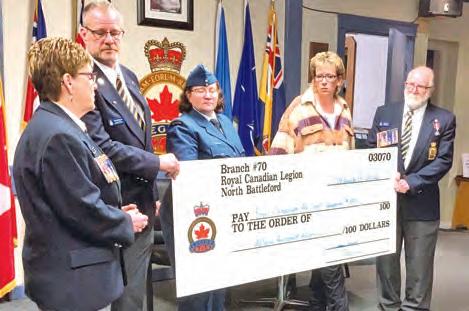
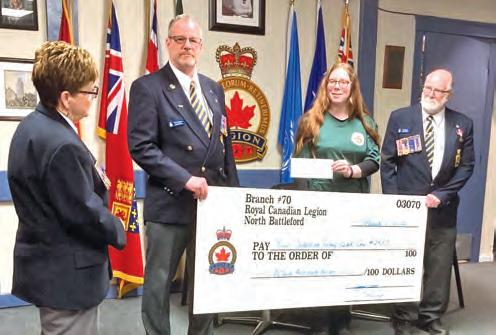
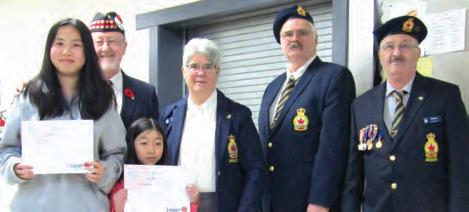
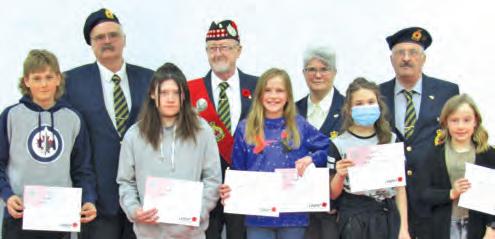
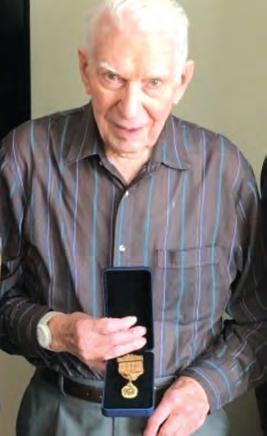
Robert Combe VC Branch in Melville, Sask., congratulates Second World War veteran Adolph Rogan on his 100th birthday. DIANNE HACK
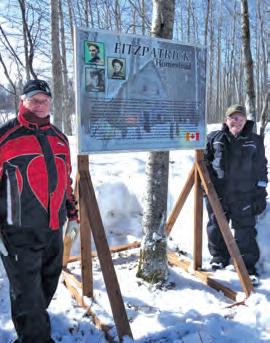
Mark Fletcher (left) of Kelvington, Sask., Branch and Bruce Gibb of Lintlaw, Sask., Branch pose beside a newly placed trailside memorial marking the homestead of three Second World War veterans. The sign was placed by the Kelvington Trailblazers snowmobile club, and the last post was played in honour of James Fitzpatrick of the Regina Rifles, who was killed during the landing in Normandy.
DENNIS SZAFRON
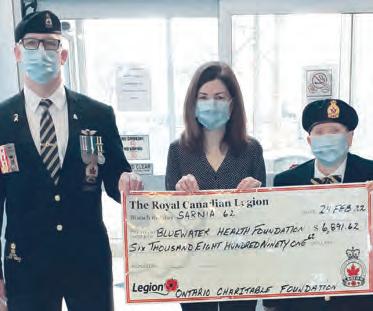
President Les Jones and L.A. President Jessie Cahill of Sarnia, Ont., Branch present $6,891.62 on behalf of the Ontario Command Branches and L.A. Charitable Foundation to the Bluewater Health Foundation, represented by executive director Kathy Alexander.

President Ron Adair and member Dan Travers (far right) of Midland, Ont., Branch present $1,000 to Salvation Army food bank representative Kim Duquette. Also attending are Bounce 104 FM’s Carey Morann (left) and membership chair Dee Adair (second from left).
President John Tuffin of Reg Lovell Branch in Glencoe, Ont., presents $2,000 to the Re:Generation Centre lunch program, represented by Pat Parnell and Gene Huston.
Veterans service officer Jack Porter (right) of Streetsville Overseas Veterans Branch in Mississauga, Ont., presents veterans Andy Barber and Jeanette Chau with quilts of valour.
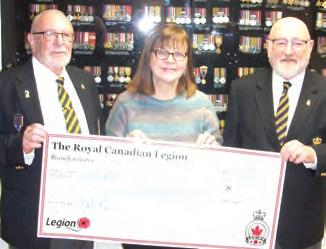
President Doug Rivers (left) and ways and means committee chair Peter Howard of Valley City Branch in Dundas, Ont., present $1,250 to Karen Sobierajski, program manager of the Dundas Salvation Army community and family services program.
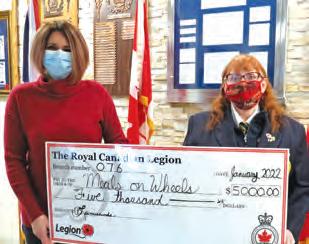
Bernadette Lamirade of Dr. Fred Starr Branch in Sudbury, Ont., presents $5,000 to Meals On Wheels executive director Shannon Ketchabaw.
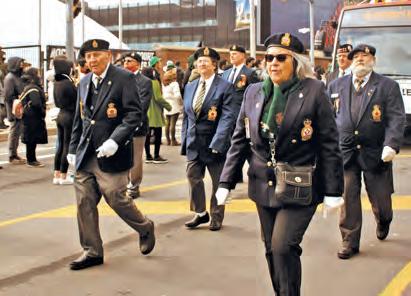
Members of District D and the Todmorden Branch march in Toronto’s St. Patrick’s Day parade.
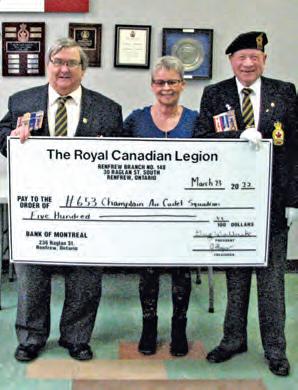
President Greg Walbeck (left) and Rev. Bruce Ferguson of Renfrew, Ont., Branch present $500 to 653 Champlain air cadets, represented by Sue White.
Membership chair Susan Stevenson of Port Dalhousie Branch in St. Catharines, Ont., welcomes new members.
President Shirley Ruttan and First Vice Fred Cosgrove of Central Muskoka Branch in Bracebridge, Ont., present $6,300 on behalf of the Ontario Command Branches and L.A. Charitable Foundation to South Muskoka Memorial Hospital Foundation, represented by its executive director, Leah Walker.
Zone B-5 Commander Lloyd Cull (centre left), along with Cliff Waterhouse and Sam Doak of H.T. Church Branch in St. Catharines, Ont., donate $7,000 to Hotel Dieu Shaver Hospital, represented by the hospital foundation’s executive director, Tracy Geoffroy (left), and chief nursing officer Jennifer Hansen.
Linda Hautala (left) and President Ted McCarron of Milton Wesley Branch in Newmarket, Ont., along with Zone E-2 L.A. commander June Sweet present $19,130 on behalf of the Ontario Command Branches and L.A. Charitable Foundation to the DeafBlind Ontario Foundation for five group homes in Ontario. Accepting the donation is foundation development director Susan Manahan.

Zone F-1 youth education chair Barb Doupe (rear, from left), along with Judy Pardy and Gary MacLean of Oshawa, Ont., Branch, presents students with awards for the Legion poster and literary contests.

Liasion Bill Redmond presents $20,000 to Perley Health in Ottawa on behalf of Stittsville, Ont., Branch. Perley Health is represented by foundation executive director Delphine Haslé (left) and development director Courtney Rock.

Bill Redmond of Eastview Branch in Vanier, Ont., presents $40,000 to the Perley Health Foundation, represented by the foundation’s development director Courtney Rock (left) and executive director Delphine Haslé.
President John Cormier of Leslie Sutherland Branch in Corunna, Ont., presents $2,000 to the Sarnia/Bluewater Wrestling Club, represented by Henry Dickson (left) and Zack Dickson.
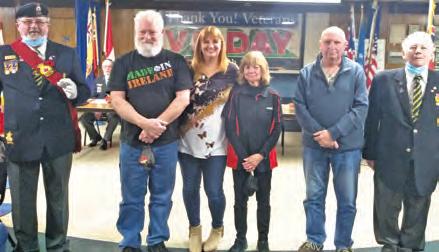
Sgt.-at-Arms Bruce Tribute and membership chair Bob Bromley of Riverside Branch in Windsor, Ont., welcome new members.
Alan Pollard of Goderich, Ont., Branch presents $3,500 to Nancy Allen for the Ruck to Remember homeless veterans program.
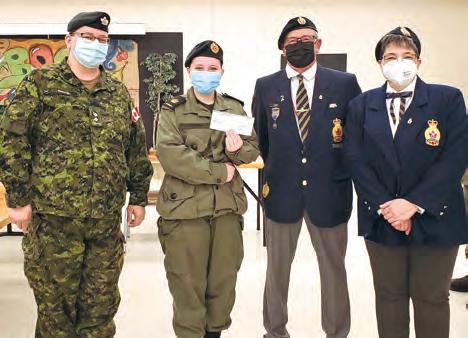
Second Vice Frank Gosnell and L.A. cadet liaison Kathy Gosnell of Reg Lovell Branch in Glencoe, Ont., present $2,000 to 2884 Engineers army cadets, represented by Capt. Michelle Broad and WO Avery Glithero.
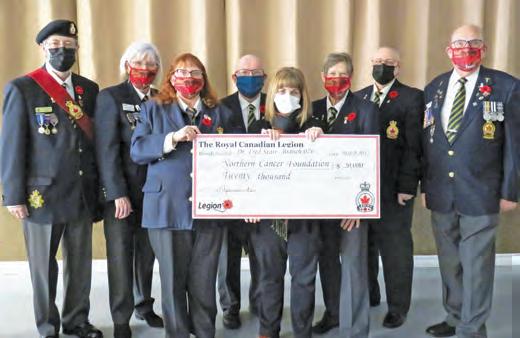
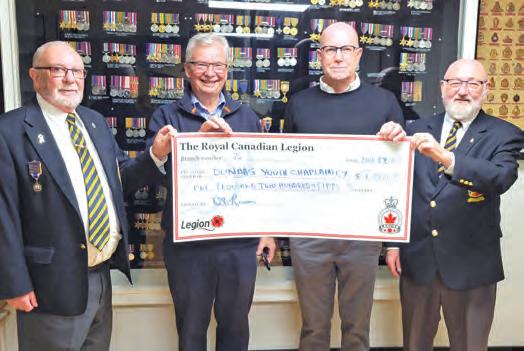
President Doug Rivers (left) and ways and means chair Peter Howard of Valley City Branch in Dundas, Ont., present $1,250 to the Dundas Routes Youth Centre, represented by John Van Vliet and Philip Lowry.
President Greg Walbeck and honours and awards chair Cheryl Babcock of Renfrew, Ont., Branch award Adisson Budden with second-place in provincial intermediate essay in the Legion poster and literary contests.
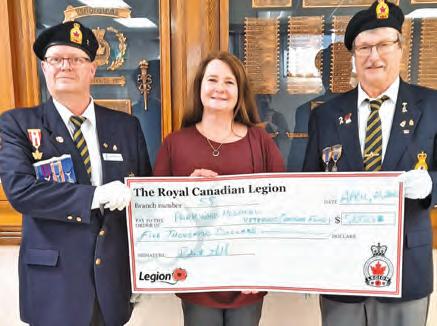
Woodstock, Ont., Branch President Ian Adamson (left) and First Vice Rob Gable present $5,000 to the Parkwood Institute’s veterans comfort fund, represented by the director of development at St. Joseph’s Health Care Foundation, Susan Hardy.
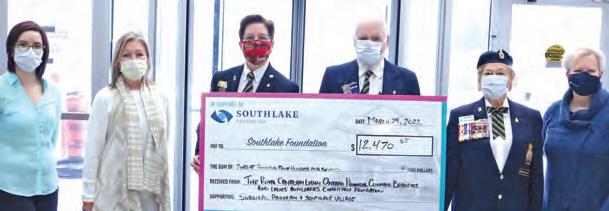
Membership chair Linda Hautalan and President Ted McCarron of Milton Wesley Branch in Newmarket, Ont., along with Zone E-2 L.A. commander June Sweet present $12,470.65 on behalf of the Ontario Command Branches and L.A. Charitable Foundation to Southlake Regional Health Centre’s surgical program and Southlake Care Village, represented by events and partnerships co-ordinator Melanie Osmond (left), community events officer Corinna Jones and development director Rhonda Flanagan (far right).
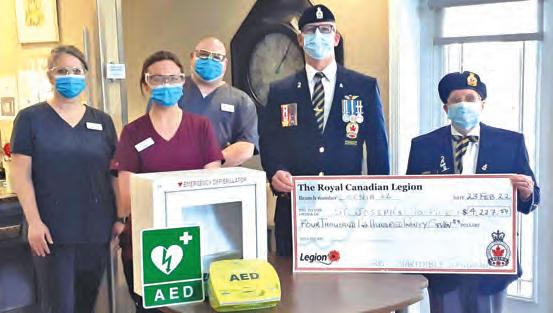
President Les Jones and L.A. President Jessie Cahill of Sarnia, Ont., Branch present $4,227.54 on behalf of the Ontario Command Branches and L.A. Charitable Foundation to St. Joseph’s Hospice, represented by Sheila Courtney (left), Lauren Minielly and Scott Mills.
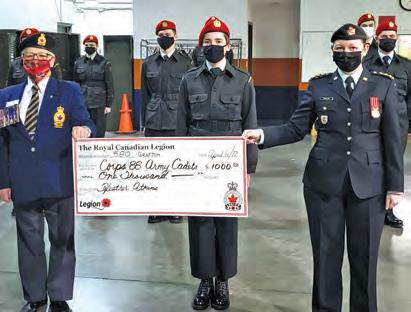
President Heather Adkins of Lt.-Col. John Foote VC Branch in Grafton, Ont., presents $1,000 to Corps 88 army cadets, represented by M.Cpl. Boyd Davies and Capt. Brenda Crawford.
In Scarborough, Ont., Centennial Branch presents non-perishable food items and $340 to Joyce Geddes (right), chair of Canadian Legion Toronto Homes, a non-profit housing organization assisted by the Legion. Also present are (from left) Branch Vice-President Debbie McPhee, veterans James Plowman and Bill McPhee and Branch President Virginia East.
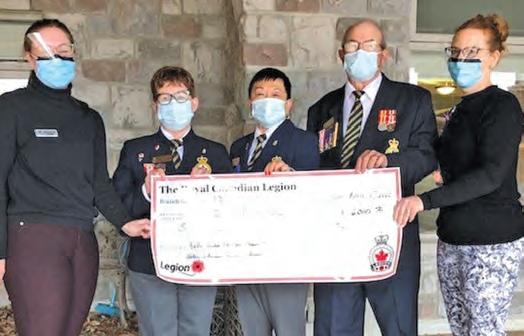
Second Vice Peggy Sunstrum, President Kathy Gardner and First Vice Gord Walsh of Lt.-Col. Harry Babcock Branch in Napanee, Ont., present $6,000 on behalf of the Ontario Command Branches and L.A. Charitable Foundation to the John M. Parrott Centre, represented by assistant manager of nursing Emily Sarley (left) and director for long-term services Angela Malcolm.
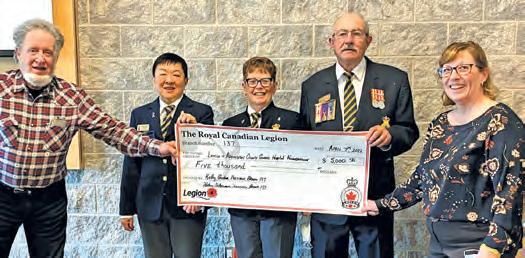
President Kathy Gardner, poppy chair Peggy Sunstrum and First Vice Gord Walsh of Lt.-Col. Harry Babcock Branch in Napanee, Ont., present $5,000 to Lennox & Addington County General Hospital Foundation, represented by chair Adrienne Harris-Hale and board director Robert Hough.
President John Morris (left), treasurer Kathy Tansey and Sgt.-at-Arms Henry Klausnitzer of Byron-Springbank Branch in London, Ont., present $24,000 to St. Joseph’s Health Care Foundation, represented by Sue Hardy and Zena Currie.
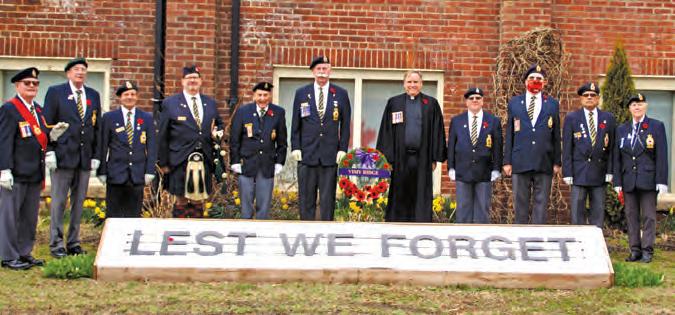
Branch in Toronto conducts a
Diane Thorne of Goderich, Ont., Branch presents $3,500 to the Ontario Command Branches and L.A. Charitable Foundation, represented by District C Foundation chair Don Young.
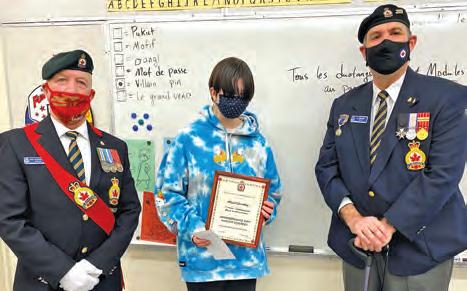
Sgt.-at-Arms Roy Buchanan (left) and President Al Mooney of Alberni Valley Branch in Port Alberni, B.C., congratulate Abigail Greenberg, whose black and white poster placed first in Central Vancouver Island.
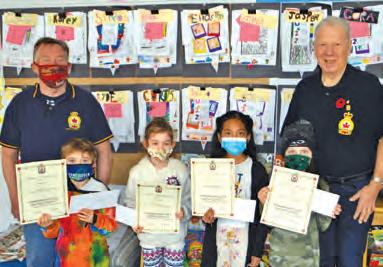
Winners of the primary poster and literary contests from Mamquam Elementary School are congratulated by Ed Robertson (left) and Nelson Winterburn from Diamond Head Branch in Squamish, B.C.
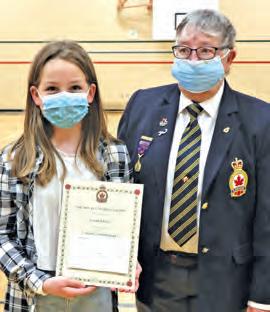
Barbara Dyck, chair of Delta, B.C., Branch’s poster and literary contest committee, congratulates Nielsen Grove Elementary student Claire Barczi, zone winner in the junior essay competition.
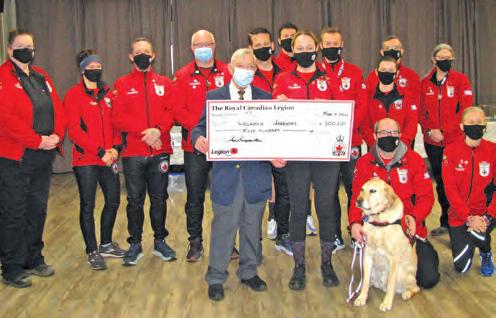
President Sam Esopenko of Mount Arrowsmith Branch in Parksville, B.C., presents $500 to representatives of Wounded Warrior Run BC.
Ed Robertson (left) and Nelson Winterburn of Diamond Head Branch in Squamish, B.C., congratulate winners of the poster and literary contests from Brackendale Elementary School.
President Ric Kerr (left) and Vice-President Alain Chatigny of Campbell River, B.C., Branch present $1,000 to Jacqueline Zweng, director of Wounded Warrior Run BC.
Cadet Charlie MacDougall of 835 Griffin Squadron air cadets places a Canadian flag and poppy on a veteran's grave during a ceremony in Mount Garibaldi Cemetery in Squamish, B.C., with Diamond Head Branch.
JENNIFER THUNCHER THE CHIEF
President Al Mooney (right) of Alberni Valley Branch in Port Alberni, B.C., presents two $3,000 cheques to Lieut. (N) Todd Flaro for 113 Armour Ford Navy League cadets and 109 Alberni sea cadets.
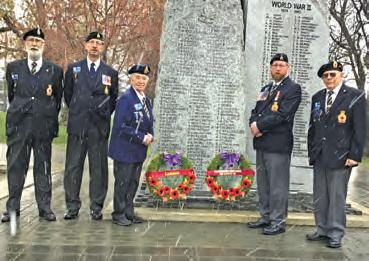
In a hailstorm on Vimy Ridge Day, Bob Ross (from left), Rick Galitzine, President Darlene McCaffery, First Vice Cory Schieman and Jim McCaffery of Kelowna, B.C., Branch place wreaths on the cenotaph.
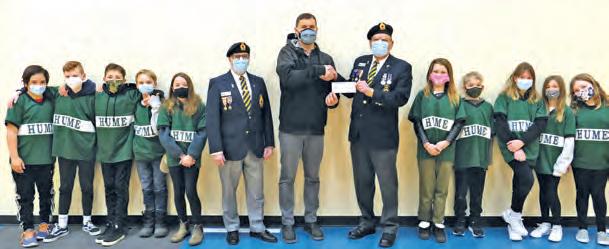
President Bill Andreaschuk (right) and Vice-President Bill Haire of Nelson, B.C., Branch give a $5,700 donation to Principal Sacha Kalabis, accompanied by students of Hume Elementary School. The money will be used to purchase soccer nets.
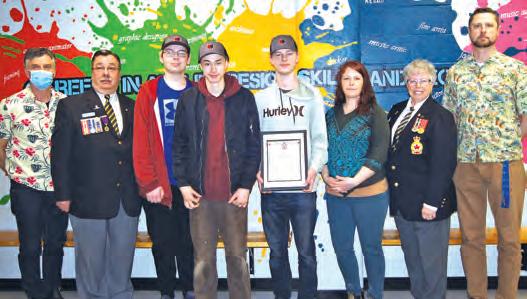
President Ken Cruickshank (second from left) and poppy chair Sandra Doody of Grand Forks, B.C., Branch congratulate third-prize winners of the provincial Remembrance Day video contest and their teachers from Grand Forks Secondary School (from left) principal Brian Foy, students Andrew Drexler, Sam Maffioli and Derek Bryan, art teacher Kristen Doyle and vice principal Jonathan Dowswell.
President Lew Forth of Mount Benson Branch in Nanaimo, B.C., presents a bursary to Mikyla Kang.
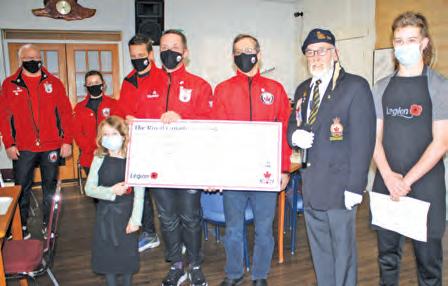
Representatives of the Wounded Warrior Run BC receive $1,000 from President Lew Forth (second right) on behalf of Mount Benson Branch in Nanaimo, B.C.

Participants in the poster and literary contests from Neilson Grove Elementary display their participation certificates, presented by Delta, B.C., Branch.
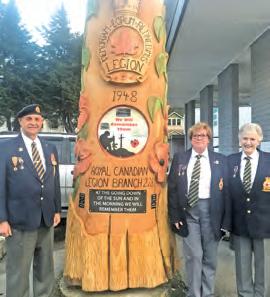
President Ian Williams (left), treasurer Heather Bergstrom and executive member Marlene Schmidt of Hope, B.C., Branch pose next to a memorial carving by Shea Larkin and Mandy Chalmers donated to the branch by the Hope Lions Club and Communities in Bloom.
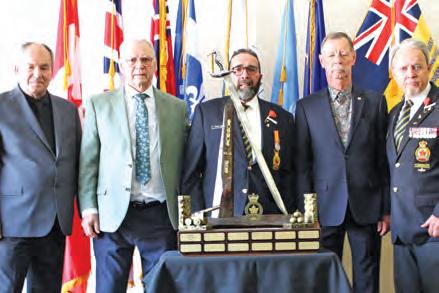
André Côté (centre) is presented with the Legionnaire of the Year award by Richard Gaudreault (left), Gabriel Girardeau, Claude Girardeau and President Robert Trépanier of Quebec City Branch.
President Micheline Charest of DanvilleWindsor Branch in Danville, Que., welcomes new members Marc Desfossés (left) and Jean-Guy Gagnière.
President Rod Hodgson of Hudson, Que., Branch accepts a $500 donation from the Black Watch Pipes and Drums, represented by drum major Hugues Vanden Abeele (centre). Also attending the ceremony is Soulanges Irish Society president Jay de La Durantaye.
Second Vice Joyce Gravel (left), Margaret Cross and Sgt.-at-Arms Lucien Blaquière of Auclair Branch in Otterburn Park, Que., present $600 to Centre d’action bénévole de la Vallée-du-Richelieu, an anti-poverty organization represented by director general Patrick Thibert.

Bill Bird (left), Cathy Prosser and Laura Derry of Auclair Branch in Otterburn Park, Que., present $600 to volunteers from Aux sources du bassin de Chambly.

First Vice Manon G. Fleury of Aylmer, Que., Branch donates more than 1,500 Izzy comfort dolls made by the branch’s “Happy Knitters” to Ottawa’s Ukrainian Orthodox Hall.
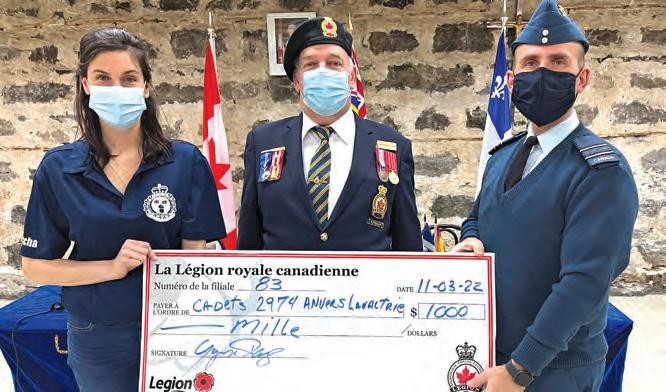
Cadet committee chair Natacha Godin (left) and Gilbert Lachance of De Lanaudière Branch in Joliette, Que., donate $1,000 to Air Cadets Corps 2974, represented by its commander, Maj. Jonathan Chaput.
André Boudreault (centre) and Gilbert Gagnon (right) of Jean Brillant VC Branch in Montreal present $600 to Cadets Corps 3040 de L’Assomption, represented by commanding officer Steve Potvin.
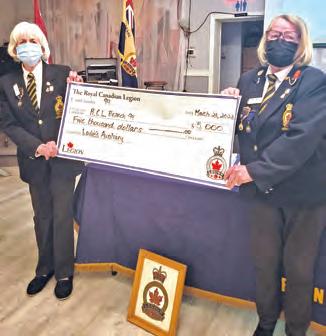
L.A. President Shirley Miller
and President Cheryl Moores of Greenfield Park, Que., Branch donate $5,000 to the branch.
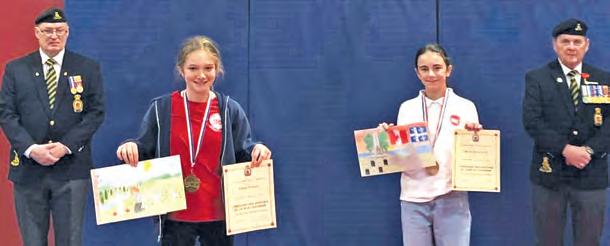
Réjean Boisvert (left) and Jean-Pierre Savard of Shawinigan, Que., Branch presents awards in the junior level of the 2020-21 provincial poster contest to winner Coralie Lauwaet (centre left) and third-place recipient Marika Desaulniers.
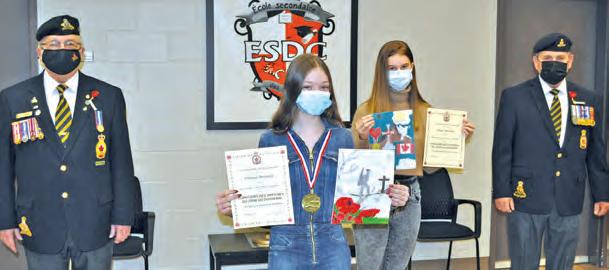
Conrad Boucher and Jean-Pierre Savard of Shawinigan, Que., Branch present winner Elfféanne Beaumier (centre left) and runner-up Mégane Bourassa with their poster contest prizes.
Upper Valley District Commander
Lena Levesque presents Lauren Beers with a certificate for her second-place poem in the intermediate category of the poster and literary contest.
Sgt.-at-Arms Charles Gabriel and Pat Gabriel of Jervis Bay Memorial Branch in Saint John, N.B., present $1,792 to Anna Nomanova, treasurer of the Ukrainian Association of Saint John. The money will go toward humanitarian relief.
Upper Valley District Commander
Lena Levesque (left) and Hartland, N.B., Branch secretary Gloria Foster present Anaya Gattani with a first-place certificate and cheque in the primary colour poster category of the poster and literary contest.
Immediate Past President Jack Tremblay of Minto, N.B., Branch presents a $250 bursary to Courtney Weaver of St. Thomas University in Fredericton.
Immediate Past President Jack Tremblay of Minto, N.B., Branch presents a $250 bursary to Allison Nearing.
Poster and literary committee chair Wilmond Turbide of Herman Good VC Branch in Bathurst, N.B., presents Mia LaJoie with a certificate and cheque for her second-place win in the junior black and white poster contest. GRAHAM WISEMAN
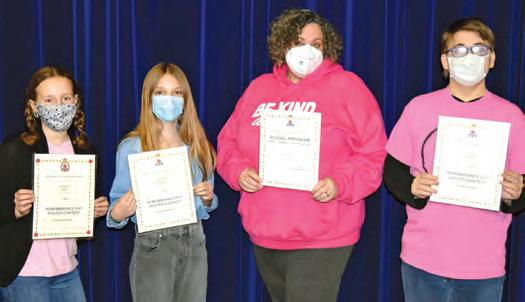
Bayside Middle School students Georgia Pittman, Leah Sherwood, teacher Julie McDermott and Josh Hope received their poster contest certificates from the Jervis Bay Memorial Branch in Saint John, N.B. BAYSIDE MIDDLE SCHOOL
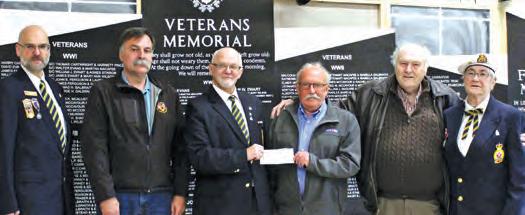
Lancaster and Jervis Bay Memorial Branches in Saint John, N.B., combined to make a $15,000 donation toward a new veterans memorial in the Lorneville & Seaview Cemeteries.
Pictured are Grant Clark (left) of Lancaster, Jeff Maquire of the memorial committee, President Harold E. Wright of Jervis Bay Memorial, committee members Cyril Galbraith and Philip McCavour, along with President Rae Ruttle of Lancaster L.A. MELANIE DICKISON
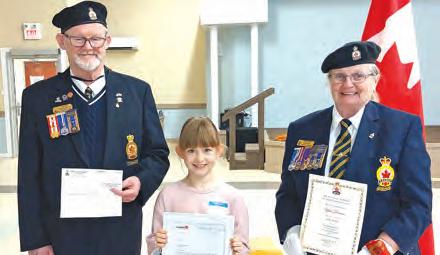
Donna Marr, Saint John, N.B., District poster chair, and Saint John District Commander
Jean Stevens present Yeva Didenko, a Grade 4 student at Millidgeville North School in Saint John, with her second-place NB Command award in the primary colour poster category of the poster and literary contest. H.E. WRIGHT
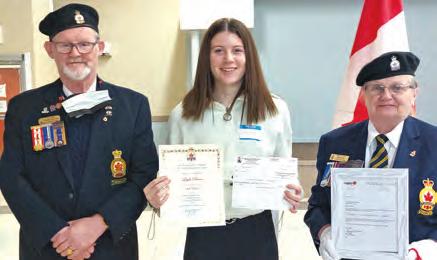
Donna Marr, Saint John, N.B., District poster chair, and Saint John District Commander Jean Stevens present Layla Burns, a Grade 11 student at St. Malachy's Memorial High School in Saint John, with the second-place NB Command award in the senior black and white category of the poster and literary competition. H.E. WRIGHT
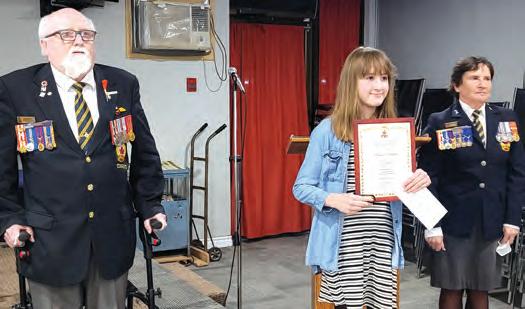
Robert Griffin of Fredericton Branch, accompanied by District Commander Geraldine Lefebvre, presents Harper Rinehart, a Grade 4 student at Priestman Street School, with her first-place award in NB Command’s junior essay contest.
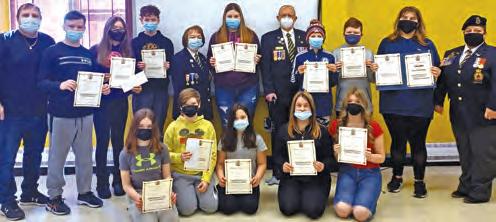
Students from St. Francis School are congratulated on awards for their entries in the poster and literary contests by Principal Jeff Neil (rear left) and (rear, in Legion uniforms) Jean Burnett, Gerry Burnett and President Paulette Morrissey of Harbour Grace, N.L., Branch.
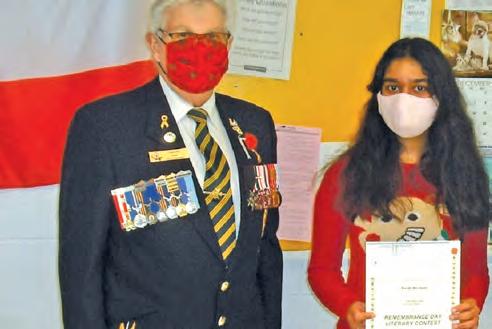
H.T. Church Branch in St. Catharines, Ont., presented a certificate of merit to Nathan Pellerin.
Milton Wesley Branch in Newmarket, Ont., presented the 50-year service medal to Norm Knowles, the 55-year bar to Wayne Hooey and Certificates of Merit to Barb Mineur, Karen Sawyer, Gillian Cousineau and Linda Hautala.
Peterborough, Ont., Branch, on behalf of the Ontario Command Branches and L. A. Charitable Foundation, donated $6,000 to St. Joseph’s at Fleming long-term care home.
Neuractiv Group representatives Léa Godin and Catherine Laliberté donated model kits to Operation VetBuild, a Legion mental health drive, at Gen. Jean Victor Allard, DSO & Agrafes Branch in Trois-Rivières, Que., represented by Yves Boucher and Clément Paquet.
Send your photos and news of The Royal Canadian Legion in action in your community to your Command Correspondent. Each branch and ladies auxiliary is entitled to two photos in an issue. Any additional items will be published as news only. Material should be sent as soon as possible after an event. We do not accept material that will be more than a year old when published, or photos that are out of focus or lack contrast. The Command Correspondents are:
BRITISH COLUMBIA/YUKON: Graham Fox, 4199 Steede Ave., Port Alberni, BC V9Y 8B6, gra.fox@icloud.com
ALBERTA–NORTHWEST TERRITORIES: Bobbi Foulds, Box 5162, Stn Main, Edson, AB T7E 1T4, foulds.bobbi@gmail.com
SASKATCHEWAN: Tara Brown, 2267 Albert St., Regina, SK S4P 2V5, admin@sasklegion.ca
MANITOBA: George Romick, 320 Admiral Court, Thunder Bay, ON P7A 8B5, romickg@tbaytel.net
NORTHWESTERN ONTARIO: George Romick, 320 Admiral Court, Thunder Bay, ON P7A 8B5, romickg@tbaytel.net
ONTARIO: Mary Ann Goheen, Box 308, Gravenhurst, ON P1P 1T7, magoheen@sympatico.ca
QUEBEC: Pierre (Pete) Garneau, 105-2727 Saint-Patrick St., Montreal, QC H3K 0A8, webmaster@qc.legion.ca
NEW BRUNSWICK: Harold Wright, 2-299 Main St., Saint John, NB E2K 1J1, foulis20@gmail.com
NOVA SCOTIA/NUNAVUT: Marion Fryday-Cook, 2450 Highway 3, RR #1, Chester, NS B0J 1J0, mfrydaycook@hotmail.com
PRINCE EDWARD ISLAND: John Yeo, 657 Rte. 19, Meadow Bank, PE C0E 1H1, islander657@yahoo.ca
NEWFOUNDLAND AND LABRADOR: Brenda Slaney, Box 5745, St. John’s, NL A1C 5X3, bslaney@nfld.net
DOMINION COMMAND ZONES: EASTERN U.S. ZONE, Gord Bennett, 803-190 Cedar St., Cambridge, ON NIS 1W5, Captglbcd@aol.com; WESTERN U.S. ZONE, Douglas Lock, 1531 11th St., Manhattan Beach, CA 90266, doug.lock@verizon.net.
Submissions for the Honours and Awards page (Palm Leaf, MSM, MSA and Life Membership) should be sent directly to Stephanie Gorin, Legion Magazine, 86 Aird Place, Kanata, ON K2L 0A1 or magazine@legion.ca.
TECHNICAL SPECS FOR PHOTO SUBMISSIONS
DIGITAL PHOTOS—Photos submitted to Command Correspondents electronically must have a minimum width of 1,350 pixels, or 4.5 inches. Final resolution must be 300 dots per inch or greater. As a rough guideline, colour JPEGs would be between 0.5 megabytes (MB) and 1 MB.
PHOTO PRINTS—Glossy prints from a photofinishing lab are best because they do not contain the dot pattern that some printers produce. If possible, please submit digital photos electronically.
FRENCH INSERT—To receive a French insert of Legion Magazine content, please contact MagazineSubscriptions@legion.ca or call 613-591-3335.







BC/YUKON
PETER CHANCE
Saanich Peninsula Br., Sidney
DAVID HEENAN
Bowser Br.
JOAN WALTON
Mount Benson Br., Nanaimo
ALLEN McMANUS
Gen. Hugh Dyer Br., Minnedosa
JOHN MENDRIKIS
Gen. Hugh Dyer Br., Minnedosa
JUDY McNUTT
Streetsville Overseas Veterans Br., Mississauga
ROBERT SMITH
Matthew J. Dawe Memorial Br., Kingston
RICK SAWATSKY
H.T. Church Br., St. Catharines
WILLIAM MISON
Kapuskasing Br.
EMILE DUMARESQ
Kapuskasing Br.
DUANE MacEWEN Kingston Br., New Haven

1980s CFB TRENTON LAB STAFF—Former colleague seeking contacts. Ted Whan, 777 Hillcroft St., Oshawa ON L1G 7H9, tedwhan@sympatico.ca.
KOREA VETERANS ASSOCIATION— Please check the list of veterans at https://bit.ly/KoreaVet and let us know if you can provide personal or organizational contacts who might help to locate Korean War veterans of the Royal Canadian Engineers. Chip Bowness, 1-506-232-8264, korea.sapper.vets@cmea-agmc.ca.

By J.L. Granatstein
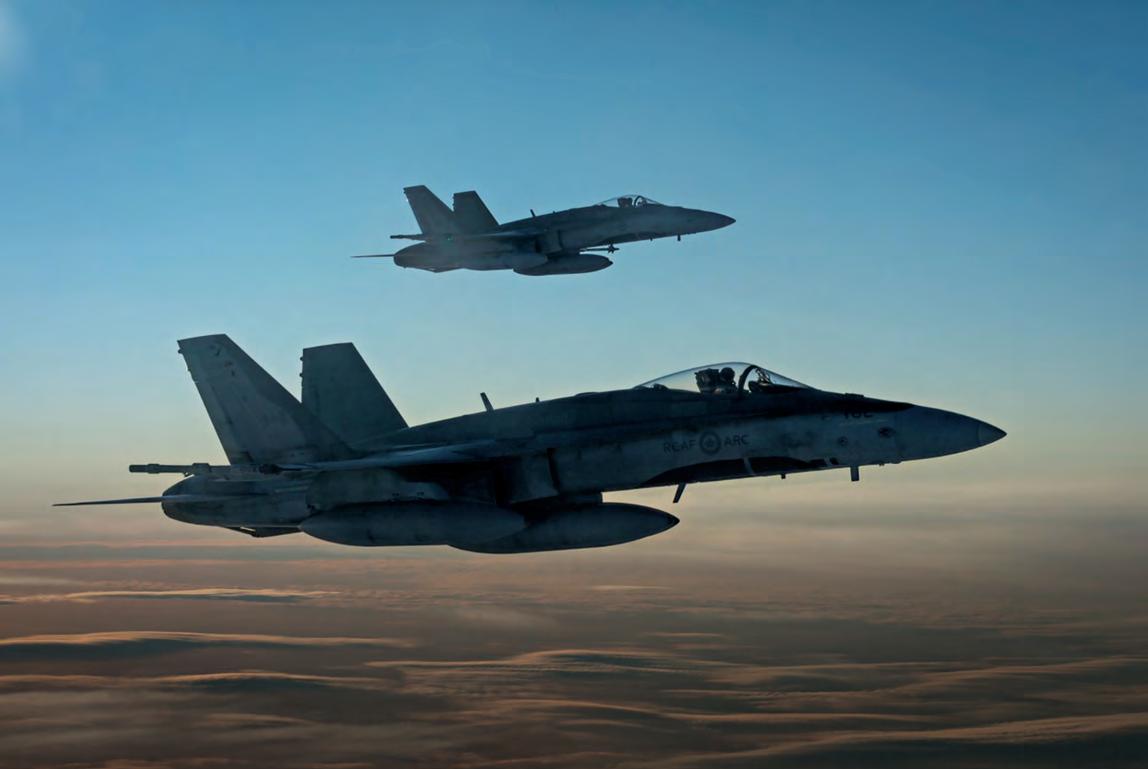
Can Canada continue to rely on the U.S. for its defence?
he Americans are our best friends whether we like it or not.” So famously said Robert Thompson, leader of Canada’s Social Credit Party in the early 1960s. While he wasn’t known as a great speaker, Thompson nonetheless had a gift for getting to the heart of the matter. Canadians and Americans share most of the North American continent. We live roughly similar lives, try our best to understand each other and read the same books and watch the same shows. We don’t fight with each other except
over softwood lumber, dairy tariffs and which country is better at hockey.
Yet there are real differences. The United States is a superpower, the richest and most powerful state on Earth. Canada is at best a middle power with about one-tenth the U.S. population and one-eleventh of its gross domestic product. The Americans have a global military reach, a huge nuclear arsenal and advanced weaponry. Canada, meanwhile, has a tiny military with aging equipment, few foreign military deployments and a strong belief in peacekeeping. Americans make war, they say, Canadians keep the peace.
Except we no longer do. While Prime Minister Justin Trudeau pledged to reengage in peacekeeping after he was first elected in 2015, there are currently only about 60 Canadian soldiers wearing blue helmets. And during Trudeau’s tenure, our peacekeeping forces have twice numbered historic lows. The government has also failed to create a promised rapid deployment unit for the United Nations.
That failure in particular caused Washington to urge Canada to act. That said, peacekeeping hardly tops the U.S. wish list for Canadian defence. Canada’s position on the globe means our country is always important to our southern neighbours. Our Arctic is on the direct bomber and missile route from Russia to the American heartland and China is increasingly eyeing Arctic waters for shipping and resource development, further threatening Canadian Arctic sovereignty.
But Canada has a limited military presence in the North: the 5,000 lightly armed Canadian Rangers reservists; obsolete aircraft flying in the North American Aerospace Defense Command (Norad); the unfinished Nanisivik Naval Facility; six, some argue under-armed, naval patrol vessels that are incapable of navigating heavy ice; and the signals intercept station in Alert, Nunavut.
Meanwhile, the Distant Early Warning Line radar defences in the North desperately need expensive upgrades, and North America’s potential enemies now boast hypersonic weapons that move at five times the speed of sound.
Ottawa seems to be ignoring the present and future threats. It apparently hopes the Americans, our best friends, will defend us even if we don’t pitch in.
But will they? Canada’s initial hesitancy in barring China’s Huawei 5G wireless communications technology hurt Canada’s image in Washington and with other members of the Five Eyes intelligence network. With a smaller population than Canada and much different strategic needs, Australia is now the more favoured partner in the Pentagon, U.S. State Department and White House. The result? A nuclear submarine deal and a broader defence and research relationship, with Britain on board, too. Canada seemed to know nothing of the pact until its announcement. Best friend? Valued ally? Perhaps not so much.
The number 1 task of a country is the defence of its people and territory. Ottawa has seemingly forgotten this. Given their own national interests, the Americans must be concerned.
Thus far, though, the U.S. has been moderate in its response. Former President Donald Trump complained Ottawa wasn’t spending enough on defence, lumping us in with other laggard NATO members not devoting two per cent of GDP annually to military budgets.
While President Joe Biden hasn’t yet publicly chided Canada for this reluctance, his Norad commander, General Glen VanHerck, was in Ottawa in November 2021 to plead for support in upgrading the air defence system.
“As the commander of Norad I think probably the most important mission I do is provide threat warning and attack assessment for both Canada and the United States, for North America,” the general stated. The U.S. is considering how to defend against hypersonic missiles, while Canada hasn’t laid out a position on them, he said.
Ottawa has long rejected participating with the U.S. in missile defence, including Prime Minister Paul Martin’s refusal of President George W. Bush’s invitation to do so in 2005.
Defence analysts have been pressing the government to change this position for years, but there is no indication that Ottawa, no matter which party forms the government, will support defending against either this new threat or the existing risk from intercontinental ballistic missiles.
What this means is that Canadians will not be at the table when critical decisions need to be made at Norad headquarters. Just envision the scene: “Missiles have been launched, sir; Canadians, please clear the room.”
It’s long past time for Canada to do more to help protect North America. That means spending more on defence and co-operating more closely with our best friends—whether we like it or not. L
A pair of RCAF CF-18s fly over Nunavut’s Baffin Bay during an Arctic patrol training mission.
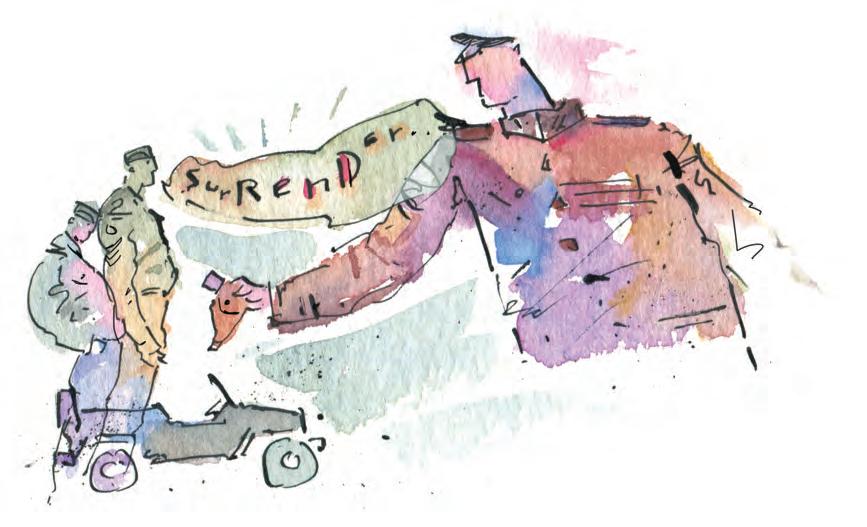
athy Beaupre of Geraldton, Ont., sent along a copy of an article published, probably in the 1960s, in the Fort William Daily Times Journal (long ago absorbed into the Thunder Bay Chronicle-Journal). The article recounts a wartime exploit of her uncle, Chris Walterson.
A spectator later reported that the most amusing part of the incident was the reaction of the sergeant major who was watching from the sidelines. “I wondered for a moment if his eyes were going to roll right back into the head.”
The column is attributed to an unidentified source, but it has the distinct flavour of a yarn passed on across the bar after a few beers.
Walterson was a sergeant with the Lake Superior Regiment in the last days of the Second World War. The regiment had helped spearhead a drive into northwestern
Germany in early May 1945; on May 4, it was ordered to stop in place and be prepared to cease fire the next morning.
Chris decided to see what was going on and, with a Private Thompson as his driver, took a carrier (a small tracked utility vehicle) up the road toward the German lines. The duo eventually rumbled into Wilhelmshaven, a port city that was home to much of what was left of the German navy. The Canadians were soon surrounded by German soldiers, who demanded to know their business. Chris decided to bluff it out and explained that they had come to accept the surrender of the northern German army. It was clearly a time of confusion, fear and uncertainty for the German military. Hitler was dead, the Russians had occupied the eastern half of the country and the western allies were obviously on the doorstep.
> Do you have a funny and true tale from Canada’s military culture? Send your story to magazine@legion.ca
The local garrison commander, a general, had clearly had enough. He unbuckled his gun belt and handed his pistol to Chris. Walterson and Thompson headed back to camp, with the general following in his staff car. Their arrival caused consternation and prompted a volley of signals up and down the chain of command. The upshot was that senior officers were preparing to receive surrenders and had no intention of having their thunder stolen by a sergeant. The general was to be sent back, with suitable apologies, to await the morning. The powers that be, unmollified by the catch-and-release of the general, ordered that Walterson be reduced to private for ignoring the stop order. Regiment duly sent a signal to division recording the loss of his stripes. A second order (which did not go to division) made him a sergeant again. Kathy Beaupre says the story fits her uncle’s character to a T.
Scrounging has been a valued talent in the military since the days when Centurion Publius sent Legionary Marcus to find better wine than the issue stuff. A soldier who can go off and rustle up anything from gasoline to a kitchen stove, no questions asked, is an asset to any outfit.
Perhaps the best scrounger I ever knew, though, was a civilian: a lanky, bearded fellow named Bill Boss. He was a legendary war correspondent for The Canadian Press in the Second World War and Korea. The latter conflict was where Boss pulled off his greatest caper. He landed at Busan, South Korea, with Princess Patricia’s Canadian Light Infantry, but he wanted to be free to go where he wanted, without military supervision. For that, he needed wheels. He pondered the problem and BANG; the light bulb went off.
He went to the quartermaster and said he needed enough Scotch for “the CP.” He failed to specify that it was The Canadian Press— not the command post—that wanted the booze.
The quartermaster provided him with enough Scotch whisky for an entire company, or about 120 men. Boss then embarked on a marathon scrounge, much of it at the
“THE QUARTERMASTER PROVIDED HIM WITH ENOUGH SCOTCH WHISKY FOR AN ENTIRE COMPANY.”
expense of alcohol-starved American units. He traded scotch for a tent, a generator, a trailer and a jeep, which was immortalized in wire service lore as “The CP Jeep.”
During the Second World War, Boss did a stint in the army as a public relations officer. He was extracted from the military by Gillis Purcell, the equally legendary head of CP. Purcell never explained what strings he pulled to make Boss a civvy and a CP correspondent. Boss himself never knew—or never told, at least.
Boss used to say that first thing he did upon leaving the military was grow a beard.
“My feeling was that brass hats might be interviewed by umpteen correspondents and never remember one of them. But they couldn’t forget a man with a red beard.”
Apparently, they didn’t.
Some rules for NCOs:
1. Curse bitterly when receiving warning orders.
2 Make sure there is extra ammo and coffee.
3. Curse bitterly.
4. Count all the other ranks twice.
5 Do not listen to officers. They can get you killed.
6. Curse bitterly.
Thoughts from Rudyard Kipling, who knew and admired soldiers: “In times of war and not before, God and the soldier we adore. But in times of peace and all things righted, God is forgotten and the soldier slighted.” L
By Mark Zuehlke
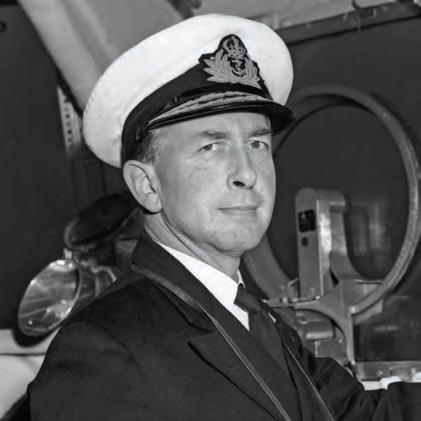

JOHN HUGHES-HALLETT
ust after 1 p.m. on Aug. 19, 1942,

Captain John Hughes-Hallett stood on the bridge of HMS Calpe—Operation Jubilee’s command destroyer—and ordered the last naval vessels to abandon attempts to rescue soldiers from the embattled Dieppe beaches.
As the ships turned toward Britain, the disastrous raid’s chief architect watched blood streaming from their scuppers.
Afterward, Hughes-Hallett admitted that the navy had been unable “to give the troops [ashore] effective support. A number of mistakes were made, chiefly by myself.”
FOR ALL ITS THOROUGHNESS, OPERATION JUBILEE NEVER HAD A CHANCE OF SUCCESS
In December 1941, HughesHallett had joined Combined Operation Headquarters (COHQ) as right-hand man to the recently appointed Commodore (later viceadmiral) Lord Louis Mountbatten.
Along with his two core naval staffers, Hughes-Hallett arrived at COHQ determined to see it embark on grand raiding schemes.
Previously, Hughes-Hallett wrote, COHQ’s “tiny raids” had “achieved nothing,” while “a number of very gallant officers…lost their lives to little avail.”
raiding for the sake of raiding.… There was no particular significance.”
The Dieppe Raid strategy started to coalesce in January 1942. Eventually, a 300-plus-page plan attempted to meticulously address every feasible contingency. It included precise schedules for how the mission—from beach landings and inland advance to evacuation—would be executed.
Yet, for all its thoroughness, Operation Jubilee never had a chance of success. Failure to accurately determine the strength, organization and ability of the German defenders meant that the moment the largely Canadian force reached the beaches, the scheme disastrously unravelled. From the outset, a chaotic battle at sea, in the air and ashore sought first to win beachheads, then switched to a disorganized, increasingly desperate evacuation that left the majority of soldiers ashore.
“A number of mistakes were made, chiefly by myself.”
—John Hughes-Hallett
The planned Dieppe and Saint-Nazaire raids kicked off the new agenda. Although SaintNazaire had a distinct purpose—to destroy dry docks capable of sheltering the battleship Tirpitz and damage U-boat pens—the objective for the offensive on Dieppe wasn’t as clear.
“We thought it would be interesting…to capture…a small seaport for a short time…,” admitted Hughes-Hallett later. “We were
In the raid’s tragic aftermath, HughesHallett, and many others—both at the time and since—sought some morsel of value to justify such loss. Hughes-Hallett believed the failed assault proved that capturing a usable port in the inevitable cross-channel invasion wasn’t possible.
Therefore, he declared, the Allies must build an amphibious port facility and tow it across the English Channel. In his 1943 role as commodore commanding the Channel Assault Force, Hughes-Hallett helped advance creation of the Mulberry harbours that ultimately proved vital to D-Day’s success. L
A flawed raiding scheme was easily defeated by a robust defensive plan

April 1941, Generalleutnant Konrad Haase’s 302nd Infantry Division assumed responsibility for some 80 kilometres of coastline anchored on Dieppe.
Haase’s task was “prevention of a landing from the sea and air.” Although Haase considered Dieppe “the focal point,” he did not expect it to “be attacked directly… but rather by landing attempts at nearby points and the formation of a bridgehead.”
Haase believed the rocky cobble beach fronting Dieppe’s promenade, combined with the overlapping gun positions on heights on either side of the town, would surely convince the Allies that any frontal assault would be suicidal.
The 302nd had been created in November 1940 with troops drawn from two disbanded divisions. Fifteen French 75mm guns inherited at Dieppe seriously bolstered the German artillery complement, although mobility was very limited. But Haase had a good divisional staff and cadre of officers. Considered a static unit, he organized the division so it covered possible landing beaches without the need for reinforcement.
By the spring of 1942, many of Haase’s best soldiers had been sent to the Soviet front. But new recruits—particularly socalled ethnic German foreign nationals, such as Poles and Hungarians—sustained the division’s strength.
This reduction in quality did not concern Haase. Kept on a tight leash, even poor


soldiers could still fight well from fixed positions and Haase expected them to fight to “the last shot.” His preparations aimed to defeat any amphibious assault right on the beaches.
“The main line of resistance—that is the coastal strip—must be firmly in possession of the troops at the conclusion of the fighting; and enemy troops that had reached the mainland must have been destroyed,” he ordered.
By mid-August 1942, the beaches were sown with thousands of mines and wire obstacles. Even though a frontal assault was not foreseen, steel doors could block all exits from Dieppe’s promenade. Anti-tank guns, artillery, mortars and machine guns covered every likely landing beach.
HIS PREPARATIONS AIMED AT DEFEATING ANY AMPHIBIOUS ASSAULT RIGHT ON THE BEACHES.
While the 302nd easily held its ground on Aug. 19, Haase was impressed by the tenacity of the Canadians and other raiders. They attacked, he wrote, “with great energy. That the enemy gained no ground…was not the result of lack of courage, but of the concentrated defensive fire of our divisional artillery and infantry heavy weapons.”
Yet, the enterprise baffled Haase. “It is incomprehensible that it should be believed that a single Canadian division should be able to overrun a German Infantry Regiment reinforced by artillery.” L
“That
the enemy gained no ground… was not the result of lack of courage, but of the concentrated defensive fire of our weapons.” —Konrad Haase
By Sharon Adams
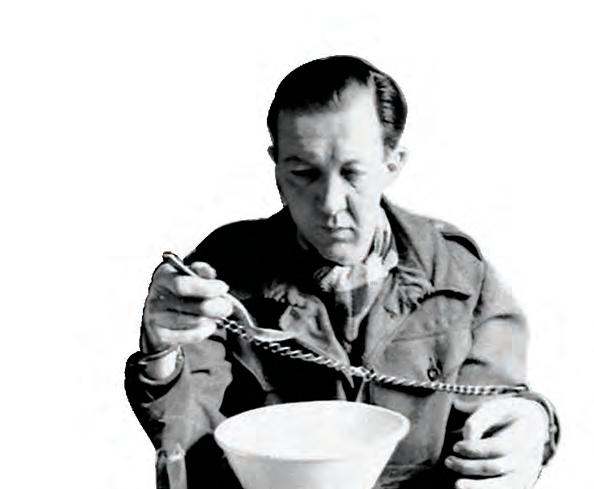
PoWs bore the brunt of a shackling spat during the Second World War
Captured at Dieppe, Captain G.T. Valentine (above) of 14th (Reserve) Army Tank Regiment wears shackles (right) in a German prisoner of war camp.
When Canadians hit the beaches at Dieppe in August 1942, they were ordered to prevent any German prisoners they captured from destroying evidence.
“We had orders to bind our prisoners. Not bind their feet or hands, but just bind their two thumbs with a cord and
then put their hands behind their backs, and loop the cord around the neck,” said Roland Gravel, a gunner with the Fusiliers Mont-Royal.
Instead, Gravel and 1,945 other Canadians were themselves taken prisoner during the raid. The Germans found their detainment orders, too. They demanded an apology from Britain and a promise never to bind prisoners again. Britain refused and ordered shackling of German prisoners. Germany said there would be reprisals.
On Oct. 8, 1942, the Dieppe prisoners in Stalag VIIIB, near the Polish town of Łambinowice, were called out in small groups.
“Canadian prisoners were tied up with rope as a reprisal,” reads an entry in the diary of prisoner of war
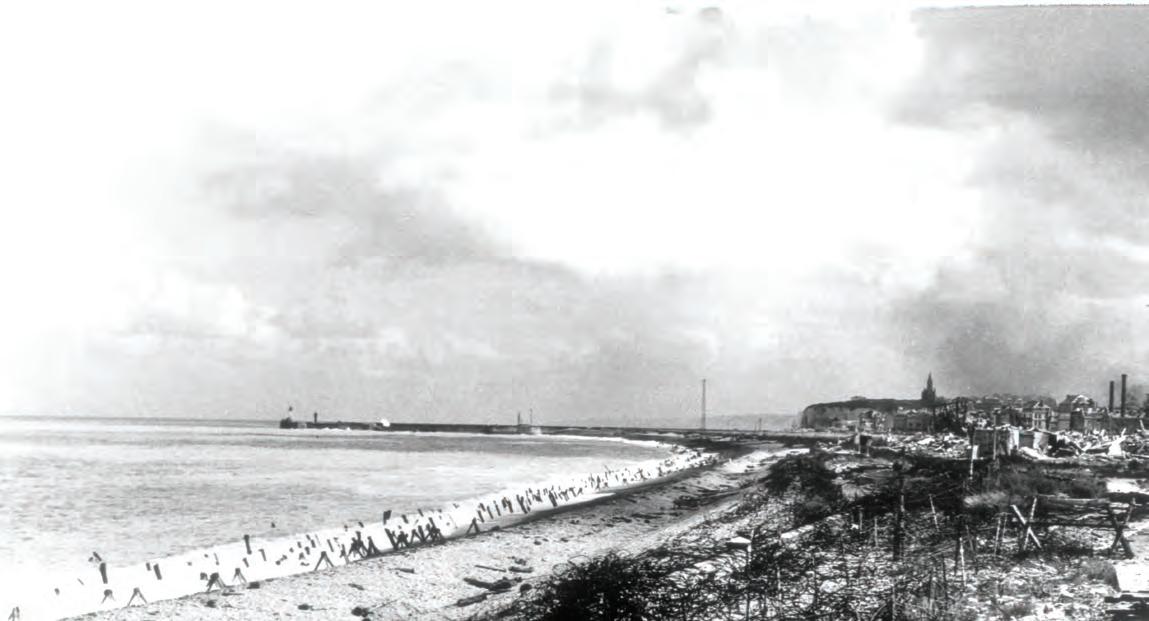


“Our wrists got ulcerated with sores from the rope burns.”
—Trooper
Morton
Bert Moody, of the Queen’s Own Cameron Highlanders.
The cords were removed only at night. Hands securely fastened together made eating and going to the latrine difficult.
After a few months, the ropes were causing sores on the men’s wrists, who subsequently filed complaints to the Red Cross.
“Ropes replaced by chains,” wrote Moody on Dec. 2 in his diary, which was reproduced by several local media outlets in southern B.C. in 2021. The handcuffs were connected by a 44.5-centimetre-long chain, which was an improvement.
Canada reluctantly followed Britain’s orders to likewise shackle prisoners. In a Bowmanville, Ont., PoW camp, guards threatened to shackle dozens—a three-day brawl ensued.
Guards on both sides of the Atlantic were unenthusiastic about the restraints. Canadian guards dropped keys so that PoWs could remove the shackles between roll calls. Some German guards collected the shackles in a box and “guys would just root through
1,946
Canadian PoWs from the Dieppe Raid 1,376 Allied prisoners shackled

410 Days Allied PoWs were bound
44.5 Shackle chain length in centimetres (17.5 inches)
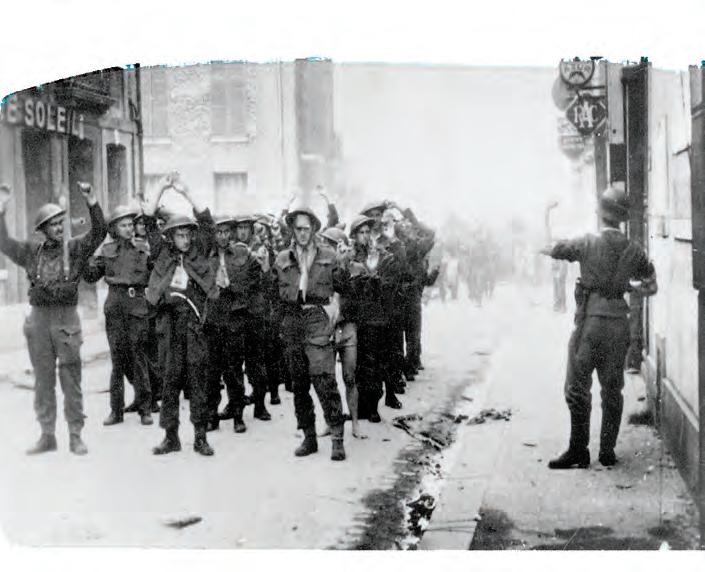
and pick out their chains and chain themselves up,” reported Canadian PoW Sergeant Thomas Cunningham. By that time, wily Canadians had learned they could fashion keys from tins of New Brunswick sardines to release the cuffs.
“You’d pick the lock, put the cuffs in your pockets with the chain across the front of you,” recalled Trooper Fred Tanner. “When you saw a German coming, you’d just slip your hands in your pockets and it would look like you were still chained.”
Canadian public opinion, meanwhile, was against shackling of German PoWs. They were afraid it could jeopardize their detained men in Europe.
By mid-December 1942, Britain and Canada stopped shackling. But the Germans initially did not, still holding out for an apology and reluctant to back down.
Eventually the Germans adopted a Red Cross suggestion: they could just stop using the shackles and save face by not announcing it. They stopped the practice on Dec. 2, 1943.
By that time, Canadian PoWs had been shackled for more than a year. L

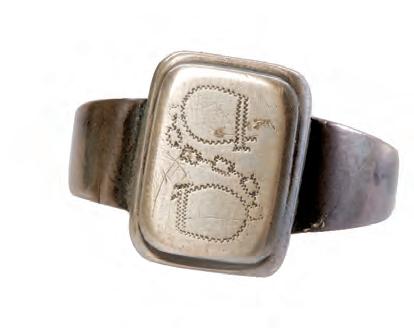
Canadian soldiers are led through Dieppe after they were captured (top). Many of the PoWs had to wear shackles similar to those depicted on this ring (above).
By Don Gillmor
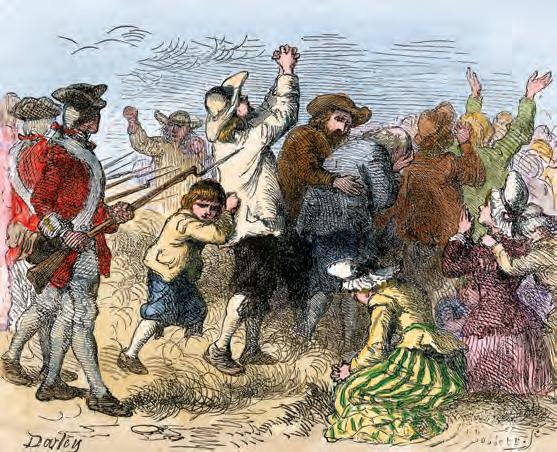
the century after it was established in 1604, the eastern North American colony of Acadia changed hands between France and Britain six times before finally landing under British rule in 1713.
*Find many more stories in our O Canada special issues, NOW available in our SHOP!




Through it all, residents of the region around the Bay of Fundy were able to retain their language, religion and customs. The Acadians, however, wouldn’t sign an oath of allegiance to the British Crown because they weren’t prepared to bear arms against France. But by 1730, they agreed to remain officially neutral.
Despite this promise, the British feared the “French Neutrals” would support France in any war, and there always seemed to be the threat of conflict between the historic rivals. In 1755, another agreement was circulated, this one without any conditions—in the event of war, the Acadians would have to fight the French. They refused to sign. By August, a fight was imminent, and England made the decision to expel the Acadians rather than risk having them support the French. At this point, however, they had been under British rule for 42 years and many Acadians had been born British subjects.
On Aug. 11, the governor of Nova Scotia, Charles Lawrence, wrote to LieutenantColonel John Winslow: “you must Collect ye Inhabitants together in order to their being Transported in the Best Manner in your Power Either by Stratagem or Force as Circumstances may requirer, but above all I Desire you would Not pay the Least attention to any remonstrance or Memorial from any of the Inhabitants.…”
Winslow certainly didn’t pay attention to their suffering. The British surrounded one Acadian church on a Sunday morning and captured the men and threatened their families with bayonets.
Land and livestock belonging to Acadians was seized. They were allowed to keep only whatever money they had and their household goods. Hundreds of homes were burned and many inhabitants were rounded up like cattle and herded onto ships.
John Thomas, a doctor who aided in the deportation, observed the tragic scene: “The women were very distressed, carrying their newborns in their arms; others brought along in carts their infirm parents and their personal effects. In short, it was a scene in which confusion was mixed with despair and desolation.”
The rationale for the expulsion was military, but British immigrants from New England had coveted the fertile Acadian farmland and strongly supported Lawrence’s move.
At least 10,000 Acadians were forcibly displaced. Many died in the process, either by drowning when ships sank or of typhus, smallpox or yellow fever contracted aboard the ships, where conditions were wretched. Others were scattered across France, England and the Antilles, while another large group ended up in Louisiana, where they largely retained their culture while enlivening local norms. ‘Acadian’ evolved to ‘Cajun’ and, in 1980, the U.S. government officially recognized them as a distinct ethnic group.
In 1764, Acadians were allowed to return to Nova Scotia, but their land had been otherwise claimed. Those who returned instead settled in New Brunswick, Prince Edward Island and Cape Breton.
Despite the Grand Dérangement, their language and culture survived and remained vital during the course of more than two centuries. L