
The Marine Insurer
reshapingStrategiccargotheft:logisticsliability
Iran war tests market Policy reaction to Gulf conflict analysed
l Li-Ion batteries: Risks still accumulating l Extreme weather: Risks increasing with climate change
l Ice threats: Indemnity clauses in time charterparties l Sanctions: Screening becoming essential l Ports: Fire risks on the rise
06 Geopolitical risk
Global maritime trade continues to find itself in turbulent waters with ongoing geopolitical tensions
08 The changing P&I landscape
How P&I clubs are ideally suited for periods of intensity and uncertainty
12 War risk
The complex matter of war risks coverage for ships in the Persian Gulf
14 Maritime cyber warfare
The ongoing hostilities in the Middle East and the risks for commercial shipping
18 South Africa
How a maritime casualty unfolds under South African law
24 Extreme weather & H&M
With extreme weather events being more frequent how will the hull and machinery marine insurance sector respond?
26 Extreme weather risks
Why the maritime community must take extreme weather more seriously
29 Weather-related cargo claims
How climate change is increasingly worsening cargo losses in Southeast Asia
30 Weather related incidents
As climate variability intensifies, heavy weather has become a defining risk

Yet another war to test the market
The Gulf conflict has dominated the news since its outbreak, not least for the marine market with the sector among the most heavily impacted from the start.
40 Cargo risk
Why accurate information is invaluable at all stages of the shipment process when casualties inevitably occur
46 Fire risk
Are fire risks in ports becoming worse due to the scale of operations and a change in cargo types
50 Risk insights
Why the marine insurance market has the experience and knowledge to help clients navigate an uncertain future
52 Cargo theft
Why establishing liability for theft of goods in transit is becoming more complex
56 Sanctions screening Sanctions screening in cargo insurance
59 Lithium ion batteries
Lithium ion batteries are reshaping marine loss profiles
62 Marine’s
The blocking and trapping in the Gulf has inevitably resulted in plenty of market debate and the longer the conflict continues, the worse the position will be. The market was tested at the outset of the Russia-Ukraine war and is back in the headlines now. It will be interesting to see whether the lessons learned in 2022 will stand the market in good stead now.
However, war is not the only threat on the horizon for marine insurers. The continuing effects from climate change are resulting in more extreme and unpredictable weather patterns, something insurers have to consider when rating any risk.
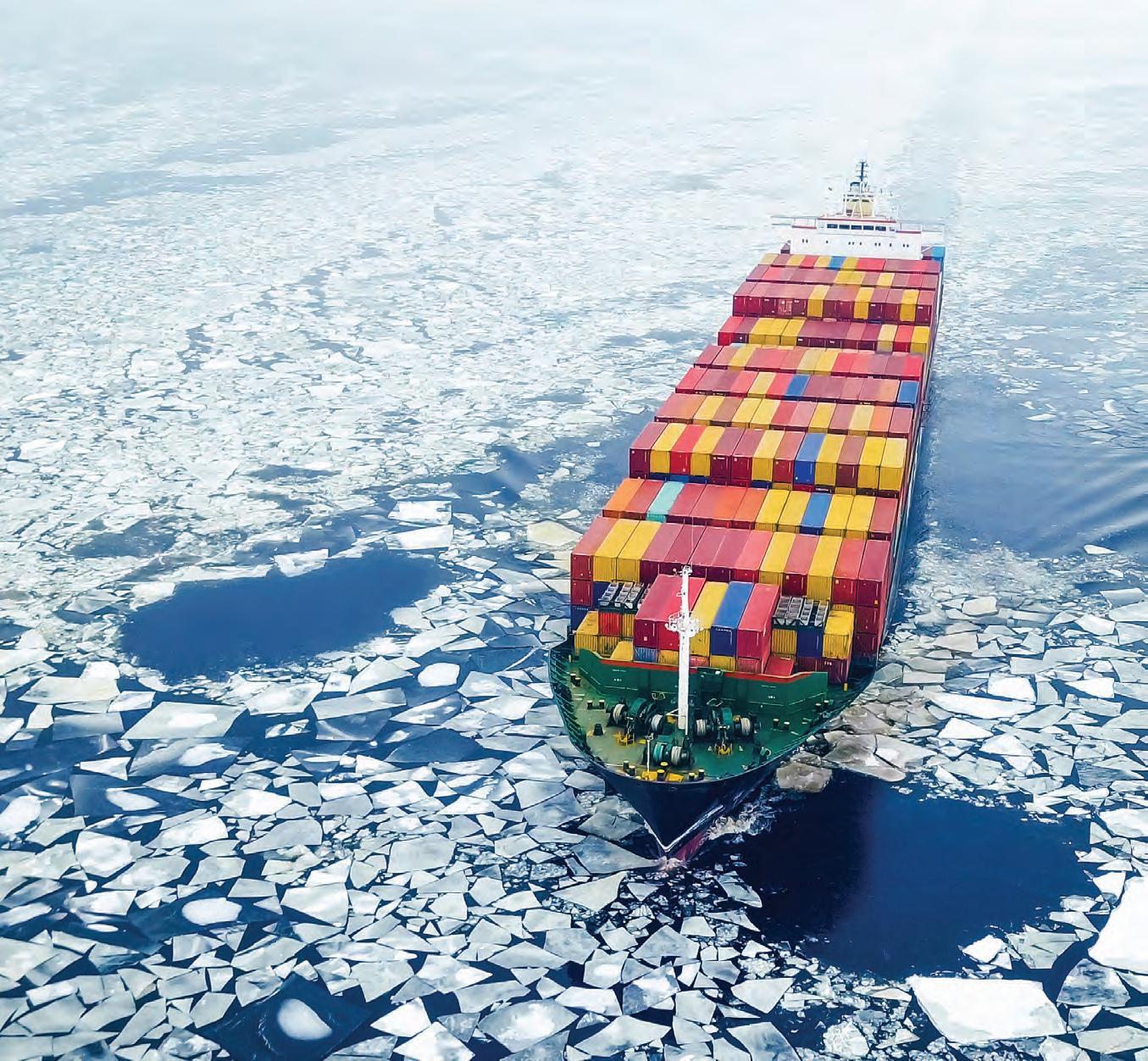
It is not just about hot weather either, the risks for those contemplating insuring vessels through icy waters must also be considered – just because there is less ice, it does not make it any the less dangerous.
With 2026 starting with such a shock, it is no wonder some other risks may have slipped under the radar in terms of news headlines. But for marine insurers, the risks of fires, whether on board or in ports, continue to escalate as the discussion continues on the impact of lithium ion batteries.
We also have the ongoing battle with cyber criminals and escalating fraud, as well as increasing cargo theft. All in all, there are always plenty of issues for marine insurers to contend with.
This is a packed issue, with something for everyone, so I really hope you enjoy the read!
Liz Booth, Editor, The Marine Insurer
Emergency response under pressure: Will war redefine LOF?

Amy Eaves , head of claims - specialty & Lloyd’s, The Fidelis Partnership and chair of the LMA/IUA joint marine claims committee, says that LOF 2024, the default clause and its accompanying guidance should help the insurance market make speedy and effective decisions in times of crisis
Marine insurance and emergency response continually evolves as risk materialises. Today, however, that evolution is being tested by an increasingly volatile geopolitical environment and the fast-paced development of technology.
The conflict between Iran and the US and Israel - particularly in and around the Strait of Hormuz - has brought maritime risk into sharper focus. Against this backdrop, developments such as Lloyd’s Open Form 2024 (LOF 2024) and revisions to the London Market Association (LMA) LOF default clause are not merely technical adjustments. They are practical responses to a rapidly changing risk landscape.
EMERGENCY RESPONSE
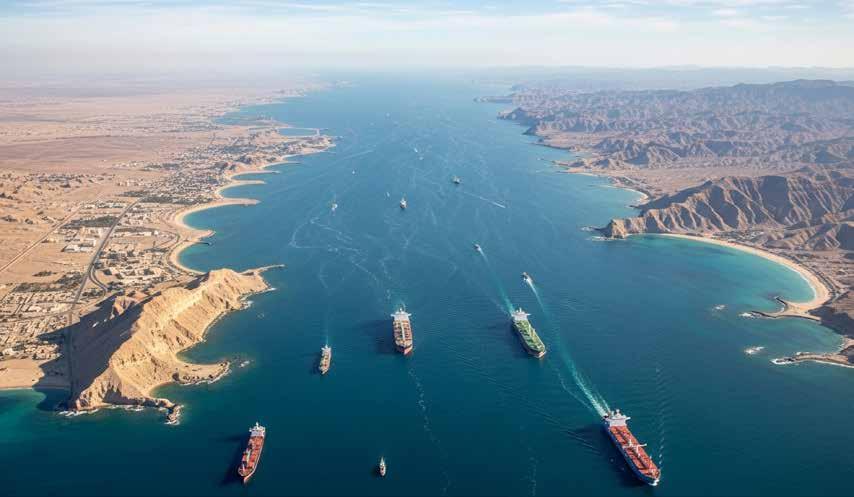
The Strait of Hormuz remains one of the most strategically significant maritime chokepoints in the world, with approximately 20% of global oil supply passing through it. Recent hostilities have led to the effective closure of the Strait.
Vessels have found themselves stranded, facing limited access to ports, constrained supplies and heightened exposure to physical risk.
However, the US – Iran conflict is not an isolated disruption but part of a broader pattern of maritime instability. In this environment, many of the traditional assumptions underpinning marine insurance are being challenged.
Predictability of routes has eroded, war risk insurance capacity has tightened, premiums have increased sharply and, in some cases, vessels have operated with limited or no cover at all.
Access to emergency assistance in active conflict areas has become more uncertain and it is precisely in these conditions that effective, reliable salvage and emergency response frameworks become essential.
THE ROLE OF LOF IN HIGH RISK SCENARIOS
LOF has long been recognised as the most effective contractual mechanism for responding to maritime casualties in which
time is critical. Its “no cure, no pay” principle - combined with its ability to be agreed instantly without negotiation - makes it uniquely suited to emergencies where delay could result in catastrophic loss.
In the context of heightened geopolitical risk, the relevance of LOF is particularly acute. Casualties will likely increase as a result of missile or drone strikes, navigational disruption, cyber interference, or collateral damage from nearby hostilities.
In such circumstances, there is little opportunity for prolonged contractual discussion. Salvors must be engaged immediately, often in dangerous and volatile conditions. Any delay in requesting or agreeing salvage services can prove disastrous, especially where environmental damage and loss of life is actual or imminent.
LOF 2024: MODERNISATION FOR A NEW RISK LANDSCAPE
LOF 2024 builds on this foundation by introducing a number of enhancements designed to improve efficiency and transparency while preserving speed and flexibility.
One of the most significant developments is the introduction of the fast track documents only (FTDO) procedure for lower value claims.
This allows disputes to be resolved more quickly and cost effectively, reducing the time and expense associated with arbitration. In a market already strained by volatility and rising claims costs, this efficiency is particularly valuable.
LOF 2024 also increases transparency through enhanced reporting of settlement and ESG related data. In scenarios in which environmental risk becomes intertwined with war events - such as the potential consequences of an oil spill in a conflict zone - this added visibility supports better risk assessment and ultimately leads to long term market confidence.
Procedural updates further modernise the framework, aligning it with contemporary arbitration practices and improving usability for all parties. Importantly, these changes do not undermine LOF’s central strength: its ability to be agreed immediately, without negotiation, even in the most challenging of circumstances.
THE LMA LOF DEFAULT CLAUSE
The LMA LOF default clause was introduced in 2024, with the intention of reinforcing LOF’s role in emergency response by positioning it as the default salvage contract. In principle, this aligns with the realities of high risk regions such as the Persian Gulf, signalling insurer support for rapid and decisive action and reducing uncertainty at the point of casualty.
It is therefore important that the introduction of the clause is viewed within a broader market context. The use of LOF has declined through time - driven by concerns around the transparency of reward assessments and the cost and duration associated with progressing matters to the publication of an award.
In addition, advances in ship to shore communications have fundamentally changed casualty decision making. Masters
invariably consult owners, who in turn may liaise with insurers and other parties. While this increased connectivity can support better information flow, it can also arguably result in complex, multi party discussions at precisely the moment when speed is critical. In some cases, this has led to detrimental hesitation or the adoption of alternative contractual arrangements.
Former SOSREP Hugh Shaw’s 2022 ‘Final Report on the Potential for Delays in the Provision of Salvage Services’ highlighted that financial considerations play a significant role in the choice of salvage contract and the services ultimately provided.
His research demonstrated that these factors contribute to delaynot always at the outset of an incident, but often as a casualty develops and conditions deteriorate. Delay rarely improves outcomes and, without a defined salvage framework in a marine insurance policy, uncertainty will likely persist. To address these concerns, the LMA first introduced the LOF default clause in 2024.
Following publication of the clause, market commentary highlighted several points of tension, most notably uncertainty as to whether the reference to “danger or potential danger requiring immediate salvage services” was intended to import a requirement of immediate danger, thereby creating a higher threshold than traditional salvage principles.
In January 2026, the LMA issued the revised LOF default agreement clause (LMA 5654A), together with accompanying guidance. The guidance plays a critical supporting role, incorporating stakeholder feedback to strengthen clarity and consistency in the clause’s practical application. It clarifies notification and agreement procedures, reducing the likelihood of unnecessary or duplicative communication between owners and insurers.
The clause provides that where a vessel is in danger or potential danger and requires immediate salvage services, without the necessity for that danger to be immediate, the assured is entitled to proceed with LOF without delay. The absence of contact with insurers shall not operate to defer action where time is of the essence, there is a risk to life or property, or prompt intervention is required to mitigate or prevent environmental damage.
CONCLUSION
Recent events have shown how quickly operating conditions can deteriorate, disrupting trade and constraining insurance support. In that context, the continued availability of a simple and immediately deployable salvage mechanism is critical. Ultimately, effective marine emergency response depends on contractual structures that enable timely, informed decision making, ensuring losses are mitigated rather than amplified by delay.
The combined effect of LOF 2024, the default clause and its accompanying guidance offer tangible benefits to insureds and insurers alike. They provide greater certainty of response, reinforce market alignment around LOF 2024 as the preferred emergency response contract, and support faster, more confident decision making in complex scenarios. The question, therefore, is not whether war will redefine LOF, but whether LOF remains capable of performing its core function when risk escalates suddenly and unpredictably. The answer, in principle, remains yes.

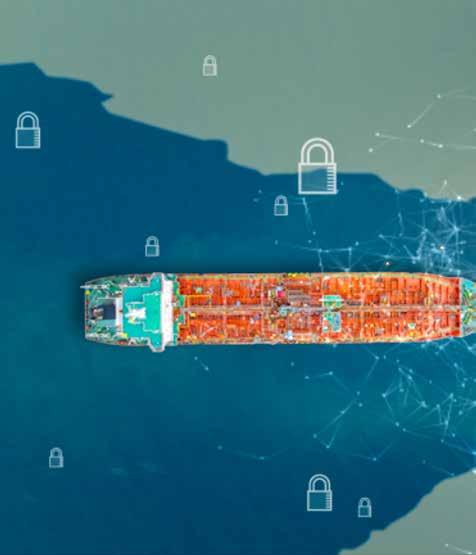
Global maritime trade continues to find itself in turbulent waters with ongoing geopolitical tensions, supply chain disruptions and shifts in trade policy. Tariffs, and heightened conflicts are causing volatility in the shipping industry. According to UNCTAD , following a modest 2.2% growth in 2024, maritime trade slowed to 0.5% in 2025 and is expected to average 2% annually from 2026 – 2030. Against this backdrop, Meghan Walker , divisional director - marine and aviation at Liberty Specialty Markets, answers questions on the state of the marine trade market and what risks persist
1. Vessels being detained, deported or attacked is a significant maritime security risk. Where does the threat lie?
Russia’s ongoing war in Ukraine has caused recent sabotage incidents in the Black Sea, and increasingly the Baltic Sea, keeping them high on the list of potential kinetic or military attacks.
The Red Sea and Gulf of Aden continue to be a Houthi target for US, UK, and Israeli-linked vessels, particularly with recent events. Following Suez Canal diversions in the last two years, recent updates from major shipping companies had signalled quiet confidence in returning to this route. However, conflicting sentiment amongst carriers affirms that stability in this region has yet to return and disruption to global trade will persist in 2026.
Piracy off the Somali Coast, Indian Ocean and Gulf of Guinea has also resurged.
Threats of detention and seizure persist in the Persian Gulf, Gulf of Oman and Strait of Hormuz – vital to oil shipmentsdue to geopolitical tensions involving Iran and neighbouring countries.
Additionally, the US military operation in Venezuela has heightened risks of seizure of Venezuelan ships carrying oil. Territorial disputes in the South China Sea have existed
Navigating turbulent waters: how geopolitical tensions affect marine trade
for decades but China’s increased military testing has created vulnerabilities trade in this region.
2. Are there any key regions where marine trade is likely to be disrupted?
All eyes are on the South China Sea and Taiwan Strait as ongoing territorial disputes amongst China, Vietnam and the Philippines could escalate. Commercial shipping could be impacted by increased naval and coastguard exercises used to intimidate Taiwan as well as potential for blockading of ports. Due to the massive trade volume that passes through this area – including semi-conductors - any conflict could cause severe impact to the supply chain resulting in economic losses.
Persistent security concerns in the Red Sea due to Houthi attacks on merchant vessels and recent events across the Middle East will prevent a full return to the Suez Canal forcing shippers to continue more expensive and lengthy re-routing around the Cape of Good Hope. A return to the Red Sea would have a significant impact on relieving global vessel capacity.
Dominant shares of global crude oil and European LNG passes

through the Strait of Hormuz. Geopolitical tensions with Iran are a major risk to this chokepoint and escalation will increase energy and logistics costs.
Piracy and political struggles for control of ports and resources in the Gulf of Guinea is increasing. Economic stress and instability in adjacent African countries could negatively impact shipping markets.
The US positioning on national security interests in the Arctic increases the strategic value for control of this territory and nontraditional shipping routes that could be viable alternatives to future trade.
Risk-specific threats from cyberattacks on ports and navigation systems as well as the impacts of climate change are disrupting normal trade patterns. This coupled with Russia’s ever-growing “dark fleet” obscures true global trade figures, increases safety risks and has regulatory impacts.
3. How have the US tariffs affected maritime trade so far?
US tariffs have already significantly impacted maritime trade by increasing tariff rates, distorting trade patterns and driving
trends in “front-loading” container imports before certain tariffs took effect. Operational costs for shippers increased while businesses reduced reliance on Chinese manufacturing disrupting supply chains.
This unpredictable global shipping landscape has forced longer-term structural shifts in maritime trade. Tariff volatility coupled with geopolitical uncertainty means costs and logistical planning for shipping companies has increased as have insurance premiums due to changing risk profiles.
4. Is it likely additional tariffs will be introduced in the coming years?
More tariffs are a topic of significant concern for businesses and global trade and are a near certainty; however, where, when and how much are very unpredictable.
Trade tensions will likely continue, and wider economic indicators like inflation or reduced exports also may contribute to future tensions.
5. How will escalating geopolitical incidents affect the insurance industry?
Geopolitical tensions and shifting trade policies have caused war insurance premiums to surge, particularly in the Red Sea and Black Sea, as insurers navigate increased risks of vessel seizures and attacks.
Due to these conflicts, shipping companies are bypassing shorter routes like the Suez Canal for longer routes, significantly altering risk profiles, increasing operational costs including insurance premiums whilst navigating sanctions exclusions if voyages were breach regulations.
Rising trade tariffs have inflated the value of cargo leading to potential underinsurance if policies are not updated to match increased values.
We as insurers have collaborated with governments following disruptions caused by the Russia-Ukraine war to provide insurance for specific trade routes, such as the Black Sea grain initiative.
6. Are marine and war insurers well equipped to handle a potential surge in claims?
The marine market is well equipped to respond to claims resulting from geopolitical instability. Strong underwriting and claims discipline coupled with robust sanction governance and reinsurance protection allows established marine leaders to navigate market volatility. Experienced claims leadership with multi-national and complex conflict experience is the core value propositions of the Lloyd’s market so the challenges posed will be adequately managed.
Exposure management and global threat monitoring enable insurers to advise and not just react to the shift in risk profiles posed by such conflicts. This increased engagement and advisory capabilities pre-loss are as important as post-loss handling and expertise in this increasingly complex maritime landscape.
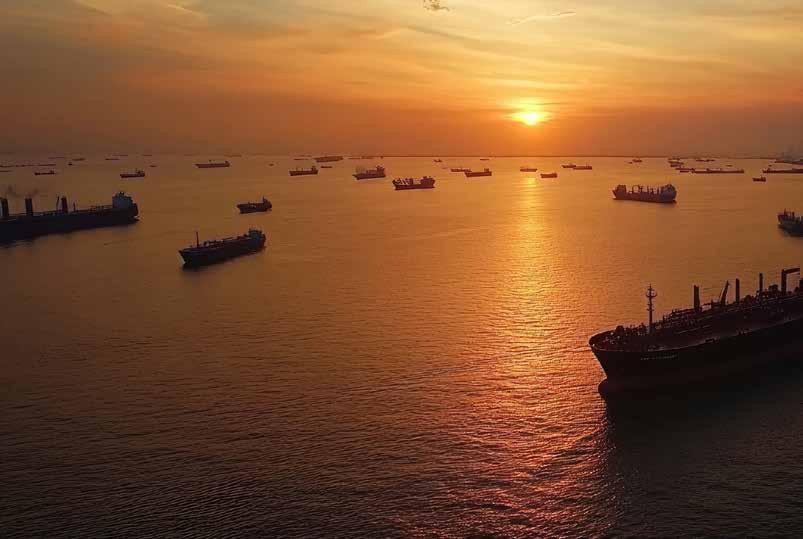
Intensity is ‘part and parcel’ of P&I

As geopolitical tensions in the Middle East reflect reoccurring issues for marine insurers, Reto Toggwiler , chief underwriting officer at the London Club, discusses how P&I clubs are ideally suited for periods of intensity and uncertainty
Marine insurers are no strangers to intense times. For years, the industry battled the challenges that came with the rise of piracy off the coast of Somalia as we navigated the need for more specialised and complex insurance policies for shipowners operating through the Gulf of Aden.
After a respite came the advent of the Russia-Ukraine conflict, which led to the Black Sea and the Sea of Azov designated as ‘highrisk zones’, causing premiums to rise and war risk policies to be cancelled.
Dozens of commercial ships were immediately trapped in Ukrainian ports as the cost of shipping and fuel rose, all while the imposition of international sanctions caused many within the P&I sector to step away from renewing certain policies. Then came the more recent attacks by the Houthis on transits
through the Red Sea. Commercial vessels were targeted, leading to some notable incidents of innocent seafarers tragically losing their lives as they were caught in the wrong place at the wrong time.
The recent conflict in the Middle East has once again put all of those matters back into the spotlight.
CHANGING LANDSCAPE
Owners are having to navigate a significantly changing landscape. As a leading P&I club, the London Club is ensuring that we are supported our global members impacted by the de facto closure of the Strait of Hormuz by helping them to clearly understand the issues.
This means everything from advising on contracting with certain partners to operating certain trade routes to providing
buy back war cover for charterers and assureds.
“Traditionally, P&I clubs would engage with members if there was a problem with a claim or there was a dispute with their charterer. In more recent times, we are increasingly advising on a much wider scale of issues, including what considerations should be taken ahead of fixing a vessel or arranging a trade.”
As a result, the London Club has had to ensure we remain ideally placed to help our members and assureds navigate today’s challenges.
Our claims and sanctions experts have adapted to the market as the frequency and variety of requests has risen in recent months as our members seek greater clarity and guidance on global issues.
Traditionally, P&I clubs would engage with members if there was a problem with a claim or there was a dispute with their charterer. In more recent times, we are increasingly advising on a much wider scale of issues, including what considerations should be taken ahead of fixing a vessel or arranging a trade.
However, we have ensured that we have the resources and people to provide the necessary support for what has become a natural part of the global trading landscape. In a sense, periods of intensity, like the one we are facing, is just ‘part and parcel’ of P&I.
VOTE OF CONFIDENCE
Our continued focus on putting our members and assureds first, and ensuring we are a helping hand during these intense times, was reflected during our most recent renewals period
The recent challenges in the Middle East are the latest in a long line of intense periods that the world’s shipowners and their insurers have had to face.
earlier this year.
We were pleased to report a 14.5% year-on-year growth in mutual tonnage as we increased our entered tonnage to 56.7 million gt, with several members agreeing to add new tonnage over the coming years. We achieved a 99% retention rate as we grew the size of our book from all sectors and from all markets.
We welcomed new members in Germany, South Korea, Turkey and Vietnam, while our new representative office in Shanghai, which opened in October 2025, meant that we saw solid growth in China this year, reaffirming our commitment to supporting our members in the Far East.
These results indicated a clear vote of confidence and reflected a real buy-in to our service proposition. The way that we provide personal service is different, especially compared to the larger Clubs.
PERSONAL SERVICE
That level of personal service and engagement with each of our members and assureds, combined with our focus on underwriting discipline and growing in a natural and sustainable fashion, is why so many members stay with us year after year.
Crucially, it is why so many rely on us during these periods of uncertainty. They know we can be relied upon, that we can be trusted and that we have the people and resources to keep them informed and updated even during the most uncertain of times and the most complex of markets.
The ongoing challenges in the Middle East are the latest in a long line of intense periods that the world’s shipowners and their insurers have had to face.
As the world’s trading landscape becomes more complicated and shipowners face another period of volatility and uncertainty, we are proud to have had the vote of confidence from its members and assureds during our most recent renewals period and that it is ideally placed to help navigate a widely changing landscape for our industry.

20 May 2026

A brand-new event for 2026, Marine Insurance Turkey will take place on the 20th of May in Istanbul and will bring together leading insurers, brokers, salvors, shipowners and others who are shaping the market in this important region. The Turkish Straits and Marmara Sea have always had their unique maritime challenges and opportunities, and current geopolitical events make it more important than ever for these to be properly understood by those with an interest in the region. Esenyel & Partners are also pleased to sponsor a Post-Event Party on the 20th May. We look forward to seeing you in Istanbul!



PROUD SPONSORS
GLOBAL PARTNERS
HEADLINE SPONSOR

This session provides a comprehensive overview of the Turkish marine insurance market as it stands in 2026, examining its maturity, resilience and evolving structure. It will explore the role of domestic insurers, the balance between local and international capacity and the implications of a buyer driven pricing environment.
MOD: O.Dalokay, Willis Towers Watson. PANEL: G. Martin, Howden. C. Ecevit, Insurance and Reinsurance Brokers Association
Under intense cost pressures, many shipowners face difficult decisions between lower premiums and broader, robust cover. This session addresses the ‘cheap policy versus right policy’ dilemma through practical examples. It will demonstrate how lower limits, restrictive clauses or weaker security can significantly increase financial exposure when a claim occurs.
PRESENTER: J.Horn, McGill and Partners
The Bosphorus is one of the most congested and complex maritime corridors in the world, presenting unique navigational and liability challenges. This session examines the specific risk profile of transiting the Turkish Straits, including convoy-style traffic management, restricted manoeuvrability, cross-traffic from ferries and high-density vessel movements.
MOD: M.Konfidan, Galatasaray University. PANEL: T. Yildrim, Esenyel & Partners. E. Kaçar, Turk P&I. C. Din, KMC Broker. N. Can, Transbosphor. O. Dandin, Aon Türkiye.
Sanctions and shadow fleet activity remain one of the most complex risk areas for marine insurers operating in or through Turkey. This session examines the practical exposure faced by insurers, P&I Clubs and shipowners when sanctioned or ‘dark’ vessels transit the Bosphorus or trade to and from the Black Sea.
MOD: M.Villa, Lockton P.L. Ferrari. PANEL: D. Ampatzidis, Kpler. T. Davies, West of England P&I Club. M, Greenwood, Hill Dickinson
War risk remains a critical concern for Turkish shipowners, particularly those trading in or near the Black Sea. This session explores the evolution of war risk insurance, including the growing demand for Extra War Risk Insurance and bespoke voyage specific solutions.
MOD: B.Gökçe Çavuş, Cavus & Coskunsu. PANEL: E. Yaşacan, Kuzey Marine Insurance Brokers. B. McKeith, The London P&I Club. N, Maddalena, Ambrey Global Specialty
This session analyses why claims are often delayed, focusing less on technical disputes and more on communication, coordination and process failures. It will cover topics like incomplete documentation, delayed reporting of mitigation measures, lack of active file management by brokers or owners and multi-jurisdictional complexity.
PRESENTER: H.Ulubinar, Cambiaso Risso Marine Sigorta Ve Reasurans Brokerligi
Human factors remain a leading cause of marine casualties, particularly in markets with ageing fleets and crew shortages. This session explores the relationship between crewing standards, training and insurance performance.
PRESENTER: K. Karavasilis, The UK P&I Club
Turkey is one of the world’s leading ship recycling nations, yet it often loses business to competitors such as India. This session explores the commercial, regulatory and insurance related factors influencing ship recycling decisions.
PRESENTER: C.Seven, Marsh
With Asian shipyards operating at or near full capacity, Turkish yards are increasingly well positioned to capture repair, maintenance, and conversion work. This session examines the opportunities and challenges facing Turkish shipyards, including rising repair volumes, higher value vessels and more complex technical work.
MOD: B.Baran Güluştür, Yalova Shipyard. PANEL: G. Kincal, Rivero & Partners. S. Esenyel, Esenyel & Partners. T. Gürev Beşiktaş Shipyard. E.Atabey, LocktonOmni
15 40-16.00: Presentation Cyber Risk and Digital Vulnerability in Turkish and Black Sea Shipping
As ships and fleet management systems become increasingly digital, cyber risk is moving rapidly up the marine insurance agenda. This session examines cyber threats relevant to Turkish and Black Sea shipping and discusses operational disruption scenarios, liability implications and the current state of cyber insurance solutions for marine risks.
PRESENTER: U.Gürdeniz, LocktonOmni
Turkey relies on a highly responsive salvage and emergency intervention framework, particularly in the Straits and coastal waters. This session examines the legal, operational and financial implications of salvage and emergency response, including mandatory intervention, escalating costs and tariff structures
MOD: S.Esenyel, Esenyel & Partners. PANEL: C. Coskunsu, Cavus & Coskunsu. E. Hussain, West of England P&I Club. B. Plé, Willis Towers Watson. M.Fielding, Norwegian Hull Club
16.40-17 00: Fireside chat Ageing Fleets and Machinery Breakdown – Technical Risks, Claims Trends and Underwriting Responses
A significant proportion of the Turkish controlled fleet consists of ageing vessels approaching third and fourth special surveys. This session explores the technical and insurance implications of older tonnage, focusing on machinery breakdown claims, maintenance standards and increasing difficulty in sourcing spare parts.
PARTICIPANTS: T.Ak, Rivero & Partners. J. Grindley, CEE Specialty
Türkiye. C. Temelli, Turk P&I.
Between a rock and a hard place

Richard Sarll , barrister and arbitrator at 7, King’s Bench Walk, analyses the complex matter of war risks coverage for ships in the Persian Gulf
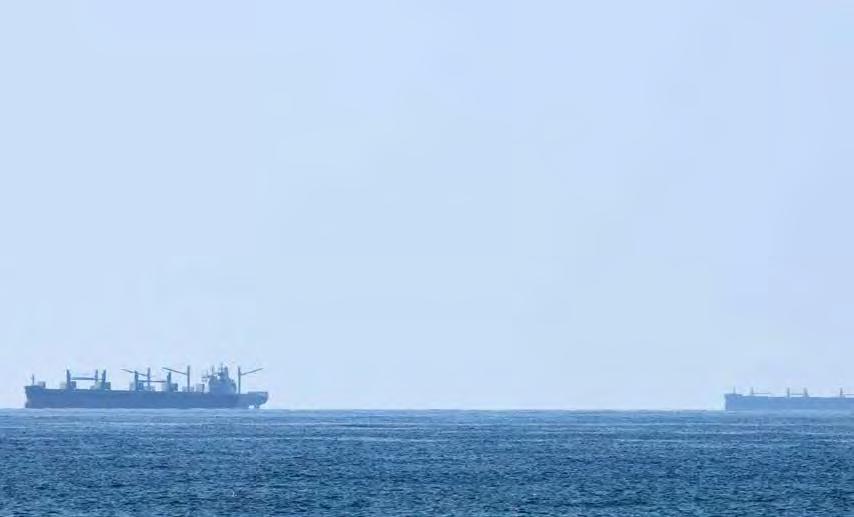
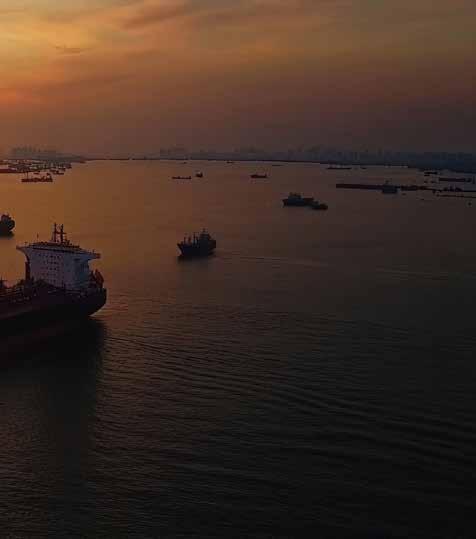
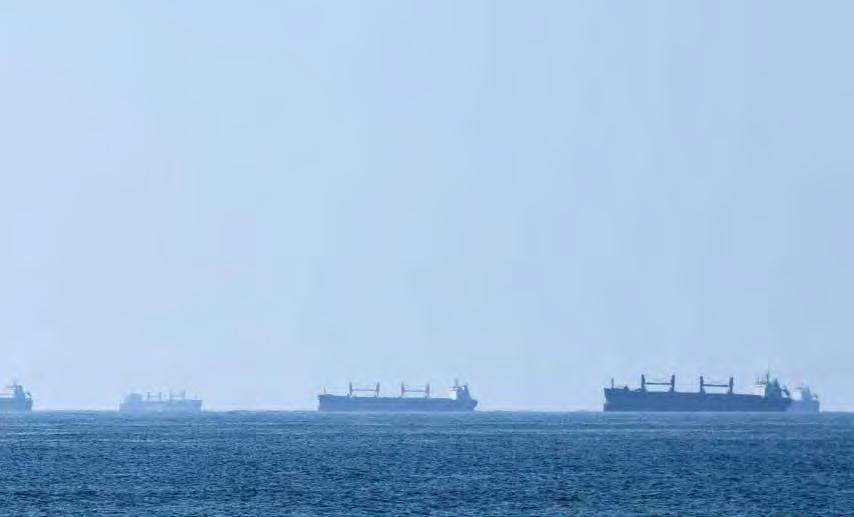
The blocking and trapping of ships during wartime has a long history. In the Iran/Iraq War of the 1980s, around 60 ships were trapped. At the outbreak of the Ukraine War, the number of trapped ships was about 70.
These figures pale in comparison with the present Iran War. As of 20 March, IMO has estimated that there were at least 3,200 vessels in the Persian Gulf, up to two thirds of them “large commercial vessels engaged in international commerce”. The legal issues arising from such a major event are myriad. The aim of this article is to touch on two relating to war risks insurance.
The concept of war risks insurance dates from the Napoleonic wars, when underwriters at Lloyd’s began to insert “warranted free of capture and seizure” clauses into their standard policies, leading to separate policies covering war risks.
Today, war risks insurance for hull and machinery in the London market is written on standard terms and conditions such as Institute War & Strikes Clauses 1/10/83. It is founded on the payment of two premiums.
The first premium is charged under the annual policy, which will cover the ship provided it does not navigate in restricted areas of higher risk. For the vessel to trade to a limited area, further cover will have to be purchased though the payment of additional premium. Following the outbreak of the Iran War, insurers made use of their contractual liberty to cancel policies on seven days’ notice, making them subject to reinstatement through payment of revised premium at higher rates.
WHO PAYS?
The first legal issue concerns who must pay for the additional war risks premium as between shipowner and charterer.
Modern charterparties usually contain war risks clauses such as Voywar or Conwartime. These typically require the charterer to pay the additional premium. The question may nevertheless arise whether charterers are obliged to pay such premium for ever and a day, or else whether (and if so when) their contractual obligations are eventually discharged by the doctrine of frustration.
During the Iran/Iraq War, English courts were tasked with determining whether frustration had occurred, or else whether the supposedly frustrating event was self-induced by the charterer ordering the vessel to proceed to an unsafe port in breach of its safe port warranty.
In The Evia (No. 2), the House of Lords held that there was no breach of warranty when a ship was detained at Basrah, since the port was prospectively safe when the charterer ordered the ship to proceed there. Nor had there been any breach of the time charterer’s secondary obligation to give departure orders on the port becoming unsafe, as by then the vessel could not depart. Given the rapidity of events in the Persian Gulf, similar considerations may apply.
WAIT AND SEE
In other cases arising out of the Iran/Iraq war, courts were asked to determine when, precisely, frustration intervened. It was recognised that the prospect of frustrating delay might not be apparent on the outbreak of war and that one had instead to “wait and see”. In two cases it was held that frustration occurred only when peace talks broke down.
It remains to be seen whether a significant number of charterers will cease paying additional war risks premium on account of alleged frustration. Continued cooperation with
shipowners may be preferable to throwing up the charterparty altogether, especially if cargoes are already onboard. Purchasers in the Far East may see matters differently.
TICKING CLOCK
A second legal issue concerns the question whether the clock is already ticking for claims for constructive total loss (CTL).
In this regard, the 1983 Institute Clauses contain a “detainment clause” which deems the vessel to be a CTL after 12 months (sometimes amended to only six months) if the assured has lost the free use and disposal as a result of arrest, restraint or detainment, among other perils.
Such cover is often supplemented by the London Blocking and Trapping Addendum (1984), whereby it is agreed that “the inability of the vessel to sail from any port, canal, waterway or other place to the high seas for a continuous period of 12 months [sometimes abbreviated to six months] as a result of the closure of the connecting channel to all vessels of such size or draft is within the term “restraint” … provided that such closure has arisen through the blockage of the waterway by a warlike act, or act of national defence’’.
This addendum was prompted by The Bamburi, in which it was held that there needed to be some political or executive act before there could be a “restraint of princes” as per the policy wording in that case. Mere limits to safe navigation did not suffice.
Owners of ships stuck in the Gulf face a novel situation, aggravated by the Iranian government’s strategic ambiguity around the status of the Strait of Hormuz.
At the time of writing, ships are not being prevented from departing port, as would typically occur in a case of
“detainment”, but are instead at liberty to sail within the Gulf. On one view, they might have been “restrained” from transiting the Strait due to Iranian threats, yet reported cases have tended not to distinguish between the perils of detainment and restraint. Might the London Blocking and Trapping Addendum apply?
As a matter of general impression, there appears to have been a blocking and trapping. Yet the clause expressly requires a “closure of the connecting channel to all vessels of such size or draft”. Are these ingredients genuinely fulfilled, when transits are still occurring?
Provided ships are not still stuck in the Gulf by the end of August when six months will have elapsed under amended deeming clauses, the answers to these challenging questions will not matter.
“As of 20 March, IMO has estimated that there were at least 3,200 vessels in the Persian Gulf, up to two thirds of them “large commercial vessels engaged in international commerce.”


The ongoing hostilities in the Middle East have put commercial shipping at an obvious risk of physical harm, as demonstrated by the spate of recent attacks on vessels in the Persian Gulf. There has also been significant disruption to digital systems, putting commercial shipping at risk of harm from cyber incidents too. Hans Allnutt , (top left) partner and head of cyber, and Joanne Waters , legal director and smart shipping lead at DAC Beachcroft investigate the risks and what they mean for commercial shipping operations, contracts and insurance arrangements
NAVIGATIONAL RISK: JAMMING AND SPOOFING
There are reports of significant digital disruption in the Persian Gulf and the waters around the Strait of Hormuz, with widespread spoofing and jamming of navigational systems. There are also reports of vessels spoofing their own positions and switching off their AIS, adding to what maritime artificial intelligence (AI) provider Orca AI describes as an “electronic fog”.
Several advisories are recommending vessels maintain increased bridge manning and watches, cross-check ECDIS positions with secondary navigational systems and increase reliance on traditional navigational methods.
With shipping placing heavy reliance on electronic charts and navigational technology, to the exclusion of paper charts and celestial navigation, some vessels may face difficulties in safely navigating in these difficult circumstances.
Where a collision results, owners may expect compliance with these widely publicised precautionary measures to be a focus in any ensuing dispute.
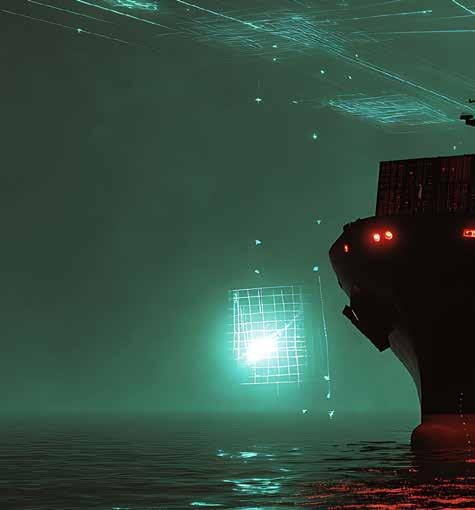
Cyber and war cover: Mind the gaps
MALICIOUS CYBER ATTACKS
Cyber risk was already rising in the industry prior to the outbreak of war, due to the industry’s increasing levels of digitalisation and connectivity, and the impact of AI.
A recent report by Cydome found that there was a 150% increase in maritime OT cyber incidents in 2025.
The war adds a further dimension to the challenging cyber security landscape. On 13 March 2026, the US National Counsel of Information Sharing and Analysis Centres released a joint advisory warning of an increased threat to critical infrastructure of cyber attacks from “Iranian state-sponsored actors, hacktivists and cybercriminal groups”.
The UK’s NSCS has issued a similar alert, noting that there is “almost certainly a heightened risk of indirect cyber threat for those organisations and entities who have a presence, or supply chains, in the Middle East”.
These attacks could take place anywhere in the world and the heightened risk is therefore not limited to vessels or ports

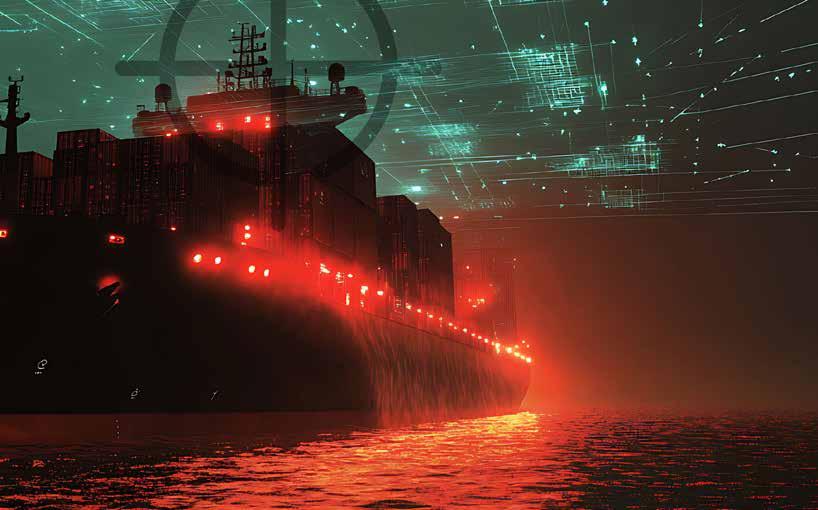
within the vicinity of the Persian Gulf.
One need only to look at the 2017 NotPetya attack, attributed to a Russian attack on Ukraine, which proliferated around the globe causing a reported $10bn in economic damage, including to major shipping and logistics companies.
SEAWORTHINESS AND DUE DILIGENCE
Owners will likely be subject to a contractual obligation to at least exercise due diligence to make the vessel seaworthy, either under their charterparty or, where laden, also under the terms of the bill of lading.
That cybersecurity is an aspect of seaworthiness has been codified by IMO Resolution MSC.428(98), with the inclusion of cyber risk into the risk management protocols of the ISM Code.
A robust system for the assessment and management of cyber risk, which would also demonstrate the exercise of due diligence, should already include provisions for the timely updating and patching of software to guard against new vulnerabilities.
In the current environment, this takes on even more importance. In the “fog of war” crew and shore staff might be more likely to miss or overlook crucial patches or software maintenance and may not be able to access the usual channels
Crew and shore staff should also be reminded of good cyberhygiene, alerted to the increased risk, and advised on how to spot common tactics used in cyber attacks. Caution should be exercised when engaging with new or unfamiliar third parties,
“Cyber risk was already rising in the industry prior to the outbreak of war, due to the industry’s increasing levels of digitalisation and connectivity and the impact of AI…the war adds a further dimension to the challenging cyber security landscape.”
by which these updates are provided, leaving systems vulnerable.
including via communication channels such as VHF.
Counterparties should be reminded of any minimum cyber standards which you require them to meet, and consideration should be given to including specific cyber clauses in any new contracts entered into.
Whilst not within the scope of the ISM Code, major ports qualify as critical infrastructure and in many jurisdictions are subject to heightened cyber-security requirements.
Ports and shipowners should ensure that cyber risk assessments are reviewed and revised to take into account the increased threat driven by the current conflict and that emergency response and business continuity plans are updated as required.
INSURANCE COVER
The question of responsive insurance cover will sit at the intersection of coverage for war risks and coverage for cyber incidents and, as with cyber incidents generally, will be very sensitive to causation.
Was the collision ‘just a collision’ or was it caused (or contributed to) by jamming and spoofing, or a malicious cyber attack? If so, are those to be seen as war risks, or cyber risks, or both? If so, how does the particular claim situation fit within the matrix of insurance covers which protect the vessel and her owners?
Finding the answer to that question will inevitably involve navigating a number of coverage clauses and exclusions across a range of policies protecting the vessel.
Taking the example of marine war risks policies, these tend to incorporate either Marine Cyber Endorsement LMA5403 and/or the Institute Cyber Attack Exclusion Clause CL380.
Both clauses seek to some extent to reconcile war and cyber by stating that the cyber exclusion does not operate to exclude losses otherwise covered under the war policy where the cyber aspect of the attack was the use of computers/electronic systems “in the launch and/or guidance system and/or firing mechanism of any weapon or missile”.
The difficulty with this is that jamming and spoofing, as well as malicious cyber attacks, do not fit within this delineation, which is more concerned with the use of technology in ‘kinetic’ warfare.
AFFIRMATIVE CYBER
This issue was more recently grappled with by the affirmative cyber insurance market which faced more pressing questions as to how existing war exclusions, drafted in the pre-cyber age, would operate under affirmative cyber insurance policies.
Merck & Co suffered over $1bn in losses as a result of the NotPetya cyber attack and had to sue its cyber insurer to obtain clarity as to whether a pre-cyber war exclusion prevented cover under its cyber insurance policy.
Lloyd’s subsequently issued requirements through bulletins Y5381 and Y5433 for affirmative cyber insurers in Lloyd’s to
“A recent report by Cydome found that there was a 150% increase in maritime OT cyber incidents in 2025.’’
apply either designated cyber war exclusions, or seek approval for their own. These exclusions provided greater clarity as to when cyber war losses would be covered in a post-cyber area.
Of course, this updated approach to cyber war only applied to specific cyber insurance policies. Uncertainty potentially remains within any war clause that has not been updated in a post-cyber world.
Unless a non-cyber insurance policy specifically excludes losses caused by cyber, then those policies could be providing cover on a so-called “non-affirmative” basis. If a war exclusion is being relied on in a non-affirmative policy to exclude cyber losses and that exclusion does not specifically address the challenges associated with cyber in the context of war (for example attribution), then there could be uncertainty as to whether cover is available for cyber attacks carried out during times of war.
It is accordingly difficult to generalise about how a spoofing/ jamming or other malicious cyber attack would map onto insurance coverage given that it will be highly sensitive to the factual situation and the precise terms of the coverage.
CONCLUSION
The dynamic and unpredictable situation in the Persian Gulf increases the cyber risk to the maritime industry. Proactive cyber risk management requires ships and ports to reassess their exposure and put in place mitigating measures. This should include an assessment of insurance cover, where early, expert input on the interaction between war and cyber will help to identify any gaps that can then be addressed.
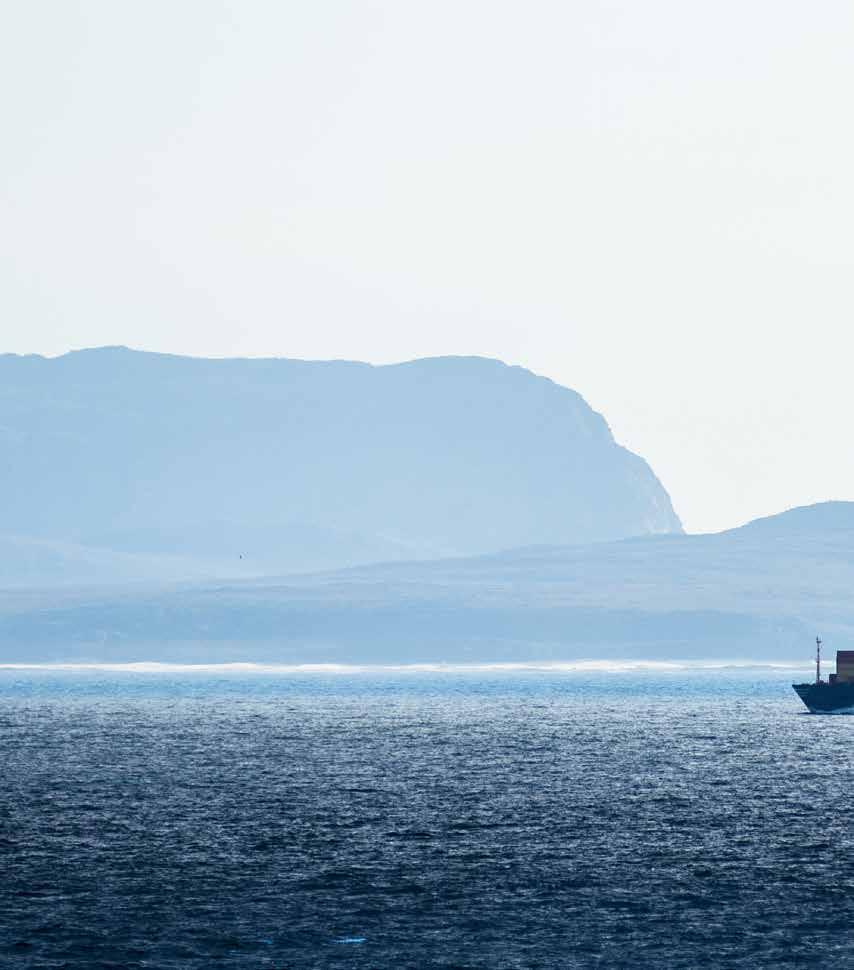
How a maritime casualty unfolds under South African law

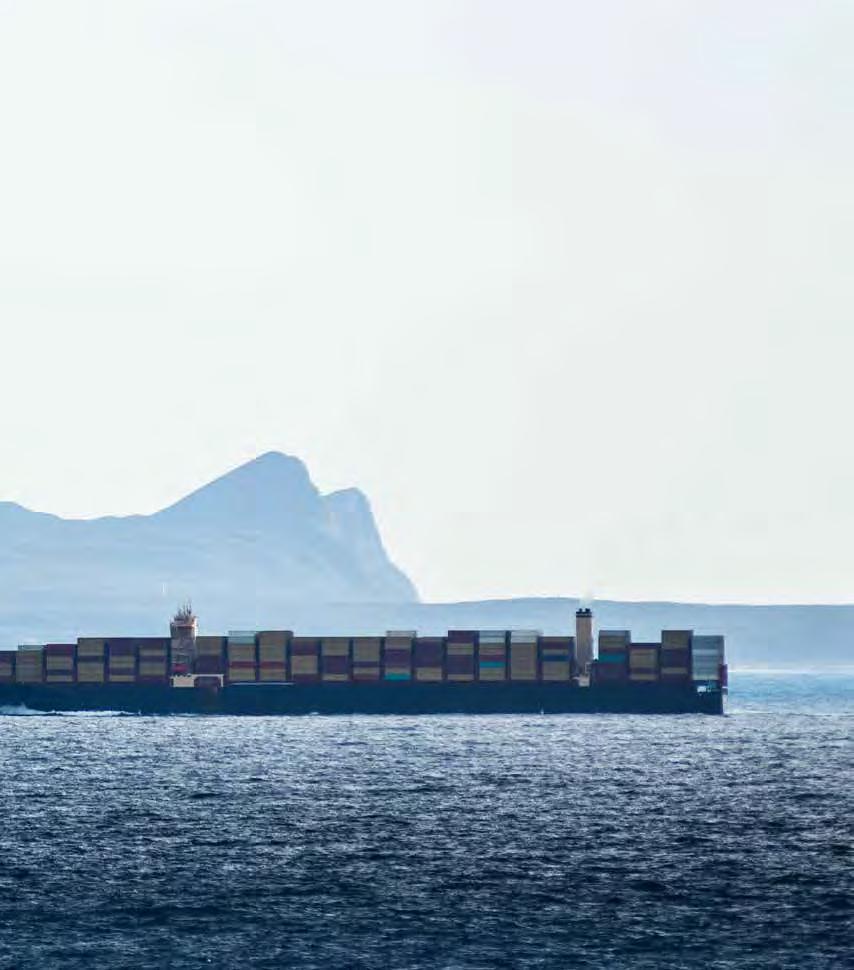
As
maritime traffic around the Cape of Good Hope continues to rise Nick Veldman , director (left) and Malcolm Hartwell , consultant and head of transport at Deneys, provide a practical guide for underwriters, P&I clubs and claims handlers. Such advice and preparation will be needed if the situation
in the Gulf continues
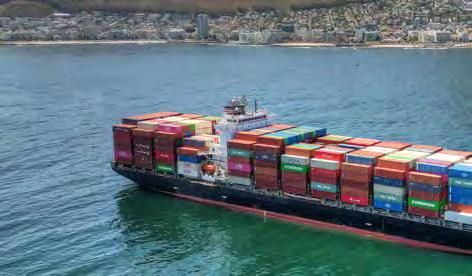
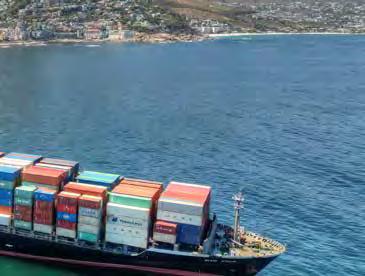
Houthi attacks on vessels transiting the Red Sea and Gulf of Aden have driven a sustained diversion of Asia-Europe container traffic around the Cape of Good Hope, with Cape transits up more than 50% in 2024.
Each diversion adds approximately 11,000 nautical miles, 10 days at sea and close to US$1 million in additional fuel costs per ship. Behind that disruption sits a wider escalation risk: any serious deterioration involving the Strait of Hormuz would affect crude oil, LNG and product tanker flows on a scale that would dwarf the Houthi crisis, driving a further surge in Cape traffic.
South Africa, sitting astride the most consequential

maritime diversion route in the world, is increasingly central to how the insurance market responds when things go wrong at sea.
The Cape route is one of the most exposed stretches of coastline in international shipping. Winter fronts from the South Atlantic produce rapid deterioration, heavy swell and strong winds with little warning.
When a casualty occurs in South African waters, insurers and cargo interests encounter a legal framework with several features that set it apart from other major jurisdictions. The following scenario illustrates how that process unfolds.
THE CASUALTY
A large container vessel on the Singapore to Rotterdam run approaches Cape Point during deteriorating winter weather. Shortly after rounding the Cape, she suffers a full blackout. The main engine shuts down because its fuel pumps, control systems and starting-air compressors are all electrically driven; the hydraulic steering gear fails at the same time. Emergency generator power restores within 40 seconds, giving back lighting, GMDSS communications and fire detection, but not propulsion or steering.
The chief engineer begins isolating the fault. That process can take 30 minutes to several hours and this window is what creates the navigational hazard.
With swell building from the south-west and strong onshore winds developing, the vessel drifts toward the rocky coastline south of Cape Point. The master broadcasts PANPAN, then upgrades to MAYDAY on VHF Channel 16 and via DSC as the situation deteriorates, alerting Maritime Rescue Co-ordination Centre Cape Town.
Attempts to deploy both anchors fail; south of Cape Point the seabed drops away steeply and in depths exceeding eighty to ninety metres the anchors will not hold. The NSRI mobilises from its nearest base and ocean-going salvage tugs are requested from Cape Town. The vessel grounds on a submerged reef before salvors can establish a tow.
EVIDENCE AND CASUALTY INVESTIGATION
Evidence preservation begins immediately. A master mariner appointed by the P&I club or hull underwriters leads the investigation, working alongside a marine engineer.
Key priorities are the voyage data recorder download, bridge and engine room logbooks, the engine room alarm printout, which timestamps every alarm activation and is critical for reconstructing the blackout sequence, as well as the vessel’s safety management system records, including the maintenance history for the switchboard and generating plant.
In a propulsion blackout claim, the condition and maintenance of the electrical plant almost always become the central issue between hull underwriters, owners and charterers. South African courts can, pre-action, order inspection of a ship, cargo and documents and the taking of evidence under section 5(5) AJRA, including in exceptional cases for use in foreign proceedings, making this a practical tool for securing records while the vessel is in port.
SALVAGE, REGULATORY RESPONSE AND GENERAL AVERAGE
SAMSA may direct a master or owner to take specified measures and, if necessary, raise or destroy a wreck and recover costs under section 18 of the Wreck and Salvage Act 94 of 1996. Within ports, the National Ports Act 12 of 2005 gives parallel powers to the port authority.
The International Convention on Salvage 1989 has the force of law via the Wreck and Salvage Act. Salvors are entitled to reward for a useful result under Article 13, with special compensation available under Article 14 where environmental threat exists. Lloyd’s Open Form is the usual vehicle; the legal measure of reward is determined by the enacted Convention.
Where extraordinary expenditure is incurred to preserve ship and cargo from a common peril, shipowners may declare general average (GA), which is typically governed by the York-Antwerp Rules where incorporated in the

contract of carriage. Shipowners hold a lien on cargo for GA contribution and require bonds and guarantees before delivery.
SECURING CLAIMS: HOW THE ARREST REGIME OPERATES IN PRACTICE
Under section 2(2) AJRA, a coastal division’s admiralty jurisdictional area includes the adjacent territorial sea extending 12 nautical miles from the baselines. A vessel need not be in port. The casualty vessel lies within the court’s admiralty jurisdictional area from the moment she begins drifting south of Cape Point.
An arrest can be effected offshore if the warrant is validly served under Admiralty Rule 6(3), including by alternative service if ordered, and advance orders under section 4(4)(c) may be granted for execution when the ship enters the area.
We have in the past effected arrests of ships via helicopter even as they steamed desperately towards the 12-mile territorial sea limit. The action in rem commences on service of the warrant and summons or is deemed commenced on the giving of security under section 3(10). Unlike English practice, mere issue of process does not protect against a bona fide change of ownership. Effecting arrest while the res is in jurisdiction is critical.
A grounding generates multiple claims at once, including damaged cargo, salvage costs, wreck removal and all claimants need security urgently.
Two tracks are used. In rem lies where the claimant has a maritime lien or where the present owner would be liable in personam; the Registrar issues the warrant on a Rule 4(3) certificate, often within hours. Section 5(3) security arrests proceed by application to a judge and require an arrestable basis in rem or in personam, a prima facie enforceable case in the nominated forum and a genuine and reasonable need for security. Section 5(3) permits arrest to secure claims subject to proceedings in South Africa or elsewhere,

including London arbitration under a bill of lading clause.
Release follows satisfactory security for the lesser of the claim or the value of the res, typically a bank guarantee or, where acceptable to the arrestor, a Club undertaking. If owners dispute the LOF award, salvors hold a maritime lien over the salved ship, cargo and freight and can enforce in rem by swift arrest. Damages for wrongful arrest remain available on a without-reasonable-and-probable-cause footing; there is no general counter-security requirement. For claimants, the question is not whether security can be obtained, but rather, how quickly.
THE ASSOCIATED SHIP REGIME
Most large container vessels are owned by single-ship companies. After a major grounding, the hull value may be substantially diminished, and claimants cannot rely on the casualty vessel alone as adequate security. The associated ship regime under sections 3(6) and 3(7) AJRA allows arrest of a different vessel owned or controlled by the same person or entity that owned or controlled the casualty vessel when the cause of action arose.
Control means the power, directly or indirectly, to determine the company’s direction and fate, proved on the facts. Where the claim lies against a charterer of the ship concerned, section 3(7)(c) deems that charterer the owner of that ship for association purposes only. The deeming does not extend to the charterer of the associated ship.
An associated vessel need not call at a South African port; presence in the territorial sea suffices if service can be effected offshore and an advance section 4(4)(c) order can be executed the moment she enters the area.
Given the volume of vessels now rounding Cape Point monthly, the probability of a fleet-mate passing through the territorial sea within weeks of a casualty is high. For associated-ship attachments to found or confirm jurisdiction in personam under section 4(4)(d), full-claim security is ordinarily required for release, in contrast to the
“South Africa, sitting astride the most consequential maritime diversion route in the world, is increasingly central to how the insurance market responds when things go wrong at sea.”
value-of-the-res cap for in rem arrests. That distinction often drives negotiation strategy.
LIMITATION OF LIABILITY
South Africa has not acceded to LLMC 1976. This differs materially from the position in most major maritime jurisdictions, where limitation is available unless the claimant can establish intentional or reckless conduct at the level of the owner, a threshold rarely met in practice.” Limitation is governed by sections 261 to 263 of the Merchant Shipping Act 57 of 1951 on an actual fault or privity footing, with SDR-per-gross registered ton limits by head of loss: 206.67 SDR per ton for loss of life or personal injury only; 66.67 SDR per ton for property claims only; and where both categories arise, 206.67 SDR per ton with 140 SDR per ton prioritised to life and personal injury.
A fund is not a precondition. Owners can plead limitation by way of defence. Wreck-removal costs fall outside the general tonnage limitation. SAMSA and the National Ports Authority may recover those costs from owners or persons with beneficial use, and in a grounding scenario the reserving implications are material.
A JURISDICTION OF STRATEGIC IMPORTANCE
South African admiralty jurisdiction is no longer a specialist concern for underwriters writing southern African coastal risks. It is directly relevant to anyone covering Asia-Europe container trades today, and potentially to those writing crude, LNG and product tanker business if the Hormuz situation deteriorates.
The arrest regime is effective, the courts move quickly and the associated ship provisions give claimants reach that few other jurisdictions can match. For those encountering this framework for the first time during a live casualty, advance familiarity is worth considerably more than any amount of retrospective advice.
Greece

The next Marine Insurance Greece will take place during on 6th & 7th May, 2026 in Athens. The last event brought together more than 400 shipowners, brokers, insurers and third parties over two days. The conference is a ‘must-attend’ and will be the biggest gathering of marine insurance professionals in Greece. Punctuated with numerous networking opportunities, including the opening night party, the conference hopes to further deliver on the success of 2025




PROUD SPONSORS
GLOBAL PARTNERS
Hellenic Hull years
The shape of the market is changing once again as rates soften. In this session, we will explore the impact of the renewal season for P&I and take a look at what is happening in the commercial market. We will consider the rise of the MGAs and the influx of new capacity, alongside the behaviour of market players and the impact on trust and confidence in insurance.
The judgment on the X-Press Pearl incident came out in July 2025, sending shockwaves through the industry as the court ruled compensation should be set at the maximum US$2 billion limit of International Group payments. In this session, we discuss the case and compensation, but also consider the implications for the future and the limits of liability more generally.
Even the mainstream media has started to consider the risks of the dark fleet as President Trump took action off the coast of Venezuela. In this panel discussion, we look at how the dark fleet has grown in the past year, including a drift away from traditional International Group Clubs and the increasing risks of a major pollution incident, not just from a collision, but from deliberate attacks, as we have witnessed.
The world has been so uncertain in the past few years, from the Russian attack on Ukraine to the more recent clashes between Venezuela and the US. Questions for the marine market include how to move forward with such uncertainties, how do you arrange charterparties and fix in such an environment and how have the past few years left the relationship between the war risks market and P&I clubs?
The US and Greece have agreed a new deal on LNG supply at government level, representing an expansion opportunity that mirrors growing regas and production demand globally. In this fireside chat, we talk about the changing shape of LNG as it accommodates new and emerging demands, while also considering what that will mean for the insurance sector.
The old saying goes, the US sneezes and Europe catches a cold. In this presentation, we hear how fast-changing US policy is impacting the marine market from geopolitics, to sanctions and tariffs. We consider the implications for trade routes, profitability and costs.
Fires are not all caused by lithium batteries, but also by mis declared cargoes, chemicals and inappropriate storage. Sadly, the number of fires on board vessels is continuing to rise, despite the sector’s best efforts to improve risk management. Even more tragically, fires continue to cost lives, as we saw at the end of 2025. In this session, we will hear from the cargo perspective as well as experts on what more the industry can do to reduce the risks.
In this fireside chat, we learn how the US regulators operate in terms of salvage in US waters and the impact of regulation OPA90. We not only look at this in terms of what it means for Greek owners and their insurers, but also from a US perspective, to consider what is included in the regulation.
Insurers exist to pay claims, however in recent years, the cost of those claims has risen dramatically. In this panel, we explore where claims are coming from and why the costs have risen so dramatically, including a look at the impact on costs of dark vessel incidents and the impact of the drive towards environmental protection. We consider the ways insurers and insureds might row back on the escalating trend.
There has been a spate of claims resulting from contaminated bunkers, impacted by chemicals or microbes that are not showing up on the regular tests. In this technical breakout, we investigate why this is happening and whether the tests need to be changed. We will also look at the subsequent claims process and suggest ways to ensure the claim is made successfully.
Polygreen are proud to sponsor the Marine Insurance Greece Party 2026, which will be held at Barbarossa, Athens. All delegates are warmly invited to attend.
20 00-late: Welcome party


Gian Piero Priano , (top left) global head of claims and Pietro Berlingieri, deputy claims manager of Cambiaso Risso explain that marine heavy weather continues to represent a significant natural risk affecting the shipping industry, with extreme weather events becoming more frequent. How will the hull and machinery marine insurance sector respond?
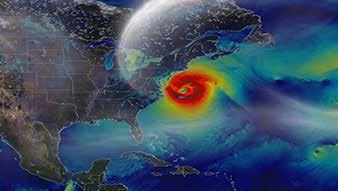
Extreme weather has become an increasingly important issue in marine insurance, particularly in relation to hull and machinery policies. The term refers to meteorological phenomena that exceed normal seasonal conditions and create significant risks for vessels, and broadly safety at sea.
Extreme weather is a sub-category of ‘heavy weather’ a traditional marine risk belonging to the “perils of the seas”. Both clearly fall within the scope of standard hull and machinery (H&M) policies (Institute clauses, Nordic Plan and others).
However, while heavy weather encompasses severe events such as strong winds, rough seas or storms, extreme weather may involve exceptional conditions.
These may include hurricanes, typhoons, cyclones, severe storms, abnormal wave heights or sudden meteorological developments such as microbursts or rogue waves.
In recent years, extreme weather occurrences appear with increasing frequency and intensity. Climate-related developments led to stronger tropical storms, more unpredictable weather patterns and sudden phenomena that challenge traditional voyage planning and ordinary shipping operations.
These phenomena are not only related to ocean waters, such as Atlantic hurricane seasons. They are rapidly developing in calmer regions. Recent examples are the storms occurring in the Mediterranean Sea, with unexpected microburst meteorological events.
Industry data suggests that weather-related incidents represent a significant share of global H&M claims each year. When it comes to extreme weather, Allianz reported it “being a factor in at least seven” out of 24 total losses during 2024.
HOW THE WEATHER IMPACTS SHIPS
Extreme weather conditions are often only associated with catastrophic losses. Nevertheless, weather can generate a wide range of marine casualties. Some impacts are
Avoiding the storm
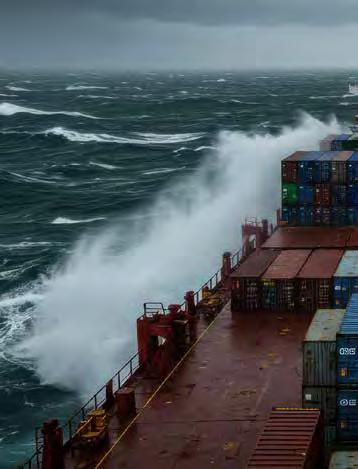
immediate and visible, while others may develop gradually and only become apparent after a period of operation.
Statistical data show how heavy weather has an evident role in navigational failure claims, such as groundings, or collisions. Strong winds, reduced visibility, heavy seas and powerful currents are factors which might interfere with the manoeuvrability of a vessel and the ability of the crew to maintain safe navigation.
In severe storms, vessels may lose propulsion efficiency or steering control due to the force of waves and wind, increasing the likelihood of accidents.
On the other hand, we are witnessing a different kind of damage caused by weather. Indeed, weather may also act as a silent cause of machinery damage: a less visible, yet significant trigger for H&M claims.
A continued exposure to heavy seas can place considerable stress on engines, propulsion systems and hull structures. Especially when ships are subject to excessive vibrations caused by the action of waves.
This issue is particularly relevant in the context of the ageing global fleet. Older vessels are evidently more vulnerable to structural fatigue and mechanical wear, making them less capable of withstanding prolonged heavy weather conditions.
WHEN THE WEATHER IMPACTS SHIPS
Heavy and extreme weather can affect vessels at multiple
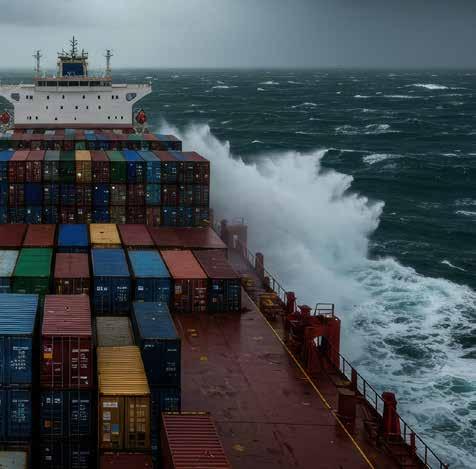
stages of their operational cycle.
The most obvious exposure can occur on passage. When a vessel encounters severe weather at sea, it may experience extreme rolling, pitching and slamming. These forces can cause structural damage, cargo shifts, hull cracking, or machinery failures as discussed above.
Many of these losses could be partially avoidable, at least in theory. Modern navigation technology—including satellite weather routing, advanced radar systems and electronic chart displays—can help vessels anticipate hazardous conditions and adjust routes, or simply speed accordingly.
Nevertheless, operational pressures of modern shipping such as tight charter schedules, commercial expectations and limited port availability may still expose ships to the risk of encountering high-risk weather conditions. Different case for extreme and sudden weather developments which can still catch vessels off guard despite careful planning.
Weather risks are not limited to open-sea navigation. Vessels may also be exposed to severe conditions while waiting for berth at anchorage. Strong winds and currents can cause anchor dragging, leading to groundings, entanglements or collisions with other vessels. In congested ports, these incidents can result in complex liability situations involving multiple parties.
Even when a vessel is safely moored at berth, heavy weather can still cause significant damage. High winds may place extreme stress on mooring lines, leading to line failures or
vessel movement. Ships may collide with port infrastructure, other vessels or cranes.
Another critical phase is during mooring and unmooring operations, where weather might make vessels particularly vulnerable. The combination of limited manoeuvrability, strong environmental forces and increasing size of commercial ships may result in allisions with potential serious consequences.
All these examples evidence how critical the role of weather in marine insurance broadly speaking remains. In most of the cases, these incidents have several implications that go beyond the H&M policy, especially triggering the operation of P&I covers.
RECENT CASES
A widely discussed case which attracted global attention is the event that occurred in August 2024 in Sicily, where the Perini s/y Bayesian sank after a sudden un-forecasted storm/ hurricane.
The incident highlighted how unpredictable weather patterns can affect coastal waters and geographical sectors usually not subjected to phenomena so extreme.
Another notable example is the constructive total loss that occurred on a deck cargo vessel in Italy, January 2025. The vessel encountered adverse weather and was forced to wait at Marina di Carrara. Due to unavailable berth, the ship proceeded to anchorage, and due to increasing winds, the master let out two additional cables. Nonetheless, the severe adverse conditions caused dragging of the anchor and eventually, difficulties in manoeuvring combined with a sudden loss of power ended with the ship drifting toward the shore.
The vessel struck the jetty and ran aground. The impact not only destroyed the jetty, but also caused severe breaches of the hull, ultimately leading to listing and flooding of the vessel.
To conclude, heavy weather continues to represent a significant natural risk affecting the shipping industry and extreme weather events have become more frequent.
From navigational accidents to more subtle machinery damage, meteorological conditions play a major role in many H&M insurance claims.
Although modern forecasting systems, monitoring and digital navigation tools have improved the industry’s ability to anticipate severe weather, the sea remains an unpredictable environment. Weather-related risks seem impossible to be eliminated entirely and shipping is inherently exposed to natural forces.
Looking ahead, an important question remains: will extreme and heavy weather events increase in frequency and/or intensity?
The current marine insurance frameworks, especially with H&M policies generally provide an adequate protection for shipowners facing these risks. It will be interesting to see if underwriters still perceive these risks in the same way.
The maritime industry has always operated under the influence of nature, yet in recent decades extreme weather events have evolved from occasional operational challenges into one of the defining risks facing global shipping.
Because of increasing storm intensity, unpredictable meteorological patterns and rapidly changing sea conditions, voyage planning and ship management now require a far more proactive and technologically elevated approach to adjust the hazards.
Extreme weather is no longer simply a matter of seamanship. It has become a complex intersection of operational decision-making, vessel design, crew competence and shore-based risk management.
For any vessel preparing to sail, comprehending weather conditions prior to departure remains the first and most fundamental safety barrier.
Careful monitoring of forecasts allows sufficient preparation time and may ultimately lead to the safest decision of all: postponing departure. Experience persistently demonstrates that avoidance of danger is more effective than confrontation.
Once at sea, however, deterioration of weather conditions can occur faster than one can predict, leaving masters with limited alternatives other than seeking shelter or adapting navigation strategies accordingly.
While coastal voyages may allow diversion toward safe harbours, deep-sea passages frequently offer no such refuge, placing greater emphasis on preparation and anticipation rather than reaction.
LEADERSHIP ONBOARD
Extreme weather management begins onboard with leadership. When severe circumstances approach, the master’s responsibility extends beyond navigation to maintaining crew awareness and psychological stability.
Clear communication reduces panic and ensures disciplined behaviour during heavy seas. Restricting unnecessary movement on deck, securing equipment and preparing the vessel structurally are essential steps that directly influence survival in adverse conditions.
These operational responses reflect the long-standing maritime principle that human factors remain as critical as technical capability.
HEAVY WEATHER BEHAVIOUR
Ship behaviour in heavy weather varies significantly depending on vessel characteristics. Modern ships with large superstructures such as cruise vessels, car carriers or containerships possess extensive windage areas, making them particularly vulnerable to strong winds.
Similarly, vessels sailing in ballast condition experience increased exposure due to reduced draft and propeller immersion, which may compromise manoeuvrability and
Weathering the storm
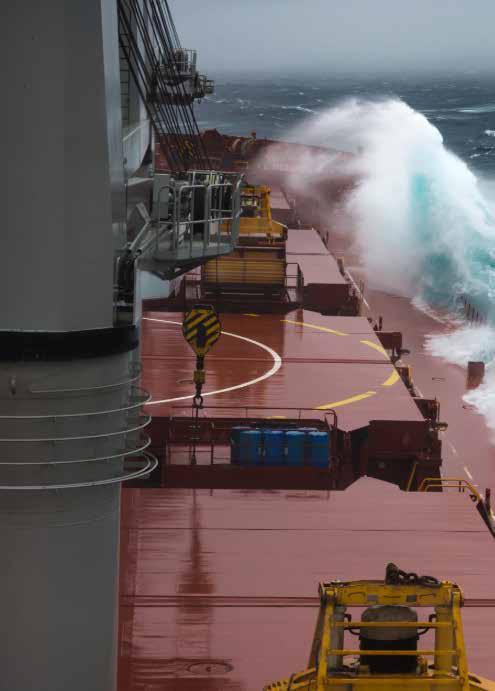

Capt. Deha Aydin, marine consultant at Esenyel & Partners, says that the maritime community must take extreme weather more seriously than ever. Shipping companies are investing heavily in forecasting services and digital tools, yet equal emphasis must be placed on human competence, operational culture and organisational support, he argues
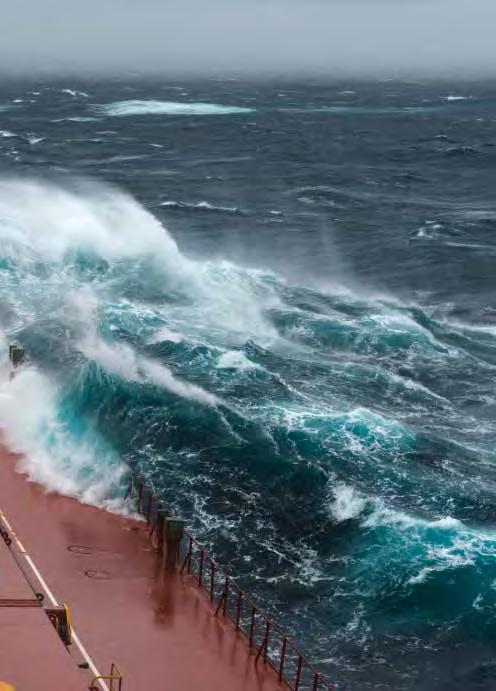
“Historical incidents demonstrate how rapidly weather systems may intensify beyond expectations. Cases have been recorded where forecast winds of moderate strength escalated into hurricane-force conditions exceeding 140 knots.”
propulsion efficiency. Conversely, ships with low freeboard or openings closer to sea level face heightened risks from boarding seas and water ingress.
Even identical vessel types may respond differently under the same meteorological conditions depending on loading configuration, stability margins and operational status.
An ageing global fleet further complicates the relationship between ships and extreme weather. Structural fatigue accumulated through years of service can make older vessels more susceptible to dynamic stresses such as slamming,
torsion and excessive bending moments generated by heavy seas.
As climate change contributes to stronger storms and more frequent severe weather systems, questions increasingly arise regarding whether future ship design standards should incorporate enhanced resilience against meteorological extremes rather than relying solely on avoidance strategies.
Technological progress has significantly improved access to marine weather information. Seafarers today depend on detailed forecasts delivered through the global maritime distress and safety system, satellite communications and digital navigation platforms.
Modern vessels benefit from graphical forecasts, integrated electronic chart overlays and real-time meteorological updates supported by machine learning models that continue to improve prediction accuracy.
Commercial weather routing services now play a central role in voyage optimisation, balancing safety considerations with fuel efficiency, emissions reduction and schedule reliability.
NO GUARANTEES
Despite these advancements, accidents linked to extreme weather continue to occur, highlighting that access to information alone does not guarantee safe outcomes. Decision-making competence onboard remains a decisive factor.
Industry surveys have indicated that a significant proportion of seafarers have not received structured or accredited training specifically focused on interpreting weather data. The ongoing review of international training standards reflects growing recognition that meteorological understanding must evolve alongside technological capability. Some operators have already moved ahead of regulation by employing dedicated meteorologists ashore who provide continuous operational guidance to vessels at sea.
Weather forecasting itself relies heavily on observational data gathered across the oceans. Programmes such as the voluntary observing ships scheme demonstrate how realtime reports from vessels significantly enhance forecast reliability, particularly in remote ocean regions where conventional observation networks are limited.
Yet participation remains surprisingly low among commercial ships. Increasing automated reporting systems could strengthen forecasting models while simultaneously improving onboard weather awareness.
Even the most advanced forecasts cannot eliminate uncertainty. Differences between predicted and actual conditions remain common, particularly regarding storm intensity and localized developments.
Historical incidents demonstrate how rapidly weather systems may intensify beyond expectations. Cases have been recorded where forecast winds of moderate strength
escalated into hurricane-force conditions exceeding 140 knots, accompanied by wave heights capable of disabling large passenger vessels and causing structural damage and injuries. Such incidents underline an enduring reality of maritime operations: forecasts guide decisions but cannot replace prudence.
DEFENSIVE LAYER
In this context, shore-based support has emerged as an increasingly important defensive layer. Modern connectivity enables continuous dialogue between vessel and company operations centres, allowing collaborative assessment of developing weather risks.
Effective safety management systems must therefore extend beyond procedural checklists to provide masters with clear authority and organisational backing when conservative decisions are required.
Delays caused by weather avoidance may conflict with commercial pressures, yet experience repeatedly shows that early deviation often prevents far greater operational and financial losses.
Weather routing represents the practical application of proactive weather management. By analysing long-range forecasts, climatological patterns and vessel performance characteristics, routes can be adjusted to minimise exposure to severe conditions.
Strategic deviation may increase voyage distance but frequently results in improved overall efficiency through reduced resistance, lower fuel consumption and decreased mechanical stress. Equally important is crew welfare; prolonged exposure to heavy weather leads to fatigue, reduced concentration and increased accident risk, all of which directly affect operational safety.
When avoidance becomes impossible, ship handling techniques become critical. Speed reduction is typically the first response, limiting structural loads and preventing excessive slamming or propeller racing.
Adjusting heading relative to waves aims to balance pitching and rolling motions while maintaining steering control. Beam seas are generally avoided due to the extreme rolling they induce, increasing the risk of cargo shift or capsize.
In severe situations, defensive manoeuvres such as heaving-to may be employed to stabilize vessel motion and reduce stress exposure. Proper ballast management can also enhance seakeeping performance, provided stability and structural limits are carefully respected.
Extreme weather preparedness ultimately extends to cargo protection and environmental responsibility. Violent vessel motions may compromise cargo integrity or allow wateringress through damaged openings, potentially resulting in pollution incidents or commercial claims. Preventive action therefore safeguards not only lives and assets but also the operator’s reputation and
“Extreme weather is no longer simply a matter of seamanship. It has become a complex intersection of operational decision-making, vessel design, crew competence and shore-based risk management.”
The increasing frequency and severity of extreme weather events indicate that maritime risk management is entering a new era. Shipping companies are investing heavily in forecasting services and digital tools, yet equal emphasis must be placed on human competence, operational culture and organizational support. Lessons learned from past incidents remain invaluable, reinforcing the need for continuous improvement in training, procedures and decision-making frameworks.
The sea will always remain unpredictable and extreme weather will continue to challenge even the most advanced vessels. However, through proactive planning, informed judgement and strong cooperation between ship and shore, the risks associated with severe meteorological conditions can be significantly reduced.
Modern masters must therefore combine traditional seamanship with technological awareness and strategic foresight, ensuring that safety remains paramount in an increasingly volatile marine environment. As climate patterns continue to evolve, resilience against extreme weather will stand as one of the defining competencies of safe and sustainable shipping operations in the decades ahead.
regulatory compliance.

Climate change is increasingly worsening cargo losses in Southeast Asia, warns Captain Lian Charlos , Charles Taylor Adjusting in an interview with TMI
Prevention is better than recovery
Cargo owners and insurers operating in Southeast Asia are facing growing exposure to extreme temperatures, humidity fluctuations and severe weather events that are resulting in major cargo losses according to Charles Taylor Adjusting, the international marine claims handler.
Citing two recent cases it handled from Indonesia, Charles Taylor has warned that increased global temperatures are resulting in more claims involving ‘cargo sweat’ damaged cargoes that have been exposed to mould, rust, corrosion, weakened packaging and product degradation.
In one cargo loss claim, more than US$60,000 worth of damage was caused to a container load of photographic paper rolls, being transported from Jakarta to Makassar, after it arrived chemically damaged during transit.
Following an investigation, Charles Taylor noted that the internal temperature of the container rose to nearly 50ºC when it arrived in Makassar, almost 20ºC higher than the external temperature in Makassar at the time.
This heightened temperature exposure was sufficient to ruin the cargo’s quality, even with intact packaging. Charles Taylor noted that cargoes of this type needed to be transported in refrigerated containers to limit the risk of damage.
In another case, almost 400 roof rail assemblies had to be scrapped after increased humidity, heat and temperature fluctuations caused the cargo to expand beyond tolerances.
FITMENT GAPS
The cargo, which was transported from Thailand to Indonesia, arrived with significant fitment gaps despite it being adequately packed during transport. Urgent replacement cargoes then had to be air freighted to Jakarta to maintain production timelines.
As weather-related cargo losses continue to rise, particularly in Southeast Asia, Charles Taylor noted that insurers and loss adjustors are having to reassess their policy coverage to better address climate change.
“For shippers and cargo owners, climate change is an operational reality. Extreme weather is now part of everyday logistics, disrupting schedules, damaging cargo and driving up costs,” said Capt. Lian Charlos Situmorang, assistant director, Charles Taylor.
EFFECTIVE PREVENTION
“Nonetheless, many of these risks can be managed if shippers work closely with insurers, surveyors and loss adjustors. Prevention is more effective than recovery. By making the right investments, businesses can safeguard their shipments and build long-term resilience in an unpredictable climate,” he added.
The marine claims expert added that marine cargo policies such as the Institute cargo clauses provide varying degrees of protection against weather-related risks. However, exclusions remain for losses caused by improper packing, stowage or lack of insulation (Clause 4.3), inherent vice and natural cargo reactions such as melting or warping (Clause 4.4), and delays –even those caused by storms or port closures – without physical damage (Clause 4.5).
“These limitations highlight the importance of raising weather-risk awareness for shippers. Taking proactive steps, such as conducting pre-shipment cargo conditioning and using insulated or vented containers; implementing weather monitoring along voyage routes; and using desiccants to control moisture levels within containers, can all help to mitigate cargo losses,” he added.
“Prevention is more effective than recovery. By making the right investments, businesses can safeguard their shipments and build long-term resilience in an unpredictable climate.”
Why the full voyage picture matters


As climate variability intensifies, heavy weather has become a defining risk across the entire maritime operational spectrum. Gard’s recent analysis and insight articles reveal that weather related incidents are rarely the result of meteorology alone. They arise from a complex interplay of operational decisions, equipment limitations, human factors, commercial pressures and increasingly congested waters. For marine insurers, understanding this continuum of vulnerability (in port, departing, at sea and arriving or waiting off port) is essential for accurately assessing exposure and supporting assureds in preventing high severity losses. Mark Russell , (top left) vice president global claims lead, safer with Gard, Jarle Fosen , (middle left) senior loss prevention executive, and Bruce Liu , loss prevention executive, explain
Continued on page 32
Although ports offer some natural shelter, they have become common locations for heavy weather incidents.
Mooring failures continue to feature prominently in claims files, often because berth infrastructure has not kept pace with the scale and windage of modern vessels. Investigations still find worn or uncertified bollards, inadequate fendering and mooring arrangements that do not reflect local wind patterns or sudden squalls.
In several cases, vessels broke free after unexpected gusts, with tugs arriving too late to prevent collisions or groundings. The resulting losses (hull damage, port infrastructure claims, pollution and passenger injuries) demonstrate how supposedly low risk environments can generate substantial exposure.
For insurers, the combination of ageing infrastructure, local micro-weather effects and time pressured masters highlights the importance of port specific risk understanding. These incidents show that even small deviations in weather or mooring practice can lead directly to six or seven-figure claims.
DEPARTURE: WHEN TIMING AND PRESSURE COLLIDE
When weather deteriorates, ports may instruct vessels to leave their berths to avoid damage ashore. This transition is a particularly vulnerable moment. Large vessels with high windage can find themselves struggling to maintain steerage, especially when in ballast or operating in narrow channels.
In several recent cases, ships attempting to turn into the wind found their manoeuvrability compromised, drifting towards shoals even while propulsion was maintained. Engine loads increase sharply under these conditions and minor defects that might otherwise be manageable can escalate into full machinery failures at precisely the wrong moment.
For insurers, departure-related incidents are disproportionately severe. Groundings, salvage interventions and wreck removal costs can soar when vessels lose control in exposed waters. The availability of emergency towage vessels is increasingly relevant, as their absence can turn recoverable situations into total losses.
AT SEA: EXPOSURE WITHOUT THE SAFETY NET
Once on passage, the most important decisions are often made before the vessel has fully left sheltered waters: whether to commence or delay the voyage and that cargo and equipment are properly secured for the conditions ahead.
Optimisation pressures can drive frequent route changes and narrow margins. If heavy weather arrives early or persists, crews may have limited room to slow down, alter course or ride it out and prolonged exposure can quickly turn manageable motion into fatigue and impaired judgement.
Gard’s analysis shows that crew safety remains a significant area of concern. Fatalities continue to occur on the forecastle
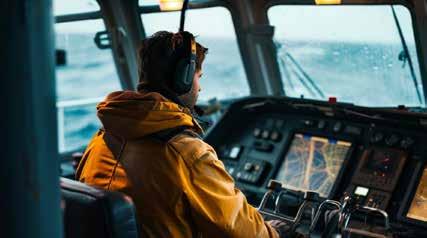
“If heavy weather arrives early or persists, crews may have limited room to slow down, alter course or ride it out and prolonged exposure can quickly turn manageable motion into fatigue and impaired judgement.”
or main deck when unexpected breaking seas sweep personnel overboard or crush them against fittings.
Fatigue and anxiety can accumulate in prolonged periods of bad weather, impairing decision-making. Rogue waves, while rare, have caused both injuries and structural damage even to vessels built to modern standards.
Propulsion failures at sea are particularly dangerous. Even temporary loss of power can leave a vessel broadside to the waves, dramatically increasing rolling and drift. Several cases show that vessels can be pushed quickly towards lee shores before power is restored, leaving little opportunity for recovery. Anchors deployed in deep water or poor holding ground often have limited effect.
Cargo failures remain a major source of claims. Container stack collapses, shifting heavy-lift units and liquefaction events on bulk carriers can feature in heavy weather. The sophistication of cargo securing software has not eliminated discrepancies between onboard systems, shore planners and Class requirements.
Investigations repeatedly show that equipment degradation, misaligned calculations and prolonged exposure to increasing wave heights can lead to cascading failures. Insurers recognise this as a systemic risk that grows with vessel size, trade patterns and route constraints.
ANCHORING AT THE EDGE OF THE DESIGN ENVELOPE
The final stage of a voyage has become one of the most exposed phases from a heavy weather and insurance perspective.
Congestion at major ports, geopolitical disruptions and schedule uncertainty increasingly result in vessels anchoring or drifting off port for extended periods.
While “just-in-time” arrival concepts continue to develop, the operational reality for many ships remains prolonged waiting in areas that were never intended for sustained anchoring, particularly when weather conditions deteriorate.
Anchoring is often perceived as a low-risk, routine operation, yet it is precisely during this phase that a growing number of high severity incidents occur.
A key factor is a widespread misunderstanding of what anchoring equipment is designed to withstand. Anchor systems are intended for temporary use in sheltered waters, with limited environmental loads and good holding ground. They are not designed to hold vessels in exposed anchorages subject to waves, swell and strong or rapidly shifting winds. Nevertheless, modern congestion frequently forces ships to anchor in open waters where these assumptions no longer apply.
We continue to see claims where vessels experience rapid anchor dragging once weather conditions exceed modest thresholds. In several cases, anchors have failed not because of defective equipment, but because the combined effects of wind, waves, current and depth exceeded the system’s design limits. Increasing the number of shackles paid out does not necessarily restore safety when wave action lifts the chain off the seabed, eliminating the catenary effect essential for holding power. When dragging begins, the window for effective response is often measured in minutes rather than hours.
Commercial pressure can further narrow safety margins. After tendering a notice of readiness, some masters may be reluctant to ballast, relocate to a more sheltered anchorage or leave the area altogether, fearing delay or dispute.
In one investigated case, a bulk carrier deployed 10 shackles in relatively shallow water yet still broke its anchor chain during deteriorating weather, leading to collisions, flooding and eventual evacuation. The underlying issue was not insufficient chain length, but exposure well beyond the anchor system’s intended operating envelope.
The proximity of fixed hazards compounds the risk. Pipelines, subsea cables, wind farms and rocky shorelines increasingly surround anchorages and waiting areas, leaving little tolerance for error.
Several investigations have shown that the time between the onset of anchor dragging and contact with subsea infrastructure can be extremely short. Detection is not always immediate, particularly at night or in poor visibility, and vessel traffic service systems may not identify the
developing risk in time to intervene. In at least one case, chart layers showing subsea hazards were disabled to reduce clutter, removing a critical defensive barrier. Where anchoring is not possible, drifting or slow steaming is often adopted as a waiting strategy. While this may appear commercially attractive, particularly with engines placed on short standby, accident investigations repeatedly demonstrate how quickly such situations can deteriorate.
A vessel drifting at several knots towards a lee shore may have insufficient time to bring engines to full readiness once conditions worsen. In one case, a ship that had drifted without incident on two earlier occasions experienced severe parametric rolling on a subsequent drift, resulting in containers lost overboard and significant claims exposure.
Port entry under marginal weather conditions introduces a further layer of complexity. Forecasts that appear to sit just within operational limits have been overtaken by sudden squalls, doubling expected wind speeds during critical manoeuvres.
Limited visibility, evolving forecasts and coordination challenges between pilots, tugs and traffic services have all contributed to incidents inside port approaches and narrow channels. While there are examples of highly skilled seamanship — including the emergency use of anchors to prevent more serious outcomes — such actions are undertaken at the very edge of controllable risk and leave little room for recovery if conditions worsen further.
From an insurance perspective, arrival and waiting off scenarios concentrate several risk amplifiers at once: constrained sea room; reliance on anchoring systems operating beyond their design assumptions; limited reaction time; and significant third-party exposure.
Heavy weather does not need to be extreme to generate large losses in this phase. It only needs to arrive when vessels have insufficient space, time or support to respond effectively.
A WHOLE-VOYAGE RISK
Across all phases, a consistent pattern emerges: heavy weather becomes dangerous when vessels have insufficient time, space or support to act. Commercial pressures, inconsistent forecasting, ageing equipment and congested waters amplify risk at each decision point. For the insurance market, this means losses are increasingly driven not just by the extremity of the weather, but by the narrow operational margins within which crews must react.
Clearer safety management system weather limits, earlier decision triggers, more conservative anchoring and routing practices, and enhanced shoreside monitoring can materially reduce these exposures. These measures matter. Heavy weather will always challenge ships, but a whole journey understanding of risk remains a powerful tool for preventing avoidable casualties.

The next event will take place on 2nd July 2026 and will once again focus on upstream oil & gas and have a heavy focus on energy transition and renewables. Energy Insurance London is specifically designed to bring together all the key players in the energy insurance market to discuss, debate and offer actionable insights into the issues affecting the sector.


PROUD SPONSORS
GLOBAL PARTNERS
09 00-9 20: Keynote Address Affordable Energy First – How Reform UK Will Bring Back Britain’s Industrial Advantage
This keynote sets out the case that competitively priced, reliable energy is the indispensable foundation of economic growth, industrial resilience and national prosperity. Richard Tice MP will argue that Britain’s escalating energy costs have eroded manufacturing competitiveness, deterred capital investment and exposed strategic vulnerabilities in critical supply chains.
PRESENTER: Richard Tice MP, Reform UK
09 20-9 40: Keynote Address Betting on the
Future Under Uncertainty
Today, as CEO of RenewableUK, Tara argues that energy policy is about making bets on the future under uncertainty — something insurers do every day. Tara’s keynote will explore how a risk based approach to energy policy — grounded in demand, security and deliverability — can guide those decisions, and the role insurers can play in backing the lowest risk outcomes.
PRESENTER: Tara Singh, Renewable U.K
09 40-10 20: Panel Discussion State of the Market – Are Insurers Being Increasingly Isolated?
The run of play says brokers represent insureds in placing business with insurers. In this session, we ask whether brokers have increasing delegated powers and if that is beneficial to the insured and insurers.
PANEL: O. Paine, SCOR. A. Clarke, AON. W. Beach, Marsh. A. Nelson, Liberty Specialty Markets
10 20-11 00: Panel Discussion Geopolitics – Making the World Go Around
Uncertainty appears to have become the new normal in the past few years and 2026 is set to be more of the same. In this session, we analyse the ways in which geopolitics and energy are so interwoven and how politics may shape the energy market for years to come, from Donald Trump’s “Drill Baby Drill”, to Ed Milliband’s bid to end oil and gas exploration in the North Sea.
MOD: SW.Burger, Gard. PANEL: J. Dutton, AXIS. S. Brennan, Zurich.
11 30-11 50: Presentation Complex Claims: The Good, the Bad, and the Ugly
The rise in nuclear verdicts in the US has caused many oil, gas, and energy providers to rethink their strategies in defending complex claims. Recent mock jury studies have been enlightening on how members of the public perceive the corporation, evaluate comparative fault, and subconsciously develop attitudes that guide their decision making. This session will identify the psychological factors driving juror decision making and discuss how corporations can best prepare for litigation and trial.
PRESENTERS: N Rauch, Larson King. N. Polavin, Jury Connect
11 50-12 30: Panel Discussion From MGAs to M&A
For the past few years, market talk has been dominated by the increasing numbers of MGAs arriving to disrupt business as usual. However this year, talk is not just of MGAs, but also of the number of mergers proposed between major insurance names. In this session, we discuss the changing shape of the market, analysing the benefits and pitfalls of a smaller market, not just among insurers, but among clients, too.
PANEL: J. Earey, Interprotect. F. Iacono, Zurich. J. Cantwell, PERse International
12 30-12 50: Fireside Chat Data Centres/Grid Infrastructure – Powering up the Data Centres
As artificial intelligence takes hold, huge data centres are being built around the world, with many more giant projects promised. However, the challenge for constructors is a lack of power and an ailing grid infrastructure. Should we be viewing these new centres as a huge opportunity for energy insurers, or just as yet another industrial customer?
PARTICIPANTS: R. Eadie, Rimkus
13 50-14 50: Roundtables
Each roundtable will run for 25 minutes. There will be a short break to allow delegates to change tables. The tables will then be repeated in a second 25-minute sitting.
STREAM ONE: OIL & GAS
Panel Discussion: State of the Market
A benign period without a major loss for some years, it is no wonder that rates remain soft for the oil and gas sector, however market experts fear that it would only take one major incident before the market would be in a deficit.
MOD: N. Harris, MS Amlin. PANEL: J. Swann, CNA Hardy. H.Pettinger-Harte, Zurich
Presentation: LNG – A Growth Sector
The scale of growth in the US LNG sector has been extensive, as countries look for energy security and turn away from Russia. UK insurers have been taking advantage of this growth and enjoyed a boom in business.
PRESENTER: J. Wilson, Howden
Panel Disccussion: Is the Spate of Refinery Claims a Developing Trend?
After a spate of refinery claims in 2025, particularly in the US and Europe, the market is asking itself whether this is a long-term trend or a simple blip in the claims landscape.
PANEL: M. Krenzer, SCOR. S. McNeil, Marsh
Presentation: Venezuela – Opportunity or Risk?
Many oil and gas companies have had their fingers burnt in Venezuela as regime changes led to changing appetite for overseas investors. In the wake of the political upheaval at the start of the year, we delve into the potential opportunities and pitfalls of doing business in Venezuela in 2026, including a look at the latest sanctions position.
STREAM TWO: RENEWABLES
Panel Discussion: State of the Market
The renewables insurance market remains soft as new entrants continue to arrive. The question we ask is whether there is sufficient experience of the market for these new players to succeed?
PANEL: F. McLachlan, Tokio Marine GX. K. Jones, Liberty Specialty Markets. D. Fajimolu, Lloyd’s Market Association
Presentation: Cross Border Projects
Increasing numbers of the renewable energy projects involve cross border collaboration, particularly in Europe, but also in Asia. The question to be asked is whether a change in government might result in good neighbours falling out?
PRESENTER: R. Jones, Marsh
Panel Discussion: Claims – Repair, Replace or Abandon?
Technology is changing so rapidly that it can be hard to keep up. One of the biggest questions for insurers and clients in the renewable space is do they try and repair the plant, replace it with new technology or simply abandon the site and develop anew.
PANEL: S. Draper, AXIS. M.K. Reding, Bladena (a RES company).
Panel Discussion: The Challenges of Renewable Business in the US
While the US president has called a halt to offshore wind projects, some are still under construction courtesy of ongoing tax credits. In this session, we look at the likelihood of these projects finishing before the money runs out.
PANEL: R. Rennison, Rimkus


As strategic cargo theft becomes more organised, targeted and deceptive, loss severity is rising and logistics liability is increasingly contested. Organisations need to rethink how contracts, controls and cargo theft insurance coverage work together across a fragmented, high velocity supply chain argue Jose Harfuch , (top left) Thomas Langridge , (centre left) Tomas Winje and (bottom left) Eric Sehlhorst of Aon
Cargo theft has evolved from opportunistic loss events into a form of strategic, organised crime, exploiting the speed, fragmentation and digitalisation of modern logistics networks worldwide.
While overall incident volumes in some regions have remained relatively stable, the nature of loss has changed materially. Criminal groups are now targeting higher-value consignments, with broader operational and financial consequences. This marks a clear shift from volume driven loss to severity driven risk — reshaping how cargo crime is experienced, insured and contested.
DRIVING FACTORS
The rise in high severity cargo theft is being driven less by incident frequency and more by a changing risk environment. Across many regions, theft is increasingly enabled by speed, digitalisation and carrier fragmentation. This allows organised criminal groups to operate with greater precision and reduced detection.
Several converging factors have reshaped the risk environment. These are:
1. Rising cargo values and concentration;
2. Covid-19-era protocol erosion;
3. Automation at scale; and
How strategic cargo theft is reshaping logistics liability

4. A fragmented trucking market and legitimate carrier scams.
CARRIER VETTING
Carrier vetting remains one of the most effective but operationally constrained defenses against theft. This mismatch between risk sophistication and operational tempo explains why even well-designed cargo theft risk management programs struggle under high transaction volumes, compressed timelines and evolving fraud tactics. The result is more frequent cargo theft liability disputes, as counterparties challenge whether care, custody and control standards were met in practice, go beyond one-time onboarding and include:

• Continuity checks;
• Layered verification;
• Independent physical GPS tracking and response escalation; and
• Red flag escalation protocols.
Critically, vetting should be treated as a living process, not a static compliance task.
Balancing automation and manual controls in cargo theft risk management is important.
Automation is neither the villain nor the panacea in managing cargo theft risk — it is a force multiplier, capable of strengthening controls or amplifying failure depending on how it is applied.
Automated tools deliver scale, speed and real time visibility.
They help surface anomalies and reduce routine errors. But they can also replicate bad data at scale, miss contextual red flags and enable sophisticated fraud if compromised credentials pass through without human review.
Manual controls provide judgment and contextual awareness, recognising when “something doesn’t feel right” or when a detail warrants escalation. Yet manual processes are slower, harder to standardise and vulnerable to fatigue or inconsistency under high transaction volumes.
Most resilient cargo security programmes blend both approaches. They use automation to narrow the risk field and human expertise to interrogate the anomalies that matter most.
WHERE COVERAGE AND LIABILITY COLLIDE
Cargo theft losses frequently fall into coverage grey zones,
particularly when organisations rely on liability policies rather than dedicated cargo insurance. As theft methods become more strategic and deception driven, the gap between operational responsibility and legal liability is widening. This creates friction in both claims outcomes and renewal discussions.
SEVERAL RECURRING PRESSURE POINTS DRIVE THESE DISPUTES:
1. Care, custody and control limitations;
2. Fraud and deception exclusions; and,
3. Sub-limits and weight-based recoveries.
As a result, organisations are reassessing how liability coverage, cargo insurance and contractual terms interact in practice.
Managing these exposures requires a multi layered approach, including:
• Clear contractual allocation of risk across shippers, forwarders, brokers and carriers;
• Alignment between liability policies and shipper’s interest or cargo insurance programmes; and,
• Evidence that operational controls are proportionate with cargo value, routing complexity and theft exposure
Without this alignment, even insured losses can become economically uninsured, leaving organisations exposed at precisely the point of loss.
A 30-60-90 day playbook can be used to realign liability and theft readiness in the following way:
30 DAYS: MAP EXPOSURE AND ESTABLISH LIABILITY VISIBILITY:
• Map strategic cargo theft exposure across key lanes, customers and handoffs, including identity continuity risks and cargo value concentration;
• Gap scan logistics contracts to identify where liability may attach earlier or later than intended, particularly across subcontractor chains;
• Define minimum evidence and telemetry standards required to support a defensible cargo theft claim and effective insurance recovery; and,
• Insert interim identity continuity checks, focused on carrier ownership changes, credential drift and operating pattern anomalies.
60 DAYS: HARDEN HANDOFFS AND TEST ALIGNMENT UNDER REAL CONDITIONS:
• Strengthen verification at critical handoffs, combining automated anomaly detection with targeted human review for high value or high risk loads;
• Pilot updated liability and cargo insurance alignment
“While prevention remains essential, the reality is that today’s theft methods often involve deception, identity manipulation and fragmented handoffs, making it difficult to pinpoint responsibility when losses occur.’’
on priority lanes where exposure is highest, testing how risk transfer performs in practice;
• Tabletop a “legitimate carrier takeover” scenario to stress test handoffs, escalation protocols, claims response and dispute pathways; and,
• Refine contract language, clarifying subcontractor responsibility, evidence requirements and expectations around digital and physical controls.
90 DAYS: EMBED AND SCALE:
• Extend validated controls and contract structures to priority markets and high value trade lanes;
• Embed continuous vetting and tiered carrier strategies, aligned with TAPA informed practices and risk based thresholds;
• Formalise re vetting SLAs and escalation triggers, ensuring teams can pause or re verify when anomalies emerge; and,
• Link KPIs to outcomes, including claims latency, recoveries and dispute resolution — not just compliance activity.
FROM THEFT PREVENTION TO LIABILITY MANAGEMENT
Modern cargo theft is no longer just a security concern — it is a liability challenge that cuts across contracts, controls and coverage. While prevention remains essential, the reality is that today’s theft methods often involve deception, identity manipulation and fragmented handoffs, making it difficult to pinpoint responsibility when losses occur. The central question has shifted from “How do we stop theft entirely?” to “How do we manage the liability when it happens?”
In fast-moving, multi-party logistics networks, responsibility is frequently shared, blurred and contested. Organisations need a clear view of where liability sits — and the confidence that their controls and coverage will respond in practice. By combining cargo, liability and supply chain expertise, Aon helps clients turn strategic cargo theft from an unmanaged exposure into a defined, governable risk.
Clarity when blade failures aren’t clear
Root Cause Analysis for Insurers
Independent Root Cause Analysis for wind turbine blades, giving insurers the technical evidence needed to support underwriting, liability assessment and claims decisions.
Our engineering-led approach goes beyond standard failure reports to uncover the true cause of damage, supported by advanced modelling and one of the industry’s most extensive blade damage databases.
Find out more about our services and visit us at Energy Insurance London

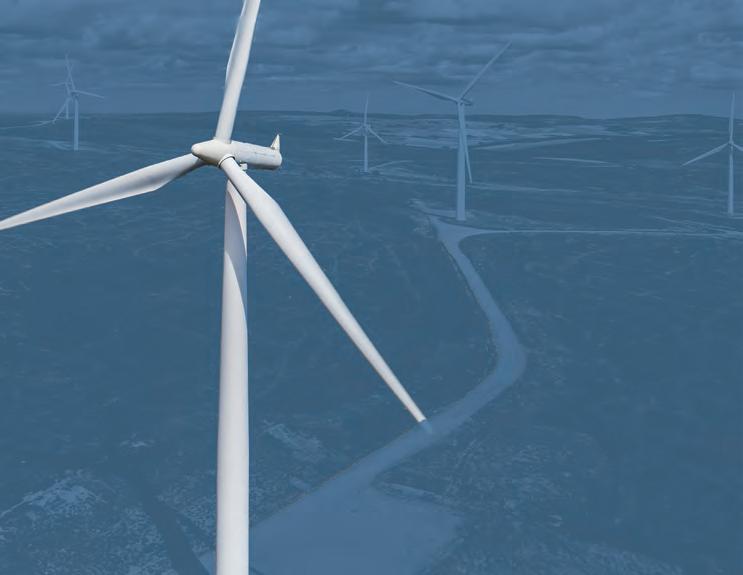
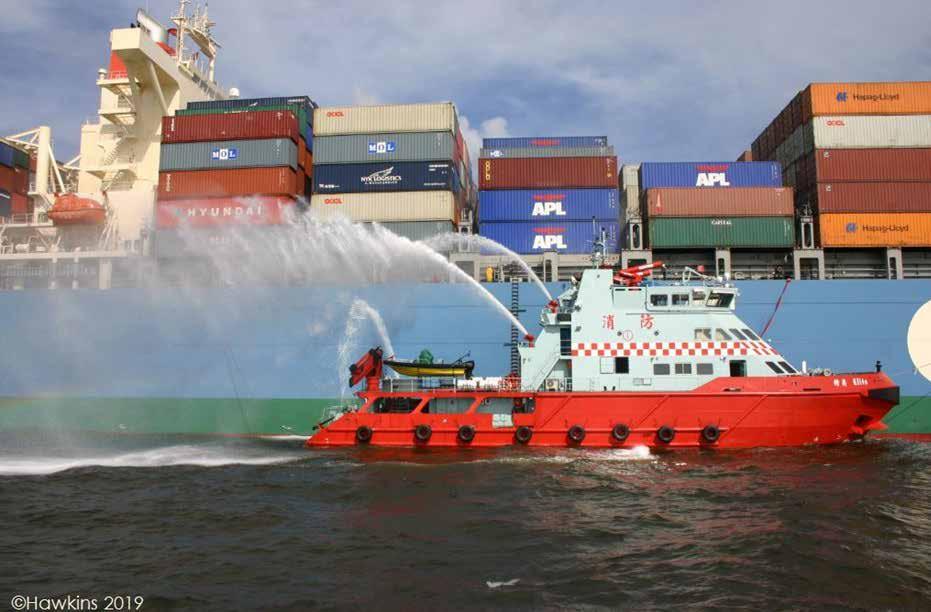
Investigation, information, survival

Fire investigator John Gow , at Hawkins, explains why accurate information is invaluable at all stages of the shipment process when casualties inevitably occur
To the public at large, the shipping industry is the silent engine that drives the world economy. It is often only visible when goods fail to arrive on time or when a major casualty draws global press attention.
Seaborne trade continues to rise, with an estimated 250 million containers transported annually. Industry data suggests that more than 11% of containers contain safety‑ related deficiencies, including undeclared or mis‑declared dangerous goods, incorrect documentation, or inadequate packaging.
In practical terms, a vessel carrying 24,000 TEU could have approximately 2,400 containers with potential deficiencies if these go undetected.
The doctrine of “utmost good faith” was codified in the Marine Insurance Act in 1906 and whilst the provisions in the act have evolved, parties are still obliged to disclose all relevant material facts that may influence the terms of the contract.
Given the data above, it is clear that this principle is overlooked by some, whether through ignorance or reckless disregard for the safety of those transporting goods around the globe.
Accurate information is the golden thread underpinning the safety of the supply chain, the crew, and the vessel. However, the physical risks associated with fires, explosions, or other incidents extend far beyond the seafarers on board during a voyage.
WHEN THINGS GO WRONG
When a casualty occurs, numerous stakeholders become involved owners, charterers (time, slot etc), and shippers/ consignors. Their exposure tends to be financial, with no direct physical risk from the event or subsequent operations.
“Effective risk assessment is only possible when complete and accurate information about the cargo and incident circumstances is provided. It is reasonable to expect this information at the outset of any investigation, yet this is often not the case, even for salvors tasked with bringing the situation under control. Without accurate or consistent information, no party can reliably quantify risk.”
The master and crew, however, are directly in harm’s way during the incident and during the immediate response to contain and extinguish any fire. External assistance may be required, such as salvors or specialist firefighters, depending on the vessel’s location. These risks are well understood: incidents may take days, weeks, or even months to bring under control before investigations and surveys can begin.
Authorities will naturally take an interest and experts will be engaged to determine cause and liability. During these operations, many additional personnel, such as stevedores, labourers and port workers may become involved as cargo is discharged and moved. A key challenge at every stage is determining the nature of the risk and who may be exposed to it.
In 2025, the forensic community was shocked by the death of a respected colleague, an engineer and a safety inspector who were killed while conducting an investigation on board a berthed vessel at TPP Port in Malaysia.
The investigation is ongoing and therefore it is not possible nor appropriate to comment on the nature and circumstances of the incident. However, these tragic fatalities have highlighted that risks often persist well into the recovery phase of an emergency, until the contents of any suspect containers have been assessed, quantified and neutralised.
Labels and manifests are the ‘golden thread’: accurate declarations enable safer stowage,response and investigation.
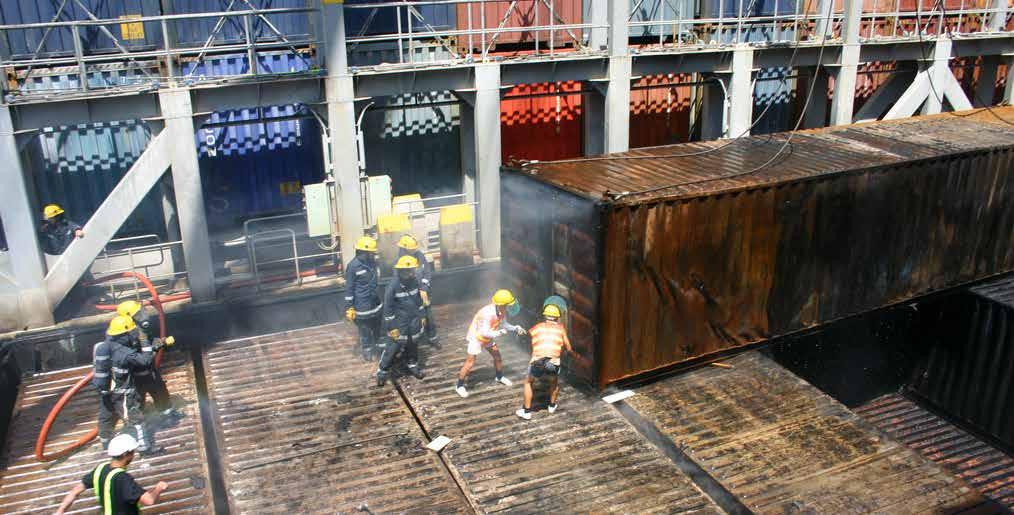
A critical part of any incident is the need to assess the risk and determine what measures can be put in place to minimise any exposure to those involved in any operations. While many individuals may be exposed during the response and recovery phases, I write from the perspective of an attending fire expert.
Effective risk assessment is only possible when complete and accurate information about the cargo and incident circumstances is provided. It is reasonable to expect this information at the outset of any investigation, yet this is often not the case, even for salvors tasked with bringing the situation under control. Without accurate or consistent information, no party can reliably quantify risk.
It is worth noting the framework under which fire experts and surveyors operate. The Admiralty Solicitors Group (ASG) developed the ASG‑10/A Surveyors’ Indemnity wording to support members and clients during maritime casualties.
This indemnity also governs the conditions under which fire experts may board a vessel. In essence, it states that fire experts board at their own risk and that owners, salvors, masters and crew are held blameless for death or injury arising as a consequence of their “causative negligence, recklessness or wilful default”
ACCURATE CARGO INFORMATION MATTERS
Risk‑related information is typically provided through cargo manifests and later in an investigation, bills of lading. However, in my experience, cargo descriptions on manifests can vary depending on the source such as owners, charterers or cargo interests. These inconsistencies complicate risk
assessment and origin/cause determination. Such conditions inevitably challenge the ability to conduct operations safely. Mis‑declared cargo presents another significant risk. While it is impossible to identify every deficient container prior to loading, once an incident occurs, certain steps can reduce risk exposure. The first step is to identify all “sister” containers from the same shipper with the same cargo declaration. These should be discharged, inspected and risk‑assessed before operations commence. All such suspect containers must be examined and none left on board, particularly in areas where fire experts and other responders are working.
“Accurate information is the golden thread that underpins supply‑chain safety and protects all those involved in casualty response. All parties must ensure cargo manifests are accurate and that information regarding dangerous or mis‑declared goods is shared promptly with recovery teams, including fire experts.”
Fire‑damaged containers being removed for inspection, a phase where significant risks still remain for investi gators, surveyors, and port workers.
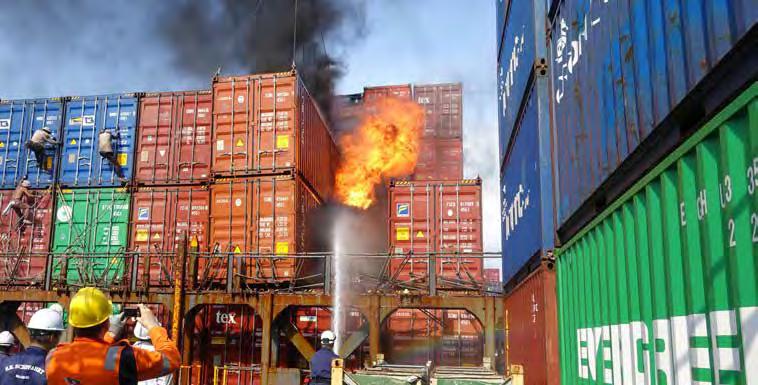
The second step is prompt sharing of information with all relevant parties. Owners’ fire experts will often have an opportunity to start their investigation before others are permitted on board, meaning that such circumstances must be identified early so hazards can be mitigated. In practice, not all sister containers may be identified, leaving suspect cargo on board. While this may seem unlikely, it is not far removed from reality.
IMPROVING RISK MANAGEMENT
If a further incident occurs and someone is injured or killed, liability becomes a critical question. SOLAS and the International Safety Management Code set out clear responsibilities for companies and masters to identify potential emergency situations and establish procedures for responding to them. It is essential that these procedures cover every foreseeable scenario, including the recovery and clean up phases of any incident.
Given ongoing challenges with the accuracy of cargo information, an important question arises: Are the ASG provisions still fit for purpose?
STRENGTHENING FUTURE PRACTICES
Fire experts are sometimes viewed as an inconvenience, particularly when the focus is on reinstating a vessel and managing associated costs. However, decisions by courts or inquiries concerning causation and liability often hinge on the contributions of fire experts.
Close collaboration and information‑sharing between owners’ experts, salvors and other parties ensures
investigative needs are met, timelines are reduced and recovery operations proceed efficiently.
To reiterate: accurate information is the golden thread that underpins supply‑chain safety and protects all those involved in casualty response. All parties must ensure cargo manifests are accurate and that information regarding dangerous or mis‑declared goods is shared promptly with recovery teams, including fire experts. This simple measure can significantly reduce risk and ensure everyone goes home safely at the end of the day.
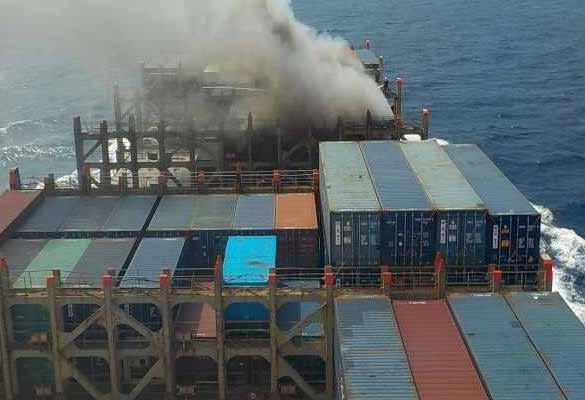
Front‑line responders operate in complex, evolving conditions, often long after the first alarm.
Major casualties may be rare, but with high consequences. Clear procedures and information sharing reduce risk throughout response and recovery.
Forward Thinking™ Foreign Exchange
Ballinger & Co. is authorised and regulated by the Financial Conduct Authority under the Payment Services Directive as an Authorised Payment Institution with registration number FRN 825771.
Ballinger & Co. is a leading specialist in Foreign Exchange. We deliver FX risk management strategies and trading services to corporates and institutions. Through superior pricing and execution, improved transactional efficiency and deep market knowledge we provide each of our clients with an essential competitive advantage. E: info@ballinger.co T: +44 (0) 20 3869 1800



It is not clear whether fire risks in ports are becoming worse or simply evolving due to the scale of operations and an inherent change in cargo types or storage methods. Risk prevention, as ever, is better than cure argues Julien Horn , partner, McGill and Partners
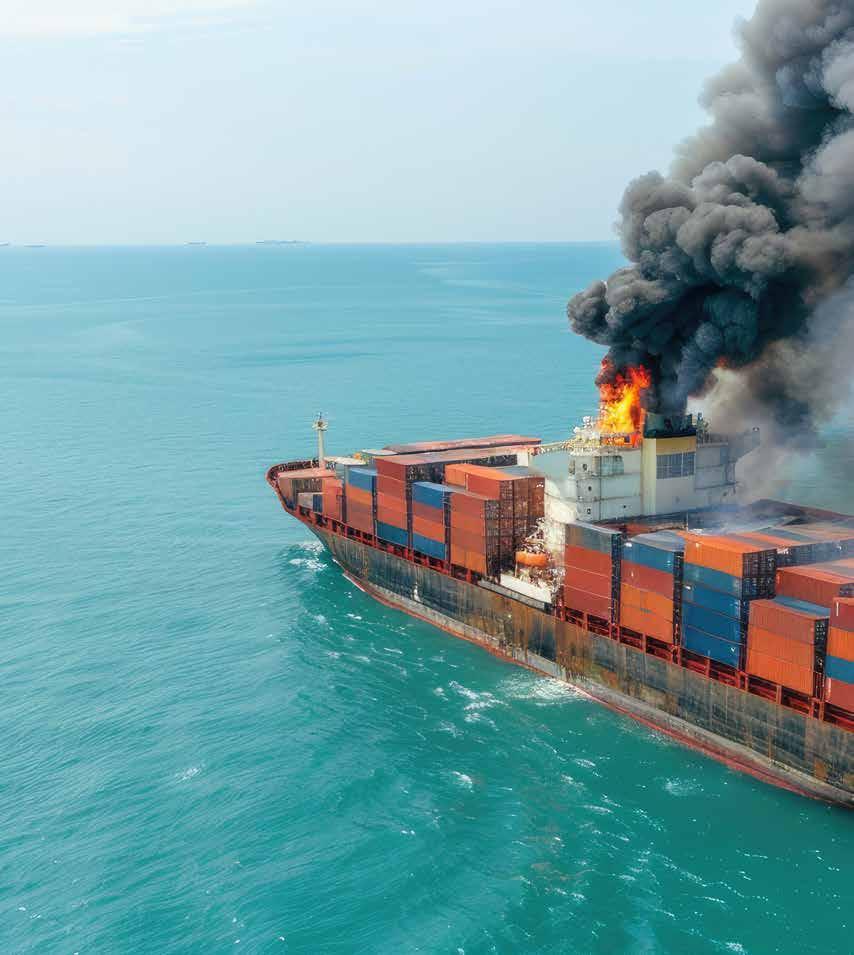
Prevention is better than cure
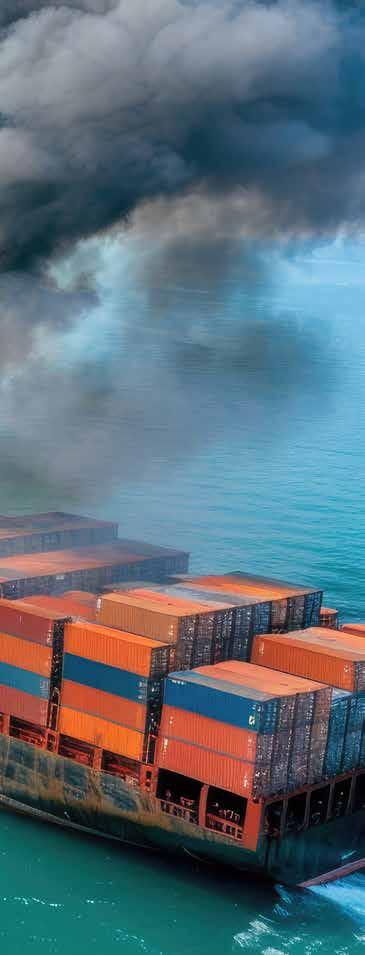
The largest natural catastrophe incidents in terms of global economic loss in 2025 were both fire losses in the US and combine for an estimated US$53bn.
To put this into context, this is more than the combination of high profile nat cat events in 2025floods (China) storms (US), hurricane Melissa and the March 2025 South East Asian earthquake.
Container ship fires have seemingly become a quarterly event whereas not long ago we would expect one or two per year.
The scale of modern warehouses mean that large scale warehouse fires have a significant impact on the ports or the supply chains they support.
While we hear a lot of rhetoric about fire events and scale of claims, I suggest the risk is evolving rather than simply becoming worse.
Fire risks are something the global risk management community continue to work hard on to develop a wide range of fire risk management and mitigation tools. These tools are now available in the market ideally to be combined with a culture of being proactive and able (willing) to spend and put in place adequate procedures.
ACTIVE APPROACH
Leading operators are taking an active approach to fire risk management and loss prevention to help provide added security to their part of the supply chain but are often let down by other stakeholders.
Climate change is in many areas of the world fanning the flames of fire risks at ports through a range of evolving exposures with underwriters aware but uncertain how to best monitor and control their exposure while providing the cover for operator demand.
Extreme heat is a significant concern but as someone who
“Lithium-ion battery fires are notoriously difficult to extinguish and can lead to catastrophic losses. Underwriters are now paying close attention to how ports and shipping lines are managing this risk including the implementation of specialised fire detection and suppression systems.”
has worked and toured a range of leading ports and terminals in Africa and the Middle East, extreme heat is a factor that can and must be controlled by good procedures and active risk management.
These steps are often not at the forefront of the mind of operators in regions historically less prone to extreme heat and weather conditions. In the words of one Canadian risk manager facing -20 degrees Celsius and a meter of snow, there is no such thing as bad weather just bad planning and bad clothing choice.
HEAT EXPOSURE
Operators in the sunnier parts of the world know that heat does directly impact the integrity of electrical and mechanical systems.
Continued exposure to high temperatures causes equipment to overheat, malfunction and be exposed to above average wear and tear which in turn increases the potential for fire to start.
Extreme heat is of particular concern in ports where cargo may be stored for extended periods, exposed to direct sunlight and high temperatures as this can lead to the fire or the heightened risk of fire.
Operators need to take into account that tests have shown that the temperature inside a shipping container sitting in a yard at 45-50 degrees Celsius can reach 70+ degrees Celcius inside the box when not ventilated or refrigerated which would be deemed a dangerous temperature.
Considering operators or container terminals are likely to have thousands of different cargoes in their stacks they face a greater challenge than ports where only a handful of cargoes need to be monitored at any one time.
LITHIUM-ION BATTERIES
What was likely the most talked about cargo for fire risks in the last decade was lithium-ion batteries.
The increasing demand for electric vehicles and a wide range of products with small and large batteries mean that vast quantities of these batteries are being transported through ports.
Lithium-ion battery fires are notoriously difficult to extinguish and can lead to catastrophic losses. Underwriters are now paying close attention to how ports and shipping lines are managing this risk including the implementation of specialised fire detection and suppression systems, as well as stringent procedures for the handling and storage of this cargo.
This is at a time when ports are also being encouraged to transfer their equipment away from diesel to battery power as part of their carbon reduction plans. They have, therefore, in some eyes increased their own operational fire risk by setting up charge stations within their existing operational infrastructure which in most cases was not designed to deal with this new risk type.
When assessing these evolving fire risks, underwriters

“As the risk landscape changes, so too do the standards for due diligence and underwriters will increasingly favour ports that can demonstrate a proactive and comprehensive approach to managing these new and complex fire risks.”
look for a multi-layered approach to risk management. They evaluate the fire-fighting capabilities of the port itself. This includes the availability of advanced fire detection systems, modern firefighting equipment and the training and preparedness of the crew and port personnel.
Insurers also consider the types of cargo being handled at the port and the due diligence processes in place to ensure that hazardous materials are properly separated, declared and stored.
CHANGING RISK LANDSCAPE
As the risk landscape changes, so too do the standards for due diligence and underwriters will increasingly favour ports that can demonstrate a proactive and comprehensive approach to managing these new and complex fire risks.
For port operators that manage environments with a wide range of flammable materials and heavy machinery, fire safety is a key concern. Having attended a number of industry events with a focus on insurance and operational safety, the top considerations include:
> Flammable materials such as fuel, chemicals and
bulk cargoes including grain or varying biomass cargoes can steam and combust if not handled and ventilated adequately. Cargoes must be stored in a safe way and should be done in a designated, separated and appropriately ventilated way. Many cargoes need to be continually monitored for signs of heating, hotspots and the first steps to smoking and eventual combustion.
> Mis-declared or improperly documented hazardous materials have been known to cause fire on ships but also ashore in yards and port stacks. While the weight of cargo is an area that the IMO focused on with VGM (verified gross mass - a requirement that packed containers be weighed to obtain their actual gross mass prior to vessel loading) this was arguably an easier target then the simple misdeclaration of cargo whether through a shippers negligence or wilful misconduct when looking to avoid or bypass IMDG regulations. Whether through depriving a potential fire of oxygen, improved moisture control or ventilation and dust management, ports know of the risk of mismanaged cargo and so experienced operations often know the steps to take.
An added challenge can come from ports that deal with a wide range of cargo needing to constantly adapt their procedures to fit the patchwork quilt of cargo types they may be asked to handle on a particular day.
It is often said that single cargo operations or facilities should, and often do, understand the inherent risks of the cargo they handle and so are proactive and experienced in their risk management procedures assisting them in providing a safer environment for both their teams and cargoes.
Whether due to the increase in electric vehicles or the wide range devices using lithium-ion batteries in the modern world from scooters to cordless tools, many a white paper published and viral video would agree that these batteries present a significant and very different fire risk than conventional cargoes and have led to a new and very real challenge for the fire prevention and control industry.
THERMAL RUNAWAY
Batteries can undergo a process called thermal runaway which can be caused by one or a combination of physical damage, overcharging, or manufacturing defects.
Thermal runaway is a rapid and self-heating fire that is extremely difficult to extinguish with conventional fire suppression tools and can continue to reignite long after being initially controlled.
In recent times we have seen a number of technology companies and port operators consider a number of forms with varying success of specialised training and fire-fighting equipment to deal with lithium-ion battery fires. This is because traditional water or chemical extinguisher and fire blanket methods have proved ineffective and in some tests the heat generated is such that moving in close enough t the fire is a dangerous and challenging task
The 24/7 operation of heavy machinery and vehicles in ports is not new and has always been a significant cause of fire. The prevention of overheating and proactive maintenance of equipment including reach stackers, forklifts and cranes, that are in continuous use, should be prioritised as they are prone to overheating.
Risk management tools need to be priorities and not made a secondary requirement to operational or shift targets. Regular maintenance is crucial to prevent the buildup of dust and control wear and tear to check regularly for potential ignition sources.
Operators often talk of a proactive mindset and many do engage with associations such as the Port Equipment Manufacturers Associations risk management team and the many companies that produce fire prevention and suppression tools. Electrical malfunctions in vehicles and machinery are a common cause of fires and are in large part preventable with a maintenance first mindset.
The location of ports makes them vulnerable to weather conditions that can exacerbate fire risks. It is often said that extreme heat from rising global temperatures and heatwaves increases the risk of fire by causing equipment to overheat and potentially leading to the decomposition and ignition of unstable cargoes. But, at the same time, there are a number of terminals in areas in the world that have experienced some of the highest temperatures that have excellent fire records. This is because of their acceptance of these temperatures and the enhanced risk has focused the operations and risk management teams to prevention rather than insurance payouts.
A comprehensive fire safety plan is essential for any port. This includes active and regular risk assessments, training of on-site fire marshals, operators keeping detailed site maps that identify any high-risk areas, emergency vehicle response times, access routes and the location of firefighting equipment. Investment in modern fire detection and suppression systems is critical and this should include thermal imaging cameras and automated fire suppression
“Leading operators are taking an active approach to fire risk management and loss prevention to help provide added security to their part of the supply chain but are often let down by other stakeholders.”

Jarek Klimczak , chief risk consulting officer, specialty at AXA XL says that the marine insurance market has the experience, expertise and risk prevention knowledge to help clients navigate an uncertain future
The shipping industry finds itself at a crossroads as it grapples with numerous challenges including the effect of geopolitical changes on shipping routes, the regulatory environment and the move to reduce carbon emissions.
As a globally vital and, by its nature, international industry, the maritime sector is affected by the changing geopolitical environment in numerous ways.
Certain shipping routes have become temporarily unsafe or inaccessible, fuel prices are subject to often dramatic fluctuations and the global target to reduce emissions has been delayed, among other things.
The London marine insurance market, with its depth and concentration of marine risk expertise, is working hard to help shipowners to navigate this changeable environment.
ENERGY CHALLENGES
The maritime industry’s global effort to reduce its greenhouse gas (GHG) emissions stalled last year – in part because of political pressures. Implementation of the International Maritime Organization’s (IMO) Net-Zero Framework (NZF), which was set to apply from 2028, has been delayed.
The NZF would have imposed a penalty on ships that emitted GHGs above a certain threshold and introduced a global marine fuel standard - a “well-to-wake” GHG intensity metric for fuels that tightens over time, encouraging decarbonisation.
Leaving aside any political arguments, there’s still a concerted effort within the maritime industry to reduce its reliance on GHG-emitting fuel sources.
This is not only driven by environmental and sustainability concerns. There’s also an energy security imperative for many shipowners to reduce their dependency on fossil fuels. The price of oil, always a hot topic for the marine market, remains subject to the supply and demand fluctuations that are so directly affected by geopolitical shocks.
Shipowners are mindful of the twin effect of a rising oil price, combined with the necessity of taking often longer routes to avoid conflict zones and political hotspots, on
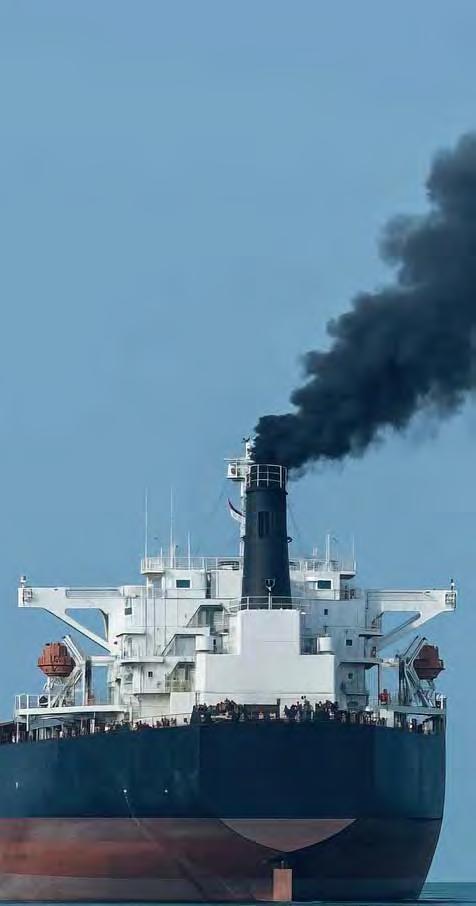
Steady as she goes
Implementation of the International Maritime Organization’s (IMO) Net-Zero Framework (NZF), which was set to apply from 2028, has been delayed.

costs. We see a continued interest in new ship design to mitigate this risk –and to meet sustainability goals.
NEW SHIP DESIGNS?
There are lessons from the past that shipowners and the marine insurance market can look to. In the 1960s, during the closure of the Suez Canal, we saw the emergence of very large crude carriers (VLCC) and later ultra large crude carriers (ULCC) designed to enable oil to be transported efficiently around the Cape of Good Hope.
The insurance market adapted and found ways to underwrite the new risks associated with these gigantic ships. And today, as technology evolves to design and build new ships suitable for a lower carbon future, we can use our risk prevention and management expertise to feed into innovation in shipbuilding as well as underwriting those vessels.
Many of our clients are exploring nuclear propulsion as an alternative future energy source. In February, we became members of the Nuclear Energy Maritime Organization (NEMO).
NEMO aims to help national and international regulators create rules and standards for the deployment, operation and decommissioning of floating nuclear power and to ensure that nuclear can be safely integrated into the maritime sector.
Like many shipowners, we recognise that nuclear power is likely to be a key consideration in the future of ship design and operation. We believe that understanding the risks and opportunities associated with it will be vital to enabling the industry to scale its effort.
DEMOLITION RISKS
The effects of geopolitical instability extend beyond their impact on decarbonisation. Ship demolition, an industry already sensitive to global trade flows and regulation, may also become more volatile.
The IMO’s Hong Kong International Convention for the Safe and Environmentally Sound Recycling of Ships (HKC) came into force in June 2025 and is intended to ensure that when ships are being recycled at the end of their operational lives they do not pose any unnecessary risk to human health or to the safety of the environment.
The HKC, however, presumes a relatively stable governance environment. Against the backdrop of rising geopolitical tensions, sanctions and realignment in international trade, access to compliant recycling capacity is increasingly shaped by political risk rather than technical readiness.
The result may be that some shipowners send older vessels to markets with weaker environmental or safety requirements. This has the potential for exacerbating environmental degradation, concentrating risk in underregulated regions, and increasing reputational and financial exposure for shipping companies.
Regulatory uncertainty and regional or local politics also play into decisions about when ships are sent for scrap. The uneven nature of decarbonisation policy and targets may mean that older tonnage is scrapped earlier than is economically necessary as owners look to avoid future compliance risks and uncertainty.
There’s a real risk that a two-tier system will emerge, whereby some vessels are scrapped in line with HKC standards while other vessels might be recycled in places where regulation is more of a grey area. This could result in environmental and safety standards being unevenly applied across the global fleet.
We need to keep communication with our clients open, to work with them to understand these dynamics and help them to address these challenges.
LESSONS FROM THE PAST
The London marine insurance market, the oldest in the world lest we forget, has seen many twists and turns through its history. Geopolitical shocks, fluctuations in fuel prices and supply-chain pinch-points are, to a large extent, nothing new.
“Shipowners plan for emergencies all the time –they have to.”
While the shape and the impact of these events is constantly shifting, as a marketplace we have the experience, expertise and risk prevention knowledge to help our clients to navigate an uncertain future.
Shipowners plan for emergencies all the time – they have to. Our role as an insurance market and collective of risk experts is to help them to minimize and mitigate risks like these and ready themselves for the future.


Christopher Chatfield , partner, Kennedys explains why establishing liability for theft of goods in transit is becoming more complex as technology takes over the process
The changing Emoji of theft of goods in transit?
Theft by deception has been a common problem facing ports, forwarders and warehouses faced with demands to hand over goods on production of fake paperwork and lorries bearing false number plates.
The London Shuffle (diverting drivers using little more than a fluorescent jacket and a clip board) gave rise to a great many losses.
However, the way in which such deception is commissioned has developed dramatically as technology provides the cargo owners, the forwarders and the thieves with increasing opportunities.
Ports, warehouses and forwarders have developed sophisticated management systems to handle increasing quantities of goods from receipt through to final delivery.
A party wishing to collect goods must, typically, provide various security details and a PIN. Carriers are increasingly
The Marine Insurer | May 2026

encouraged to use electronic documents for all elements of the service, whether that be the carriage (electronic bills of lading or other consignment notes) or services such as customs clearance. This all requires an online presence and essential information passing electronically.
WHO IS THIS?
False identity is the essence of theft by deception. Such deception takes many forms and can appear at any point in the supply chain.
With constant pressure on freight rates, forwarders often look at ways of subcontracting to reduce costs and maintain a profit.
Online platforms offer cheap rates from hauliers that claim to be running empty on a return leg. Many forwarders assume that, to advertise on such sites, the haulier must have been vetted. However, the small-print of the sites in question
inevitably makes it clear that they offer no such service. They simply introduce hauliers and forwarders.
Cargo is frequently stolen by hauliers advertising on such sites under a false identity. The exchange sites themselves will usually exclude any liability for such incidents, insisting that it is up to the forwarder to undertake its own checks about the haulier.
Another frequent source of theft (perhaps less well known but just as prevalent) concerns the sale of goods to fraudulent buyers.
Thieves masquerade as an interested buyer (often posing as a trusted retailer) in a series of transactions which are designed to build up a sense of trust – and then credit!
The use of artificial intelligence (AI) assists them in crafting emails, purchase orders and other documents which look remarkably similar to what one might expect from the retailer itself.
Whilst post-loss investigations may spot inconsistencies and errors in the documents, such points are missed by eager sellers, particularly when thieves impose tight deadlines.
Once sufficient trust, and credit, is established, the thieves arrange a large transaction and then disappear with the goods.
The cargo owner will blame the carrier for delivering to an unmarked warehouse in a run-down industrial estate. The carrier, in turn, blames the cargo owner for issuing bad instructions.
Thieves also pose as suppliers of cargo and claim to have supplied the wrong product by mistake.
They arrange for carriers (seemingly unaware of the theft) to collect the “wrong” cargo. The theft is then discovered when the promised replacement cargo doesn’t arrive.
The preparation for such theft is sophisticated and takes time and patience. It usually involves phishing emails designed to identify stock that is held and the relevant supply chains.
“The cargo owner will blame the carrier for delivering to an unmarked warehouse in a run-down industrial estate. The carrier, in turn, blames the cargo owner for issuing bad instructions”

If successful, the fraudsters will often identify other suppliers to imitate to access yet further cargo. AI can assist the thieves in preparing correspondence and documents which imitate the genuine supplier and convince the cargo owner and forwarder to release the cargo.
IS IT INSURED?
When goods are stolen within the supply chain, both the cargo owner and the forwarder will turn to their insurers for support. However, when theft is commissioned by such fraudulent activity, it gives rise to some difficult issues under insurance policies.
If a fraudulent carrier steals goods, never intending to carry out the insured voyage, it is arguable that the insured voyage didn’t commence and thus cover doesn’t commence – see The ‘Prestrioka’ 2 Lloyd’s Rep. 327.
It is yet to be seen whether the latest “transit clause” in the ICC(A) is sufficient to address this by bringing forward the point at which cover attaches.
Where fraudulent suppliers or buyers steal the goods, the goods are usually collected, carried and delivered as intended in the owner’s instructions.
Insurers will frequently question whether there has been any loss during the insured carriage arguing that this is a simple credit risk and not a cargo risk.
However, in such circumstances there has been a theft of goods and there is certainly an argument that theft occurred during transit – the goods were appropriated either on handing over to the carrier or on delivery.
“Freight liability insurers also have difficult questions to address. The carrier has delivered the goods to the place instructed. There will then be questions about whether the driver should have appreciated that the delivery address was an obvious scam – even though the consignor didn’t spot the signs during the transaction.
”
Freight liability insurers also have difficult questions to address. The carrier has delivered the goods to the place instructed. There will then be questions about whether the driver should have appreciated that the delivery address was an obvious scam – even though the consignor didn’t spot the signs during the transaction.
CYBER EXCLUSION
In October 2025, the LMA updated its cyber exclusion clause with JC2025-026 which includes a physical theft confirmation.
Although it continues to exclude loss and damage caused by the malicious use of computer systems intended to cause harm, this does not exclude theft of cargo where such theft would otherwise be covered and where there has been some additional human intervention.
Some older policies and many freight liability policies continue to use the old cyber exclusion clause which may operate to exclude thefts by deception described above.
But for how long will the current clause remain relevant? As logistics and supply chains develop the use of technology, automated carriage and AI, the need for human intervention will substantially reduce.
As the methods of accessing such systems develop, will the requirement for human intervention be eliminated?
The desire of cargo and liability insurers to avoid providing cover for cyber events is understandable. However, such policies will need constant review to ensure that they keep up with such developments and remain relevant to the risks presented.
Underwriting a profitable marine hull portfolio
India International Insurance delivers strong underwriting results in a challenging marine insurance market
In a challenging underwriting environment marked by sustained soft market conditions, India International Insurance Pte Ltd (III) has managed to deliver a strong performance in its marine hull portfolio. According to Q3 2025 statistics published by the General Insurance Association of Singapore, III was ranked the top hull & machinery insurer based on underwriting profit (after Lloyd’s Asia).
The company has also continued this positive momentum through FY2025, maintaining underwriting profitability in its hull line of business.
This achievement is particularly notable given the prolonged soft market conditions that prevailed before geopolitical tensions intensified in the Middle East. Insurers across the market have faced mounting pressure from shipowners seeking premium reductions, while the underlying risk exposure remains unchanged.
Devi Sathi Nair, head of the marine underwriting department at III, explains that disciplined underwriting has been the key differentiator.
Devi commented: “The market has remained quite volatile, with technical pricing coming under increased pressure due to the growing underwriting appetite among insurers and managing general agents. This has been further exacerbated by the heightened geopolitical risks and concerns surrounding nat-cat related claims. While shipowners sought premium reductions, there was the looming risk that profits accumulated in the past years could be wiped out by a few large claims. III, however recorded profits in the marine book and even our reinsurance treaty remained profitable.”
The company’s broader business performance has also remained strong. CEO Nalini Venugopal highlighted that the insurer achieved 22% growth in gross written premium across all lines in FY2025 while maintaining a combined ratio of 96%. Marine hull business alone contributes approximately 14% of the company’s overall portfolio. She noted: “III has a very clear view of what business we want to write and what we prefer to avoid. While continuing to retain existing hull accounts, we are also expanding our footprint in the cargo segment and freight forwarders’ liability insurance, the latter being a newly launched product. III is poised to become a significant market player in the Singapore insurance market while continuing to participate in risks emanating globally.”
Beyond underwriting, III has also developed a strong reputation for handling complex marine claims, supported by well-structured internal training programmes and a streamlined operational structure.

“III has a very clear view of what business we want to write and what we prefer to avoid. While continuing to retain existing hull accounts, we are also expanding our footprint in the cargo segment and freight forwarders’ liability insurance, the latter being a newly launched product. III is poised to become a significant market player in the Singapore insurance market while continuing to participate in risks emanating globally.”
Nalini Venugopal, CEO, III
spectrum of marine cargo, hull and offshore energy claims for more than a decade. Kumar says: “Our clients and intermediaries often tell us that our claims service is efficient and straightforward. The single-office structure enables quicker coordination and faster decision-making.”
Founded in Singapore in 1987, III emerged from the merger of five Indian state-owned insurers. Today the company is a well-established non-life insurer serving Singapore and the wider region, with an A– (Stable) financial strength rating from S&P Global Ratings and a strong presence in the cargo, hull and offshore energy insurance segments.
As market conditions remain uncertain and geopolitical risks continue to evolve, III’s strategy of disciplined underwriting, selective growth and efficient claims handling appears well positioned to sustain its profitability in the marine insurance sector. l
Roshan Kumar, head of the marine claims department, is a former mariner and brings extensive practical and technical experience to the role, having handled a wide For any proposal, queries, discussions, please contact:

Sathi Nair


Sanctions screening in cargo insurance is now embedded in the core mechanics of placement, certificate issuance and portfolio scalability. This ensures that insurers and brokers are not supporting risks that would put them off-side with regulators or their own compliance mandates. Yet many firms still treat screening performance as a peripheral control rather than a structural determinant of operational performance. David Giacomini , Insurity, explains why this process needs to be taken seriously and treated as a competitive advantage rather than mere compliance exercise
Expanding sanctions expectations have driven wider screening parameters and increased screening sensitivity. Regulators have broadened scope, geopolitical volatility has intensified scrutiny of maritime trade flows and screening vendors have responded with more aggressive matching logic.
On the surface, this makes sense. In practice, however, greater screening sensitivity has generated higher alert volume, heavier manual intervention and slower transaction speeds without necessarily identifying more sanction breaches.
In time-sensitive cargo placements, even incremental delays compound quickly. Certificates that could be produced instantly can stall for hours or days as alerts accumulate. In volatile trade environments, that delay can mean lost placements, frustrated customers, or exposure decisions made under pressure rather than with clarity.
According to data from Insurity, the number of sanctions hits processed across cargo insurance workflows has nearly tripled since 2020, rising from approximately 13,000 in 2020 to more than 37,000 in 2025. The sharpest acceleration occurred between 2024 and 2025, when total hits increased by nearly 50%, from roughly 25,000 to 37,000 in a single year.
The challenge of false positives
Alert volume is rising faster than underlying exposure. The challenge is no longer whether firms are screening rigorously enough. It is whether they are screening intelligently enough.
IDENTITY ARCHITECTURE PROBLEM
Cargo insurance presents one of the most complex identity environments in financial services. This is driven not only by the countries and counterparties involved in transactions, but by the vessels themselves. Ships routinely change names, flags, operators and ownership structures. Chartering arrangements shift frequently and differences in how names are translated or recorded across jurisdictions introduce ambiguity into what should be consistent vessel identification.

Most sanctions screening engines remain largely stringbased, matching text patterns against sanctions lists and escalating partial overlaps based on similarity thresholds.
This approach produces disproportionate noise, particularly around vessels. Screening often relies on attributes such as name, owner, charterer, operator and flag state, many of which change frequently or are recorded inconsistently across systems.
Screening systems that prioritise name similarity over stable identifiers such as IMO numbers are therefore predisposed to generate false positives.
As matching logic becomes more expansive, alert volumes increase even when underlying exposure does not.
Compliance teams spend time investigating name similarities that have no connection to actual sanctions risk, increasing operational workload without improving detection quality.
RISING FALSE POSITIVES
As Matthew Yeshin, global digital cargo leader, marine cargo and logistics practice at Marsh, notes: “We’ve seen false positives rise sharply by more than 400% the past year, not because we’re placing riskier business, but because screening parameters are picking up more variables. The slowdown
isn’t tied to increased exposure but increased sensitivity and searched terms.”
The outcome data reinforces the point. Insurity’s analysis shows that approximately 97%–98% of all sanctions referrals are ultimately approved. Only around 1% to 1.5% result in a rejection. In other words, the overwhelming majority of alerts are cleared as non-material.
What appears as heightened vigilance often masks a deeper inefficiency. The system is detecting similarity rather than risk. When a vessel attribute repeatedly triggers a referral, that alert can reappear every time the same vessel is screened.
With modern container ships carrying more than 20,000 containers per voyage, the same false positive can be generated thousands of times across different cargo placements.
DUPLICATION ACROSS THE SUPPLY CHAIN
Sanctions screening in cargo insurance also occurs within a much larger screening ecosystem. In a typical international supply chain, shipment data may be screened eight to twelve times before cargo reaches its destination. Exporters, carriers, banks and port authorities all conduct independent checks because each carries separate legal liability.
Cargo insurers add another layer of review. Brokers and insurers often rescreen the same shipment information multiple times throughout the policy lifecycle, including during issuance, amendment, vessel verification, claim submission and payment.
Regulators increasingly view insurers and brokers as frontline enforcement participants, reinforcing the need for rigorous screening but also multiplying operational friction when systems operate without shared context.
The result is not stronger protection but layered redundancy. Modern insurance-specific platforms streamline this layer by allowing brokers and insurers to review alerts within shared workflows while maintaining their own compliance oversight.
When structured properly, exception management and
“Regulators increasingly view insurers and brokers as frontline enforcement participants, reinforcing the need for rigorous screening but also multiplying operational friction when systems operate without shared context.”
vessel identity anchoring preserve control while reducing repetitive investigation and restoring transaction speed.
CONTEXT IS THE MISSING VARIABLE
Maritime sanctions risk is rarely binary. Dark vessel behavior, AIS suppression, ship-to-ship transfers and opaque ownership structures create layered risk profiles that cannot be understood through static list matching alone. At the same time, historical ownership links or outdated records can trigger alerts that no longer represent meaningful exposure.
Expanding fuzzy-logic parameters may increase detection sensitivity, but without contextual intelligence it also increases noise. Effective screening in the cargo environment requires correlation across multiple dimensions including vessel identifiers, ownership evolution, jurisdictional overlays, AIS behaviour patterns and voyage geography.
Screening systems that cannot interpret this context are forced to escalate broadly because they cannot distinguish genuine risk from harmless similarity.
COMMERCIAL IMPLICATIONS OF OVERSCREENING
Under-screening carries obvious regulatory and reputational consequences. No cargo insurer or broker can afford exposure to sanctioned entities. But over-screening introduces its own operational costs.
High false-positive rates increase manual review hours, delay certificate issuance and strain broker relationships. During periods of high trading activity, alert backlogs can accumulate quickly, creating bottlenecks that slow placement workflows.
“At a certain point, the issue isn’t compliance, it’s throughput,” said Yeshin. “When most of your team’s time is spent clearing false positives, operational efficiency and customer service becomes the real concern.”
In this sense, excessive screening noise becomes a transaction cost on speed. It may not appear directly in financial metrics, but it affects scalability, resource allocation, and client perception. Firms experiencing persistent friction in certificate turnaround are often confronting an architectural limitation in how screening processes are designed.
MARITIME-SPECIFIC PRECISION
Improving sanctions screening in cargo insurance does not mean lowering standards. It means designing systems that reflect how maritime trade actually operates.
Screening should prioritise stable vessel identifiers such as IMO numbers before relying on name similarity. Previously vetted vessels and counterparties should be reused where appropriate to prevent repeated investigation

“The challenge is no longer whether firms are screening rigorously enough. It is whether they are screening.’’
of identical exposures. Screening thresholds should focus attention on material risk rather than textual overlap, while AIS and ownership intelligence provide essential context for interpreting alerts.
These adjustments do not weaken compliance. They strengthen it by directing analytical effort toward genuine exposure.
SANCTIONS SCREENING AS A COMPETITIVE ADVANTAGE
As sanctions rules change and geopolitical tensions continue to shift global trade routes, scrutiny of maritime trade is not easing. If anything, it is becoming more continuous, more data-driven and less tolerant of ambiguity.
Cargo insurers must operate in an environment in which compliance strength and operational speed must coexist. Sanctions screening therefore shapes more than regulatory posture. It influences certificate turnaround, underwriting scalability and broker experience in the market.
Firms making progress treat sanctions screening as a workflow and data challenge, not just a compliance filter, anchoring vessel identity to IMO numbers, reusing vetted vessels and counterparties and calibrating thresholds to focus on material risk. Those that take this approach restore transaction speed without weakening compliance, while firms layering sensitivity onto legacy screening structures ultimately embed friction in their operating model.
Power below deck

Lithium ion batteries are reshaping marine loss profiles, says Kirk McGregor , head of loss prevention, marine – British Marine
Lithium ion (Li-Ion) batteries have become a defining technology of the modern marine environment. From hybrid propulsion systems and high-capacity house banks to tenders, power tools and the smartphones in every crew member’s pocket, Li-Ion energy storage is now embedded across operations.
With that growth comes a corresponding shift in risk. What was once considered a contained engineering hazard has evolved into a complex, behaviour-driven and increasingly material loss driver.
For marine insurers, Li-Ion battery risk is a present and expanding exposure category that demands closer underwriting attention, improved loss prevention dialogue and a more mature approach to technology risk at sea.
AN UNDERESTIMATED EXPOSURE
The International Energy Agency (IEA) reports that global battery demand reached more than 750 GWh in 2023, up 40% relative to 2022, driven largely by electrification trends. While much of this growth relates to automotive markets, the supply chain expansion and falling costs are directly influencing marine uptake, particularly in leisure craft and hybrid commercial vessels.
In parallel, Li-Ion battery fires are rising across sectors, reflecting the rapid increase of rechargeable energy storage technologies. QBE Europe analysis published in 2025 found that fires caused by Li-Ion batteries have doubled in the past two years, across predominantly land based portfolios. While marine specific data remains limited, the underlying risk drivers are directly transferable to the onboard environment. Much of this data relates to property portfolios and land-based environments, but, the underlying risk drivers (such as increased battery density, widespread charging activity and inconsistent equipment standards) are directly transferable
to the marine setting. In confined onboard spaces, where escape routes are limited and fire load concentration is high, the consequences can be significantly amplified.
Aboard vessels, the risk is intensified by confined spaces, limited escape routes and the inherent vulnerability of marine assets to fire. A Li-Ion fire in a machinery space or charging bay is not equivalent to a small electrical incident; it can escalate rapidly into a total loss.
UNDERSTANDING THERMAL RUNAWAY
Central to Li-Ion risk is the phenomenon of thermal runaway. When triggered, a battery cell enters a selfsustaining reaction that generates intense heat and flammable gases. Crucially, this reaction can continue even if visible flames are suppressed.
The UK Maritime and Coastguard Agency (MCA) issued Marine Guidance Note MGN 681, highlighting best practice for the safe stowage and operation of electric-powered craft and vehicles on yachts. The guidance underlines the unique hazards of Li-Ion batteries, including the potential for reignition after apparent extinguishment.
For insurers, thermal runaway presents several challenges:
• Severity amplification: Rapid heat generation can compromise structural integrity, ignite adjacent materials and overwhelm fixed suppression systems;
• Toxic vapours: Combustion releases hazardous gases, increasing crew risk and complicating firefighting response; and,
• Reignition potential: Damaged batteries may reignite days or even weeks later, introducing latent exposure during towage, salvage or yard storage.
This is not simply an electrical risk; it is a high-severity fire risk with atypical characteristics.
LOSS PREVENTION BOUNDARIES
From a P&I loss prevention perspective, it is important to recognise that Li-Ion battery risk cannot be fully engineered out of marine operations. Even class approved installations remain vulnerable to latent defects, physical damage and human behaviour. Loss prevention controls therefore
“By embedding Li-Ion considerations within underwriting and loss prevention frameworks, insurers can reduce volatility while supporting safe adoption of emerging technologies.”
focus on risk limitation, early detection and consequence management, rather than risk elimination. This distinction is critical when considering underwriting appetite, survey scope and post loss exposure.
CHARGING CULTURE ONBOARD
One of the most significant and under-discussed contributors to Li-Ion exposure is behaviour. Charging is ubiquitous and routine. Crew members charge phones, radios, tools and tenders daily. On larger yachts and commercial vessels, multiple batteries may be charging simultaneously in workshops, cabins or deck areas. This normalisation can create complacency.
The National Fire Chiefs Council has warned that many battery fires are linked to inappropriate charging practices, including use of non-approved chargers and charging unattended or overnight. Translated to a marine context, the same behaviours may occur below deck or within confined spaces, often without adequate ventilation or detection systems.
For underwriters, this introduces a subtle but material risk variable: culture. A vessel may have compliant battery installations and fire-rated compartments, yet still experience elevated exposure if crew training, supervision and charging controls are inconsistent. Li-Ion risk therefore spans both engineering and human factors, an overlap often underexplored by standard marine underwriting questionnaires.
From a claims and loss prevention perspective, it is useful to distinguish between installed battery systems (such as hybrid propulsion or fixed energy storage banks) and portable Li-Ion devices.
While installed systems are typically class approved and monitored, portable devices introduce a more diffuse and behaviour driven risk, often involving non OEM chargers, informal charging locations and limited supervision.
Operational experience and insurer loss data indicate that a significant proportion of onboard lithium ion battery fire incidents originate from small, portable devices, such as power banks, handheld electronics and personal equipment, rather than from installed propulsion or large energy storage systems.
ENERGY DENSITY AND RISK POTENTIAL
While comprehensive marine-specific Li-Ion loss data remains limited in the public domain, cross-sector evidence illustrates the potential severity.
In the UK, reports show that Li-Ion battery fires, particularly from e-bikes and e-scooters, have led to multiple fatalities, with official product safety data recording eight deaths linked to e-bike and e-scooter battery fires in 2024 and wider safety campaign analysis suggesting that at least 15 lives have been lost due to Li-Ion battery fires since 2020. Again, while not marinespecific, the data demonstrates the capacity for these fires to escalate rapidly.
In the marine context, fire remains one of the most significant drivers of large losses. Allianz Commercial’s Safety

& Shipping Review 2023 identifies fire/explosion as the second most frequent cause of shipping incidents in the past decade, accounting for 209 incidents between 2012 and 2022. As battery installations increase onboard, the probability that some of these fires will involve Li-Ion components also rises.
The risk is not limited to propulsion systems. Even a small battery in a tender, drone or e-bike can act as an ignition source in proximity to combustible marine materials, including composites and fuels.
EMERGING UNDERWRITING CONSIDERATIONS
For marine insurers, Li-Ion exposure requires a shift in questioning and risk dialogue. Key areas for consideration include:
1. Installation standards and OEM compliance: Are batteries and charging systems sourced from original equipment manufacturers? Are aftermarket chargers permitted onboard?
2. Charging locations and supervision: Is charging confined to fire-rated compartments? Is remote electrical isolation available? Are batteries charged only when crew are present
3. Detection and monitoring: Are thermal cameras or infrared monitoring tools in use for larger battery banks? Is gas detection integrated within charging cabinets?
4. Storage and segregation: Are spare or damaged batteries quarantined appropriately? Are combustible materials excluded from battery storage spaces?
5. Training and emergency response: Have crew received training specific to Li-Ion fires, including recognition of early warning signs such as visible battery deformation, abnormal heat generation, audible alarms or other indications requiring immediate isolation and escalation, without getting close or relying on smell? Does the vessel carry materials intended to


“The International Energy Agency (IEA) reports that global battery demand reached more than 750 GWh in 2023, up 40% relative to 2022, driven largely by electrification trends.”
assist with heat control and fire spread limitation in Li-Ion battery incidents?
P&I LOSS PREVENTION FOCUS AREAS
• Identification and limitation of Li-Ion exposure onboard
• Control of charging practices and locations
• Crew awareness of early failure indicators
• Segregation and quarantine of damaged batteries
• Recognition that post incident handling may drive the largest P&I losses
SALVAGE AND POST-LOSS COMPLEXITIES
Li-Ion battery fires present unique challenges for salvage and post-incident handling. Thermal runaway can persist internally after surface flames are suppressed. The MCA notes that Li-Ion batteries may reignite and require extended monitoring. For insurers, this introduces additional cost vectors:
• Prolonged firefighting and boundary cooling;
• Water damage from mass drenching;
• De-watering and pollution control;
• Extended yard storage and monitoring; and,
• Disposal of hazardous battery waste.
From a P&I loss prevention perspective, Li-Ion battery incidents frequently extend beyond hull damage into personal injury, pollution prevention and third party liability exposure.
Toxic gas release in confined spaces can significantly increase crew injury risk, while prolonged cooling, battery removal and contaminated firefighting water introduce additional pollution and disposal liabilities. In practice, these exposures often crystallise during casualty response, towage and yard handling, rather than the moment of ignition.
These secondary costs can materially inflate claim severity,
particularly on high-value yachts or specialist commercial vessels.
EVOLVING MARINE TECHNOLOGY RISK
The marine sector has navigated technological shifts before, from composite hulls to complex navigation electronics. Li-Ion batteries represent another inflection point. Unlike previous innovations, however, Li-Ion systems combine:
• High energy density;
• Behavioural dependency (charging habits);
• Cross-functional integration (propulsion, hotel loads, personal devices); and,
• Latent failure potential. This combination challenges conventional marine risk frameworks.
For insurers, the objective is not to inhibit technological progress. Electrification and energy storage offer environmental and operational benefits aligned with decarbonisation goals and the marine sector will inevitably follow that trajectory. The opportunity, therefore, lies in proactive risk partnership.
Marine insurers can support customers through:
• Updating proposal forms to capture Li-Ion exposures explicitly;
• Encouraging compliance with recognised guidance such as MGN 681;
• Integrating Li-Ion considerations into survey requirements;
• Promoting crew training and behavioural awareness; and
• Reviewing policy wordings for clarity around battery-related exclusions or warranties.
By embedding Li-Ion considerations within underwriting and loss prevention frameworks, insurers can reduce volatility while supporting safe adoption of emerging technologies.
THE NEW NORMAL
Li-Ion batteries are no longer an emerging novelty at sea. They are embedded across propulsion, auxiliary systems and daily life onboard. As their presence increases, so too does the potential for high-severity fire events with atypical characteristics.
For marine insurers, this is a defining technology risk of the current decade. The exposure is not confined to electric vessels; it extends to every yacht and commercial craft carrying rechargeable devices.
Understanding thermal runaway, recognising behavioural risk drivers and integrating targeted underwriting controls will be critical in reshaping marine loss profiles for a battery-powered era. Technology below deck is evolving rapidly and our risk management must move just as quickly.
The marine insurance sector’s fastest emerging risk
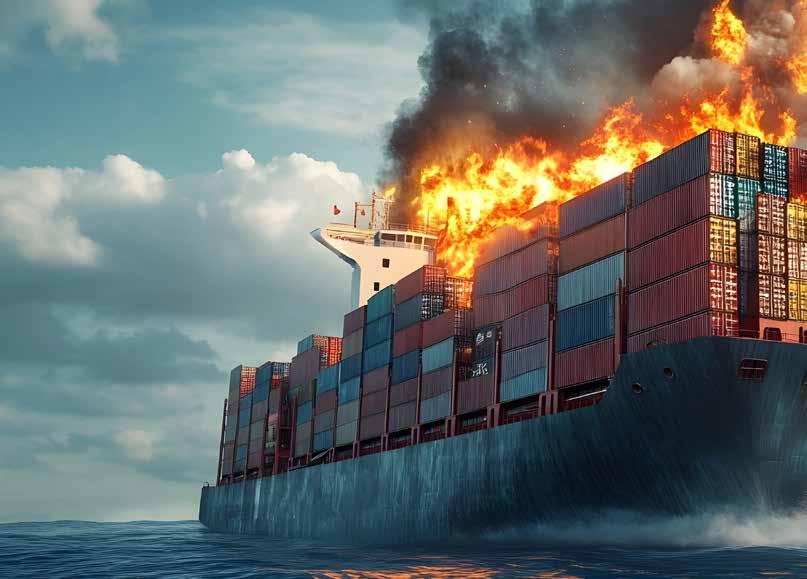

Lithium ion batteries have become the backbone of the global decarbonisation movement, but at sea, they represent one of the most complex and costly risks the marine insurance sector now faces. With fire incidents rising, claims inflation increasing and evidence preservation challenges mounting, insurers warn that the industry is heading into a new era of high severity exposure explains Callum
Aitken , senior investigator, Jensen Hughes
Fire remains the most expensive driver of marine insurance losses, representing 18% of claim value across more than 240,000 cases analysed between 2017 and 2021. Insurers point to the surge in electric vehicles (EVs) entering the maritime supply chain, now accounting for roughly a quarter of all cars shipped at sea, up from under 10% pre pandemic, as a significant catalyst for heightened risk.
BATTLING MISDECLARED GOODS
A major contributor to fire losses is the misdeclaration of dangerous goods, including lithium ion batteries inaccurately described as generic “computer parts.” Approximately 25% of serious containership incidents are linked to mis-declared cargo.
A HIDDEN THREAT
Underwriters have also begun focusing on the overlooked hazard of small lithium ion devices used by crew, including radios, vapes, power banks and mobile phones. These items
Fire remains the most expensive driver of marine insurance losses, representing 18% of claim value across more than 240,000 cases analysed between 2017 and 2021.
have already caused multi-million pound losses when igniting in confined shipboard spaces.
Case studies reveal fires breaking out on navigation bridges and in crew quarters due to overheated or poorly stored devices, incidents that insurers warn are not rare, but recurring indicators of systemic onboard risk.
Expert consensus is clear: lithium ion battery failure is not just a cargo challenge. It is a systemic marine insurance challenge.
From underwriting and regulation to vessel design and onboard behaviours, the sector must adapt rapidly or face escalating losses.
The future of marine risk mitigation will hinge on collaboration across manufacturers, shippers, surveyors and insurers. In a world where a single battery cell can engulf an entire vessel, preparedness, not probability, is the insurer’s strongest defence.
TECHNOLOGY DRIVEN DETECTION & SUPPRESSION
Insurers now recognise that traditional firefighting systems
are ineffective against lithium ion battery combustion, which does not rely on oxygen and can reignite long after initial suppression attempts. This has elevated the importance of advanced detection and fire monitoring technologies:
> Heat signature and gas sensing detectors
Early-stage detection of gas and heat signatures associated with thermal runaway allows crews to respond before flames erupt. Modern multi sensor arrays can detect; volatile organic compounds, off gassing precursors from overheating cells, abnormal temperature spikes.
> Fire resistant stowage and battery specific suppression units
Specialised CO₂ alternatives, water fog hybrid systems, and battery quench agents are being incorporated into vessel retrofits. Underwriters increasingly differentiate vessels based on their degree of adoption of such technologies, as highlighted by Allianz Commercial’s concerns that vessel design and onboard systems may no longer be adequate for modern battery related risks.
DIGITAL FORENSICS AT SEA
One of the greatest challenges for insurers is the destruction of evidence during lithium ion battery fires. Thermal runaway produces extreme heat and explosive conditions that can obliterate physical components and compromise cargo integrity.
To compensate, insurers are rapidly adopting advanced digital forensic imaging giving high resolution imaging. Hull mounted sensors and drone borne thermal cameras are increasingly used post incident to capture digital evidence before salvage operations disturb the casualty site.
A TECHNOLOGICAL TURNING POINT
As lithium ion batteries become more prevalent at sea, technology will define the future of marine fire risk management. From digital forensics to predictive onboard monitoring, technological innovation is now the decisive factor separating resilient operators from vulnerable ones.
In an era where a single battery cell can engulf an entire vessel, insurers agree: preventive technology, not probability, is now the defining line of defence.
“Expert consensus is clear: Lithium ion battery failure is not just a cargo challenge. It is a systemic marine insurance challenge.”
The ice does not forgive
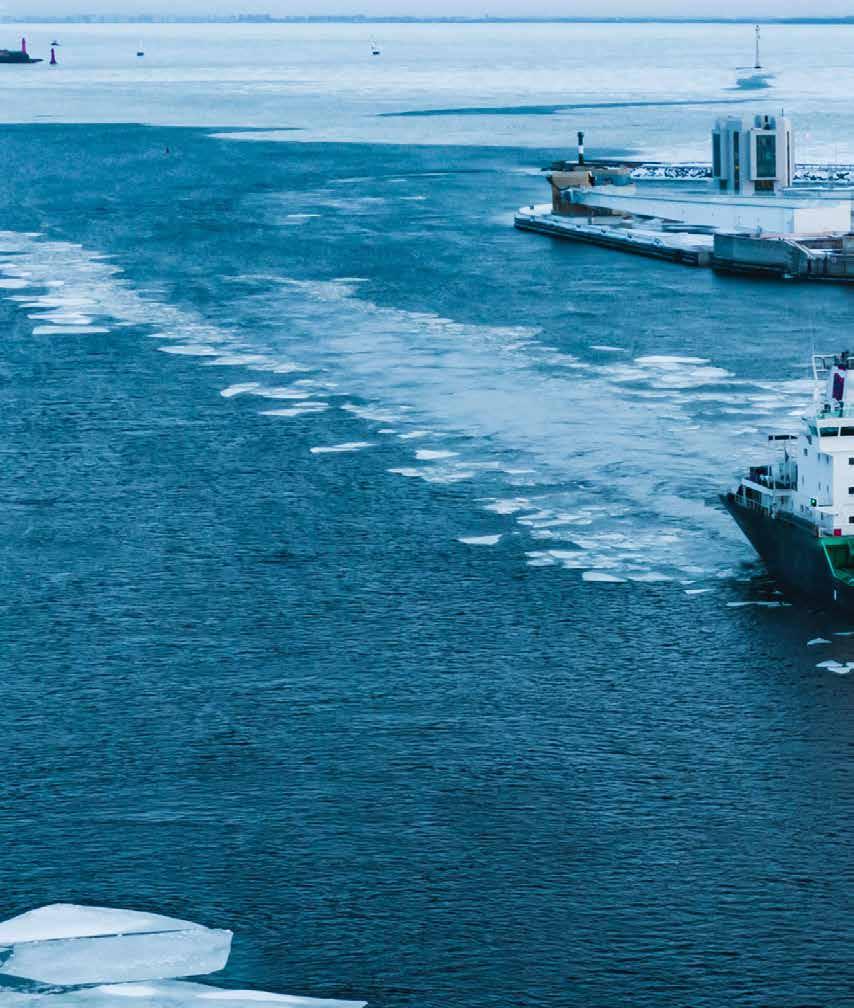


The true scope and operation of bespoke ice indemnity clauses will always be a matter of the proper construction of the clause and the charterparty as a whole and may vary on a case-by-case basis. Hill Dickinson’s Rosie Goncare , (top left) partner, Martin Hall , partner and Joshua Thomson (bottom left) associate, investigate the general principles which tend to emerge in practice
Continued on page 66
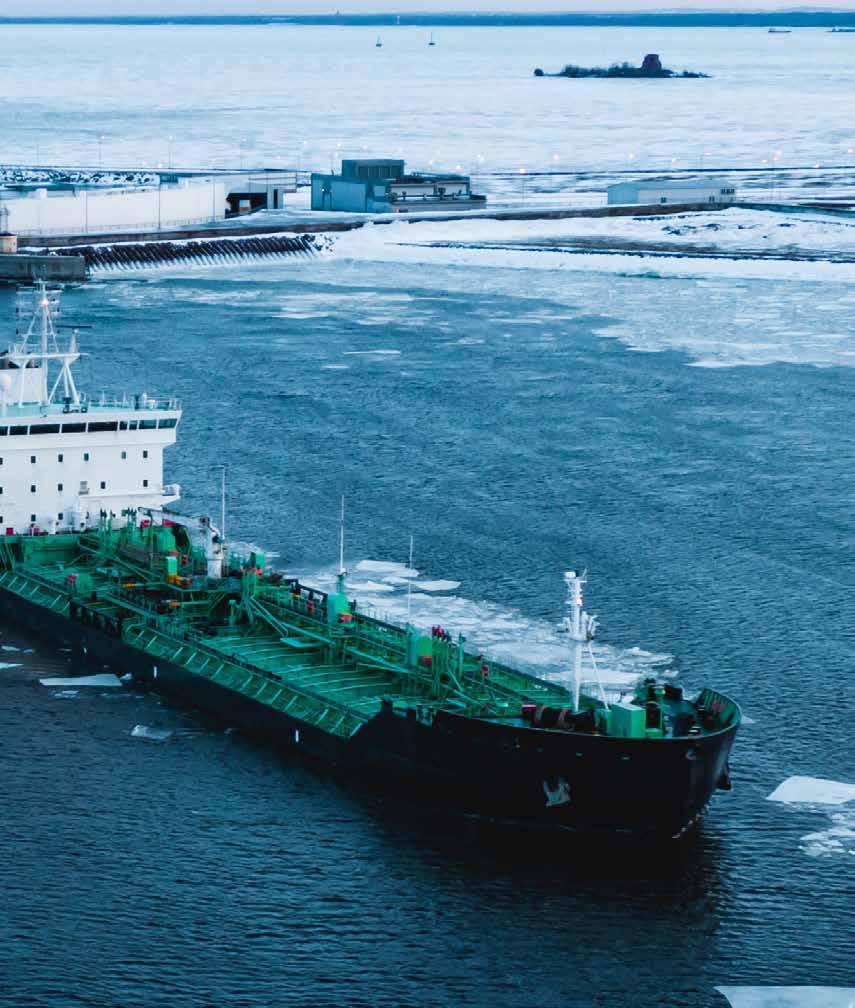
Where a charterer requires the use of a ship to trade to ports which may be impacted by ice, it is understandable that the owners of that ship may be inherently reluctant to engage in such trades. Ice has the potential to cause significant damage to a vessel and her machinery and can quickly result in major repairs being necessary in order for the vessel to trade efficiently and safely again.
In response to this peril, time charterparties often include bespoke indemnity provisions whereby the charterers expressly agree to indemnify the owners for damage caused by ice should the vessel trade into such regions.
Ice indemnity clauses are generally designed to provide a shipowner with an express right to be indemnified for the costs of remedying damage caused as a result of following the charterer’s orders to trade into a region impacted by ice.
This means that, depending on the construction of the clause, the shipowner may not necessarily need to establish a breach of the charterparty in order to found a right of indemnity against the charterer.
All that the owner may need to prove is their loss which has been sustained due to damage caused by ice as a result of following the charterer’s orders. Indemnity clauses also typically make express provision that the vessel shall remain on-hire for delay caused by the damage.
This provides a powerful remedy, because the usual burden of establishing a breach of an obligation may not be required for the owner to exercise their right under the charterparty to recover damages for any loss suffered. In short, the shipowner may be entitled to a financial remedy merely by virtue of suffering a loss caused by ice.
SCOPE OF INDEMNITY
Where an owner alleges that they have suffered damage caused by ice, the first question which typically needs to be addressed is whether the damage complained of falls within the scope of the indemnity.
In practice, we have seen clauses which cover damage sustained by the vessel’s propeller and hull, but which may not necessarily extend to damage caused to the main engine or associated machinery.
However, ice has the potential to cause significant damage to propeller blades, including bending of the blades and sheering. Such damage may occur within a short space of time as the blades come into contact with the ice and a damaged propeller has the potential to cause significant vibration if left out of balance after the impact.
Therefore, the scope of the clause will be important in order to ascertain the true extent of the indemnity.
CAUSATIVE LINK
The causative link required for the owner to bring themselves within an indemnity clause will ultimately turn on the true construction of the clause. However, generally speaking it will
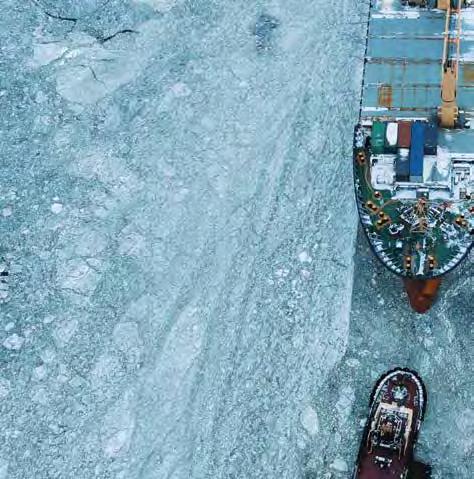
“Ice has the potential to cause significant damage to propeller blades, including bending of the blades and sheering. Such damage may occur within a
short space of time as the
blades come
into contact with the ice
and a damaged propeller has the potential to cause significant vibration if left out of balance after the impact.”

be necessary to show that the effective cause of the damage sustained by the vessel was as a result of ice, even if ice was not necessarily the sole cause.
Further, unless the clause specifies otherwise, there may be no right to an indemnity if the chain of causation is broken by the negligence of the master or crew.
Typically, the master acting as the owner’s agent/servant retains overall responsibility for the navigation of the vessel and will be expected to exercise good navigation and seamanship while providing the chartered service.
Therefore, if the effective cause of the loss is found to be the negligence of the master or crew, then there may be no right to claim an indemnity. Equally, pilots are typically regarded as the owner’s servants and so any negligence on their part may be attributed to the owners.
It is, therefore, important when trading in ice to ensure that reasonable skill and care is being exercised by the master and crew while navigating in what may otherwise be a challenging environment.
INSURANCE QUESTIONS
In practice, ice can cause significant damage. As mentioned above, it has the capability to bend propeller blades, sheer propeller blades and cause deformation to hull profiles. Any imbalance in the propeller could also cause undue
vibration which has the potential to cause further damage to a ship’s machinery. Repair costs can be high and it may be necessary to carry out immediate remedial work before the vessel is capable of operating safely and efficiently.
Therefore, given the immediate property damage that may have been sustained by the owners following damage caused by ice and given the potential size of any indemnity claim which may be levied against the charterers, both parties will naturally look to see what insurance policies they may have in place on which they can call.
For an owner, the obvious insurance they may look to will be their hull and machinery (H&M) cover. Under the Institute Time Clauses Hulls (ITCH) ice damage is generally covered by the policy (subject to trading warranties) and ice indemnity clauses may require the charterers to reimburse the owners for any additional premiums required by the vessel’s underwriters.
H&M underwriters may then seek to bring a subrogated action against the charterers under the ice indemnity clause along with owners bringing their own claim for any uninsured losses such as the deductible for example.
The question for the charterers will be what insurance they may then have in place to deal with such an eventuality. In our experience, charterers may have freight, demurrage and defence cover (FD&D) that will cover the legal expenses of defending such an action.
However, the insurance tends to be discretionary and, if the insurer considers the merits of the charterer’s defence to be poor, then they may exercise their discretion not to cover any defence action that the charterers may wish to pursue.
In any event, such cover will not indemnify the charterers for the value of the principal claim being brought against them and the question for the charterers will be whether they have any form of additional charterers’ liability cover that may respond to the principal amount in issue.
Charterers may, therefore, wish to consider what levels of cover they have in place and what forms of cover they may wish to ensure they have if they require the use of a ship to trade into regions impacted by ice.
CONCLUSION
In conclusion, careful consideration should be given to the true and proper construction of any potential ice indemnity provision which the parties may consider agreeing and both parties (but perhaps particularly the charterers) would be advised to consider what level of insurance cover they may wish to take out to deal with any potential indemnity claim arising from such clauses.
Finally, climate change appears to be causing greater weather extremes year on year, and so the potential for ice damage may increase if certain ports start to experience colder temperatures during winter periods.
Using data to drive resilience in offshore wind

By Sophie Draper , renewable energy risk engineer, Axis
As a cornerstone of global energy transition strategies, the scale and sophistication of offshore wind projects continue to accelerate.
Turbines now tower up to 280 metres and generate upwards of 15MW each, contributing to rapid growth that is set to almost triple offshore wind capacity between 2024 and 2030 to 238 GW.
This expansion carries significant promise as well as a complex mix of technical risks. As technologies evolve ever faster, and where even minor design or installation issues can escalate into multimillion dollar claims and extended downtime, understanding potential vulnerabilities is critical for developers, manufacturers, lenders and insurers alike.
To elevate understanding of these risks, we analysed offshore wind claims from January 2021 to September 2025 across its portfolio. The research demonstrates the critical importance of combining insight from past claims
with data driven risk engineering, supported by strong partnerships with specialist insurers and brokers equipped to navigate this rapidly developing landscape.
WIND TURBINES: THE EPICENTRE OF EMERGING TECHNICAL CHALLENGES
More than half of all claims analysed (57%) originated from the wind turbines themselves, representing the largest share of total incurred losses. As turbines grow larger and more complex, this concentration of risk is not surprising.
High load components such as gearboxes, generators and main bearings are experiencing greater mechanical and electrical stresses. This can be amplified by the commercial pressures from clients on OEMs to build bigger turbines and faster. This means time available for testing new designs before deployment at sea is more limited.
Approximately two-thirds of turbine related claims relate specifically to the drive train with failures often linked to design or manufacturing issues, such as non metal intrusions into a gearbox or main bearing that may not manifest until years into operation.
“Given the pace of change and the complexity of offshore environments, strong partnerships with manufacturers, developers, lenders and insurers with deep, specialist offshore wind expertise is essential.”
Given the scale of modern turbines, replacing a generator, blade or main bearing requires highly specialised vessels costing hundreds of thousands of dollars per day while availability remains constrained.
The implications for the offshore industry as well as insurers are substantial as an outage affecting major components may result in both high physical damage costs and considerable business interruption losses.
CABLES: LOW FREQUENCY, HIGH SEVERITY RISKS
While turbine problems dominate by volume, export cables represent the most expensive class of claims, with an average loss of $18.8m, according to our analysis. Damage to these high voltage connections can force entire wind farms offline until repairs are completed.
The risk landscape around cables is also evolving through time with the widespread failures in cable protection systems that led to numerous claims a few years ago now subsiding as developers responded by reinstating secondary protections such as rock dumping, which has helped reduce recurrence. Nonetheless, challenges persist notably:
•Cable overbending during laying in construction, leading to permanent damage to the cable conductor, insulation and sheath; and
•Manufacturing defects and joint failures, which remain major root causes of short circuits and downtime.
Given the high repair costs and logistical constraints involved in offshore wind including limited weather windows and specialised vessels, as insurers we advocate for rigorous design reviews and the importance of learning lessons from earlier generations of projects.
CONSTRUCTION VERSUS OPERATION
Historically, construction was viewed as the riskier phase of an offshore wind project. Construction risks often stem from the unpredictability of seabed conditions and installation challenges. Pile rejection, pile running, or encountering boulders during foundation works can result in costly remediation and delays, contributing to wind turbine foundation claims averaging $7.4m according to our analysis.
Our research also shows that while construction claims remain severe, operational claims are rising in frequency, driven largely by wind turbine breakdowns. As more turbines age and new models encounter real world conditions, operational risks are expanding.
This marks an important inflection point where project owners and insurers must view operational reliability and safe installation practices as being equally important when it comes to quantifying and managing risk.
DATA AS A CATALYST
The claims analysis we underetook has highlighted the vital role of data in identifying emerging trends and potential risk mitigation strategies to limit further losses.
For example, identifying the recent dominance of wind turbine drive train issues demonstrates how risk exposures evolve and why historical claims data must be continuously analysed to anticipate what comes next.
Using claims data to inform project design, contractual decisions and contingency planning enables developers and insurers to collaborate more effectively.
SPECIALIST INSURANCE PARTNERSHIPS
Given the pace of change and the complexity of offshore environments, strong partnerships with manufacturers, developers, lenders and insurers with deep, specialist offshore wind expertise is essential.
Offshore wind is not merely a source of clean power; it underpins energy security strategies and decarbonisation commitments. As reliance on offshore wind grows, so does the need for resilient offshore wind farms capable of delivering consistent, long term output.
By applying lessons learned from previous claims data, the offshore wind industry and insurers can be better positioned to navigate the technical risks of larger turbines, more complex systems, and ambitious deployment targets.
For more on offshore wind trends read the report: Home - AxisManaging Risks and Challenges in Offshore Wind
Time to close the regulatory gap


Akshat Arora, regional loss prevention director, UK P&I, Singapore, argues that a more coherent approach to the regulation of maritime cyber risk is needed
As the application of maritime digital innovations advances, ship owners and crew are adapting to the continued integration of complex systems designed to promote smarter, more efficient vessels.
The proliferation of digital systems onboard creates a myriad of new vulnerabilities for malicious actors to exploit, and attacks have steadily increased in the last decade.
A recent study by NHL Stenden University in the Netherlands catalogued approximately 165 publicly documented incidents of cyber-attacks on maritime systems between 2001 and 2023.
This coincides with a period of significant geopolitical unrest. Conflict in Ukraine, and now also in the Middle East, has led to a growing trend of vessels being targeted
as they transit key shipping routes, fuelling a rise in sophisticated cyber-attacks on critical maritime systems and communications infrastructure.
MULTIFACETED RISK ENVIRONMENT
Common types of cyber threats include malware attacks, phishing schemes, ransomware, and the exploitation of vulnerabilities in software and hardware systems.
Each of these methods represents a significant risk to maritime operations. However, automatic identification system (AIS) “spoofing”, which is used to deceive tracking systems and falsify a vessel’s identity, position, and other information is a particularly prevalent challenge.
This tactic can also be used to impact global navigation satellite system (GNSS) receivers, with the aim of

broadcasting fake or counterfeit satellite signals to deceive a GNSS receiver.
Reports from the US Coast Guard Navigation Centre suggest significant GNSS interference – spoofing and jamming – in areas such as the Baltic Sea, Eastern Mediterranean, Black Sea, Red Sea, Persian Gulf and South China Sea.
Such interferences can impact the accuracy of positioning, navigation, and timing data, creating a confusing and potentially dangerous situation by misleading the user with false information, which can include altering a vessel’s identity, position or speed.
THE COMPLEXITIES OF LIABILITY
Aside from the obvious and significant operational
“Existing IMO guidelines are nonprescriptive and the Resolution MSC.428(98) goes no further than ‘encouraging’ administrations to ensure that cyber risks are addressed within the SMS. Such regulatory insufficiency has created an inconsistent and partly voluntary landscape, leaving the industry ill-equipped to keep pace with the scale of the cyber threat.”
disruptions that such cyber-attacks often result in, they also represent particularly complex incidents from a liability perspective.
When it comes to cyber risk insurance coverage, there is no express exclusion under protection and indemnity (P&I) rules, unless the loss is caused by a war risk.
As a result, shipowners’ standard P&I cover will include liabilities arising out of a cyber-attack, except in specific circumstances such as an act of terrorism, or in instances where a cyber-attack was conducted as a hostile act by a belligerent power.
The complexity arises when the motivation behind a cyber-attack is unclear. In the context of war risk, terrorism is broadly understood to denote acts aimed to kill, maim, or destroy indiscriminately for a public cause.
In cases of GNSS jamming or spoofing, for instance, if a vessel is damaged after running aground due to navigational systems disruption, questions may arise regarding the cause and ultimate fault that led to the incident, which may be challenging to assess.
However, such acts have generally been deemed by courts to arise in circumstances of war or civil war and to be perpetrated by governments or organised rebels.
Accordingly, if a cyber-attack were to be executed against a ship by a government or organised rebel group during a war or civil war, the war risks exclusion in the rules would be engaged.
INCOHERENT REGULATORY LANDSCAPE
In response to this growing trend in cyber-attacks, the International Maritime Organization (IMO) introduced
Resolution MSC.428(98) into the International Safety Management (ISM) Code in January 2021.
This shifted the industry’s approach to cyber security from merely an IT issue, to a core component of safety management, as it required shipping companies to include consideration of cyber risk within their safety management system (SMS).
This resolution was subsequently supported by cyber risk management guidelines (MSC-FAL.1/Circ.3/Rev.3) and robust classification rules, developed by the International Association of Classification Societies to strengthen cyber resilience across the industry and build on established IMO guidance.
Despite these efforts, there remains a clear regulatory shortcoming. Existing IMO guidelines are non-prescriptive and the Resolution MSC.428(98) goes no further than ‘encouraging’ administrations to ensure that cyber risks are addressed within the SMS. Such regulatory insufficiency has created an inconsistent and partly voluntary landscape, leaving the industry ill-equipped to keep pace with the scale of the cyber threat.
THE HUMAN FACTOR
Cyber-attacks vary in their approach and sophistication, but the “human factor” is one of the leading, consistent vulnerabilities within a vessel’s operational environment. Human behaviour, whether by a member of the crew, visitors to the vessel, or other shore-based remote users, has the potential to significantly impact the number of entry points that an attacker might exploit.
Analysis of cybersecurity incidents on vessel systems during 2023 and 2024 by CyberOwl highlighted that most cyber-related incidents could be traced back to human error, with clear commonalities including the insecure use of removable devices, engaging with insecure links, or unauthorised software downloads.
As a result, ensuring basic cyber hygiene is maintained through standardised and regular crew training is fundamental to protecting the integrity of cyber systems.
Despite this awareness, cyber-related crew training is not yet included in the Standards of Training, Certification and Watchkeeping for Seafarers (STCW) Convention and Code, which highlights a critical gap in mitigating the risk of cyber-attacks, as human error represents the leading cause of cyber-related incidents.
However, efforts are being made to address this issue. In November 2025, the International Chamber of Shipping submitted a proposal to the IMO to amend the STCW Code to provide for specific training related to cybersecurity that addresses the responsibilities for shipboard personnel.
As regulatory frameworks develop, the UK P&I Club has also partnered with CyberOwl to support the development of additional best-practice guidance and advisory material to support seafarers and shipowners to implement and standardise cyber hygiene best practices on board.

“An incoherent regulatory framework is not sufficient to address a threat as costly and complex as cyber-attacks. The |maritime industry needs codified and enforceable regulation to establish consistency and to ensure that cybersecurity is treated with the same seriousness as physical safety at sea.”
RESILIENCE REQUIRES LEADERSHIP
An incoherent regulatory framework is not sufficient to address a threat as costly and complex as cyber-attacks. The maritime industry needs codified and enforceable regulation to establish consistency and to ensure that cybersecurity is treated with the same seriousness as physical safety at sea. Crucially, regulation must include systems and people. A well-trained crew remains the first line of defence against cyber intrusion by being capable of identifying anomalies, responding appropriately and preventing escalation. Without mandatory standards for technological safeguards and human competency, vulnerabilities will persist throughout the global fleet. In the current environment where a single breach can endanger lives, compromise critical infrastructure, or disrupt global trade, such frameworks and programmes are not optional safeguards, they are a cornerstone of resilience.