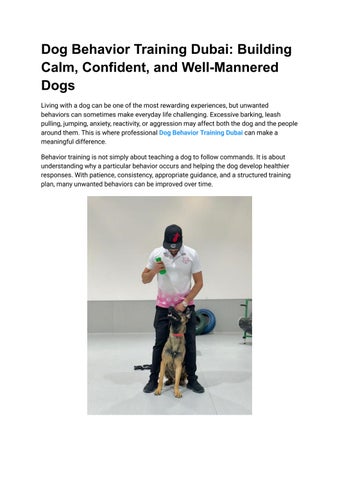
Dog Behavior Training Dubai: Building Calm, Confident, and Well-Mannered Dogs Living with a dog can be one of the most rewarding experiences, but unwanted behaviors can sometimes make everyday life challenging. Excessive barking, leash pulling, jumping, anxiety, reactivity, or aggression may affect both the dog and the people around them. This is where professional Dog Behavior Training Dubai can make a meaningful difference. Behavior training is not simply about teaching a dog to follow commands. It is about understanding why a particular behavior occurs and helping the dog develop healthier responses. With patience, consistency, appropriate guidance, and a structured training plan, many unwanted behaviors can be improved over time.
Understanding Dog Behavior Dogs communicate primarily through body language, actions, sounds, and reactions to their surroundings. What may look like disobedience to an owner can sometimes be related to fear, anxiety, stress, insufficient socialization, excitement, or confusion. For example, a dog that constantly barks at visitors may be responding to unfamiliar people. A dog that pulls strongly on a leash may be overly excited or distracted by its environment. Similarly, a dog that hides or becomes restless when left alone may be experiencing separation-related stress. Understanding the reason behind the behavior is an important first step. Professional trainers can observe these patterns and develop training strategies that address the individual dog's needs.
Why Dog Behavior Training Is Important Every dog has a unique personality, temperament, history, and lifestyle. Even dogs of the same breed can respond differently to the same situation. Canine Campus emphasizes personalized training based on the individual characteristics, needs, and lifestyle of each pet. Effective behavior training can help owners: ● Improve communication with their dogs ● Establish clear household boundaries ● Reduce unwanted behaviors ● Build confidence ● Improve everyday manners ● Make walks and outings easier ● Create more predictable routines ● Strengthen the relationship between dogs and their owners The goal is not to change a dog's personality. Instead, behavior training helps the dog learn appropriate ways to respond to everyday situations.
Common Behavioral Issues in Dogs Different dogs may experience different behavioral challenges. Some common concerns include:
Excessive Barking
Barking is a natural form of communication, but excessive barking may become difficult to manage. It can be associated with excitement, fear, territorial behavior, boredom, or environmental triggers. Training can help owners identify triggers and teach dogs alternative behaviors.
Leash Pulling Walking should be enjoyable for both the dog and the owner. Dogs that constantly pull toward people, animals, or distractions can make walks stressful. Behavior training can introduce loose-leash walking and help dogs learn to focus on their handlers despite distractions.
Jumping on People Jumping may occur because dogs are excited to greet people. While it may seem harmless when a puppy is small, the behavior can become problematic as the dog grows. Teaching calm greetings and rewarding appropriate behavior can help establish better manners.
Separation Anxiety Some dogs become distressed when their owners leave. Signs may include excessive barking, destructive behavior, restlessness, or other stress-related responses. A structured approach can help dogs gradually become more comfortable with periods of separation. Canine Campus describes the use of routines, reward systems, and gradual desensitization as part of addressing anxiety-related behavior.
Reactivity and Aggression Reactivity can involve intense responses toward other dogs, people, vehicles, or particular environments. Aggressive behavior can have different underlying causes, including fear or territorial responses. These situations require careful management and professional guidance. Canine Campus's behavior modification program is designed to address issues such as unpredictability, different forms of aggression, and reactivity through individualized training.
The Role of Positive Reinforcement
Positive reinforcement can be an important part of effective dog training. When a dog performs a desired behavior, timely rewards such as praise, treats, or play can help reinforce that behavior. The timing and consistency of rewards matter. Dogs need to understand which action resulted in the positive outcome. Training should also remain calm and consistent. Harsh reactions can create confusion or fear and may make certain behavioral problems more difficult to manage. A structured, patient approach helps create clearer communication between dogs and their owners.
Creating Consistency at Home Professional training sessions are only one part of behavior improvement. What happens at home every day also matters. Owners should establish consistent expectations regarding: ● Where the dog is allowed to go ● How greetings should happen ● When and where the dog eats ● How walks are managed ● Which behaviors receive rewards ● How unwanted behaviors are handled When different family members use different rules or commands, dogs may become confused. Consistent communication helps them understand what is expected.
Training for Dubai's Busy Environment Dubai provides dogs with many different sights, sounds, people, animals, and environments. Busy streets, elevators, vehicles, parks, public spaces, and unfamiliar surroundings can create distractions for dogs. Behavior training should therefore prepare dogs for real-world situations rather than limiting learning to a controlled environment. Canine Campus highlights practical skills such as remaining calm around distractions, loose-leash walking, and settling appropriately during everyday outings. A dog that can respond reliably around distractions is generally easier to manage during walks, visits, and other daily activities.
Puppy Behavior Training
Early training can establish useful habits before unwanted behaviors become deeply established. Puppies can learn basic manners, socialization skills, routines, and appropriate household behavior from an early age. Canine Campus offers a puppy starter program covering areas such as potty training, play biting, crate training, and food discipline. Starting early does not mean expecting perfection from a puppy. Puppies are still learning about their environment. Training should be age-appropriate, patient, and consistent.
Why Individualized Training Matters A standardized approach does not always work for every dog. A confident young dog may need a different strategy from a nervous rescue dog. Similarly, a highly energetic dog may require more mental stimulation and structured activities. Canine Campus states that its training services are tailored to each pet's characteristics, needs, and lifestyle. Its services include puppy training, basic obedience, advanced commands and tricks, behavior modification, service dog training, cat training, and customized packages. This individualized approach allows training goals to be based on the actual needs of the dog and its household.
How Owners Can Support Behavior Training Owners play an important role in maintaining progress outside training sessions. Some useful practices include: Practice regularly: Short, consistent training sessions can be more useful than occasional long sessions. Reward desired behavior: Reinforce the actions you want your dog to repeat. Stay patient: Behavioral improvement can take time, especially when dealing with anxiety or reactivity. Use consistent commands: Everyone in the household should use the same cues and expectations. Provide mental stimulation: Dogs benefit from activities that engage their minds as well as their bodies. Practice in different environments: Once a dog understands a behavior in a quiet environment, gradually introduce appropriate distractions.
Choosing Professional Dog Behavior Training in Dubai When selecting a trainer, owners should look for experience, individualized training plans, clear communication, and methods appropriate for the dog's needs. It is also important to understand that behavior modification may take time. Complex behaviors can require patience and active participation from the owner. Canine Campus notes that behavior modification can be a longer and more complex process and emphasizes owner involvement and consistency. A professional trainer should also help owners understand how to continue appropriate training at home.
Canine Campus UAE: Personalized Dog Training Canine Campus UAE provides personalized dog training services designed around individual pets. Its programs include behavior modification, basic obedience, puppy foundations, advanced commands and tricks, and customized training options. The approach focuses on improving communication between dogs and their owners while developing practical behaviors that can be used in everyday life. For owners dealing with barking, leash pulling, anxiety, reactivity, aggression, or general behavioral challenges, professional guidance can provide a structured path forward.
Conclusion Dog Behavior Training Dubai is about much more than correcting unwanted actions. It is about understanding a dog's needs, identifying the reasons behind specific behaviors, establishing consistent communication, and teaching appropriate responses. With the right guidance, patience, and regular practice, owners can help their dogs become calmer, more confident, and easier to manage in everyday situations. Whether you have a puppy that needs early foundations or an adult dog experiencing behavioral challenges, an individualized training program can support a healthier relationship between you and your pet. Canine Campus UAE offers tailored training programs that address different canine needs, helping owners build clearer communication and practical skills for life at home and around Dubai.
FAQs 1. What is dog behavior training in Dubai?
Dog behavior training focuses on understanding and improving unwanted behaviors such as excessive barking, leash pulling, jumping, anxiety, reactivity, and aggression through structured training.
2. Why is professional dog behavior training important? Professional training helps identify the reasons behind unwanted behaviors and provides personalized techniques to encourage calmer, safer, and more appropriate responses.
3. Can puppy behavior problems be addressed through training? Yes. Early training can help puppies develop good manners, socialization skills, household routines, and appropriate behaviors.
4. How long does dog behavior training take? The duration depends on the dog's age, personality, behavioral challenges, and training goals. Simple issues may improve quickly, while complex behavior modification can require consistent long-term practice.
5. Can dog training help with separation anxiety? Yes. Structured routines, gradual desensitization, and positive reinforcement can help dogs become more comfortable with periods of separation.
Source link:https://caninecampus1.blogspot.com/2026/10/dog-behavior-training-dubai-building.html