Sugarcane key to biofuels future

Devastating September rain Bringing cane into the classroom

Sugarcane key to biofuels future
Devastating September rain Bringing cane into the classroom
EVIDENCE BASED best management practice improves farm productivity and profitability
PROTECTS CANE INDUSTRY social licence through demonstrated environmental stewardship
Underpins Australian sustainable sugar credentials to MAINTAIN MARKET ACCESS in high value markets
WORKS WITH GROWERS and supports the way you farm
Smartcane BMP accredited growers are RECOGNISED BY REEF COMPLIANCE auditing as meeting legislative requirements
it.
VALOR® 500WG and VALOR® EZE 480SC herbicides for cane and bean growers stay where you put them. They can be used with knockdown herbicides for improved control of emerged weeds, or at higher rates for extended residual control in-crop.
Editor: Robyn Devine
Advertising and Classifieds: Jane McGregor
Articles appearing in Australian Canegrower do not necessarily represent the policies or views of CANEGROWERS.
Published monthly by: CANEGROWERS, GPO Box 1032, Brisbane, Queensland 4001 Australia. ABN 94 089 992 969
Telephone: 07 3864 6444
Email: editor@canegrowers.com.au
Website: www.canegrowers.com.au
Subscriptions
Yearly subscriptions for 12 hard copies (postage included)
• Within Australia: $190 inc GST
• Overseas (AUD): $290
12 Month Digital Subscription: $78 inc GST
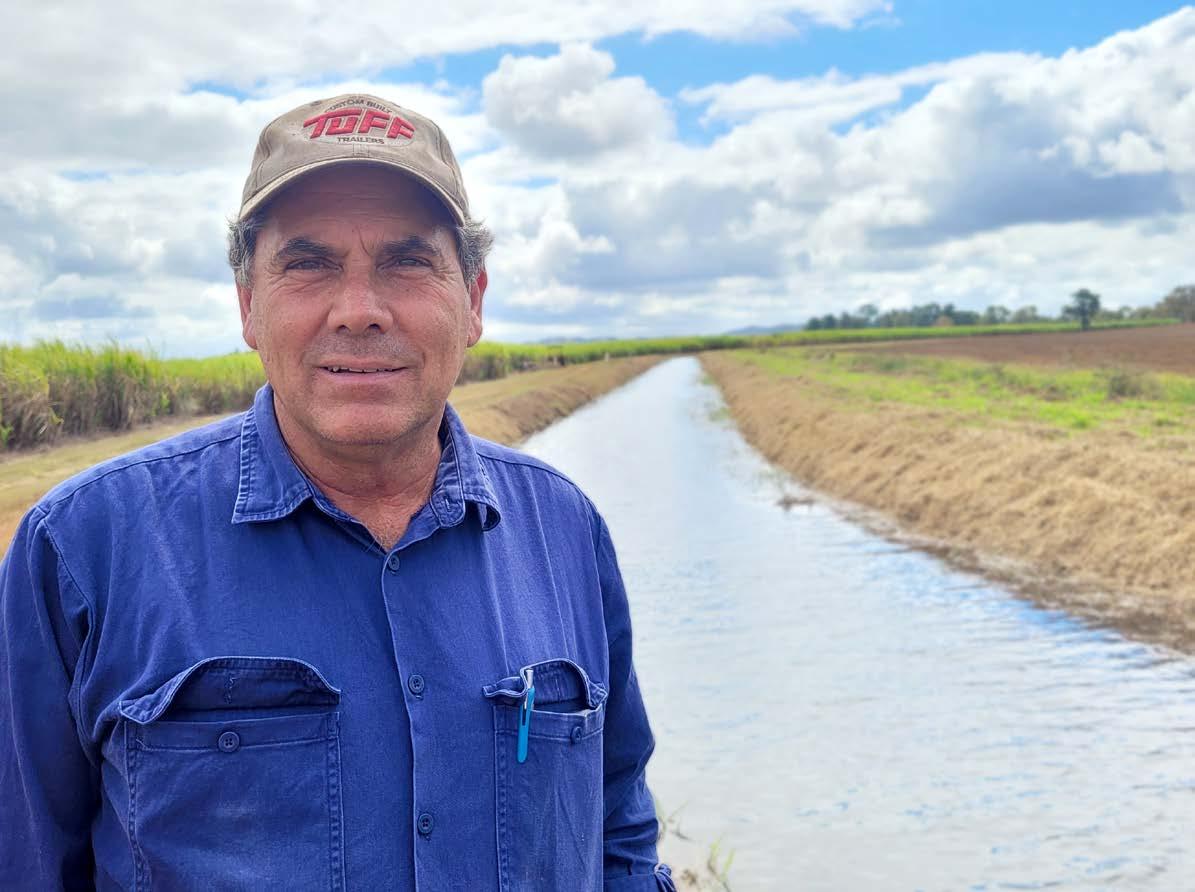
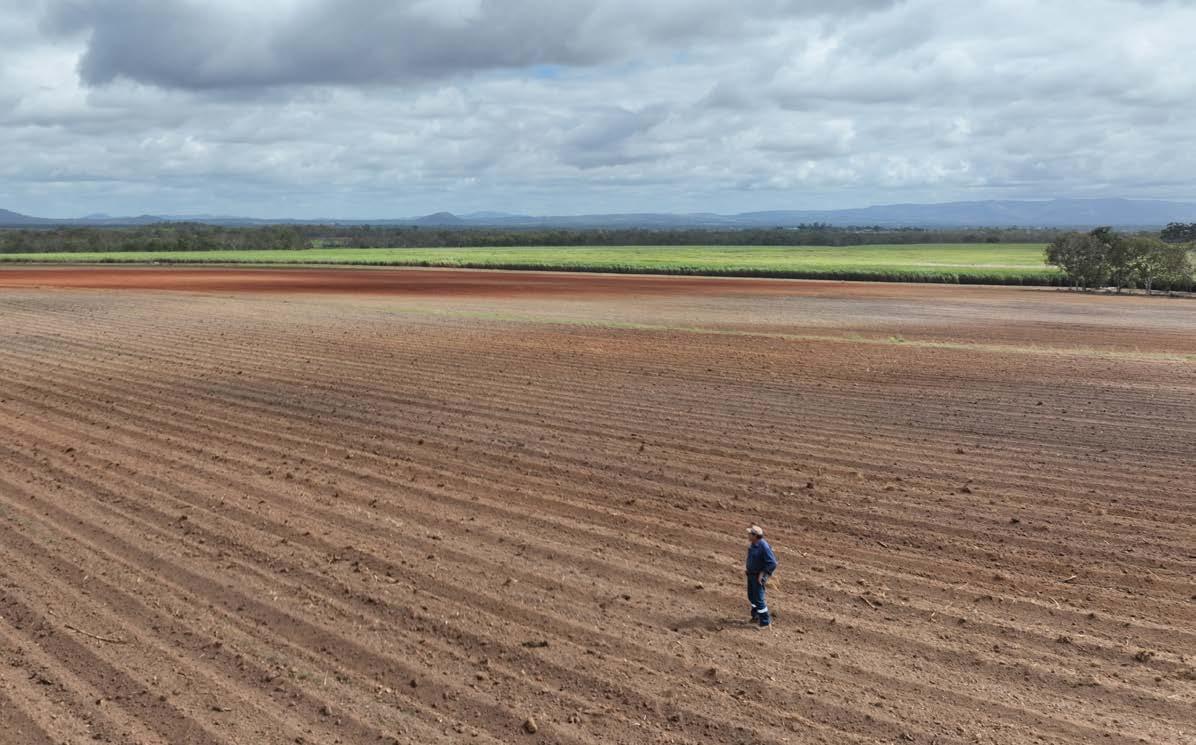
Claude Santucci, a Tableland sugarcane grower, demonstrates how adaptability and versatility drive resilience and long-term success. Photo credit: Renee Cluff Read more on page 24
The Crisafulli Government has appointed Rachel Chambers as Queensland’s new Food Farmers’ Commissioner, starting a three-year term on 27 October 2025.
Ms Chambers, currently CEO of Queensland Fruit and Vegetable Growers and former North Burnett Mayor, is a respected horticultural advocate with a proven track record in leadership and supply chain reform. Her expanded role will strengthen support for Queensland farmers, boost consumer confidence, and advance the state’s agricultural interests through the new National Food Security Strategy and the Primary Producers Prosper 2050 Blueprint. Ms Chambers succeeds interim commissioner Charles Burke and is tasked with ensuring farmers can thrive in competitive markets.
October is National Safe Work Month –a timely reminder that no matter the job, safety should never take a back seat. This year’s theme, “safety: every job, every day”, calls on all workplaces to put safety at the centre of everything they do – whether on the farm, in the shed, or out in the paddock.
For cane growers, this is a chance to pause and check: Are your safety practices where they should be? Are your family, staff and visitors protected?
To help, CANEGROWERS developed a Workplace Health and Safety Guide tailored specifically for sugarcane farms. This guide is a practical starting point to:
Understand and meet legislative requirements
Build safer systems for day-to-day cane farming activities
Protect not only yourself, but also your family, employees, and anyone visiting your property
The WHS Guide is available now on the CANEGROWERS Members Portal.
This October, take the time to refresh, review and recommit to safety. Make it part of your routine, part of your workplace culture – and most importantly, make it real: every job, every day
Queensland Sugar Limited (QSL) CEO Mark Hampson says growers hold a competitive edge on the global stage, despite mounting market pressures.
Speaking on the latest episode of Around the Paddock, Mr Hampson outlines how tools like QSL’s FlexPay payment system and smart pricing strategies can help growers manage risk and position their farms for future opportunities.
The episode also covers market trends, practical planning tips, and strategies to navigate what’s shaping up as a challenging season.
Listen now: Around the Paddock is available on Apple Podcasts, Spotify and CANEGROWERS website at canegrowers.com.au/news-media/ podcasts/around-the-paddock
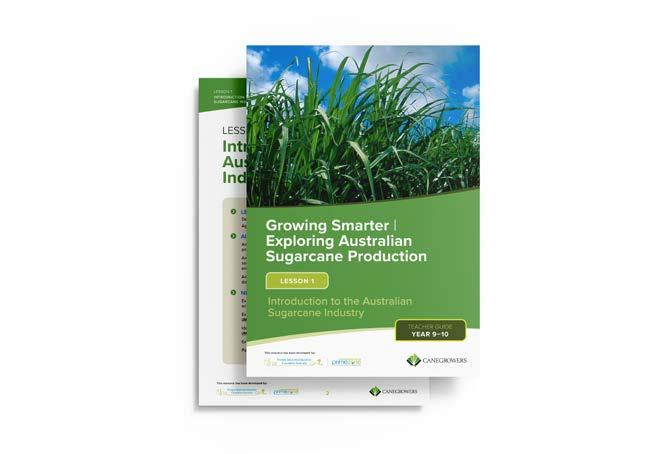
Walk into a Year 9 or 10 classroom today and you might just find students exploring how sugarcane moves from paddock to packet, testing their understanding of soil health, or debating the latest innovations in agricultural technology.
Thanks to a new teaching resource launched by CANEGROWERS , the everyday crop powering our cups of tea and baked treats is now a gateway to science, technology, sustainability, and careers in agriculture.
The program, Growing Smarter: Exploring Australian Sugarcane Production, delivers five ready-to-use, curriculumaligned lessons that lift the lid on the cane industry. It’s more than worksheets and teacher guides – it’s a deep dive into an industry that has shaped Queensland’s economy, culture and communities for more than a century.
The lessons invite students to investigate soil management, biosecurity, and the sustainability challenges that farmers grapple with daily. They also showcase how growers are adopting emerging technologies and smarter management practices to boost profitability and care for the environment at the same time.
In doing so, the resource helps young Australians see sugarcane not just as a crop, but as a case study in problemsolving, innovation, and resilience.
“This isn’t just about teaching students where sugar comes from,” said CANEGROWERS CEO Dan Galligan. “It’s about highlighting the exciting science, technology and careers that underpin the modern sugarcane add industry,” Mr Galligan said.
“Whether it’s farm management, engineering, environmental science or ag-tech innovation, there are endless opportunities for young people to make a difference in agriculture.”
“By opening the classroom door to the sugarcane industry, we’re giving students real insight into one of Australia’s most important and dynamic agricultural sectors”
DAN GALLIGAN
The Growing Smarter resource was developed in partnership with the Primary Industries Education Foundation Australia (PIEFA), ensuring it’s tightly woven into the Australian curriculum. For teachers, it offers a ready-made unit complete with lesson plans, videos, and classroom activities – all available free of charge.
For CANEGROWERS , it’s a natural extension of their broader commitment to building awareness of agriculture among young people. By sparking curiosity early, they’re helping to grow not only sugarcane but also the next generation of agriprofessionals.
Teachers can download Growing Smarter now via the CANEGROWERS website, or simply scan the QR code below to bring the sugarcane story into their classroom.
Find out more at canegrowers.com.au/ information-hub/educational-resources

Queensland’s sugarcane industry has welcomed the Federal Government’s $1.1 billion Cleaner Fuels Program, declaring the state is uniquely positioned to lead the nation in clean energy and regional job creation.
The ten-year program is designed to unlock “the vast economic opportunities on offer from low carbon liquid fuels” such as biodiesel and sustainable aviation fuel.
CANEGROWERS CEO Dan Galligan said Queensland sugar is ahead of the game, with sustainability and infrastructure advantages already locked in.
“Almost half of Queensland’s sugarcane is recognised by the world’s three biggest sustainability gatekeepers as a global leader in sustainable farming. This gives immediate confidence to airlines, freight and heavy industry that local feedstocks meet global benchmarks,” Mr Galligan said.
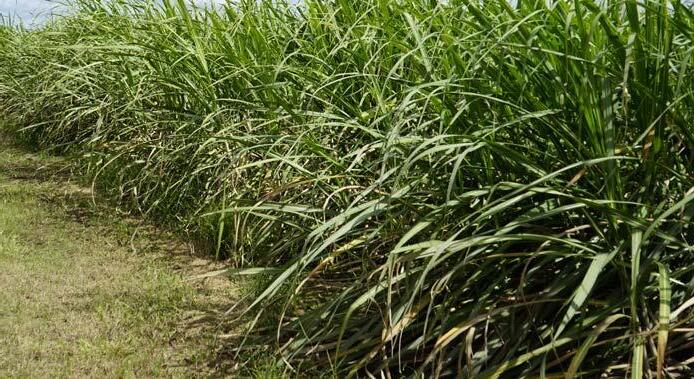
He also pointed to the cane rail system as a unique strength. “Our growing region stretches along the Queensland coastline, alongside major population hubs. We also have a cane rail network stretching thousands of kilometres, linking farms to mills and multiple deep-water ports.
“This footprint shortens supply chains, cuts costs, and de-risks a rapid scaleup of domestic low-carbon liquid fuels. With sugarcane feedstock alone, Queensland could deliver more than 30% of Australia’s aviation fuel demand.
“This is about positioning Queensland as the nation’s biofuels hub. It means cleaner fuels for airlines and motorists, thousands of new jobs, and billions in regional investment.”
Australian Sugar Manufacturers (ASM) CEO Ash Salardini said the Federal Government deserved credit for seizing the moment.
“The government must be commended for grabbing this once-in-a-generation opportunity with both hands,” Mr Salardini said.
“We have to get the foundations right on biofuels. The challenge isn’t technology anymore – it’s standing up a reliable, scalable, and cost-effective supply chain.
“This agenda requires a laser-like focus on targeted support for feedstock logistics and infrastructure. Without it we risk building a biorefining capability that relies on imported feedstock –swapping our reliance on imported liquid fossil fuels with a vulnerability for imported bioethanol from places like Brazil and India.”
Announcing the funding, Treasurer Jim Chalmers said Australians could see “the first production of ‘drop-in’ cleaner fuels” as early as 2029.
Both CANEGROWERS and ASM said the benefits for Queensland are enormous if government and industry get the model right – with towns like Cairns, Mackay, Bundaberg, Townsville, Childers and Tully potentially set to become bio-precinct hubs, tens of thousands of new jobs could be created, allowing billions of dollars to flow into regional economies.
Queensland’s plan for a homegrown biofuels industry moved a step closer to reality this month, with a State Parliamentary inquiry examining the policies needed to take projects from theory to commercial reality.
Just days before the Federal Government unveiled its $1.1 billion Cleaner Fuels fund, CANEGROWERS representatives were in Mackay and Townsville making the case for sugarcane as a central feedstock for a domestic biofuels build-out.
“We’ve got the cane, the mills and the logistics,” CANEGROWERS
CEO Dan Galligan said. “What we need now is firm demand and clear rules – fuel mandates, long-term offtake agreements, support for new equipment, and electricity grid rules so mills can sell power to local irrigators.”
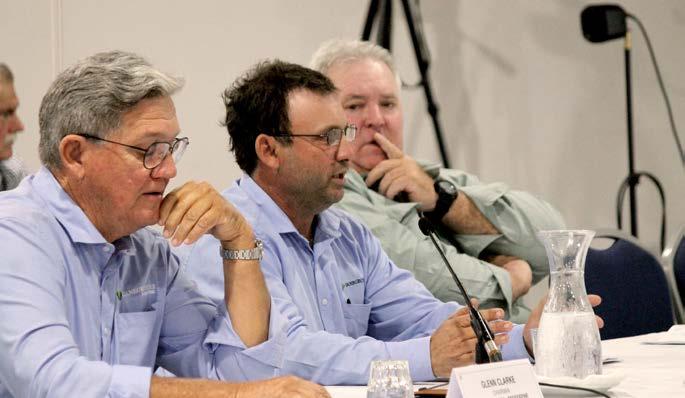
In Mackay on 9 September, the committee heard from CANEGROWERS Mackay Chairman Joseph Borg, Deputy Chairman Brett Leach and CANEGROWERS Proserpine Chairman Glenn Clarke.
They outlined how upgraded mill co-generation and “virtual microgrids” could deliver cheaper, more reliable power for irrigation and lift farm productivity.
Mr Clarke stressed the need for stable, long-term policy settings to give private investors confidence to back cane-based energy.
In Townsville on 10 September, CANEGROWERS Burdekin Director Owen Menkens and manager Greg Watson told the committee their district could expand to meet the bioenergy demand if policy lines up.
They called for enforceable renewable fuel targets and sensible water and electricity pricing so irrigation isn’t penalised.
Their message to the committee was simple – start with proven options, such as co-generation, first-generation ethanol and solid biofuels from bagasse, tops and trash – while allowing time for secondgeneration technologies to reach commercial scale.
With global tensions sharpening concern about energy supply, representatives argued that sovereign
fuel security should accelerate support for a strong domestic biofuels sector.
CANEGROWERS Queensland will now lodge a submission and appear before the committee during its final hearing in Brisbane in November.
The submission identifies three nearterm opportunities: ethanol from juice and molasses; sustainable aviation fuel via alcohol-to-jet and crop residue pathways; and renewable power from mills, provided boilers and turbines are upgraded and long-term power contracts are secured.
Mr Galligan warned that without credible mandates and enforceable offtakes, projects will stall and overseas producers will capture the market.
“Give the market clear rules and real contracts and the projects will follow,” he said. “That’s how growers share the value – not in theory, but in their bottom lines.”
The inquiry will hold a public briefing and hearing in Brisbane on 19 November, ahead of an interim report on 15 December 2025 and a final report on 12 June 2026.
For Queensland’s cane industry, those findings will show whether the state is ready to turn proven feedstocks into a genuine biofuels industry.
Smartcane BMP earns rare global recognition as growers’ sustainability efforts pay off.
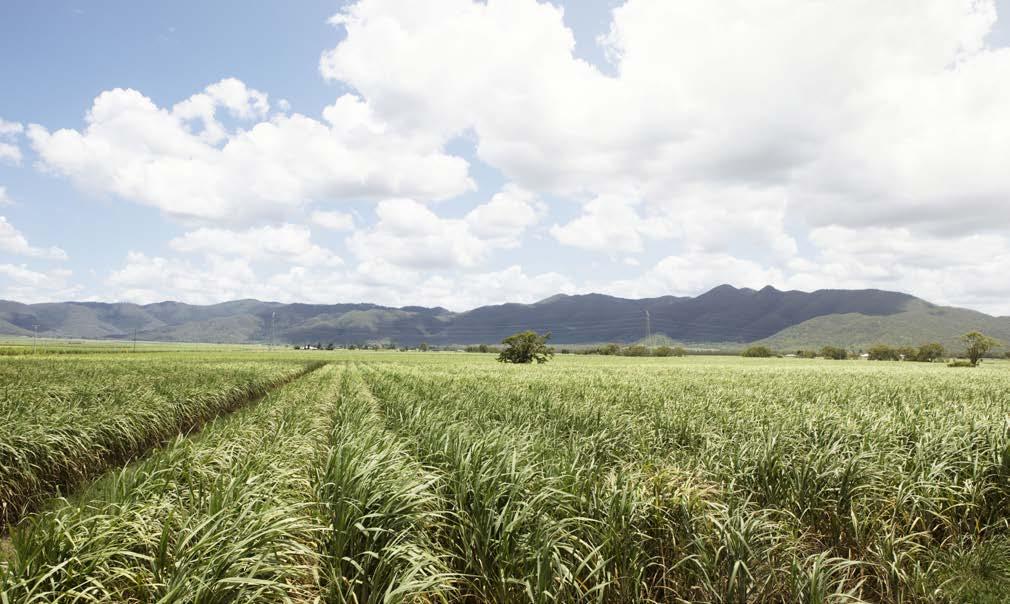
Queensland cane growers can officially claim their place at the top of the global sustainability game. The industry’s Smartcane BMP program has just scored a rare “triple tick” from the world’s leading standards – VIVE, Bonsucro and ProTerra.
The latest endorsement, from VIVE goes above and beyond previous sustainability credential benchmarking activities with Smartcane BMP accreditation in Modules 1-4 officially recognised as equivalent to the VIVE Sustainable Supply Program on-farm assessment. This means that where a mill becomes accredited through the Facility assessment, there is an opportunity to have a full sustainability credential all the way through the supply chain.
Smartcane BMP launched by CANEGROWERS with Queensland Government support. Growers across the state begin adopting BMP modules on soil health, nutrient management, water efficiency and reef protection.
Momentum builds as accreditation numbers climb past 400 farms.
First blockchain-tracked shipment of Smartcane BMP sugar to South Korea.
First accredited sugar exported to the UK under the free trade agreement.
Smartcane BMP secures rare “triple tick” global recognition from VIVE, Bonsucro and ProTerra.
If you are accredited in modules 1-3 there will be a grace period of 12 months to become accredited in Module 4.
This cements what growers have always said: Queensland sugar stacks up with the best in the world. And in a marketplace where big-name buyers demand proof of sustainability, that’s a serious advantage.
Smartcane BMP isn’t an overnight success story. Developed by CANEGROWERS in 2013, with support from the Queensland Government, the program was built by growers, for growers, as a practical framework for environmental stewardship and continuous improvement.
A decade on, the program has accredited 800 farms, covering nearly half of Queensland’s cane area. Behind those numbers lies something even more valuable, farms that are more resilient, more profitable and better equipped to meet future challenges.
CANEGROWERS CEO Dan Galligan says the global recognition is a tribute to the effort and persistence of growers who embraced the program from the start.
“This is not just a win for Smartcane BMP – it’s a win for every grower who’s kept records, met the standards and committed to continuous improvement,” Mr Galligan said.
“We’ve always said this program stands up globally. Now the rest of the world agrees, and that creates real commercial opportunities.”
This isn’t the first time Smartcane BMP sugar has made waves overseas. A blockchain-tracked shipment to South Korea in 2022 and the first accredited export to the UK under the new free trade deal in 2023 showed the world what Queensland can deliver.
Even Coca-Cola has given Smartcane BMP the thumbs up, calling it a “leader standard” for responsible sourcing.
With the triple recognition now locked in, Queensland growers have the credentials to meet the rising
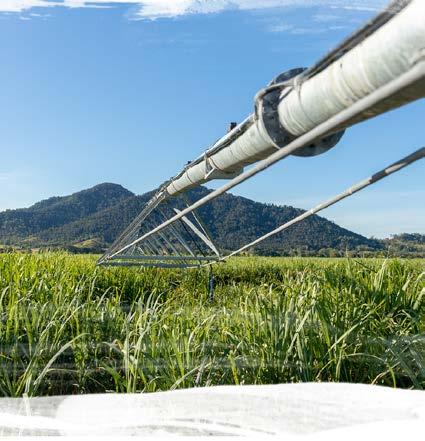
Growers can use the Smartcane BMP module to self-assess Module 4 – contact your local facilitator to learn more or for further assistance.
demand for sustainable sugar on the global stage.
“Global buyers are demanding sustainable supply chains, and Queensland sugar is ready,” Mr Galligan said.
“Growers should be proud – this proves an Australian, grower-designed program is among the very best in the world.”


BY DAN GALLIGAN, CEO, CANEGROWERS
Every generation witnesses change and I have always felt there is a very interesting dynamic whereby things viewed from a distance can appear static, and almost ageless.
Yet at the same time when you look a little closer and dig just a little deeper there has in fact been huge change and volatility. To put it another way if a cane grower from 50 years ago was to look across the farms of today, they may at first glance look similar – certainly the needs of the crop and the challenges of balancing productivity and risk are at least essentially the same.
However, farmers are operating in and dealing with many issues that are entirely different from a generation ago. Perhaps even from 5 or 10 years ago. So too is it the case when it comes to the way in which CANEGROWERS as an organisation service the interests of growers and the wider industry.
I take a lot of lessons from my own past that I can see reflected in generations of cane growers. My father, who is still farming, seemingly spent endless hours going to meetings at nighttime, spending over 50 years as a representative on rural fire brigades, producer cooperatives, school P and C and St Vincent De Paul Committees.
For his age group, a child of the 30s’, connecting and serving the community that supported you and your business was just part of the culture as rural communities knew they had to work together to thrive and grow.
I don’t actually think anything is too much different now days, perhaps sadly rather than thriving some rural communities feel like it is more a game of surviving.
Regardless it is our ability to pull together and connect with each other that will see us succeed and at the very least it shares the burden. However as with many other things, it is not the needs of the community that have changed but rather the How we connect.
Despite the strong focus on digital connectivity and our ability to more than ever walk around with a computer and
digital communication device with access to all the worlds information literally in our pocket, it has not in fact “made life easier or simpler”.
Enhanced telecommunications and digital technology have certainly sped things up and made access to information more universal, but this has come at a cost, our information comes in floods and there is a feeling that everything is urgent all of the time.
I would argue that our need for human connections and the value of such connections remains the same.
That is why CANEGROWERS refuses to “pick a lane” on the communication superhighway. We have many communication channels from Facebook to TikTok, magazines and emails, right through to face-toface meetings.
We will continue to service them all for you but if you want real ‘bang for your buck’ when it comes to connecting with each other and CANEGROWERS staff, I really encourage all growers to look out for the local district grower meetings especially the upcoming annual general meetings (AGM).
Unlike the past where AGMs were best to avoid in case you were landed with a job, now they are much more about sharing information, about the local industry and the chance to hear from us at QCGO about the state, national and international issues. Also, you get to hear directly from the millers, researchers and agronomists that support our industry day in and day out.
Most importantly I see growers talking to growers, often over a cold drink and a feed and amongst the banter, problems are shared, solutions are found in a way that Facebook or ChatGPT will never replicate.
Hopefully we will see some you there soon.
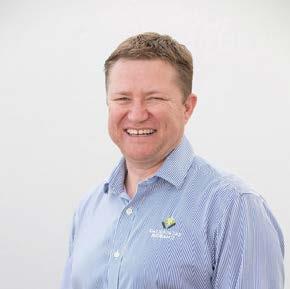
With extensive experience in the insurance industry and a strong connection to the rural sector, Ray works closely with CANEGROWERS members and the local community to deliver tailored insurance solutions that protect what matters most. Based in Bundaberg, Ray understands the unique challenges faced by farmers and rural businesses.
Farm Packages & Farm Motor Insurance
Business Packages Insurance incl Commercial Property Owners
Commercial Motor & Transport Packages Insurance
Home, Contents & Private Motor
Contract Harvesting Solutions
Career snapshot
7 years with CANEGROWERS Insurance –Insurance Regional Manager Wide Bay
15 years as a Senior Loss Adjustor, assessing property claims ranging from Farm, Business, Home & Landlords insurance
25 years in the insurance industry working across various sectors including Broking, Loss Adjusting, Underwriting & Claims.
Qualified Insurance Professional –Diploma of Insurance Broking
Local knowledge, industry expertise, and strong relationships
Backed by CANEGROWERS Insurance and the Community Broker Network (CBN)
Dedicated to delivering tailored solutions that support long-term financial security
Committed to exceptional service and ongoing client support
“Helping regional Queenslanders protect their livelihoods isn’t just my job it’s my passion”
RAY GOODWIN | CANEGROWERS Insurance Broker — Wide Bay (AR 1266334)
ray_goodwin@canegrowers.com.au 0418 891 783
CANEGROWERS Insurance Pty Ltd is a Corporate Authorised Representative (CAR No 297969) for Community Broker Network Pty Ltd ABN 60 096 916 184 AFSL 233750
CANEGROWERS ’ experienced insurance professionals service all sugarcane regions in Queensland
FAR NORTH QUEENSLAND & PROSERPINE
BRAD HANCOCK
Brad_Hancock@canegrowers.com.au 0408 630 426
HERBERT RIVER
FRANK SCARDAMAGLIA
Frank_Scardamaglia@canegrowers.com.au 0475 818 800
BURDEKIN 07 4790 3606 admin@solarisinsurance.com.au
MACKAY
GEOFFREY YOUNGS
Geoffrey_Youngs@canegrowers.com.au 07 4944 2620
KAYLAH GIDDY
Kaylah_Giddy@canegrowers.com.au 07 4944 2615
RESHMI SINGH
Reshmi_Singh@canegrowers.com.au 07 4944 2615
WIDE BAY
RAY GOODWIN
Ray_Goodwin@canegrowers.com.au 0418 891 783
SOUTHERN QLD & NORTHERN NSW
HELLE COOK
Helle_Cook@canegrowers.com.au 07 3864 6417
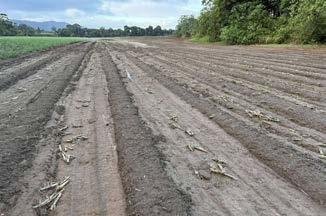
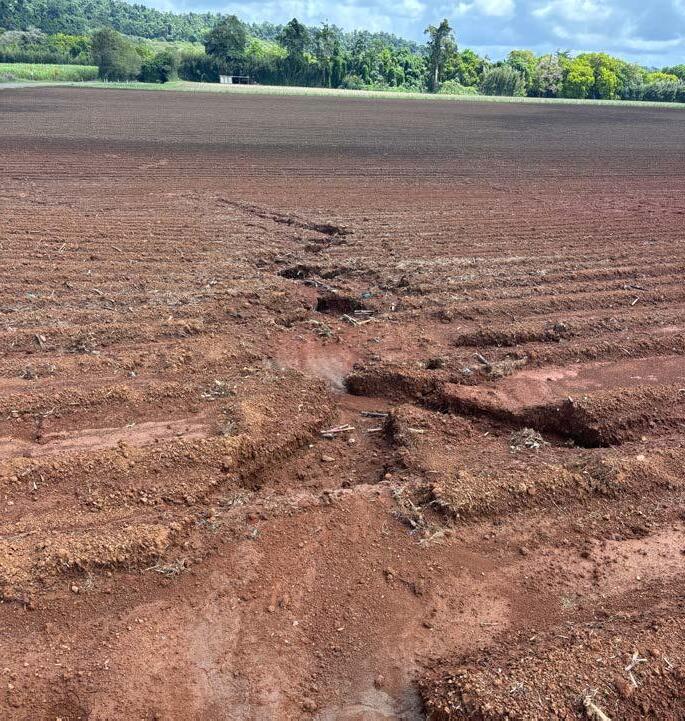
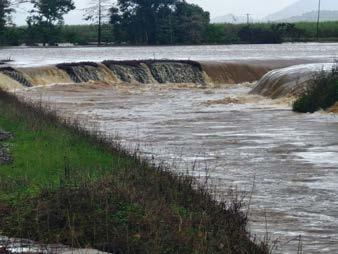
Far North Queensland growers have been left reeling after a September rain event tore through the region, bringing flooding and destruction rarely seen this time of year.
Torrential falls cut a narrow but brutal path, with Babinda copping the brunt of the damage. “In some strips, it was worse than ex-Tropical Cyclone Jasper,” said Stephen Calcagno, a grower from Bellenden Ker, south of Cairns.
“The washouts have carved straight through paddocks, wiping out plant cane that was only just getting established.”
The Bureau of Meteorology has confirmed records toppled across the region. Cairns Aero posted more than 144mm – the wettest September since records began in 1942. Innisfail received over 342mm, the heaviest since the site opened in 2016, while Topaz on the Tablelands clocked a staggering 696mm, including 110mm
in just three hours. Tully and Innisfail also endured damage, but Babinda remains the hardest hit.
The timing could hardly be worse. The deluge hit at the tail end of planting, after four tough years of weather had already tested growers. They rallied again to put cane in the ground, only to now face heartbreaking losses.
“Most of the plant cane will be gone. We’ll focus on saving the ratoons to claw something back,” Mr Calcagno said.
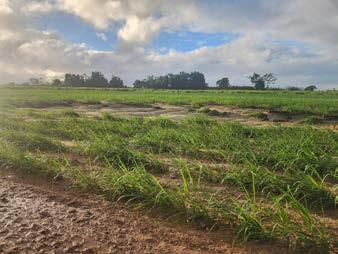
The Innisfail district also experienced losses of plant cane. Some was ripped out as water carved trenches through blocks. In other fields, young cane was buried under silt.

Flash flooding around Babinda and Innisfail left behind major washouts in cane paddocks, flattened young crops, and swollen waterways, causing widespread damage across the Far North
The challenges are adding up: washedout cane train lines needing major repairs, both mills were shut for around a week, and paddocks too wet for machinery.
About 45% of the crop was cut before the rain, but transferring cane between mills may be a way to maintain throughput and cash flow.
As paddocks dry, harvesters faced the task of clearing debris and repairing washouts, with many growers likely to revert to burning to give harvesting machines a fighting chance.
Still, Mr Calcagno said there’s one constant: “Our district and MSF Sugar always pull together. That’s what will get us through. But right now –it’s devastating.”


BY OWEN MENKENS, Chair, CANEGROWERS

It’s been a busy few weeks in the CANEGROWERS world.
First up, I want to send my thoughts to growers in the Far North who’ve just copped that massive September downpour. It’s rare to see so much rain this time of year and it can be brutal on freshly planted cane. Our crop is a tough one, but weather like this can really test your resolve to keep going. Fingers crossed the sun hangs around so harvest can wrap up without too much more drama.
I spoke about that same resilience when I fronted the Queensland Parliamentary inquiry into sugarcane bioenergy opportunities in Townsville. The bipartisan Primary Industry and Resources Committee is looking at how government can help the industry diversify, and CANEGROWERS is right in the thick of those conversations – as we should be. Growers must be at the table. After all, we’re the ones who will supply the feedstock.
We’ve seen plenty of projects come and go over the years, and we’ve learnt a lot from them. Too often, they fall over because growers aren’t properly paid for their feedstock. That’s why we’re working with other commodities on a national feedstock strategy and why we’re part of Bioenergy Australia, pushing for the right policy settings to give bioenergy a real shot.
The Federal Government’s recently announced $1.1 billion Cleaner Fuels Program is another sign of what’s coming. The details aren’t clear yet, but CANEGROWERS will be closely involved as proposals take shape.
Around the world big players, from airlines to mining companies, are committing to incorporating sustainable fuels into their energy mix. Whether they buy locally is still up in the air. Other countries may be further down the bioenergy path, but the same rule applies everywhere – unless growers are properly compensated, these projects won’t last.
We’ve got a strong advantage with our Smartcane BMP program, which proves we can supply feedstock sustainably. Global sustainability gatekeepers Bonsucro, VIVE and ProTerra have all recognised our standards, so even if bioenergy doesn’t take off here, our sugar will remain a premium product in demand.
Lastly, a reminder that the QCGO AGM will again be held regionally this year, at Cannonvale in the Proserpine district on 10 November. I hope to see plenty of you there.
Coming in 2026

Because one size
doesn’t fit all
For decades, Queensland cane growers have had little say in how and when they were paid. Thatchangesin2026.
QSL FlexPay puts you in control, letting eligible QSL Direct growers dial payments up or down as the season unfolds. Get paid more when you need it and less when you don’t. Unexpected bill? Need more cash later in the season? With QSL FlexPay, you choose what fits. Contact your local QSL team to find out more.
Nominate QSL as your GEI Sugar marketer for the 2026 and 2027 Seasons by 31 October 2025 to unlock your eligibility to apply for FlexPay.
Until about a decade ago, the sale of Australia’s sugar had been almost the exclusive domain of industry-owned Queensland Sugar Limited (QSL).
Mulgrave Central and Maryborough Mills began directly marketing to buyers in Asia soon after deregulation of raw sugar marketing in 2006, but they maintained a supply agreement with QSL.
In 2014, Wilmar Sugar became the first miller to give notice it was cutting ties with QSL by establishing its own selling and marketing company. With MSF Sugar, Tully Sugar and Mackay Sugar also announcing their own marketing plans, a major shake-up in the sugar industry was sparked. Backlash from growers about the lack of choice was unequivocal and led to the introduction of the Grower Choice in Marketing bill. Passed by Queensland Parliament in 2015,
it ensured growers still had a choice of who would market their sugar. A code of conduct was established in 2017 after an on-supply dispute erupted between Wilmar Sugar and QSL, a code which provided federal regulations for the implementation of the state legislation.
Despite this structure being in place to secure sugar marketing arrangements, the actual corporate arrangements behind the scenes remain murky. That’s because millers who are now
direct marketing competitors of QSL still have influence over QSL’s governance as outlined in the QSL constitution which was never changed to take account of a new marketing choice world.
Further, along with growers, sugar milling companies (currently only Wilmar Sugar) are also represented on the board of Sugar Terminals Limited (STL), which made the controversial decision to remove QSL from its long-term role of operating Queensland’s sugar terminals.
So, what does all this mean for the future of Australia’s sugarcane growers?
It’s become quite the tangled web, and one which the Australian Cane Grower magazine is aiming to unfurl ahead of both the STL and QSL Annual General Meetings later this month.
By understanding the history, stakeholders, and shifting dynamics, growers and marketers alike can make informed decisions in the face of a complex sugar exporting landscape.
Queensland Sugar Limited (QSL) has long been a cornerstone of Australia’s sugar industry but what was once a single-channel marketing system has transformed into a competitive marketplace.
The problem is that QSL’s constitution remains at odds with the evolving dynamics. Its board is made up of four independent directors and a managing director who is also the CEO. However, seven mill owner members – including those now in direct competition with QSL – still have considerable influence in controlling voting outcomes on QSL constitutional matters.
The most powerful of them, Wilmar, can wield significant voting power because miller member voting power reflects the tonnage growers in their milling regions have nominated to QSL
through Marketing Choice. Wilmar holds more than 50% of the miller vote.
In 2015 QSL sought to update its constitution by, among other matters, placing the power of the appointment of miller directors to the QSL Board in the hands of the remaining millers still using its marketing services. QSL had recruited grower and miller directors –which has always been permitted under its constitution.
The constitutional changes were taken to the Federal Court, which eventually –on appeal from Wilmar – ruled the amendments must be repealed and that QSL’s constitution be restored to the form it was immediately before the amendments. It cited the constitutional change was oppressive to Wilmar. The board’s industry directors were stood down and independent directors returned.
Last year, QSL sought to make a smaller, procedural constitutional change aimed at solving potential stalemates in director appointments, but it failed because it did not gain the required mill owner member support. QSL is now revisiting constitutional reform ahead of its AGM later this month.
It is also important to highlight that QSL has not-for-profit and charity status to promote the development of the Australian sugar industry through providing services to Queensland's growers and millers. Net proceeds are passed onto those who use its marketing services. It also means QSL is exempt from paying payroll tax.
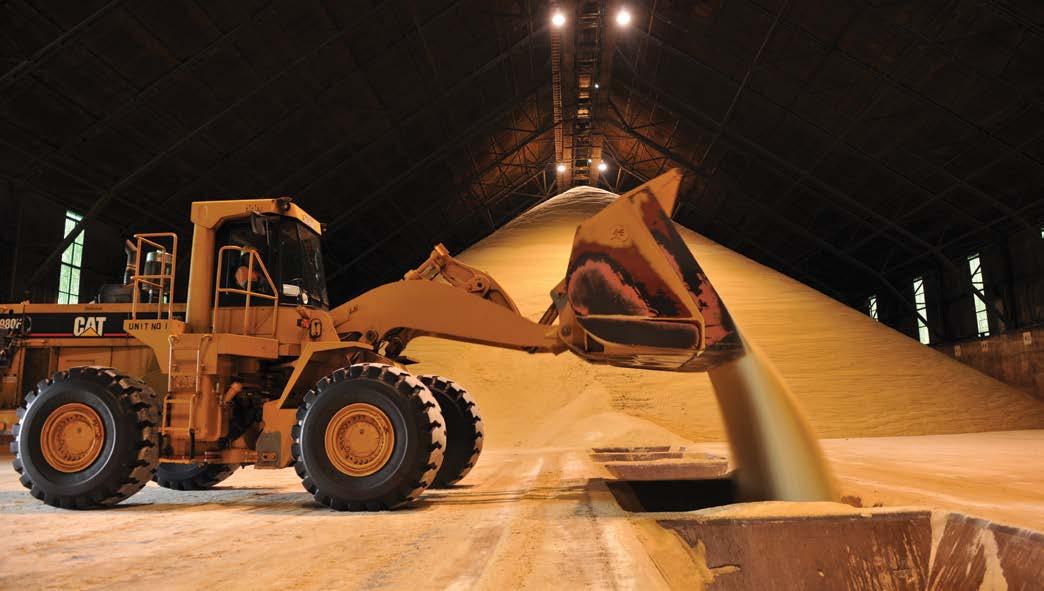
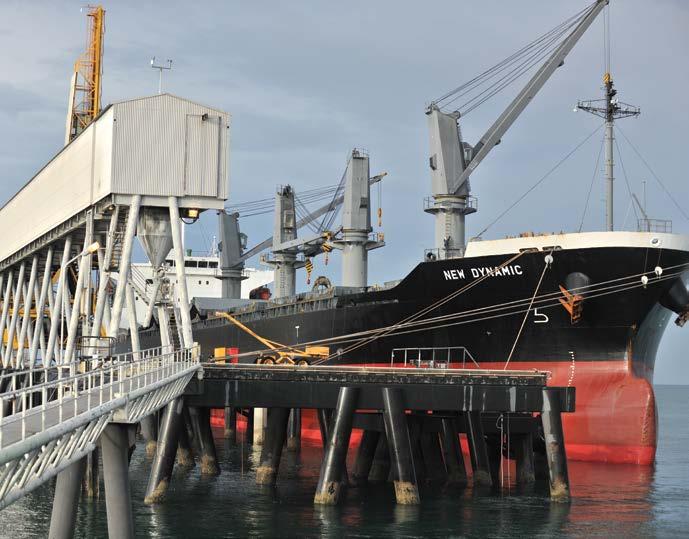
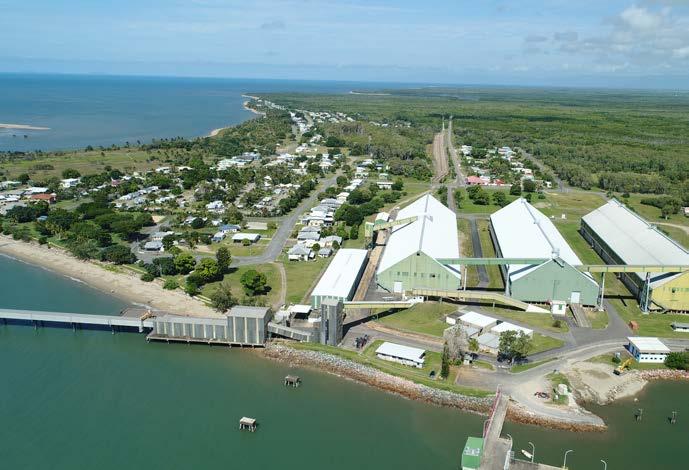
Sugar Terminals Limited (STL) owns six key sugar export terminals across Queensland – from Cairns to Bundaberg – originally funded by growers and the broader sugar industry. STL has operated as the asset owner, while QSL managed the day-to-day operations under a longterm agreement.
That changed in early 2023 when STL announced it would ‘insource’ operations by mid-2026 – effectively ending QSL’s role. STL's leadership claimed the move would reduce costs, eliminate duplication, and remove a ‘conflict of interest’ stemming from QSL’s dual roles as marketer and terminal operator.
At the time, CANEGROWERS voiced concerns that STL failed to consult stakeholders, eroding trust and jeopardising cost-effective operations. Then CEO of QSL, Greg Beashel, questioned STL’s claims of cost savings, noting QSL’s not-forprofit status provides over $1-million annually in tax advantages. Grower leaders including CANEGROWERS Chairman Owen Menkens argue STL is risking industry unity and transparency, warning that the move lacked justification and threatened the reliability of the operations.
STL’s board composition is also a point of contention. Wilmar holds the two board seats appointed by M-Class (miller) voting shareholders, while G-class shareholders (growers who own shares) hold two seats, and three additional directors are considered independent.
CANEGROWERS argues that make of the STL Board now exposes the company to a range of conflicts of interests and detracts from the company’s ability to act in the best interests of the entire sugar industry.
In November 2023, STL faced a first strike on its remuneration report, with 30% of shareholders voting against it –a clear sign of discontent about the insourcing announcement.
A second rejection of the remuneration report occurred at the 2024 AGM, triggering a spill motion of the board. Although the spill motion was ultimately defeated, the result highlighted a deep dissatisfaction with STL’s direction. Following that AGM, industry stalwart and former Chairman of CANEGROWERS , Paul Schembri, was announced as an elected growerdirector to the board.
The heart of the industry tension lies in the intersection between marketing and infrastructure. While QSL and STL are separate companies, their operations have historically been closely aligned. Prior to Marketing Choice, QSL’s role managing STL’s terminals gave it visibility over sugar flow from all mills – a potential competitive advantage when it also marketed sugar.
Wilmar claimed this dual role created a conflict of interest, arguing that QSL would know volumes, timings, and storage data of sugar from competing marketers. In 2016, to address this concern, QSL introduced a “ring-fencing” structure to separate its marketing and
operations divisions and improved its operational and performance reporting to the STL Board.
Some growers have expressed concern that given QSL’s management role ending next year, and Wilmar’s greater influence at STL, this perceived ‘conflict of interest’ is swinging Wilmar’s way, giving it outsized power to shape both marketing strategy and terminal access in its favour. This is raising alarms among both growers and other milling companies.
This overlap between governance and competition is now a critical flashpoint amid concerns STL may be tilting toward a more miller-centric, costcutting model with less transparency and weaker grower influence.
The implications of this decade-long power struggle are far-reaching:
1. QSL’s survival at stake
If QSL fails to reform its constitution and block competitive miller marketers from Board influence, another option is to consider alternative company structures. This is likely to be complex and may carry legal, financial, and operational risks.
2. STL independence could raise costs
STL claimed its insourcing move would lower costs, but without transparency or an independent review, scepticism of this claim seems valid. Given the terminals will soon be operating under a for-profit structure, rather than under not-for-profit status, this is especially pertinent.
If STL fails to deliver proven promised efficiencies, marketers could face higher storage and handling costs and/or shareholders could see a reduction in dividends. Both outcomes would impact growers.
3. Governance reform needed
Both STL and QSL face calls for modernised governance structures. At QSL, voting mechanisms still give Wilmar and other marketing competitors influence through grower marketing nominations to QSL.
At STL, so-called ‘dry shareholders’, or ‘inactive growers’ are not active industry participants but still hold shares and therefore voting slots (even though they can’t vote). While this goes against STL’s constitution, questions remain about how successfully this regulation has been managed.
The precise number of 'dry' shareholders is ever evolving. However, STL’s latest Annual Report puts the number of unaccounted-for G-class shares at 29 million. In recent years, STL launched a concerted effort to verify active statuses, which remains ongoing. CANEGROWERS has been calling on
STL to continue this process and has also been assisting former growers to sell their shares to current farmers.
4. Risk to industry unity and global competitiveness
Without cooperation and trust, the sugar industry risks fragmentation, which could reduce its ability to present a united front in global markets. As sustainability and trade pressures mount, a strong, transparent, grower-focused marketing body is increasingly vital to support the entire industry.
The coming AGMs for both QSL and STL may be a turning point. QSL will put forward a resolution to amend its constitution, which includes removing references to bulk sugar terminal operations and aligning member voting
rights with members (both growers and millers) who market with QSL. QSL says if it ceases to be the operator of the bulk sugar terminals, any connection to those larger millers who market their sugar independently of QSL will cease.
The resolution must attain a 75% special majority of both the QSL Mill Owner Member and Grower Representative Member classes to be successful.
For STL, the pressure is on to demonstrate how it will operate terminals more efficiently – and how any savings will benefit the broader industry, including growers. It must also provide evidence of its strategy to eliminate ‘dry’ shareholders, as well as documentation that supports its costcutting claims. Addressing the lack of diversity in miller appointed board seats must also be a priority.

Plant the seeds for a stronger financial future. We offer financial guidance to help farmers like you protect, invest, and grow.
Morgans are proud supporters of Canegrowers.



Since QSL’s current constitution was adopted back in 1999, our organisation’s role within the Queensland sugar industry has changed significantly.
Back then, QSL was responsible for marketing all raw sugar produced in Queensland under a single-desk arrangement while also operating the state’s bulk sugar terminals. We were essentially a wholesale provider of marketing and terminal operations, with just 10 contracted suppliers (the state’s sugar millers) and no direct relationship with growers – and that was the world that our current constitution was designed to serve.
However, QSL’s operational landscape has fundamentally shifted since then, with the demise of the single desk, the introduction of Marketing Choice in 2017 and the advent of millers and growers being able to market sugar independently of QSL. QSL’s ties to some growers and millers will be removed completely should STL insource terminal operations from 1 July 2026, as currently planned.
While QSL has adapted and evolved to meet these challenges, our constitution still reflects a pre-Marketing Choice world, with no recognition of the difference between sugar supplied by growers (GEI Sugar) and Millers (MEI Sugar). As a result, QSL’s larger Mill Owner Members who choose not to market with QSL are still able to use the GEI Sugar of growers marketing with QSL to control voting outcomes on QSL constitutional matters. It’s a situation that has the potential to have serious implications for our business and all those who choose to use our services.
To recognise the likely end of QSL providing terminal operation services to industry and in order for QSL to have greater freedom to act in its best interests, the QSL Board is proposing a resolution for constitutional amendment at
India
Thailand
Speculators
Currency
our 2025 Annual General Meeting which if passed, would:
align member voting rights with members (both growers and millers) who market with QSL; and remove from QSL’s charter the obligation to be the industry bulk sugar terminal operator.

It is proposed that these changes would take effect from the date QSL stops operating the terminals. At that time, any connection and benefit to the larger Mill Owner Members who market their sugar independently of QSL will cease.
QSL has recently consulted with our Grower and Mill Members regarding these changes. The resolution detailing the constitutional amendment has now been finalised and is available in the 2025 AGM documentation on our website at www.qsl.com.au. QSL Members will then vote on the proposed amendment at our AGM in Brisbane on 22 October.
The proposal must attain a 75% special majority of both the QSL Mill Owner Member and Grower Representative Member classes to be successful.
Queensland Sugar Limited will hold its 2025 Annual General Meeting at 10:30am Wednesday 22 October 2025 at the Christie Centre, Room D, Level 1, 320 Adelaide Street, Brisbane. Growers are welcome to attend in person.
Harvesting in Centre South Brazil has caught up to last year’s pace as dry conditions continue to favour fast, efficient progress. By 31 August, 404 million tonnes of cane had been harvested, producing 27 million tonnes of sugar at an average sugar mix of 52.8%. The mix set a record in the first half of August at 55%. However, sugar yields, measured by total recoverable sugars, are tracking 4% below last year at 131.7 kg/tonne of cane.
The Indian monsoon is running 7% above average this season, delivering widespread rainfall and, in some areas, localised flooding. The government recently lifted restrictions on ethanol production from sugarcane, opening the door for additional output depending on ethanol prices relative to global and domestic sugar markets.
Optimism remains around Thai production thanks to favourable wet-season conditions. However, concerns are emerging over an outbreak of White Leaf Disease in the North-East. While currently limited to sandy soil regions, the risk would increase if the disease spreads into central growing areas.
Speculators lifted their net short position in sugar futures to a six-year high in early September. As of Tuesday 9 September, net shorts totalled 182,608 lots.
The Australian Dollar has broken out of its long-held 64-66 US cent range, supported by weakness in the US Dollar. The US Federal Reserve cut interest rates by 25 basis points in September, under pressure from President Trump and amid concerns about slowing growth and labour market weakness. By contrast, Australia’s growth, employment, and inflation outlooks appear more stable, underpinning a bullish outlook for the AUD.
The outlook ratings above are in relation to AUD/tonne sugar prices. A bullish outlook is considered positive. A bearish outlook is considered negative.
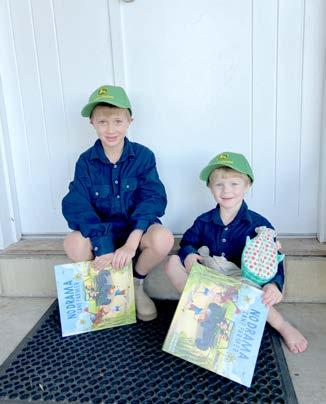

This year marked the 80th anniversary of Children’s Book Week, a nationwide celebration of stories that ignite imagination and adventure.
With 2025’s theme Book an adventure, young Willis and Ellis from the Burdekin took their cue straight from the family paddocks.
Dressed head-to-toe as sugarcane farmers and proudly holding No Drama Cane Farmer, the brothers showed that adventure doesn’t always mean far-off lands – it can be found right here in the rows of cane.
For their grandfather, Glenn Betteridge, the moment was more than just a cute dress-up. As a CANEGROWERS Burdekin director and Queensland Cane Grower Organisation Board member, Glenn knows the importance of passing the industry’s story to the next generation.
“As one very proud grandfather, it’s great to see the boys represent our family’s legacy at something like Book Week,” he said. “The school is in a cane area, so having the industry recognised in this way was just fabulous.”
The boys’ book of choice, No Drama Cane Farmer by Nicki Townsley, has been winning hearts in cane communities and beyond. With colourful illustrations and a playful storyline, it brings the world of sugarcane farming to life for kids everywhere.
For Willis and Ellis, Book Week wasn’t just about dressing up – it was about honouring their roots, celebrating their community, and proving that the sweetest adventures can start in a cane field.
Want to share the story at home? Visit nikkitownleyauthor.com to grab a copy of No Drama Cane Farmer.



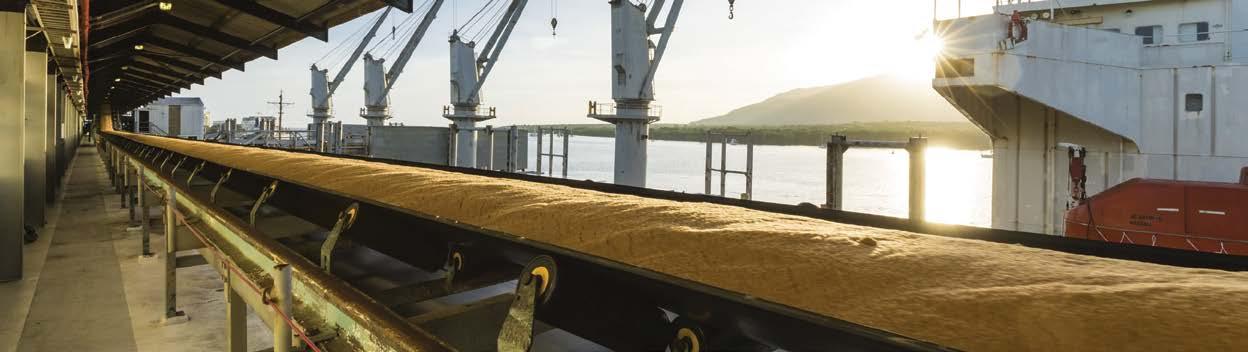
The past year has seen Sugar Terminals Ltd (NSX: SUG) make strong progress on several key strategic initiatives. With a focus on financial discipline, operational performance and stakeholder engagement, STL continues to evolve its business model to better support the needs of the sugar industry.
STL reported a Net Profit After Tax of $32.3 million for FY25, a modest decrease from the previous year, largely due to a $1.8 million rebate provided to customers to help ease cost pressures. Despite this, STL maintained strong operational performance, handling approximately 6.6 million tonnes of raw sugar. At its meeting on 9 September 2025, the Board declared a final dividend of 3.6 cents per share, fully franked, bringing total dividends for the year to 7.7 cents, a 4.9% reduction on the prior financial year.
STL invested a further $18.6 million across 147 active capital projects to sustain the safety, reliability and longevity of our bulk sugar terminals. Key highlights included the commencement of the Lucinda jetty ramp reconstruction, the successful commissioning of a $2 million high-voltage substation in Townsville and major shiploader refurbishments at Mourilyan and Cairns. In excess of $8 million was incurred in major maintenance works such as fire system servicing, shed floor coatings and structural repairs at Bundaberg and Lucinda. Looking ahead to FY26, total capital investment is budgeted to exceed $25 million across more than 100 projects. STL remains focused on seeing the scheduled works delivered and maintaining the long-term performance of these vital industry assets.
A major milestone achieved over the past year was the successful negotiation of a new Storage and Handling Agreement (SHA) which came into effect on 1 July 2025. The agreement includes a 10% reduction in Availability Charges and a reduction in Activity Charges from FY27. STL has indicated that these changes will likely result in a 10–15% reduction in NPAT and dividends in FY26, reinforcing our commitment to transparency and industry aligned pricing.
The SHA also triggered a comprehensive review of STL’s pricing model to be conducted during the 2-year term. During this review, we are committed to engaging with all industry stakeholders to ensure we meet the expectations of the industry as a whole.
STL remains on track to fully insource terminal operations by 30 June 2026, and importantly, we’ve recently been engaging with QSL operational employees as part of the
transition planning. These discussions have been positive and constructive and we look forward ensuring a smooth and collaborative handover.
STL has made solid progress on this issue after having received completed Member Status Declaration Forms accounting for nearly 200 million of the 229 million G-Class shares on issue.
This has provided further clarity on shareholder status and contributed to a 15% reduction in total shareholder numbers, with the register now recording approximately 4,200 individual holdings. STL will continue to drive this issue going forward.
On 12 September 2025, STL announced that current Director Peter Trimble will succeed Mark Gray as Chair of the Board following the 2025 Annual General Meeting to be held on 19 November 2025.
Both Mr Gray and fellow Director Sam Bonanno will retire at the AGM having served the maximum 3 terms on the Board.
Mr Trimble joined the Board in December 2024 and currently chairs the Finance and Audit Committee, and brings deep experience in financial management and governance and previously served as STL’s General Manager during the negotiation of its current operating model.
Mr Trimble has expressed his commitment to leading STL through its next phase, with a key focus on the successful transition to insourced operations in 2026.
In conclusion we remain focused on delivering value to our shareholders and supporting the competitiveness of the sugar industry. Thank you for your continued support, and we extend our best wishes for a successful conclusion to the 2025 crush.

David Quinn Chief Executive Officer
BY RENEE CLUFF
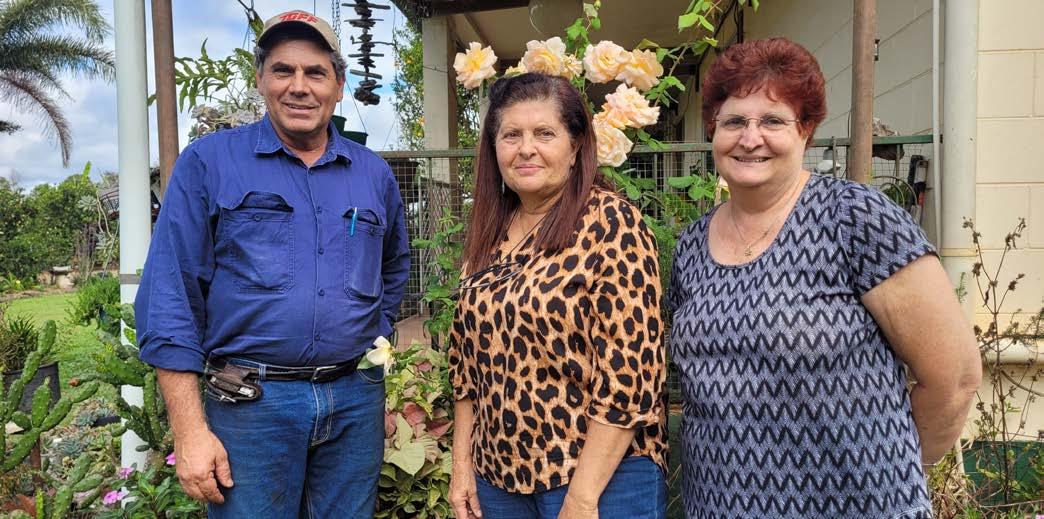
Tableland sugarcane grower Claude Santucci exemplifies how adaptability and versatility breed both resilience and success.
Albert Einstein once said, “Life is like riding a bicycle. To keep your balance, you must keep moving.” If ever there was a living, local embodiment of that truth, it’s Claude Santucci – a second generation Tableland farmer whose ability to adapt has allowed him to withstand the bumps in the road.
Claude’s story begins not with him, but with his parents, Gennaro and Domenica – the latter better known as Mimmina – who emigrated from Italy. Gennaro arrived first in 1949, aged just 19, in search of a future far away from post-World War II Europe.
“Our area in Italy was devastated during the war,” Claude explained. “There was no industry, no work. He was a young teenager during wartime, but he was very close to the active fighting at times.”
Family stories recall moments of danger. Claude’s sister Lena recounted
one particularly painful tale her father had relayed. “There was one time when he was walking along the road with his mates and a fighter plane came down and just shot everything,” Lena recalled.
“A few of his mates died and others were badly injured. It was right on the front line where they lived.”
Gennaro followed his uncle to Far North Queensland. “His uncle had some land at Biboohra and got tied up in a tin mine at the base of Tinaroo Dam and Dad’s first job was digging underground in the mine, trying to extract tin,” Claude said.
“There weren’t rich pickings, and Dad decided he needed more to support himself and that’s when he became a cane cutter on the coast, in Cairns.”
Gennaro also cleared land on his uncle’s property, often using explosives to remove stubborn tree stumps. It was gritty, dangerous work, laying the foundation for his farming career.
Many other members of the Italian community were sponsored by Gennaro to come to Australia, among them the brother of his future wife, Mimmina. She was in turn sponsored by her sibling. Through mutual support and long days in the field, a new generation of close-knit North Queensland farmers emerged.
“All the men started out in cane cutting initially, to make money,” explained Claude’s sister, Rosa. “That’s how Dad was able to buy this property.”
“Friends who were cane cutting in Cairns lent him the money to buy his first block of land,” added Claude. “That’s how a lot of people got started up here, because the banks wouldn’t talk to you back then.”
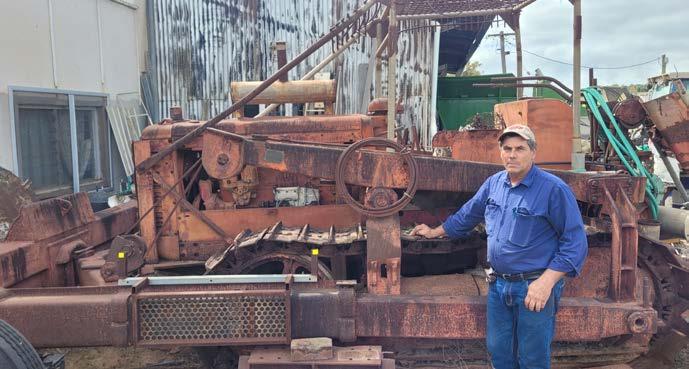
With the construction of the Tinaroo Irrigation Scheme in the 1950s, opportunity flowed – literally. Gennaro purchased a broken-down bulldozer
from the project, fixed it himself, and used it to establish his own land.
At the same time, he was able to take on subcontracting work with the irrigation scheme and other local projects to earn extra income. That same bulldozer still sits on the property today, a relic of resolve and risk.
“That could have been a disaster for him,” Claude reflected. “It was a punt, but it paid off. He made some good money and that helped him pay the farm off and buy farming equipment.”
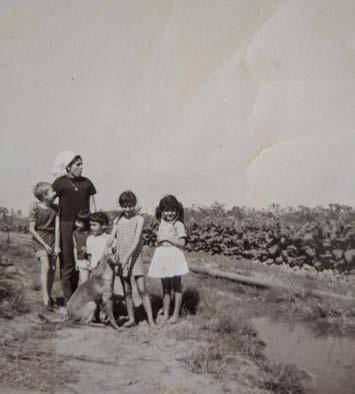
Claude, the youngest of three, grew up side-by-side with his two older sisters, Lena and Rosa, on the family farm, which initially grew crops such as peanuts and pumpkins and later, tobacco. From a young age, all three kids were immersed in every facet of farm life – driving tractors, stringing tobacco, topping flowers, picking crops.
“I think I was only about six when Dad taught me to drive the tractor,” Lena said. “He needed someone to drive while he laid irrigation pipes. I had to use all my strength just to push the pedal.”
Their mother Mimmina worked just as hard. She planted tobacco, cooked for field workers, and helped with the harvests.
“In the early days, tobacco was all picked by hand,” Lena remembered. “She’d go out and pick, come back to cook lunch, head back out, then come back in to make smoko. The women all worked hard back then.”
By the time of the decline of the Tableland tobacco industry in the 1990s, Claude was a young man. The rescinding of tobacco licences forced many Tableland growers into a moment of reckoning. For Claude and his family, it was another pivot point.
“If you keep doing the same thing and expect different results, you’re on a highway to nowhere”
CONTINUED NEXT PAGE
“We stopped growing tobacco just before the government rescinded the licences,” Claude said. “The government provided compensation and also backed research through Department of Primary Industries (DPI) to identify alternative crops suited to our region. That’s when bananas and other horticulture options really started to take off.”
For many, the end of tobacco could have spelled the end of farming altogether. But Claude saw it differently.
“There are always new opportunities if you’re willing to adapt,” he said. “The guys who made it through were the ones who didn’t stay still.”
The tobacco industry was replaced by a salad bowl of crops, from mangoes, to avocados, citrus and of course, sugarcane. Claude, the CANEGROWERS Tablelands Chairman and Director of the state board, draws comparisons with the current situation Mossman sugarcane growers are facing with the closure of their mill.
“We were there 25 years ago,” he said. “The Tableland is fortunate in that we’ve got 300 sunny days a year and water from the Tinaroo Irrigation Scheme.
The guys on the coast don’t have that, so they have to look at other crops that will grow in the tropical belt, but in the end, you have to show some initiative.”
In 1997, Claude planted his first sugarcane crop, just in time for the first crushing season of the newlybuilt Tableland Mill a year later. Today, Claude manages two cane-growing properties – his 100-hectare home farm just east of Mareeba and another to the west. Together, they produce close to 10,000 tonnes annually.
Peanuts serve as the go-to fallow crop, helping improve soil health and providing a secondary income stream. But even that is up in the air now, following the closure of the Peanut Company of Australia by Bega Cheese.
“It’s a bit of a dilemma,” Claude said. “Without a local processor, we’d have to send peanuts to Kingaroy, nut in shell, at our own expense, which is too costly.”
Soybeans are now being considered as an alternative to peanuts in the fallow blocks.
Along with market forces, weather and pests remain the biggest challenges
to his farming operation. Cane grubs have become a major problem, and Claude suspects resistance to chemical treatments is building.
“We know our application method is by the book,” he said. “Field conditions are very different to lab conditions. The new chemicals that Sugar Research Australia has been trialling to replace Imidacloprid are still three or four years away, so we’re in a world of pain. For the next few years, we’ll be growing cane and watching it die.”
In the meantime, Claude is working to mitigate the damage as best he can with his knowledge of how the grubs operate.
“The beetles are quite clever; they’ll go to the tallest and darkest green vegetation they see closest to the tree line and land there,” he explained.
“It’s the cane you cut early in the season because it’s the tallest, so you want to make sure you’ve got that cane in the middle of the farm so it’s too far for them to fly. If you have that tall, dark green cane right next to the tree line, it’ll get smashed.”
The topography of the properties also add complexity. His fields span red soils, sandy loams, and heavy clays, all in a single block.
“The different soil types require different nutrients and have different water profiles,” Claude said. “I try to average out fertiliser and irrigation to get the best outcome, but it’s never a perfect system. And while we have access to water through the Tinaroo Scheme, it comes at a cost. You really can’t afford to waste a drop. It’s our lifeline.”
Claude irrigates using centre pivots purchased with government compensation from the tobacco shutdown – a classic example of reinvesting smartly in long-term viability.
Mother nature has also tested Claude’s resilience more than once. A fire at his Chewko farm scorched half his crop in 2022 while the following year, torrential floods following Cyclone Jasper destroyed pump sheds, electrical systems, and carved out 400 metres of paddock, stripping away the topsoil.
A QRIDA grant assisted with the $25,000 cost of earthworks, but the block is still not producing as it once was.
“We repaired it but the crop that’s growing in there now is the first crop post the repairs and it’s a mediocre crop compared to what that block would normally grow,” Claude said. “A lot of areas were down to subsoil when it was being repaired.”
Perhaps Claude’s first big, gutwrenching lesson in what the weather is capable of came in 1985, when a hailstorm destroyed a ready-to-harvest tobacco crop.
“The dark clouds had that green hue,” he recalled. “The tobacco was shredded. It hurt because we took a huge financial hit. There are all sorts of thoughts and emotions you have to process to move on.
“You either have that resilience in your character, or you learn it fast. Otherwise, most people wouldn’t handle it. You speak to any farmer and they’ll tell you – no two seasons are ever the same. You learn from each one. You build a skill set.
“If you keep doing the same thing and expect different results, you’re on a highway to nowhere.”
To spread the risk, Claude also grows citrus as a side venture. His Tahitian limes and lemons hit the market just when other regions slow down. But Claude is the first to admit it’s not the perfect system.
“It’s a bit of a side hustle to have a bit of a diversified income stream,” he said. “But I’ve realised that to make it worthwhile, you need scale. You need to spread the cost of labour and compliance over more hectares.”
Pet guinea fowl roam the orchard, another unconventional touch in Claude’s ever-evolving approach to farming.
And while he’s still not sure what’s next – maybe pumpkins, maybe melons – one thing is certain: the ability to pivot will be central to whatever comes. Just like his father before him, Claude isn’t betting on strength or smarts alone, but on the quiet power of adapting fast and moving forward, no matter what.


BY LINDSEY PERRY
Smartcane BMP Program Manager
With nutrient inputs amongst one of the largest costs to growers, effective nutrient management is essential for profitable sugarcane farming.
Developing a nutrient management plan helps growers prioritise improving nutrient use efficiency and demonstrate on-farm environmental sustainability outcomes.
Sugar Research Australia (SRA) developed the SIX EASY STEPS® program to support the adoption of best practice nutrient management onfarm, assisting growers to implement balanced on-farm nutrition to optimise productivity and profitability while maintaining soil fertility and minimising off-farm effects.
SIX EASY STEPS® consider different soil types, recognising that appropriate nutrient inputs for a particular farm should be based on the knowledge of the soils on the farm and the nutrient processes and risks of nutrient losses associated with those soils.
Balanced nutrition ensures all essential plant nutrients are present at appropriate concentrations in the soil
to facilitate optimum crop growth and yields. A combination of soil testing, leaf analysis and crop response assessment ensures all essential plant nutrients are adequate.
On-farm nutrient management is key to farm and industry sustainability and minimising off-site impacts.
Growers who annually review their nutrient management ensure there is minimal risk of losses in productivity (loss of yield), profitability (loss of income), nutrients (leaching, runoff losses) and soil resources (erosion and fertility losses).
Sustainable nutrient management in sugarcane farming is essential for maintaining soil fertility and minimising environmental impacts. The proximity of sugarcane farms to the Great Barrier Reef highlights the industry’s contribution to protection of water quality.
Following SIX EASY STEPS® guidelines ensures compliance with reef regulations on N and P use.
If you are using SIX EASY STEPS® as a grower, you meet the nutrient management elements of Smartcane BMP accreditation.
Additionally, accreditation acknowledges that you are classified as an ‘appropriate person’ under Reef legislation definitions to review farm nutrient management plans, required annually.
The nutrient management program is the foundation of the Australian sugar industry’s nutrient and fertiliser guidelines. The program recommends fertiliser rates for each district and accommodates use of legume fallow breaks, mill mud and other ameliorants that contribute nutrients.
It is comprehensive, integrated and science-based recognised by industry and government as nutrient best practice.
With a focus on profitable sugarcane production in combination with environmental, it is adaptable to the range of districts, soil types and soil properties within the sugar industry while promoting balanced nutrition and sustainability.
By adhering to best practices, sugarcane growers can achieve higher yields, better profitability, and enhanced environmental stewardship, ensuring a sustainable future for the industry.
There are up to date and useful resources to get familiar with SIX EASY STEPS® on the SRA website as well as an online training course that walks you through the process. Find them at sugarresearch.com.au/growers-andmillers/nutrient-management/sixeasy-steps-toolbox-sra
CANEGROWERS delivers the Smartcane BMP project (2022-2026) with funding from the Queensland Government’s Reef Water Quality Program and CANEGROWERS
SUPPLIED BY SUGAR RESEARCH AUSTRALIA
Three new sugarcane varieties found to have higher yields than standard varieties were approved for release by Regional Variety Committees (RVCs) in 2025: SRAW46 in the Burdekin, and SRA48 in Herbert, while SRA47 has had a provisional release status for Southern region, subject to more disease data.
“Performance for these varieties is better than the most commonly grown standards for their respective regions by between 6-7% for tonnes cane per hectare (TCH) and 3-13% for tonnes sugar per hectare (TSH),” Variety Development General Manager Dr Garry Rosewarne said.
“Disease resistance profiles are generally sound, although SRA48 and SRA47 are respectively rated susceptible, and intermediate to susceptible, to Pachymetra.
“Further testing will be undertaken to confirm scores, however, growers should not plant these varieties on soils with high Pacymetra spore counts.”

SRAW46 – Burdekin SRAW46 (QK14-2492) was made at SRA’s Meringa crossing facilities and selected in early-stage (CAT) trials by Wilmar’s Technical Field Department with true seed produced and selected by SRA.
The variety then advanced to combined SRA and Wilmar Final Assessment Trials (FATs) across multi-site trials, replicated over three crop years.
In FATs, it has shown an increase in TCH with a decrease in CCS over the average performance of the four standard varieties (KQ228A, Q240A, Q183 and Q208).
“Q240 currently accounts for nearly 53% of production in the Burdekin, and SRAW46 showed a 7% increase in TCH and 6% increase in TSH compared with Q240 in FAT trials,” Dr Rosewarne said.
Further performance data for SRAW46 will be collected during 2025 and 2026 when processing Burdekin Productivity Services’ strip trials through commercial mills.
SRAW46 demonstrates resistance to smut and leaf scald, with a level of Pachymetra resistance comparable to the four standard varieties, in the
Burdekin. Wilmar Sugar Technical Field Officer Terry Morgan agreed the variety had shown some strong productivity traits.
“It’s a vigorous grower, consistently. I’ve seen it at other sites like the Herbert, it’s usually taller than a lot of other cane,” Mr Morgan said.
“It doesn’t have a propensity to lodge, it stays reasonably upright, and it’s not heavy with trash. The trash doesn’t adhere tightly to it like KQ228, for example.
“We didn’t see any arrowing issues here in the Burdekin, but in the Herbert, it has tended to arrow regularly over the last couple of years. I wouldn’t say it’s a prolific arrower (in the Herbert), but I would put it mid-range.”
For more information on SRAW46, please contact Burdekin Productivity Services (BPS). The variety will be available for purchase from BPS in 2027.
SRA48 – Herbert
SRA48 was approved for release at the 2025 Herbert RVC meeting and will be available as seed cane in 2026.
From limited trial results in the Herbert, SRA48 has shown a sugar
yield advantage over Q200 (4%), Q208 (3%), Q232A (3%) and Q240 (4%).
Data was collected from two FAT series (2017 and 2019), from a combined total of six trials.
SRA48 has generally shown a slightly lower CCS than Q200, Q208 and Q240, but a slightly higher CCS than that of Q232.
It has demonstrated a cane yield advantage over Q200 (5%), Q208 (6%) and Q240 (6%), and is comparable to Q232. This advantage has been consistent across most crop classes and trial locations representing Herbert’s main soils and growing environments.
“SRA48 has a strong disease resistance profile against most of the Herbert’s major diseases, including leaf scale resistance and smut resistance,” Dr Rosewarne said.
“Pachymetra was scored as intermediate-susceptible. This is higher than major commercial varieties grown in the Herbert and additional testing will be undertaken to confirm the Pachymetra rating. Growers should avoid planting this variety in areas with a high Pachymetra spore count.
“Limited observations from Herbert trials indicated that SRA48 has low arrowing and light suckering.
“SRA48 is a reliable germinator with an average stalk population and a medium barrel of light green colour. It has medium loose trash and a clean, erect canopy with narrow leaves.
“It also features an erect, compact stool with an upright growth habit, providing excellent harvesting presentation.”
The variety will be available from 2027 through Herbert Cane Productivity Services Limited (HCPSL) approved seed cane plots (limited) and in 2026 as tissue culture.
SRA47 – South
SRA47 was provisionally released for the Southern region earlier this year. It shows high TCH and CCS in the data from seven trials over two series planted in 2019 and 2021 (Table 3).
“SRA47 shows a 7% increase in TCH and a 13% increase in TSH above Q240, the most common variety grown in the south (42% of the crop),” Garry Rosewarne said.
“Fibre quality readings and quality results suggest no issues for milling.
1:
“SRA47 is resistant to smut, Fiji leaf gall and mosaic, with intermediate resistance to leaf scald. It is susceptible to Pachymetra.
“The individual trial scores for Pachymetra were 9.5 and 5, giving a weighted score of 6.6, meaning slightly susceptible.
“Additional testing will be undertaken to confirm the rating.”
SRA’s latest Variety Guides are available here: sugarresearch.com.au/ growers/varieties
Agronomic performance of SRAW46. Field data was collected from 10 trials over three series that were all grown to second ratoon. Data presented is averaged over the three crops in the series.
Table 2:
Agronomic performance of SRA48. Field data was collected from six trials over two series, grown until second ratoon. Data presented is averaged over all crops in the two series.
Table 3:
Agronomic performance of SRA47. Field data was collected from seven trials over two series. One trial was grown to fourth ratoon. Data is averaged over all crops in the two series.
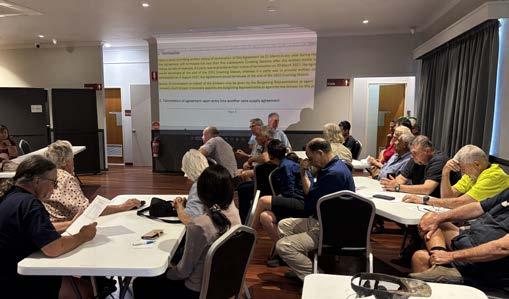
Winter this year turned into a drier than average period with August being by far the driest month so far with only 16.8mm falling.
Predictions are for a wetter spring period; to mid-September there were only a few showers that settled the dust and, on 16 September, the whole district was involved in a heavier rainfall event which lasted several days and did impact the harvest with Mulgrave Mill stopping for a period of time given Mulgrave area had also experienced some heavy falls.
With the crushing season slated to finish by 28 October, weather permitting, it will be interesting to see how September and October play out.
In week 12 (week ending 14 September), Mossman Coastal growers delivered 9,026 tonnes of cane to Mulgrave Mill. This was down on previous weeks due to weather interruptions.
The weekly average was 12.57 CCS which was also down on previous weeks. The to-date totals are 117,796 tonnes of cane for a district average of 12.18 CCS.
The grower representatives continue to participate in the Transport Advisory Group meetings in an attempt to, deal with any emerging transport issues with the road transport, the delivery of cane and equity given the limited tonnes of cane being sent to Mulgrave.
There was a shift from four harvesters working in a 24-hour period to five working in a 24-hour period. This is in an attempt to provide more cane during the day while we now have three harvesting groups working and two at night. The night closures we thought might hit us hard at the start of the crushing have not yet occurred but there may be some nights coming up that the Captain Cook Highway will close for a full night to get critical repairs done without interruption.
The Douglas Fire Mitigation Group met in September and reported a successful fire mitigation program was finalised this year.
There were a number of planned burns undertaken along the coastal and inland areas during the drier months to reduce fuel loads. Planning now starts for the target areas next year.
There was a grower meeting held on 17 September with representatives from MSF Sugar attending to outline the current draft of the CSA. Growers and their representatives used the time to fully explore the possibilities of making a fiveyear rolling future with MSF Sugar and Mulgrave Mill work successfully for the cane local industry.
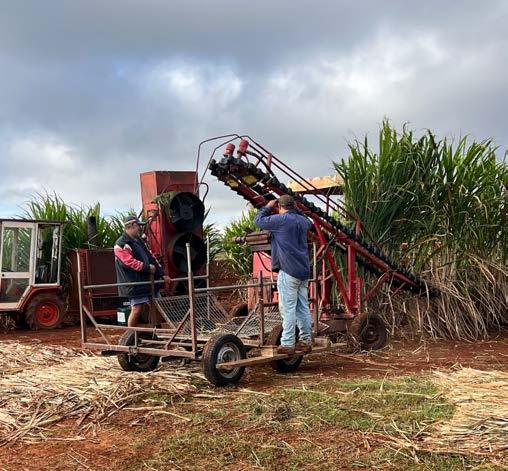
The Tableland Mill is currently operating at 97% efficiency, with a throughput rate of 202 tonnes per hour.
However, cane supply continues to be impacted by a shortage of drivers. QUBE is assisting by helping drivers obtain the required upgraded licences.
The Mill has projected a finish date of 3 December 2025.
The Queensland Government has confirmed it will continue the 15% irrigation price discount for eligible customers for the next two years (2025–26 and 2026–27).
This discount will be provided as a rebate on Sunwater water bill charges and is targeted at owner-operated businesses where at least one owner or beneficiary earns primary production income.
Eligibility Criteria:
You will be eligible if:
• You are a Sunwater or Seqwater customer
• Your business is owneroperated
• You use water for irrigation from time to time
• You earn primary production income
The Scheme will be administered by the Queensland Rural and Industry Development Authority (QRIDA), with
Wet weather has hampered harvesting and farming operation across the region.
Records indicate that the rainfall for September, at the time of writing, is one of the highest on record.
Prior to the rain, both mills were preforming well, and the crop was looking quite reasonable. Planting across the Mulgrave
Growers in our district have been in flood cleanup mode following an early dumping of rainfall in mid-September which left newly planted cane either buried in silt or carved out of the ground.
Until then, the 2025 crushing season at South Johnstone Mill had been progressing smoothly. More than half of the crop has now been crushed and MSF Sugar deserves commendation for maintaining strong mill performance thus far.
applications designed to be as simple as possible.
We are awaiting the release of the full information package from QRIDA in October. Please contact our office if you require assistance or further information.
Next season’s distribution seed plot has now been planted on the north side of Mareeba. Information on available seed and varieties will be provided early next year.
ongoing responsibilities as Senior Chair of the Queensland Cane Growers Organisation (QCGO).
In preparation for next year’s centenary celebrations, our office has been laying the groundwork to properly honour this important milestone.
has officially commenced. This initiative seeks to identify, evaluate, and implement effective, feasible, and practical best management practices for controlling feral pig populations in the Wet Tropics.
zone is complete, with quite a bit to go in Babinda. Obviously, this has all been halted.
Plant cane in the low-lying areas in Babinda is at serious risk of failing due to water inundation. Growers in Babinda zone would have been welcoming the increase in CCS from previous years but it is fair to say that this deluge will negatively impact any CCS.
QCGO’s Chris Cooper recently delivered an insightful governance presentation to the board, offering a detailed overview of the history and evolution of CANEGROWERS Innisfail over the past 100 years. The presentation provided valuable context on how our current organisational structure came to be, offering both historical perspective and governance insight.
Looking ahead, CANEGROWERS Innisfail is further expanding the Sweetest Schools Competition to our district. Planting activities are being planned for next year, with the first harvest projected for the 2027 season. We’re looking forward to the opportunity to promote agricultural awareness and education among young people in the region.
Meanwhile, Phase 2 of our feral pig management project
Darren Marshall, Lead Researcher for Feral Animal Projects at the Centre for Invasive Species Solutions, recently visited the region to assist in establishing a pig tracking program. The program utilises radio-transmitting collars to monitor the movements and behaviours of feral pigs.
During his visit, Mr Marshall conducted a briefing with local growers, outlining the importance of understanding the movement patterns and behavioural vulnerabilities of feral pig populations. Such knowledge is essential for developing targeted, regionally appropriate control strategies.
This pilot project is currently being conducted in the Silkwood area. Insights and data collected will inform the development of future control programs to be applied more broadly across the district and throughout the Wet Tropics region.
Over the past month, our Chairman, Board of Directors, and management team have engaged in a busy schedule of strategic meetings.
These included consultations with Queensland Sugar Limited (QSL), our newly appointed district manager from Sugar Research Australia (SRA), the regional variety committee, and representatives from the Centre for Invasive Species Solutions. These engagements were in addition to Joseph Marano’s
Tully district has reached 62.88% of estimate at the mid-September point.
Currently through the rollers, there has been 1,388,594 tonnes crushed, with approximately 820,000 tonnes remaining.
The estimated yield for the season remains at 75.60 tonnes per hectare with the cane crushed up to now yielding
at 78.18 tonnes per hectare. Estimated area completed is at 58.06% or 16,956 hectares with 12,251 hectares remaining.
With the season commencing on 3 June, the season has been processing for 14.95 weeks, crush rate currently at 705.18 tonnes per hour. Lost time due to wet weather is currently 598.78 hours, cane supply 5.65 hours and factory lost time is 221.967 hours.
From 13 September to 17 September, Tully recorded 231mm of rain. Tully river rose above the Mullins bridge, which is currently the only available bridge to transport 75% of the Tully districts cane to the mill. There will also be damage to plant cane that has not been planted long enough to emerge from the furrow.
Hopefully, most of the water laying in paddocks has dispersed prior to the sun emerging too strongly otherwise the cane will overheat in the water.
With the latest deluge of rain, Tully’s total rainfall for the year is now at 4,283mm and rainfall for 148 days since the beginning of the calendar year. Up to 17 September, rain days represent 57% of the calendar year.
Observations across the district indicate that there is a higher weed load than a normal year,
with Blue Top weed or Blue Billy goat weed as the most common visually.
Blue Top is a non-native invasive weed that can be controlled easily with the correct chemical application. Other species of broad leaf weeds can be controlled at the same time if you are using the correct chemical application.
Usually from July until midNovember is a good time to clean farm drains as the water recedes. At this stage there doesn’t appear that an opportunity will arise, given the heavy downfalls received midSeptember.
Increased water levels within the farm will also potentially increase the number of rats that will tend to inhabit sugar cane. Ensure that you use adequate means of control for rodents around the farm.
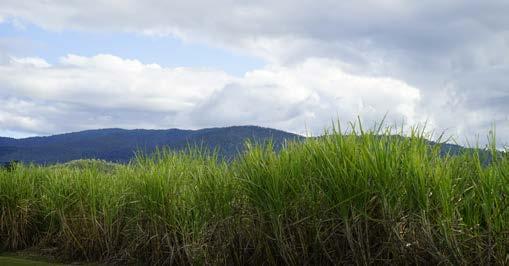
At the time of writing this report, the Herbert River district has harvested 2,019,824 tonnes of cane for the 2025 season, with an average CCS of 12.7.
Harvesting conditions across the region have generally been favourable, with some rainfall recorded in mid-September.
Following this, Wilmar’s Victoria Mill Manager extended an invitation for members to tour the mill in October — a valuable chance for growers to see firsthand the workings of the factory that underpins their industry.
CANEGROWERS Herbert River has partnered with Herbert Cane Productivity Services Limited (HCPSL) and Sugar Research Australia (SRA), with the assistance of Ingham State High School, to support local primary schools and encourage interest in the sugar industry.
This educational and handson cane growing initiative engages students in learning about sugarcane, from planting through to harvest, and helps them develop an understanding of the industry’s
agricultural practices and its importance to the community.
To further enhance the learning experience, agriculture students from local high schools will be invited to assist primary schools throughout the project, fostering crossschool collaboration and mentorship.
The initial stages of the Harvester Risk Working Group, which will bring contractors and growers together to identify key operational challenges in the Herbert River district, are underway.
Rising finance and insurance costs remain at the forefront of concern, along with the ongoing impact of mill operations and logistic delays on contractors’ ability to perform their role efficiently.
Most planting has been completed at this stage towards the end of September.
The CANEGROWERS Herbert River Board recently toured Victoria Mill, taking in key parts of the milling process including the juice lab. This provided directors with a valuable insight into the key pinch points within the factory’s operations.
The Burdekin District at the time of writing had delivered approximately 70% of the crop and the run of dry weather had enabled a steady crushing rate to get the crop off.
Based on how the season has gone so far, it is looking like we could be done by mid-November, with some Kalamia Groups talking about cutting out by late October.
Obviously, any plans can be unravelled with wet weather and mill breakdowns, but if the tonnes are not there from the late cut cane from 2024 season and it stays dry, we could be done sooner than we think.
An early finish for 2025 would be a great reset for the Burdekin
district, but let’s not get ahead of ourselves as there is still a decent amount of cane left in the paddock.
Burdekin Cane Audit Services (BCAS) organised a meeting with the auditors, grower collectives and Wilmar to deliver their Mid-Season Review report.
Extra work has been required this season as the Laboratory Information Management System (LIMS) system was not working properly at the start of the season, this was rectified and processing the standover cane from the 2024 season resulted in an increase in checked juice analysis and refrac brixes done.
The CBL Board (pictured) met with representatives of the Burdekin Shire Council to discuss
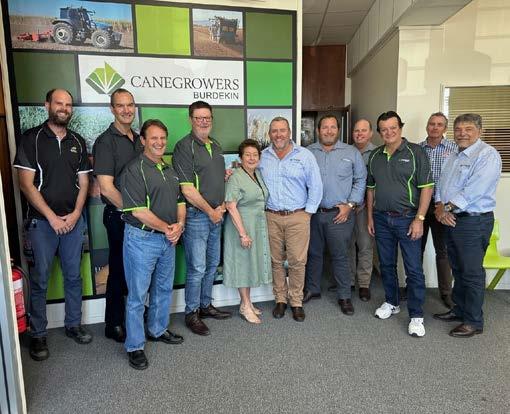
the permit approval process for emergency access to sidings in the event of wet weather.
The goal is to try and streamline this process so that if we need to change haulout options from trucks to transporters to get cane out of a rain affected paddock towards the end of the season, we can access suitable roll-on roll-off sidings for this purpose at very short notice. More work and meetings will be required with Council and Wilmar to finalise this outcome.
Lower Burdekin Water (LBW) reached out to CBL as part of its stakeholder feedback process and the CBL Board met with LBW’s senior representatives at our Board meeting. LBW provided an update on what’s happening in their business and answered questions from CBL around current issues as well as the usual crystal ball stuff over what may happen in future.
LBW do a great job of managing the aquifer and distributing water and are proactively investing in the business to pursue efficiencies.
The CBL Board attended the “Public Hearing – Inquiry into Sugarcane Bioenergy Opportunities in Queensland”
which was held in Townsville on 10 September.
The hearing was well attended, and it was pleasing to see this bipartisan parliamentary committee in Townsville, visibly keen to learn more about the opportunities for bioenergy for the sugarcane industry. CBL presented to the Committee to voice our support for the bioenergy opportunity that is in front of the sugarcane industry.
The Burdekin sugarcane industry is capable of expanding to meet this need provided we have the right policy settings around renewable mandates, water and electricity pricing.
Bioenergy could bring transformational change to the sugarcane industry and whilst it has been talked about for some time without any material commercial outcomes, you can feel the momentum shift coming in terms of policy support to make it happen.
From our perspective, in view of the current geopolitical tensions in the world, the need for Sovereign Fuel Security should be a no brainer to expedite government support to develop a strong domestic biofuels industry.
The Proserpine Mill has continued to perform strongly, with more than 954,000 tonnes of cane crushed by 13 September.
The current estimate of 1.58 million tonnes is expected to soften in the final weeks of crushing due to visual evidence of lower yields in lateratooned areas.
Positively, cane quality had begun to improve, with the season-to-date CCS climbing to 13.93. This was supported by the most recent week averaging more than 15 CCS.
Mill availability remained above 85%, allowing weekly throughput to average over 87,000 tonnes for the prior month. This despite regular no-cane stops, mud ups, electrical issues and bin supply limitations.
If current crushing rates were to be maintained, the season would likely conclude between late October into early November, providing a solid foundation for the 2026 crop.
In August, CANEGROWERS Proserpine continued to actively promote industry initiatives, including a presentation to the Bioenergy Parliamentary Inquiry held in Mackay.
Key issues raised with attending MPs included the potential for profitable co-generation and microgrids, along with opportunities in ethanol and sustainable aviation fuel (SAF).
Support also continued for impacted growers seeking to restore the Myrtle Creek Sand Weir, which remains an ongoing point of frustration.
There was welcome news from Whitsunday Regional Council in late August, with a motion passed to prioritise construction of dry-weather heavy vehicle bypasses for the Kelsey Creek Bridges.
This long-standing issue has limited heavy vehicle access and restricted the timely delivery of essential inputs such as mill mud, fertiliser and fuel. The commitment to a solution brings hope of finally resolving what has been a significant frustration for growers and the wider community.
Not all developments were positive, however. Following the amalgamation of rating categories, smaller-sized properties (<60 ha) experienced steep rate increases—capped at 50%—while larger properties benefited from reductions. This shift has added further pressure to many smaller farming enterprises.
In September, the CANEGROWERS Proserpine Board met with the CEO and senior staff from QSL for an update on terminal operations and the introduction of a new pricing product.
Board representatives also held discussions with senior Wilmar management regarding a range of cane supply and milling issues. Following a few challenging years, recent improvements in milling capacity have been encouraging. It is hoped that Proserpine Mill will continue building on this progress to ensure growers achieve the best possible crops into the future.
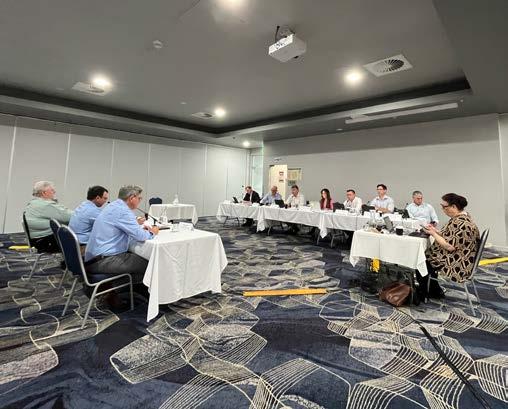
The Mackay-WhitsundayIsaac regional sugar industry’s bioenergy future was placed firmly on the agenda during last month’s Parliamentary Inquiry into Sugarcane Bioenergy Opportunities in Queensland.
Mackay was first to have a hearing, which was well attended by people from across the sugar industry including growers, millers and marketers.
CANEGROWERS Mackay
Chairman Joseph Borg, Deputy Chairman Brett Leach and CANEGROWERS Proserpine
Chairman Glenn Clarke presented on behalf of growers.
Mr Borg spoke on the opportunities presented by mill cogeneration and virtual microgrids to growers to enable cost-effective irrigation, building productivity for the regional sugar industry.
Mr Clarke spoke on the need for strong government policy and regulatory frameworks to
Queensland Government Primary Industries and Resources Committee, and particularly to Mirani MP Glen Kelly, and Mackay MP Nigel Dalton who both sit on this committee and have demonstrated an ongoing commitment to the development and diversification of the local sugar industry.
On other matters, both MAC and PCAC are applying pressure
support the development of any sugarcane-derived bioenergy sector. Also presenting at the hearing were GW3 CEO Kylie Porter, and Regional Development Australia-Greater Whitsundays’ Rob Cocco, Stephen Cutting and Paul Schembri.
Ms Porter spoke on the broad range of bio manufacturing opportunities that lay within the Greater Whitsunday region’s capability, while RDA spoke on the deliverability of this region with co-location of feedstock, engineering, manufacturing and port facilities.
A recurring theme was the importance of return-oninvestment to growers, and the importance of diversifying the sugar industry beyondbut still including- sugar for a stronger future not just for the regional sugar industry, but for the Greater Whitsunday’s economic future.
CANEGROWERS Mackay extends thanks to the
to millers and participating in ongoing discussions to develop improvements to transport and logistics issues in both districts. Any growers requiring assistance with any issues are encouraged to call 4944 2600 to get the ball rolling on a solution. Keep an eye on our Facebook page, The Billet and weekly District Manager Updates for emerging training and industry opportunities.
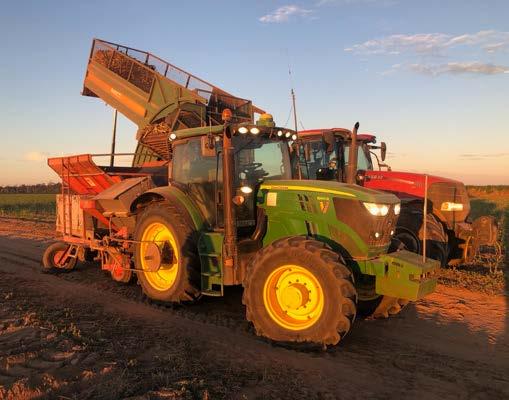
Bundaberg Sugar Mill processed 53,274.26 tonnes for the week ending 13 September, this brings the season-to-date to 736,986.12 tonnes.
The average CCS for Bundaberg Sugar Mill for week 17 was 14.82 CCS and the season CCS average for Bundaberg Sugar Mill is at 13.69 CCS.
Crushing is now over 50% through and the estimate is holding at approximately 98% of the original estimate. To date, 160 hours has been lost to wet weather and a finish in early to mid-December is likely.
Planting is in full swing across the region with some spectacular spring weather and Sugar Services have completed the delivery of most one-eye sett orders.
We recently provided feedback to the BMRG Burnett Mary Regional Reef Water Quality Strategy on some inaccuracies contained within their strategy document, a copy of the document and our feedback is available by calling the office on 4151 2555.
The Bundaberg CANEGROWERS and Bundaberg Sugar Services Limited AGMs will be held at The Young Australian Hotel from 6pm on Wednesday 22 October.
The district has been blessed with pictureperfect harvesting weather, with Isis Mill working towards a finish date in mid-December.
They have processed just over 620,000 tonnes and are just shy of the halfway mark. The yearto-date CCS stands at 13.54.
We have continued to experience mill breakdowns with some 720 hours of lost time recorded for the season to date.
Despite these setbacks, Isis Mill has managed to get operations up and running again on each occasion and has lifted the average crush rate to just over 401 tonnes per hour.
The Group Harvesting Equity Committee has been kept busy this season monitoring the equity implementation by the new cane logistics coordinator.
Our representatives on the committee recently presented a report to the Board raising
We are progressing closer to halfway through the harvest at week 15, with the mill working hard to make progress between stops.
Rail issues have been the latest series of stops, but the weekly throughput is improving.
First week of September saw plenty of planting activity commence around the district. The local seed cane plot was
concerns about the quality and accuracy of the weekly reports, the governance of the meetings, and some group variances.
The Board is actively working with the Mill to improve the committee’s effectiveness and outcomes.
Ideal planting conditions have been experienced during September allowing growers to make good progress on their planting programs.
The Board recently met with QSL CEO Mark Hampson to receive an update on the proposed constitutional changes to be presented at QSL’s October AGM.
They also met with Isis Mill CEO Craig Wood and received a comprehensive update on the two bioenergy projects— sustainable aviation fuel and biogas—currently undergoing feasibility studies at the Mill.
Both projects are progressing well and showing promising potential.
At the end of week 12 the Rocky Point Mill has crushed a total of 60,067 tonnes at a season average CCS of 12.92. We are only at 17% at the end of week 12.
During week 11, the Mill broke down with issues on the milling train, losing seven days of fine dry crushing days. Every day we lose crushing has now become a major issue for growers.
It is very obvious to the board of CANEGROWERS Rocky Point that not all of the cane will get harvested again this year. Whilst wet weather was a contributing factor during
July and August, the recent spate of Mill breakdowns has growers extremely concerned that the Mill may be incapable of meeting its obligations under the CSA to crush growers’ cane in a reasonable timeframe.
Our board fears that this year could be one of the worst years for grower losses in Rocky Point. With the amount of three-year-old cane still in the field deteriorating, some will be dumped because no viable CCS will be achievable.
We feel that there is another disaster unfolding at Rocky Point.
visited by several growers to access new varieties which is good step for refreshing the supply from this area.
Next year will see a greater volume of seed cane available to growers with good opportunity to access these newer varieties.
The office is a bit quiet at present with Tony headed overseas to support the Wallabies until mid-October.
Partner for success with Pursehouse Rural
Providing a wide range of quality agricultural goods and services for over 60 years

Contact the team at Pursehouse Rural today to see how we can help you plan for success this season



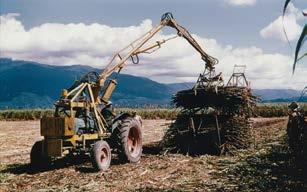

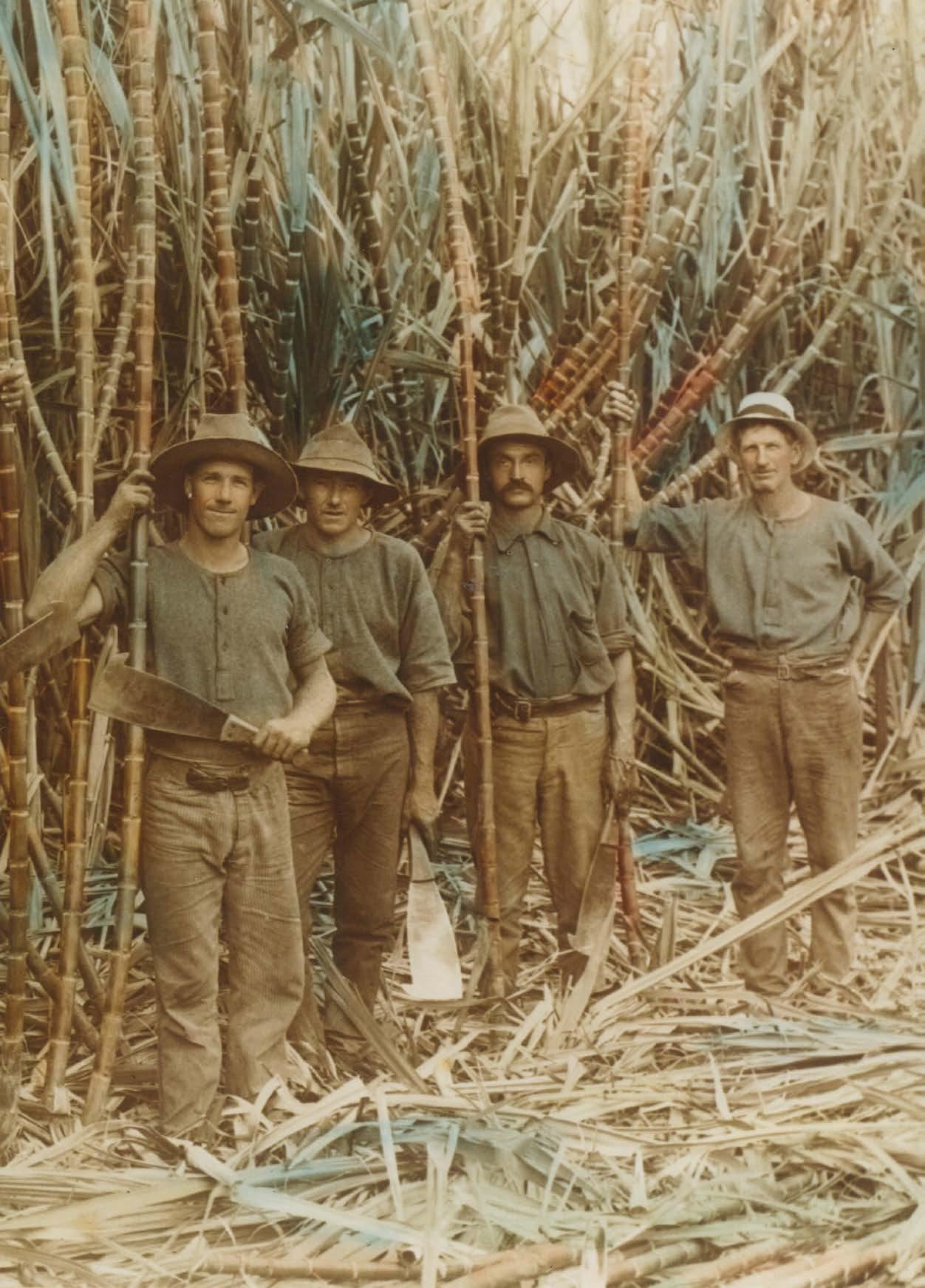

Shield, a powerful systemic insecticide from leading ag supplier Sumitomo Chemical Australia, is proving to be a key defender against destructive canegrubs following a second successive year of efficacy testing in Far North Queensland.
Sumitomo Chemical Australia – led by regional manager Far North Queensland Andrew Franklin – completed two of three years of trials over seven cane sites in the region during winter, with Shield consistently outperforming a generic traditional product and prompting a surge in uptake from growers from Far North Queensland to northern New South Wales.
National business development manager Jock Leys said Shield was now in focus as the leading solution to canegrubs which are considered the most significant economic pest threat to Australian sugarcane.
“Following successful trials in winter 2024, we returned to all seven sites in May and June this year to see how well Shield was holding up. As Shield can control canegrubs for up to three years, we have committed to test efficacy over that timeframe,” he said.
“We compared Shield (active ingredient clothianidin) against the traditional product (active ingredient imidacloprid) by conducting 10 digs of the root zone at random,” he said.
“We found one canegrub across 10 Shield-treated digs and 12 canegrubs across 10 traditional product-treated
digs. Test results show Shield is consistently performing well compared with the generic product which reduced in efficacy by the second year. We expect to see similar results when we test again in 2026.”
Historically, growers have relied on two main products to treat canegrubs which lay eggs in the soil over summer before adult grubs attack and eat the root zone during early growth. Often growers are unaware there is a problem, until the crop falls over.
However, Mr Leys said there had been changes in available options in recent years, with one product phased out voluntarily by the manufacturer and the other decreasing in efficacy (as evidenced by the trials and anecdotally experienced by growers), creating a new opportunity for Shield which had been available for about 10 years.
He said Sumitomo reduced the price of Shield – previously seen as a barrier for some growers – by some 40 per cent in 2024 in response to an increasing need for a workable and affordable option.
“Demand for Shield has more than doubled in the past year with hundreds of growers in all regions now relying on it as integral part of their program. Depending on where growers are, the key use period is between May and September or October,” Mr Leys said.
Sumitomo continued to invest resources and funds into Shield to address questions from the regulator to ensure Australian growers could access it, he said.
“We test major waterways for residues, among other important studies to show Shield is safe and can continue to be used.”
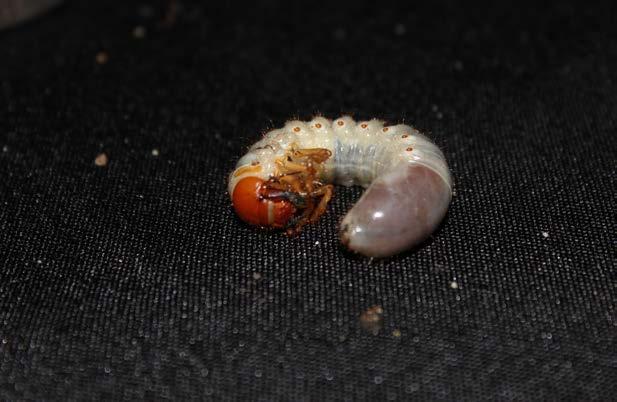

For more than 90 years CANEGROWERS has represented the interests of the sugarcane farmers of Queensland. Through times of challenge and opportunity, CANEGROWERS has helped family farms and the whole industry to grow and prosper.
CANEGROWERS is known and respected for its strong voice locally, nationally and internationally—the collective voice of many farmers has a powerful impact.

BY MATT KEALLEY
Every sugarcane grower knows that crop protection is part of the daily rhythm of farming.
Weeds, pests and disease don’t wait for an invitation, and left unchecked can threaten tonnes, sugar quality and profit. Yet crop protection is more than just glyphosate and spray rigs. It’s also about the bigger picture. Access to markets, fair rules, and making sure the community recognises the good work growers are doing.
That’s where CANEGROWERS makes a difference. Over the 12-month crop cycle, we’re not only supporting you in the paddock but also standing up for you in the boardrooms, meeting rooms and the markets where decisions are made.
Getting the season off to a good start
Behind the scenes, CANEGROWERS is representing members to regulators and government. When there’s talk of restricting or banning a product, we’re there to argue for decisions that are science-based and practical. Without this advocacy, the tools you rely on could disappear overnight.
At the same time, Smartcane BMP, chemical training and a strong network of industry specialists connect members to on-farm practices and accreditation. From calibrating sprayers to managing weed resistance, this support isn’t just about box ticking. It helps growers to meet compliance requirements, protect their social licence to operate, and demonstrate to buyers that Queensland sugarcane is produced responsibly.
Keeping the cane growing
As the crop grows, the pressure from weeds, pests and disease ramps up. This is when CANEGROWERS connects members with the latest research and practical advice. Fact sheets, field days and knowledge from experts that turn science into usable solutions.
Membership also delivers practical tools including record keeping books and our policy work and connection with Queensland Farmers' Federation and National Farmers' Federation ensures that we can get into see the right people at the right time. These are benefits you only get by being part of the CANEGROWERS organisation.
and market access
Crop protection doesn’t stop at the paddock. As the crush starts to wind down, the spotlight turns to how the sugarcane is produced and whether our practices stack up against international standards.
Through Smartcane BMP, CANEGROWERS makes sure Queensland growers are recognised globally. By aligning Smartcane BMP with frameworks like Bonsucro, ProTerra and VIVE, we’re giving buyers like Coca-Cola and Suntory confidence that our industry is serious about sustainability.
This is the power of membership. Your efforts on farm are amplified by collective advocacy, keeping markets open and opportunities for premiums on the table. It’s your membership that makes this alignment and recognition possible.
The crush might finish, but the advocacy is ongoing. CANEGROWERS is continually working with the APVMA, government and chemical companies to protect access to effective products, while also supporting research by SRA and others into biological controls, precision application and integrated pest management. These initiatives are about future-proofing the industry so that growers aren’t caught out by sudden shifts in regulation or market expectation.
Crop protection is one of the most visible parts of sugarcane farming, but it’s also one of the most contested. Every decision you make sits within a bigger policy, regulatory and market framework. That’s why membership of CANEGROWERS is so valuable. Alone, no grower can defend chemical access, influence R&D, or shape international sustainability standards. Together, through membership, we can.
So the next time you’re out in the paddock spot spraying to protect your crop, remember – your CANEGROWERS membership is protecting you, your business and your future.

BY BURN ASHBURNER
CANEGROWERS have four committees which are the People, Community and Culture committee, Sustainability and Extension committee, Industry Performance and Evolution committee and the Farm Productivity Committee.
The Farm Productivity Committee is the committee I work with and essentially deals with issues inside the farm gate like harvesting risk, R&D investments (SRA issues), workplace health and safety, workforce attraction, skilling and retention, transport, farm inputs and input efficiency. This committee is chaired by QCGO board member Steven Marbelli from Herbert River.
The committee follow a process to make recommendations to the Policy Council with clear policy objectives and strategic actions to achieve the objective or objectives. There is also an assessment of the means to achieve this in terms of budget, manpower and influence. It is no good setting policy position and strategic action which cannot be achieved. Added to this is the need to set priorities so we are working on the most important and pressing issues.
The Policy Council either agree, disagree or make amendments and this then becomes CANEGROWERS policy. Not as simple as it sounds and it is always a work in progress. At the last Policy Council the following policy positions and strategic actions were approved.
Workforce Policy Position: CANEGROWERS is committed to supporting the development of a skilled workforce that supports the long-term viability of Queensland’s sugarcane industry.
The strategic actions to achieve this included
A social media campaign to attract workforce with a jobs board aimed at a national level including New Zealand and ensure sugarcane workforce needs are included in other national campaigns i.e. with National Farmers' Federation.
Provide growers and contractors with information to enable them to engage labour hire companies in the Pacific Australia Labour Mobility (PALM) scheme
Support SmartAg Qld and maintain a workforce needs analysis for training priorities
Transport Policy Position: CANEGROWERS supports access to transport infrastructure for agricultural vehicles and machinery involved in sugarcane production and haulage, with practical regulation that ensures safety, whilst recognising the unique requirements of agricultural operations.
The strategic actions to achieve this are yet to be fully updated.
Research and Development Policy Position: Ensure that research, development and extension investments are made in the best interests of growers and the industry, with focus on improved productivity and profitability.
The strategic actions to achieve this include:
CANEGROWERS pursue its research and development priorities through consultation with SRA on their Annual Operations Plan and Strategic Plan and participation in relevant workshops
CANEGROWERS look for options for growers to have input into funded project applications
CANEGROWERS continue to advocate for funding for R&D and manage the SAR levy through DAFF
SRA senior management or the CEO address the committee and Policy Council at least once per year and Board to Board and CEO to CEO discussions are held as required
The harvesting risk policy objective and strategic actions were not agreed to by the Policy Council and the committee will revisit these.

BY ELISA WESTMORE
Last month I attended a Department of Primary Industries workshop on the development of a Queensland Feral Pig Action Plan. The conversation was timely.
In 2023, the Australian Bureau of Agricultural and Resource Economics and Sciences (ABARES) estimated that feral pigs caused a staggering $95 million in production losses and direct control costs in Queensland alone. That figure reflects not just the damage done to crops and pastures but also the significant sums already being spent on managing the problem.
The trouble is, not all money is spent equally. Across Queensland, feral pig management programs vary widely in their methods, their intensity, and their measures of success.
For example, some groups measure success simply by counting carcasses. But the science tells us that to make a real dent in pig populations you need to remove at least
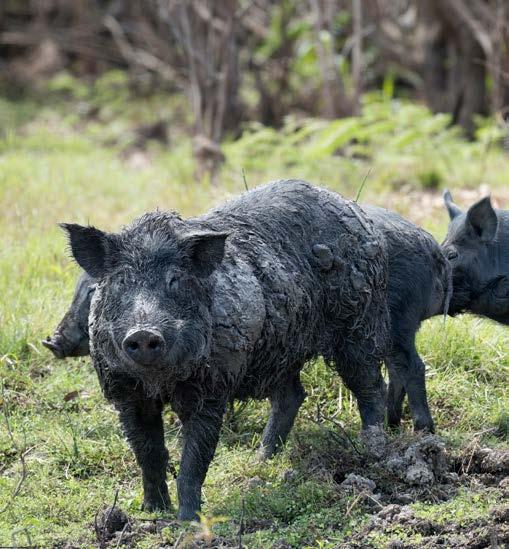
75% of animals each year. If you don’t have an accurate population estimate, then being able to say you’ve killed 50 pigs may sound good, but it doesn’t tell you whether the program is succeeding or failing.
Worse, there are still examples of money being directed into methods known to be ineffective – such as relying heavily on commercial hunters, who simply can’t deliver the necessary population knockdown on their own.
This raises an important question: with a National Feral Pig Action Plan already in place, what role should a Queenslandspecific plan serve?
One of the most useful ideas raised at the workshop was the development of a Code of Practice. Such a code would set out what best practice looks like in each area, from coordinated management to robust monitoring and reporting. It would help ensure that taxpayer and grower dollars are invested in programs that are evidence-based and effective.
A state-level strategy could also provide consistency over time. Governments and agencies often take their eye off feral pig management during dry years, when numbers appear low and visible damage is reduced.
But science shows that these are actually the best times to hit pigs hard and reduce their long-term impact. A Queensland Feral Pig Action Plan could help maintain focus year in, year out, regardless of seasonal conditions.
And the seasons ahead matter. We are staring down the barrel of yet another wet summer, conditions that fuel feral pig numbers and the damage they cause to cane crops and waterways. Without stronger coordination and smarter investment, the cycle of damage and ineffective control will continue.
The workshop made one thing clear: it’s time we all got focused. Queensland’s cane industry – and the state’s broader agricultural sector – needs a feral pig strategy that drives best practice, weeds out waste, and delivers real, measurable results.

BY CHRIS COOPER
Workplace safety remains under close scrutiny in Queensland. The Office of the Work Health and Safety Prosecutor continues to pursue businesses, directors, and workers who fail to meet their obligations under the Work Health and Safety Act 2011 (Qld).
Unfortunately, recent workplace accidents – including several in the rural sector – demonstrate the serious outcomes when safety duties are not met.
The Primary Duty – Section 19
“A person conducting a business must ensure, so far as is reasonably practicable, the health and safety of their workers and others at the workplace.”
Recent rural industry cases:
Banana farm – fined $15,000 (March 2025) for failing to install a seatbelt on a tractor fitted with a rollover protection structure.
Poultry farm operator – fined $150,000 (April 2025) after a seasonal worker was killed in a rollover. Policies existed but were not properly implemented or enforced.
Directors and senior officers must exercise personal due diligence to ensure their business complies with WHS obligations.
Recent cases:
Construction company – fined $110,000 (July 2025) when a subcontractor’s employee fell due to lack of edge protection. The company director was personally fined $20,000.
Boiler manufacturer – fined $100,000 (July 2025). The director was fined $22,000, and the worker involved was also fined $9,000 for breaching their own duty.
Businesses must immediately notify WHS of a notifiable incident – even if no one is injured.
Waste and water management company – fined $5,000 (July 2025) for failing to report a serious near miss caused by defective equipment.
Where a serious or notifiable incident occurs, businesses must ensure the site is not disturbed until released by WHS.
Bundaberg Sugar Ltd – fined $250,000 (August 2025) after a farm worker was fatally injured.
Mackay Sugar Ltd – fined $100,000 (May 2025) following a serious hand injury to a worker.
These prosecutions highlight the ongoing importance of:
Safe systems of work and equipment maintenance
Effective training and enforcement of safety policies
Active oversight by company directors and officers
Immediate reporting and preservation of incident sites.
Bottom line: Worker safety is not optional. Where standards fall short, prosecutions are increasingly likely – with severe financial and personal consequences.
This article contains general advice only. The particular facts and circumstances of each case always need to be taken into account.
The comments in this article are general in nature. For further free advice and information about this topic or other legal matters, members should contact their local CANEGROWERS office or please contact CANEGROWERS Legal Adviser, Chris Cooper on Free Call 1800 177 159
AgDrone.au is spearheading the adoption of the DJI Agras T100 across Australia, with extensive field trials highlighting its groundbreaking potential for farmers and contractors.
Since its launch earlier this year, we have immersed ourselves in rigorous testing of spray swath widths, charge times using multiple generators, and innovative power solutions, all aimed at accelerating operational knowledge for our clients in diverse agricultural settings.
The T100’s state-of-the-art LiDAR system delivers precise obstacle detection below 49.7 km/h, ensuring enhanced safety across varied terrains from flat croplands to rugged hillsides. Key features include an automatic obstacle logging function for seamless bypassing in future flights, one-click options to save obstacles directly to field maps, advanced terrain-following capability on slopes up to 90° without requiring prior surveys, and intelligent bypassing algorithms tailored for challenging environments like mountainous regions and dense orchards. The spreading system stands out with its innovative interchangeable screw auger design, enabling precise, tailored applications to meet diverse seeding and fertilizing needs: small screws offer fine control for low-rate seeds such as clover, while medium screws efficiently manage ryegrass mixes at rates of 6-10 kg/ha. Auto-calibration further refines flow profiles by leveraging data from previous flights, allowing for consistent 18-20m swaths when applying granular fertilizers like urea. Thanks to minimal taxi requirements and the ability to position the home point adjacent to the field, operators can achieve up to four full flights per battery charge, significantly boosting operational flexibility and productivity.
Under current Australian regulations, the medium category applies to drones
under 150 kg maximum take-off weight (MTOW). DJI has released technology technically capable of exceeding this limit, but its Australian manual affirms that operators should restrict payloads from a potential 100 kg down to 75 kg to remain compliant within the medium category. While this adjustment still represents a substantial improvement over the DJI T50’s 40L capacity, offering roughly 2.5 times the payload, we are committed to providing expert input and advice to help expand these categories as technology advances, aligning with evolving industry standards for greater efficiency.
Navigating Australia’s Drone Certification Landscape: ReOC and RePL for Commercial Operations
Governed by the Civil Aviation Safety Authority (CASA), certifications are essential for safe and legal commercial drone use with advanced systems like the T100. They ensure full compliance with aviation standards, unlock revenue potential through certified operations, and provide robust risk mitigation in critical agricultural applications such as precision spraying and seeding. The first step in becoming a remote pilot in any capacity is signing up to myCASA and obtaining your Aviation Reference Number (ARN). This unique digital ID serves as the foundation, to which your RePL and other competencies are conferred for lifelong tracking and endorsements.
The Remote Pilot Licence (RePL) certifies individual pilot competency in hazard identification and management, requiring an individual ARN from the outset. With the RePL you gain a world of knowledge including access to submission approval for submitting night operations, carrying large delivery payloads for business, and even completely remote operations such as those with the DJI dock system (survey and security from your laptop). CASA
categorizes RePLs by aircraft type and weight classes: Multirotor, and Powered Lift, with initial subcategories under 7 kg and 25 kg to build foundational skills. Beyond these entry-level thresholds, specialized type ratings apply for drones outside these classes, such as the full range of Agras agricultural drones, ensuring operators are equipped for their specific operational demands.
Comprehensive training for the RePL covers essential topics like aerodynamics, meteorology, and human factors, empowering operators to fully understand airspace classifications and perform low-risk operations safely, even in shared environments where other airspace stakeholders, such as manned aircraft, are operating nearby. This knowledge is particularly vital for rural Class G airspace common in Australian farming regions.
The Remotely Piloted Aircraft Operator’s Certificate (ReOC) serves as the foundational certification for any commercial operations, confirming organizational adherence to aviation laws and the implementation of safe practices across the board. It requires a company Aviation Reference Number (ARN), a detailed operations manual outlining flight planning and emergency protocols, and an operational library compiling procedures for routine tasks. Businesses must appoint a Chief Remote Pilot (CRP) holding a valid Remote Pilot Licence (RePL) to oversee daily flights, authorize missions, and maintain interactions with CASA; additionally, a Maintenance Controller is designated to handle all upkeep activities, a role that does not require an RePL and can be combined with the CRP if qualified.
To support aspiring operators in attaining their RePL and beyond, AgDrone.au runs monthly courses in Tamworth and Mareeba in partnership with UAS Pacific. These purpose built 3- and 4-day programs deliver a blend of theoretical instruction and hands-on practical training for the initial remote pilot licence, as well as specialized Agras type ratings tailored to agricultural drones. For established commercial operators, we offer dedicated ReOC courses, complete with personalized assistance to fast-track approvals through CASA delegates and in-depth education on procedural requirements to streamline the certification journey.
Contact us at 1800 DRONE 1 to explore how the T100 can transform your agricultural practices.
FIRST 5 LINES FREE* FOR CANEGROWERS MEMBERS!
Book online 24/7 at www.canegrowers.com au or email us at ads@canegrowers.com.au
Next deadline is 22 November 2025
Inter 766 /-Hyd Midmnts; 3 row S/S 1t fert. box; 2 row Coulter stool splitter 1t S/S fert. box; 3 row plant cane wheel packer; 7 tine Delta ripper, Am Farmall high cl’nce 5 row spray tractor. Ph: 0428 644 135
3 fan extractors for sale. Ph: 0427 327 977.
Chicken manure is available for sale in bulk quantities in Mareeba. This is an excellent source of nutrient-rich fertilizer ideal for enhancing soil health and boosting crop growth. Ph: Osz Farming at 0457 756 392 for purchasing or inquiries.
Confidor applicator newly fabricated equipment, never used. Deceased estate disposing of equipment. $15,000. Ph: Alex 0403 774 885 for photos.
Holden dual cab Colorado 2020, 101,000km, canopy, extra battery, new tyres, $38,500. Hodge 5 farrow reversible hydraulic plough, $5,000. Parkinson canecutter with topper, $5,000. 3 cane trailers, $250 each. 7ft smart slasher $4,000. Howard 2 tyne ripper, $2,500. ONO on all items. Ph: 0408 770 054
1 x 23.1.26 tractor tyre
$900. 1 x 18.4.28 new tractor tyre, $900. 1 x 540/65R 28 tractor tyre, $800. 1 x Fiat 411R brake pusher and water tank, $3,000. All prices excl GST. Ph: Brett 0419 988 158
2023 Massey Ferguson 7S.155 Dyna 6. Purchased new last year. Only 34 hrs. Surplus to requirements. $150,000 plus GST. Ph: 0403 774 885.
Spit water 131 industrial pressure washer. Just been serviced. 15m hose. 12lpm at 1,800psi. $1,700 ONO. Ph: 0438 554 146
Heavy duty bar with two tine adjustable rippers, attachable straight to rotary hoe. $1,000 incl. GST. Ph: 0438 988 858
MSW S/S 3t fertiliser box, 178 Massey Ferguson with front end loader. Ph: 0497 857 368
Machinery and water allocation for sale – water allocation permanent sale, different parcels available. Krone Fortima V1500MC2 round baler, Bale King 5100 bale buster, Agrolead Lina Twin 4m double disc seeder with fert. box. All machinery as new with very little use. Price negotiable on all items. Ph: Robert pictures and pricing 0407 330 493
28 x 28 Hodge off-set $12,000 + GST, 7 tyne Hodge ripper $4,000 + GST. Ph: 0419 988 158 or 0417 720 764
* As a FREE service to CANEGROWERS members, Australian Canegrower will print suitable classified advertisements UP TO 5 LINES FREE, FOR ONE ISSUE ONLY. A charge of $5. 50 will apply for each extra line or part thereof. A charge will apply for advertising of non-cane growing activities. Advertisements must relate exclusively to cane farming activities, such as farm machinery, etc. Advertisements from non-members are charged at $11 per line incl GST. Only prepaid ads will be accepted.
4 x 380/90R46 tyres and rims to suit JD self propelled sprayer. Mulgrave area. Ph: 0407 160 673
2009 Kubota M125X tractor good condition 4,294 hrs, air conditioned cab 16 speed –$44,000 + GST; centre buster heavy duty Gessner 30″ coulters and legs adjustable crumbler rollers and adjustable row width –$10,000 + GST; fuel tank on trailer approx 2,400L has unfitted new electric pump – $1,900 + GST; Bonel bag lifter good condition $2,000 + GST. Ph: 0407 554 146 or 0438 554 146
Olympic 20.8.42 65% $300 + GST; front end loader with 4 in 1 bucket, blasted and 2pac painted, resembling required. $2500 + GST Ph: 0437 434 280
1984 Toft 6000 plant cutter, 8,000 hrs. Rubberised rollers, elevator extension for 1.8m rows, swinging knife chop system. Good overall condition for its age, $12,000 + GST. Ph: 0419 021 012
John Deere CH570, 9,157 hrs, walking gear, 1 season 33,500t. Tidy machine. Ph: Frank 0417 720 764
JD 3140 needs attention. Ph: 0437 669 247 and leave a message.
Austoft 92 wheeley, rubber rollers, 3 blade chop, leg basecutter, used as plantcutter, hard to fault. Fiat 115/90 2wd. New Holland M135 4wd, new motor. JD3520 full track, GPS. Eco Grande 28 plate offsets, near new. Ph: Gordon 0429 941 218
2015 Massey Ferguson tractor 7624 Dyna 6240hp, front suspension, GPS fitted, 3,031 hrs, two-way radio, serviced regularly, tyres excellent – $130,000. Ph: 0427 525 173
Maschio G350 rotary hoe. Needs rebuild and new blades. $500. Ph: 0439 965 921.
411R Fiat break pusher with water tank $3,000 plus GST. Ph: 0419 988 158 or 0417 720 764
Hino FS. 2003, 6 x 4 tipper truck, 18 speed road ranger, 4.7m body, swing tailgate, pull over cover, ring feeder and some parts to go with sale. Very good condition. $70,000 + GST Ph: 0437 434 280.
New cane stool splitter discs 30″ x 10mm boron steel, $200. Ph: 0427 044 443.
12m V-blade $10k + GST. RES Dolly trailer $20k + GST. 10L Bunded fuel tank $10k + GST Ph: 0409 580 586
Set of half tracks to suit John Deere 3520 cane harvester. Ph: Ferdinand 0421 043 609
2020 Case 8810 fulltrack cane harvester. Purchased 2021, cut 3 seasons. In good condition with plenty of spares. Ready to cut. Tully. Ph: 0407 160 758
Kubota Zero Turn ZG 222 with catcher 48″ cut. Fiat 980 2WD – 3,500 hrs, Fiat 1000 2WD –5,000 hrs, John Deere 4040 2WD – 3,600 hrs, Chamberlain JD 4080 2 WD – 5,000 hrs, Case 2590 2WD – 5,700 hrs. Silvan Euro Spand CX2 spreader, double row fert box, Bunning Lowlander Mk 40-60 ag spreader (near new), complete tracks to suit cane harvester, and fuel trailer tank. Mulgrave area. Ph: 0407 160 673
Expressions of interest for shares. Email: rigato.office@bigpond.com with offer or any questions.
2012 John Deere 7200R tractor PTO, 3PL with quick hitch, 4 sets of remotes, front weights, front tyres 540/65R34, rear tyres 650/85R38, 4,510 hrs. In good condition. $150,000 + GST Ph: 0427 976 416.
Howard Rota Vator HR51 Rota. Ph: 0457 255 961
Terranova rotary hoe 120″ Mulgrave area. Ph: 4056 1474
One pair 21L-24 Armour earth moving/quarry tyres, currently on a backhoe. Good condition. $700 each tyre plus GST. Ph: 0419 150 350
2 x 440/65 R24 tractor tyres $1,100 incl. GST each. 2 x 540/65 R34 tractor tyres $2,100 incl. GST each. All four types as new only done 500 hrs. Ph: 0427 665 759
36 plate case 770 offsets, 30″ discs $40,000 and HBM plant cutter with topper $4,400. 7ft slasher with Howard box – all refurbished – $10,000 incl. GST ONO. Ph: Gavin 0448 345 139
Massey 4608 excellent condition 2,000 hrs. Ph: 0418 972 705
3t fertiliser stool splitter stainless steel box 1.5–1.8m spacing $25,000 (+GST). Ph: 0429 912 135.
2006 Case IH JX109OU in good condition. Always serviced – 6,800 hrs $24,200 (incl. GST). Tully area. Ph: 0427 665 759
Howard CH 2000 rotary hoe 4.2m wide, hyd 5 tyne ripper hillers new blades. $45,000 plus GST. Ph: 0429 912 135
2016 John Deere R4023 self propelled sprayer 1,500 hrs, 2,200L tank, 85ft boom, GPS ready. $235,000 plus GST. Ph: 0429 912 135
Tractor TE20 good condition $3,300 GST inclusive. Tractor AV International 130 with fertiliser equipment and scarifier $3,300 GST inclusive. Tractor AV International 140 with spray equipment $3,500 GST inclusive. Ph: 0428 183 307
10 blade Faggy chopper box for 3510/3520. $3,500 + GST. Ph: 0437 434 280
Celli Tiger spike rotor 2.23m – fits on a rotary roe, $300. 186 Ross Road Deeral. Ph: 0412 968 434
Valley centre pivot 8 span all running gear tyres and rims $1,000 gearboxes $750, electrical motors & gear boxes $1,000 each ONO. 2x torsion axles v-shape 2,200kg each $500 ONO. Ph: John 0418 198 177
6 cyl. Perkins turbo-charged motor, mounted on trailer to Kelly & Lewis water pump $5,500; 6t Newton bulk fertiliser bin $2,500. Ph: after 7pm or txt 0402 686 714 / 0407 144 637.
2012 Case 8800 fulltrack cane harvester fitted with Trimble GPS and new walking gear. All in good condition. Mulgrave area. Ph: 0407 160 673
Fertiliser bin M.S.W, double row, 4t stainless bin, with double compartment and 4 cutters $25,000 (incl. GST). Ph: 0400 729 457
2022 Case 9900 cane harvester. Ph: Craig 0436 332 044
Liquid fertiliser applicator croplands rate controler, adjustable centres and new pump. Ph: Craig 0436 332 044
2019 Toyota Prado Kakadu, 94,000kms. Full spec, pearl white, leather seats, 2.8L turbo diesel, 6 speed auto, 7 seat. $64,990. Ph: 0419 772 914
3 row cultivator with crumble rollers. 5ft (1,524m) centres. 1 rigid tyne and 4 spring tynes per row. Very heavy build with 7″ box section top frame. This cultivator was built in 1998 by Maxi Built machinery in Home Hill. $11,000. Selling as no further use. Ph: 0429 181 276 for more details or photos.
3000L water tank on trailer, needs limited repairs. $1,000 ONO. Vicon spreader, good for planting beans, good order. $1,000 ONO. Ph: 0431 458 850 or 0428 394 004
Bonal plant cane cutter, good going order, $1,000. Ingham. Ph: 0428 394 004 or 0431 458 850.
Cane crate for hot water treating cane. Never been used. POA. Ph: 0408 889 446
2 x International 766, 1 at 10ft spacing, 1 standard, spare rear end for parts. Both run. Ph: 0437 346 341
Napier bearing home made solid frame 28 plate disc carries hydraulic lift, $5,000. 11ft crumble roller, $2,500. Don shearer 32 plate set of disc carries hydraulic lift, $7,000. Ph: 0409 346 966
2 x 2015 JCB 3230 with 14t Corradini bins, 1 x 2017 JCB with 16t smart hauler, 1 x 2017 CH570 John Deere harvester. Ph: 0439 766 800
Toft 5000 harvester, rubber rollers, new tyres and hoods, in good condition, great plant cutter, $20,000 + GST. 3 ton side tipper for planting, $3,000 + GST. Ph: 0439 890 948
1980 Ford TW20 tractor, 3,500 hrs maximum, recently painted, good condition, make an offer. Ph: Laurence 0419 666 544
New Holland T6030 tractor 1,750 hrs. Near new tyres VGC $57,000 + GST. Ph: 0407 154 250 Southern cross TCE3000 travelling irrigator. Herbert River. Ph: 0408 889 446
BT D6 dozer, high lift, angle and tilt blade, five roller, 14″ tracks, make an offer. Ph: 0438 743 685
Pair multiplyers with hydraulics suit JD3510 or JD3510 fulltrack harvester in GC, 3 row multiweeder $350 + GST, Dongough planter $1200 + GST, 80” Dondi rotary hoe $1200 + GST, 2 row Eureka ½ ton fert. box with 1 ¼ tynes S/S worm $1200 + GST, International BT D6 crawler and breakpusher, 1 pair 8 blade chopper drums for JD3510 or JD3510, 1 pair 10 blade chopper drums for JD3510 or JD3510 – 1 season old. Ph: 0428 879 341
2020 Case IH Austoft 8010 cane harvester, machine hours 8,250 and elevator hours 4,680, Scraper and Gripster tyres. All case modifications complete. All drive components current. Ph: 0428 635 922
28 plate Napier offset discs, working condition, $5,000. Ph: 0448 842 792
3-point Linkage International plough, 4 furrows, 1 drag plough – 3 furrows, self lift, make an offer. Ph: 0438 743 685
Moore Scoopy LD3 4 wheel drive, fair condition, make an offer. Ph: Reno on 4777 6148 after 6pm.
2017 Isuzu dmax dual cab with alloy tray, 67,400km, new tyres, rwc, one owner in VGC $43,000 ONO. Ph: 0438 821 683.
LD3 Moore Scoop 4WD in fair condition, runs good, brakes need help. Ph: after 6.30pm 07 4777 6148.
Same Leopard 85 coupled to moller planter with 200ml chute hydraulic steering, rear sliding floor, 500kg fertilizer box. $38,500. Ph: 0411 845 439
Four wheel tractor 1300 DT Super, good condition. Ph: 0417 612 883
Two tyres and rims to suit fiat 1000 and 1300. Agri/Master; CB538 size 24.5/32R/1 12 ply and double row McLeod fertiliser box with various sprockets for various applications. Ph: 0417 612 883 for price.
BSM double 6t side tipper, $45,000 plus GST. Ph: 0427 595 774
Brand new, never used Nu Tek 22t RollOver Hitch, $2,500 + GST. Netherdale/Mackay. Ph: 0427 583 277
1996 Austoft harvester track frames with solid dead axle, $4000 + GST. Netherdale/Mackay. Ph: 0427 583 277
1998 Moller billet planter with Hodge upgrades, dual chain feed, dual hydraulic pump, separate steering valve for steerable trailer, stainless fertiliser bin, suscon box, wide shute, wheel centres 1.6m, $24,000 + GST. Netherdale/ Mackay. Ph: 0427 583 277.
Vass engineering 3 row wavy disc, brand new condition: 1.8m centres, adjustable, 2x adjustable ripper legs p/row, 26″ wavy discs 13 flute, 7′x7′ box frame w/bungs. $50,000 plus GST. Mackay. Ph: Michael 0427 366 375
Refalo 4t tipper bin: good condition, always oiled and stored in shed. Price negotiable. Ph: 0459 596 782
12t self-propelled 6 x 6 elev infielder. VGC. 6t side tipper on Leyland tandem. Celli Tiger spike hoe, 2.5m wide with hydraulic crumble roller and oil cooler. VGC. Don Mizzi 741 model on Fiat 750 special turbo plus MF102 half-tracks to suit. GC. Mackay. Ph: 0438 606 578.
GPS Autosteer kits – can be fitted to any tractor, FJ Dynamics brand, $10,500 plus GST. Ph: 0401 847 162
Hodge side dresser fertiliser box – with 4 front fertiliser coulters, 2 centre rippers with crumble rollers and centre drawbar at rear. Also can be used as a soil buster. Dimensions 1.7m to 2.05m. GC. Mackay area. $8,000 + GST. Ph: 0408 874 974 or 0418 874 974
Idrofoglia hard hose irrigator, model 125G340, serial no. 8167, $18,000 (incl. GST). 4t Newton side tipper $3,500 (incl. GST) 3m Niemeyer nr 1411 power harrows $5,000 (plus GST). Ph: 0437 184 822.
Brand new off rim, 2x Firestone 600/65R38; 2x Firestone 480/65R28. Recommended retail $12,000 selling for $9,000 the set, can separate. Ph: 0409 277 783
Kinchant dam water allocation to give away. Mackay. Ph: 07 4959 1075
2 of 6y Ruffalo side tippers with a partition to suit 5t bins. Ph: 0438 541 062
Elevator extension conveyer belt 600mm
$1,000. Lely spike power marrow 3m wide $3,000. 90″ hr Howard rotary hoe and wheels $10,000. Hodge 6″ dual chain front for billet bin $4,000. Fiat 540 high clearance tractor and spray tank $15,000. Ph: 0428 115 456
96 Cameco full track harvester good condition $55,000 + GST. Mackay area. Ph: 0428 654 350
Tyres on rims, Deere – new 2x front – 380 70/R20, 2x rear – 480 70/R28. Ph: Scott 0401 245 581 or ellrotts@hotmail.com
2006 John Deere 7420 135HP 4WD tractor, 4,813 hrs, IVT, triple link suspension, hydraulics and wiring for ag leader Versa/Paradyme. All tyres replaced after 4,000 hrs. $60,000 plus GST. Ph: 0429 629 337
Kinchant dam water allocation. Give away. Ph: 0448 055 047.
L & L Wilkinson Haulage Pty Ltd widening drop deck and A trailer. Transporting cane harvester. Farm machinery. Farm implements. Pilot. Ph: Lee Wilkinson 0427 474 064
Hooper Delver-type drain plough built on Hooper heavy duty single tyne ripper. $880 incl. GST. Ph: 0413 584 728
Hodge 2000 series 2.5t side dresser, $12,000 + GST ONO. Trailco hard hose irrigator, 320m of hose, $12,000 + GST ONO. Ph: Roger 0419 788 376
1996 Kubota B6200 4wd tractor with 1,136 hrs use. Comes with 3 row high spray trailer, 7ft clearance & 300L tank, pump, regulator. Also operator mesh protective cage, 4ft finishing mower, 3ft cultivator-scarifier. $12,000 negotiable. Ph: after 6pm 07 4129 7109
Celli 90″ heavy duty rotary hoe in good condition, $8,000. Ph: 0413 584 728
Kubota KVT M152 FWA, cab suspension, front axel suspension, front linkage, 6 remotes, tinted windows, 50km/h. Has Trimble GPS, can be removed if not required. $187 000 incl. Ph: 0427 769 086.
Volvo BM 4400 front end loader, 14,000 hrs, good sound property machine for age. Works as it should. $35,000 incl. Ph: 0427 769 086.
Ace 3.7m rotary hoe with crumble roller very good condition. New blades, only used in red soil. Fully hydraulic adjustable. $77,000. Ph: 0403 216 922
Fruehauf tri axle drop deck trailer with elevator stand to cart cane harvesters, with hydraulic ramps in good condition. $35,000. Ph: 0407 398 852
2 bin rams for a 4t HBM tipper bin $600. 2 HBM tipper tyres 23.1 x 26 on rims $800. Ph: 0403 064 708
John Deere shredder topper. Ph: 0427 039 051
Hi lift double 6t side tipper on 23.1-26 tyres. Load sharing hitch coupled to 7485 MF tractor with Dyna VT transmission. Ph: 0413 698 922
Volvo BM 4400 front end loader. Good brakes and hand brake 14,000 hrs, works well + spares, $38,500. Assorted excavator buckets and rollers suit machines with 90mm pins, prices by negotiation. Toft J150 whole stick harvester modified to load onto planter trailers, $5500. Bonel trash stripper fan always shedded good condition, $660. Don whole stick trash planter has fert. boxes, water tanks (may need some repair) and suscon applicator, no trailers, $1,100. Croplands 1,100L tank and frame –no pump or boom, $4,400. 2 Farmall AMD tractors, tin work is no good engines have been open to rain, have 1 good engine to go with or separately. Best offers. International B 414 engine open to rain. Best offers. Prices include GST. Ph: 0427 769 086
One complete set of front and rear rims to suit John Deere 7810 tractor rear rim, size 23.1 34. $1,500 for the pair plus GST and front rim size 16.9 26, $1,000 for the pair plus GST. Genuine Toyota tray to suit 75 series Toyota Landcruiser ute, $3,000 plus GST. Ph: 0427 577 256
Canetec BP2500 billet planter single row. New and ready for delivery. Built by Canetec in Bundaberg. $90K. Ph: 0422 669 695
Spring tynes 1 ¼ ins by 1 ¼ ins suit fert. box –set of six. $250. Ph: 0413 584 728
Plant cane cultivator 2 x 1.6m row w/ 3 weeder rakes and tines, $1,320 incl. GST. 2x1.6m row cultivator w/ 10 x 30ml tines, $1,320 incl. GST. 4 wheel trash rake, $1,110 incl. GST. Ph: 0408 761 463
Rotary hoe 90 degree blades to suit Maschio G series rotary hoe. Brand new. These normally sell at $20 each new but are for sale at $6 each. There are currently 72 left hand and 72 right hand blades available. Ph: 0402 993 500
recently replaced auger, freshly painted, nothing to spend perfect working order. Ph: 0448 120 067.
0410 468 344.
2 x tractor tyres, 23 x 1 x 34, in reasonable condition. 1 x mound form in good order. Mossman, North QLD area. Ph: Joe 0488 010 030
Plant cane harvester up to $20,000. Ph: 0409 623 651.
Support local charity, COUCH Cancer Wellness Centre and locals living with cancer by donating your old unused batteries. Cairns Region (Mulgrave). Ph: Ron for pick up 0407 534 427
Datsun motor or ute from 1000CC to 1300CC. Ph: 0407 412 848
MSW or HBM ratoon trash incorporater with 4 scallop discs and hangers and ripper legs. Mulgrave. Ph: 0427 563 318
Double of triple binner suitable for billet planting. Ph: Roger 0419 788 376
Land plane/tow behind grader. Ph: Jason 0422 056 343.
Suscon applicator for planter. Prefer 12v driven but will look at others. Mackay. Ph: 0447 165 070
3 row Rinaudo engineering stool splitter in any condition. Any region. Ph: 0455 277 499
Looking for a stool splitter fertilizer box, draw bar type preferably with a confidor tank in good condition. Ph: 0400 557 764
240hp Komatsu motor, new or second hand in good order to suit 91 Toft 7700 harvester. Ph: 0749 583 153
2 row scarifier to fill plant cane. Mossman / Mulgrave / Babinda area. Ph: 0447 562 373
10t cane tipper bins to fit a tandem axle truck Ph: 0427 507 019
Looking for a good condition diesel irrigation set up to run travelling irrigator. Ph: 0428 368 923
TT75 New Holland front 4x4 axil parts – planetary etc. Ph: 0439 375 301
Kubota RTV side by side. Ph: 0407 761 364
2 x brake drums for front of Volvo F12–10 stud in reasonable condition. Ph: 0408 733 793
Looking for a good running condition dual row billet planter to be shipped to Mauritius. Please contact via mail if any available: dpaul@lamoisson.mu or ring Mauritius –(0011) 230 5984 4007
2 tractor tyres 13.6-38/12-38. Tully. Ph: 0437 681 397
All panels for Fiat 780. Mackay / Sarina area. Ph: 0438 421 217
6 FT 3-point linkage grader blade in reasonable condition. Bundaberg. Ph: 0478 228 375.
Hi clearance spray tractor. Must be a trike and must have air con cab. Send photos and information to 0407 639 985
Cane farm for sale Bundaberg / Yandaran. Area: 113.7 HA, CPA: 40 HA + powered shed + 3 dams. 10 minutes from ocean. Ph: 0428 416 040
Banana land 40ha with house and shed, some machinery. Location Mareeba. Water via irrigation scheme, well drained soil, frost free location, strategic, suit other cropping for inspection. Ph: 0428 866 067
Cane farm Lannercost Ingham. 2 blocks under cane, 100 acres and 75 acres. Pig fenced. Ph: Ross 0417 778 547
Permanent water allocation transfer Kolan River, medium priority AA 600 ML. Smaller parcels available on request. $3,650 per ml. Ph: Matthew at Colliers 0418 790 042.
Cane farm Halifax total area 190ha, CPA 100 ha. 2 mins from Taylors Beach and 20 mins from Ingham CBD. Includes large machinery shed which has 3 phase power and water plus 2 smaller sheds. Price $1.55 million with crop & machinery. For inspections contact Felix Reitano Real Estate on (07) 4776 5007 or email felix@reitano.com.au
Cane farm growing approx 5,000t or more. Plane Creek Mill area. Ph: Andrew 0447 175 540
Cane farm to lease, Mackay to Carmila, young family wanting to expand. Ph: Lorraine 0427 474 065
Bundaberg cane grower looking for land to lease. Ph: 0403 200 805
Sugar cane, Marwood/Sunnyside. Looking to expand, 2025 and beyond. Ph: 0408 011 983
Wanting to purchase a land title – Mackay district. Council approval ready to go. Cash sale no finance needed. Ph: 0407 426 626
Cane farm in Mackay or surrounding areas. Ph: 0437 410 434
Sugar cane farm in Proserpine or surrounding area. Require land only no house needed. Ph: 0451 272 057
Farm in Victoria Plains, Eton, Pleystowe area. Ph: 0490 029 387
Permanent purchase lower Mary River water allocations on Mary River, Tinana Creek and channel pipeline sections of the scheme. Ph: 0427 930 696










Series utilises the body and blade beam from the EHD series together with a market standard 150hp gearbox and friction clutch. The EHDE maintains all the benefits of the EHD series body with good under-body clearance and the proven multi leaf alloy spring steel blade beam. You can now have the legendary performance of a EHD with a more price conscious specifications.