





















AWARENESS WEEK TWO-FIFTHS OF

BOTH SIDES NOW LONELINESS CANBERRANS ARE LONELY


























































AWARENESS WEEK TWO-FIFTHS OF
BOTH SIDES NOW LONELINESS CANBERRANS ARE LONELY





























T:
















3/21 Albany St, Fyshwick ACT 2609




















































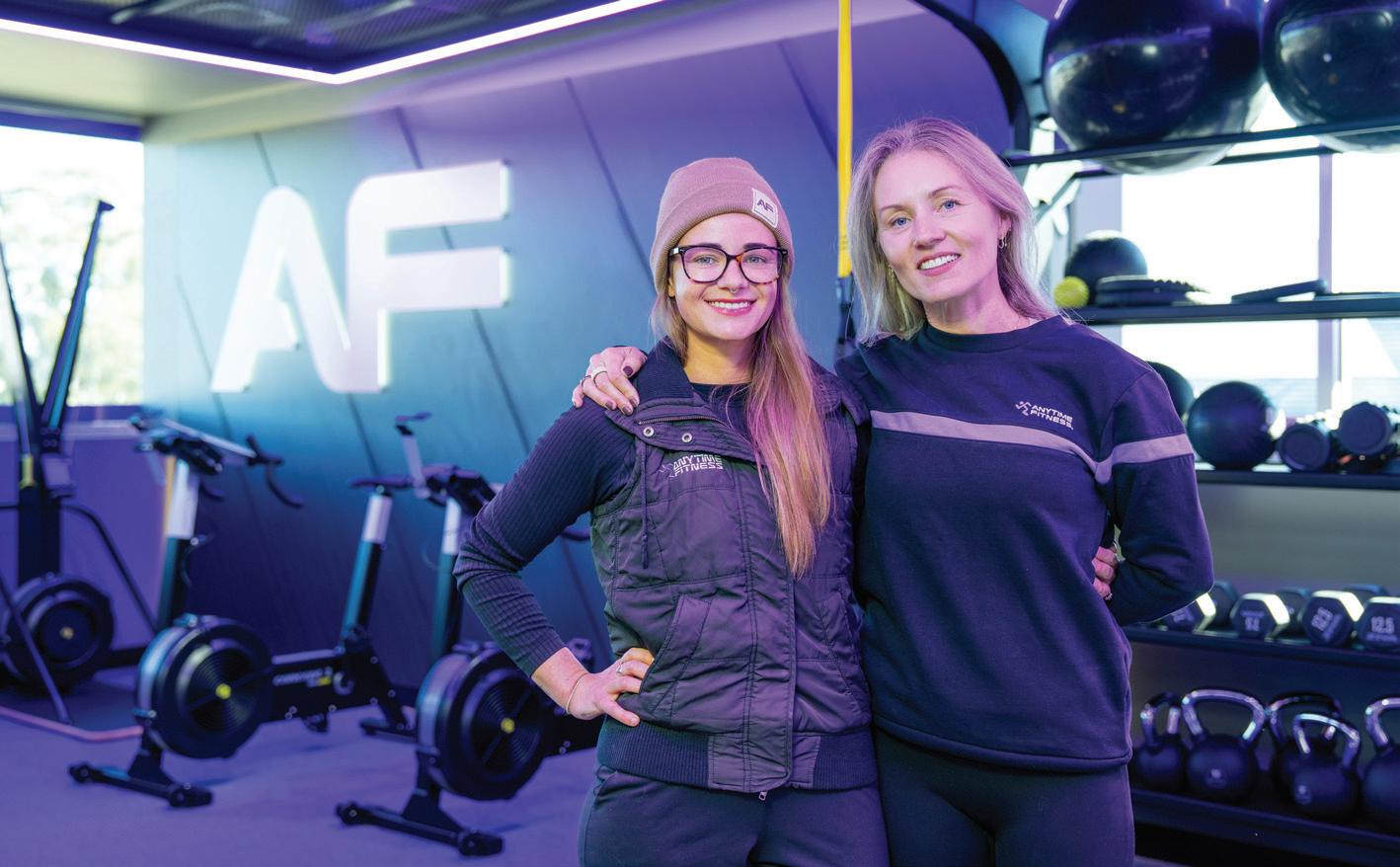








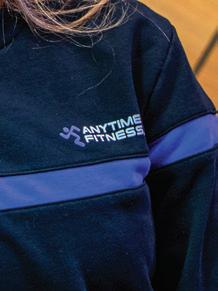
Anytime Fitness is building a community in Erindale

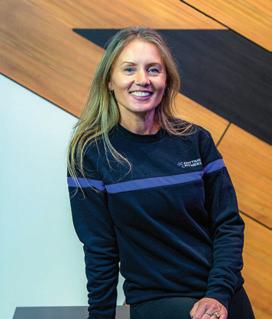
For years, Jess Peil would drive past the Erindale shops while taking her daughter to gymnastics and think the same thing.
“If I ever opened a gym in Erindale, that’s where I’d want it.”
Now, that vision has become reality.
After a 12-month build, Anytime Fitness Erindale has o cially opened its doors, bringing a modern fitness facility to Canberra’s south. While the state-ofthe-art equipment and dedicated recovery spaces are major drawcards, Jess says the real goal has always been to build a genuine sense of community.
“It’s about the people,” she says. “We’re in the people industry. We’d much rather people come in, have an amazing experience and feel like they belong than simply have somewhere to work out.”
That philosophy has helped shape the new Erindale facility.
The journey to opening wasn’t a quick one. Securing the additional space needed for the facility meant the project took more than a year to complete, with family members helping put the finishing touches on the gym right up until the night before opening.
That family involvement is nothing new.
While Anytime Fitness has grown into the biggest fitness franchise in Australia and the world, with
more than 600 clubs nationwide and around 6,000 globally, its Australian origins have a strong Canberra connection.
Nearly two decades ago, Jess’ husband Richard Peil and fellow current owner Justin McDonnell were among the original group that brought Anytime Fitness to Australia. The agreement was signed in a small café in Collector, laying the foundations for what has since become one of the country’s largest fitness brands.
Today, multiple generations of the family remain involved in the business, including Jess’ niece, Alisia Hegarty, who has been involved with Anytime Fitness for over 15 years.
“We always joke that we bleed purple,” Alisia says. “I think people look at Anytime Fitness as this massive global brand, but they don’t always realise that behind many of the clubs are local families.”


Menslink. Members will also have the opportunity to vote on future charities every six months.
Bravehearts is a cause especially close to Jess’s heart. Having participated in the 777 fundraising challenge for eight consecutive years, she has personally raised more than $650,000 for Bravehearts and hopes to eventually surpass the $1 million mark.
“We really want to give back to the community outside these walls,” she says.
“ If members leave here feeling part of something, then we’ve done our job.”
That family-first philosophy extends well beyond the gym floor. The club has committed to returning 50 per cent of its profits to community causes, beginning with Bravehearts, followed by organisations including Running for Resilience and
“That’s what this club is about.”
While building a community is at the heart of Jess’s vision for Anytime Fitness Erindale, the club’s state-ofthe-art facilities have been carefully designed to support every stage of a member’s fitness journey.
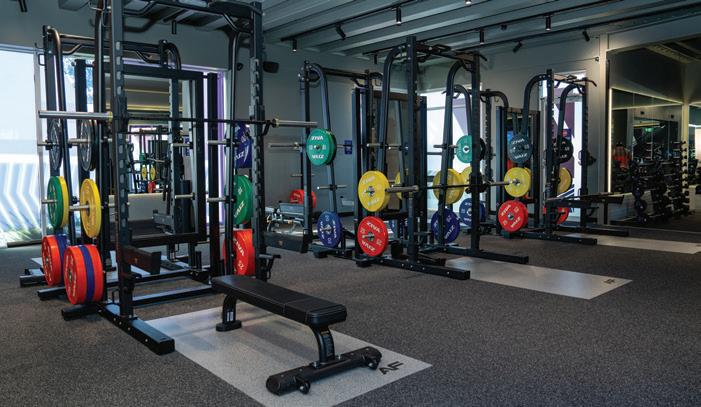
Downstairs is a spacious free weights area, while upstairs features premium Precor cardio equipment that even gives you a view overlooking the Brindabella Ranges. Mental wellness and recovery are also a major focus of the new gym.
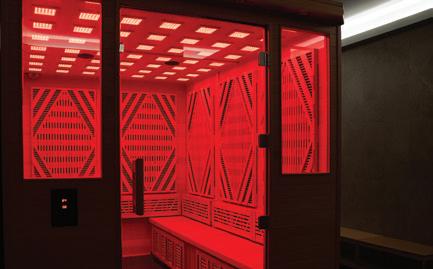
Members have access to massage chairs, massage guns, compression boots and two infrared saunas – one private sauna and a larger six-person
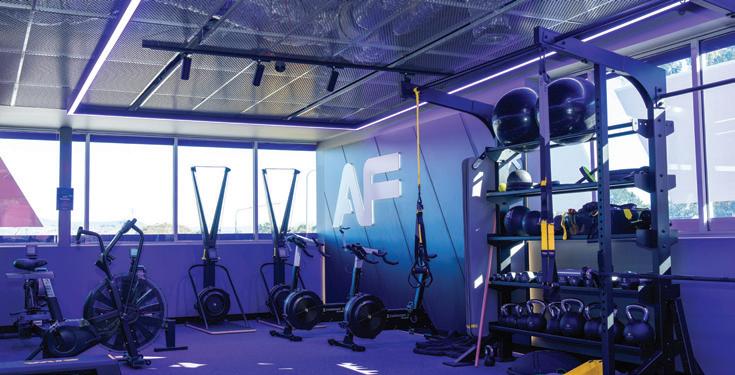











sauna – recognising that looking after the body doesn’t stop when the workout ends.
“We’re not just looking at physical fitness,” Jess says. “We’re looking at mental wellbeing too, because it’s all connected.”
That holistic approach reflects changing attitudes towards health and fitness, where recovery, movement and overall wellbeing have become just as important as lifting heavier weights or running further.
Creating an environment where people feel comfortable is equally important.
Jess says many people, particularly those new to exercise, can find gyms intimidating, which is why the team has placed such a strong emphasis on creating a welcoming, inclusive atmosphere.
“It’s about making sure people feel safe and comfortable from the moment they walk through the door,” she says.
From first-time gym-goers to experienced athletes, students, families and older residents, the club is designed to welcome people at every stage of their fitness journey.
Supporting members doesn’t stop after sign-up either.
The club is introducing Anytime Fitness’s new 6STRONG platform, a training app that creates personalised programs based on each member’s goals, fitness level and experience.
Combined with an induction coach and a structured six-week onboarding program, the platform




















is designed to help members establish lasting habits during the critical first weeks of their fitness journey, when many people are most likely to lose motivation.
Future updates will also include personalised nutrition guidance, making the platform an all-in-one fitness companion.
For experienced gym-goers, the programs continue to evolve as members progress, ensuring workouts remain challenging and engaging.
For Jess, though, technology and facilities are simply tools to support the bigger picture. At the end of the day, her favourite part of owning a gym isn’t the equipment or even the workouts.
“It’s walking around and talking to people,” she says.
“I want to know people’s names. I want to hear about their families, celebrate their wins and be there when they’re having a tough time.
“If people leave here feeling like they’re part of something, then we’ve done our job.”
To find out more about Anytime Fitness Erindale, including memberships and facilities, visit the club or contact the team today.







33 Gartside St, Wanniassa T: 0491295135
W: anytimefitness.com/en-au/locations/wanniassaaustralian-capital-territory-au-1829 @aferindale









FORMER ACT MLA AND DEPUTY OPPOSITION LEADER
There’s an old but great Joni Mitchell song from 1966 called “Both Sides Now,” about looking at the same thing from two entirely di erent angles and still not being sure you understand it. It’s a fitting soundtrack for so much of what we grapple with in Canberra.
Behind my house is a stretch of empty land running up to the nearby nature reserve. It means no rear neighbours, a great view, and a lovely spot to walk the dog or let the kids kick a footy around.








I’d hate to see it built on. But I also know that when a community needs a facility, it has to go somewhere. Recently, we saw this type of issue play out with the proposed relocation of Arcadia House, a residential drug and alcohol facility currently in Bruce, near the hospital. When plans emerged to move it to Cook, local residents campaigned against it, citing its proximity to playgrounds, a childcare centre, and licensed premises. The government has now shelved those plans and is looking for a new site.
I’m not disagreeing with the opposition of the local residents and their reasoning. What I want to highlight is a broader trend in the ACT: opposition to development, almost regardless of what it is. When I was Shadow Minister for Planning, I heard a version of the same line constantly: I’m not








opposed to this facility itself, just not in this location.
It’s worth remembering who these facilities serve. Chances are, some of the people who most need a place like Arcadia House are already somebody’s neighbour — people fighting addiction, which is never an easy or straightforward fight. I’ve seen firsthand, through someone in my own family, how hard it can be to get a person into treatment quickly. Waiting lists are long, and families end up spending significant money sending loved ones interstate simply because a bed is available now, not in six months.
NIMBYism is common in Canberra, and it’s not hard to see why. We have a well-educated, well-resourced population, and that means we also have residents with the skills and standing to mount e ective campaigns against developments in their own street or







suburb.
Local MLAs, understandably, listen to those residents and often act on their behalf. But members of the Assembly also carry a broader responsibility to the ACT as a whole, not only to the electorate that returns them. Most are elected on a promise to make Canberra better. It’s worth asking whether we’re doing that when local objections consistently outweigh territory-wide need. The trouble is, re-election happens locally, not territory-wide.
So how do we build the facilities Canberra genuinely needs, while keeping local residents onside? I don’t have a tidy answer. Like Joni Mitchell, the more I look at this from both sides, the less certain I am that I’ve got it fully worked out.
You can listen to my musings on this subject on the Bite-sized politics podcast on Spotify.










Congratulations to our all-conquering Commonwealth Games team on blitzing the opposition in the Glasgow Games, and well done to Glasgow for hosting a superb event. I always like it when we get more medals than anyone else in the Commonwealth Games, and this time round our team got 70 gold, 45 silver and 55 bronze to easily beat the Poms, who came a
distant second with 29 gold.
Our athletes, especially the swimmers, did so well because they could a ord the time to train properly thanks to the generosity of Australia’s richest woman and philanthropist, Mrs Gina Rinehart.
Ms Rinehart not only sponsors our Commonwealth Games team but also donates lots of money to charities worldwide (like orphanages in Cambodia) and does things like build 200 houses for our retired military veterans who are doing it tough.
I was therefore appalled at the sick show on the ABC where filmmaker Kate McInness fantasised about “... shoving a stick right up Ms Rinehart’s butt hole, stirring it round, mixing her guts up nice and smooth, to make one big sausage roll, to make
something out of nothing”. The ABC not only let it go to air but has e ectively done very little to rectify this abominable, violent comment.
It was fascinating, and not a little disturbing, to see federal ministers try to excuse it and fob it o . I don’t recall any Green or teal member of parliament commenting on it.
Can you imagine if the same comment was made about a Labor, Green or teal woman? There would be (justifiably) outrage by the media and ALP, Green and teal figures. This dreadful comment amounts to an attack on a woman where there is an incitement to sodomise and murder her. It’s in no way a satire. Such a comment can only condone violence against women, but of course in Albanese’s Australia, such comments
are only condemned if directed against Green, Labor or teal women.
Swimming legend Dawn Fraser did not hold back. She posted on Facebook: “I’m sick to my stomach to think we have a governmentfunded network, the ABC, showing vile pieces to air about one of Australia’s greatest supporters, Gina Rinehart, and our vile Prime Minister has not come out and condemned the content. You are a spineless imbecile, Albanese, and you get more disgusting as the days go on. To let this vile crap on the ABC go to air and not come out and say anything against it shows the insipid little degenerate you are.”
I’m pleased to see Ms Rinehart’s company indicate it will be suing the ABC for defamation, and I would hope all relevant legal remedies will be taken, including criminal charges if any o ences have been committed.

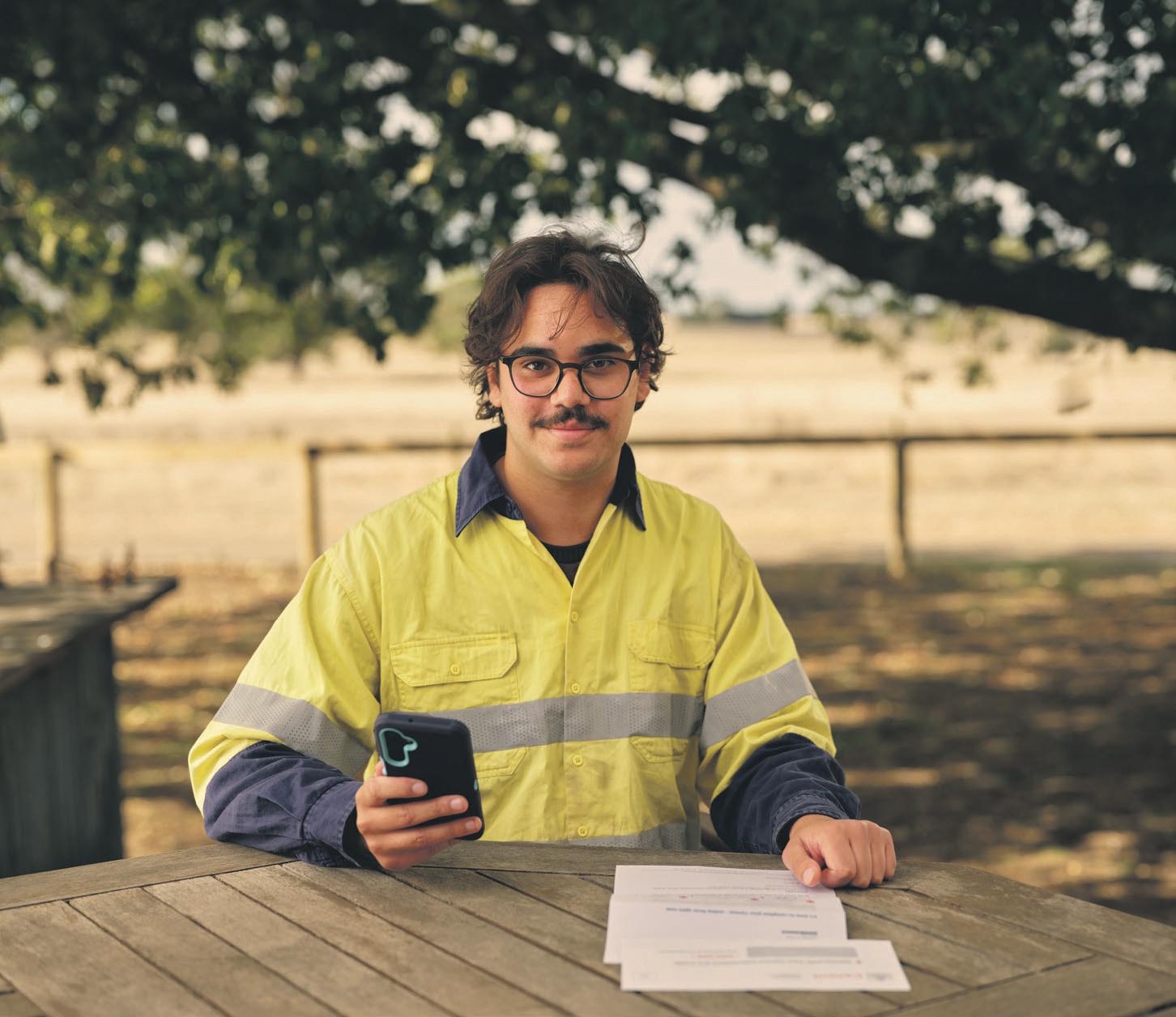
If you know where you’ll be on Census night, Tuesday 11 August, you can complete the form for your household as soon as you get your instructions. Complete online, on paper or with help from us.
census.abs.gov.au
by NICHOLAS FULLER
More than two in five Canberrans feel lonely at least some of the time: 12.4 per cent report feeling lonely often, while a further 29.9 per cent feel lonely sometimes.
“Loneliness is something that creeps up on people,” Lisa Kelly, CEO of the Mental Health Community Coalition ACT, said.
“As our lives have become busy and the systems we work in have become more complex, we’re required to spend more time at work and time running around doing chores, jobs, and duties. We’ve lost the ability to spend time in connection with each other.”
Prolonged loneliness is closely linked with depression, anxiety, and mood disorders.
“For wellbeing and happiness as social people, we need to feel connected,” Ms Kelly said. “People’s wellbeing is enhanced when they have a sense of a meaningful, purposeful life. For most people, that’s not what they do in their employment, but how they connect with people.”

Loneliness is too often presented as a personal failure, but forming new relationships requires time, confidence, money, and access to welcoming places.
“We do see loneliness as being people just needing to get up, shake themselves off, and engage in something, but we forget that that takes courage, confidence, and capacity – and some people don’t have those things,” Ms Kelly said.
Students new to the city can struggle to find social groups, and retired public servants lose workplace friendships. During Canberra’s long winters, people stay home and hibernate.
Canberra’s dispersed layout could make loneliness particularly difficult to address.
The cost-of-living crisis will drive up loneliness by preventing people from taking part in ordinary social activities, Ms Kelly said.
“If I don’t have the money to go to dinner, to the movies, bowling, the pub, or whatever my normal sense of connection or activity might be, then that’s going to contribute to a sense of loneliness as well.”
People struggling with loneliness should contact

the Community Information Hub to learn about book clubs, knitting groups, sporting clubs, and volunteering opportunities, Ms Kelly advised.
Volunteering is a great way to overcome loneliness, Ms Kelly said, because volunteers are valued, welcomed, and encouraged to build social networks and teams that work together.
Ms Kelly encouraged socially confident people to invite those around them.
“Reach out to your neighbour. Say hello. Be the one brave enough to say in the workplace, ‘Should we go for a drink?’” she said.
Ms Kelly said governments should invest in free and low-cost local activities and protect public places where people could gather without being expected to spend money.
Libraries, community centres, and other ‘third spaces’ could give people somewhere to meet, take part in activities, and gradually build a sense of belonging. In June, however, the ACT Government announced that libraries would close on weekday evenings and Sundays to match usage hours.
“Those spaces [are] places where people can congregate, where activities can occur, and where people can walk in and start to build a sense of community,” Ms Kelly said.









































by BERNIE RYAN
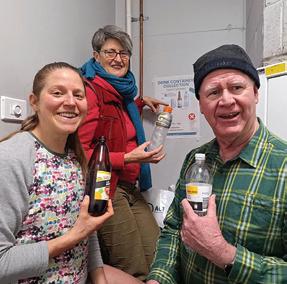
When Amy Carrad was growing up in the Blue Mountains, the last thing she expected to win an award for one day was sorting through other people’s rubbish!
of the inaugural Green Grant Program from CHU, Australia’s largest strata insurance underwriting agency, and shares $50,000 awarded to resident-led sustainability initiatives nationally.
“These projects are proof of what strata communities can achieve when residents come together with a shared goal,” said Kimberley Jonsson, Chief Executive Officer of CHU.
Ms Carrad says she has long been obsessed with, “ideal or perfect waste streams”.


Yet that’s exactly what happened.
In 2022, Amy relocated to Canberra to work as a researcher at the Australian National University (ANU) in food systems governance.
And this July, after raising over $8,000 for the Inner Street North Pantry Network with a couple of like-minded neighbours in her Braddon apartment complex, she landed an award that she wasn’t even trying to win.
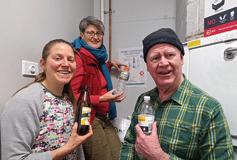
The simple project involves Amy and her neighbours regularly donning their gloves to sort through their apartment building’s recycling to locate and donate bottles and cans via the ACT Container Deposit Scheme, and sending their earnings straight to the pantry network.
It is one of seven winners
However, it was the theft of some of her neighbours’ ‘Hello Fresh’ boxes that inspired the intersection of this passion with data she unearths daily at work regarding the state of Australia’s food security.
“Some of my neighbours were having their ‘Hello Fresh’ food boxes stolen,” she said.
“So, I thought that if we could put money into the food pantries in our area, there is more food that people can obtain without stealing.”
Amy realised that the statistics that “one in eight households don’t have enough food to eat” represented real people living in her neighbourhood, and she could do something to help them.
All container deposit proceeds go straight to the pantry network, funding fresh fruit and vegetables for people in need, and Amy’s share of the CHU grant funding will go towards the purchase of dedicated bins for collecting her building’s bottles and cans.










by GEORGIA CURRY
During the FIFA World Cup half-time entertainment, a Venezuelan conductor led the New York Philharmonic Orchestra alongside Coldplay – and there’s one Canberran who knew the conductor personally.
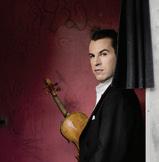
Daniel Röhn is an international violin virtuoso quietly living a suburban life in Farrer – a world away from Europe’s finest philharmonic orchestras and New York’s Carnegie Hall where he’s performed.
Shopping at a local IGA no less, is a world-class musician who once performed to 20,000 people in his native Germany when the Olympic torch passed through.
We have Covid to thank.
Daniel fled Europe and the
pandemic to be with family, and to say it was a culture shock would be a vast understatement.
He has gone from playing in the Berlin Philharmonic in front of 2,500 people, to a small solo recital at the modest Wesley Music Centre in Forrest.
When I caught up with Daniel, who’s previously lived in Paris and Munich, it was a tad embarrassing trying to find a cafe still open in Kingston on a Wednesday afternoon.
He arrived carrying his 1846 Italianmade violin (he used to play a violin dating back to 1617) and his usually tiedback long blonde hair was out.
“Everyone thinks I’m trying to look like a surfer, but it’s far from that,” Daniel said. “It’s just my late grunge phase I always say.”
The 46-year-old is modest about



playing Europe’s grand concert halls like Vienna’s Konzerthaus, and he’s exceedingly polite about adjusting to Canberra’s slower pace.
“It is a different life, maybe it’s the chance to start a different, new life,” he said. “It’s a lot quieter. I always speak of my old life and the new because it really is like that. It is a big adjustment.”
Daniel can’t even source quality hair for his violin bow in our quaint capital.
“I am heading overseas soon to play in the Lucerne Festival in Switzerland, so I can see my friends and I can re-hair my bows,” he said.
Whether you’re a classical music buff or not, anyone can appreciate that few play the fiddle like Daniel.
The third-generation violinist has been performing professionally since he was 16 and he dares to play music that most violinists fear.
He recently stunned a small crowd (this writer included) at Wesley Music Centre.
“Without a question, [Paganini’s Caprices and Bach’s Sonatas and Partitas] belong to the most difficult things you can play on the fiddle and that’s why I do it,” Daniel said. “Also because it’s wonderful music, but I chose it also because of the challenge to go to the absolute limit.”
Daniel said a violinist had to achieve this standard when really young, “because it won’t come later”.
“The physicality of it depends on what repertoire you play – all these
neck-breakers that I force myself on, I love to play that and now is the time. It’s no use if I play something that anyone can play, it has to be something a bit spectacular.”
Ever the diplomat, Daniel said Canberra had its virtues.
“Every appearance, every concert counts,” he said. “If it’s small or big, you still have to play. The performance is the same.”
Daniel adores watching old ‘60s movies at the National Film and Sound Archive, like a recent Ingmar Bergman movie in Swedish (he’s fluent in three languages), but he said he’s yet to discover our “city centre”.
“The real thing which I do not understand is, where is everything?” he genuinely asks. “You go somewhere and you think, I am in the heart of the city now with all the shops. There is no such place. I think there are many different town centres, but none of them is a city centre.”
Incredibly, Daniel is offering local violin and viola lessons in the German tradition, surely a rarity in Canberra.
“What I want to do is to give something, which maybe not too many others are here to give,” he said. “I can give something that others have given to me ... I still play because this is what my whole being is.”
Daniel Röhn School of Violin and Viola: danielroehn.com or office@ danielroehn.com or 0434 113 062.


ON SHOW UNTIL 11 OCT
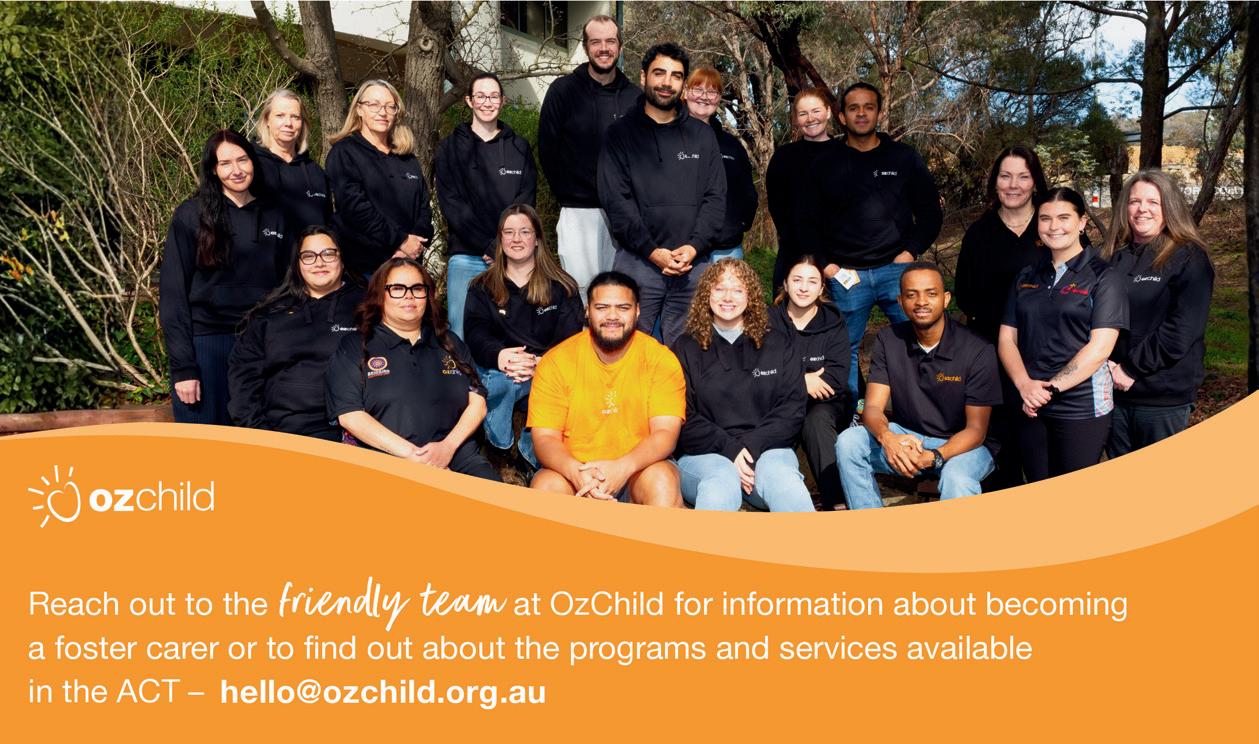
Every child deserves to grow up safe, connected and supported. Across the ACT, OzChild works alongside families, carers, local services and Aboriginal Community Controlled Organisations to deliver foster care and evidence-based programs that help young Canberrans thrive.
ACT Director of Services Jared Gillard says partnerships with local Aboriginal Community Controlled Organisations are central to creating lasting impact.
“Our partnerships with Gugan Gulwan and Yerrabi Yurwang support culturally responsive and safe practice and strong connections to culture, kin and community. Together, we are helping Aboriginal children, young people and families shape strong futures.”
Supporting families to stay together
OzChild has a longstanding partnership with Gugan Gulwan Youth Aboriginal Corporation to deliver Functional Family Therapy Child Wellbeing (FFTCW) for Aboriginal children and families across the Canberra region. FFT-CW works alongside families,
providing practical support as they strengthen the foundations that matter most, safe relationships, routines, communication, culture, connection and care. Supporting young people before challenges escalate
OzChild has partnered with Yerrabi to deliver Functional Family Therapy for Youth (FFT-Y) in the ACT.
This evidence-based program supports young people aged 11 to 18 experiencing family conflict, school disengagement, behavioural challenges or other circumstances that could lead to contact with the youth justice system.
FFT-Y works with the whole family, helping them strengthen relationships, improve communication and develop practical ways to navigate challenges together. By providing support early, the program helps young people build positive pathways while contributing to safer, stronger communities. It takes a community to help children thrive It takes a village to raise a child. When children cannot safely live at home, foster carers become part of that village, providing stability, encouragement and a safe
place to thrive.
OzChild supports around 50 carer households across the region with training, therapeutic guidance and a dedicated team focused on keeping children connected to family, culture, Country, school and community. Yerrabi plays a vital role in strengthening these connections and supporting culturally responsive and safe care for Aboriginal children and young people.
Investing in Canberra’s future
Whether through foster care, early intervention or family strengthening programs, OzChild’s focus remains the same: helping children, young people and families thrive. This includes supporting selfdetermination for First Nations peoples and working in ways that strengthen connection to culture, kin, Country and community. When families have the right support, children can succeed at school, young people can stay connected to positive opportunities and communities grow stronger.
To learn more about becoming a foster carer or OzChild’s programs, email hello@ozchild.org.au.
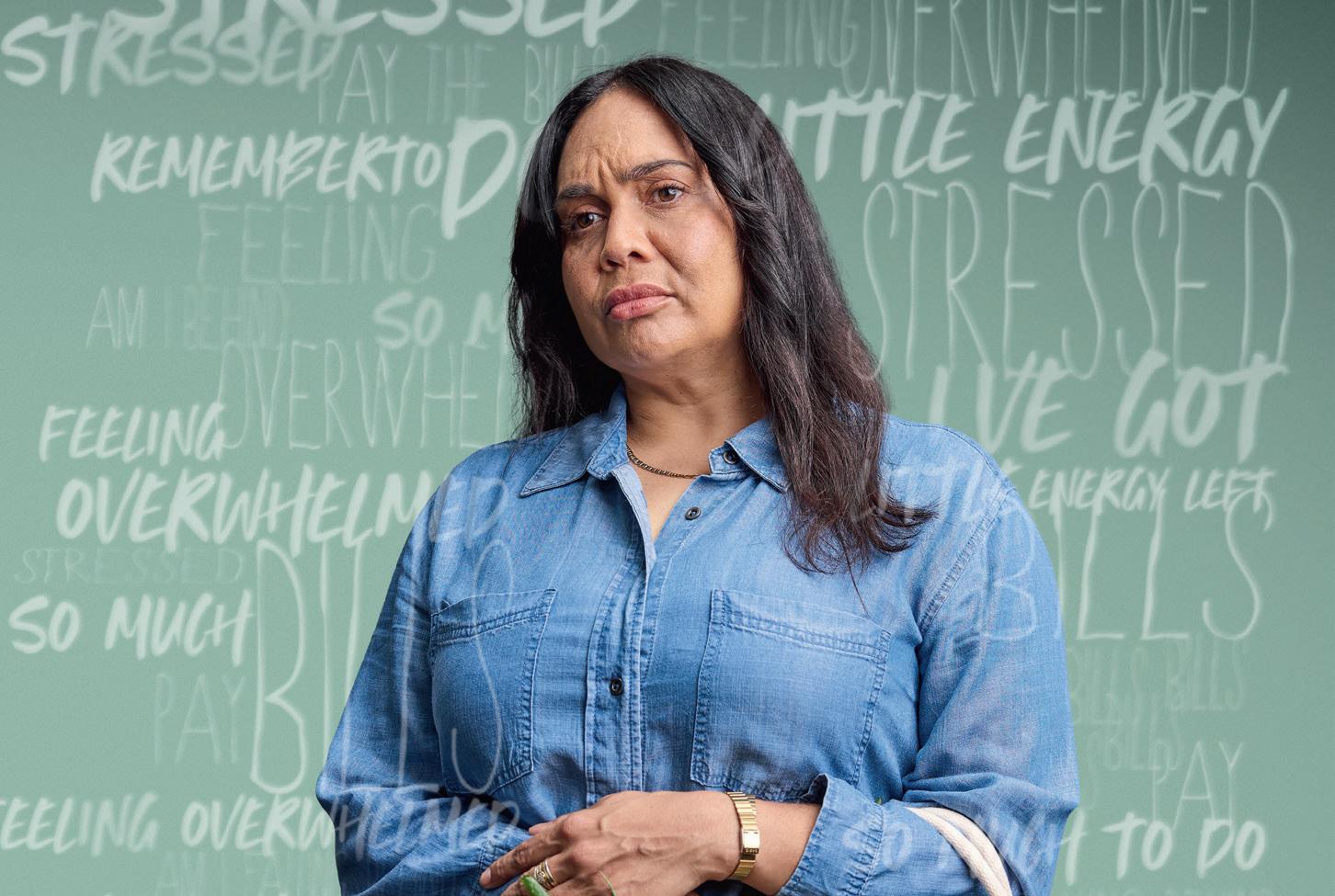
GIVIT is seeking a kitchen starter pack for a mother and her teenage children who have escaped domestic violence and recently moved into transitional accommodation in Belconnen. Living with chronic health conditions and relying on disability support, the family is rebuilding their lives and needs help furnishing their new home. Generous Canberrans can donate a kitchen starter pack or fund the purchase of these essential items, with 100% of financial donations going towards what’s needed. To help, visit GIVIT.org.au/what’s-needed and search: Location State: ACT; Keywords: “kitchen starter pack”; Suburb: Belconnen, 2617.
The Bold Bandannas Relay for Life team will hold a fundraising stall on Saturday 15 August, 8:30am–4:30pm, at Fyshwick Markets (inside Ziggy’s shop). Stock up on homemade jams, marmalades, chutneys, pickles, lemon butter and reducedsugar varieties, with all proceeds supporting Relay for Life. For more information, call Jan on 0451 679 220.
Friends of the Australian National Botanic Gardens will host a Thursday Talk on 13 August featuring Veronica Briceno-Rodriguez, Conservation Horticulture Manager at the ANBG, presenting From lab coats, hiking boots, and hot desks to plant conservation at the ANBG. The talk will be held at the ANBG Theatrette, opposite the ANBG Visitor Centre, 12:30–1:30pm. Bookings: trybooking.com/DKZGL. Gold coin, note and EFTPOS donations support Friends’ projects in the gardens.

community noticeboard email news@newstimemedia.com.au with ‘HYH’ in the subject field
Yarrabi: The Club will meet on Thursday 20 August, 11am for an 11:30am start, at the Eastlake Gungahlin Club, Hinder Street, Gungahlin. Guest speaker Maurene Horder will share her experiences as the first female parliamentary leader of the ACT Labor Party and the first ACT parliamentarian to give birth while serving in office. New members are welcome and are invited to stay for lunch at the club bistro. For more information, email Cheryl at chanily3@bigpond.com
Queanbeyan: The Club will meet on Thursday 20 August, 12pm for a 12:30pm lunch, at the Tourist Hotel, Monaro Street, Queanbeyan. The guest speaker will discuss decluttering and downsizing. New members are welcome to enjoy lunch, friendship, a lucky door prize and raffle. Cost is $10 plus the price of lunch. RSVP to Irene by Sunday 16 August on 0438 231 003 or email queanbeyanview@gmail.com
Tuggeranong Day: The Club will hold its next lunch meeting on Tuesday 18 August, 11am–2pm, at Lanyon Vikings Club, Heidelberg Street, Conder. Guest speaker Brianna Keyes will present on waste reduction and recycling. Cost is $37 for a two-course lunch. RSVP by Friday 14 August to Sharron on 0422 799 913 or email kupke@internode.on.net
Brindabella Orchestra will present Voyage en France on Sunday 16 August, 3pm, at the Weston Community Hub, corner of Hilder and Gritten streets, Weston. The concert features music by George Gershwin, Saint-Saëns, Bizet, Fauré and others. Tickets are essential and available at trybooking.com/DNXEF.

Where else but Canberra can you casually come across inspiring researchers and local experts while shopping at your local shopping centre?
Pop out for some new shoes and get some ecology while you’re at it?
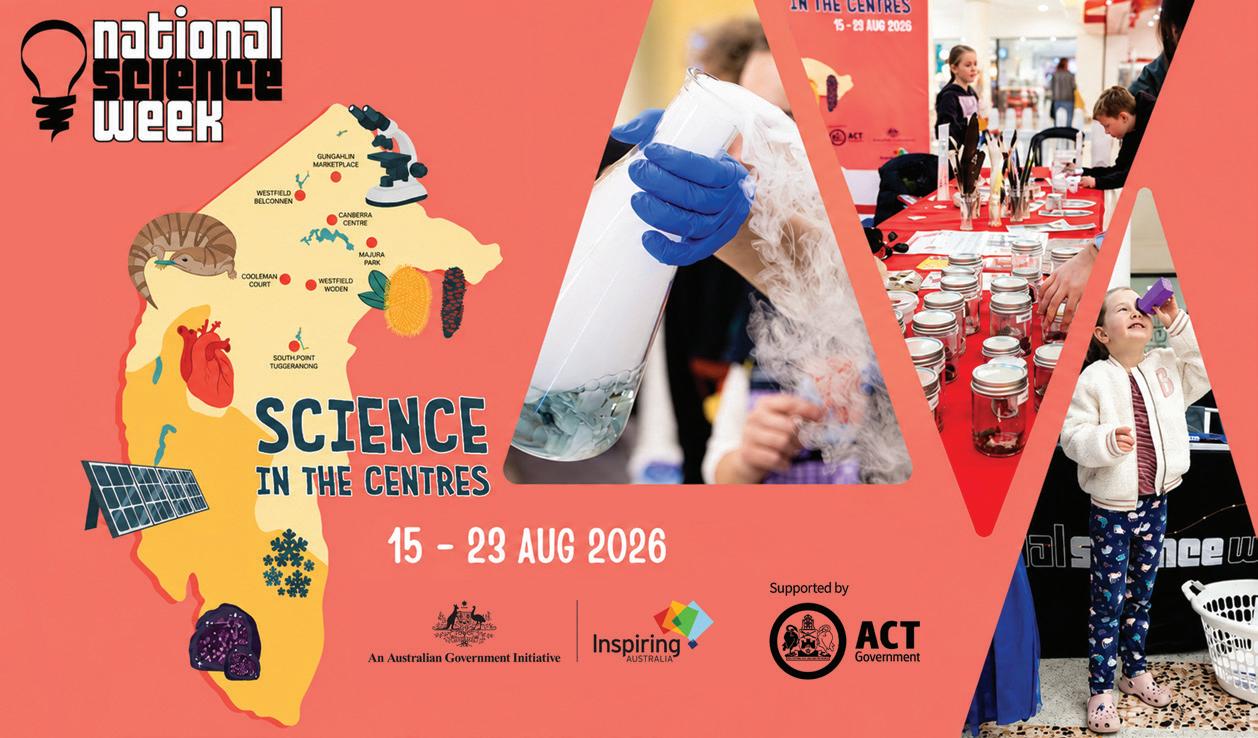
Science in the Centres is a series of popup science stalls that occurs during National Science Week. That means that on the two weekends bookending National Science Week this year (15-16 August and 22-23 August) you can find a range of science activities at shopping centres throughout Canberra. All of the major shopping centres are taking part:
• Canberra Centre
• Gungahlin Marketplace
• South Point in Tuggeranong
• Cooleman Court
• Woden Westfield
• Belconnen Westfield
• Majura Park
And a range of science organisations are
providing hands-on activities covering topics as diverse as the physics of engineering to the biology of pollination and a strong showing of native wildlife with opportunities to get up close and personal with some of our favourite local critters (snakes, giant insects and, if you’re lucky, a sugar glider!).
Some of the activities are great for little ones to get a taste of science in action. There’s nothing like stopping and trying rocket launching to also lift the spirits. But adults of all ages are also encouraged to stop and chat to the stall holders. These stalls are put on by dedicated volunteers and expert staff from science organisations all over Canberra. All scientists are secretly yearning to share their favourite science facts and points of wonder with you. By stopping and exploring new topics, you might just be surprised by what lies under the surface.
For more information on individual stalls, and also to check out other National Science Week
events, make sure to check out the website for full details: scienceweek.net.au
There really is something for everyone this year, from an adults-only cabaret show and science pub trivia to highly entertaining balloon art shows (secretly teaching little ones about healthy food).
National Science Week is a celebration of science across Australia and a solid demonstration that science touches every aspect of our lives, making them better in so many ways and with loads and loads of great stories to tell. By showing your support for science this year, by celebrating and attending and engaging, it’s sure to continue to be a vibrant science scene in Canberra for years to come. And if you spot a science stall in a shopping centre this August, make sure to ask if they have any exclusive, limited edition Science Week beanies, you might get lucky!
Inspiring Australia c/o the Agrifood Innovation Institute, ANU
T: 0406 356 207 (Brook Clinton)
E: info@inspiringtheact.org.au
W: inspiringtheact.org.au

ARIES (MARCH 21-APRIL 19)
While putting out the usual fires, you may wonder: How have they lived this long without me? Is it a case of ‘learned helplessness’ or worse, ‘weaponised incompetence’? Back off and see if they handle problems themselves. Then you’ll know which, if any, of your efforts there are necessary.
TAURUS (APRIL 20-MAY 20)
The stakes seem high this week, and it feels like social grace will determine the outcome.
Remember you’re dealing with humans who may feel just as pressured as you do. So don’t worry too much about causing offense, nor should you try too hard to impress. Just be real.
GEMINI (MAY 21-JUNE 21)
1 Herb Elliott won a gold medal in which athletics event at the 1960 Olympics?
2 Who wrote the classic novel, The Great Gatsby?
3 World War I began during which year?
4 What does the acronym, AFAIK, generally mean in text chat?
5 Crème caramel mainly consists of cream, milk, vanilla, and which other two ingredients?
Eleanor Roosevelt suggested, “To handle yourself, use your head; to handle others, use your heart.” You deserve the same love and kindnesses you extend to others. Others should hear the same logical solutions you apply to your own problems. This week, you can integrate both, and you will.
CANCER (JUNE 22-JULY 22)
A still pond reveals very little about its depth. The same is true of people. The quiet ones could be exercising incredible restraint in their mysterious serenity, or they could be experiencing no emotions or ambitions at all. Find out what’s really going on before you include or entrust anyone.
LEO (JULY 23-AUG. 22)
Like the low calls of whales whose messages can travel miles of ocean, you will communicate in a frequency that travels. A calm tone will accomplish more than an urgent one. Your confidence will be a balm for uncertainty. The emotional tone you set is the one others follow.
VIRGO (AUG. 23-SEPT. 22)
Curiosity is your guide and your gift. Many people do not possess the drive to learn, nor do they delight in the quest for deeper understanding. Even when the answers are not forthcoming, your life is still richer for wanting to know. This week, your curiosity will be welcomed and celebrated.


LIBRA (SEPT. 23-OCT. 23)
You’re on the right path, but that doesn’t mean it’s free of obstacles. When you encounter one this week, don’t turn back, nor should you barrel forward. Instead, see it from the obstacle’s point of view. If you can figure out how it got there, you’re halfway to clearing it.
SCORPIO (OCT. 24-NOV. 21)
It’s not so hard to find out what people want. You can just ask them directly, but it takes deeper insight to learn what they need. People sometimes don’t even know themselves. Until you uncover the underlying need, you’ll be addressing symptoms instead of the source of the issue.
SAGITTARIUS (NOV. 22-DEC. 21)
Like a dish of curry, your emotions tend to be served up with a particular spice level. This week is on the hot side. You may find yourself reacting to every strong spoonful. Go slow. Take breaks. With the right pacing, you can enjoy it. But your next order to the universe is likely to be milder.
CAPRICORN (DEC. 22-JAN. 19)
From a distance, people chatting in a circle appear to be a group. It doesn’t mean everyone feels they belong there. You’re the one who makes people feel welcomed, seen and at ease, because you expect nothing they can’t naturally offer. That generosity will be returned when you need it.
AQUARIUS (JAN. 20-FEB. 18)
It’s hard to see one’s own attitude because it colours everything. That’s why your ability for accurate self-assessment really is rare. This week, you’ll see the stark truth of your situation and understand what your reaction to it is all about. A little honesty now saves a lot of trouble later.
PISCES (FEB. 19-MARCH 20)
A venture is still so fresh that it would be typical for you to have unreasonable plans and inapplicable takes. The key is not to share them widely. The power move is to keep learning while keeping your half-formed ideas to yourself until you have a better understanding about how things work.






by GEORGIA CURRY
Canberra Milk is synonymous with our capital city and now music festival Spilt Milk has become a Canberra institution, with first release tickets selling out within an hour.
Since 2016 when the festival debuted in Canberra, the festival has contributed approximately $127 million to the ACT visitor economy.
Each year the festival consistently sells out, starting with 23,304 attendees in 2016 and peaking at 45,671 last year.
The 2025 Spilt Milk festival generated an estimated $30.2 million in economic impact for the ACT.
Accommodation providers were among the biggest beneficiaries, with hotel occupancy reaching 91 per cent on the Friday night before Spilt Milk and climbing to 95 per cent on the night of the festival.
Hotel revenues reached $1.66 million and $2.06 million respectively, making these the two strongest nights of 2025 for Canberra’s hotel sector, with the

festival night delivering the highest single night of hotel revenue recorded during the year.
What’s remarkable about Spilt Milk is that even in the current tough festival climate (long-running Byron Bay Bluesfest was cancelled last year), it doesn’t need a big city to survive.
Regional centres like Canberra, Geelong, Gold Coast and Perth are the lucky few chosen by Kicks Entertainment, and tens of thousands of people flock there with their expendable income.
It’s great for Canberra’s economy but not so great for festivalgoers, with some room rates spiking to $500-$700 a night (last year in Ballarat some attendees paid thousands of dollars for two nights).
We were the original chosen ones; however, as Spilt Milk was held exclusively in Canberra for three years before expanding to Ballarat in 2019, Gold Coast in 2022, and Perth in 2023.
While most international headline acts usually bypass the national capital, Spilt Milk brings massive headline acts to Canberra, like 2025’s multi-platinum American rapper Kendrick Lamar and Grammy-

winning rapper Doechii.
This year, Spilt Milk brings to Canberra Scottish sensation Lewis Capaldi, who’s hit “Someone You Loved” topped the UK Singles Chart for seven weeks, and British star Maye, with her hit “Where Is My Husband!” There are 38 artists in total.
Exhibition Park will be transformed into three main music stages along with extra areas for pop-up performances (the first Spilt Milk in Canberra was at Stage 88).
Spilt Milk Canberra is on Saturday 12 December from 12 midday to 11pm. Second release tickets on sale now: spilt-milk.com.au/canberra

































































































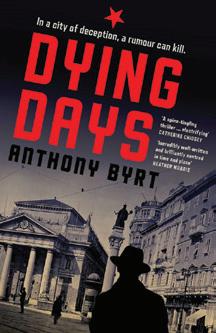
This week, Jeff Popple reviews three exciting novels full of spies, crooks and dark spirits. More of Jeff’s reviews can be found on his blog: murdermayhemandlongdogs.com
Affirm, $34.99
Dying Days is an outstanding thriller debut by New Zealand author Anthony Byrt. In May 1945, Allied forces, led by New Zealanders, liberated the Italian town of Trieste from the Nazis. Also present in the town were a strong contingent from Marshal Tito’s Yugoslav Army. A tense stand-off ensued, with the Allies haplessly watching Tito’s forces settle old political scores. The Allies are reluctant to get involved until some Kiwi soldiers also disappear. A British MI6 agent and a New Zealand intelligence officer are charged with sorting the problem, and find themselves caught up in a maze of lies and corruption. High-quality spy fiction.
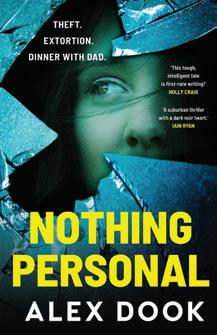
Echo, $34.99
Alex Dook burst onto the local crime fiction scene last year with his full-throttle noirish tale Gunpowder Creek. A wild ride of a story, it kept you feverishly turning the pages until the final blood-soaked climax. Now Dook has followed it up with another exciting story, Nothing Personal, about a young woman who steals the wrong bag of loot and finds herself on the run from dangerous criminals and crooked cops. Once again, the pace is frenetic as Dook’s flawed, but likeable, central character races from one disaster to another as she tries to stay alive, and potentially richer. Very enjoyable.
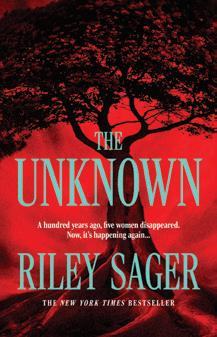
The Unknown by Riley Sager
Hodder & Stoughton, $34.99
Riley Sager is one of the best authors working in that dark space between crime and horror. His latest book, The Unknown, is another subtly scary tale that will keep you up at night. The story revolves around a creepy lake island in Vermont. In 1926, it was the scene of a mysterious disappearance of five spiritual mediums. Now in 2026, a film crew arrives on the island to make a movie about the event. However, things do not go as planned. Alternating between the present day and a diary from 1926, Sager steadily ramps up the tension until the suspenseful, surprising ending. Recommended.









































Services include
• Women’s and Men’s health
• Paediatrics

• Sexual health


• Mental health
• Skin conditions


• Cardiovascular health
• Endocrine and Metabolic health
• Respiratory conditions
• Travel medicine




• Preventative medicine




• Neurological presentations
• Kidney and Urinary health



• Lifestyle factors which result in disease



• Gastrointestinal conditions
• Haematological conditions
• Ear, nose, throat and oral health
• Musculoskeletal presentations





• Fellowship of the Royal Australian College of General Practitioners (FRACGP)
• Fellow of the Hong Kong Academy of Medicine ( Family Medicine)
• Master of Family Medicine Dr. Maryse’s qualifications
• Graduate Diploma in Family Medicine
• Bachelor of Medicine/Bachelor of Surgery
• Member of Australasian Menopause Society
Scan QR Code for an Appointment or
(02) 5133 7112
Suite 6 Level 3 – Peter Yorke Building, 173 Strickland Crescent, Deakin ACT
Consulting hours: Monday to Friday: 8:30am – 5:00 pm We are closed on Saturdays and Public Holidays




by NICHOLAS FULLER
‘A sad tale’s best for winter,’ says the doomed young prince Mamillius — but in Shakespeare’s late romance, The Winter’s Tale, joy and new life follow sadness, just as spring and summer do winter.
The Mill Theatre will produce this rarely performed work by the Bard in an abridged youth production, directed by Heidi Silberman.
Eight emerging Canberra actors aged between 18 and 25 will play 20 characters between them.
“Shakespeare is the best,” Silberman says. “It’s the quickest way to learn the most about acting and character and voice, and taking text off the page and performing it.”
The Mill’s owner, Lexi Sekuless, agrees; for her, Shakespeare is the Olympics of acting. An actress who has performed at the Globe, she is coaching the young performers in Shakespearean verse.
Silberman has cut the play to approximately
80 minutes, concentrating its sprawling five acts and almost 30 original characters into an intimate production without interval.
In her view, the play deals with “how men use power, how women deal with that, and how women pick up the pieces after men have made a big mess of abusing their power”.
“There are themes here that haven’t changed,” Silberman says. “Human nature hasn’t changed in 400 years, and this play is just as relevant now as it was then. It’s a great mirror to look at our society through.”
Although The Winter’s Tale looks at serious issues, Silberman says the play is a lot of fun. There are even some humorous sheep puppets.
At the end, a statue miraculously comes to life, and families are reconciled in one of Shakespeare’s most sublime endings.
Most people have probably never seen The Winter’s Tale before, Silberman says, making this production a rare chance to do so.

“We should take every opportunity to see Shakespeare when we can. It’s an example of what’s possible in Canberra — and it’s professional quality.
“We have age and experience combined with youth and enthusiasm. That alone is reason to come to the show: to see these up-and-coming performers taking on roles they didn’t expect to be given, absorbing skills, and portraying what they’ve learned.”
The Winter’s Tale, by Shakespeare, directed by Heidi Silberman, at The Mill Theatre from 5 to 15 August. Tickets: collections.humanitix.com/thewinters-tale









DR VIVIENNE LEWIS ASSISTANT PROFESSOR AND CLINICAL PSYCHOLOGIST AT UNIVERSITY OF CANBERRA
If you’ve ever found yourself fixated on a number like the one on the scales, the calories in your lunch, the steps on your watch, or the amount of exercise you think you should be doing, you’re not alone. From a psychological perspective, this response is understandable. When life feels uncertain, stressful or emotionally demanding, the brain looks for predictability and control. Numbers provide something concrete to focus on, which can feel stabilising, at least initially. The problem begins when numbers stop being useful information and start becoming rules. At that point, they don’t just guide behaviour; they begin to shape self-worth. A day can feel successful or failed based on a single metric, even when everything else about the day is unchanged.
From a psychological perspective, number fixation develops through reinforcement. When a number moves in a preferred direction, people often experience short-term relief or reassurance. That relief teaches the brain that the number matters. The calm doesn’t last, so the brain checks again. Over time, monitoring becomes more frequent and more rigid, even though anxiety usually increases rather than decreases.
I see this pattern frequently in therapy. One client recently spoke about how distressed they felt after sustaining an injury that meant they couldn’t complete their usual workouts. Physically, the injury was manageable, but psychologically they were struggling. Their mind was fixated on rigid rules about how much exercise they needed to do, and being unable to meet those rules created intense anxiety and self-criticism. Even though rest was appropriate and necessary, their sense of safety and control had become tied to a numerical target rather than to what their body actually needed.
Perfectionism and conditional self-worth
For many people, number fixation sits alongside unrelenting standards. There is often a belief that being acceptable, disciplined or good enough depends on meeting precise benchmarks. Numbers fit neatly into this belief system because they appear objective and exact. When the number is acceptable, self-criticism eases. When it isn’t, it intensifies. Over time, self-worth becomes conditional, attached to digits rather than values, e ort or context.
Rigid numerical rules keep the nervous system in a constant state of monitoring. Research consistently shows that wellbeing improves when we develop psychological flexibility, the capacity to tolerate variation, uncertainty and imperfection. One practical way to build this is by shifting from exact targets to ranges. Enough rather than exact. Regular rather than perfect.
Numbers are tools that can inform decisions, but a meaningful life is not measured in kilos, calories, or steps, but in flexibility, connection, and self-respect.
For readers wanting a practical, evidence-based guide to reducing rigidity and rebuilding body trust, my book Embracing You: A Practical Guide to Body Image and Self-Acceptance explores these ideas in depth: ausapress.com/p/9781923114159




The subtle signs many people miss — and when it’s time to have your hearing checked
by Michelle Richards, Director & Accredited Hearing Specialist — Michelle Richards Hearing, Dickson
Hearing loss rarely arrives overnight.
For most people, it happens gradually – so gradually, in fact, that the people around them may notice the change long before they do.
The television creeps up a little louder. Conversations become harder to follow. Family members seem to mumble.
And because you can still hear something, it is very easy to think:
“My hearing isn’t bad enough yet.”
As a hearing clinician, this is something I hear all the time.
But good hearing care shouldn’t begin when hearing loss has become severe enough to significantly interfere with everyday life. The best time to understand your hearing is before you reach that point.
Hearing loss isn’t just about volume One of the biggest misconceptions about hearing loss is that everything simply becomes quieter.
For many people, the first noticeable problem is actually clarity.
previously relied upon.
This is one reason I encourage people not to think of hearing care simply as something we address when hearing becomes “bad enough”.
Earlier assessment gives us an opportunity to understand how you are hearing now, monitor changes over time and intervene when there is a genuine clinical need.
Importantly, intervention doesn’t necessarily mean hearing aids.
Sometimes the appropriate recommendation is simply:
“Your hearing looks healthy. Let’s establish this as your baseline and check it again in the future.”
That is valuable information too.
“But I’m managing…”
You probably are.
The more useful question is: how hard are you working to manage?
Perhaps you choose the quiet corner of the restaurant without consciously knowing why. Perhaps meetings leave you exhausted, or you avoid answering the phone when you’re somewhere noisy.
di cult
• turn the television up higher than other people prefer
• experience tinnitus
• have a history of occupational or recreational noise exposure
• notice one ear seems better than the other
• find listening increasingly tiring
• have family members commenting on your hearing
• simply haven’t had your hearing properly assessed for several years.
And if your hearing turns out to be normal? Wonderful.
You now have a baseline against which future changes can be compared.
Early hearing care is preventative hearing care
We routinely check our eyes before we can no longer see.
We monitor our blood pressure before we become unwell.
We visit the dentist before we have unbearable toothache.
They can hear that somebody is speaking but cannot reliably understand the words.
That is why people with emerging hearing loss often say:
“I can hear you. I just can’t understand you.”
Certain speech sounds may become less audible than others, meaning the brain receives an incomplete version of the spoken message and has to work harder to fill in the gaps.
Initially, we can become remarkably good at compensating.
We use context, facial expressions, lip movements and our knowledge of the conversation to work out what was probably said.
But listening shouldn’t have to become detective work.
The brain is part of hearing too Your ears collect sound, but it is your brain that ultimately has to interpret it.
When hearing changes gradually, the brain may receive less access to some of the acoustic information it
These little adaptations can accumulate so gradually that we don’t necessarily recognise them as hearing di culties.
A comprehensive hearing assessment can identify changes well before someone considers themselves “deaf” or believes they need hearing aids.
And modern assessment should look beyond simply asking whether you can hear a series of beeps.
At Michelle Richards Hearing, I also look at speech understanding and hearing in background noise, because this is often where people first experience di culty in real life.
When should you have your hearing checked?
There doesn’t need to be something terribly wrong before you book a hearing assessment.
Consider having your hearing checked if you:
• regularly ask people to repeat themselves
• hear conversation but struggle to understand the words
• find restaurants and group conversations increasingly
Our hearing deserves the same approach.
Early hearing care is not about convincing everybody to wear hearing aids.
It is about knowing where you stand, recognising change early and making informed decisions about your hearing health before communication becomes unnecessarily di cult.
So perhaps the question isn’t: “Is my hearing bad enough to do something about it?”
Perhaps a better question is: “Am I hearing as well as I could be?”
Michelle Richards Hearing — Ethical. Local. Independent. We have moved!!
Suite 68, 12 Challis St Dickson ACT 2602
Book online at: michellerichardshearing.com.au or call 02 6281 0222
Scan to book online instantly

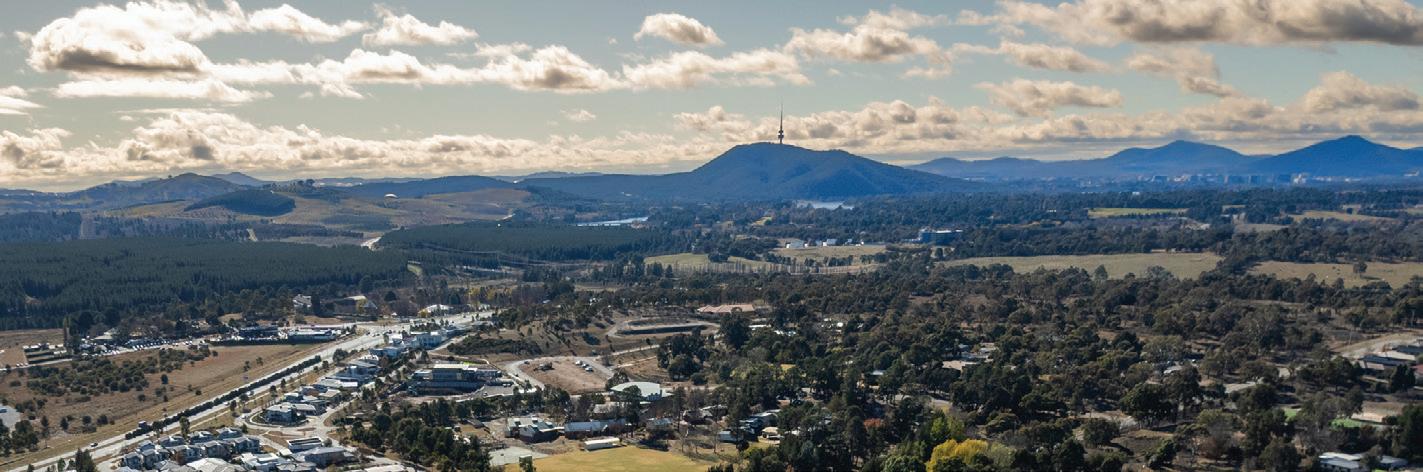
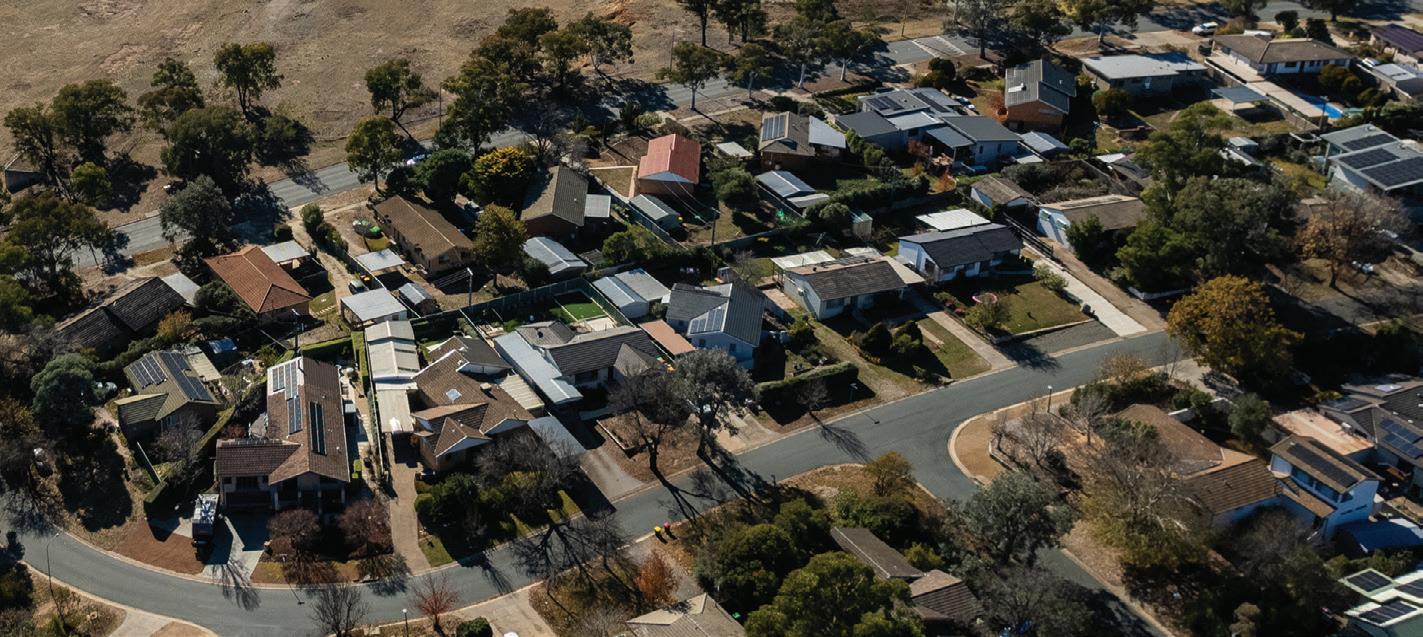
High above the street with views stretching to the Brindabellas, this refreshed McKellar home is all about making family life easy.
Inside, fresh paint and new flooring give the three-bedroom home a modern lift, while two separate living areas mean there’s room for everyone to spread out. The kitchen has been thoughtfully designed with plenty of storage and bench space, making
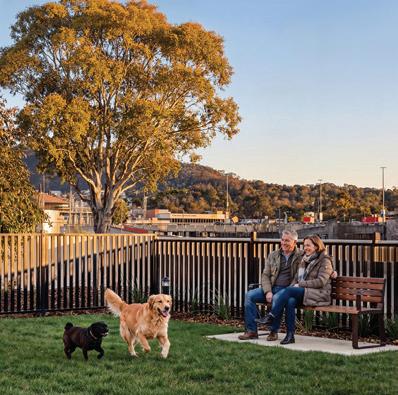
on the kids and pets as they play beneath the established trees.
Practical touches including ducted heating and cooling, a double garage and plenty of storage make dayto-day living comfortable, while the location puts parks, schools, local shops and Lake Ginninderra all within easy reach.
















What would you do with more time back?
Five hours of mowing, gardening and home maintenance each weekend adds up to around 260 hours every year.
That’s time you could spend travelling, catching up with family, swimming a few laps, enjoying a long lunch or doing absolutely nothing.
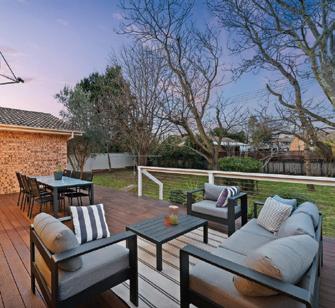
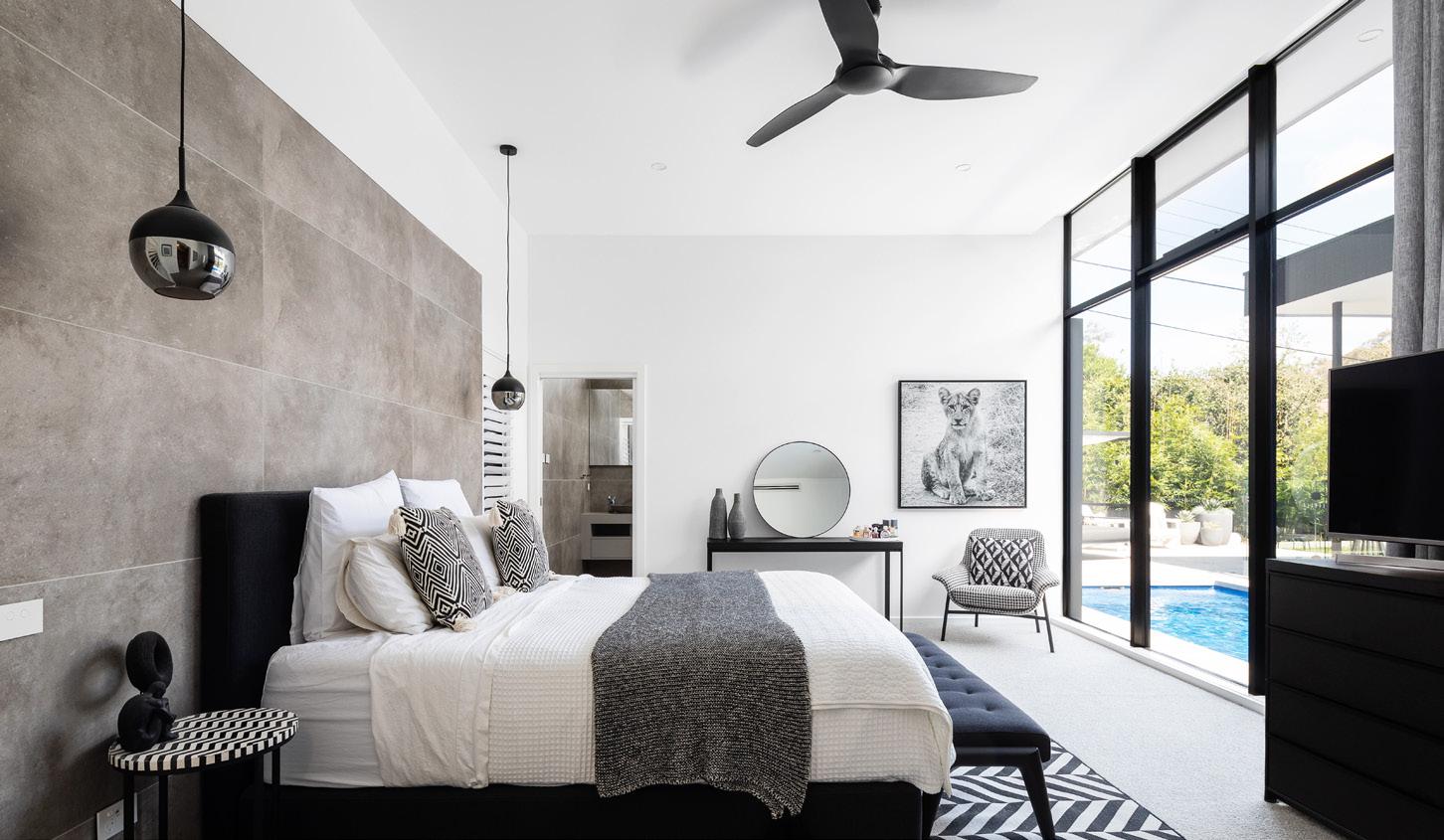
At Woden Green, the gardens, shared spaces and building are cared for, giving you more freedom to enjoy your home rather than constantly maintaining it.
Final release now selling
One Bedroom + Study/Media from $587,500*
Two Bedrooms from $699,900*
Three Bedrooms from $805,000*
Three Bedroom Penthouses from $1,349,900*
Furnished apartments open for inspection
Saturday 10:00am – 11:00am, Penthouses 11:30am – 12:00pm Sunday 11:00am – 12:00pm, Penthouses 12:30pm – 1:00pm or by appointment. 102 Easty Street, Phillip.
Get in touch to find out more
Ben Wilson 0420 375 976 | Will Honey 0407 245 177 or visit wodengreen.com.au

1, 2, 3 Bed + Sky Townhouses in Dickson, available from $484,900
Amazing views across Canberra from the upper levels
Boutique development
Construction has commenced, move in 2026
Designed to be low maintenance
Double glazing
Multiple atrium gardens
Bosch appliances
In the heart of Dickson, one of Canberra’s best restaurant districts For more information: DAVID SHI 0417 668 668 david.shi@ljhookerprojects.com.au







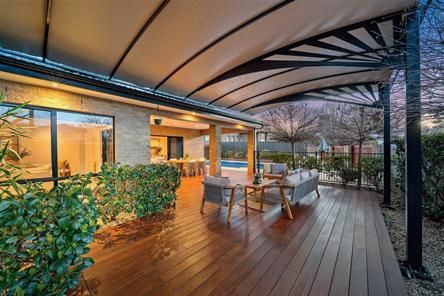


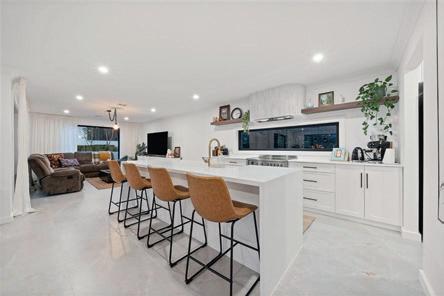


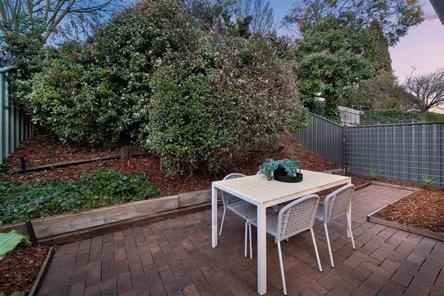




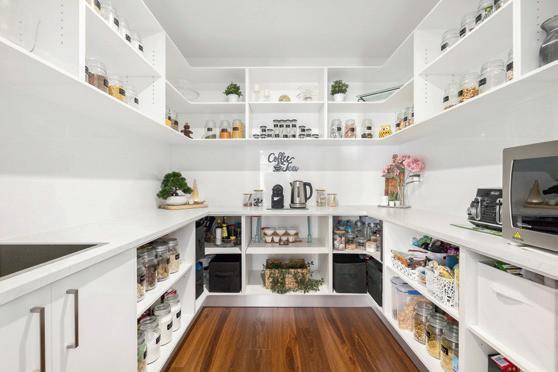



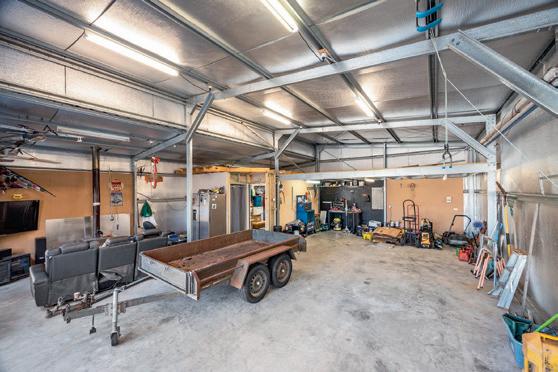























































































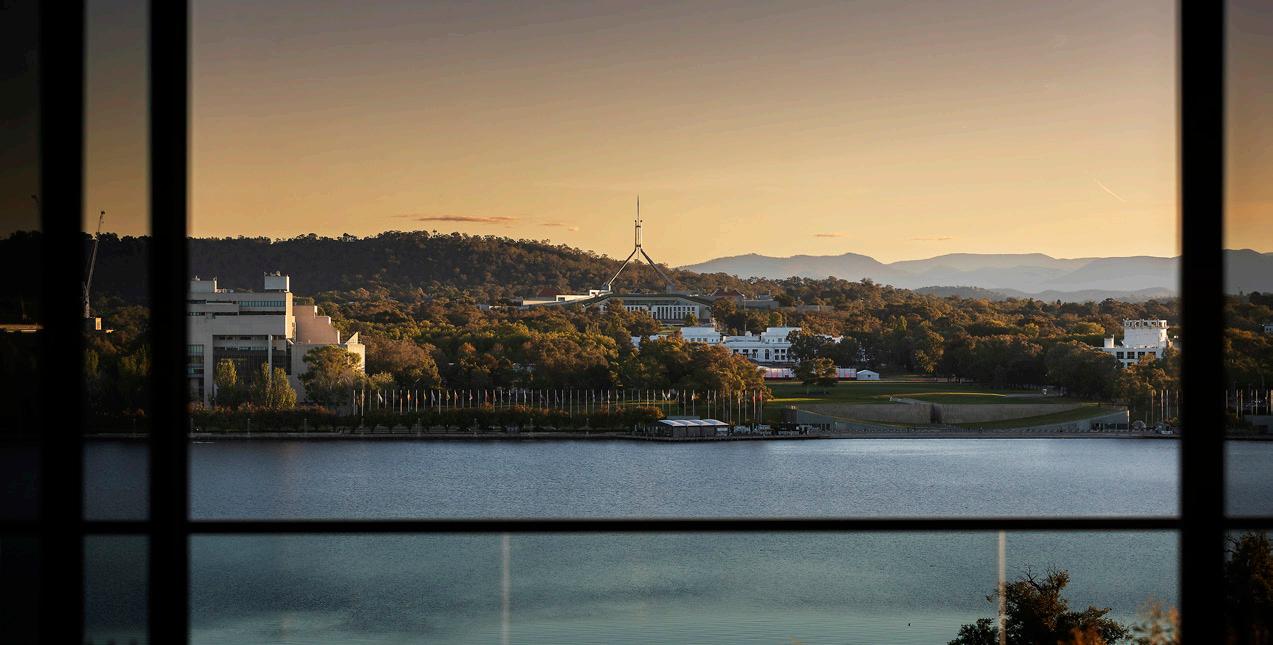
Beautiful by nature, defined by quality, The Eastbourne is a timeless collection of elegantly crafted 1, 2 and 3 bedroom homes with direct connections to Lake Burley Griffin and Commonwealth Park. Newly completed, The Eastbourne brings together generous living, timeless design and exceptional convenience in one of Canberra’s most connected neighbourhoods.
You’ll find 34 hectares of parkland outside, East Traders Hall at the doorstep, hotel-style amenities in your everyday routine, and premium inclusions as standard. VISIT THE DISPLAYS