Located in downtown Montréal, QC, the Bonaventure Hotel will be the headquarters for this conference and trade show event.
Don't miss the chance to secure the best rate for the CPA’s premier event in 2026. Register by June 15, 2026, and take advantage of significant savings for you and your group.
Stay tuned for more details on the conference agenda, speaker lineup, and tradeshow exhibitors, not to mention the pre- and post-conference events that are being planned. We look forward to welcoming you so register today!
Tom Arnold Scholarship Winner –Pierre Junior Sanon How Urban and Environmental Studies Can Shape the Future of Parking in Canada
14-17
CPA Annual Conference and Trade Show – Montréal 2026 - Conference Planner - Vendor Showcase - Sponsorship Opportunities 18
Surmounting the Challenge of Concept to Successful Delivery By Bill Franklin, P.Eng.
PRESIDENT Frank Cavaliere RJC Engineers fcavaliere@rjc.ca
VICE PRESIDENT
Adamo Donatucci Toronto Parking Authority Adamo.donatucci@greenpmobility.com
TREASURER
James Mackay Mackay Meters james.mackay@mackaymeters.com
SECRETARY
Sharon Lewinson ACT Canada info@actcanada.com
PAST PRESIDENT
Ralph Bond BA Consulting Group Ltd. bond@bagroup.com
DIRECTORS
David Agosti Simon Fraser University daagosti@sfu.ca
Chris Blaschuk The City of Calgary chris.blaschuk@calgary.ca
Lisa Ciancone St. Joseph’s Healthcare lciancon@stjoes.ca
Sam Cusick
AIMS (EDC) Corp. sam@aimsparking.com
Joni Eros Arrive, Inc. joni.eros@arrive.com
CPA National Chapter Events 22
Parking Industry Consolidation: Why It’s Good News for Smaller Parking Tech Companies By Heather Black 24
A New More Affordable Approach to Adding EV Charging Capacity By Chris McKenty 27
Technology that Turns Parking into a Strategic Asset By Ebby Zachariah
Nicolas Filion Agence de mobilité durable nfilion@agencemobilitedurable.ca
Ali Haloui Montreal-Trudeau Int’l Airport ali.haloui@admtl.com
Wayne Sum City of Saskatoon wayne.sum@saskatoon.ca
Shannon Talbot University of Guelph stalbot@parking.uoguelph.ca
EXECUTIVE DIRECTOR
Carole Whitehorne 613 727 0700 x 10 carole@canadianparking.ca
BRAND & COMMUNICATIONS
Brenda Hanna 613 727 0700 x 15 brenda@canadianparking.ca
CAROLE WHITEHORNE, EXECUTIVE DIRECTOR
Better late than never! We are months into what is a very busy year for the CPA, with a lot of ground to cover. Transition to Canadian Parking & Mobility Association is in the works, with the mandate not to become a general transit organization. Our focus must remain where parking and mobility intersect:
• where parking policy, pricing, infrastructure, and technology shape mobility outcomes
• where parking & mobility intersect.
Mobility is a key focus as we prepare to launch the new Canadian Parking & Mobility brand at the annual conference and trade show in Montreal (September 27–30, 2026). Members will recall that we announced this initiative in January after conducting a survey of members to get a feel for the concept of merging parking and mobility to address the changing roles for operators and managers and to provide guidance to manufacturers and developers responsible for delivering products and services that support them.
The survey results confirmed that mobility is already part of your responsibilities. In fact, 85% of respondents indicated mobility is already integrated into their role or actively emerging within their organization. No respondents said their organization is not interested in mobility.
It is important to be clear on what is not changing: Parking remains central to our mission, we will remain practical, applied, and operator focused, and we continue to represent parking professionals first and foremost.
PARKER MAGAZINE
EDITOR AND ADVERTISING carole@canadianparking.ca 613-727-0700 x 10 DESIGN AND MARKETING brenda@canadianparking.ca 613-727-0700 x 15
The transition process requires amendments to be submitted to Industry Canada, Bylaw updates and final approval by members before we can submit our request. A special meeting of members will be called the coming weeks with a link distributed via email with relative documents attached for your review. All members are encouraged to attend to voice their position and confirm this change.
EV’s will also be on the agenda this year as we bring the trend into focus to build a strong support system for members at various stages of implementation of their EV installation and service delivery. We will begin to collect data in the coming weeks to establish a base that reflects the current state of EV usage, charging installations and infrastructure in Canada. From those results, we will continue to build a curriculum that provides insight and guiding principles into EV development for members.
It is time for spring cleaning at the CPA. As we transition to the parking and mobility environment, now is the time to take stock of our member records and ensure the most current data is available. That requires some help from members and contacts that we track.
Members can access to their individual profiles and, based on the level of access assigned, are able to review and update their own profile to help us stay connected.
Here is a quick tutorial: Login access is easy through the members’ dashboard at canadianparking.ca/ dashboard/. If your password has not been activated, email info@canadianparking.ca and we will get you set up.
USERS can view and update their personal profile.
MANAGERS have access to update their own profile, and can view the Company profile, but cannot make changes to the company records.
ADMINISTRATORS have access to their own profile and the full company profile. Administrators can add, delete and edit contacts, view and pay invoices and print receipts. Changes to company members must be requested through the CPA. It is good practice to review your company members during the renewal process prior to the start of the new membership year to adjust and confirm your members before the January 31 cut-off date.
Generally, the Class A member is the Main Contact with Administrator access assigned. This level of access can be assigned to any staff member regardless of their membership statis. Just let us know who the right contact is that manages your company’s records and financials and they can be assigned this status.
Another important area for Administrators to review is the CPA’s online membership directory, also located on the dashboard. Make sure your listings are up to date and notify us if changes are required. Contact me any time for assistance. Our database has a mind of its own sometimes!
Awards and recognition are an important part of the parking and mobility industry, not only in Canada but around the world. So much good work and dedication to this industry over the years has enabled
us to stand on the shoulders of the experts who define the path we are on. Be sure to nominate a worthy colleague, partner, educator or innovator for the 2026 Canadian Parking Association Awards, to be presented in Montreal this fall. Nominations can be submitted at this link until June 30. Visit Awards
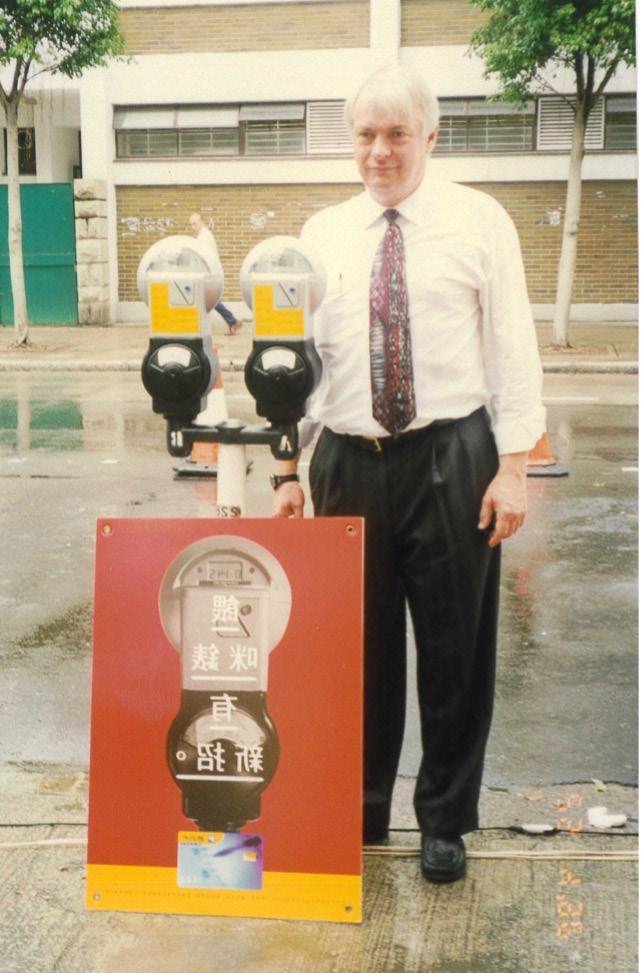
Speaking of recognition, I want to take the opportunity to congratulate Canada’s first inductee into the Parking Hall of Fame. George Mackay, founder of J.J. Mackay Meters Limited, was a founding member of the Canadian Parking Association more than 4 decades ago. He and Mackay Meters, under the direction of James Mackay, President, have shaped the parking landscape, and continue to support the CPA. Read a bit about George and fellow inductees on page 11 of this issue and consider nominating a community leader for 2027.
Finally, we are appealing to members and supporters to consider becoming a partner or sponsor in 2026. Sponsorship enables us to create and maintain the momentum required to push our new initiatives over the finish line and into the future. Reach out to me to discuss the various opportunities and benefits of being a sponsor or partner. I’d love to hear your ideas! n
Carole Whitehorne, Executive Director
CPA Associate Partner
It is important to be clear on what is not changing: Parking remains central to our mission, we will remain practical, applied, and operator focused, and we continue to represent parking professionals first and foremost.
The Canadian Parking Association’s Management Training and Certification.
The Parking Management Certification program (PMC) addresses the training needs of management teams and front-line supervisors who oversee parking operations.
This program sets performance and service standards at the point where the parking operation, technology, mobility, and the customer meet. The PMC credential is the standard by which performance can be measured.
Standards
Recognized as the benchmark for supervisory and management level employees in the Canadian parking industry, the program offers candidates a comprehensive study program that includes relevant and essential aspects of a standard parking operation.
The course is designed for quality and fairness in assessing the skill set for the industry and may be used by employers to evaluate candidates during the hiring processes.
Development of The Certification Program
The study materials and examination outline contain information fundamental to the defined roles and responsibilities of parking managers. Content has been compiled from a cross-section of parking professionals from Canada and has been updated to include current information relative to today’s parking industry.
Course Content
OPERATIONS: Types, Design, Regulations, Loss Prevention, Equipment/Systems/Technology, Safety
REVENUE CONTROL: Accounting, Auditing
MOBILITY MANAGEMENT (TDM)
CUSTOMER SERVICE
MARKETING/ADMINISTRATION
MAINTENANCE
HUMAN RESOURCES
The Examination
The computerized PMC examination is composed of 150 four-option multiple-choice questions and is administered during a 3-hour testing session held in close proximity to the candidate’s home or workplace.
Former CCPFM Graduates
Holders of current CCPFM designation will be offered a discounted fee to study the revised materials and retake the examination. If certification has lapsed, full fees will apply.
Parking Industry Credential
The Canadian Parking Association, as the national authority for the industry in Canada, has the authority to grant or rescind the use of the professional designation of Parking Management Certification “PMC” to candidates who successfully complete the program.
Training Course
Registration & Information
canadianparking.ca/pmc/
FROM THE PRESIDENT
FRANK CAVALIERE, PRESIDENT
Spring is here, not in Edmonton as I type this but, I am told it has arrived in other places. This is a time that we look forward to change and new things. The Canadian Parking Association will be undergoing a shift in purpose and branding this year to become the Canadian Parking and Mobility Association. While we have been moving in the mobility direction for a few years now, it is time to make it official. Along this line, there will be a special meeting of the members called to discuss this and gain approval of the name change, watch for a notice in your email!
There are many ways that parking and mobility go hand-in-hand; parking enables first/last-mile connections, improves street efficiency, and supports access and inclusion while mobility reduces parking demand, improves turnover and availability and can create better curb management. Many of these will be topics for discussion at the upcoming conference in Montreal where mobility, and the CPA’s transition, will be the focus. We already have lots of interest in the trade show with several new vendors. Remember to register by June 15 for early bird discounts! Members should also consider nominating someone for one of the CPA Awards, which are presented annually at the conference, see our website for details.
Electric vehicles remain a hot topic in the automotive and parking industries. Recent geopolitical events, oil price and supply volatility, and the federal
government’s trade talks with China and Europe have made even the most stubborn owners of petroleum-powered vehicles think about converting. While I will stay far away from discussing the bigger issues, the market for EVs continues to grow and going forward, The Parker magazines and learning opportunities will have content on this topic.
Chapter events, which help to support networking and learning throughout the industry, are in full swing. Events have already occurred in Calgary and Pacific chapters, with more in the Atlantic, Quebec and Toronto chapters coming in May. An Edmonton event is still in the works; more details will be available soon! If you are looking, or have an idea for a local chapter event, please contact the CPA.
For myself, I hope spring has come to all regions by now, and you are able to get out and enjoy the warmer weather; enjoy nature or, better yet, go for a long drive with the windows down, find your favourite parking spot and plug your preferred meter (or swipe your card or use an app or whatever payment method works for you!). n
Sincerely,
Frank Cavaliere President, Canadian Parking Association
While we have been moving in the mobility direction for a few years now, it is time to make it official.
Shaping Parking and Mobility Technology to the Needs of the Individual Community
BY MICHAEL KAVUR
Canadian cities are entering a new age of parking management and how they think about parking, transportation, and the curb. What were once treated as separate operational silos are increasingly being understood as interconnected components of a broader mobility ecosystem. No longer do we approach parking, transportation planning, and curb management as disparate elements of urban planning. It’s even reflected by CPA’s current rebranding as the Canadian Parking & Mobility Association.
That shift is being driven by a combination of rising expectations and growing complexity. Electric vehicles are becoming more common. Shared mobility services continue to evolve. Delivery volumes have surged, placing new pressure on curb space. At the same time, commuter patterns are less predictable than they were even a decade ago.
Against this backdrop, technology has emerged as a source of both opportunity and challenges. There is no shortage of tools available to municipalities and parking authorities. Digital payments, license plate recognition, mobile enforcement, real-time occupancy tracking, and curbside analytics platforms are all widely available and, in many cases, already deployed. Yet despite this proliferation of technology, many cities still struggle to translate these investments into meaningful, measurable outcomes. The issue is not access to innovation. It is alignment.
Identifying Policy Objectives
A growing body of international experience suggests that the most effective mobility strategies don’t begin with technology at all. Instead, they start with clearly defined policy objectives. Whether the goal is to reduce congestion, improve compliance, increase turnover in high-demand areas, or support environmental targets, successful cities begin by identifying what they are trying to achieve. Technology is then selected and configured to support those outcomes.
This approach represents a departure from earlier models, where cities often adopted systems in isolation. Payment platforms were implemented to replace aging meters. Enforcement tools were introduced to improve efficiency. Permitting systems were digitized to reduce administrative burden. Each of these investments may have delivered incremental benefits, but without integration, they often failed to deliver their full potential.
What were once treated as separate operational silos are increasingly being understood as interconnected components of a broader mobility ecosystem.
In contrast, cities that have taken a more coordinated approach demonstrate what an integrated mobility ecosystem can look like in practice. In places like Auckland and Brisbane, municipal leaders have worked to connect enforcement, payments, permitting, and data into unified platforms. These systems aren’t simply collections of tools. They function as cohesive environments in which information flows across departments and supports both operational decisionmaking and long-term planning.
One of the defining characteristics of these ecosystems is their ability to provide real-time visibility. Enforcement officers can access up-todate information about payment status and permit validity. Parking managers can monitor occupancy trends across multiple facilities. Policy makers can evaluate how changes in pricing or regulation are affecting behaviour. This level of insight allows cities to move beyond reactive management and toward more proactive, data-driven approaches.
Rather than focusing on individual products, the most successful cities and their technology providers have developed integrated platforms that bring together payment, enforcement, permitting, and analytics within a single framework. These systems are typically cloudbased, enabling continuous updates and facilitating integration with other municipal technologies. They are also designed to support multiple payment channels, including mobile apps, web platforms, and traditional methods, ensuring accessibility for a broad range of users.
A key element of this approach is flexibility. No two cities have identical needs, and the most effective systems are those that can be configured to reflect local priorities. In practice, this means allowing municipalities to tailor pricing structures, enforcement rules, and user interfaces to align with their specific policy goals. It also means ensuring that systems can evolve over time as those goals change.
Data Is King
Data plays a central role in enabling this flexibility. An integrated mobility ecosystem depends on the ability to collect, normalize, and analyze information from multiple sources. This includes transaction data from payment systems, activity data from enforcement operations, and usage data from curbside and off-street facilities. When these data streams are brought together, they create a comprehensive picture of how parking and mobility assets are being used.
The value of this data extends beyond day-to-day operations. Over time, it can support more strategic decision-making. Cities can identify patterns in demand, evaluate the effectiveness of policy interventions, and forecast future needs. For example, data on curbside usage can inform decisions about allocating space between parking, loading, and passenger drop-off. Similarly, insights into payment behaviour can help refine pricing strategies to balance occupancy and revenue objectives.
However, building this kind of data capability is not simply a technical exercise. It requires careful attention to governance, standards, and interoperability. Data must be structured in a way that allows it to be shared across systems and departments. Privacy and security considerations must be addressed. And perhaps most importantly, organizations must develop the internal capacity to interpret and act on the insights that data provides.
This brings into focus another critical factor in the success of mobility initiatives: organizational alignment. Technology projects often fail not because the tools are inadequate, but because the stakeholders involved are not fully aligned. Parking operations, transportation planning, IT departments, and finance teams may each have different priorities and perspectives. Without a shared vision, it can be difficult to implement systems that meet the needs of all parties.
Effective cities address this challenge by fostering collaboration from the outset. Cross-departmental teams are established to define objectives, evaluate solutions, and oversee implementation. Clear governance structures are put in place to support decision-making. In many cases, external partners, including private operators and technology providers, are also brought into the process, creating a broader ecosystem of collaboration.
The role of these partnerships shouldn’t be underestimated. As mobility systems become more complex, it is increasingly difficult for any single
organization to manage all aspects internally. Technology providers bring specialized expertise in areas like system integration, data analytics, and user experience design. Private operators can offer insights based on experience across multiple markets. By working together, these stakeholders can help cities navigate the complexities of implementation and achieve better outcomes.
At the same time, it is important for municipalities to maintain control over their strategic direction. Technology should be seen as an enabler, not a driver. This means retaining the ability to set policy, define standards, and make decisions about how systems are used. Open architectures and interoperable platforms can support this objective by reducing dependency on any single vendor and allowing cities to adapt their systems over time.
ABOUT THE AUTHOR:
Michael Kavur is Executive Vice President, Americas at Orikan. He can be reached at michael. kavur@orikan.com.
Tailored Solutions
For Canadian cities, these lessons are particularly relevant. The diversity of urban environments across the country means that there is no single model that can be applied universally. Large metropolitan areas face different challenges than midsized cities or smaller communities. Climate, geography, and economic conditions all influence how mobility systems are used and managed. As a result, the most effective strategies are those that are tailored to local circumstances.
This doesn’t mean starting from scratch, though. International examples provide valuable insights into what works and what doesn’t. The experiences of cities like Auckland and Brisbane demonstrate the benefits of integration, data-driven decision-making, and policy-led technology adoption. By adapting these principles to their own contexts, Canadian cities can accelerate their progress and avoid common pitfalls.
Ultimately, the goal is to create mobility ecosystems that are not only efficient, but also responsive and sustainable. Technology has a critical role to play in achieving this, but only when it is applied thoughtfully and strategically. By focusing on outcomes, building robust data frameworks, and fostering collaboration, cities can move beyond fragmented systems and toward a more cohesive approach to managing parking and mobility.
As urban environments continue to evolve, the ability to adapt will become increasingly important. Integrated platforms, flexible policies, and strong partnerships will provide the foundation for this adaptability. For cities willing to embrace these principles, the opportunity is significant. Parking and mobility can be transformed from operational challenges into strategic assets that support broader community goals. n
DIRECTORS AWARDS
Contributing Member Innovation in Parking and Programs Marketing and Communications
Parking Industry Business Excellence
Parking Supervisor of the Year
Parking Staff Member of the Year
FOUNDERS AWARDS
Ted Seeberg Memorial Award For Outstanding Contribution to the Canadian Parking and Mobility Industry
Ed Keate Award For Outstanding Contribution to Advancement of Knowledge in the Parking and Mobility Industry
PRESENTATION OF THE AWARDS
Only members of the Canadian Parking Association may submit a nomination, or be eligible to receive an award.
Information can be found on the CPA website at canadianparking.ca/cpa-awards/
Winners will be announced during the Annual Conference and Trade Show in Montréal, September 27-30, 2026.
On March 30, 2026, the Parking Hall of Fame inducted 12 distinguished leaders who helped shape the parking industry in North America and beyond during a special Awards dinner and ceremony.
The Canadian Parking Association is proud to have one of its own founders named to the inaugural class of 2026, Mr. George MacKay, Founder and Former President of J.J. MacKay Canada Ltd.
George MacKay’s path to the parking industry began not by choice, but by loss. When his father passed suddenly, George stepped up as the eldest son to lead the family’s meter distributorship in Atlantic Canada.
But George wasn’t content to simply distribute someone else’s product. He believed he could build something better. So, he sold everything he owned and spent a year in Switzerland, apprenticing with some of the world’s finest clockmakers — bringing their tools, their dies, and their standards back to Nova Scotia to manufacture the first MacKay Meter.
It was an immediate success. And George was just getting started.
In the early 1990s, he did it again — relocating to Taiwan for a year to master electronics and circuit board manufacturing. The result was MacKay’s first electronic parking meter, and with it, a transformation of the industry itself. For the first time, cities had real audit trails, measurable revenue accountability, and genuine oversight of their parking systems.
With George at the helm, MacKay sold approximately one million meters in more than forty countries worldwide. Known for his quiet intensity, inventive mind, and unwavering commitment to quality, George built more than a successful company—he built a standard.
CONGRATULATIONS
Mr. George MacKay Founder and Former President J.J. MacKay Canada Ltd.
Congratulations to George and MacKay Meters, and the 2026 inaugural class of outstanding inductees:
Gill Barnett, Founder of Parking Concepts, Inc.
Ruth Beaman, Founder of IntegraPark and Women in Parking
Monroe Carell Jr. (Posthumously), Founder of Central Parking Corporation
Barbara Chance, Ph.D., Director, Philadelphia Parking Authority, and CEO of CHANCE Management Advisors, Inc.
James Hunnicutt (Posthumously) Founding member of IPMI, Managing Director of Hunnicutt & Associates
Alan Lazowski, Founder and CEO of LAZ Parking
George MacKay, Founder and CEO of MacKay Meters
Carl Magee (Posthumously), Founder and CEO of Magee-Hale Park-O-Meter Company
Terry McGann (Posthumously), Founder of McGann Software Systems
Kelvin Reynolds, MBE, Executive Consultant & Company Secretary, British Parking Association
Donald Shoup, Ph.D. (Posthumously), UCLA Professor and Author of The High Cost of Free Parking
Mary Smith, Senior Vice President, Walker Consultants and Author of Parking Structures and Shared Parking
There are many deserving leaders in our community deserving of the prestigious award. To learn more about this program and to submit nominations for the next class of Hall of Famers visit www.parkinghalloffame.org/nominate.
Tom Arnold Scholarship Winner
How Urban and Environmental Studies Can Shape the Future of Parking in Canada
By Pierre Junior Sanon | Major: Environmental Studies | York University
Parking is frequently addressed as a logistical matter, with attention to availability, pricing, and enforcement. Yet in many urban contexts, parking infrastructure occupies a significant portion of land, up to 30 percent in some cities (ZIPDO Education Reports, 2025). This scale underscores the embeddedness of parking in land-use planning, transportation systems, and the governance of public space. In Canadian municipalities, parking policies influence development patterns, mobility choices, and environmental outcomes. My academic background in environmental management and urban planning has shaped my perspective on parking as an integrated component of urban systems rather than a standalone service.
My research examines how cities manage land, infrastructure, and transportation in response to demographic growth, environmental constraints, and evolving mobility demands. In this context, parking significantly shapes urban circulation and spatial form. Recent policy shifts reflect this interdependence. For instance, a CBRE Canada report notes that several transit-oriented development zones in British Columbia have removed municipal off-street parking requirements for multifamily housing near transit. These reforms aim to facilitate higherdensity development and align with public transportation. The
spatial distribution and quantity of parking are thus directly linked to the land-use-transportation nexus central to urban planning.
Research and practice consistently affirm that parking availability influences travel decisions, including the choice between driving and alternative modes (Yu et al., 2024). Strategic parking policies can optimize existing infrastructure and reduce the need for additional facilities (Litman et al., 2024). Tools such as shared parking, context-sensitive supply, and demand-responsive management are increasingly used to align parking provision with broader mobility goals (Parking management2018). Pricing mechanisms, particularly demand-responsive fees, serve as policy levers to manage usage by reflecting real-time demand. Sakib et al. (2025) show that peakperiod congestion in urban parking facilities contributes to delays, fuel consumption, and emissions, while incentives for off-peak use can mitigate these effects.
From an environmental perspective, parking infrastructure contributes to urban challenges. Large, paved surfaces exacerbate stormwater runoff, disrupt local microclimates, and reinforce car dependency (Government of Canada, Statistics Canada, 2025). An oversupply of parking is associated with increased emissions and sprawling development patterns (Young et al., 2016). While parking is not the sole driver of environmental impacts, integrated policies that connect parking with transit, active transportation, and land-use planning can support sustainability objectives.
My name is Pierre Junior Sanon. I currently serve as a Protected Areas Junior Analyst with the Canadian Wildlife Service at Environment and Climate Change Canada. In addition to this role, I have volunteered with Canada Eco-Action, contributing to community-focused environmental engagement and outreach initiatives.
Alongside this work, I am a fourth-year Environmental Studies student at York University, specializing in sustainable environmental management and urban planning. My academic research examines land-use policy, environmental conservation, GIS, and urban sustainability in Canadian cities, with particular attention to the relationship between infrastructure, mobility patterns, and environmental conditions. I focus on data-informed planning, equitable transportation policy, and the integration of infrastructure systems with climate objectives. Through this combination of professional and academic experience, I aim to contribute to sustainable and resilient urban development in Canada.
Parking sits at the intersection of land use, mobility, and environmental policy— making it a critical lever in shaping the future of Canadian cities.
Regulatory instruments such as zoning bylaws, minimum parking standards, and pricing policies shape development intensity, land allocation, and project viability (Fraser Institute, 2018). Understanding these mechanisms enables planners to evaluate whether current frameworks align with contemporary urban priorities. As cities revisit parking regulations considering shifting mobility trends, political negotiations become more pronounced. Developers often advocate for regulatory flexibility, while residents may raise concerns about congestion or spillover effects (Mason et al., 2025). Recognizing these dynamics enhances policy evaluation and implementation.
Data-driven management is increasingly central to parking governance. Metrics on occupancy, duration, and demand inform adaptive strategies. Evidence from demand-based pricing initiatives shows that dynamic pricing can influence user behaviour, including reducing average parking durations (Intelligent Transportation, 2024). Real-time data supports responsive adjustments during peak-demand periods, such as public events, thereby enabling more efficient traffic and pricing management. Training in spatial analysis and systems thinking facilitates the translation of such data into actionable policy and operational decisions.
Equity and accessibility are also key considerations. Parking policies can produce uneven outcomes, particularly in areas with limited transit access (PitsiavaLatinopoulou, 2012). Integrating equity into parking strategies promotes inclusive mobility while maintaining system functionality. A socially responsive approach encourages policies that balance efficiency with fair access to services.
These issues are particularly salient in Canada, where urban areas face pressures from population growth, climate imperatives, and changing transportation preferences. Parking intersects with land use, mobility, and environmental policy, making it a domain ripe for interdisciplinary engagement. Students trained in urban and environmental disciplines are well-positioned to contribute to the development of adaptive parking systems.
As the sector evolves, involving emerging professionals can help integrate planning, environmental, and operational insights. Through my academic work, I aim to support the development of parking strategies embedded within broader mobility frameworks, thereby advancing accessibility, efficiency, and sustainability in Canadian cities. n
REFERENCES
ZIPDO Education Reports 2025.Parking Industry Statistics: (2025, May 30). ZipDo. https://zipdo.co/parking-industry-statistics/
Yu, A., & Higgins, C. D. (2024). Travel behaviour and the 15-min City: Access intensity, sufficiency, and non-work car use in Toronto. Travel Behaviour and Society, 36, 100786. https://doi.org/10.1016/j. tbs.2024.100786
Sakib, N., Bakibillah, A. S., Kamal, M. A. & Yamada, K. (2025). Incentive-Based Peak Demand Regulation with Intelligent Parking Management for Enhanced Sustainability. Sustainability 17(20). https://doi.org/10.3390/su17209093
Government of Canada, Statistics Canada. (2025, July 14). Ecosystem accounting for large urban areas in Canada. https://www150.statcan. gc.ca/n1/pub/16-001-m/16-001-m2025003-eng.htm
Parking management (2018, November 28). , Strategies for More efficient use of parking resources.TDM Encyclopedia. Retrieved February 3, 2026, from https://vtpi.org/tdm/tdm28.htm
Fraser Institute. (2018, September 26). It’s time for Canadian cities to eliminate minimum parking requirements. https://www. fraserinstitute.org/commentary/its-time-canadian-cities-eliminateminimum-parking-requirements
Pitsiava-Latinopoulou, M. (2012). Selection and/or peer review under responsibility of the Programme Committee of the Transport Research Arena 2012. In Procedia - Social and Behavioral Sciences (Vol. 48, pp. 897–906). Elsevier Ltd.
Young, M., Tanguay, G. A., & Ugo Lachapelle. (2016). Transportation costs and urban sprawl in Canadian metropolitan areas. In Research in Transportation Economics [Journal-article]. http://dx.doi. org/10.1016/j.retrec.2016.05.011
Litman, T. & Victoria Transport Policy Institute. (2024). Parking Management: Strategies, evaluation and planning [Report]. https:// www.vtpi.org/park_man.pdf
Mason, J. & Yanocha, D. (March 6, 2025). Reforming Parking Doesn’t Require Cities to Reinvent the Wheel. Institute for Transportation and Development Policy. https://itdp.org/2025/03/07/reformingparking-doesnt-require-cities-to-reinvent-the-wheel-stmagazine-36/ Intelligent Transportation (January 26, 2024). Demand-Based Pricing Strategy in Los Angeles Parking Management System Led to a 37 Percent Reduction in Parking Duration for Downtown LA. https://www. itskrs.its.dot.gov/2024-b01821
Statement of Thanks
I am deeply grateful to the Canadian Parking Association’s Tom Arnold Scholarship in Parking Advancement at York University for supporting students engaged in the study of parking and urban mobility. This award recognizes academic commitment while encouraging continued exploration of parking’s role within sustainable urban systems. Your generosity strengthens my academic pursuits and motivates me to advance integrated approaches to planning, mobility, and environmental policy in Canada. Thank you for supporting students and contributing to the ongoing development of the field.
SEPTEMBER 27-30 | BONAVENTURE HOTEL
Welcome to the Annual Conference and Trade Show, where Canadian Parking and Mobility Intersect!
This year’s conference will focus on how parking, transportation, and mobility solutions come together to create more integrated, efficient, and user-focused systems.
The event will showcase forward-thinking technologies, evolving mobility trends, and collaborative approaches that are redefining how people move through our cities. From curb management and smart infrastructure to datadriven decision-making, we’ll examine the intersections driving innovation across the sector.
Join us as we explore the ideas, partnerships, and solutions that are transforming Canada’s urban landscapes and advancing the future of parking and mobility.
HOST HOTEL ACCOMMODATIONS
Hotel Bonaventure Montréal
900 Rue De La Gauchetière Ouest, Montréal, QC, Canada, H5A 1E4
Located in the heart of downtown Montréal, Hotel Bonaventure offers a unique and memorable stay for both business and leisure travelers. Set atop Place Bonaventure, this one-of-a-kind hotel features beautifully landscaped gardens, walking paths, and a heated outdoor pool with panoramic city views.
Direct Hotel Phone: 514-878-2332
A one-night, non-refundable deposit is required for each room booked BOOK ONLINE
Group Code: ccpkai
CONFERENCE PLANNER
There are many details being fine-tuned to provide attendees the best conference and trade show experience ever. Times listed are approximate and schedule is subject to change. As the program evolves, updates can be tracked at canadianparking.ca/planner2026/
SATURDAY September 26
Pre-conference Event
Come early and join us for the preconference networking event. Details to be announced soon.
SUNDAY September 27
REGISTRATION 7:30 am – 5:30 pm
1:00 pm – 3:00 pm
Round Table Sector
Meetings
• Airports • Hospitals/Private Operators
• Municipalities • Universities/Colleges
Delegates participate in face-to-face discussions with peers from their sector to share information and experiences.
3:15 pm – 4:30 pm
CPA Women’s Network Round Table
5:00 pm – 5:45 pm
New Members Reception
TBC
6:00 pm – 8:00 pm
Opening Reception
8:00 pm
Unscheduled Evening
MONDAY September 28
REGISTRATION 7:30 am – 5:00 pm
7:45 am – 8:30 am
Networking Breakfast & Welcome Address
8:30 am – 9:45 am
Main Stage Plenary Session
Mobility Presentation and Panel Discussion
10:00 am – 11:00 pm
Exhibitor/Vendor Meeting
TBC
10:15 am – 12:10 pm
Educational Breakout Sessions & Workshops
12:15 pm – 1:30 pm
Awards Luncheon
1:30 pm – 5:30 pm
Trade Show Exhibition
5:30 pm
Unscheduled Evening
TUESDAY September 29
REGISTRATION 7:30 am – 5:00 pm
7:45 am – 8:30 am
Networking Breakfast
8:00 am – 8:15 am
Annual General Meeting
8:15 am – 9:30 am
Main Stage Plenary Session
EV Presentation and Panel Discussion
9:30 am –1:30 pm
Trade Show Exhibition
Trade Show Luncheon: 12:00 pm – 1:00 pm
1:30 pm – 2:30 pm
General Round Table Session
EV and Micromobility Topics
2:45 pm – 4:30 pm
Educational Breakout Sessions & Workshops
4:45 pm – 6:00 pm
EV Technical Tour
6:30 – 10:00 pm
Celebrating Success!
WEDNESDAY September 30
9:00 am – 12:00 pm
Technical Tour
Boyer Mobility Hub & MontrealTrudeau International Airport
VENDOR SHOWCASE
Don't miss this unique opportunity to showcase your products and services to the Canadian parking and mobility industry professionals. Secure your spot on the tradeshow floor and prepare to meet decision makers for unparalleled exposure and networking possibilities.
Suppliers and developers of micro-mobility and EV charging are invited to register and showcase solutions to Canada’s parking and mobility community. Exhibit to connect with fleet operators, municipal planners, parking and procurement leads, generate qualified leads, demo products, influence buying decisions, and build partnerships to advance sustainable urban mobility.
Reserve your space now and be part of the leading event of 2026.
SPONSORSHIP OPPORTUNITIES
BE PART OF CANADA’S LEADING PARKING AND MOBILITY EVENT.
Through the support of our sponsors, the Canadian Parking Association continues to deliver one of the top industry events in North America. As our industry evolves, your sponsorship helps drive the integration of parking and mobility — and positions your organization at the forefront.
Gain valuable exposure leading up to and during the conference through Parker magazine, digital promotions, targeted e-blasts, and on-site visibility — while connecting directly with key decision-makers.
Calling on Conference Collaborators NEW
As we move toward a more connected future of parking and mobility, we are inviting organizations to step forward as Conference Collaborators.
This new opportunity allows sponsors to play a meaningful role in shaping the direction of the industry — supporting innovation, strengthening integration, and elevating the overall conference experience.
Deliver a hands-on session and engage directly with conference participants. Power Workshops provide a dedicated 1.5-hour time slot for interactive sessions, including technology demonstrations, product showcases, focus groups, and discussions on parking and mobility topics.
With a limited capacity of up to 15 participants, these sessions are designed to create meaningful, high-value engagement.
Explore All Opportunities
From high-impact sponsorship levels to event activations and targeted advertising, there are multiple ways to position your brand and maximize your presence. canadianparking.ca/sponsorship2026
Surmounting the Challenge of Concept to Successful Delivery
Part 2: Defining the Dream & Conceptual Integrity
BY BILL FRANKLIN, P.ENG.
INTRODUCTION
In the first article in Q4 Parker, we examined why a city needs to start a large project. Initiatives to address population growth or changing demographics, aging infrastructure and technology, environmental changes such as torrential rain and resulting flooding number but a few. All significant projects that fall outside of regular operational activities require skills and knowledge that are not part of the city’s everyday toolkit.
In this second in a series of essays, we will look at techniques to overcome the challenge of moving a promising concept to successful delivery. It is a perilous journey as a sizeable percentage of large projects in private and public enterprises will be late, over budget, suffer serious deficiencies and encounter scathing criticism. For example, the cost of operation may be too high, delivery of services too slow, usability unacceptable, media coverage harsh. Projects in dire straits risk being halted.
As Professor Bent Flyvjerg, Oxford University has found in his 30 years of research, most large projects and in particular, large government projects fail to meet their objectives. “Only 8.5% of projects hit the mark on both cost and time,” Flyvbjerg has found. Moreover, the size of the project is relative. A small organization will struggle with a project which may be considered small to a large enterprise. None the less, the challenges are similar.
SCOPE
To begin, it is helpful to define an initiative that meets the criteria of a project and will require project management to deliver. Typically, this is a one-off endeavour that will deliver something new or substantially new. It is not a routine daily activity such as invoicing, policing or services or any other regular scheduled activity. Rather it is, by definition, a new initiative requiring new ideas, new techniques, new knowledge, potentially new people and, crucially but paradoxically, people already schooled in the art.
New initiatives typically have some of these characteristics:
New or substantially new products, systems, services and cutting-edge technology
• Wholly internal development
• Wholly external development defined and built and supplied by one vendor
Wholly external development with multiple vendors managed by the city
Public Private Partnership
Protracted development
There are other aspects of course, but the theme is the same. A new initiative that is outside of normal daily operational duties will require the city to search, acquire, and upgrade skills and knowledge to prepare for the new project.
To paraphrase what Donald Rumsfeld once famously said:
• There are known knowns There are unknown knowns
• Then there are unknown unknowns
Without people skilled in the art, the unknowns will abound and the risk of a project going off the rails is high.
Keeping it Simple and Intuitive
DEFINING THE DREAM & CONCEPTUAL INTEGRITY
One of the single most critical elements to a successful project is a well-defined definition of what it is. All successful projects and launches accurately define the product or system, what it is, what are its goals, its operating metrics: how big, how fast, how much cargo, how efficient, how much it will cost, who will use it, the benefits.
Frederick Brooks, Ph.D. published a series of brilliant essays on managing large software projects, experience garnered while at IBM as the lead project manager for the development of the phenomenally successful IBM System/360 mainframe computers in the 1960’s and 1970’s. This project employed thousands of engineers and software designers and broke new ground in computer engineering and computing capabilities.
Mr. Brooks’ seminal book, The Mythical ManMonth, assessed, analyzed and distilled many aspects that make a project successful or unsuccessful. In his view, the most important is a concept Brooks called Conceptual Integrity.
Conceptual Integrity has these attributes:
• Has one leading person with a handful of other contributing people that manage or monitor every significant feature and design of the system
• A well-defined description of the product or system and a detailed description of who the users are and how they will use it
• Features and functions operate smoothly and reliably with simplicity and intuitiveness. Aspects that seem out of place, disconnected or random are rare or non-existent. These concepts apply to any system from information systems to transportation.
• Descriptions are fleshed out with use cases that provide better insight and drill deeper into details, for example a new citywide parking system may include: User interfaces including ease of use, intuitive operation
• Data communications
• Online Payment systems
• System architecture, data flow, time constraints, error recovery
• Feasibility of cutting-edge technology or current technology used in a new way For example, integrating different and new vendors’ products into a cohesive smoothly running system
• Veracity and reliability of new products. Testing and verifying is critical. User enrolment
• Security: physical and data
• People: usability for people with disabilities, different cultures (e.g. language)
• Legal, e.g. information privacy, appeals
• Aesthetics: look and feel of equipment or applications Multi-vendor implications such as responsiveness to incidents, fault isolation and remedy
• Testing: all functions, durability, redundancy
• Auditing operation and in field monitoring
• Among many others
San Francisco’s Golden Gate bridge is also a terrific example of conceptual integrity.
The lead architect of the system to be developed and who holds the conceptual integrity role facilitates the goals of the project. Ideas and good intentions are fed into the hopper, and it is the architect’s job to ensure they are congruent. Moreover, all projects have a finite time, budget and set of features that can be accommodated. Conceptual integrity facilitates parsimonious pursuit of project goals and limits feature creep, budget overrun and schedule slip.
Apple provides great examples of conceptual integrity philosophy. When the first iPhone was launched, it was a smash hit with intuitive operation, reliability, features and applications that knit together in smooth and coordinated fashion. Yet Apple spent USD$150 million and employed 1000 technical people for 30 months to design and build the iPhone. This is a huge project by any measure. All through the project, Steve Jobs defined the dream and was owner of the conceptual integrity. Features and functions were examined for optimal fit. Jobs personally used and tested early iPhone prerelease versions and demanded changes if the iPhones features or functionality did not meet his demanding standard. A great example is his insightful choice of Corning’s incredibly tough guerilla glass that enabled an expansive and durable surface for a sophisticated yet easy to use iPhone.
Wikipedia’s review of the iPhone contrasts the idea of a small tight team owning a product’s conceptual integrity with the classic ugly alternative: “Apple rejected the "design by committee" approach that had yielded the Motorola ROKR E1, a largely unsuccessful "iTunes phone" made in collaboration with Motorola.”
San Francisco’s Golden Gate bridge is also a terrific example of conceptual integrity. The chief engineer and proponent of the bridge, Joeseph Strauss, was the owner of the bridge’s conceptual integrity. He worked with three others to create a brilliant and beautiful
bridge incorporating elegant architecture, robust structural engineering, and pragmatic design that to this day provides San Francisco with a durable and attractive structure that crosses the Golden Gate Strait. It facilitates commercial and commuter traffic and knits Marin County and north to Santa Rosa and beyond with easy access to San Franciso. And true to form, the bridge was built on time and on budget.
Other superb Canadian examples of conceptual integrity are the brilliant innovation of Tobias Lütke (co-founder and CEO of Shopify) to make setting up online shops easy, and Research in Motion (RIM) in its early years with founders Mike Lazaridis and Jim Balsillie. RIM’s Blackberry achieved phenomenal success, and one can see the iron grip of Mike Lazaridis keeping the evolving Blackberry product true to its roots.
In our next article, we’ll analyze what are the fundamental prerequisites needed to execute and deliver a well-defined project on time, on budget, and satisfy customers: Skills, Smarts, Strategy & The Plan. n
REFERENCES
1 How Big Things Get Done, a 2023 book by Bent Flyvjerg & Dan Gardner that distills years of research on more than 16,000 big projects
2 https://en.wikipedia.org/wiki/IPhone#Models
ABOUT THE AUTHOR:
Bill Franklin, P.Eng., President, Tannery Creek Systems
An opportunity for networking and learning about the latest trends in parking and mobility management, don’t miss the chance to connect with peers, enhance your knowledge, and contribute to the advancement of the parking industry in Canada.
APRIL 1ST
Calgary Chapter
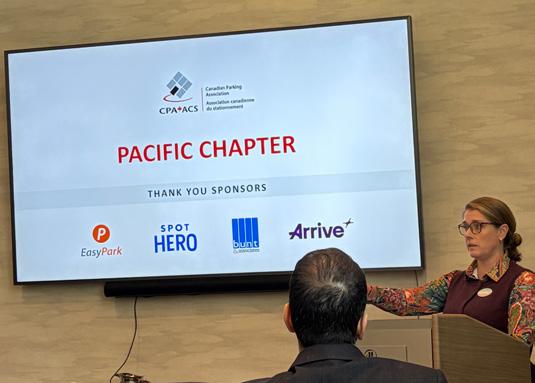
Our 2026 Calgary Chapter Event kicked off on April 1 with a presentation on the 2025 Residential Parking Phone Survey from Mark Stout of The City of Calgary. Several interesting findings were shared, including that 33% of residents park their vehicles on the street, but only half of them do so because they don’t have enough parking at their home. 18% of residents who park on-street do so because they are using their parking for storage or something else. Residents also indicated that lower costs of housing were more important than availability of parking. We had a good mix and mingle with around 30 members in attendance. Thank you to Bunt & Associates for sponsoring this wonderful event.
APRIL 16TH
Pacific Chapter
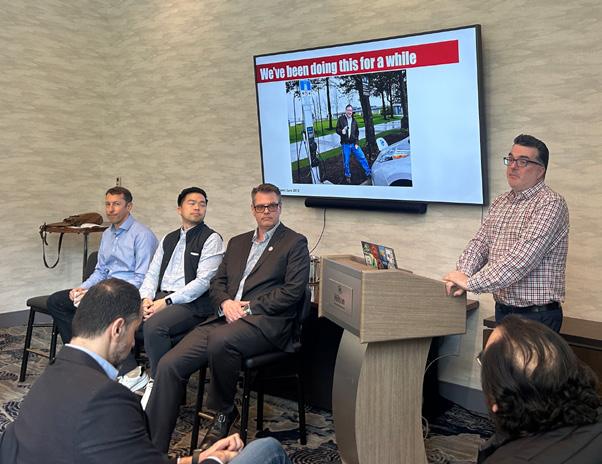
The recent Pacific chapter event brought together a dynamic panel of EV charging experts for an engaging discussion on the evolving relationship between parking, electrification, and mobility. Presented to a full house of industry leaders, operators, municipalities, and technology partners, the session delivered valuable insights into charging infrastructure, user expectations, policy challenges, and the future of curb and parking management. The thoughtful Q&A session further highlighted how mobility solutions are becoming just as important as traditional parking operations, reinforcing the industry’s rapid transformation. The event also served as an excellent segue into the association’s evolution toward the Canadian Parking and Mobility Association, reflecting a broader and more futurefocused vision for the industry.
Time: 4:00 – 6:00 pm
In-person Format: Cocktail, networking Registration: LINK
Parking Industry Consolidation: Why It’s Good News for Smaller Parking Tech Companies
BY HEATHER BLACK
If you’ve been watching the parking technology space lately, you’ve probably noticed something happening. The industry is consolidating.
In just the past year we’ve seen several major moves: Uber acquiring SpotHero, bringing parking reservations directly into the Uber app.
• Arrive acquiring Passport, combining payments, enforcement technology, and curb-management tools under one platform.
• EasyPark Group acquiring ParkMobile, expanding one of the largest global parking networks.
• EasyPark also acquiring Flowbird Group, bringing hardware, meters, and payment infrastructure into the same ecosystem.
At first glance, this looks like a familiar story. Big companies are getting bigger. But in parking, the reality is a little more interesting. And for smaller companies (even startups) this consolidation may be very good news.
Parking Is Becoming Part of a Larger Mobility
Ecosystem
For decades, parking was treated as a standalone industry. Meters. Garages. Enforcement. Permits. But transportation is changing, and parking is increasingly becoming part of a much larger mobility ecosystem.
• Ride-hailing platforms want parking.
• Navigation apps want parking.
• Cities want integrated curb management.
• EV networks want charging tied to parking.
That’s why companies like Uber are expanding into parking. When parking becomes integrated into larger mobility platforms, it stops being just a real-estate problem and starts becoming infrastructure for movement.
More often, what emerges is a layered system. Large platforms provide distribution and scale. Smaller companies provide specialized innovation. And the two connect through integrations and partnerships.
The Giants Want Distribution. Smaller Companies Build the Tools.
Large platforms bring two things smaller companies often don’t have:
1. Massive user bases
2. Global distribution
But they often don’t move quickly when it comes to solving specific operational problems. And that’s where smaller companies thrive.
Many of the most meaningful improvements in parking operations are happening at the ground level:
• better enforcement tools
• smarter pricing models
• automated validations
• real-time operational visibility
These are the kinds of tools operators use every day to run their facilities more efficiently. The large mobility platforms aren’t always the ones building them. They’re the ones looking for them.
Operators Are Done with Fragmented Systems
There’s another reason consolidation is accelerating. Operators themselves are demanding better systems.
For years, many parking operations have been held together by a patchwork of tools:
• payment apps
• enforcement software
• validation systems hardware vendors
• reporting platforms
Often none of them talk to each other. Large platforms are trying to solve this by building bigger ecosystems. But operators are increasingly looking for something slightly different: flexible systems that connect everything without locking them into one vendor. That’s where a lot of the most interesting innovations are happening right now.
The Future Isn’t One Giant Platform
It’s easy to assume consolidation means the industry will end up with one or two dominant platforms controlling everything. But that’s rarely how technology ecosystems evolve. More often, what emerges is a layered system. Large platforms provide distribution and scale. Smaller companies provide specialized innovation. And the two connect through integrations and partnerships.
In parking, that innovation layer is where some of the most interesting work is happening right now - from AI-driven enforcement tools to smarter validation systems to unified analytics that finally make sense of all the data operators are collecting.
Consolidation Doesn’t Kill Innovation, It Creates Demand for It
When large companies acquire parking platforms, they aren’t trying to build every tool internally. They build ecosystems, and ecosystems need specialized solutions.
That creates room for smaller companies to move faster, solve specific operational problems, and integrate with the larger networks forming around them.
In other words, the big platforms are expanding the map, and the smaller innovators are building the tools that actually make the system work.
And that’s where a lot of the next generation of parking technology will come from.
For companies focused on operational technology (enforcement intelligence, validation systems, pricing tools, and unified analytics) this shift is particularly interesting.
As mobility platforms grow, operators still need flexible tools that work across partners, apps, and systems. The companies that succeed will likely be the ones that help operators connect those pieces without forcing them into a single closed ecosystem.
And that’s exactly where the next wave of innovation in parking is happening. n
ABOUT THE AUTHOR
If you'd like to learn more about what we're building at Exige Parking Systems, Inc. to support that future, feel free to connect with Heather@exige.io
A New More Affordable Approach to Adding EV Charging Capacity
BY CHRIS MCKENTY
BY CHRIS SCHEPPMANN
As electric vehicle adoption continues to accelerate across Canada, parking owners and operators are confronting a familiar but increasingly urgent question: how to expand charging infrastructure in a way that aligns with both operational realities and financial constraints.
For Canadian parking facilities, this challenge carries additional layers of complexity. Climate, geography, and infrastructure all play a role. Cold weather can affect battery performance and increase demand for reliable charging access. Many facilities are spread across large campuses or decentralized urban environments. And in some regions, electrical infrastructure is either constrained or costly to upgrade. At the same time, federal and provincial policies are pushing toward higher EV adoption rates, creating a clear expectation that parking facilities will evolve to support electrification.
What makes the situation more nuanced is where charging demand is emerging. While early EV infrastructure investments often focused on high-turnover locations, much of today’s demand is concentrated in long-dwell environments. Airports, university campuses, healthcare networks, government complexes, transit park-and-ride facilities, and commercial office developments all share a common trait: vehicles remain parked for extended periods, often measured in hours or days rather than minutes.
Historically, expanding EV charging capacity in large parking facilities has followed a predictable, but expensive, path. Operators have relied on new electrical service, panel upgrades, trenching, and coordination with local utilities to deliver the power required for traditional charging systems. While this approach can support
high-powered charging, it often comes with significant drawbacks. Capital costs can escalate quickly. Construction timelines can stretch over months or even years. And in active facilities, particularly airports or hospitals, construction can disrupt daily operations and create logistical challenges for both staff and customers.
In Canada, these challenges are often amplified. Construction seasons can be shortened by weather conditions. Utility coordination can take longer in areas with limited grid capacity. And costs associated with labor and materials can be higher, particularly in remote or rapidly growing areas. As a result, many parking owners and operators have taken a measured approach, installing small clusters of chargers in premium or highly visible areas while deferring broader deployment.
While understandable, this strategy creates its own limitations. It concentrates charging access in a limited number of spaces, often leading to underutilization in some areas and unmet demand in others. More importantly, it doesn’t scale in a way that prepares facilities for the widespread adoption of EVs that is expected over the coming decade.
A New Approach
A different approach that optimizes existing assets is now gaining traction. Over the past decade or two, most parking facilities across Canada have completed LED lighting retrofits. These upgrades were driven by energy efficiency goals, sustainability mandates, and incentive programs offered by utilities and government agencies. By replacing traditional lighting with LED systems, facilities significantly reduced their energy consumption while improving illumination. In many cases, this created unused electrical capacity within existing lighting circuits that remain untapped.
Additionally, parkades across Canada have another hidden EV charging asset in their widespread 120V block heater infrastructure, with outlets located exactly where vehicles dwell for days at a time. When paired with smart 120V chargers, they can be transformed into a scalable, low-cost charging solution.
All of this unused capacity represents a meaningful opportunity for parking operators. By leveraging available power from lighting and block heater infrastructure, facilities can begin to deploy EV charging in a more distributed and cost-effective manner. Instead of concentrating chargers in a single location that requires significant electrical upgrades, operators can extend charging access across a broader portion of the facility. This distributed model aligns more naturally with how vehicles are parked, particularly in large garages or surface lots where demand is spread out rather than centralized.
When combined with intelligent load management, this approach becomes even more powerful. Advanced software can dynamically allocate available power across multiple charging points, adjusting in real time based on demand, dwell time, and system capacity. Rather than delivering high power to a small number of vehicles, the system prioritizes providing consistent, lower-power charging to a larger number of users.
This reflects a more practical understanding of driver’s behavior in long-dwell environments. A traveler leaving a vehicle at an airport for several days doesn’t need rapid charging. A commuter parking for a full workday has hours to recharge. A patient or visitor at a healthcare facility may be parked for an extended period. In each of these scenarios, access to charging is more important than speed. The ability to plug in and receive a reliable charge over time meets the need without requiring high-powered infrastructure.
For Canadian owners and operators, this model offers several important advantages. First, it reduces the need for major construction. By utilizing existing electrical infrastructure, facilities can avoid trenching, panel upgrades, and other disruptive work. This is particularly valuable in regions where weather limits construction windows or where facilities must remain fully operational year-round.
Second, it allows for more flexible and scalable deployment. Operators can begin with a smaller number of charging points and expand incrementally as demand grows. This reduces upfront capital investment and aligns spending more closely with actual usage patterns. It also enables operators to adapt as technology evolves, rather than committing to a fixed infrastructure plan that may become outdated.
Third, it minimizes reliance on utility upgrades. In many parts of Canada, securing additional electrical capacity can be a lengthy and uncertain process. By working within existing capacity, operators can move more quickly and maintain greater control over project timelines.
Fourth, it supports a more equitable distribution of charging access. Rather than limiting charging to a handful of premium spaces, a distributed approach allows more users to benefit from the infrastructure. This can improve customer satisfaction, support sustainability goals, and enhance the overall value of the parking asset.
Integration is Key
Of course, deploying EV charging at scale is not just a technical challenge. It’s also an operational one. As charging becomes an integral part of the parking experience, it must be managed alongside other core functions such as payment, permitting, and enforcement. Canadian operators are increasingly adopting integrated platforms that bring these elements together, allowing for a more seamless and efficient operation.
Integration enables a range of benefits. Payment systems can be unified, allowing users to pay for parking and charging in a single transaction. Data can be centralized, providing operators with insights into usage patterns, revenue, and system performance. Enforcement can be streamlined, ensuring that charging spaces are used appropriately. And customer experience can be enhanced, with clearer communication and more consistent service delivery.
This integration is particularly important in complex environments like airports, campuses, and healthcare networks, where multiple user groups and parking programs must be managed simultaneously. By incorporating EV charging into the broader parking ecosystem, operators can avoid creating silos and ensure that charging supports, rather than complicates, overall operations.
The conversation around EV charging in Canada is evolving. The question is no longer simply how to add more chargers, but how to do so in a way that is economically sustainable, operationally practical, and aligned with how parking facilities are actually used. >
For many operators, the answer lies in rethinking the problem. Instead of viewing EV charging as a capital-intensive expansion project, it can be approached as an opportunity to unlock additional value from existing infrastructure. By leveraging unused electrical capacity, adopting distributed deployment models, and prioritizing access over peak speed, parking organizations can begin to scale charging in a way that meets current needs while preparing for future demand.
As EV adoption continues to grow and expectations shift, Canadian parking owners and operators are well positioned to lead this transition. With a focus on practicality, efficiency, and integration, they can deliver charging solutions that not only support electrification but also enhance the performance and resilience of their parking assets.
In a landscape defined by change, this approach offers a clear and adaptable path forward that reflects both the realities of the Canadian market and the opportunities that lie ahead. n
ABOUT THE AUTHOR
Chris McKenty is Senior Vice President of Zevtron, an innovative EV charging company that has introduced numerous EV charging breakthroughs, including pedestal-based charging permitting parking owners and operators to power EV charging from lighting fixtures. He can be reached at cmckenty@zevtron.com.
Discover Montréal
Join us in Montréal for the 2026 Canadian Parking & Mobility Conference & Trade Show and discover the city’s energy, culture, and character. From historic cobblestone streets and iconic architecture to scenic parks, gardens, and world-class art, Montréal offers the perfect blend of inspiration, connection, and experience.
Explore everything this vibrant city has to offer — from the beauty of Mount Royal and the Montréal Botanical Garden to the charm of Old Montréal and the unforgettable Notre-Dame Basilica.
Technology that Turns Parking into a Strategic Asset
BY EBBY ZACHARIAH
Building and complex owners often treat parking as an operational burden that must be managed rather than an opportunity to be maximized. Yet in today’s competitive residential and mixed-use markets, parking is one of the most influential factors shaping both tenant satisfaction and long-term asset value. Handled poorly, parking creates friction, complaints, and lost revenue. Handled strategically, it can materially increase property value, unlock new income streams, and differentiate a building, especially in crowded urban markets like Toronto, Vancouver, Calgary, and Montréal.
Across Canada, forward-looking owners are transforming parking from a static amenity into a dynamic, technologyenabled asset.
The Real Financial Impact of Parking
Parking isn’t just a convenience that’s nice to provide for tenants. It’s a measurable contributor to property value and revenue. Across major Canadian markets, individual parking spaces routinely command significant premiums. In Toronto and Vancouver, condominium parking spaces commonly sell for between $50,000 and $100,000 per stall, with premium downtown locations, sometimes exceeding even that range. In rental properties, structured parking often adds $150 to $300 per month per space in rent, depending on location and demand.
From a valuation perspective, this translates directly into asset value. A simple example illustrates the impact. In a 200-unit residential building where 150 parking spaces are leased at an average of $200 per month, annual parking revenue reaches $360,000. Capitalized at a 5 percent cap rate, that revenue alone contributes more than $7 million to the property’s value.
Even more important is parking’s indirect effect on leasing performance and tenant retention. Canadian market studies and leasing data consistently show that parking availability is a deciding factor for most renters in suburban and urban-edge markets. Units with dedicated parking lease faster and at higher rents, and tenant retention improves when parking is reliable, secure, and easy to use
In practical terms, parking supports both sides of the value equation. It increases income while reducing turnover and vacancy risk.
Why Parking Drives Value
The reason parking has such a strong impact on property value is straightforward. It sits at the intersection of convenience, lifestyle, and daily experience. In Canada’s climate, this is even more pronounced. Often harsh winter conditions elevate the importance of secure, accessible parking. Heated or enclosed parking isn’t just a perk. It is often viewed as essential. For many tenants, the availability of reliable parking can be the deciding factor between two otherwise comparable properties.
Parking also plays a growing role in supporting emerging mobility trends. Electric vehicle adoption is accelerating across Canada, and buildings that provide EV-ready or EV-enabled parking are increasingly seen as future-proofed assets. The same is true for properties that can accommodate flexible parking arrangements for hybrid workers, shared vehicles, and short-term guests.
All of this reinforces the simple reality that parking isn’t merely infrastructure. It is part of the overall living experience and a key driver of perceived value.
Despite its importance, building and complex owners have often found parking to be difficult to manage. In large part, that’s because many buildings serve multiple user groups simultaneously. Residents may have assigned spaces tied to their leases. Others may pay separately for parking. Visitors require temporary access. Retail or mixed-use components introduce short-term parking needs with entirely different pricing structures. Historically, managing these different use cases required manual processes, spreadsheets, paper permits, and physical enforcement. The result has been inefficiency, limited flexibility, and missed revenue opportunities. Owners have often had to choose between control and convenience. Tight control created friction for tenants. Loose systems led to abuse, underutilization, or lost income.
That tradeoff is no longer necessary.
Modern parking management platforms have fundamentally changed how parking can be operated. Instead of relying on manual processes, owners can now automate parking operations while tailoring them to the specific needs of each user group. At the core of these systems is software that creates individualized parking profiles for every user. A resident’s lease can define exactly where and when they can park, whether they have access to guest passes, and how those passes are used. A visitor can be granted temporary access with defined time limits and pricing. Retail or commercial users can be managed under entirely different rules, all within the same system.
This level of precision allows owners to align parking operations with broader asset strategies. Parking isn’t a one-size-fits-all amenity. It becomes a configurable system that adapts to the building’s mix of tenants and uses.
The Role of Automation and Accounting
One of the most important, and often overlooked, advancements is the integration of accounting directly into parking operations. While many parking systems can collect fees and generate basic reports, the most sophisticated platforms go much further — automatically mapping transactions to the appropriate general ledger accounts, allocating revenue across ownership structures, tenants, or parking programs, and producing accounting-ready reports. For building owners managing multiple properties, mixeduse developments, or complex ownership structures, this level of financial detail and automation can significantly reduce manual work, improve reporting accuracy, and accelerate the month-end close process.
Parking revenue can be tracked at a granular level, whether it comes from monthly permits, guest parking, or short-term use. This data can be fed directly into financial systems, reducing manual reconciliation and improving transparency. The result is not just operational efficiency, but better financial control and more accurate valuation of parking as an income-generating asset.
While software is the foundation, hardware plays a critical role in delivering a seamless user experience. License plate recognition technology has become the standard for modern parking environments. Cameras at entry and exit points automatically identify vehicles, associate them with user accounts, and track parking activity in real time.
For residents, this eliminates the need for key fobs, access cards, or physical permits. For visitors, it removes the confusion often associated with temporary parking. Entry and exit become frictionless, while enforcement becomes automatic and accurate. From an operational standpoint, this reduces the need for on-site staffing and minimizes disputes. And from a tenant perspective, it creates a smoother, more intuitive experience.
The technology has also transformed guest parking, which has long been one of the most challenging aspects of residential parking management. Traditional approaches have relied on paper passes or informal systems that are difficult to monitor and nearly impossible to optimize. These methods limit flexibility and often result in underutilized spaces or unauthorized use.
Now, owners can define clear rules for guest parking, including how many passes a resident can issue, when those passes can be used, and how long a guest can stay. These rules can be adjusted based on demand, time of day, or specific building policies. More importantly, guest parking can become a revenuegenerating component of the property. Fees can be automatically applied and collected, then integrated into the building’s financial reporting. This turns what was once an operational headache into a controlled, monetized service that enhances both convenience and profitability.
Unlocking the Full Potential of Parking
For building owners, the implications are significant. Parking is no longer just a cost center or a background function. It is a strategic asset that can be optimized to increase revenue, improve tenant satisfaction, and strengthen property value. The combination of strong market demand, measurable revenue contribution, and modern technology creates a clear opportunity. Buildings that embrace this approach can differentiate themselves in competitive markets while capturing value that might otherwise be lost.
The broader trend in real estate throughout Canada is toward smarter, more integrated assets. Parking is a critical part of that evolution. When managed effectively, it supports leasing performance, enhances the resident experience, and contributes directly to the bottom line.
Parking doesn’t have to be a headache. With the right approach, it can be one of the most powerful tools building owners have to maximize the performance of their properties. n
ABOUT THE AUTHOR:
Ebby
Zachariah is founder and CEO of Parking Base, the leading provider of cloud-based parking management solutions. He can be reached at ebby@ parkingbase.com.
Partner with the CPA
Partner with the CPA to provide opportunities for growth in the coming years, bring more programming and education to CPA members and take your place as a leader in Canadian parking and mobility innovation.
Champion, Principle and Associate levels are available, and each comes with many valuable benefits for a single annual fee.
Canadian Parking Association | 42+ years of innovation
DISCOVER THE DYNAMIC WORLD OF PARKING AND MOBILITY
ACCESS THE PEOPLE WHO ARE REIMAGINING HOW COMMUNITIES THRIVE AND URBAN CENTRES ARE TRANSFORMING.