The contents of this publication may not be reproduced by any means in whole or in part, without prior written consent from the publisher
Article courtesy of Means & Ways - https://www.meansandways.ca/ May 2026
Means & Ways recently reached out to some of the country’s leading thinkers and business leaders for their takes on how to make Canada resilient during this fragile moment for the Canadian economy.
They asked: What is Canada’s single biggest vulnerability when it comes to the economy — and how do we fix it?
Here is the response from Kyle Larkin, President & CEO, Canadian Meat Council
Due to the ease of access, Canadians often overlook one of the most fundamental pieces to our national sovereignty: the ability to feed our population. Food security, especially in today’s geopolitical world, is paramount. It underpins productivity, economic activity, and social stability — people need to eat before they can work or spend. In my view, Canada’s greatest vulnerability is treating food as just another weekly expense, rather than recognizing it as a strategic, nation-building asset.
The Canadian agriculture and agri-food sector accounts for 1 in 9 jobs, and 7% of Canada’s GDP. It contributes more to the economy than the automotive, aerospace and steel sectors combined. Canada is also the world’s fifth-largest exporter of agricultural and agri-food products. This sector is a powerhouse — feeding not just our families but also driving our productivity and underpinning our broader economy.
Meat processing is one of Canada’s largest manufacturing employers, generating $43.8 billion in sales — about 25% of all Canadian food processing — and supports more than 300,000 direct and indirect jobs across the country. In the beef sector alone, each job creates another 3.9 jobs elsewhere, and every $1 of income generates $6.22 in broader economic activity.
We need to move beyond the “agriculture” label and treat this sector with the same urgency as other nation-building industries — giving it “major project” status and prioritizing value-added production at home.
Feeding Canadians is a matter of sovereignty. Investing in domestic processing keeps high-paying jobs and profits at home — and creates a more resilient economy while strengthening its foundation.
2026 FCC FOOD AND BEVERAGE REPORT: CANADA’S MEAT MANUFACTURING OUTLOOK
FCC’s 2026 Food & Beverage Report points to another year where higher prices lift revenues, even as inflationadjusted volumes retreat forcing processors to win on mix, margin discipline, and cross-border readiness.
Canada’s meat product manufacturing sector is often described in practical terms of plants, lines, shifts, and cold rooms but its outlook for 2026 is being shaped by forces that start far upstream and ripple all the way to the checkout. In its 2026 Food & Beverage Report, Farm Credit Canada (FCC) frames the coming year as a balancing act between tight supplies and shifting demand, in an industry that spans nearly 1,000 businesses transforming livestock and poultry into fresh cuts, processed meats, and rendered products.
The topline story is counterintuitive but increasingly familiar: dollars up, volumes down. FCC notes that meat manufacturing sales continued to climb in 2025— marking the 12th consecutive year of growth—and reached $46.5 billion. Yet those gains came from higher prices rather than more consumption. Looking ahead, FCC forecasts sales up 1.6% in 2026, while inflationadjusted volumes fall 5.6%, extending the sector’s volume contraction to a fourth consecutive year.
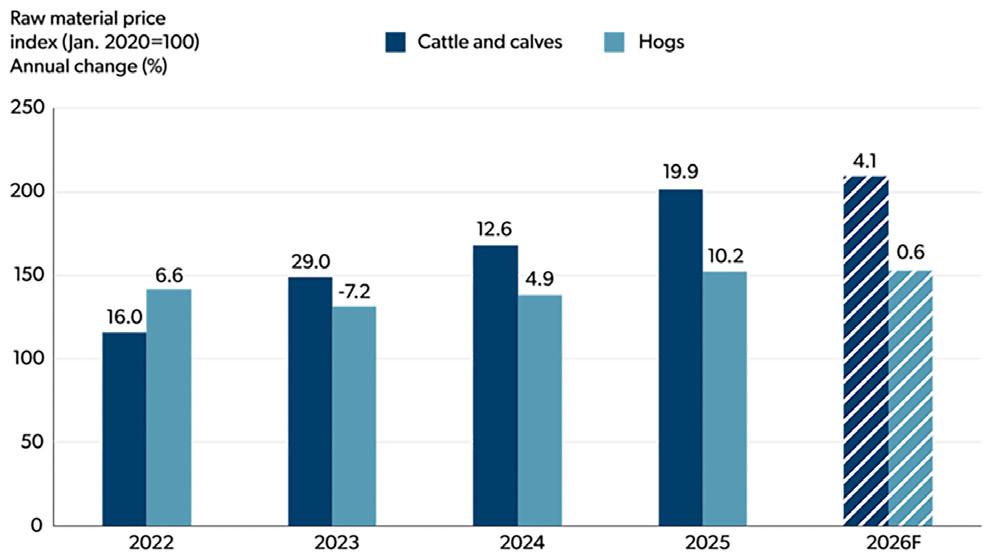
To understand the split, start with supply. FCC points to tight availability of live animals as a primary driver of higher prices, with disruptions such as avian influenza and persistently small cattle herds squeezing supply from the beginning of the chain and pushing costs upward. Those constraints are not quick to unwind. For processors, that means 2026 may again be a year where price, not throughput, does the heavy lifting in reported sales.
Demand adds the second half of the equation. FCC reports that volumes (sales adjusted for inflation) fell 4.6% in 2025 after a 0.3% decline in 2024. While longterm dietary shifts toward less meat play a role, the report emphasizes affordability as the bigger force in 2025: meat prices led food inflation, prompting households to rethink purchase decisions and, in many cases, substitute toward lower-cost proteins. Inside the category, that pressure can change the mix, more ground, fewer premium cuts, smaller pack sizes, private label gains, and sharper sensitivity to promotions, all outcomes that can preserve revenue even as unit volumes soften.
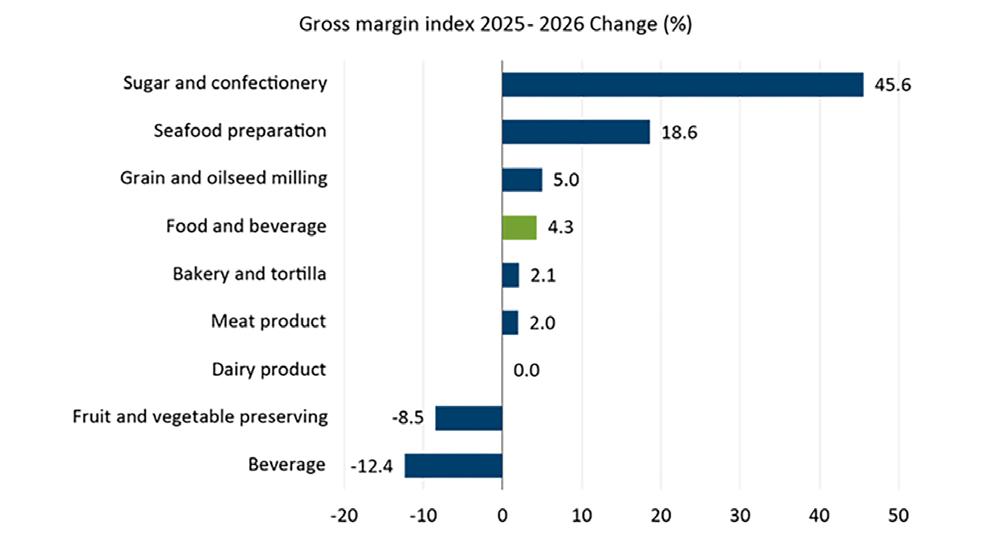
For manufacturers, the margin picture is where strategy meets execution. FCC suggests that easing raw material cost pressure can help gross margins improve, but in a lower-volume environment, the basics matter more, not less. Plants that protect yields, stabilize labour, and reduce waste can translate modest cost relief into meaningful profitability. The opportunities are rarely glamorous: less rework, tighter trim management, better uptime, fewer changeovers, disciplined coldchain handling, and inventory practices that limit write-offs. When volume growth is elusive, operational excellence becomes the growth story.
That focus is sharpened by the sector’s structure. FCC notes that processors are mainly small and midsized, with activity concentrated in Ontario, Quebec, and Alberta. And because North American supply chains are deeply integrated, Canadian processors are tightly connected to U.S. markets in both directions, an advantage in scale and access, but also a source of exposure when trade relationships become uncertain or compliance requirements change.
Exports mirror the same “value up, volume down” pattern. FCC notes that export values increased while volumes fell in 2025, reflecting both demand-side substitution and supply-side limits. Tight domestic supplies constrained what was available to ship, and China’s 25% tariff on Canadian pork further weighed on outbound volumes. Against that backdrop, the industry heads into 2026 facing slow production cycles for some animals, continued uncertainty in trading relationships, and consumers who are still cautious with discretionary spending.
In the marketplace, “shifting demand” is less a single consumer trend than a new operating tempo. Promotion-seeking and brand switching are more pronounced; shoppers trade down across proteins, cuts, and portion sizes; and expectations keep rising for convenience and clear product information. For manufacturers, this puts pressure on forecasting and portfolio design: the winners are often the companies that can adjust pack formats quickly, manage price points without eroding quality signals, and keep traceability documentation aligned with customer needs.
Regulation and labelling add another layer. FCC flags new U.S. voluntary country-of-origin labelling (VCOOL) rules as a potential complication for cross-border supply chains. In 2026, the U.S. Department of Agriculture’s Food Safety and Inspection Service (FSIS) tightened guidance for voluntary “Product of USA” claims for meat and poultry, raising the bar for when companies can use those origin statements.
For Canadian exporters, and for firms that move animals, ingredients, or finished goods across the border, “voluntary” can still become operationally mandatory if major customers adopt stricter origin expectations. The practical implications can include more documentation, segregation of product flows, and clearer governance over origin claims in marketing and packaging.
The theme running through FCC’s outlook is not simply “higher costs” or “weaker demand,” but a more nuanced challenge: growth that shows up in revenue, not in output. In that environment, strategy tends to converge on a few essentials, product mix that matches tighter household budgets, operations that protect yields and labour productivity, and commercial readiness for shifting customer requirements in an integrated North American market. If 2026 delivers another year of rising prices and shrinking volumes, the most resilient processors will be the ones that treat margin improvement as a system—not a windfall.
Source: Farm Credit Canada (FCC), Meat product manufacturing: 2026 Food & Beverage Report. For the full report and sector pages, visit https://www.fcc-fac. ca/
WHAT BUYERS LOOK FOR NOW AND WHY FOOD SAFETY EXCELLENCE SIGNALS A SUPPLIER YOU CAN TRUST
For today’s food buyers, safety is no longer an assumed baseline, it is a sourcing criterion. Retailers, foodservice operators, and institutional purchasers face increasing scrutiny from consumers, regulators, and their own risk teams. In this environment, buyers are looking for more than compliant suppliers, they are looking for partners who can demonstrate food safety leadership, consistency, and transparency across their operations.
Food safety has become a core element of brand trust. A single incident can disrupt supply chains, damage reputations, and erode consumer confidence. As a result, buyers are paying closer attention to how suppliers approach food safety, not just whether they meet minimum requirements, but how clearly they can explain and validate their systems.
BEYOND COMPLIANCE: WHAT BUYERS ARE ASKING SUPPLIERS
Many processors meet regulatory standards. Far fewer can effectively communicate what that compliance looks like in practice.
Buyers increasingly ask pointed questions: How is risk managed day-to-day? How is food safety culture reinforced on the floor? How does leadership stay involved?
THESE CONVERSATIONS GO WELL BEYOND A CHECKBOX AUDIT MENTALITY
Retail and chain buyers often request detailed explanations of food safety systems during onboarding and review processes. Institutional buyers frequently require documented proof of compliance, third-party validation, or structured continuous improvement efforts before contracts are finalized. When suppliers struggle to clearly present this information, it introduces uncertainty even when products and pricing are competitive.
Continued on page 10
In a crowded supplier field, silence can be a liability. Websites that showcase products but say little about safety culture, or supplier conversations that treat food safety as an assumed baseline, miss an opportunity to build buyer confidence.
PARTICIPATION AS PROOF, NOT JUST PROMISE
One of the strongest signals buyers look for is participation in recognized structured food safety programs. Engagement in an established framework focused on continuous improvement demonstrates that food safety is embedded into business operations not addressed only at audit time.
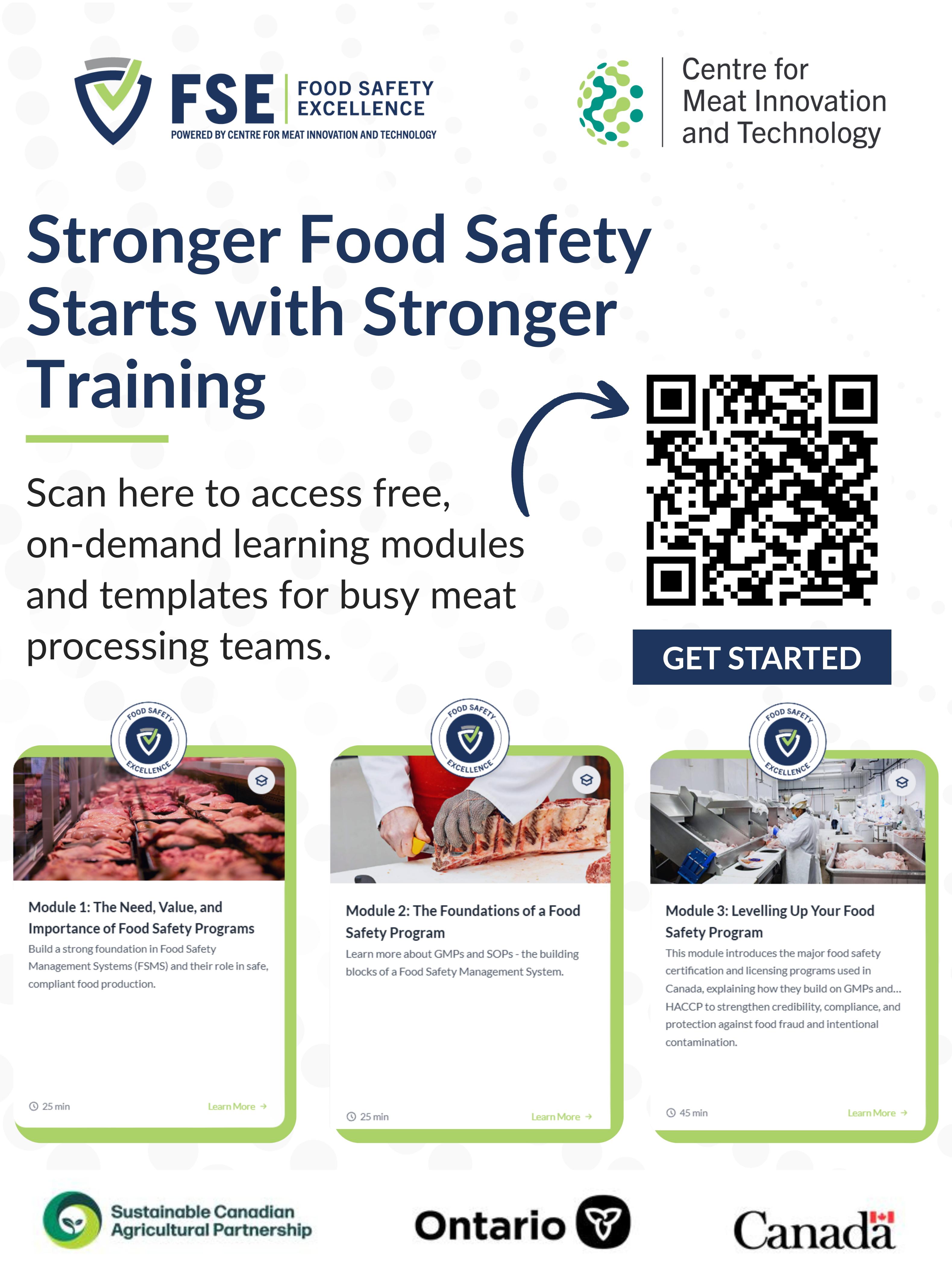
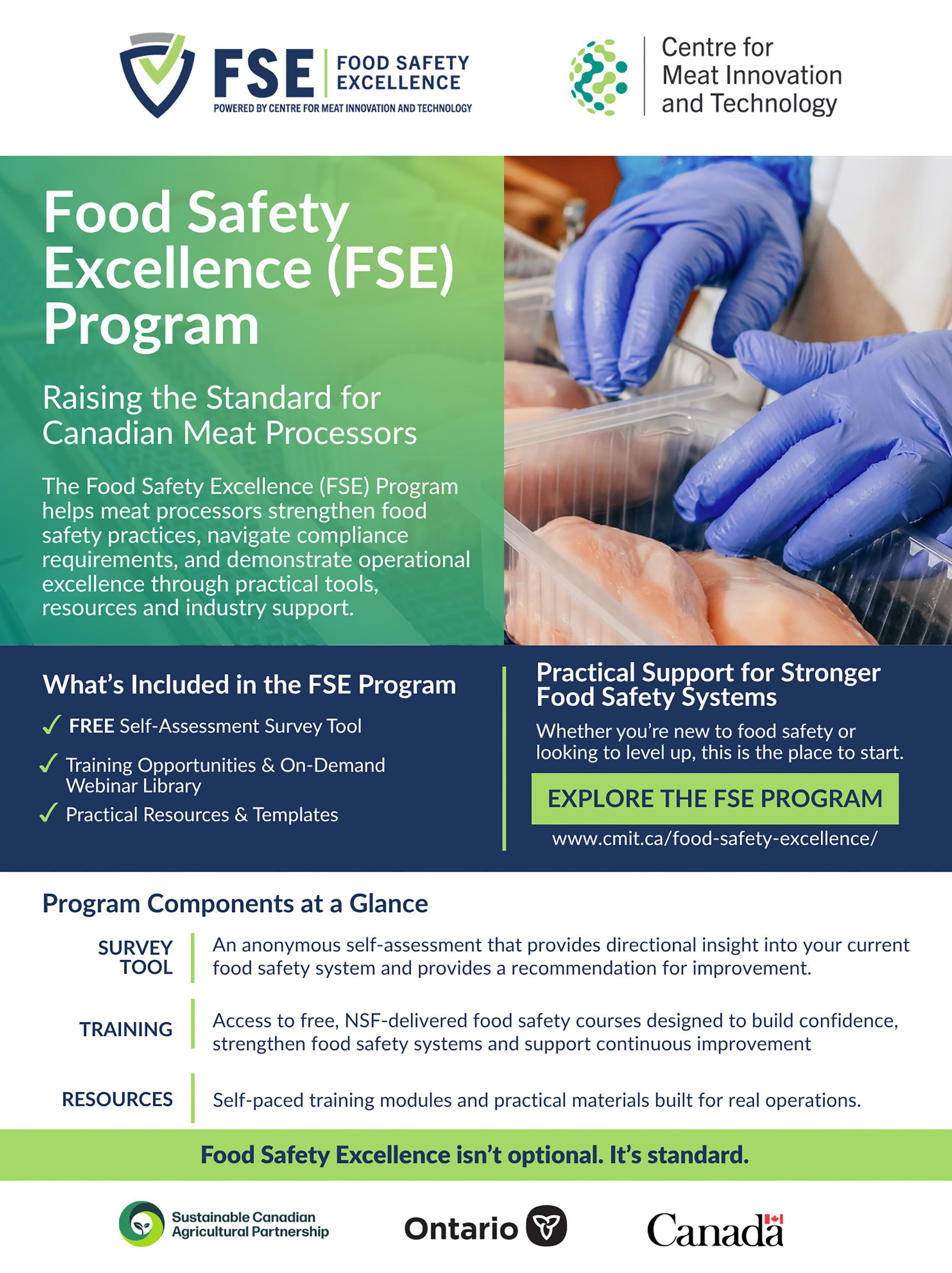
The Food Safety Excellence Program was developed in partnership with the Centre for Meat Innovation and Technology to support this need. It provides processors with an anonymous survey tool that’s designed to assess their current food safety system and provide a clear step forward for improvement.
TRANSPARENCY BUILDS CONFIDENCE ACROSS THE CHAIN
Consumer expectations continue to influence buyer priorities. Shoppers increasingly care about where their food comes from, how it is produced, and whether companies are transparent about safety and quality. These expectations flow upstream, shaping how buyers evaluate supplier credibility.
Suppliers that openly demonstrate their commitment to food safety through structured programs, clear communication, and continuous improvement help buyers protect their own brands. Participation becomes a form of assurance that extends beyond formal certifications, reinforcing trust through openness and accountability.
WHY FOOD SAFETY EXCELLENCE MATTERS INTERNALLY AND TO BUYERS
From a buyer perspective, internal culture is not an abstract concept. Strong food safety culture correlates with consistency, reliability, and fewer disruptions. Suppliers that invest in food safety often see higher employee engagement and stronger operational discipline, which directly affects product quality and ontime delivery.
In competitive labor markets, processors that prioritize food safety culture are also better positioned to attract and retain talent. For buyers, stable workforces and engaged teams reduce risk in the supply chain. Food safety programs provide external visibility into these internal strengths.
FROM QUALIFICATION TO DIFFERENTIATION
Regulatory compliance will always be essential. But in today’s sourcing environment, it is no longer the differentiator it is the starting point. Buyers increasingly favor suppliers that treat food safety as a strategic asset rather than a minimum obligation.
Food Safety Excellence Programs help processors move beyond baseline compliance by identifying gaps, strengthening systems, and providing a clear framework for improvement. For buyers, this means clearer evidence, stronger documentation, and more productive supplier conversations.
HELPING SUPPLIERS TAKE THE NEXT STEP
Many processors want to improve but are unsure where to begin. Which systems are strong? Where are the gaps? What should be prioritized first? The Food Safety Excellence Survey Tool offers a practical entry point. It is quick, anonymous, and designed to help operations assess their current state and identify your next step.
For buyers, suppliers that actively use assessment tools signal preparedness and accountability. They demonstrate that food safety is not static but continually reviewed and strengthened.
TRUST IS BUILT, NOT ASSUMED
In an industry built on trust, food safety excellence has become foundational. Buyers depend on suppliers who are willing to make their commitment visible through clear systems, transparent communication, and credible participation. When food safety excellence is made visible, it becomes more than a requirement; it becomes a signal buyers can confidently stand behind.
Take the quick and anonymous FSE Survey today: https://lvvr10axwba.typeform.com/to/ Buo0V5OV?typeform-source=www.cmit.ca
Food Safety Excellence tools and resources have been developed through funding provided by the Sustainable Canadian Agricultural Partnership (Sustainable CAP), a five-year, federal-provincial-territorial initiative.
CCA AND NCFA CALL ON GOVERNMENT TO STAND UP FOR INDUSTRY IN MERCOSUR
NEGOTIATIONS
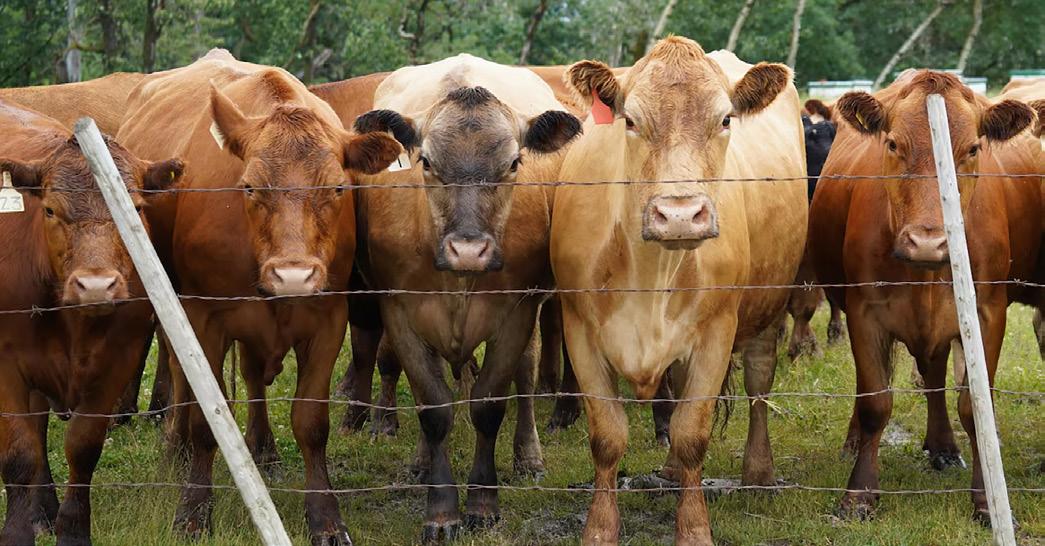
As Canada approaches the final round of Mercosur trade negotiations, Canada’s beef producers are sending a clear and united message to the federal government: do not sacrifice Canadian beef in a rushed trade deal.
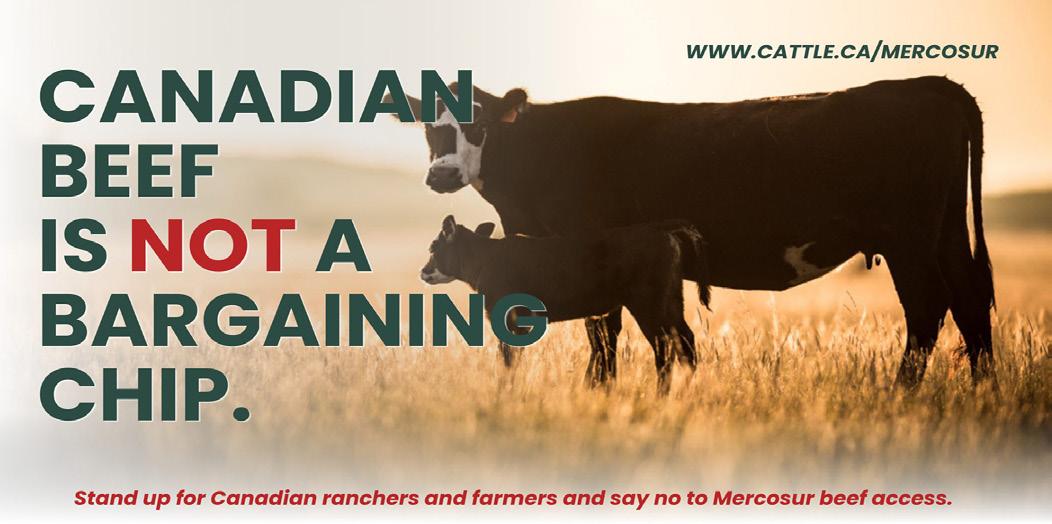
The Canadian Cattle Association (CCA) and the National Cattle Feeders’ Association (NCFA), together representing all beef producers in Canada, strongly oppose the inclusion of beef market access in a potential Mercosur agreement. The organizations are calling on the Government of Canada to stand firmly with Canadian ranchers and cattle feeders and ensure Canadian beef is not used as a bargaining chip.
“Canadian beef producers support global trade that is science-based, transparent and reciprocal,” said Tyler Fulton, President of the Canadian Cattle Association. “Canada is already one of the most exposed beef markets in the world. Adding permanent, broad-based beef access for Mercosur countries would undermine our industry at a critical time and send the wrong signal to producers who are working to rebuild the national herd.”
Canada already relies on imports for approximately 30 per cent of domestic beef consumption, significantly higher than major competitors such as the United States, the European Union, or Australia. After years of drought, rising costs, and market disruptions, Canadian producers are only now beginning to see signs of recovery.
Additional low-cost imports risk stalling herd rebuilding, reducing domestic supply, and increasing Canada’s reliance on imports—the exact opposite of what the Government of Canada is intending with increasing domestic food security.
Beyond economic exposure, beef producers have serious concerns about animal health and regulatory standards in parts of the Mercosur region.
“Protecting animal health is foundational to Canada’s beef industry and must remain an absolute priority,” said Brad Deleeuw, Chair of the National Cattle Feeders’ Association. “Including beef access from regions with a history of foot-and-mouth disease, questionable BSE reporting transparency, and inconsistent sanitary and phytosanitary compliance puts our national herd—and rural economies—at unacceptable risk. A foreign animal disease outbreak would be catastrophic.”
Canadian beef producers also caution that Mercosur beef does not compete on a level playing field. Lower production costs in the region are driven by weaker standards for animal health, labour, and environmental protection, undercutting Canadian farmers who meet some of the highest standards in the world.
While supportive of trade diversification, CCA and NCFA emphasize that diversification must be strategic and reciprocal.
“Trade diversification only works if it expands export opportunities—not if it simply increases imports,” added Fulton. “Canada’s beef sector is highly integrated with North American supply chains, and our most important trading relationship is with the United States. On the eve of a critical CUSMA (Canada-United States-Mexico Agreement) renewal, rushing into a risky Mercosur deal creates unnecessary friction and threatens our most vital export market.”
Canada’s beef sector stands ready to work constructively with the federal government to expand exports and strengthen trade relationships. However, producers are clear: responsible trade policy must protect the health of the national herd, maintain high standards, and support long-term growth at home.
“The Canadian beef sector has the potential to help propel our economy forward,” said Deleeuw. “But that requires government to work beside us—not against us. We urge negotiators to say no to Mercosur beef access and to deliver trade outcomes that truly support Canadian farmers, ranchers, and rural communities.”
Canadian beef must not be a bargaining chip.
LETTER FROM TYLER FULTON PRESIDENT, CANADIAN CATTLE ASSOCIATION
Dear fellow beef producers and supporters:
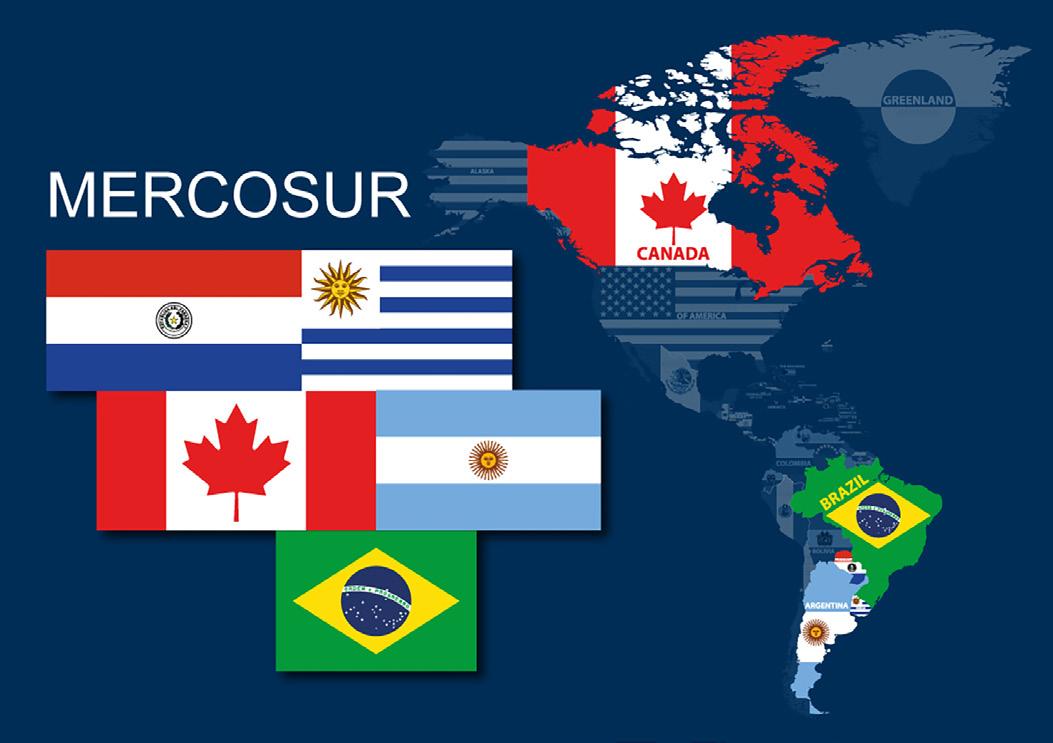
I am writing to you today because our industry is at a critical crossroads. The Government of Canada is currently looking to finalize a trade agreement with Mercosur—a bloc including some of the largest, lowestcost beef producers in the world, such as Brazil and Argentina.
Through our provincial members, the CCA represents approximately 60,000 beef producers who support more than 347,000 jobs and contribute $34.2 billion to Canada’s GDP. We have been engaging directly with Parliamentarians, but they need to hear from you.
WHY WE MUST SAY NO TO MERCOSUR BEEF ACCESS:
• Economic Threat: Mercosur beef imports have already surged by 238% between 2021 and 2025. Expanding this access further with no reciprocal benefits will undermine our domestic production and stall the rebuilding of the Canadian herd.
• Lower Standards: Our ranching families pride themselves on world-class sustainability and food safety. Mercosur beef is produced under significantly lower labour, environmental, and animal health standards. Displacing high-quality Canadian beef with low-cost imports is a loss for our environment and our food security.
• Risks to U.S. Trade: Our industry is deeply integrated with the United States. Granting Mercosur major new access could be seen as a "backdoor" to the U.S. market, potentially triggering trade actions that would jeopardize our most vital trading relationship.
TAKE ACTION NOW
Decisions made right now will impact the future of our industry and our rural communities. Canadian beef is for plates, not trade bait.
Please visit www.cattle.ca/mercosur right now. We have provided a simple form where you can enter your name and postal code to send a message to your MP in seconds.
I urge you to make your voice heard and ask your family, friends, and neighbours to do the same. We cannot let our hard work be used as a bargaining chip.
Sincerely,
Tyler Fulton President, Canadian Cattle Association
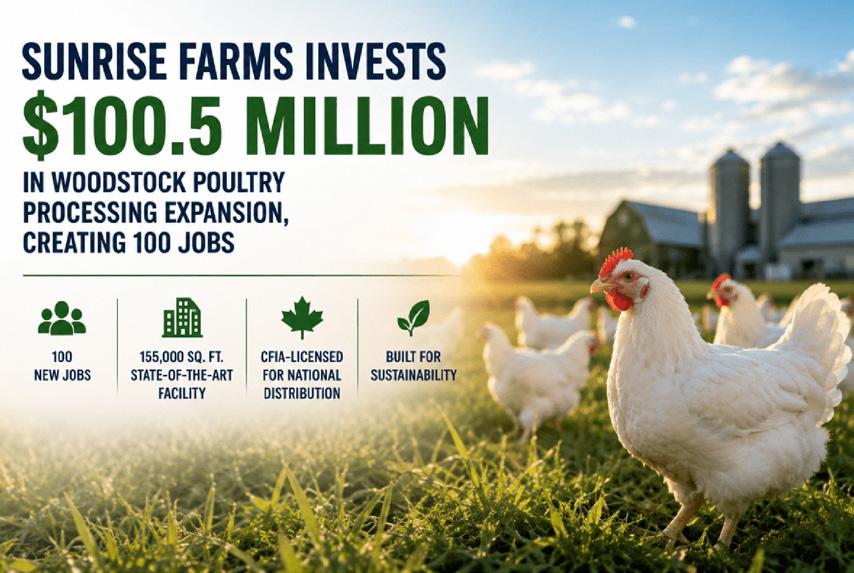
INVEST ONTARIO SUPPORTS SUNRISE FARMS MAJOR EXPANSION IN WOODSTOCK
New CFIA-licensed facility is expected to create 100 jobs, modernize poultry processing and support food security in Ontario.
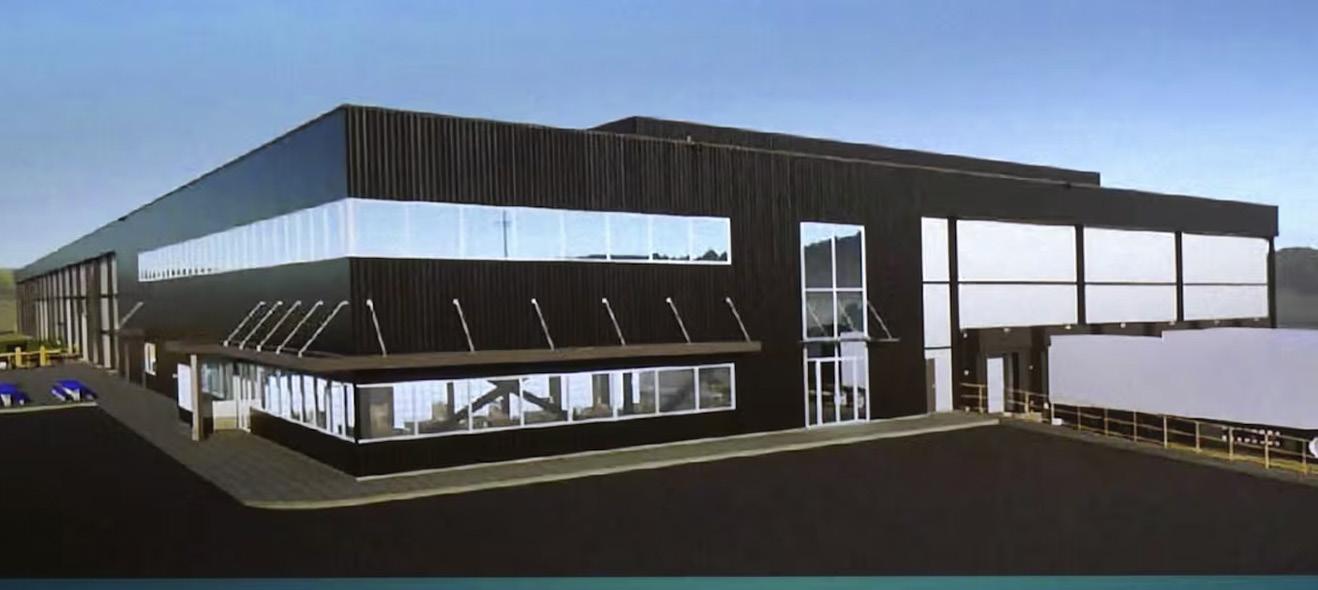
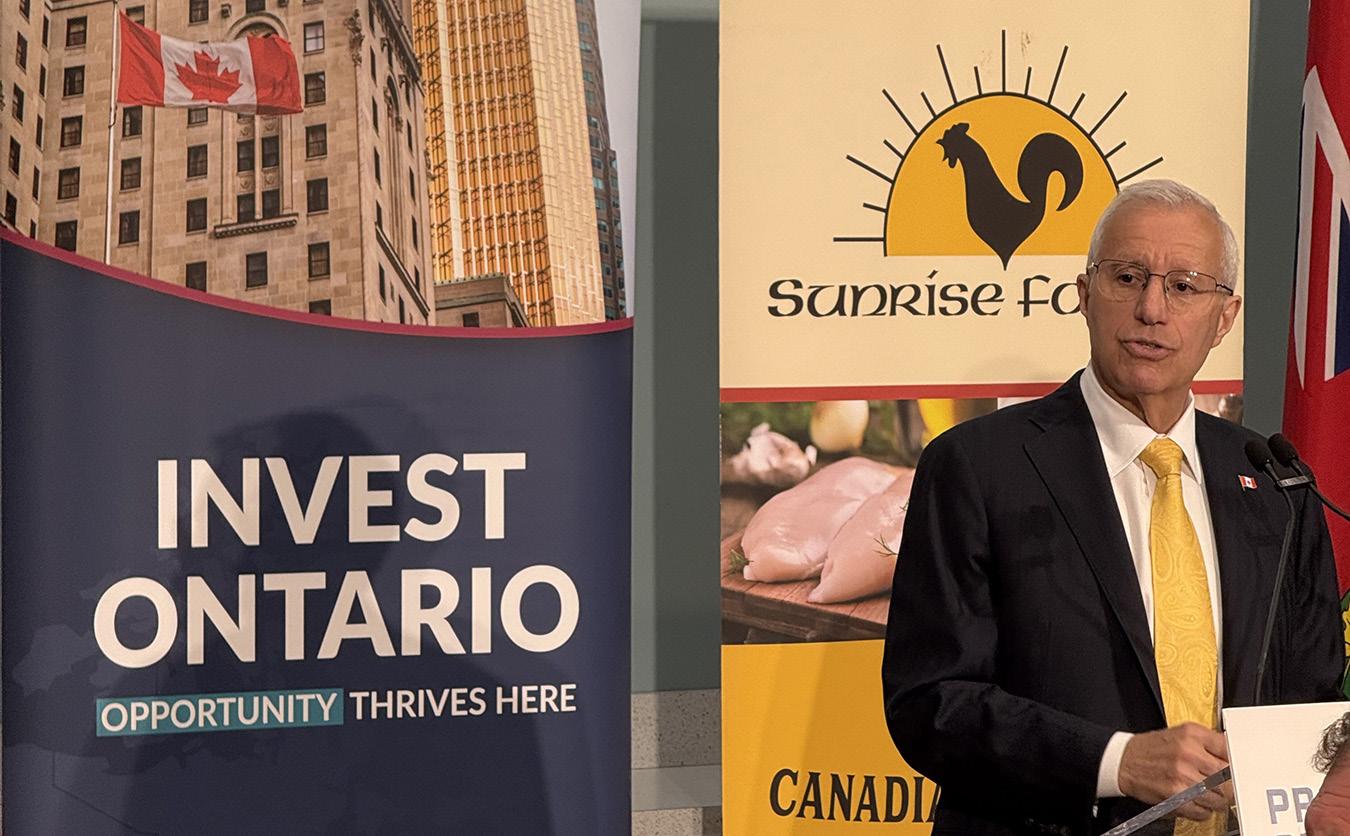
Sunrise Farms is investing $100.5 million to construct a new 155,000 square foot, state of the art poultry processing facility in Woodstock, Ontario. This major expansion is expected to increase domestic processing capacity and strengthen the sovereignty of Ontario’s agri-food supply chain.
Invest Ontario is supporting the expansion with a grant of up to $4 million from the Invest Ontario Fund, subject to reaching a definitive funding agreement. Invest Ontario has provided strategic support by helping the company navigate workforce planning and training programs, as well as by coordinating across municipal, provincial and federal governments. The investment is expected to create 100 new jobs in the region.
“Ontario’s world-class agri-food sector serves as a cornerstone of our economy, which is why our government remains committed to fostering its resilient. As demand for Ontario-made products rises, Sunrise Farms’ investment will add critical processing capacity to our domestic supply chain, creating new opportunities for Ontario workers, farmers and suppliers,” stated Vic Fedeli, Minister of Economic Development, Job Creation and Trade.
The new facility will be federally licensed by the Canadian Food Inspection Agency (CFIA) enabling expanded national distribution for its Sargent Farms branded halal certified products and strengthening the reliability of Ontario’s domestic food supply. The investment is also expected to increase procurement from Ontario farms, supporting rural economic growth and reinforcing Sunrise’s supply chain.
The Woodstock facility will be one of the most technologically advanced poultry processing facilities in Canada, with leading-edge food safety, environmental, and animal welfare processes and technologies. This advanced facility will enable Sunrise to meet growing demand for its Sargent Farms branded products while ensuring safer, more productive and sustainable operations. Designed with sustainability in mind, the facility will also incorporate features to reduce greenhouse gas emissions and water usage, aligning with Ontario’s environmental objectives and the sector’s shift toward cleaner, more efficient processing.
David Shoore, CEO, Sunrise Farms said, "We are pleased to continue our growth by expanding our operations within Ontario. This project represents the largest greenfield investment in Sunrise's history. Upon completion, the new facility will enable Sunrise to respond effectively to increasing demand for Sargent Farms branded halal certified products throughout Ontario and nationwide. This development is expected to deliver substantial economic benefits to the region and reinforce Ontario's food system."
Ontario’s established strengths in agri-food processing and its ecosystem of innovation and technology, provide Sunrise with a competitive North American base for growth. The province offers access to major markets, reliable supply chains and strong rural and agricultural networks that help processors scale confidently. These advantages support Sunrise’s long-term plans to expand its private label and poultry offerings for retailers and food service customers across Canada.
“Sunrise Farms’ expansion reflects the strength of Ontario’s agri food processing sector and the province’s commitment to supporting companies as they grow. By helping Sunrise navigate workforce planning, connect with partners and access government programs, Invest Ontario provided the support needed to move this expansion forward. We are pleased to support Sunrise as it grows its operations and contributes to Ontario’s food security and rural economic growth,” said Khawar Nasim, CEO, Invest Ontario.
For more information about Invest Ontario, visit https:// www.investontario.ca/
About Invest Ontario
Invest Ontario is the dedicated agency for investment attraction in the province. We serve as global businesses’ partner and one-window access to Ontario, providing expertise and tailored services throughout their investment journey. With a focus on the advanced manufacturing, life sciences and technology sectors, we are committed to securing strategic investments that create jobs, generate returns to the province and drive Ontario’s long-term economic growth and global competitiveness.
About Sunrise Farms
Sunrise Farms is a Canadian, family-owned company founded in 1983 that has grown from a single poultry processing facility in Surrey, British Columbia into a national and international food producer. Operating across the poultry value chain, the company distributes protein products from facilities in British Columbia, Alberta, Manitoba, and Ontario, working closely with Canadian family-owned chicken farmers to deliver high-quality, farm-to-table food across Canada. Sunrise Farms operates in Ontario under its Sargent Farms branded halal certified product line.
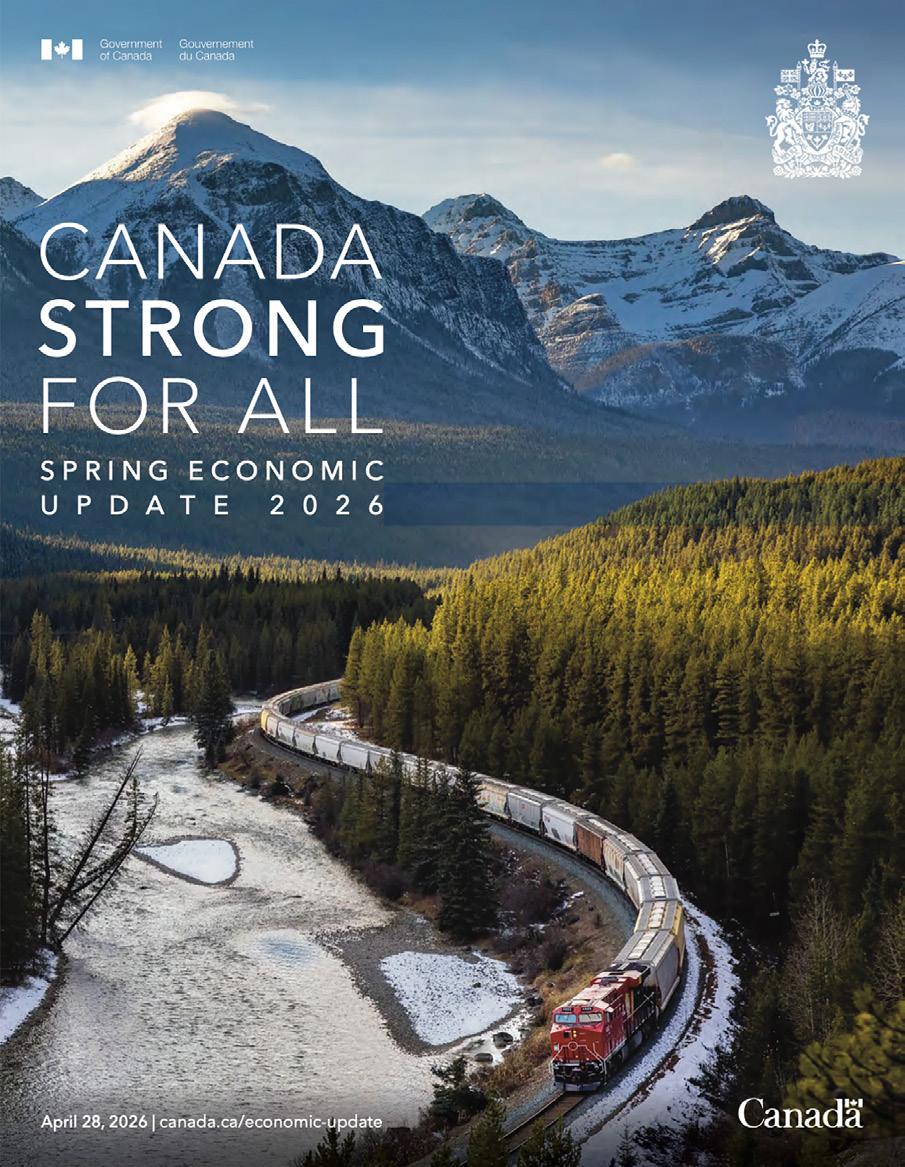
CANADIAN BEEF PRODUCERS CONCERNED WITH THE GOVERNMENT’S DIRECTION IN SPRING ECONOMIC UPDATE
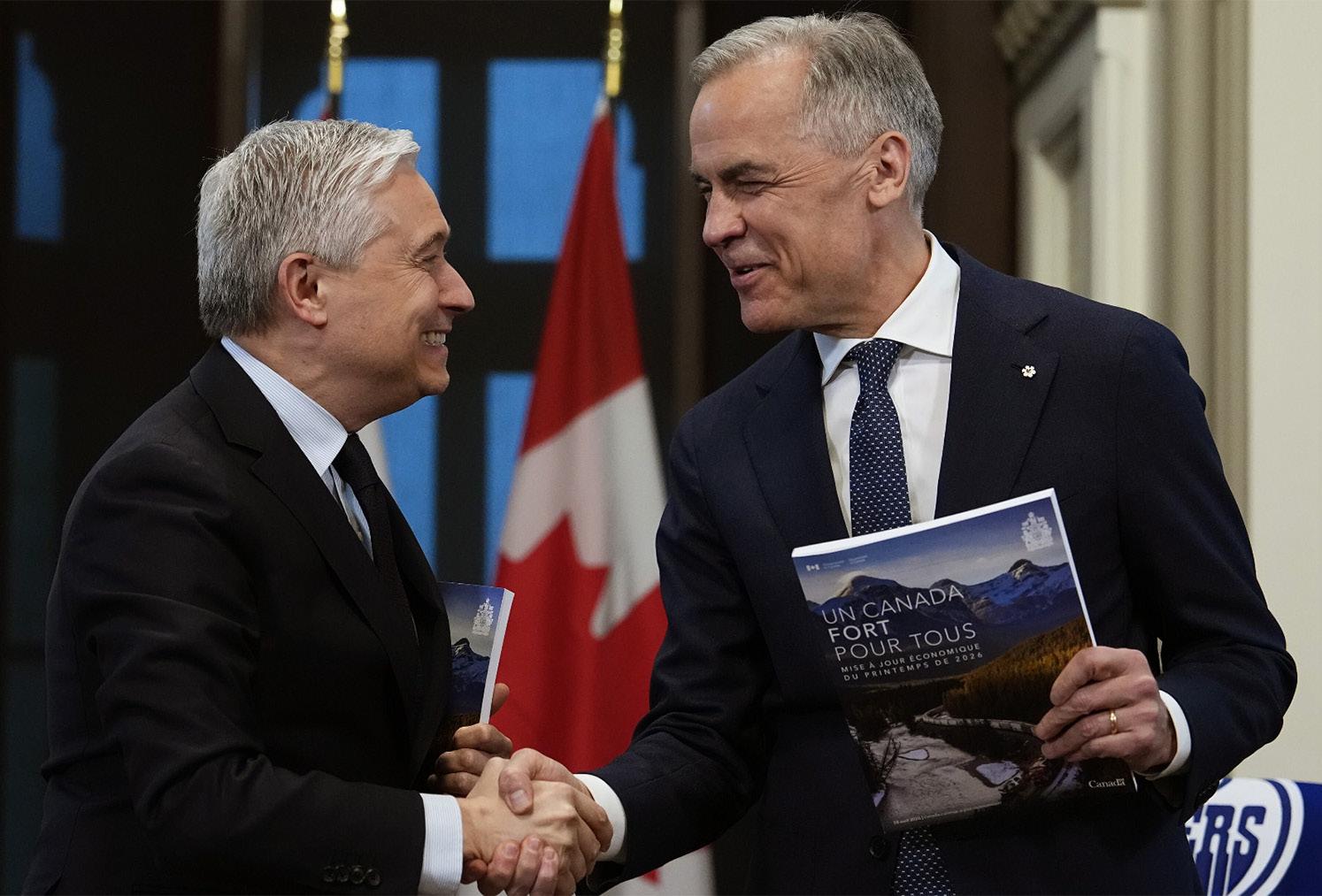
The Canadian Cattle Association (CCA) is deeply concerned with the Federal Government’s approach to food security and trade diversification in the Spring Economic update.
While there was recognition of the challenges the agriculture industry faces, including higher input costs, weather and market disruptions, the government’s emphasis to conclude negotiations with Mercosur as soon as possible fails to recognize the risks this agreement poses to food security.
The Prime Minister has declared his government will work on lessening our dependence on certain trading partners, and yet the Government is willing to increase our dependence on beef imports from Mercosur countries. Not only is this approach contradictory, it is also dangerous.
Already, Canadian beef imports have been at the highest levels since 1993 and now represent 30% of our domestic consumption. This is higher compared to similar jurisdictions like the United States (19%), the European Union (7%), Australia (3%) and Mercosur (1%). We can also expect a bigger flood of beef imports into Canada from Brazil and Australia with these countries now being shut out of China.
The Canadian Government cannot support food security if at the same time they are willing to undermine Canadian farmers and ranchers in trade negotiations. CCA believes in trade diversification; however, we cannot diversify for the sake of diversifying.
“Beef raised in Canada generates 50% fewer emissions and helps protect grasslands—one of the world’s most endangered ecosystems,” says Tyler Fulton, CCA President. He added, “Canadian beef farmers and ranchers are proud of our high standards for animal welfare and labour while providing vital environmental benefits like ecosystem protection, carbon sequestration and wildlife habitat. This results in the sustainably produced, premium beef that Canada is known for around the world.”
Fulton also emphasized, “It is extremely disappointing for Canadian beef producers to be dismissed in the pursuit of an accelerated free trade deal that favours lower quality imported beef from a country with lower standards in labour, environment, animal health and food safety.”
The Spring Economic Update recognizes the fragility of our food supply chain. About 30% of Canada’s food supply is imported. Relying heavily on food imports exposes Canadians to multiple disruptions outside of our control.
Canadian beef farmers and ranchers are disappointed the Federal Government is choosing to focus on shortterm outcomes instead of long-term solutions that truly address food security and make our country stronger by supporting the growth and expansion of the Canadian beef industry.
If we want to be a regional superpower in trade, we cannot undermine the men and women who wake up each day to feed Canadians.
For more information, https://www.cattle.ca/
MINOR PENALTIES FOR CRIME, MAJOR COSTS FOR AGRI-BUSINESSES
Crime and disorder are quietly reshaping daily life for Canadian agri-businesses, and the numbers are becoming increasingly difficult to ignore. From farms to rural retailers and suppliers, security concerns have shifted from rare occasions to a routine cost of operation.
Recent data highlights the scale of the issue. According to Statistics Canada, the overall property crime rate in 2023 was 13% higher in rural areas than in urban centres. This is an alarming trend that aligns with recent data from the Canadian Federation of Independent Business (CFIB), where nearly half of agri-businesses now report an increase in crime (see Figure 1).
Question: Over the last 12 months, how has the level of crime changed in the community where your business is located?
For agri-businesses responsible for feeding Canadians and the world, the stakes are uniquely high. When incidents occur, losses extend well beyond stolen items; damage to equipment, exposure to safety risks, and lost productivity often follows—and for many operations, a single misfortune can disrupt an entire production cycle.
Figure 1: As of 2025, nearly half of small businesses in the agriculture sector saw an increase in crime in the last 12 months, with only 4% reporting a decrease
Source: CFIB, Your Voice Survey – October 2025, Oct 19 – 24, Agriculture Breakout n= 99
“We are often affected by theft in our business. We regularly have trespassers take product afterhours. We have taken steps to mitigate the theft, however there is only so much that can be done without starting to hinder our daily operations. “
Agri-business owner, Manitoba
With limited options to protect themselves and their livelihood, many agri-businesses are investing more heavily in security, often at the expense of investing in productivity or competitiveness. CFIB data from 2024 shows nearly 7 in 10 agri-businesses are spending more on crime mitigation by installing cameras, reinforcing their property, or hiring security services.
The impact on the workforce is equally concerning. Crime issues can make it harder to recruit and retain employees, especially in rural areas. For owners with staff, the responsibility of keeping their people safe adds another layer of stress to an already demanding role (see Figure 2). In fact, one-third of agri-businesses owners report being concerned about their safety and the safety of staff. One-third is one-third too many.
Figure 2: One-third of Canadian agri-businesses concerned about personal and staff safety due to crime in their communities
Source: CFIB, Your Voice Survey – October 2025, Oct 19 – 24, n= 98
Question: How concerned are you about your personal safety, and the safety of your staff and customers due to crime and community safety issues?
Frustration deepens when reported incidents receive little to no follow up, leaving businesses feeling like they are left to shoulder the burden alone. Among small businesses across all sectors that don’t always report crime, 80% say they don’t believe reporting will make a difference, and 53% cite a lack of police response. This sentiment is further echoed in many rural areas, where the nearest police station can be over 50 kilometers away with response times in hours instead of minutes. In fact, 35% of agri-businesses tell us they don’t always file a police report after a crime.
“Theft of new trailer and tools from a business close by. It was reported to police and paperwork done... no more contact or follow up.”
Agri-business owner, Ontario
Safety should not have to compete with business investment and productivity; solutions are long overdue. An overwhelming 90% of Canadian agribusiness owners agree that the federal government should strengthen the Criminal Code to increase penalties for repeat and organized offenders. While legislation has been introduced to tighten bail conditions and sentencing, meaningful change will depend on whether these measures translate into real consequences on the ground.
“It’s the same repeat offenders stealing items over and over again... these crimes don’t affect the pockets of government officials, [but it] directly affects the pockets of the small business owners.”
Agri-business owner, Saskatchewan
Agri-businesses anchor Canada’s food supply. When crime chips away at their viability, the effects ripple outward through supply chains and onto grocery shelves. The long-term price of crime isn't just paid on the farm—it's paid at the kitchen table.
Kayode Southwood, SeoRhin Yoo, and Kalith Nanayakkara are Senior Policy Analysts with the Canadian Federation of Independent Business (CFIB). CFIB is Canada’s largest association of small and medium-sized businesses with 103,000 members (more than 6,000 agri-business members) across every industry and region. CFIB is dedicated to increasing business owners’ chances of success by driving policy change at all levels of government, providing expert advice and tools, and negotiating exclusive savings. Learn more at cfib.ca.