The contents of this publication may not be reproduced by any means in whole or in part, without prior written consent from the publisher
CANADA’S PORK SECTOR LAUNCHES THE PORK RESEARCH HUB
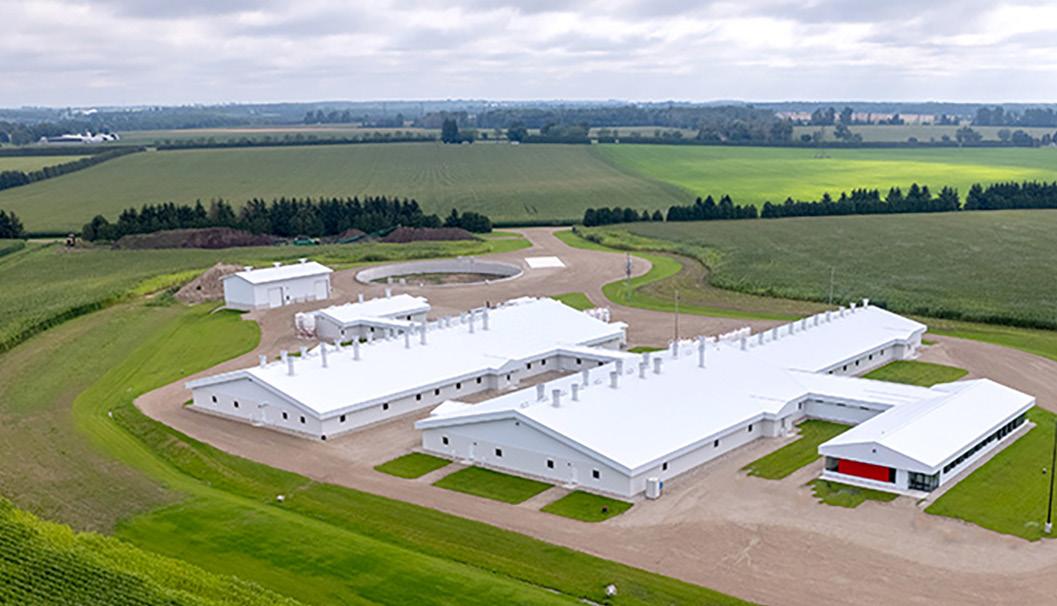
Swine Innovation Porc (SIP), Prairie Swine Centre (PSC), the Centre de développement du porc du Québec (CDPQ), and the Canadian Centre for Swine Improvement (CCSI), have announced the launch of the Pork Research Hub, a national platform connecting Canada’s pork sector with research, innovation and practical knowledge.
The Pork Research Hub consolidates research articles, technical resources, videos, webinars, podcasts and innovation stories from Canada’s swine research community into a single accessible, bilingual platform. Designed to support producers, researchers, industry leaders and partners across the value chain, the Hub helps improve access to Canadian pork research and makes it easier to find practical information that can support decisionmaking and knowldge transfer.
The platform is organized around two core areas: the Resource Library, a searchable collection of research articles, factsheets, tools and technical resources, and Research in Action, a curated section highlighting the realworld impacts of Canadian pork research through articles, videos, podcasts, webinars and innovation stories.
The Hub was developed through a collaborative national partnership. It reflects a shared commitment to strengthening coordination and broadening access to research in support of Canada’s pork sector. Its development was supported by contributions from SIP, PSC, CDPQ, CCSI and the Pork Promotion and Research Agency.
This launch marks the starting point for a platform that will continue to grow. New resources, tools and features will be added over time, making the Hub an even more valuable resource for producers, researchers and partners across Canada’s pork sector.
CUSMA UNCERTAINTY PUTS NORTH AMERICAN RED MEAT TRADE BACK ON THE NEGOTIATING TABLE
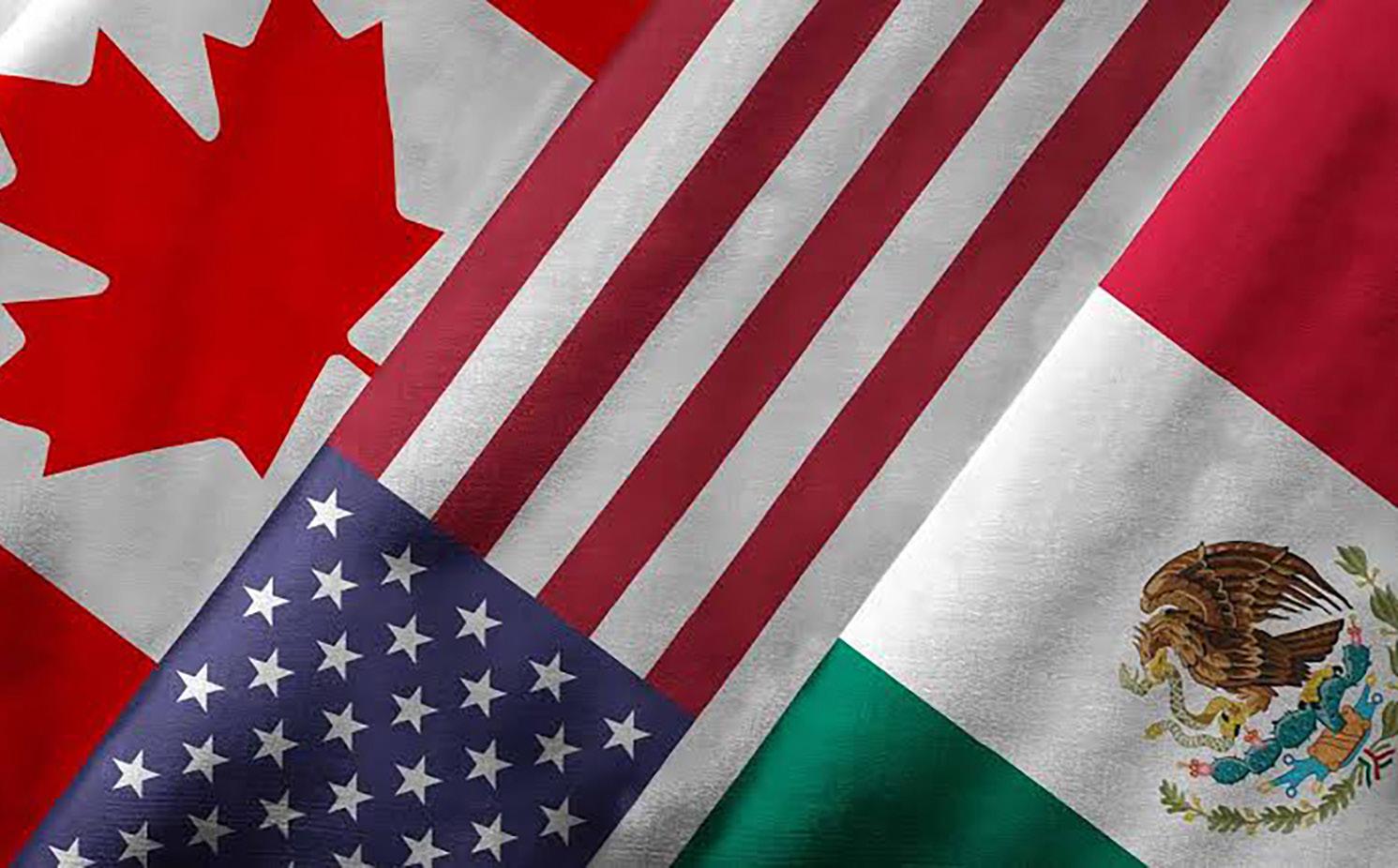
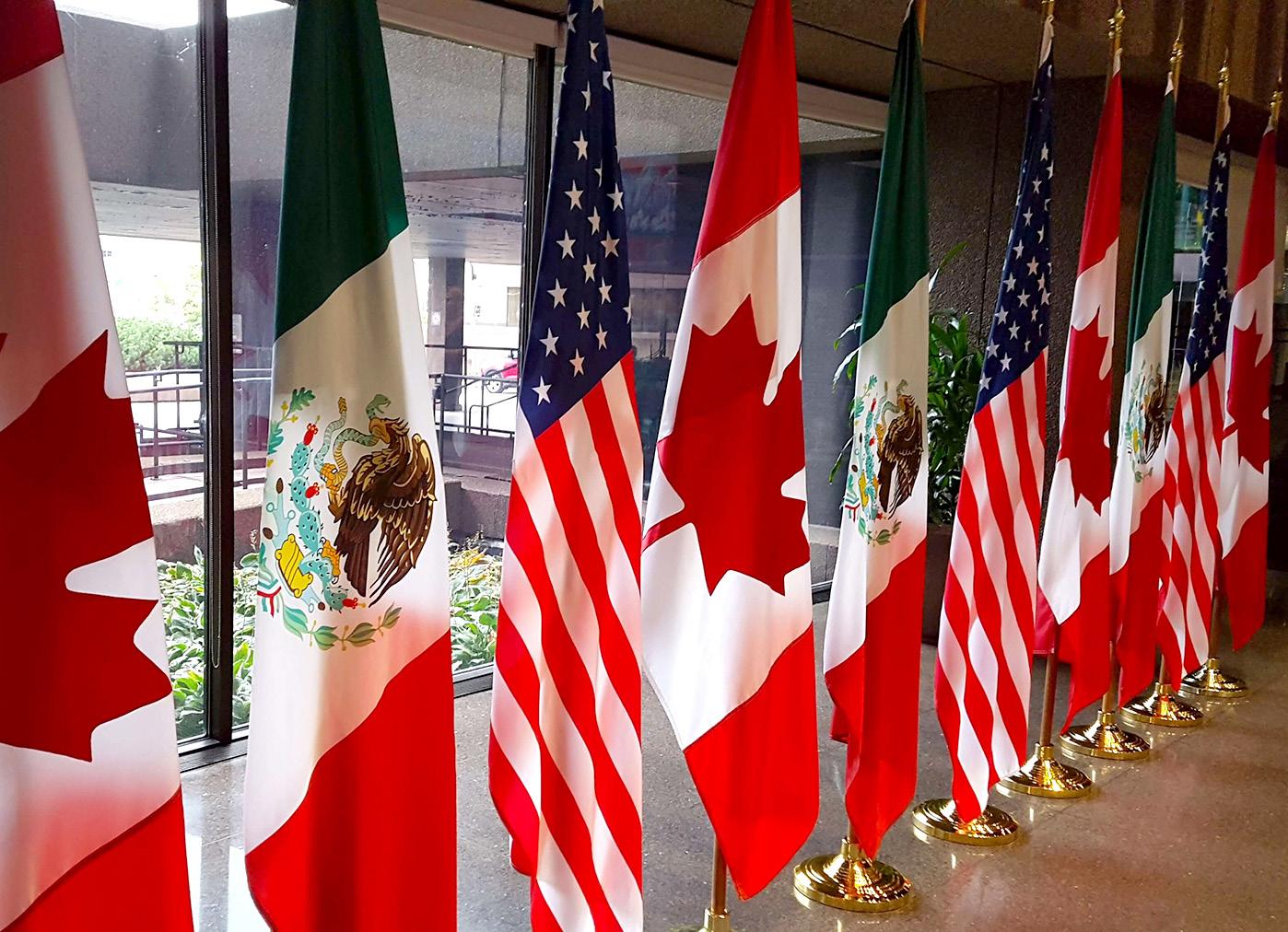
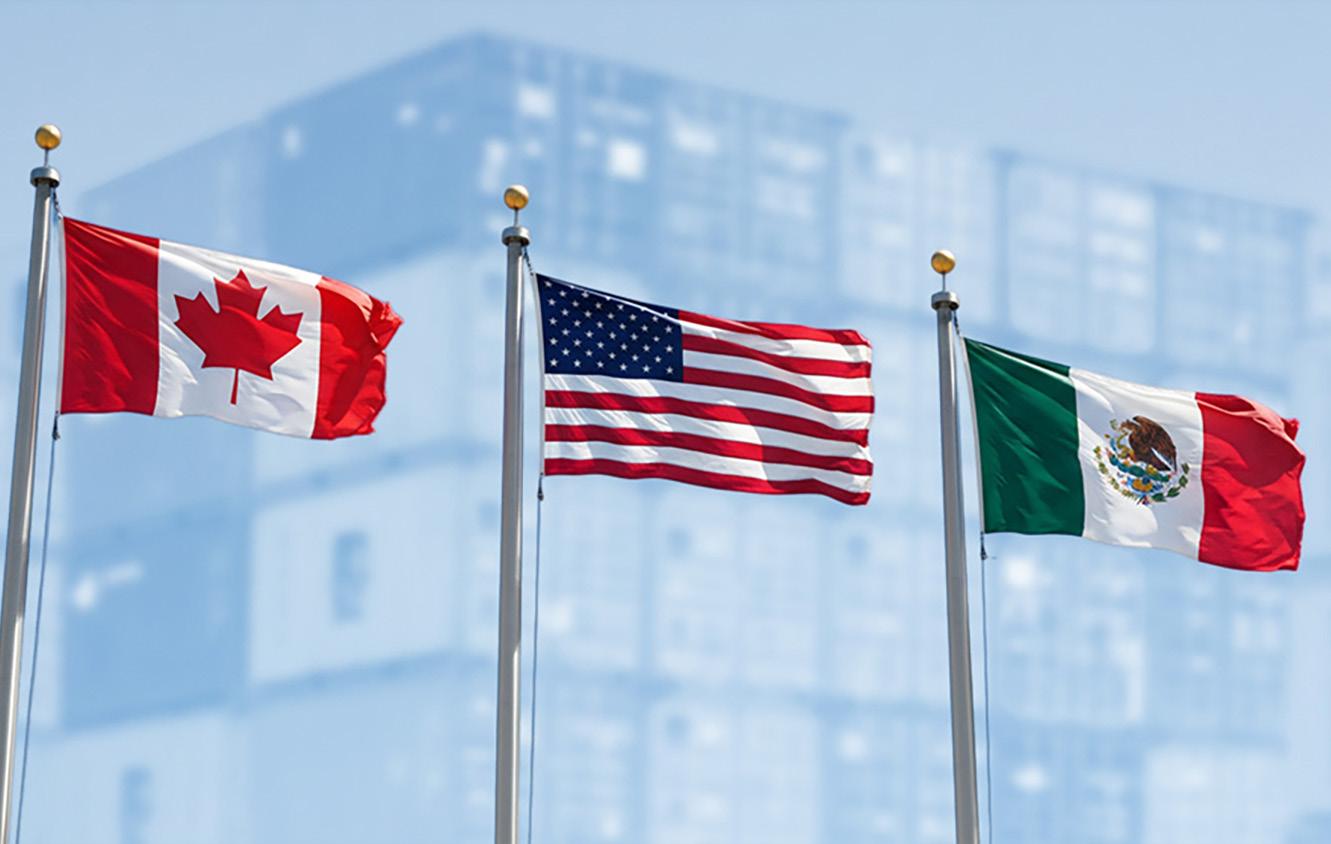
North America’s red meat sector has entered a new period of trade uncertainty. The United States has declined to extend the Canada-United States-Mexico Agreement in its current form, choosing instead to move into the agreement’s annual review process. The decision does not end CUSMA, which remains in force and is not scheduled to expire until 2036. Tariff-free trade in most agricultural products continues, trucks still move across borders, and buyers can still place orders. But for beef and pork businesses, the political signal matters: the rules supporting one of the world’s most integrated meat markets are back on the negotiating table.
For producers, packers, processors, exporters, feed companies and foodservice suppliers, the issue is not immediate disruption. It is planning risk. Red meat supply chains rely on long production cycles, forward contracts, cold-storage commitments, plant utilization targets and customer relationships that are built months or years in advance. When trade rules appear less certain, companies may delay capital projects, alter procurement strategies, build risk premiums into contracts or hesitate before developing new export programs.
Washington has made clear it does not intend to “rubber stamp” renewal without addressing perceived shortcomings in the agreement and broader concerns about trade deficits, enforcement and supply-chain security. Canada and Mexico have indicated they favour extending the deal while remaining open to targeted amendments. That leaves the livestock sector in a difficult position: the agreement is functioning, but its future shape is uncertain.
Beef and pork are especially exposed because North American meat trade is not a simple import-export relationship. It is a production network. Live animals, carcasses, boxed beef, pork cuts, trimmings, furtherprocessed products, feed ingredients, genetics, transportation services and cold-chain capacity move across borders to match supply with processing capacity and demand. In many cases, animals or meat products cross borders more than once before reaching a final customer. That system works because companies trust that sanitary rules, customs procedures and market access will remain predictable.
The pork sector is a clear example. Mexico is the leading foreign market for U.S. pork, while Canada remains a major destination and an important partner in the liveanimal chain. Industry reporting has valued recent U.S. pork exports to Mexico at nearly $2.9 billion, with sales to Canada approaching $759 million. For hog producers, packers and processors, that demand supports hog values, plant throughput, product balancing and jobs tied to export markets. Losing certainty around those customers would affect more than trade statistics; it would affect the value of each animal moving through the system.
Even without new tariffs, uncertainty can influence behaviour. Mexican or Canadian buyers may diversify suppliers, negotiate more aggressively or shorten purchasing commitments if they believe future access could become less predictable. U.S. producers may be more cautious about expanding barns, adding processing capacity or designing products for export programs. Canadian suppliers of feeder pigs and related inputs may face similar questions from U.S. partners. The risk is that recurring annual reviews become a drag on confidence even if the agreement technically remains intact.
The beef industry faces a different but equally important set of considerations. Cattle and beef trade across Canada, the United States and Mexico has long relied on the efficiencies created under NAFTA and carried forward under CUSMA. Cattle may move to where feed, grazing, finishing capacity or processing capacity is available, while boxed beef and specific cuts move to markets where they earn the highest value. This product balancing helps support carcass value and gives processors more flexibility in serving retail, foodservice and export customers.
Some cattle groups see the review as an opportunity to revisit rules they believe have disadvantaged domestic production or allowed imports to pressure local producers. Others argue that preserving the trilateral structure is essential to maintaining North America’s competitiveness against other global meat suppliers. For packers, exporters and foodservice companies, the commercial concern is less ideological and more operational: border friction, regulatory divergence or retaliatory action could disrupt tightly timed logistics and customer commitments.
The broader negotiating agenda may not be centred on red meat. U.S. concerns include automotive rules of origin, dairy access, non-tariff barriers, economic security and third-country content entering North American supply chains. Canada is seeking relief from U.S. tariffs in other sectors, while Mexico is continuing bilateral discussions with Washington. Yet beef and pork can still be affected by the tone of those talks.
Agricultural products have often been drawn into trade disputes as leverage, and red meat companies know that market access can be disrupted by politics far outside the packing plant.
Animal health is another major reason the sectors want continuity. Diseases do not recognize borders, and common approaches to surveillance, biosecurity, veterinary cooperation and emergency response are business-continuity tools. In a foreign animal disease event, confidence between trading partners can determine whether commerce continues from unaffected regions or stops more broadly than necessary. A stable CUSMA framework can support science-based protocols, while fragmented rules could increase compliance costs and slow response times.
The review process also creates an opening. Beef and pork organizations can push for faster dispute resolution, stronger enforcement of sanitary and phytosanitary commitments, clearer customs procedures, better documentation alignment and safeguards against sudden border disruptions. If governments use the review to modernize technical provisions while preserving duty-free access, the result could strengthen the red meat value chain. If the process becomes a recurring political confrontation, it could add cost and uncertainty without improving trade.
For decision-makers, the practical response is to treat CUSMA as an active risk-management issue rather than background infrastructure. Companies should map their exposure to cross-border cattle, hogs, meat products, feed ingredients and customers; review contract language tied to tariffs, border delays and regulatory changes; maintain communication with buyers in Canada and Mexico; and stay engaged through trade associations. Scenario planning should consider a renewed agreement with targeted changes, an extended period of annual reviews, and the less likely but more disruptive possibility of deterioration toward withdrawal or expiration.
North America’s beef and pork industries have spent more than three decades building supply chains around open regional trade. The U.S. decision does not dismantle that system, but it does move the agreement into a more active political phase. For red meat businesses, the priority is clear: preserve dutyfree access, defend science-based standards, reduce avoidable border friction and keep North America functioning as one competitive meat market. The companies best positioned for the next phase will be those that advocate for integrated trade while preparing for a less predictable policy cycle. For meat processors, building a stronger food safety system starts with knowing where you stand and having the right support to move forward.
https://www.dhenryandsons.com
HOW EXPERT GUIDANCE CAN STRENGTHEN YOUR FOOD SAFETY PROGRAM
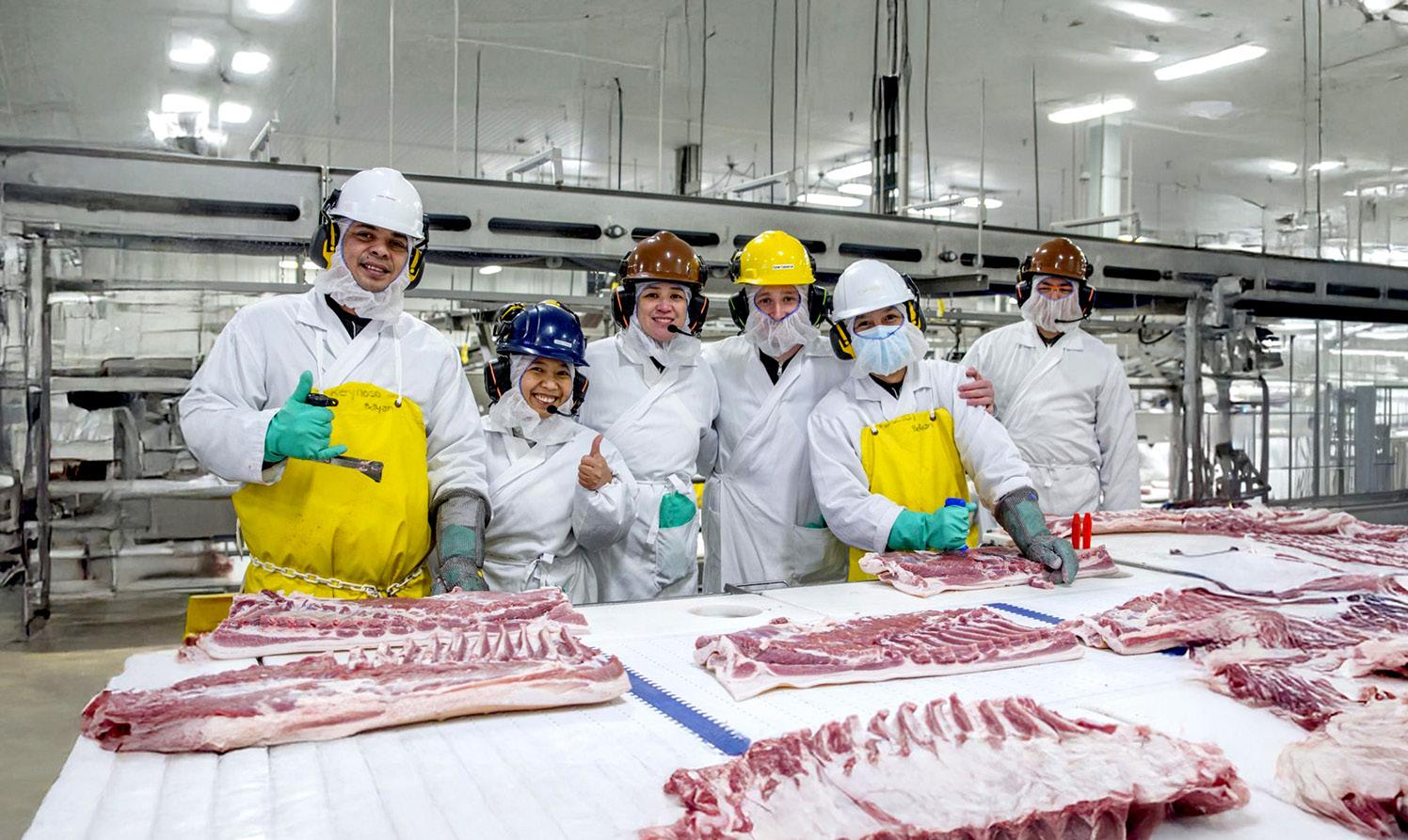
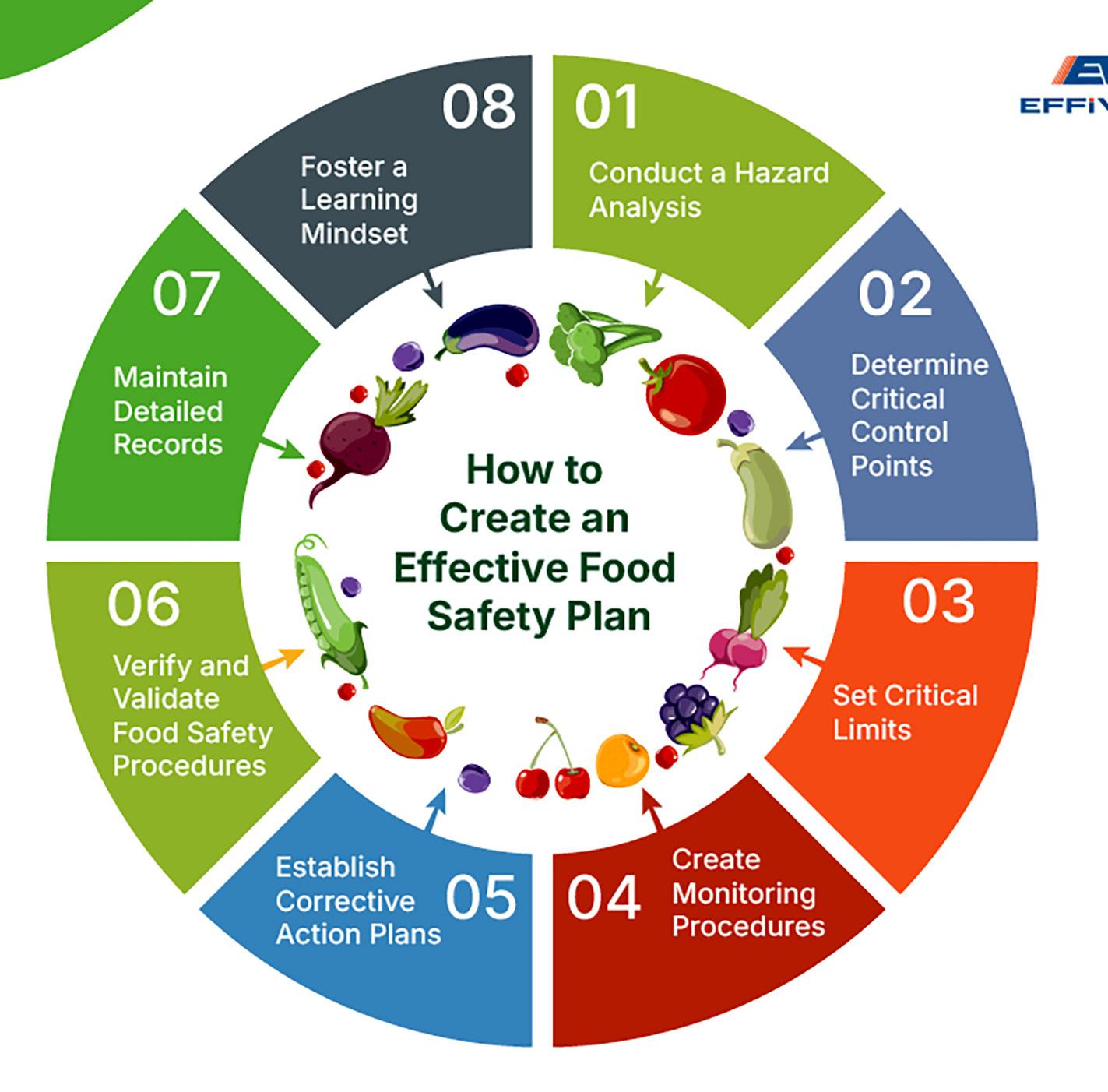
Food safety is more than a regulatory requirement. For meat processors, it is a business-critical foundation that protects customers, supports market access, strengthens buyer confidence and helps operations run with consistency. Even well-established businesses can struggle to identify where to focus their efforts next. Procedures may be in place, training may be happening and records may be maintained, yet questions often remain. Are there gaps in the system? Are current practices aligned with expectations? Which improvements will create the greatest impact?
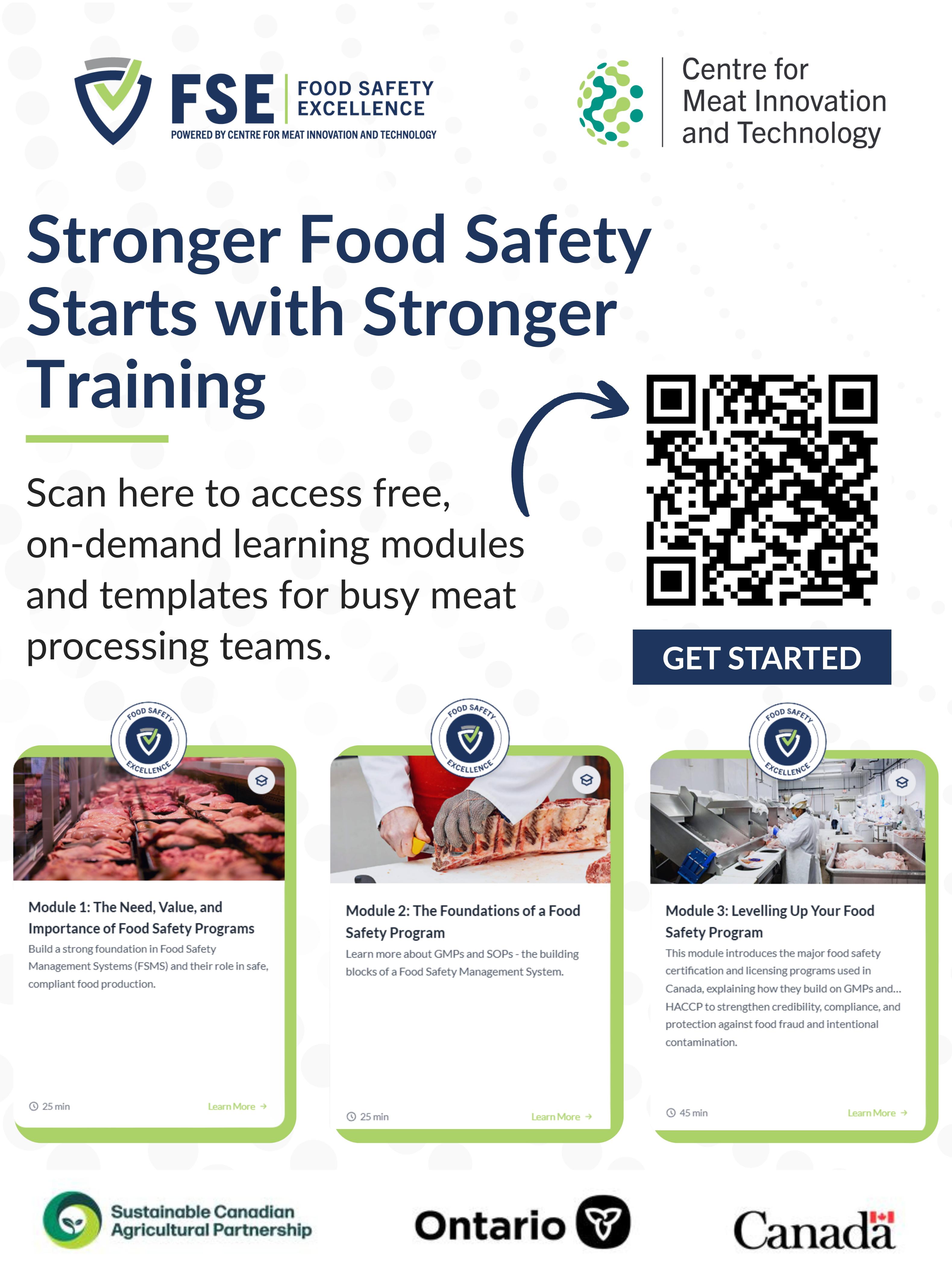
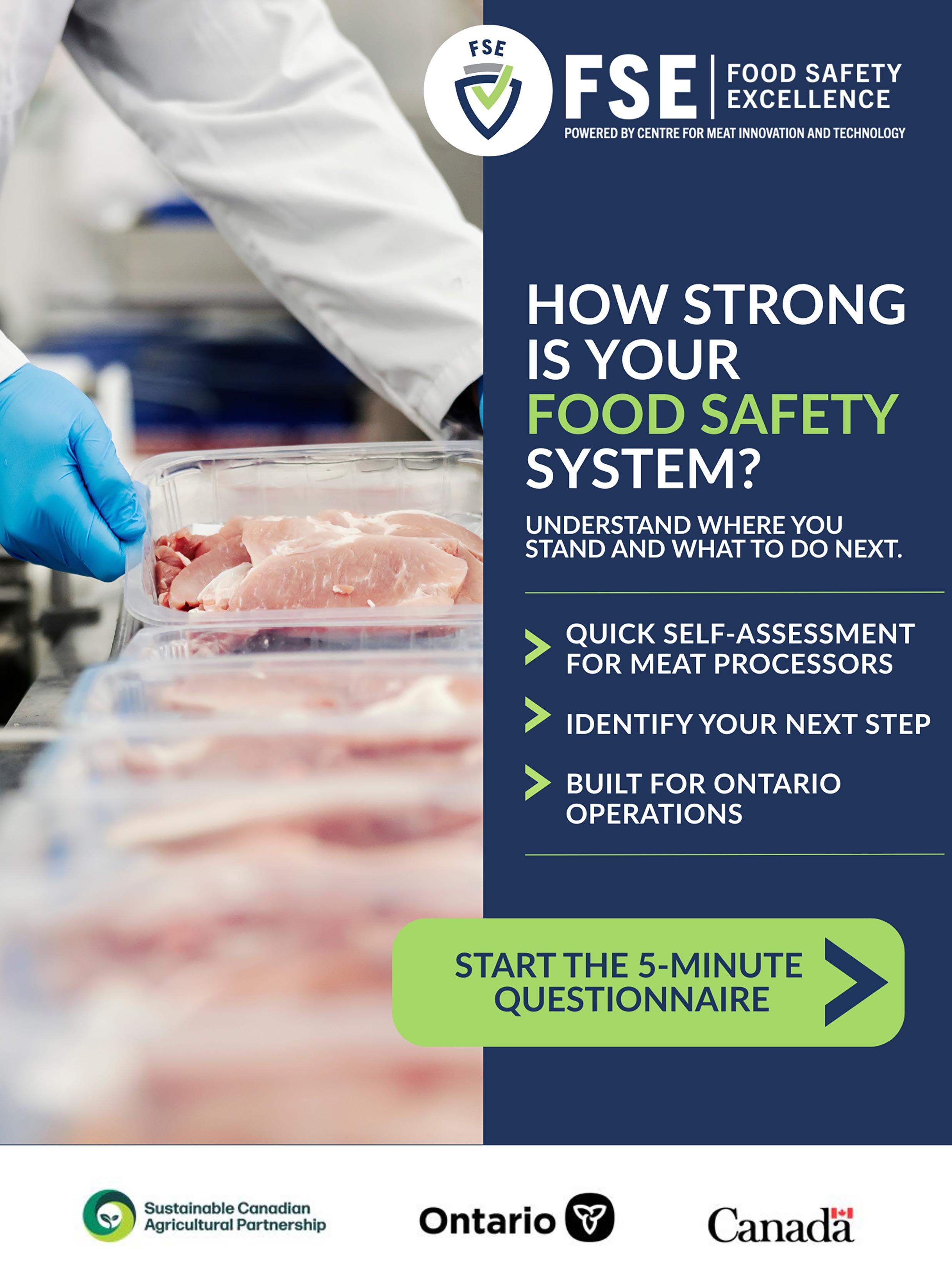
continuous improvement, the FSE Program gives meat processors tools to better understand their current safety practices and take meaningful steps toward stronger systems. Through a self-assessment, training modules and templates/resources, the program helps businesses move from general awareness to focused action.
The FSE Self-Assessment Tool is built to help processors take stock of their operation in a structured, accessible way. Rather than guessing where improvements may be needed, businesses can use the questionnaire to uncover an opportunity for improving their food safety program. The assessment is quick, anonymous and intended to support improvement, not to create pressure or uncertainty.
For many operations, that first step is valuable on its own. It can confirm that key elements are working well, highlight areas that may need more attention and provide a clearer sense of direction. However, the real value of the self-assessment comes after the results are complete. Improvement happens when insights are interpreted, priorities are set and practical changes are introduced in a way that fits the realities of the plant floor.
demands, staffing pressures, documentation requirements and customer expectations. A gap may be identified, but the path to closing it is not always obvious. A procedure may need revision, but the team may be unsure how much detail is required. Training may be needed, but the operation may need help deciding where to begin.
BALJIT KAUR KHEEVA: TURNING RESULTS INTO ACTION
Processors do not have to navigate that work alone. CMIT Food Safety Specialist Baljit Kaur Kheeva is available as a practical resource to help businesses understand their FSE self-assessment results and translate them into a realistic improvement plan. Her role is not to audit or judge an operation, but to support teams as they interpret findings, prioritize next steps and strengthen their food safety systems with confidence.
With extensive hands-on experience, Baljit brings an operation-focused perspective to food safety improvement. She understands that every facility is different, and that recommendations need to be practical, achievable and aligned with day-to-day production realities. Her approach is collaborative and advisory, helping teams build on what they already have in place while addressing gaps that may affect compliance, consistency or customer confidence.
Baljit’s expertise includes food safety systems development and implementation, HACCP systems, Good Manufacturing Practices (GMPs), Good Hygiene Practices (GHPs), food regulations and compliance, and continuous improvement. This combination of technical
knowledge and practical experience allows her to help processors identify what matters most, whether that means refining documentation, improving sanitation practices, strengthening monitoring procedures, preparing for customer requirements or building a more consistent internal food safety culture.
SUPPORT THAT MEETS PROCESSORS WHERE THEY ARE
For some businesses, the next step after the selfassessment may be a one-on-one conversation to review results and clarify priorities. For others, it may involve a broader system review or gap assessment to better understand how policies, procedures, records and practices are working together. In many cases, practical tools and templates can help teams move forward more efficiently, reducing the time needed to create or update key safety documents.
improvement is rarely a one-time task. It often requires small, steady changes updating procedures, training employees, verifying records, adjusting practices and reviewing whether changes are working as intended. Having access to knowledgeable guidance can help businesses stay on track and avoid feeling overwhelmed by the process.
The FSE Program’s training modules and templates/ resources also give processors practical materials they can use as they advance their food safety efforts. These resources can support internal learning, help standardize practices and provide a foundation for stronger documentation. When paired with advisory support, they become even more useful because teams can better understand how to apply them within their own facility, product category and operational context.
BUILDING CONFIDENCE
BUILDING CONFIDENCE THROUGH CONTINUOUS IMPROVEMENT
A strong safety program does not happen by accident. It is built through clear expectations, consistent practices, engaged employees and a willingness to review and improve systems over time. For B2B food processors, that work has direct business value. It can support compliance, reduce risk, strengthen customer relationships and position an operation for growth.
The FSE self-assessment offers a simple way to begin. It helps processors pause, reflect and identify where attention may be needed. From there, Baljit can help turn the results into a practical plan that fits the operation’s needs, resources and goals. Whether a business is just beginning to formalize its food safety program or looking to strengthen an existing system, support is available.
The key message for processors is reassuring as improvement does not need to be tackled alone. With the right tools and guidance, the path forward becomes clearer. The FSE Program provides the starting point, and Baljit Kaur Kheeva provides the practical advisory support to help businesses move from assessment to action.
For operations unsure of their next step, now is the time to begin. Complete the quick and anonymous FSE Self-Assessment Tool, review the available training modules and resources, and connect with Baljit for guidance on how to strengthen your food safety program.
Take the quick and anonymous FSE Self-Assessment Tool today: https://lvvr10axwba.typeform.com/to/ Buo0V5OV?typeform-source=www.cmit.ca
Connect with Baljit: foodsafety@meatpoultryon.ca
Food Safety Excellence tools and resources have been developed through funding provided by the Sustainable Canadian Agricultural Partnership (Sustainable CAP), a five-year, federal-provincialterritorial initiative.
FEDERAL AGRIMARKETING INVESTMENT POSITIONS CANADIAN BEEF FOR GLOBAL GROWTH
New federal funding through the AgriMarketing Program is designed to help Canada’s beef industry defend hard-won export access, diversify into growth markets, and turn global demand for premium protein into stronger returns across the supply chain.
For Canada’s beef sector, market development is no longer just a promotional exercise. It is a business imperative. With export markets accounting for a major share of sector value, and with geopolitical uncertainty, shifting consumer demand, and evolving trade rules reshaping global food commerce, the ability to maintain and expand access has become central to competitiveness.
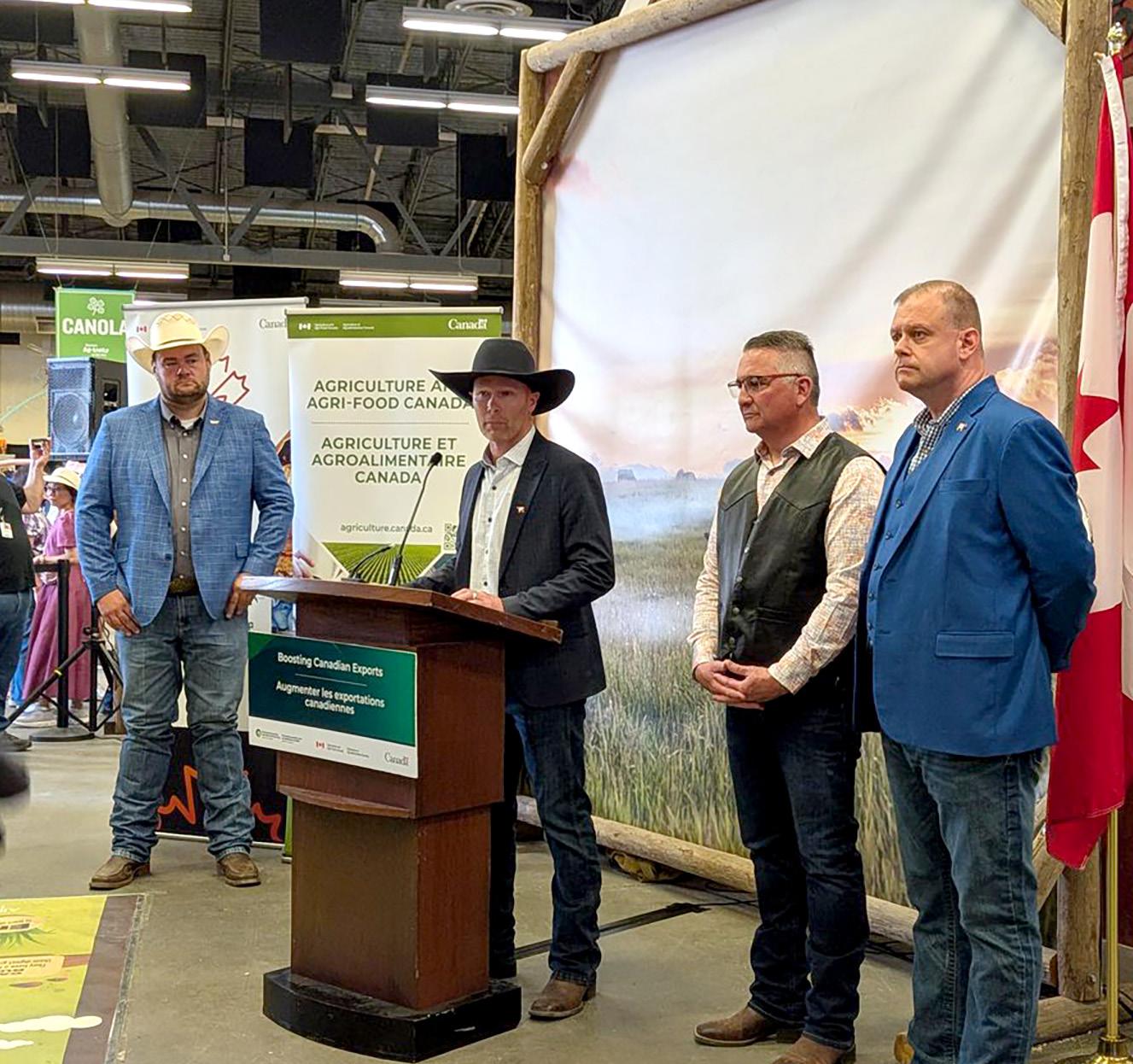
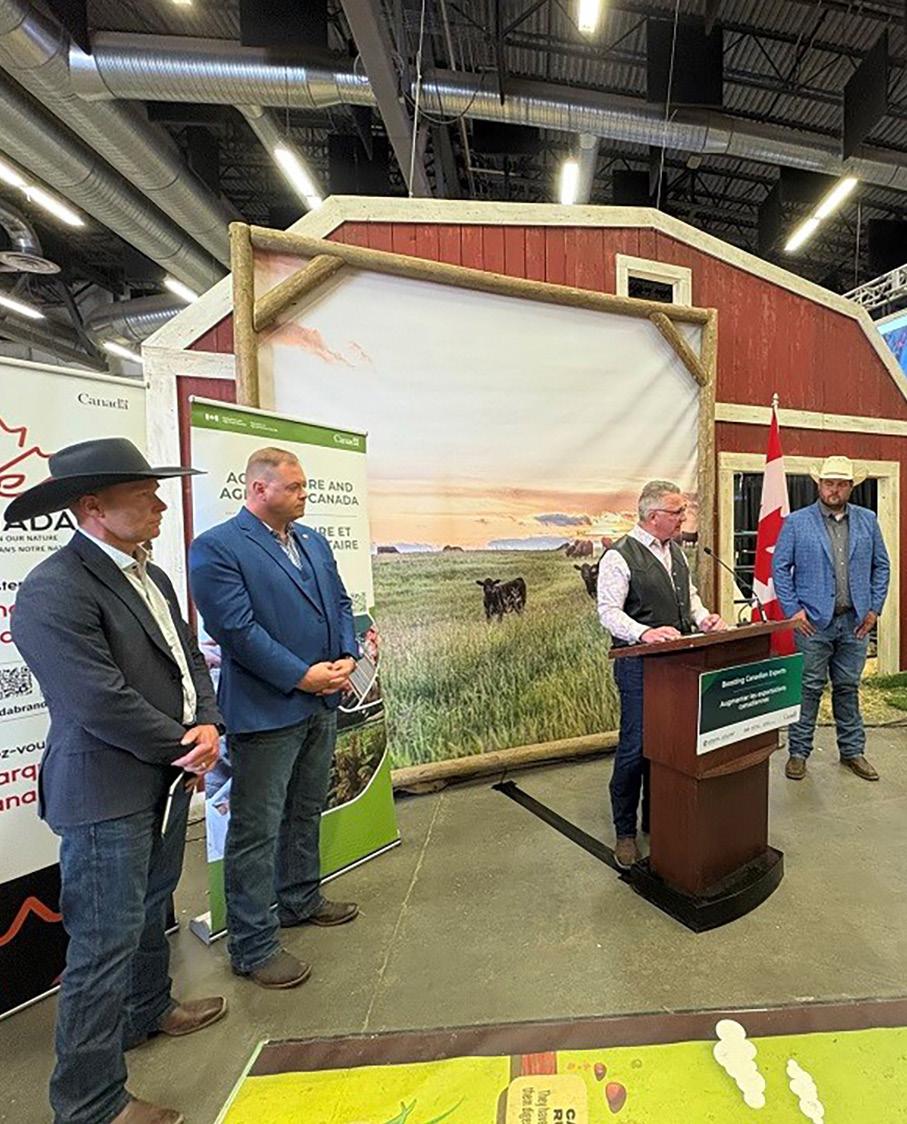
That was the backdrop for a federal funding announcement at the Calgary Stampede, where Agriculture and Agri-Food Minister Heath MacDonald confirmed more than $4 million in AgriMarketing Program support for two national beef and cattle organizations. The investment, delivered under the Sustainable Canadian Agricultural Partnership, directs up to $3.74 million over two years to Canada Beef and $300,000 over two years to the Canadian Cattle Association (CCA).
For industry leaders, the announcement is about much more than promotional dollars. It reflects a broader strategy to strengthen the value proposition of Canadian beef and veal in both domestic and international markets, while ensuring producers have a voice in the policy forums where trade conditions are shaped.
Canada Beef’s portion of the funding will support efforts to build awareness and demand for high-quality Canadian beef and veal among customers at home and abroad. The organization has highlighted the IndoPacific region as a particular area of focus, alongside broader market expansion and diversification initiatives. In a global protein marketplace where buyers are weighing quality, food safety, sustainability, reliability, and brand story, the funding gives Canada Beef additional capacity to keep Canadian product visible and differentiate
Eric Bienvenue, president of Canada Beef, welcomed the investment as a vote of confidence in global market development for Canadian beef and veal. He noted that market diversification has become increasingly important and said the agreement will help the organization sustain loyalty to Canadian beef with consumers around the world. That loyalty matters in a crowded marketplace where premium suppliers compete not only on price, but also on trust, consistency, and long-term relationship building.
The Canadian Cattle Association’s funding is aimed at a different but complementary part of the same growth agenda: trade advocacy. The association will use the support for international travel by staff and elected representatives, including engagement with partners and decision-makers in the United States and Mexico, participation connected to a recent Team Canada trade mission to Japan, and future missions to South Korea and select Indo-Pacific markets.
That advocacy role is important because market access is rarely static. Even where tariffs are low or trade agreements are in place, exporters can face technical barriers, regulatory changes, sanitary and phytosanitary requirements, and shifting standards. CCA’s presence at international forums such as those connected to the World Trade Organization, Codex Alimentarius, the World Organization for Animal Health, and the Food and Agriculture Organization helps ensure Canadian producers are represented when rules and standards are debated.
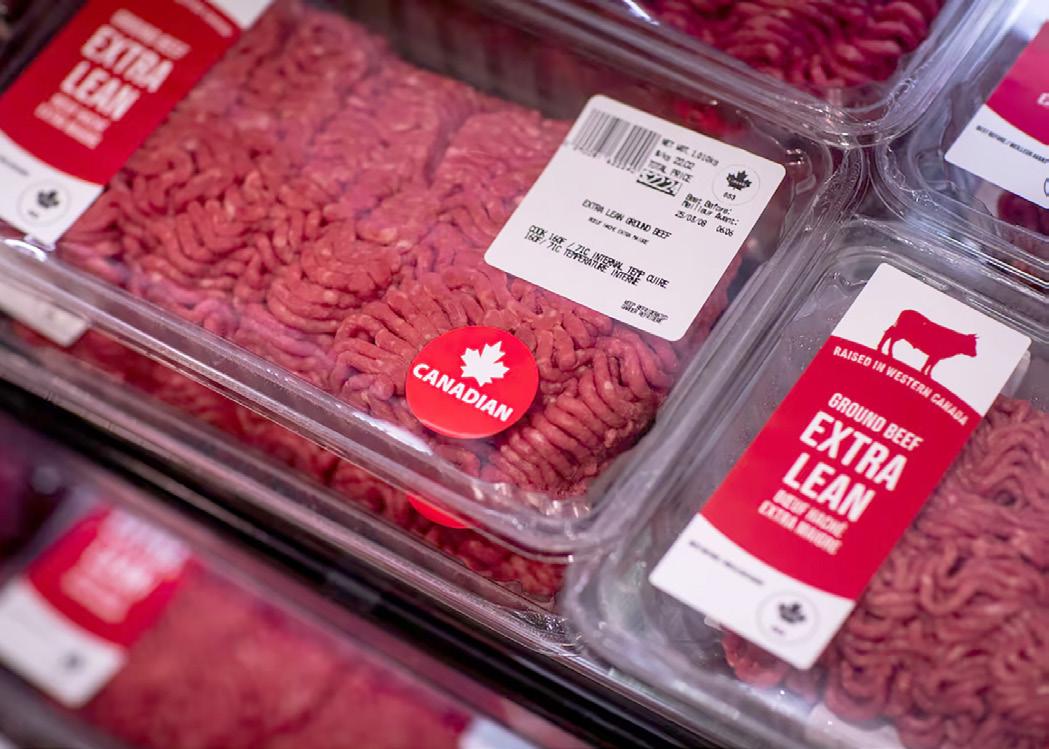
For cattle producers, processors, exporters, and service providers, these efforts can have direct commercial consequences. Preferred access to important beefimporting countries has been built over decades and maintaining that access requires constant attention. The CCA says Canada reached a record value for beef and live cattle exports in 2025, estimated at $7.3 billion, with more than $6.3 billion exported to the United States. While other destinations continue to grow, the U.S. remains Canada’s dominant export market and a critical anchor for the sector.
At the same time, diversification is becoming a strategic hedge. Asia and the Indo-Pacific offer opportunities for products that may command stronger value abroad than they do in Canada. Domestic consumers tend to favour steaks, roasts, and ground beef, while many Asian markets value cuts such as short ribs, short plate, skirt meat, flanks, and chuck rolls. Exporting these products helps maximize carcass value, which can improve returns for producers and support affordability by balancing demand across the whole animal.
The federal government’s AgriMarketing Program is designed to support exactly this kind of sector-led market activity. Valued at $129.97 million under the Sustainable Canadian Agricultural Partnership, the program supports national industry efforts to increase and diversify exports, seize domestic opportunities, and raise the visibility of Canadian products. Ottawa has also added further funding to expand market diversification streams for national associations and small and medium-sized enterprises.
For industry stakeholders across agriculture, food processing, logistics, retail, and trade services, the takeaway is clear, beef market development is increasingly a coordinated supply-chain effort. It depends on brand promotion, technical market access, government relations, standards engagement, and the ability to tell a credible story about quality and production practices.
The latest funding does not eliminate the risks facing exporters, from currency volatility to trade disruptions and changing consumer preferences. But it does provide industry organizations with additional tools to compete. By combining demand-building work with trade advocacy, Canada’s beef sector is positioning itself to protect established markets, pursue emerging opportunities, and reinforce the commercial value of Canadian beef in a more complex global marketplace.
USDA
ANNOUNCES $500 MILLION PROGRAM TO SUPPORT REGIONAL BEEF PROCESSING
As cattle supplies remain historically tight, USDA’s new support program targets independent, U.S.-owned processors that underpin rancher access, regional supply chains and branded beef markets.
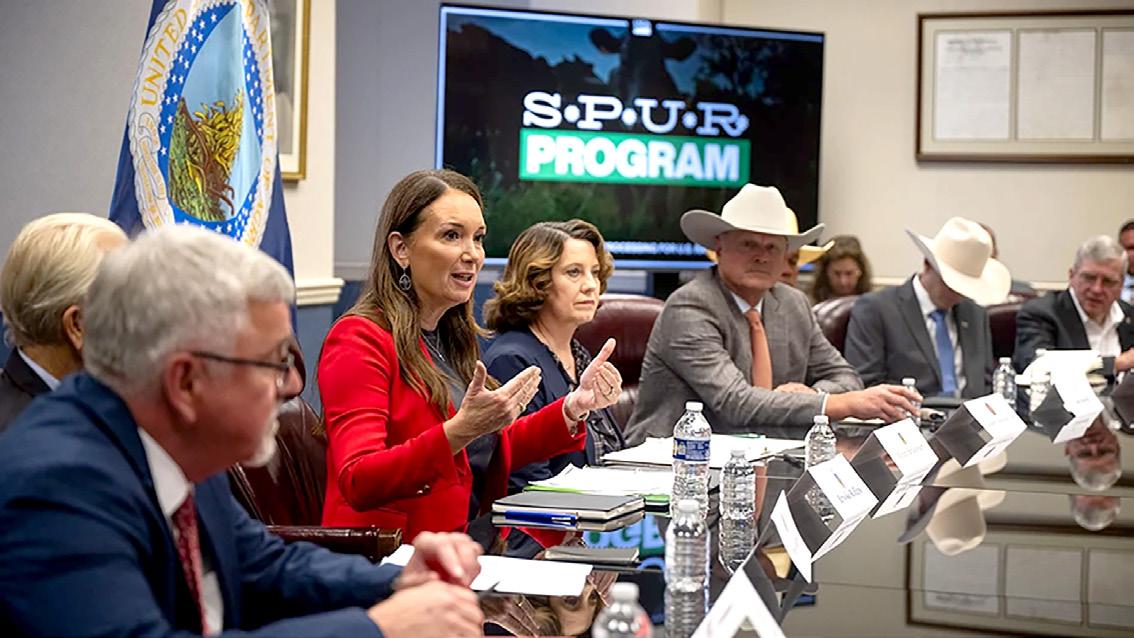
The U.S. Department of Agriculture (USDA) has launched a new support program designed to preserve a critical segment of the beef supply chain: independent and regional processing capacity. Announced by Agriculture Secretary Brooke L. Rollins, the Strengthening Processing for U.S. Ranchers Program (SPUR) will provide up to $500 million in temporary payments to eligible beef processing establishments facing extraordinary market pressure.
For ranchers, processors and downstream beef marketers, the program arrives at a pivotal moment. The U.S. cattle herd is at its lowest level in 75 years, driving up the cost of acquiring cattle for slaughter and straining packers of all sizes. While large processors have more scale to weather volatility, smaller and mid-size plants often operate with thinner margins and less flexibility. USDA’s stated goal is to help those facilities remain viable so ranchers continue to have competitive market outlets now and sufficient regional capacity when herd rebuilding eventually expands cattle supplies.
“America’s ranchers deserve a strong, competitive marketplace that rewards their hard work and preserves opportunity for generations to come,” Rollins said in announcing the program. She pointed to tight cattle supplies, consolidation and foreign ownership in meat packing, and the reemergence of New World screwworm as factors creating unusual pressure on independent and regional processors. USDA frames SPUR as part of a broader effort to strengthen domestically owned processing capacity, support rural communities and improve supply chain resilience.
The program is being administered by USDA’s Farm Service Agency under authority of the Commodity Credit Corporation Charter Act. Rather than offering a broad public application process, USDA says it will use existing contact information on file with the Food Safety and Inspection Service to provide additional details and applications to eligible entities. That approach signals a targeted relief effort aimed at plants already operating within federal or qualifying cooperative inspection systems.
Eligibility is intentionally narrow. Processors must be beef establishments under federal inspection, or facilities inspected through the Talmadge-Aiken Cooperative Inspection Program or the Cooperative Interstate Shipment Program. They must be U.S.-owned and cannot be nationally dominant in beef processing. For SPUR, USDA defines “nationally dominant” as an entity with market share greater than or equal to the company holding the fourth-largest share of the U.S. beef processing market.
That distinction matters because concentration remains one of the defining features of the sector. According to USDA, four companies control nearly 85% of U.S. beef processing, including two foreign-owned firms. The department argues that maintaining independent, domestic capacity during the current cattle cycle is not only an economic issue but also a supply chain and national security priority. If regional plants close during the downturn, ranchers may have fewer marketing options when cattle numbers recover and branded or value-added beef programs may face bottlenecks.
USDA officials emphasized that small and mid-size processors help preserve diversity in the food system. Under Secretary for Food Safety Mindy Brashears said supporting this capacity protects market options for U.S. ranchers, strengthens regional supply chains and helps ensure families have access to safe, high-quality domestic beef. Under Secretary for Farm Production and Conservation Richard Fordyce similarly said competitive supply chains give ranchers more reliable markets for their cattle.
Industry reaction reflects both support for immediate relief and concern that payments alone cannot solve the root problem. Meat Institute President and CEO Julie Anna Potts noted that beef packers “from the very large to the very small” are losing millions of dollars a week as the industry contends with the smallest U.S. cattle herd in decades. Some packers have reduced shifts or closed facilities. Potts said SPUR will help some members but cautioned that it will not increase cattle supplies. In her view, policy efforts to moderate beef prices should also give producers the certainty needed to retain heifers and rebuild the herd.
For stakeholders across the beef value chain, SPUR’s significance lies in what it may preserve. Independent plants often support regional procurement relationships, custom specifications, local brands and value-added programs that depend on differentiated processing access. USDA also links the program to its Plan to Fortify the American Beef Industry and Small Processors Action Plan, including support for programs such as the Product of USA label. In markets where customers increasingly ask about origin, resilience and domestic sourcing, keeping these facilities operational may help protect commercial flexibility.
The program also fits USDA’s broader messaging around access to high-quality protein and the Make America Healthy Again agenda, which the department connects to forthcoming Dietary Guidelines for Americans. However, the near-term business case is more direct: without enough cattle moving through the system, processors face lower utilization, higher per-head costs and pressure on labor retention. Temporary support may give qualifying plants time to bridge the downturn and maintain capacity for the next phase of the cattle cycle.
The key question is whether SPUR can stabilize enough regional capacity to make a measurable difference for producers and buyers. The answer will depend on payment timing, eligibility reach and how long cattle supplies remain constrained. For now, USDA is sending a clear signal that independent beef processing is viewed as strategic infrastructure, not just another link in the chain. For ranchers seeking market access and businesses building differentiated beef programs, that signal could prove important well beyond the current market squeeze.
OTTAWA IS GAMBLING WITH OUR MOST CRITICAL TRADE RELATIONSHIP
By Sylvain Charlebois
By trading strategic discipline for populist slogans, the Carney government is eroding the leverage we need to secure a favourable CUSMA review
Canada cannot expect to negotiate from a position of strength while sending contradictory messages about its economy and its relationship with the United States. Yet that is precisely the position Ottawa has created as the first formal review of the Canada-United StatesMexico Agreement (CUSMA) begins on July 1.
For a country whose economy, and particularly its agrifood sector, depends on stable, predictable access to the U.S. market, credibility matters.
Only weeks ago, the federal government released a video portraying Canada’s reliance on the U.S. as a strategic weakness. Shortly thereafter, Prime Minister Mark Carney stood before an audience in New York proclaiming that Canada could help “Make America Great Again.”
WHICH MESSAGE ARE OUR TRADING PARTNERS SUPPOSED TO BELIEVE?
Trade policy is not branding. It is about confidence. Businesses investing billions in food processing plants, logistics networks and manufacturing facilities need to know where Canada stands. Policy cannot shift depending on the audience.
Carney has also attempted to reassure Canadians by claiming that Canada is now creating jobs at twice the rate of the U.S.
THE DATA TELLS A DIFFERENT STORY.
Over the past year, Canada has recorded a net loss of roughly 25,000 jobs while the U.S. has added nearly 900,000. Canadians are entitled to their political preferences, but they are equally entitled to expect public statements to reflect official data.
What is equally troubling is how little scrutiny these claims receive. When economic statements from the country’s highest office do not align with official statistics, one expects journalists, economists and the opposition to ask difficult questions. Increasingly, that seems not to happen. Regardless of which party governs, evidence—not messaging—should drive public debate.
CANADA’S EXPORT DIVERSIFICATION NARRATIVE DESERVES SIMILAR SCRUTINY.
Yes, exports to countries outside the U.S. have increased. But much of that growth has been driven by higher shipments of gold and other commodities. Statistics Canada has noted that, excluding precious metals, export performance is considerably weaker. Other analyses show that the gains have largely come from established exporters selling more abroad rather than new Canadian firms successfully entering foreign markets.
NOWHERE
IS
THAT DISCONNECT MORE APPARENT THAN IN CANADA’S AGRI-FOOD SECTOR.
Roughly 70 to 72 per cent of Canada’s agri-food exports still go to the U.S. That dependence is not a policy failure; it is an economic reality. Geography matters. Integrated supply chains matter. Shared food safety standards matter. Decades of commercial relationships matter.
Diversification should remain an objective but it cannot become an excuse to underestimate the importance of our largest customer.
Recent tensions surrounding the opening and operation of the Gordie Howe International Bridge illustrate why Canada’s relationship with Washington matters beyond the negotiating table. Nearly one-quarter of all CanadaU.S. agri-food trade moves through the Detroit-Windsor corridor, where the aging Ambassador Bridge has long served as the backbone of cross-border commerce. Every unnecessary political dispute involving this critical gateway increases uncertainty for exporters, processors and distributors on both sides of the border.
Media reports that the U.S. is seeking a share of toll revenues are difficult to justify given that Canada financed the construction of the bridge. Canada assumed virtually all of the financial risk, and many Canadians understandably view Washington’s position as unreasonable.
But it is what it is. Trade negotiations are not about fairness. They are about leverage and outcomes, and food supply chains do not respond well to diplomatic friction.
That is why the tone of Canada’s relationship with Washington matters. Public disagreements are sometimes unavoidable, particularly when national interests diverge. But there is a meaningful difference between defending Canada’s interests and allowing political theatre to overshadow economic diplomacy.
If Canada hopes to influence the upcoming CUSMA review, it must recognize a simple reality: successful trade negotiations are built through credibility, relationships and continuous engagement. They are rarely advanced through public rhetoric alone.
Canada has every right to defend its interests. It should do so firmly and confidently. But firmness is most effective when accompanied by consistency, accuracy and strategic discipline.
CUSMA has transformed North American agriculture into one of the world’s most integrated food systems. Millions of consumers benefit every day through lower costs, greater product availability and more resilient supply chains. That success should not be taken for granted.
As the agreement enters its first formal review, Canada needs fewer slogans and more strategy.
Our exporters, our farmers and Canadian consumers deserve nothing less.
Dr. Sylvain Charlebois is senior director of the Agri-Food Analytics Lab at Dalhousie University, co-host of The Food Professor Podcast and visiting scholar at McGill University.
BACK TO THE BASICS: AGRI-BUSINESSES' POLICY PRIORITIES DURING MARKET UPHEAVALS
Business owners are built to adapt. After all, adapting to change is at the core of entrepreneurship. However, there’s a difference between adjusting to market shifts and being expected to absorb an unrelenting pile-on of tariffs, embargoes, and inflation, all while navigating one of the most heavily regulated and costly industries in the country.
Canadian agri-businesses are feeling the punches. As of June 2026, small- and medium-sized agri-businesses reported one of the lowest business optimism readings (43.0 points) on the Canadian Federation of Independent Business's (CFIB) Business Barometer®sitting second-worst among all sectors surveyed.
What’s striking is that producers are not looking for big solutions to new problems. When CFIB asked agribusinesses what they need from policymakers, the top answers were painfully familiar: red tape reduction (77%), lowering taxes (76%), and safeguarding property rights (59%) (Figure 1). These are longstanding challenges and relieving them should be the primary policy focus. This is why CFIB sent a letter to the Minister of Agriculture earlier this year outlining the policy priorities of small- and medium-sized agribusinesses.
Red tape tops the list for good reason. Agriculture faces strict oversight, and for smaller operations, compliance isn’t something you can outsource. In many cases, producers will fill out piles of paperwork themselves or with their family at the kitchen table after a long day of work.
As one livestock farmer from Ontario put it, "Many business owners are responsible for doing all the paperwork because it's too expensive to hire out, but a lot of the regulations are things we do anyway. So why all this documentation? It's a waste of time!"
The impact goes far deeper than mere headaches from paperwork. Most agri-businesses say red tape is holding back productivity, growth, and competitiveness, and nearly all (95%) report day-to-day stress due to regulatory compliance. As red tape piles up, nearly 7-in-10 business owners are discouraging the next generation from running a business. At a moment when Ottawa is championing economic resilience, this added stress jeopardizes succession and raises concerns about the future of Canada's food supply.
Taxes compound the pressure. Agri-businesses would prioritize cutting the capital gains tax (65.4%) and fuel taxes (61.5%), according to CFIB’s July 2025 Your Voice Survey. A dollar paid in tax cannot be spent on equipment, workers, or on the kind of longterm investment that keeps a farm viable across generations—especially when burdened with rising input costs and trade disruptions.
Then there’s the question of land. Property rights are a growing concern as infrastructure projects, conservation efforts, and urban expansion reshape how arable land can be used, often with little consultation from those affected. As these changes shift the rules underneath producers’ feet, 81% of agri-businesses indicate that they lack confidence in government protection.
One British Columbia business shared, "the government knowingly disregarded urban development legislation intended to support farmers" when planning a new development. Likewise, a proposed high-speed rail project in Ontario could sever one producer from 1,000 acres of farmland, a new chicken barn, and the drainage infrastructure that keeps the whole operation from flooding.
Canada’s farm operators are resilient, but resilience should not be a substitute for good policy. When red tape chokes productivity, taxes stall investment, and uncertain rules threaten land rights, the consequences land on every Canadian’s plate. If Canadians want a thriving agriculture sector, the path forward is clear: reduce the burdens farmers face and give them the stability they need to adjust to new challenges.
Moira Wilson is a Public Policy and Advocacy intern for the Canadian Federation of Independent Business (CFIB). CFIB is Canada’s largest association of small and medium-sized businesses with 103,000 members (6,000 agri-business members) across every industry and region. CFIB is dedicated to increasing business owners’ chances of success by driving policy change at all levels of government, providing expert advice and tools, and negotiating exclusive savings. Learn more about CFIB and its work to support agri-businesses at Get Growing.