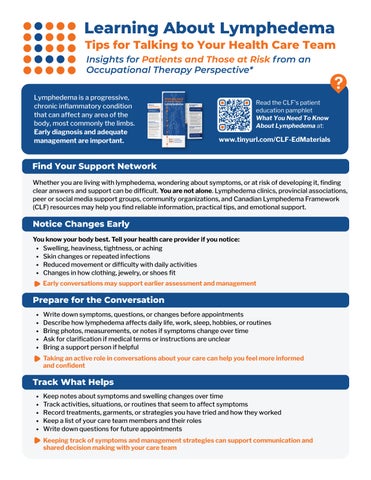

Learning About Lymphedema

Tips for Talking to Your Health Care Team
Perspective*

Notice Changes Early
Swelling, heaviness, tightness, or aching
Skin changes or repeated infections
Reduced movement or difficulty with daily activities
Changes in how clothing, jewelry, or shoes fit
Early conversations may support earlier assessment and management
Prepare for the Conversation
Write down symptoms, questions, or changes before appointments
Describe how lymphedema affects daily life, work, sleep, hobbies, or routines
Bring photos, measurements, or notes if symptoms change over time
Ask for clarification if medical terms or instructions are unclear
Bring a support person if helpful
Taking an active role in conversations about your care can help you feel more informed and confident
Track What Helps
Keep notes about symptoms and swelling changes over time
Track activities, situations, or routines that seem to affect symptoms
Record treatments, garments, or strategies you have tried and how they worked
Keep a list of your care team members and their roles
Write down questions for future appointments
Keeping track of symptoms and management strategies can support communication and shared decision making with your care team
Advocate for Your Needs
Ask questions more than once if needed
Request written instructions or follow-up information
Ask about referrals, supports, or second opinions
Discuss emotional impacts such as stress, frustration, anxiety, or body image concerns
Many people with lymphedema report feeling dismissed or inadequately informed, making self-advocacy especially important.
Questions You Can Ask
About Your Symptoms:
Could these symptoms be related to lymphedema?
What changes should I watch for over time?
What signs of cellulitis or infection should I watch for?
If I notice redness, warmth, swelling, tenderness, pain, fever, chills, or feel suddenly unwell, where should I seek urgent medical care?
About Assessment and Treatment
Should I be referred to a lymphedema specialist or lymphedema-trained therapist?
What treatment or management options are available?
Could compression, exercise, or self-management strategies help me?
How can I safely manage swelling changes or flare-ups?
About Daily Life and Activities
Are there activities I should pace, adapt, or approach differently?
How can I protect my skin and reduce infection risk during daily routines?
Could an occupational therapist help me manage daily activities, routines, work, school, or self-care?
What community supports or resources are available?
About Follow-Up Care
How often should my lymphedema be monitored?
What changes would mean I should book another appointment? Who should I contact if my symptoms change or I have concerns?