Canada’s Lymphedema Magazine
Pathways
Acc e Digi ss t Edit al ion See pag e4
WINTER 2023
Empowering patients and professionals
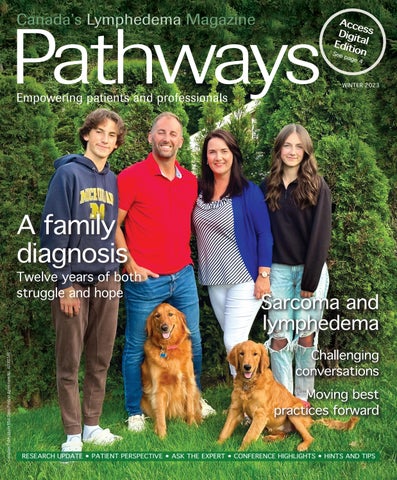
A family diagnosis
Canadian Publications Mail Sales Product Agreement No. 40065546
Twelve years of both struggle and hope
Sarcoma and lymphedema Challenging conversations
Moving best practices forward RESEARCH UPDATE • PATIENT PERSPECTIVE • ASK THE EXPERT • CONFERENCE HIGHLIGHTS • HINTS AND TIPS
Integrated Therapy Solutions Caring for lymphedema means supporting patients every step of the way. At Essity, we provide highly adaptable therapy options to cater to patients’ needs, making their life with lymphedema more manageable.
DECONGESTION JOBST® FARROWWRAP®
JOBST® COMPRI2
Short stretch compression wraps • Easy-to-use adjustable bands • Easy to don • For patients requiring independence
2-layer short stretch compression systems • Sustained compression for 7 days • Simple application with visual compression indicators
COMPRILAN® Short stretch compression bandages • Simple and cost-effective solution • Ideal when frequent applications are required
DAYTIME MAINTENANCE
NIGHTTIME MAINTENANCE
JOBST® ELVAREX®
JOBST® CONFIDENCE
JOBST® RELAX
JOBST® JOVIPAK®
Custom-made compression garments • Gold standard in lymphedema management • Unique features for better comfort and fit (Functional Zones and SoftFit™ Technology)
Next generation of flat-knit compression garments • Innovative contour fit knitting • Advanced moisture management system • A dedicated knitting pattern for both lymphedema and lipedema patients.
Custom-made compression garments • Unique flat-knitting technology for nighttime wear • Textured surface to stimulate lymph flow • CoolMax® yarns for a cooling effect
Ready-to-Wear and Custom Nighttime lymphedema management • 4 blend foam mix and stitched channels • Stimulates lymphatic drainage • Comfort and control from head to toe
https://www.jobstcanada.com/home.html jobstcanada.com 1-877-978-5526
Editor’s Message
Forward momentum
Future steps in lymphedema management
T
his past fall, I was honoured to have been invited to be one of the workshop facilitators at a Lymphedema Summit in St. Louis, Missouri. The theme was “Forward Momentum—future steps in lymphedema management.” Through the generous support of the American Cancer Society and hosted by the Lymphology Association of North America (LANA), 70 researchers and clinicians met in October to move best practices forward in lymphedema management. It was a proud moment to liaise with eight fellow Canadians who were included in this momentous event. Stay tuned for the outcomes to be published in 2024.
For the best possible outcomes of lymphedema management, a collaborative partnership needs to develop between the therapist and the patient. Among several Canadian researchers presenting at this Summit was Marize Ibrahim, a physiotherapist from the lymphedema multi-disciplinary team at McGill University Centre Hospital (Montreal). Marize has been a regular contributor to Pathways. In this issue, she shares her knowledge and experience working with patients affected by post-sarcoma treatments and lymphedema. Her informative
article encourages awareness, education and early therapy to minimize the impact of complications for this group of patients, who are often overlooked. The Canadian Lymphedema Framework held its biennial conference on Nov 3-4, 2023 in Toronto. It was the first time participants from across the country could meet in person since 2019, as the conference was held virtually in 2021 because of COVID-19. Call me old-fashioned and old-school, but despite embracing ZOOM meetings and all that this technology has offered these last few years, I still maintain that in-person meetings remain the preferred way to connect, collaborate, network and build relationships. I missed seeing everyone, and it felt great to catch up with old colleagues and friends this year. We continue our patient perspective series “Where are they now” by featuring an update from Joanne Small-Hopkins and her family. Since her first story (Pathways Winter 2014), it’s inspiring to hear how positive Joanne and her family are—dealing with the challenges in such a positive way. I met Joanne and her husband in 2011 at the International Lymphedema Conference, held in Toronto that year. They were at the beginning of their journey then, and I couldn’t imagine the stress of learning that not only your husband but also two children are diagnosed with the same rare genetic form of lymphedema.
It was through Joanne’s persistence and determination that her family was able to get the proper diagnosis and make the right life and healthy choices. For therapists and clinicians treating lymphedema, there are times when it is difficult to approach a challenging dialogue with your patient. For the best possible outcomes of lymphedema management, a collaborative partnership needs to develop between the therapist and the patient. Sally Keir shares some tips on managing the conversation, whether it is a behavioural or emotional change you are helping them through. We are fortunate to have both Professor Terrance Ryan and Doctor Anna Towers answer some of the questions that we receive regarding the practicalities of living with lymphedema, both skincare and flying with compression. We encourage you to send in your requests for us to direct to our panel of experts. It will likely be around Christmas time as you read this Pathways issue. All of us at the Canadian Lymphedema Framework wish you a joyful and healthy holiday season. We look forward to another great year in 2024! LP
Anna Kennedy
https://care-med.ca/
Wi n t e r 2 0 2 3
w w w. l y m p h e d e m a p a t h w a y s . c a 3
Contents
5
Bone and soft tissue sarcoma An often overlooked set of lymphedema patients.
Moving forward together
Winter 2023 n Volume 13 Issue 1
The 2023 National Lymphedema Conference is another success.
8 ...........................
Publisher Pathways is published four times per year by BCS Communications Ltd. on behalf of the Canadian Lymphedema Framework.
CANADIAN LYMPHEDEMA FRAMEWORK
PARTENARIAT CANADIEN DU LYMPHOEDÈME
Editorial Board Mei Fu PhD RN FAAN David Keast MD FCFP Lori Radke PT CLT Anna Towers MD FCFP Editor Anna Kennedy Executive Director Bonnie Baker
Approaching a challenging conversation
11 .............................................. Part of lymphedema management.
Forward momentum
13 ....................................................................... Future steps in lymphedema management.
16 ............................................ Ask The Expert
Editorial Assistant Nicole Boulet
Compression and air travel.
Advertising and Submissions We welcome your ideas, contributions, letters and ad copy. While all material is subject to Editorial Board approval, inclusion does not constitute an endorsement or reflection of the views and opinions of the CLF and its Editorial Board. Contents may not be reproduced without written permission of the Canadian Lymphedema Framework. Subscription Rates (1 year) Canada - $30. United States - $60. International - $75. Single copies and back issues - $8. Subscriptions/return mail to Canadian Lymphedema Framework 4800 Dundas Street West, Suite 204 Toronto, Ontario M9A 1B1 Telephone: 647-693-1083 Email: pathways@canadalymph.ca www.canadalymph.ca Images: Canadian Press, Saint John’s Cancer Institute, National Cancer Institute, Jeff Parson, Joanne Small-Hopkins, K. Kirby, A. Kennedy, J. Conte and T. Neumayer
...........................
Where are they now? A family’s courageous twelve years of both struggle and hope.
FOR PATHWAYS SUBSCRIBERS
DEPARTMENTS: Hints & Tips
20
Did You Know?
21
Canadian and International Events
22
Your print subscription includes complimentary digital access.
REQUEST ACCESS www.tinyURL.com/yes-digital
ONLINE OR BY EMAIL pathways@canadalymph.ca
Lymphedema and Chronic Edema Management
https://www.canadalymph.ca/workwithus/ Microcourse for Health Professionals
All stock images are CanStock. Canadian Publications Mail Agreement 40065546 ISSN 1929-1418 • Printed in Canada We acknowledge the financial support of the Government of Canada. Financé par le gouvernement du Canada Funded by the Government of Canada
4 w w w. l y m p h e d e m a p a t h w a y s . c a
18
............................................
WINTER 2024 COURSE MARCH 4 - APRIL 12 COURSE FEE: $350 CAD
35 education hours certificate Learn with leading experts Self-paced over 6 weeks 4 Modules https://www.ualberta.ca/rehabilitation/programs/professional-development/index.html?utm_ U of A Faculty of Rehabilitation Medicine Learn online today: uab.ca/pd Professional Education, CLF, and Mitacs campaign=vanity&utm_source=vanity&utm_medium=vanity&utm_content=uab.ca%2Fpd Course developed through collaboration between the
Scan the QR code to enroll and learn more about the lecturers and topics covered.
Wi n t e r 2 0 2 3
Clinical Perspective
Bone and soft tissue sarcoma
An often overlooked set of lymphedema patients By Marize Ibrahim
M
Marize Ibrahim MSc, PT, CLT-LANA is a lymphedema therapist working at
the McGill University Hospital Centre Lymphedema Clinic, a LE&RN Network of Excellence. She is a Certified Specialist in Oncology by the Physiotherapy Specialty Certification Board of Canada.
Wi n t e r 2 0 2 3
TABLE 1
Most common types of sarcoma by age group Children
• Osteosarcoma • Rhabdomyosarcoma
• Ewing sarcoma • Malignant peripheral sheath tumour (MPST) • Osteosarcoma • Synovial sarcoma • Undifferentiated round cell sarcoma Adolescents & Young Adults
• Leiomyosarcoma • Liposarcoma • Undifferentiated high-grade sarcoma • Kaposi’s sarcoma Adults
Geriatric Population
• Chondrosarcoma • Liposarcoma • Myxofibrosarcoma
Reference: Doherty, D., Wilson, C., & Boright, L. (2022)- Chapter 20: Bone and Soft Tissue Sarcoma Table 20.1
w w w. l y m p h e d e m a p a t h w a y s . c a 5
Images: Canadian Press, Saint John’s Cancer Institute
ost of us have heard about the inspiring Although sarcomas may occur anywhere actions of Terry Fox with his incredible in the body, 40-60% are found in the lower Marathon of Hope in 1980. This iconic figure extremities, with the majority located in the thigh. Fortunately, medical advancements have moved many Canadian hearts as he ran across led to a shift away from performing amputations the country in spite of an above-knee amputation, towards more conservative surgeries, including raising money for cancer research. The entire nation ran in stride with his ambitious goals. limb-sparing procedures, functional resections, and multimodal therapy. However, how many can recall what type of cancer Complications after limb-sparing surgery he had? Terry Fox was, in fact, diagnosed with an remain common,4 including functional osteosarcoma at the age of 18 years. loss (e.g., strength and flexibility Sarcomas are relatively issues), impaired gait, rare cancers, affecting Sarcomas are and lymphedema. Some approximately five persons relatively rare cancers, affecting approximately risk factors identified in 100,000.1 This type five persons in 100,000.1 that are linked to of cancer forms in the This type of cancer forms the development connective tissue, in the connective tissue, of lymphedema specifically in the specifically in the mesenchymal are treatments mesenchymal cells cells that make up muscles, that damage the that make up muscles, bones, ligaments, tendons, lymphatic system, bones, ligaments, fascia, adipose tissue, such as surgery, tendons, fascia, adipose nerve sheaths, blood and lymph node dissection, tissue, nerve sheaths, blood lymphatic vessels.2 radiotherapy, and reconand lymphatic vessels.2 struction, or complications There are over 50 different subtypes of such as wound dehiscence. Other risk factors for developing lymphedema include soft tissue sarcomas. Table 1 outlines the most common types by age.3 Generally, arterial resection, history of cardiac disease, smoking, obesity, and medical comorbidities sarcomas can be divided into two main types.3 (see Table 2 page 6).6-7 1 Bony sarcomas may develop anywhere within the layers of bone, joint or cartilage. Beyond physical symptoms, lymphedema is The most common are osteosarcoma, associated with significant psychological and Ewing sarcoma and chondrosarcoma. functional morbidities, such as poor body image, leading to anxiety and depression.6 2S oft tissue sarcomas may develop anywhere in the body, including muscles, tendons, Therefore, rehabilitation strategies must be ligaments, organs, blood vessels, nerves personalized using a holistic approach and and lymphatic pathways. should begin early in the recovery pathway.5
TABLE 2
Risk factors for developing lymphedema post–sarcoma treatment Oncology related
Non-oncology related
Image: National Cancer Institute
• Surgery (tumor and/or lymph nodes) • Medical comorbidities • Trauma • Radiation therapy • Smoking habits • Cellulitis • Chemotherapy • Body mass index (≥30) • High blood pressure • Hormone therapy • Reduced mobility • DVT • Complications of cancer • Venous disease (CVI) • Genetic predisposition • Cardiac disease • Filariasis and its treatments (e.g., wounds, lymphocele) • Renal failure • Inflammatory • Tumour obstruction and/or • Medication side effects skin conditions lymphatic vessel compression • Hypoproteinemia • Advanced cancer Reference: Woods, M. (2019); Chaput et al (2020); Sleigh, B. C., & Manna, B. (2019).
1 Physical therapists play an integral role in helping to prevent and minimize functional loss post-sarcoma treatment, including improving strength, flexibility (range of motion), gait training and facilitating activities of daily living. 2 Lymphedema therapists will help manage post-sarcoma lymphedema, as with other tumour sites (e.g., breast cancer, gynecological), with decongestive lymphatic therapy (DLT). The goals of DLT treatment are:8 1 To educate patients about lymphedema and its progression 2 To provide risk reduction strategies 3 To reduce excess volume and fibrosis levels 4 To minimize the risk of bacterial infection (cellulitis) FIGURE 1
Pillars of Lymphedema Management
5 To restore functional mobility and activities of daily living 6 To improve the cosmetic appearance and the patient’s quality of life 7 To teach self-care to promote independence in lymphedema management Lymphedema management should be personalized to each individual’s needs and may involve a combination of strategies. In summary Patients with post-sarcoma treatments are at risk of experiencing functional loss and/or lymphedema. It is vital to increase their awareness, educate them and provide therapy to minimize the impact of such complications. Healthcare professionals working with sarcoma patients are encouraged to refer early to a rehabilitation specialist to facilitate prompt diagnosis and management. The recovery may be complex and further complicated by the development of lymphedema. Therefore, a multidisciplinary team with a patient-centred approach is integral to ensuring sarcoma patients have the best outcomes. LP References 1. Terry Fox inspired Canadians 40 years ago. His message is more important than ever. (2020). The Globe and Mail. Retried 2023/09 from: https://www.theglobeandmail.com/opinion/ editorials/article-terry-fox-inspired-canadians40-years-ago-his-message-is-more 2. Sbaraglia, M., Bellan, E., & Dei Tos, A. P. (2021). The 2020 WHO classification of soft tissue tumours: news and perspectives. Pathologica, 113(2), 70.
6 w w w. l y m p h e d e m a p a t h w a y s . c a
3. Doherty, D., Wilson, C., & Boright, L. (2022). Oncology Rehabilitation E-Book: A Comprehensive Guidebook for Clinicians. Elsevier Health Sciences. (page 476) 4. Viale, P. H. (2020). The American Cancer Society’s facts & figures: 2020 edition. Journal of the Advanced Practitioner in Oncology, 11(2), 135. 5. Wu, P., Elswick, S. M., Akhavan, A. A., Molinar, V. E., Mohan, A. T., Curiel, D., ... & Saint-Cyr, M. (2020). Risk factors for lymphedema after thigh sarcoma resection and reconstruction. Plastic and Reconstructive Surgery Global Open, 8(7). 6. Gerrand, C., & Furtado, S. (2017). Issues of survivorship and rehabilitation in soft tissue sarcoma. Clinical Oncology, 29(8), 538-545. 7. Friedmann, D., Gefen, A., Turcotte, R. E., Wunder, J. S., Roberge, D., Ferguson, P., ... & Wong, C. (2011, November). Incidence and Severity of Lymphoedema Following Limb Salvage of Extremity Soft Tissue Sarcoma. In Orthopaedic Proceedings (Vol. 93, No. SUPP_IV, pp. 573-573). Bone & Joint. 8. Chaput, G., Ibrahim, M., & Towers, A. (2020). Cancer-related lymphedema: clinical pearls for providers. Current Oncology, 27(6), 336-340. 9. Sleigh, B. C., & Manna, B. (2019). Lymphedema. 10. Woods, M. (2019). Risk factors for the development of oedema and lymphoedema. British Journal of Nursing, 28(4), 219-222 11. Sleigh, B. C., & Manna, B. (2019). Lymphedema. Wi n t e r 2 0 2 3
Ultimate Relief for Lipedema Juzo Sensation is a medical compression garment specifically designed for managing lipedema. • Micro Massage Technology • High Rise Waistband • Therapeutic Medical Compression Reduces Pain
Helps with Shape
Improves Mobility
• Available in 3 styles • Black or Beige
Capri
https://www.juzousa.com/Products/Lipedema-Products/Model/Juzo-Sensation?utm_ source=Insert&utm_medium=Insert&utm_campaign=Sensation+Insert
support@juzo.ca • 1-844-229-4999
Pantyhose
Shorts
2023 CLF Conference
Moving forward together
The 2023 National Lymphedema Conference is another success By Anna Kennedy and Shirin Shallwani
T
he Canadian Lymphedema Framework hosted its 2023 National Lymphedema Conference in Toronto on November 3-4. There were over 300 attendees, including patients, caregivers, therapists, nurses, physicians, surgeons, compression fitters, and exhibitors. The following review highlights the plenary sessions and some of the breakout sessions. Why weight? Denise CampbellScherer (Alberta) kicked off the conference with a keynote address on “What you need to know about the Canadian Adult Obesity Clinical Practice Guidelines.” Our knowledge of obesity has progressed with an increased recognition of the roles of the gut microbiome, genetics, mood (stress), and sleep on obesity. The new 2020 Obesity Canada Guidelines focus on patientcentred care and improvement of health and wellbeing. Tools like the Edmonton Obesity Staging System and the 5As of Obesity Management can help guide obesity assessment and support. The focus should be on the best weight for a person rather than the ideal weight. A key takeaway from this session on managing health and weight
is: “Never start a treatment or change in behaviour that you can’t continue forever.” Sustainability is key. Prospective surveillance There is increasing research evidence supporting the benefits of prospective surveillance for cancer-related lymphedema screening. Shirin Shallwani (Ontario) outlined the main components: baseline assessment and routine monitoring, education and risk-reduction (exercise, skin care, weight management), early detection of lymphedema (subclinical/early stage), and individualized management. Challenges to implementing a prospective surveillance program include limited resources (time, equipment, trained professionals) and non-standardized procedures for diagnosis and management of subclinical/early lymphedema. Possible solutions include identifying and prioritizing individuals at high risk of lymphedema, integrating patient management (e.g., self-measurement), and incorporating technology (e.g., electronic patientreported outcomes).
Body image and sexuality Cancer may impact all aspects of sexuality and even more if lymphedema is present. Marie-Eve Letellier, Sandra Rotholc, and Anna Towers (Quebec) led participants through this important topic, often considered taboo for discussion between patients and healthcare professionals. However, communication is fundamental and must occur between patients and their partners, doctor, and healthcare professionals. Well-being, quality of life, and fulfillment are essential for all patients with lymphedema. Foot care Lymphedema in the lower limb causes skin and health changes. Maryse Beaumier (Quebec) and Audrey Wall (Ontario) provided practical foot care tips for patients and healthcare professionals. Drink lots of water, perform daily inspections, practice meticulous hygiene, wear well-fitted footwear, and seek professional help from a foot care nurse,
Anna Kennedy is a Founding Member of the Canadian Lymphedema Framework and Editor of the Pathways magazine.
She received the Queens Jubilee Medal of Honour for her contribution to the lives of Canadians. Anna advocates a healthy and active lifestyle to manage her lymphedema. Shirin Shallwani, PT, PhD is a licensed physiotherapist and certified lymphedema therapist, currently completing a postdoctoral research fellowship at the University of Alberta Faculty of Rehabilitation Medicine.
8 w w w. l y m p h e d e m a p a t h w a y s . c a
Wi n t e r 2 0 2 3
a podiatrist, or a chiropodist as part of your lymphedema management. Relationship-centered care “Moving Patients to Make Meaningful and Sustainable Health Behaviour Changes with Relationship-Centred Care” was Saturday’s keynote address by Celine Koryzma (Alberta). Lymphedema management is difficult, and making changes in health behaviour is challenging. One important factor that can lead to sustained behavioural change in patients is having a supportive relationship with healthcare professionals. Relationship-centred care means clinicians move from an expert role to a collaborator role. Communication can be facilitated through practicing non-judgemental curiosity and incorporating motivational interviewing techniques. Other strategies include linking health behaviour goals to personally meaningful values, supporting self-efficacy, and promoting habit change. Surgery Siba Haykal (Ontario) moderated a panel discussion on the “Surgical Management of Lymphedema.” Determining the appropriate surgical technique depends on lymphedema staging and ICG imaging, which can show which elements of the lymphatic system are still working.
B. Cartier, A. Simpson, S. Haykal, C. Temple-Oberle.
Panelist Claire Temple-Oberle’s (Alberta) presentation described the primary prevention of lymphedema in melanoma and the clinical trial data on avoiding lymphedema by de-escalating surgery in the nodal basin. In secondary prevention of lymphedema in melanoma, several clinical trials are underway for immediate lymphatic reconstruction to prevent lymphedema in patients requiring lymph node dissection. This prophylactic surgery involves re-establishing lymphatic circulation after ilioinguinal or axillary lymphadenectomy. Patient-reported outcomes using the LYMQol tool were relatively high. Wi n t e r 2 0 2 3
Benoit Cartier (Quebec) led us through two types of lymphatic surgeries. 1) Lymphovenous anastomosis, lymphatic grafting and lymph node transplants are lymphatic reconstructive options classified under physiological interventions. 2) Excisional lymphedema surgeries are appropriate for a very small portion of the population who are at the late stage of the disease and have failed all conservative treatment methods. Although surgical interventions have been around for many years (the first microsurgery was performed in 1960), advanced technology, including high-powered microscopes, nearinfrared imaging and precision instruments, has enabled procedures that involve tiny lymphatic vessels. Andrew Simpson (Ontario) outlined physiologic surgeries for lymphedema. 1) Lymphaticovenular anastomoses are minimally invasive and appropriate for those with early-stage secondary lymphedema with functioning lymphatic vessels. 2) Vascularized lymphatic transplants are more prolonged procedures with a risk of donor site morbidity (including lymphedema). They are more appropriate in advanced lymphedema or those without functioning lymphatic vessels. He noted the need for high-quality studies with standardized instruments and agreement on physiological outcomes (volume reduction, compression reliance, cellulitis rates). Physiologic surgical procedures are not a cure for lymphedema. In an abstract session, Marie-Eve Letellier (Quebec) presented an oral abstract on “Independent prospective follow-up of lymphedema patients who have undergone lymphatic surgeries.” Her study concluded that lymphedema is a chronic condition, even in those who receive surgery and require long-term follow-up and care. There is a need to further evaluate the acute and long-term effects of lymphatic surgery.
Holistic obesity assessment and management A workshop on the “5As of Obesity Management” was led by Denise Campbell-Scherer and Melanie Heatherington (Alberta). The components of a patientcentred approach include: 1. Ask for permission to discuss body weight, as it can be a sensitive
topic. 2. Assess the person’s story and life context. Identify their value-based goals. Assessment also includes obesity classification, adiposity-related complications, “root causes” of weight gain, and disease severity. 3. Advise on the risks of obesity and the health benefits of obesity management, which consists of addressing the root causes of obesity. The three pillars of obesity management that support nutrition and physical activity include psychological intervention, pharmacological therapy, and bariatric surgery. 4. Agree on realistic expectations and a sustainable action plan. 5. Assist with addressing drivers and barriers, providing resources, and coordinating regular follow-up. https://obesitycanada.ca/resources/5as/ Fitters Forum
The compression garment fitter is integral to the lymphedema patient’s healthcare team. An interactive roundtable discussion for compression garment fitters was facilitated by the Diamond Athletic Supplies team (Winnipeg). Importance and challenges of compression therapy Nele Devoogdt (Belgium)
provided an overview of compression therapy. Multi-layer bandaging is the first step to reduce excess volume and improve patient outcomes. Patients are transitioned to garments if there is non-pitting edema, maximal volume reduction, and no wound or skin lesions present. Patient-specific considerations and the S.T.R.I.D.E. (Shape, Texture, Refill, Issues, Dosage and Etiology) Guide (Bjork 2019) can help guide the selection of compression garments. Adjustable wraps can be useful as an alternative to multi-layer bandaging, offering advantages of compression gradient control and easy re-application. w w w. l y m p h e d e m a p a t h w a y s . c a 9
Staying active with lymphedema An extensive body of evidence has led to the endorsement of exercise as safe for those at risk or with lymphedema. Marize Ibrahim and Angela Yung (Quebec) explained how exercise activates muscles, encourages pumping for lymphatic return, promotes a healthy weight, and ultimately impacts independent living and quality of life. Exercise is more than just cardio activity and should encompass stretching and strength training. Find an activity you enjoy and keep moving. Patient registry Spencer Gibson (Alberta) led a roundtable discussion on “Patients count: Development of a patient registry for Canada.” There is a crucial need to track patients in the healthcare system to help identify questions that need to be addressed and ultimately get better care for lymphedema patients. A registry would help gain information on the prevalence of lymphedema, give a picture
of who is a lymphedema patient in Canada, get an idea on how lymphedema is being treated and provide access to conduct future research. Overcoming barriers to body acceptance and health behaviour change In a workshop, Céline Koryzma
Catharine, Lori Radke (Alberta) and Heather Watt (Alberta) that
took place the previous day. Patient advice on how to live with a chronic condition centred on the theme of self-care: connecting with others, staying positive and being patient and kind to yourself. LP
(Calgary) explained that negative feelings are normal after a diagnosis of chronic disease, such as lymphedema. Health care professionals need to acknowledge and validate patients’ feelings about living with chronic disease. Selfcompassion helps people cope with negative emotions, encourages body acceptance, and supports engagement in healthy behaviours. Workshop participants practiced mindfulness exercises focused on mindful self-compassion and acceptance of body changes. Patient voices The conference closing session included a presentation by Catharine Bowman (Stanford) summarizing the Patient-to-Patient Advice interactive workshop facilitated by
The Canadian Lymphedema Framework Board thanks all the efforts of the presenters, sponsors, staff (Bonnie Baker and Grace Neumayer) plus the numerous volunteers who made this conference possible. We will see you in 2025!
You can find references related to presentations with oral and poster abstracts at https://canadalymph.ca/pathways-references
Enhancing patient outcomes LYMPHEDEMA THERAPY CERTIFICATION The Klose Training Advantage: • 135-hours of lymphedema education 75-hr engaging online home study module 60-hr (6 1/2) day classroom education • Exclusive post-graduate resources • Special pricing for Canadian Therapists; contact us for more information
ONLINE COURSES: • Breast Cancer Rehabilitation • Strength After Breast Cancer • Wound Management for updated in 2023 Lymphedema Therapists • Head & Neck Lymphedema Management • Add’l courses at klosetraining.com updated in 2023
10 w w w. l y m p h e d e m a p a t h w a y s . c a
For more information
1-303-245-0333
info@klosetraining.com
klosetraining.com
https://klosetraining.com/
Wi n t e r 2 0 2 3
Therapist Perspective
Approaching a challenging conversation as part of lymphedema management By Sally Keir
T
he dynamic process of communication involves the ebb and flow between speaking and listening engaged by lymphedema therapists to assess, educate and advise their patients. The quality of communication depends on the ability of participants to articulate clearly, actively listen and take turns; the development of real understanding of the meaning of the other’s message and viewpoint; and how convinced participants are of the veracity of the other’s communication.1,2,3 With eloquence, respect, empathy, sensitivity and flexibility, therapists may be able to convey their health advice, and only then might their patients weigh up positive consequences of advocated actions against negative consequences of failing to act. But this does not just simply happen by instruction and information provision. Understanding and using effective communication skills can improve the collaborative partnership involved in the trickier components of lymphedema management.3 For example, weight loss/management, a key component of lymphedema management, can be confronting when raised in discussion between therapist and patient.3,4 The recent study of preferences of diabetic patients for weight management discussions with health professionals, undertaken by Geerling and colleagues (2022)3, indicated that patients were motivated to lose weight with 92% saying weight loss would make a big difference to their lives, and 39% wanting to lose more than 10 kg.
Patients wanted health professionals to collaborate with them asking how they feel, what they want from their care, and to be responsive to their current situations by asking about personal context and experience to understand their needs and preferences. Weight-centered care discussions were seen from two perspectives: motivating, necessary and practical; or intimidating, embarrassing and confronting. These findings highlight the need for knowing your patient to provide truly patient-centered care when discussing weight management. Patients wanted weight-centered care to include personalized physical activity and dietary suggestions to be tailored to practical problem-solving, for example—discussions of changing daily routines to accommodate activities more easily into schedules, or healthier food choices and nutritional advice rather than calorie restriction. The suggested communication style was for avoiding silence and hints, but for blunt/ direct statements delivered with kindness, empathy and encouragement, and with credible, knowledgeable and expert advice on the impact of weight on the trajectory of the disease and with clear, specific and detailed instructions on how to achieve the patient’s weight goals.3 Why the importance to approach this subject with great tact? Because we want nothing to disengage our patients from effectively managing their lymphedema. Another recent article by Salvia and colleagues (2023)4 investigated the phenomenon
Sally Keir BAppSc (Physio) PhD (Education) is a lymphedema physiotherapist
at the Hunter Lymphology Clinic; Research Affiliate, Hunter Medical Research Institute; Assistant, School of Physiotherapy, University of Newcastle (Australia) and the Editor of Lymph Exchange, Australasian Lymphology Association.
Wi n t e r 2 0 2 3
of ‘weight stigma’. They found that weight stigma leads to healthcare avoidance by obese patients who, despite their frequent attempts to lose weight, felt blamed for their weight and the consequences for their health condition and experienced embarrassment and an internalized sense of failure. Patients also felt their care was substandard from health professionals perceived as judging them. Patients felt these health professionals did not understand how complex weight loss really was but appeared to think it was as simple as cutting back on calories and exercising more. They even felt health professionals believed they wanted to be overweight rather than trying everything they could not to be overweight. If they felt their failure to lose weight was interpreted as noncompliance, patients felt amplified self-blame and self-loathing resulting in a decreased sense of alliance within the therapeutic relationship. Patients also described dismissive and invalidating impressions from healthcare facilities and other personnel, some even facing the loss of access to treatment and health insurance coverage because of their weight.4 However, these patients participated in a weight-neutral treatment program for binge eating disorders. The program focused on supporting health-related behaviour change rather than weight loss and allowed the development of skills to improve physical and mental health. Some participants found the weight-neutral treatment recommendations without the pursuit of weight loss challenging. Overall, the preferred recommendation for most benefit was for adequate, varied and nourishing intake of food considered healthy with a consistent eating pattern, reinforced by specific education focused on capacity building, holistic self-care and skill building, with ongoing support.4 The recently published article by Yeates, Kolker and Rezmovitz (2023)5 discusses reframing the narratives around exercise for chronic disease w w w. l y m p h e d e m a p a t h w a y s . c a 11
Weight-centered care discussions were seen from two perspectives: motivating, necessary and practical; or intimidating, embarrassing and confronting. management to a ‘health training/coaching’ approach, taking a patient’s frustration and training them to improve their situation. They suggest modification of chronic disease can be best trained by addressing the domains of not just body but also mind, nutrition and recovery. Collaborative identification of patient goals and plans for enacting these goals sets the scene for training aspects required from the health professional, such as tailored information about the condition and the impact of lifestyle changes on the condition; condition-specific skills teaching and practice; regular follow-ups for review, replanning, repractising and ongoing support.5 The authors suggest that if goals are prescriptive,
not patient generated, patients may nod their heads during therapy but not carry them out. What health professionals need are patients engaged in achieving their own goals to provide the best motivation, internal.5 Suggested targeted goals for discussion and training across all four domains include increasing strength to weight ratio; increasing mindfulness; improving diets and awareness of body reactions to different foods and volumes of food; and identifying and improving personal recovery activities such as rest/sleep, relaxation, socializing and fun.5 The authors suggest health professionals train in both health behaviour change principles and motivational interviewing (MI).5 But many health professionals so trained have trouble implementing MI for health behaviour change into their practice.6 Langois and Goudreau (2022)6 found that just training in MI doesn’t mean clinicians manage to implement and sustain it in practice. Sustainable implementation required support of peers and their organization and time for structured practice. The requisite processes identified included recognizing the failure of preexisting clinician/ practice-centred approaches; addressing ambivalence towards practice change;
training individuals; implementing change of practice; organizing meetings to reflect and review practice and results; and fine-tuning MI practices to improve results and sustain MI practices within their systems.6 Results also found MI implementational review is best not done on one’s own. This means that practitioners in multi-person organizations would find it easier than sole practitioners (whom they suggest need to find other like minds to meet with regularly).6 Change is hard for both health professionals and patients, but the value of approaching and considering the way we discuss and engage with difficult patient conversations may be just the way to achieve better outcomes for patients’ lymphedema management and quality of life across the domains of body, lifestyle, mind and spirit—and with benefit for health practitioners and health systems. LP
Reprinted with permission from the Australasian Lymphology Association. Lymph Exchange Feb 2023. A full set of references can be found at http/:www.canadalymph.ca/pathways-references
FREE—JOIN TODAY!
Compression Bandaging Trusted brands, in stock now.
Founded to support, include and connect local caregivers who are providing care, the Caregivers Club welcomes you.
Call 1-888-836-6726 to Order
12 w w w. l y m p h e d e m a p a t h w a y s . c a
2861
@Canada-Cares:Caregivers-Club caregiversolutions.ca/-caregivers-club https://caregiversolutions.ca/-caregivers-club/
www.Lohmann-Rauscher.ca
1-888-836-6726 · inquiries@ca.LRmed.com
Wi n t e r 2 0 2 3
Advancing Research
Forward momentum
Future steps in lymphedema management By Anna Kennedy
The first 25 years In 1998, the American Cancer Society (ACS) held its first Lymphedema Summit. This fall marked the 25th anniversary of that momentous event. The Lymphology Association of North America (LANA) was an outcome of the ACS 1998 Summit, created to develop a standard of competency in the treatment of lymphedema and related disorders. These standards have resulted in greater consistency between training programs and the provision of safe and effective lymphedema treatment by competent trainees. Since 1998, significant progress has been made in reducing the risk of developing and managing lymphedema. Today, the lymphedema community is acutely aware of the impact of secondary lymphedema, not only on patients with breast cancer but also on patients receiving treatments for head and neck cancer, genital cancers, and others. Outside factors such as, insurance reimbursement restrictions, and demands for work productivity and general lack of awareness by the medical field have left patients underserved, affecting all aspects of their lives. 2023 Summit objectives This year’s invitation-only Summit was held on October 7-8 in St. Louis, Missouri. It was sponsored by the American Cancer Society (ACS) and LANA and hosted by the Washington University School of Medicine. A generous ACS grant provided air travel and accommodation for 70 attendees. The Summit’s purpose was to bring key stakeholders together to reach a consensus
and create actionable steps to move the field of lymphology forward. The proceedings of the Summit will be published and accessible to professionals in the field.
Who was assembled? Program chairs included Dr. Robert Smith (ACS), Dr. Paula Stewart (LANA) and Dr. Justin Sacks from the Washington University School of Medicine. Thirty-five invited researchers were joined by another 35 representatives of key stakeholder groups, including surgeons, physicians, clinicians, training program directors and patient advocates. The role of all these professionals experienced in the management of lymphedema was to work in teams and collaborate in a disciplined consensus process. Saturday Summit lectures In preparation for the ACS Summit, topic teams spent countless hours during 2023 conducting literature reviews, scoping reviews and systematic reviews to create research papers for presentation at the Summit and for publication afterward on the following topics:
Anna Kennedy is a Founding Member of the Canadian Lymphedema Framework and Editor of the Pathways magazine. She received the Queens Jubilee Medal of Honour for her contribution to the lives of Canadians. Anna advocates a healthy and active lifestyle to manage her lymphedema. Acknowledgement: Thanks to Katina Kirby (LANA Executive Director), for her contribution to this article.
Wi n t e r 2 0 2 3
– Current diagnostic and quantitative techniques in the field of lymphedema management. – Complete decongestive therapy: The evidence and current practice guidelines – Surgical interventions: Candidacy, techniques, protocols and interdisciplinary guidelines – Compression for lymphedema: Past and present approaches – Lymphedema risk reduction: Current evidence – Who develops lymphedema and why: The influence of non-cancer-related risk factors in cancer-related lymphedema – Incidence of cancer-related lymphedema and the impact of cancer treatment interventions
Canada was well represented with eight participants from Edmonton, Winnipeg, Toronto, Ottawa and Montreal. w w w. l y m p h e d e m a p a t h w a y s . c a 13
Pictured left to right: Shirin Shallwani, Saskia Thiadens, Cheryl Brunelle, Alexandra Hill and Dr. Paula Stewart.
Sunday Working Groups were tasked with
creating a consensus document on six specific areas. 1 A consensus document to guide patients considering lymphatic surgery. 2 A consensus protocol to guide preand post-operative management of patients undergoing lymphedema surgery.
3 A consensus document updating the risk reduction practices for patients at risk for or managing lymphedema. 4 A consensus document that will aid the medical community in identifying predictive non cancer-related factors
that influence the development of lymphedema in patients during cancer treatment and
compound the individual’s risk of developing lymphedema. 5 A consensus document on what are essential components of the decongestive phase of CDT?
6 A consensus document on what are the essential components of the maintenance phase of CDT?
Look for the CLT-LANA credential because it matters! For more information, visit www.CLT-LANA.org. 14 w w w. l y m p h e d e m a p a t h w a y s . c a
Wi n t e r 2 0 2 3
The consensus process
I was honoured to have been invited to moderate Sunday’s risk reduction practices workshop. A professional facilitator held a virtual training session weeks before the Summit to teach us how to moderate the process. Each of the six working groups focused on a particular question. “What would a potential consensus principle be regarding the topic assigned?” Participants’ initial responses were recorded individually on large colour-coded Post-it notes and then mounted on the wall in the “Maybe” section. Similar responses were clustered together and then summarized into a single statement. Individuals then voted with
Red, White or Yellow cards indicating that they either agreed, maybe agreed or disagreed with each statement. Each working group designated someone to provide a 10-minute PowerPoint presentation to share with the combined audience at the end of their process. A highlight of the luncheon presentations was inspirational guest speaker, Heather Ferguson, of the Lymphedema Treatment Act. Heather passionately Heather Ferguson. shared her 14-year journey to make coverage of compression garments part of the mandated legislature in the USA.
Body Cream happy. healthy. skin.
https://www.lymphologyskincare.com/
Next steps More work needs to be completed. Each working group will meet virtually between now and February 2024 to research for further clarification, wordsmith their statements and write a 3-4 page report of their consensus event for publication. The ACS plans to publish the meeting proceedings and manuscripts from each topic team and workshop task force in 2024. In the meantime you can view the recorded Summit sessions and workshop summaries on the LANA website: www.clt-lana.org. LP
Helping Healthcare Practitioners Advance Together OUR COURSES
OUR BACKGROUND
The Academy of Lymphatic Studies has been the premier provider of lymphedema education in North America since 1994 & was the first U.S. school to offer lymphedema training according to the European curriculum.
Complete Lymphedema Certification 135-hour certification training in the management of lymphedema. Hybrid option. Advanced Lymphedema Management Expand your skill set in the management of lymphedema. Lymphedema Management Seminar Introduction to the management of upper & lower extremity lymphedema. Manual Lymph Drainage Certification 40-hour certification training in the management of edema; as well as other indicated conditions. Hybrid option. Oncology Considerations for Manual Lymph Drainage Safely use MLD when working on those with cancer or history of cancer treatments. A hybrid course. Advanced MLD: Post Plastic Surgery Procedures Sequences & protocols specific to plastic surgery & contraindications. Hybrid option. Online Work at your own pace in an array of topics.
CONTACT US
Wi n t e r 2 0 2 3
Summarizing the summit’s outcomes As so eloquently stated by Dr. Paula Stewart: “The “disagrees” have a positive effect and become signposts in our knowledge gaps… Dr Paula Stewart. Disagreements guide us to future research and inform us of the next step in research.” She also went on to say that the weekend was truly extraordinary. The expertise in the room, the synergy created, the bridges crossed, and future collaborations will affect lymphedema management in the future in a powerful way.
OUR MISSION
We promote the quality & integrity of continuing education for healthcare practitioners in lymphedema management. Our renowned faculty board ensures high standards & success rates for graduates in passing the LANA exam, the gold standard of lymphedema certification.
OUR STORE
Compression garments, wraps, bandages, kits, stockinettes, wound management, skin care, pain management, shoes, custom items, donning and doffing aids, educational materials & more! Contact our Sales Associates at (800) 863-5935 x1 for expert assistance. or shop at store.acols.com www.acols.com
772-589-3355
w w w. l y m p h e d e m a p a t h w a y s . c a 15
Ask The Expert
Skin care and cellulitis Q Cellulitis is common in patients with lymphedema and usually is caused by bacteria called streptococcus. Why does the lower leg lymphedema seem more susceptible to cellulitis than the upper limb?
A
The entry point for bacteria to enter the skin is often between the toes because we don’t look after them as well as the hands. The favourable environment is a leaking capillary bed due to an epidermis in repair mode and a dermis overloaded by a failing venous response to gravitational factors on the veins of the leg. This is less of a factor in the arms. The result is an overloaded initial lymphatic system plus the effect of streptococcal elastases on elastin support of the initial lymphatics.
Q
What is the reason for the re-occurrence of cellulitis for many lymphedema patients?
A
Cellulitis is much more common in persons with lymphedema, as resistance/
By Terence J. Ryan
immunity is impaired. The streptococcus often thrives between the toes, if there are cracks and debris there.
Q
Q A
What is the recommended treatment of care?
A
Treatment has several components: 1. Diligent skin care between the toes or any other crevasses. 2. Care of the epidermis of the leg so it does not need to be in repair mode. 3. Support stockings or elevation to reduce gravitational effects on the veins. 4. Skin movement (MLD massage, leg movement, Yoga) to encourage lymphatic function. Is dry brushing a recommended strategy for skin care?
Dry skin may have loose cells on the surface; therefore, a soft brush or shower can help clean this up. Anything more vigorous will stimulate a repair mode and, in some persons, a triple response of redness and whealing (a raised wedge or welt on the flesh).
Compression while flying Q
Q
Why do many clinicians seem to find it difficult to differentiate between cellulitis and other inflammatory manifestations related to chronic edema?
A
Depending on the site of swelling and pain, in the early stages of infection, it may be challenging to distinguish cellulitis from recent trauma, such as sprains or deep vein thrombosis. However, full-blown cellulitis is easy to recognize. Symptoms like fever and a raised white blood cell count accompany full-blown cellulitis. LP You can read more about the work of Professor Ryan in the Winter 2022/2023 issue of Pathways and in recent published articles in Journal of Lymphedema and British Journal of Dermatology.
Editor’s Note: Studies showed the risk for cellulitis was reduced by 77% if wearing compression stockings. See Pathways Spring 2021 “Compression counters cellulitis” by E. Webb.
By Anna Towers
I have had breast cancer treatment and have no lymphedema issues but it has been suggested that I wear a compression sleeve when flying. Is this the right thing to do? Are there any reasons not to wear a compression sleeve in this circumstance? My sleeve has been properly fitted.
A
There is little research on the subject, but what evidence exists has led to relaxation of guidelines for arm lymphedema risk reduction. Modern aircraft are adequately pressurized, so there is little risk, especially for short-haul flights of 4-5 hours. Enjoy your trip! However, all adults should wear well-fitted compression stockings to prevent deep venous
thrombosis (DVT) in the legs during longer haul air travel, and also should do gentle exercise during the flight. Well-fitted means that you should buy the stockings from a specialized fitter. This may mean that the garments are flat-knit and custom-made. Going back to lymphedema risk reduction, if you are a breast cancer survivor who has had a sentinel node biopsy and are of normal weight, you should
not worry. If you are at a higher risk to develop upper limb lymphedema following breast cancer treatment (due to obesity, axillary node dissection, previous cellulitis in the at-risk limb), and you choose to wear a sleeve and glove for long-haul overseas flights, again—they should be well fitted. You don’t want a tourniquet on your arm that will trigger lymphedema!
Anna Towers, MD is Director of the Lymphedema Program at the McGill University Health Centre (Montreal, Canada),
is a Founding Member of the Canadian Lymphedema Framework and sits on the Editorial Board of Pathways. Terence J. Ryan, DM, FRCP is Emeritus Professor of Dermatology at Oxford University in Oxfordshire, England and a
long-time mentor for the Lymphoedema Programme at the Institute of Applied Dermatology in Kerala, India. He has held senior posts and founding roles in numerous dermatology and wound healing organizations from which he has received many Lifetime Achievement Awards. 16 w w w. l y m p h e d e m a p a t h w a y s . c a
Wi n t e r 2 0 2 3
medi Therapy Concept Lymphology Effective lymphedema solutions for all stages of treatment.
Phase Phase Phase
Phase
Phase
Decongestion Reduction
Phase Phase
Transition
Phase
Maintenance
Phase
circaid juxtafit essentials arm circaid reduction kit
1 PHASE
circaid juxtafit
2 PHASE Transition • circaid juxtafit
Decongestion
• circaid� profile (new)
mediven 550 leg
3 PHASE Maintenance • mediven flat knit • circaid juxtafit • circaid� profile (new)
• circaid reduction kit
Great reduction results during the decongestion phase.
Effective compression device throughout the transition phase.
Compression devices for maintaining best therapy results.
medi Canada inc..
service@medicanada.ca
T 1 800 361 3153 F 1 888 583 6827
medicanada.ca https://www.medicanada.ca/
Patient Perspective
Where are they now?
A family’s courageous twelve years of both struggle and hope By Joanne Small-Hopkins It’s been 12 years since the personal journey for our family began. Lymphedema-distichiasis syndrome was the diagnosis for my husband, Gy, our son, James and daughter Jenna. At that time, Gy was 32, James 4 and Jenna 2 years. My memories of those times are of struggle, frustration, anger and disappointment. Why us? Why now? How is this possible? What did our future look like?
L
ymphedema-distichiasis syndrome is a rare diagnosis. Her beauty contradicted the image I had created in my mind, of the destruction caused genetic multisystem disorder characterized by swelling of the legs (because of fluid accumulation) by this disease. Our family was fortunate to receive a diagnosis after my persistence to determine and the development of extra eyelashes (distichiasis). Distichiasis can range from a few extra an origin to gather a better understanding of the lashes to a complete extra variety of symptoms. After set of eyelashes. Swelling consultation with local most often affects both physicians and geneticists, legs (bilateral) and usually we learned about our FOXC2 mutation. occurs around puberty. 2010 through 2013 Additional anomalies were stressful years for sometimes associated with our young family. We this disorder include early brought Jenna to Toronto onset of varicose veins, six times for consultation droopy eyelids (ptosis), and three surgeries at heart defects, cleft palate, SickKids hospital to treat abnormal heart rhythm and correct ptosis. Gy and abnormal curvature of Elizabeth Taylor and Jenna Hopkins. was managing vascular the spine (scoliosis). The insufficiencies and lymphedema in his lower legs. syndrome is caused by changes in the FOXC2 gene and is inherited in an autosomal Since that time, we continue to take one day at a dominant pattern. time and try to minimize worry and stress. That’s Since 2011, there is much more education a difficult thing to manage for a mother. Strong surrounding various lymphedema syndromes positive attitudes and gratitude carry us through life and do not destroy our sense of self. From known to physicians and patients. However, there their young ages, my children learned what is remains a low percentage with genetic origin possible and available to us. Over the years, identified. In most cases, symptoms are treated that attitude has defined their confidence and and managed individually and not categorized outlook. If you think everything is possible for in a holistic diagnosis. I can remember Elizabeth you, it will be! As the kids grew, I noticed changes Taylor’s death that same year; it was the first time I saw the face of someone with this same year after year. Jenna is now 14, and James
is 16 years old. An ophthalmologist has followed Jenna and James since they were babies. Jenna has regular follow-ups for eyesight and distichiasis. They are both being followed annually by a general surgeon. The kids have demonstrated vascular insufficiencies in their lower legs. At age 13, Jenna’s feet started aching while standing in one spot and changing grayish/bluish. James’ lower legs visually looked different than Jenna’s. At age 13, he demonstrated more large veins similar to varicose veins. The surgeon noted that some perforator veins were damaged. Perforator veins connect the superficial veins of the legs with the deep veins. To date, neither of the children has experienced swelling. However, James started wearing compression stockings to treat vascular insufficiencies at the age of 14. As of now, Jenna can wait a little longer before wearing them.
Joanne Small-Hopkins resides with her husband and their two children in
St. Philips, NL. She works as an accountant on the West White Rose Project in Newfoundland and Labrador. She proudly supports the Lymphedema Association of Newfoundland and Labrador.
18 w w w. l y m p h e d e m a p a t h w a y s . c a
Wi n t e r 2 0 2 3
Throughout the journey, James has said, “Mom, don’t cry; it could be worse. I am not blind and I can hear.” His response was profound. His attitude had less personal impact in that difficult moment because he was mentally prepared. As teenagers, there have been sensitive moments when you don’t want to look and feel different than your peers, but we always pushed forward. Gy was a fabulous example to James. When one feels knocked on your back, you can get up and move forward if you can look up. I have noticed pectus excavatum in both children more pronounced during growth spurts. I expect it to be related to scoliosis associated with this syndrome. The surgeon has suggested no treatment at the moment, as it is invasive and not necessary right now. Today, I believe the psychological impact of a rare disease diagnosis is profound. We must choose positivity over negativity, take every day as a blessing and make healthy daily choices. Attitude and choices increase the quality of life.
We take annual vacations to enjoy one another and to relax and bring life balance. James and Jenna excel in basketball, love their friends, family, and two golden retrievers (Sadie and Daisy), and are doing well in school. My husband is managing his lymphedema well. As one ages, it’s important to listen to your body and adjust your lifestyle. Gy is extremely active, and still plays hockey, but his body reminds him to slow down, elevate his feet, practice deep breathing and get extra rest. Gy wraps his toes and feet with compression bandaging at night and wears the highest compression stockings all day to help reduce swelling. This compression routine is necessary, especially during seasons with high humidity. He closely monitors his blood pressure daily, currently takes high blood pressure medication and takes care to maintain his levels. Today, things can be better. You can live your best moments and scariest moments simultaneously. This summer, I was in the third row of
the Mumford and Sons concert, singing aloud, having a stellar time, when a woman looked back and tapped me on the shoulder. I was in another province, and this woman was the Newfoundland geneticist who had confirmed the diagnosis for my family 12 years prior. I had not seen her since that time. I hugged her and choked up as her presence brought me back to that moment of struggle, fear and anxiety. She asked about the family and wanted an update. Reflecting on the best-ever concert, I realized all my emotions in the third row collided as a life lesson. Seeing her represented my worst fears for my family. Fear is the most subtle and destructive of all human diseases. It kills dreams and hopes and can paralyze you. Instead, we choose happiness and strive for the highest possibility that tomorrow will be better than today. Anything is possible if you believe it will! Be courageous and fulfill all your dreams! LP Editor’s Note: See Joanne’s tips on page 20. Readers can access Joanne’s original story in Pathways Winter 2014 here: tinyurl.com/ Small-Hopkins
Discover ProLymph SCAN TO LEARN MORE
R ISTE REG W! NO
Register for Free: https://prolymph.timedright.com
Wi n t e r 2 0 2 3
w w w. l y m p h e d e m a p a t h w a y s . c a 19
Helpful Suggestions
Hints and Tips Daily choices to manage lymphedema and vascular insufficiencies 4 Exercise daily—any movement is beneficial 4 Eat a healthy low-sodium diet 4 Drink water consistently to keep hydrated 4 Practice deep breathing to promote lymphatic movement 4 Treat infections promptly to reduce the risk of cellulitis 4 Always apply sunscreen to protect the skin
4 Educate yourself on the symptoms and treatment appropriate to your disease
4 Wear quality footwear to protect your skin and provide support
4 Take time for family vacations to relax and bring balance.
4 Get an appropriate amount of sleep
LP
Source: Joanne Small-Hopkins
We would love to hear from you! Please send us your practical hints and tips on managing lymphedema to share with our readers.
COMPRESSION +
COOL SUPPORT
4 Schedule regular doctor checkups to monitor your condition
4 Wear compression garments every day to manage swelling
866.251.0076
https://www.wearease.com/en-ca wearease.com
20 w w w. l y m p h e d e m a p a t h w a y s . c a
https://www.paradigmmed.com/
Wi n t e r 2 0 2 3
Research Advances
Did You Know? Axillary reverse mapping Background: Lymphedema (LE) is the most notable complication of axillary surgery. The axillary reverse mapping (ARM) technique was created to decrease LE. This study aims to evaluate a single surgeon’s experience with ARM in patients undergoing sentinel lymph node biopsy (SLNB) or axillary lymph node dissection (ALND) for breast cancer. Methods: We retrospectively analyzed patients who underwent SLNB or ALND. Tumor characteristics and treatments received were evaluated. Surgical intervention and use of ARM were compared to assess LE rates. A subgroup analysis was also performed of patients who underwent NAC. Results: LE was initially reported in 7.1% (n = 10) of patients; 3.3% (n = 4) with SLNB and 35% (n = 6) with ALND. At initial follow-up, LE was reported 16.4% more often in patients who underwent ALND with no ARM, and 38.8% more often in patients who underwent ALND plus ARM. An increased risk of LE was found in patients treated with ALND (OR = 16.0, P < .001). All patients who underwent ARM were 12.75% more likely to develop LE if they received NAC (P < .05). Patients in the ALND group who also received NAC were more likely to undergo ARM as compared with patients in the SLNB group (P < .01). Discussion: Our study showed that ARM failed to decrease the incidence of LE. Until better surgical outcomes are shown for the prevention of LE using ARM, other approaches should be utilized. However, larger prospective studies are needed to evaluate ARM. Source: The Efficacy of Axillary Reverse Mapping for the Prevention of Lymphedema. Am Surg. 2023 Aug 2.1177/0003 134 82.
In-person vs. online exercise Alberta Cancer Exercise (ACE) is an exercise oncology programme that transitioned from in-person to online delivery during COVID-19. The purpose of this work was to understand participants’ experiences in both delivery modes. Specifically, survivors’ exercise facilitators and barriers, delivery mode preference, and experience with programme elements targeting behaviour change were gathered. A retrospective cohort design using explanatory sequential mixed methods was used. Briefly, 57 participants completed a survey, and 19 subsequent, optional interviews were conducted. Most participants indicated preferring in-person programmes (58%), Wi n t e r 2 0 2 3
followed by online (32%), and no preference (10%). There were significantly fewer barriers to (i.e., commute time) (p < 0.01), but also fewer facilitators of (i.e., social support) (p < 0.01), exercising using the online programme. Four themes were generated from the qualitative data surrounding participant experiences in both delivery modes. Key differences in barriers and facilitators highlighted a more convenient experience online relative to a more socially supportive environment in-person. For future work that includes solely online delivery, focusing on building social support and a sense of community will be critical to optimizing programme benefits. Beyond the COVID-19 pandemic, results of this research will remain relevant as we aim to increase the reach of online exercise oncology programming to more underserved populations of individuals living with cancer. Source: Understanding In-Person and Online Exercise Oncology Programme Delivery: A Mixed-Methods Approach to Participant Perspectives. Curr Oncol. 2023 Aug 3. 10.3390/curroncol30080534
Diet and lifestyle impact BC survival Background: The number of breast cancer survivors is increasing, yet evidence to inform dietary and lifestyle guidelines is limited. Methods: This analysis included 3,658 participants from the Pathways Study, a prospective cohort of women diagnosed with invasive breast cancer. A healthy plant-based dietary index score (hPDI), an American Cancer Society nutrition guidelines score (ACS), a 2015 Healthy Eating Index score (HEI), hours per week of moderate to vigorous physical activity (PA) and lifetime cumulative pack-years of cigarette smoking (SM) were each measured at diagnosis, 6, 24 and 72 months. Using g-computation, 5- and 10-year risk ratios (RRs), risk differences (RDs), and 95% confidence intervals (CIs) for all-cause mortality under hypothetical interventions on diet quality, physical activity, and smoking, compared to the natural course (no intervention) were calculated. Results: Hypothetical moderate to extreme interventions on hPDI, ACS and HEI, each in combination with PA and SM, showed 11 to 56%, 9 to 38%, and 9 to 49% decreases in 5-year risks of all-cause mortality compared to no intervention, respectively [(hPDI: RRmoderate=0.89, 95% CI 0.82-
0.94; RRextreme=0.44, 95% CI 0.26-0.67), (ACS: RRmoderate=0.91, 95% CI 0.85-0.96; RRextreme=0.62, 95% CI 0.43-0.82), (HEI: RRmoderate=0.91, 95% CI 0.84-0.95; RRextreme=0.51, 95% CI 0.33-0.72)]. While 10-year relative risks were slightly attenuated, absolute risk reductions were more pronounced. Conclusions: Interventions to improve diet quality, increase physical activity, or reduce smoking at the time of diagnosis may improve survival among breast cancer survivors. Impact: We estimate that over 10% of deaths could be delayed by even moderate adoption of these behaviours. Source: Hypothetical interventions on diet quality and lifestyle factors to improve breast cancer survival: the Pathways Study. Cancer Epidemiol Biomarkers Prev. 2023 Sep 18. 10.1158/1055-9965.EPI-22-1216
Water balance in lipedema Background: The presence of edema in patients with lipedema has been investigated in many studies. However, no study has been found that examines the amount of intracellular (ICF) and extracellular fluid (ECF) in these patients together. The aim of this study is to examine the amount of ICF and ECF in patients with stage 2 lipedema. Methods/Results: Bioimpedance spectroscopy was applied to measure extracellular and intracellular water levels in 24 patients diagnosed with stage 2 lipedema. The mean age of the participants was 44.58 ± 2.95 years. The mean body mass index (BMI) of the participants was 33.9 ± 1.84 kg/m2. It was observed that the amount of ECF in the patients was above the normal values (p < 0.001), whereas the amount of ICF was within the normal range (p = 0.801). In addition, it was observed that there was a moderate relationship between BMI and the amount of ECF. Conclusion: Although the amount of ICF is within the normal range in patients with lipedema, an increase in ECF is observed. The reason why edema is not observed in these patients despite the increase in ECF may be the increase in glycosaminoglycan and proteoglycan synthesis. In addition, the attention of these patients to weight control may contribute to slowing the course of the disease by preventing the increase in the amount of ECF. For a better diagnosis of lipedema, it is considered important to evaluate the amount of ECF in addition to routine evaluations. Source: Intracellular and Extracellular Water Balance in Patients with Lipedema. Lymphat Res Biol. 2023 Aug 2.
w w w. l y m p h e d e m a p a t h w a y s . c a 21
Education Education
Canadian and International Events March 4, 2024 Online/Virtual
Obesity Canada. Connected 2024 Conference.
March 6, 2023 Worldwide
International World Lymphedema Day (WLD). Contact your provincial association to learn about local events.
Thank you!
https://obesitycanada.ca/connected/
to everyone who attended the 2023
National Lymphedema Conference
www.canadalymph.ca/WLD
and helped make it a success.
Mar 12-14, 2024 Power Lymphatics 2024 Lymphedema Education Las Vegas, NV https://thepowersymposium.com/power-lymphatics/ Summer 2024
DELEGATES | SPONSORS | EXHIBITORS SPEAKERS | COMMITTEES & VOLUNTEERS
The 2024 summer issue of Pathways will mark the 50th issue of this publication. Watch out for this special publication early next year.
https://www.canadalymph.ca/workwithus/
The Canadian Lymphedema Framework (CLF) wishes to thank these partners for their support in making this magazine a reality.
Subscription information at www.canadalymph.ca/subscriptions
Charitable Registration 85160 1260 RR0001
ABOUT THE CLF: The CLF is an academic and patient collaboration, working to improve lymphedema management for lymphedema and related disorders in Canada.
22 w w w. l y m p h e d e m a p a t h w a y s . c a
Wi n t e r 2 0 2 3
STEP INTO YOUR CONFIDENCE Feeling good in your skin is our number one priority! Venotrain® Curaflow compression garments are designed with the individual in mind, because self-confidence is always in style!
Feel the Curaflo w differen ce!
#SELFL OVECLU B
Always custom fit Edema affects everyone differently. Curaflow compression garments are custom-fit to the individual and cater to their specific needs.
Skin-friendly microfiber material The custom knit is soft and breathable which ensures optimal climate regulation.
Anatomically shaped Flat knit design allows for a greater freedom of movement, increased wearing comfort, and a reduced pressure sensation.
Want to learn more?
https://bauerfeind.ca/ BAUERFEIND.CA
Trust the 3M™ Coban™ 2 Two-Layer Compression System to get life back on track. Effective compression. Sustained, therapeutic compression for up to seven days, with less slippage and increased comfort means more time worn. Clinically proven to be more effective at managing edema.1
Focus on living life. The thin, lightweight materials create a breathable sleeve, allowing patients to wear their own shoes and clothing. The increased comfort helps mobility leading to more effective treatment.
Designed with comfort in mind. 72% of patients prefer two-layer compression over alternative options.¹ Treatment is more effective when their comfort is prioritized.
Engineered for comfort. Designed for real life.
3M™ Coban™ 2 Two-Layer Compression System
Learn more at
www.3M.ca/lymphedema http://www.3M.ca/lymphedema Available in Canada from: Medical Solutions Divison 3M Canada 300 Tartan Drive London, Ontario N5V 4M9 Canada 1-800-364-3577 3M.ca/Medical
3M Deutschland GmbH Health Care Business Carl-Schurz-Str. 1 41453 Neuss Germany
1. Moffat C et al (2012) ‘A preliminary randomized controlled study to determine the application frequency of a new lymphoedema bandaging system.’ British Journal of Dermatology 166.3: 624-632. 3M, 3M Science. Applied to Life., and Coban are trademarks of 3M. Used under license in Canada. Please recycle. © 2021, 3M. All rights reserved. 2107-21114-E This material is intended for healthcare professionals. Please refer to the full product instructions and indications for use and for a full list of contraindications, general considerations and warnings, cautions and notices. If applicable, refer also to your facility policy for detailed information and recommendations.